So we’re back in Tokyo (Yokohama) early this morning and my flight is around 6 pm. Didn’t really want to drag my suitcases on an adventure so booked a ship excursion that promised a bit of a tour around Tokyo and then airport drop off early afternoon.
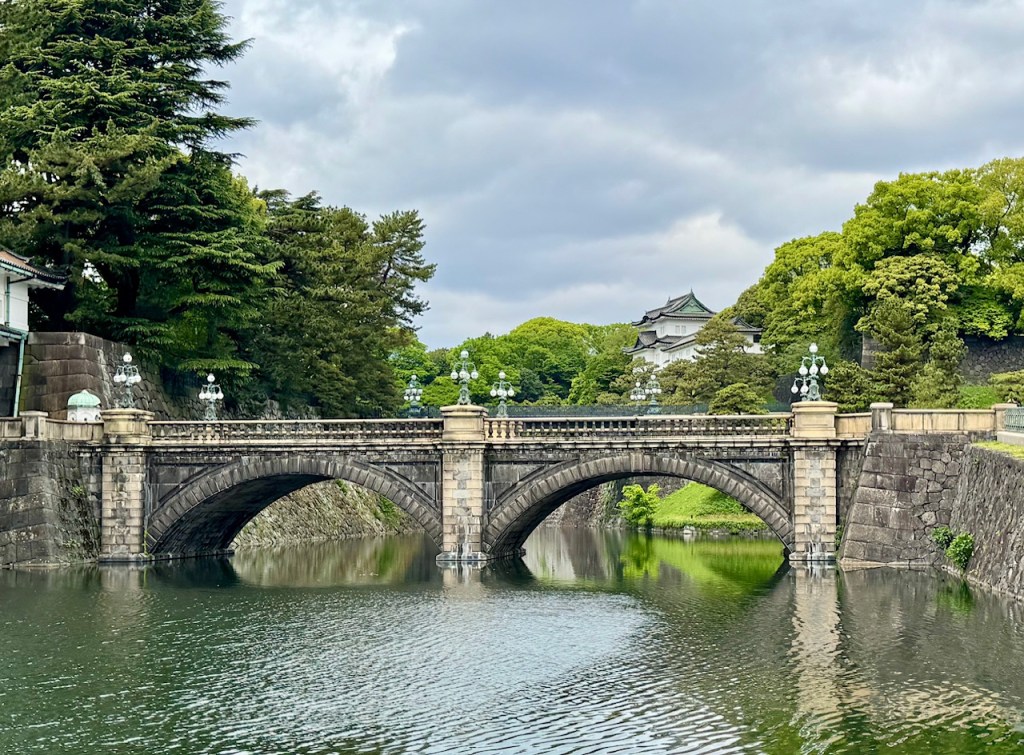
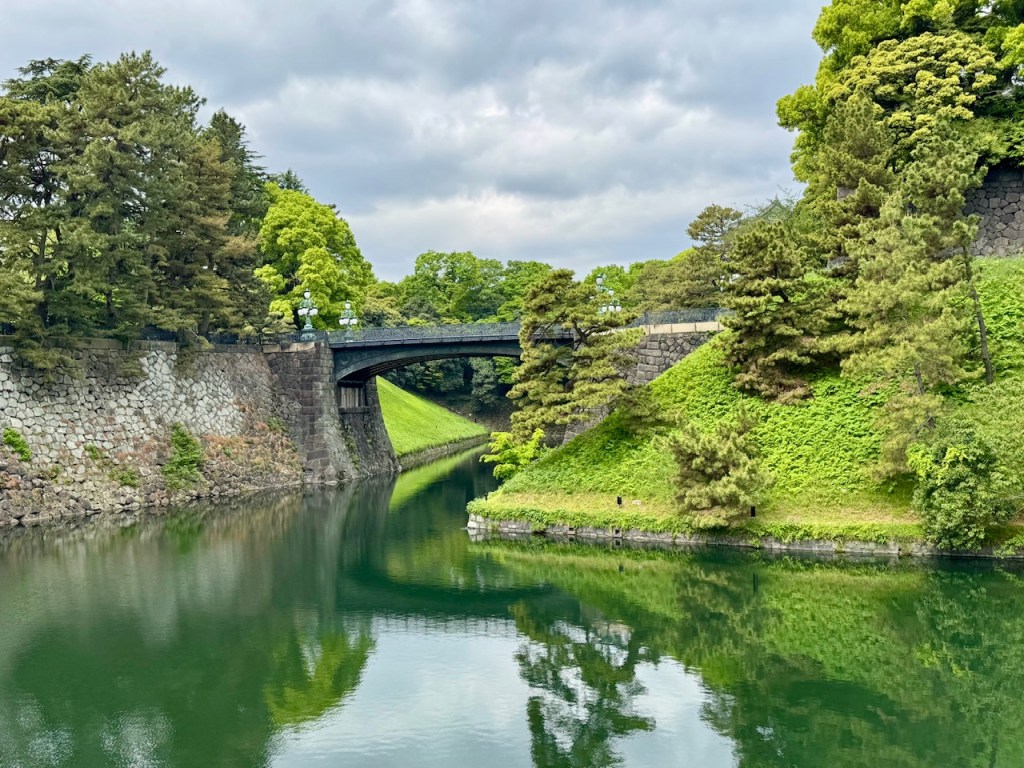
The immigration process was relatively painless before boarding the bus for our four-hour tour! We’re heading to the Imperial Palace for another chance to check it out without rain first.
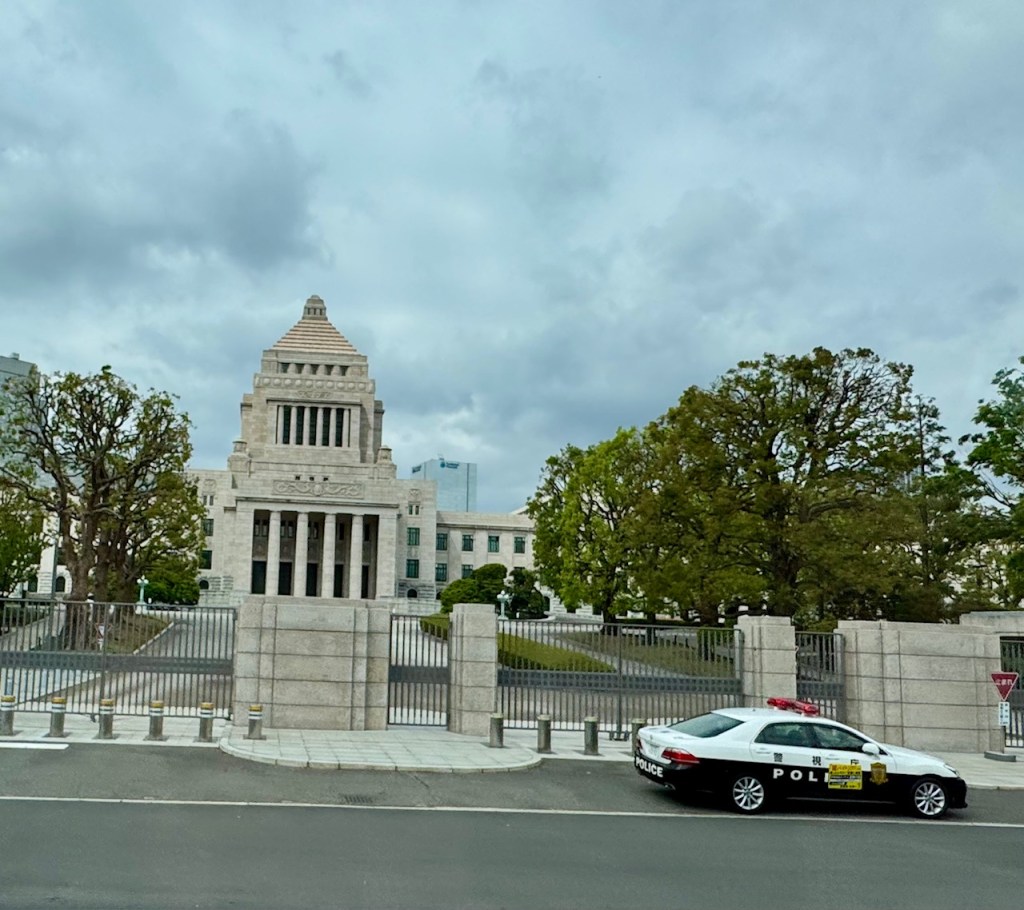
Views from the BusImperial Palace – take two
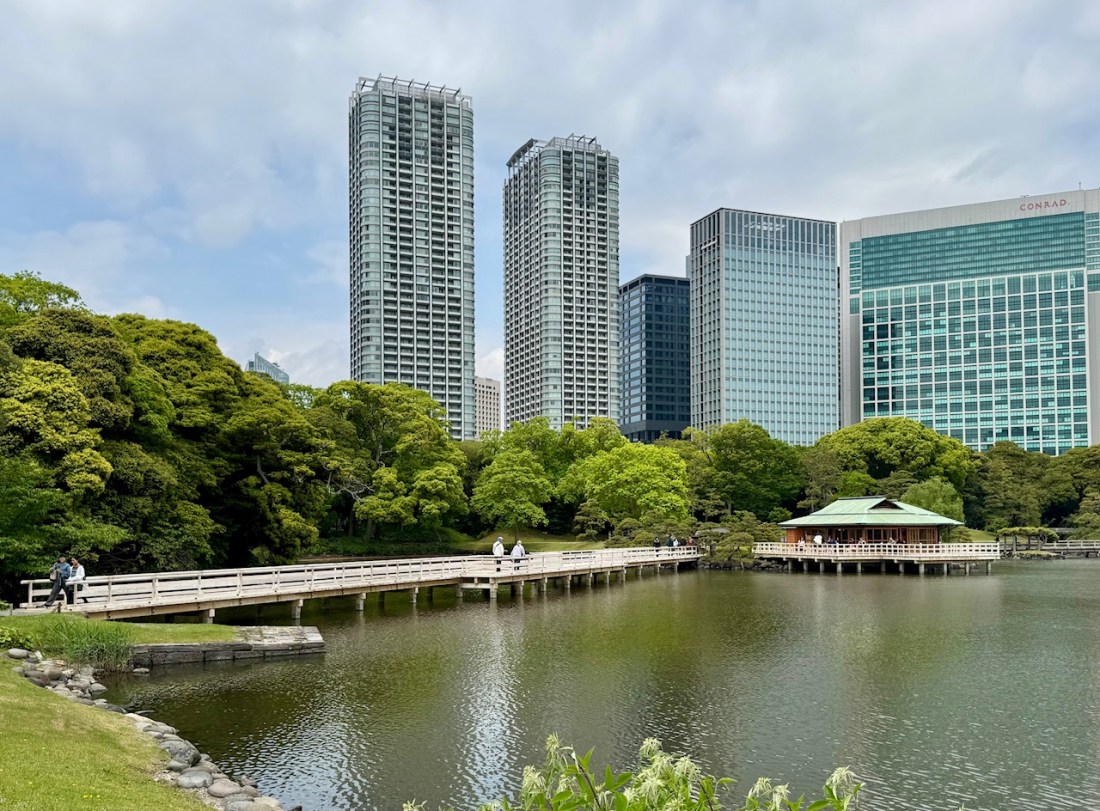
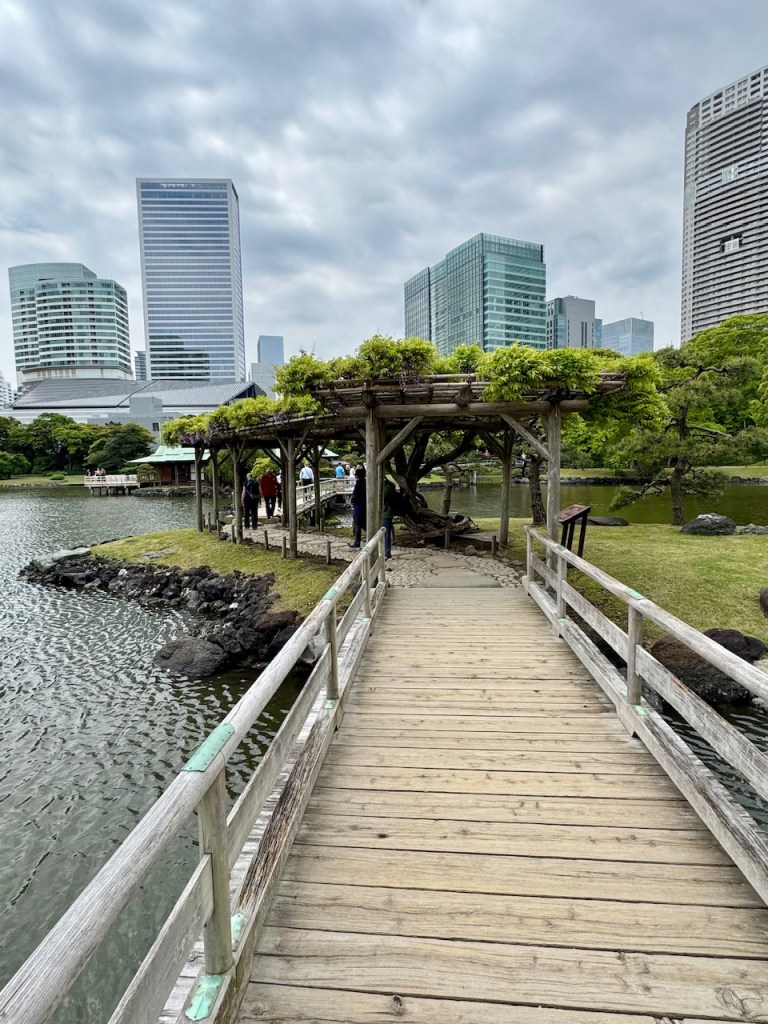
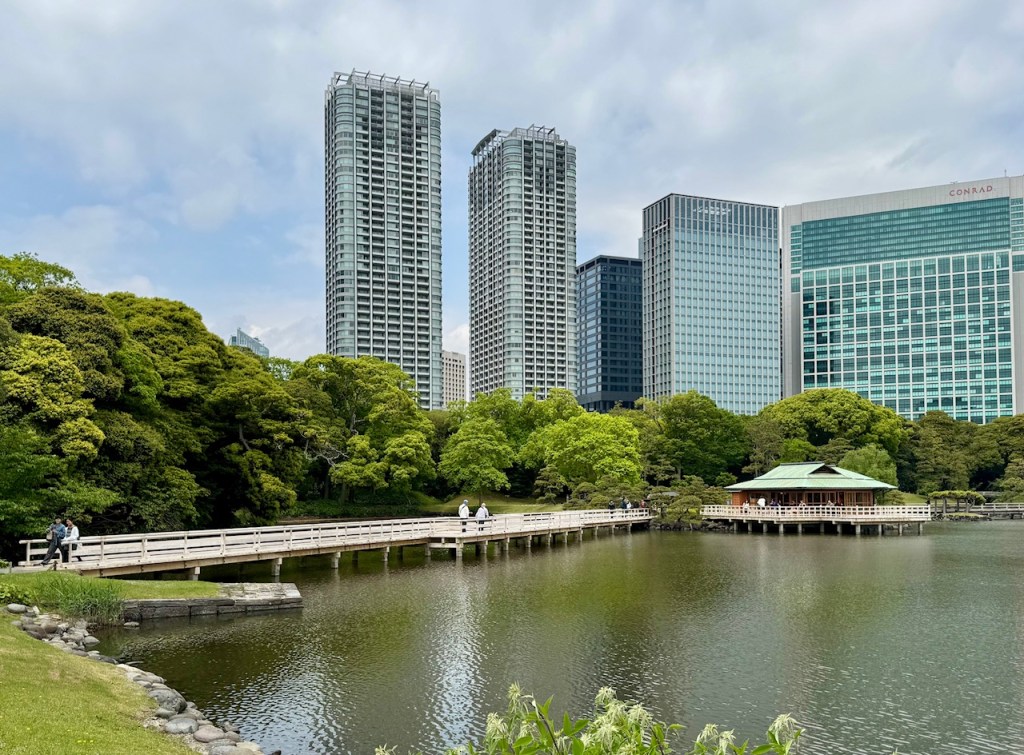
Next we’re off to Hama-rikyu Gardens for one last look at the Japanese gardens that I have come to love.
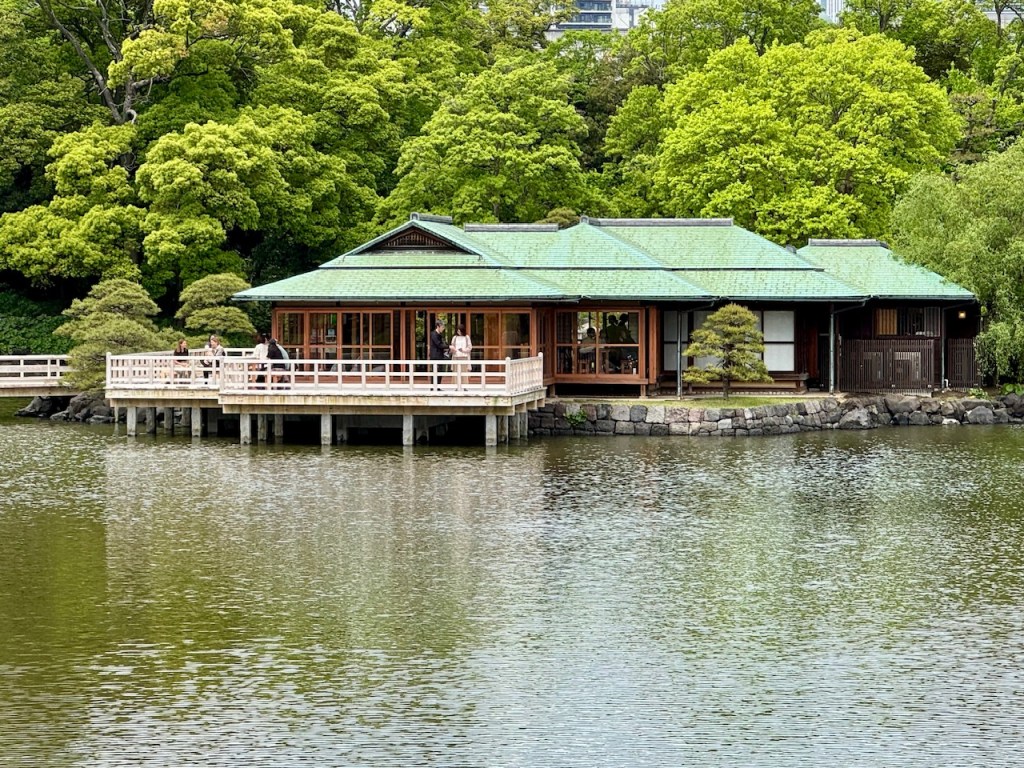
Once the gardens of successive Tokugawa shoguns, Hama-rikyu Gardens features a seawater pond whose levels change with the tides, and two kamoba, or duck hunting sites, within the grounds. It originally functioned as a dejiro, or branch castle, of Edo Castle in the Edo Period.
After the Meiji Restoration of 1868, the gardens became a villa for the Imperial family and the name was changed to Hama-rikyu (Hama Detached Palace).
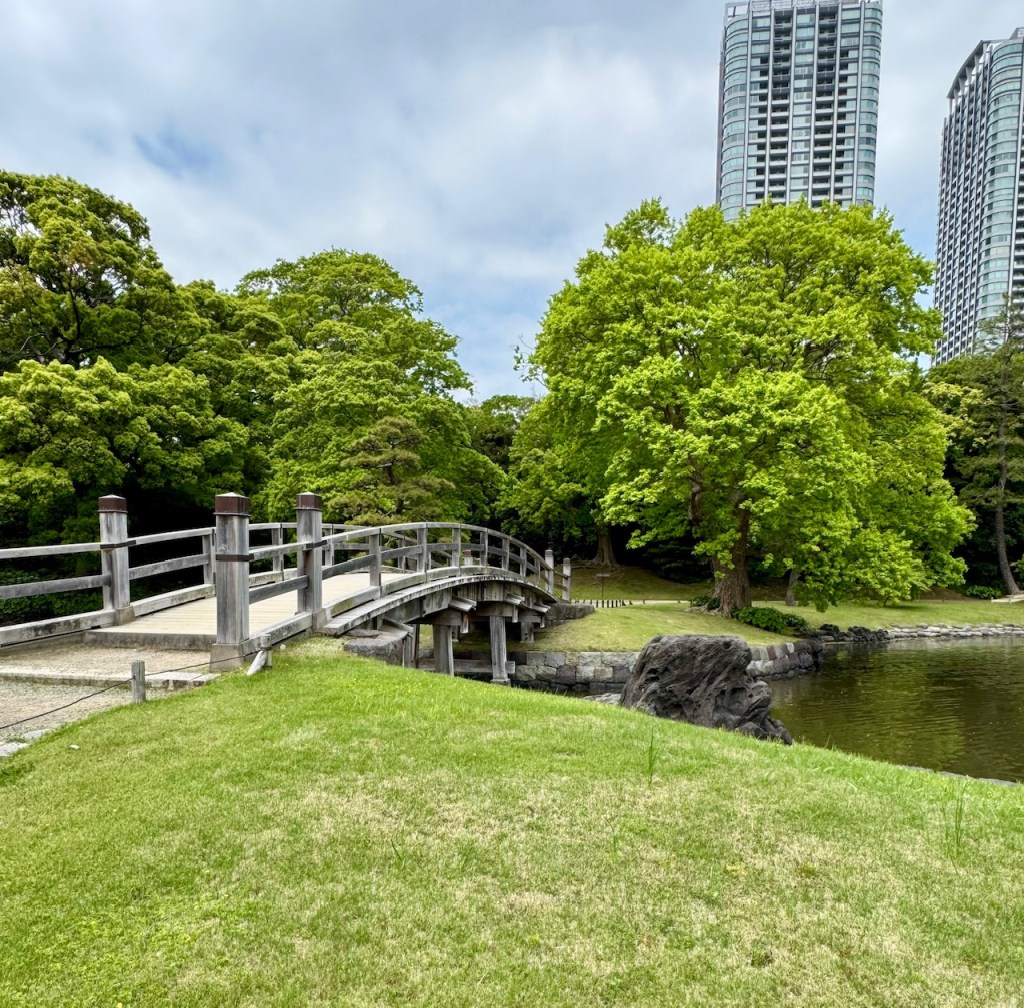
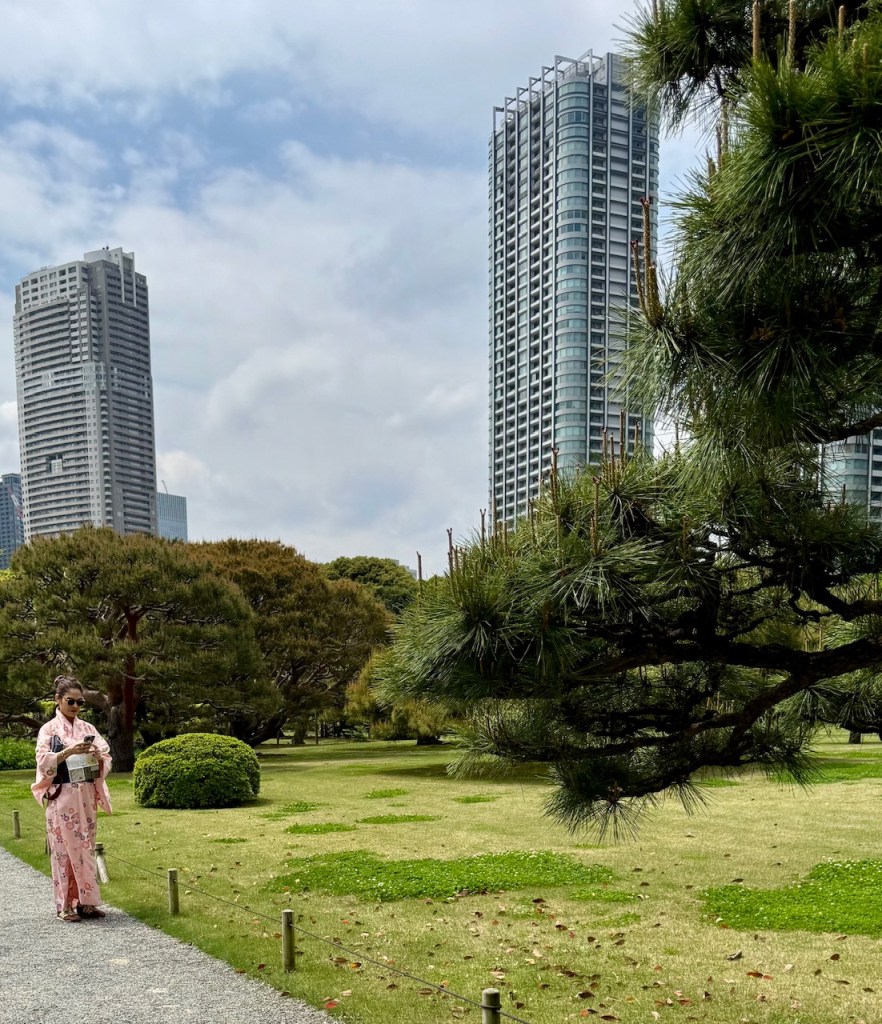
These scenic gardens, once reserved for Imperial use only, were opened to the public in 1946. Today, the gardens are an oasis of natural, green space among the gleaming, high-rise buildings.
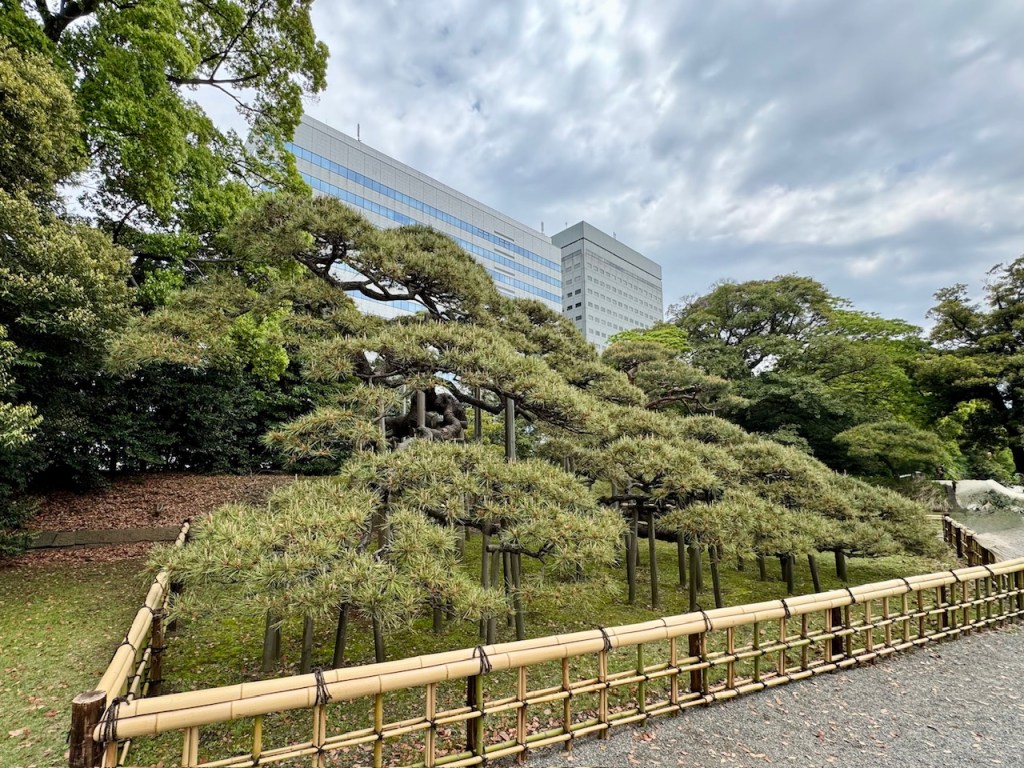
Near the entrance is an impressive 300-year-old pine tree very carefully pruned over the centuries into an impressive weeping expanse.
300 year old pine tree
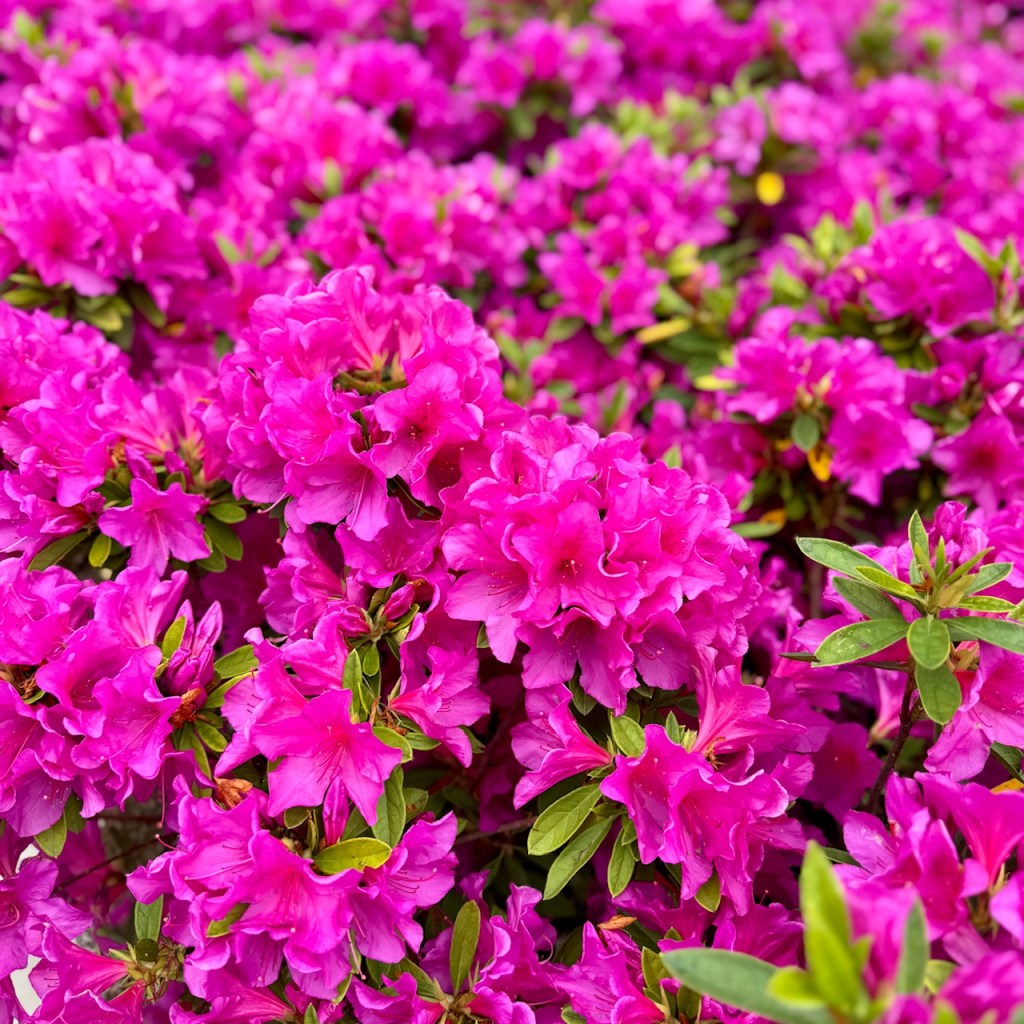
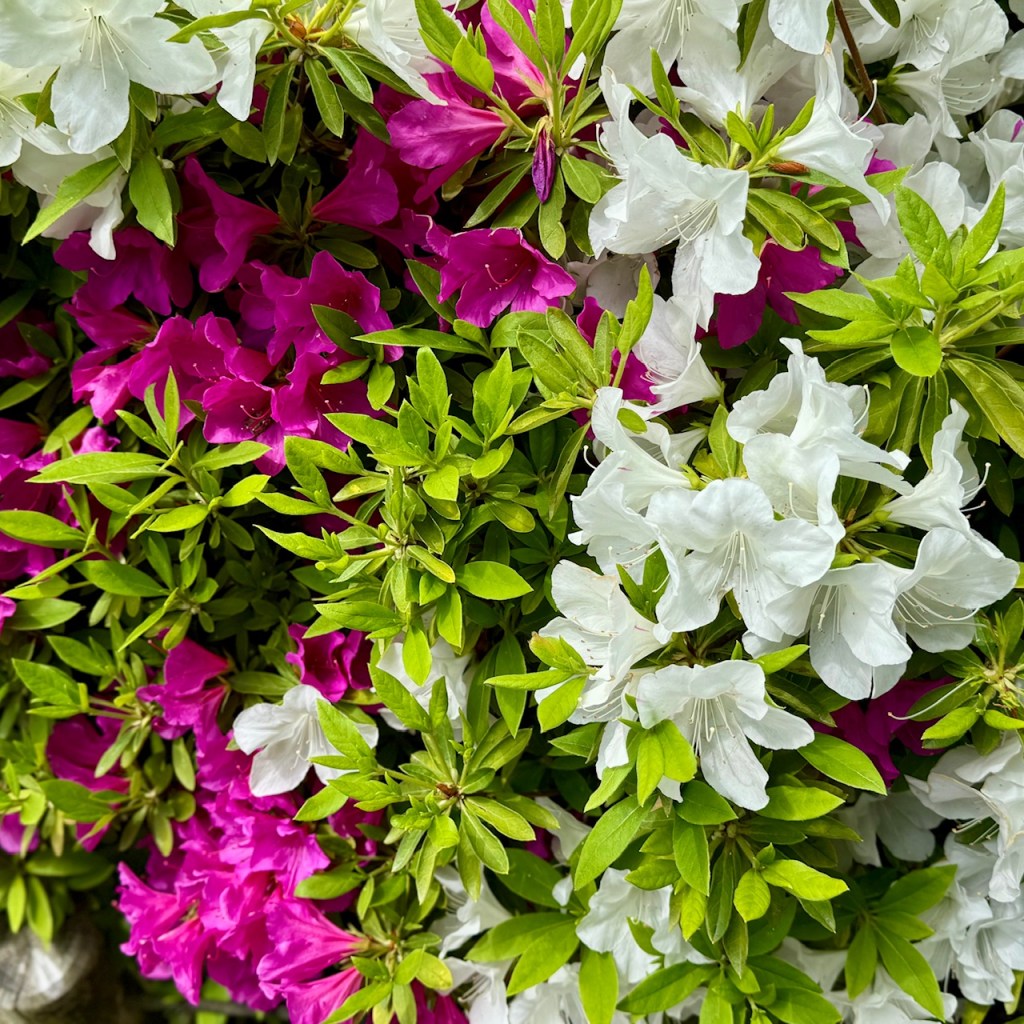
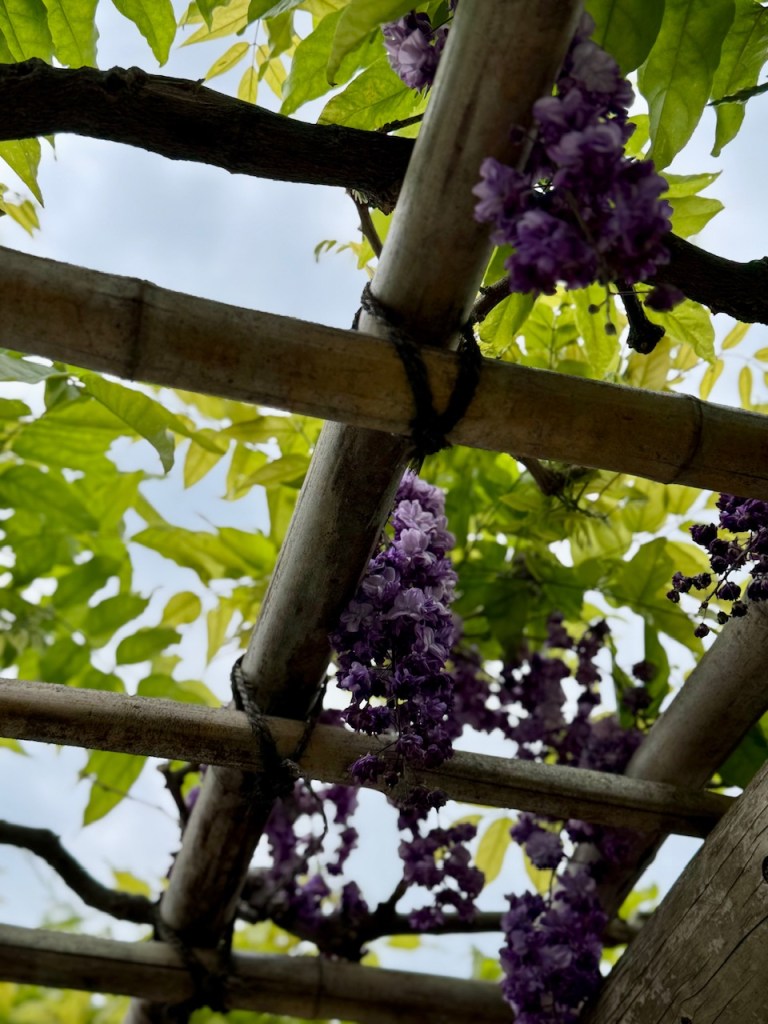
The park has many flower fields which feature vibrant peonies, colza, and cosmos.
Fleurs
The gardens have two duck hunting grounds that were used by the Shogun, and there is a memorial built to commemorate and console the spirits of the ducks that have been caught in the grounds.
Duck blind
The gardens’ central pond, Shioiri-no-ike, is the only remaining seawater pond from the Edo era within Tokyo. Filled with seawater drawn in from Tokyo Bay, the marine life in this pond includes sea bass and black mullet. The gardens’ islands are connected by a 120-meter bridge.
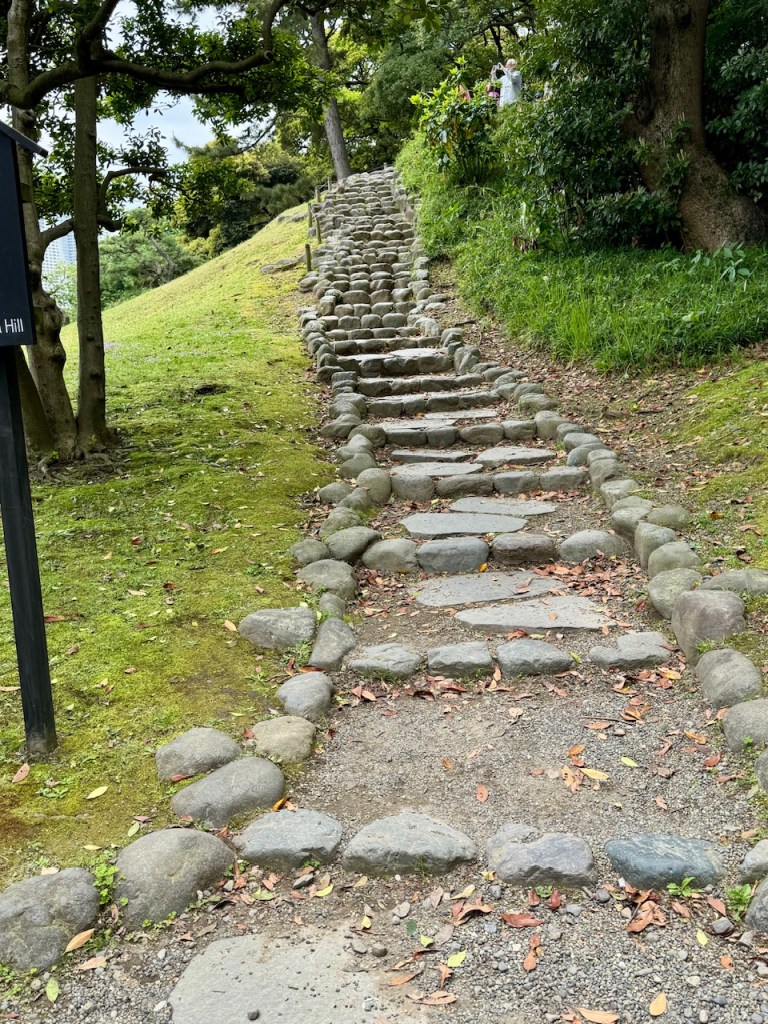
Strolling through the GardensMatcha cone – Yum!
Well it’s time to get back to reality as we get dropped off at the Haneda Airport a couple hours before I can drop off my luggage at the Air Canada counter. Time passes quickly enough as I’m engrossed in my latest book.
After checkin, I wend my way through security, immigration and customs (Oh Joy!) before grabbing a bite, doing some last minute shopping and waiting for my flight. Going to be a long day but I’m headed home so all is right with the world.
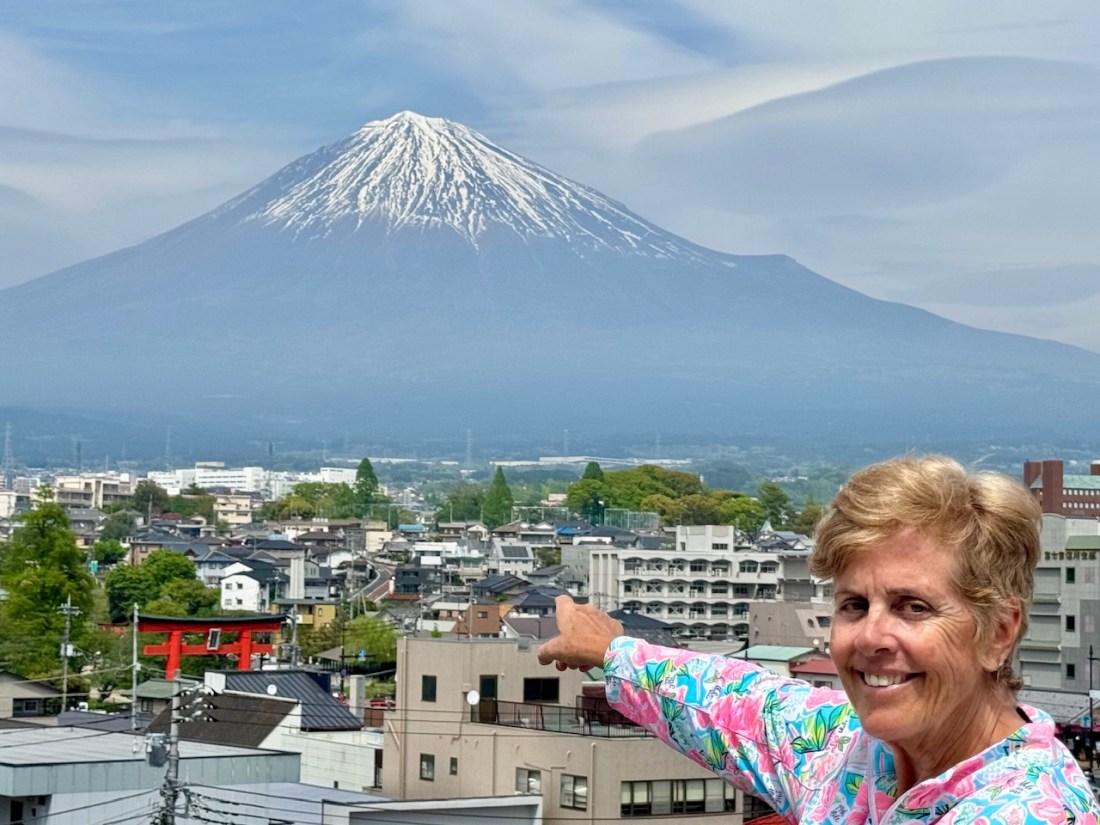
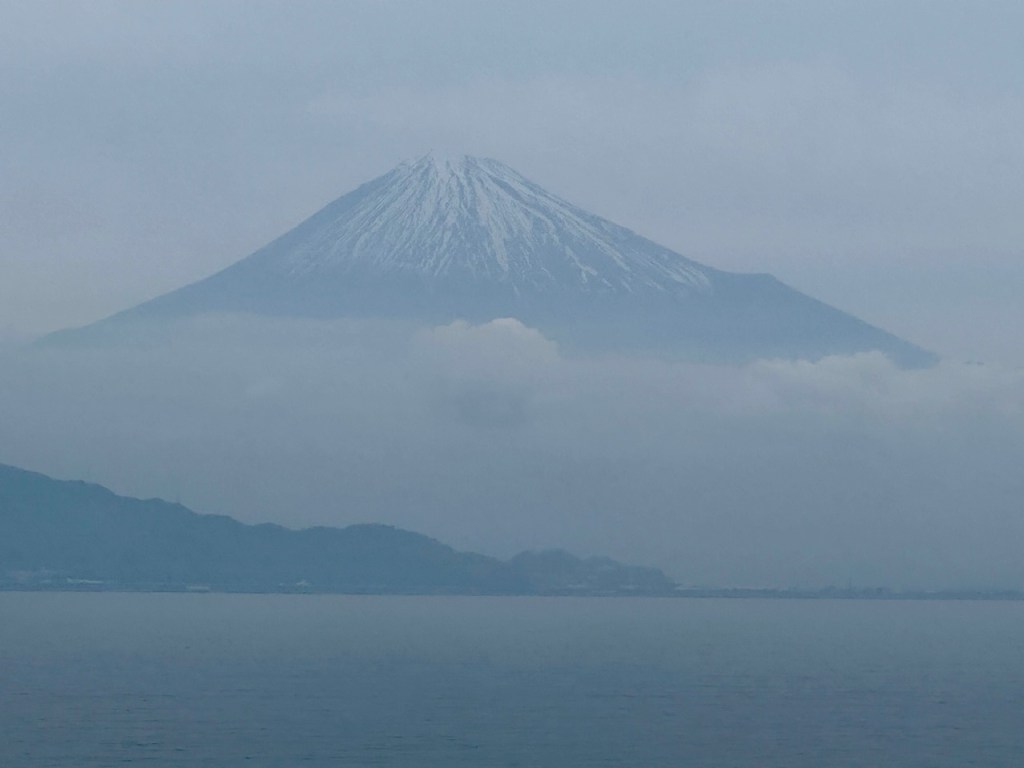
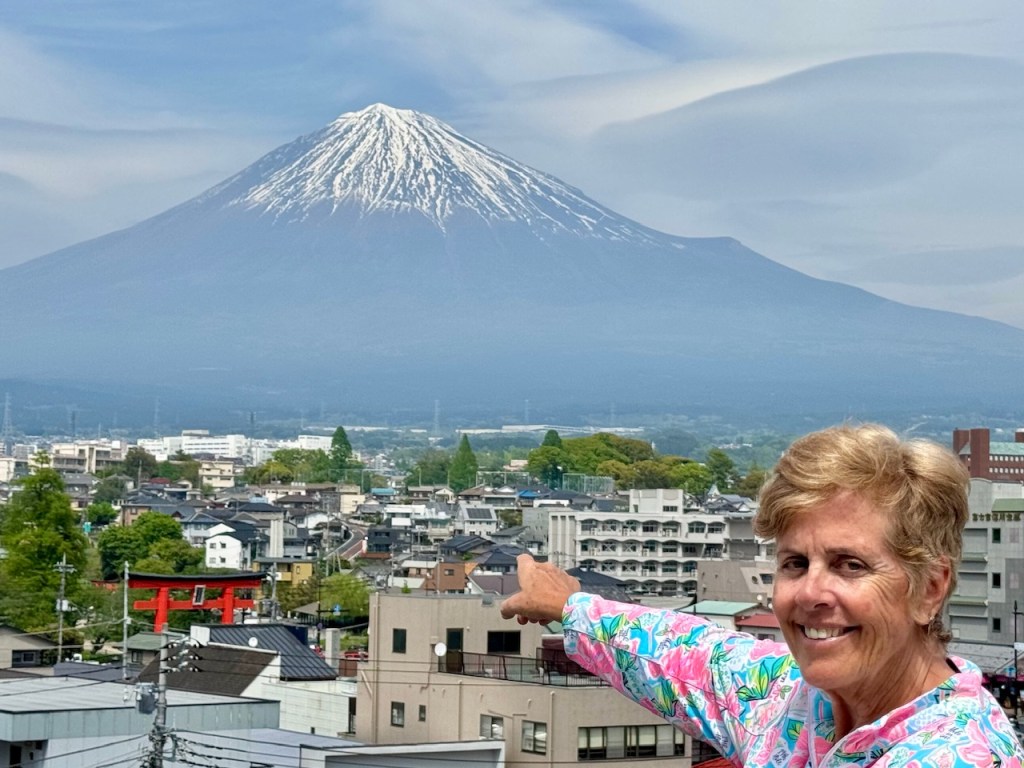
Today is the last day of the cruise; always bittersweet though the best part of any trip is coming home. We’re in Shimizu; the port where we may get a chance to see Mount Fuji; Japan’s tallest peak at 3776 meters in all her glory. Fuji-san is an active volcano about 100 kilometers southwest of Tokyo and the most revered of Japan’s 3 sacred mountains. The forecast is so so but I’m optimistic that Fuji-san will get over her shyness and give us a glimpse of her spectacular beauty.
Morning view of Fuji-san from the ship
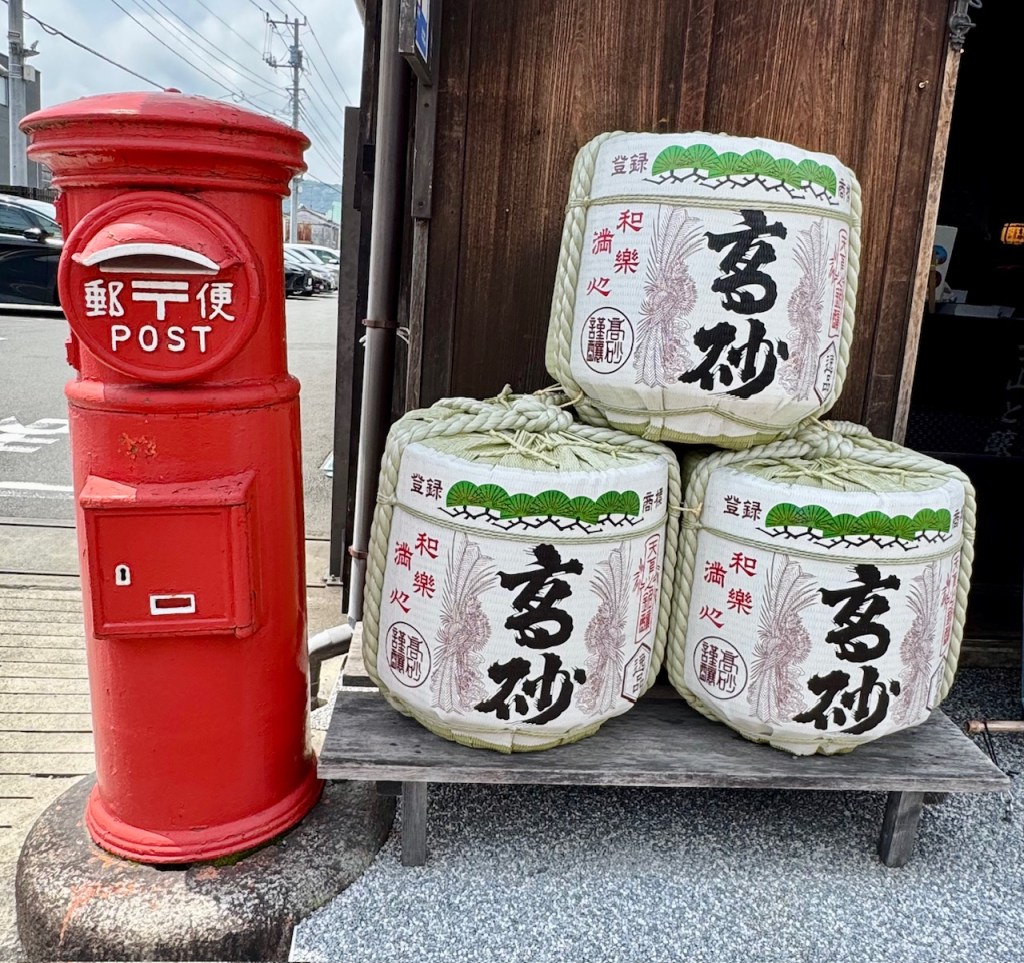
I’m on a ship excursion with our enthusiastic guide Junki who regales us with history and stories as we head to our first stop; Fuji Takasago, a small sake brewery founded in 1831 at the foot of Mount Fuji. The water from the snow melt that runs off the mountain takes nearly 100 years to filter through the earth’s underground layers, leaving the water extraordinarily pure. The brown cedar ball hanging outside indicates it is a sake brewery and we get a quick tour of the brewery, enjoy a tasting and some time to shop.
Fuji Takasago Brewery
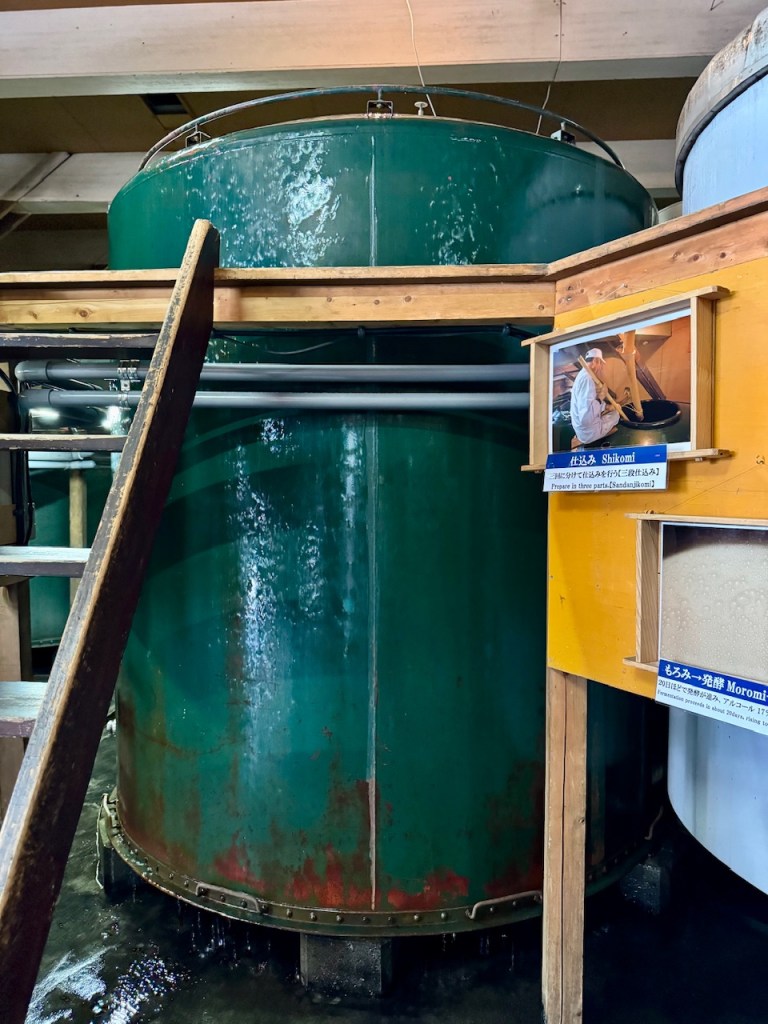
Unlike large scale breweries that make saki year round, this small brewery makes only one batch per year (October through mid-April). The main ingredient is sake rice and the process includes polishing the rice, washing, soaking, steaming, molding/koji making, fermentation, pressing, filtering, pasteurization, aging, watering, filtering again, pasteurization again and bottling. The method is traditional and any mistakes in the process result in sake that must be thrown away.
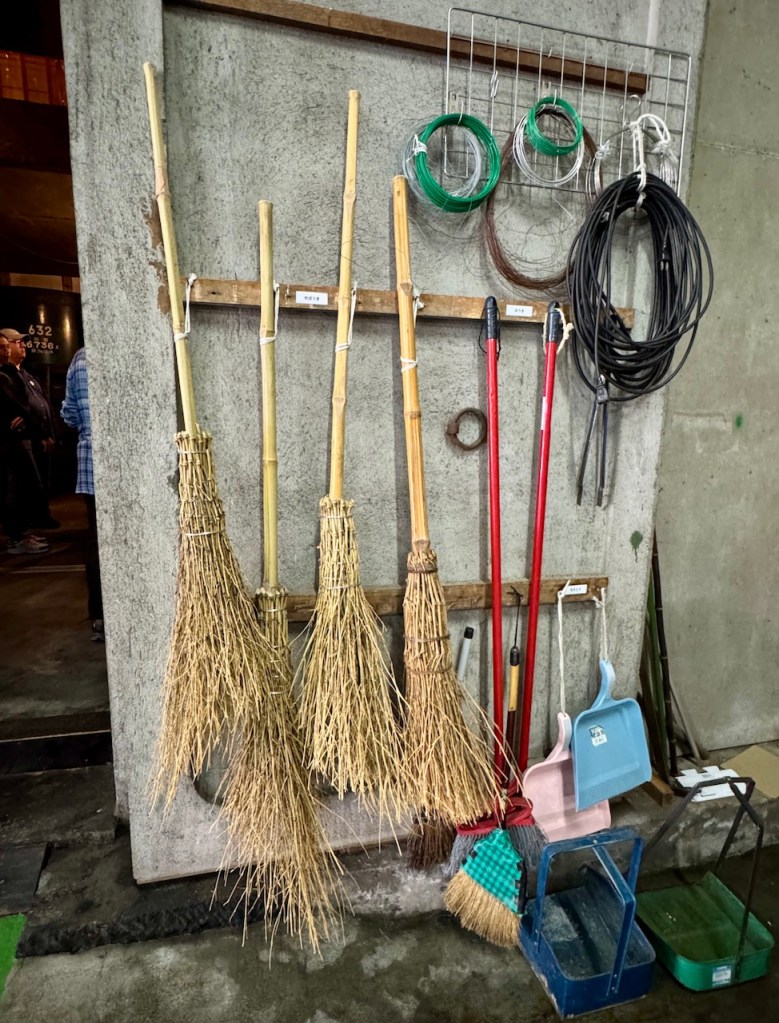
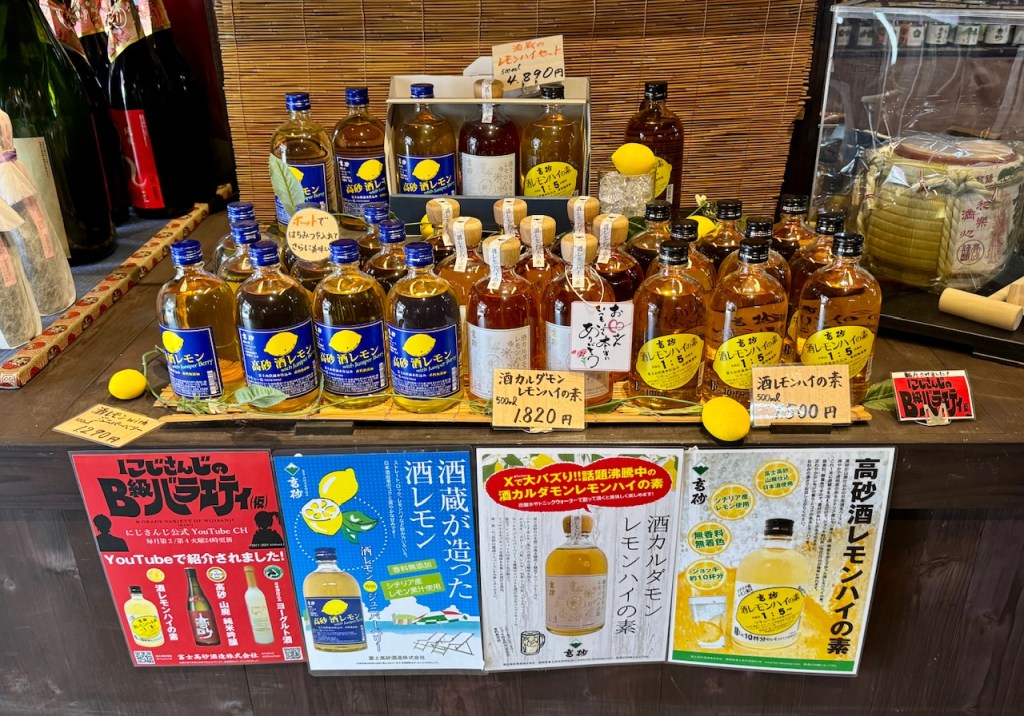
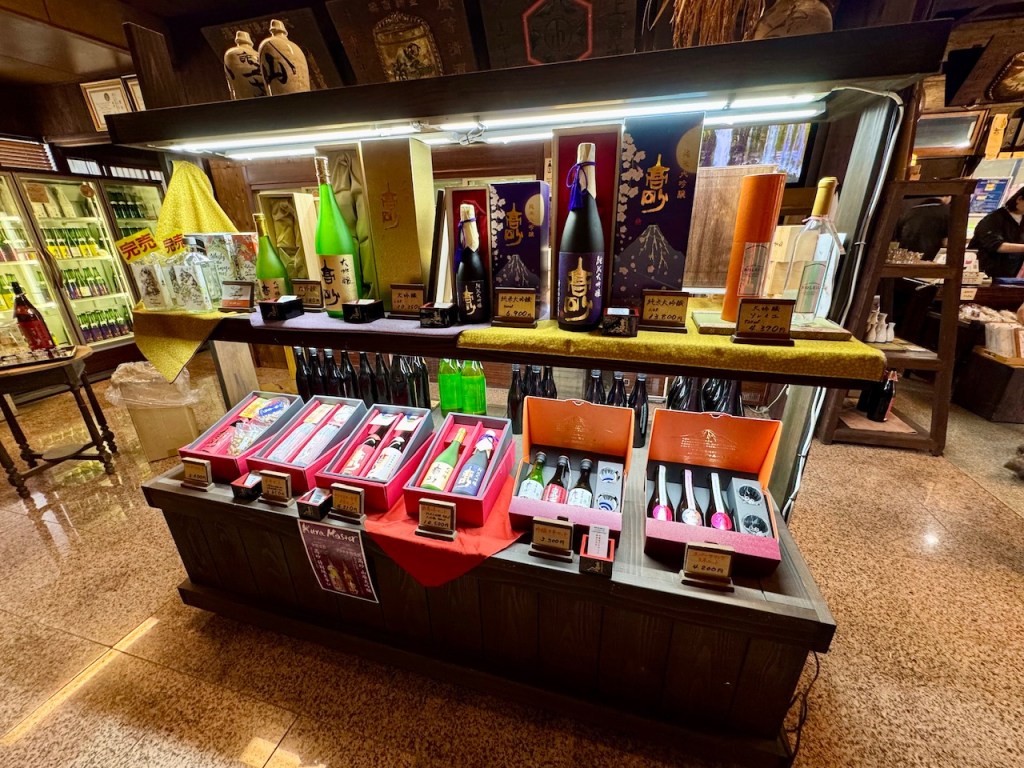
The building is old and the equipment is not shiny and modern but they’ve been doing this for a long time and the proof is in the pudding. The sake was good and they had made liqueurs by adding yuzu and green tea that I especially liked.
Tasting and Shopping
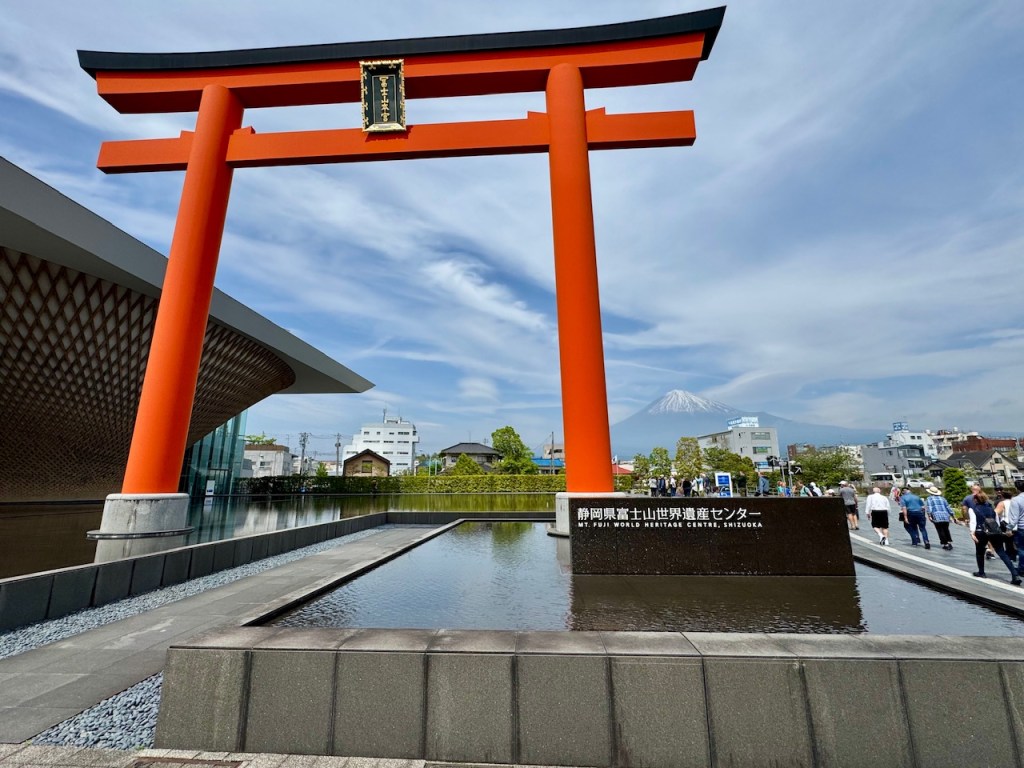
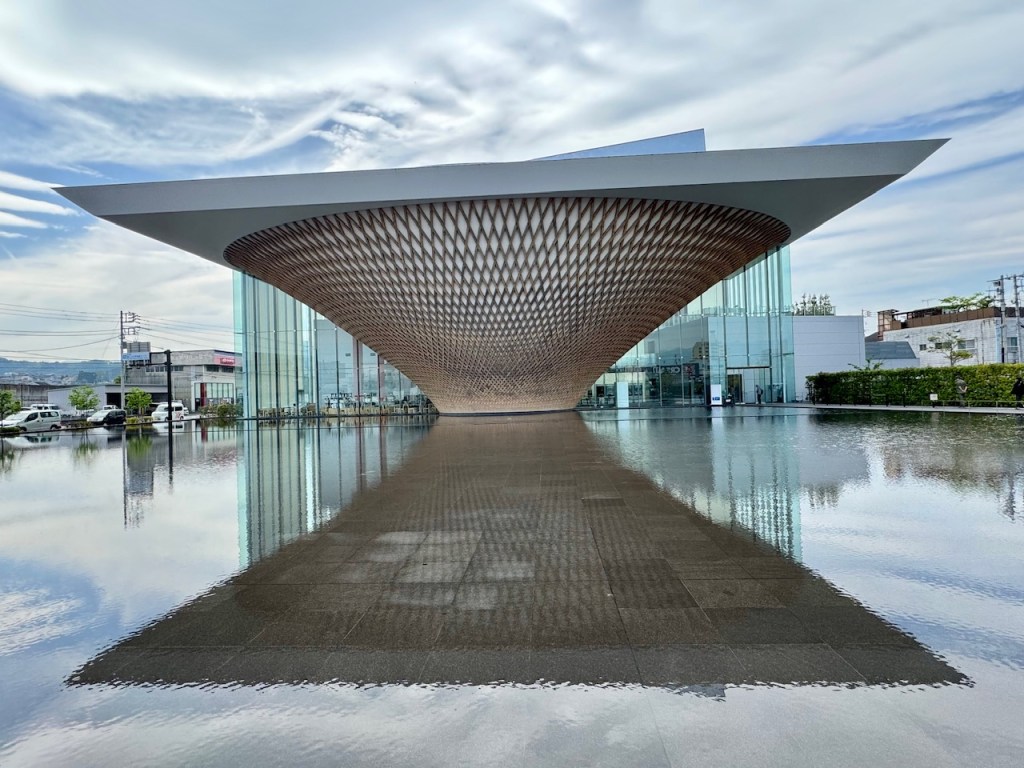
Our next stop is the Mt. Pleasant Fuji World Heritage Centre in Shizuoka. Opened in 2017 to commemorate the mountain’s designation as a UNESCO World Heritage Site, the center boasts a viewing deck and a variety of exhibitions pertaining to the volcano’s history and cultural significance.
Mt. Pleasant Fuji World Heritage Centre
The building has an inverted lattice conical form that reflects in the pond outside to mimic the shape of the iconic mountain. Inside the centre, there is a 200 meter long, sloped walkway that corkscrews up through and around the floors of the building with projections of climbers on the pilgrimage to the summit.
Reflection
The summit has been thought of as sacred since ancient times and was forbidden to women. Tatsu Takayama, a Japanese woman, became the first woman on record to summit Mount Fuji in the fall of 1832 and it wasn’t until 1876 that all restrictions against women climbing the mountain were officially removed.
Today, 200,000 to 300,000 people climb Mt. Fuji every summer using one of the four established routes. Climbers typically begin their climb the previous day, stay overnight at a lodge on the mountain, then start climbing early the next morning to watch the sun rise over the horizon. Littering is a problem on the mountain so to help with clean up and maintenance, the Japanese government intends to start charging 4000 yen (around $40 CDN) this summer.
On the top floor is the Observation Hall, with an open-air deck where visitors hope to see spectacular views of Mount Fuji. Luckily for us Fuji-san has gotten over her shyness from this morning and we are afforded a great view of the mountain topped with magnificent clouds.
Mt Fuji Views
Soon enough it’s time for our return to the ship where there is a friend waiting for us!
Tonight’s dinner is in Cagney’s and I join Jan and Pete to enjoy my last night catching up on their day’s activities. After indulging in giant shrimp cocktail, wedge salad, my typical main course of perfectly cooked lamb chops and seven layer chocolate cake washed down with a couple of glasses of wine, it’s back to my cabin to complete the (over)packing for tomorrow’s disembarkation.
We overnighted in Tokushima so we have a day to explore here. After chatting with folks last night that headed into town, I decided to hop the shuttle and head to the local shopping mall. I really wasn’t much in the mood for retail therapy and there wasn’t much to buy even if I was so I headed back to the ship for lunch with lots of yen still burning a hole in my pocket.
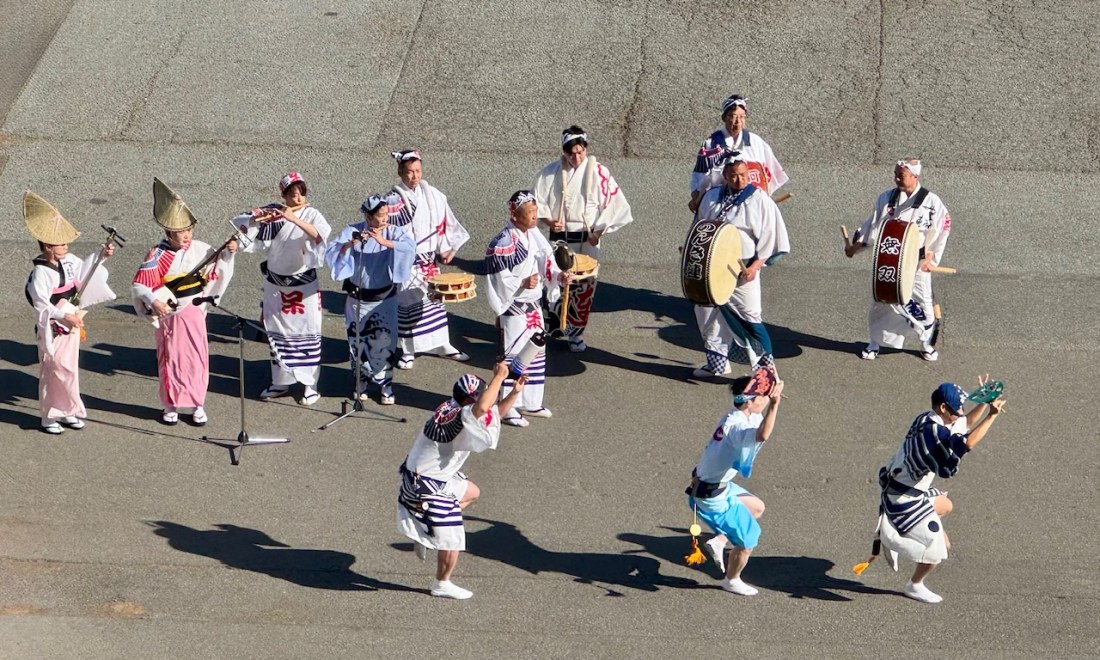
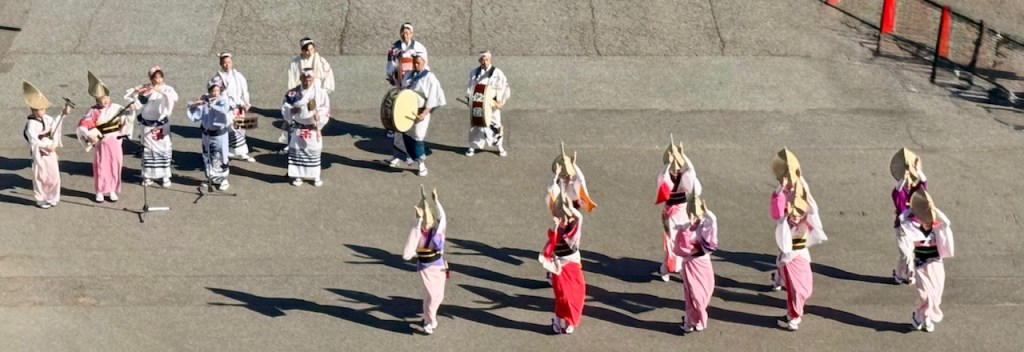
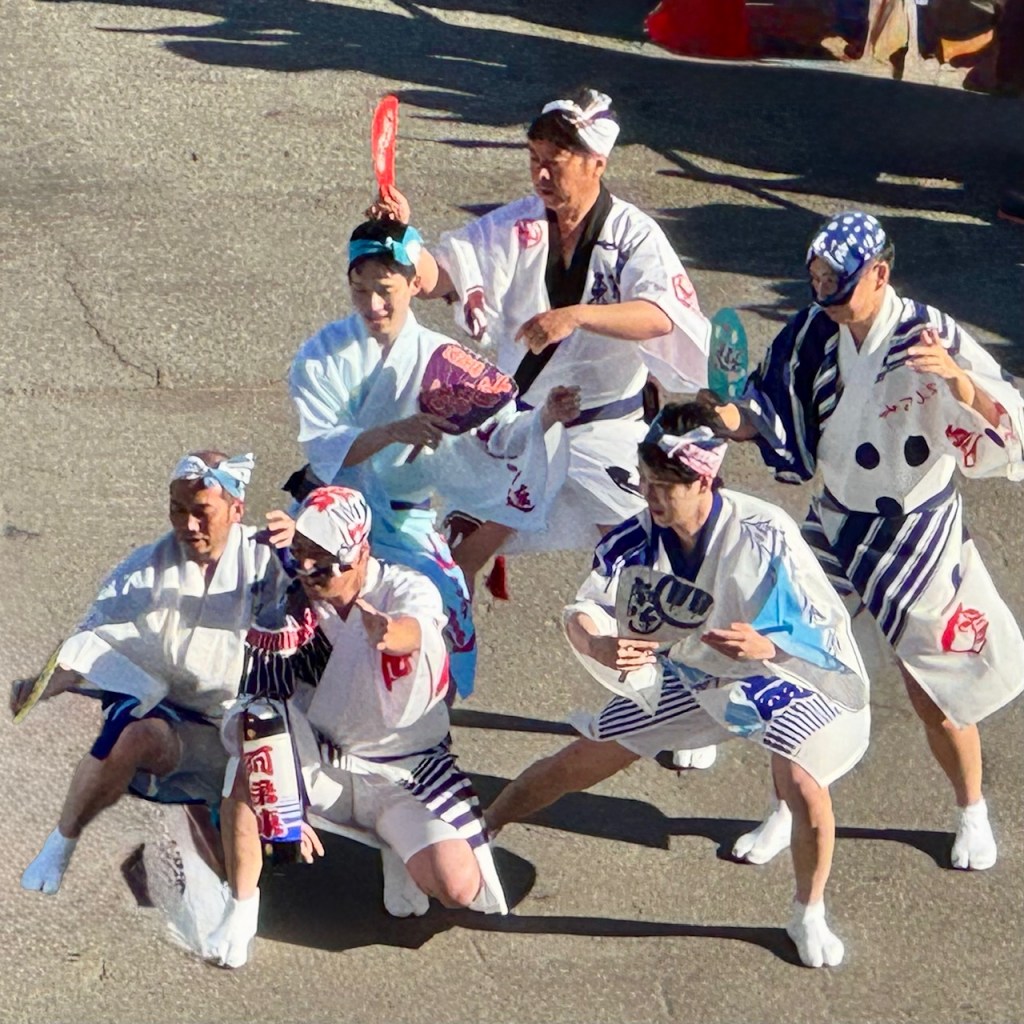
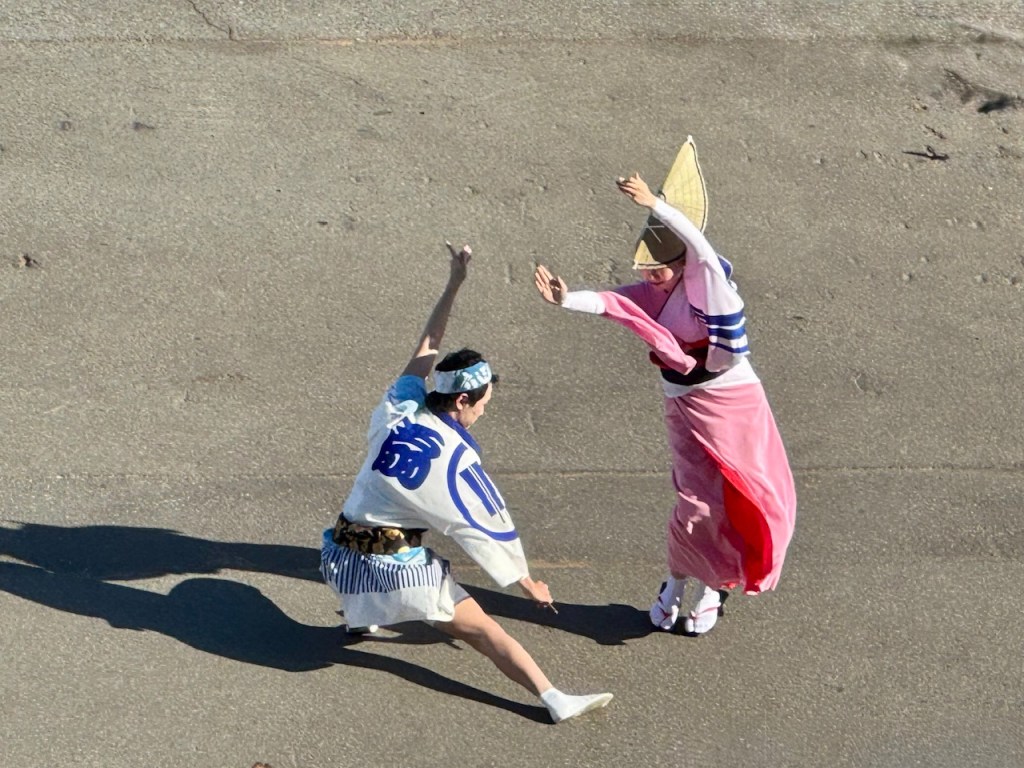
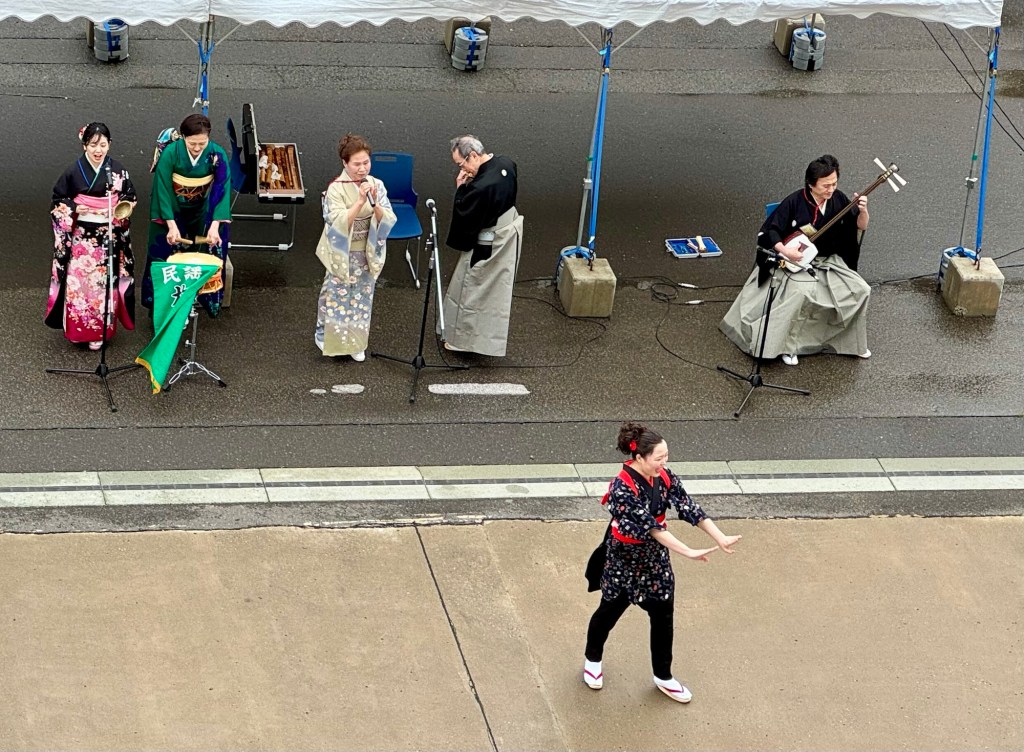
Decided to start the unpleasant task of packing and then hung around reading for a bit before heading to the Promenade deck to check out the local folk dancers who were giving a demonstration on the pier. Tokushima is know for the Awa Odori Festival featuring traditional Japanese dance. Awa Odori features groups of dancers wearing traditional costumes (happi for the men and yukata with bamboo hats called toriogasa for the women).
Awa Odori is accompanied by traditional instruments like shamisen (lute), taiko drums, shinobue flute, and kane bells. Dancers chant and sing while performing. Pretty interesting.
Had dinner in the main dining room and an early night.
Today we docked in Tokushima and I’m on an excursion to visit two of the Buddhist temples nestled along a circular pilgrimage route that loops through the majestic Shikoku Mountains. This 750-mile route connects a total of 88 temples, each serving as a significant milestone on the path to enlightenment.
On our twenty-minute drive to our first stop, we were treated to an endless number of rice fields on both sides of the bus. The presence of water in the fields indicated that the farmers had already planted the rice, while the dry soil suggested that the rice hadn’t been planted yet.
Rice fields
The pilgrimage, which dates back 1200 years, is one of the few circular-shaped pilgrimages in the world. It encompasses 88 “official” temples and numerous other sacred sites where the Buddhist priest Kūkai (Kōbō Daishi) is believed to have either trained or spent time during the 9th Century. Every henro, or pilgrim, is said to tread in the footsteps of Kōbō Daishi, the ninth-century ascetic who founded the Shingon sect of Buddhism.
The pilgrimage was traditionally completed on foot, but modern pilgrims use cars, taxis, buses, bicycles, or motorcycles, and often augment their travels with public transportation. The standard walking course is approximately 1,200 kilometres long and can take anywhere from 30 to 60 days to complete.
Pilgrims stay in minshuku/ryokan; family-operated, traditional Japanese-style bed and breakfasts, some temples offer ryokan-style lodging to the pilgrims within temple grounds called shukubō, and there is, of course, the option to stay in hotels along the route. It all depends on preference and budget.
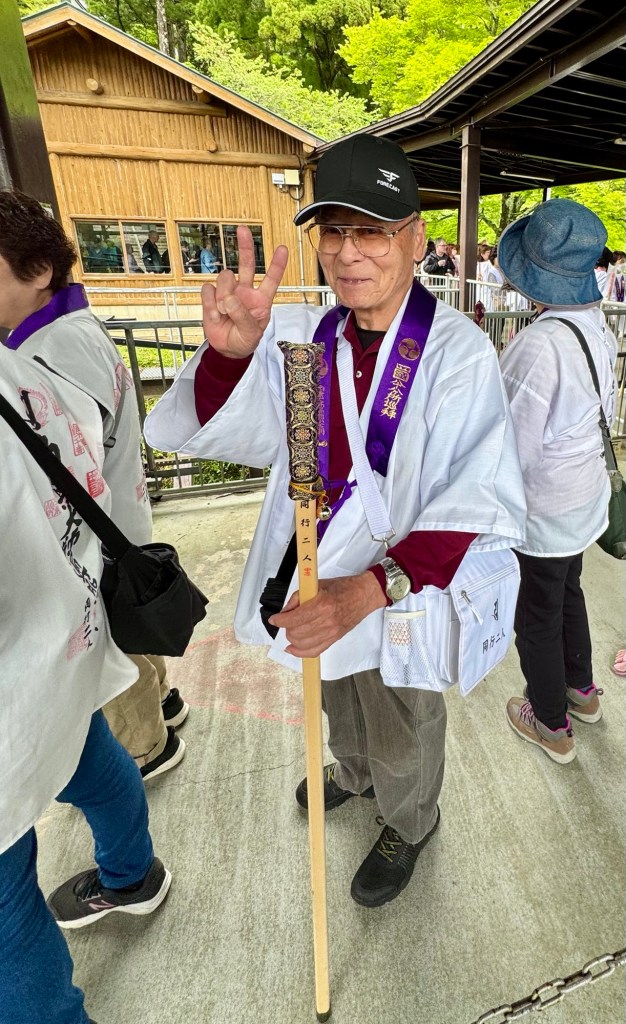
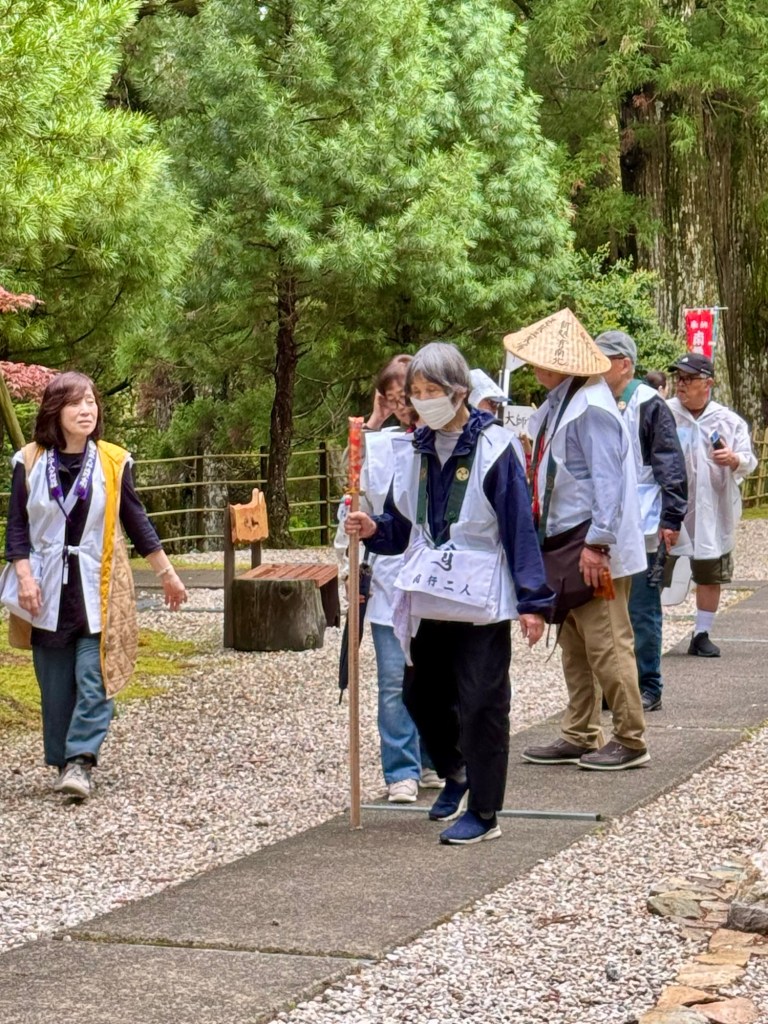
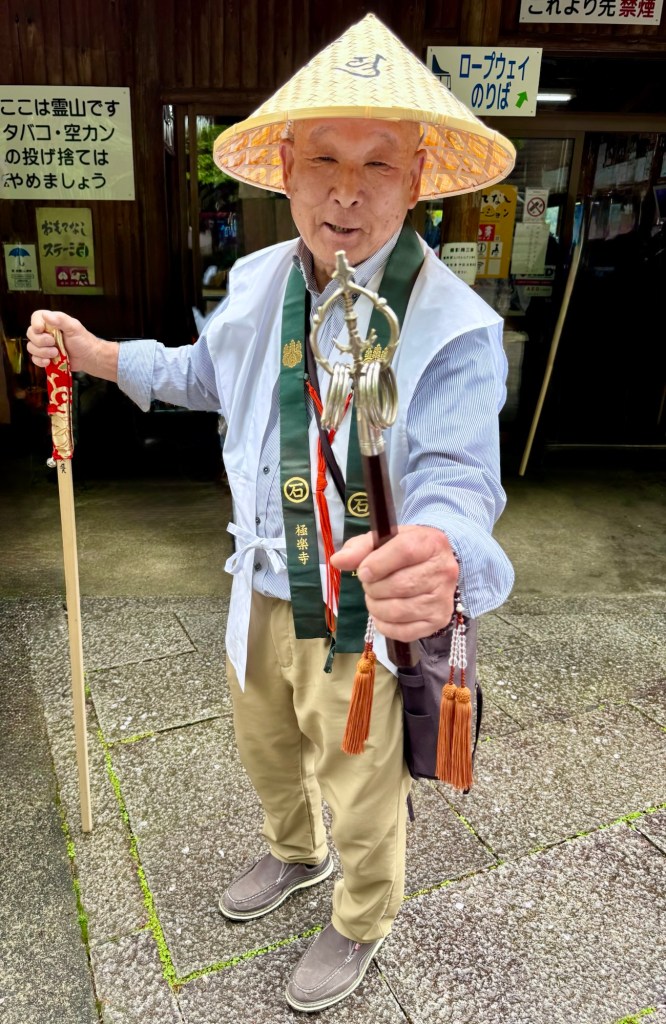
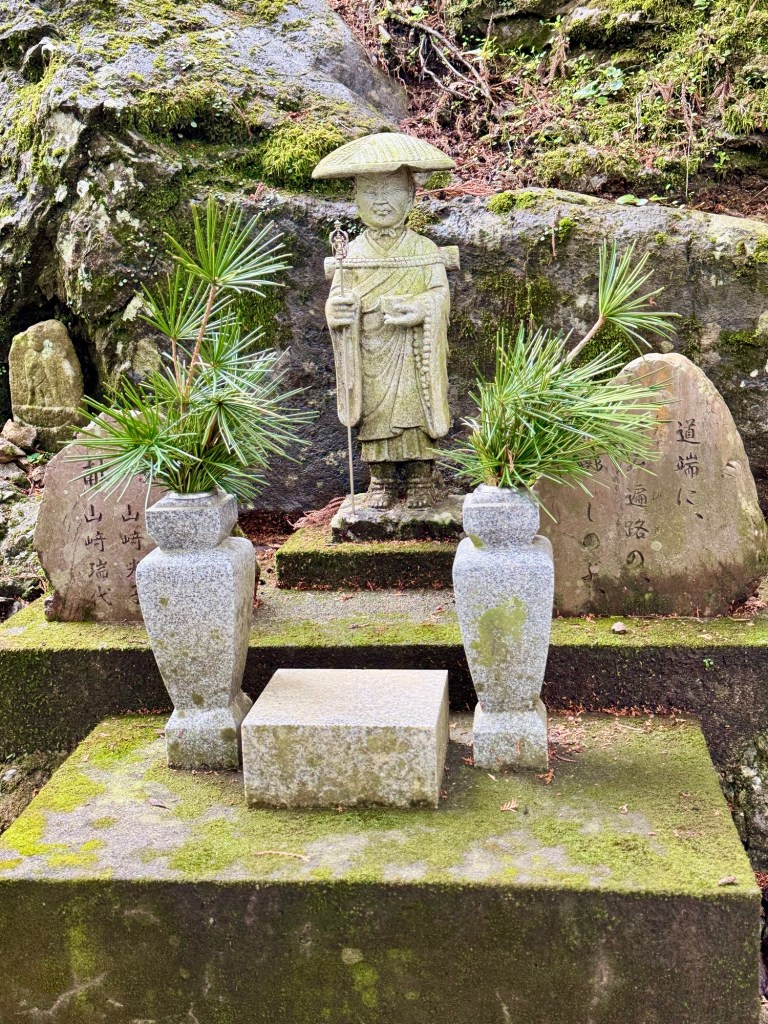
Pilgrims wear a three-piece set of white robes, a ‘wagesa’ stole—a band of coloured cloth hung around their neck—and also carry a pilgrim’s staff. The white robes have historical significance, tracing their origins back to the harsher Shikoku 88 Temple Pilgrimage of the past. During that time, people would wear burial clothes in advance, hoping to attain nirvana if they lost their lives while on the pilgrimage. The wagesa stole is a simplified version of the kesa stoles worn by monks. The pilgrims’ staffs, which they carry, embody the spirit of Kobo Daishi. They serve as a symbol of the pilgrim’s journey, representing Kobo Daishi’s protection and guidance.
Friendly Pilgrim in Full Regalia
Pilgrims receive a special stamp at each temple which is collected in a book. This is all quite reminiscent of my journey on the Camino de Santiago in 2008.
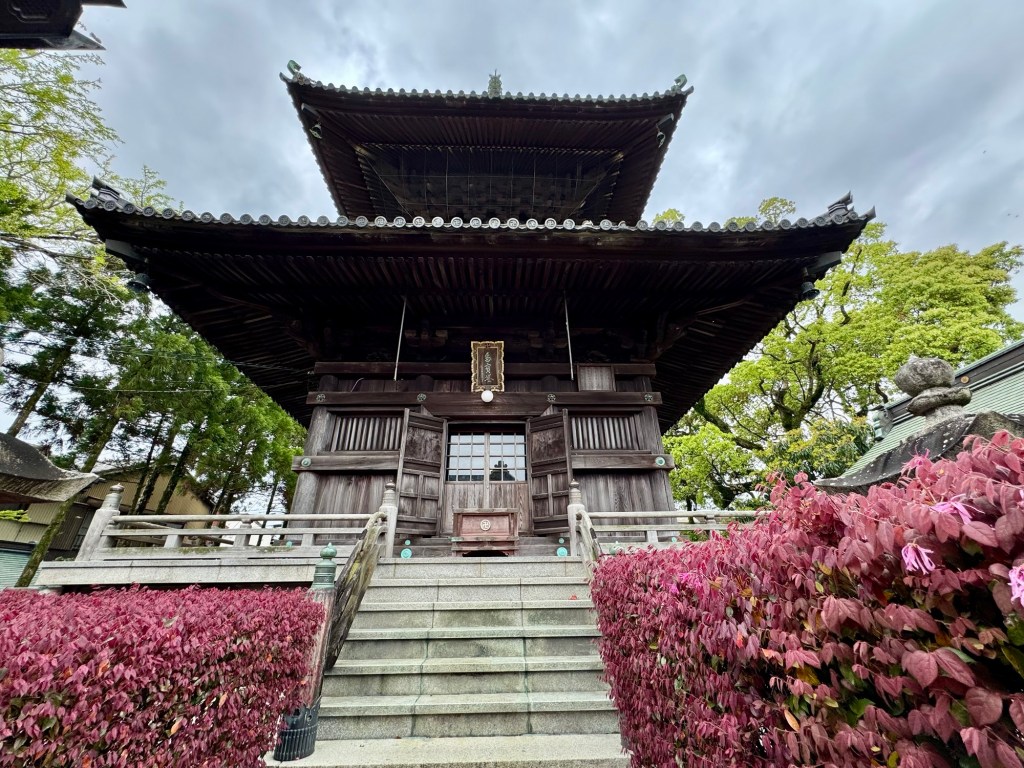
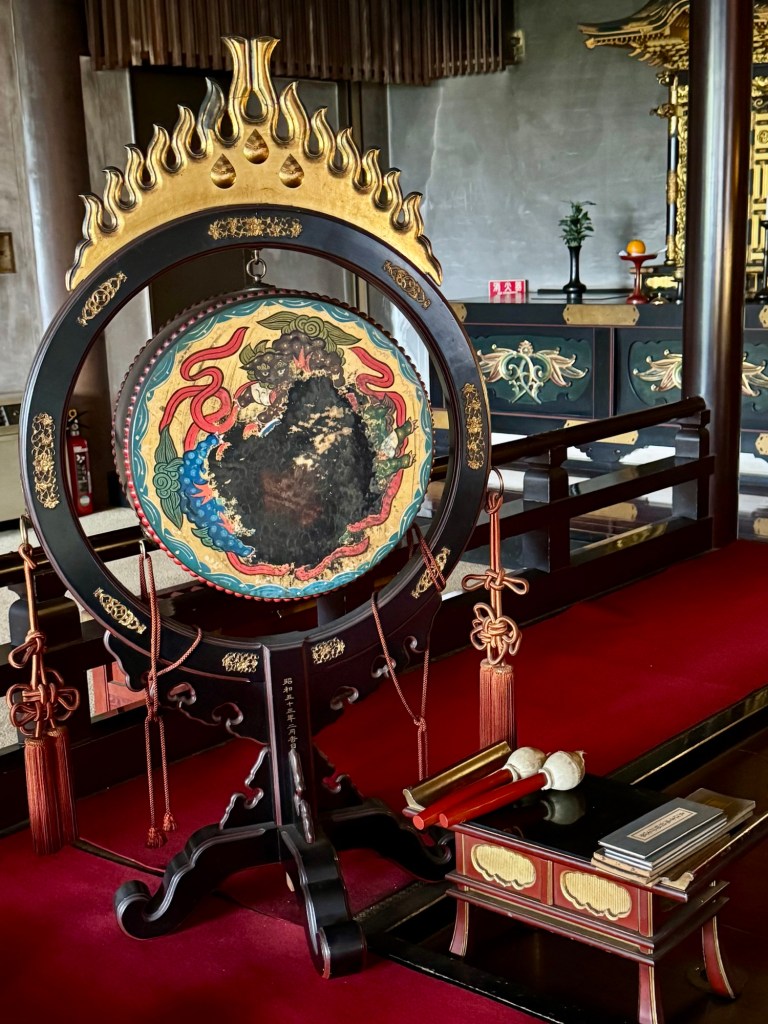
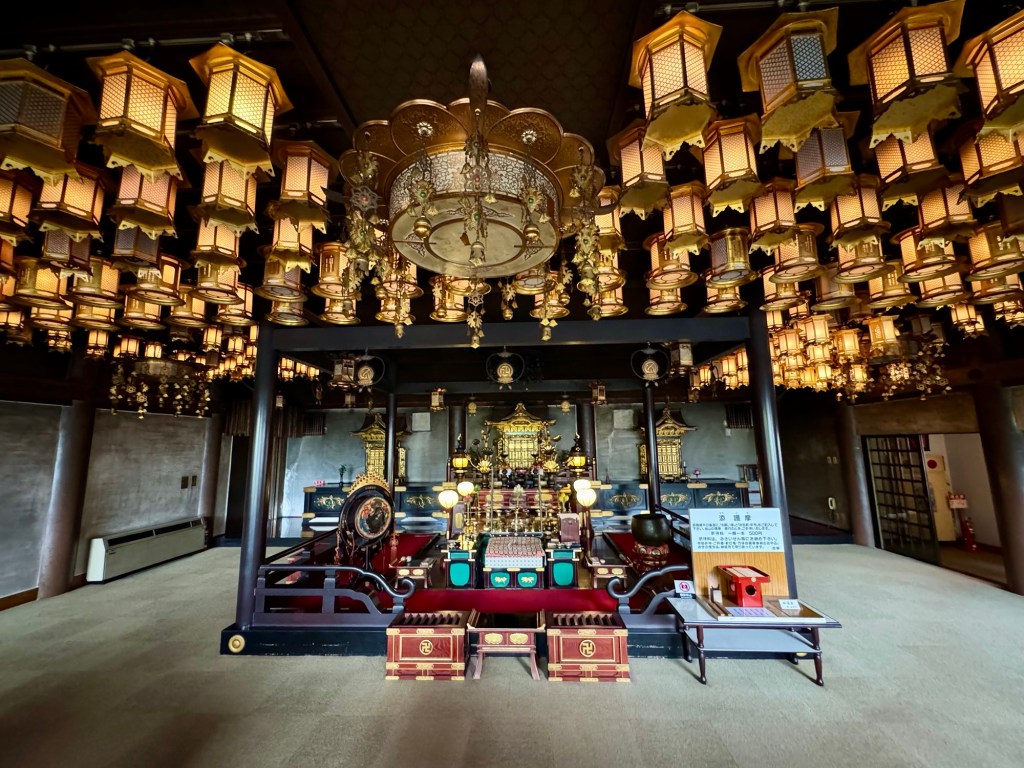
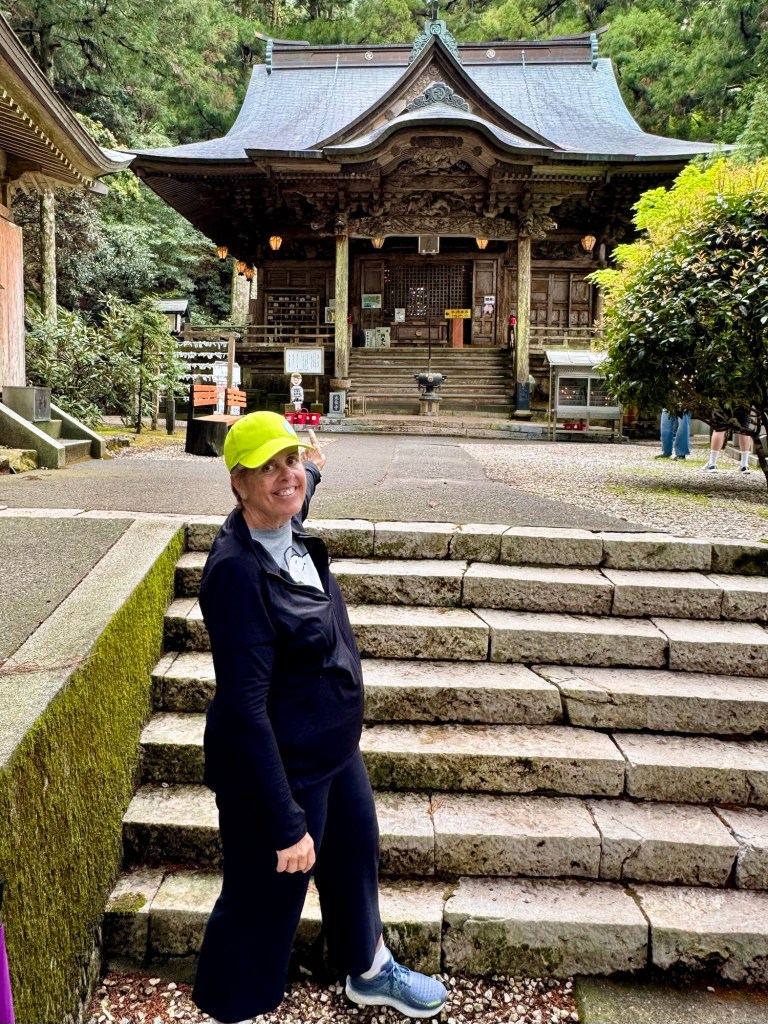
Our first stop is Tatsue-ji, the Koyasan Shingon temple, which is the 19th temple on the Shikoku 88 pilgrimage. According to legend, the temple was founded by Gyoki at the behest of Emperor Shomu, who reigned from 724 to 749. Kobo Daishi visited this temple in 815. Back then, the temple was situated in a picturesque location, approximately 400 meters west of its current site, nestled near the mountains until it was burned in a fire.
The temple was rebuilt at its present location with the aid of Hachisuka Iemasa, the first lord of the Awa. In 1974 there was another fire and the Hondo was again rebuilt in 1977.
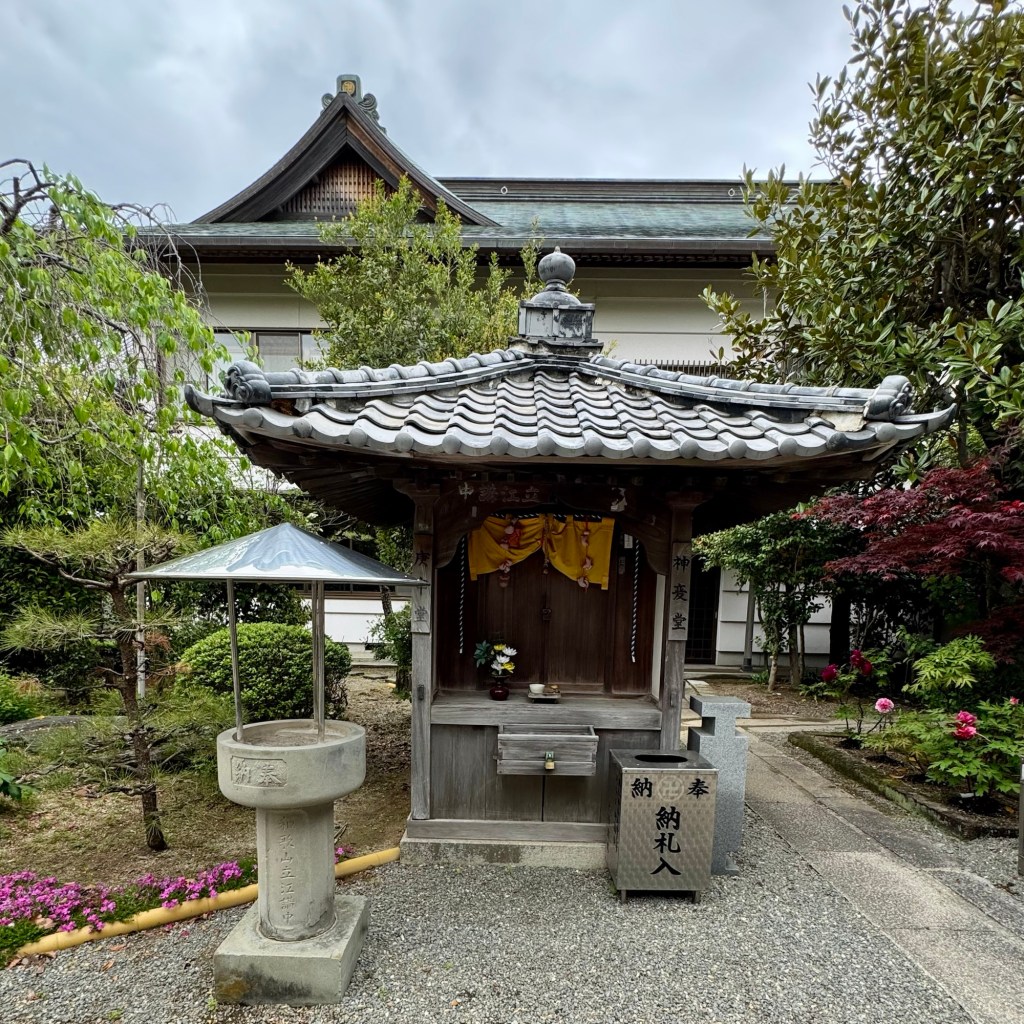
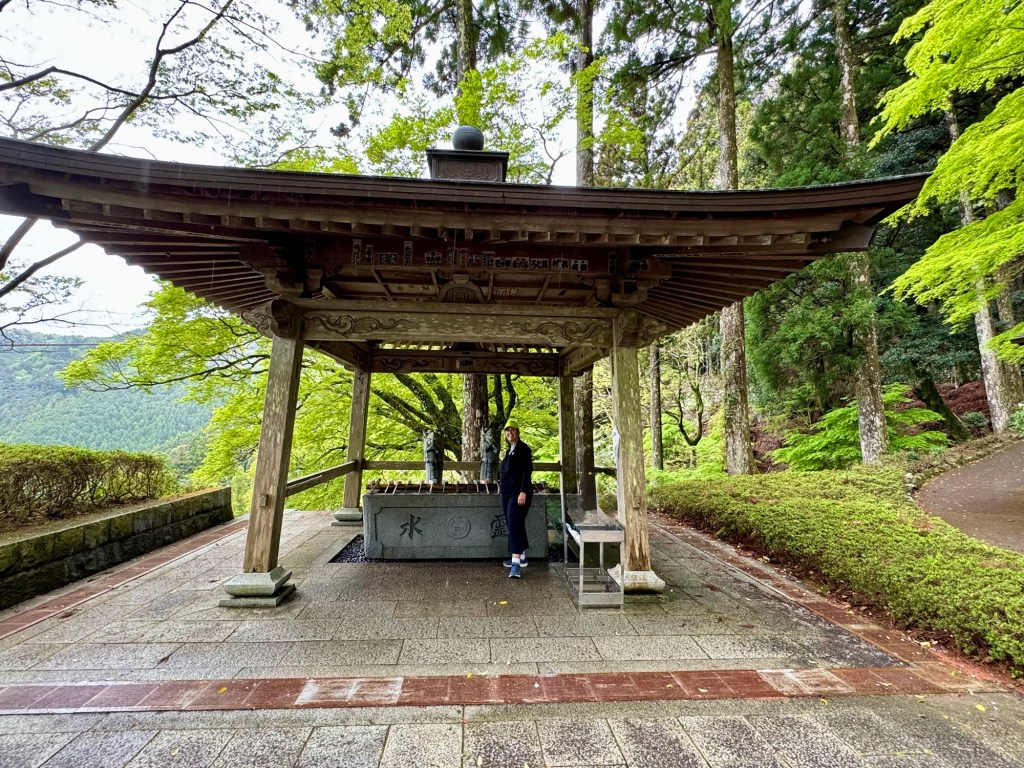
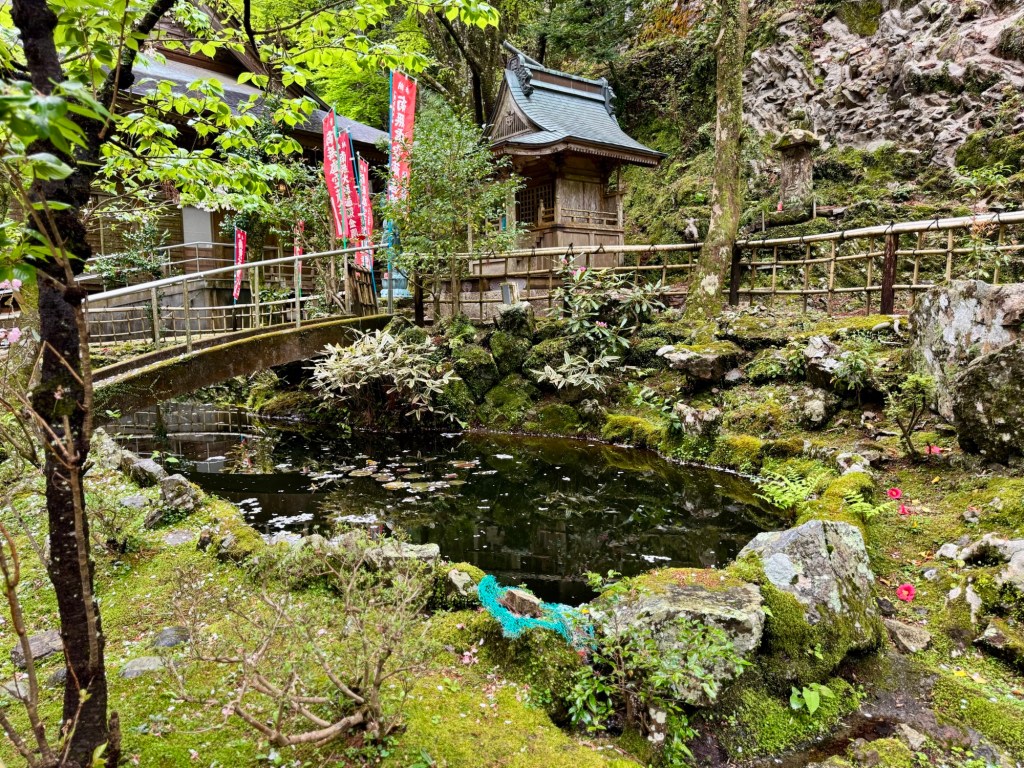
We entered the temple across a small bridge and through a two-storied Niō gate. Beyond the gate, there’s a belfry on the left, the Bishamon Hall housing a colourful statue of Bishamonten on the right with a water basin next to it.
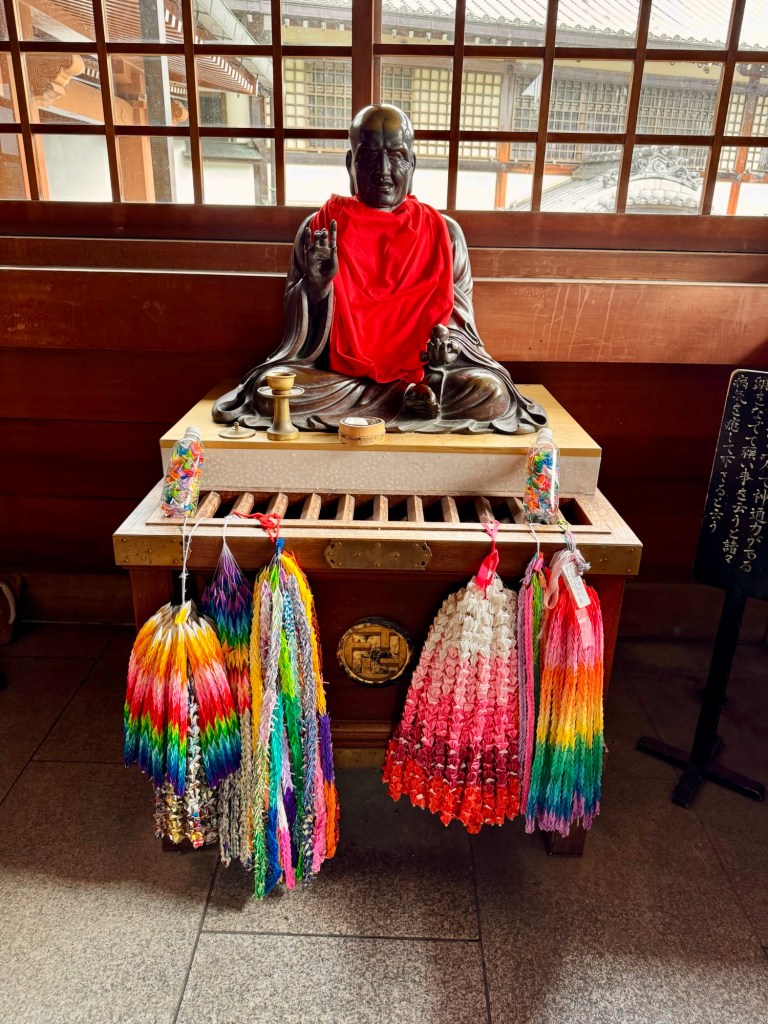
Sights at Tatsue-ji TempleTelephone booth
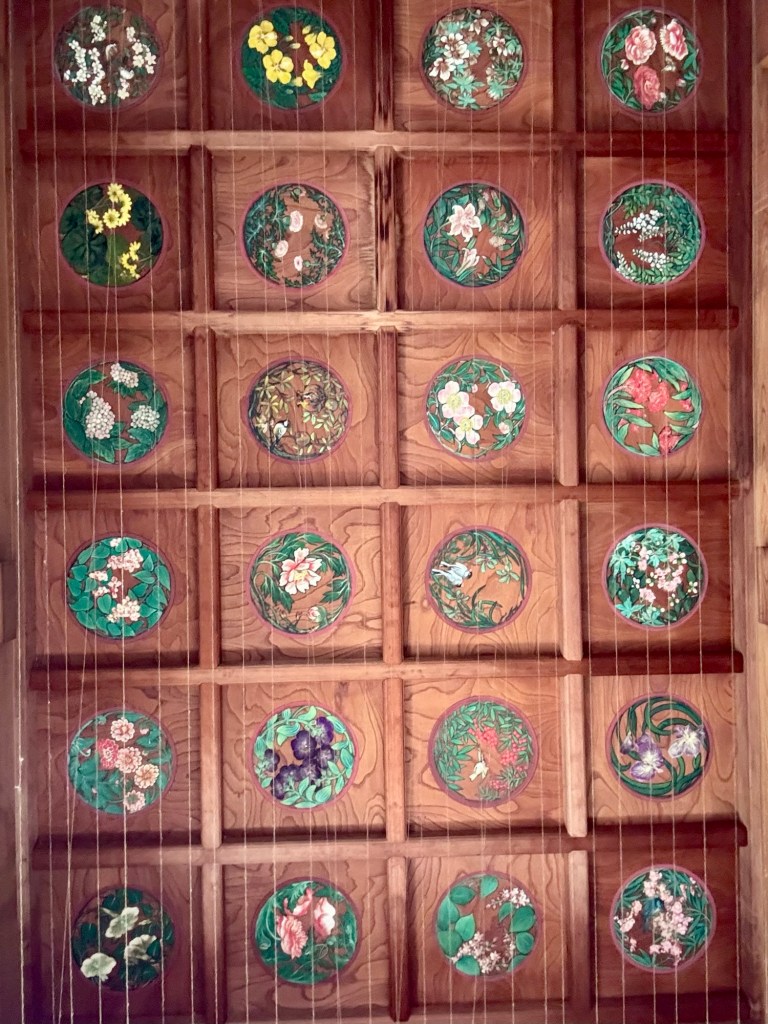
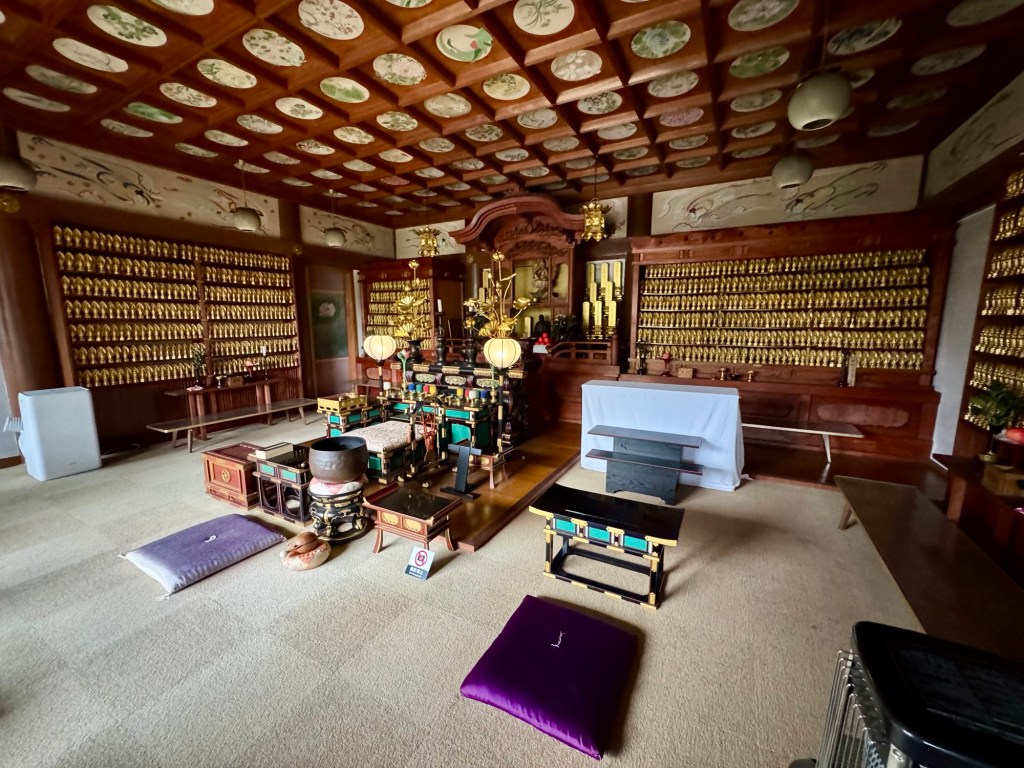
After wandering around the site for a bit, I removed my shoes and entered the magnificent main hall. Here, there are 286 ceiling panels painted by more than 40 teachers at Tokyo University of the Arts amongst other spectacular treasures.
Main temple
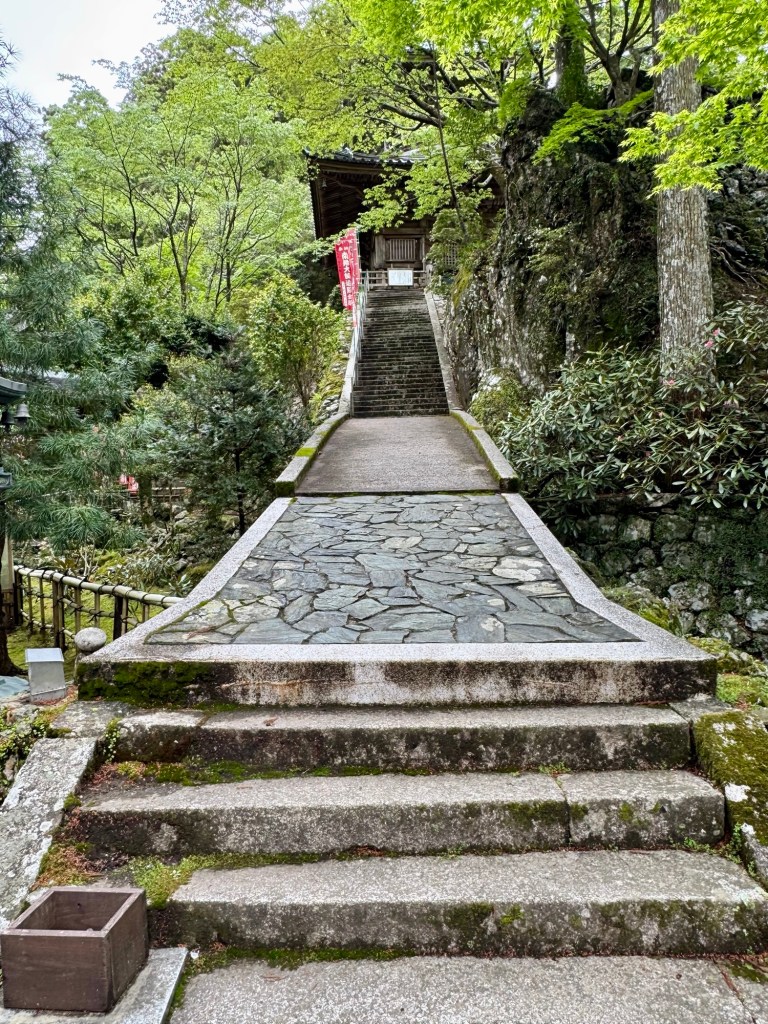
Too soon, we boarded the bus to head to our next stop; Tairyu-ji, the 21st temple on the loop. Located at 610 m above sea level, it’s one of the “nansho”, the difficult temples to reach on foot.
Although Kūkai is said to have founded or visited many of the pilgrimage temples, there isn’t always proof that he did. However, he wrote in his book Sango Shiiki, “When I was nineteen years old, I climbed up Mt. Tairyū in Awa Province and meditated to master the Kokūzō Gumonji method by reciting it one million times.”
Later he was ordered by Emperor Kanmu (735-806) to found a temple here and be the head priest. The main deity enshrined is Kokūzō, whose mantra he had chanted as a youth.
Sometime between 1185-1333, the front gate was built, making it the oldest in Tokushima. The forces of Chōsokabe Motochika destroyed the temple between 1573-1592 but 1669, the main hall was restored. The pagoda was rebuilt in 1861.
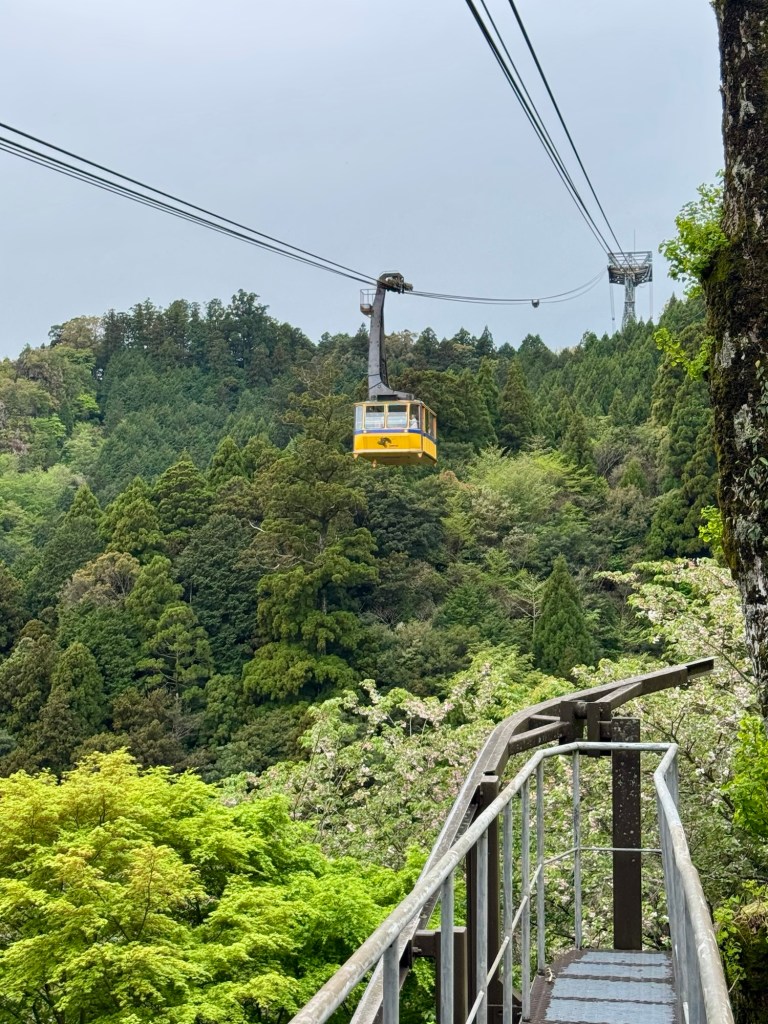
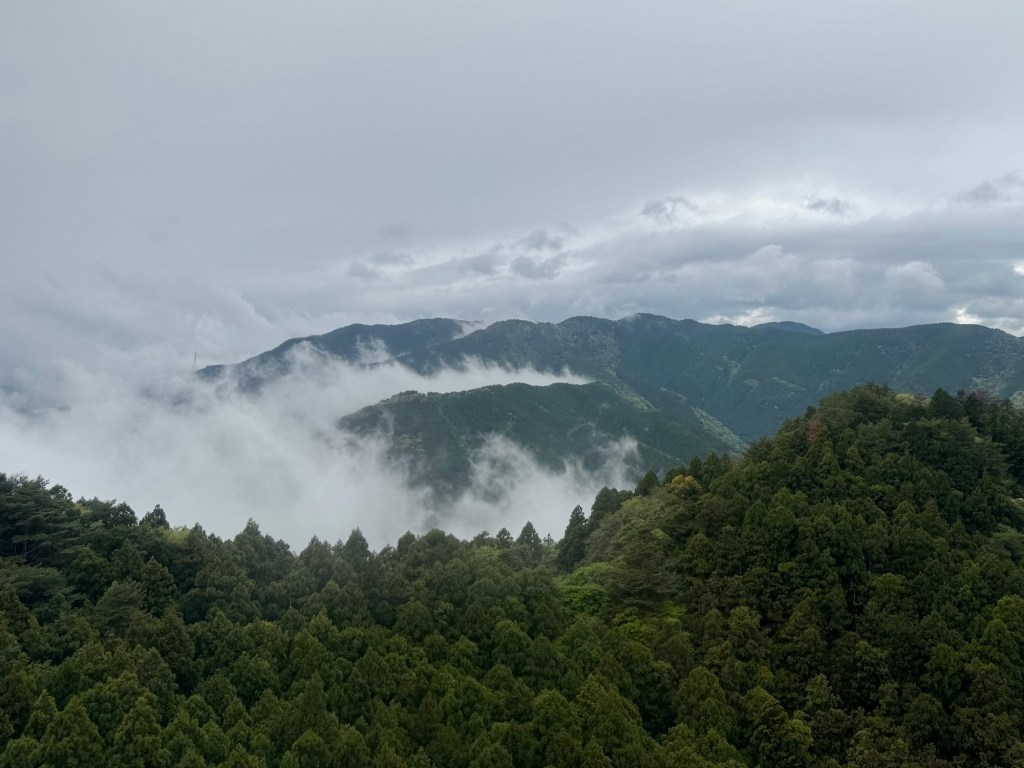
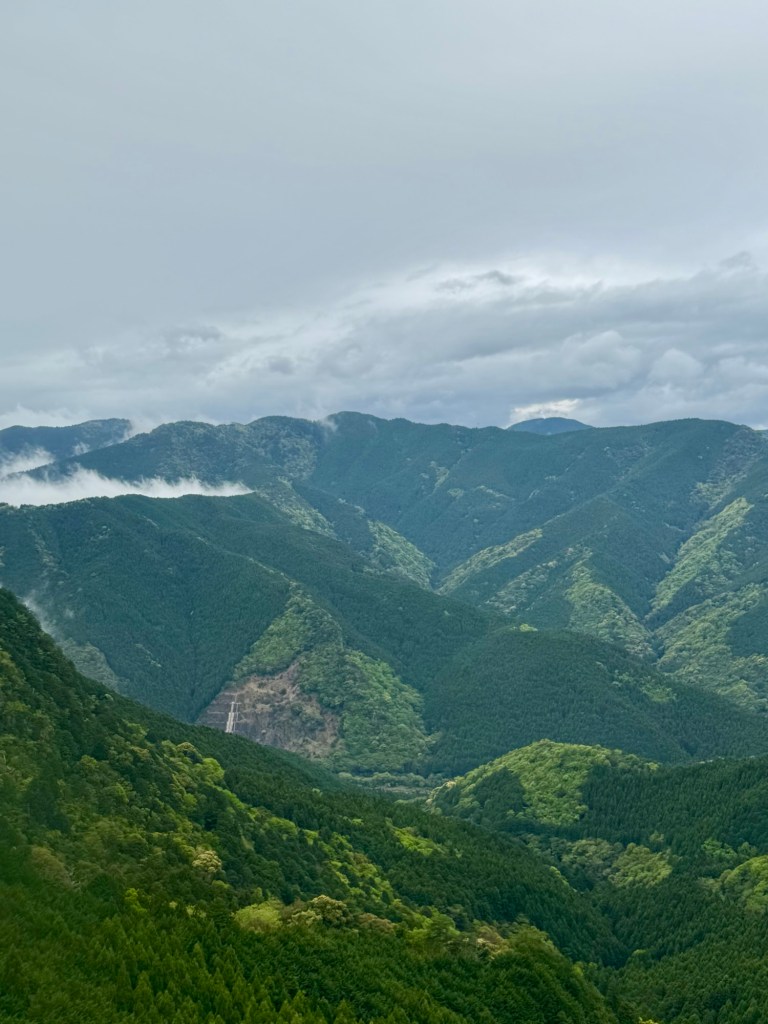
In 1992, a cable car was built that whisks visitors to the temple in about ten minutes. It’s the longest cable car in west Japan with a length of 2,775 m with vistas in all directions from the windows are truly spectacular.
There were many pilgrims at this temple and they were happy to interact with the tourists and have their photos taken in their full regalia. I wished I knew the Japanese equivalent of “Buen Camino.”
Pilgrims
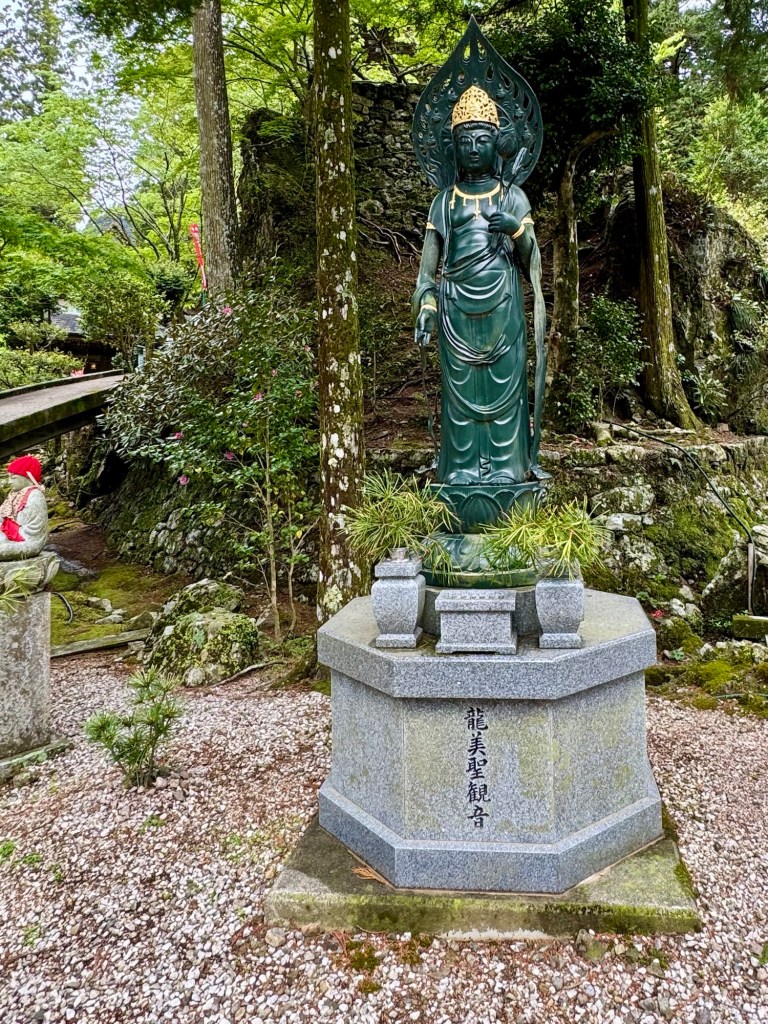
Given our tight schedule to get back to the bus and long lines for the cable car, we didn’t have so much time to experience the mountaintop atmosphere and explore the spacious grounds but I did manage to see many of the sculptures and shrines. Tairyu-ji didn’t disappoint.
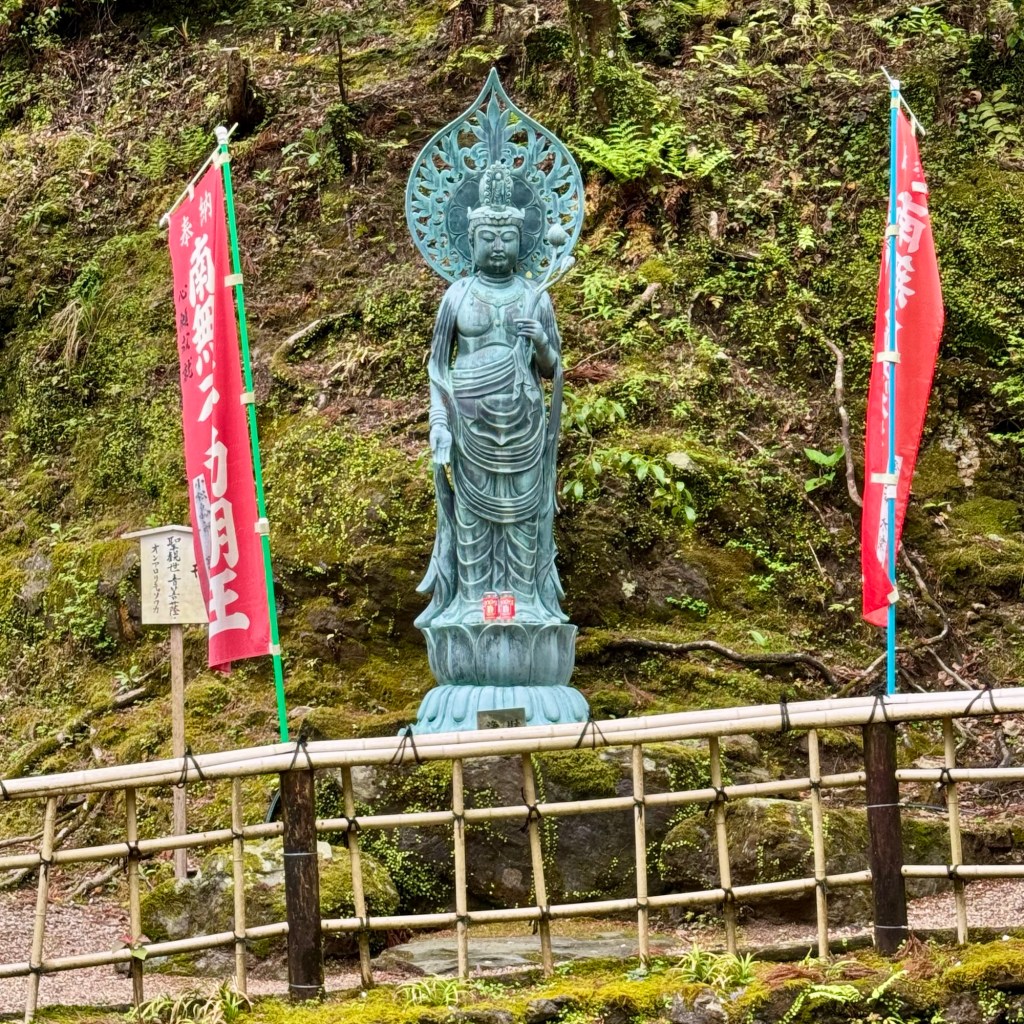
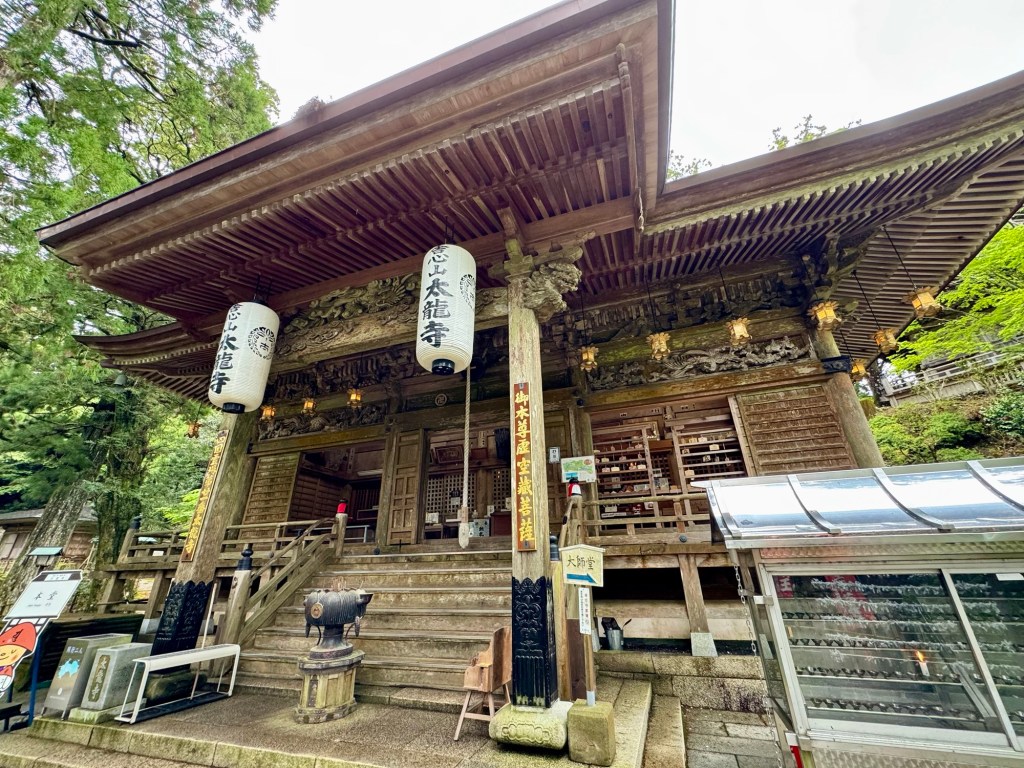
Sights at Tairyu-ji Temple
Back on the bus for the hour drive back to port and I was back on board the ship soon enough. I had a bit of time before my dinner at the Italian specialty restaurant, Onda, to put my feet up, shower and don my glad rags.
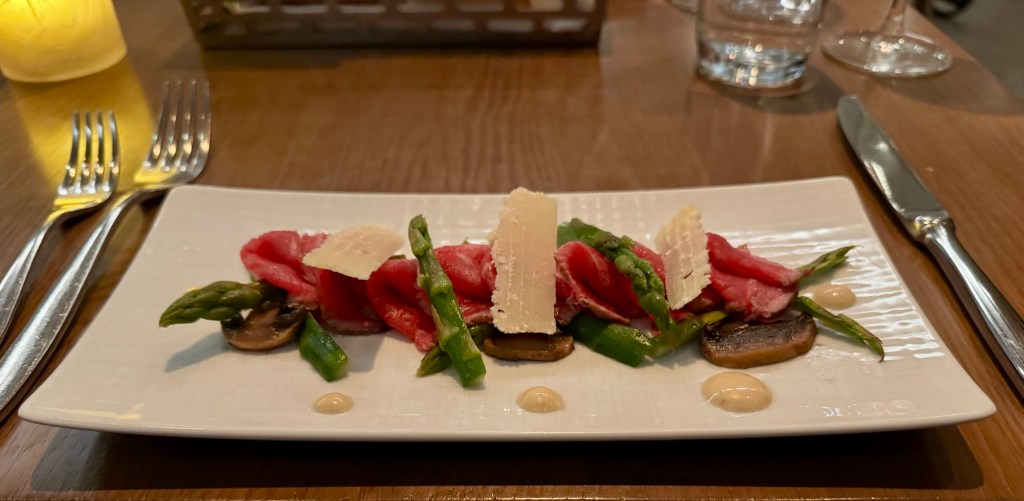
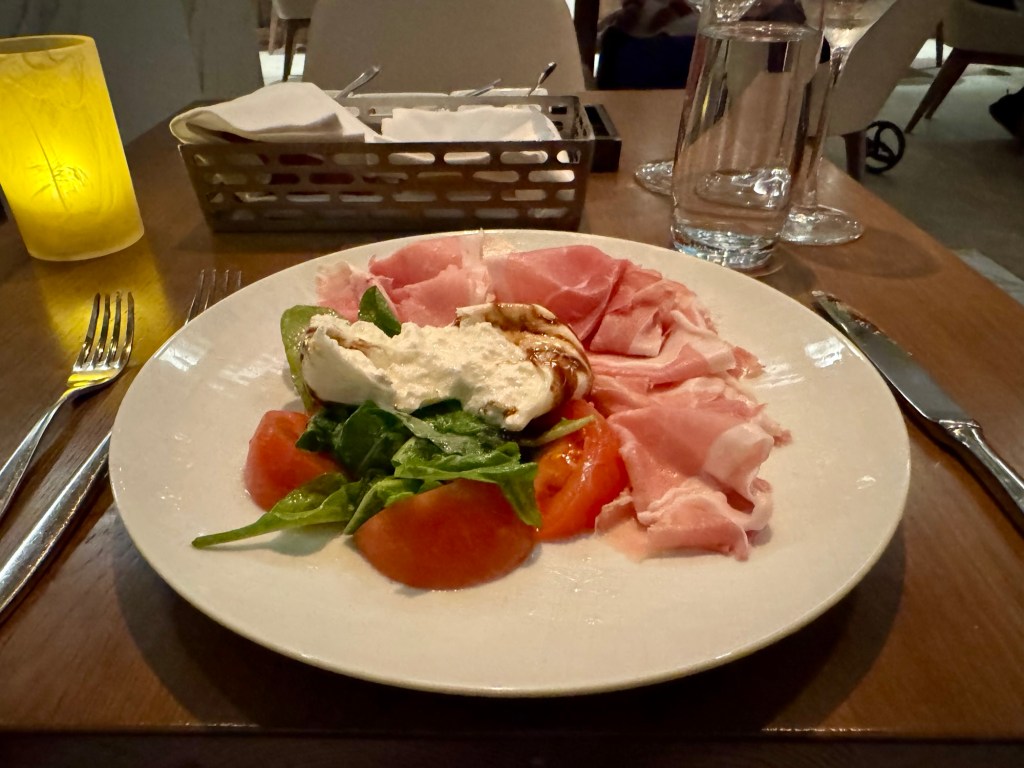
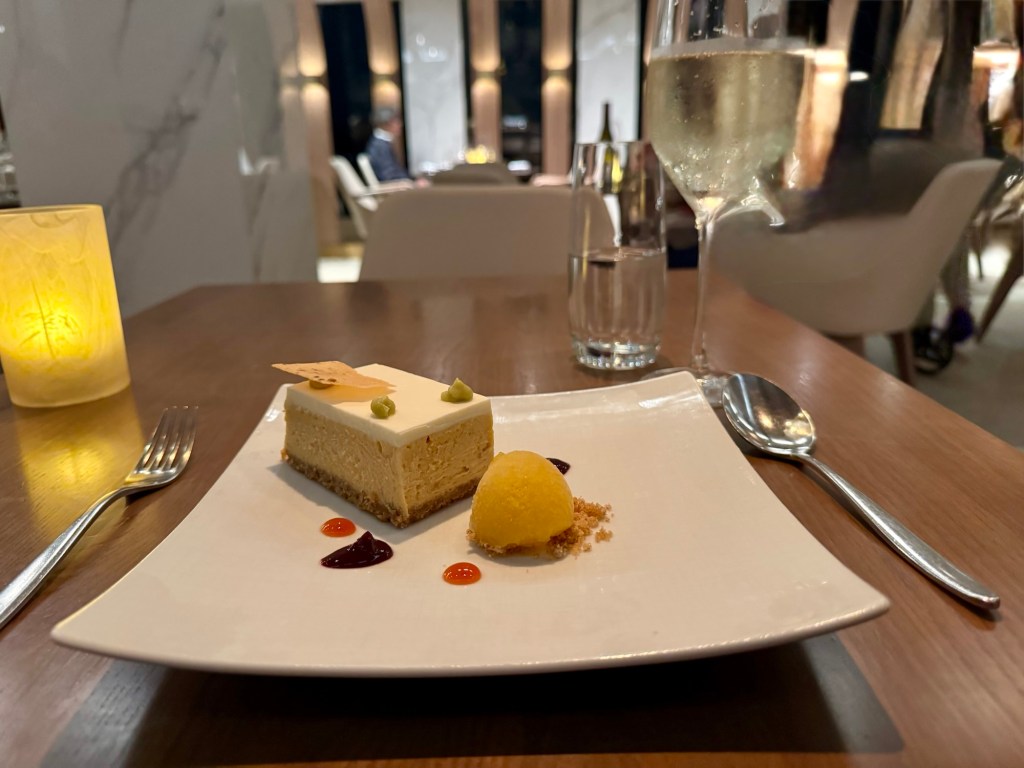
Dinner was great; beef carpaccio, burrata salad with piles of salty prosciutto, mezzelune stuffed with ricotta and spinach topped off with cheese cake with pistachio ganache and white peach sorbet. I’m starting to worry about who will be making my meals when I get home!!
Dinner at Onda
Lots of things to do on the ship tonight but my bed and book are calling my name so after a quick walk around, I headed back to my cabin.
Today’s port is Kagoshima. With the palm trees and an active volcano on the horizon, it looks a bit like Hawaii. The city is close but there’s no time to explore as I’ve booked a ship’s excursion to Chiran, an out-lying castle town from Japan’s feudal period and home base of the training center for the feared kamikaze pilots during World War II.
The hour-long drive sped by as our guide, Norry, regaled us with stories of the samurai and the pilots. Soon enough we arrived in Chiran and made our way to the samurai village.
In the Edo Period (1600-1868), Satsuma territory was divided into 113 sections called Tojos, one of which was Chiran. Each Tojo had the estate steward’s residence in the center surrounded by the residential quarters for ordinary samurais. These settlements were called “Fumoto,” where samurai strengthened their mind and body, engaged in farming, and dedicated themselves to martial arts training.
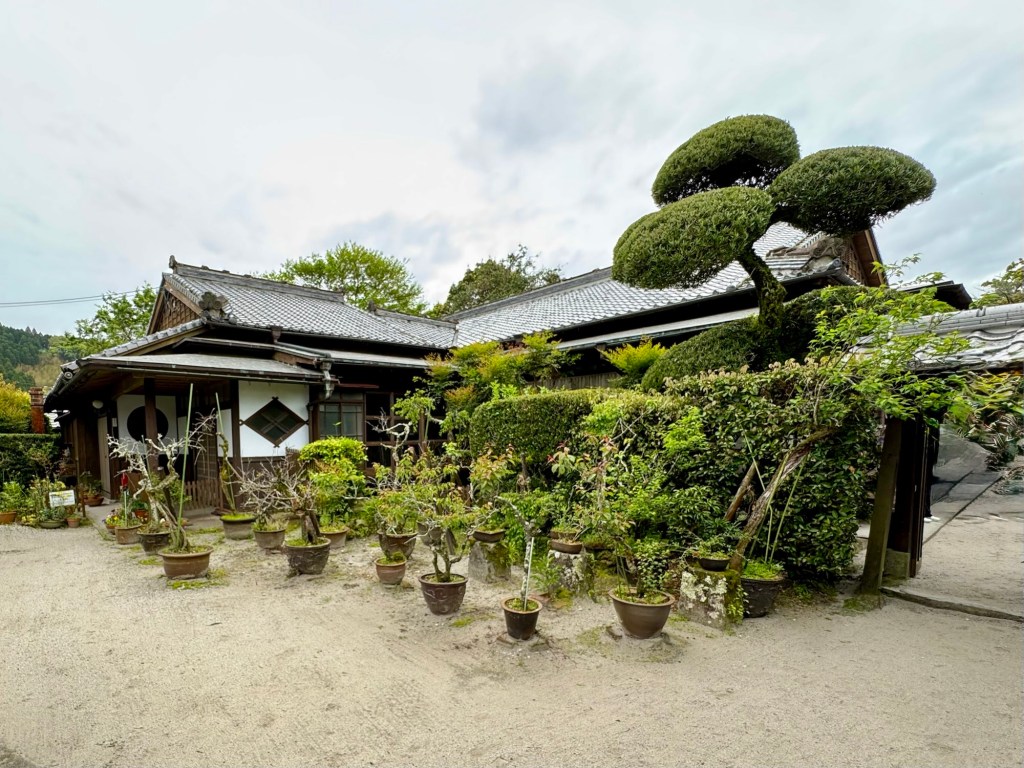
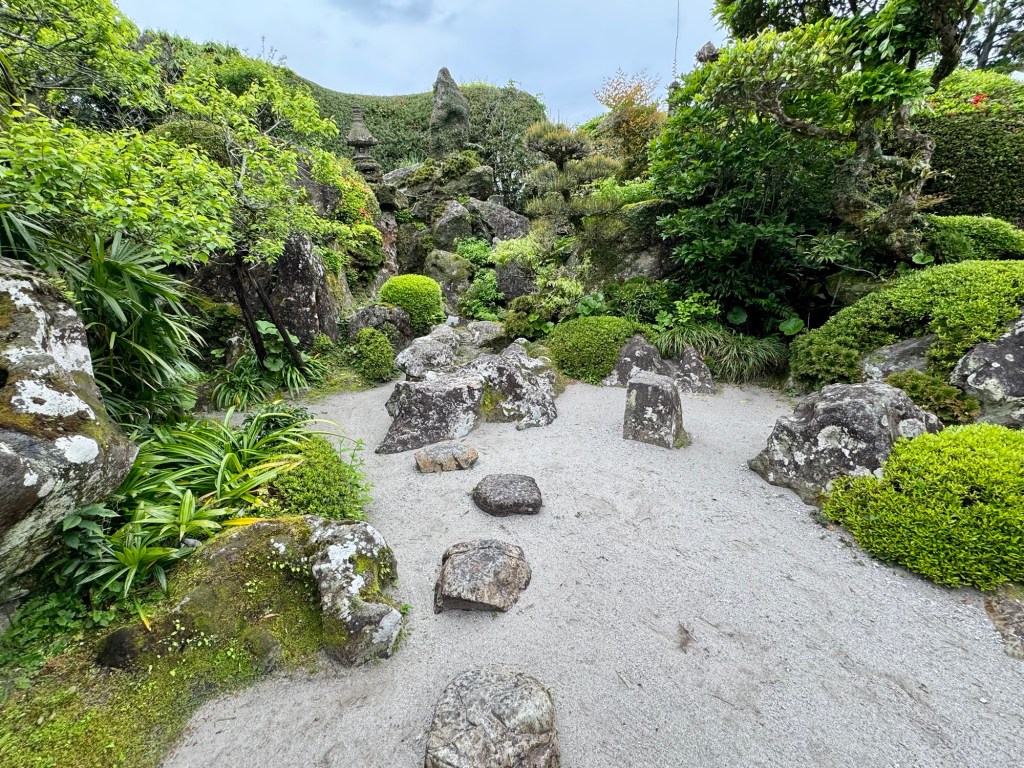
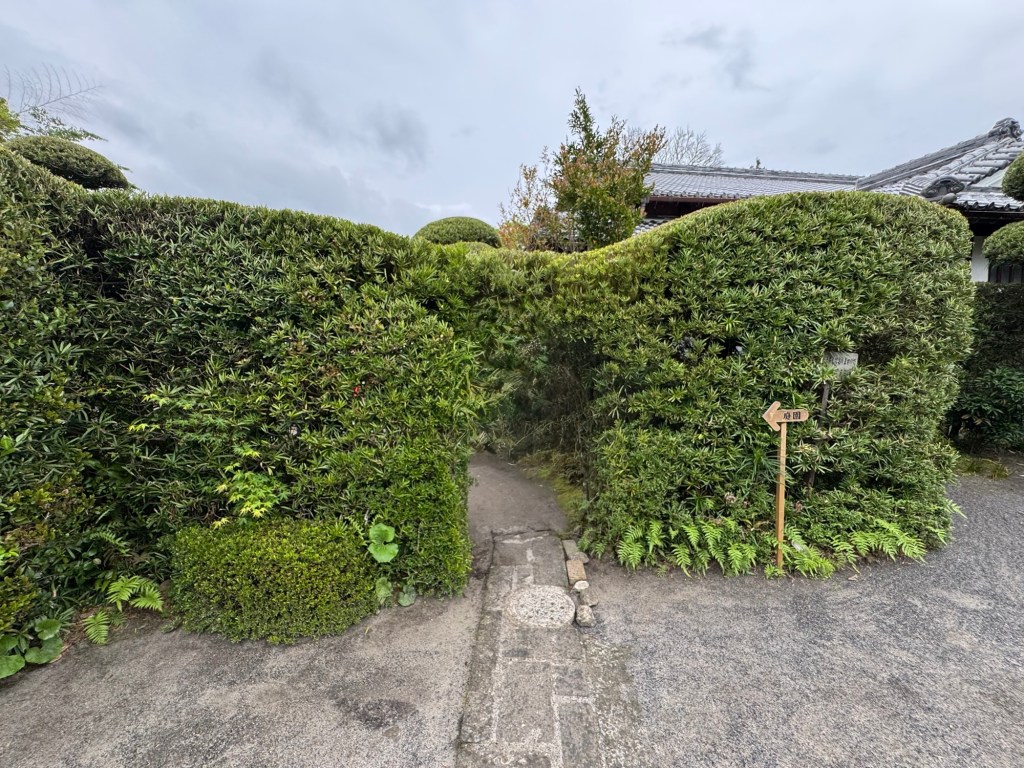
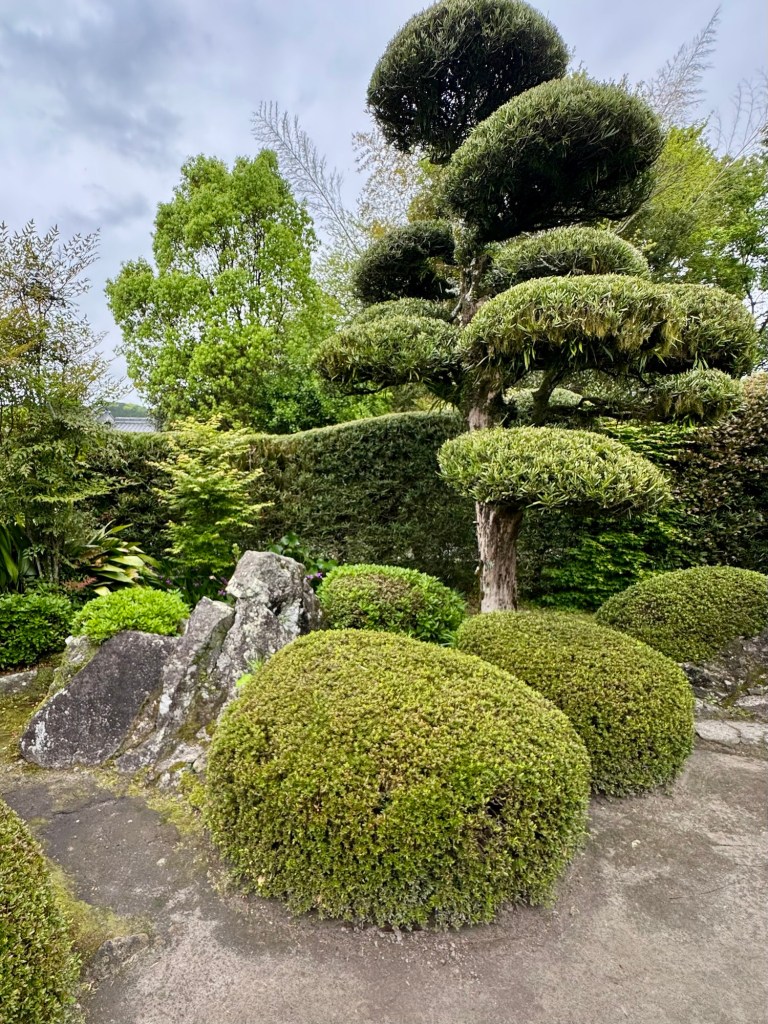
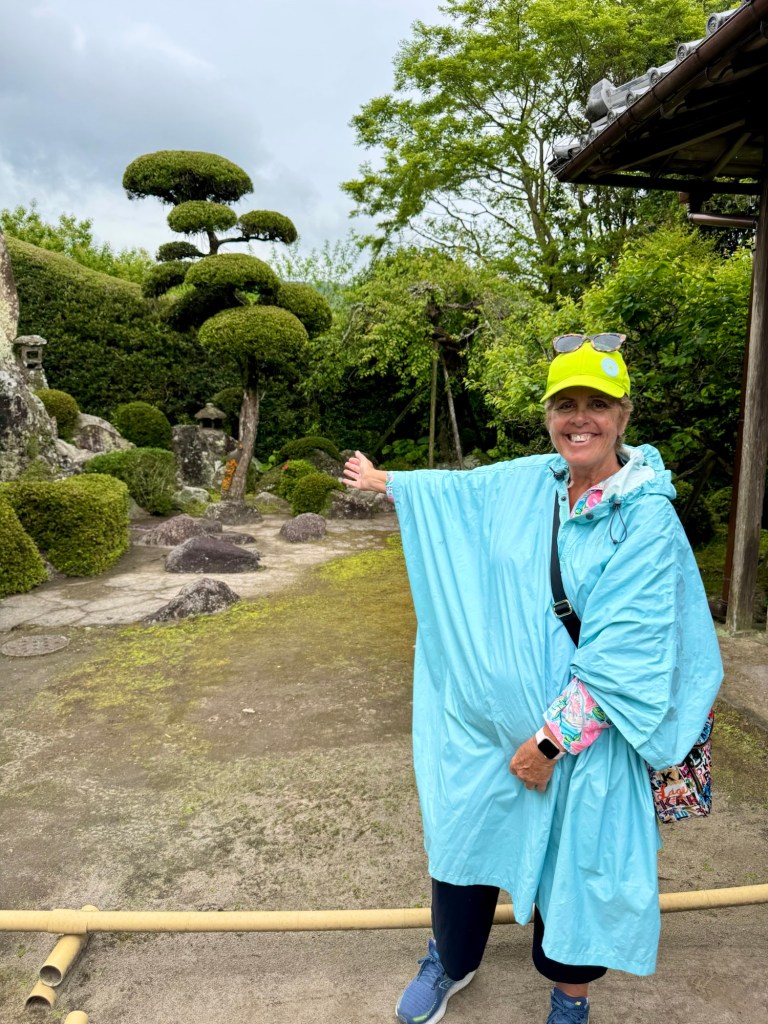
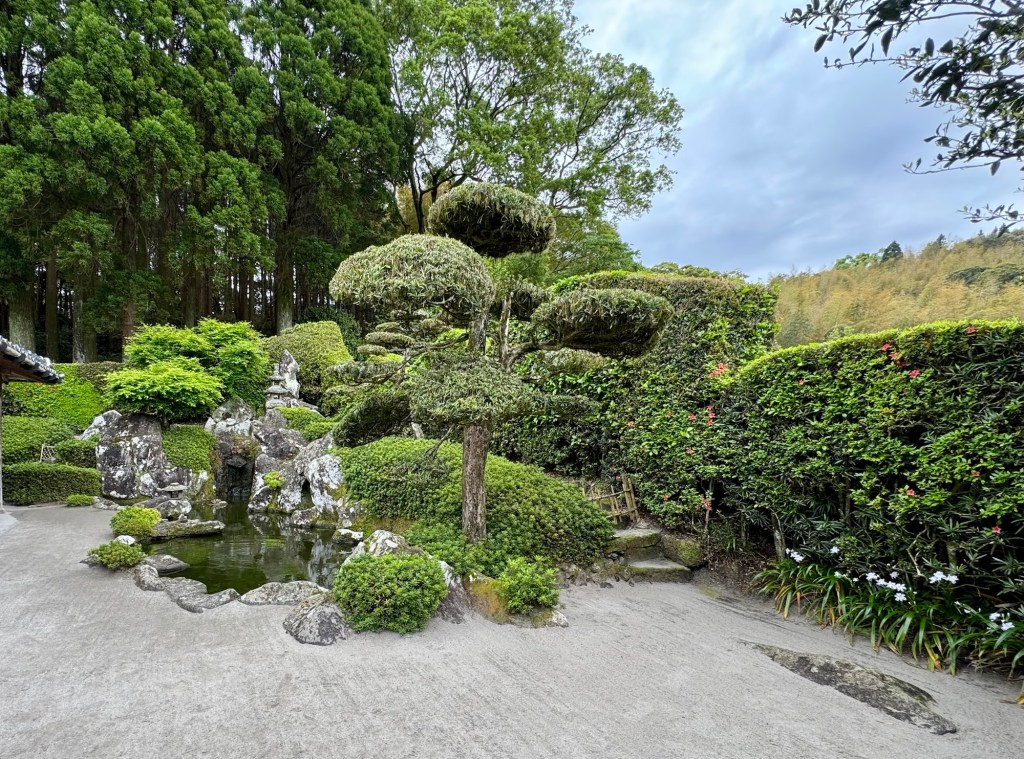
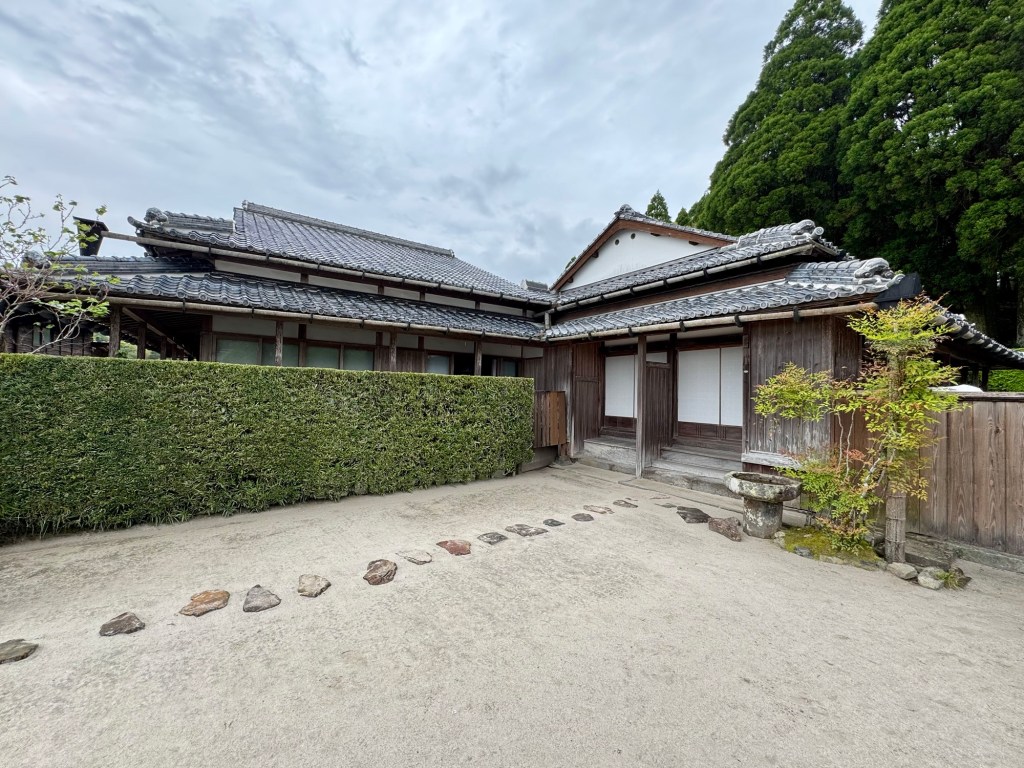
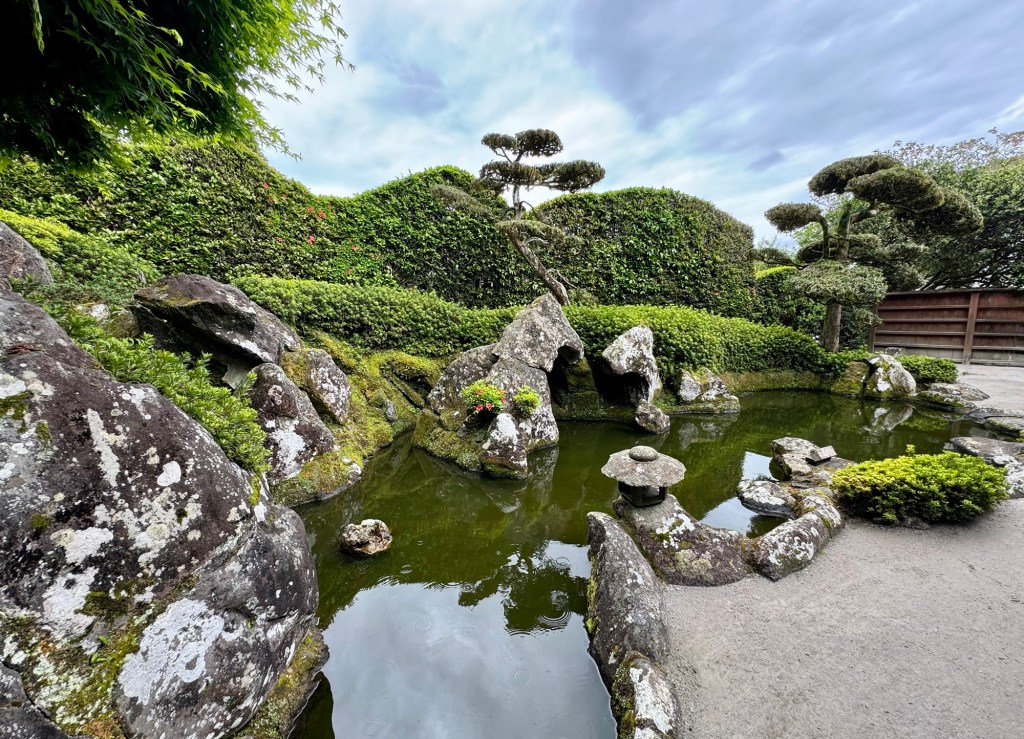
Surrounded by moss-covered stonewalls and sporting black tile roofs, the 250 year old houses recapture the traditional flavor of the Edo Period. Today, Samurai descendants live in some of the old estates, but many of the gardens are open to the public. Though small, each garden is an example of borrowed landscaping, where the surrounding mountains and scenery are an integral part of the garden design. Most of the gardens we are visiting are Karesansui Dry Gardens while one includes a pond.
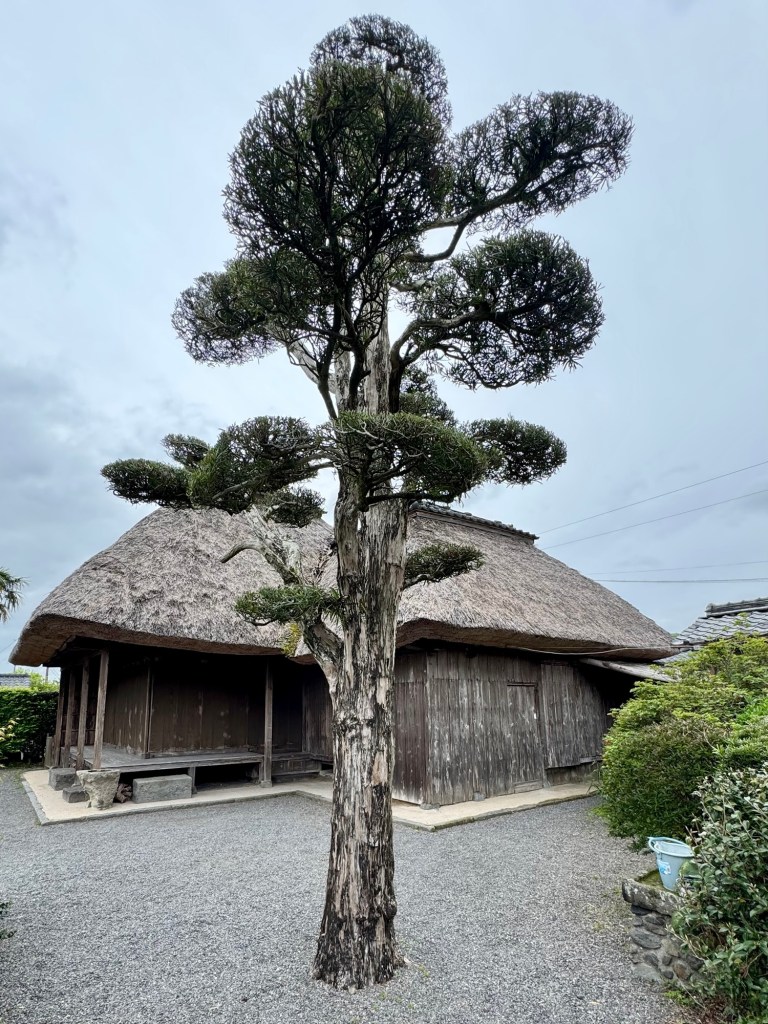
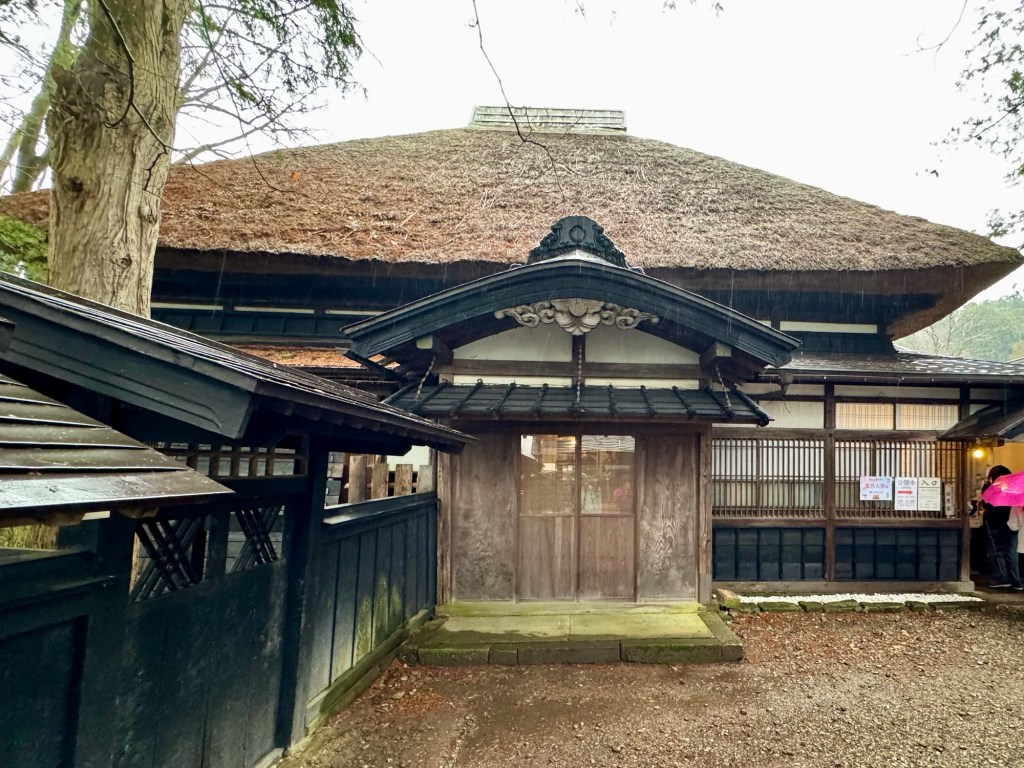
On the outskirts of the samurai village is a house with a thatched roof which designates it as the home of a wealthy farmer. There is no garden here as I’m sure working the fields is gardening enough for the owners.
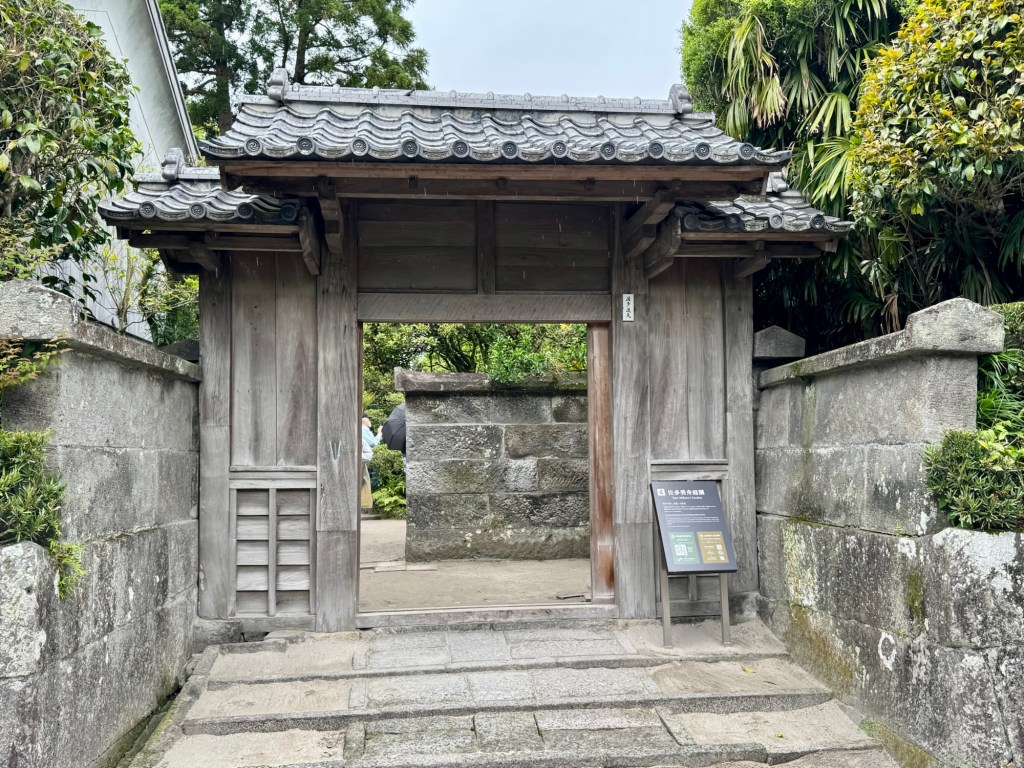
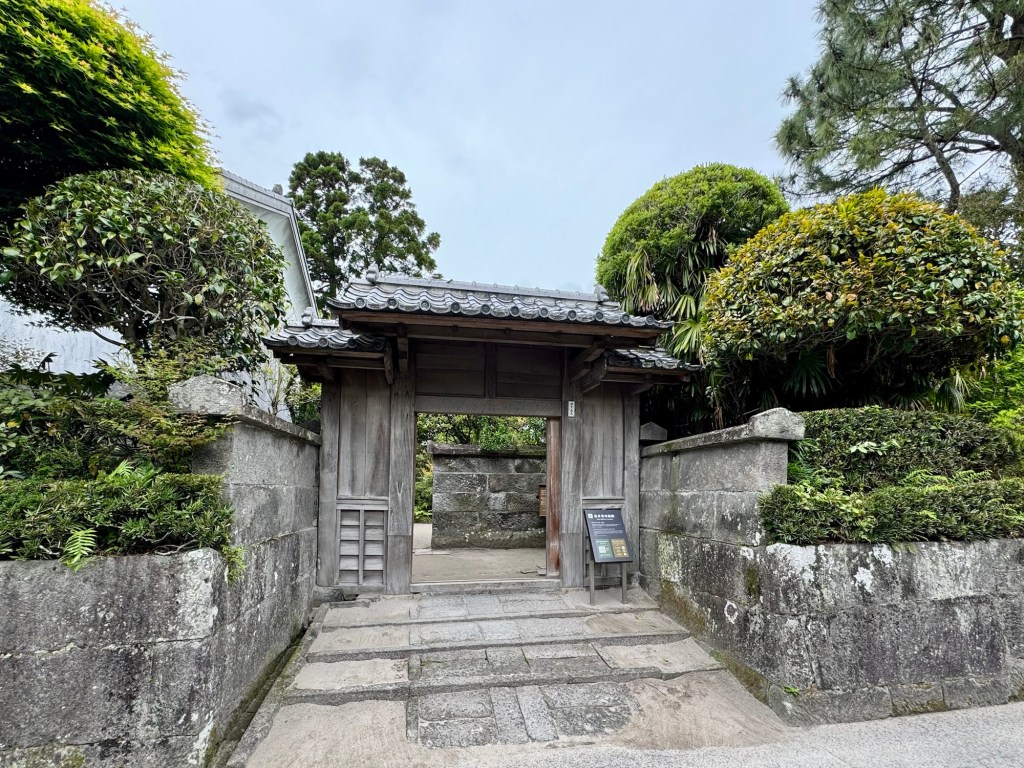
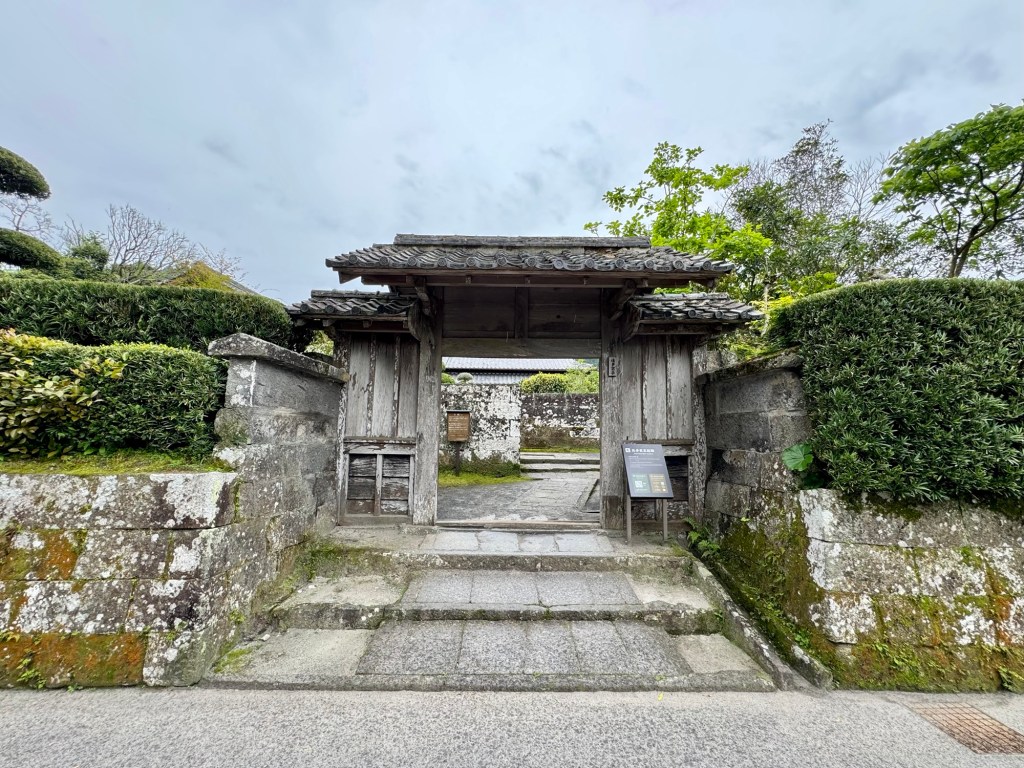
We stroll along the Honbaba promenade framed by stonewalls and hedges. Our first stop is the Sata Mifune’s Garden. The grand gate with Sodeyane (eave roof) at the entrance of the residence announces the prestige of the family.
Sata Mifune’s Gate
Constructed in 1751, this garden is magnificent and spacious. It has a dry waterfall, a stone lantern placed on the top of an artificial hill and a number of arrangements of large rocks on the flat plane below.
Sata Mifune’s Garden
A little further down the promenade , we arrive at Sata Tamiko’s Garden; a world of huge rocks and strangely shaped stones arranged to make visitors feel as if they are wandering remote mountains and secluded valleys.
The stones are tuff (compacted volcanic ash) carried on the back of cattle from upstream in the Fumoto river. Standing stones are arranged into a dry waterfall, with stepping stones that continue from the shoin (study) to the dry waterfall in the garden. This garden features two cut stones where bonsai trees can be placed to be appreciated from the study while composing waka poetry.
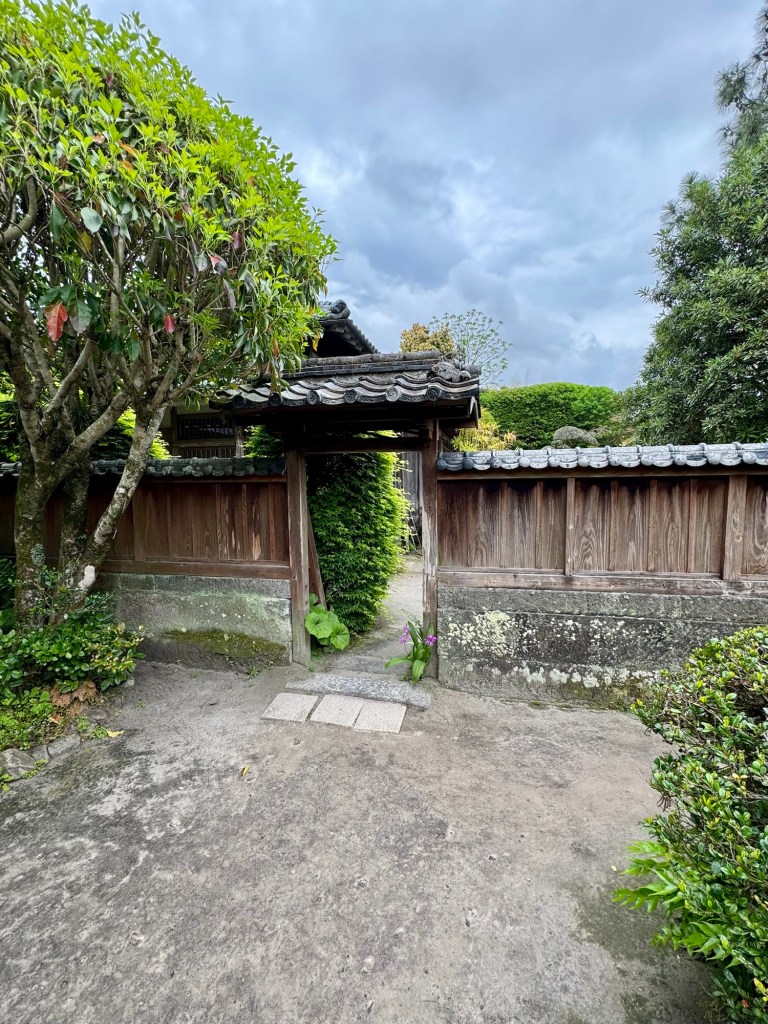
Our next stop is Sata Naotada’s Garden. The gate here is more ornate (with tiled shoulders) indicating the more elevated status of the owners.
The garden incorporates scenery borrowed from the Hahagatake mountain range. In one corner of the garden, there is an artificial hill in the middle of which soars a 3.5-meter high oblong stone. At its foot, there is a stone arrangement suggesting a ‘dry waterfall’ The garden has the air of ancient China and makes visitors feel as if they were standing in front of an exquisitely drawn Chinese ink painting.
Sata Naotada’s Garden
Saving the best for the last, Mori Shigemitsu’s Garden was next. The gate here was even fancier with tiled shoulders and arms; the most ornate in the Fumoto. Clearly the Mori family was one of the most important among the vassals of the Shimadzu clan. The living quarters and tea storehouse were built in 1741 and the descendants still live in the house and farm green tea which we had a chance to sample.
The pond in the garden here has a meandering border on the near bank. This bank is decorated with strangely shaped rocks and stones. On the opposite bank is a hollowed stone that looks like a cave and symbolizes the flow of water in nature. Inside the entrance on the right side is a stone-the most important element of the whole garden-representing a far-away mountaintop rising above clouds.
Mori Shigemitsu’s Garden
All of these gardens were so spectacular but it’s time to move forward in time to the WWII era at the memorable Tokko Heiwa Kaikan. The Chiran Peace Museum for Kamikaze Pilots is dedicated to the young kamikaze pilots who trained near Chiran before embarking on suicide missions against Allied sea vessels in WWIl. The museum commemorates the bravery and sad sacrifice of these young Japanese men, and makes a plea for world peace.
In the later stages of WWII in the Pacific, Japan was losing the war. In desperation, they turned to a new tactic called the tokko offensive. The term “tokko” is a shortened version of “tokubetsu kōgeki tai”, which translates to “special attack team”.
Tokko pilots, aka kamikaze pilots, were Japanese suicide pilots whose mission was to crash their aircraft into enemy targets. Although suicide attacks had been used haphazardly before, the tokko (kamikaze) campaign trained attack squadrons specifically for this purpose.
Tokko pilots first saw action at the Battle of Okinawa in 1945. They inflicted casualties on Allied forces, but their overall impact was limited due to declining aircraft capabilities and improved defenses. Overall, only one of every nine tokko pilots managed to fly into enemy targets with the other eight were shot down or crashed before they could do any damage.
The human toll was appalling. The Japanese lost 2600 aircraft in kamikaze attacks, and with them the lives of 4000 of their airmen. The attacks also killed more than 7000 Allied naval personnel, and wounded many more.
During World War II, the Chiran Airbase served as the final departure point for hundreds of young men who had joined the Tokko-tai special attack group. While often portrayed as solely patriotic; some pilots volunteered but many were assigned to these missions. The Japanese military used the pilots’ sacrifices for propaganda and to boost morale.
The park and nearby gardens are home to many statues, monuments and a couple of planes are on display.
Stone lanterns, dedicated to the pilots lost in battle, line the approach to the museum. This brought to mind the rows of white crosses in European graveyards after WWII; the young and brave are always sacrificed to the gods of war regardless of who they’re fighting for.
Stone lanternsStone lanterns
The Gokoku Shinto shrine is dedicated to the memory of the kamikaze pilots who departed from there, as well as others who lost their lives in various wars in Japanese history.
Gokoku Shinto Shrine
There is also the Statue of a Tokko Pilot with his left hand clenched in a fist showing his determination to succeed on his mission.
Statue of a Tokko Pilot
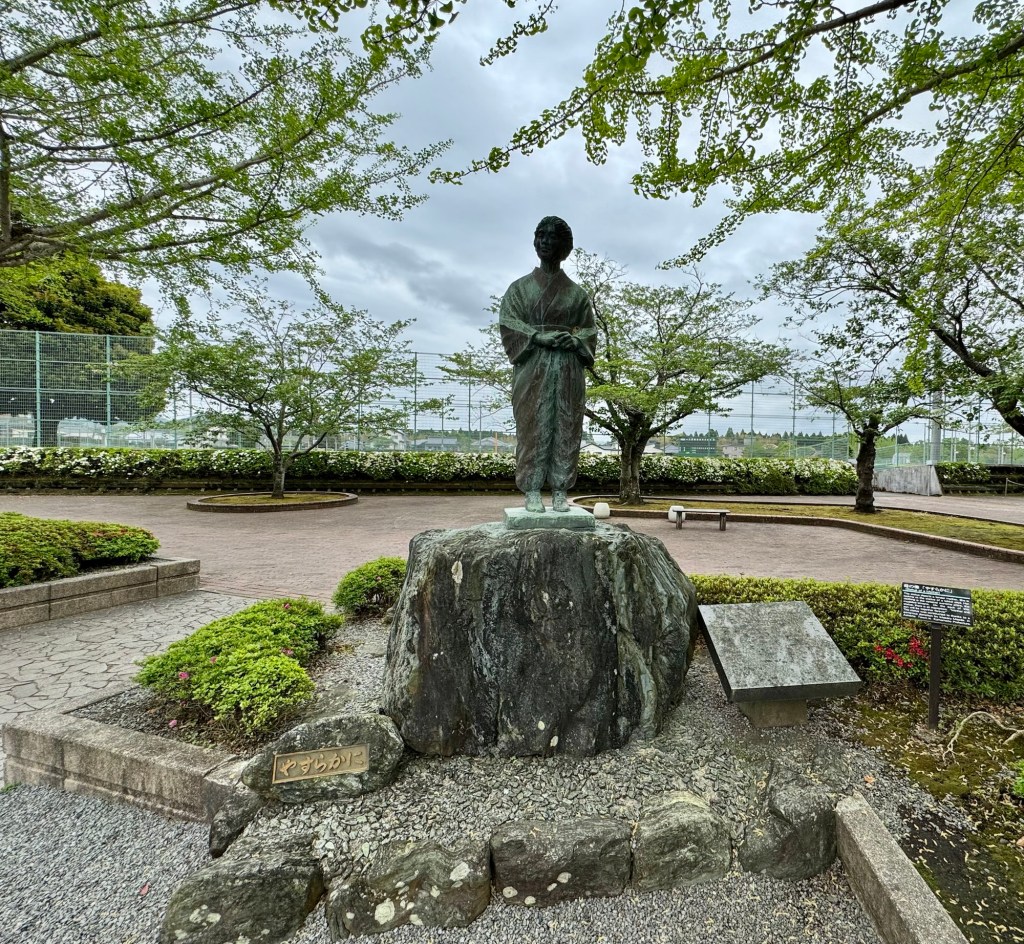
The Statue of a Mother depicts a tender mother wearing the national wartime attire; the modeled kimono. On the back of this statue, there is an inscription: “Mother and son will be together forever.”
Statue of a Mother
The park also includes memorials to other wars including:
The Satsuma Rebellion Cenotaph commemorating the soldiers who went from Chiran and died in the rebellion against the Meiji government, the last civil war in Japan 1877.
Satsuma Rebellion Cenotaph
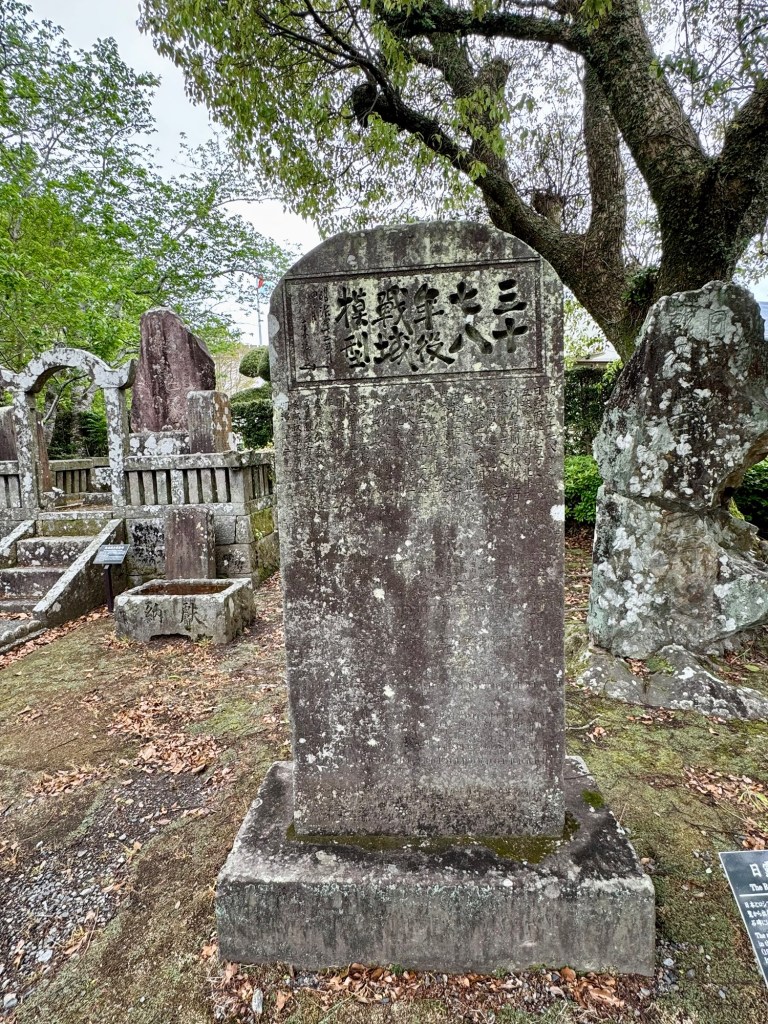
The Sino-Japanese War Monument
built as the memorial to those who served in the war between Japan and the Qing dynasty. (1894-1895). The name of the soldiers from Chiran are engraved on the monument.
Sino-Japanese War Monument
The Russo Japanese War Monument memorializing those who served in the war between Japan and the Russian Empire. (1904-1905).
Sino-Japanese War Monument
The Tokko Kannon Peace Hall and the Statue of Tokko Peace Kannon are also in the park.
Tokko Kannon Peace Hall
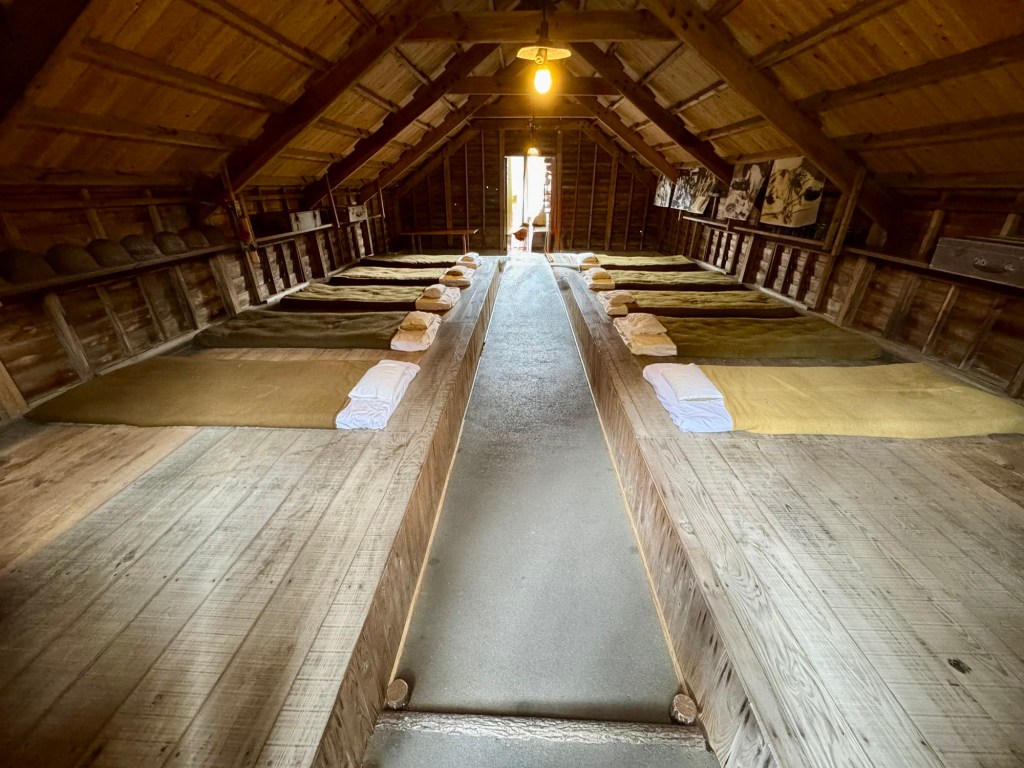
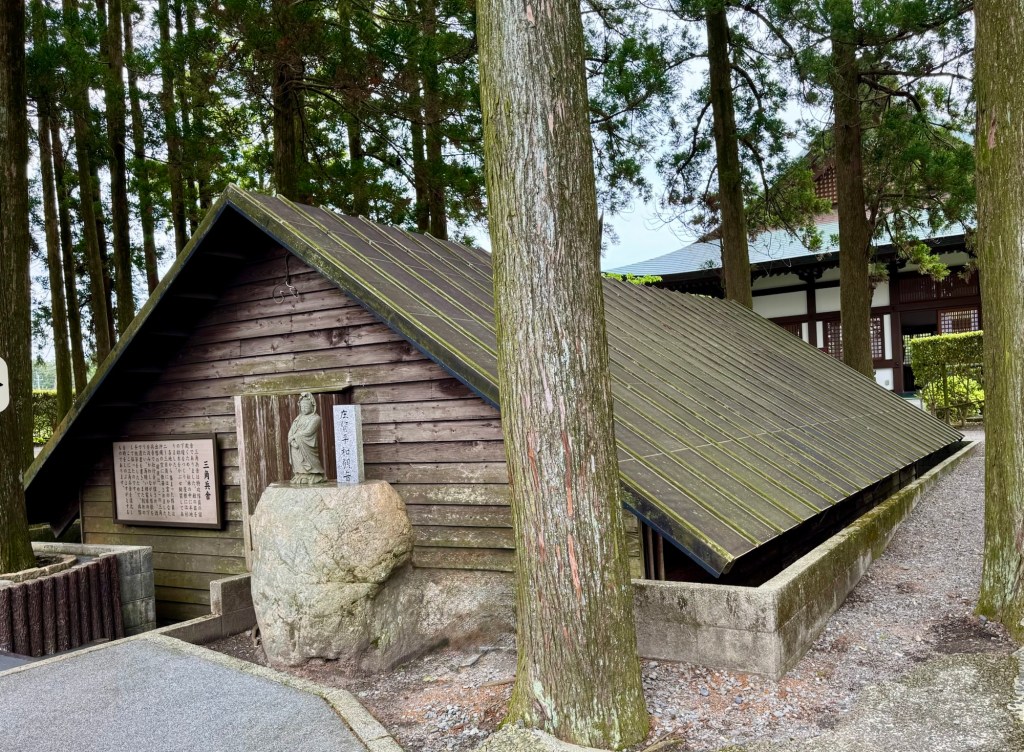
There is also a replica of a pilot’s bunkhouse which gives you a peek at the everyday lives of the young men who lived here. These triangular wooden structures were half-buried and only the roofs were above ground. They were called “triangular houses” because all you could see was the triangular gable which were often camouflaged by vegetation growing on the roof.
Triangular Houses
The Peace Museum, built in 1975, serves as a reminder of the pilots and their sacrifices, and highlights stories of tokko pilots and their families. I availed myself of an audio guide and the stories of individual pilots were very moving. What a waste of life war is. Will we ever learn?
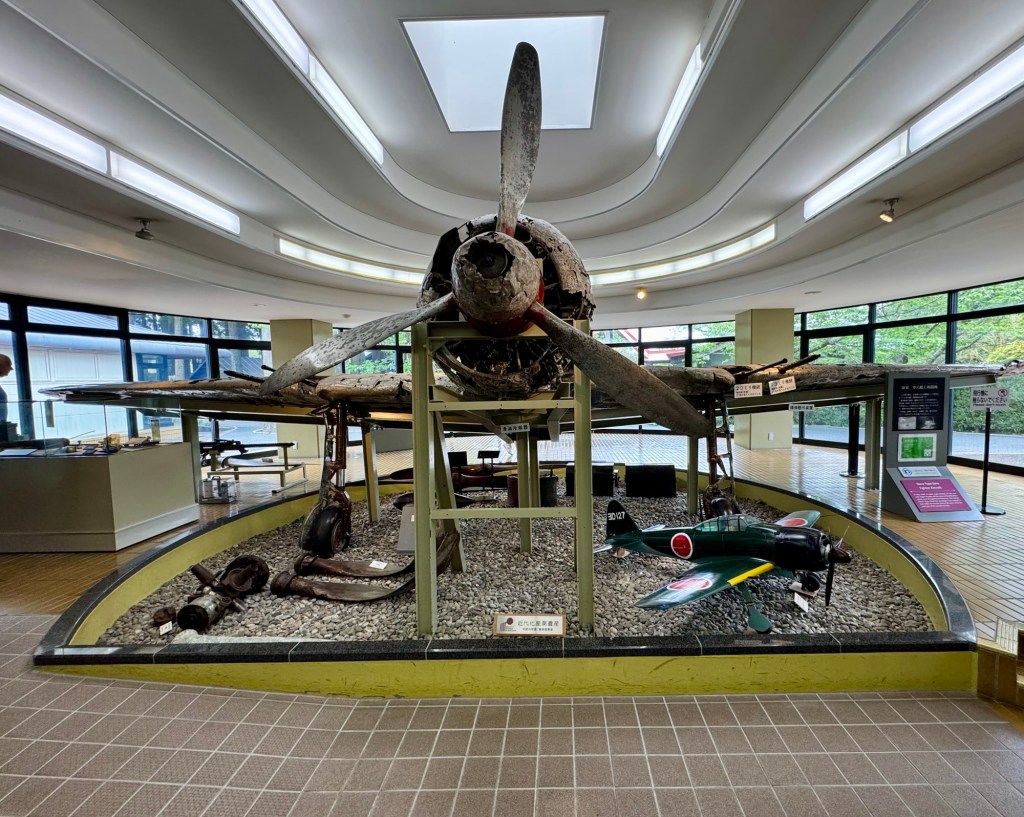
Exhibits include a number of Japanese fighter planes, including a Mitsubishi Zero, excavated from the seabed in 1980. You can also see paraphernalia such as Imperial Rising Sun Flags and hachimaki headbands bearing wartime maxims.
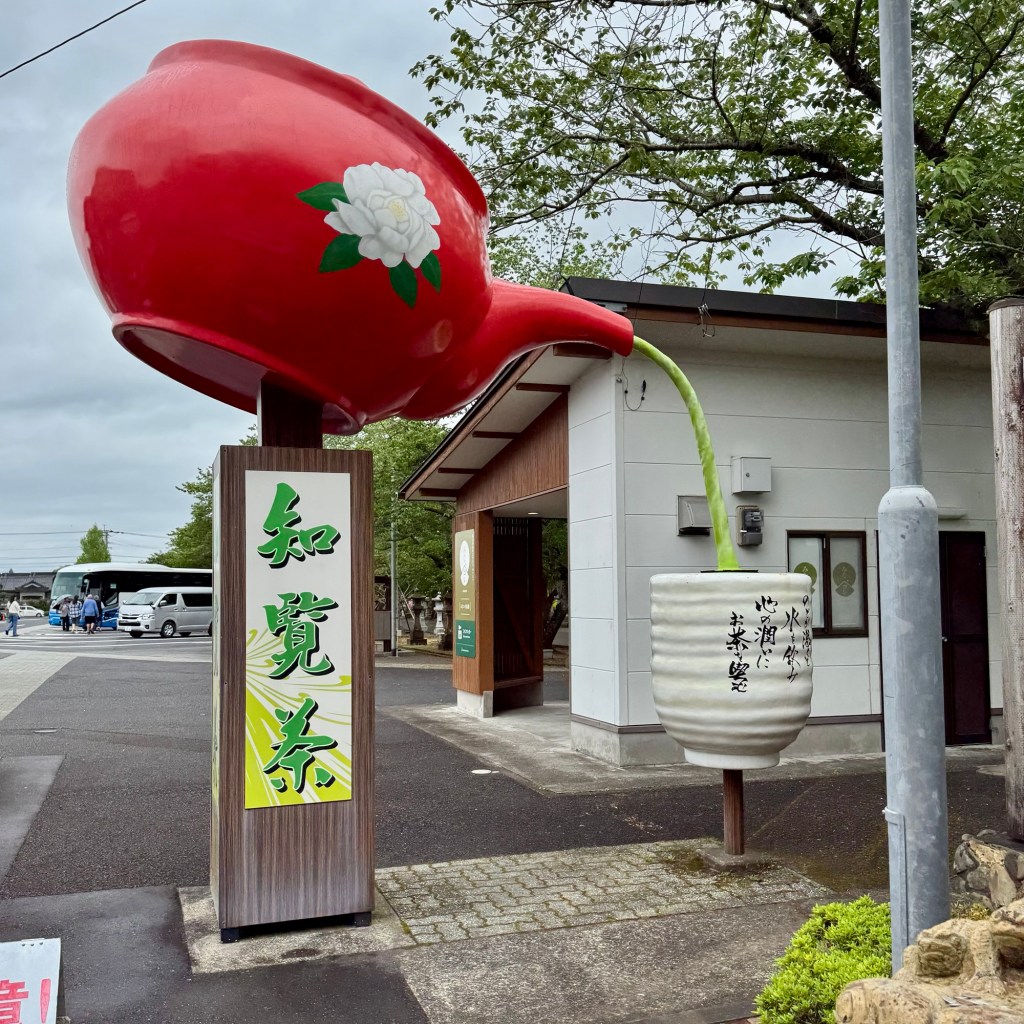
Mitsubishi ZeroMuralPainting inside MuseumTea pot in parking lot
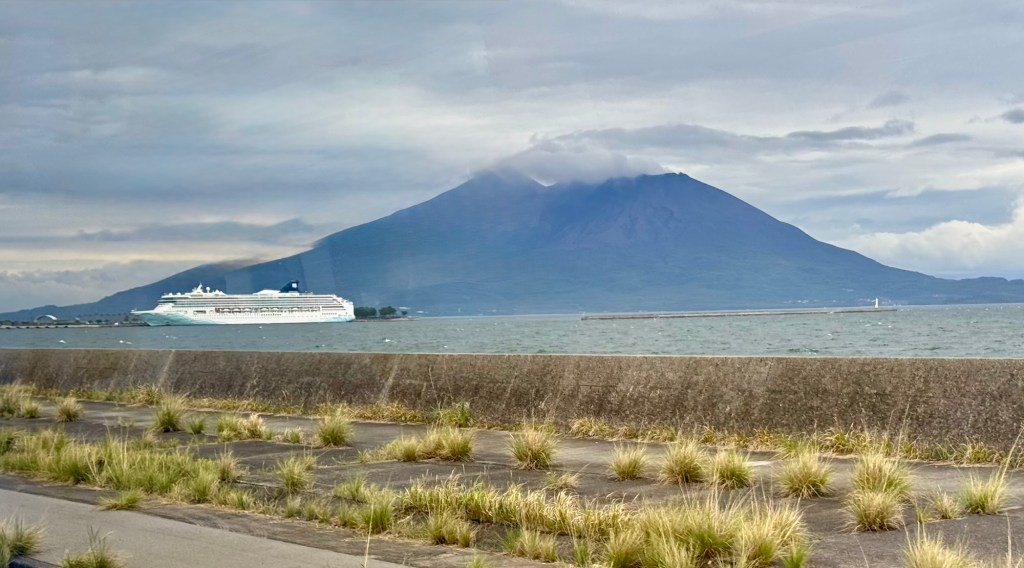
Back on the bus, we headed back to the ship as we’re leaving port early today. The sun had come out so we were treated to a lovely view of our ship with Sakurajima in the background. Sakurajima is known for being one of the most active volcanoes in Japan with an average of 800 eruptions (mainly ash and smoke) per year. Sakurajima was originally an island but became connected to the mainland by lava flow from the 1914 Taisho eruption.
Sakurajima
Back aboard the ship, I had a nice lunch in Windows with a couple from New Jersey/Utah. Afterwards, I repaired to my room for a nap to recharge. Dinner with the Officers tonight, again in Windows, so need to get spruced up.
I was seated between the Chief Security Officer, John, a retired detective from Edinburgh and a lady from Denver I’d met in my execution earlier in the day. Dinner was good and the conversation was lively.
Time to try my luck in the casino for a bit before turning in.
Today, we arrived in Nagasaki on a beautiful sunny day. Since we’re back in Japan, we had to go through immigration and customs before we could explore the city. While it wasn’t as tedious as the arrival at Haneda, it was still an hour of my life that I’ll never get back.
At breakfast, I crossed paths with a couple from Bakersfield, California that I’d last seen in the Kenrokuen Garden in Kanazawa. We decided to meet up and take the tram to the Peace Garden. However, things didn’t quite go as planned. Despite the mix-up, we managed to meet outside the terminal.
Pete had kindly bought me a tram pass for the day, so we figured out the tram stop and boarded the tram with a group of other cruisers. We connected to the red line and successfully got off at the right stop, heading straight for the Peace Garden. It was definitely a promising start to the day.
Nagasaki, a port city nestled on the westernmost tip of Kyushu Island, is surrounded by verdant mountains on three sides (east, west, and north). The city grew and flourished around a beautiful natural harbor stretching like a long fiord into the East China Sea.
Early on August 9, 1945, at dawn, the B29 bomber “Bockscar,” carrying an atomic bomb, took off from Tinian Air Base in the Mariana Islands and headed towards Kokura, an industrial hub on the northern coast of Kyushu Island. This was the primary target for the world’s second atomic bombing.
When the airplane reached the sky above Kokura, however, the cloud cover prevented visual sighting. After circling three times, it changed course for the second target: Nagasaki.
Flying over the city, the bombardier spotted the sprawling buildings of the Mitsubishi Nagasaki Arms Factory through a crack in the clouds. At an altitude of 30,000 feet, the airplane released its deadly cargo. With a blinding flash of light and an earth-shattering roar, the atomic bomb detonated 500 meters above Matsuyama-machi in the northern part of Nagasaki.
It’s hard to believe over 73,000 died here almost instantly when the bomb detonated. Another 74,000 were injured from the blast and more than 120,000 were left homeless.
Once a prison, The Nagasaki Peace Memorial Park now stands as a haunting reminder of the atomic bomb’s devastating power. The rusted steel beams protruding from concrete foundations form a twisted shape, a testament to the immense force unleashed by the blast.
Entry to Peace Park
When the atomic bomb exploded on August 9, 1945, thousands of people suffered terrible burns and died begging for water. The “Fountain of Peace” was constructed with donations received from all over Japan and is an offering of water to the victims of the atomic bomb and a prayer for the repose of their souls.
The fountain sends up a sparkling spray of water in the shape of a pair of wings, evoking the dove of peace and the crane after which Nagasaki harbor has been named.
Fountain of Peace
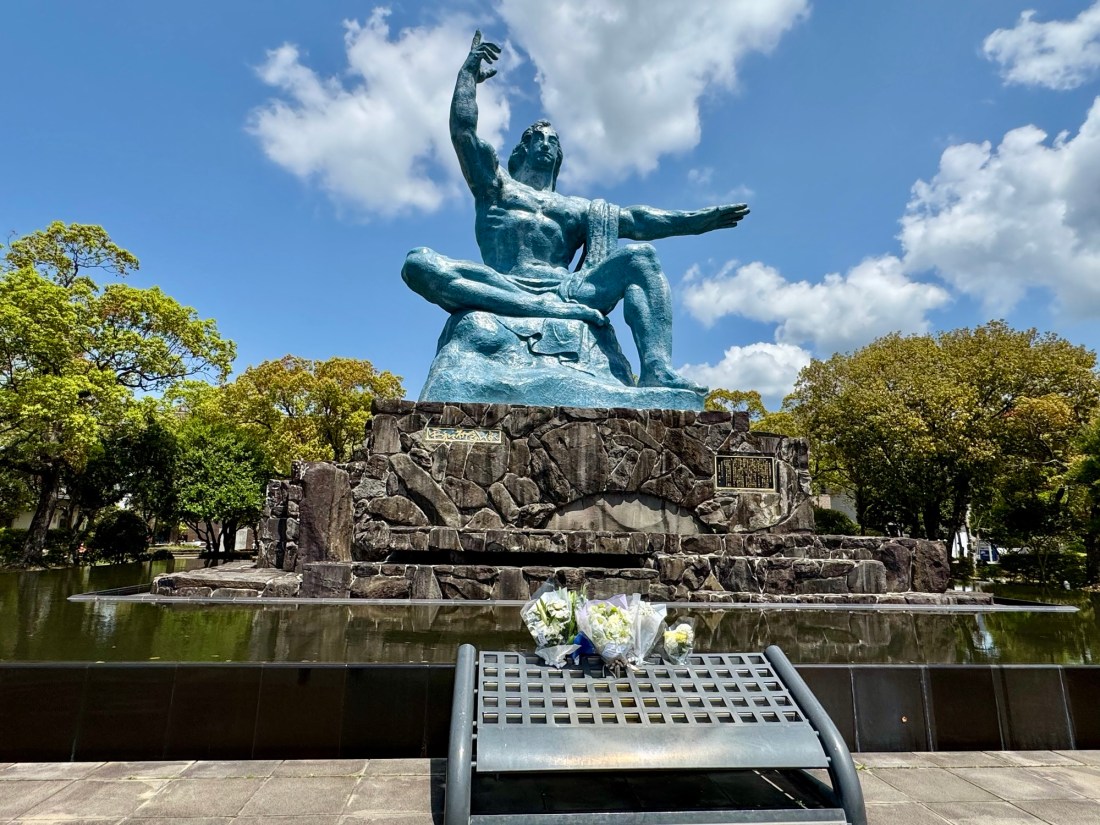
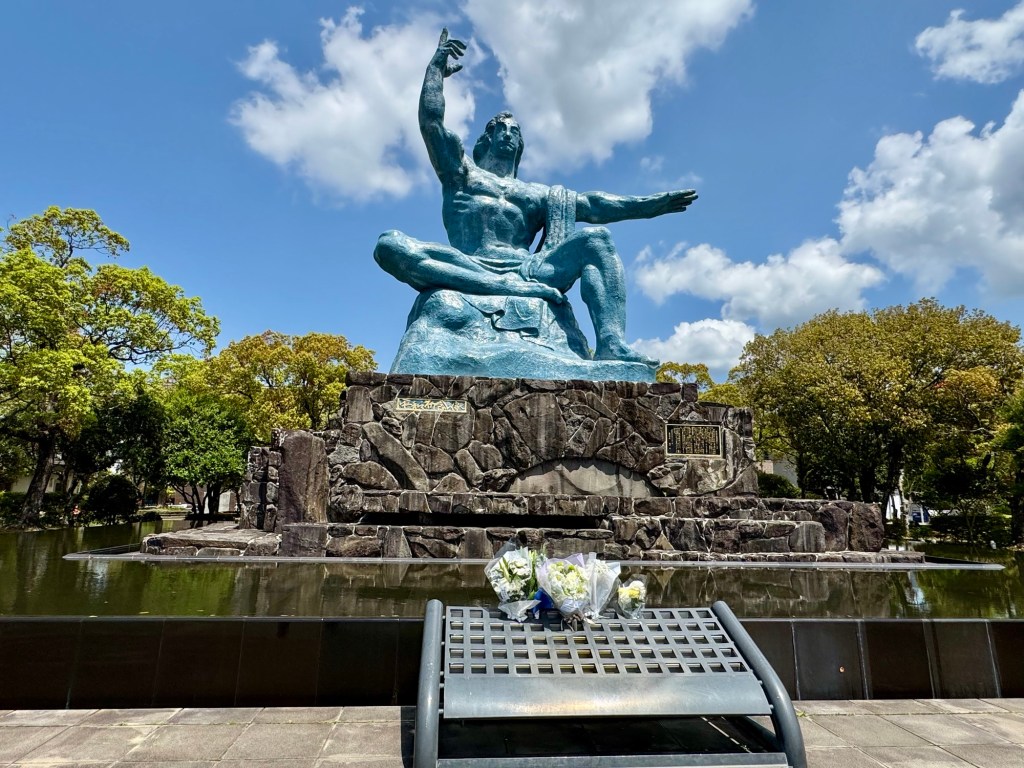
At the far end of the park is The Peace Statue; a 10-meter-tall bronze statue of a seated man designed by Seibo Kitamura. His right index finger points towards the sky, serving as a reminder of the looming threat of nuclear weapons, while his outstretched left hand symbolizes world peace.
The Peace Statue
This statue was erected by the citizens of Nagasaki in August, 1955, on the 10th anniversary of the devastation of this city by the atomic bomb.
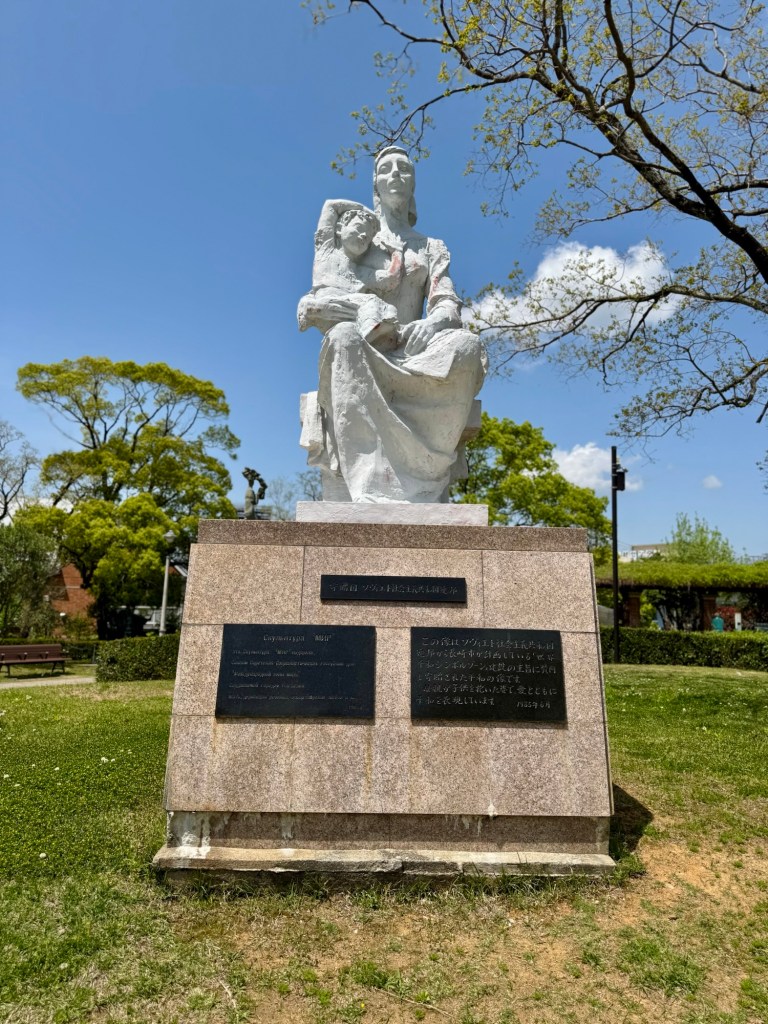
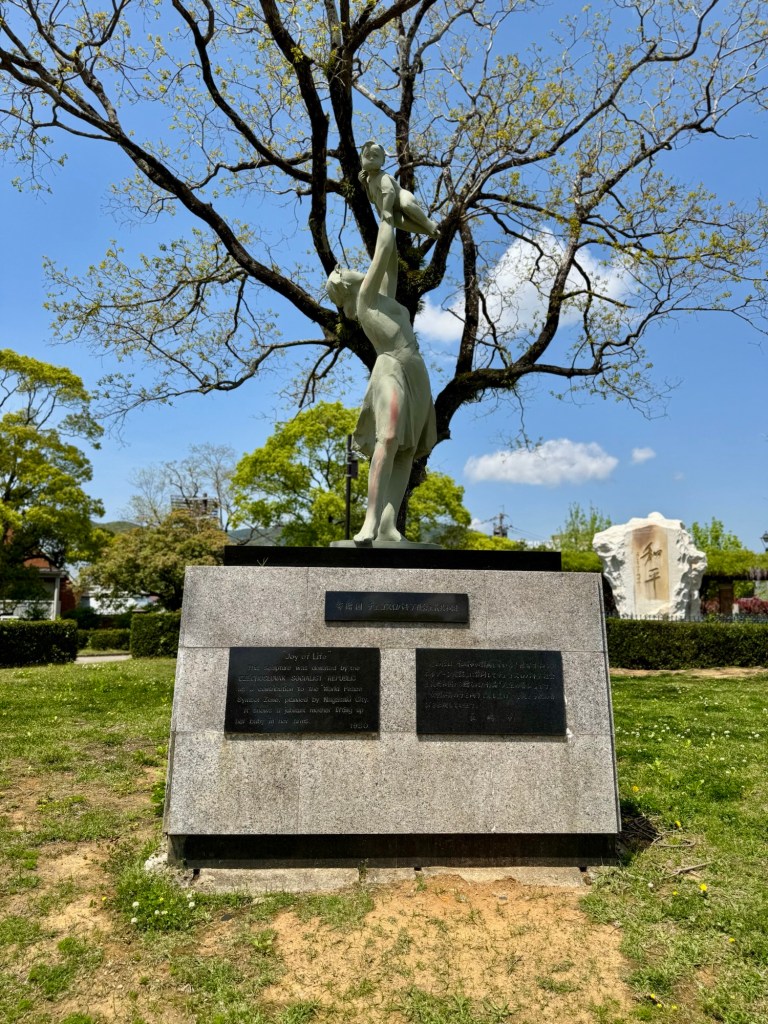
Throughout the park, there are emotive memorial statues donated by different countries, including:
The Statue of Peace donated by the USSR. It shows a mother holding her child in an expression of love and peace.
Statue of Peace
Tree of Life: Gift of Peace
The tree gives life to make the piti (dish) that is used for carrying food, water, and babies. It represents the sharing of resources between families, communities and nations for peace and harmony. It was donated by Australia in recognition of atomic survivors worldwide and Indigenous Australians, service personnel and civilian workers, and their descendants, affected by British nuclear testing in Australia.
Tree of Life
Joy of Life donated by the Czechoslovak Socialist Republic depicts a mother holding up a baby in her arms.
Joy of Life
Monument of Peoples Friendship symbolizing the efforts for Peace and a happy future of Mankind donated by the German Democratic Republic.
After trying the traditional ice cream of Nagasaki, I headed off to the Urakami Cathedral while Pete and Jan opted to skip that stop and headed elsewhere.
Ice cream
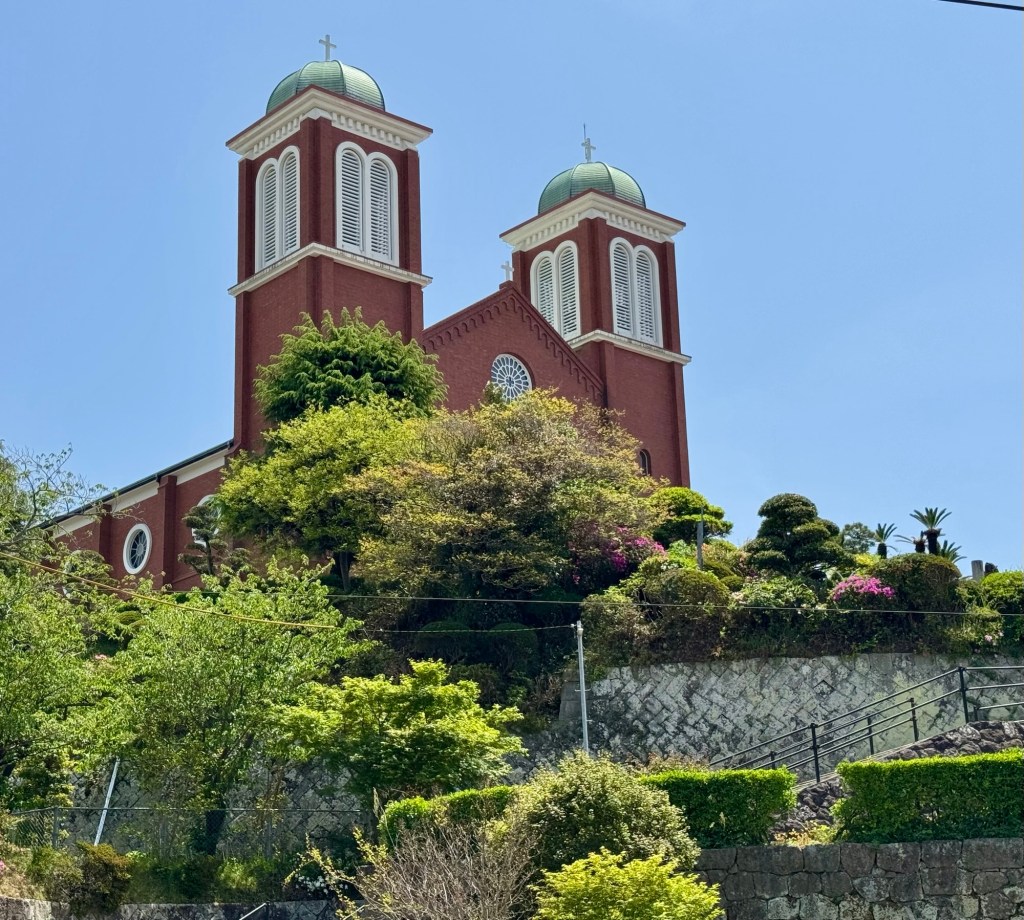
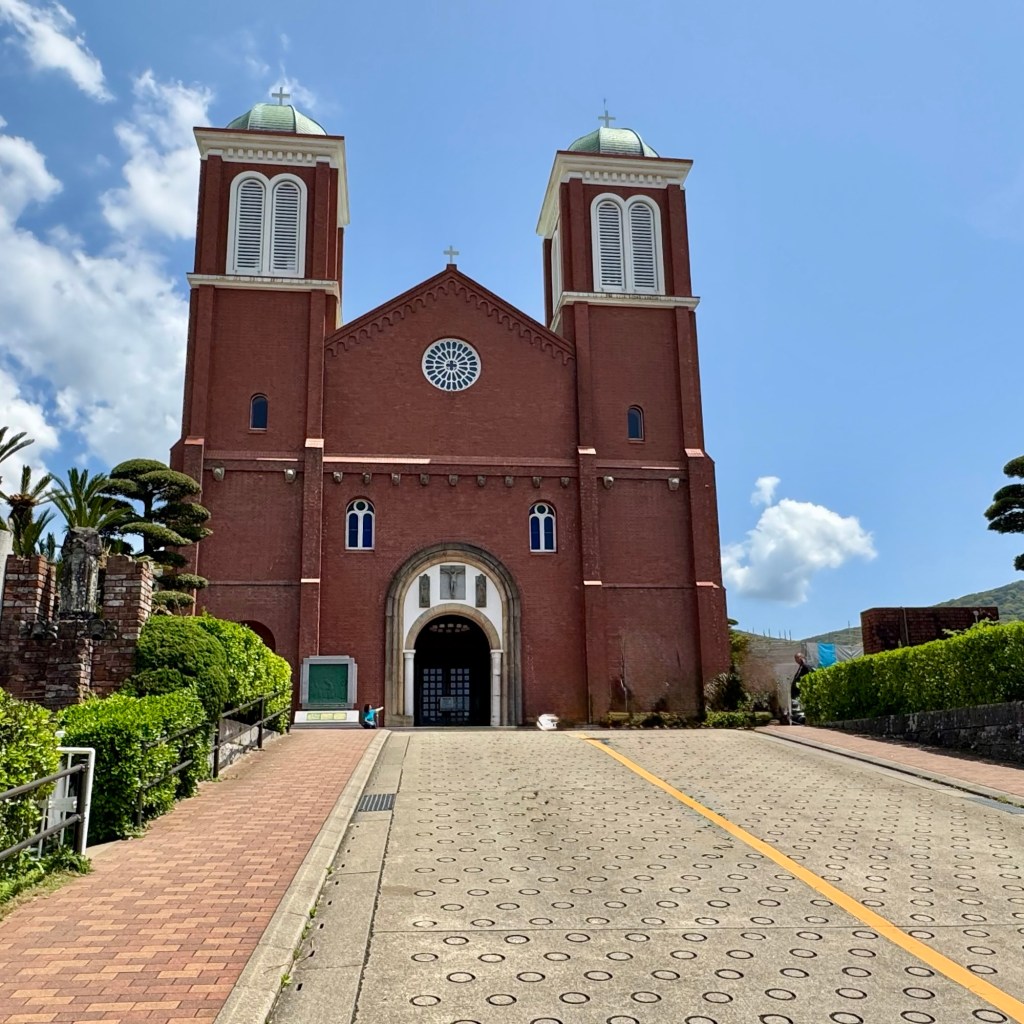
Construction of the Cathedral was started in 1895 by Father Theodore Fraineux, Archdiocese parish priest and finalized in 1925 with the completion of the belfry-towers. At that time the church was Asia’s largest Catholic Church (Urakami Tensyudo).
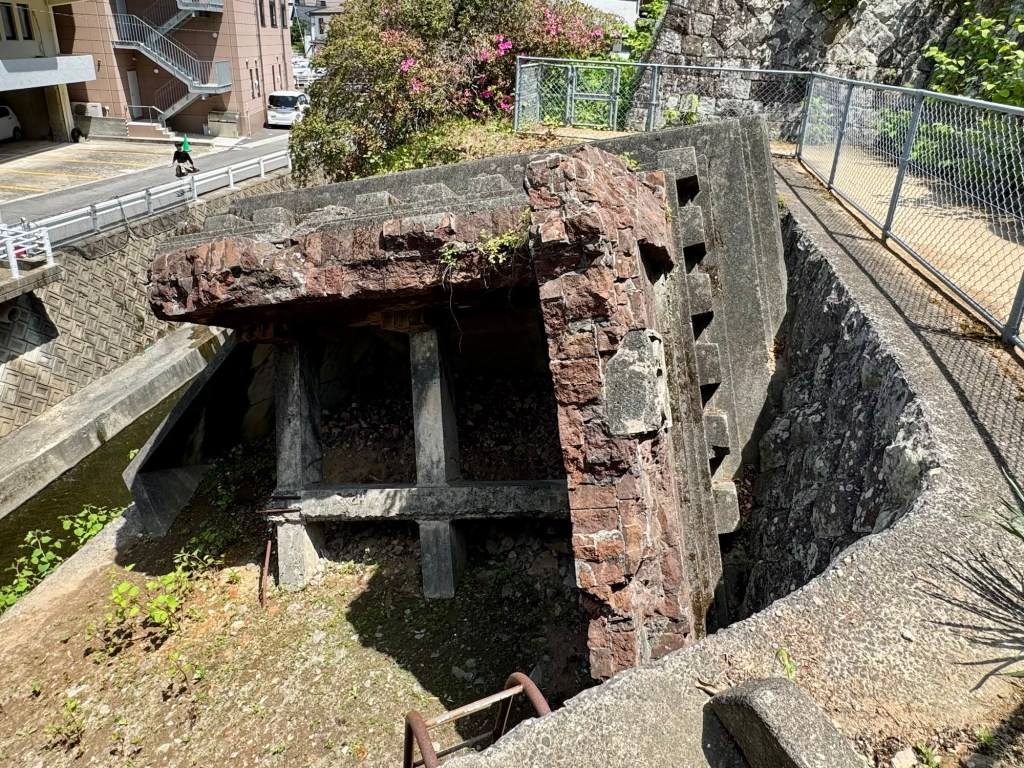
Urakami Cathedral was located on a small hill about 500 meters northeast of the atomic bomb hypocenter. The explosion of the atomic bomb destroyed the church. The North Bell Tower collapsed and tumbled down the hill and is all that remains of the original Cathedral.
The Urakami Cathedral was rebuilt in 1959.
Urakami Cathedral
After my side trip to the cathedral, I headed back to the hypocenter aka ground zero – the point on the Earth’s surface directly below the nuclear explosion.
At the entrance to this area, two stone lanterns, donated by the devoted parishioners of the Shotokuji Temple, stand tall.
Stone Lanterns
Located about 1. 5km from the hypocenter, Tennozan Hornin Shotokuji Temple was founded in
1626, and this pair of stone lanterns was the only thing that remained standing after the bomb fell. The lanterns were erected on this spot in February 1949.
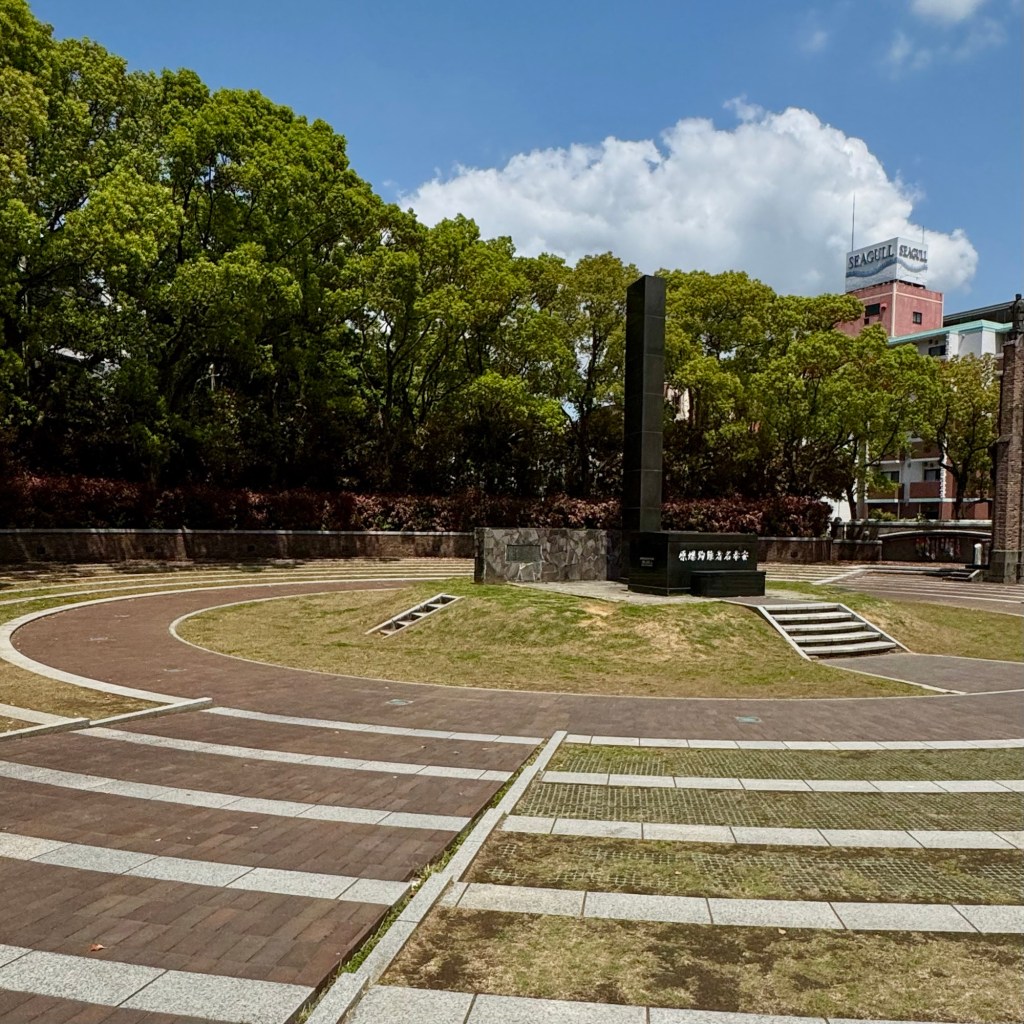
A black stone monolith, marking the hypocenter, was the first structure built after the bombing in this urban green-space. The fierce blast wind, heat rays reaching several thousand degrees and deadly radiation generated by the explosion reduced the city center to ruins. About one-third of Nagasaki City was destroyed.
Ground Zero Monolith
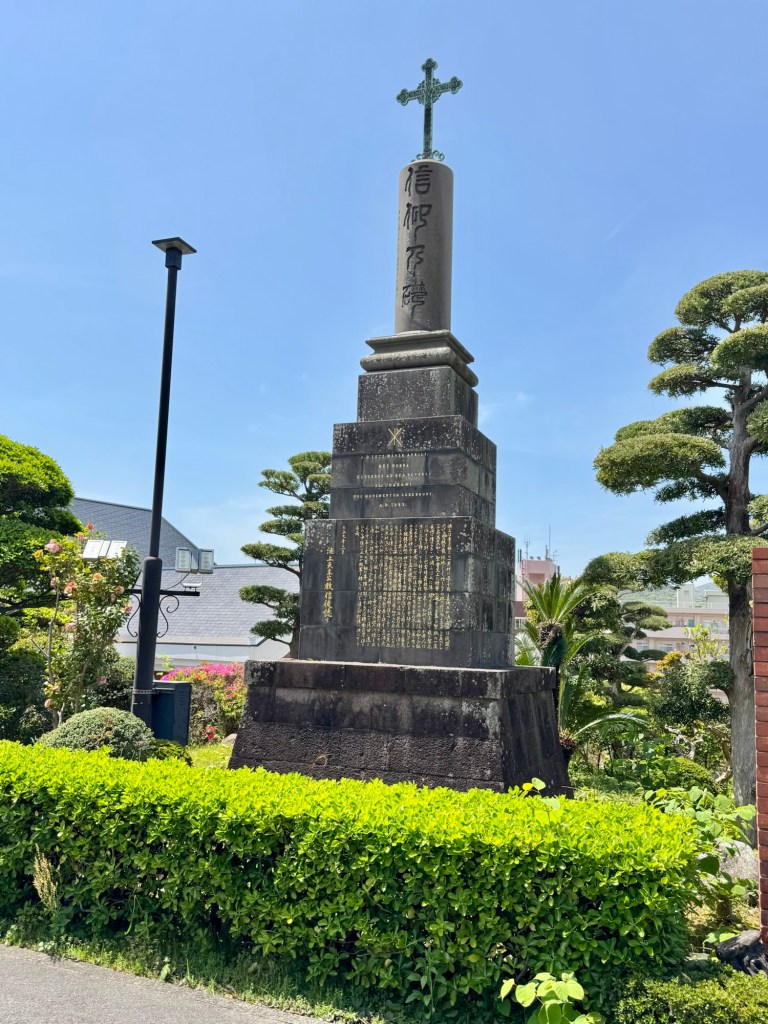
The park is also home to a remnant of the Urakami Cathedral Wall. The stone statues on the column depict Francis Xavier and his apostles.
Urakami Cathedral Wall Remnant
On the occasion of the 50th anniversary of the atomic bombing, the hypocenter area was refurbished and a monument was erected. Created by Nagasaki-bom sculptor Naoki Tominaga, this monument portrays a stricken child in her mother’s warm embrace. Embodied in the monument is the sculptor’s reminder that the child is like Japan on the day of the atomic bombing, while the mother represents the support provided by the countries of the world in Japan’s efforts to build the peaceful nation that it has become today.
50th anniversary monument
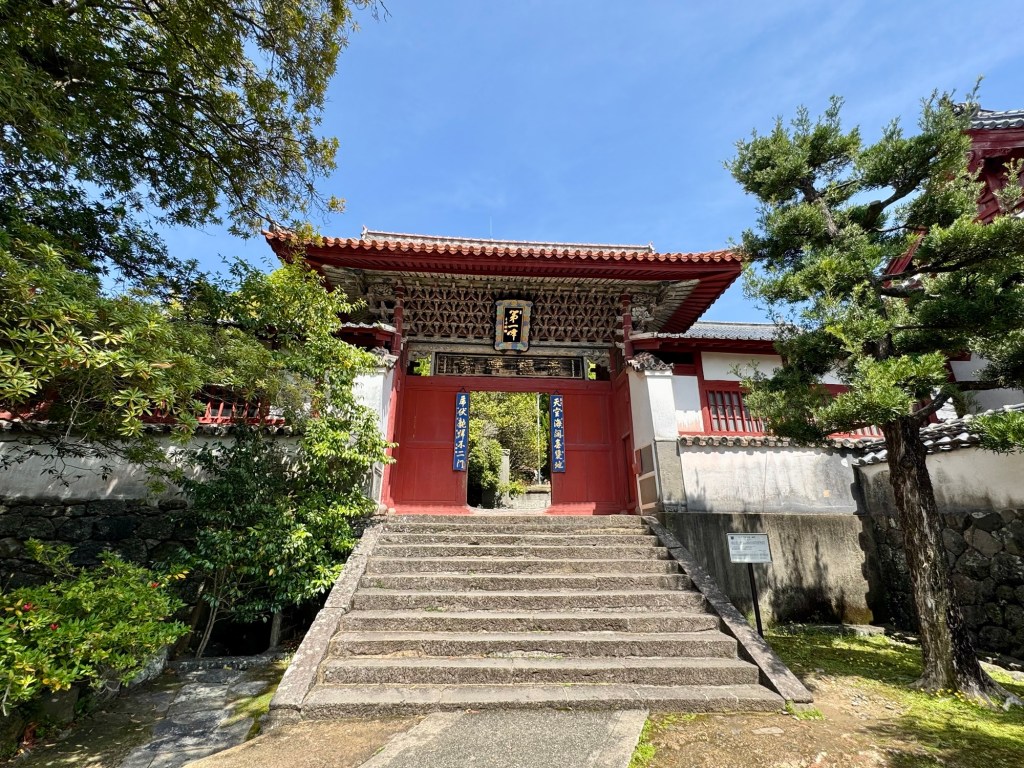
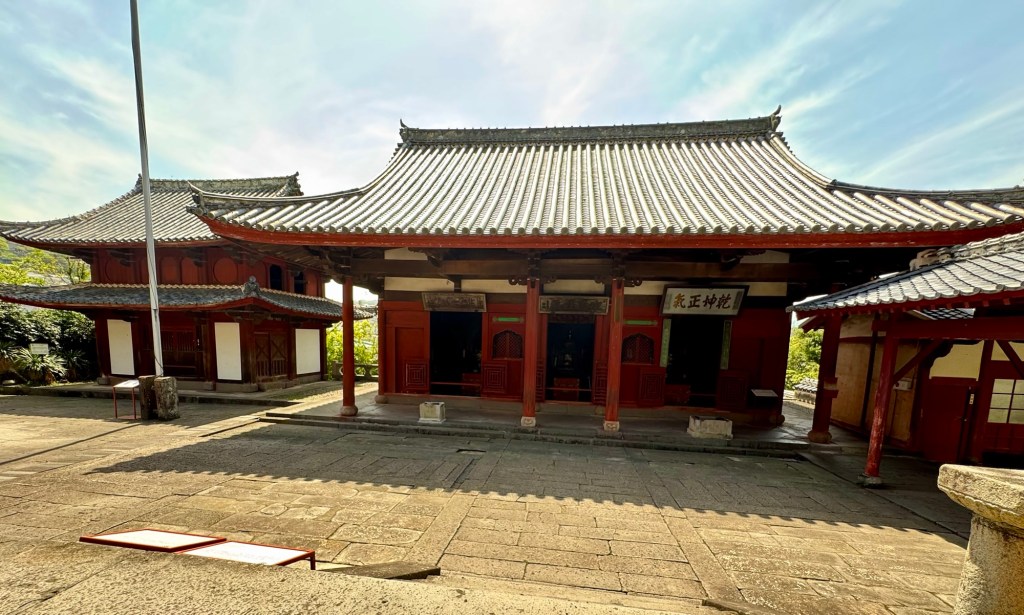
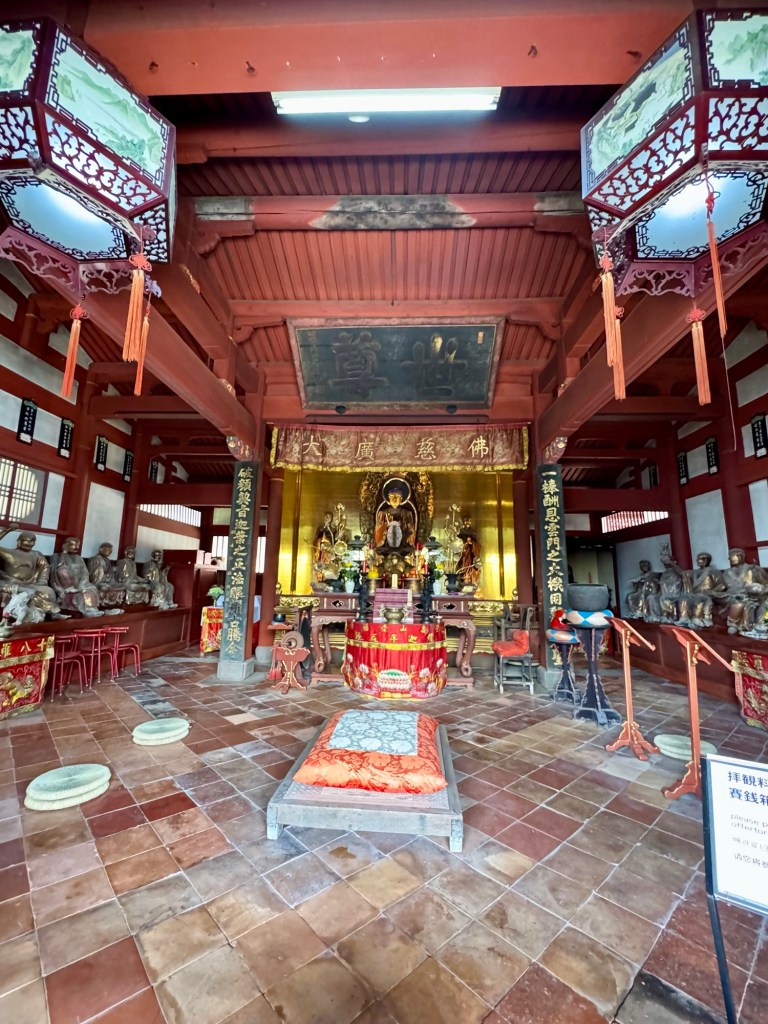
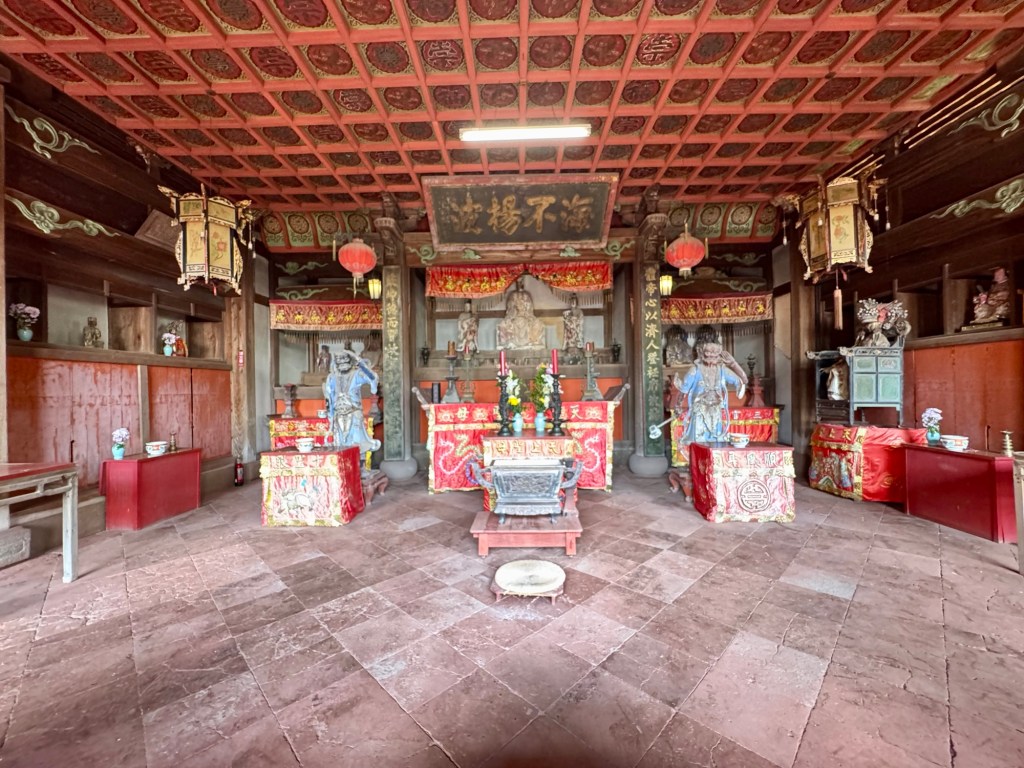
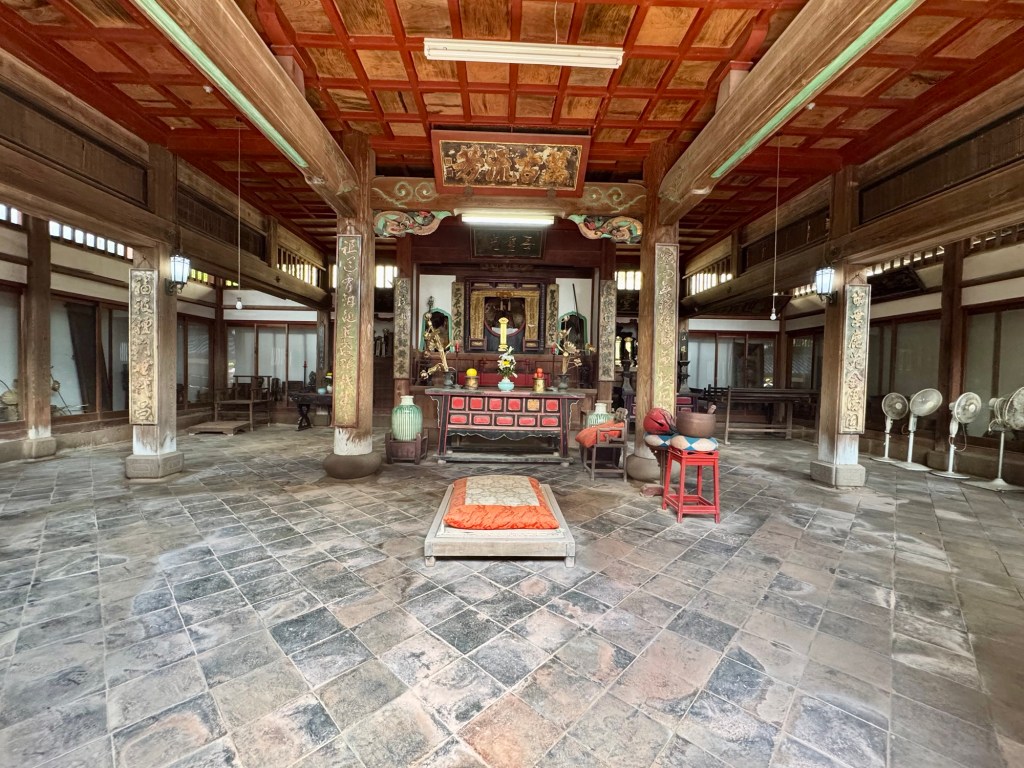
Leaving the bombing behind, I headed to Kofukuji temple. Built in 1629 for the city’s Chinese population, this famous Ming-style temple is the oldest building in Nagasaki.
Kofukuji temple
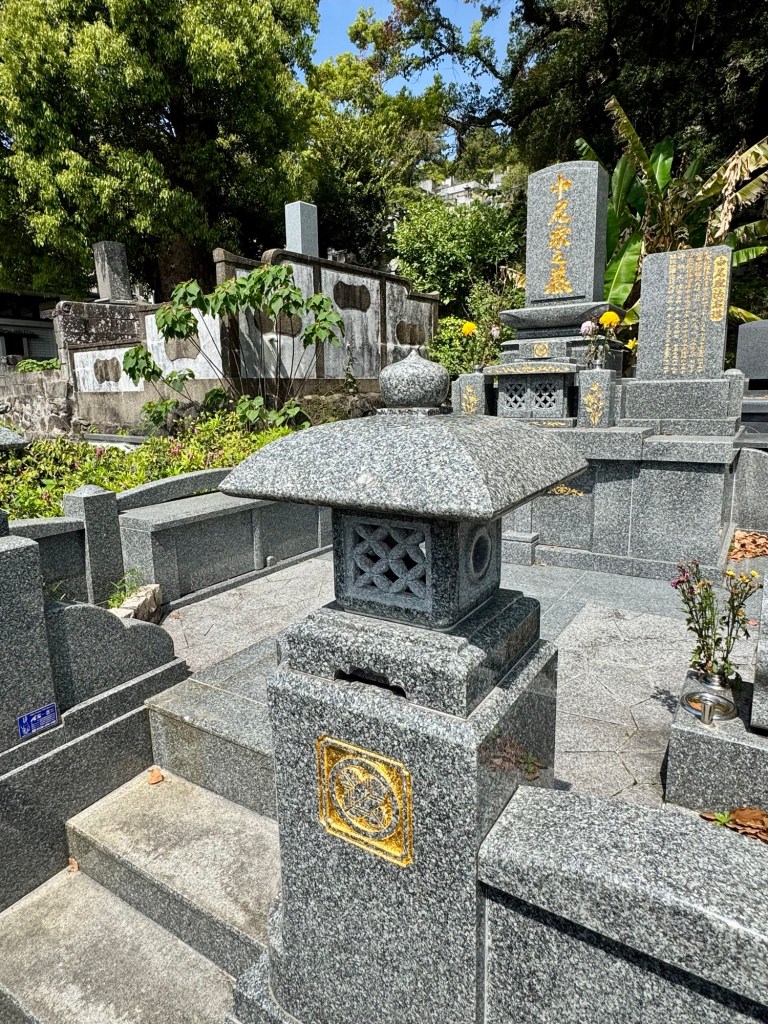
There is also an extensive graveyard associated with the temple with a wide range of final resting places for the faithful departed.
Graveyard
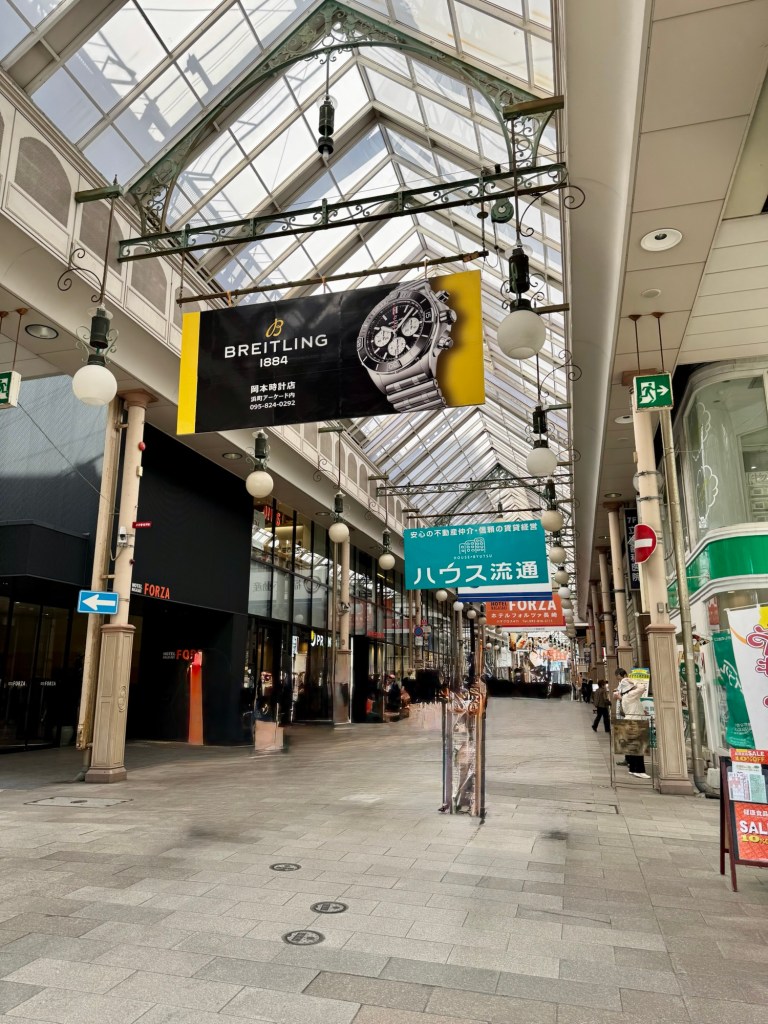
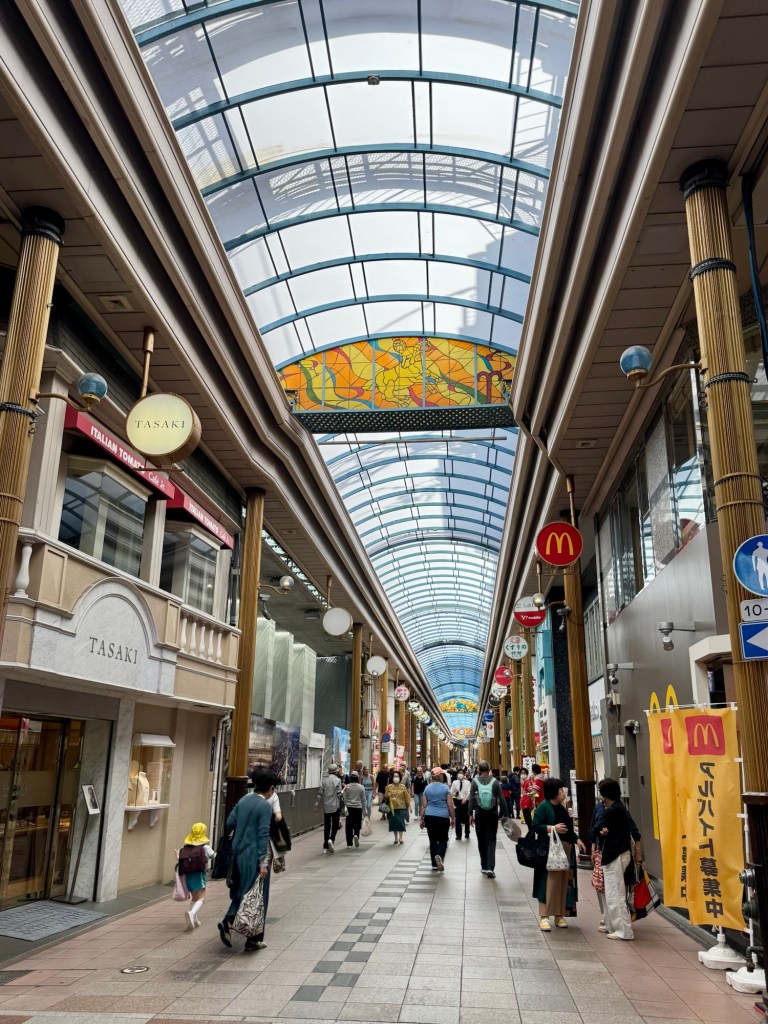
My next stop was to be Chinatown but en route I was distracted by a large shopping centre made up of streets covered by a glass roof. Inevitably I found a few things I didn’t need to buy so now I’m dragging a bag around in my adventure. I’d better get out of here before I buy anything else.
Shopping stop!
Checked out Chinatown quickly and grabbed a quick bite – shrimp dumplings as breakfast was many hours ago and dinner isn’t until 7:00.
Chinatown
I ran into Pete and Jan again but they are heading back to the ship and I have a few more detours to make before heading back.
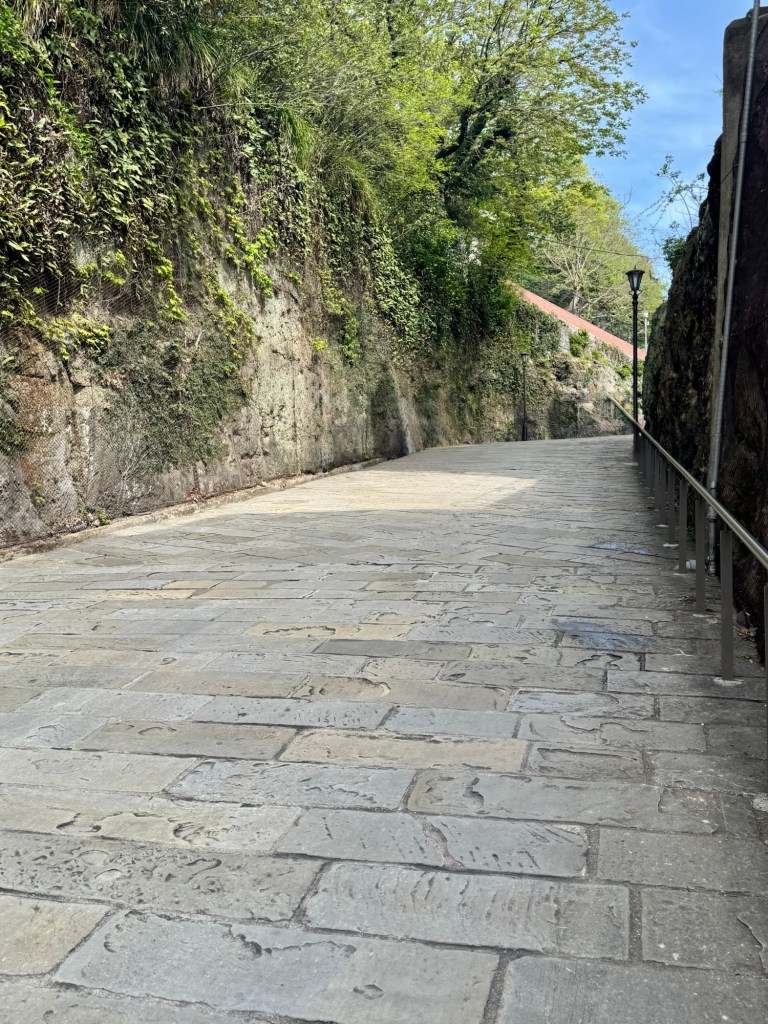
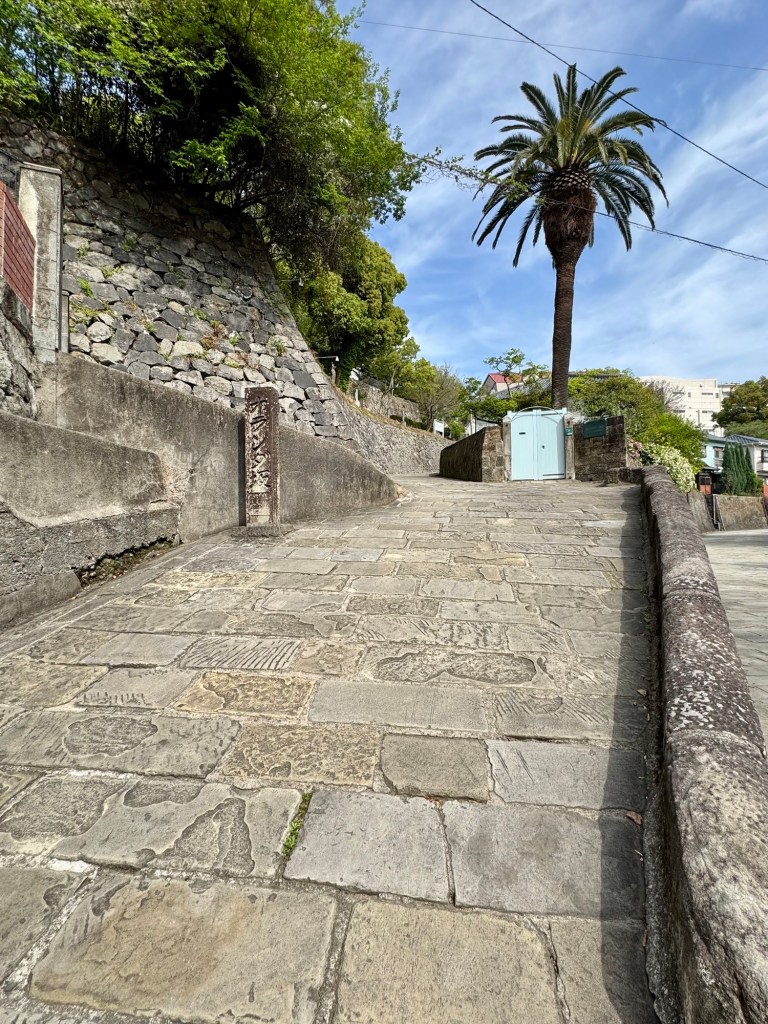
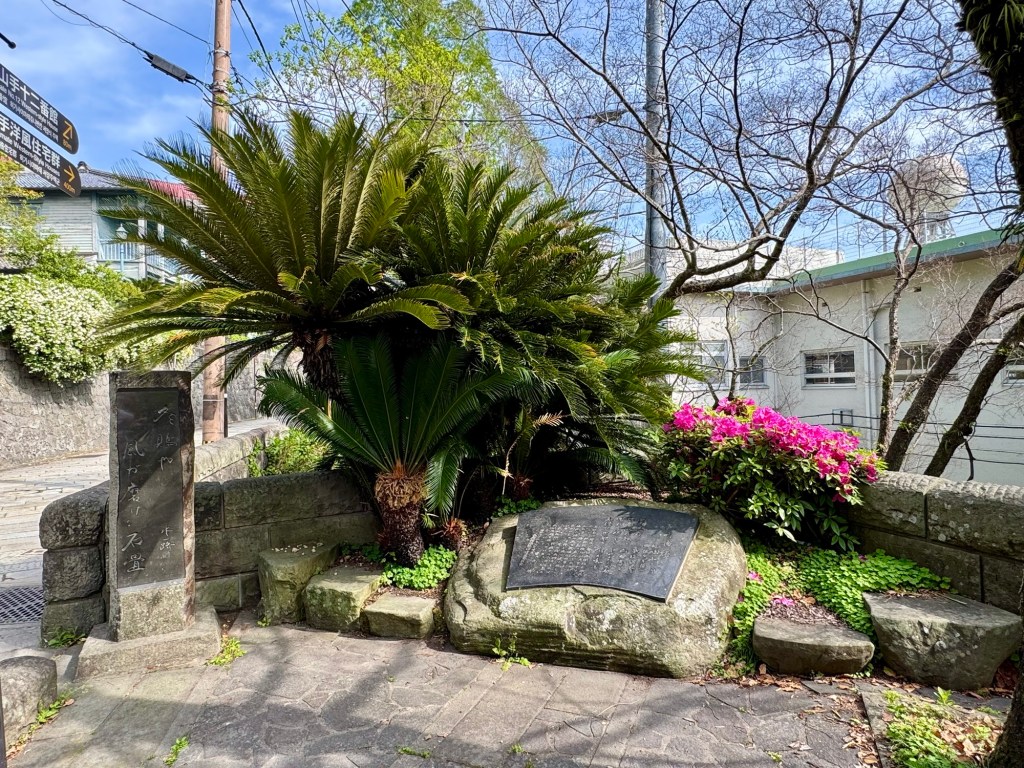
First up is the Dutch Slope; a pleasant area along a slope, with several European-style houses.
The people of Nagasaki referred to non-Asians as Dutch because the majority of foreigners were Dutch sailors living on Dejima. The name of this stone-paved slope in the foreign settlement comes from the fact that it was often bustling with westerners. These foreign settlements were outside of Japanese law and were run completely by the foreigners living there.
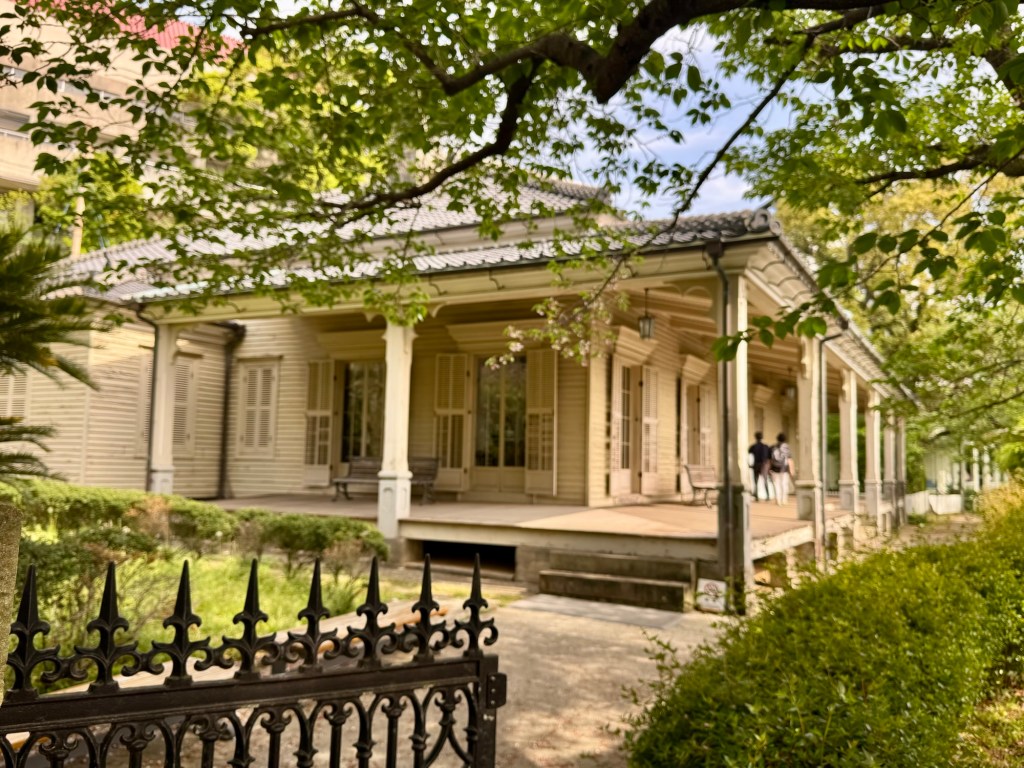
One of the western buildings remaining was built in 1868. It originally served as the Russian Consulate and was later used as the US Consulate and then a residence for missionaries belonging to the American Methodist Church.
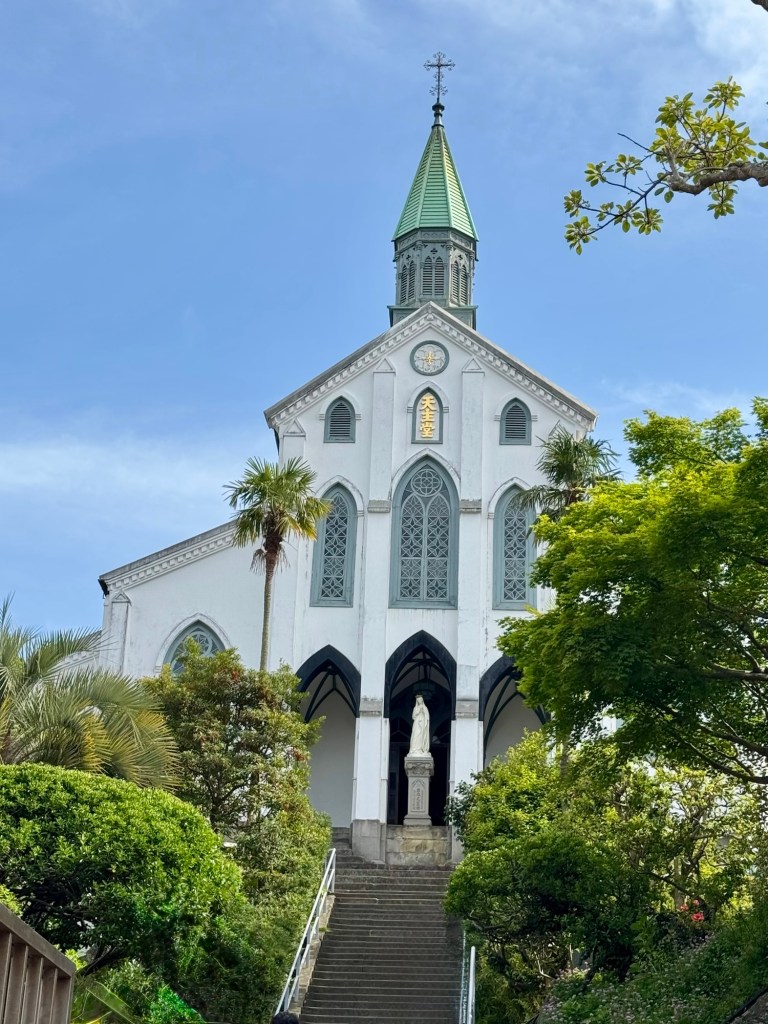
I’m starting to run out of steam but there’s one more stop close by; the Oura Cathedra. The Cathedral was constructed under the guidance of Bishop Petitjean, and is the oldest Christian building in Japan. Its dedication ceremony was held on the 19th February 1865.
Oura Cathedral
The Cathedral is dedicated to the Twenty-six Martyrs of Japan (eight European priests, one Mexican priest and seventeen Japanese Christians who were crucified on Nishizaka Hill on the February 5, 1597. The Cathedral faces the site of their martyrdom.
Some random shots of Nagasaki
As I was trying to figure out how to get back to the cruise terminal, I saw the ship. What a welcome site and so close! In the terminal, there were a number of locals selling their wares. I had a few thousand yen burning a hole in my pocket so I bought a few more things I didn’t need!
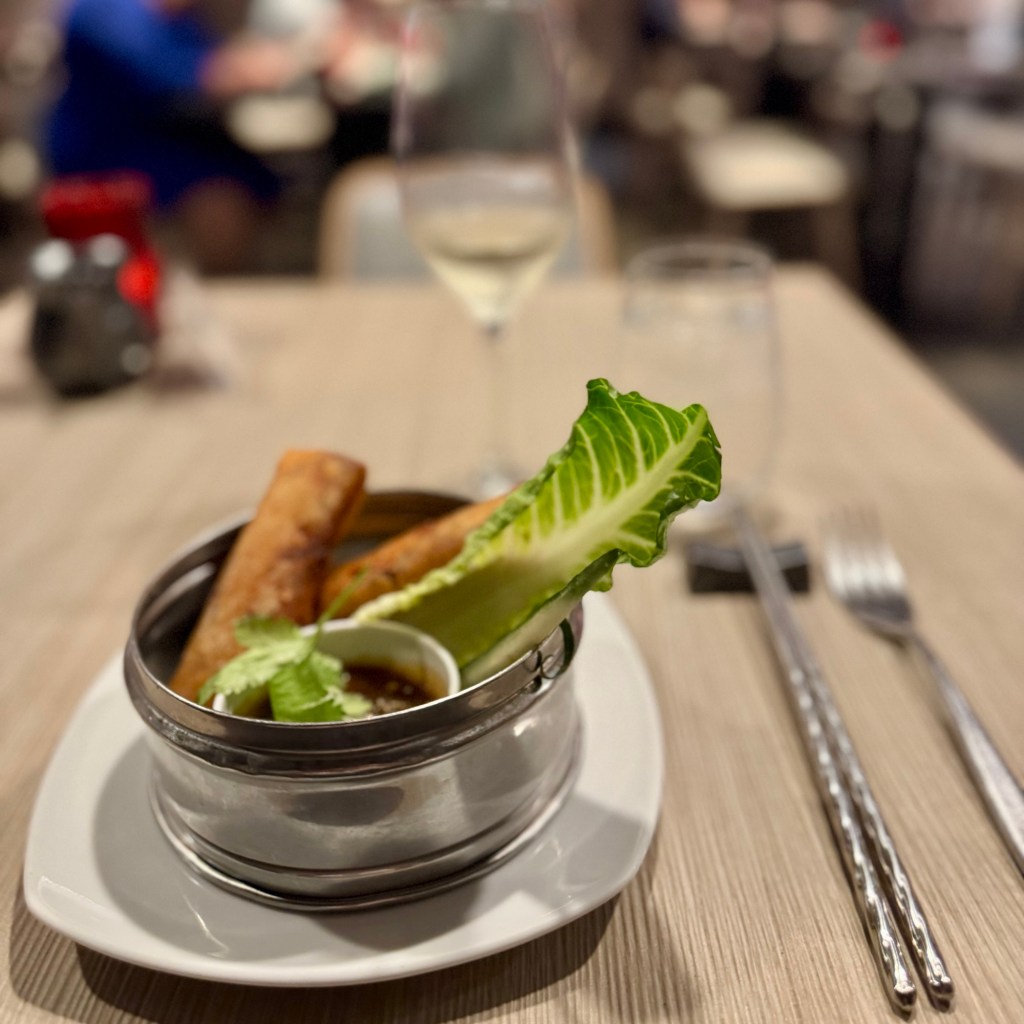
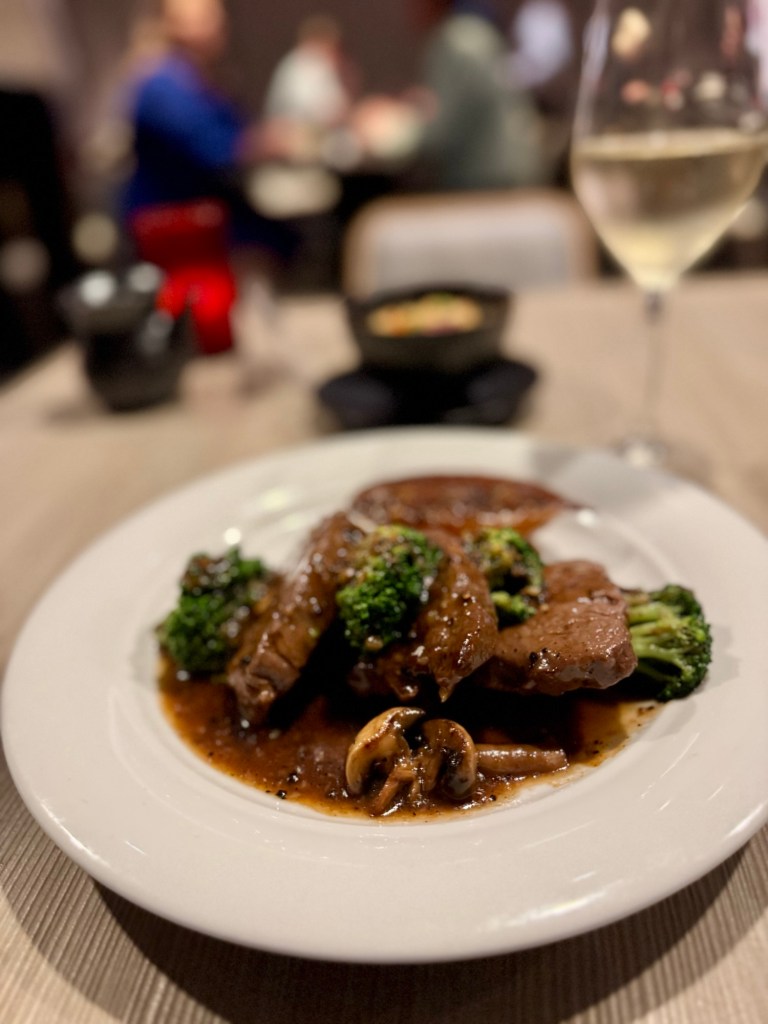
Back onboard there was time for some R&R followed by a quick shower before dinner at the Asian specialty restaurant silk. I ordered too much food, ate some of it washed down with some wine and then tired and sated I retired for the evening. I’ve got an early morning excursion tomorrow and I need my beauty sleep.
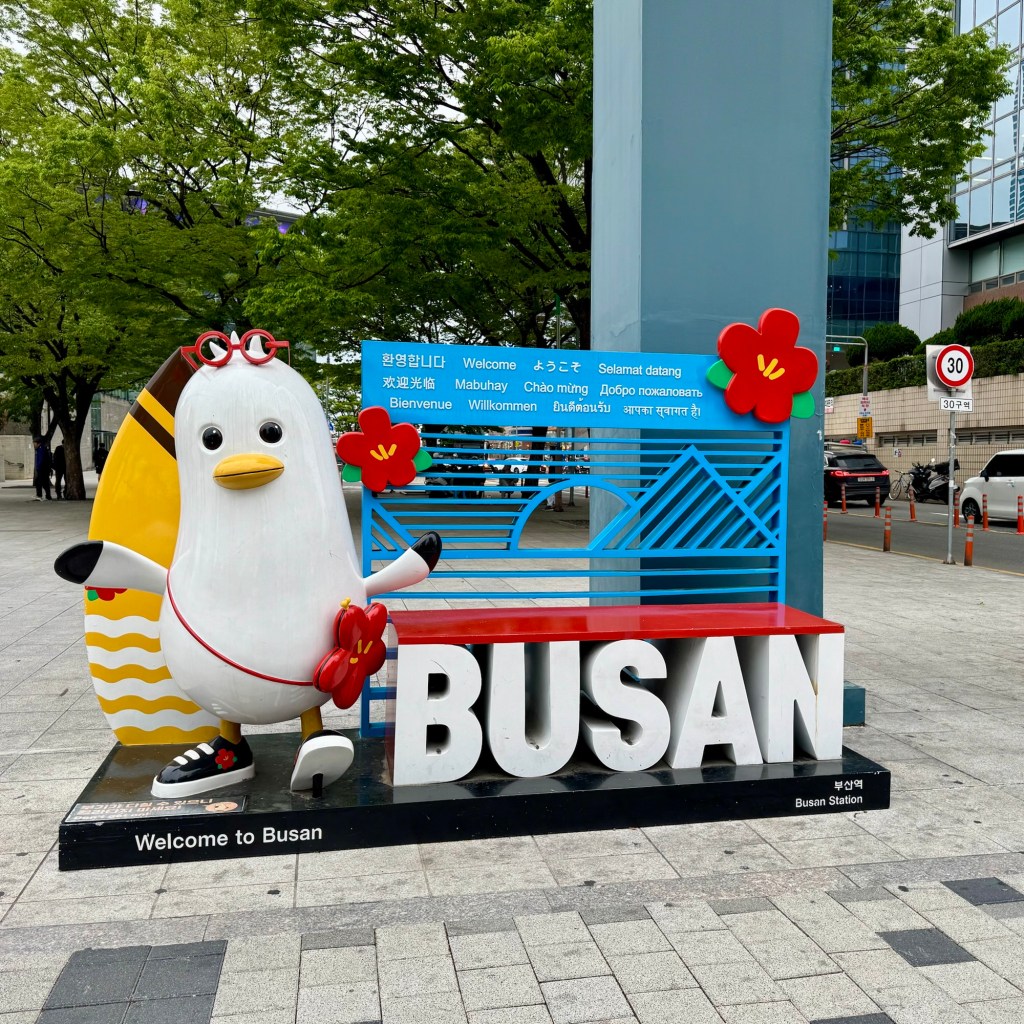
Today, we have a mid-afternoon arrival in Busan, our sole stop in South Korea, on Easter Sunday.
It was cool and very foggy morning so not an ideal pool day. Had a nice breakfast at a sharing table with a couple from Port Perry, another couple from Columbus, Ohio and a man from Japan. The conversation was lively but the poor Japanese man barely got a word in edgewise.
After breakfast, I visited the Excursion desk to check if there were any available options, but unfortunately, everything was fully booked. So, I’ll have to go solo. Yikes!
Busan, South Korea’s second-largest city after Seoul, is a bustling port city renowned for its picturesque beaches, majestic mountains, and numerous temples. With a population exceeding 3.3 million as of 2024, Busan holds the distinction of being South Korea’s busiest port and the sixth-busiest in the world.
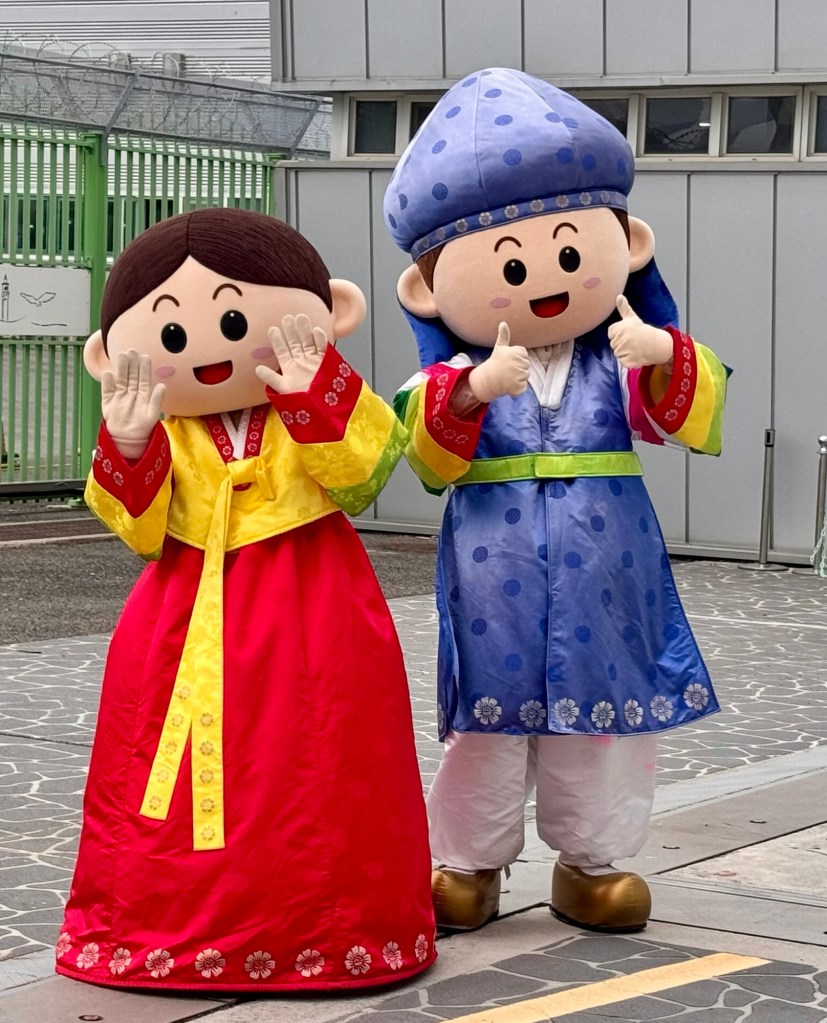
Welcome to BusanFriendly locals
The port had organized a shuttle to the Busan train station so I hopped aboard and headed downtown.
Sadly, the Beomeosa Temple, a Buddhist shrine established in 678 A.D., located at the base of Geumjeong Mountain, is too far afield for me to explore on my own, especially since I don’t have access to Google Maps. You’d never see me again!
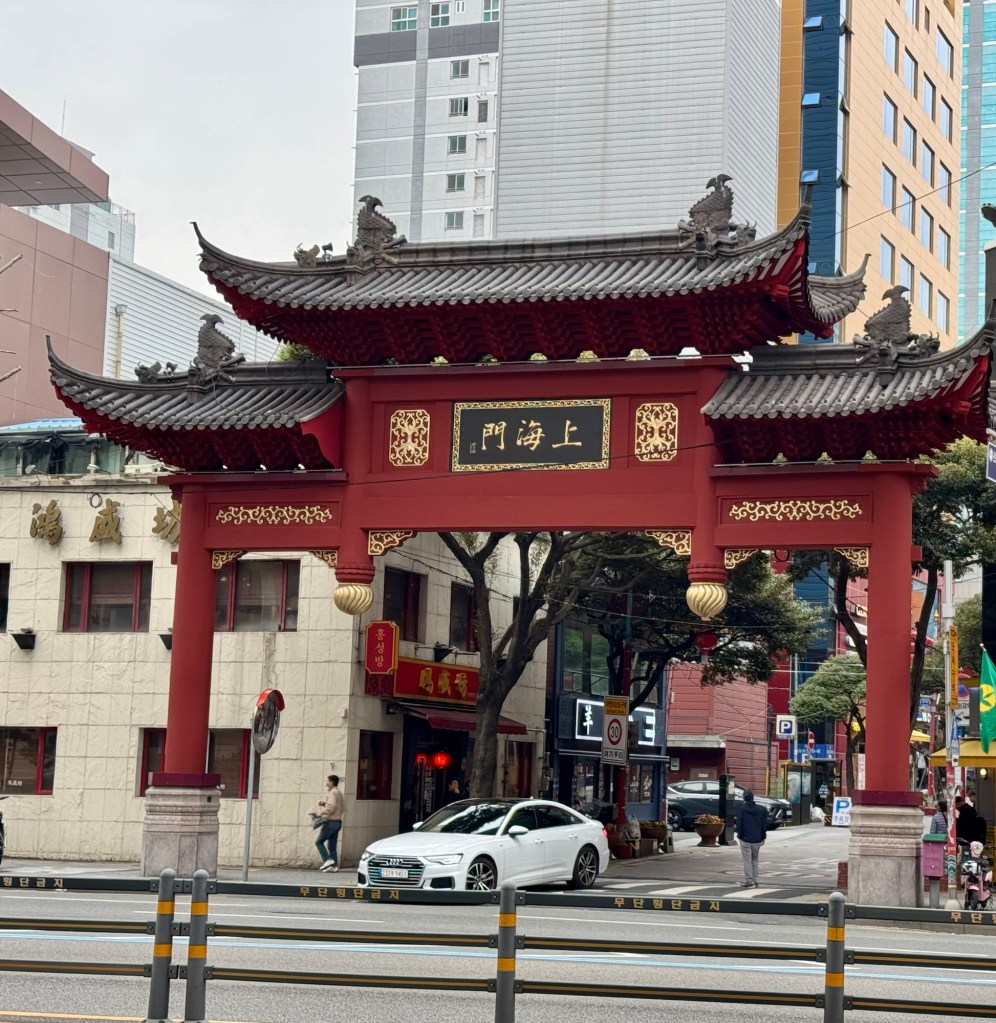
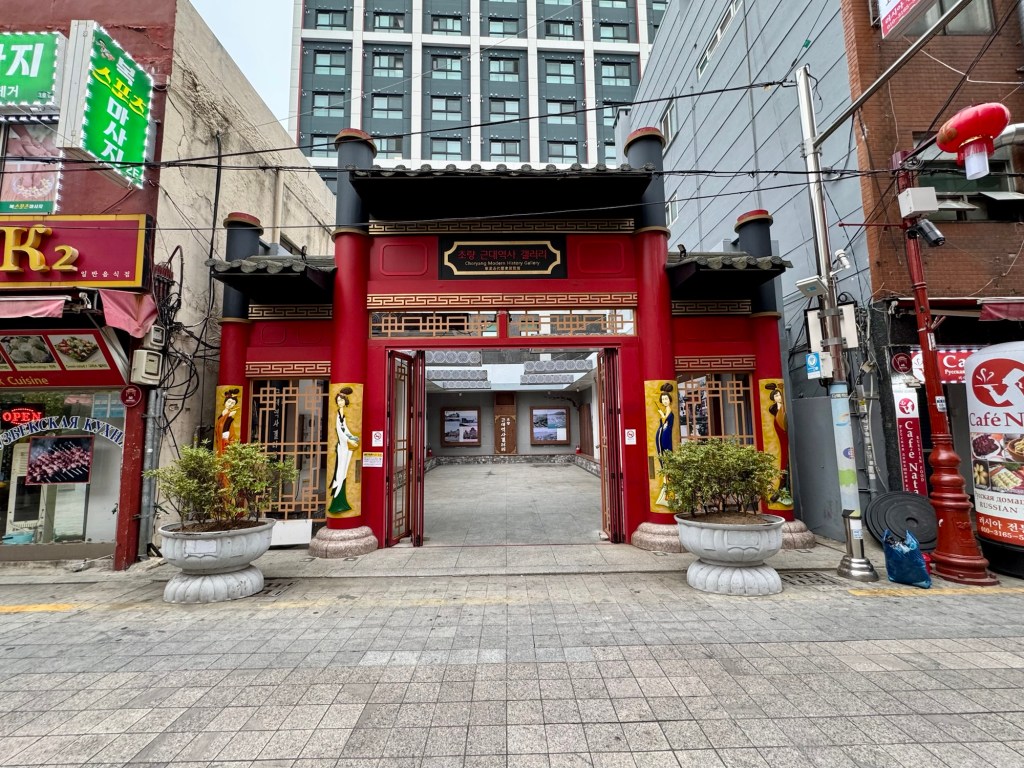
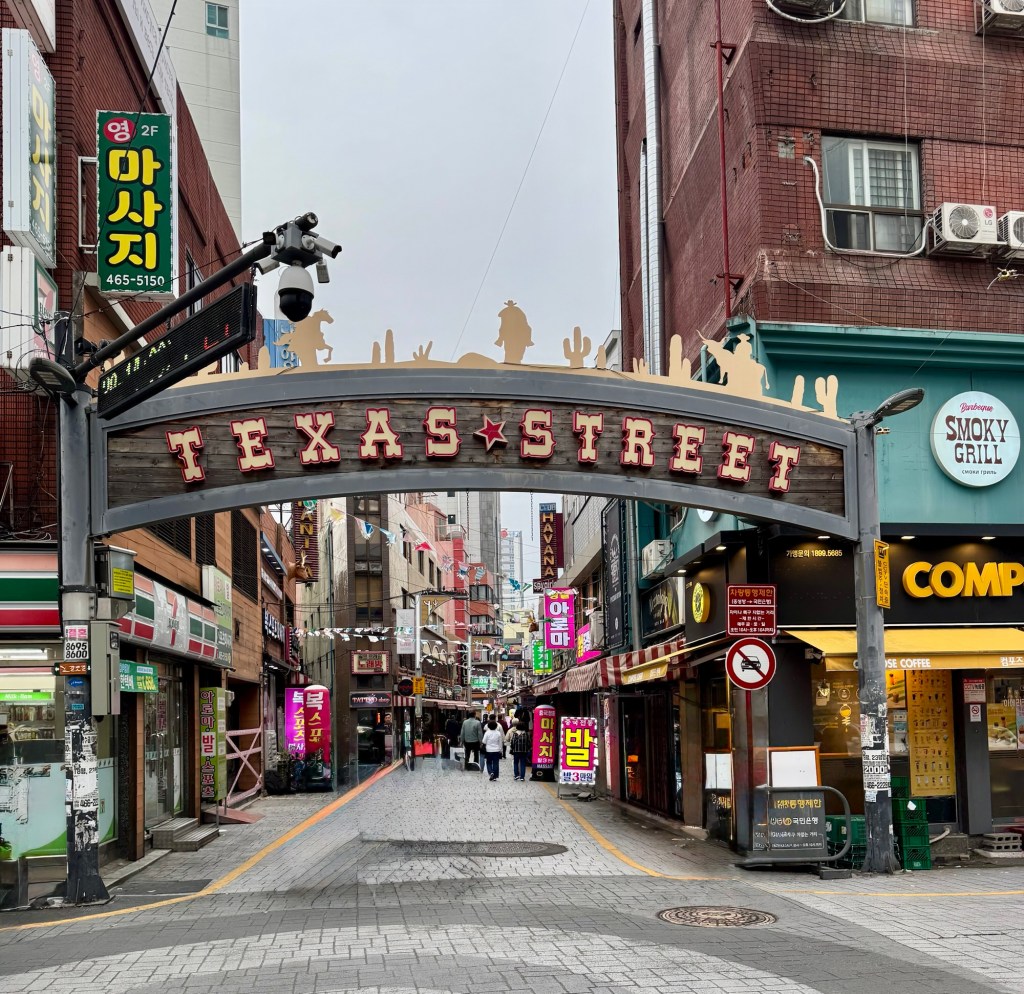
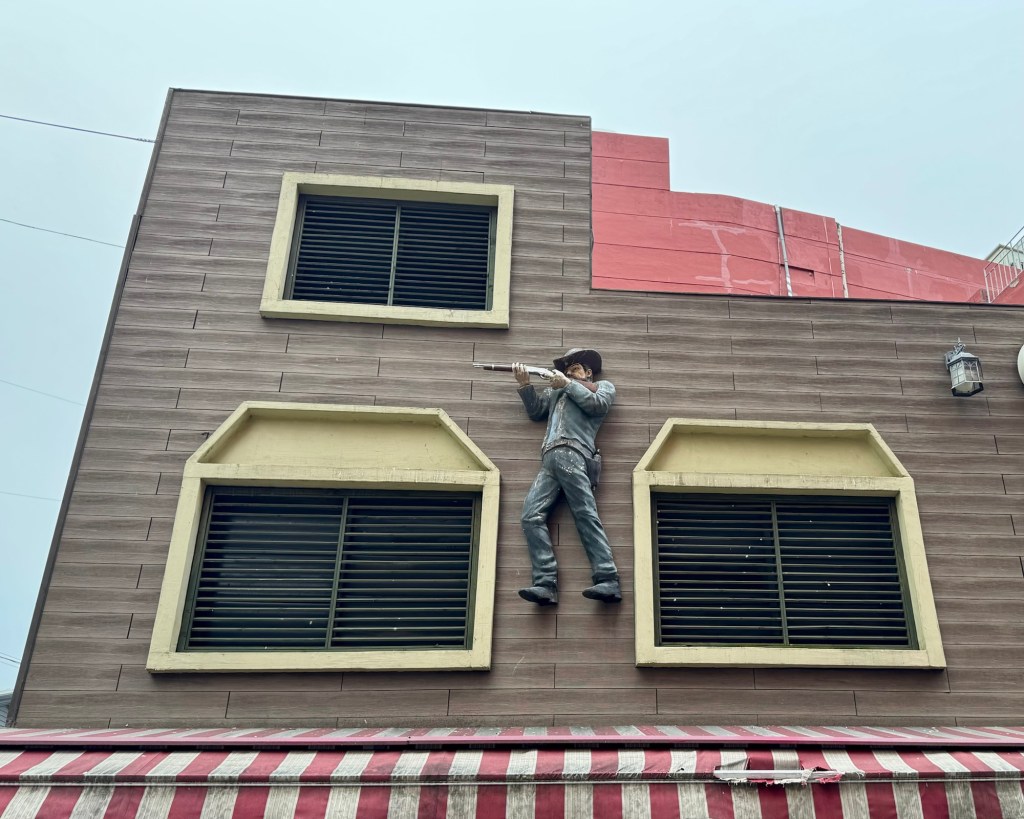
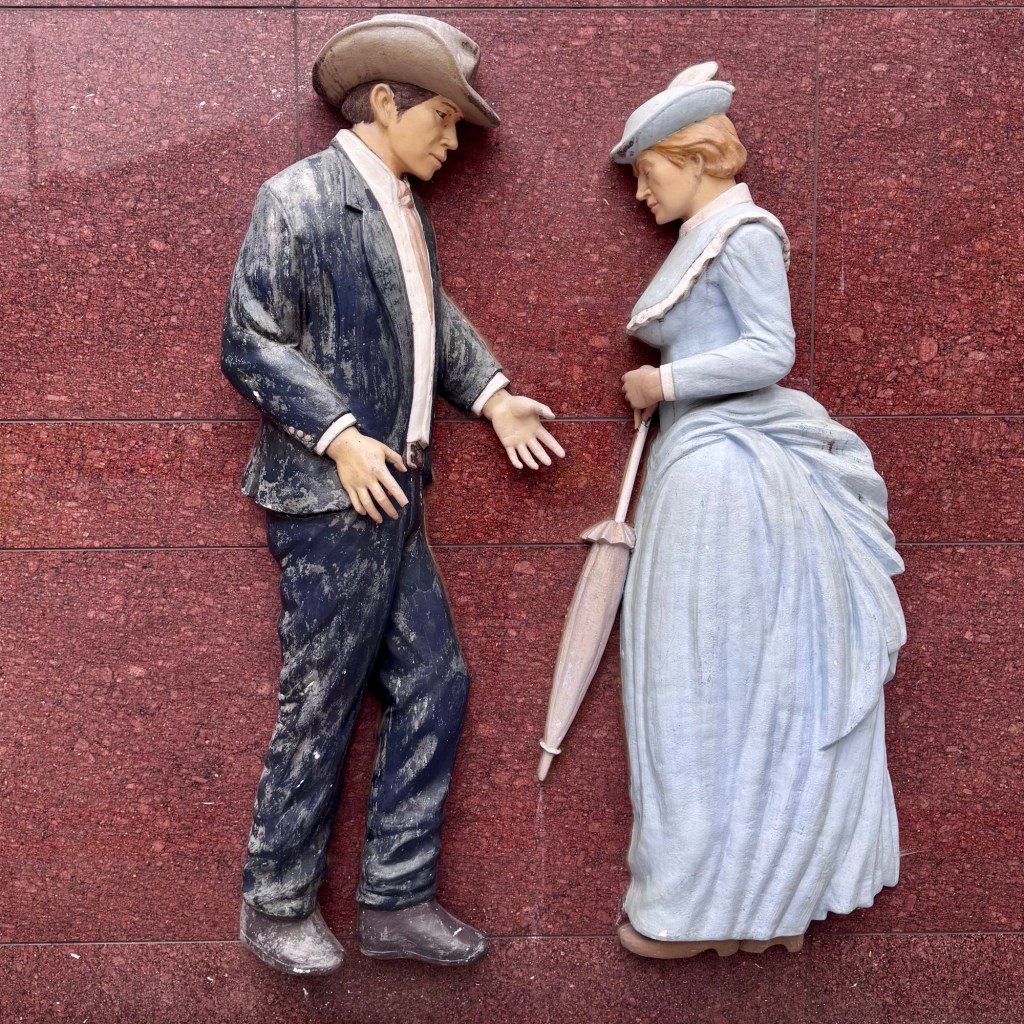
I didn’t have a well-thought-out plan, but I stumbled upon Chinatown and the Red Light District, also known as Texas! Surprisingly, there were quite a few Russian restaurants, clubs, and businesses in the area.
ChinatownTexas StreetBusan Train Station
Back in the bus to the ship and off to the main dining room for dinner. Going to make it an early night and catch up on some zzzs.
Today the ship docked in Kanazawa, the capital of Ishikawa Prefecture in central Japan.
Welcome to Kanazawa
During the Edo Period (1603-1868), Kanazawa served as the seat of the Maeda Clan, the second most powerful feudal clan after the Shogunate Tokugawa who ruled Japan. The city was spared from major bombings during World War II, allowing parts of the old castle town to survive.
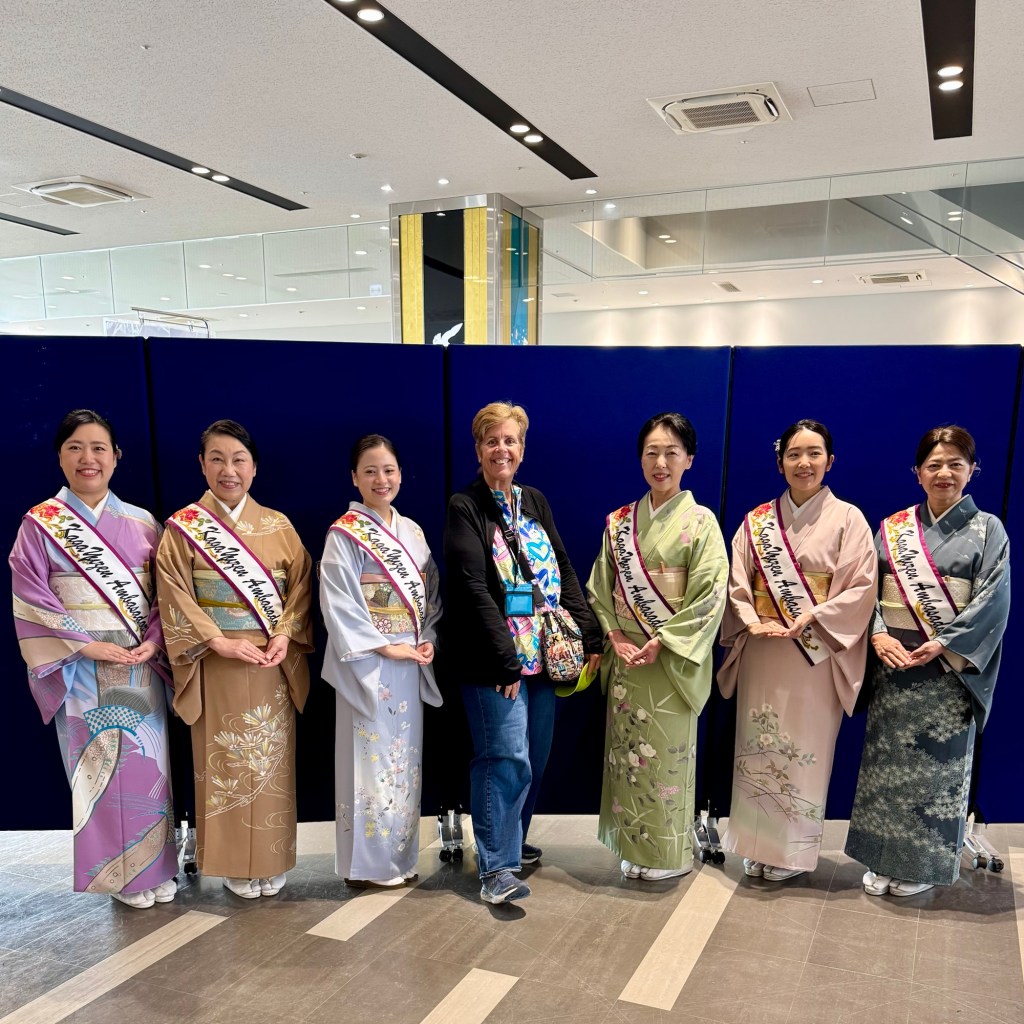
This morning I have an early morning excursion so no time for sit down restaurants. I grabbed a quick bite at the buffet (what a clusterf$ck!) and headed to the theatre to meet the tour group.
Kanazawa Ambassadors
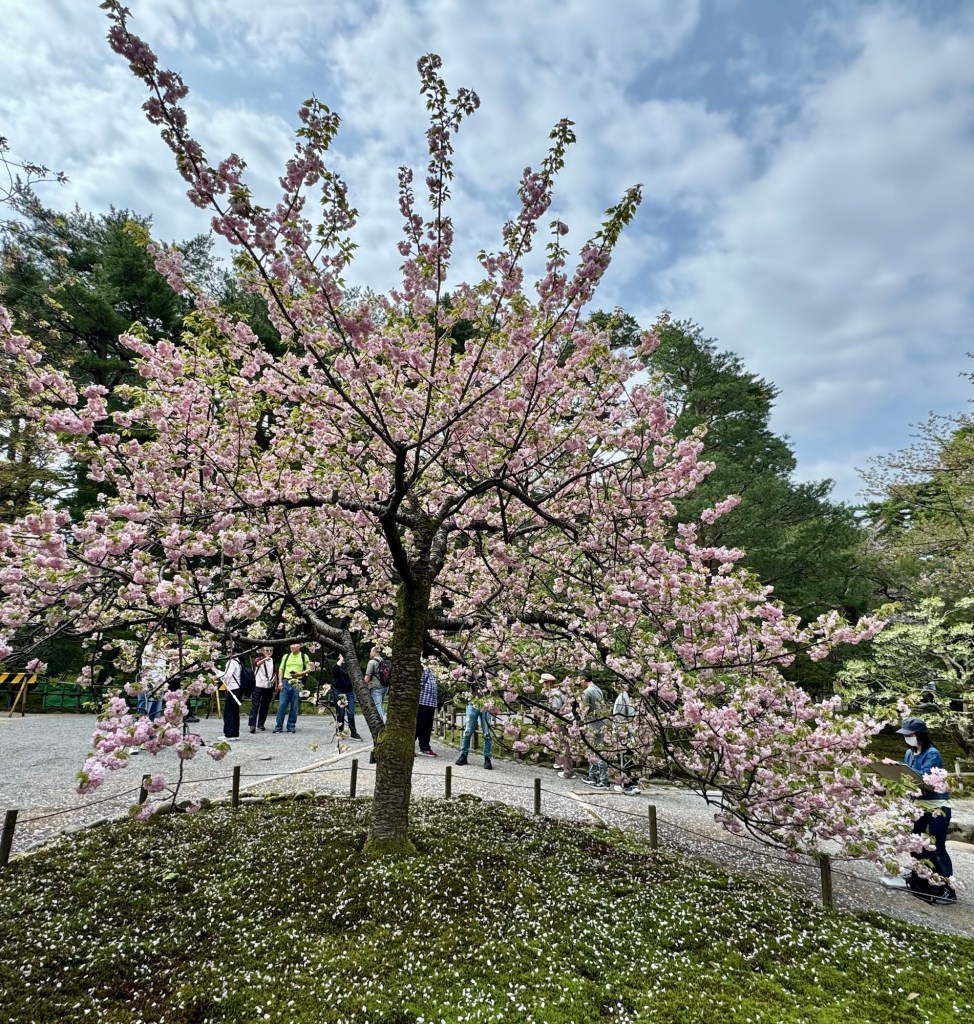
After boarding the bus, our first stop is Kanazawa’s unchallenged main attraction: Kenrokuen Garden. Kenrokuen, one of Japan’s “Three Great Gardens,” was crafted and maintained by the Maeda clan for over nearly two centuries. Initially, it served as a private garden for the feudal lords of the domain. In 1874, it was opened to the public and has since become an integral part of the city.
Our guide left us to explore the extensive garden on our own; I’m not quite sure what we’re paying him for but I digress.
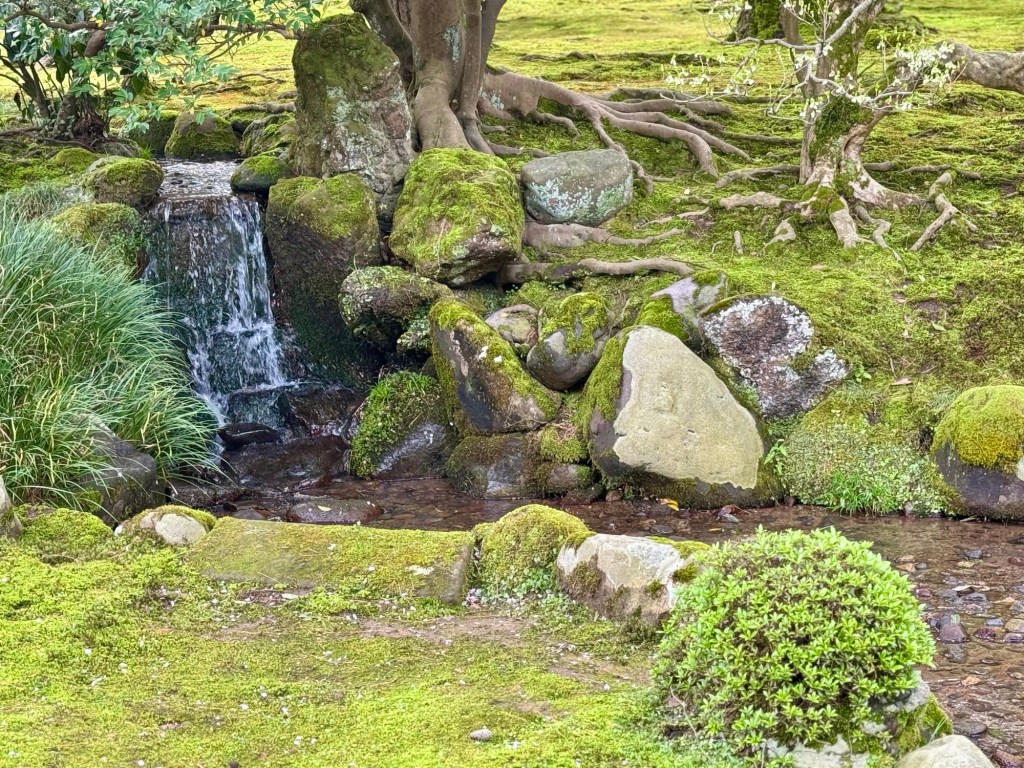
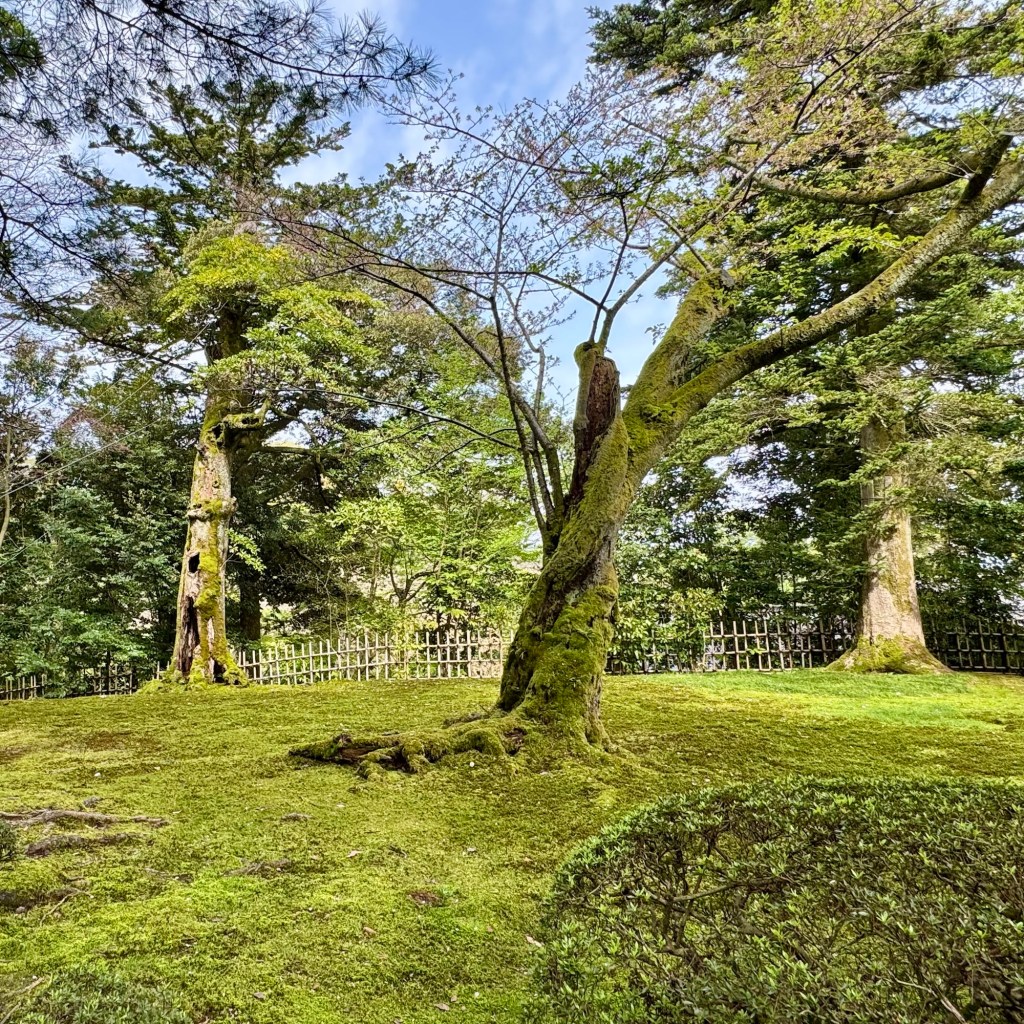
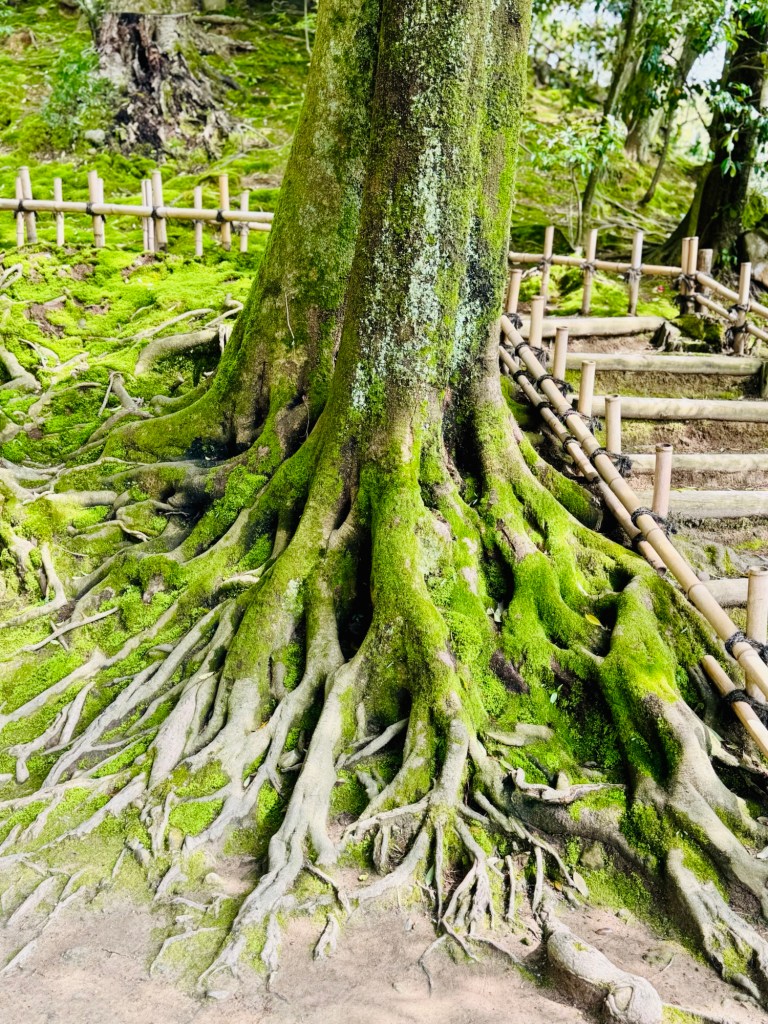
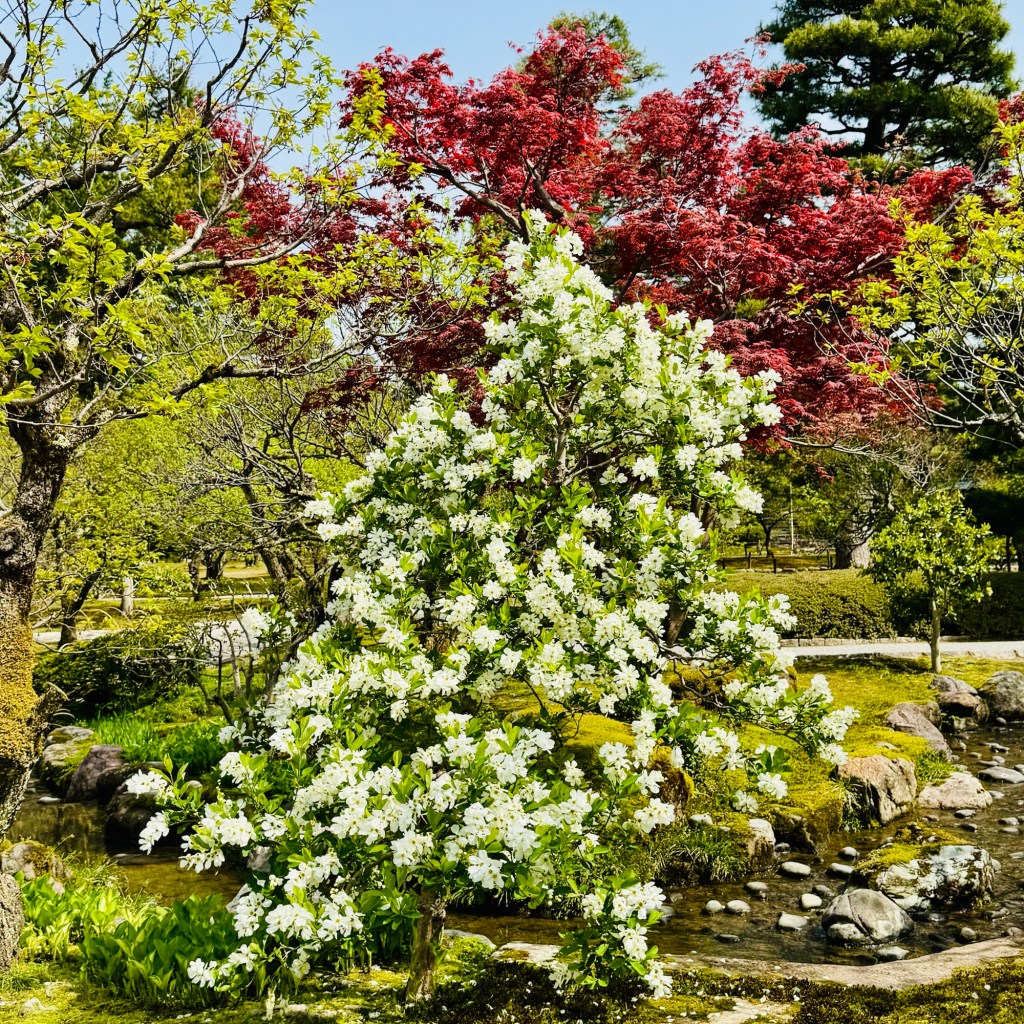
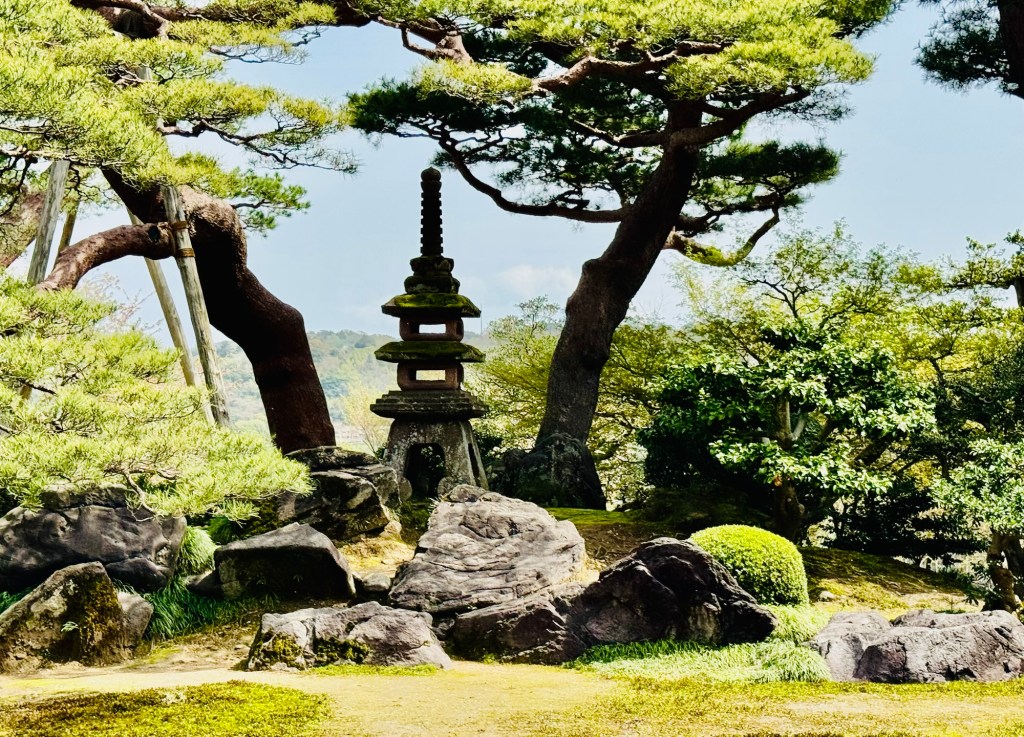
Kenrokuen, a garden renowned for its tranquility, is adorned with a plethora of water features, bridges, trees, flowers, stones, and hidden treasures. A sophisticated water system constructed in 1632 diverted water from a distant river, transporting it 11 kilometres from the Saigawa River to the iconic Kanazawa Castle. This water system, known as the Tatsumi water system, supplies Kenrokuen’s various streams and ponds.
Gardenscapes
Highlights of Kenrokuen include:
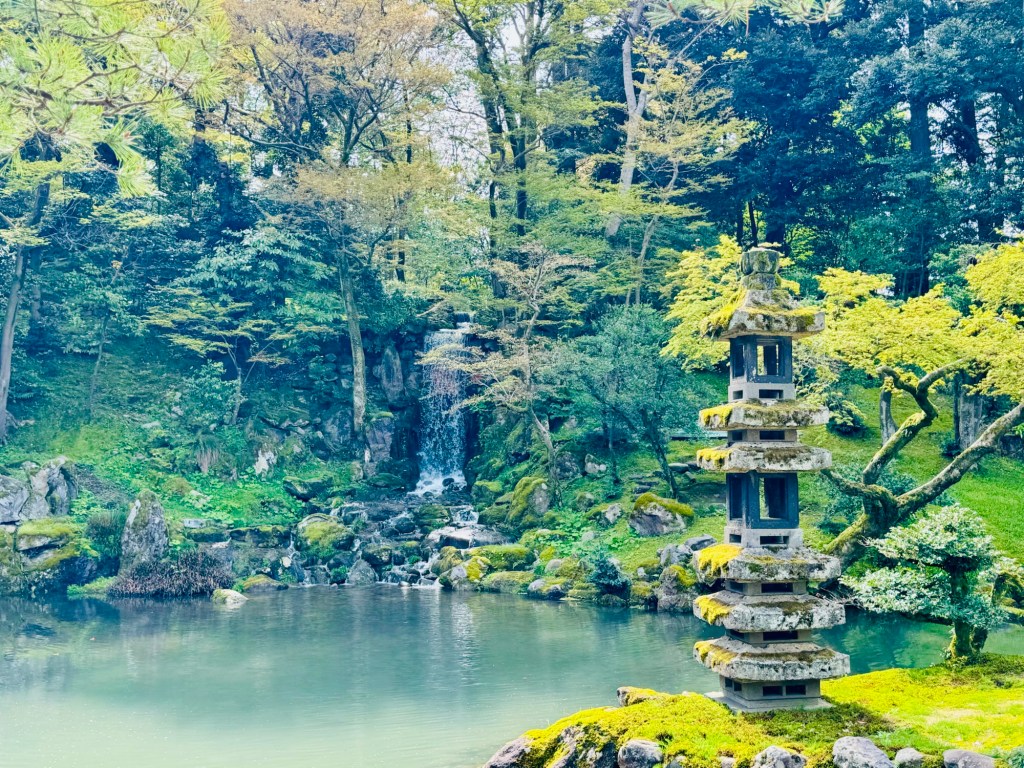
Hisagoike Pond, featuring a charming waterfall crafted in 1774, is a picturesque gem.
Hisagoike Pond
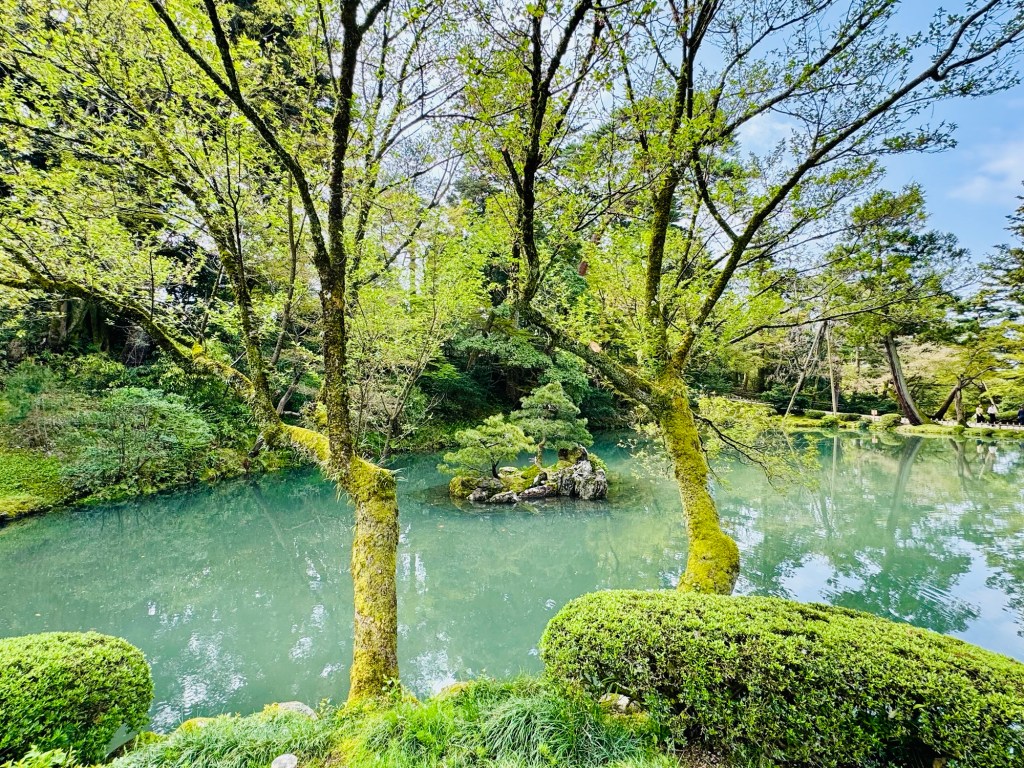
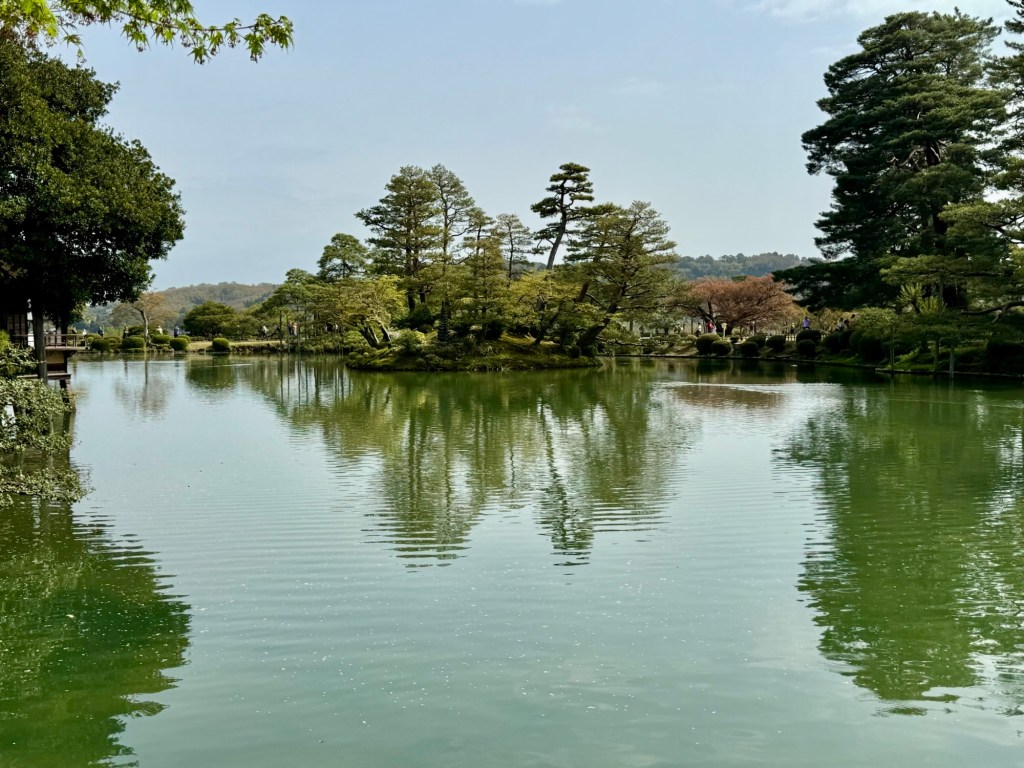
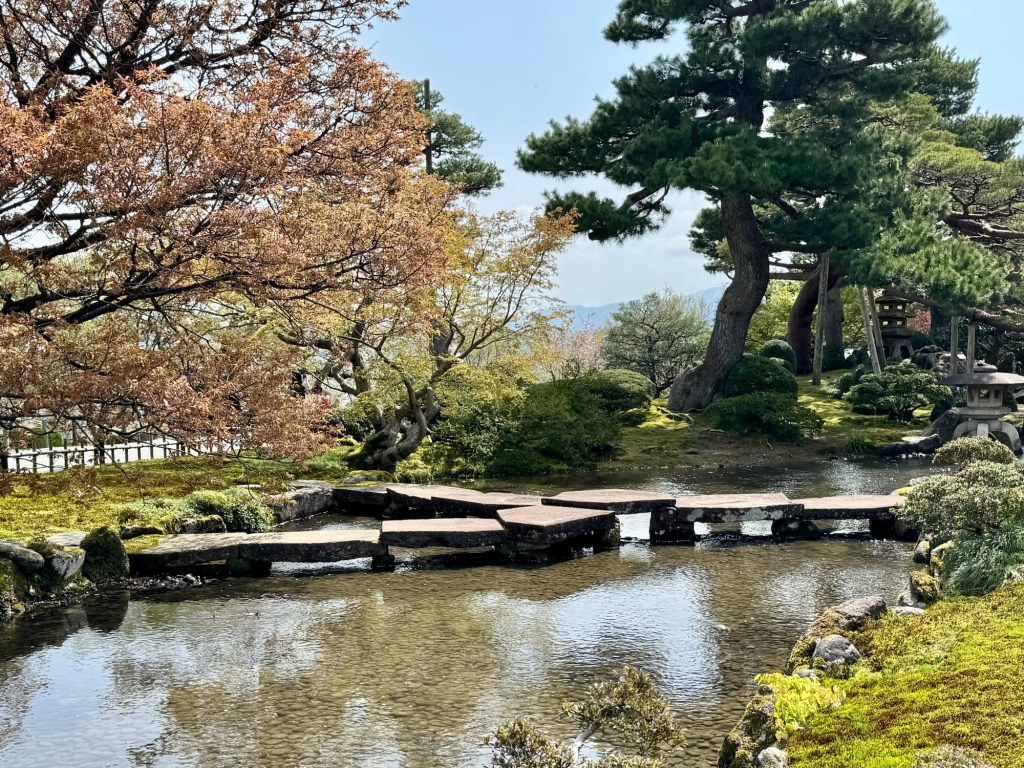
Kasumigaike Pond, spanning an area of 5,800 square meters, features a central island resembling a tortoise. This island is said to embody the legendary island of eternal youth and longevity.
Kasumigaike Pond
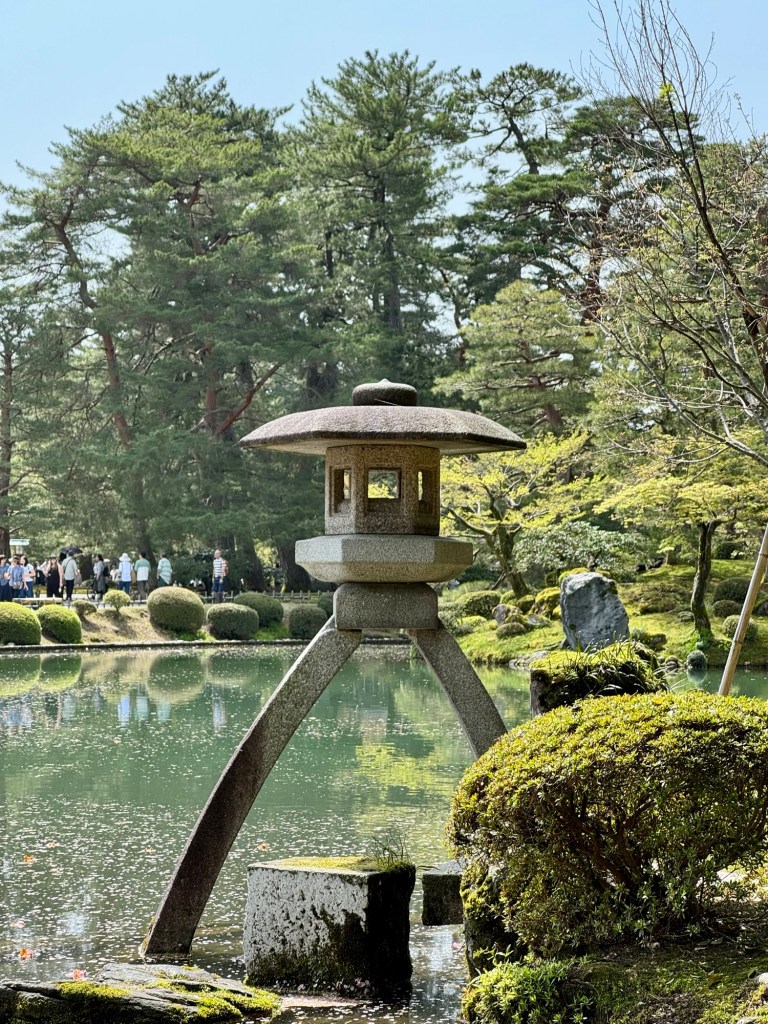
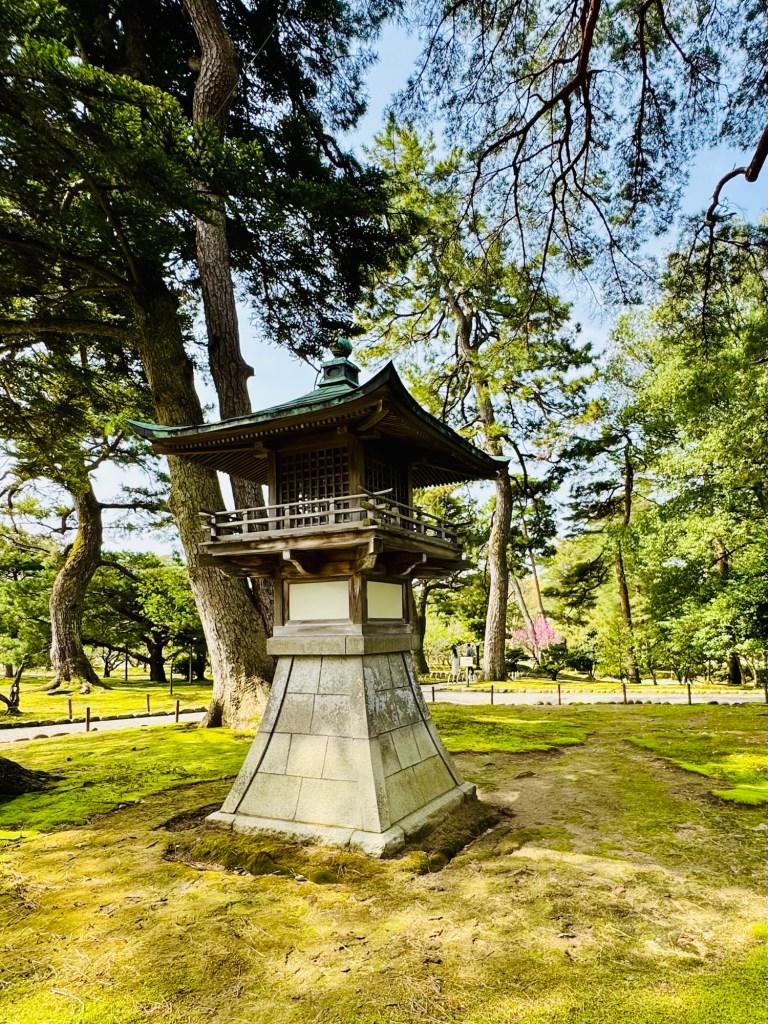
The over two-meter tall Kotojitoro Lantern graces the northern bank of the Kasumigaike Pond. This lantern, shaped like the bridges that support the strings of the Japanese koto, is an iconic symbol of Kenrokuen.
Kasumigaike Pond
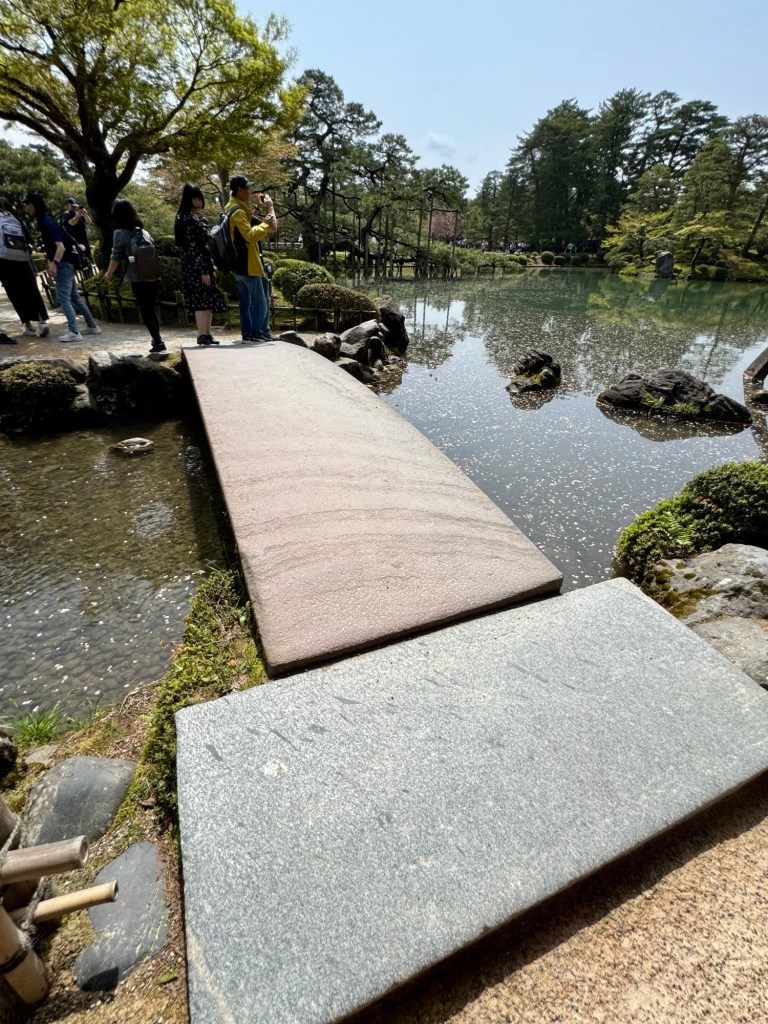
The Nijibashi (Rainbow) Bridge aka the Koto Bridge.
Nijibashi (Rainbow) Bridge
A fountain below the Kasumigaike Pond is powered by the drop in elevation from the pond which causes water to shoot up 3.5 meters high. Fountains were and are a rarity in Japanese gardens and Kenrokuen’s is one of the oldest surviving examples.
Fountain
A radio tower installed in 1933 by the Japanese Broadcasting Association (NHK) for public broadcasts.
Radio Tower
Uchihashi-tei house built over the water.
Uchihashi-tei house
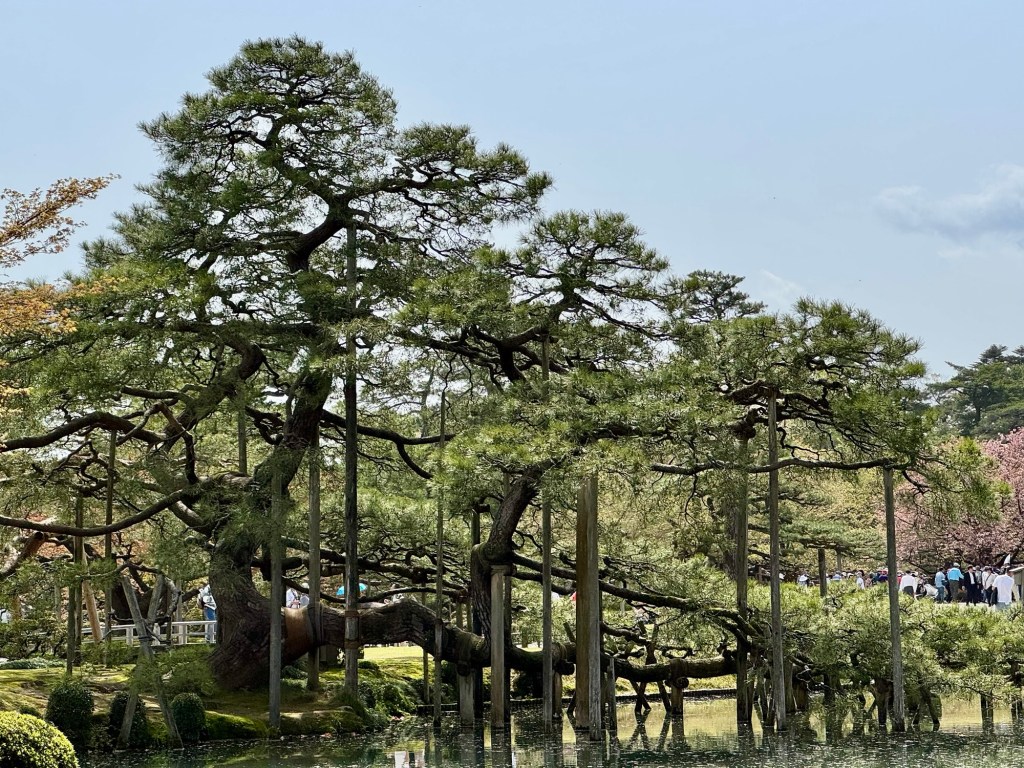
The Karasaki matsu pine tree, a Japanese black pine planted from seeds over 150 years ago.
Karasaki matsu pine tree
The Meiji Monument, featuring a bronze statue of the legendary hero Yamato Takeru in the center. It was erected in 1880 in memory of the local soldiers who died in the Seinan War, a rebellion of disaffected samurai against the new government and the Meiji Restoration.
Meiji Monument
Gankobashi, also known as Flying Wild Geese Bridge, is a stone bridge whose unique shape symbolizes a flock of wild geese flying in formation.
Gankobashi
Seven Fortune Gods, an area representing the realm of the Seven Fortune Gods, is adorned with seven stones, each representing one of these deities.
Seven Fortune Gods
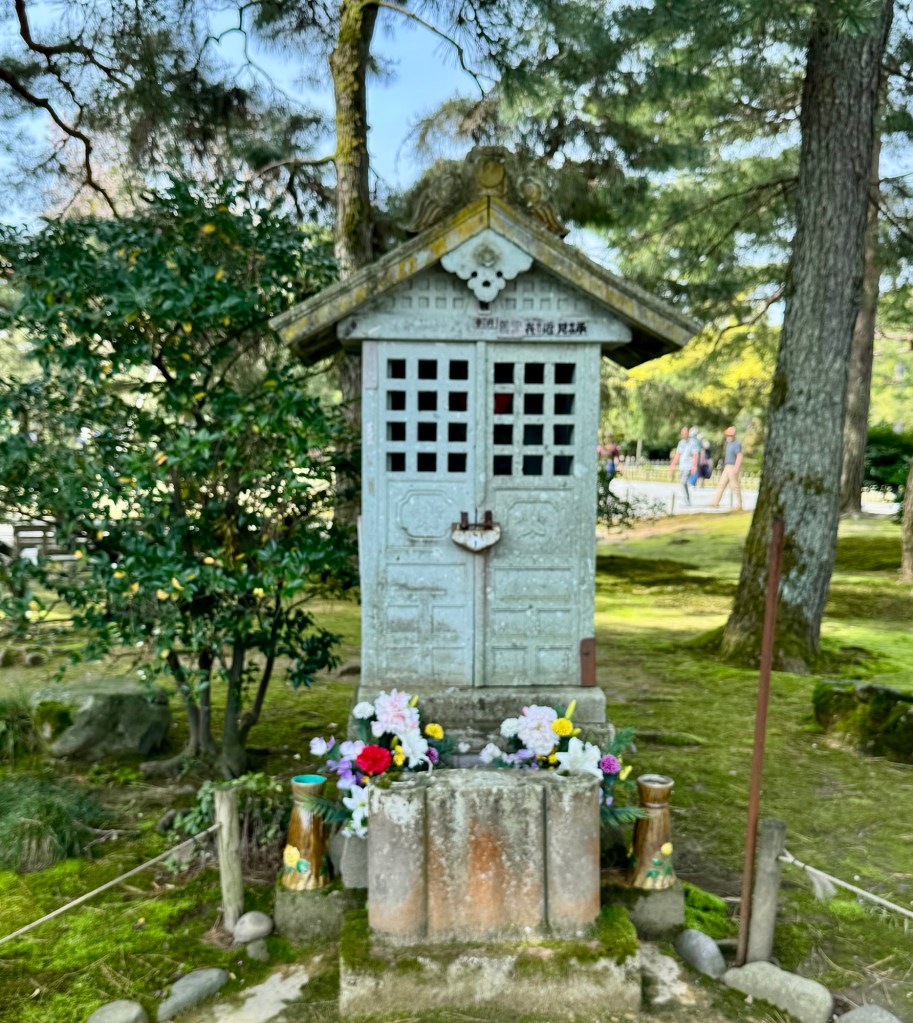
Jizo Shrine; built in 1824 upon the death of 12th feudal Lord Narinaga.
Jizo Shrine
Having misinterpreted the guide’s instructions about the meeting time (I thought we were meeting so he could lead us through Kanazawa Castle), I only had 15 minutes to explore the castle on my own. Oops…
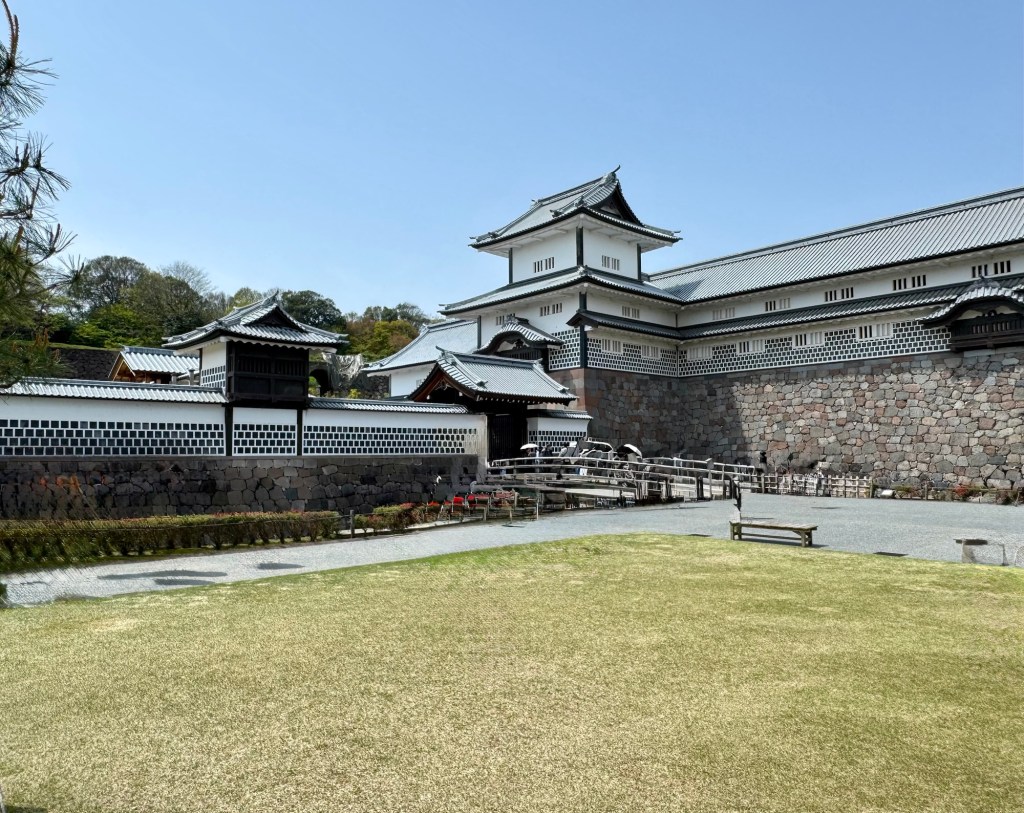
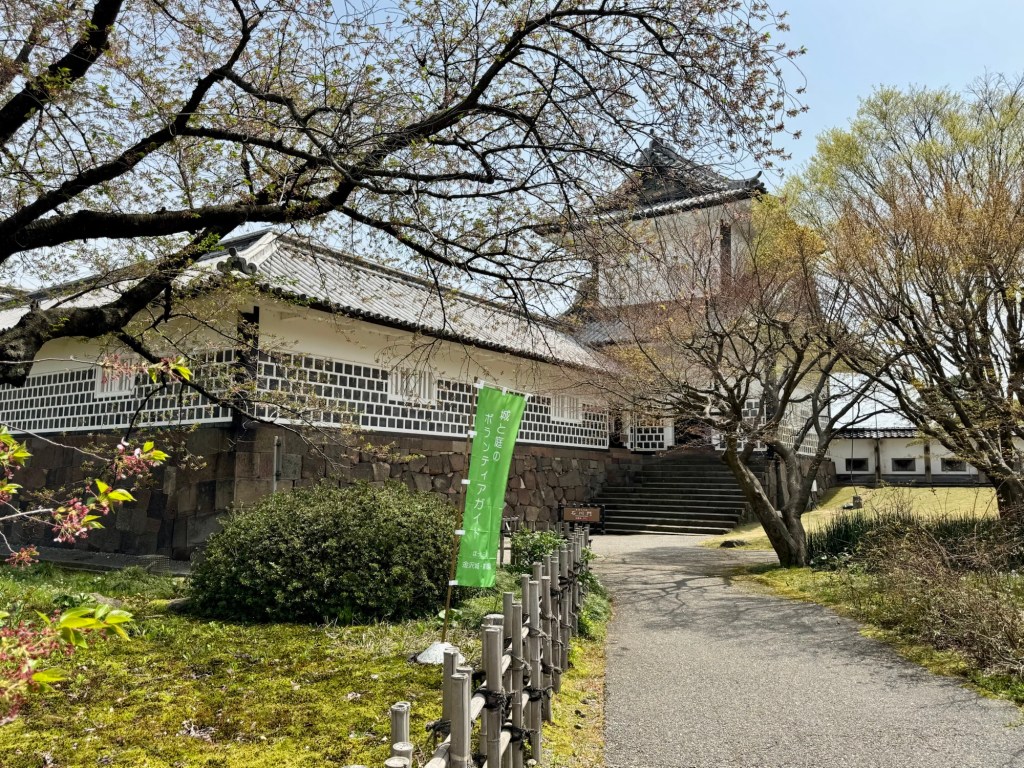
Kanazawa Castle, the heart of the Kaga domain and the ancestral home of the Maeda clan throughout the Edo period, witnessed a peaceful history under the rule of the Maeda clan. The castle park is most famous for its many formidable stone walls that fortified the castle against potential attackers.
The castle endured several devastating fires over the centuries, leaving only two storehouses and the Ishikawa-mon Gate standing. The Ishikawa-mon Gate, dating back to 1788 and facing Kenrokuen, stands as a testament to the castle’s resilience.
In recent years, several structures have been reconstructed, preserving the authenticity of the original construction by employing the materials and techniques of the past.
Kanazawa Castle
Fortunately, I wasn’t the last person in the group to catch the bus headed to Omicho Market, the “Kitchen of Kanazawa” where we were again dumped unceremoniously by our “guide”.
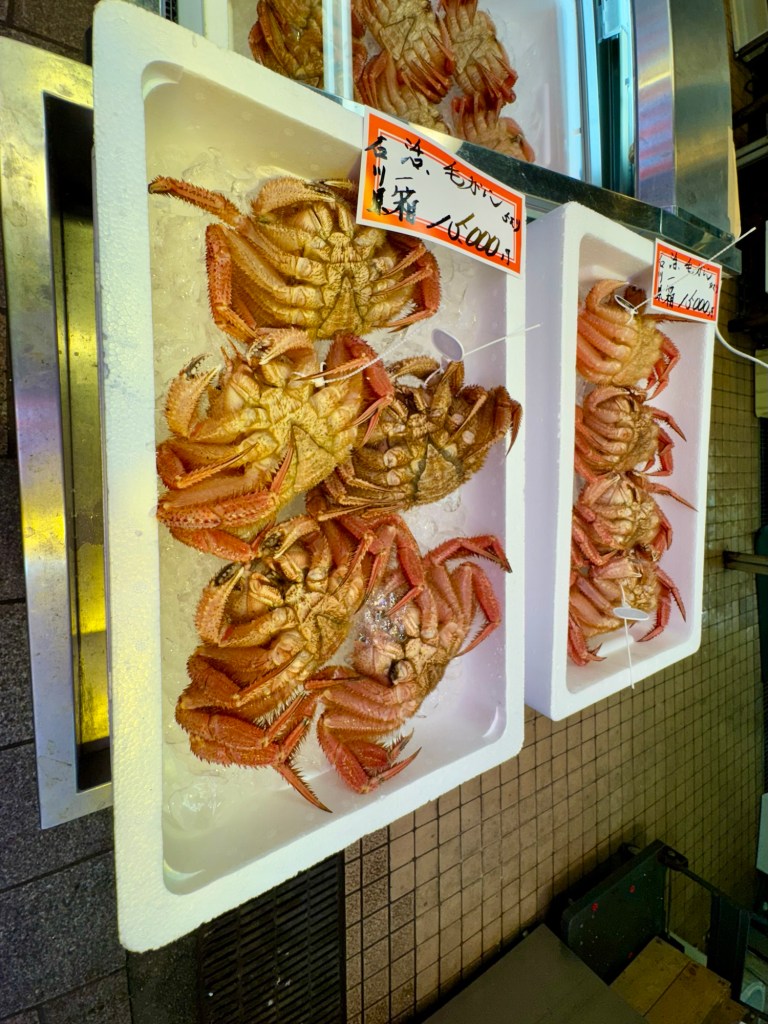
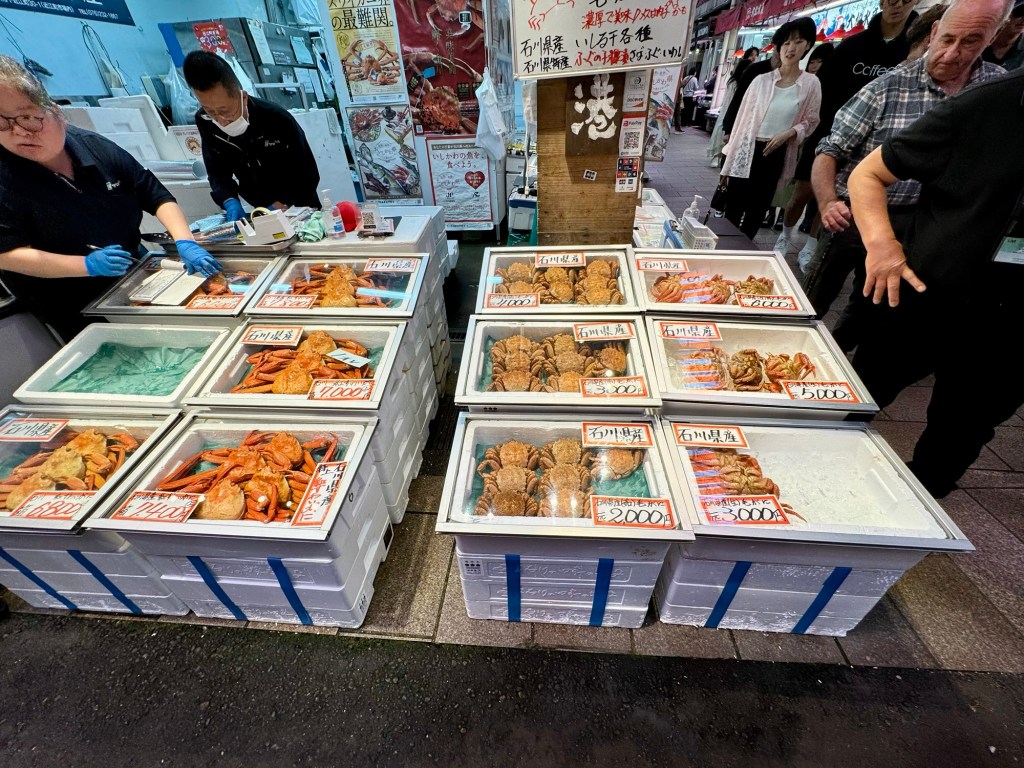
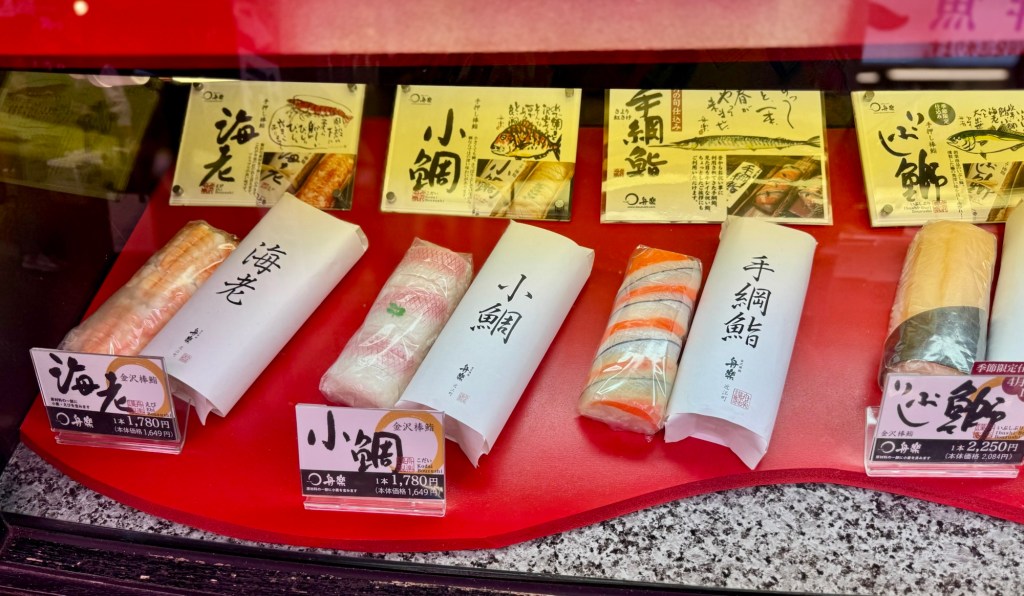
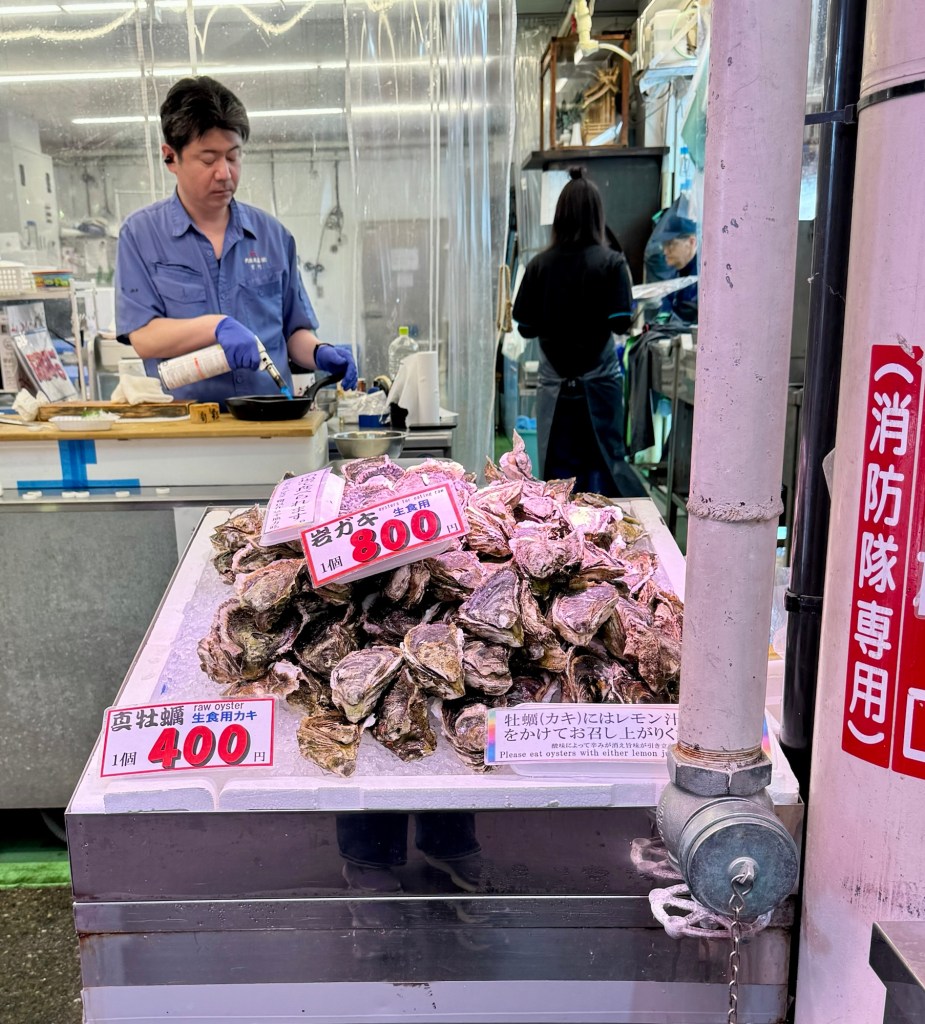
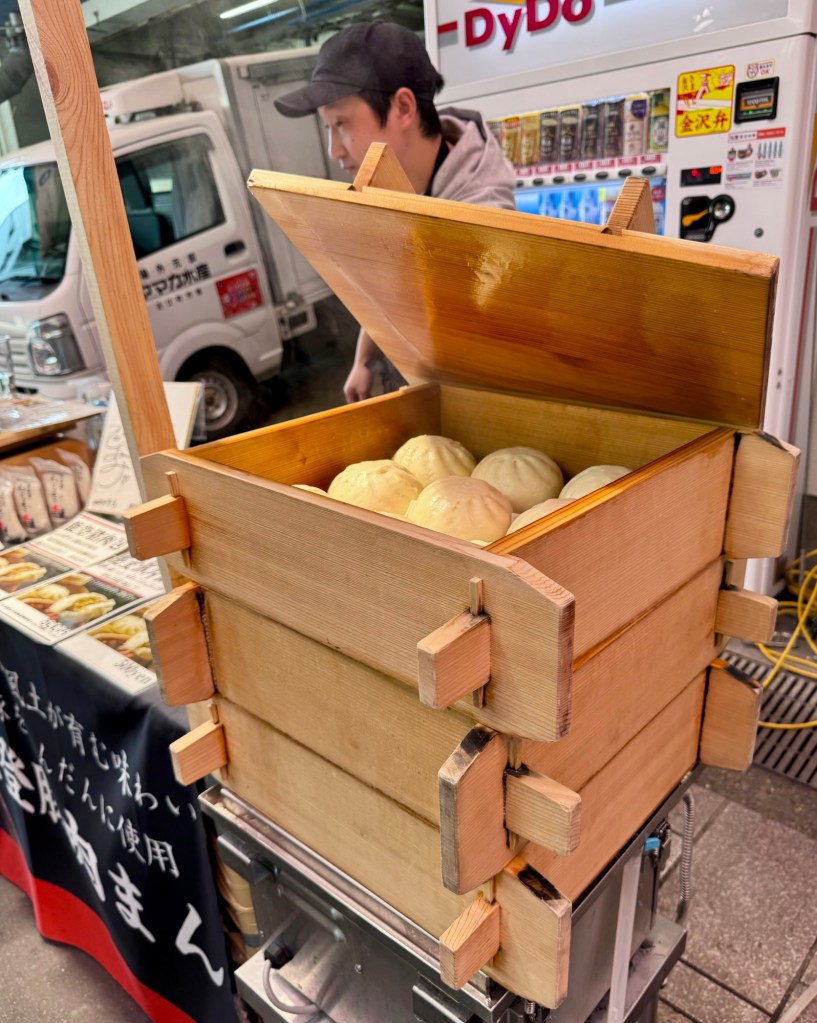
Omicho Market, Kanazawa’s largest fresh food market since the Edo period, has transformed into a vibrant and bustling network of covered streets. With over 170 shops and stalls, it features fishmongers selling their bounty of delicious fresh seafood caught in the nearby Sea of Japan. In addition to local seafood and produce, visitors can also discover a variety of items such as flowers, clothing, and kitchen tools.
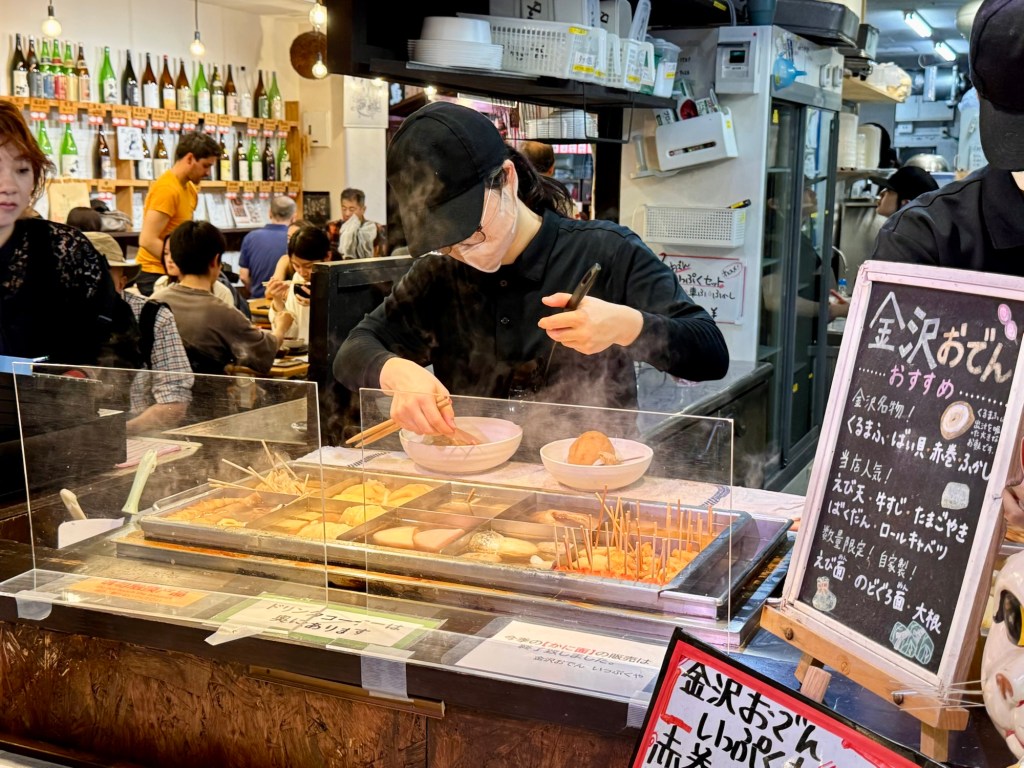
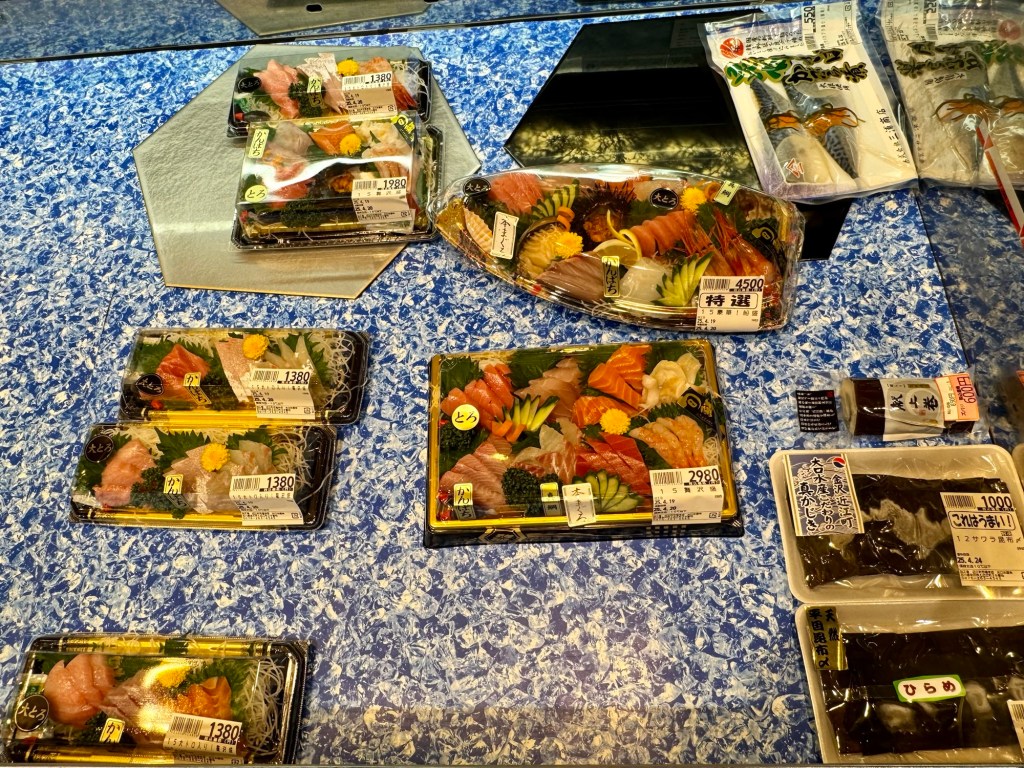
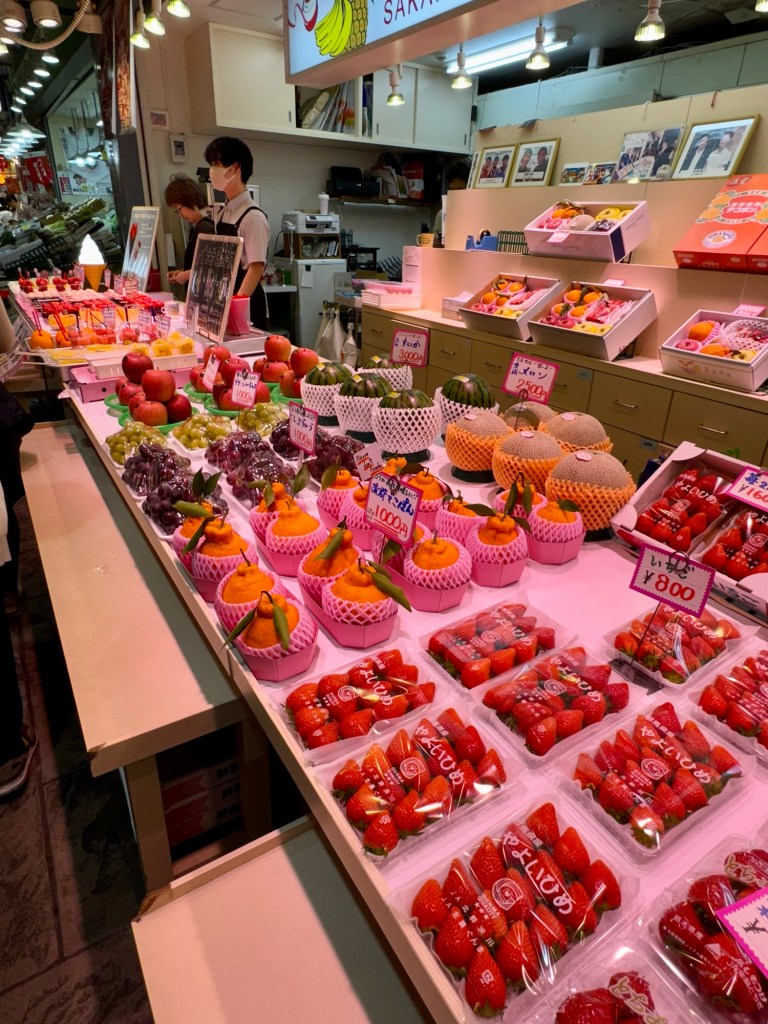
Market Offerings
Soon enough, we’re back on the bus and headed to the ship. Did I mention it was a beautiful day? Time to grab a quick bite and head to the pool deck to relax and read my book.
After a few hours, it was time to return to my cabin for a nap and a shower before the night’s festivities. The show didn’t pique my interest, and I wasn’t hungry, so I headed to the casino to try my luck at cards. I had some fun with my new gambling buddies before grabbing a late-night snack at The Local and drifting off to dreamland.
Today was another sea day. Getting colder as we sail north so heading out on the deck is pretty much for brisk walks only. The days activities revolved around food, gambling, lounging and reading. Went for a nap late afternoon and woke up at 1:30 am. Lol, Rip Van Winkle would be jealous!!
April 18, 2025 (Kakunodate)
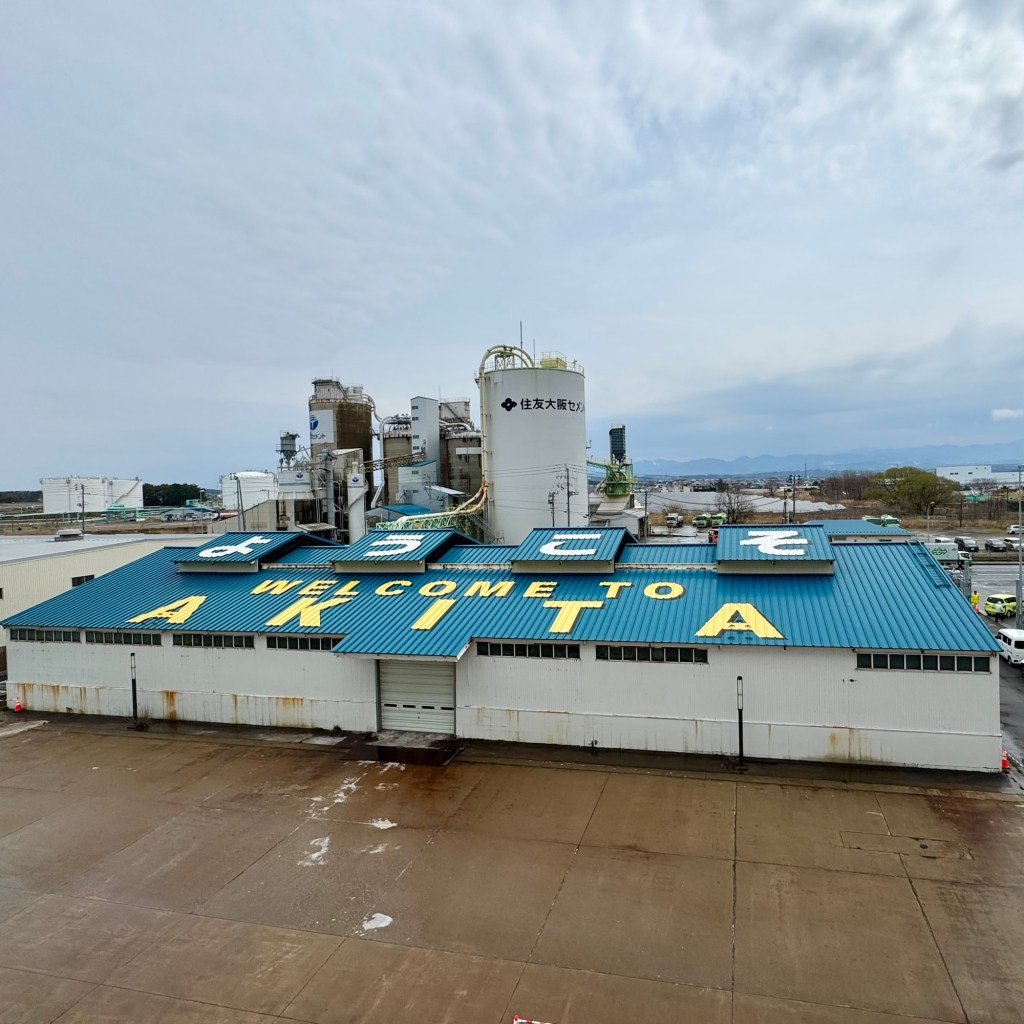
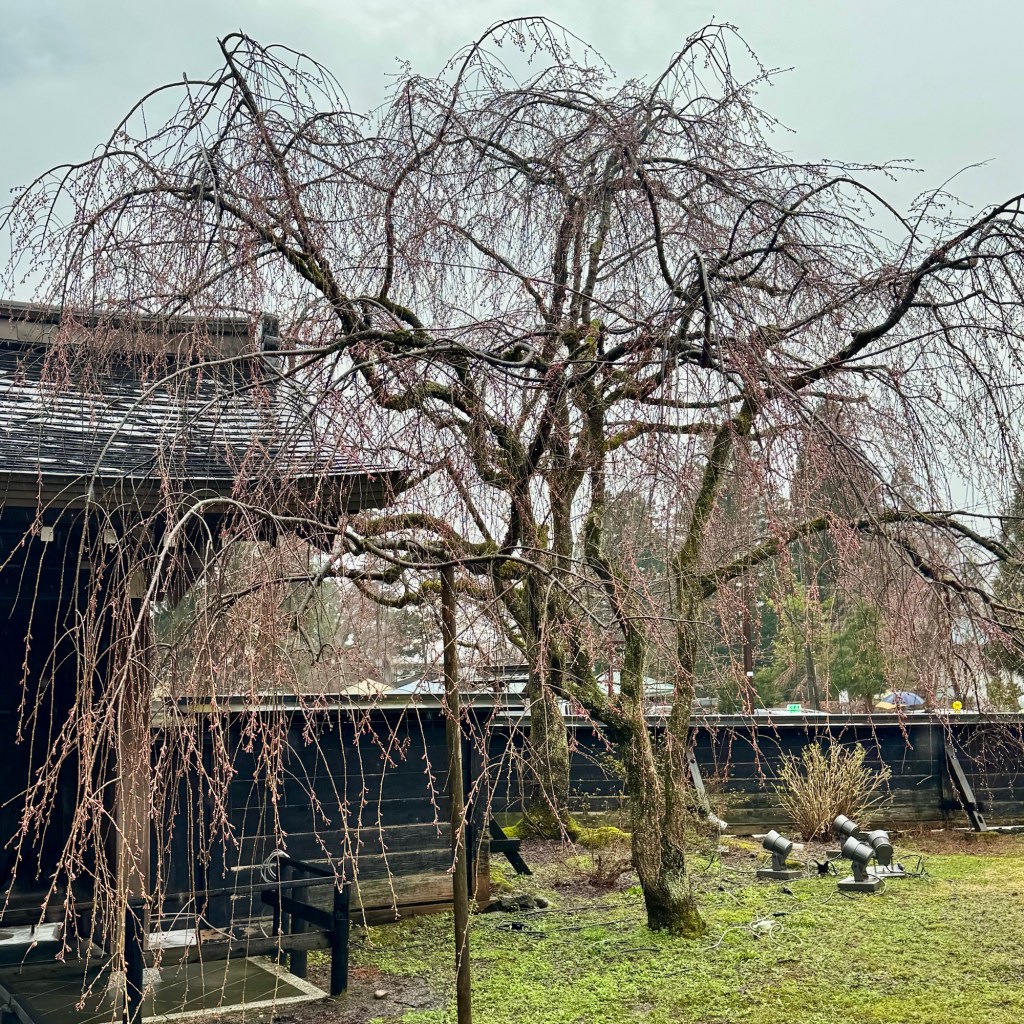
This morning we docked in Akita. The capital of the far north prefecture of the same name, Akita is best known for snow (thank God we only had rain!), onsen (hot springs), great sake, a sturdy breed of dog (think Hachiko), and the widely acknowledged beauty of its women. Unfortunately I’m heading out of town on a ship’s excursion – Explore Kakunodate in search of the illusive light pink shidarezakura, weeping cherry trees and to visit the residences that wealthy samurai families once owned.
But first breakfast! Today I opted for smoked salmon and a bagel with my usual fruit salad. No mimosas as I want to be sharp, lol!
Bagel and lox
We boarded our bus for the 90 minute drive during which our guide, Taka Suzuki, regaled us with tales of castle towns and samurai along the way.
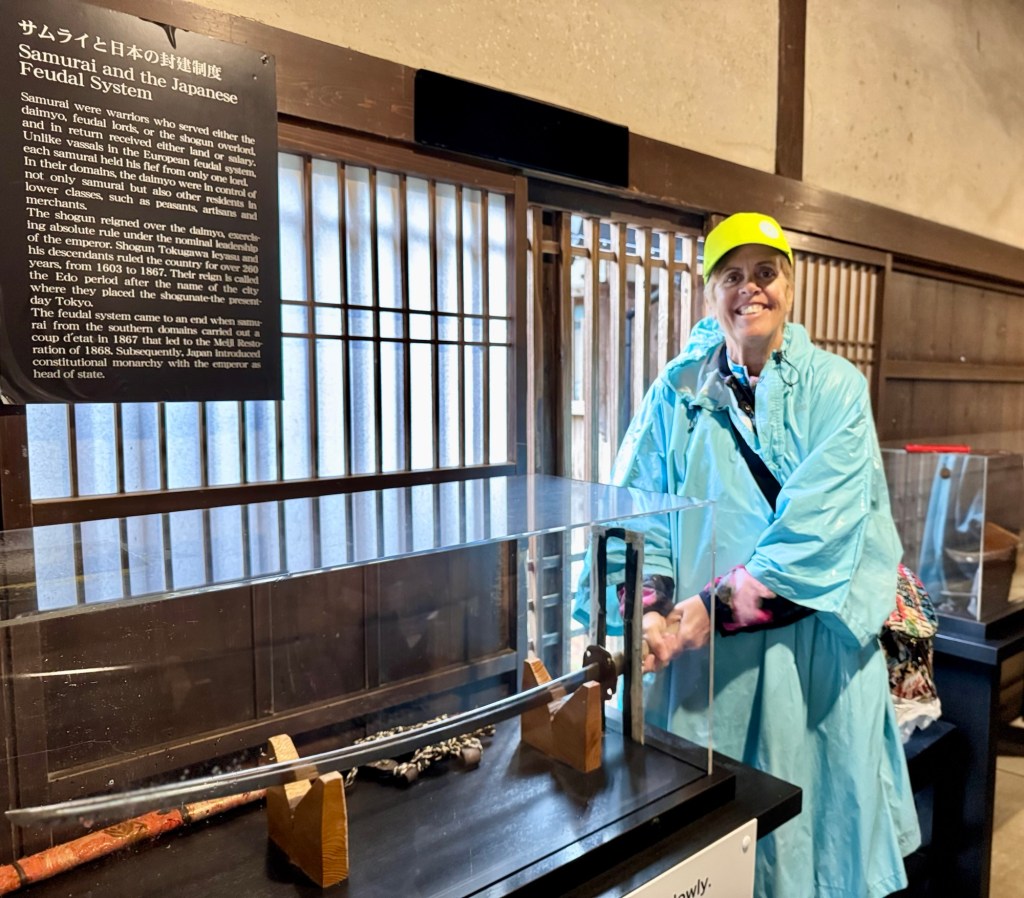
Samurai and the Japanese Feudal System
Samurai were warriors who served either the daimyo, feudal lords, or the shogun overlord, and in return received either land or salary. Unlike vassals in the European feudal system, each samurai held his fief from only one lord.
In their domains, the daimyo were in control of not only samurai but also other residents in lower classes, such as peasants, artisans and merchants.
The shogun reigned over the daimyo, exercising absolute rule under the nominal leadership of the emperor. Shogun Tokugawa leyasu (he is the main character in the current TV series, Shogun)and his descendants ruled the country for over 260 years, from 1603 to 1867. Their reign is called the Edo period after the name of the city where they placed the shogunate the present-day Tokyo.
The feudal system came to an end when samurai from the southern domains carried out a coup d’etat in 1867 that led to the Meiji Restoration of 1868. Subsequently, Japan introduced constitutional monarchy with the emperor as head of state.
Feudal Castles
During the peak of the samurai era, there were 2000 feudal castles in Japan but today there are only 12 left due to three waves of destruction.
Most of the castles were destroyed in the early 1600s after Japan was unified and peaceful by order of government. Feudal lords had pledged allegiance to the Shogun and the castles were no longer needed for defence. This could also help prevent future uprisings.
Then in the 1870s, Japan changed to a more European centralized government abandoning the samurai class. The castles left at that point were regional defence fortresses and most of them were destroyed.
The WWII carpet bombings destroyed most of the rest.
Castle Towns
Back in the day, society was stratified and your importance and location within the town were based on your productivity. The residence of the Feudal lord residence was placed at the least accessible part of town with defensive features including moats. Next were the residences for samurai warriors. Surrounding that were the residences of artisans and merchants.
Natural features; mountains and rivers, were used for defence and roads were winding to slow down the enemy’s approach and provide opportunity to shoot them with bows and arrows. Spaces between neighbourhoods were used as fire breaks as all buildings were wood.
SW and NE parts of town had temple clusters. Ing and Yang Chinese philosophy warns that these areas were gates for evil spirits/devils. Temples were placed to prevent their entry.
Kakunodate
After our brief history lesson, we arrived in Kakunodate; a former castle town and samurai stronghold which flourished during the Edo period. Apart from the loss of its castle, Kakunodate remains remarkably unchanged since its founding in 1620. Sadly, we were a bit early to see the cherry trees blooming (maybe next week!).
Oh well, on to the samurai district. About 80 families lived in the samurai district in the 17th and 18th centuries and several of their residences are still largely intact.
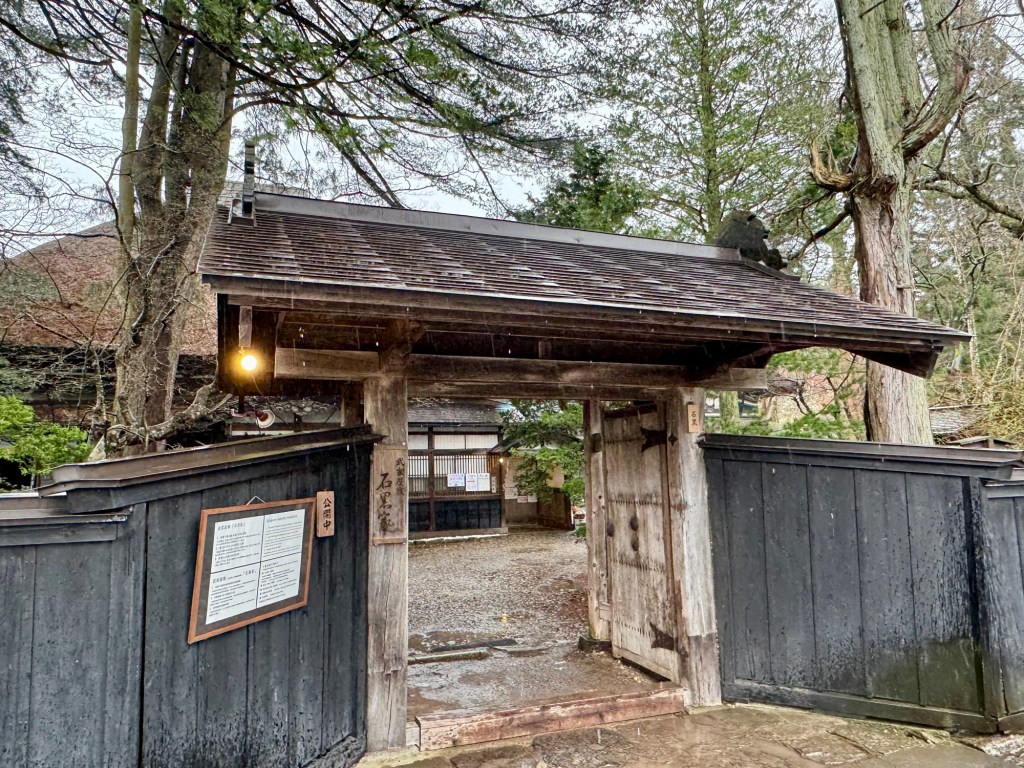
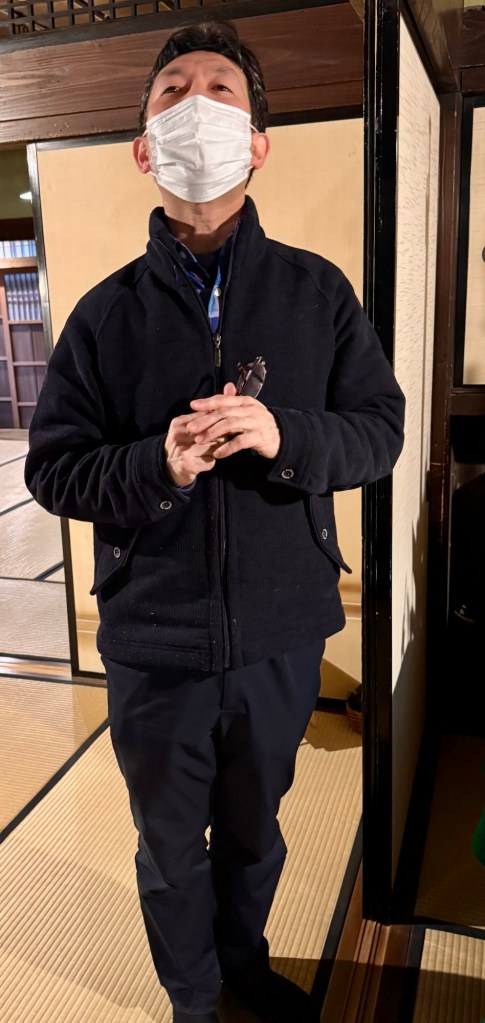
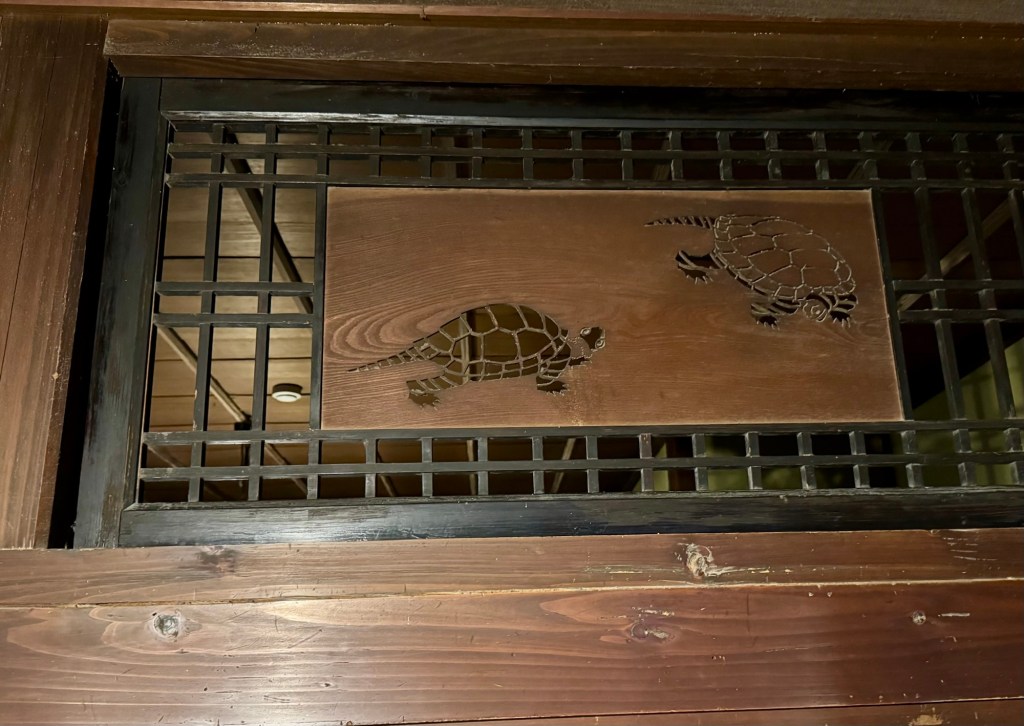
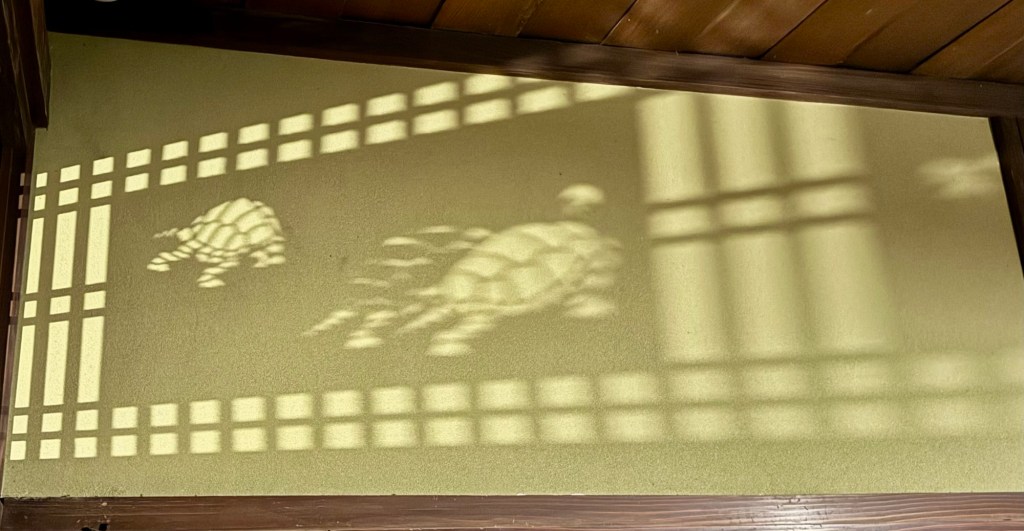
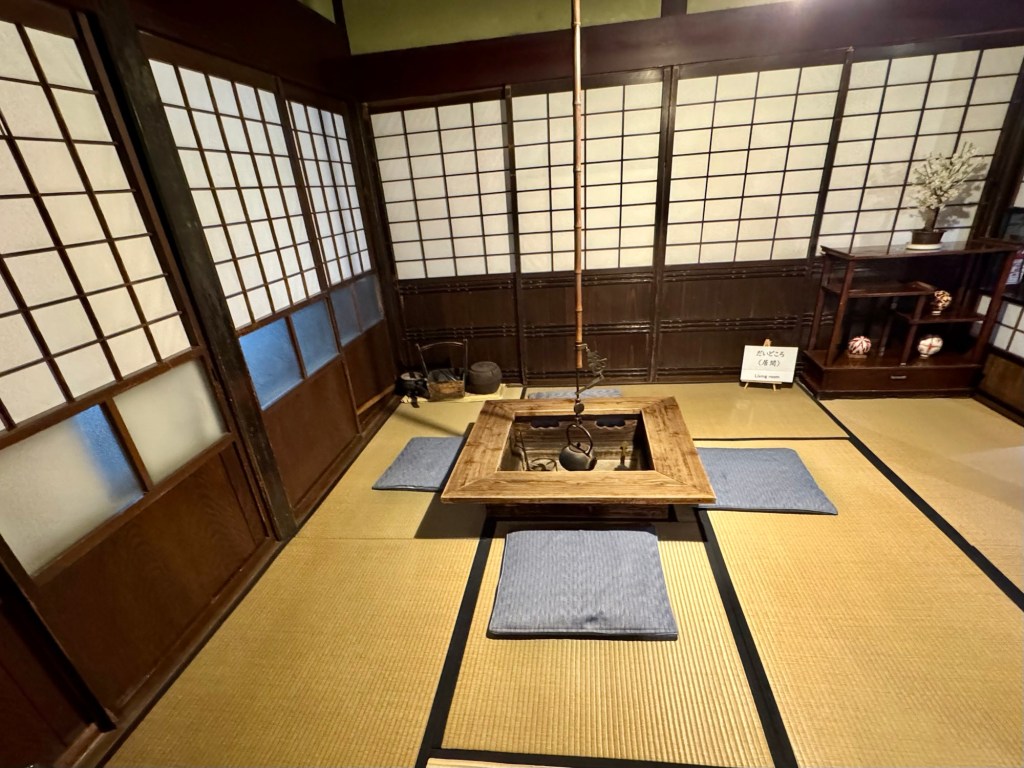
Our first stop was at the home of the descendants of the Ishiguro family. According to signage, the Ishiguro family residence is considered the most prestigious samurai house in Kakunodate and the family once held important roles in the government. The Main House is over 200 years old and the oldest samurai residence. It remains inhabited by direct descendants of the family while being partially open for public viewing. When we entered the house, everyone removed their shoes as is the custom in Japan.
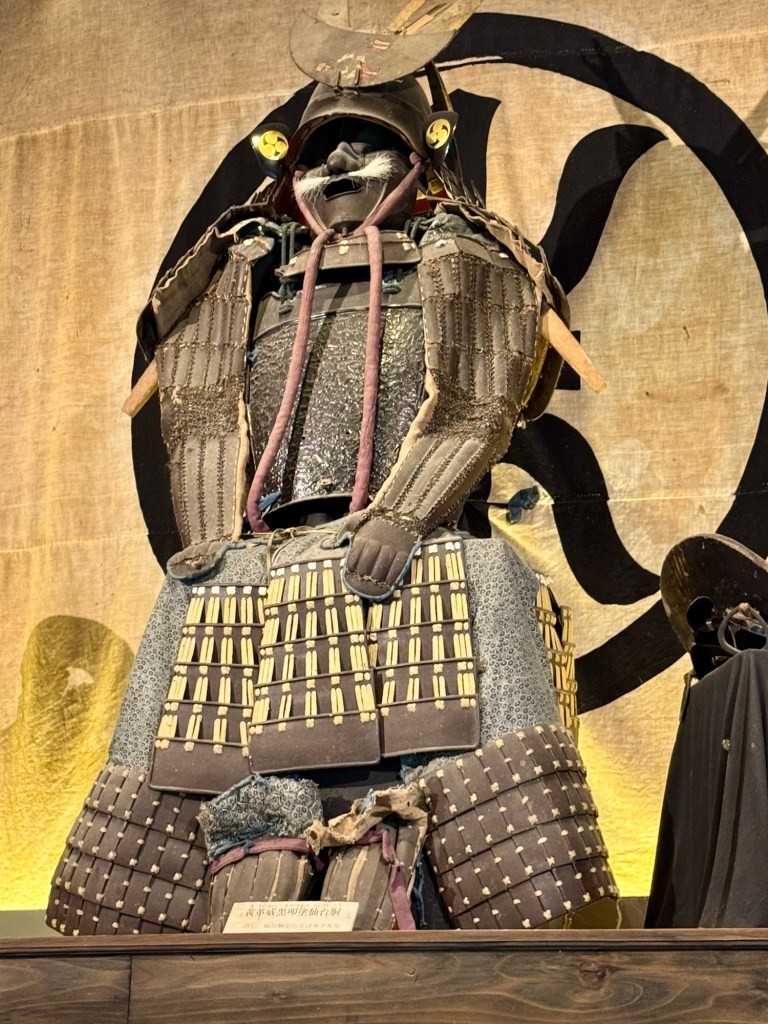
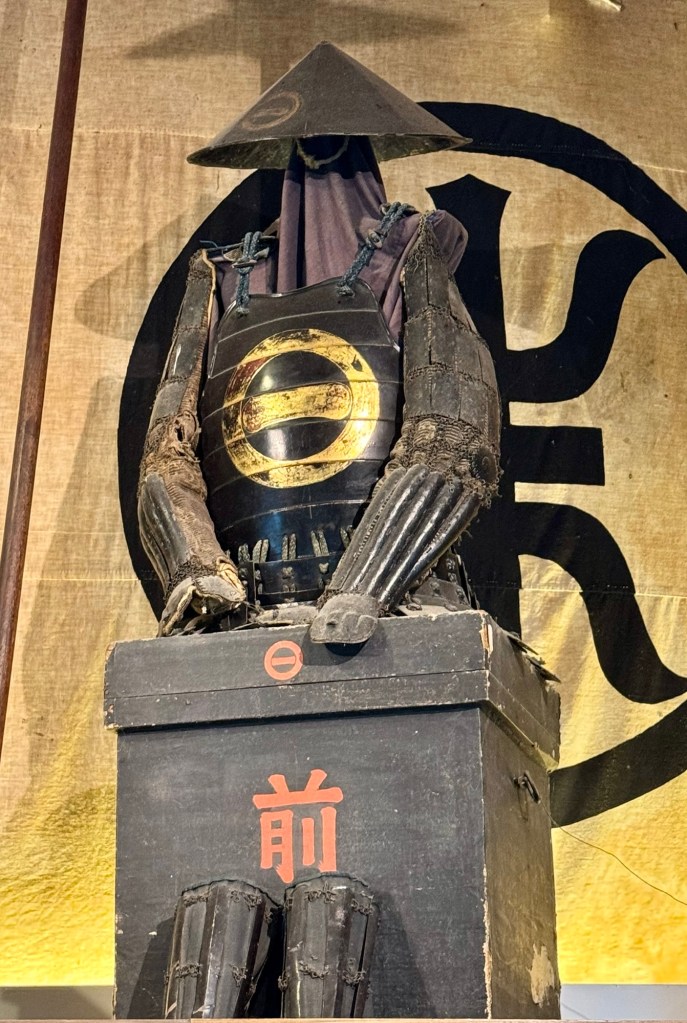
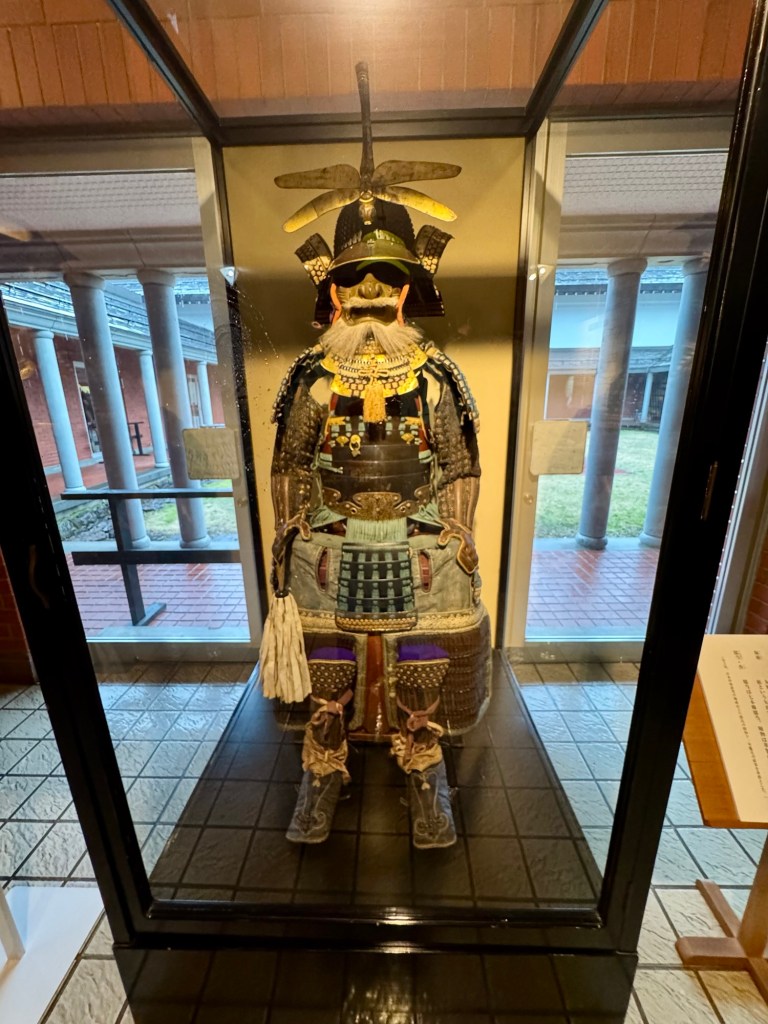
GateMain HouseCurrent ownerFamily shrineCut outImage from cut outLiving roomMain HouseIshiguro Family armour
The larger Aoyagi house next door contains a complex of buildings with displays that explain samurai traditions, lifestyles and why Kakunodate rose to prominence as samurai city.
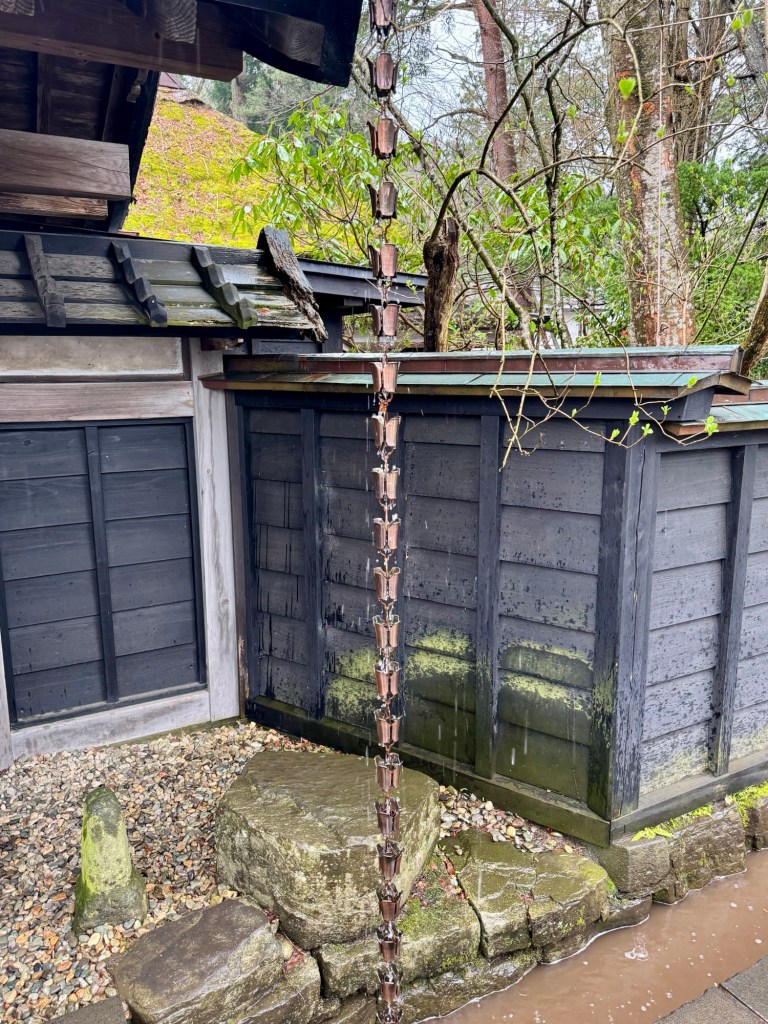
Rain collector
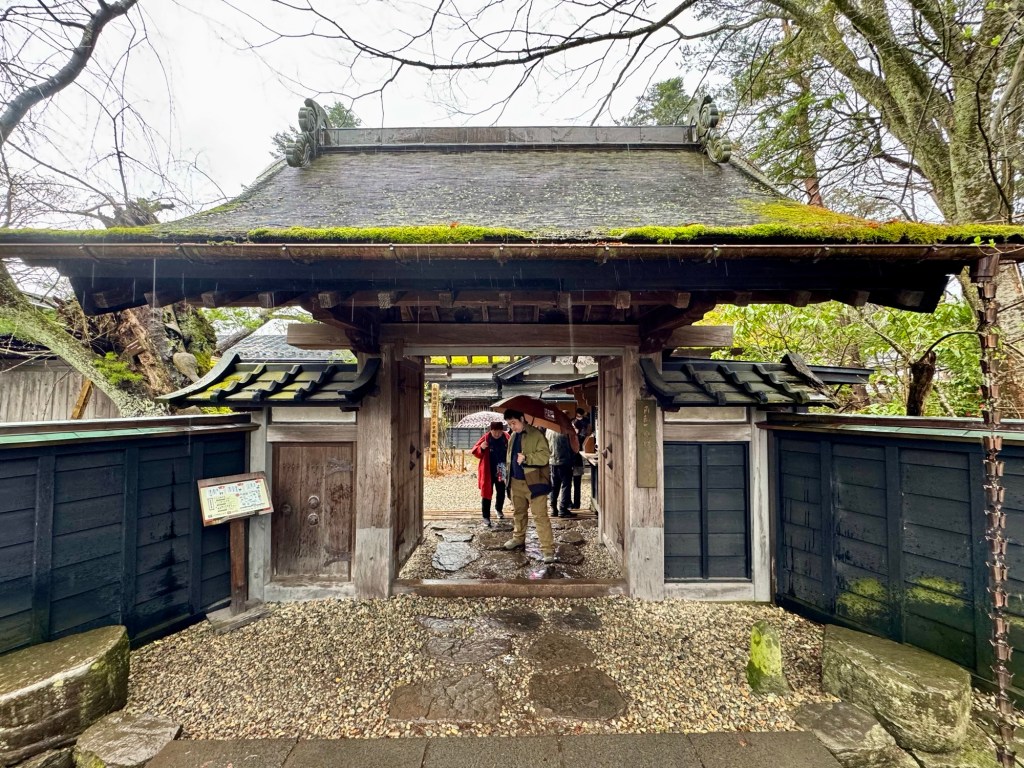
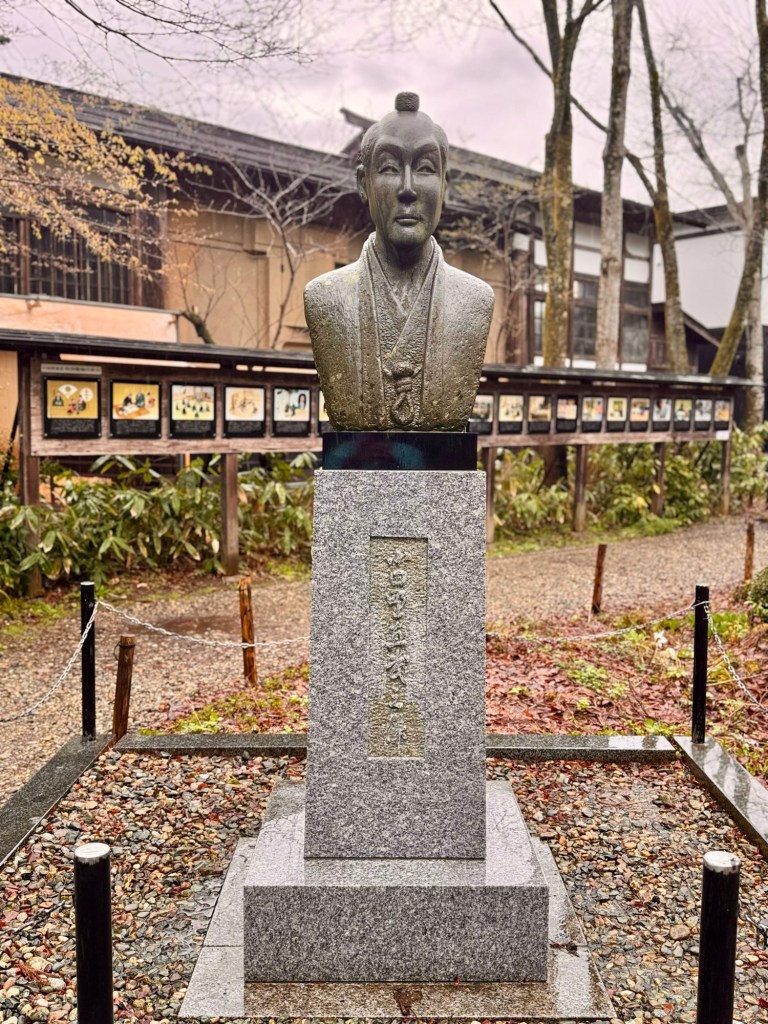
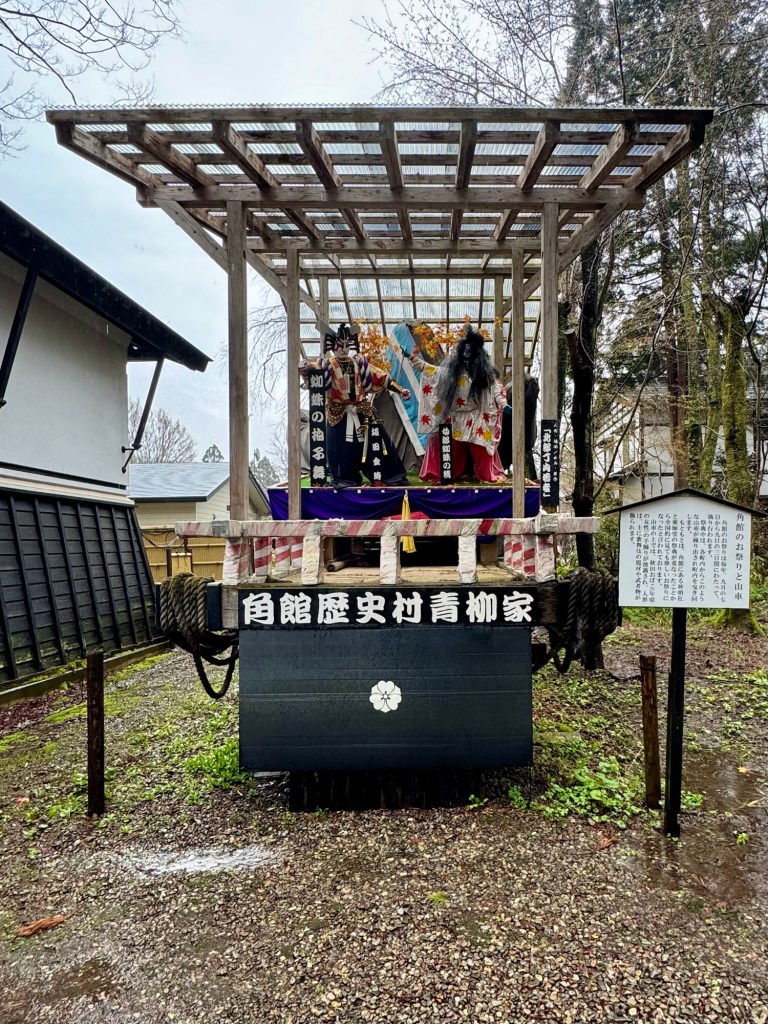
The Aoyagi lineage goes as far back as to the 16th century. The main gate to the Manor, Yakui Mon sports a roof with magnificent decorations. The Family built the gate in 1860 after the feudal lord of Kakunodate gave special permisson as a reward for their contribution to the domain. In feudal Japan, gates symbolized the social prestige of their owners. Sounds like there is some debate over which of the two families is/was more important!!
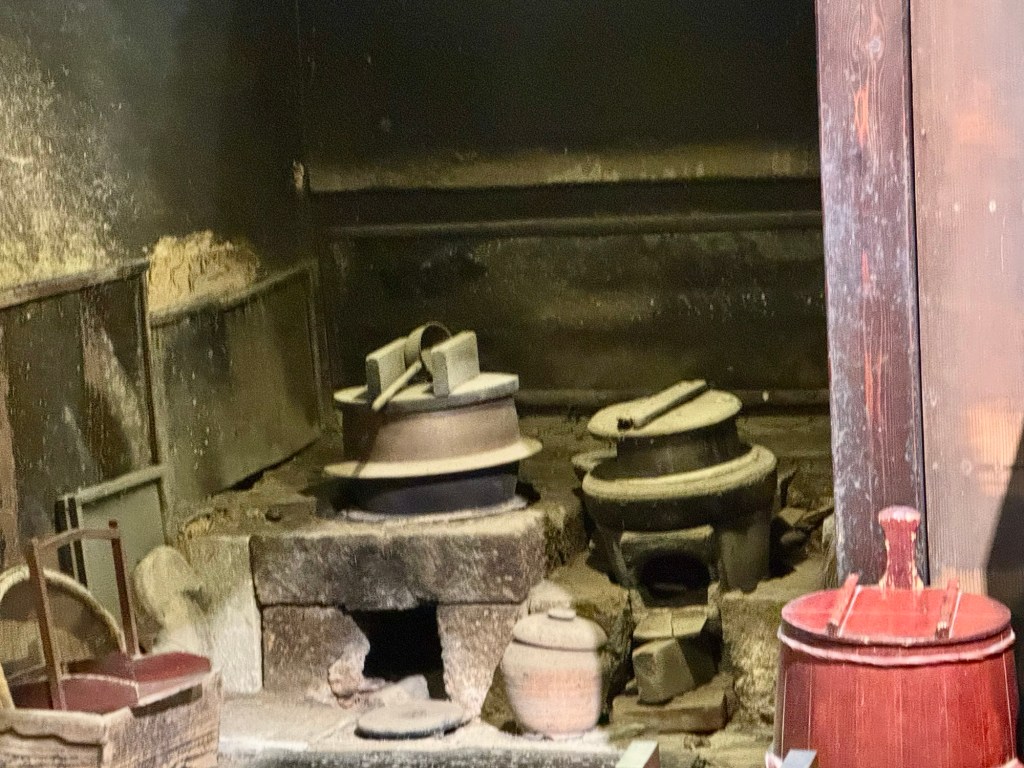
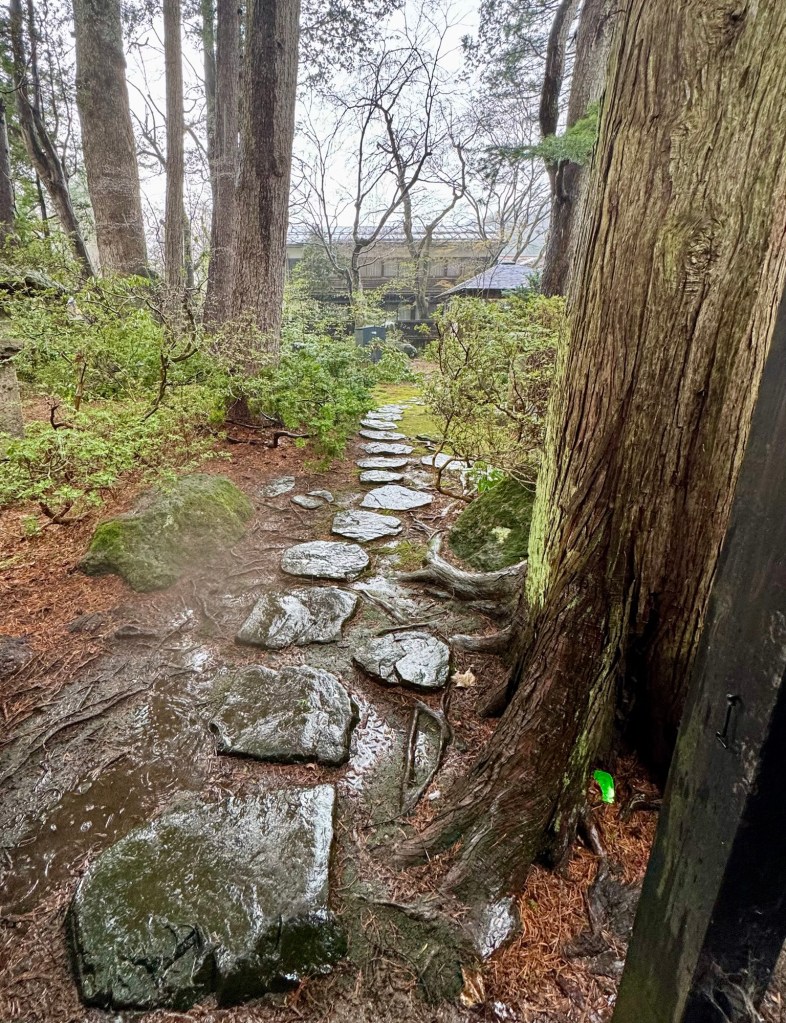
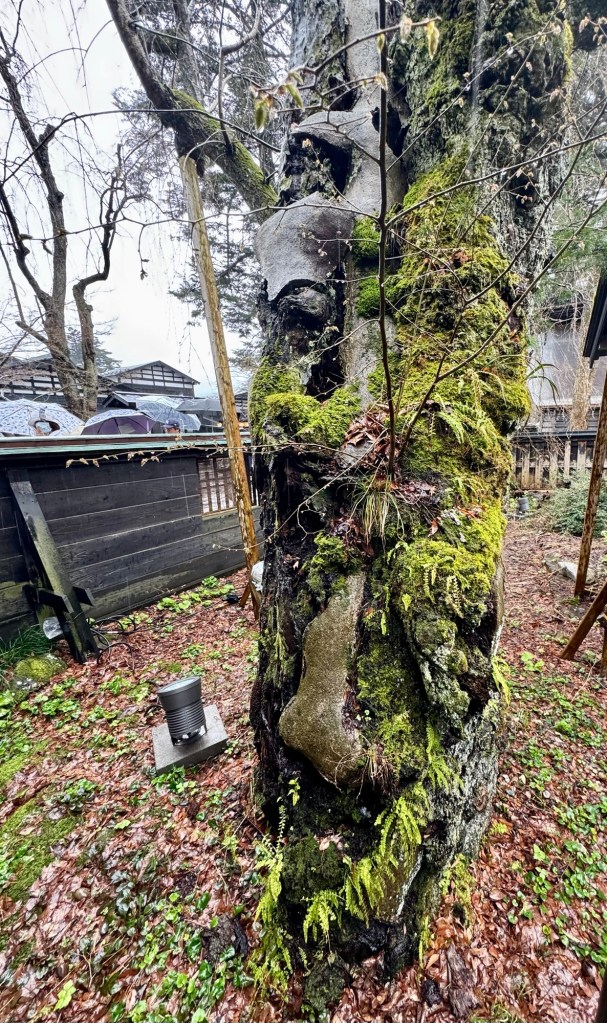
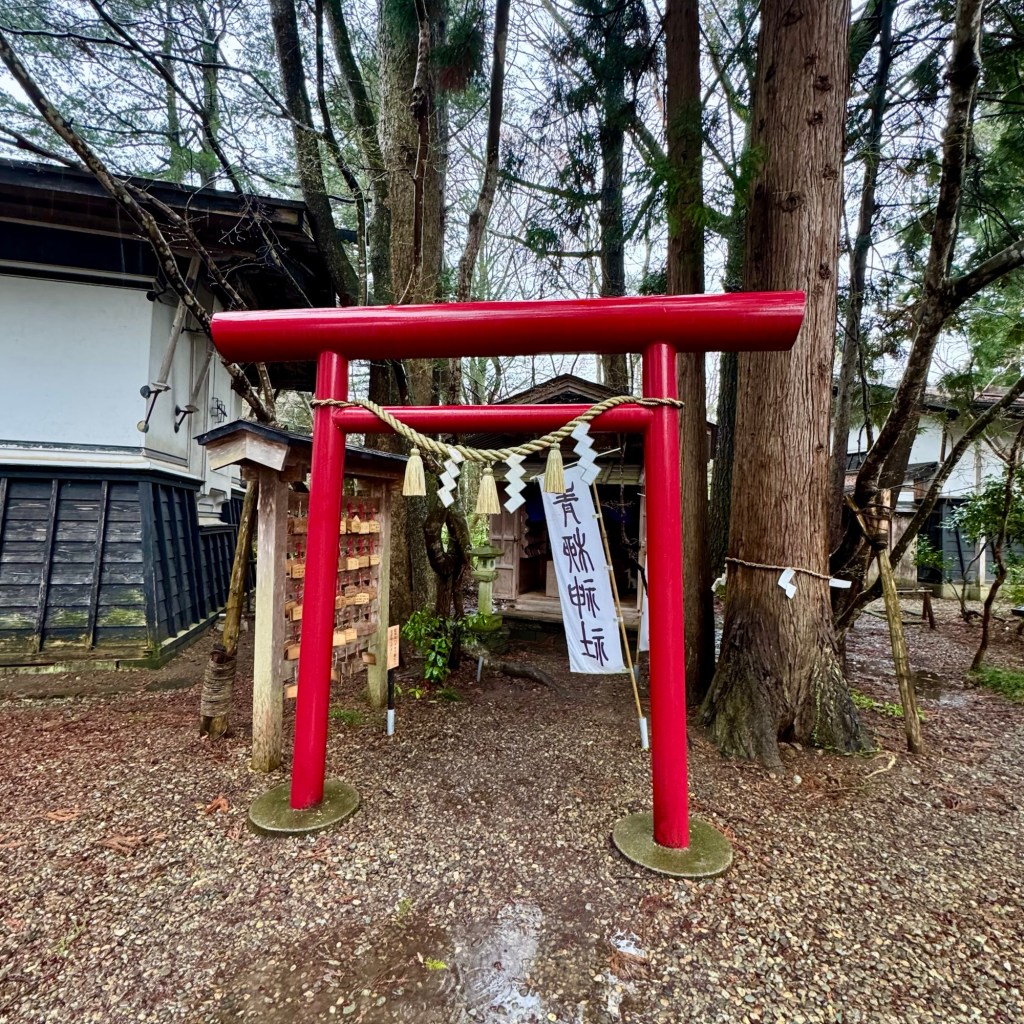
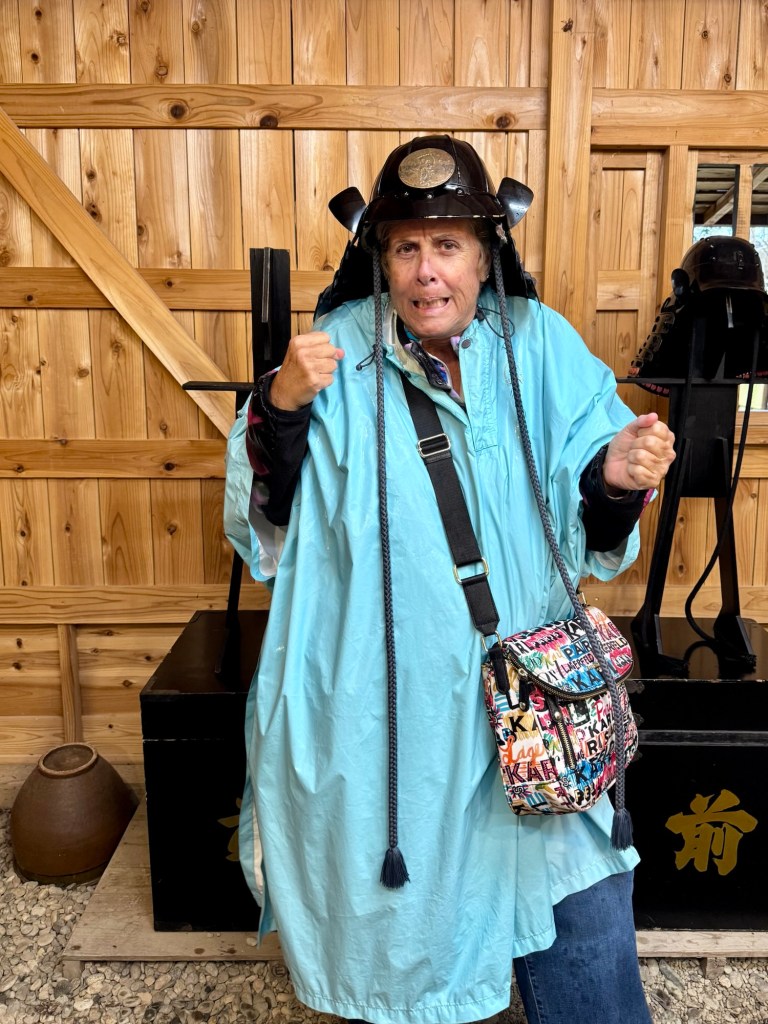
Manor gateMain HouseKitchenMore armourGardenShinto TempleLet loose with samurai swordTrying out a helmetHamming it upMore to see on the grounds
Our last stop was the Kakunodate Cherry Bark Craft Center. The artisans here craft items such as jewelry boxes and furniture using the highly durable bark from cherry trees, which have the ability to regenerate their bark so no harm is done.
Cherry bark furniture
There were also a number of historical items on display in the museum here.
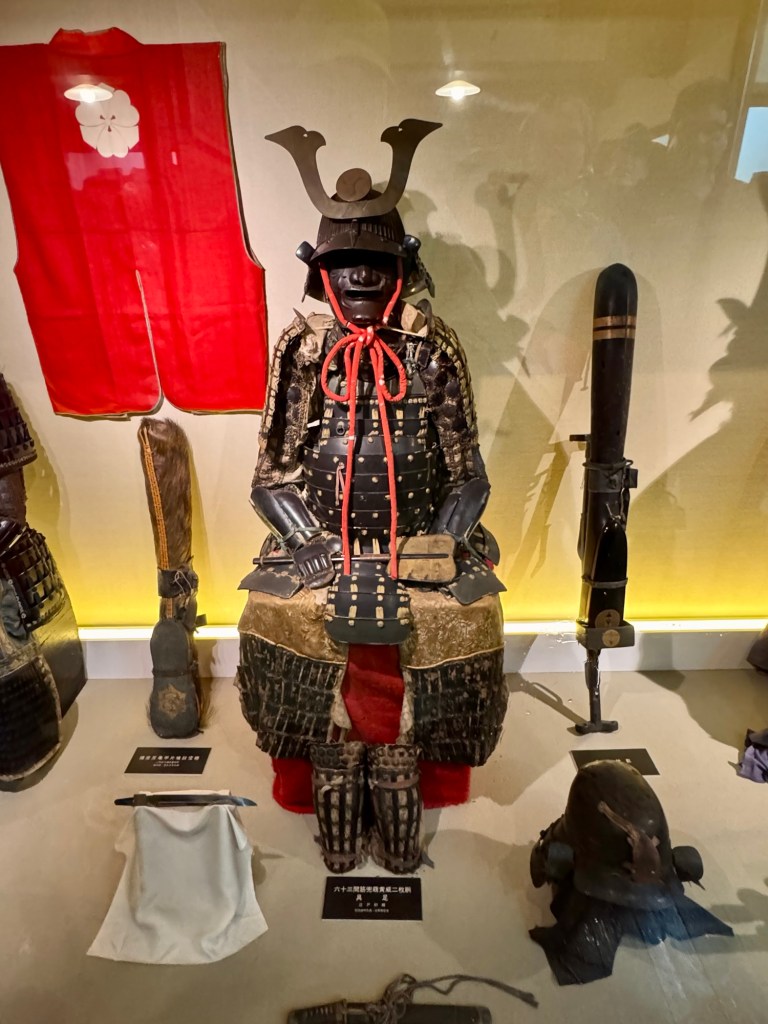
Samurai ArmourNo TheatreRice bagRice combine
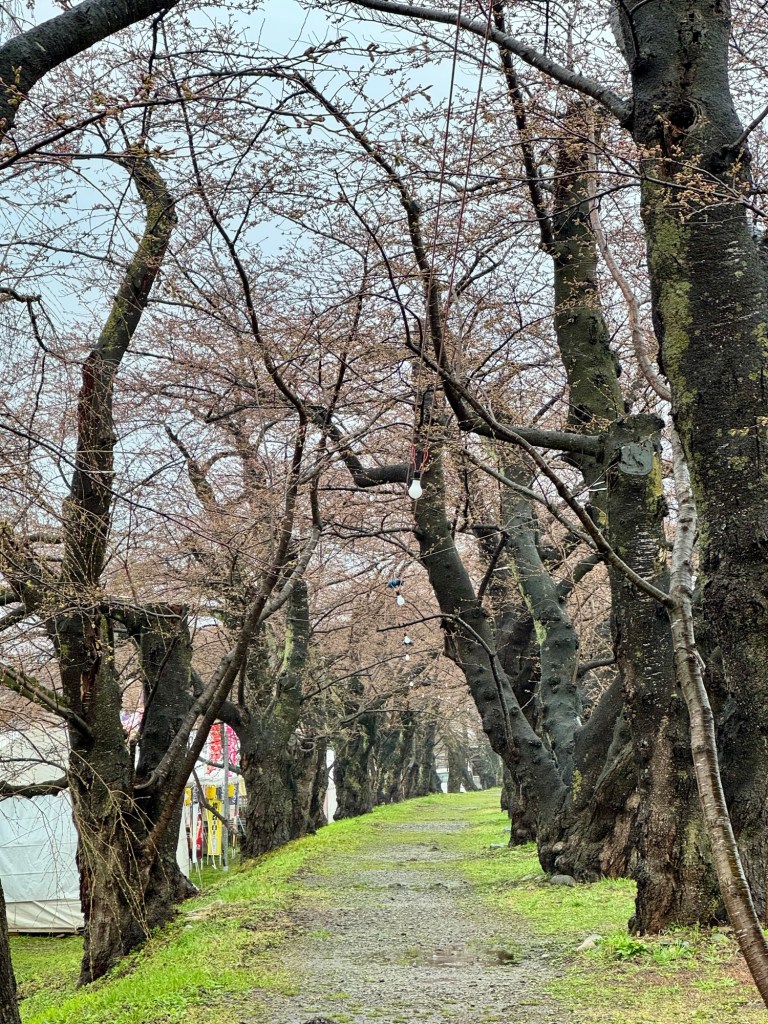
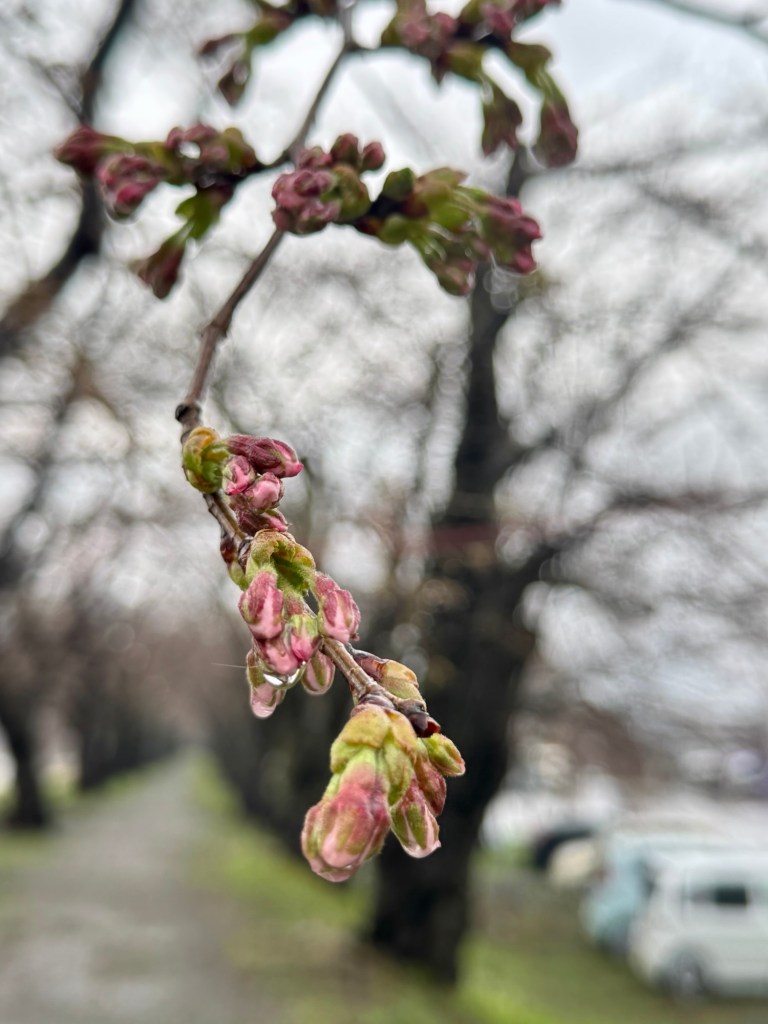
On my way back to the bus, I made a detour to check out the cherry trees along the Hinokinai River embankment. With more than 400 cherry trees stretching approximately two kilometers, the blooms on the trees droop down (when in bloom) to create a long tunnel perfect for walking under. Today it was still impressive but not so beautiful. The Beware of Bears sign would likely be more scary when there are cherries on the trees. No bears sighted today!
Cherry blossoms almost
Back on the bus for the ninety minute return journey to Akita and then back to the ship. Time for a quick shower to warm up before the evening’s activities.
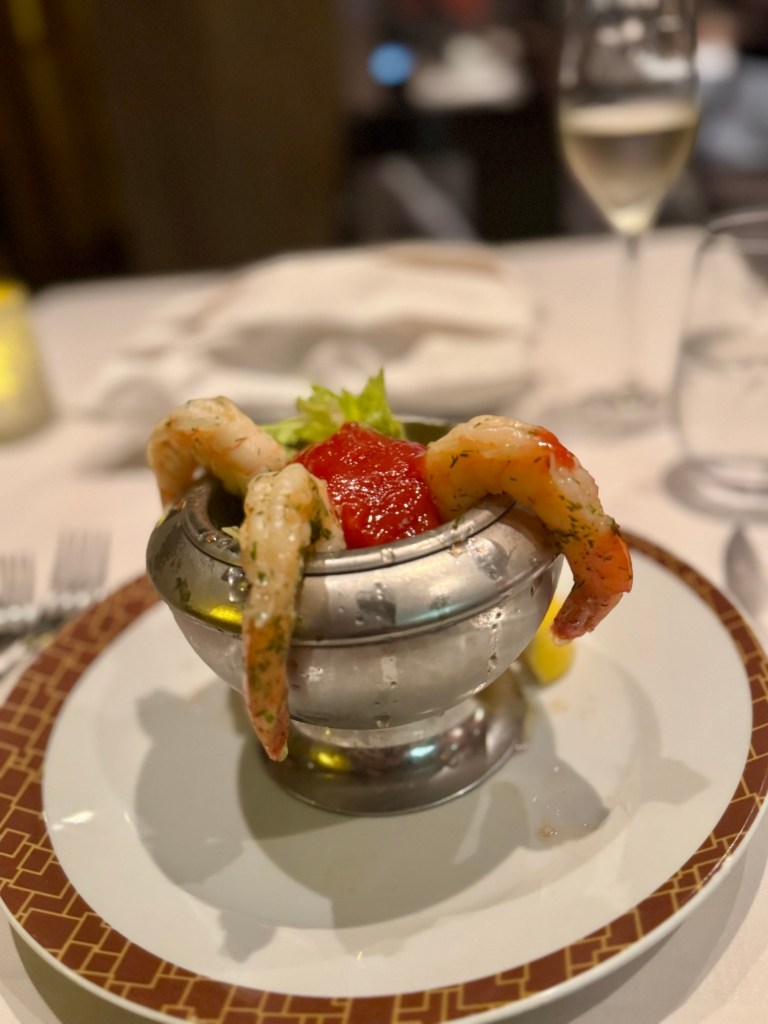
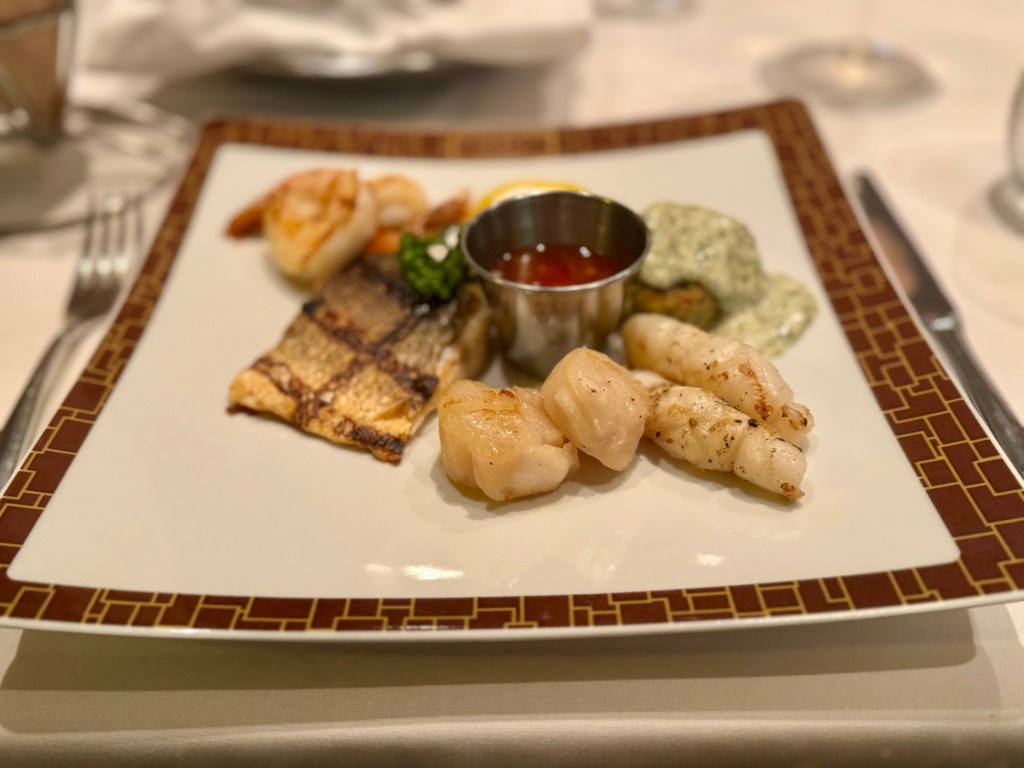
I had dinner in Cagney’s Steakhouse but as it’s Good Friday I checked out their seafood!! The jumbo shrimp cocktail and grilled seafood platter featuring scallops, shrimp, calamari, branzino and a crab cake was more than filling.
Shrimp cocktailSeafood platter
Checked out the UTH table in the casino and then headed to bed. Tomorrow is another day. Adventures await …
Decided in the middle of the night when I couldn’t sleep that a walking tour of the Imperial Palace and environs this morning was in order. The tour starts at 9 am so I gave myself the usual 15 minute buffer and arrived at our meeting point, the Sakuradamon Gate of Edo Castle, 20 minutes early. Lol, I do hate being late!!
My guide Anna (a lovely half French half German woman that has been living here for three years) arrives soon enough and we await the arrival of the rest of the crew. We end up with a fairly large group with around a dozen Americans, five Canadian ladies including me, a couple from the Netherlands and a couple of guys from Italy and Germany. As soon as we get started a light drizzle starts and there are intermittent rain showers for the three hours of the tour; not as horrible as the forecast but still a bit tedious. But I digress…
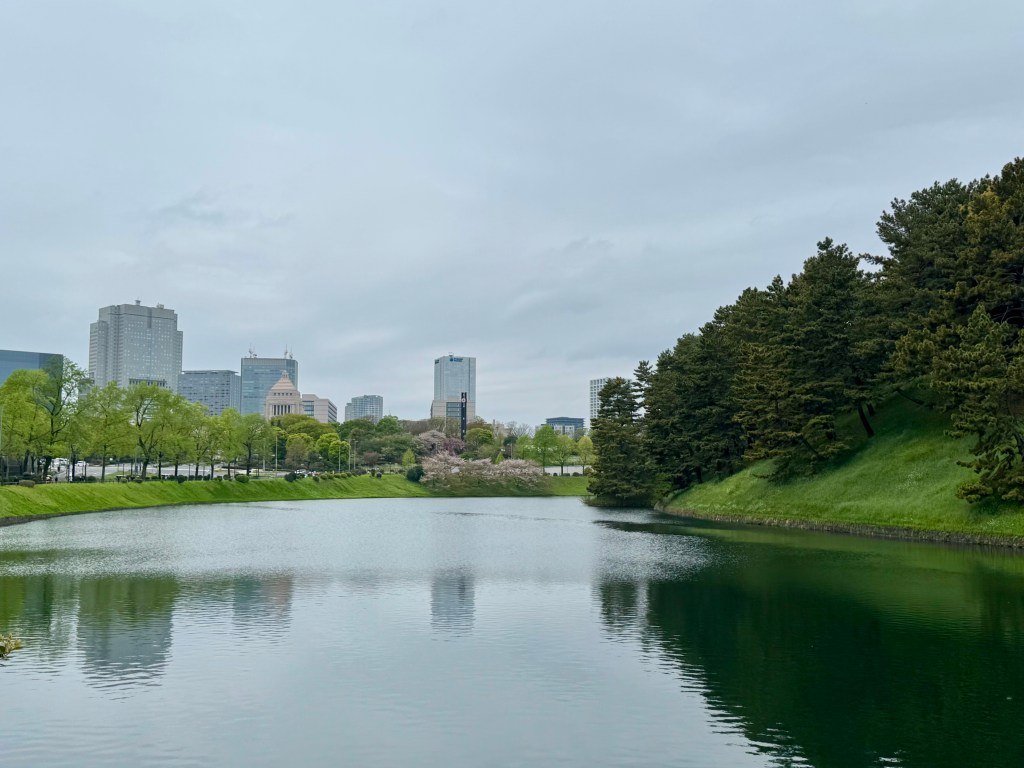
The current Imperial Palace is located on the former site of Edo Castle, a large park area surrounded by moats and massive stone walls in the center of Tokyo. It is the residence of Japan’s Imperial Family who sound like they rarely get out.
Castle Moat
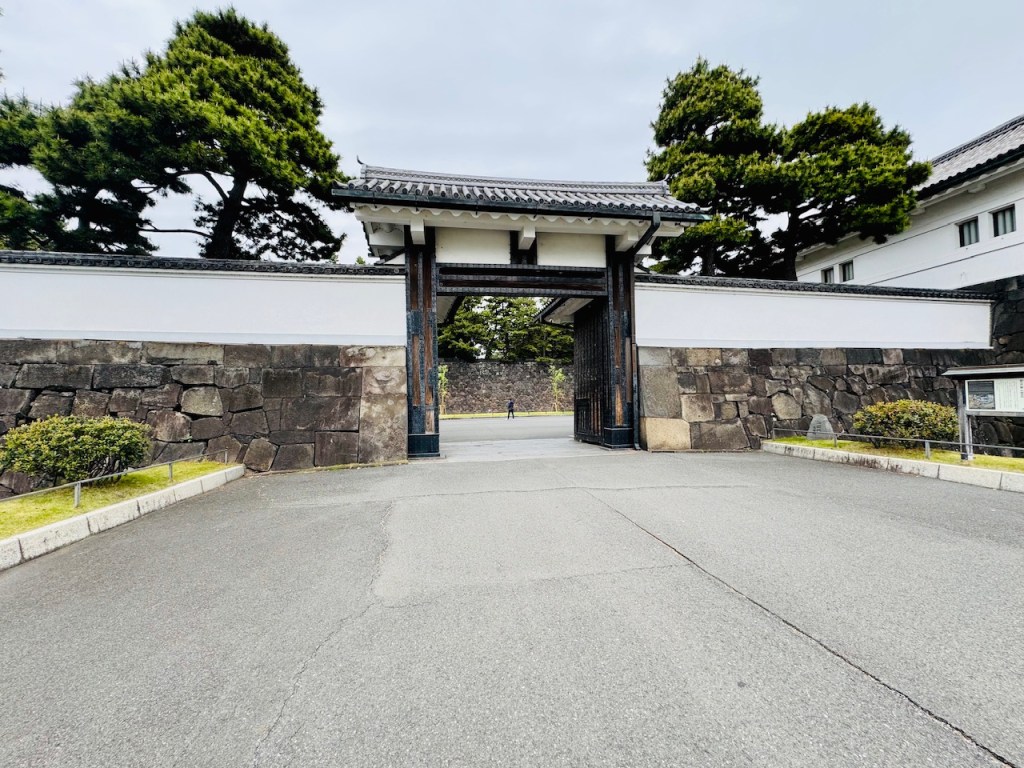
The Sakuradamon Gate, completed in around 1620, was once part of Edo Castle’s defenses, and is the largest remaining gate of Edo Castle. It is also the most famous because it was the location of an assassination referred to as the “Sakuradamon Incident.” In 1860, a feudal lord was assassinated here by ronin samurai for trying to limit the emperor’s power.
Sakuradamon Gate is actually not one but two gates. Behind the small, strong koraimon gate is a larger yaguramon gate. The gates stand at right angles to each other, creating an enclosed space. This forms a square-shapeddefence gate forcing intruders to turn at the right angle once inside, slowing them down and making them vulnerable to attack. The design was considered unbreachable and was very popular during the Edo period (1603-1867).
koraimon gateyaguramon gateSakuradamon Gate
Archers and other soldiers occupied the interior gate and could fire arrows and drop rocks on any intruders who breached the outer gate. The gate’s high stone walls were built without the use of mortar. Stoneworkers fitted stones together seamlessly to make the gate impenetrable. Only the force of the 1923 Great Kanto Earthquake made an impact on this sturdy gate, shaking some of the rocks loose.
Edo Castle was the seat of the Tokugawa shogun who ruled Japan until 1867. During the 250 years or so of the Shogunate, there was a policy of national isolation which prohibited people from entering or leaving Japan. Western nations began to exert pressure on Japan to change this and the breaking point was the arrival of of Commodore Perry’s “black ships” in 1853. The US and other Western nations used their superior naval power to pressure the Shogunate into signing unequal treaties that eroded its authority and sovereignty leading to civil unrest and the overthrow of the shogun in favour of the Emperor. The end of the Edo Shogunate was followed by the Meiji Restoration in 1868; leading to the modernization of Japan
After the shogunate was overthrown, the country’s capital and imperial residence were moved from Kyoto to Tokyo. Construction of the new Imperial Palace was completed 20 years later in 1888. I guess contractors were really busy back then as now. The palace was once destroyed during WWII, and rebuilt in the same style, afterwards (not sure how long that took).
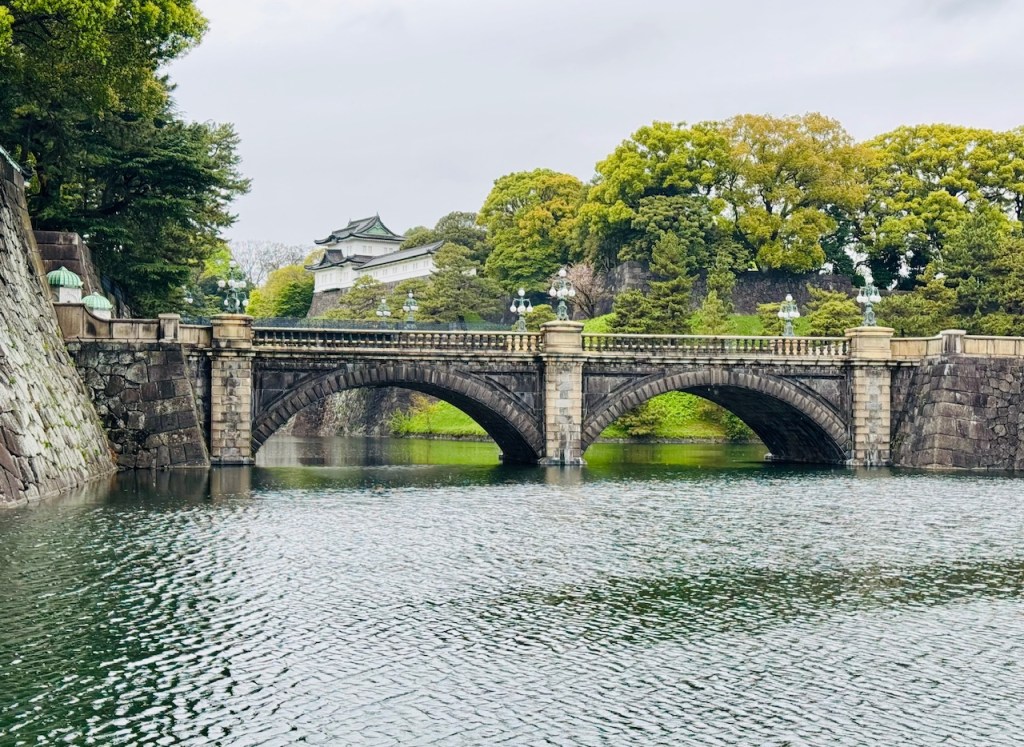
From Kokyo Gaien, the large plaza in front of the Imperial Palace, we can see the Nijubashi, two bridges that form an entrance to the inner palace grounds. The stone bridge in front is called Meganebashi (Eyeglass Bridge). The bridge in the back was formerly a wooden bridge with two levels, from which the name Nijubashi (Double Bridge) was derived.
Meganebashi bridge in the foreground and Nijubashi bridge behind
The inner grounds of the palace are generally not open to the public. Only on January 2 and February 23, for the New Year’s Greeting (I guess it takes a couple of days to recover from NYE revelries) and the Emperor’s Birthday respectively are visitors able to enter the inner palace grounds. At those times, they can see the members of the Imperial Family, who make several public appearances on a balcony.
Adjacent to the inner grounds of the palace are the Imperial Palace East Gardens of the Imperial Palace that are open to the public throughout the year.
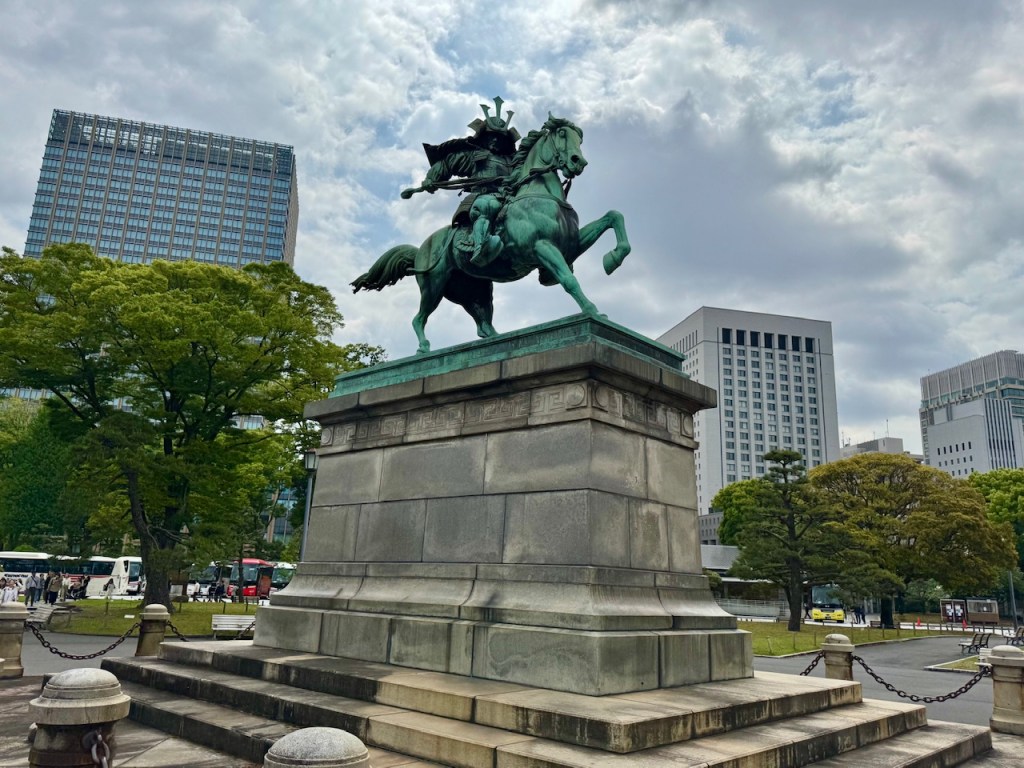
After our history lesson, we’re off to check out the statue of Kusunoki Masashige
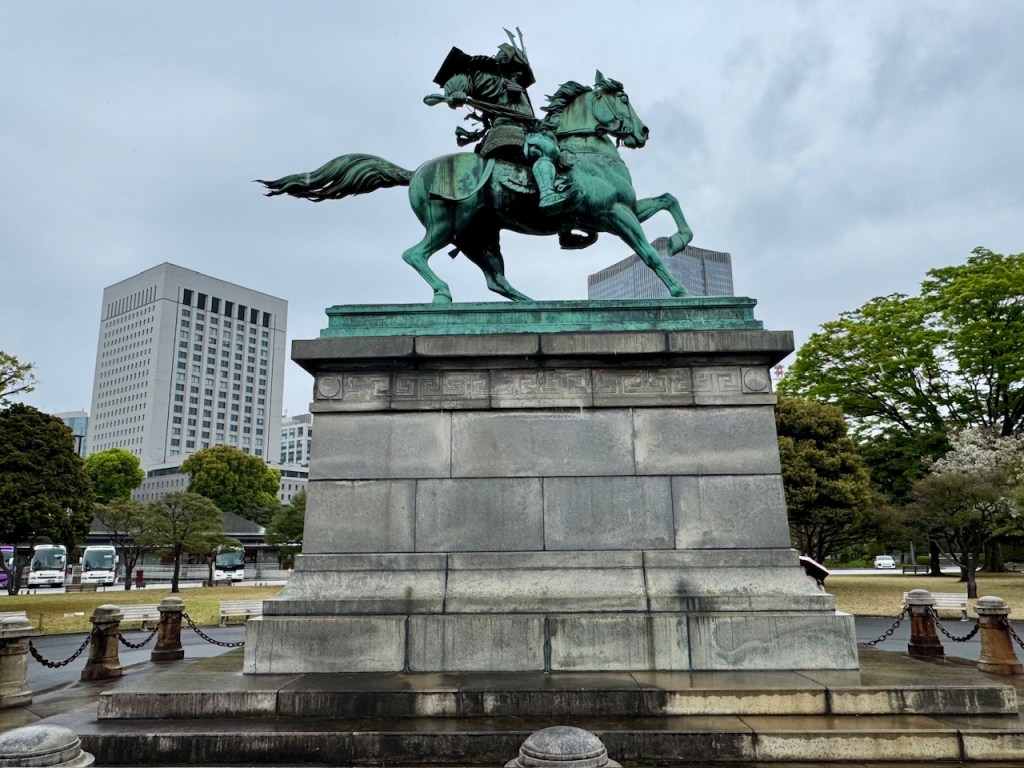
Kusunoki Masashige was a samurai and a famous military strategist in the early 14th century. He was fiercely loyal to the Emperor Emperor Go-Daigo, managing to put him in power for three years, then supporting him in an unwinnable war against the other samurai. In the end, he and his remaining men committed seppuku; ritual suicide by disembowelment. The bronze statue of a warrior mounted on a spirited steed, honoring this legendary samurai, is now considered a symbol of loyalty and bravery in Japanese history but that wasn’t the case at the time as he was on the “wrong side”. When the Emperor regained power in 1868, history was interpreted differently.
The statue of Kusunoki Masashige, in armor and mounted on a fiery charge is often featured in tourist guides and was once also found on the five sen note. He does cut an impressive figure don’t you think?
Kusunoki Masashige Statue
The horse has one leg raised meaning that the rider died as a result of the battle but not in battle (that is signified by two of the horse’s legs being raised). Lucky riders with four feet on the ground died of natural causes.
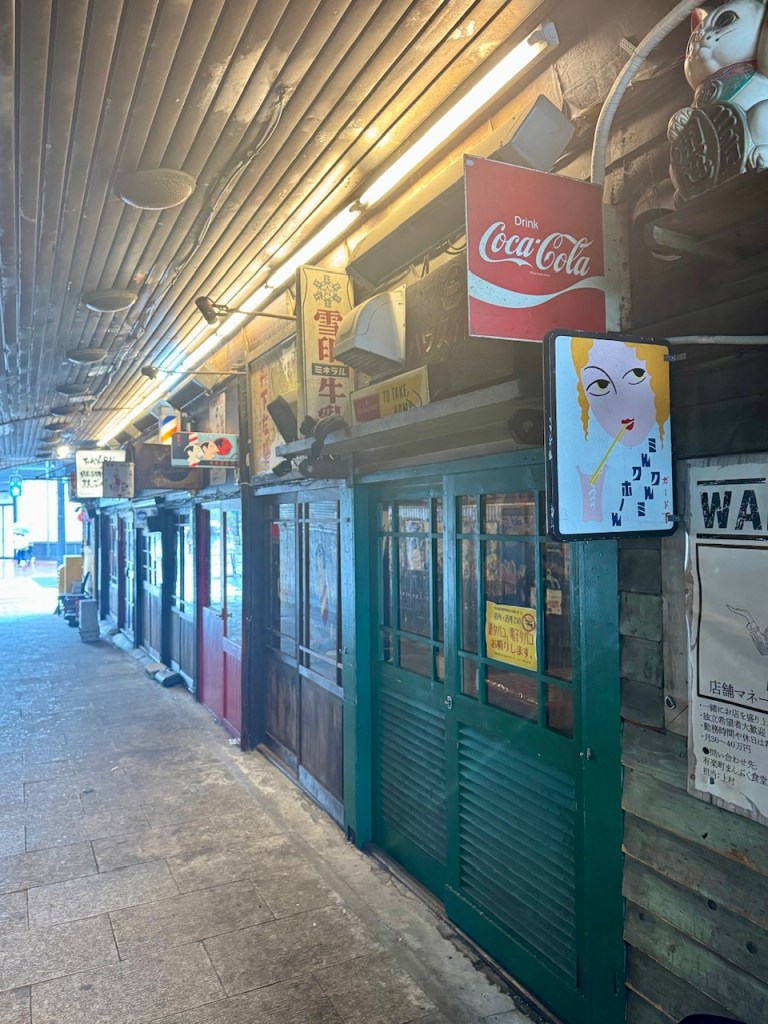
We’re off to Ginza, a famed Tokyo district. En route, we go through the Yuraku Concourse, home to cool speakeasies and cafes for the hard working Japanese salarymen to relax and unwind.
Yuraku Concourse
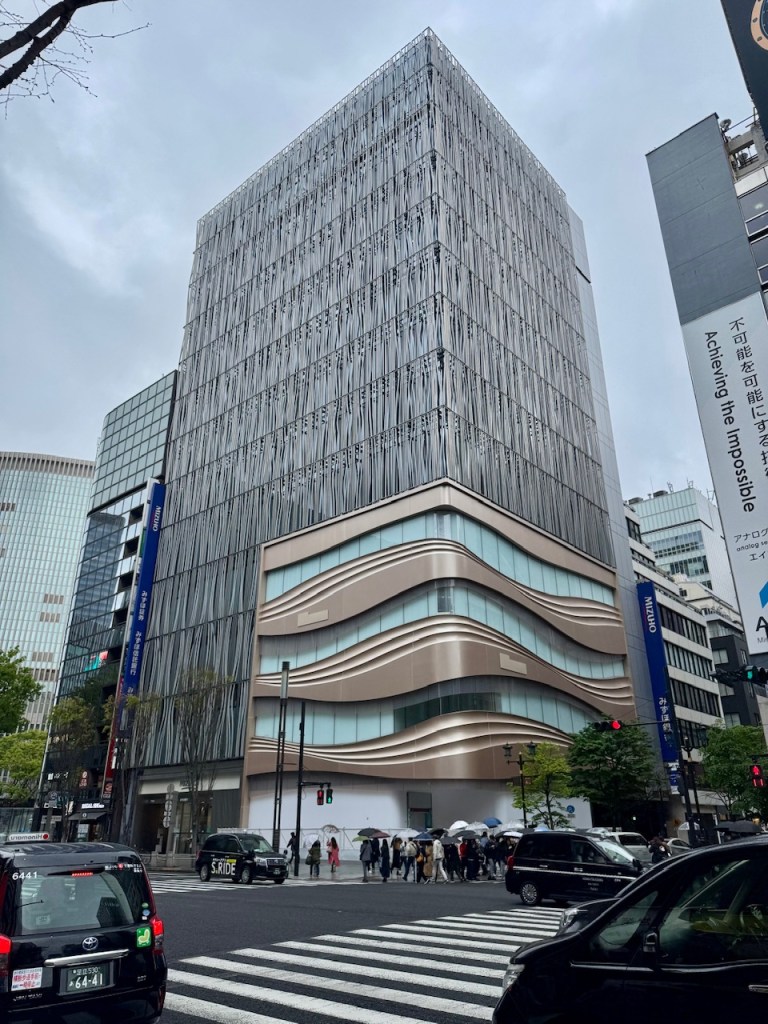
Historically, the site of the Edo period’s silver mint, it has evolved into a modern commercial and luxury hub. After a devastating fire in 1872, foreign architects, including Thomas Waters, were brought in to design Western-style brick buildings and wide streets, shaping Ginza’s modern layout. Today, Ginza is renowned as Tokyo’s luxury shopping and entertainment district boasting flagship stores of international luxury brands, alongside established Japanese retailers and also featuring art galleries, theaters, and traditional confectionery shops.
Ginza!
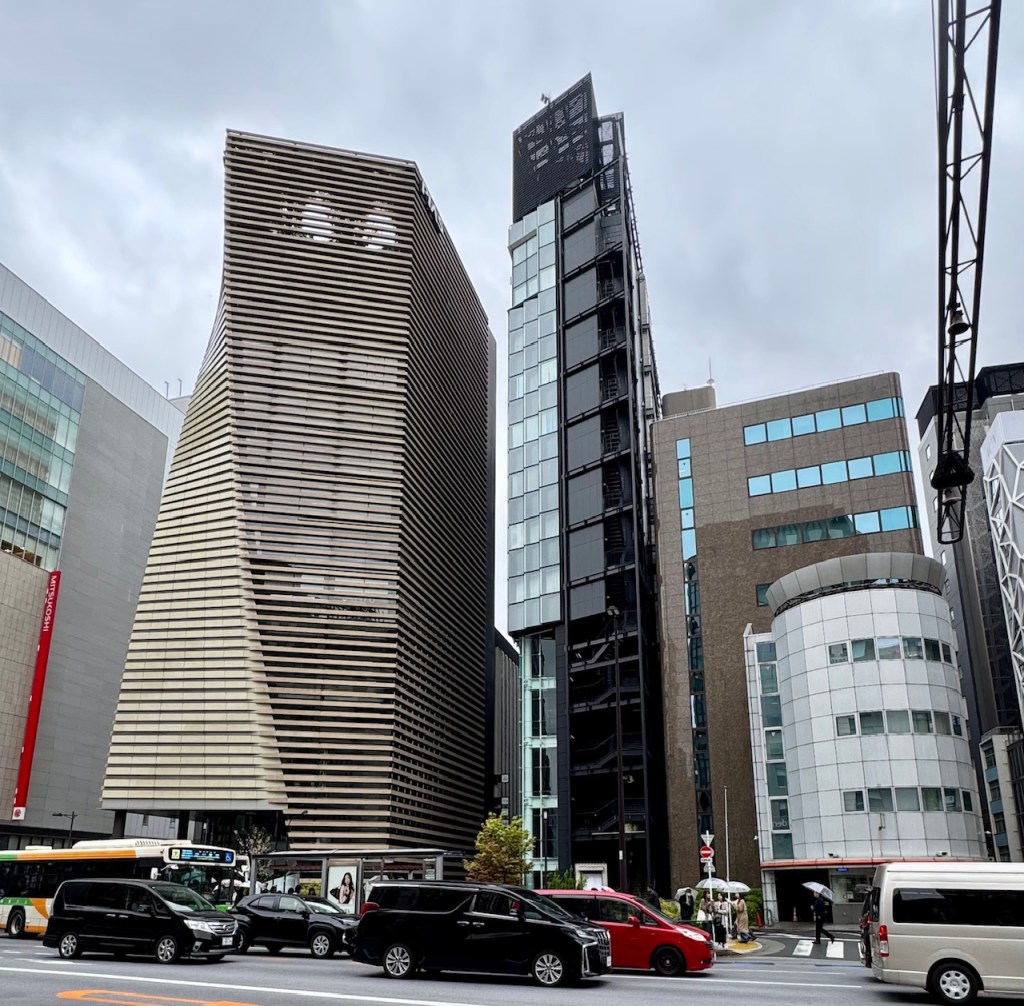
While in Ginza, we made a whistlestop at Nissan Crossing where Nissan displays a couple of their more intriguing cars.
Nissan Crossing
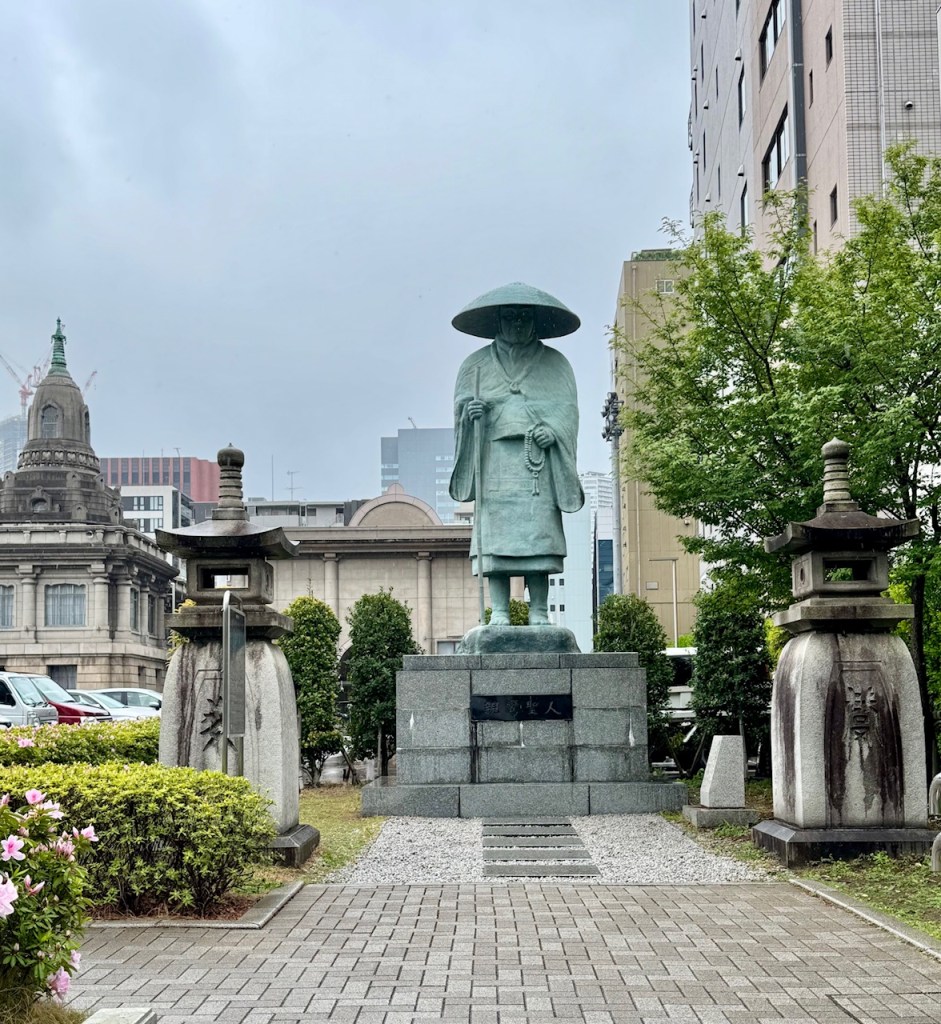
This Buddhist temple, fashioned in stone rather than wood, is unique in Japan as its South Asian designs, based on Indian and Nepali temples, gives it an exotic look.
Tsukiji Hongwanji
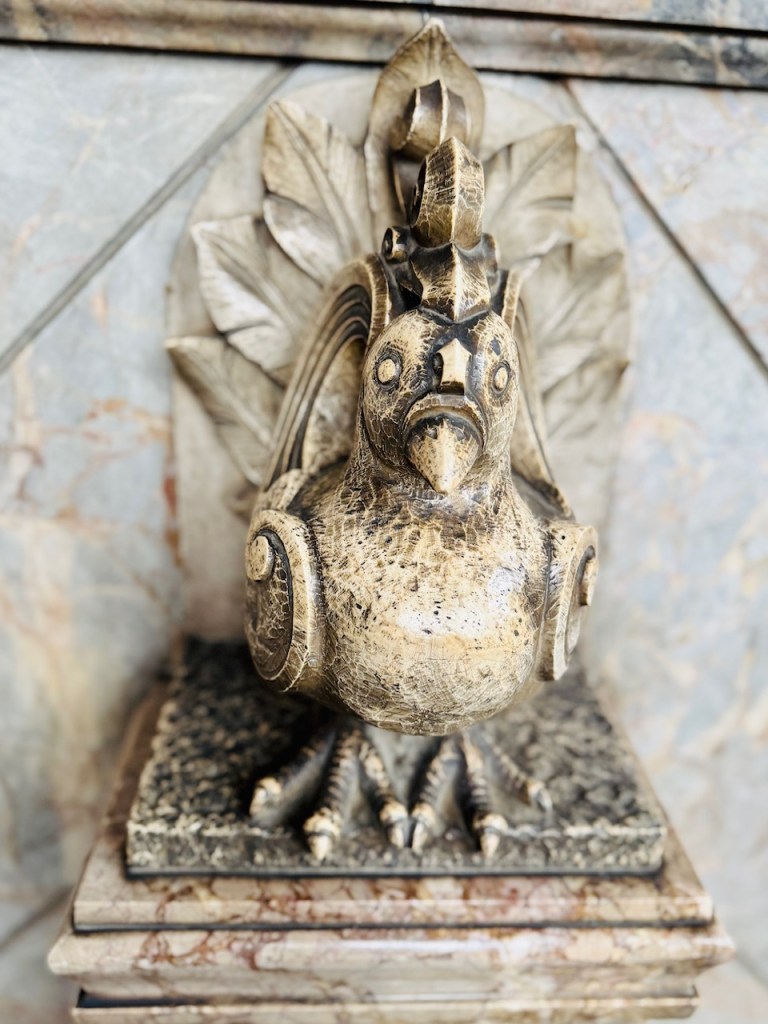
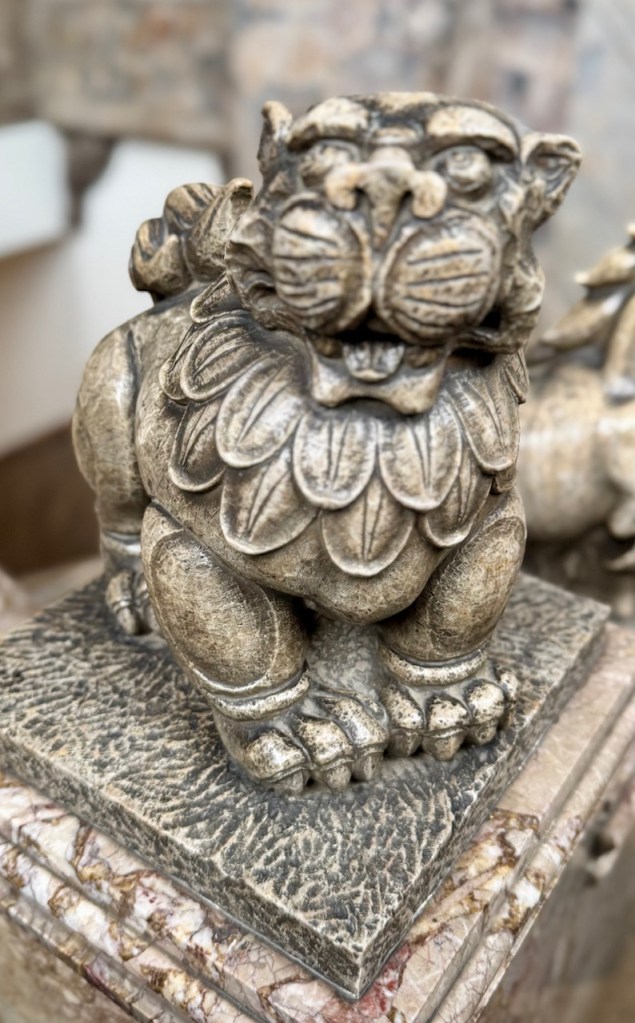
Tsukiji Hongwanji is a temple of the Jodo Shinshu Hongwanji sect. The temple, first built near Asakusa, was burnt down in a fire in 1657 and rebuilt at its current location in 1679. A pipe organ is set at the back of the main building, a rare sight in a temple. Stone animals, stained glass, and various other designs are also found in the temple.
Inside the Main Building
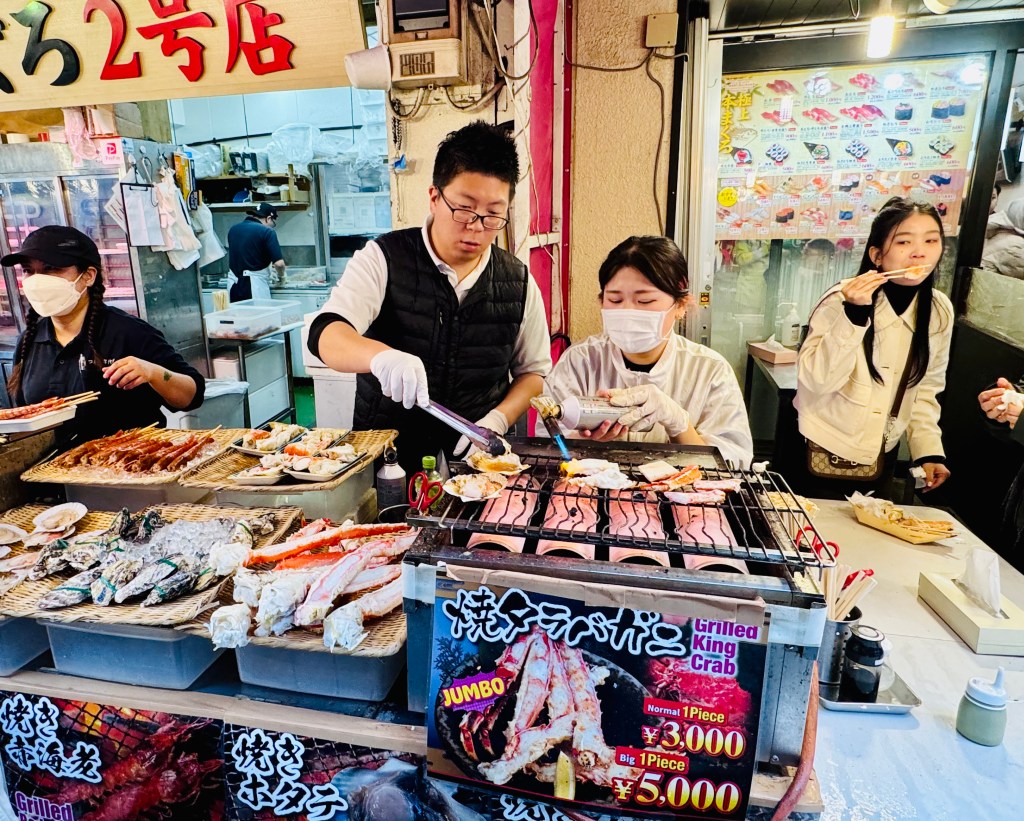
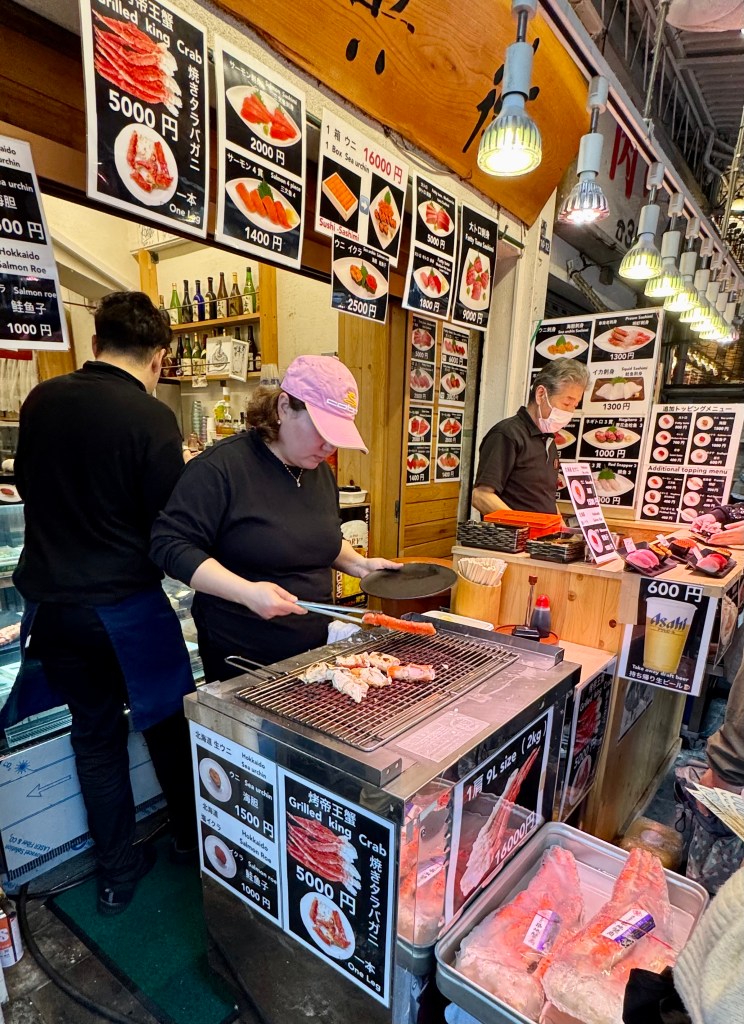
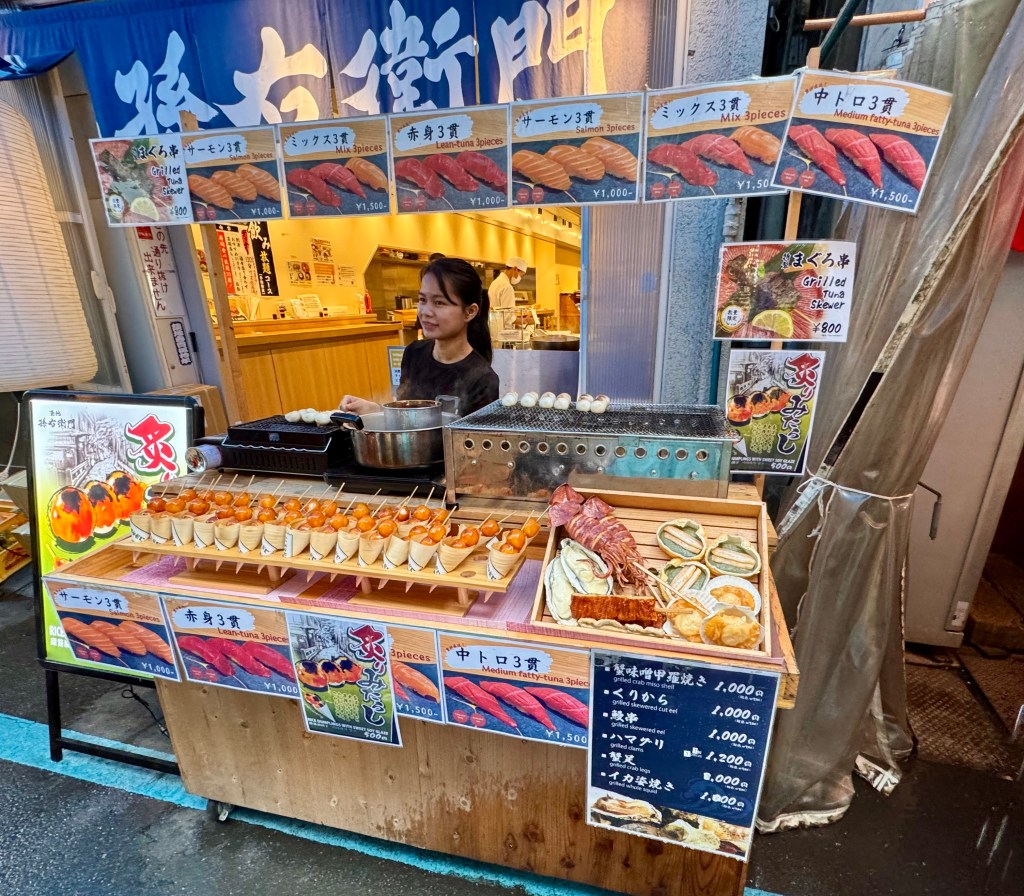
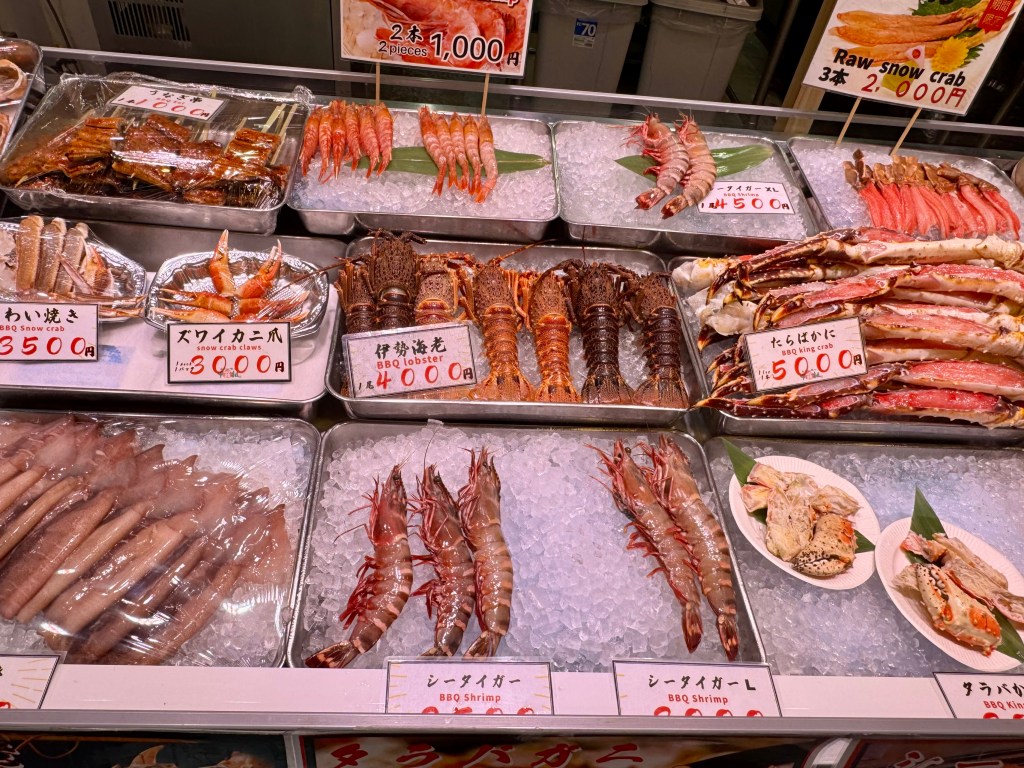
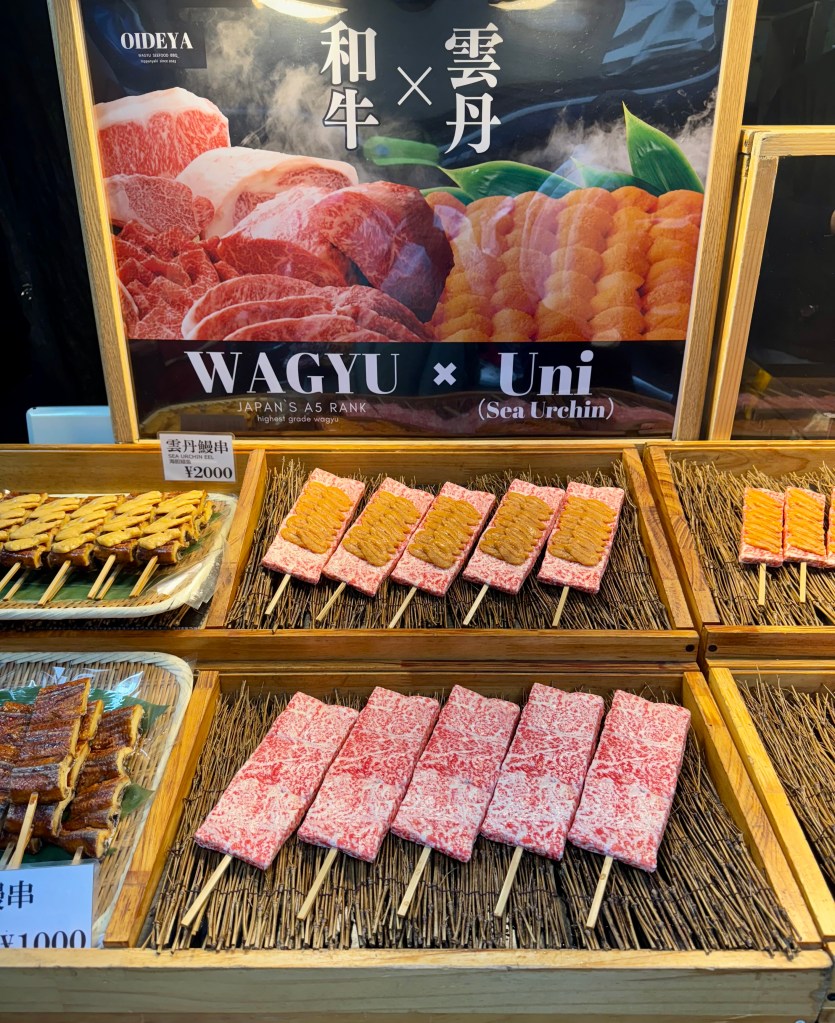
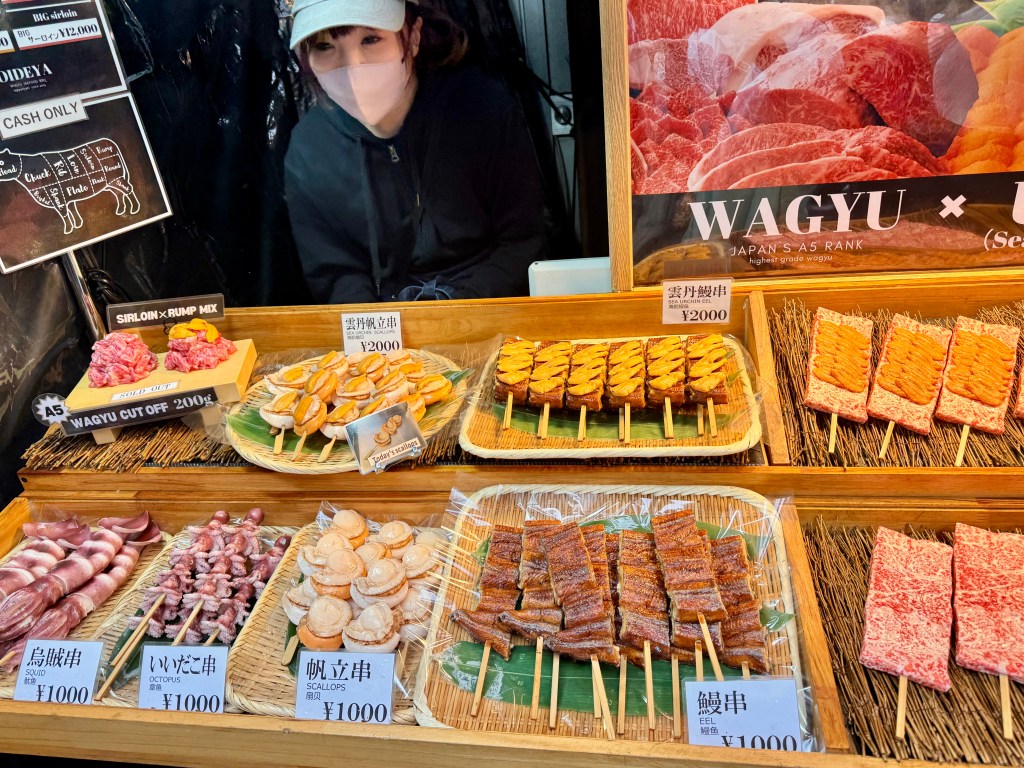
Our next stop is the Tsukiji Fish Market. Once this was the world’s largest fish market and home of the famous Tsukiji Tuna Auction. Today, the labyrinth of crowded crisscrossing lanes and alleyways between Ginza and the Sumida River are packed full of stalls and small restaurants; a paradise for foodies. Sadly, we breezed right by all the delicacies on offer en route to our next and last stop Namiyoke Shrine.
Tsukiji Fish Market
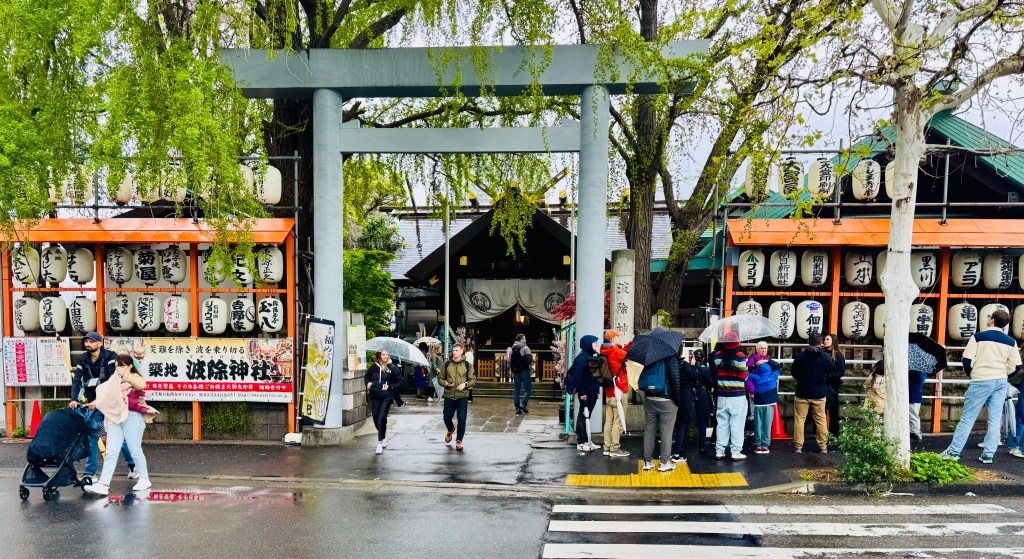
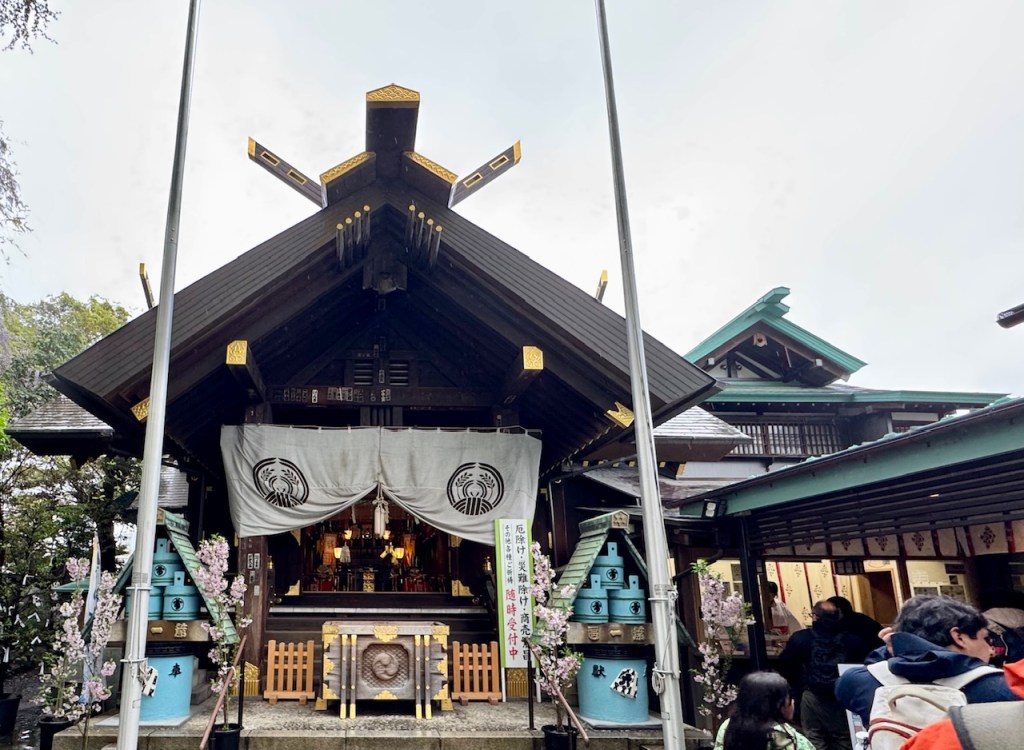
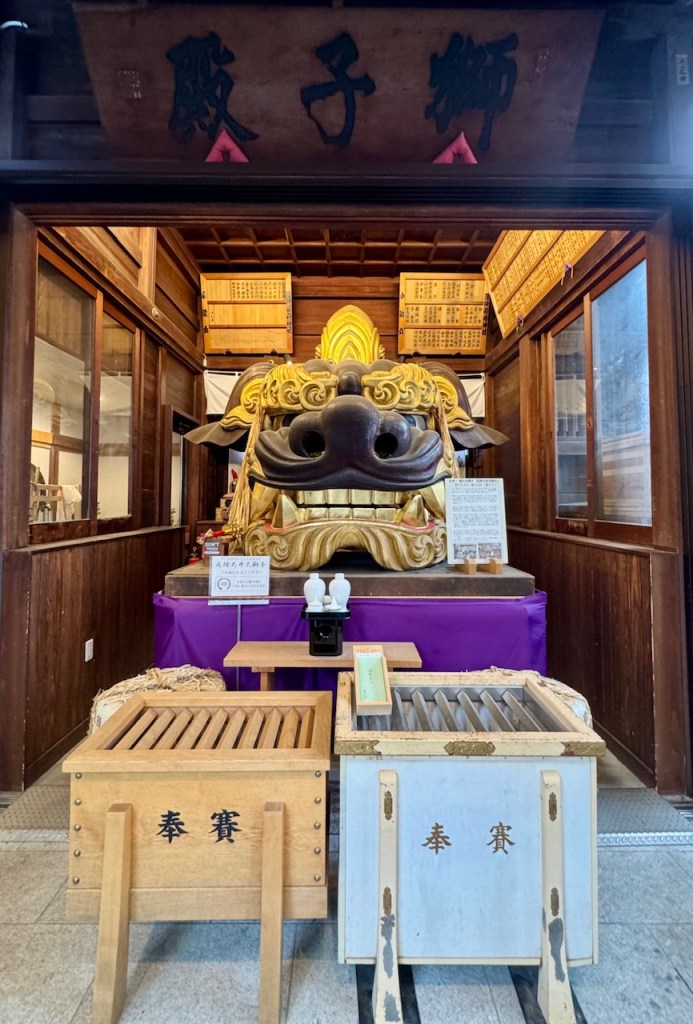
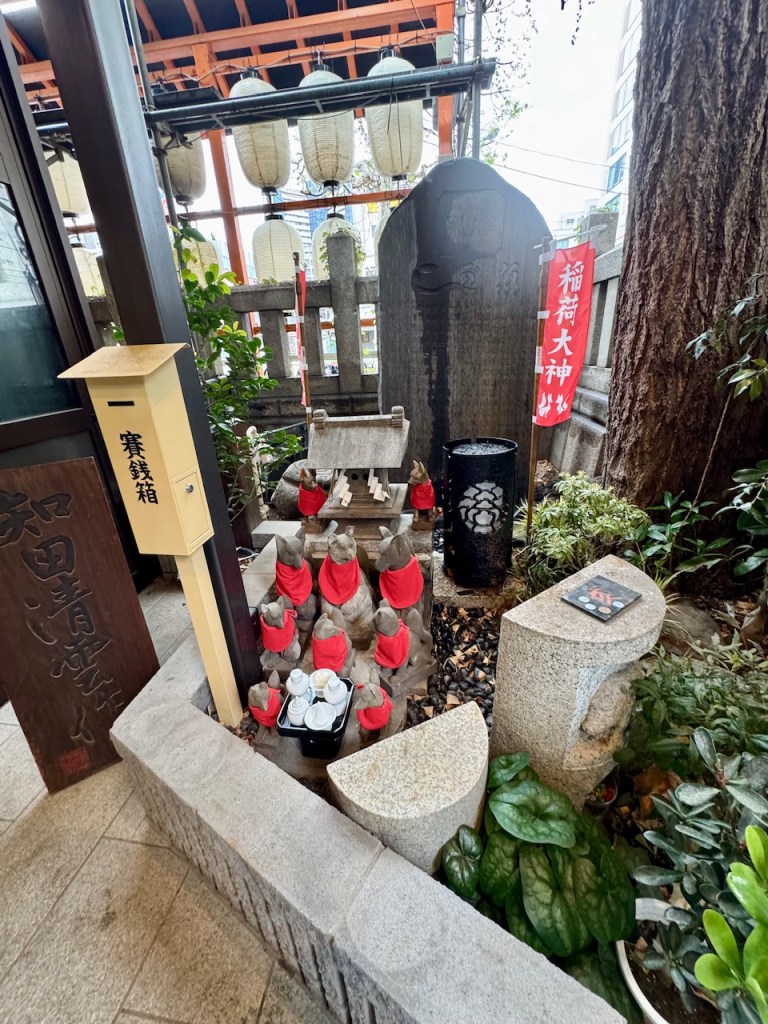
Namiyoke Inari Shrine is a Shinto shrine and this small, yet significant, shrine is dedicated to sea safety and cherished by local market workers.
Namiyoke Inari Shrine
Dedicated to the god Namiyoke-Inari who protects against misfortunes and helps people to get over periods of turmoil, Namiyoke-Inari is highly sought after by people who pray for warding off bad luck, for divine protection from calamity, good business, safety during construction, etc.
The group goes our separate ways and I’m trying to figure out the rest of my day. I did have an afternoon tour booked but that’s seeming less than desirable with the steady drizzle. I’ve also been wanting to check out some Japanese skin care products (they’re supposed to be the best) so maybe shopping.
Not sure what this is but I liked it!Don Quijote Entrance
Not interested in spending the big bucks in Ginza but there is a Don Quijote nearby and I’ve been wanting to check one of those out. Yikes!! What a jumbled pile of stuff sort of like a stuff room on steroids. I do find a battery for my selfie stick and some face masks that will doubtless make me look ten years younger but shopping when you’re sleep deprived especially in a store like this isn’t for me. I get my stuff and get out and then head for the train and back to the hotel. I need to pack up my bags for the transfer to the NCL Spirit for my cruise tomorrow morning and, more importantly, I need a nap. Tomorrow is another day. Adventures await …



























































































































 Judy’s Rambles