
June 7 – Den Haag
Wanted to spend a few days exploring towns south of Amsterdam before Chantale joins me for the weekend so I’m taking the show on the road to Den Haag. Den Haag is the most famous coastal town in the Netherlands with lovely beaches I’ve heard (though at a crispy 17, I think that I‘ll limit my explorations to town!). Den Hague is known worldwide as the home of the International Criminal Court and for hosting the United Nations International Court of Justice so I’m looking forward to visiting the Peace Palace while in town.
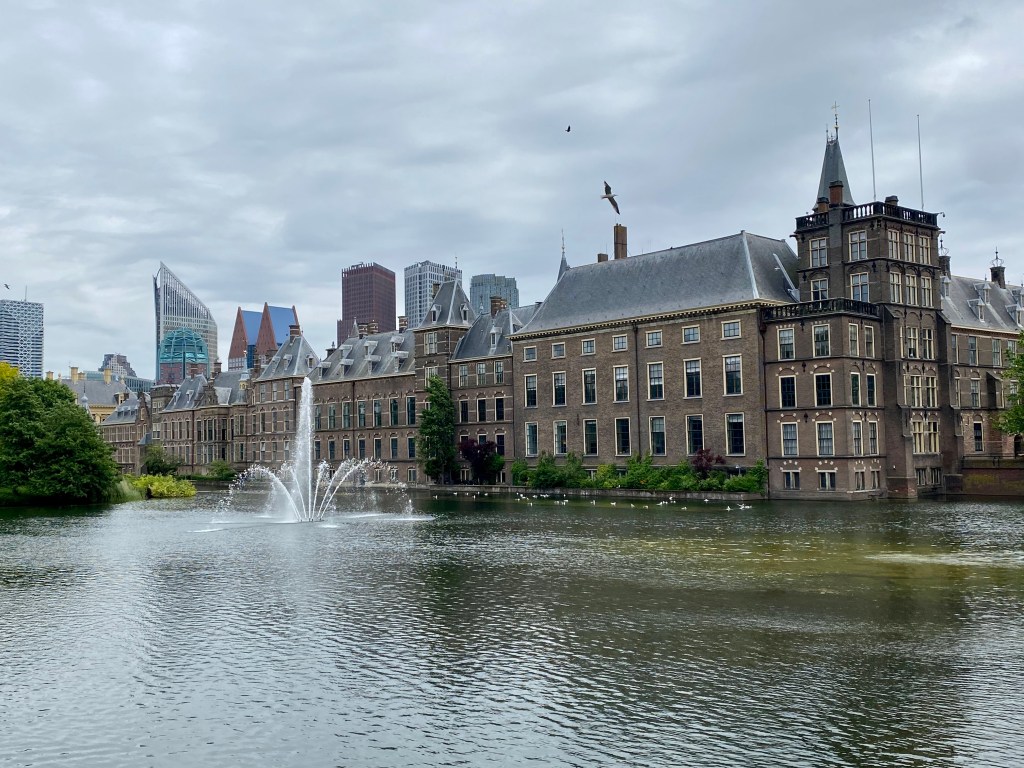
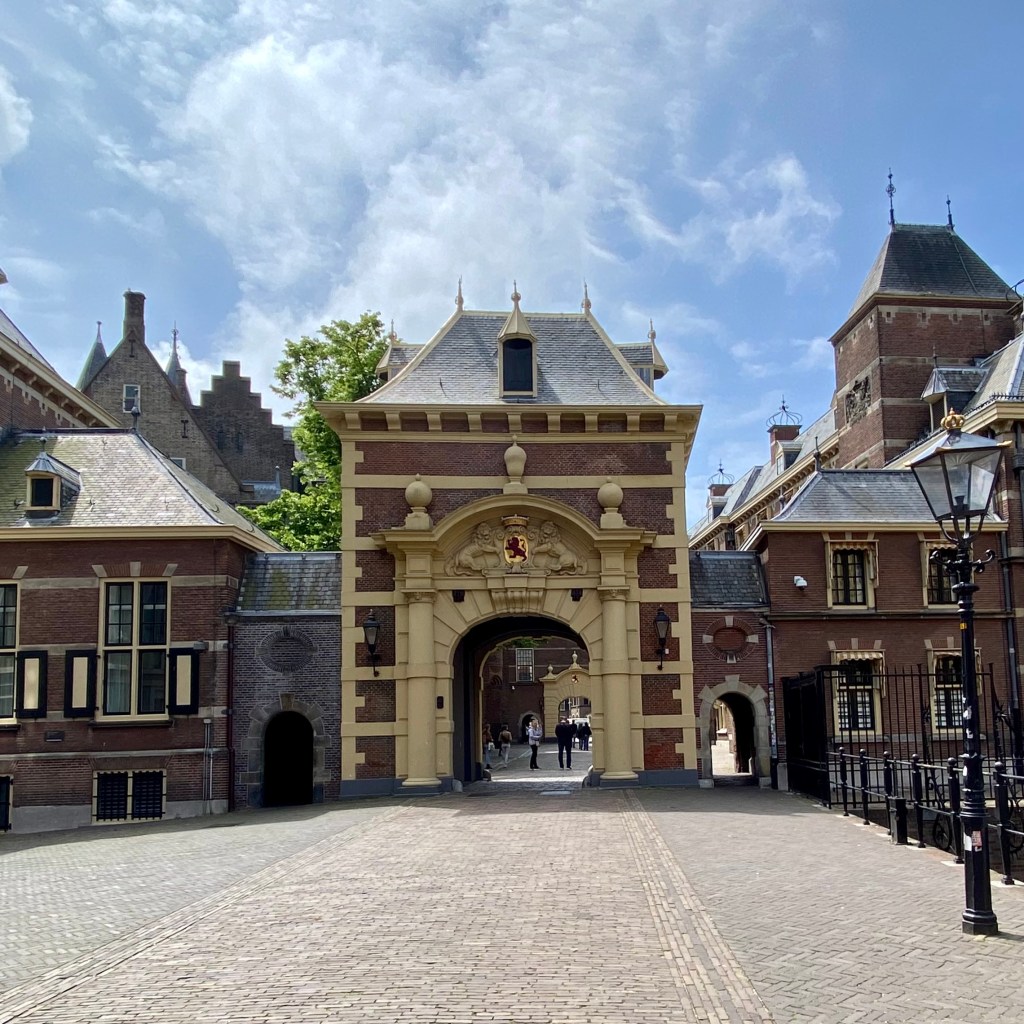
After checking into my hotel in Den Haag, I hopped the tram for Centrum. The tram stop is a stone’s throw from Binnenhof; a complex of buildings in the city centre that houses the meeting place of both houses of the States General of the Netherlands, the Ministry of General Affairs and the office of the Prime Minister of the Netherlands. Built primarily in the 13th century, the Gothic castle originally functioned as a residence for the counts of Holland. It became the political centre of the Dutch Republic in 1584 and is among the oldest Parliament buildings in the world still in use.
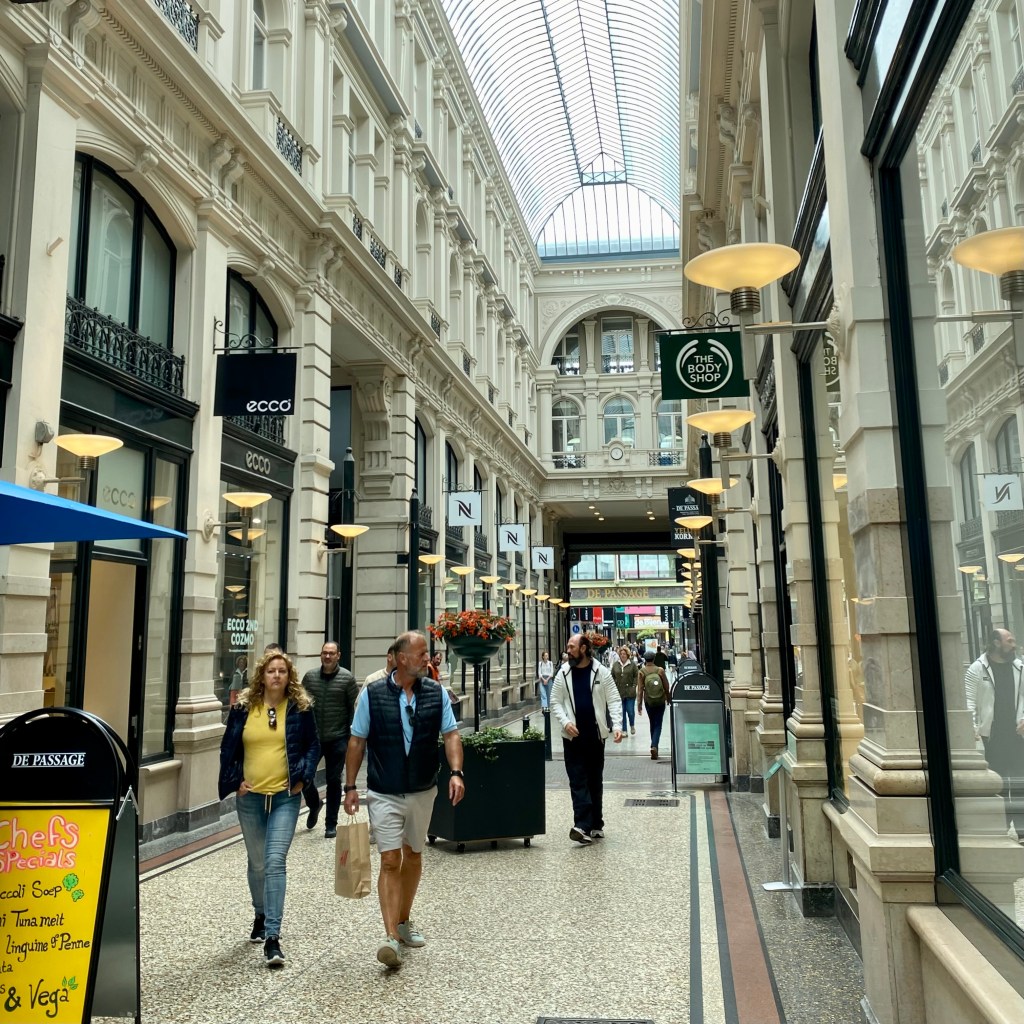
Before continuing my explorations in the Museum Sector, I headed off in search of lunch and ended up at De Passage. It is the only remaining covered shopping arcade in the country boasting a high, glass ceiling which allows in lots of light. The beautiful airy design of the arcade is reminiscent of the Galeria in St Petersburg and the GUM in Moscow; they aren’t built over streets but the feeling is the same. All of them are beautiful places to shop for things that you don’t need.
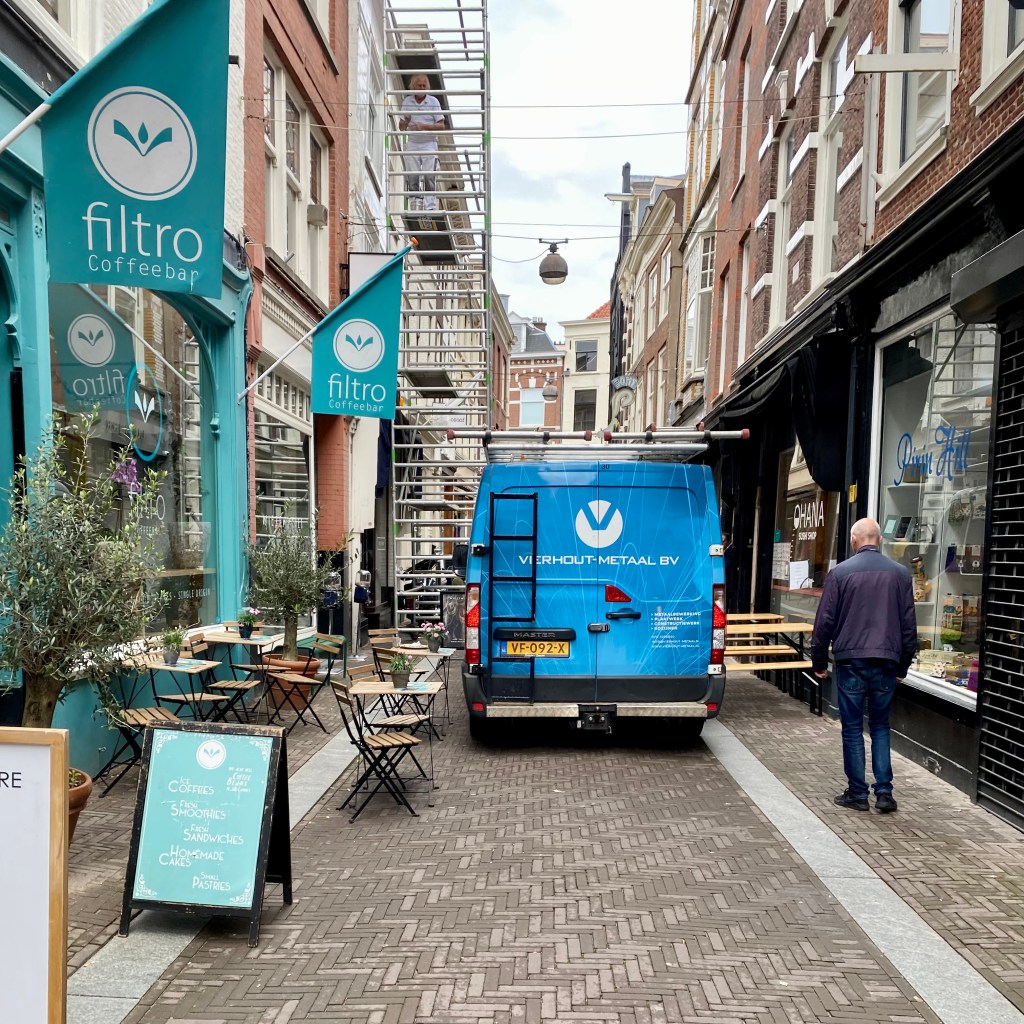
I find a nice bench in the back of the Grote Kirk to enjoy my picnic lunch with hungry pigeons as company. Sadly, when I finish lunch, I learn that the church won’t be open until Thursday afternoon. Undaunted, I take time to meander through the back alleys back to the Museum Sector. The alleys aren’t too wide as one van driver soon finds out. The best part was when he got out to move the scaffolding and the guy on it that was painting because his ladder was too wide!
My next diversion (and lucky accident!) is a tour of Gevangenpoort, the Prison Gate Museum. I had intended to visit the 18th century art gallery on the other side of the entrance but I didn’t ask the right questions! Next thing I know I’m in a prison, lol! Anyway, in addition to a collection of torture instruments, etc. there is an excellent audio tour that provides perspectives on crime and punishment over the centuries.
One story of particular interest was the discussion of a case of poisoning of the lady of the house and the maid who was charged with her murder. The audio tour presented the case from the perspectives of the accused prisoner, the jailer, the torturer, the judge and the executioner. Unfortunately, although apparently innocent, the maid was tortured until she eventually confessed and was even forced to name her master as a co-conspirator. When push came to shove, she was sentenced to death and her employer was let off with a fine. Apparently even back then money talked! The prison cells for rich detainees were also much more luxurious. The most famous Dutchmen were incarcerated in the luxurious Knights’ Chamber (Ridderkamer).
After my spontaneous tour of the prison gate, I headed to the Galerij Prins Willem V as originally “planned”! The Prince William V Gallery was the first museum of the Netherlands. William of Orange commissioned the construction of the room in 1774 to accommodate his impressive collection of paintings and to exhibit it to the public.
More than 150 old masters from the including works by Steen, Rubens and Potter hang here side by side. The walls are completely covered in a generous display of the wealth of his collection. Crystal chandeliers, silk wall coverings and lavish curtains complete the elegant museum. Sensory overload even for someone like me!
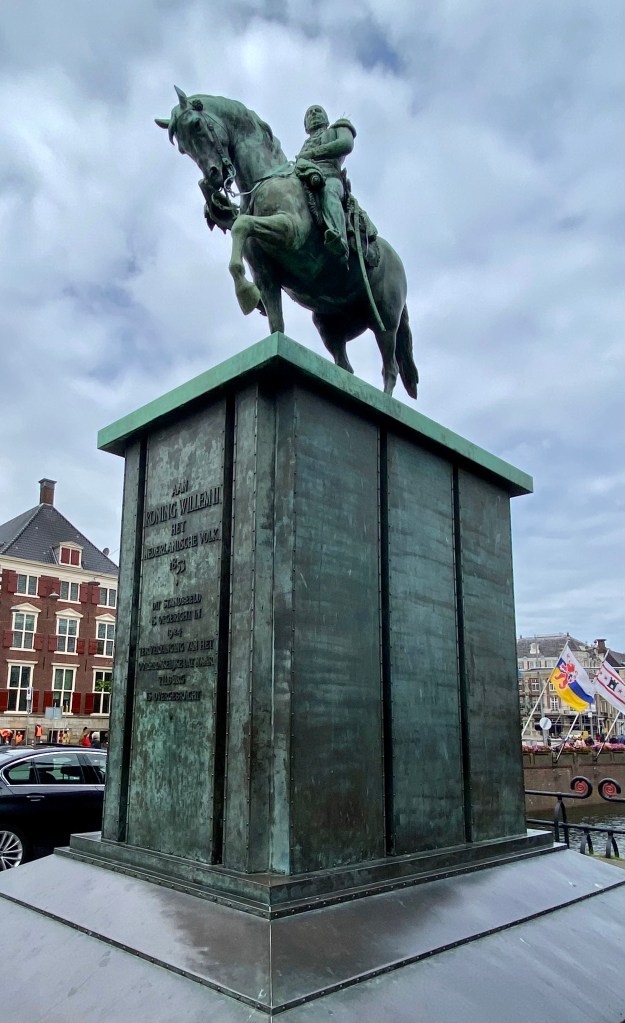
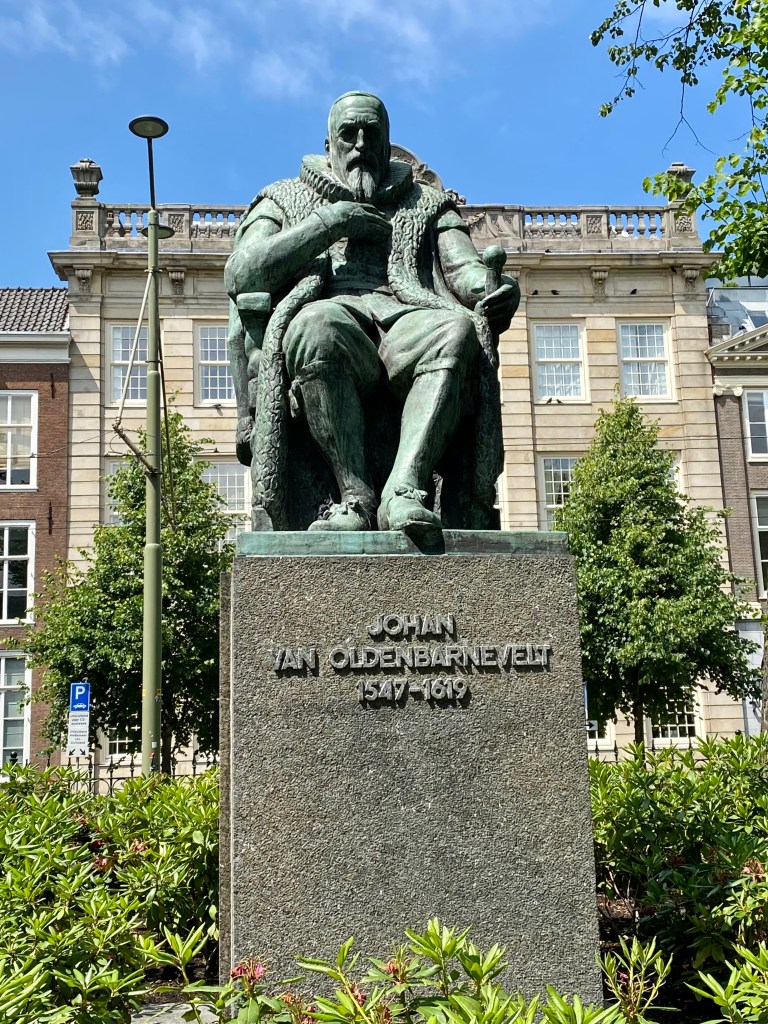
I took a short walk around the Hofvivjer (Court Pond) where I saw two very different statues. The first was of Johan van Oldenbarnevelt founder of the Dutch East Indies Company. He was a Dutch statesman and revolutionary who played an important role in the Dutch struggle for independence from the Spanish Empire. Sadly he was executed because of his religious views by a kangaroo court.
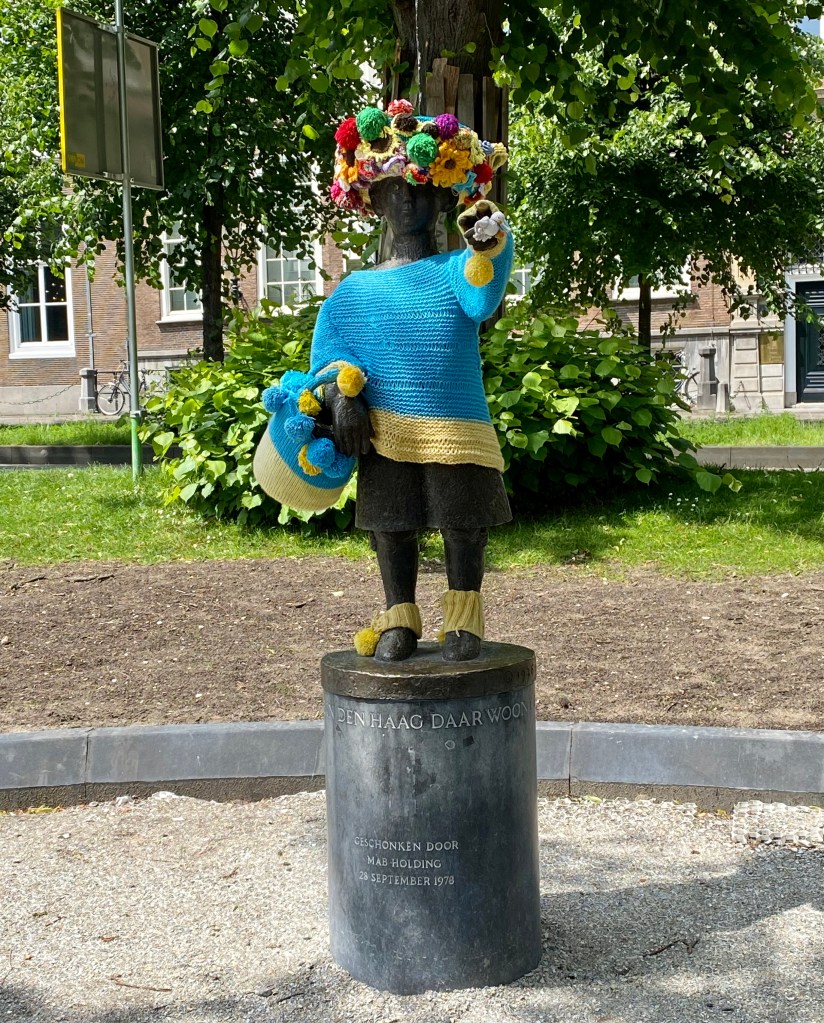
The second was a bronze statue of a young boy on a pedestal. On his arm he is carrying a basket. On his head is a hat with a large feather. His hand is outstretched, and he is pointing toward Binnenhof. The statue is called ‘Jantje‘ which means ‘little John‘ in Dutch and is a representation of John I, Count of Holland who died in 1299 at the age of 15 years old. He was the son of Floris V, Count of Holland who had built an estate on the spot where the Binnenhof stands. Today the statue is wearing a blue and yellow knitted sweater and his basket and headware have been embellished as well. Not sure why but maybe in support of Ukraine?
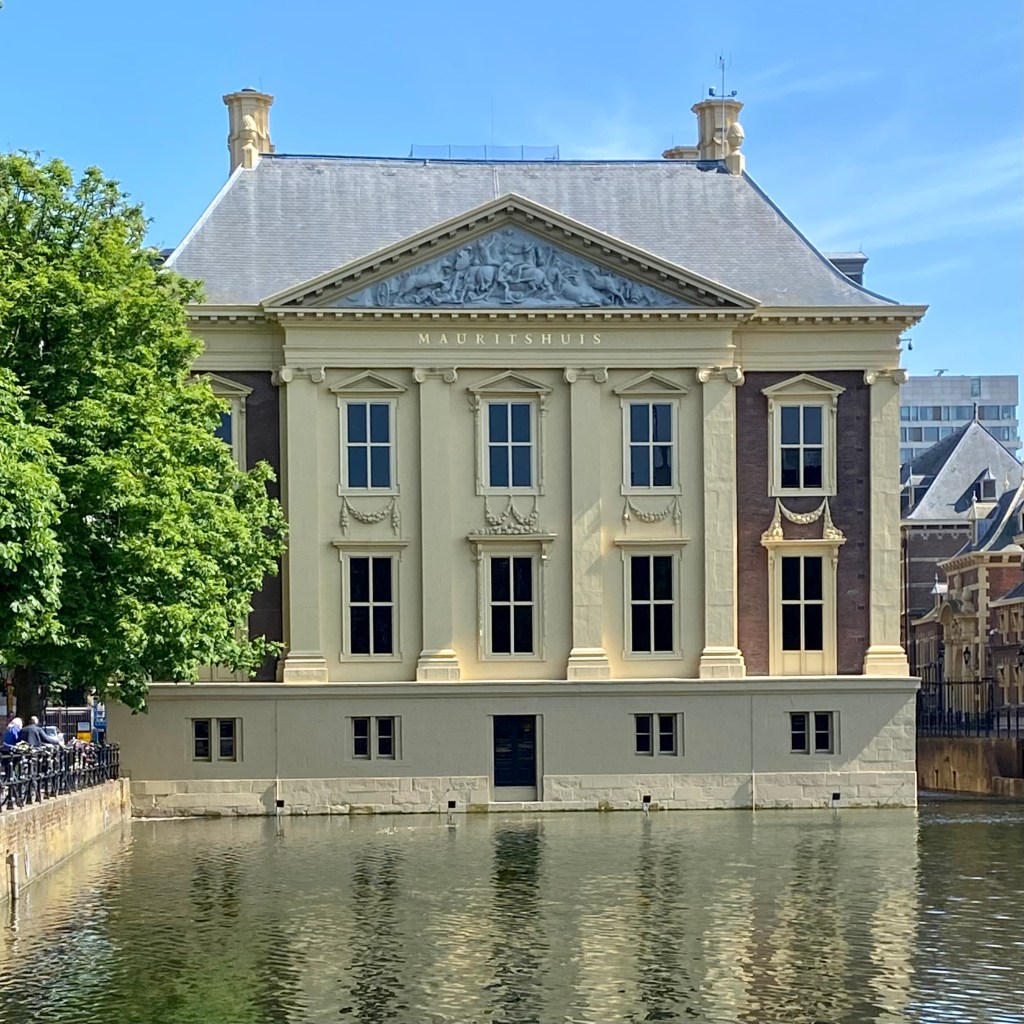
Soon enough I’m at the gate into the Binnenhof Courtyard. Sadly there are significant renovations in progress and it was not possible to tour the buildings or visit the gothic Ridderzaal. Not to worry, the two hundred year old Mauritshuis Museum is right next door.
The Mauritshuis houses the Royal Cabinet of Paintings which consists of mostly Dutch Golden Age paintings. The collection contains works by Johannes Vermeer, Rembrandt van Rijn, Jan Steen, Paulus Potter, Frans Hals, Jacob van Ruisdael, Hans Holbein the Younger, and others. Originally, the 17th century building was the residence of count John Maurice of Nassau.
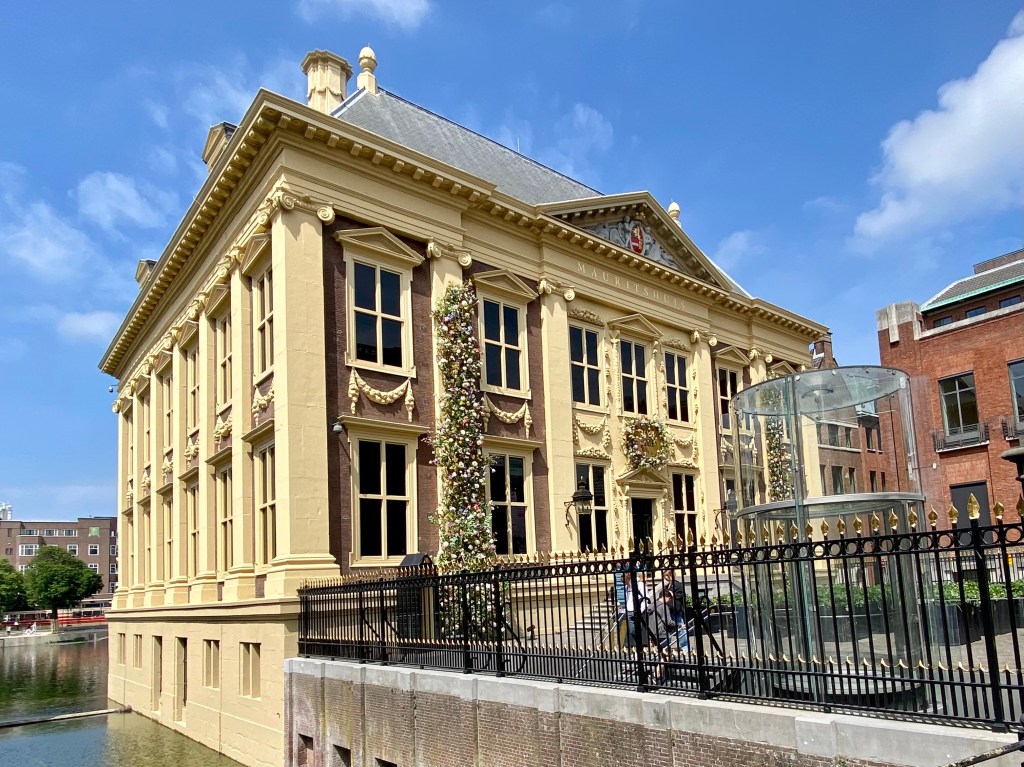
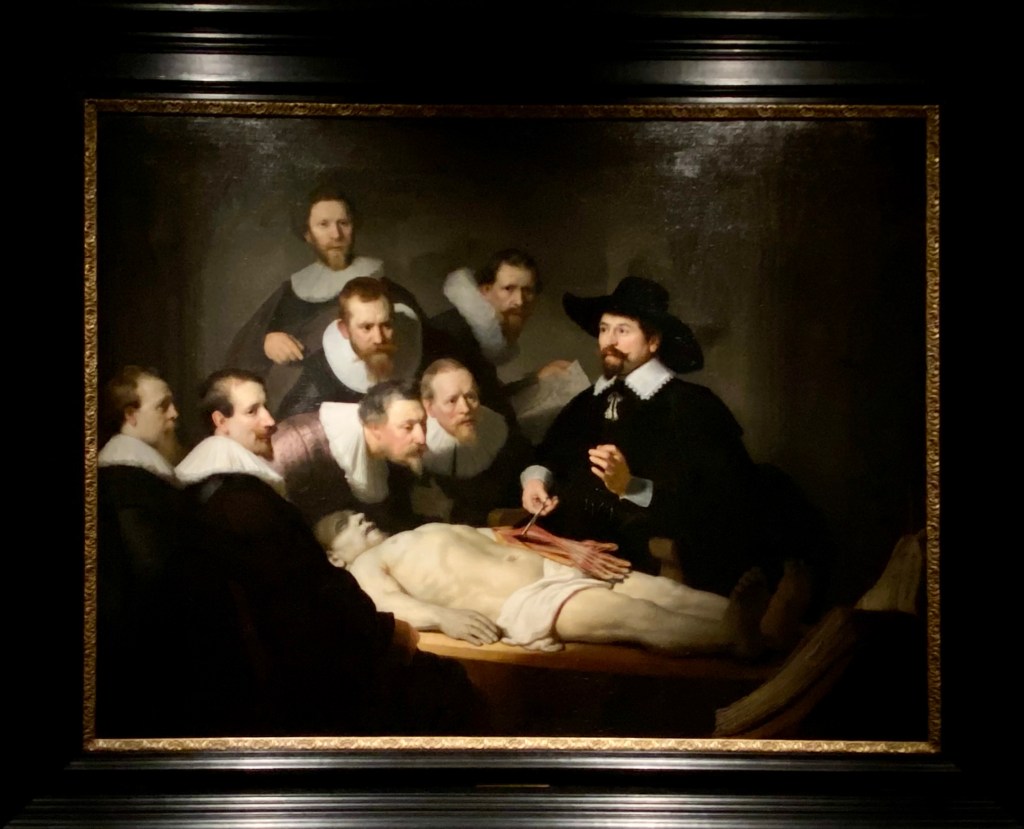
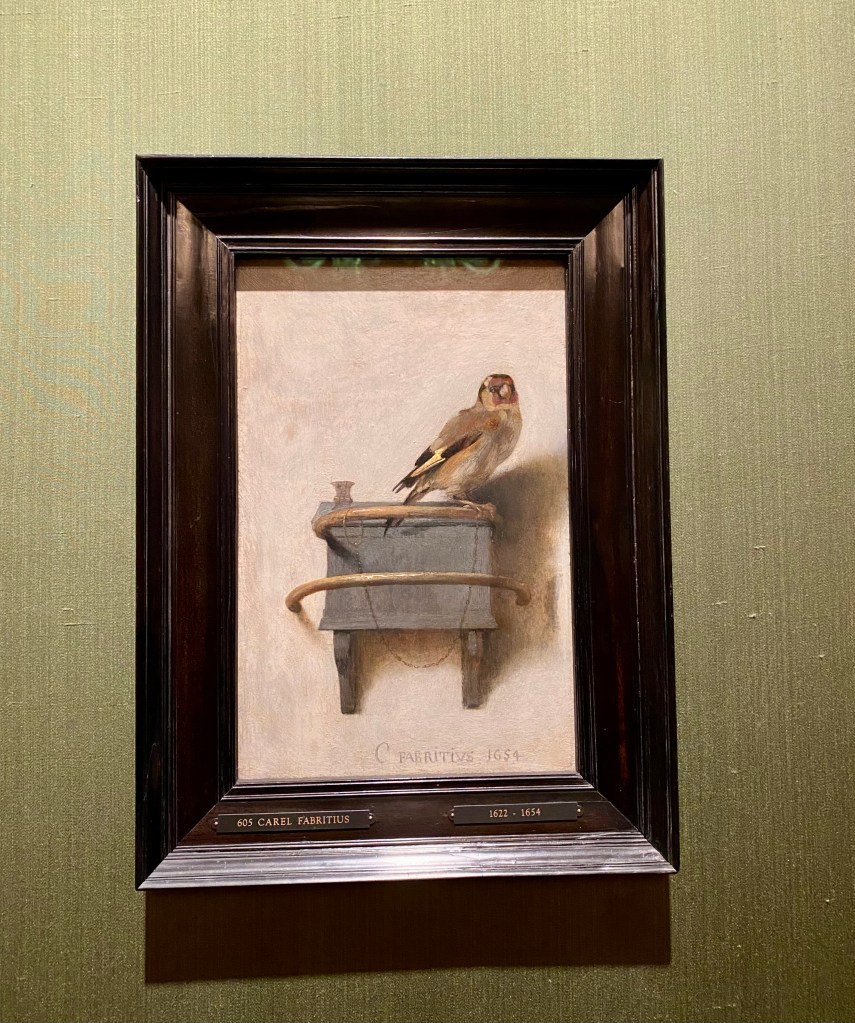
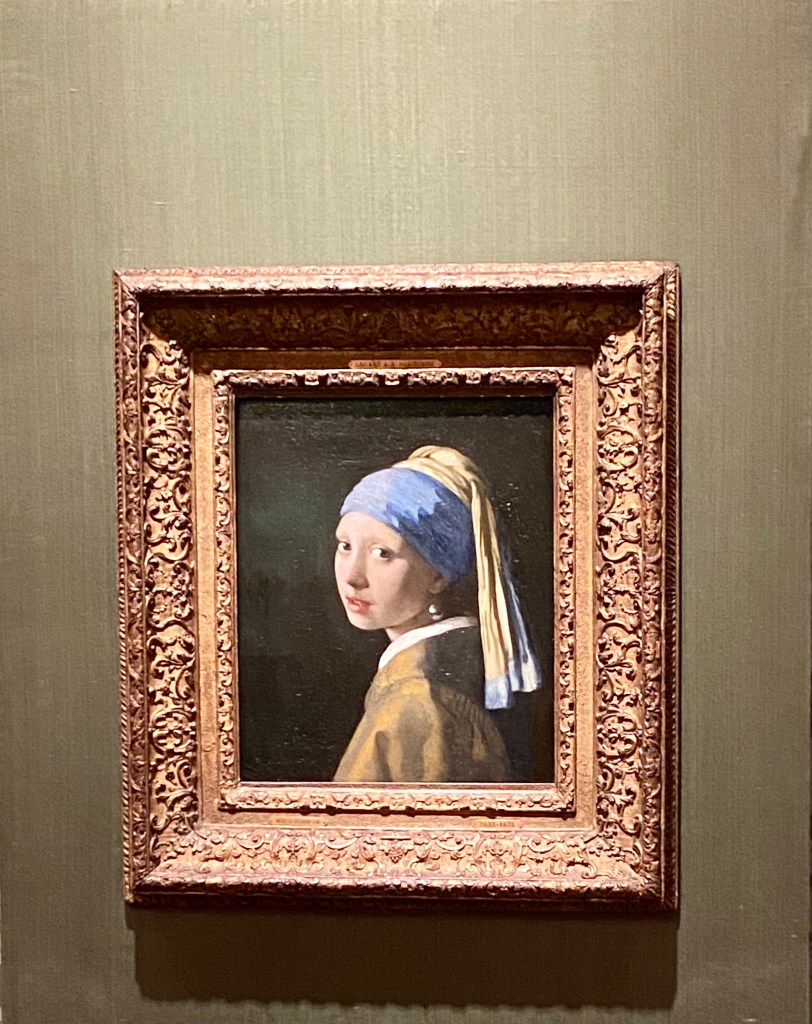
When surrounded by so much beauty it is easy to become overwhelmed so I need a few breaks from sensory stimulation on the comfy seating conveniently provided. I have inserted a few pictures of my favourites below.
As promised, Rembrandt van Rijn’s The Anatomy Lesson of Dr Nicolaes Tulp was one of the featured works of art. Rembrandt portrayed the surgeons in action, and they are all looking at different things. The detail and lighting is truly spectacular..
An unexpected favourite is a simple painting by Carel Fabritius entitled The Goldfinch painted the year he died in a massive explosion of gunpowder in Delft.
I was most looking forward to seeing Johannes Vermeer’s masterpiece, Girl with a Pearl Earring and she didn’t disappoint. The painting is a tronie, the Dutch 17th-century description of a ‘head’ that was not meant to be a portrait. Girl with a Pearl Earring has become one of the world’s most recognizable paintings and has been compared to the Mona Lisa. In 2006, the Dutch public selected it as the most beautiful painting in the Netherlands and I can’t argue that.
After a busy day, it’s time to head back to the hotel for a light dinner and plan for another day.
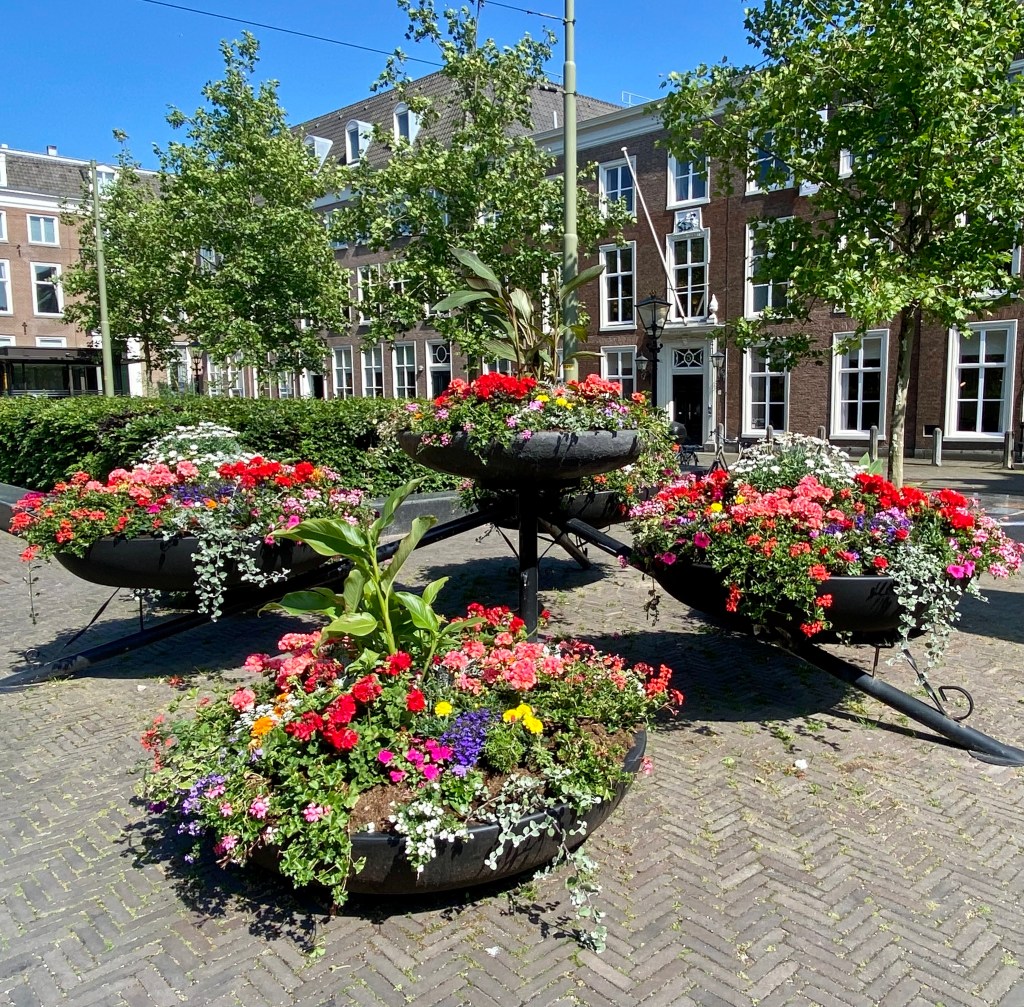
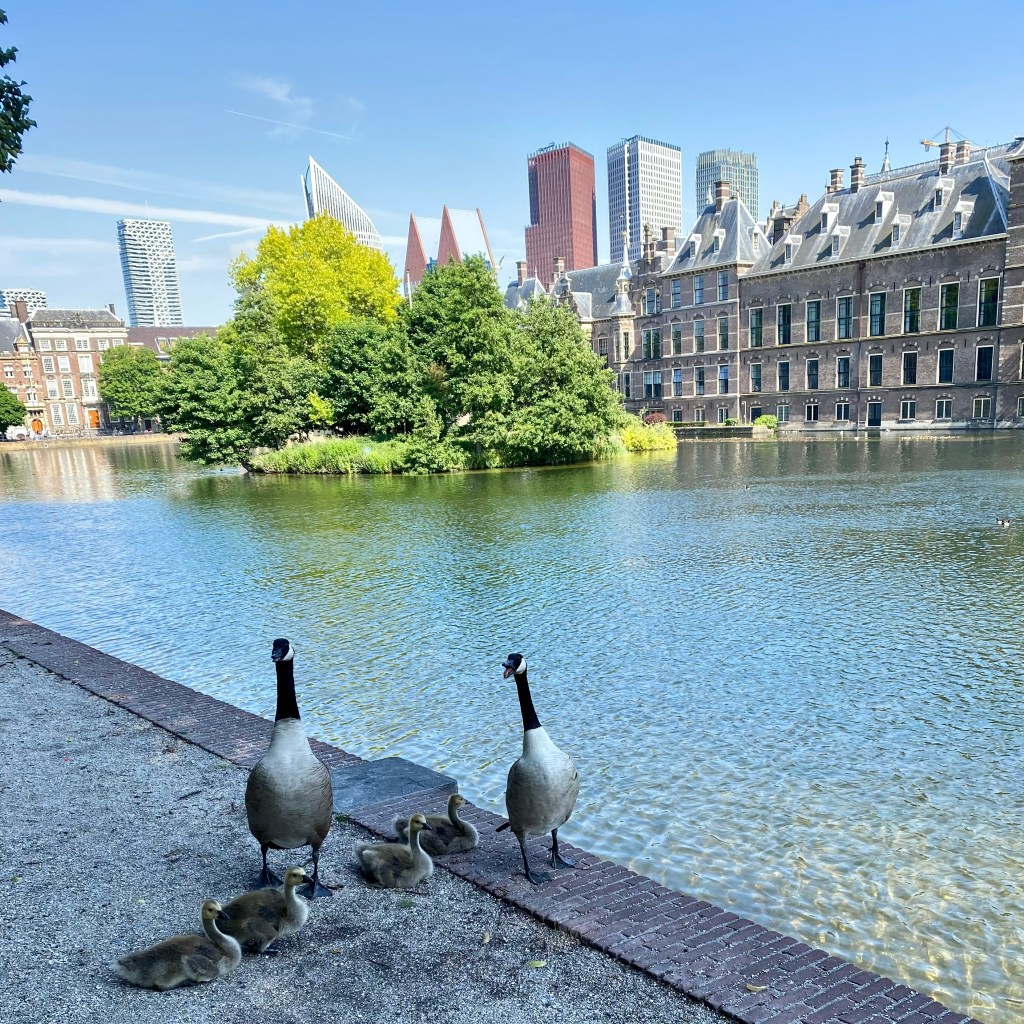
The Peace Castle will have to wait until later in the week. Adventures in Delft await …
 Judy’s Rambles