
After two fairly relaxing days on the ship, today we are docking in Kiel, Germany. I had a look at the ship-organized excursions on Monday when I boarded but none of them really interested me so I opted to just hang out in Kiel and toodle around town on my own. That means I can come and go as I please and don’t have a stupid early wake up call. Important after a late night making my fortune (not!) in the Dawn Casino!
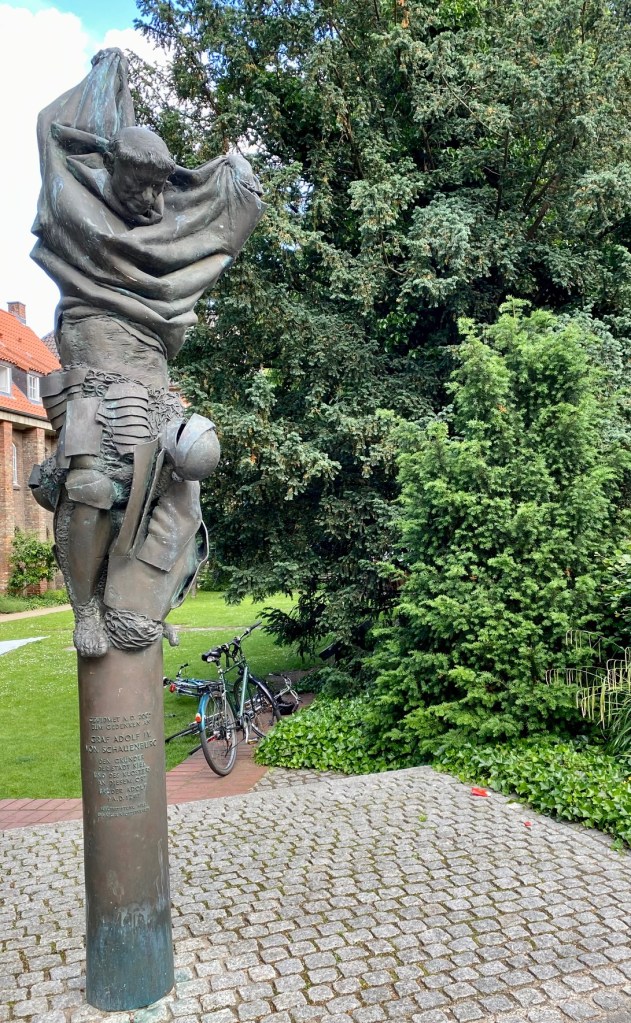
The city of Kiel was founded in 1233 as Holstenstadt tom Kyle by Count Adolf IV of Holstein. In fulfilment of an oath taken during the heat of the Battle of Bornhöved, the Count withdrew to a Franciscan friary in 1238 and in 1244 was ordained a priest in Rome. He founded a Franciscan friary in Kiel (Kieler Kloster); one of the very few buildings from the medieval period left standing after the WWII.
Kiel is a port city on Germany’s Baltic Sea coast with a deep harbour. During WWII, Kiel was one of the major naval bases and shipbuilding centres of the German Reich. Because of its status as a naval port and as a production site for submarines, Kiel was heavily bombed by the Allies during the war and about 80% of the buildings were raised. The city was rebuilt after the war and in 1946 was named the seat of government for Holstein. It officially became the state’s capital in 1952. Today, Kiel is once again an important maritime centre of Germany because of its deep harbour.
Leaving the port area there is a blue line plated on the sidewalk that leads you to town and back so the potential for me to get lost approaches zero! Lol, if only all towns were this well organized for people like me who are missing the navigational gene!

All over town there are fences, tents, stages and booths for food and booze sales being put up. There’s a major festival coming for the first time since Covid but sadly nothing is open yet.
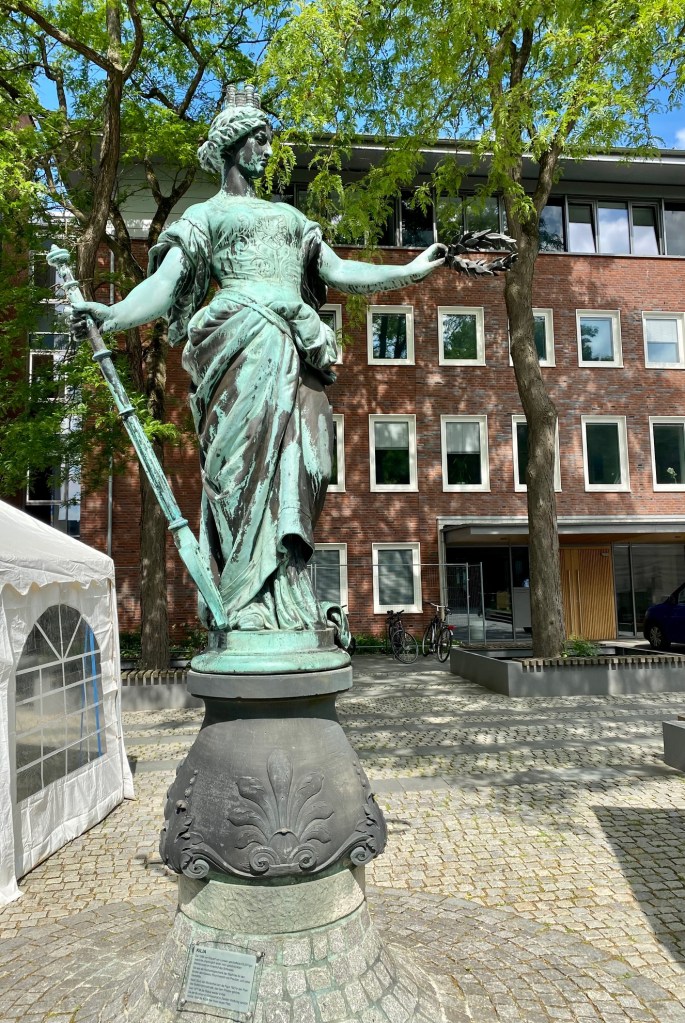
On my travels I spy a bronze statue; Kilia. Originally she crowned a richly decorated stone fountain in the courtyard of a castle. The Kilia Fountain, built in 1889, was a wedding present from the city of Kiel to the emperor’s brother and his wife. The fountain was destroyed in WWII so now Kilia stands alone in the Daenische Strasse Schlossgarten.
Next, I come across a statue of Adolf IV; Count turned Franciscan priest and founder of the Franciscan friary in Kiel (Kieler Kloster).
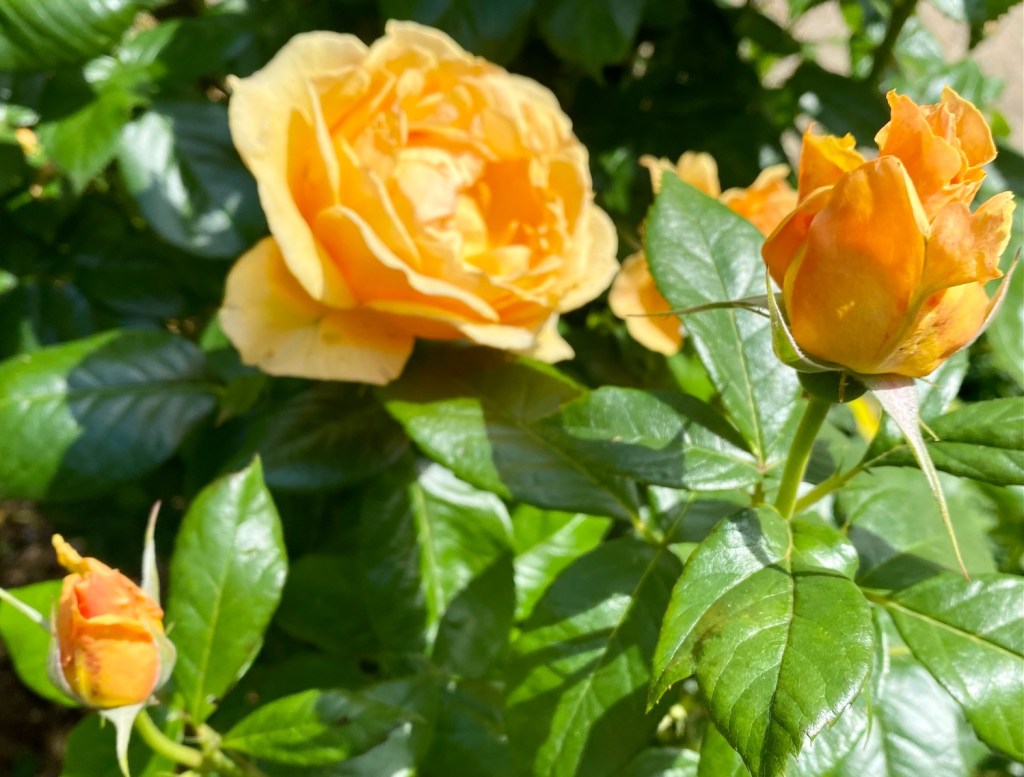
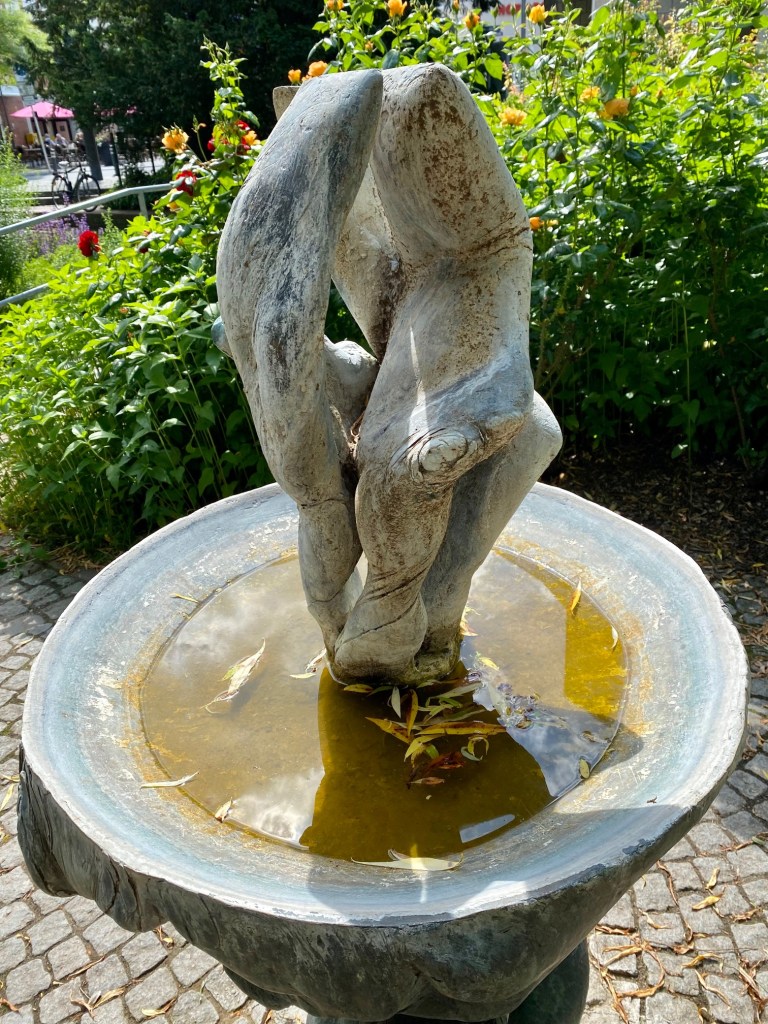
What remains of the original Kloster has a beautiful rose garden and a little fountain on its grounds.
Next to the entrance of the Kloster stands the Schmerzensmann (The Man of Sorrows); a granite sculpture depicting the martyrdom of Christ with his head fallen powerlessly on his chest.
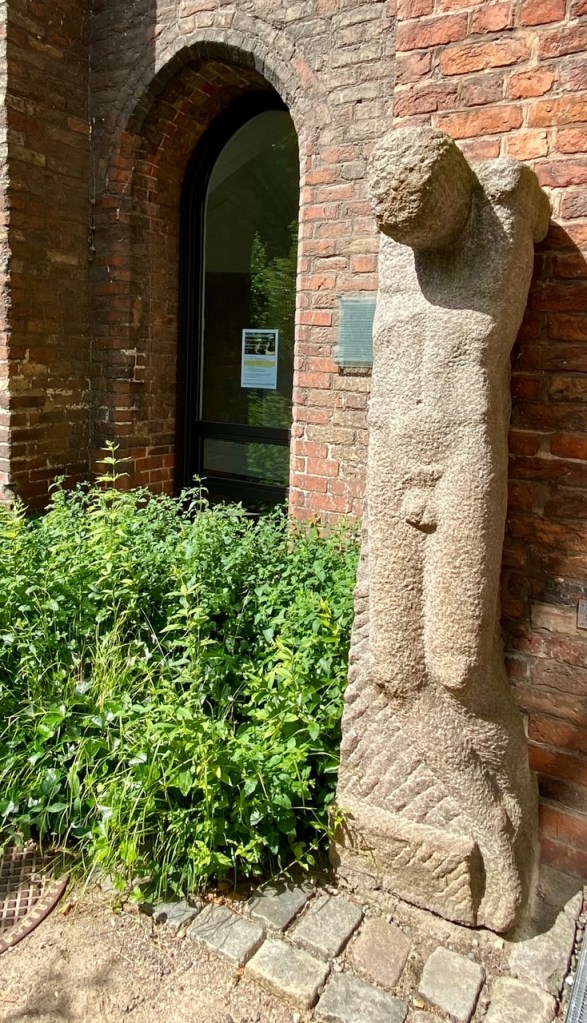
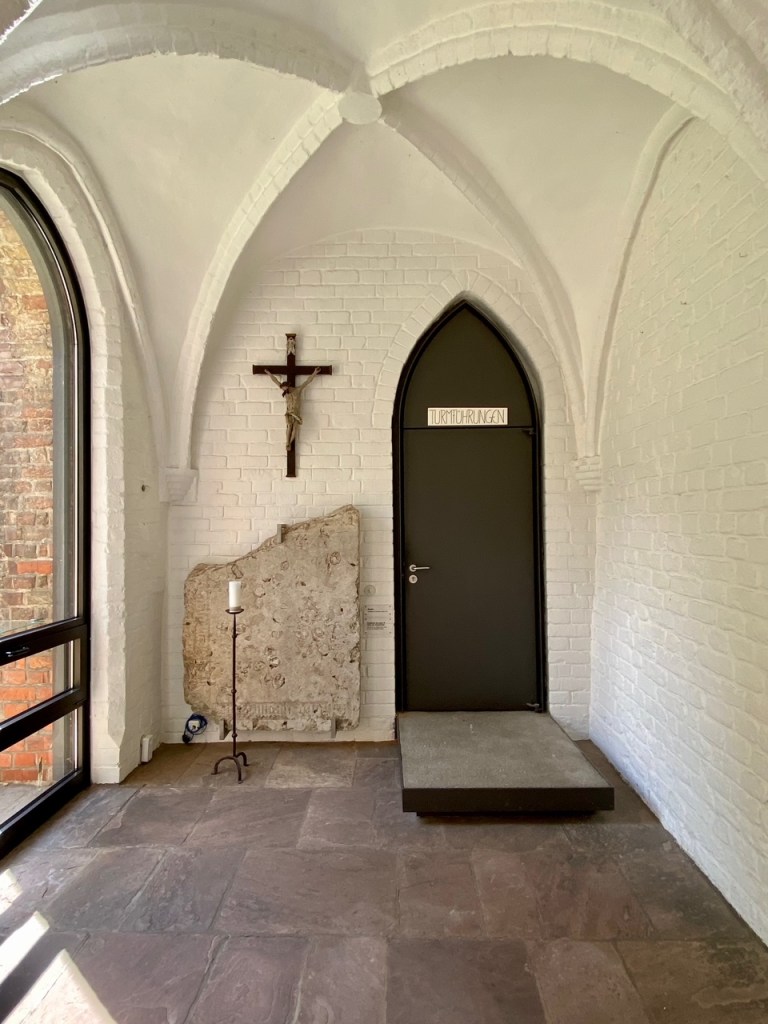
A lovely volunteer guide took a few fellow cruise passengers and I on a tour through the two remaining rooms of the Kloster (ante chamber and dining room) and regaled us with some of Kiel’s rich history. Today the restored dining room is used for cultural events including concerts. The town has built apartments for theology students on the floors above.
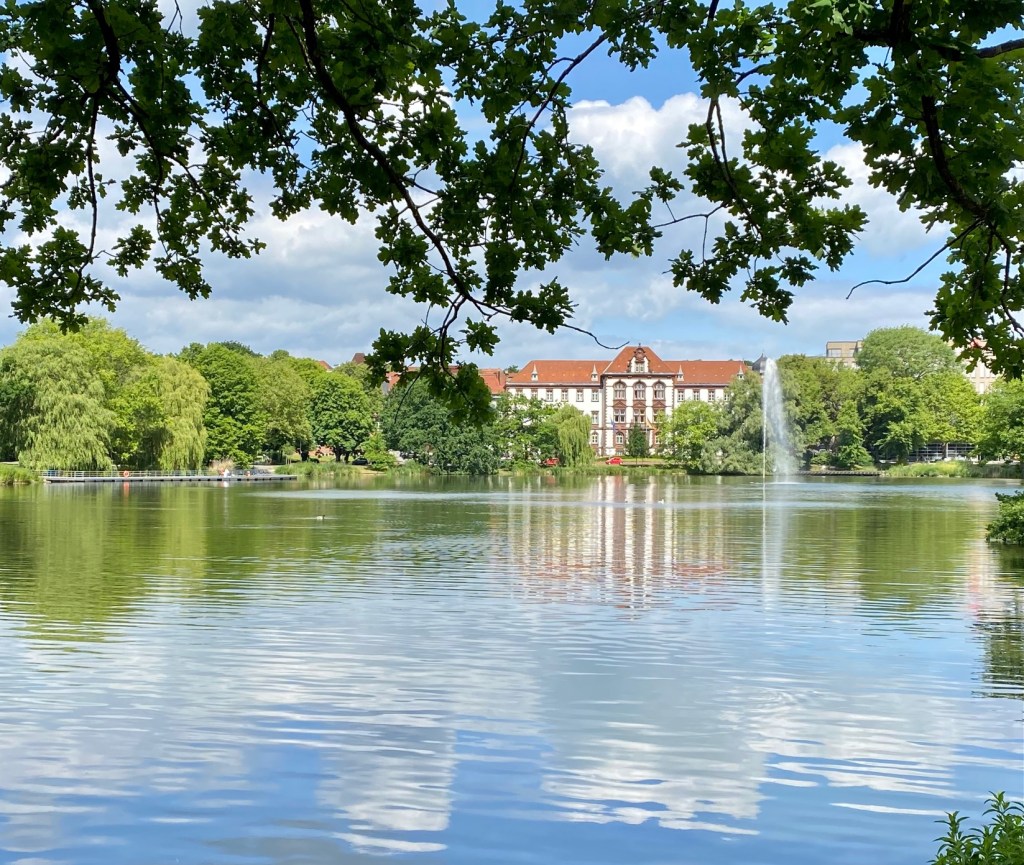
Following the blue line on the pavement for the most part, I came across a lake in the heart of downtown Kiel with a walking path around it which I put to good use. Hiroshima Memorial Park boasts large shady trees and benches on the water’s edge perfect for relaxing on a beautiful day. On the far side is a large white building that looks interesting but on closer inspection houses the Department of Justice.
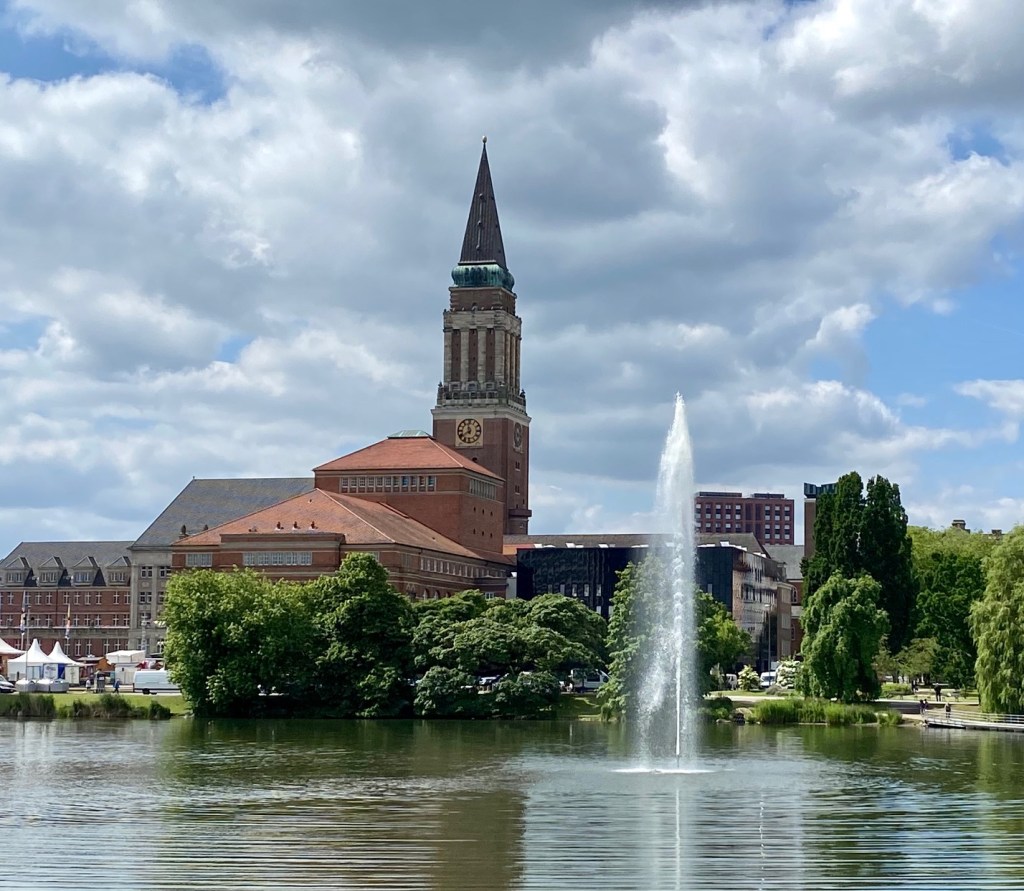
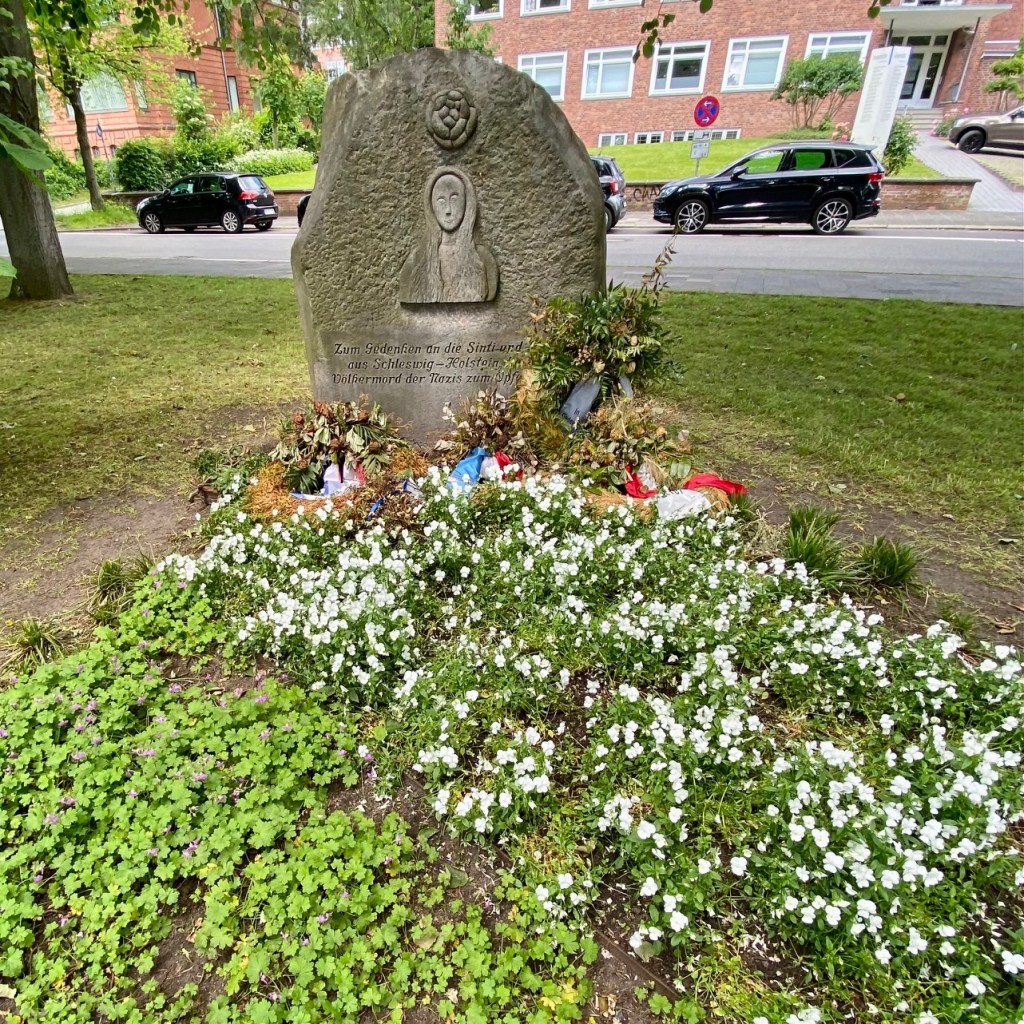
There is also a granite memorial stone for the deported and murdered Sinti and Roma in the park. Designed by Christoph Heiko Weis, it is around two meters high and shows a simple image of Mary and an inscription in German that translates to “In memory of the Sinti and Roma from Schleswig-Holstein who fell victim to the Nazi genocide”.
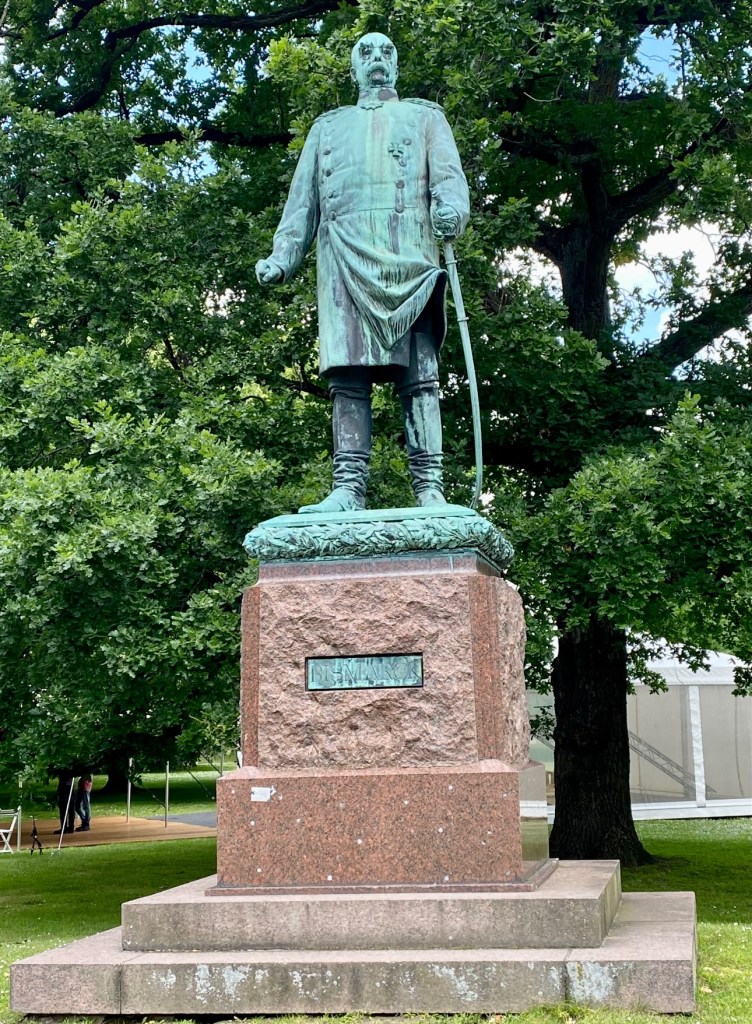
Nearby is a memorial (Bismarckdenkmal) that commemorates Otto von Bismarck-Schönhausen (1 April 1815 – 30 July 1898). He was one of the most prominent European statesmen of the nineteenth century. He served as Prime Minister of Prussia from 1862 to 1890 and was involved in three wars including the Franco-Prussian War (1870-1871). After engineering the unification of Germany, he served as the first Chancellor of the German Empire from 1871 to 1890.
Wandering on, I spied a bronze sculpture of a Newspaper Boy. Not sure what he’s all about.

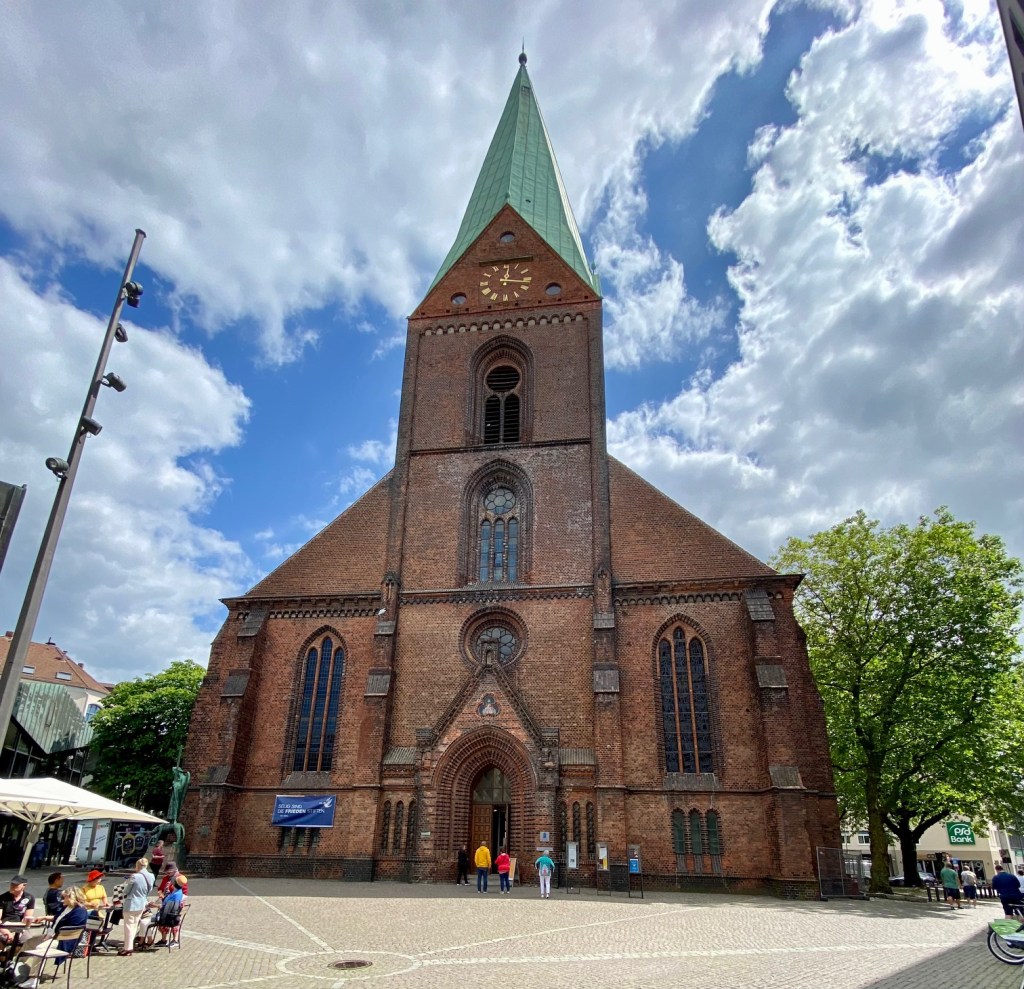
In old town stands the St. Nikolai Church, one of the town’s oldest churches, which was pretty much destroyed during WWII with the rest of the city.
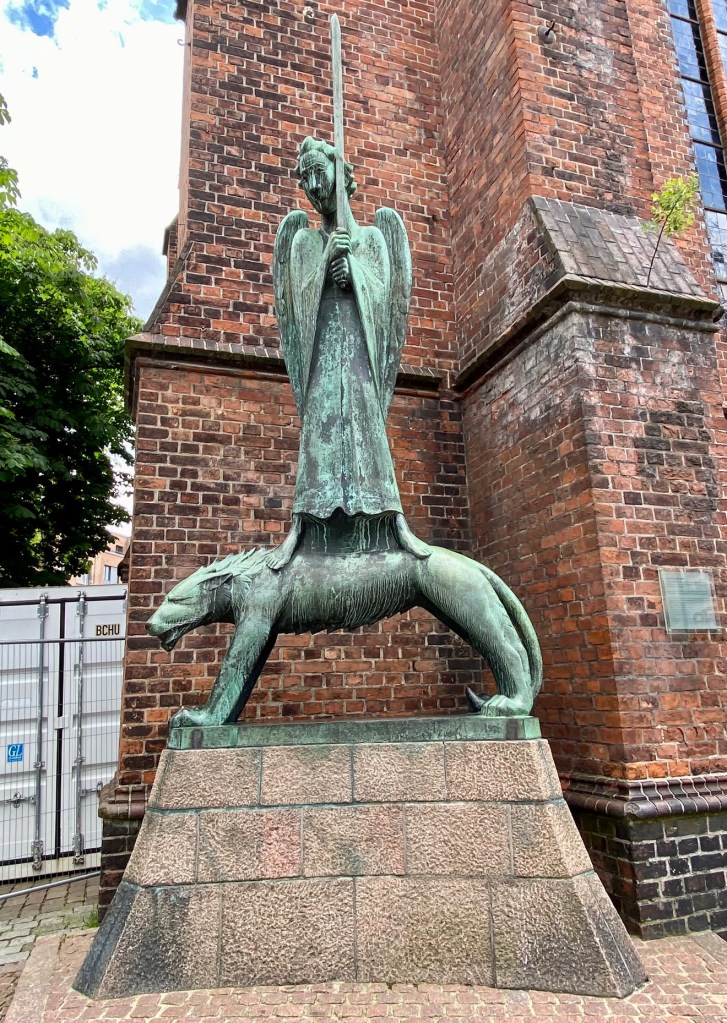
The church was later rebuilt but some of the notable artwork from the original church remains including:
Outside, off to one side, of the rebuilt, an Ernst Barlach’s bronze from 1928 depicting an angel with a sword dominating a vulpine figure; a symbol for the superiority of the spirit and its victory over evil.
Once inside there is a bronze baptismal font (Taufe) that dates back to 1344 and is the oldest artwork in the church. It is regarded as one of the best medieval bronzes in northern Germany.
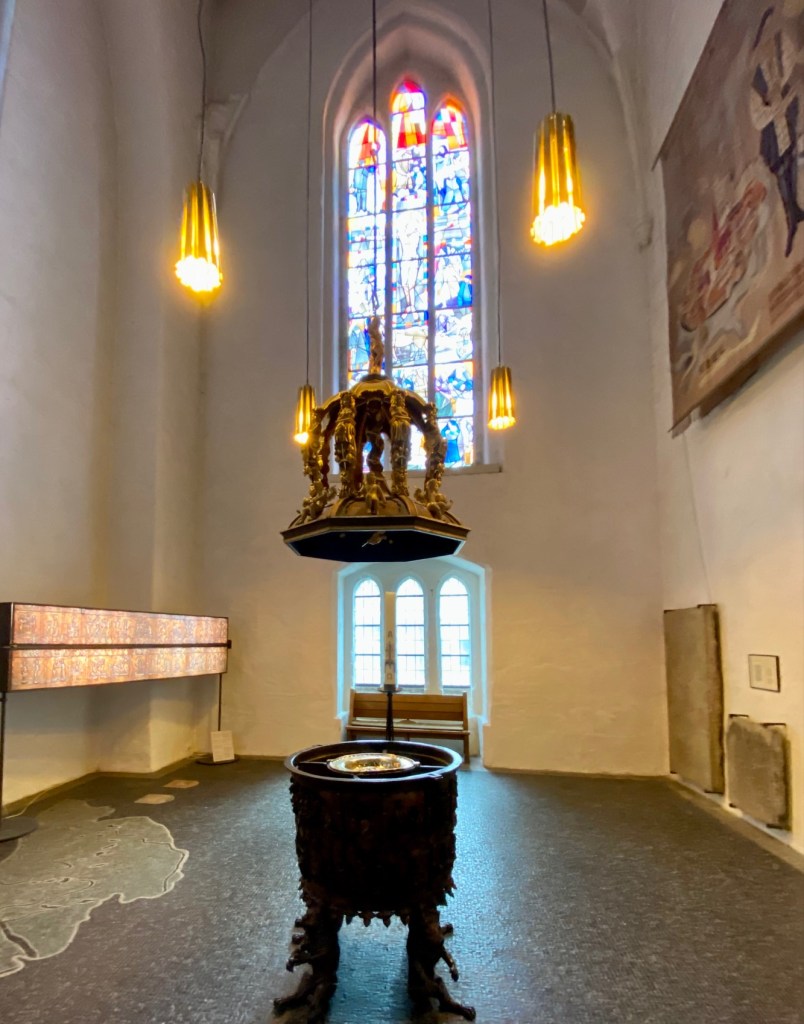
The Erzväteraltar (Altar of the patriarchs) from 1460 was made for the church of the Liel Abbey and was moved to St. Nikolai in 1541 when the monastery was dissolved in the Reformation. Sadly the altar wasn’t in the church today – not sure why as my German is nonexistent. In front of the alter hangs a large Triumphal cross (Triumphkreuz) that dates back to 1490. There is also a carved wooden baroque pulpit from 1705.

Kiel is also home to a number of research institutions including the University of Kiel which is the oldest, largest, and most prestigious university in the state. On my way back to the ship I walk through a park that features six busts of Nobel laureates from a variety of specialties who were professors at the University of Kiel.
Back to the ship for a relaxing afternoon. Tomorrow we’ll be docking in Gdynia, Poland and more adventures await …
 Judy’s Rambles