
June 18 – Riga
Another day, another country and another early morning. Today our guide is Anna and Sergei is behind the wheel as we enjoy a short driving along the boulevards, parks and charming green parks of Riga. Enroute we have a chance to admire some beautiful architecture while Anna explained Latvian history. We passed a plethora of Art Nouveau buildings, the Latvian National Museum of Art and the Monument of Freedom erected in 1935 funded by the donations from the citizens of Latvia to name a few.

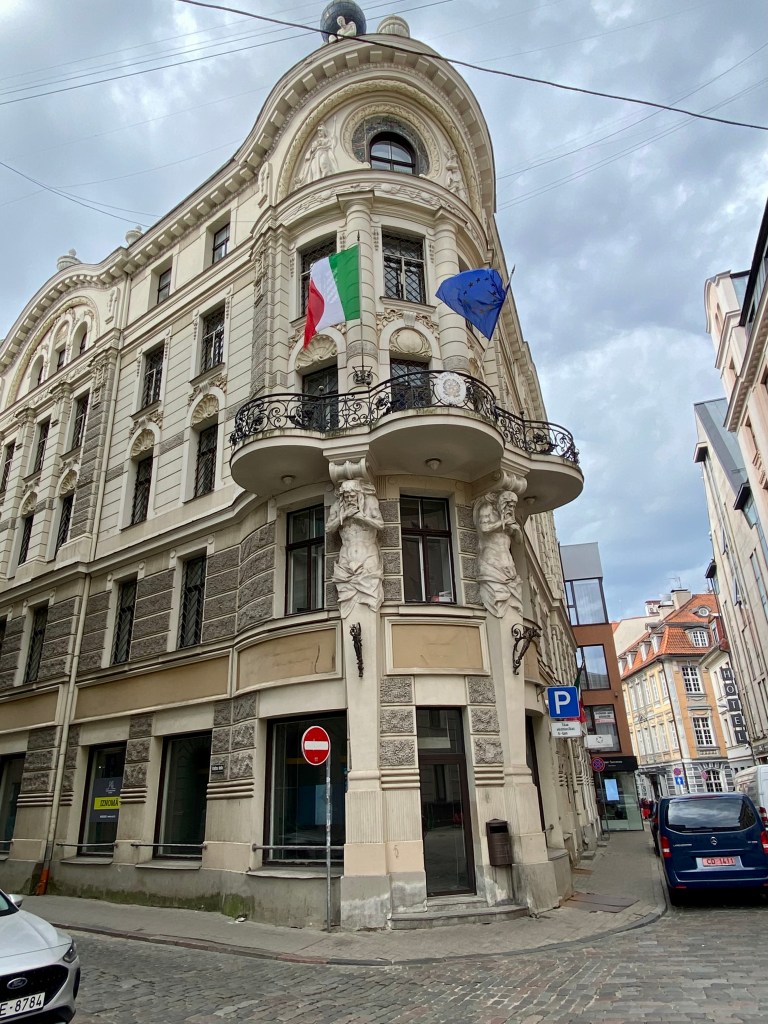
Latvia is the biggest of the three Baltic states and Riga is the biggest city in Latvia boasting 800,000 of the country’s population of 2 Million.
Riga, the capital of Latvia, was founded more than 800 years ago and has nowgrown into the most cosmopolitan city in the Baltic States. Founded in 1201 during the Middle Ages Teutonic Knights, Riga was developed into a Hanseatic city and stayed under their rule for 300 years. Germans built many buildings including theatres for themselves and were the city’s wealthiest inhabitants.
Over the centuries, there was lots of fighting over Riga to gain access to Baltic Sea with Lithuania, Germany, Poland, Sweden and Russia all vying for the prize.
By the 18th and 19th century, Riga had grown into one of Europe’s leading ports/industrial centres and was revered as the “Paris of the North.” Years of independence and becoming a member of the European Union have brought great changes and development to the city and to the country itself.
Soon enough it was time to hop of the bus to explore Old Riga on foot and have a chance to see first hand the many churches including the glorious Dome Cathedral and many renovated buildings. Lutheran, Catholic and Russian Orthodox are the three main religions in Latvia though Latvians are general not very religious. The main holiday is midsummer; a pagan holiday that is more popular than Xmas and New Year’s.
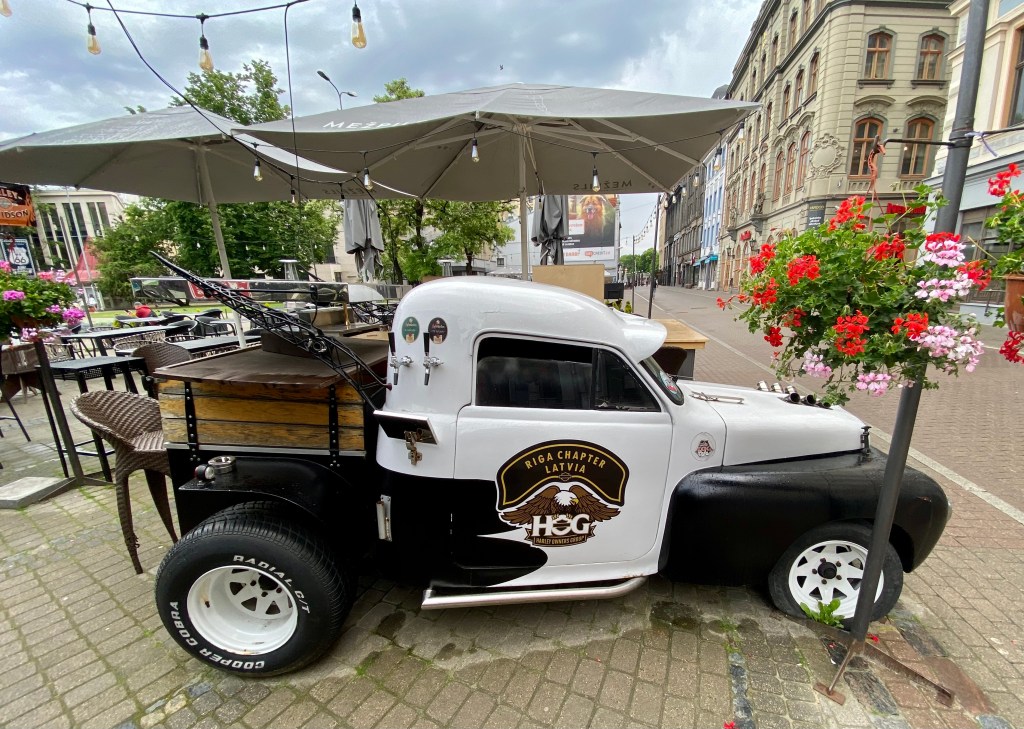
As we made our way to old town, I snapped a few pics of some of the fun architecture.


Our first official stop is the Latvian National Opera and Ballet (LNOB) built by Germans in 1884.

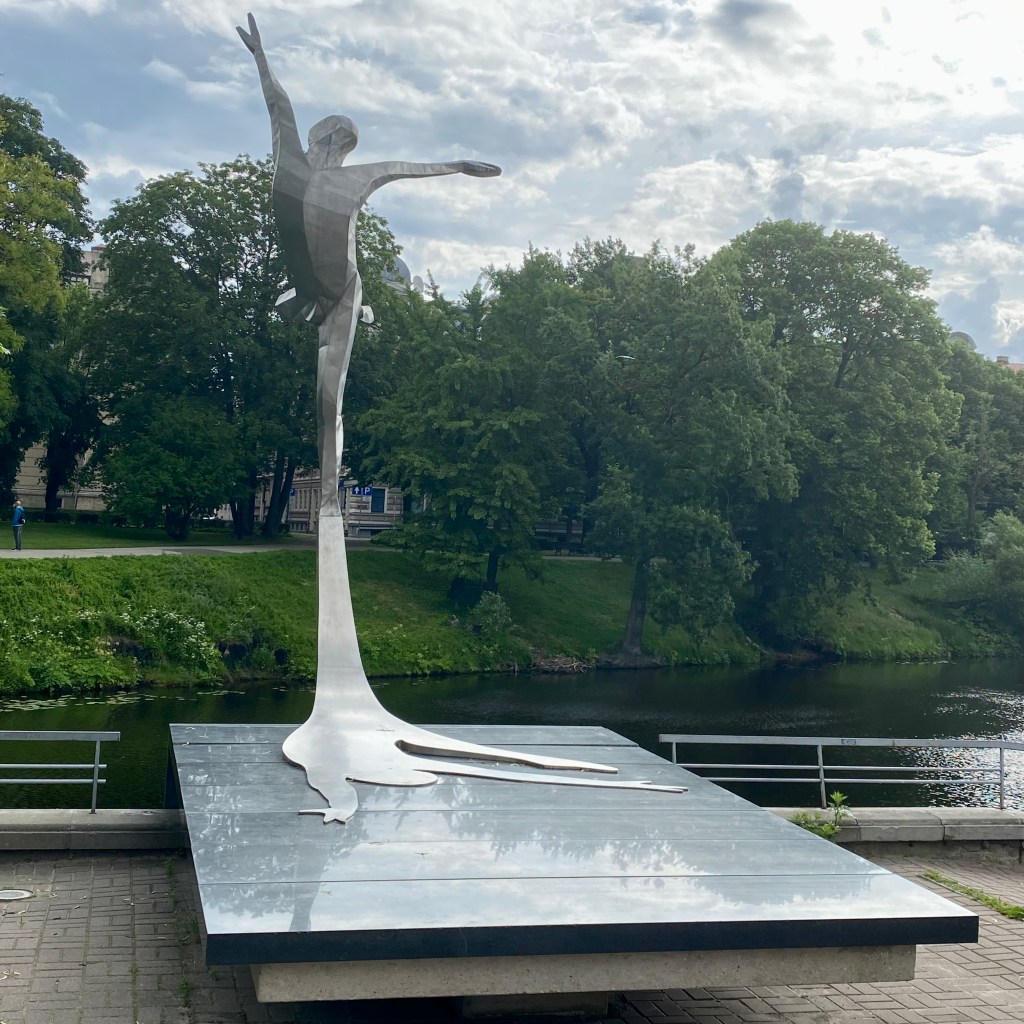
Close-by, on the bank of the canal, is a striking stainless steel sculpture celebrating Maris Liepa; the famous Latvian ballet dancer who was considered to be one of the best male ballet dancers in the world. The monument was unveiled in 2013 as part of the 150th-anniversary celebrations of the Latvian National Opera and Ballet Theatre building.
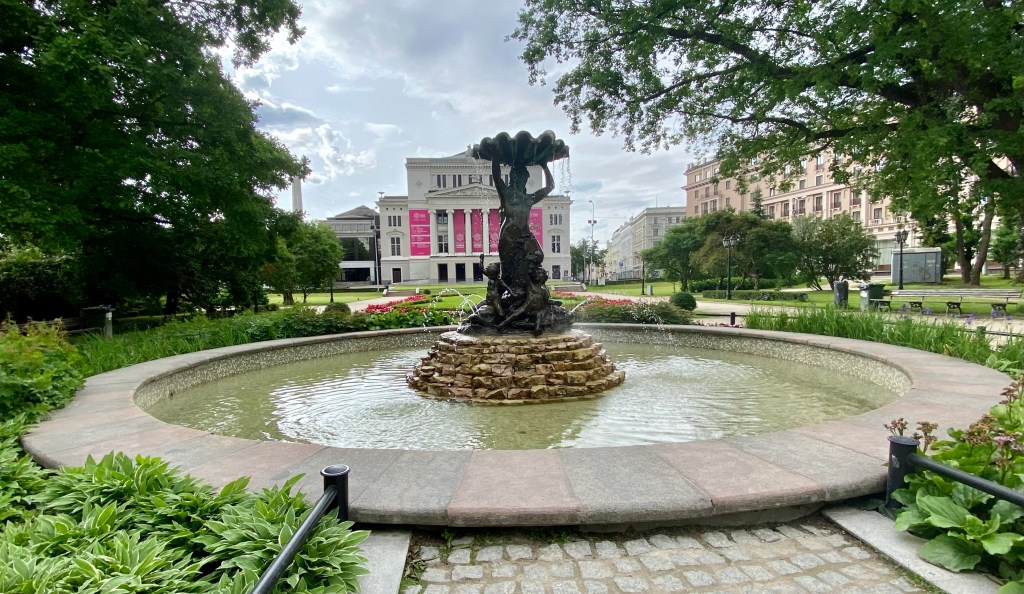
Opposite the central entrance of the National Opera, the “Nymph” fountain is the most luxurious and second oldest fountain in Riga, opened in 1887. The central figure of the fountain is a 3.5 m high nymph standing on a rock, which holds a conch in its outstretched hands and at the feet of which four children play with dolphins.
George Armitstead was born in 1847 in Riga into a British merchant family. While the fourth Mayor of Riga in 1901-1912, he built many of today’s buildings in Riga. In 2006, during her first visit to Latvia, Queen Elizabeth II unveiled a memorial statue of him. The monument is located in the gardens close to the Latvian National Opera.
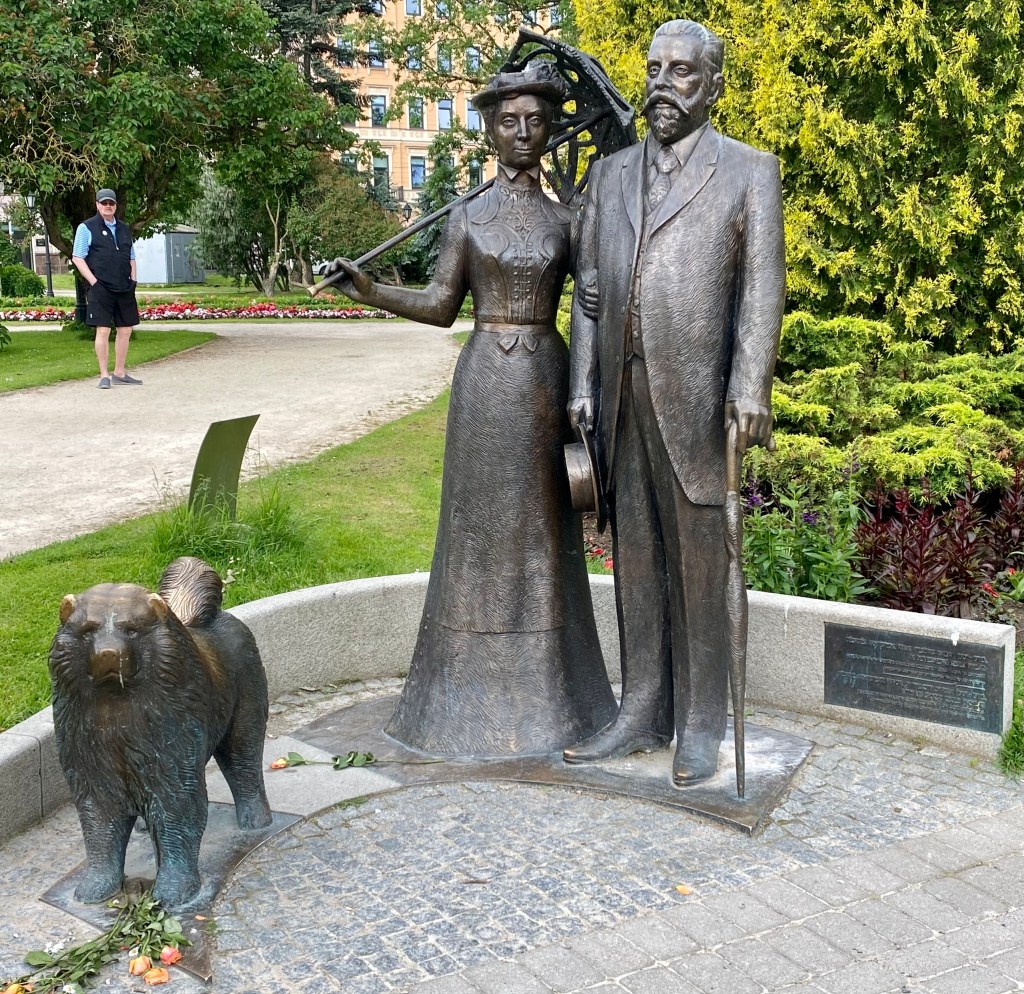
Hill across the road is the highest mountain in Riga (!). There is no word for hill in Latvian. It’s made from the remains of the Swedish wall when it was torn down by Soviets.
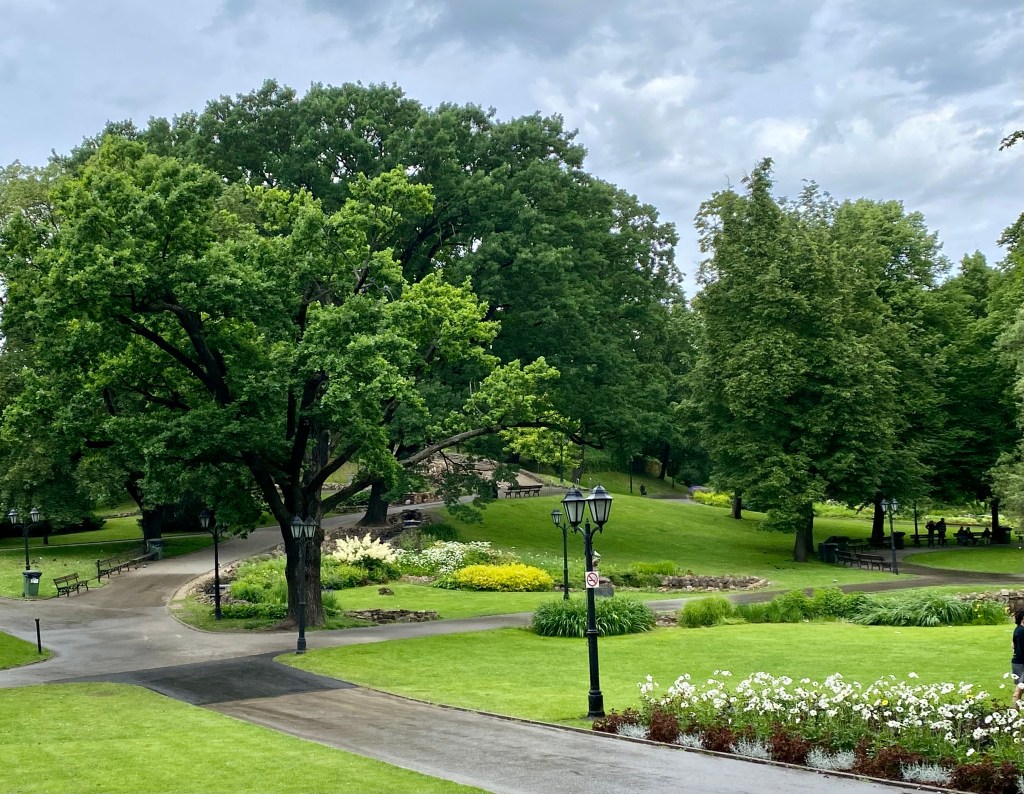
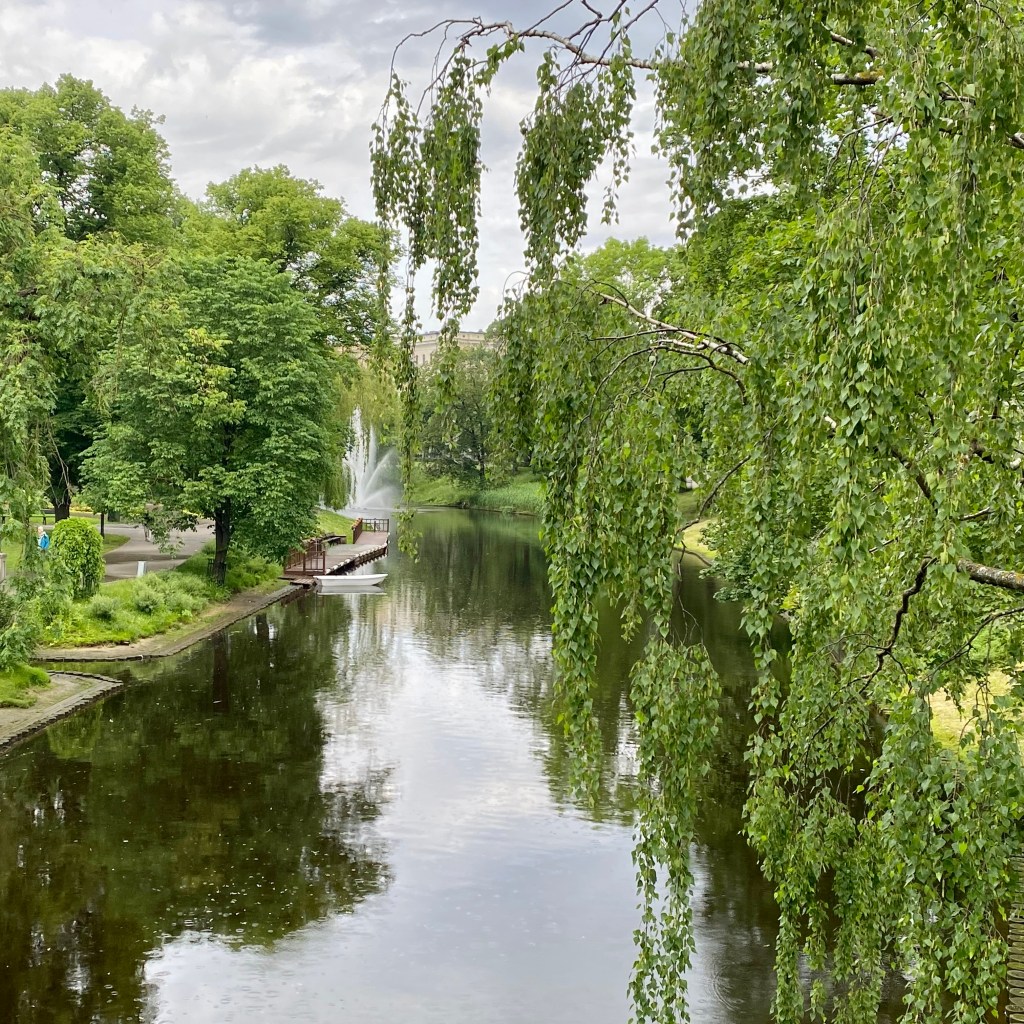
Next is the Freedom Monument honouring soldiers killed during the Latvian War of Independence encer (1918-1920). The 42-metre (138 ft) high monument of granite, travertine and copper is an important symbol of the freedom, independence, and sovereignty of Latvia and often serves as the focal point of public gatherings and official ceremonies in Riga. While we were there members of the armed forces were gathered; possibly celebrating graduation from the military academy?

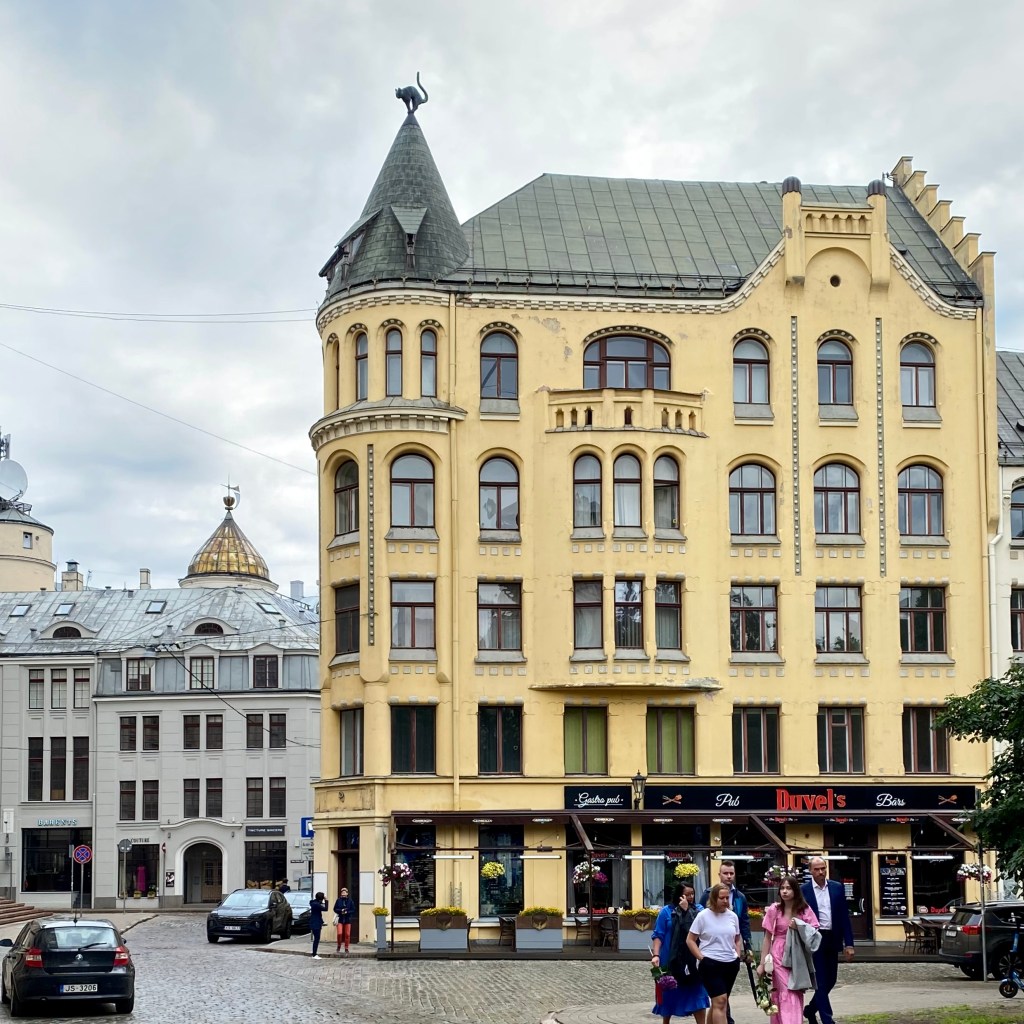
On our way to the Town Hall Square, we stopped at the Livu Square and Anna told us a story about the Black Cat House, Small and Large Guild Houses. Legend has it that the wealthy tradesman who commissioned the building was refused membership in the Great Guild as he was not noble. In retribution the tradesman had two copper statues of angry-looking cats with arched backs and raised tails placed on the turret rooftops with their tails turned towards the house of the Great Guild across the street. Today, the black cat is the symbol of Riga.
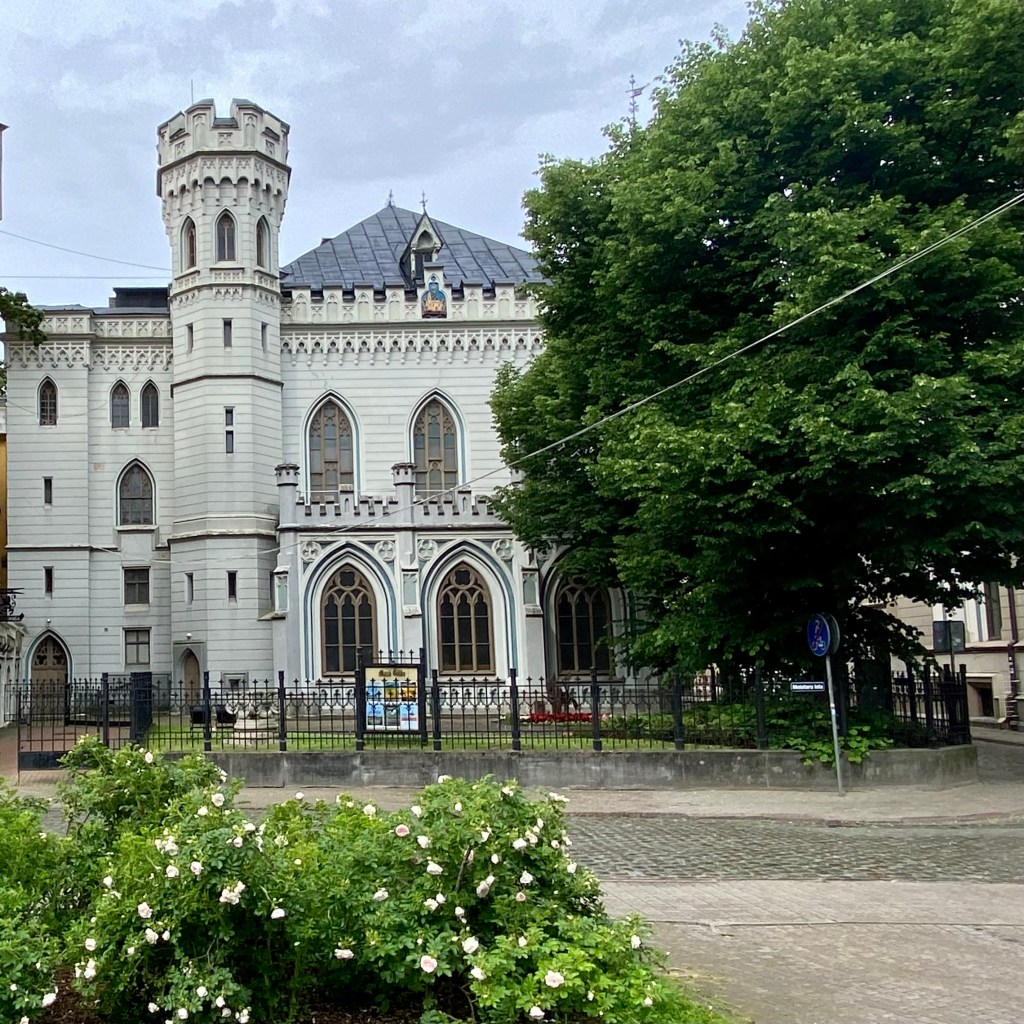
Golden birds instead of crosses on top of most churches. After the reformation when Catholicism was out of favour. Also are weather vanes … so would know if ships were coming to town by tracking how the wind was blowing.

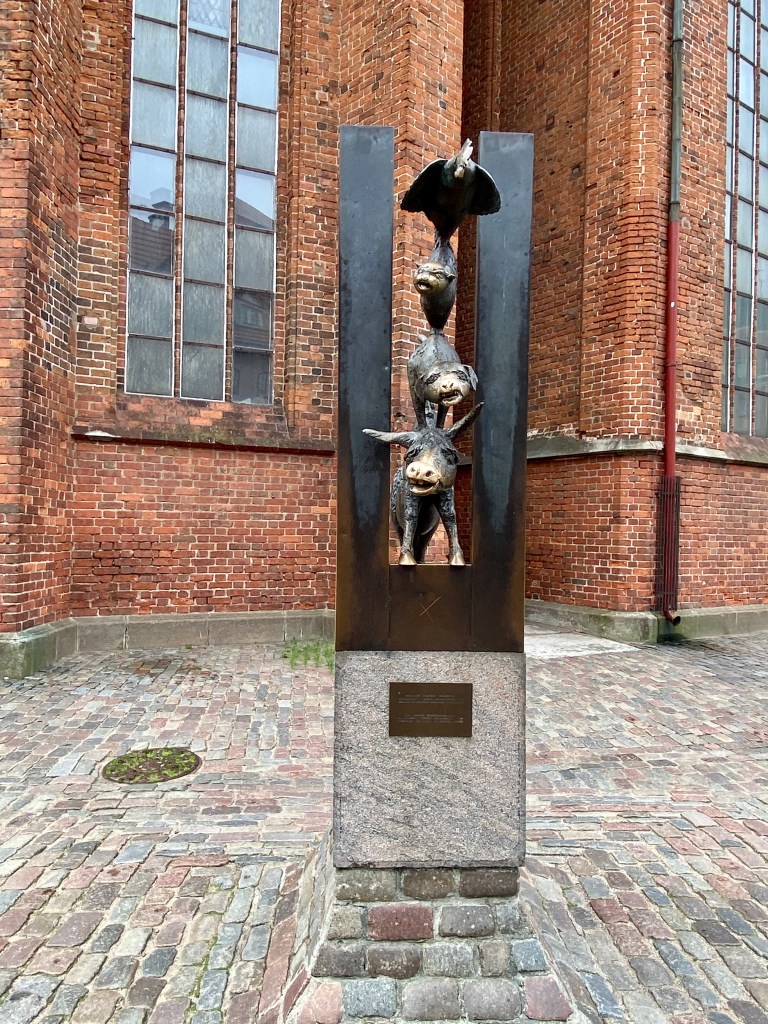
Bremen is a partner city of Riga and they gifted the sculpture Town Musicians of Bremen to Riga in 1990. The animals found their home near St. Peter’s Church. Just like in the original in Bremen, the donkey stands on his hind legs and roars. The dog stands on the donkey and barks. On the dog, there is the cat that meows and, finally, the rooster stands on the cat and crows. But the animals are not facing the bandits like in the original. The group looks through a crack in a wall. This crack in the symbolic Iron Curtain was created during Michael Gorbatschow’s Perestroika and the events that followed. There is a ritual that people like to follow when visiting the Town Musicians. Rubbing the noses of the animals is supposed to bring good luck. The respective parts of the statue are already quite shiny from all the rubbing. The most athletic visitors can even reach the rooster’s beak all the way on top and will, therefore, have an extra amount of good fortune coming their way! Sadly, I had to make do with the dog!
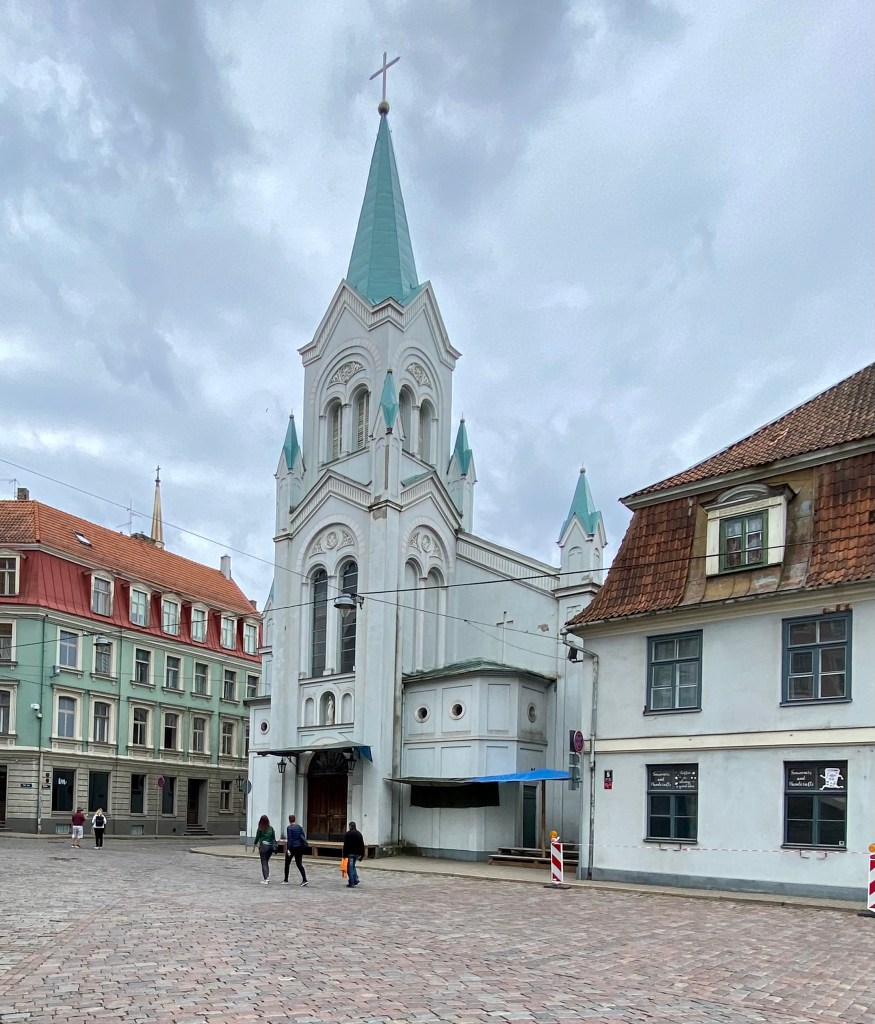
We continued on the Dome Square which features the House of Blackhead’s, the Roland Monument and St. Peter’s Church. In fact, there are churches on the same square. St John, St Peter’s with the oldest being the little white one across the road.
Foundation of the cathedral was laid in 1211. Large restoration works from the late 19th to early 20th centuries gave it its present look. It is considered the largest Medieval church in Latvia and the Baltic States. The Dome, the tallest of all spires at the time, is famous for its magnificent organ, constructed in 1883, with more than 6,000 pipes.

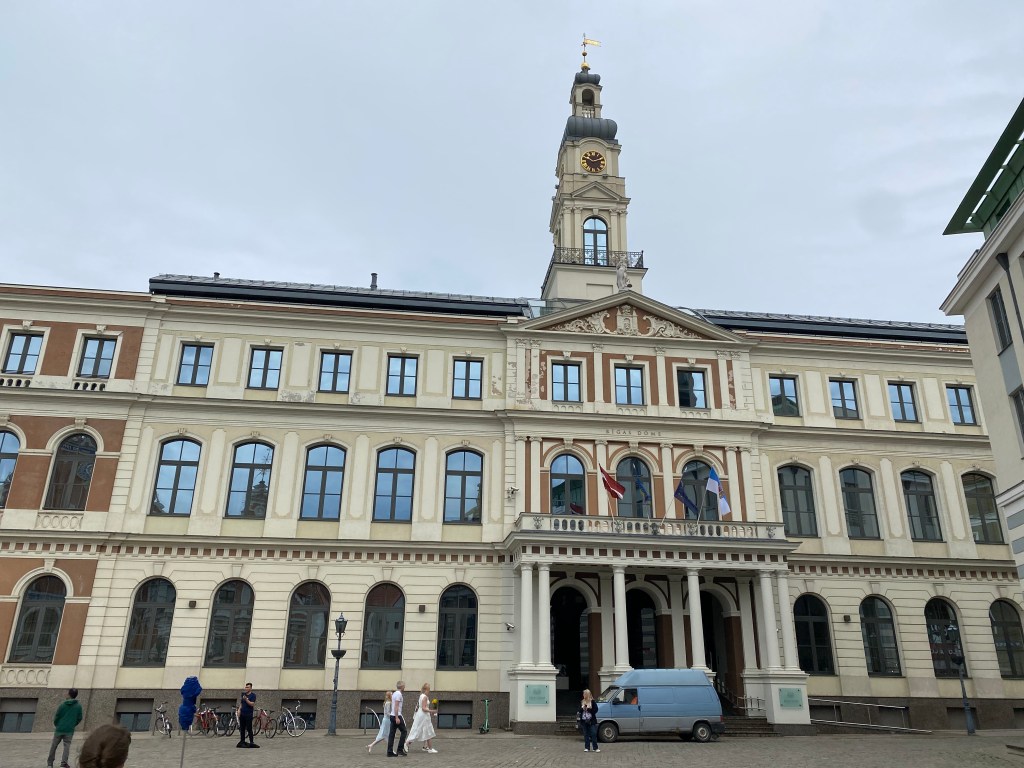
The town hall is across the square from St. Peter’s. Markets were traditionally held here as were executions. House of blackhead’s and town hall two most important buildings on square.
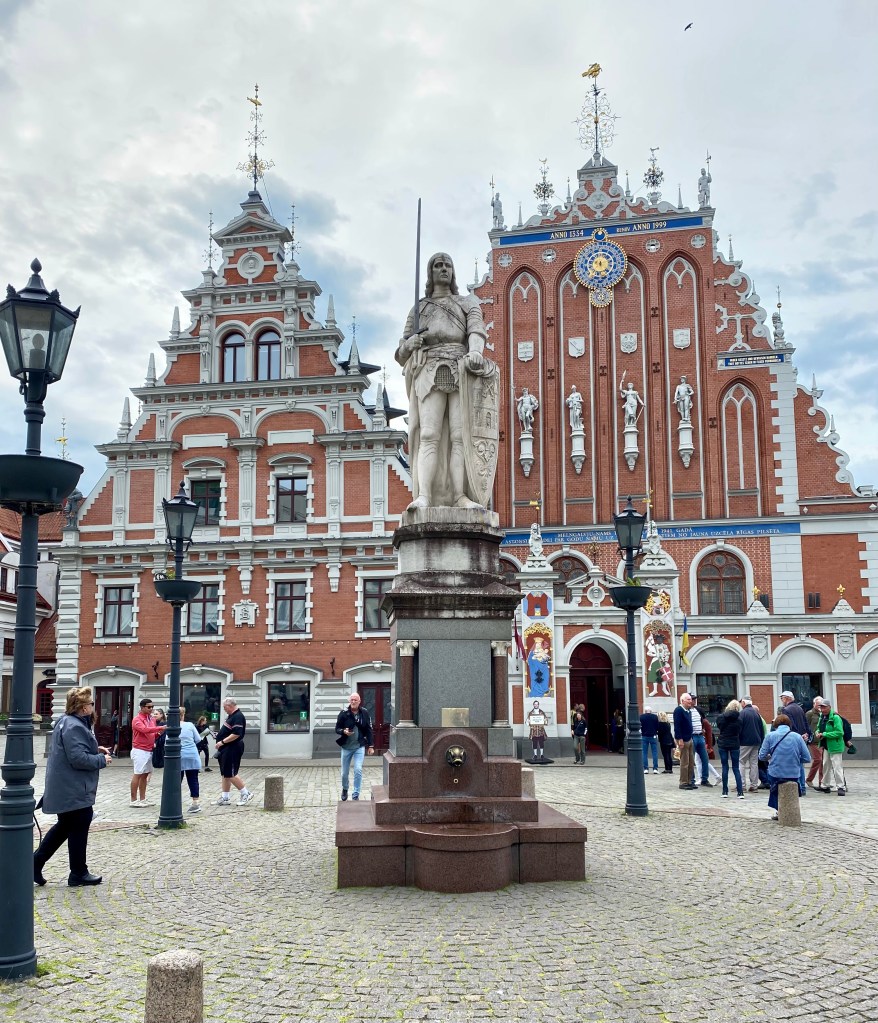
Not unlike other Hanseatic cities across the Baltic Sea region, Riga has had a representation of Roland, the semi-fictional paladin of Charlemagne’s court, since medieval times. However, it wasn’t until the late 19th century that a permanent statue of this protector figure was erected on Town Hall Square. The current statue is a replica of the original, which is housed a short walk away in St. Peter’s Church, and includes a drinking fountain at its base (just press the button). Roland, who was a close associate of Charlemagne, is the patron saint of Riga. The original statue from 1897 was destroyed by bombing in the Second World War, along with most of the Town Square.
Nearby is a monument to the first decorated Christmas tree which was not a 19th century innovation, as we believe, but apparently was started here in Riga 500 years ago.
In the centre of Old Riga stands a controversial red granite statue that was originally dedicated to the Latvian Red Riflemen, some of whom became Lenin’s personal bodyguards. Some view the monument as a symbol of the old communist system and would love to tear it down. Others believe it’s a necessary tribute to Latvians who fought in the early years of WWI. It now honours all Latvian riflemen, both Whites and Reds. Politics aside, it’s an impressive monument.

The Three Brothers are the oldest medieval dwelling houses in Riga. In medieval times, Maza Pils Street was located in the outskirts of Riga and craftsmen lived there. Today, the buildings that are several centuries old house the Latvian Museum of Architecture and the State Inspectorate for Heritage Protection.The White House on the right is oldest (1490). Originally there was a bakery on first floor with normal size windows and the baker lived on second floor with smaller windows to reduce the tax burden. The middle brother is the richest one of the three, built in 1646. It is one of the most typical, but also most modern dwelling houses of the 17th century. The third brother was built in the second half of the 17th century and had small apartments on each floor. The youngest building is the narrowest and the smallest one of the three brothers.

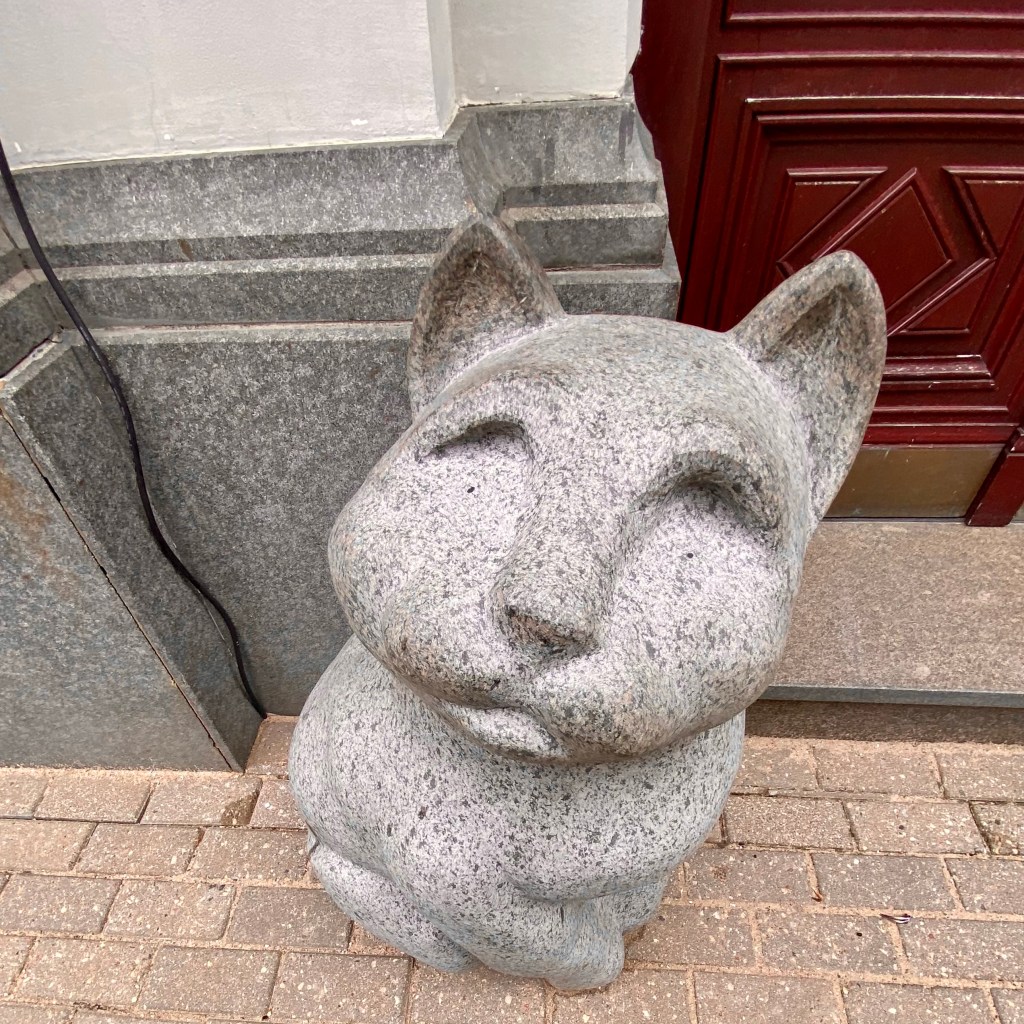
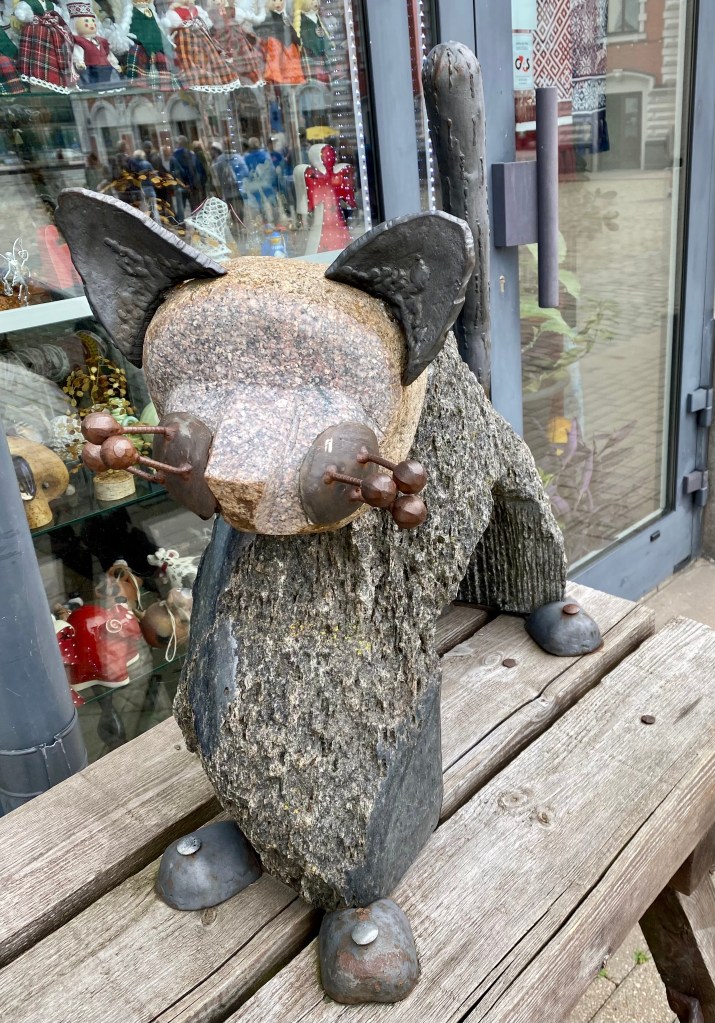
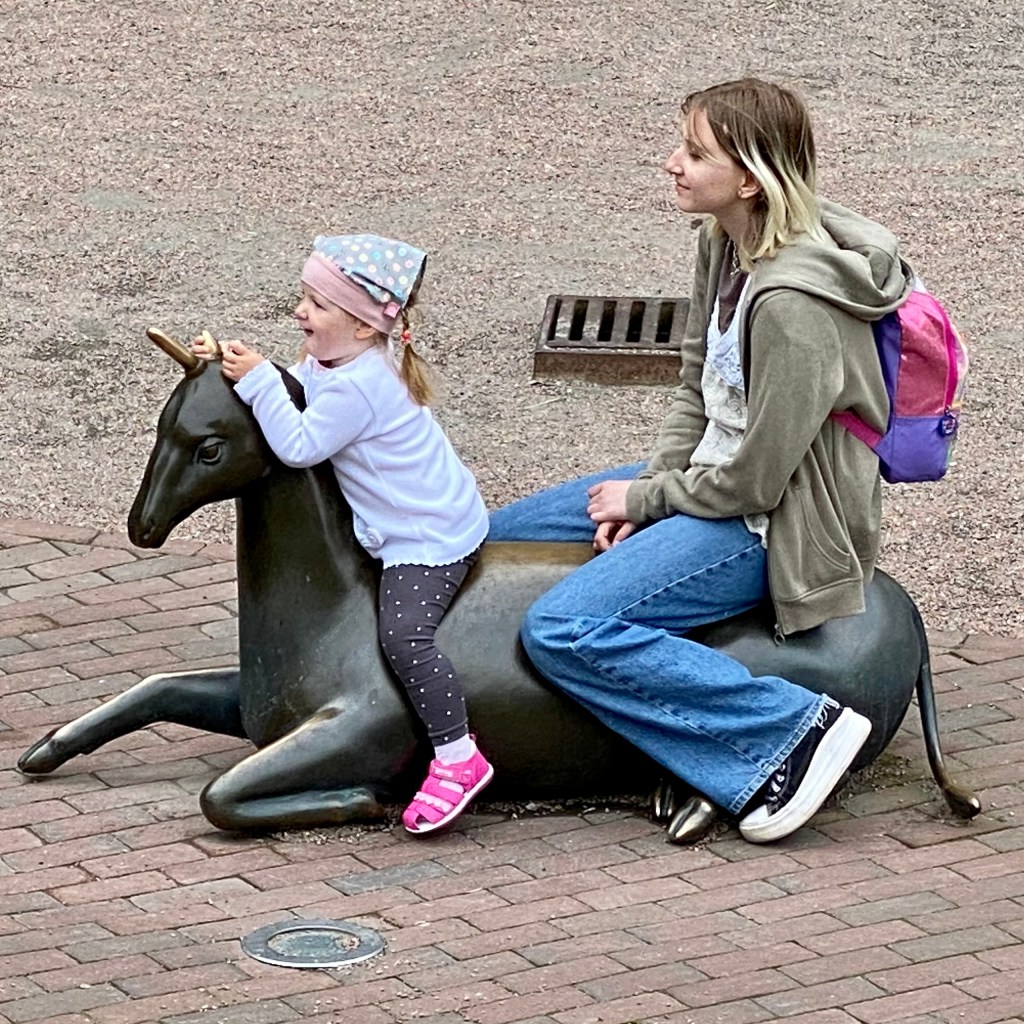
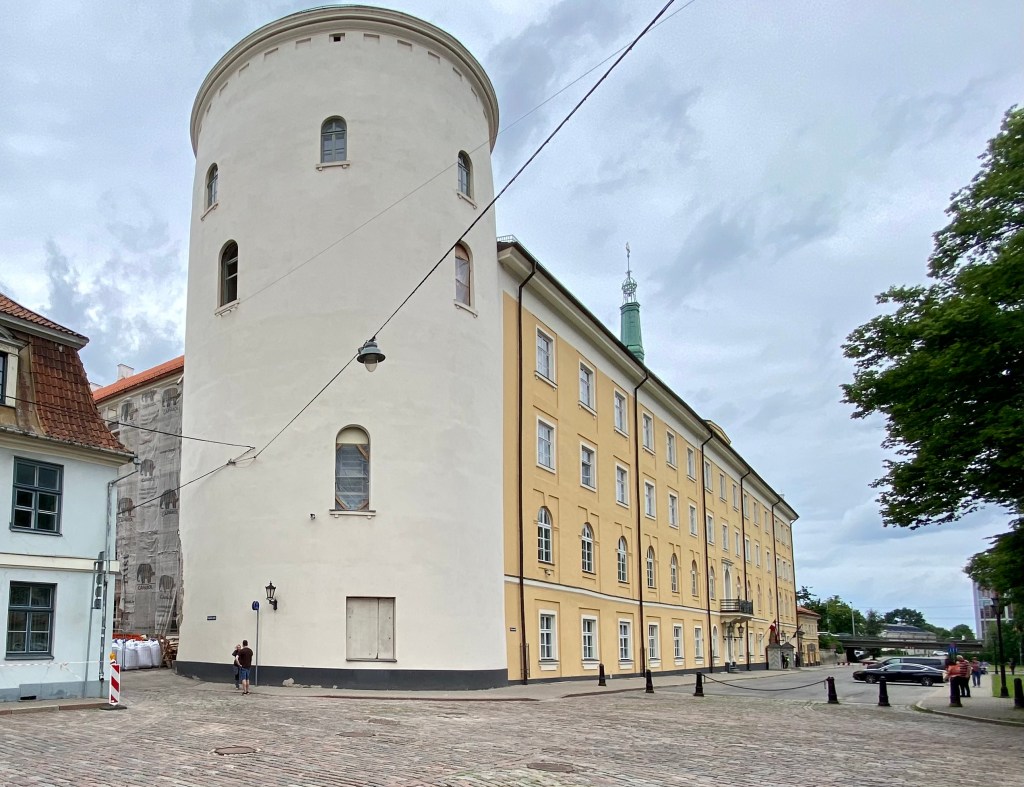
Wandering through town, I took lots of pics but I don’t have much info (thank God because this post is waaaay to long!). Here are a few!

Back to the ship. Tomorrow, we’ll be in Estonia!
 Judy’s Rambles