
June 20-22 – Stockholm
Monday
The Dawn docked at the cruise port in Stockholm early and I had a quick breakfast in the dining room before disembarking. Apparently the taxis didn’t get the memo about our arrival so it took a bit of time to get a cab to our Airbnb in Gamla Stan. Ken had assured me cars were allowed in the area until 11 am so I cajoled my driver to take me to the door though we did get dirty looks from the few pedestrians on the street.
After dragging my steamer trunk up a flight of stairs, there was time for a quick hug before Ken and I headed off to meet our guide for the Free Walking Tour snapping pics as we went along.

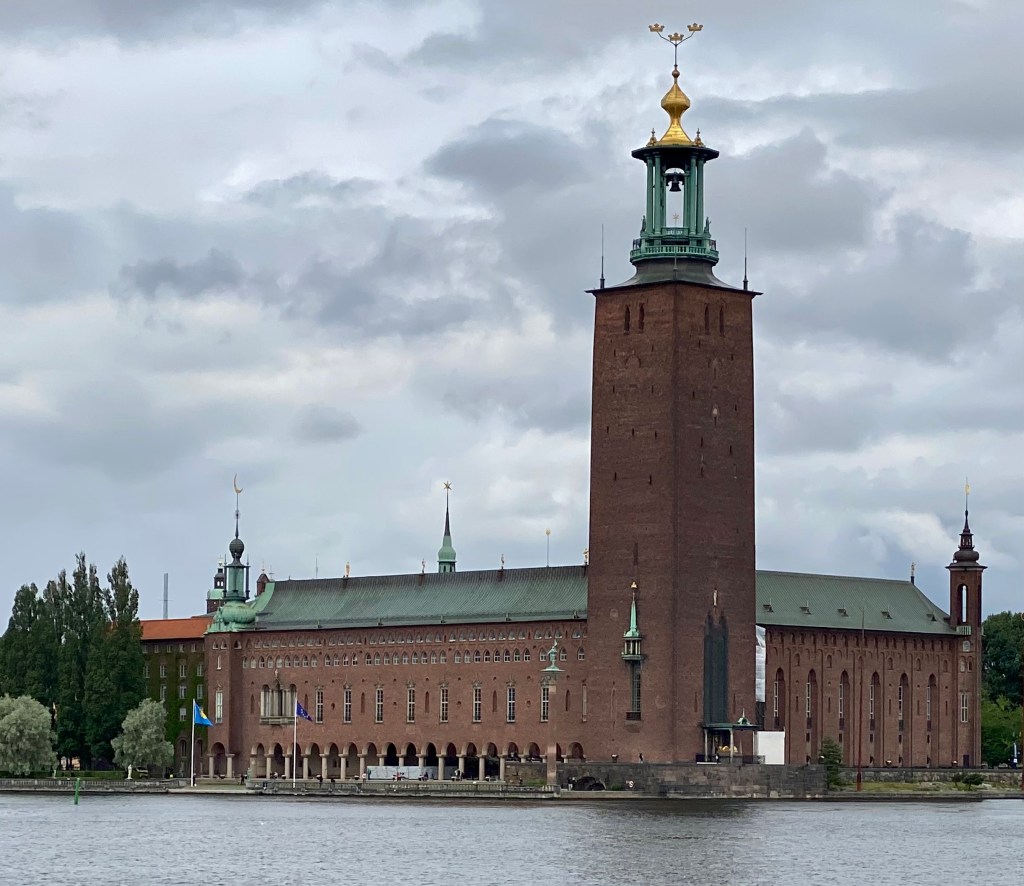
I think my poor sense of direction must be rubbing off because we ended up at not quite the right place. We did meet a couple of other hapless tourists at what we thought was the right meeting point, so not just me! After a bit more reconnaissance we eventually found the right place with our guide Malin and a dozen or so other tourists.
Malin introduced us to some of the history of Stockholm before we set off on our tour of Gamla Stan (aka Old Town).
Stockholm was officially founded in 1252 by the regent of Sweden, Birger Jarl. By the end of the 13th century, Stockholm had grown to become Sweden’s biggest city, serving as the country’s political centre and royal residence – one that was repeatedly besieged over the following centuries.
The history of Stockholm for many centuries coincided with the development of what is today known as Gamla Stan or Old Town. The bustling, compact island of Gamla Stan is the city’s old town, with cobbled streets and colorful 17th and 18th century buildings. It’s home to the medieval Storkyrkan cathedral and the Royal Palace, the king’s official residence.
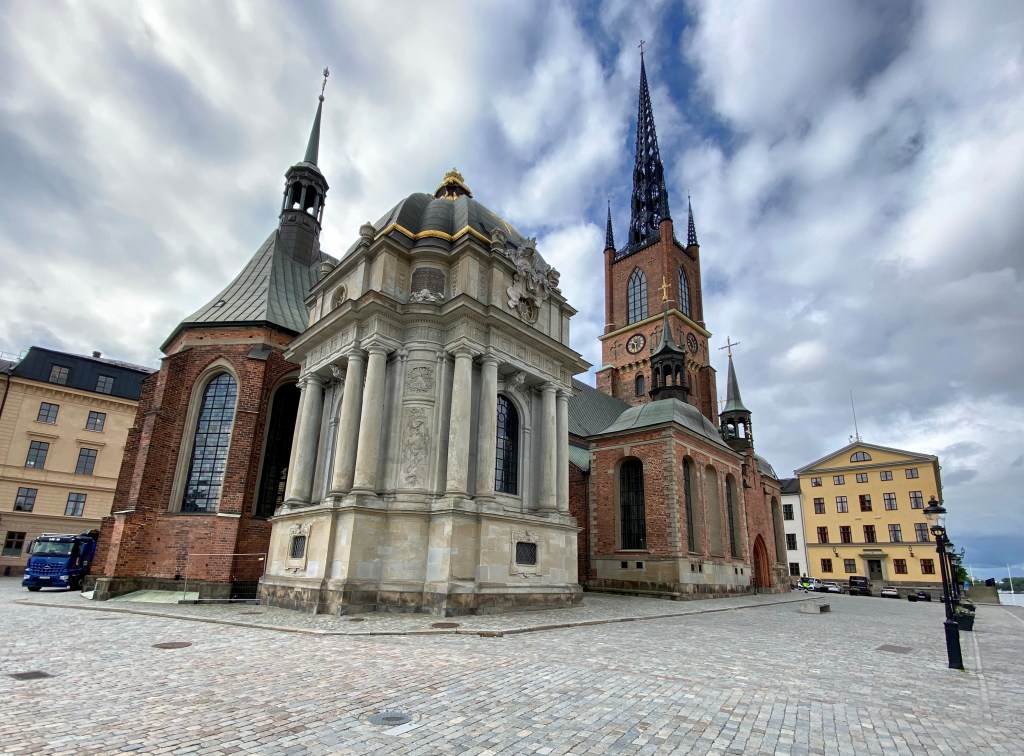
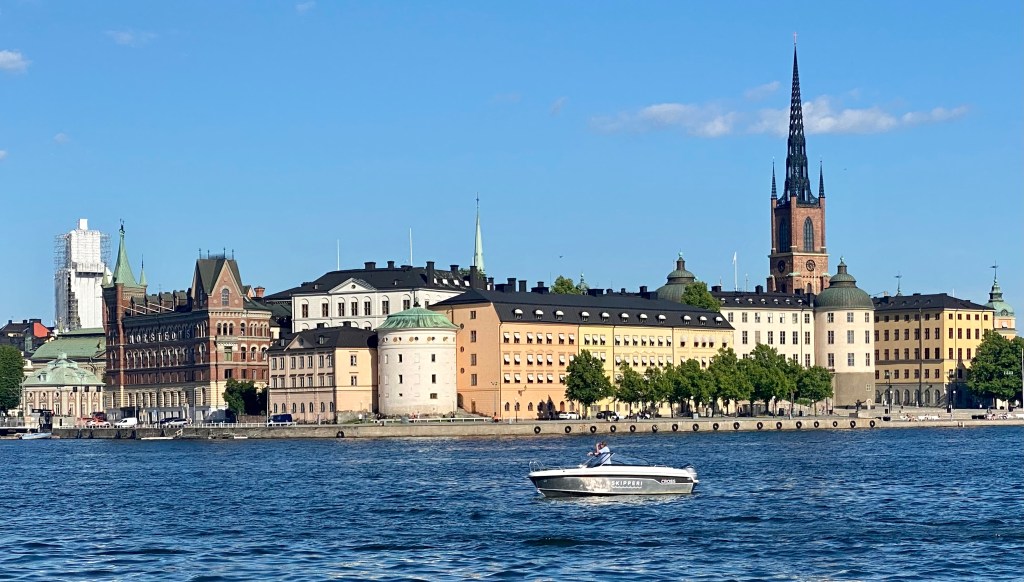
We set out first to Riddarholmen Island (Knight Island) the historical nucleus of Stockholm to check out Riddarholmen Church and environs. The church (the oldest bldg in Stockholm) was part of a Franciscan monastery founded in the thirteenth century. The king chose the church for his last resting place and kings were buried there for hundreds of years in the white circular building. No one currently living on the island so church is no longer active. The buildings were handed over to the state and now house government departments.
On our way back to Stadsholmen (the island where most of Gamla Stan is located) we passed a large white building which houses Sweden’ Supreme Court and the Knight’s castle.
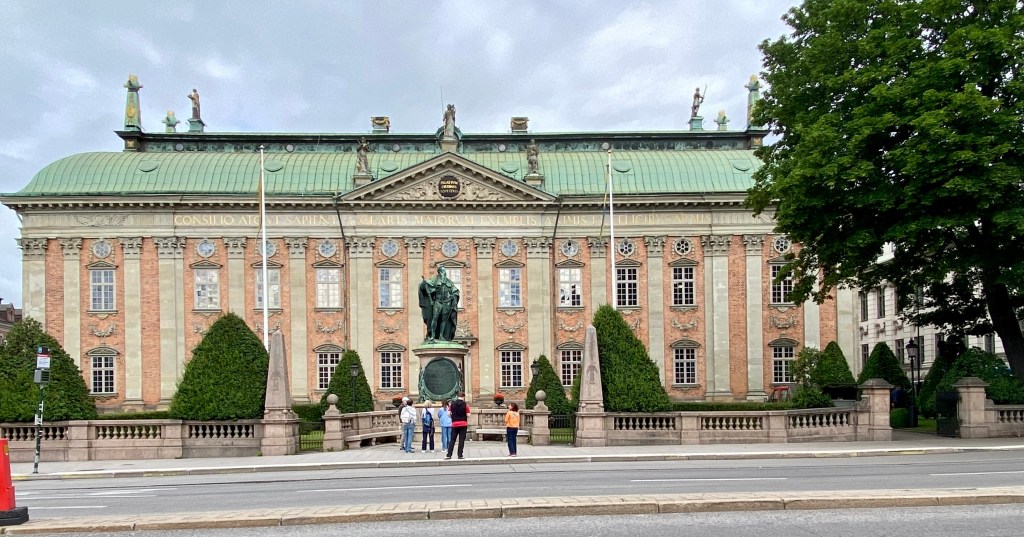

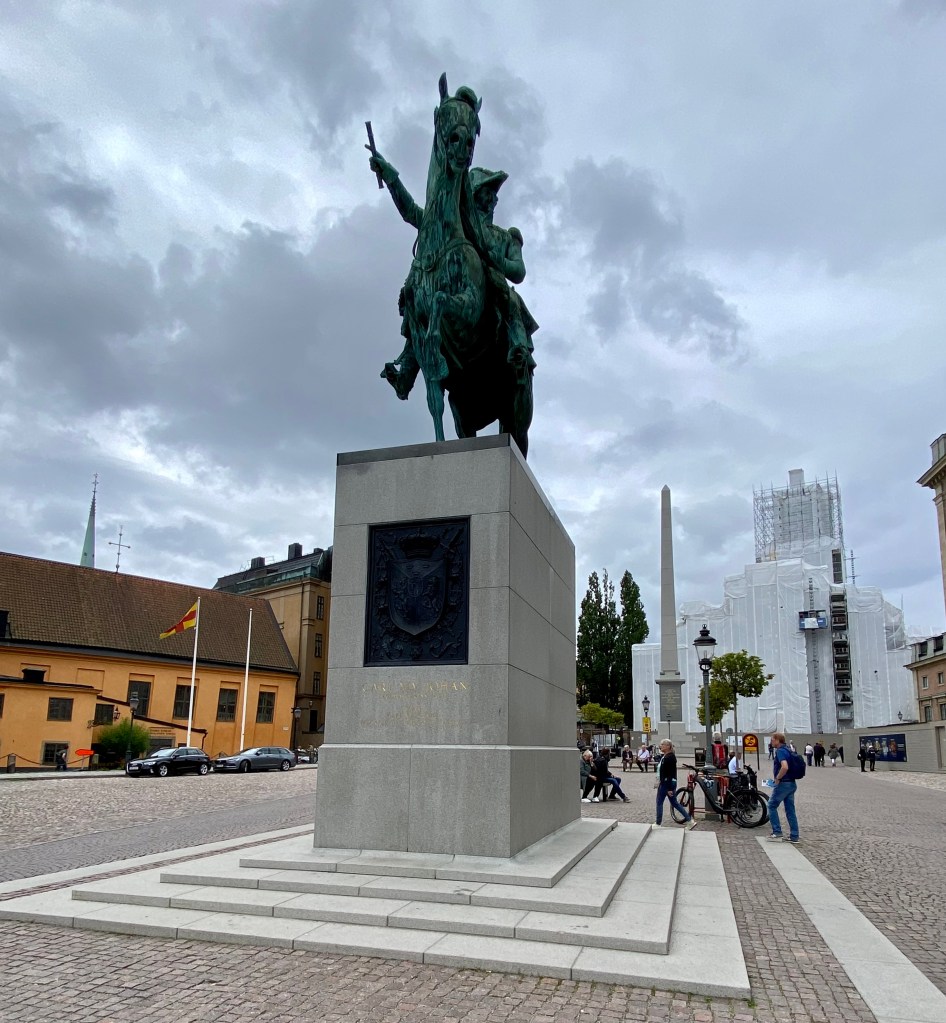
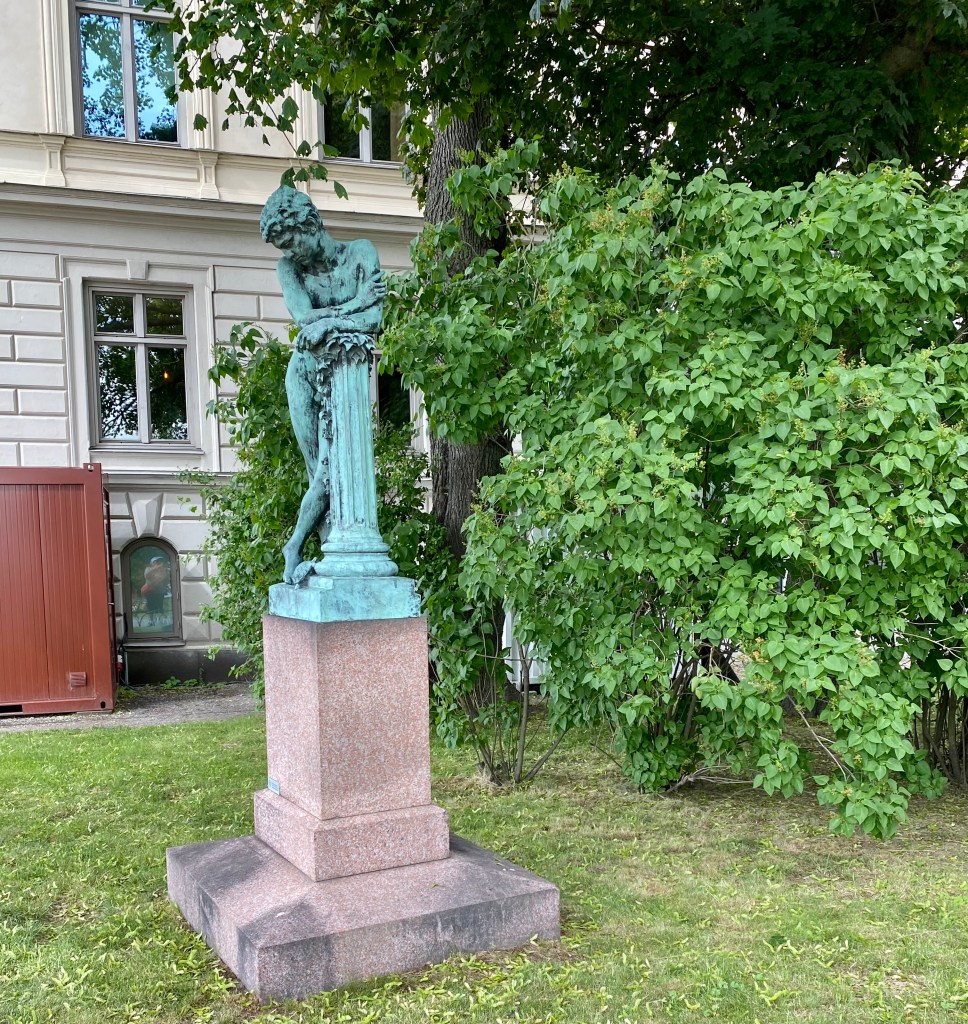
Lars Johan Hierta was a Swedish newspaper publisher, social critic, businessman and politician. He is best known as the founder of the newspaper Aftonbladet in 1830. Hierta was a leading agitator for political and social reform in Sweden during the 19th century. His likeness is captured by this statue across from the Supreme Court.

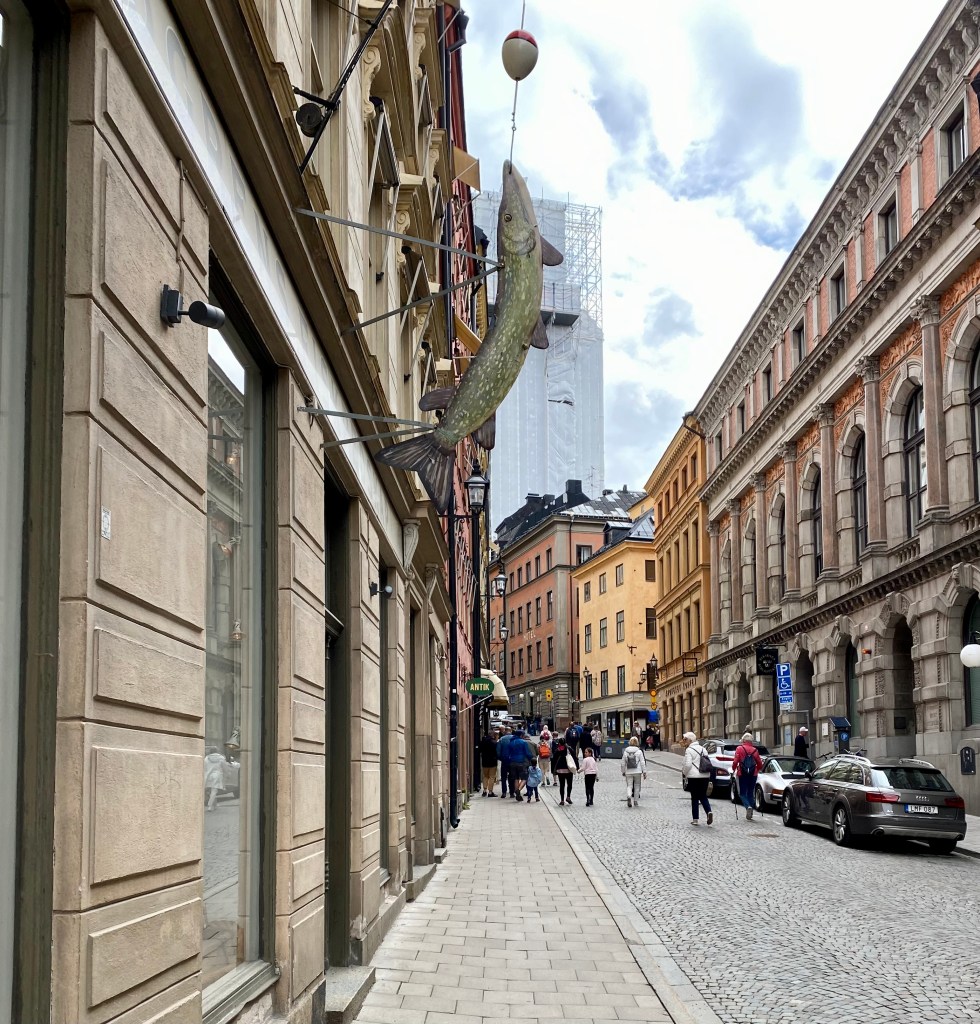
Next we headed up Prastgatan aka Priest street. Originally, this street had Swedish and German priests. Across the street was Hell’s Alley or just Hell a street which gained notoriety as the executioner lived there. The area has not changed much since 1600s though there are currently no executioners!.
Back in the day, it could be hard to recruit executioners because it was a crappy job and everyone hated you! They started recruiting prisoners convicted to die the option to be an executioner. If they agreed, the first step was that the old executioner cut off their ears to mark them and then the old executioner knelt down and had his head cut off. One year deferment of a sentence might not have been worth it?
The next stop on the tour was a sewage hole! Back in the day, waste from residences was dropped down a shute then ran into the gutter awaiting a big rain. This was an especially bad system in summer when it could take weeks for enough rain to “flush” the waste. Residents were responsible to keep streets clean so everyone had to wear wooden clogs to stay above the muck. Malin talked about excrement for quite a long while but suffice it to say that the landmass of Stockholm eventually grew by 50% because of waste thrown in the harbour!
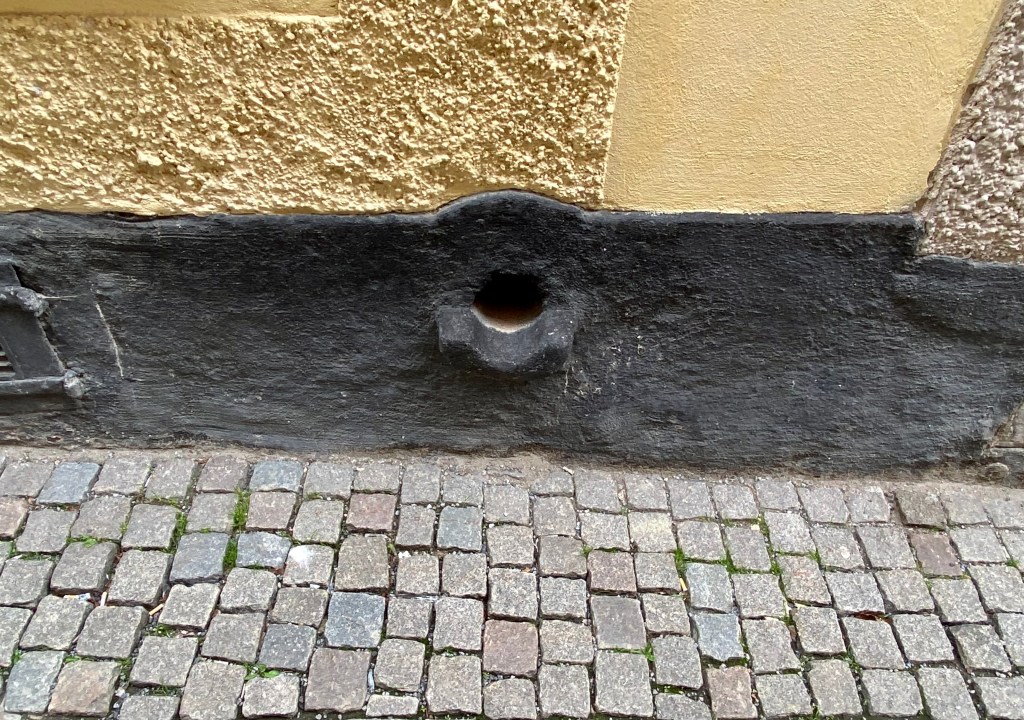
One other byproduct of these waste management practices is that the front doors needed to be elevated to accommodate the higher street level (1 metre) because of the layers of waste.
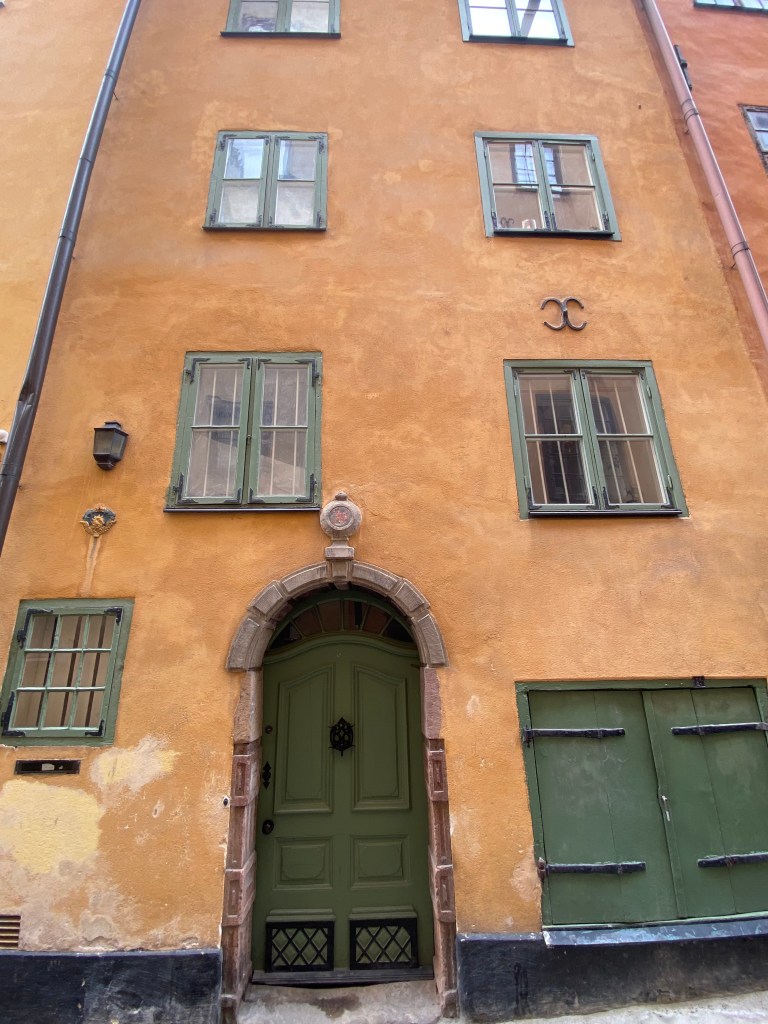
Next, we headed to the Square of the German Priests. German priests came to Stockholm with the Hanseatic league as the Swedes wanted to set up markets similar to those around the Mediterranean. All larger cities joined the trading market. Stockholm was a bit late to the party – 200 years or so! and had to sweeten the pot to lure as many Germans as possible. The offered tax benefits, housing and their own churches. This plan was so successful that but the mid 1400s the most common language in Stockholm was German not Swedish.

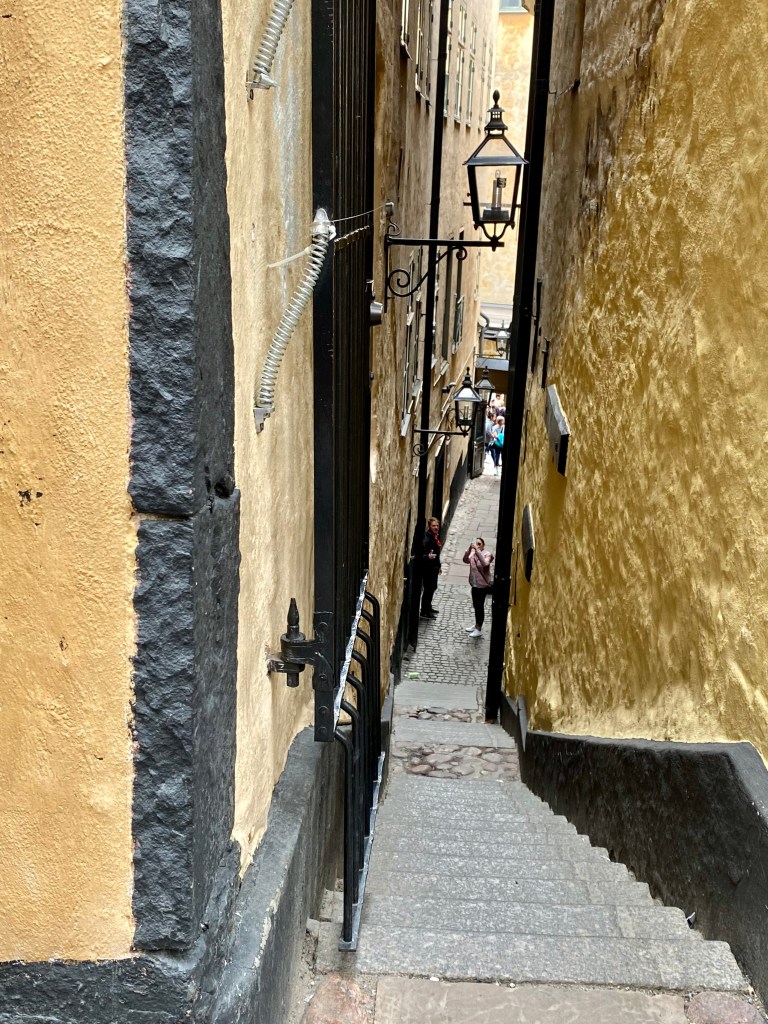
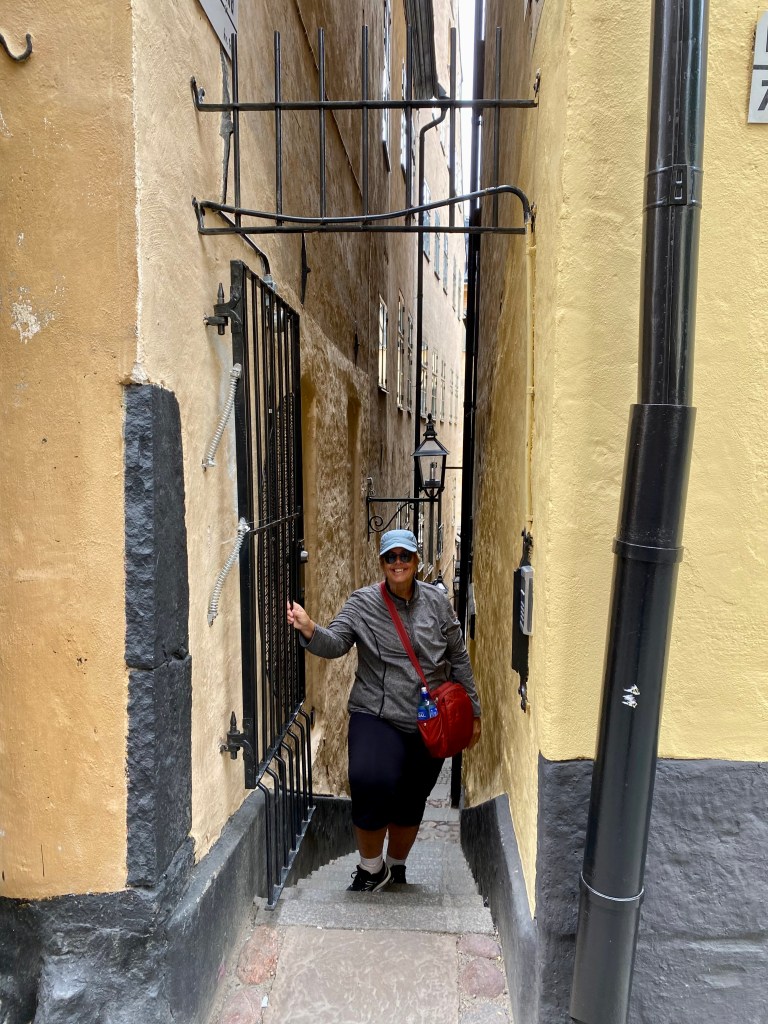
Closeby is Mårten Trotzigs gränd (Mårten Trotzigs alley), the narrowest alley in Gamla Stan which is only 90 centimeters wide at its narrowest point. This alley was built between two houses owned by Herr Trotzigs, a merchant, so he would have direct access to the harbour. Rumour has it if you make a wish while touching both walls it will come true. Time will tell!!
Next stop was the Royal Palace which took 57 years to build because the treasury was supporting all the wars being fought in the name of the Swedish crown at the same time. Finished in 1754, in the Italian baroque style, it was the residence of the Royal family for centuries. The current Royal family opted to live out of the city at Drottningholm Palace so their children could live a bit less in the public eye.
Next we’re off to the main square – Stortoget; home to the Stock Exchange Building which houses the Nobel Museum and Library as well as the Swedish academy. There is also a fountain in the square (The Well) where townsfolk used to and still can collect drinking water.
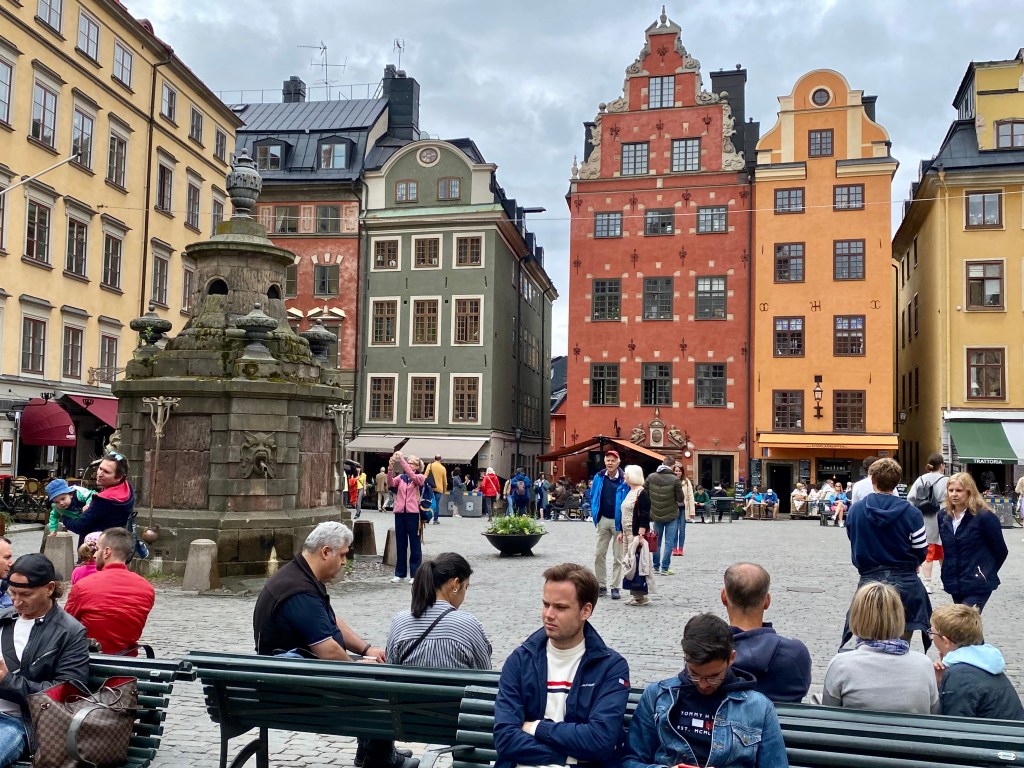


Stortoget was the site of the Stockholm Blood Bath when, despite a negotiated amnesty, the Danish king orders the execution of 86 Swedish nobles in the main square before setting the Danish army loose to rape and pillage the city. One young noble was late to the party and wasn’t executed though his father was. Over the next three years, Gustav recruits a giant peasant army which marched to the city. The Danes had already left when they arrived so no liberation of Stockholm was necessary. Gustav became king of Sweden on June 6, 1523 at the age of 23 and is revered as a hero.
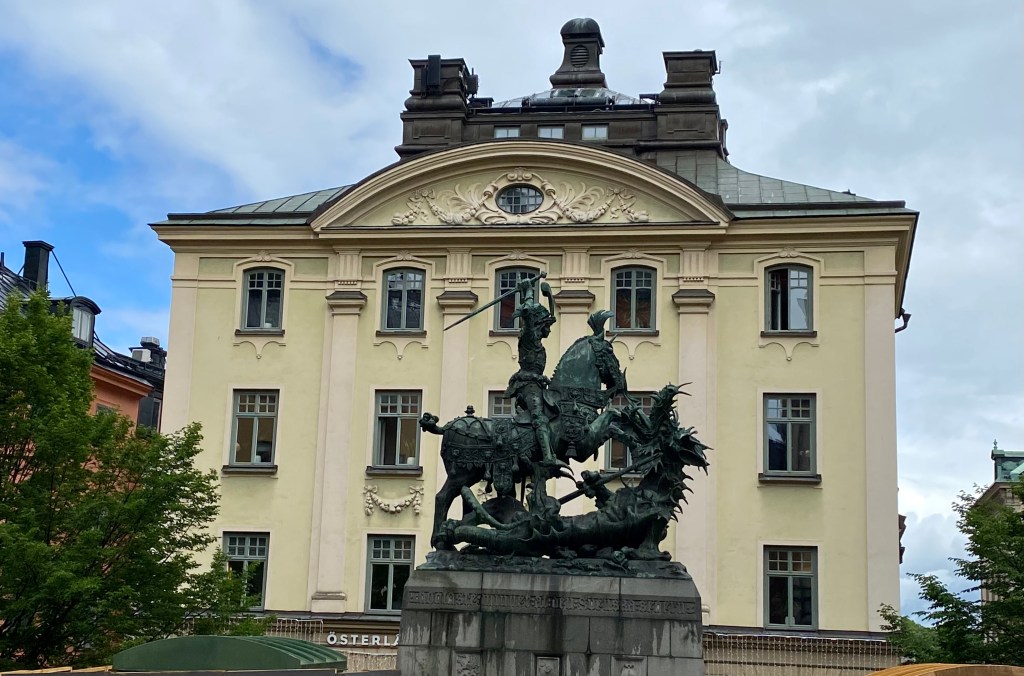
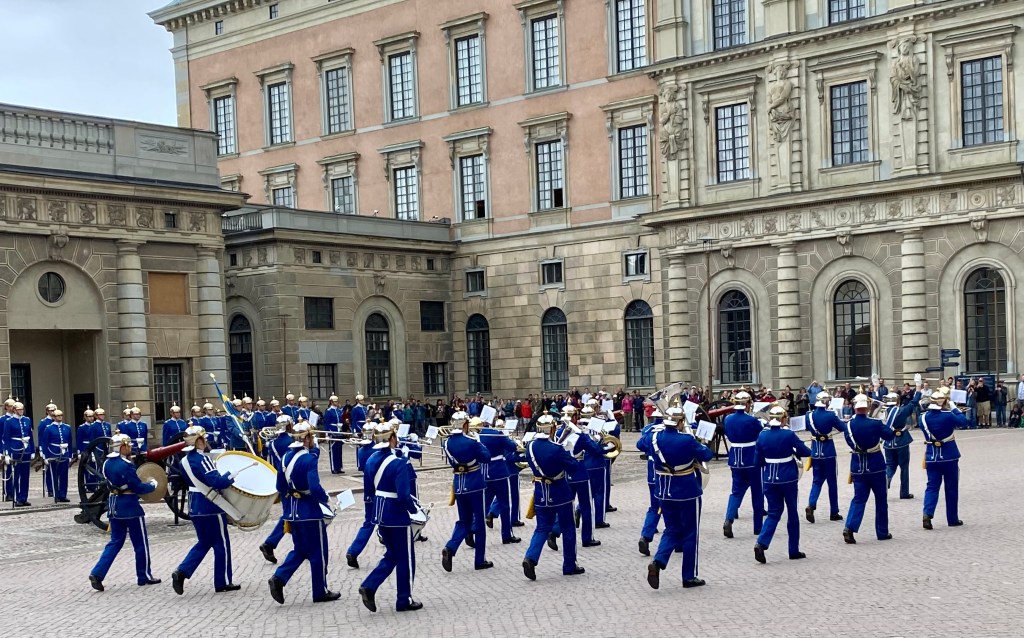
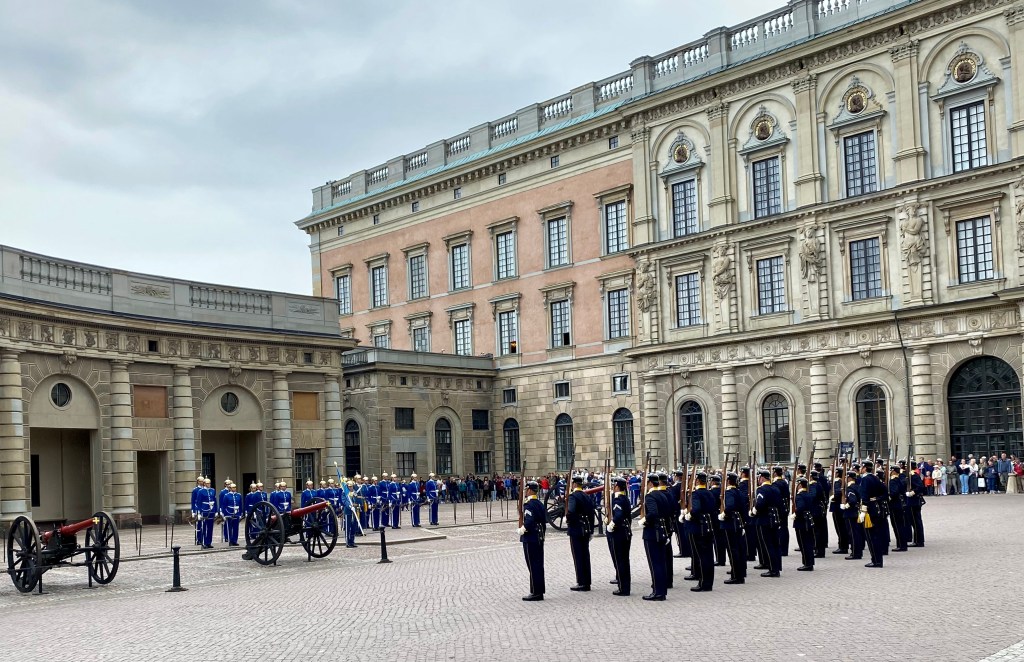
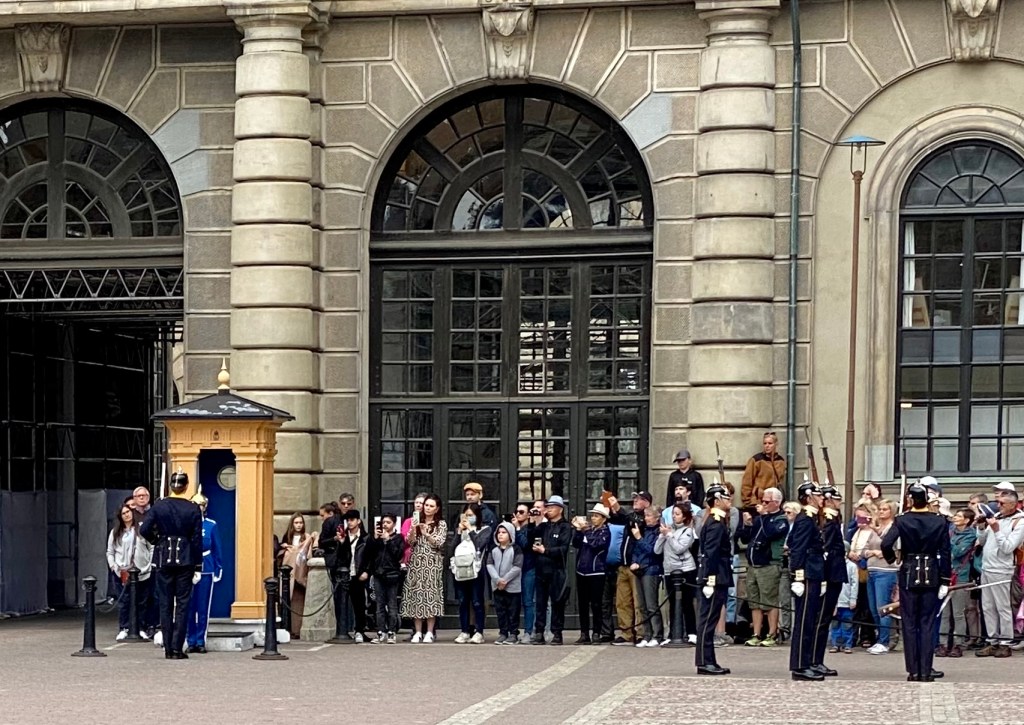
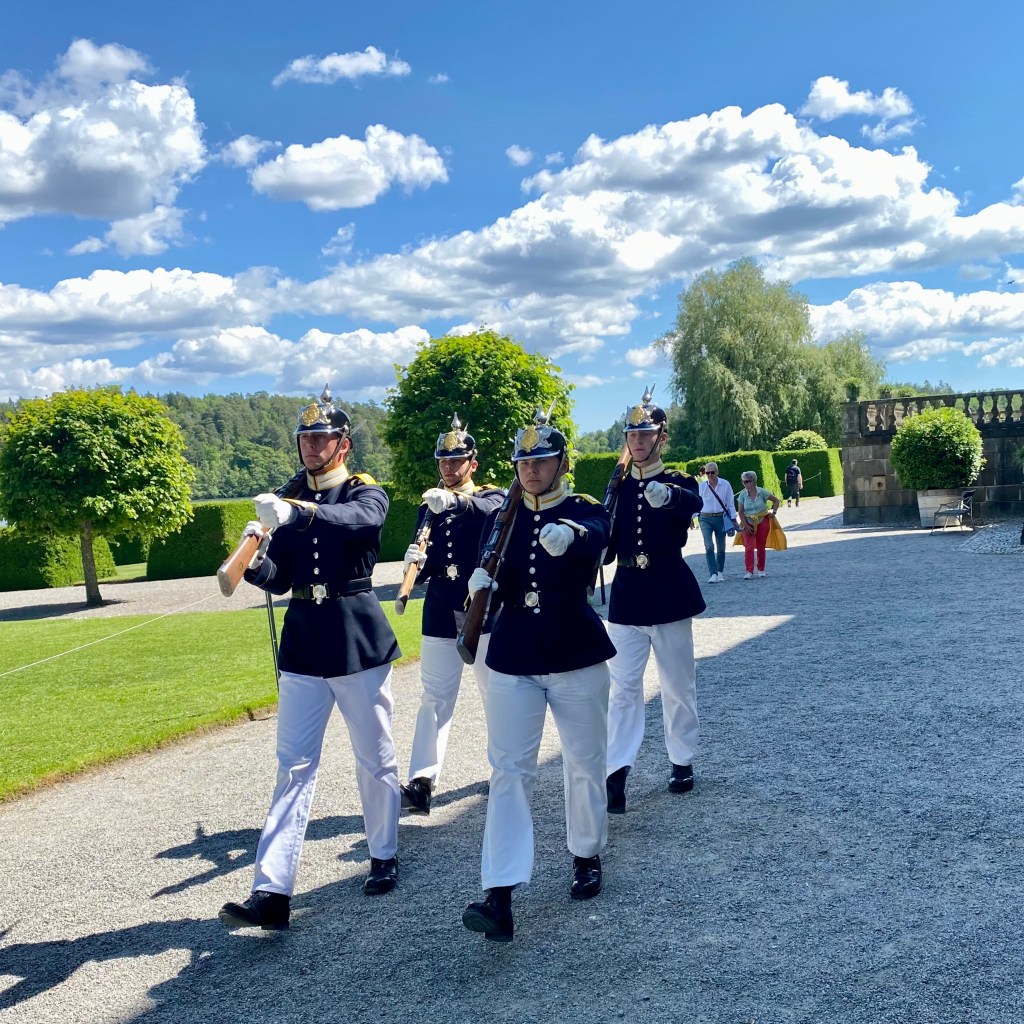
The tour is done so we thank Malin and head off to see the changing of the guard @ 12:15 just as it starts to rain. Undeterred, we join the throngs at the palace in our rain gear. After the ceremony we headed back to Stortoget for lunch to wait out the rain! Enroute we passed a statue depicting Saint George slaying a dragon. The legend of Saint George dates back to the crusades. Saint George is said to have saved an entire village in Libya from a dragon provided they converted to Christianity first, of course. The statue is a replica – the original wooden version is in Storkyrkan church.
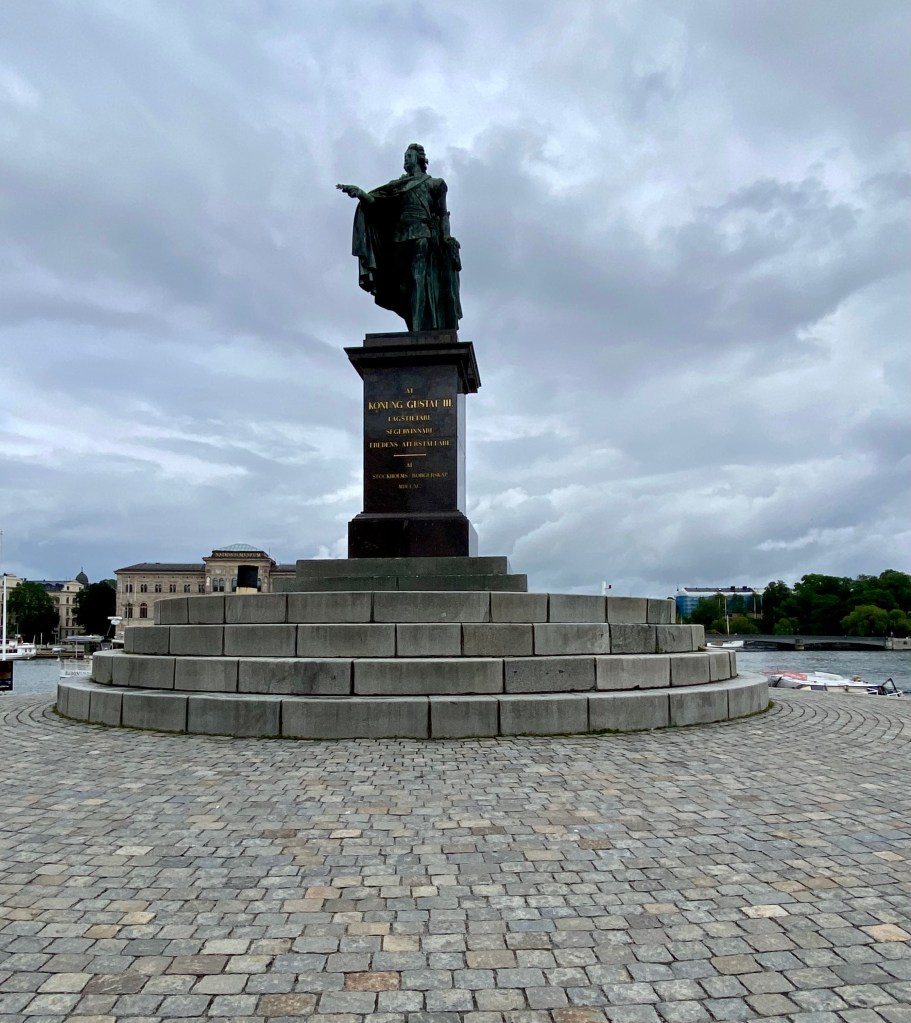
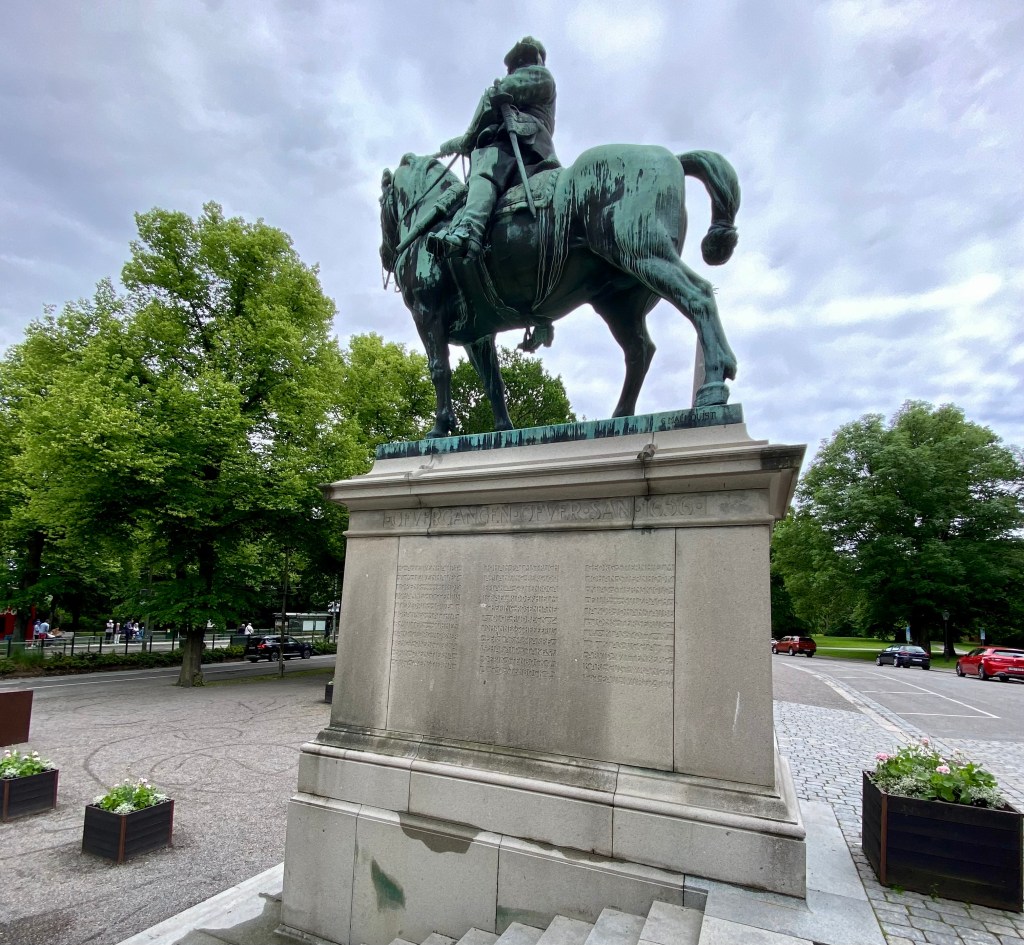
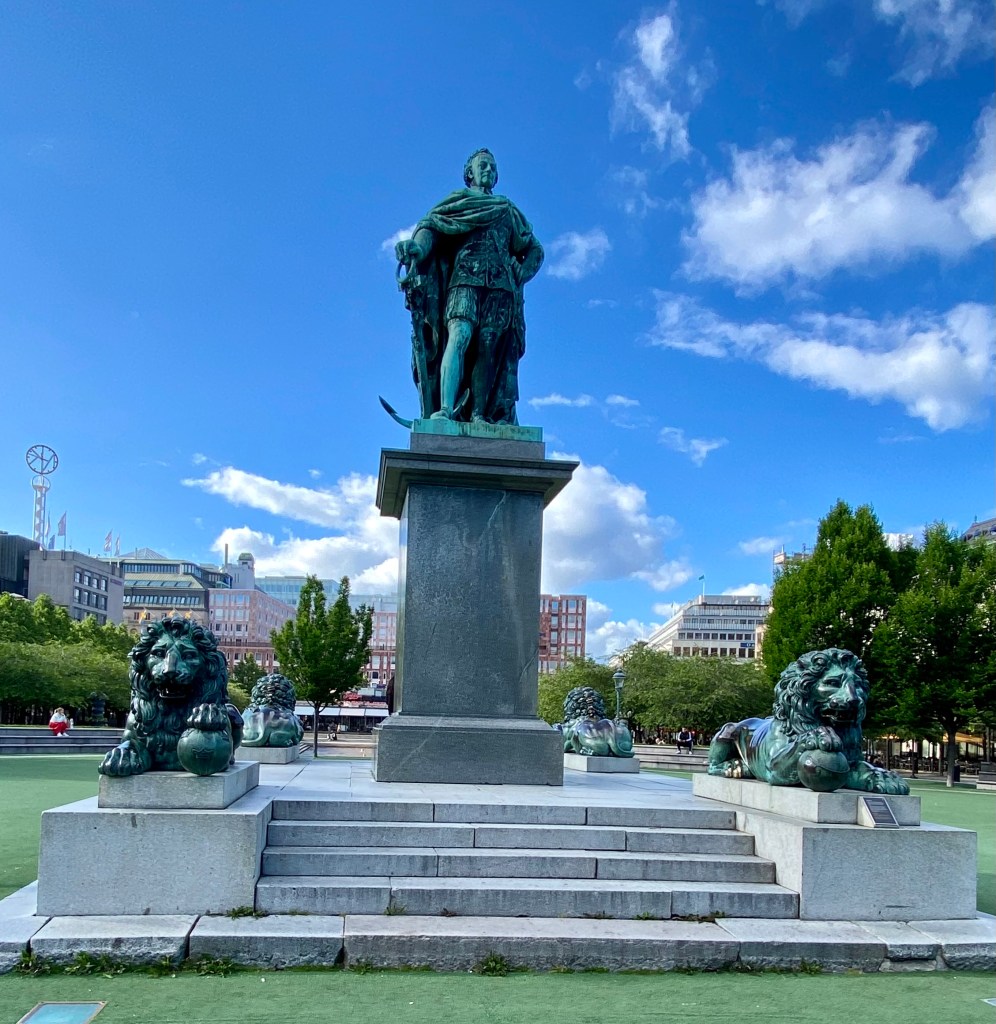
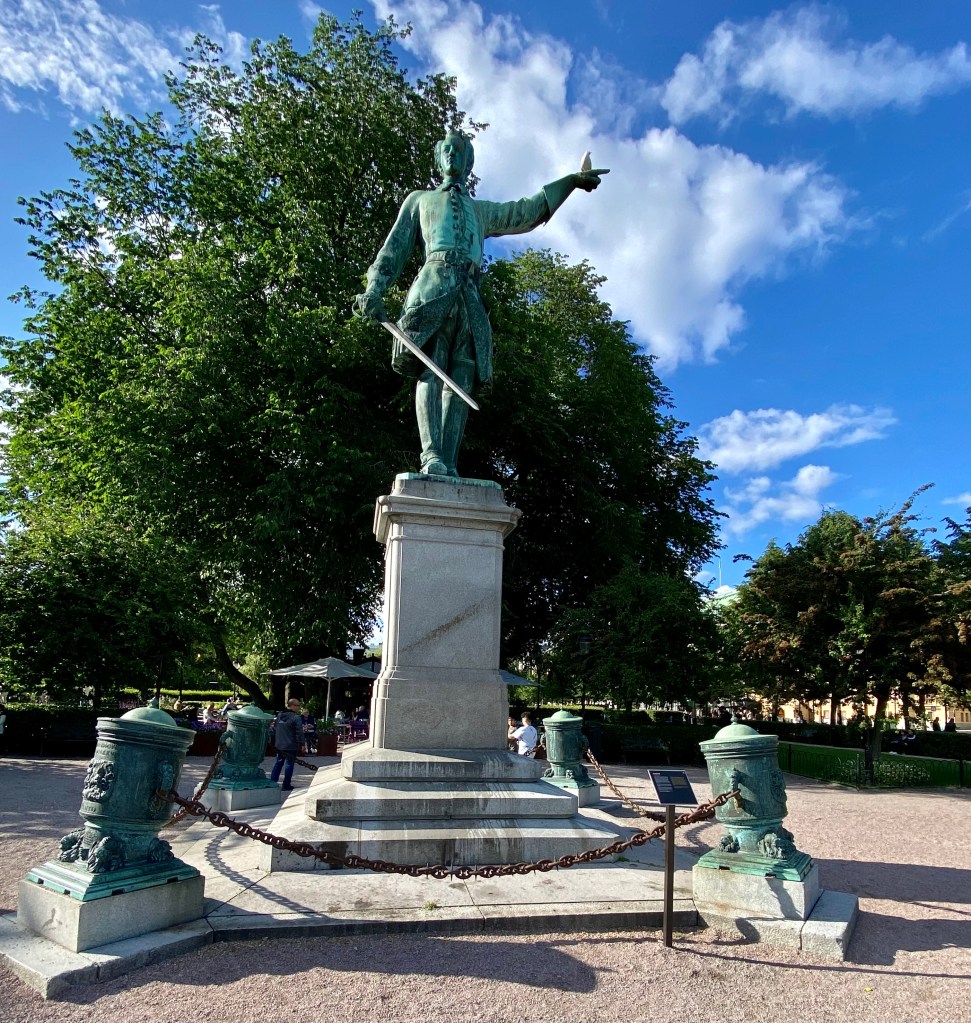
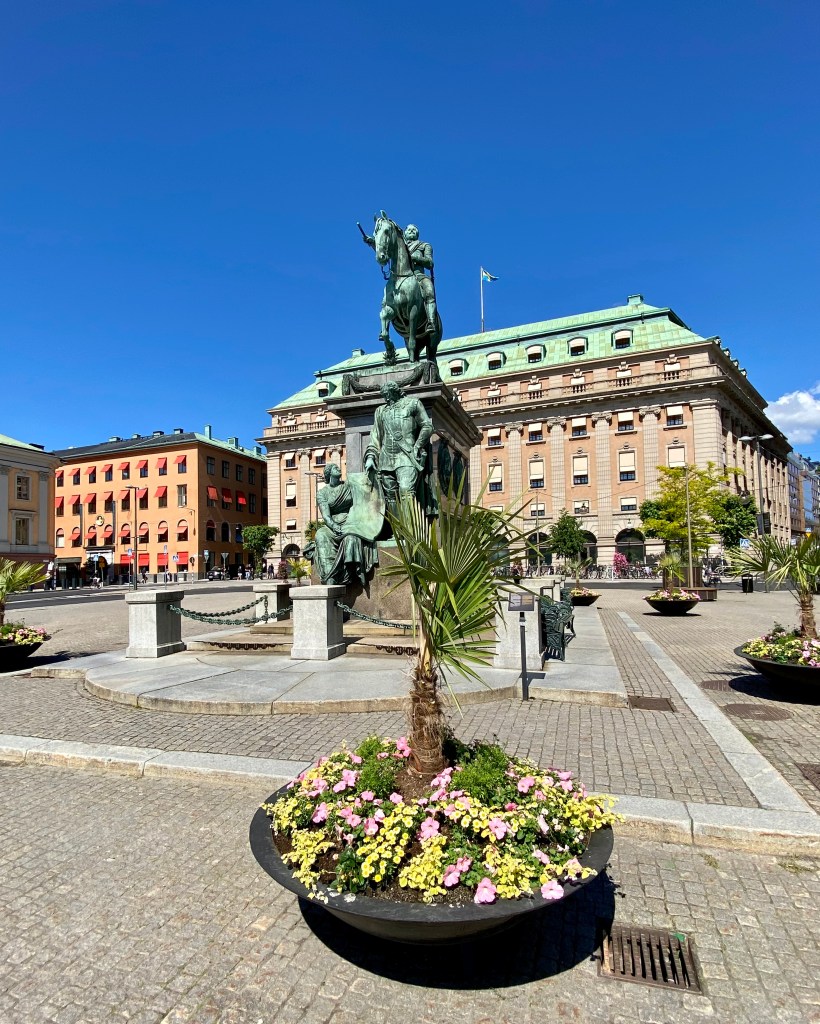
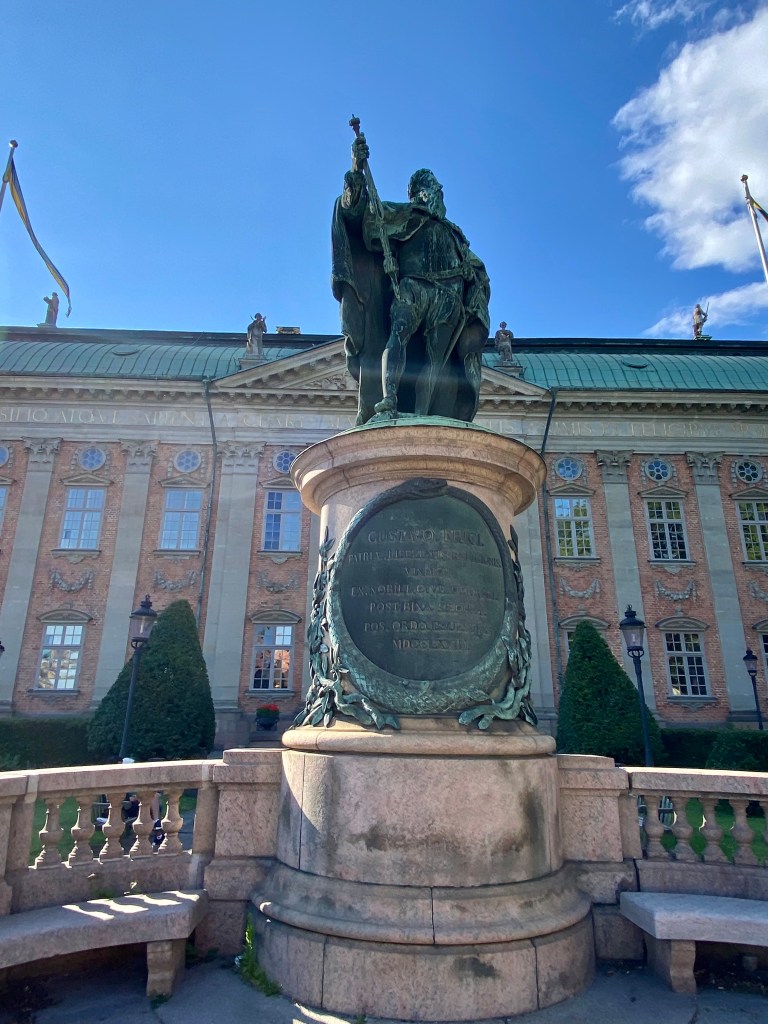
The weather cleared up a bit so we headed to the Vasa Museum, one of Scandinavia’s most visited museums checking out the sights on our way. On our travels, we passed a statue of King Gustav III (1746 -1792) of Sweden. It was erected by the citizens of Stockholm in 1790, hailing their still living king as law maker, victor and restorer of peace.

Here we found the well preserved warship Vasa from 1628 embellished with hundreds of wooden sculptures. Vasa was a warship intended to participate in a war in 1620 between Sweden and Polish/Lithuania forces to decide who should be the ruler of Sweden.
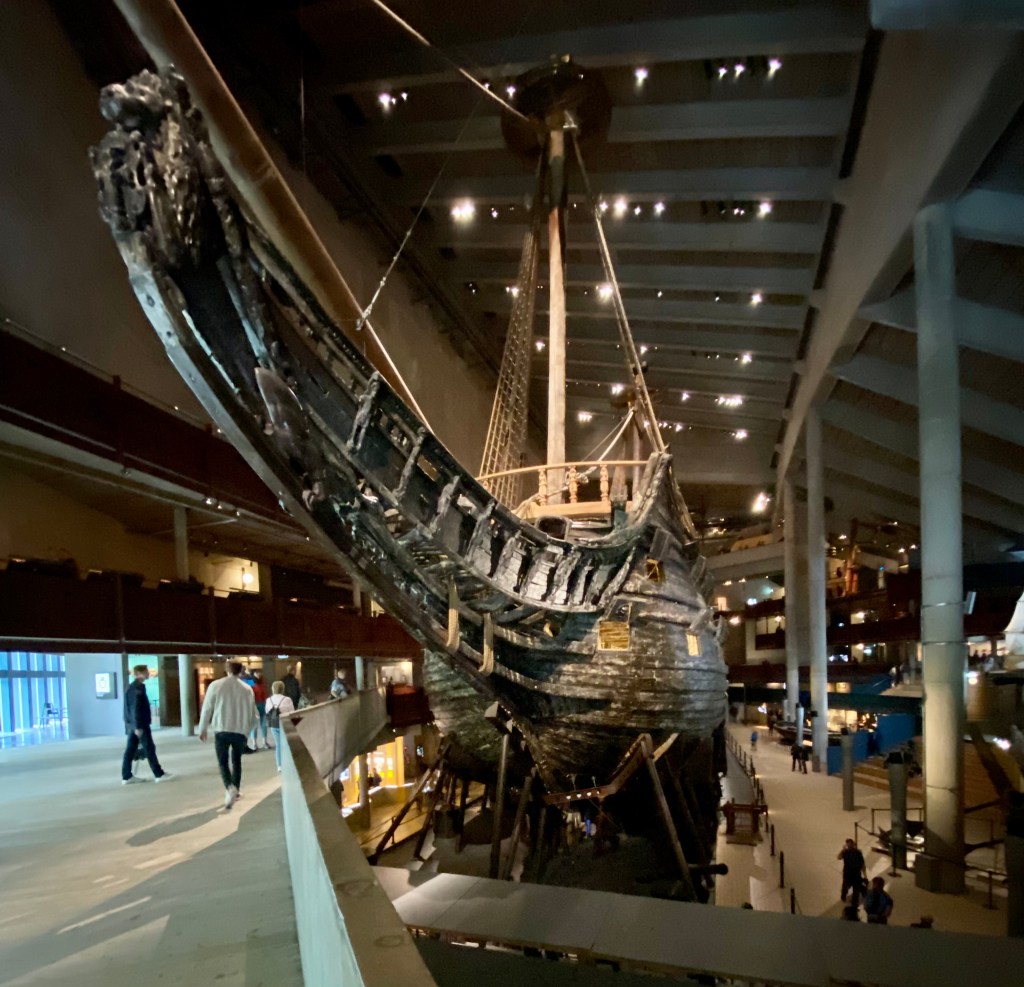
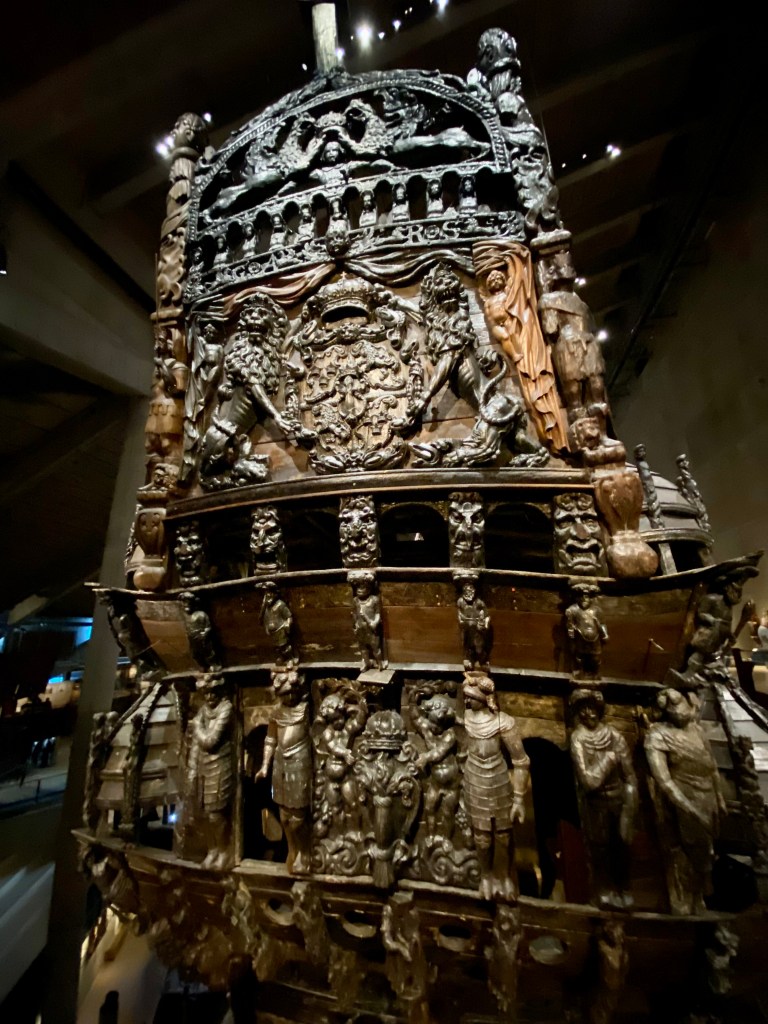
Our guide set the scene for her maiden voyage – it’s March 10, a Sunday, and the crowds are gathered as the Vasa is towed to harbour. She looks amazing with her many brightly coloured statues and carvings, her guns blast and the crowds roar. The crew sets the five sails and then five minutes later the Vasa starts listing under a gust of wind. The still open gun ports start letting in water and then another gust and the boat tips over and sinks. The pride of the Swedish navy is gone in 20 mins. A PR disaster!
The Captain is arrested and interrogated. The crew had not been drinking and the canons were fastened so what happened? The design was no good! The Vasa too high, too narrow, too long and too heavy. Two heavy gun decks made the ship too close to the waterline. Had tested the ship and knew she wasn’t sea worthy but king wanted it to sail so they did. Sister ship Apple was one meter wider and she sailed for 30 years. Good news is that the Swedes won the war despite this catastrophe.
On 24 April 1961 @ 9:00 am, the Vasa was raised from its home in the harbour. The water in Stockholm harbour is not a good environment for worms so almost 90% of the ship survived 300 years under water.
The ABBA Museum is close by so we head over there to enjoy the multi-media exhibition.
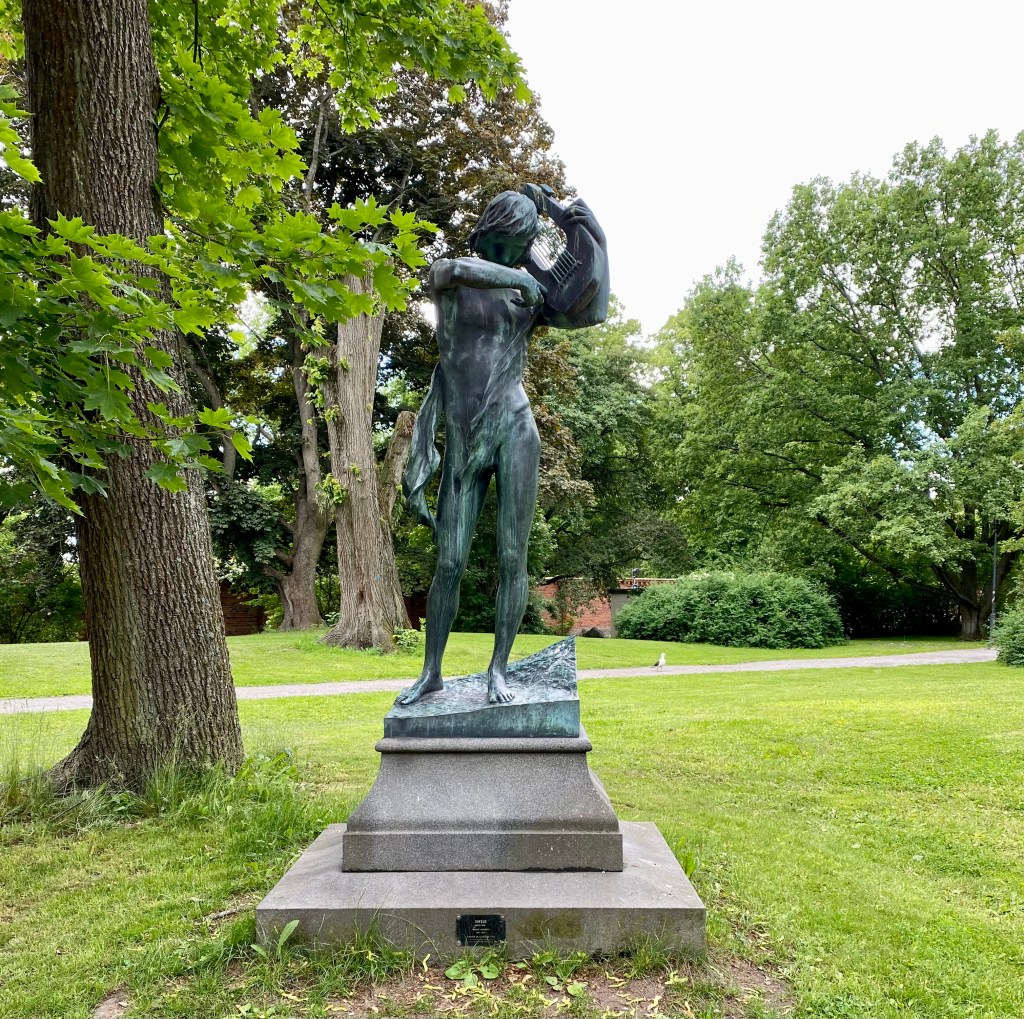
I did ask if ABBA was in the museum when they told us the price, lol! This is more than just a museum. The permanent exhibition is full of ABBA memorabilia like stage outfits, instruments, gold records, awards, and much more. But it’s also an interactive experience that invites you to sing, dance, mix music and try out virtual stage outfits. You can also record your performance and download it from the museum’s homepage with the help of your ticket. Thank God we didn’t go that far though we are still trying to sing their songs so the sign at the entrance Walk in Dance out is accurate!
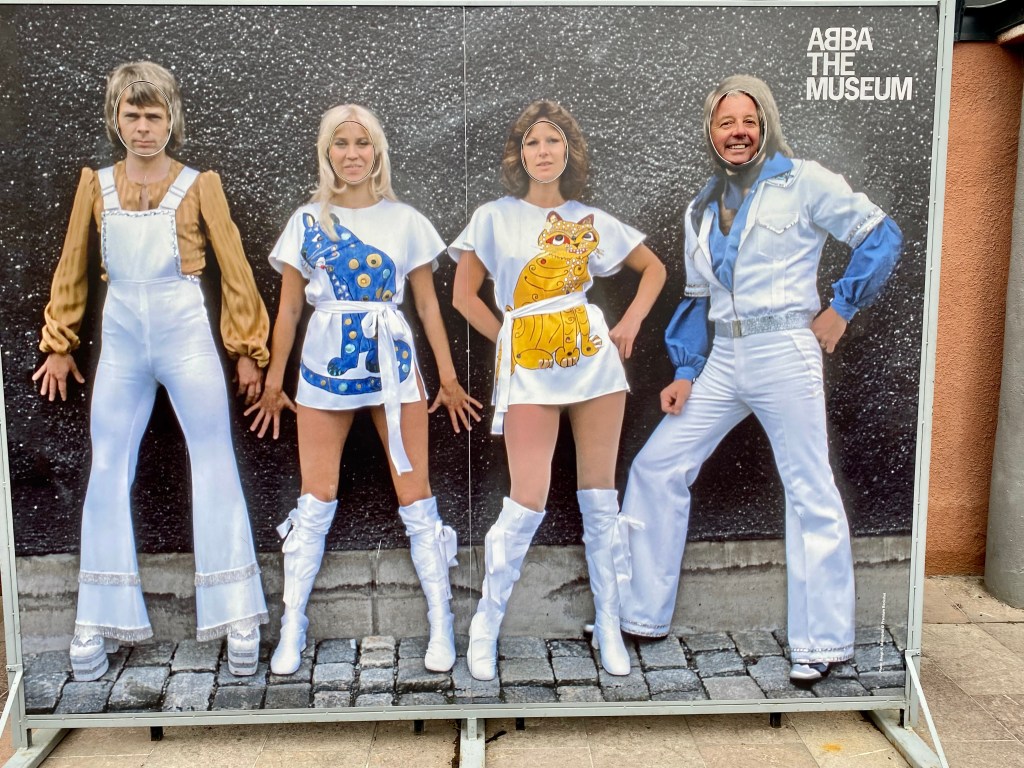

We finally made it home after a long day and opted for a night in eating cheese and crackers and drinking wine.
Tuesday
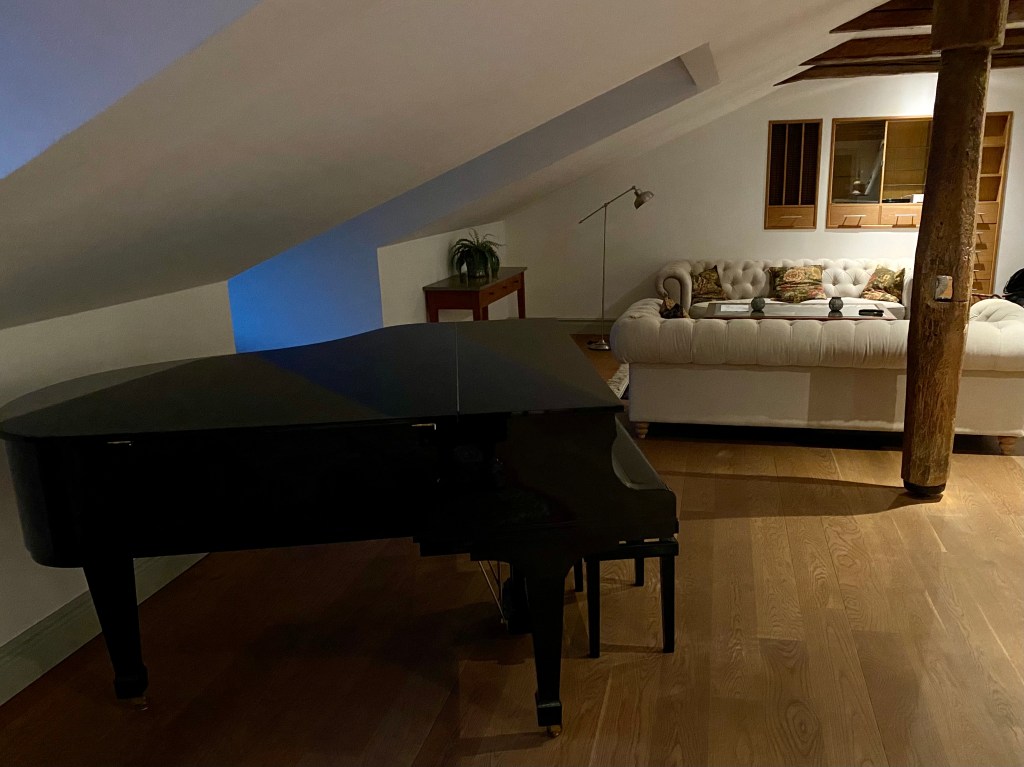
After our busy day yesterday, we opted for a more leisurely pace today. We’ve booked a boat to Drottningholm Palace at 1 pm so there’s a bit of time to enjoy our posh Airbnb. We’d been upgraded to the Prestige Suite which had 4 bedrooms, 2 baths, living room complete with a baby grand piano!, dining room, banquet room and library. Very swish!
We wander down to the harbour soaking in the sights and then grab a sandwich to eat on the pier waiting for the boat. Spreading idyllically across an archipelago of fourteen islands, it’s easy to see why the Swedish capital of Stockholm has acquired the nickname “Venice of the north”. It seems, wherever you look, your gaze is met by water.

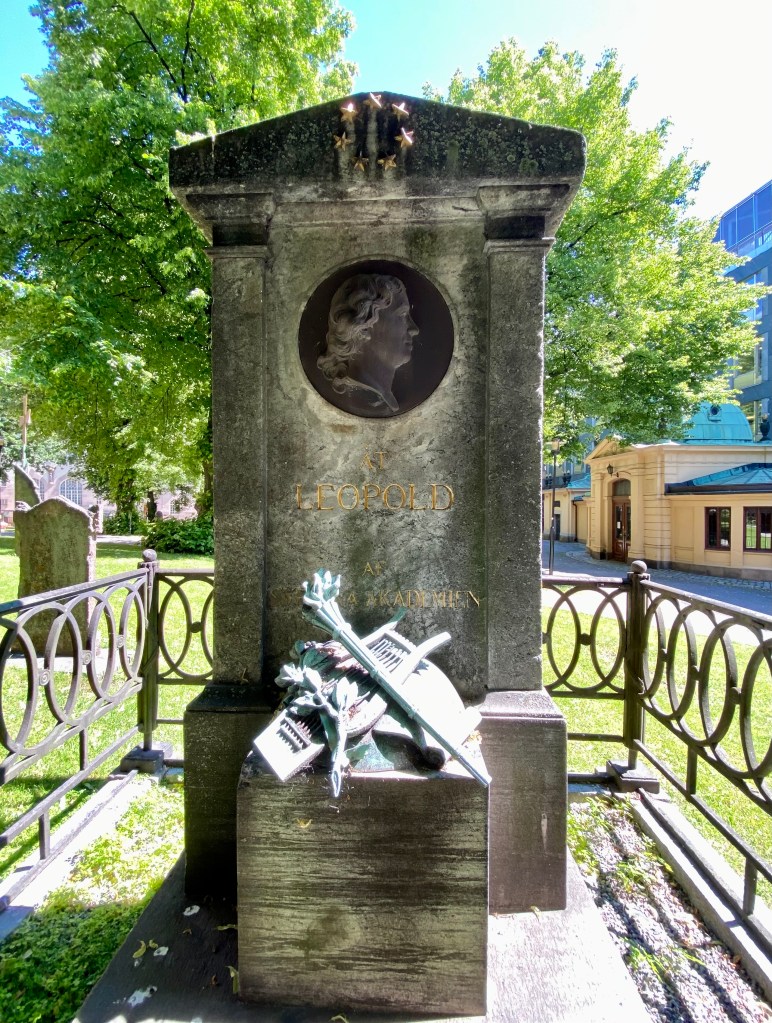
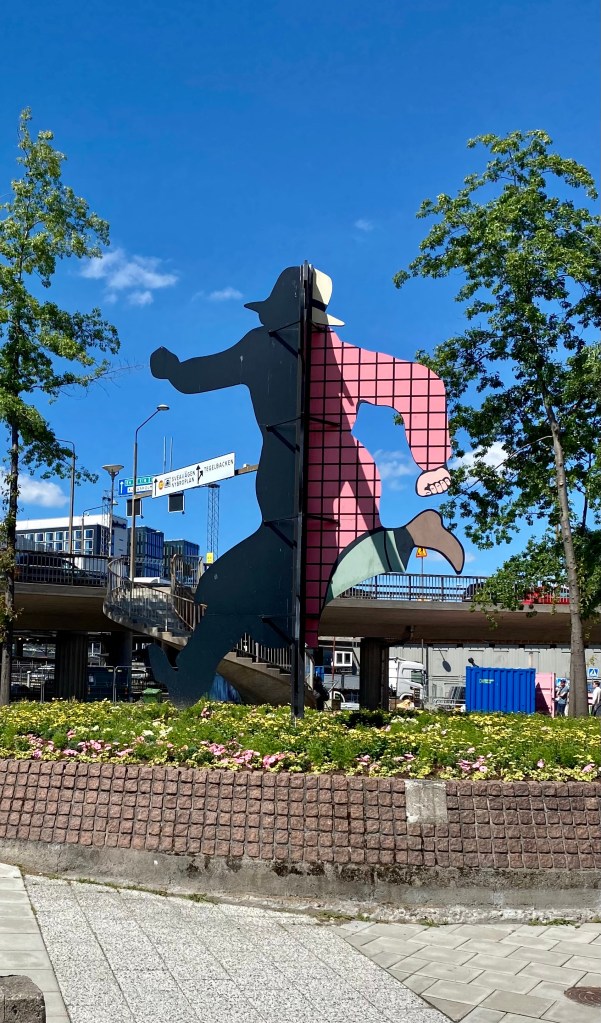
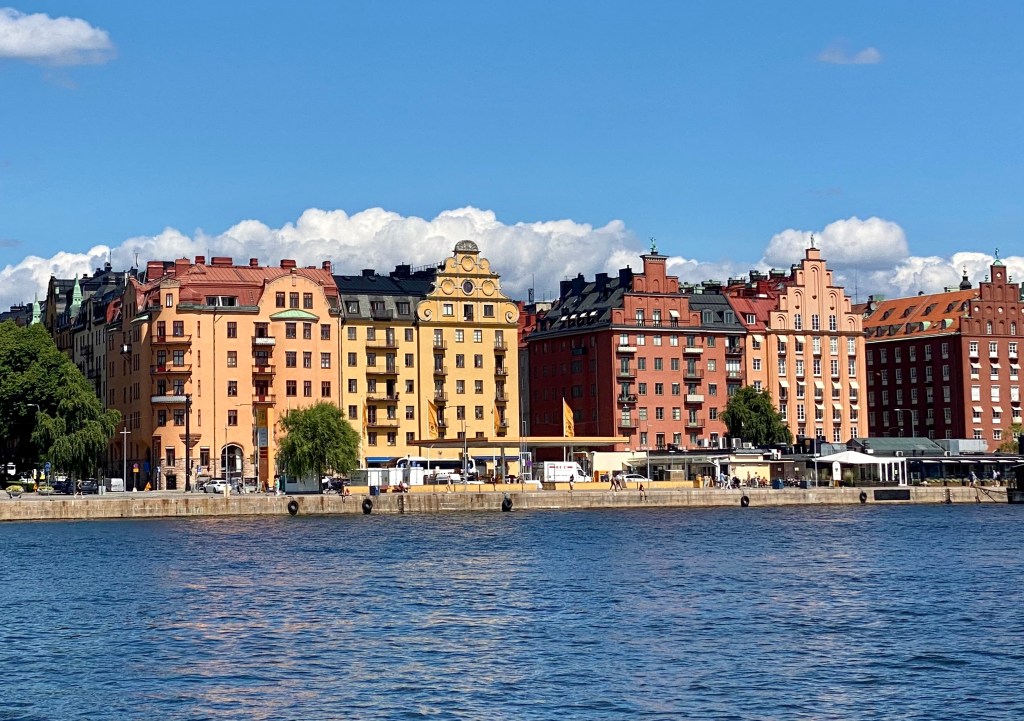
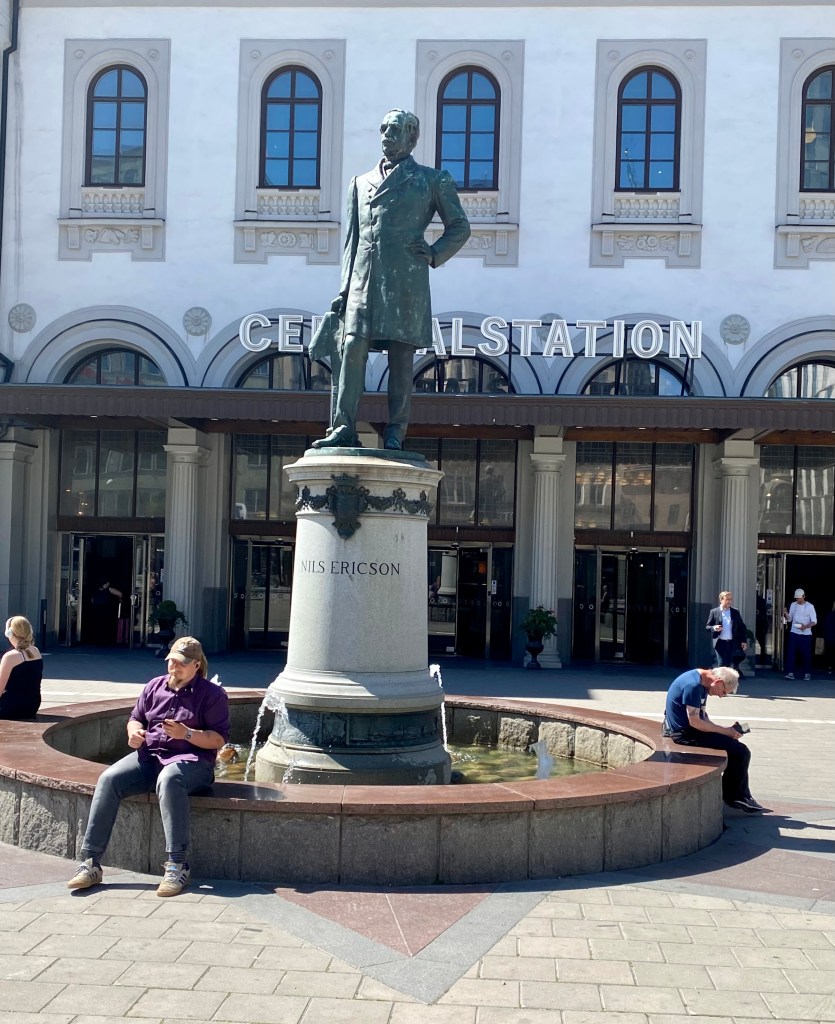
It’s a beauteous day for a cruise down the river to the castle. We steam by several beaches, magnificent houses and lovely unspoiled wilderness on our way. There are a couple of whistle stops enroute but soon enough we are treated to the first glimpses of the beautiful palace.

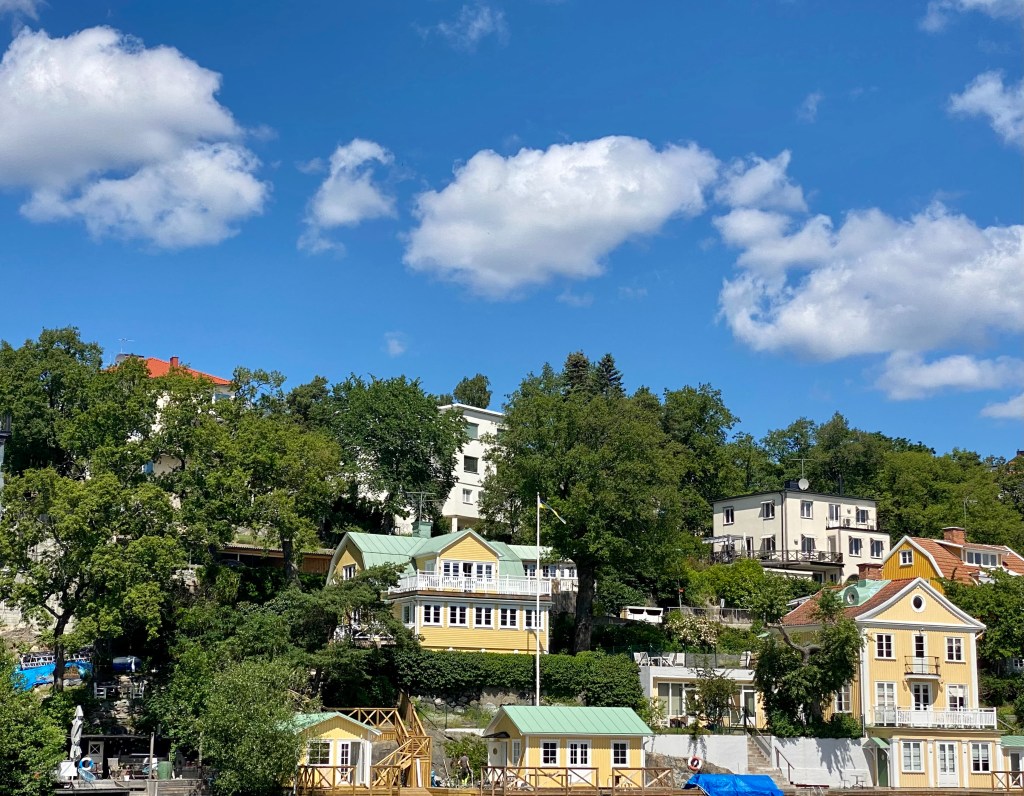
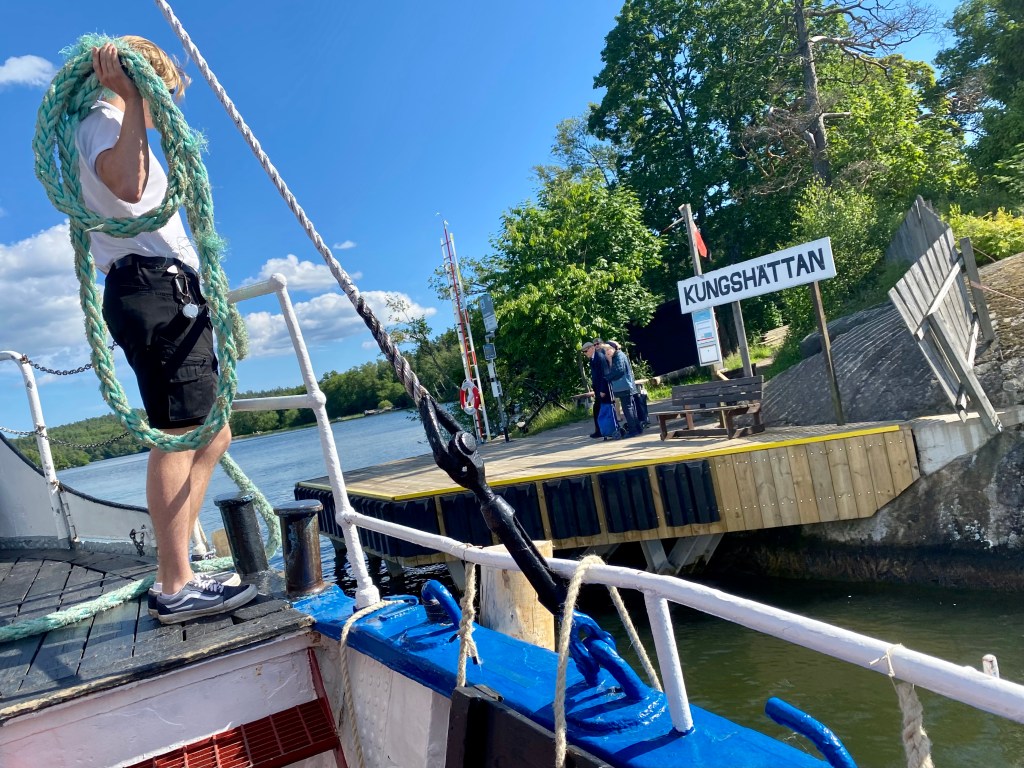
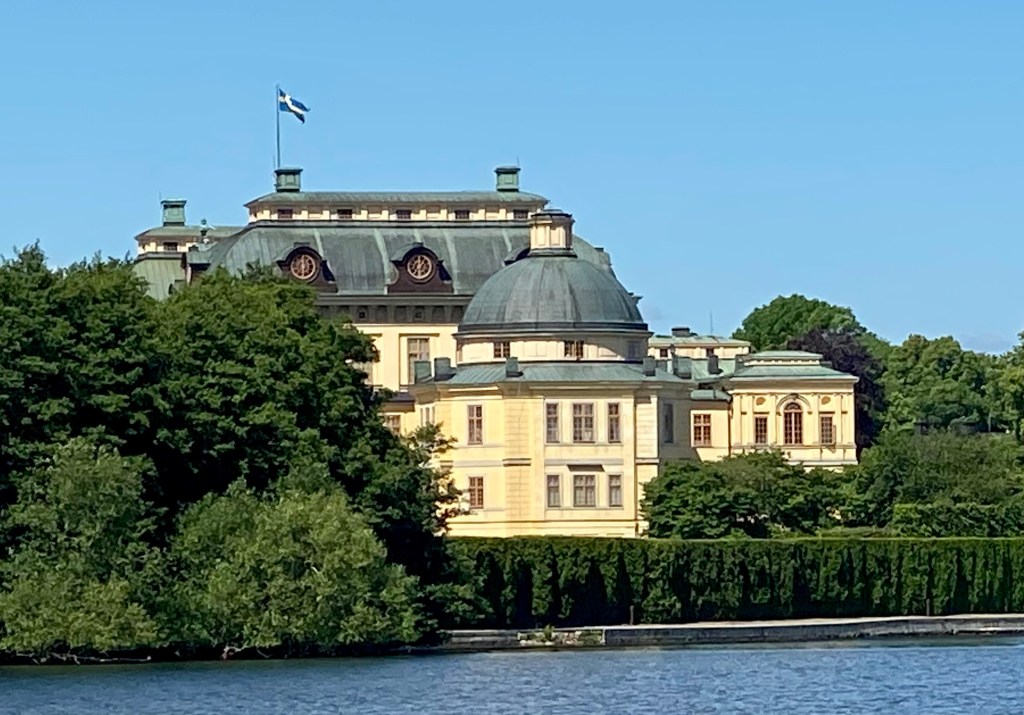
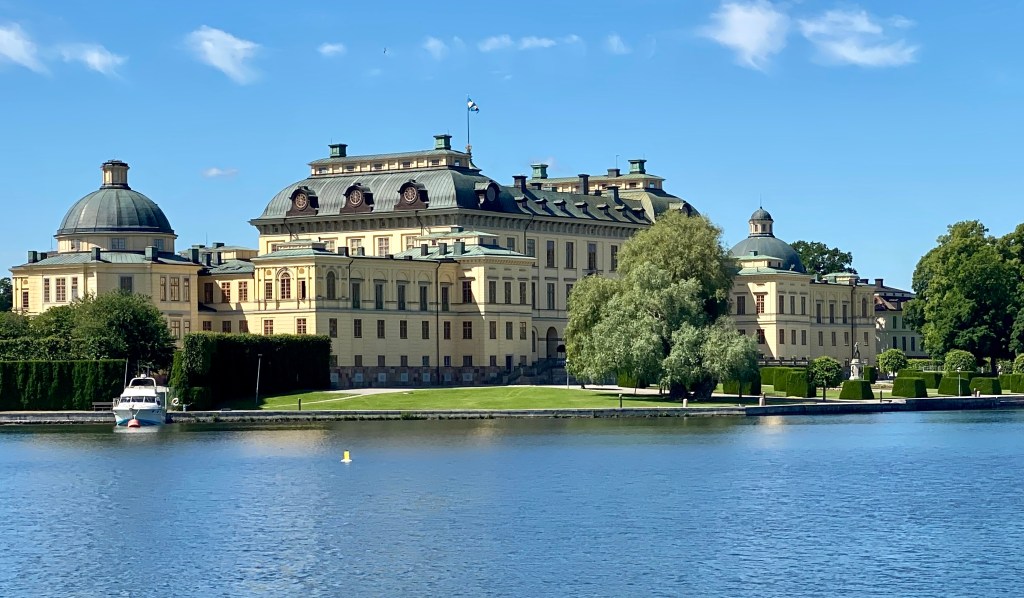
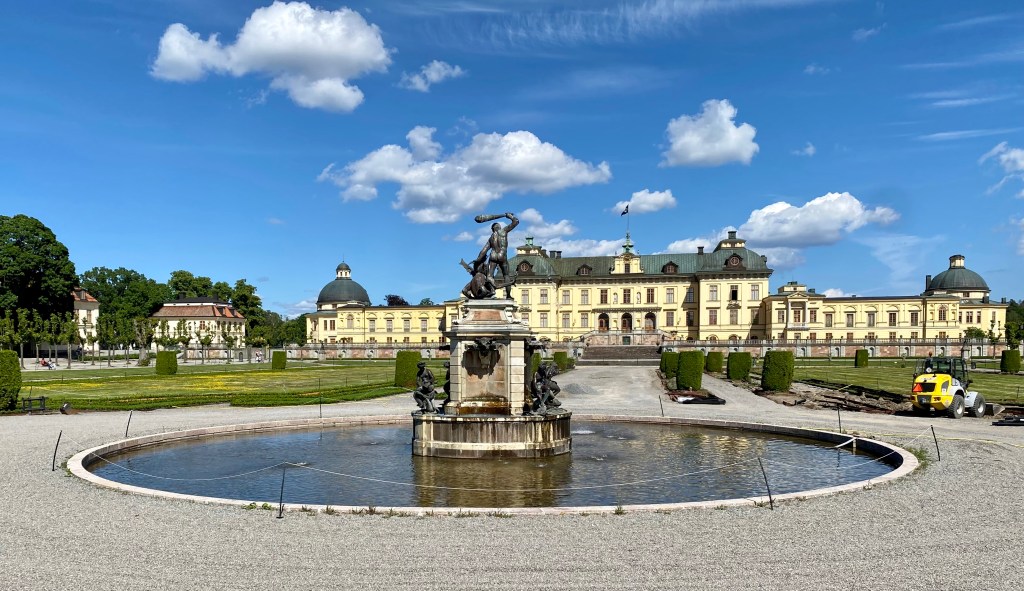
Few palaces in Sweden have been as strongly associated with queens as Drottningholm. It began with Queen Katarina Jagellonica, who was presented with the first palace built here in about 1580. To honour the Queen it was named Drottningholm (Drottning=Queen).
The Dowager Queen Hedvig Eleonora laid the foundations for the present-day Palace and ornamental garden. She bought Drottningholm in 1661, but a few months later the palace burned.
She then undertook the most costly palace construction in Sweden – the new Drottningholm was to reflect the fact that Sweden was a Great Power. The Palace architect took inspiration from Italy and France, and the French Baroque motifs in the ornamental garden were taken from palaces such as Versailles and Chantilly.
Since 1981 Drottningholm this has been the residence of Their Majesties King Carl XVl Gustaf and Queen Silvia. In 1991, UNESCO declared Drottningholm – the Palace, the theatre, the Chinese Pavilion and the park – a World Heritage Site.
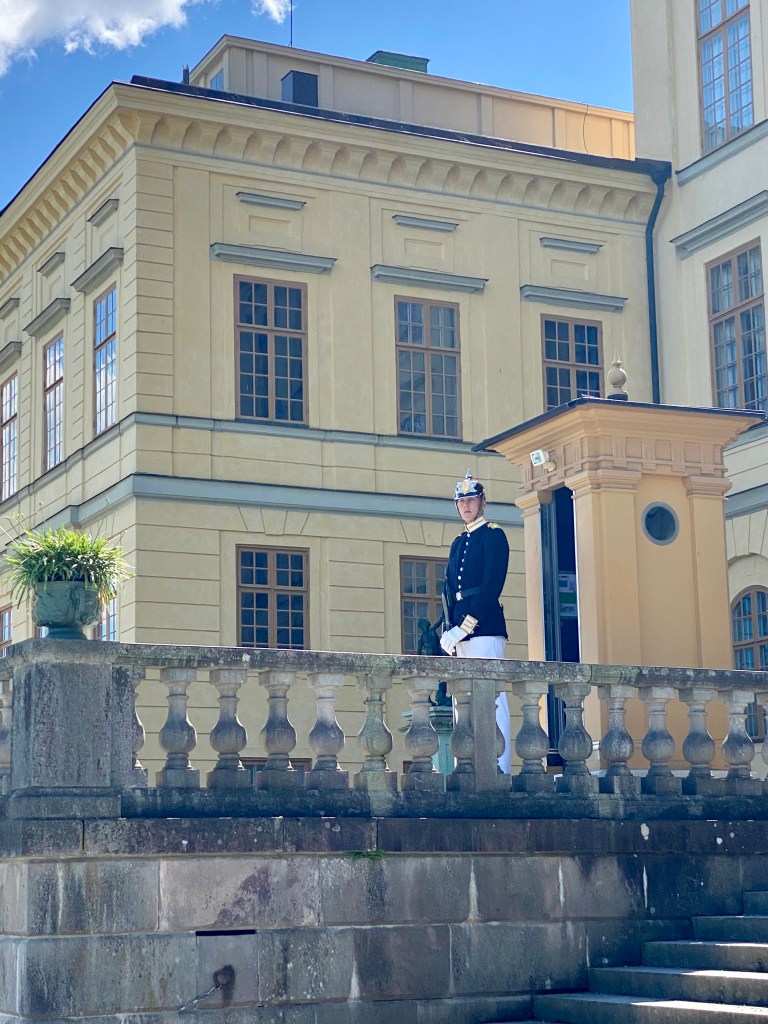
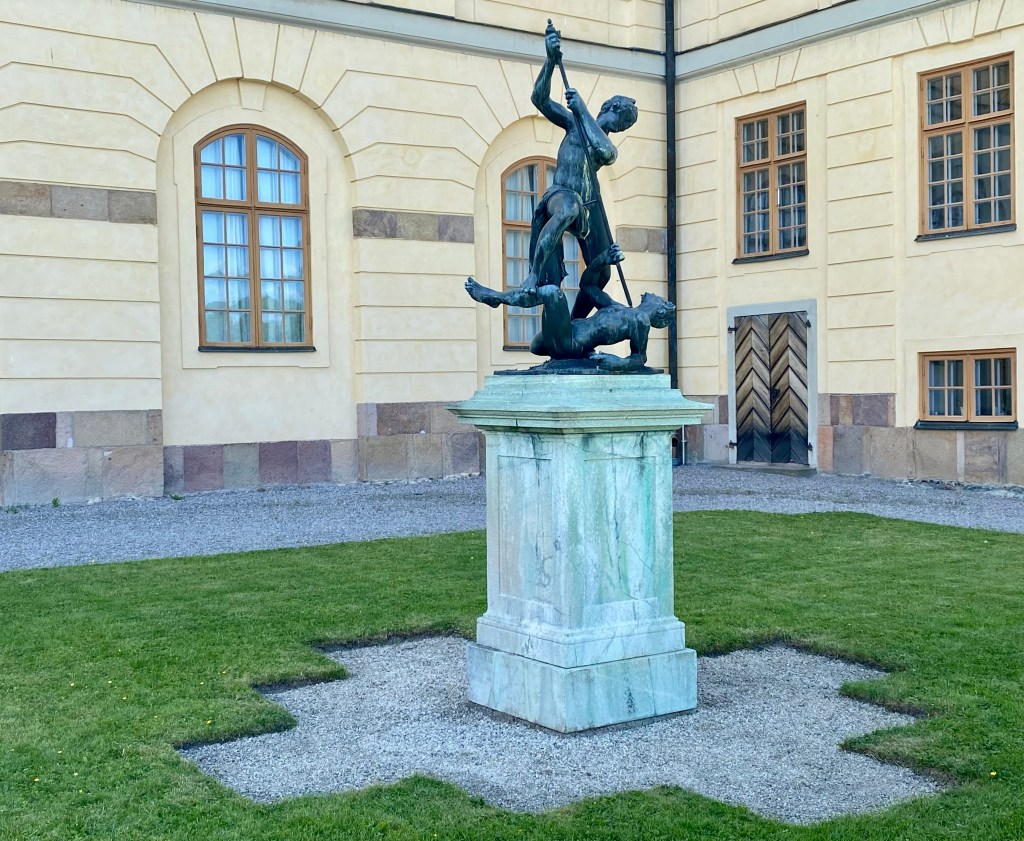
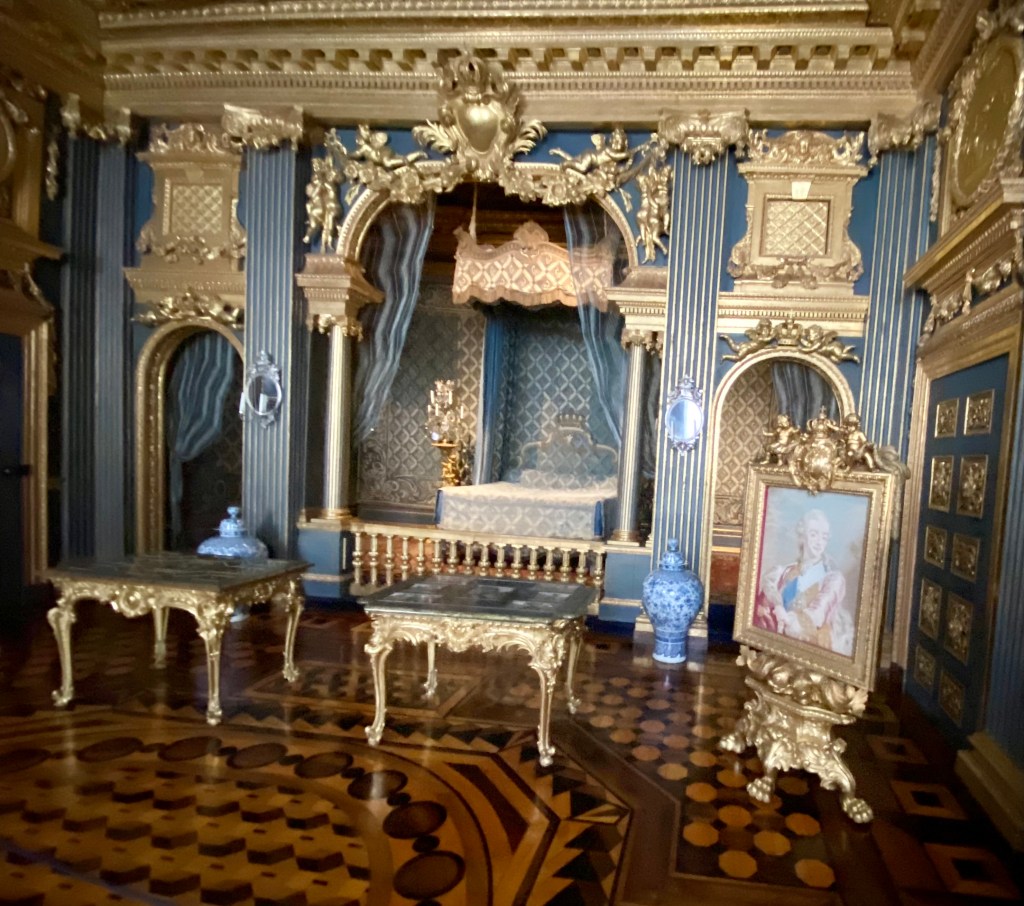
We toured the castle’s ornate interior filled with artwork. My favourite room was Hedvig Eleonora’s State Bedchamber. In the 17th century the State Bedchamber served as an official Audience Chamber where the most significant guests were received.
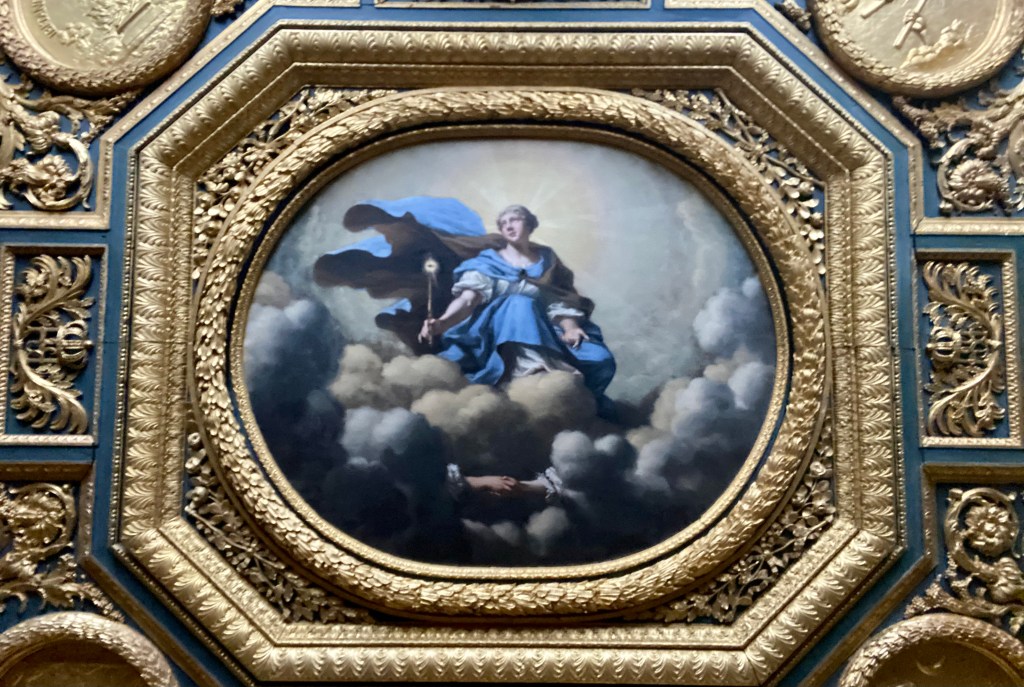
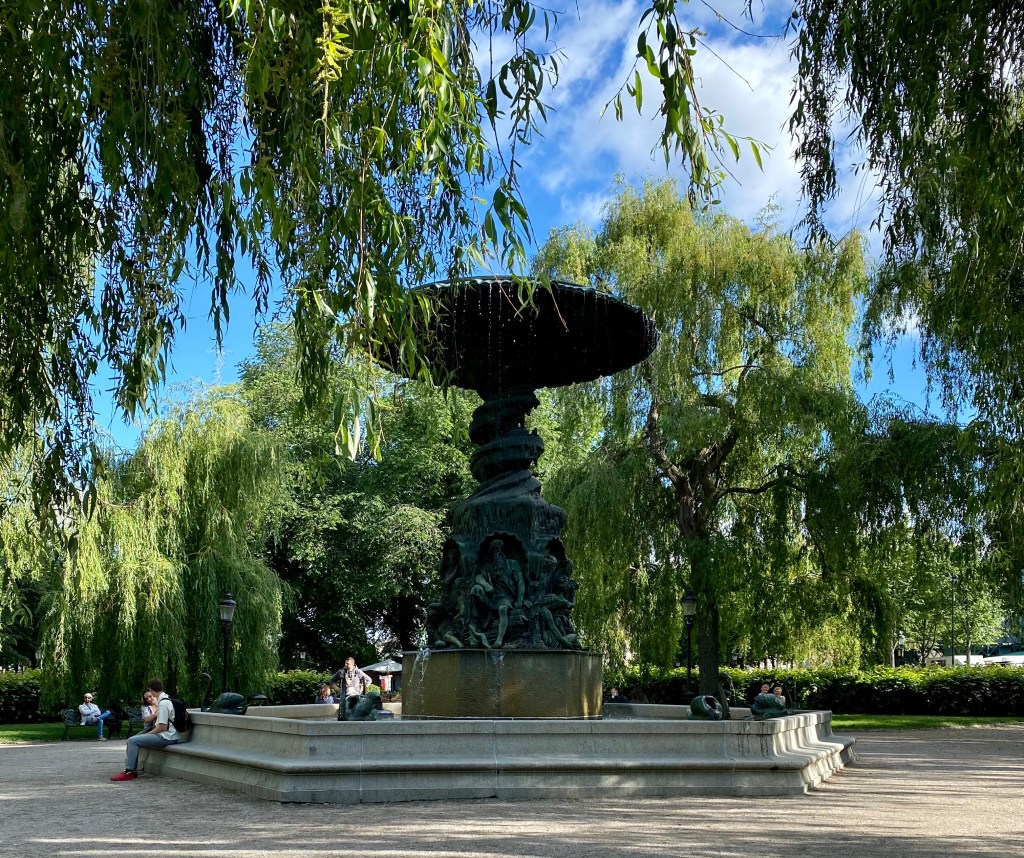
It’s too nice to be cooped up inside so we head out into the garden to find the Chinese Pavilion built in a secluded spot in the hunting park. The “garden” seems to be mostly weirdly trimmed trees and hedge mazes but there are some interesting installations in our wanderings.
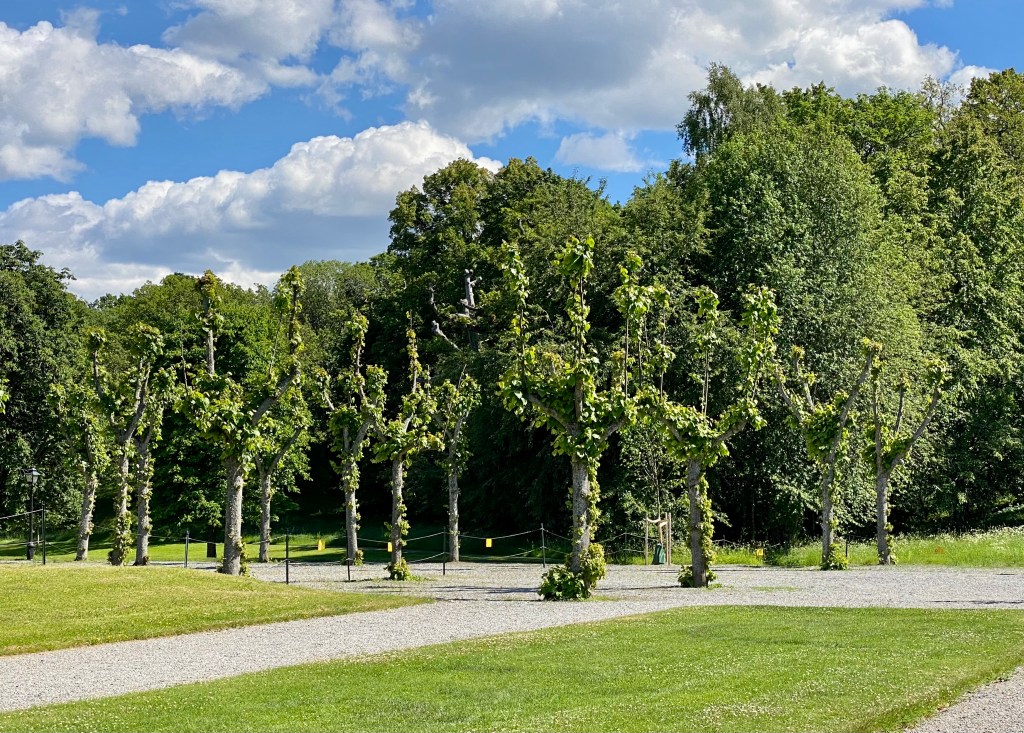

Along the way we pass the decorative Guards’ Tent whose façade conceals something – barracks for the Royal guards. The façade conceals a two-storey wooden building. On the lower level, there were two dormitories for guards, a kitchen and a hall with stairs leading to the upper level, where the officers had their rooms.
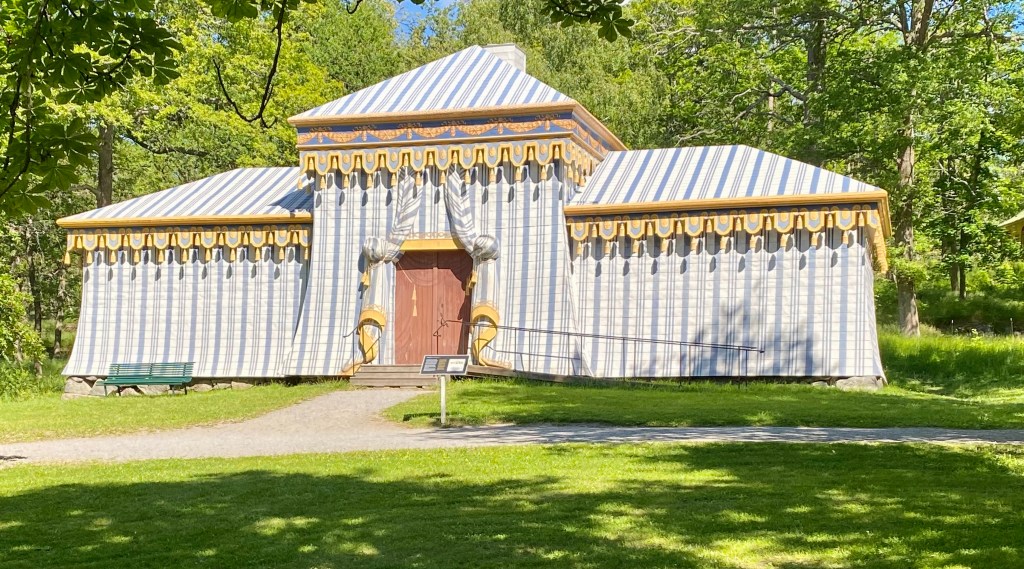
The Guards’ Tent was restored in 1989-1996, and today it has the same appearance as on the 1781 drawing by Adelcrantz. The entire façade is in sheet metal and painted to resemble canvas. The leafy edging, called lambrequin, together with the textile-like tassles along the base of the roof, reinforce the appearance of a tent.
We finally reach our destination, Kina Slott, a Chinese-inspired Royal pavilion originally built between 1753 and 1769. In addition to the main pavilion, The Silver Chamber, The Confidence, and The Volière are found here.
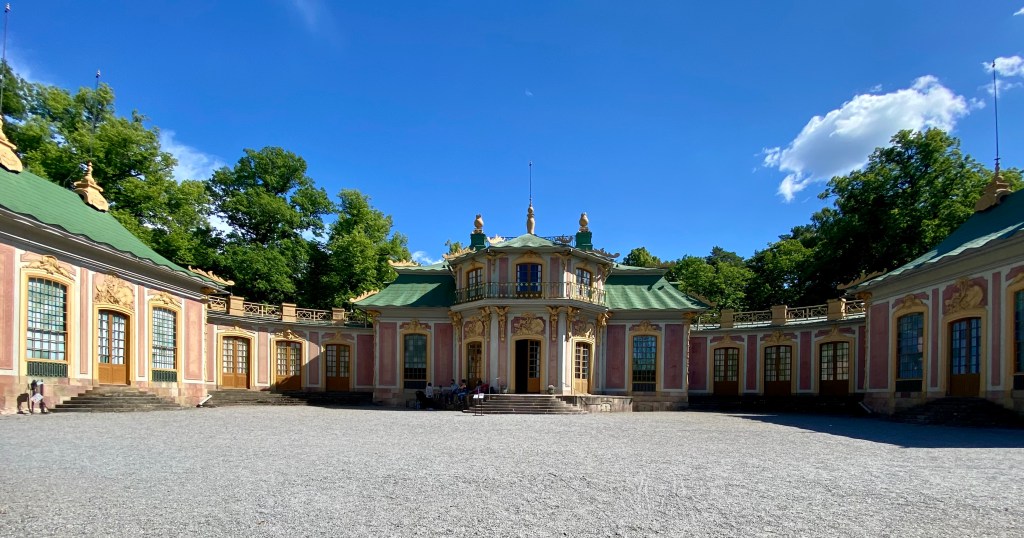
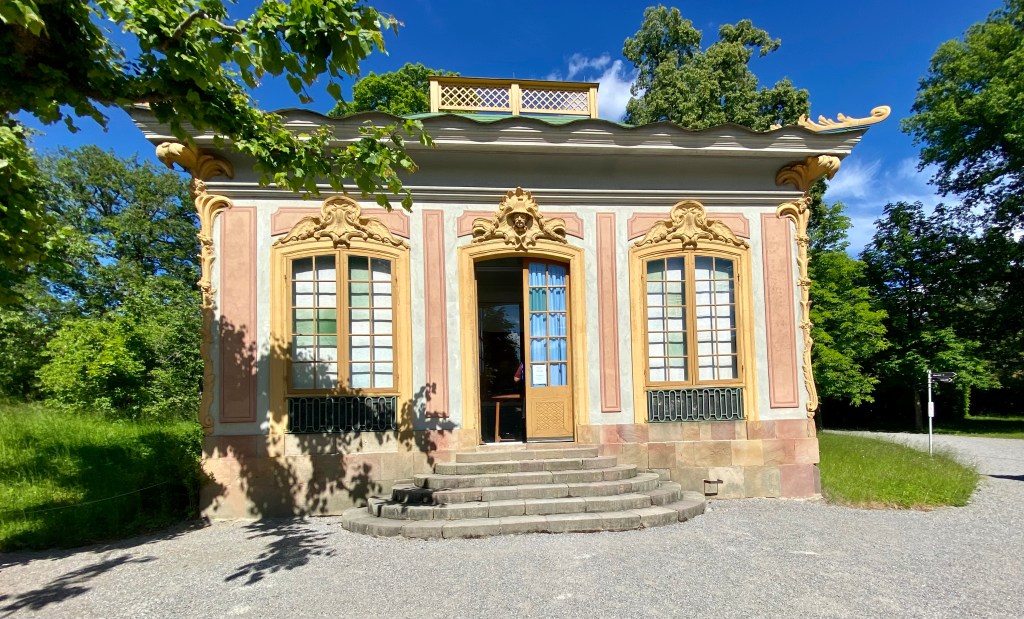
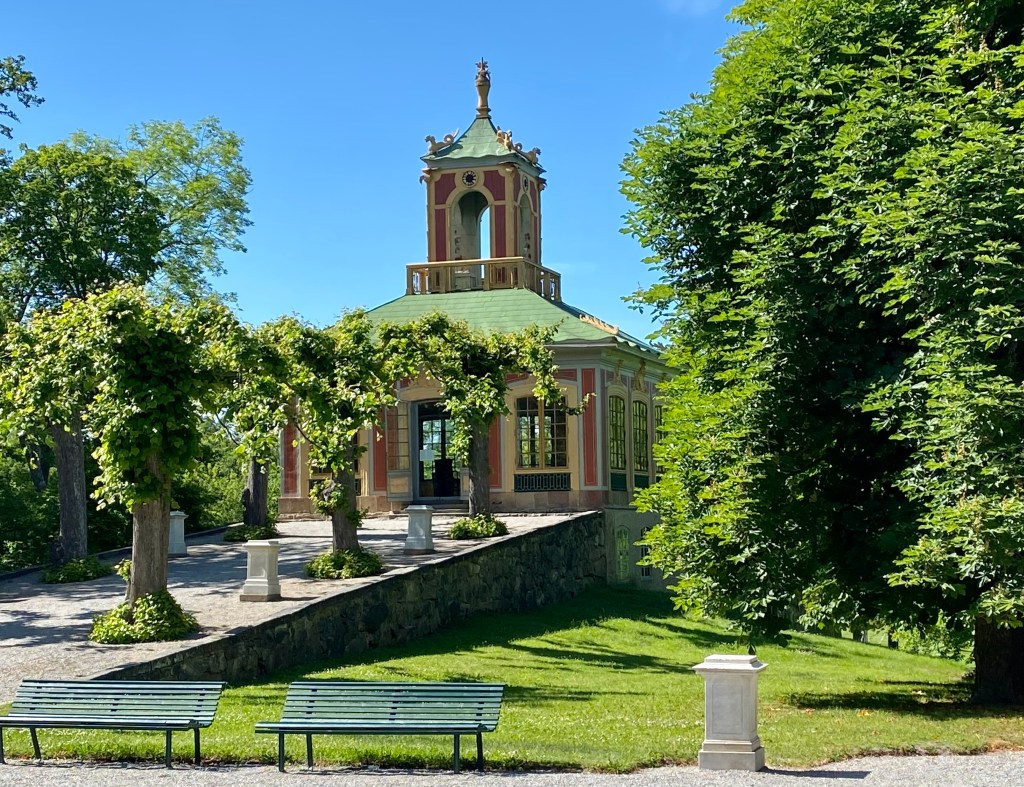
After a quick look inside, we head back through the park to catch our boat home.
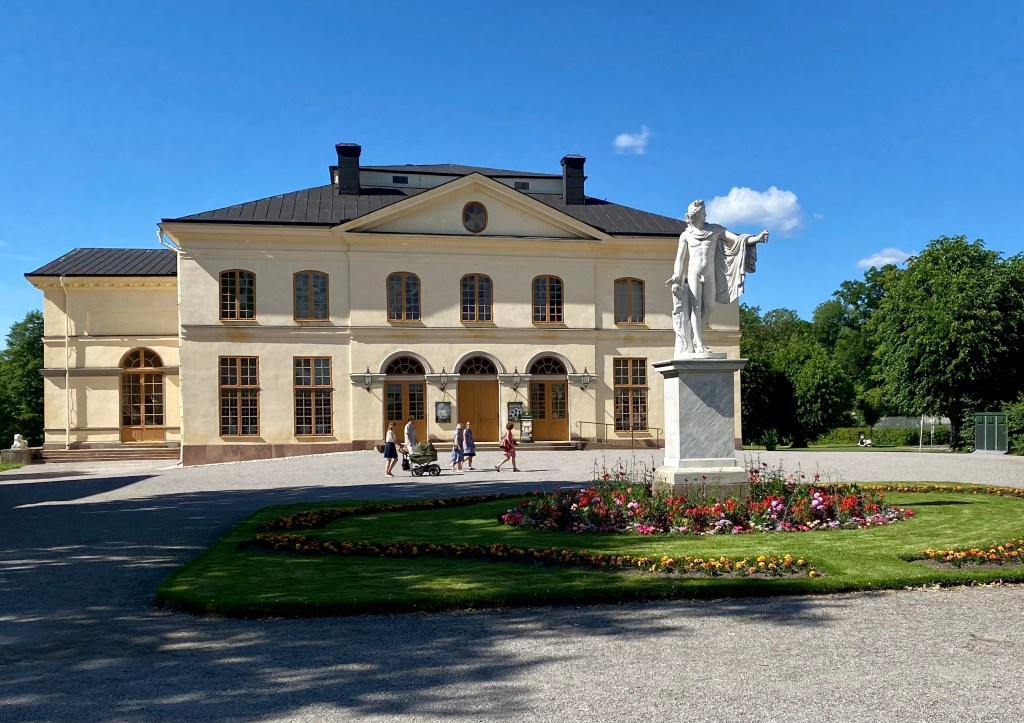
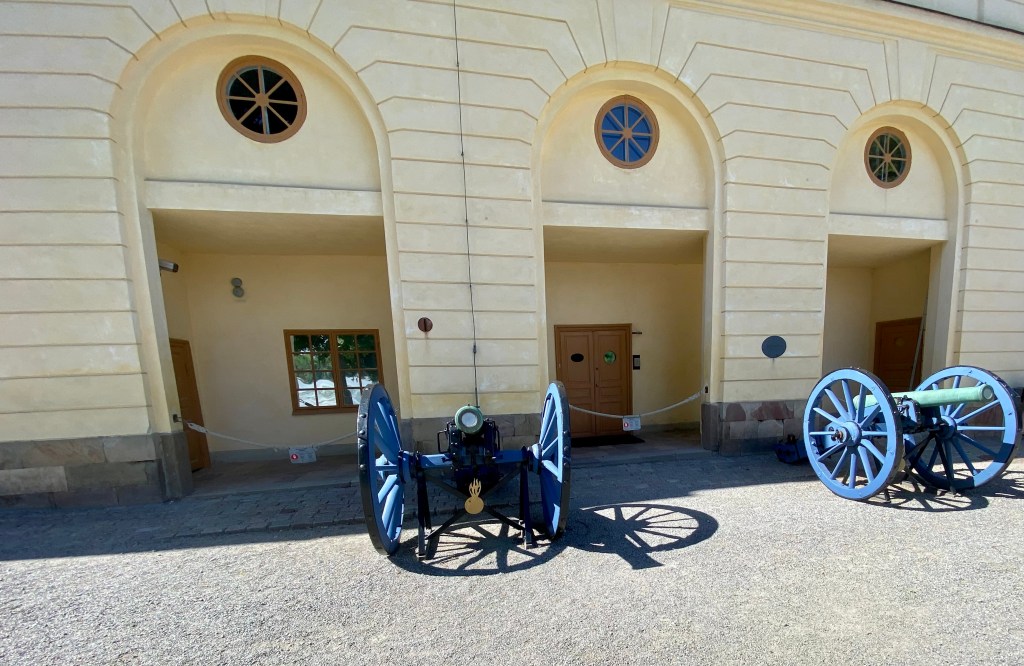
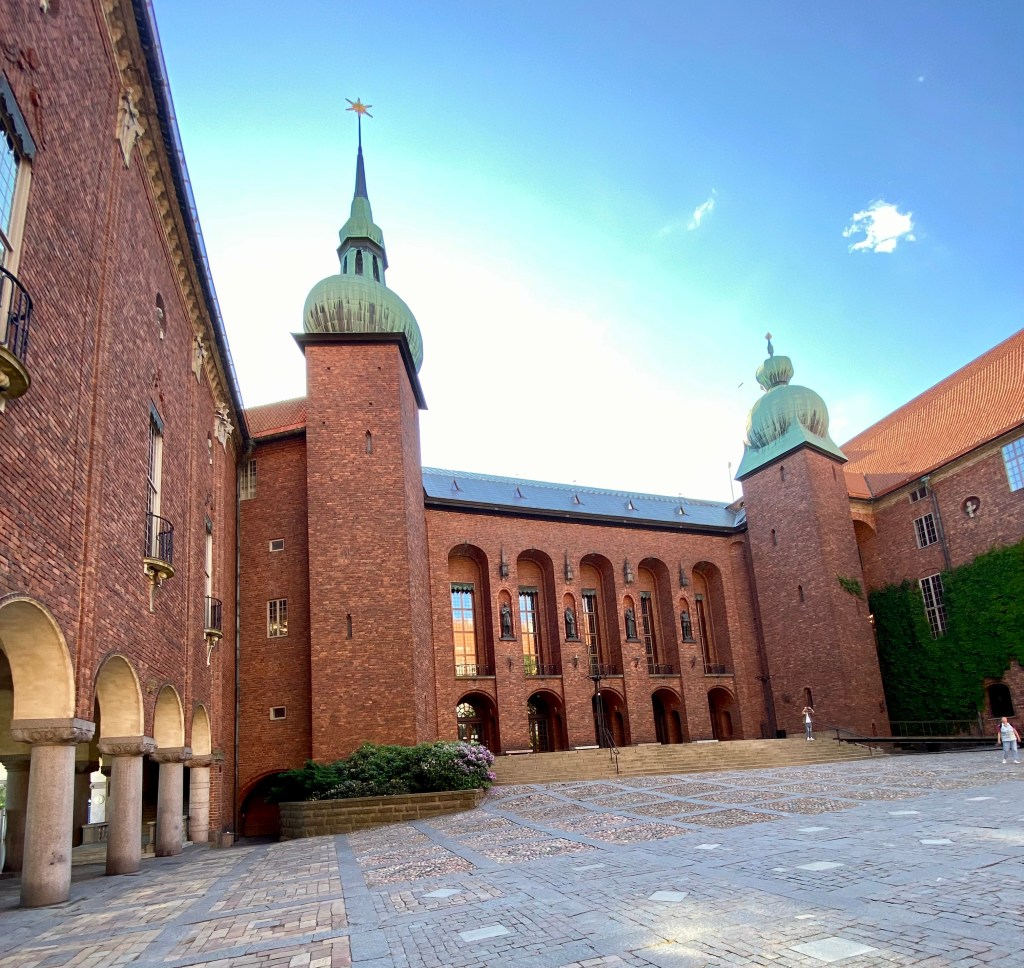
The boat docks close to city hall so we enjoy some time exploring the courtyard before heading back home.



Dinner tonight was at a local joint, Ruby’s. Good food, good wine and great company. A perfect end to a perfect day!

Wednesday
We’re flying to Bergen today so we pack, clean up and drag our bags along the cobblestones to an Uber pick up spot for the trip to the airport.
Check in was a breeze so we made our way to the airport lounge where we were met with a line of folks waiting. Soon enough we were in and we had a snack and drink or two before heading to our gate. The plane was, of course, late but we eventually boarded for the quick flight to Bergen. Why does it take 4-5 hours for a flight that’s a bit more than an hour?
We landed safely in Bergen and headed to our Airbnb there. A few more cobblestones to contend with but soon enough we are “home” with all the bags and baggage. Stretched our legs with a reconnaissance walk through town before grabbing a seat under cover on a patio for dinner.

 Judy’s Rambles
Brings back such fun memories….great blog!
LikeLike