
June 26
We arrived in Oslo last night, dropped our stuff off at the hotel and then headed out for a glass of wine before calling it a night.
We’re staying in a hotel in downtown Oslo so this morning we had a nice breakfast to fortify us for the day. We’re heading to the Tiger statue close to the railway station for our Free Walking Tour but we’ve got some time so we headed out to explore a bit on our own first.
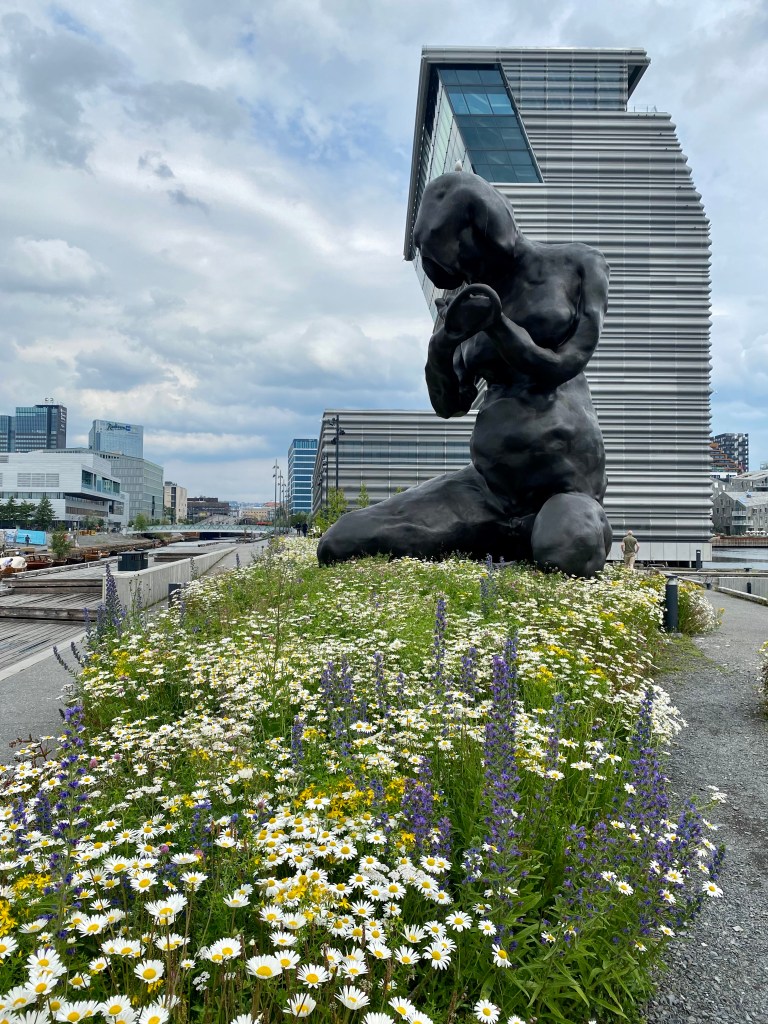
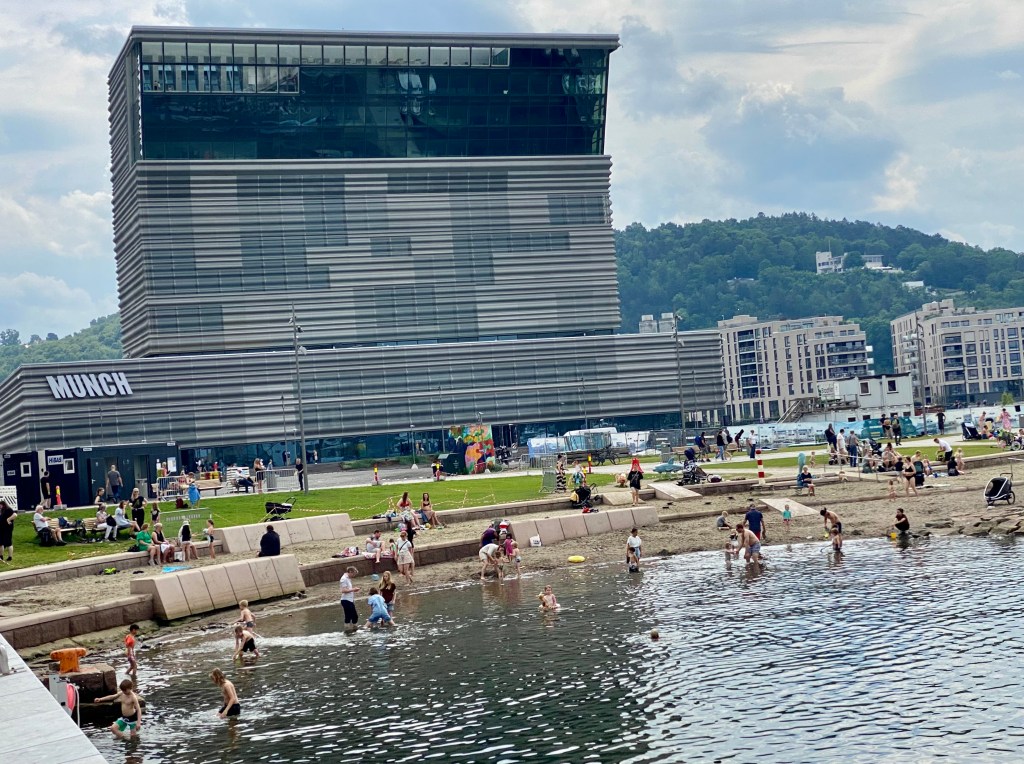

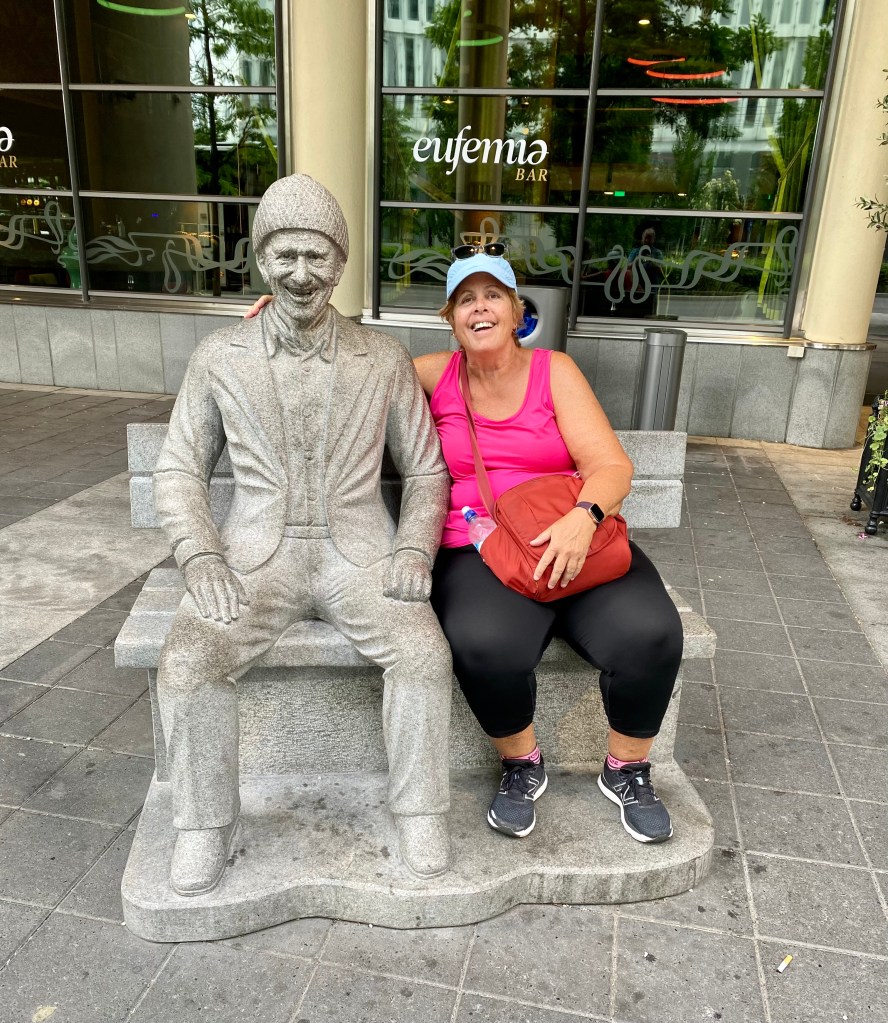
At about noon, the skies opened and it started pouring so we found shelter and laid low until it stopped right around the time our tour was to start.
We found our guide, Gabriella from Poland, in the old town square. She has a degree in Scandinavian Studies and is currently working on her Master Thesis on Peace and Conflict here in Oslo. There’s a mixed bag of Americans and Europeans in our group and everyone seems pretty nice.
As always there’s a bit of history before we set out to see the sites. Oslo was 1048 founded and we are meeting in the original city square. The Vikings at the time loved their mead and had 14 fires, the biggest in 1624 resulted in some big changes. Rather than rebuild again, King Christian IV of Denmark decided the city should move across the fjord and be rebuilt closer to the Akershus Fortress. The new site was outside of the limits of the city of Oslo and so Oslo was no longer. Instead King Christian decided the city would be called Christiania – clearly a humble fellow!
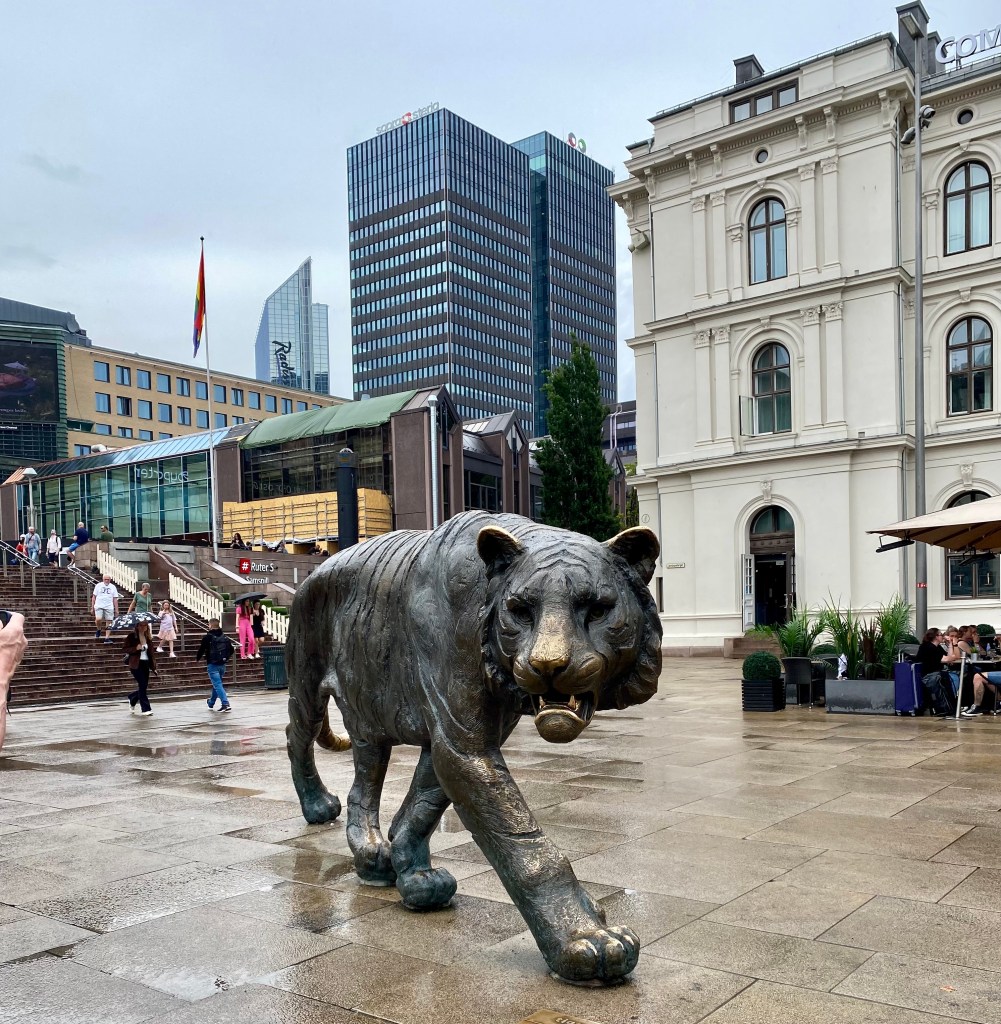
Gabriella also explained the significance of the tiger statue in the square Oslo has a population of 650,000 give or take and is very different from the rest of the country and has always been. A wild urban place versus the wilderness and smaller centres in the east of Norway. The name seems to go back to a poem by Bjørnstjerne Bjørnson depicting a battle between a horse (Bjørnson himself) and a tiger (the city of Oslo, or Christiania as it was called at the time). The name caught on and although it was originally used in a derogatory way, sentiments among residents of Oslo seemed to have shifted and there is now a sculpture of a giant tiger outside Oslo Central Station in what was the original City Square.
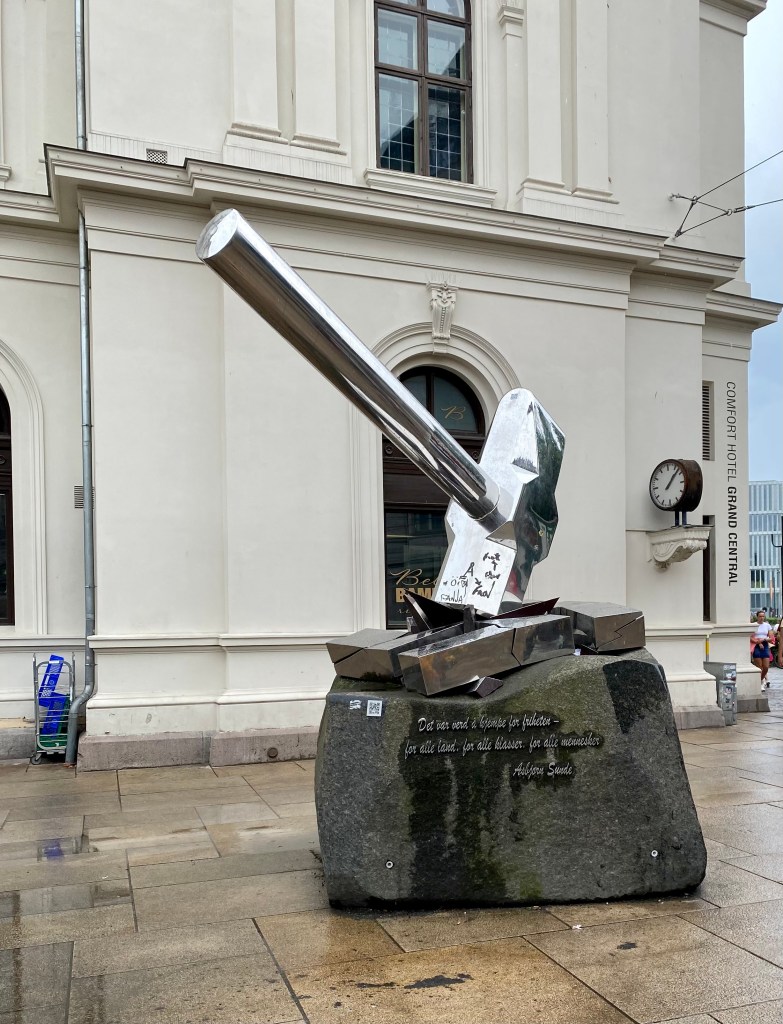
There’s also a statue of a big hammer nearby. Not Thor’s Hammer mind you but a memorial to the WWII resistance organization known as Osvaldgruppen (The Osvald Group) who helped liberate Norway from the Nazi German occupation. The group was one of the first and most active armed civilian groups resisting the Nazi German invasion of Norway, and known for its members’ daring acts of sabotage against German installations and the Norwegian industry that served them throughout the war.
Next we’re off to the to get a good look at the Opera House which is supposed to resemble an iceberg. Despite the modern exterior, the inside Is mostly made of oak. The roof top is open all year long and provides panoramic views of the fjord. No time today but it’s added to the list for the next few days.

We can also see the new Edward Munch museum. Edward Munch’s painting The Scream is his mot famous painting and there are actually four versions. Norwegians say the worst version is in NYC, there are two versions at the Munch Museum but they are not shown not at the same time and the fourth is on display at the National Museum. We’re going to hit both of those museums in the next couple of days so we should see at least two versions.
There is also a floaty glass thing in the water that’s a sculpture intended to resemble an iceberg. The floating stainless steel and glass sculpture named She Lies was designed and created by Italian artist Monica Bonvicini. While it’s anchored to the bottom with a long chain, it floats on the fjord on a concrete platform and turns on its axis with tide and wind so it isn’t stationary. If it’s not where you remember it’s likely not because you’ve been drinking!

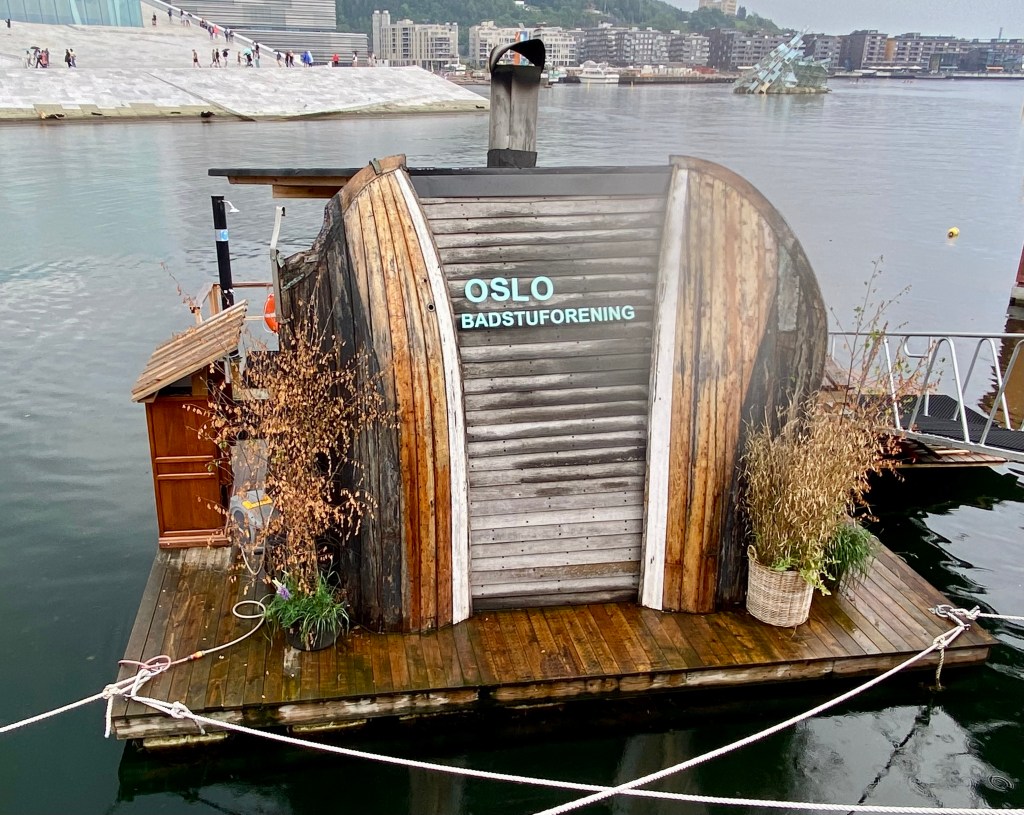
Along the fjord there are also beaches and a number of saunas. Oslo’s fjordside saunas are located along the harbour promenade, right in the heart of the city centre. The idea is to heat up in the wood-fired sauna first (80+ degrees C) and then jump in to the frigid water. Also added to the list for the next few days.
From the pier, we head to the old town hall which is now a restaurant. On the way, we pass an Orange reddish building that’s more than slightly off kilter which was the old old town hall.
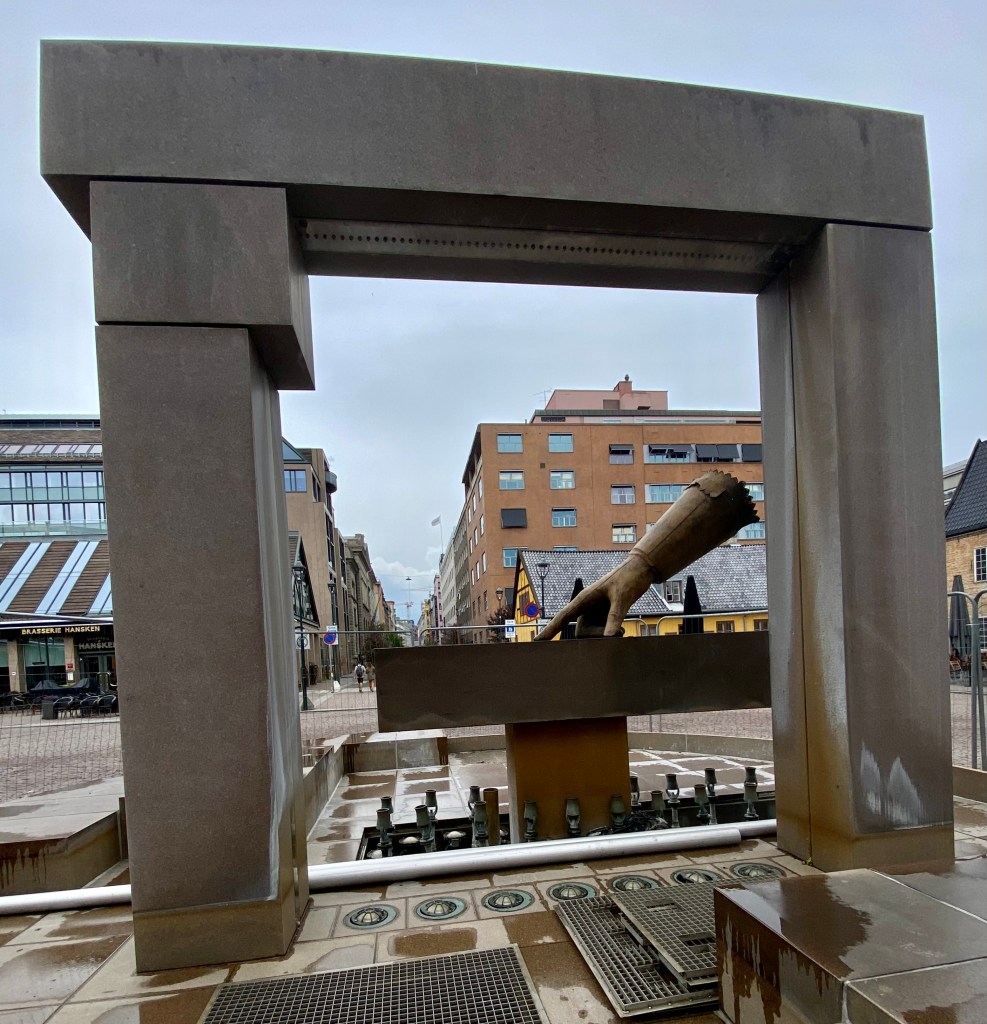
The Radhusgata historic square features the Old Town Hall, Gamle Raadhus. There is also the oldest brick apartment building and a small yellow house that used to be the executioner’s house as well as a medical research facility where they studied the corpses of newly executed folks. It’s now a restaurant and is said to be haunted so don’t go to the bathroom alone. We’re planning to have dinner there, lol! It’s centrepiece is one of the best known statues in the city, the Hand of King Christian IV, marking the spot where modern Oslo began.
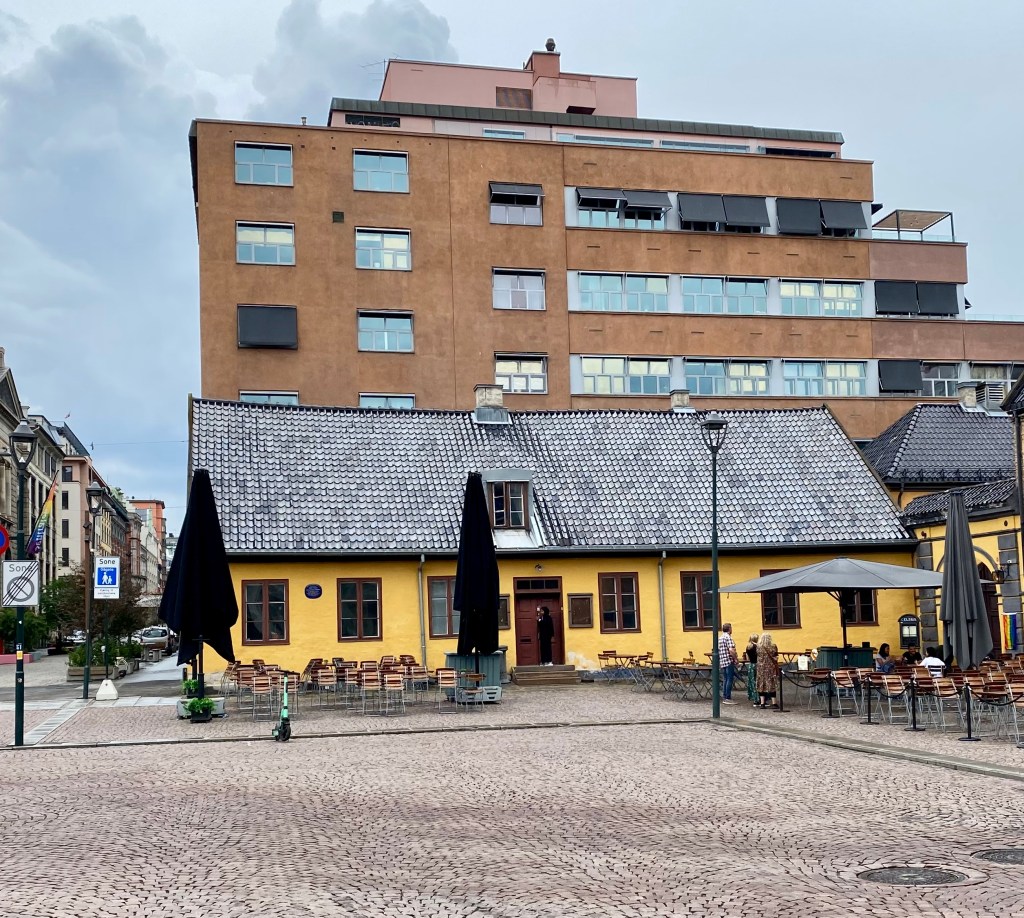
Oslo (then Christiania) was rebuilt by King Christian so no more wood for buildings. Dutch workers built the new buildings as the Norwegians didn’t know how to build other than with wood.
The Norwegian constitution was passed unanimously by the Eidsvoll Assembly on 16 May 1814 and signed the next day so May 17 is a big day in Norway- Constitution Day. The Constitution was written in Danish as there was no written Norwegian at the time. Norway was given to Sweden but had much more freedom. Full independence came in 1925.
Our next whistle stop is the Akershus Fortress. The building of Akershus Castle and Fortress was commenced in 1299 under King Håkon V. The medieval castle, which was completed in the 1300s, had a strategic location at the very end of the headland, and withstood a number of sieges throughout the ages. King Christian IV (1588-1648) had the castle modernised and converted into a Renaissance castle and royal residence. It was also important during WWII.
With the outbreak of hostilities in 1939, Norway declared itself neutral. On April 9, 1940, German troops invaded Norway and quickly occupied Oslo, Bergen, Trondheim and Narvik but the Norwegian government rejected the German ultimatum to surrender. The leader of Norwegian Nazi Party, Vidkun Quisling, announced himself the new president of Norway and then gave it to Hitler. Norwegians say Oslo was never taken but once given.
Hitler wanted Norway for two reasons: control of the North Sea and heavy water water for nuclear reactors. The resistance sent ten people to the heavy water factory and, without firing a bullet, destroyed the equipment in the factory and 1.5 times of heavy water. The rest of the heavy water was loaded on a ship by the Nazis which was sunk by the Allies. Thank God and Norway that the Nazis didn’t have nuclear weapons!!
The Norwegians also tried to protect their Jewish citizens but were not successful. There are plaques, similar to those in Amsterdam, commemorating the homes of the former Jewish inhabitants.
The monarchy is much beloved and respected in Norway – King Harald and Queen Sonja met as volunteers and started to date secretly. She was a commoner so a big no no. When his father approached him and saw it was time to marry, Harold said he’d marry Sonja or no one. The Royal family took a vote and allowed her in. Royal palace changing of guard 1:30 every day has been added to our growing to do list for Oslo.
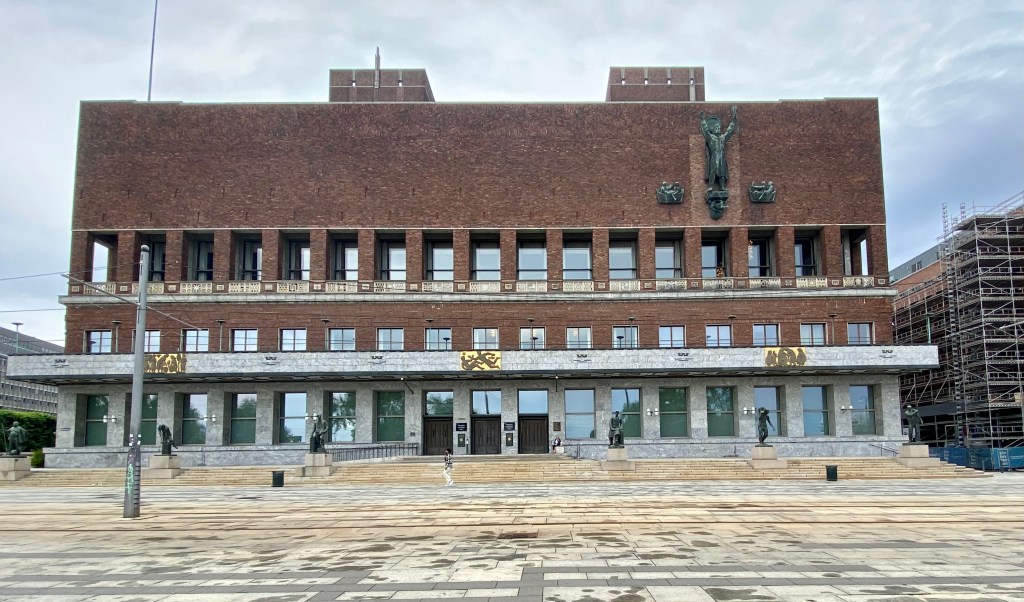
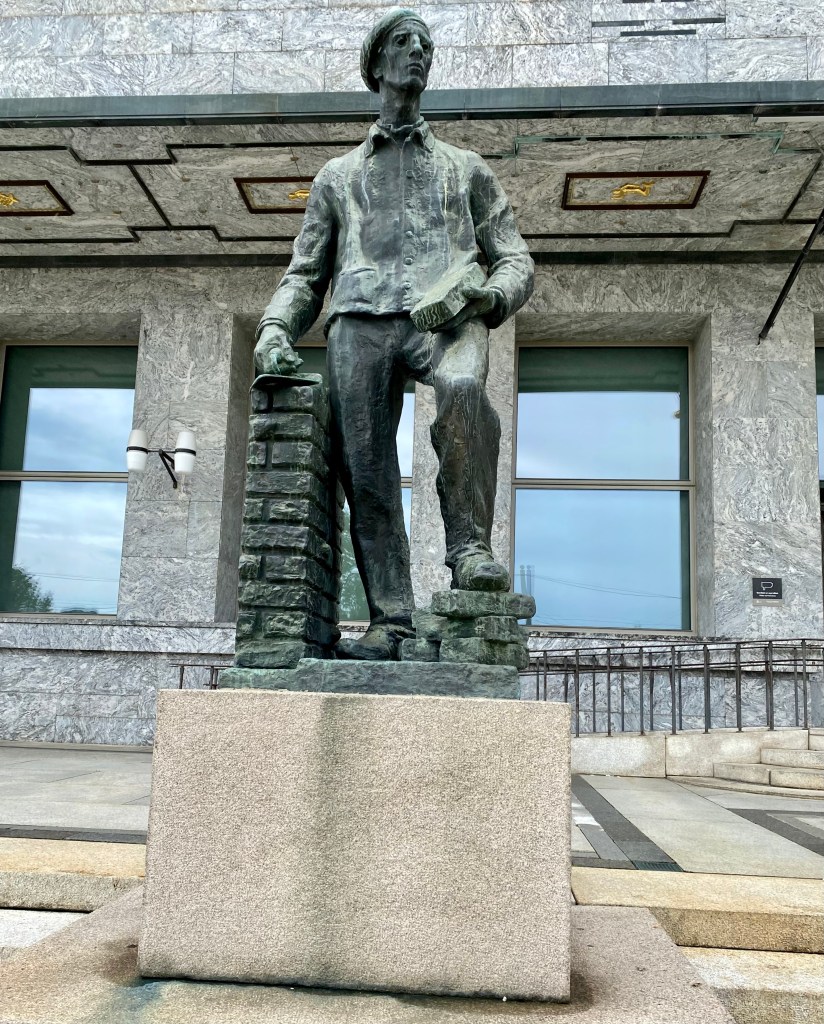
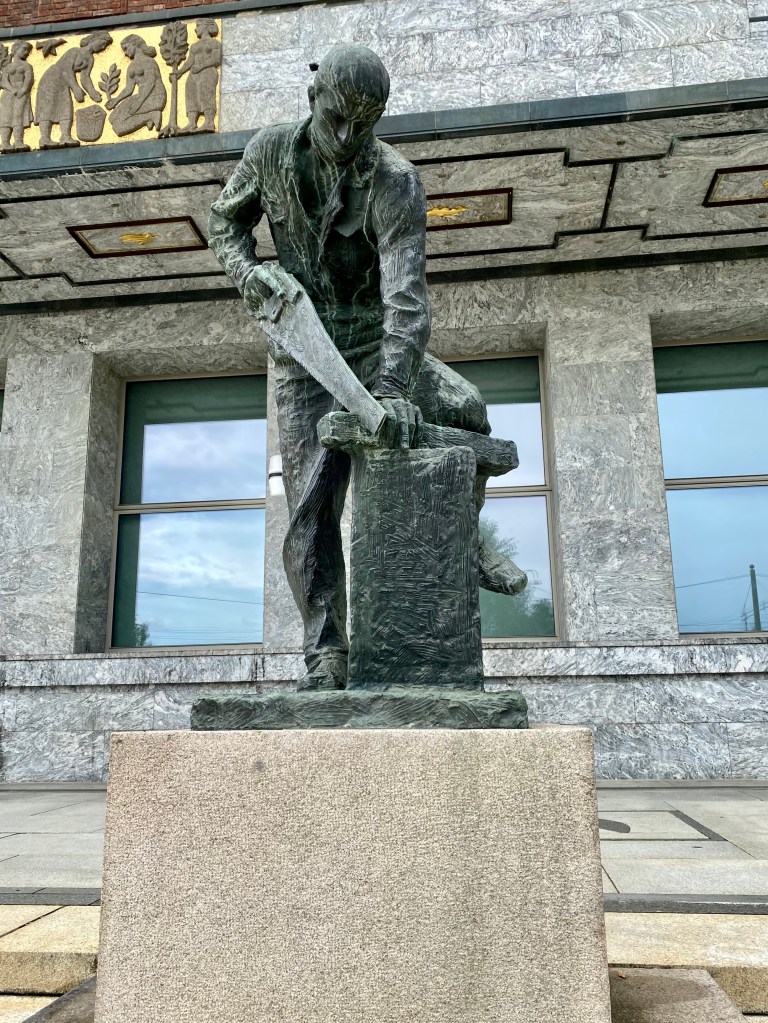
After a brief stop to admire the harbour we went on to the current City Hall (Rådhuset), a spectacular building which is also on our to do list! The rear of the building features a rendering of Saint Hallvard, the patron saint of Oslo depicted with three arrows. He is considered a martyr because of his defence of an innocent thrall woman. There are also statues of the various tradesfolk who built the city hall.


The next stop is the National Theatre where Gabriella fills us in on the development of the written Norwegian language.
Our last stop was the Norwegian Parliament Building (The Storting) which houses the supreme legislature of Norway, established in 1814 by the Constitution of Norway. There is a second Parliament (The Sámi Parliament of Norway) for people of Sámi heritage in Norway. It acts as an institution of cultural autonomy for the Sami people of Norway. The Parliament was opened on 9 October 1989. The seat is in the village of Kárášjohka in Northern Norway.
We bid adieu to our tour and wandered around until it started to rain again and we dropped into a cafe for a couple of glasses of Rosé and snacks before we headed back to City Hall for a tour. Sadly, we were a bit late so we walked around a bit more and headed to the hotel when the skies opened up again.

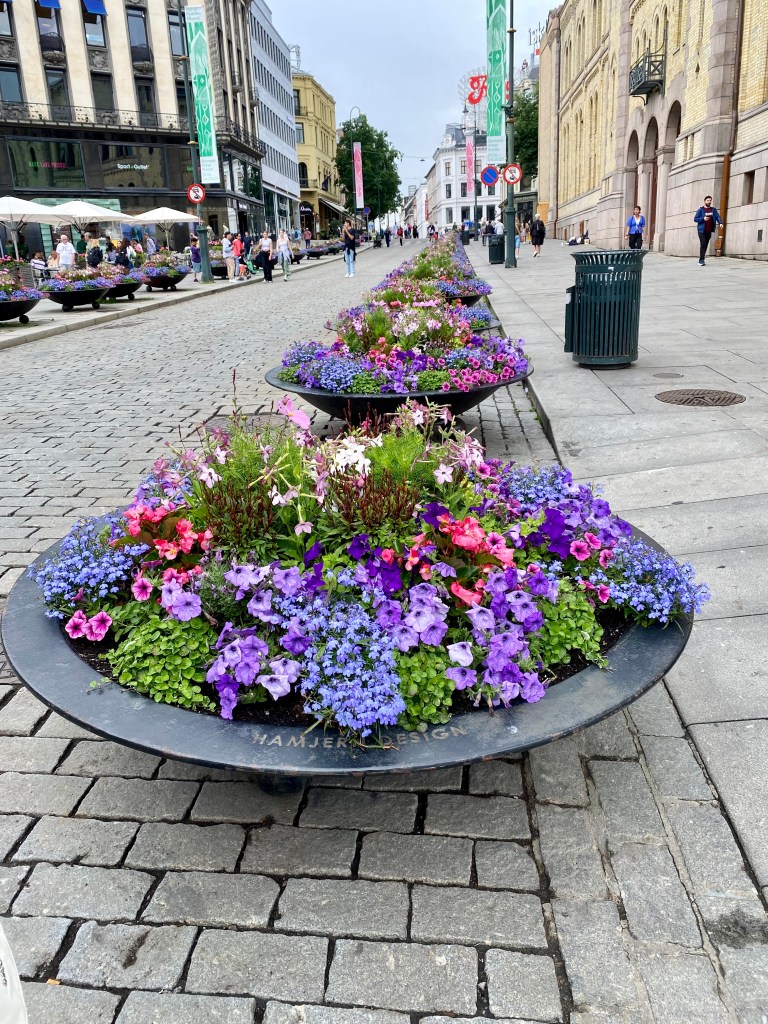

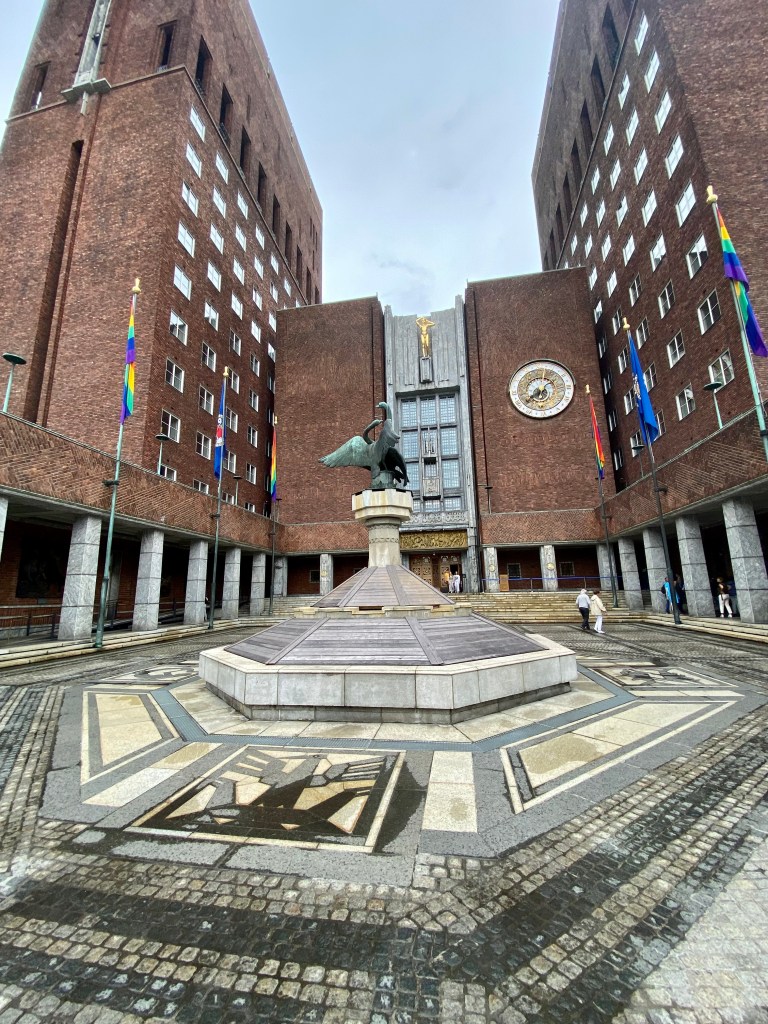
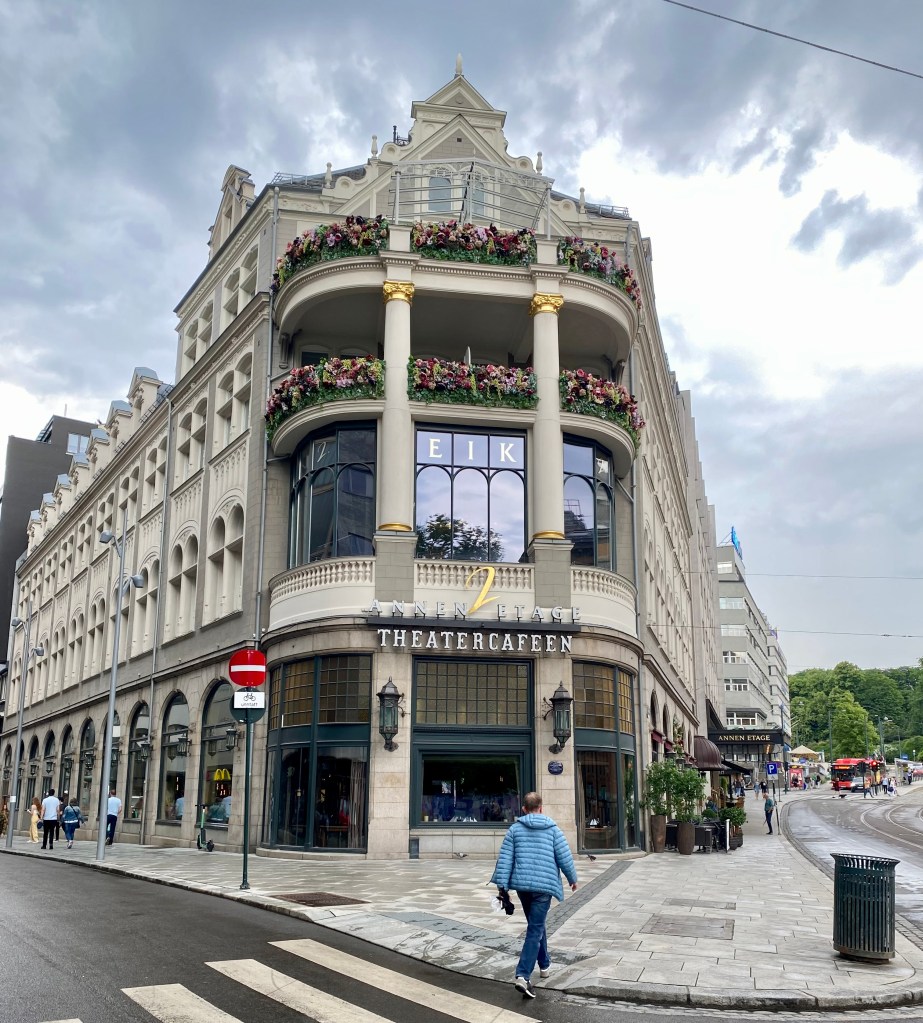
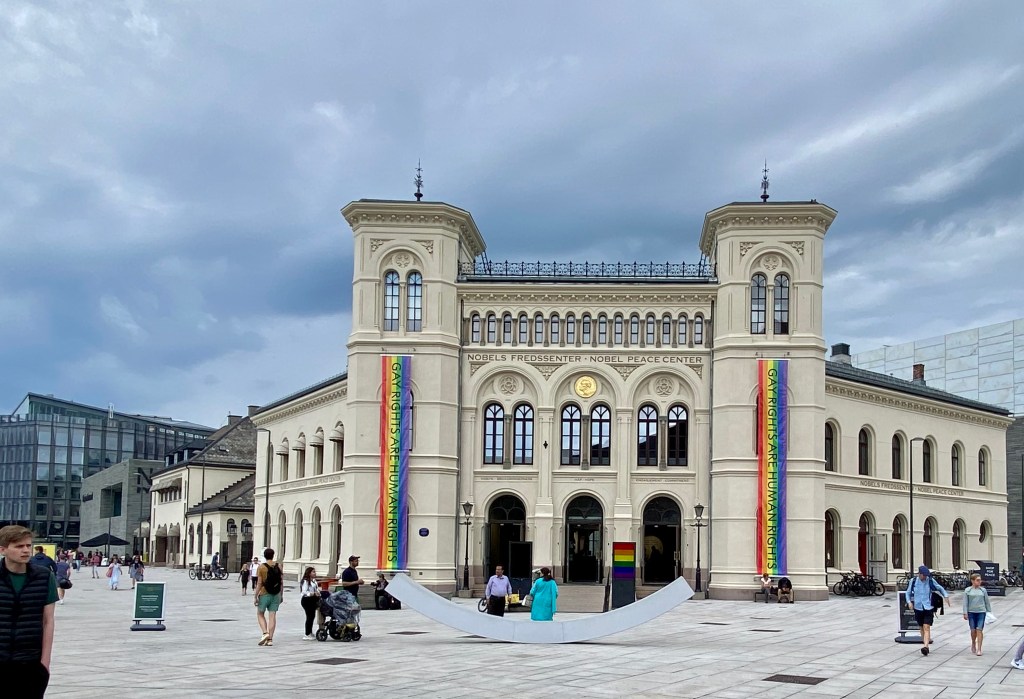
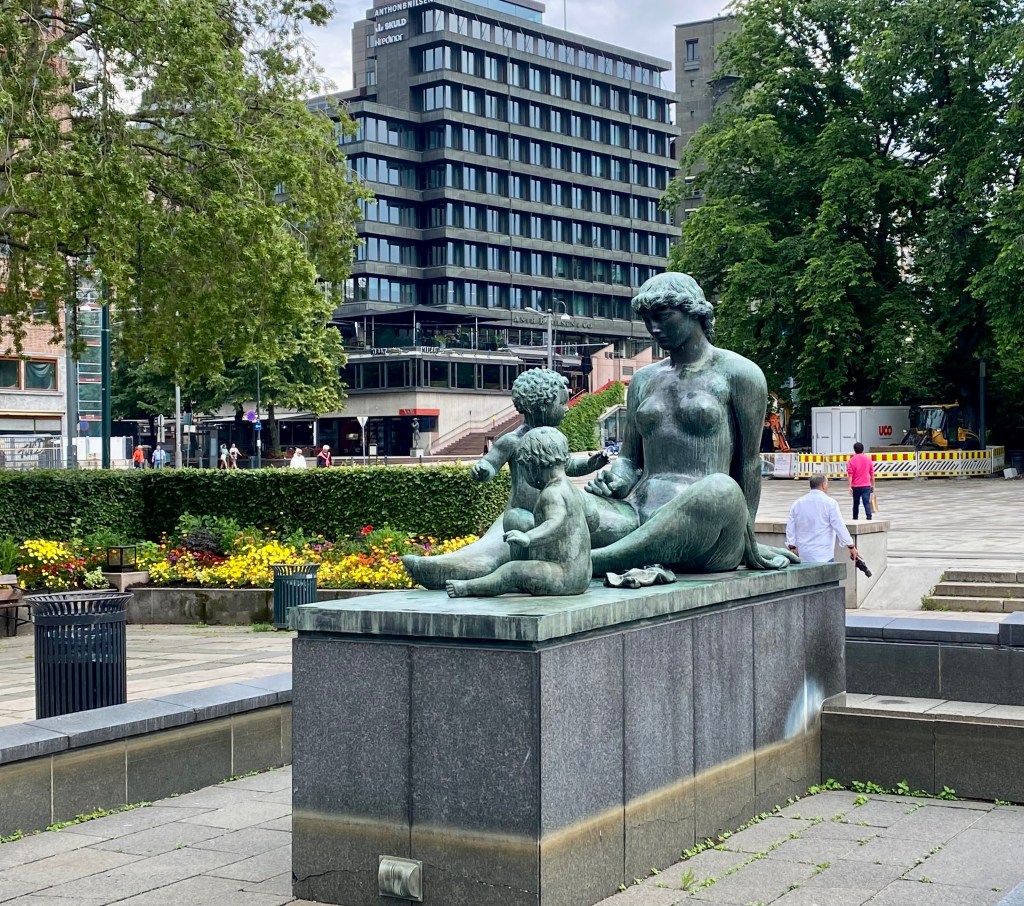

After a bit of down time, we shared a few glasses of wine and then headed out for dinner and more wine with some yummy pizza.

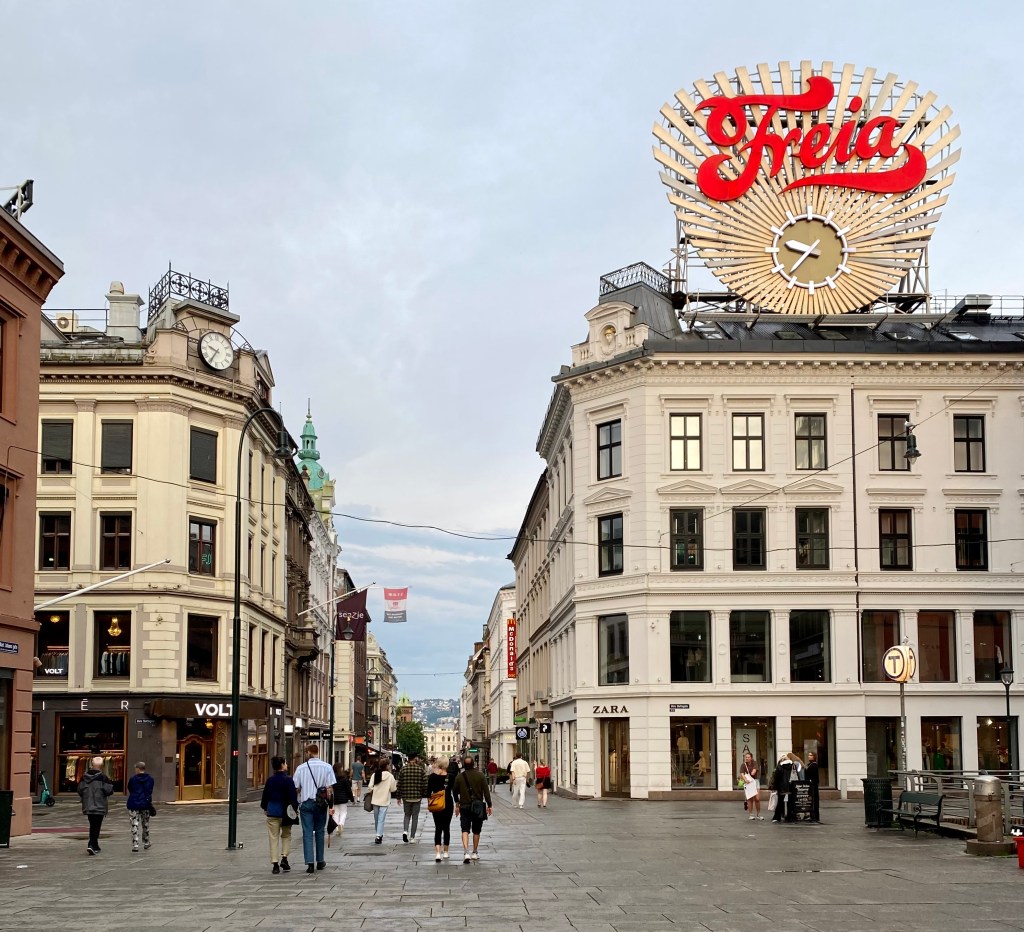

Our to do list is long and our time is limited so it’s an early night so we’re ready for tomorrow. Adventures await …
 Judy’s Rambles
Fascinating blog,look forward to your next adventure.
LikeLike