
September 22, 2022
Woke up to the soft sound of the boat swishing through the misty waters of the Danube. The brisk morning air was balanced by blue skies and sunshine signalling another beautiful day to be on tour.
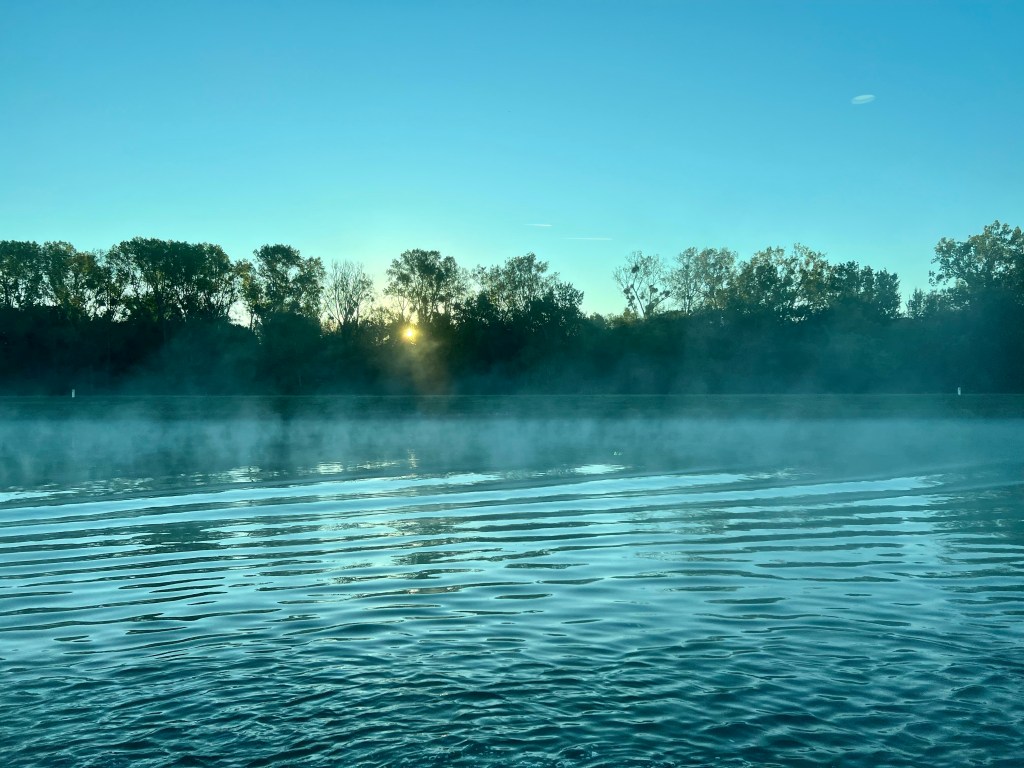
We dock on the German side of the river in Kehl (as the guide later described it – in the middle of nowhere). We enjoyed a beautiful breakfast and a then lovely lunch. Mostly been having breakfast and dinner only so going to need to eat less breakfast if we’re going to have lunch as well.
After lunch we board busses for the excursion of choice. Options were a walking tour of Strasbourg, a visit to the Black Forest followed by the cake of the same name or a winery tour. A difficult choice indeed but, of course, the winery tour was my choice. People from our extended group are going on all three tours so I can compare notes tonight.
Our boat is docked beside another boat so after swiping out of our boat we walk through the other boat and then up their gangway to the dock. Soon enough our bus headed over the nearby bridge across the Rhine into France and the city of Strasbourg.
Our gargantuan bus is taking us to the winery via the Alsace Wine Route. Officially launched as a tourist trail in 1953, the Alsace Wine Route winds its way through 170 km of hills and vineyards dotted with medieval castles 70 quaint villages with their half-timbered houses, flower-laden windowsills and cobblestone lanes.

The wine area of Alsace is the smallest in France boasting almost 1000 wineries. Wines from Alsace are named in accordance with the type of wine while other parts of France name their wines after the location.
The Alsace region was originally mountain tops that collapsed leaving a rich mosaic of high quality soils. These terroirs provide many opportunities for high quality wines.
In Alsace, the wineries are not typically found in the middle of the vines because their acreages are spread over the area to take advantage of the various types of soil. Most grapes are harvested by hand because hills don’t allow for machinery. Individual wineries harvest when their grapes are ready.
Since 1973, only seven types of grapes can be used to make Alsatian wines; six for white wines and one for red. Sylvaner is intended for pairing with simple foods such pickles, sausages, etc. Pinot Blanc is a more aromatic wine which pairs nicely with goat’s cheese. Riesling is the king of Alsace and it pairs well with all local delicacies. Muscat produces an aromatic fruity dry wine which is easy to drink on its own or in the spring with white asparagus. Pinot gris is one of the easiest wines to drink as it pairs well with everything. Gewürztraminer means spicy and is great with spicier foods. The sole red wine made in the area is a light and fruity Pinot Noir; brought to Alsace by monks from Burgundy many years ago. They also make Cremant; sparking wine made from Pinot Noir grapes using the champagne method that can be pink, rosé or white depending on whether and how long the skins are left with the grapes during fermentation. Last but not least, they make some late harvest wines from grapes picked in late September/early October.
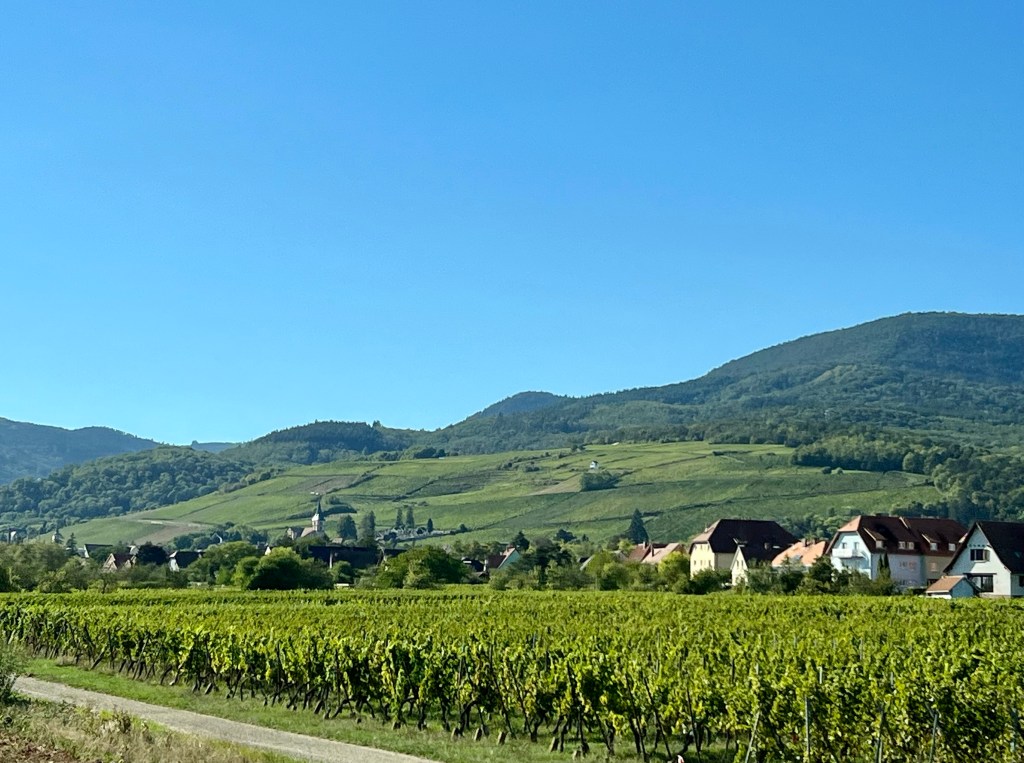


In the little villages the colour of house was used to identify the type of trade/craftsmen living there; bakers had yellow houses, fishermen lived in blue houses, butchers in red houses, etc. as many people were illiterate.
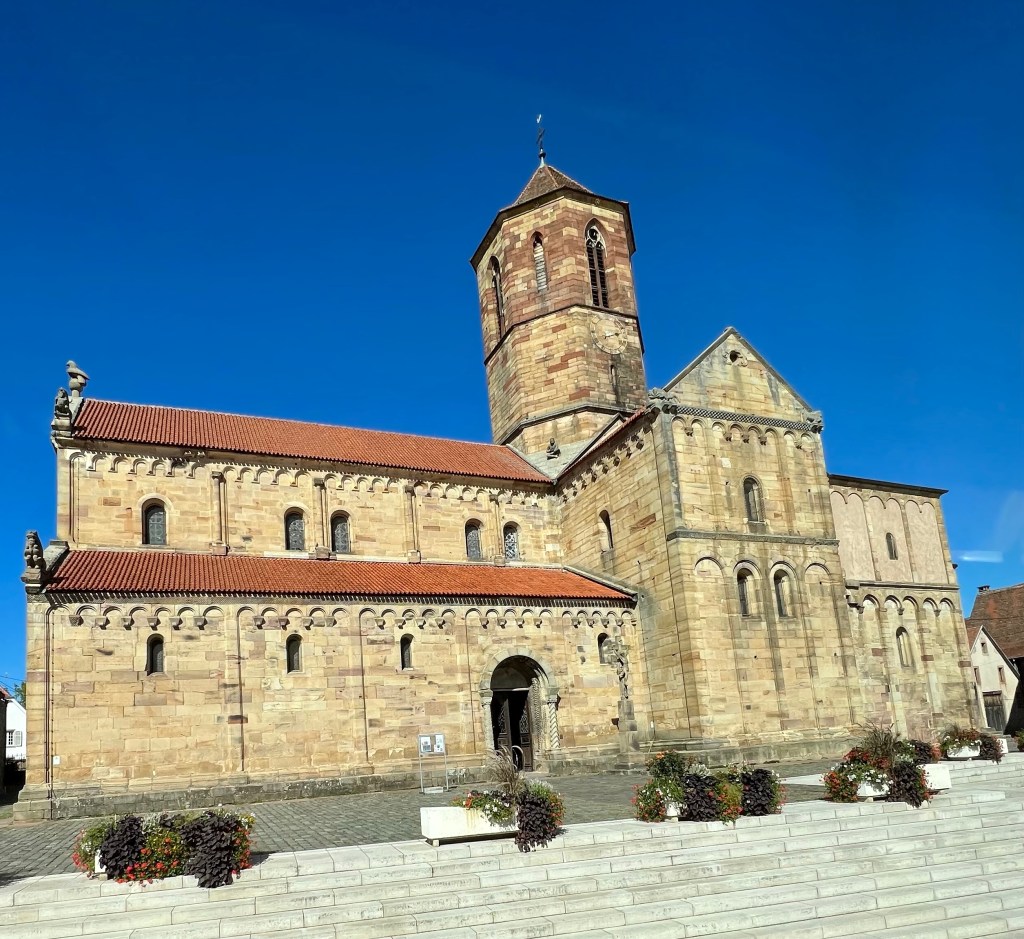
Rosheim village was the first town we drive through; a one street village that was originally a gated town and home to the oldest stone house in Alsace. It’s a two church town! We had a good view of St. Peter and St. Paul Roman Catholic church; man sitting on the roof on left side of bell tower is architect. The second was the neoclassical St Stephen Roman Catholic church built in 18th century.
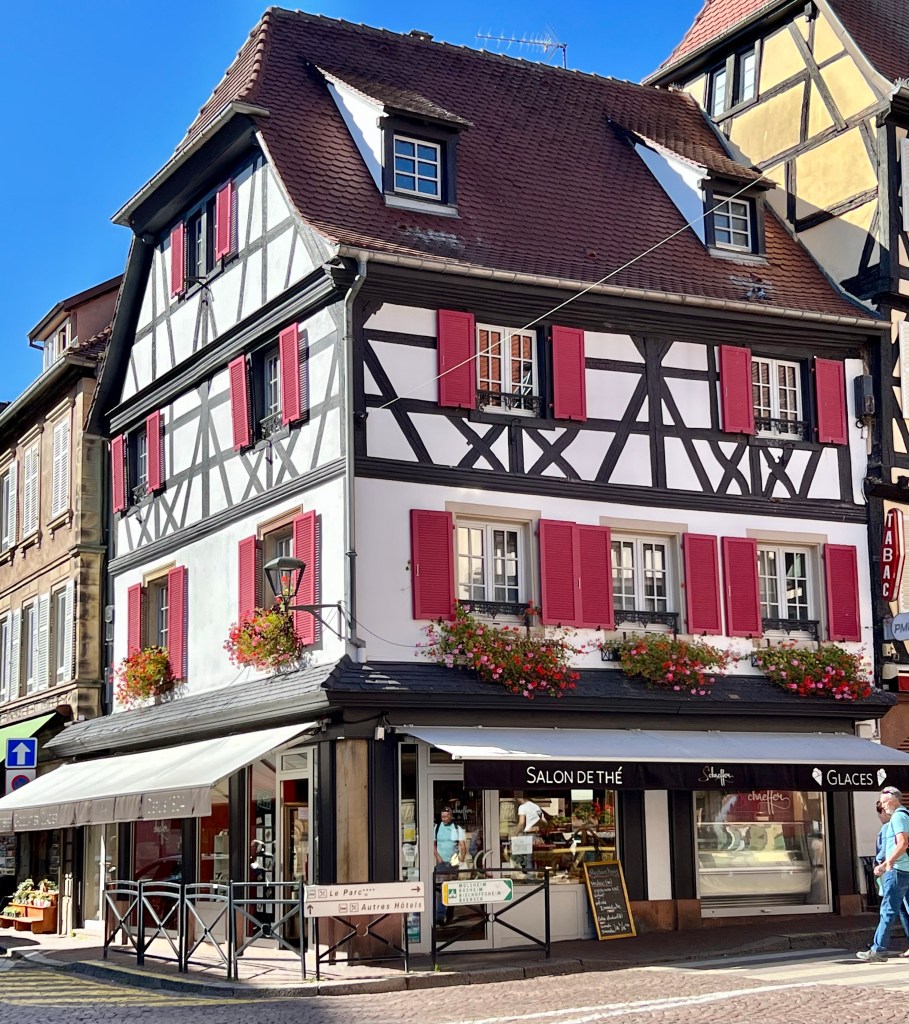
Our first stop along the Route is Obernai town. This village was not damaged during WWII as it had no strategic importance. Later in the war, Nazis conscripted 19-23 year olds from the town (220) and the region (130,000+) most of which never came home. There is a memorial in Obernai to that lost generation.

The eastern side of the wall around the city is more fortified to protect against invaders from Germany; two thick walls with water in between. The western side had a thinner wall but this side also had the natural “wall” provided by the hills.

The traditional kougelhopf bakery is just inside the gates as is the synagogue. The Nazis use the synagogue as slaughterhouse during WWII exclusively for pigs so it had to be cleaned and reconsecrated before being reopened after Nazis were defeated.

The houses in City Center date back to the 16/17th century. The corn house on the main square (historically market square) was originally a slaughter house. The bell on the top rang twice a day; at 6 am to open the market and again at noon to close the market.
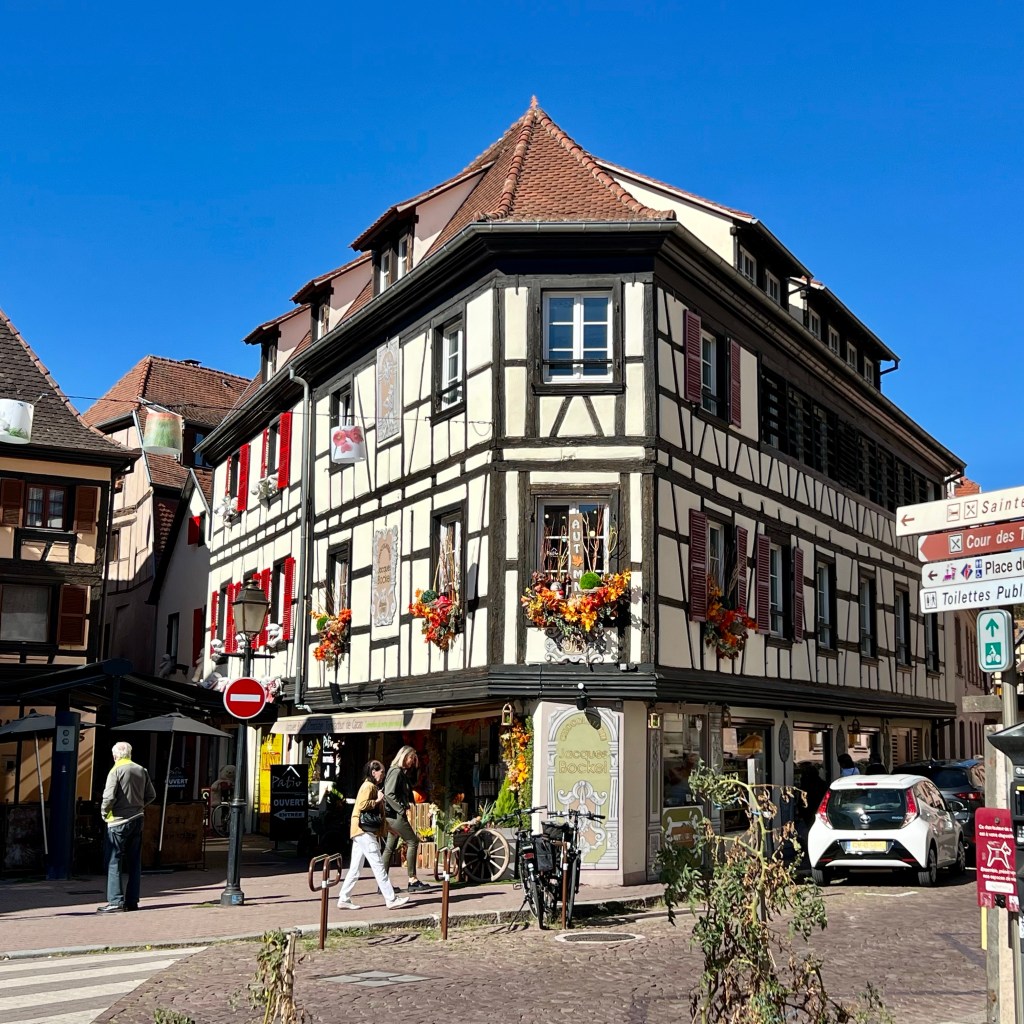

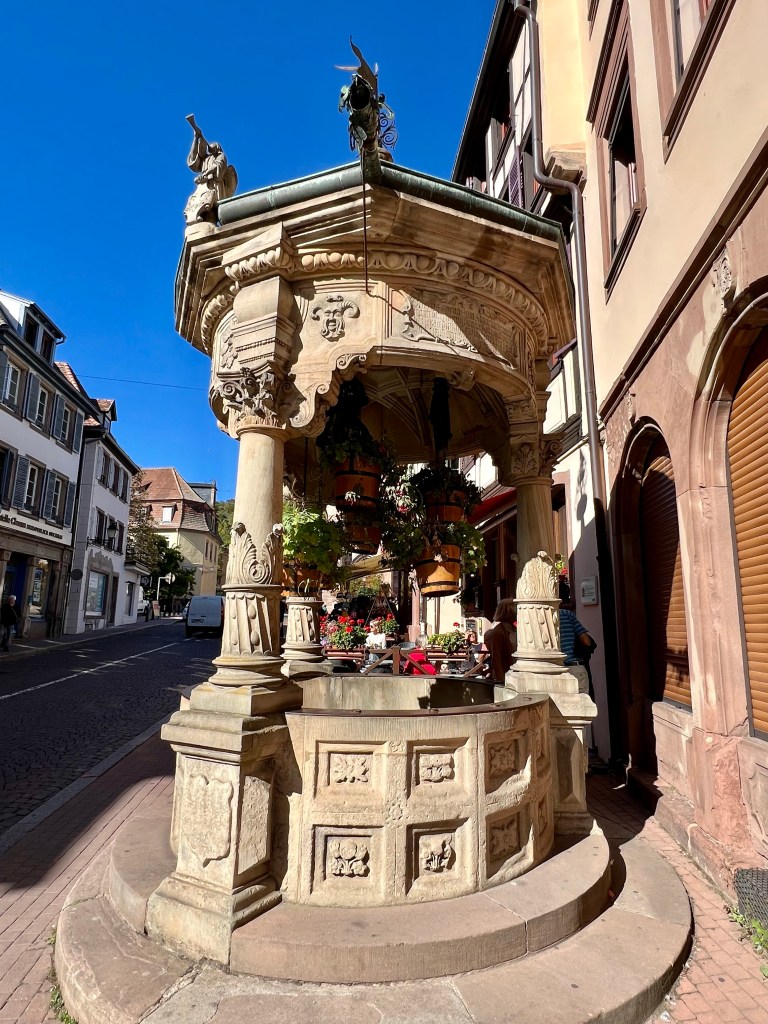
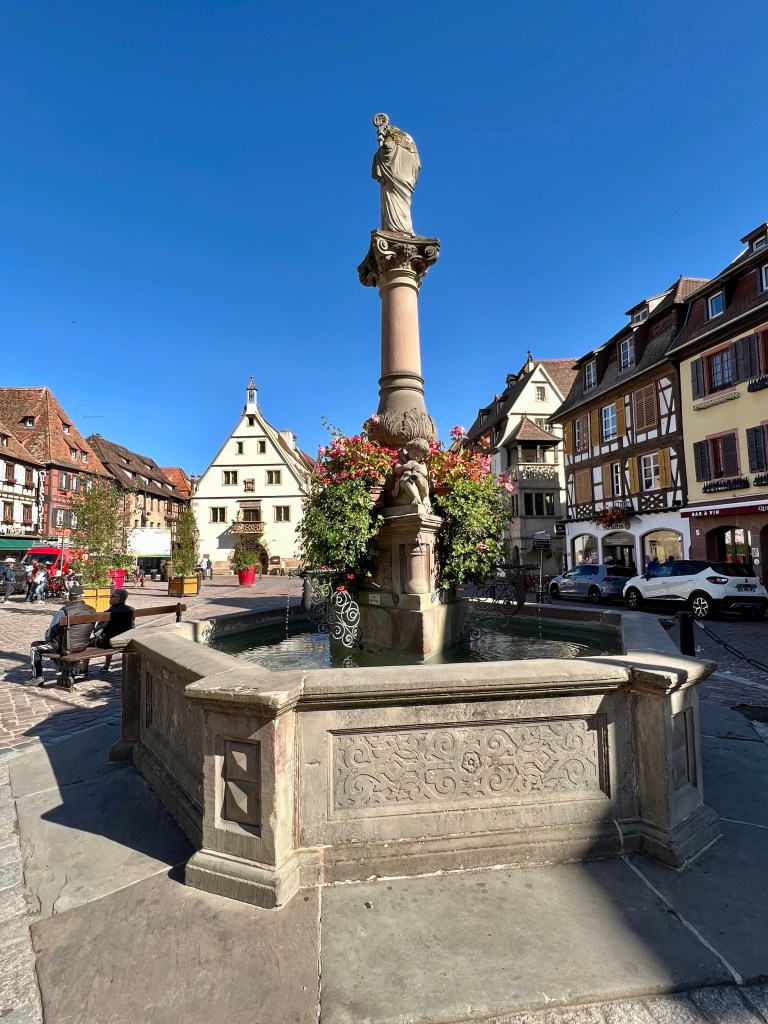


Across from the square is the city hall as is the bell tower of the church used for war time services inside city. People went to church outside the town during peace time.

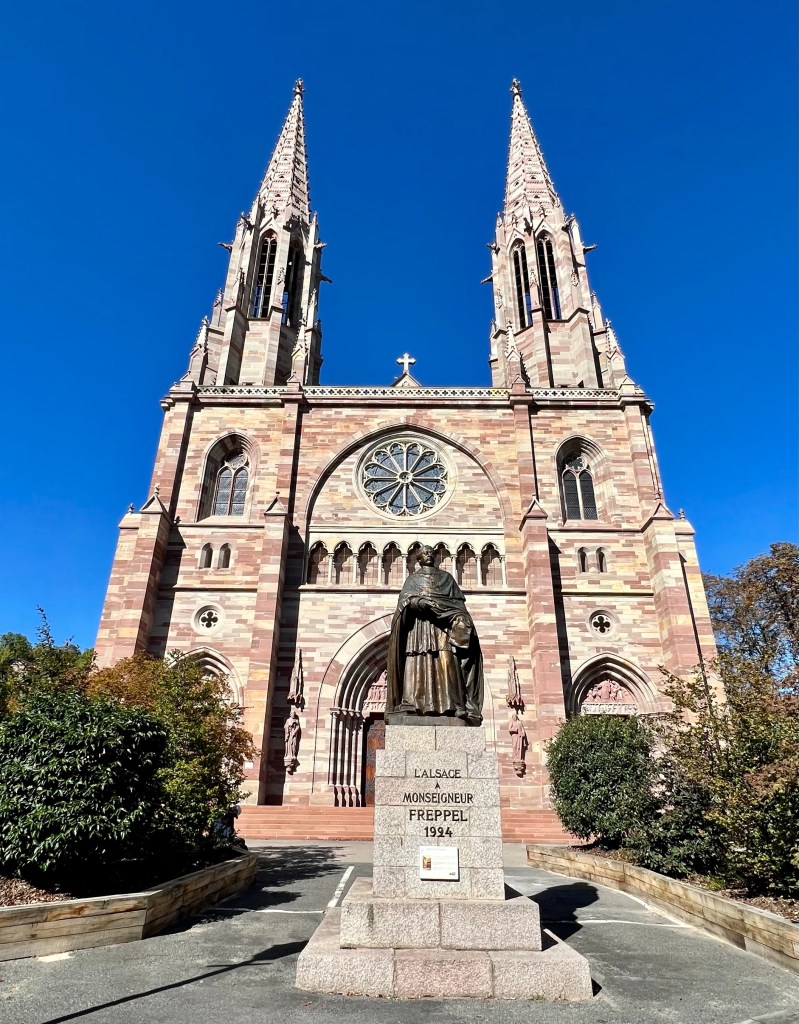
Only the tower with bells remain. A new church is found just outside the town. The church is oriented north-south not east-west as is typical. They wanted to build a large church and if they stuck with tradition would have needed to move the bodies from cemetery. This church has two steeples but no bells because it was so close to the bell tower from the original church. They used the money they saved to invest in an organ.
Pretzels (originally called bretzel) were invented in Alsace in 1873. Originally designed as a welcome gift for new residents; shape of embrace (bread and salt).
Alsace is also the gingerbread capital. This dates back to the Middle Ages when simple honey cakes were made in the winter. After finding America and travels around world brought back spices like cinnamon, anise and cardamon which were used to transform the simple honey cake into gingerbread; mainly a Christmas treat.
Vineyards are on mainly in the hills not on plains as vines need to suffer and soil on the plains are too rich with abundant water. Vines on plains become too lazy and produce grapes with lots of liquid but not much taste. It is forbidden to irrigate vines in Alsace. Vines need to grow deep roots through all the soil types to feed. Mainly grow Sylvaner grapes on the plains; used to make the less complex wines. The other six noble varieties are pretty much exclusively grown on the hills.
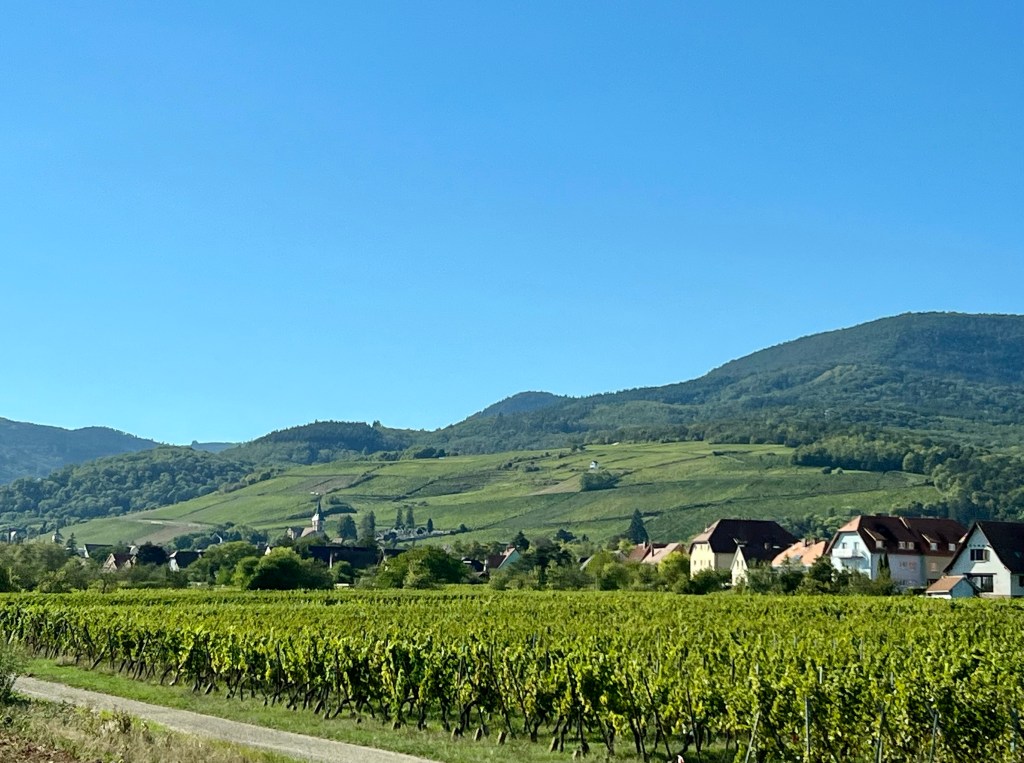

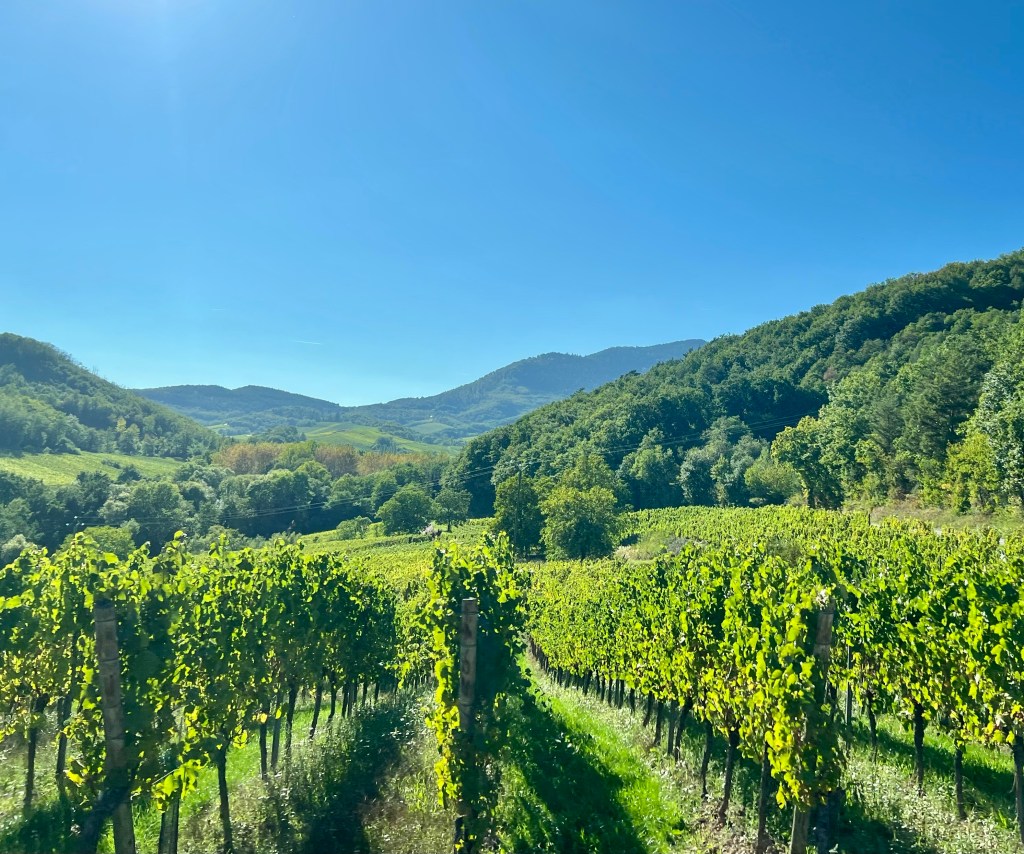
Vines can be productive for sixty years and then the land rests two years. After replanting the vines take three years or so to bear enough fruit to be useful in wine production.
Finally we arrived at the town where our wine tasting will take place; Dambach-la-Ville; a town on the eastern slopes of the Vosges Mountains known for its quality wines. The town is home to 2000 residents living in half-timbered or Renaissance houses with lots of flowers and pretty fountains. The village is located amidst in a 470 ha of vineyards; the largest in Alsace. We entered through one of the gates from Middle Ages, barely large enough for us to squeak through, and headed to the home/atelier of Martial Dirringer. The family has been creating wines here for five generations since 1707. Here we learned even more about the wines of Alsace, especially theirs’ but my brain was full!!
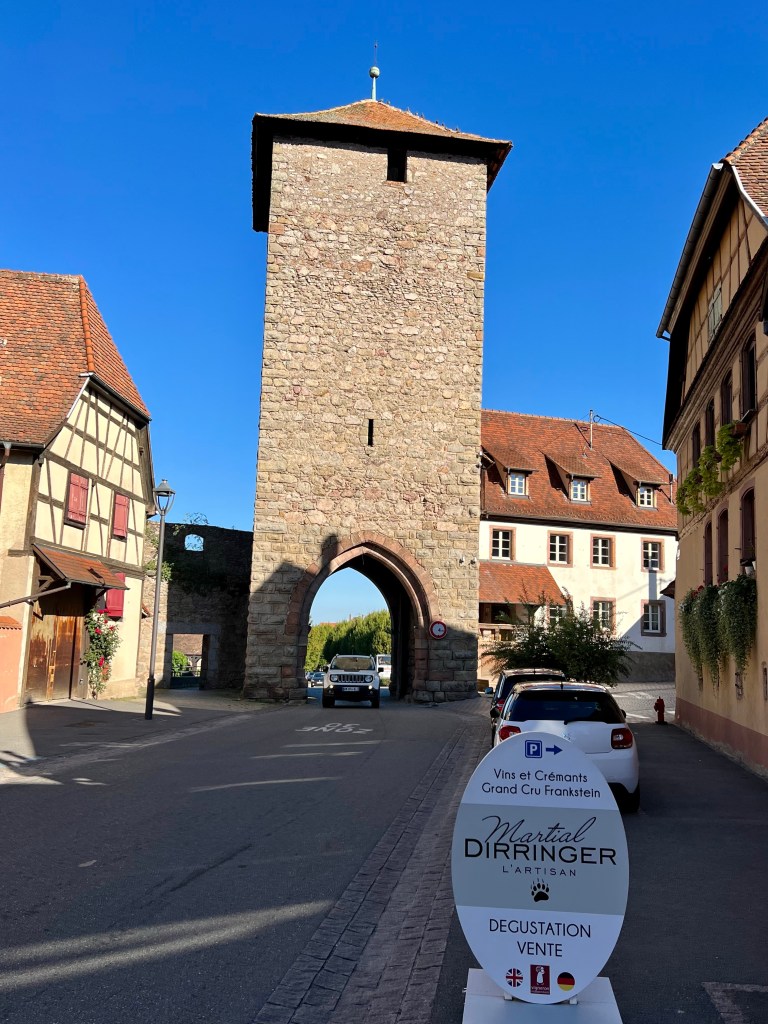

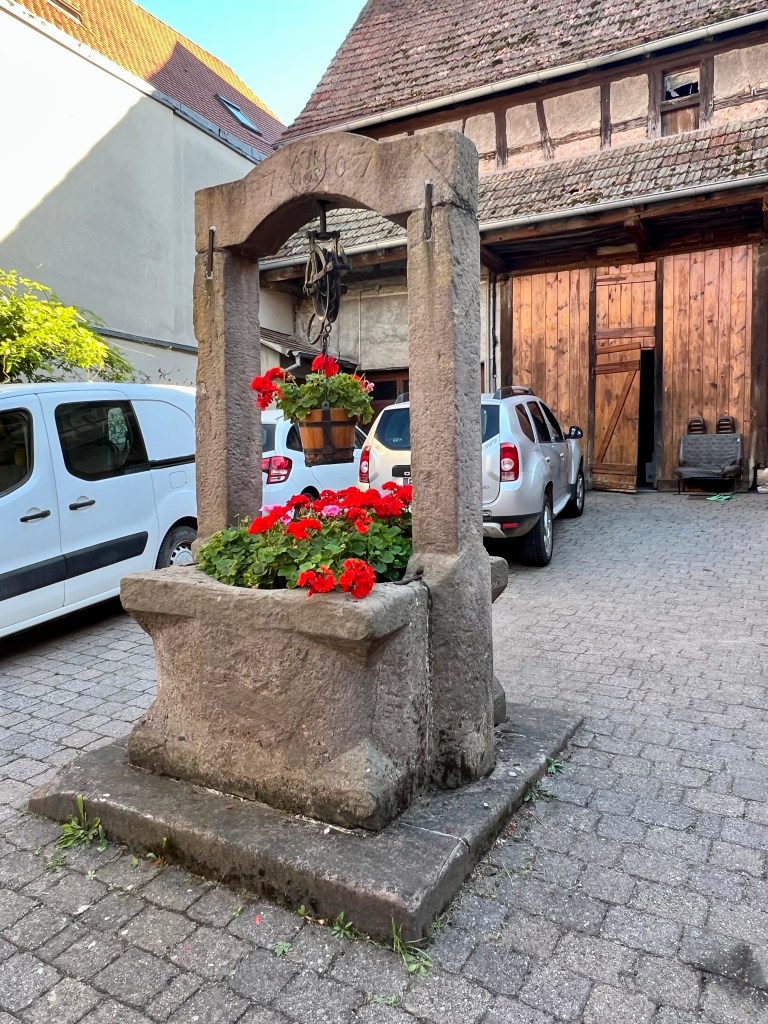

The family cultivates 18 ha of vines; selling half the grapes and bottling the rest (50,000 bottles/year) – all cut by hand. They grow all of the seven grapes of Alsace here on their different terroirs. They also produce Cremant and Frankstein Grand Cru. The Grand Cru appellation means that the wine is a product of a specific terroir which meets strictly controlled geological and climatic criteria that confer specific characteristics to the wine.
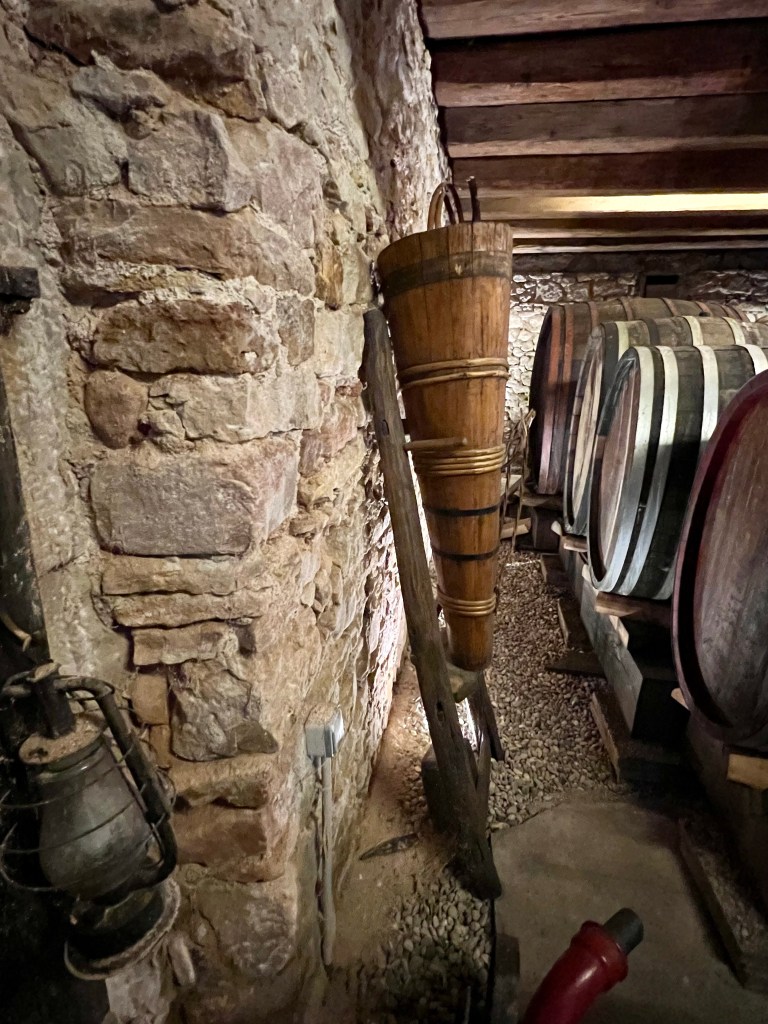
The Alsace boasts 51 Grands Crus, reflecting the complexity and rich diversity of the Alsatian winegrowing region. Four grape varieties are allowed under the Grand Cru Appellations: Riesling, Muscat, Pinot Gris and Gewürztraminer. The Frankstein Grand Cru, from this area, is a Gewürztraminer. The vines have a SSE orientation on a hill with the correct soil type and a minimum of 50 years growing the same grape variety on the same spot. These superior quality wines are confirmed by experts. We did get a chance to try their Grand Cru from 2017 Terre de Granite and I’ve bought a bottle; not sure it’ll make it home!
We first tried their pink Cremant which was quite tasty and may or may not be in my suitcase when I arrive home. This is made from the Pinot Noir grapes and has four hours with skin to impart the pink colour. Aged in both the barrel and the bottle, Cremant was first made in Alsace. Around 30% of Alsatian wines are Cremant with Alsace producing a whopping 50% of the Cremant originating from France.
Bigger barrels designed by beer producer brewery oval shape. Other wine regions have round. Oval barrels use less space and beer barrels had been used so cheaper.

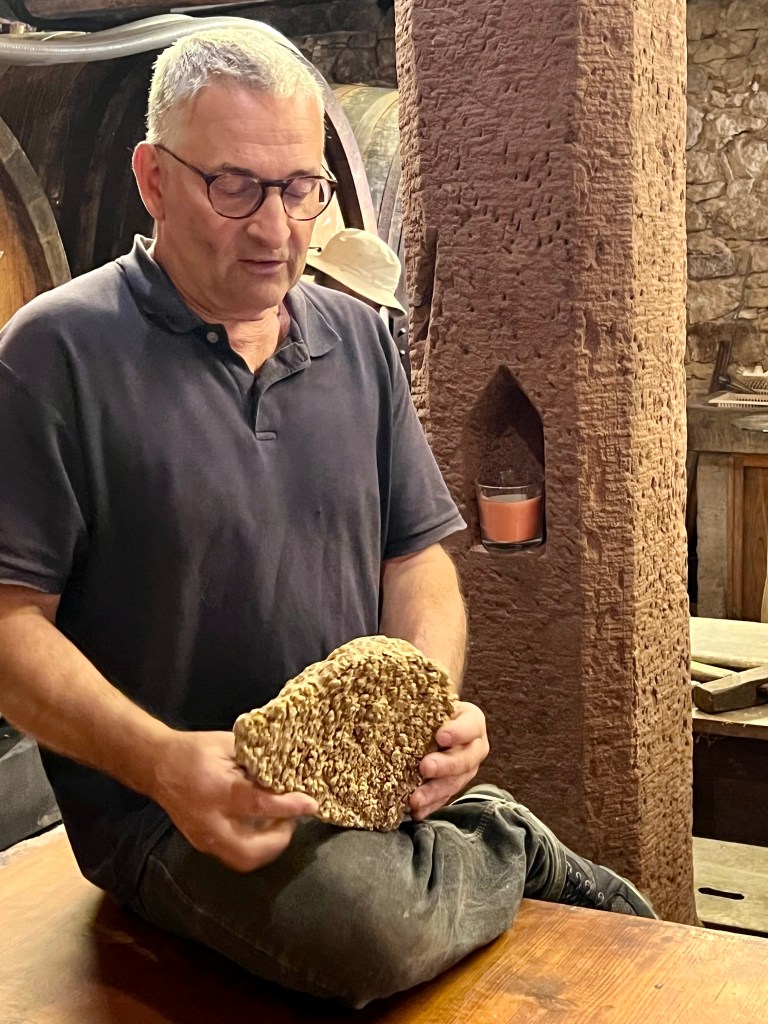
Had hole in one of the posts to hold candle to monitor CO2 level. As long as candle was burning was safe to work here.
After the wine tasting (and buying) we hopped back on the bus to head back to the boat this time using the highway. We were a bit late and luckily the boat was waiting for us.
The typical evening routine includes a discussion of tomorrow’s schedule of activities and the Executive Chef’s recommendations for dinner with of course a few cocktails.
Dinner is again fabulous though we all may have a tad too much wine – lol. After dinner we headed to the lounge for more drinks and a Name That Tune Game Show. There are two teams and yours truly is the Captain for our side. We were doing pretty well at the beginning but at some point the wheels fell off and we came in a “close” second. Great fun and silliness for a bit so all good.
Tomorrow is another day. Luxurious adventures await …
 Judy’s Rambles