
September 25, 2022
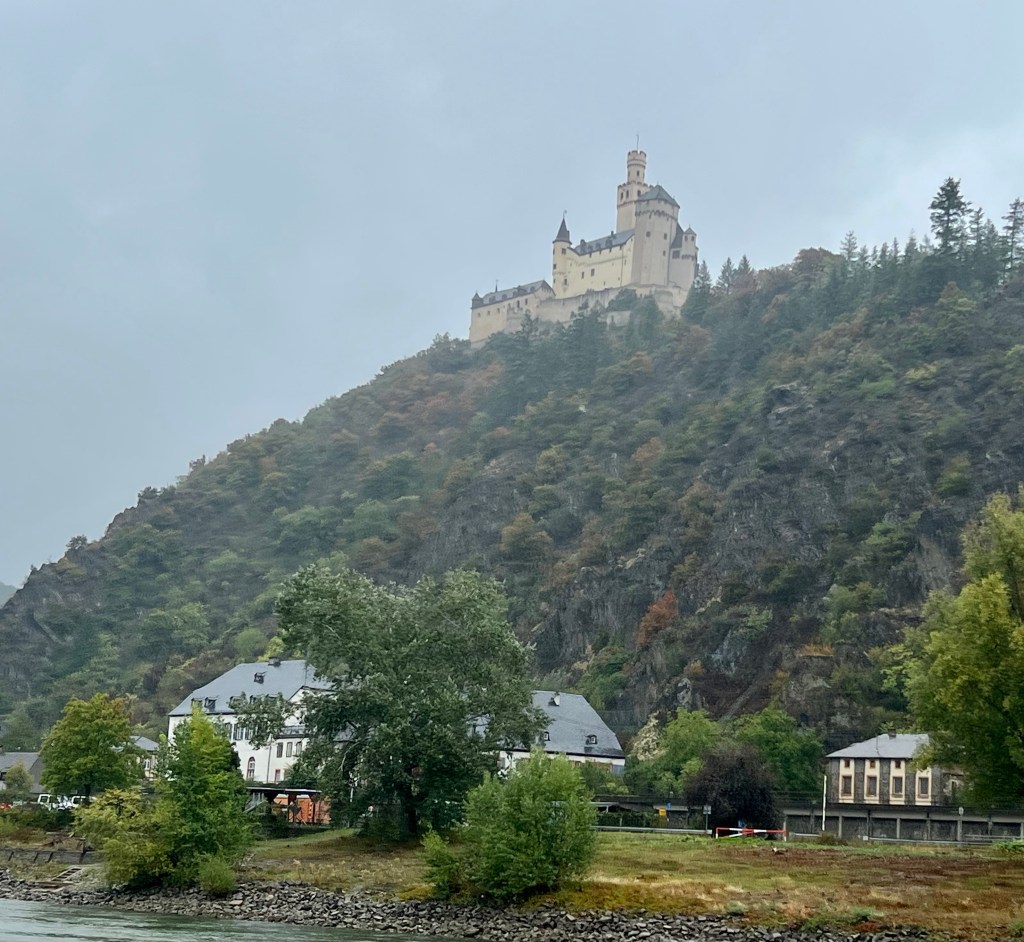
This morning after breakfast we’re cruising through The Rhine Gorge aka the Upper Middle Rhine Valley; a visually stunning 65 km section of the Rhine between Rüdesheim and Koblenz. For a few rainy hours we were treated to rolling vine-clad hills crowned by medieval castles and fortresses, historic villages. The river not to be outdone also features rock formations steeped in legends. This is where the Rhine really shows off its magnificent beauty and, in 2002, the Upper Middle Rhine earned UNESCO World Heritage status as a result.
I wish I’d had time to keep track of which castle was which but they were coming fast and furious so I listened to the audio guide and then ran out both sides of the boat to snap pics in the rain, lol! Either way, I think the beauty does speak for itself.
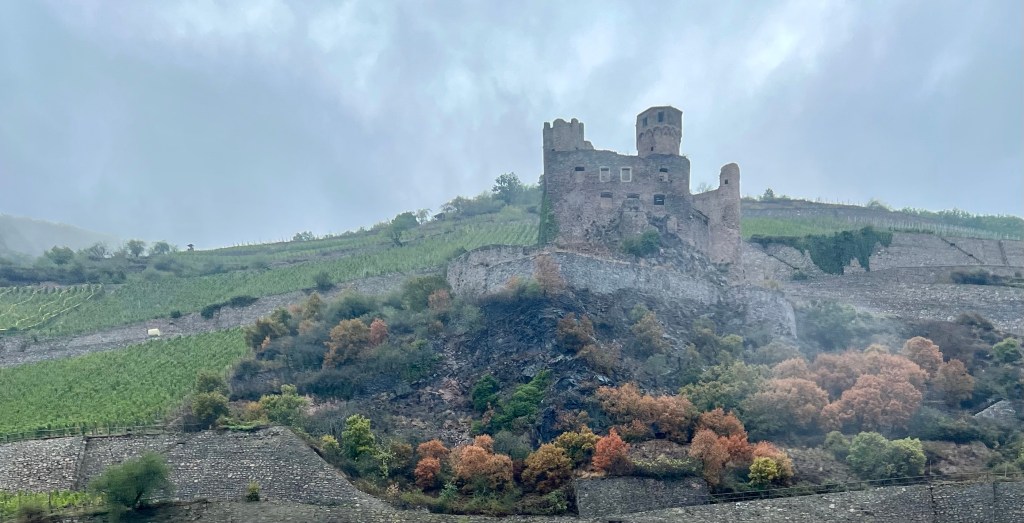


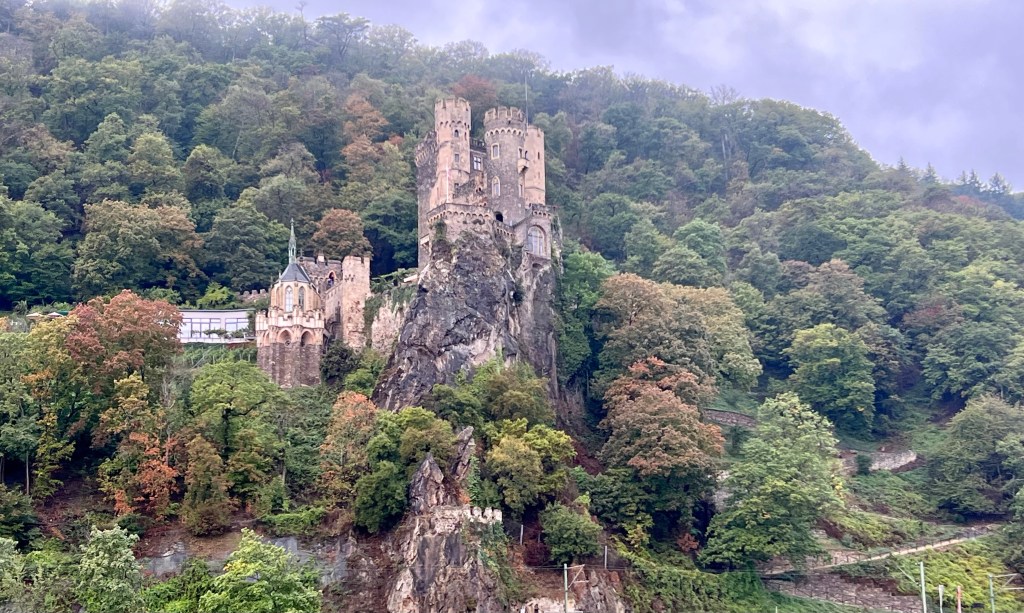


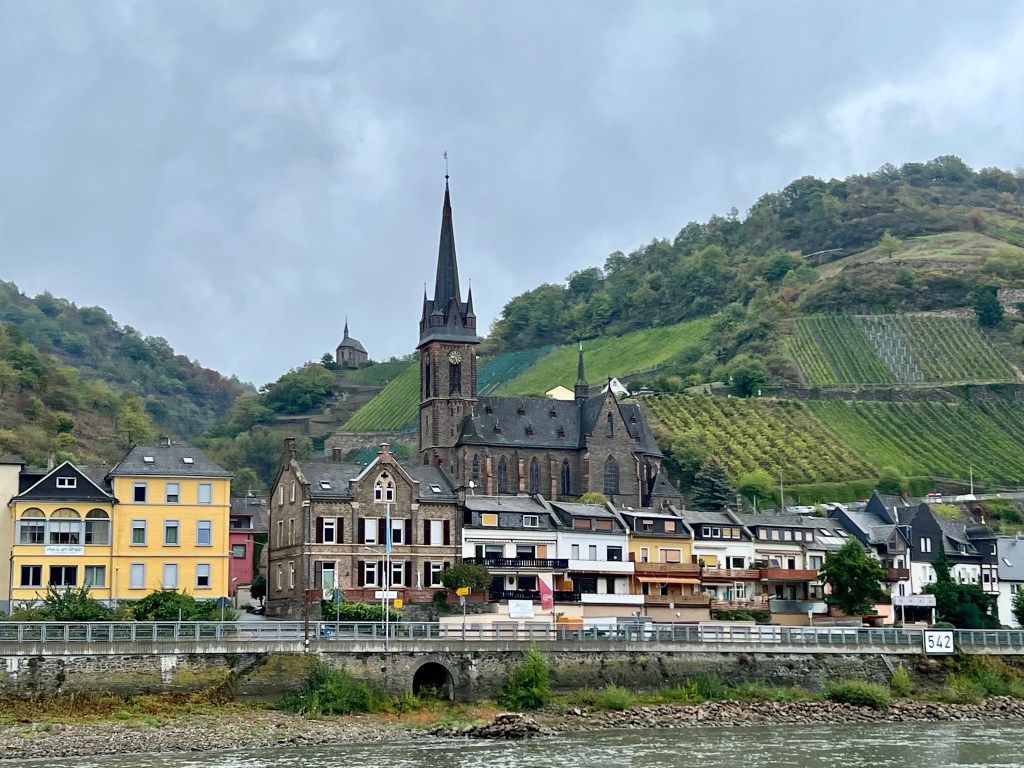
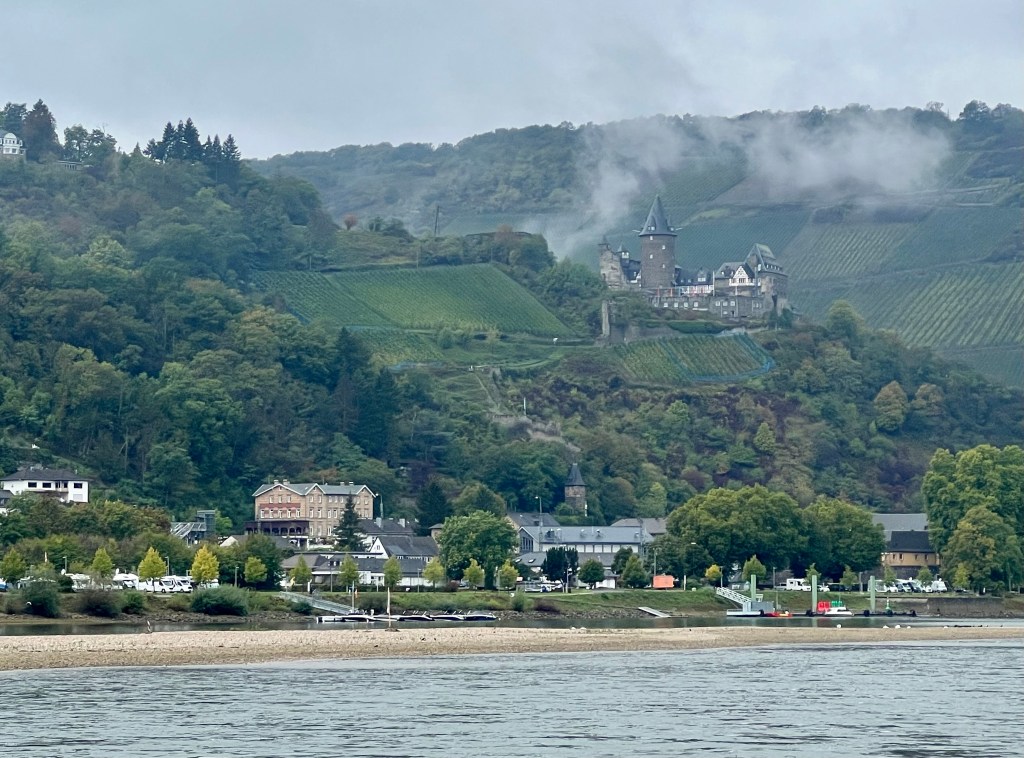
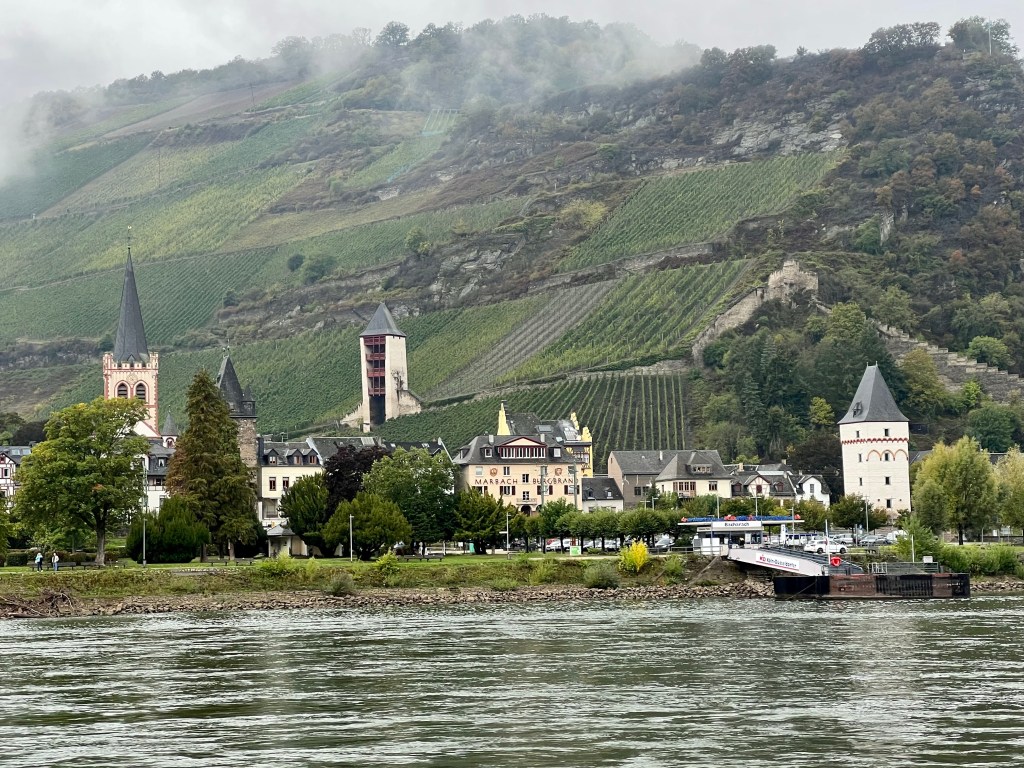
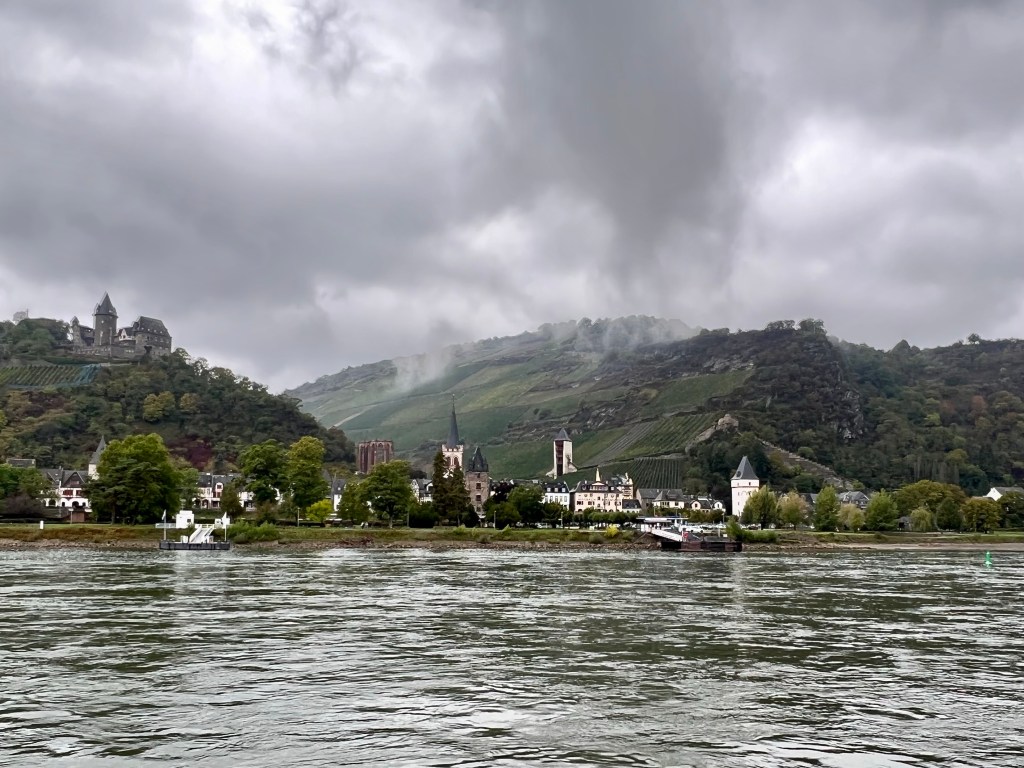
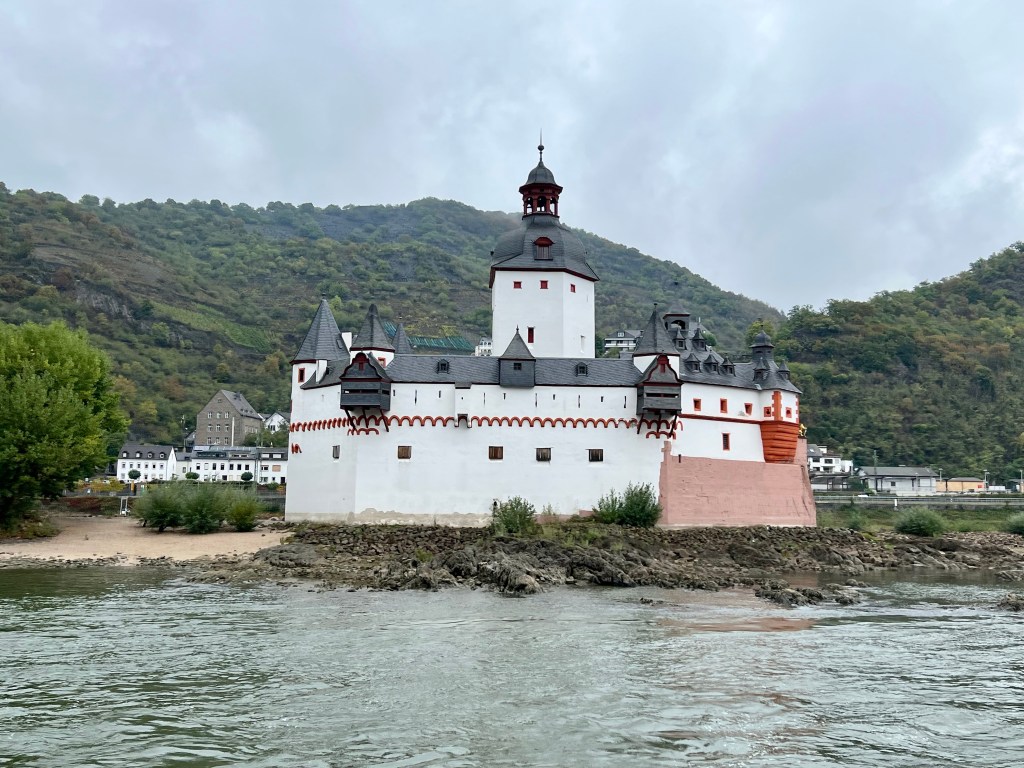
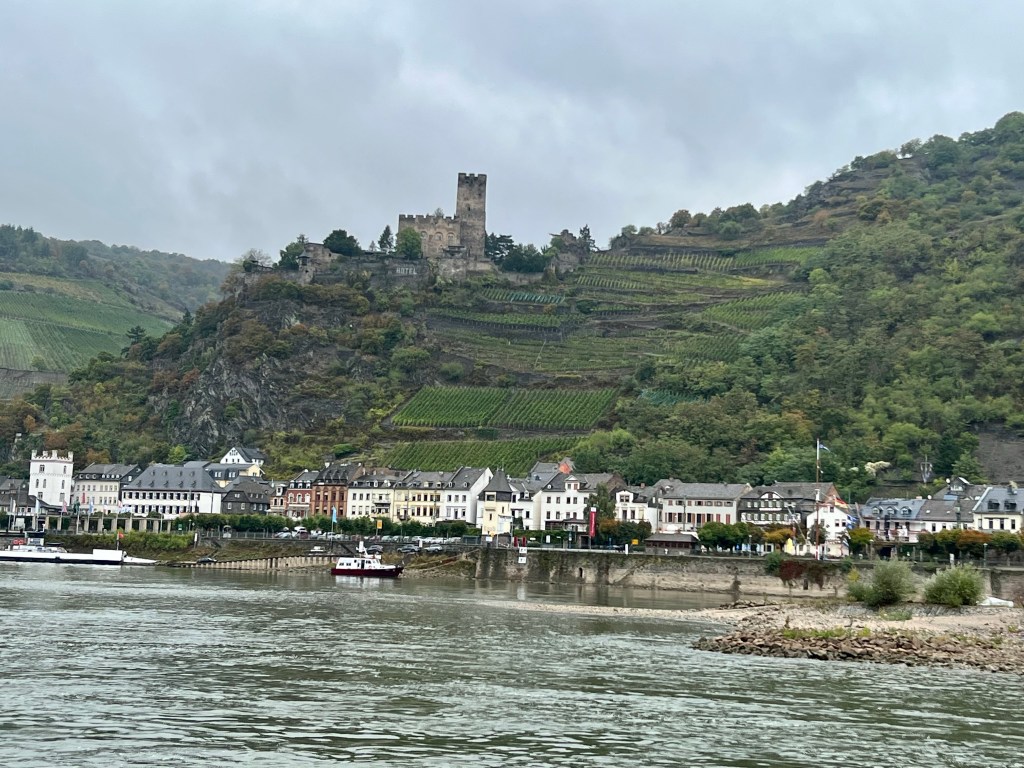


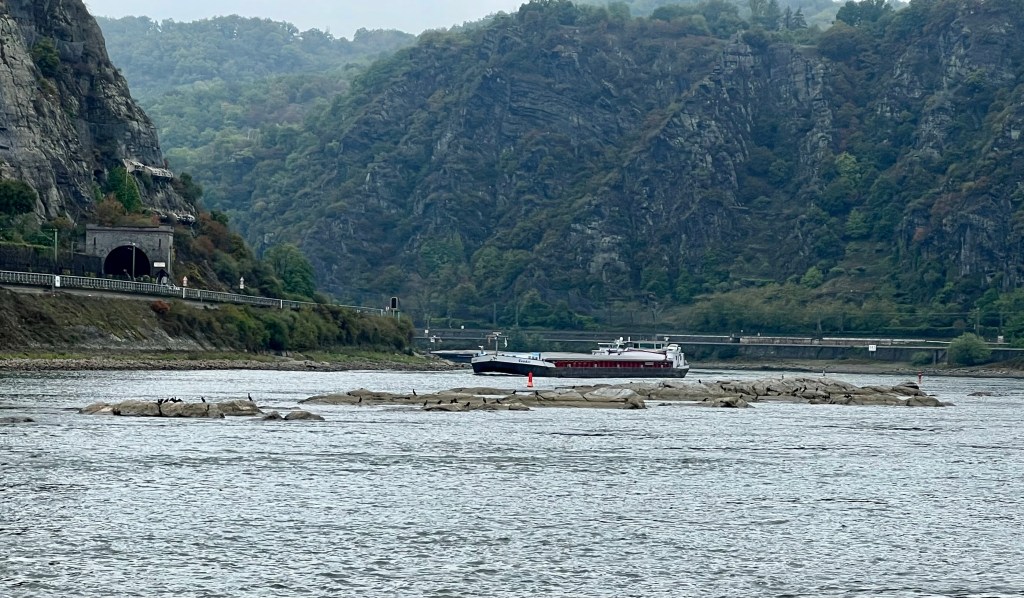
I did however manage to capture/retrieve the stories of the legendary rock formations; the Seven Sisters and Lorelei.
The seven sisters were renowned for their beauty and their wild behaviour; they used to ride out hunting and hawking, threw many magnificent banquets and their beauty, riches, and their gay and joyous lives attracted knights from near and far. Many suitors were shunned by the sisters but eventually they gave in and agreed to marry or at least appeared to! When the appointed hour arrived they had boarded a boat and set sail laughing at their erstwhile suitors. The rejected suitors stood speechless on the shore shamed and angry. A terrible storm arose with waves rushing over the boat, burying it and the seven sisters in the depths below. On on the spot where these stony-hearted maidens met their deaths, seven pointed rocks appear above the surface of the water as a warning to other sassy women!
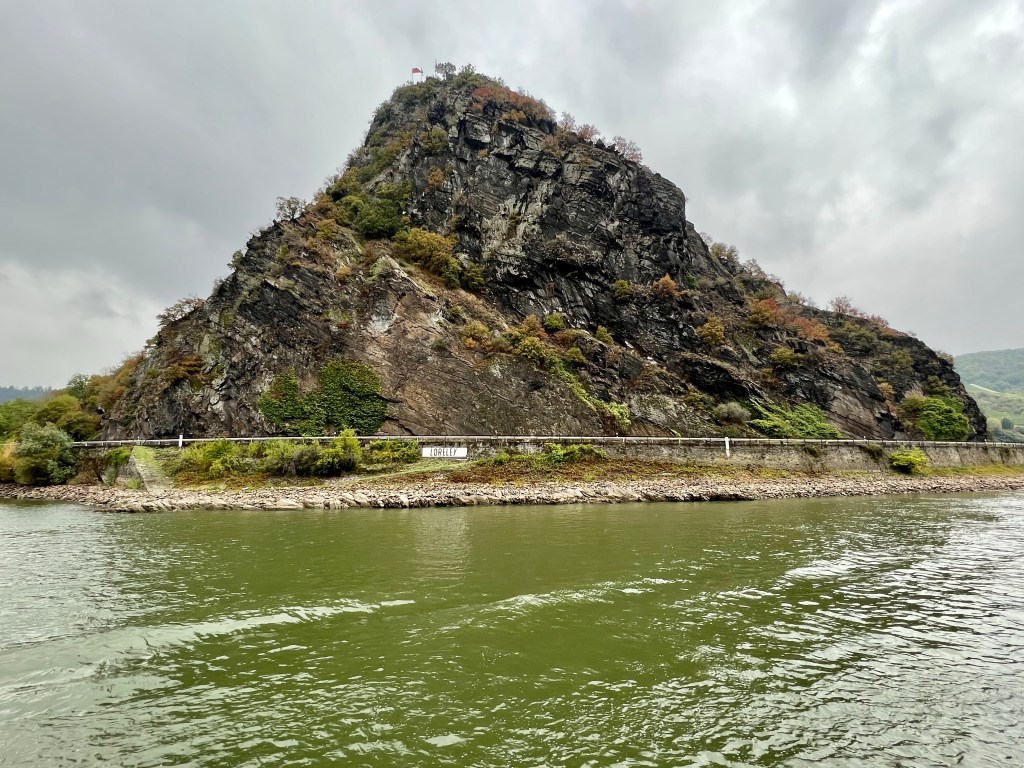
Further along, we met the iconic Lorelei rock formation; a 132-metre-high, steep slate rock on the right bank of the Rhine. This legend also features a beautiful maiden but it’s not her that drowns but her suitors. Legend has it that she sat atop the cliff and serenaded sailors with her voice. Hypnotised by her singing and determined to reach the beauty, sailors would crash on the treacherous rocks and drown.
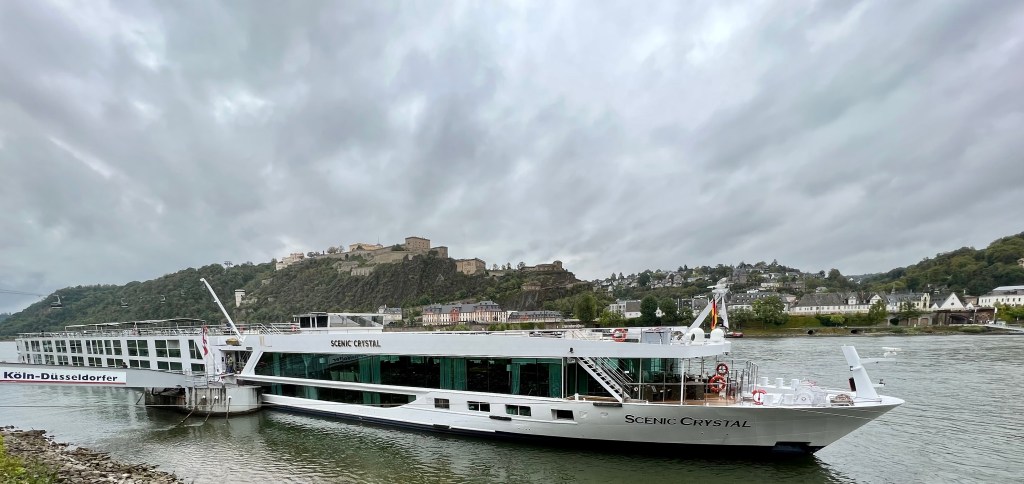
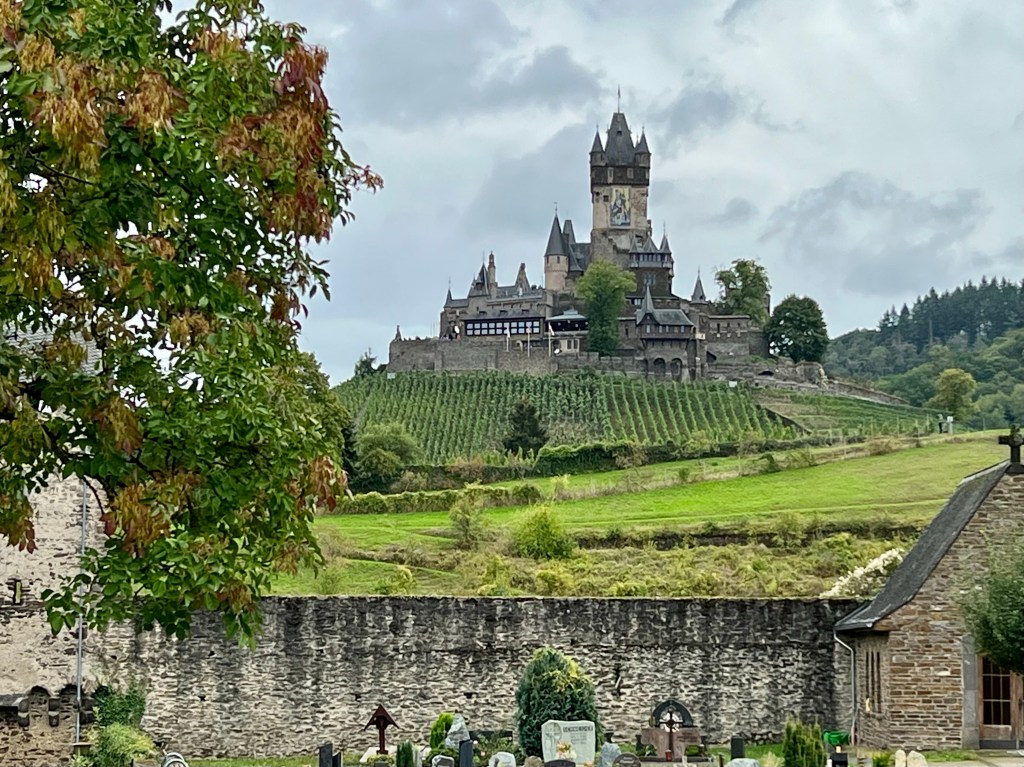
After we were castled out, we grab a nice lunch and then head out on our excursion for the day. I’m headed to Cochem, a city on the Mosel River to see (you guessed it!) its famous castle, Reichsburg Castle and tour the town.
Our guide this afternoon is Elmar and his melodious voice regales us with the history of the area and simultaneously lulls us off to sleep.
Koblenz is a very old town built by the Romans in 7 AD on the banks of the Rhine and Mosel Rivers. The Romans also brought grapes and agricultural knowledge to the area. The Legions drank 1.5 litres per day. The water was bad so … wines in those days was lower in alcohol more like beer at 5-6%.
Typical vineyard terraces produce better wine when the sun hits the slopes at 90 degree angle. Grow the vines in vertical lines where machines can go and in horizontal lines where machines can’t go. In these cases there are steep walls and staircases and elevators to move the grapes.

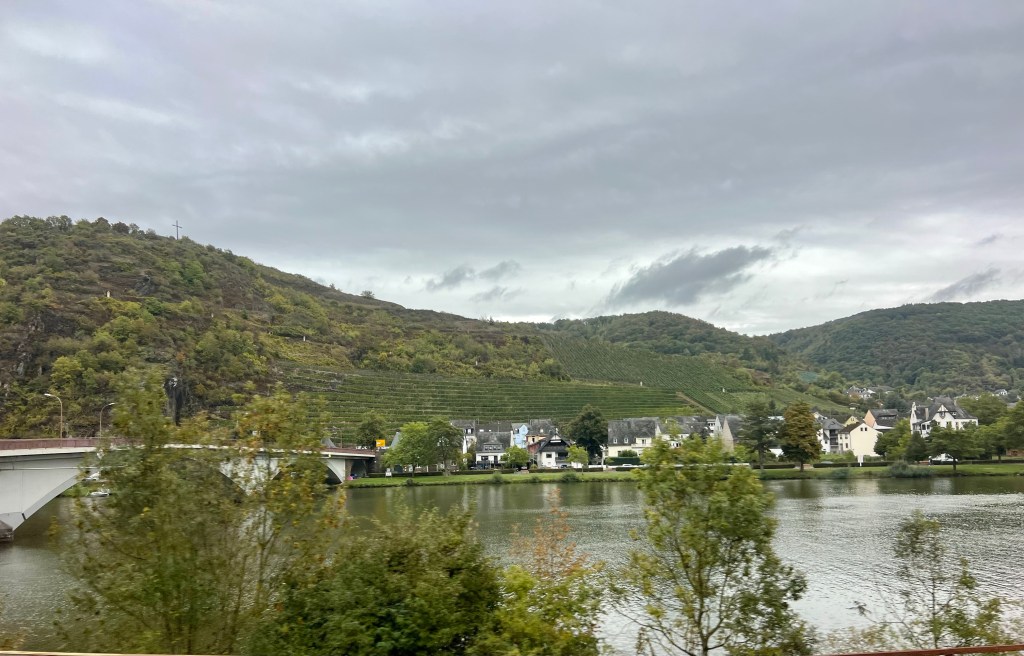
There are 18 locks in the Mosel to account for the 500 foot change in sea level. The locks were a joint project between France and Germany in 1964. Navigable year round the river is important to both countries and, historically, has caused friction and many wars between the two countries.
The scenery along the Mosel is spectacular though pictures taken from bus windows can never do it justice. A little less than an hour later we arrive in Cochem; a town of 5000 inhabitants, famous for its wine, produced in some of the steepest vineyards in the world.
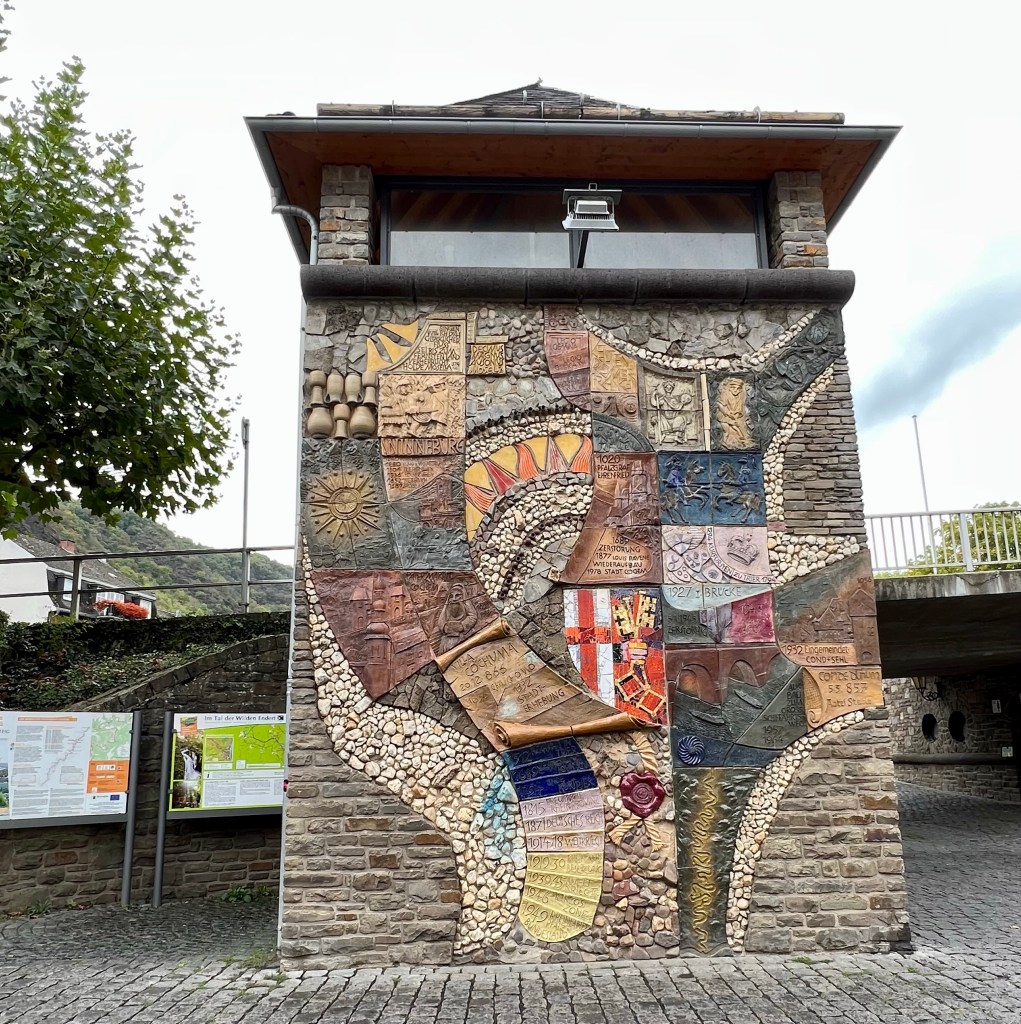
We leave the bus in Cochem town and head through the town with our new guide, Joachim, for a quick tour of the town. Our first stop is a wall on the old bridge that portrays the history of the town.
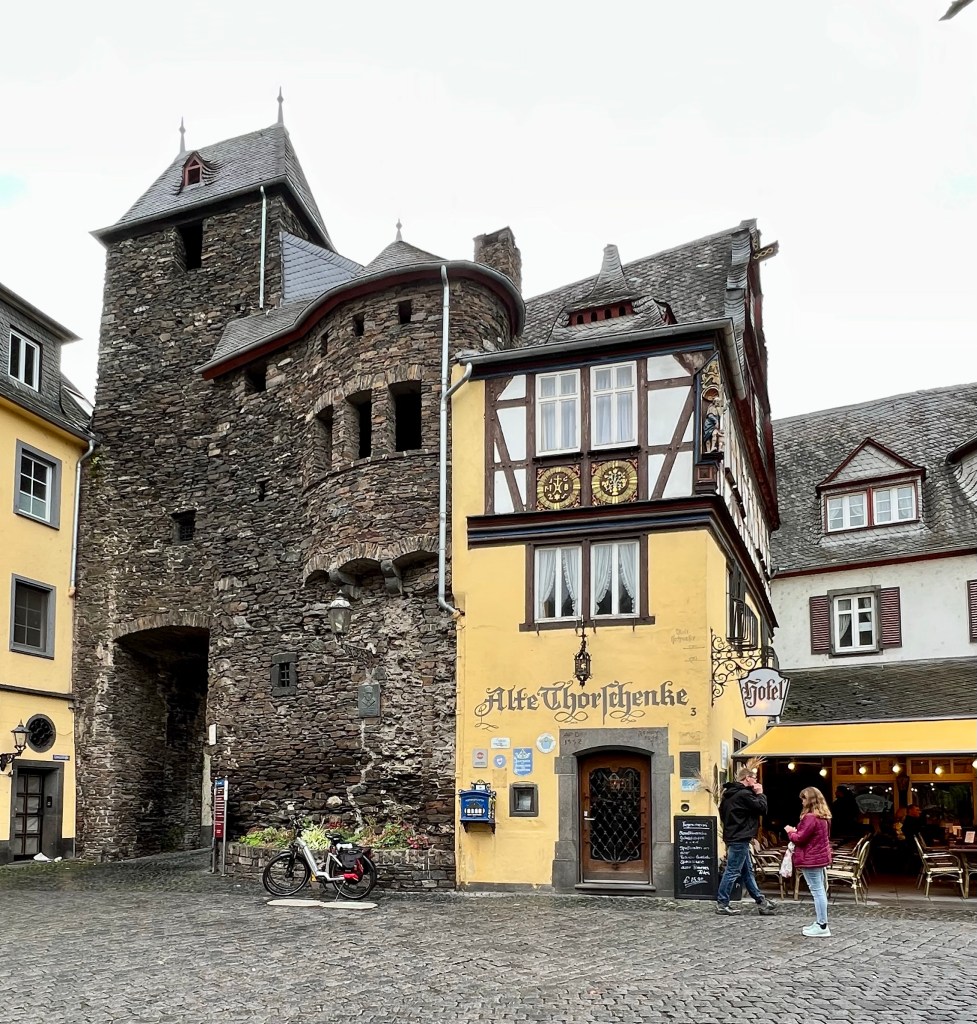
Then we’re off to Endatt Gate which originally had a prison above. Guards for the gate and prison same people and there was also a house in the town wall for the gate manager; very practical people.
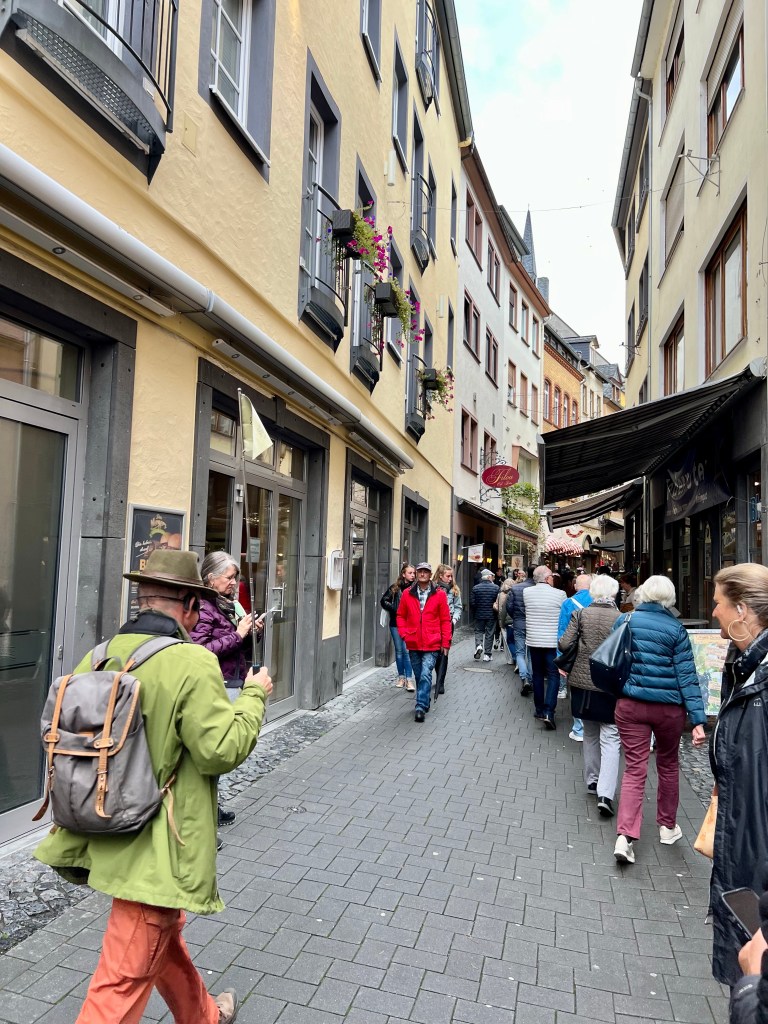
Next stop was a white building showing the water levels during the centuries. Flooding is a real thing!


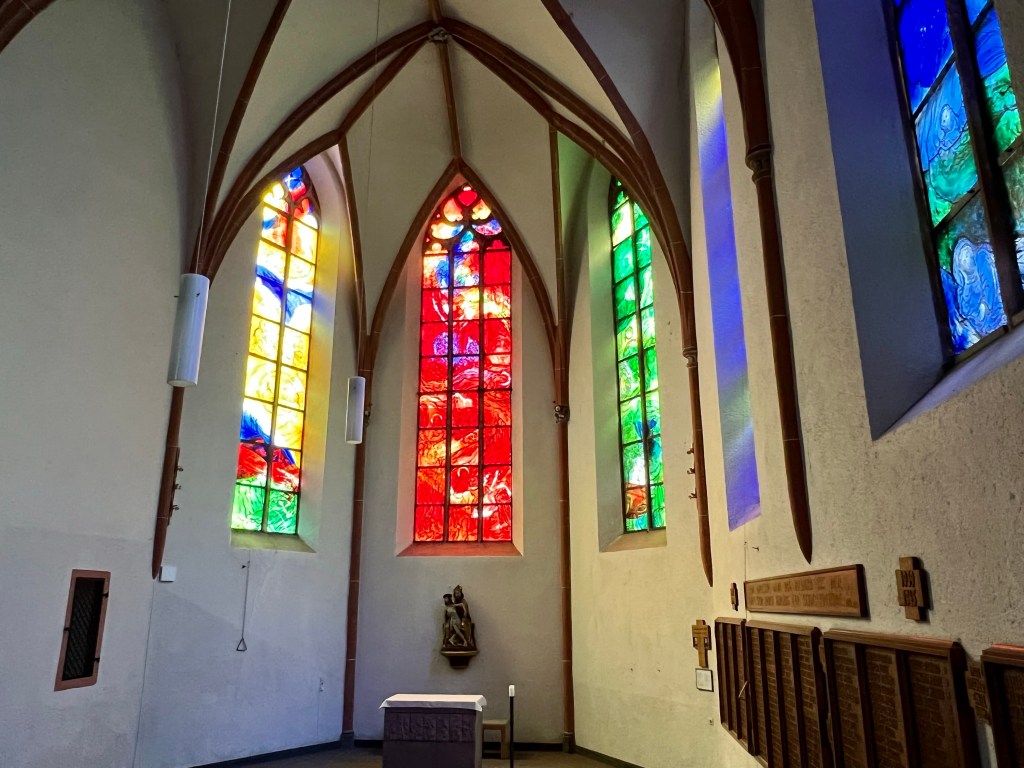
We ducked into Saint Martin’s Church for a look at the beautiful stained glass windows by Graham Jones that illuminate the church.
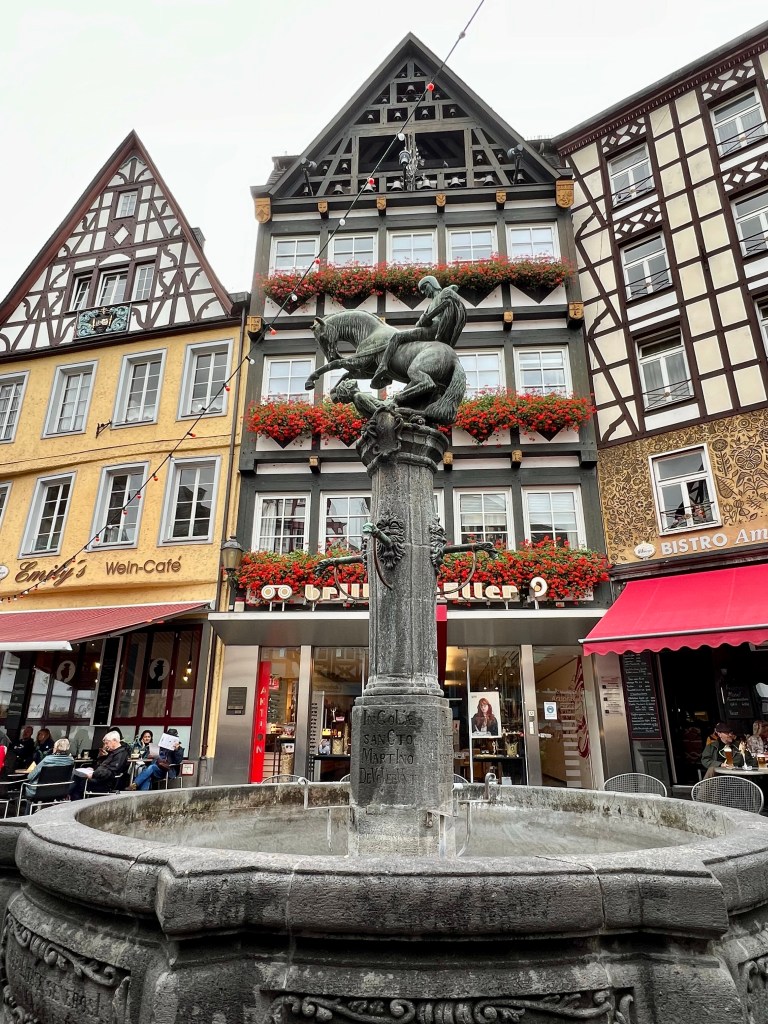
In the square, we see a statue of Saint Martin, the patron saint of the town. He was a warrior in the Roman legion and converted to Christianity. The statue depicts him saving an old man that later was thought to have been Jesus testing his faith. He cut his coat in half and gave half to old man. This coat was a relic used by Charlemagne in many a battle.
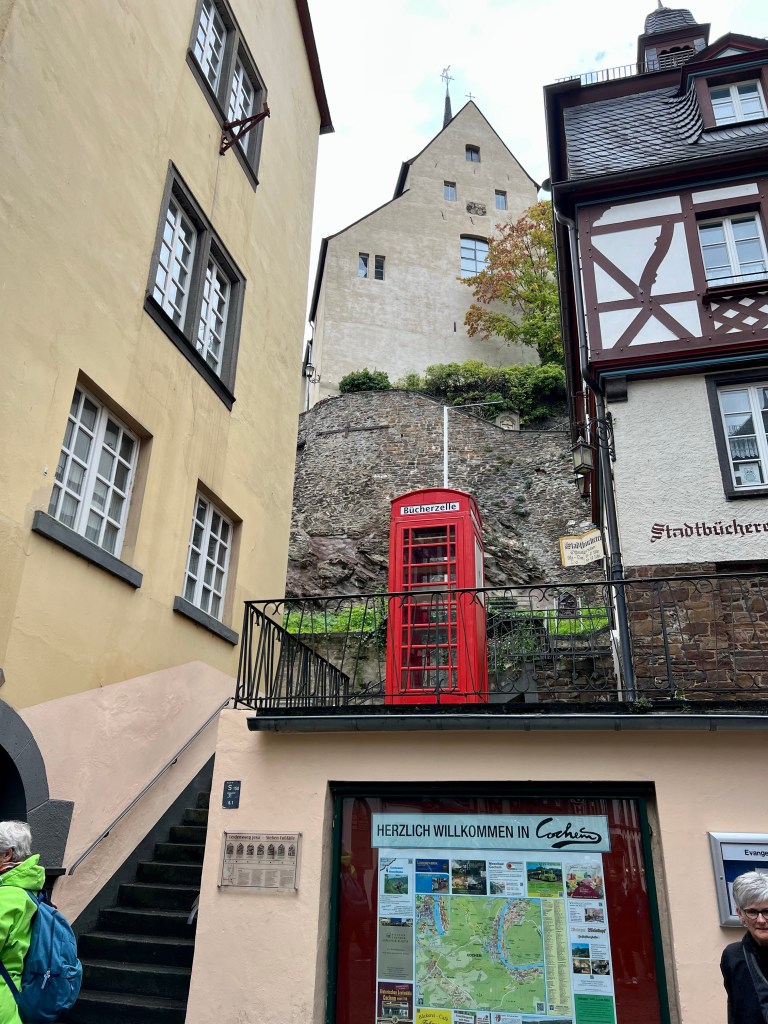

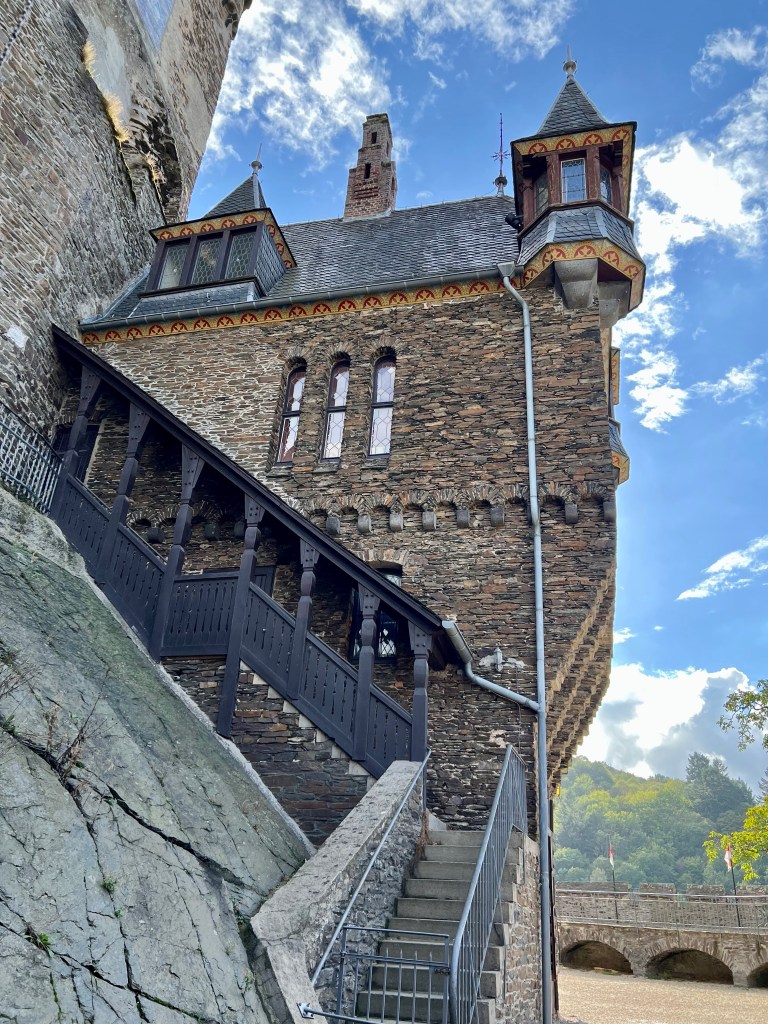
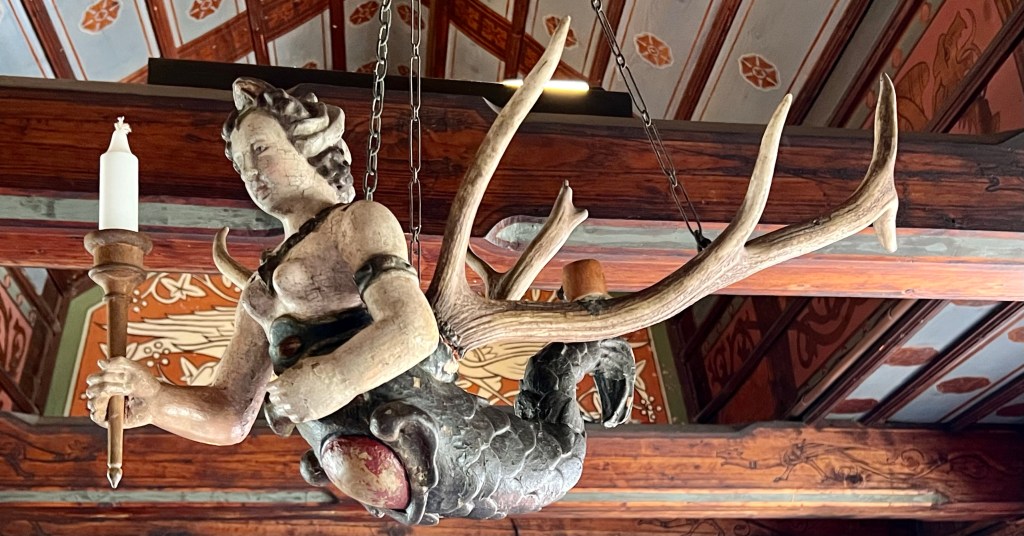
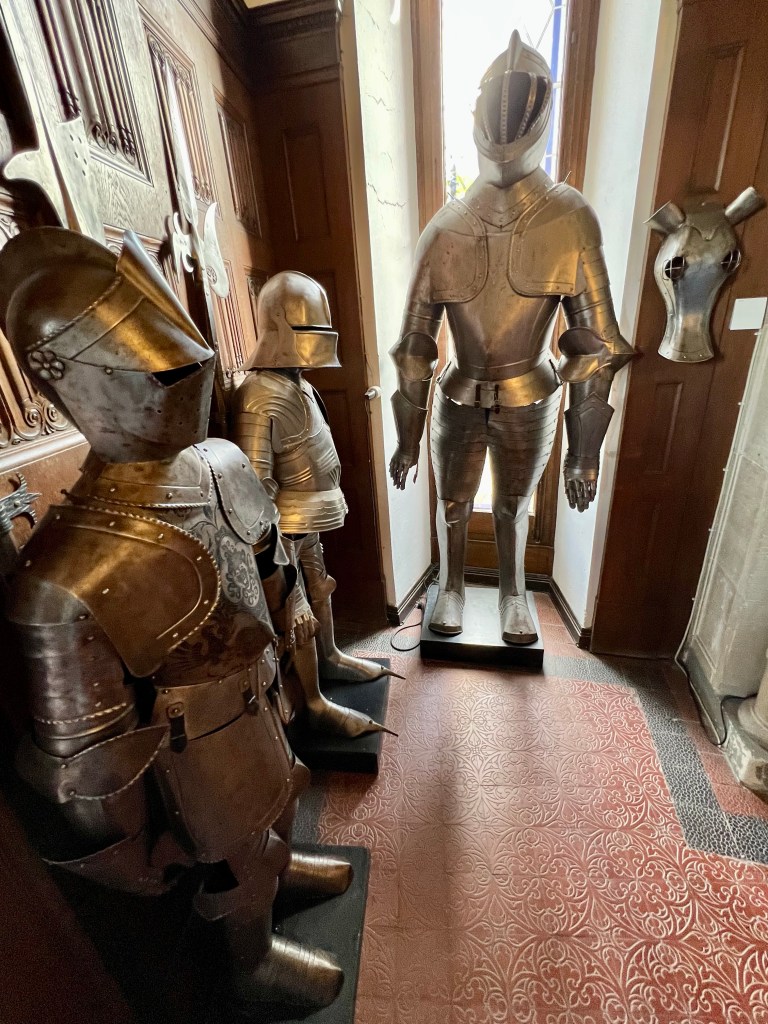
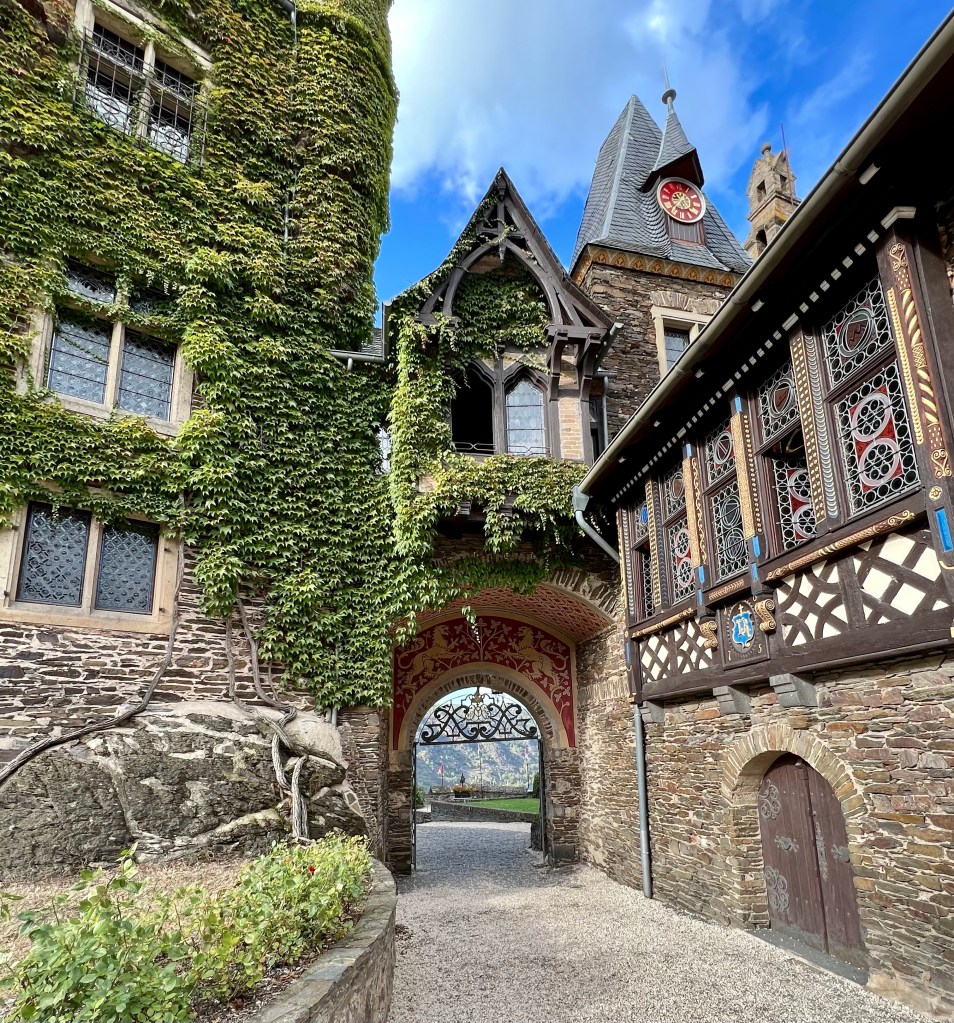
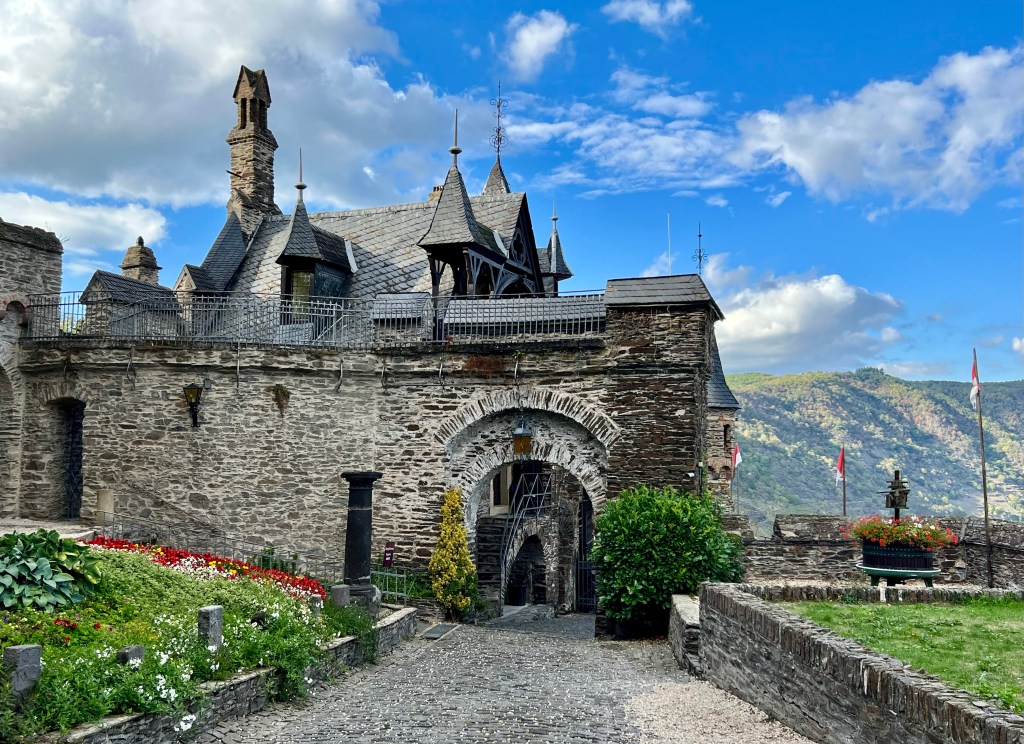
Next, its up several flights of stairs and then a steep short ride by mini bus to Reichsburg castle. Being a bit castled out I didn’t really pay too much attention to the blah blah from our third guide of the day but it was a beautiful building ripe with legend and folklore.








Back to the boat again with more sleeping that listening on the return journey. There’s just enough time to clean up before our special dinner at Portobellos. The food and service are fantastic and there’s a special cake for Joan’s birthday so its a magical evening. We can hear and see the soloist in the lounge from our perch so we enjoy her dulcet tones with yet another glass of fabulous wine.

Time to hit the hay. Tomorrow is another day. Luxurious adventures await…
 Judy’s Rambles