
Thursday March 16, 2023
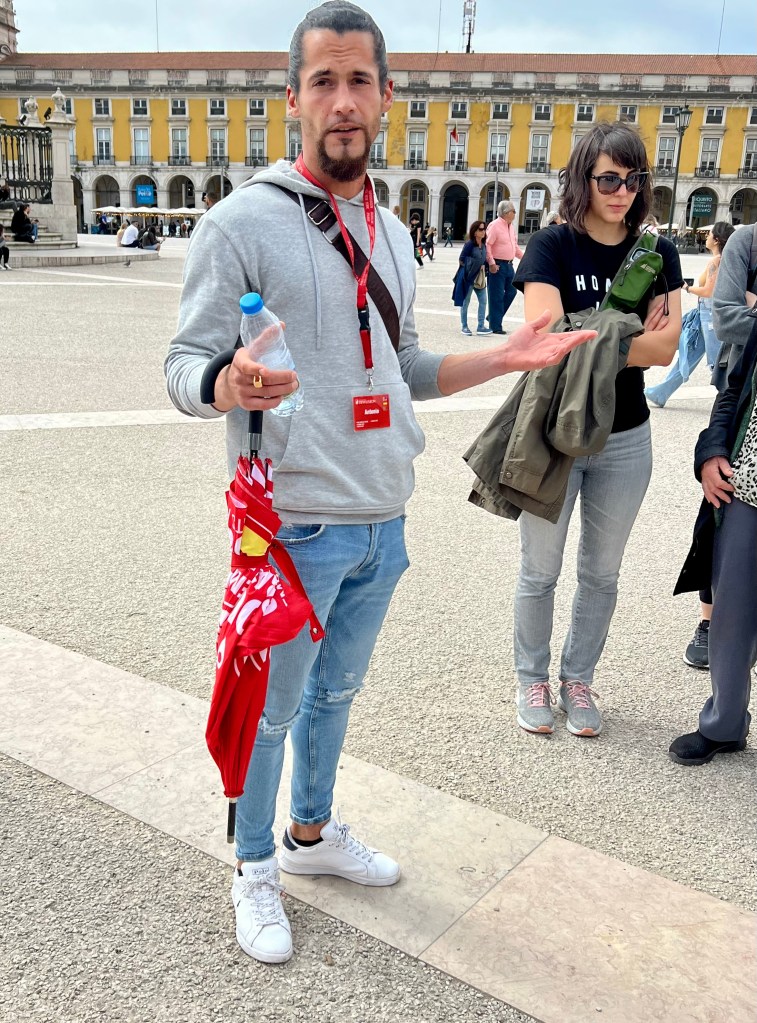
Today I’m going to do one of my favourite things in any new place that I visit; a free walking tour. For those of you that haven’t tried one, they are usually lead by an articulate and engaging local and they aren’t free really; they just don’t have a set upfront cost so you pay want you can based on your experience. I’m pretty sure that today’s guide Antonio is going to be great as he reached out via WhatsApp to make sure I knew how to find the starting point. Maybe he’s clairvoyant and knows how bad my sense of direction is generally. Anyway, I assure him I’ll be there and that I’m giving myself lots of time to get lost enroute.
With only one stop to clarify directions, I make it to Camões Square in plenty of time to grab some water and sit on a bench in the sun. Antonio isn’t even there when I arrive it’s so early, lol! Soon enough António arrives and I check in along with 24 others that are heading out for a 2.5 hour walk to learn about the 3000 year history of Lisbon.
Our enlightenment starts in the center of the square with a statue of it’s namesake, the 16th-century epic poet Luis de Camões standing on a pedestal surrounded by smaller statues of classical Portuguese authors. According to Antonio, Camões was a bohemian who failed to pay his taxes. Back in the day, that meant going to prison for life but since he was a friend of the King he was given an option to sail to China and write a book about the journey. Needless to say, Luis opted to board a ship for the long journey to India. Eventually he made his way to Macau, a Portuguese colony, where he met the love of his life, Dinamene. When they were returning to Portugal, their ship was attacked by pirate and Camões was forced to choose between saving his love and the book he’d spent 15 years writing. As Antonio said, the book made it back to Portugal. So much for true love!

I’m not 100% sure of how much of this story is true but as the preeminent Portuguese writer, he is buried in a tomb in the Jerónimos Monastery in Belem. Maybe there’s more information there!!
Lisbon is known as the city of seven hills and as we leave the square, we’re headed up up up (my favourite – not!).
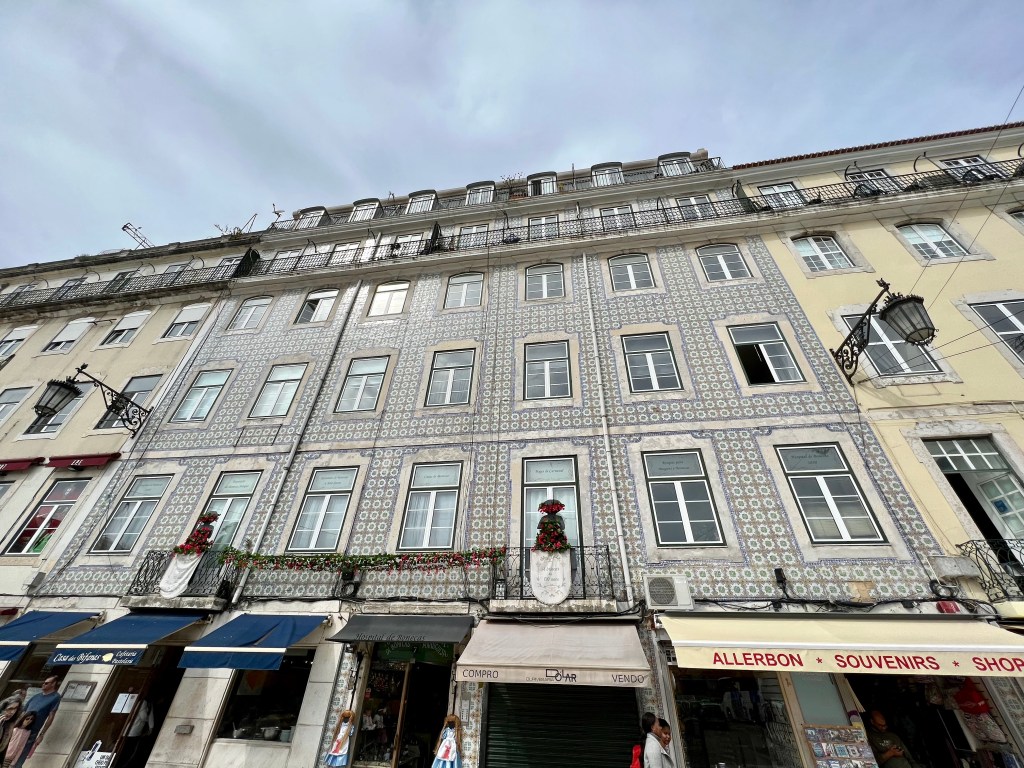
Our next stop is a building covered with tiles. Tiles are a huge part of Portuguese history and can be traced back to the time of the Moors. Moorish tiles were not allowed to feature creations of God so no plants or animals. Rather they are mainly geometric. Tiles are important as they are good insulators and can withstand the heat and sunshine lasting 200 years if not broken!
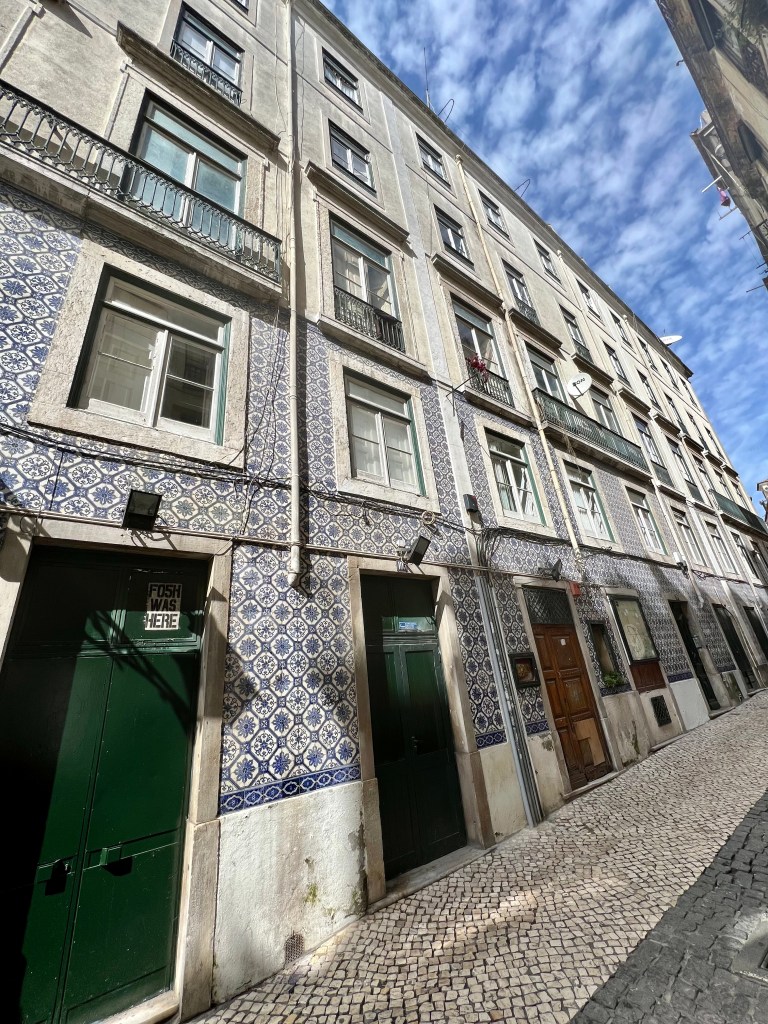
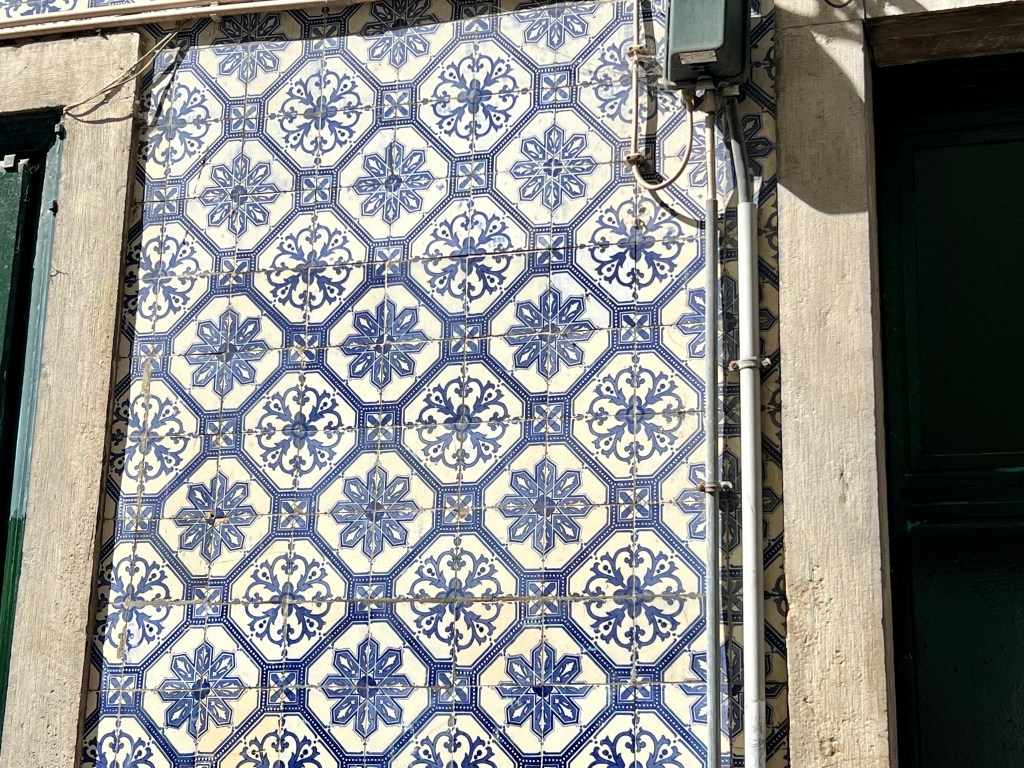
Azulejos is the Portuguese word for tiles. Its origin is, of course, Arabic, and it means small polished stone. Initially, these tiles would be cut into geometric shapes and painted with very neutral tones. During the Age of Discoveries (from the 15th to the 18th centuries) blue and white were the predominant colours as they were considered very fashionable probably as a result of Chinese and Dutch influences. In fact, until 1910 when Portugal became a republic, their flag was blue and white.
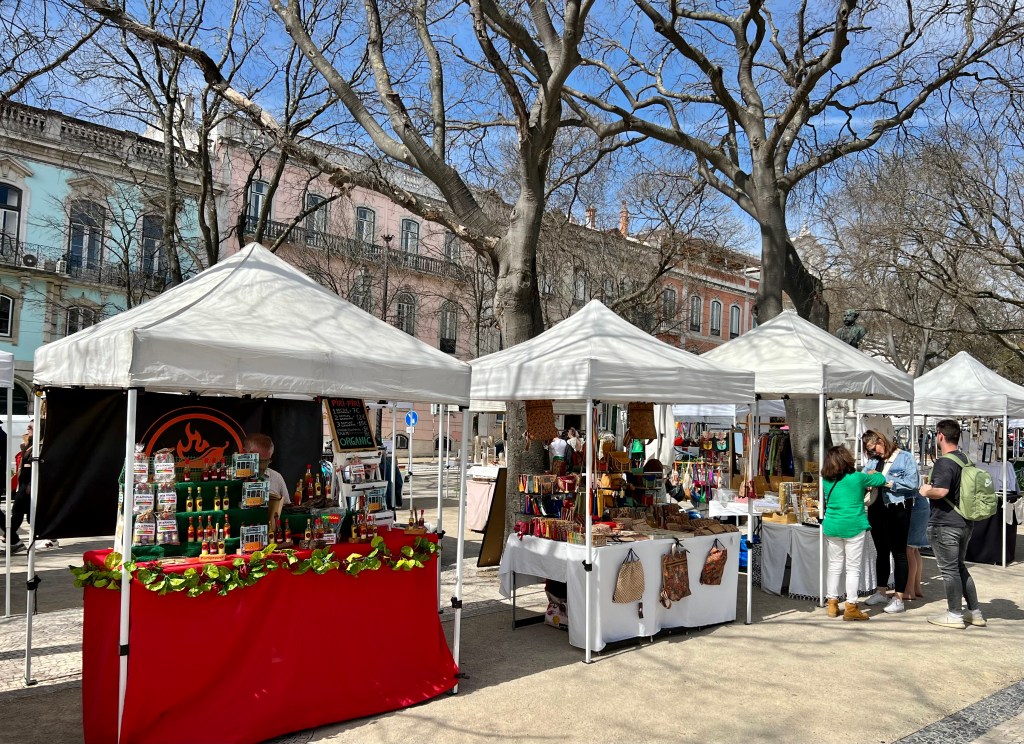
Back to mountain climbing (lol), we continue up the hill to Miradouro de São Pedro de Alcântara; a garden with a panoramic view across the city to St George’s Castle and central Lisbon.

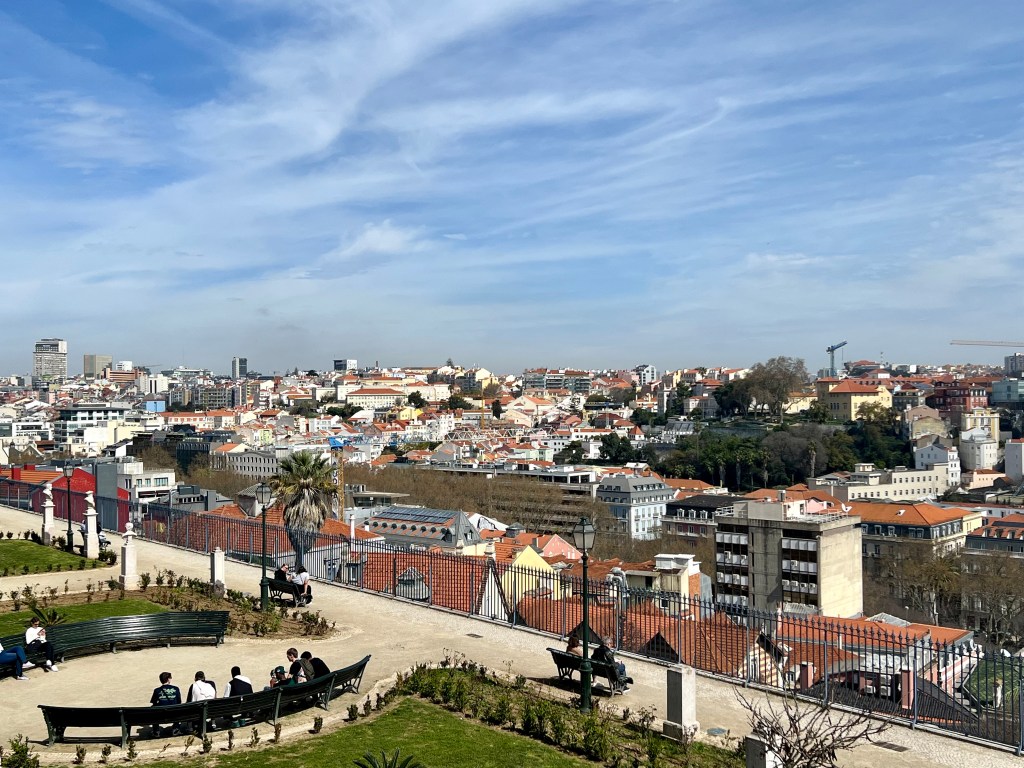
The original castle was built by the Moors in the 8th century. However, it fell into ruin and was completely rebuilt by President Salazar in the 1940s on a low budget so Antonio calls it the fake castle and recommends giving it a miss! Instead, he suggests going to see the Pena Castle in Sintra, a UNESCO World Heritage Site. As luck would have it, I’m planning a tour with Francine and Alain on Saturday so stay tuned.
Lisbon is second oldest capital in Europe after Athens and is 3000 years old the Phoenicians we’re here first in 6th century BC. They were followed by the Iberian Celts (Lusitanians), then the Romans who built roads, bridges and provided the original laws, language and religion – Catholicism. After the Romans, Germanic tribes brought 200 years of efficiency, responsibility and being on time to Portugal. The Moors then ruled for 500 years and left behind music including fado and modified their language (All words with Al at beginning are Moorish). When the Moors were driven out of the Iberian peninsula there were many years of war trying to figure out the borders of Portugal with the five kingdoms of Spain who eventually joined together. The treaty of Zamora signed on October 5, 1143 recognized Portugal as a kingdom with its own monarch, Alfonso I.
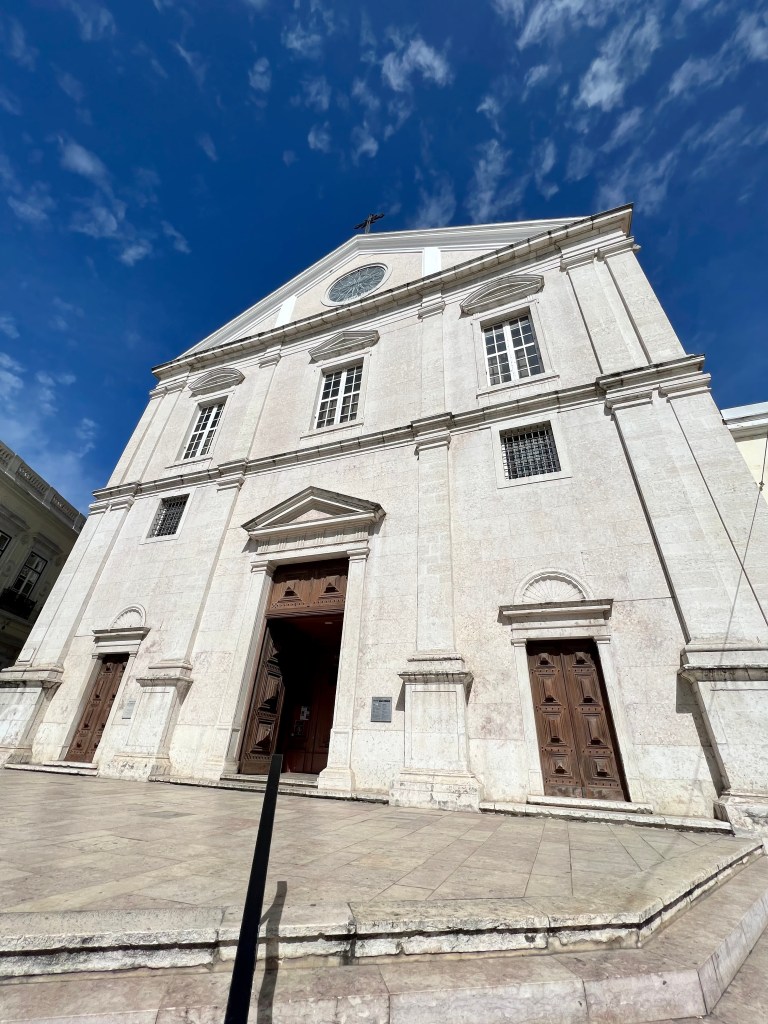
After our history lesson, we head downhill to our next stop, St Roch’s Church, built by the Jesuits in 1533 and the oldest Jesuit church in Lisbon. The austere facade doesn’t look like much but Antonio assures us that its sumptuous interior is richly decorated with marble, golden wood carvings, precious paintings, and traditional Portuguese azulejos tiles. I’ll have to go back to check it out tomorrow! Apparently it is decorated with gold stolen from Brazil and if you have a Brazilian passport you can take a piece. That doesn’t sound likely but I’m not Brazilian so it doesn’t really matter, lol!
Nearby is a statue of Padre António Vieira, a Jesuit missionary, orator, diplomat, and writer who played an active role in both Portuguese and Brazilian history. He was instrumental in protecting the Brazilian Indians from enslavement.

Our next stop is Carmo Square to hear a bit about the Great Lisbon Earthquake on November 1, 1755 (All Saints Day). The quake was actually two separate quakes with the second estimated at a 9.0 on the Richter scale. The earthquakes, the subsequent fires and a huge tsunami pretty much destroyed Lisbon and decimated the population (75% were lost in under an hour).
The royal family escaped unharmed from the catastrophe: King Joseph I and the court had left the city, after attending Mass at sunrise. After the catastrophe, Joseph I developed a fear of living within walls, and the court was accommodated in a huge complex of tents and pavilions in the hills of Ajuda and later on the outskirts of Lisbon.
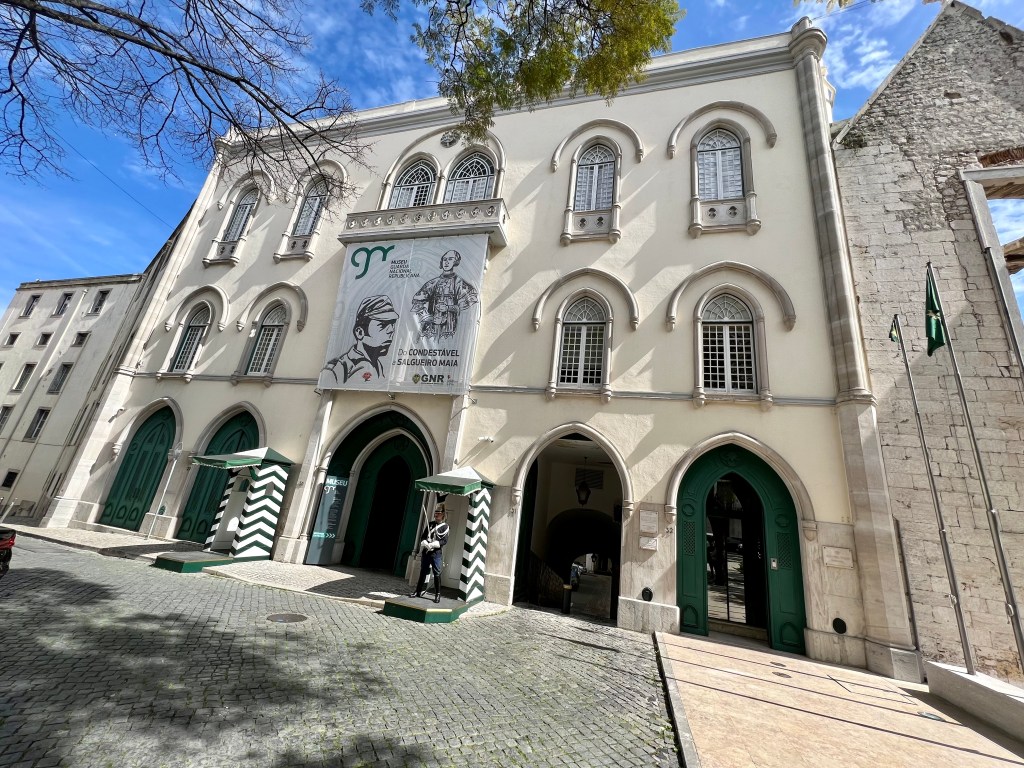
The prime minister Sebastião de Melo (1st Marquis of Pombal) also survived the earthquake and organized relief and rehabilitation efforts. He is also credited with building a new city with better protection against earthquakes; wider roads and earthquake “proof” designs. The city left the museum sans roof as a reminder of the earthquake.

While in the square, we we treated to the changing of the guard. It was very quick!

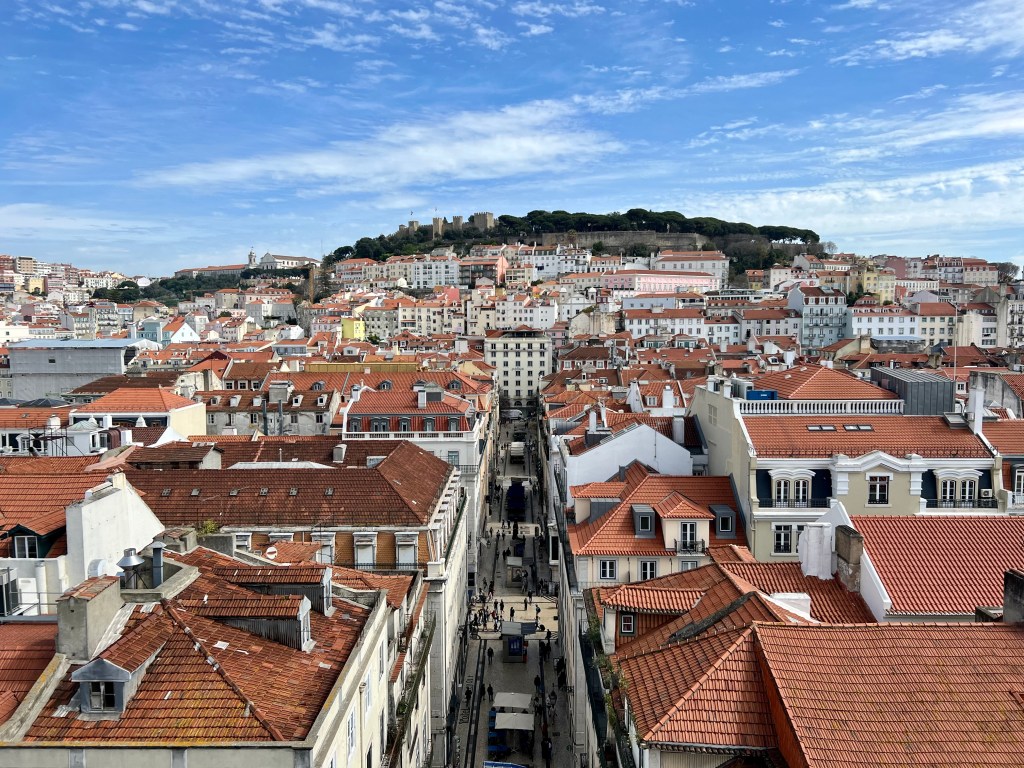
One of Antonio’s pet peeves is the city ripping off the tourists. He considers the Santa Justa Elevator to be the biggest rip off in Lisbon. People wait in a huge line and then pay 5€ to ride the elevator to the observation deck. Antonio took us there by a back way and we access the observation deck quickly and for free – score!
In contrast to the tourist traps, Antonio gave us his must do list:
Lisbon Cathedral – Sé de Lisboa
Alfama district for the best (illegal) ginja and (legal) fado
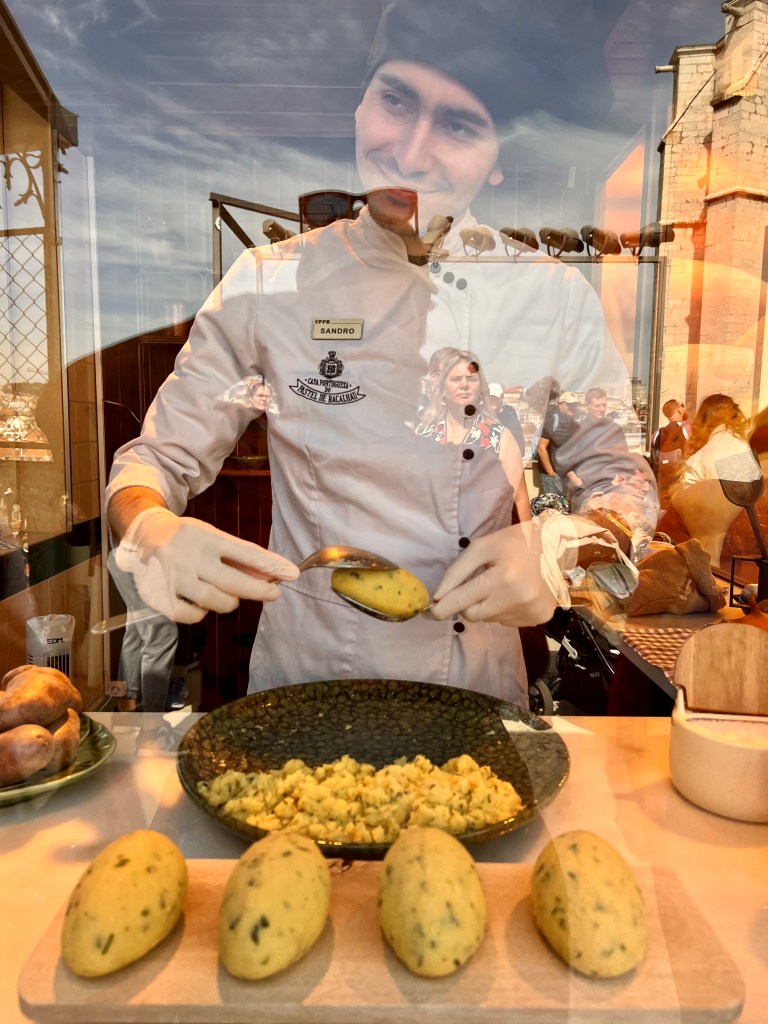
Belém for the 16th-century Tower of Belém, sail-shaped Discoveries Monument, the vast Gothic Jerónimos Monastery and the popular Pastéis de Belém patisserie famed for its custard tarts.
Sintra for Pena Castle especially the magnificent gardens.
Next stop on our tour is Rossio Square aka Peter IVth Square. Here Antonio told us a very amusing tale about the figure of Peter IVth atop the column. According to Antonio, the figure originally represented Maximilian Emperor of Mexico appointed by Napoleon. Maximillian was assassinated before the figure was sent and the Mexicans told them to keep it. Though Maximillian and Peter looked nothing alike, the figures is atop a very tall column so no one thought it would matter. God knows if that’s true but it is funny!

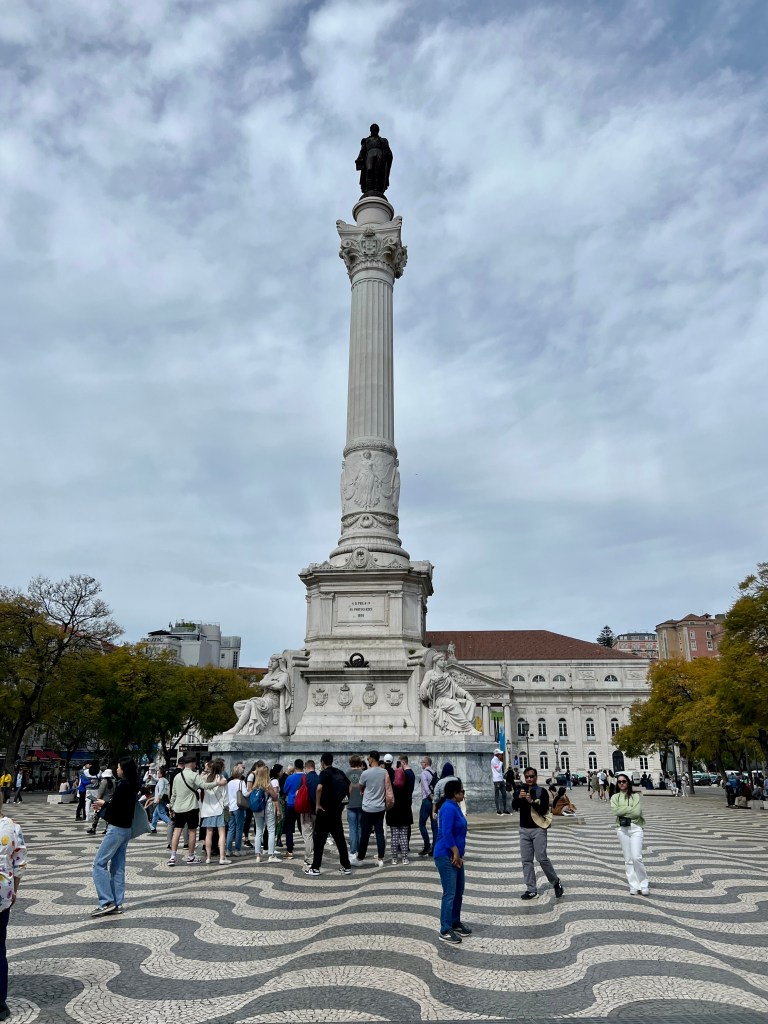
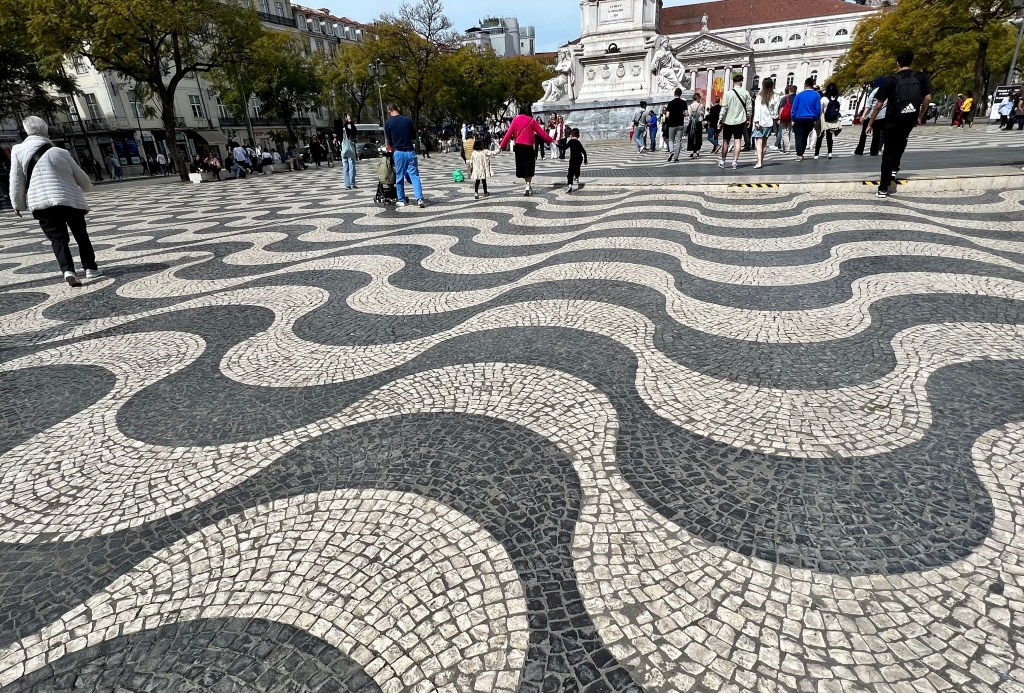
Our next stop is Praça da Figueira, regarded as the third square of the Baixa district. Here we find a bronze statue of King John I on the right hand corner giving him a view of the Augusta Arch and the harbour.

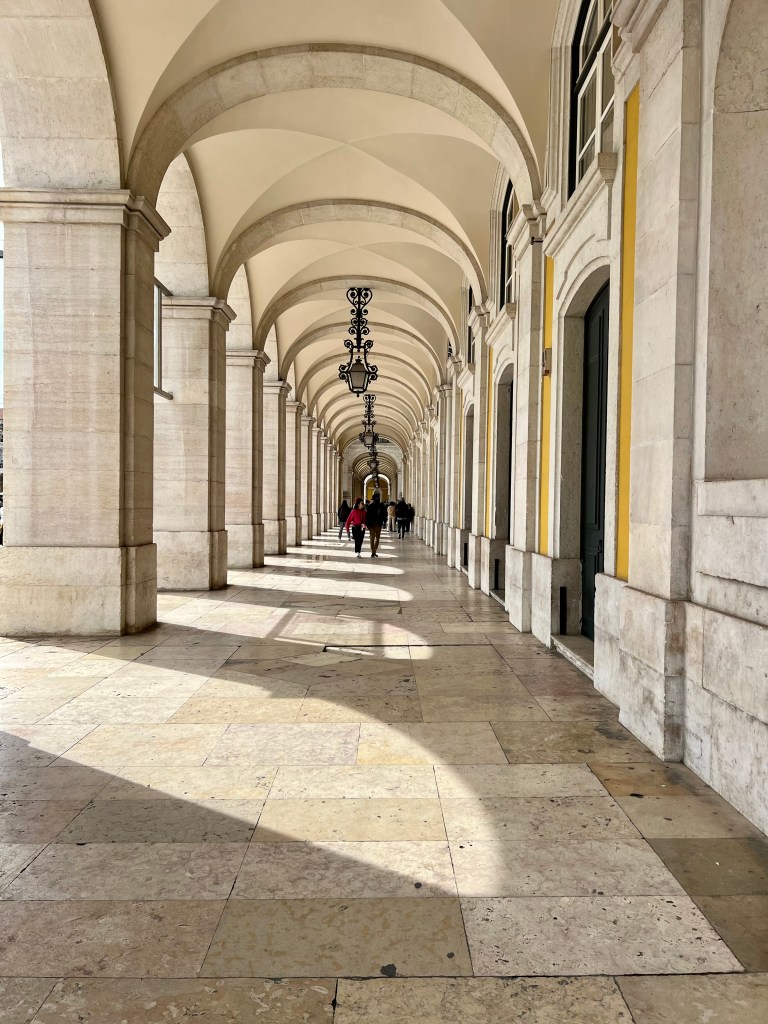
The Augusta Arch is a stone, memorial arch-like, historical building and visitor attraction on the Praça do Comércio. It was built to commemorate the city’s reconstruction after the 1755 earthquake. It has six columns and is adorned with statues of various historical figures.

The arch faces the Praça do Comércio and features a statue of King Joseph I facing the harbour with his back to the city. The king is on horseback with snakes surrounding his feet symbolically crushing them.
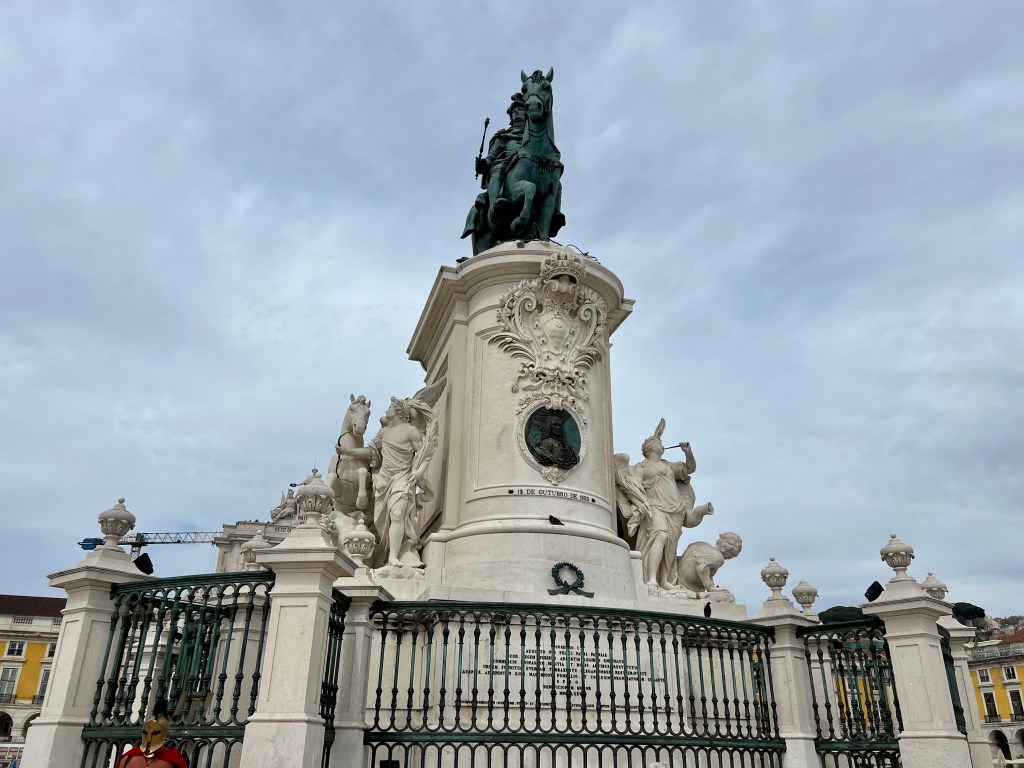

This square was the site of the assassination of the second last king of Portugal by two members of the Republican Party which overthrew the monarchy two years later.
It’s here that we bid adieu to our guide Antonio and head off to explore (or recover) on our own!

Tomorrow is another day. Adventures await …
 Judy’s Rambles
Portugal is a blast
LikeLike