
Friday March 17, 2023
Once again I’m spending my favourite non-holiday of the year away from home. Luckily I have some friends flying in from Ottawa today so while we may or may not end up at an Irish pub, there will be a glass or two raised to celebrate. Next year shamrocks and Guinness in Ottawa!
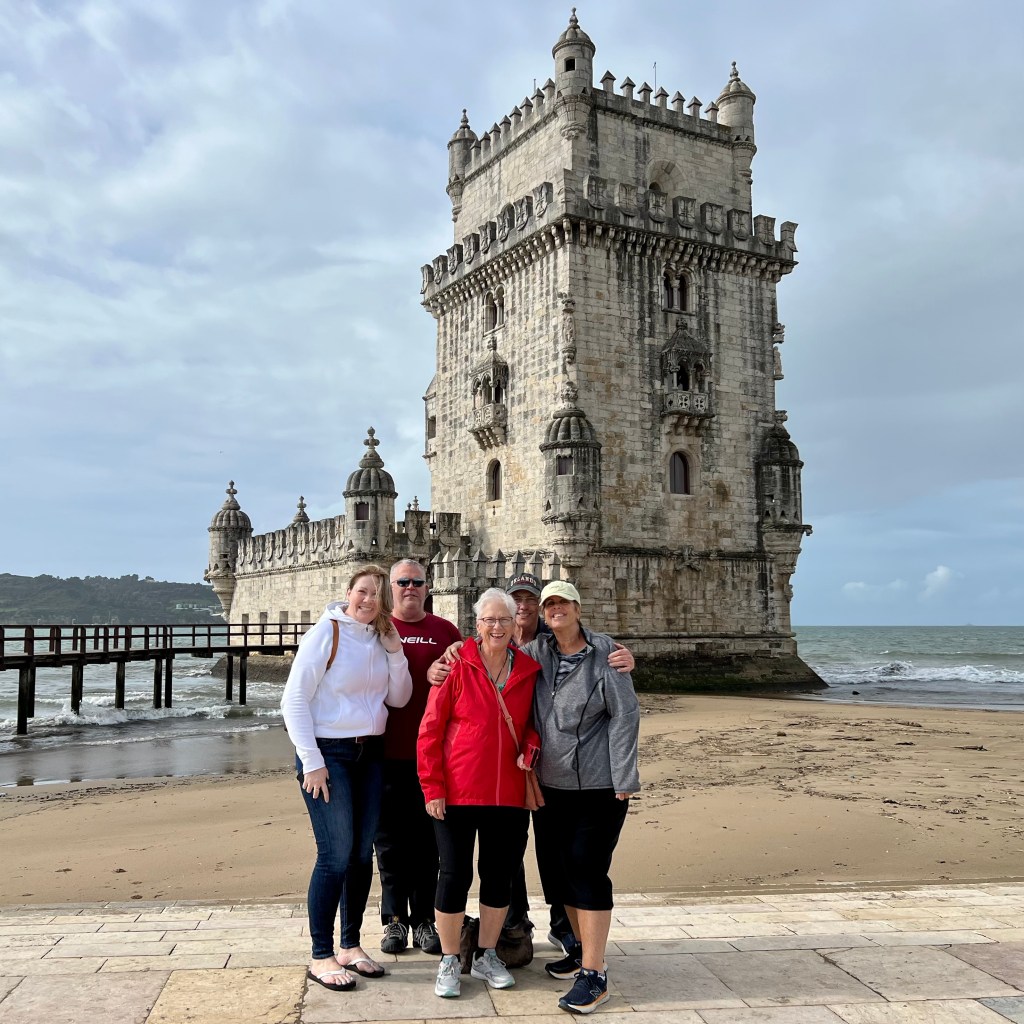
Tanya, Shawn, Francine and Alain arrived at the hotel around 8:00 am so after dropping what bags have accompanied them in my room, we head downstairs to have breakfast. After some food and a quick freshen up, we grab a couple of taxis and head to Belém Tower to work our way through Antonio’s must see list from yesterday.
Belém Tower, officially the Tower of Saint Vincent, is a 16th-century fortification that served as a point of embarkation/disembarkation for Portuguese explorers and as a ceremonial gateway to Lisbon. Built during the height of the Portuguese Renaissance it is a prominent example of the Portuguese Manueline style. Since 1983, the tower has been a UNESCO a World Heritage Site, along with the nearby Jerónimos Monastery. All that to say, it’s a beautiful building!!
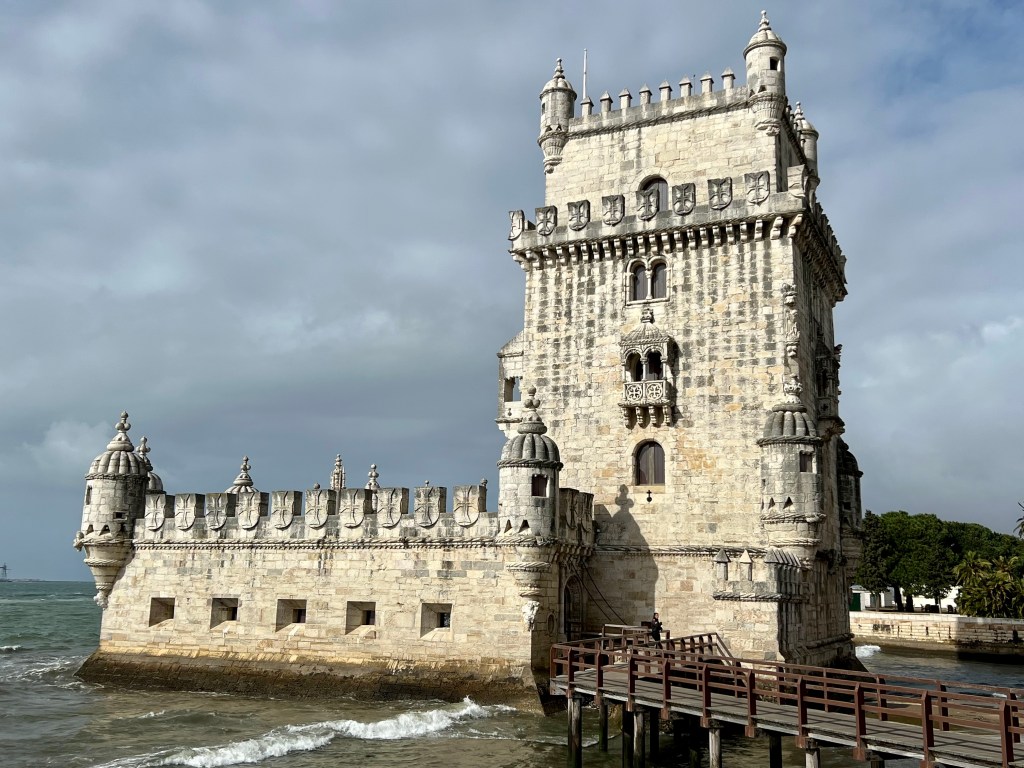
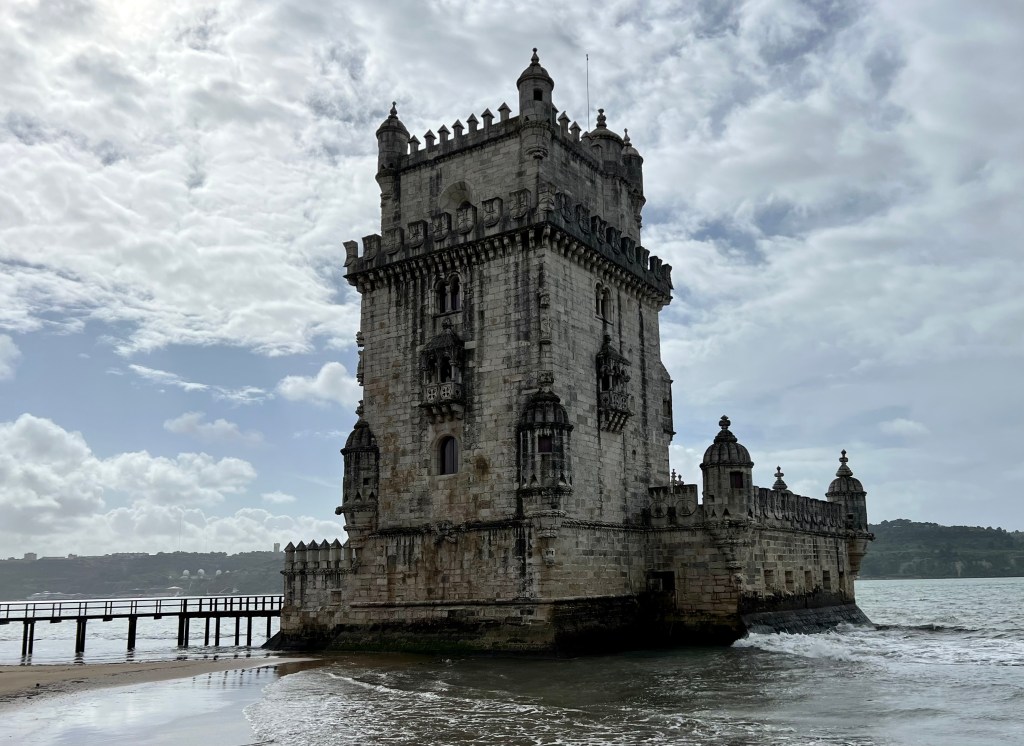
Next to the tower is an 18th century fort (Fort of Bom Sucesso) guarding the approach to Lisbon on the River Tagus. Converted to the Museu Do Combatente, it is dedicated to the men and women of the Portuguese armed forces killed in action.
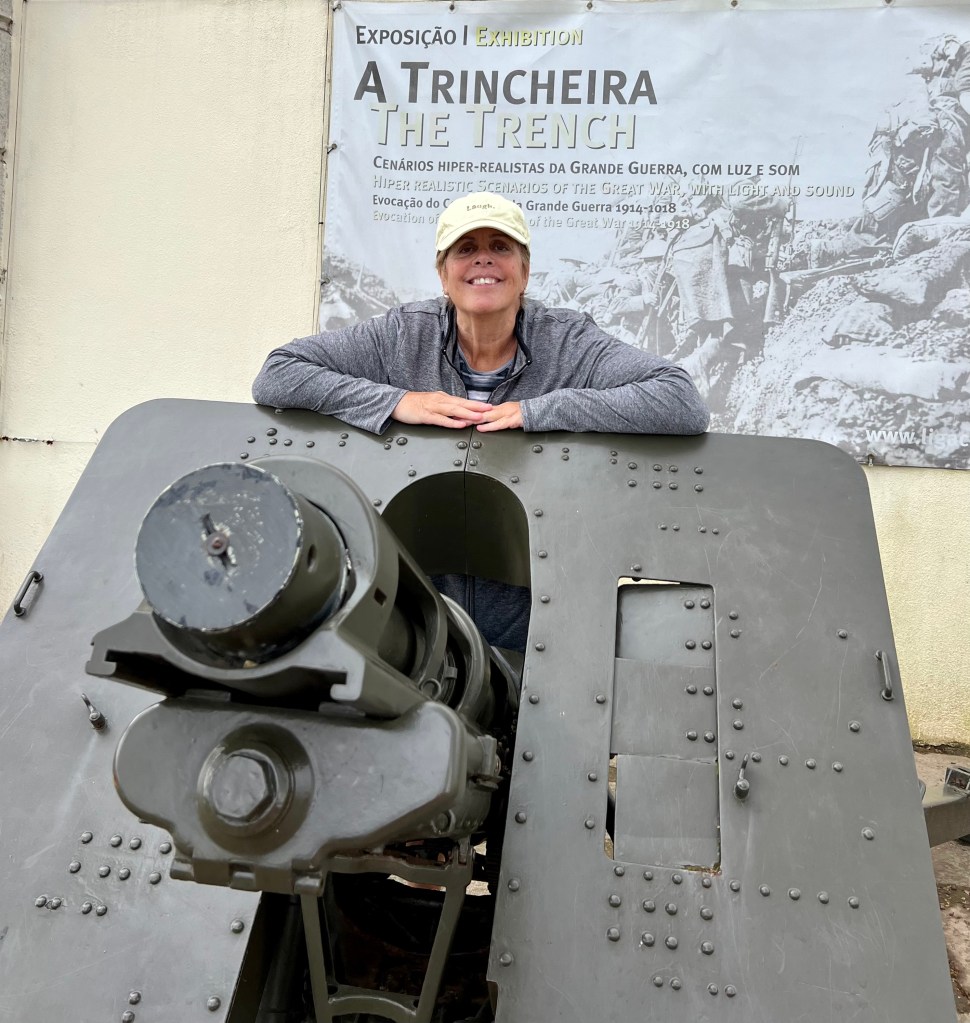
The Monument to the Honour of Overseas Combatants has shared this space since 1993 and is dedicated to soldiers of the Portuguese army who died during the Overseas War of 1961 to 1974.
The memorial includes three sections, the flame, the monument and the memorial wall. The central flame burns continuously to signify the lasting memory of the dead soldiers while the names of each solider who died in the protracted African conflict are etched into the the three walls that surround the memorial. The artistic section of the Monumento Combatentes Ultramar include a shallow purpose built lake and two large angled pillars that jut out above the flame. The Memorial Chapel provides a quiet place for reflection.


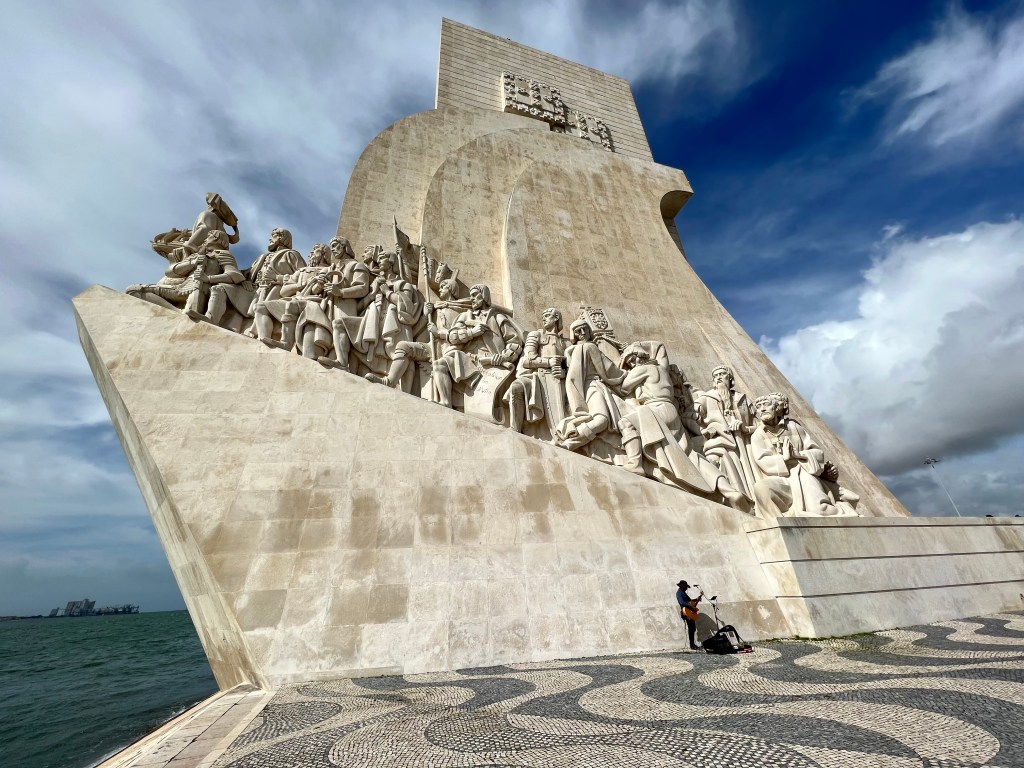
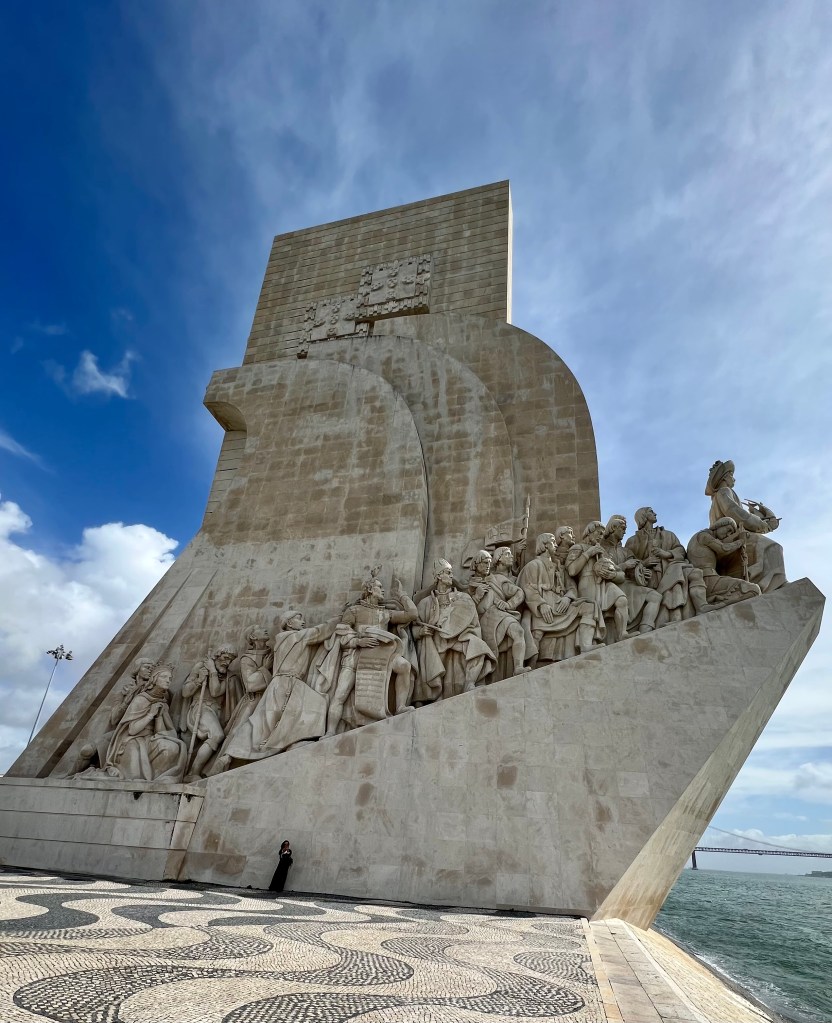
After spending a moment honouring the fallen, we walk along the riverside to the imposing and magnificent Padrão dos Descobrimentos/Monument to the Discoveries. The Padrão dos Descobrimentos was originally erected as a temporary monument for the World Exhibition hosted in Lisbon in 1940. It was made a permanent structure in the 1960s and commemorated 500 years since the death of Henry the Navigator (Infante Dom Henrique).
On the western side of the monument you’ll find depictions of the explorers (including Vasco da Gama and Ferdinand Magellan) while on the eastern side are the key financiers, with both sides supporting the statue of Infante Dom Henrique/Prince Henry the Navigator, the driving force behind Portugal’s 15th century Age of Discovery. The monument is designed to give the appearance of the bow of a boat overlooking the estuary, with the rear representing the Latin Cross.

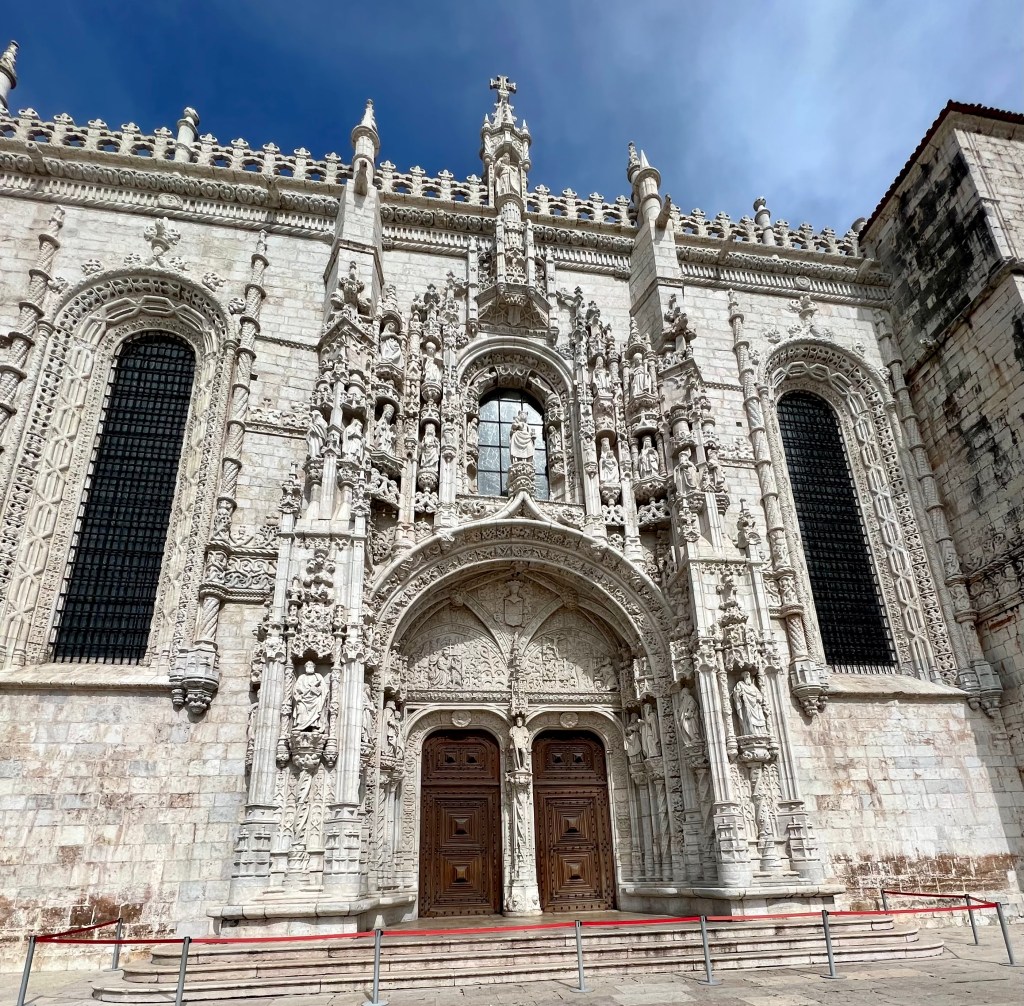
Our next stop is the Mosteiro do Jerónimos that is accessed through a tunnel under the many lanes highway and railway tracks we thought we might have to brave to reach our destination. This stunning building casts an imposing figure over the district, with its impressive, Late Gothic architecture. The monastery was once the home of the monks of the Order of Saint Jerome – creators of the original pastéis de nata but I’m getting ahead of myself.
The Monastery is one of the most prominent examples of the late Portugeuse Gothic Manueline style of architecture in Lisbon. It was erected in the early 1500s near the launch point of Vasco da Gama’s first journey. da Gama’s remains and those of the poet Luis de Camões are housed in carved tombs in the nave of the monastery’s church, only a few meters away from the tombs of Kings Manuel I and John III, whom da Gama had served. As luck would have it, we couldn’t access the church or monastery today because of a strike! Lol, man plans and God laughs …


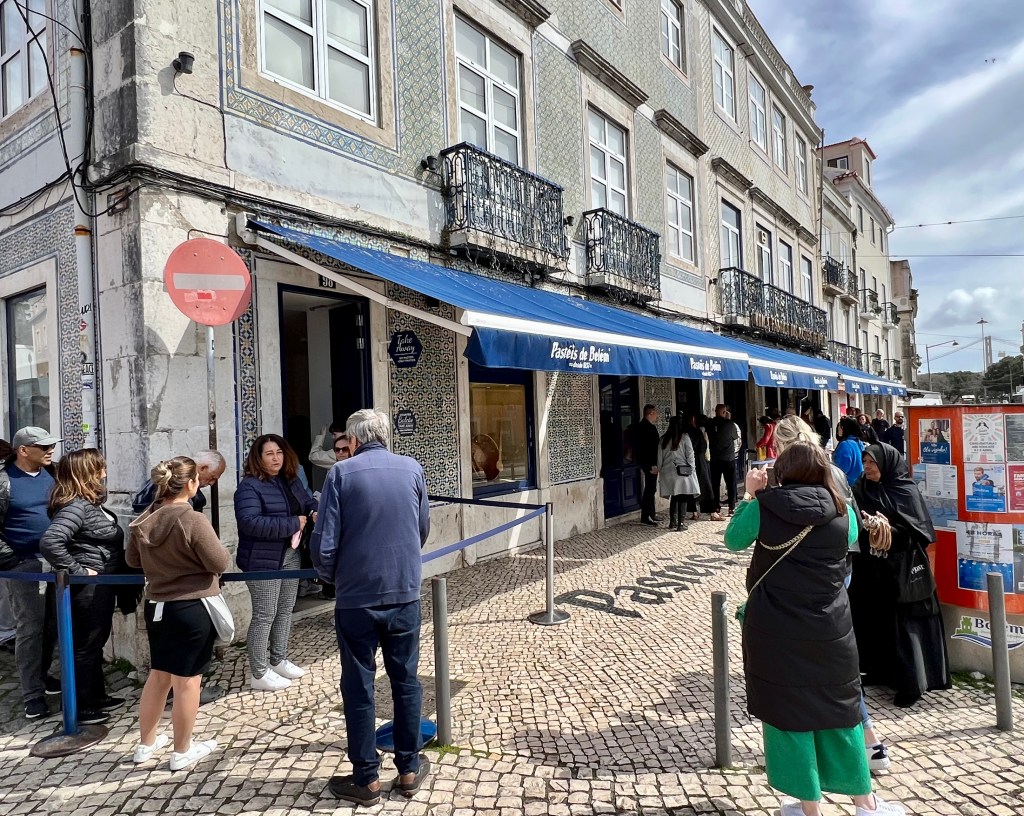
Since we’re here, we head off to the Fábrica dos Pastéis de Belém to sample the most authentic version of the famous flaky pastry pastéis de nata. This sweet treat is synonymous with the city of Lisbon and the custard tarts are made here using the secret recipe made famous by the monks of the Jerónimos Monastery. Apparently only four people know the secret recipe and they have to sign contracts not to fly together etc so they don’t all perish and lose the original recipe forever. We tried the tarts with their light, flaky crusts and they were fine and even better with a sprinkle of cinnamon.
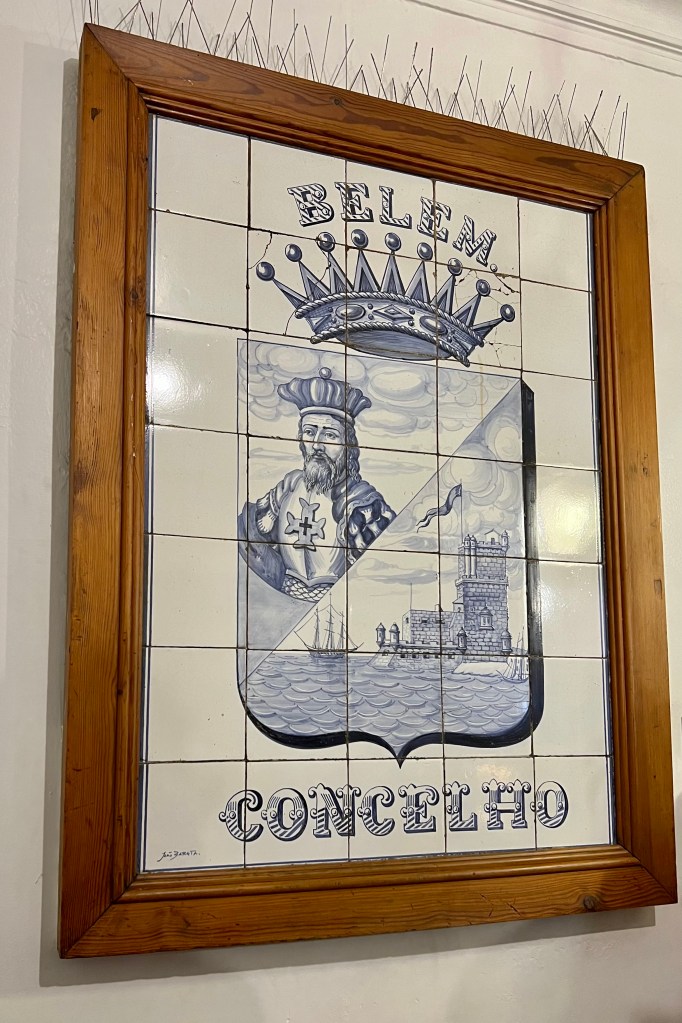

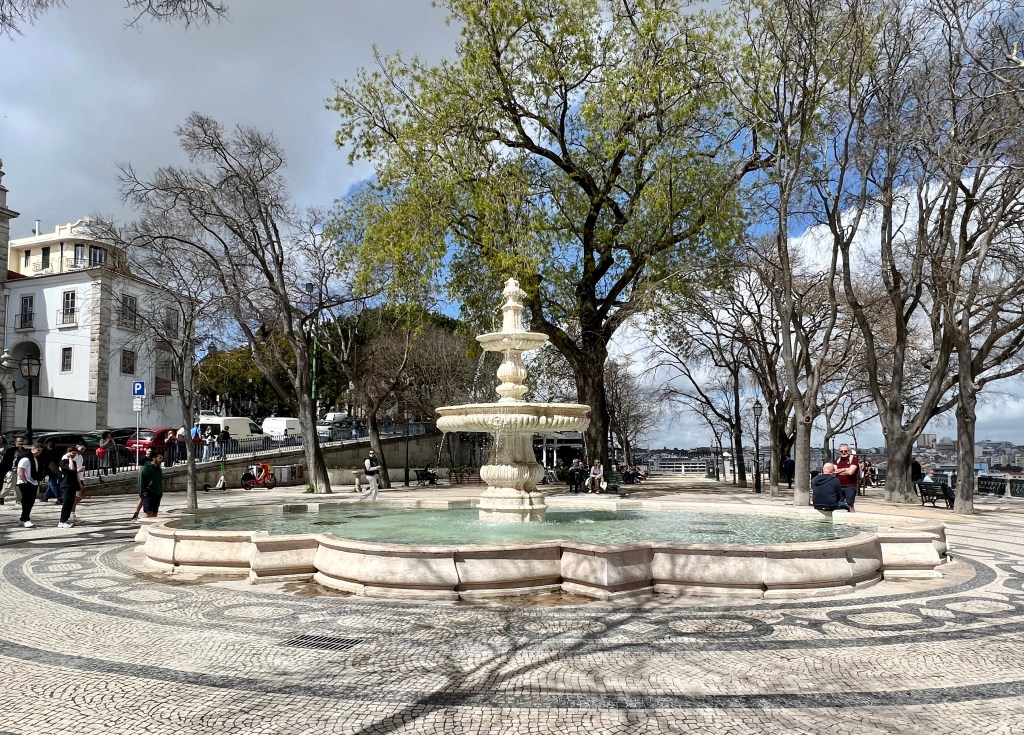
The new arrivals are starting to fade so we decide to head back to town in a tuk tuk. Rather than heading to the hotel where their rooms won’t yet be ready, we opt to go to the Miradouro de São Pedro de Alcântara; the garden with a panoramic view across the city to St George’s Castle and central Lisbon I visited yesterday and spend a bit of time exploring before heading down the hill to find our hotel.



I may actually know where I’m going for a change as we make it back to the hotel without any problem. The newcomers gather their belongings from my room and head up to their respective rooms for a nap and a shower. Napping sounds like a plan so I have one as well before we meet for drinks and dinner. Originally we had thought to head to an Irish pub to celebrate the day but it’s a bit far afield so we grab something close by before calling it a night.
Tomorrow is another day. Adventures await …
 Judy’s Rambles