
Saturday March 18, 2023
Today Francine, Alain and I are joining a tour to Sintra, Cascais & Estoril. We’re meeting our group at the Hard Rock Café @ 07:45 ( yes that’s am!) so after a very early breakfast we set off with me leading the way. God help us! Somehow my navigational skills are better than usual and we find our meeting spot without any difficulty.
Our guide, Miguel, gathers the group that includes us three Canadians and a group of five friends from “Madrid. The tour is going to be in Spanish and English so Miguel will have to work extra hard!
Our first stop will be Sintra a thirty minute drive from Lisbon giving time for Miguel to regale us with some of the history enroute.
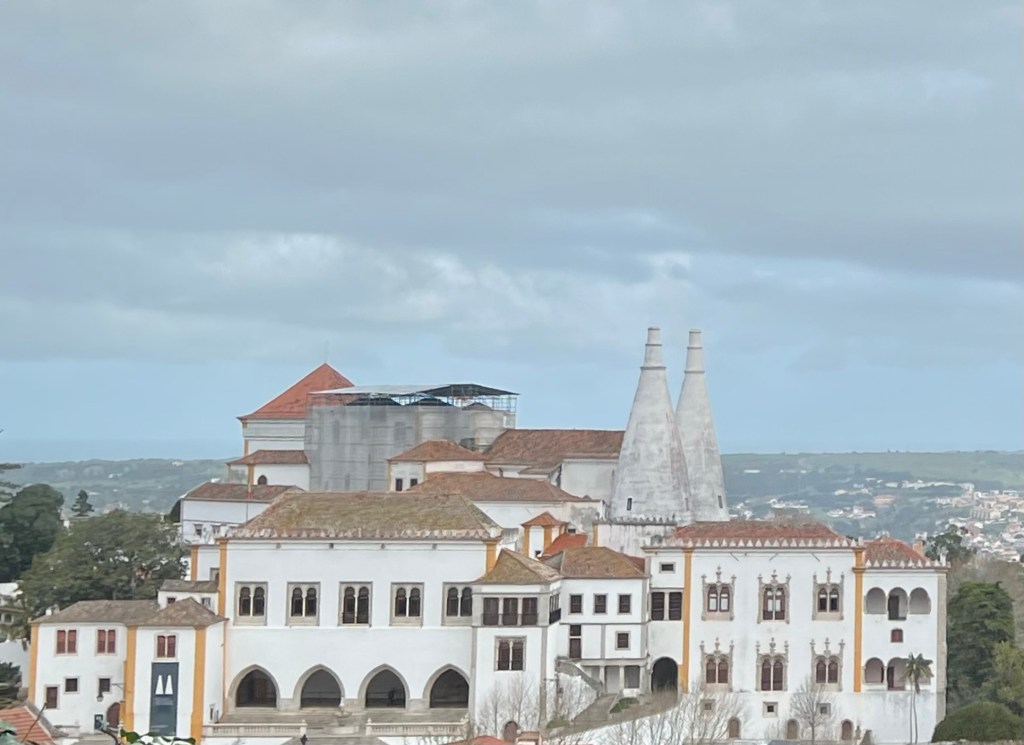
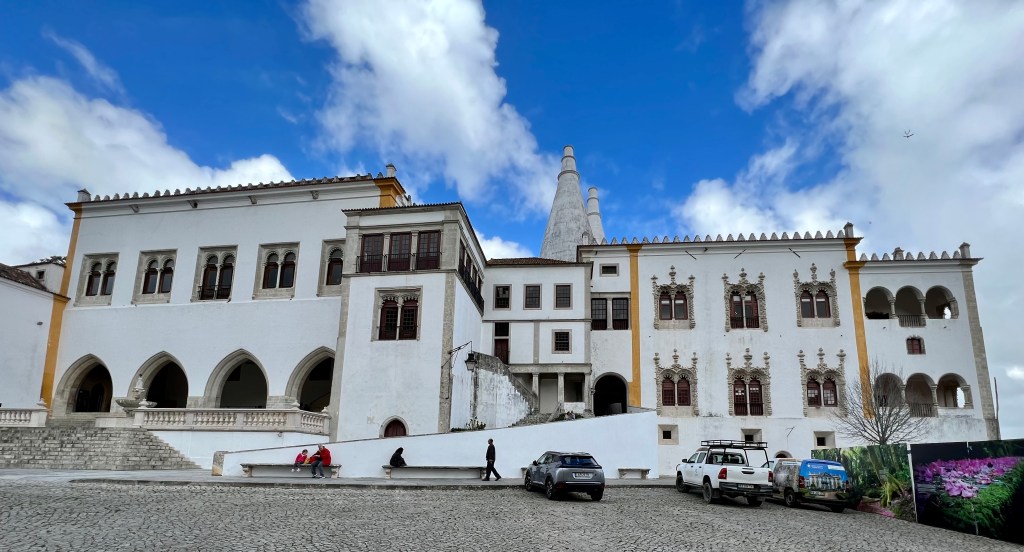
Sintra, the Moon Hill, is a place where man and nature have joined forces to create magic and UNESCO has named it a World Heritage Site. The jewel in Sintra’s crown is the Pena Palace, completed in 1854, and billed as one of Europe’s finest palaces, with a vividly painted exterior, and an interior restored to reflect its condition in 1910 when the Portuguese nobility fled the country. It is situated on a top of a hill above the town of Sintra and is known for its architectural features and vast forested park that welcomes thousands of visitors every year.

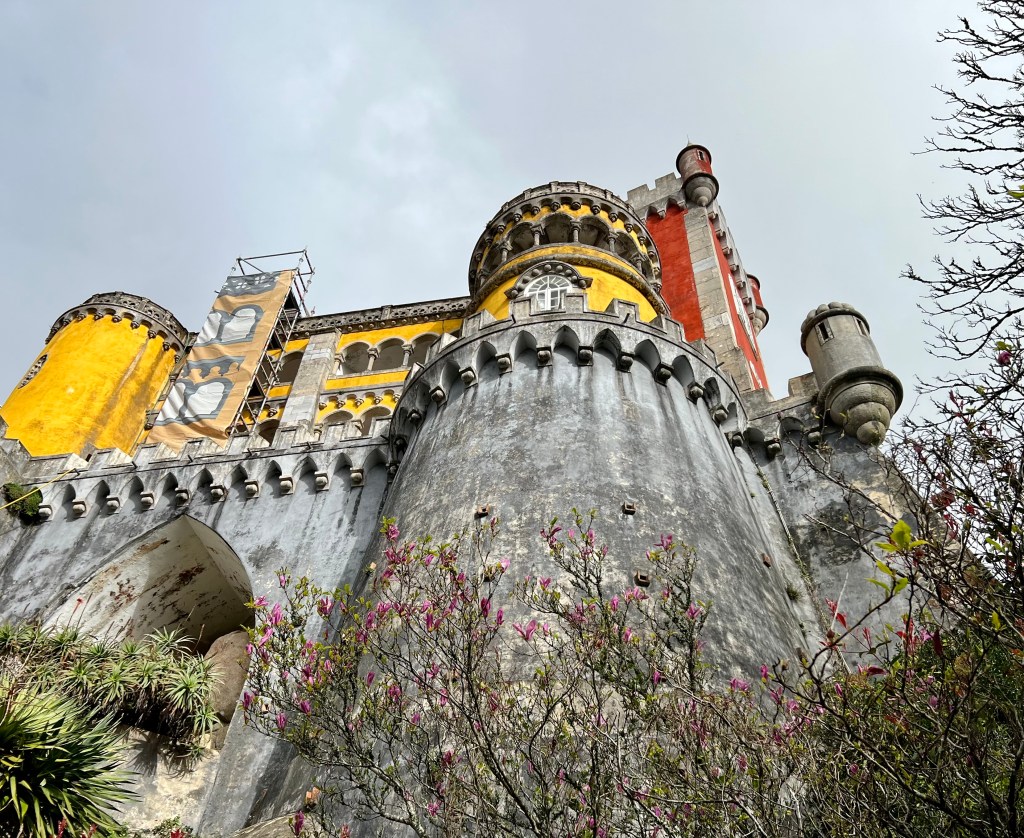
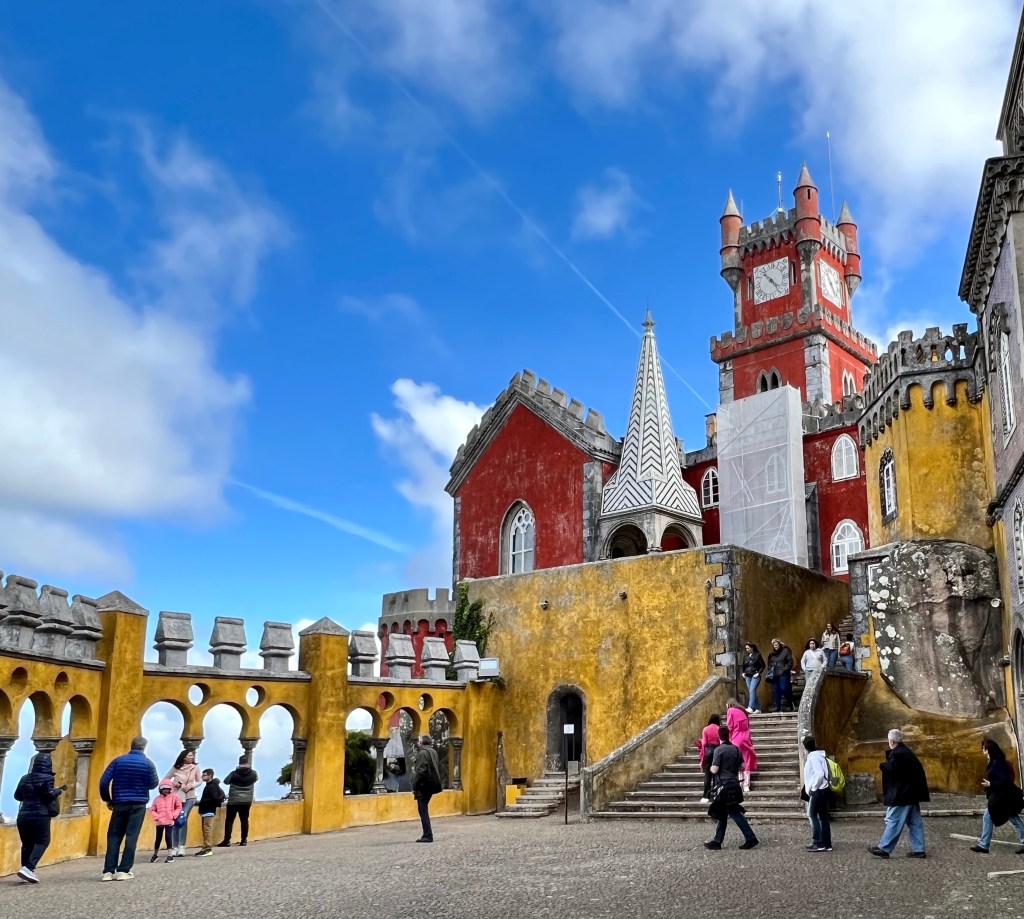
There are two parts to the castle. The red part is the oldest part and includes the 16th century monastery. The yellow parts are the newer additions built in the 19th century by Ferdinand II as a summer home for he and his family to escape the heat of Lisbon.
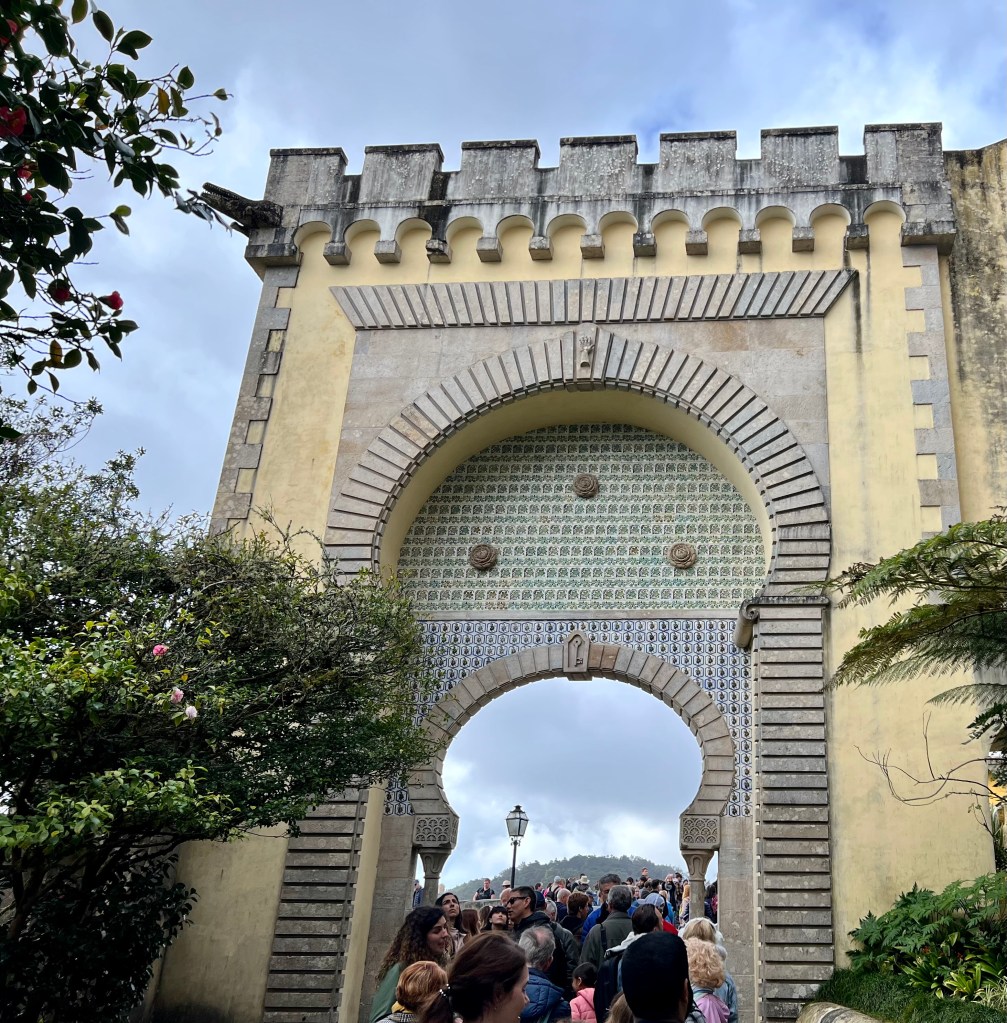
Throughout the palace you will find symbols and references to Portuguese culture and history. The entry to the castle is through a gate that is similar to that found at the Alhambra Palace in Spain. The hand at the top represents the five tenets of Islam, the three roses in triangle below are a message to Masons (Ferdinand was a secret Mason), the blue and white tiles represent the Portuguese while the green tiles above are for the vineyards where they grow their wine. The crocodile at the top drains water from the castle. Gargoyle images were left to the builders to decide so they are mainly mythological figures because the Portuguese were (are?) very superstitious.

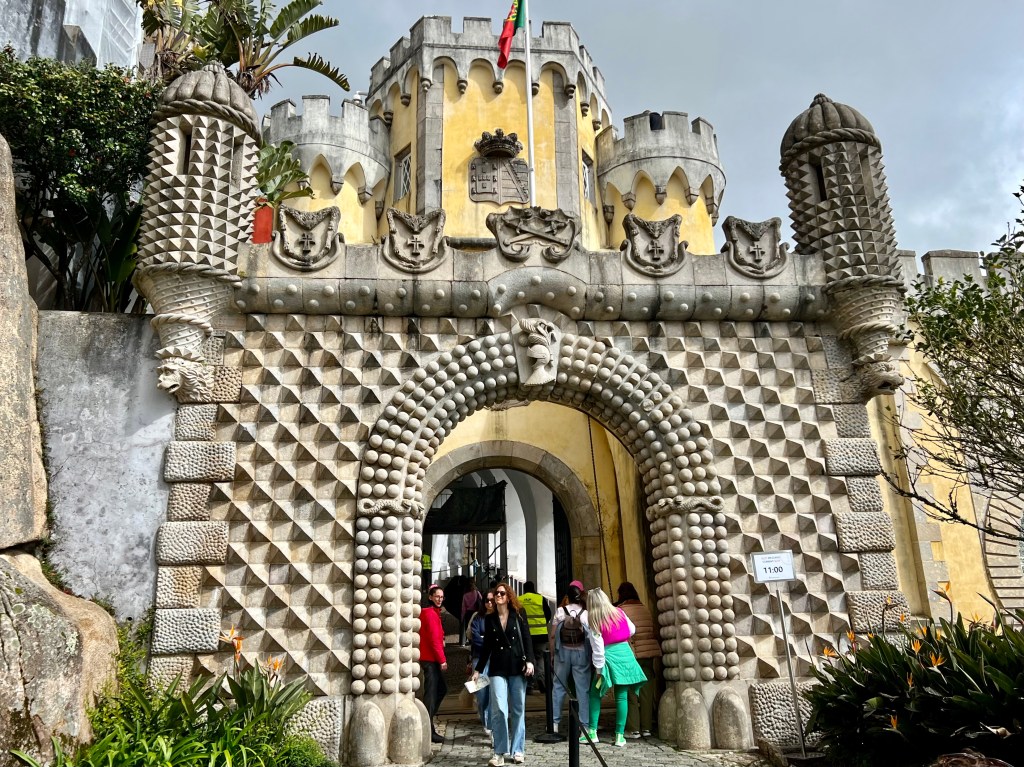
The second gate or Monumental Gate is a triumphal arch with features of Portuguese 16th century architecture (the same century as the monastery was built). This gate features cannon balls and more Mason and Templar symbols.
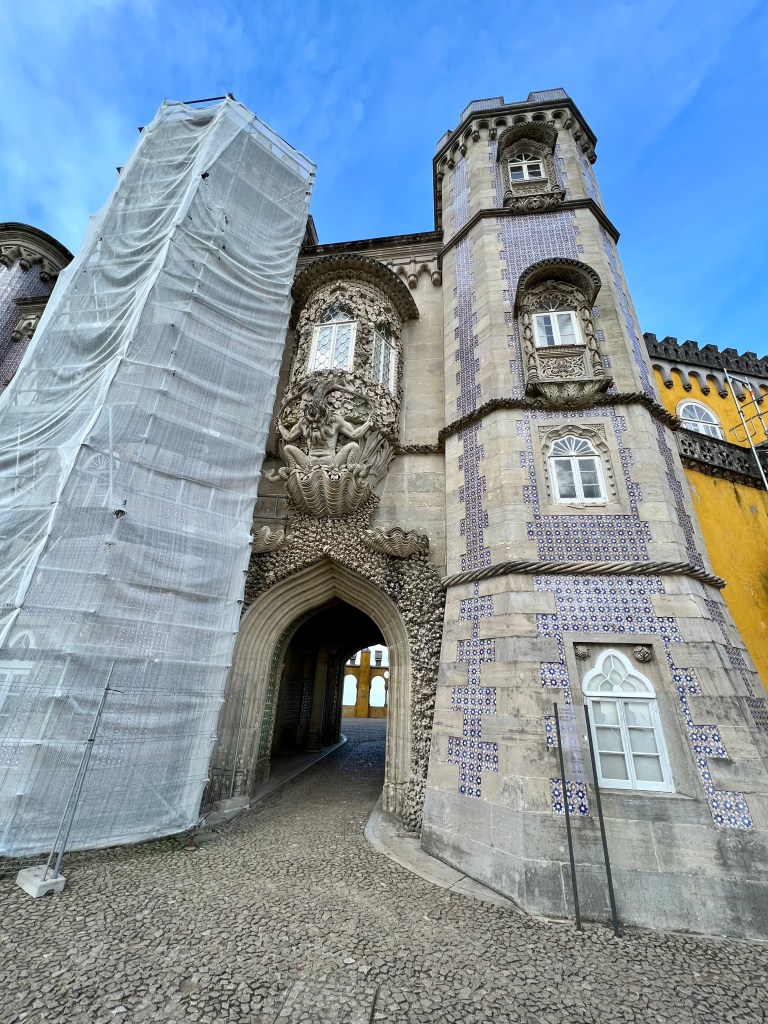
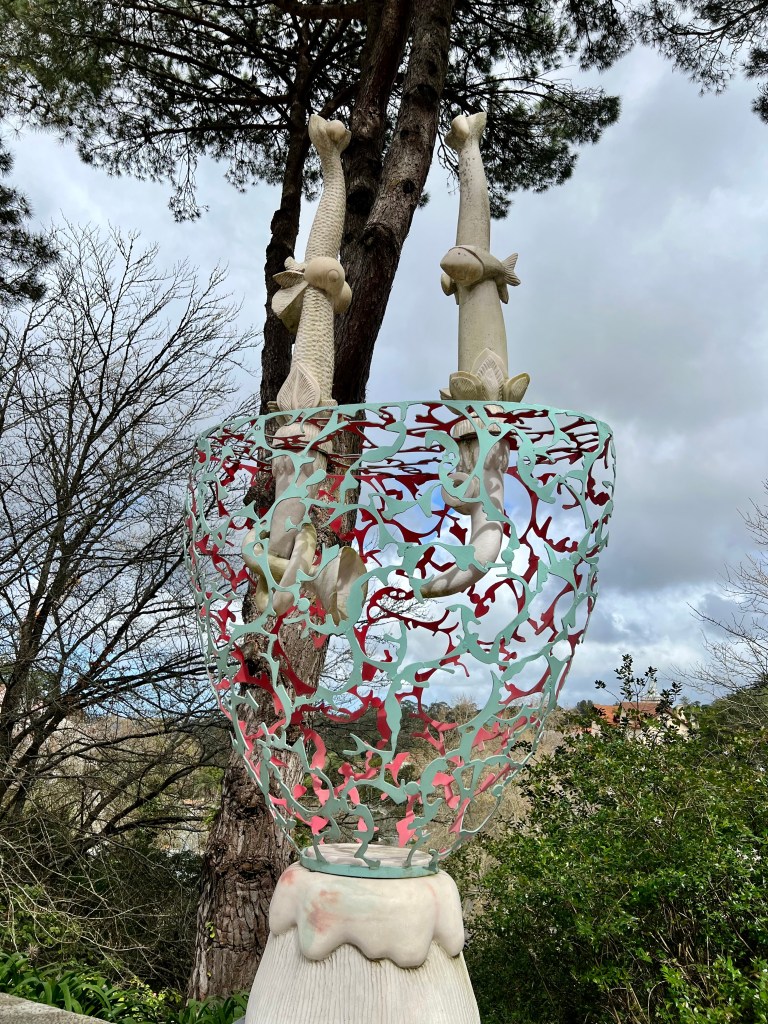
The third gate, the Triton Gate, resembles a description of the god from the epic Portuguese tale The Lusiads by Luís Camões. Ferdinand II designed the Triton Gate as a depiction of the world that unites both land and sea, which is most likely a dedication to the Portuguese feats during the Age of Discovery. The Triton is perched on top of a giant shell surrounded by waves, corals and other intricate adornments and nautical symbols. Above, he is holding up a tree trunk that merges with vines and other symbolic flora and fauna that abound in the Sintra Mountains.
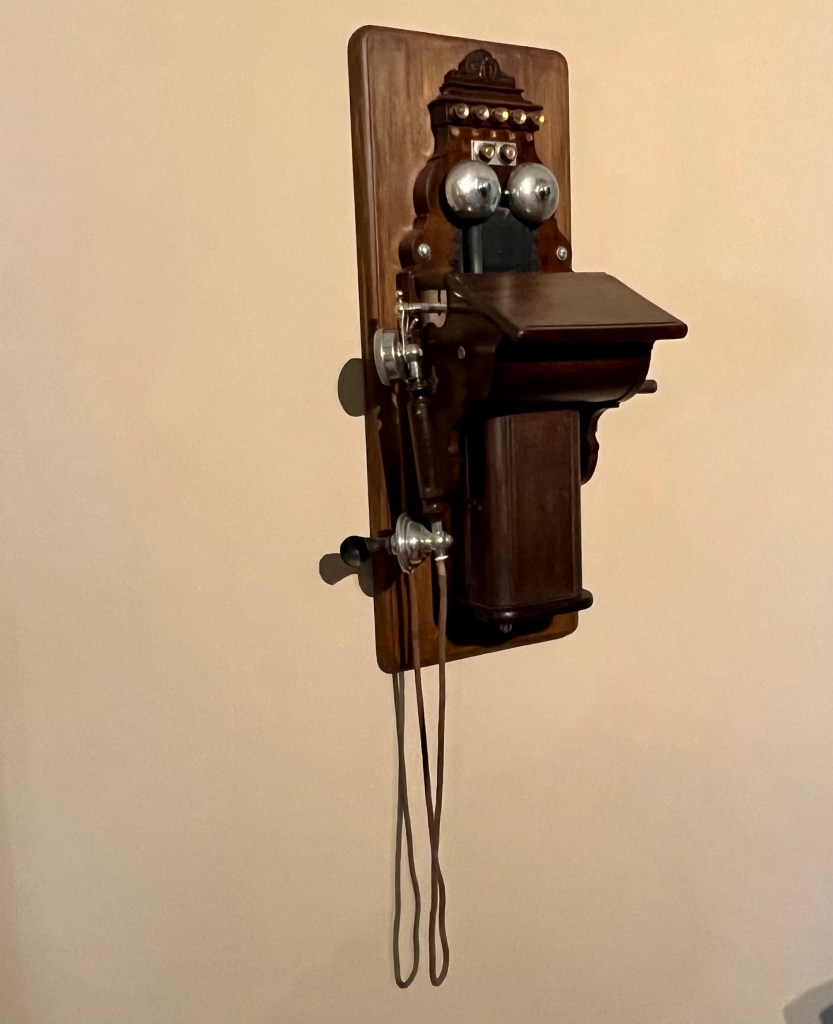
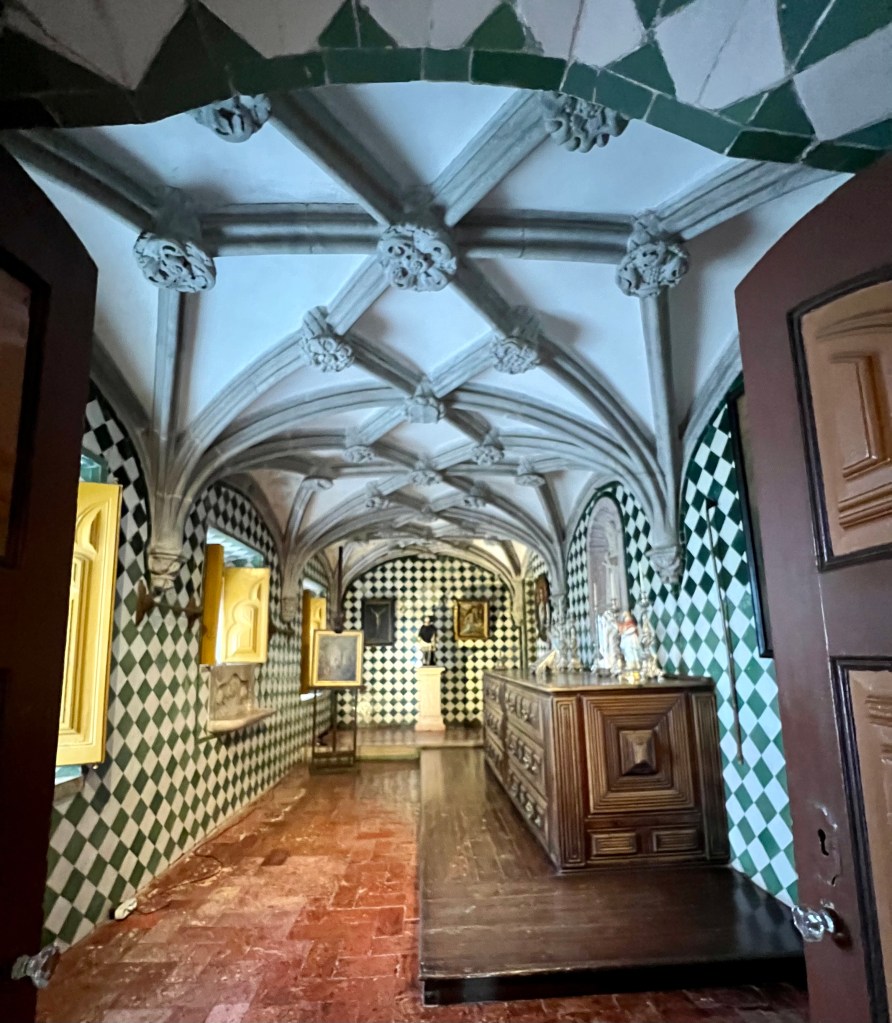
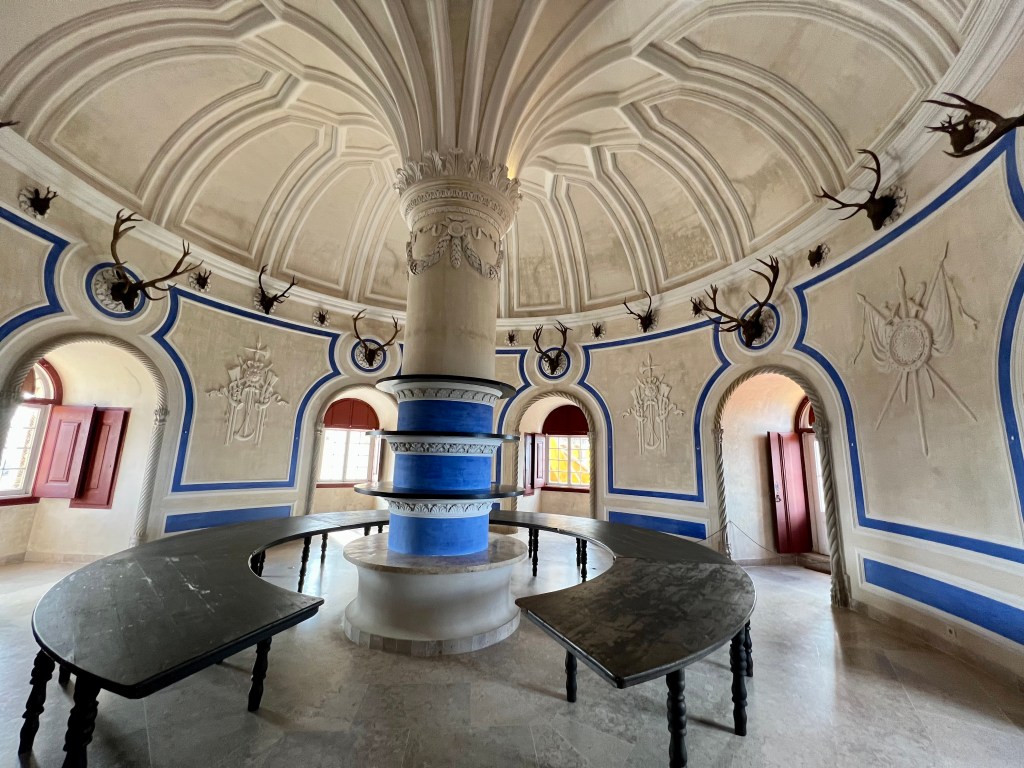
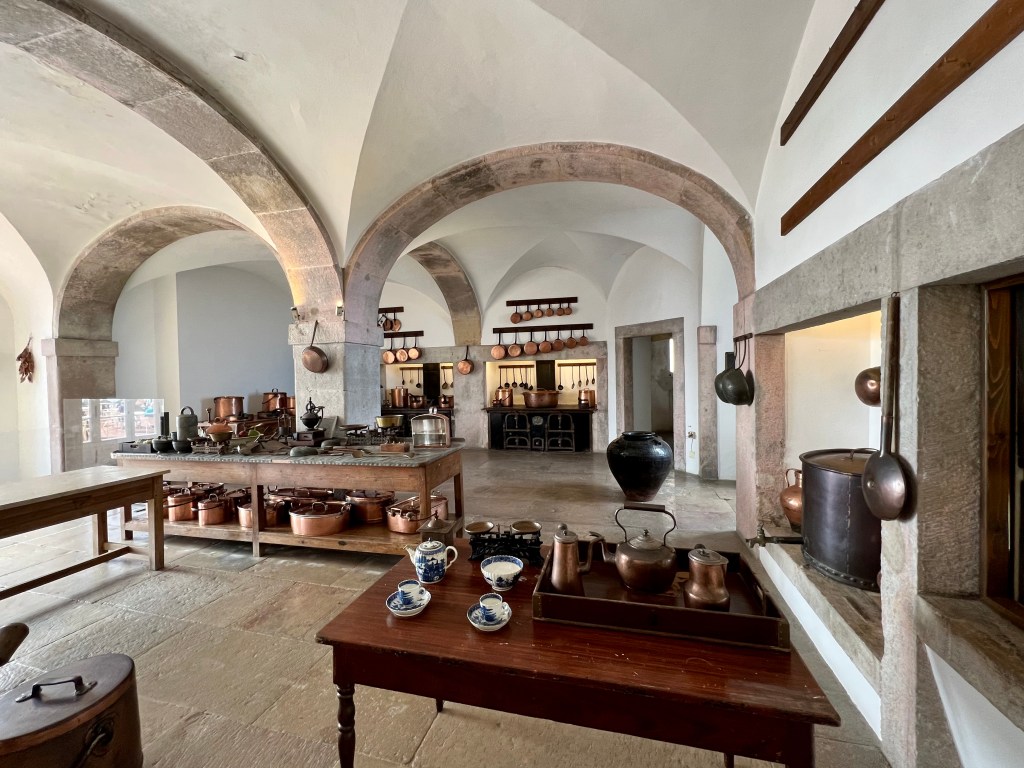
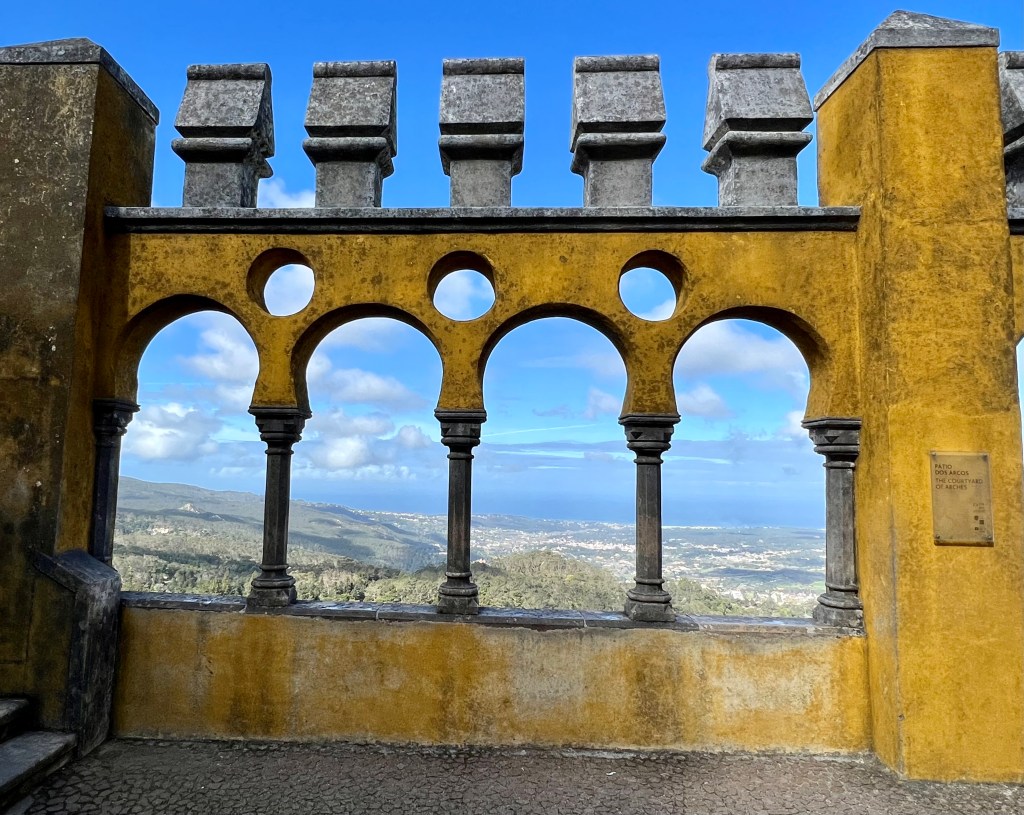
Miguel lead us through the palace and the various rooms used by the royals before giving us a few minutes to explore the Courtyard of Arches and the Chapel.
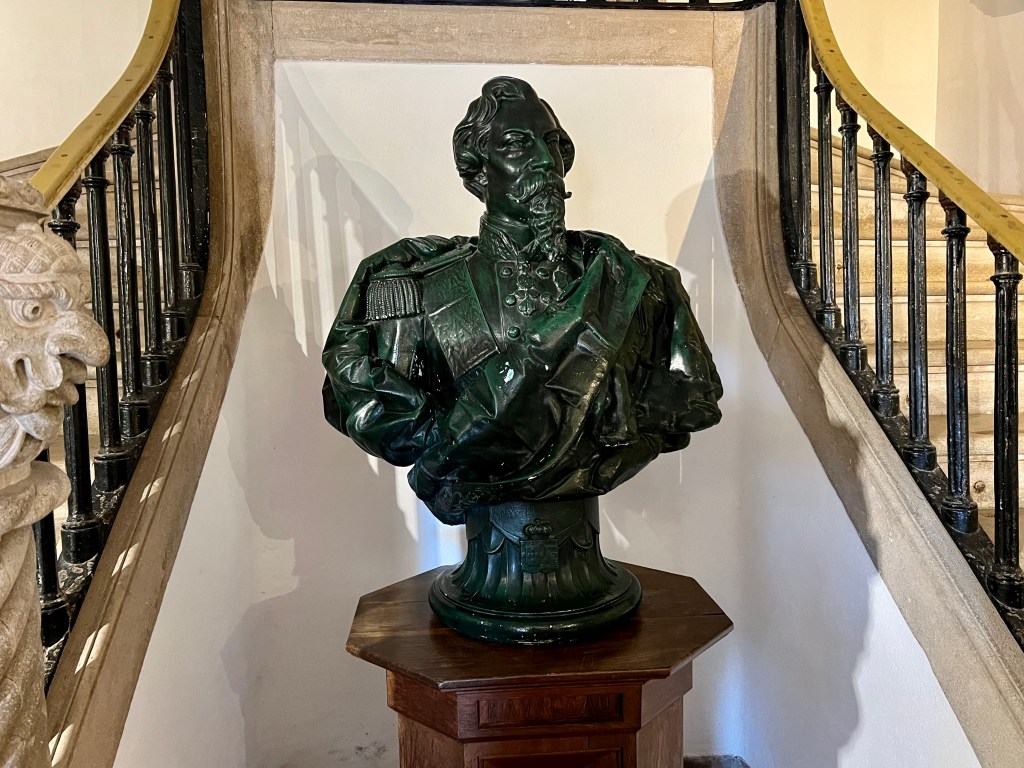

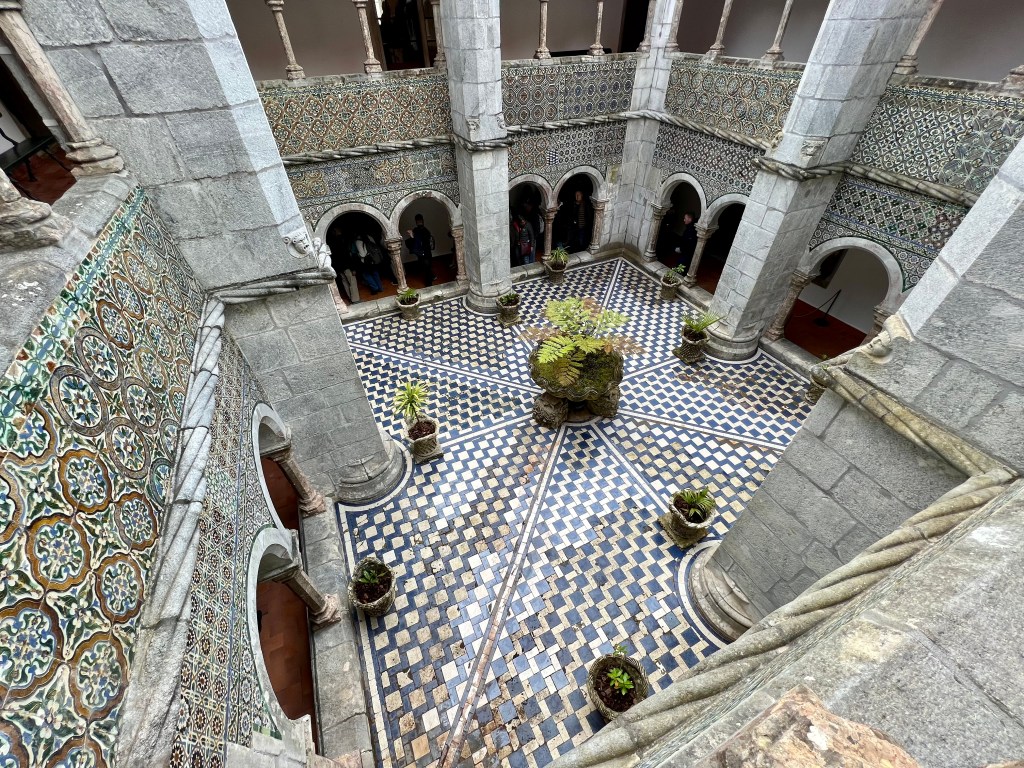


The Courtyard faces north and funnels the winds into the castle acting as air conditioning during the hot humid summer.

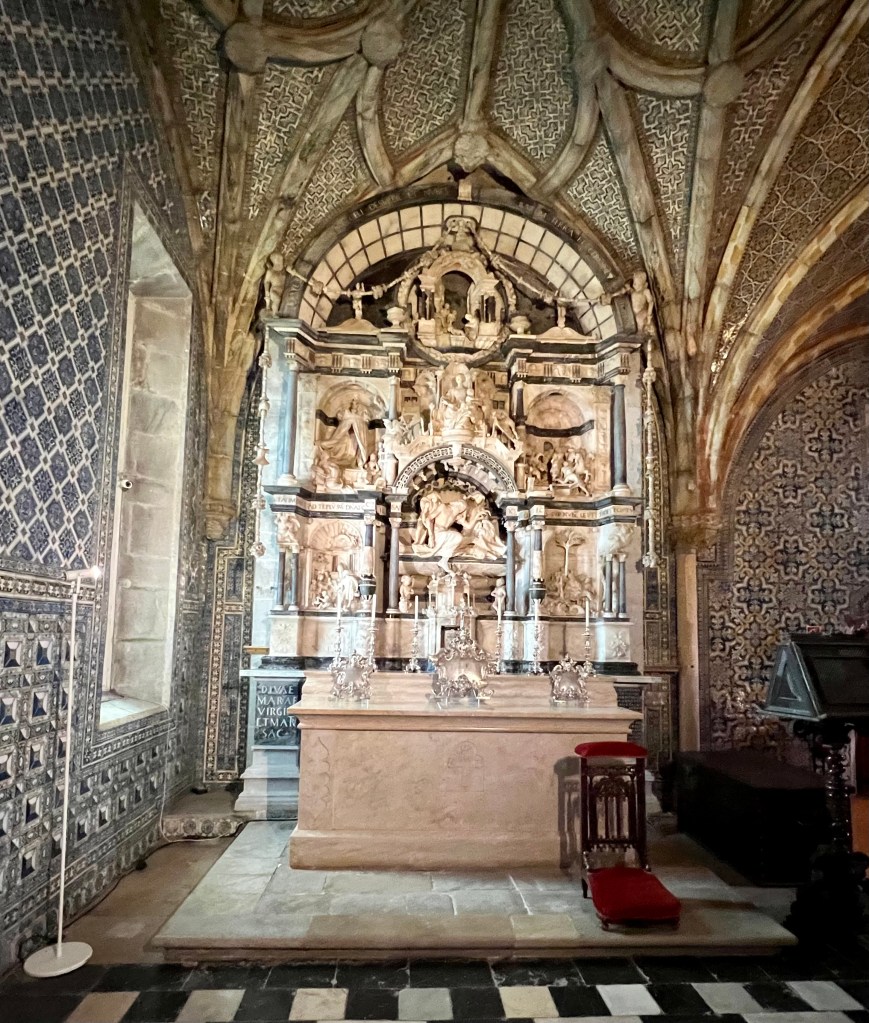
The Chapel is the church of the original early-16th century monastery. The nave features pointed arches and monochromatic tiles from the same period. The apse and choir, covered by the classically Manueline vaulted ribbed arches, were completely lined with polychrome tiles in the 17th century.
The Altarpiece in alabaster and black limestone, completed between 1528 and 1532. Its narrative concentrates on the life of Christ. The scenes depicted are: the Nativity, the Annunciation, the Presentation at the Temple, the Adoration of the Magi and the Flight to Egypt with the Resurrection of Christ in the centre, over the tabernacle.


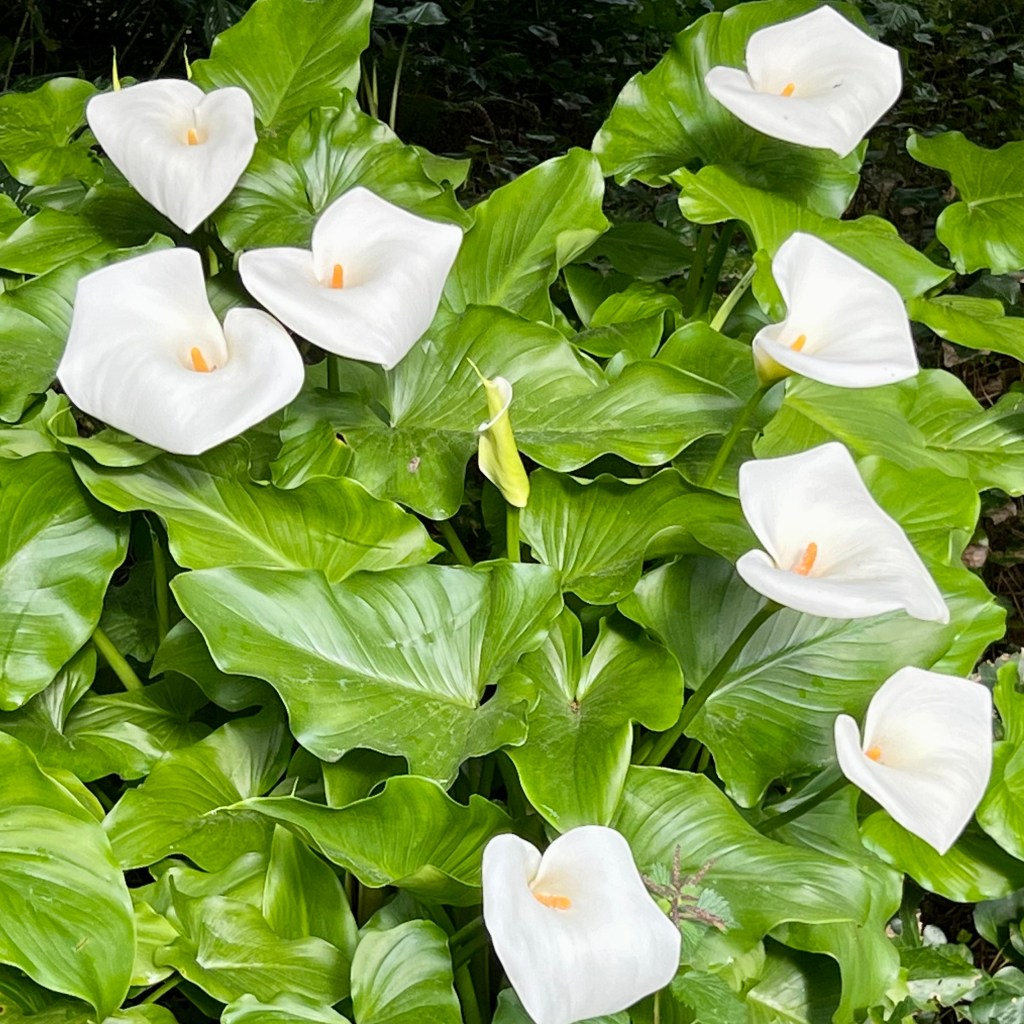
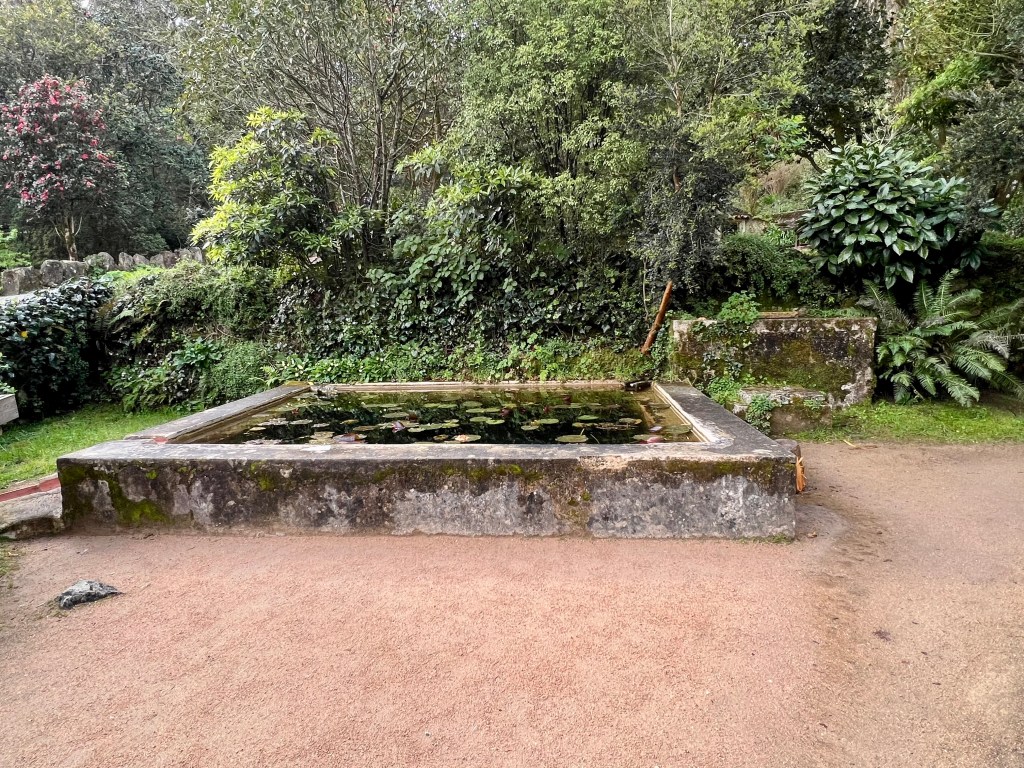
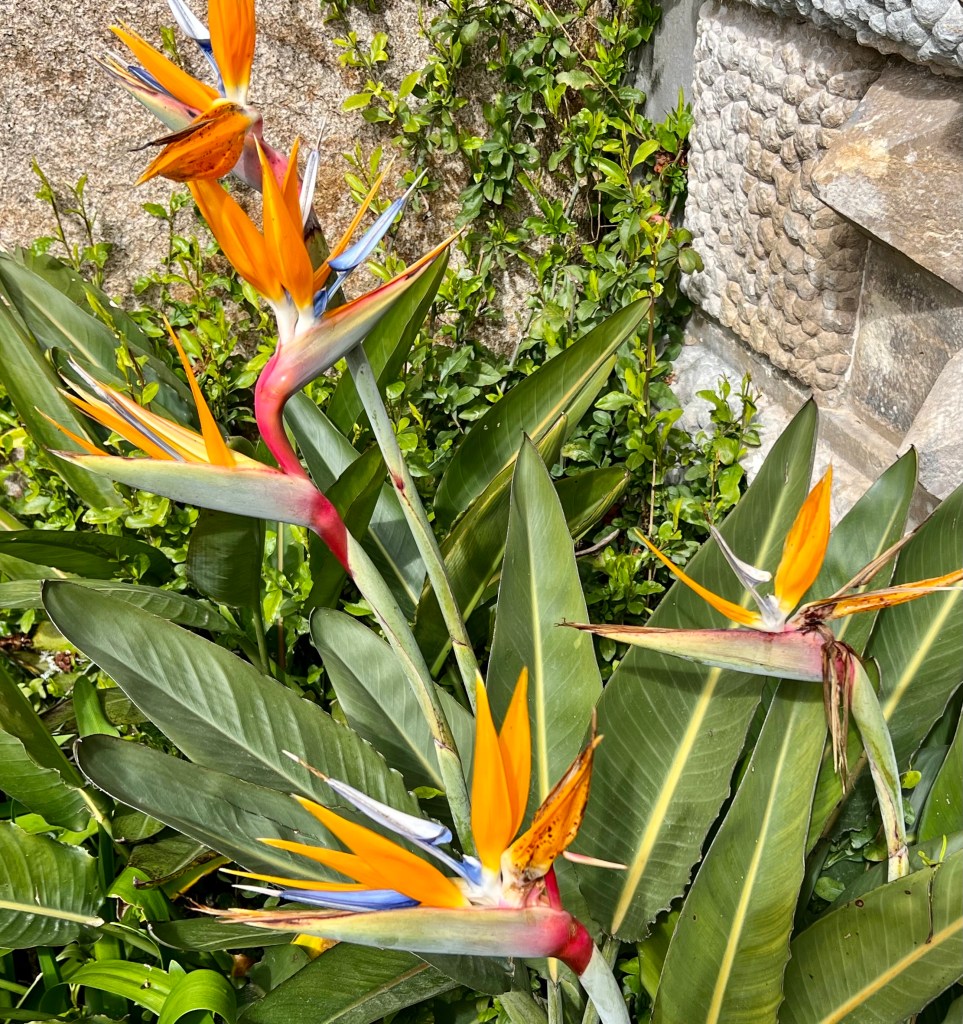
The extravagant taste of the era was not only applied to the palace but to the surrounding gardens as well. King Ferdinand was well-travelled and imported a large variety of trees from distant lands to plant in the park, including fauna native to North America, China, Japan, Australia and New Zealand.

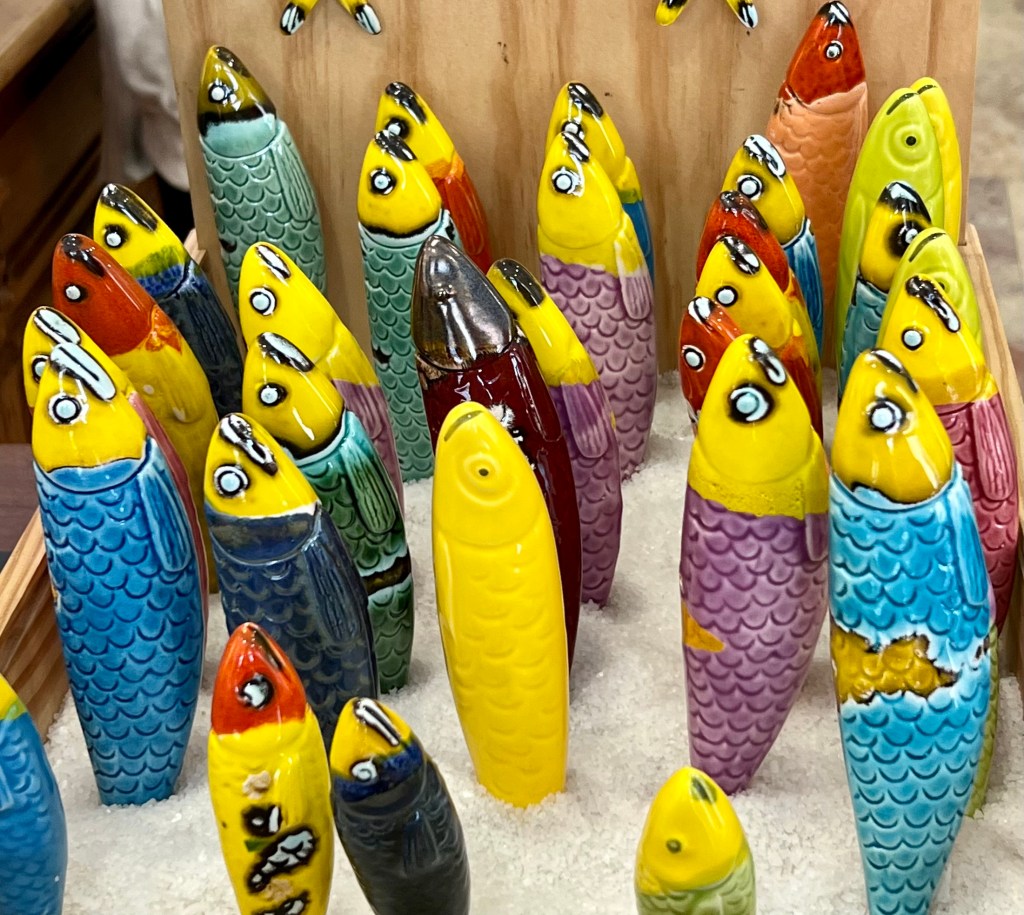
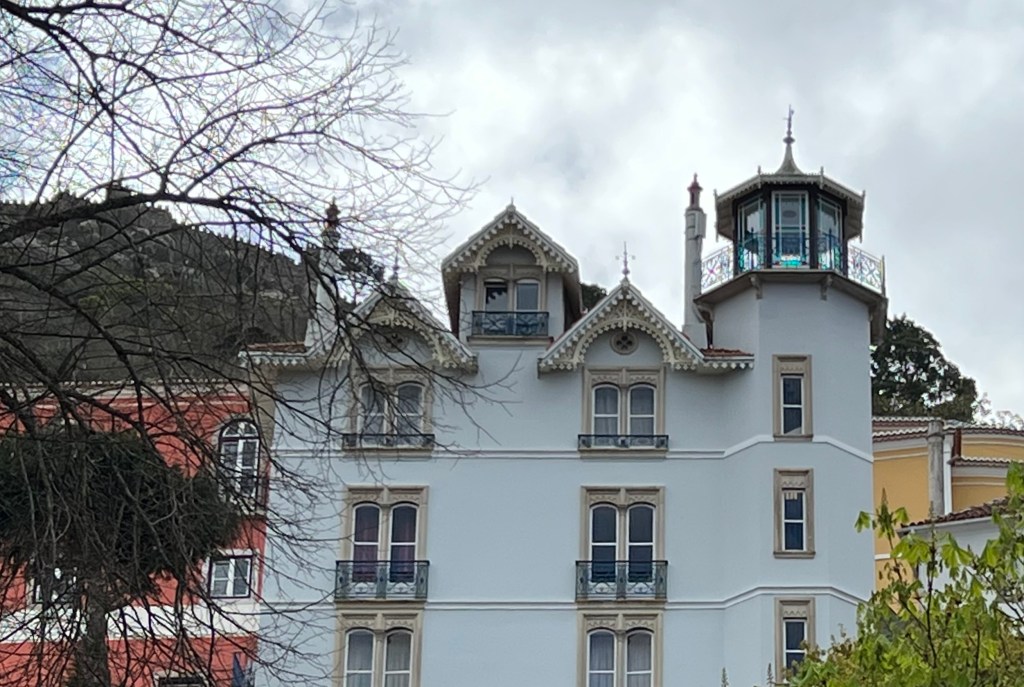
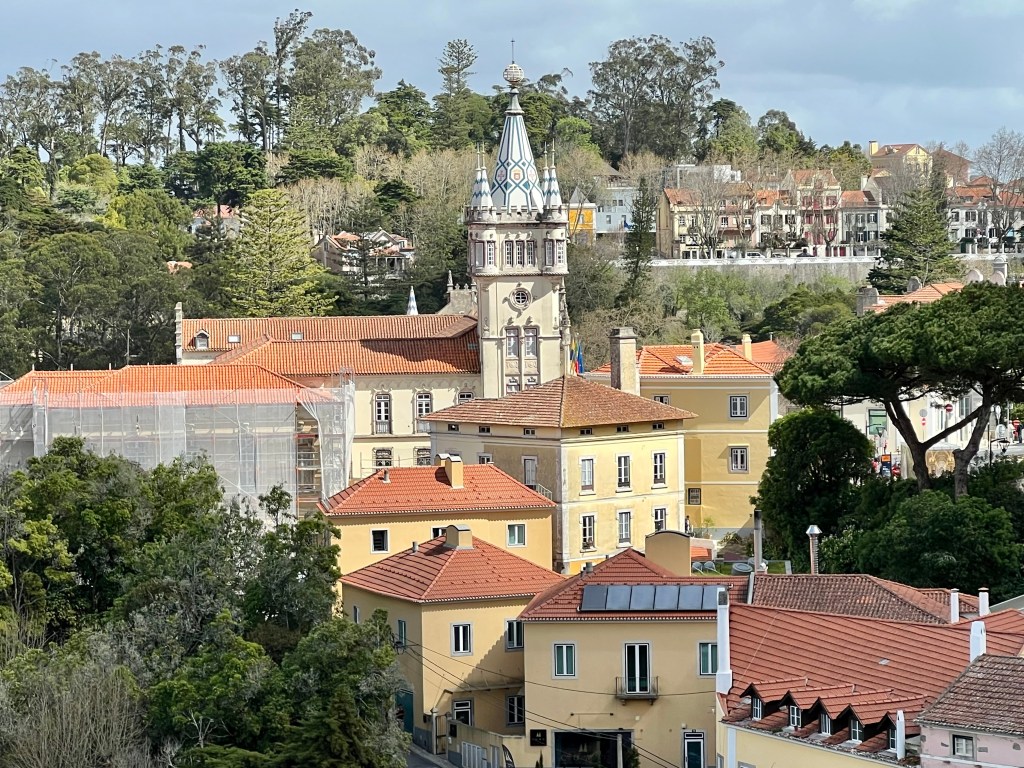
After our tour of the Palace we spent a hour exploring the town of Sintra doing a little window shopping and taste testing the local pastries from Piriquita. It seems every town has its own quintessential sweet treat so it’s lucky we’re boarding our cruise ship tomorrow so we don’t gain twenty pounds!! In Sintra, there are two options: Travesseiro da Piriquita; a flaky pastry filled with custard and chopped almonds and Queijadas de Sintra; a cheese tart flavoured with cinnamon. They’re both okay but not something I’d want to eat often.


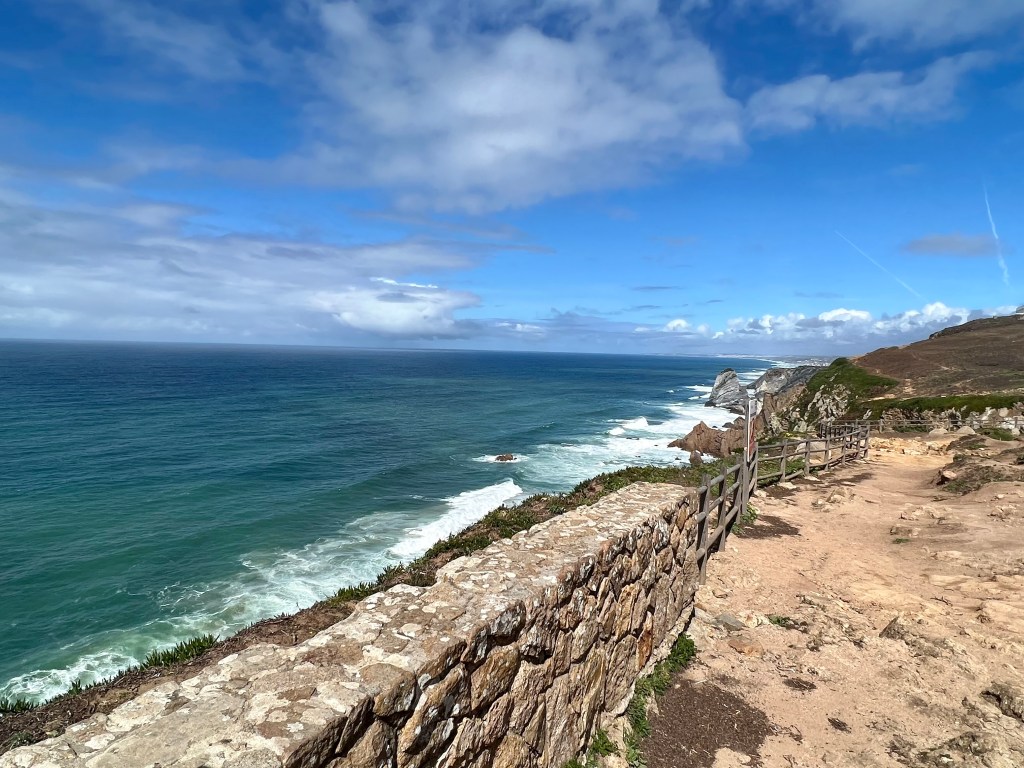
Back on the bus and we’re headed to Cabo da Roca, a cape which forms the westernmost point of a continental Europe. The point includes a lighthouse that started operation in 1772. After a whistle stop to wander around the cliff and take a few pictures, we boarded our minivan for the drive to Cascais for our lunch stop.


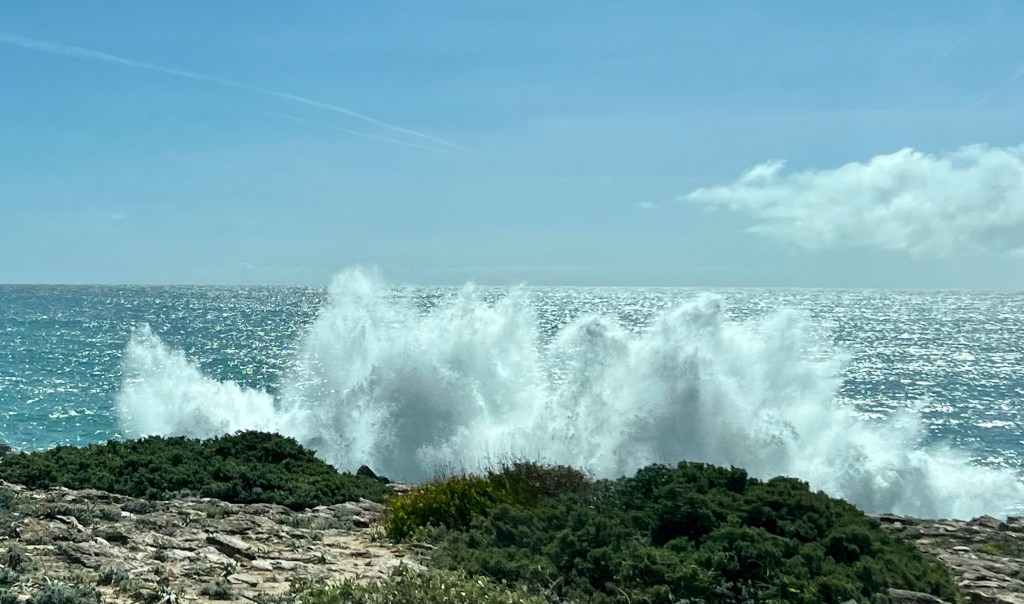
The beaches of Cascais are glorious; to the north is the wild and untamed Serra de Sintra coastline, with its surfing beaches and dramatic natural scenery and surrounding the town are the beautiful beaches of the Portuguese Riviera.
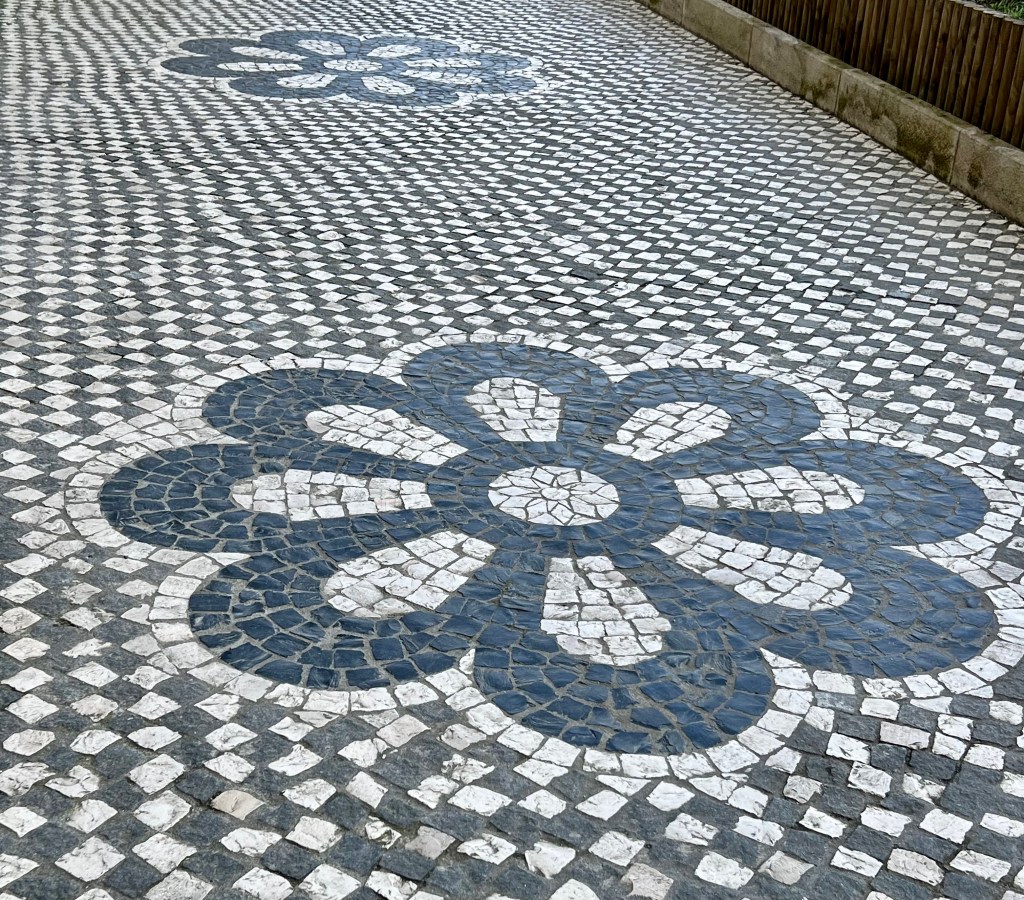
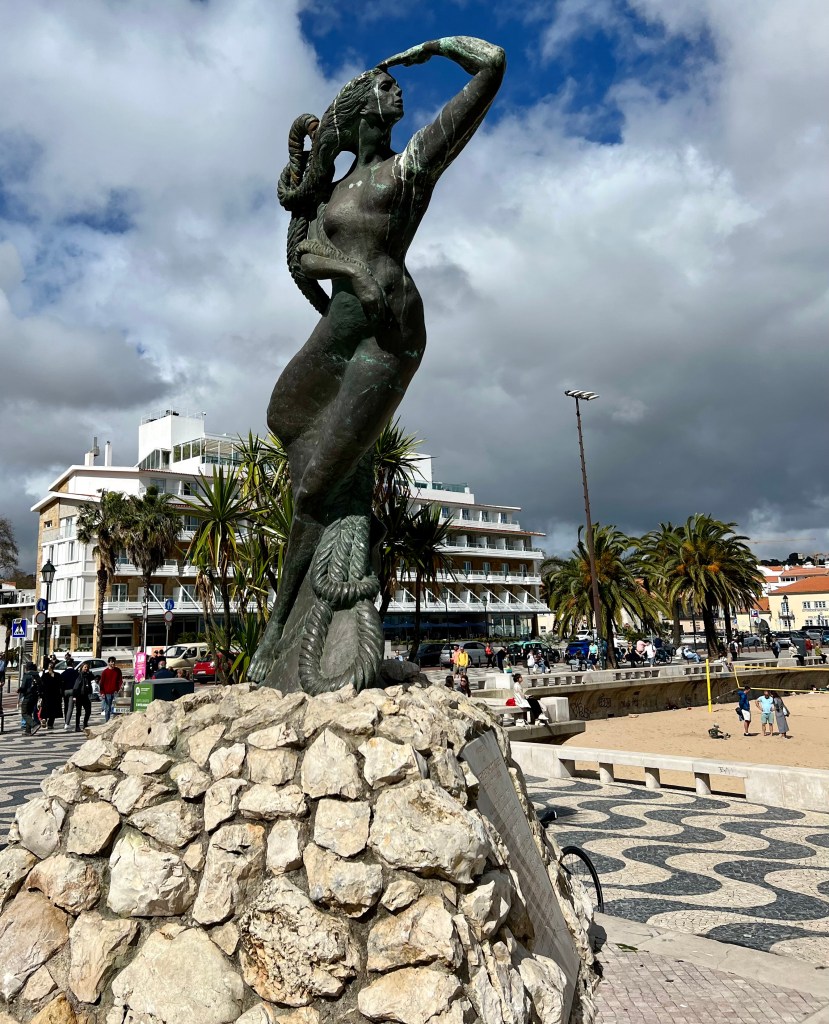
Historically, Cascais was the summer retreat of the Portuguese nobility and today the cobbled streets in the historic centre, lavish villas, imposing fort, museums, and lively bars and restaurants lend Cascais a holiday atmosphere.
Cascais is also the site of the casino that supposedly was the inspiration for James Bond’s adventures in Casino Royale.
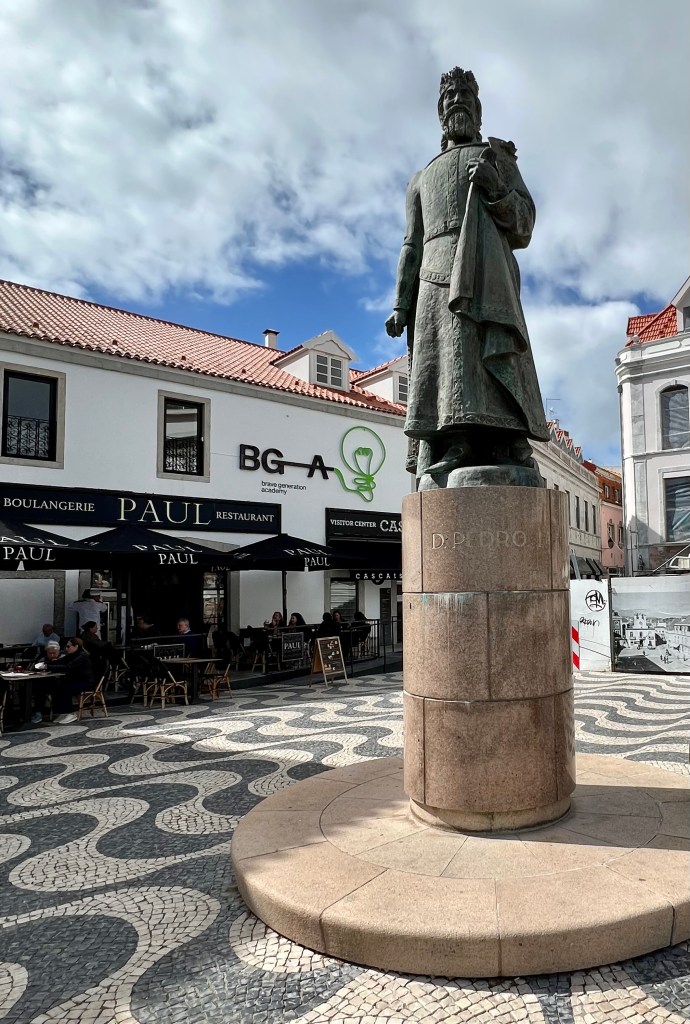
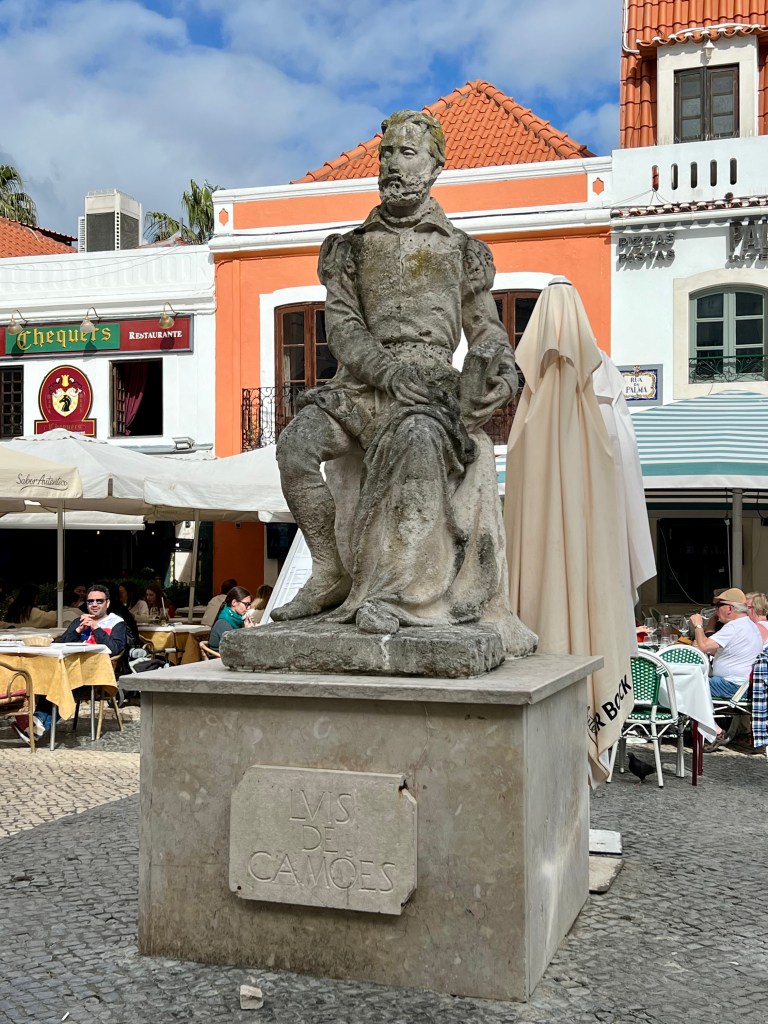


After a quick explore, we find a café and grab lunch before meeting at the van for our drive back to Lisbon. Miguel advises us that there is a big demonstration (part of ongoing labour issues and strikes that have been going in for months) which will make it impossible for him to drop us off at the Hard Rock. Instead, he stops the van miles from there and suggests we make our own way back to the hotel.
Not so fast! The folks from Madrid are happy with the location but Francine, Alain and I have no idea where we are but we know that it’s far from our hotel. Miguel is worried about his boss for some reason if he takes us closer to the hotel but I tell him to get his boss to call me if he has any issues and he drives for fifteen minutes and drops us off closer to the hotel. We still don’t know exactly where we are but there are some landmarks in the distance that we recognize so with me in the lead, we weave through streets and alleys in the general direction of our hotel. Imagine out surprise and elation when as we head down a long stairway, we spy the restaurant we’d eaten in the night before. The angels are with us or I’m becoming a better navigator (not likely) and we make it back to the hotel.
The last four members of our motley crew, Craig and Kerry and Ron and Andy have arrived and tout le gang is on the rooftop terrace having a drink so we join them. They are heading out for an early dinner which I decide to skip having just had lunch.
We’re meeting tomorrow morning for breakfast before grabbing cabs to the cruise port to board our home for the next two weeks the Norwegian Sun.
Tomorrow is another day. Adventures await …
 Judy’s Rambles