
October 27, 2023
This morning, we have a walking tour in Siena booked so we grab a quick breakfast and head to our trusty Peugeot for the journey. Google maps, our other constant companion, is also on the job and we make it to Siena and find parking without any serious issues. Of course, we’ve programmed in some time to get lost either on the highway or in the town on foot just in case.
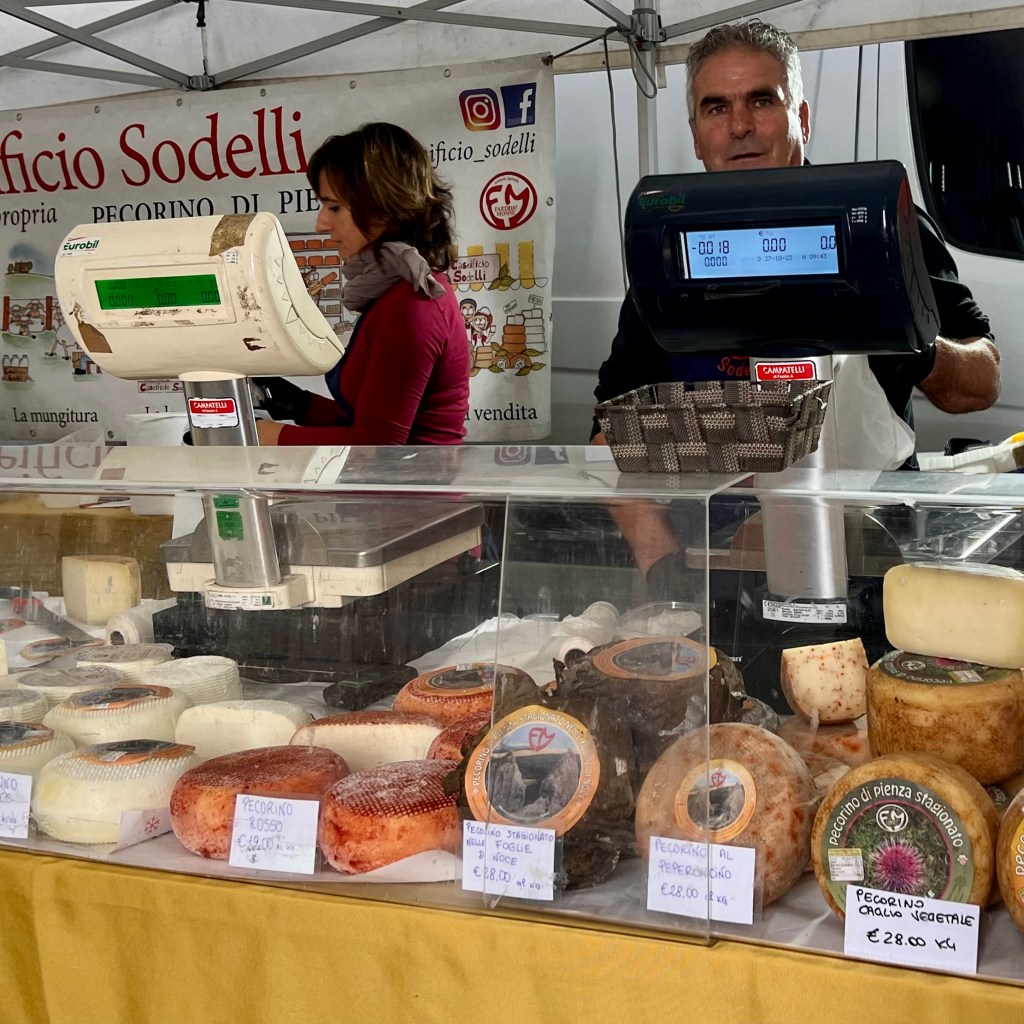
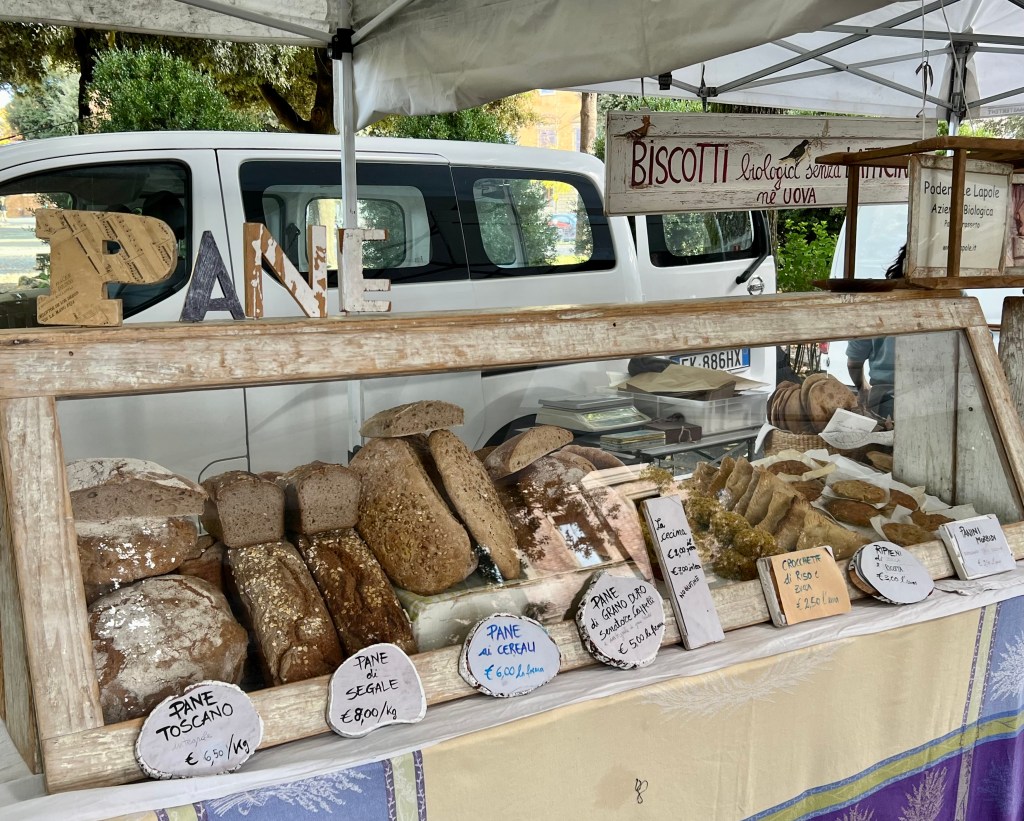
We find out guide, Julie, in front of the NH hotel without incident and she gives us speakers so we can hear her from a distance. Our foursome rounds out the tour group to fifteen and we’re off. Julie is originally from the US but has lived in Siena for 35 years so she’s very knowledgeable and speaks perfect Italian (at least it sounds perfect to us!).
Siena was an important medieval republic with a population of 65,000 people inside the walls in its prime. It was actually larger than London and Paris at the time. Today there are still around 65,000 people in Siena but most of them live outside the walls. 60% of population succumbed to black plaque. (30% avg in Europe) because of high population density and poor hygienic conditions.
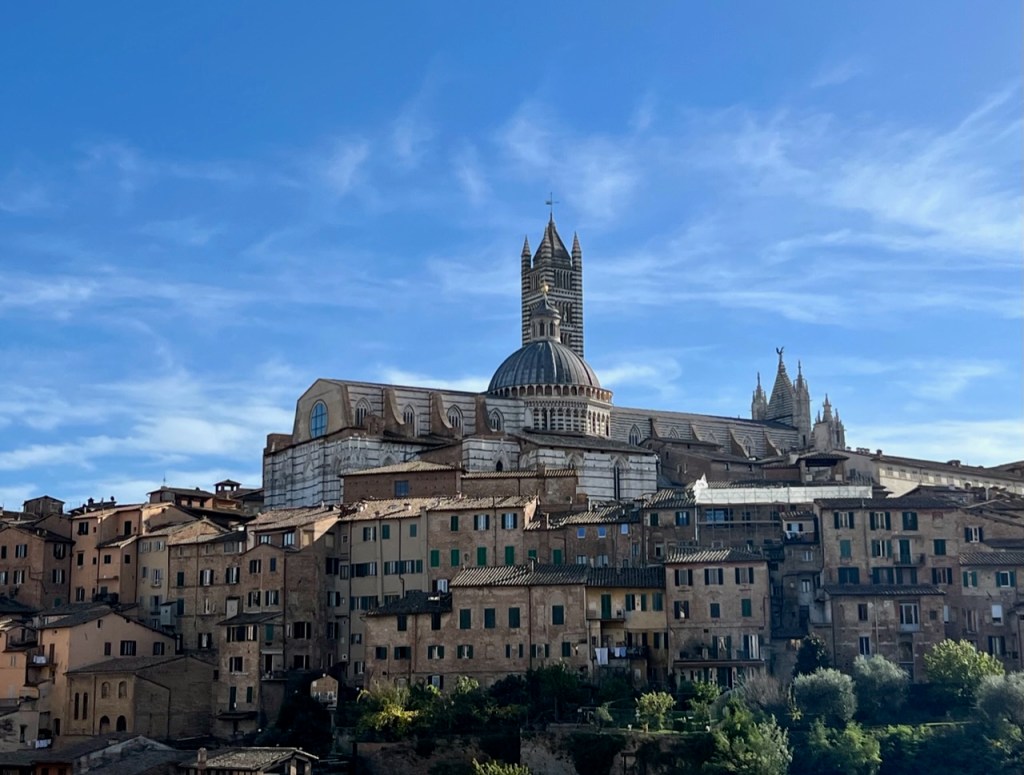
Siena was built on three hills; each with a village that merged to make a city. The Duomo was built the highest hill with the Basilica San Dominico beside it.
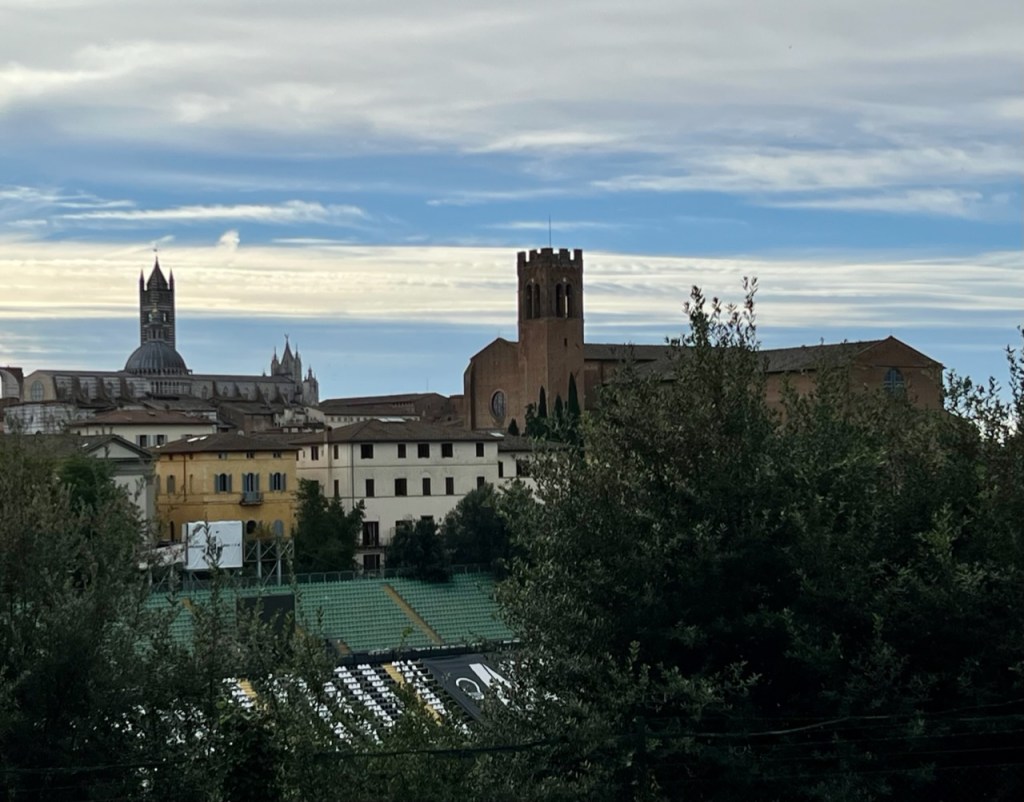
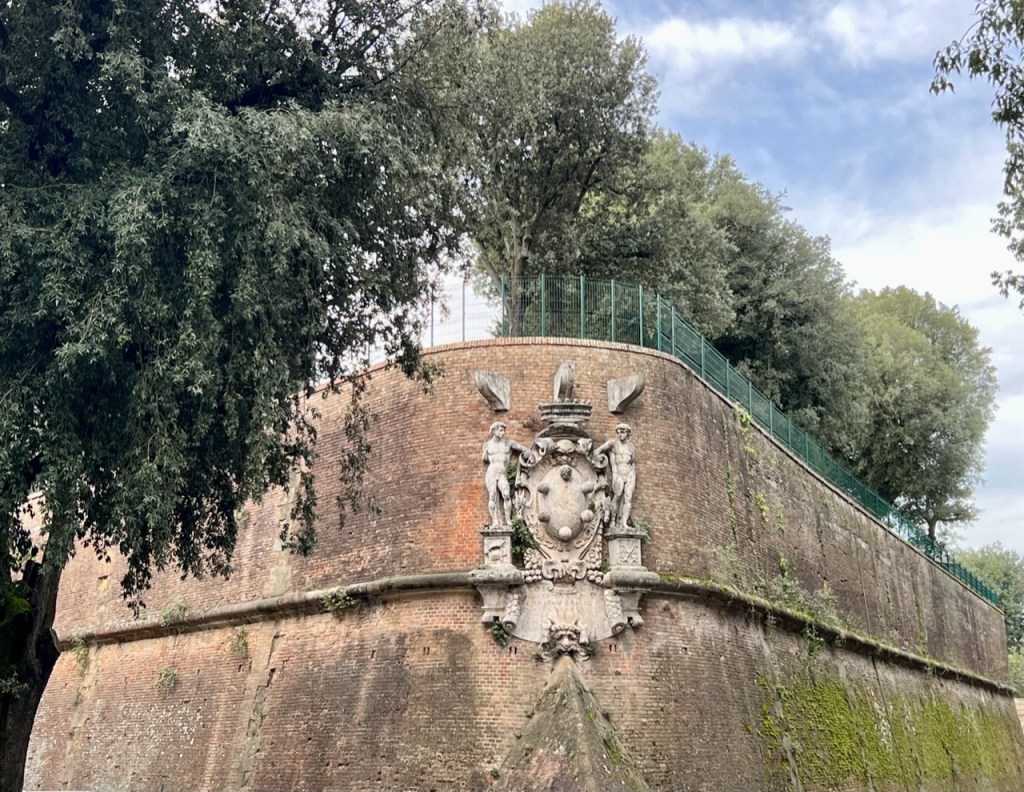
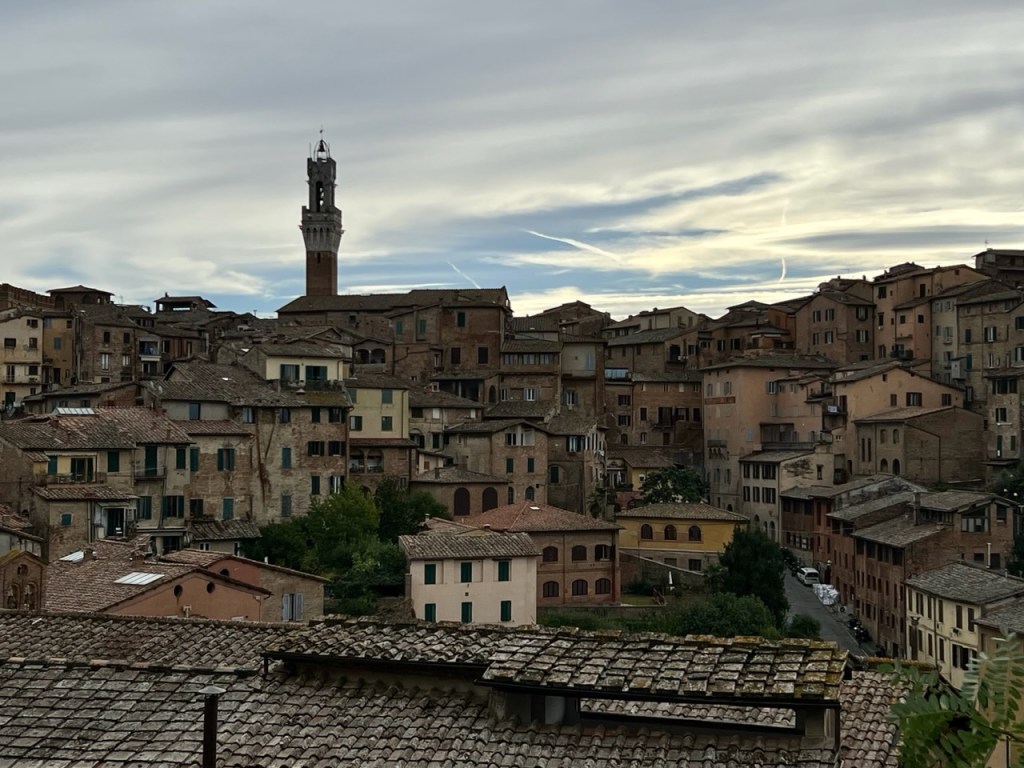
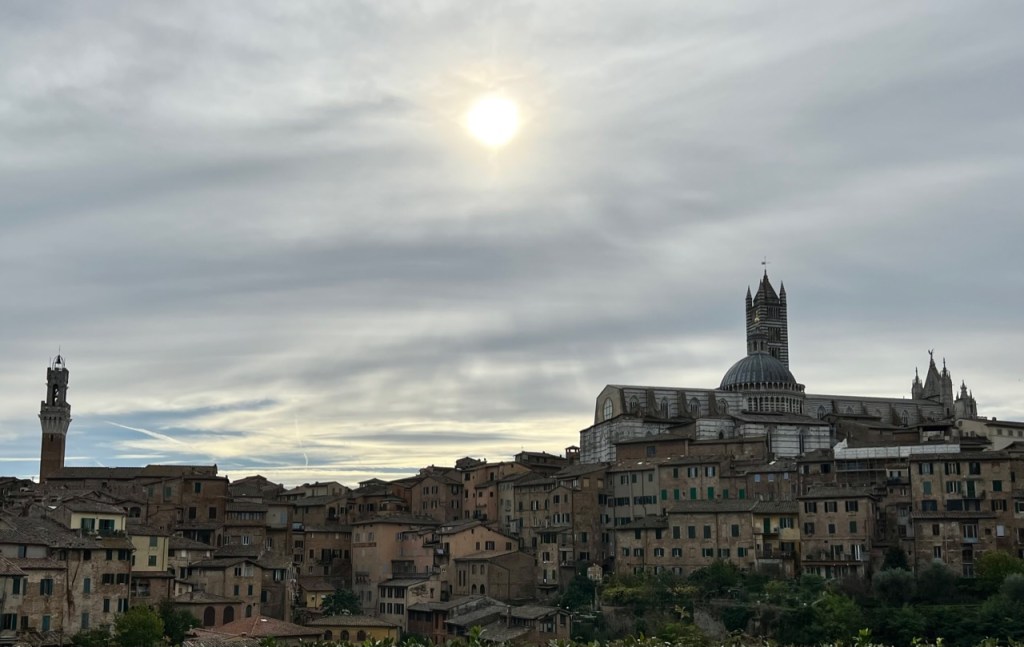
Siena and Florence were rivals for many years and fought constantly. Eventually Florence defeated Siena and set about to subjugate them by knocking down the many tours that protected the city. The Fortress of Siena was built by Medici family after the conquest of Siena in 1655 with the help of Spanish and used the materials from the ruined tours as building materials. The fortress is now a garden and cultural centre. Most (80%) of the walls around the city are still standing.

Saint Catherine of Siena is their patron saint. She was one of 23 children (yikes!! ) Born one year before black plague, she was eventually granted Sainthood because of her spiritual mysticism and diplomacy. She was instrumental in getting the Papacy moved back to Rome from France.
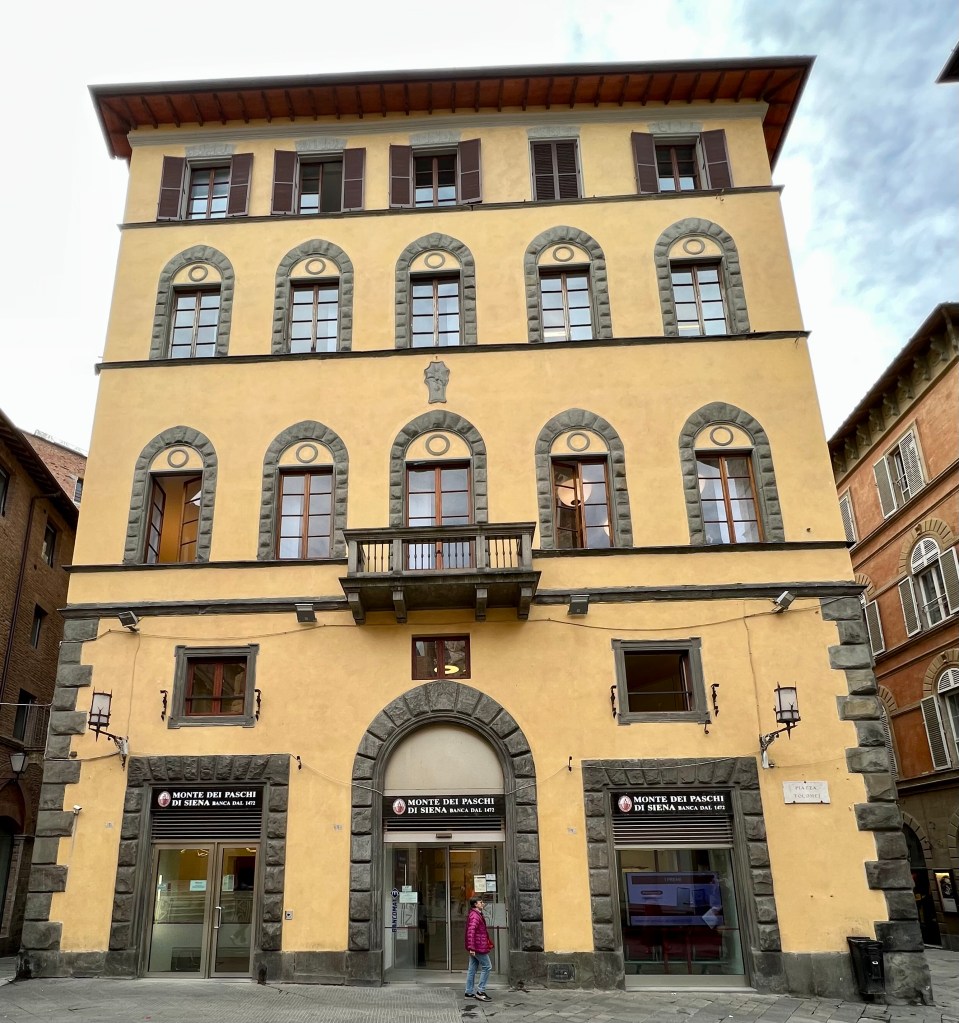
Monte dei Paschi di Siena, the oldest bank in the world, originated in 1472 as a Monte Pio (pawn agency) and was expressly instituted to give aid to the more underprivileged classes of the population during a time of particular hardship for the local economy.

Sallustio Bandini was an Italian archdeacon, economist, and politician. He was an advocate of free trade, and removal of local feudal tariffs and tolls.
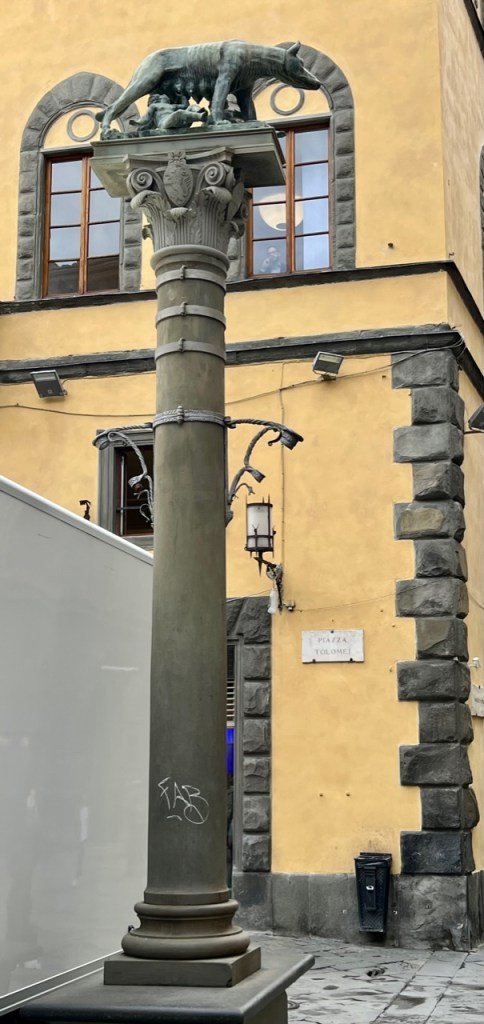
Legend has it that Siena was established by Senius, son of Remus and nephew of Romulus. Thus, the symbol of Siena is a she-wolf breastfeeding Romulus and Remus. This symbol is repeated in different parts of town and pieces of art.

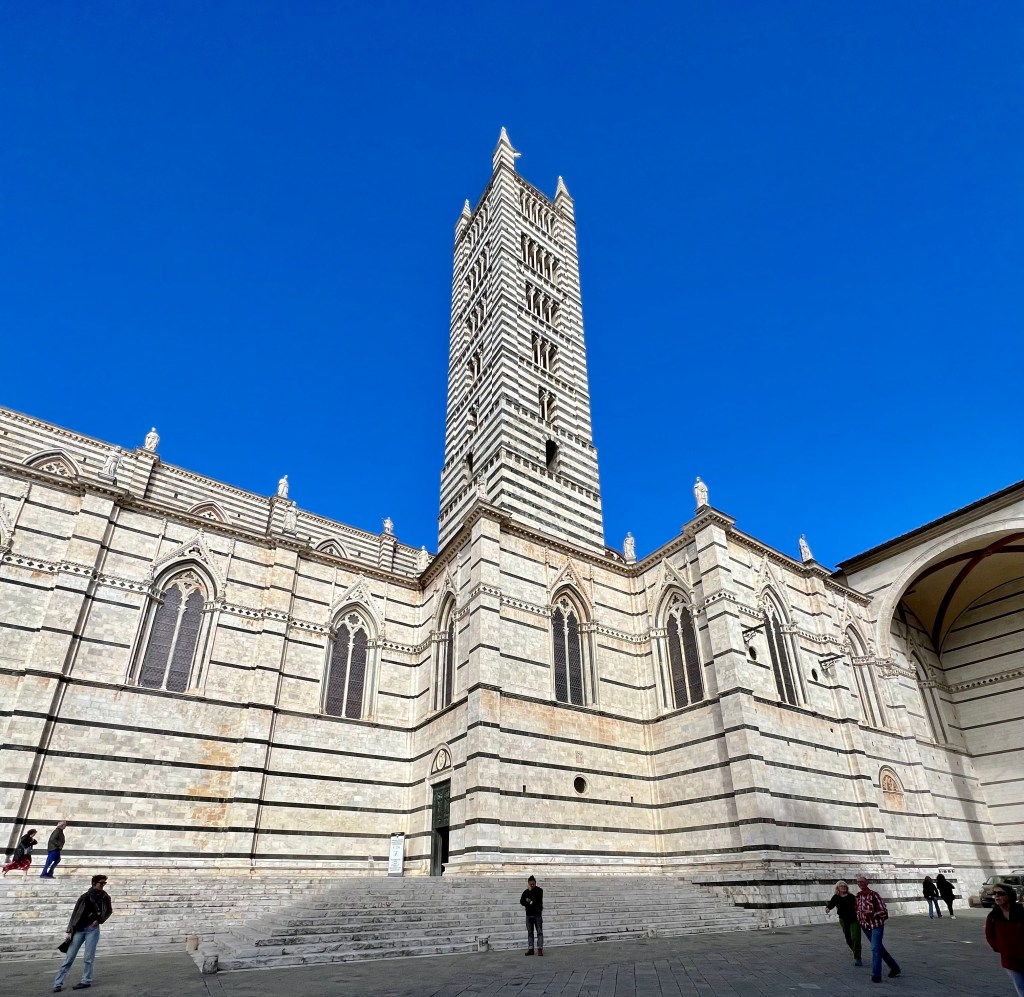

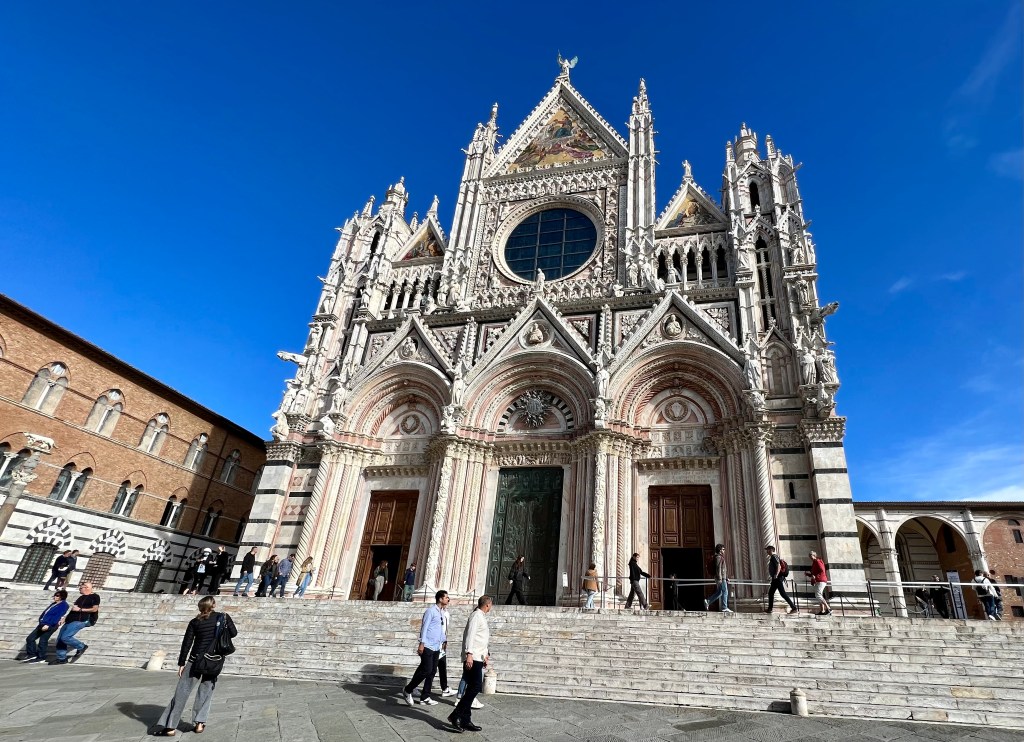
Siena Cathedral, a medieval church, was dedicated from its earliest days as a Roman Catholic Marian Church and is now dedicated to the Assumption of Mary. It was originally intended to be much larger but because of the devastation form the black plague is much smaller though still very imposing. The building is constructed from white marble and dark green granite.
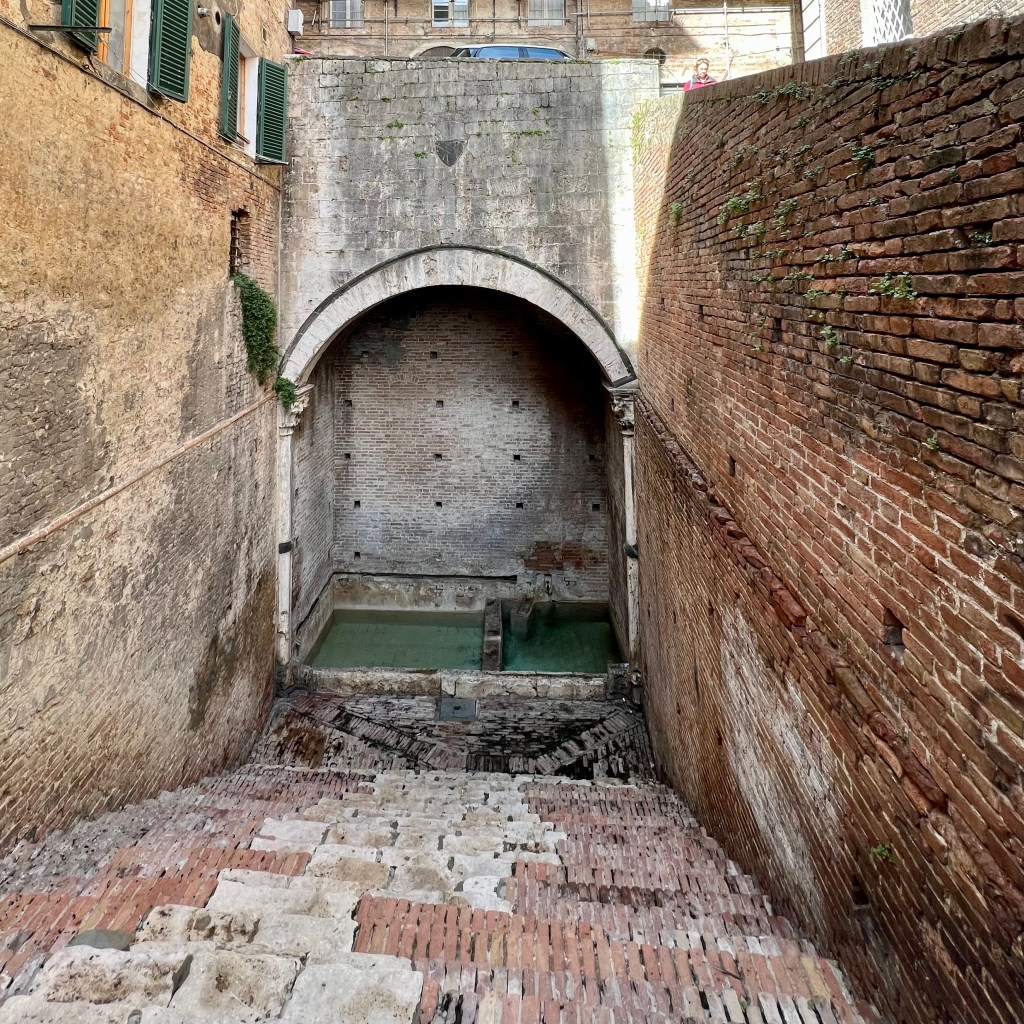
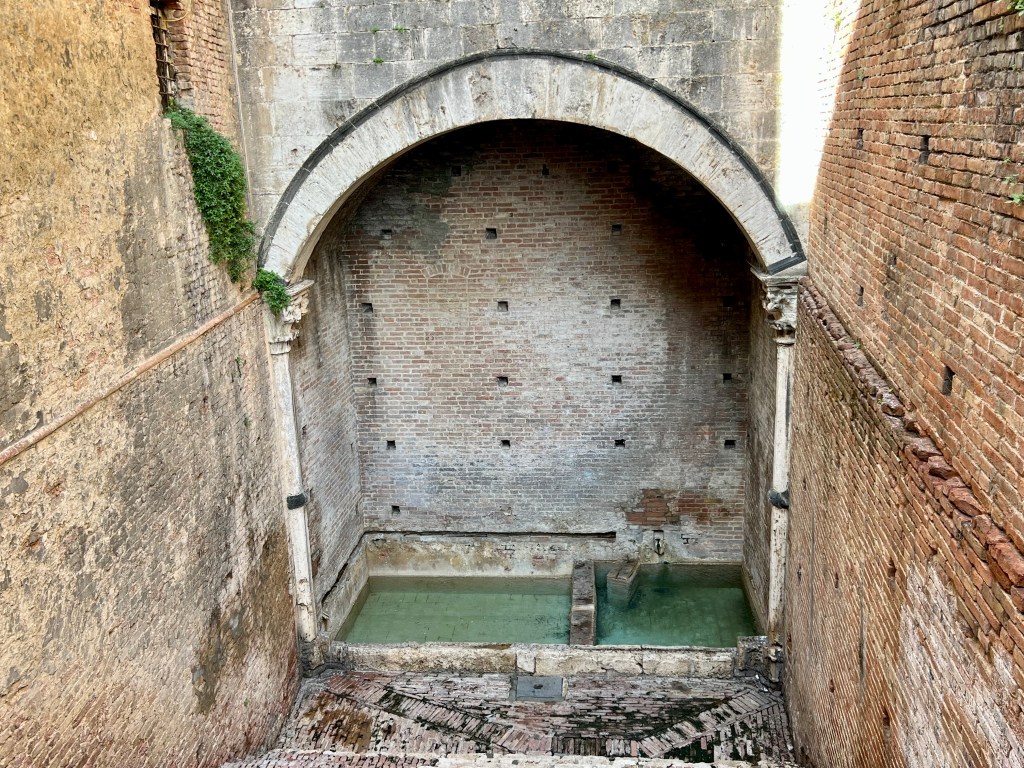
Fountains were not for decoration but supplied the water for the citizens. The city didn’t have a water supply so water came in from 25 km out. One of the old fountains is still available but not in use. Used to be called the Fountain of Serenity and is now named after the street above. Fountains were two or three levels. The highest level was for human consumption, second for animals and third for household use; laundry etc.

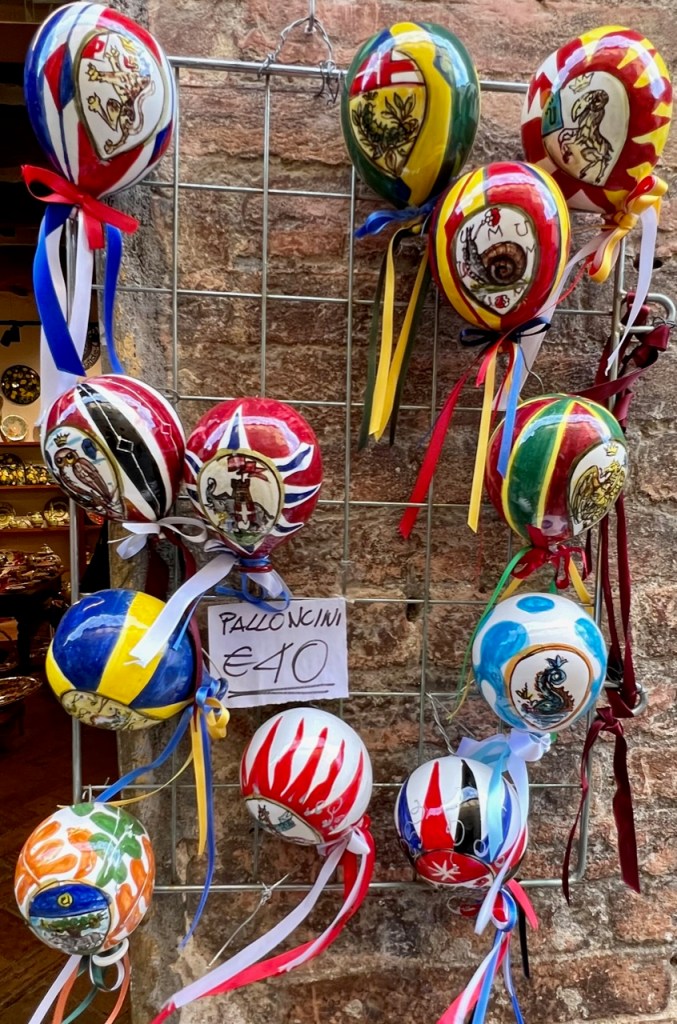
Siena is famous for its horse race which is not just a race but a passion. The Palio takes place on July 2 and August 16 every year. In the Palio, the various Sienese “contrade”, or areas in which the city is divided, challenge each other in a horse race in the heart of the city in the Piazza del Campo. The Campo was originally a grassy field but is now a concrete square so 15 inches of fill is added along the course to make the race a bit safer for the horses and riders. The bottom right is a tight corner with mattresses for a soft landing in case of accidents.
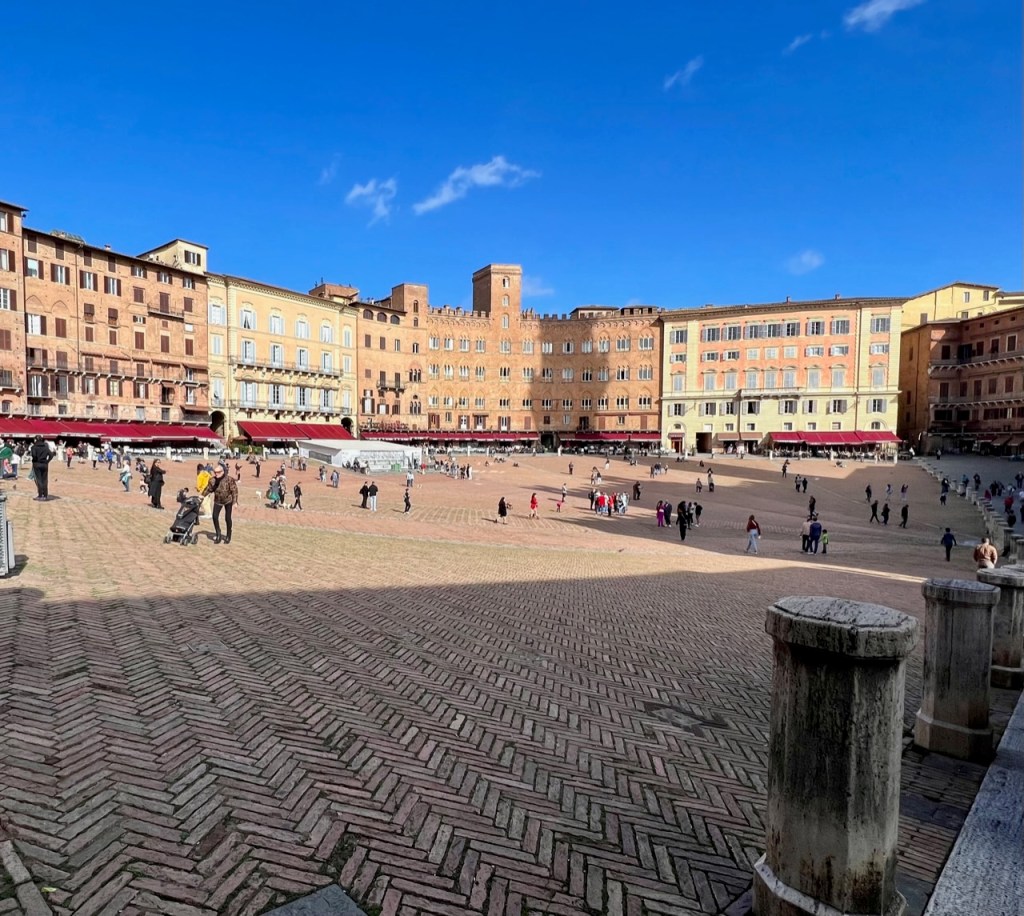
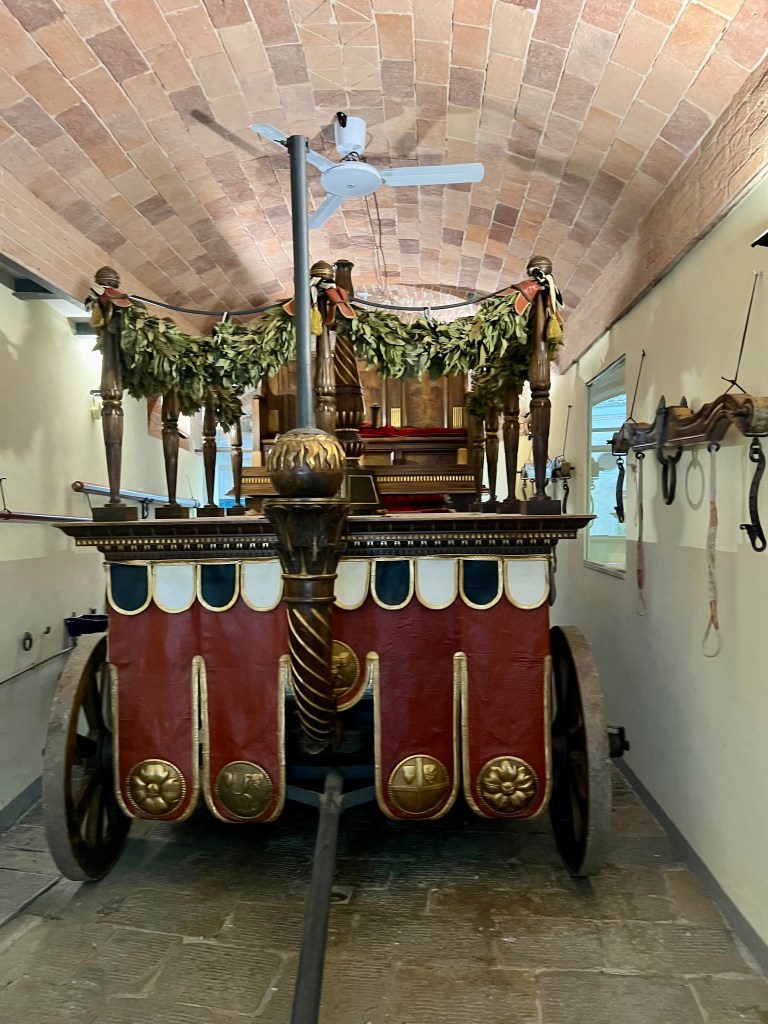
Originally, there were about fifty-nine “Contrade”; now only seventeen remain, ten of which take part in the historical pageant and in the race at each Palio (seven by right as they had been excluded the previous year and three drawn by lots). The race consists of three circuits of the Campo and the winning contrade has bragging rights for the next year and, of course, lords it over the losing entries.
The 17 Contrade are: the Eagle, Snail, Wave, Panther, Forest, Tortoise, Owl, Unicorn, Shell, Tower, Ram, Caterpillar, Dragon, Giraffe, Porcupine, She-Wolf and the Goose.
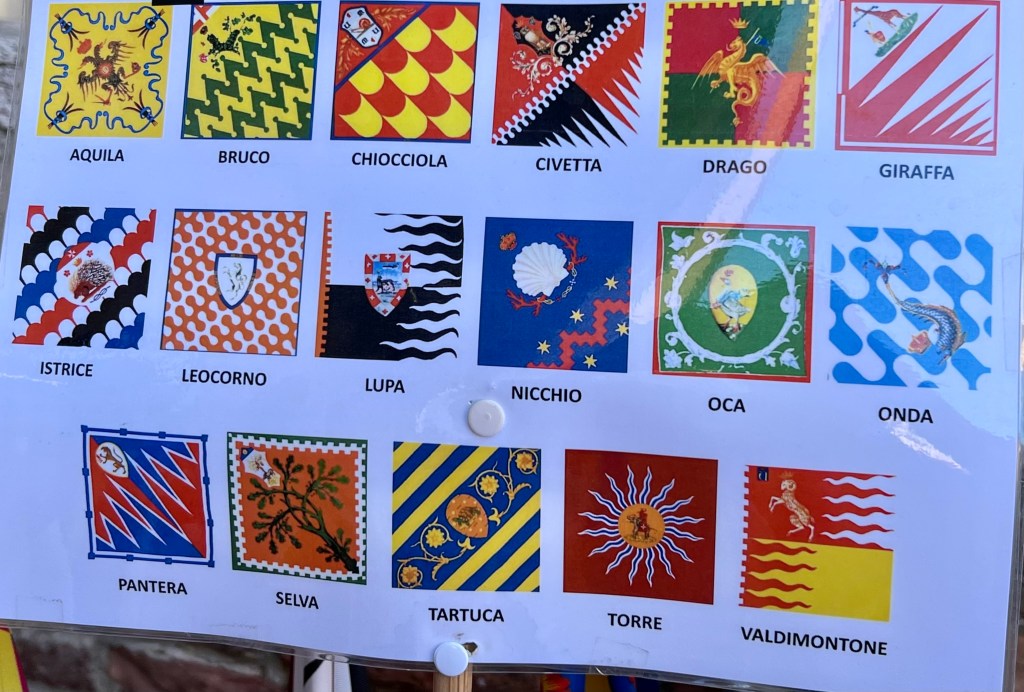
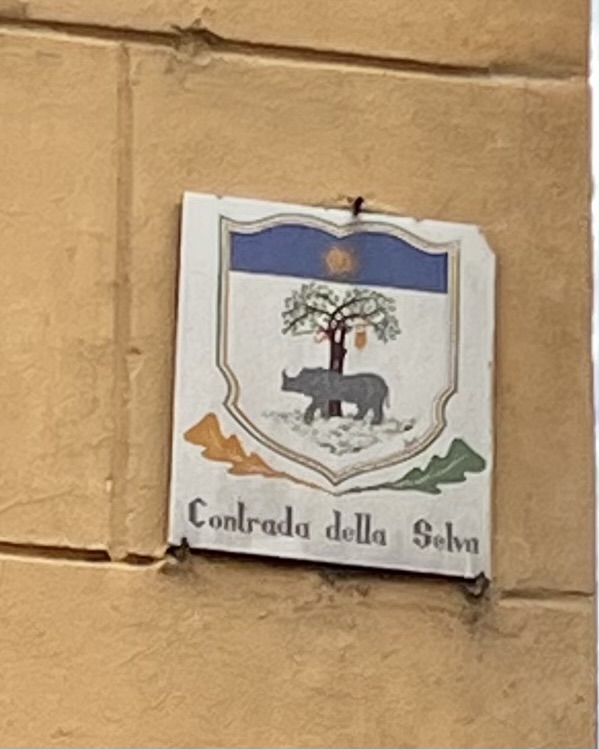
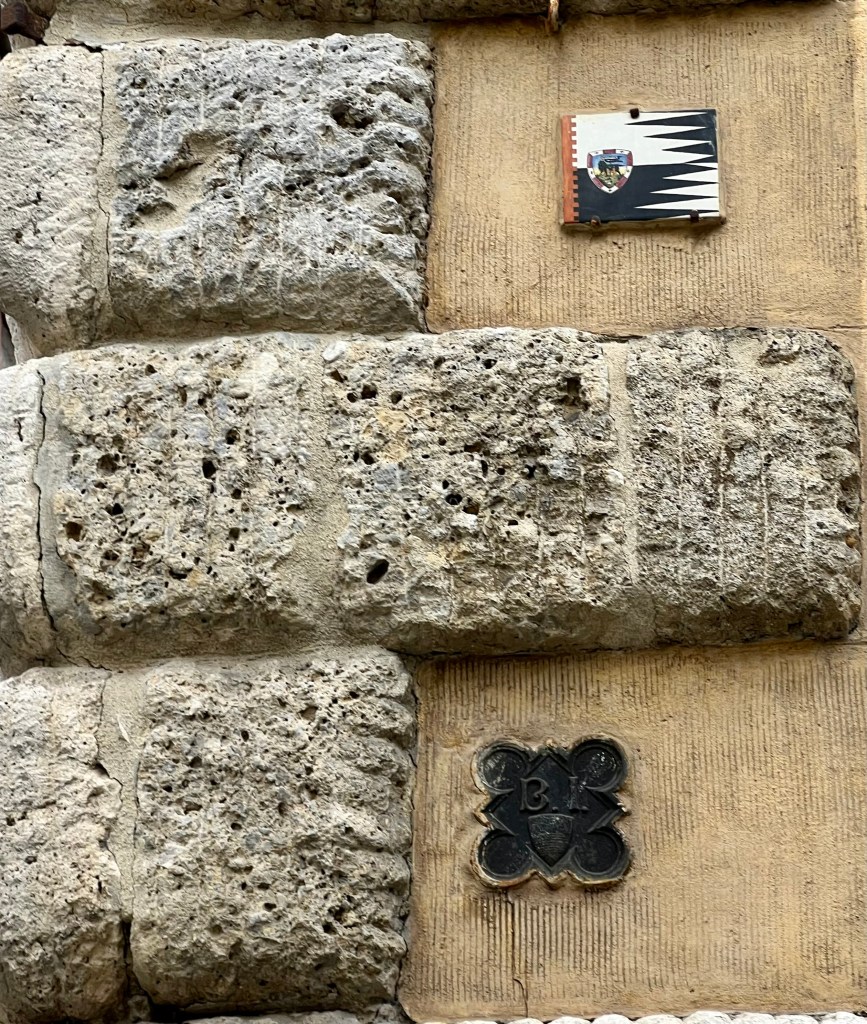
Each Contrada has its own unique emblem and colors and represents an area of the city. As one walks through the streets of Siena it is easy to know in which Contrada you currently are in by observing the flags and emblems displayed along the street.
The tour completed, we retired to one of the many bars that face the Campo for an Aperol Spritz to decide on our next moves.

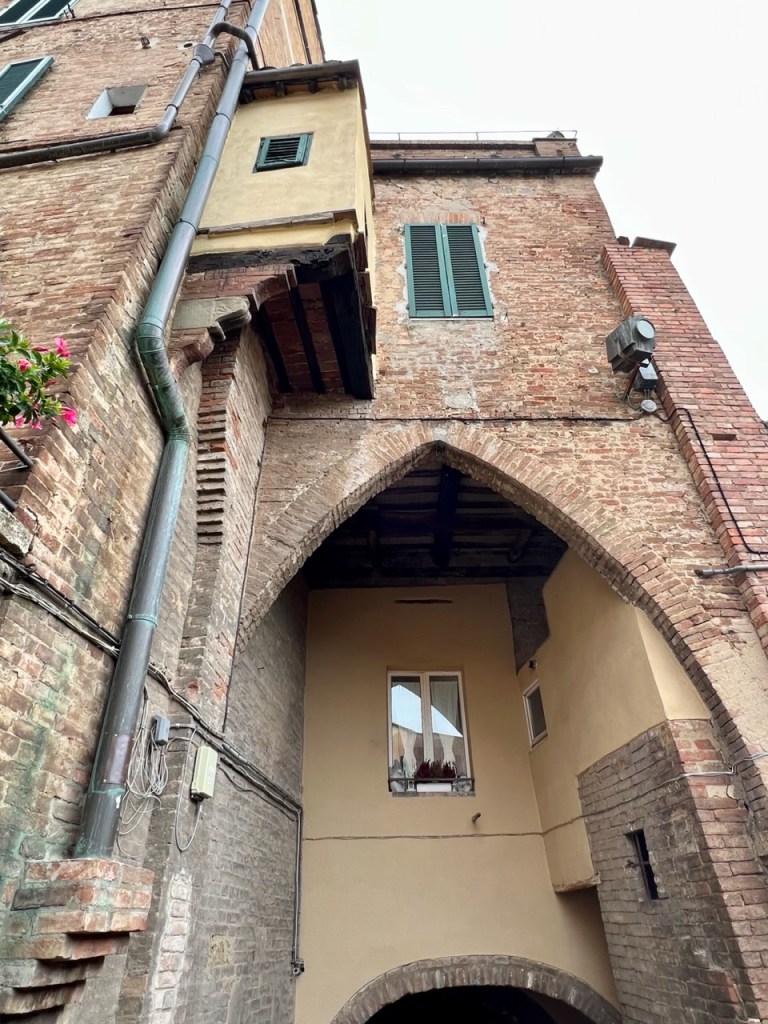

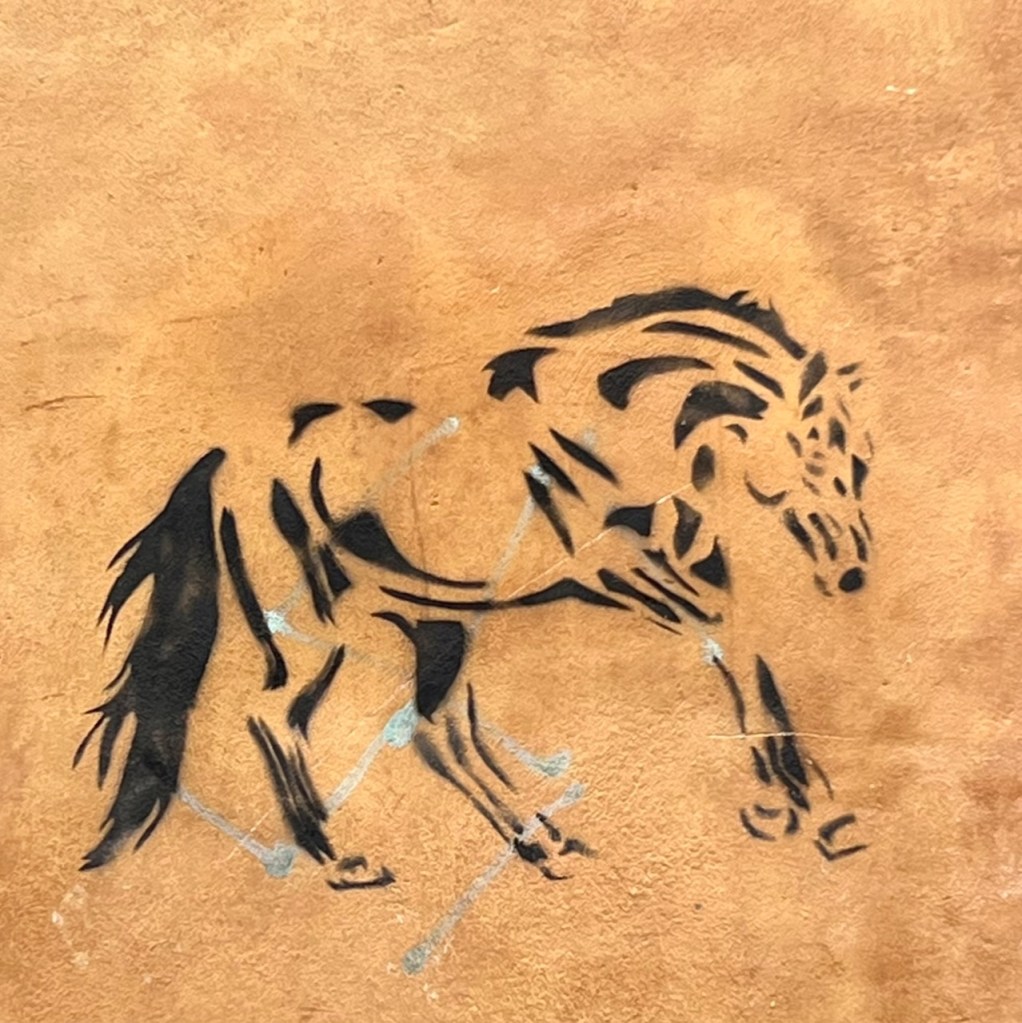

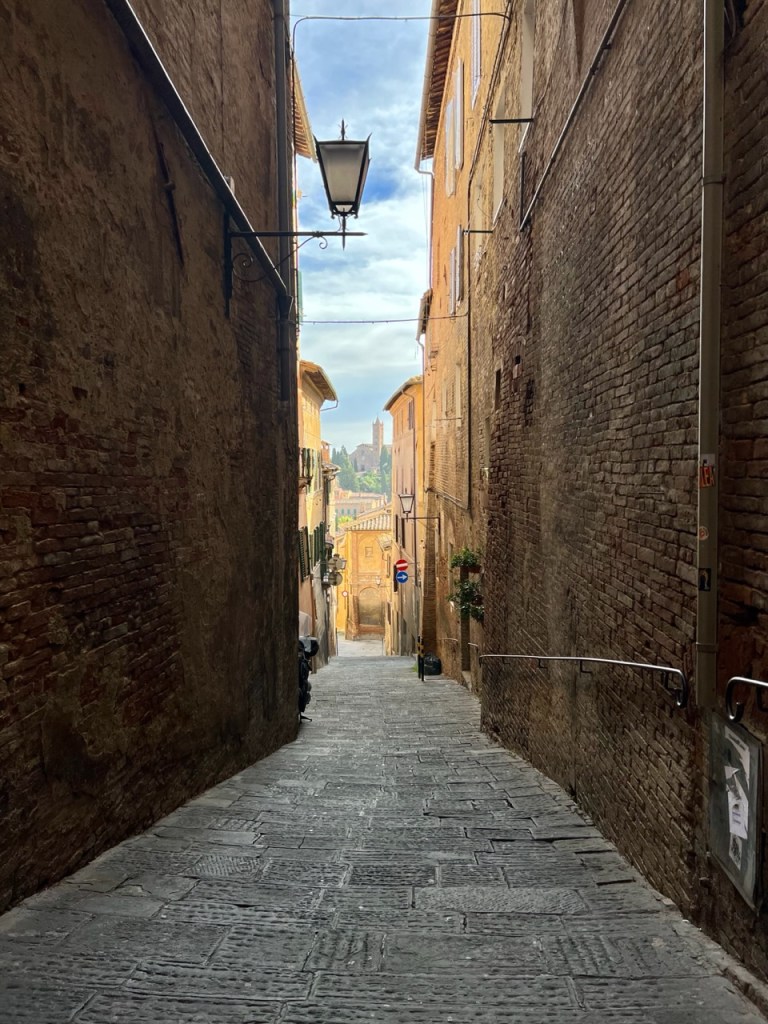
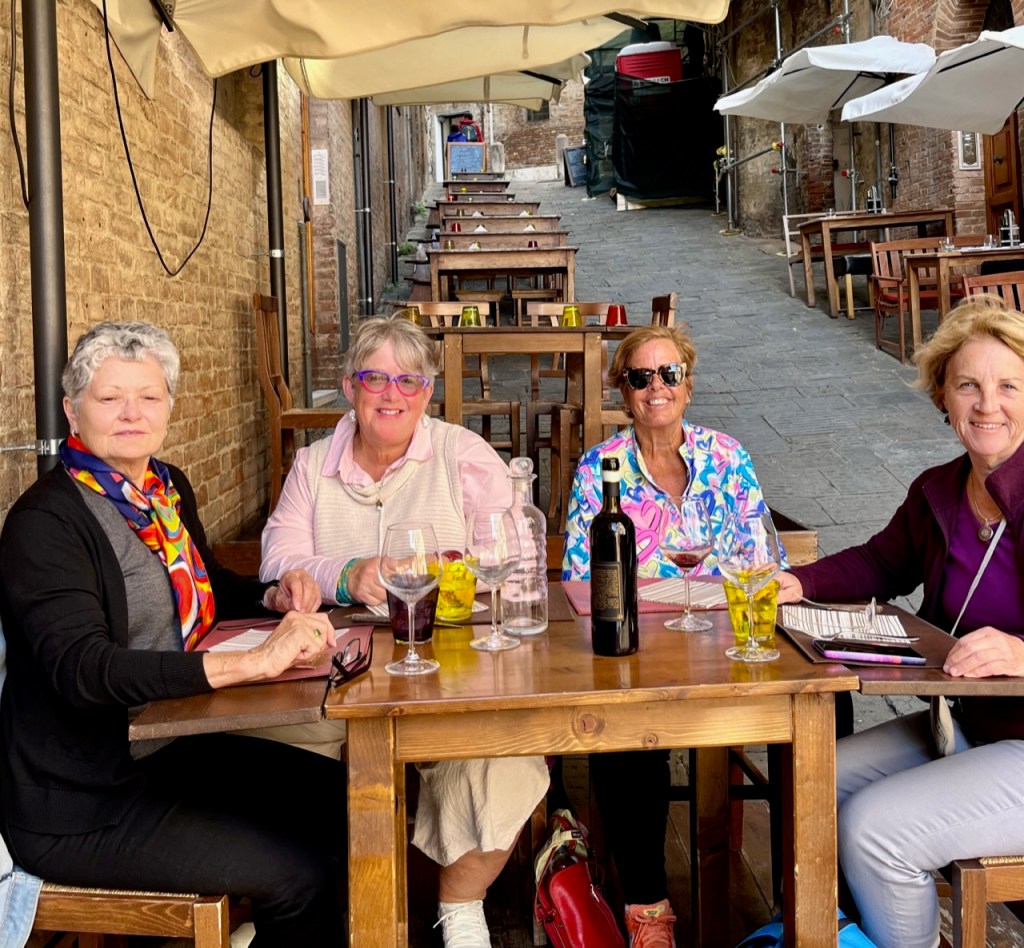
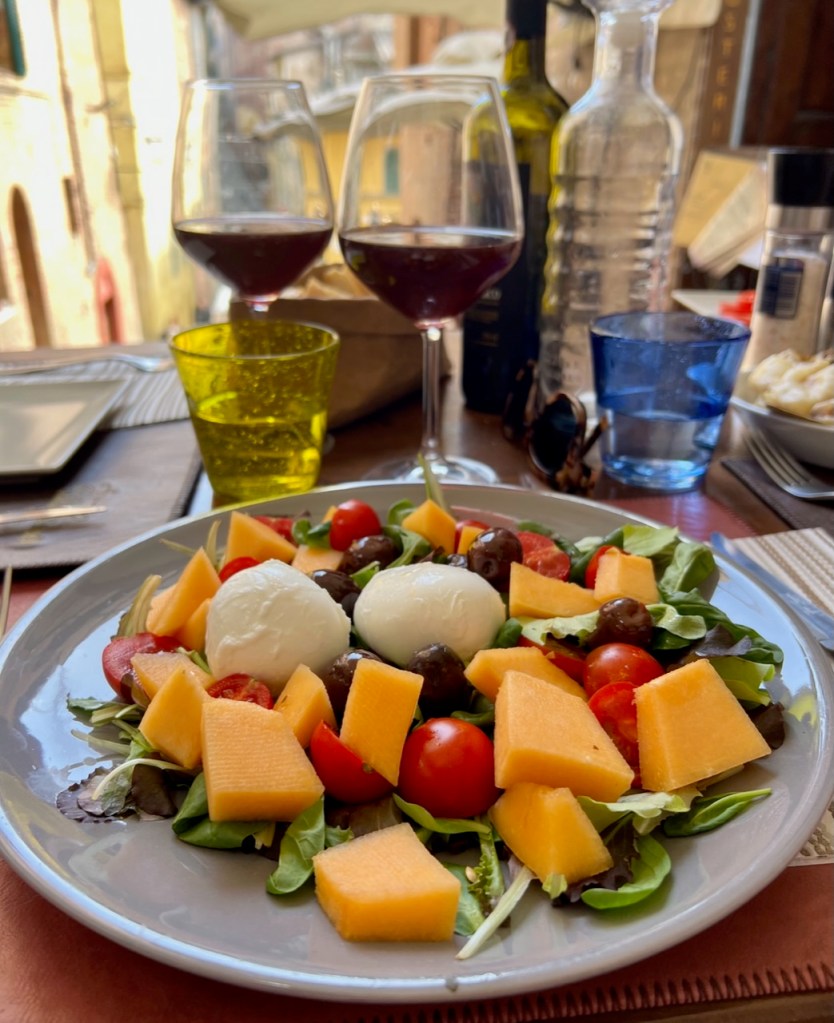
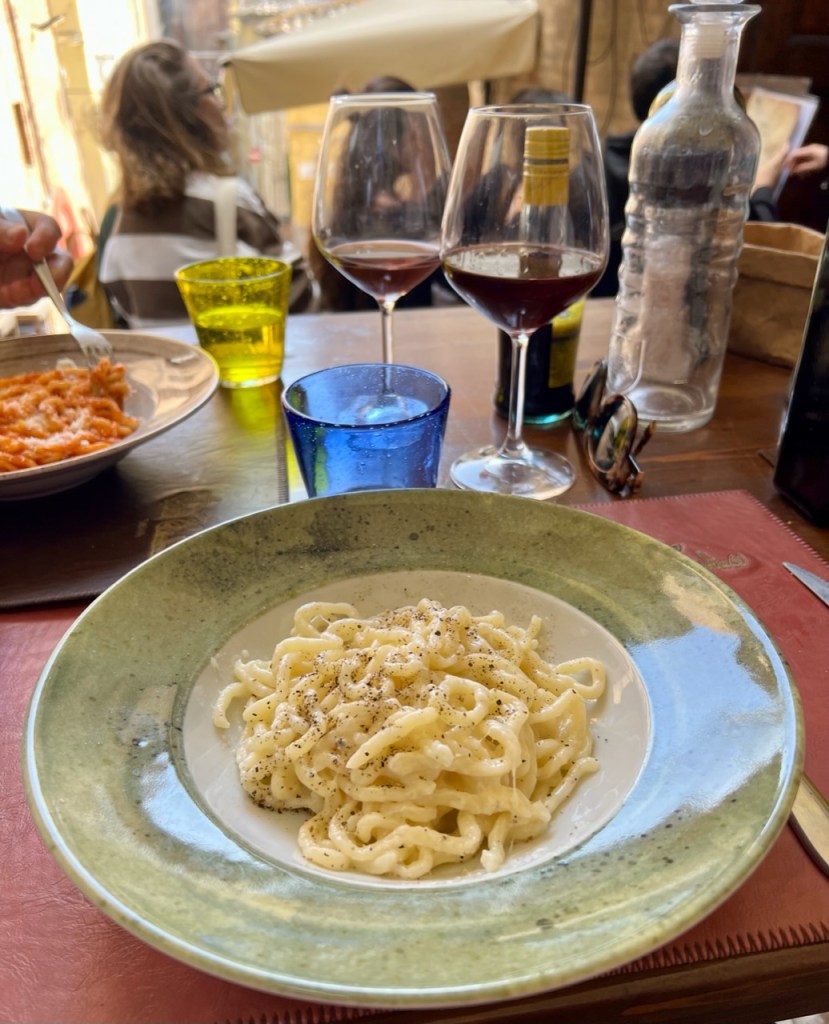
After a bit more exploration, we headed back toward our parking spot and stopped at Osteria La Chiacchera close to the Sanctuary of Saint Catherine where she was born. The salads were great here but the pici was not Al dente so our Pici Cacio de Pepe wasn’t the best. Luckily, there was a bottle of red wine to wash down our disappointment.

Tomorrow is another day. Adventures await …
 Judy’s Rambles