
October 30, 2023
We’re staying close to our home base at the timeshare today because we’ve been running the roads and some folks aren’t feeling 100%. Today’s adventure turned into a tale of three villages.
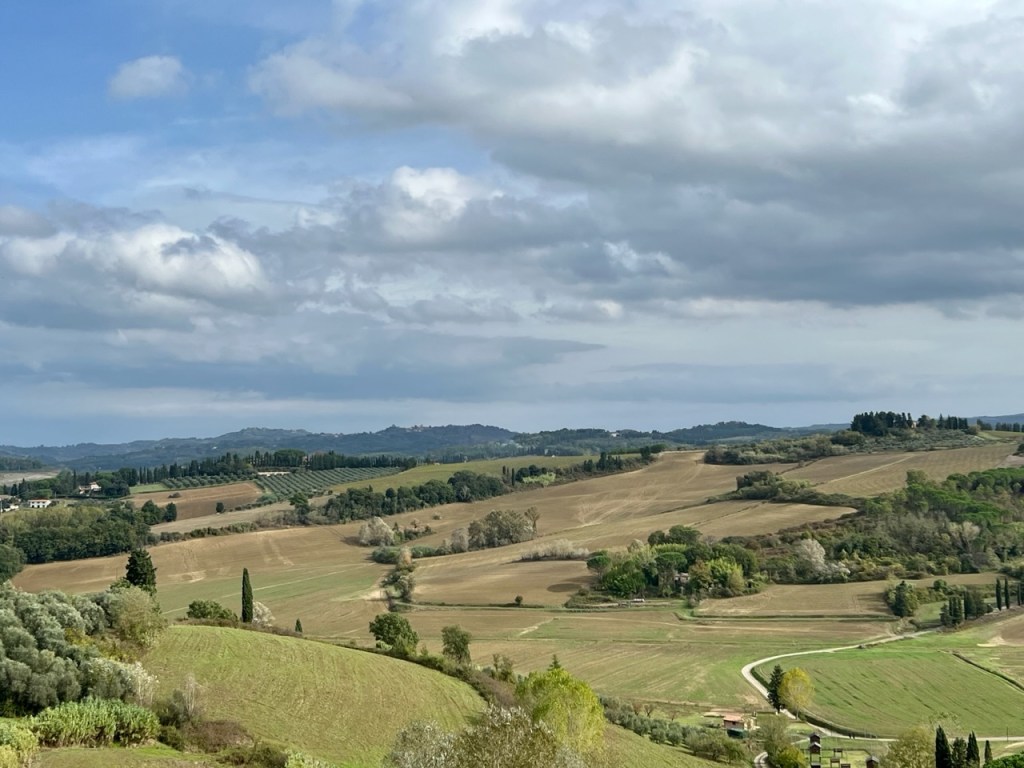
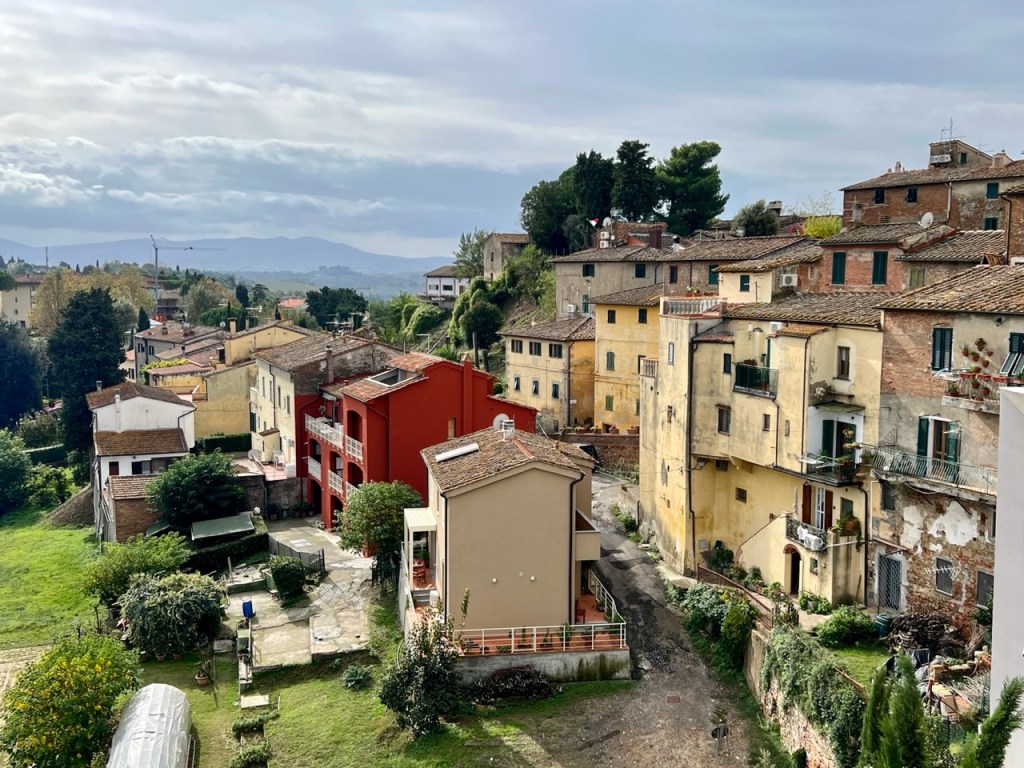
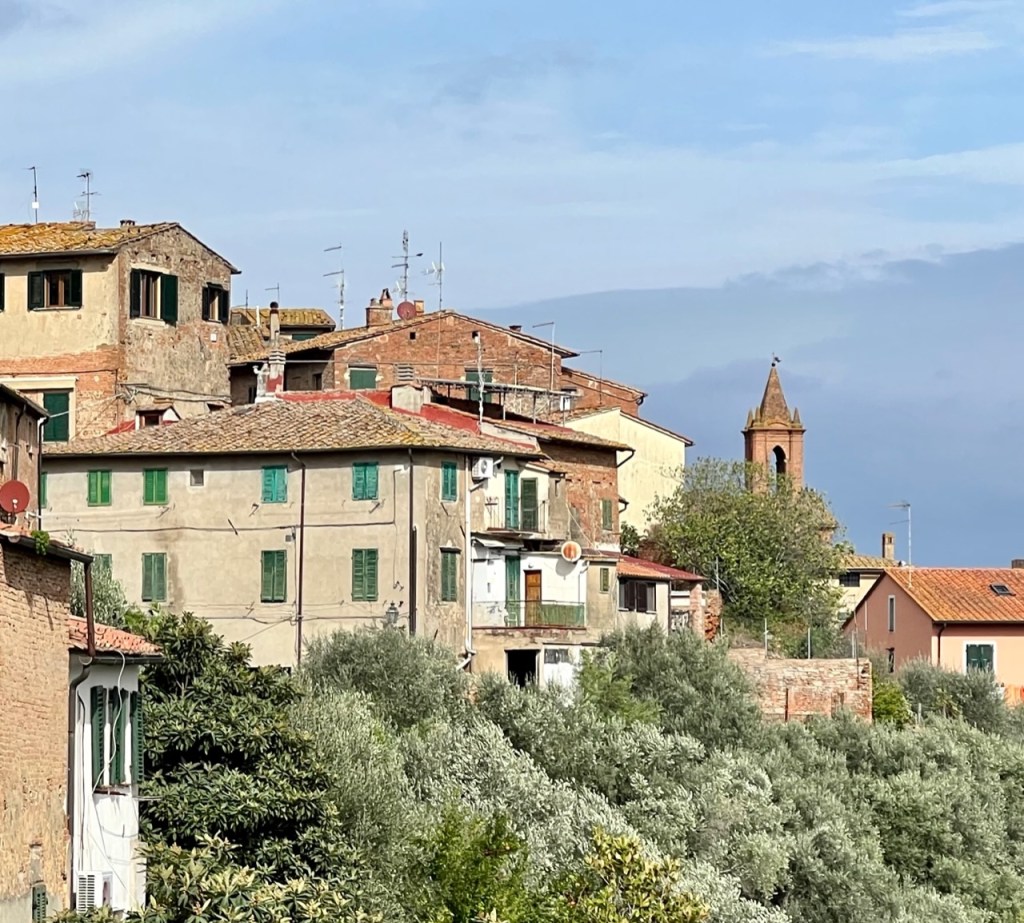
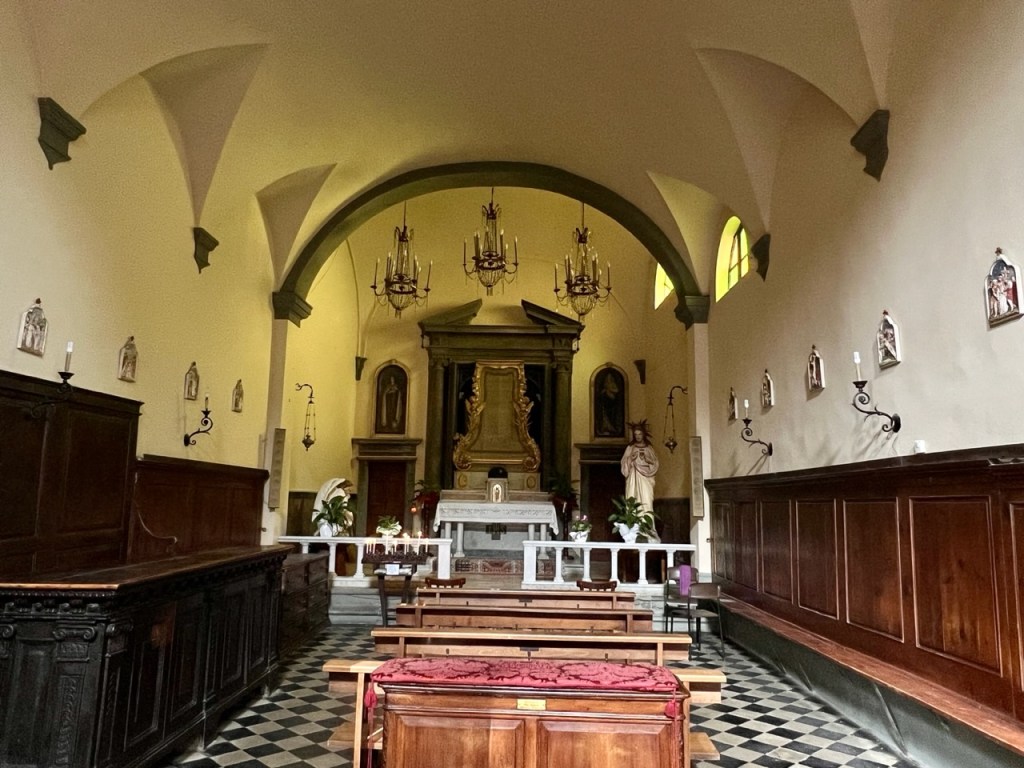
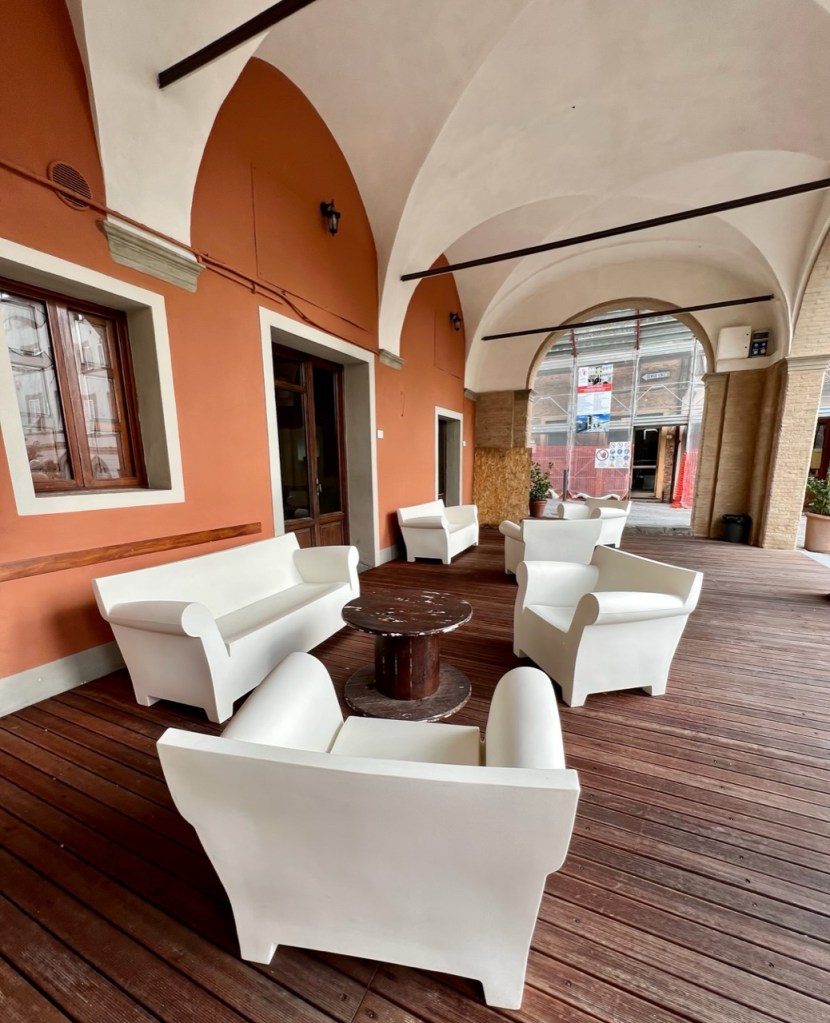
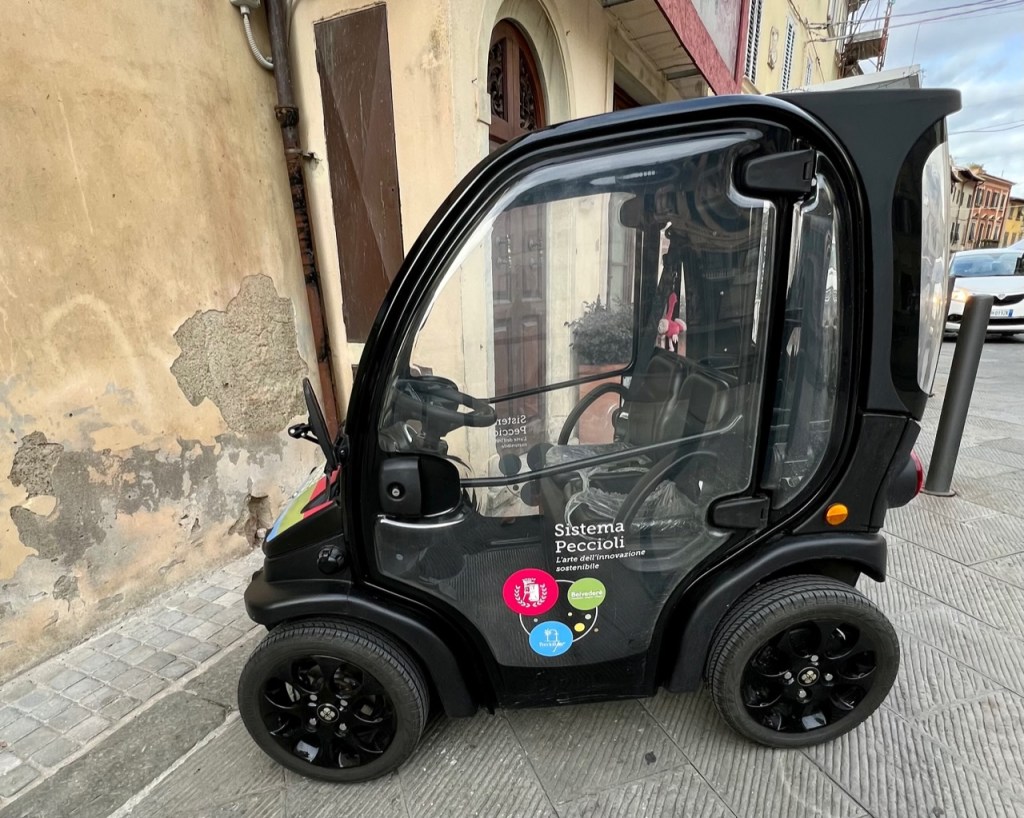
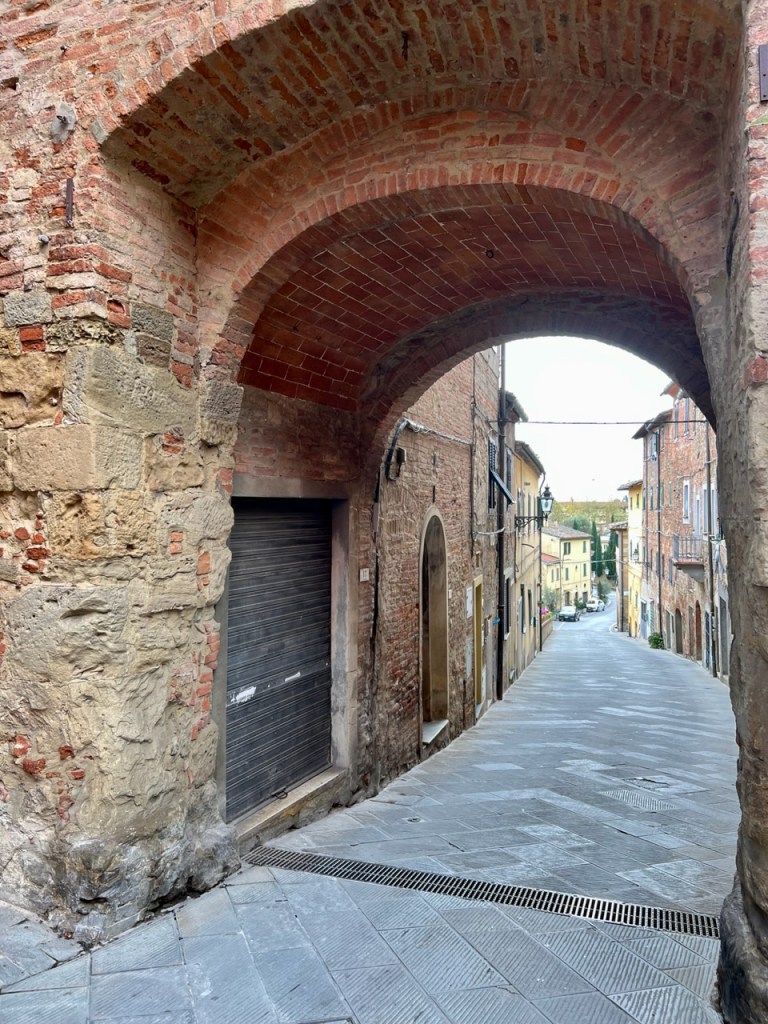
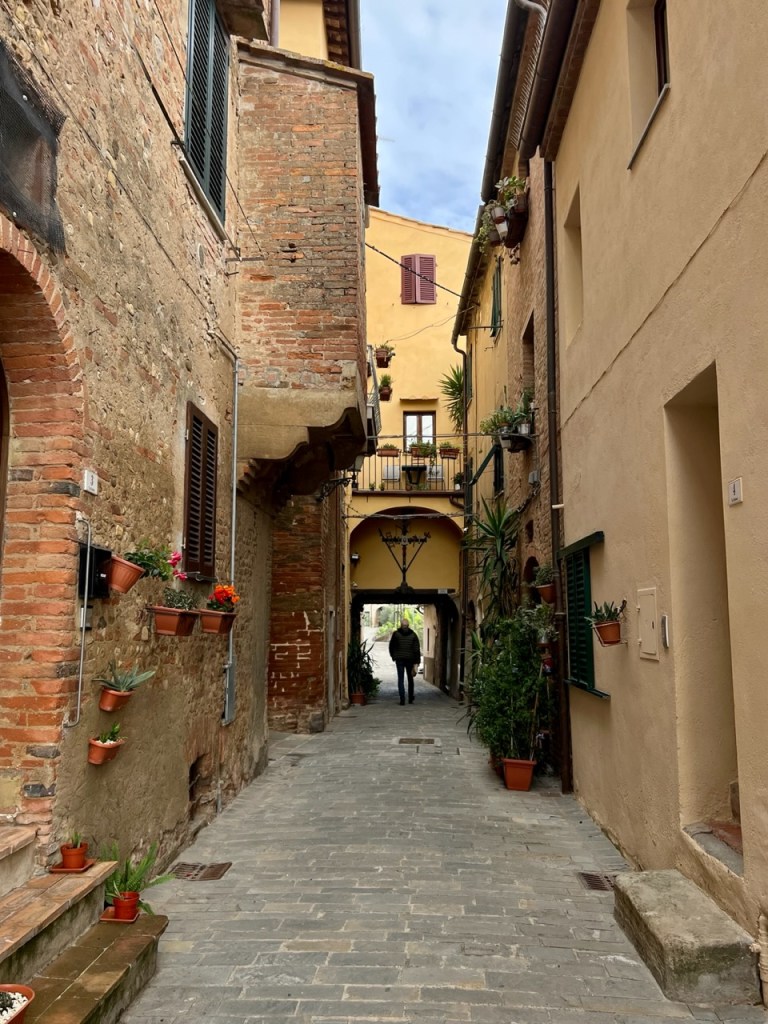
Our first whistle stop was the village of Peccioli; built around the ruins of the medieval castle, and surrounded by olive groves, vineyards and green hills.

The story of Peccioli starts in the first half of the 12th century when the town was a defensive bulwark of Volterra. Over the centuries the castle of Peccioli was gradually expanded and strengthened. During these centuries there was a rivalry for the control of the village between Pisa and Florence and Peccioli was alternatively controlled by both.
Today, Peccioli is a municipality of 5000 inhabitants which has been awarded the Orange Flag, a trademark of the association Italian Touring Club given to small villages and communities in the Italian inland that stand out for high quality of hospitality and excellence in accommodation services. It is a charming town to wander through for an hour or so with the amazing views of the Tuscan countryside we’ve come to expect and some things we don’t.
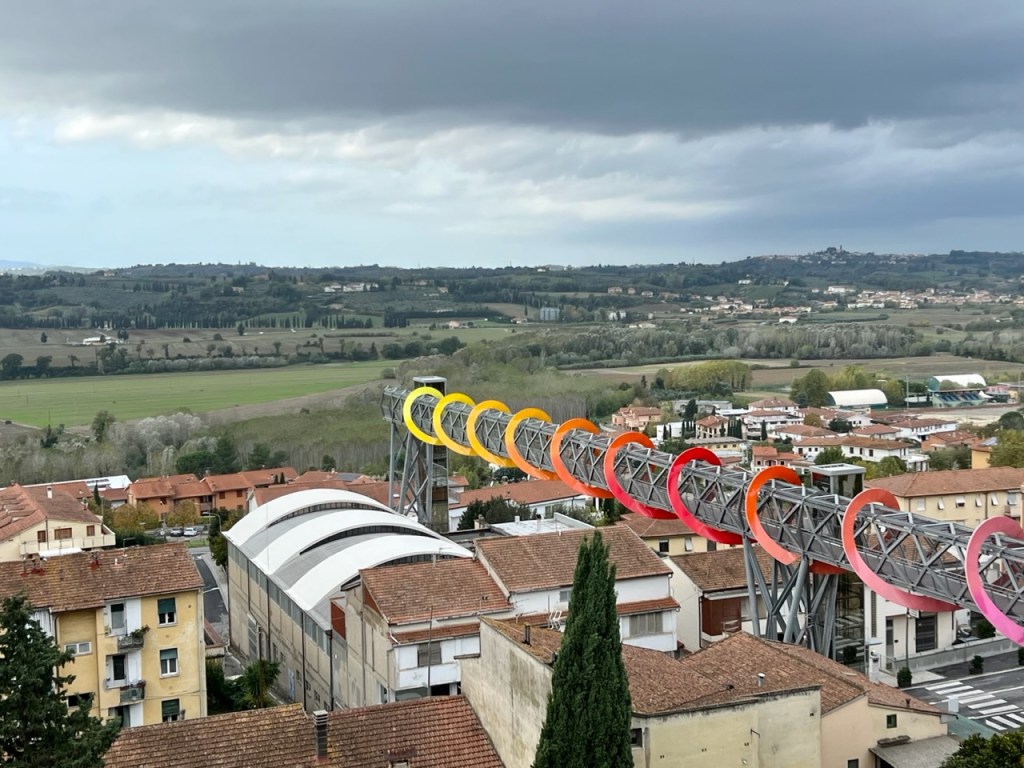
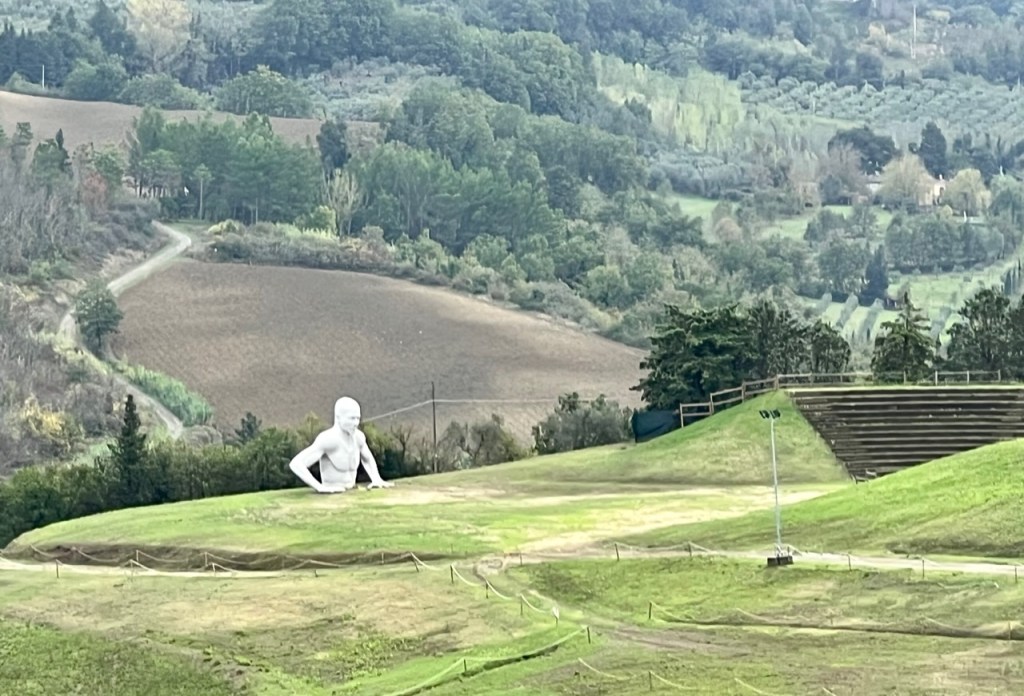
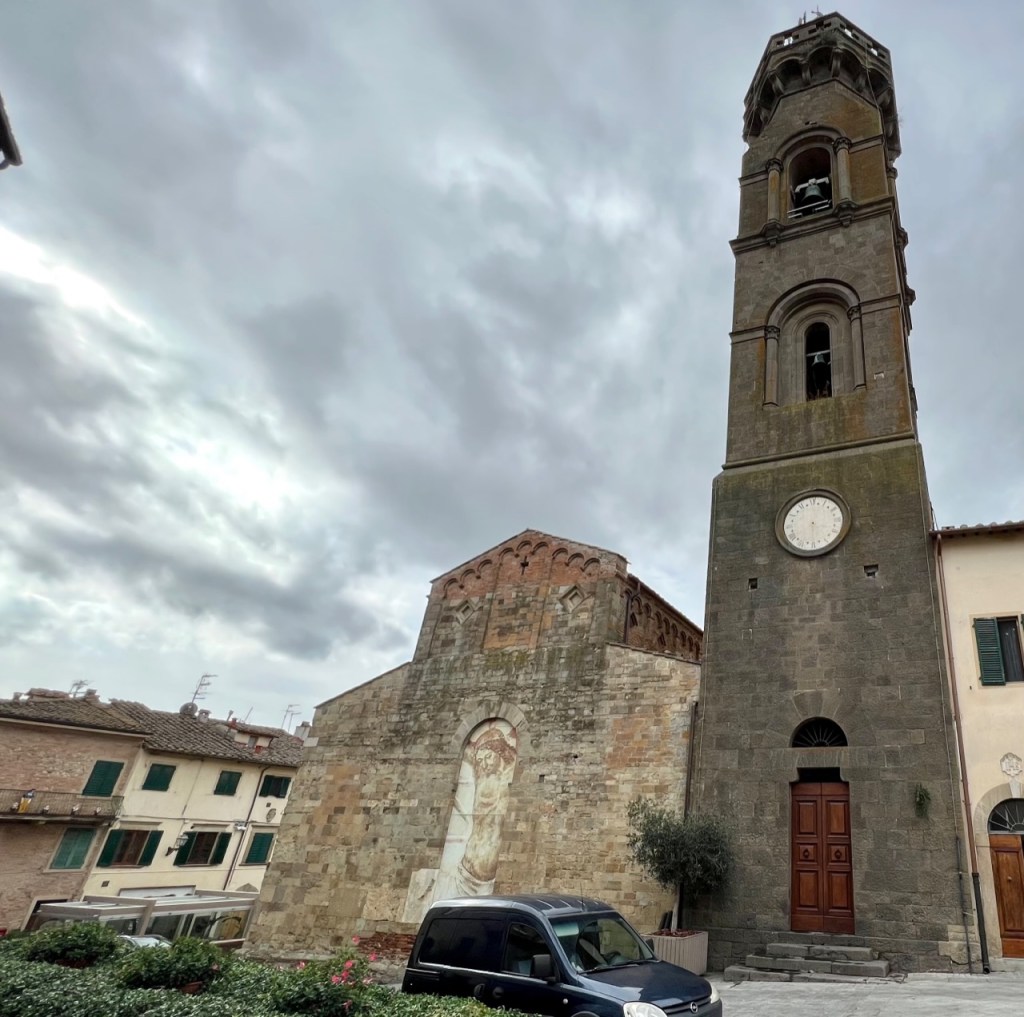
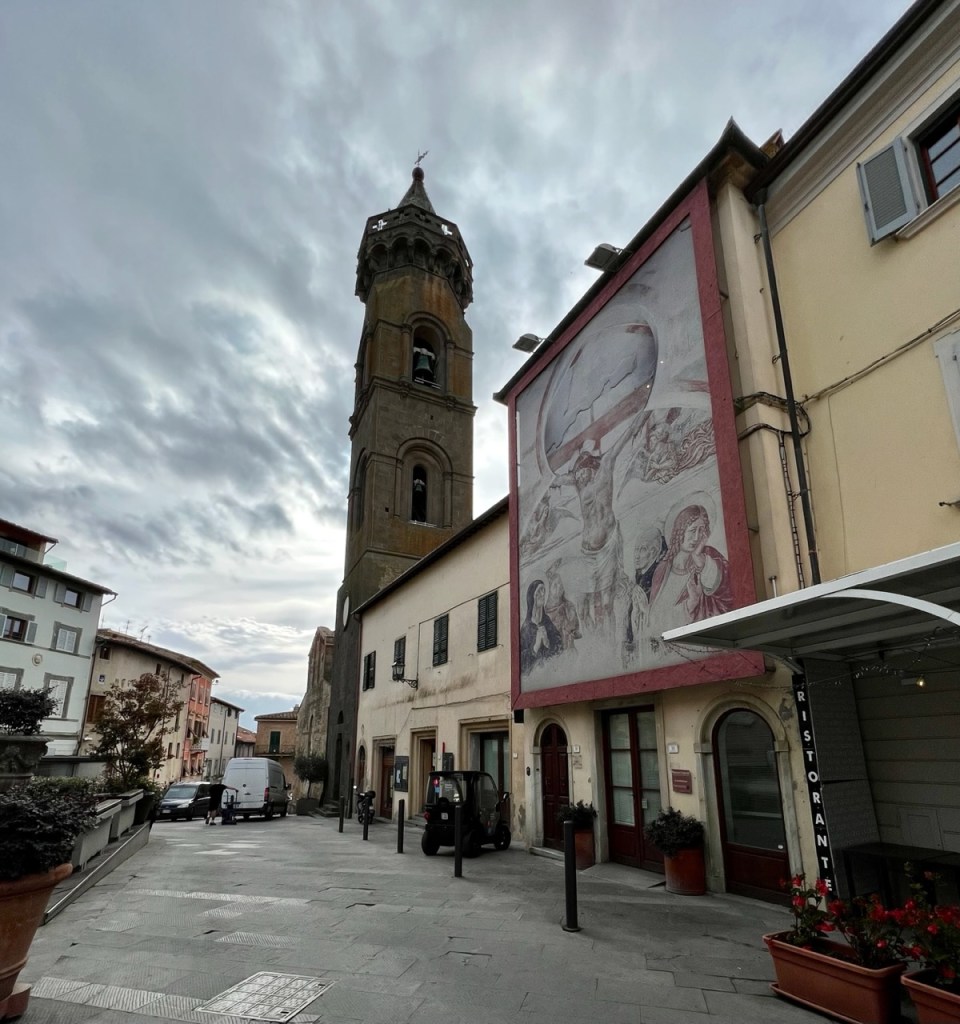
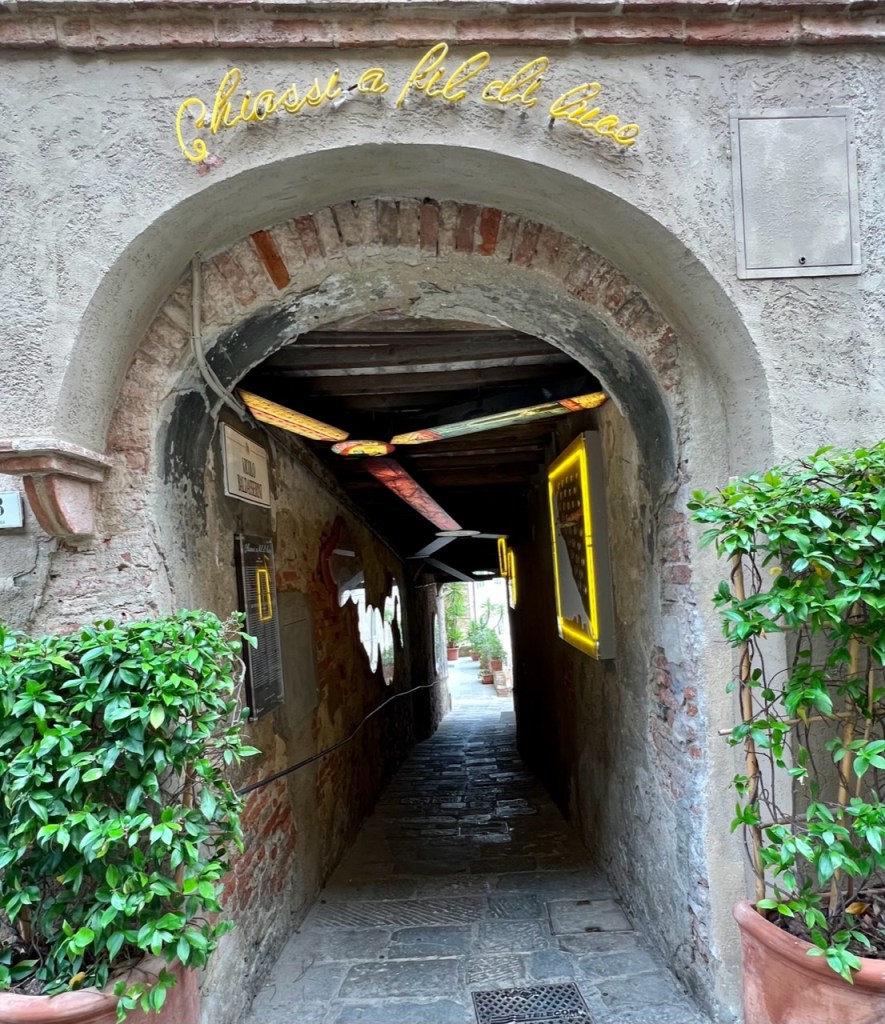
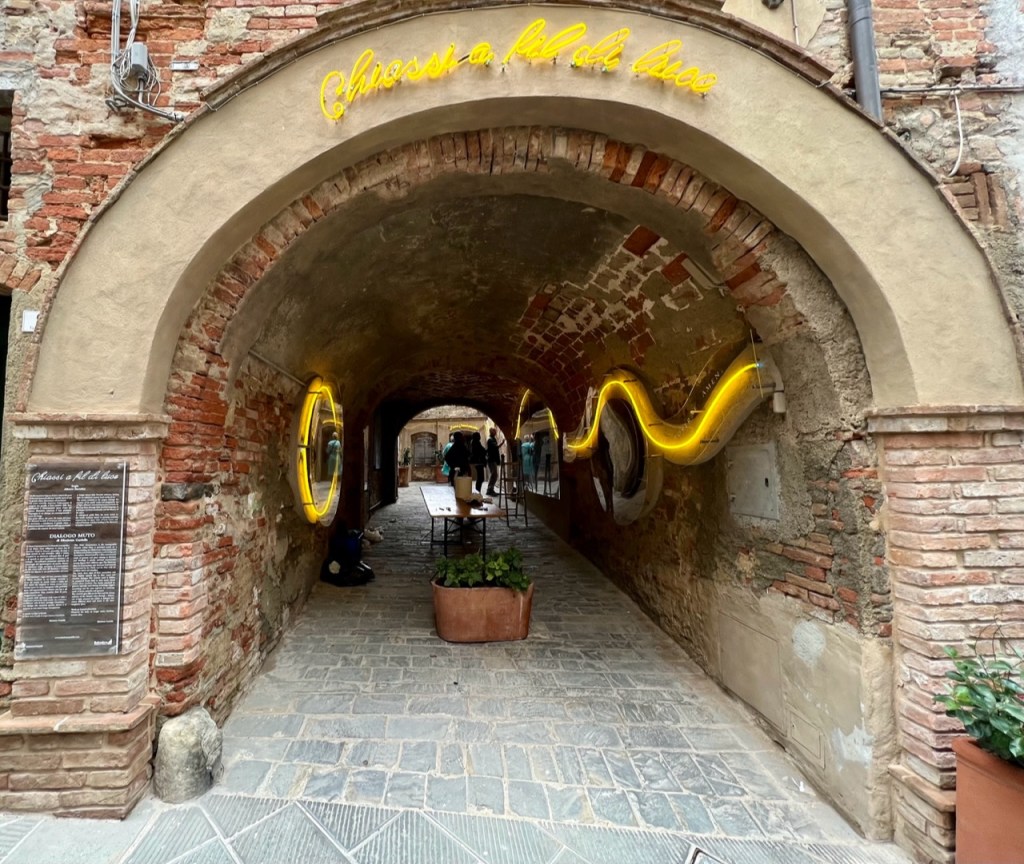
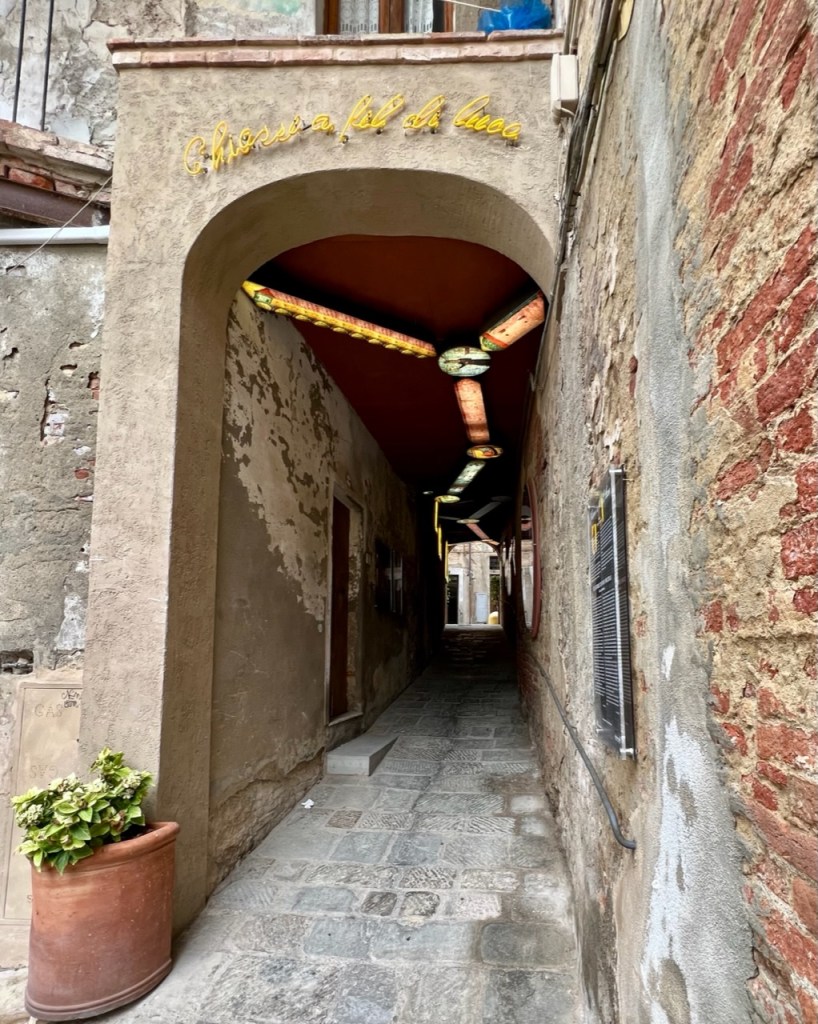
The town has a number of art installations Chiasi a fil di luce – a bright thread that links Peccioli archways.


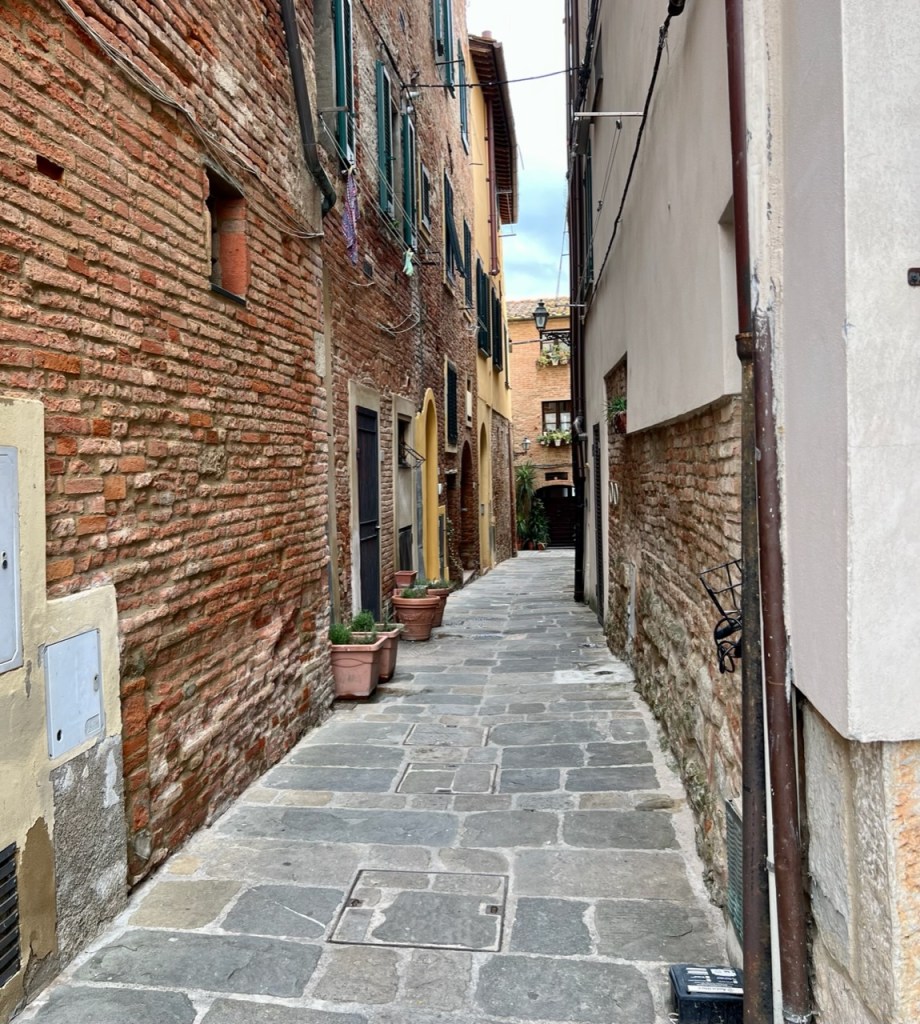
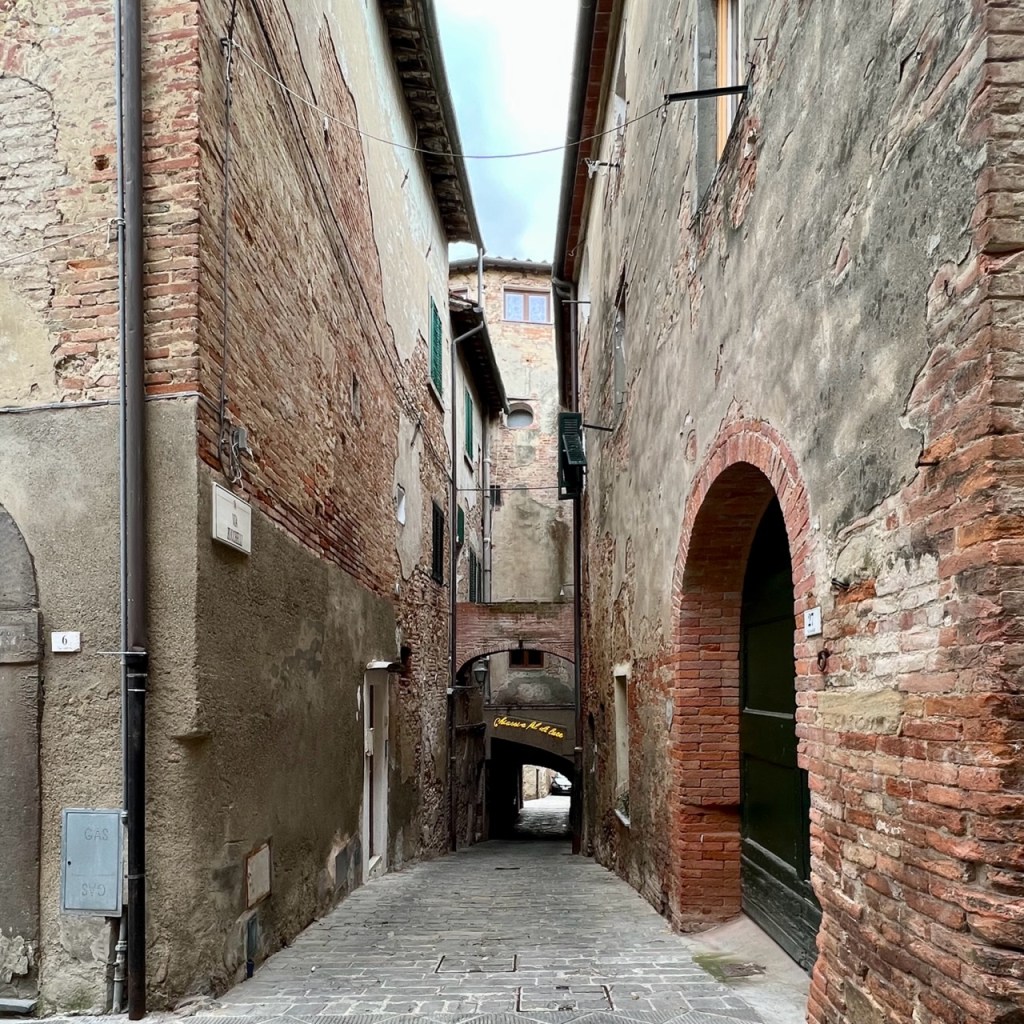
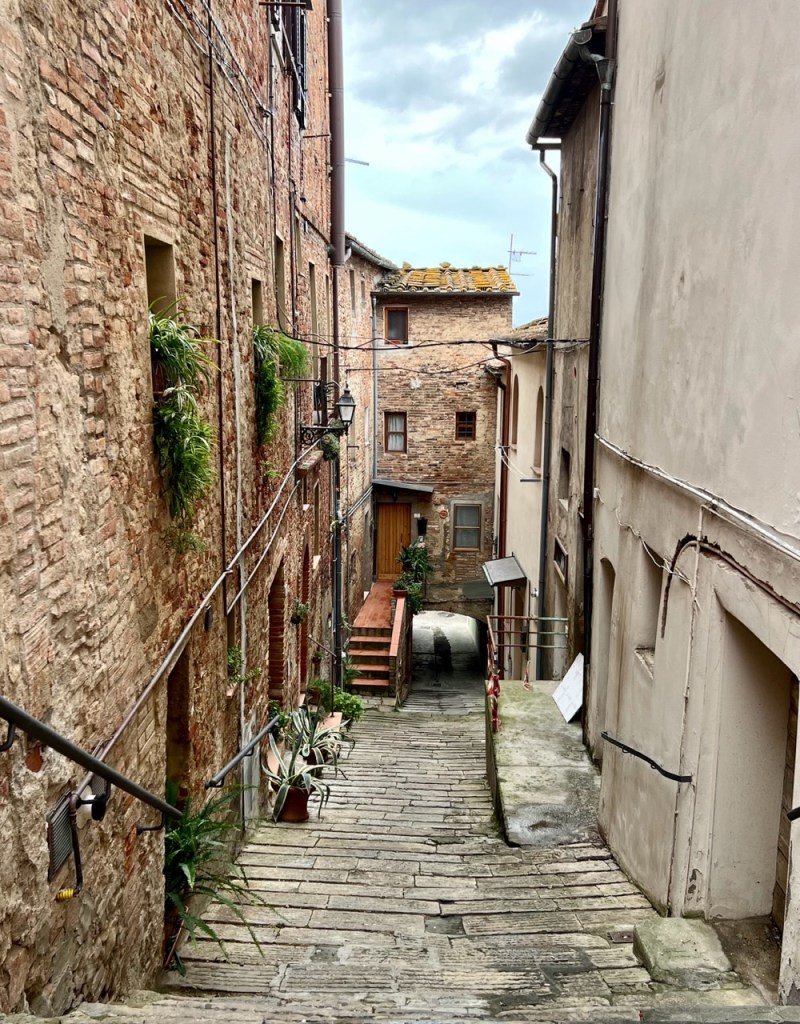

Leaving Peccioli, we head to Terricciola which bills itself as the city of wine.
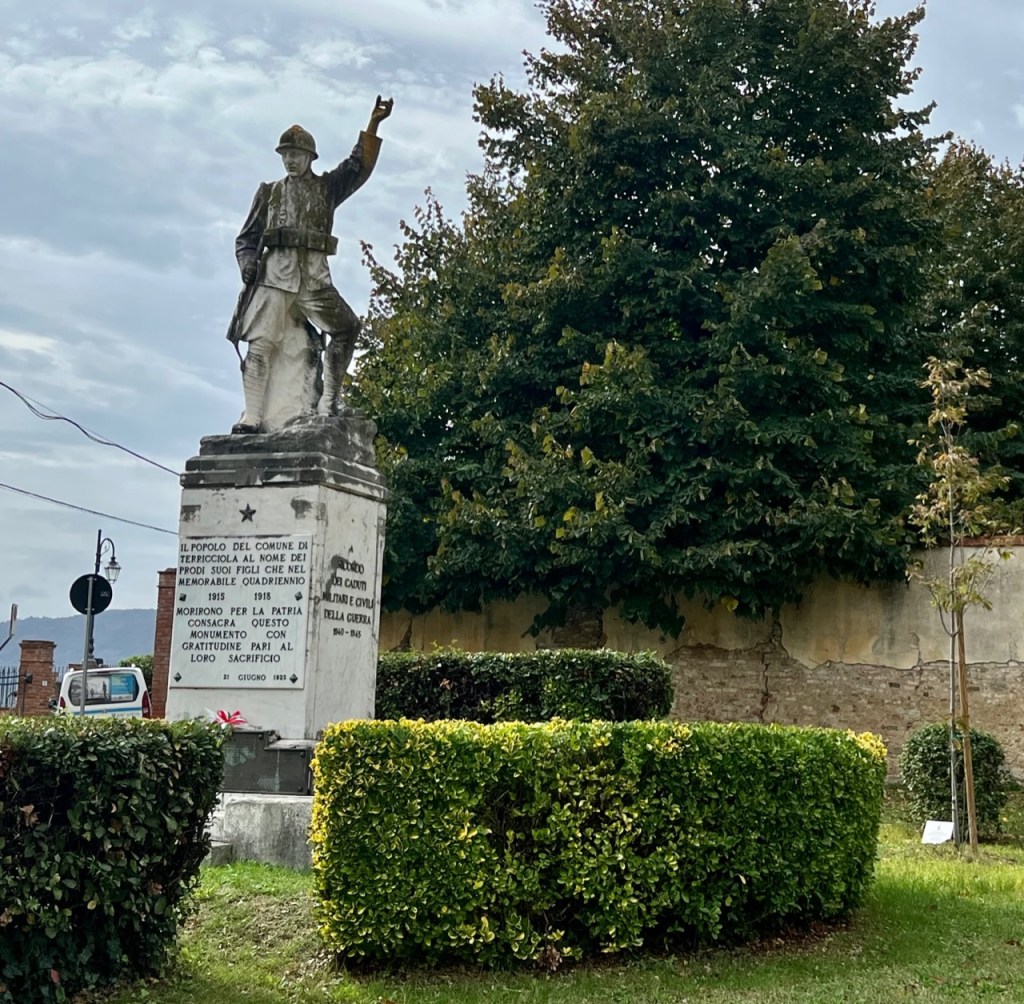
An ancient village of Etruscan origins, Terricciola was built on a tufa (yellow sandstone) plateau. The Village is located at the centre of the province of Pisa, between Pontedera and Volterra.

The town is full of narrow streets and medieval buildings. In the historic centre of Terricciola are a number of hypogei; tombs dug in the tufa by the Etruscans in the 4th century BC. The Hypogei running under the historical centre of the village were later used by the local population to store of grain and wine in medieval times or as a refuge during the two World Wars.
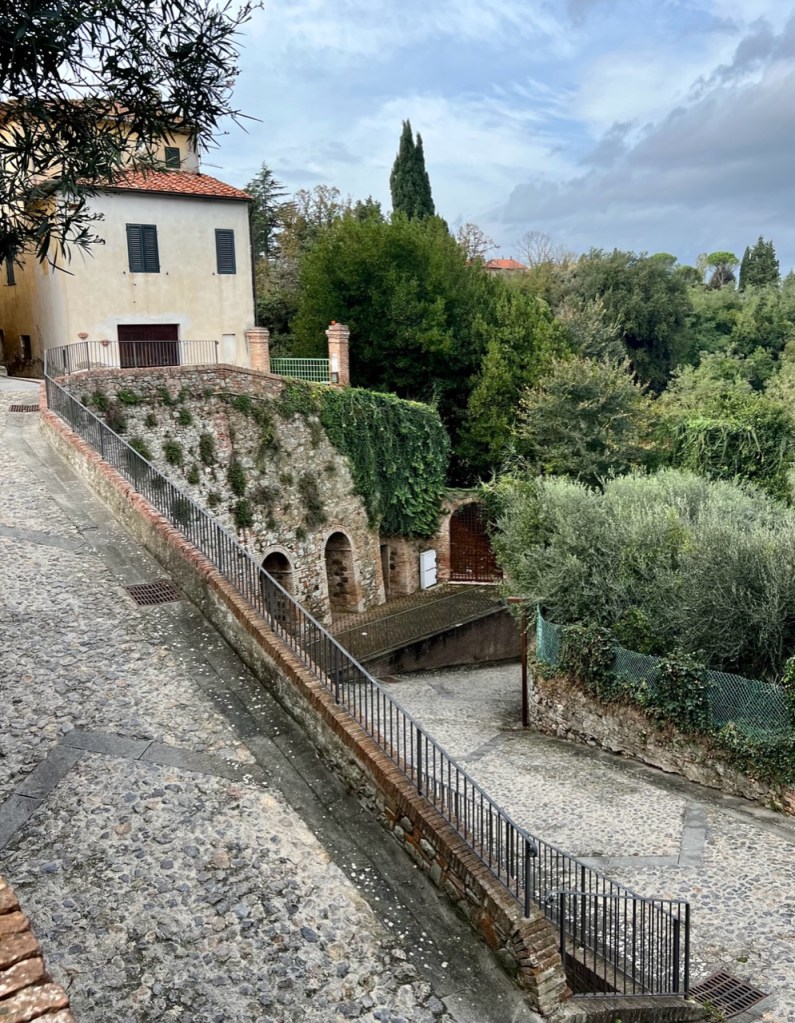

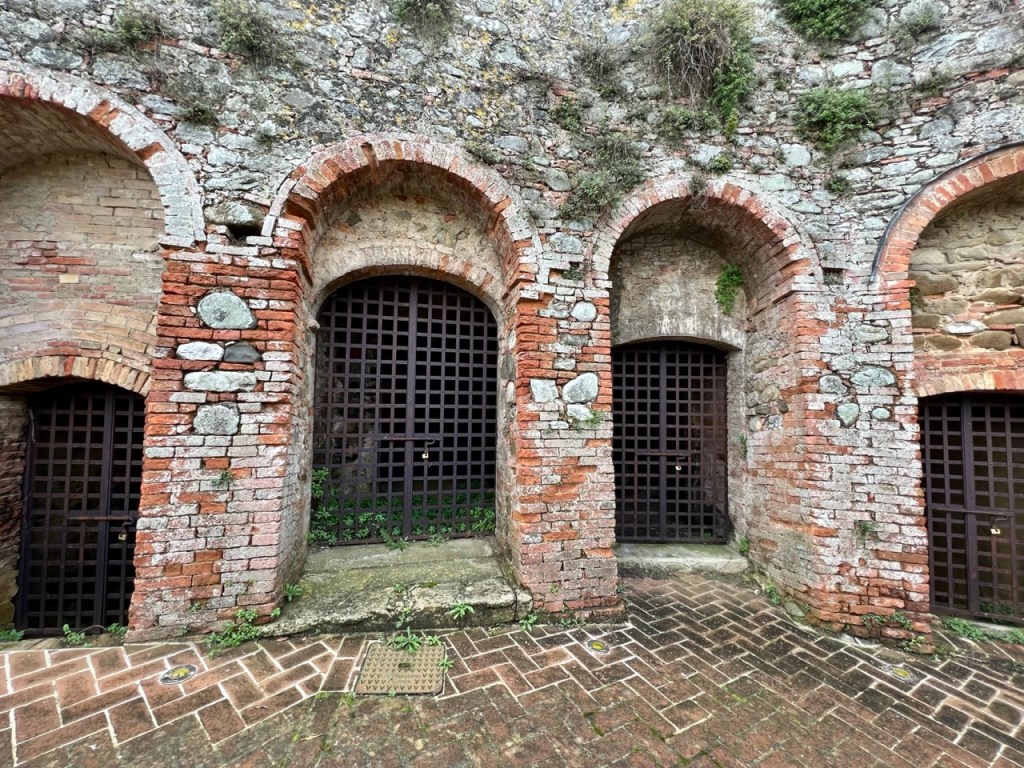
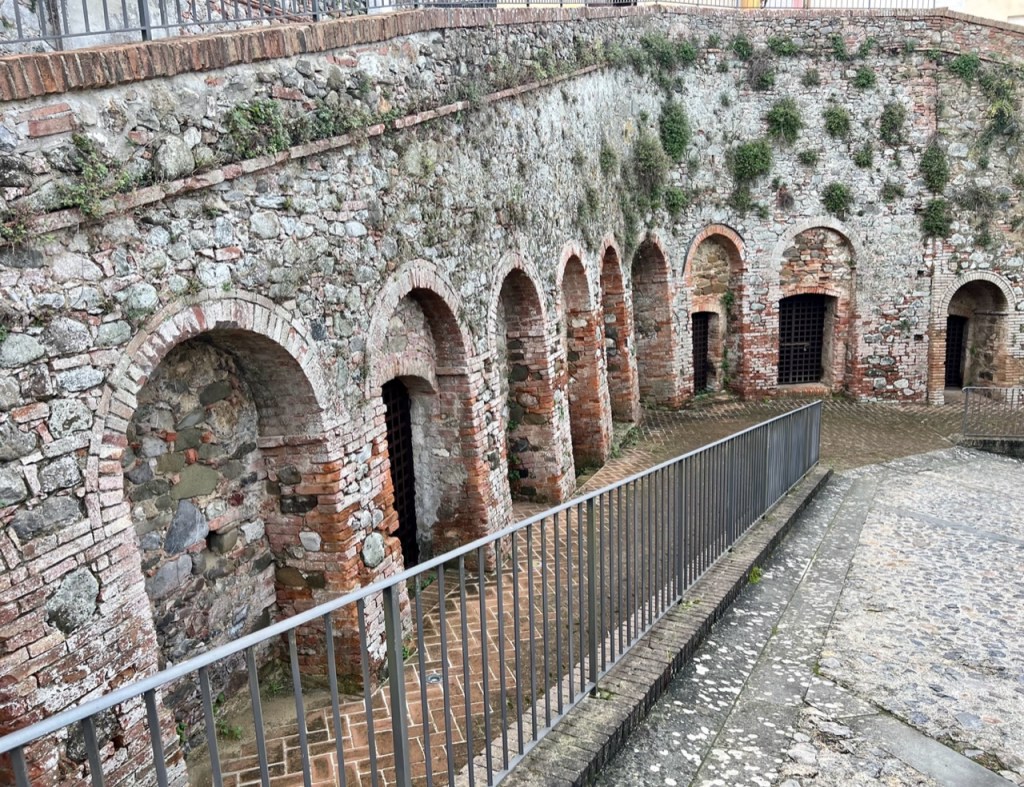
Like many other settlements in the Pisane inland, Terricciola endured until 1406 the alternating domain between the cities of Pisa and Florence.

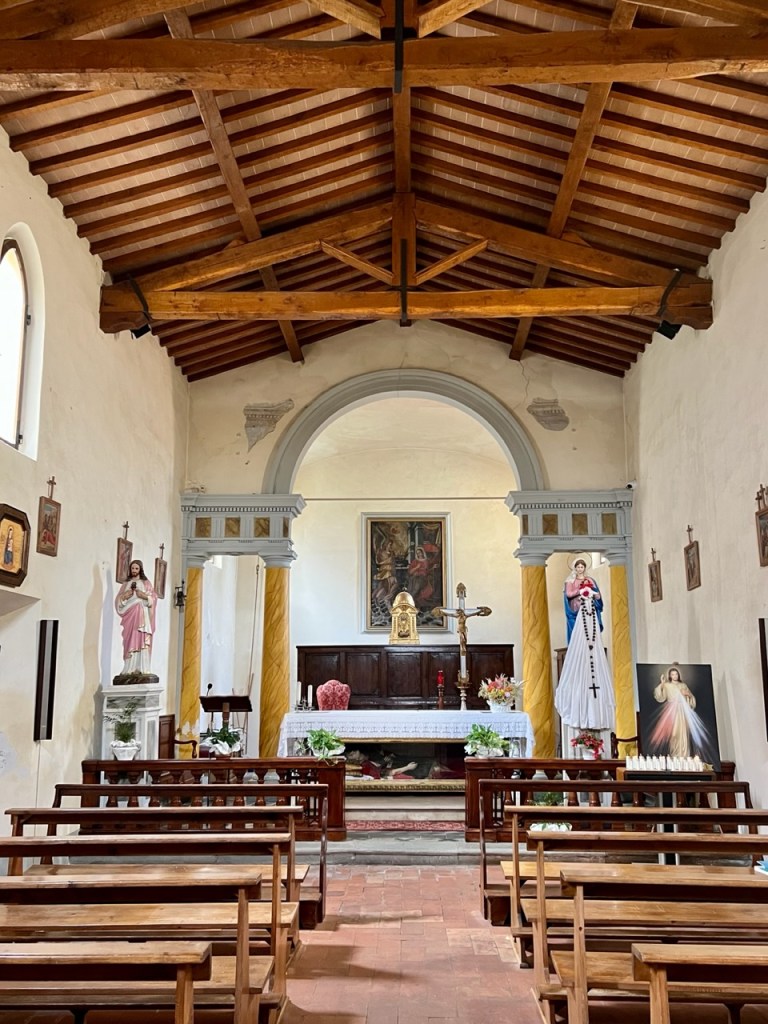
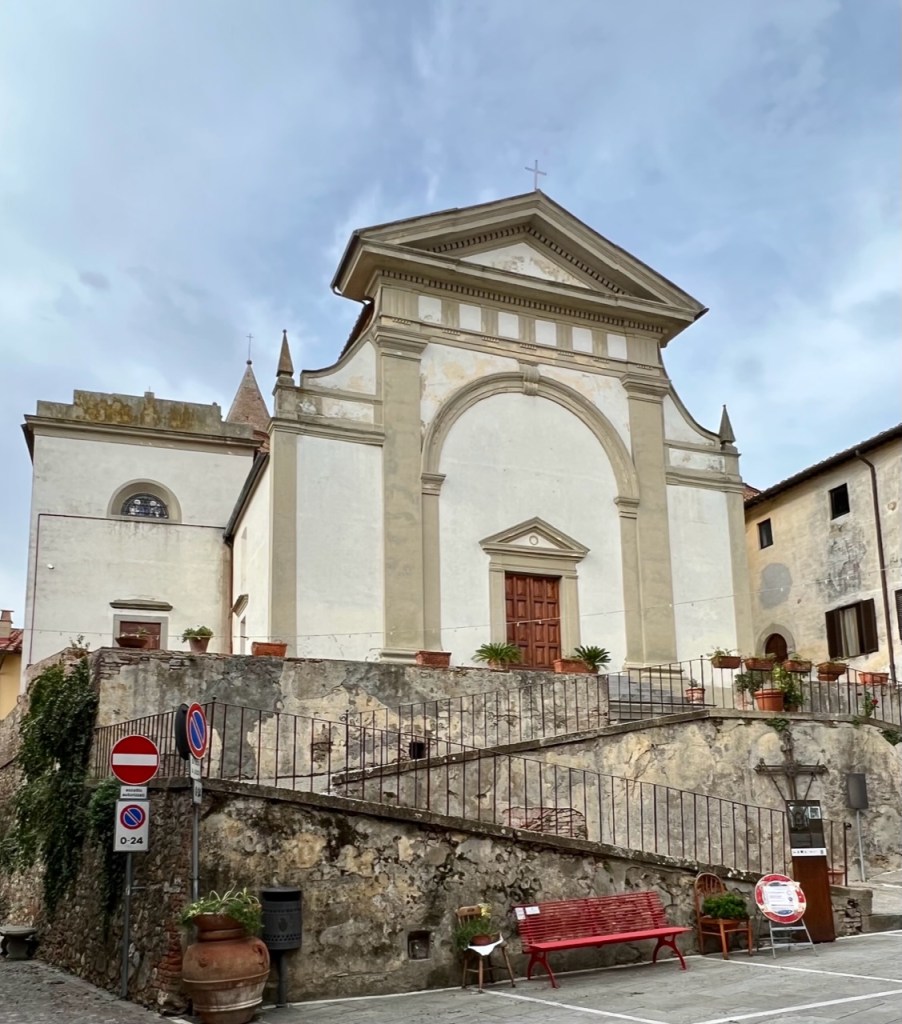
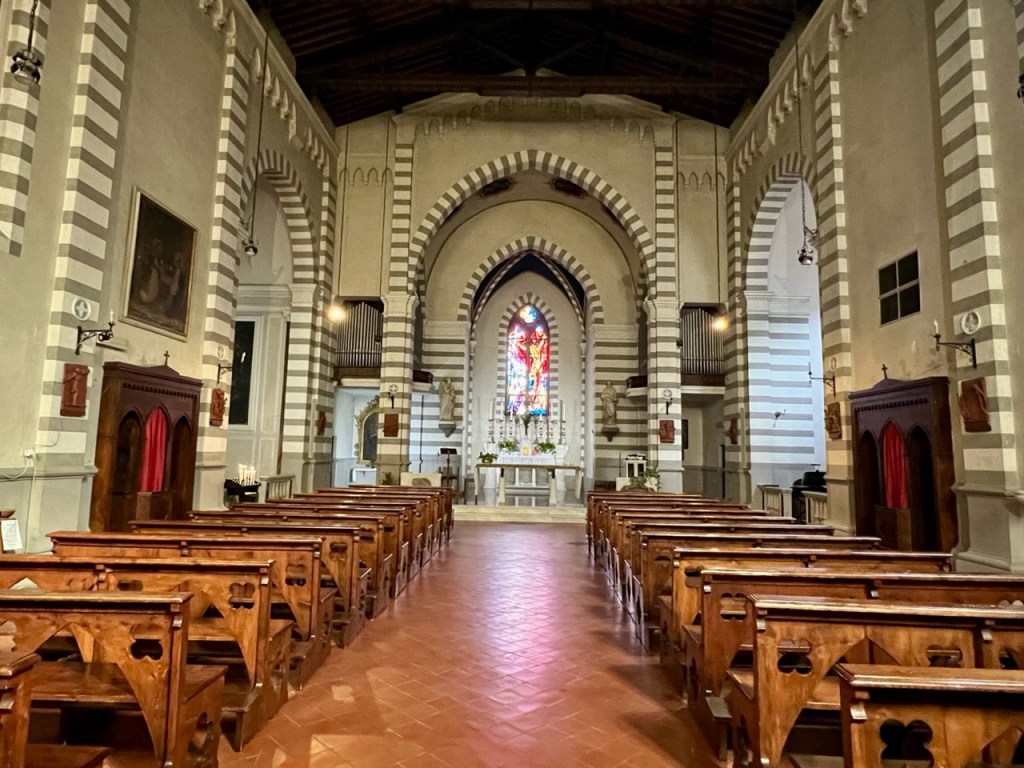
Rising from the highest point in the village, the church of San Donato is located in the historical centre of Terricciola.
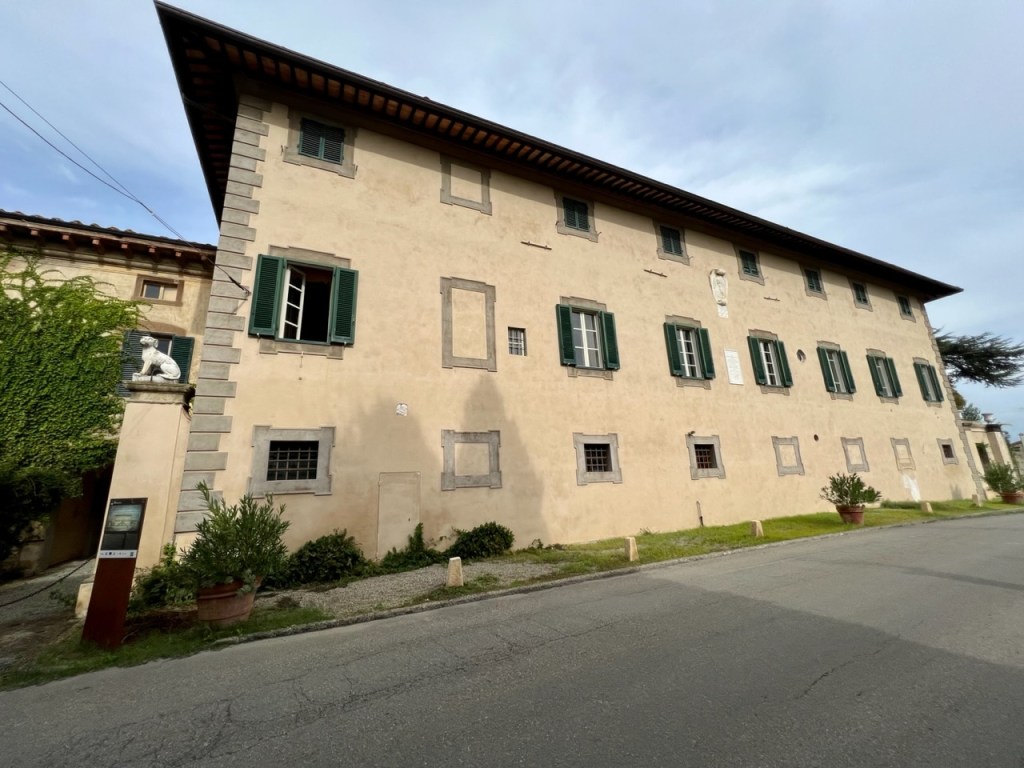
On the outskirts of town is the Villa Gherardi del Testa; former country residence of the noble Pisan family built around the middle of 1600.
Our third and last stop was the pretty small town of Lari situated where three ridges of the highest Pisan hills meet. Like Terricciola, it has been inhabited since Etruscan times.
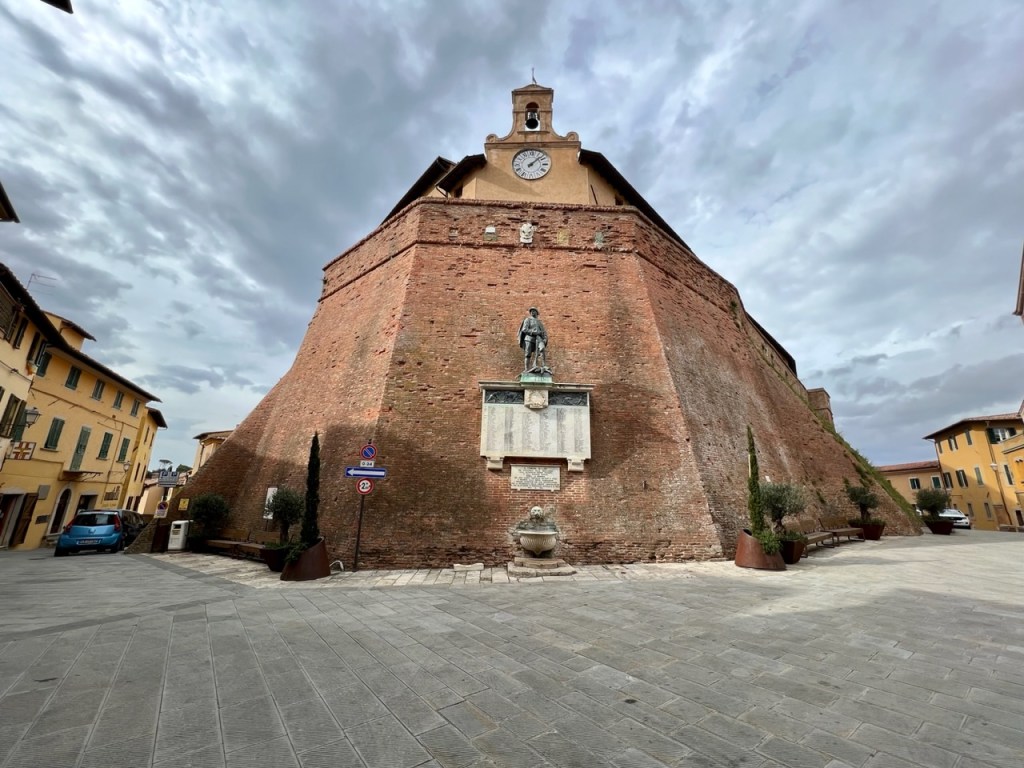
The massive Castle in the centre of the town dates back to the first half of the 17th century. Because of its dominant position of the entire valley of the River Arno, it was an important military stronghold of the Pisan Republic until it was conquered by Florence in October 1406.

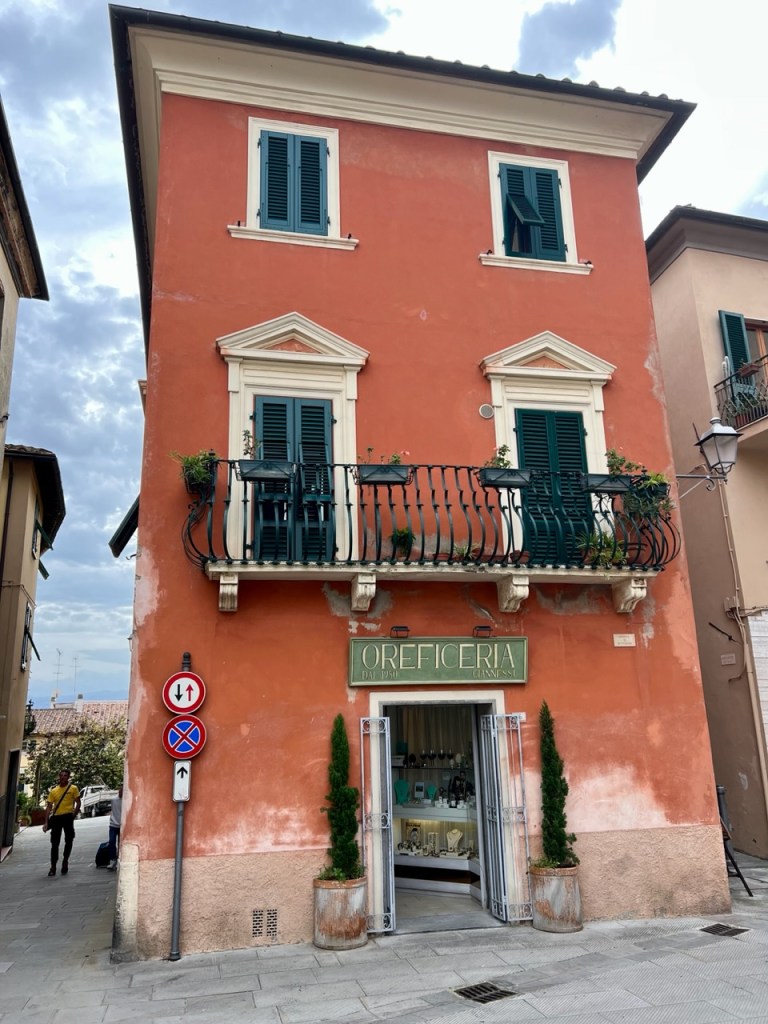


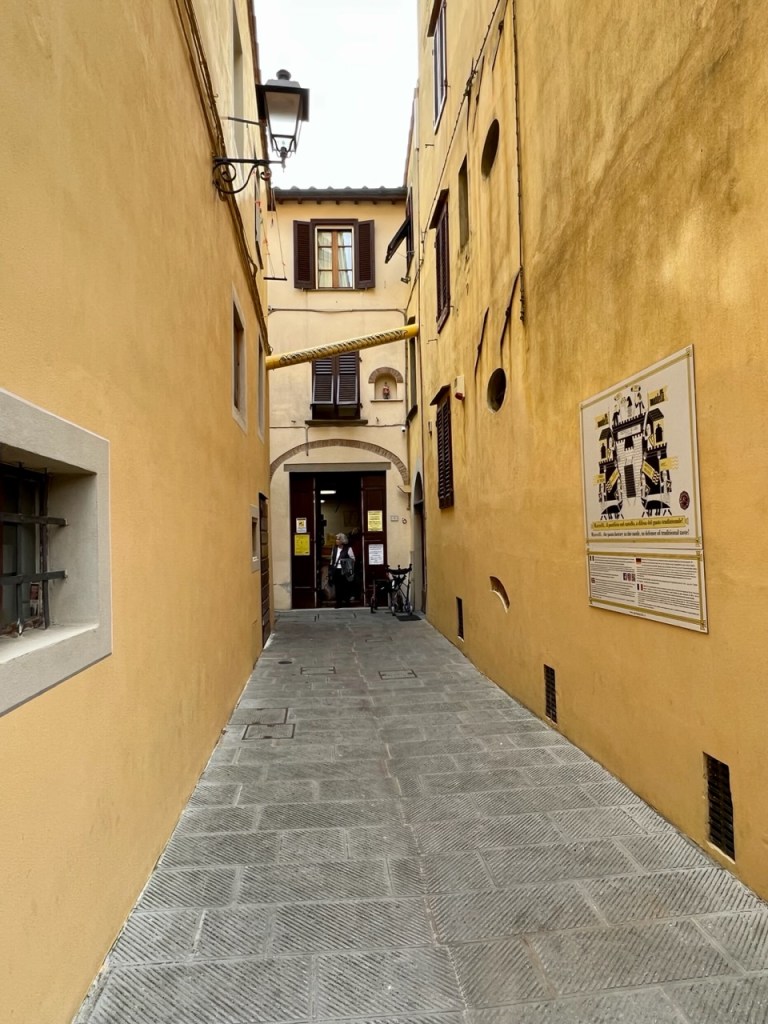
Lari also boasts an active pasta factory on the Via deli Pastifici. Know by the locals as the wrinkle, this narrow street, had two pasta factories in the late 19th century. Today only the Pastificio Martelli remains; maintaining the traditional method of making pasta.
After wandering through town, we grabbed a gelato for lunch before heading back toward the timeshare to relax for a bit before dinner.

On our first night here, we tried to do to the nearby Carlo’s Restaurant for dinner but it was closed for a special event. We went back there tonight and had a lovely dinner with great wine before calling it a night.
Tomorrow is our last day of touring. Adventures await …
 Judy’s Rambles