
April 23, 2024
This morning, I have a walking tour booked for 10:30 so there’s time to hurkle durkle a bit before trying out the hotel breakfast. There was plenty of fruit, pastries, meat, eggs, etc so I fixed a plate to fuel up for the day. Soon enough it was time to trudge up the hill to the Largo Amor de Perdição to meet the tour guide. Pedro checks everyone in and does a roll call to see where we’re all from; US, UK, Ireland, Australia, South Africa, Australia, Canada and Brazil are all represented.
After getting the adminstrivia completed, he starts the story telling which is my favourite part of the walking tours. The locals always have interesting stories to go along with the sites which they share with enthusiasm.
The first is about Camilo Castelo Branco or the man with the naughty hand as Pedro calls him, lol! He and his lover were both jailed for 18 months for their adulterous affair. That’s where the similarities stop – Camilo being a man was housed on an upper floor in a private cell where the door was always unlocked. He brought his own furniture from home and could order food from local restaurants (Uber Eats anyone) while poor Anna was kept in a locked cell in the dingy basement surrounded by murderers. They stayed together when they were released and had two children but there was no happy ending for them as Camilo was a womanizer and eventually ended up with syphilis, went blind and committed suicide.
The next story was about the April 25, 1974 revolution to overthrow the Portuguese dictator. It had a much happier ending because of a waitress at a local cafe in Lisbon and the bunch of red carnations she bought with only four people dying when the government was overthrown. Thursday is the 50th anniversary of the “Carnation Revolution” so there will be lots of special celebrations in Porto.
Our first stop is the Vitória view point (Miradouro da Vitória) to check out the stunning views. From here, you can take in some of the main sights of the city; the Dom Luis bridge, the Se and Bishop’s Palace looking over the patchwork of terracotta roofs in Riberia. You can also see the River Douro over the rooftops. This area was once part of the city’s old Jewish quarter.
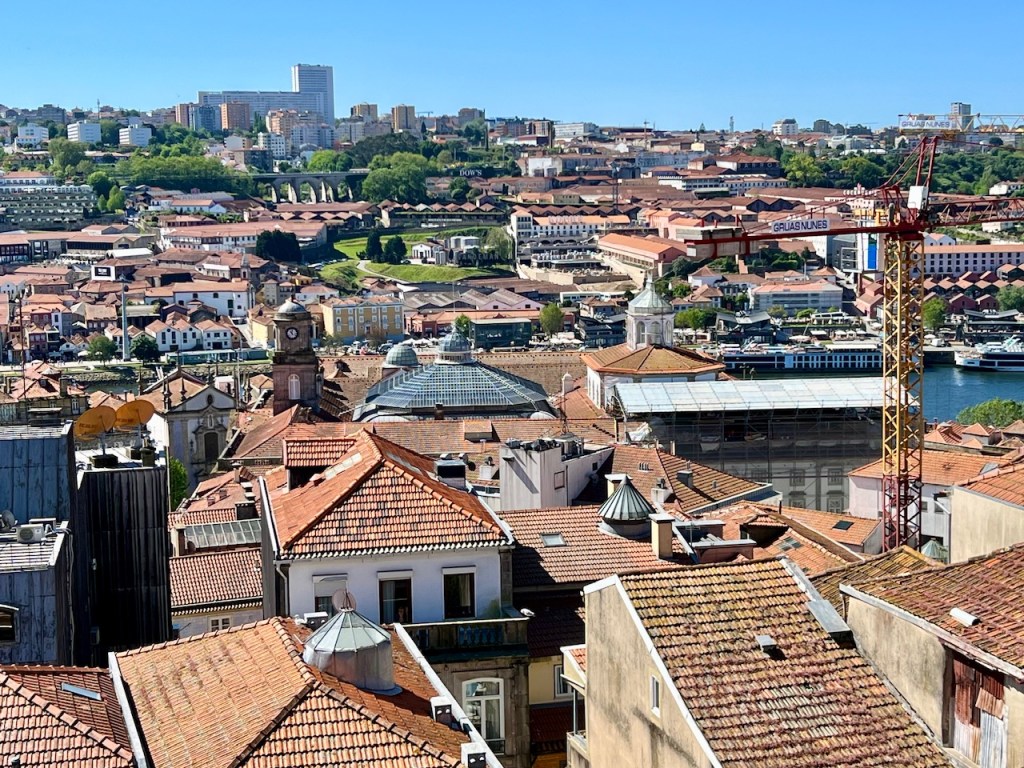
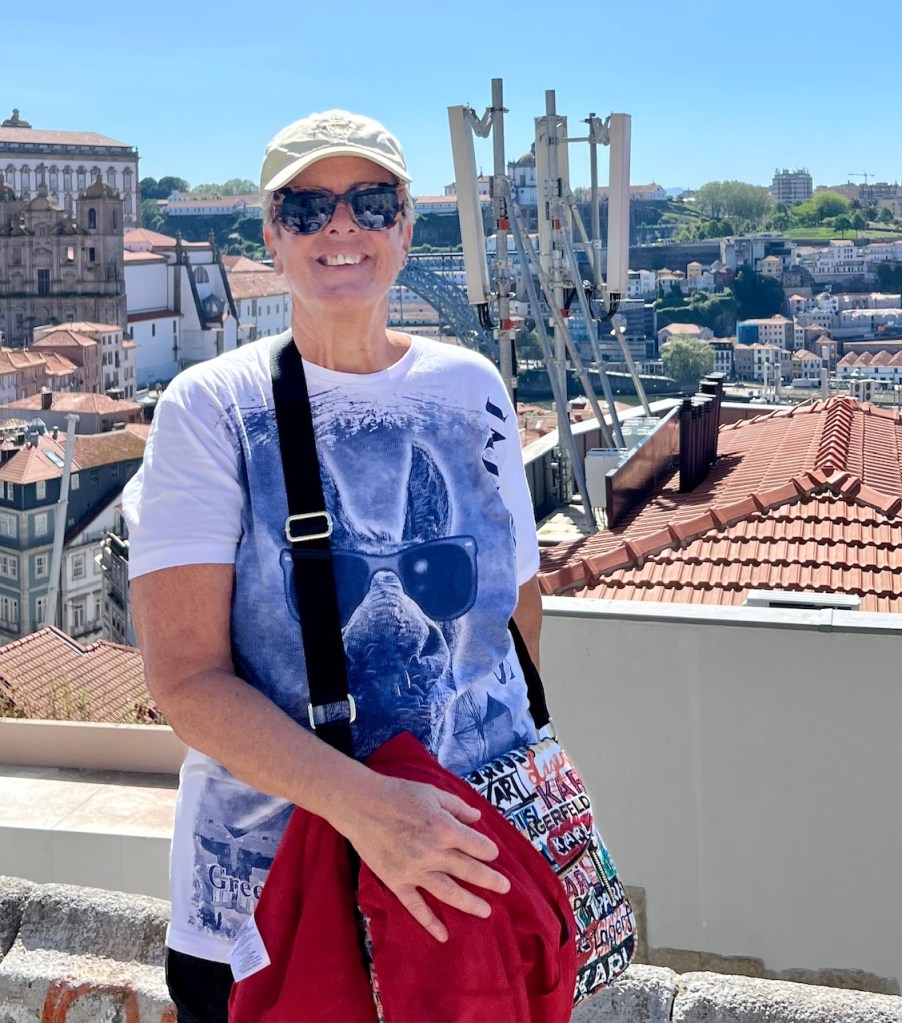

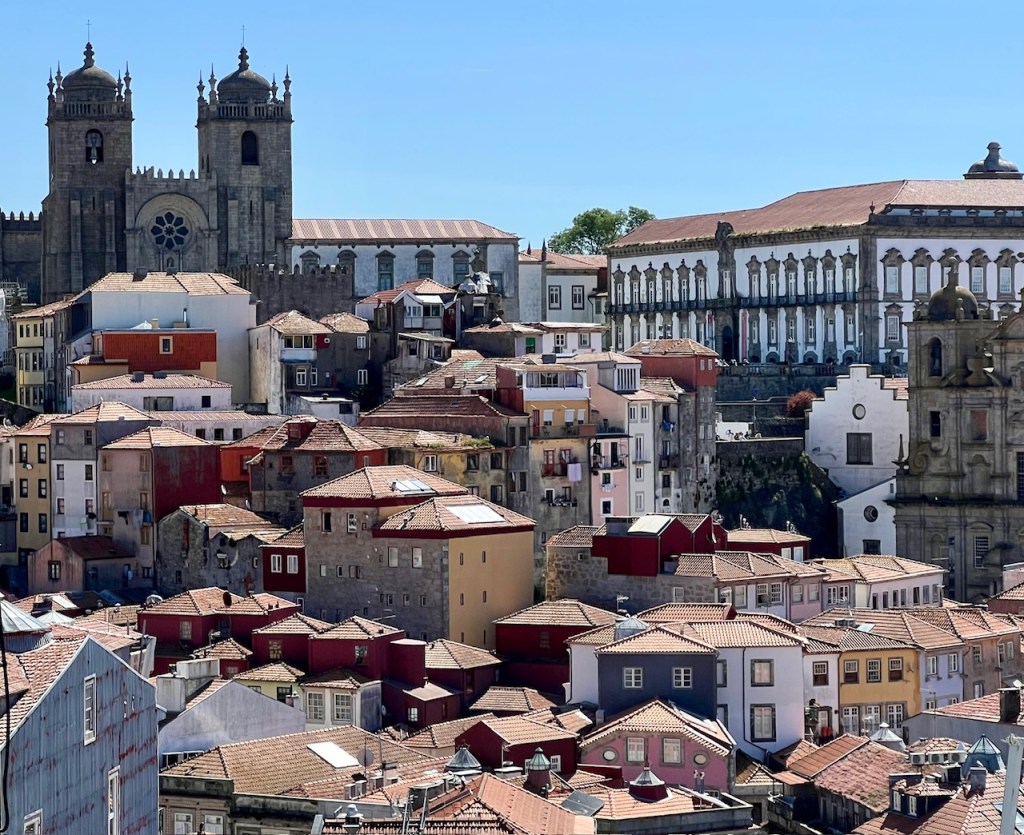
Many of these Jewish people immigrated to Portugal in 1492 when the Catholic king allowed Jews that had been expelled from Spain to come to Portugal. Four years later, after the marriage contract between the Portuguese King and the oldest daughter of Spain king was finalized, the Jews were given a choice to leave or convert to Catholicism. Those that stayed ended up with mainly tree names, Olivera etc.
Aristides de Sousa Mendes do Amaral e Abranches was a Portuguese consul during World War II in the French city of Bordeaux. He defied the orders of the Portuguese government, issuing visas and passports to an undetermined number of refugees fleeing Nazi Germans, including Jews. When this was discovered (Pedro said he got away with it only for a week), he was fired from the foreign service though he continued to receive his full salary until he died in 1954.
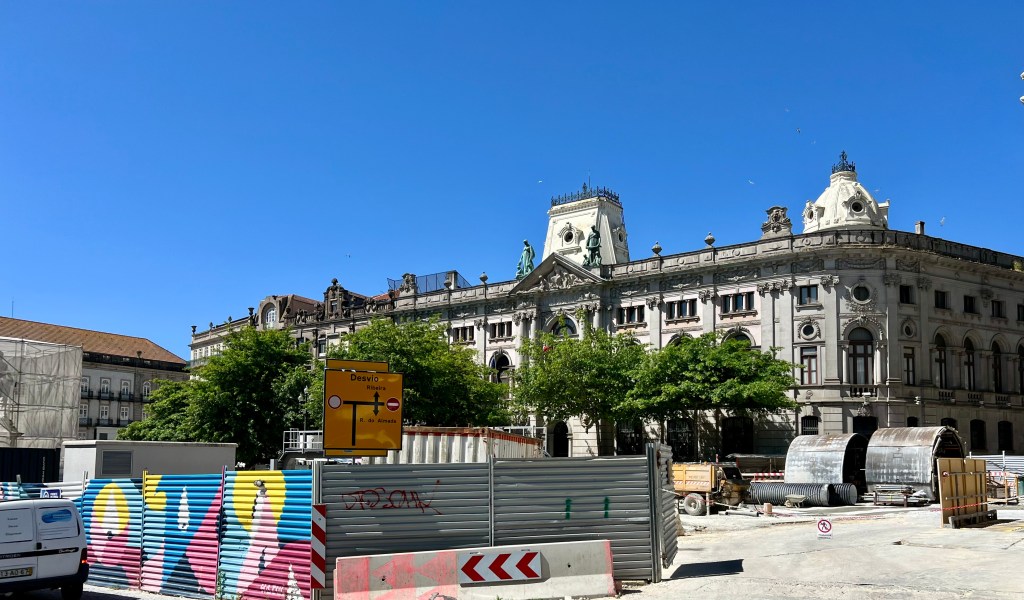
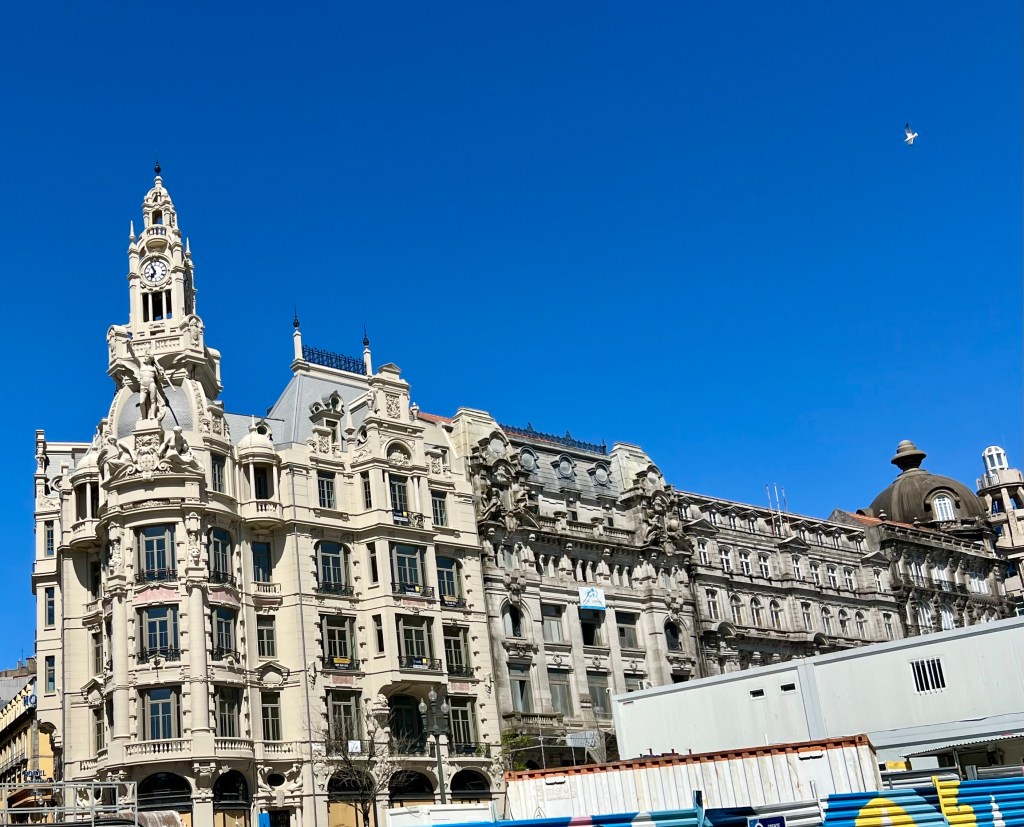
Next we went to look at some of the sites I visited yesterday; the Clérigos Tower, the Twin Churches – the Carmo and Carmelite churches and the Lello bookstore before heading to Avenida dos Aliados (Avenue of Allies). Apparently, it is usually quite beautiful but it is under construction at the moment to dig tunnels for their light rail system. Hopefully, it will not take as long as what is currently going on in Ottawa!
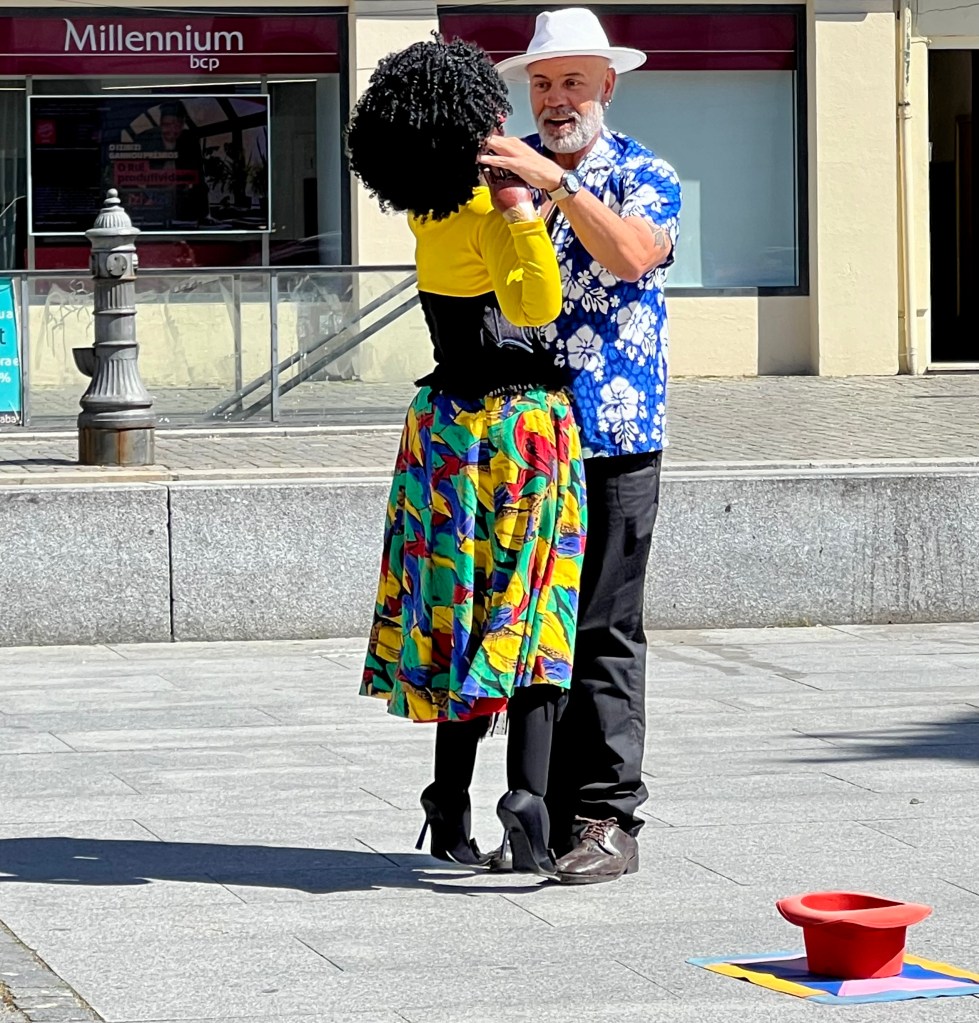
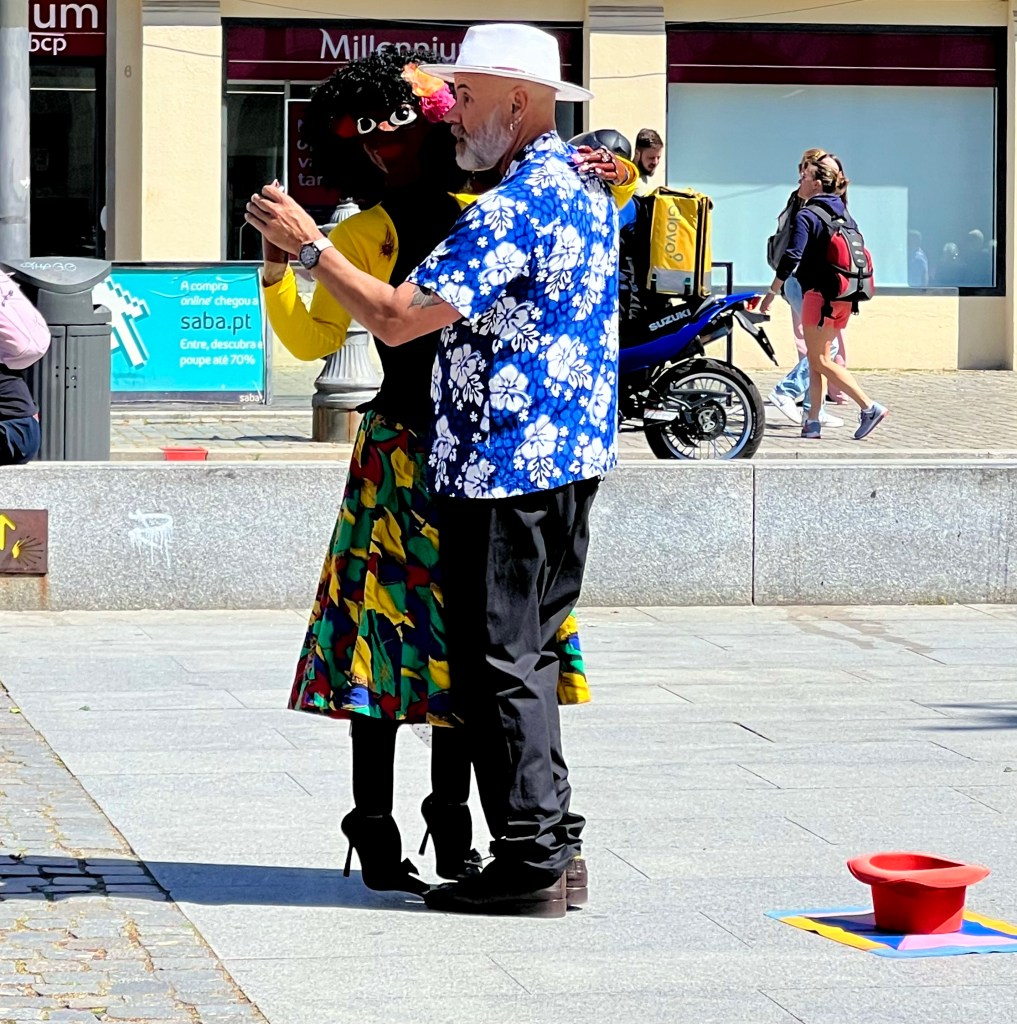
Snapped a few pics but they aren’t so beauteous with the scaffolding, etc. The Town Hall of Porto is situated at the top end of the Avenue where there is no construction.

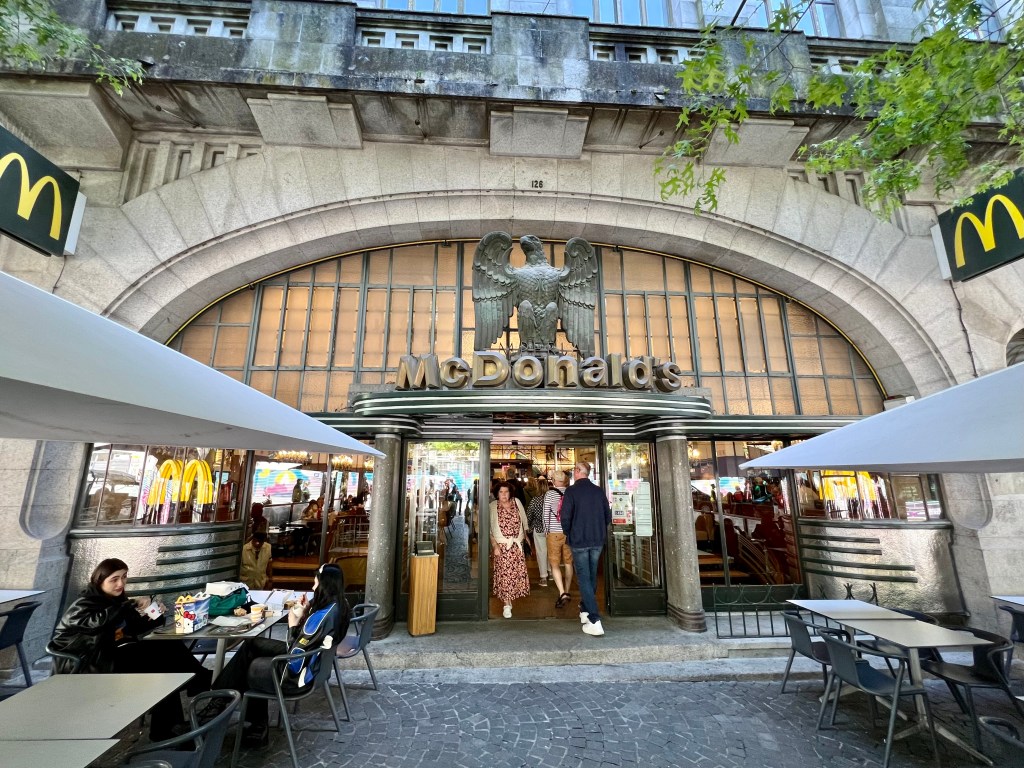
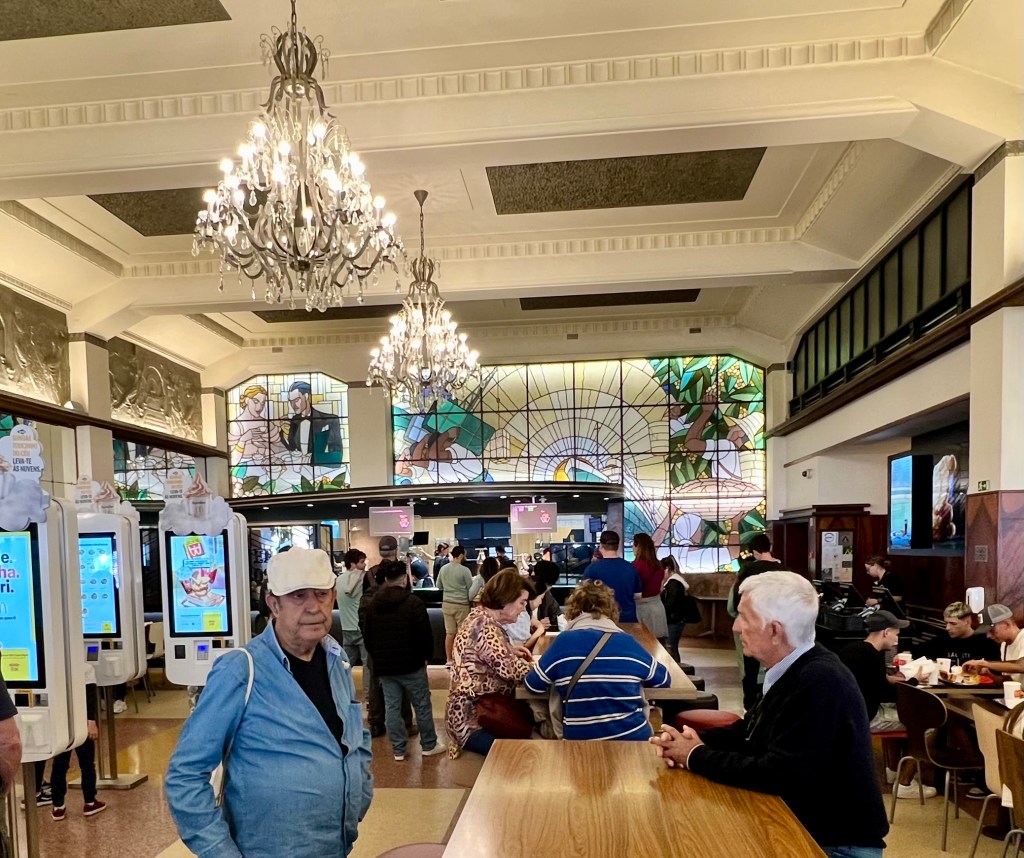
Also on the Avenue is the most beautiful McDonald’s restaurant in the world! Originally the Imperial Café, an emblematic historic building from the 30s, McDonald’s opened here in 1995 maintaining the iconic features even though the fare is more or less the same as McD’s everywhere. The name “Imperial” comes from the Eagle on the facade. Inside there is beautiful art deco stained glass and sparkling chandeliers. Nice digs indeed for a burger and fry joint.
Our next stop is the São Bento Train Station with its 20,000 painted azulejos tiles depicting scenes of Portuguese history. The tiles are hand painted individually and then put together like a puzzle.
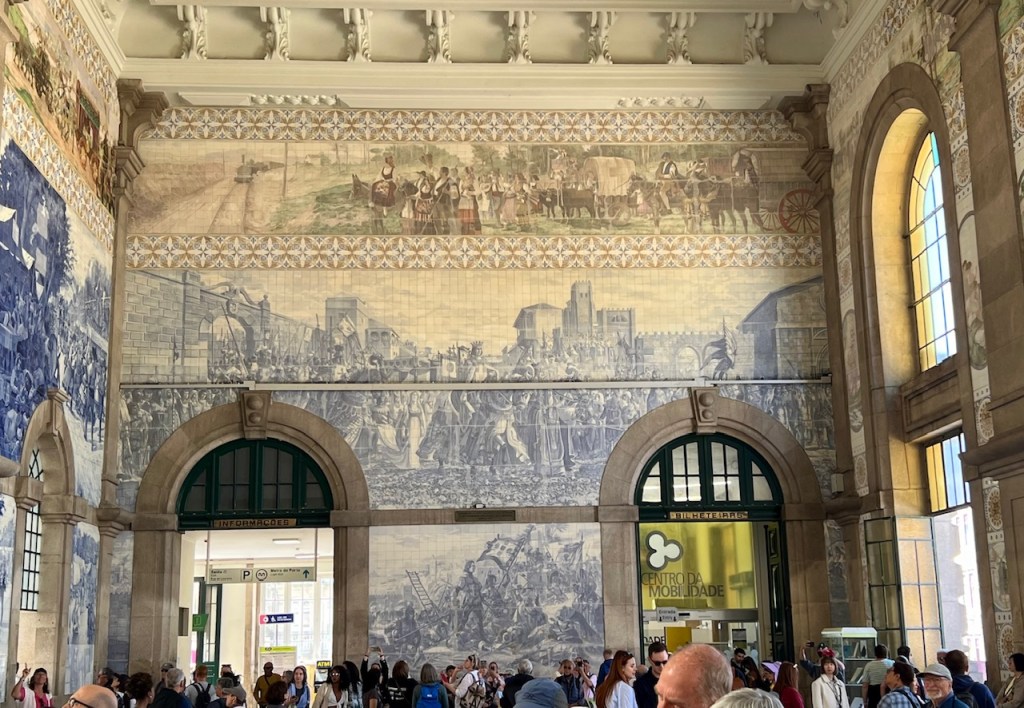
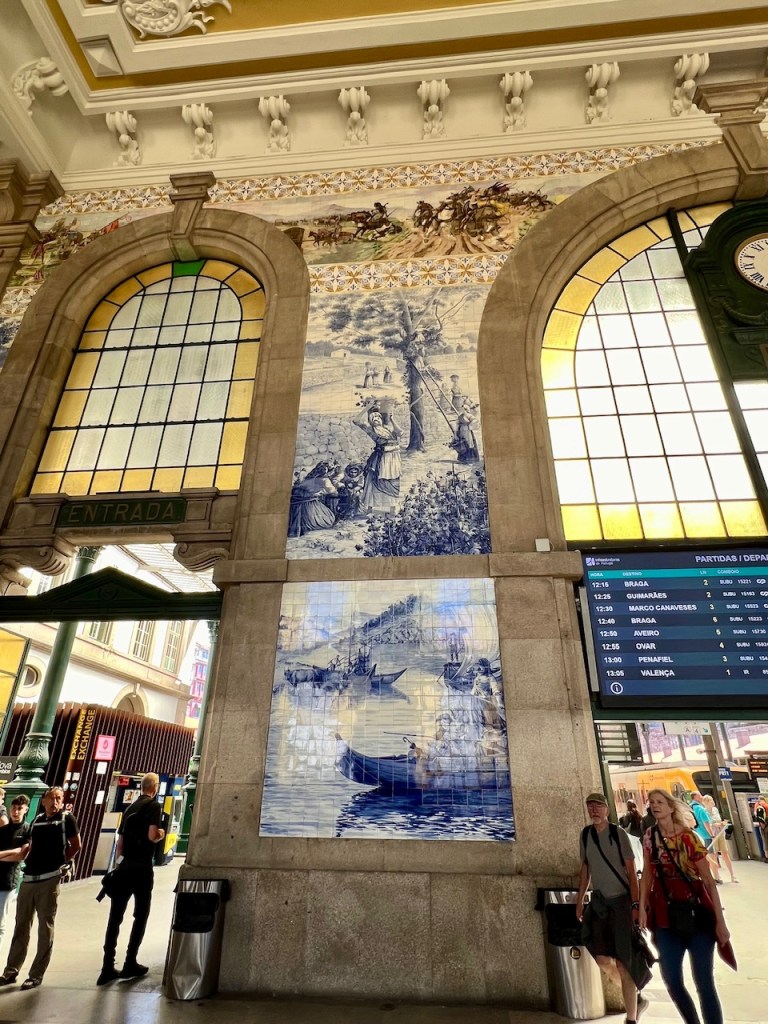


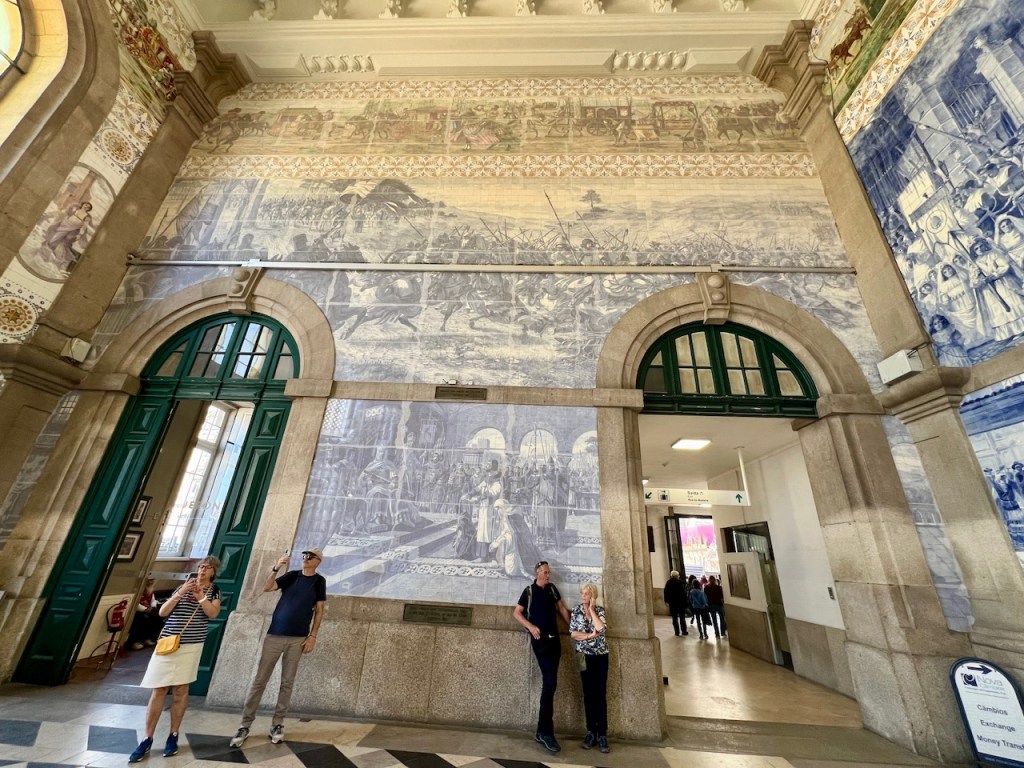
Time for another Pedro story … The train station stands on the site of the Benedictine Convent of São Bento da Avé Maria. The city wanted to demolish the convent and move the nuns to one of the many others in the city but the nuns weren’t having any of that. The complicated negotiations agreed that no more nuns could move in and they would wait until all the nuns living there died. Little did they know that one of the nuns would live for 36 more years dying in 1896 at the age of 98. By then the railway was finished but the convent still there. Eventually they demolished the convent though it took twenty years for the station to open
Every tile tells a story, and it’s not the usual religious illustrations. Since this isn’t a church, instead of religious scenes, the panels represent Portugal’s history and stories.
Using the tunnel for the Sao Bento metro station, we made our way to Porto’s 12th century Cathedral/Sé Catedral do Porto. In the station, was an installation celebrating the Flourishing of Freedom made up of approximately 700 solitaires made of ceramic and wood, by 10th grade students from the Soares dos Reis artistic school. They were designed to contain a red carnation, a symbol of revolution and freedom.


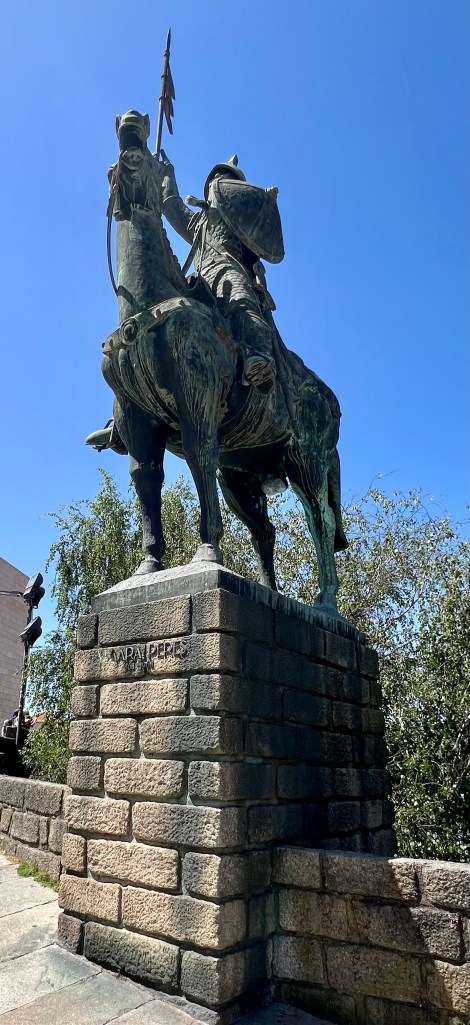
You can find a statue of Vimara Peres, the ninth-century nobleman from the Kingdom of Asturias who “founded Porto”, next to the Se Cathedral. In 868, Vimara Peres was named the Count of Portugal by King Alfonso III of Spain.
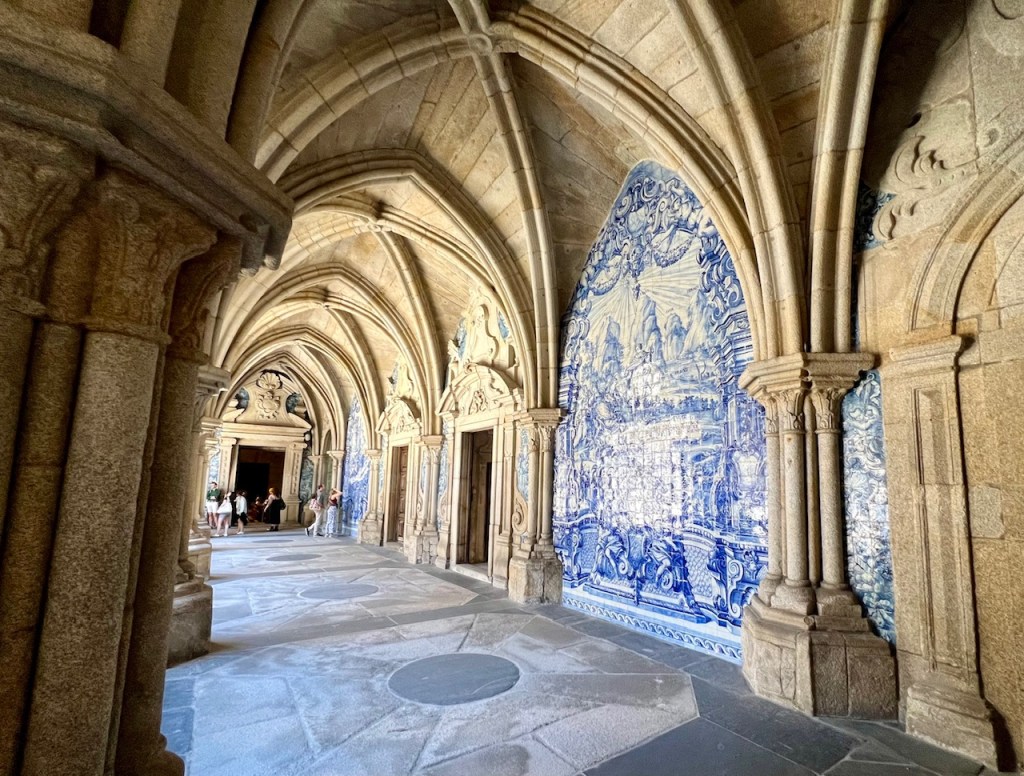
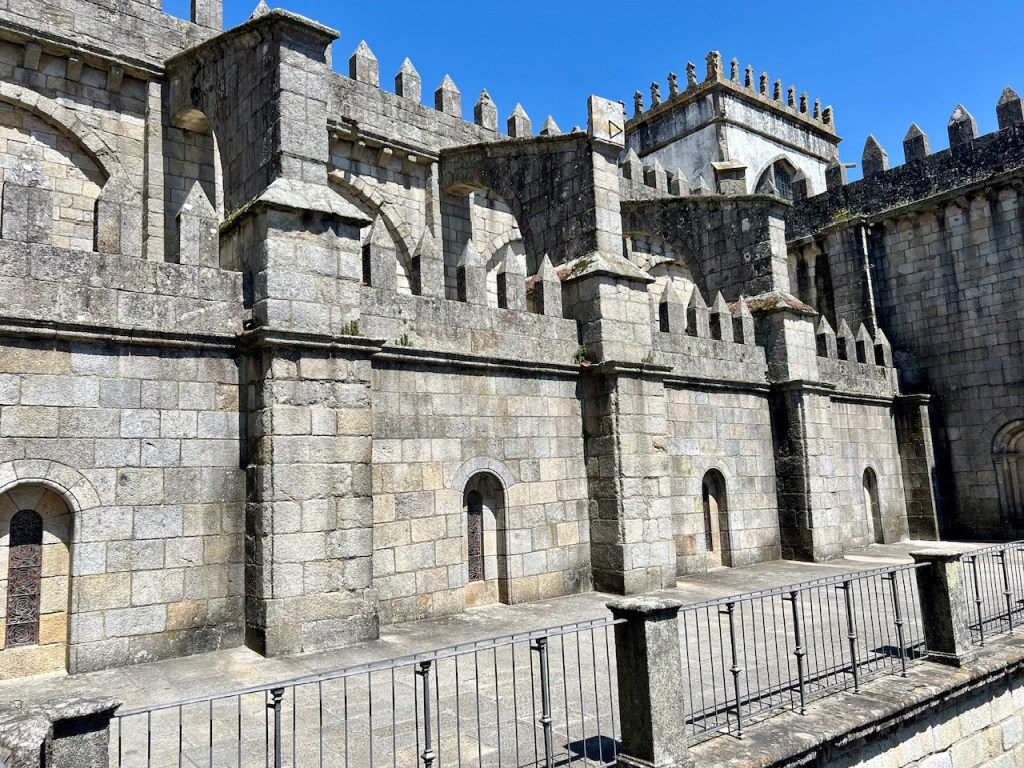
The Sé Catedral do Porto sits on the site of the original Roman settlement that was here centuries ago. The fortress-like Sé do Porto, constructed in the 12th century, is one of the oldest buildings in Porto and the most important religious building in the city. The nearby Episcopal Palace also dates back to the 12th century
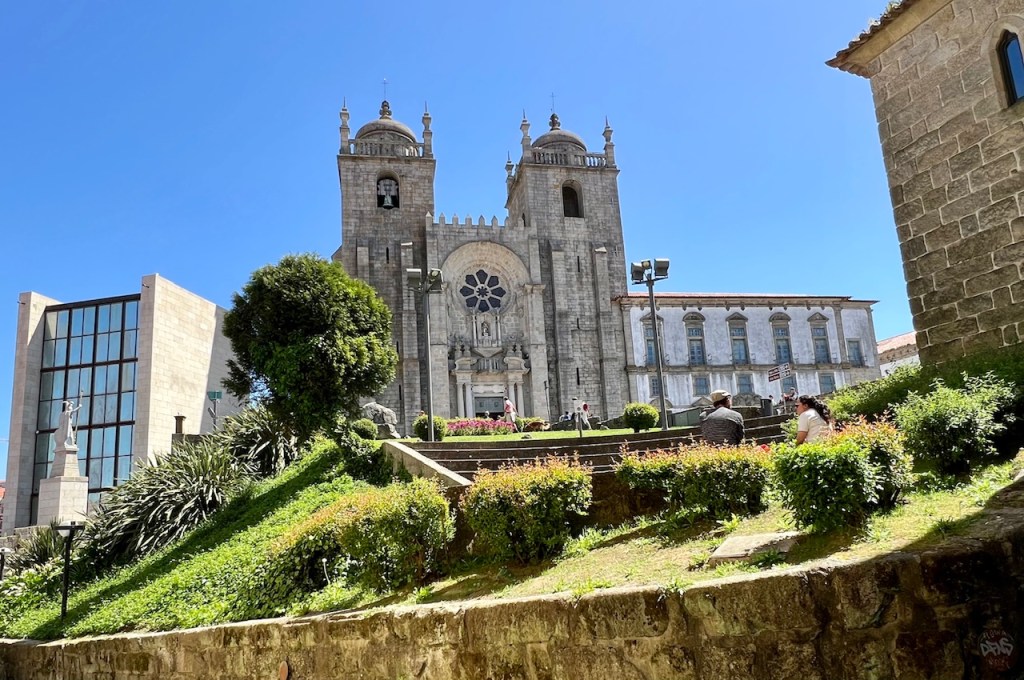
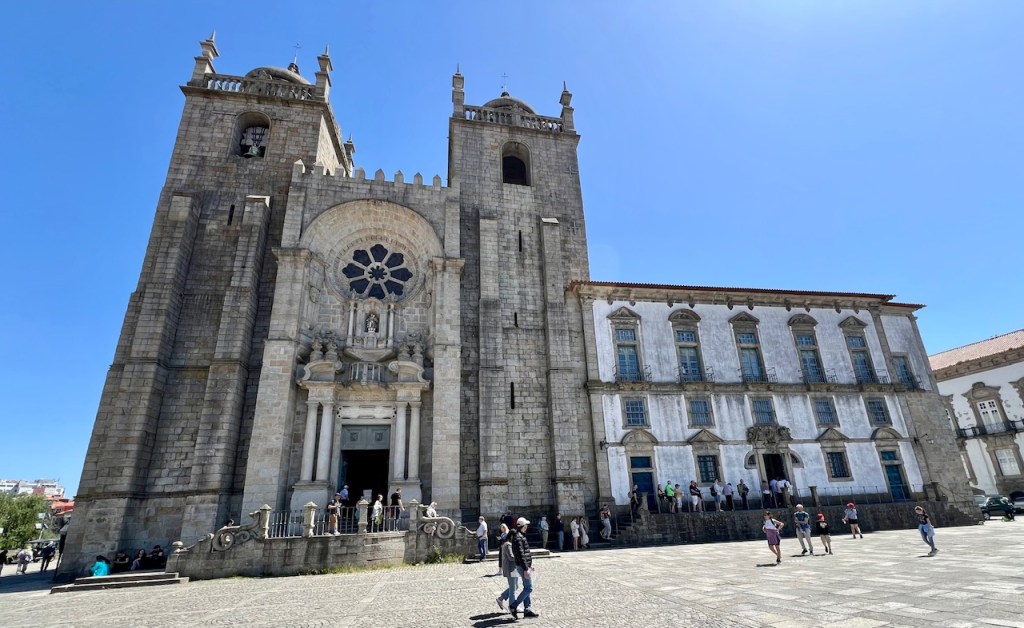
Porto and Portugal owe their names to the Romans. They called Porto, Portus Cale, from the Latin for “warm port.” Portuscale name from Roman days. Porto was for centuries the most important city in Portugal but never its capital.
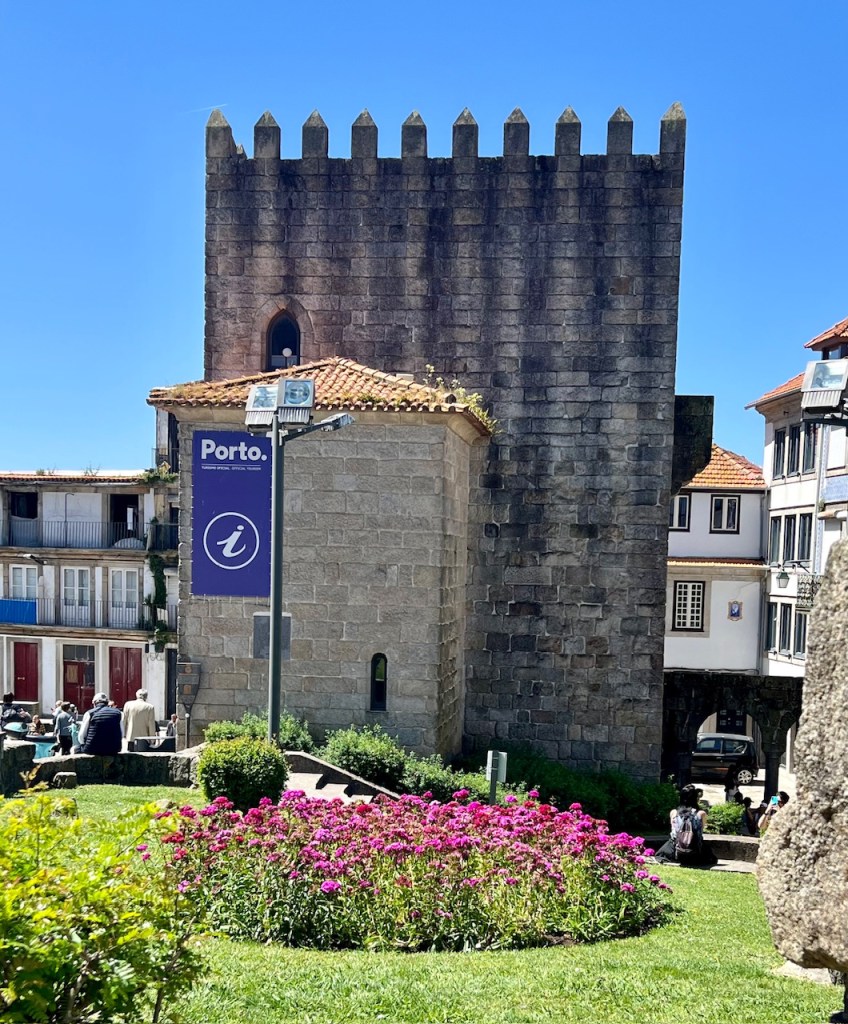
Near the Sé is the remnants of the ancient wall including one of the towers. Originally built by Romans, the wall surrounded the old city (top of hill where Sé is located) before the city expanded and a wall surrounding the now larger city was built.
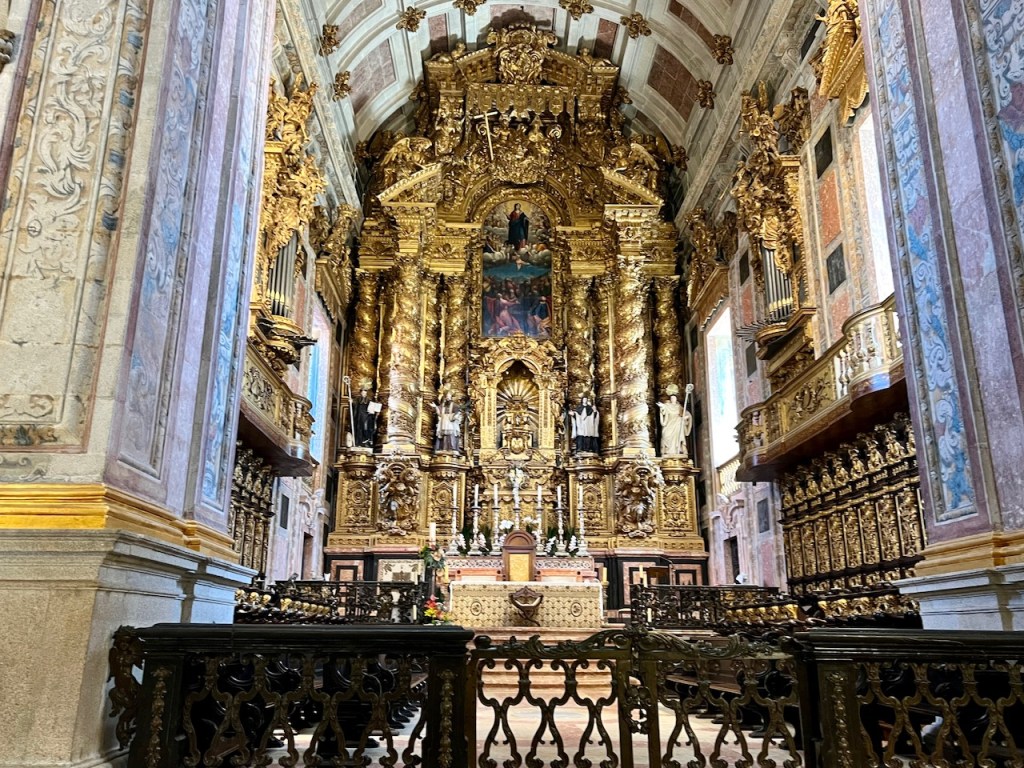
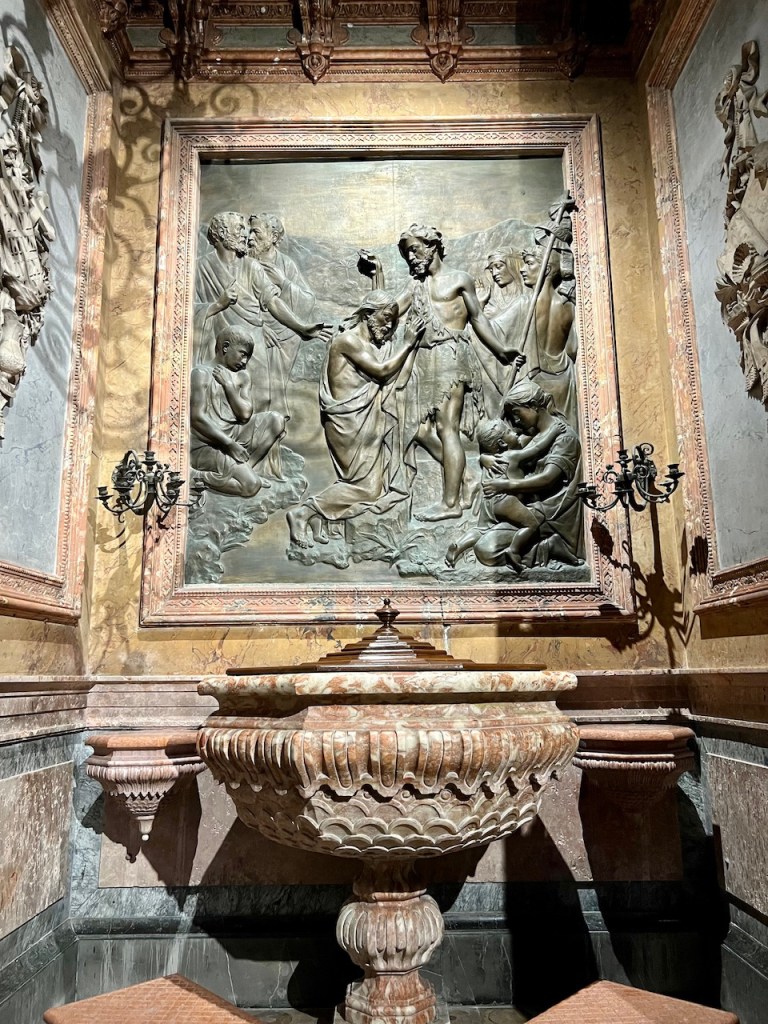
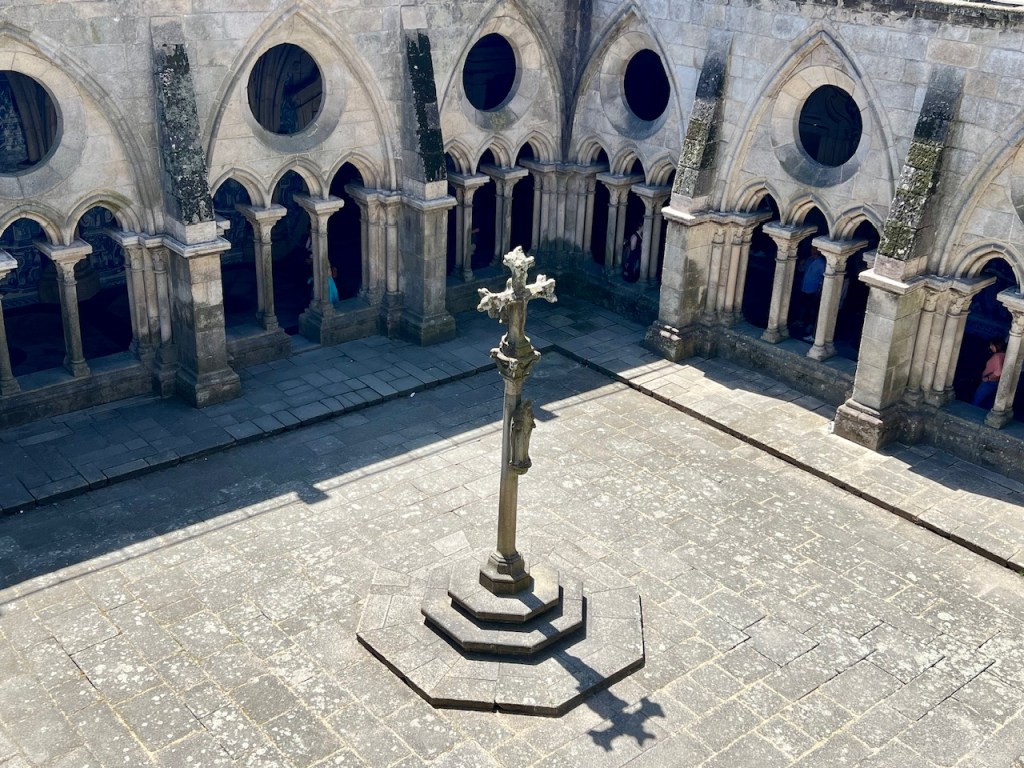
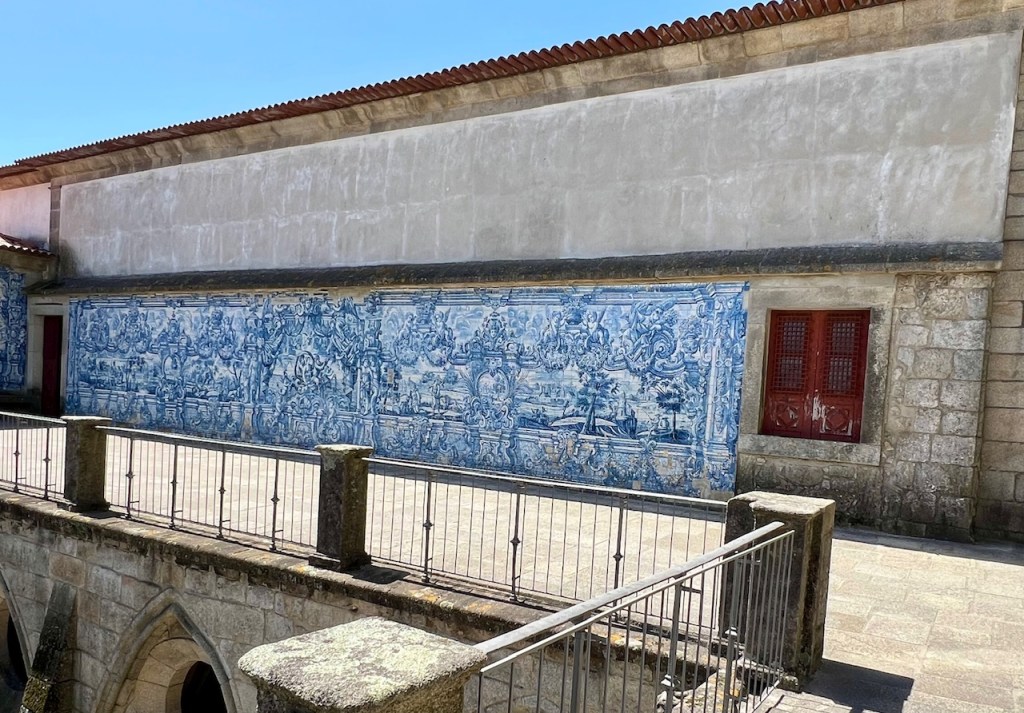
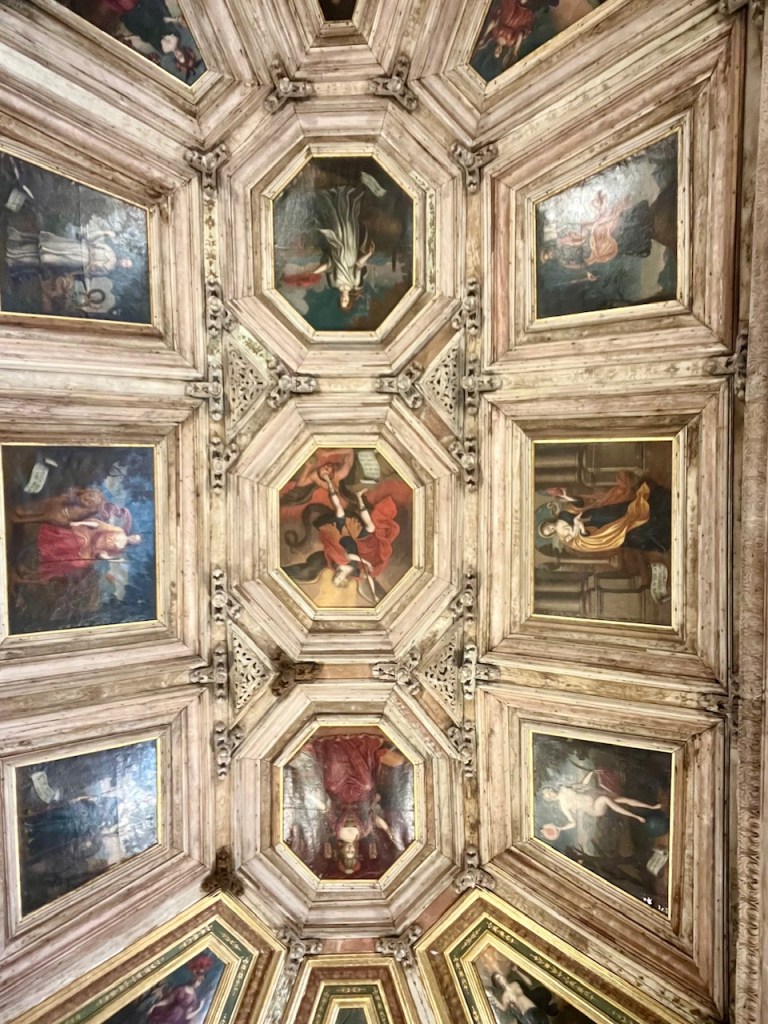
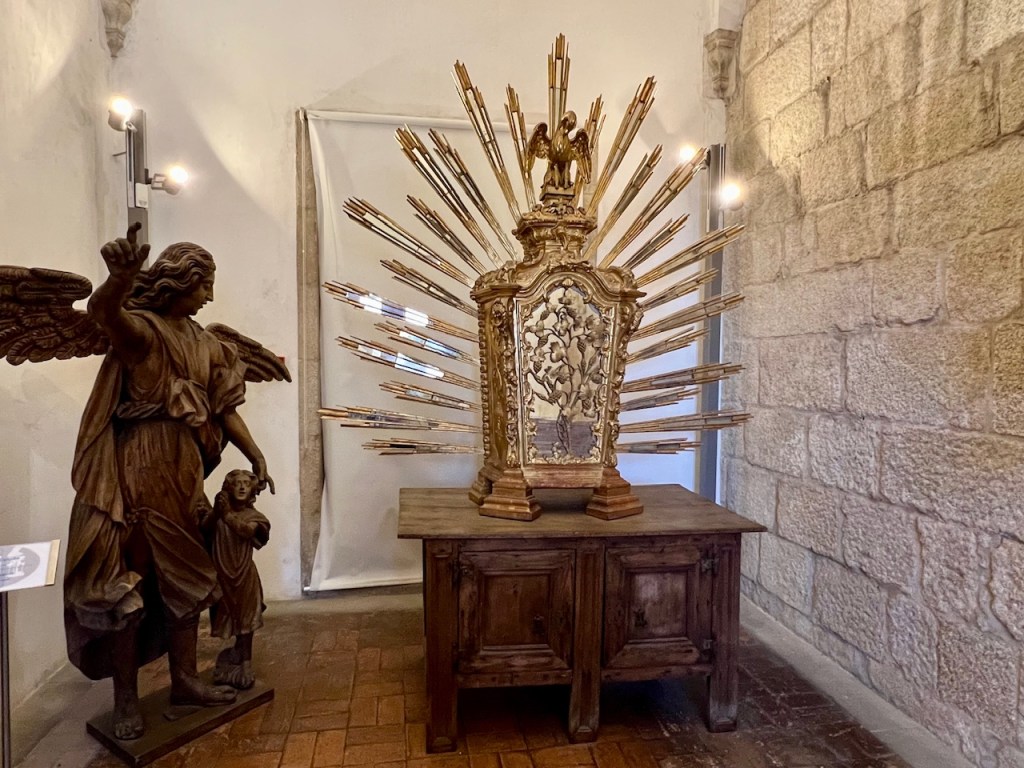
After bidding adieu to Pedro and the tour group, I headed inside the Sé for a look around this beautiful ancient building. Magnificent!
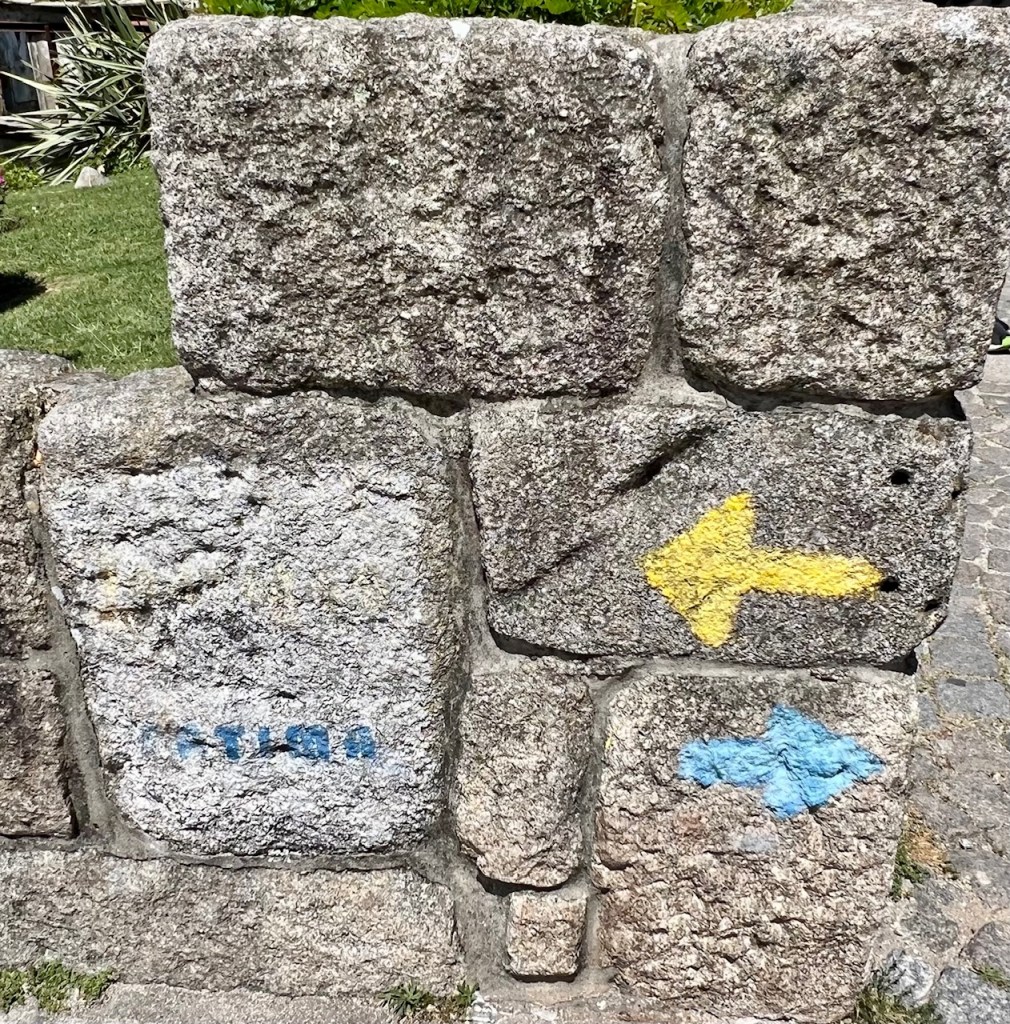
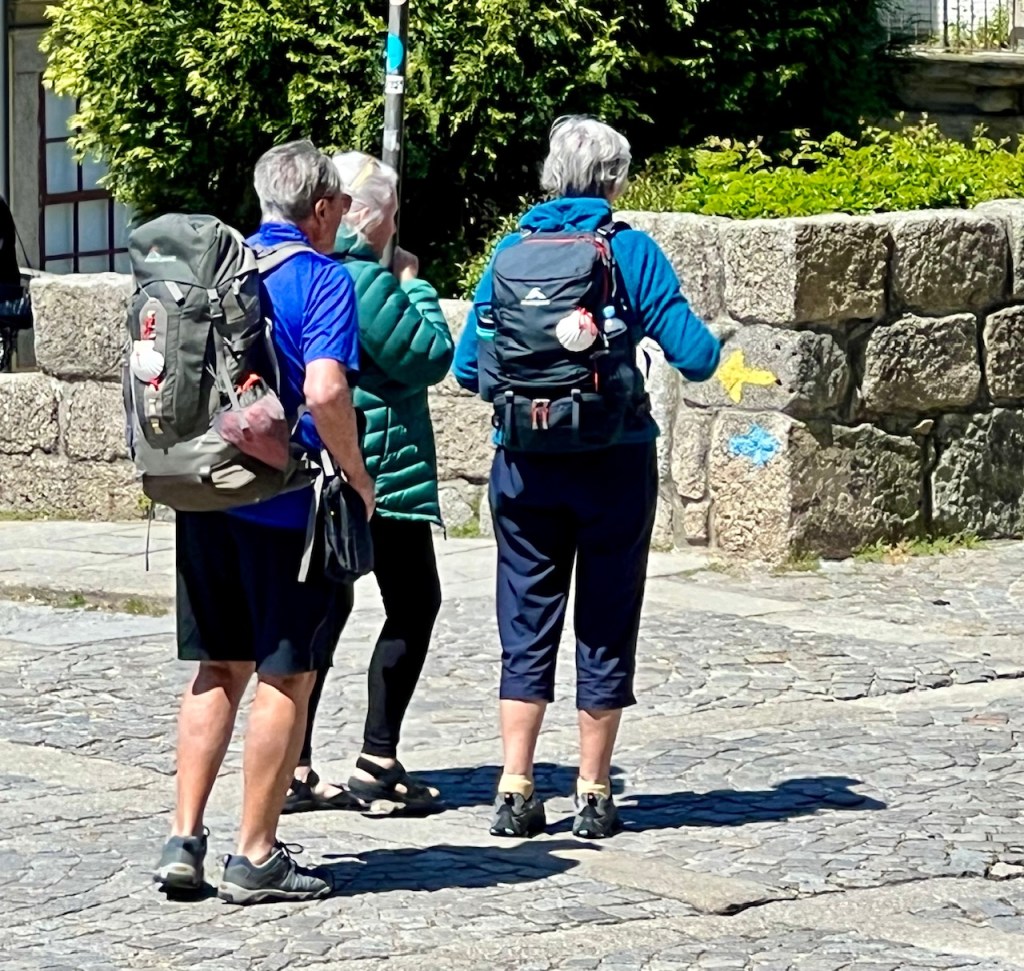
The cathedral is one of the stops on The Portuguese Coastal Way consisting of several routes and roads that all lead to Santiago de Compostela and there are the happy arrows and markers to show pilgrims the way. I did meet a couple of pilgrims who had left Lisbon some days ago and were heading to Santiago while exploring the cathedral. Maybe someday I’ll try another Camino …


After grabbing a bottle of water, I decided it was time to head across the Ponte de Luíz I and head over to Vila Nova de Gaia (Gaia for short). I do have a fear of heights but I thought it would be okay until the metro whizzed by me and I almost peed my pants! No way will I be coming back this way – I thought it was a pedestrian bridge!!!
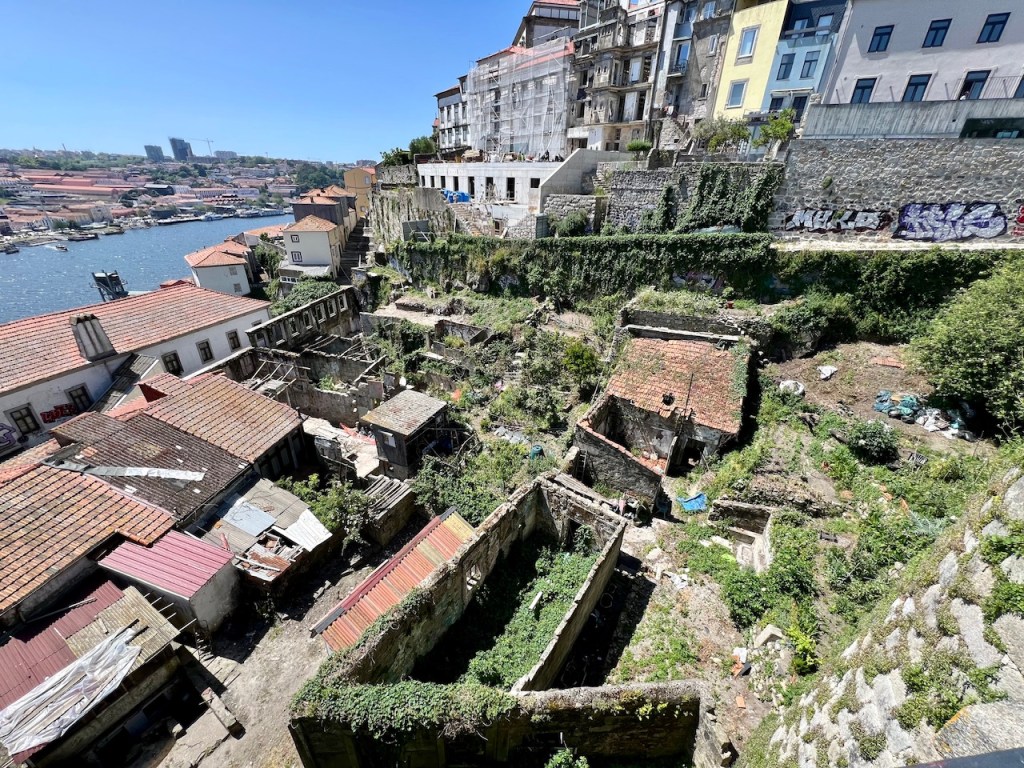
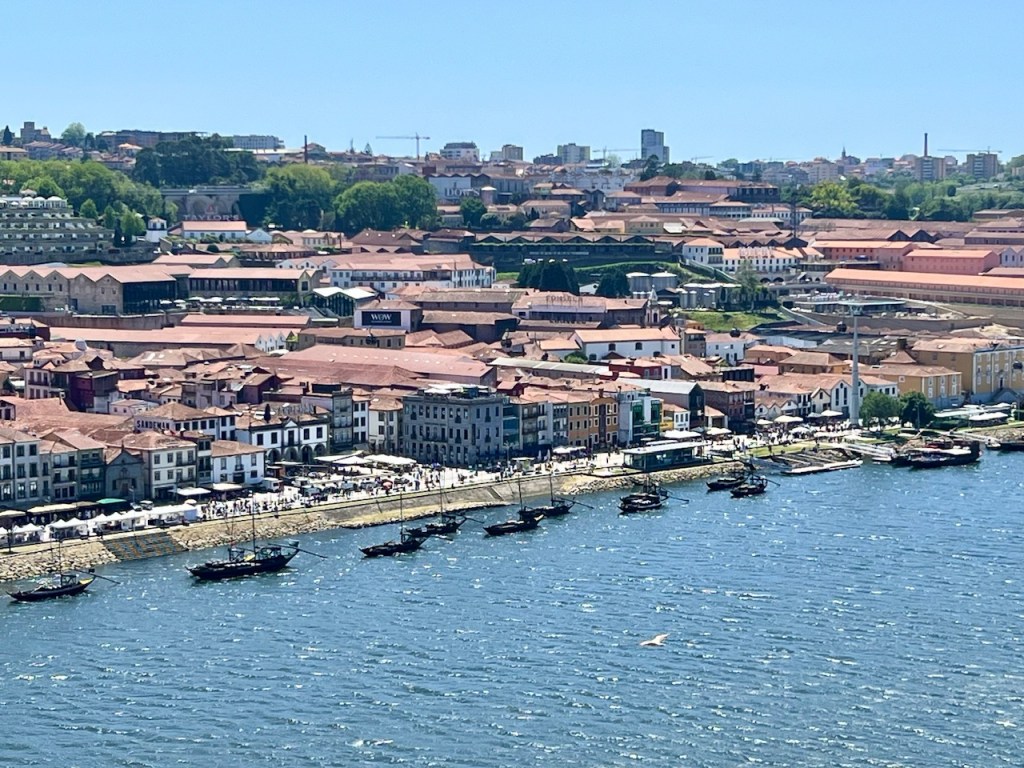
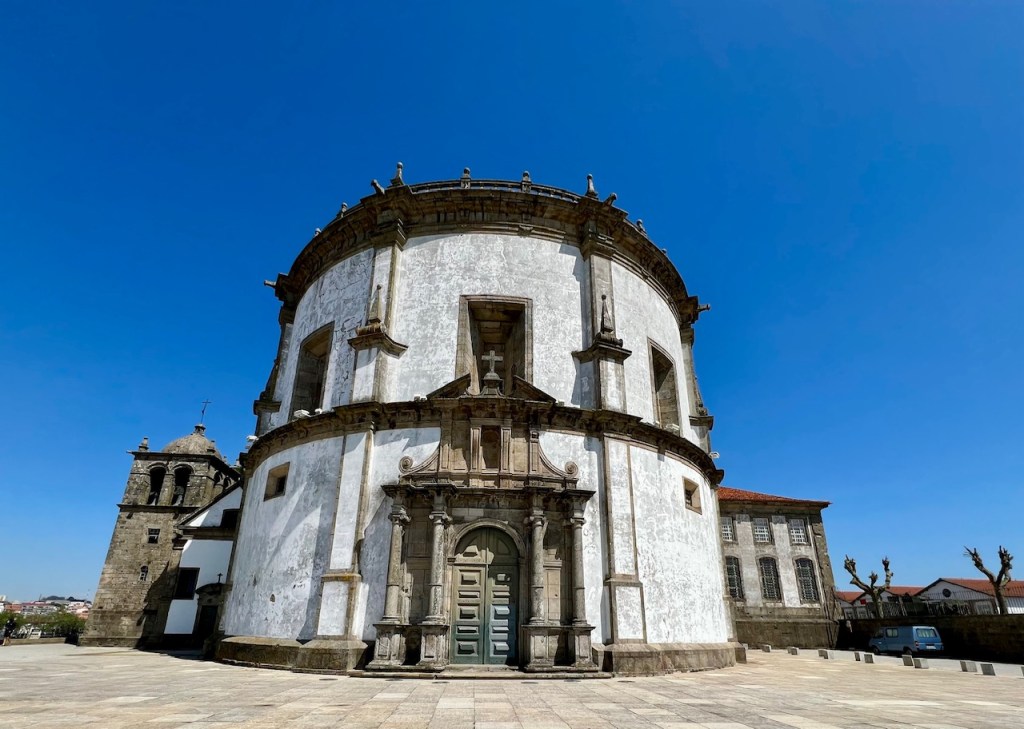
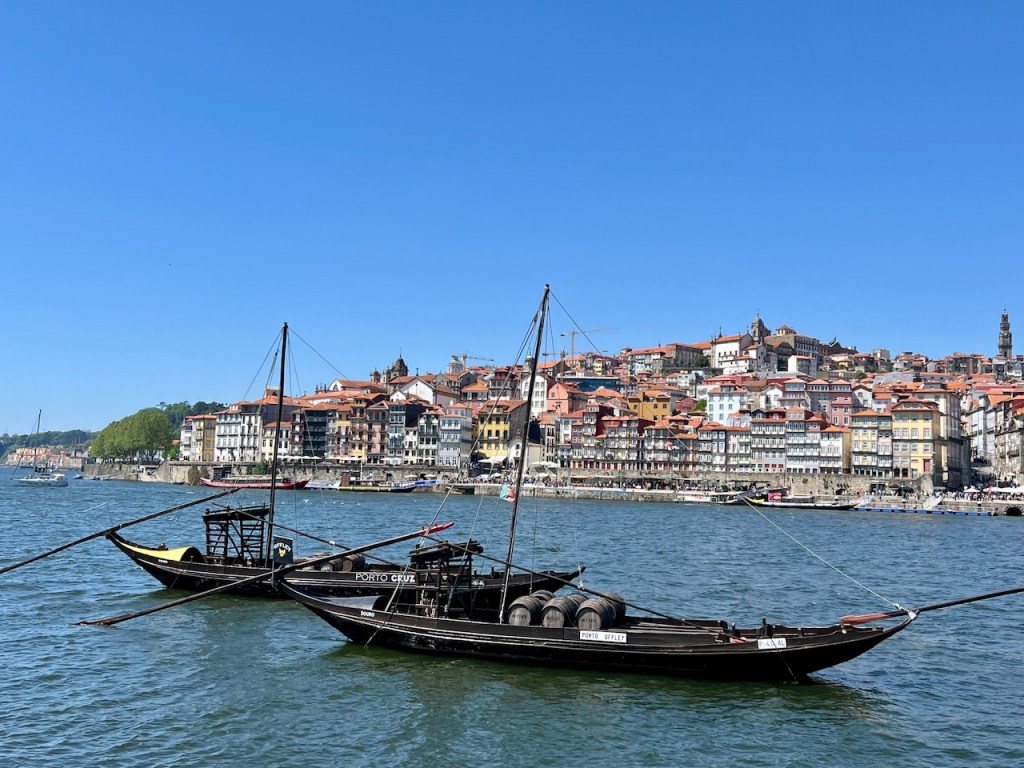
The bridge did offer some stunning views of both banks of the Douro as did the park on the Gaia side. Apparently, this is the place to catch a sunset. Maybe Thursday??

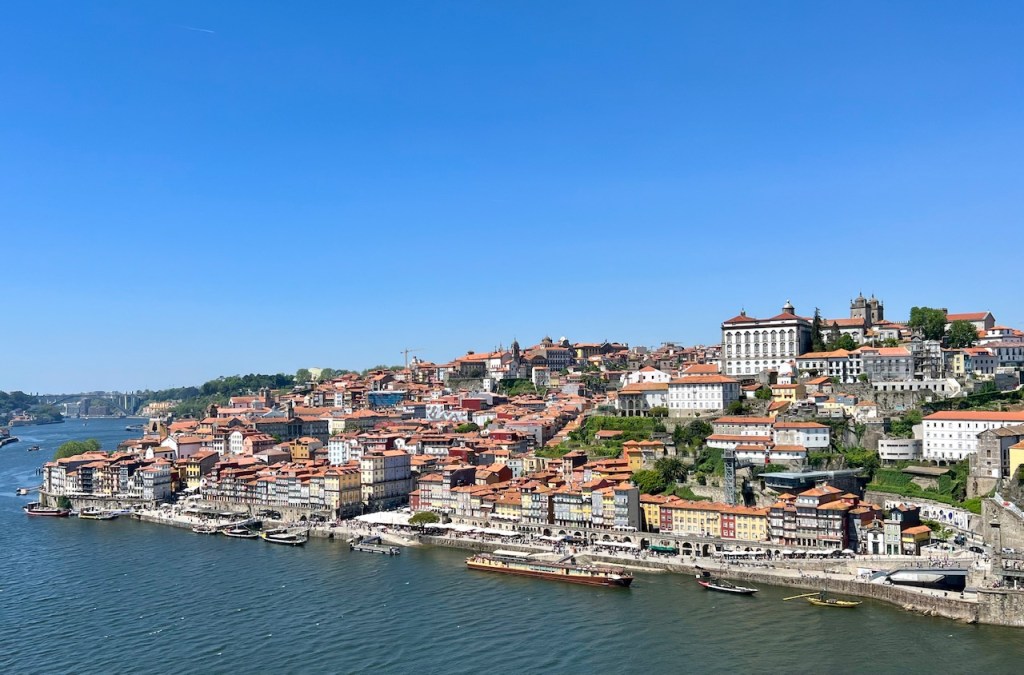
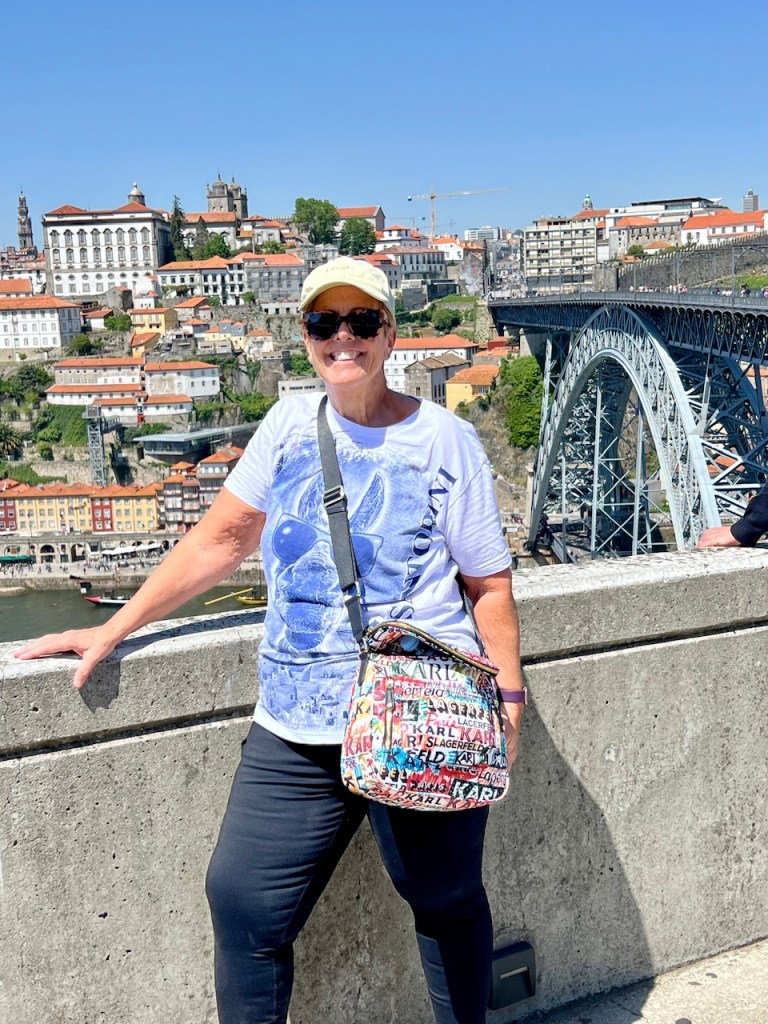
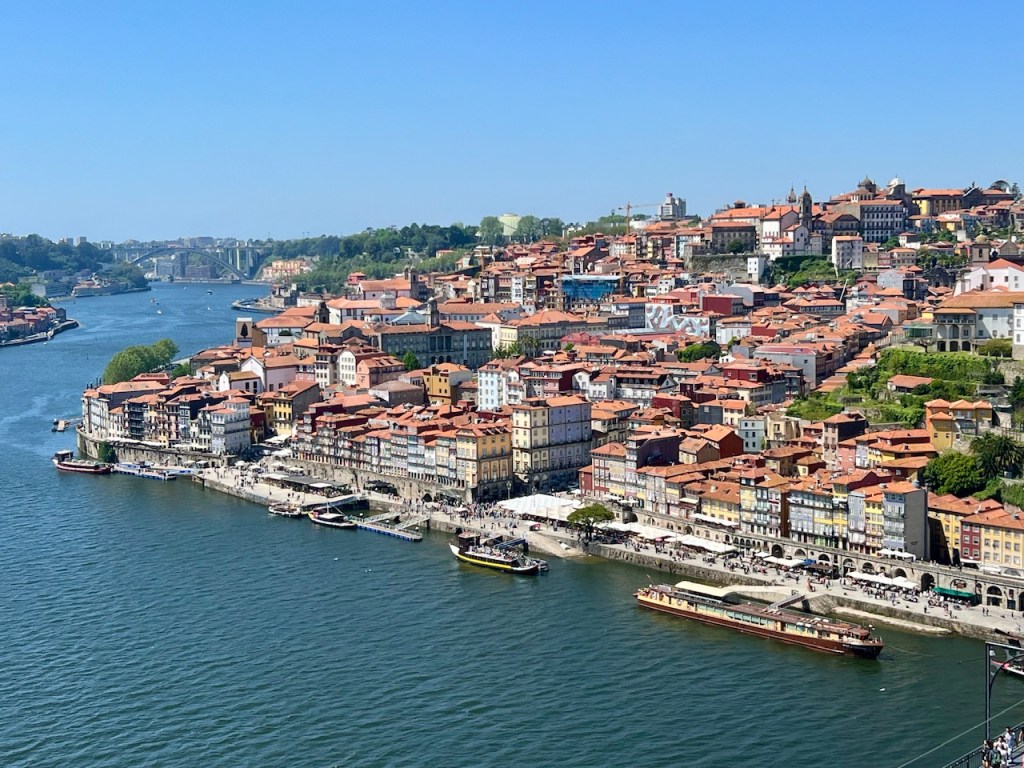
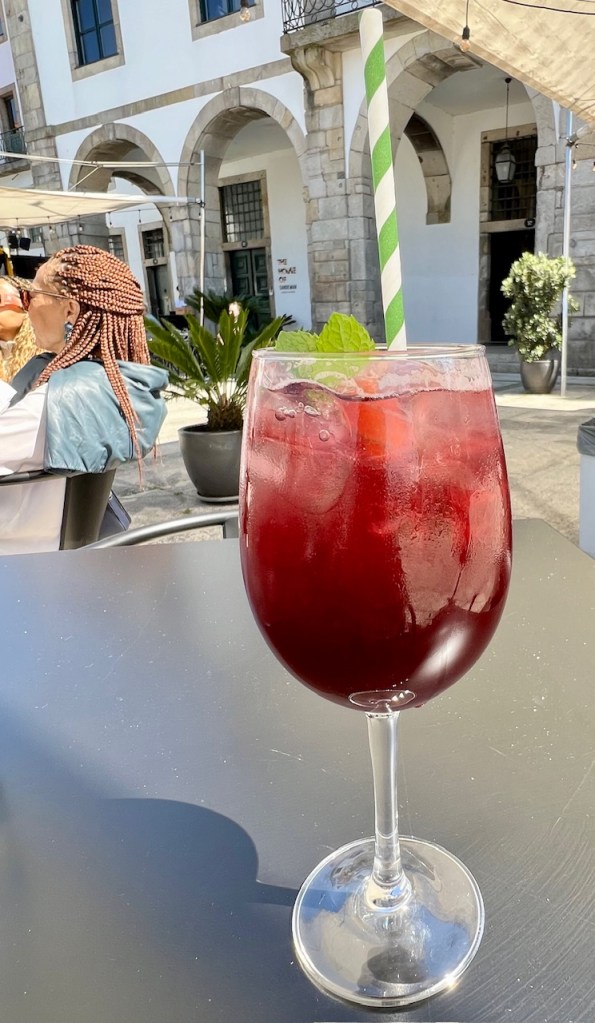
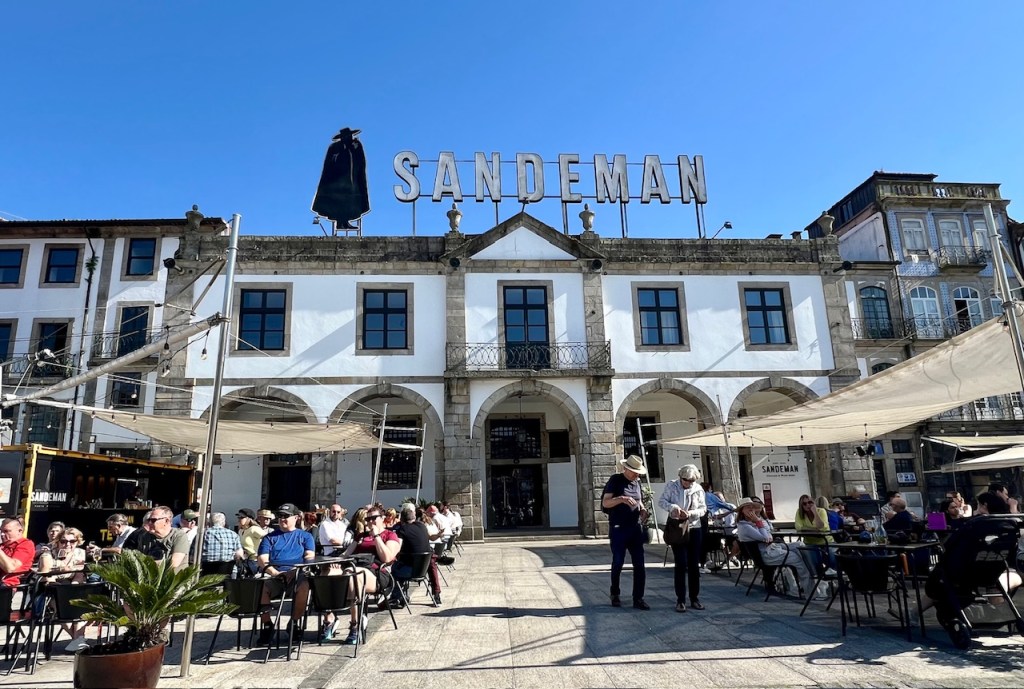
After a toddle around, I headed down the hill in search of a port wine tasting. I hadn’t figured out what lodge to visit but the Sandeman one was on the main drag and it looked like a good spot. I booked a tour and tasting and then headed to the café for some more water and a glass of refreshing sangria. Yum…
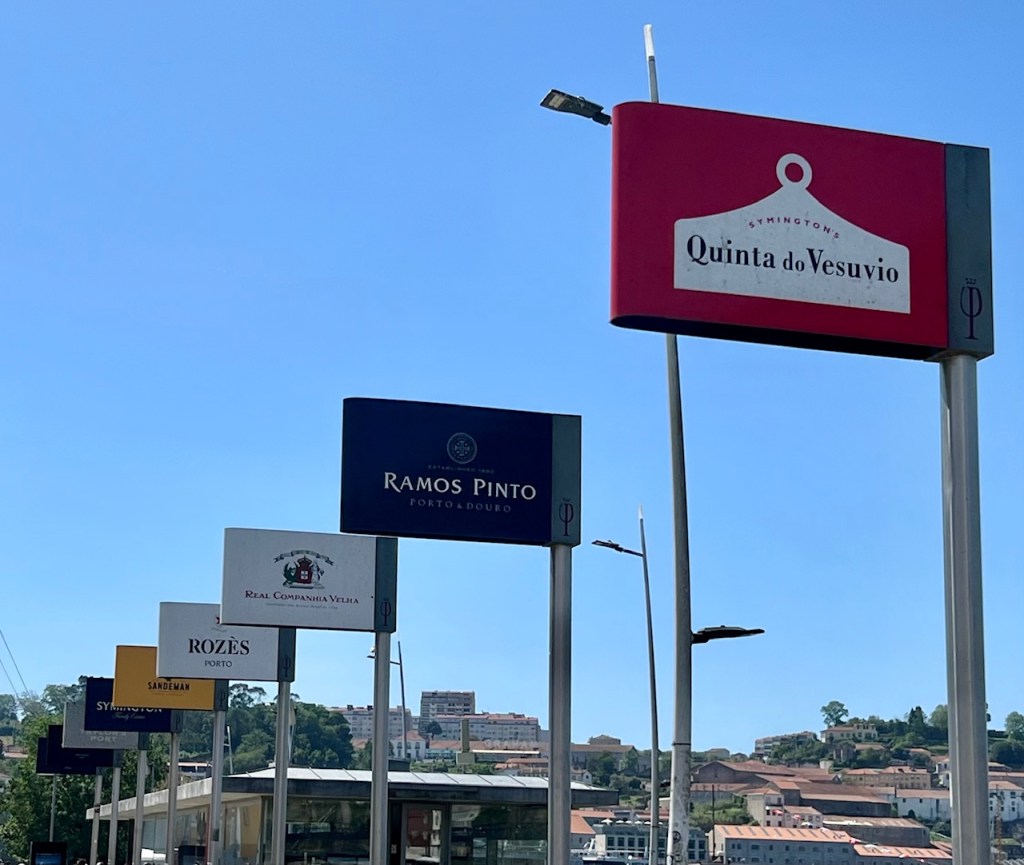
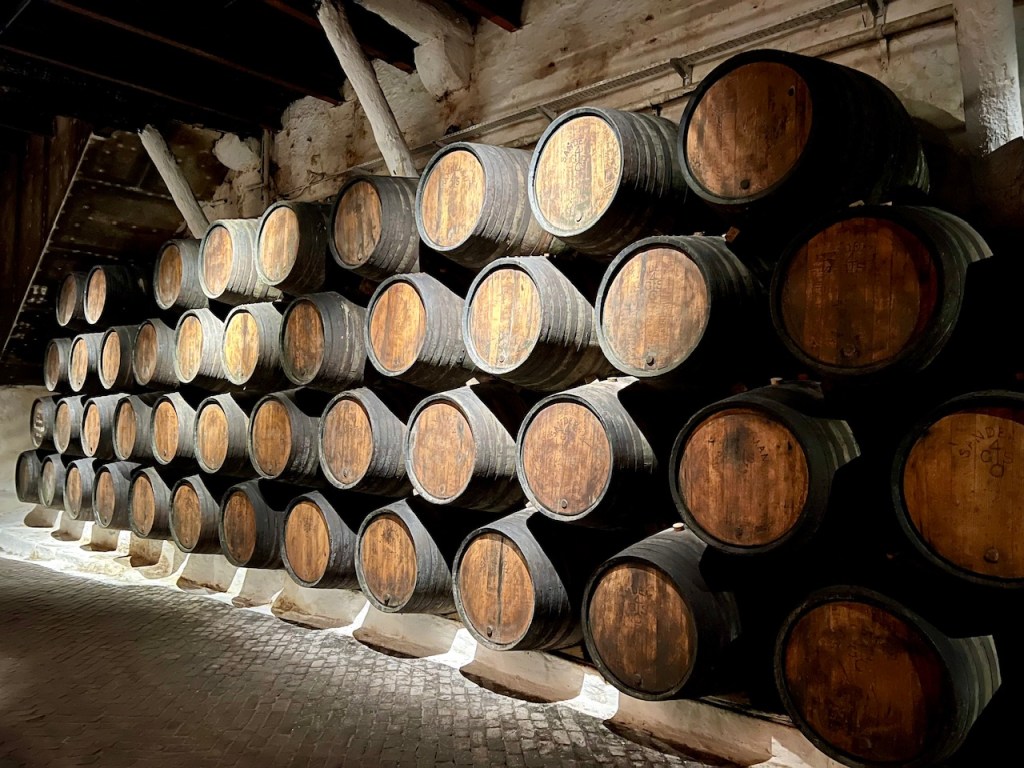
The House of Sandeman, founded in London in 1790 by George Sandeman, a young Scotsman, and has grown to be one of the most prestigious Porto Wine brands in the world. Acquired in 1811, the Sandeman Cellars have been used for more than 200 years to age Sandeman’s best Porto Wines. Barbara lead us through long corridors of oak casks and vats where Rubies and Tawnies slowly develop their style under the watchful eye of an experienced team of winemakers providing info and answers to all questions. She was dressed in the same costume as The Don.

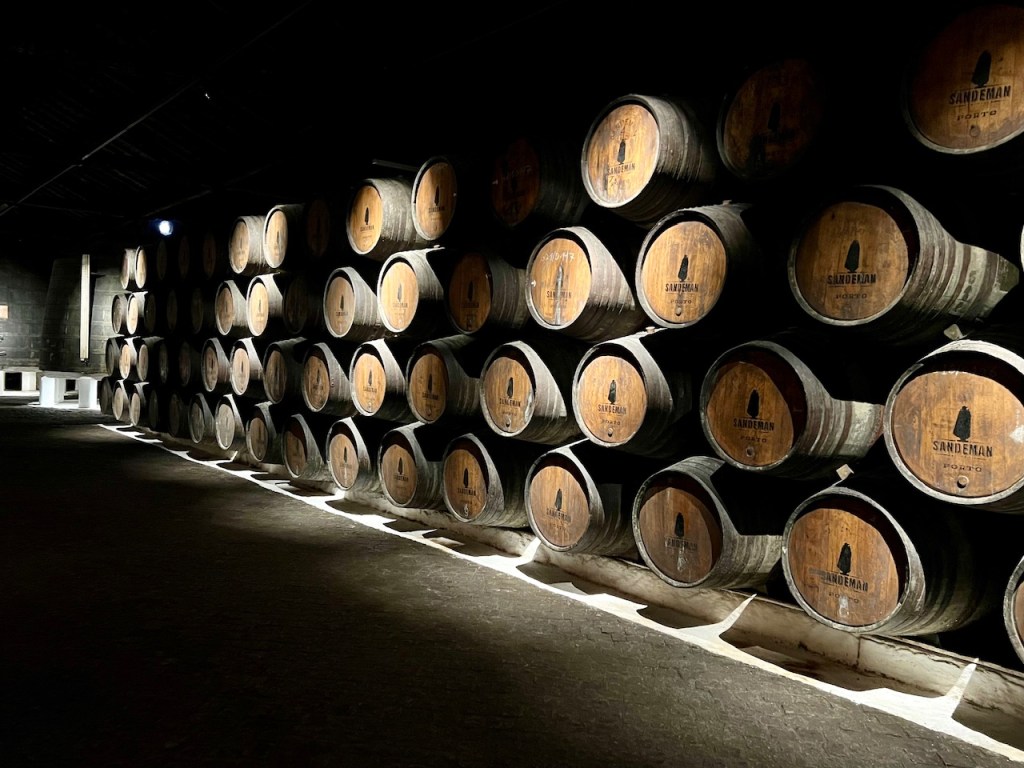
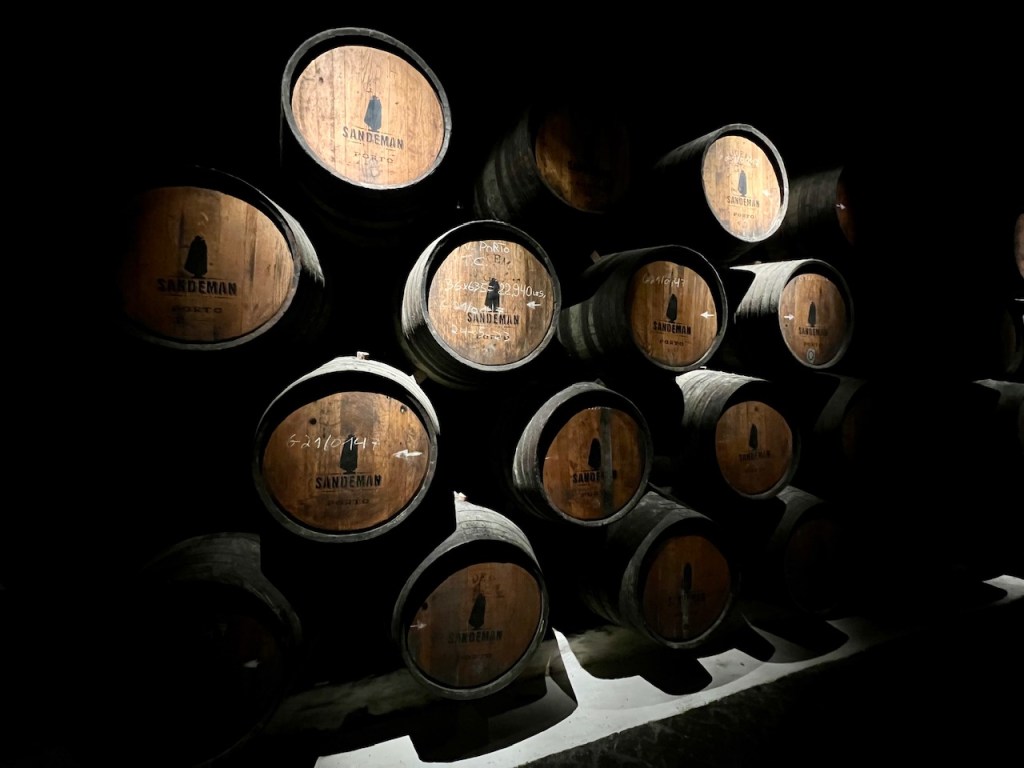

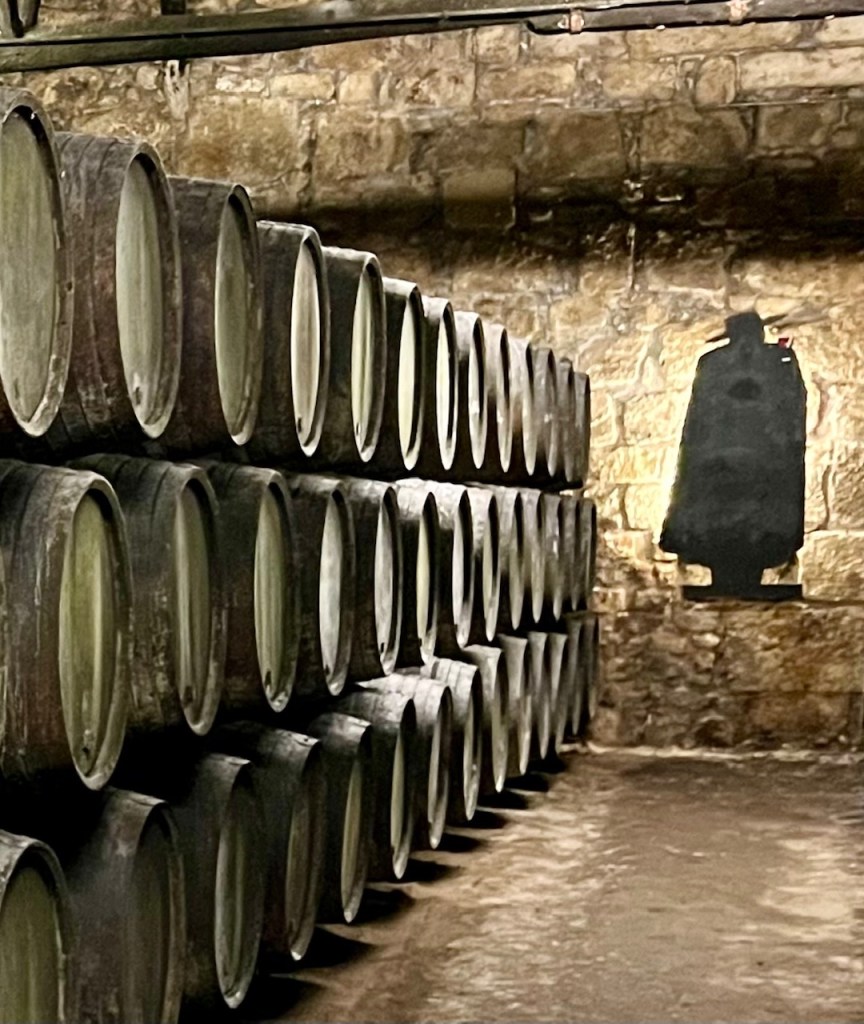
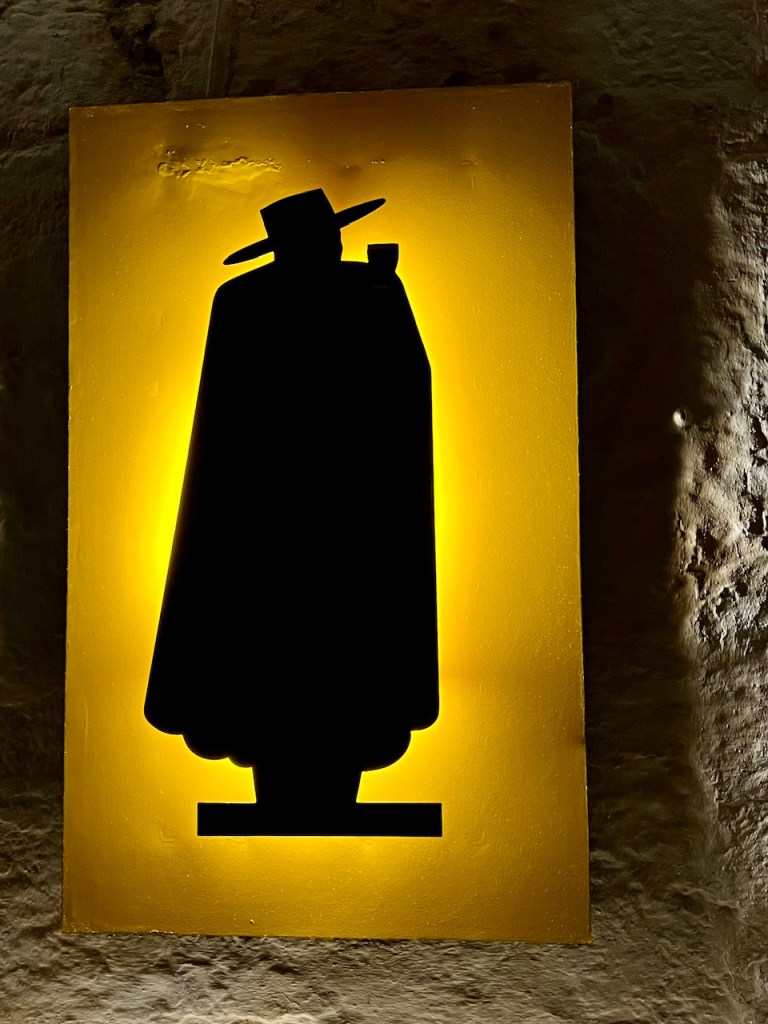
Created in 1928, “The Sandeman Don” is one of world’s most famous logos and a symbol of tradition and quality. The original painting was created by George Massiot Brown, an unknown Scottish artist who sold it to the company for 50 guineas. The mysterious black silhouette, dressed with the Portuguese student’s cape and the Spanish sombrero, represents the two Iberian wines traded by the brand.
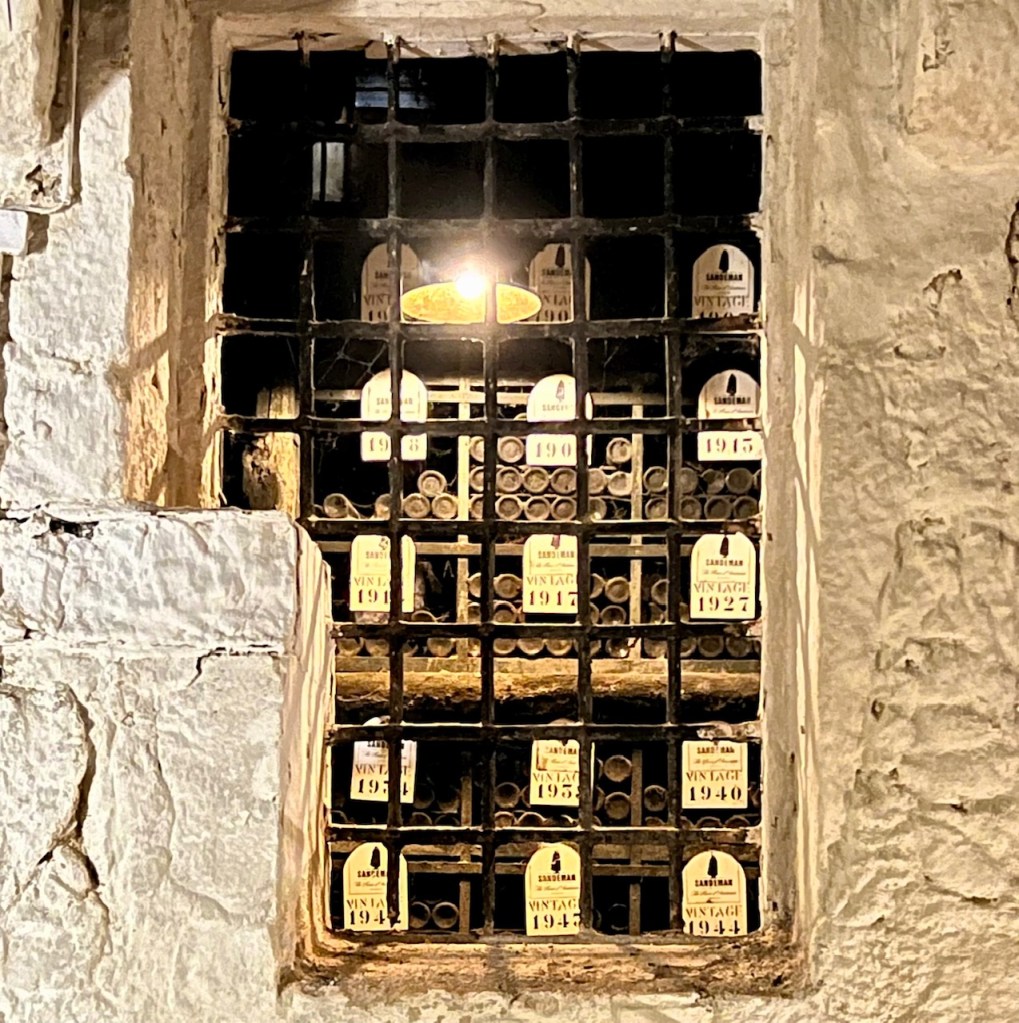
Port wine is a fortified wine made by adding brandy to partially fermented wine after three days. The process results in a wine containing high alcohol content that is fairly shelf stable. Port wine can only be made from grapes grown in the Douro Valley. The Marquis de Pombal is the father of the regulation of the production of wines from the Douro and the oldest controlled designation of origin in the world; dating from 1756. I’ll save all the deets until tomorrow as I’m heading to the Douro Valley on a day-long wine tour.
Back to Sandeman… They produce the three types of port: white, ruby and tawny and they are aged for a minimum of three years in French oak barrels but many of the rubies and tawnies for much longer. The size of the barrels influences the outcome with rubies being aged in large vats and tawnies in small barrels to increase the influence of the wood.
We had the chance to taste one of each and I wasn’t fond of the white – a bit too rough for me, the red was okay and I quite liked the ten year old tawny. I opted not to drag a bottle around for two weeks. I can get some at home if I want.


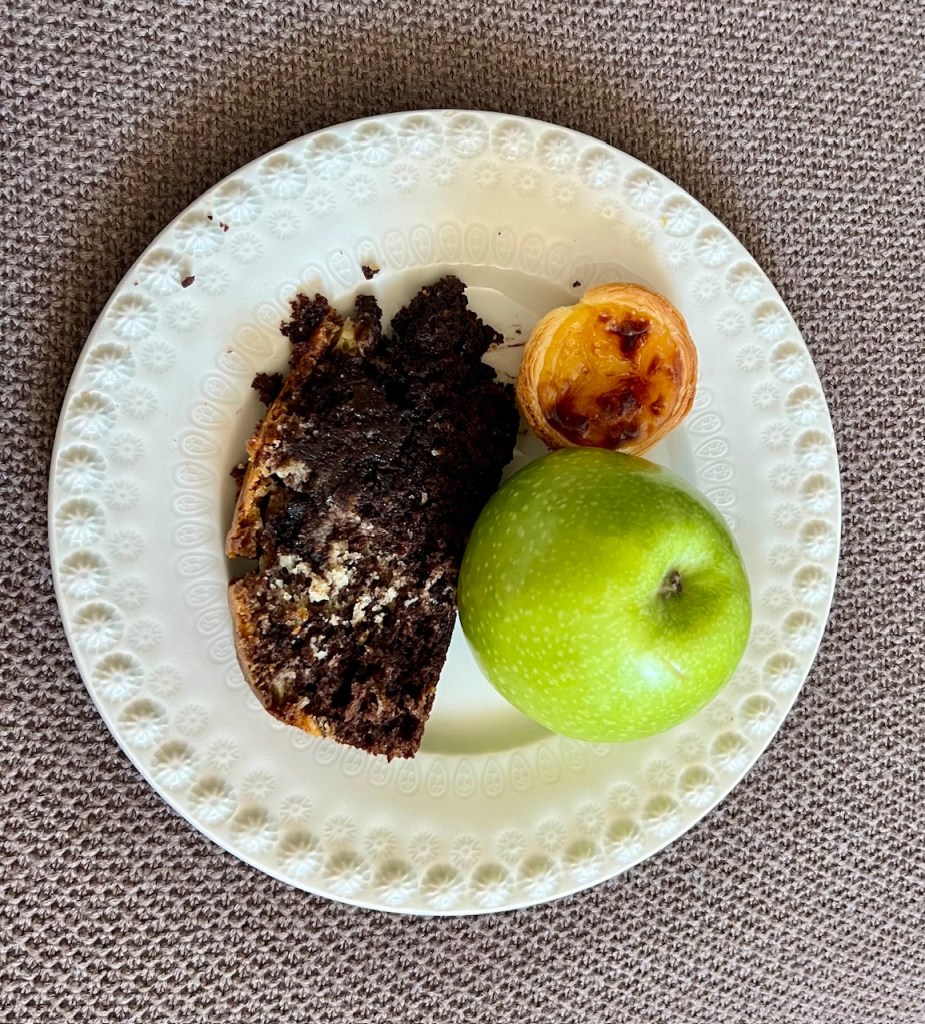
I’m getting tired of being a tourist so headed back across the Douro this time on the much lower and more sturdy version of Pont Luíz I. I’m not 100% sure where my hotel is but know it’s near the river so ask for directions and make it back in time for tea. A piece of cake sounds fine as does a small pastel de nata as I neglected to have lunch in my flurry of touristic activities. Maybe a short nap and then I can decide on dinner but I’m not hungry now, lol!
Tomorrow is another day. Adventures await …
 Judy’s Rambles