
April 24, 2024
Today I’m joining a small group tour to the nearby Douro Valley. The tour promised spectacular scenery along the magnificent Douro River, visits to three vineyards with wine tastings of several Ports and other Douro wines, a delicious lunch and the chance to learn more about the UNESCO World Heritage Douro Valley. It was all that and more!
Our guide and driver, Andre, picked me up at my hotel and then we went to meet the others; a couple from England, a couple from Toronto and a couple from Long Island. I had the shotgun seat for what was (for some) a wild ride through the countryside with beautiful scenery the norm and Andre providing the necessary blah blah to keep us all entertained for an hour.
The first stop on our tour was Sabrosa, a quaint little town that is home not only to our first wine stop but also where the house owned by Ferdinand Magellan; the first man to circumnavigate of the globe is located.
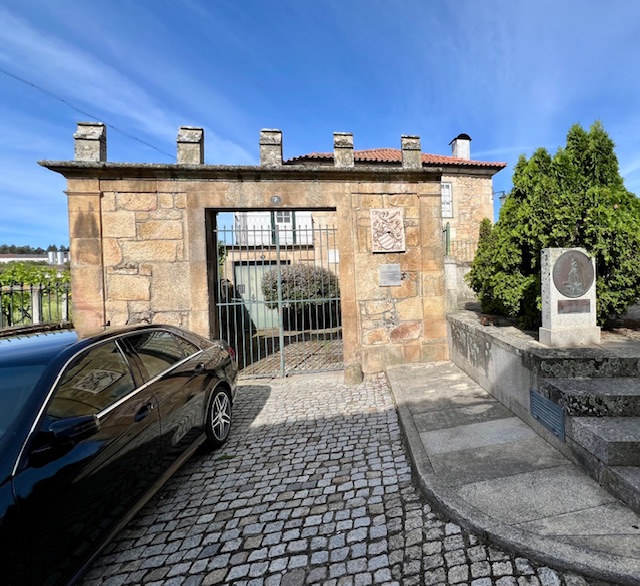
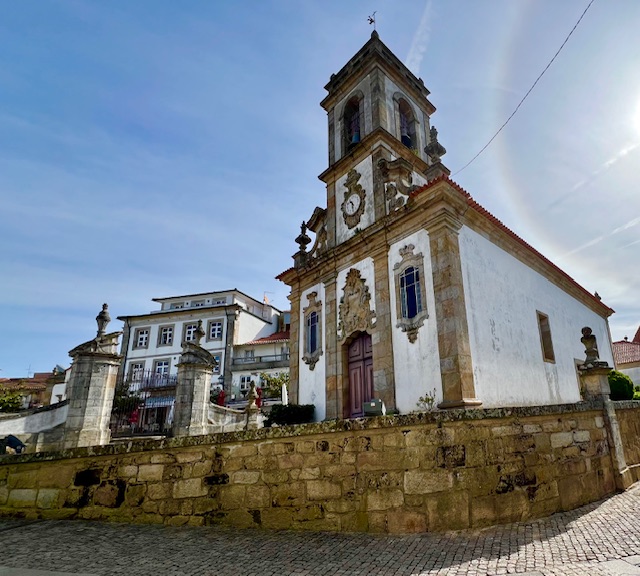
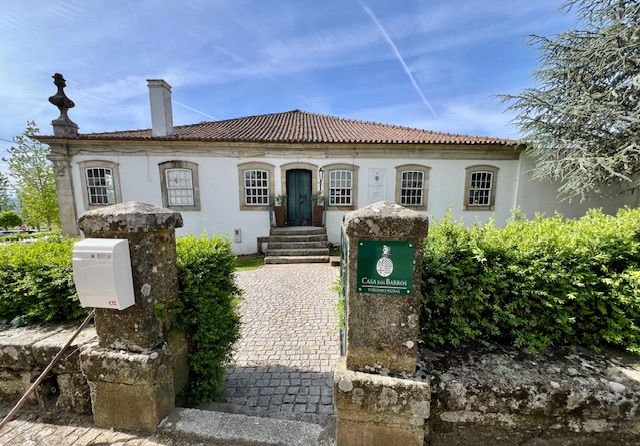
After a quick photo stop, we walked over to the winery (Casa dos Barros) which was located quite nearby to get started on the drinking. As our guide at that winery said, you can’t drink all day if you don’t start in the morning, lol!!
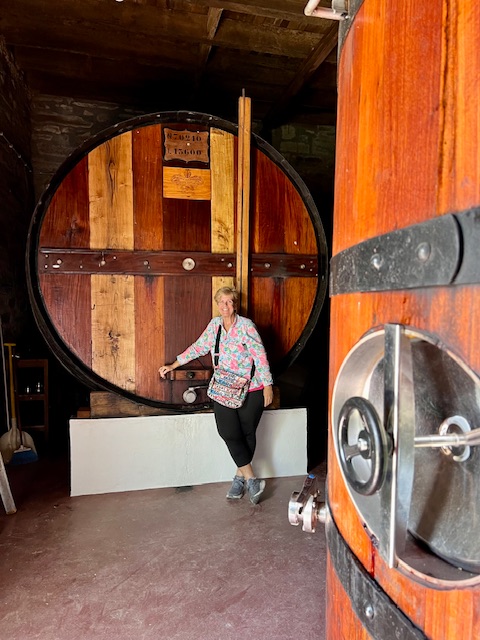
The house was quite fabulous with lots of interesting bits inside though we didn’t stop to have a good look around inside. We did check out the basement where wine was made back in the day Before taking a few minutes to explore the garden and meet the local peahen and peacock who were more than willing to pose for photos before we got distracted by the wine.
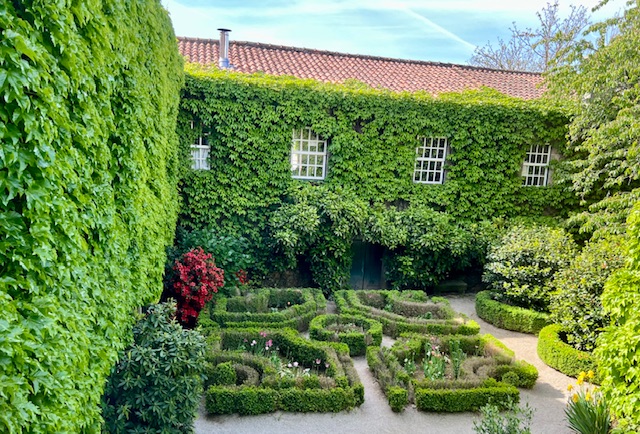
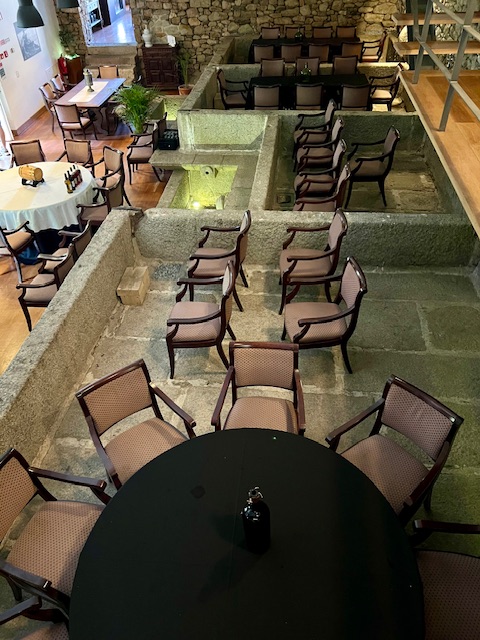

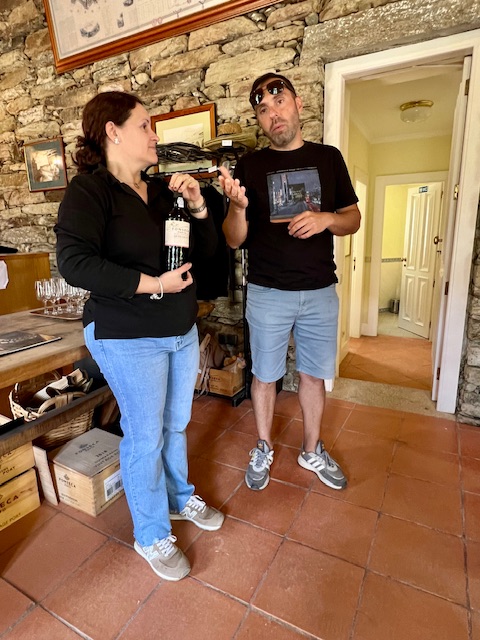
Rita was very enthusiastic in both her discussions of the business of making Port wine and the tasting notes for the 10, 20 and 30 year old tawny wines we had a chance to savour.

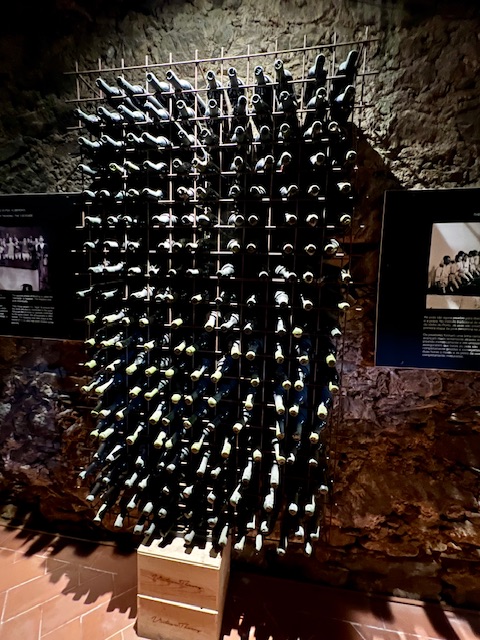
In case you’re interested, Port wines are produced by the following method:
Freshly picked grapes arrive at the winery. After being inspected for damage on sorting table and any less than perfect grapes discarded, the bunches are conveyed to a crusher which breaks open the skins of the grapes. The grapes are then fed into a wide, not too deep granite tank known as a “lagar”.
Next the grapes are thoroughly crushed to release the juice and the pulp from the skins. In the tradicional method of making Port, this was done by foot treading. The first stage is known as the “corte” or cut. The treaders form a tight line and advance very slowly across the “lagar”, treading in unison. After two to four hours, this very intensive but gentle treading reduces the grape to a thick soupy liquid, in which the skins and juice of the grapes are completely mixed.
The second phase of treading is called the “liberdade” or freedom. The treaders now work individually. They move around the “lagar to ensure that the skins are evenly distributed in the juice. Although the process is carefully controlled by the wine maker, the atmosphere is often festive. The treading may take place to the sound of music and may even involve some dancing. This is what Andre called the fun part.
After a few hours, the fermentation starts. This is the process in which yeasts transform the natural sugar of the grapes into alcohol. The warmth and alcohol produced by fermentation cause the grape skins to release their aromas, as well the natural pigments and tannins which give the wine is colour and its structure. At this stage the skins gradually rise to the surface forming a thick cap which is kept submerged using wooden plungers called “macacos”.
Alter three days, half of the natural grape sugar has been turned into alcohol by the fermentation. It is now time to fortify. The wine maker gives instructions for all work in the lagar to cease. The skins are allowed to rise to the surface, where they form a dense layer on the top of the fermenting wine.
The fermenting wine, still containing much of the natural sweetness of the grape, is run out of the lagar into a large tub. Here it is mixed with a very high quality grape spirit. The proportions are roughly one part spirit to four parts fermenting wine. The addition of this clean, colorless spirit stops the fermentation before the natural grape sugar remaining in the wine has been turned into alcohol. The addition of the grape spirit is known as fortification.
Today workers involved in the grape harvest earn approximately 40 euros a day. As temperatures at harvest are often reached 45C, the harvest starts at 5 am and typically finishes by noon to avoid some of the heat. The grapes are harvested by hand in 45 kg baskets and they are “stomped” right away.
After learning the difficulties in producing Port, it was time to taste some tawny port. We had a vertical tasting of Tawny Ports which had been aged for 10, 20 and 30 years while Rita also gave us some talking points on Port that I’m happy to share, lol!
Ruby ports are bottled after 3-4 years complete with sediment which means that the wine will continue to age in the hands of the purchaser. Need to keep under good, consistent conditions to have it age well. Should wait twenty years or so to drink. No use me buying that as I’ll be older than dirt in 20 years!
Tawnies are aged by the vintner in smaller barrels and the sediment is removed before bottling so it doesn’t change and is ready to drink right away.
They did have a lovely bottle of 1858 vintage port which had been kept in the barrel for 165 years and bottled in 2013. Yours for the asking price only 8500€.

Now that we’re primed it’s time for an early lunch. Salad, carrot soup, grilled port tenderloin with mushroom risotto and chocolate cake washed down with copious quantities of red and white table wine hit the spot and will be useful to soak up the tastings at our next stops.
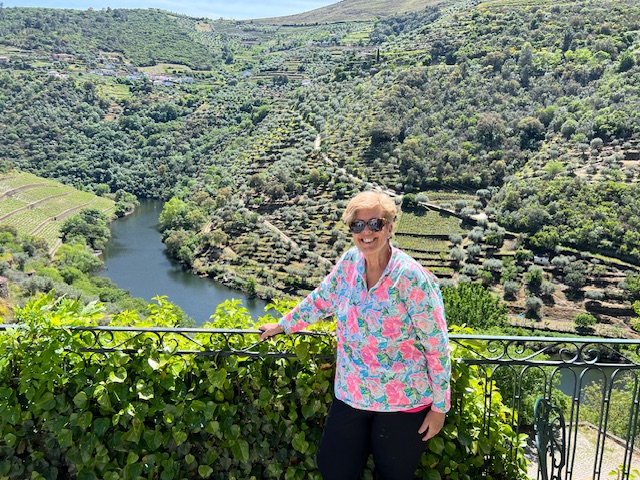
On the way to our next winery, we paused to snap some pics at the lookout at S. Cristóvão do Douro.
A view over the mouth of the River Pinhão, an important quay on the River Douro which established the limit of the demarcation for the production of Port wine in the time of the Marquis of Pombal (18th century).
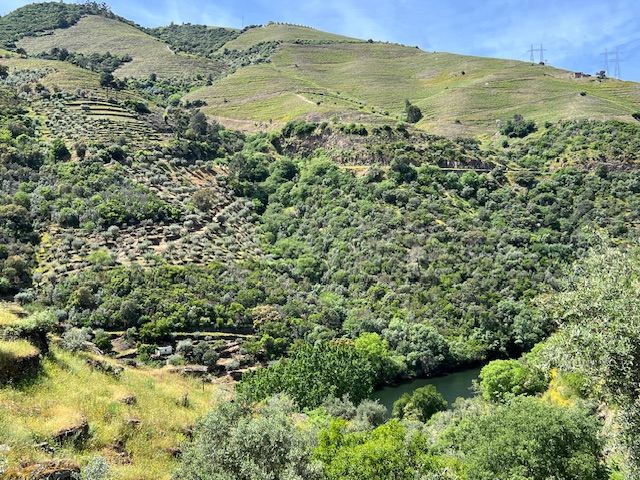
Here, the terraces (socalcos), built after the destruction by phylloxera in the Quintas of Eira Velha, Casa Nova and Gaviões, are interesting for the quality of the construction of the retaining walls. The terraces they sustain suggest interesting mosaic underlined by the layout of the paths and the tree borders.
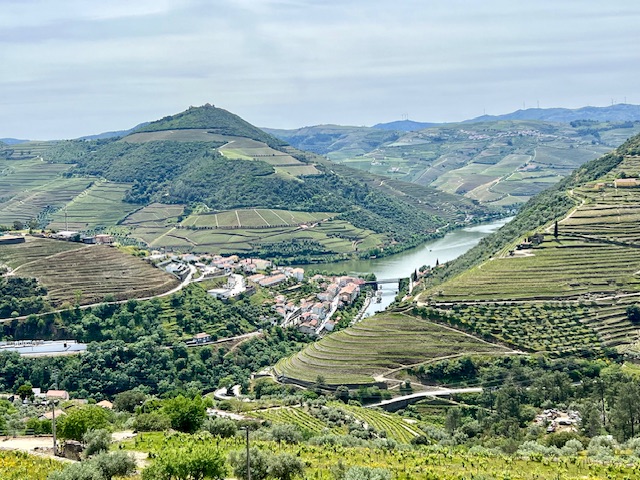

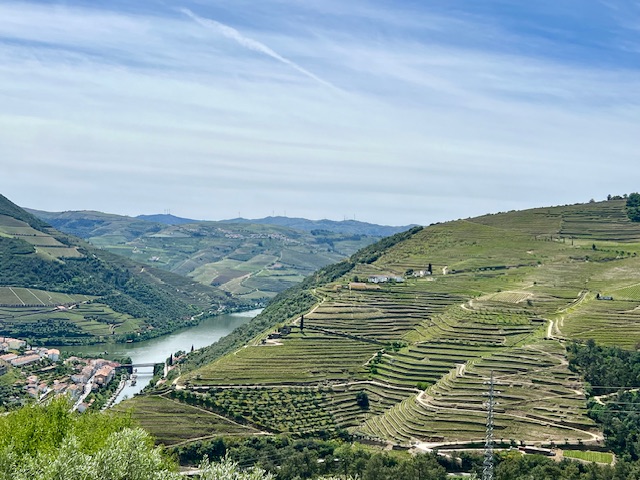
There was a cool bar across the road which sadly wasn’t open.

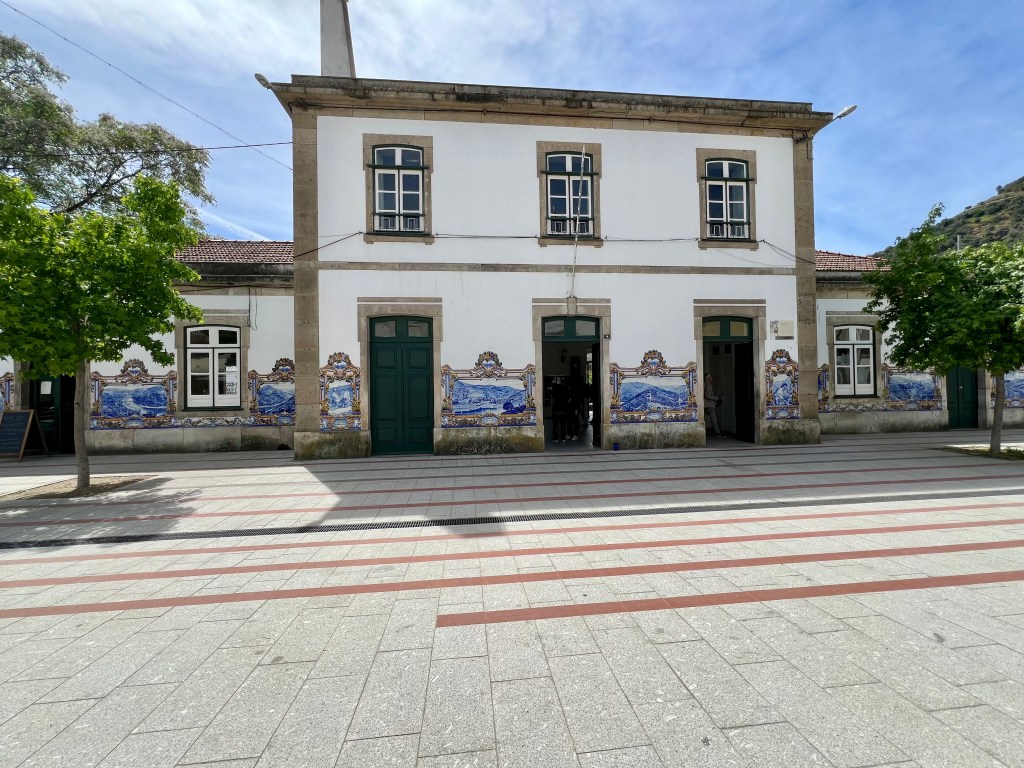
Continuing along, we pass the beautiful Pinhão train station which is decorated with 25 azulejo panels that portray work in the vineyards and local landscapes.
Leaving Pinhão , we join the National 22 highway one of most beautiful drives in the world. 21.4 km long, running east-west from Pinhão to Peso de Regua, the N222 cuts right through the heart of the Douro Valley, offering amazing views of the terraced hillsides and featuring 93 heart-stopping bends. The road was named the world’s best in 2015 and the scenery is indeed spectacular.

Our next winery is Fonseca and here we are treated to a tasting of white port, ruby port and 10 year old tawny port. Our host wasn’t nearly as effusive as Rita but it was a beautiful spot to enjoy the views on a sunny day. We did, of course, learn a few things about Port.

White should be stored and served cold and should be consumed within two months of opening. Makes a good aperitif.
Ruby should be stored and served at room temperature and should be consumed within three months of opening. Best with cheese.
Tawny should be stored and served at room temperature and should be consumed within six months of opening. Best served with dessert.
Our last winery is another small family run vineyard. Our hosts Jessica and Leandro are lovely and give us lots of information about the wines, olive oil and rosemary honey we are tasting. We even had a chance to see the grapes up close. Interestingly the posts holding the vines are not wood but sheep stone which holds to the heat from the day and help keep the soil a consistent temperature at night. I actually like the white port here. It had been aged for ten years so was actually brown and sweet. The Ruby Port was also very nice but my favourite was the 2017 late bottled vintage (LBV) so I bought a bottle to add to my collection at home.
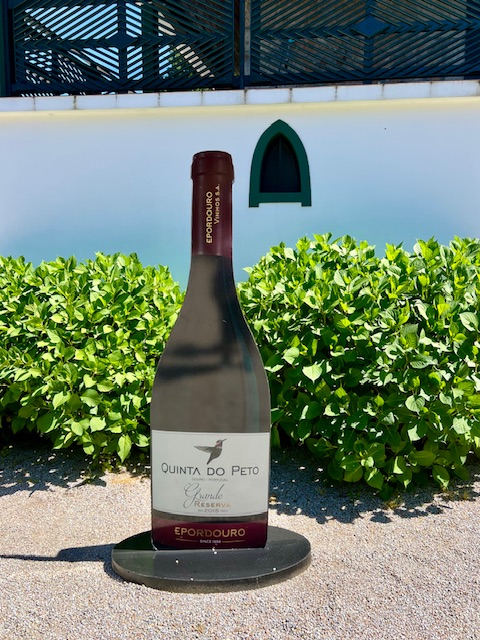
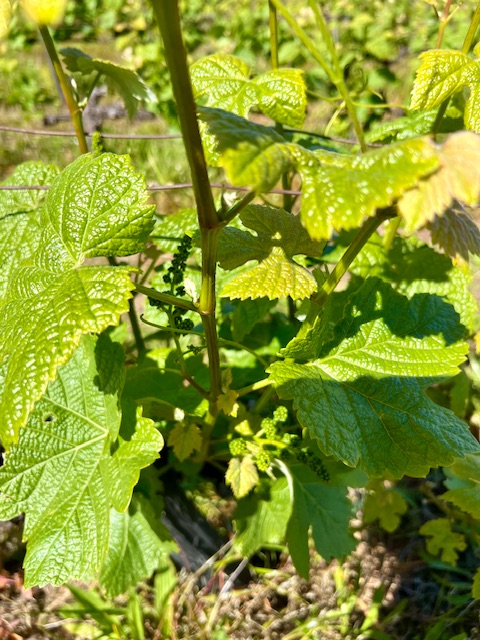

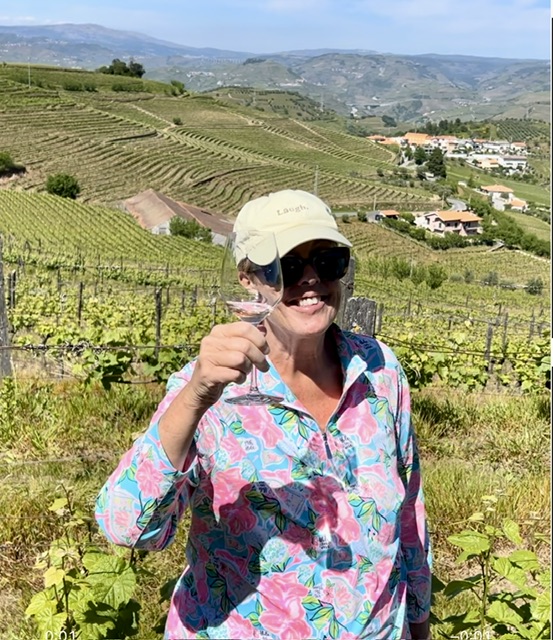
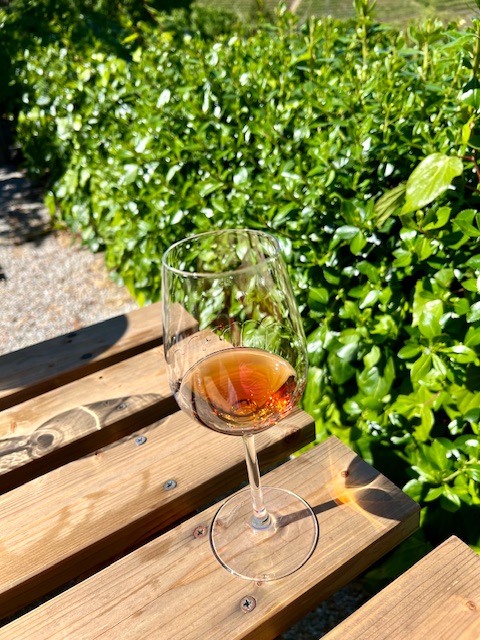
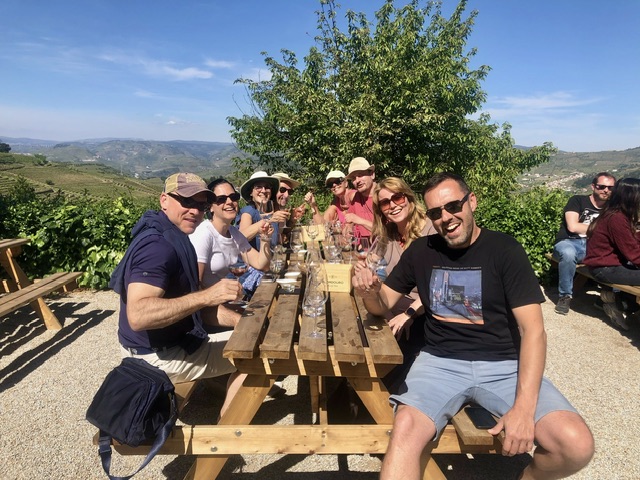
After a lovely day is was time for us to head back to Porto so we bid adieu to the beautiful Douro Valley and headed out on our ninety minute drive home which lulled most of us to sleep though thankfully not Andre as he was the DD.
Back to the hotel in time to snag the last piece of cake from the afternoon tea and head to my room to relax. Can’t see dinner happening tonight …
Tomorrow is another day. Adventures await …
 Judy’s Rambles