
April 11, 2025
This morning I’m heading to Shibuya station to join a free walking tour guided by Hiraku. I’ve used google maps to suss things out and with my trusty eSIM and google maps, I leave the hotel confident I will find the meeting point without too many issues. Just in case technology can’t completely make up for my poor sense of direction, I’ve given myself a 45 minute buffer!
The Otorii train station is very close to my hotel and I only have to switch trains once; how hard can it be?! The trains are crowded but apparently (at least according to Mr Google not overly so). Not sure how it would be possible to jam more people onto the train as there’s already people pushing their way into the crowded cars. Interestingly, no one is talking as most people fiddle with their phones set to silent mode.
With just a little assistance, I make it to Shibuya station in the heart of Tokyo and head off toward the meeting point close to the Konnoh Hachimangu Shrine. The ten minute walk has me going in circles but soon enough I arrive at my destination with some time to spare. Knowing we won’t likely spend a lot of time at the shrine, I decide to wander about the grounds on my own.
Konno Hachimangu Shrine, located in Shibuya ward, was established by Shibuya Shigeie in 1092. This quiet little shrine marks the spot where the aristocratic Shibuya family established their main residence castle.
This Shinto shrine, easily identifiable by the torii gate. Shinto, one of Japan’s two major religions, is the indigenous faith of the Japanese. It is a way of life and a way of thinking that has been an integral part of Japanese culture since ancient times.
The layout of the shrine is similar to yesterday’s shrine though the focus here is the God of war, Hachiman, also known as the patron god of warriors and the protective god of Japan. There is an inari shrine on the grounds celebrating agriculture and a few other sub shrines as well.


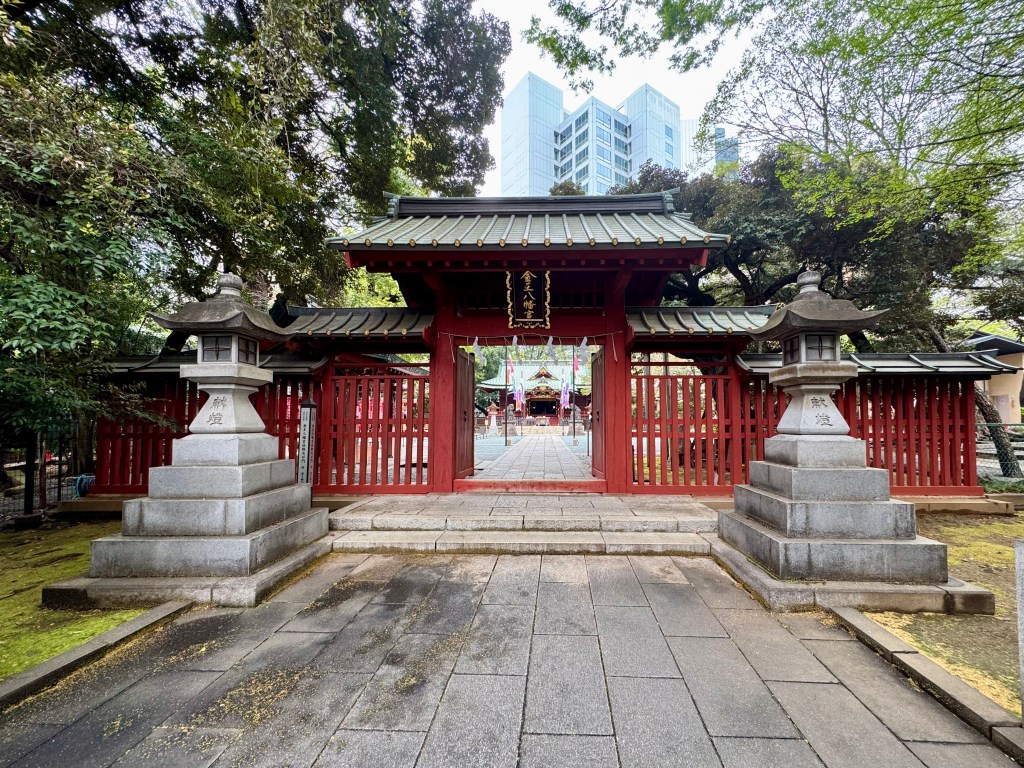


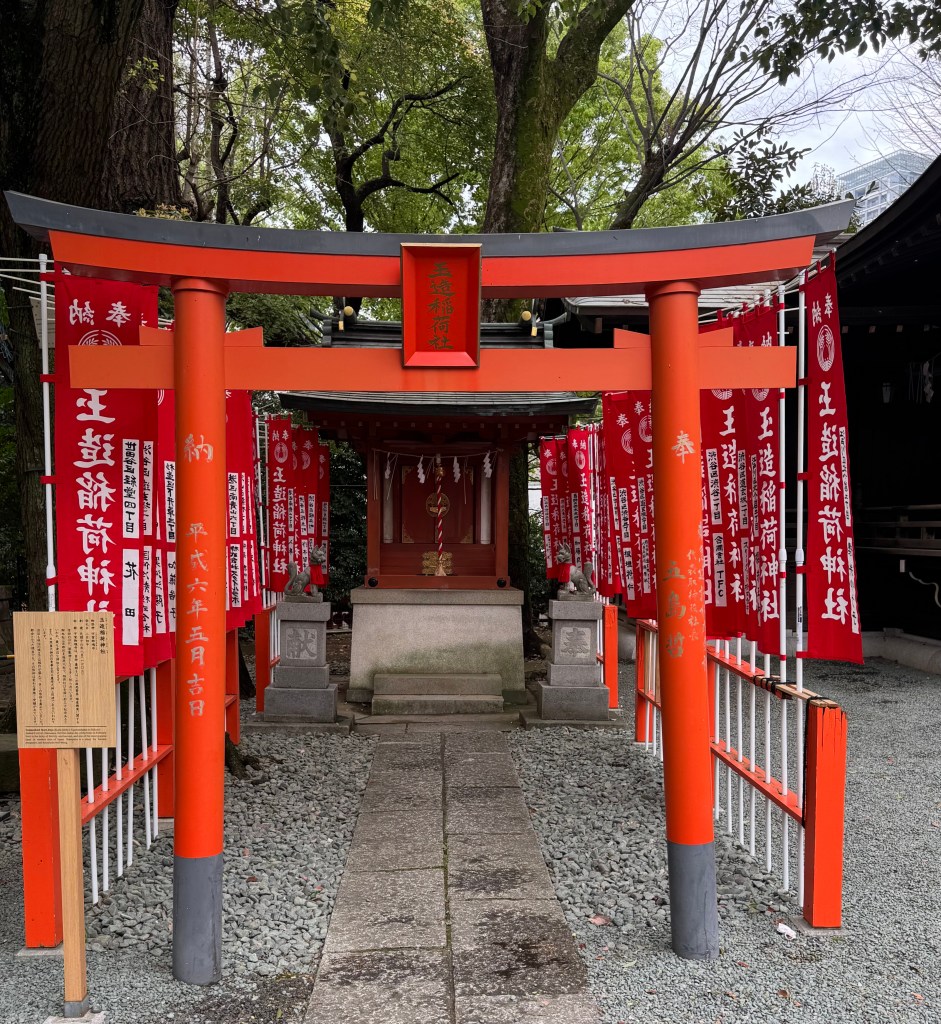
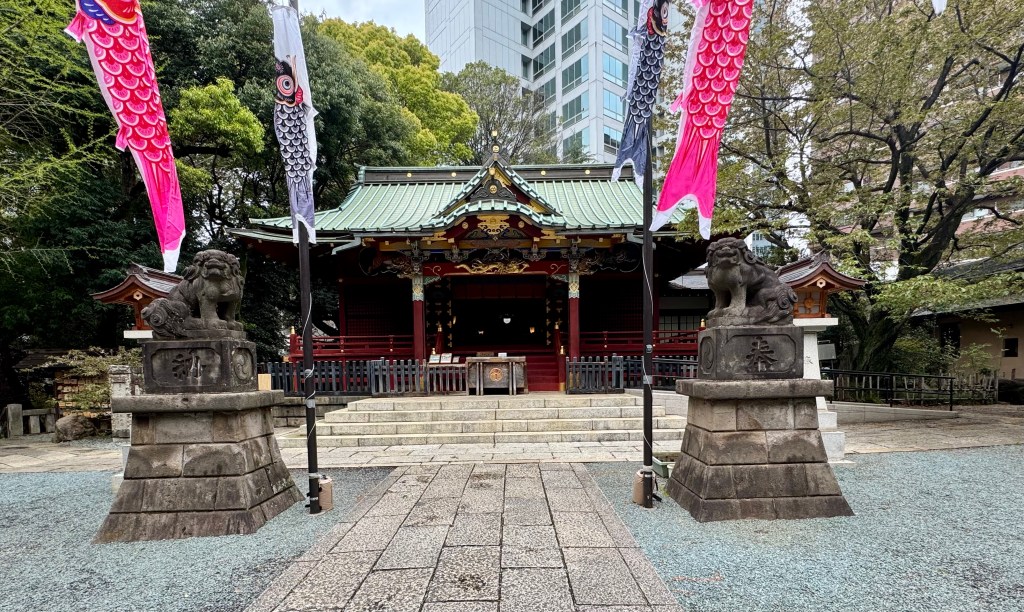
After a look around, I tried to get the shrine’s stamp for my notebook but apparently they won’t put their stamp in just any notebook, you have to buy a special one they have on sale there. I don’t want two notebooks so no stamp for me!
Time to head out and meet the guide and the rest of the group. Born in New Zealand, our guide Hiraku is half Japanese and has been living in Tokyo for the past 3 years. The group is around 14 strong with folks from USA, South Africa, Turkey, Germany and me the sole Canadian learning more about this area of Tokyo and Japanese culture.
We started on time (I guess not only the trains are punctual here!) with a brief overview of the area and some info about our first stop, the shrine. Hiraku advised us of some of the etiquette for shrines to make us less like bulls in china shops! One key piece of information was that you’re supposed to stay to the left or right as you pass through the torii gate as the centre is reserved for the deity. Oops, I’m pretty sure I marched right down the center yesterday and this morning!! Note to self, be a little more circumspect.
We had a brief whistle stop at the shrine before heading to one of the landmarks of the area; the statue of Hachiko.
In the 1920s, Hachiko, an Akita dog would head to Shibuya Station to wait for his owner to arrive back from his daily commute from the university. One day his owner did not return from work, having suffered a fatal cerebral hemorrhage. This did not deter Hachiko though, who returned to the same spot to wait for his owner every day for the next 9 years, 9 months and 14 days until he crossed the rainbow bridge.
Erected in 1934, the Hachiko statue, a bronze monument of an Akita dog, stands outside Tokyo’s Shibuya Station commemorating Hachiko’s unwavering loyalty to his owner. When he died Hachiko’s bones were cremated and his ashes buried alongside his much-loved master at Aoyama Cemetery, and the pair was finally reunited. A movie starring Richard Gere, Hachi: A Dog’s Tale tells the story.
We only had a minute for a pic so no time to get my picture with Hachiko but I got a snap with this lovely lady instead.
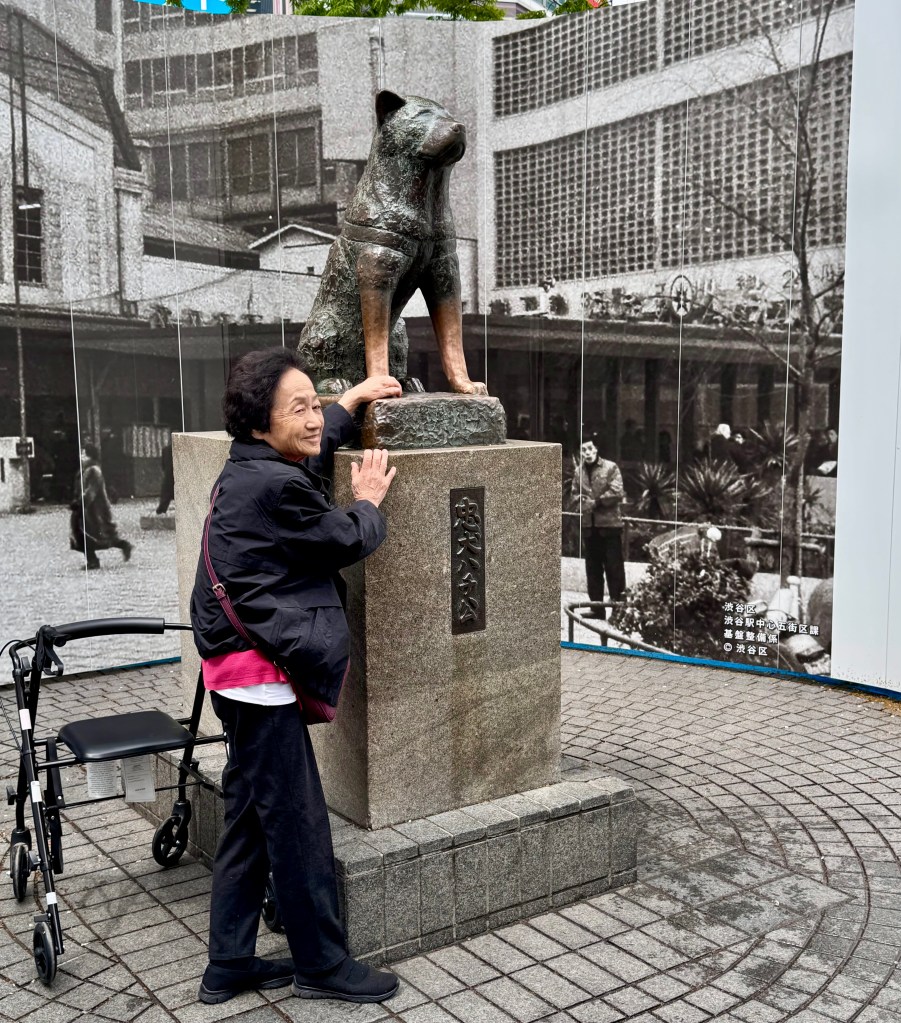
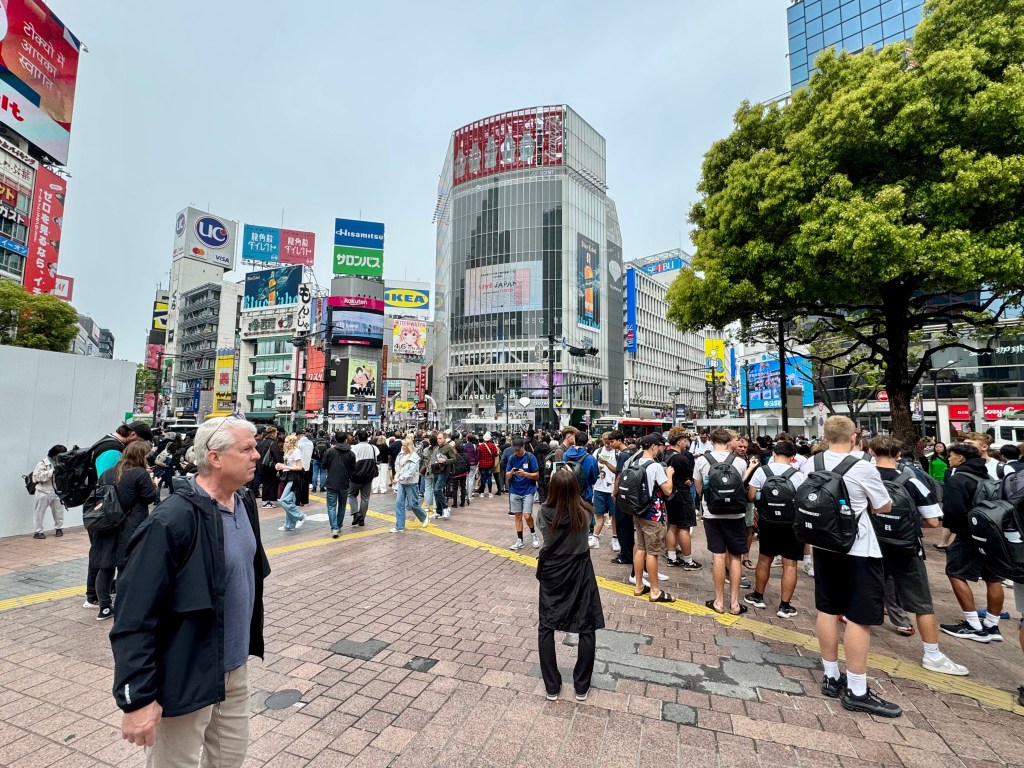
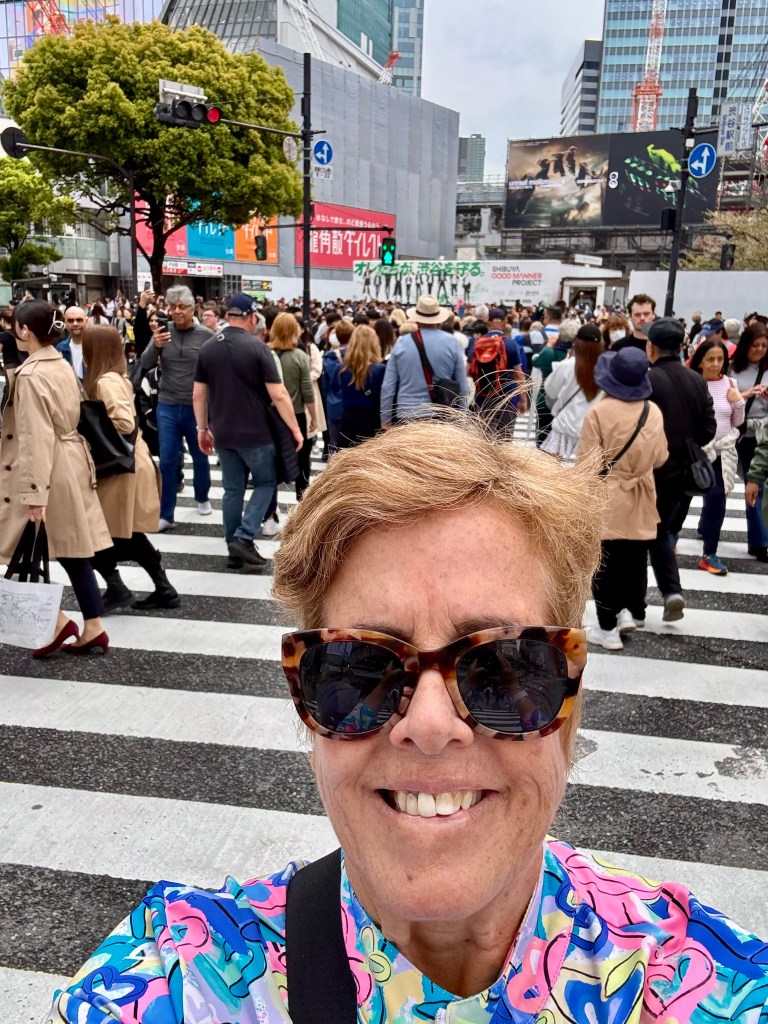
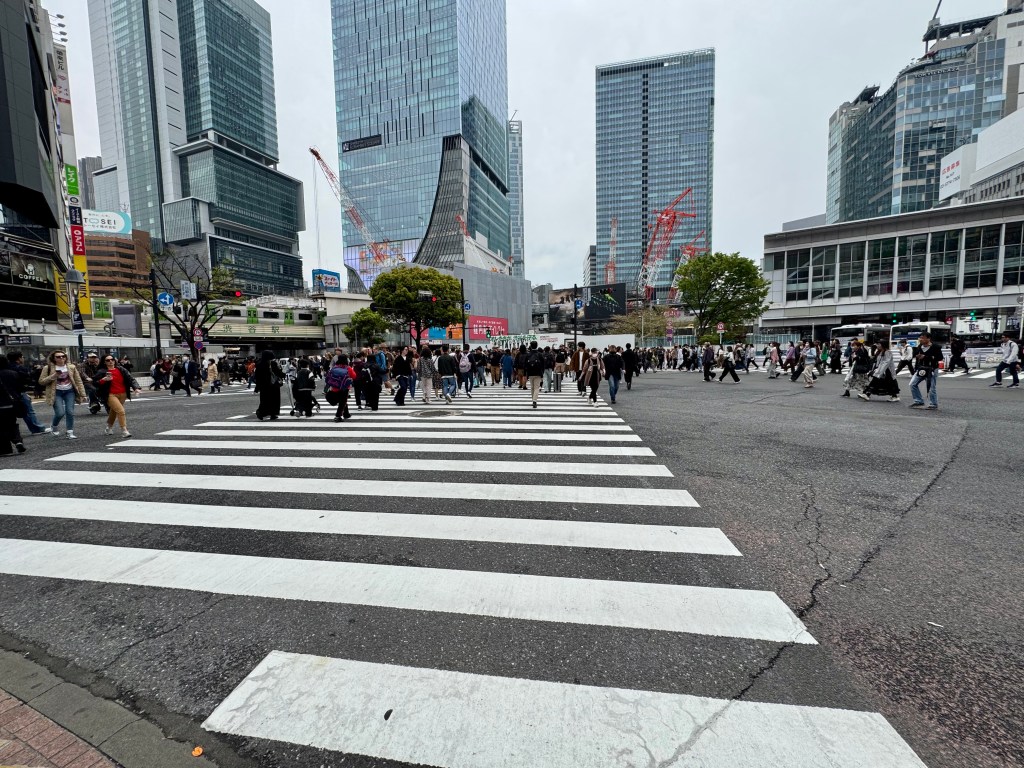
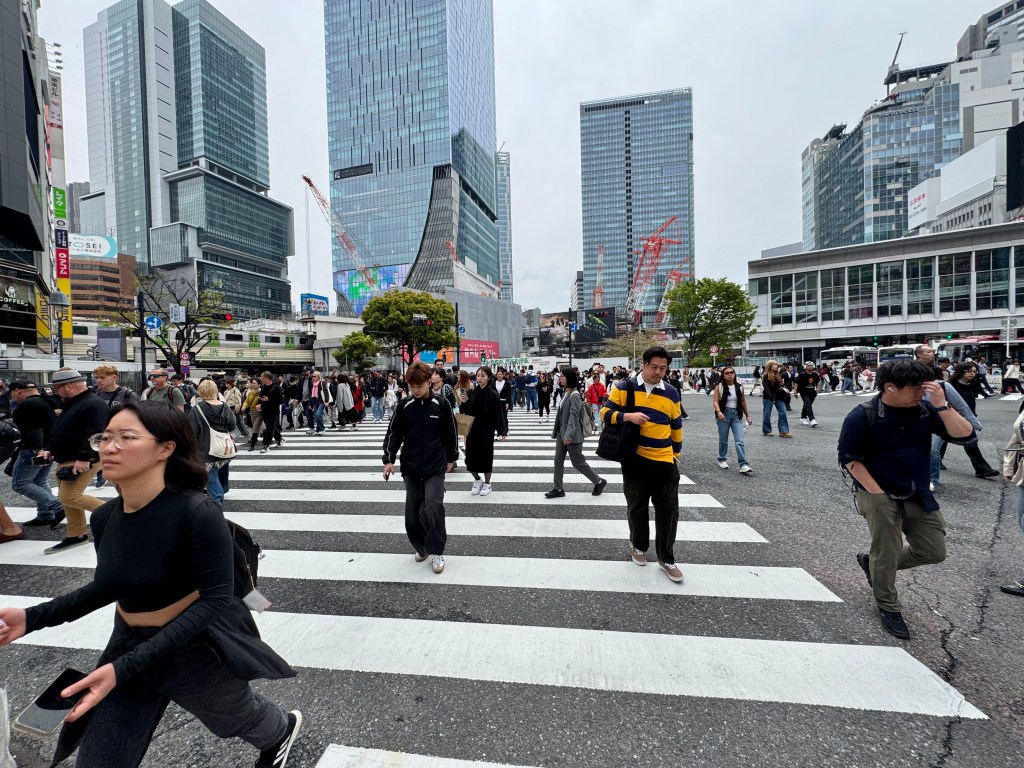
The next stop, very close by, was the Shibuya crossing known as by locals as the Shibuya scramble.
Shibuya crossing is the world’s busiest crossing. Fun fact – On average over 2.4 million people cross Shibuya everyday, that’s 1000-2500 pedestrians every crossing. The crossing is known as a “scramble” because pedestrians cross from all directions at the same time when the traffic lights turn red, allowing a huge wave of people to flood into the intersection in controlled chaos, a truly unique and iconic Tokyo experience. The synchronization of traffic lights at Shibuya Crossing is amazing to me given that we can’t even synchronize the lights on Dalhousie Street to keep traffic moving in Ottawa, lol!
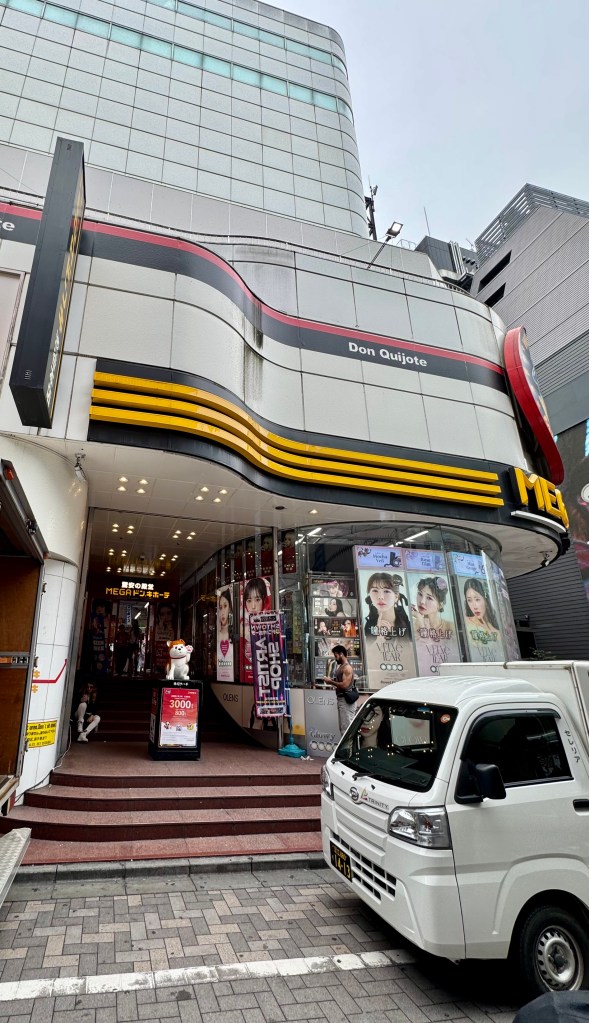
After the crossing, we stopped for a moment outside Don Quijote Mega, the largest Don Quijote store in Tokyo. The store, known for its giant discounts, has 7 floors with an infinite variety of goods you don’t need available for purchase. Sounds like Boutique GT on steroids. Lucky for me, I’m getting rid of stuff at home not accumulating and we didn’t have time to shop on the tour so off to the next stop Yoyogi Park.
On the way to the park, we passed the Yoyogi National Stadium, which hosted swimming, diving, and basketball events at the 1964 Olympics and the newly built National Stadium, where the opening and closing ceremonies were held for the 2020 Games.

Across from these former Olympic buildings is the NHK Broadcasting Center. The headquarters of NHK, includes studios and offices, as well as shops and Studio Park. This is the site of the annual invitational music contest which has been held on New Year’s Eve for the past 65 years. With the winner announced just before midnight, it’s a key part of the NYE festivities in Japan.
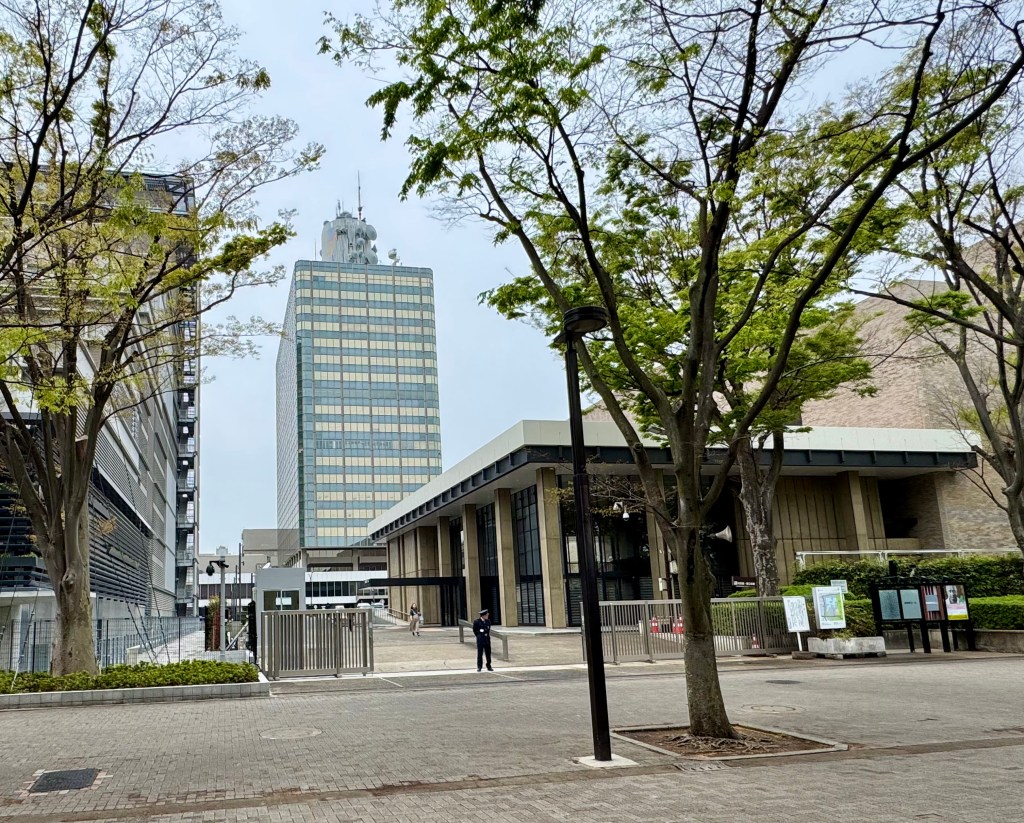
Yoyogi Park is one of Tokyo’ largest parks featuring wide lawns, ponds and forested areas. Before becoming a city park in 1967, the area served as the site of the Olympic Village for the 1964 Olympics, and before that, as a residential area for US military personnel. The park is a popular Tokyo destination, and a lovely island of calm in the sea of people in Tokyo.

Sadly the tour is coming to an end and Hiraku leaves us at the gates of the Meiji Shrine so we can explore at our leisure.
Meiji Shrine is dedicated to the deified spirits of Emperor Meiji and his consort, Empress Shoken.The shrine was completed in 1920, eight years after the passing of the emperor and six years after the passing of the empress. The shrine was destroyed during the war but was rebuilt shortly thereafter.
Emperor Meiji was the first emperor of modern Japan. He was born in 1852 and ascended to the throne in 1867 at the peak of the Meiji Restoration when Japan’s feudal era came to an end and the emperor was restored to power. By the time Emperor Meiji passed away in 1912, Japan modernized herself to join the world’s major powers.
Entry into the shrine grounds is marked by a massive torii gate, where you leave the sights and sounds of the busy city behind and stroll through a tranquil forest. The approximately 100,000 trees that make up Meiji Jingu’s forest were planted during the shrine’s construction and were donated from regions across the entire country.
In the middle of the forest, Meiji Jingu’s buildings also have an air of tranquility distinct from the surrounding city.
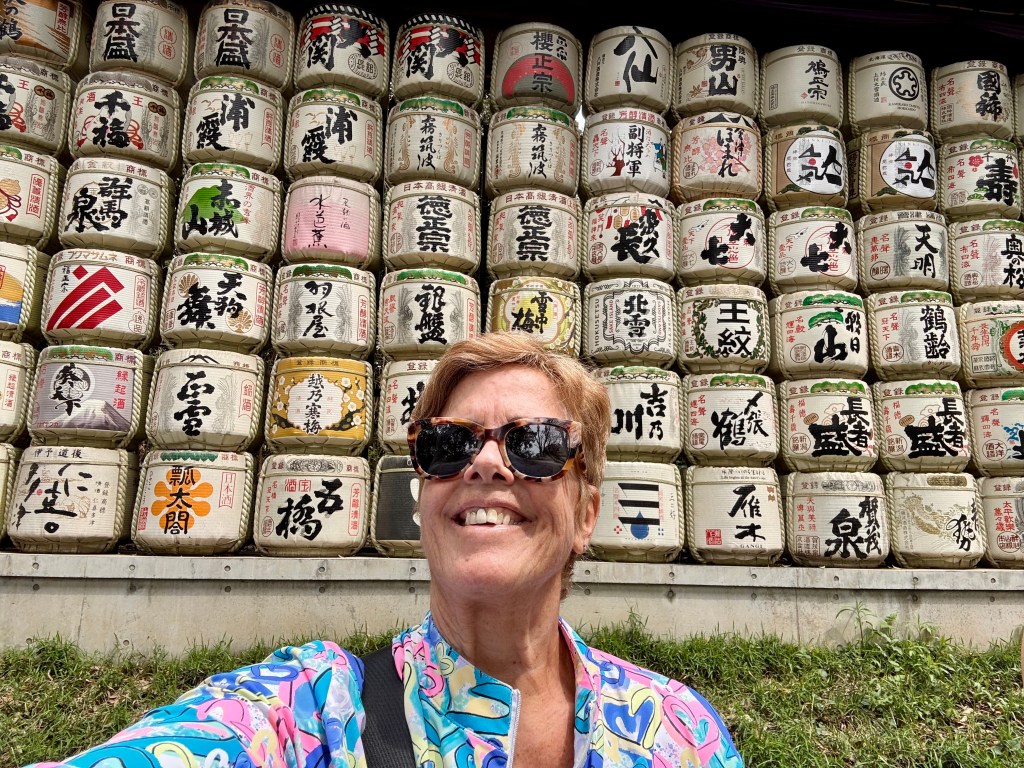
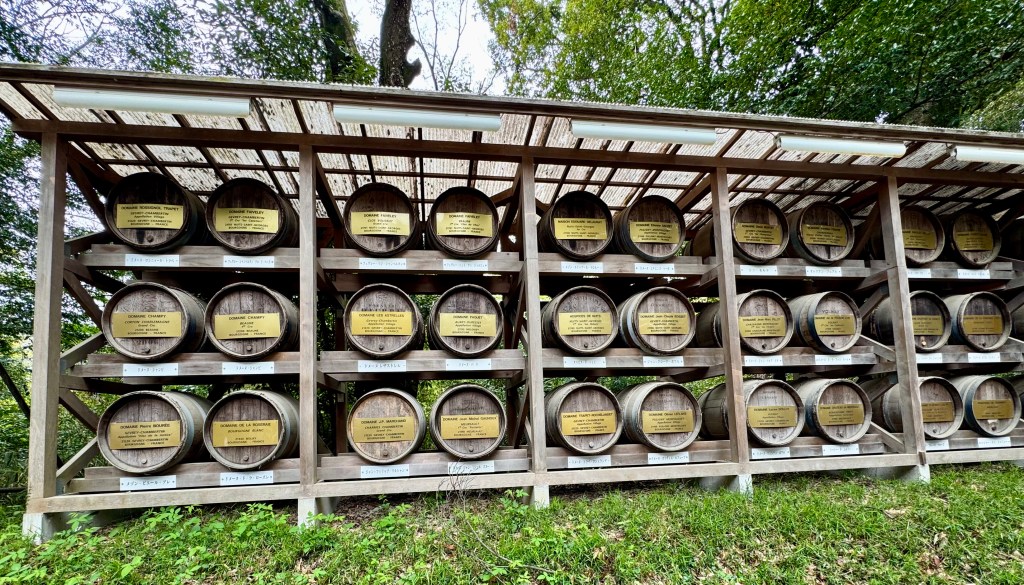
Walking through the forest, we passed through a display of barrel of sake wrapped in straw and casks of wine from Bourgogne. The sake barrels are offered every year to the enshrined deities by sake brewers around Japan wishing to show their deep respect for the souls of Emperor Meiji and Empress Shoken. The casks of wine to be consecrated at Meiji Jingu are offered by the celebrated wineries of Bourgogne in France.

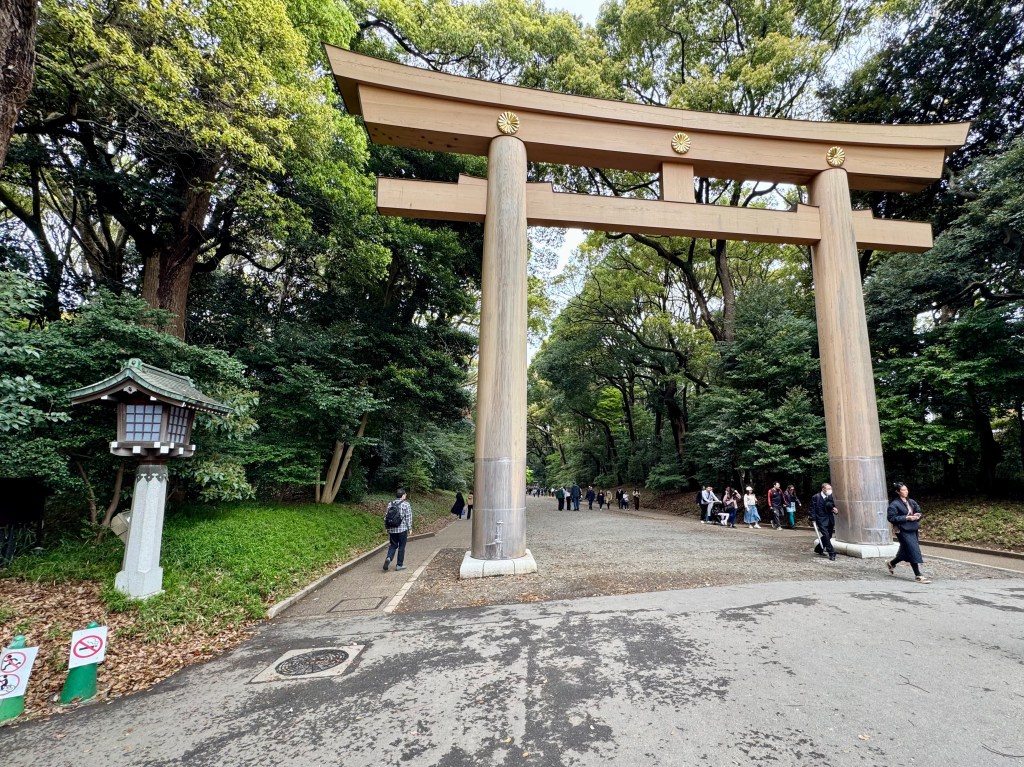
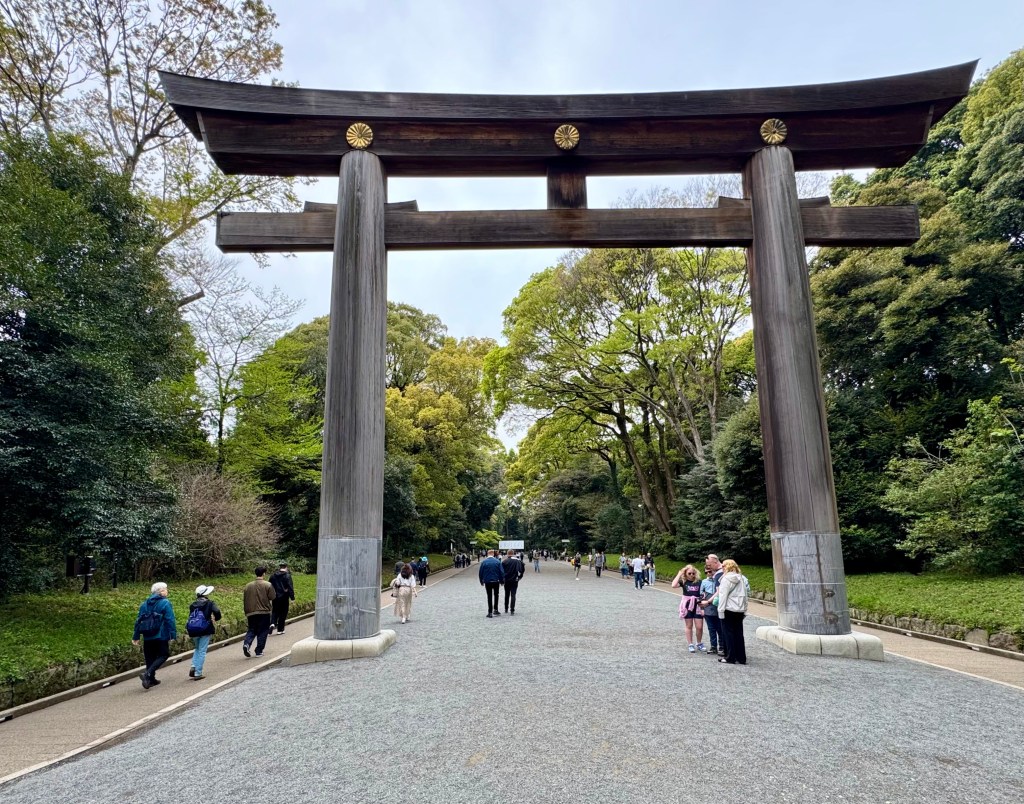
Approaching the main shrine, you pass through another torii gate. The Otorii The Grand Shrine Gate is the biggest wooden torii in Japan. Made from a 1500 year old Japanese cypress it is 12 metres high with a 17 metre crosspiece. Very impressive indeed.
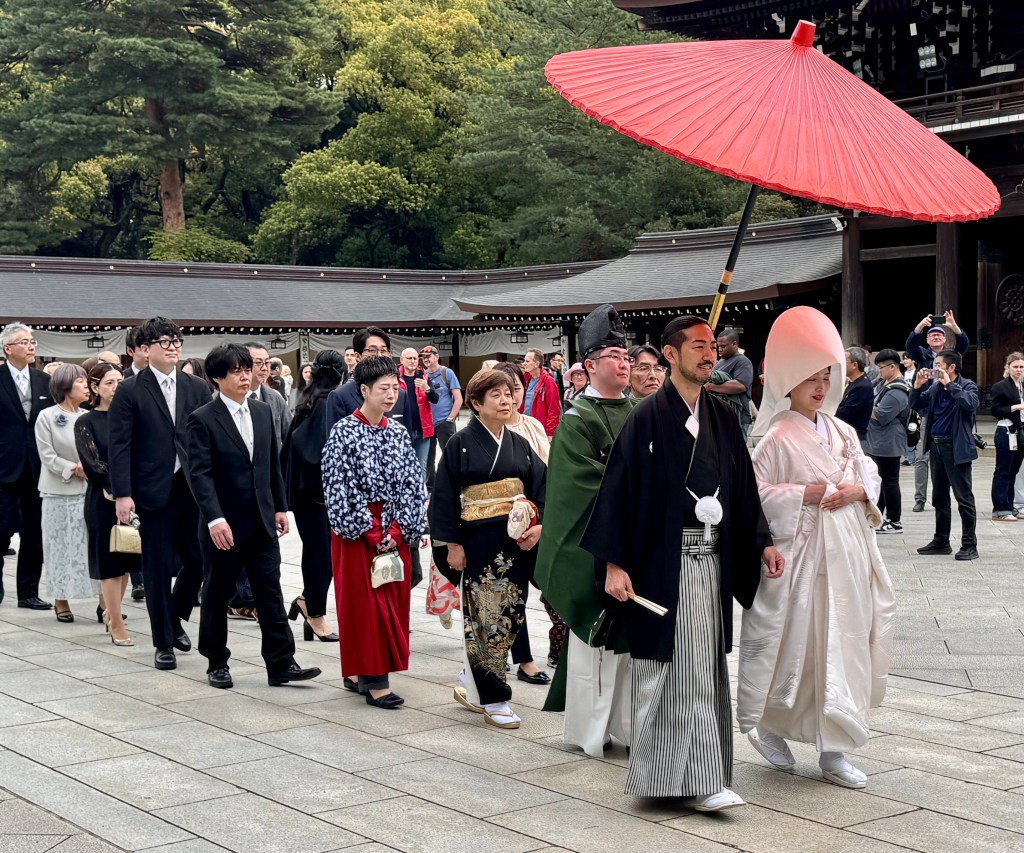
Meiji Jingu is one of Japan’s most popular shrines. In the first days of the New Year, the shrine welcomes more than three million visitors for the year’s first prayers (hatsumode). During the rest of the year, traditional Shinto weddings can often be seen taking place here and I was lucky enough to see the procession for one of those today.

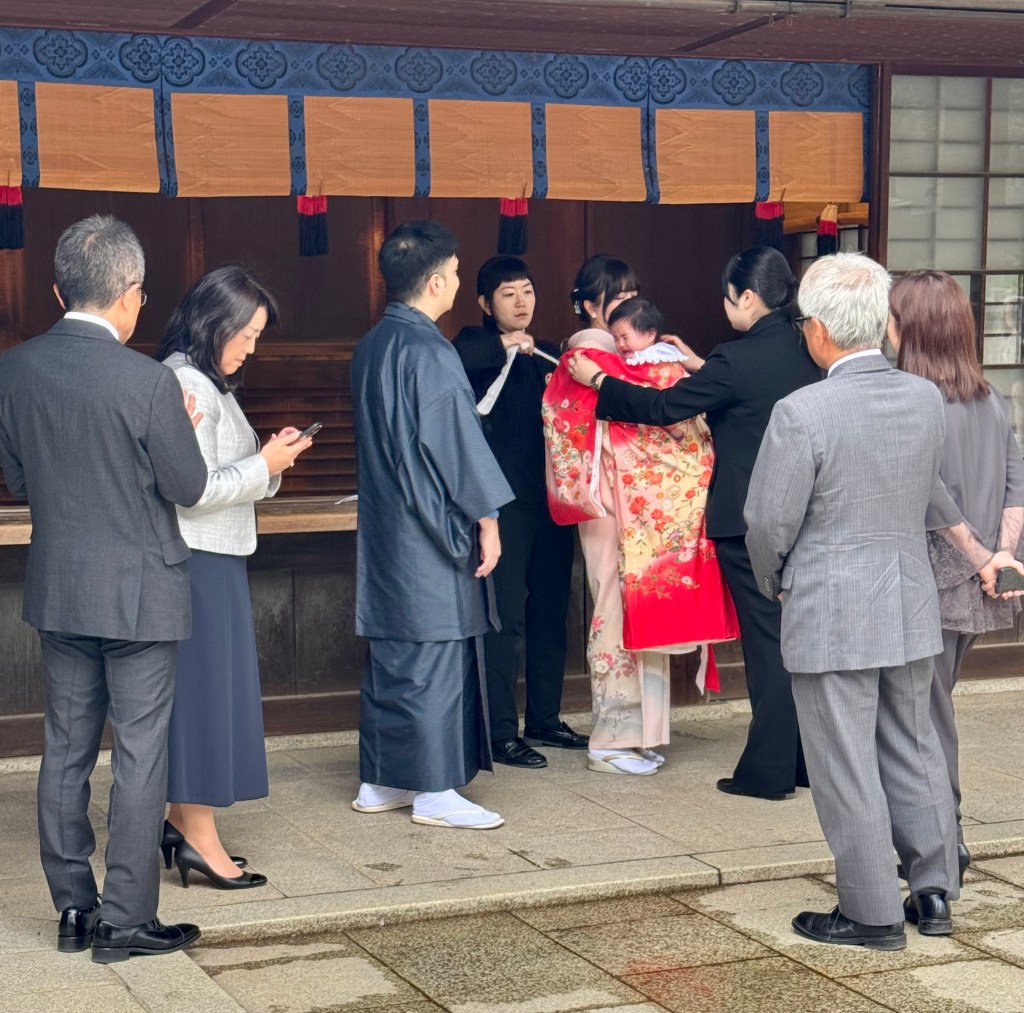
Visitors can take part in typical Shinto activities, such as making offerings at the main hall, buying charms and amulets or writing out one’s wish on an ema. I even managed to get a stamp in my notebook here.


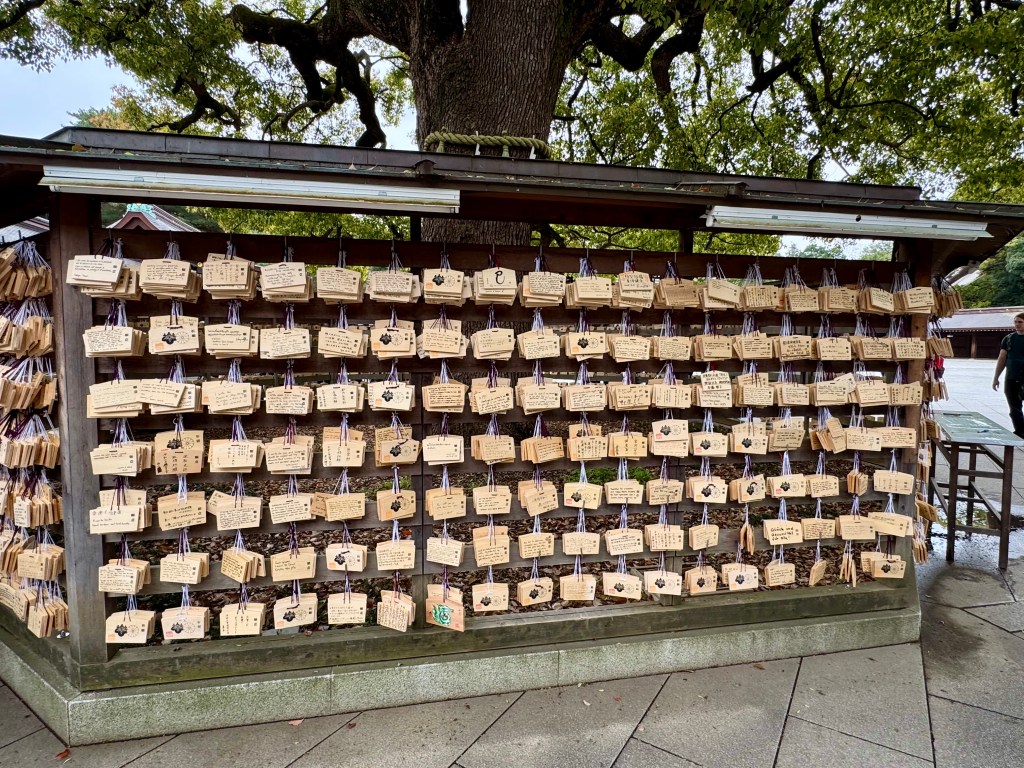


While there, I took the opportunity to select an Omikuji; a paper fortune randomly drawn at Shinto shrines and Buddhist temples in Japan. Here your fortune is a Japanese traditional Waka poem, composed by Emperor Meiji and Empress Shoken, whose spirits are enshrined at Meiji Jingu.
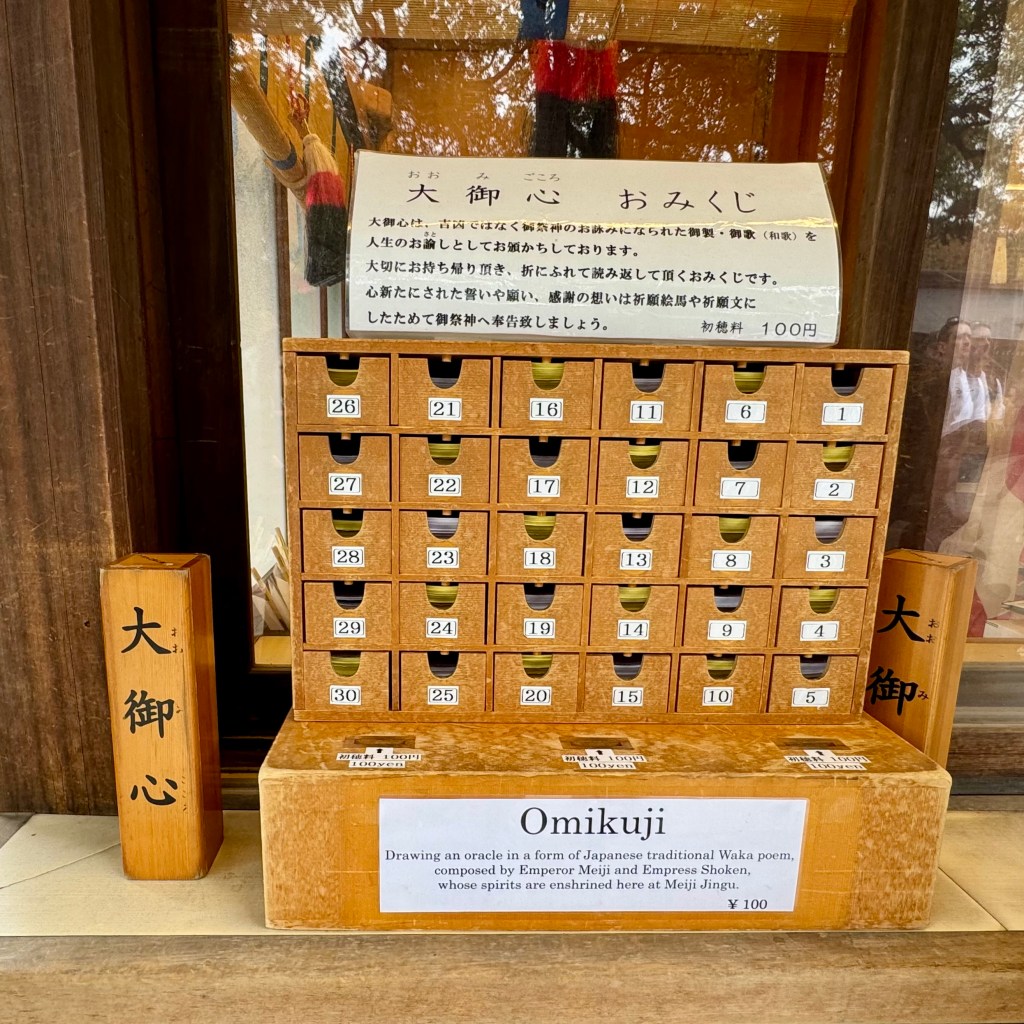
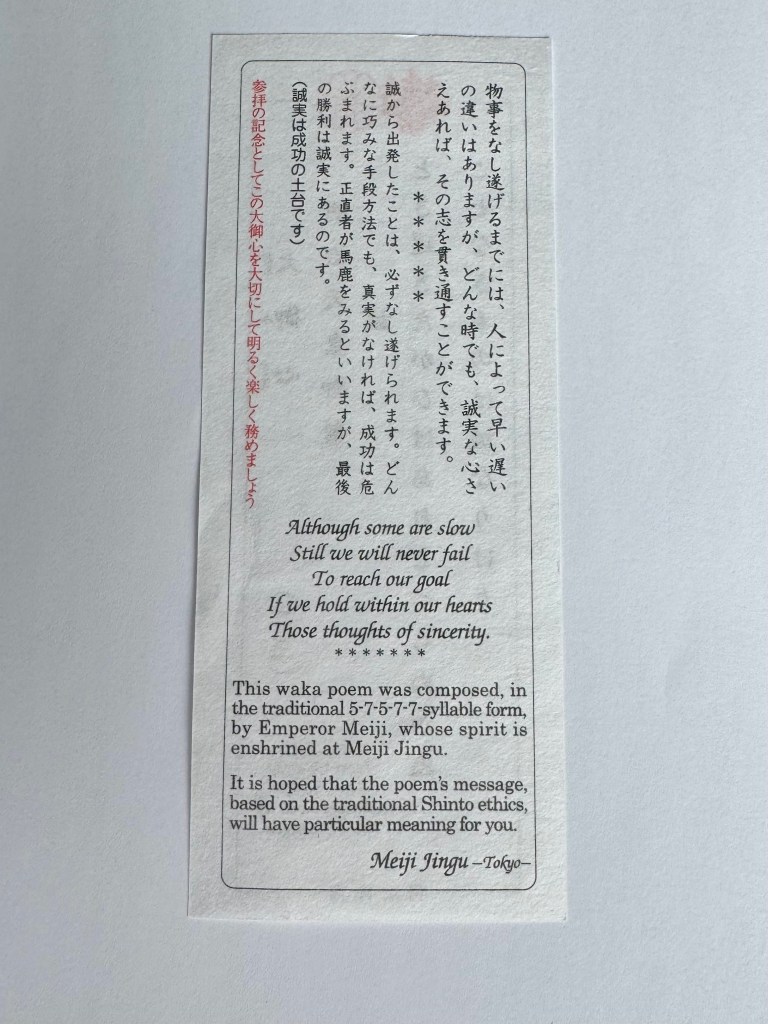
Omikuji can predict a person’s overall fortune and offer advice on specific areas like health, love, work, business, and travel. Mine was pretty good I thought so I kept it but bad fortunes should be left behind in a dedicated spot so you don’t take the bad luck home with you.
The battery on my phone is dying as is my battery so I decided to skip the afternoon tour I had originally planned to attend and get home while my google maps and electronic suica card (to pay for the train) would still work.
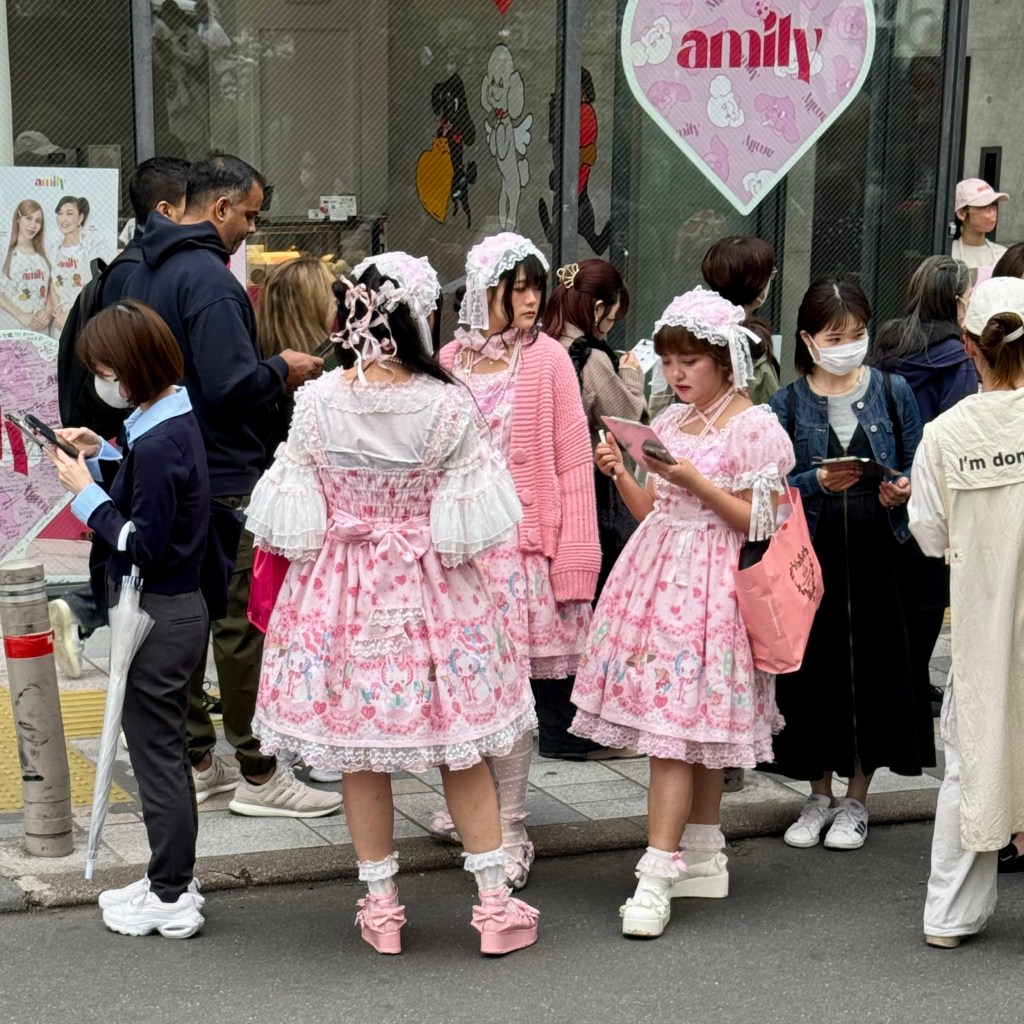
Before heading home, I quickly checked out Takeshita Street in Harajuku. The 350-meter pedestrian-only shopping street, is known for its unique fashion, kawaii (cute) culture, and food. The street is lined with small, quirky shops selling everything from fashion and sundries to cosmetics and 100-yen shops. You can see by the three ladies pictured below that they take this cute thing seriously.
The return journey was relatively uneventful though I did somehow manage to go in the wrong direction for one stop when I first boarded a train at the Harajuku Station. The trains weren’t as crowded mid afternoon and the return trip was faster. Before heading to the hotel to charge my phone and have a relaxing nap, I picked up a chicken cutlet sandwich and a banana to augment my steady diet of protein bars. Still no exciting food but tomorrow is another day. Adventures await …
 Judy’s Rambles
I can’t wait for tomorrow’s blog. Loved going along on your first day and touring and learning so much.
get good nite sleep
LikeLike