
April 12, 2025
After spending the day yesterday exploring the bustling center of Tokyo, today I’m headed south to experience the small town of Kamakura. In the late 12th century, Kamakura was Japan’s political center, when Minamoto Yorimoto chose it as the seat for his new military government.
Today this quaint beach town is home to 65 temples and 15 shrines! Don’t worry, we’re not going to see them all but I have selected three of the biggest and best to get a good sense of the town. Let’s hope I’ve not bitten off more than I can chew.
Armed with my trusty navigator, Google Maps, I am ready to again brave the frenetic train system of greater Tokyo. I arrived at Kamakura station without any issues and then followed the throngs to my first stop; Tsurugaoka Hachimangū Shrine.
Tsurugaoka Hachimangū is the most important Shinto shrine in the city of Kamakura. It was founded by Minamoto Yoriyoshi in 1063, and enlarged and moved to its current site in 1180 by none other than Minamoto Yoritomo, the founder and first shogun of the Kamakura government. The shrine is dedicated to Hachiman, the patron god of the Minamoto family and of samurai in general. The deified spirits of the ancient Emporer Ojin who has been identified with Hachiman, Hime-gami and Empress Jingu are enshrined at the Tsurugaoka Hachimangu Shrine.
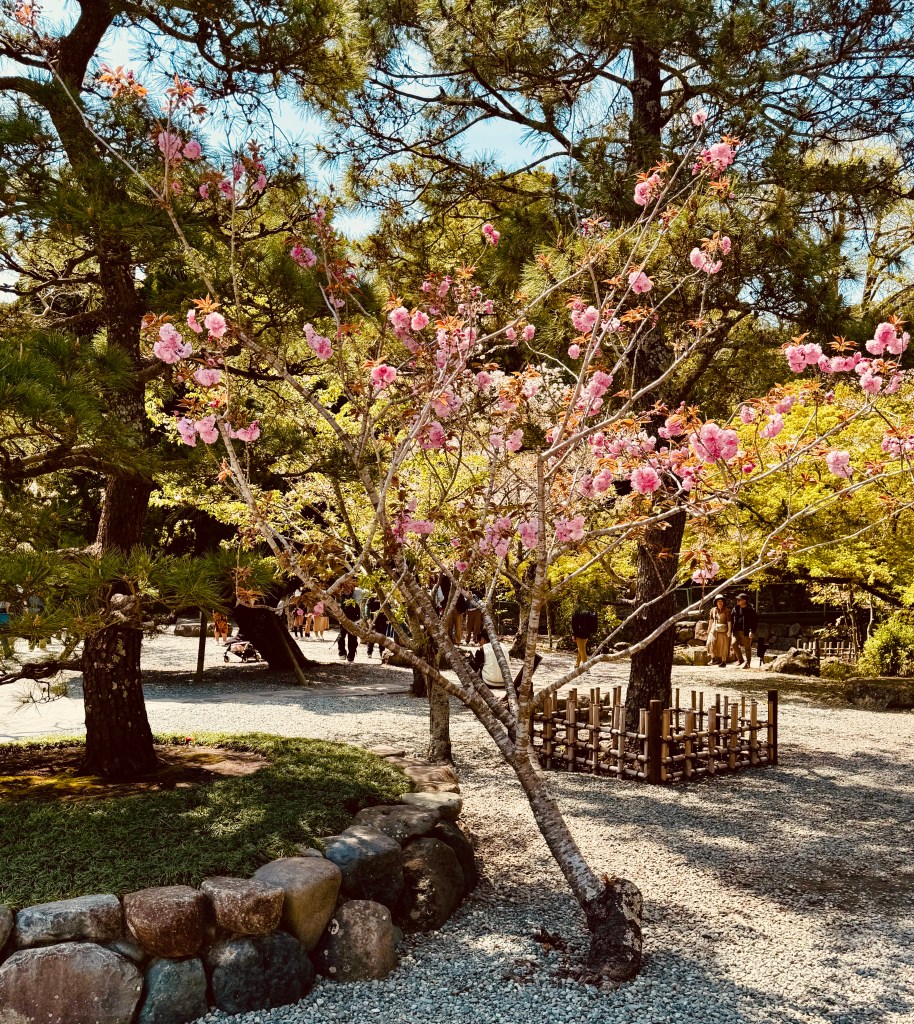
Today the entry to the shrine includes a 450-meter Dankazura walkway which extends from the Third Tori gate. The elevated path was originally built in 1182; a road paved with stone running from the shrine to the sea to pray for the safe delivery of an heir, as Yoritomo’s wife was pregnant at the time. Today the multitude of cherry trees along the path were blooming making the entrance to the shrine especially magical.
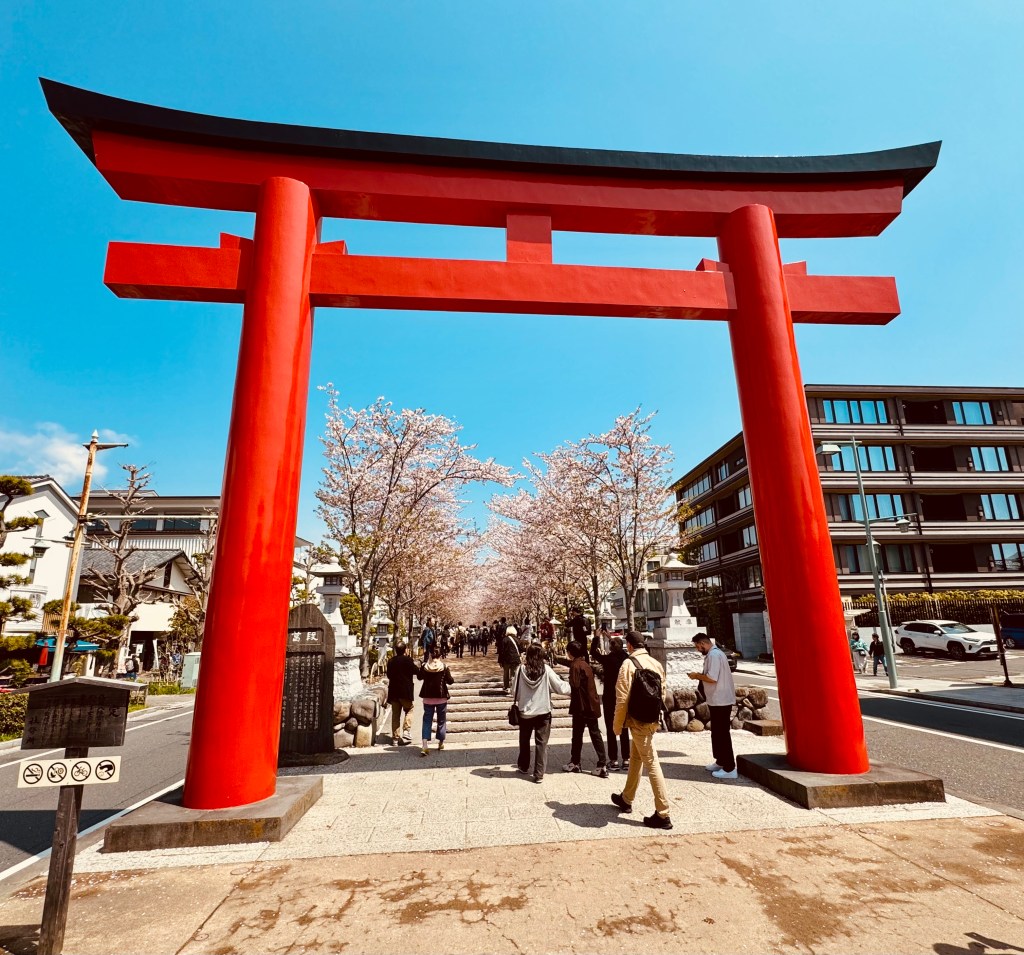
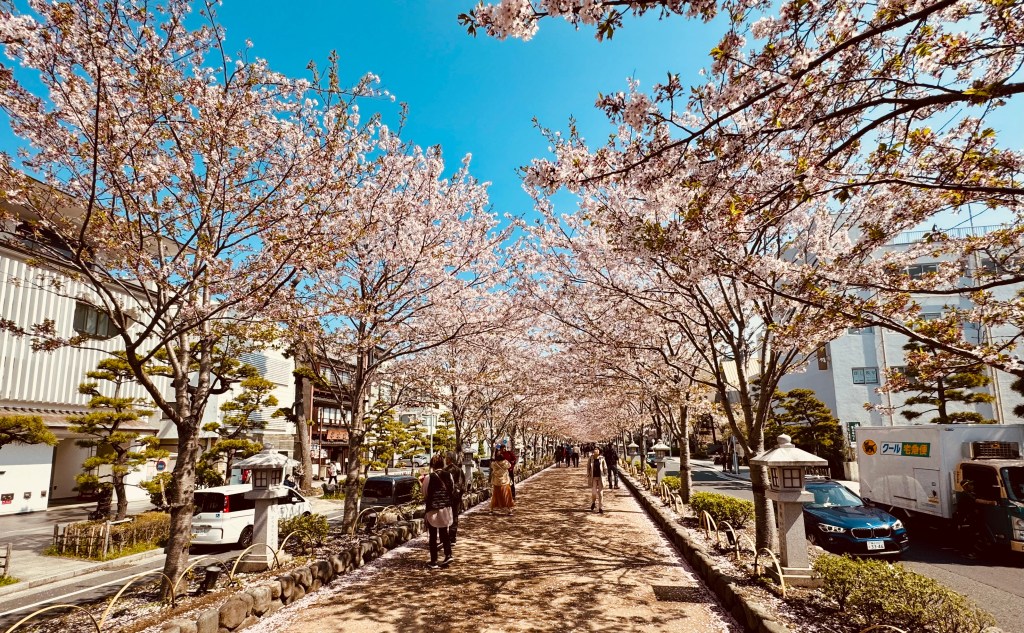
Once you enter the main torii gate, the grounds don’t disappoint and there are a number of areas to explore.
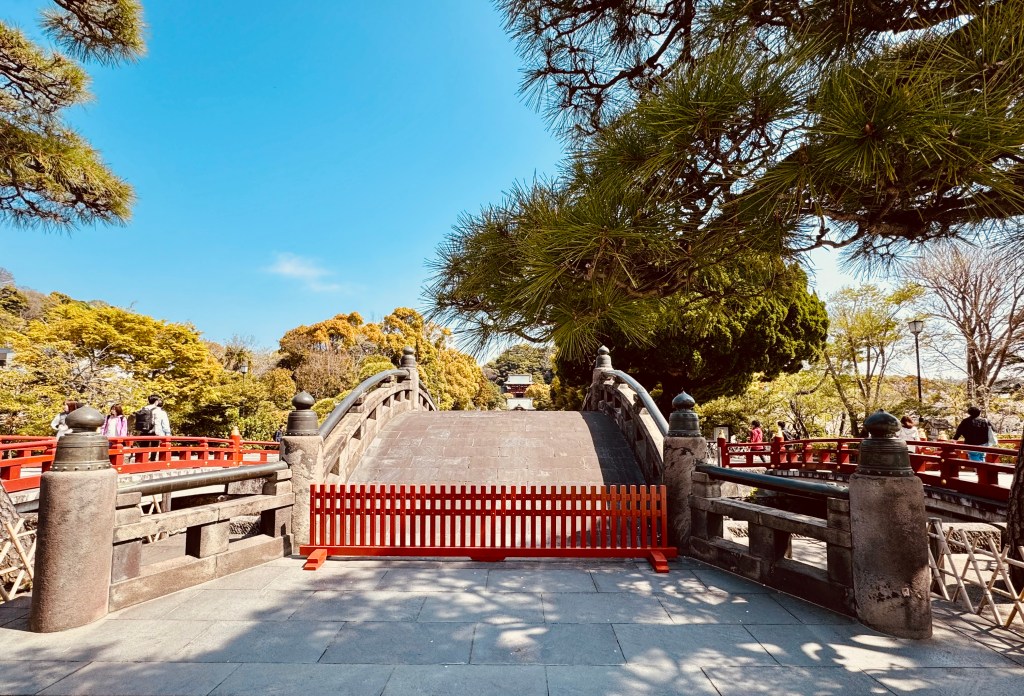
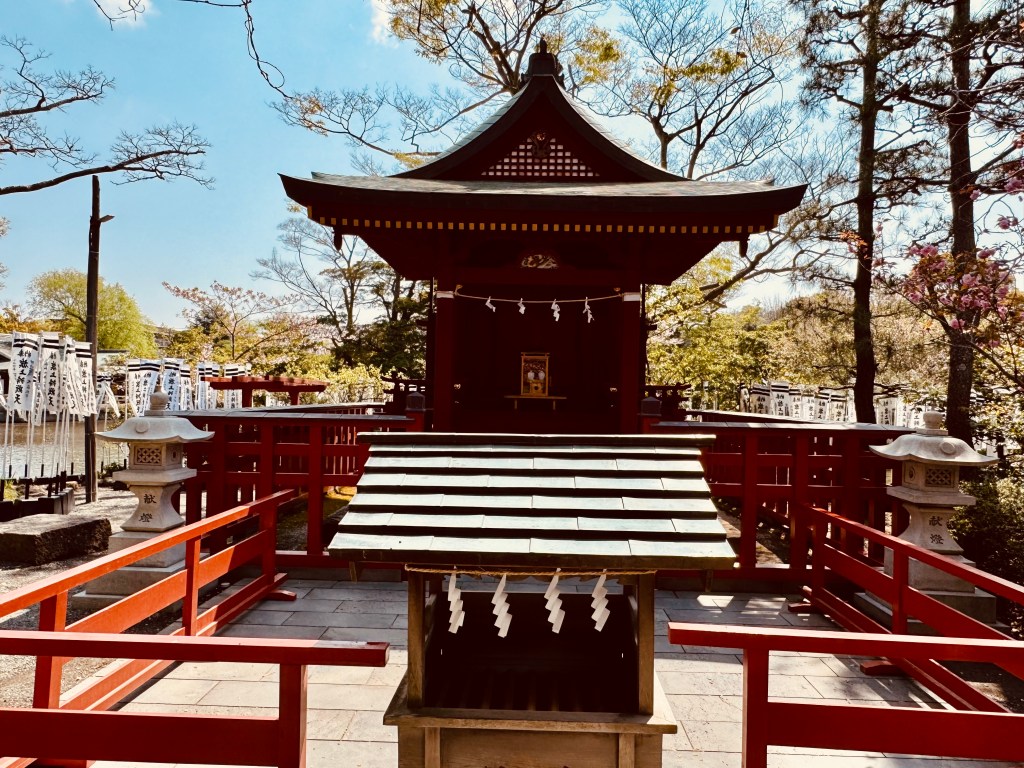
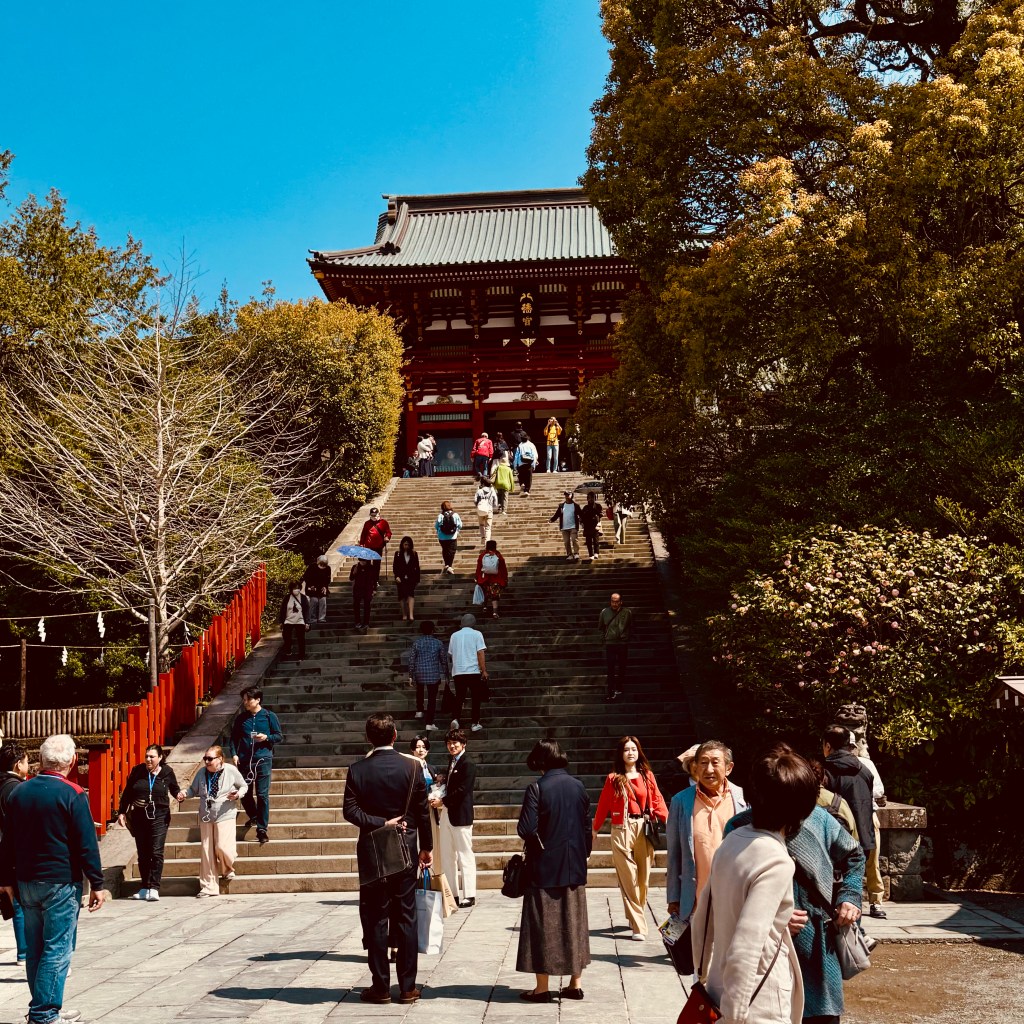
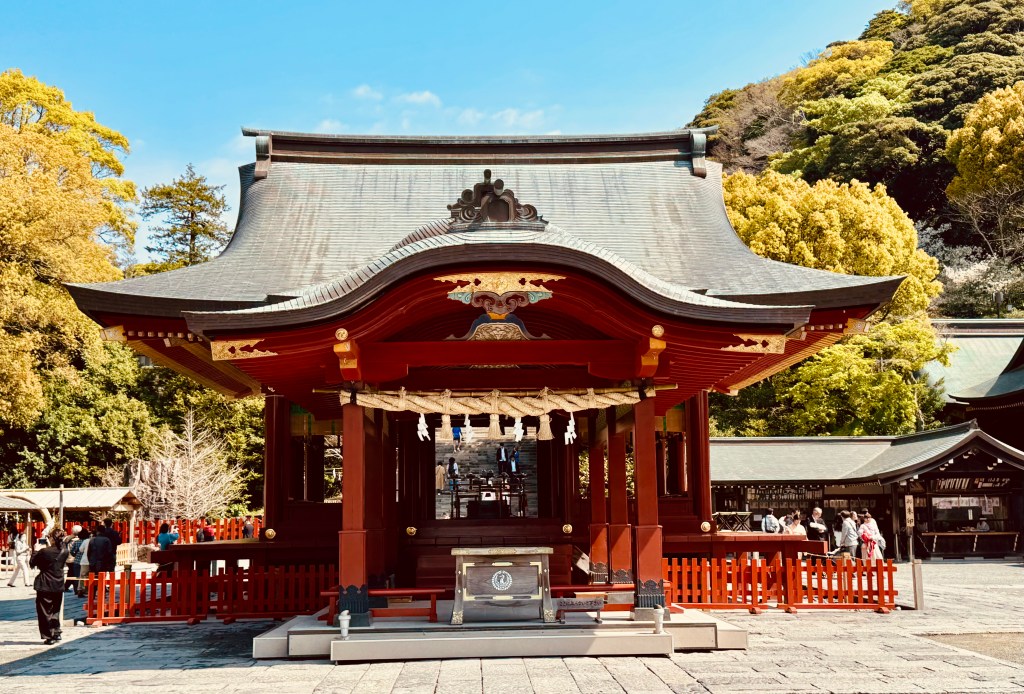
Soon enough you can see the main hall (Hongu) which stands on a terrace at the top of a wide stairway.

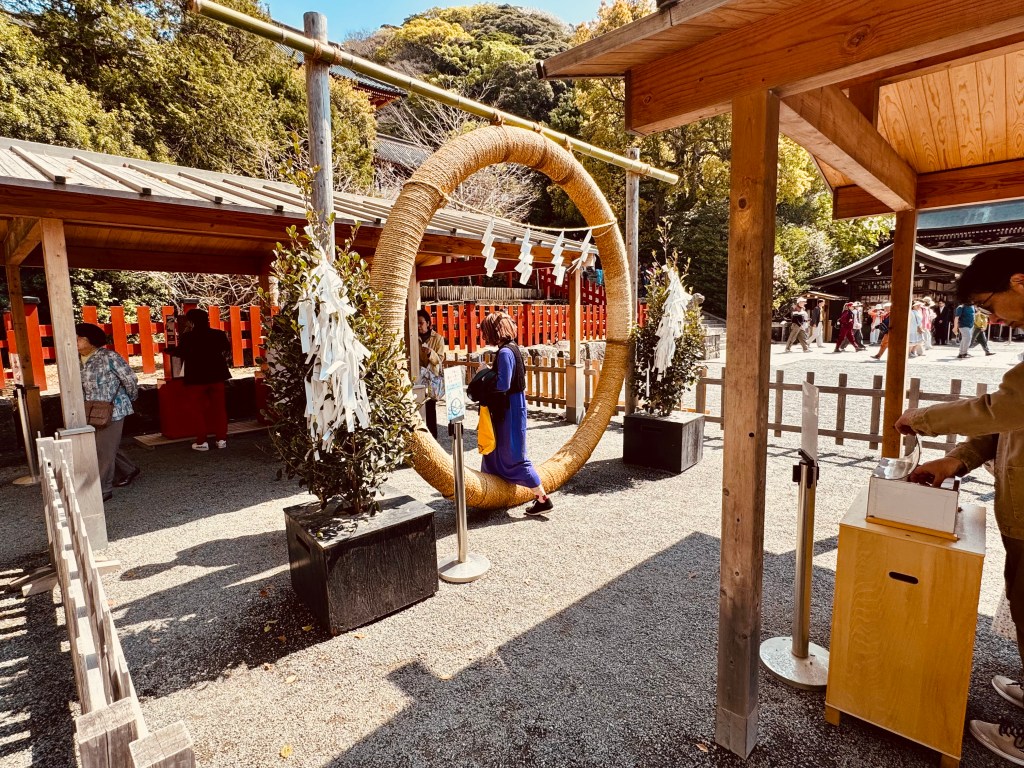
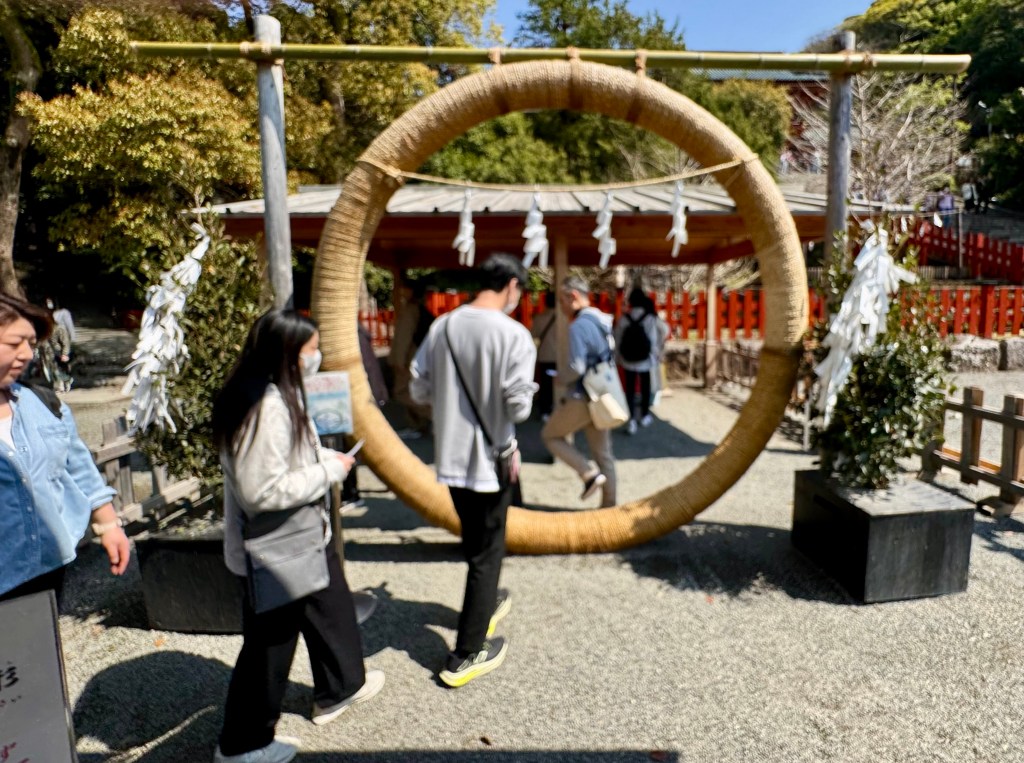
A large hoop of grass with people weaving their way around it in a figure eight grabs my attention. The “Chinowa kuguri” is a part of summer purification rites called meant to cleanse any impurities from the first half of the year and pray for sound health through the second half of the year.
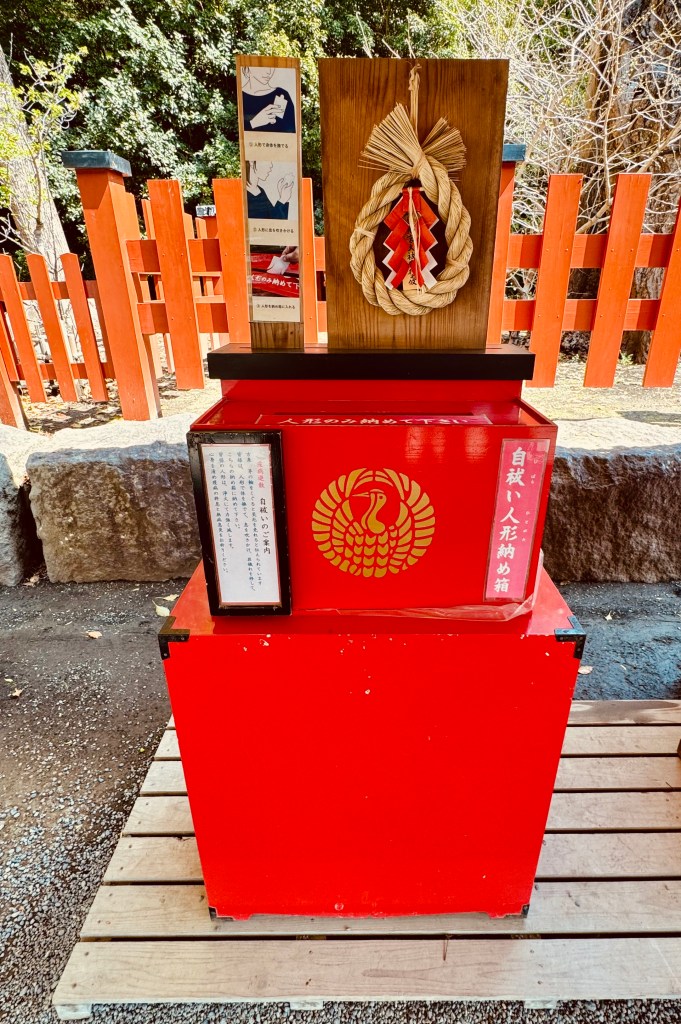
For the chinowa kuguri purification rite, you must first go through the grass hoop and circle around the left side of the hoop. Then step through the hoop a second time, turning right and rounding it again before entering the hoop a third time and rounding it on the left side to make a figure eight. After doing that, you write your name on a slip of paper shaped like a person. After blowing on it to transfer all your bad luck onto the paper, you present it as an offering to the shrine to complete the ceremonial purification.
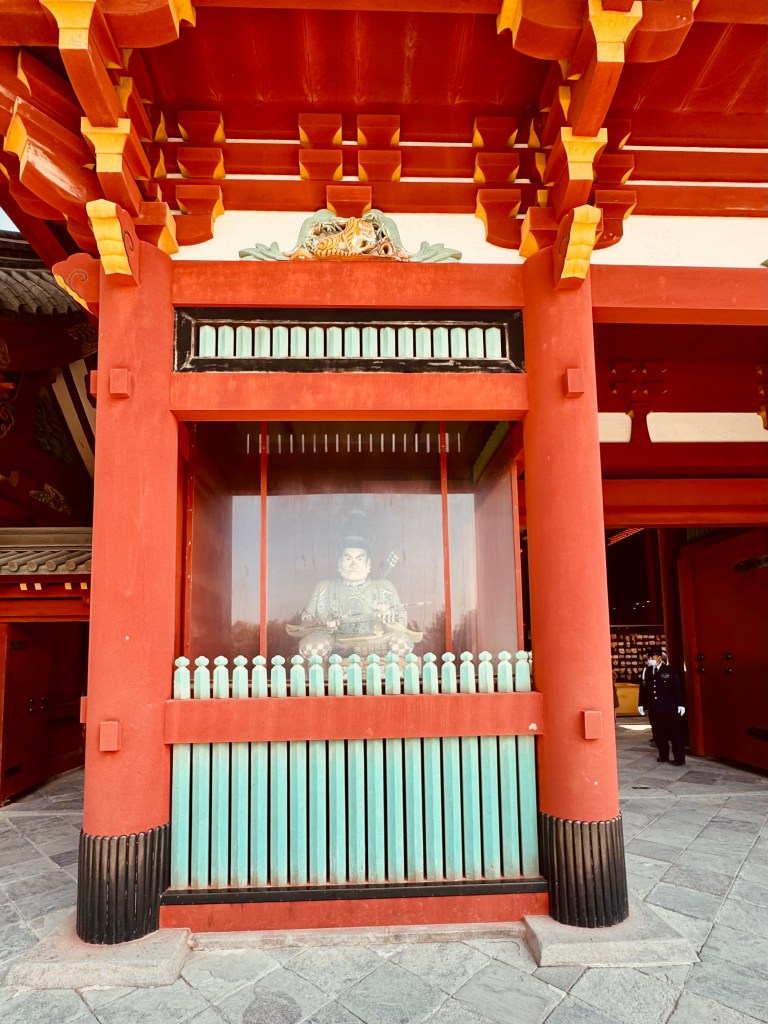
At the base of the stairway stands the Maiden (Lower Worship Hall), a stage for dance and music performances.
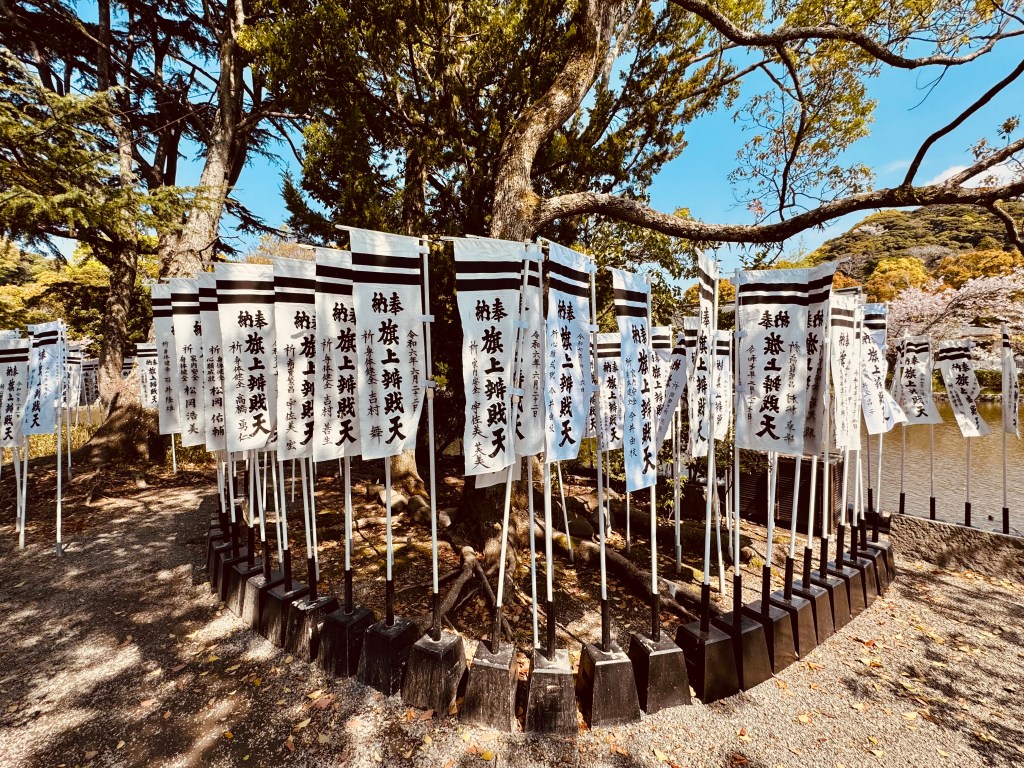
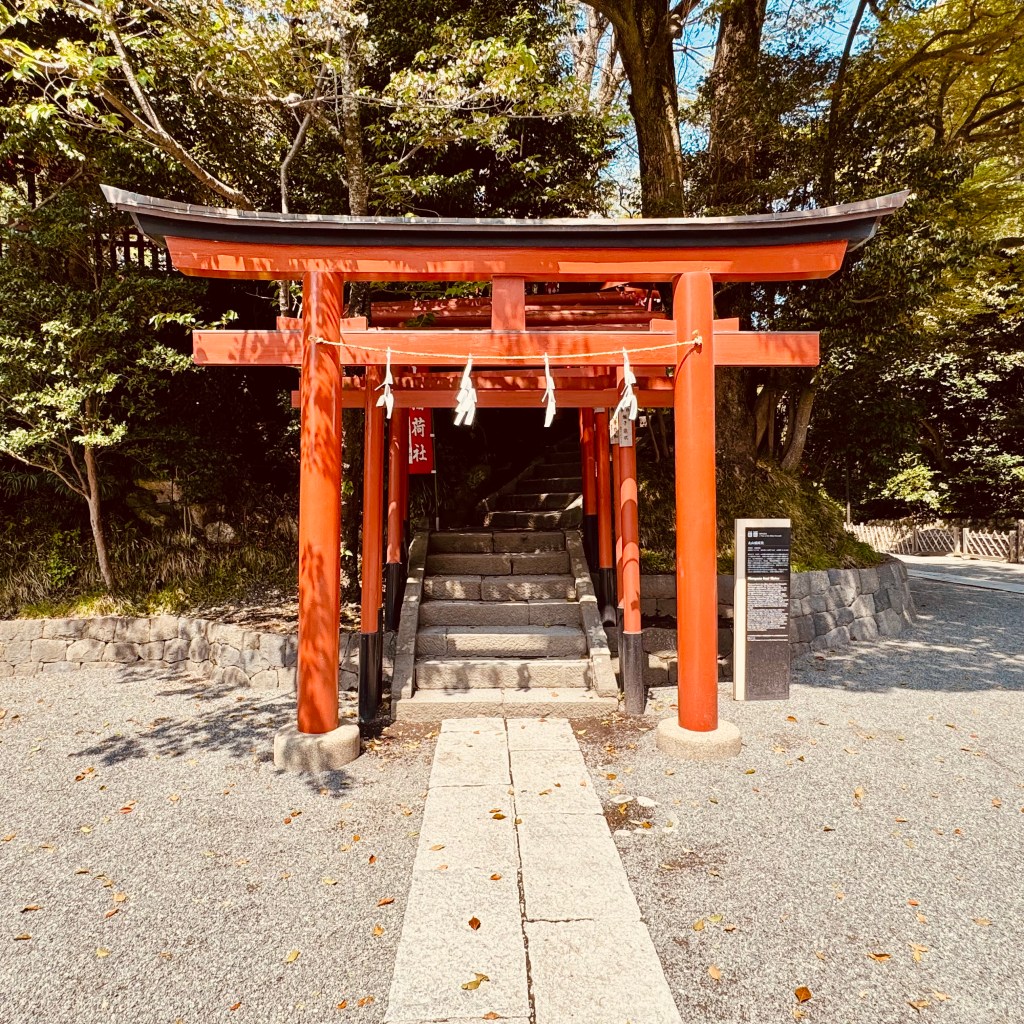
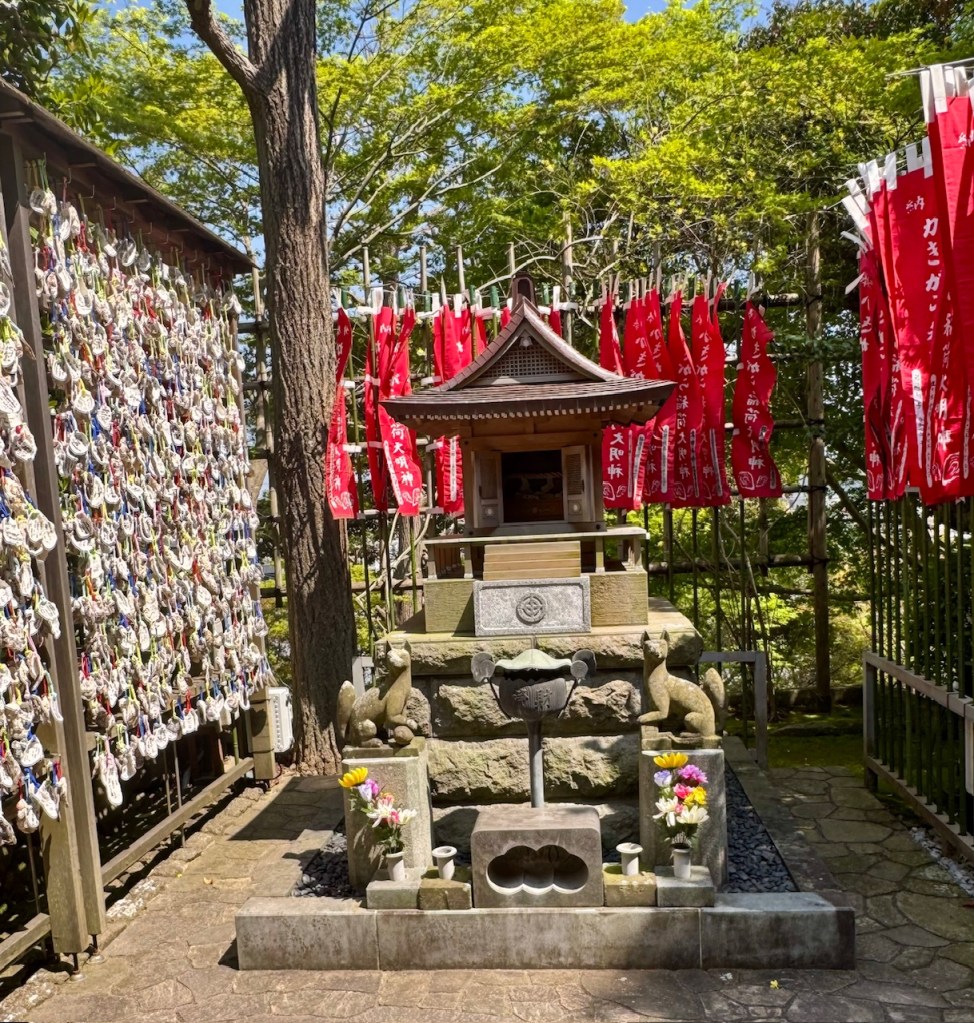
On the right of the main hall, I find the Maruyama Inari Shrine; the Shinto deity of rice, agriculture, and prosperity is enshrined here. The red banners surrounding the shrine, the bright red tori gates that line the path up to it and the two stone foxes guarding the shrine are all familiar features for worshipers who pray for success in business or a plentiful harvest.
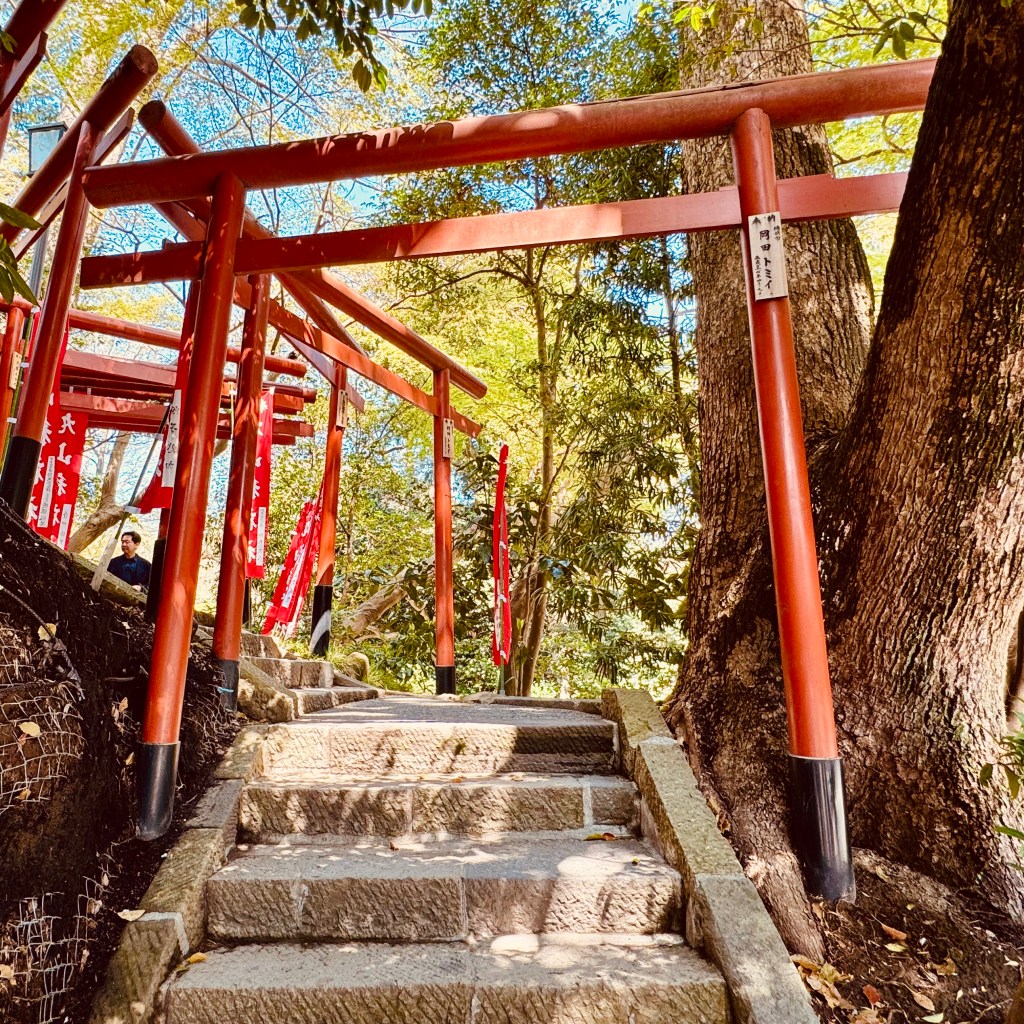
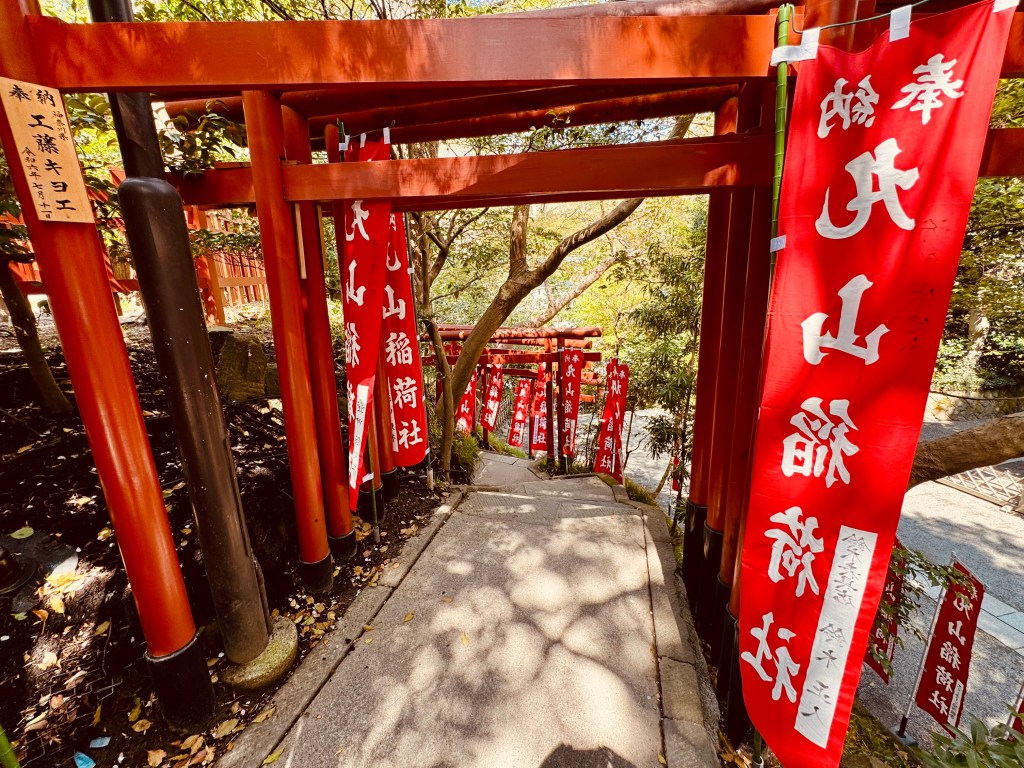
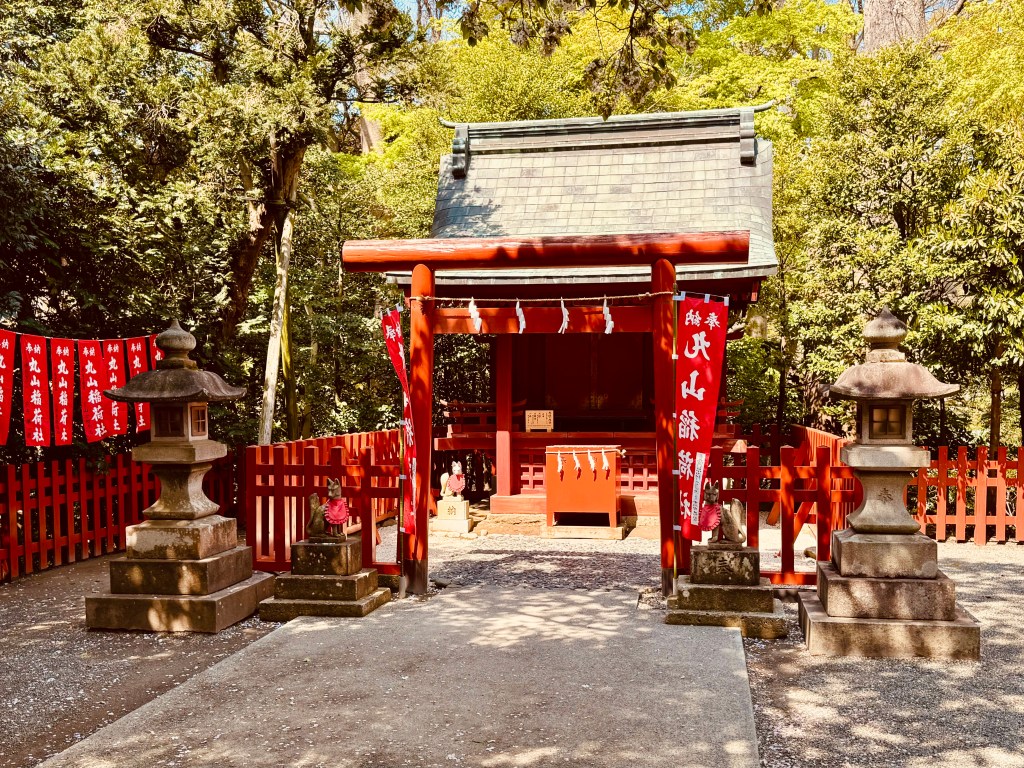
The shrine grounds also include the Wakamiya Shrine, a secondary shrine to the right of the stairway and various auxiliary buildings.
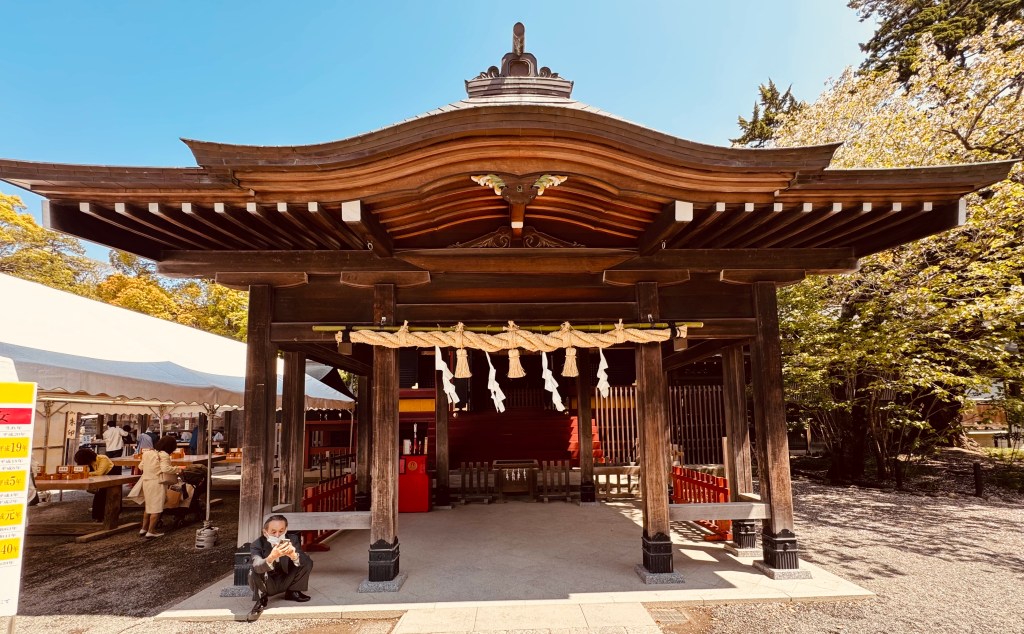
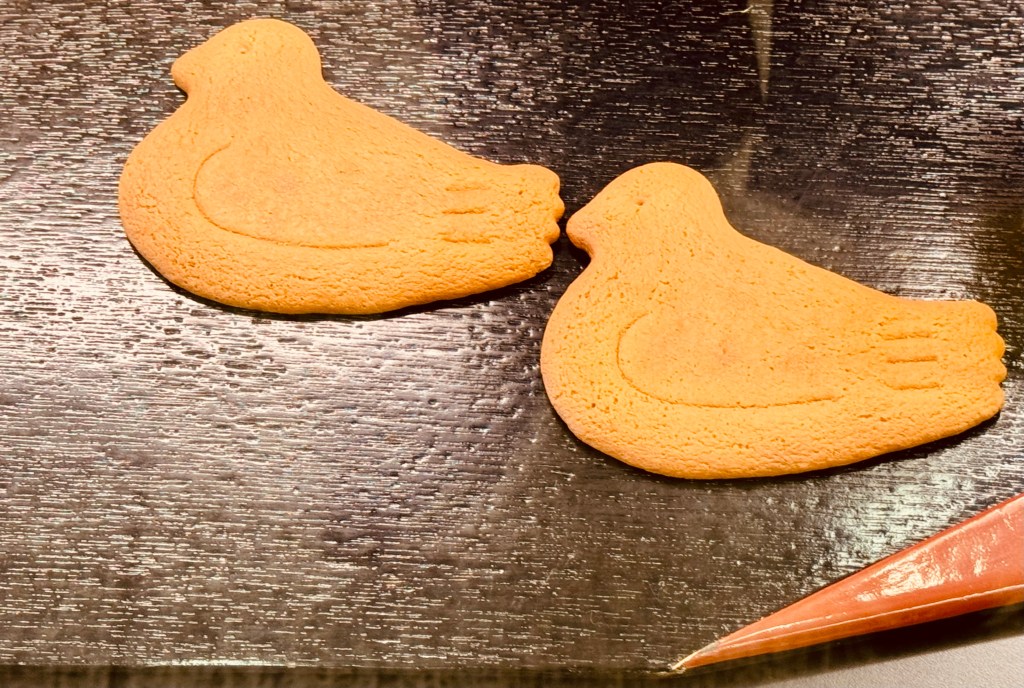
No visit to a shrine is complete without a stop in the shop. I’m still not buying stuff but I like to look and found the cutest cookies ever. Hato Sabure – these charming bird-shaped shortbread cookies aren’t just delicious—they’re a cultural symbol deeply connected to the historic city of Kamakura.
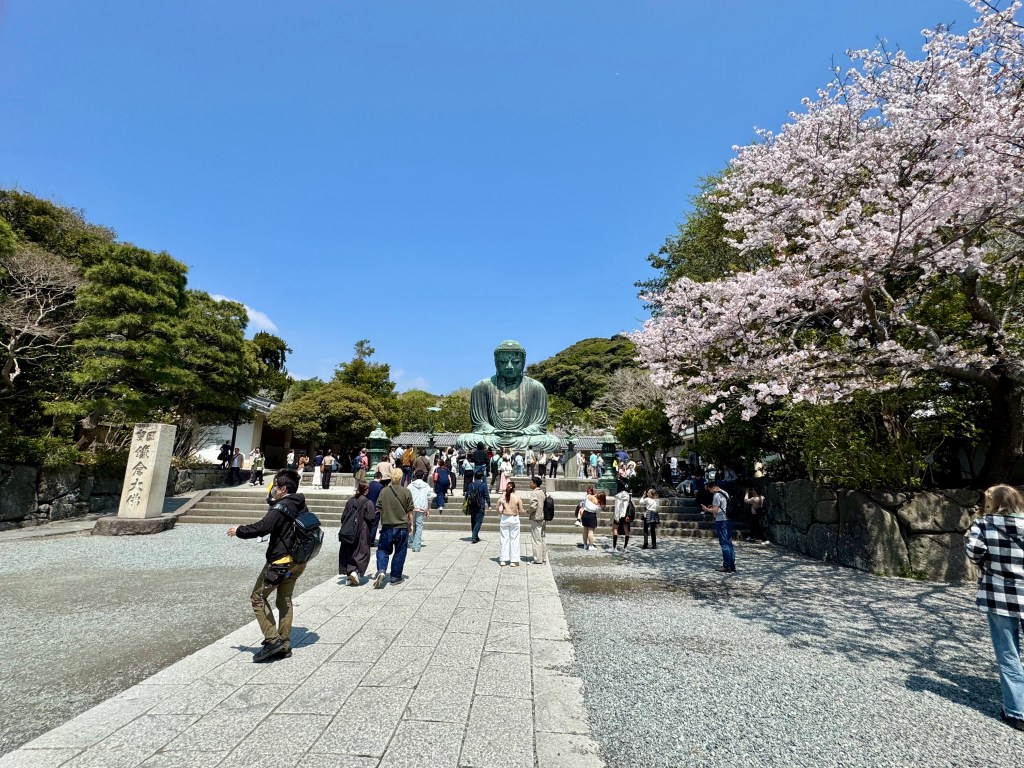
Time to move onto the next shrine on my list – The Great Buddha of Kamakura. Google Maps says it’s a 2.5 km walk or I can grab a train and get there in half the time with much less effort so you know I’m hopping a train. Back to Kamakura Station for the quick, though very crowded, trip to Hase station and then a short walk swept along by the sea of tourists heading in the same direction.
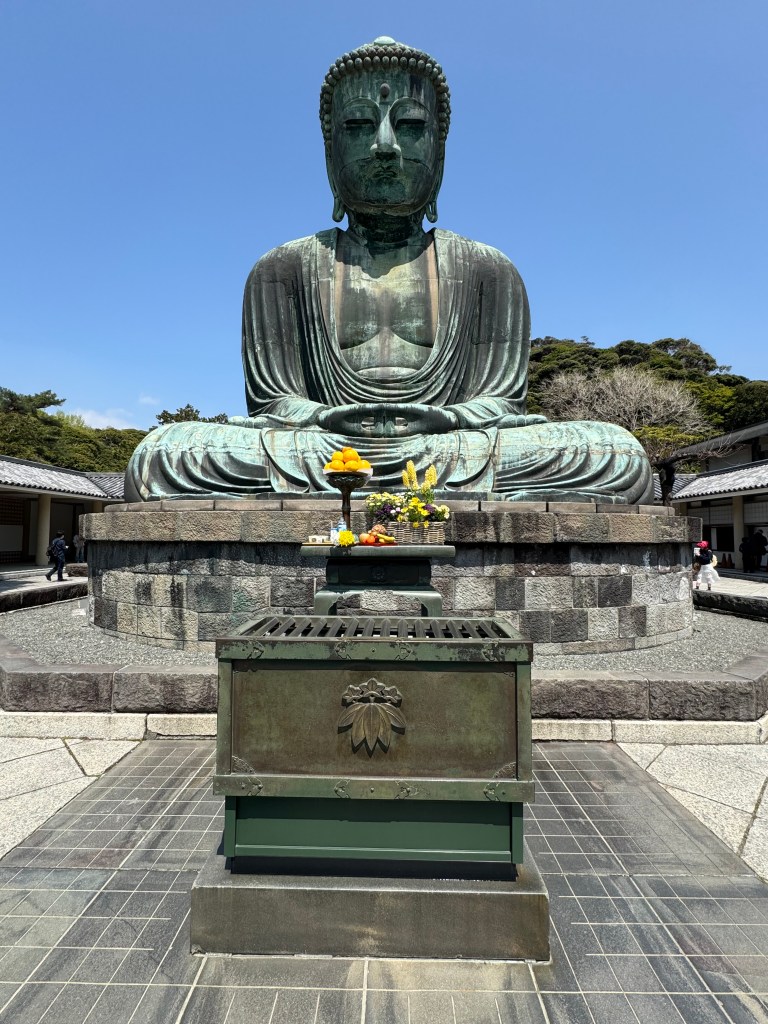
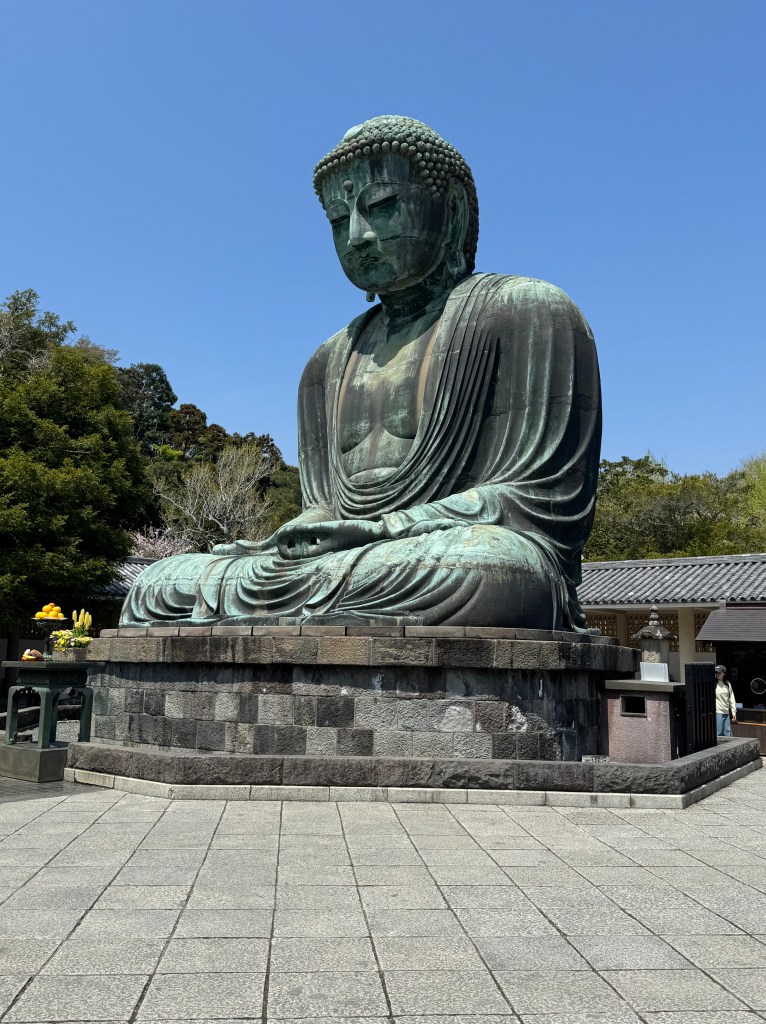
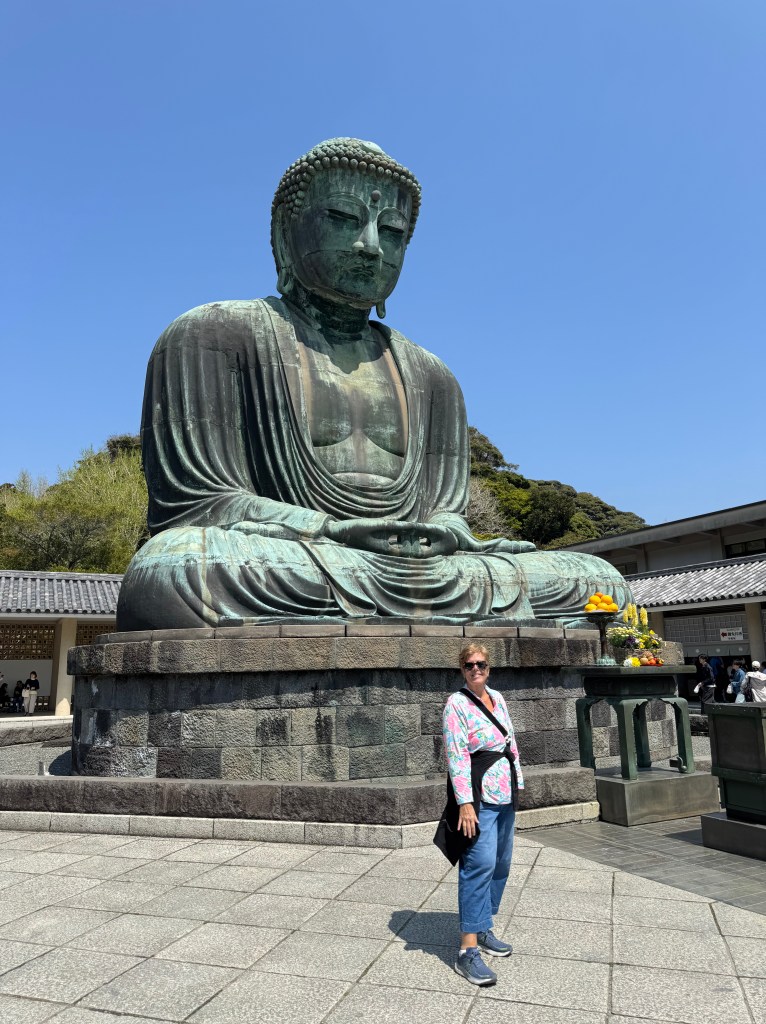
The Great Buddha of Kamakura is a bronze statue of Amida Buddha (the Buddha of Infinite Light) that stands on the grounds of Kotokuin Temple. At 11.3 meters tall and weighing 121 tons, it’s a magnificent bronze statue, the second-largest seated Buddha in Japan surpassed only by the statue in Nara’s Todaiji Temple. The statue was cast in 1252 and originally located inside a large temple hall. However, the temple buildings were destroyed multiple times by typhoons and a tsunami in the 14th and 15th centuries. So, since the late 15th century, the Buddha has been standing in the open air; over 500 years weathering elements and earthquakes.
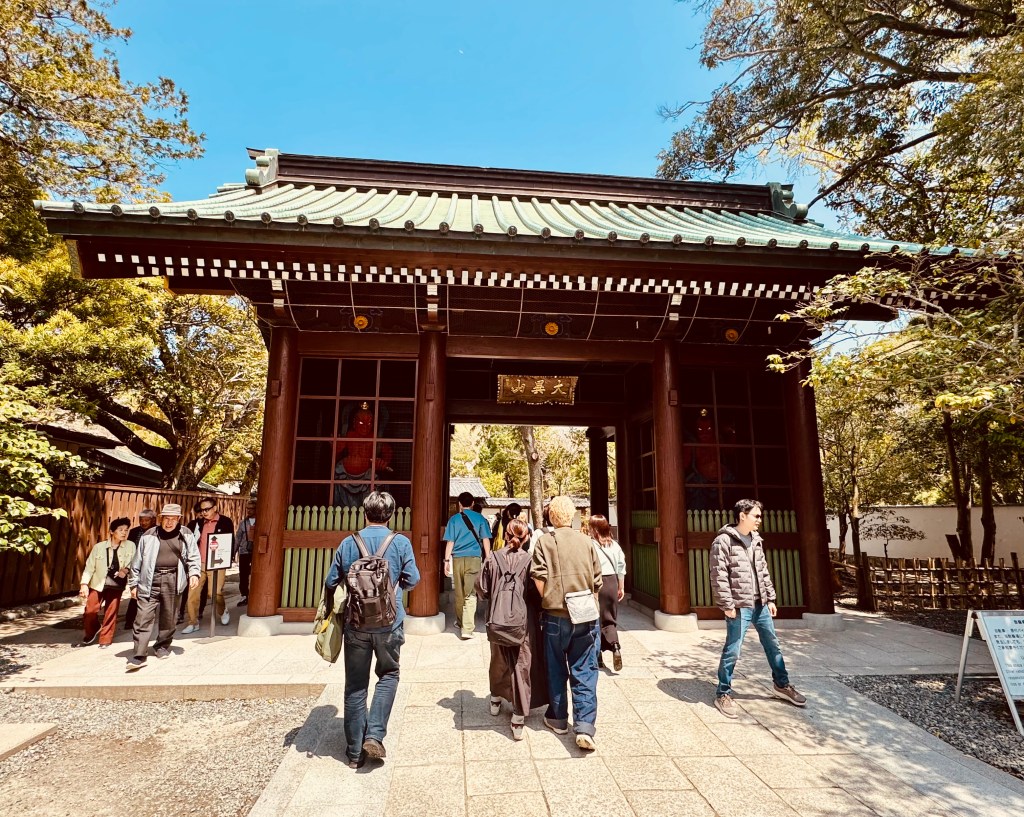

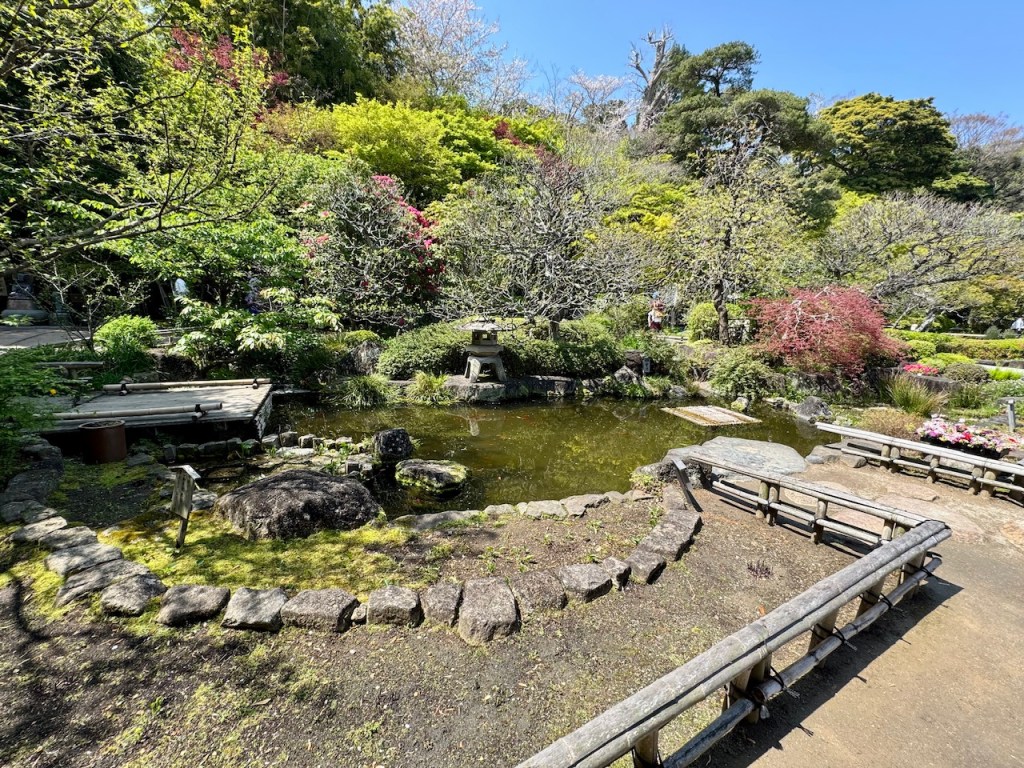
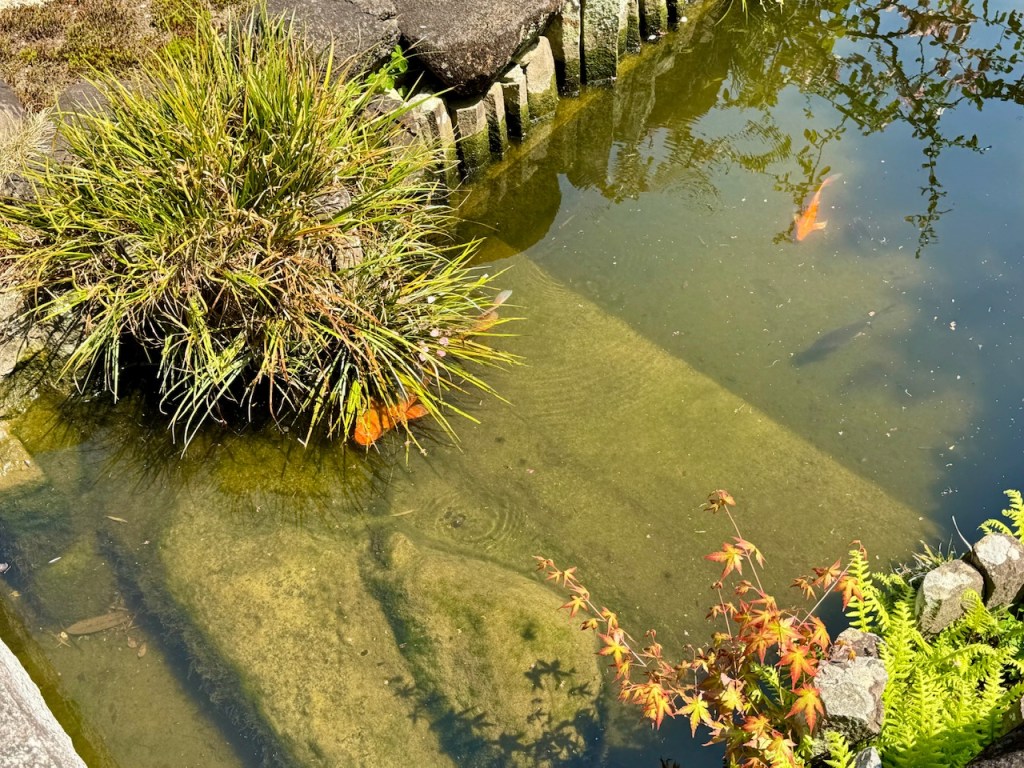
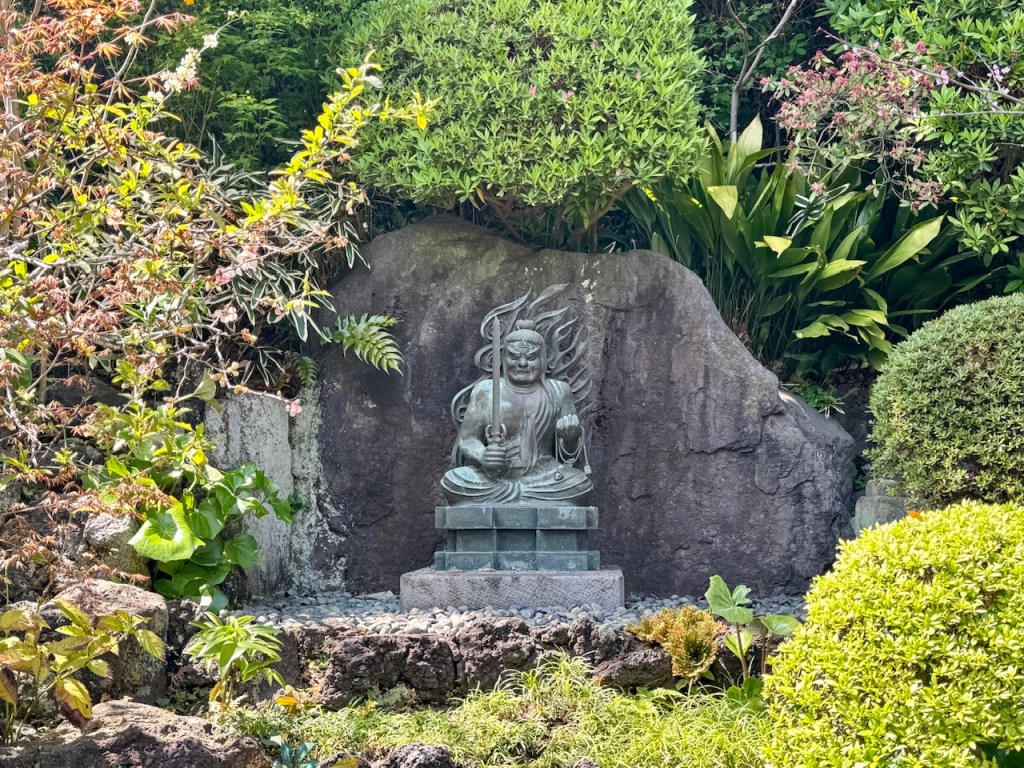
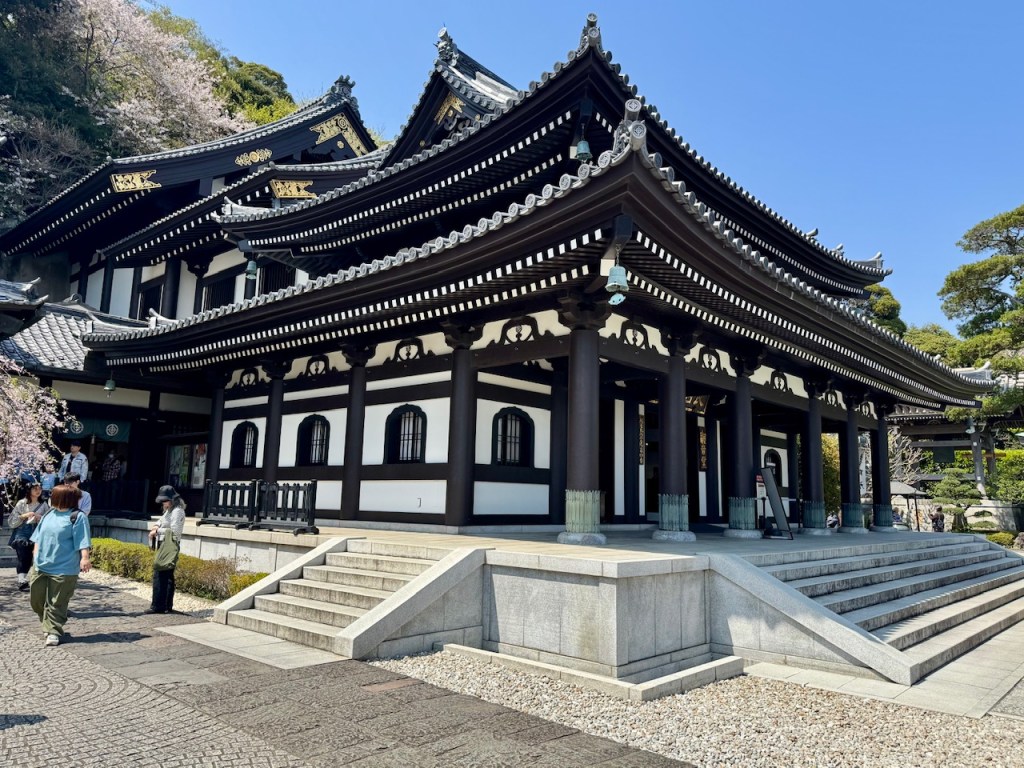
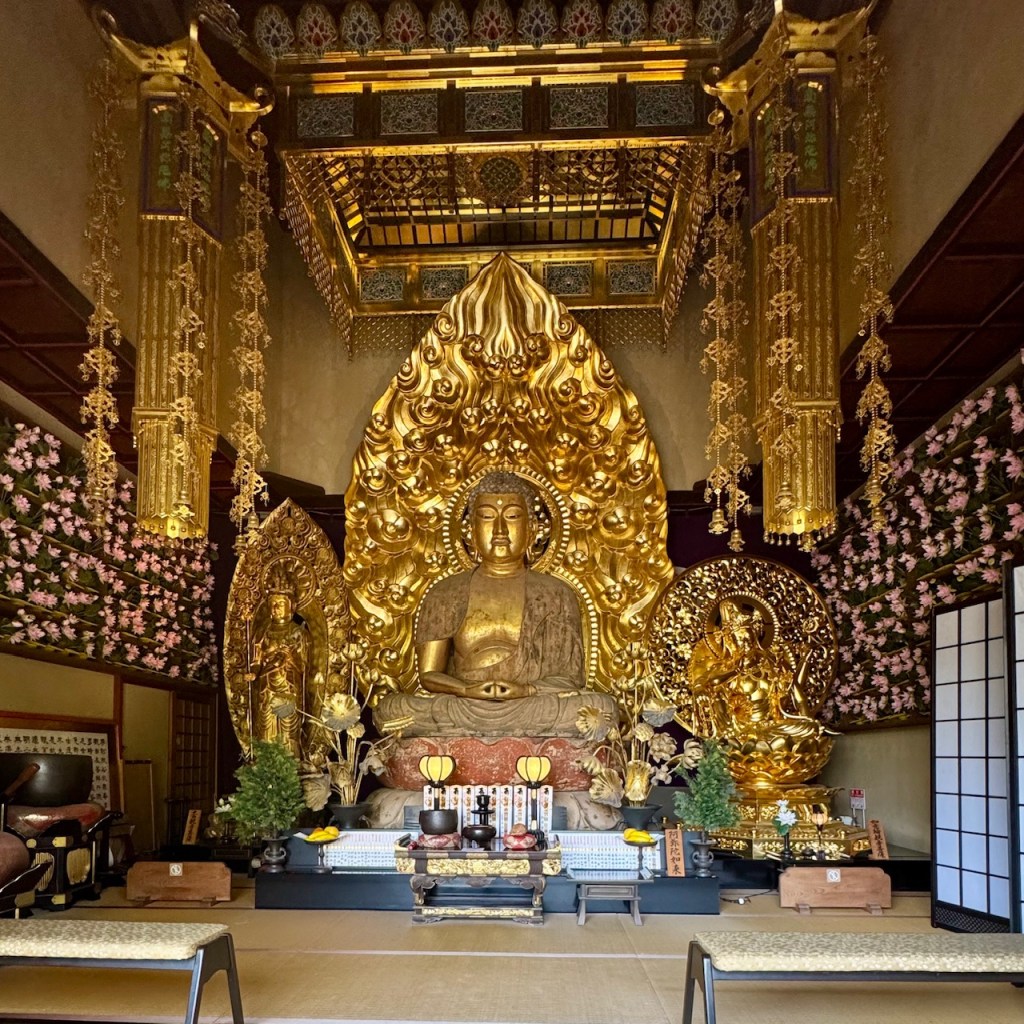
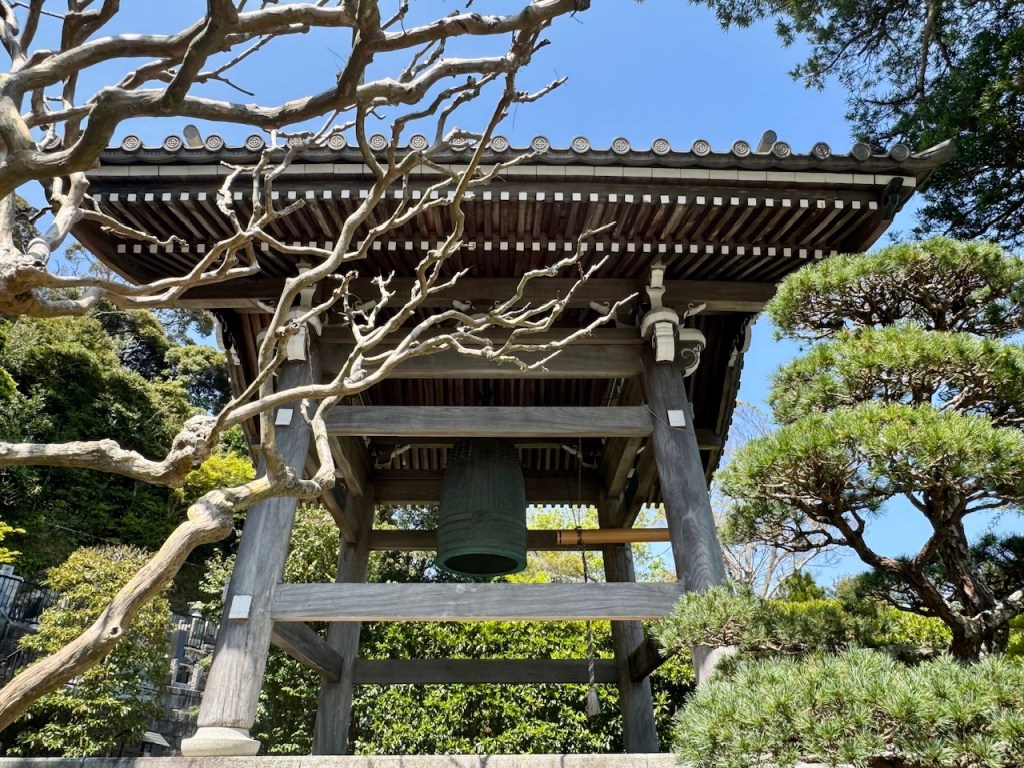
Luckily my third choice is just down the road from Kotokuin Temple. Hasedera Temple is home to a giant statue of Kannon, goddess of mercy. The temple sits about half-way up Mount Kamakura, southwest of the city. The temple is built on two levels and also includes a cave. The cave, called benten kutsu (Benzaiten Grotto), contains a long winding tunnel with a low ceiling and various statues and devotionals to Benzaiten, the sea goddess and the only female of the Seven Lucky Gods in Japanese mythology.
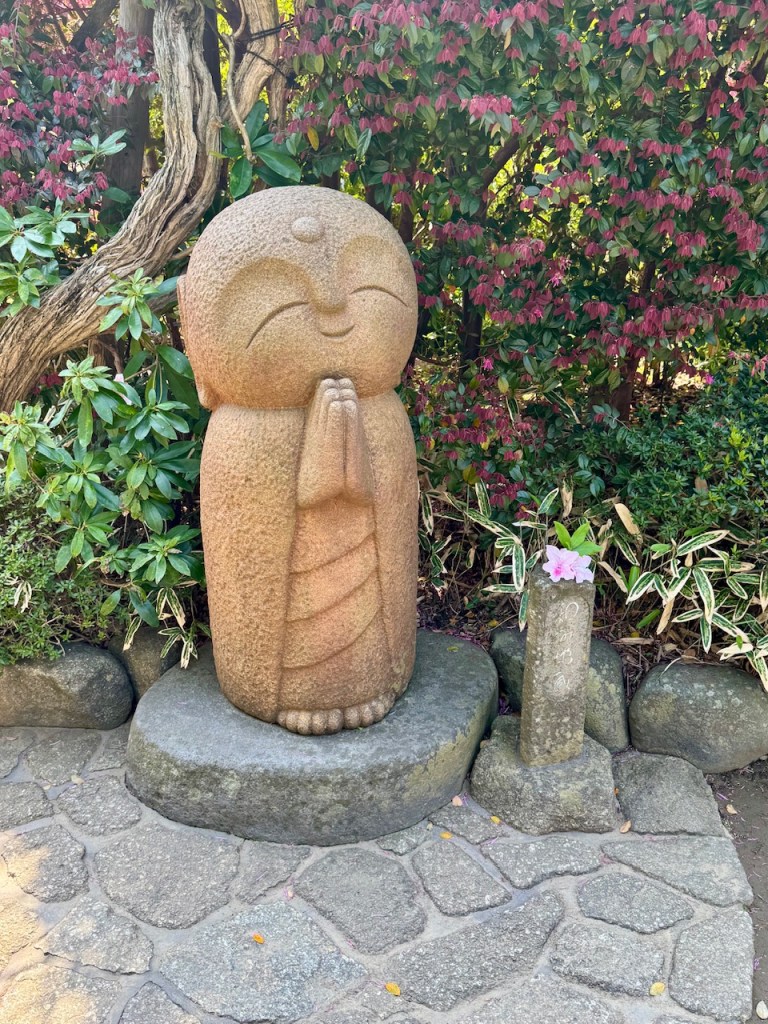
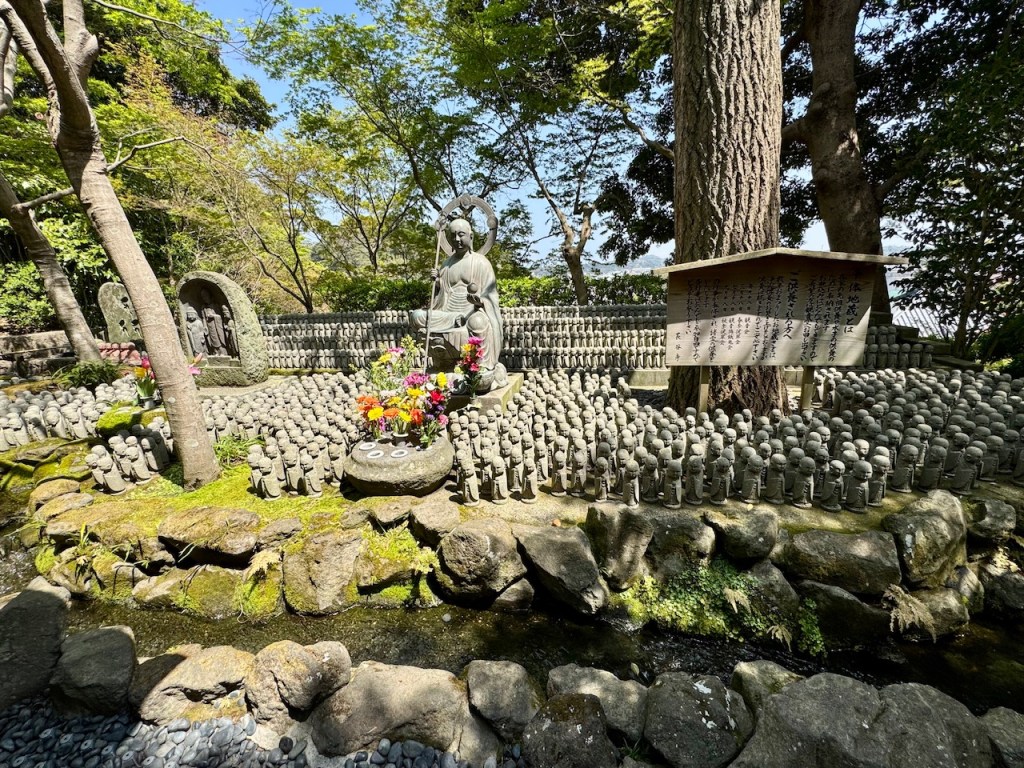
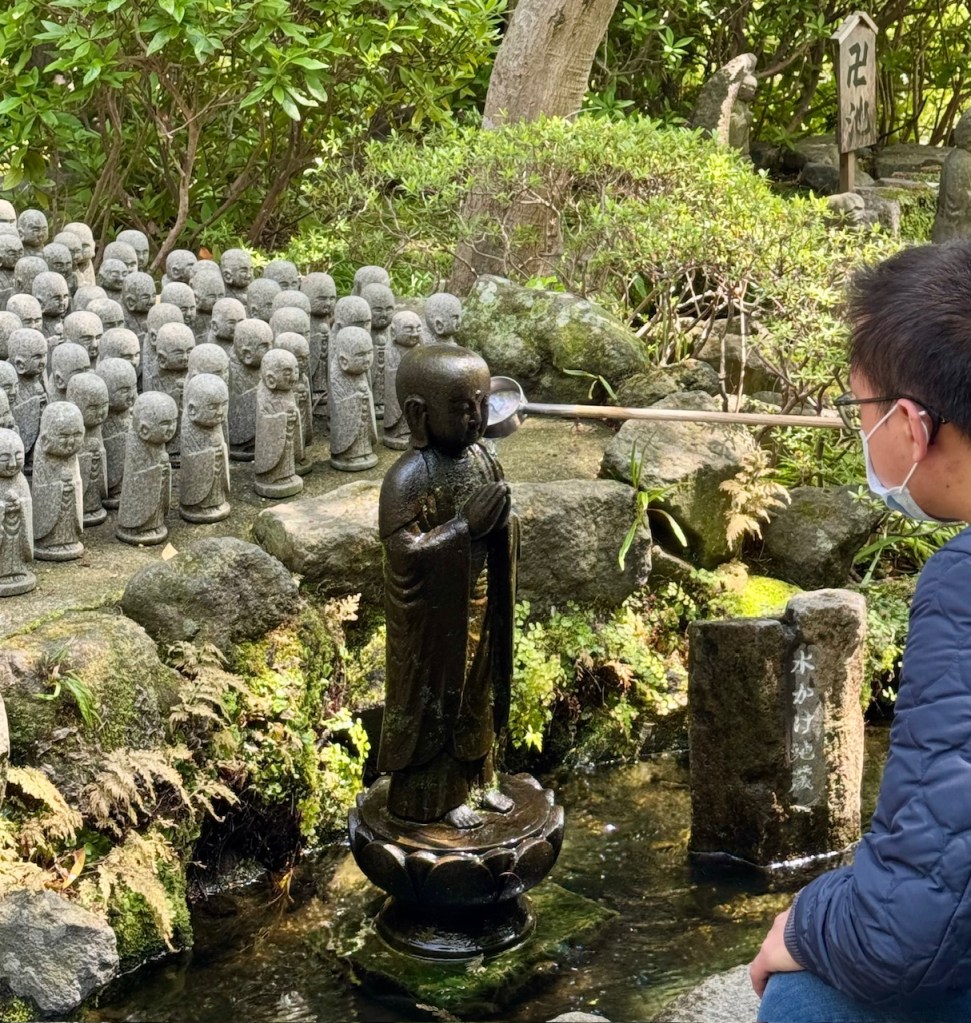
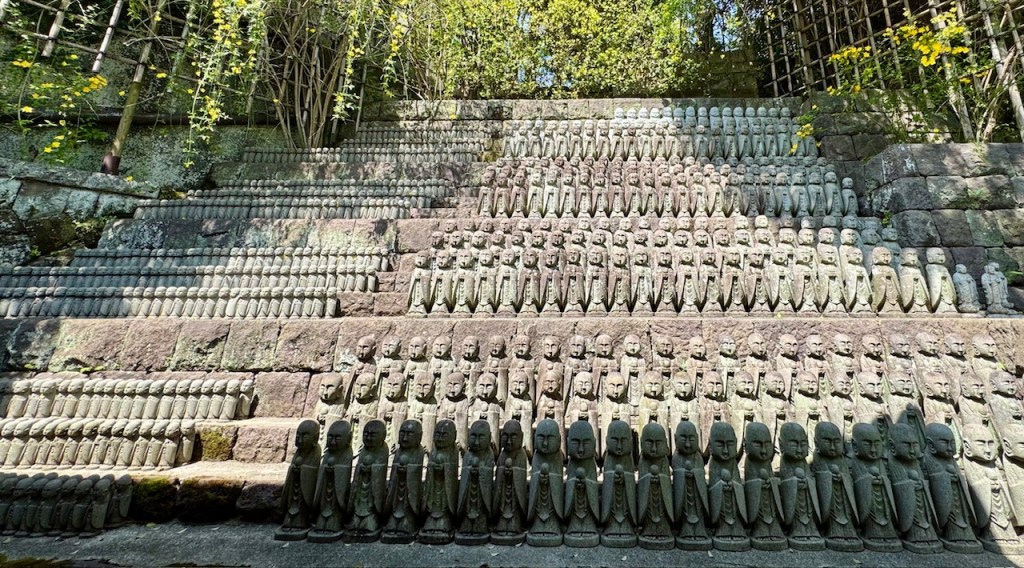
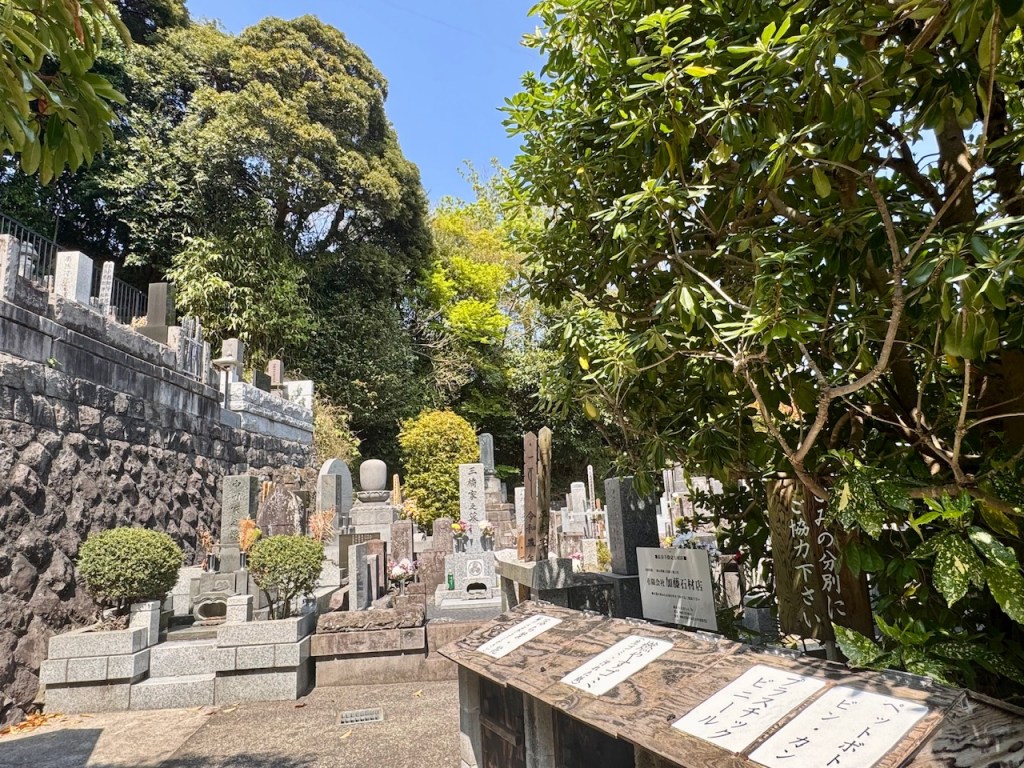
The grounds of the temple are home to hundreds of small Jizō statues, placed by parents mourning offspring lost to miscarriage, stillbirth, or abortion. These statues remain in place for about a year, before being removed to make way for more statues; it is estimated that some 50,000 Jizō statues have been placed at Hase-dera since World War II. Sadly no pictures of Kannon allowed but the stunning and expansive grounds provide loads of beautiful gems to please the eye.





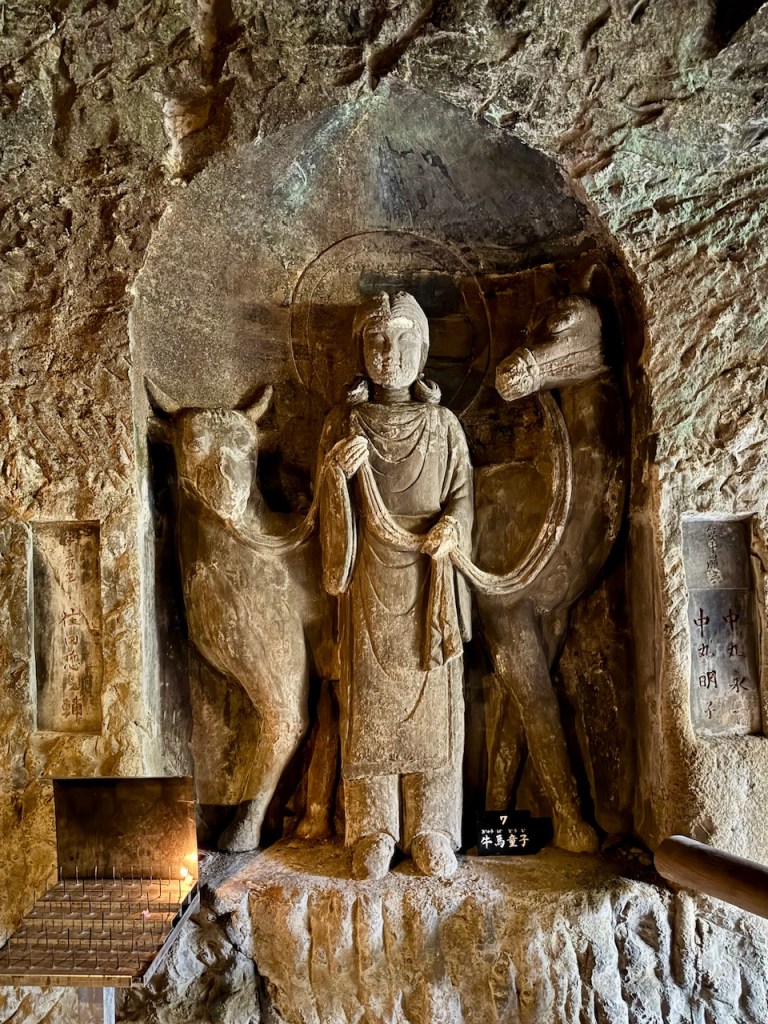
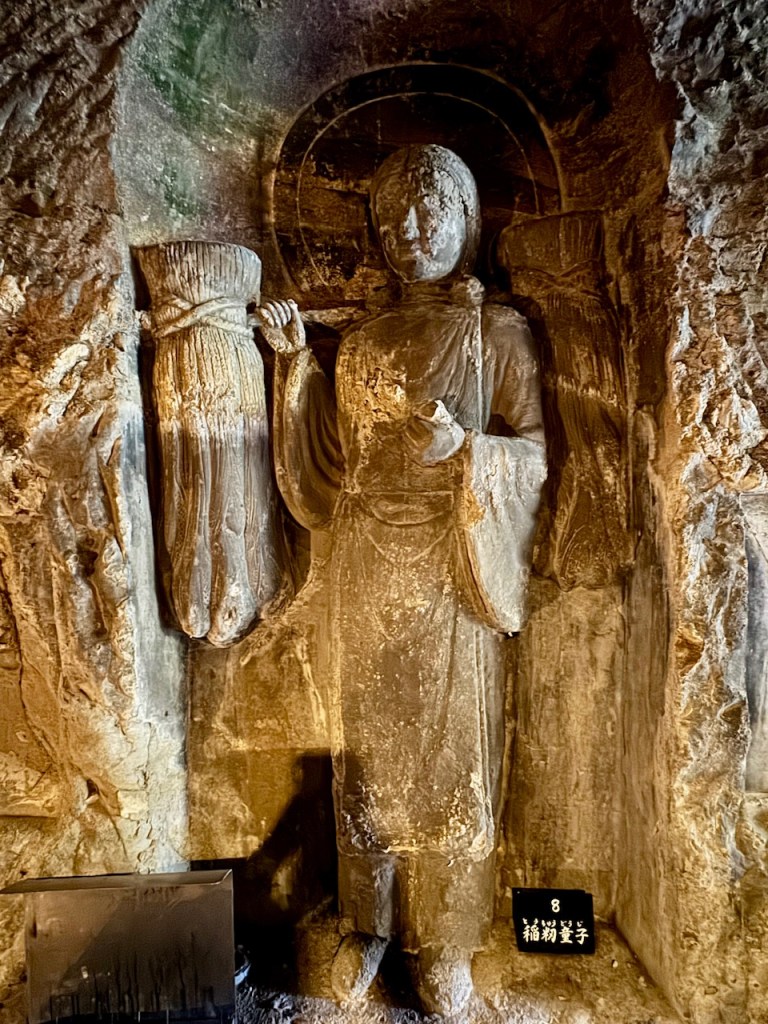
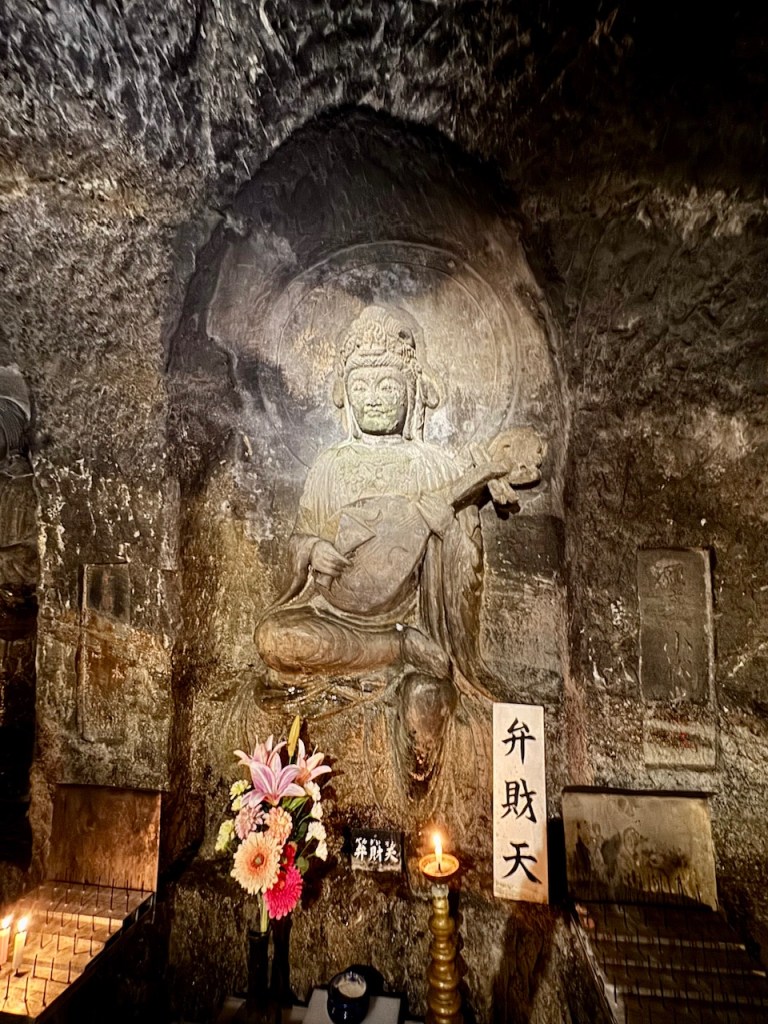
I’m templed out so I hop back on the train to Kamakura in search of a late lunch. I picked a tempura spot on Komachi-dori Street last night. The restaurant was hidden over a pet store so it look some tenacity but I found it! For lunch, I chose a mixed tempura set lunch that came with a bowl of miso soup, some weird macaroni seaweed mix and a big bowl of steamed rice. This was the first hot meal I’ve had since my arrival in Japan and it was pretty good but not spectacular. Nonetheless it filled me up and allowed a bit more exploration on this busy street before heading back to the train.


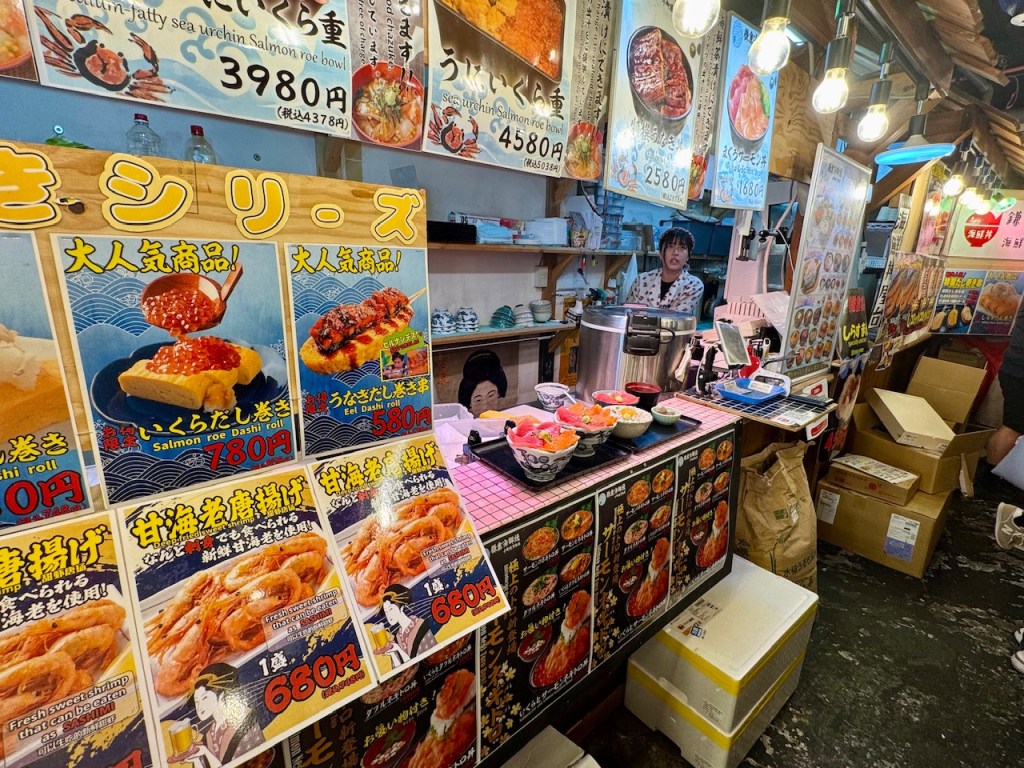
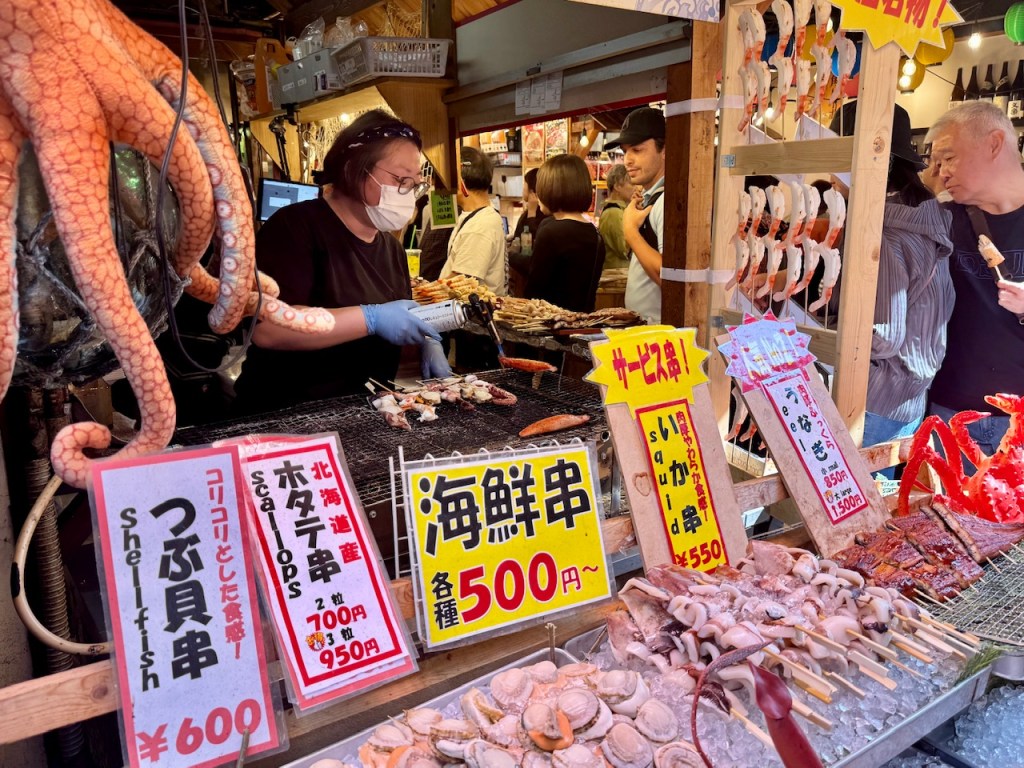
Enroute I noticed a food court featuring foods on a stick – seafood and meat cooked to order that looked pretty interesting but alas I was full. I also stopped at a used kimono shop but let’s just say that I am quite a bit more robust than the typical Japanese lady so my yen stayed in my purse!

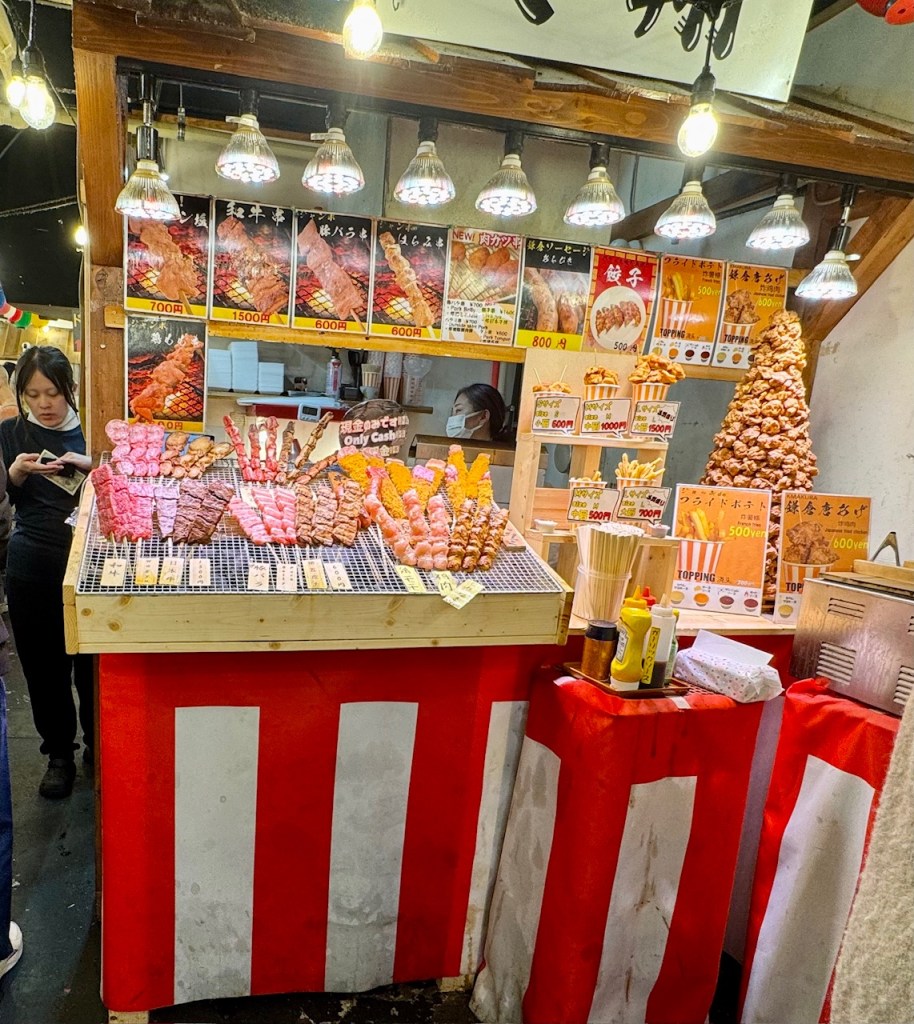
Back on the train and back to the hotel in time for a well deserved nap. I’m almost in this time zone but not quite! Tomorrow is another day. Adventures await …
 Judy’s Rambles