
April 13, 2025
Decided in the middle of the night when I couldn’t sleep that a walking tour of the Imperial Palace and environs this morning was in order. The tour starts at 9 am so I gave myself the usual 15 minute buffer and arrived at our meeting point, the Sakuradamon Gate of Edo Castle, 20 minutes early. Lol, I do hate being late!!
My guide Anna (a lovely half French half German woman that has been living here for three years) arrives soon enough and we await the arrival of the rest of the crew. We end up with a fairly large group with around a dozen Americans, five Canadian ladies including me, a couple from the Netherlands and a couple of guys from Italy and Germany. As soon as we get started a light drizzle starts and there are intermittent rain showers for the three hours of the tour; not as horrible as the forecast but still a bit tedious. But I digress…
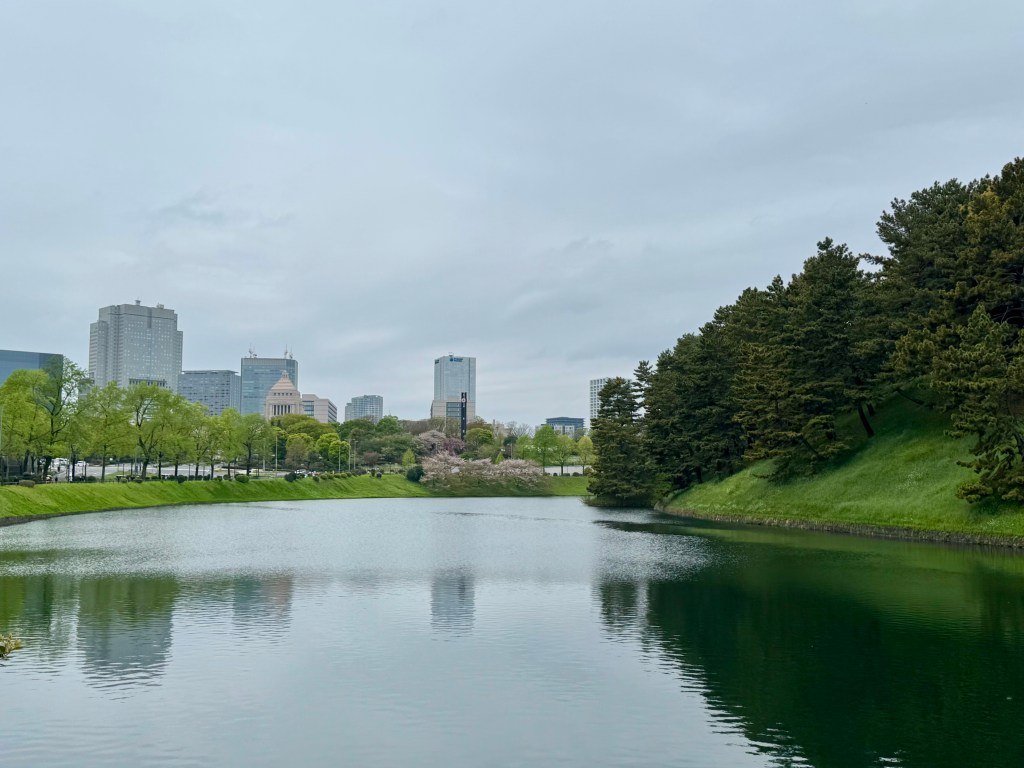
The current Imperial Palace is located on the former site of Edo Castle, a large park area surrounded by moats and massive stone walls in the center of Tokyo. It is the residence of Japan’s Imperial Family who sound like they rarely get out.
The Sakuradamon Gate, completed in around 1620, was once part of Edo Castle’s defenses, and is the largest remaining gate of Edo Castle. It is also the most famous because it was the location of an assassination referred to as the “Sakuradamon Incident.” In 1860, a feudal lord was assassinated here by ronin samurai for trying to limit the emperor’s power.
Sakuradamon Gate is actually not one but two gates. Behind the small, strong koraimon gate is a larger yaguramon gate. The gates stand at right angles to each other, creating an enclosed space. This forms a square-shaped defence gate forcing intruders to turn at the right angle once inside, slowing them down and making them vulnerable to attack. The design was considered unbreachable and was very popular during the Edo period (1603-1867).
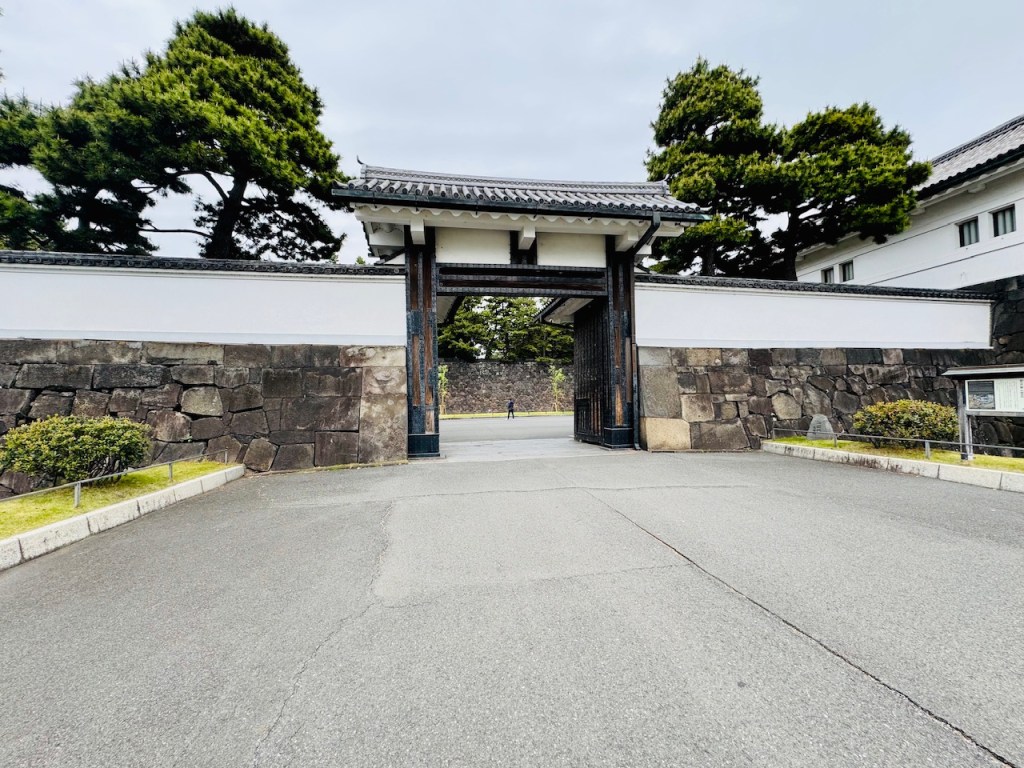

Archers and other soldiers occupied the interior gate and could fire arrows and drop rocks on any intruders who breached the outer gate. The gate’s high stone walls were built without the use of mortar. Stoneworkers fitted stones together seamlessly to make the gate impenetrable. Only the force of the 1923 Great Kanto Earthquake made an impact on this sturdy gate, shaking some of the rocks loose.
Edo Castle was the seat of the Tokugawa shogun who ruled Japan until 1867. During the 250 years or so of the Shogunate, there was a policy of national isolation which prohibited people from entering or leaving Japan. Western nations began to exert pressure on Japan to change this and the breaking point was the arrival of of Commodore Perry’s “black ships” in 1853. The US and other Western nations used their superior naval power to pressure the Shogunate into signing unequal treaties that eroded its authority and sovereignty leading to civil unrest and the overthrow of the shogun in favour of the Emperor. The end of the Edo Shogunate was followed by the Meiji Restoration in 1868; leading to the modernization of Japan
After the shogunate was overthrown, the country’s capital and imperial residence were moved from Kyoto to Tokyo. Construction of the new Imperial Palace was completed 20 years later in 1888. I guess contractors were really busy back then as now. The palace was once destroyed during WWII, and rebuilt in the same style, afterwards (not sure how long that took).
From Kokyo Gaien, the large plaza in front of the Imperial Palace, we can see the Nijubashi, two bridges that form an entrance to the inner palace grounds. The stone bridge in front is called Meganebashi (Eyeglass Bridge). The bridge in the back was formerly a wooden bridge with two levels, from which the name Nijubashi (Double Bridge) was derived.
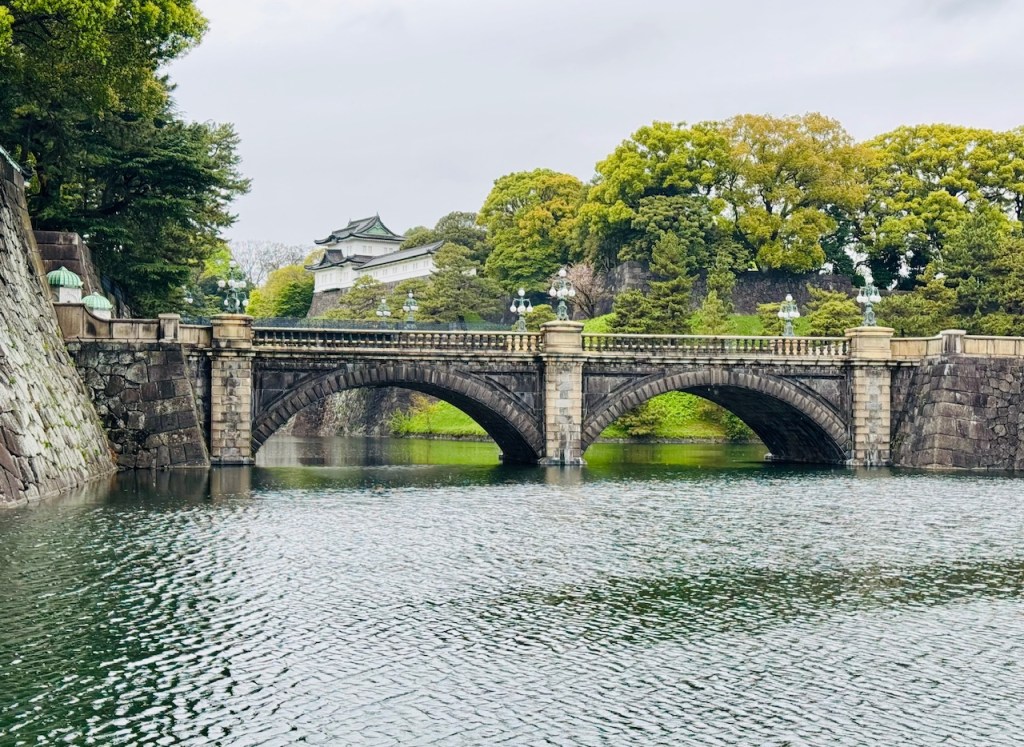
The inner grounds of the palace are generally not open to the public. Only on January 2 and February 23, for the New Year’s Greeting (I guess it takes a couple of days to recover from NYE revelries) and the Emperor’s Birthday respectively are visitors able to enter the inner palace grounds. At those times, they can see the members of the Imperial Family, who make several public appearances on a balcony.
Adjacent to the inner grounds of the palace are the Imperial Palace East Gardens of the Imperial Palace that are open to the public throughout the year.
After our history lesson, we’re off to check out the statue of Kusunoki Masashige
Kusunoki Masashige was a samurai and a famous military strategist in the early 14th century. He was fiercely loyal to the Emperor Emperor Go-Daigo, managing to put him in power for three years, then supporting him in an unwinnable war against the other samurai. In the end, he and his remaining men committed seppuku; ritual suicide by disembowelment. The bronze statue of a warrior mounted on a spirited steed, honoring this legendary samurai, is now considered a symbol of loyalty and bravery in Japanese history but that wasn’t the case at the time as he was on the “wrong side”. When the Emperor regained power in 1868, history was interpreted differently.
The statue of Kusunoki Masashige, in armor and mounted on a fiery charge is often featured in tourist guides and was once also found on the five sen note. He does cut an impressive figure don’t you think?
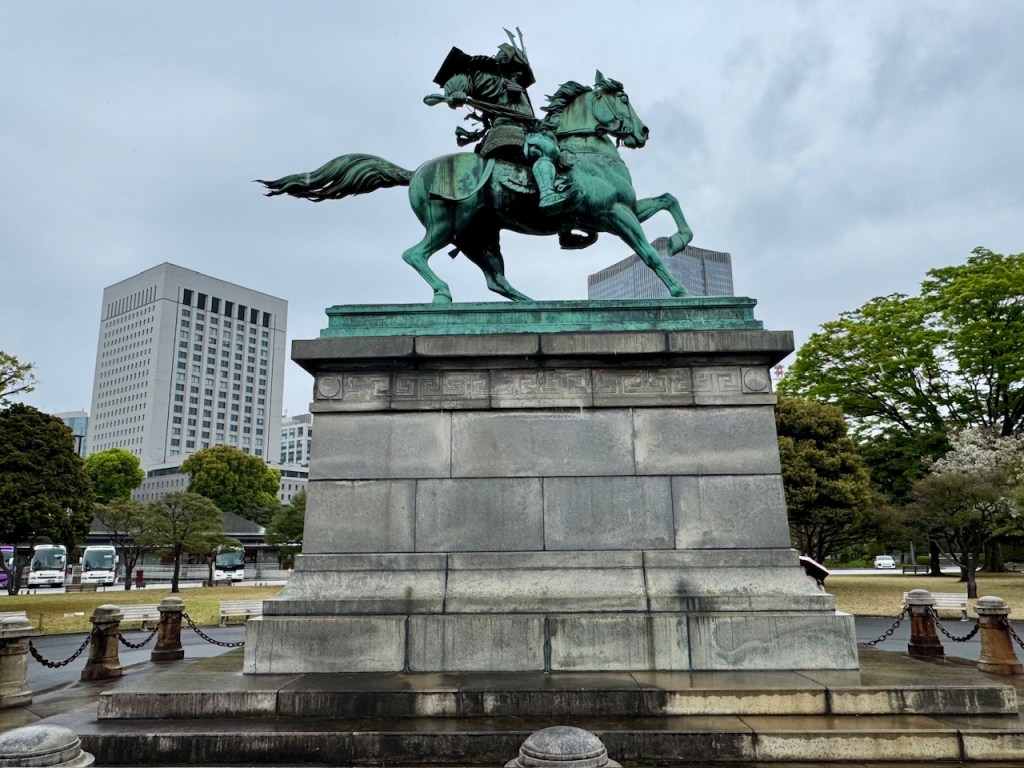

The horse has one leg raised meaning that the rider died as a result of the battle but not in battle (that is signified by two of the horse’s legs being raised). Lucky riders with four feet on the ground died of natural causes.
We’re off to Ginza, a famed Tokyo district. En route, we go through the Yuraku Concourse, home to cool speakeasies and cafes for the hard working Japanese salarymen to relax and unwind.

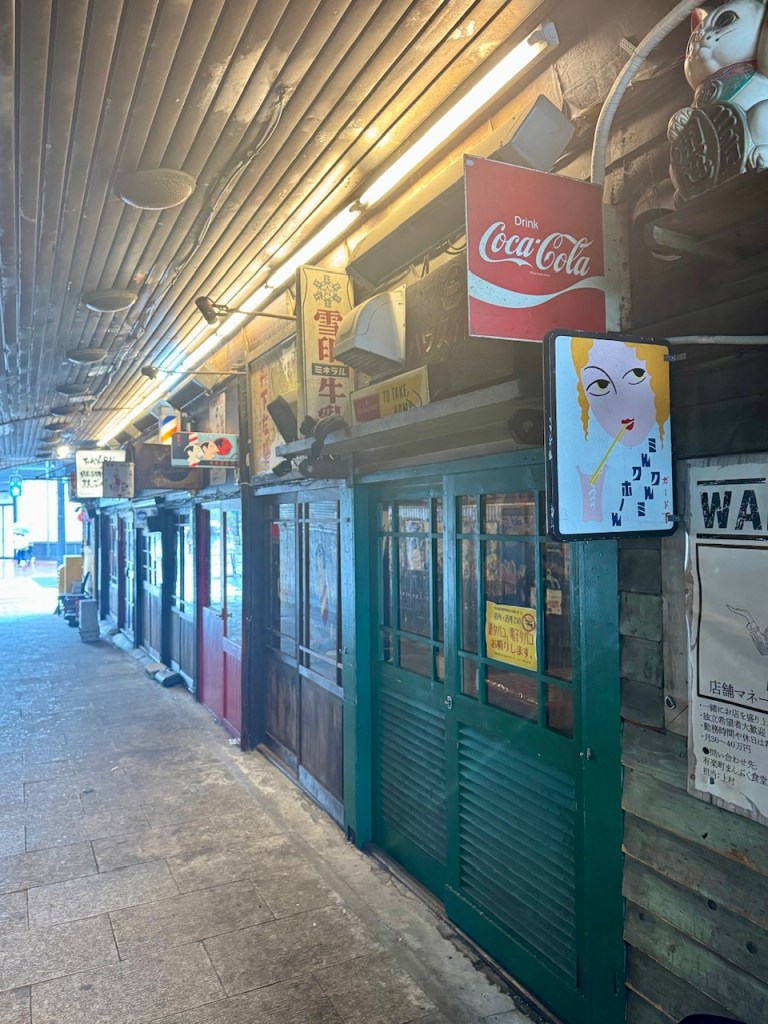


Historically, the site of the Edo period’s silver mint, it has evolved into a modern commercial and luxury hub. After a devastating fire in 1872, foreign architects, including Thomas Waters, were brought in to design Western-style brick buildings and wide streets, shaping Ginza’s modern layout. Today, Ginza is renowned as Tokyo’s luxury shopping and entertainment district boasting flagship stores of international luxury brands, alongside established Japanese retailers and also featuring art galleries, theaters, and traditional confectionery shops.

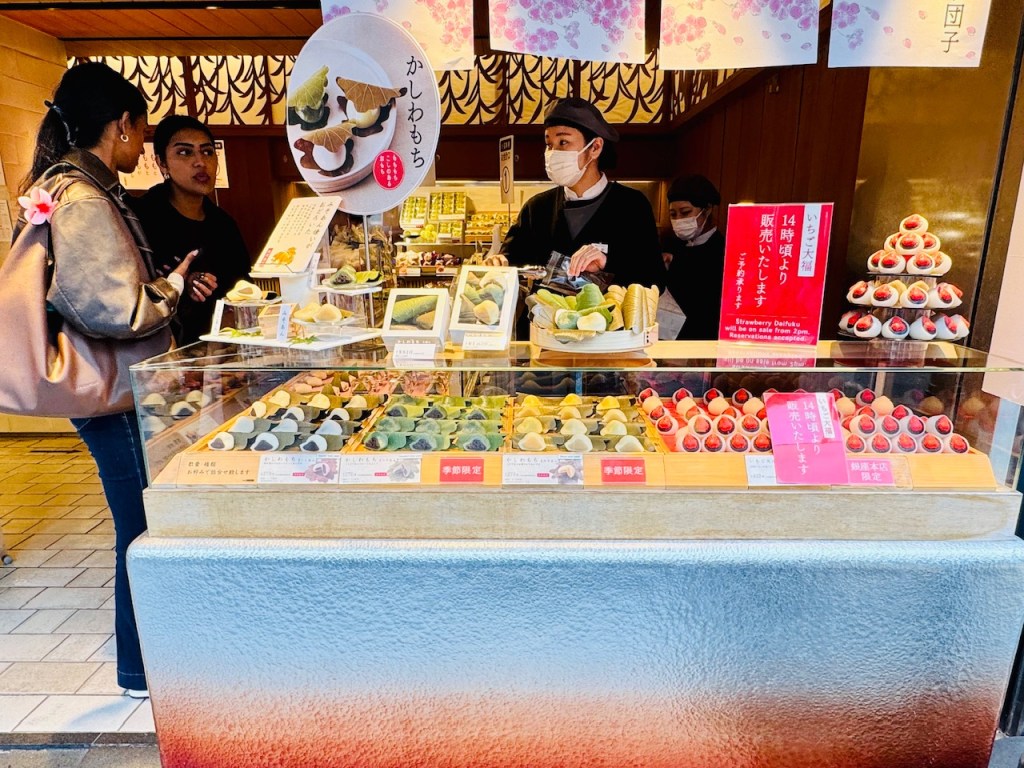
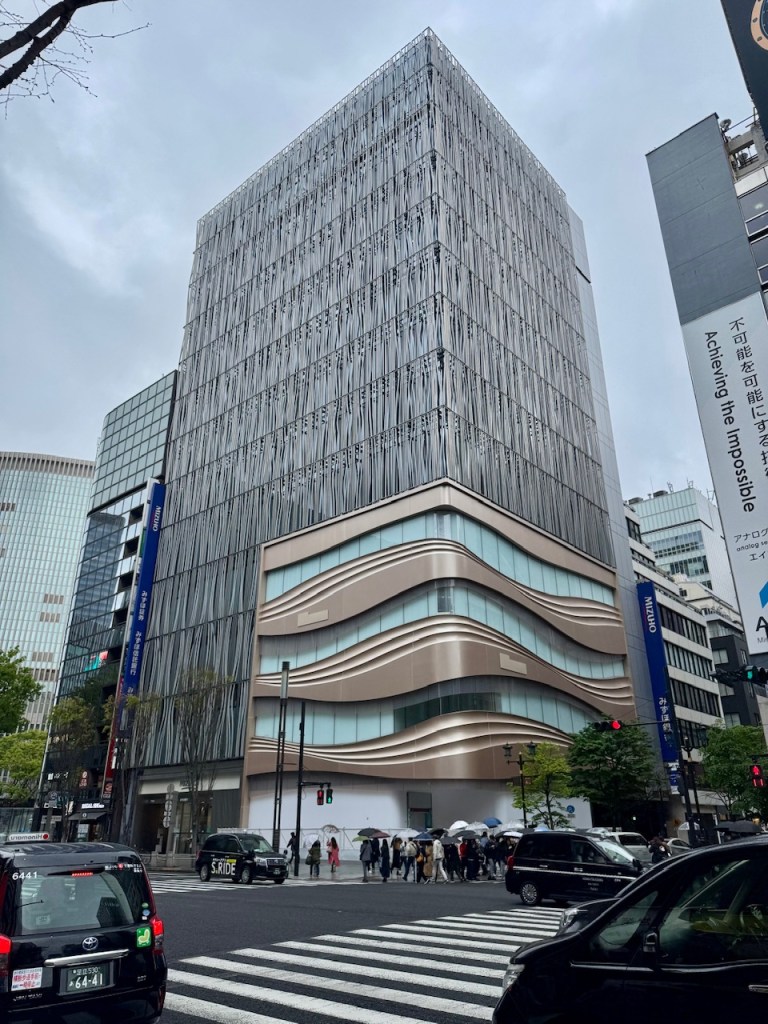
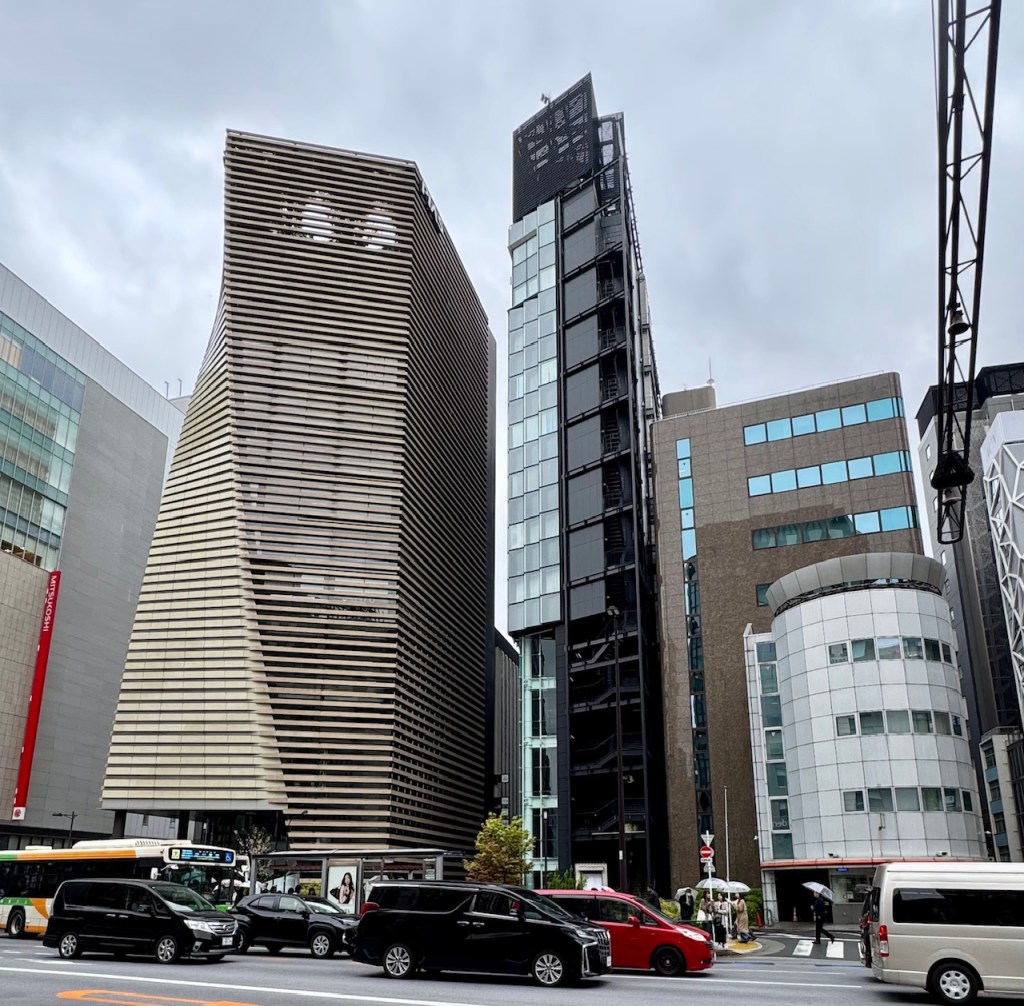

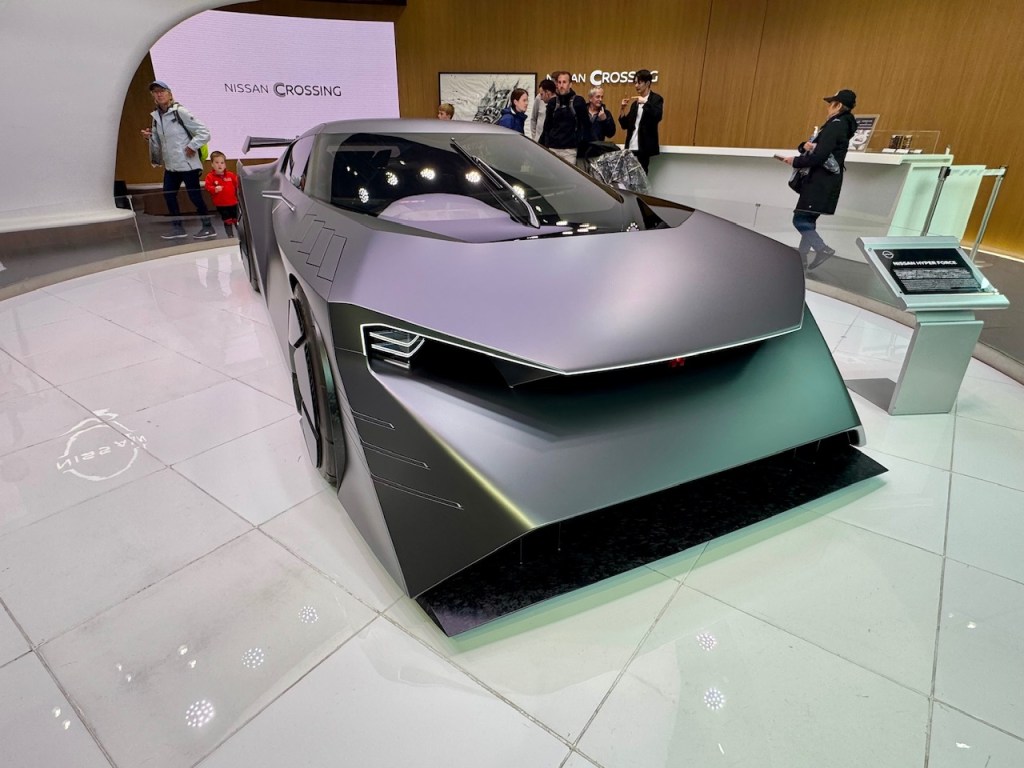
While in Ginza, we made a whistlestop at Nissan Crossing where Nissan displays a couple of their more intriguing cars.


This Buddhist temple, fashioned in stone rather than wood, is unique in Japan as its South Asian designs, based on Indian and Nepali temples, gives it an exotic look.

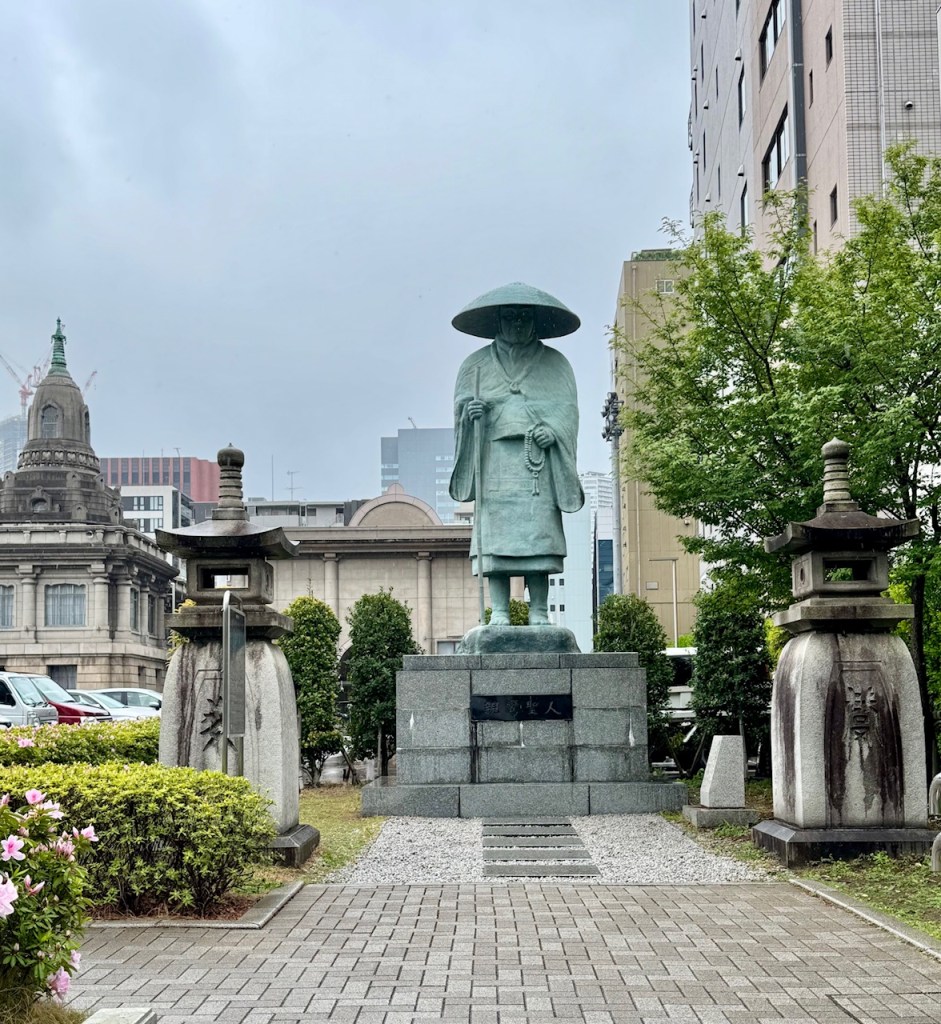

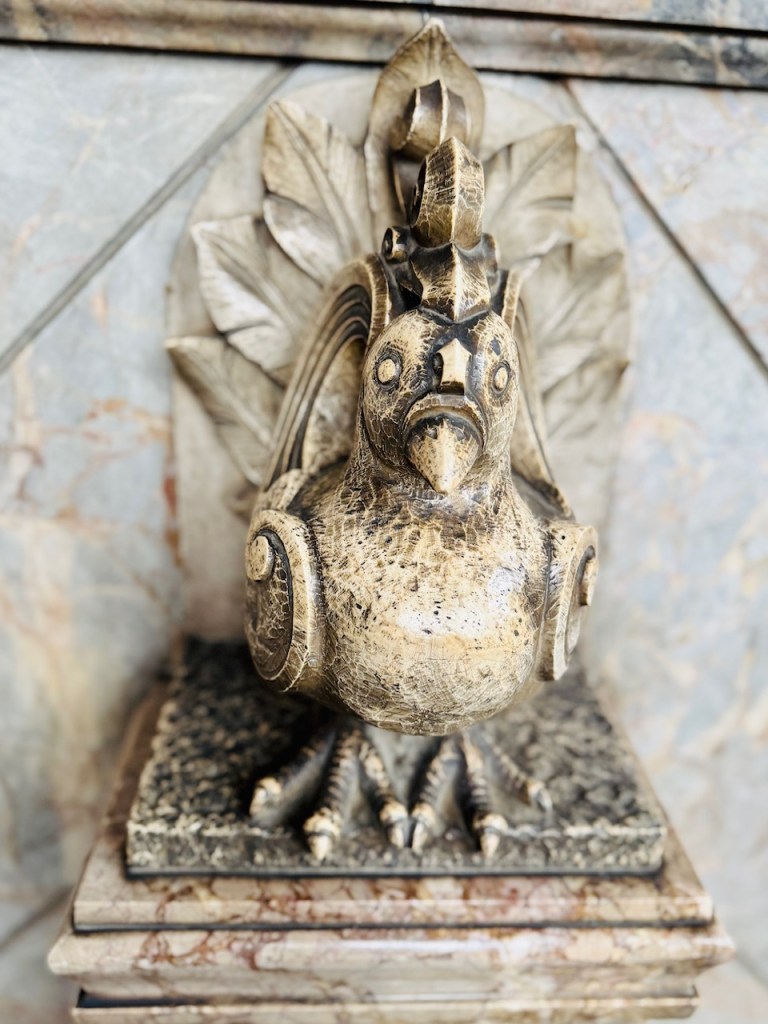
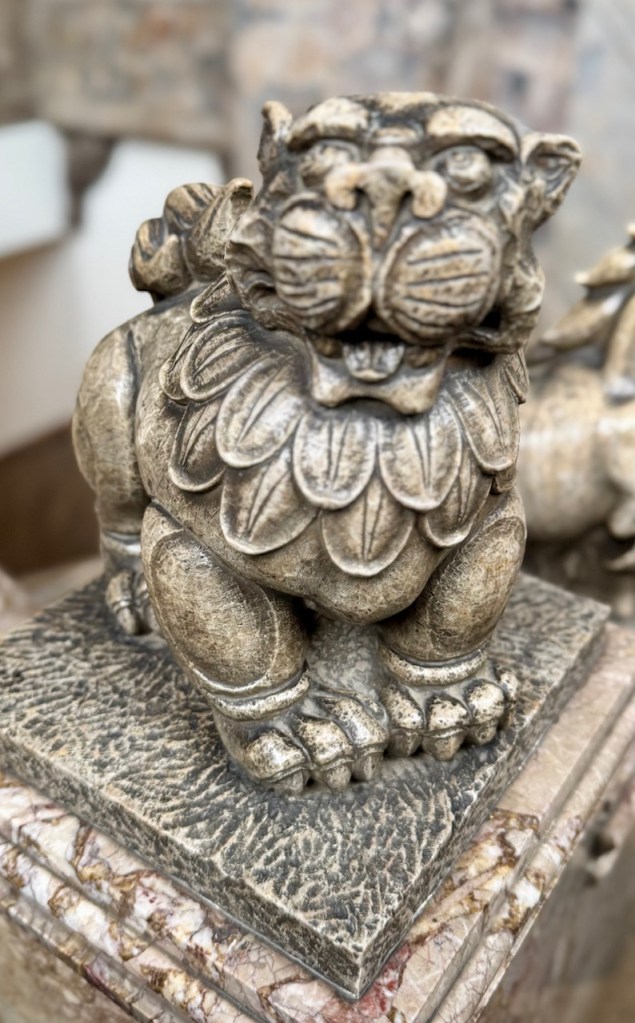
Tsukiji Hongwanji is a temple of the Jodo Shinshu Hongwanji sect. The temple, first built near Asakusa, was burnt down in a fire in 1657 and rebuilt at its current location in 1679. A pipe organ is set at the back of the main building, a rare sight in a temple. Stone animals, stained glass, and various other designs are also found in the temple.
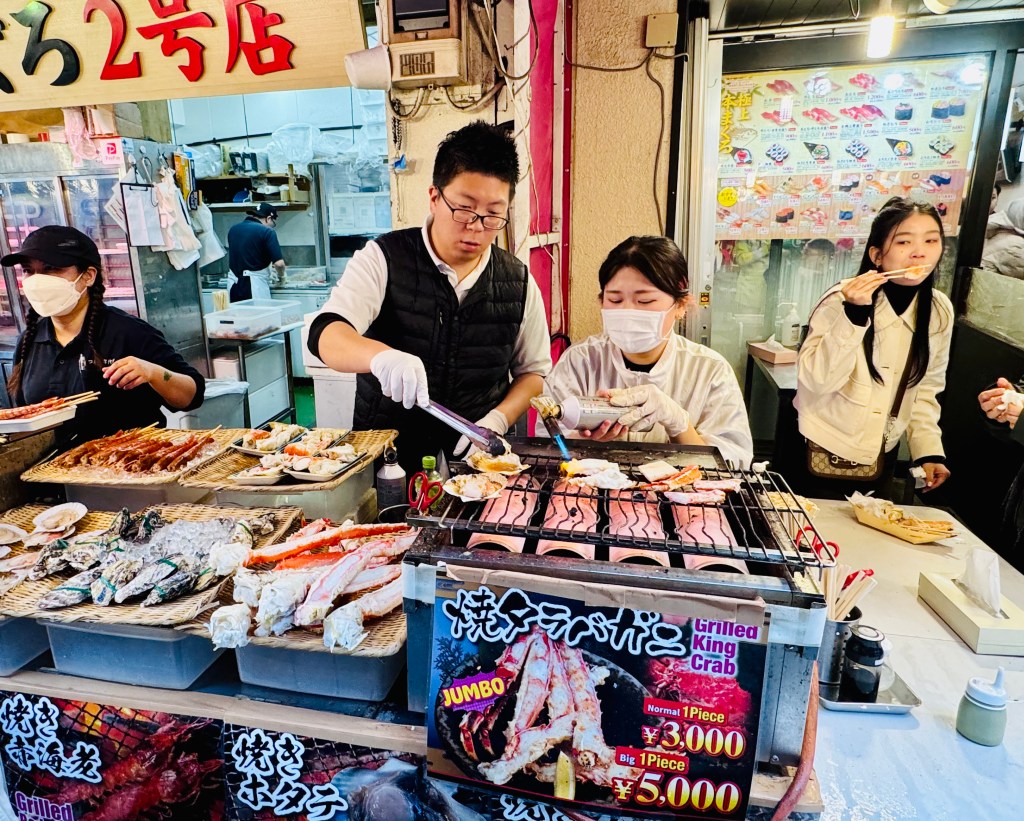
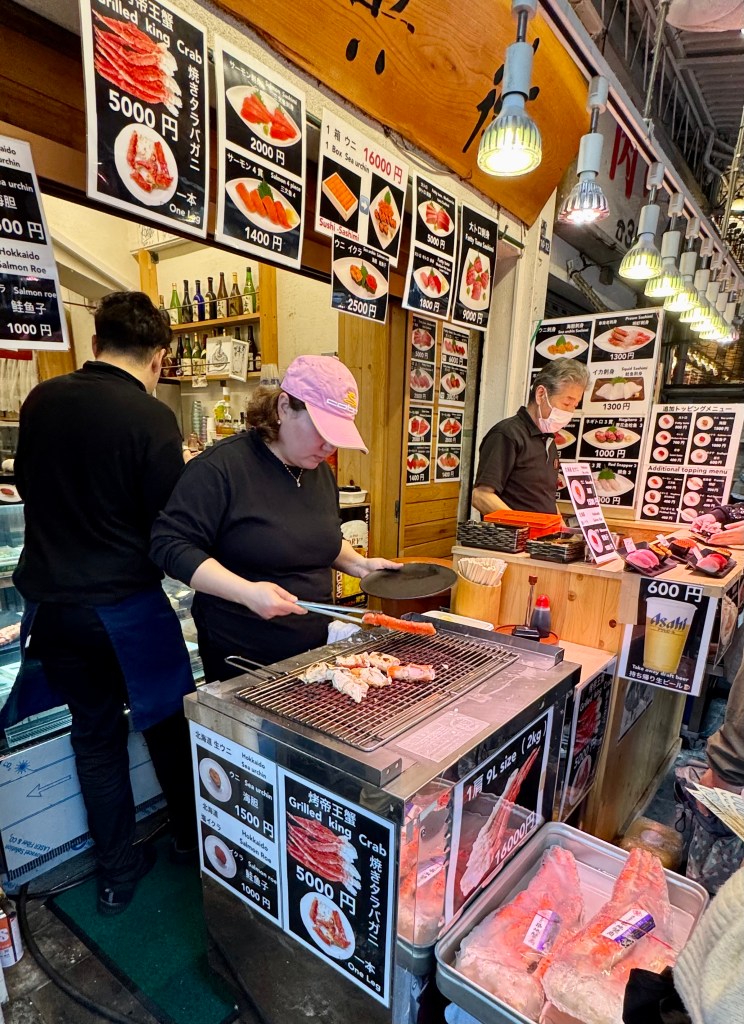
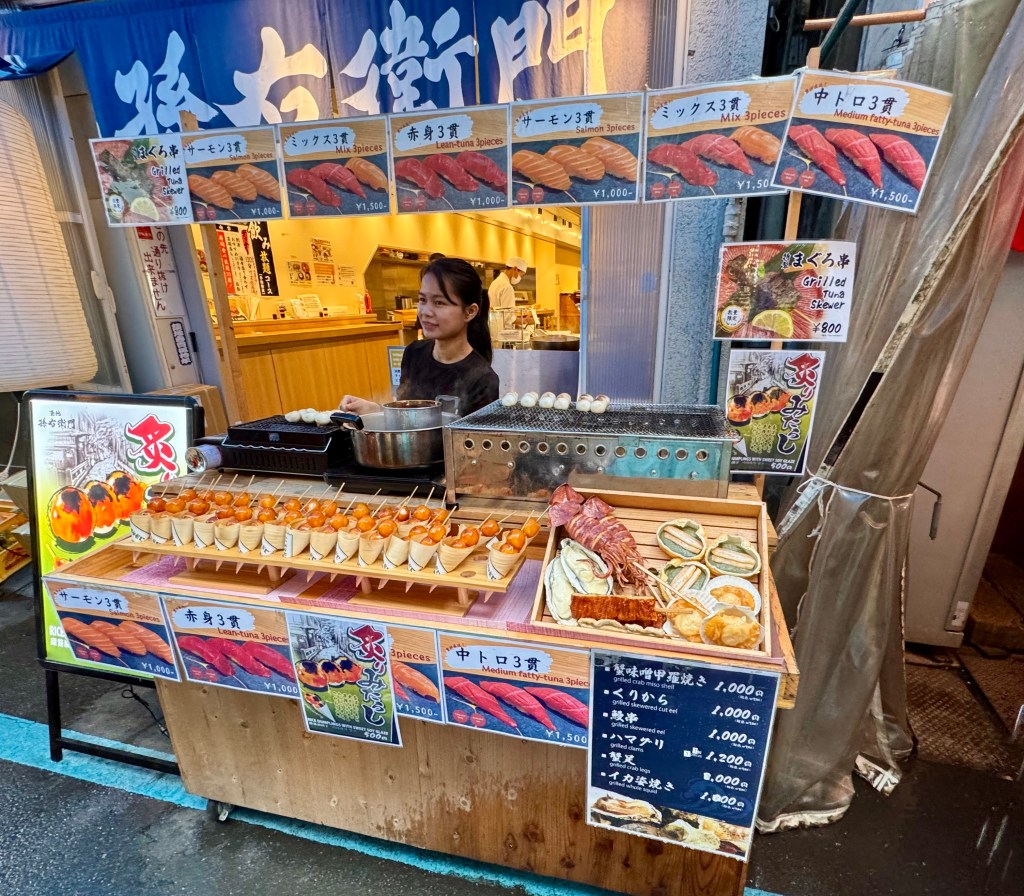
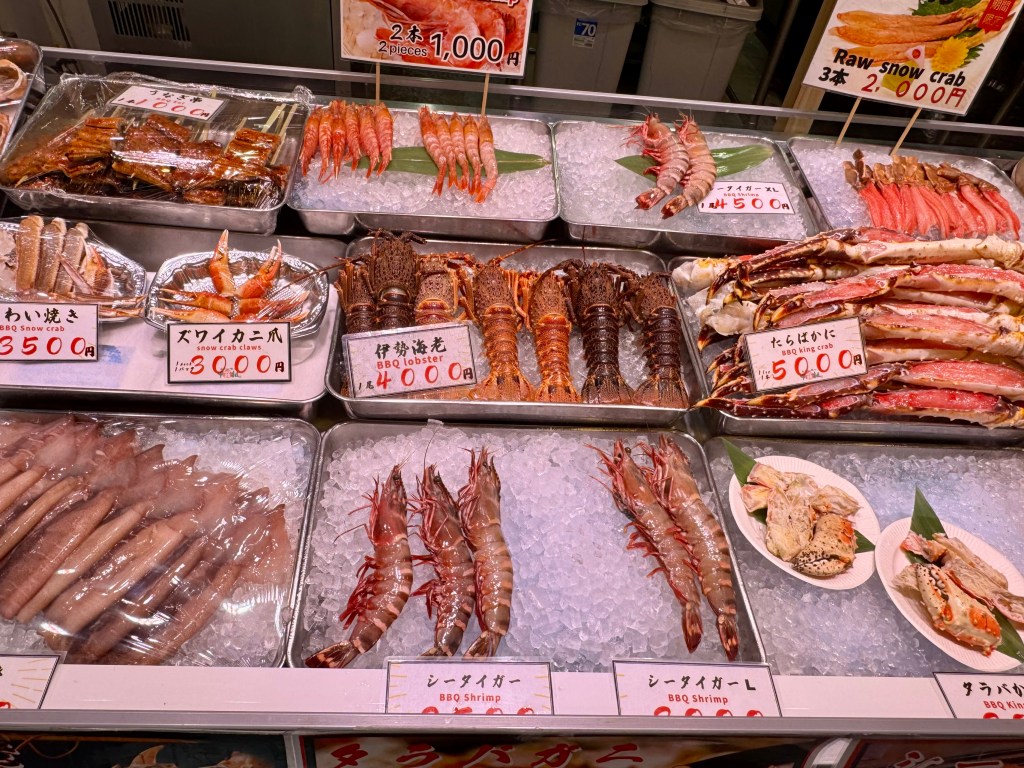
Our next stop is the Tsukiji Fish Market. Once this was the world’s largest fish market and home of the famous Tsukiji Tuna Auction. Today, the labyrinth of crowded crisscrossing lanes and alleyways between Ginza and the Sumida River are packed full of stalls and small restaurants; a paradise for foodies. Sadly, we breezed right by all the delicacies on offer en route to our next and last stop Namiyoke Shrine.


Namiyoke Inari Shrine is a Shinto shrine and this small, yet significant, shrine is dedicated to sea safety and cherished by local market workers.
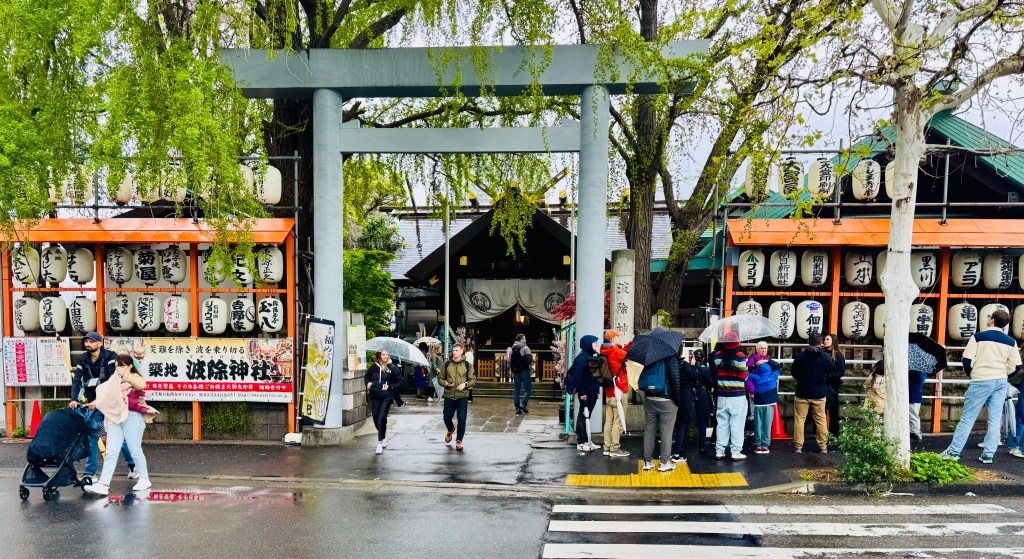
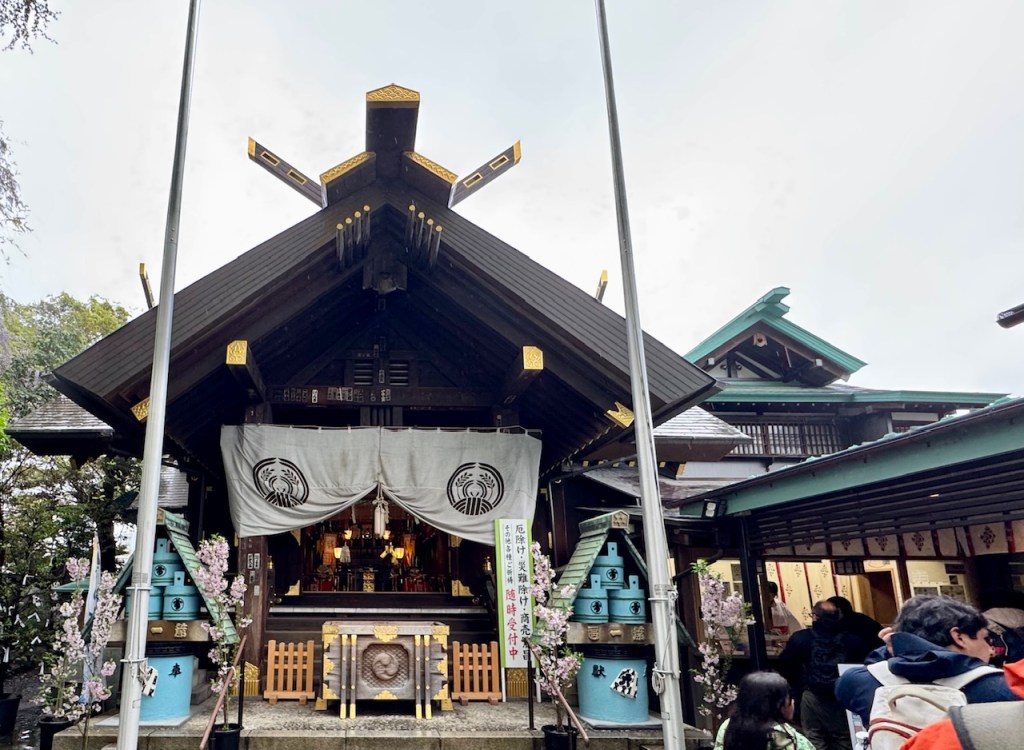

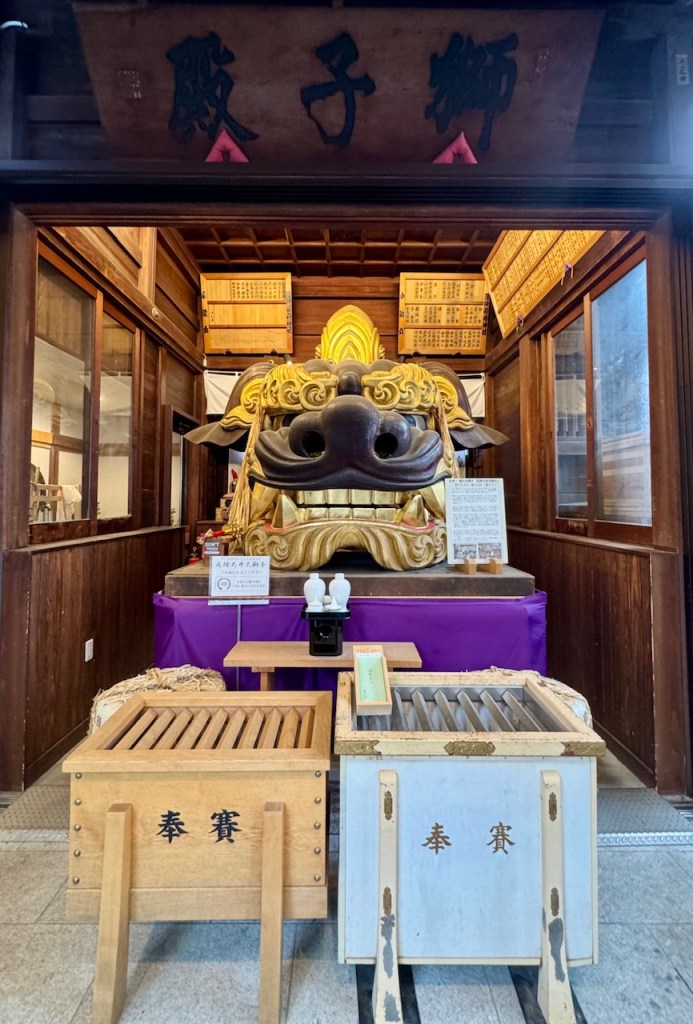
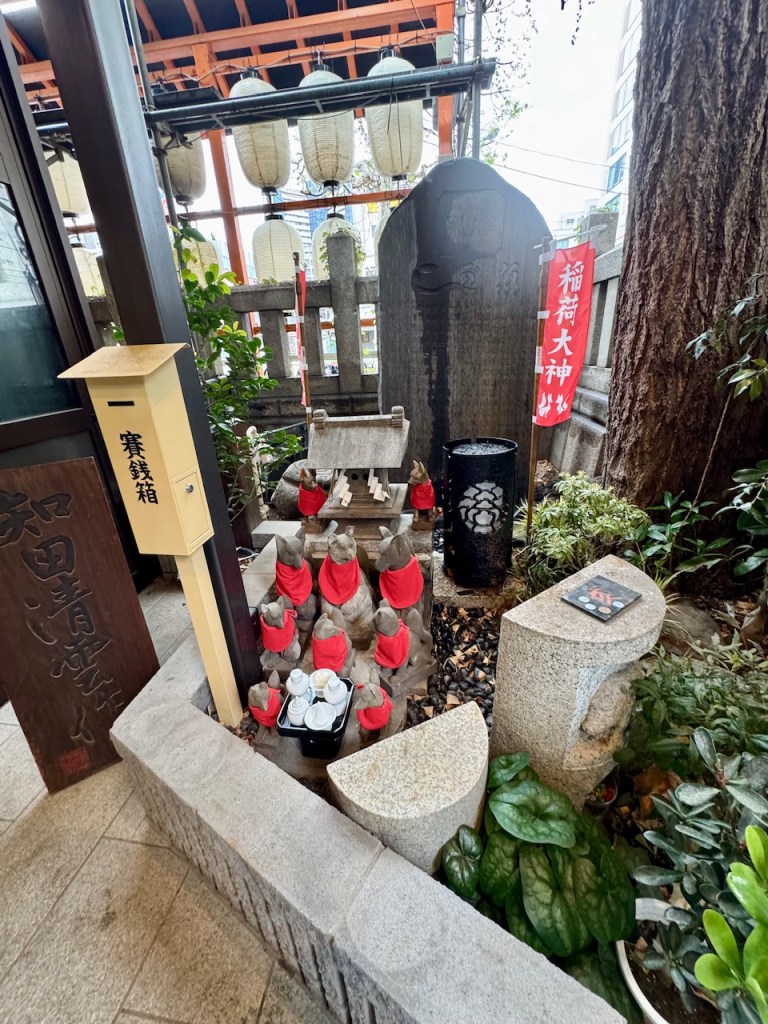
Dedicated to the god Namiyoke-Inari who protects against misfortunes and helps people to get over periods of turmoil, Namiyoke-Inari is highly sought after by people who pray for warding off bad luck, for divine protection from calamity, good business, safety during construction, etc.
The group goes our separate ways and I’m trying to figure out the rest of my day. I did have an afternoon tour booked but that’s seeming less than desirable with the steady drizzle. I’ve also been wanting to check out some Japanese skin care products (they’re supposed to be the best) so maybe shopping.


Not interested in spending the big bucks in Ginza but there is a Don Quijote nearby and I’ve been wanting to check one of those out. Yikes!! What a jumbled pile of stuff sort of like a stuff room on steroids. I do find a battery for my selfie stick and some face masks that will doubtless make me look ten years younger but shopping when you’re sleep deprived especially in a store like this isn’t for me. I get my stuff and get out and then head for the train and back to the hotel. I need to pack up my bags for the transfer to the NCL Spirit for my cruise tomorrow morning and, more importantly, I need a nap. Tomorrow is another day. Adventures await …
 Judy’s Rambles