
April 17, 2025 (Sea Day)
Today was another sea day. Getting colder as we sail north so heading out on the deck is pretty much for brisk walks only. The days activities revolved around food, gambling, lounging and reading. Went for a nap late afternoon and woke up at 1:30 am. Lol, Rip Van Winkle would be jealous!!
April 18, 2025 (Kakunodate)
This morning we docked in Akita. The capital of the far north prefecture of the same name, Akita is best known for snow (thank God we only had rain!), onsen (hot springs), great sake, a sturdy breed of dog (think Hachiko), and the widely acknowledged beauty of its women. Unfortunately I’m heading out of town on a ship’s excursion – Explore Kakunodate in search of the illusive light pink shidarezakura, weeping cherry trees and to visit the residences that wealthy samurai families once owned.
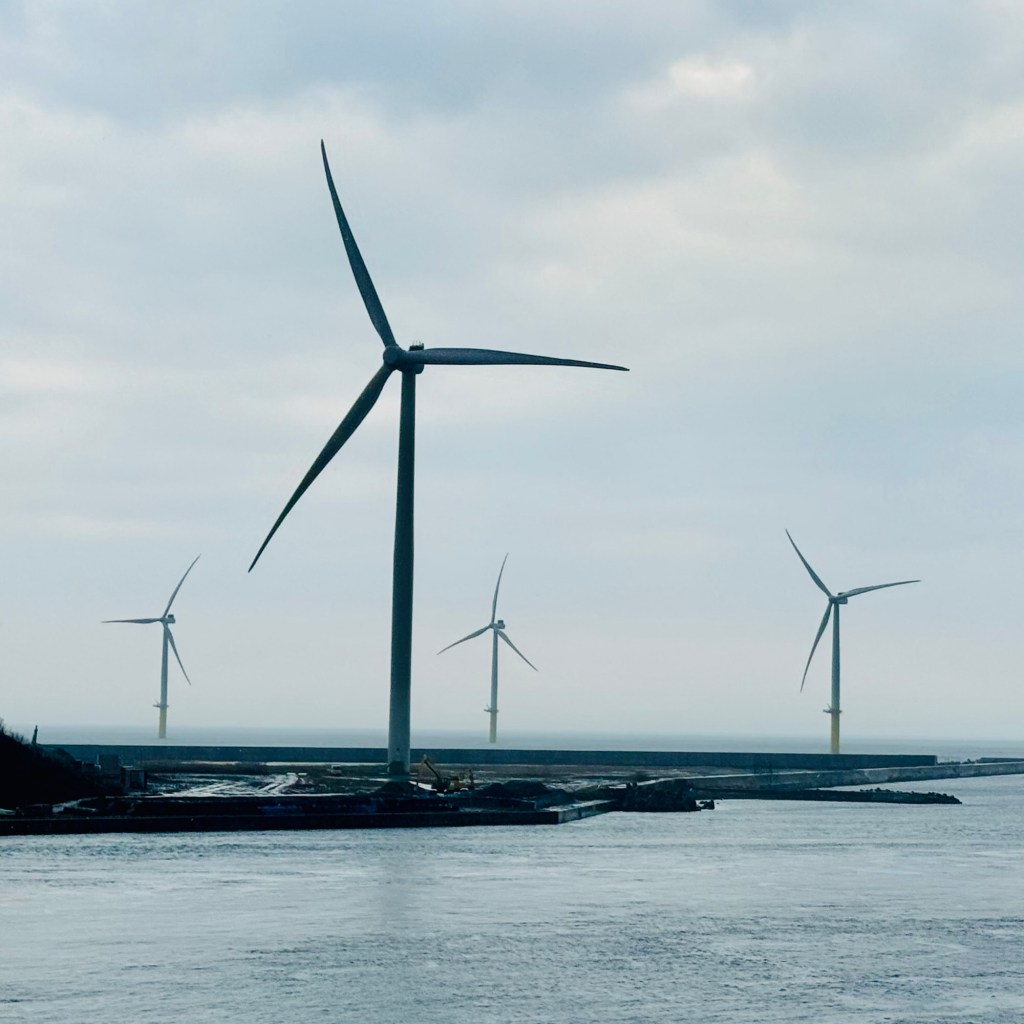
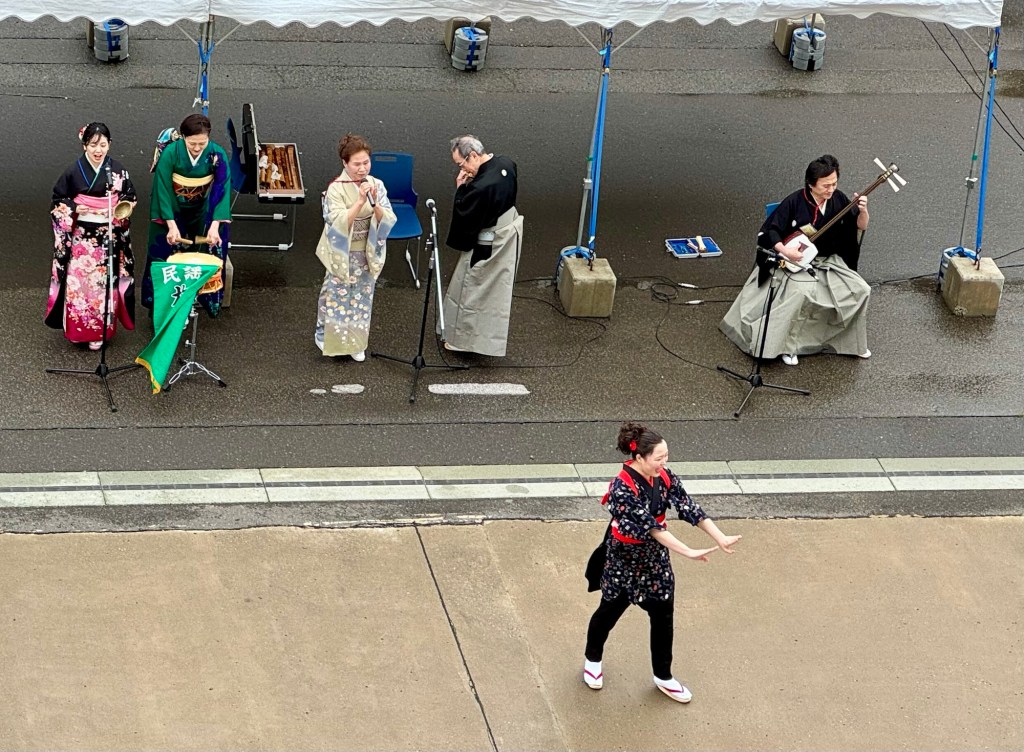
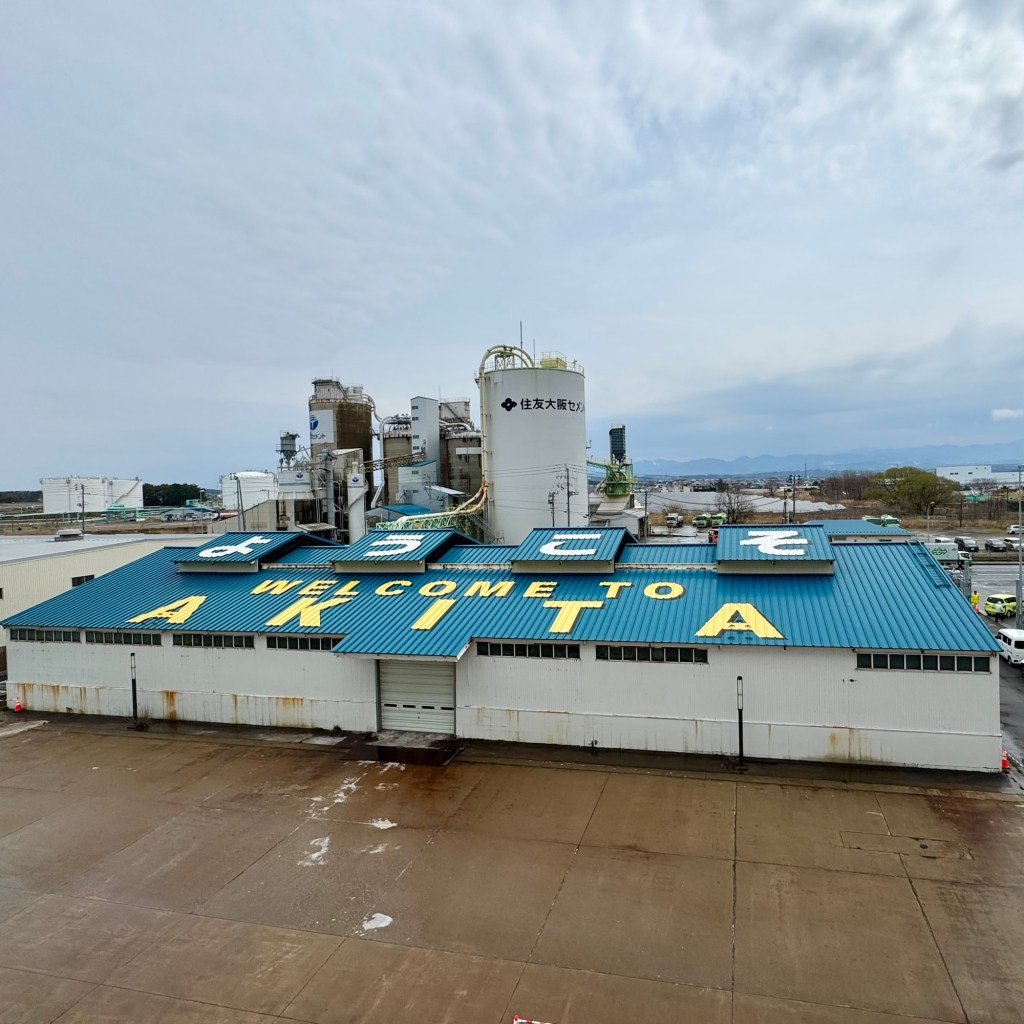
But first breakfast! Today I opted for smoked salmon and a bagel with my usual fruit salad. No mimosas as I want to be sharp, lol!

We boarded our bus for the 90 minute drive during which our guide, Taka Suzuki, regaled us with tales of castle towns and samurai along the way.
Samurai and the Japanese Feudal System
Samurai were warriors who served either the daimyo, feudal lords, or the shogun overlord, and in return received either land or salary. Unlike vassals in the European feudal system, each samurai held his fief from only one lord.
In their domains, the daimyo were in control of not only samurai but also other residents in lower classes, such as peasants, artisans and merchants.
The shogun reigned over the daimyo, exercising absolute rule under the nominal leadership of the emperor. Shogun Tokugawa leyasu (he is the main character in the current TV series, Shogun)and his descendants ruled the country for over 260 years, from 1603 to 1867. Their reign is called the Edo period after the name of the city where they placed the shogunate the present-day Tokyo.
The feudal system came to an end when samurai from the southern domains carried out a coup d’etat in 1867 that led to the Meiji Restoration of 1868. Subsequently, Japan introduced constitutional monarchy with the emperor as head of state.
Feudal Castles
During the peak of the samurai era, there were 2000 feudal castles in Japan but today there are only 12 left due to three waves of destruction.
Most of the castles were destroyed in the early 1600s after Japan was unified and peaceful by order of government. Feudal lords had pledged allegiance to the Shogun and the castles were no longer needed for defence. This could also help prevent future uprisings.
Then in the 1870s, Japan changed to a more European centralized government abandoning the samurai class. The castles left at that point were regional defence fortresses and most of them were destroyed.
The WWII carpet bombings destroyed most of the rest.
Castle Towns
Back in the day, society was stratified and your importance and location within the town were based on your productivity. The residence of the Feudal lord residence was placed at the least accessible part of town with defensive features including moats. Next were the residences for samurai warriors. Surrounding that were the residences of artisans and merchants.
Natural features; mountains and rivers, were used for defence and roads were winding to slow down the enemy’s approach and provide opportunity to shoot them with bows and arrows. Spaces between neighbourhoods were used as fire breaks as all buildings were wood.
SW and NE parts of town had temple clusters. Ing and Yang Chinese philosophy warns that these areas were gates for evil spirits/devils. Temples were placed to prevent their entry.
Kakunodate
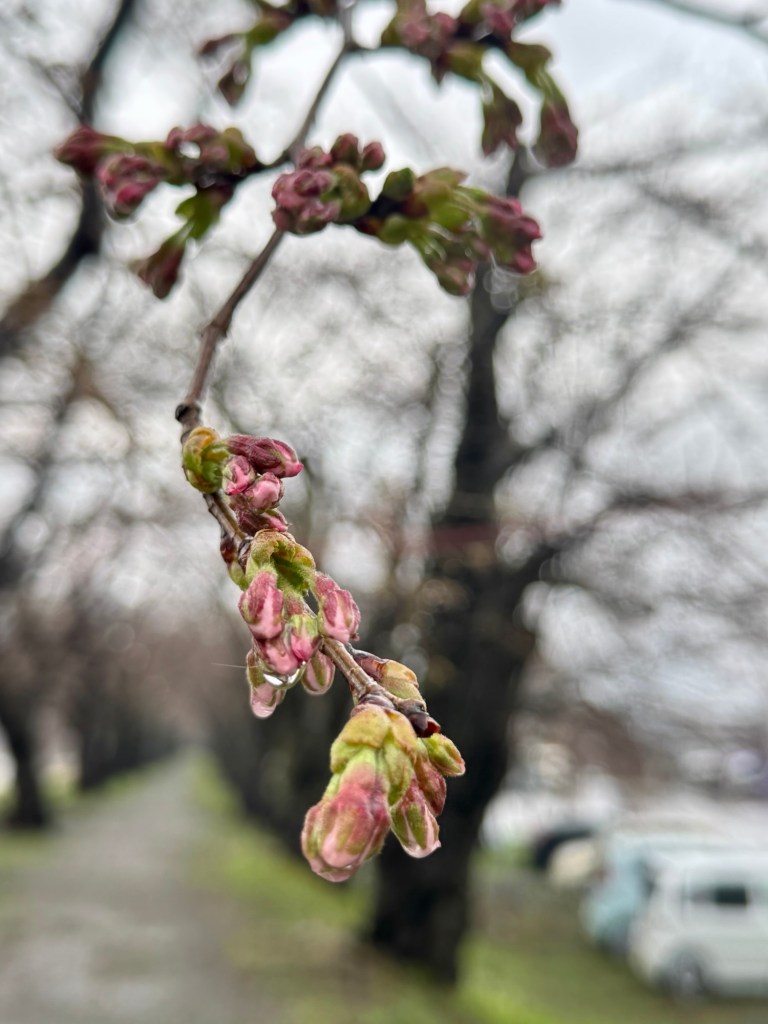
After our brief history lesson, we arrived in Kakunodate; a former castle town and samurai stronghold which flourished during the Edo period. Apart from the loss of its castle, Kakunodate remains remarkably unchanged since its founding in 1620. Sadly, we were a bit early to see the cherry trees blooming (maybe next week!).
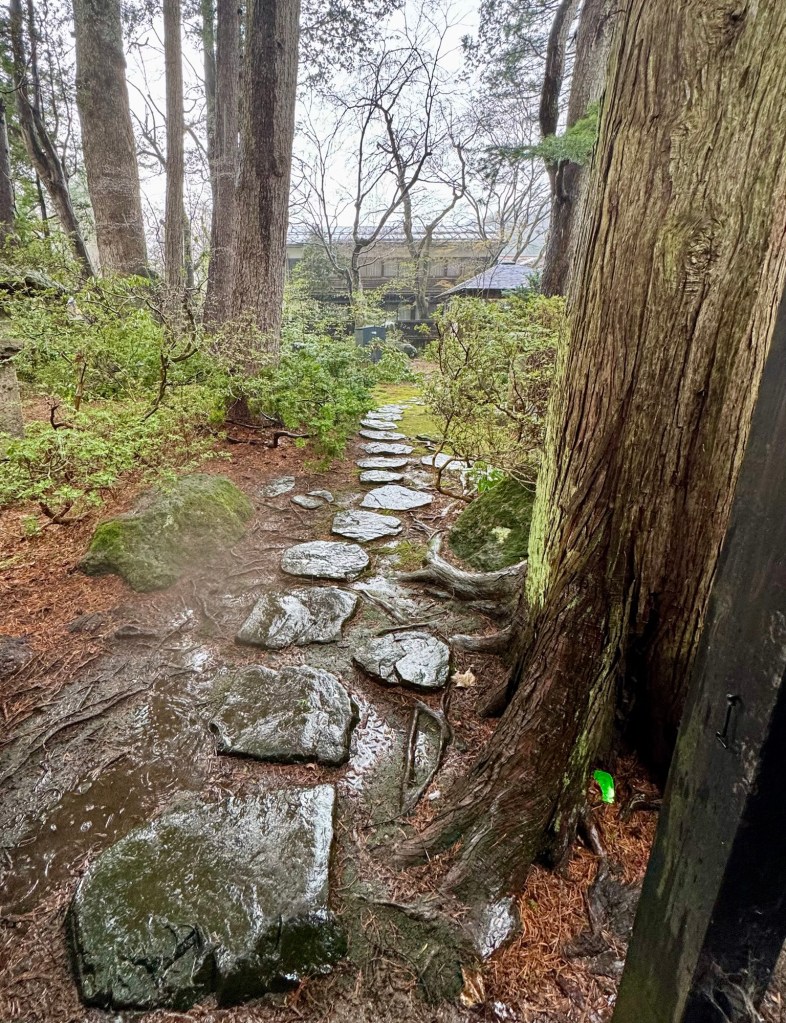
Oh well, on to the samurai district. About 80 families lived in the samurai district in the 17th and 18th centuries and several of their residences are still largely intact.
Our first stop was at the home of the descendants of the Ishiguro family. According to signage, the Ishiguro family residence is considered the most prestigious samurai house in Kakunodate and the family once held important roles in the government. The Main House is over 200 years old and the oldest samurai residence. It remains inhabited by direct descendants of the family while being partially open for public viewing. When we entered the house, everyone removed their shoes as is the custom in Japan.
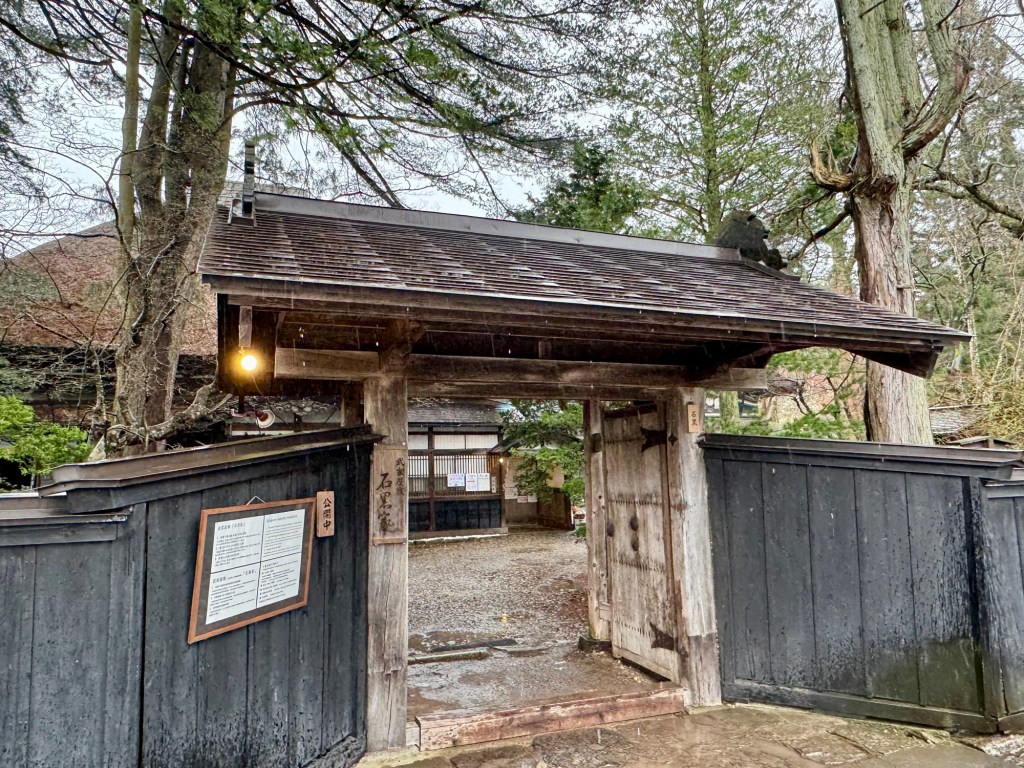
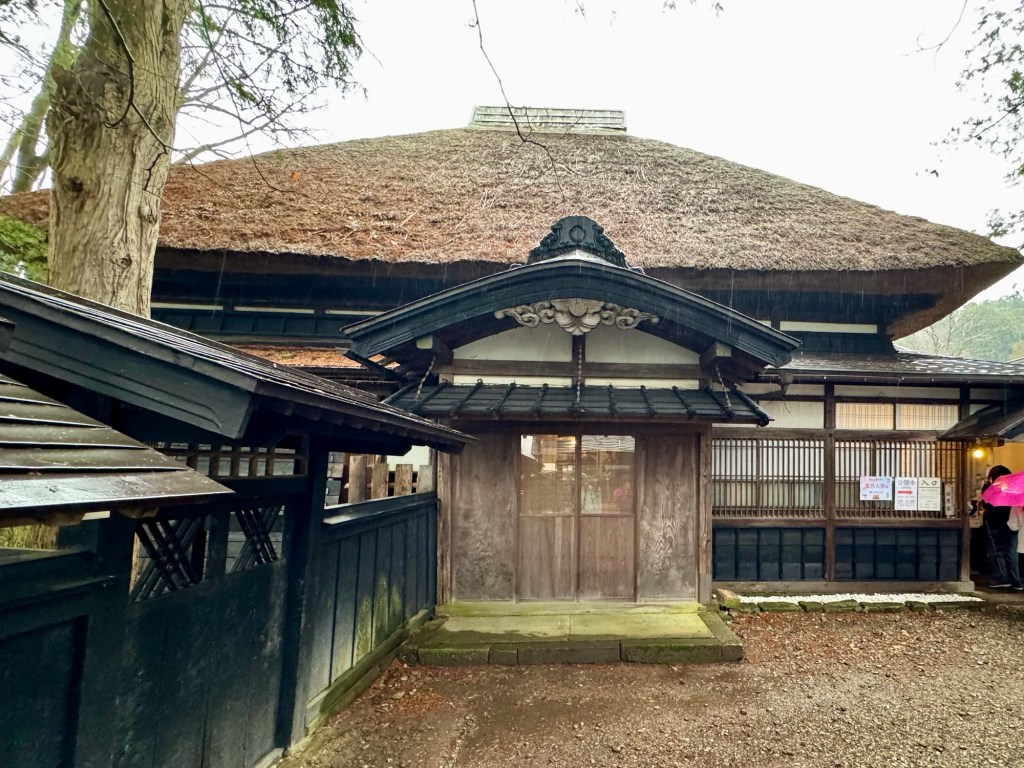
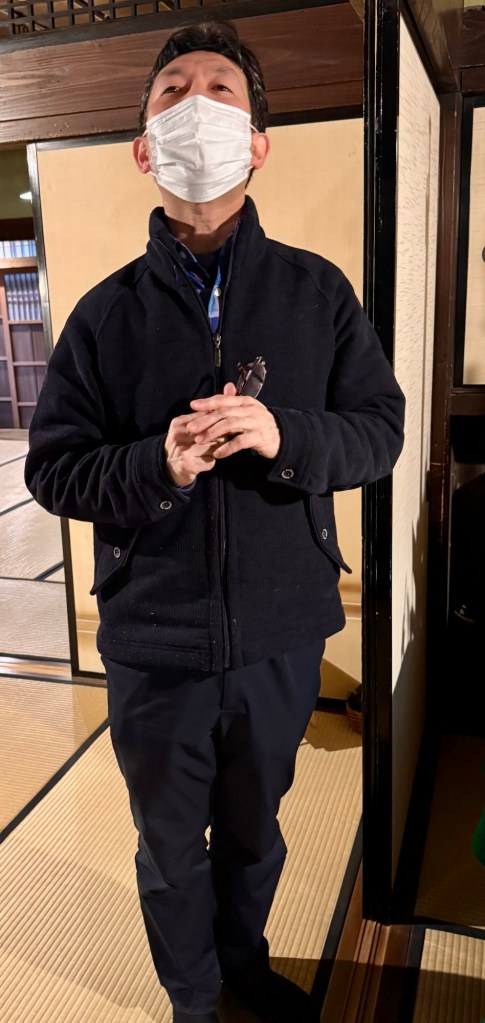

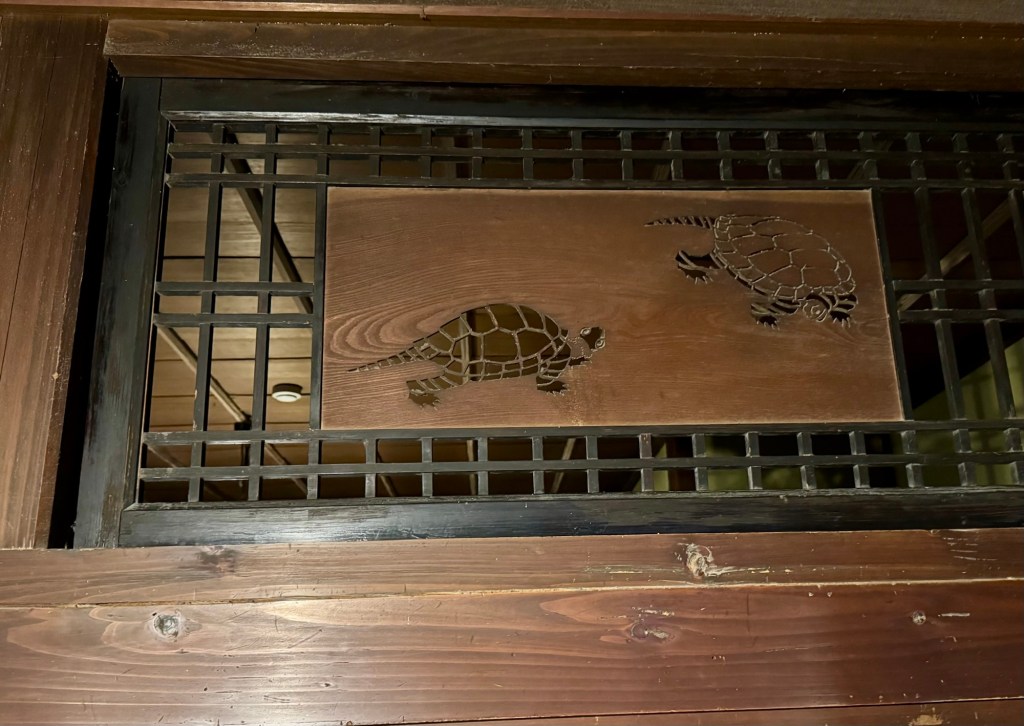
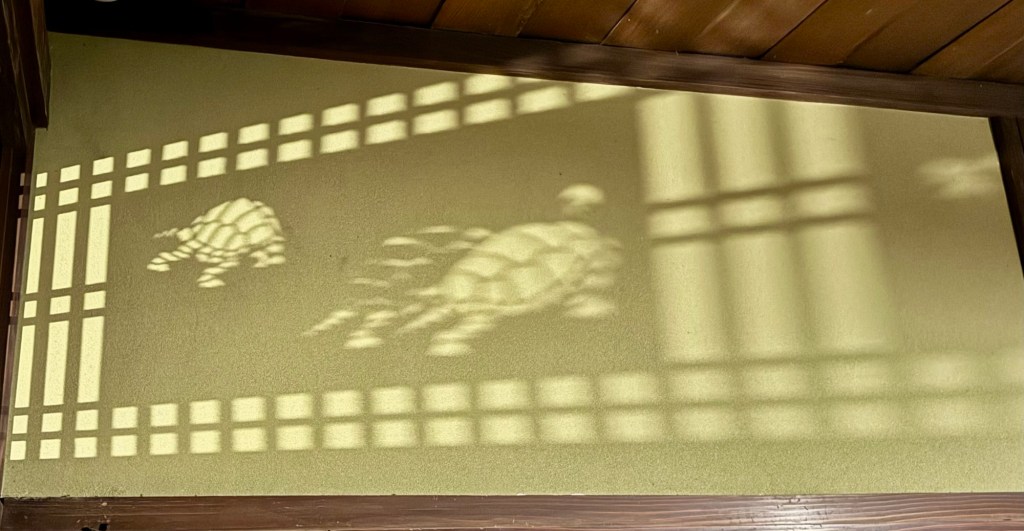

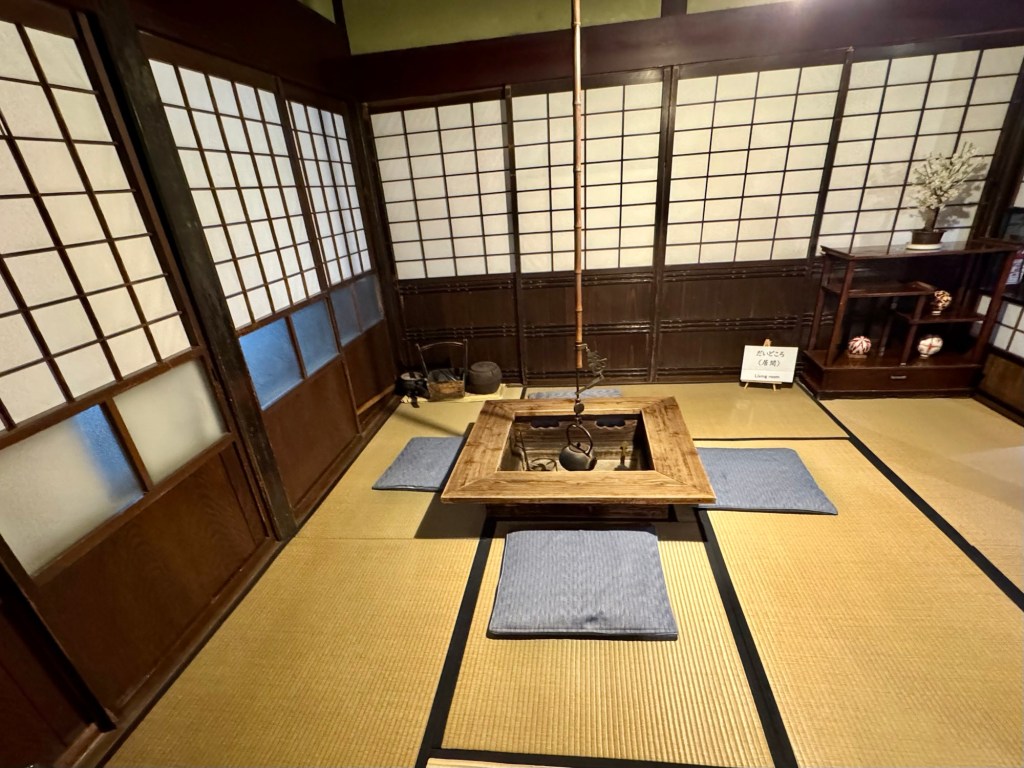

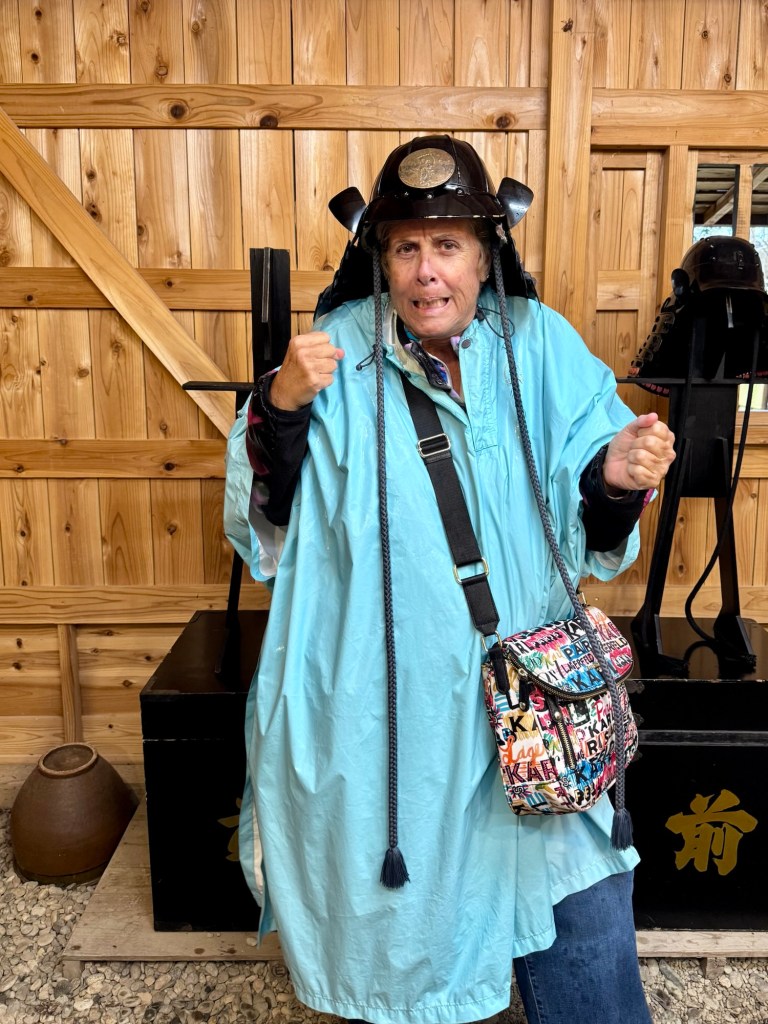
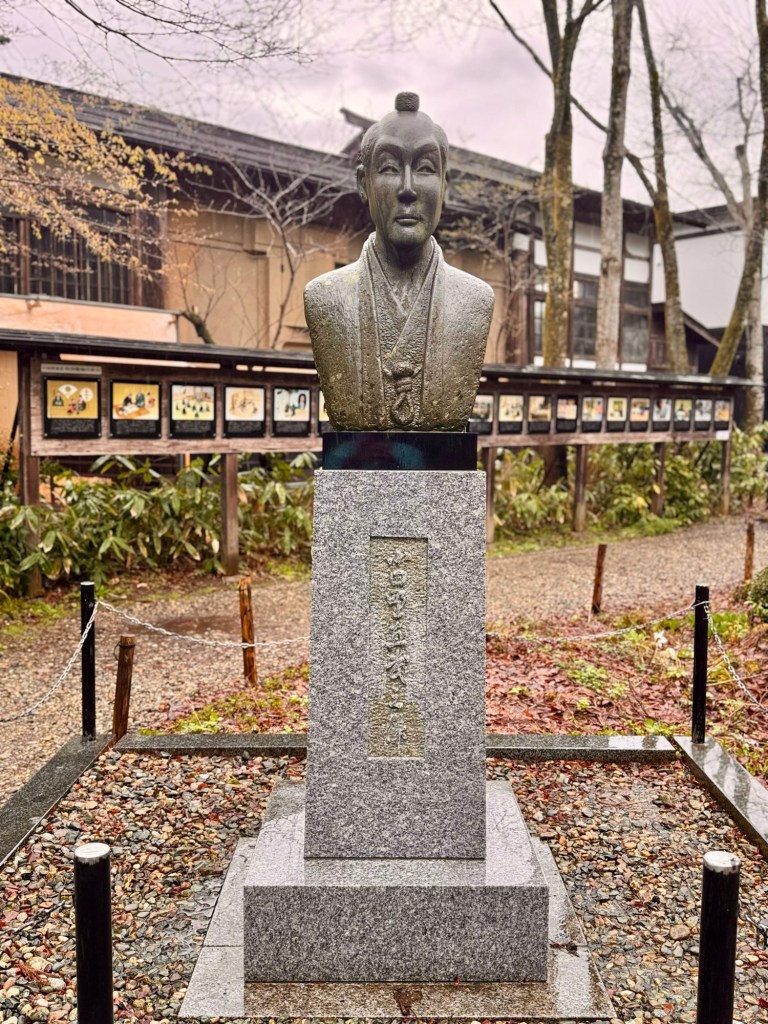
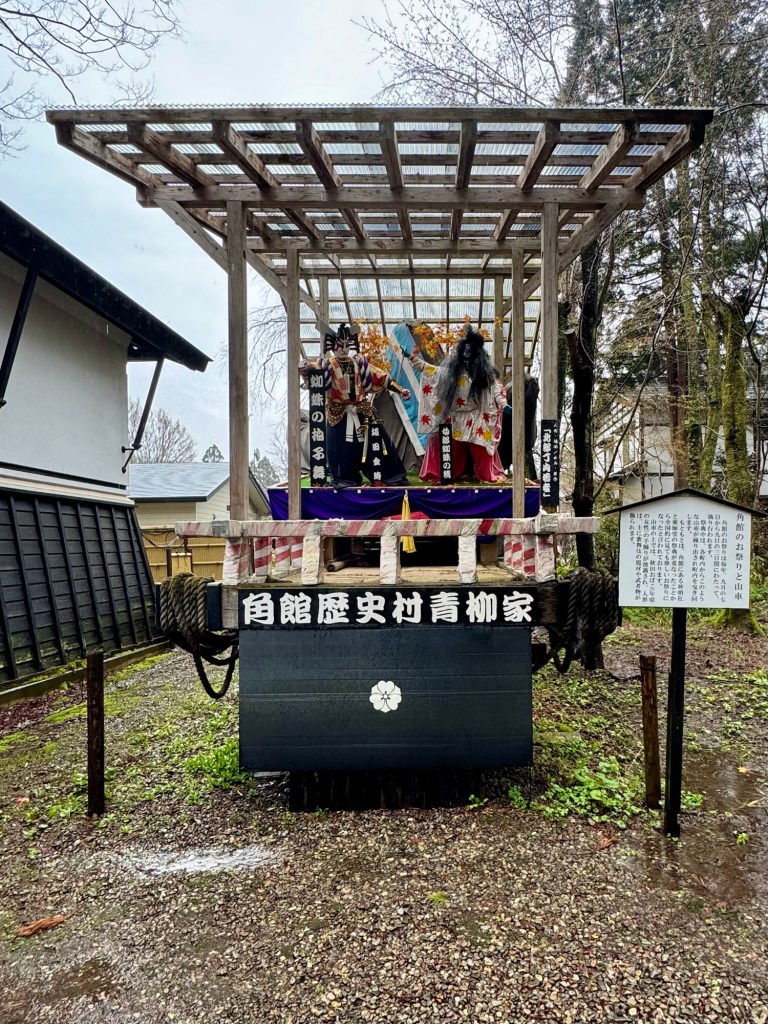
The larger Aoyagi house next door contains a complex of buildings with displays that explain samurai traditions, lifestyles and why Kakunodate rose to prominence as samurai city.
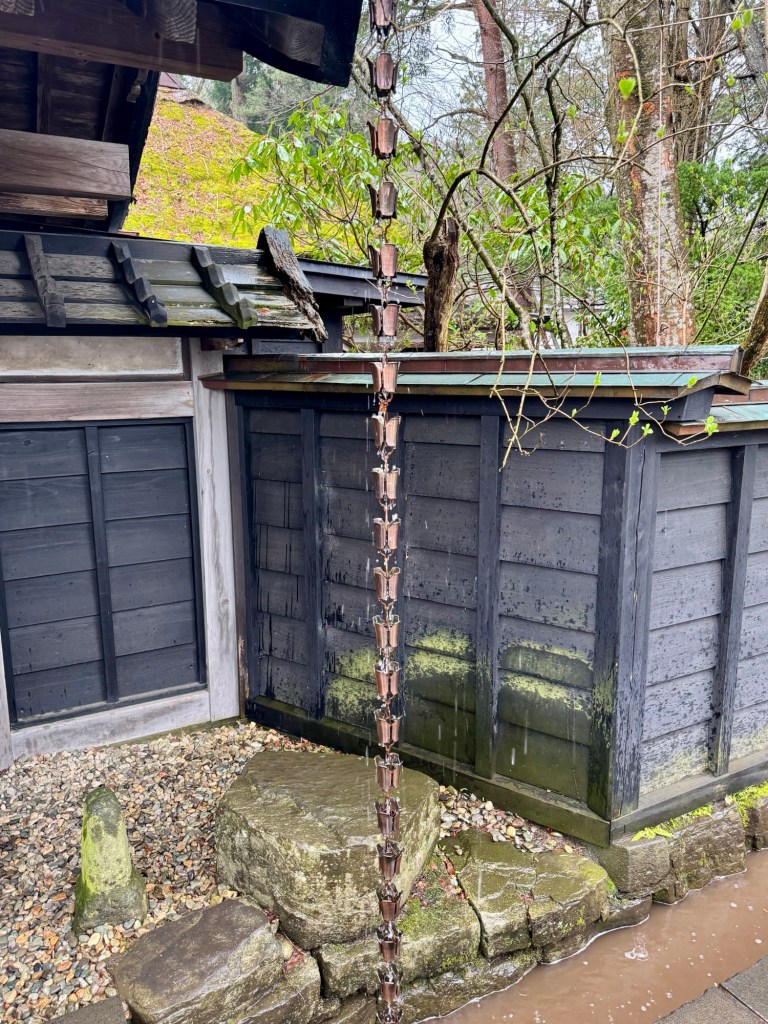
The Aoyagi lineage goes as far back as to the 16th century. The main gate to the Manor, Yakui Mon sports a roof with magnificent decorations. The Family built the gate in 1860 after the feudal lord of Kakunodate gave special permisson as a reward for their contribution to the domain. In feudal Japan, gates symbolized the social prestige of their owners. Sounds like there is some debate over which of the two families is/was more important!!
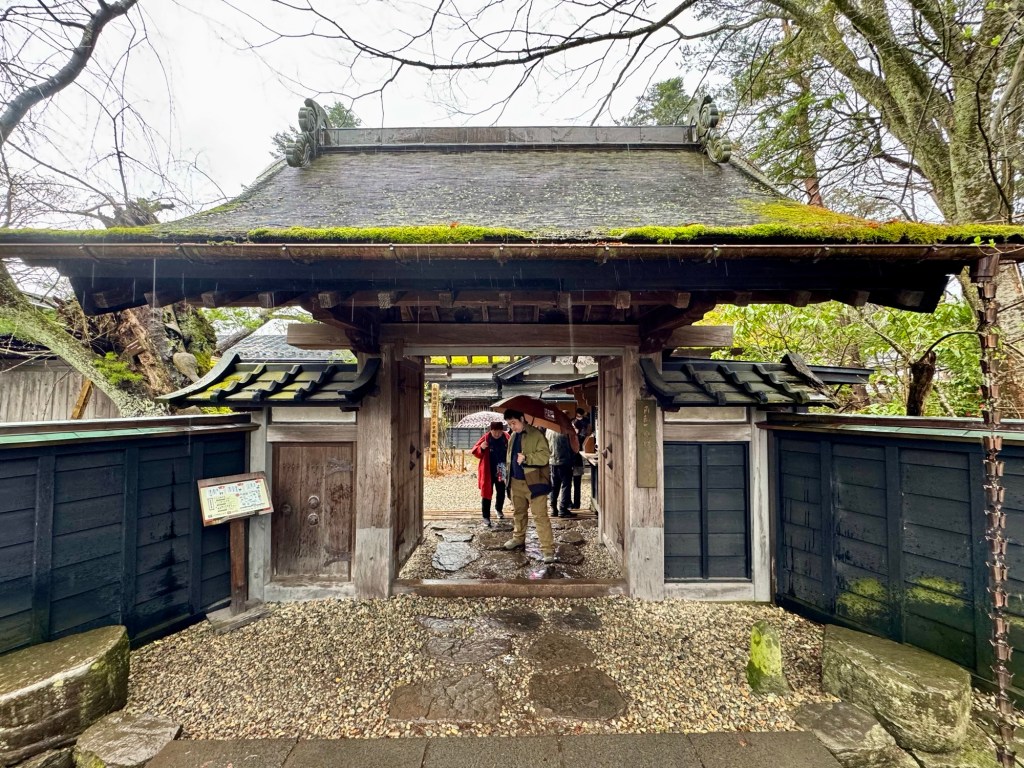

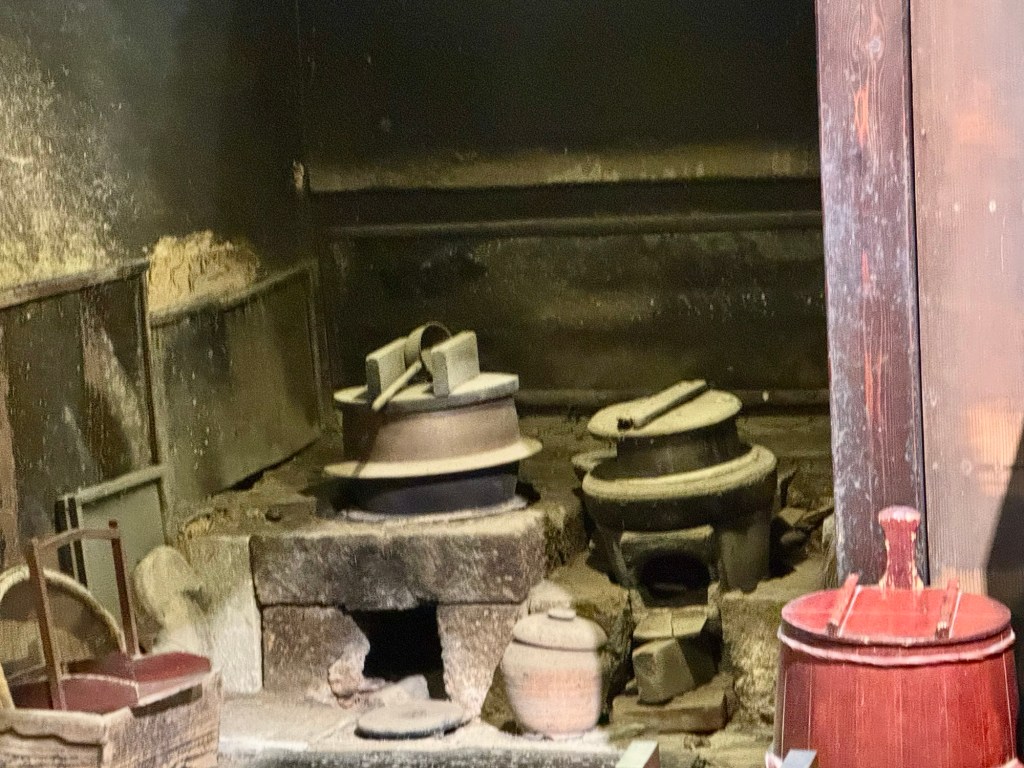
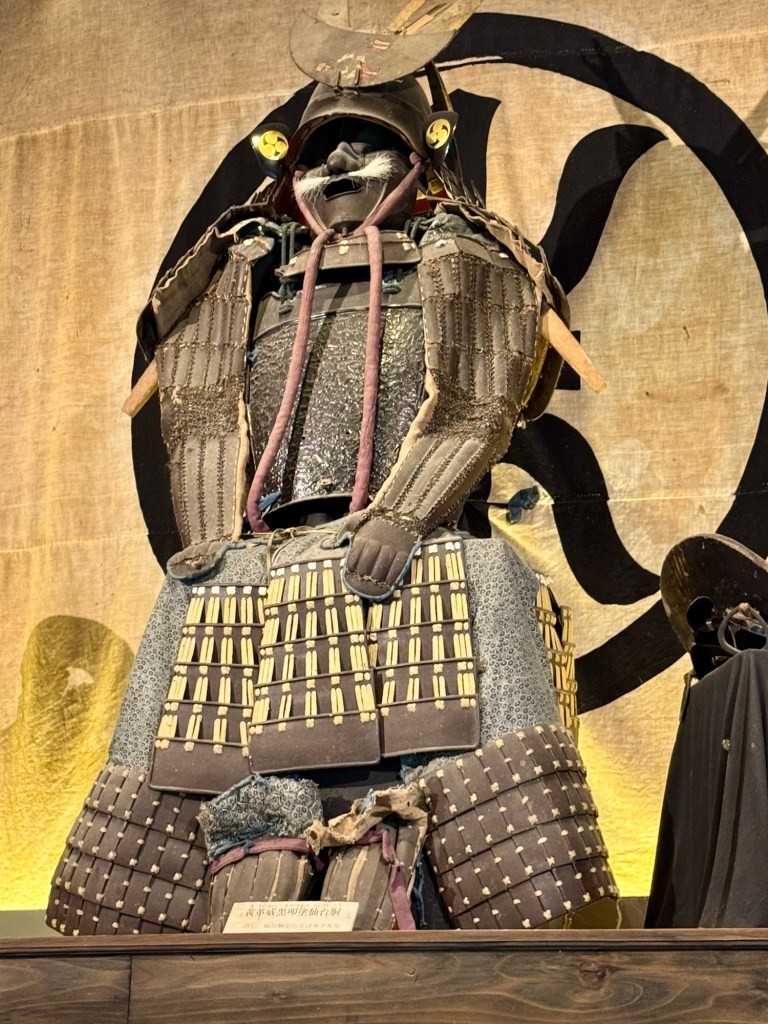
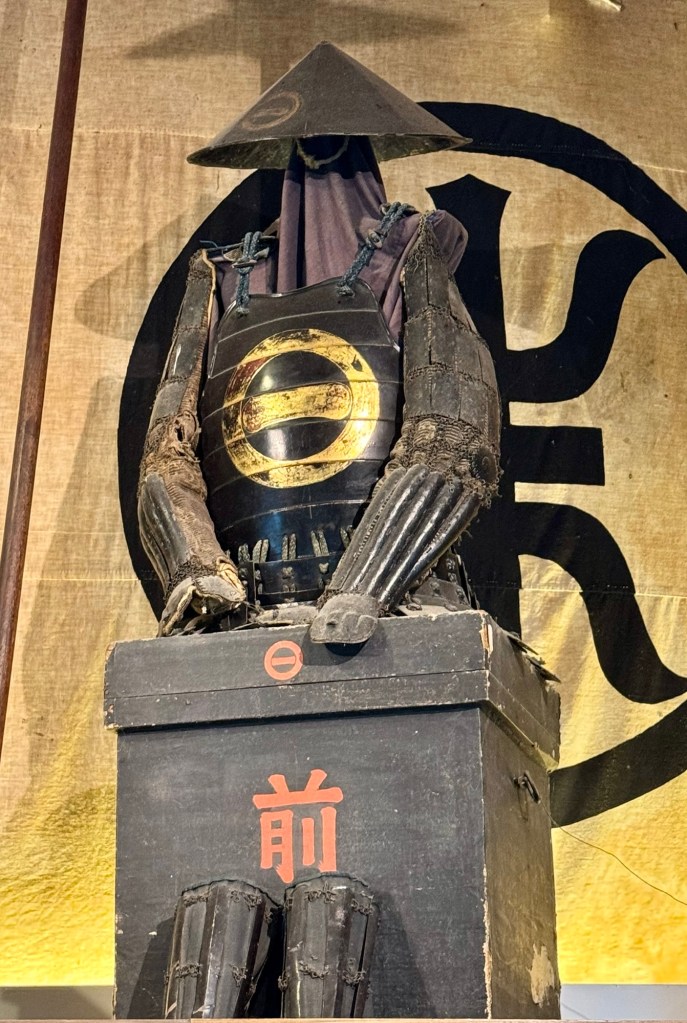
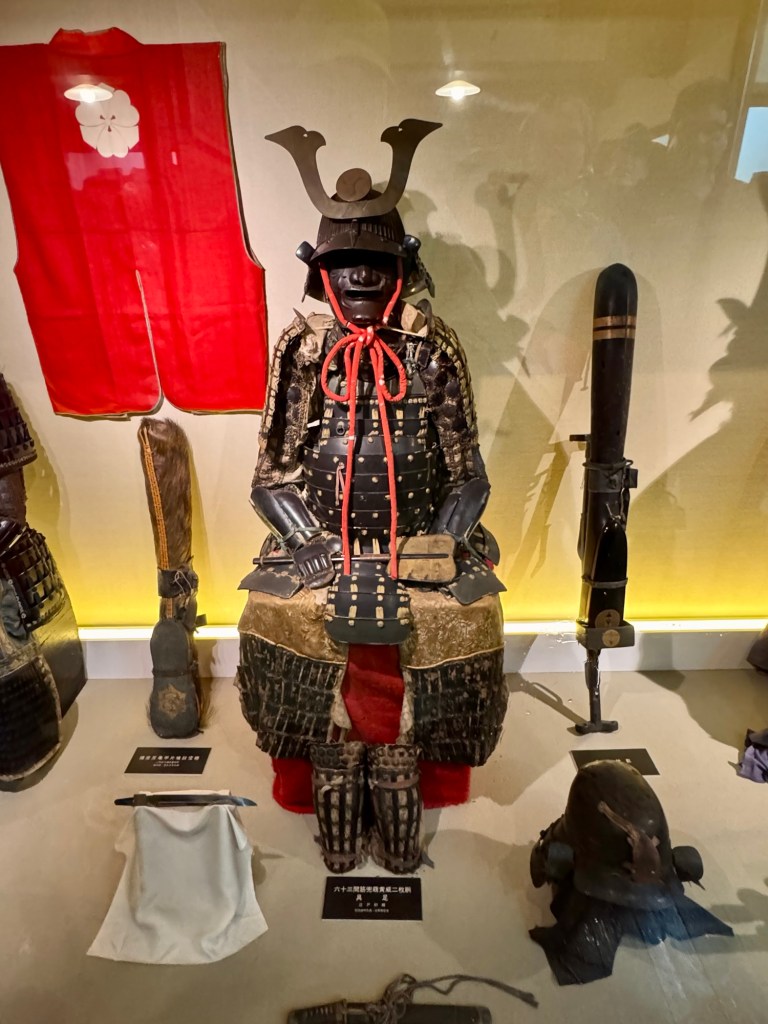
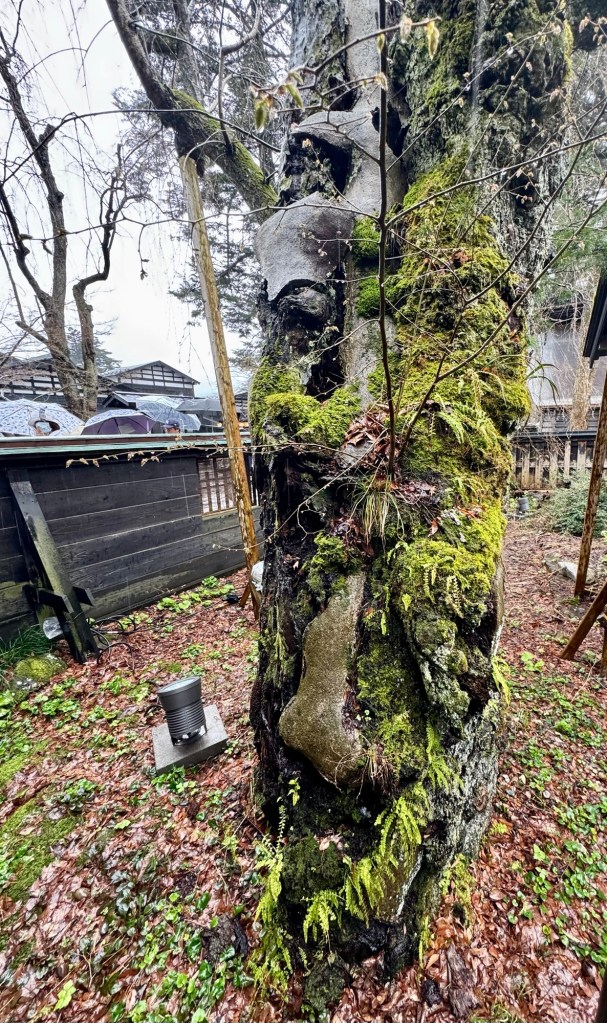

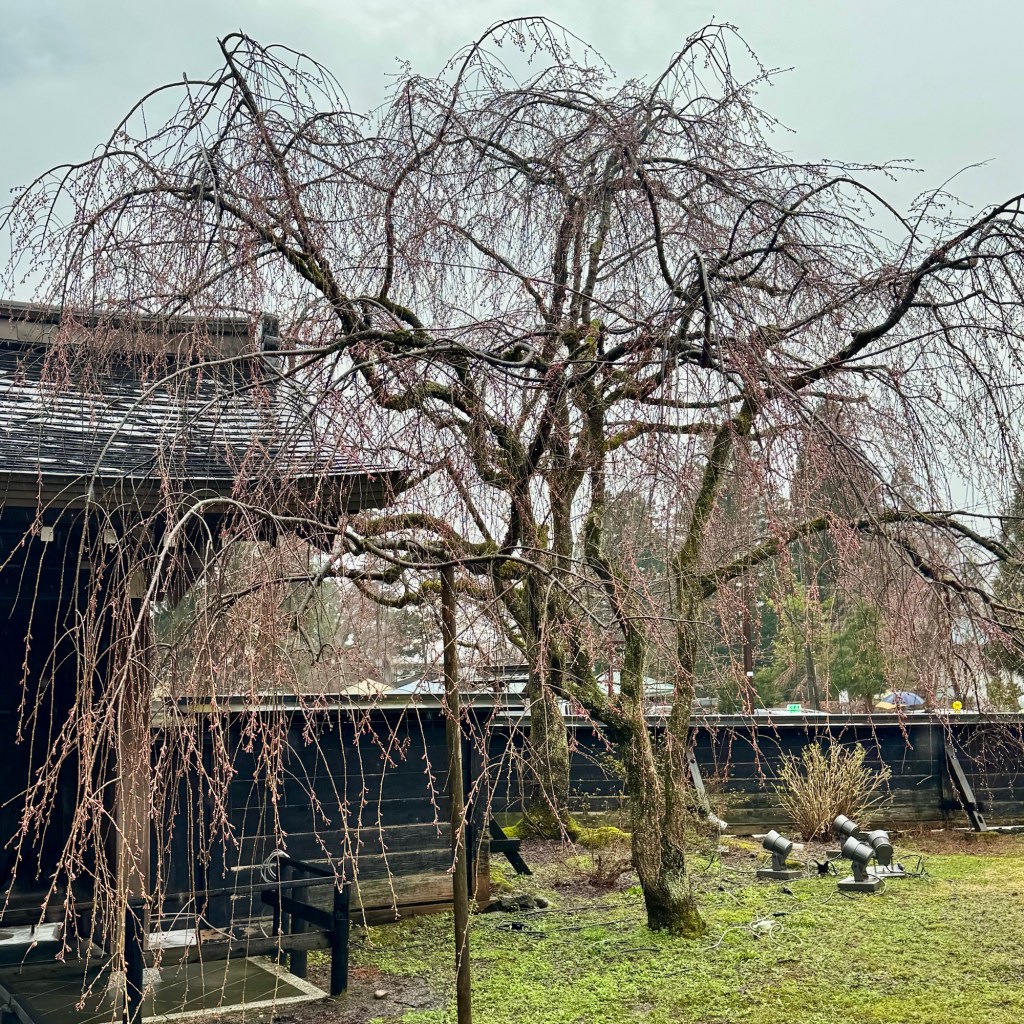
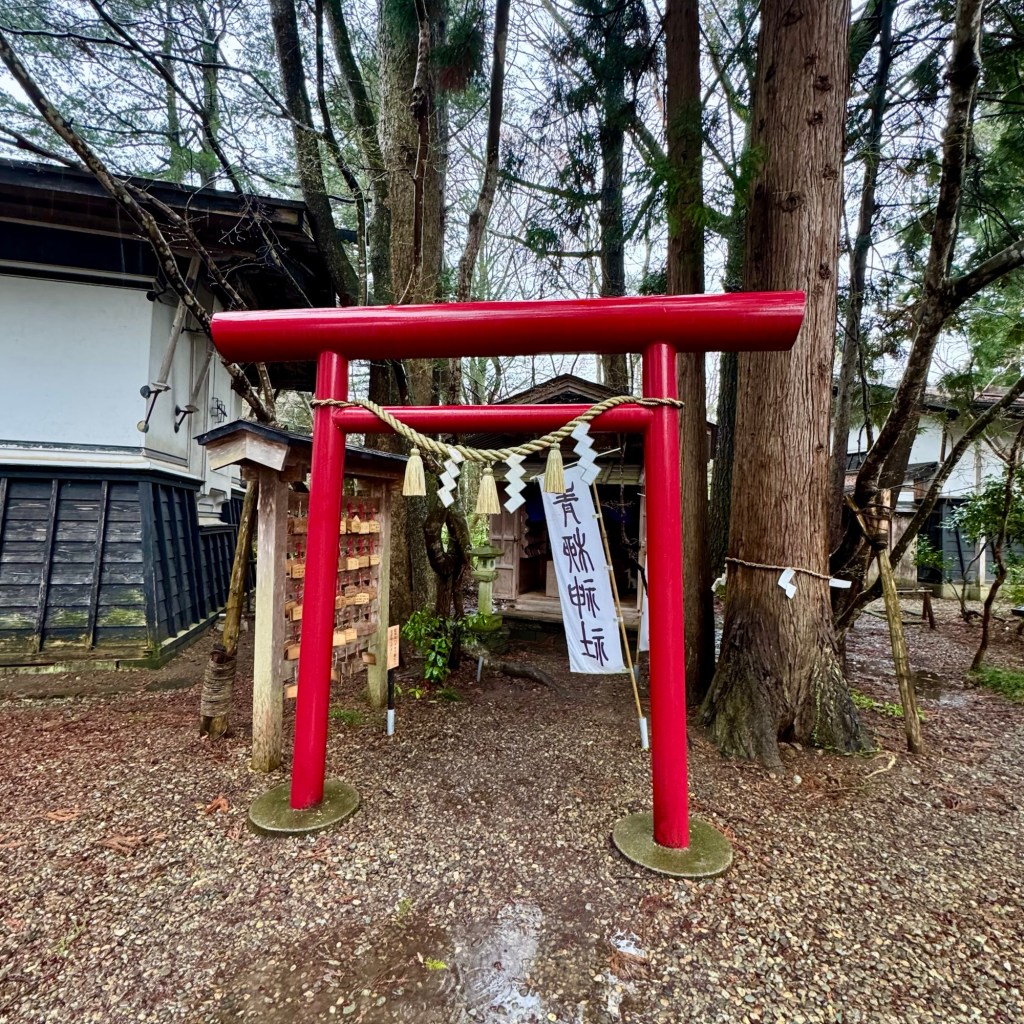

Our last stop was the Kakunodate Cherry Bark Craft Center. The artisans here craft items such as jewelry boxes and furniture using the highly durable bark from cherry trees, which have the ability to regenerate their bark so no harm is done.


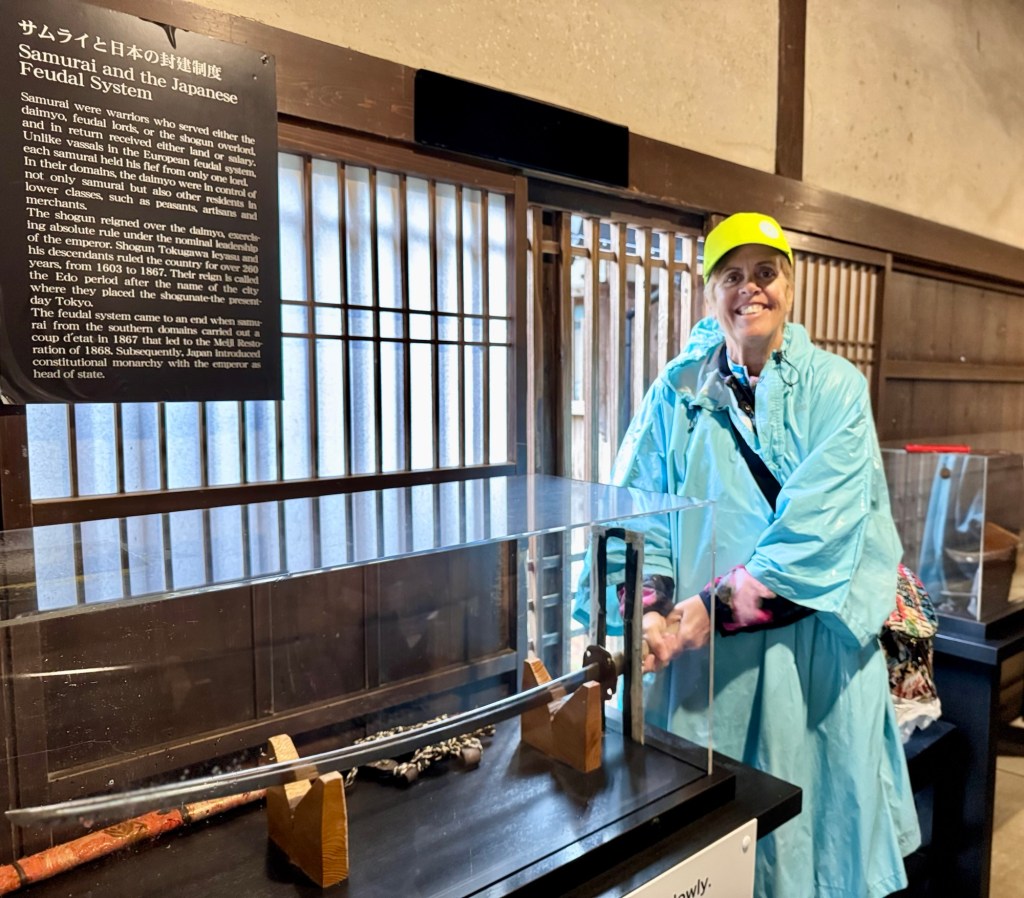
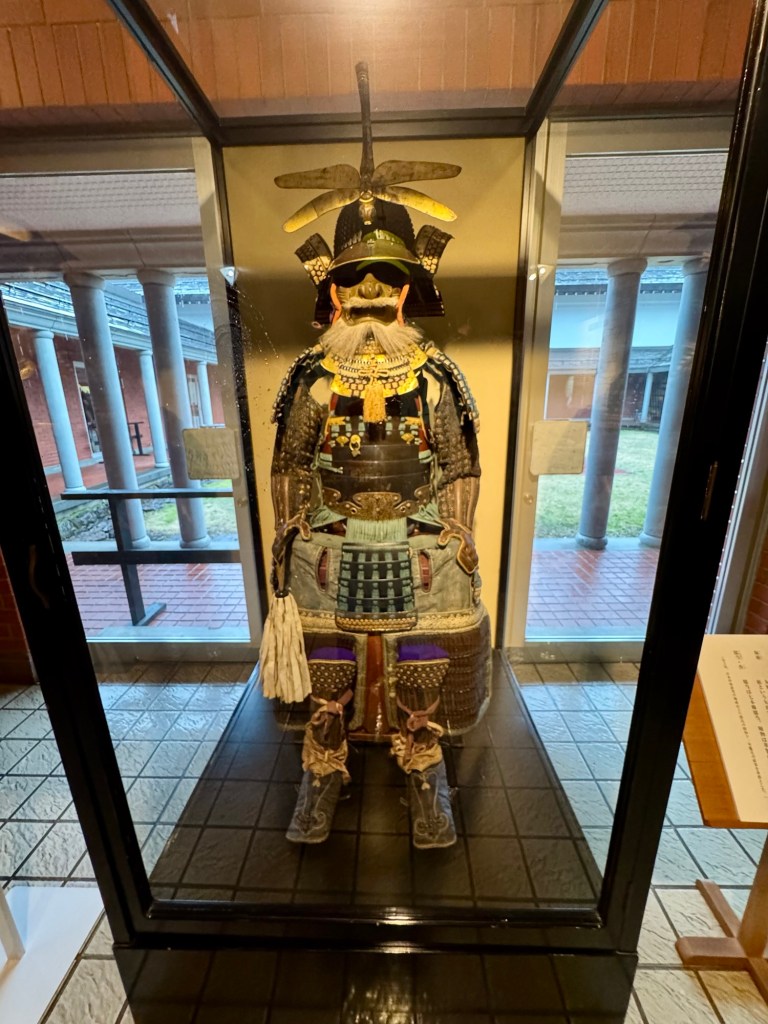
There were also a number of historical items on display in the museum here.
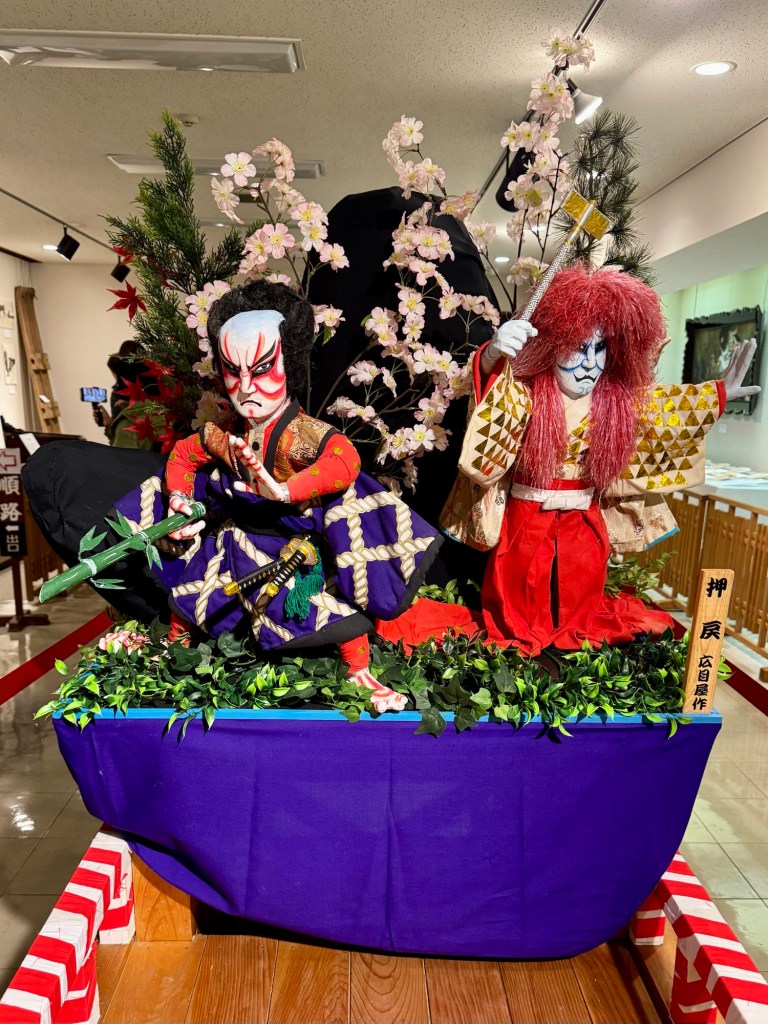


On my way back to the bus, I made a detour to check out the cherry trees along the Hinokinai River embankment. With more than 400 cherry trees stretching approximately two kilometers, the blooms on the trees droop down (when in bloom) to create a long tunnel perfect for walking under. Today it was still impressive but not so beautiful. The Beware of Bears sign would likely be more scary when there are cherries on the trees. No bears sighted today!

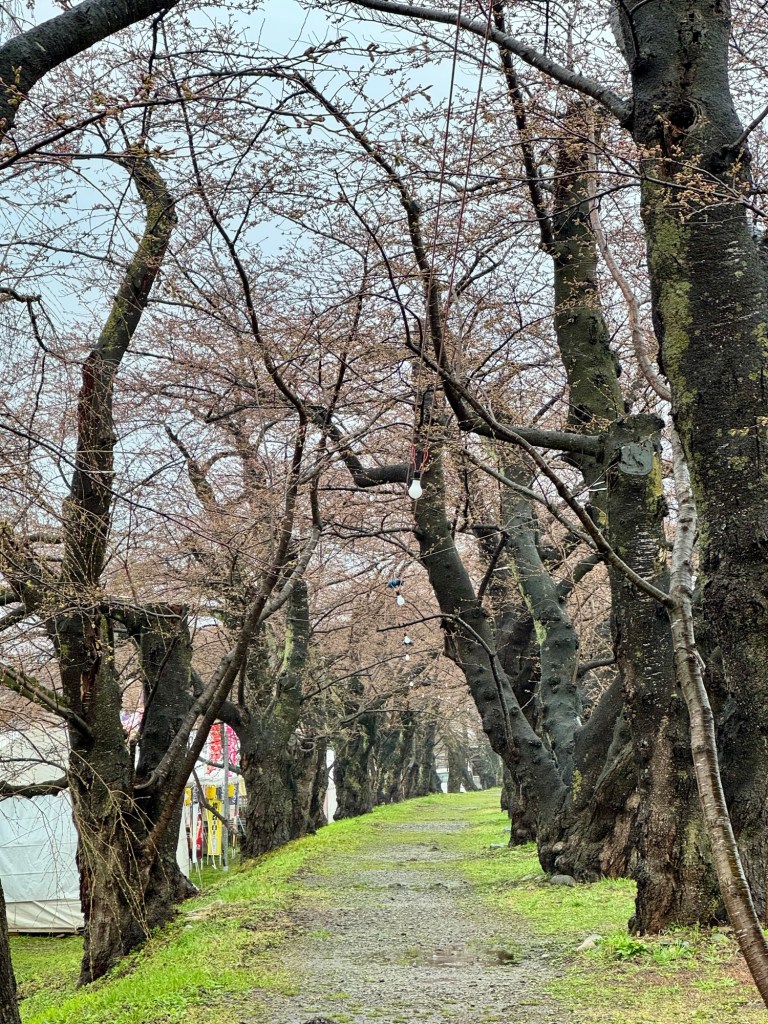

Back on the bus for the ninety minute return journey to Akita and then back to the ship. Time for a quick shower to warm up before the evening’s activities.
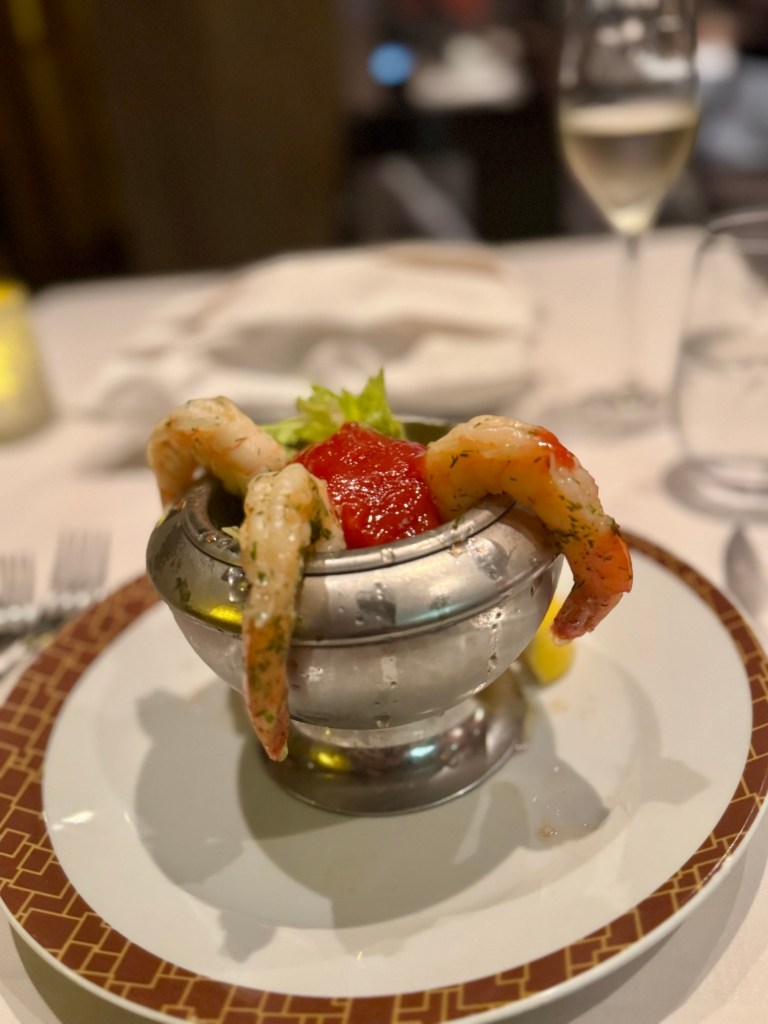
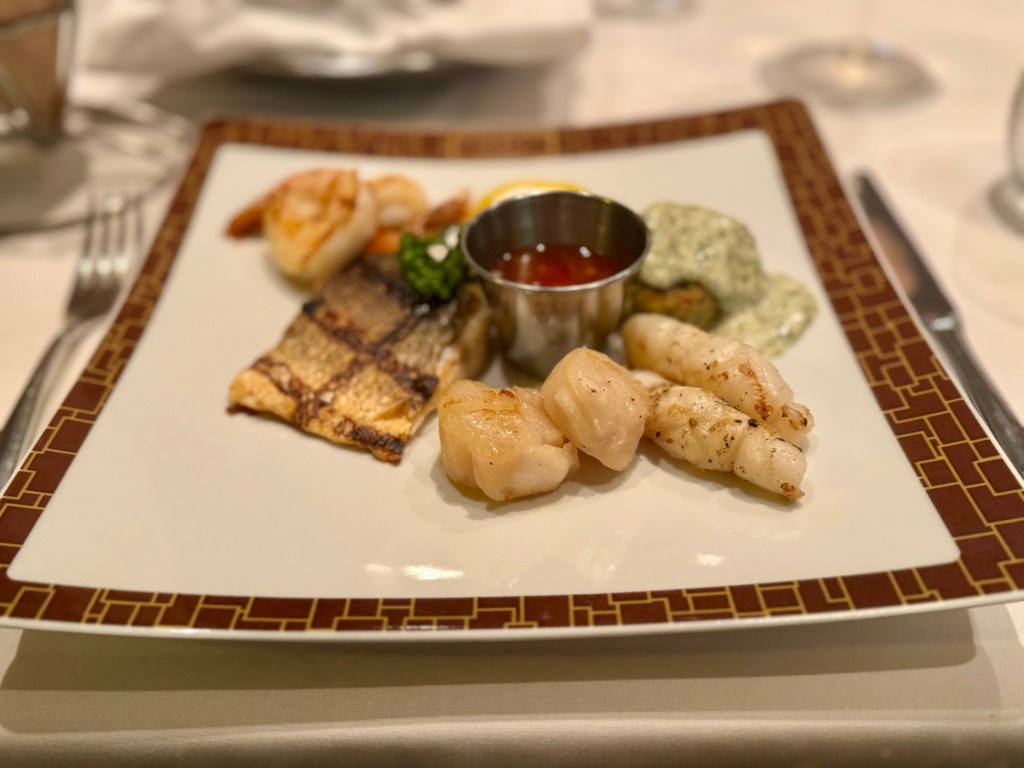
I had dinner in Cagney’s Steakhouse but as it’s Good Friday I checked out their seafood!! The jumbo shrimp cocktail and grilled seafood platter featuring scallops, shrimp, calamari, branzino and a crab cake was more than filling.
Checked out the UTH table in the casino and then headed to bed. Tomorrow is another day. Adventures await …
 Judy’s Rambles