
April 19, 2025
Today the ship docked in Kanazawa, the capital of Ishikawa Prefecture in central Japan.

During the Edo Period (1603-1868), Kanazawa served as the seat of the Maeda Clan, the second most powerful feudal clan after the Shogunate Tokugawa who ruled Japan. The city was spared from major bombings during World War II, allowing parts of the old castle town to survive.
This morning I have an early morning excursion so no time for sit down restaurants. I grabbed a quick bite at the buffet (what a clusterf$ck!) and headed to the theatre to meet the tour group.
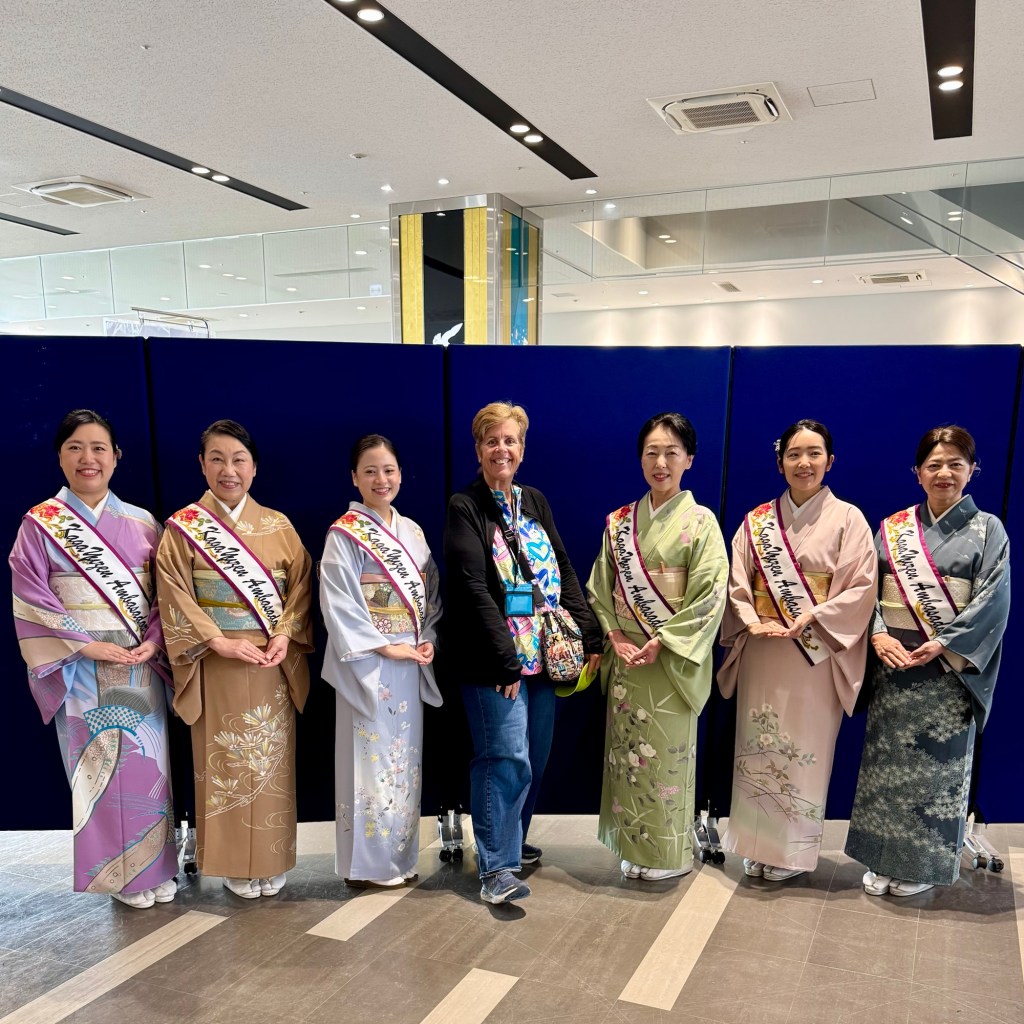
After boarding the bus, our first stop is Kanazawa’s unchallenged main attraction: Kenrokuen Garden. Kenrokuen, one of Japan’s “Three Great Gardens,” was crafted and maintained by the Maeda clan for over nearly two centuries. Initially, it served as a private garden for the feudal lords of the domain. In 1874, it was opened to the public and has since become an integral part of the city.
Our guide left us to explore the extensive garden on our own; I’m not quite sure what we’re paying him for but I digress.
Kenrokuen, a garden renowned for its tranquility, is adorned with a plethora of water features, bridges, trees, flowers, stones, and hidden treasures. A sophisticated water system constructed in 1632 diverted water from a distant river, transporting it 11 kilometres from the Saigawa River to the iconic Kanazawa Castle. This water system, known as the Tatsumi water system, supplies Kenrokuen’s various streams and ponds.

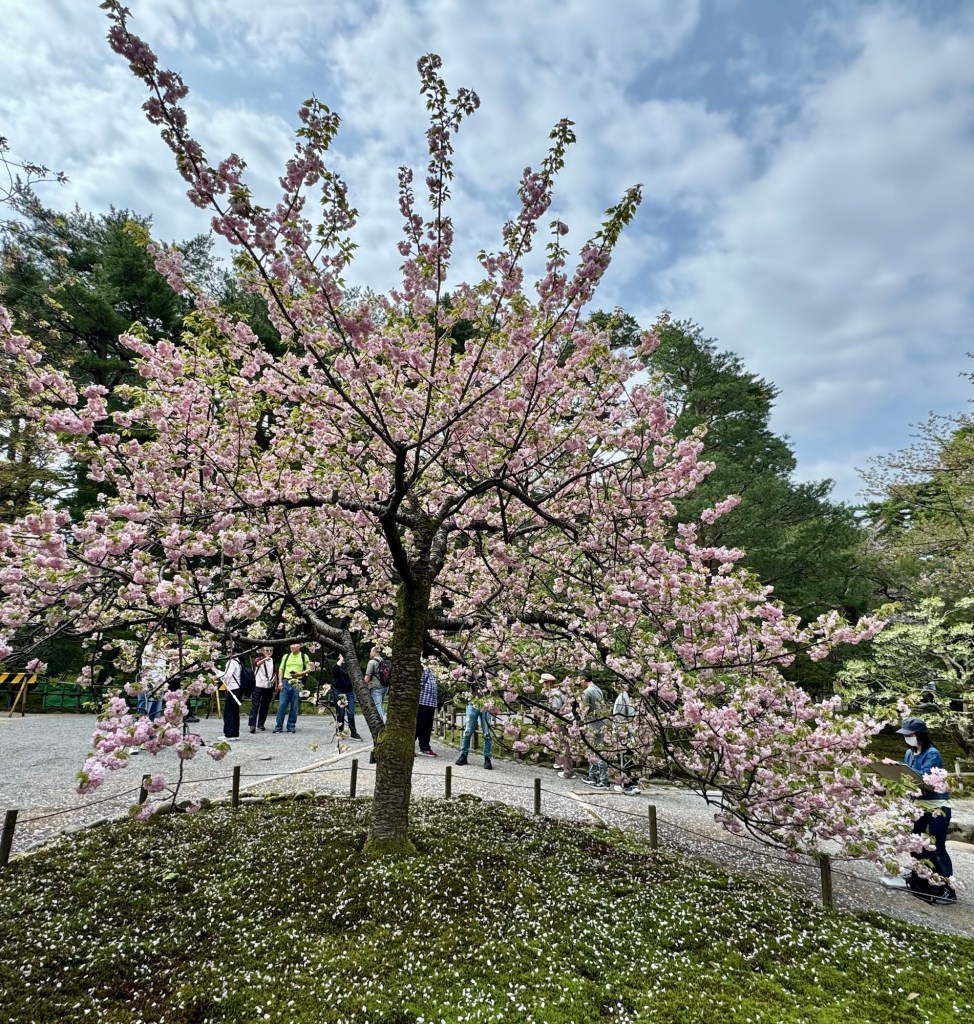

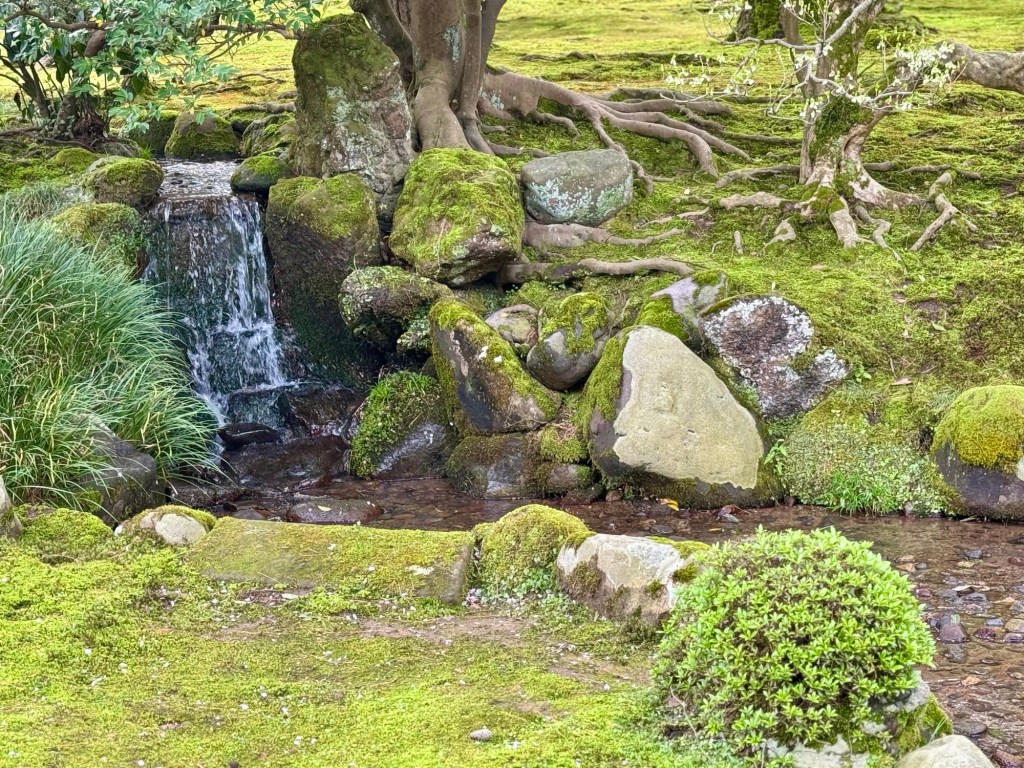
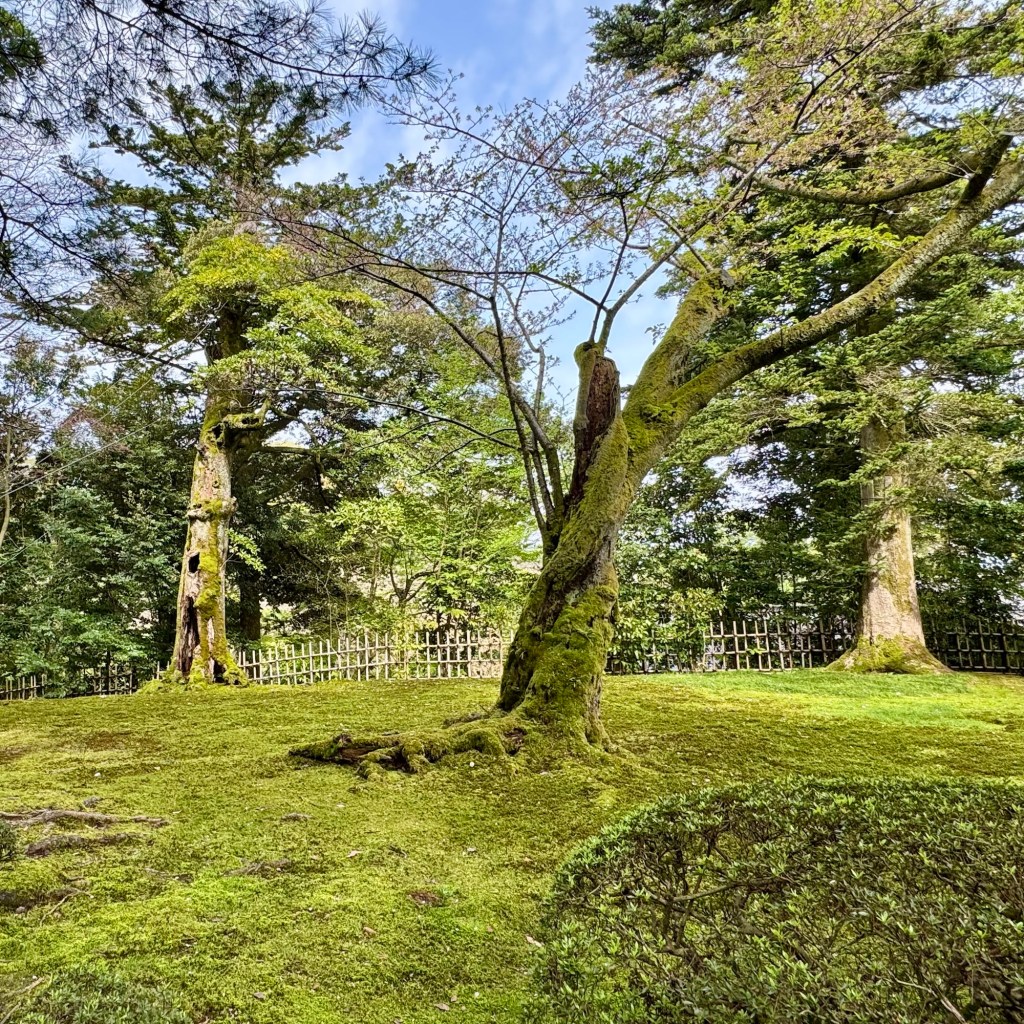
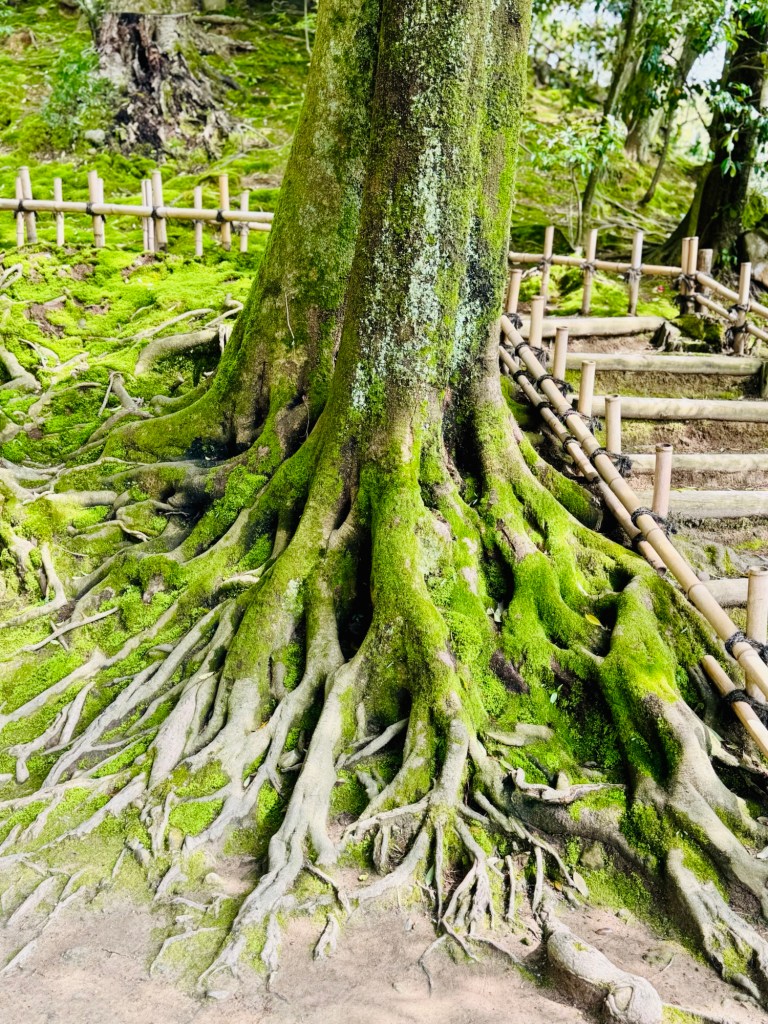

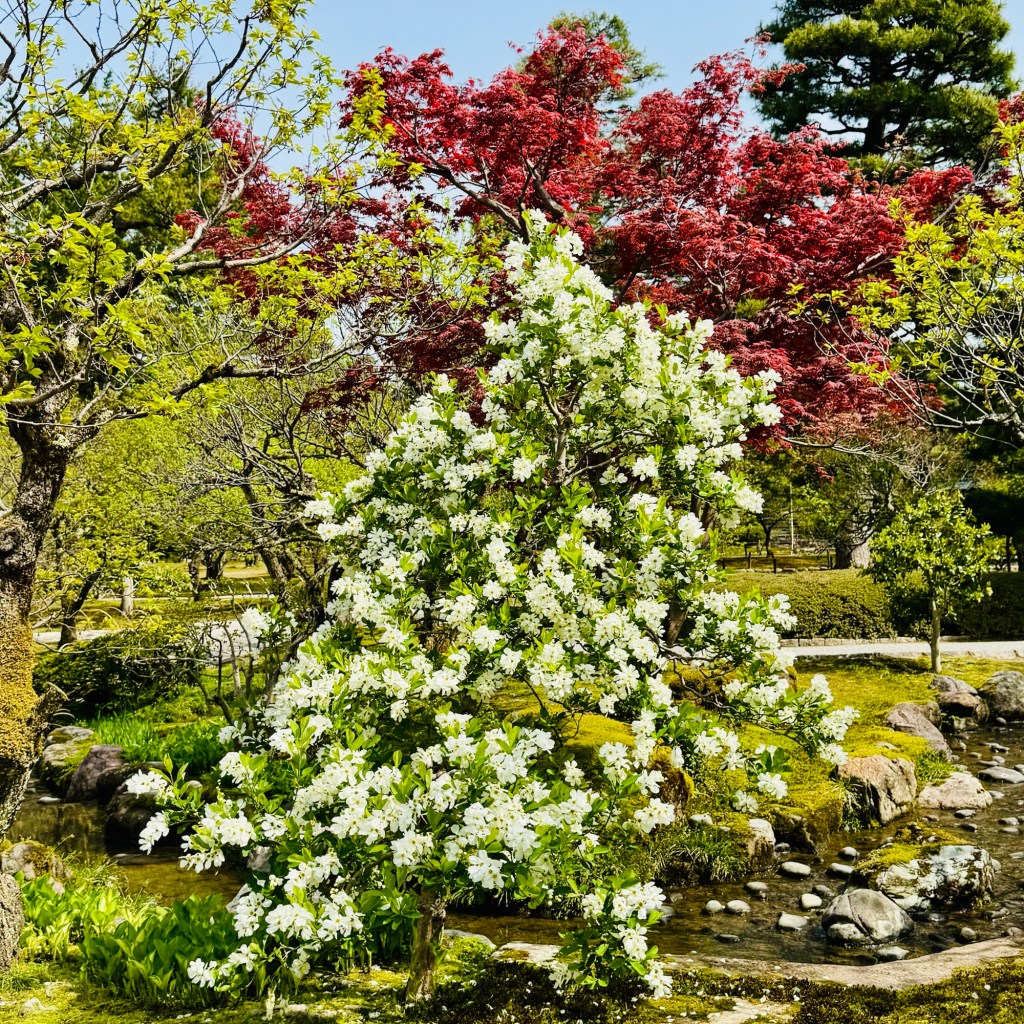


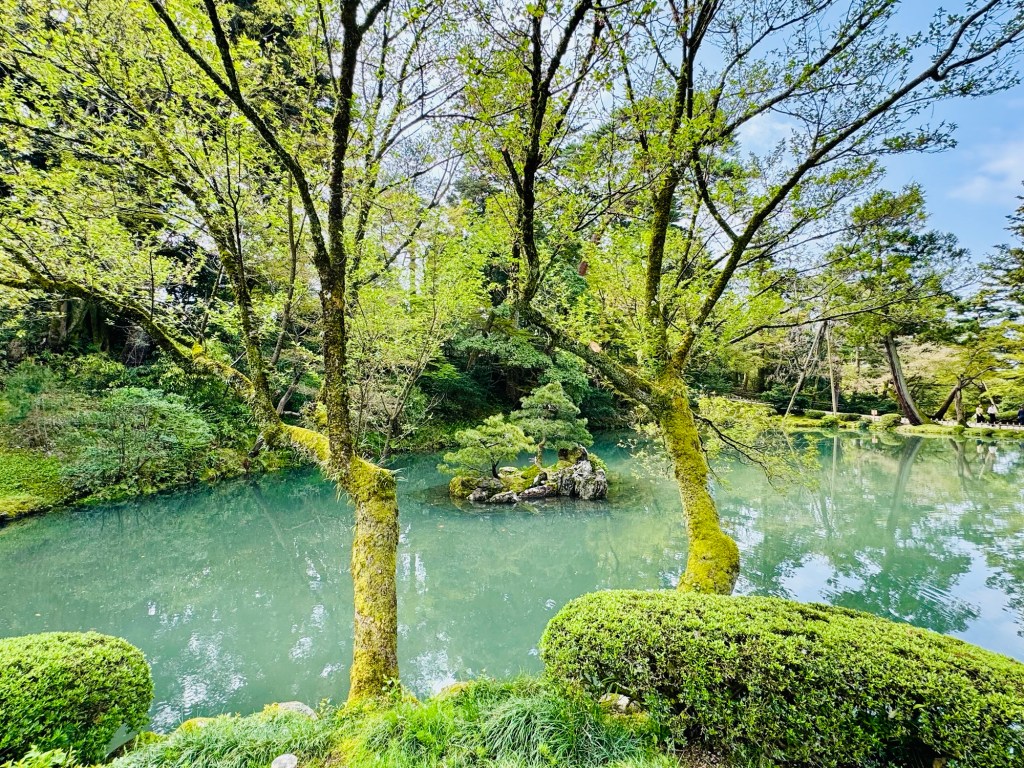
Highlights of Kenrokuen include:
Hisagoike Pond, featuring a charming waterfall crafted in 1774, is a picturesque gem.
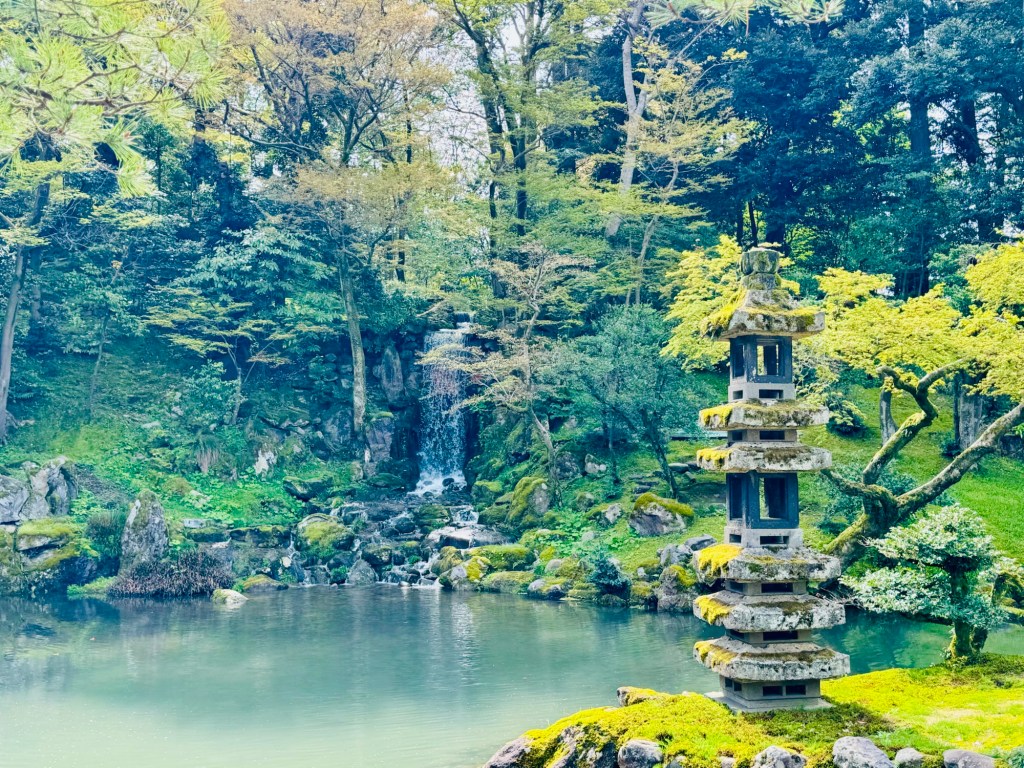
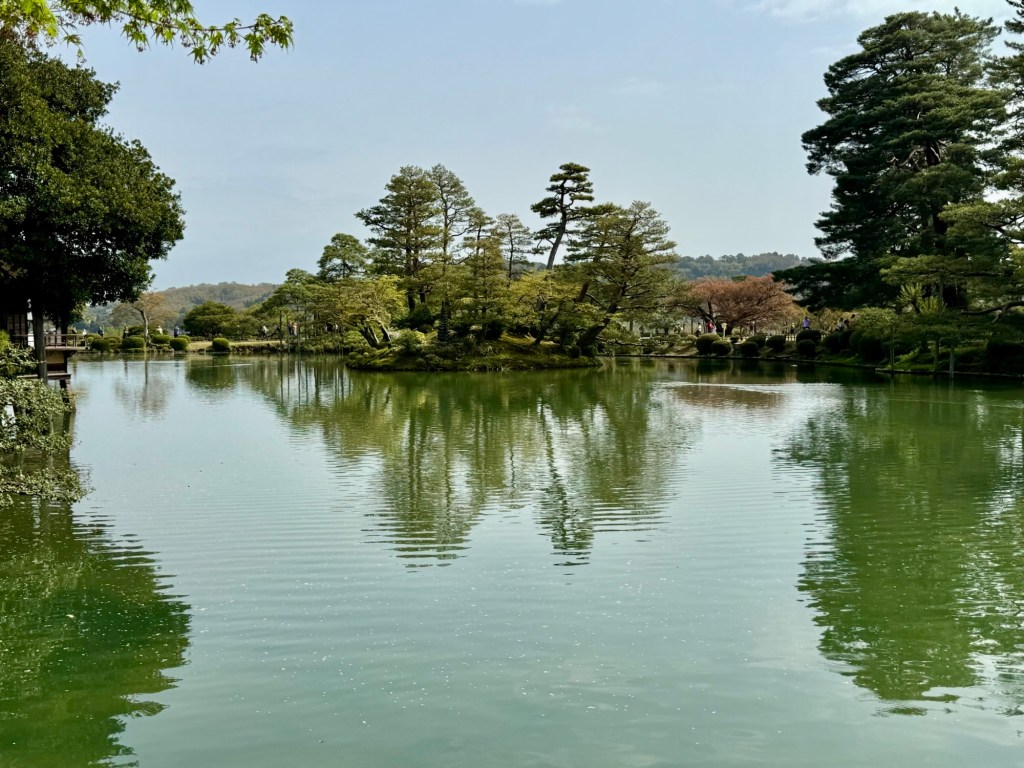
Kasumigaike Pond, spanning an area of 5,800 square meters, features a central island resembling a tortoise. This island is said to embody the legendary island of eternal youth and longevity.
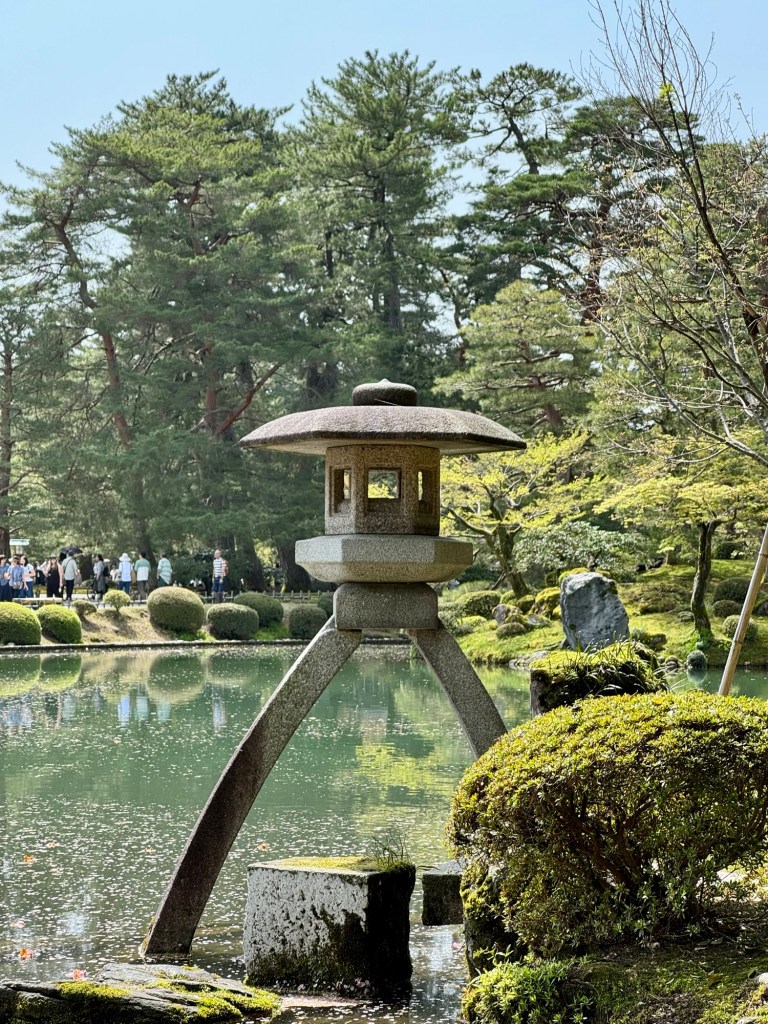
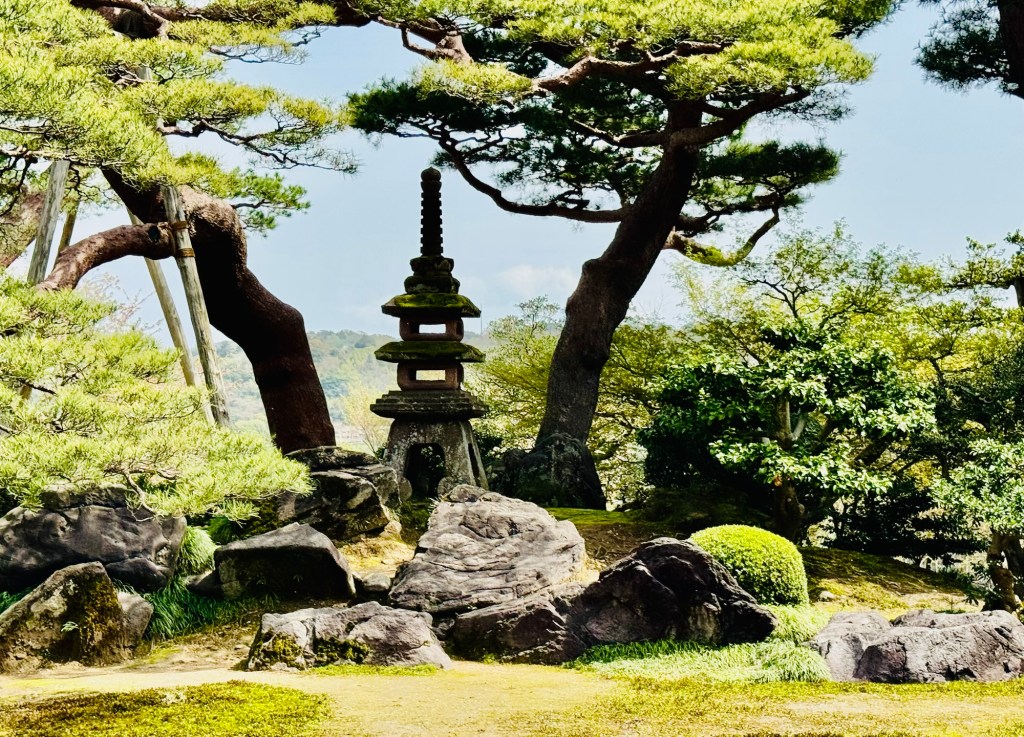
The over two-meter tall Kotojitoro Lantern graces the northern bank of the Kasumigaike Pond. This lantern, shaped like the bridges that support the strings of the Japanese koto, is an iconic symbol of Kenrokuen.
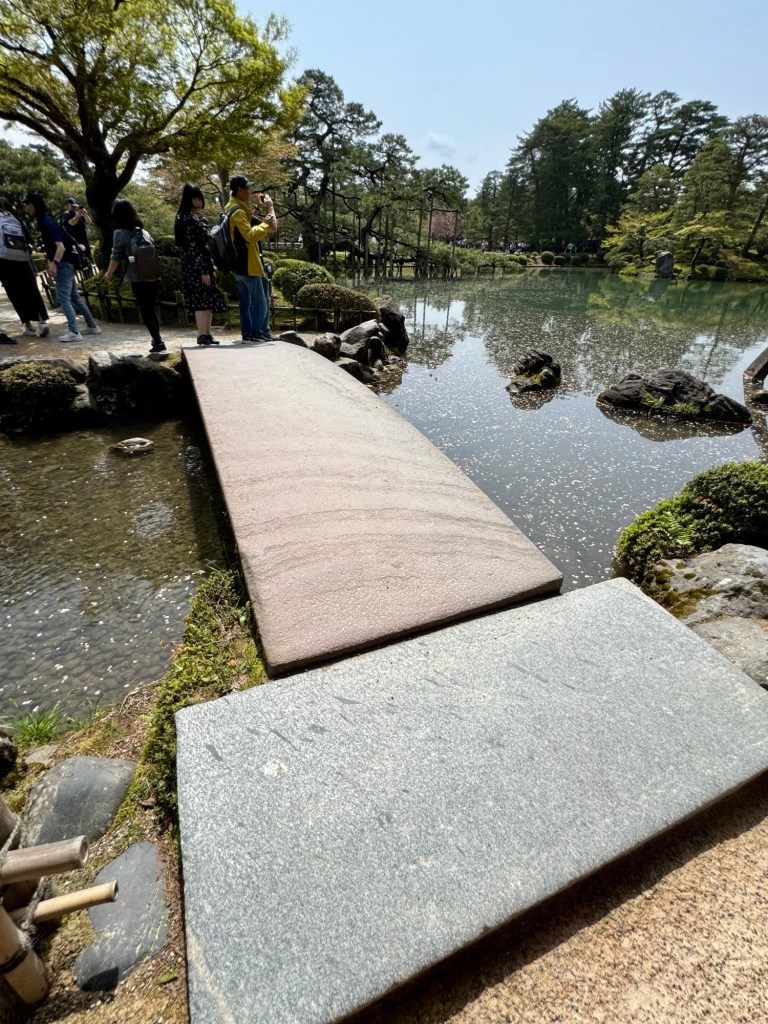
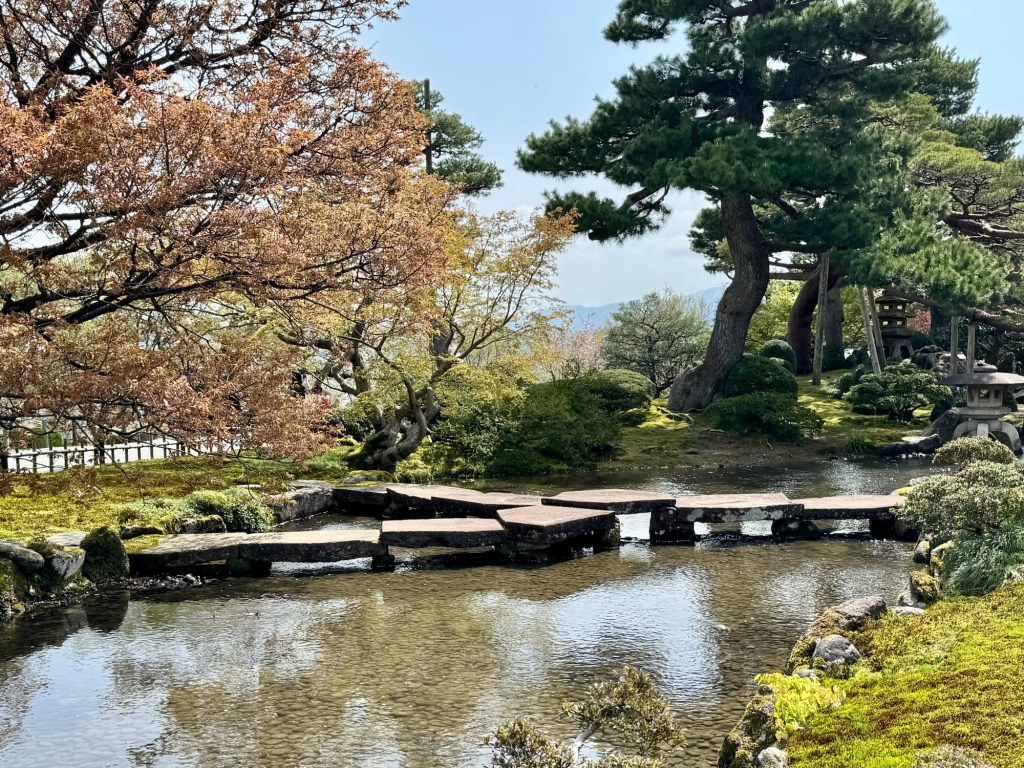
The Nijibashi (Rainbow) Bridge aka the Koto Bridge.
A fountain below the Kasumigaike Pond is powered by the drop in elevation from the pond which causes water to shoot up 3.5 meters high. Fountains were and are a rarity in Japanese gardens and Kenrokuen’s is one of the oldest surviving examples.

A radio tower installed in 1933 by the Japanese Broadcasting Association (NHK) for public broadcasts.
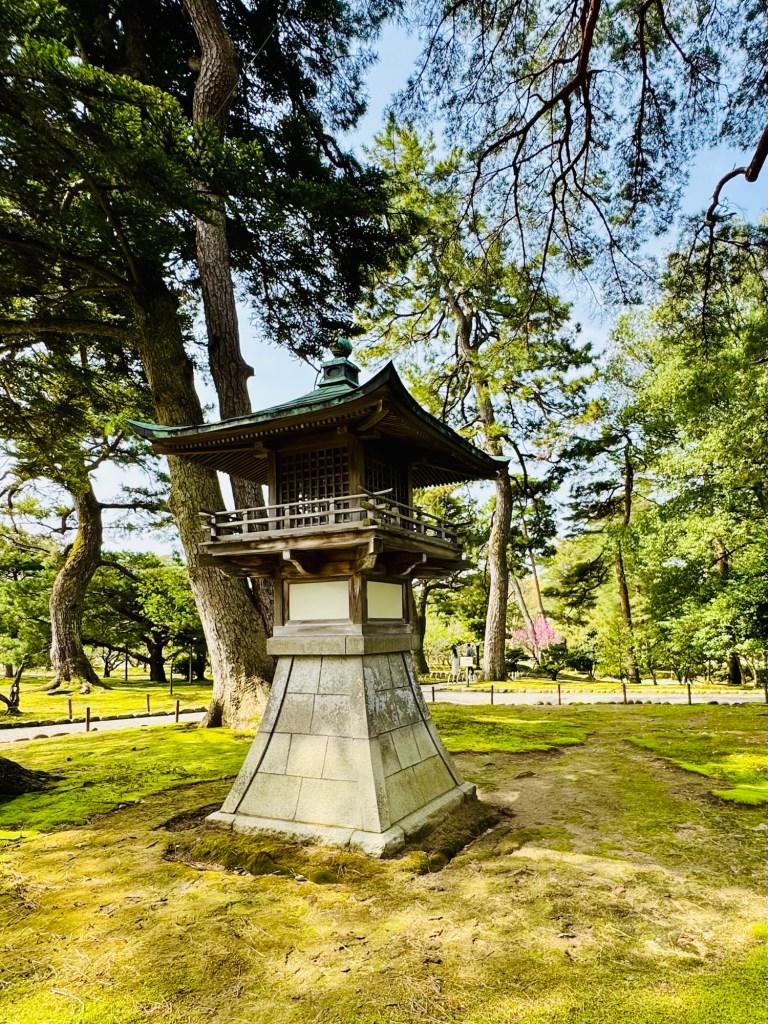
Uchihashi-tei house built over the water.

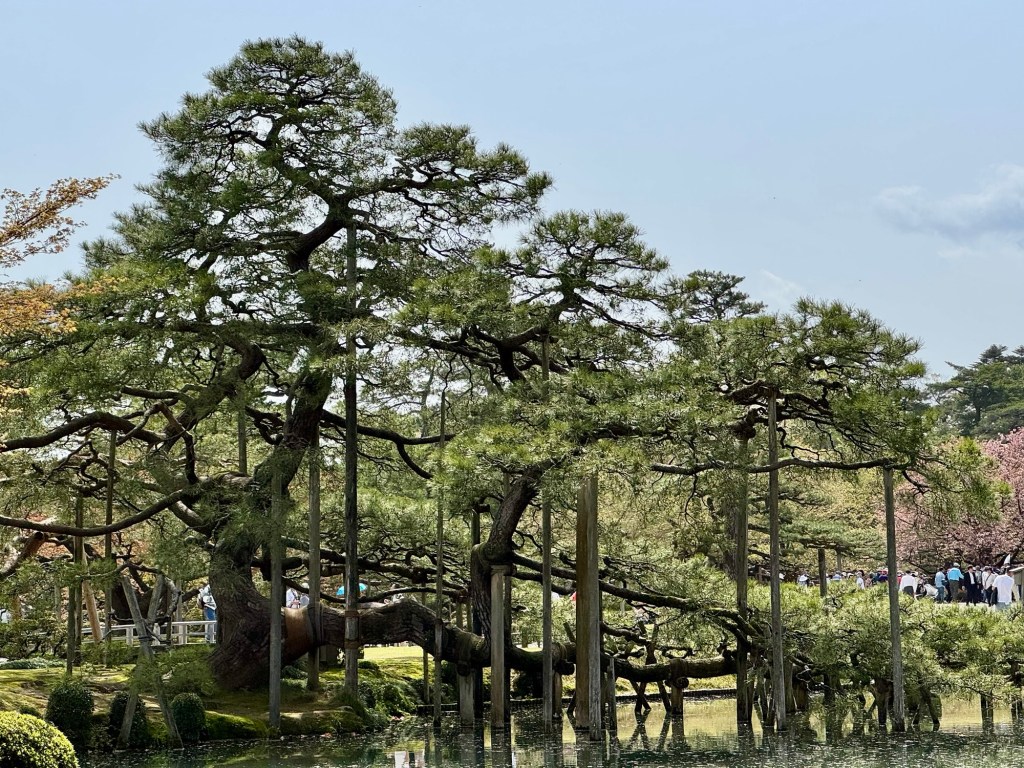
The Karasaki matsu pine tree, a Japanese black pine planted from seeds over 150 years ago.
The Meiji Monument, featuring a bronze statue of the legendary hero Yamato Takeru in the center. It was erected in 1880 in memory of the local soldiers who died in the Seinan War, a rebellion of disaffected samurai against the new government and the Meiji Restoration.

Gankobashi, also known as Flying Wild Geese Bridge, is a stone bridge whose unique shape symbolizes a flock of wild geese flying in formation.
Seven Fortune Gods, an area representing the realm of the Seven Fortune Gods, is adorned with seven stones, each representing one of these deities.
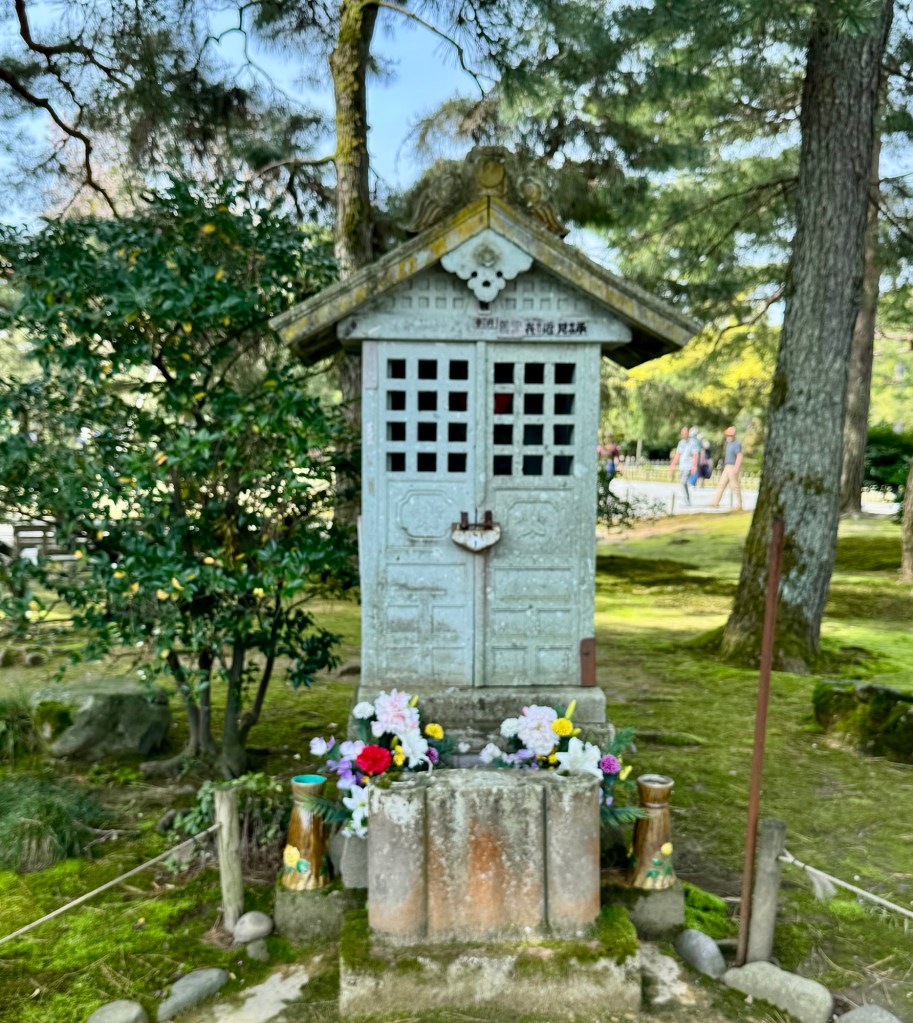
Jizo Shrine; built in 1824 upon the death of 12th feudal Lord Narinaga.
Having misinterpreted the guide’s instructions about the meeting time (I thought we were meeting so he could lead us through Kanazawa Castle), I only had 15 minutes to explore the castle on my own. Oops…
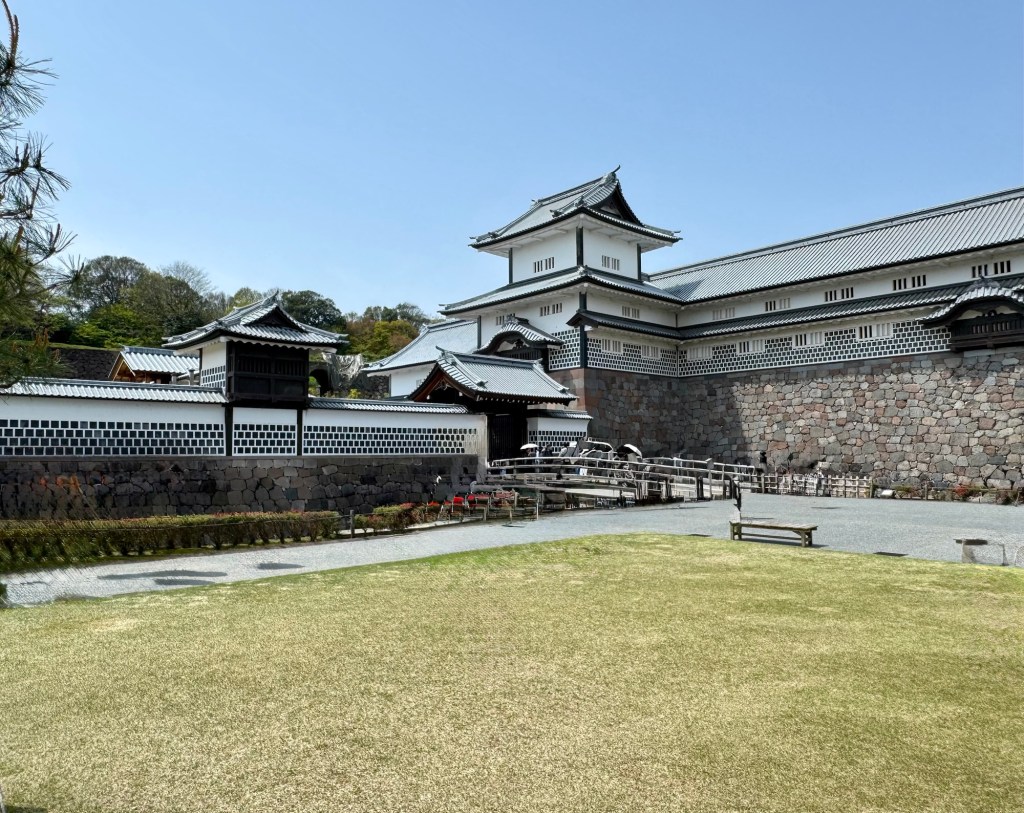
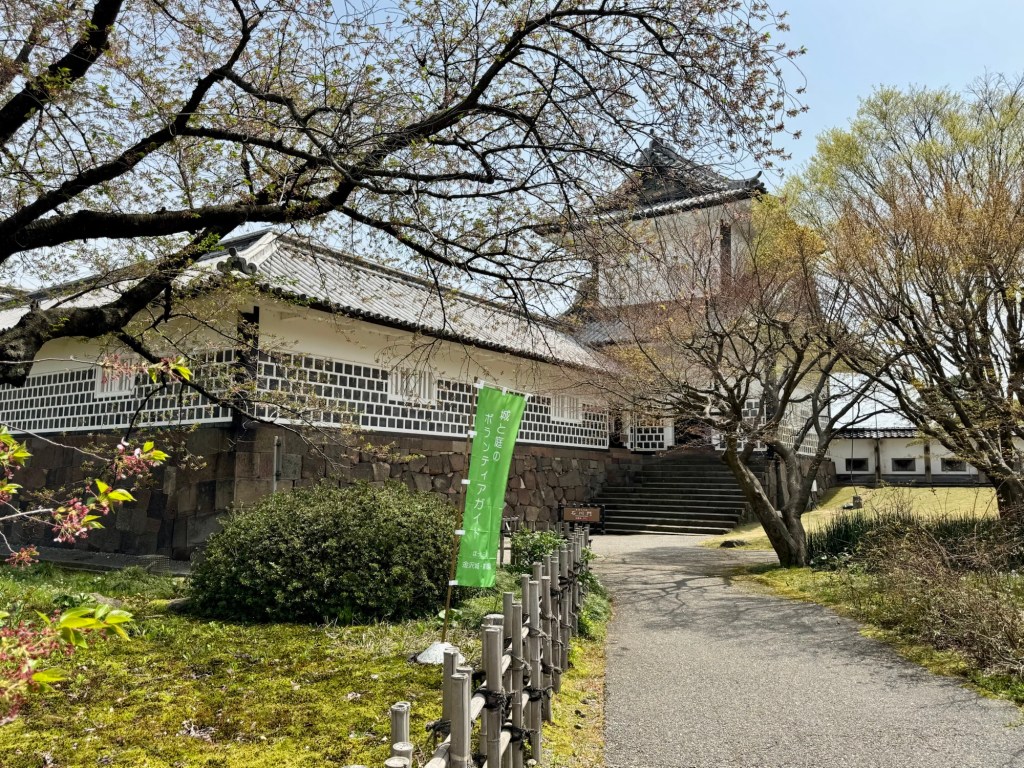
Kanazawa Castle, the heart of the Kaga domain and the ancestral home of the Maeda clan throughout the Edo period, witnessed a peaceful history under the rule of the Maeda clan. The castle park is most famous for its many formidable stone walls that fortified the castle against potential attackers.
The castle endured several devastating fires over the centuries, leaving only two storehouses and the Ishikawa-mon Gate standing. The Ishikawa-mon Gate, dating back to 1788 and facing Kenrokuen, stands as a testament to the castle’s resilience.
In recent years, several structures have been reconstructed, preserving the authenticity of the original construction by employing the materials and techniques of the past.




Fortunately, I wasn’t the last person in the group to catch the bus headed to Omicho Market, the “Kitchen of Kanazawa” where we were again dumped unceremoniously by our “guide”.
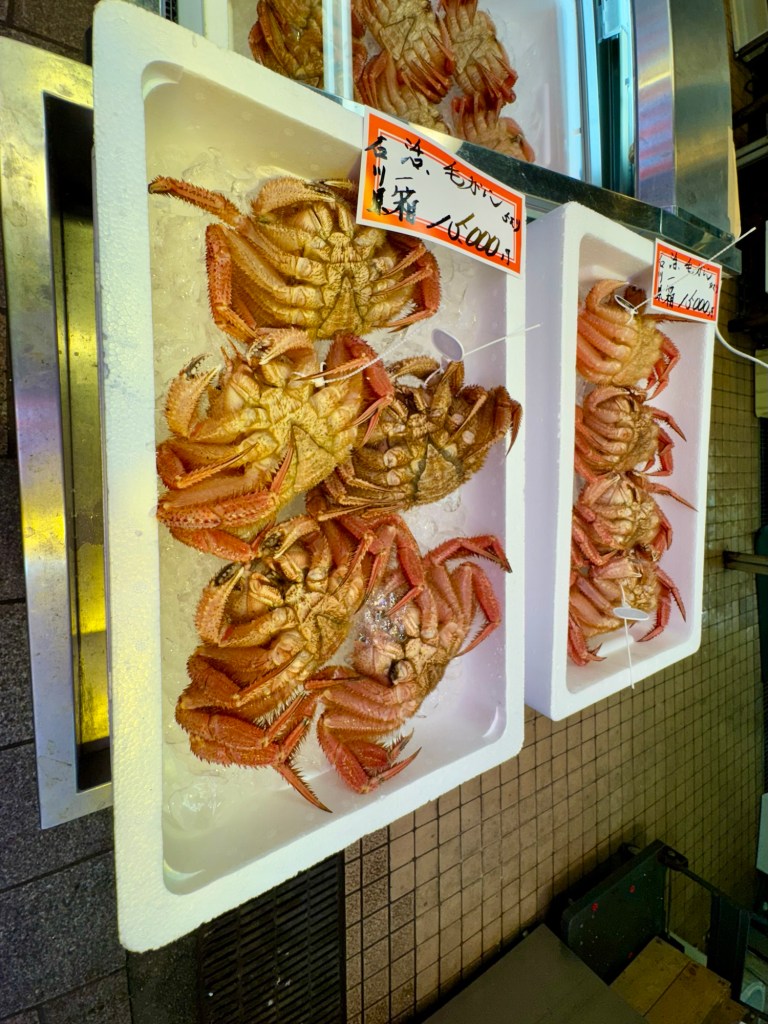
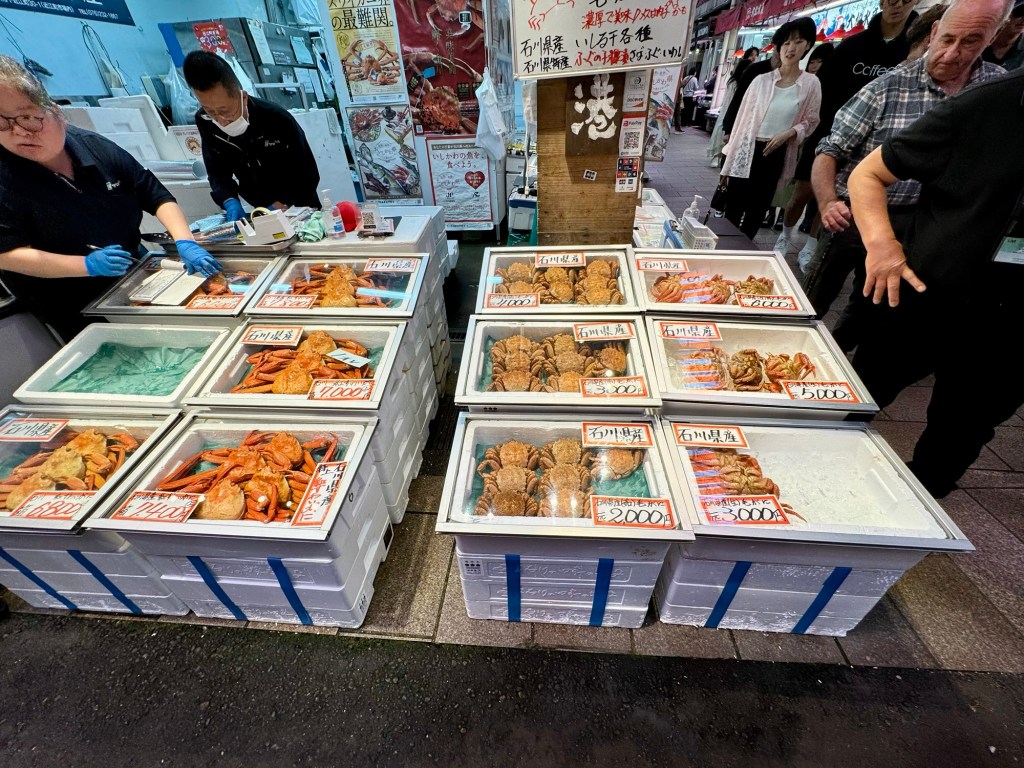
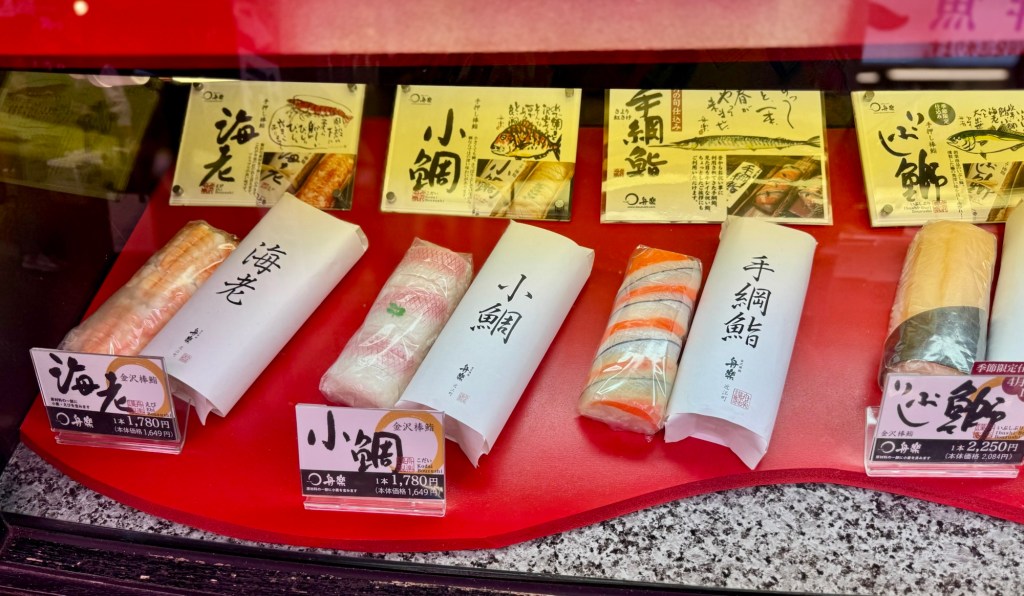
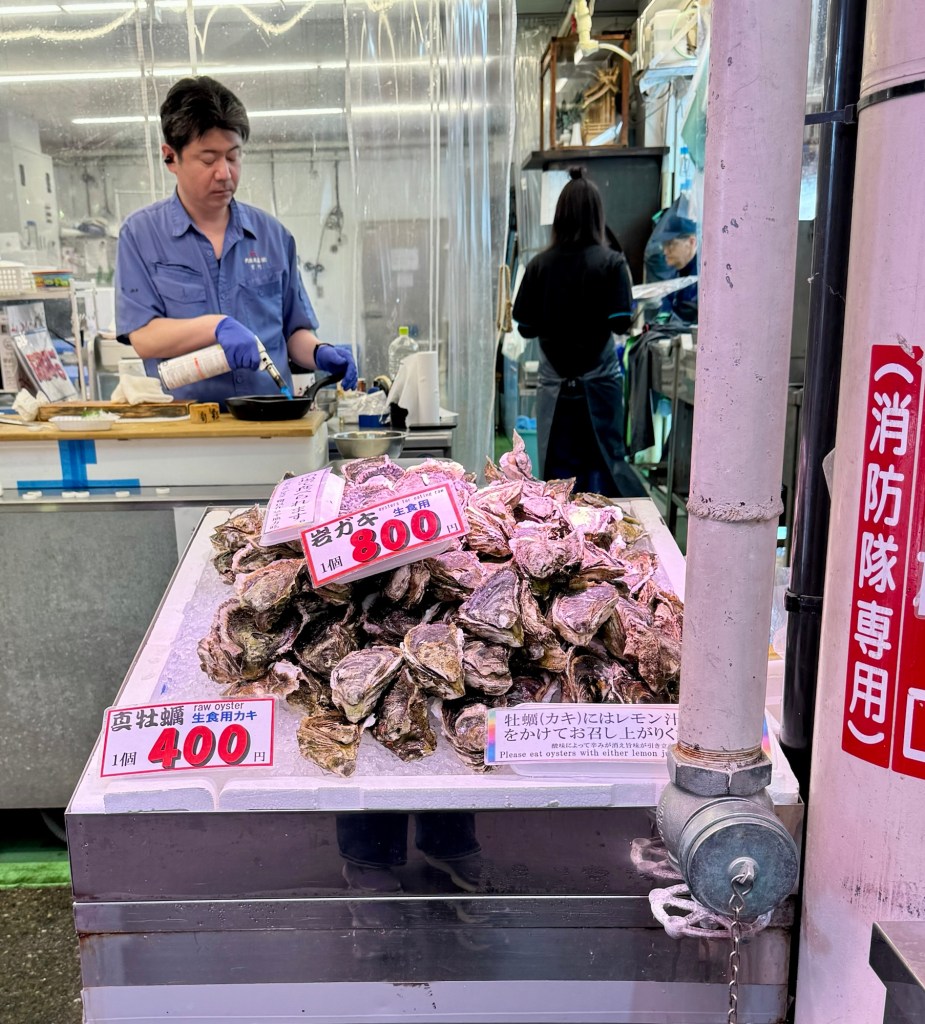
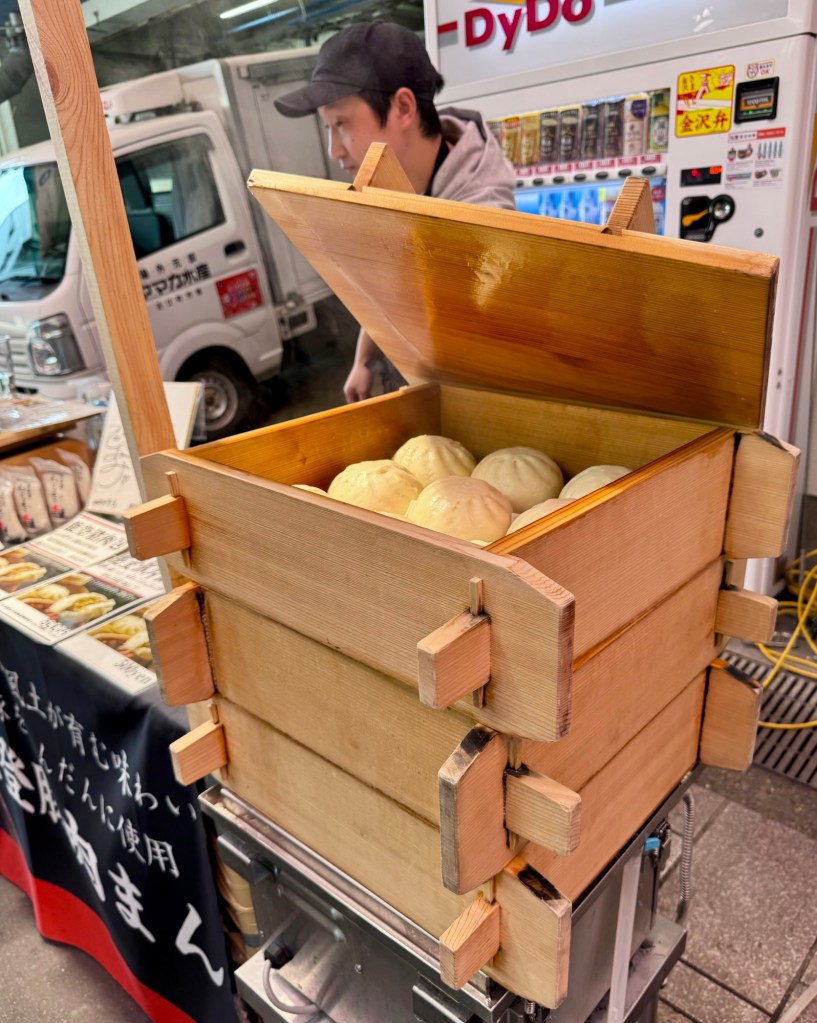
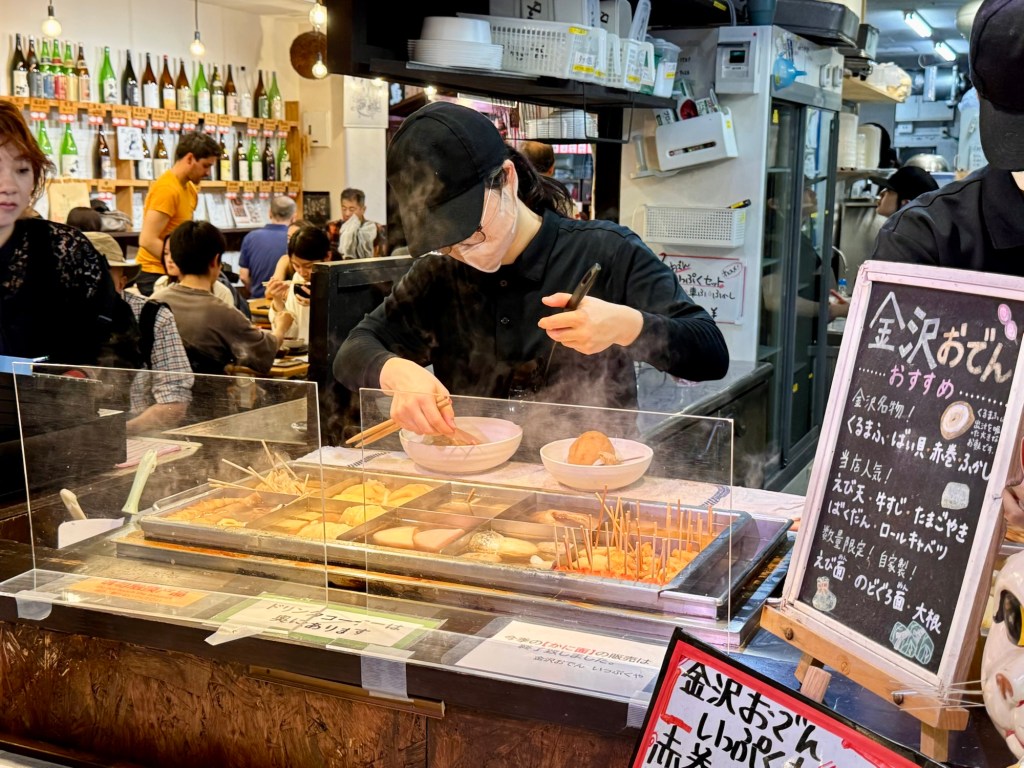
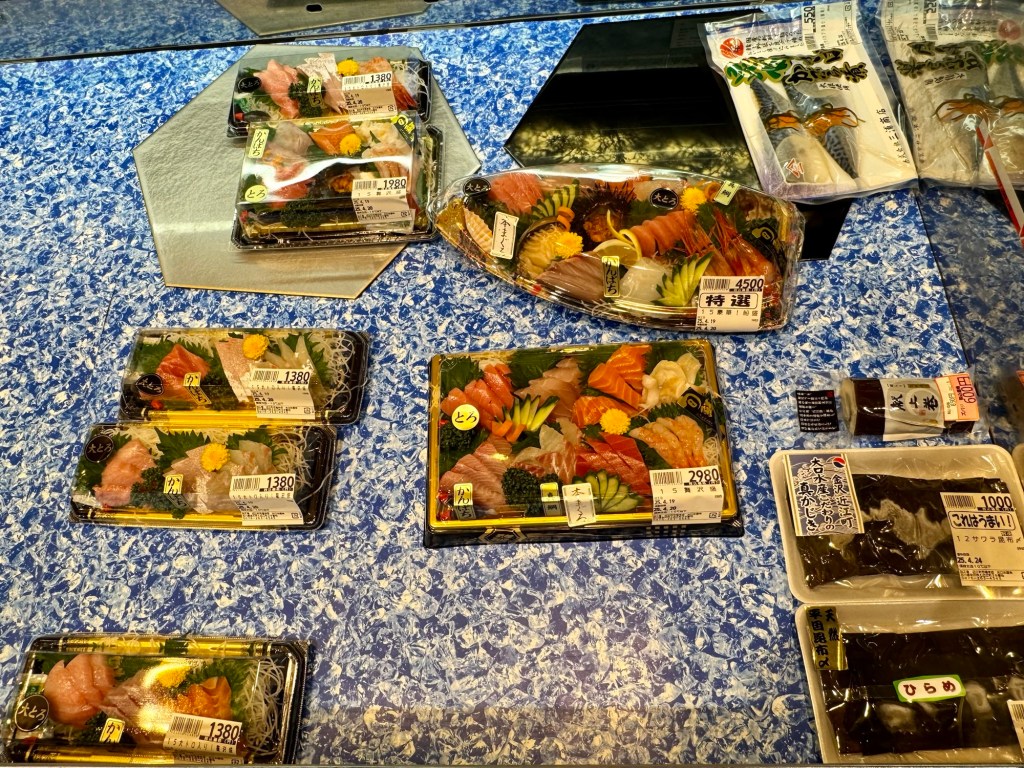
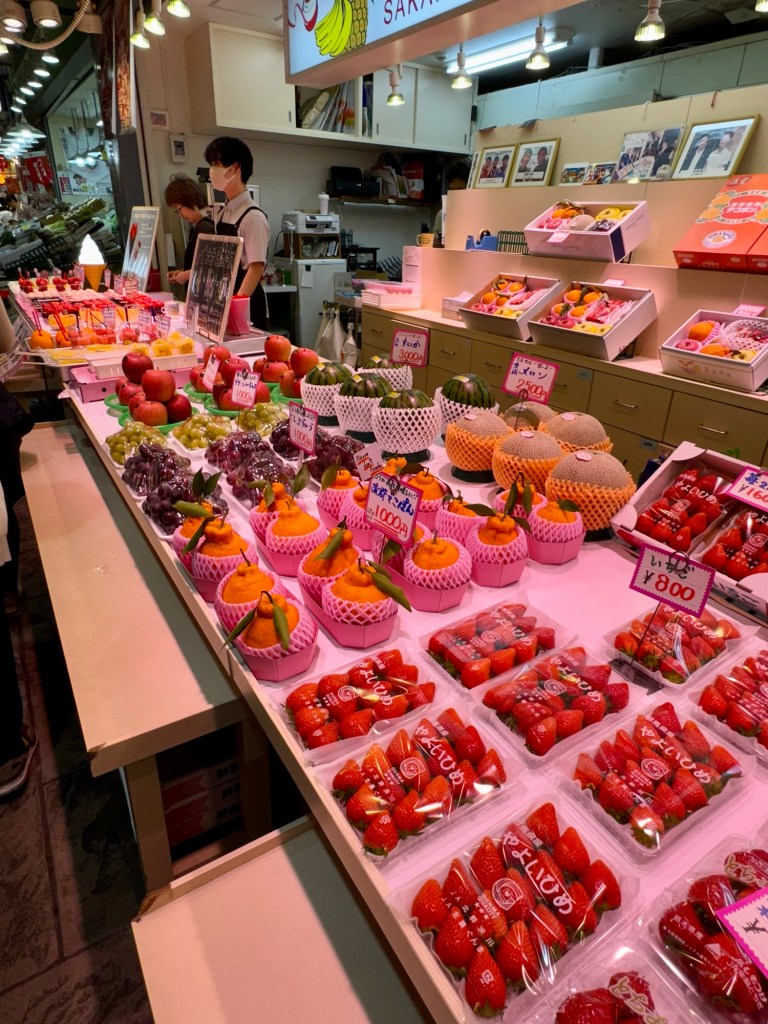
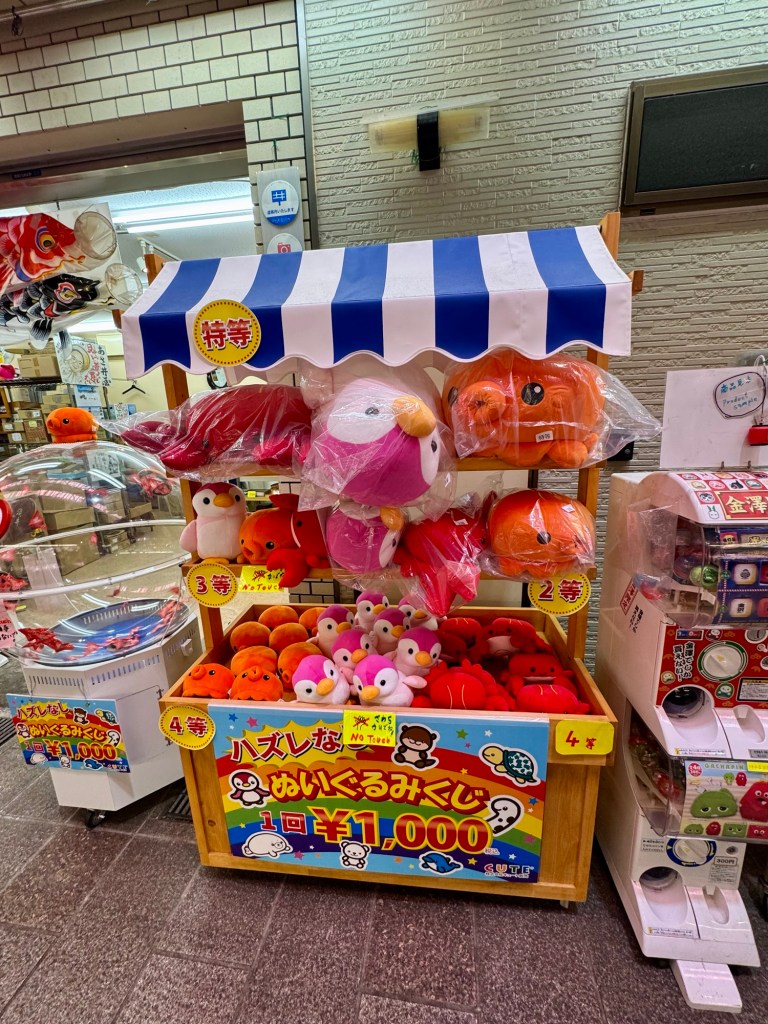
Omicho Market, Kanazawa’s largest fresh food market since the Edo period, has transformed into a vibrant and bustling network of covered streets. With over 170 shops and stalls, it features fishmongers selling their bounty of delicious fresh seafood caught in the nearby Sea of Japan. In addition to local seafood and produce, visitors can also discover a variety of items such as flowers, clothing, and kitchen tools.



Soon enough, we’re back on the bus and headed to the ship. Did I mention it was a beautiful day? Time to grab a quick bite and head to the pool deck to relax and read my book.
After a few hours, it was time to return to my cabin for a nap and a shower before the night’s festivities. The show didn’t pique my interest, and I wasn’t hungry, so I headed to the casino to try my luck at cards. I had some fun with my new gambling buddies before grabbing a late-night snack at The Local and drifting off to dreamland.
Tomorrow is another day. Adventures await…
 Judy’s Rambles