
April 21, 2025
Today, we arrived in Nagasaki on a beautiful sunny day. Since we’re back in Japan, we had to go through immigration and customs before we could explore the city. While it wasn’t as tedious as the arrival at Haneda, it was still an hour of my life that I’ll never get back.
At breakfast, I crossed paths with a couple from Bakersfield, California that I’d last seen in the Kenrokuen Garden in Kanazawa. We decided to meet up and take the tram to the Peace Garden. However, things didn’t quite go as planned. Despite the mix-up, we managed to meet outside the terminal.
Pete had kindly bought me a tram pass for the day, so we figured out the tram stop and boarded the tram with a group of other cruisers. We connected to the red line and successfully got off at the right stop, heading straight for the Peace Garden. It was definitely a promising start to the day.
Nagasaki, a port city nestled on the westernmost tip of Kyushu Island, is surrounded by verdant mountains on three sides (east, west, and north). The city grew and flourished around a beautiful natural harbor stretching like a long fiord into the East China Sea.
Early on August 9, 1945, at dawn, the B29 bomber “Bockscar,” carrying an atomic bomb, took off from Tinian Air Base in the Mariana Islands and headed towards Kokura, an industrial hub on the northern coast of Kyushu Island. This was the primary target for the world’s second atomic bombing.
When the airplane reached the sky above Kokura, however, the cloud cover prevented visual sighting. After circling three times, it changed course for the second target: Nagasaki.
Flying over the city, the bombardier spotted the sprawling buildings of the Mitsubishi Nagasaki Arms Factory through a crack in the clouds. At an altitude of 30,000 feet, the airplane released its deadly cargo. With a blinding flash of light and an earth-shattering roar, the atomic bomb detonated 500 meters above Matsuyama-machi in the northern part of Nagasaki.
It’s hard to believe over 73,000 died here almost instantly when the bomb detonated. Another 74,000 were injured from the blast and more than 120,000 were left homeless.
Once a prison, The Nagasaki Peace Memorial Park now stands as a haunting reminder of the atomic bomb’s devastating power. The rusted steel beams protruding from concrete foundations form a twisted shape, a testament to the immense force unleashed by the blast.
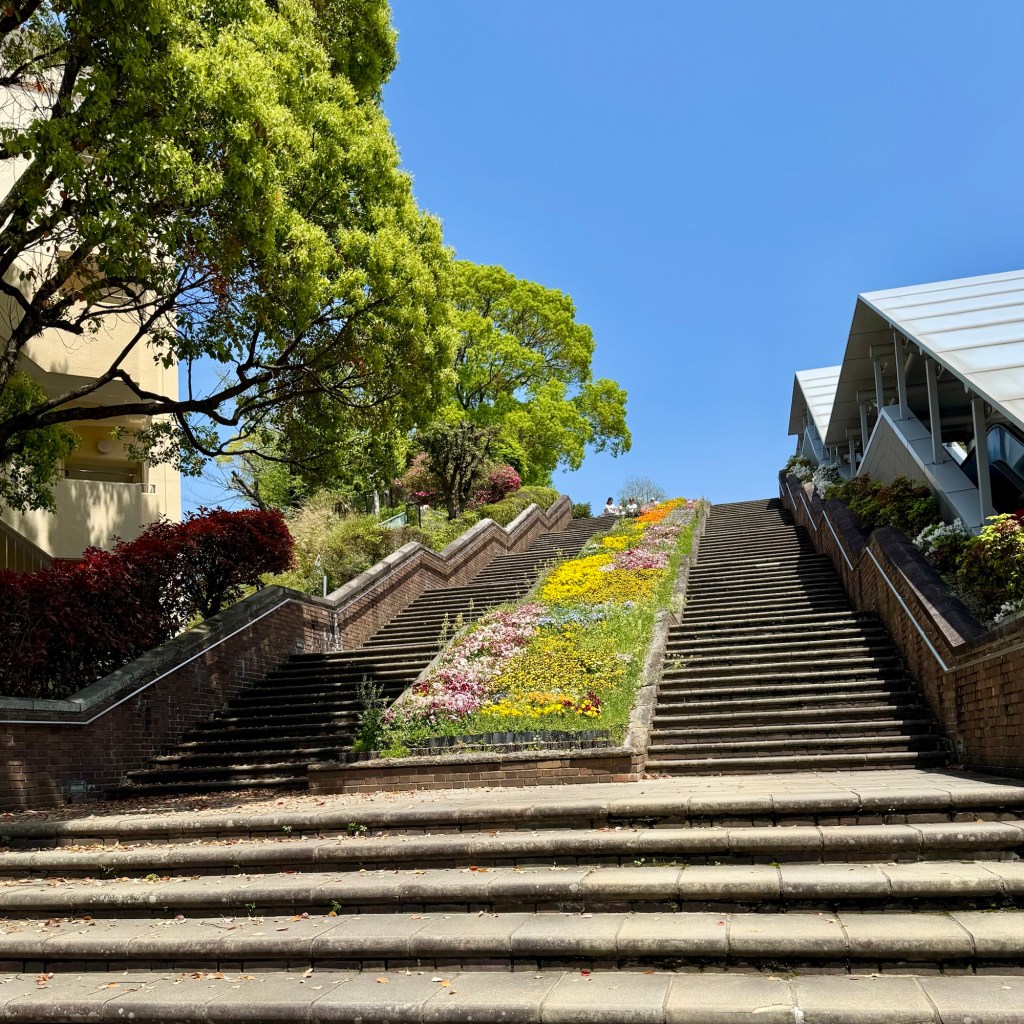

When the atomic bomb exploded on August 9, 1945, thousands of people suffered terrible burns and died begging for water. The “Fountain of Peace” was constructed with donations received from all over Japan and is an offering of water to the victims of the atomic bomb and a prayer for the repose of their souls.
The fountain sends up a sparkling spray of water in the shape of a pair of wings, evoking the dove of peace and the crane after which Nagasaki harbor has been named.

At the far end of the park is The Peace Statue; a 10-meter-tall bronze statue of a seated man designed by Seibo Kitamura. His right index finger points towards the sky, serving as a reminder of the looming threat of nuclear weapons, while his outstretched left hand symbolizes world peace.
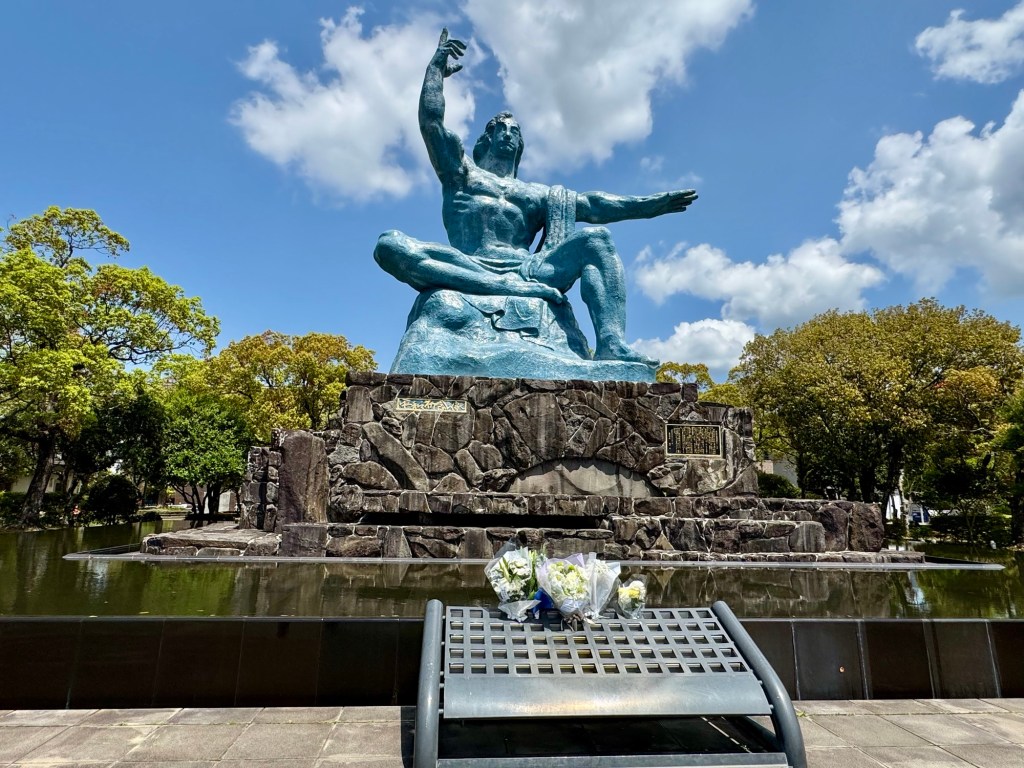
This statue was erected by the citizens of Nagasaki in August, 1955, on the 10th anniversary of the devastation of this city by the atomic bomb.
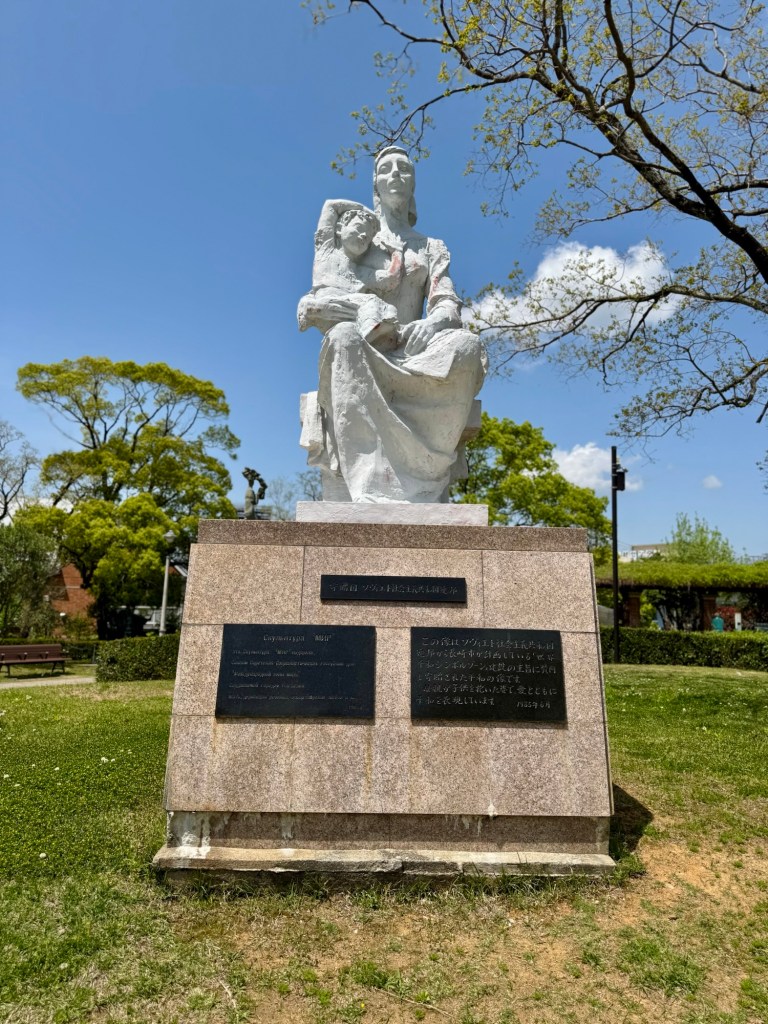
Throughout the park, there are emotive memorial statues donated by different countries, including:
The Statue of Peace donated by the USSR. It shows a mother holding her child in an expression of love and peace.
Tree of Life: Gift of Peace
The tree gives life to make the piti (dish) that is used for carrying food, water, and babies. It represents the sharing of resources between families, communities and nations for peace and harmony. It was donated by Australia in recognition of atomic survivors worldwide and Indigenous Australians, service personnel and civilian workers, and their descendants, affected by British nuclear testing in Australia.

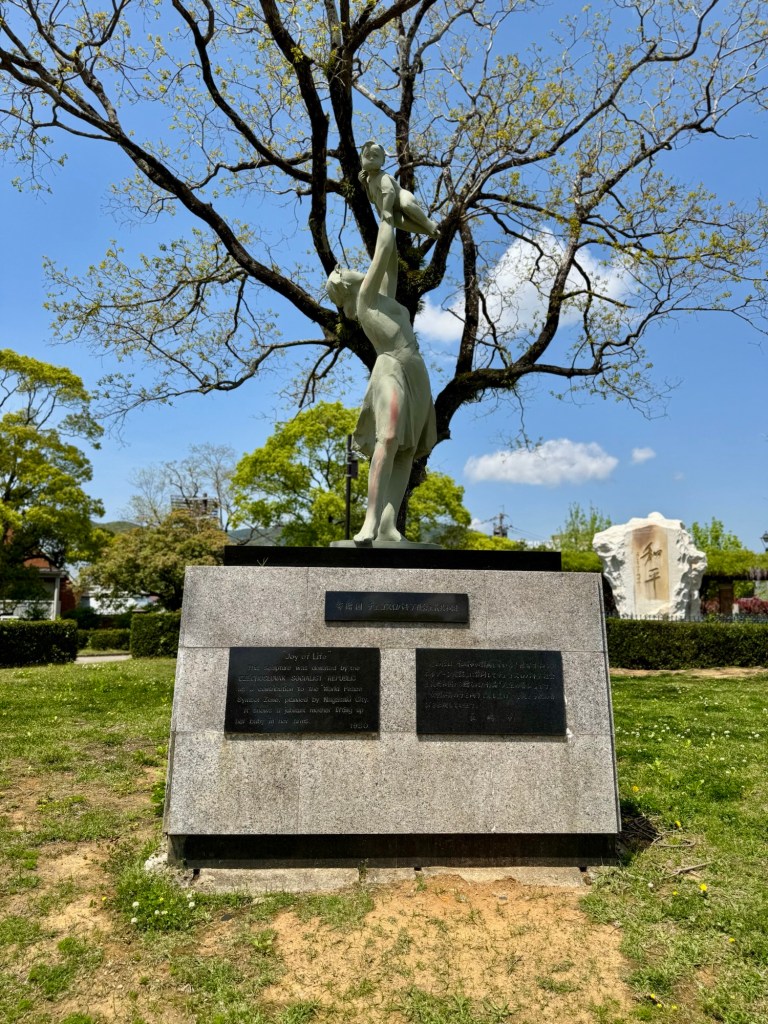
Joy of Life donated by the Czechoslovak Socialist Republic depicts a mother holding up a baby in her arms.
Monument of Peoples Friendship symbolizing the efforts for Peace and a happy future of Mankind donated by the German Democratic Republic.

After trying the traditional ice cream of Nagasaki, I headed off to the Urakami Cathedral while Pete and Jan opted to skip that stop and headed elsewhere.


Construction of the Cathedral was started in 1895 by Father Theodore Fraineux, Archdiocese parish priest and finalized in 1925 with the completion of the belfry-towers. At that time the church was Asia’s largest Catholic Church (Urakami Tensyudo).
Urakami Cathedral was located on a small hill about 500 meters northeast of the atomic bomb hypocenter. The explosion of the atomic bomb destroyed the church. The North Bell Tower collapsed and tumbled down the hill and is all that remains of the original Cathedral.
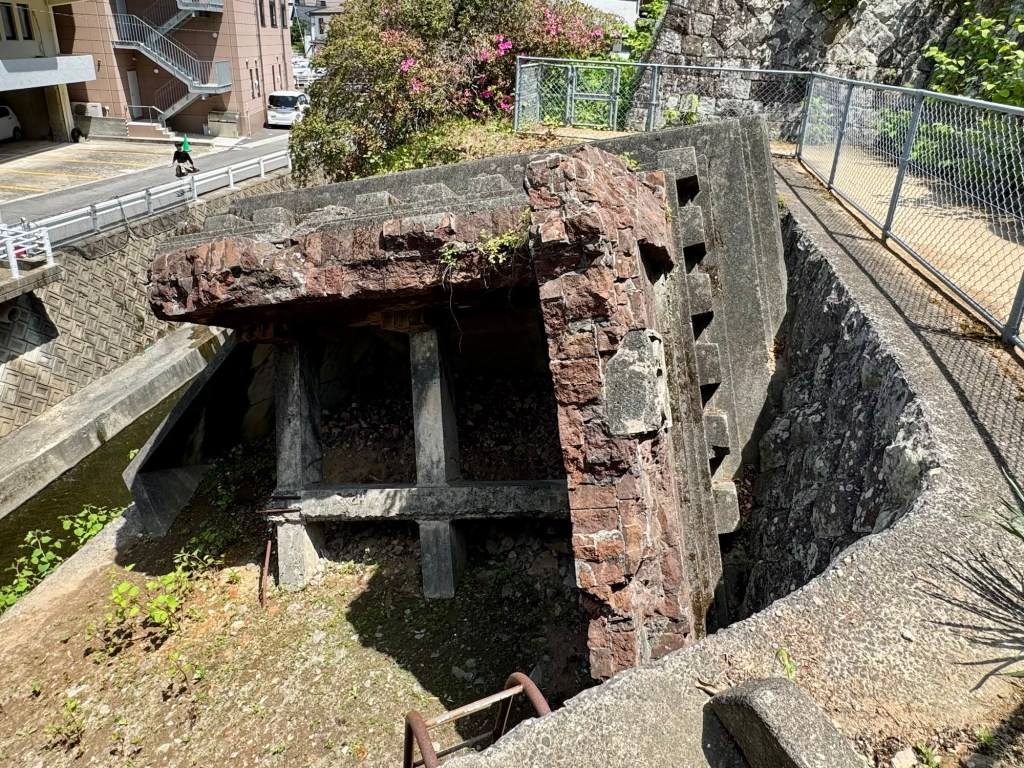
The Urakami Cathedral was rebuilt in 1959.
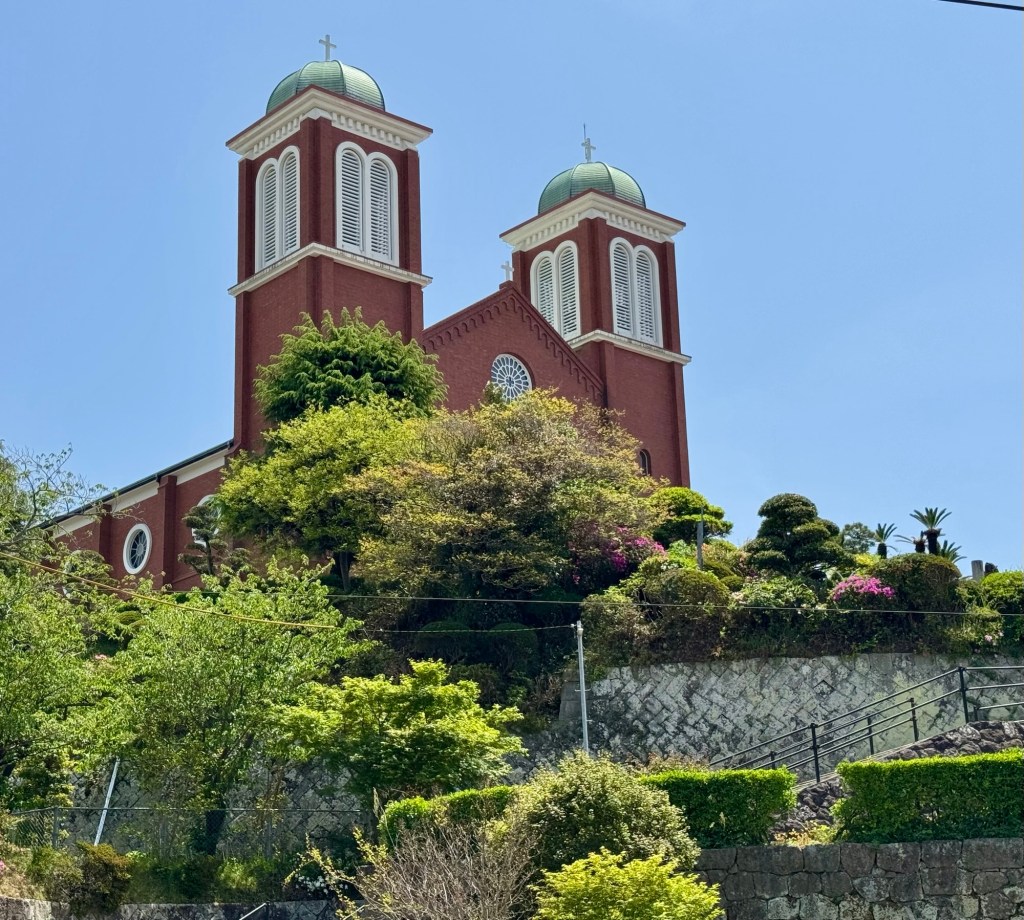
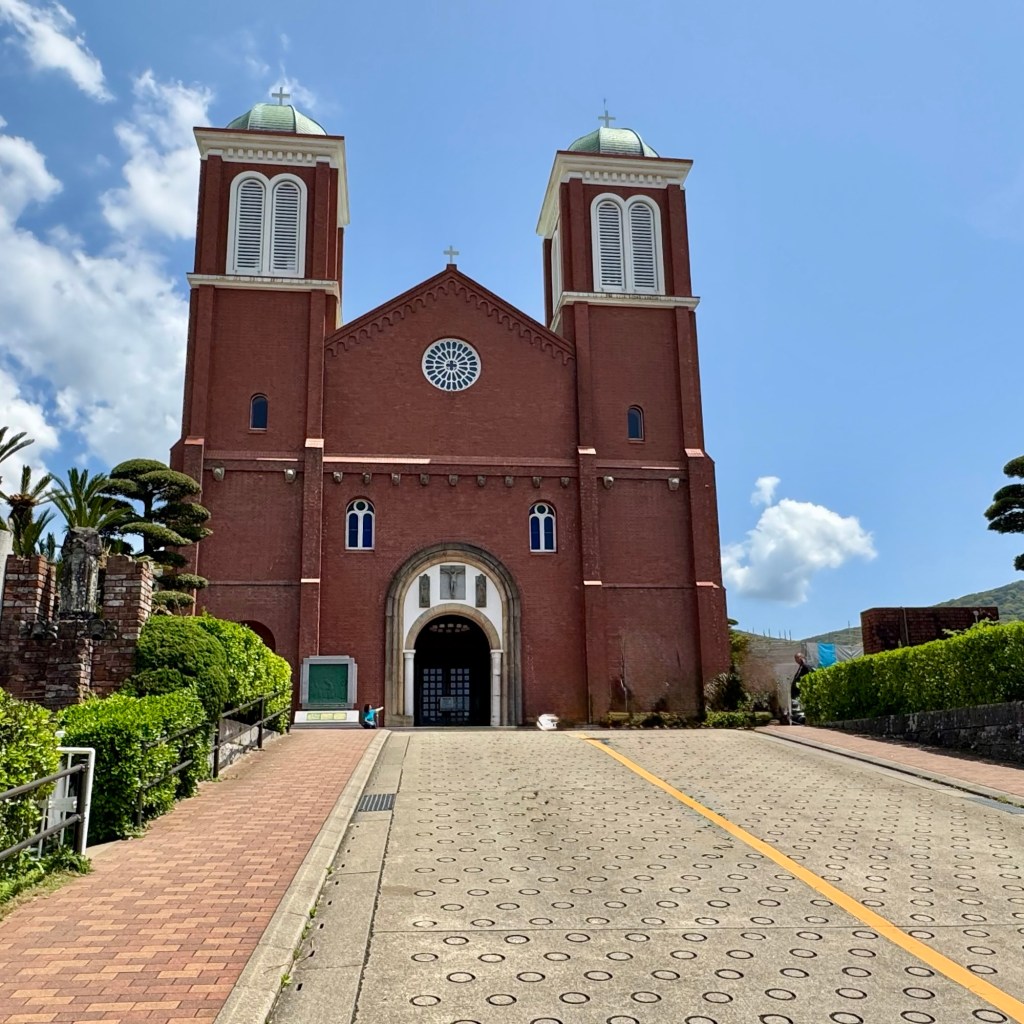


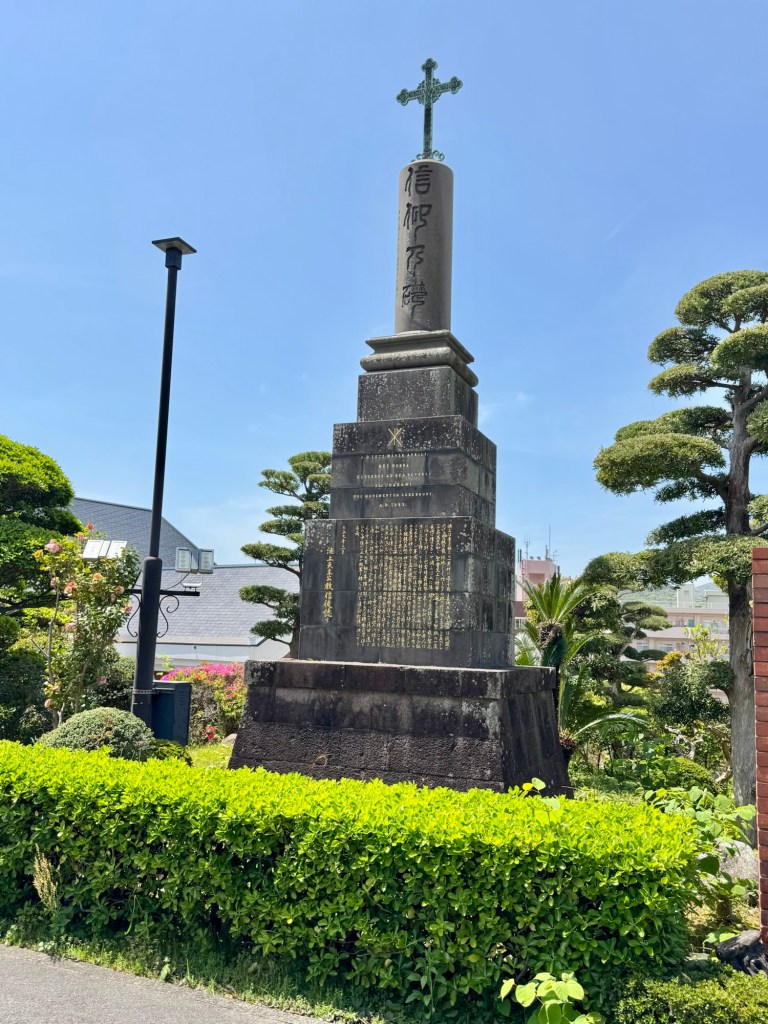
After my side trip to the cathedral, I headed back to the hypocenter aka ground zero – the point on the Earth’s surface directly below the nuclear explosion.
At the entrance to this area, two stone lanterns, donated by the devoted parishioners of the Shotokuji Temple, stand tall.

Located about 1. 5km from the hypocenter, Tennozan Hornin Shotokuji Temple was founded in
1626, and this pair of stone lanterns was the only thing that remained standing after the bomb fell. The lanterns were erected on this spot in February 1949.
A black stone monolith, marking the hypocenter, was the first structure built after the bombing in this urban green-space. The fierce blast wind, heat rays reaching several thousand degrees and deadly radiation generated by the explosion reduced the city center to ruins. About one-third of Nagasaki City was destroyed.
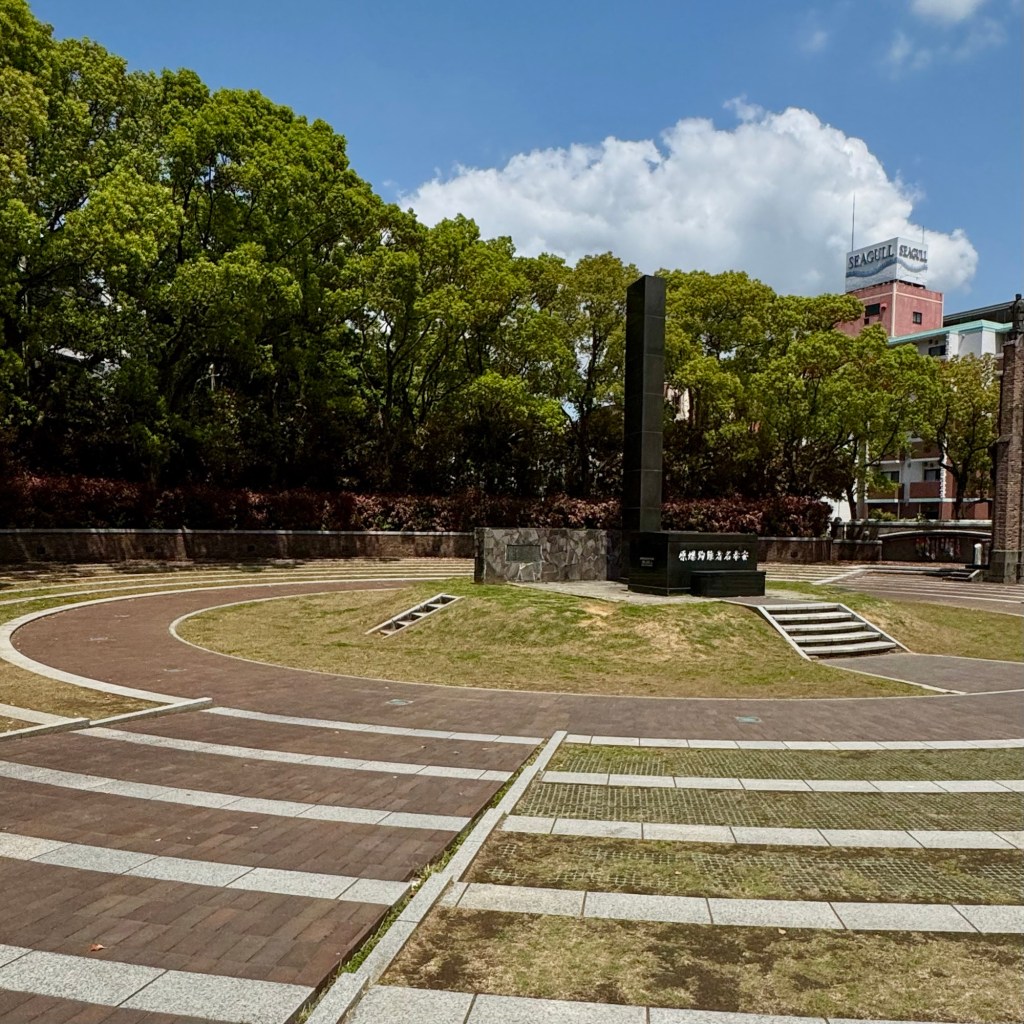
The park is also home to a remnant of the Urakami Cathedral Wall. The stone statues on the column depict Francis Xavier and his apostles.

On the occasion of the 50th anniversary of the atomic bombing, the hypocenter area was refurbished and a monument was erected. Created by Nagasaki-bom sculptor Naoki Tominaga, this monument portrays a stricken child in her mother’s warm embrace. Embodied in the monument is the sculptor’s reminder that the child is like Japan on the day of the atomic bombing, while the mother represents the support provided by the countries of the world in Japan’s efforts to build the peaceful nation that it has become today.

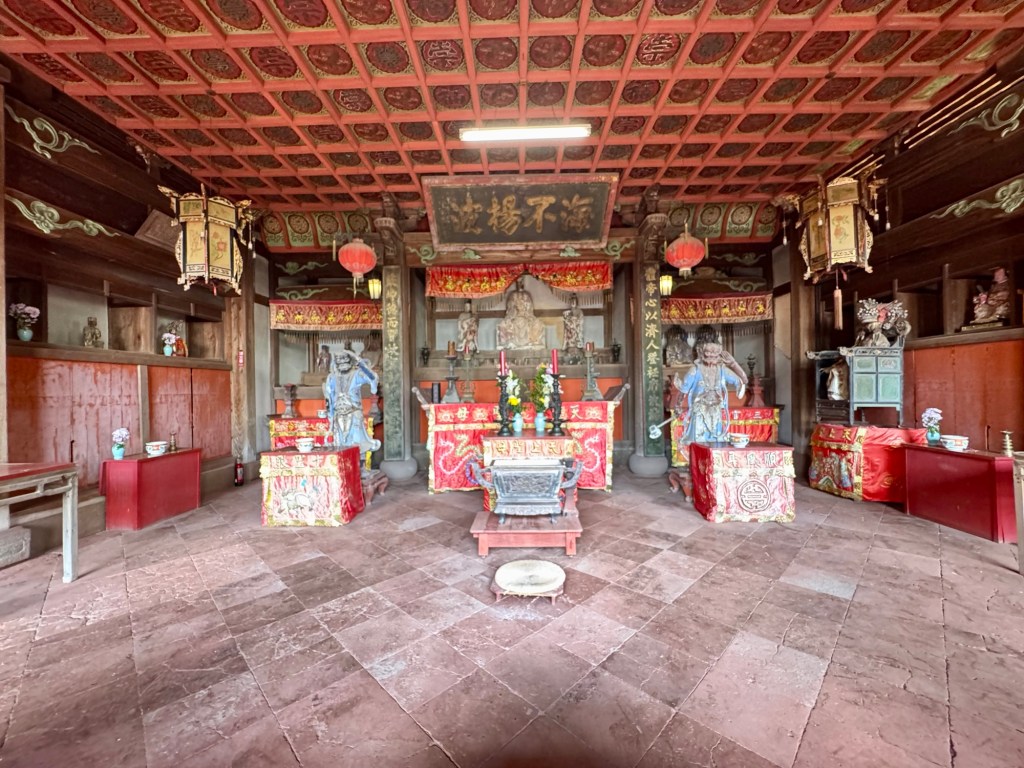
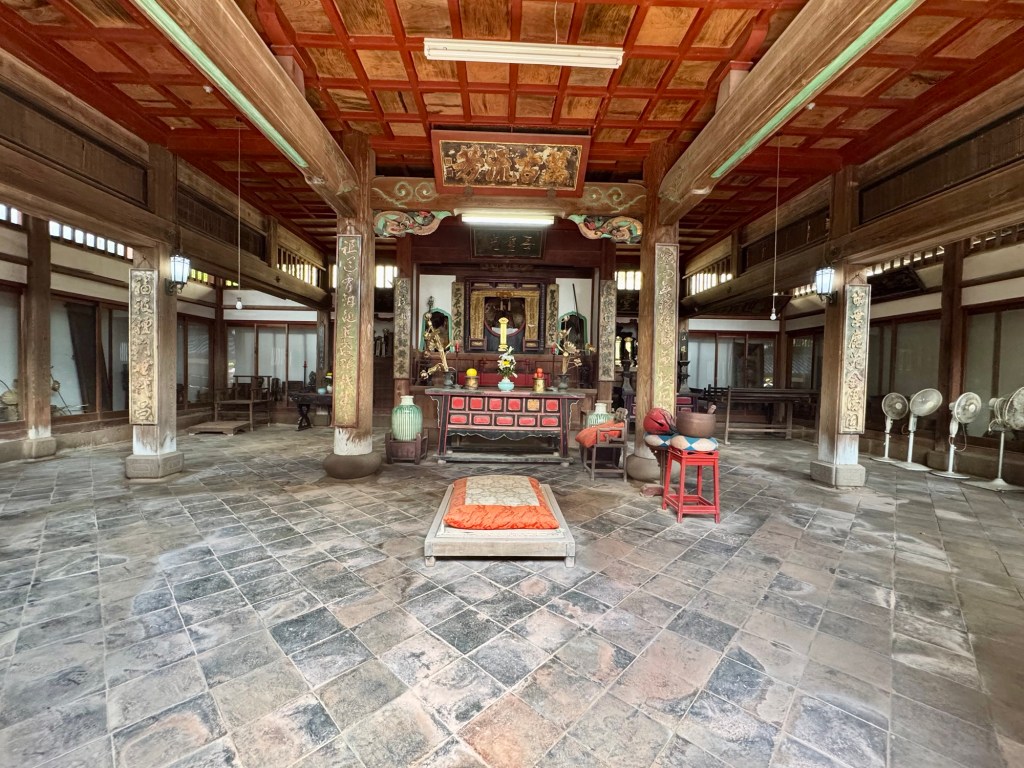
Leaving the bombing behind, I headed to Kofukuji temple. Built in 1629 for the city’s Chinese population, this famous Ming-style temple is the oldest building in Nagasaki.


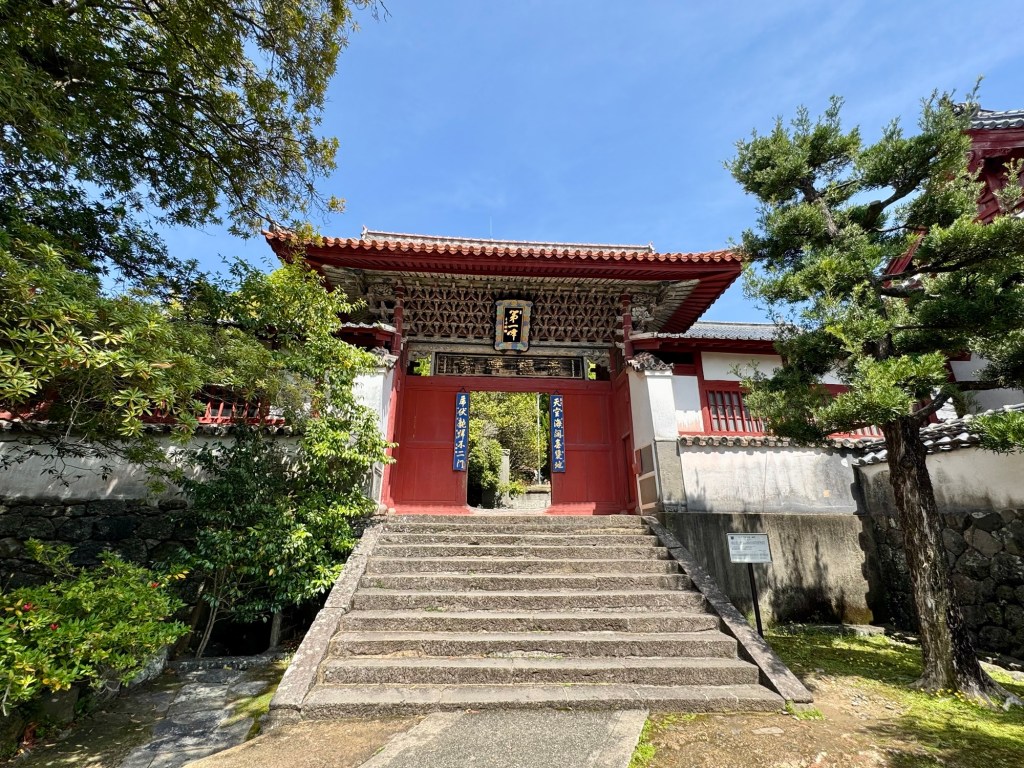
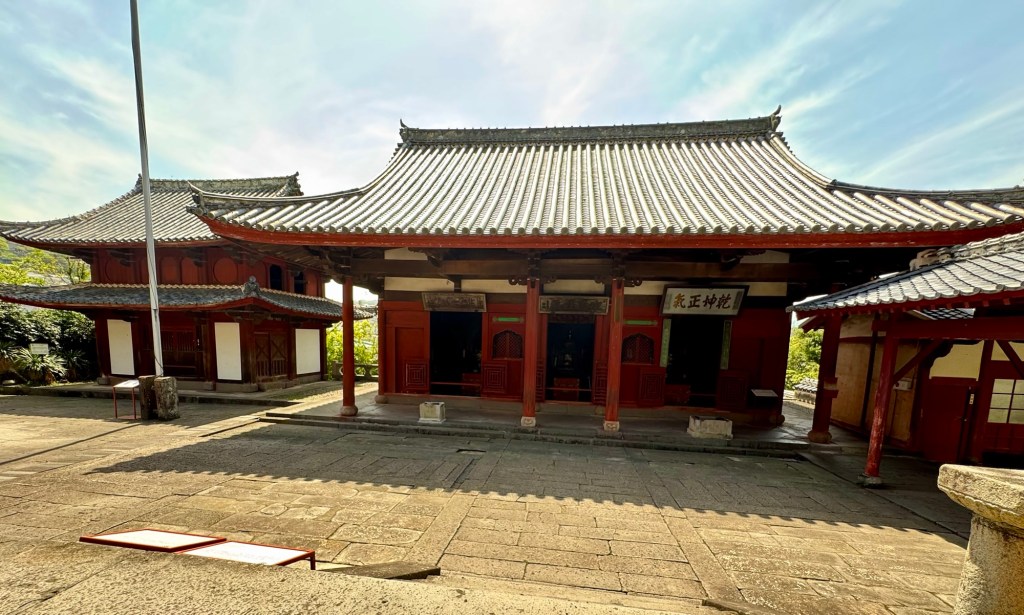
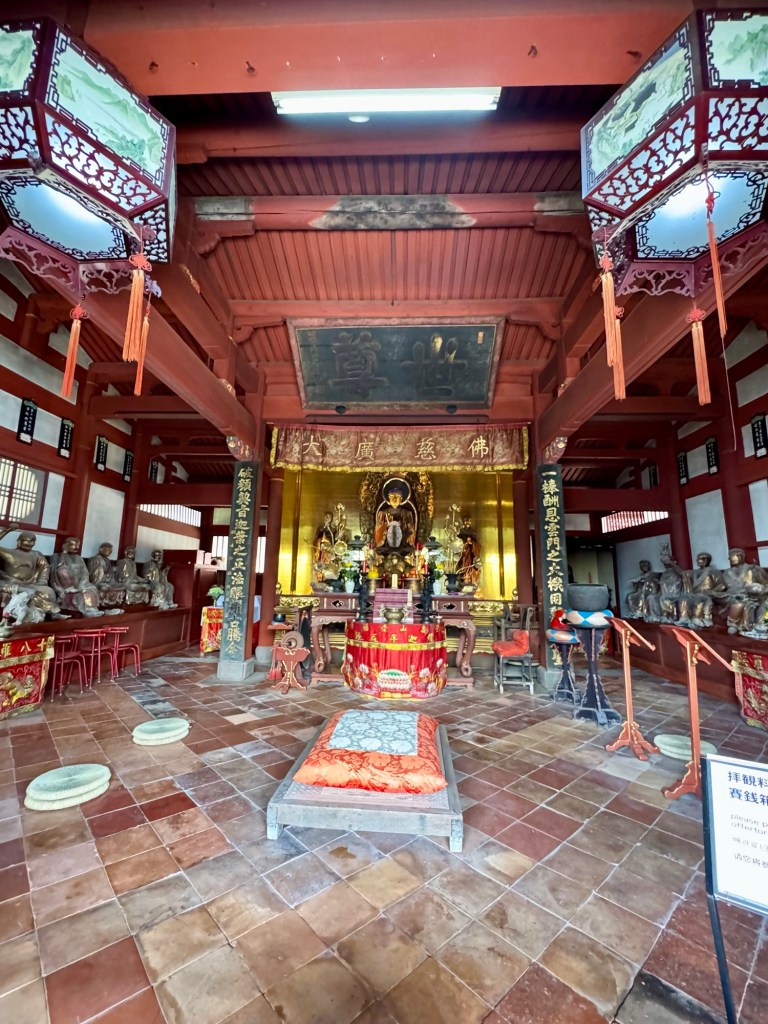


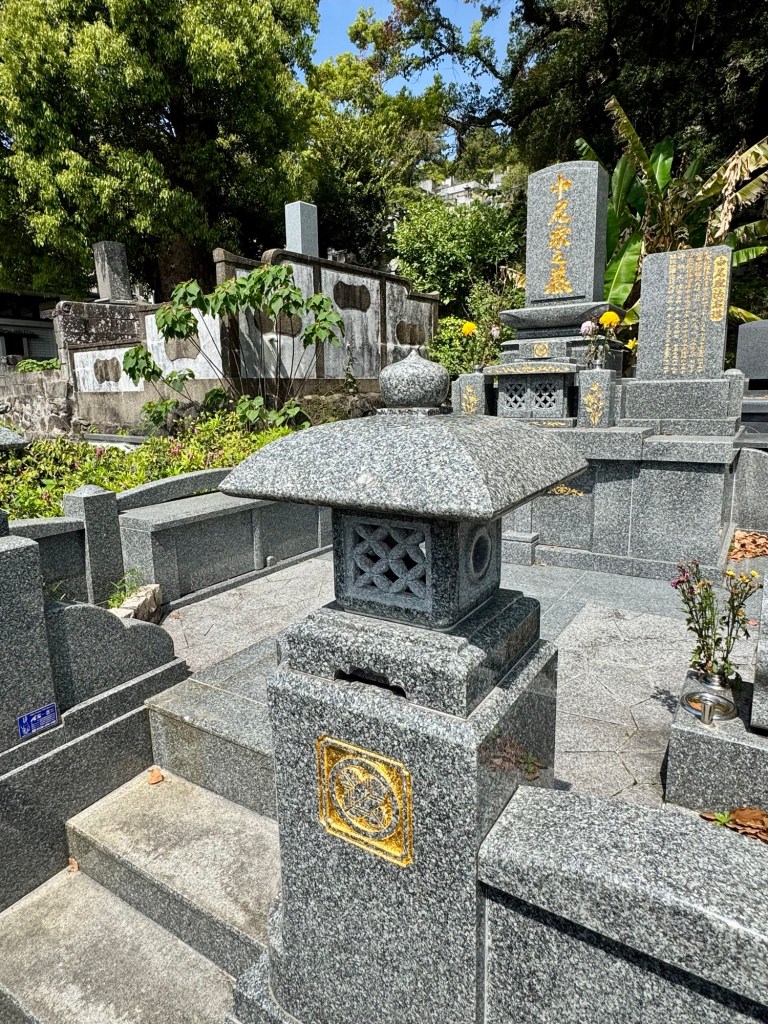
There is also an extensive graveyard associated with the temple with a wide range of final resting places for the faithful departed.



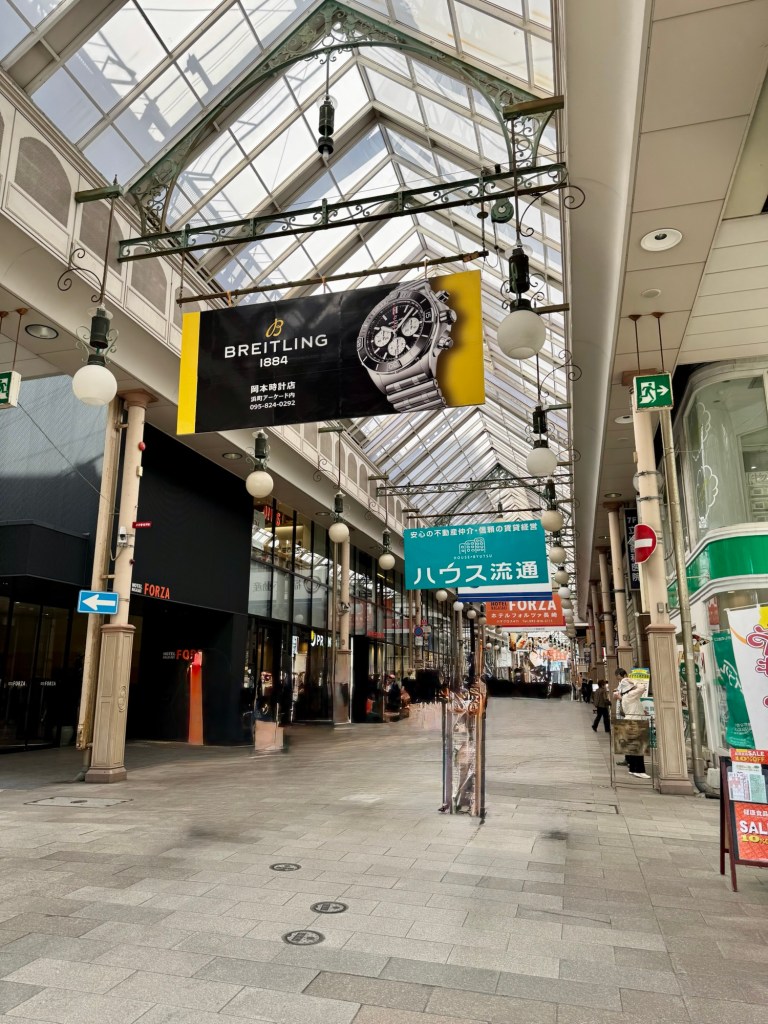
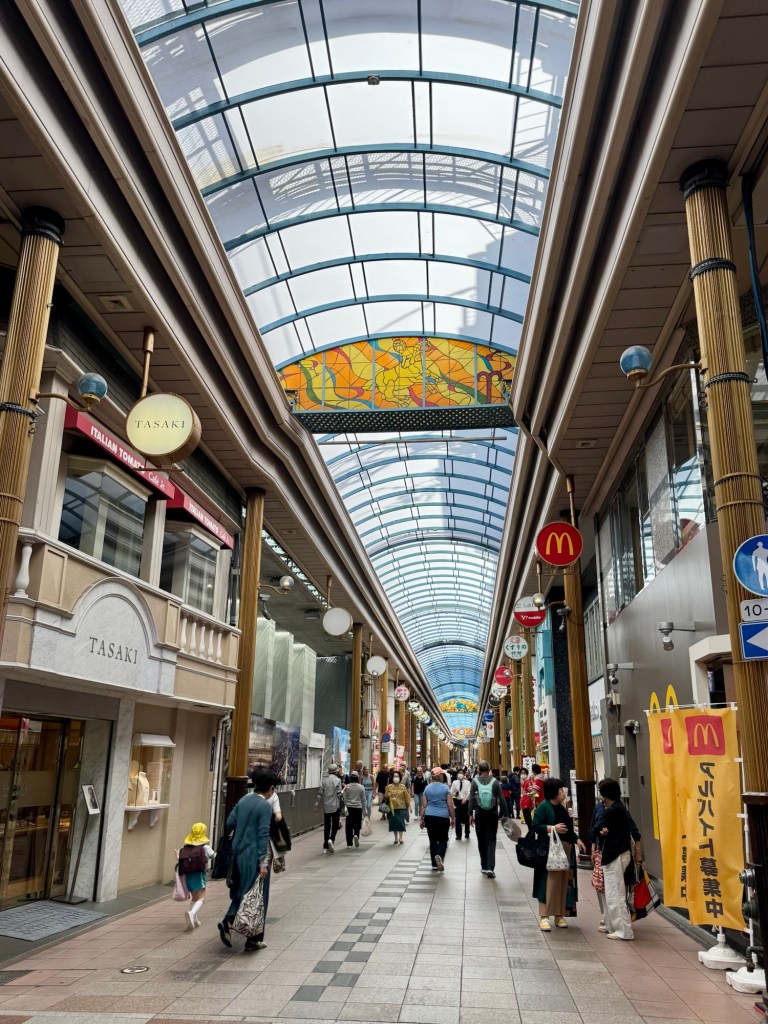
My next stop was to be Chinatown but en route I was distracted by a large shopping centre made up of streets covered by a glass roof. Inevitably I found a few things I didn’t need to buy so now I’m dragging a bag around in my adventure. I’d better get out of here before I buy anything else.

Checked out Chinatown quickly and grabbed a quick bite – shrimp dumplings as breakfast was many hours ago and dinner isn’t until 7:00.


I ran into Pete and Jan again but they are heading back to the ship and I have a few more detours to make before heading back.
First up is the Dutch Slope; a pleasant area along a slope, with several European-style houses.
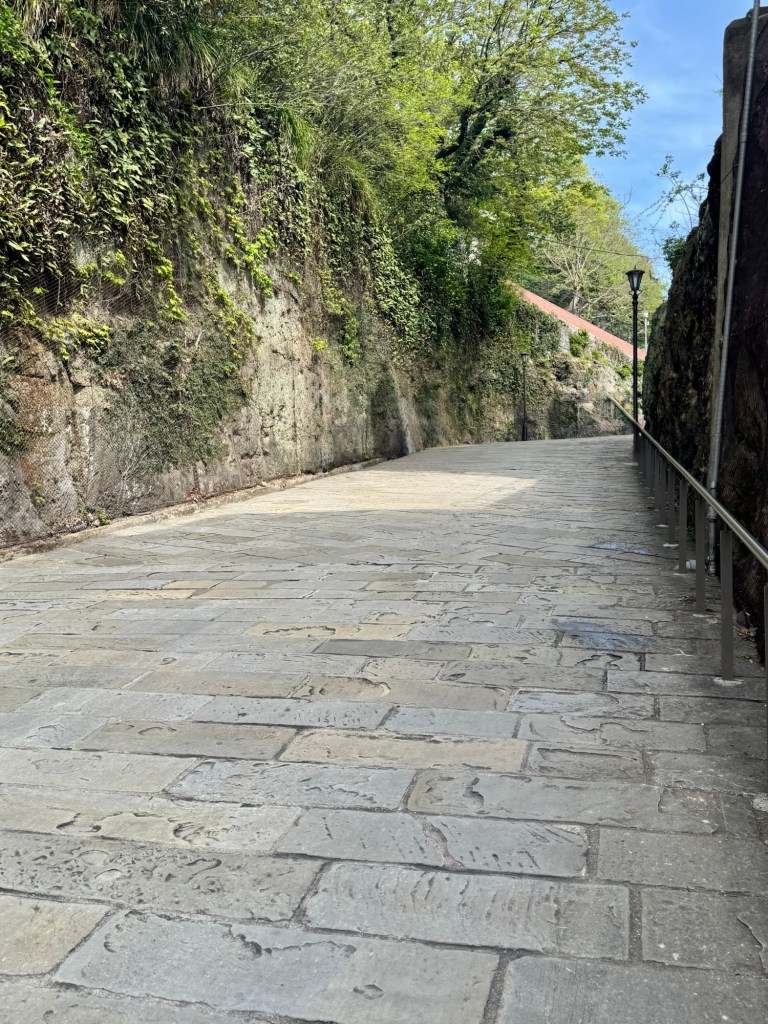
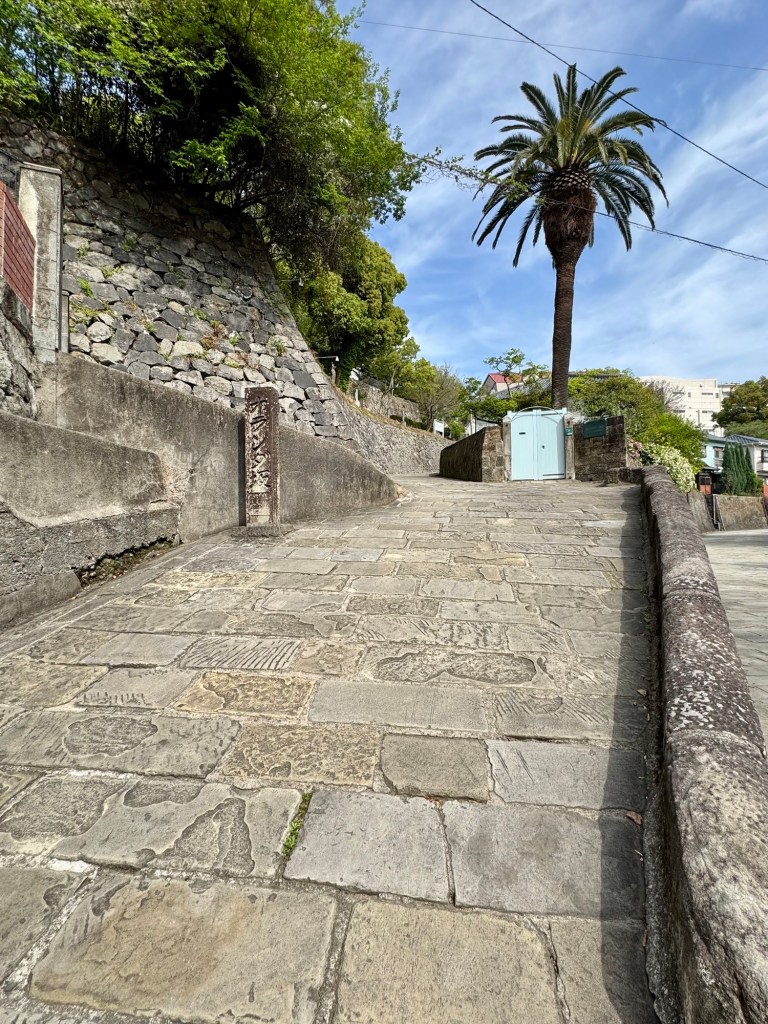
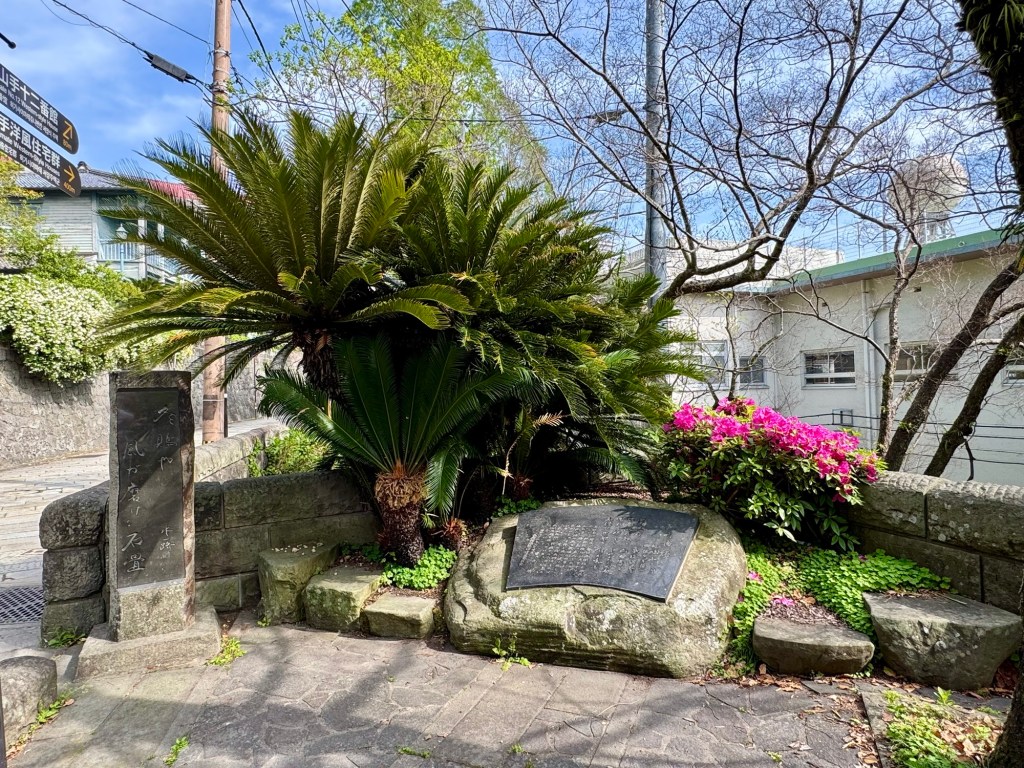
The people of Nagasaki referred to non-Asians as Dutch because the majority of foreigners were Dutch sailors living on Dejima. The name of this stone-paved slope in the foreign settlement comes from the fact that it was often bustling with westerners. These foreign settlements were outside of Japanese law and were run completely by the foreigners living there.
One of the western buildings remaining was built in 1868. It originally served as the Russian Consulate and was later used as the US Consulate and then a residence for missionaries belonging to the American Methodist Church.
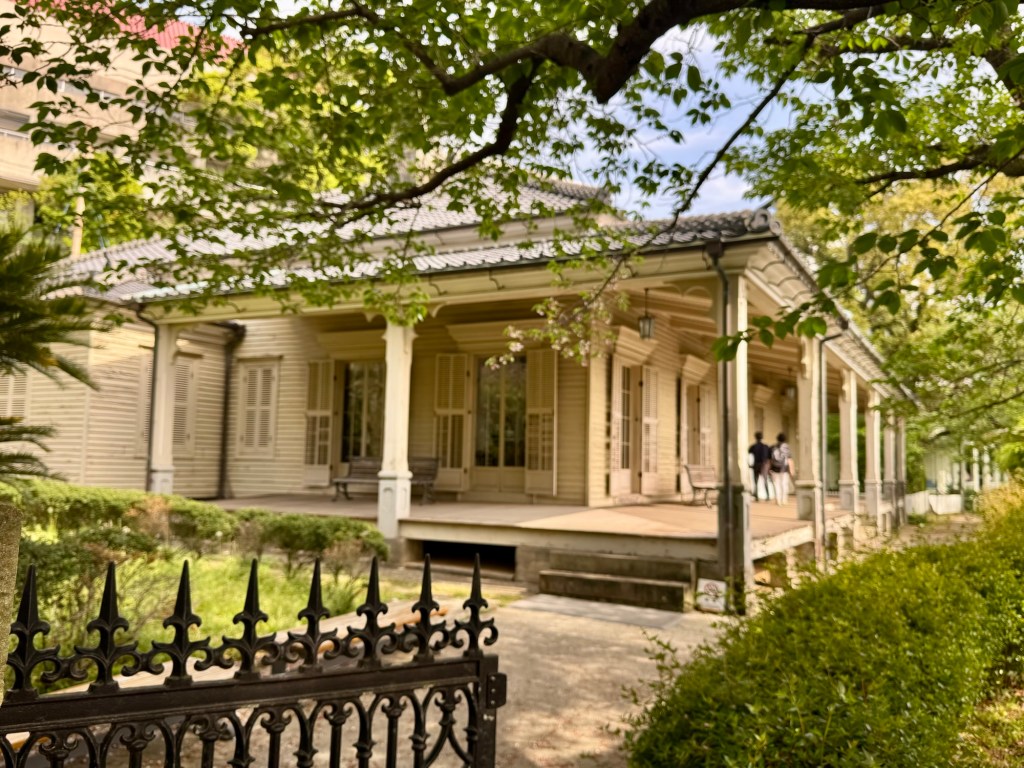
I’m starting to run out of steam but there’s one more stop close by; the Oura Cathedra. The Cathedral was constructed under the guidance of Bishop Petitjean, and is the oldest Christian building in Japan. Its dedication ceremony was held on the 19th February 1865.
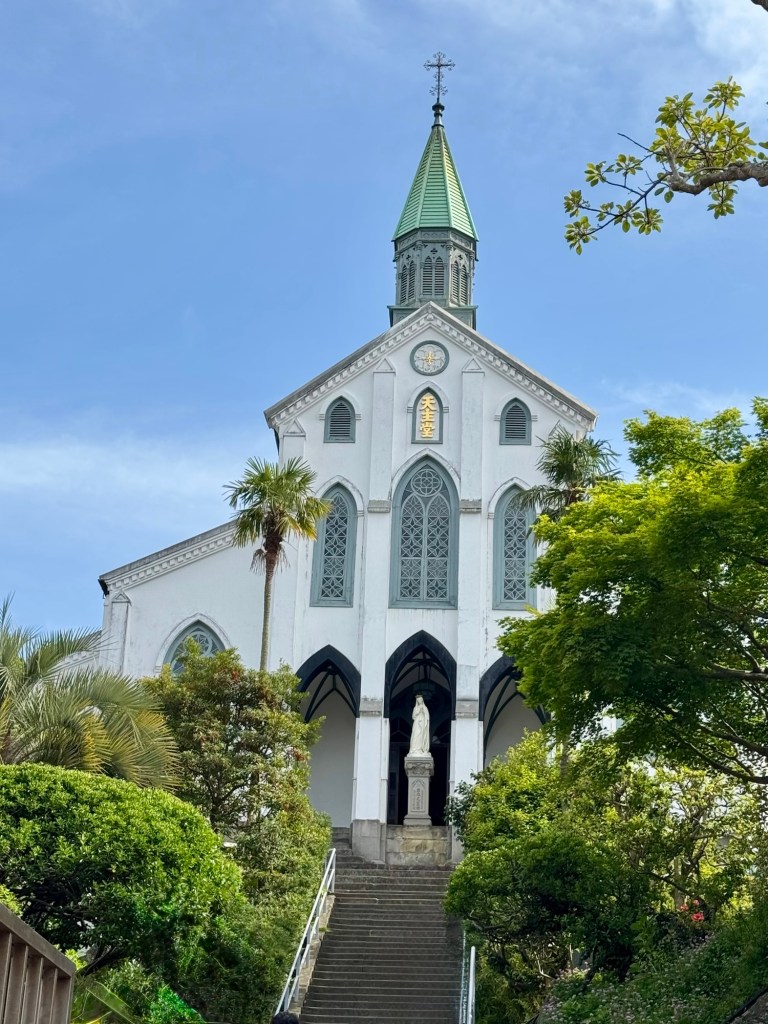
The Cathedral is dedicated to the Twenty-six Martyrs of Japan (eight European priests, one Mexican priest and seventeen Japanese Christians who were crucified on Nishizaka Hill on the February 5, 1597. The Cathedral faces the site of their martyrdom.


As I was trying to figure out how to get back to the cruise terminal, I saw the ship. What a welcome site and so close! In the terminal, there were a number of locals selling their wares. I had a few thousand yen burning a hole in my pocket so I bought a few more things I didn’t need!
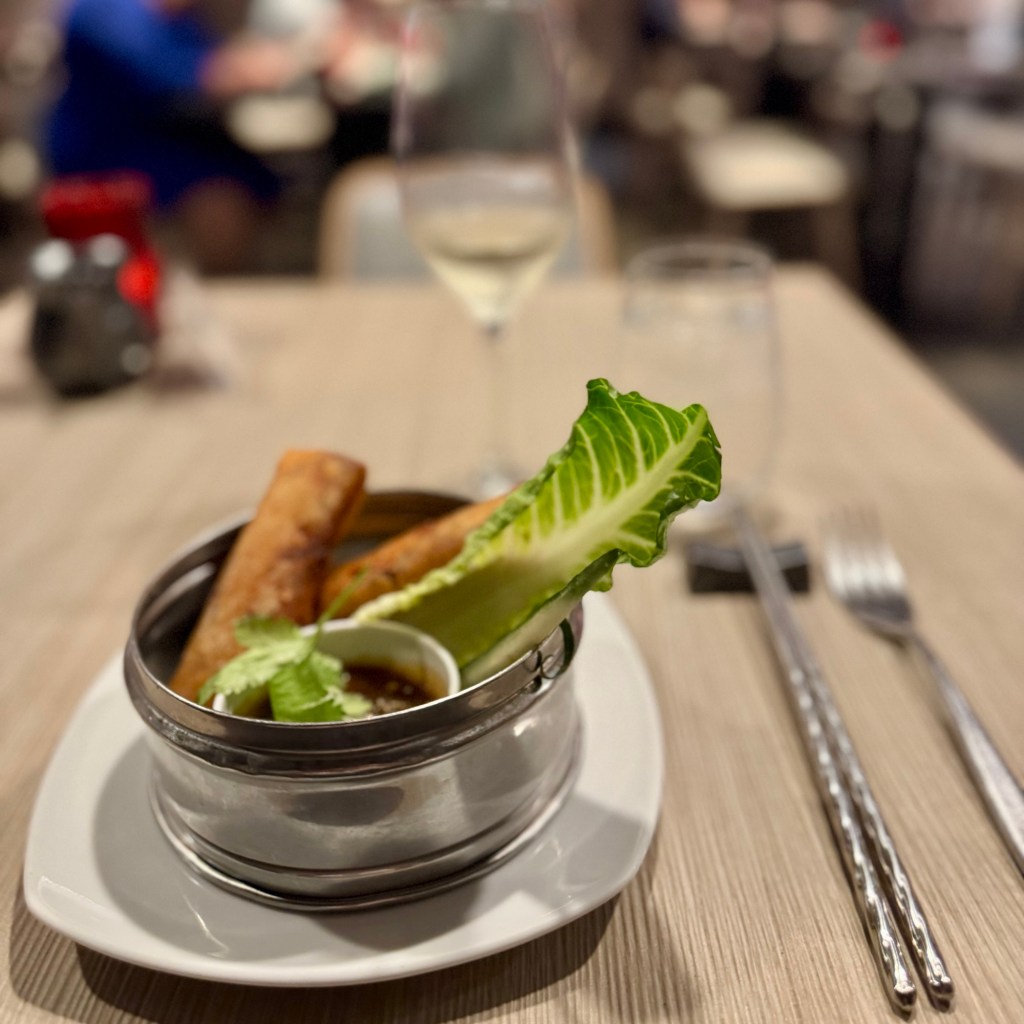
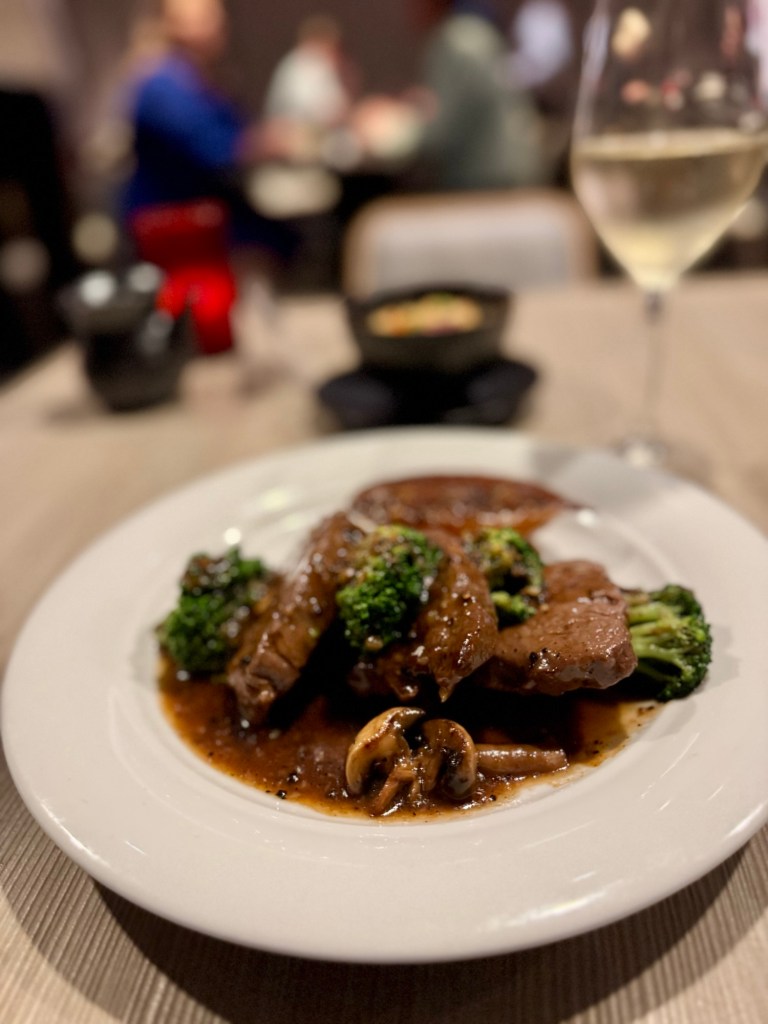
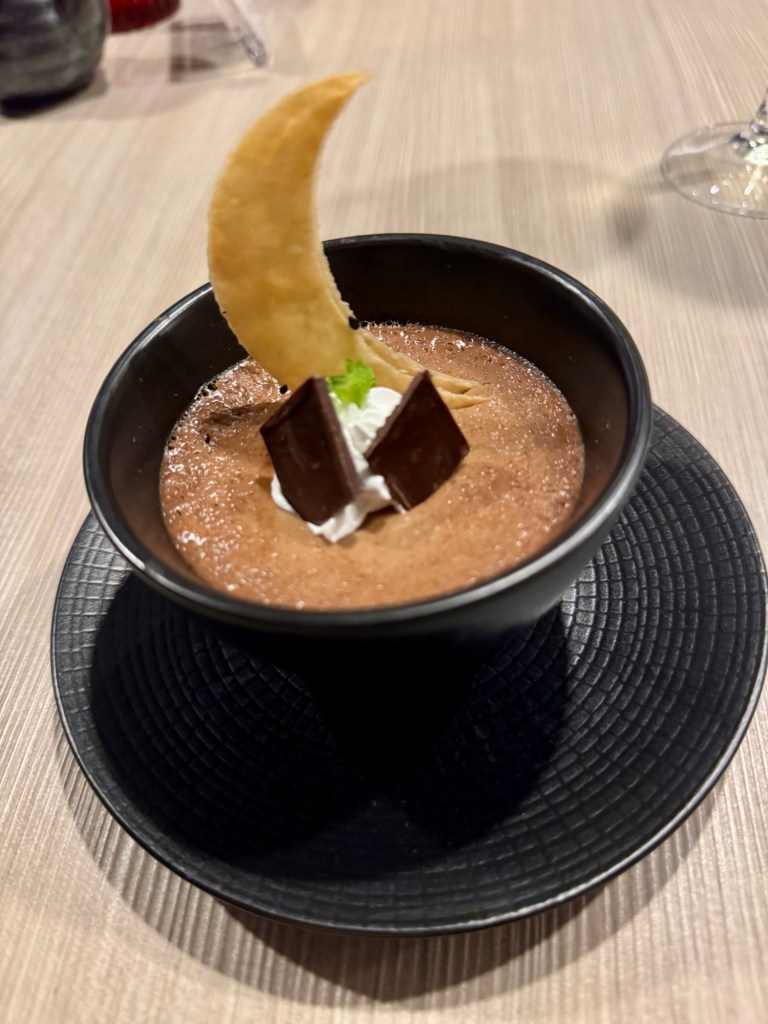
Back onboard there was time for some R&R followed by a quick shower before dinner at the Asian specialty restaurant silk. I ordered too much food, ate some of it washed down with some wine and then tired and sated I retired for the evening. I’ve got an early morning excursion tomorrow and I need my beauty sleep.

Tomorrow is another day. Adventures await …
 Judy’s Rambles