
April 22, 2025
Today’s port is Kagoshima. With the palm trees and an active volcano on the horizon, it looks a bit like Hawaii. The city is close but there’s no time to explore as I’ve booked a ship’s excursion to Chiran, an out-lying castle town from Japan’s feudal period and home base of the training center for the feared kamikaze pilots during World War II.
The hour-long drive sped by as our guide, Norry, regaled us with stories of the samurai and the pilots. Soon enough we arrived in Chiran and made our way to the samurai village.
In the Edo Period (1600-1868), Satsuma territory was divided into 113 sections called Tojos, one of which was Chiran. Each Tojo had the estate steward’s residence in the center surrounded by the residential quarters for ordinary samurais. These settlements were called “Fumoto,” where samurai strengthened their mind and body, engaged in farming, and dedicated themselves to martial arts training.
Surrounded by moss-covered stonewalls and sporting black tile roofs, the 250 year old houses recapture the traditional flavor of the Edo Period. Today, Samurai descendants live in some of the old estates, but many of the gardens are open to the public. Though small, each garden is an example of borrowed landscaping, where the surrounding mountains and scenery are an integral part of the garden design. Most of the gardens we are visiting are Karesansui Dry Gardens while one includes a pond.
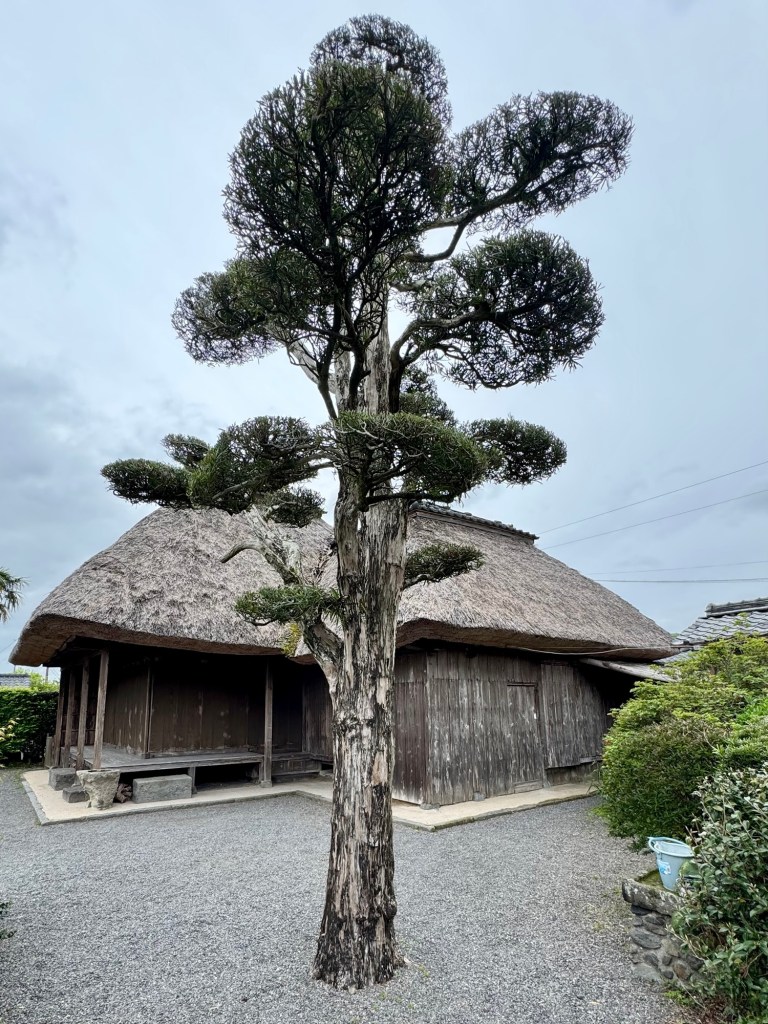
On the outskirts of the samurai village is a house with a thatched roof which designates it as the home of a wealthy farmer. There is no garden here as I’m sure working the fields is gardening enough for the owners.

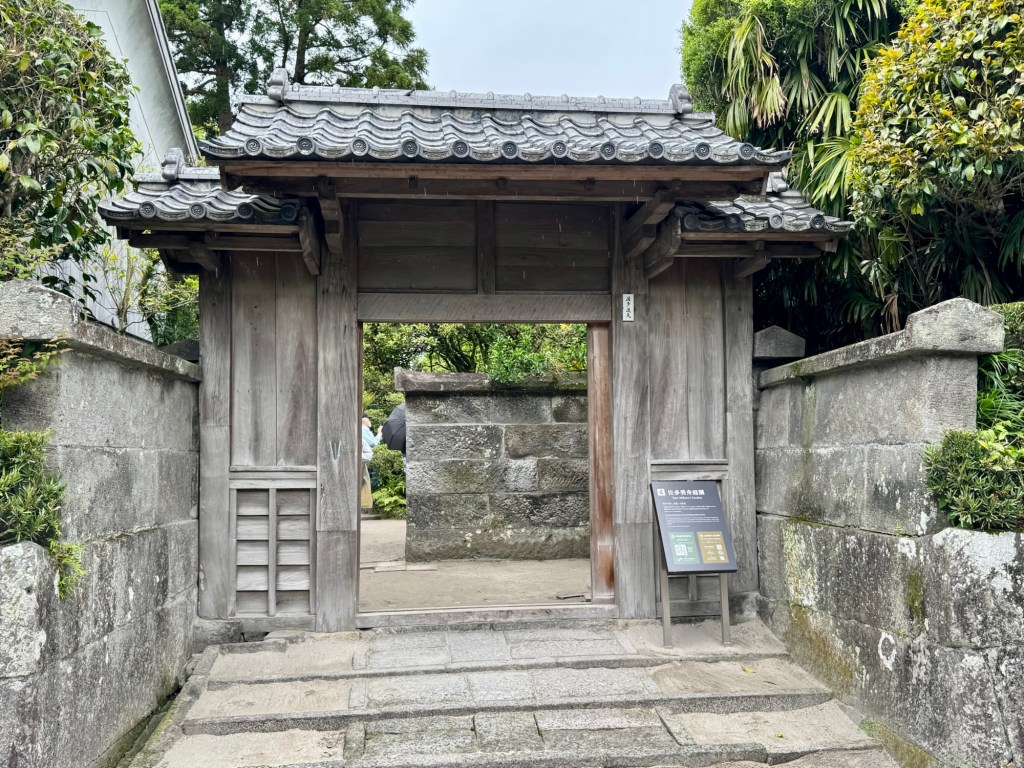
We stroll along the Honbaba promenade framed by stonewalls and hedges. Our first stop is the Sata Mifune’s Garden. The grand gate with Sodeyane (eave roof) at the entrance of the residence announces the prestige of the family.
Constructed in 1751, this garden is magnificent and spacious. It has a dry waterfall, a stone lantern placed on the top of an artificial hill and a number of arrangements of large rocks on the flat plane below.
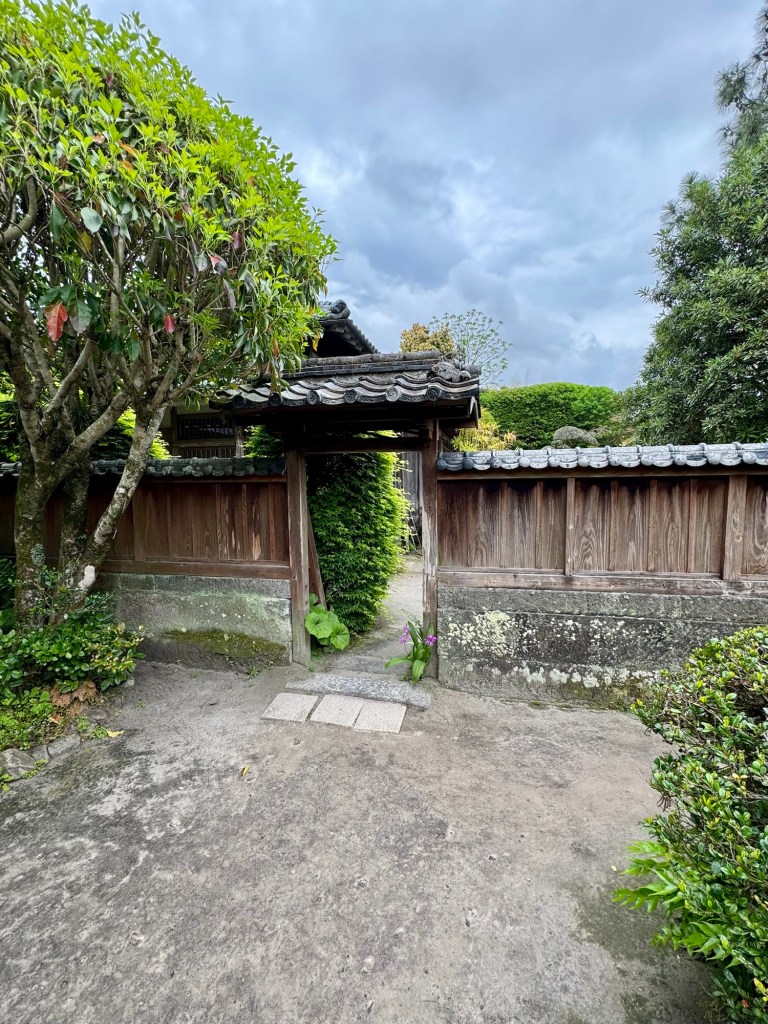
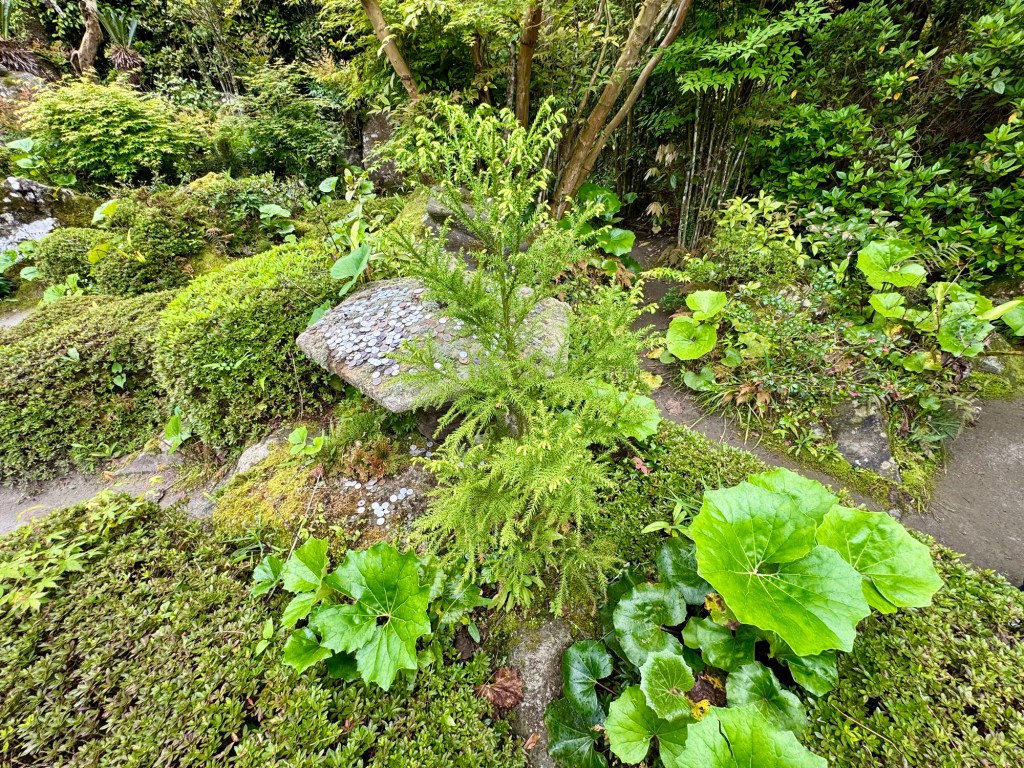
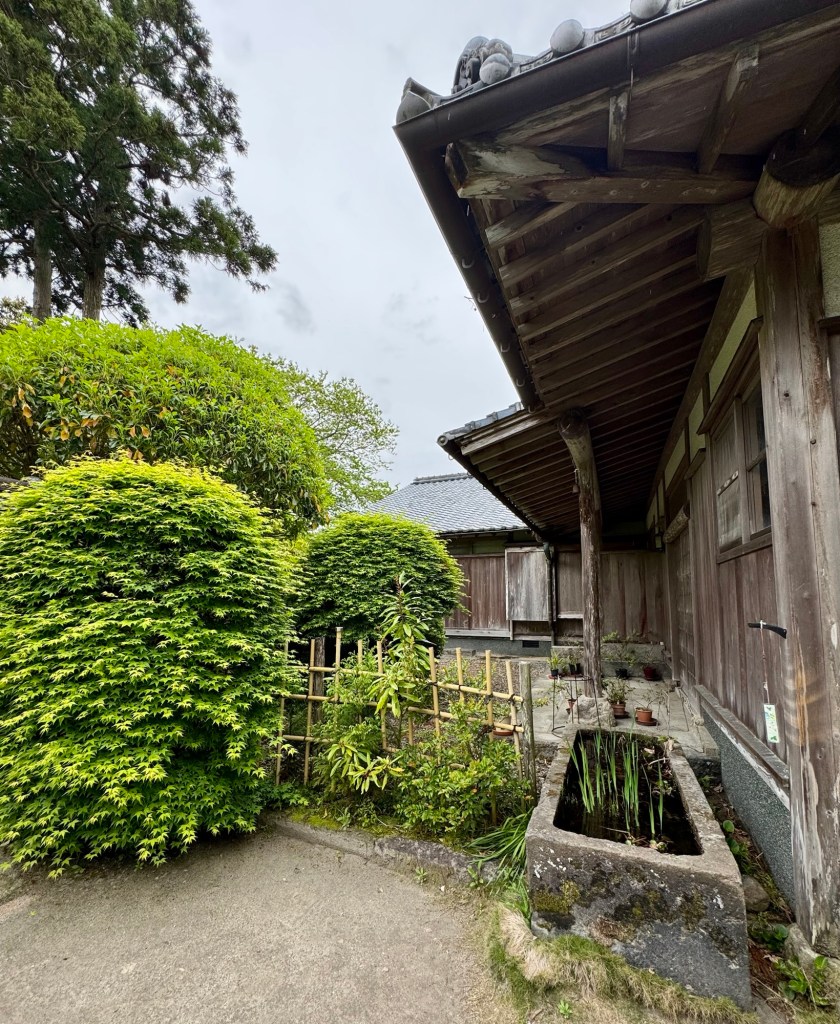
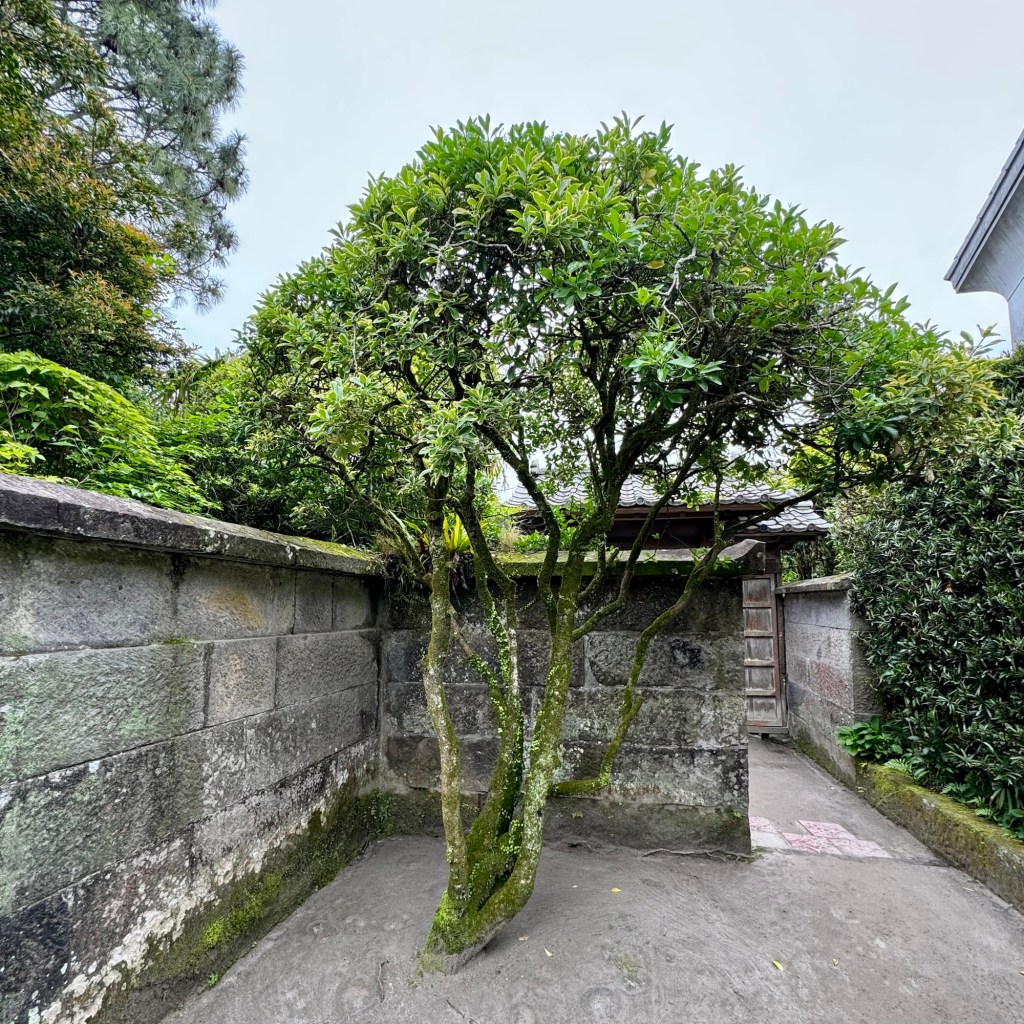

A little further down the promenade , we arrive at Sata Tamiko’s Garden; a world of huge rocks and strangely shaped stones arranged to make visitors feel as if they are wandering remote mountains and secluded valleys.
The stones are tuff (compacted volcanic ash) carried on the back of cattle from upstream in the Fumoto river. Standing stones are arranged into a dry waterfall, with stepping stones that continue from the shoin (study) to the dry waterfall in the garden. This garden features two cut stones where bonsai trees can be placed to be appreciated from the study while composing waka poetry.
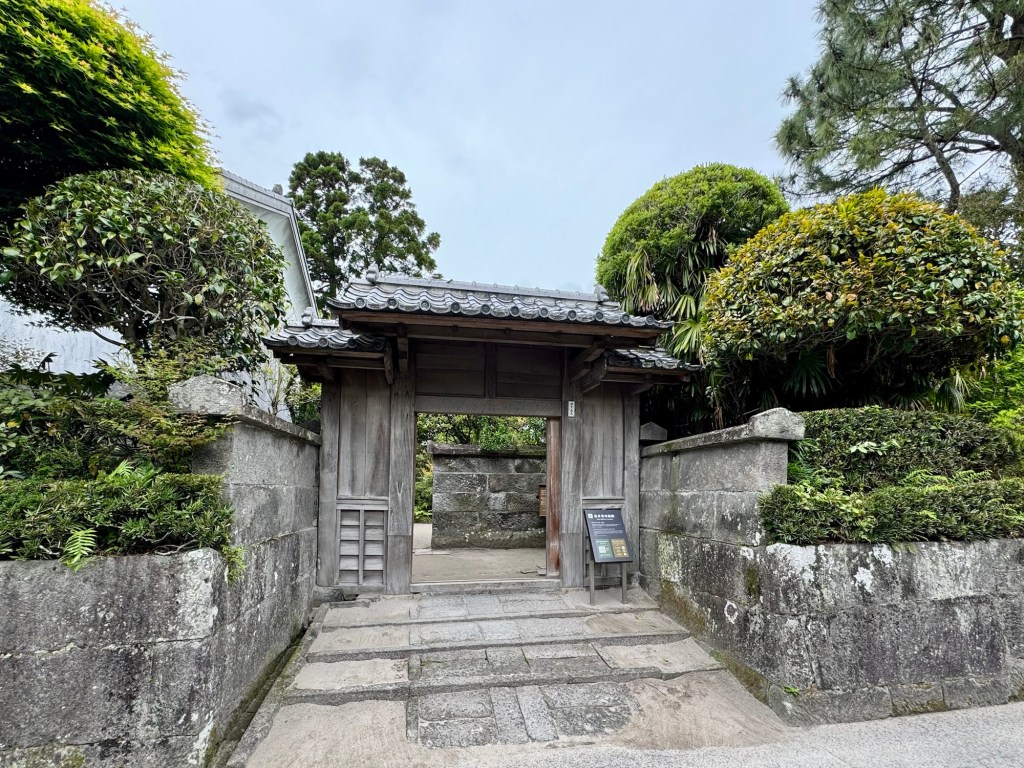
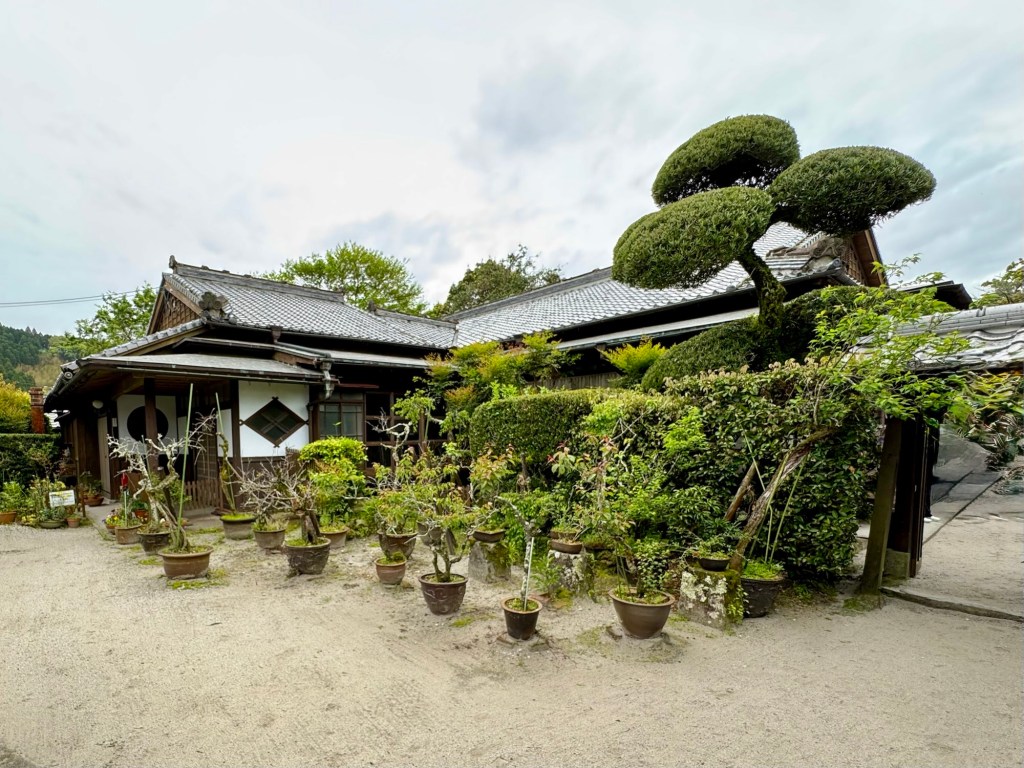

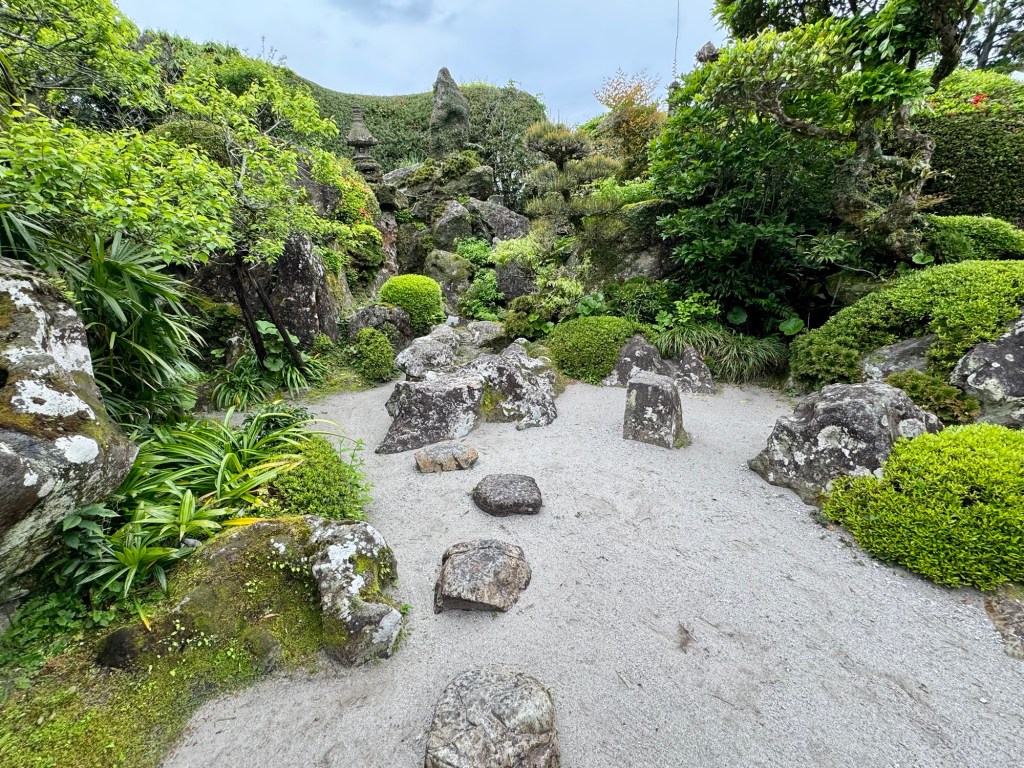

Our next stop is Sata Naotada’s Garden. The gate here is more ornate (with tiled shoulders) indicating the more elevated status of the owners.
The garden incorporates scenery borrowed from the Hahagatake mountain range. In one corner of the garden, there is an artificial hill in the middle of which soars a 3.5-meter high oblong stone. At its foot, there is a stone arrangement suggesting a ‘dry waterfall’ The garden has the air of ancient China and makes visitors feel as if they were standing in front of an exquisitely drawn Chinese ink painting.
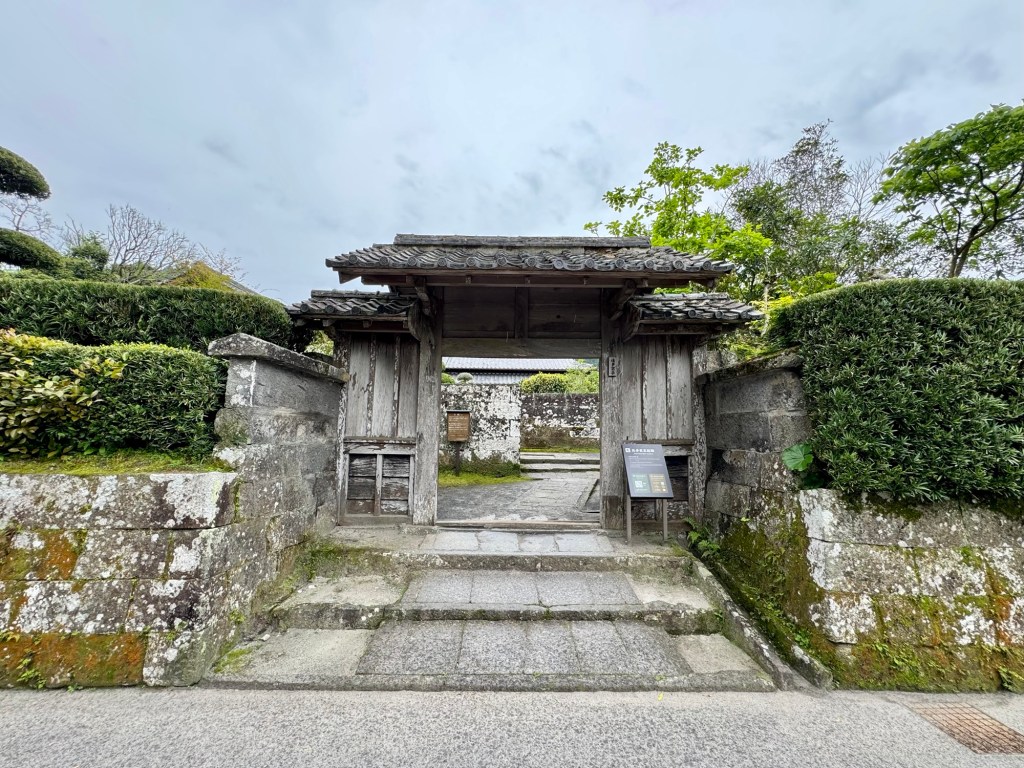
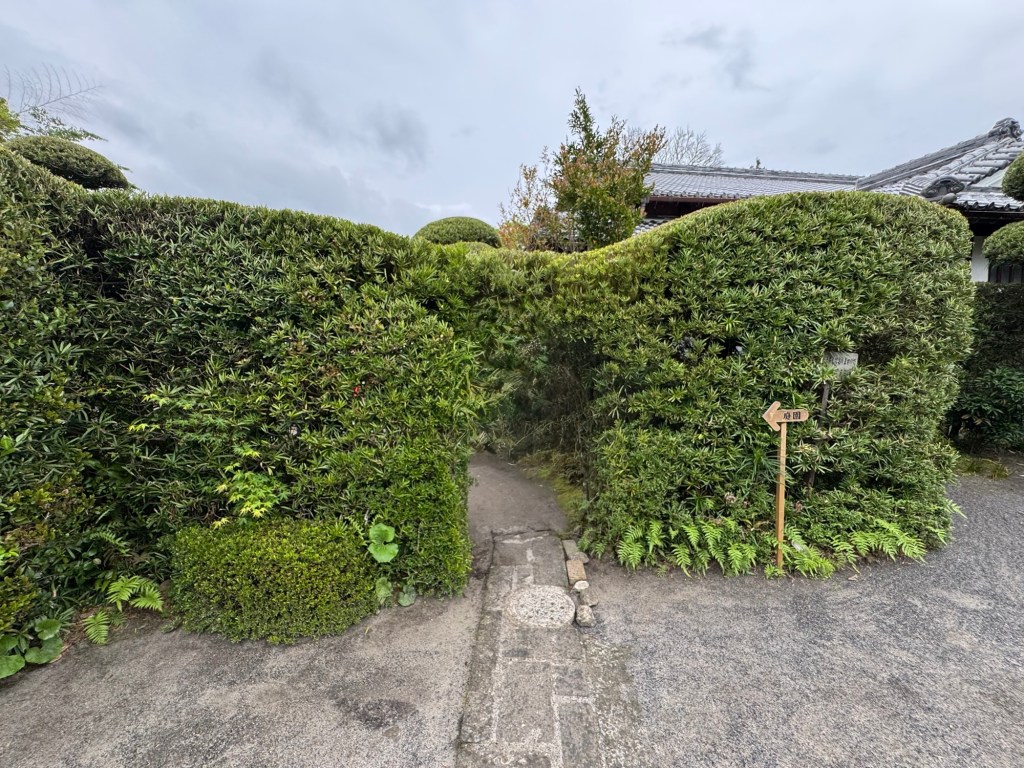
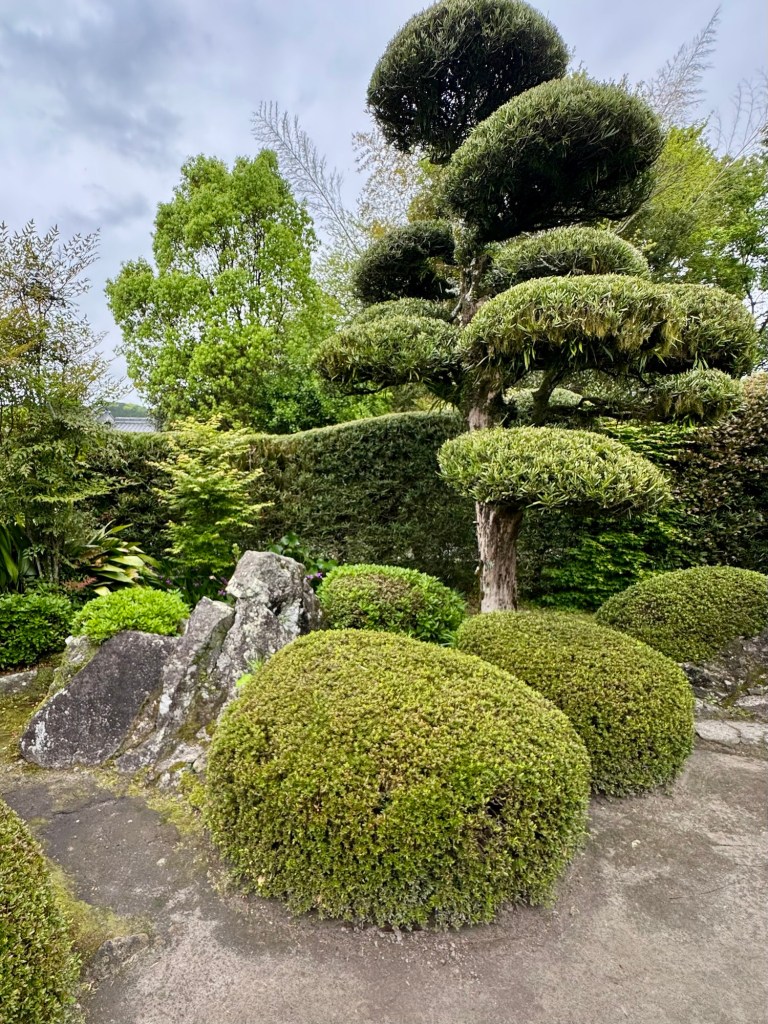

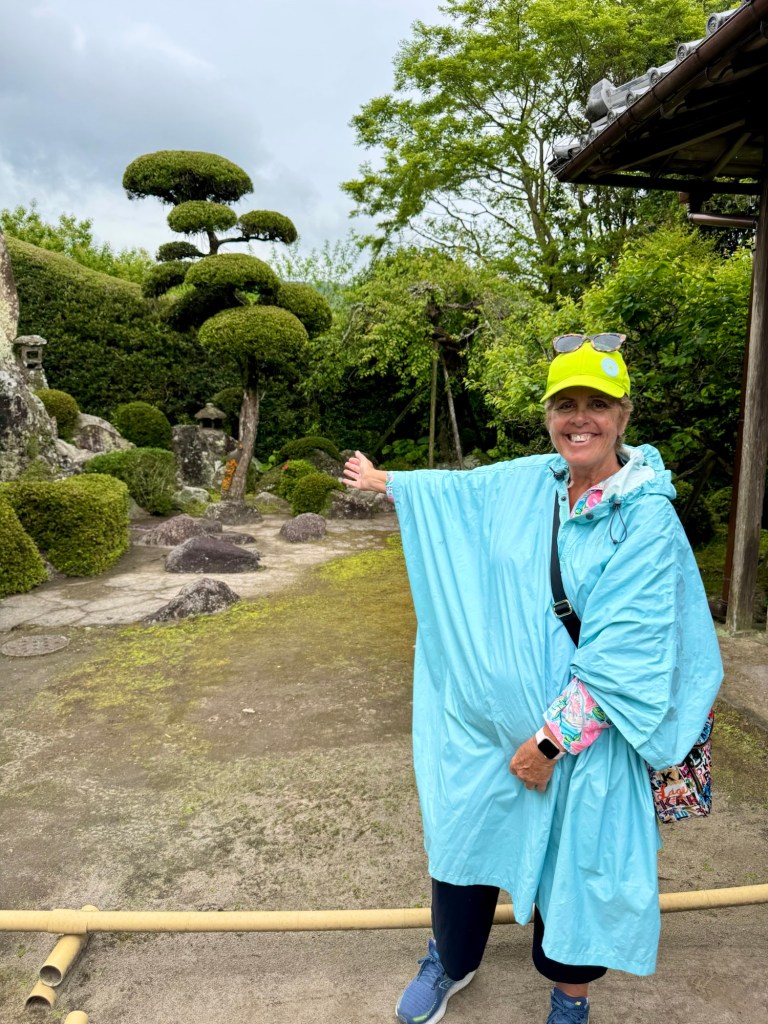
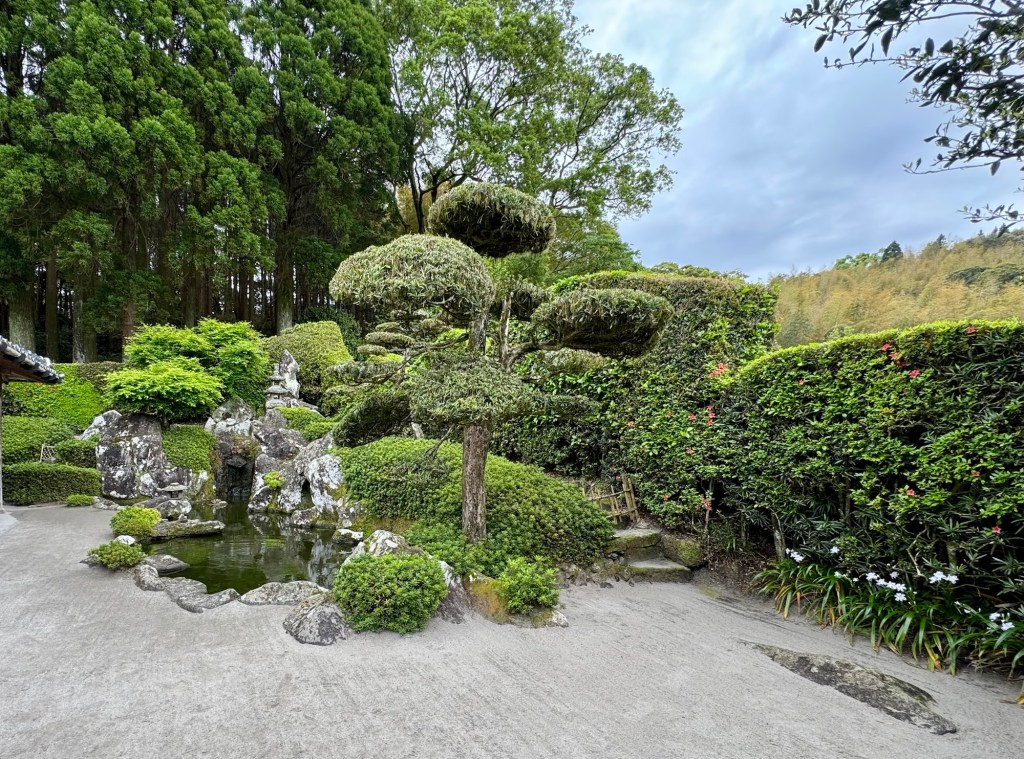
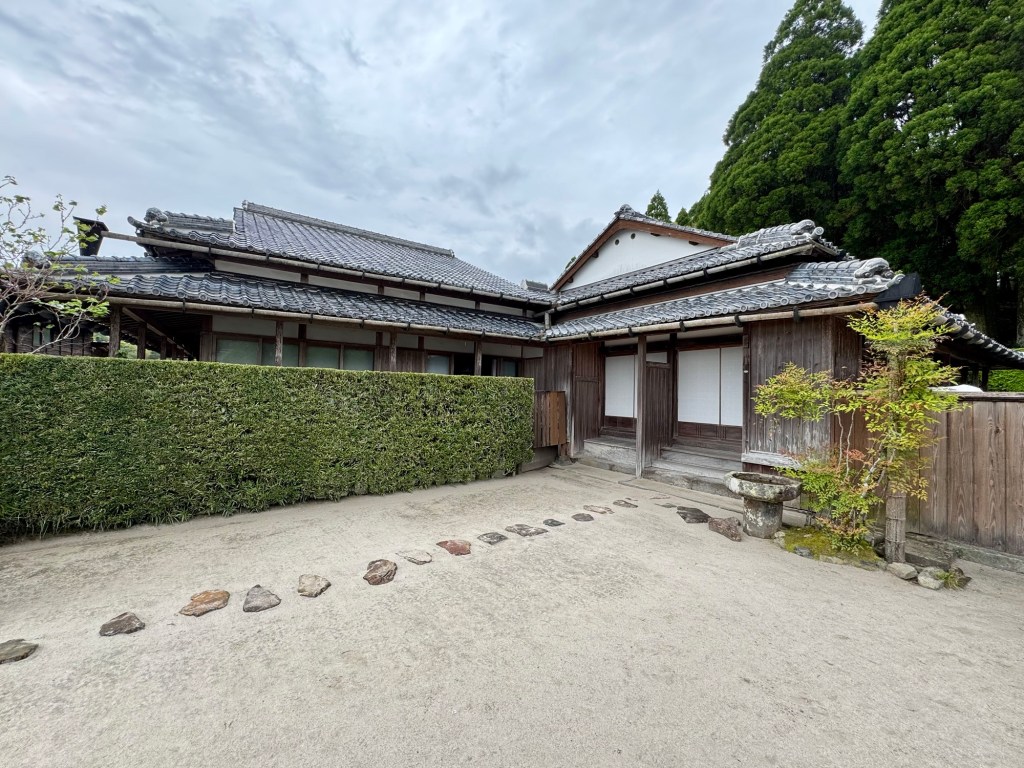
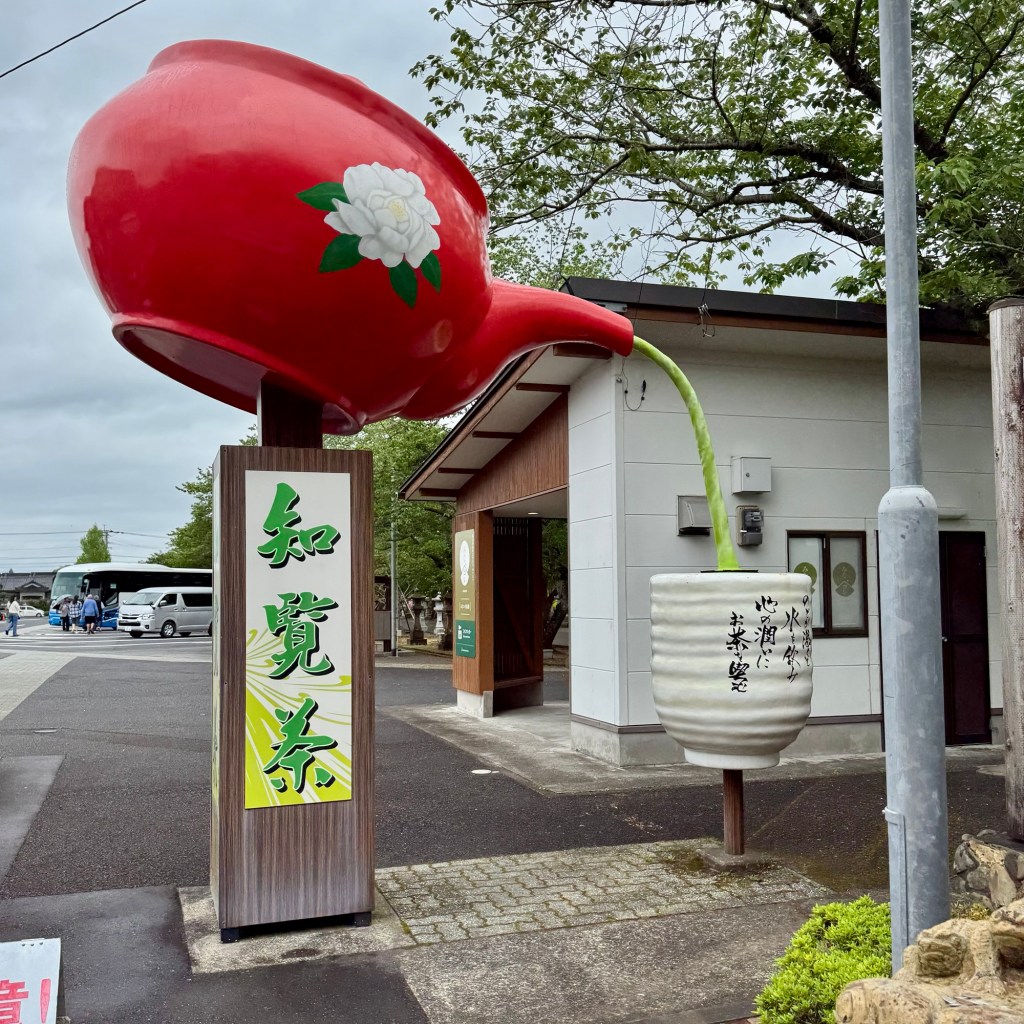
Saving the best for the last, Mori Shigemitsu’s Garden was next. The gate here was even fancier with tiled shoulders and arms; the most ornate in the Fumoto. Clearly the Mori family was one of the most important among the vassals of the Shimadzu clan. The living quarters and tea storehouse were built in 1741 and the descendants still live in the house and farm green tea which we had a chance to sample.
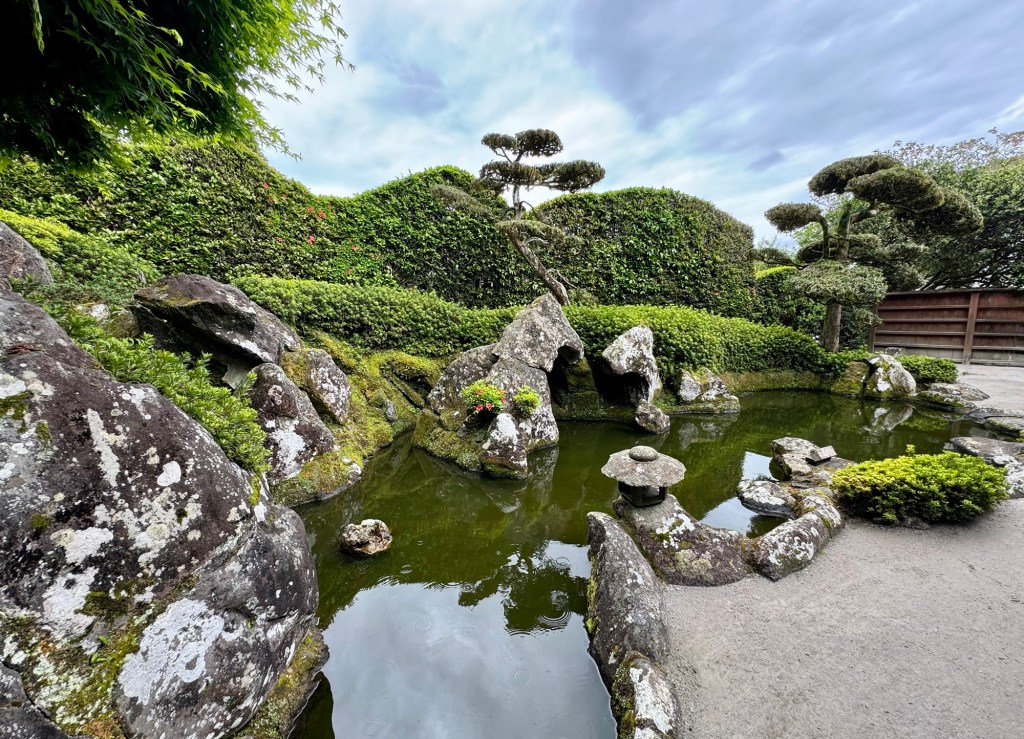
The pond in the garden here has a meandering border on the near bank. This bank is decorated with strangely shaped rocks and stones. On the opposite bank is a hollowed stone that looks like a cave and symbolizes the flow of water in nature. Inside the entrance on the right side is a stone-the most important element of the whole garden-representing a far-away mountaintop rising above clouds.



All of these gardens were so spectacular but it’s time to move forward in time to the WWII era at the memorable Tokko Heiwa Kaikan. The Chiran Peace Museum for Kamikaze Pilots is dedicated to the young kamikaze pilots who trained near Chiran before embarking on suicide missions against Allied sea vessels in WWIl. The museum commemorates the bravery and sad sacrifice of these young Japanese men, and makes a plea for world peace.
In the later stages of WWII in the Pacific, Japan was losing the war. In desperation, they turned to a new tactic called the tokko offensive. The term “tokko” is a shortened version of “tokubetsu kōgeki tai”, which translates to “special attack team”.
Tokko pilots, aka kamikaze pilots, were Japanese suicide pilots whose mission was to crash their aircraft into enemy targets. Although suicide attacks had been used haphazardly before, the tokko (kamikaze) campaign trained attack squadrons specifically for this purpose.
Tokko pilots first saw action at the Battle of Okinawa in 1945. They inflicted casualties on Allied forces, but their overall impact was limited due to declining aircraft capabilities and improved defenses. Overall, only one of every nine tokko pilots managed to fly into enemy targets with the other eight were shot down or crashed before they could do any damage.
The human toll was appalling. The Japanese lost 2600 aircraft in kamikaze attacks, and with them the lives of 4000 of their airmen. The attacks also killed more than 7000 Allied naval personnel, and wounded many more.
During World War II, the Chiran Airbase served as the final departure point for hundreds of young men who had joined the Tokko-tai special attack group. While often portrayed as solely patriotic; some pilots volunteered but many were assigned to these missions. The Japanese military used the pilots’ sacrifices for propaganda and to boost morale.
The park and nearby gardens are home to many statues, monuments and a couple of planes are on display.
Stone lanterns, dedicated to the pilots lost in battle, line the approach to the museum. This brought to mind the rows of white crosses in European graveyards after WWII; the young and brave are always sacrificed to the gods of war regardless of who they’re fighting for.


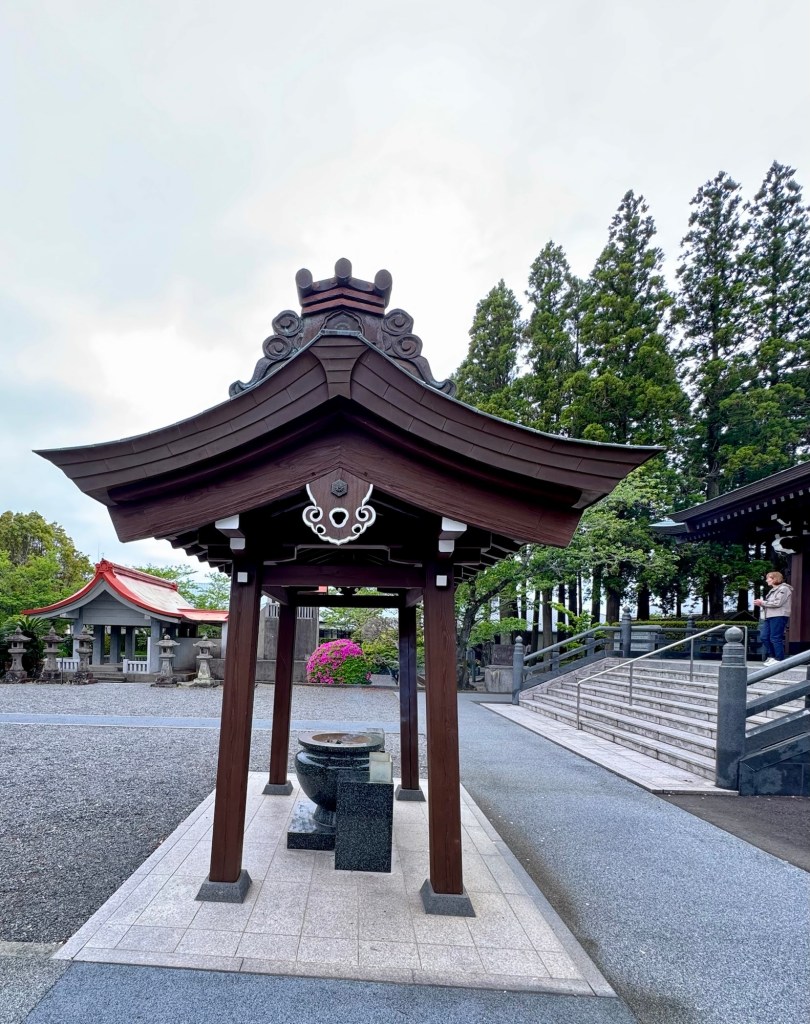
The Gokoku Shinto shrine is dedicated to the memory of the kamikaze pilots who departed from there, as well as others who lost their lives in various wars in Japanese history.

There is also the Statue of a Tokko Pilot with his left hand clenched in a fist showing his determination to succeed on his mission.

The Statue of a Mother depicts a tender mother wearing the national wartime attire; the modeled kimono. On the back of this statue, there is an inscription: “Mother and son will be together forever.”
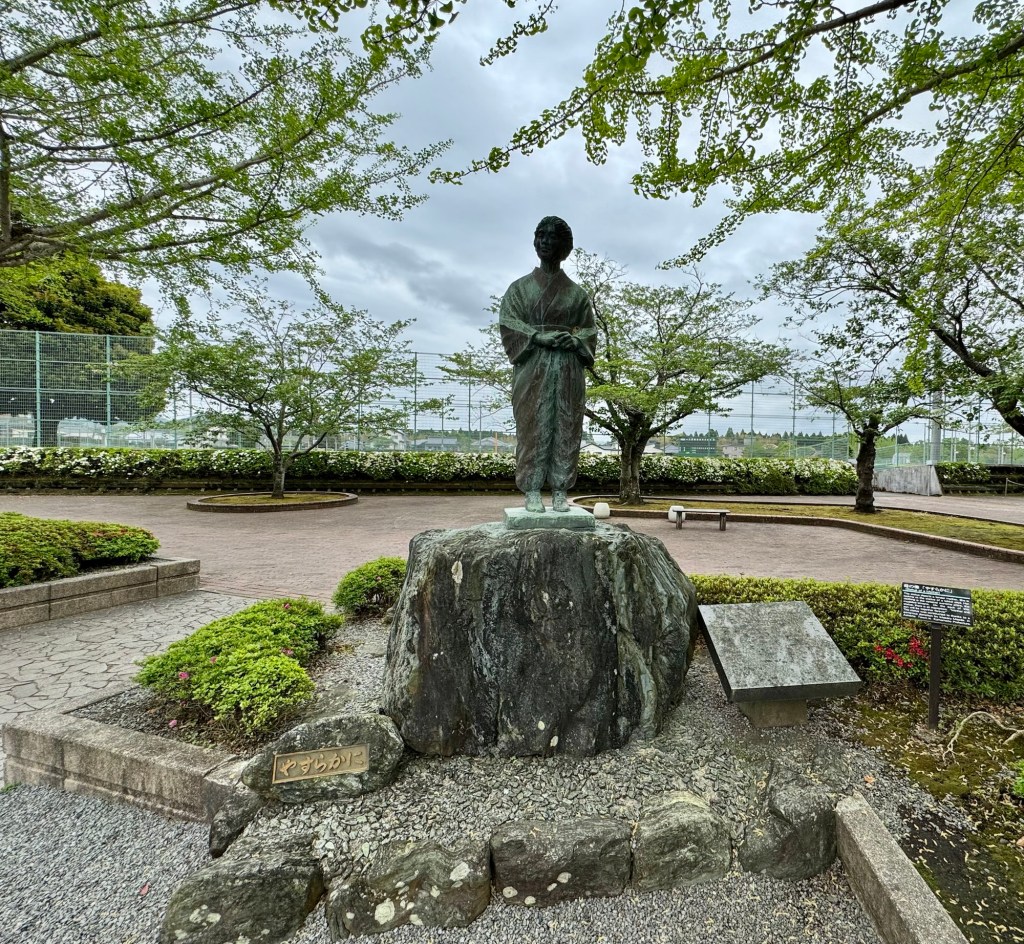
The park also includes memorials to other wars including:
The Satsuma Rebellion Cenotaph commemorating the soldiers who went from Chiran and died in the rebellion against the Meiji government, the last civil war in Japan 1877.

The Sino-Japanese War Monument
built as the memorial to those who served in the war between Japan and the Qing dynasty. (1894-1895). The name of the soldiers from Chiran are engraved on the monument.

The Russo Japanese War Monument memorializing those who served in the war between Japan and the Russian Empire. (1904-1905).
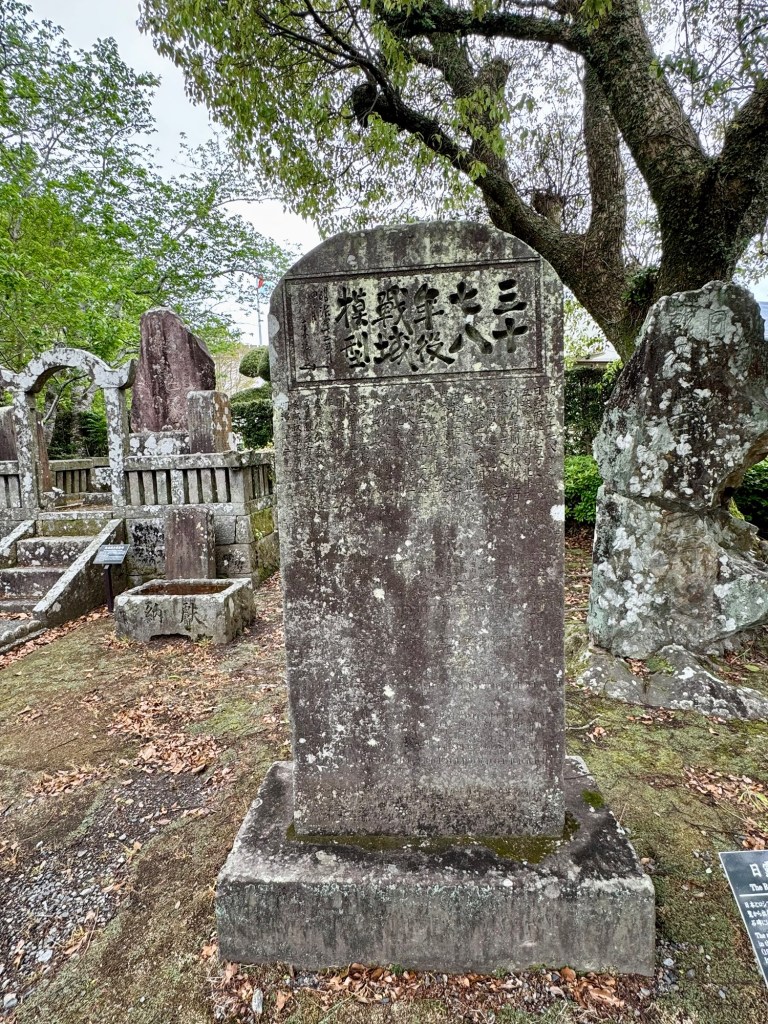
The Tokko Kannon Peace Hall and the Statue of Tokko Peace Kannon are also in the park.

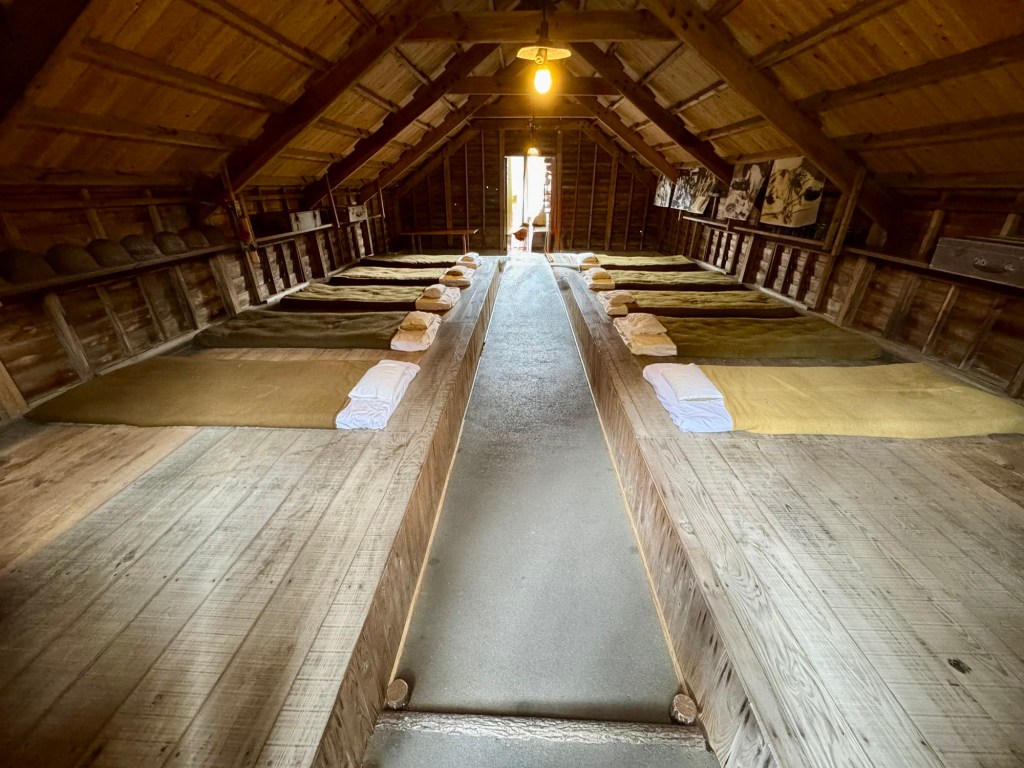
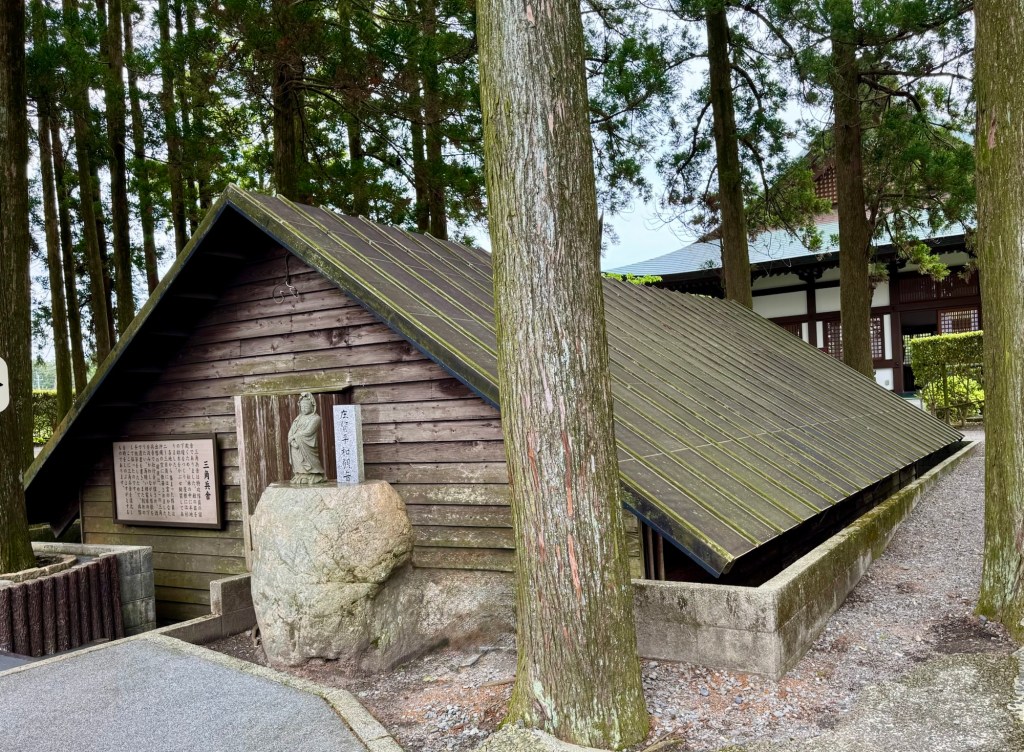
There is also a replica of a pilot’s bunkhouse which gives you a peek at the everyday lives of the young men who lived here. These triangular wooden structures were half-buried and only the roofs were above ground. They were called “triangular houses” because all you could see was the triangular gable which were often camouflaged by vegetation growing on the roof.


The Peace Museum, built in 1975, serves as a reminder of the pilots and their sacrifices, and highlights stories of tokko pilots and their families. I availed myself of an audio guide and the stories of individual pilots were very moving. What a waste of life war is. Will we ever learn?
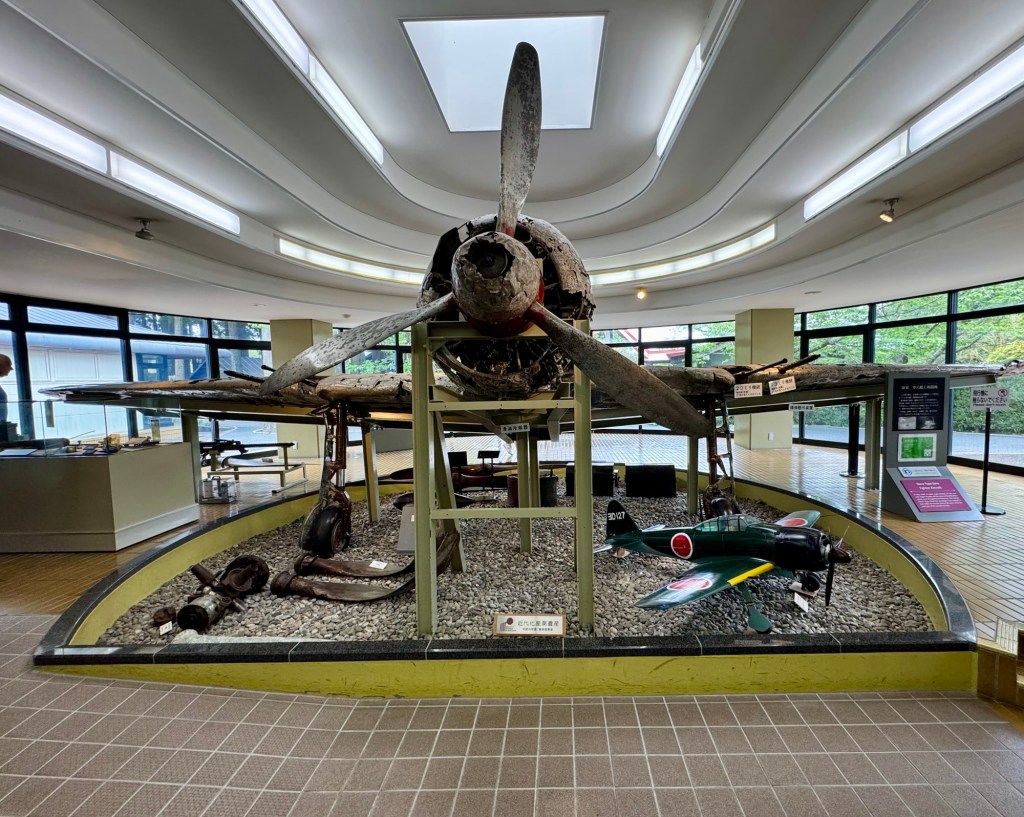
Exhibits include a number of Japanese fighter planes, including a Mitsubishi Zero, excavated from the seabed in 1980. You can also see paraphernalia such as Imperial Rising Sun Flags and hachimaki headbands bearing wartime maxims.


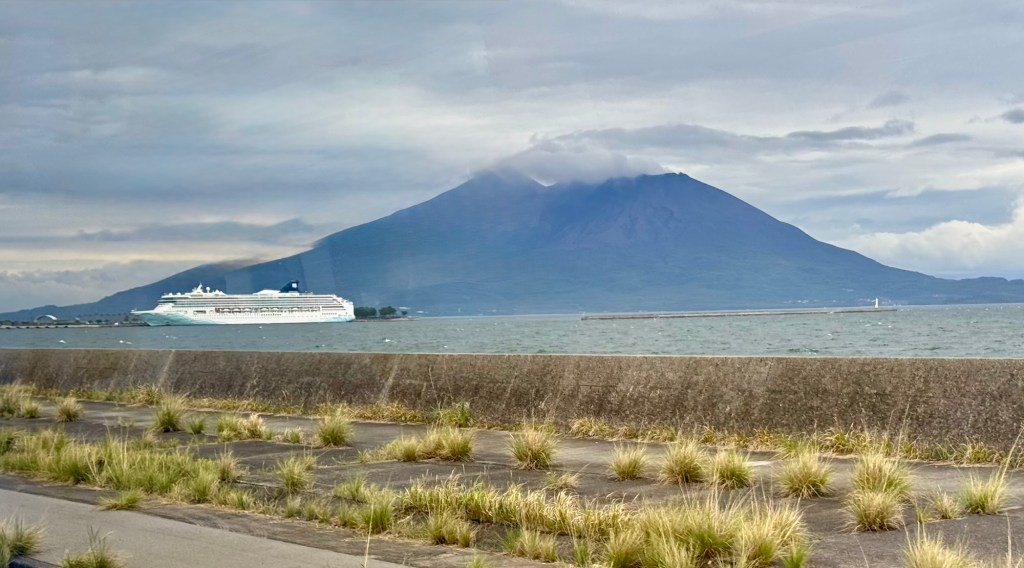
Back on the bus, we headed back to the ship as we’re leaving port early today. The sun had come out so we were treated to a lovely view of our ship with Sakurajima in the background. Sakurajima is known for being one of the most active volcanoes in Japan with an average of 800 eruptions (mainly ash and smoke) per year. Sakurajima was originally an island but became connected to the mainland by lava flow from the 1914 Taisho eruption.
Back aboard the ship, I had a nice lunch in Windows with a couple from New Jersey/Utah. Afterwards, I repaired to my room for a nap to recharge. Dinner with the Officers tonight, again in Windows, so need to get spruced up.
I was seated between the Chief Security Officer, John, a retired detective from Edinburgh and a lady from Denver I’d met in my execution earlier in the day. Dinner was good and the conversation was lively.
Time to try my luck in the casino for a bit before turning in.
Tomorrow is another day. Adventures await…
 Judy’s Rambles