
April 23, 2025
Today we docked in Tokushima and I’m on an excursion to visit two of the Buddhist temples nestled along a circular pilgrimage route that loops through the majestic Shikoku Mountains. This 750-mile route connects a total of 88 temples, each serving as a significant milestone on the path to enlightenment.
On our twenty-minute drive to our first stop, we were treated to an endless number of rice fields on both sides of the bus. The presence of water in the fields indicated that the farmers had already planted the rice, while the dry soil suggested that the rice hadn’t been planted yet.

The pilgrimage, which dates back 1200 years, is one of the few circular-shaped pilgrimages in the world. It encompasses 88 “official” temples and numerous other sacred sites where the Buddhist priest Kūkai (Kōbō Daishi) is believed to have either trained or spent time during the 9th Century. Every henro, or pilgrim, is said to tread in the footsteps of Kōbō Daishi, the ninth-century ascetic who founded the Shingon sect of Buddhism.
The pilgrimage was traditionally completed on foot, but modern pilgrims use cars, taxis, buses, bicycles, or motorcycles, and often augment their travels with public transportation. The standard walking course is approximately 1,200 kilometres long and can take anywhere from 30 to 60 days to complete.
Pilgrims stay in minshuku/ryokan; family-operated, traditional Japanese-style bed and breakfasts, some temples offer ryokan-style lodging to the pilgrims within temple grounds called shukubō, and there is, of course, the option to stay in hotels along the route. It all depends on preference and budget.
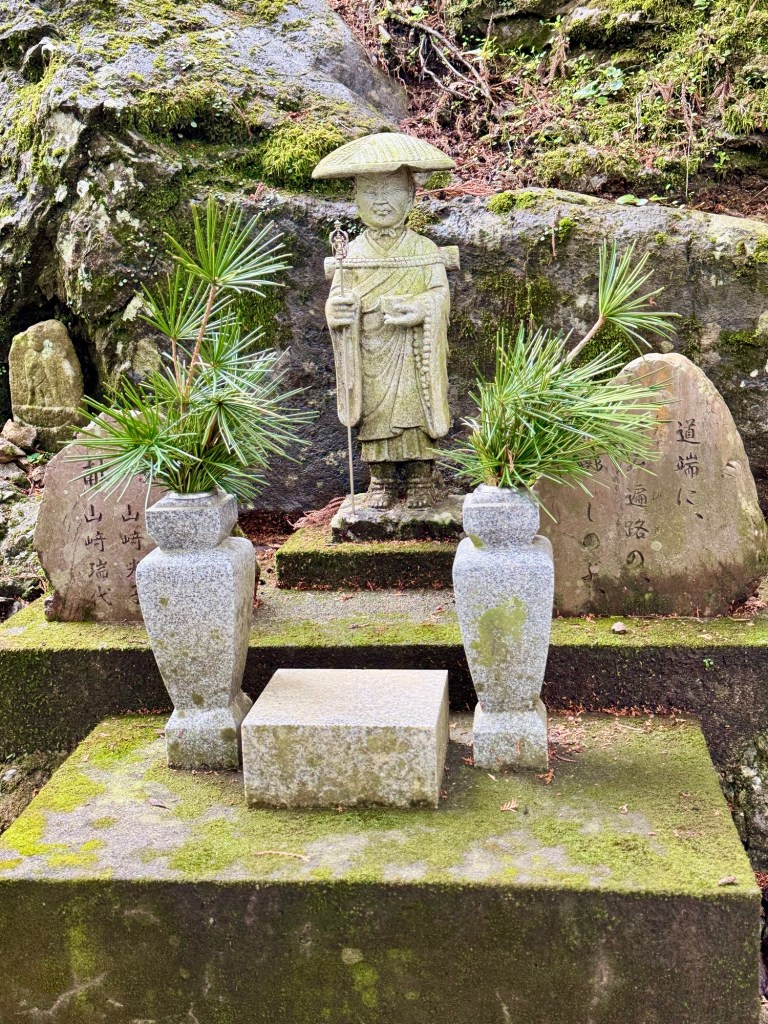
Pilgrims wear a three-piece set of white robes, a ‘wagesa’ stole—a band of coloured cloth hung around their neck—and also carry a pilgrim’s staff. The white robes have historical significance, tracing their origins back to the harsher Shikoku 88 Temple Pilgrimage of the past. During that time, people would wear burial clothes in advance, hoping to attain nirvana if they lost their lives while on the pilgrimage. The wagesa stole is a simplified version of the kesa stoles worn by monks. The pilgrims’ staffs, which they carry, embody the spirit of Kobo Daishi. They serve as a symbol of the pilgrim’s journey, representing Kobo Daishi’s protection and guidance.
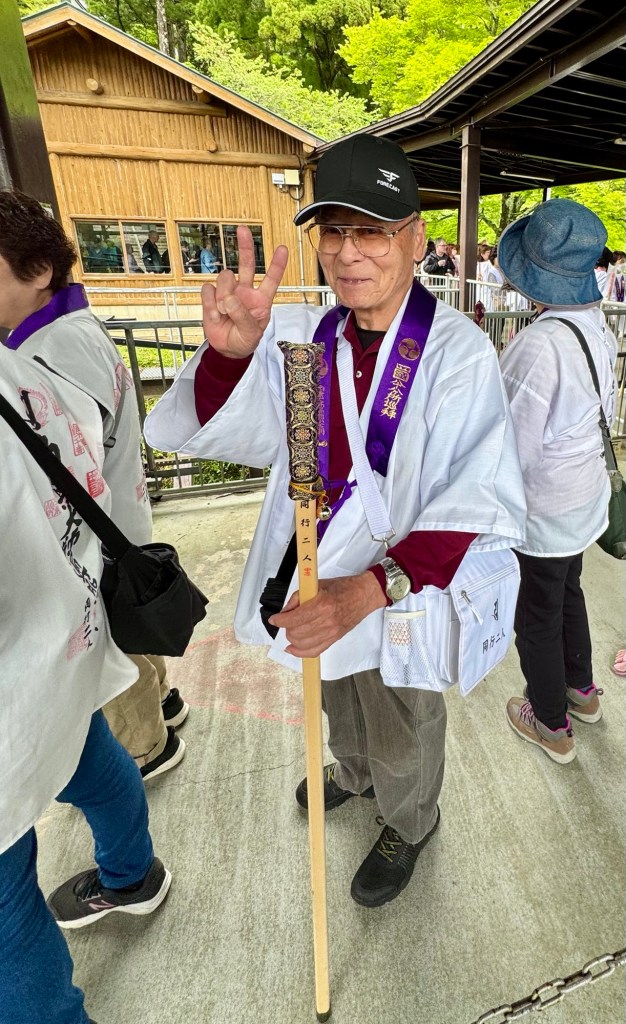
Pilgrims receive a special stamp at each temple which is collected in a book. This is all quite reminiscent of my journey on the Camino de Santiago in 2008.
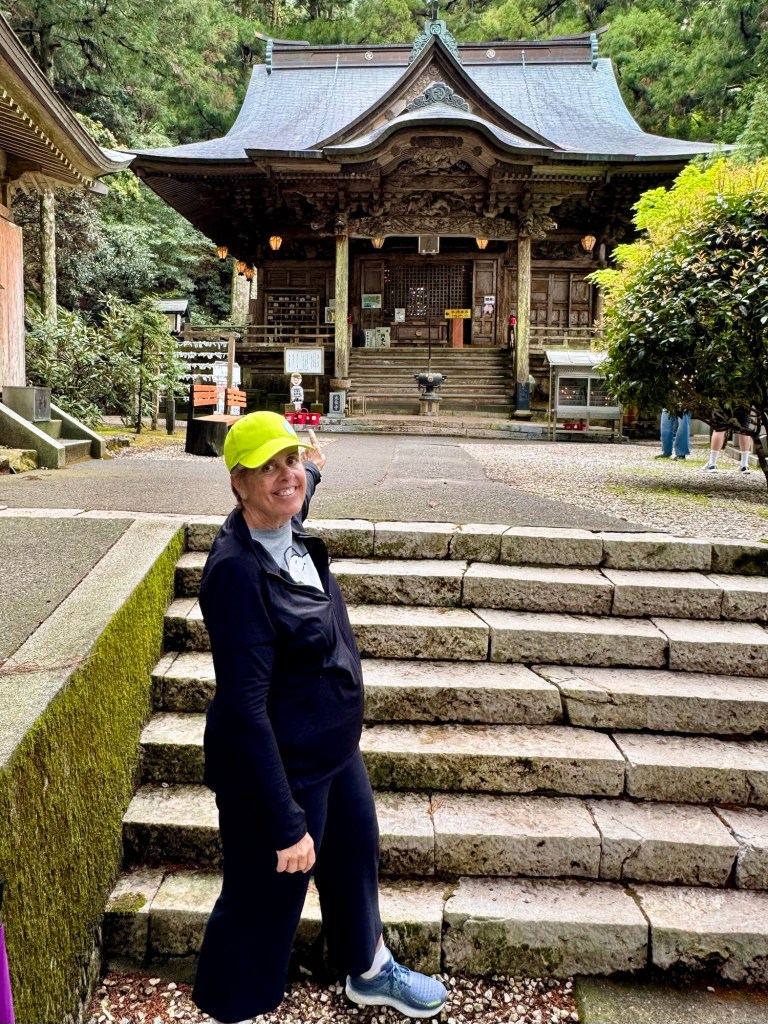
Our first stop is Tatsue-ji, the Koyasan Shingon temple, which is the 19th temple on the Shikoku 88 pilgrimage. According to legend, the temple was founded by Gyoki at the behest of Emperor Shomu, who reigned from 724 to 749. Kobo Daishi visited this temple in 815. Back then, the temple was situated in a picturesque location, approximately 400 meters west of its current site, nestled near the mountains until it was burned in a fire.
The temple was rebuilt at its present location with the aid of Hachisuka Iemasa, the first lord of the Awa. In 1974 there was another fire and the Hondo was again rebuilt in 1977.
We entered the temple across a small bridge and through a two-storied Niō gate. Beyond the gate, there’s a belfry on the left, the Bishamon Hall housing a colourful statue of Bishamonten on the right with a water basin next to it.

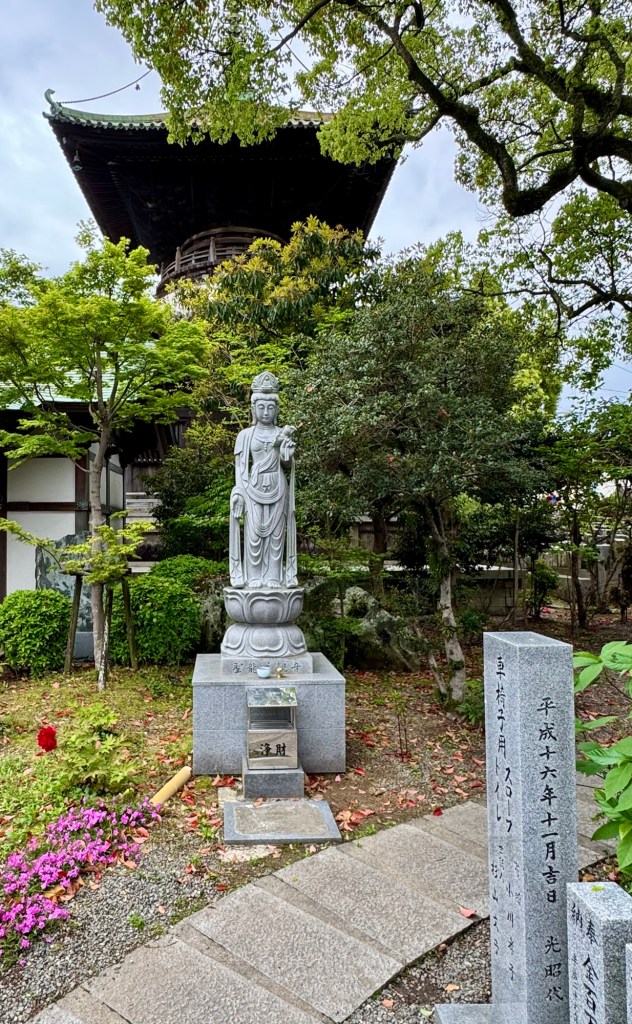
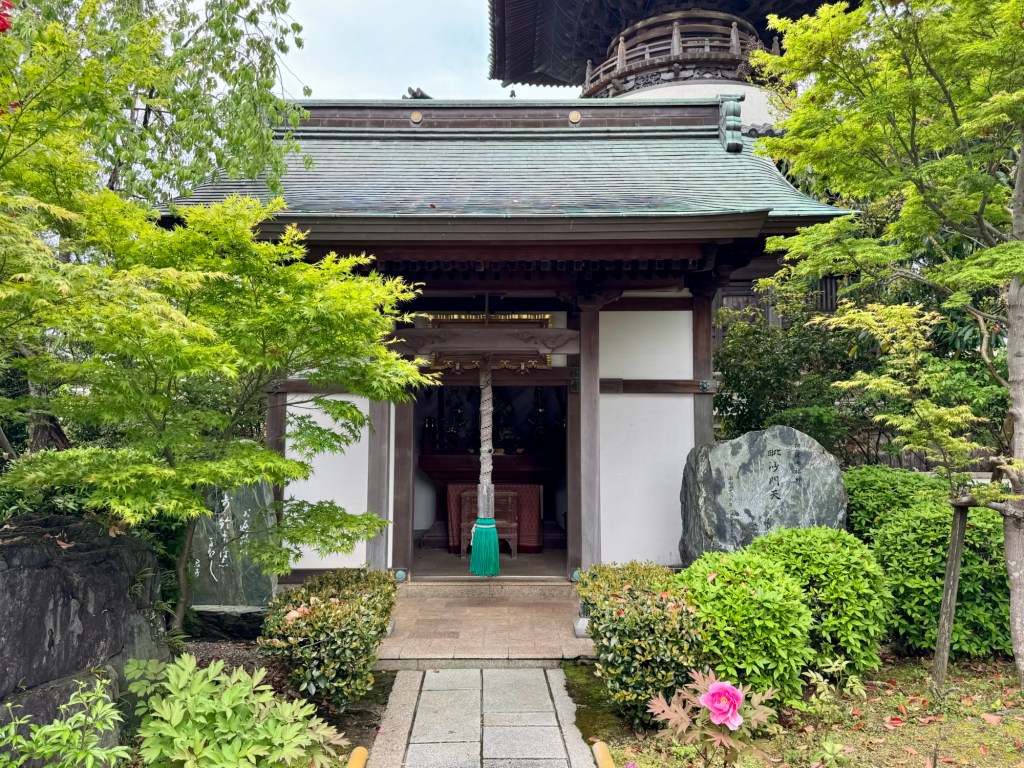

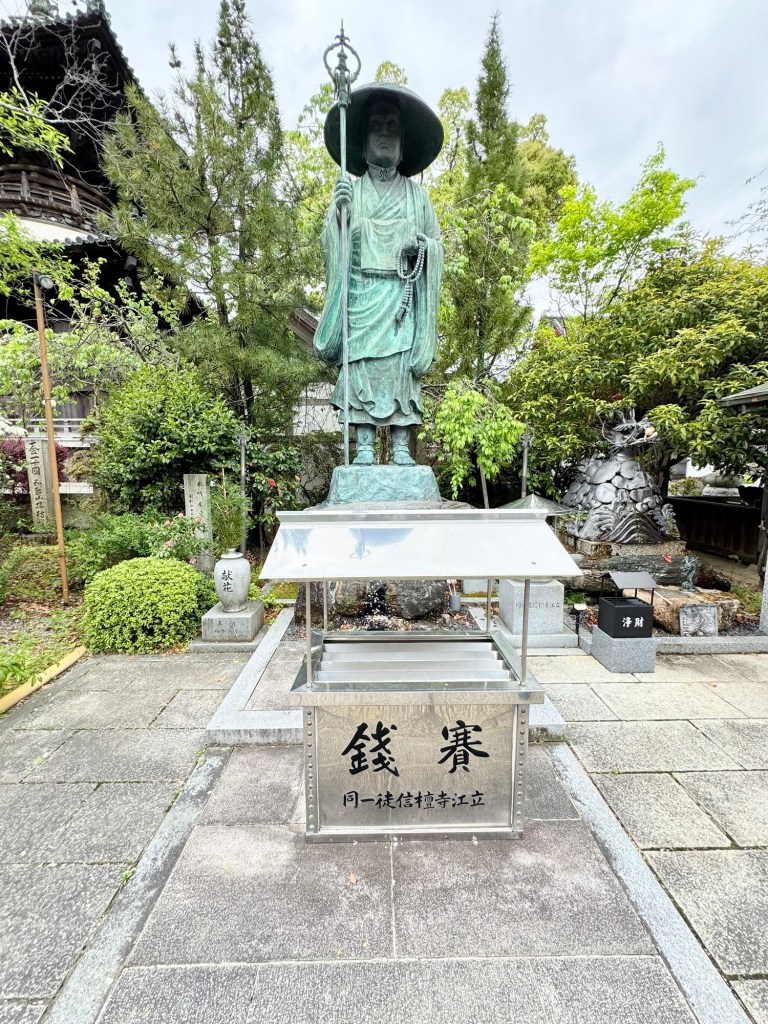
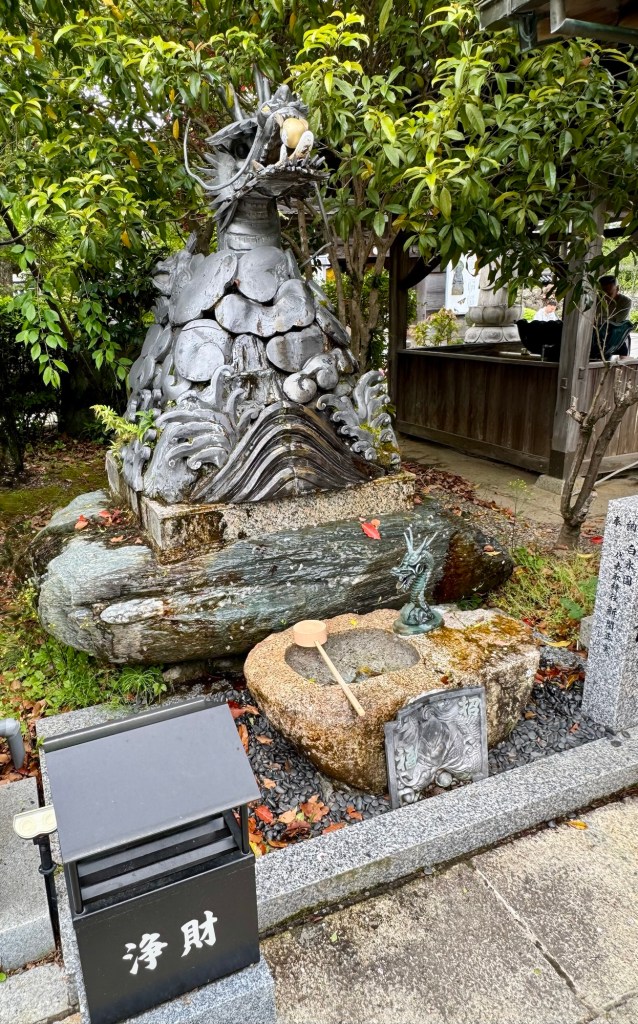

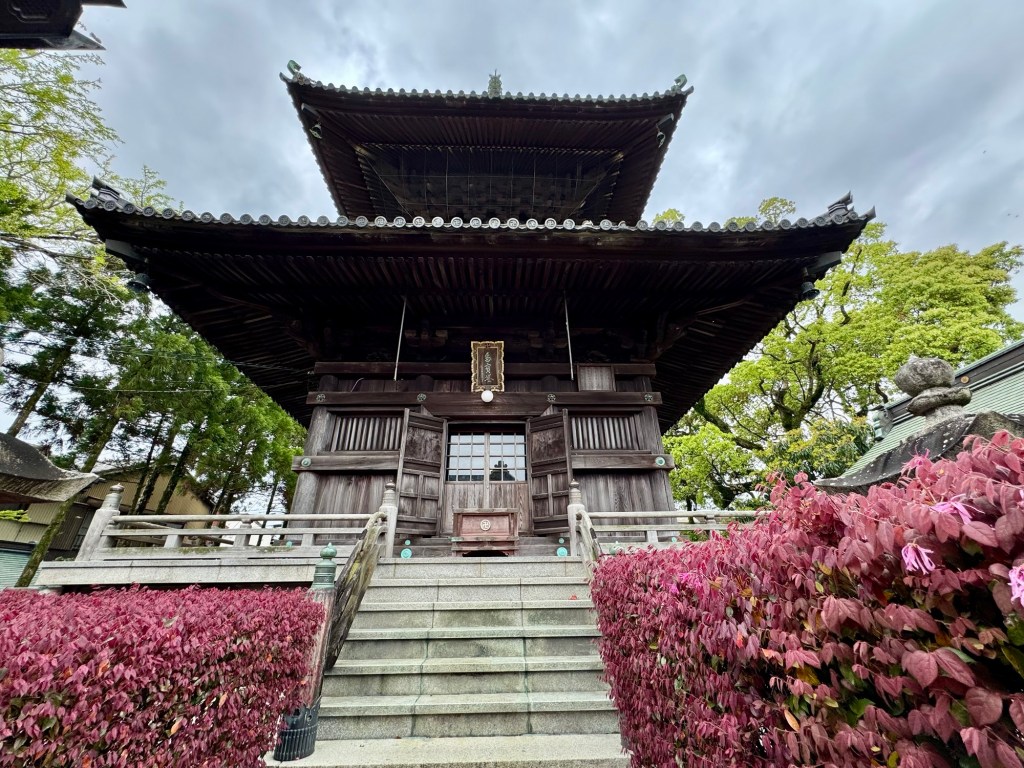
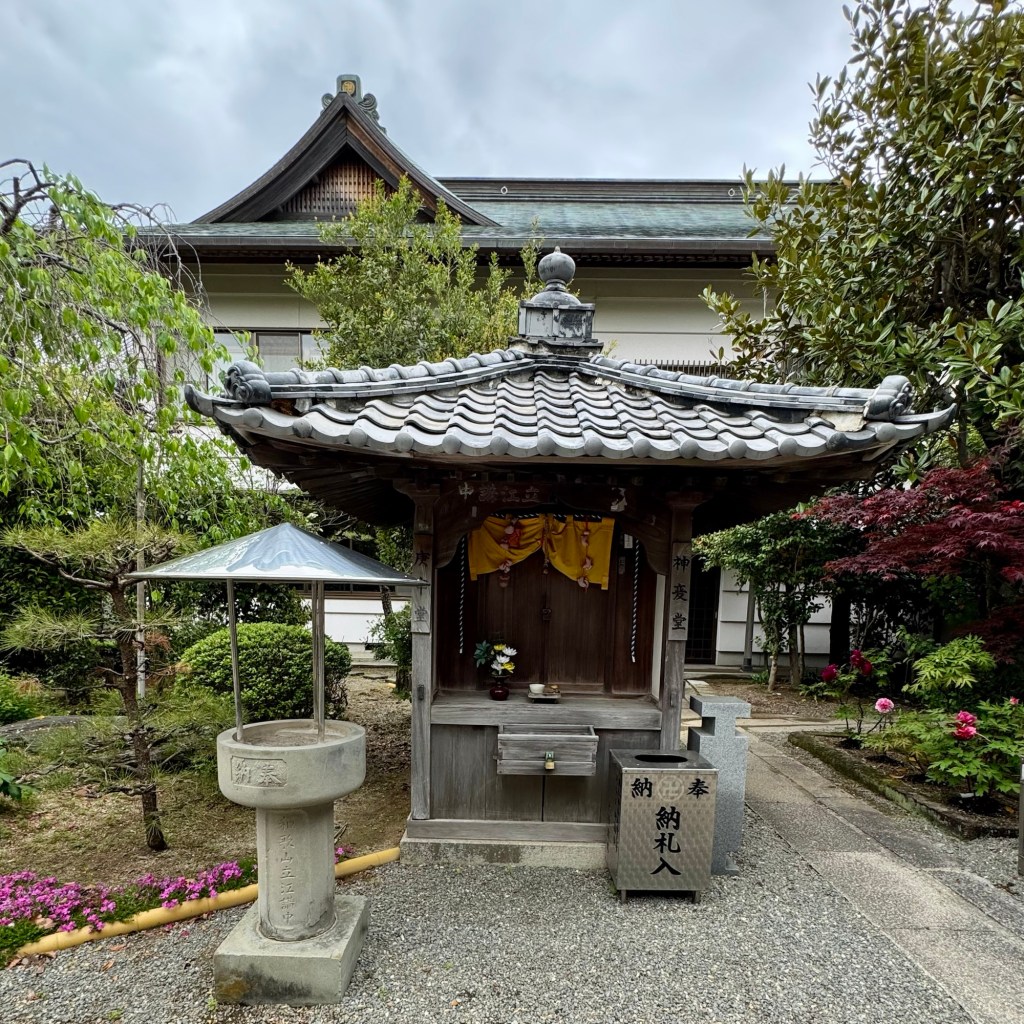

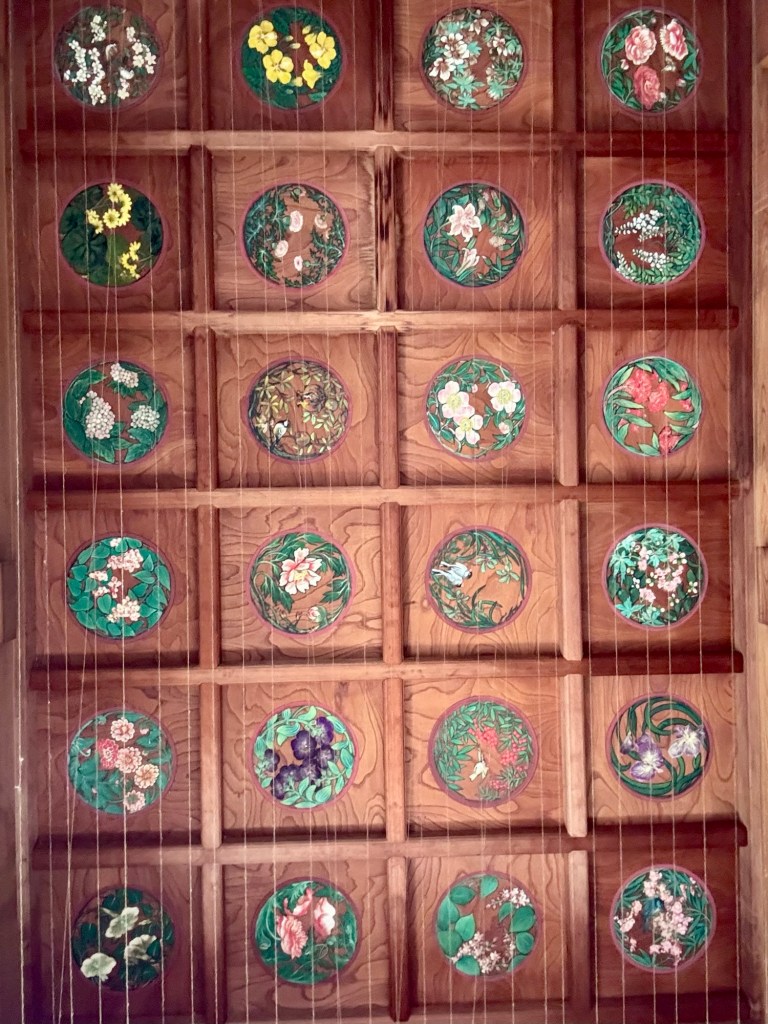
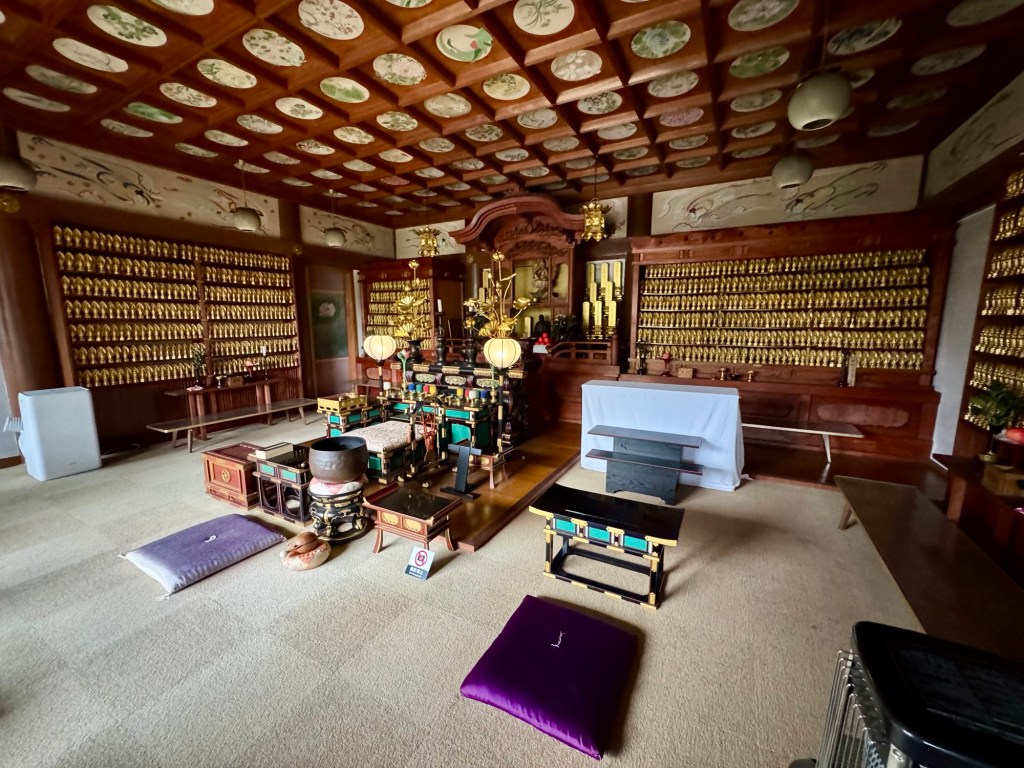
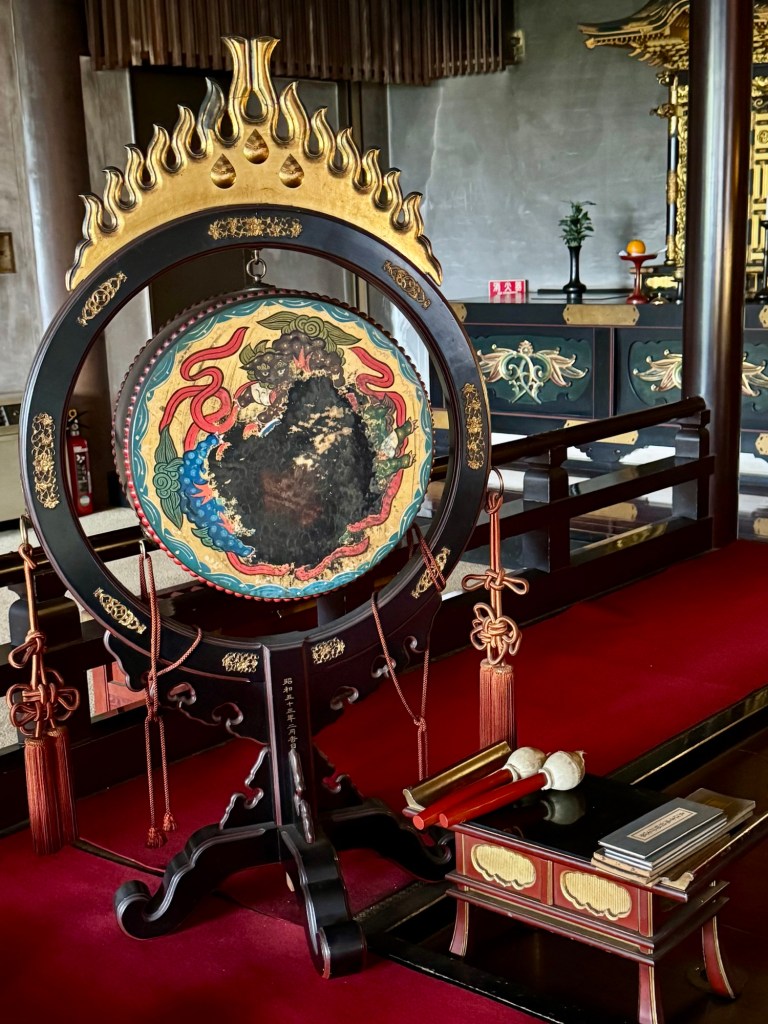
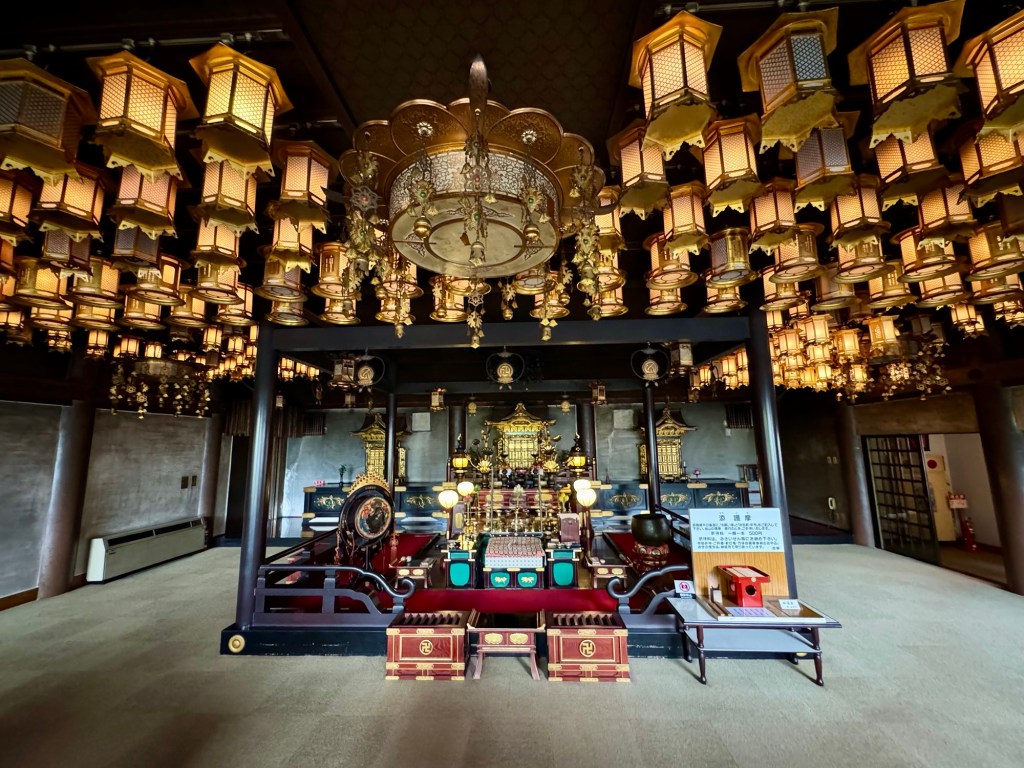
After wandering around the site for a bit, I removed my shoes and entered the magnificent main hall. Here, there are 286 ceiling panels painted by more than 40 teachers at Tokyo University of the Arts amongst other spectacular treasures.

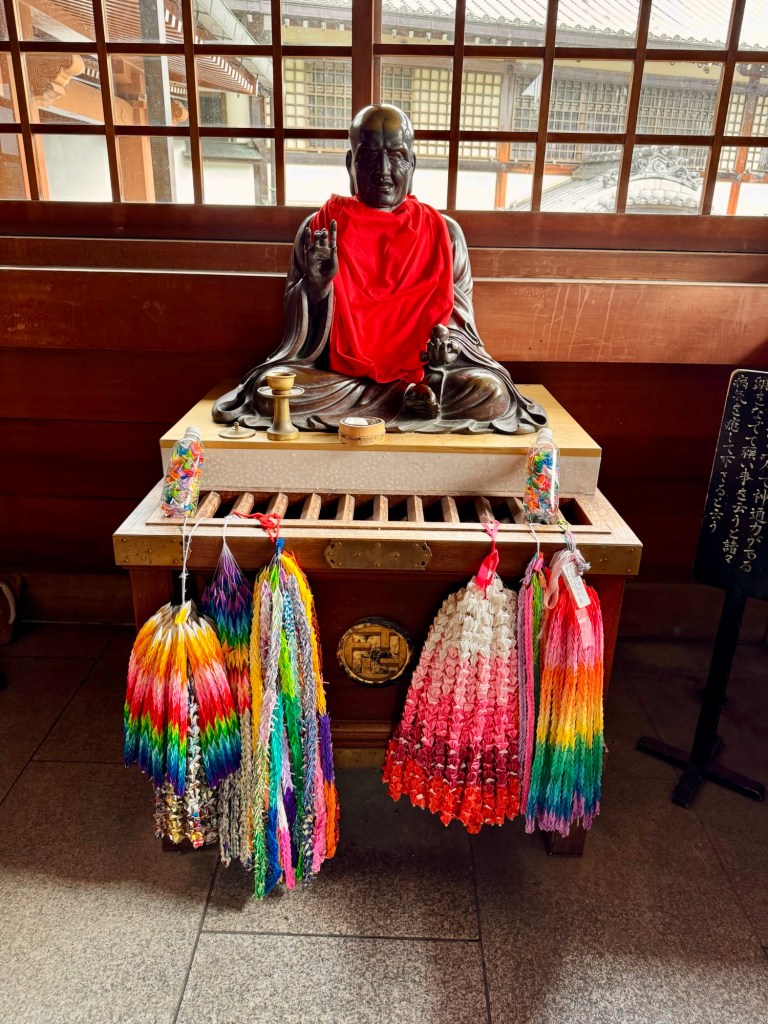

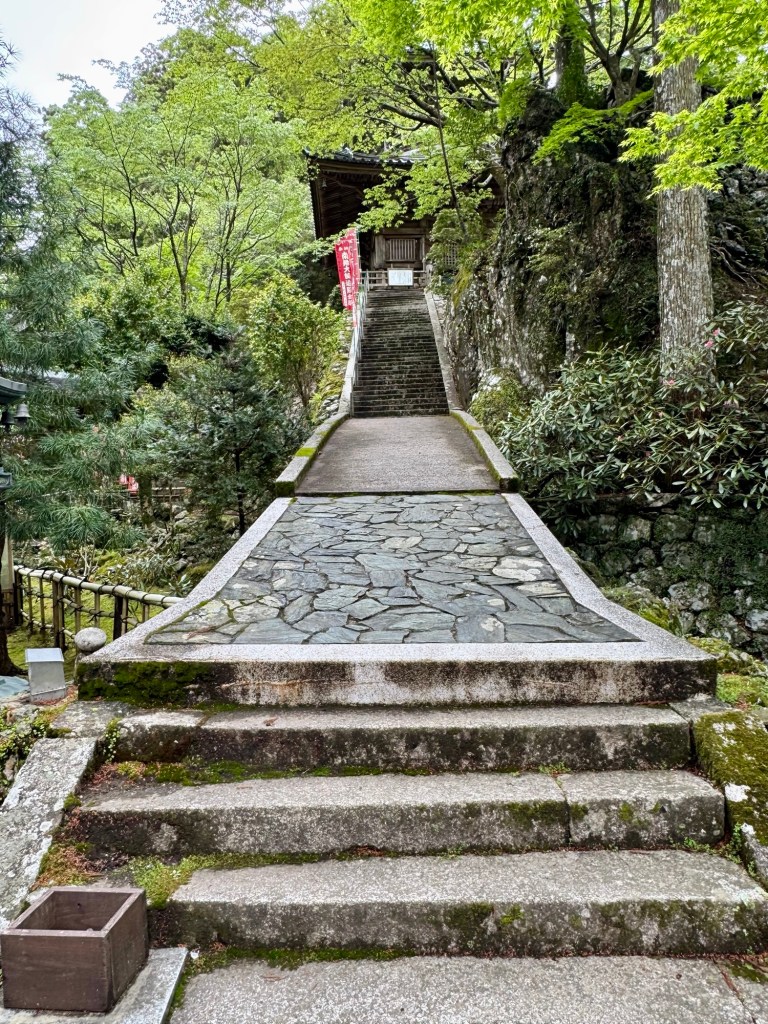
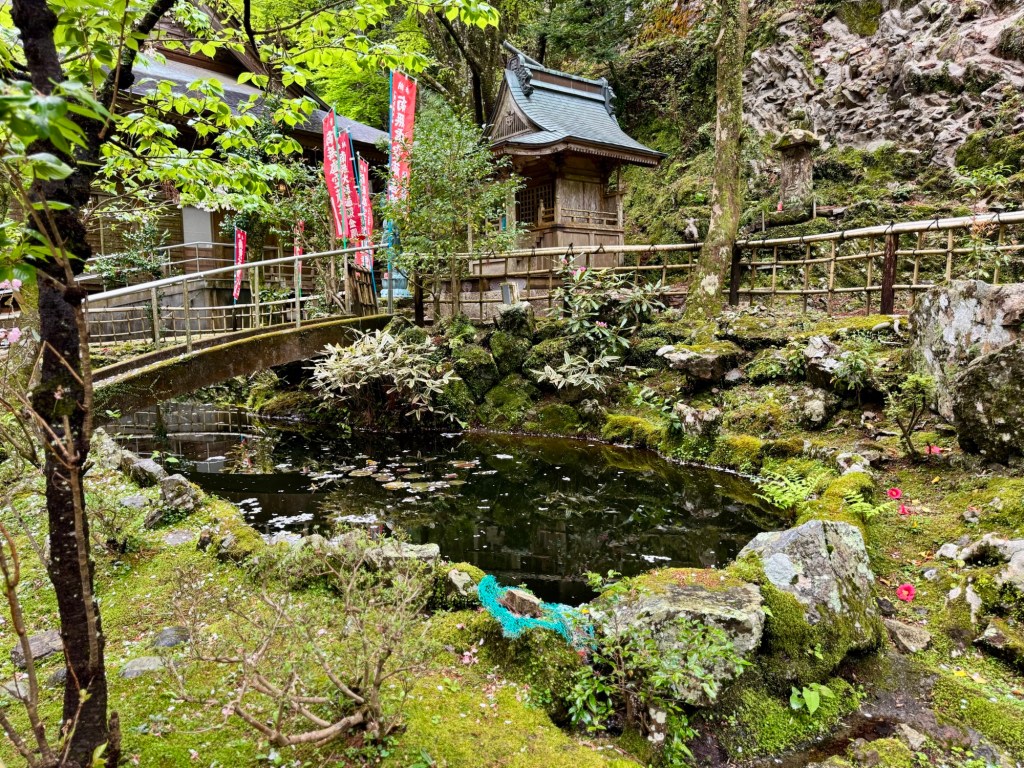
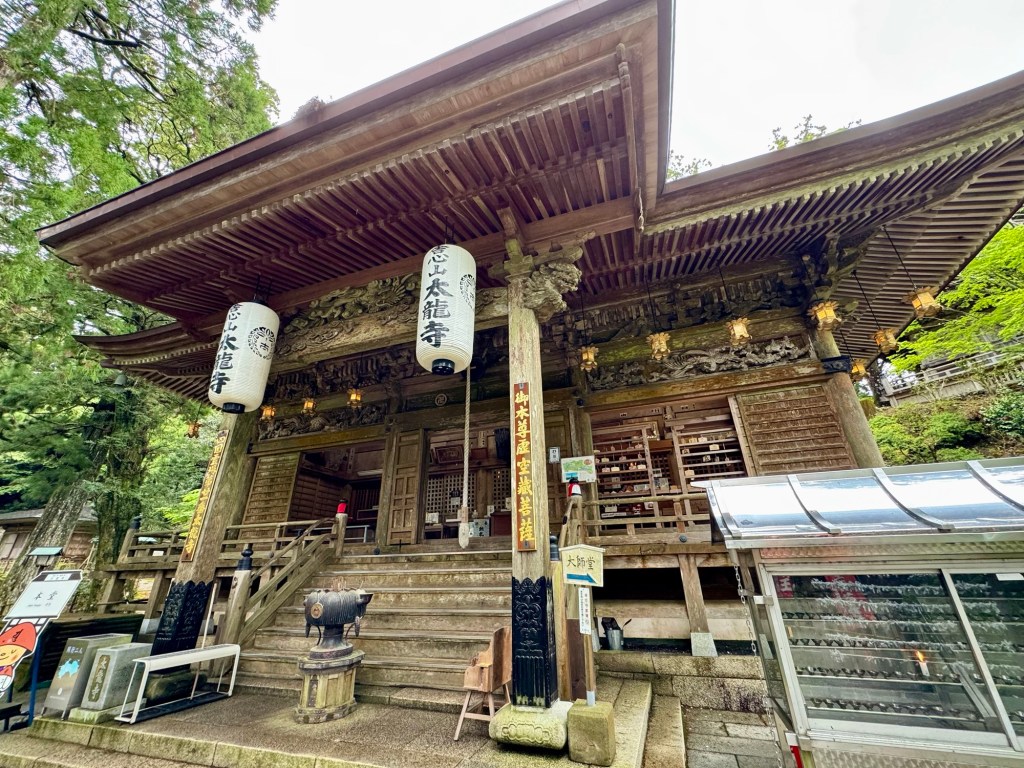
Too soon, we boarded the bus to head to our next stop; Tairyu-ji, the 21st temple on the loop. Located at 610 m above sea level, it’s one of the “nansho”, the difficult temples to reach on foot.
Although Kūkai is said to have founded or visited many of the pilgrimage temples, there isn’t always proof that he did. However, he wrote in his book Sango Shiiki, “When I was nineteen years old, I climbed up Mt. Tairyū in Awa Province and meditated to master the Kokūzō Gumonji method by reciting it one million times.”
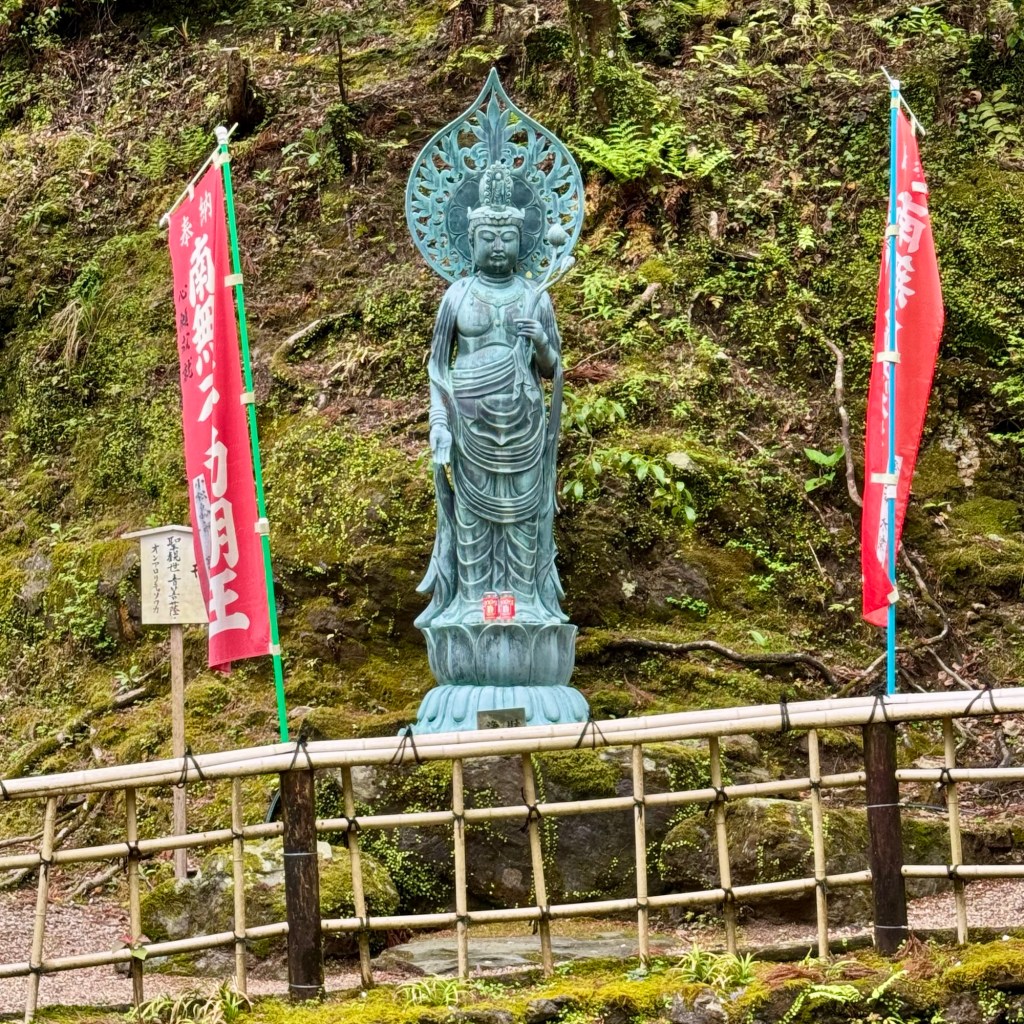
Later he was ordered by Emperor Kanmu (735-806) to found a temple here and be the head priest. The main deity enshrined is Kokūzō, whose mantra he had chanted as a youth.
Sometime between 1185-1333, the front gate was built, making it the oldest in Tokushima. The forces of Chōsokabe Motochika destroyed the temple between 1573-1592 but 1669, the main hall was restored. The pagoda was rebuilt in 1861.
In 1992, a cable car was built that whisks visitors to the temple in about ten minutes. It’s the longest cable car in west Japan with a length of 2,775 m with vistas in all directions from the windows are truly spectacular.
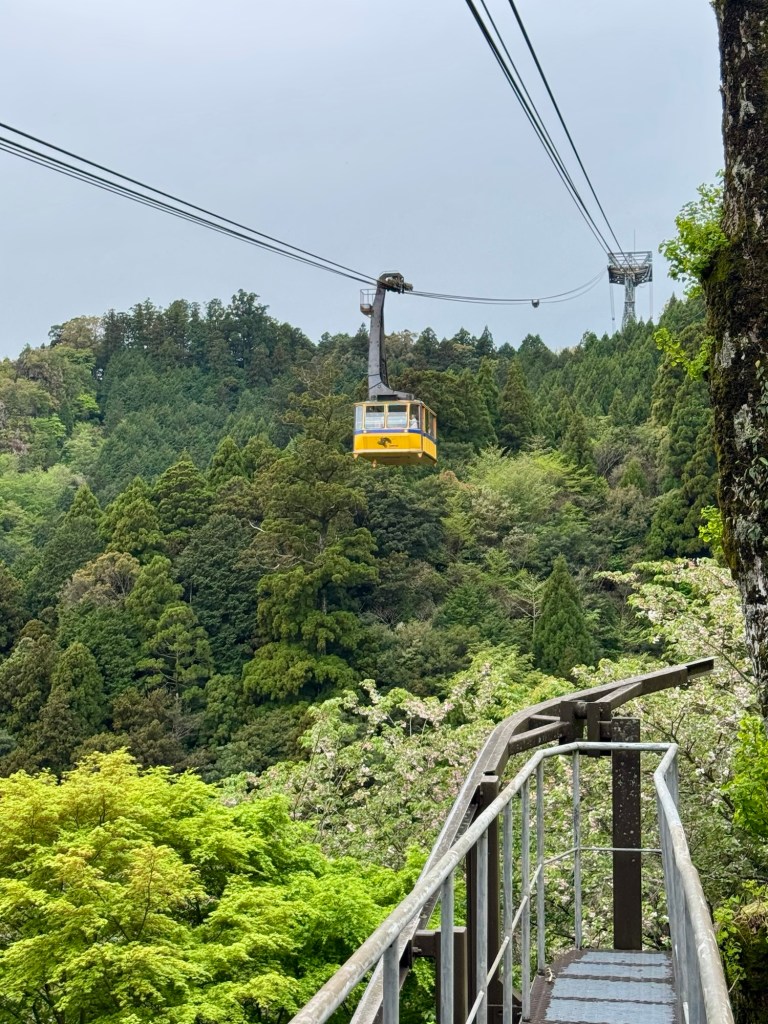

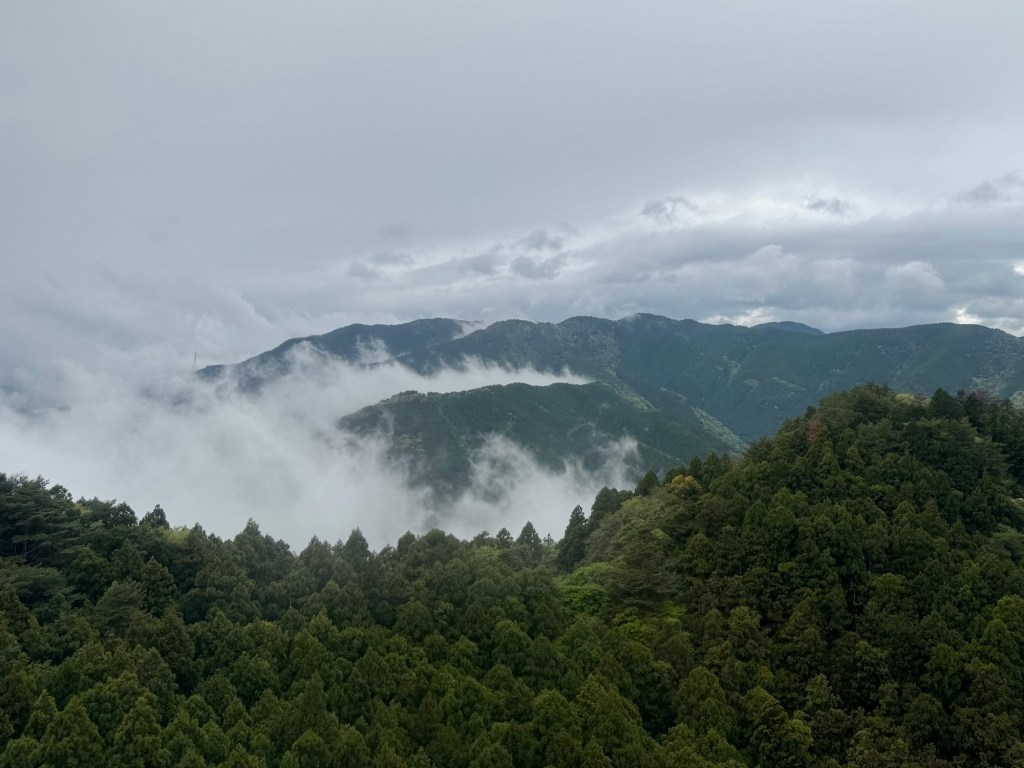
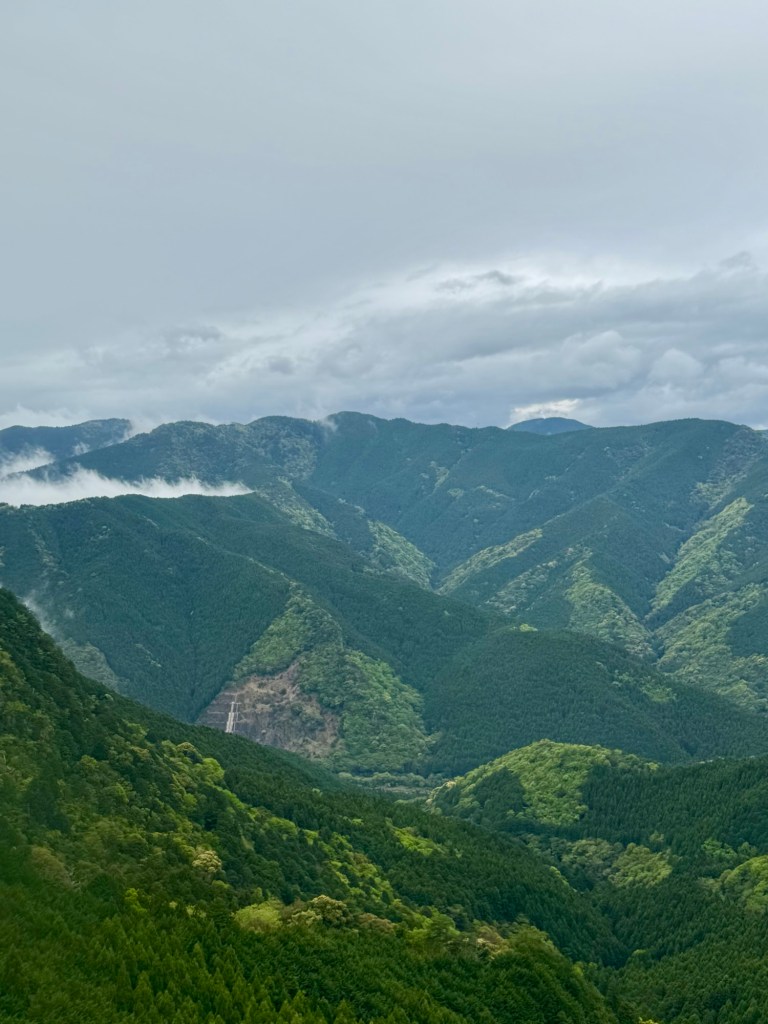
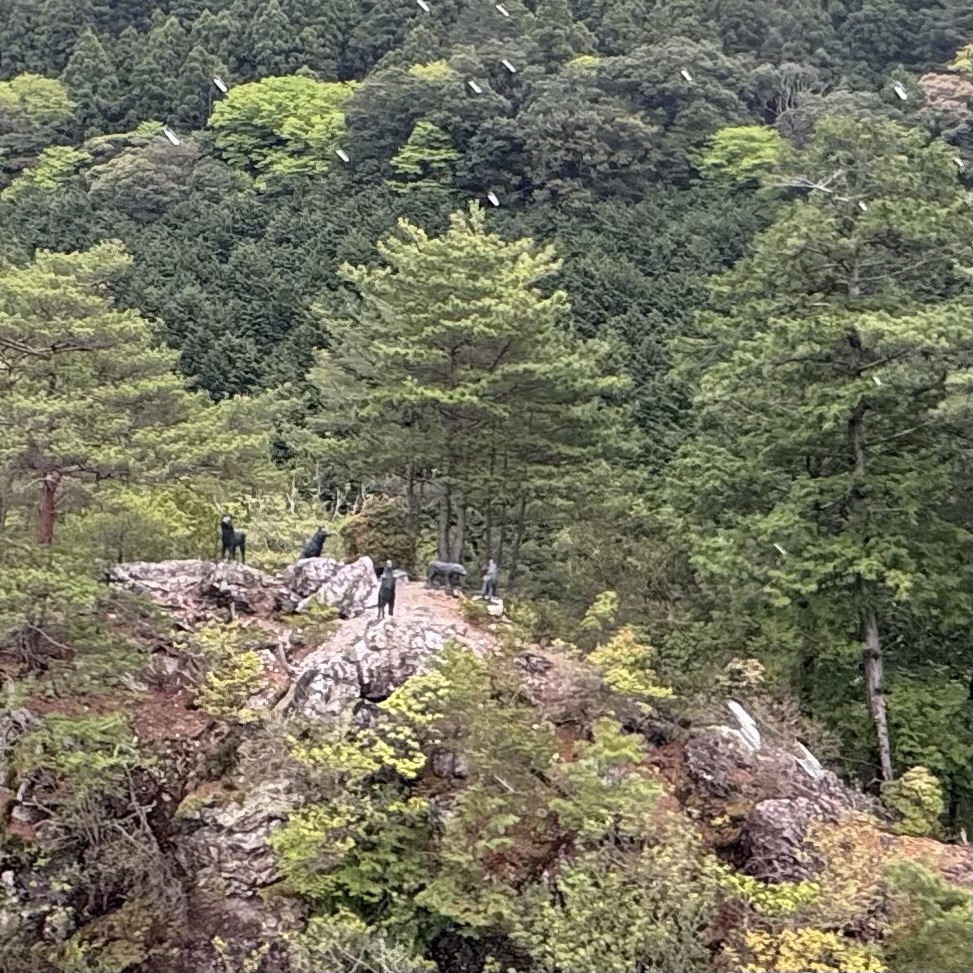
There were many pilgrims at this temple and they were happy to interact with the tourists and have their photos taken in their full regalia. I wished I knew the Japanese equivalent of “Buen Camino.”
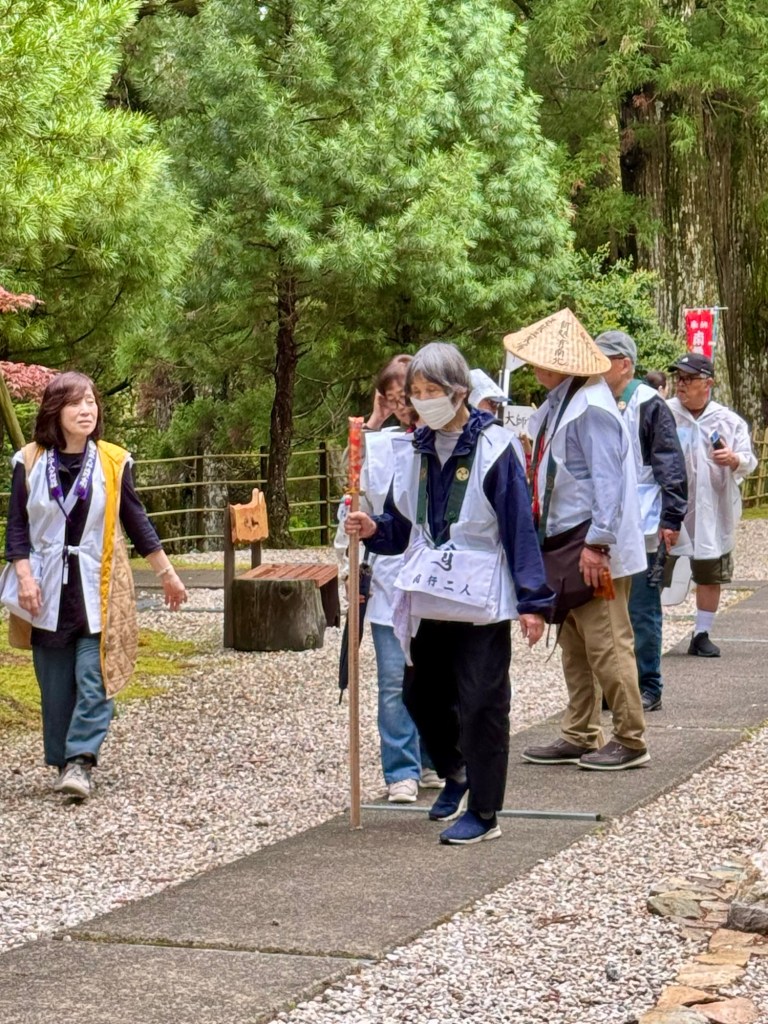
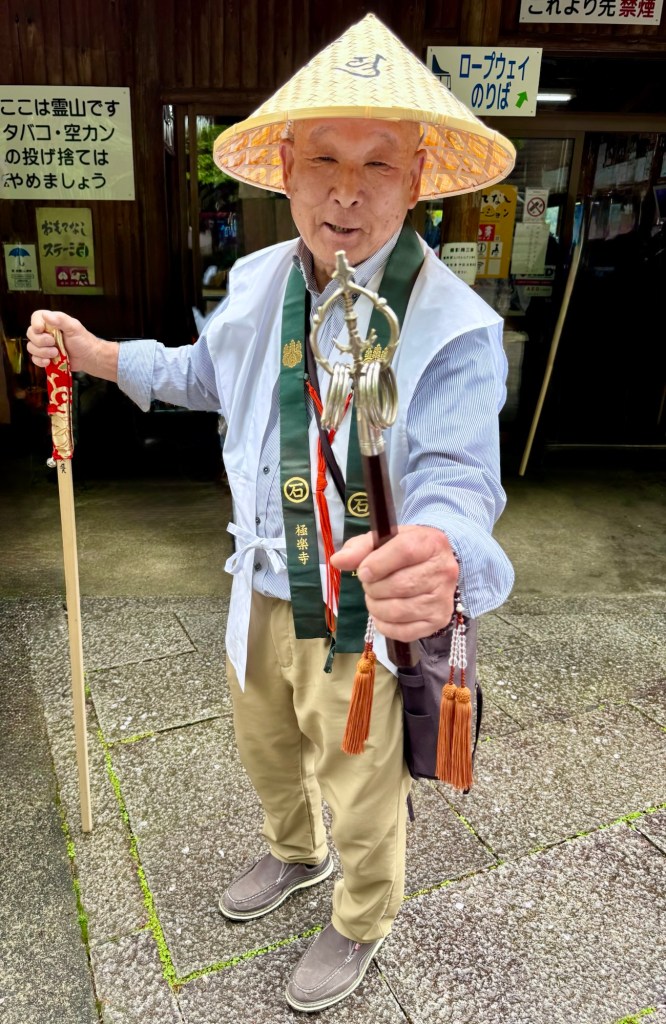
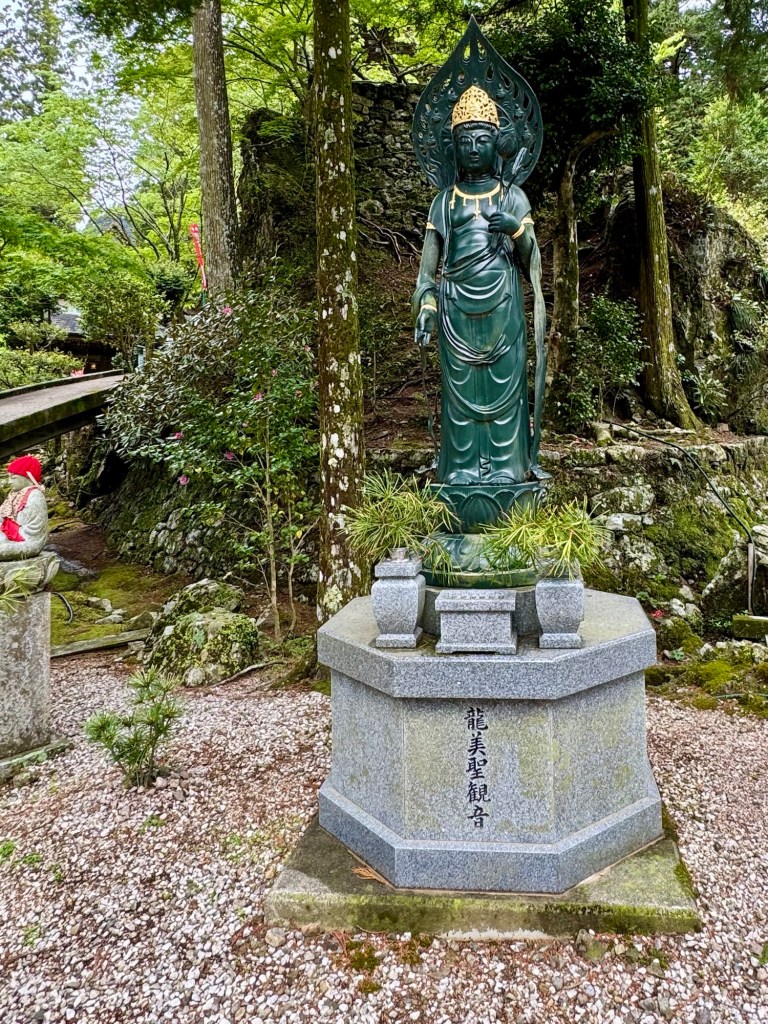
Given our tight schedule to get back to the bus and long lines for the cable car, we didn’t have so much time to experience the mountaintop atmosphere and explore the spacious grounds but I did manage to see many of the sculptures and shrines. Tairyu-ji didn’t disappoint.


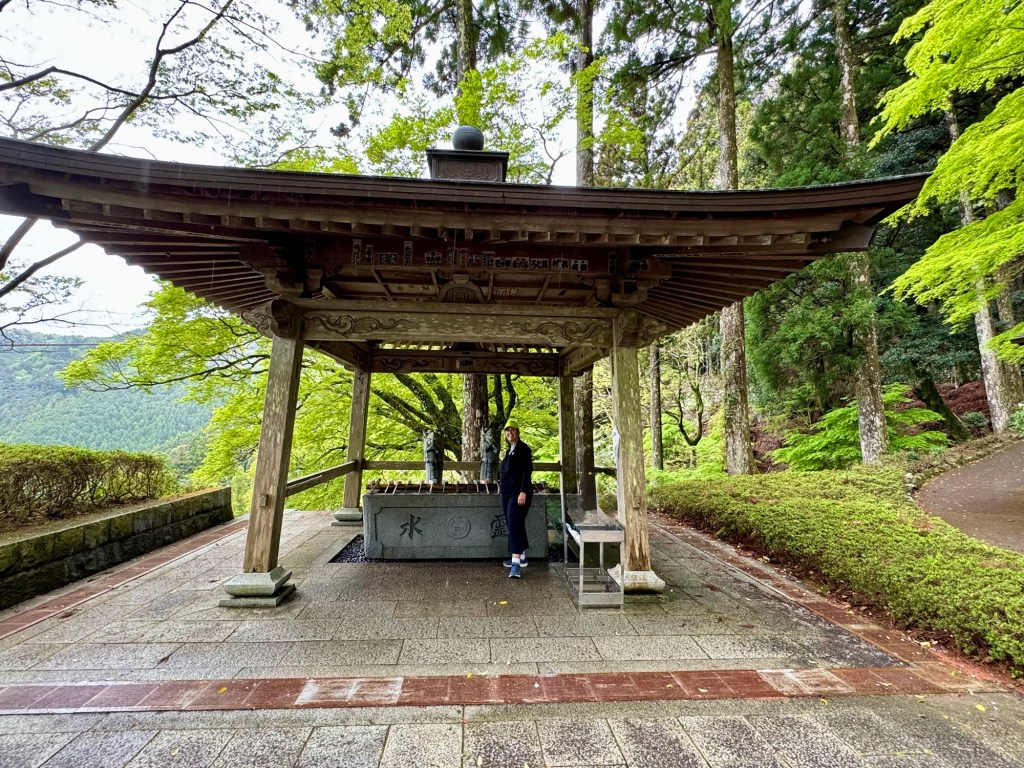

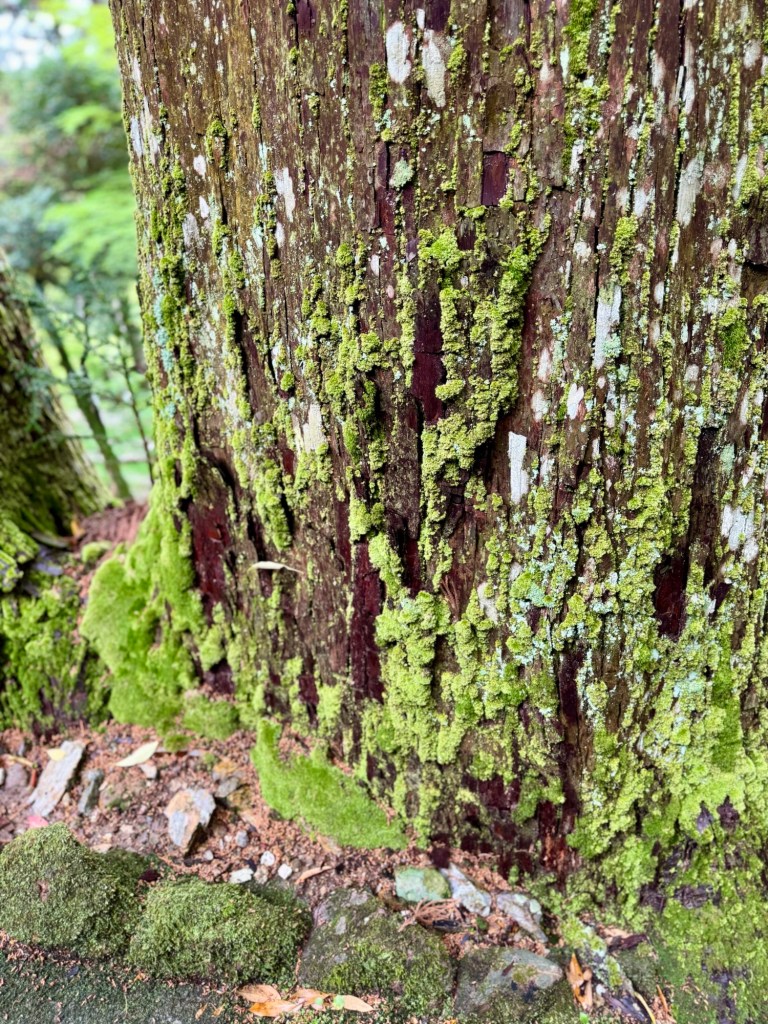




Back on the bus for the hour drive back to port and I was back on board the ship soon enough. I had a bit of time before my dinner at the Italian specialty restaurant, Onda, to put my feet up, shower and don my glad rags.
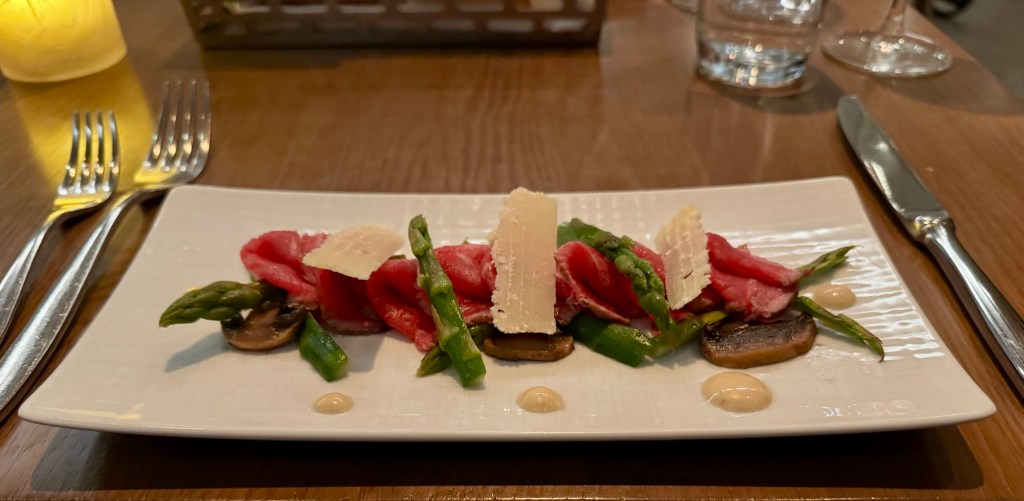
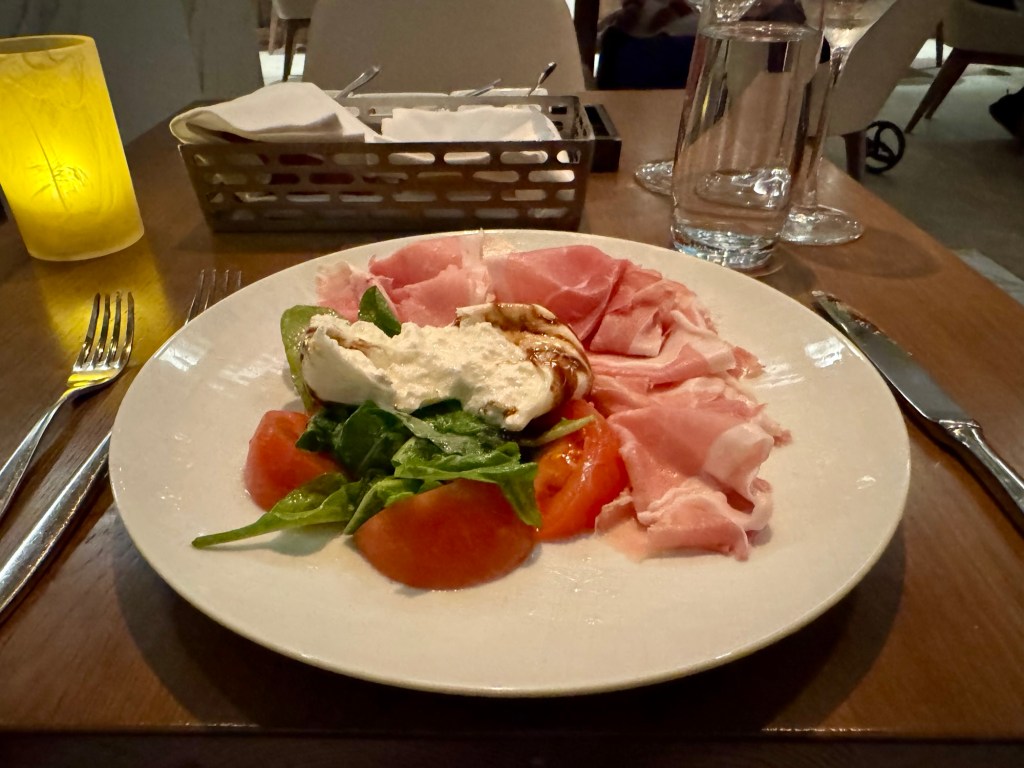
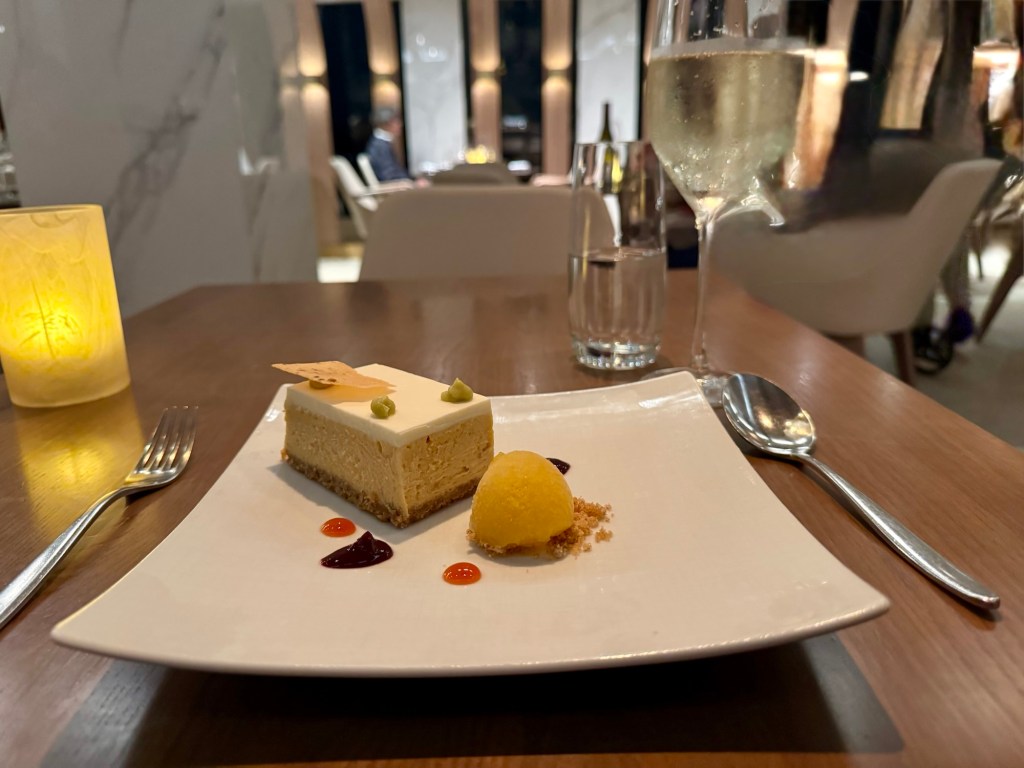
Dinner was great; beef carpaccio, burrata salad with piles of salty prosciutto, mezzelune stuffed with ricotta and spinach topped off with cheese cake with pistachio ganache and white peach sorbet. I’m starting to worry about who will be making my meals when I get home!!

Lots of things to do on the ship tonight but my bed and book are calling my name so after a quick walk around, I headed back to my cabin.
Tomorrow is another day. Adventures await…
 Judy’s Rambles