Wandering Through Northern Europe – Scouting out Stockholm with Ken

June 20-22 – Stockholm

Monday

The Dawn docked at the cruise port in Stockholm early and I had a quick breakfast in the dining room before disembarking. Apparently the taxis didn’t get the memo about our arrival so it took a bit of time to get a cab to our Airbnb in Gamla Stan. Ken had assured me cars were allowed in the area until 11 am so I cajoled my driver to take me to the door though we did get dirty looks from the few pedestrians on the street.

After dragging my steamer trunk up a flight of stairs, there was time for a quick hug before Ken and I headed off to meet our guide for the Free Walking Tour snapping pics as we went along.

Charming statue of parents sheltering a smiling child
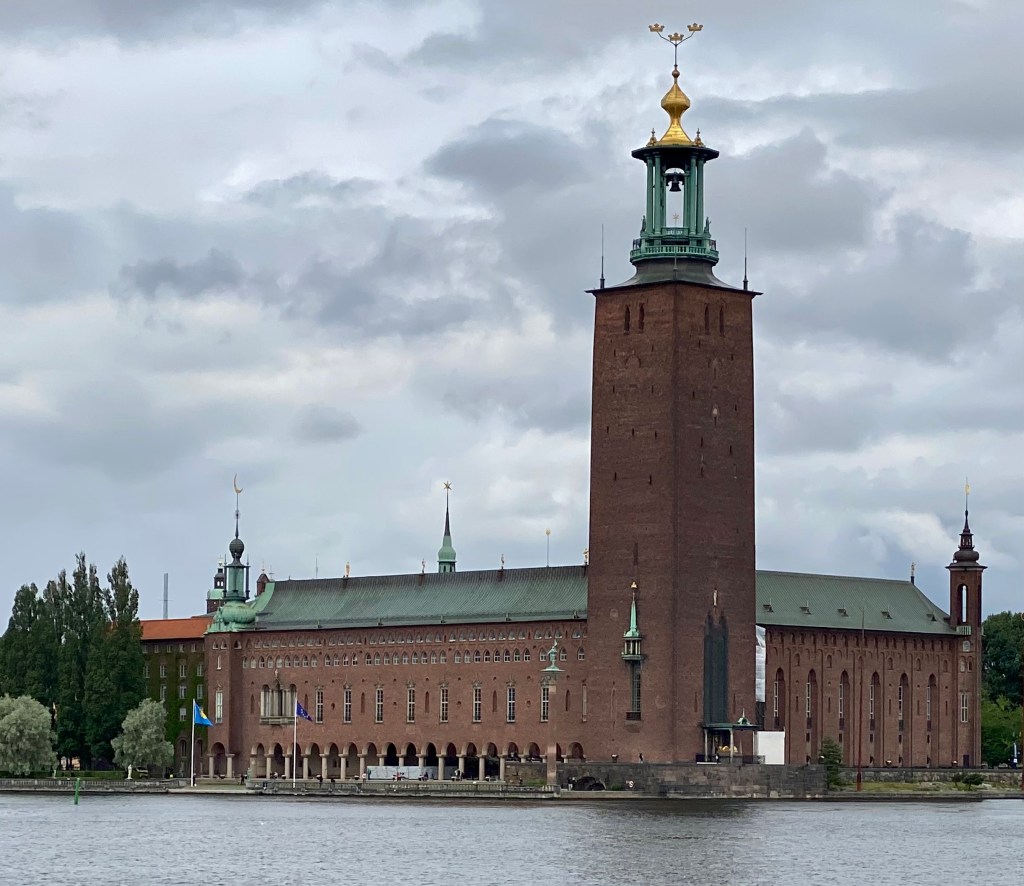
Stockholm City Hall

I think my poor sense of direction must be rubbing off because we ended up at not quite the right place. We did meet a couple of other hapless tourists at what we thought was the right meeting point, so not just me! After a bit more reconnaissance we eventually found the right place with our guide Malin and a dozen or so other tourists. 

Malin introduced us to some of the history of Stockholm before we set off on our tour of Gamla Stan (aka Old Town). 

Stockholm was officially founded in 1252 by the regent of Sweden, Birger Jarl. By the end of the 13th century, Stockholm had grown to become Sweden’s biggest city, serving as the country’s political centre and royal residence – one that was repeatedly besieged over the following centuries.

The history of Stockholm for many centuries coincided with the development of what is today known as Gamla Stan or Old Town. The bustling, compact island of Gamla Stan is the city’s old town, with cobbled streets and colorful 17th and 18th century buildings. It’s home to the medieval Storkyrkan cathedral and the Royal Palace, the king’s official residence. 

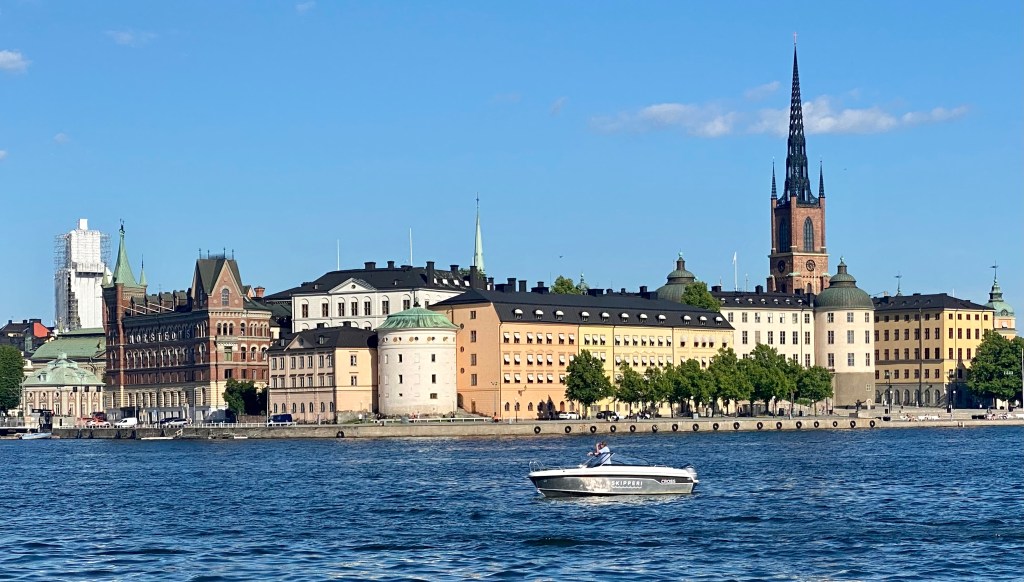
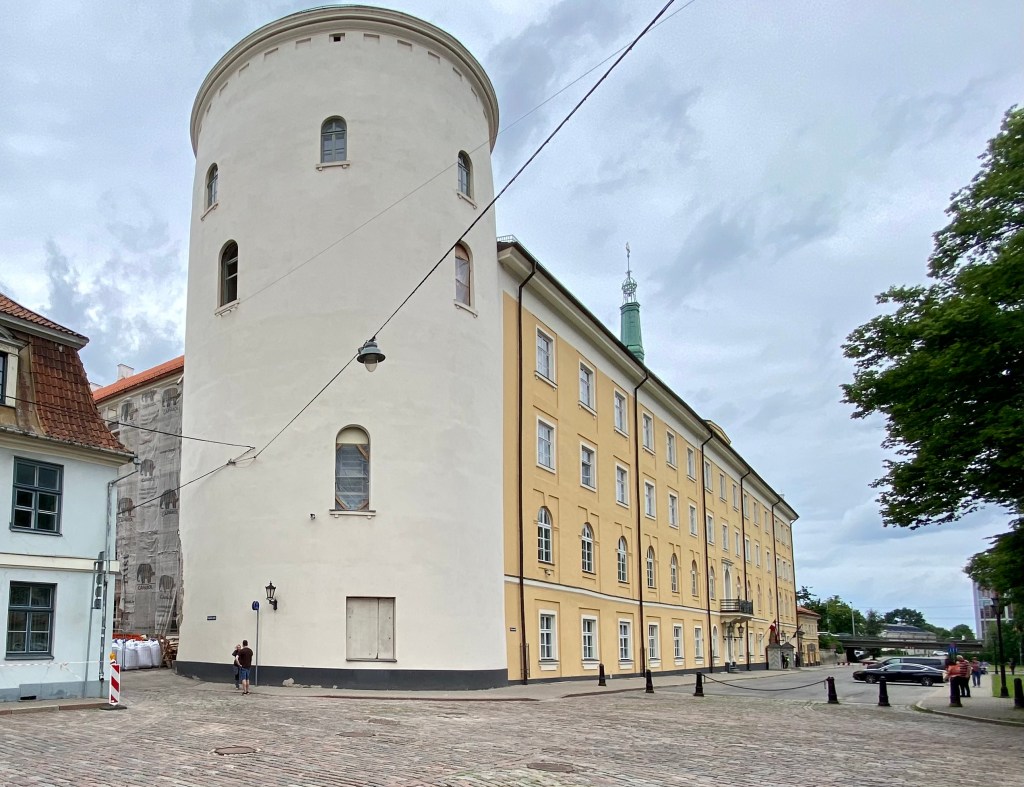
We set out first to Riddarholmen Island (Knight Island) the historical nucleus of Stockholm to check out Riddarholmen Church and environs. The church (the oldest bldg in Stockholm) was part of a Franciscan monastery founded in the thirteenth century. The king chose the church for his last resting place and kings were buried there for hundreds of years in the white circular building.  No one currently living on the island so church is no longer active. The buildings were handed over to the state and now house government departments. 
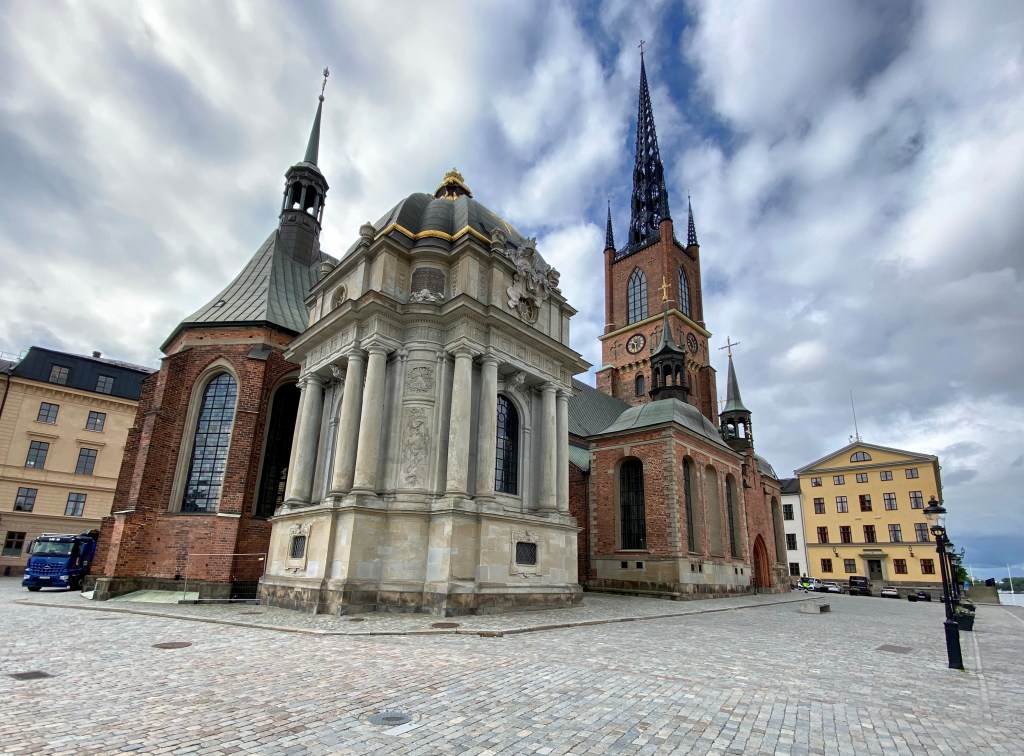
Riddarholman Church

On our way back to Stadsholmen (the island where most of Gamla Stan is located) we passed a large white building which houses Sweden’ Supreme Court and the Knight’s castle. 
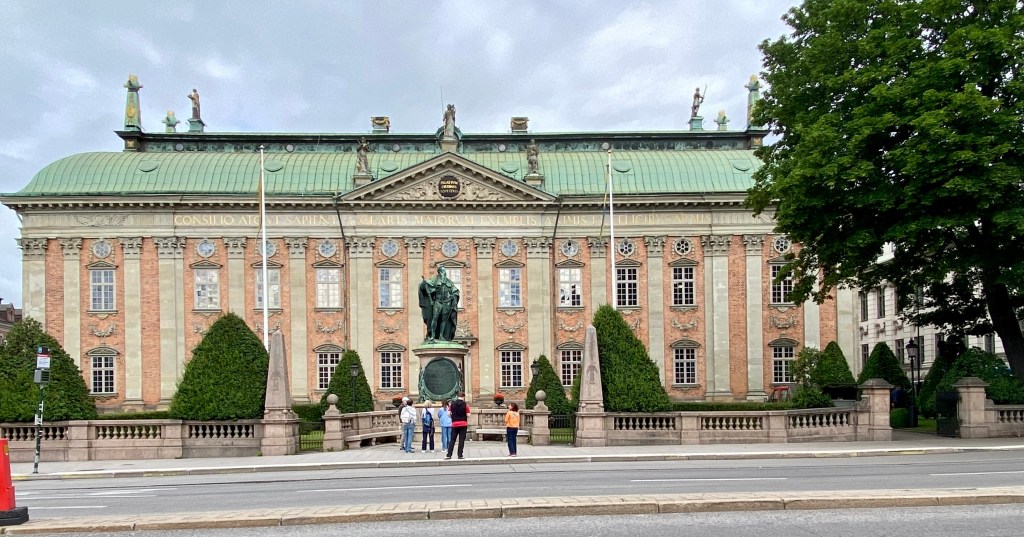
Riddarholman Castle
Swedish Supreme Court

Lars Johan Hierta was a Swedish newspaper publisher, social critic, businessman and politician. He is best known as the founder of the newspaper Aftonbladet in 1830. Hierta was a leading agitator for political and social reform in Sweden during the 19th century. His likeness is captured by this statue across from the Supreme Court.

Lars Johan Hierta
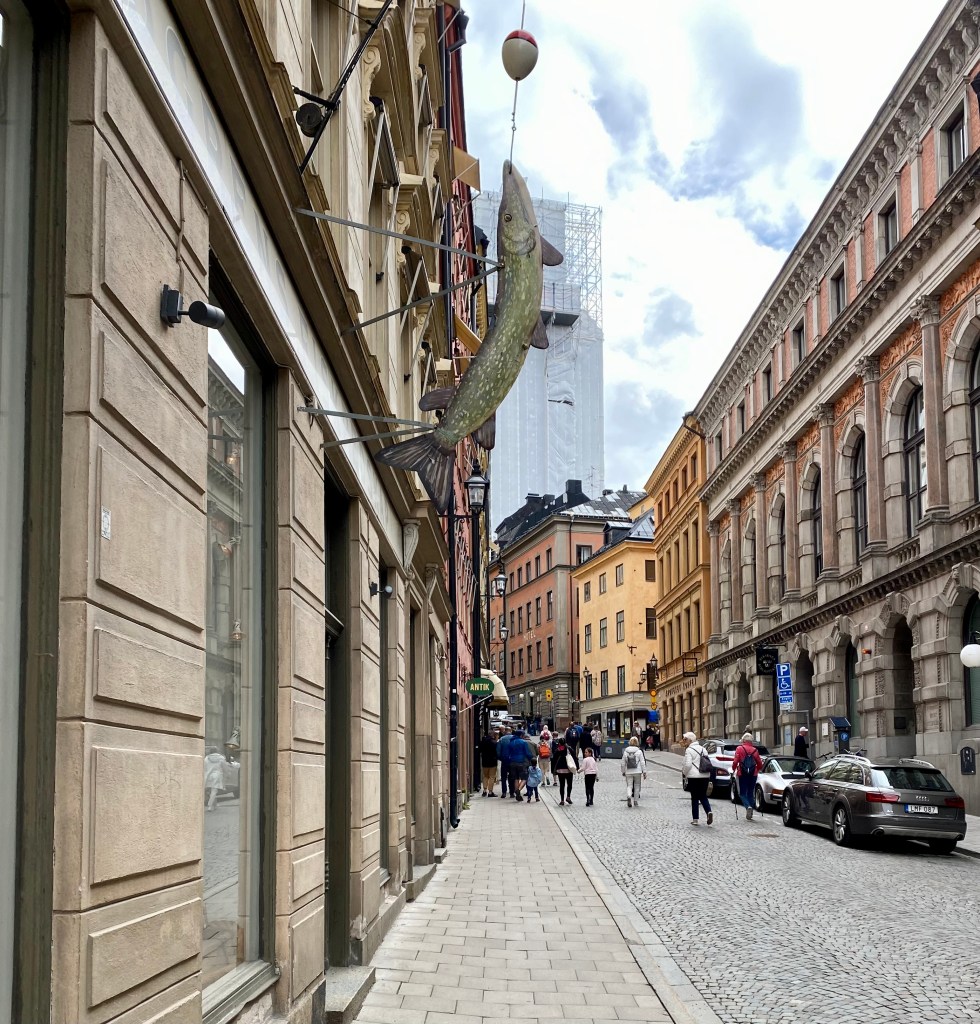
Streets of Old Town

Next we headed up Prastgatan aka Priest street. Originally, this street had Swedish and German priests. Across the street was Hell’s Alley or just Hell a street which gained notoriety as the executioner lived there. The area has not changed much since 1600s though there are currently no executioners!.

Back in the day, it could be hard to recruit executioners because it was a crappy job and everyone hated you! They started recruiting prisoners convicted to die the option to be an executioner. If they agreed, the first step was that the old executioner cut off their ears to mark them and then the old executioner knelt down and had his head cut off. One year deferment of a sentence might not have been worth it?  

The next stop on the tour was a sewage hole! Back in the day, waste from residences was dropped down a shute then ran into the gutter awaiting a big rain. This was an especially bad system in summer when it could take weeks for enough rain to “flush” the waste. Residents were responsible to keep streets clean so everyone had to wear wooden clogs to stay above the muck. Malin talked about excrement for quite a long while but suffice it to say that the landmass of Stockholm eventually grew by 50% because of waste thrown in the harbour!
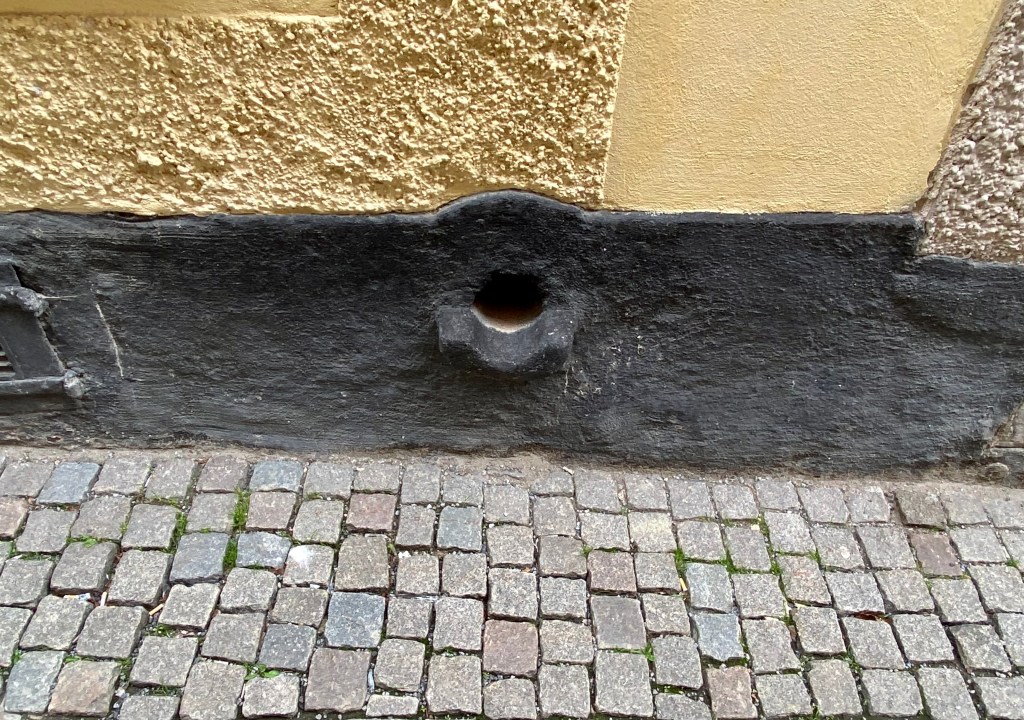
Brings new meaning to the phrase poop shoot!

One other byproduct of these waste management practices is that the front doors needed to be elevated to accommodate the higher street level (1 metre) because of the layers of waste. 
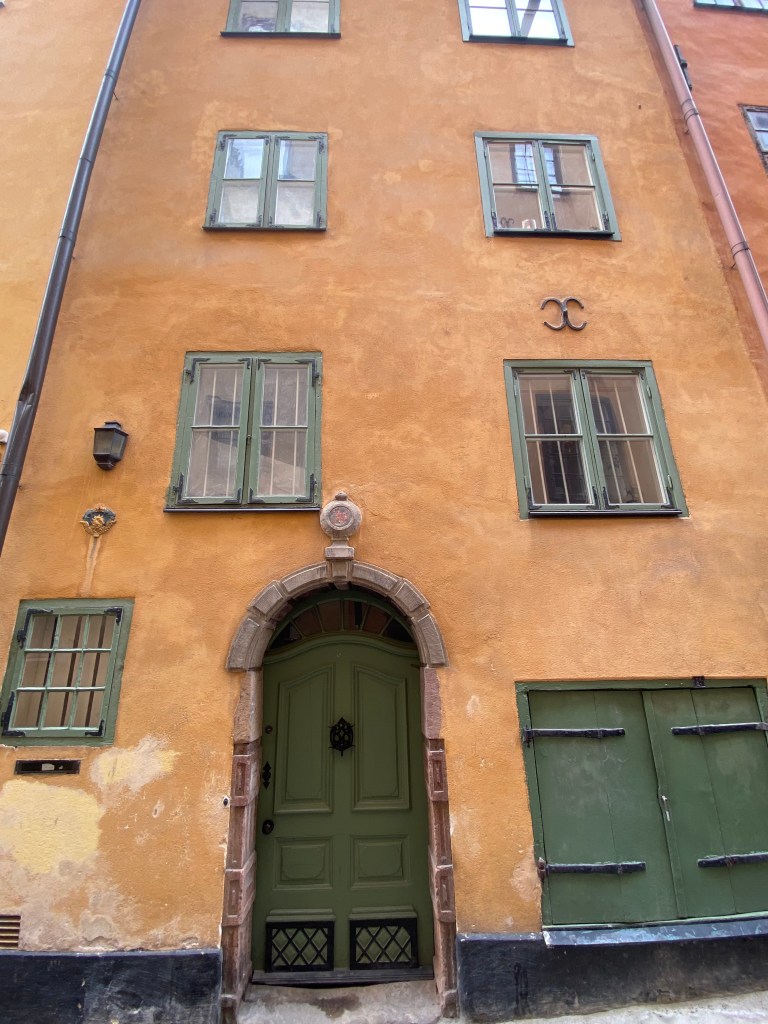
Door has been elevated to accommodate for increased depth of the street

Next, we headed to the Square of the German Priests. German priests came to Stockholm with the Hanseatic league as the Swedes wanted to set up markets similar to those around the Mediterranean. All larger cities joined the trading market. Stockholm was a bit late to the party – 200 years or so! and had to sweeten the pot to lure as many Germans as possible. The offered tax benefits, housing and their own churches. This plan was so successful that but the mid 1400s the most common language in Stockholm was German not Swedish. 

Square of the German Priests

Closeby is Mårten Trotzigs gränd (Mårten Trotzigs alley), the narrowest alley in Gamla Stan which is only 90 centimeters wide at its narrowest point. This alley was built between two houses owned by Herr Trotzigs, a merchant, so he would have direct access to the harbour. Rumour has it if you make a wish while touching both walls it will come true. Time will tell!!
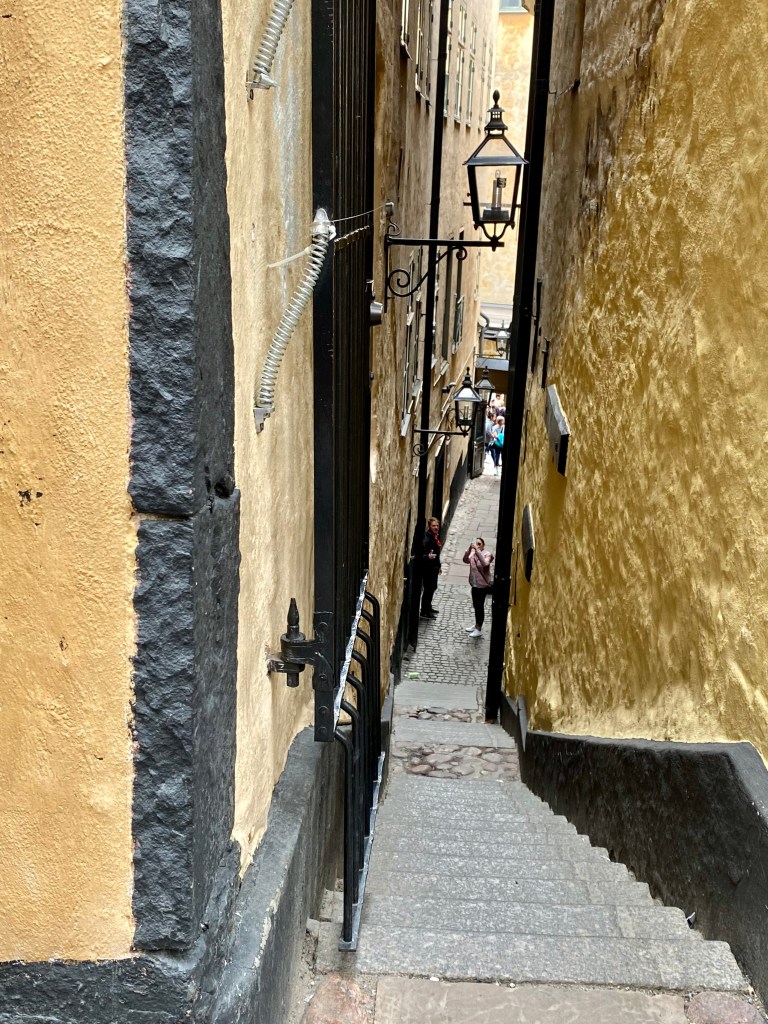
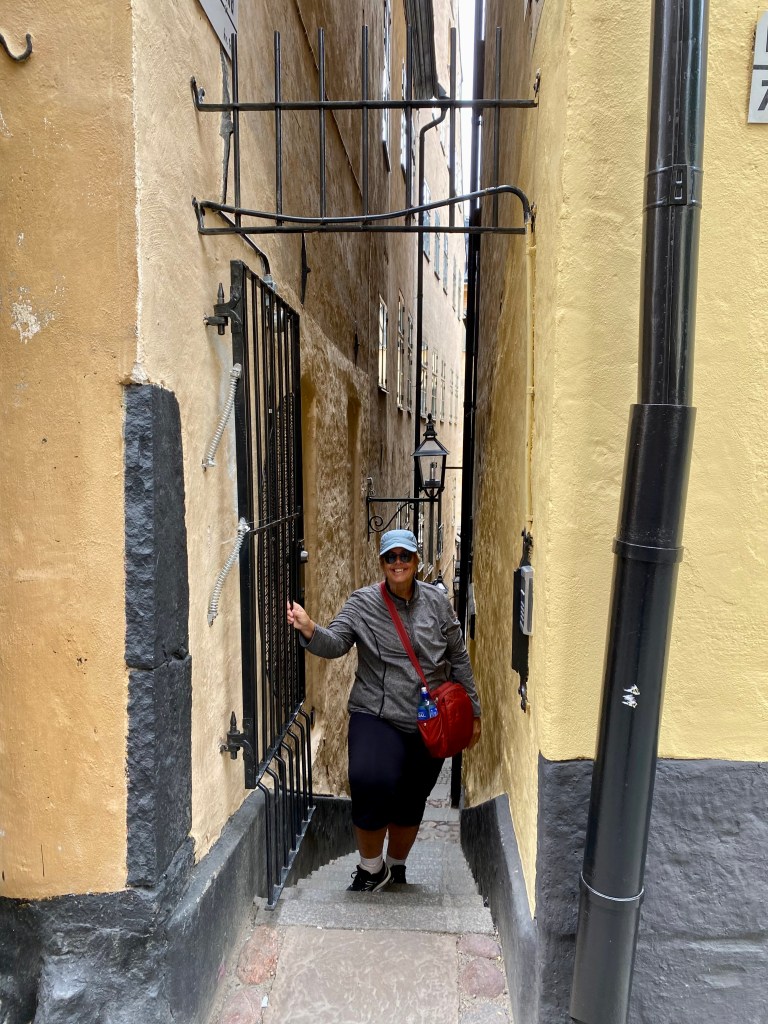
Mårten Trotzigs gränd
You shall not pass, lol!

Next stop was the Royal Palace which took 57 years to build because the treasury was supporting all the wars being fought in the name of the Swedish crown at the same time. Finished in 1754, in the Italian baroque style, it was the residence of the Royal family for centuries. The current Royal family opted to live out of the city at Drottningholm Palace so their children could live a bit less in the public eye. 
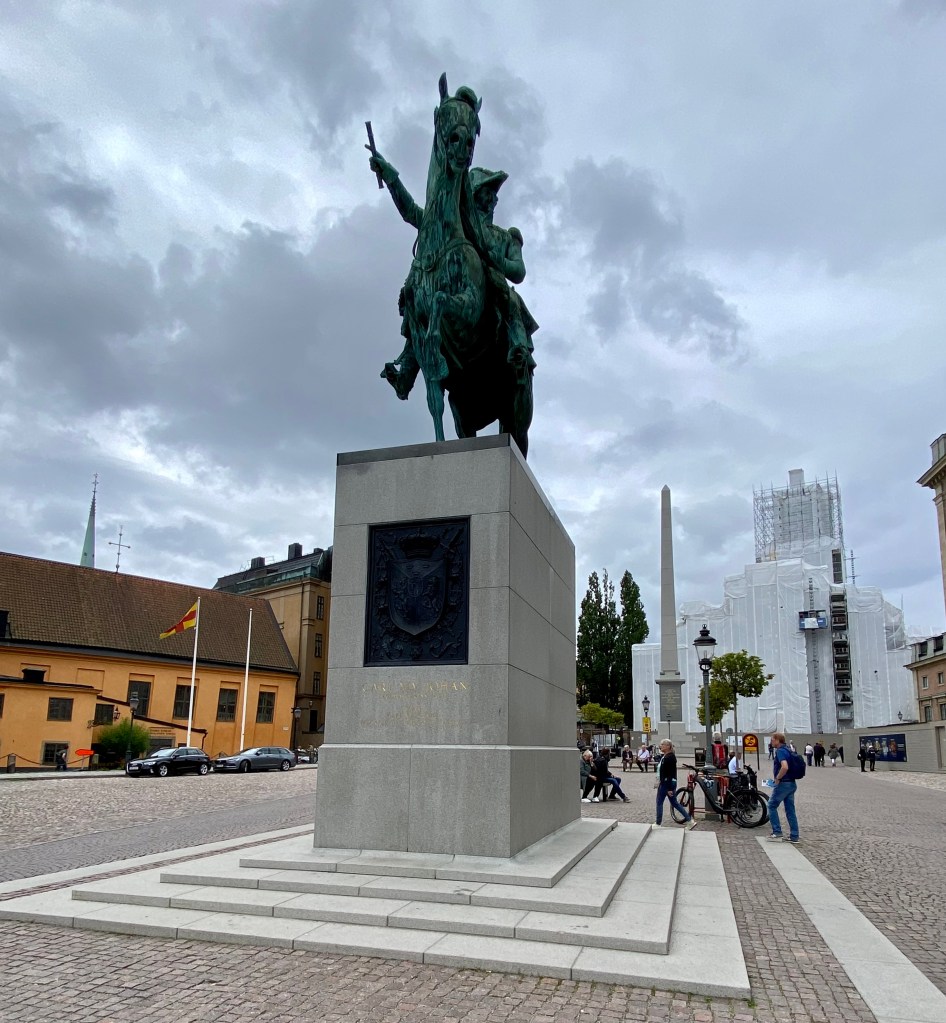
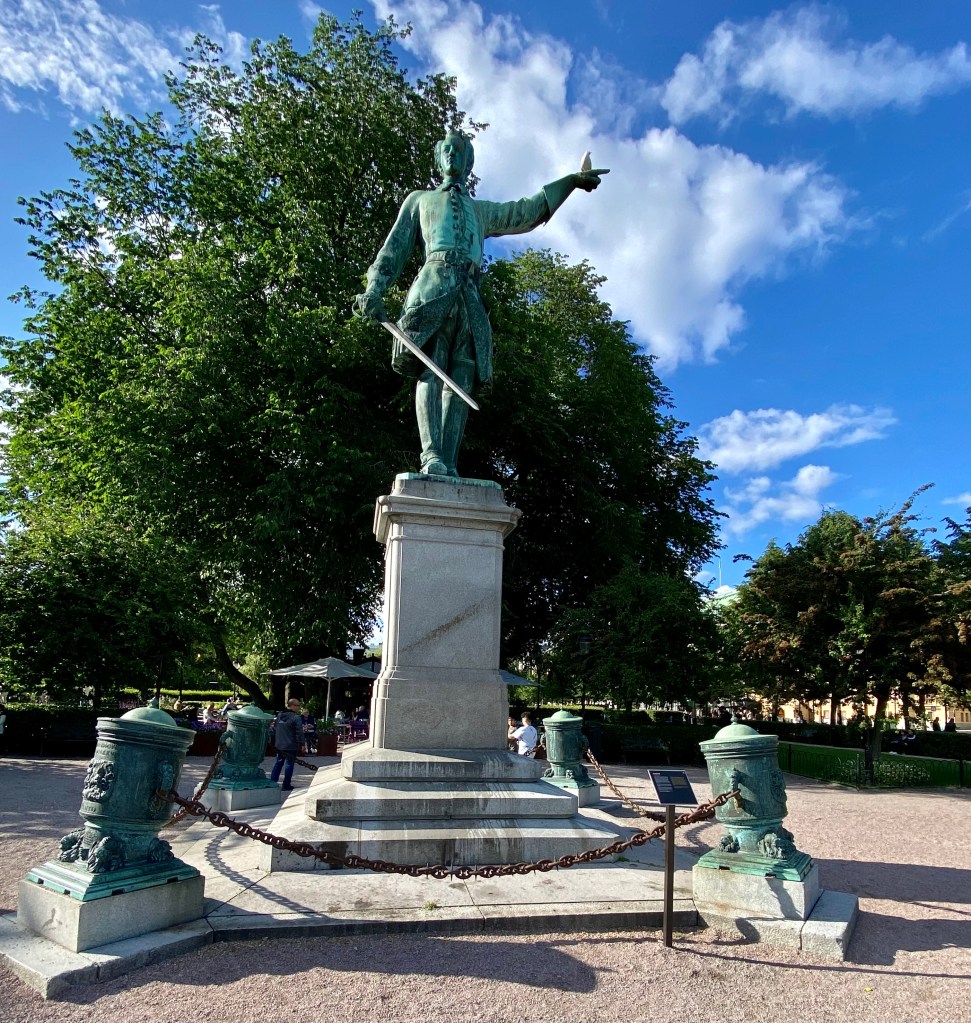
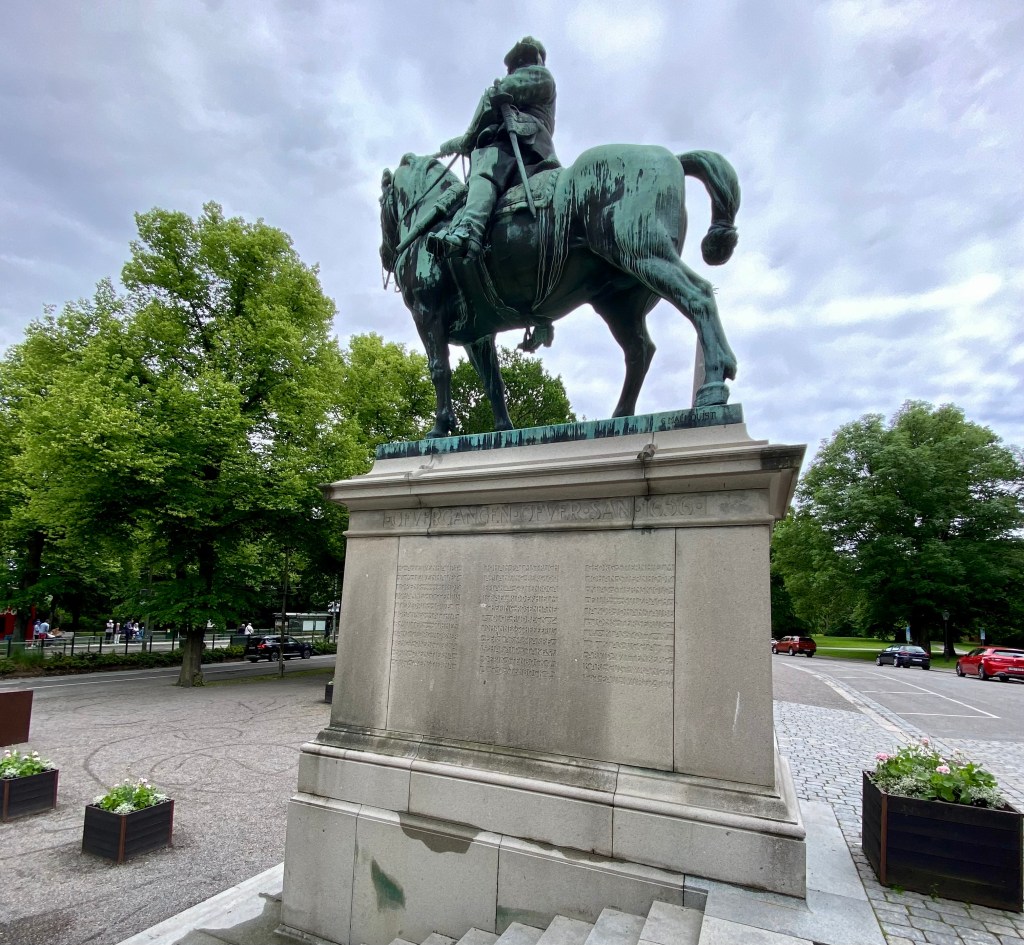
Charles XIV John’s statue near Palace

Next we’re off to the main square – Stortoget; home to the Stock Exchange Building which houses the Nobel Museum and Library as well as the Swedish academy. There is also a fountain in the square (The Well) where townsfolk used to and still can collect drinking water. 
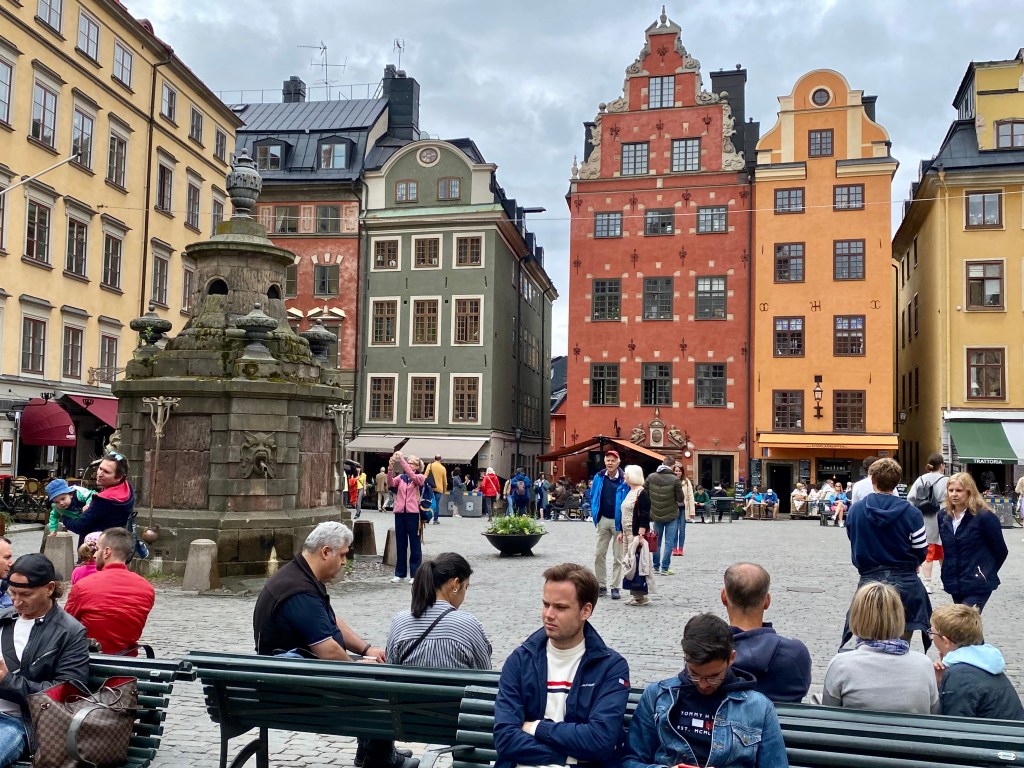
Stortoget
Nobel Museum
The Well

Stortoget was the site of the Stockholm Blood Bath when, despite a negotiated amnesty, the Danish king orders the execution of 86 Swedish nobles in the main square before setting the Danish army loose to rape and pillage the city. One young noble was late to the party and wasn’t executed though his father was. Over the next three years, Gustav recruits a giant peasant army which marched to the city. The Danes had already left when they arrived so no liberation of Stockholm was necessary. Gustav became king of Sweden on June 6, 1523 at the age of 23 and is revered as a hero. 

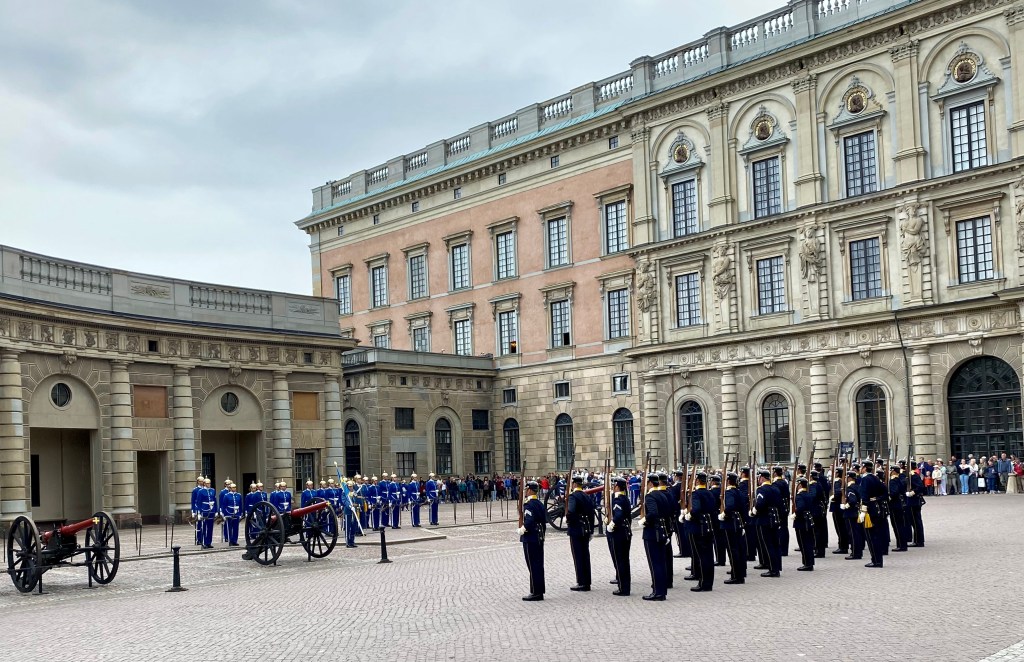
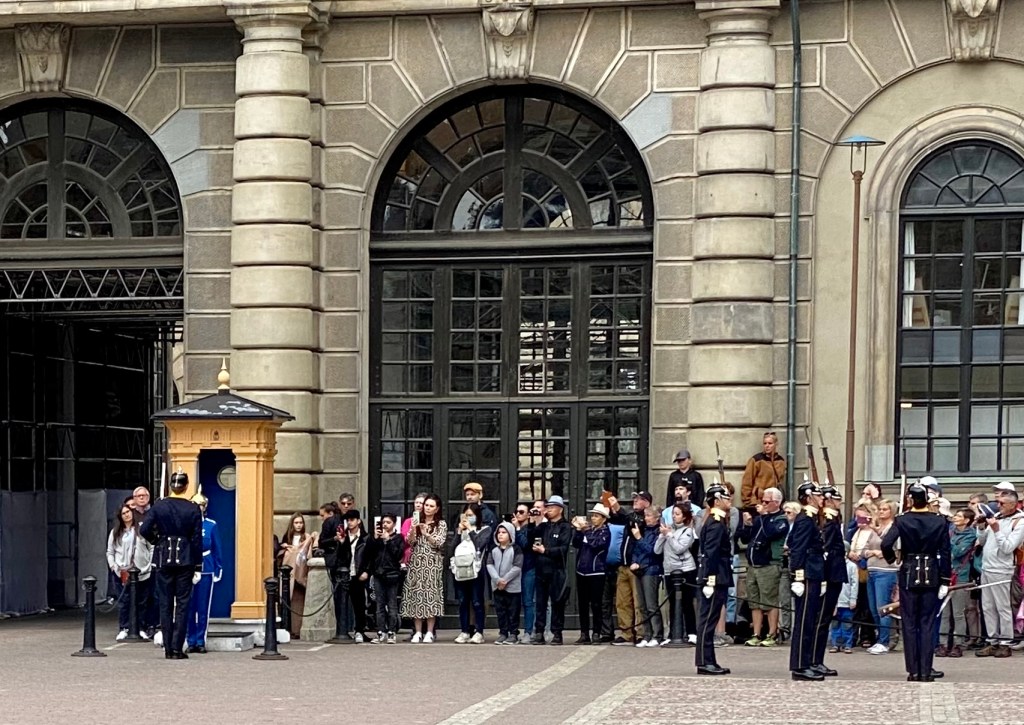
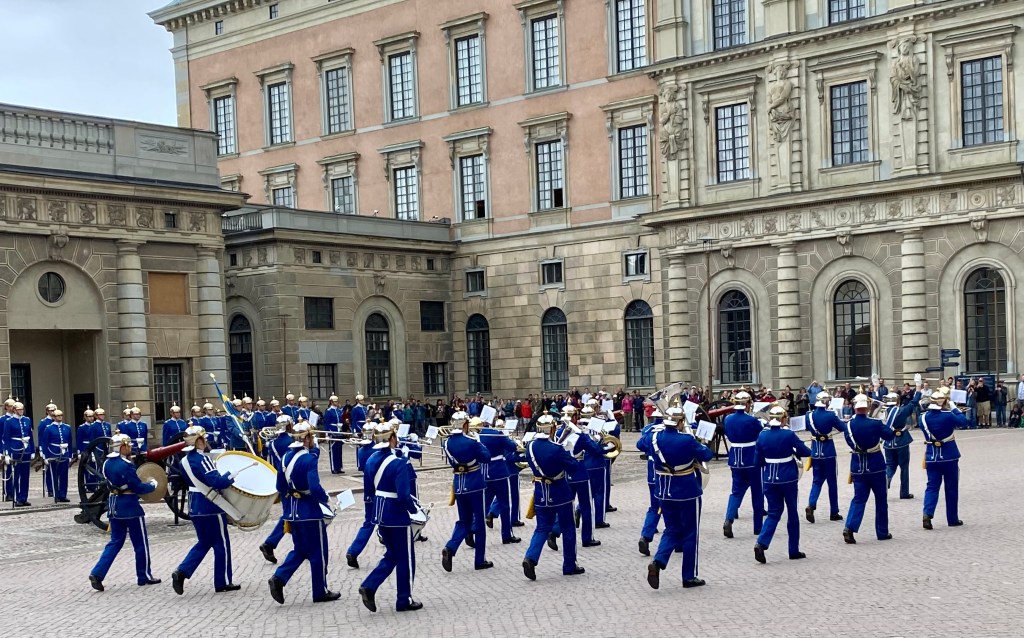
The tour is done so we thank Malin and head off to see the changing of the guard @ 12:15 just as it starts to rain. Undeterred, we join the throngs at the palace in our rain gear. After the ceremony we headed back to Stortoget for lunch to wait out the rain! Enroute we passed a statue depicting Saint George slaying a dragon. The legend of Saint George dates back to the crusades. Saint George is said to have saved an entire village in Libya from a dragon provided they converted to Christianity first, of course. The statue is a replica – the original wooden version is in Storkyrkan church.
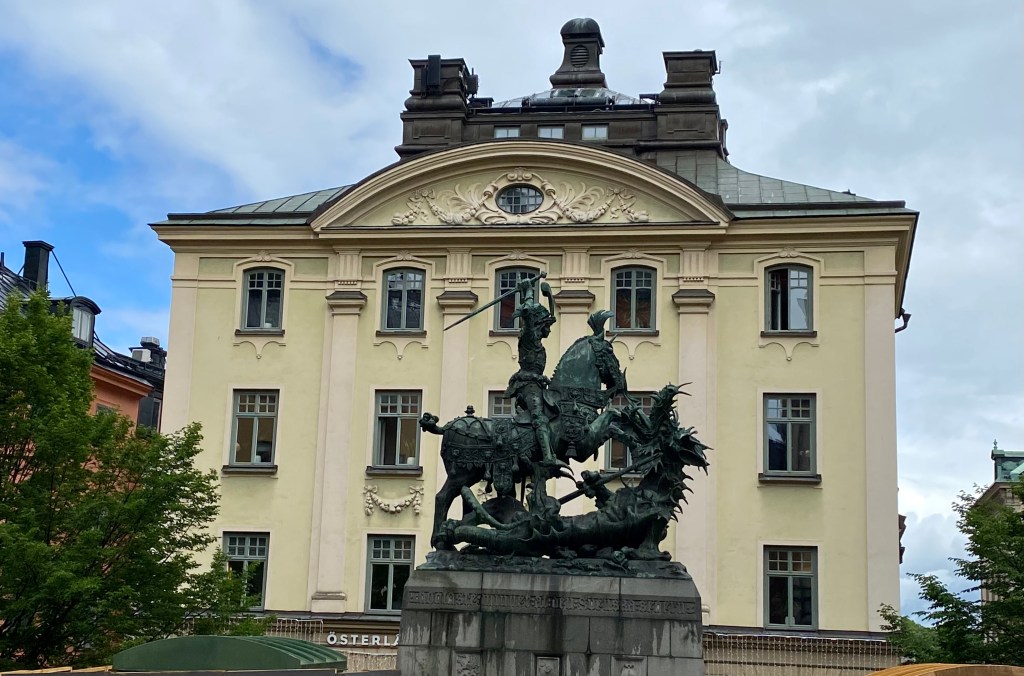
St. George & the Dragon
The Band
Facing off
Time for a change

The weather cleared up a bit so we headed to the Vasa Museum, one of Scandinavia’s most visited museums checking out the sights on our way. On our travels, we passed a statue of King Gustav III (1746 -1792) of Sweden. It was erected by the citizens of Stockholm in 1790, hailing their still living king as law maker, victor and restorer of peace.
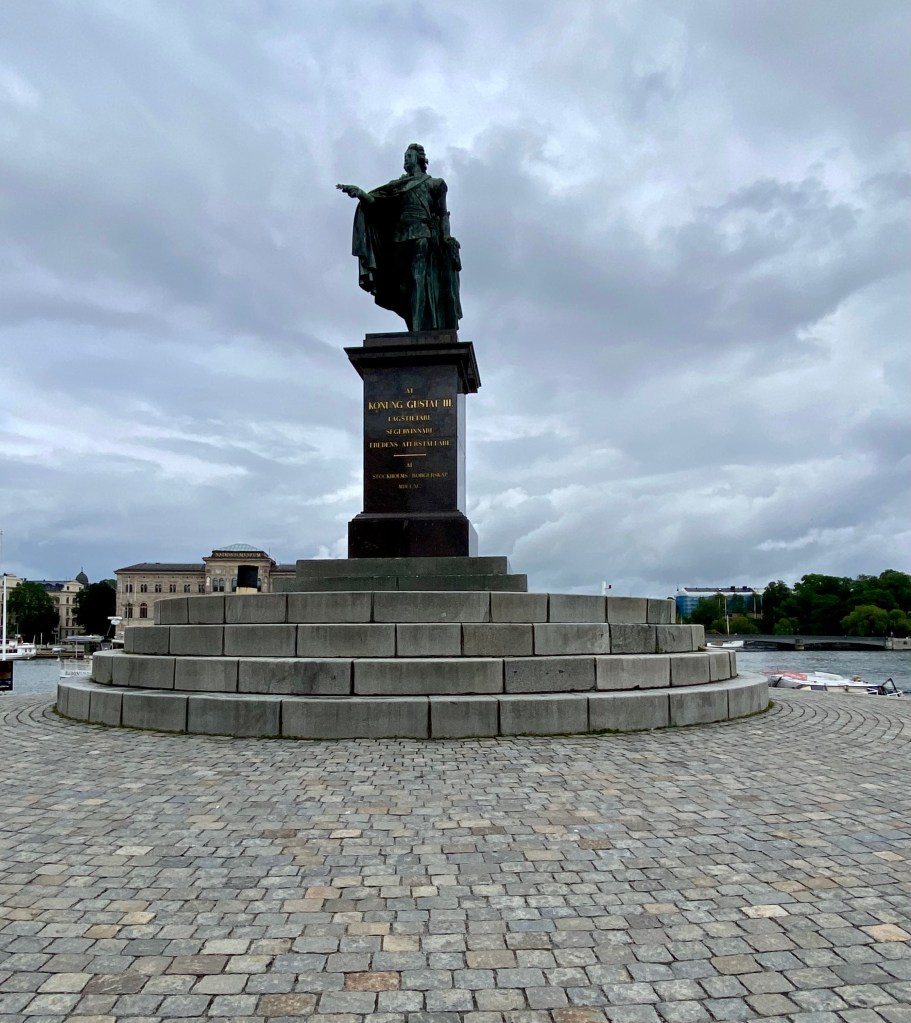
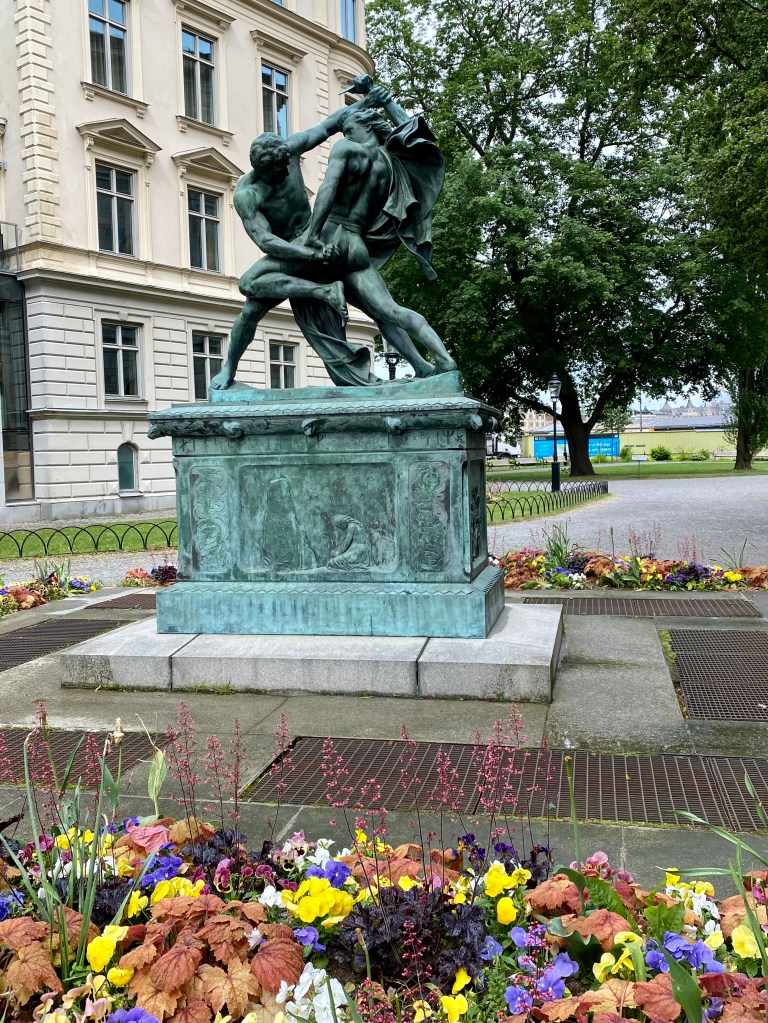
King Gustav III
Nordiska Museet

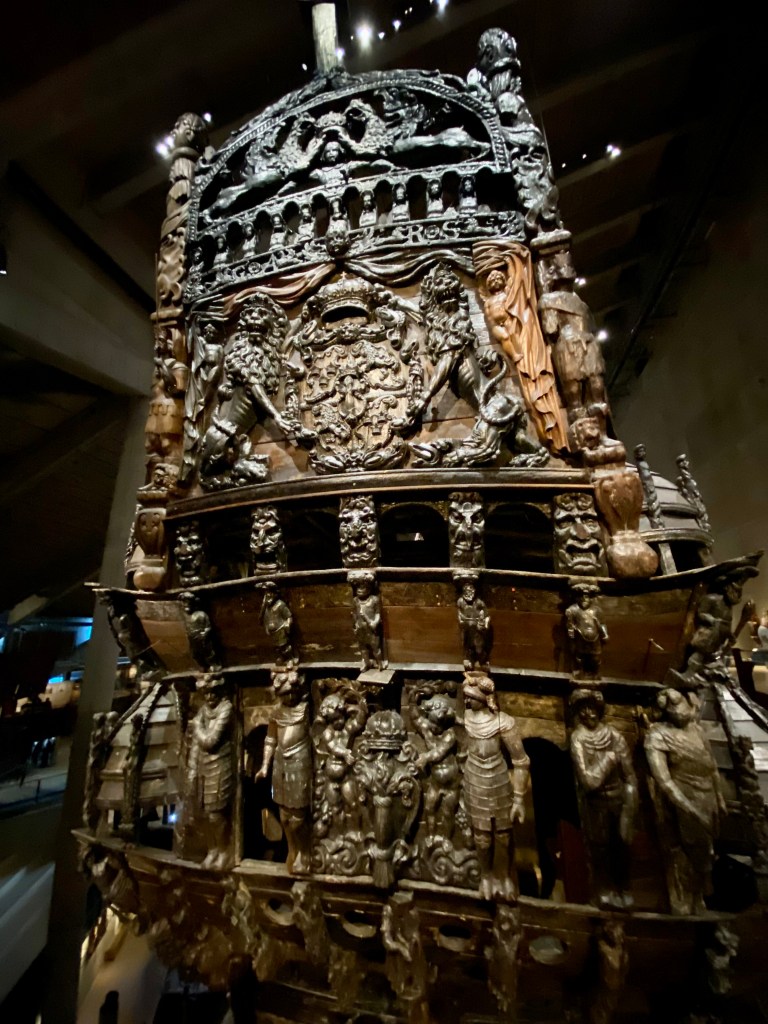
Here we found the well preserved warship Vasa from 1628 embellished with hundreds of wooden sculptures. Vasa was a warship intended to participate in a war in 1620 between Sweden and Polish/Lithuania forces to decide who should be the ruler of Sweden. 
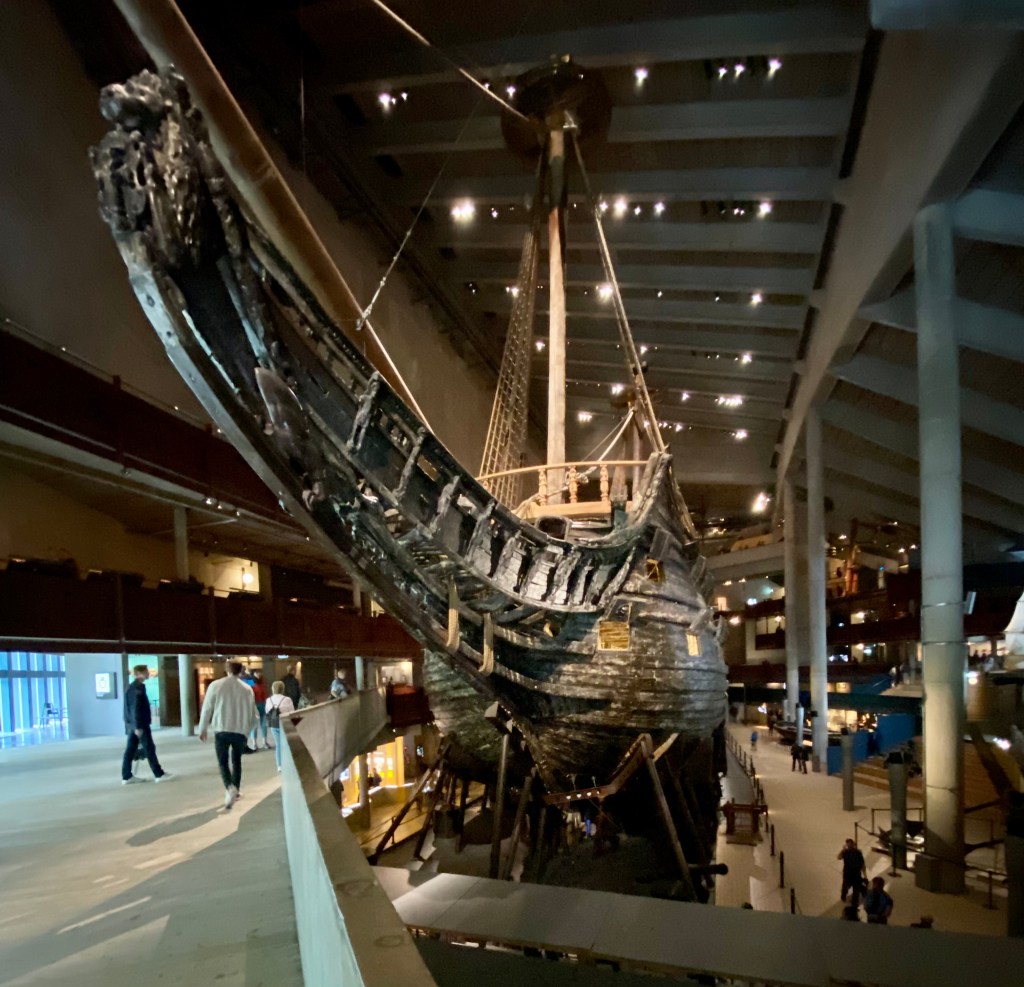
Vasa bow
Vasa stern

Our guide set the scene for her maiden voyage – it’s March 10, a Sunday, and the crowds are gathered as the Vasa is towed to harbour. She looks amazing with her many brightly coloured statues and carvings, her guns blast and the crowds roar.  The crew sets the five sails and then five minutes later the Vasa starts listing under a gust of wind. The still open gun ports start letting in water and then another gust and the boat tips over and sinks. The pride of the Swedish navy is gone in 20 mins. A PR disaster!

The Captain is arrested and interrogated. The crew had not been drinking and the canons were fastened so what happened? The design was no good! The Vasa too high, too narrow, too long and too heavy. Two heavy gun decks made the ship too close to the waterline. Had tested the ship and knew she wasn’t sea worthy but king wanted it to sail so they did. Sister ship Apple was one meter wider and she sailed for 30 years. Good news is that the Swedes won the war despite this catastrophe. 

On 24 April 1961 @ 9:00 am, the Vasa was raised from its home in the harbour. The water in Stockholm harbour is not a good environment for worms so almost 90% of the ship survived 300 years under water.

The ABBA Museum is close by so we head over there to enjoy the multi-media exhibition.
I did ask if ABBA was in the museum when they told us the price, lol! This is more than just a museum. The permanent exhibition is full of ABBA memorabilia like stage outfits, instruments, gold records, awards, and much more. But it’s also an interactive experience that invites you to sing, dance, mix music and try out virtual stage outfits. You can also record your performance and download it from the museum’s homepage with the help of your ticket. Thank God we didn’t go that far though we are still trying to sing their songs so the sign at the entrance Walk in Dance out is accurate!
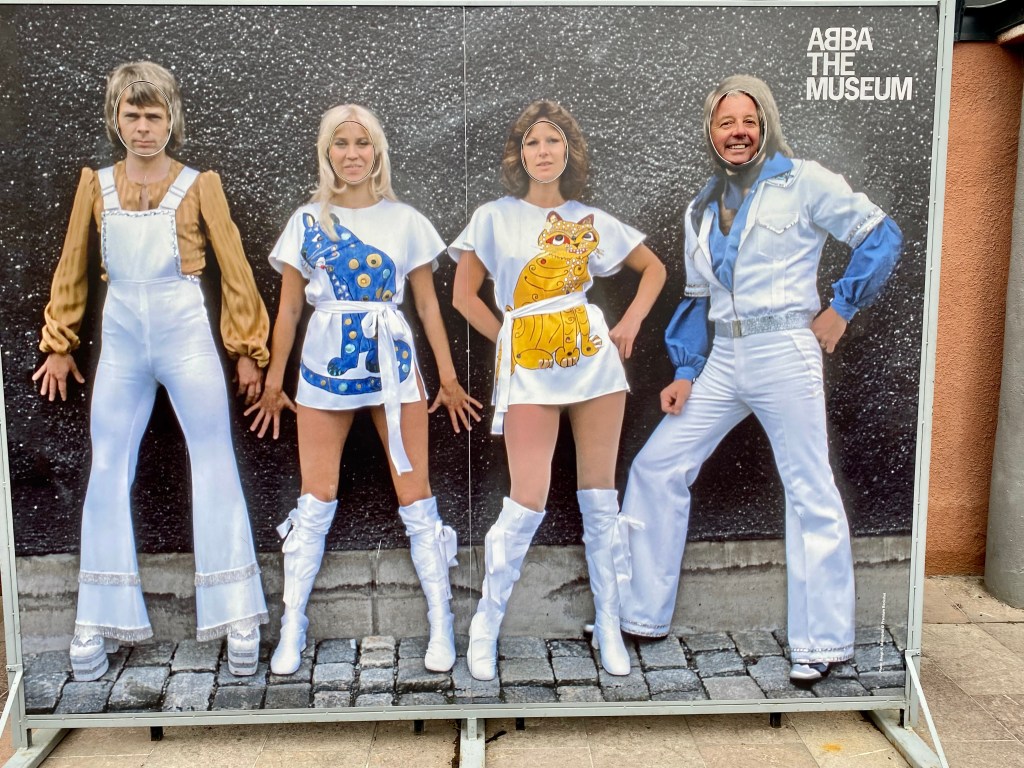
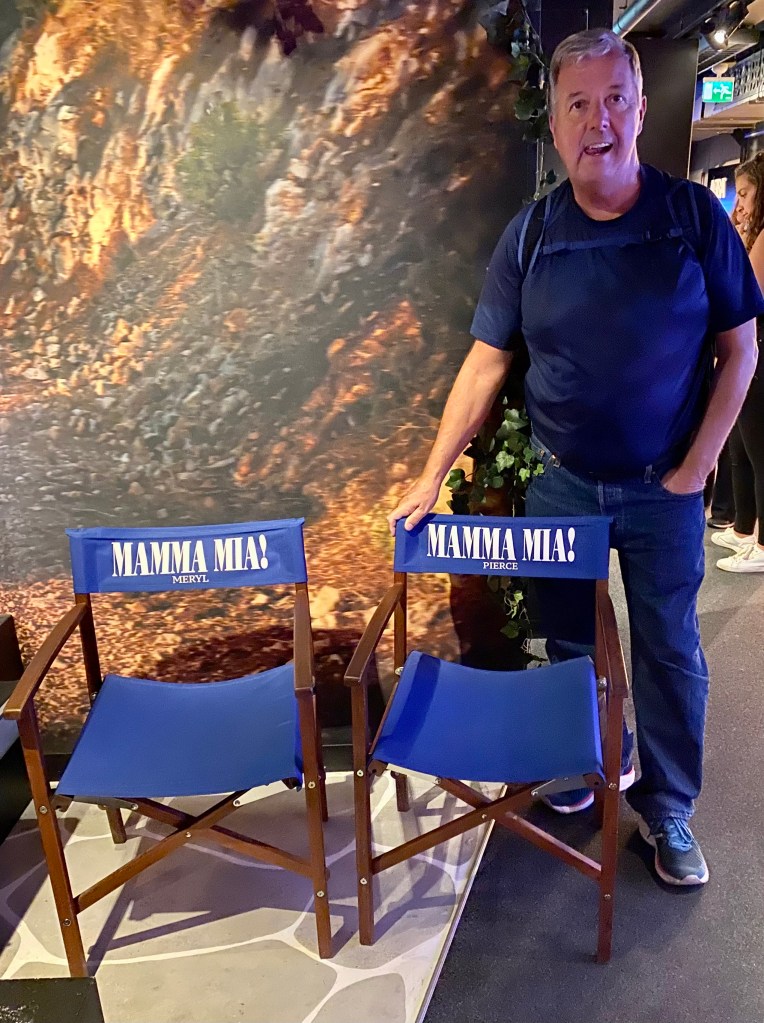
Ken joins Abba!

We finally made it home after a long day and opted for a night in eating cheese and crackers and drinking wine. 

Tuesday

After our busy day yesterday, we opted for a more leisurely pace today. We’ve booked a boat to Drottningholm Palace at 1 pm so there’s a bit of time to enjoy our posh Airbnb. We’d been upgraded to the Prestige Suite which had 4 bedrooms, 2 baths, living room complete with a baby grand piano!, dining room, banquet room and library. Very swish!
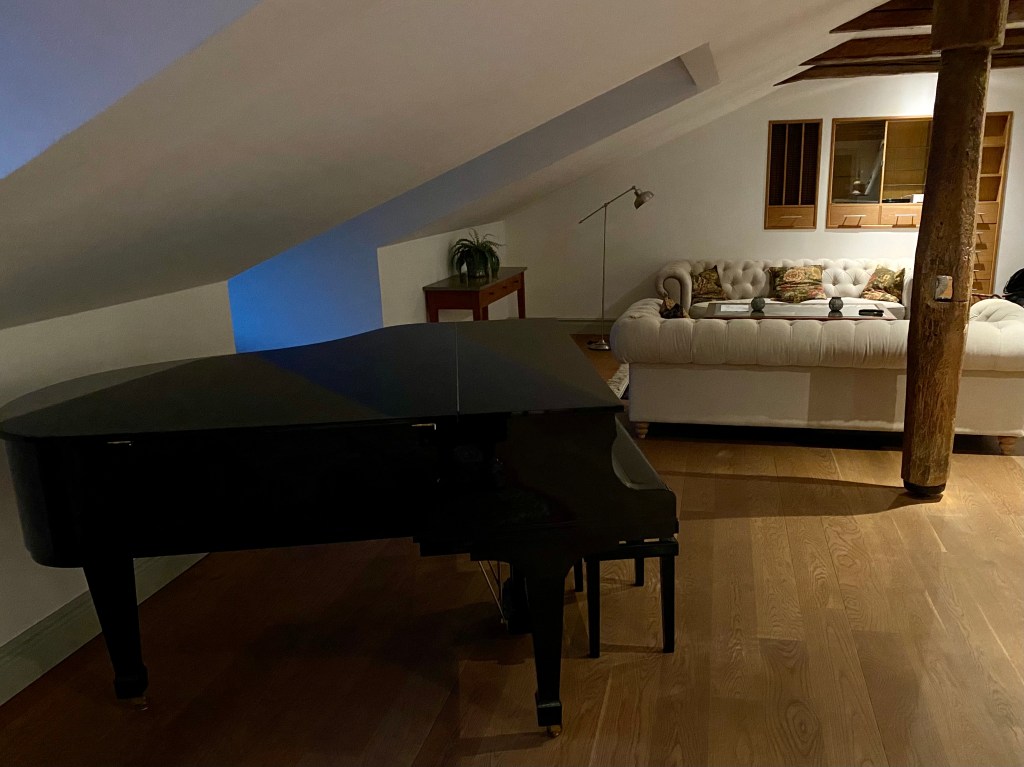
Our living room in Stockholm

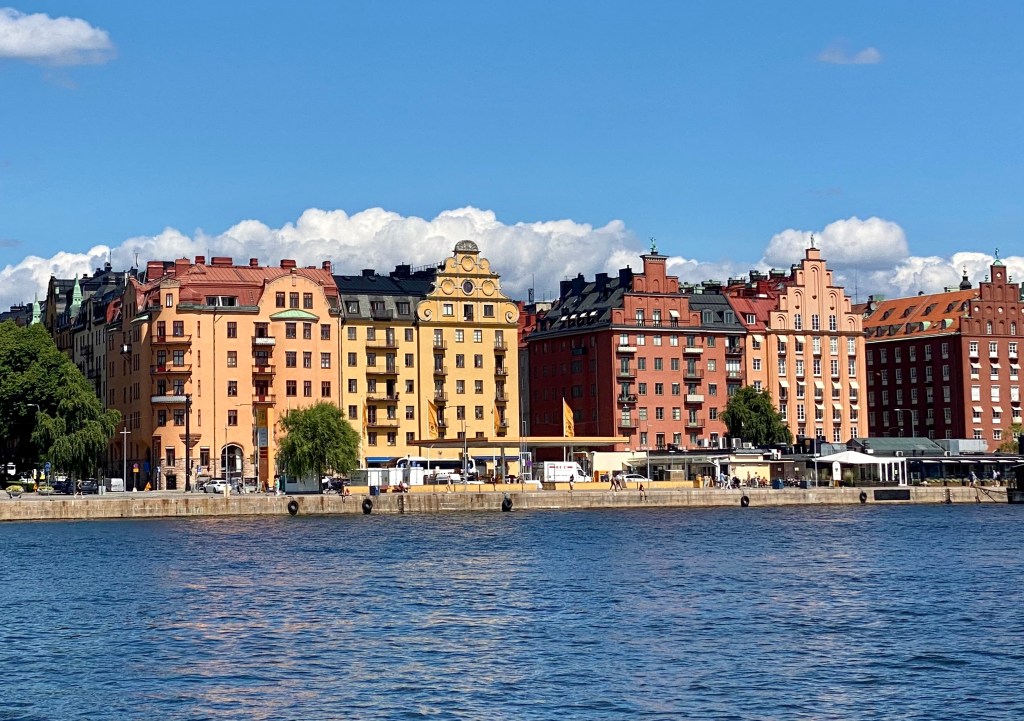
We wander down to the harbour soaking in the sights and then grab a sandwich to eat on the pier waiting for the boat. Spreading idyllically across an archipelago of fourteen islands, it’s easy to see why the Swedish capital of Stockholm has acquired the nickname “Venice of the north”. It seems, wherever you look, your gaze is met by water. 
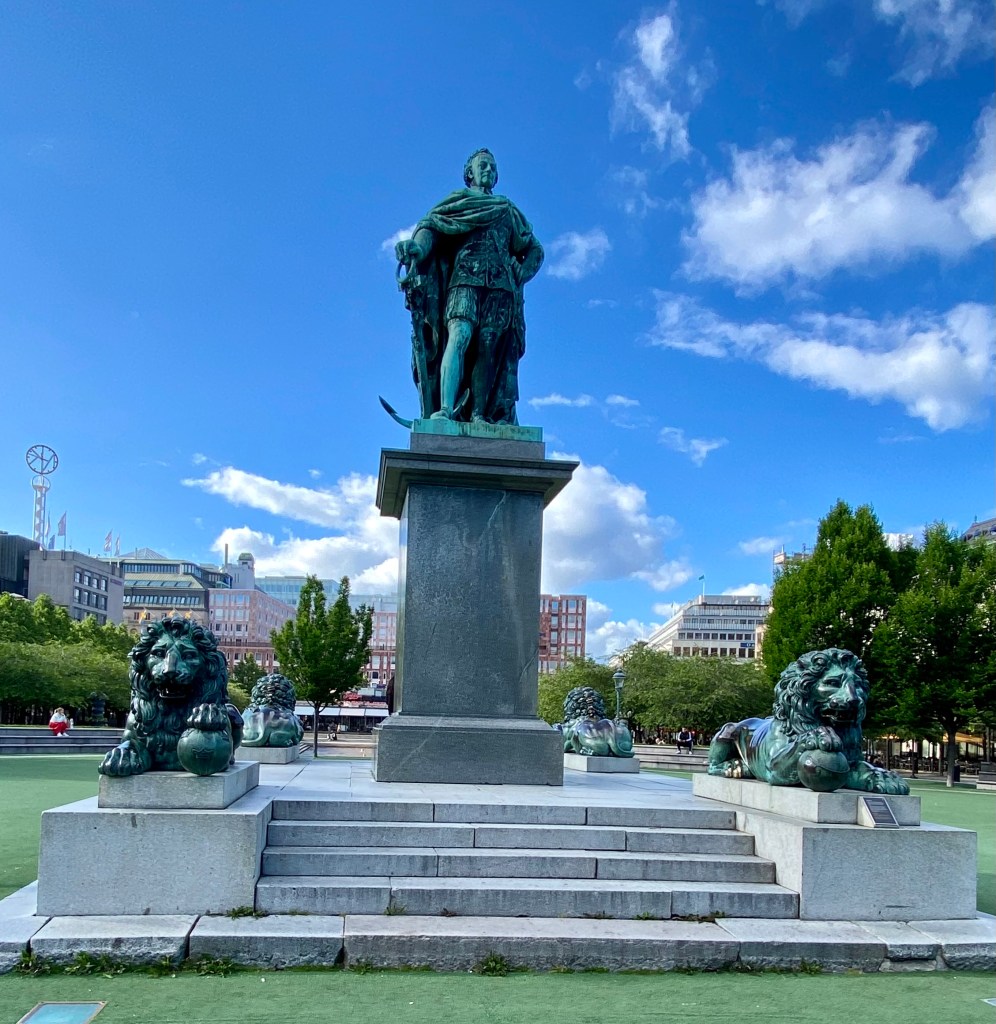
King Karl XIII
King Karl XII
Container accommodations?
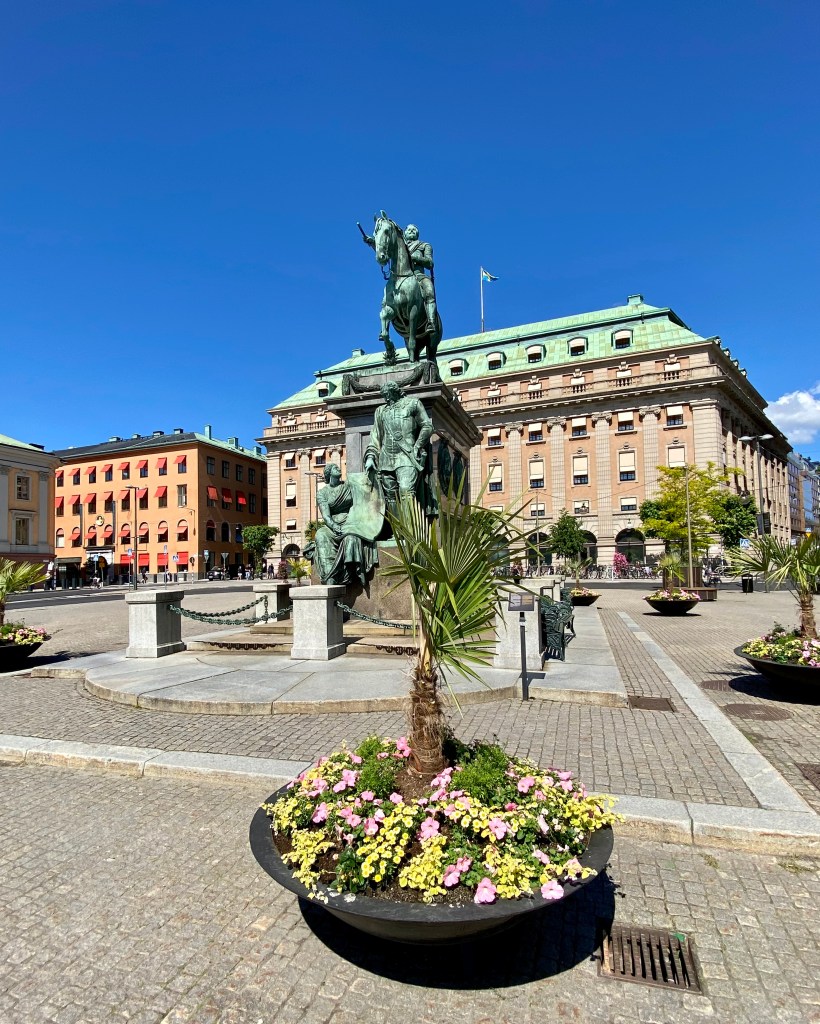
King Gustav II Adolf
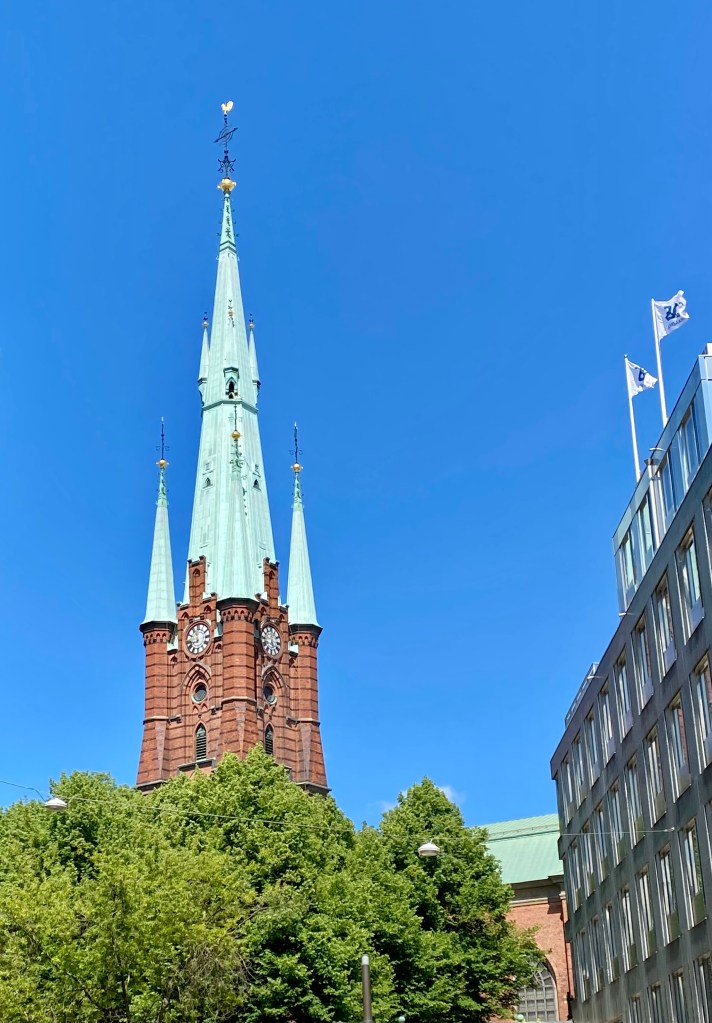
St Clara’s Church
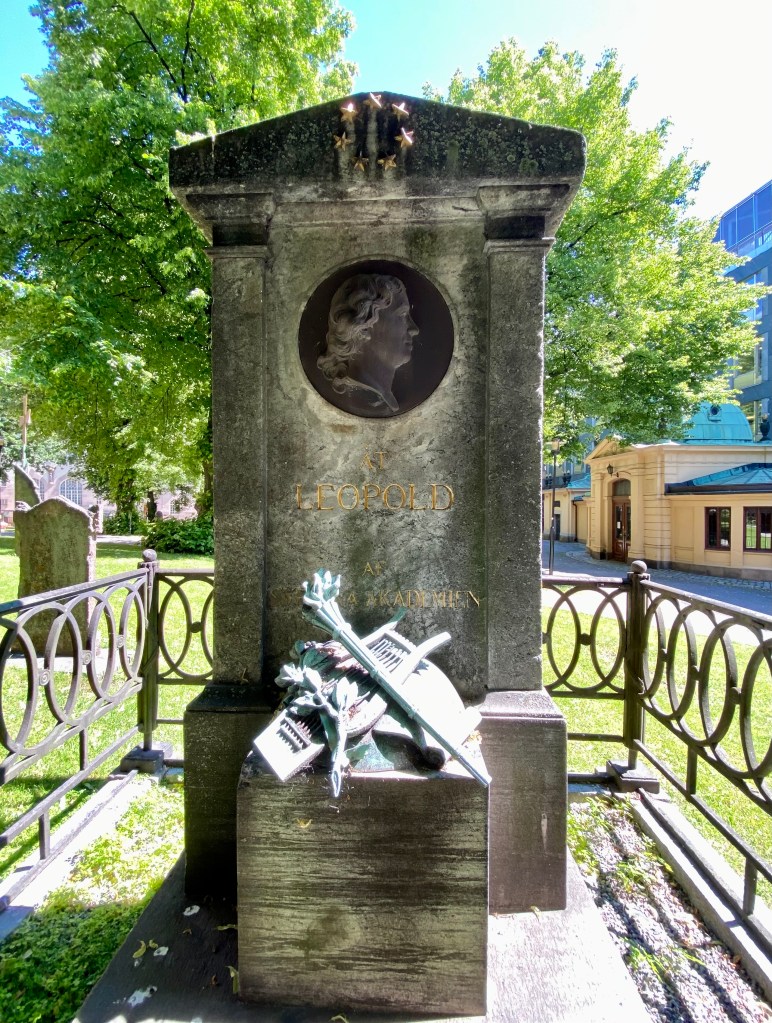
Tomb of Carl August Leopold – 18th century writer
Wait for me!
View across the lake
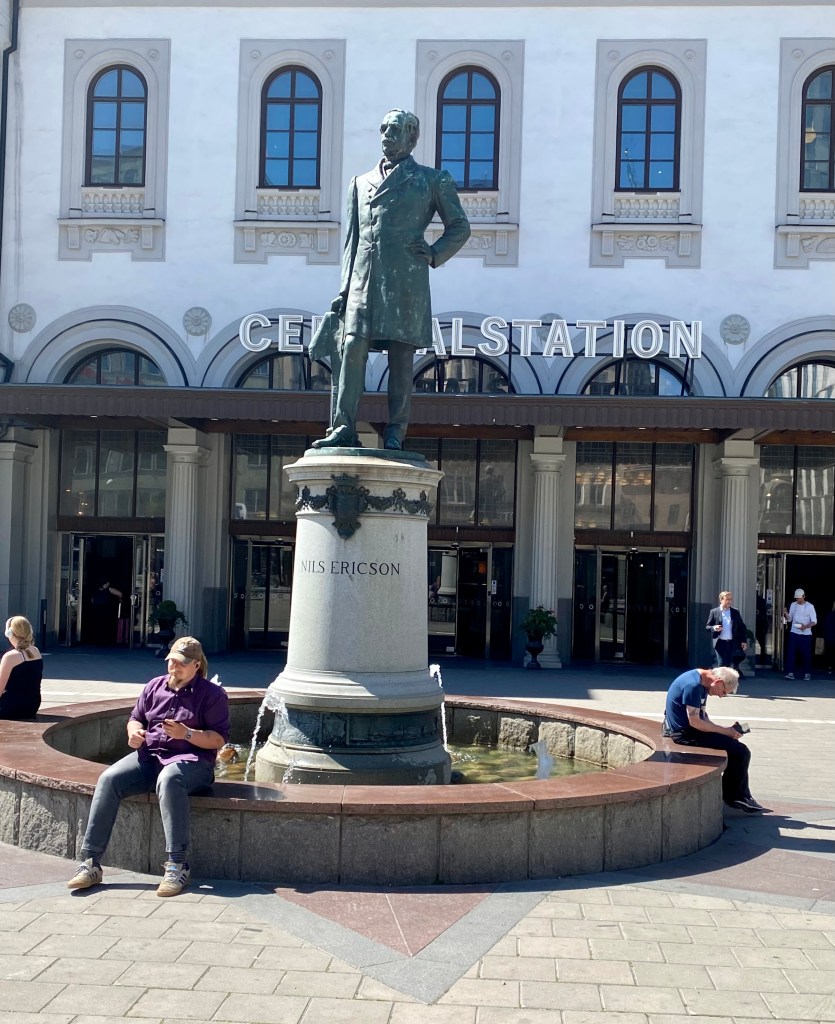
Nils Ericson – Swedish mechanical engineer who became a prominent Swedish canal and railway builder.

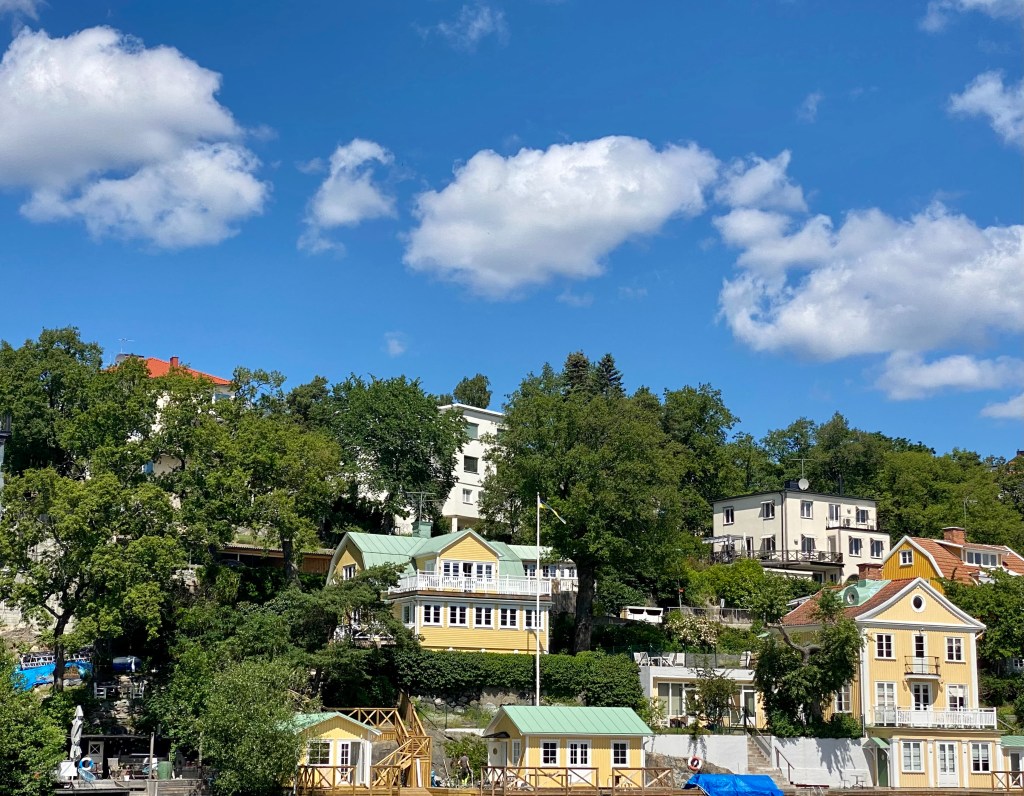
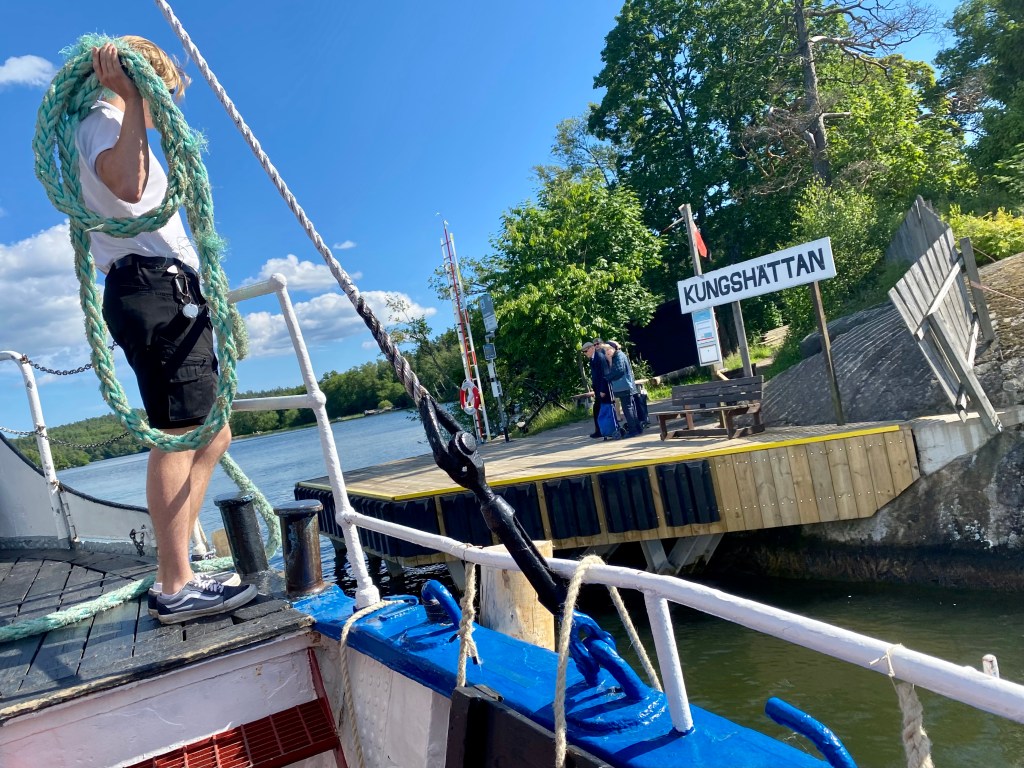
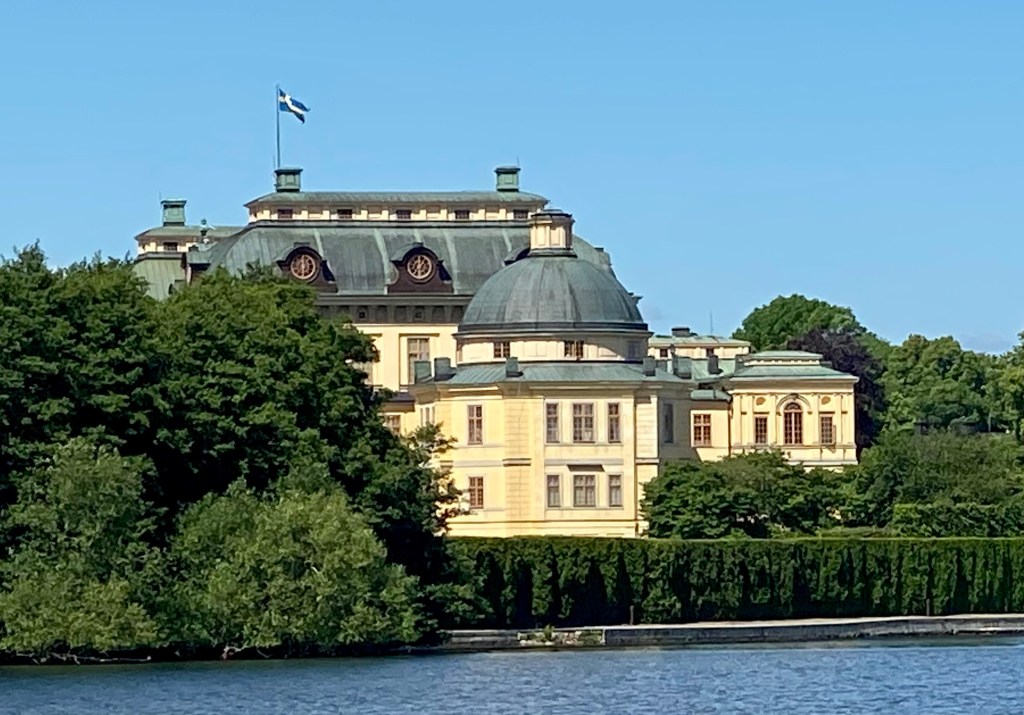
It’s a beauteous day for a cruise down the river to the castle. We steam by several beaches, magnificent houses and lovely unspoiled wilderness on our way. There are a couple of whistle stops enroute but soon enough we are treated to the first glimpses of the beautiful palace. 

Living at the beach!
Whistle stop
A first glimpse

Few palaces in Sweden have been as strongly associated with queens as Drottningholm. It began with Queen Katarina Jagellonica, who was presented with the first palace built here in about 1580. To honour the Queen it was named Drottningholm (Drottning=Queen). 

The Dowager Queen Hedvig Eleonora laid the foundations for the present-day Palace and ornamental garden. She bought Drottningholm in 1661, but a few months later the palace burned.

She then undertook the most costly palace construction in Sweden – the new Drottningholm was to reflect the fact that Sweden was a Great Power. The Palace architect took inspiration from Italy and France, and the French Baroque motifs in the ornamental garden were taken from palaces such as Versailles and Chantilly.

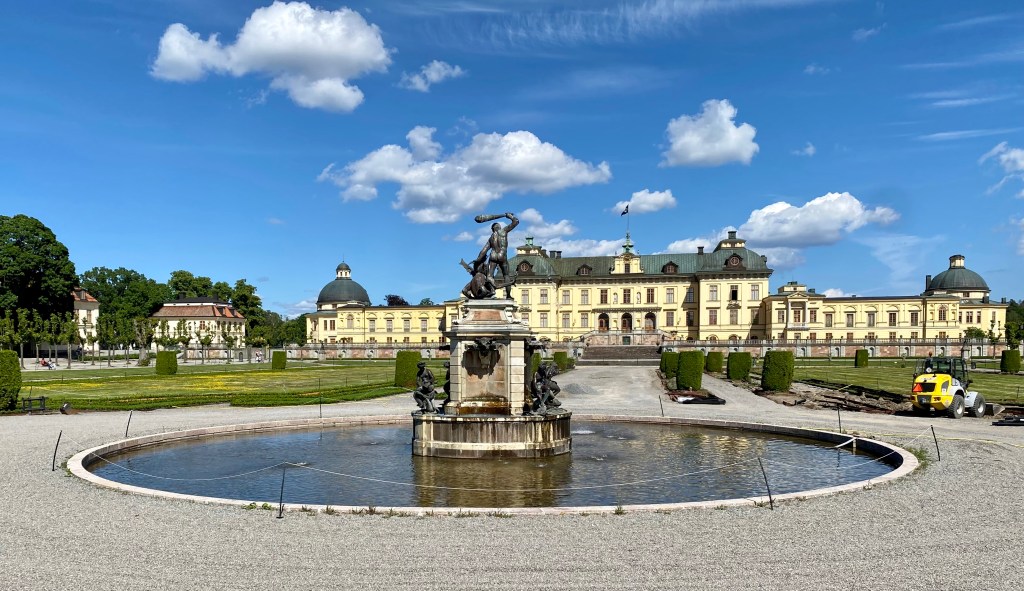
Since 1981 Drottningholm this has been the residence of Their Majesties King Carl XVl Gustaf and Queen Silvia. In 1991, UNESCO declared Drottningholm – the Palace, the theatre, the Chinese Pavilion and the park – a World Heritage Site.
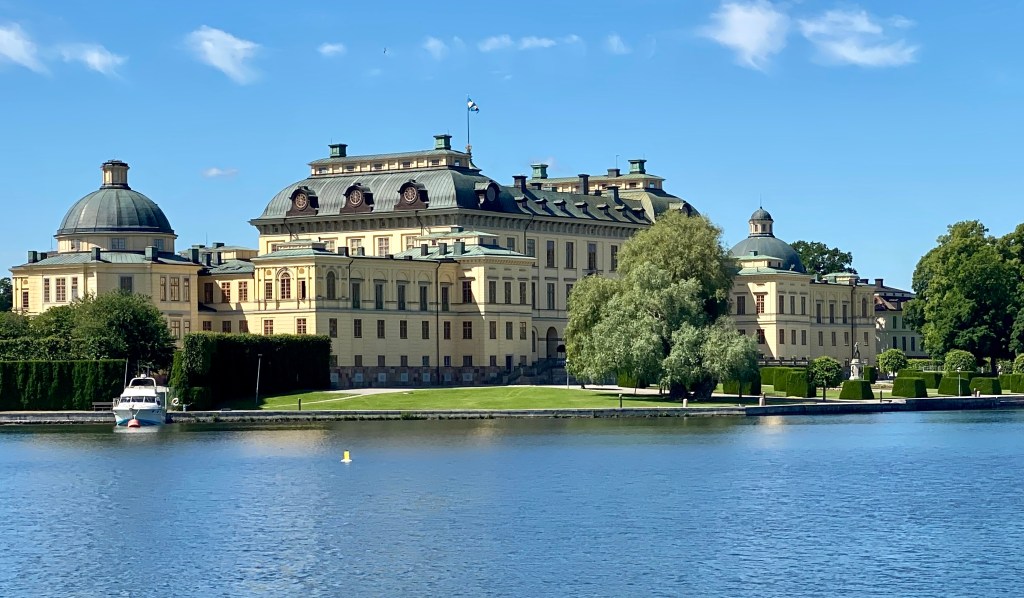
A better view
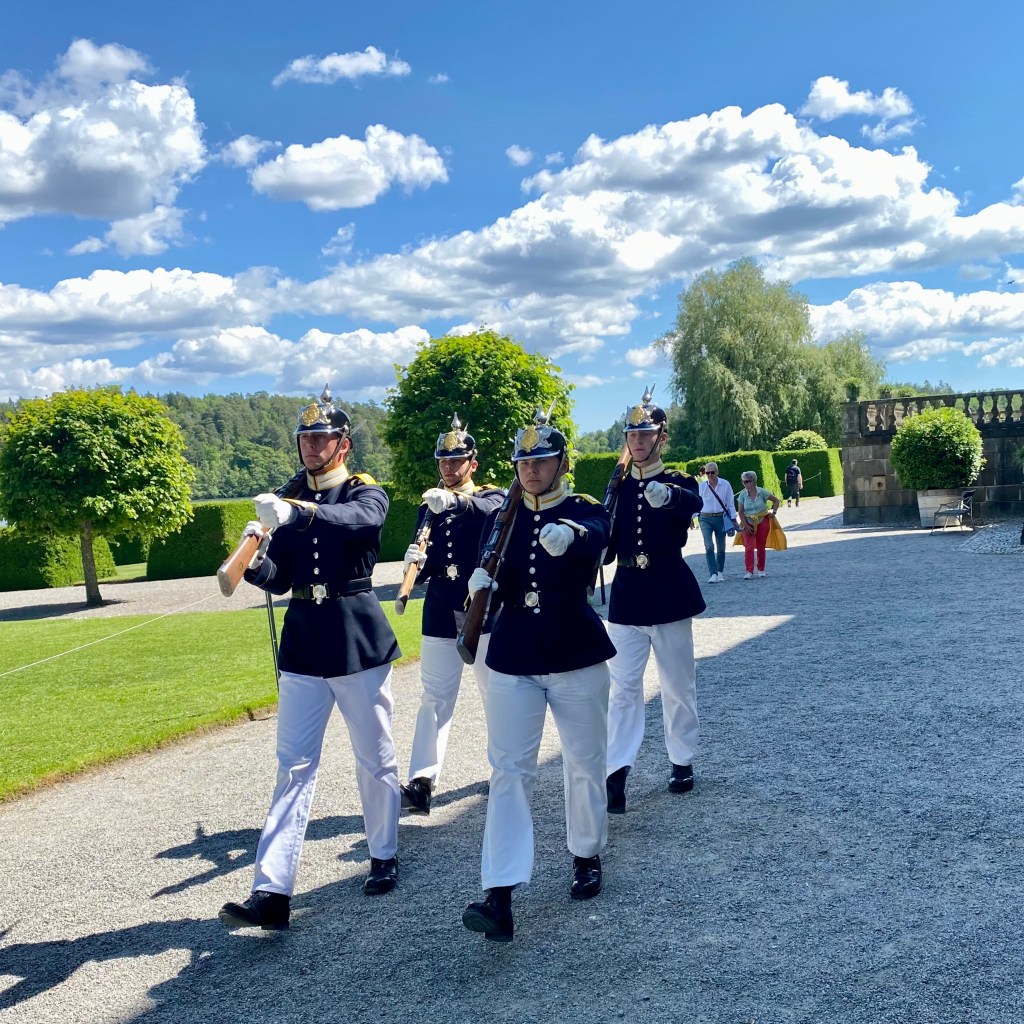
On parade
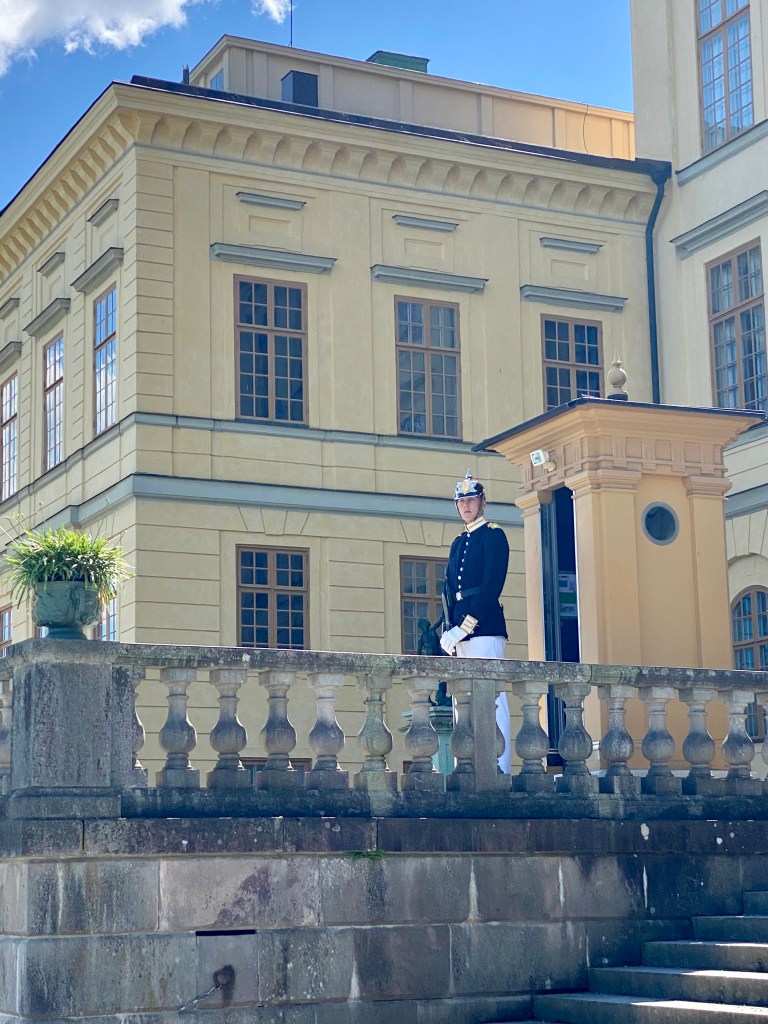
On guard

We toured the castle’s ornate interior filled with artwork. My favourite room was Hedvig Eleonora’s State Bedchamber. In the 17th century the State Bedchamber served as an official Audience Chamber where the most significant guests were received.
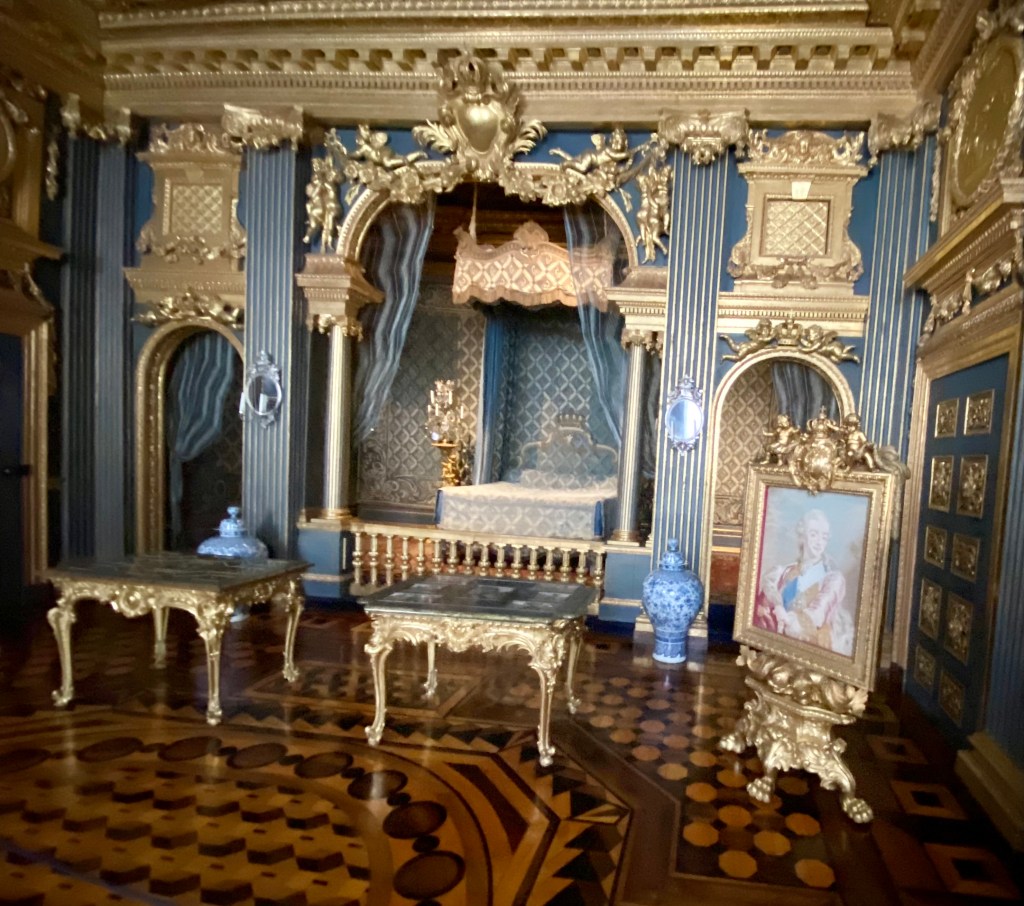
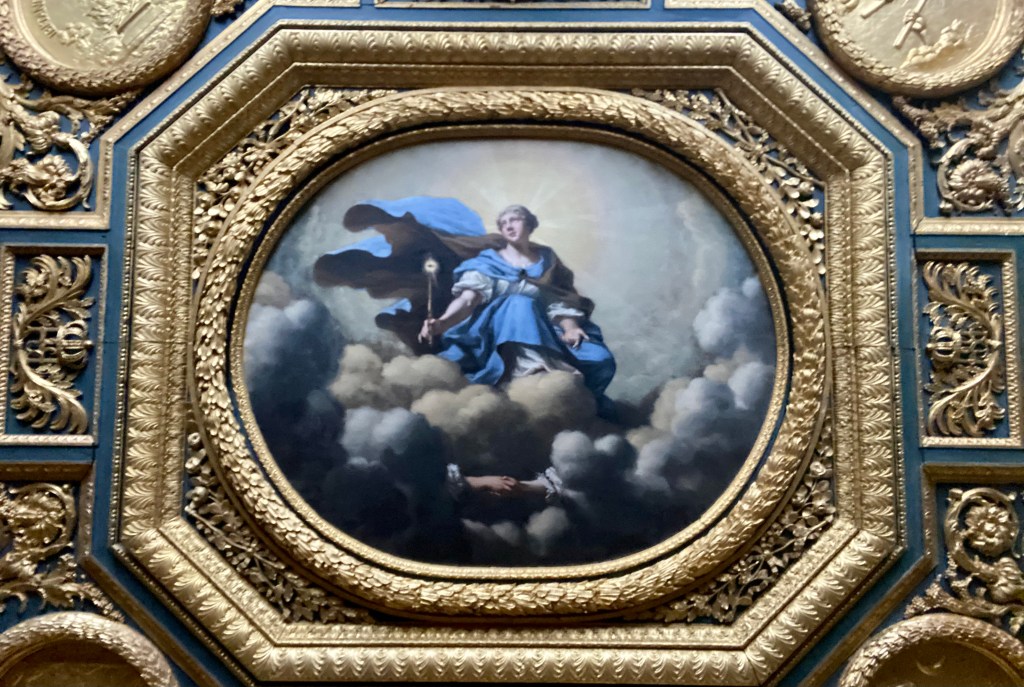
State Bedchamber
Ceiling art

It’s too nice to be cooped up inside so we head out into the garden to find the Chinese Pavilion built in a secluded spot in the hunting park. The “garden” seems to be mostly weirdly trimmed trees and hedge mazes but there are some interesting installations in our wanderings. 
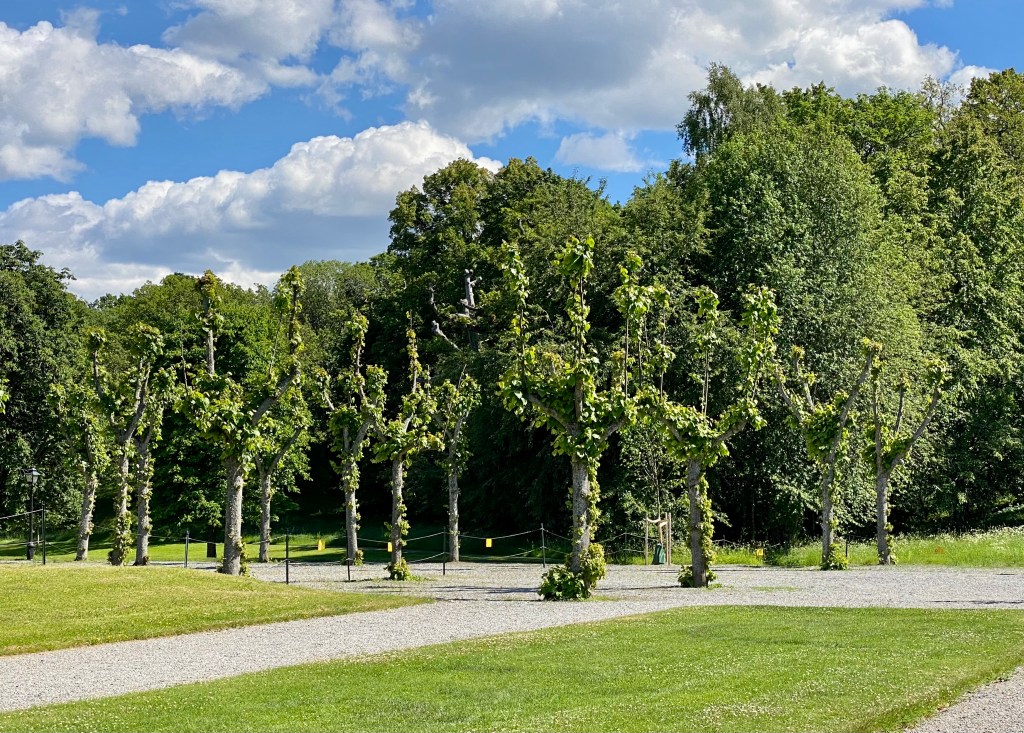
Weird trees
From the back

Along the way we pass the decorative Guards’ Tent whose façade conceals something – barracks for the Royal guards. The façade conceals a two-storey wooden building. On the lower level, there were two dormitories for guards, a kitchen and a hall with stairs leading to the upper level, where the officers had their rooms.
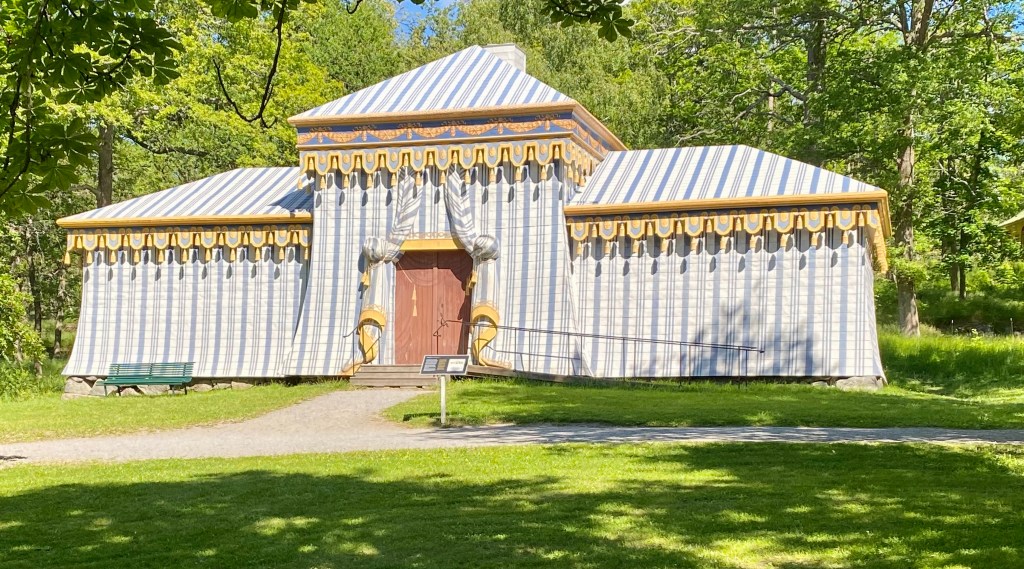
Guard’s Tent

The Guards’ Tent was restored in 1989-1996, and today it has the same appearance as on the 1781 drawing by Adelcrantz. The entire façade is in sheet metal and painted to resemble canvas. The leafy edging, called lambrequin, together with the textile-like tassles along the base of the roof, reinforce the appearance of a tent.

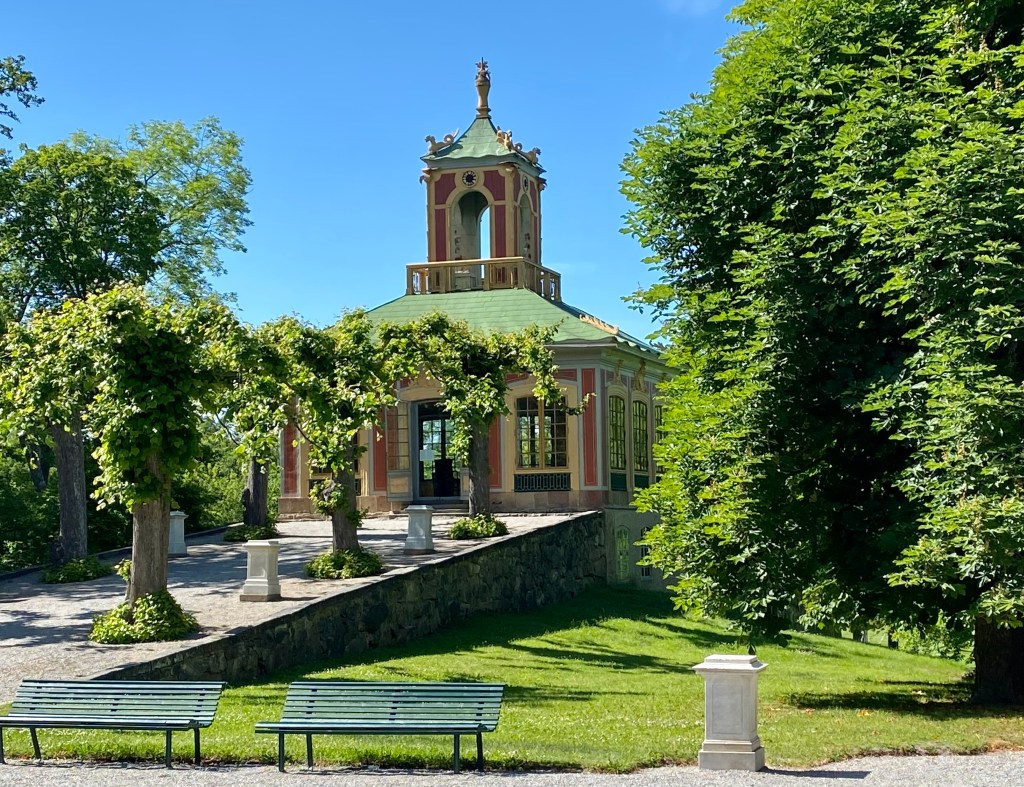
We finally reach our destination, Kina Slott, a Chinese-inspired Royal pavilion originally built between 1753 and 1769. In addition to the main pavilion, The Silver Chamber, The Confidence, and The Volière are found here.
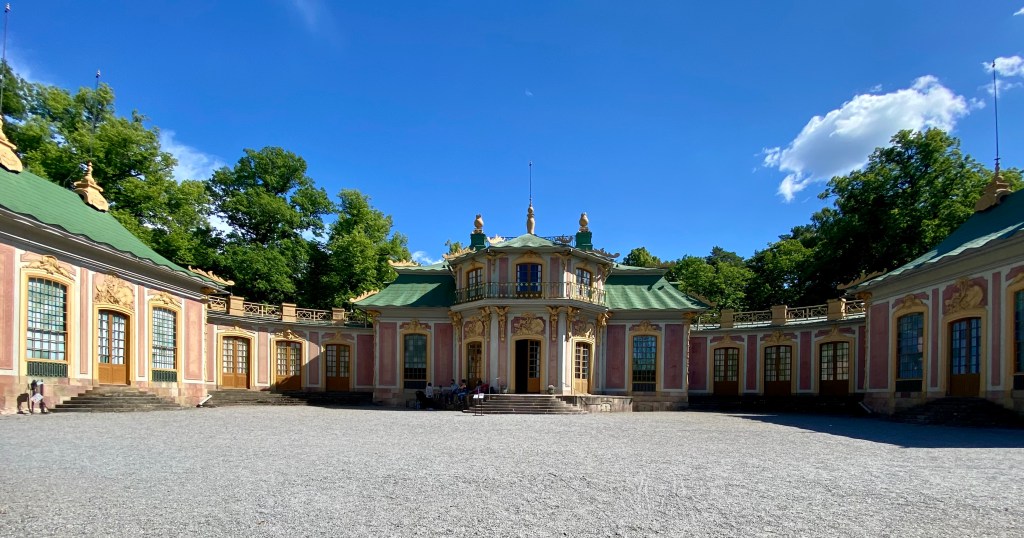
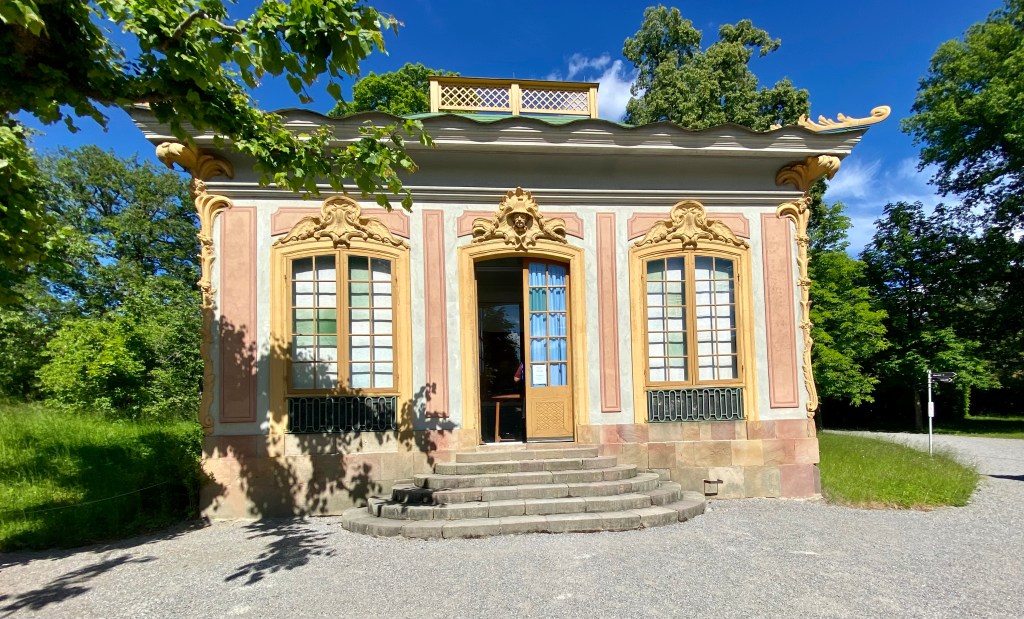
Kina Slott
The west wing, “The Silver Chamber”
The Confidence – a house next to the Chinese Pavilion

After a quick look inside, we head back through the park to catch our boat home. 
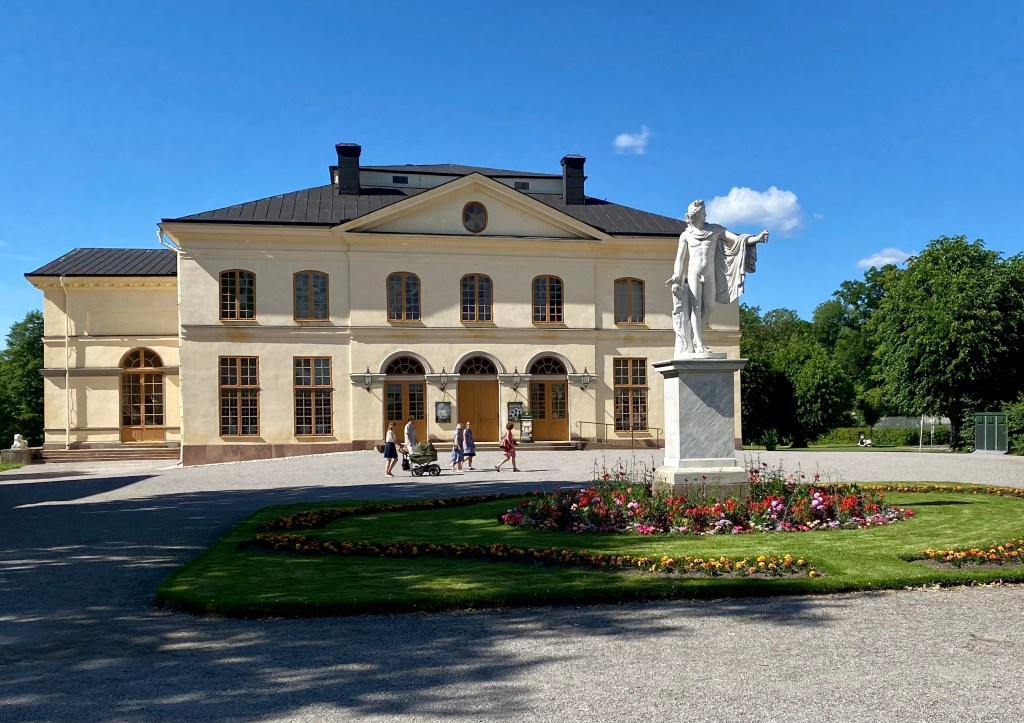
The boat docks close to city hall so we enjoy some time exploring the courtyard before heading back home. 
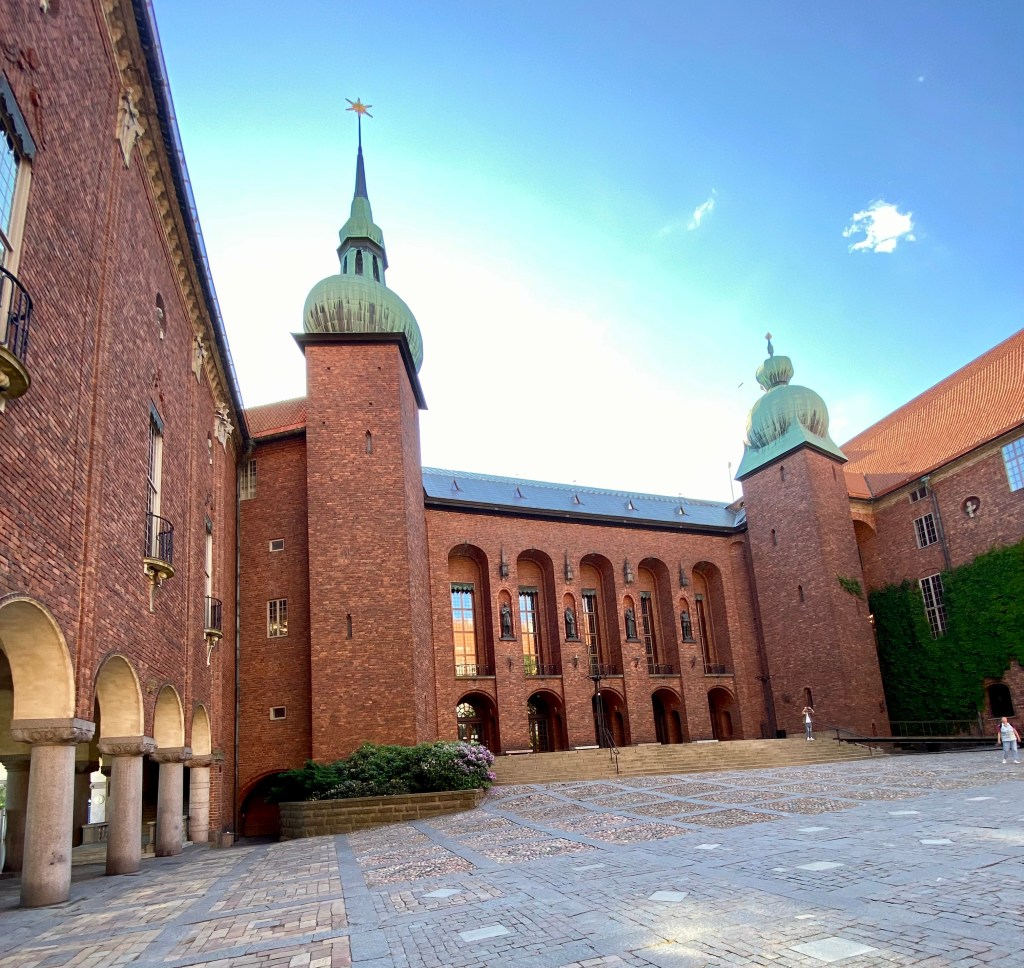
Courtyard at City Hall
Celebration!

Dinner tonight was at a local joint, Ruby’s. Good food, good wine and great company.  A perfect end to a perfect day!
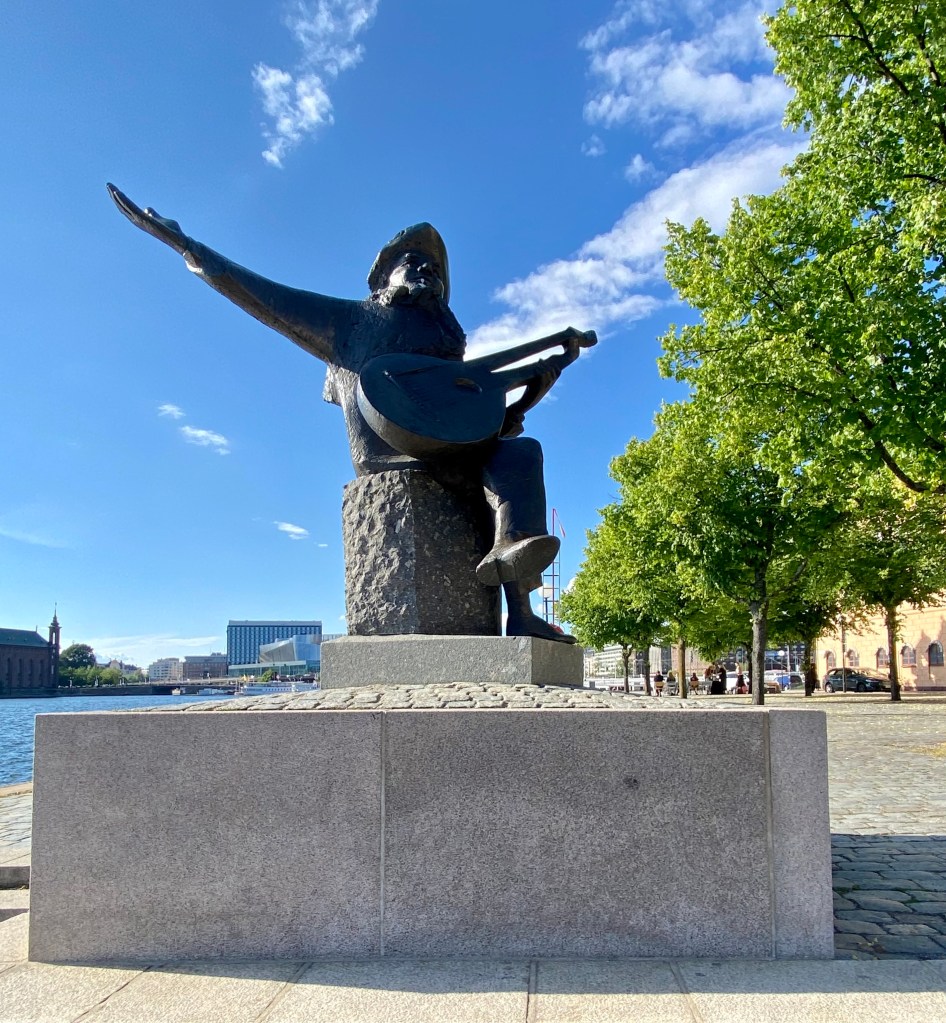
Evert Taube – singer and songwriter
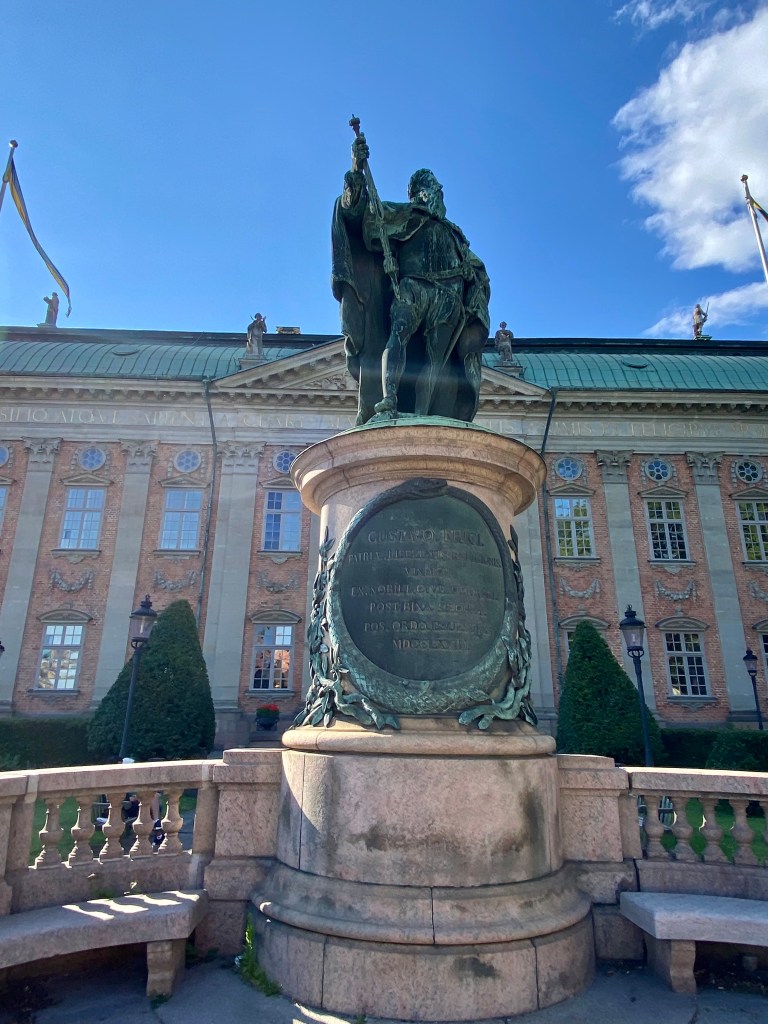
Gustav I – King of Sweden from 1523-1569. The ruthless and ill-tempered king is considered the founder of modern Sweden.
Maybe we should have had a drink here!

Wednesday 

We’re flying to Bergen today so we pack, clean up and drag our bags along the cobblestones to an Uber pick up spot for the trip to the airport. 

Check in was a breeze so we made our way to the airport lounge where we were met with a line of folks waiting. Soon enough we were in and we had a snack and drink or two before heading to our gate. The plane was, of course, late but we eventually boarded for the quick flight to Bergen. Why does it take 4-5 hours for a flight that’s a bit more than an hour?

We landed safely in Bergen and headed to our Airbnb there. A few more cobblestones to contend with but soon enough we are “home” with all the bags and baggage. Stretched our legs with a reconnaissance walk through town before grabbing a seat under cover on a patio for dinner. 

I guess we’re in Bergen!

Wandering Through Northern Europe – Baltic Cruise on the Norwegian Dawn

June 19 – Estonia

Today I’m in Tallinn for some fun in the last port before disembarking in Stockholm.  Ken and I visited Tallinn in June 2017 for a few days so I’ve opted for an excursion that takes me through the picturesque Estonian countryside to one the oldest towns in Estonia, Rakvere. Along the way, our guide Denis fills us in on all things Estonian but I’ll spare you the history lesson today, lol! 

One tidbit for all of us aging baby boomers. Spread linen on your fields (lawns?) to collect the morning dew. Apparently, using this water this to wash your face and hands will help maintain a youthful appearance! Might be worth a shot or maybe it’s too late, lol!

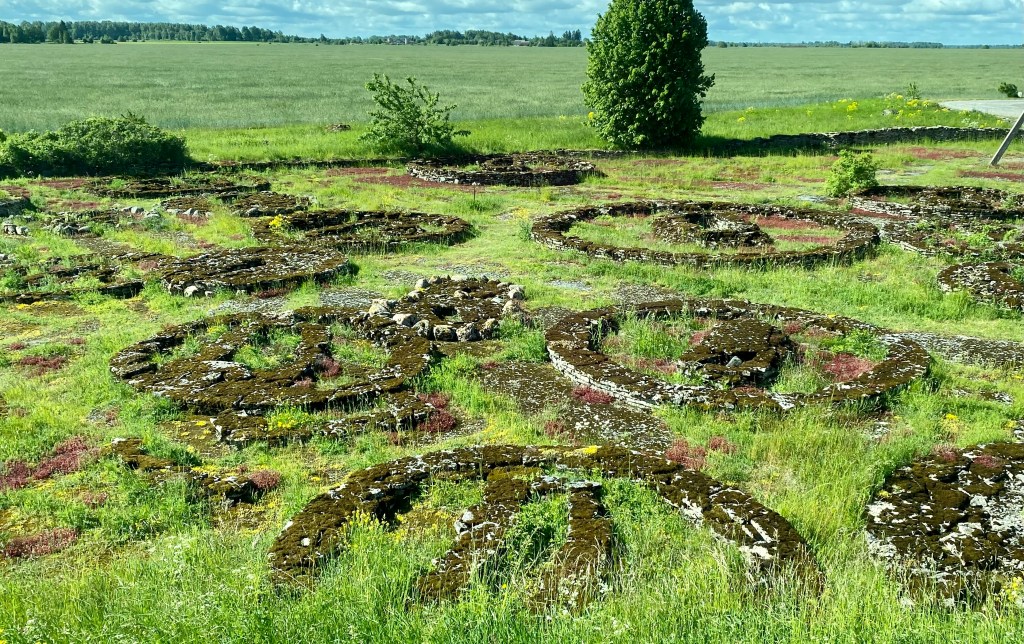
Enroute we had a quick photostop at the Rebala Heritage Reserve to look at an ancient cemetery from the Nordic Bronze Age.

Rebala Heritage Reserve

We also passed a convoy carrying military equipment headed to Ukraine going the other way. 

Off to war

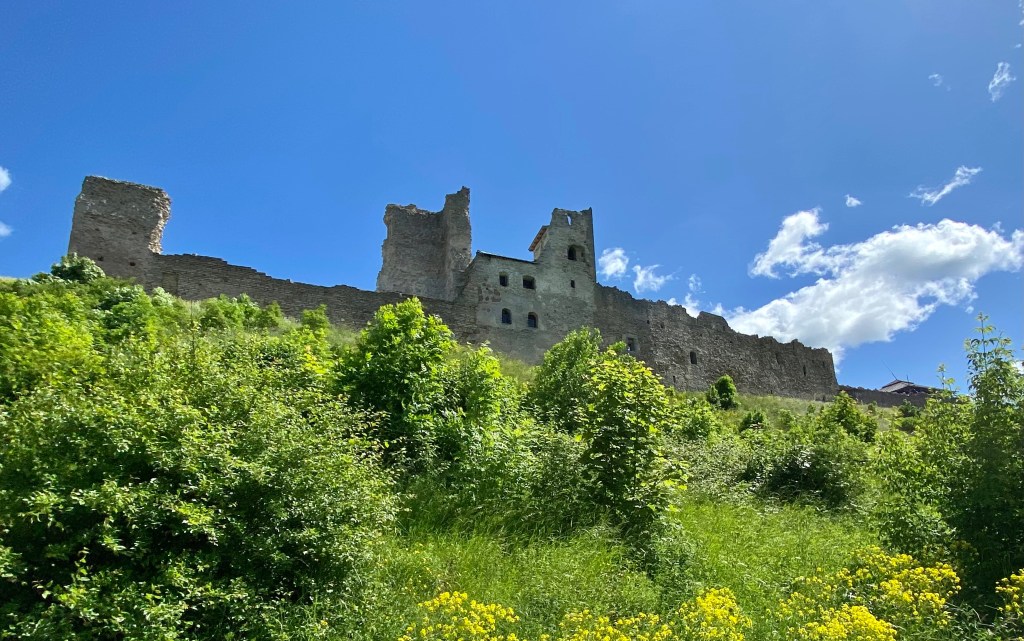
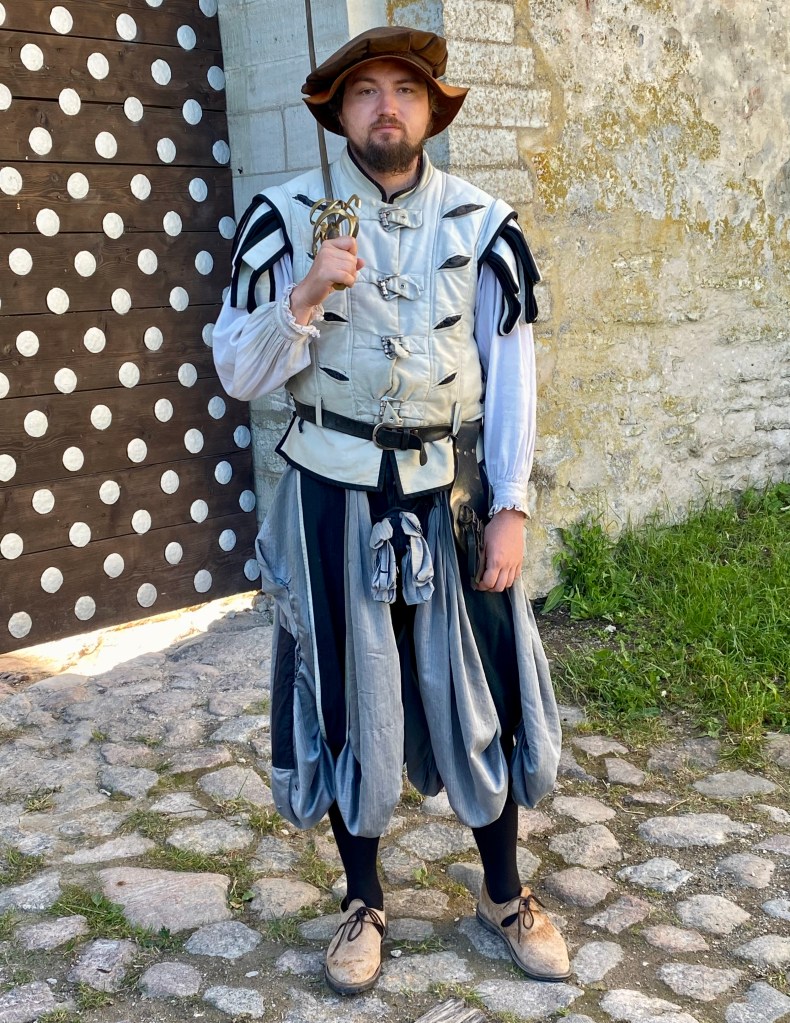
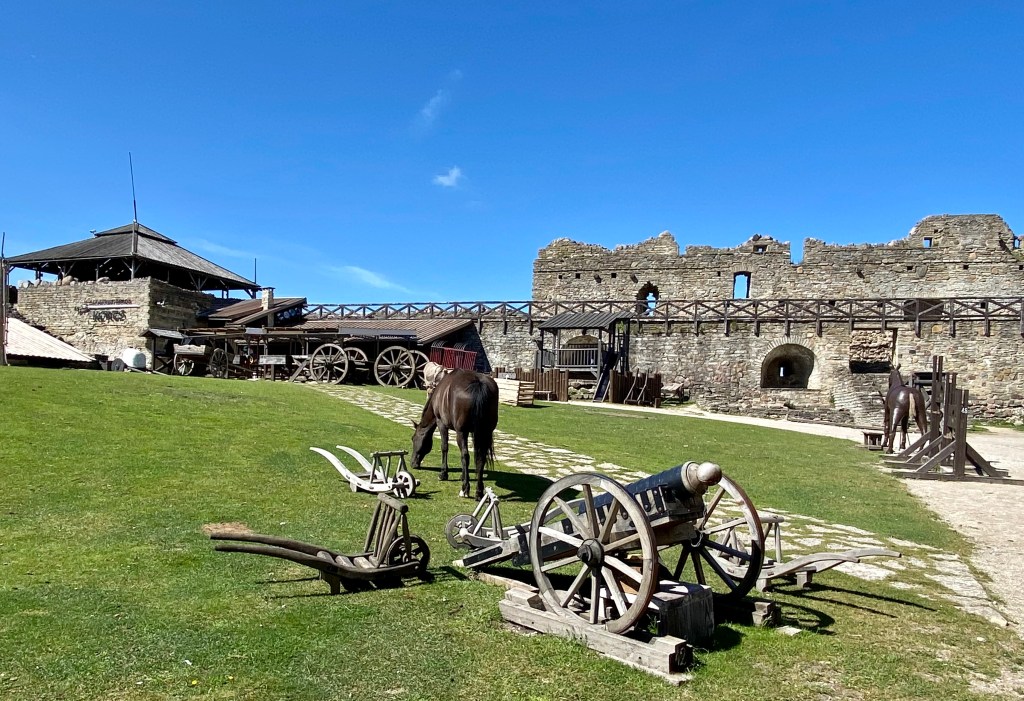
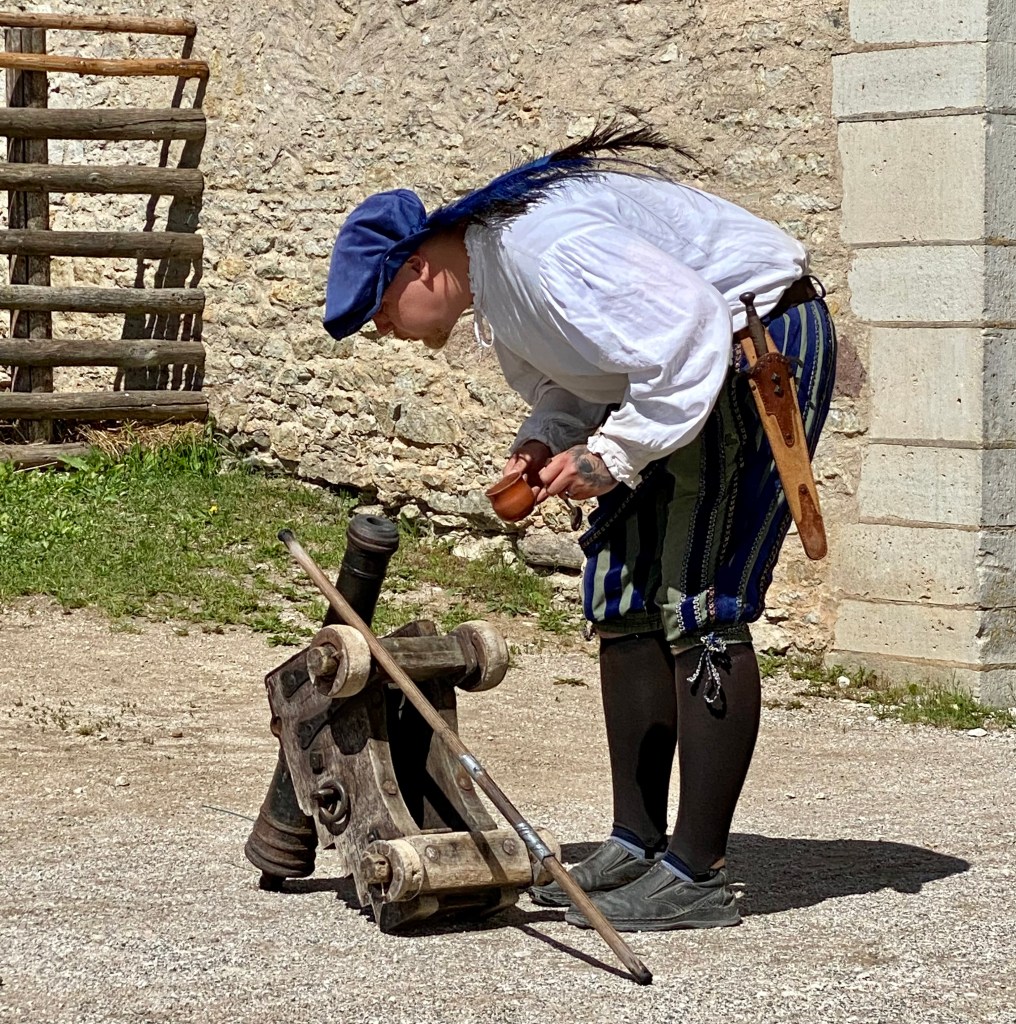
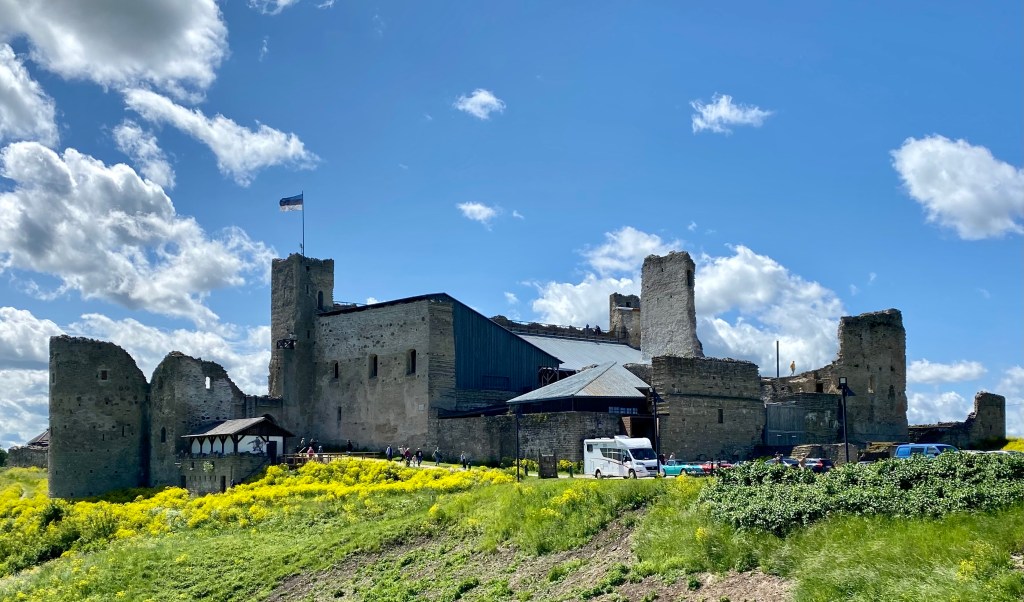
After a bit more than an hour, we arrived at the partially ruined, 13th century Rakvere Castle. The castle is part historical site and part theme park where you can catch a glimpse of or immerse yourself in the everyday life of the 16th century. The staff are dressed in traditional costumes and you can be too!

Rakvere Castle
Enthusiastic staff member, lol!
Inside the castle

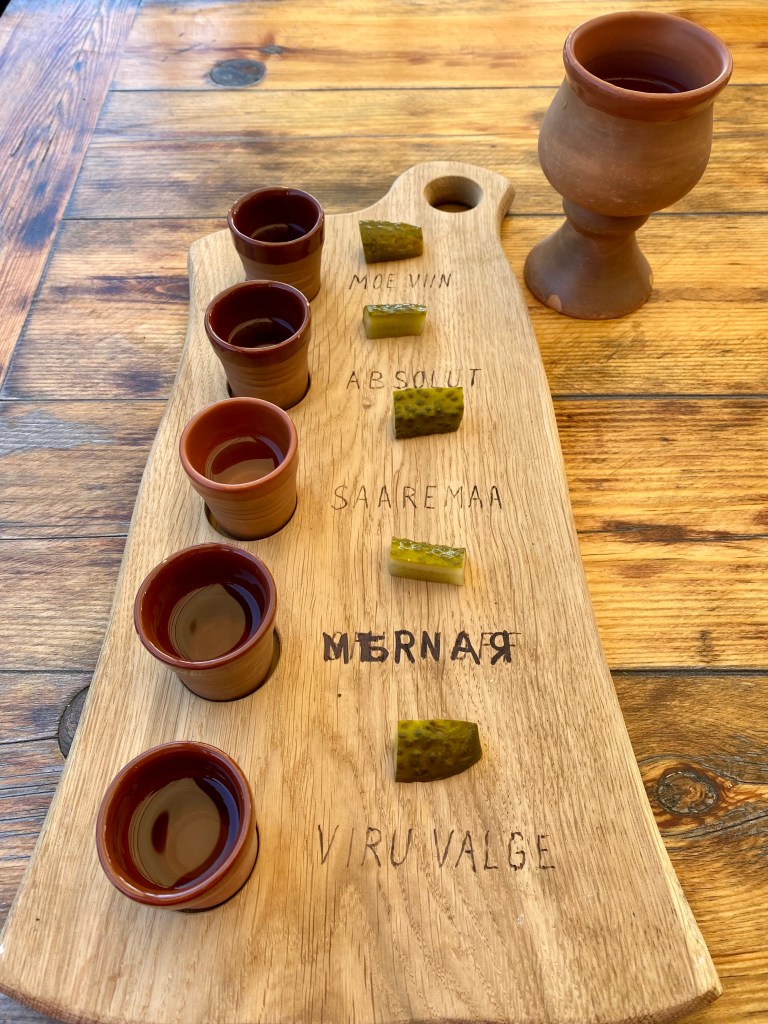
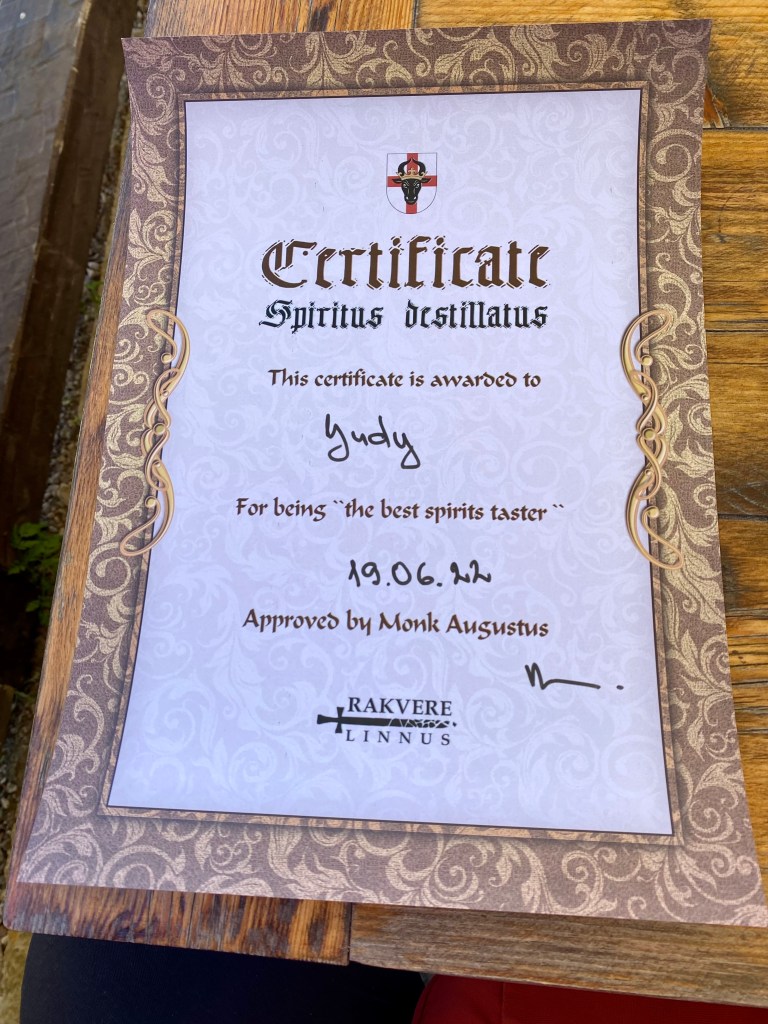
Before all of that, we head off to learn about distilling in Estonia and have a shot of Estonian vodka with a pickle chaser! Alcohol has been produced in Estonia since the 15th century so it’s good and the pickle works like the lemon and salt with a tequila shot. They needed a few volunteers to do a deeper dive in the spirit, e.g., taste five types of vodka so, of course, I volunteered. Six shots of vodka before 11 am is not my typical style (cheers – terviseks!) but I did receive a certificate declaring me a “connoisseur of vodka” for my efforts! 

Morning libations!
It’s official!

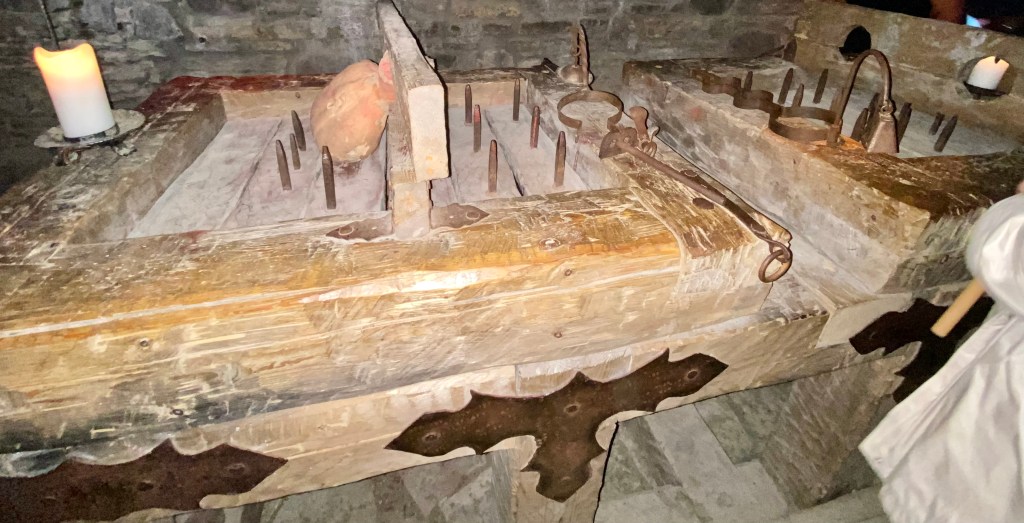
Being slightly intoxicated while wandering through the wine cellar, torture chamber, a death room and hell was a bit tricky especially hell which was like a bizarre Circus fun house!  

Chess anyone?
Help to get taller?
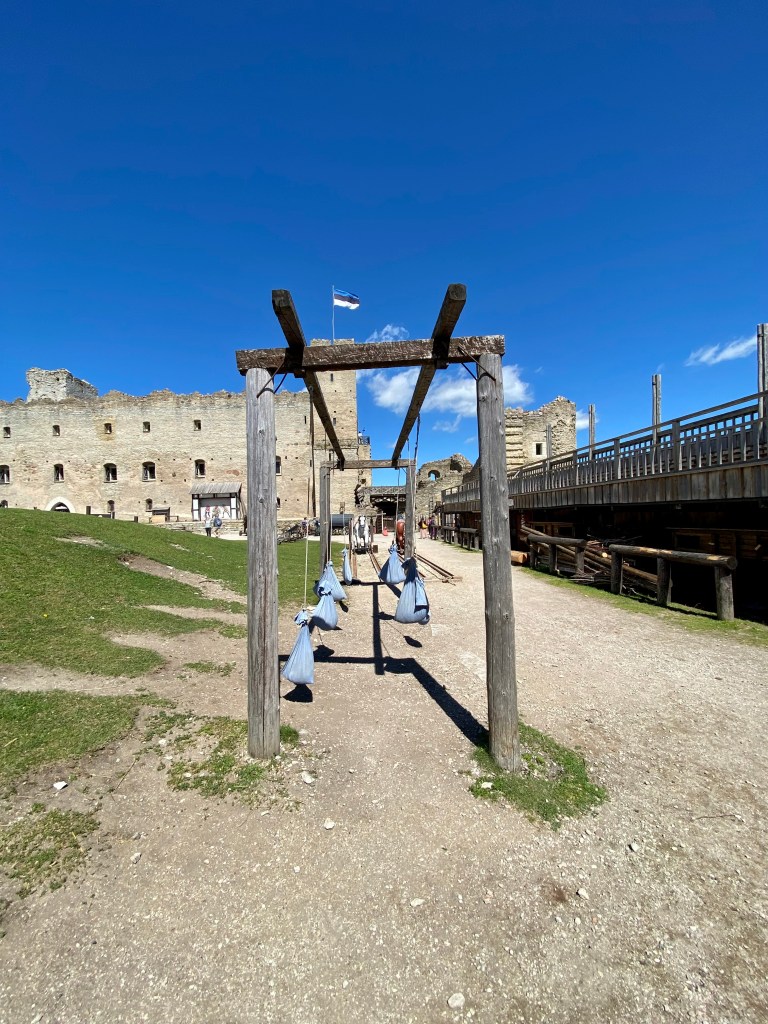
Medieval obstacle course
View from the tower

The grounds also include a barber’s shop, an alchemist’s workshop and a smithy where I made my own Estonian coin!

At noon, there was a single gun salute using a small canon that made a pretty big bang despite its size! For lunch, we enjoyed a simple meal of chicken, rice and salad washed down with beer, cider or wine (pretty sure that’s not typical medieval food!) in the Shenkenberg Tavern.

Drunk and disorderly?!

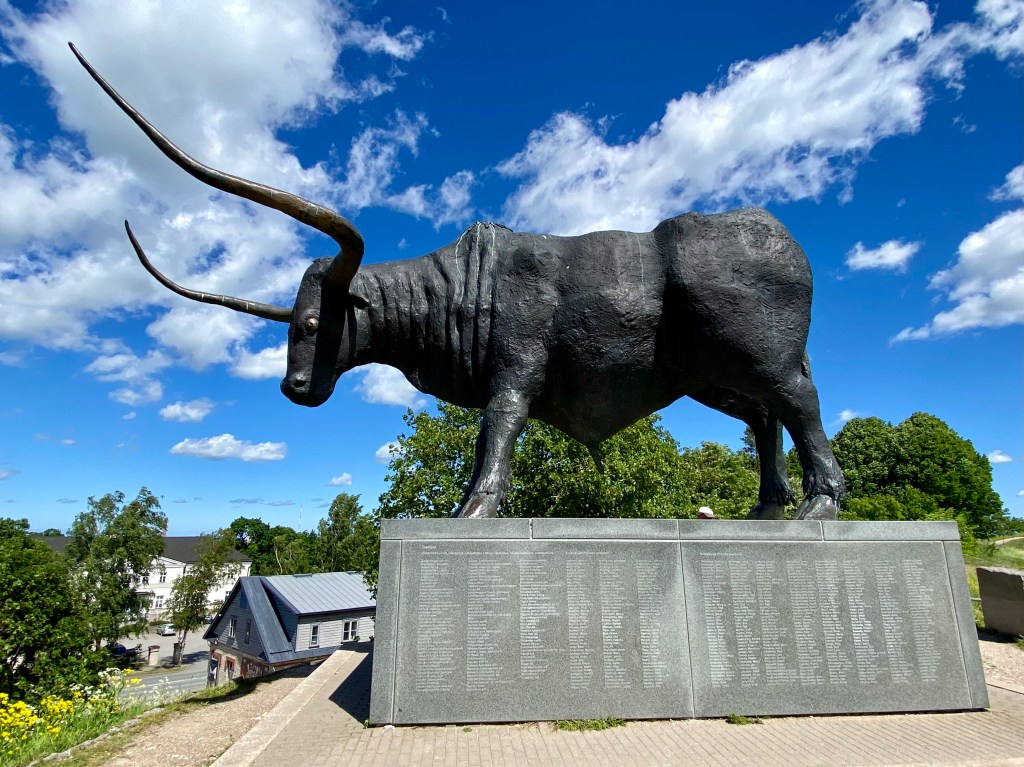
At the entrance to the castle is an enormous sculpture of a bull called Taras, guarding the town installed for the town’s 700th anniversary.

Taras
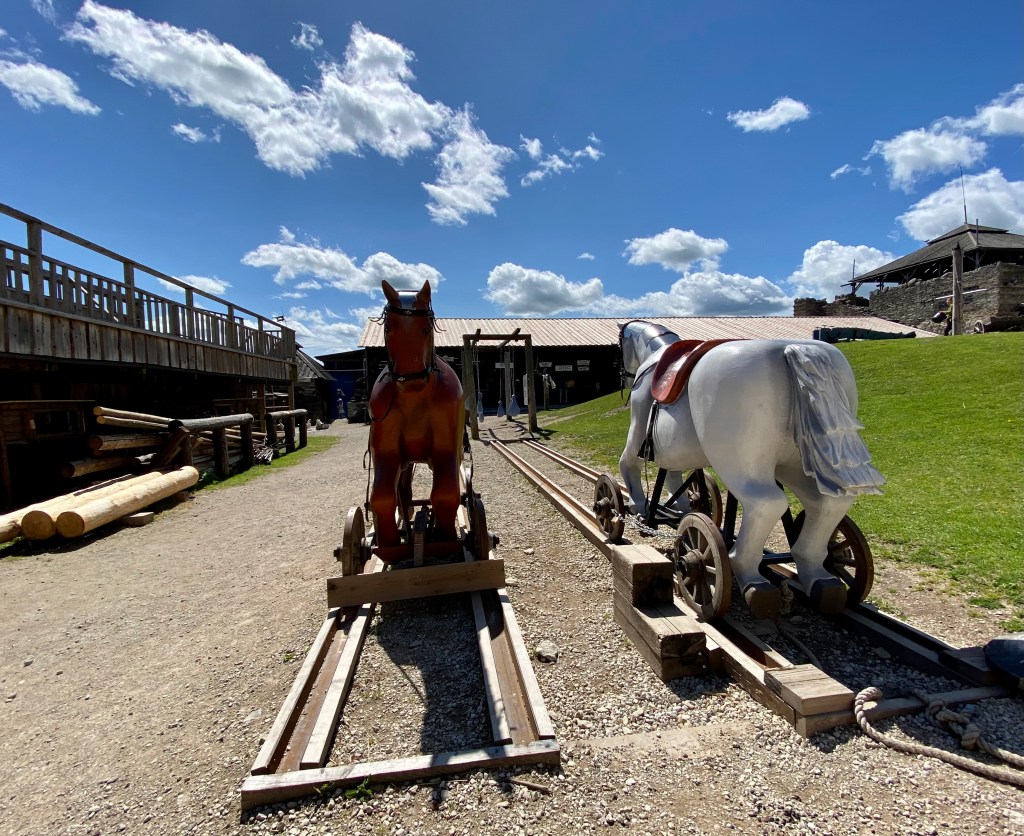
Jousting!
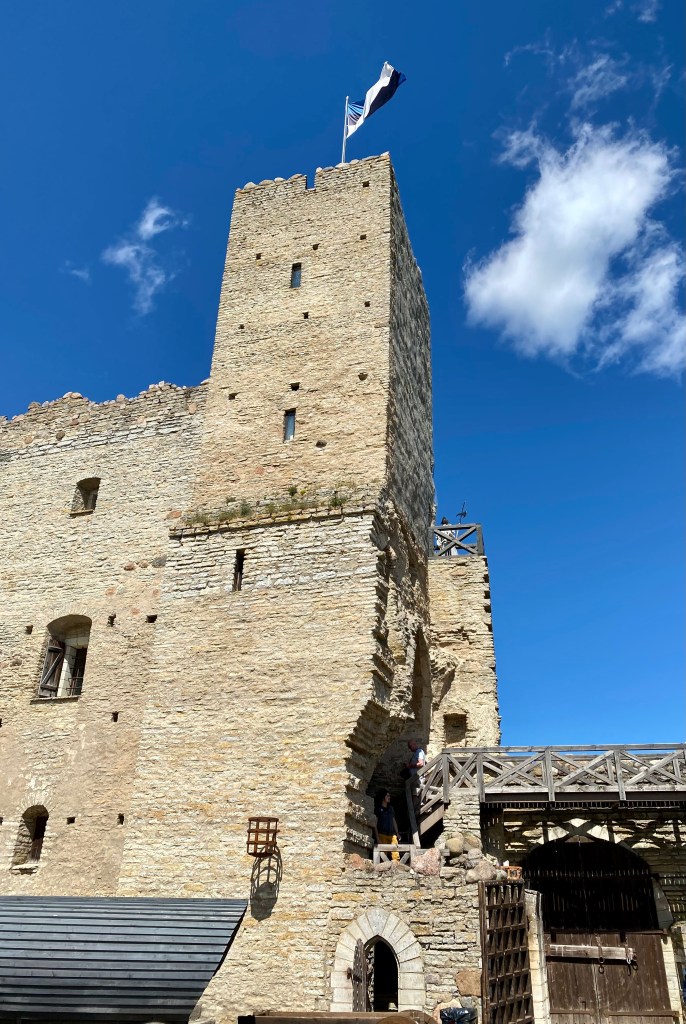
The tower
The castle

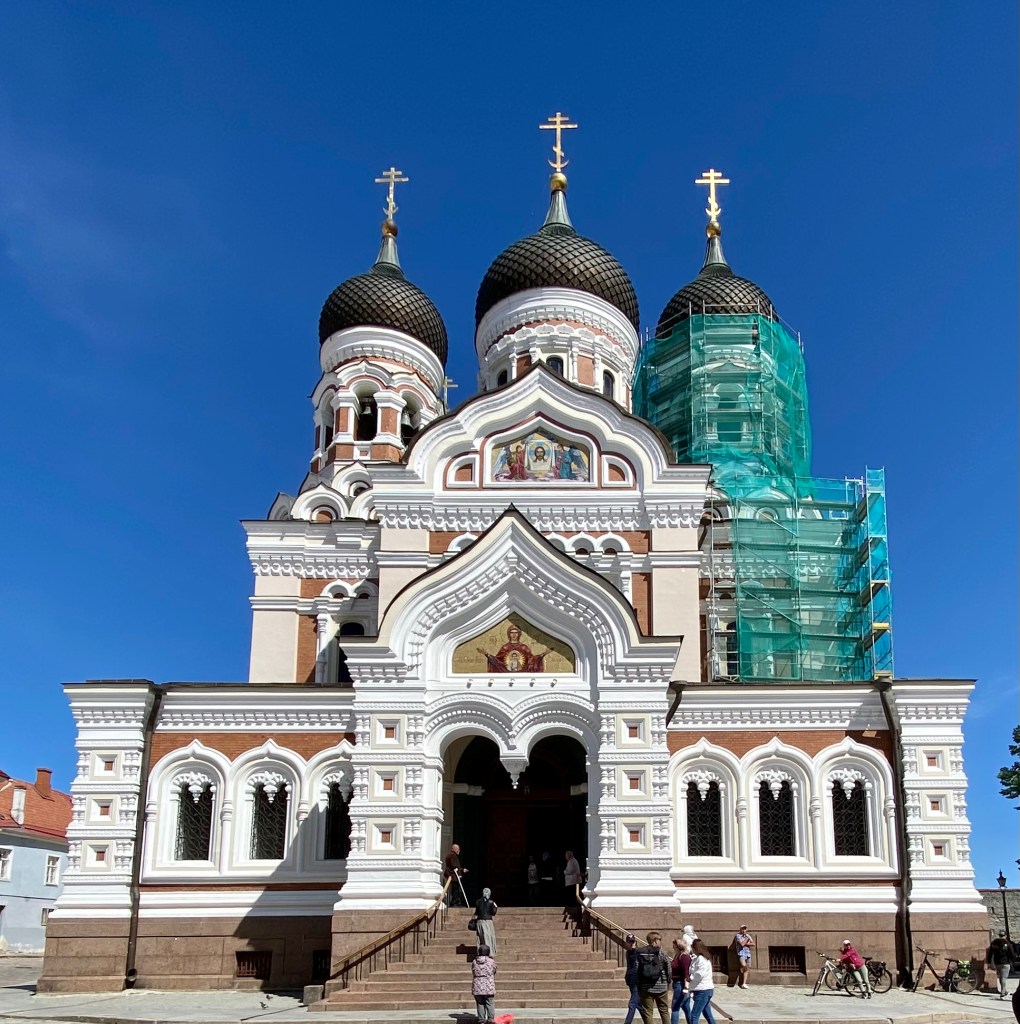
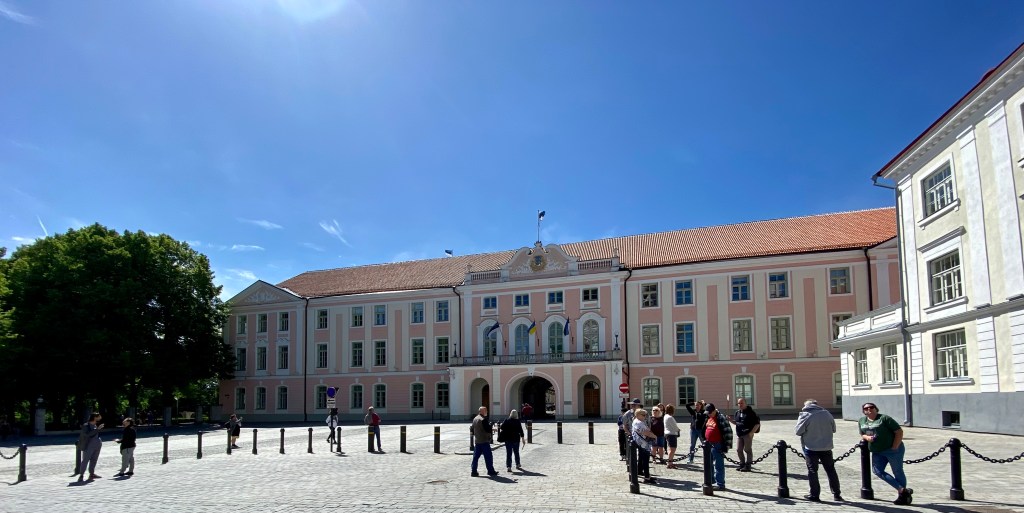
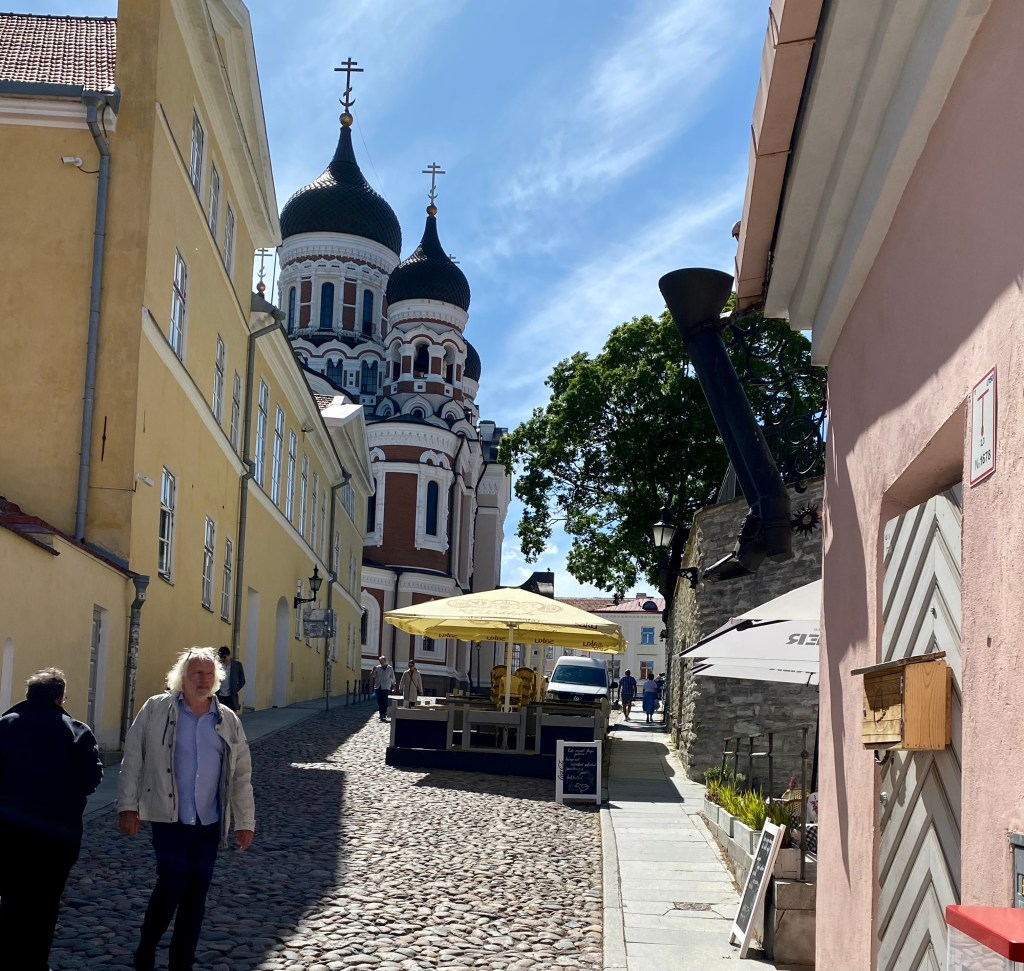
From Rakvere we returned to Tallinn for a walking tour of the old town, starting at Palace Square, with the Parliament House of Estonia and the Nevsky Russian Orthodox Church.

Nevsky Russian Orthodox Church
Parliament House of Estonia
Street art!
Colourful houses were once summer residences of Baltic noble
Long leg street
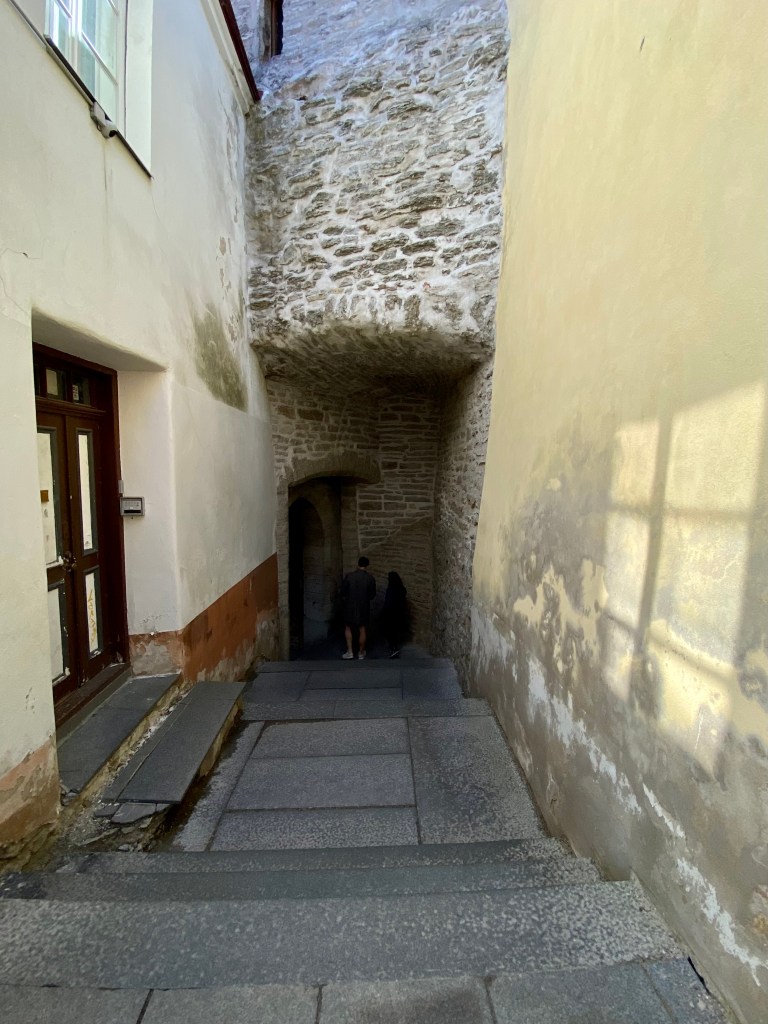
Pedestrian gate through the wall

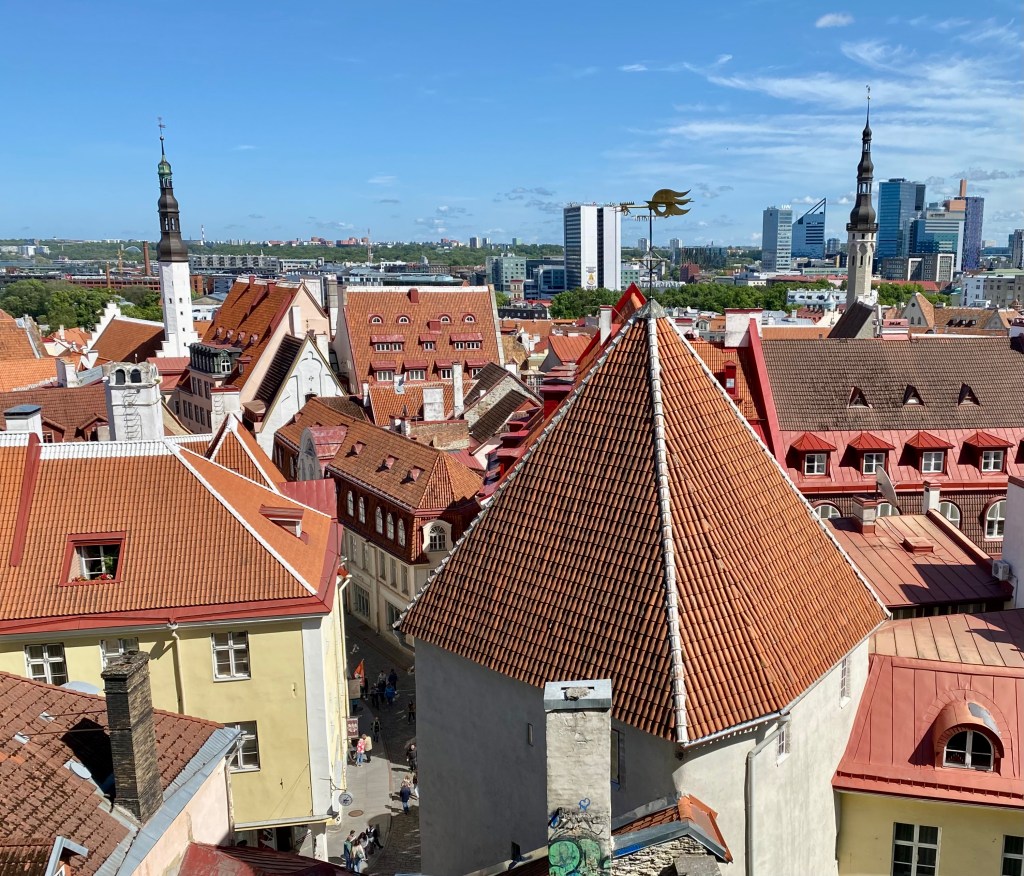
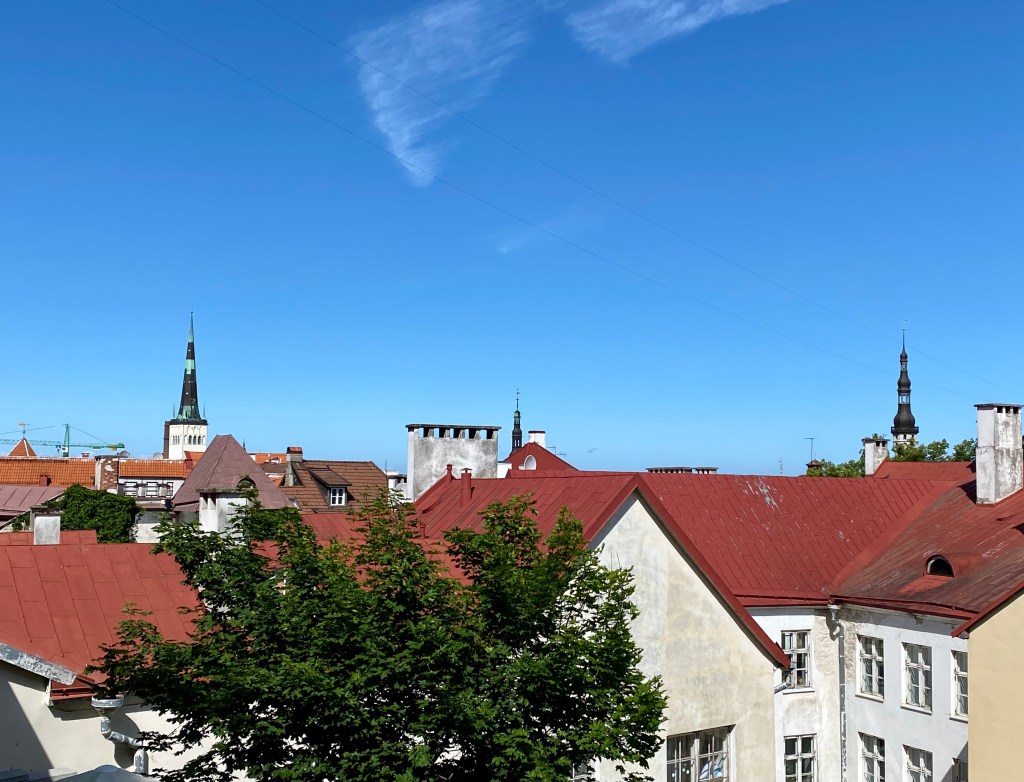
We strolled over cobblestone lanes to a panoramic lookout point for a fabulous view over the old town wall of the red-tiled roofs, towers and steeples.

Looking over Tallinn
Red-tiled roofs, towers and steeples

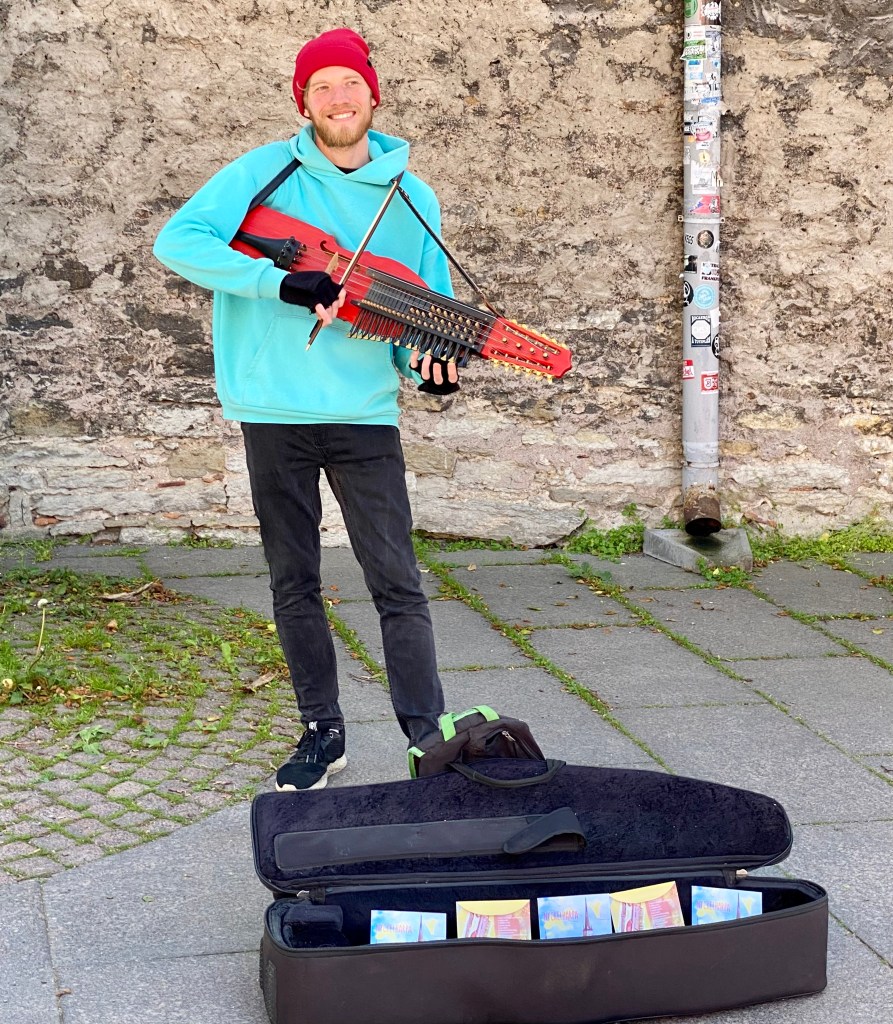
An Estonian musician was playing tunes on the ckelharpa near lookout. The ckelharpa (“keyed fiddle”, or literally a “key harp”) is a traditional Swedish musical instrument. Its keys are attached to tangents which, when a key is depressed, serve as frets to change the pitch of the string. It’s somewhere between a typewriter and your grandpa’s old crackly fiddle.

Listening to the ckelharpa

Our next stop was the Danish King’s Garden. Nestled between the city wall and Lower Town, King Valdemar II of Denmark and his troops camped before conquering Toompea in 1219.  According to the story, Valdemar’s forces were losing their battle with the Estonians when suddenly the skies opened and a red flag with a white cross floated down from the heavens. Taking this as a holy sign, the Danes were spurred on to victory. According to an old legend, this is the spot where a flag descended from the sky during the Danish invasion, and it was this flag that turned the course of the battle in favour of King Valdemar II. Later, the flag, the Dannebrog, became the national flag of Denmark. 

Creepy faceless monk in Danish King’s Garden

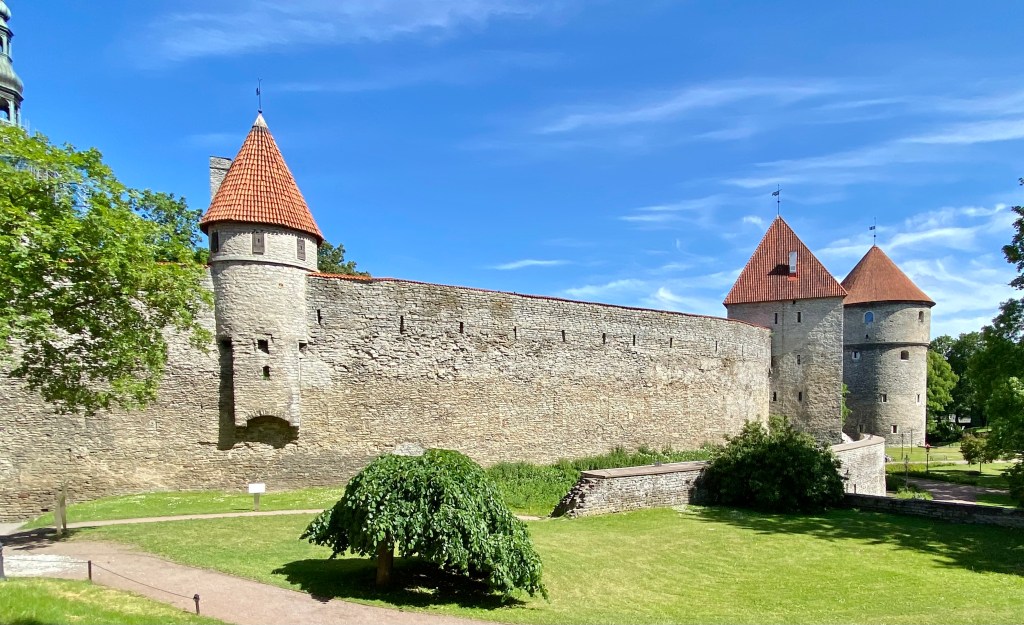
We bid adieu to Tallinn with a last view of the city wall. With 1.9 km of its original city wall and 20 defensive towers wall still standing, Tallinn boasts one of Europe’s best preserved medieval fortifications. Work on the town’s defences first began in 1265, but the current outline of the wall dates to the 14th century. By its heyday in the 16th century, the wall was 2.4 km long, 14 to 16 metres high, up to three metres thick, and included 46 towers. Today roughly half of the original towers still loom over Old Town, evoking images of heroic knights and damsels in distress.

Three towers on Town Wall

Back to the ship for my last night aboard. Tomorrow I’m meeting Ken in Stockholm for the Scandinavian leg of my adventure. 

Wandering Through Northern Europe – Baltic Cruise on the Norwegian Dawn

June 18 – Riga

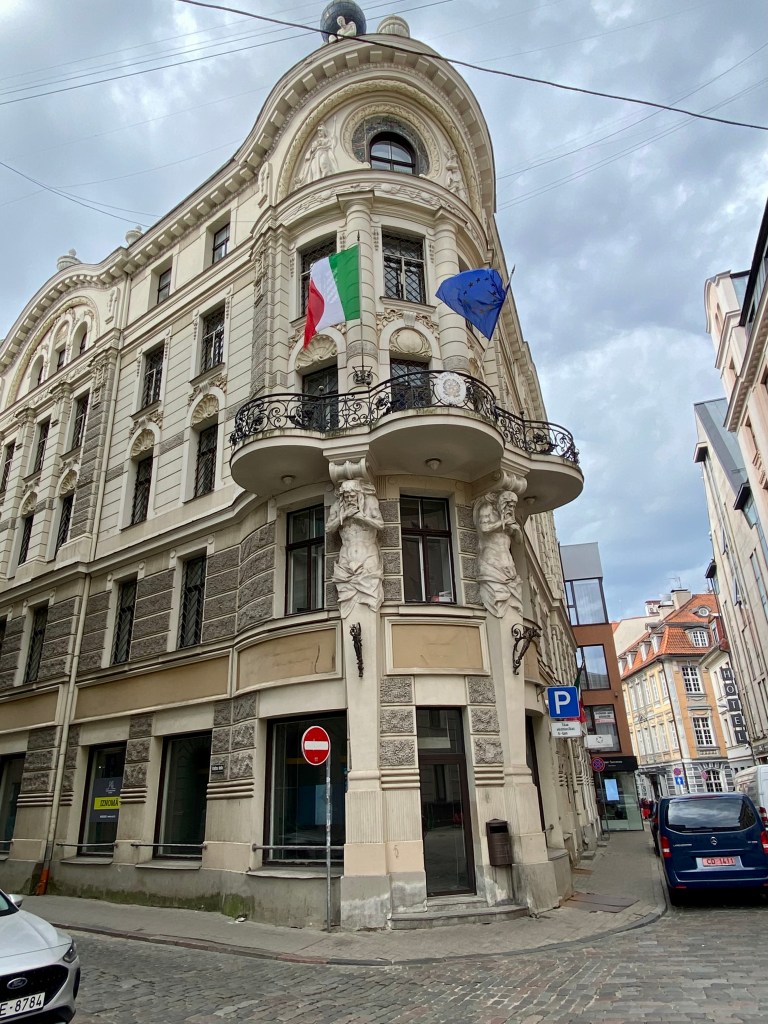
Another day, another country and another early morning. Today our guide is Anna and Sergei is behind the wheel as we enjoy a short driving along the boulevards, parks and charming green parks of Riga. Enroute we have a chance to admire some beautiful architecture while Anna explained Latvian history.  We passed a plethora of Art Nouveau buildings, the Latvian National Museum of Art and the Monument of Freedom erected in 1935 funded by the donations from the citizens of Latvia to name a few. 

Temple of the Holy Prince Alexander Nevskiy
Art Nouveau Building

Latvia is the biggest of the three Baltic states and Riga is the biggest city in Latvia boasting 800,000 of the country’s population of 2 Million. 

Riga, the capital of Latvia, was founded more than 800 years ago and has nowgrown into the most cosmopolitan city in the Baltic States. Founded in 1201 during the Middle Ages Teutonic Knights, Riga was developed into a Hanseatic city and stayed under their rule for 300 years. Germans built many buildings including theatres for themselves and were the city’s wealthiest inhabitants. 

Over the centuries, there was lots of fighting over Riga to gain access to Baltic Sea with Lithuania, Germany, Poland, Sweden and Russia all vying for the prize. 

By the 18th and 19th century, Riga had grown into one of Europe’s leading ports/industrial centres and was revered as the “Paris of the North.” Years of independence and becoming a member of the European Union have brought great changes and development to the city and to the country itself. 

Soon enough it was time to hop of the bus to explore Old Riga on foot and have a chance to see first hand the many churches including the glorious Dome Cathedral and many renovated buildings.  Lutheran, Catholic and Russian Orthodox are the three main religions in Latvia though Latvians are general not very religious. The main holiday is midsummer; a pagan holiday that is more popular than Xmas and New Year’s. 

As we made our way to old town, I snapped a few pics of some of the fun architecture.

Our first official stop is the Latvian National Opera and Ballet (LNOB) built by Germans in 1884.

Latvian National Opera and Ballet

Close-by, on the bank of the canal, is a striking stainless steel sculpture celebrating Maris Liepa; the famous Latvian ballet dancer who was considered to be one of the best male ballet dancers in the world. The monument was unveiled in 2013 as part of the 150th-anniversary celebrations of the Latvian National Opera and Ballet Theatre building.

Maris Liepa Sculpture

Opposite the central entrance of the National Opera, the “Nymph” fountain is the most luxurious and second oldest fountain in Riga, opened in 1887. The central figure of the fountain is a 3.5 m high nymph standing on a rock, which holds a conch in its outstretched hands and at the feet of which four children play with dolphins.

The Nymph

George Armitstead was born in 1847 in Riga into a British merchant family. While the fourth Mayor of Riga in 1901-1912, he built many of today’s buildings in Riga. In 2006, during her first visit to Latvia, Queen Elizabeth II unveiled a memorial statue of him. The monument is located in the gardens close to the Latvian National Opera.

George Armitstead Memorial

Hill across the road is the highest mountain in Riga (!). There is no word for hill in Latvian. It’s made from the remains of the Swedish wall when it was torn down by Soviets. 

Next is the Freedom Monument honouring soldiers killed during the Latvian War of Independence encer (1918-1920). The 42-metre (138 ft) high monument of granite, travertine and copper is an important symbol of the freedom, independence, and sovereignty of Latvia and often serves as the focal point of public gatherings and official ceremonies in Riga. While we were there members of the armed forces were gathered; possibly celebrating graduation from the military academy?

Freedom Monument

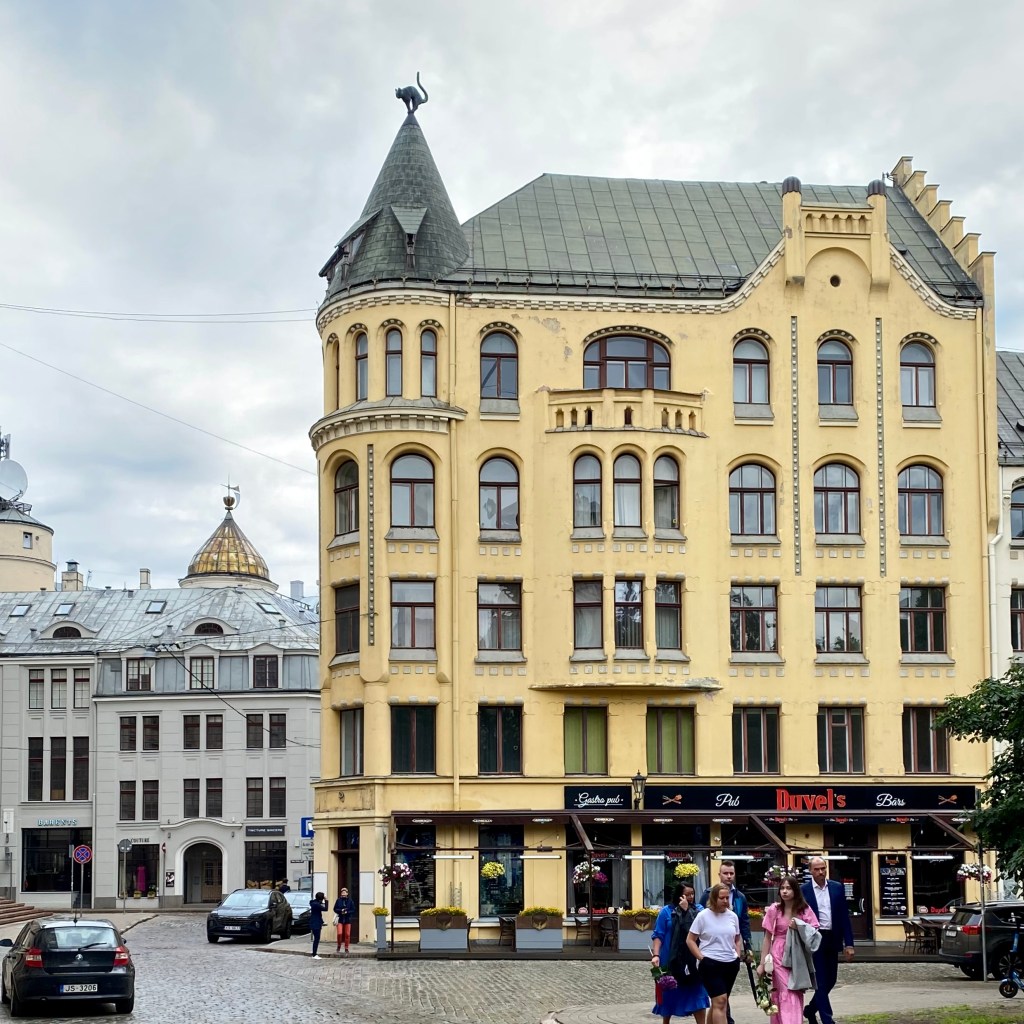
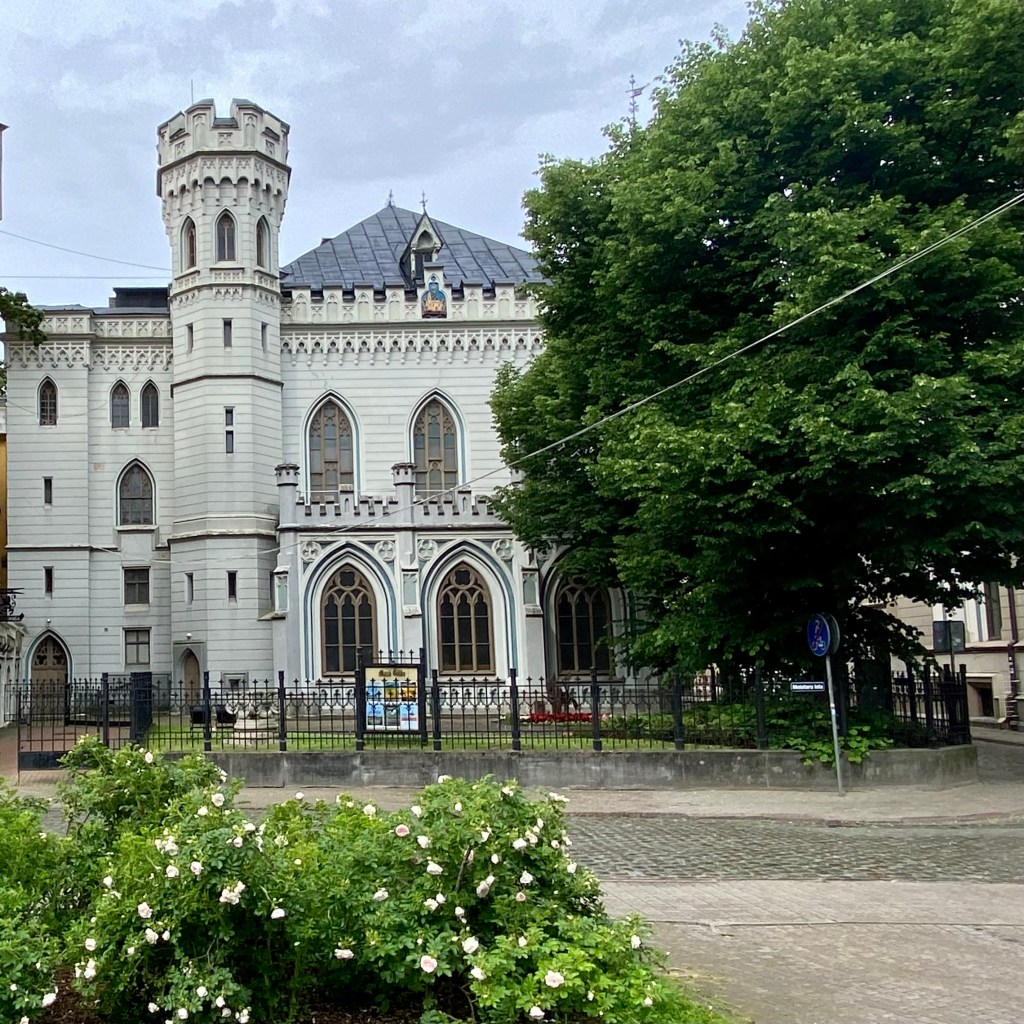
On our way to the Town Hall Square, we stopped at the Livu Square and Anna told us a story about the Black Cat House, Small and Large Guild Houses. Legend has it that the wealthy tradesman who commissioned the building was refused membership in the Great Guild as he was not noble. In retribution the tradesman had two copper statues of angry-looking cats with arched backs and raised tails placed on the turret rooftops with their tails turned towards the house of the Great Guild across the street. Today, the black cat is the symbol of Riga.

Black Cat House
Great Guild House

Golden birds instead of crosses on top of most churches. After the reformation when Catholicism was out of favour. Also are weather vanes … so would know if ships were coming to town by tracking how the wind was blowing. 

Bird from atop church

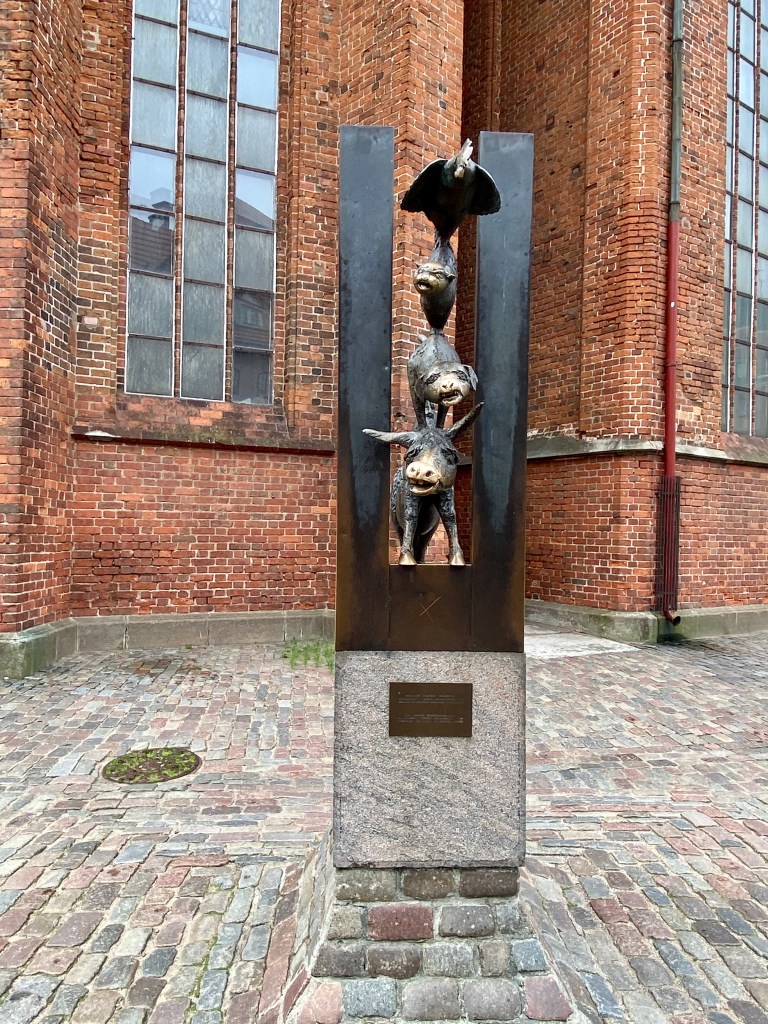
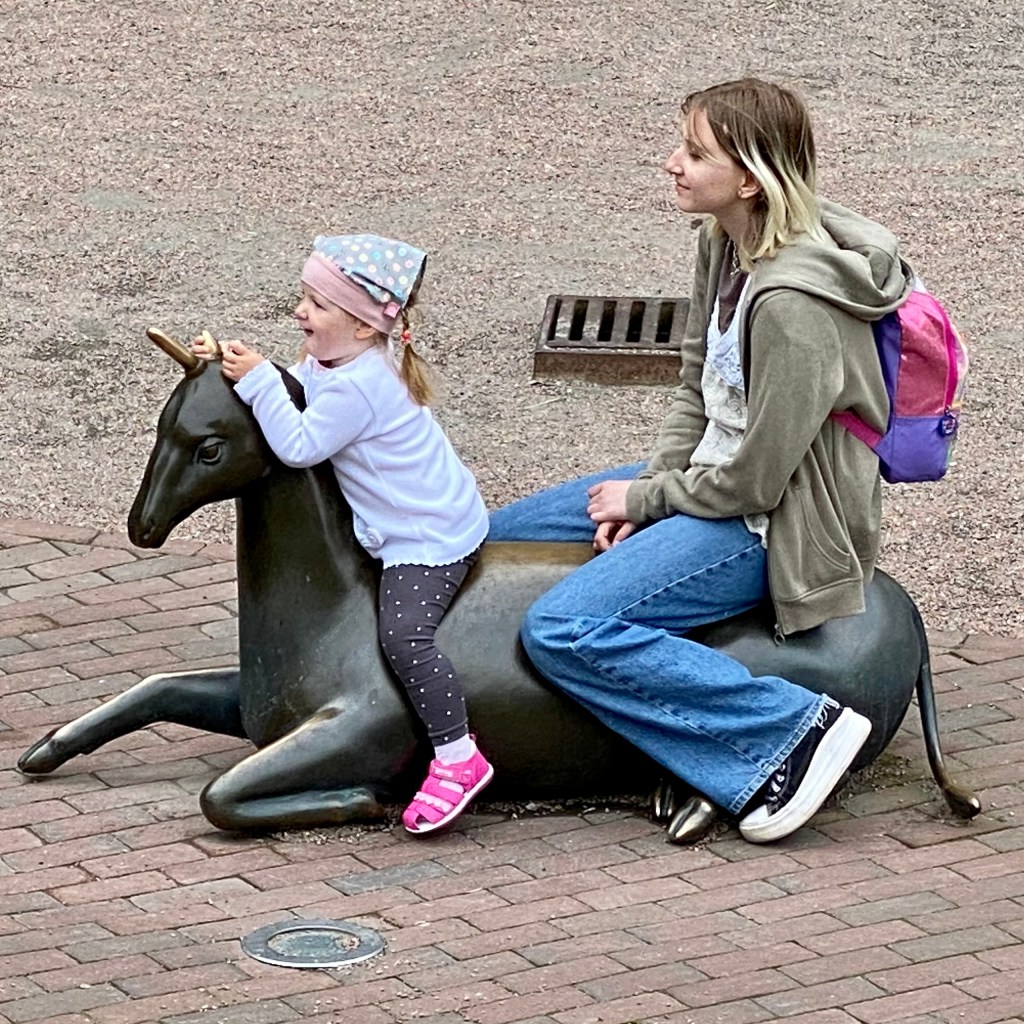
Bremen is a partner city of Riga and they gifted the sculpture Town Musicians of Bremen to Riga in 1990. The animals found their home near St. Peter’s Church. Just like in the original in Bremen, the donkey stands on his hind legs and roars. The dog stands on the donkey and barks. On the dog, there is the cat that meows and, finally, the rooster stands on the cat and crows. But the animals are not facing the bandits like in the original. The group looks through a crack in a wall. This crack in the symbolic Iron Curtain was created during Michael Gorbatschow’s Perestroika and the events that followed. There is a ritual that people like to follow when visiting the Town Musicians. Rubbing the noses of the animals is supposed to bring good luck. The respective parts of the statue are already quite shiny from all the rubbing. The most athletic visitors can even reach the rooster’s beak all the way on top and will, therefore, have an extra amount of good fortune coming their way! Sadly, I had to make do with the dog!

Town Musicians of Bremen

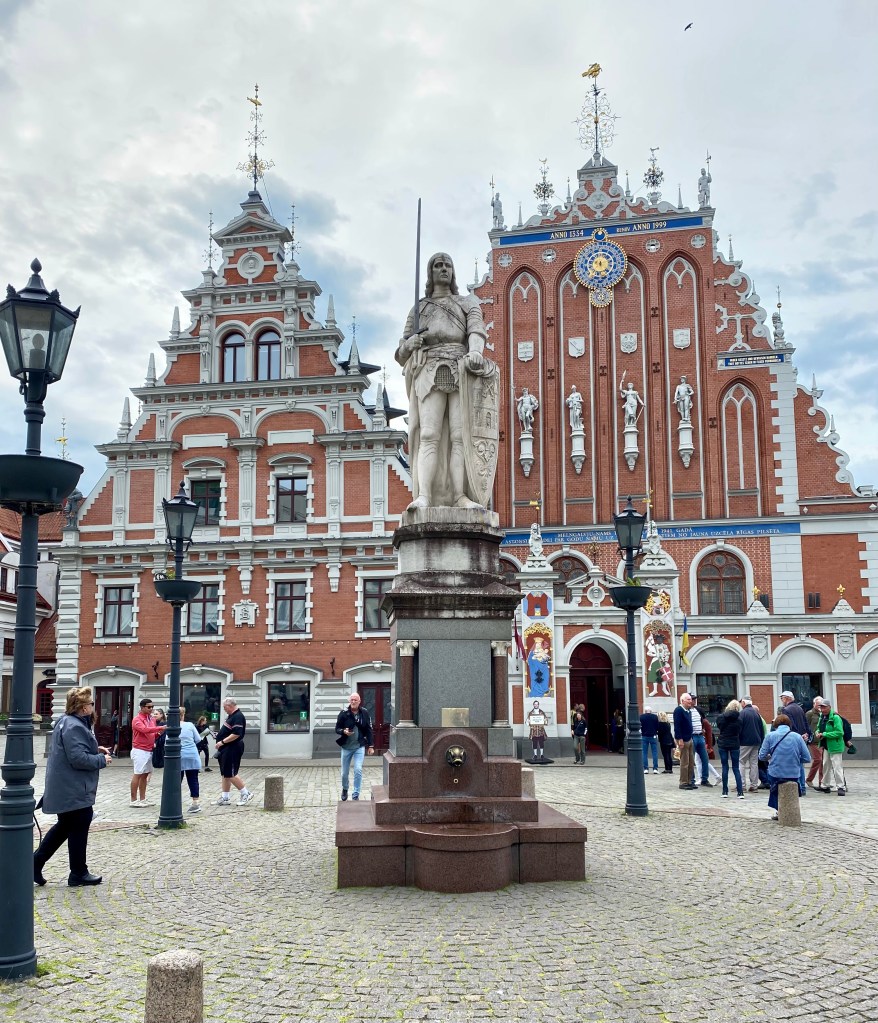
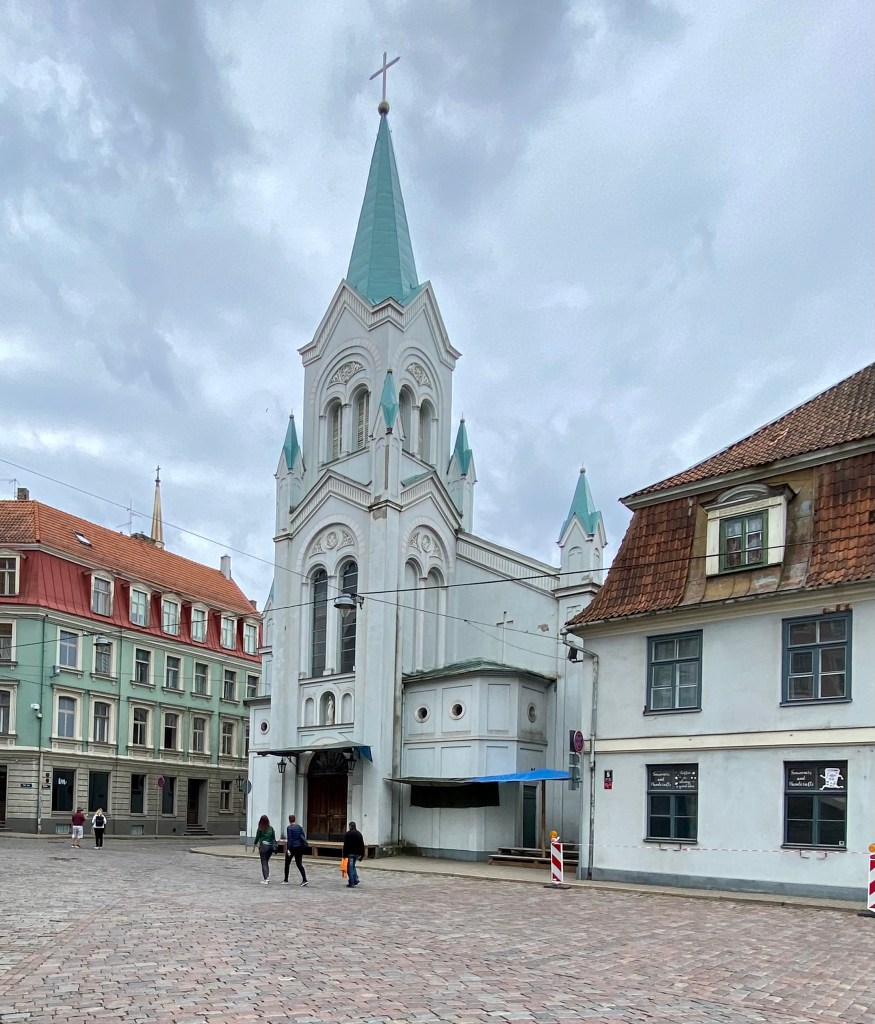
We continued on the Dome Square which features the House of Blackhead’s, the Roland Monument and St. Peter’s Church. In fact, there are churches on the same square. St John, St Peter’s with the oldest being the little white one across the road. 

Foundation of the cathedral was laid in 1211. Large restoration works from the late 19th to early 20th centuries gave it its present look. It is considered the largest Medieval church in Latvia and the Baltic States. The Dome, the tallest of all spires at the time, is famous for its magnificent organ, constructed in 1883, with more than 6,000 pipes.

St. Peter’s Church

The town hall is across the square from St. Peter’s. Markets were traditionally held here as were executions. House of blackhead’s and town hall two most important buildings on square. 

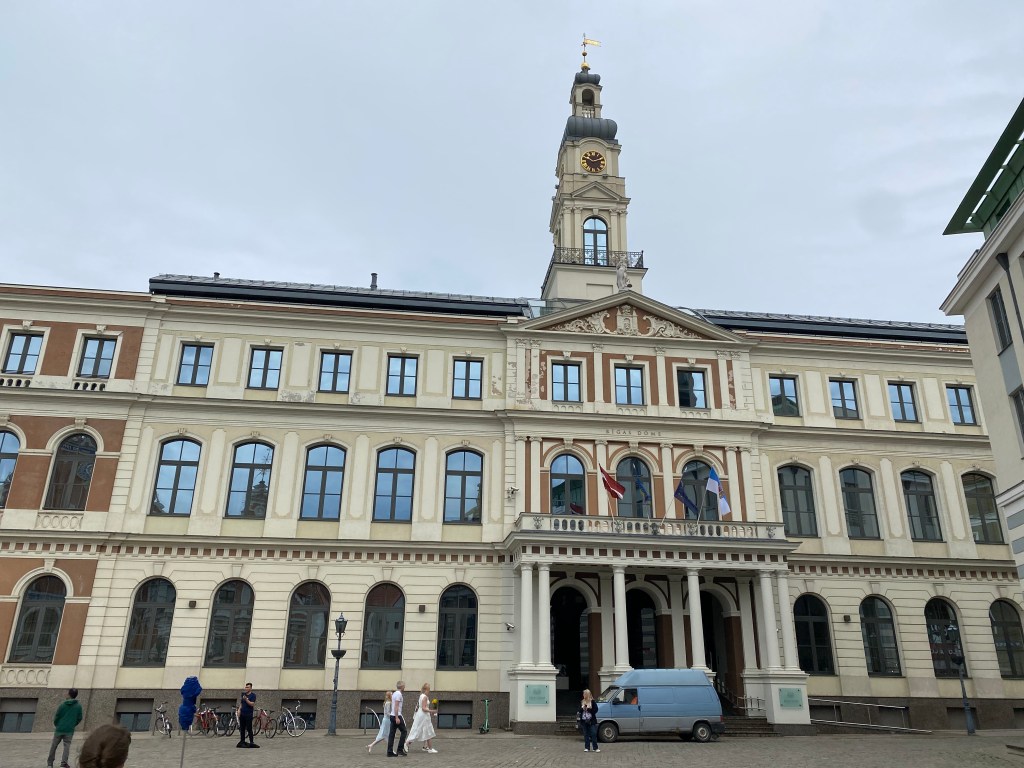
Riga’s Town Hall

Not unlike other Hanseatic cities across the Baltic Sea region, Riga has had a representation of Roland, the semi-fictional paladin of Charlemagne’s court, since medieval times. However, it wasn’t until the late 19th century that a permanent statue of this protector figure was erected on Town Hall Square. The current statue is a replica of the original, which is housed a short walk away in St. Peter’s Church, and includes a drinking fountain at its base (just press the button). Roland, who was a close associate of Charlemagne, is the patron saint of Riga. The original statue from 1897 was destroyed by bombing in the Second World War, along with most of the Town Square.

Roland in front of the House of the Blackhead’s

Nearby is a monument to the first decorated Christmas tree which was not a 19th century innovation, as we believe, but apparently was started here in Riga 500 years ago.

In the centre of Old Riga stands a controversial red granite statue that was originally dedicated to the Latvian Red Riflemen, some of whom became Lenin’s personal bodyguards. Some view the monument as a symbol of the old communist system and would love to tear it down. Others believe it’s a necessary tribute to Latvians who fought in the early years of WWI. It now honours all Latvian riflemen, both Whites and Reds. Politics aside, it’s an impressive monument.

Latvian Riflemen Memorial

The Three Brothers are the oldest medieval dwelling houses in Riga. In medieval times, Maza Pils Street was located in the outskirts of Riga and craftsmen lived there. Today, the buildings that are several centuries old house the Latvian Museum of Architecture and the State Inspectorate for Heritage Protection.The White House on the right is oldest (1490). Originally there was a bakery on first floor with normal size windows and the baker lived on second floor with smaller windows to reduce the tax burden. The middle brother is the richest one of the three, built in 1646. It is one of the most typical, but also most modern dwelling houses of the 17th century. The third brother was built in the second half of the 17th century and had small apartments on each floor. The youngest building is the narrowest and the smallest one of the three brothers. 

The Three Brothers

Wandering through town, I took lots of pics but I don’t have much info (thank God because this post is waaaay to long!). Here are a few!

Back to the ship. Tomorrow, we’ll be in Estonia!

Wandering Through Northern Europe – Baltic Cruise on the Norwegian Dawn

June 17 – Klaipeda

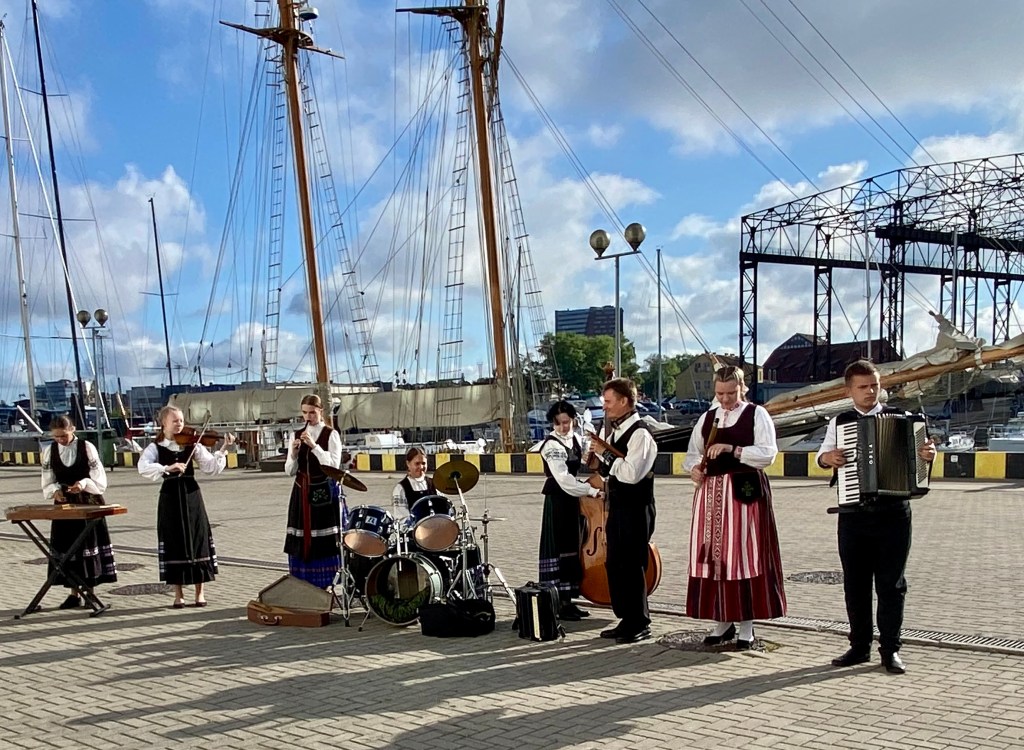
Unlike yesterday, today’s tour was bright and early and since we sprang ahead an hour last night it felt even earlier. Encouraged by a band playing at the terminal, we boarded the bus at what felt like the crack of dawn though of course it wasn’t. 

Lithuanian band at cruise terminal

Our guide today is Marina and as she is a teacher she is quite knowledgeable about all things Lithuanian so she regaled us with this history as we drove to an Amber production facility. 

Klaipeda was founded in 1252 by the Teutonic Knights as they returned from the Crusades in the Holy Land. The key of Klaipeda’s development is that it’s an ice-free port located at the mouth of Dane River in Lithuania. Lithuania is one of the Baltic countries boasting a population of 3 Million. Lithuania is on the Baltic Sea and Klaipeda is its only port. Klaipeda is the third largest city in Lithuania with a population of 200,000. 

Like the rest of Lithuania, Klaipeda was ruled by the Soviets from the end of World War Il until 1991, when the country gained its independence.

According to Marina, Lithuania’s main features are 4 Bs

Bread – specifically dark bread, is an important part of all meals.

Blondie – typically fair hair and blue eyes

Beer – the national alcohol drink

Basketball – popular game with Lithuanians as they are typically tall. 

We did drive past several of Klaipeda’s architectural gems such as the Clock and Watch Museum, the neo-Gothic post office and a former military barracks that now houses Klaipeda University but no photo stops so no pics!

Most of the tour focussed on amber and its importance to the development of Lithuania. The first stop on the tour was the Queen Amber factory. 

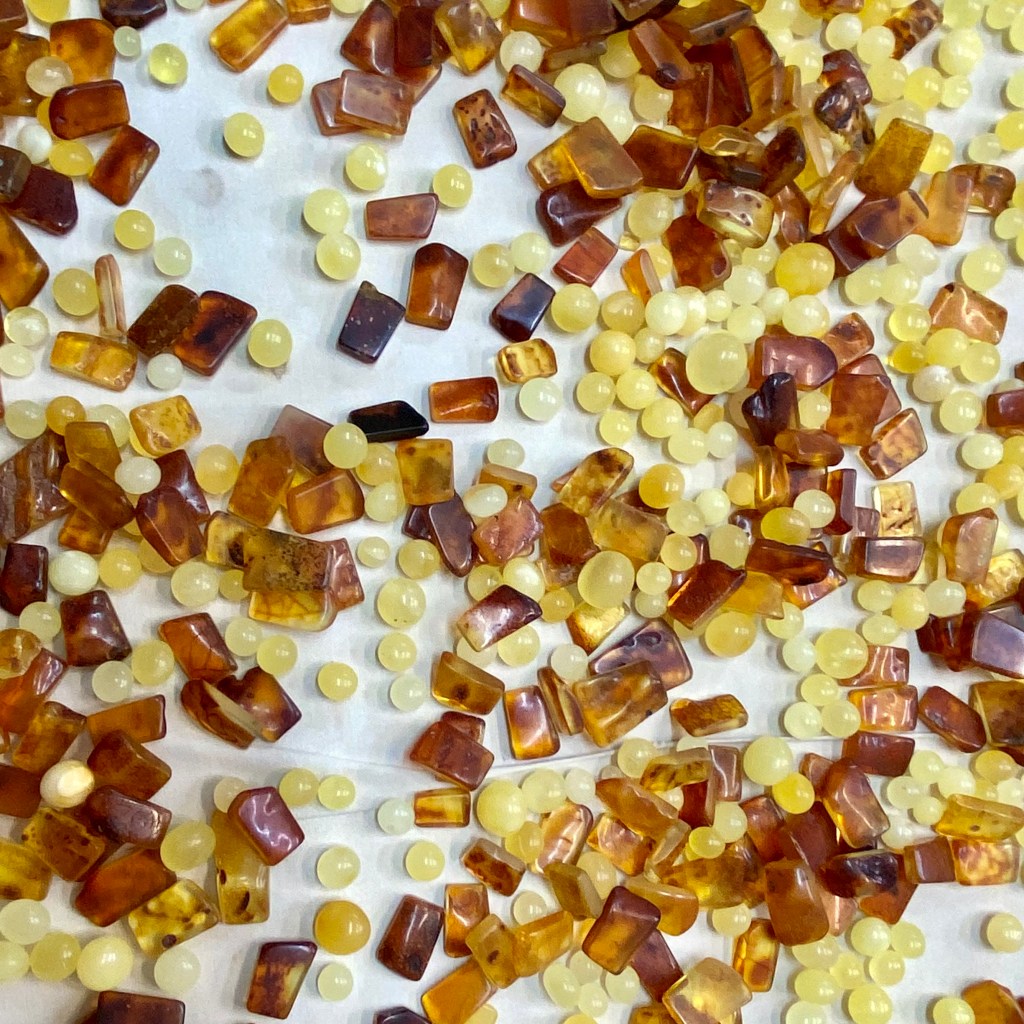
We learned that there are a number of steps in the refining, shaping and polishing of the amber; many done by hand. The stones are washed, cut, sliced, shaped and polished before making holes to string for making jewelry and etching for certain pieces. 

Cutting and polishing
Amber beads
Amber necklaces

After the stone is autoclaved for a week at 200C to remove impurities it is all one colour – yellow. Different colours can be made by later baking the stones for different amounts of time.

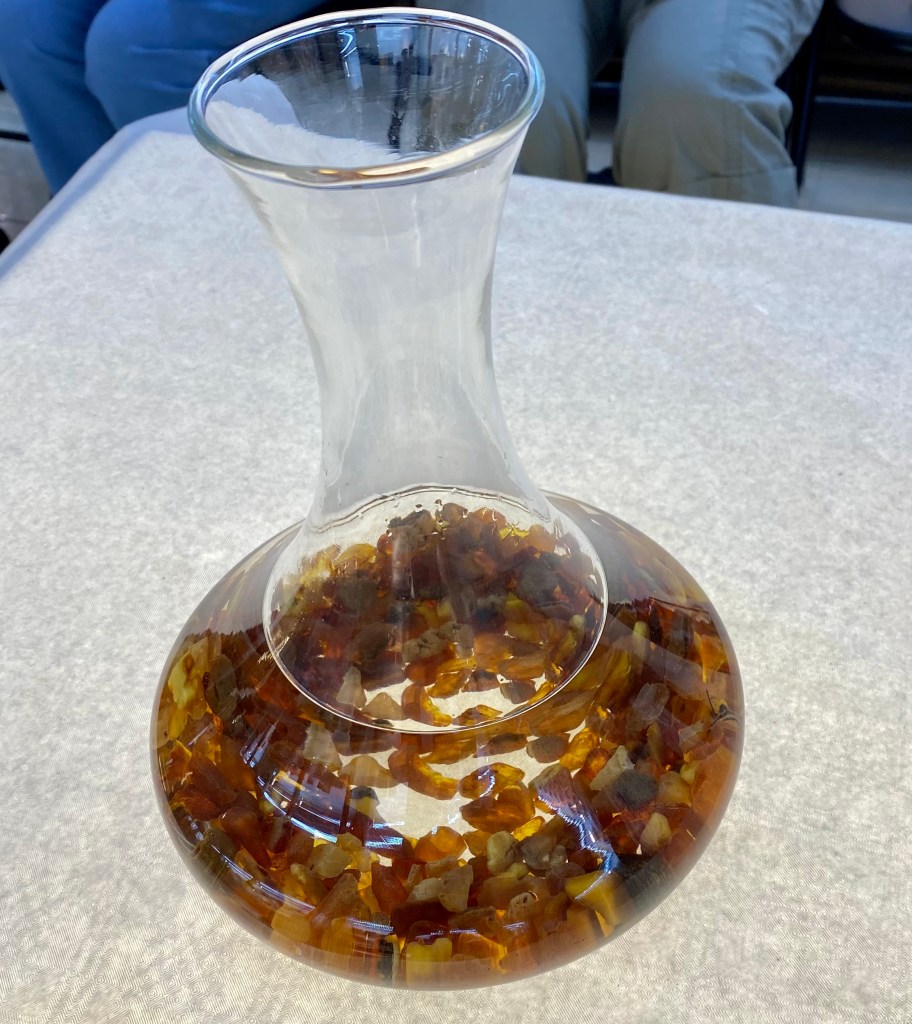
Nothing is wasted. Even the amber dust is sold to add to fires to make them sparkle. You can also add amber to alcohol or tea and these drinks are said to have medicinal properties. Apparently, wearing unpolished amber is supposed to be good for those with thyroid problems and in the local drug stores you can buy amber pills to cure a hangover. I should have stocked up in those but I’m older and more sensible now – not!

After leaving the factory with a small gift of amber beads to make the elixir, we are headed to Old Town to an Amber Museum and shop owned by the same company.  

On our walk to the Amber Museum we saw spied the Monument to Unite Two Peoples.  Before the Republic of Lithuania was created, Klaipėda and the surrounding area was an autonomous region known Lithuania Minor with a very turbulent history. Although unified with the rest of Lithuania in 1923, Klaipeda considers itself the heart of the country. The monument celebrating unification represents Lithuania Minor as a brown pole a part of the whole yet not wholly a part. 

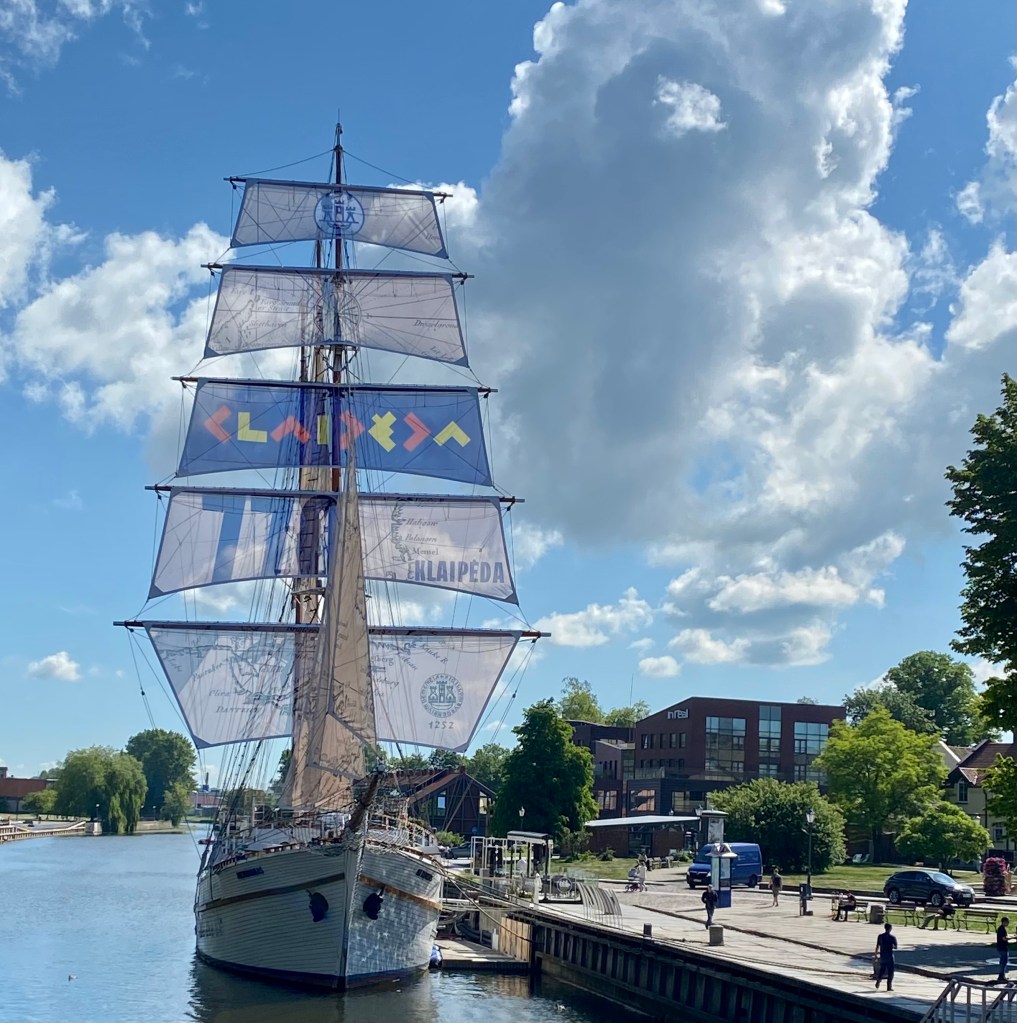
As we crossed the bridge into Old Town, we also had a chance to see a ship anchored in Danë River, the Meridianas. This ship was built in Finland in 1948 and is the symbol of the city. 

Meridianas

At the amber museum, we were treated to some amber infused vodka and a piece of a traditional Lithuanian cake (Šakotis or tree cake often considered the king of Lithuanian cakes and desserts)before being set loose in the shop. 

For your health!

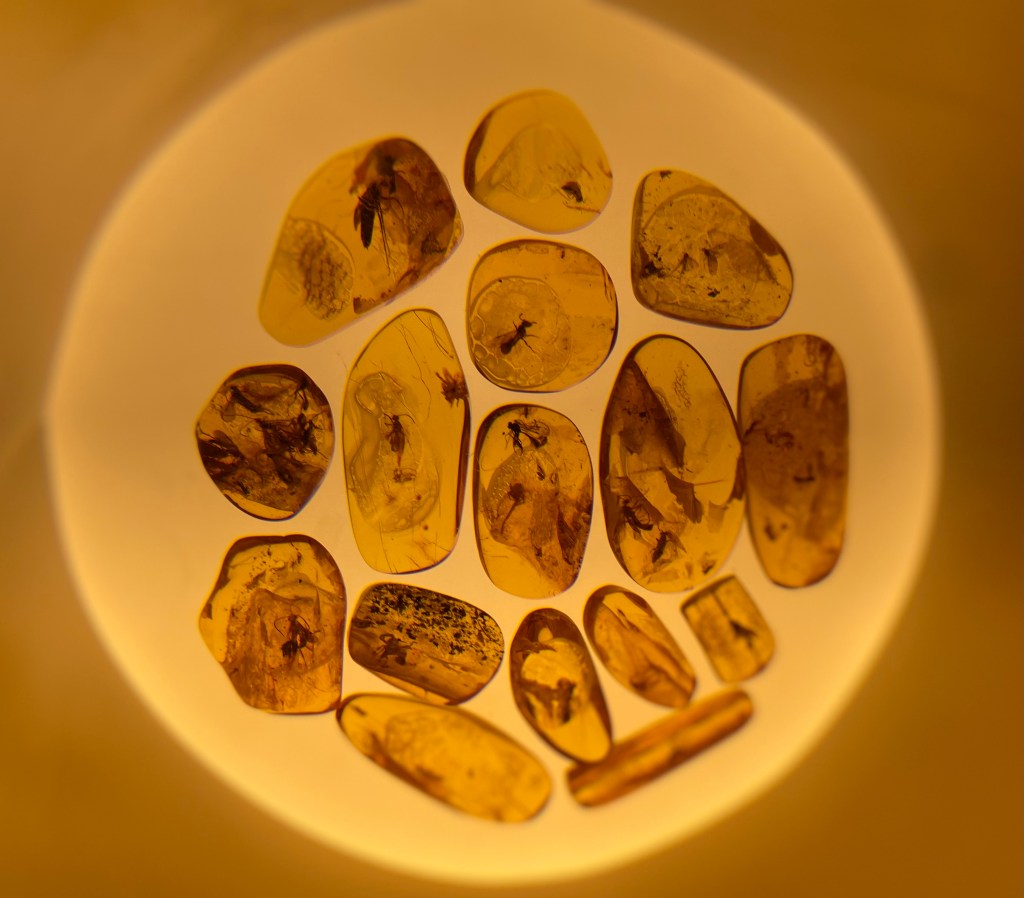
Some tips for those buying amber.  To determine if it is real, put it in salt water and it should float. Another option is to rub it on your skin or a piece of wool clothing and it should smell like pine. We also had a chance to get up close to the different types of fossils found in some amber.

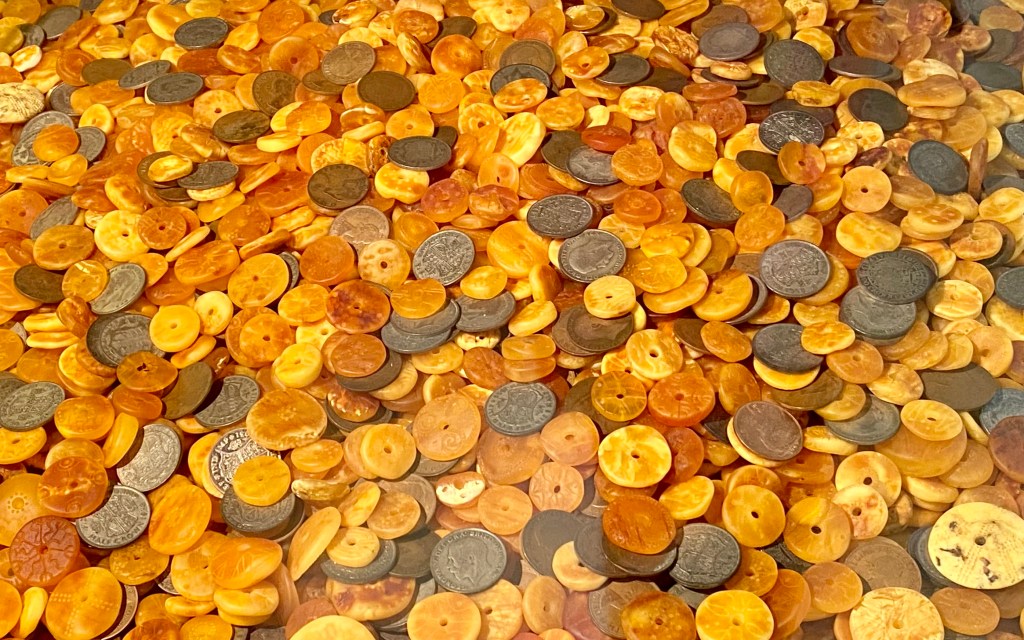
Not just for jewelry also used as currency

After the Amber Museum (where shockingly I didn’t buy anything!), Marina took us on an orientation walk through the narrow streets of Klaipeda’s Old Town.

Streets in Old Town are named after the trade practised by people living on that street and it’s often fairly obvious even for an anglophone. 

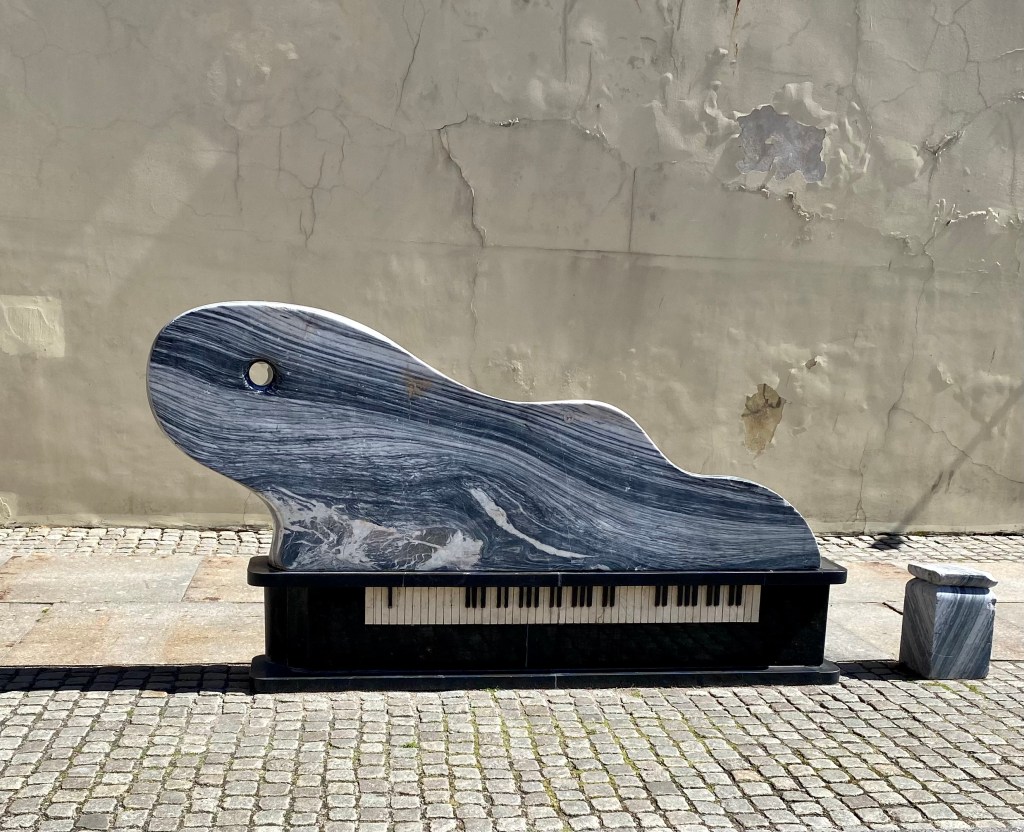
The is a large piano on the corner of Music Street with a chess board in front of it. 

On the corner of Music Street

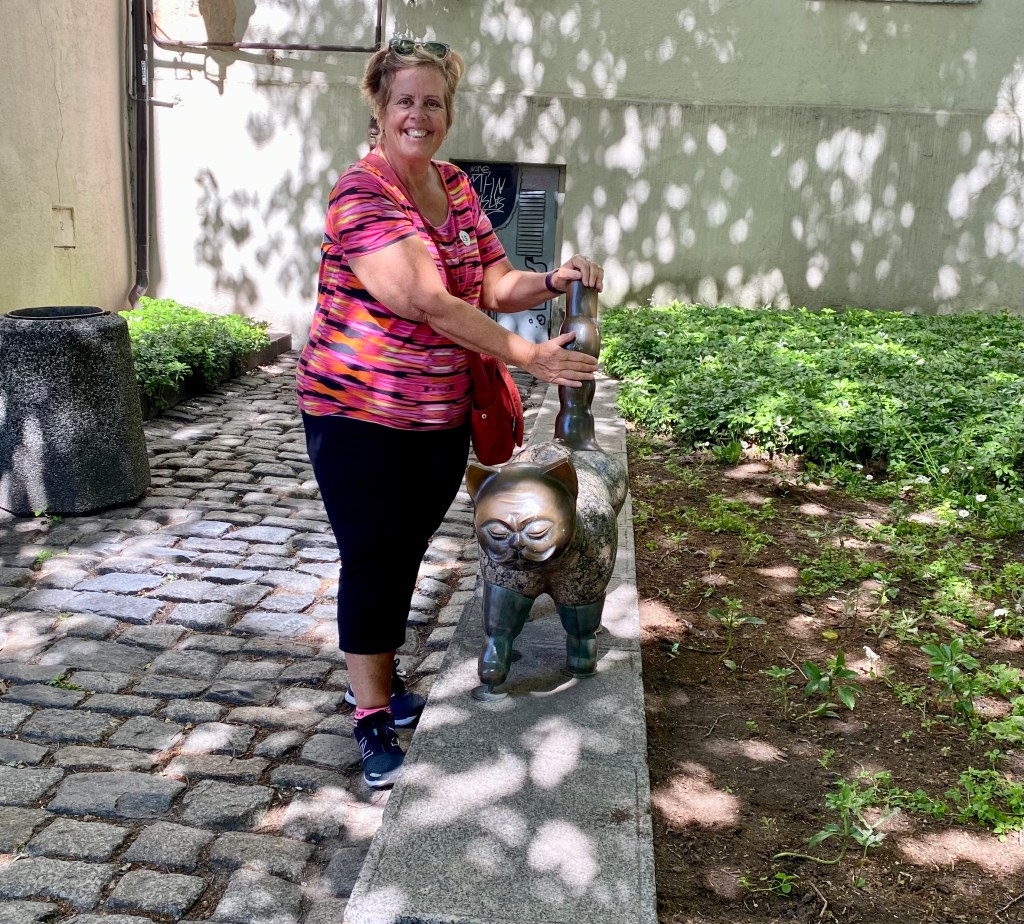
On blacksmith street, there is a cat with funny tale which you should rub for good luck.  I did but still not a jackpot in sight!

Rubbing the crazy cat tail for luck!

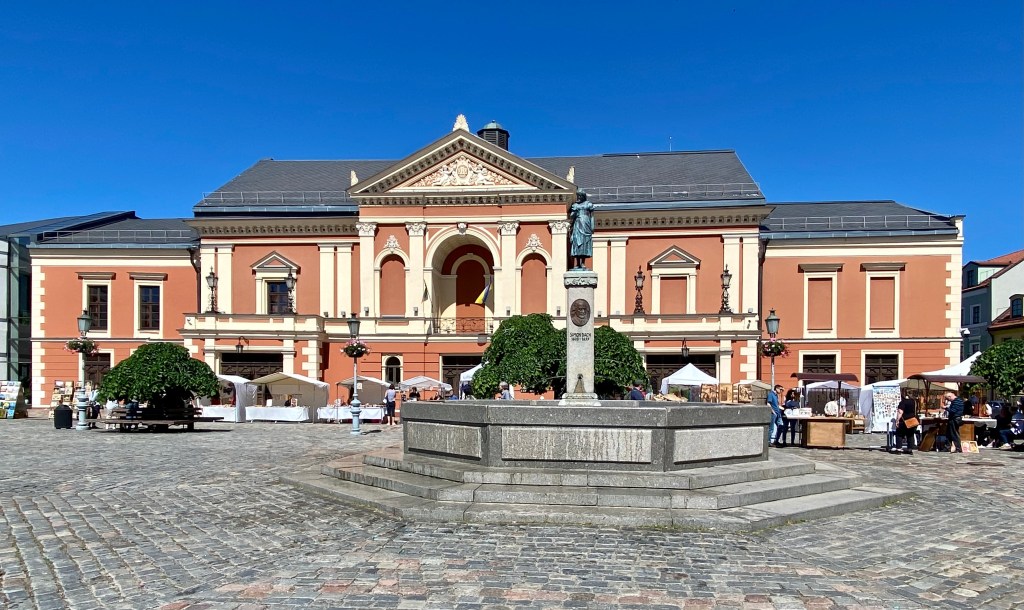
After strolling around Old Town we landed in Theatre Square which has a lovely fountain. 

Theatre Square

 The King of Prussia lived in Klaipeda in this large white building after running away from Napoleon. The document abolishing serfdom was also signed here. 

Sadly our time was running out and we headed back to the bus to return to the ship. I got a bit distracted on my way but still made it!

Locks of love?
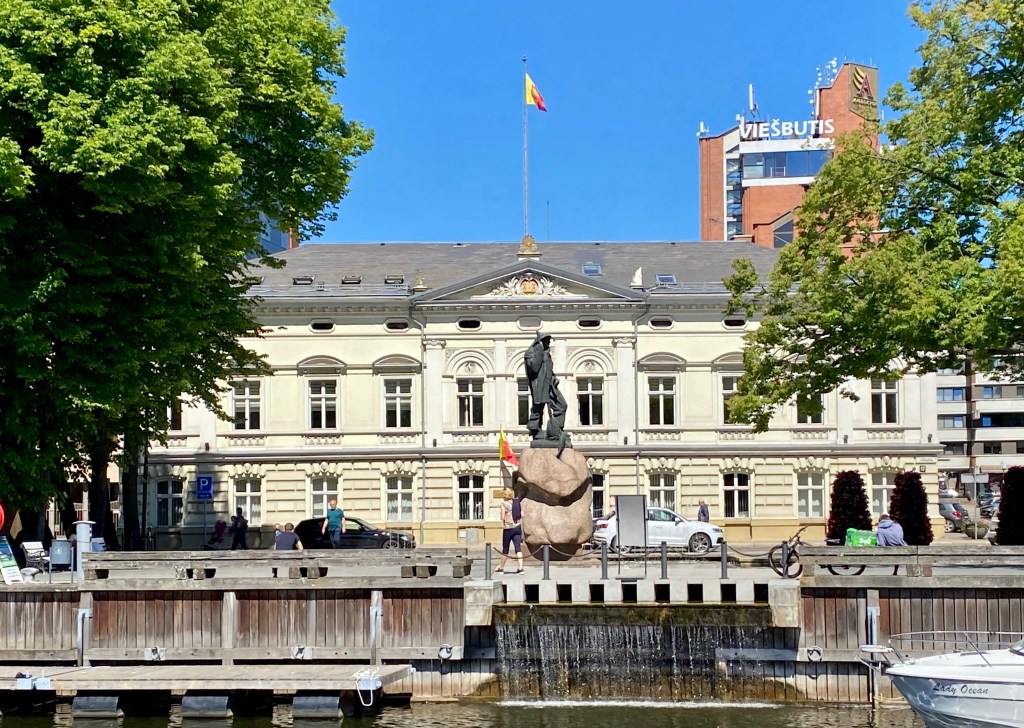
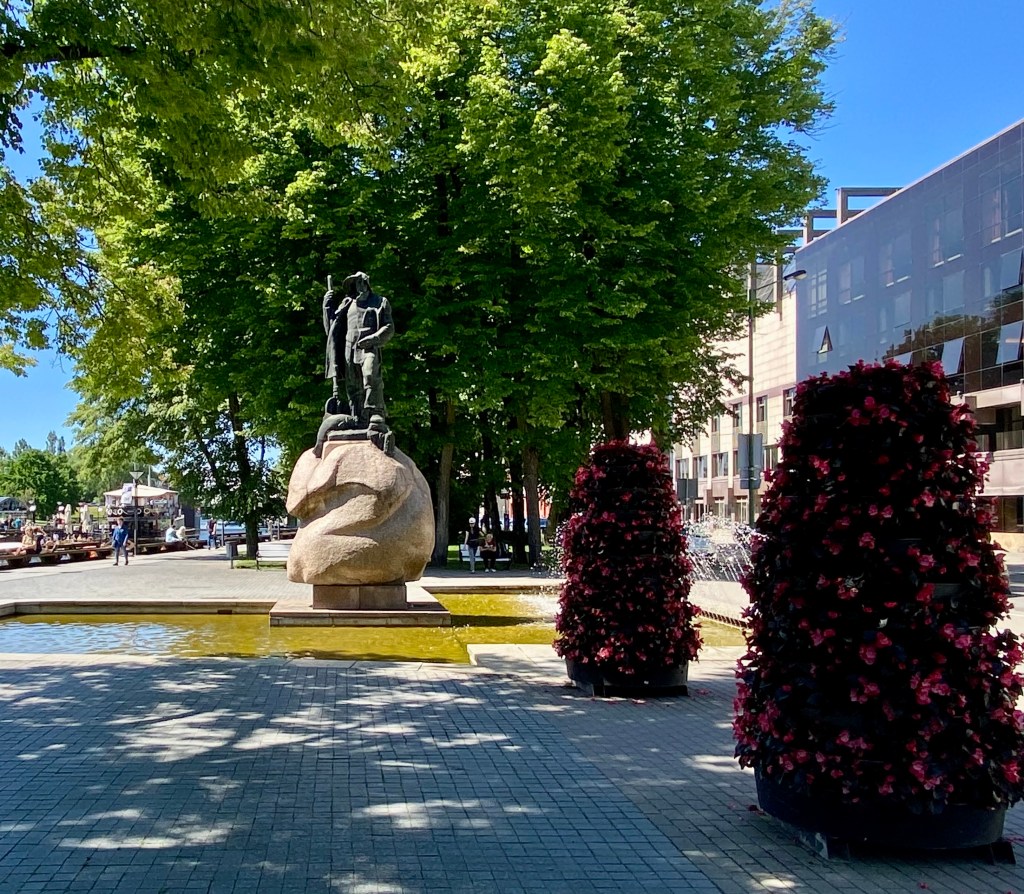
Fisherman

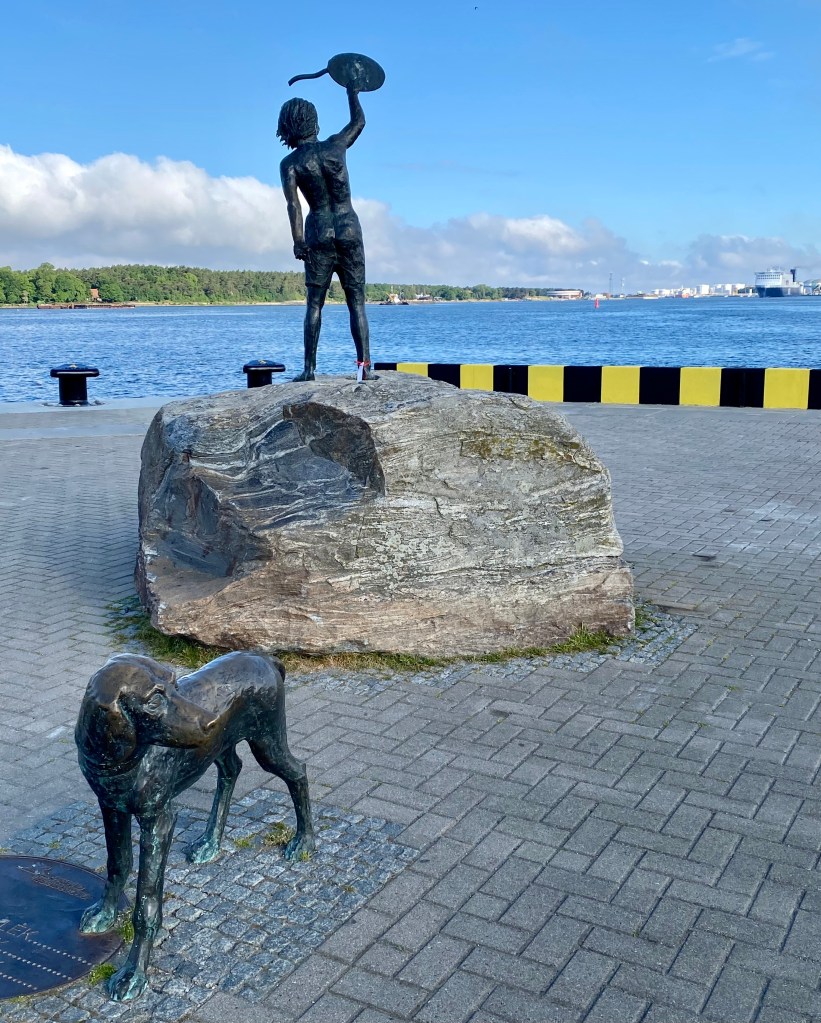
Back at the cruise port where a boy and his dog wave goodbye as we sail off to our next adventure!

Until the next time …

Wandering Through Northern Europe – Baltic Cruise on the Norwegian Dawn

June 16 – Gdańsk

We docked in Gdynia around noon so excursions don’t disembark until early afternoon which is fine by me; a little more R&R for the lazy wanderer!

At the crack of 2 pm we board our bus for the scenic drive from Gdynia to Gdańsk through the town of Oliwa for a walking tour of Old Town. Our tour guide, Ella, talked about the history of the region and pointed out interesting and not so interesting sights en route. I’m not sure she had time to breathe, lol!

In the 10th century, Gdańsk was part of Poland but it changed hands many times over the next few centuries. In 1308, when the Teutonic Knights come home from the crusades in the Holy Land they ruled Gdańsk, next the city was part of Prussia, between WWI and WWII Gdańsk was a free state under protection of the League of Nations and then it became part of Germany (Danzig). Finally after WWII, the city reverted back to Poland and is now her third largest city.

After WWII, many things changed in Poland. The Germans that had settled here went back home and Poles living abroad came home as part of the biggest migration in history.


Gdańsk suburbs were destroyed by Allies but the downtown core was destroyed by Russians as revenge for how badly their cities had been treated by the Germans during WWII.

Poland was shocked by the Russian invasion but her citizens quickly sprang into action welcoming refugees into their country and their homes. Poland, a country with 39 million citizens, have so far accepted 3 million Ukrainian refugees.

We drove past the Gdańsk Shipyard and the Solidarity Monument Square with its famous monument commemorating the deaths of shipyard workers shot down in December 1970. Ella pointed out Gate Number 2 famous entrance to Gdańsk shipyard where Lech Wałęsa took on the former USSR.

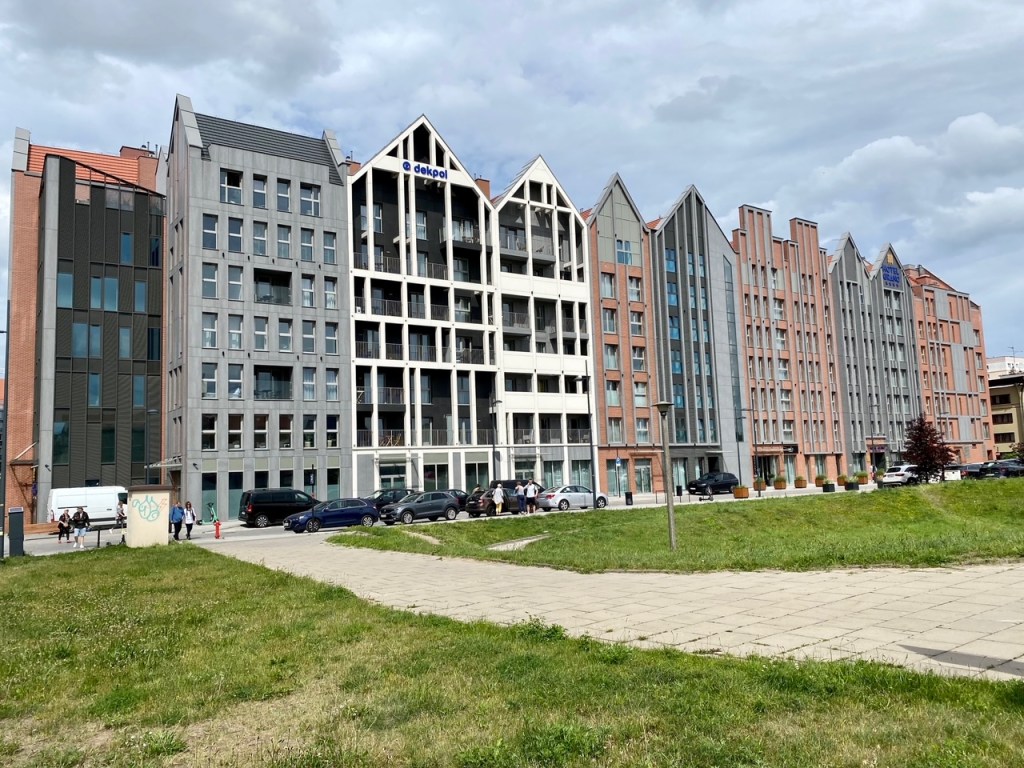
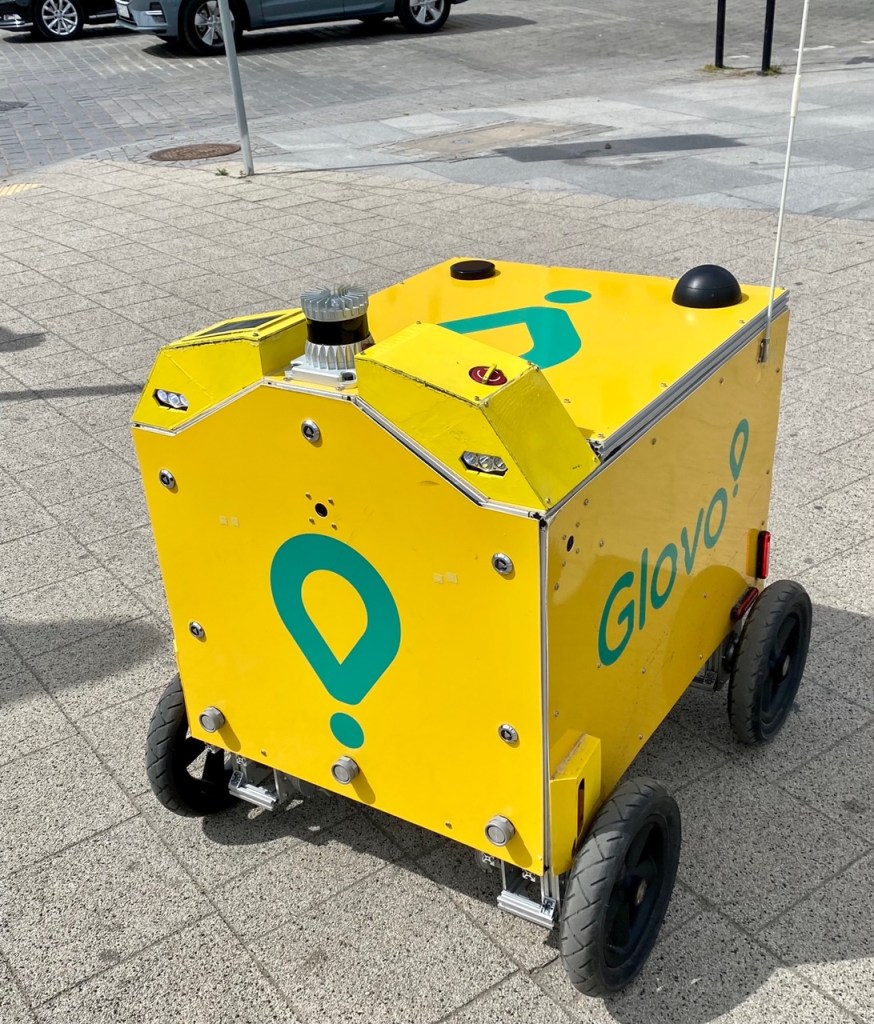
Arriving at Gdansk’s old town, we left the bus behind and started our guided walking tour. We stopped on the bridge to take a few pics of buildings that were formerly granaries when Ukraine was part of Poland. We also spied an automated delivery ”drone” that seemed a bit confused by the hoarded of people crossing the street.

Converted grain elevators
Auto delivery ”vehicle” waiting at stop light!

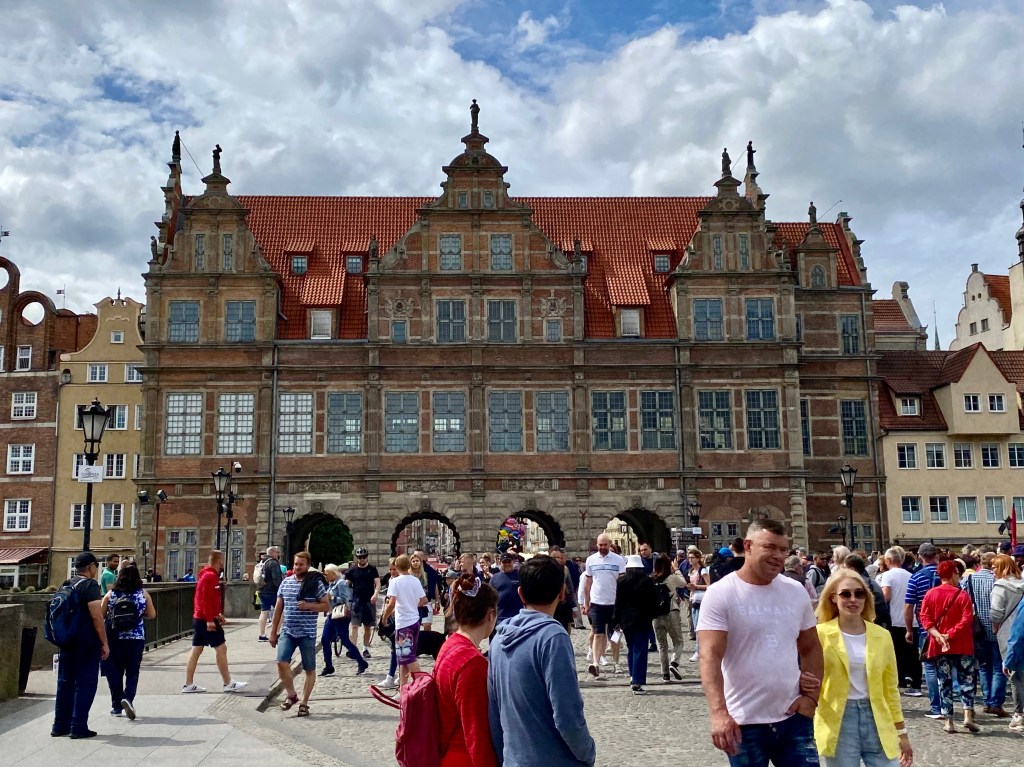
We entered the historic heart of the city, through the Green Gate aka Vendor’s Gate built in 16th century. It’s not green so not sure how it got that name!

Green Gate
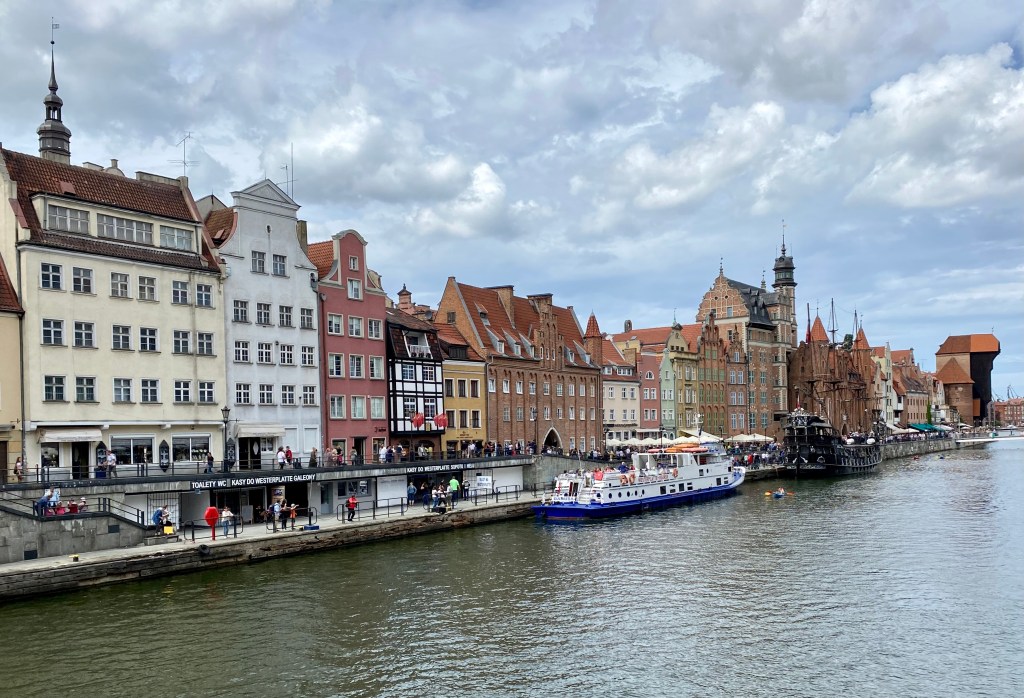
View along the river

Passing through the gate, we continued along Long Street, lined with marvelous buildings decorated with elaborate facades crowned by a myriad of ornate gables. Buildings resemble those in Amsterdam because they were built by the Dutch. Wide staircases in the back of these buildings make moving furniture a breeze so the hooks on their fronts are purely decorative.

Dutch inspired buildings on long street

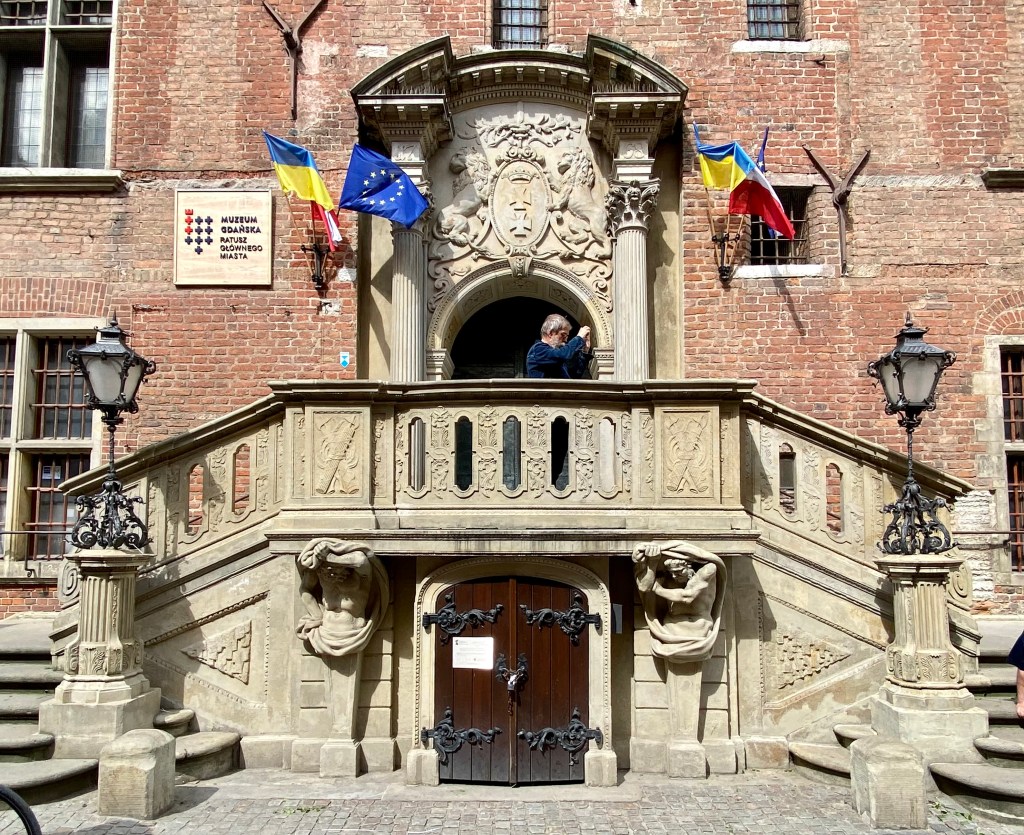
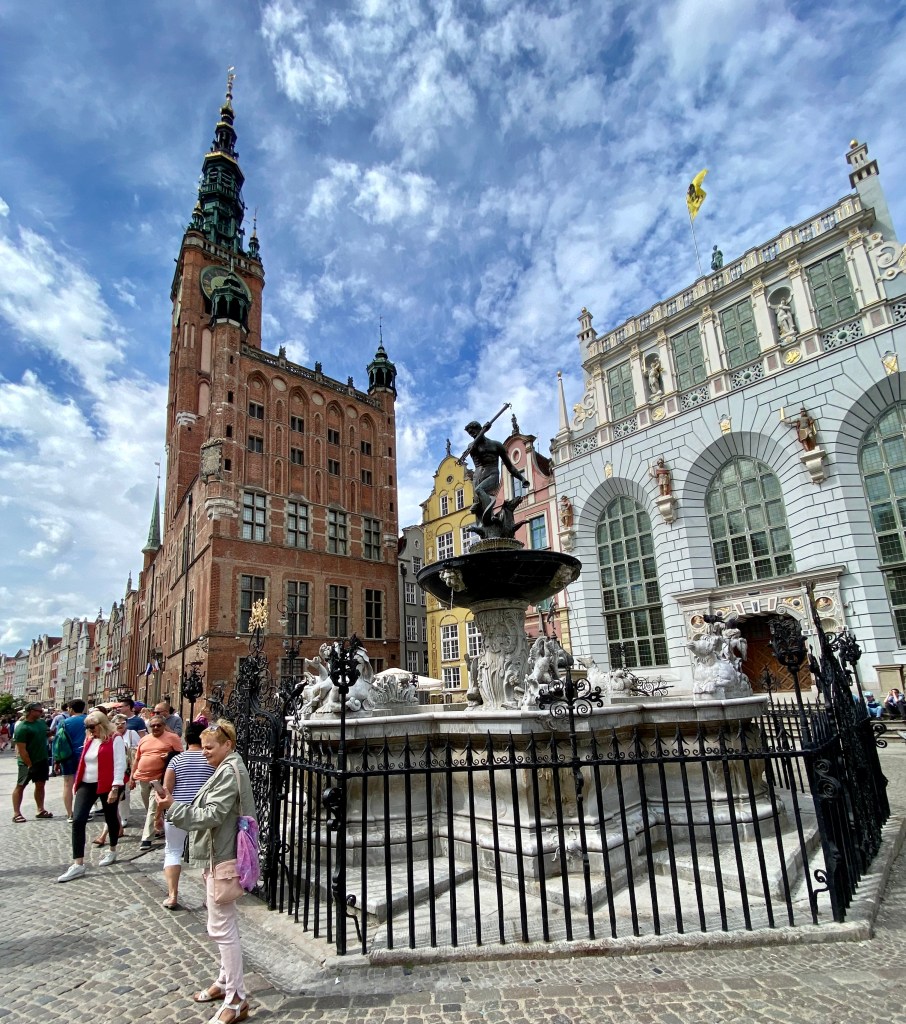
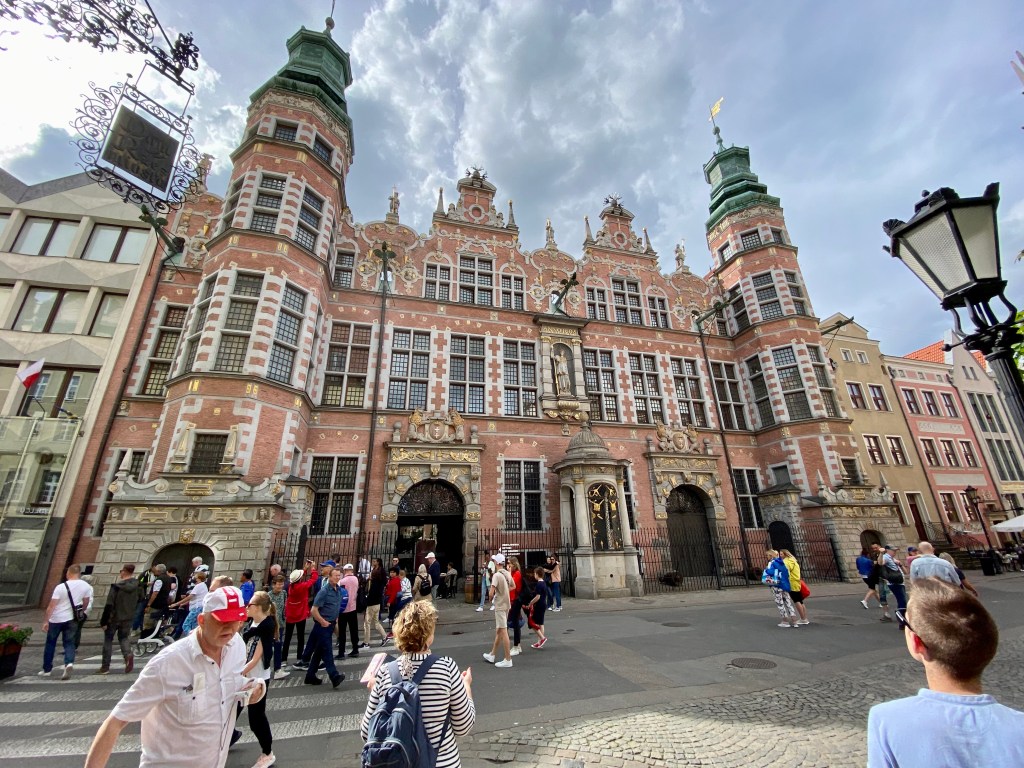
Our route also included the Town Hall where the lions are looking at the Golden Gate and waiting for the arrival of the Polish king. Long Market and the beautiful 15th-century merchants’ palace of Artus Court were also along the route to Neptune’s Fountain; a monumental symbol of Gdansk’s Hanseatic past.

Waiting for the Polish King
Neptune’s Fountain
Neptune’s Fountain

At this point, Ella’s nonstop prattle became too irritating so I decided to head off exploring on my own and meet the group at the assigned meeting point later in the afternoon.

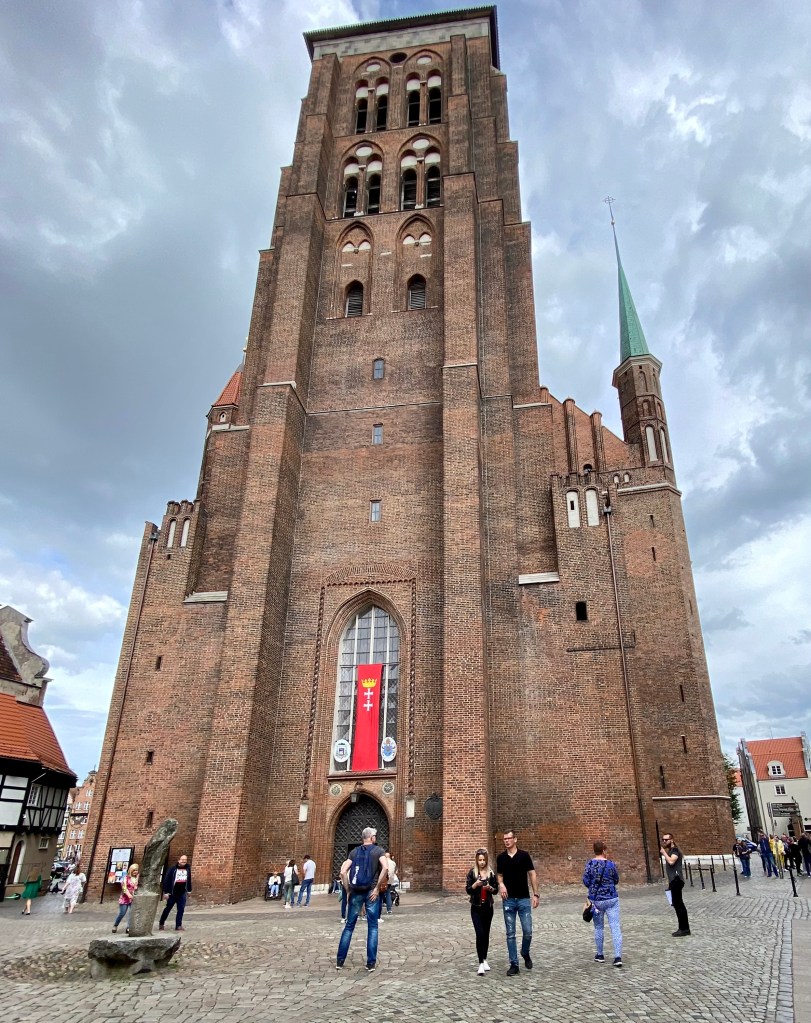
I strolled up, St. Mary’s Street, to the pride of Gdansk, Gothic St. Mary’s church. St Mary’s is the world’s largest brick church, accommodating a whopping 25,000 worshippers. Situated in the center of Old Town, this medieval church took 159 years to build, and its deceivingly plain exterior belies a bright, spacious interior with large windows and more than 30 beautifully decorated chapels. The high altar displays a lovely polyptych, the floor is covered with ancient tombstones and the northern transept holds an amazing 15th century astronomical clock, complete with the zodiac cycle and a calendar of the saints.

St. Mary’s Church
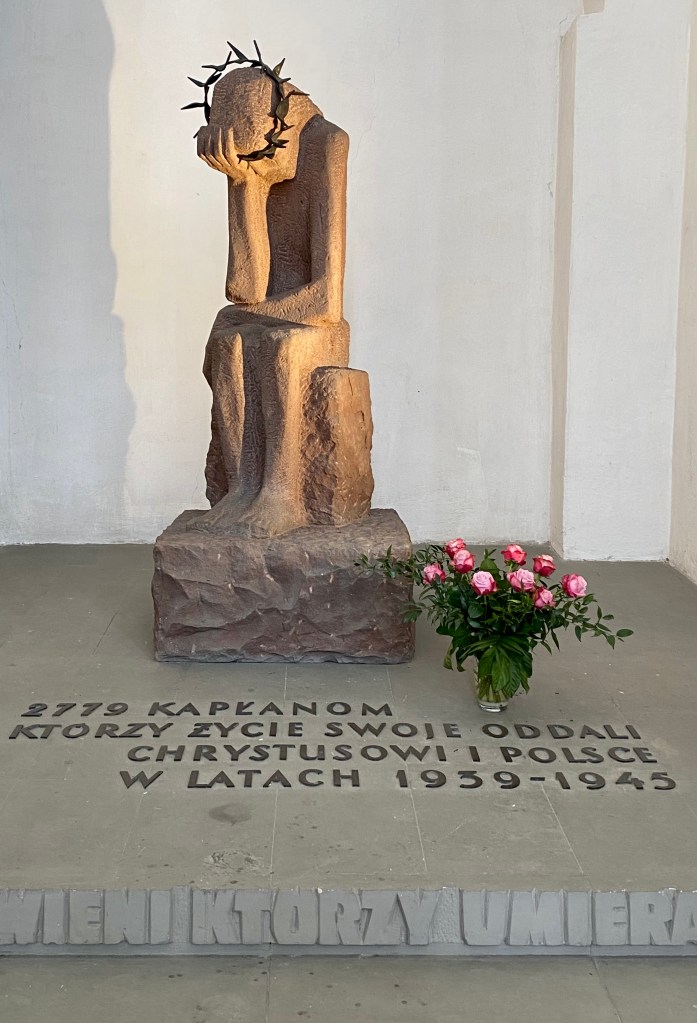
Pieta in St George’s Chapel
A Pilgrim ready to head out on the Camino in Spain
Astronomical Clock
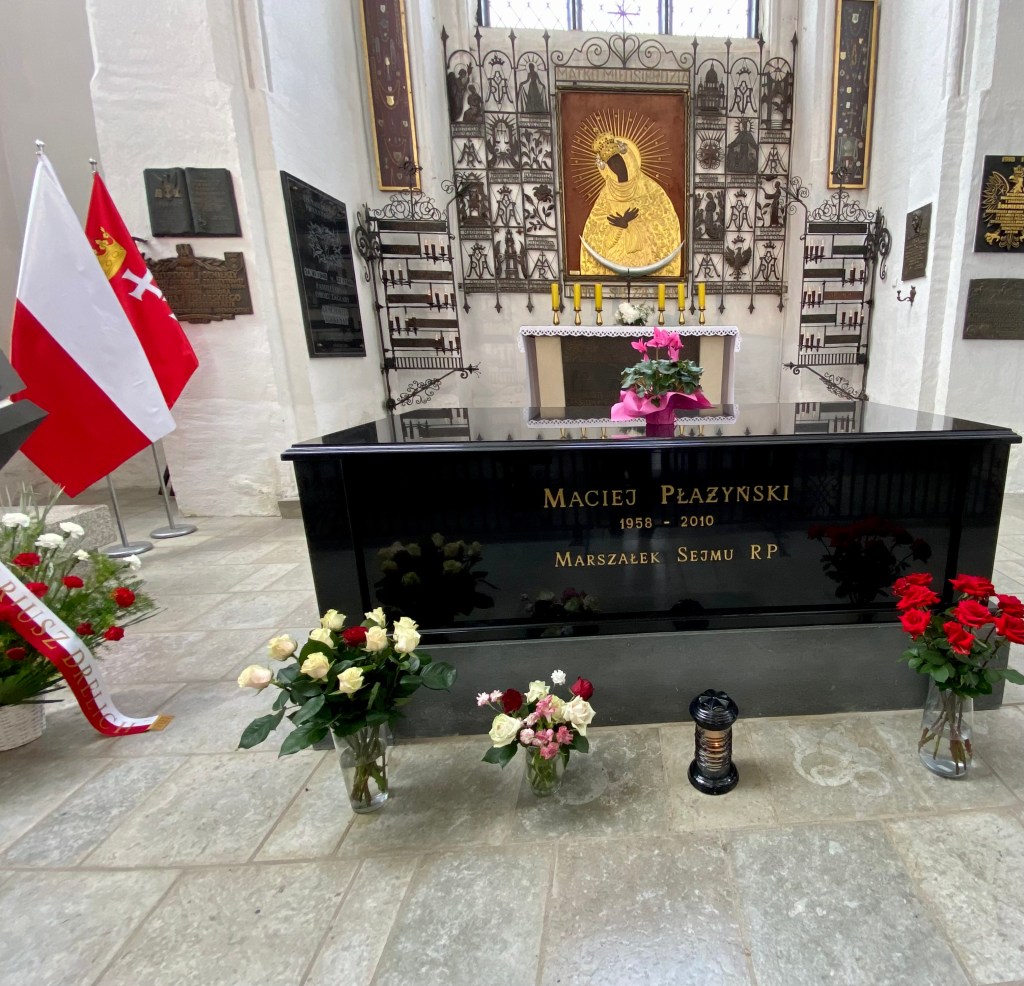
Tomb of Maciej Plazynski; Activist and Parliamentarian

Continuing along I found the Golden Gate, a grand ornamental arch built by Dutch Mennonites in the 17th century. This gate once allowed access through the medieval city’s defensive wall.

Golden Gate

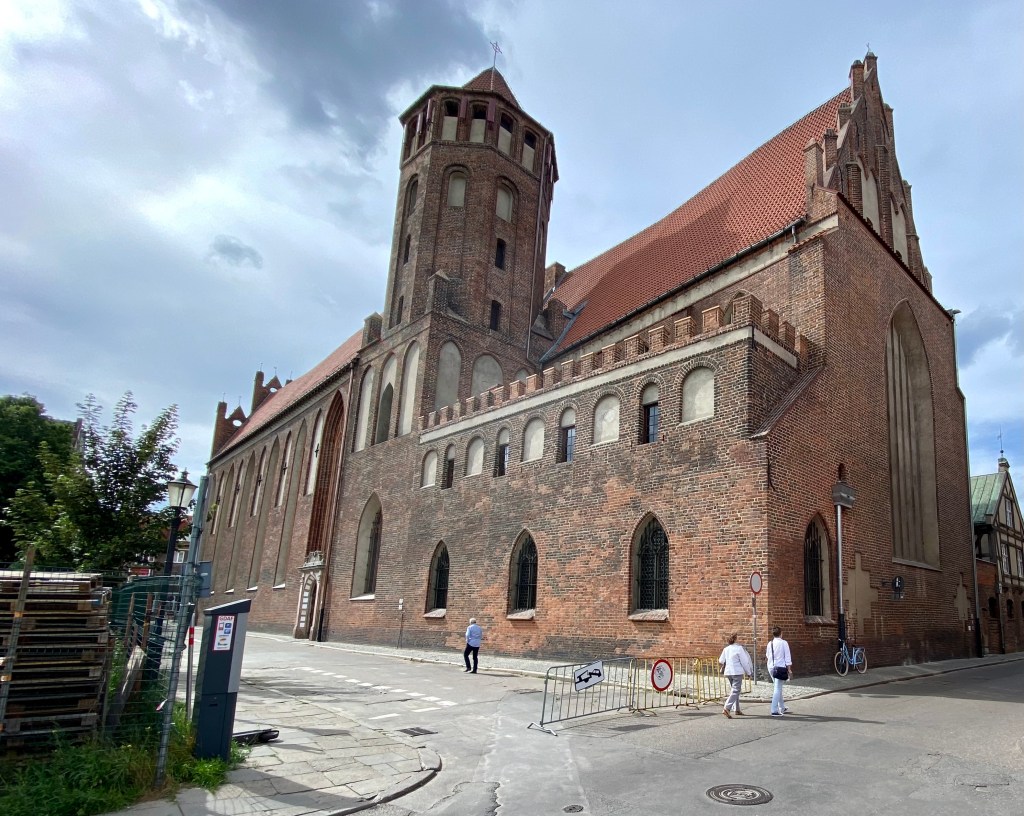
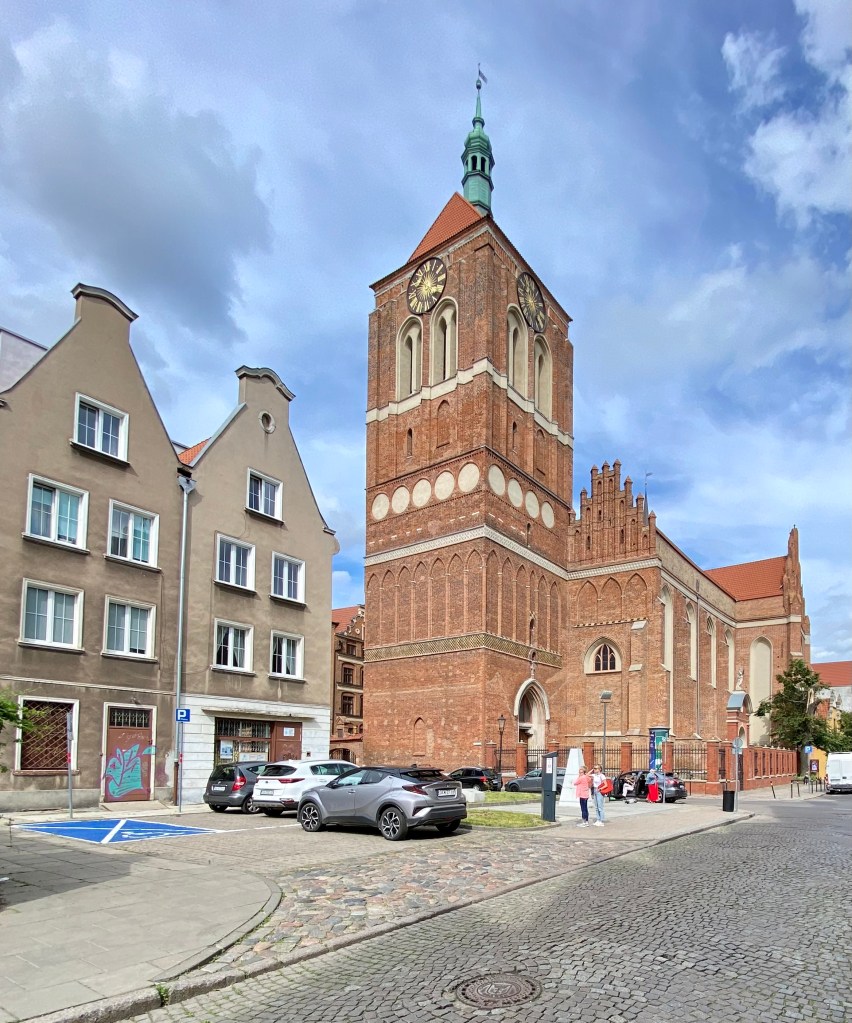
There are lots of churches in Gdansk so I stumbled on a few more in my wandering around town.

Church of St. Nicholas
St. John’s Church

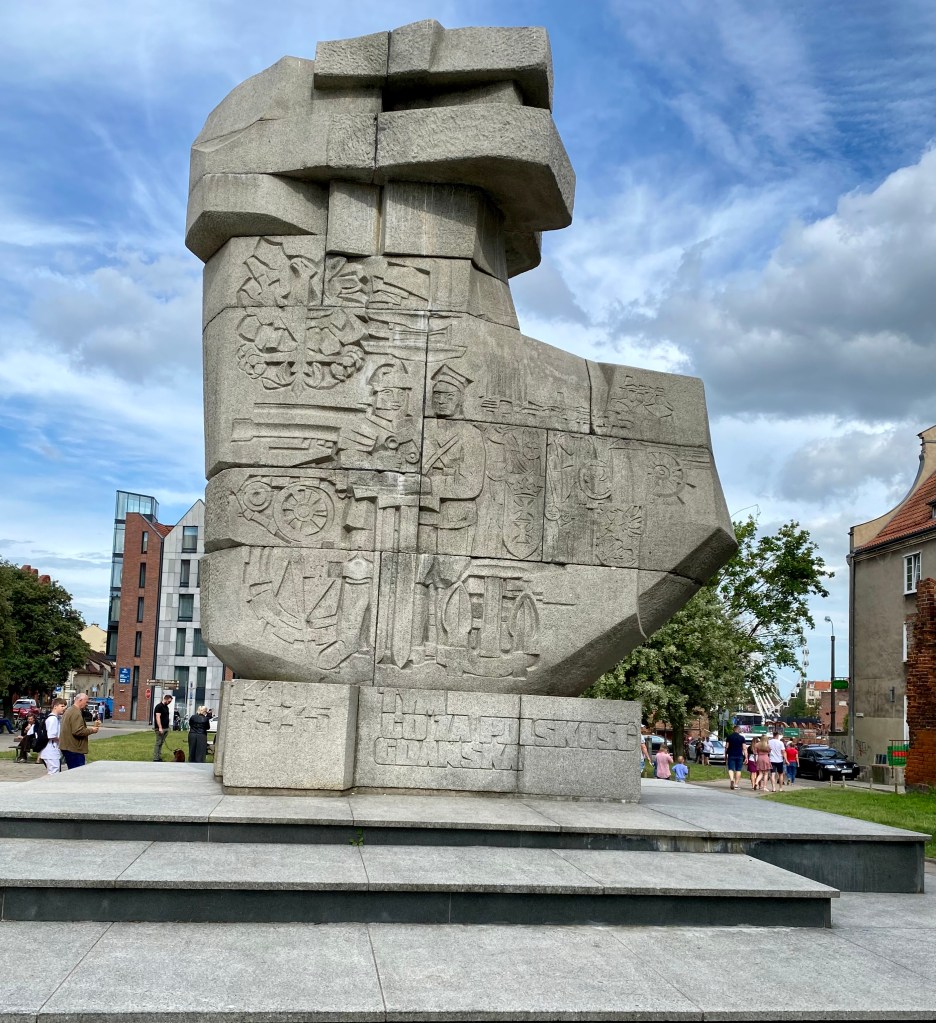
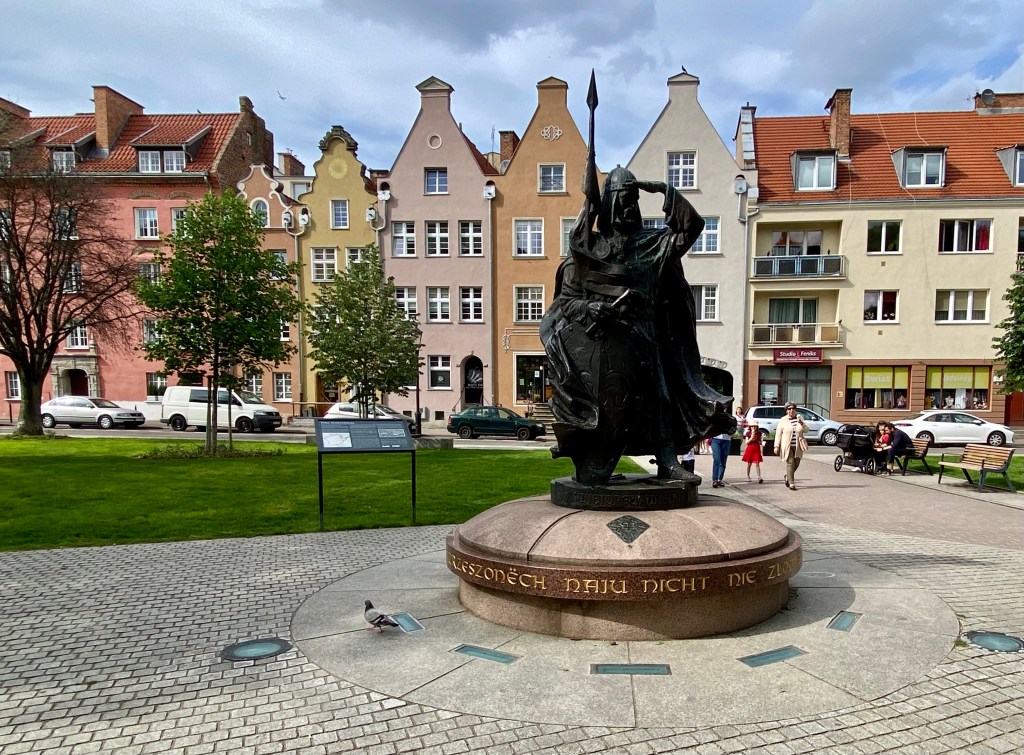
I also stumbled on this monument dedicated to the struggles of the Polish people for independence and represents the people who died defending Poland over the course of 700 years.

For those for the freedom of Gdansk

A few pics of the things that caught my eye along the “route”.

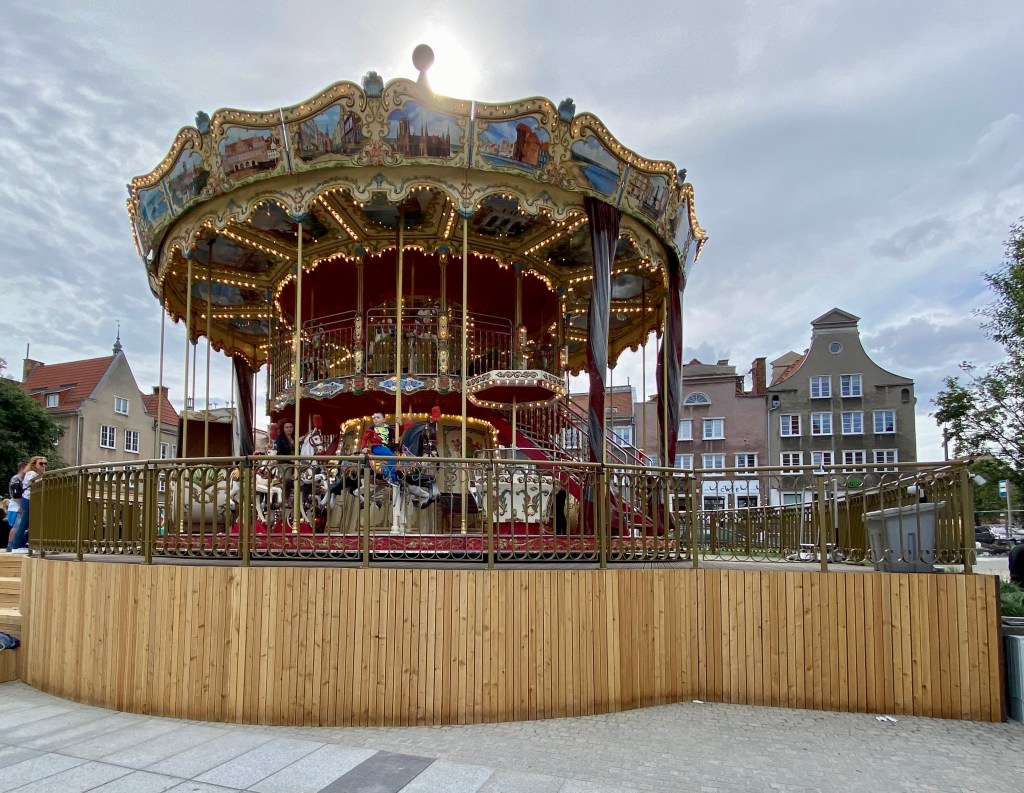
Beautiful Merry-Go-Round
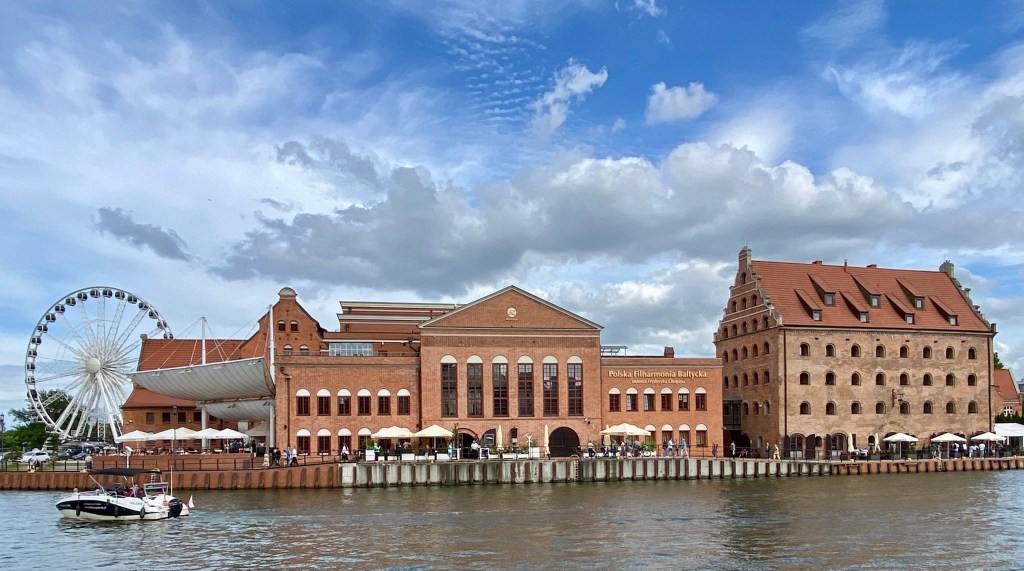
View across the River
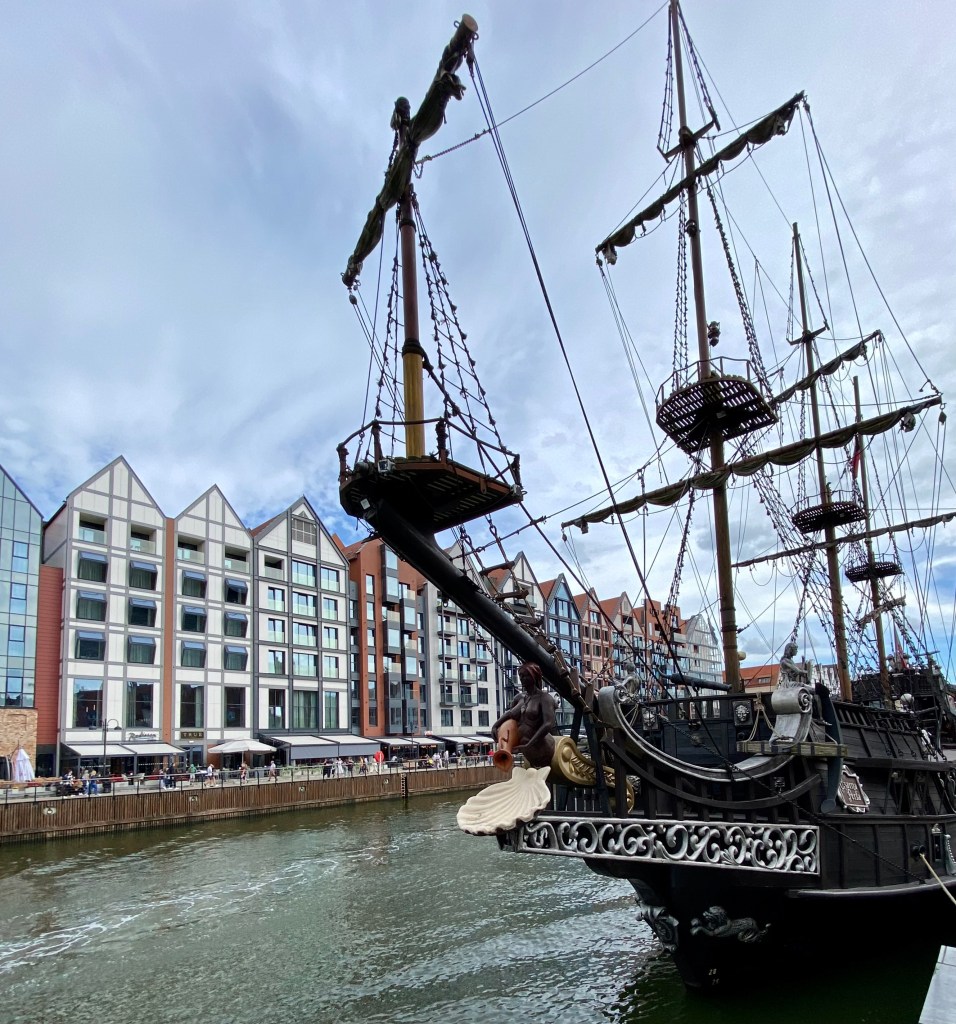
Ship on the river
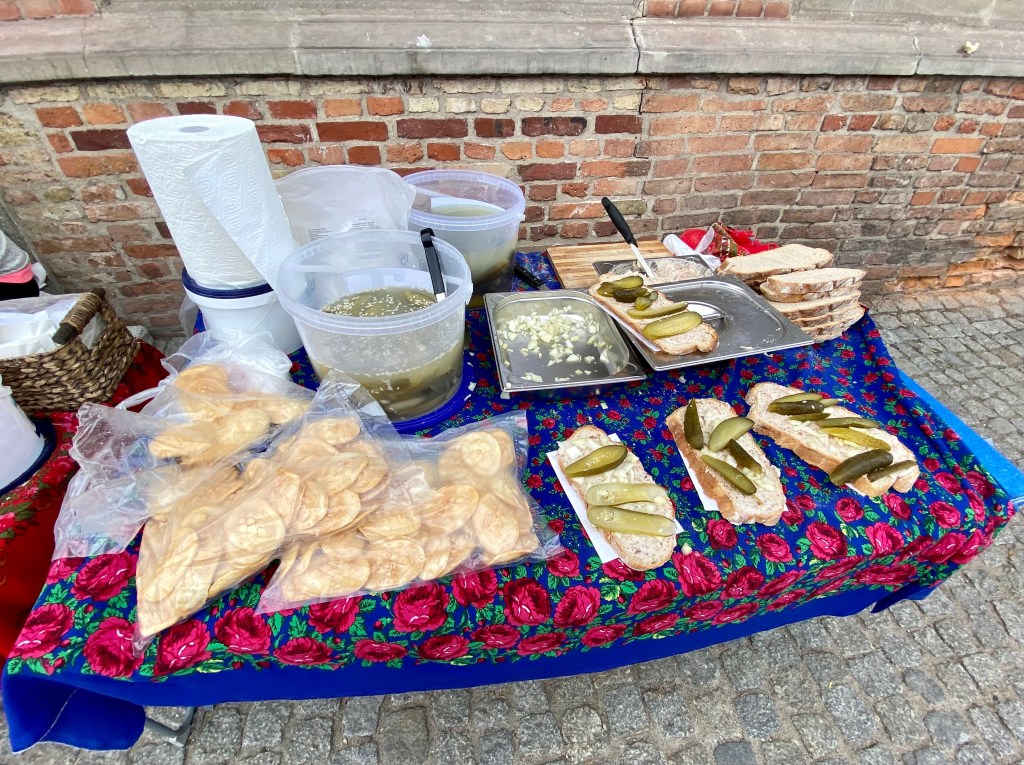
Butter and pickle sandwiches – maybe an acquired taste?

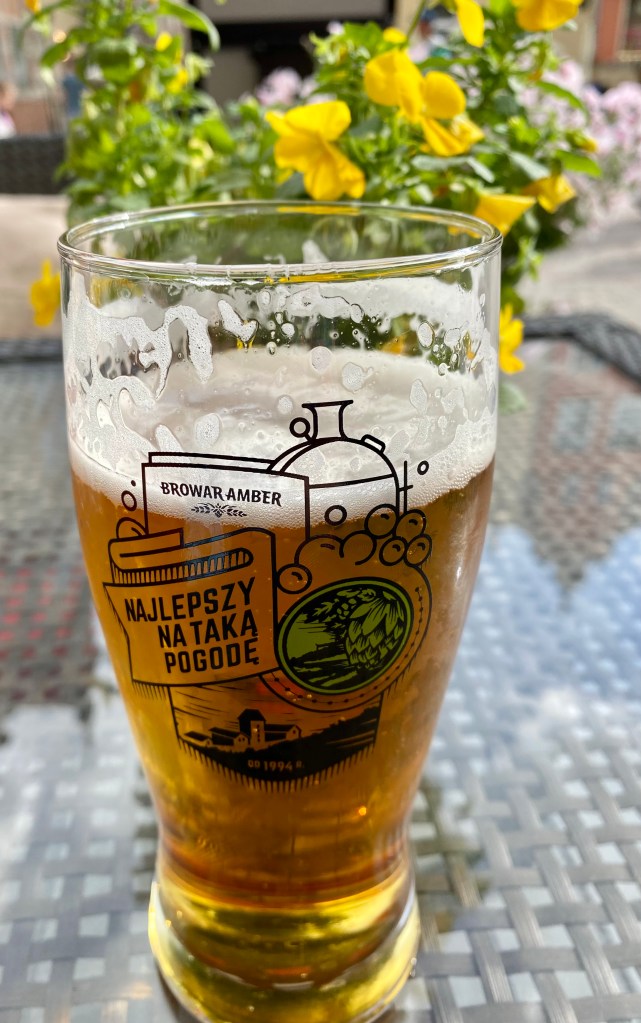
Toodling around can make you quite thirsty so I grabbed a pint of Polish lager close to where we were to meet for our return to the ship.

The perfect end to a beautiful day

Wandering Through Northern Europe – Baltic Cruise on the Norwegian Dawn

After two fairly relaxing days on the ship, today we are docking in Kiel, Germany. I had a look at the ship-organized excursions on Monday when I boarded but none of them really interested me so I opted to just hang out in Kiel and toodle around town on my own. That means I can come and go as I please and don’t have a stupid early wake up call. Important after a late night making my fortune (not!) in the Dawn Casino!

The city of Kiel was founded in 1233 as Holstenstadt tom Kyle by Count Adolf IV of Holstein. In fulfilment of an oath taken during the heat of the Battle of Bornhöved, the Count withdrew to a Franciscan friary in 1238 and in 1244 was ordained a priest in Rome. He founded a Franciscan friary in Kiel (Kieler Kloster); one of the very few buildings from the medieval period left standing after the WWII.

Kiel is a port city on Germany’s Baltic Sea coast with a deep harbour. During WWII, Kiel was one of the major naval bases and shipbuilding centres of the German Reich. Because of its status as a naval port and as a production site for submarines, Kiel was heavily bombed by the Allies during the war and about 80% of the buildings were raised. The city was rebuilt after the war and in 1946 was named the seat of government for Holstein. It officially became the state’s capital in 1952. Today, Kiel is once again an important maritime centre of Germany because of its deep harbour. 

Leaving the port area there is a blue line plated on the sidewalk that leads you to town and back so the potential for me to get lost approaches zero! Lol, if only all towns were this well organized for people like me who are missing the navigational gene!

Low tech navigational tool for the directionally inept!

All over town there are fences, tents, stages and booths for food and booze sales being put up. There’s a major festival coming for the first time since Covid but sadly nothing is open yet. 

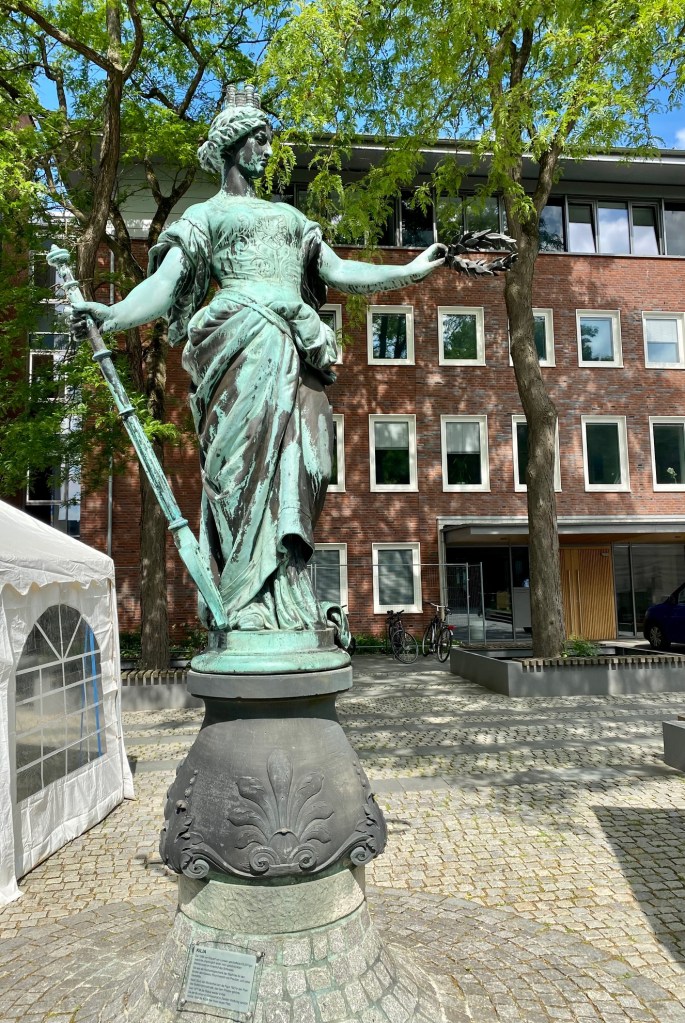
On my travels I spy a bronze statue; Kilia. Originally she crowned a richly decorated stone fountain in the courtyard of a castle. The Kilia Fountain, built in 1889, was a wedding present from the city of Kiel to the emperor’s brother and his wife. The fountain was destroyed in WWII so now Kilia stands alone in the Daenische Strasse Schlossgarten. 

Kilia

Next, I come across a statue of Adolf IV; Count turned Franciscan priest and founder of the Franciscan friary in Kiel (Kieler Kloster).

Adolf IV

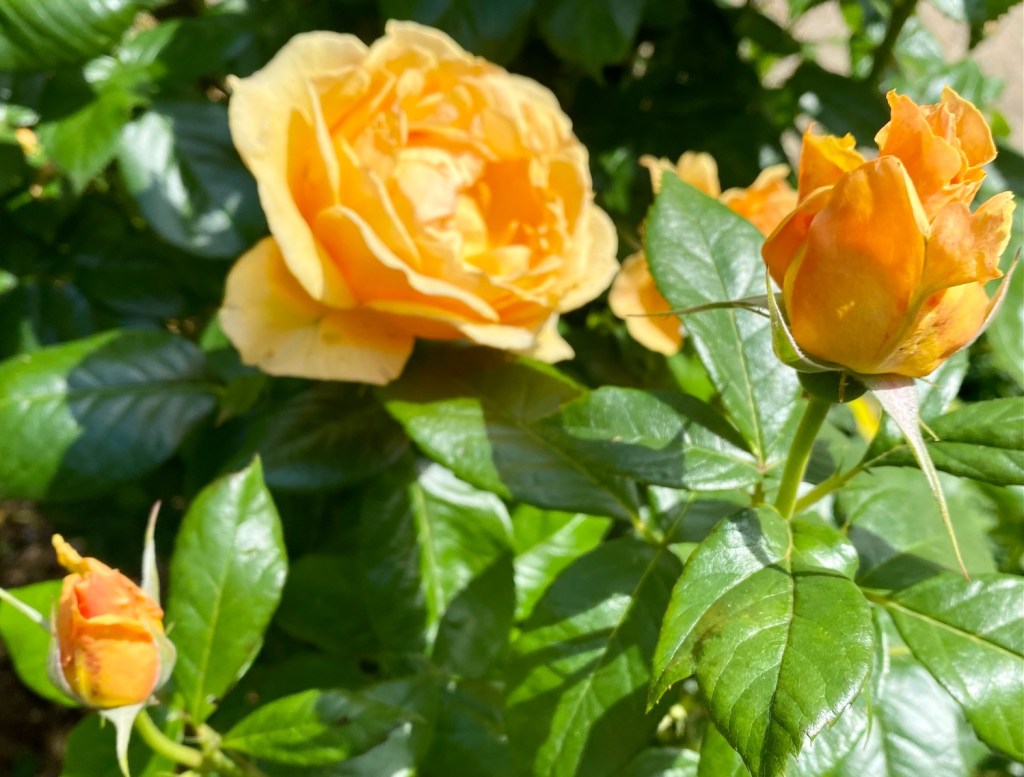
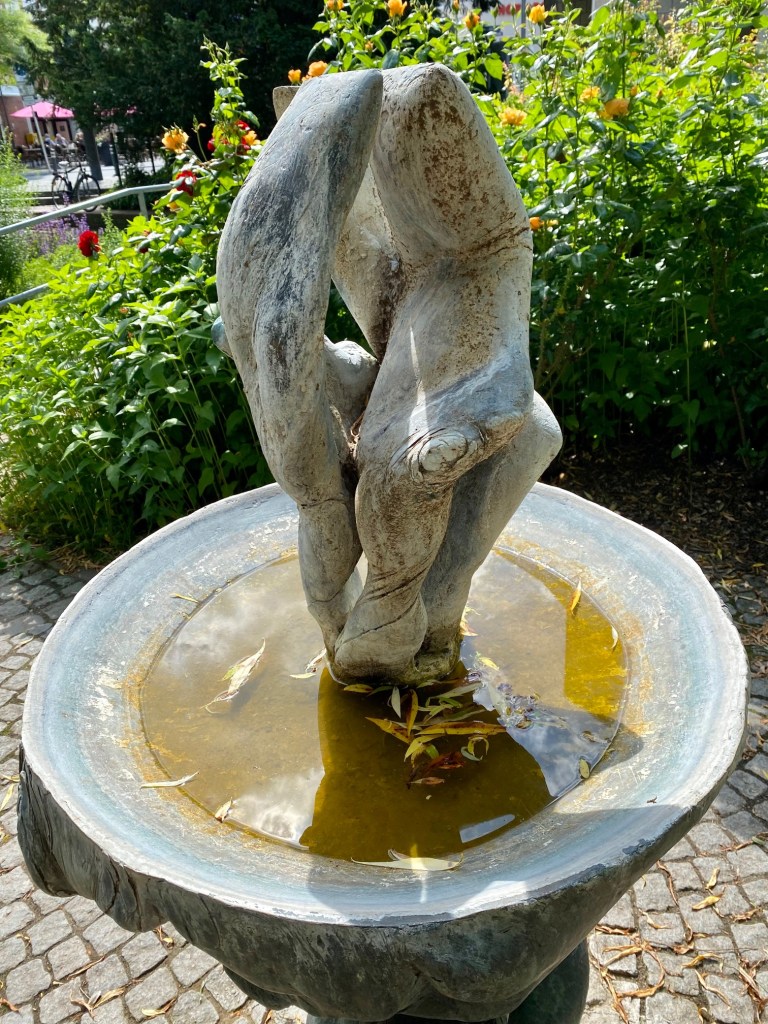
What remains of the original Kloster has a beautiful rose garden and a little fountain on its grounds.

Roses and they’re my favourite colour!
Fountain at The Kloster

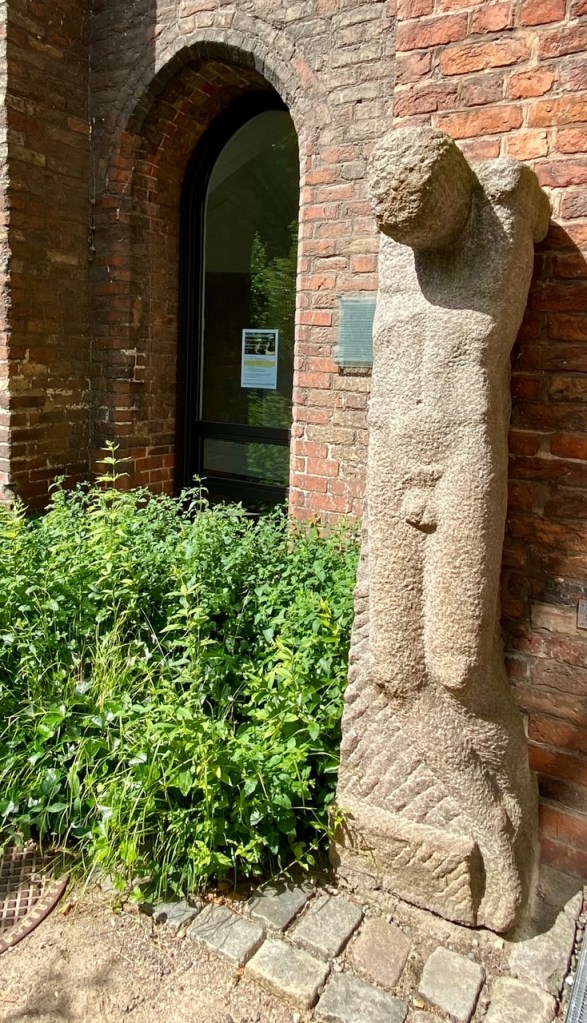
Next to the entrance of the Kloster stands the Schmerzensmann (The Man of Sorrows); a granite sculpture depicting the martyrdom of Christ with his head fallen powerlessly on his chest. 

Schmerzensmann

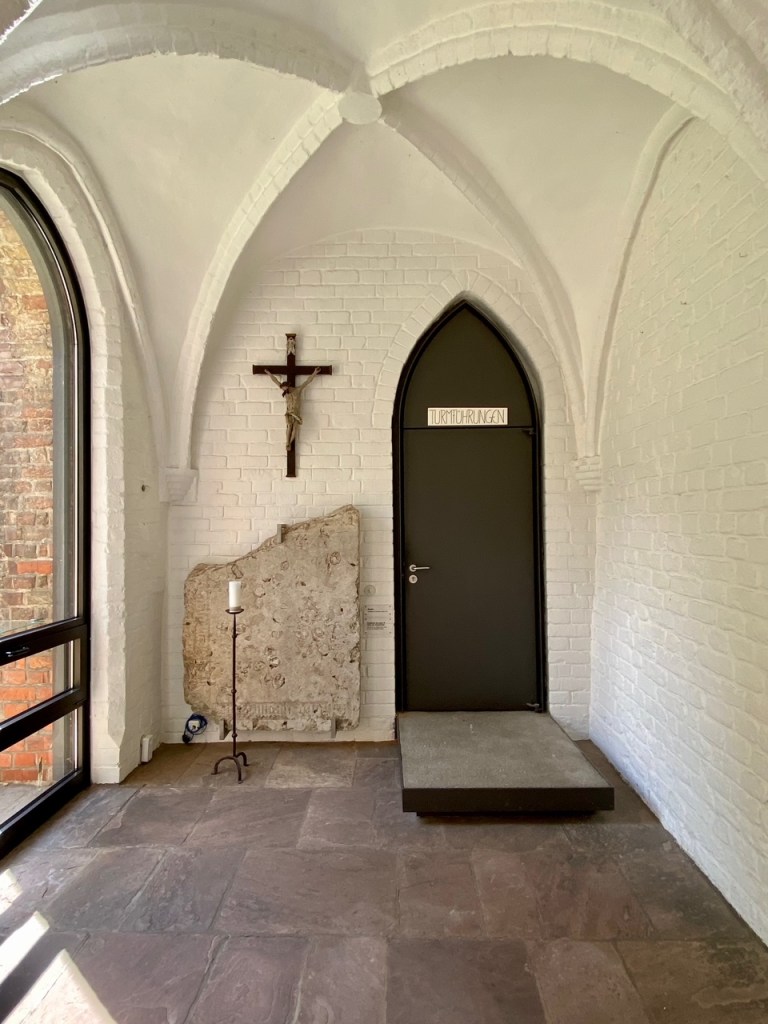
A lovely volunteer guide took a few fellow cruise passengers and I on a tour through the two remaining rooms of the Kloster (ante chamber and dining room) and regaled us with some of Kiel’s rich history. Today the restored dining room is used for cultural events including concerts. The town has built apartments for theology students on the floors above. 

Part of the medieval Kloster

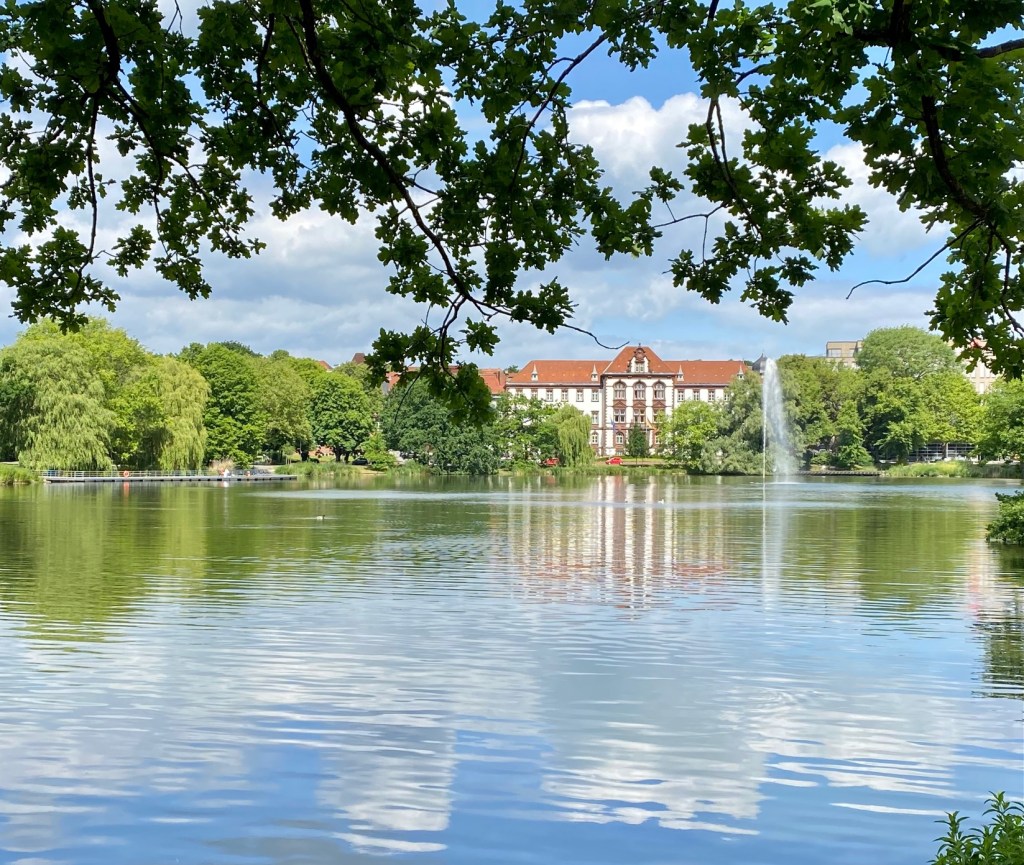
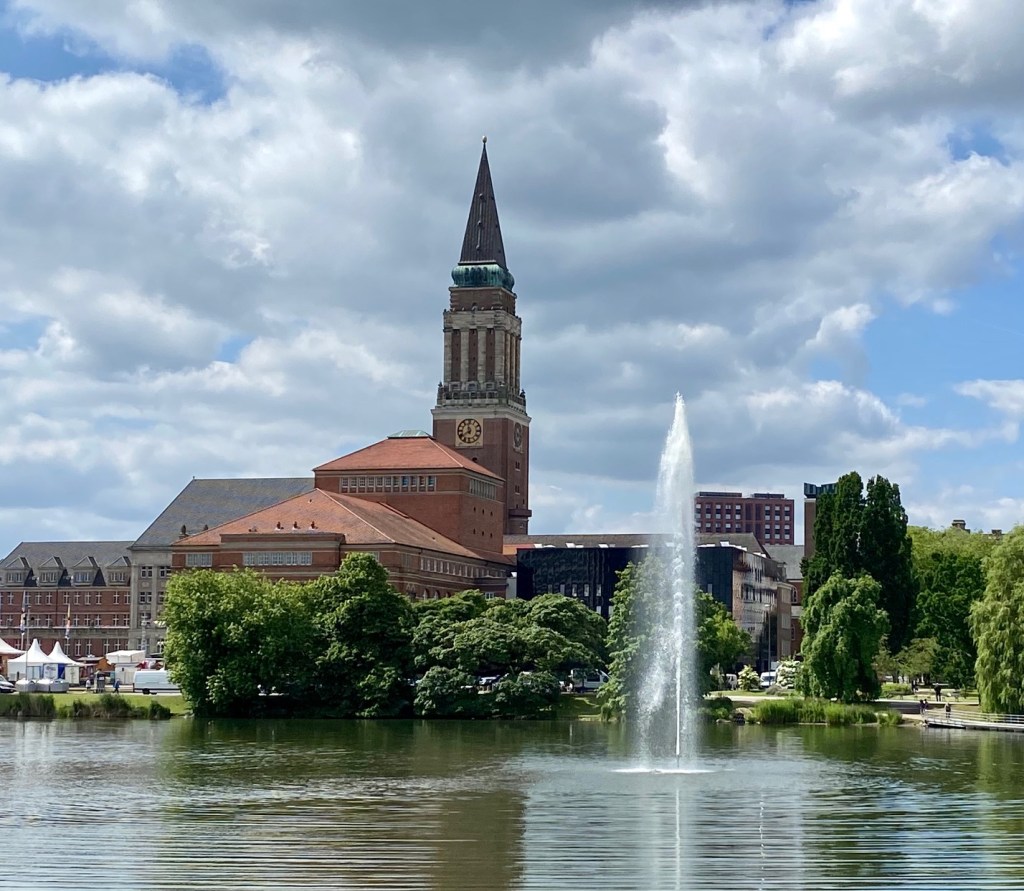
Following the blue line on the pavement for the most part, I came across a lake in the heart of downtown Kiel with a walking path around it which I put to good use.  Hiroshima Memorial Park boasts large shady trees and benches on the water’s edge perfect for relaxing on a beautiful day. On the far side is a large white building that looks interesting but on closer inspection houses the Department of Justice.  

Hiroshima Memorial Park
View of old town across the lake

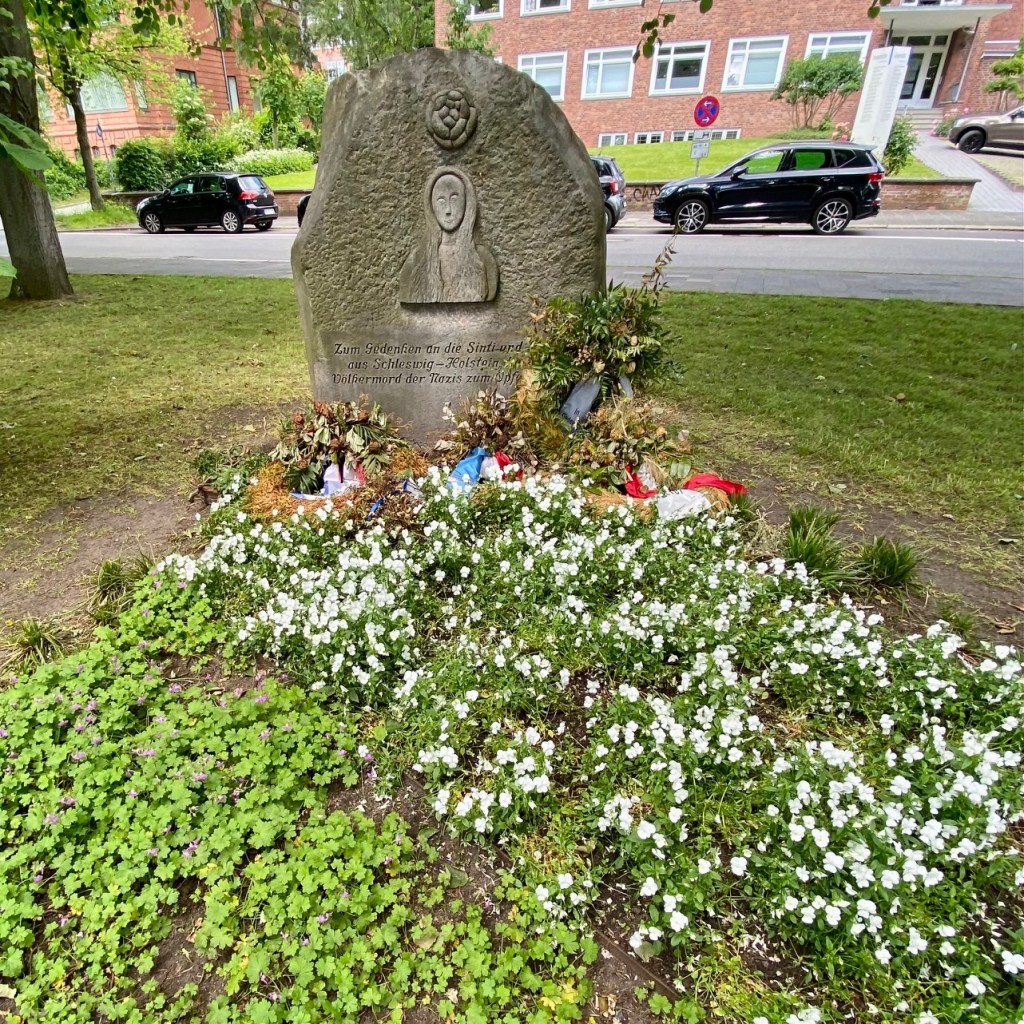
There is also a granite memorial stone for the deported and murdered Sinti and Roma in the park. Designed by Christoph Heiko Weis, it is around two meters high and shows a simple image of Mary and an inscription in German that translates to “In memory of the Sinti and Roma from Schleswig-Holstein who fell victim to the Nazi genocide”.

Memorial stone for the deported and murdered Sinti and Roma

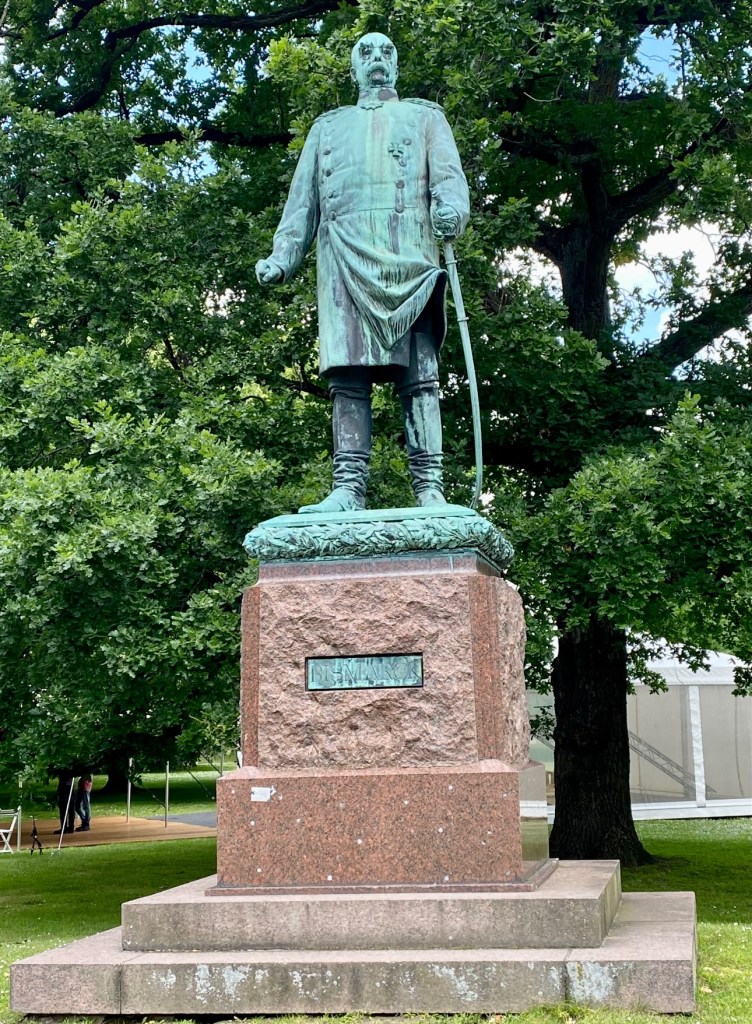
Nearby is a memorial (Bismarckdenkmal) that commemorates Otto von Bismarck-Schönhausen (1 April 1815 – 30 July 1898). He was one of the most prominent European statesmen of the nineteenth century. He served as Prime Minister of Prussia from 1862 to 1890 and was involved in three wars including the Franco-Prussian War (1870-1871). After engineering the unification of Germany, he served as the first Chancellor of the German Empire from 1871 to 1890.

Bismarck

Wandering on, I spied a bronze sculpture of a Newspaper Boy. Not sure what he’s all about. 

Newspaper boy hawking his wares

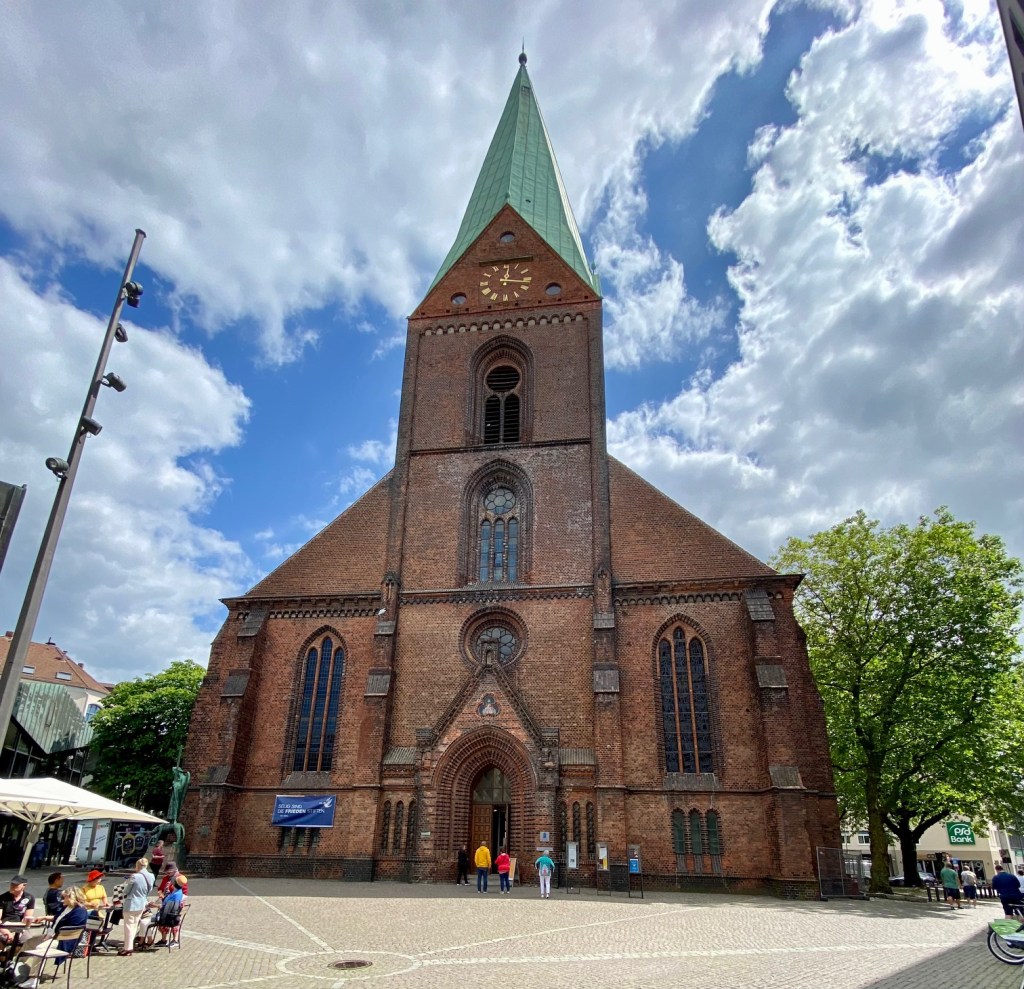
In old town stands the St. Nikolai Church, one of the town’s oldest churches, which was pretty much destroyed during WWII with the rest of the city.

The church was later rebuilt but some of the notable artwork from the original church remains including: 

St. Nikolai Church

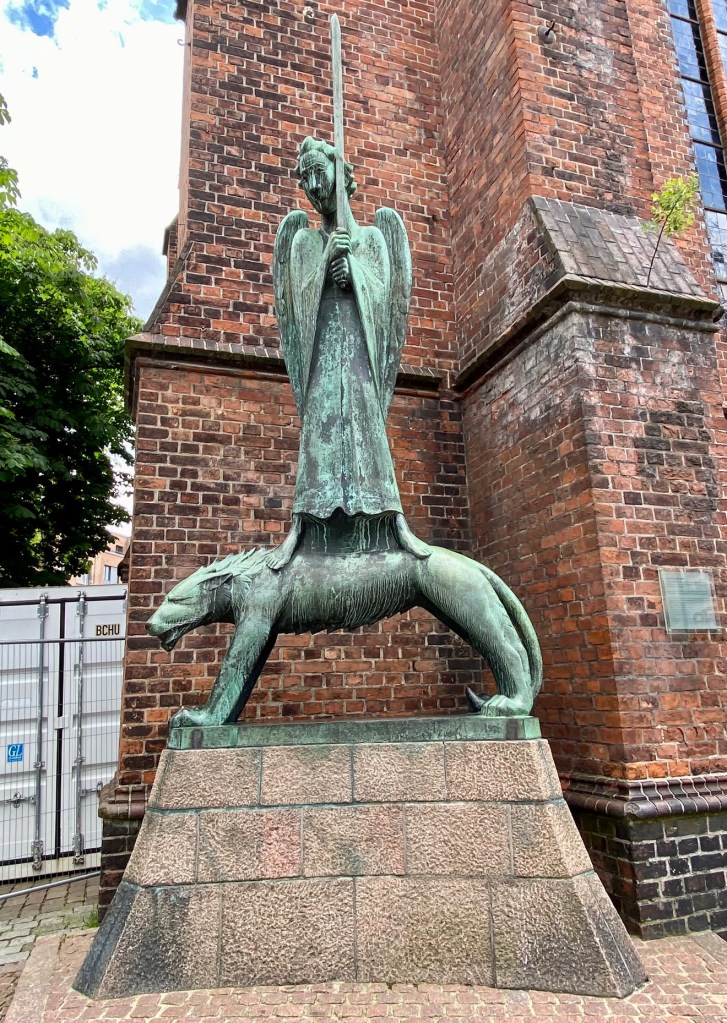
Outside, off to one side, of the rebuilt, an Ernst Barlach’s bronze from 1928 depicting an angel with a sword dominating a vulpine figure; a symbol for the superiority of the spirit and its victory over evil. 

Good prevails over evil

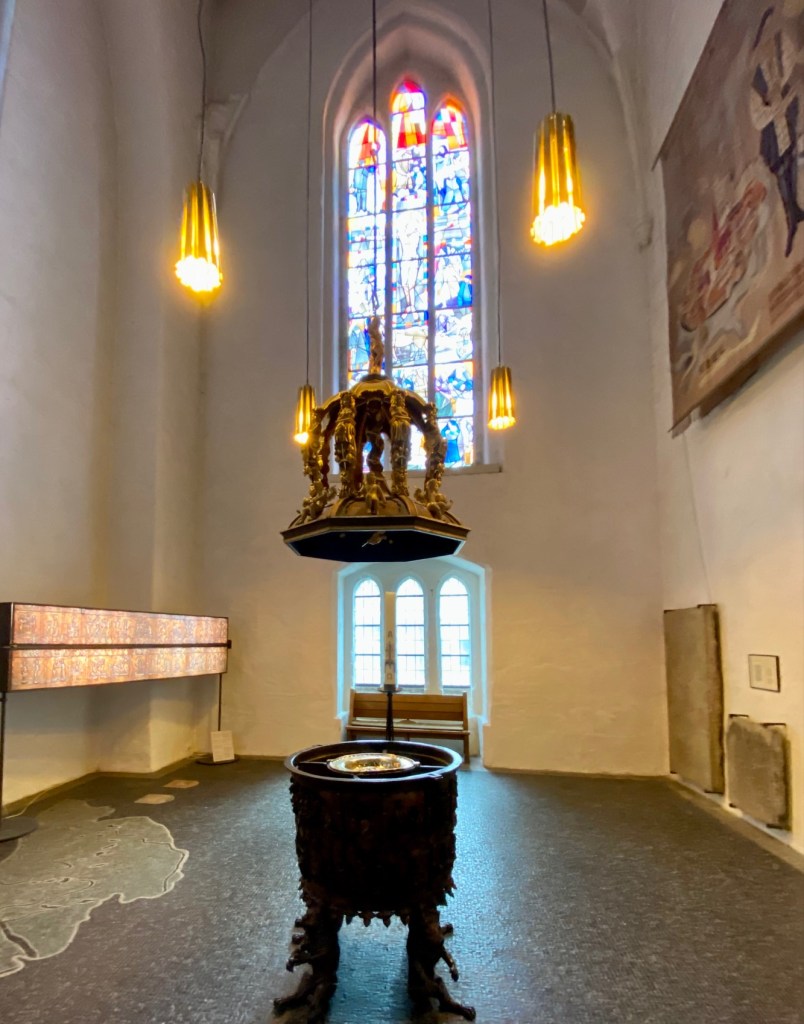
Once inside there is a bronze baptismal font (Taufe) that dates back to 1344 and is the oldest artwork in the church. It is regarded as one of the best medieval bronzes in northern Germany.

Bronze baptismal font

The Erzväteraltar (Altar of the patriarchs) from 1460 was made for the church of the Liel Abbey and was moved to St. Nikolai in 1541 when the monastery was dissolved in the Reformation. Sadly the altar wasn’t in the church today – not sure why as my German is nonexistent. In front of the alter hangs a large Triumphal cross (Triumphkreuz) that dates back to 1490. There is also a carved wooden baroque pulpit from 1705.

Triumphkreuz
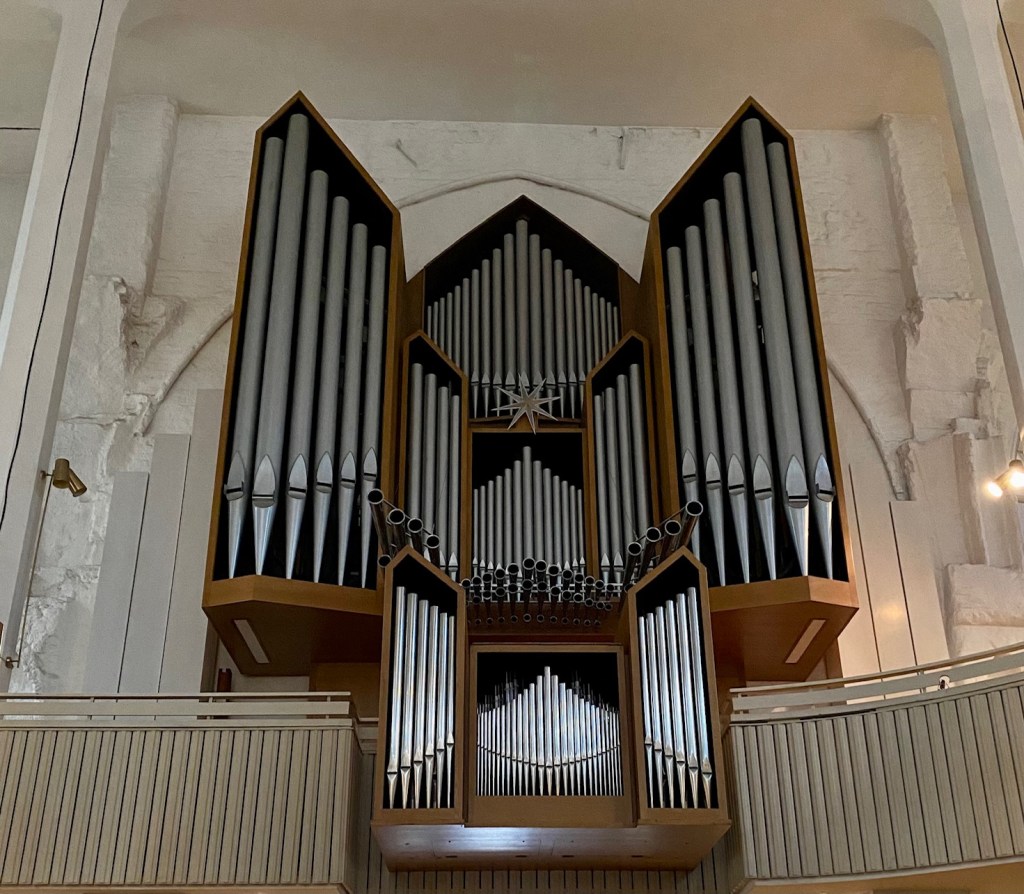
Beautiful pipe organ

Kiel is also home to a number of research institutions including the University of Kiel which is the oldest, largest, and most prestigious university in the state. On my way back to the ship I walk through a park that features six busts of Nobel laureates from a variety of specialties who were professors at the University of Kiel.

Back to the ship for a relaxing afternoon. Tomorrow we’ll be docking in Gdynia, Poland and more adventures await …

Wandering Through Northern Europe – A Weekend with Chantale in Amsterdam

June 10-13 (sorry it’s a long post!)

Friday morning I checked out of my hotel in Den Haag and headed to the train station to hop a train to Amsterdam. Chantale is joining me tonight from her home in Denmark and I can’t wait to swap stories and do some more exploring of the beautiful city of Amsterdam with her We’re staying downtown a stone’s throw from the Central Station so it will be easy to get around even for two women that are as directionally challenged as we appear to be!

It’s a beautiful sunny day so after dropping my stuff off at the hotel, I wander around soaking it all in.

Cool sculpture outside the now closed Hudson Bay store in Amsterdam
Didn’t try it but I’m sure it’s good!
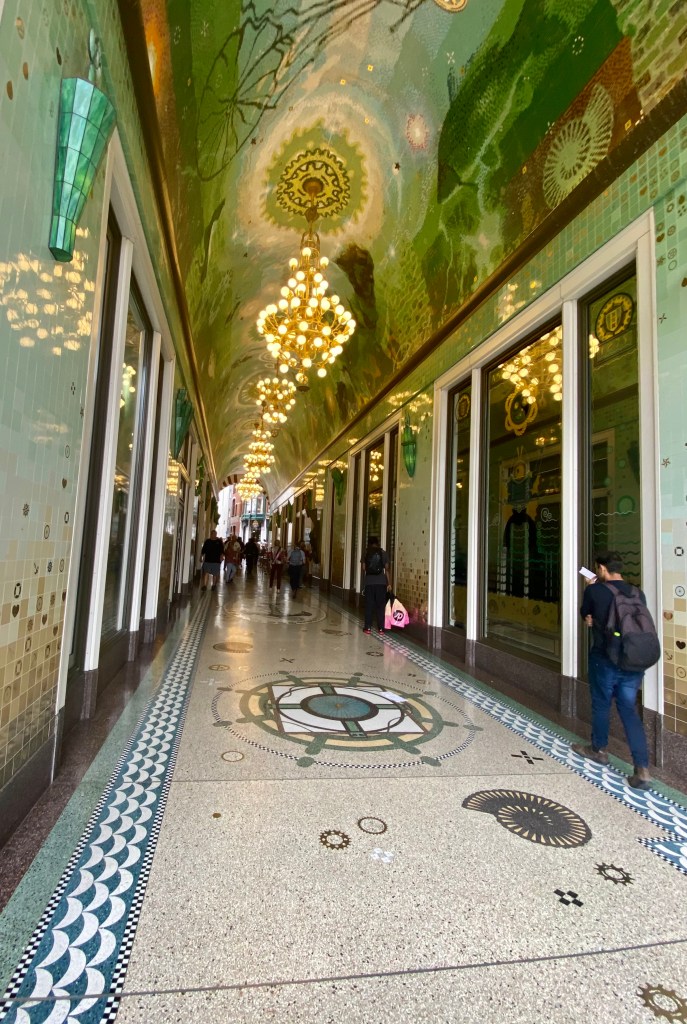
Cool shopping area in Amsterdam Centrum
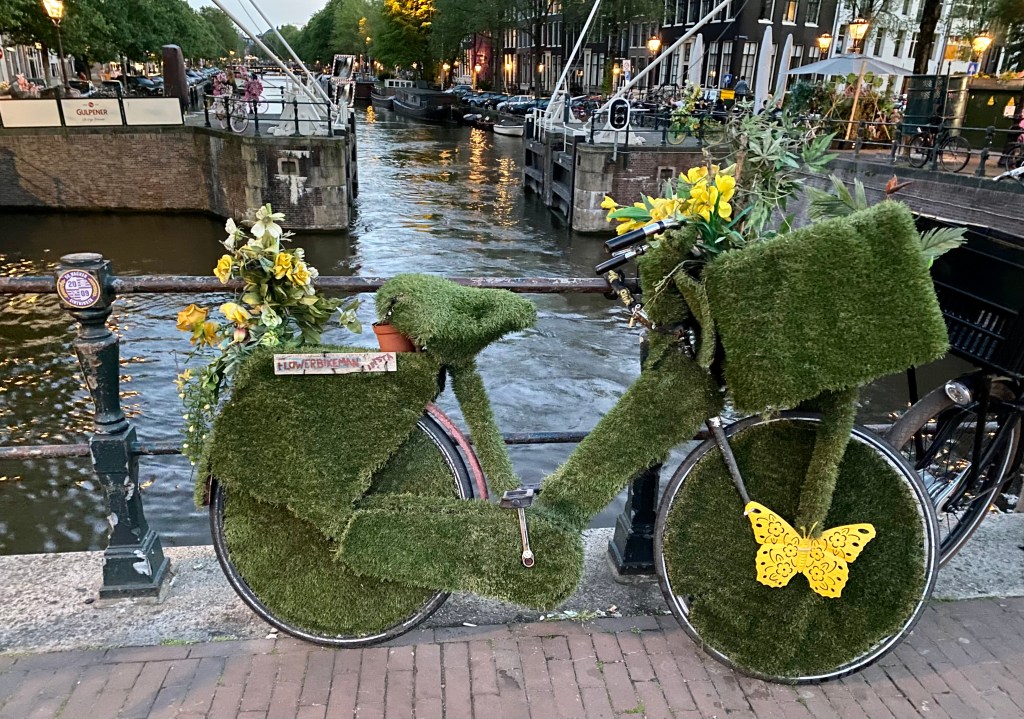
Funky bike on canal near hotel

I’m getting a Covid test later this afternoon for my cruise on Monday and I’m positive I’m negative but who knows? After the test it’s back to the Renaissance to enjoy happy hours in the Club Lounge with snacks and free wine for a few hours. Luckily my results arrive and I am indeed negative so the cruise is a go! Chantale’s plane is delayed but soon enough she arrives and we head off for a night cap and chat until the wee hours.

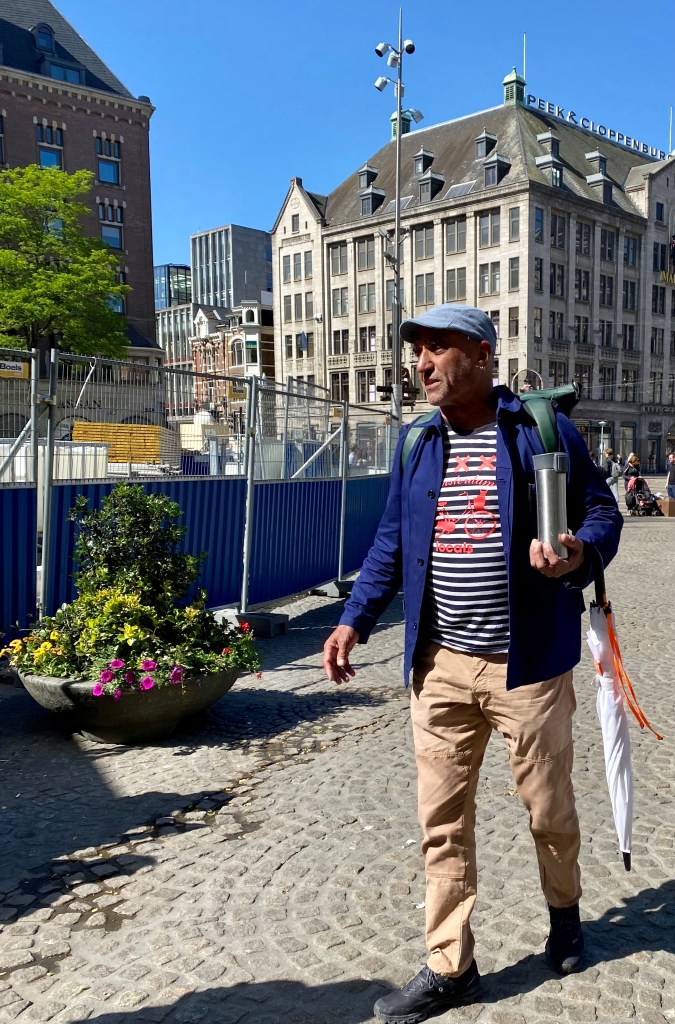
Saturday morning after a big breakfast we head to the Dam Square for a Free Food Tour where we meet our guide Ilya. Ilya is a foodie originally from California but he’s lived here for over twenty years and knows his way around. He works in the restaurant bizz and is quite knowledgeable about food but also the history of the Netherlands and Amsterdam in particular.

Our food guru; Ilya

After a ten minute synopsis of the Netherlands’ illustrious past, it’s time to eat out our way through Amsterdam and sample its traditional sweets, tasty appetizers and, of course, cheese off we go to Spuistraat to start our culinary journey. The plan is to start with dessert and eat our meal backwards.

Our first treat is a pepernoten, a small anise flavoured cookie only sold at Xmas. I’ve found a recipe online that looks good for all you bakers out there. https://www.thespruceeats.com/traditional-pepernoten-recipe-1128532

While munching our pepernoten, Ilya filled us in on Dutch Christmas traditions. For most children in The Netherlands, the most important day in December is the 5th when Sinterklaas (St. Nicholas)and his servants the Zwarte Pieten (Black Peters) come to town. Local church bells ring in celebration as Sinterklaas, dressed in his red robes, leads a procession through the town, riding a white horse. Since the little black folks are clearly slaves there is a lot of controversy these days and many towns have modified the tradition to make it more pc.

Continuing on Spuistraat, Ilya points out a building that was purchased by squatters. At one point this whole area was a squatters’ paradise as in the 1970s squatting was legal due to the extreme housing shortage. For the squatter to move in the building needed to be vacant for at least a year and then they would move in with a bed, table and a chair. If they remained in their spot for 24 hours without detection, they were in like Flynn. This all changed in 2018 and squatting is no longer permitted but the folks that lived in that one building scrapped together enough money to buy their building.

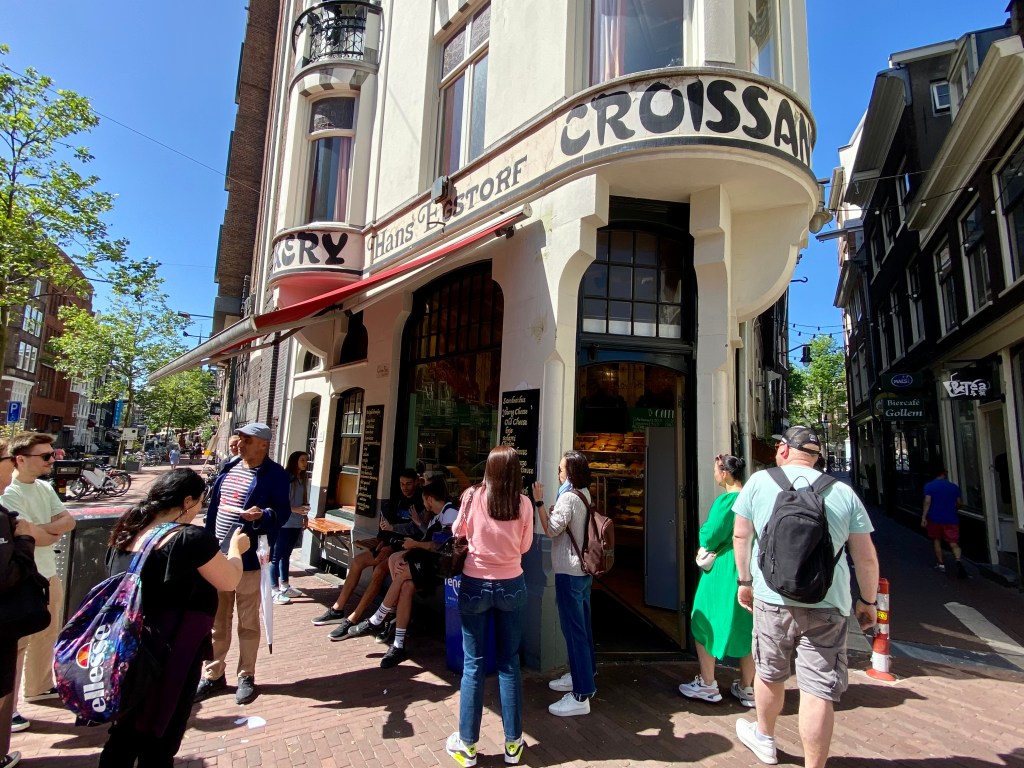
We reach the next stop on our culinary journey where we are going to try stroopwafels. At this bakery, they are made fresh and served warm. Sticky sweet goodness though maybe a bit sweet for me!

Stroopwafel central
Heating up our wafel

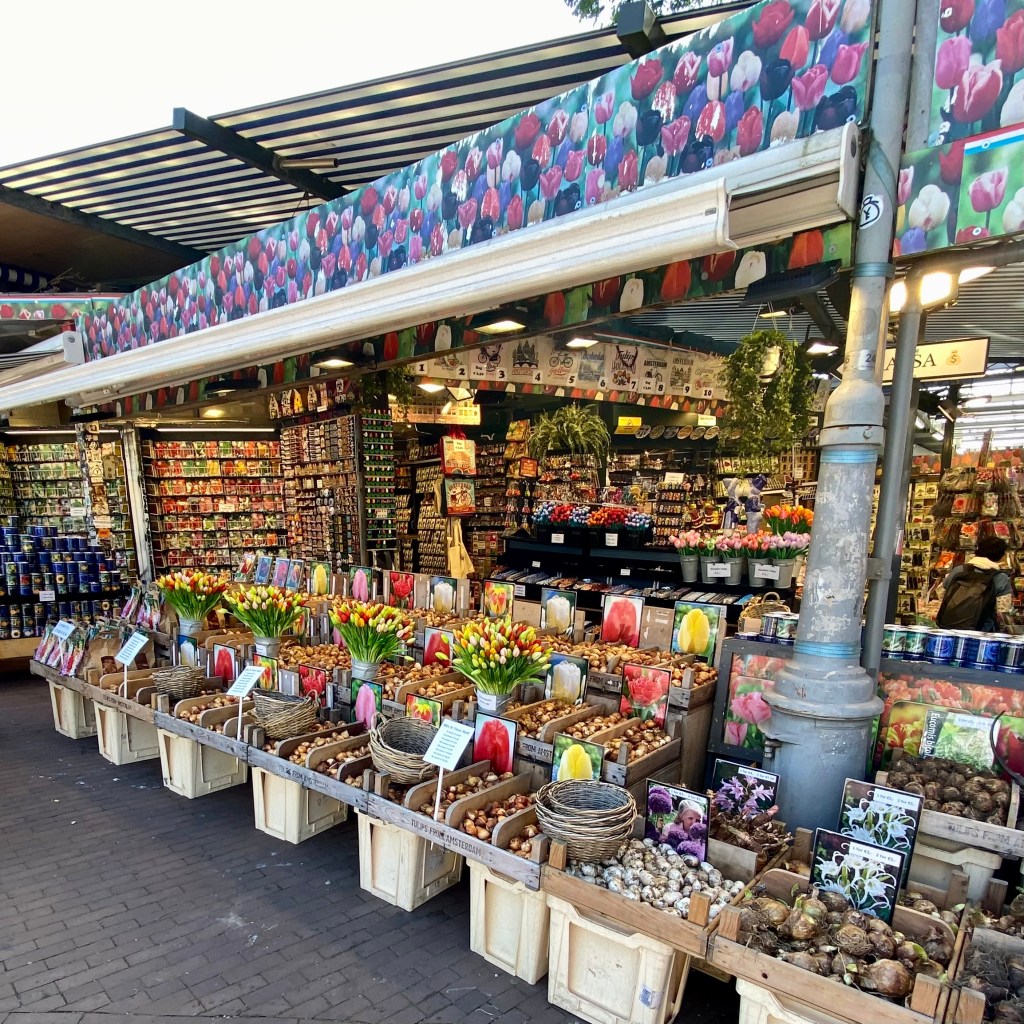
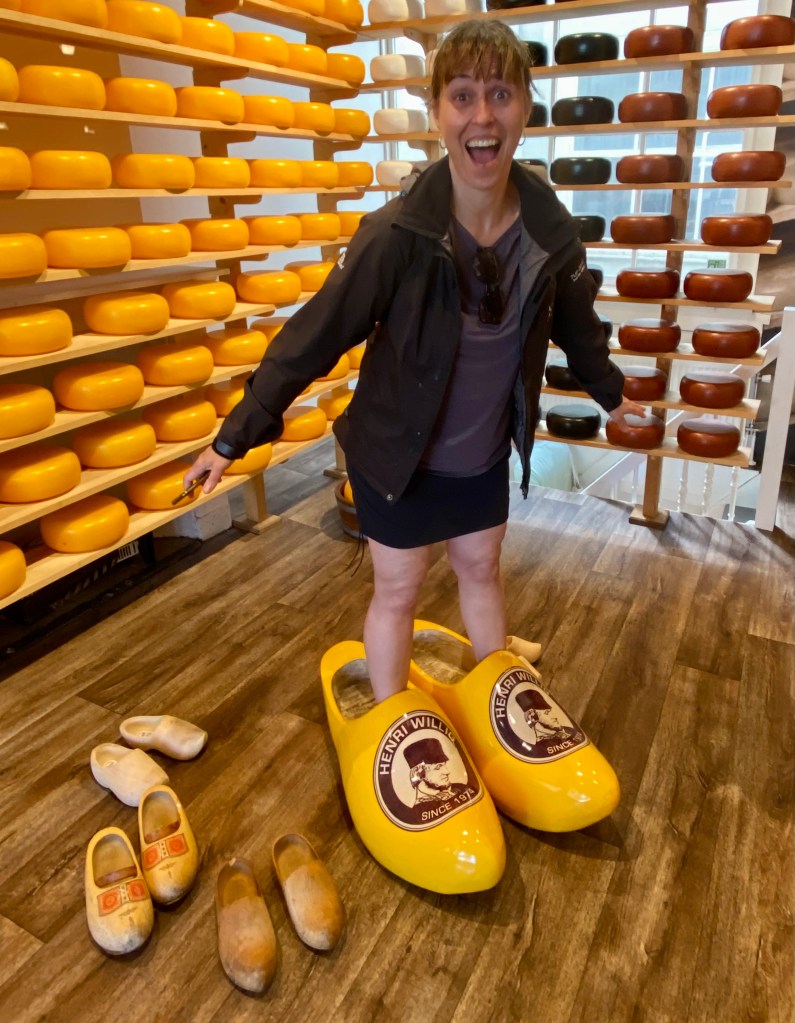
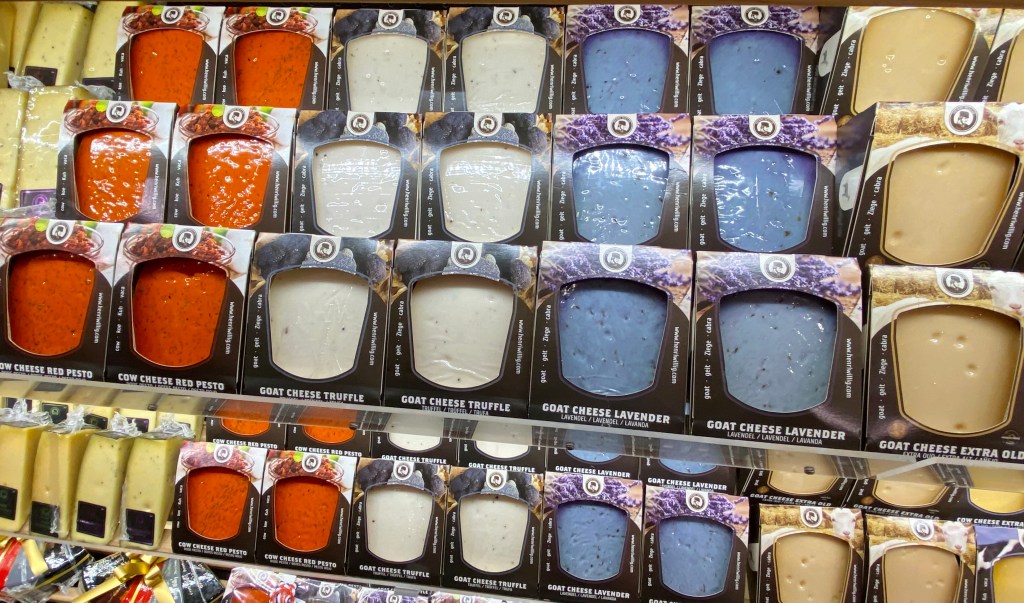
The shop with “the best cookies in town” is also nearby but the lineup is crazy so we head off to the next stop, a cheese shop near the flower market. Here we watch a video featuring none other than Henri Willig and sample his tasty cheese again! There’s also a chance for Chantale to ham it up for a cute photo!!

Flower Market
Chantale hamming it up in the cheese store
Cheese in rainbow colours

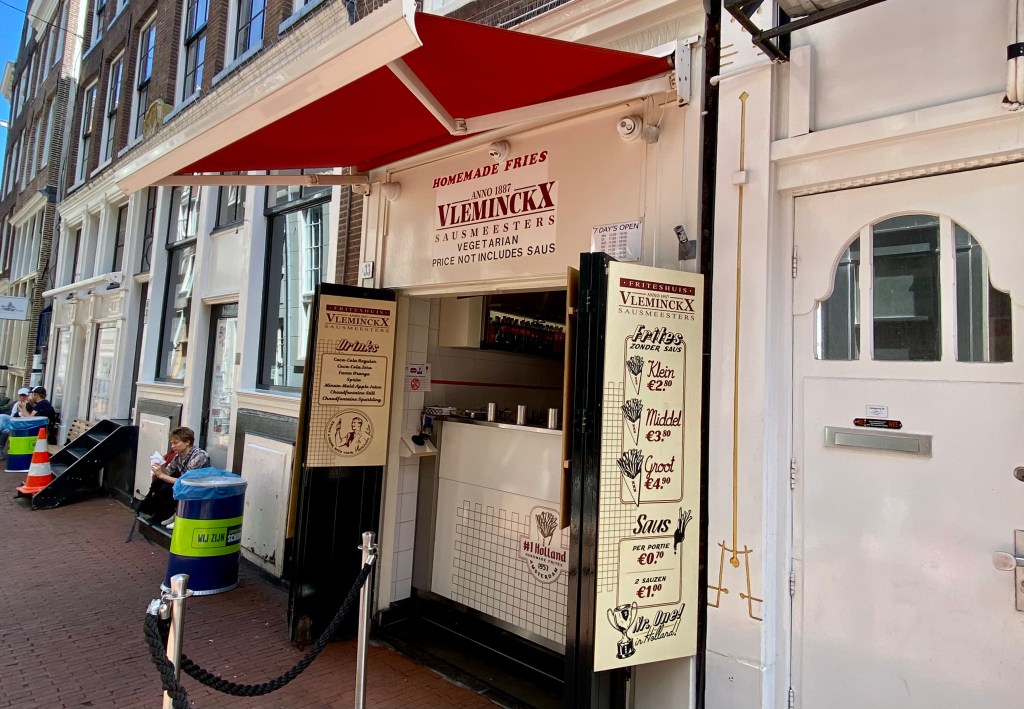
Another perennial favourite street food in the Netherlands is French fries. Ilya buys a pack for us to share and they are hot and crunchy fresh out of the fryer and very tasty. This stand offers a number of different options for sauces but we opt to try them in their natural glory. Next time I’d try the curry ketchup which I sampled at the hotel last night with the hors d’ouevres.

Hot crunchy french fries

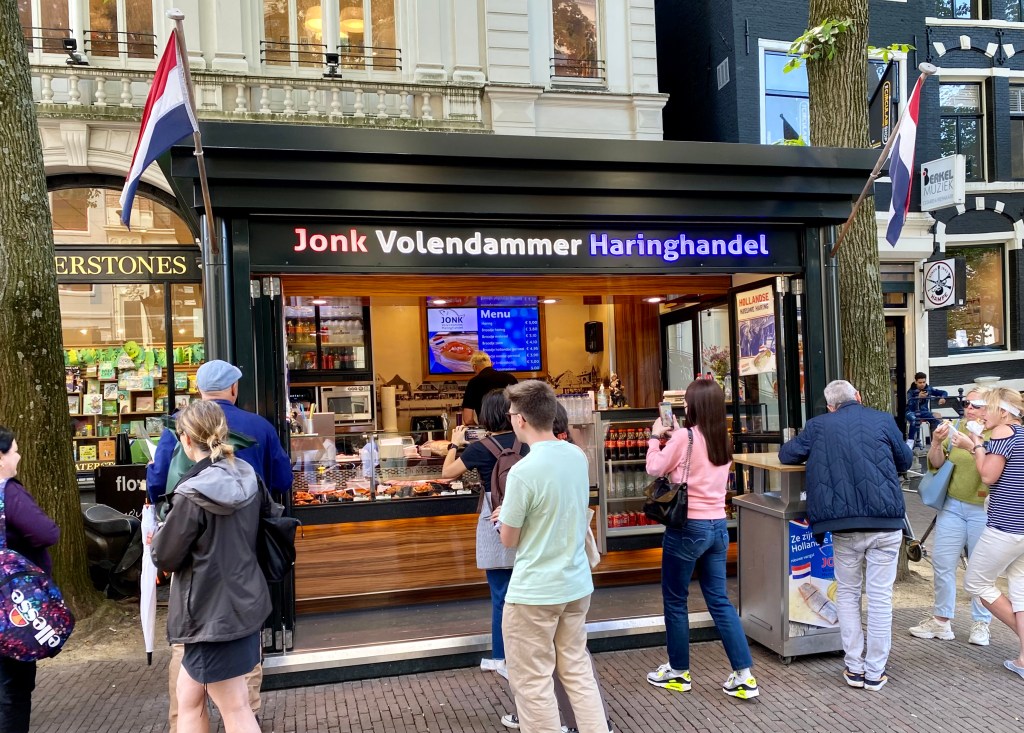
One of the culinary stars in the Netherlands is herring! Yuck, not my favourite fish but it was very fresh and not horrible when served with crunchy onions and a bread and butter pickle. Not sure I’d want a whole order to myself though …

Herring stands are a thing!

Our next stop is the temple of Dutch culture; a typical brown bar. Most folks drink beer or Genever (gin). Late in the night after a bout of drinking, the bar snack of choice are bitterballen. Bitterballen are fried beef ragout croquettes made by making a very thick stew, refrigerating the stew until it firms, and then rolling the thick mixture into balls which then get breaded and fried. Okay but not better than egg rolls or pizza as a greasy snack.

Typical Brown Bar – named for wood panelling inside
Phone charging station in the bar

Ilya introduced the gin drinkers to the traditional way to savor genever, the kopstootje, a.k.a. “little headbutt.” You fill a tiny tulip-shaped glass to the brim with genever then take a hands-free slurp without knocking the glass over and have a bite of a bitterbal.

A quick group shot and Ilya is off to lead another tour and Chantale and I are headed to the Jordaan neighbourhood for a wander and to check out the Saturday farmer’s market.

Group shot at the bar

What was intended to be a ten minute walk took considerably longer because neither of us has a good sense of direction. Since it was a beautiful day in a lovely neighbourhood we didn’t care.

Street art
Wonder if he plays the blues?
Church near the market

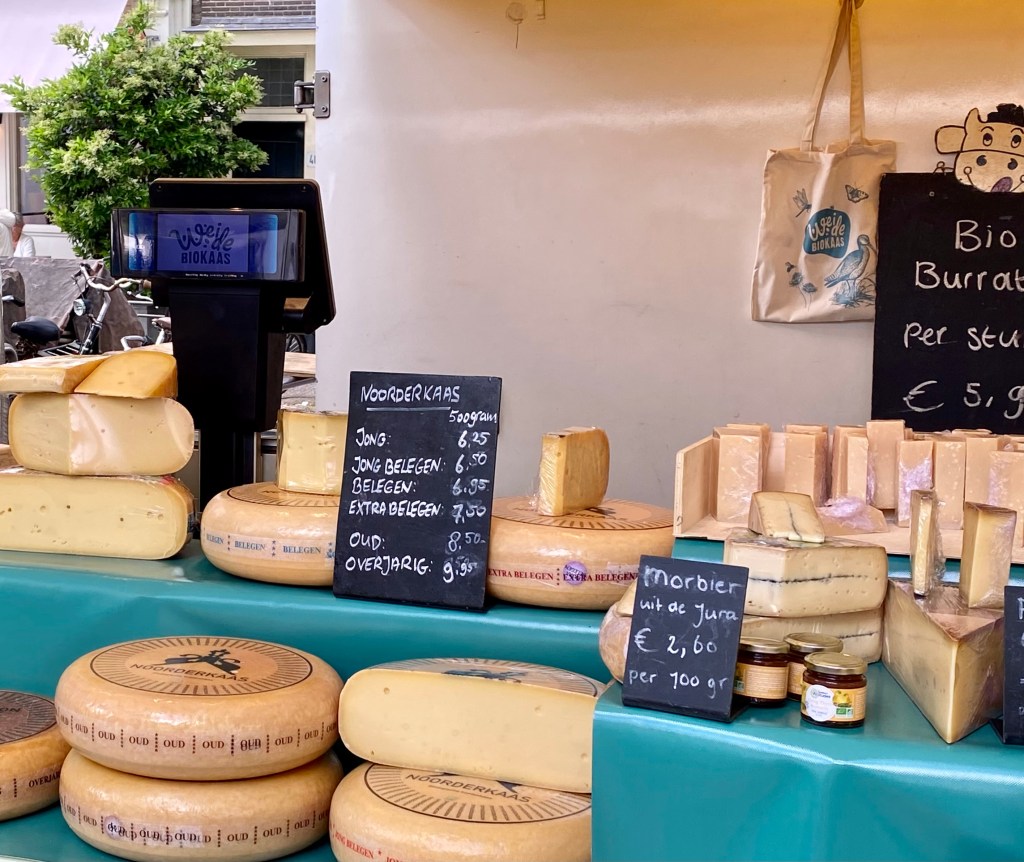
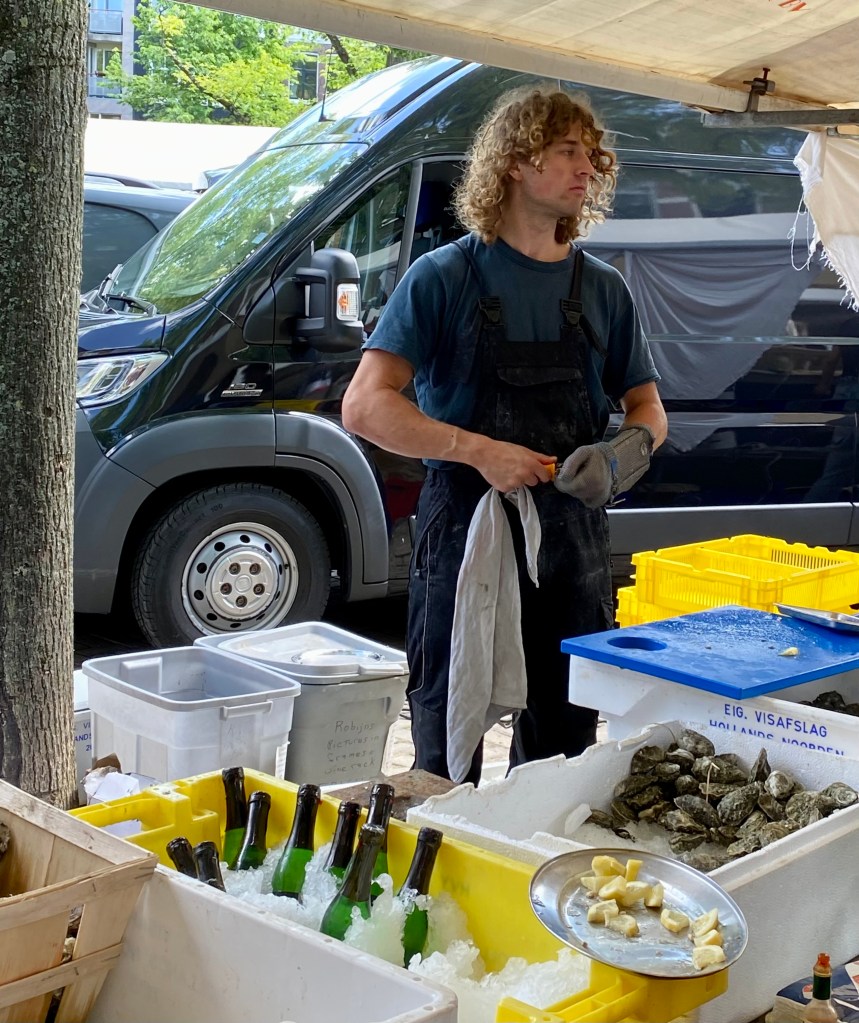
When we arrived at the market, the star was cheese (of course) but there were also colourful flowers, beautiful wild mushrooms, a wide range of fish including freshly shucked oysters, baked goodies and colourful linens on sale. There was also a part of the market where there were antiques and other things no one needs that we avoided!!

Flowers at the market
Cheesy goodness
Oyster shucker – not too enthu
Mushrooms – wonder if any are magic?
Pastel linens

Exiting the market we found a great little gelato shop and treated ourselves to a delicious treat before heading off on our canal cruise. It was too nice to sit inside so we opted for a seat at the back outside.

Being silly on canal cruise

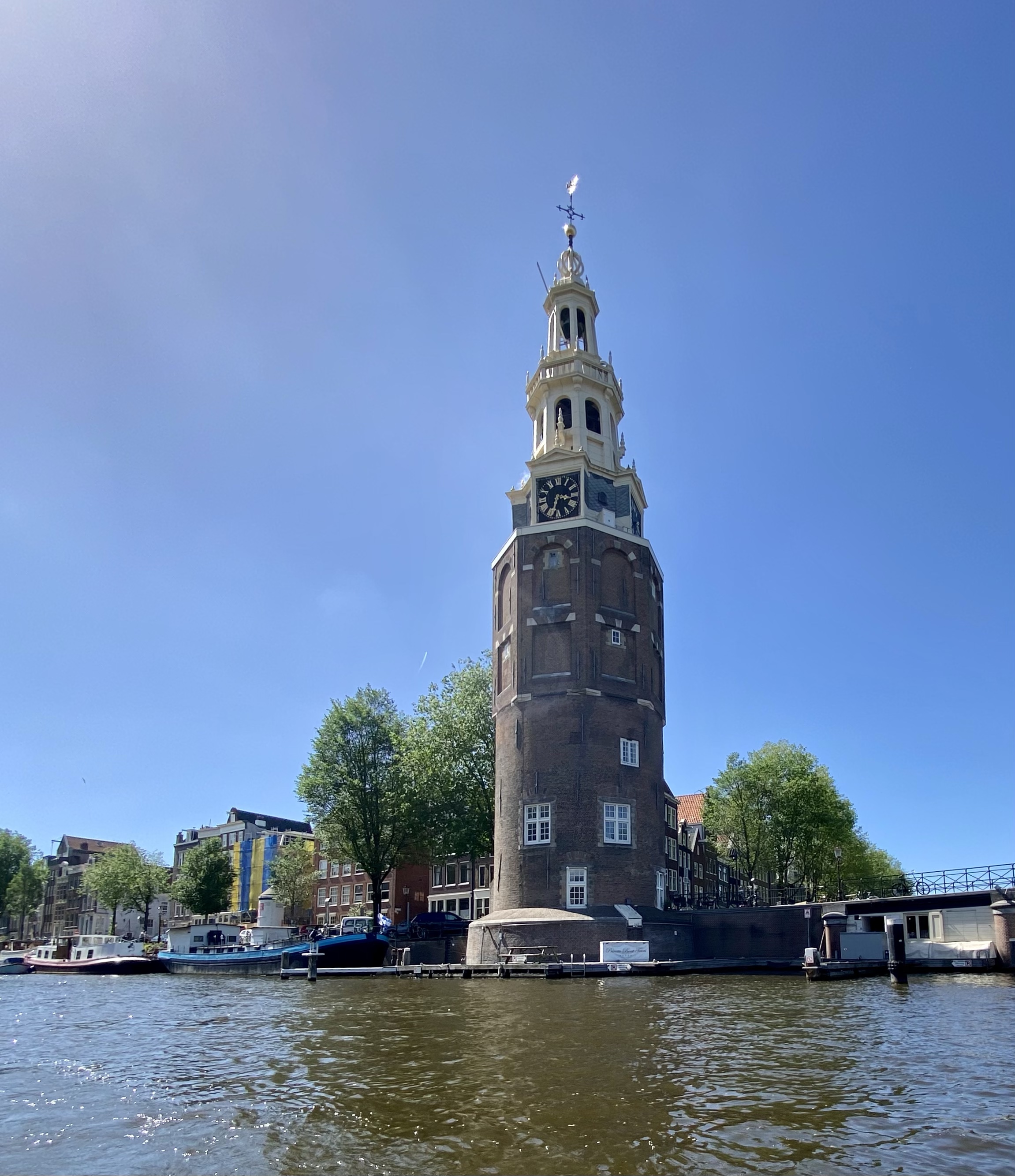
It was glorious in the sun but made it difficult to hear the descriptions provided by our captain. In addition to just seeing the beautiful city from a different perspective, we passed a number of points of interest.

Our captain pointed out the most off kilter building in the city which is now a restaurant. I think having a bit too much to drink or smoke might make it tricky to eat inside!

Tippy restaurant

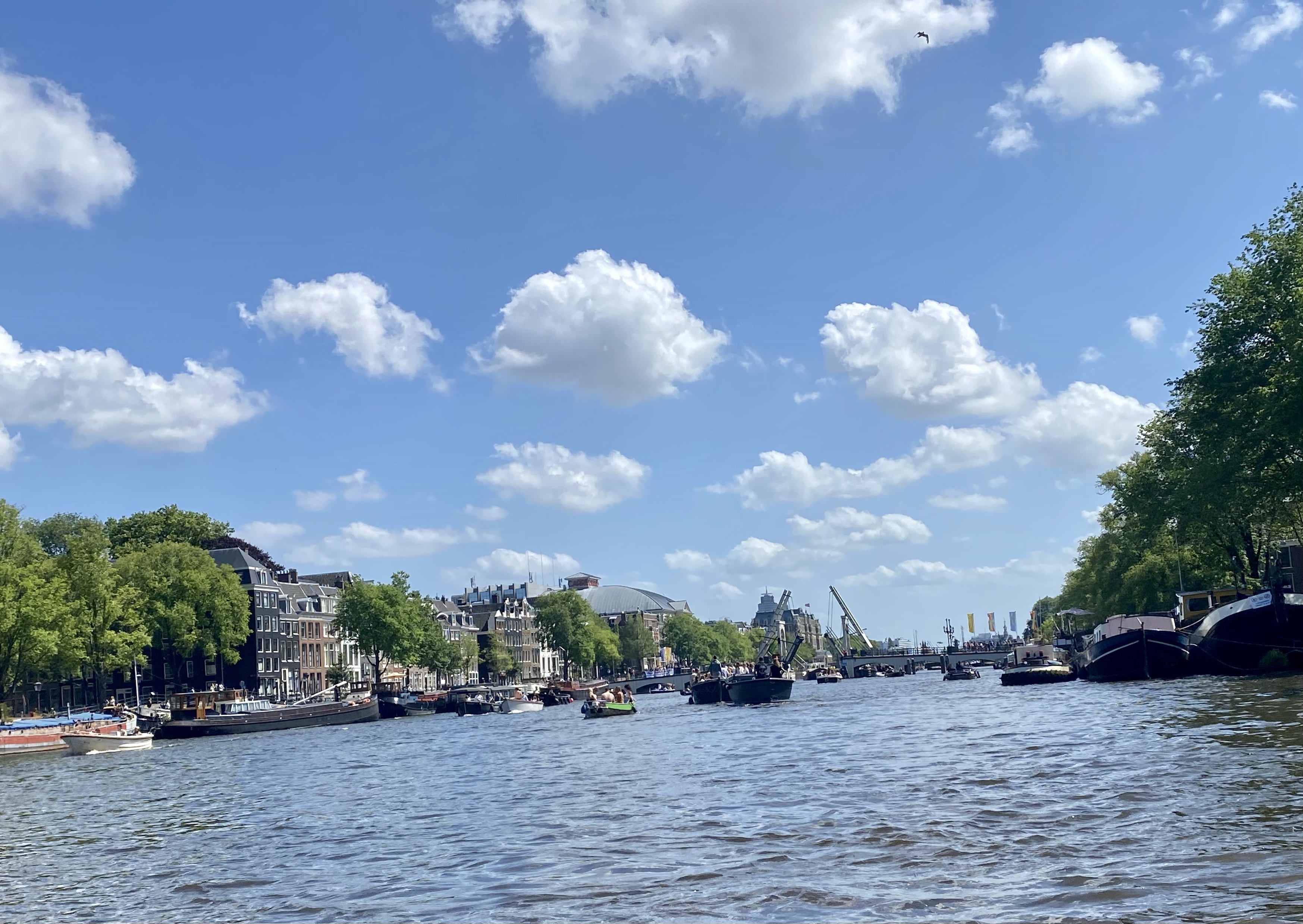
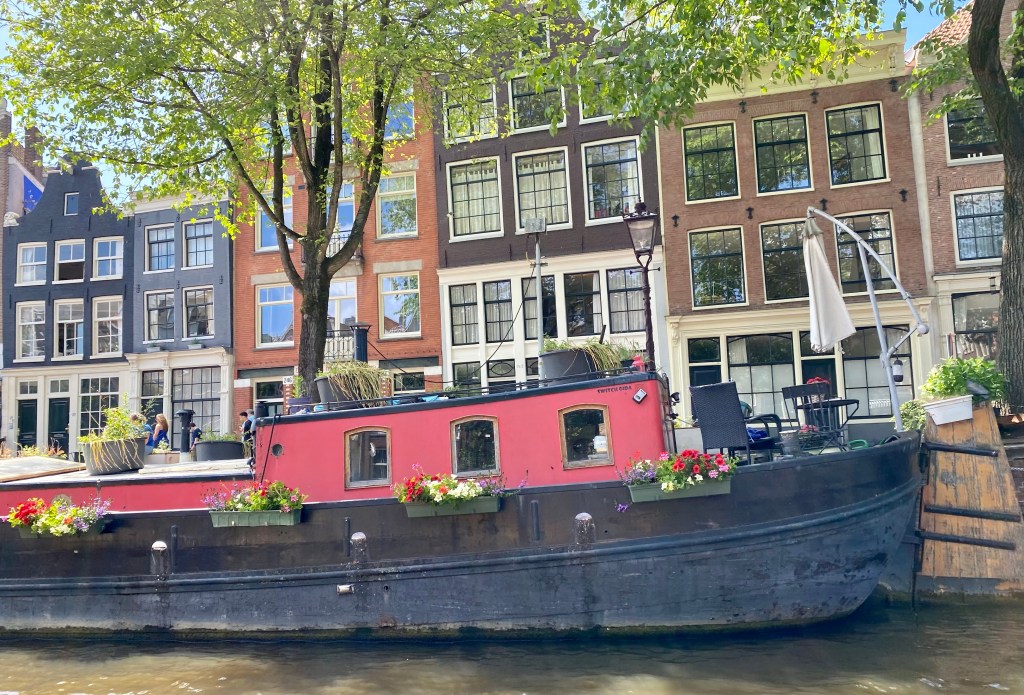
I love the idea of living on a houseboat but the total lack of privacy would be aggravating I’m sure as the canals were teeming with boats large and small. You could rent a motorboat by the hour and we spied a number of these piloted by “captains” with a range of experience.

Houseboats along the canal
Another houseboat

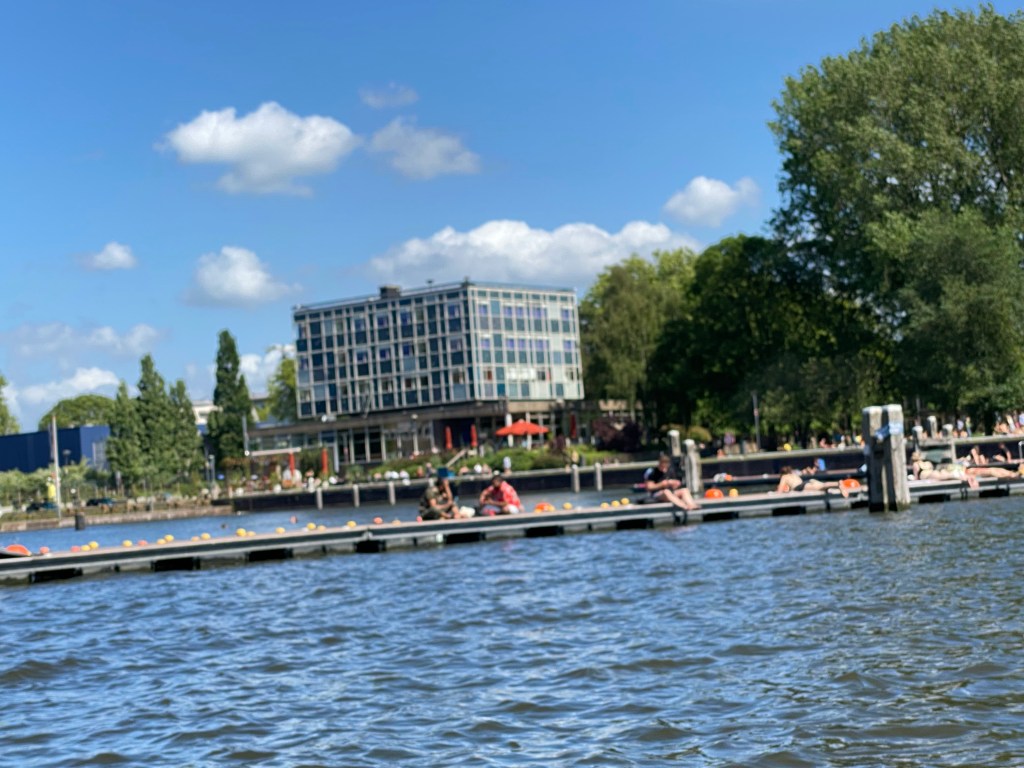
At one point we entered the big water with the big boats. On one shore there was a boardwalk beach where locals sunbathe and swim. Not sure I’d want to brave the water but we were assured that the water was clean enough to drink! I don’t think I’d risk that!

The local “beach”

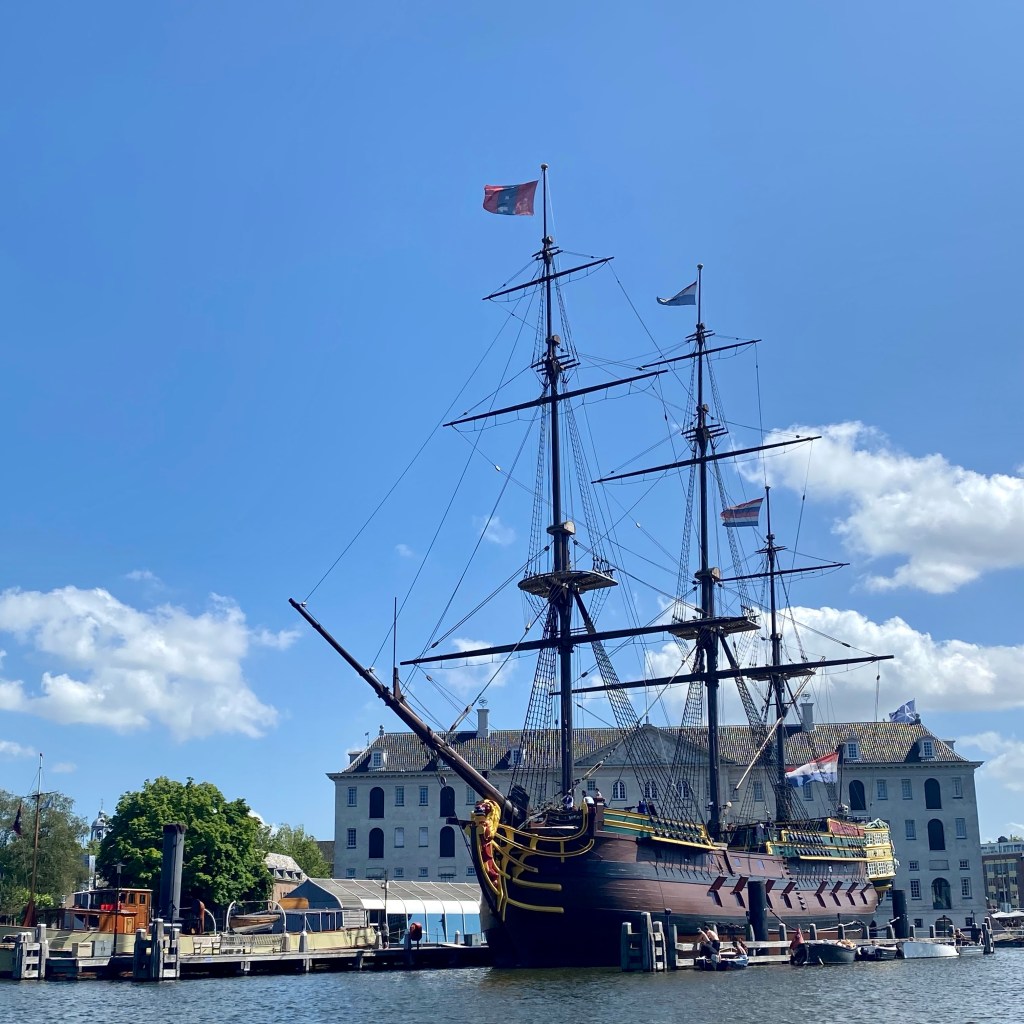
We also saw a replica of one of the boats that would have been used by the VOC back in the day to sail around the world collecting goods including spices for sale in Europe.

Replica of trading ship

On the top of one of the buildings there were swings for the crazies to swing out over the side many many stories up. Also not for me!

Swinging out over the side of the building on the left – Yikes no!

After the cruise we made our way back to the hotel for a couple of drinks in the lounge and a bit of relaxation by a somewhat more direct route – only somewhat!

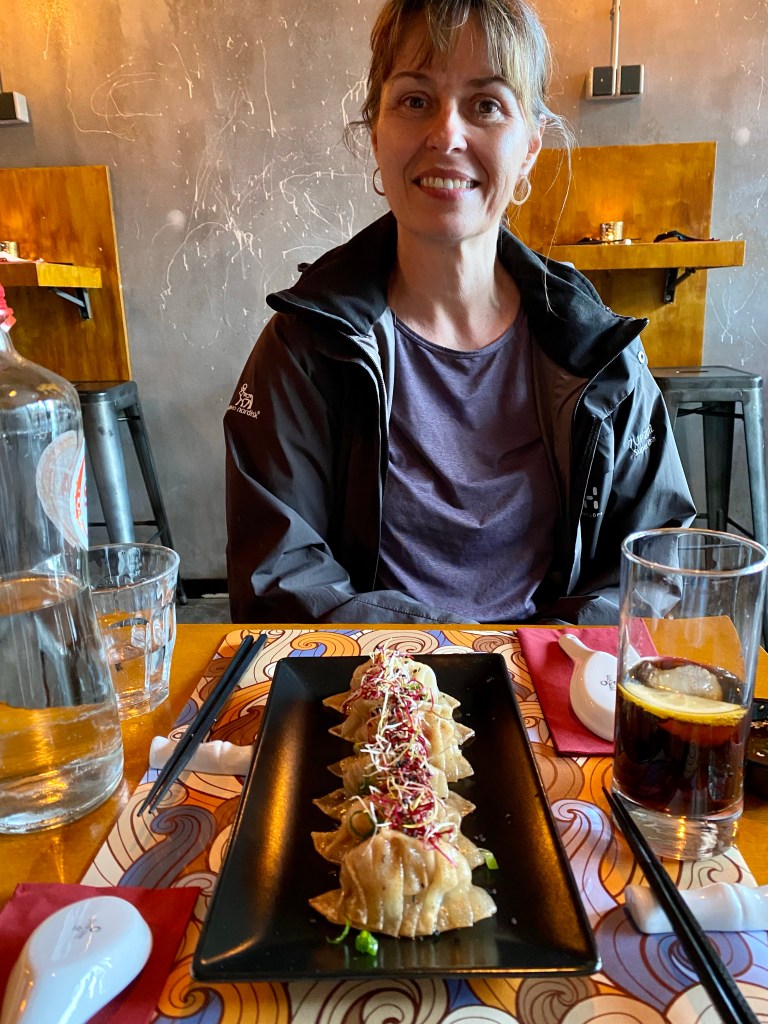
After a bit of respite, we headed to the red light district to Vetten Ramen, a recommendation from Ilya. The gyoza were crunchy and tasty and the ramen soup was colourful and unctuous. We likely should have ordered a side of spicy sauce to top it off but it was good enough “plain”.

Chantale and the gyoza

Sated we headed out for the requisite evening stroll through the red light district. The police were out in full force directing the pedestrians and all the streets in the area were set up for one way foot traffic. It was a bit sad to see the scantily clad women advertising their wares in the windows. Not sure how much business they would get with the throngs of gawking tourists milling about. Maybe business was better later in the evening when the crowds thinned out a bit. No pics out of respect for the sex workers.

Back to the hotel for an early night as we’d had a full day and we’re heading to the Van Gogh Museum for our 9:00 am spot tomorrow.

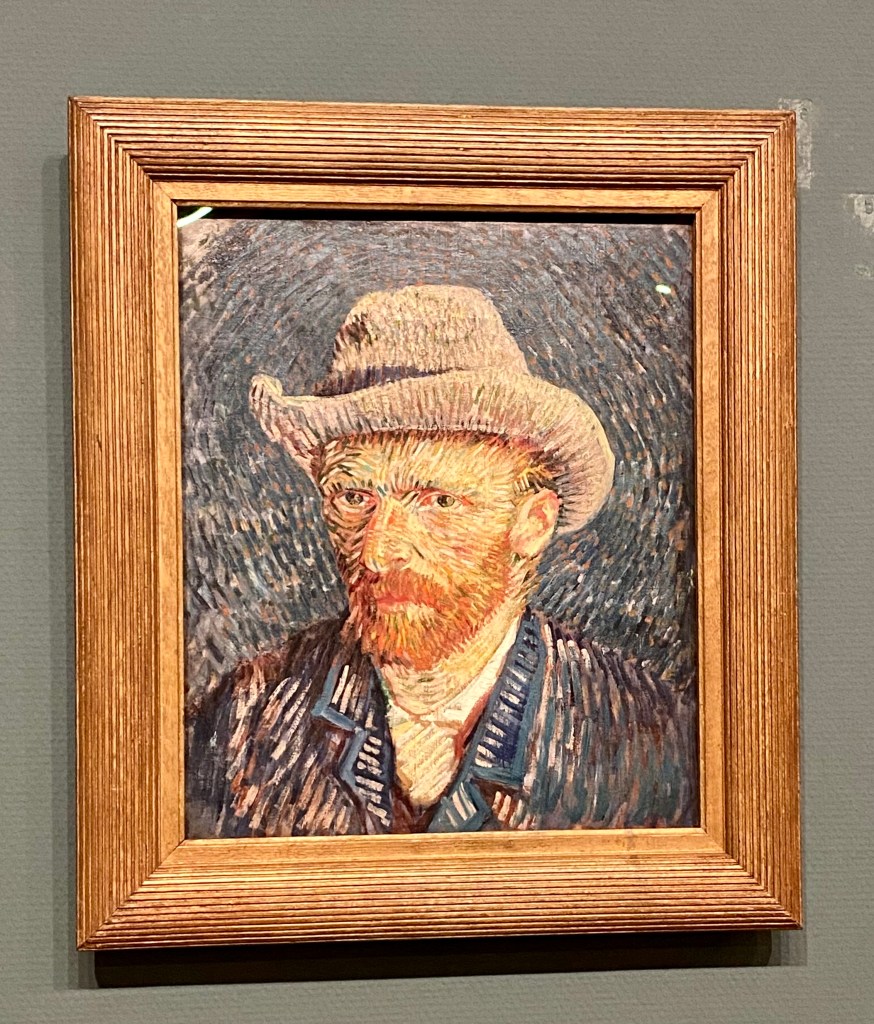
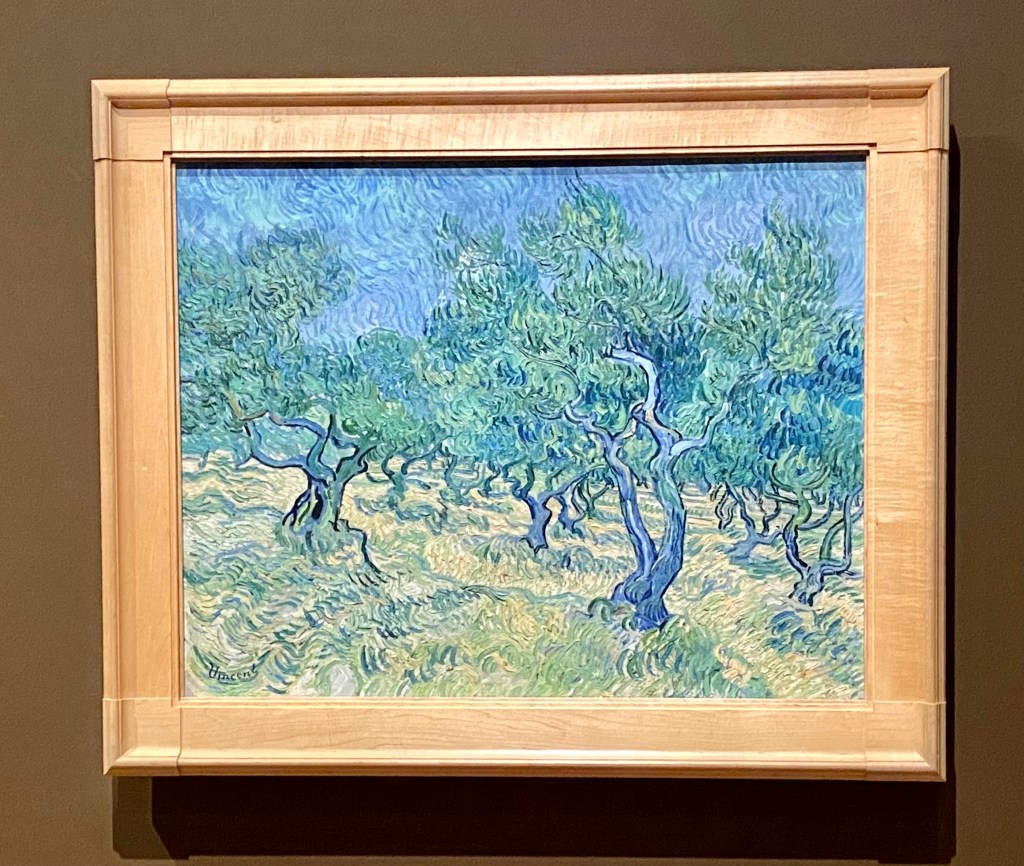
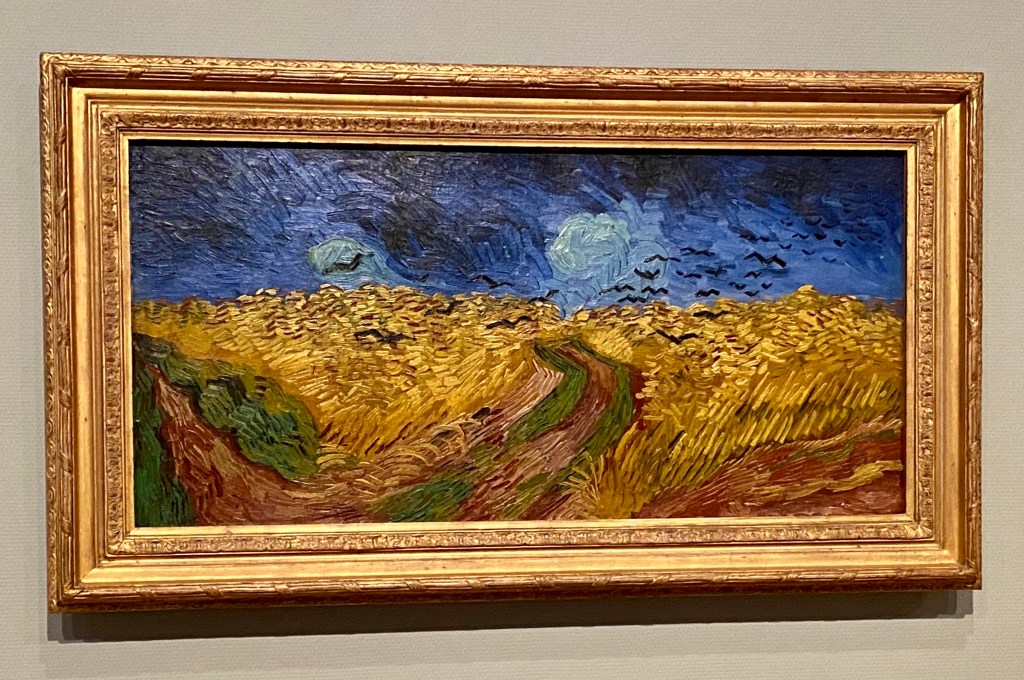
Saturday morning we had a more sensible breakfast and grabbed an Uber to the museum so we wouldn’t get lost on the way and miss our time slot. The museum was fully booked for the day so there were lots of people taking the opportunity to learn more about Vincent’s life and admire his beautiful artwork. The permanent exhibition boasts a number of his well and lesser known pieces as well as works from his contemporaries including Monet, Rodin and Gaugin. The audio guide provided insights into Van Gogh’s paintings from letters he’d written to his friends and family. There was also a temporary exhibition that brought together the paintings of olive trees he painted while in the asylum and shortly after he was released. The museum is a must do if you ever go to Amsterdam. I took pics of some of the paintings and have inserted them below though they really don’t do the original’s justice.

Olive grove
Wheat field with crows

Back to the hotel by tram (it’s free this morning because their system isn’t working (a harbinger of things to come as it turns out!) to get our stuff together as we are checking out today and have a walking tour booked for 1 pm.

Corner garden near hotel

The Classical Free Tour leaves from the Dam Square and we are greeted by our guide Daphne. Her family has lived for generations in Amsterdam so she’s the real deal. When Covid hit she augmented her tour guide salary as a primary teacher’s assistant and is now studying to be a teacher. She also directs theatre in her ”spare time” and is a real fire cracker. She warned the group about the cyclopaths (apparently the Dutch become maniacs when they climb aboard their bicycles!).

Our guide for thr Classical Walking Tour – Daphne

She’s a great story teller and regales us with some stories of the city.

Apparently when the original plan for city hall was developed it was going to be bigger than the new church which stands nearby. Of course, when they spoke to the church folks they said it could be bigger than the church or people would think that the state was more important than the church and God. To appease the church, they promised to build a huge tower to make sure it didn’t. Of course, the town hall ran over budget and in the end they didn’t have the money so couldn’t fund the promised giant church tower. A hundred years later, the church only has a small tower and Daphne insists that inside church is a priest is crying.

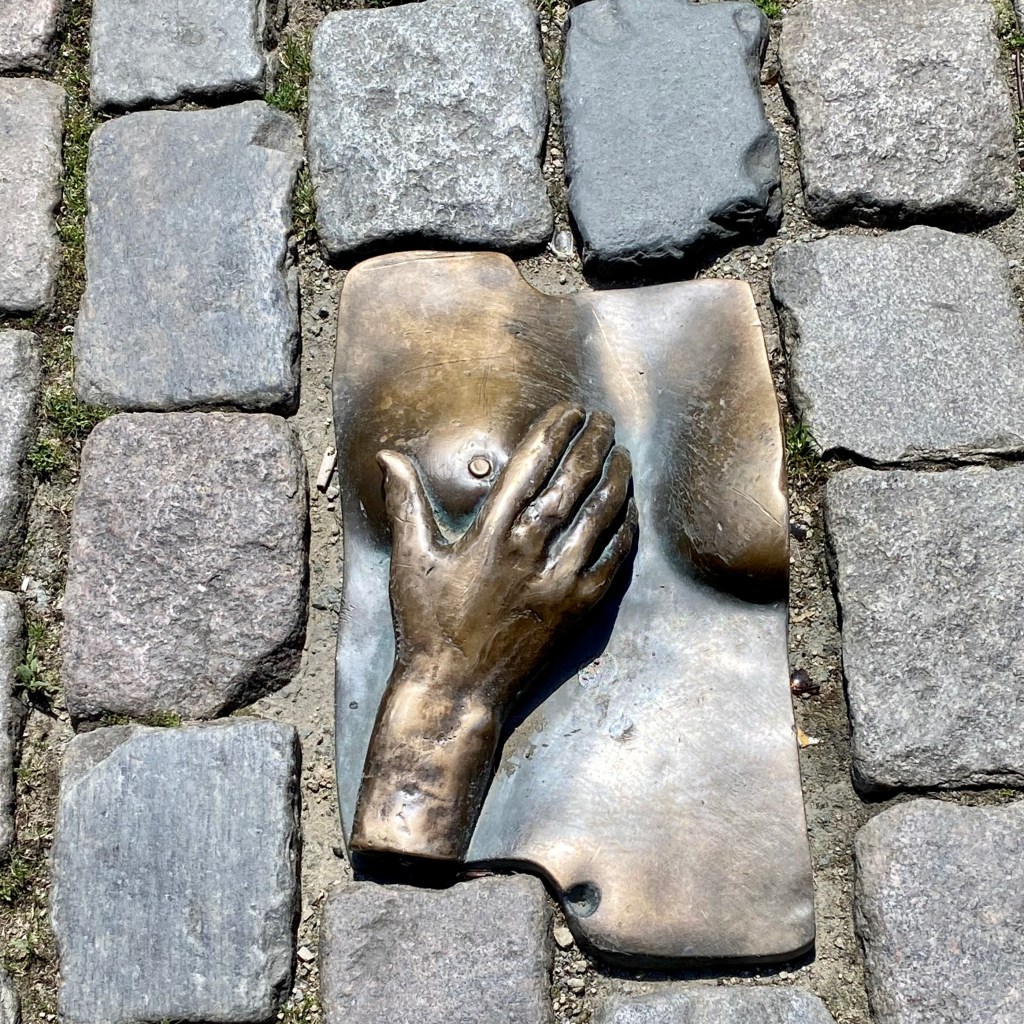
We head off toward the Old Church and here there us a plaque in the of a hand holding breast which appeared one night. The government removed it but citizens wanted it back so it’s still there. The local wisdom is that if you touch the nipple it assures seven years of good sex so not the nipple has been worn down by everyone hoping that’s true.

Rub the nipple for seven years of amazing sex!

Also close to the church is a cafe that serves the best apple pie in town. Since Chantale and I didn’t get the cookie, we are determined to come back and check that out!

As I learned last week, the Church is close to red light district so the sailors could confess before going back to sea because it is and was a dangerous profession. The red light district was set up to make sure that sailors didn’t accost proudest women on the street. Initially, the sailors would look at the bird cage in front of pubs. If a bird was in the cage then there was a lady inside offering her services. The sign that there was a woman available eventually changed to a red lantern. The pub owners didn’t want their customers to leave the pub with the ladies so they decided to allow them to use the room in back for a fee. They also allowed them to sit in their windows to do self advertising.

Today, prostitutes are considered self employed business owners and the different streets have different types of women to make sure there is something for everyone. Big mama alley has larger older women and there are individual streets that feature exotic, younger and alternative (dominatrix), etc. If you can speak Dutch, you can figure out what type of women are going to be available on each street by the name of the street.

We headed to the Waag where Daphne also told us an interesting story about the collection of body parts stored in alcohol displayed here by the physician’s guild. After visiting, Tsar Nicholas liked the display of human bits so much he bought the whole thing to take home with him to Russia. On the journey home, the ship carrying the collection ran out of rum so sailors threw out the body parts and drank the alcohol – yikes!

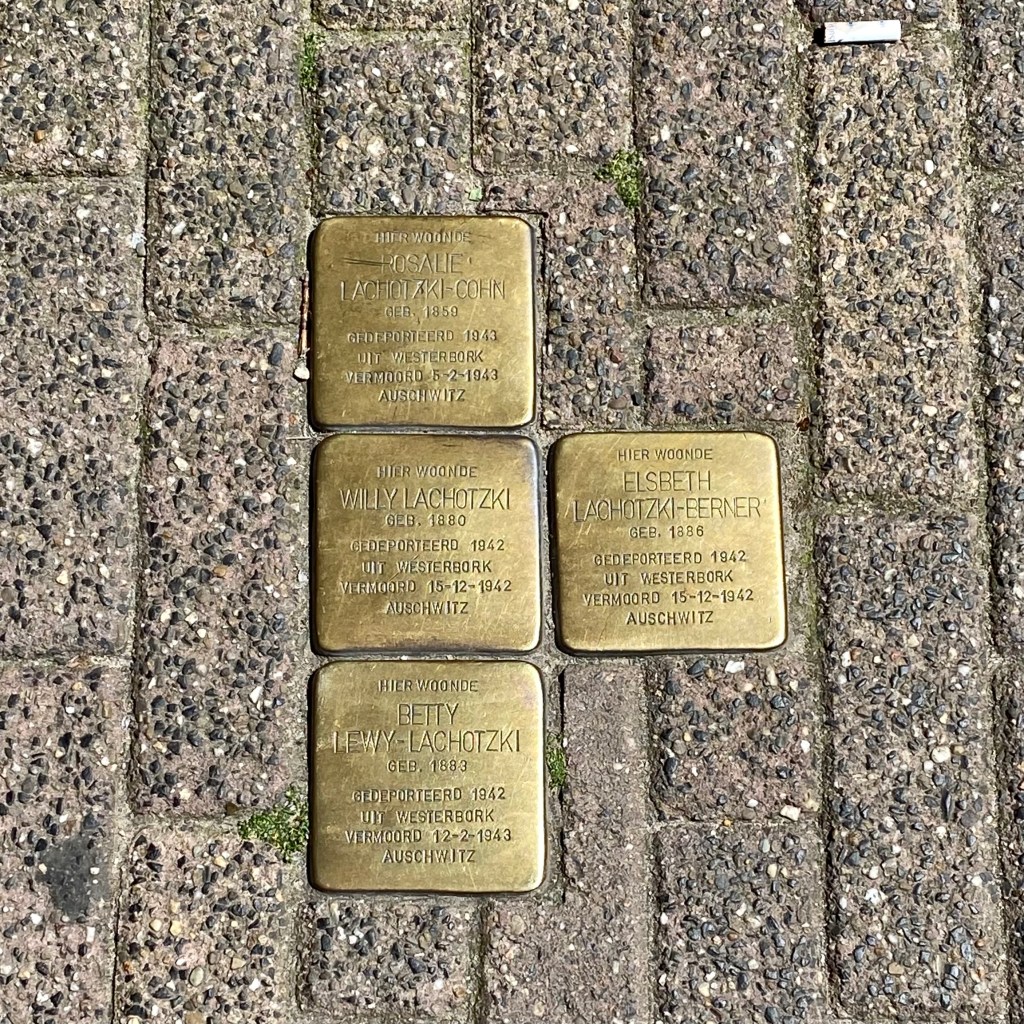
Dutch were very good record keepers so they had maps which the Nazis requested so they knew where they all were. The Nazis assured the Dutch that they wouldn’t use the map for nefarious purposes but we know how that went – 90% of the Jews were sent to concentration camps and eliminated. This meant that the Jewish quarter was a ghost town and during the final winter of the war the neighbourhood was destroyed when there were no more trees to burn. Buildings, furniture and everything that could burn was used for firewood. The devastation was so complete it looked like the area had been destroyed by booms. The Dutch have honoured the original occupants of the sector by placing little plaque where their former houses stood with info on the original occupants of each house; name, birthday, day they were sent to camp, which camp and when they died.

Next stop on the tour was the coffeeshop area. According to Daphne, the first weed was brought to Amsterdam by Canadian soldiers when they liberated Holland at the end of WWII. Our contribution!

Bench near coffeeshops for when your feet just won’t go anymore!
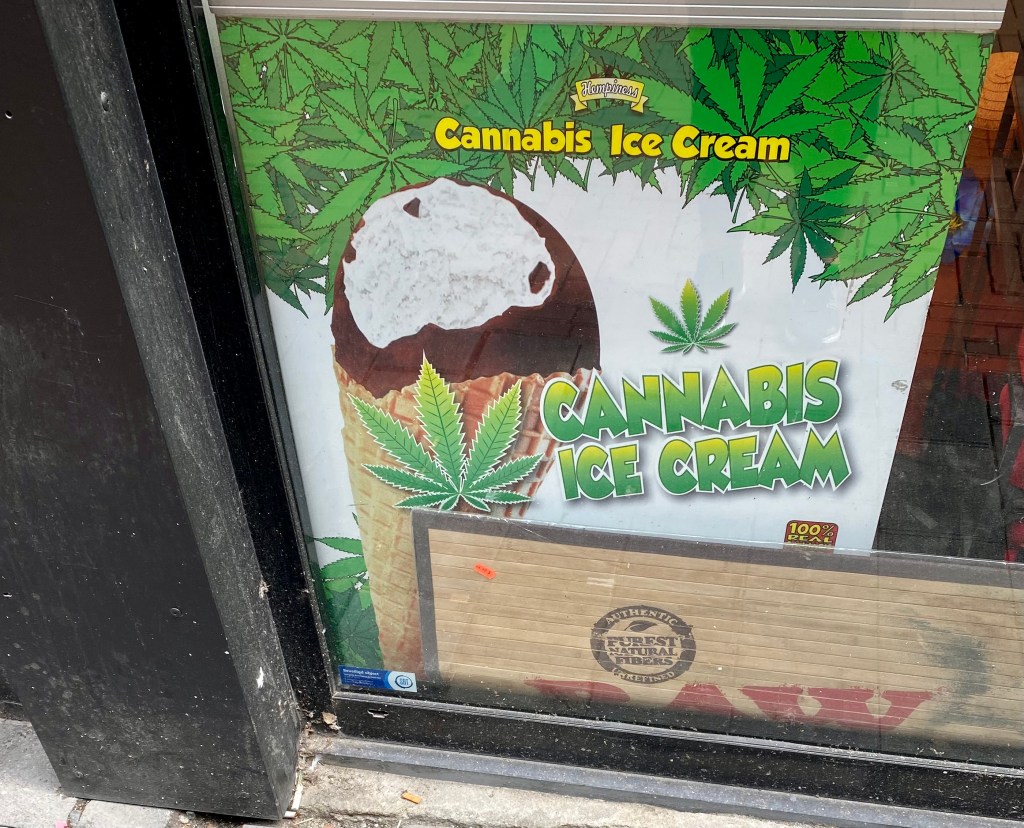
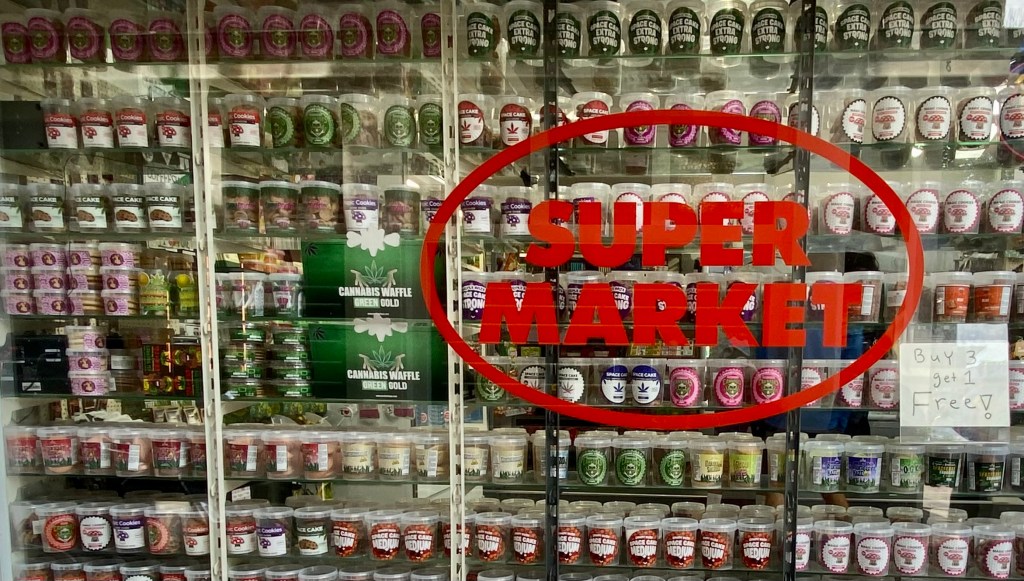
Lots of cannabis treats to choose from
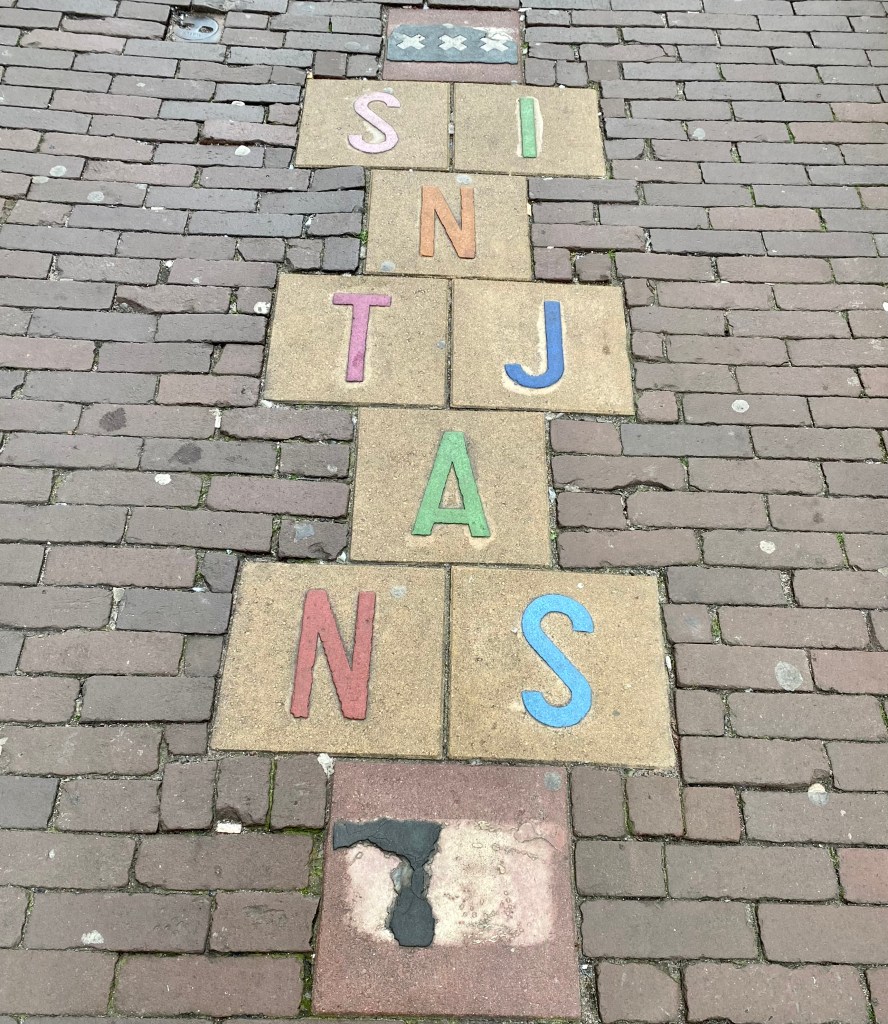
Hopscotch on Sint Jans Straat

Another fun fact from Daphne – 15000 bikes per year are fished out of the canals every year. This means that the canals have three three layers: mud, bicycles and water. If you jump in you’re likely to caught in a bike.

We were soon back at Dam Square and the tour was over. Chantale and I managed to find the café with the magnificent apple pie (de koffie schenkerij) and sampled the ample slice of pie in their courtyard. Yummy indeed.

Huge slab of pie with whipped cream! Yum!

Fortified, we headed back to the hotel to pick up our bags and head off to our hotel at the Schiphol airport for the night. I’m catching a shuttle to the cruise ship from the airport so wanted to be closeby on Monday morning. When we arrived at the train station, there were absolutely no trains to Schiphol; very weird as they usually run every ten minutes or so. After struggling with the app we hit the info booth and we’re advised there was a strike on that line and we needed to connect through a different station. We boarded the train with the hordes of folks heading to the their evening flights only to arrive at our destination to a broken down train blocking trains coming and going from that station. Next off to a metro and another connection point for the train to Schiphol. Thankfully third time was the charm and we ended up at the airport a bit worse for the wear but in one piece.

At the hotel, we had been upgraded to a club room so we headed to the lounge for snacks and wine. The lounge served free wine until 11 pm but it was mediocre so after I liberated my larger suitcase from storage and picked up my e-reader that I’d left behind at my first hotel, we settled in with a nice bottle of wine I’d brought with me, watched a movie and crashed.

Monday morning, there was time for breakfast before Chantale headed back to Amsterdam to do some exploring and I went to meet the shuttle to my cruise. Had a great time with a great friend and now my adventure continues with a cruise to Stockholm. The first day is a sea day so I’ll have time to catch my breath and rest my feet before the next adventure in Germany.

More later this week – adventures await…

Wandering Through Northern Europe – A Glorious Day in Gouda

June 9 – A Glorious Day in Gouda

Today the sun is shining and it’s a perfect day for my trip to Gouda and their weekly cheese market. Gouda features a number of picturesque canals, waterways and even it’s very own working windmill. But first the cheese market!

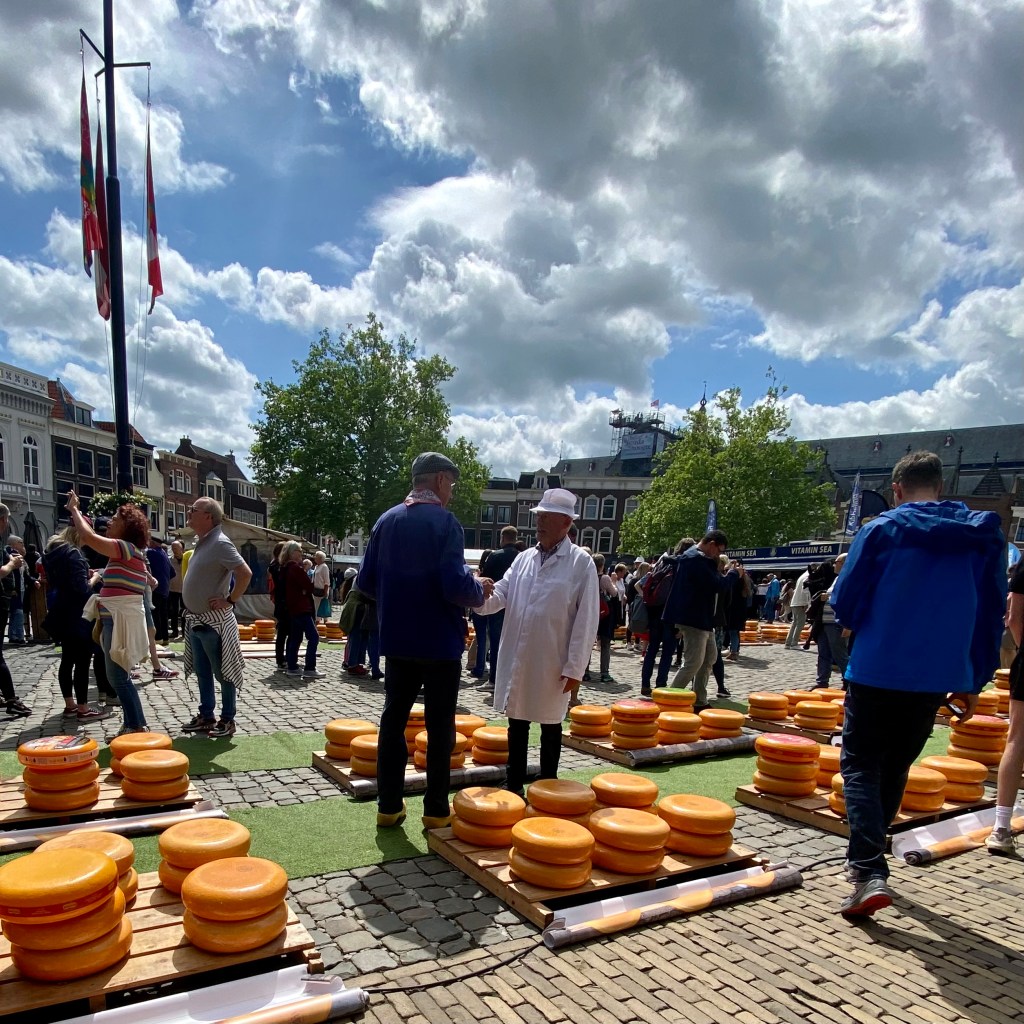
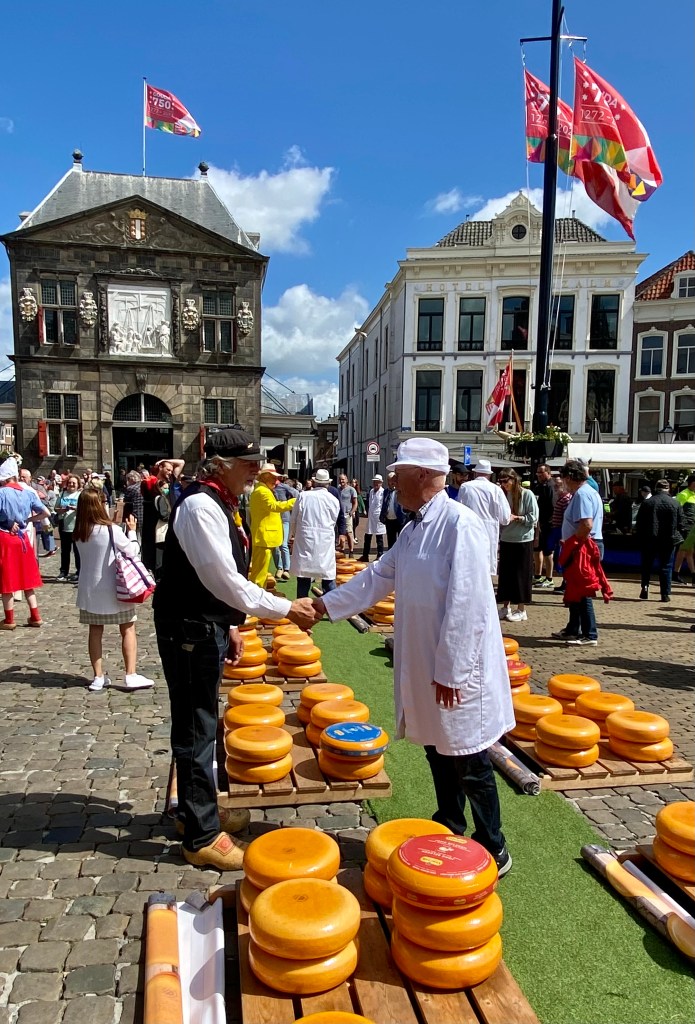
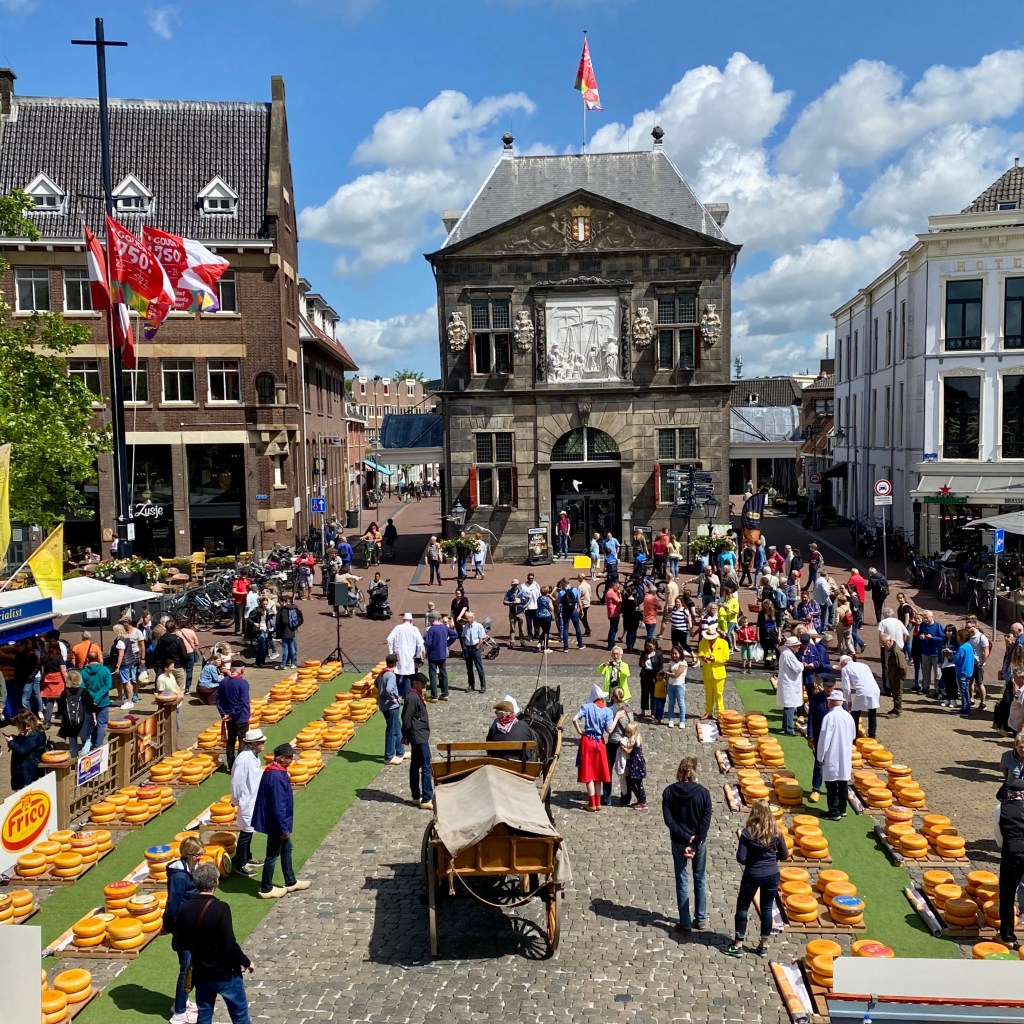
Markt Square is nestled between Gouda’s beautiful city hall and the weighing house. There is a plethora of goods on offer but cheese is definitely the star. The cheese wheels are displayed in the centre of the square – bright shades of yellow and orange mingle together and the air is ripe with the aroma of cheese. It’s like the second hand marijuana smoke in Amsterdam. All you need is a piece of fresh bread or a cracker and a pint of beer to taste it.

Cheese, cheese and more cheese

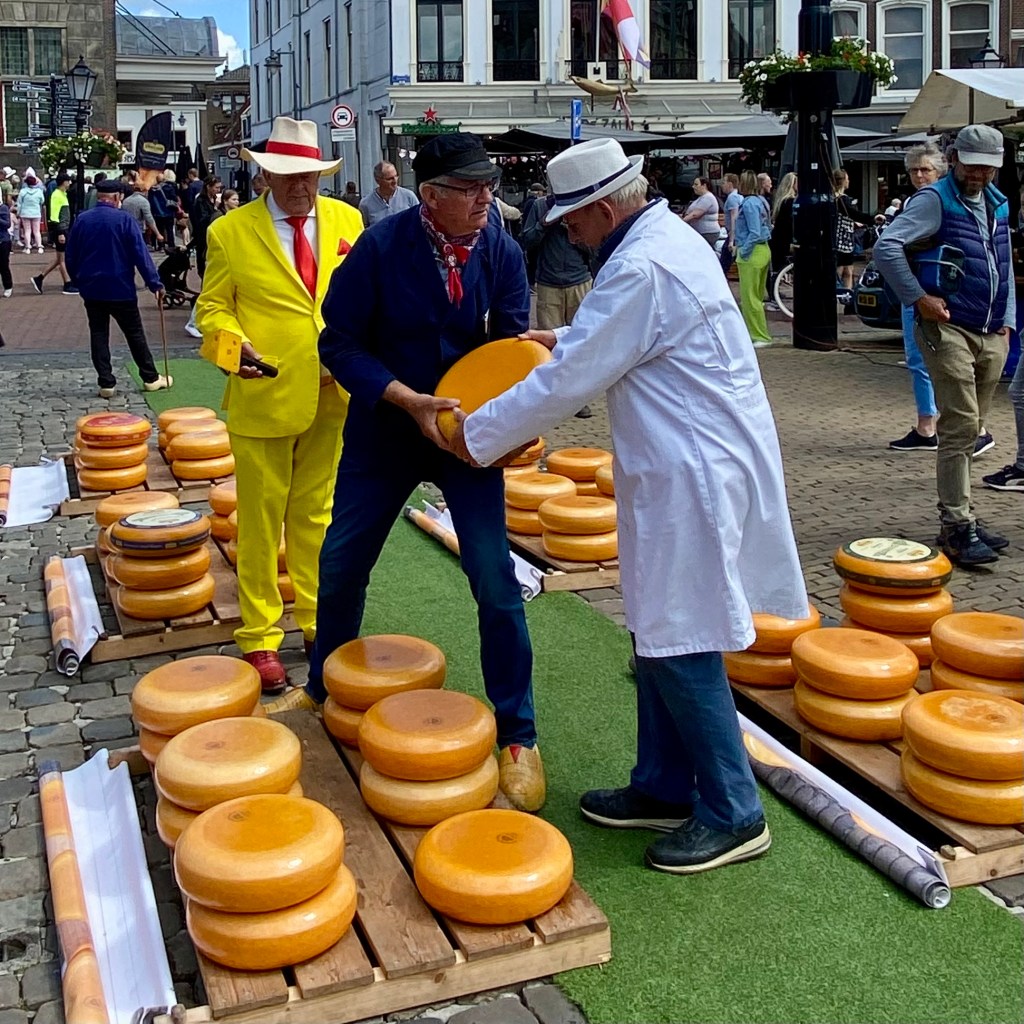
There is a bit of a carnival atmosphere with photo ops with local girls in costumes, a farm couple with a horse and buggy and a man dressed in a very loud yellow suit with red shoes who gets into the cheese buying action when he’s not hamming it up for the crowd. 

Hanging with the cheese girls! I may need a new hat!!
The farmer and his Friesian horse
Buddy in a yellow suit ”helping” with the sale

Buyers in white coats negotiate with local farmers to buy their huge wheels of cheese. Core samples are taken to confirm smell, texture, taste, etc. Then the negotiations begin; they slap hands as they name a price. The slapping goes back and forth until they can agree on a price per kilo at which point they shake hands. Once they agree, the farmer’s cheese is taken to the weighing house to determine total weight and the final payment owing. A good cheese would sell for around 6-7 euros/kg but the market is restricted to buyers from the Vergeer company. Consumers can buy cheese at one of the many market stands. Interesting and fun to watch. Edam is a town which has a cheese named after it but Gouda is all about cheese!

Its a deal!

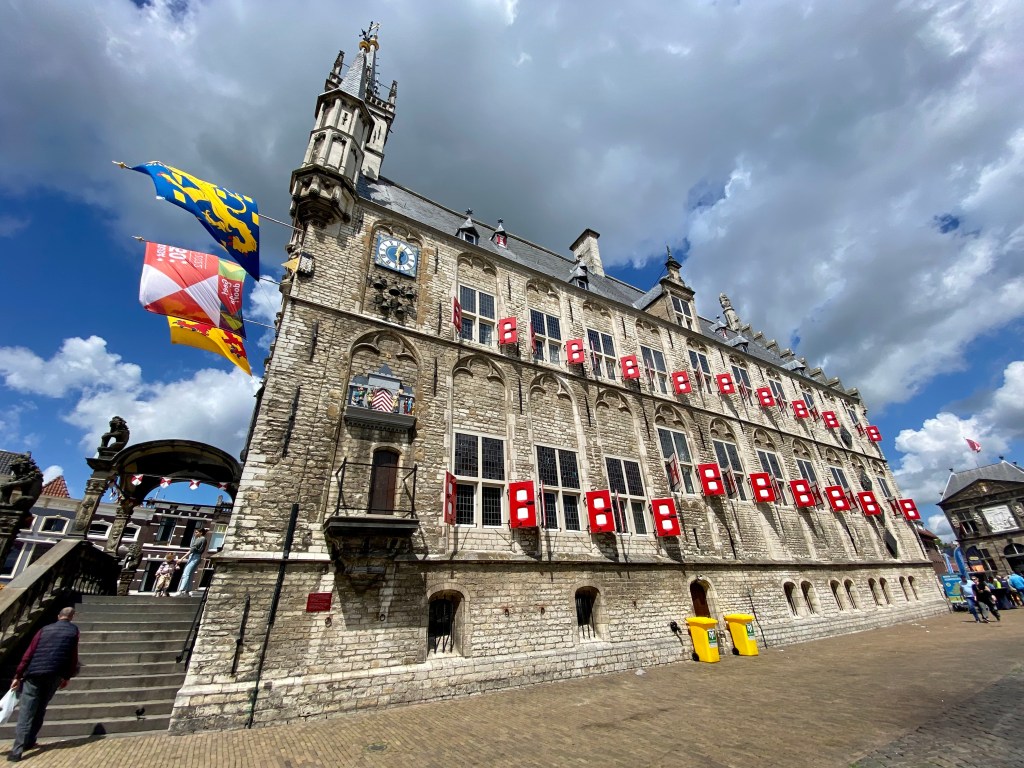
Gouda City Hall stands proudly in the centre of the Markt square and is a landmark of the city. The iconic building has a rich history. Constructed in 1448, the town hall is one of the oldest in the Netherlands. The front façade of the building features a series of pointed towers, spikes and arched windows and also has a myriad of stone statues of various important people from Dutch history. On either side of the town hall there is a series of bell chimes that ring on the hour.

Gouda Stadhuis

The Gouda Stadhuis has served as a courtroom, livestock market and, of course, the Center of the city’s government. On the right of the entrance is a small balcony (the pilory) where convicted petty criminals used to stand for the day while people threw things at them as their punishment.

The Pillory

There is also a large balcony overlooking market square. This was once where the scaffold was located for more serious punishments. When the young princess and future queen Wilhelmina was coming to town she needed an appropriate location from which she could wave to her peeps. The pillory was too small so they knocked out a couple windows where the scaffold had been and built a new balcony for her. Perfect for a bird’s eye view of the goings on. 

The view from the Queen’s Balcony

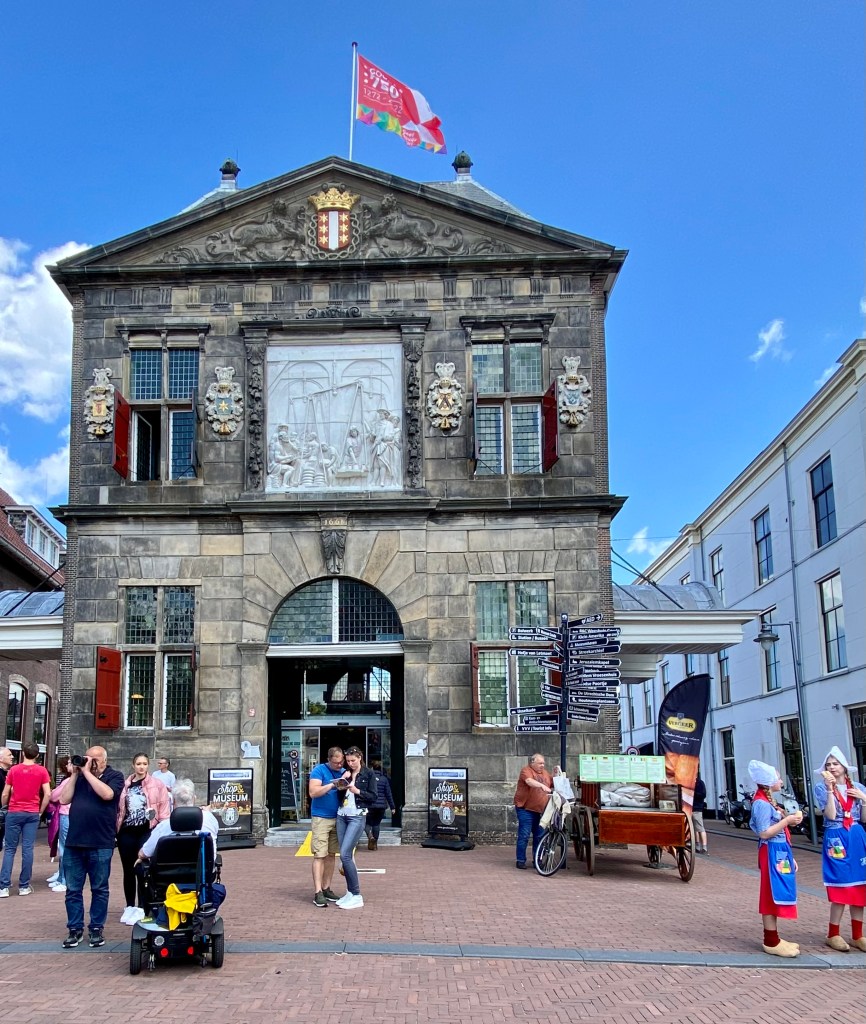
On the other side of the square is the weighing house (Goudse Waag) which today also doubles as a tourist shop with an information kiosk. 

Goudse Waag

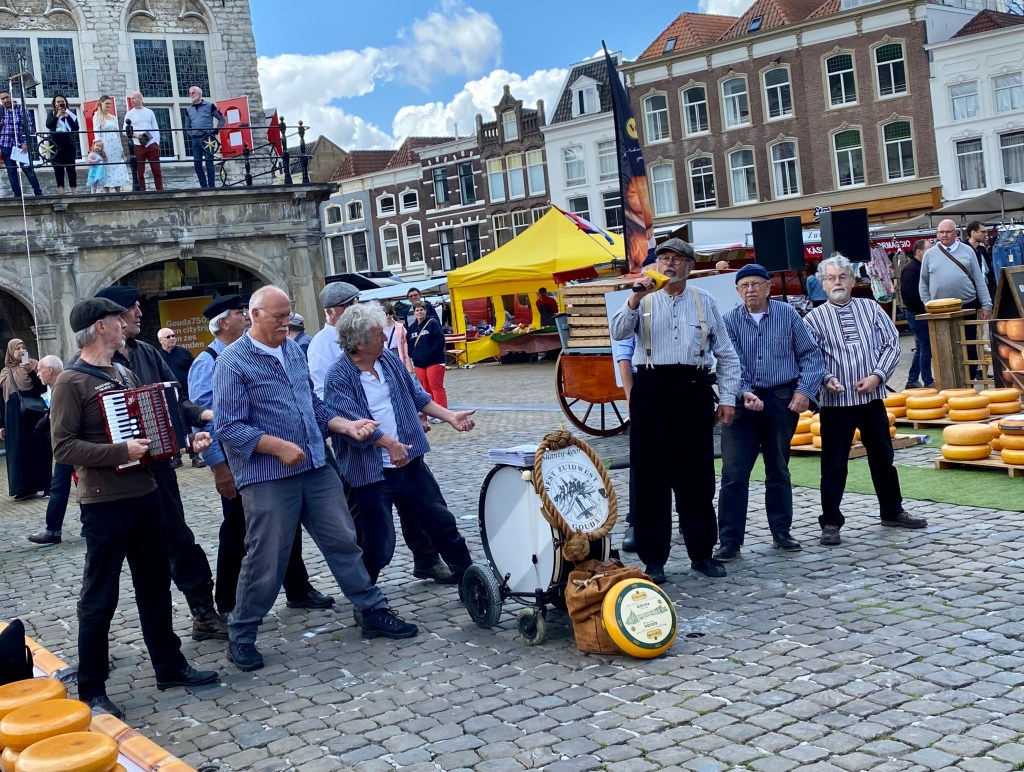
The cheese market is done by 12:30 and then the singing starts. A group of men sing sea shanties and other folk songs to the delight of the gathered crowd. Even though it’s all in Dutch I recognize Haul Away Joe!

Haul Away Joe!

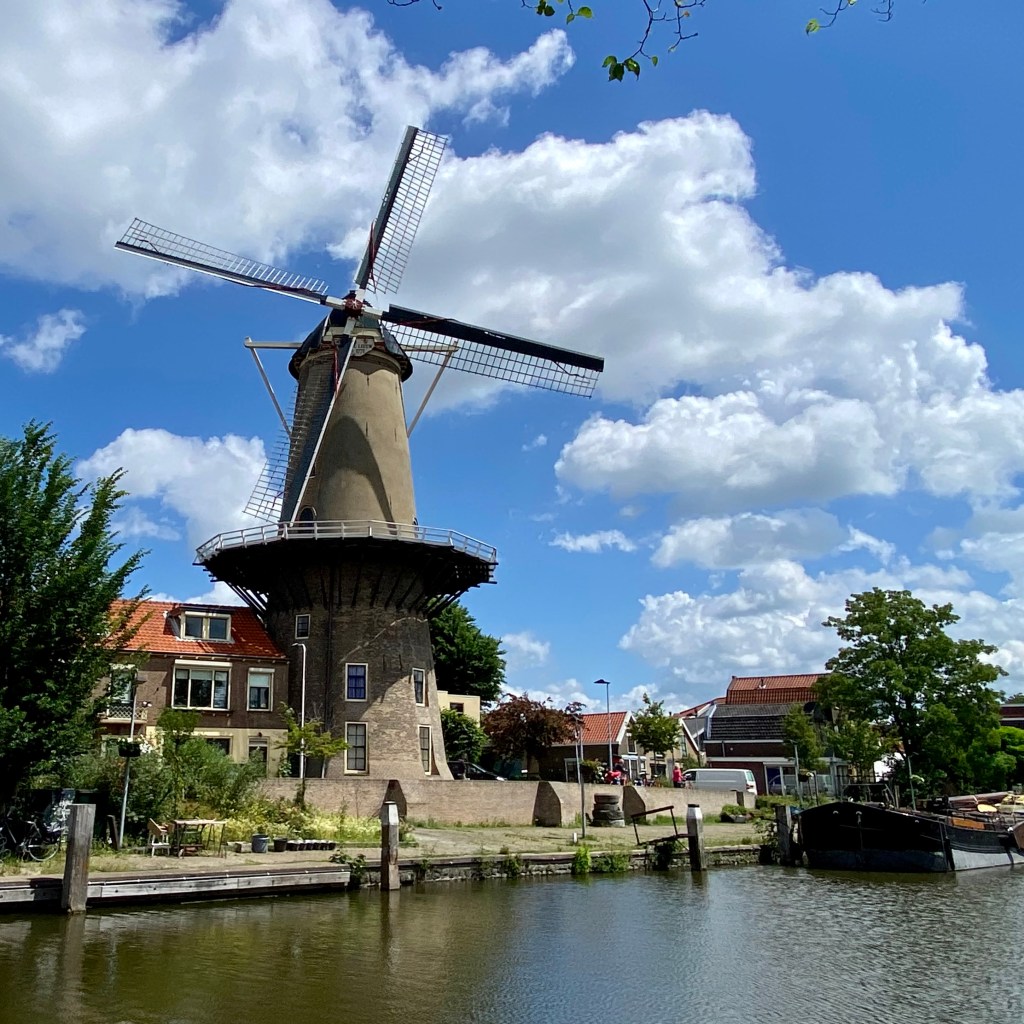
Time for a bit more exploring. Since the centre of Gouda is encircled by canals wandering along the canals seemed a great way to see the city and its wonderful architecture. I wanted to check out the Molen De Roode Leeuw and serendipitously I spy it on my meanders.  The Red Lion Windmill is a working mill that was constructed in 1727 and has been restored in recent decades.

Molen De Roode Leeuw

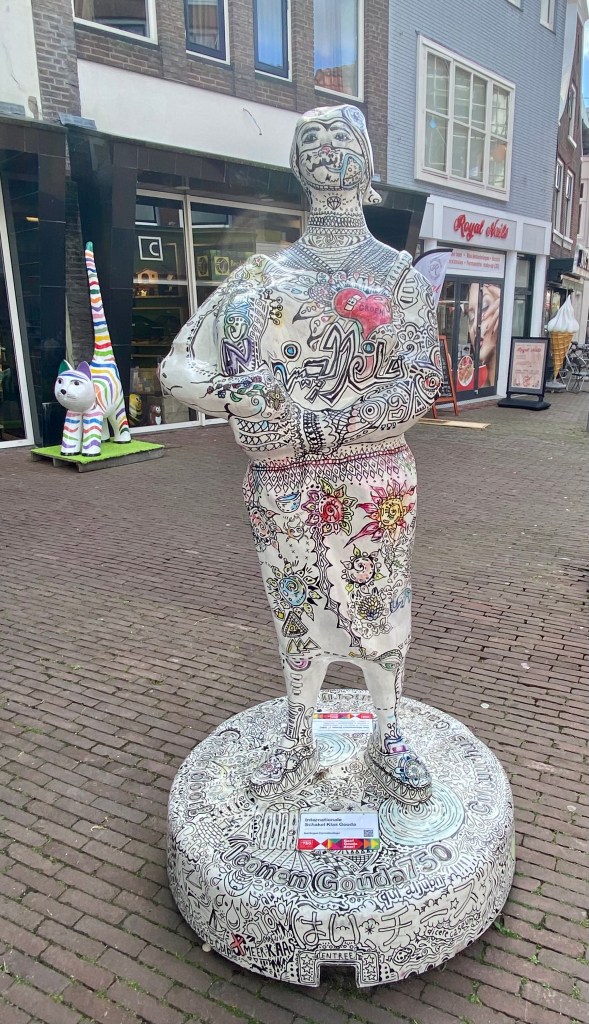
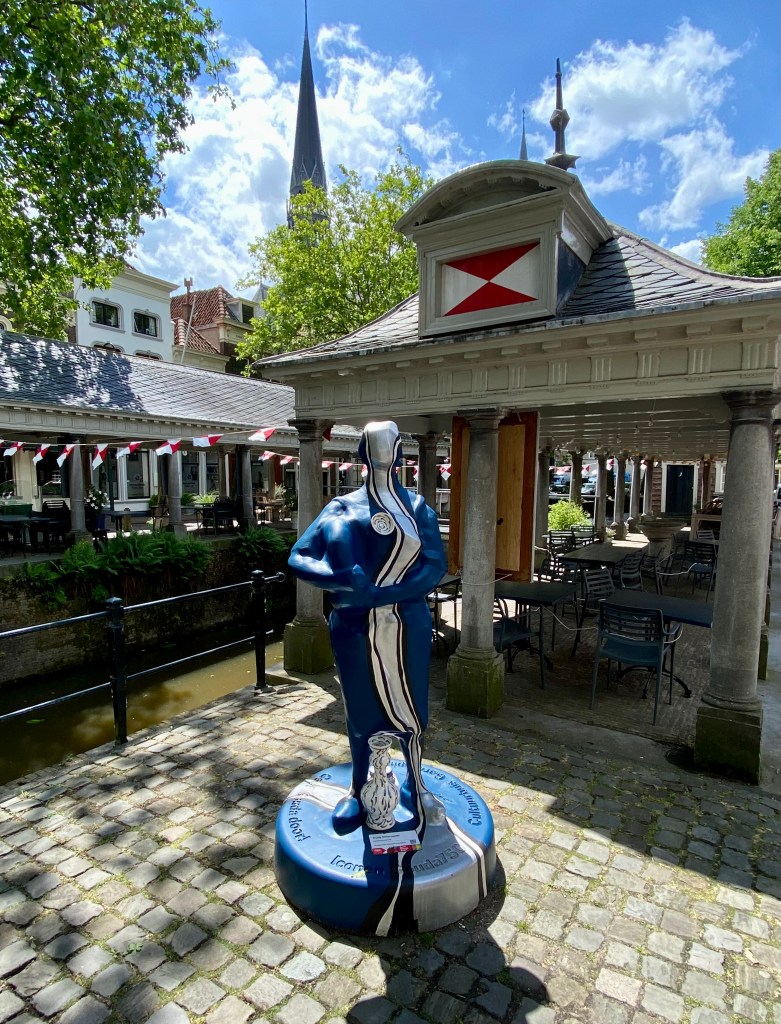
Also while wandering I pass the Church of St. John and the Gouwekerk. It’s too nice a day to be inside so I skip the tours of their interiors and enjoy the beautiful weather. There’s also lots of street art to enjoy maybe to celebrate the 750th anniversary?

Church of St. John
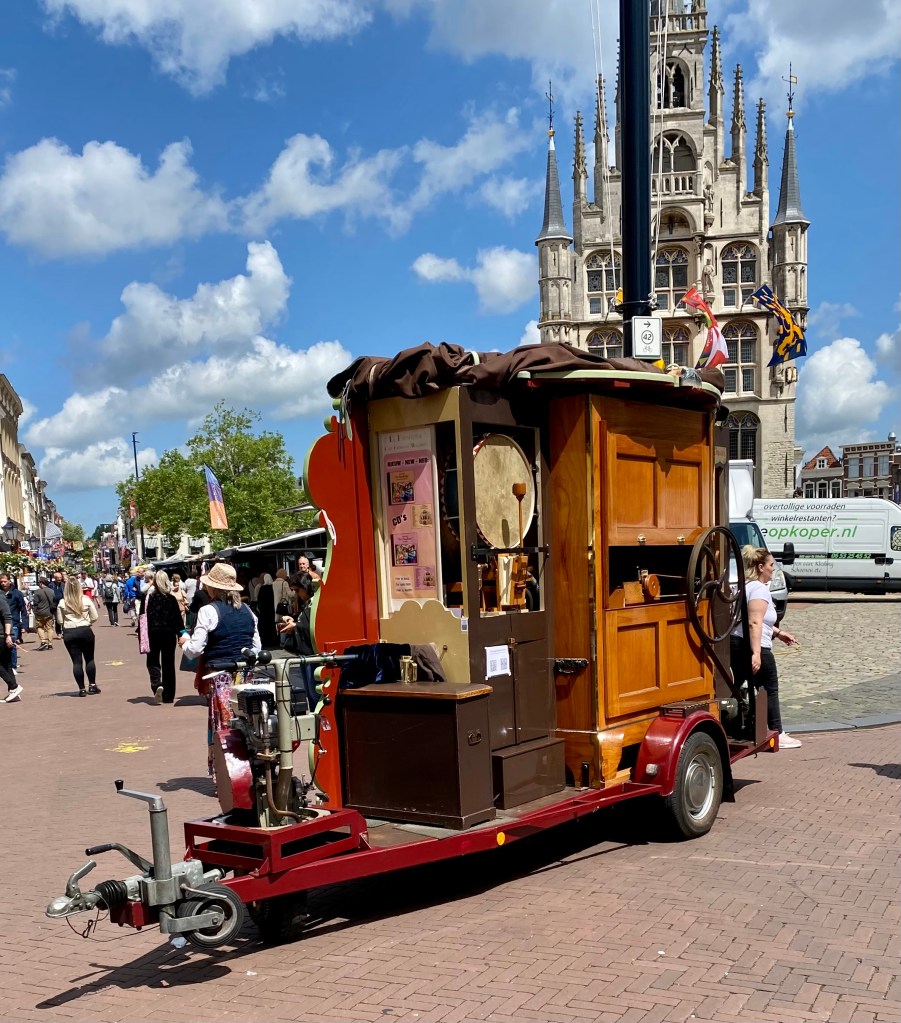
Not sure what this is called but it played music on its own like a huge music box!
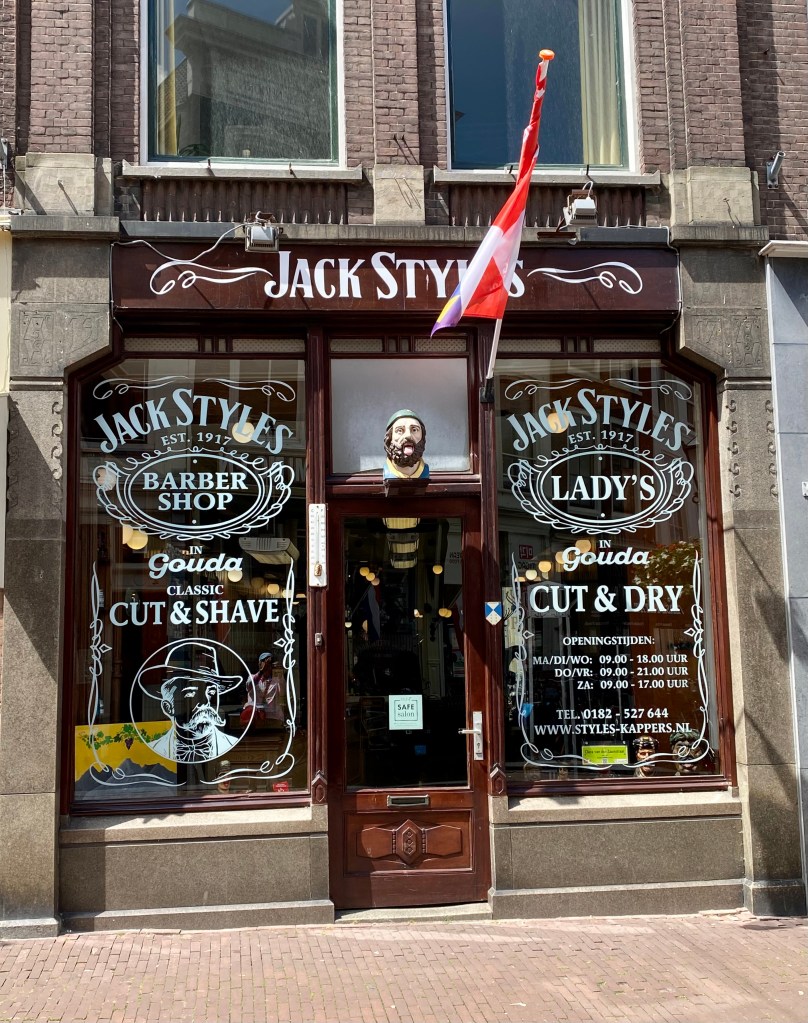
Funky barber shop
Beautiful and comfy too!!

After a bit of exploring, I decided to hop the train back to Den Haag to explore a bit more there as tomorrow I’m headed back to Amsterdam. 

Exploring the market and it’s wide range of street art was interesting and I even stumbled across Chinatown.

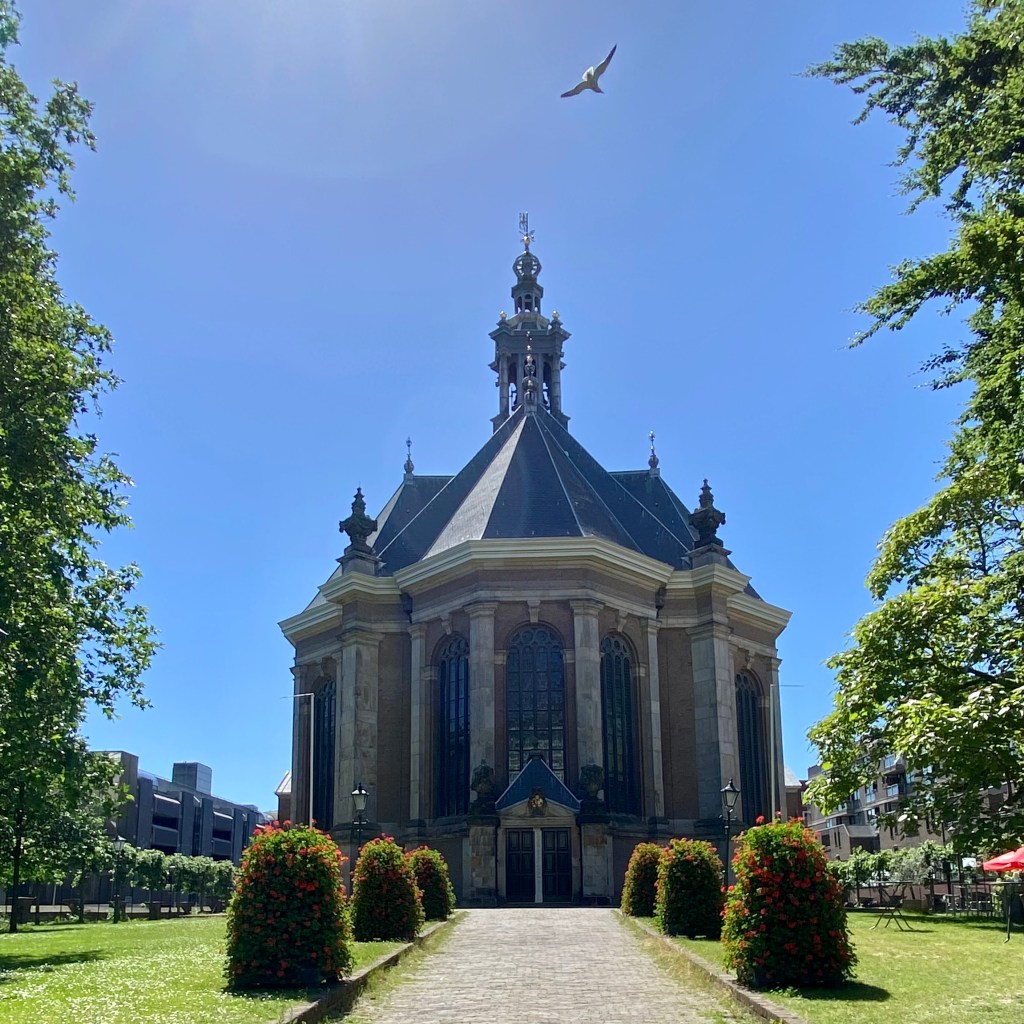
Nieuwe Kerk – Also not open!
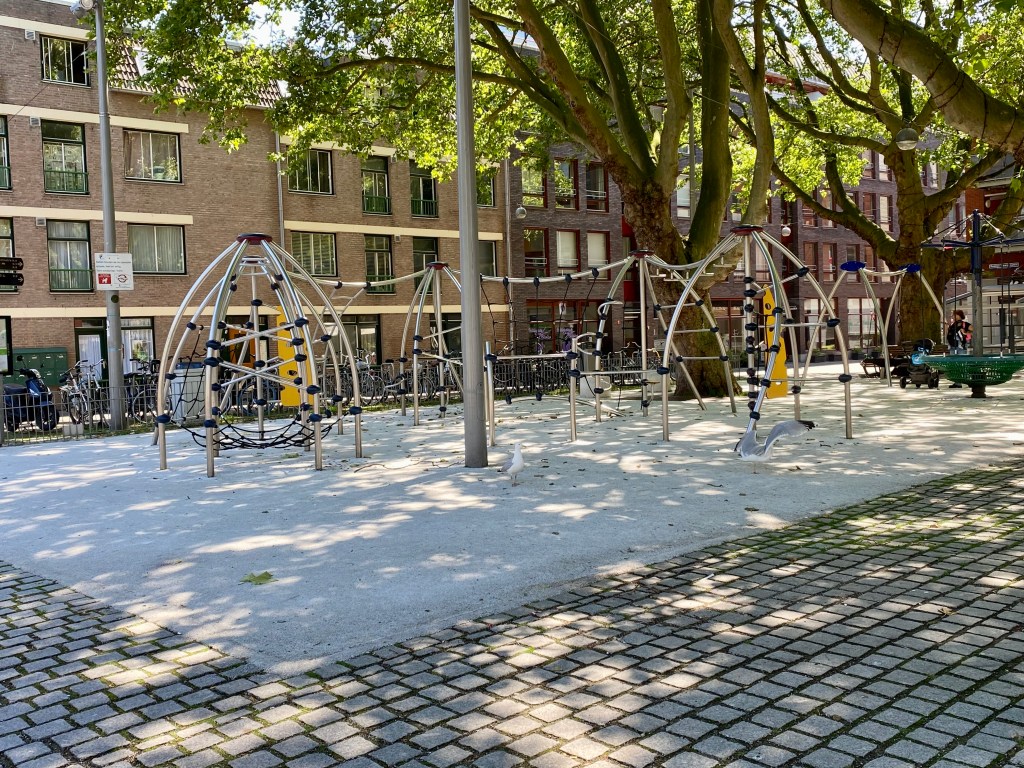
Funky Playground

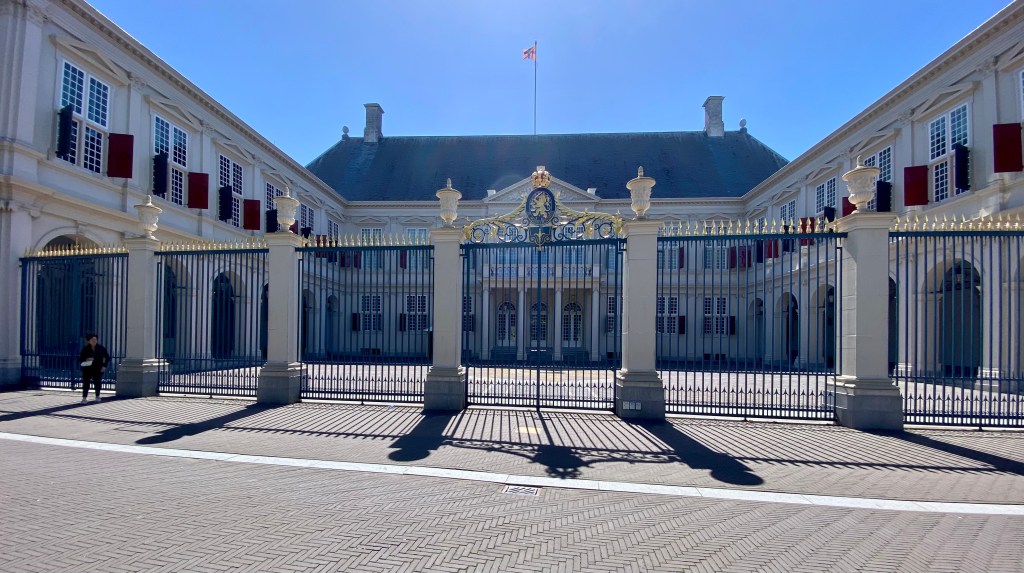
Next up was the Noordeinde Palace; one of the three official palaces of the Dutch royal family. It has been the official workplace of King Willem-Alexander since 2013.

Noordeinde Palace

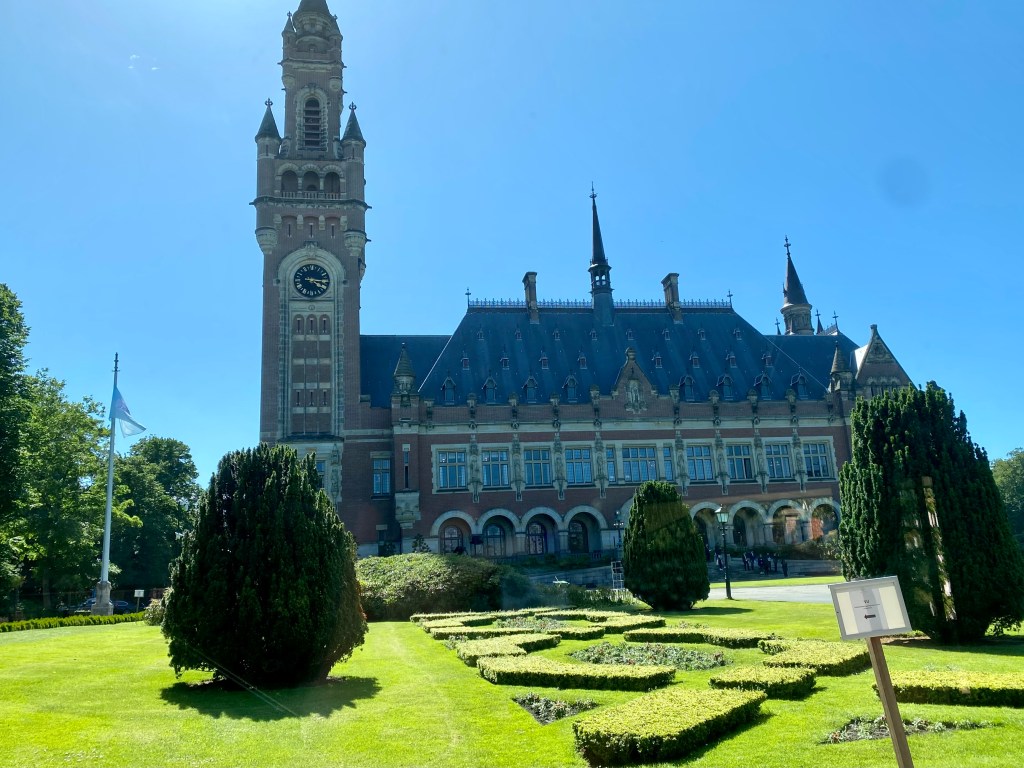
Continuing along, I find the Peace Palace; an international law administrative building housing the International Court of Justice, the Permanent Court of Arbitration, The Hague Academy of International Law and the Peace Palace Library.

The Palace officially opened on 28 August 1913, and was originally built to provide a home for the Permanent Court of Arbitration, a court created to end war by the Hague Convention of 1899. Scottish-American steel magnate Andrew Carnegie contributed $1.5 million USD to build the Peace Palace. While it was impossible to tour the palace or the grounds there was an interesting multimedia presentation on the past, present and future. 

Peace Palace

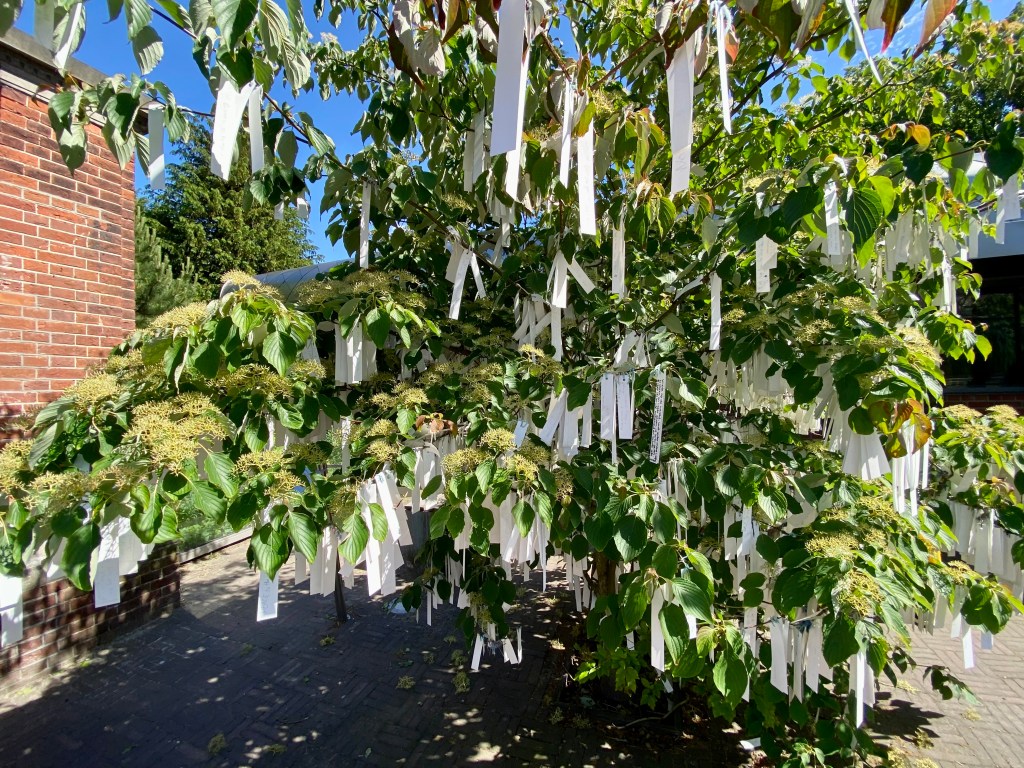
Outside is the Imagine Peace Wish Tree where people can write down their wishes and hang them on the tree. Unfortunately, it was the end of a busy day and I didn’t get to contribute to this initiative but it would have been to see an end to the war in Ukraine. 

Peace Wish Tree

Today I had the chance to see the transit police in action. If you forget to register your klipkaart or buy a ticket and you get caught it’s a €42 fine. They boarded trains and trams a couple times when i was riding them before but today was the first time they caught anyone. Supposedly no questions asked but I did witness a cute young señorita from Barcelona talk herself out of the fine. She tried quite hard at it and she was lucky that the officer in question was a young man.  Other people were not so lucky!

After a busy day, it’s back to the hotel for a nice Caesar salad for dinner with a glass of wine. Tomorrow is another day and adventures await…

Wandering Through Northern Europe – A Rainy Day in Delft

June 8 – Delft

Today, I’m headed to Delft. Luckily, the tram that I use to get around Den Hague also goes to Delft so I’m confident that even my poor navigational skills will be enough to ensure success. The forecast includes a chance of showers so I’ve packed my trusty poncho and I’m off for a day of exploring. My “plan” is to do a walk along the “Ceramic Route” to check out a number of installations in Delft that pay homage to the happy blue and white pottery Delft is famous for, explore the Vermeer Museum, visit the old and new churches and then see what else I want to do. 

(Wo)Man plans and God laughs! is the translation of an old Yiddish adage and today God must have been peeing his pants! 

I managed get to Delft without incident but as soon as we’d arrived the promised “showers” started and it rained incessantly for the entire time I was there. Apparently the rain was really needed as the dykes were very dry and at risk of cracking with the resulting flooding. Oh well, I didn’t melt in the rain but my plan was a bit of wash out! Nonetheless I had a great soggy day in Delft with some surprises. 

Miraculously the first tram stop in Delft was at Princenhof Museum which was also the start of the planned Ceramics Route. 

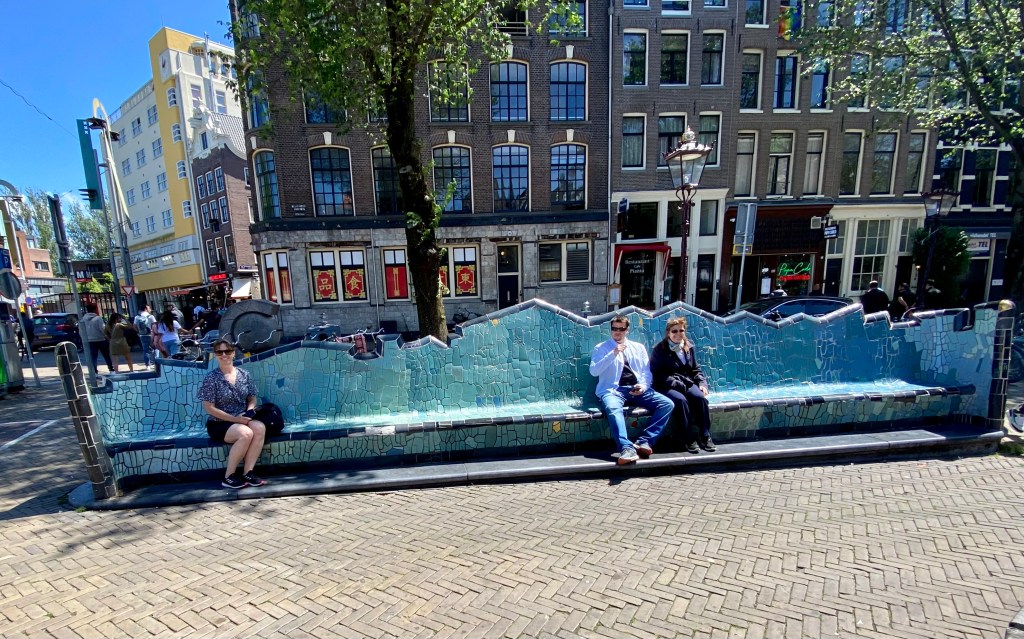
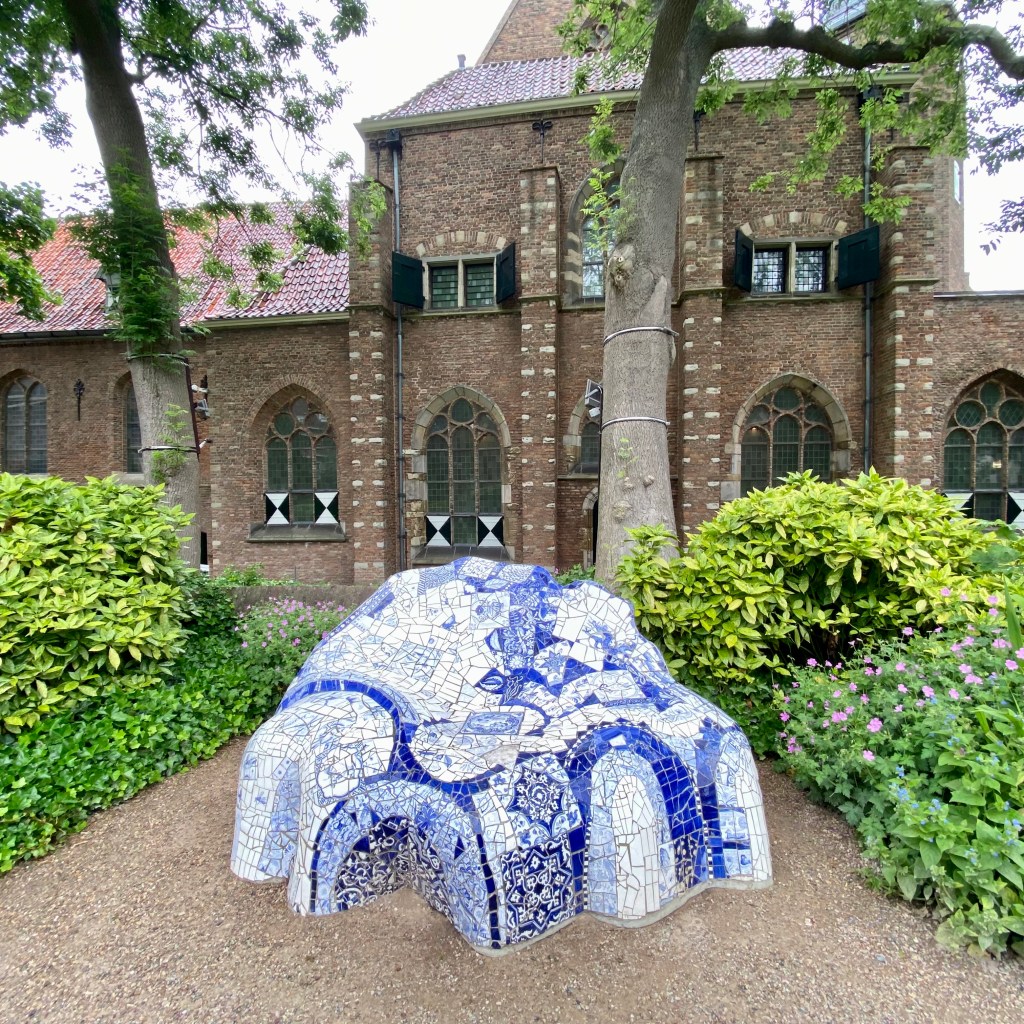
The first installation, Homage to Gaudi; a ceramic Delft blue sofa designed by Marianne Burger’s, is in the Prinsenhof Garden. Delft artist Chris Dagradi created the tiles especially for this sofa which was unveiled in 1988. 

Homage to Gaudi

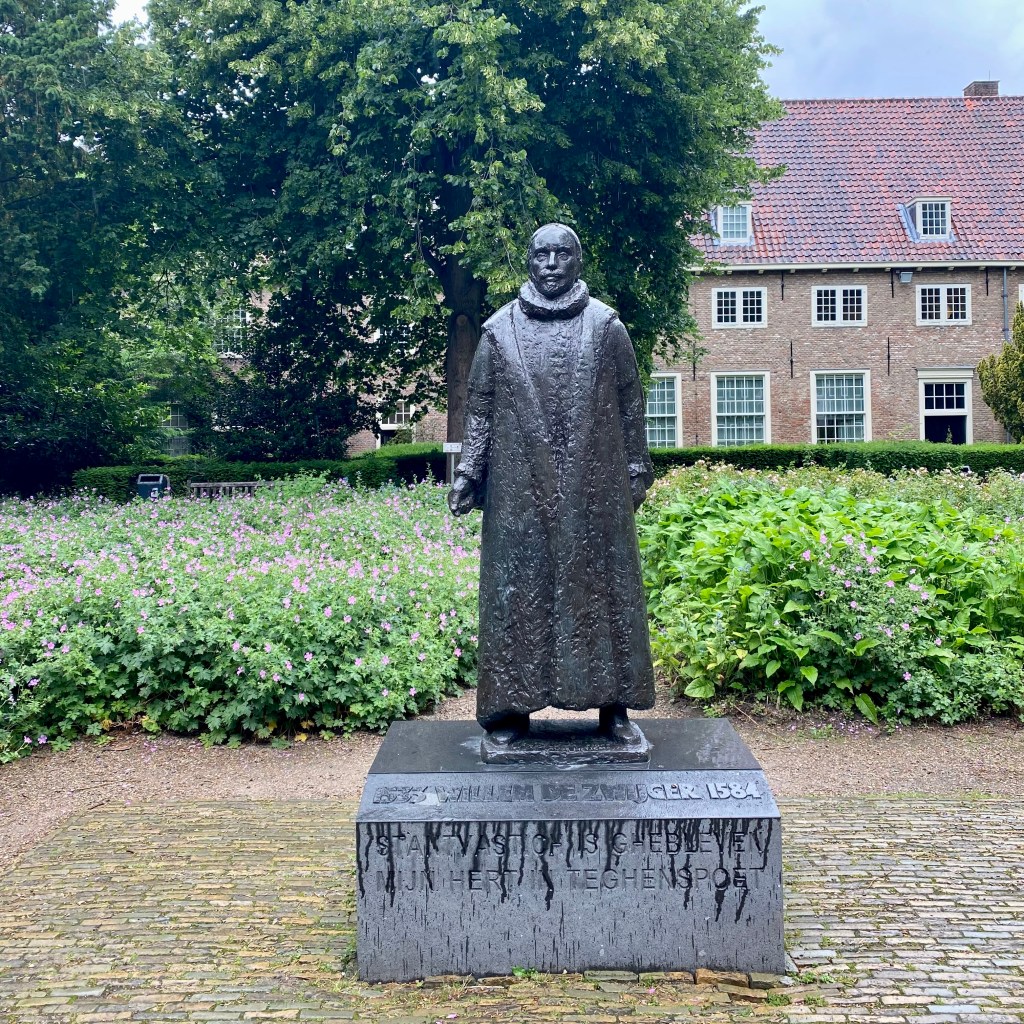
In the same garden is a statue of William the Silent aka Prince William of Orange who spent much of his life in Delft. From 1572 to 1584 he and his court regularly stayed at the then St. Agatha convent. Because of this, the complex has since been known as “Prinsenhof”.

William of Orange

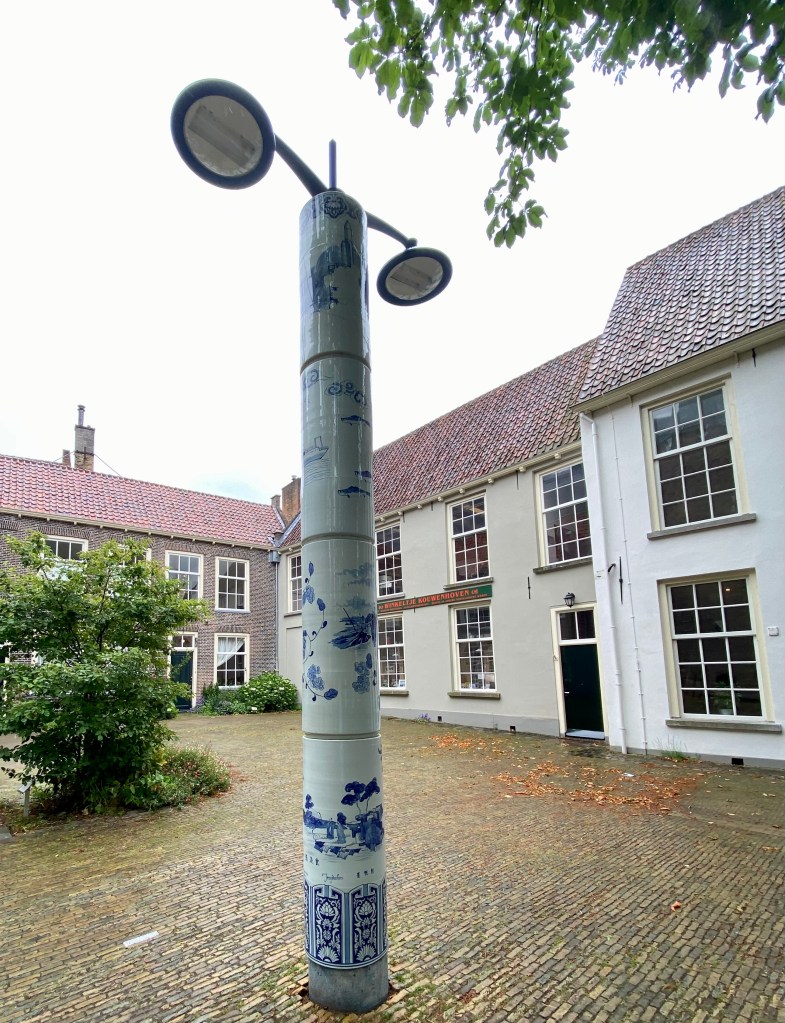
Next up also in the museum courtyard (aka Sint Agathaplein) a trio of beautiful porcelain lampposts are nestled among the old chestnut trees. The lampposts feature paintings by Wendy Steenks and Chinese artist Zhang Ling Yun combining traditional Chinese and Dutch motifs with contemporary forms. These porcelain lampposts were made in the Chinese ceramics city of Jingdezhen, a sister city of Delft and the cradle of Chinese porcelain from which Delft blue originated.

Passing the Oude Kerk on the way to the Centrum, I came across a statue of Geertruyt van Oosten. After being dumped by her fiancé she was said to have lead a very pious life She was considered very holy and manifested miraculous stigmata. She’s not part of the Ceramics Route but here she is! 

Geertruyt van Oosten

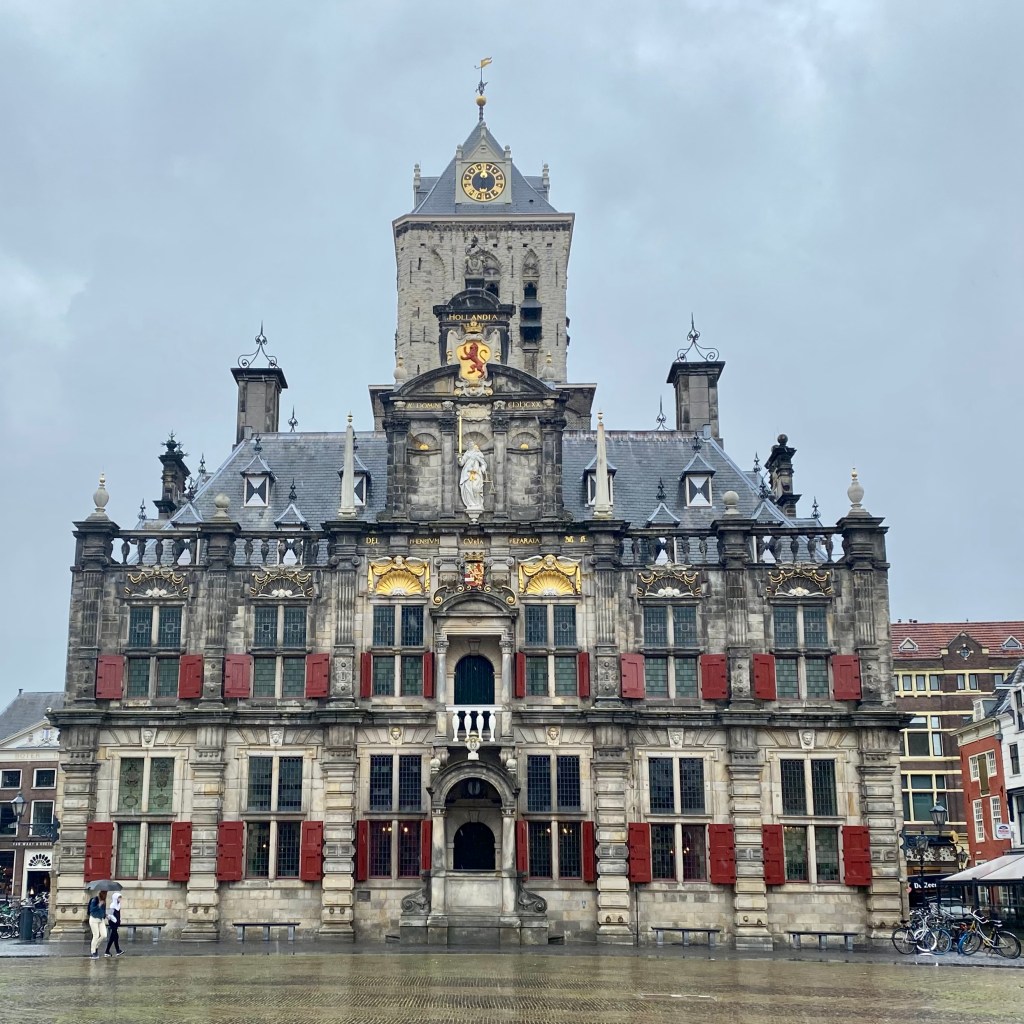
The next stop on the Ceramics Route was to have been The ‘Ceramic Map’; a map of Delft from the 17th century, made of ceramic and mosaic. Sadly, my lack of navigational skills and a dearth of natives, frolicking in the rain who knew what I was talking about, scuppered that part of my plan. In the meantime, i snapped a pic of the beautiful City Hall.

The Oude Kerk
Delft City Hall

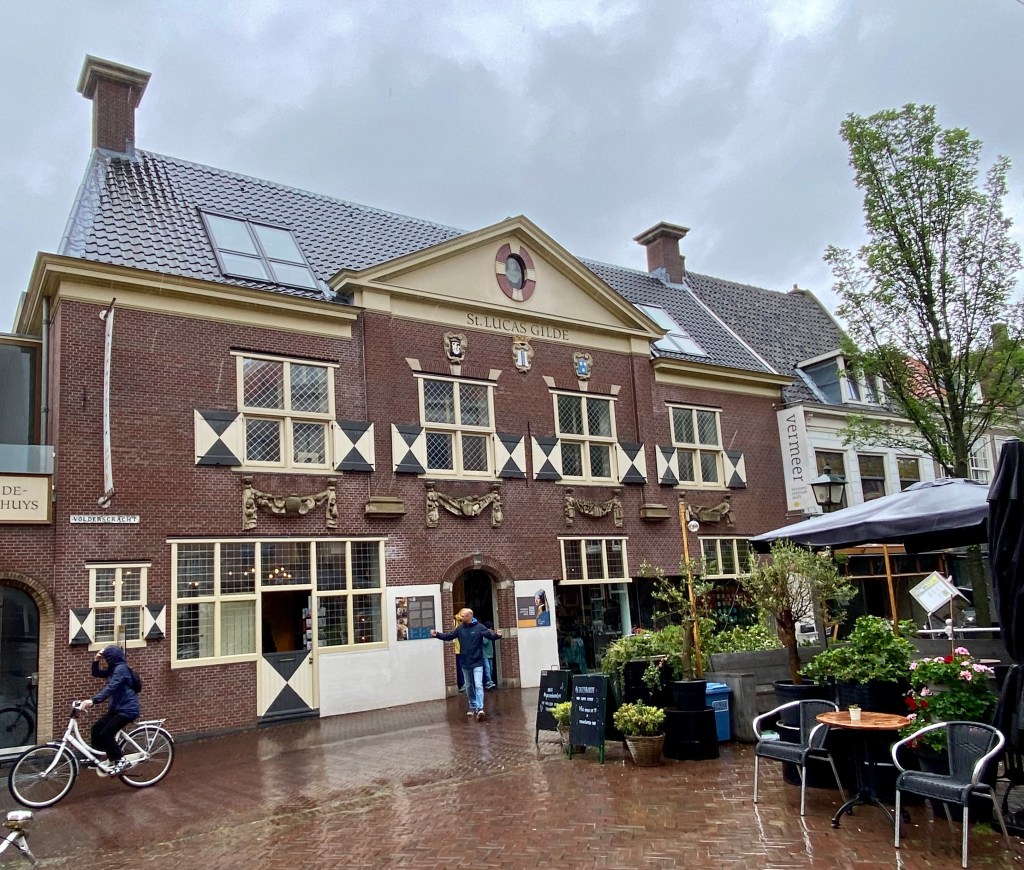
By now, I’m getting drenched and decide an inside activity is in order so I head to the Vermeer Centrum. Johannes Vermeer of Girl with a Pearl Earring fame lived and worked in Delft his whole life. The museum provides some insights to Vermeer’s life, family and work. There are true-size reproductions of all his works but sadly none of the originals are in his home town. Not sure it’s a must do but it was a nice respite from the rain, lol! I did really enjoy Girls with Pearls by Carolien Sikkenk so I’ve inserted that below.

Vermeer Centrum
Girls with Pearls

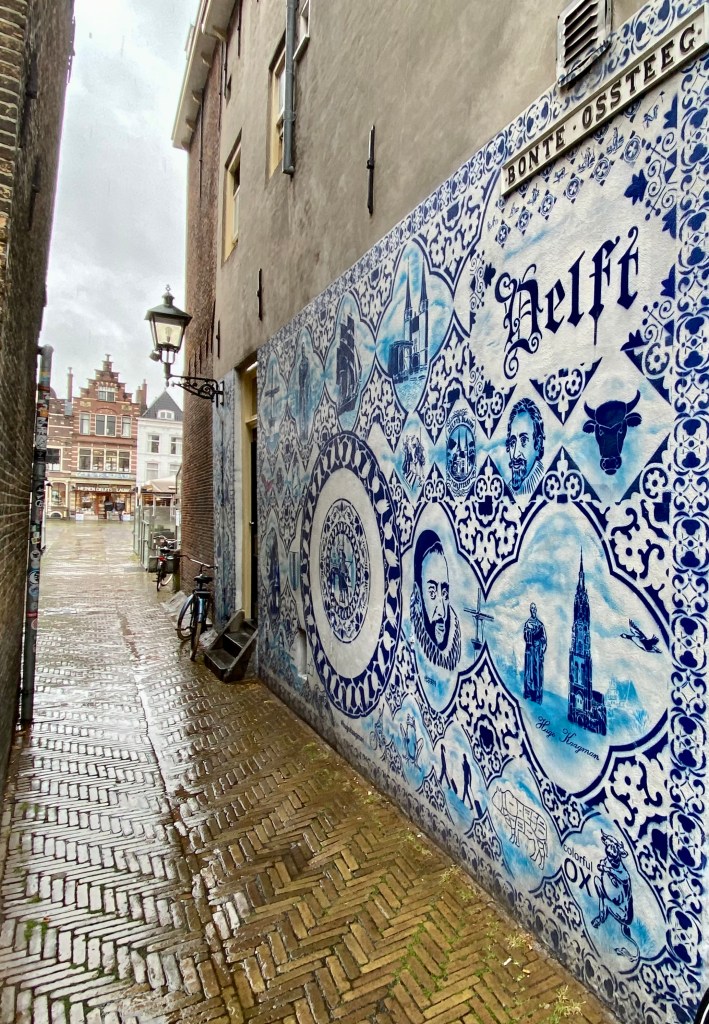
Braving the rain again at least momentarily, I’m off to Bonte Ossteeg to check out Hugo Kaagman’s mural commissioned by the municipality of Delft in 2013. This artwork was inspired by Delft blue motifs with patterns and colours reminiscent of Delft blue tiles. The images in the mural show Delft through the ages. 

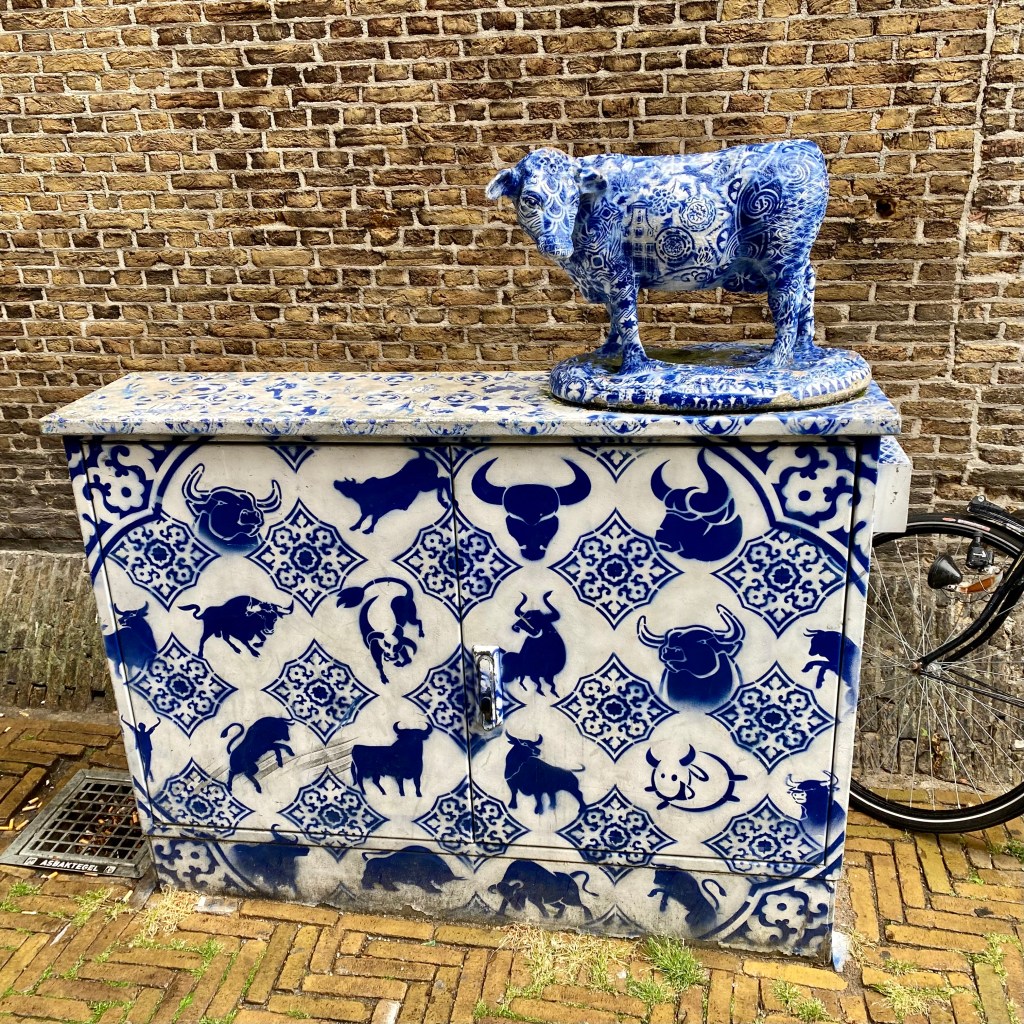
Opposite the Delft blue mural is a transformer box painted in blue and white, topped with “The Colourful Ox”. The striking artwork is by Amsterdam sculptor/street artist Hugo Kaagman.

The Colourful Ox

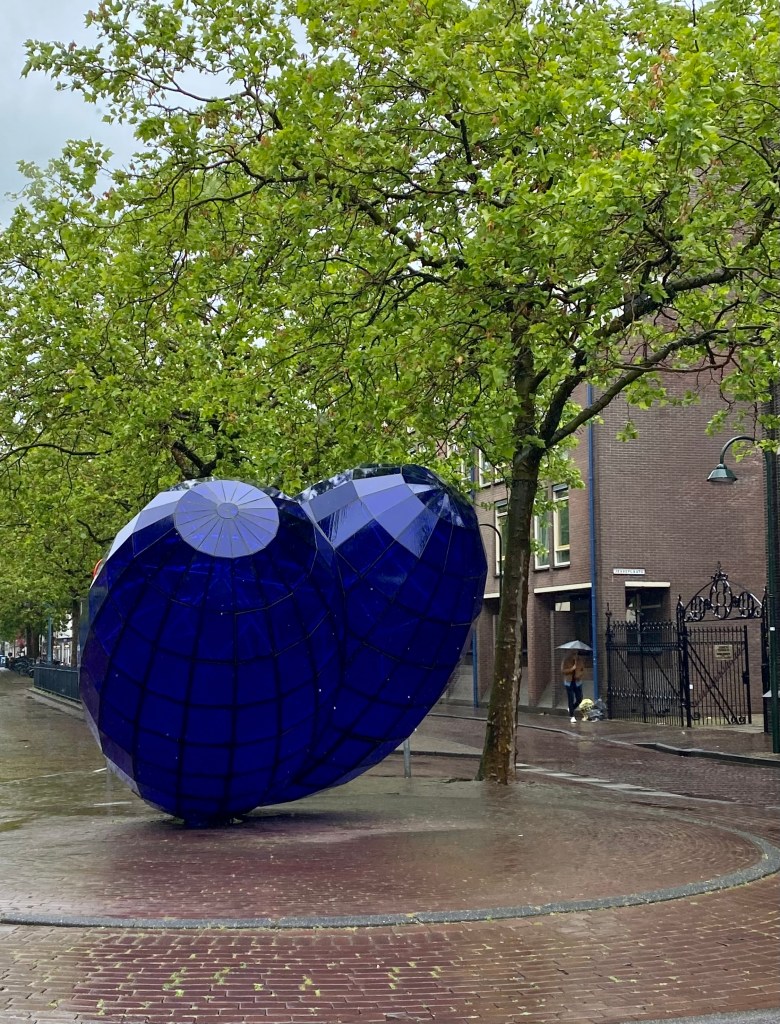
On Oude Langendijk, I found a large delft blue glass heart. Apparently, the sculpture is lit from within at night as an homage to the stained glass of the churches in Delft.

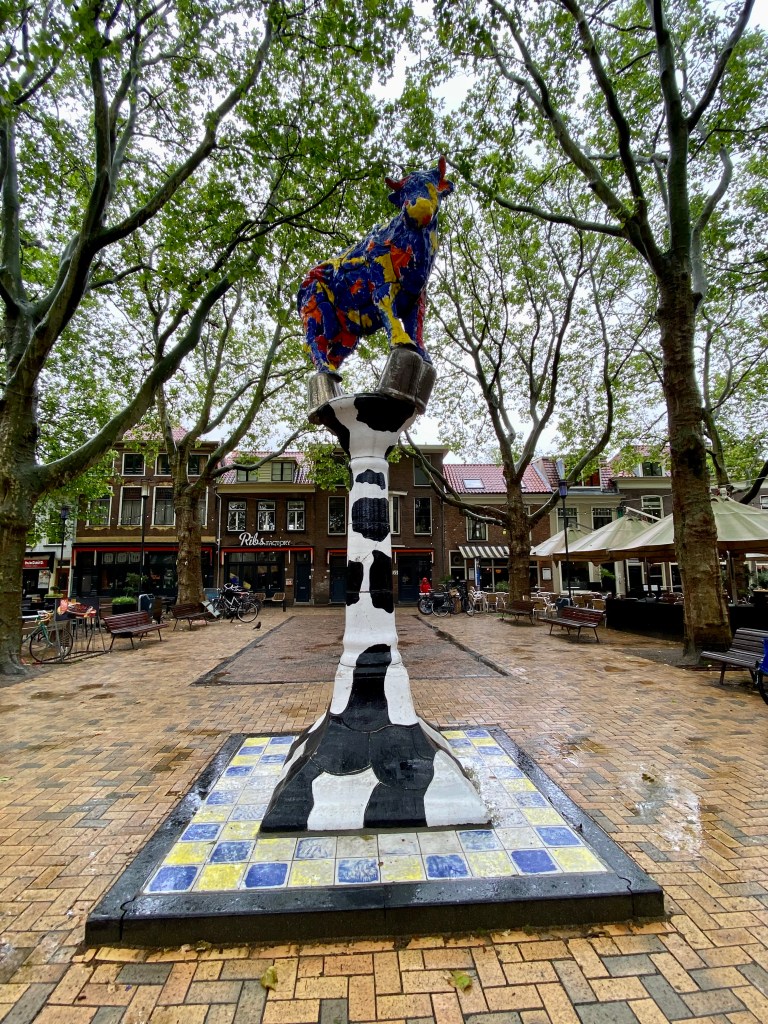
The Beestenmarkt was used as a cattle market from the sixteenth century until 1972. The ‘Delft Cow’ (although some call it a bull) is a reminder of this time. Painted in red, blue and yellow, the cow stands on inverted silver thimbles on a tall column that is white with black spots a reference to the colours of the typical Dutch cow.

The Delft Cow or is it a Bull?

Fed up with the rain, I’m abandoning the Ceramic Route and heading to the New Church. This is a day better suited to inside activities! on my way i passed a few more gems!

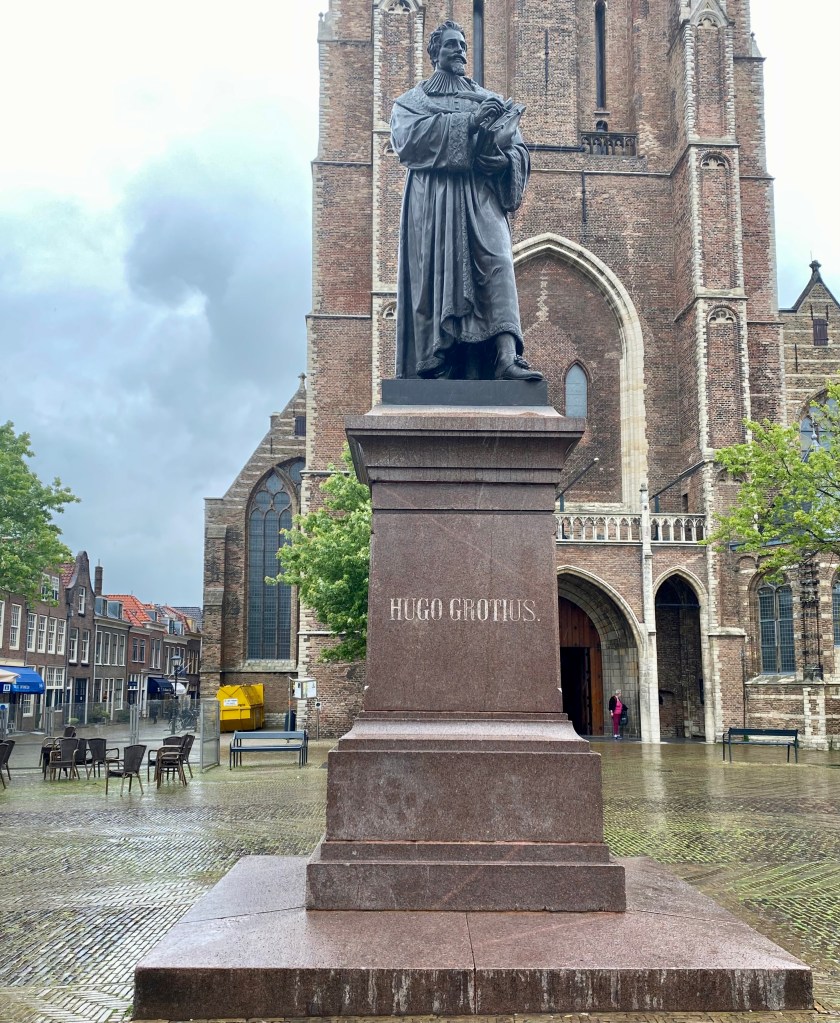
In front of the Nieuwe Kerk is a bronze statue depicting Hugo de De Groot in his role as a jurist. He wears a gown and holds a law book in his hand. He is one of the most famous figures in Dutch history and is considered one of the greatest jurists ever. He is buried in the Nieuwe Kerk in Delft right next to those of his archenemy Prince Maurice.

Hugo De Groot

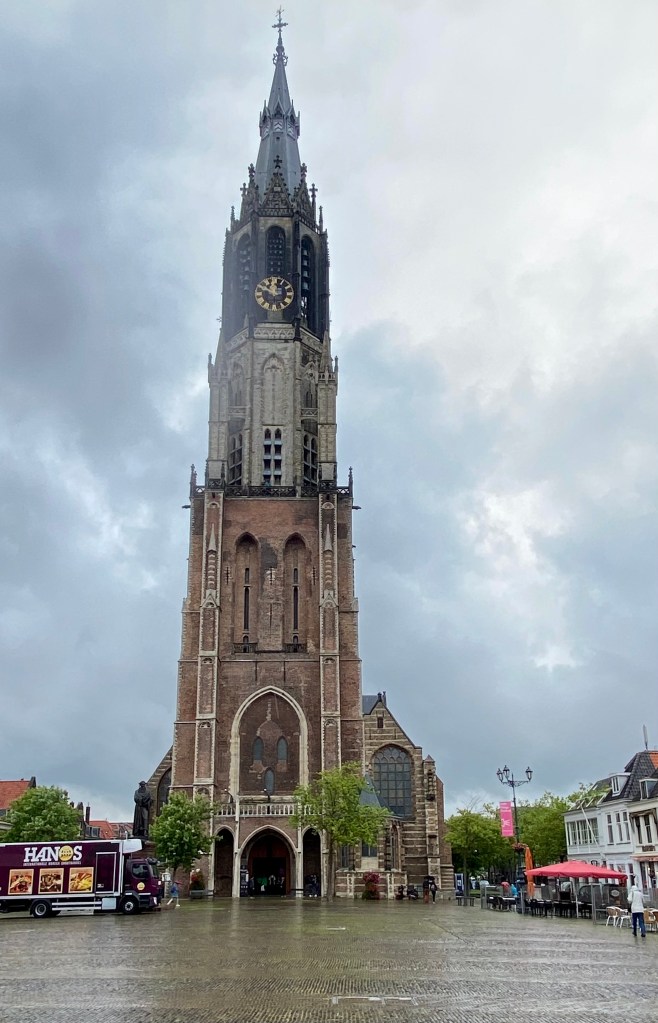
The New Church is the largest basilica in Delft and it’s construction is linked to visions of a golden church on the markt by two residents of Delft in the middle of the 14th century. This impressive building features a memorial to William of Orange and is home to the royal family’s private crypt which is currently being expanded. There’s also a beautiful pipe organ and fabulous stained glass windows.

Nieuwe Kerk
Main Organ
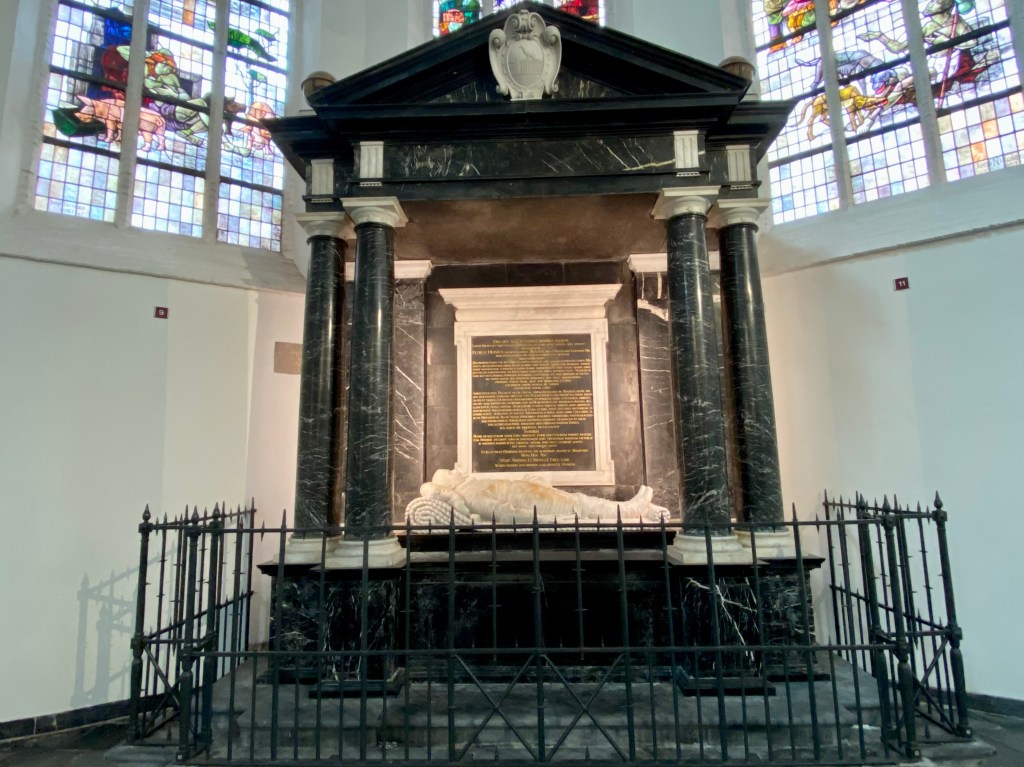
Hugo De Groot’s Mausoleum
William of Orange Mausoleum

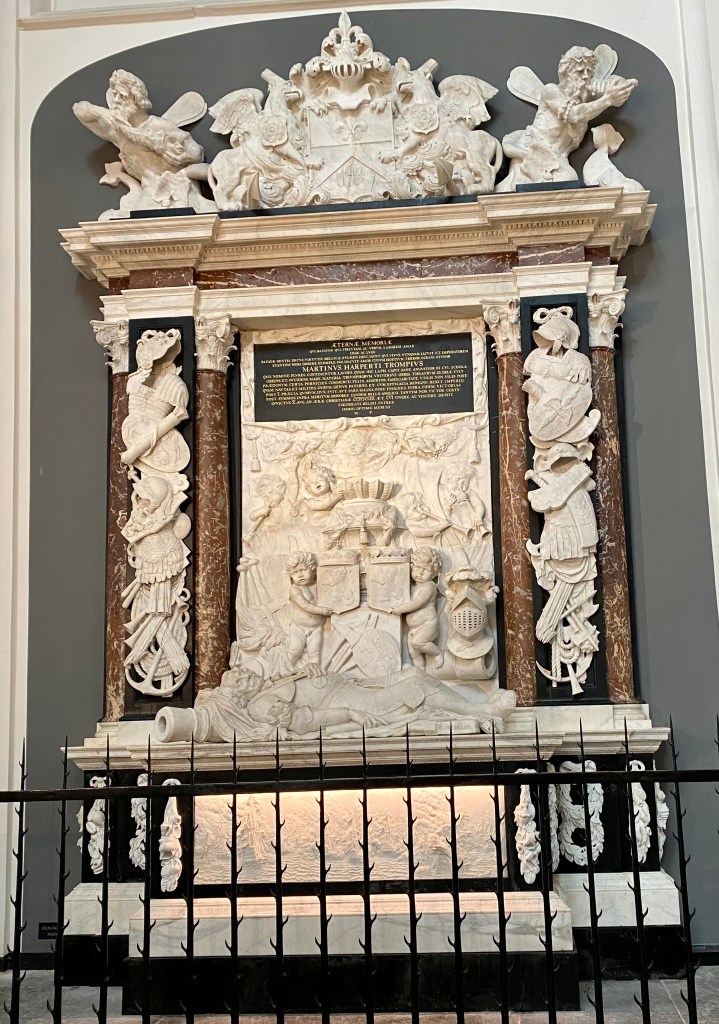
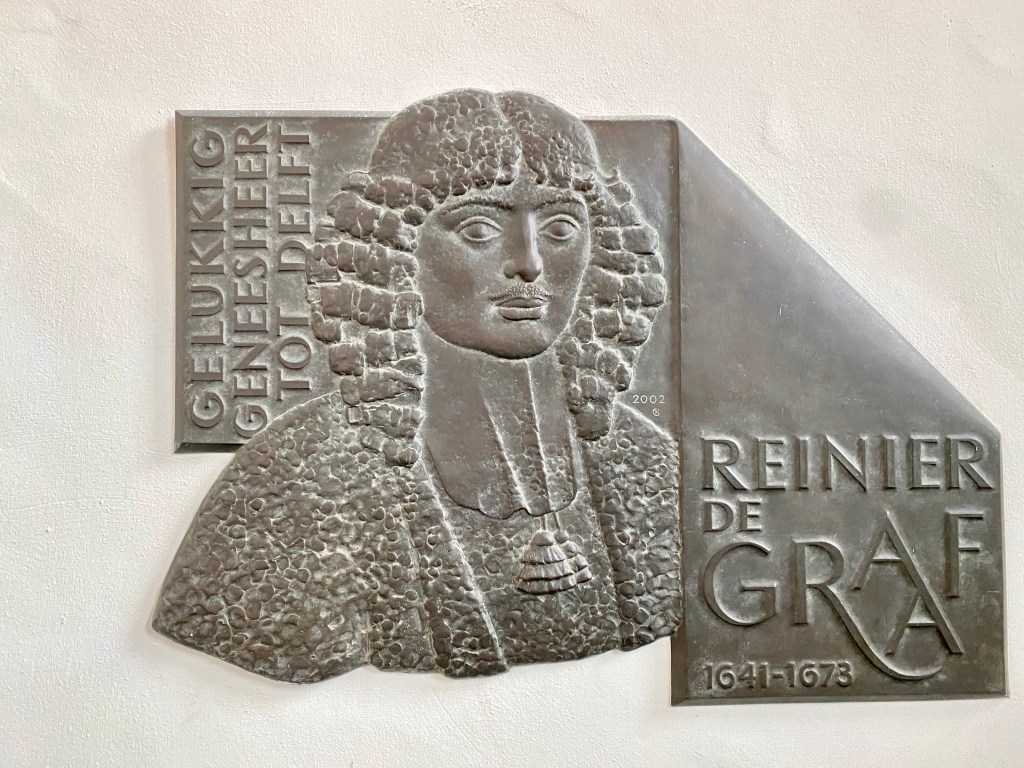
The old church is the final resting place of four hundred well known and less well known Dutch people. Some have fabulous mausoleums and some a simple headstones. Vermeer had no money when he died so he doesn’t have a fancy stone but is laid to rest in his mother-in-law’s crypt. After his paintings became more well known the Dutch government added a headstone.

Piet Hein’s Mausoleum
Marten Tromp’s Mausoleum
No Mausoleum for the poor artist
Even he gets a nice plaque!

Time to call it a day. Stopped at a bakery, meat market and cheese store to pick up a few things for a charcuterie plate tonight and I’m back to Den Hague. It finally stops raining when I get back to my hotel. Lol, tomorrow is another day and I’m off to Gouda for the weekly cheese market. 

Wandering Through Northern Europe – Headed to Den Haag

June 7 – Den Haag

Wanted to spend a few days exploring towns south of Amsterdam before Chantale joins me for the weekend so I’m taking the show on the road to Den Haag. Den Haag is the most famous coastal town in the Netherlands with lovely beaches I’ve heard (though at a crispy 17, I think that I‘ll limit my explorations to town!). Den Hague is known worldwide as the home of the International Criminal Court and for hosting the United Nations International Court of Justice so I’m looking forward to visiting the Peace Palace while in town.

After checking into my hotel in Den Haag, I hopped the tram for Centrum. The tram stop is a stone’s throw from Binnenhof; a complex of buildings in the city centre that houses the meeting place of both houses of the States General of the Netherlands, the Ministry of General Affairs and the office of the Prime Minister of the Netherlands. Built primarily in the 13th century, the Gothic castle originally functioned as a residence for the counts of Holland. It became the political centre of the Dutch Republic in 1584 and is among the oldest Parliament buildings in the world still in use.

Binnenhof
King William II

Before continuing my explorations in the Museum Sector, I headed off in search of lunch and ended up at De Passage. It is the only remaining covered shopping arcade in the country boasting a high, glass ceiling which allows in lots of light. The beautiful airy design of the arcade is reminiscent of the Galeria in St Petersburg and the GUM in Moscow; they aren’t built over streets but the feeling is the same. All of them are beautiful places to shop for things that you don’t need.

De Passage

I find a nice bench in the back of the Grote Kirk to enjoy my picnic lunch with hungry pigeons as company. Sadly, when I finish lunch, I learn that the church won’t be open until Thursday afternoon. Undaunted, I take time to meander through the back alleys back to the Museum Sector. The alleys aren’t too wide as one van driver soon finds out. The best part was when he got out to move the scaffolding and the guy on it that was painting because his ladder was too wide!

Now that’s a tight squeeze!

My next diversion (and lucky accident!) is a tour of Gevangenpoort, the Prison Gate Museum. I had intended to visit the 18th century art gallery on the other side of the entrance but I didn’t ask the right questions! Next thing I know I’m in a prison, lol! Anyway, in addition to a collection of torture instruments, etc. there is an excellent audio tour that provides perspectives on crime and punishment over the centuries. 

One story of particular interest was the discussion of a case of poisoning of the lady of the house and the maid who was charged with her murder. The audio tour presented the case from the perspectives of the accused prisoner, the jailer, the torturer, the judge and the executioner. Unfortunately, although apparently innocent, the maid was tortured until she eventually confessed and was even forced to name her master as a co-conspirator. When push came to shove, she was sentenced to death and her employer was let off with a fine. Apparently even back then money talked! The prison cells for rich detainees were also much more luxurious. The most famous Dutchmen were incarcerated in the luxurious Knights’ Chamber (Ridderkamer). 
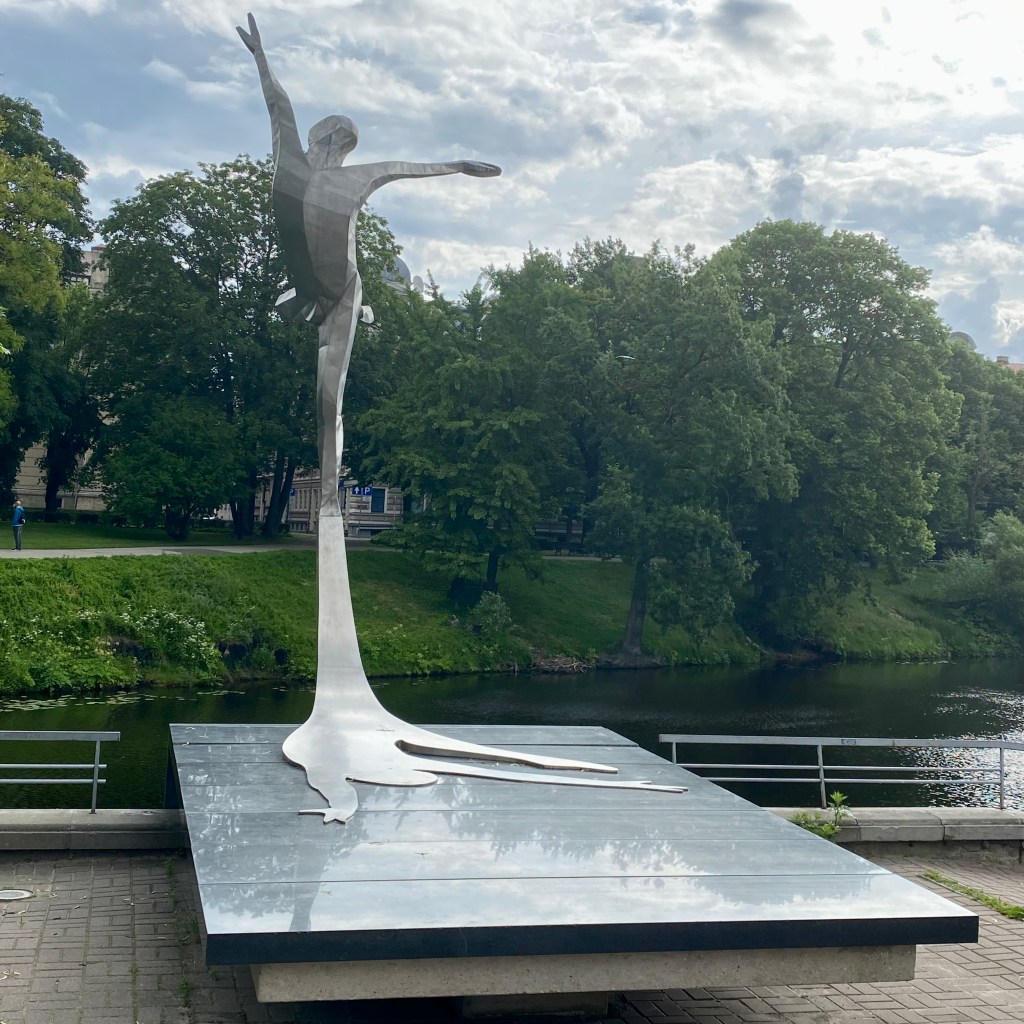
After my spontaneous tour of the prison gate, I headed to the Galerij Prins Willem V as originally “planned”!  The Prince William V Gallery was the first museum of the Netherlands. William of Orange commissioned the construction of the room in 1774 to accommodate his impressive collection of paintings and to exhibit it to the public.

More than 150 old masters from the including works by Steen, Rubens and Potter hang here side by side. The walls are completely covered in a generous display of the wealth of his collection. Crystal chandeliers, silk wall coverings and lavish curtains complete the elegant museum. Sensory overload even for someone like me!

I took a short walk around the Hofvivjer (Court Pond) where I saw two very different statues. The first was of Johan van Oldenbarnevelt founder of the Dutch East Indies Company. He was a Dutch statesman and revolutionary who played an important role in the Dutch struggle for independence from the Spanish Empire. Sadly he was executed because of his religious views by a kangaroo court. 

Johan van Oldenbarnevelt

The second was a bronze statue of a young boy on a pedestal. On his arm he is carrying a basket. On his head is a hat with a large feather. His hand is outstretched, and he is pointing toward Binnenhof. The statue is called ‘Jantje‘ which means ‘little John‘ in Dutch and is a representation of John I, Count of Holland who died in 1299 at the age of 15 years old. He was the son of Floris V, Count of Holland who had built an estate on the spot where the Binnenhof stands. Today the statue is wearing a blue and yellow knitted sweater and his basket and headware have been embellished as well. Not sure why but maybe in support of Ukraine?
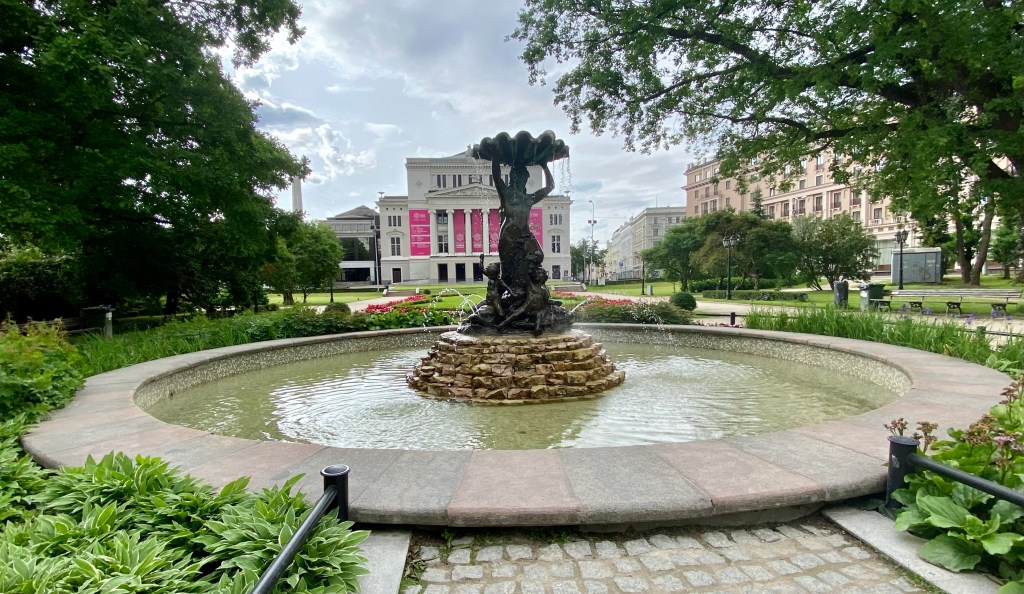
Jantje
Mauritshuis across the lake

Soon enough I’m at the gate into the Binnenhof Courtyard. Sadly there are significant renovations in progress and it was not possible to tour the buildings or visit the gothic Ridderzaal. Not to worry, the two hundred year old Mauritshuis Museum is right next door.
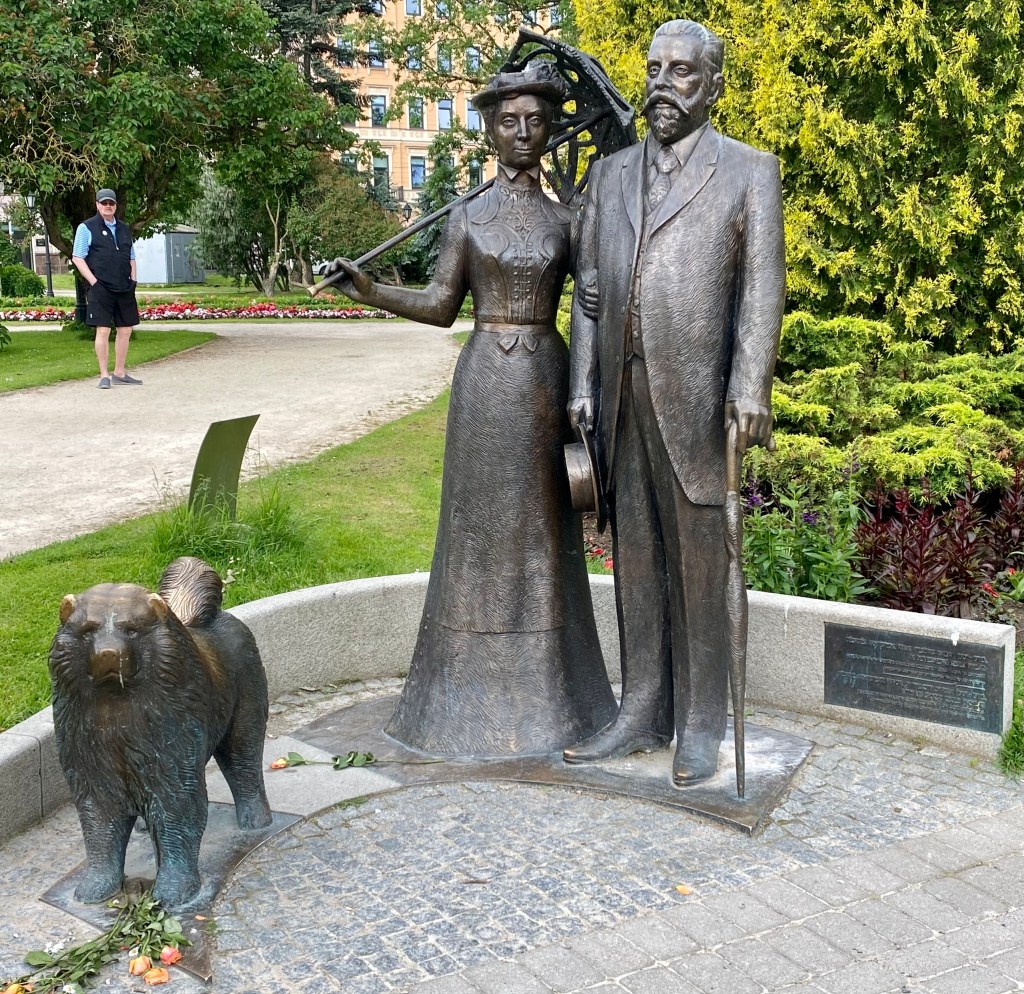
Gate to Binnenhof Courtyard

The Mauritshuis houses the Royal Cabinet of Paintings which consists of mostly Dutch Golden Age paintings. The collection contains works by Johannes Vermeer, Rembrandt van Rijn, Jan Steen, Paulus Potter, Frans Hals, Jacob van Ruisdael, Hans Holbein the Younger, and others. Originally, the 17th century building was the residence of count John Maurice of Nassau.
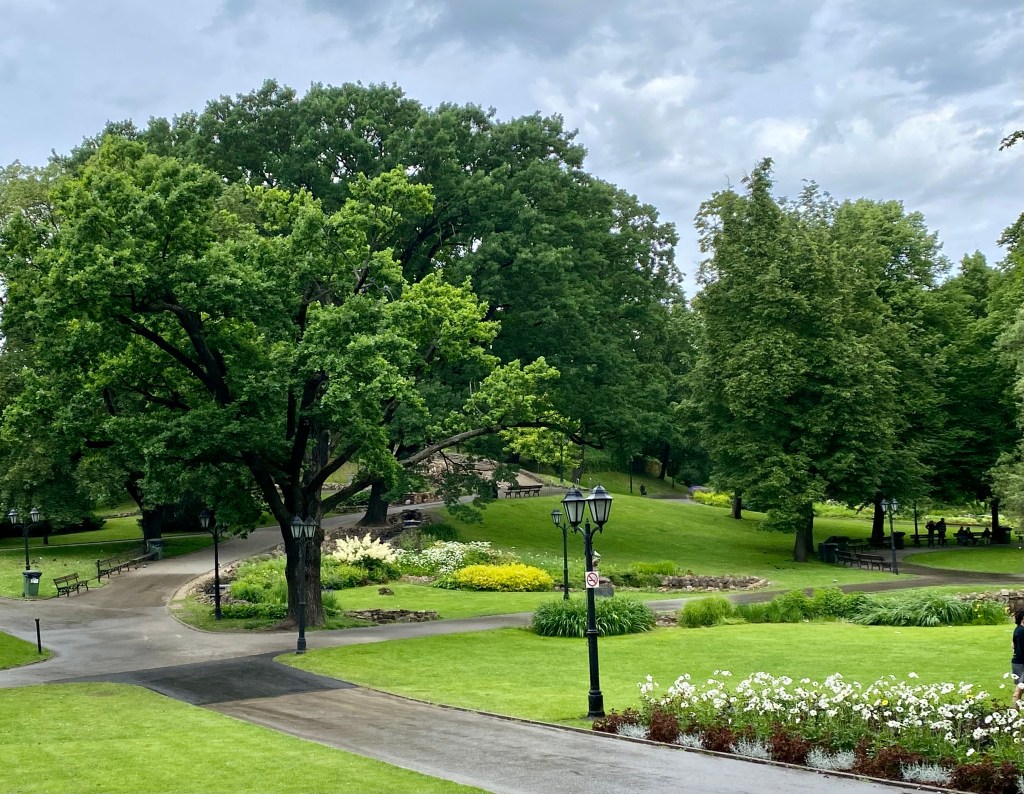
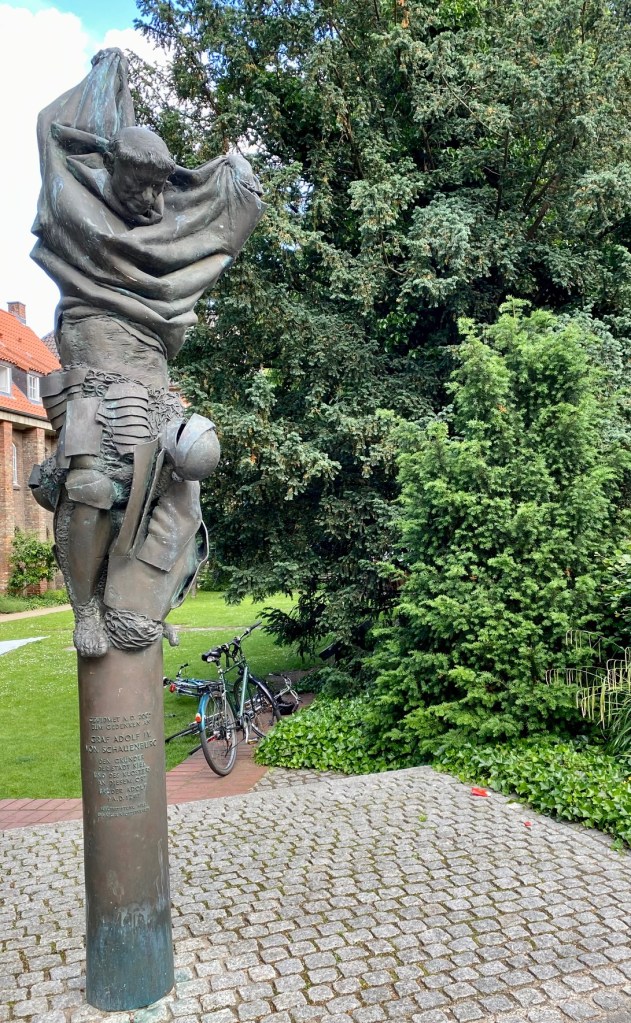
Mauritshuis Entrance

When surrounded by so much beauty it is easy to become overwhelmed so I need a few breaks from sensory stimulation on the comfy seating conveniently provided. I have inserted a few pictures of my favourites below.

As promised, Rembrandt van Rijn’s The Anatomy Lesson of Dr Nicolaes Tulp was one of the featured works of art. Rembrandt portrayed the surgeons in action, and they are all looking at different things. The detail and lighting is truly spectacular..

The Anatomy Lesson of Dr Nicolaes Tulp

An unexpected favourite is a simple painting by Carel Fabritius entitled The Goldfinch painted the year he died in a massive explosion of gunpowder in Delft.

The Goldfinch

I was most looking forward to seeing Johannes Vermeer’s masterpiece, Girl with a Pearl Earring and she didn’t disappoint. The painting is a tronie, the Dutch 17th-century description of a ‘head’ that was not meant to be a portrait. Girl with a Pearl Earring has become one of the world’s most recognizable paintings and has been compared to the Mona Lisa. In 2006, the Dutch public selected it as the most beautiful painting in the Netherlands and I can’t argue that.

Girl with a Pearl Earring

After a busy day, it’s time to head back to the hotel for a light dinner and plan for another day.

Flowerpots in the Museum Sector
Some Fellow Canadians in Den Haag

The Peace Castle will have to wait until later in the week. Adventures in Delft await …