Cruising Around the Land of the Rising Sun

April 12, 2025

After spending the day yesterday exploring the bustling center of Tokyo, today I’m headed south to experience the small town of Kamakura. In the late 12th century, Kamakura was Japan’s political center, when Minamoto Yorimoto chose it as the seat for his new military government. 

Today this quaint beach town is home to 65 temples and 15 shrines! Don’t worry, we’re not going to see them all but I have selected three of the biggest and best to get a good sense of the town. Let’s hope I’ve not bitten off more than I can chew. 

Armed with my trusty navigator, Google Maps, I am ready to again brave the frenetic train system of greater Tokyo. I arrived at Kamakura station without any issues and then followed the throngs to my first stop; Tsurugaoka Hachimangū Shrine. 

Tsurugaoka Hachimangū is the most important Shinto shrine in the city of Kamakura. It was founded by Minamoto Yoriyoshi in 1063, and enlarged and moved to its current site in 1180 by none other than Minamoto Yoritomo, the founder and first shogun of the Kamakura government. The shrine is dedicated to Hachiman, the patron god of the Minamoto family and of samurai in general. The deified spirits of the ancient Emporer Ojin who has been identified with Hachiman, Hime-gami and Empress Jingu are enshrined at the Tsurugaoka Hachimangu Shrine.

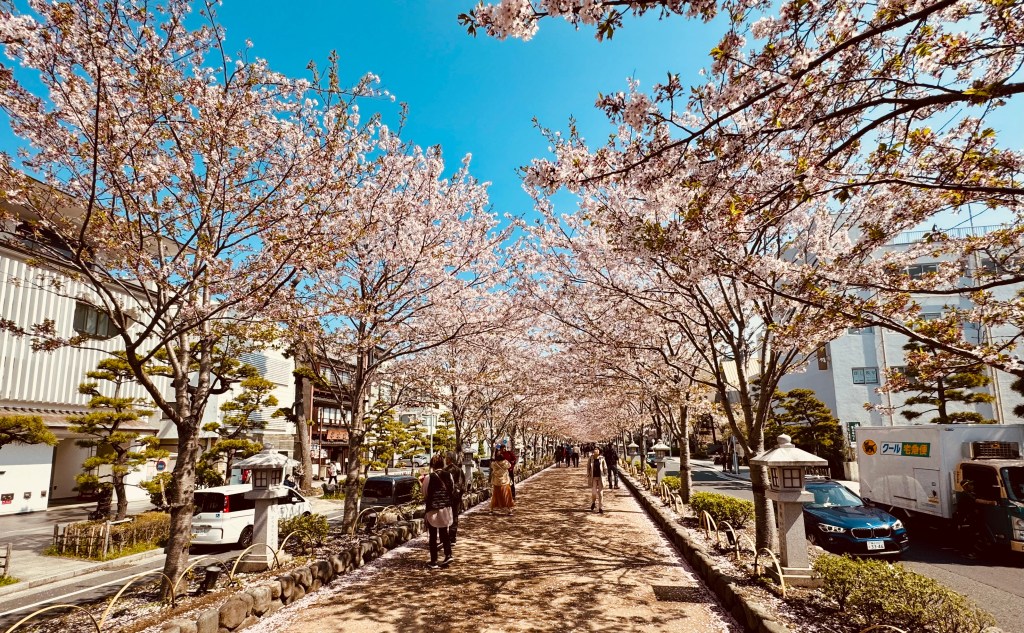
Today the entry to the shrine includes a 450-meter Dankazura walkway which extends from the Third Tori gate. The elevated path was originally built in 1182; a road paved with stone running from the shrine to the sea to pray for the safe delivery of an heir, as Yoritomo’s wife was pregnant at the time. Today the multitude of cherry trees along the path were blooming making the entrance to the shrine especially magical. 
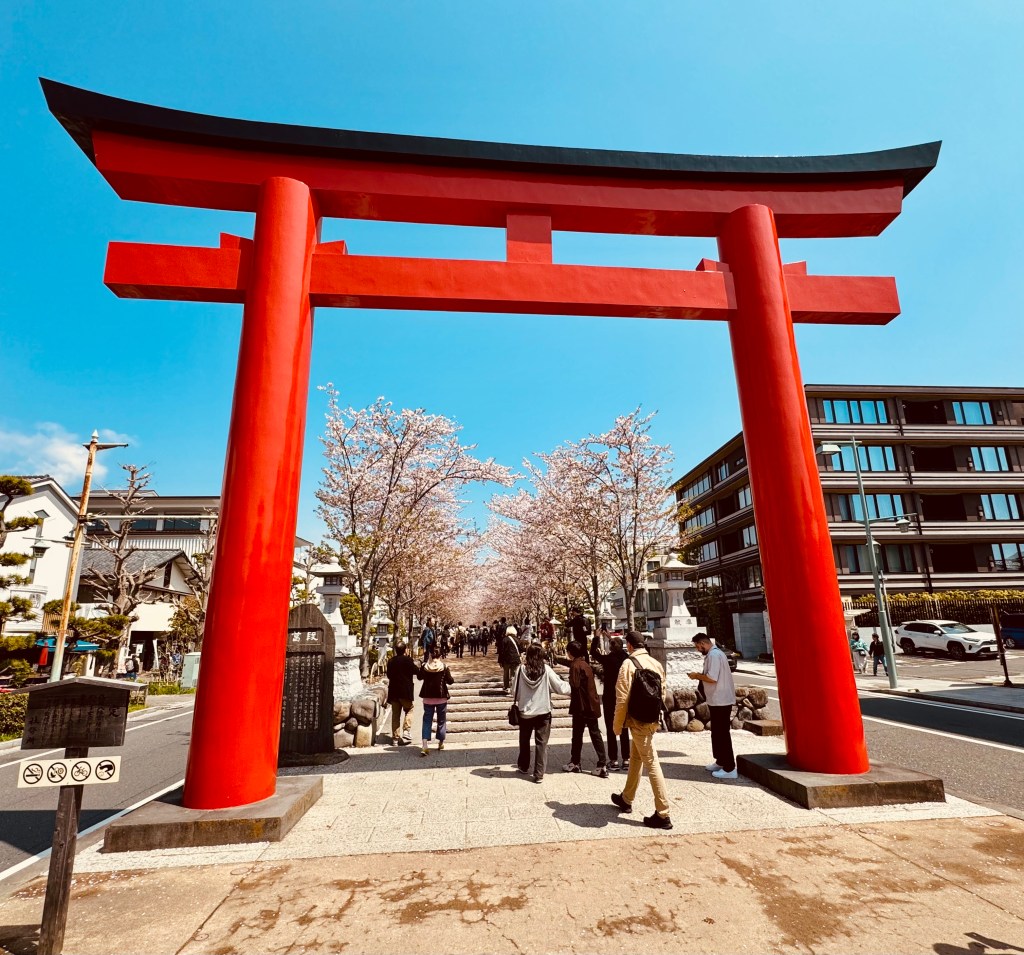
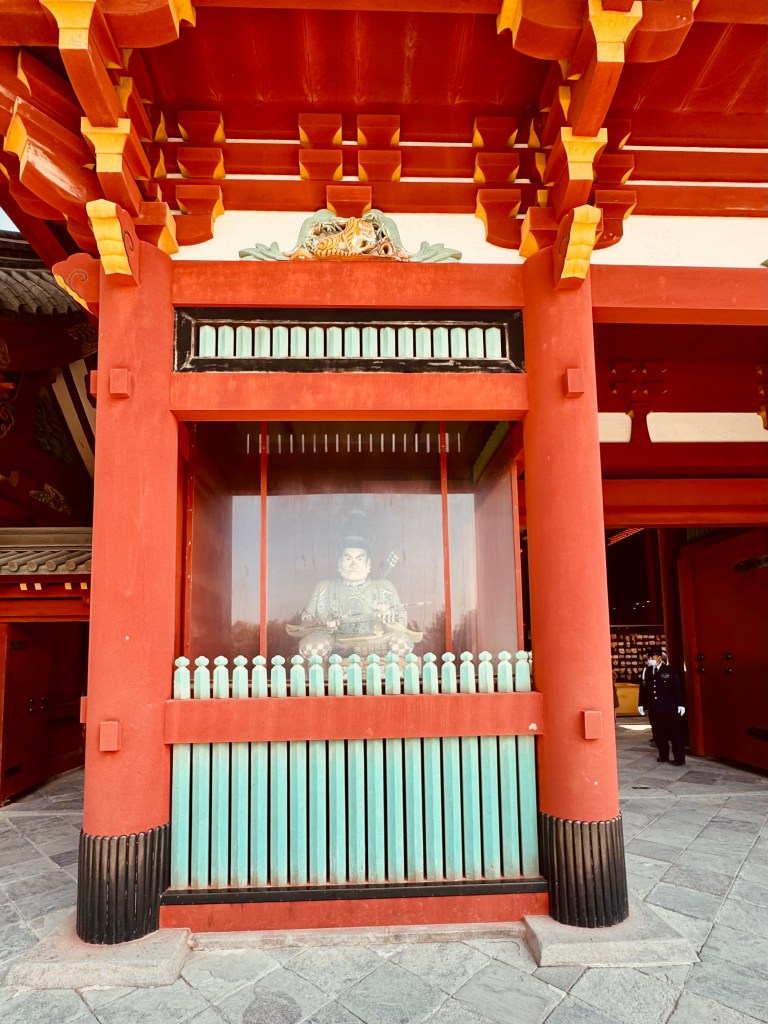
Once you enter the main torii gate, the grounds don’t disappoint and there are a number of areas to explore.
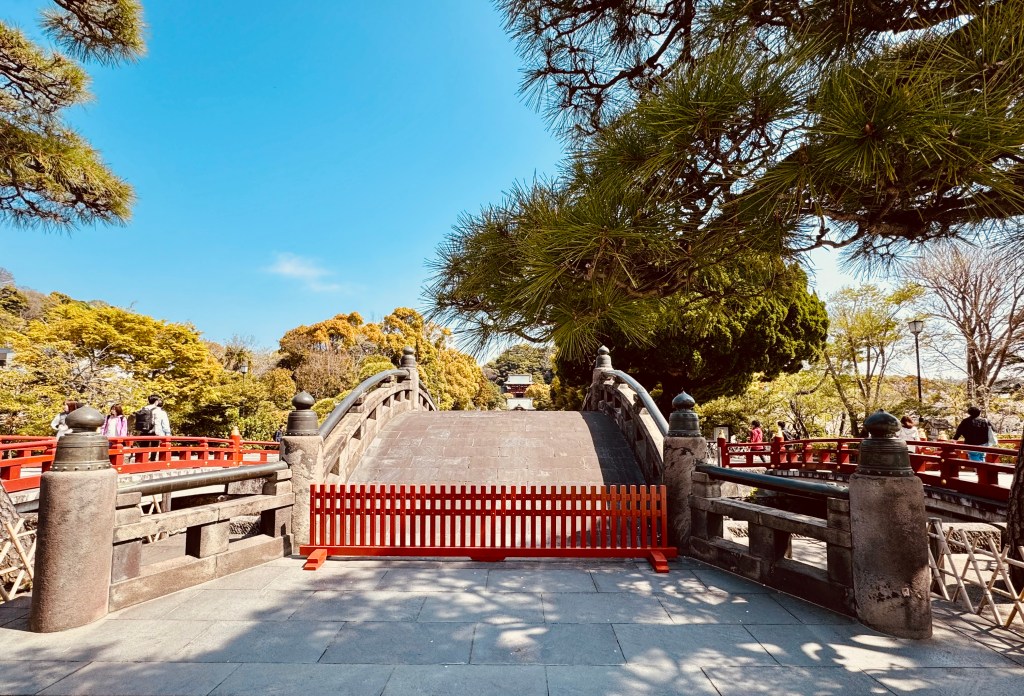
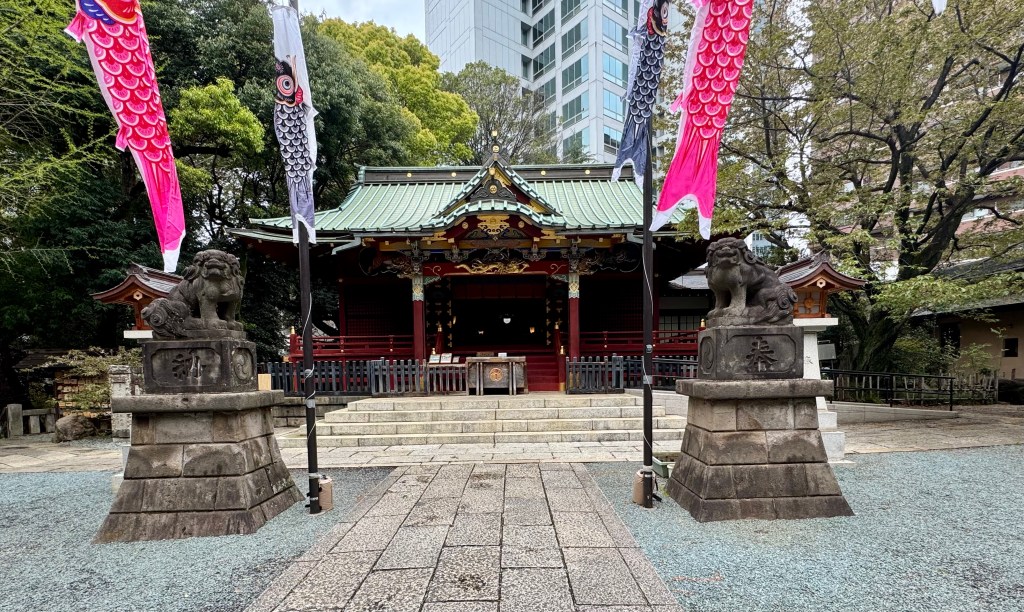
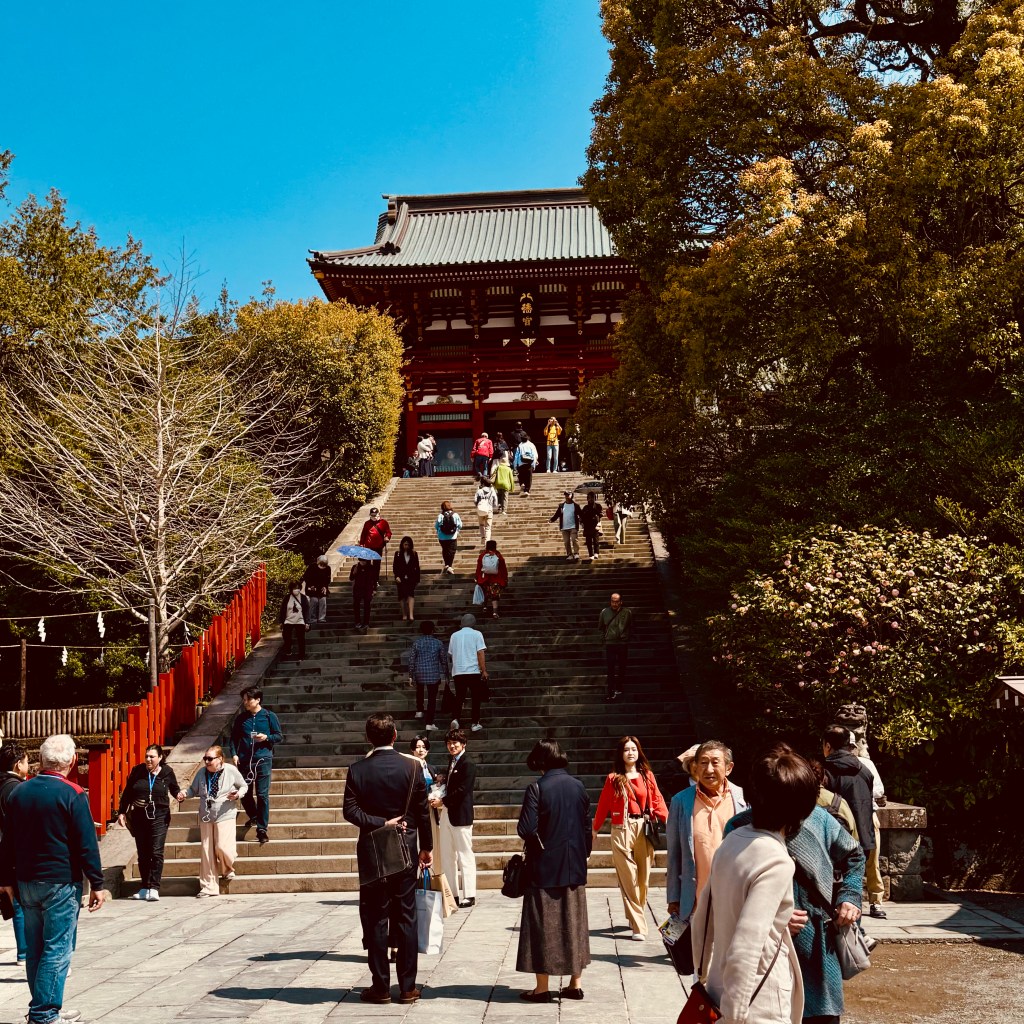
Soon enough you can see the main hall (Hongu) which stands on a terrace at the top of a wide stairway. 
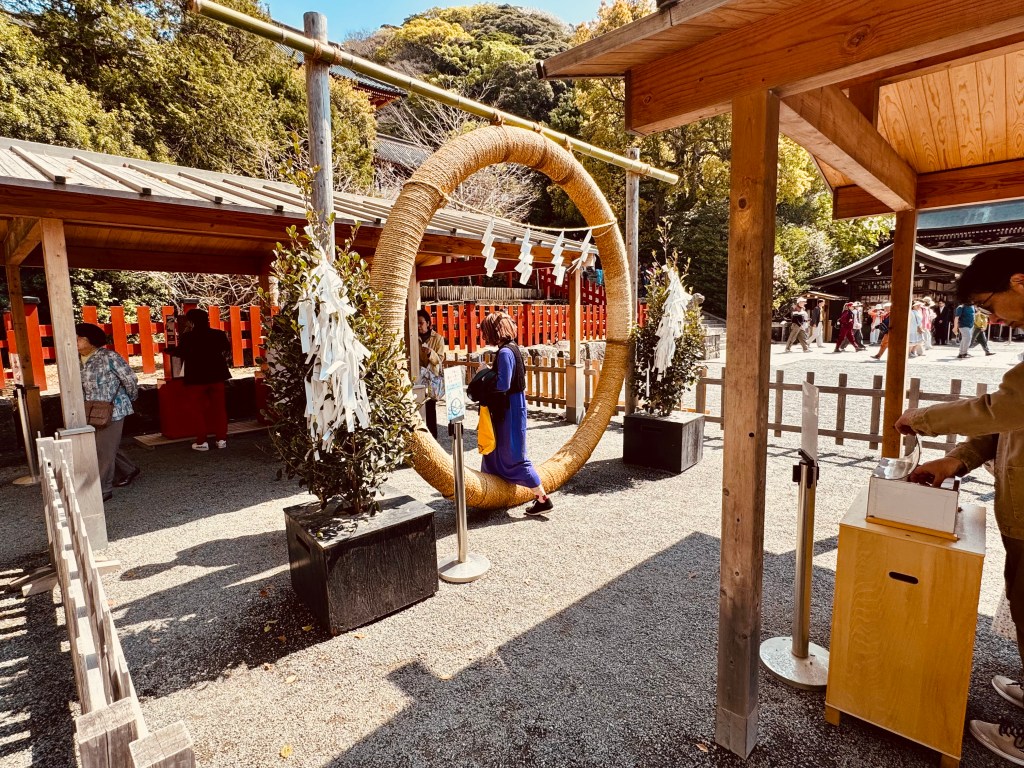
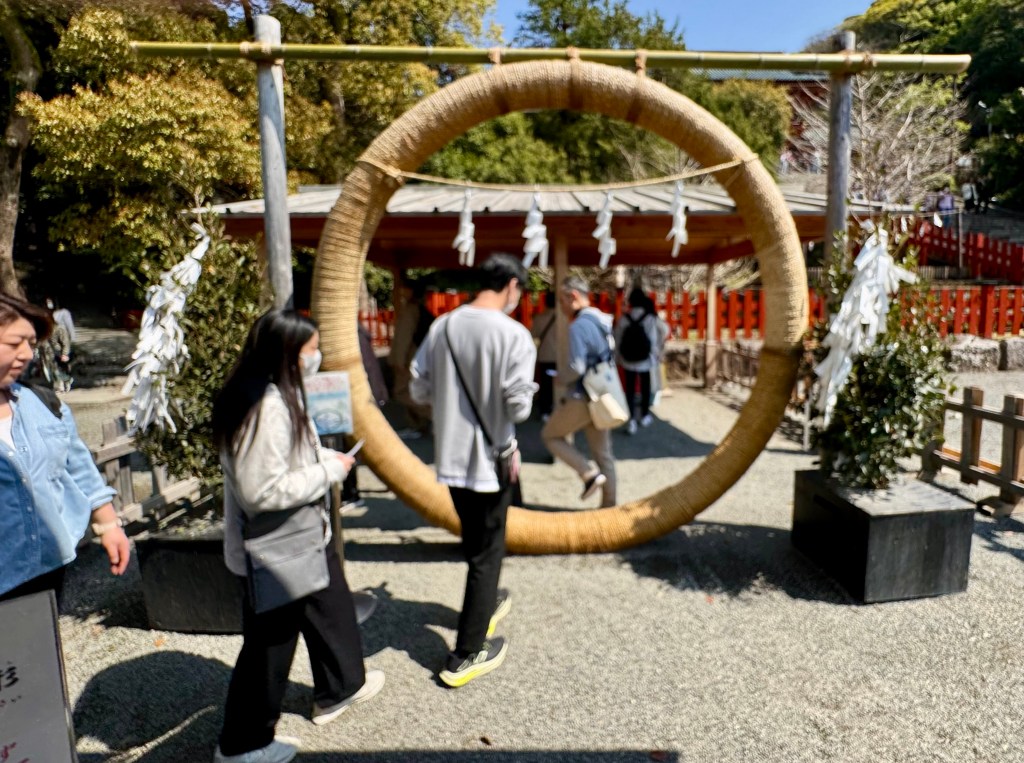
A large hoop of grass with people weaving their way around it in a figure eight grabs my attention. The “Chinowa kuguri” is a part of summer purification rites called meant to cleanse any impurities from the first half of the year and pray for sound health through the second half of the year.

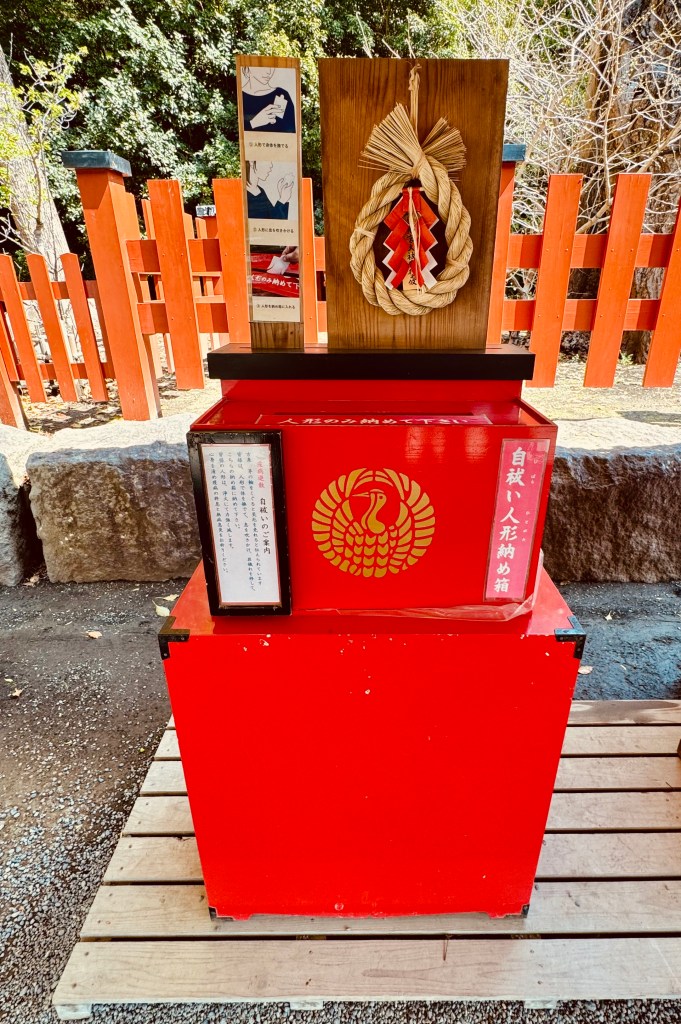
For the chinowa kuguri purification rite, you must first go through the grass hoop and circle around the left side of the hoop. Then step through the hoop a second time, turning right and rounding it again before entering the hoop a third time and rounding it on the left side to make a figure eight. After doing that, you write your name on a slip of paper shaped like a person. After blowing on it to transfer all your bad luck onto the paper, you present it as an offering to the shrine to complete the ceremonial purification.
At the base of the stairway stands the Maiden (Lower Worship Hall), a stage for dance and music performances. 
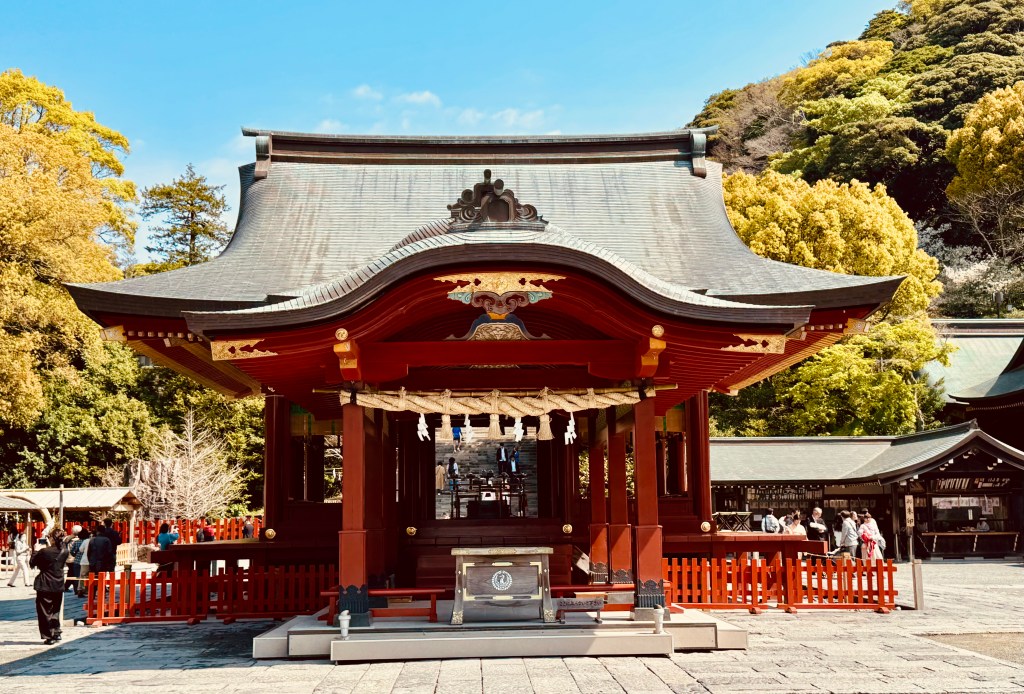
Maiden (Lower Worship Hall)

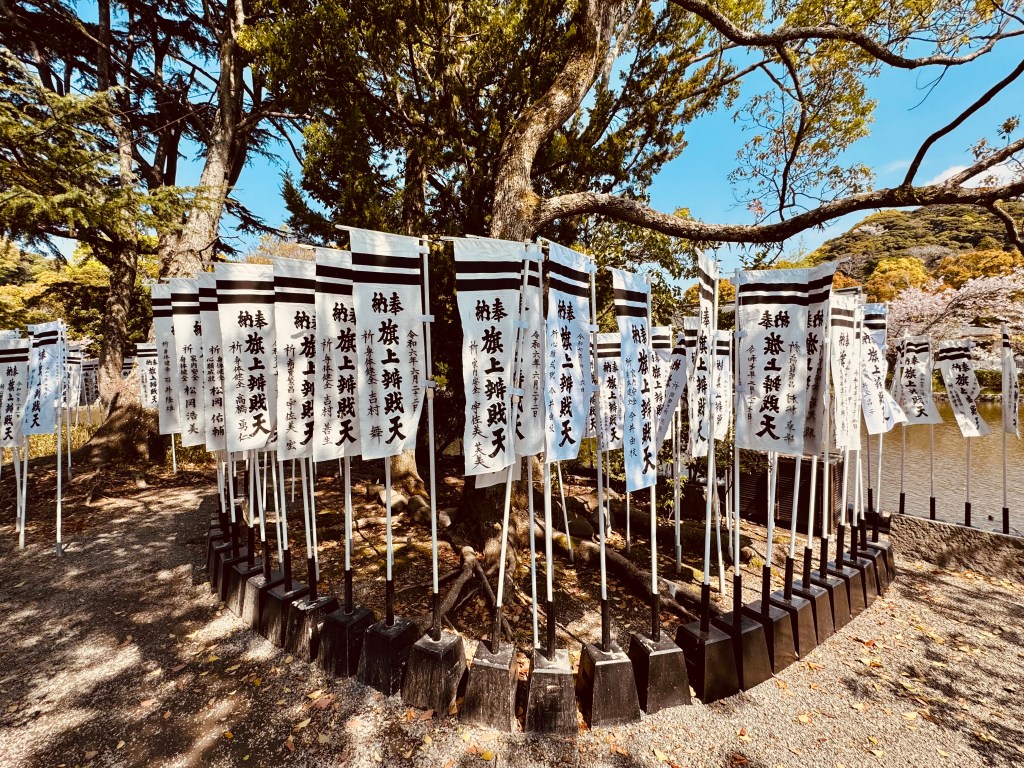
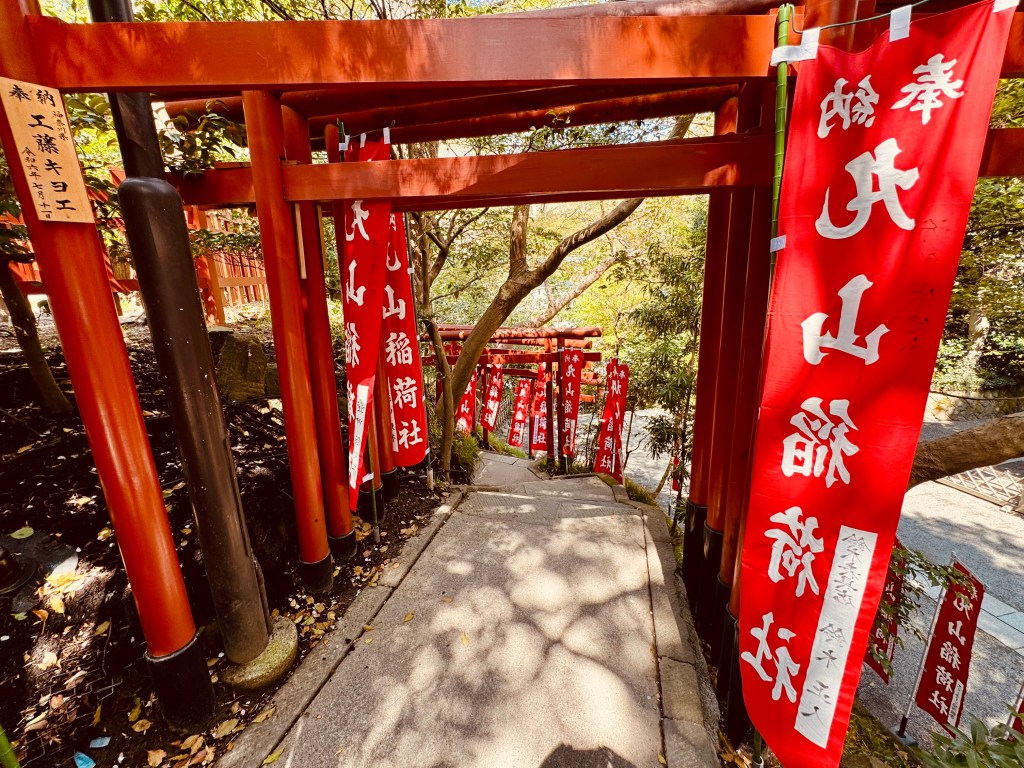
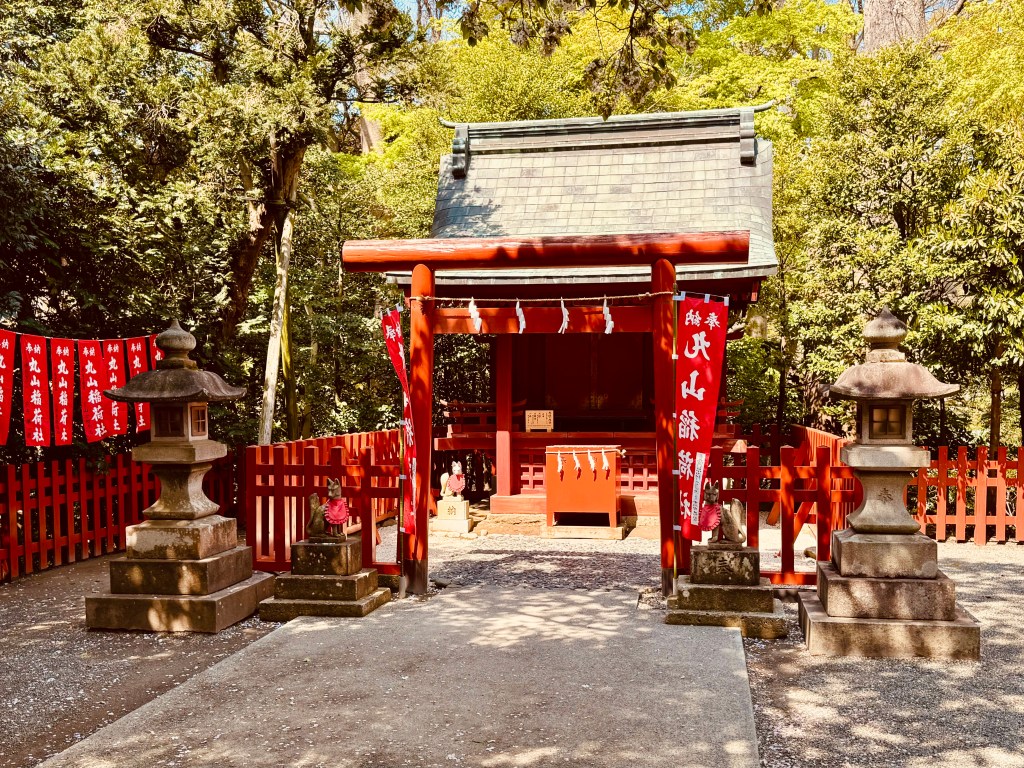
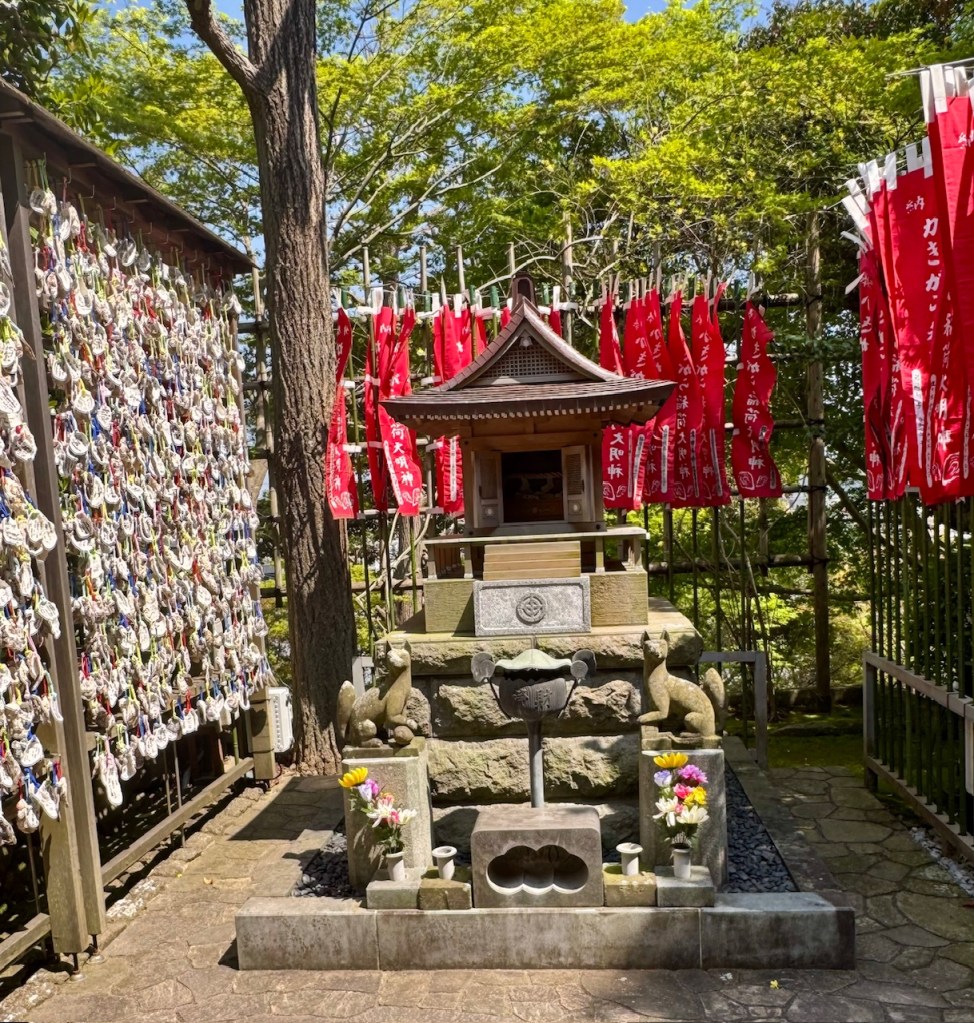
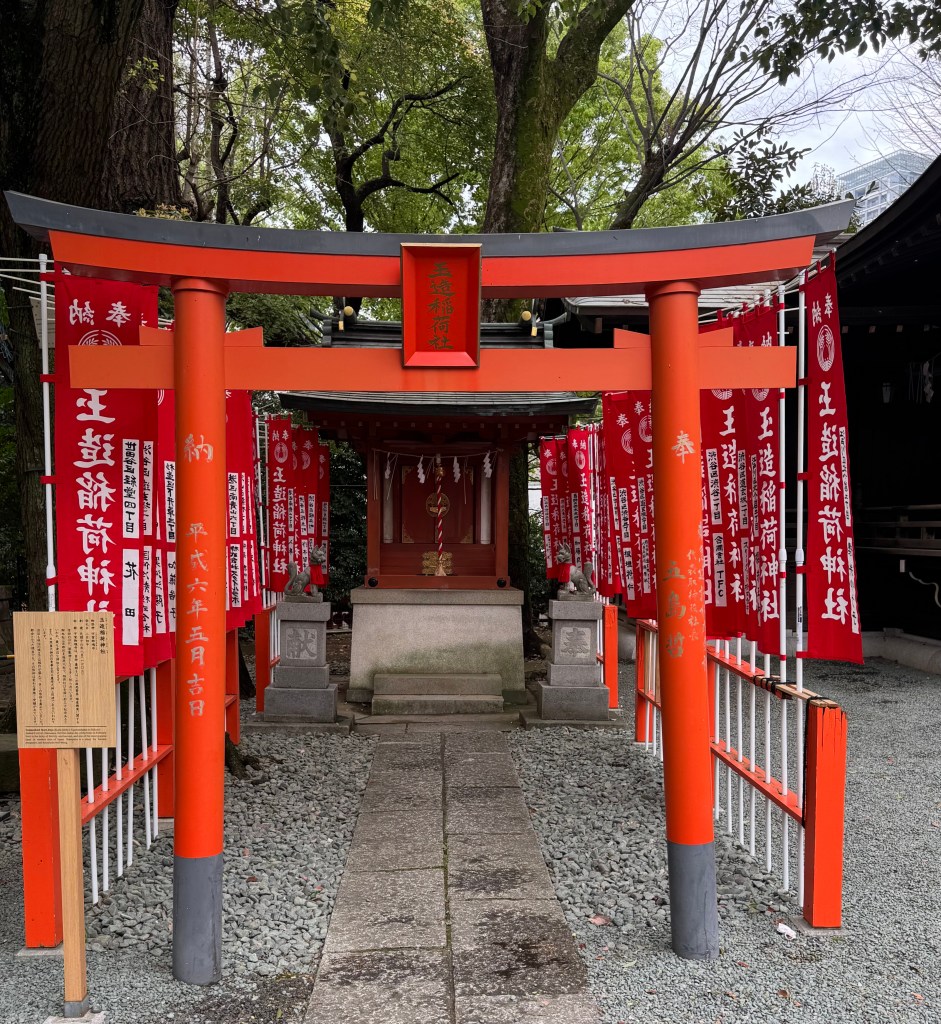
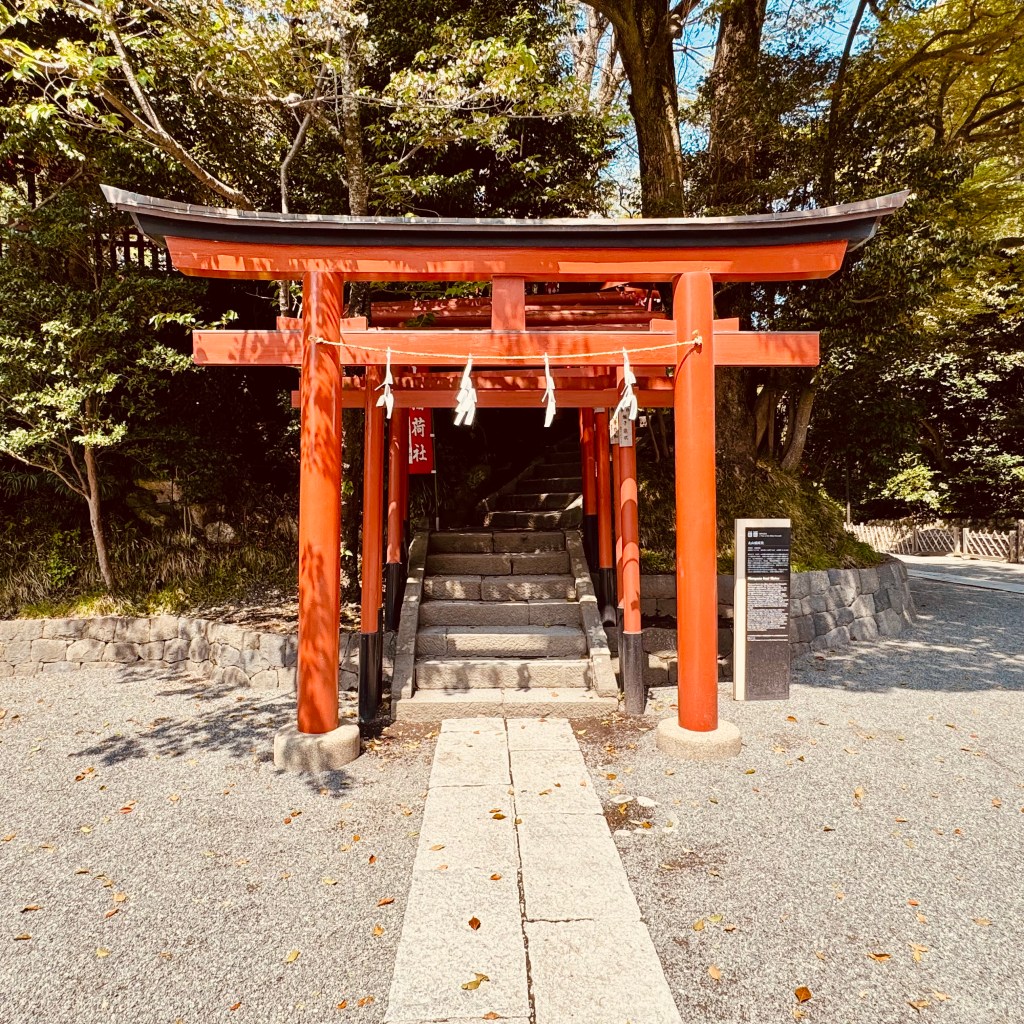
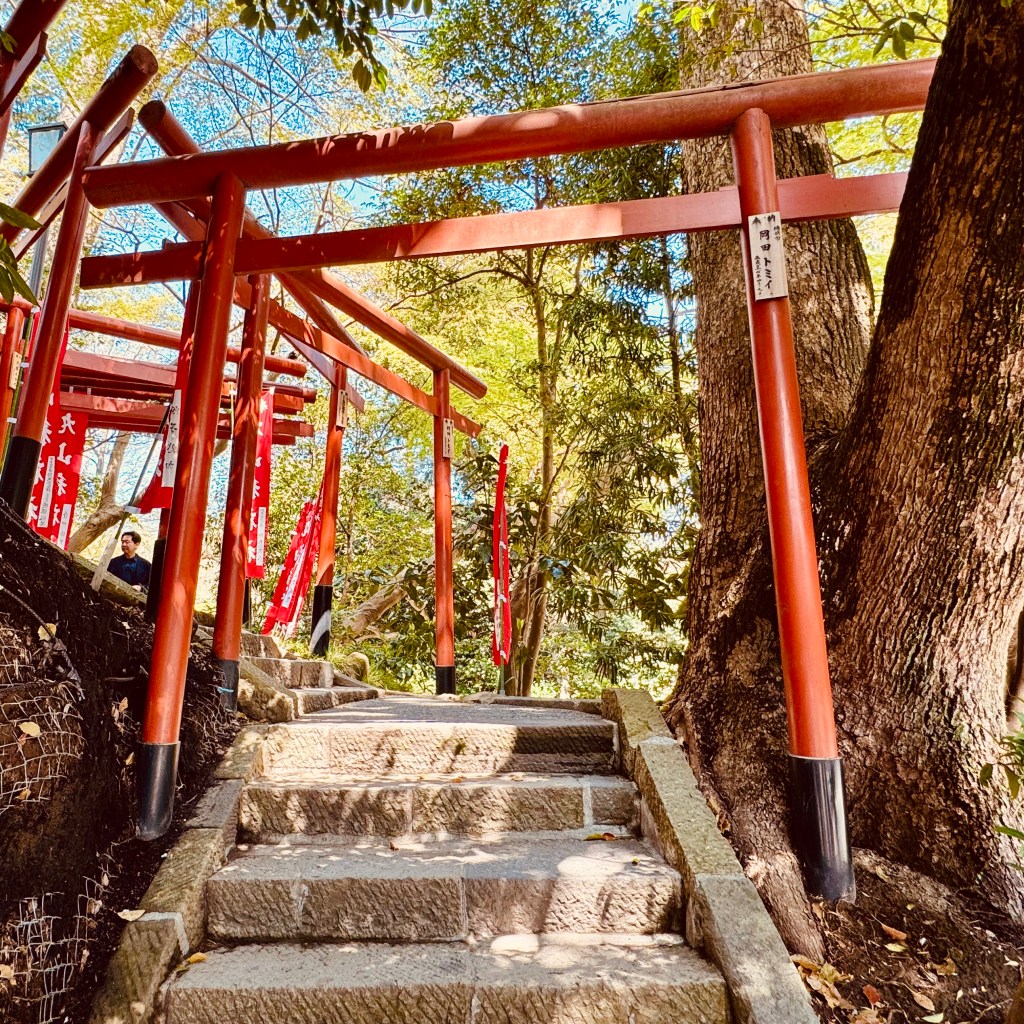
On the right of the main hall, I find the Maruyama Inari Shrine; the Shinto deity of rice, agriculture, and prosperity is enshrined here. The red banners surrounding the shrine, the bright red tori gates that line the path up to it and the two stone foxes guarding the shrine are all familiar features for worshipers who pray for success in business or a plentiful harvest.
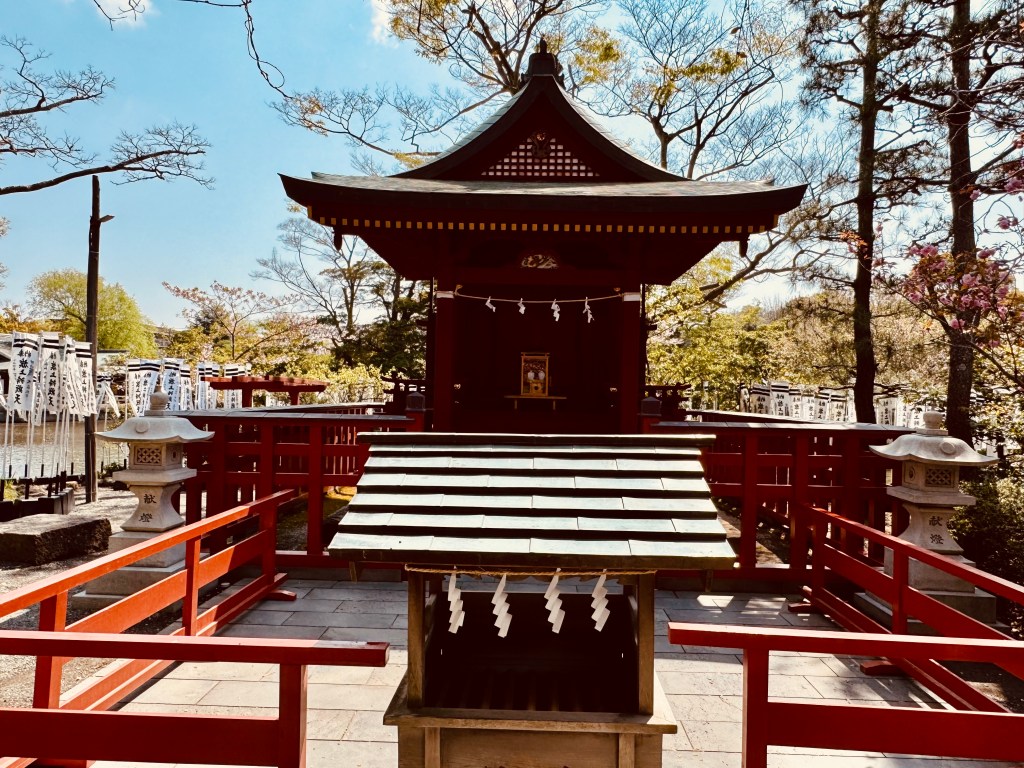
The shrine grounds also include the Wakamiya Shrine, a secondary shrine to the right of the stairway and various auxiliary buildings. 
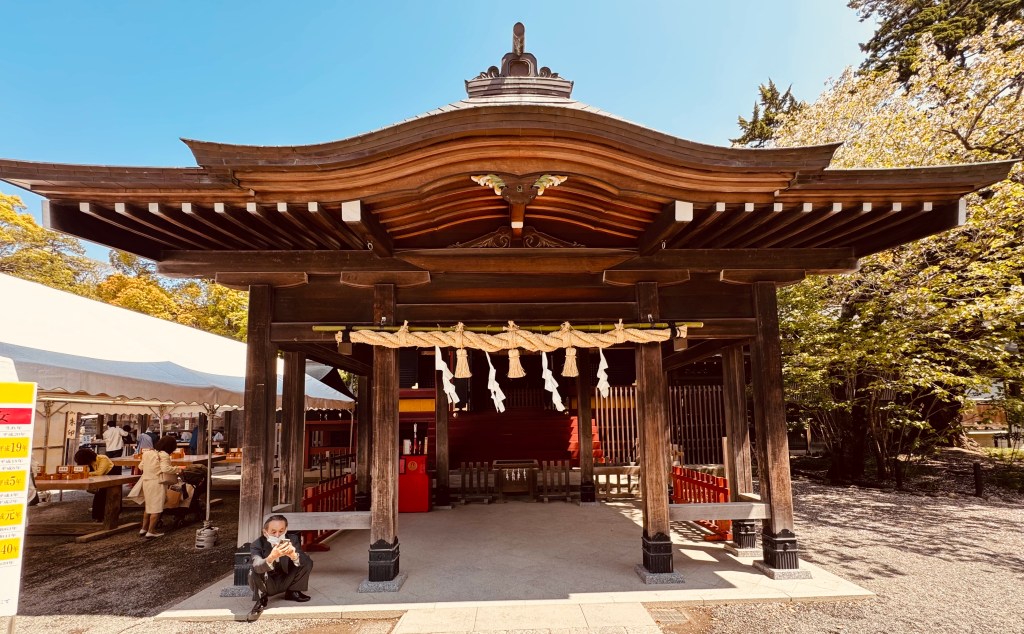
Wakamiya Shrine

No visit to a shrine is complete without a stop in the shop. I’m still not buying stuff but I like to look and found the cutest cookies ever. Hato Sabure – these charming bird-shaped shortbread cookies aren’t just delicious—they’re a cultural symbol deeply connected to the historic city of Kamakura.
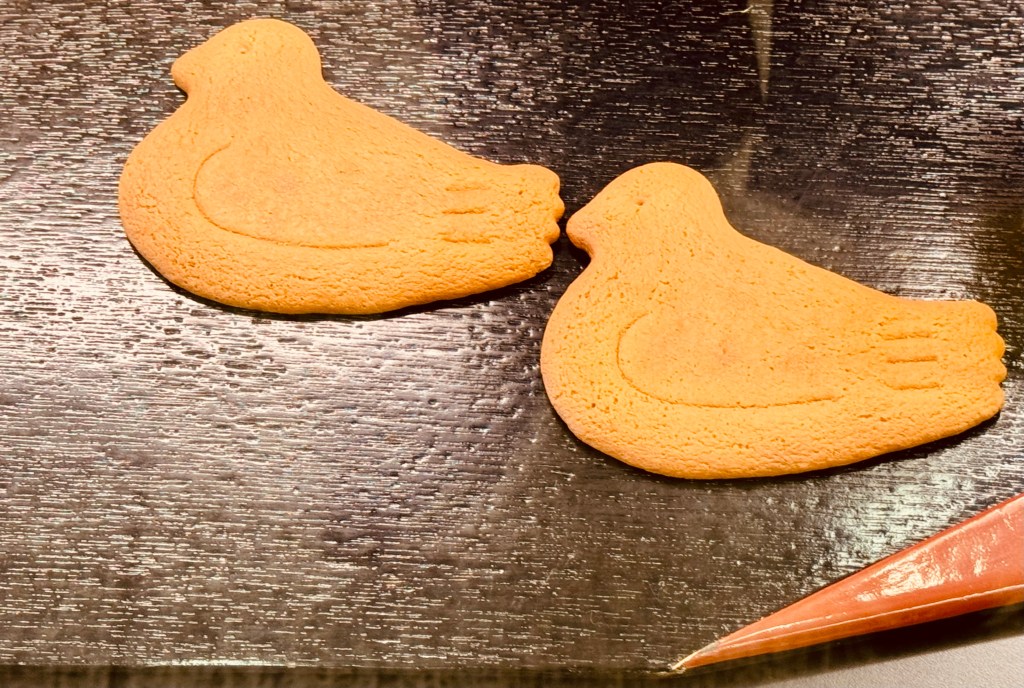
Hato Sabure

Time to move onto the next shrine on my list – The Great Buddha of Kamakura. Google Maps says it’s a 2.5 km walk or I can grab a train and get there in half the time with much less effort so you know I’m hopping a train. Back to Kamakura Station for the quick, though very crowded, trip to Hase station and then a short walk swept along by the sea of tourists heading in the same direction. 

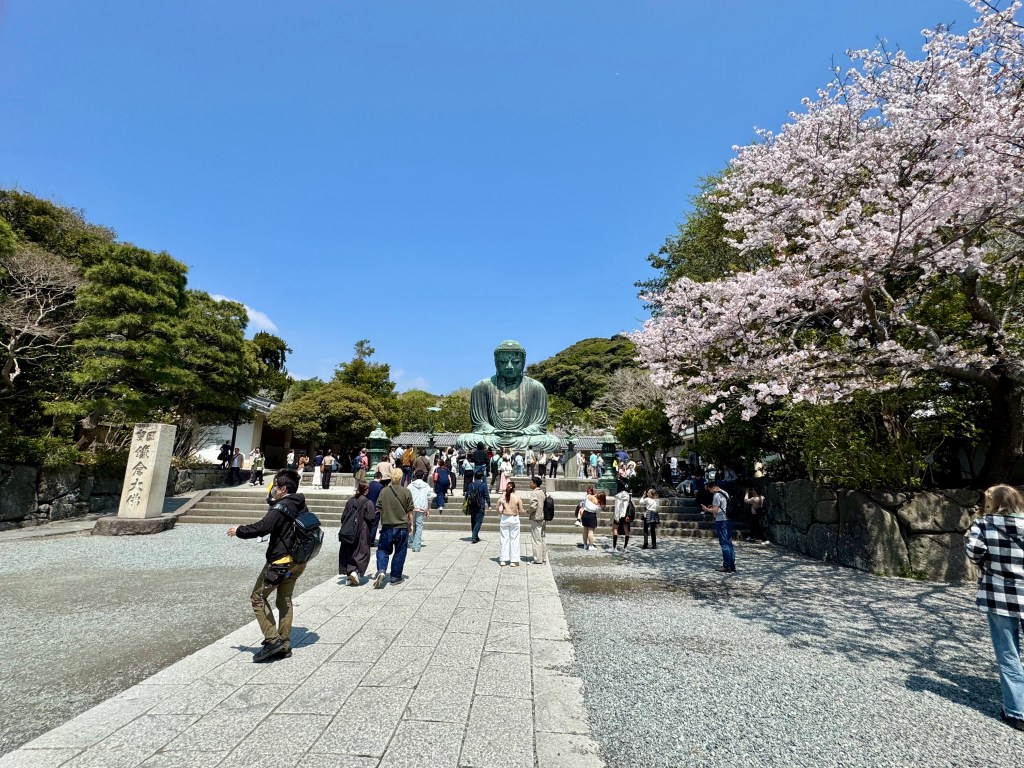
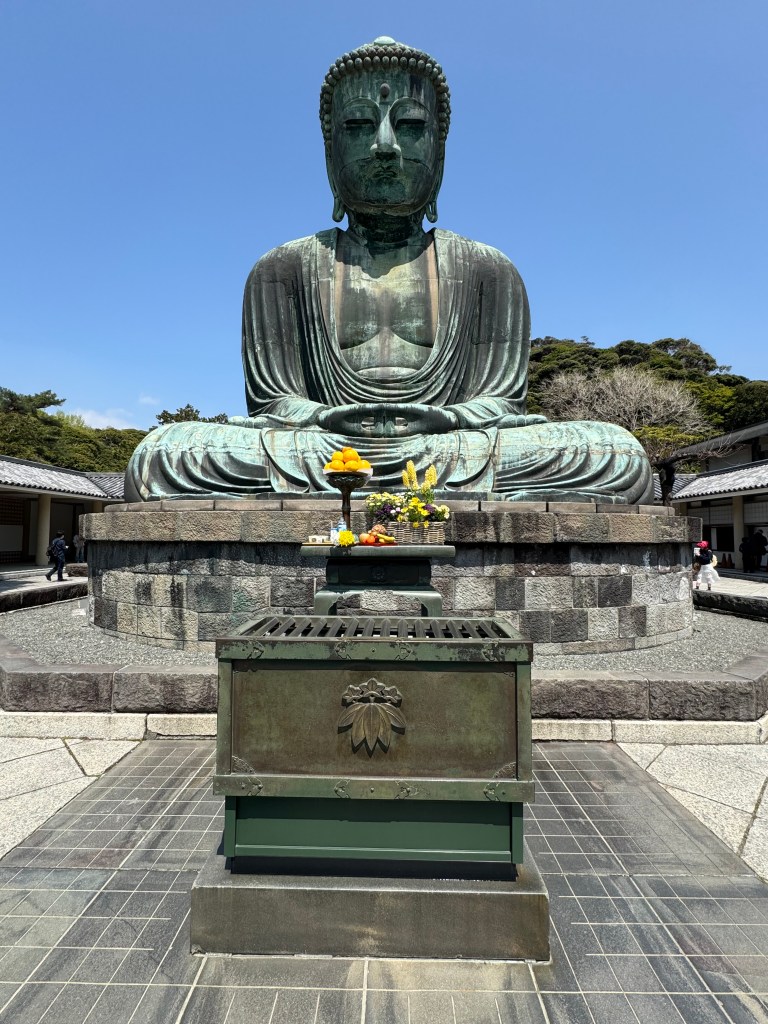
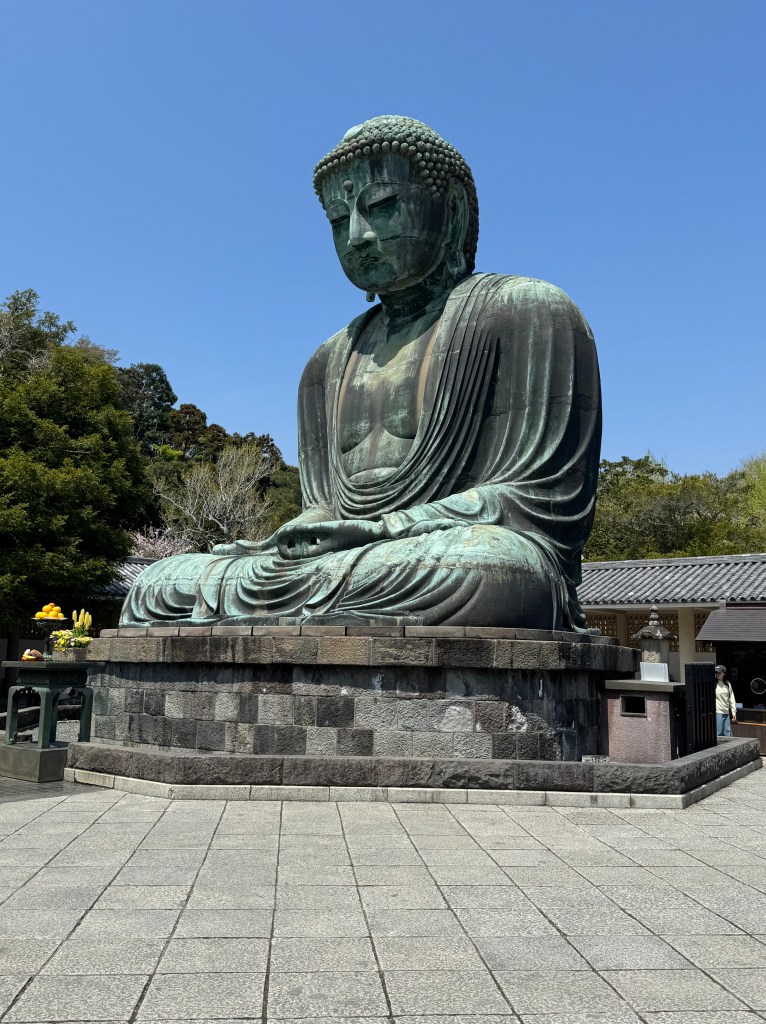
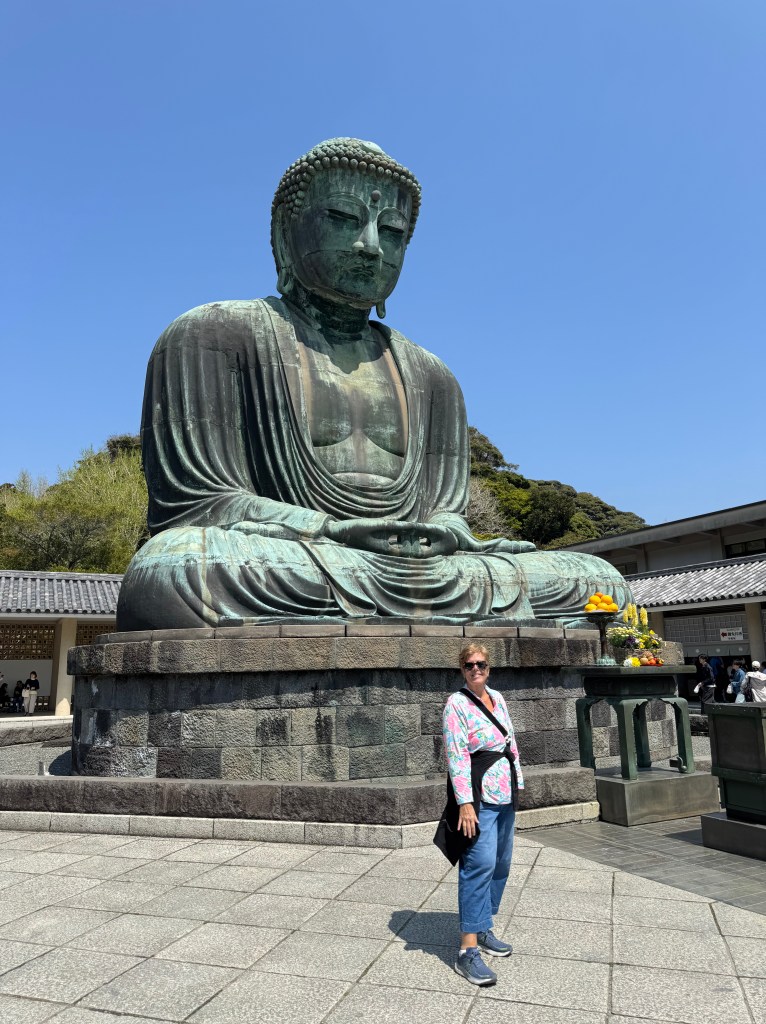
The Great Buddha of Kamakura is a bronze statue of Amida Buddha (the Buddha of Infinite Light) that stands on the grounds of Kotokuin Temple. At 11.3 meters tall and weighing 121 tons, it’s a magnificent bronze statue, the second-largest seated Buddha in Japan surpassed only by the statue in Nara’s Todaiji Temple. The statue was cast in 1252 and originally located inside a large temple hall. However, the temple buildings were destroyed multiple times by typhoons and a tsunami in the 14th and 15th centuries. So, since the late 15th century, the Buddha has been standing in the open air; over 500 years weathering elements and earthquakes. 
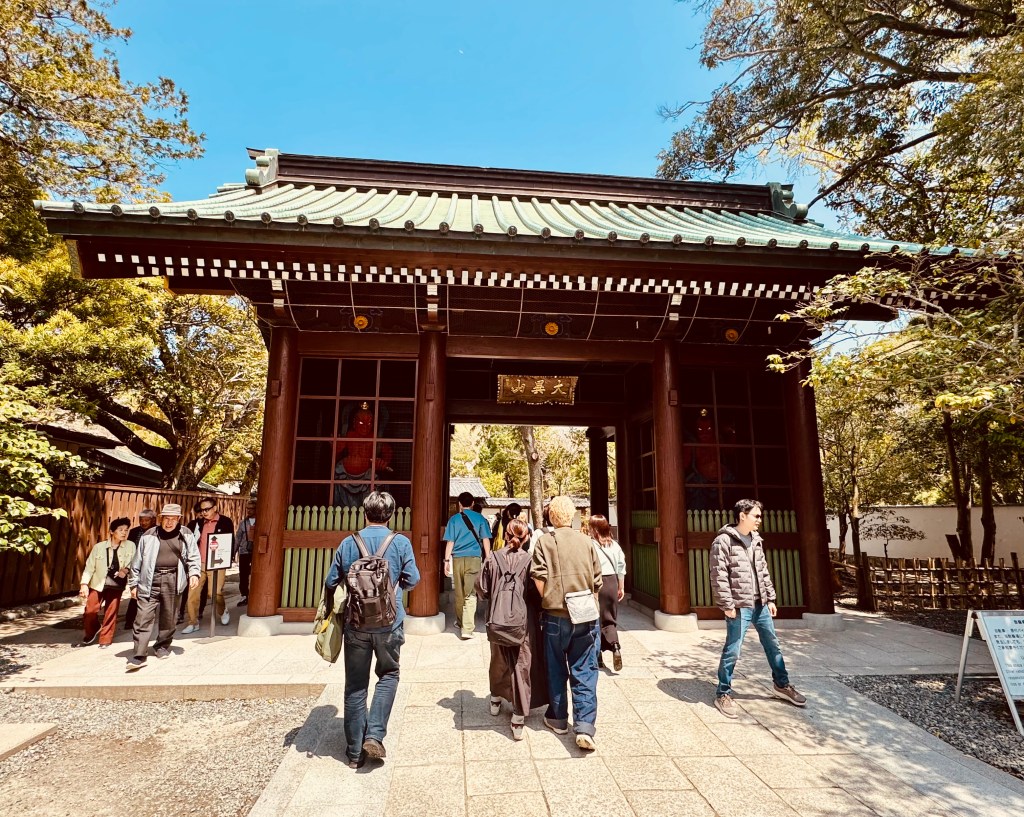
Entrance
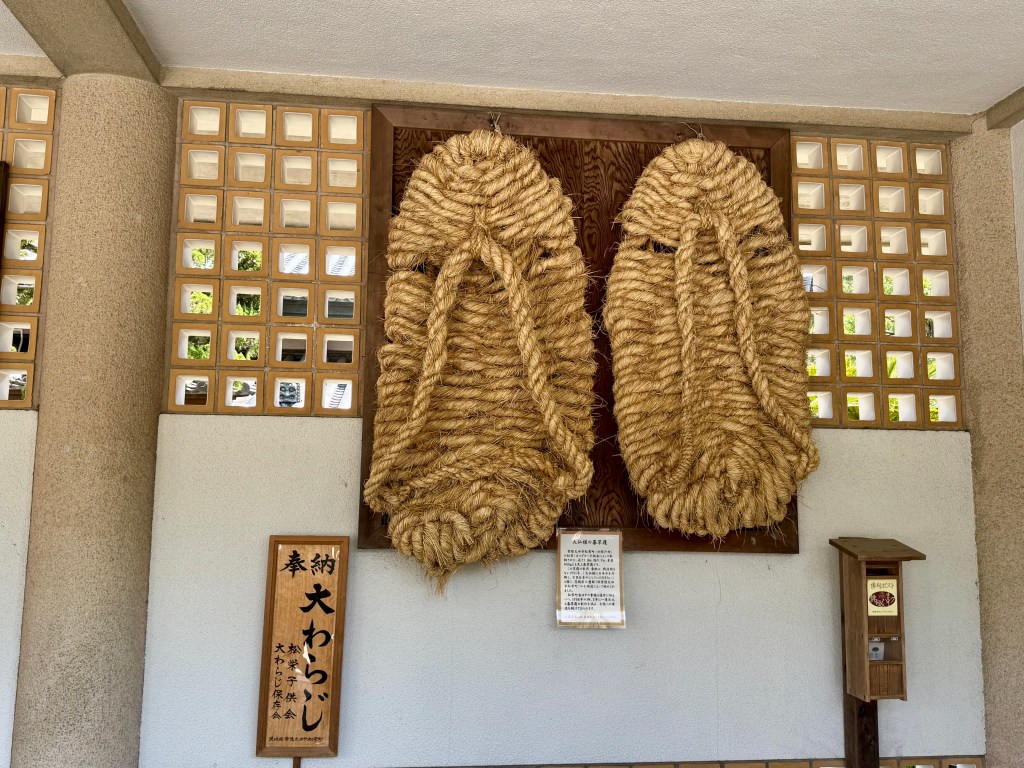
Buddha’s Sandals
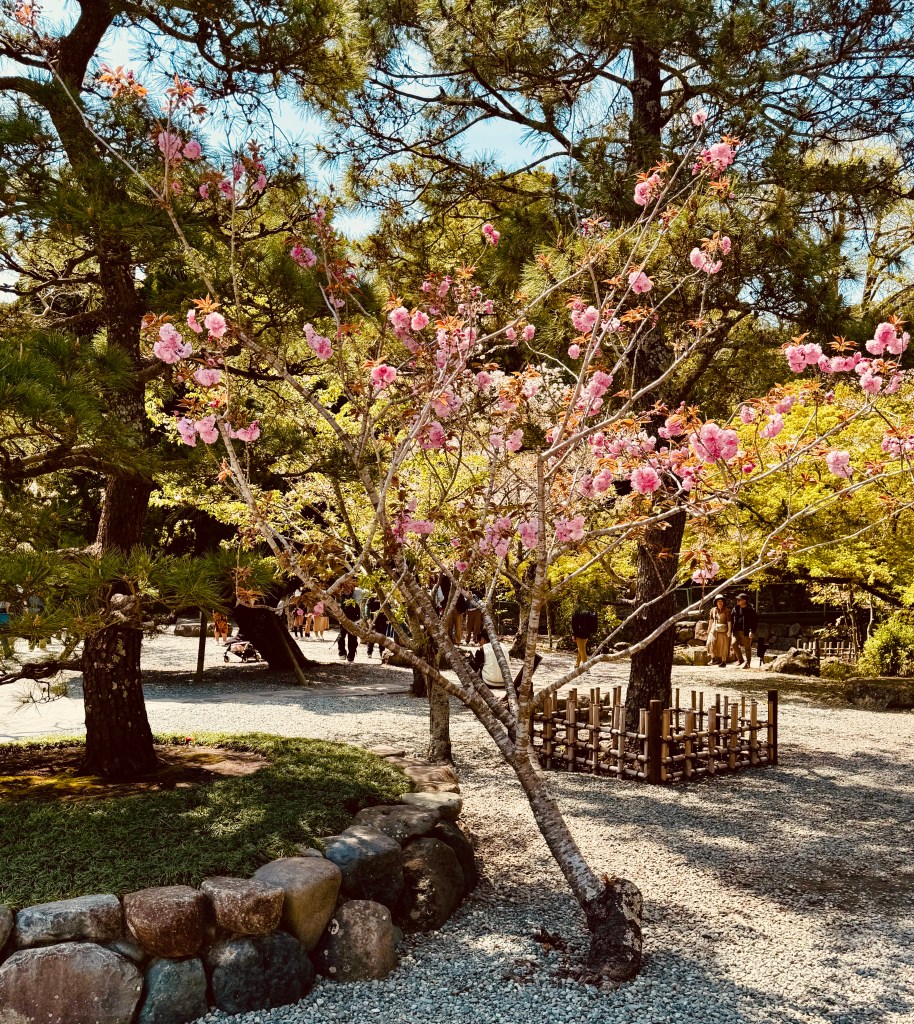
Beautiful tree

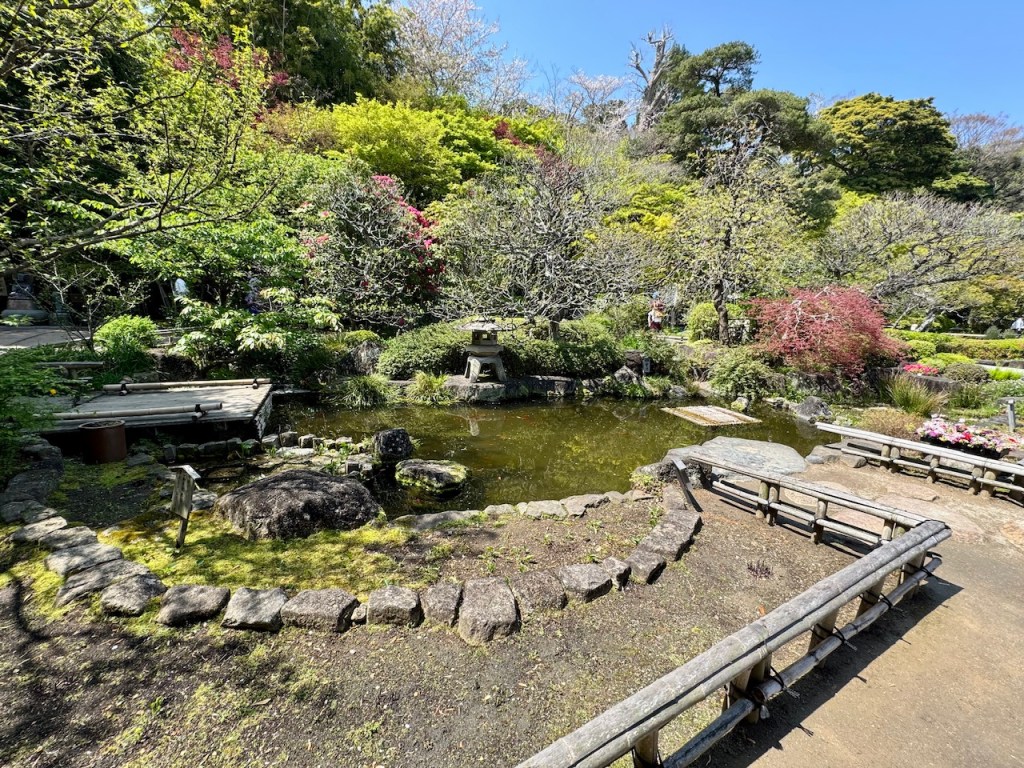
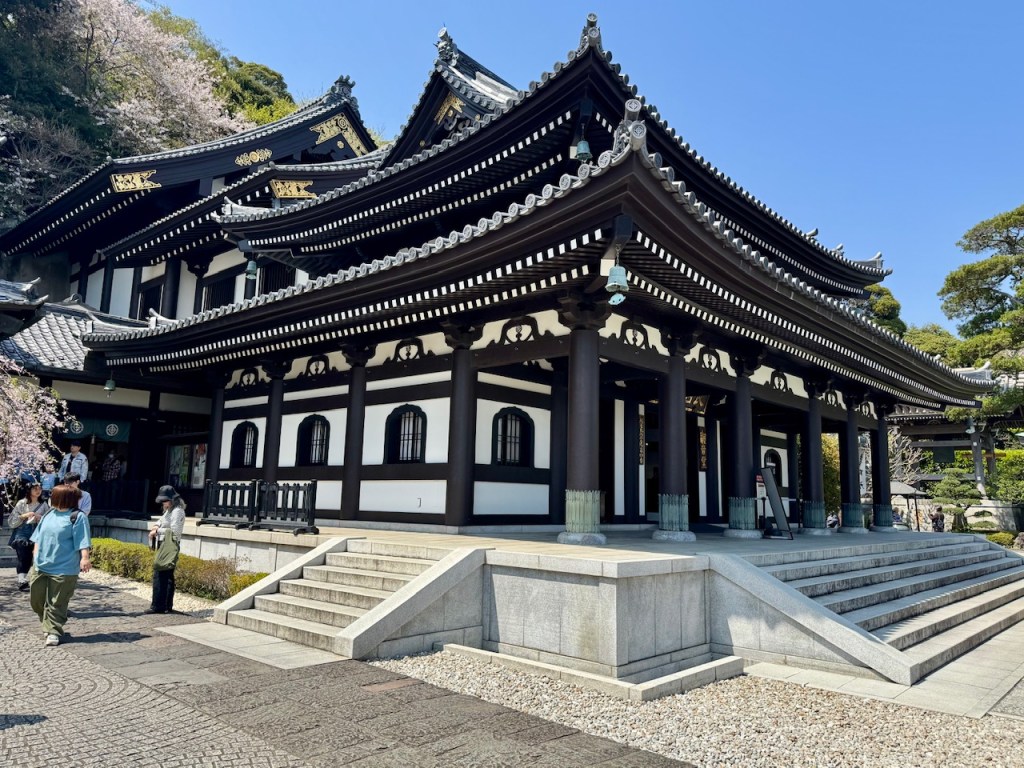
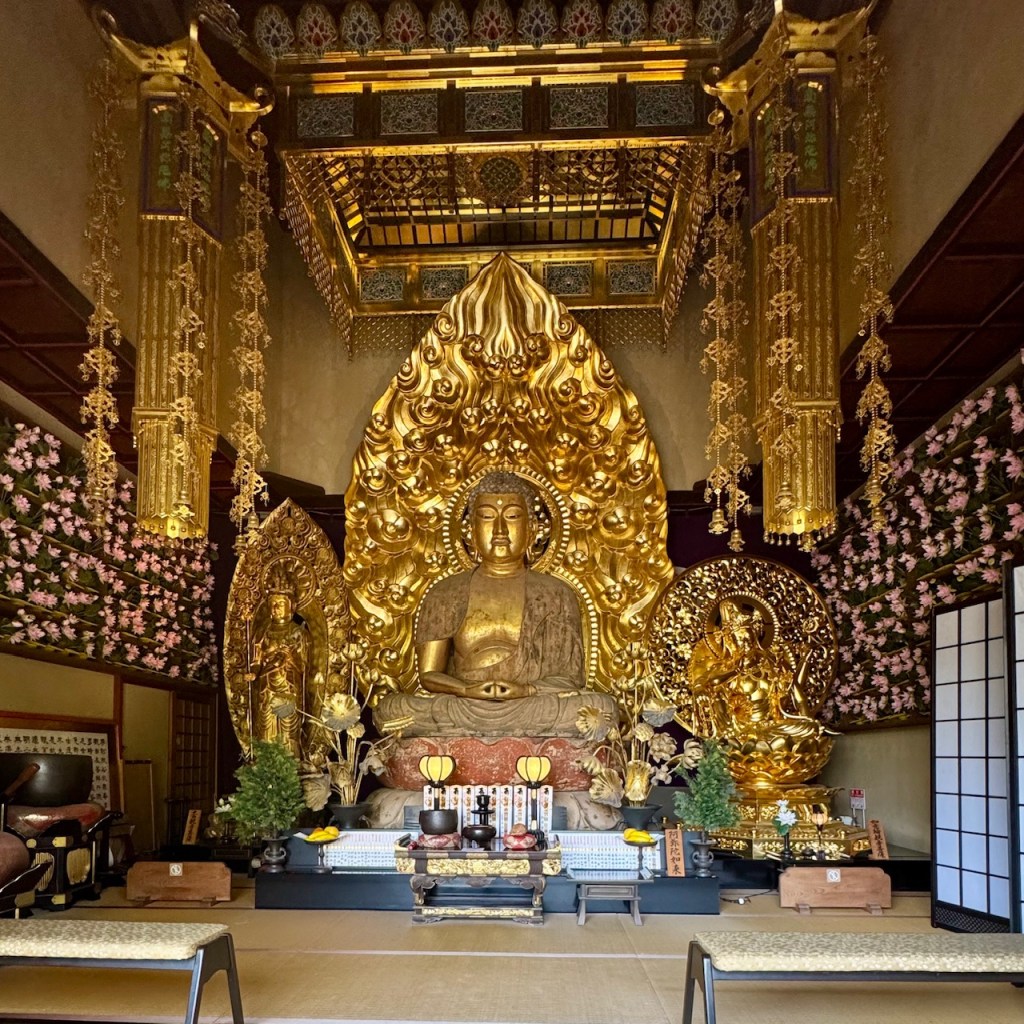
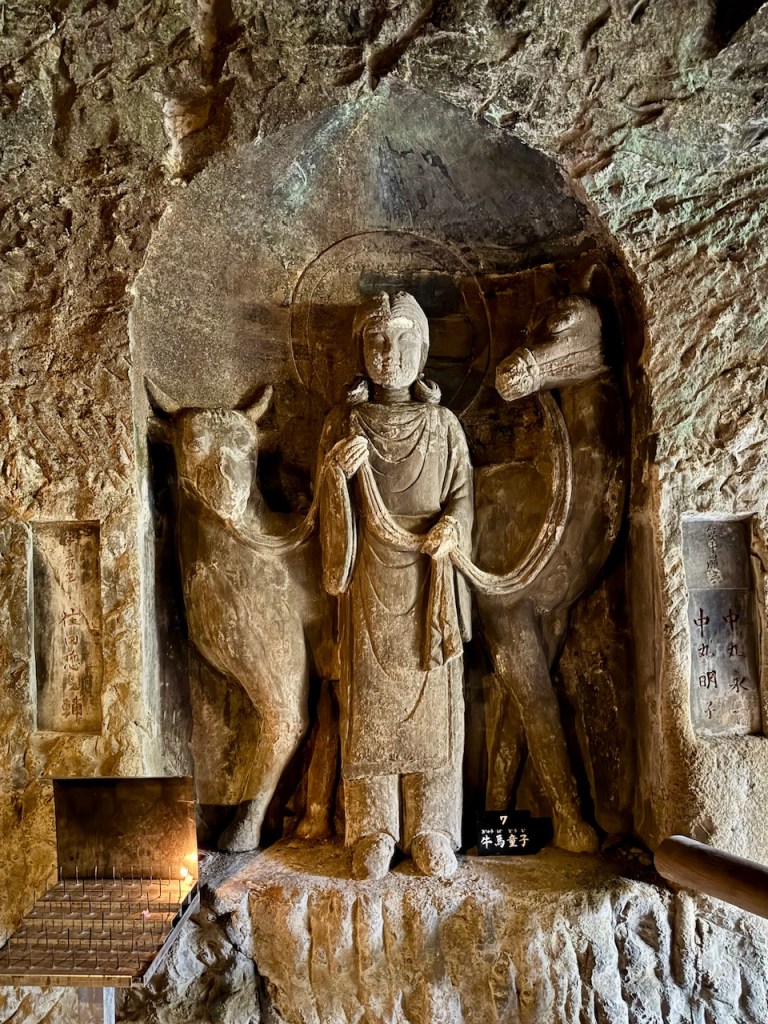
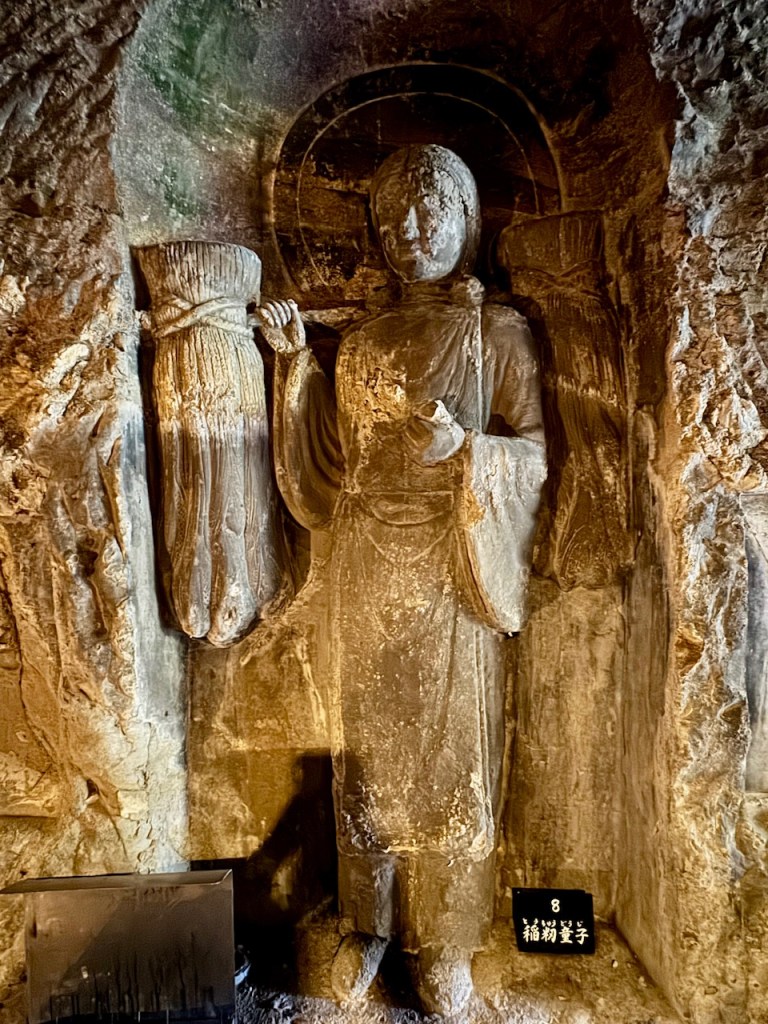
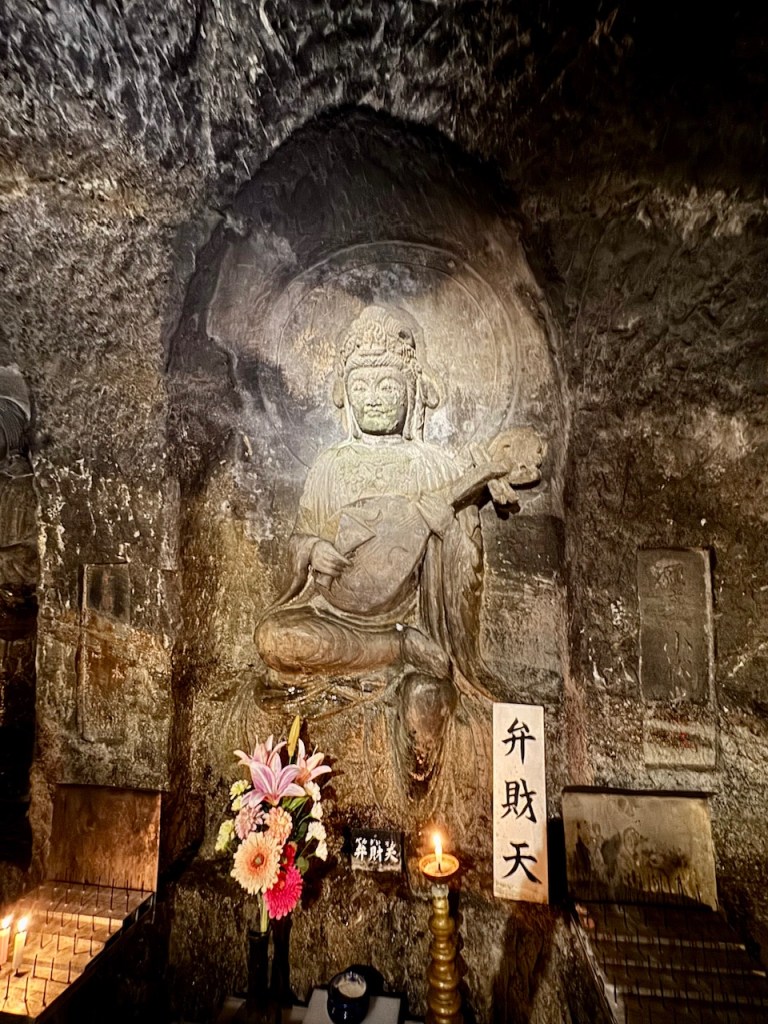
Luckily my third choice is just down the road from Kotokuin Temple. Hasedera Temple is home to a giant statue of Kannon, goddess of mercy. The temple sits about half-way up Mount Kamakura, southwest of the city. The temple is built on two levels and also includes a cave. The cave, called benten kutsu (Benzaiten Grotto), contains a long winding tunnel with a low ceiling and various statues and devotionals to Benzaiten, the sea goddess and the only female of the Seven Lucky Gods in Japanese mythology.

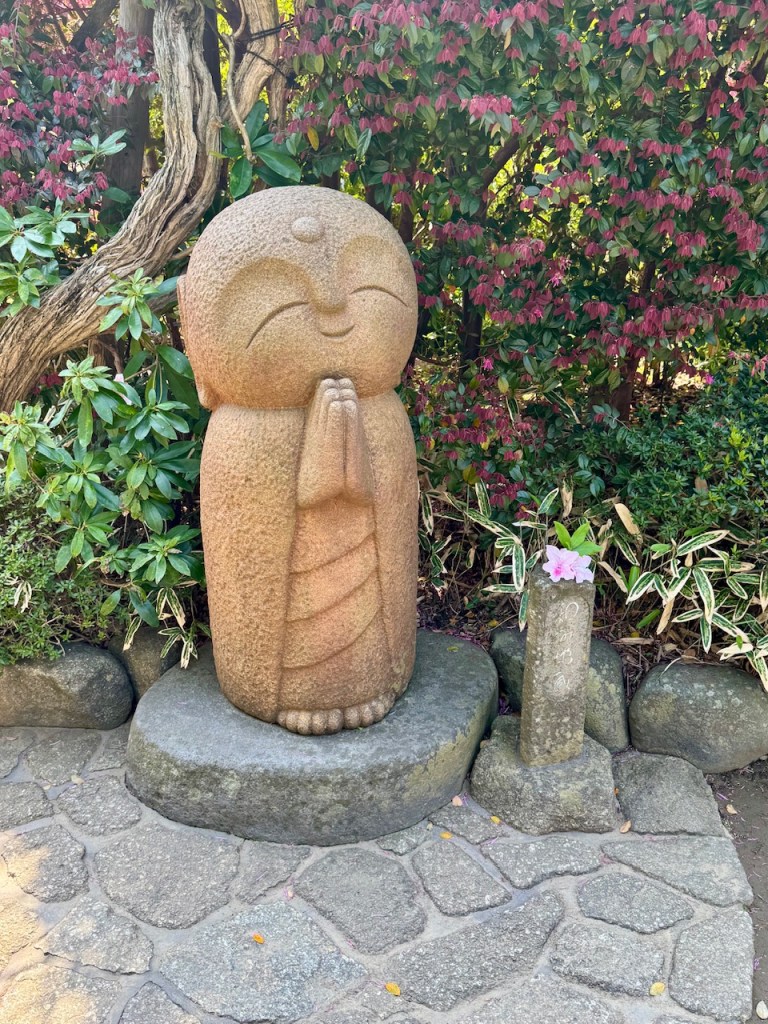
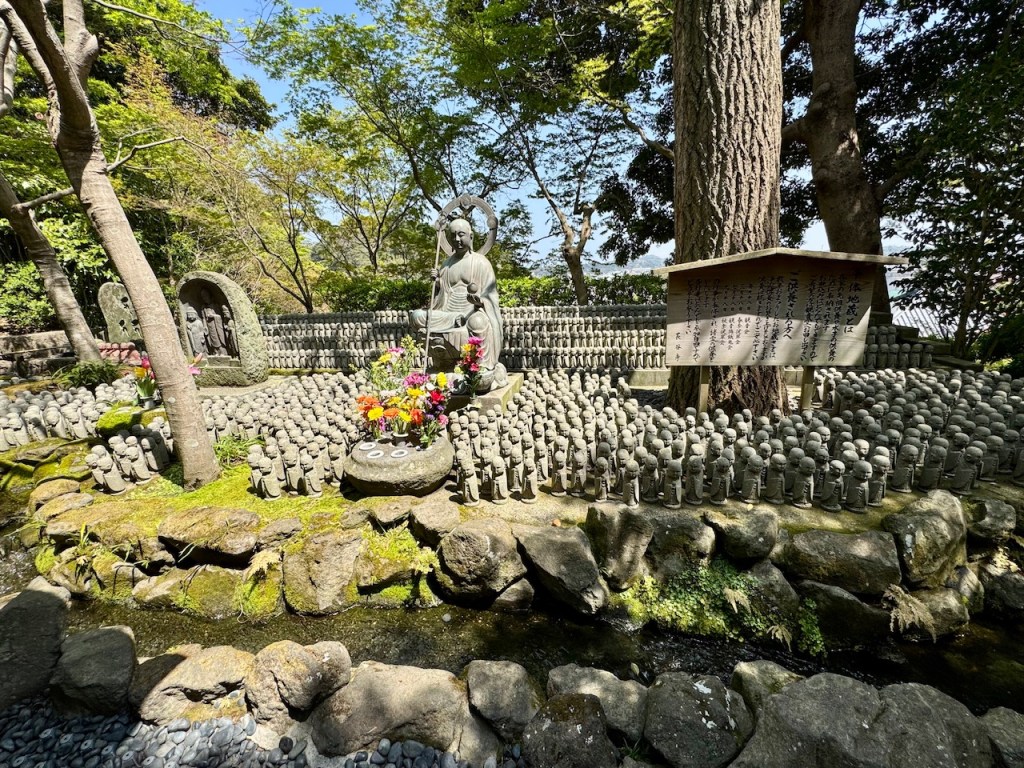
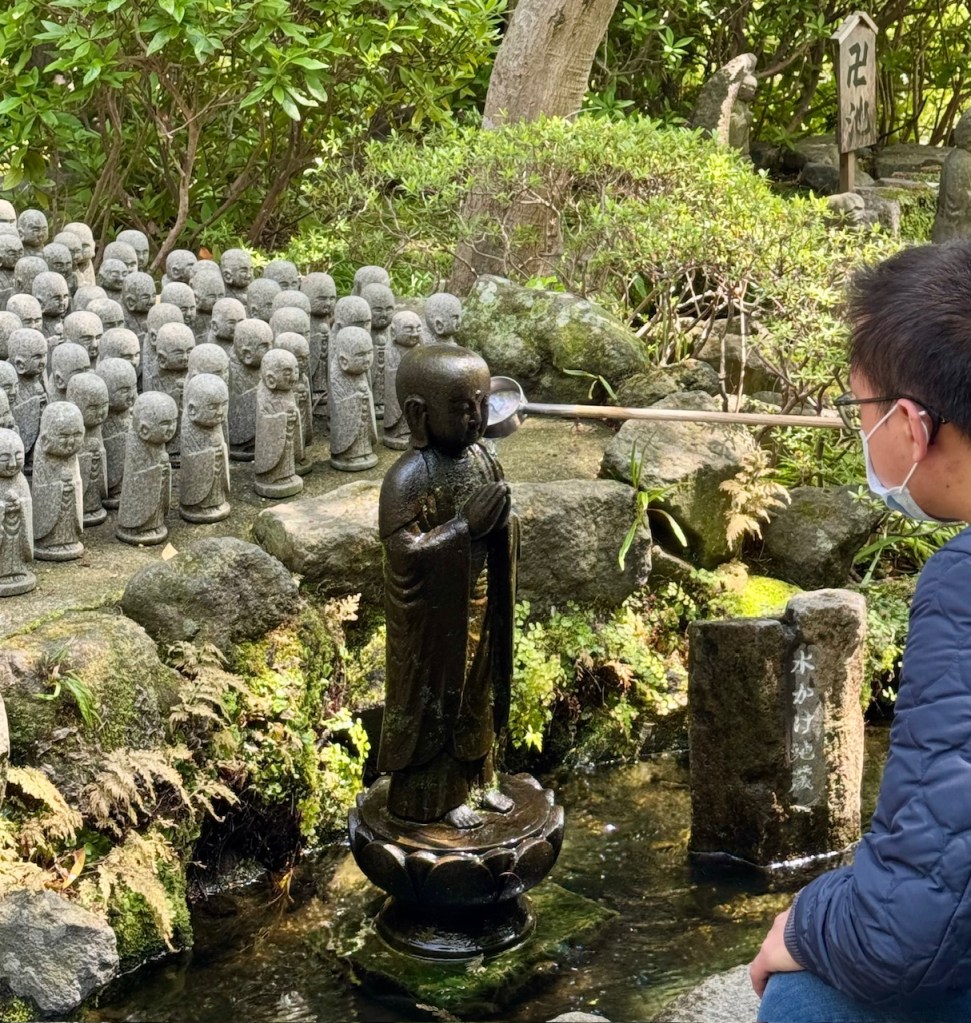
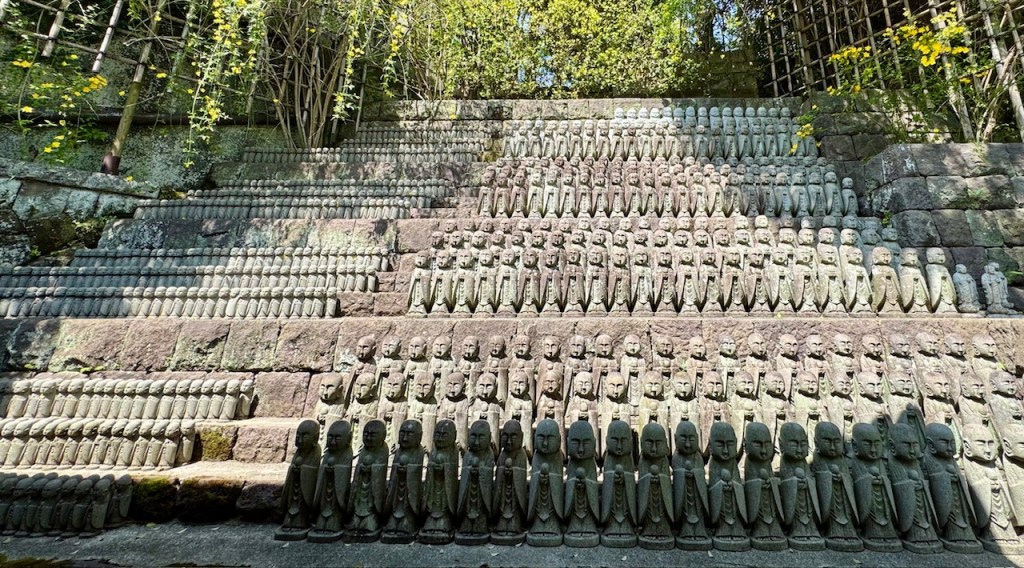
The grounds of the temple are home to hundreds of small Jizō statues, placed by parents mourning offspring lost to miscarriage, stillbirth, or abortion. These statues remain in place for about a year, before being removed to make way for more statues; it is estimated that some 50,000 Jizō statues have been placed at Hase-dera since World War II. Sadly no pictures of Kannon allowed but the stunning and expansive grounds provide loads of beautiful gems to please the eye. 

Jizo do Hall
Amido do Hall
Inari Shrine
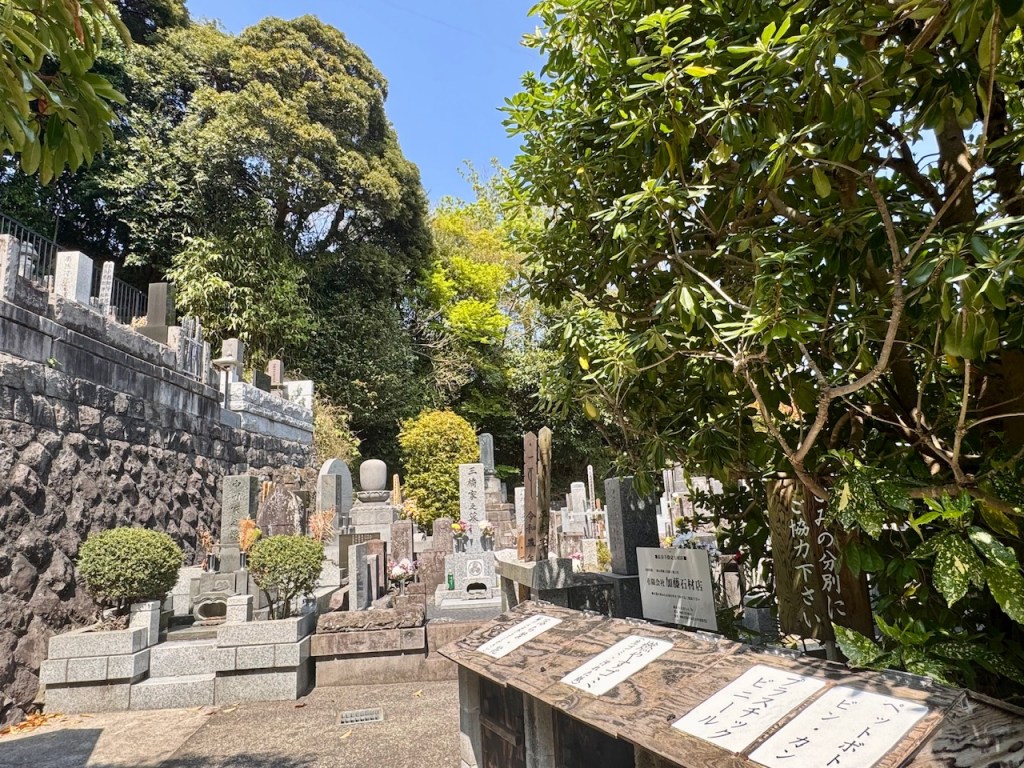
Graveyard
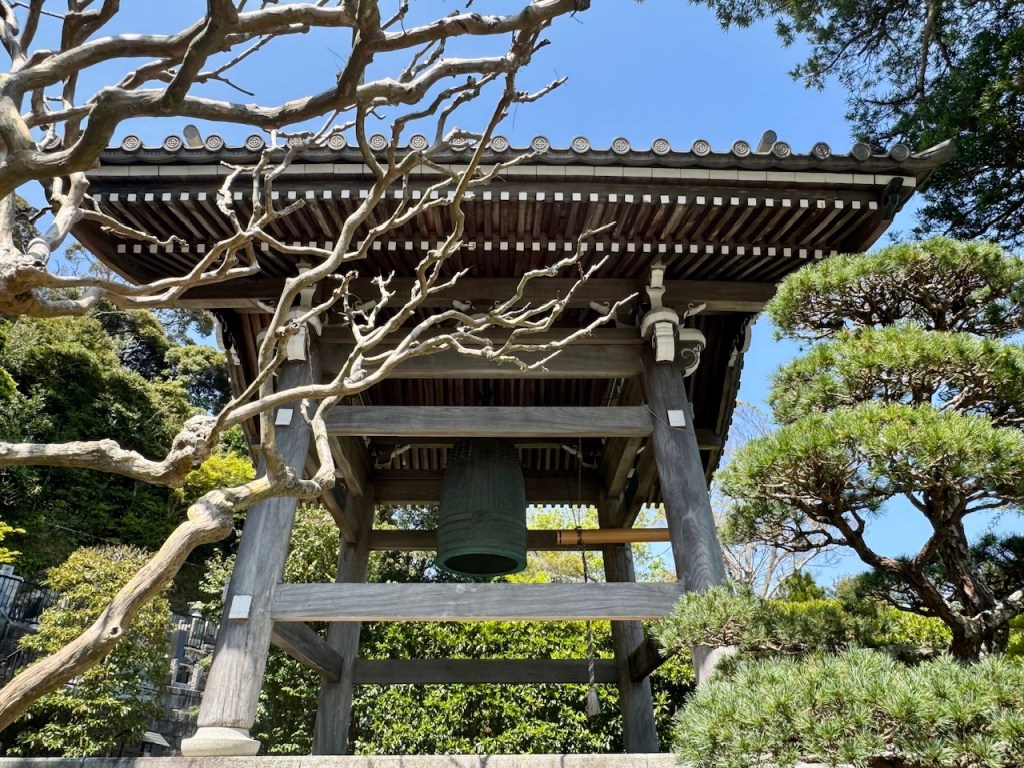
Shoro Belfry

I’m templed out so I hop back on the train to Kamakura in search of a late lunch. I picked a tempura spot on Komachi-dori Street last night. The restaurant was hidden over a pet store so it look some tenacity but I found it! For lunch, I chose a mixed tempura set lunch that came with a bowl of miso soup, some weird macaroni seaweed mix and a big bowl of steamed rice. This was the first hot meal I’ve had since my arrival in Japan and it was pretty good but not spectacular. Nonetheless it filled me up and allowed a bit more exploration on this busy street before heading back to the train. 

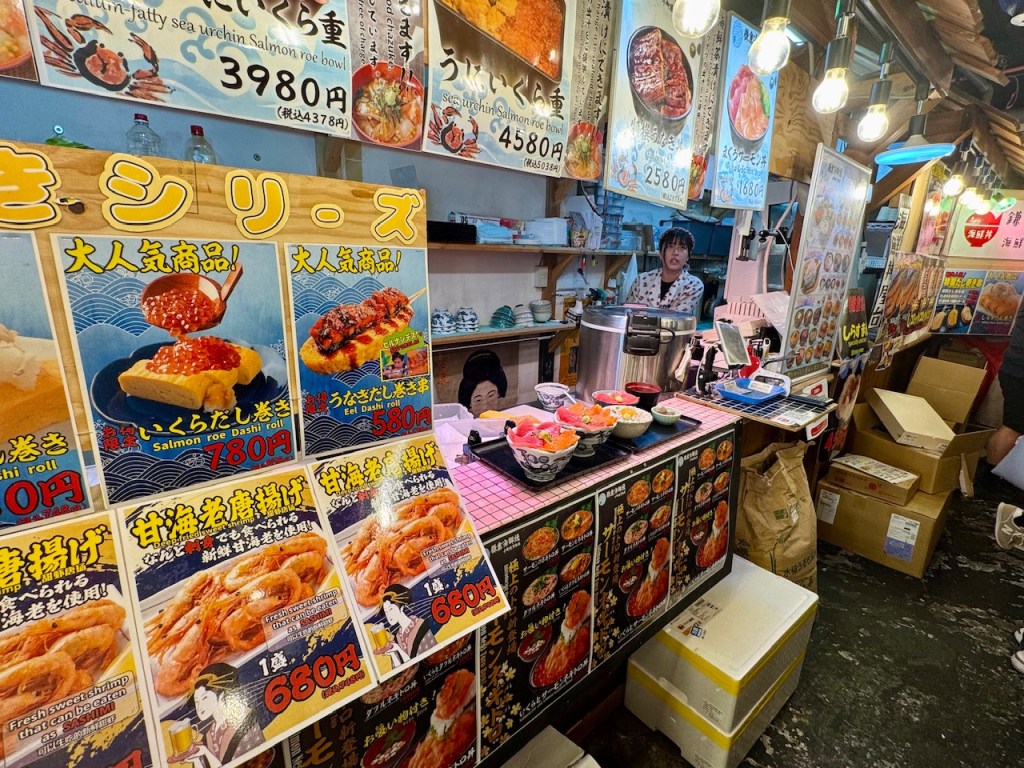
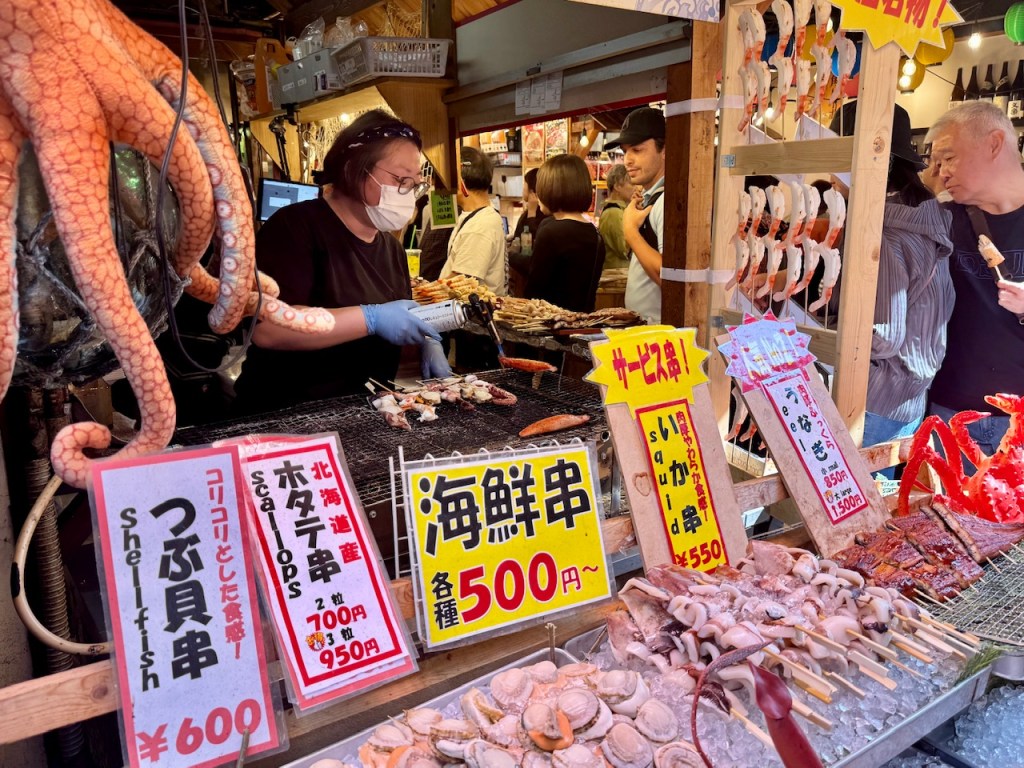
Enroute I noticed a food court featuring foods on a stick – seafood and meat cooked to order that looked pretty interesting but alas I was full. I also stopped at a used kimono shop but let’s just say that I am quite a bit more robust than the typical Japanese lady so my yen stayed in my purse!

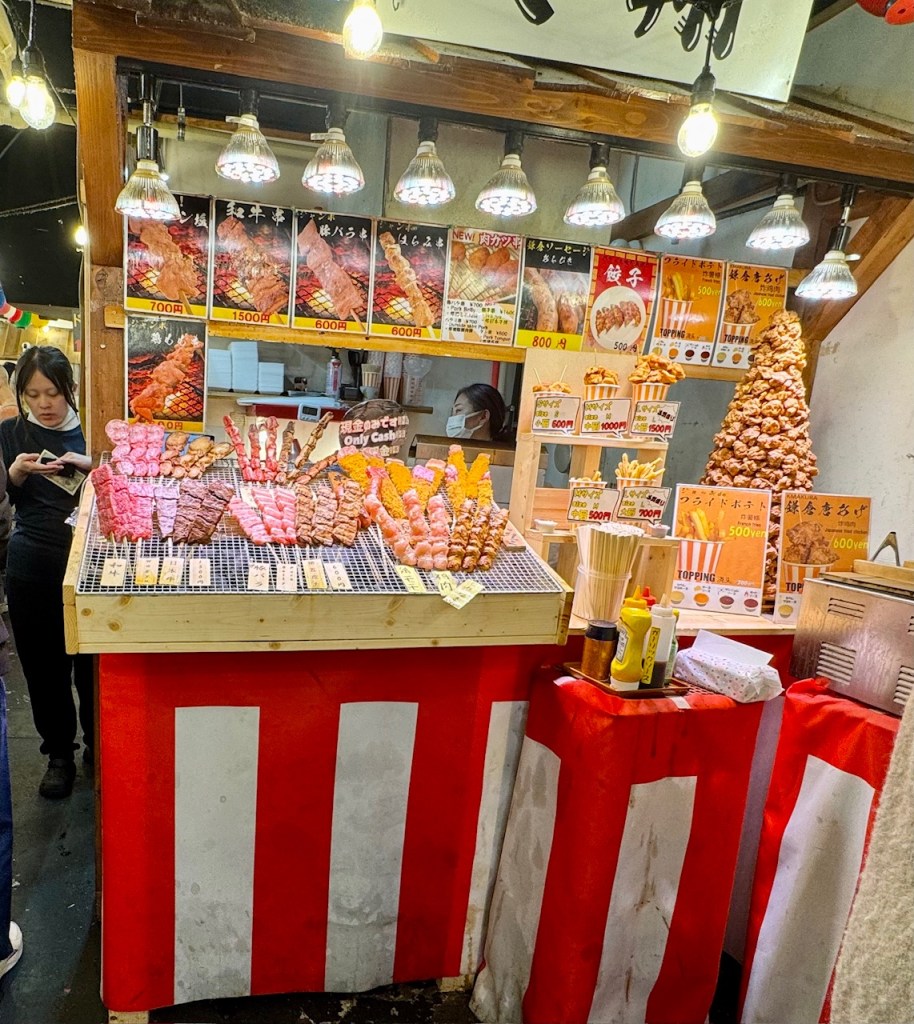
Back on the train and back to the hotel in time for a well deserved nap. I’m almost in this time zone but not quite! Tomorrow is another day. Adventures await …

Cruising Around the Land of the Rising Sun

April 11, 2025

This morning I’m heading to Shibuya station to join a free walking tour guided by Hiraku. I’ve used google maps to suss things out and with my trusty eSIM and google maps, I leave the hotel confident I will find the meeting point without too many issues. Just in case technology can’t completely make up for my poor sense of direction, I’ve given myself a 45 minute buffer! 

The Otorii train station is very close to my hotel and I only have to switch trains once; how hard can it be?! The trains are crowded but apparently (at least according to Mr Google not overly so). Not sure how it would be possible to jam more people onto the train as there’s already people pushing their way into the crowded cars. Interestingly, no one is talking as most people fiddle with their phones set to silent mode. 

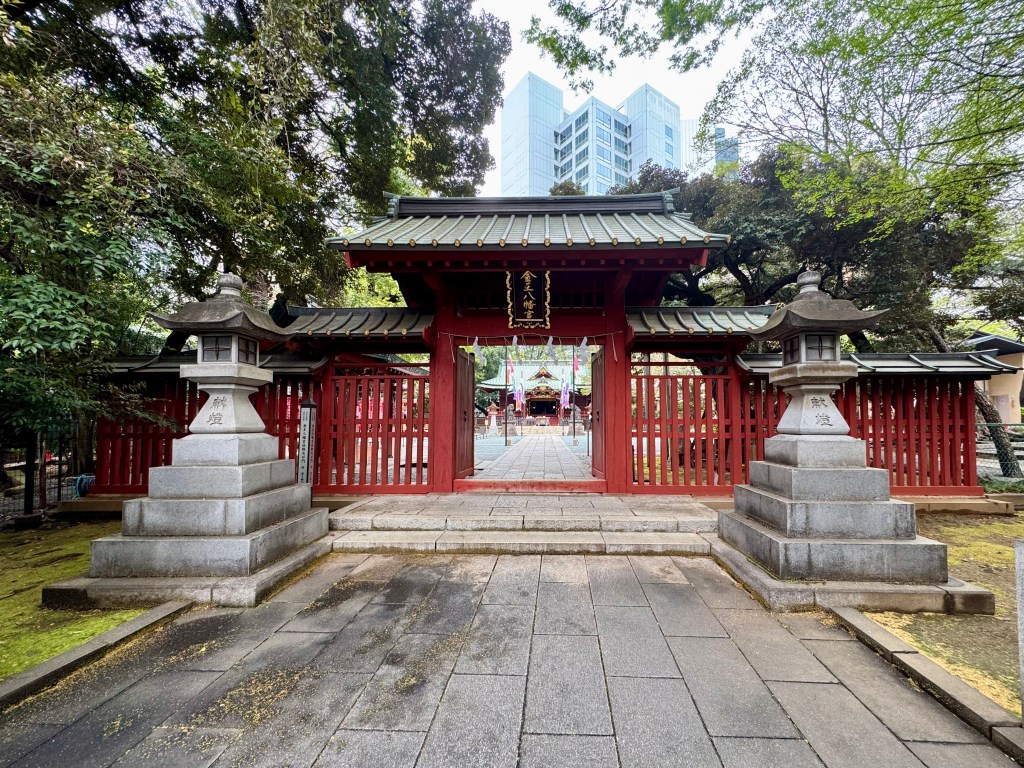
With just a little assistance, I make it to Shibuya station in the heart of Tokyo and head off toward the meeting point close to the Konnoh Hachimangu Shrine. The ten minute walk has me going in circles but soon enough I arrive at my destination with some time to spare.  Knowing we won’t likely spend a lot of time at the shrine, I decide to wander about the grounds on my own. 

Konno Hachimangu Shrine, located in Shibuya ward, was established by Shibuya Shigeie in 1092This quiet little shrine marks the spot where the aristocratic Shibuya family established their main residence castle.

This Shinto shrine, easily identifiable by the torii gate. Shinto, one of Japan’s two major religions, is the indigenous faith of the Japanese. It is a way of life and a way of thinking that has been an integral part of Japanese culture since ancient times.

The layout of the shrine is similar to yesterday’s shrine though the focus here is the God of war, Hachiman, also known as the patron god of warriors and the protective god of Japan. There is an inari shrine on the grounds celebrating agriculture and a few other sub shrines as well. 

After a look around, I tried to get the shrine’s stamp for my notebook but apparently they won’t put their stamp in just any notebook, you have to buy a special one they have on sale there. I don’t want two notebooks so no stamp for me!

Time to head out and meet the guide and the rest of the group. Born in New Zealand, our guide Hiraku is half Japanese and has been living in Tokyo for the past 3 years. The group is around 14 strong with folks from USA, South Africa, Turkey, Germany and me the sole Canadian learning more about this area of Tokyo and Japanese culture. 

We started on time (I guess not only the trains are punctual here!) with a brief overview of the area and some info about our first stop, the shrine. Hiraku advised us of some of the etiquette for shrines to make us less like bulls in china shops! One key piece of information was that you’re supposed to stay to the left or right as you pass through the torii gate as the centre is reserved for the deity. Oops, I’m pretty sure I marched right down the center yesterday and this morning!! Note to self, be a little more circumspect.

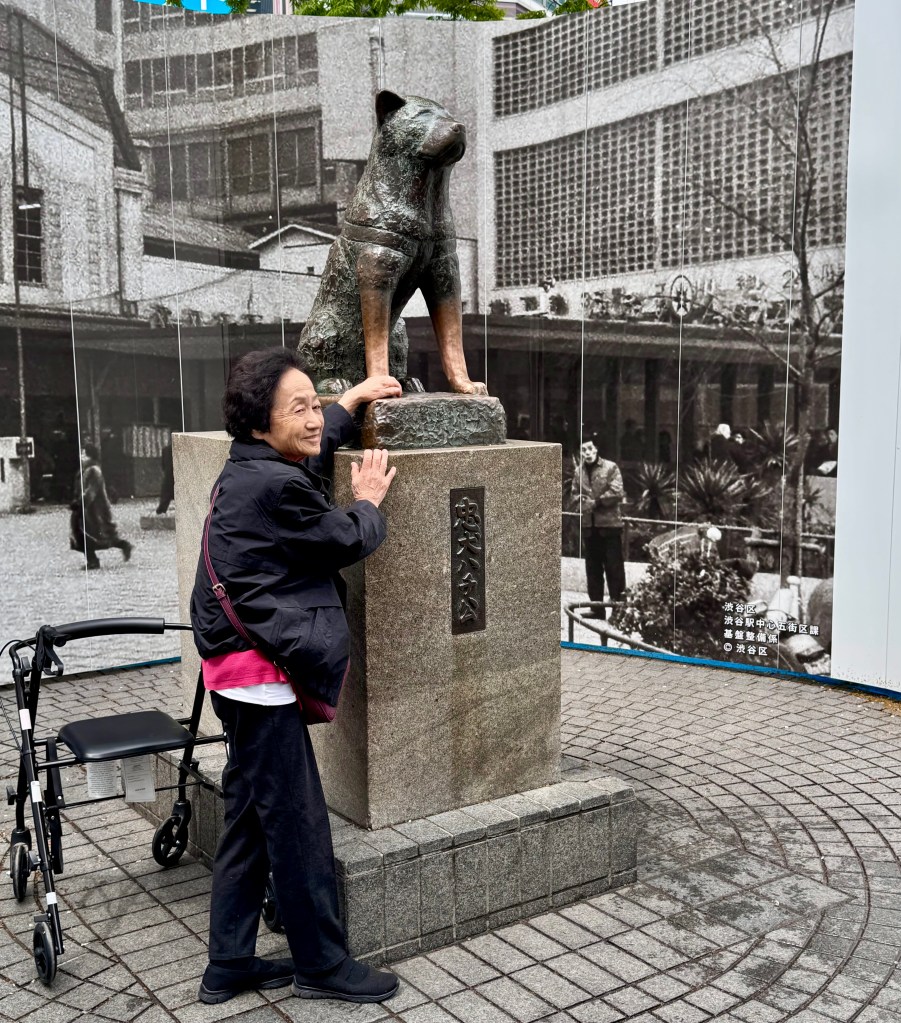
We had a brief whistle stop at the shrine before heading to one of the landmarks of the area; the statue of Hachiko.

In the 1920s, Hachiko, an Akita dog would head to Shibuya Station to wait for his owner to arrive back from his daily commute from the university. One day his owner did not return from work, having suffered a fatal cerebral hemorrhage. This did not deter Hachiko though, who returned to the same spot to wait for his owner every day for the next 9 years, 9 months and 14 days until he crossed the rainbow bridge. 

Erected in 1934, the Hachiko statue, a bronze monument of an Akita dog, stands outside Tokyo’s Shibuya Station commemorating Hachiko’s unwavering loyalty to his owner. When he died Hachiko’s bones were cremated and his ashes buried alongside his much-loved master at Aoyama Cemetery, and the pair was finally reunited. A movie starring Richard Gere, Hachi: A Dog’s Tale tells the story.

We only had a minute for a pic so no time to get my picture with Hachiko but I got a snap with this lovely lady instead. 

Hachiko

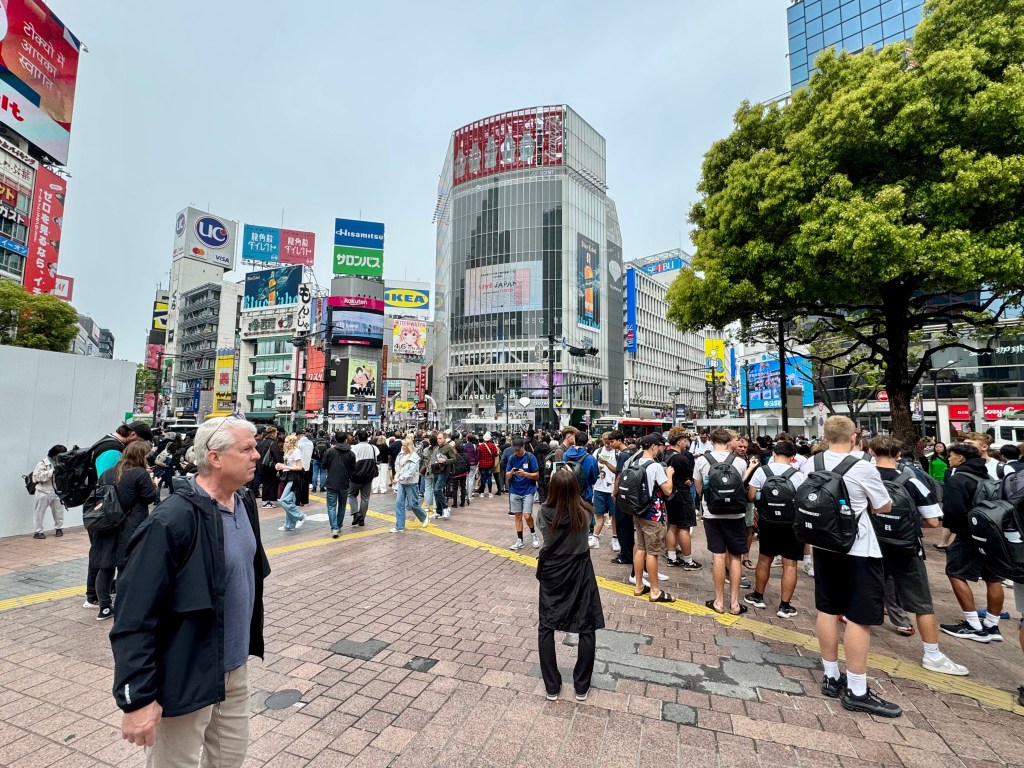
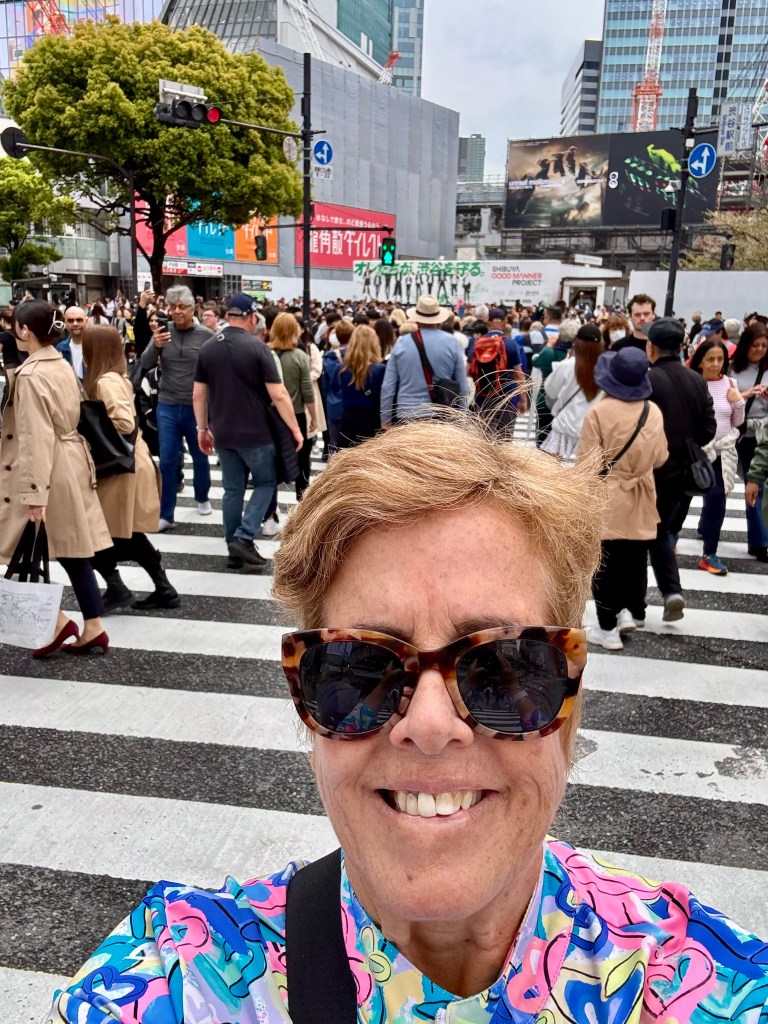
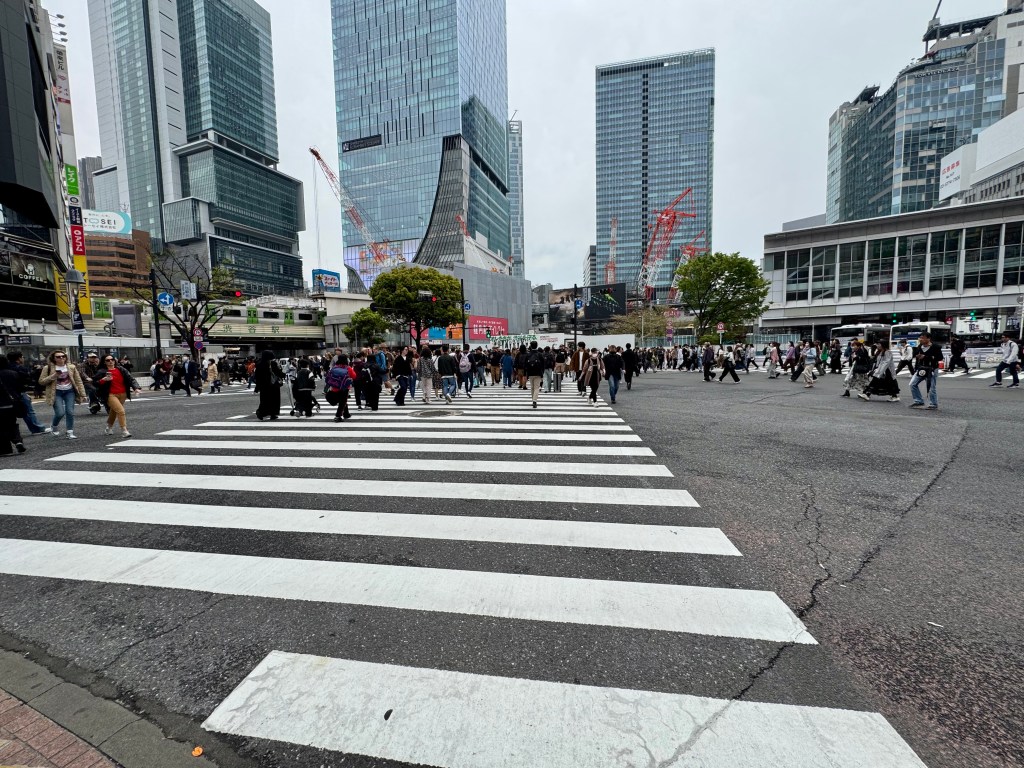
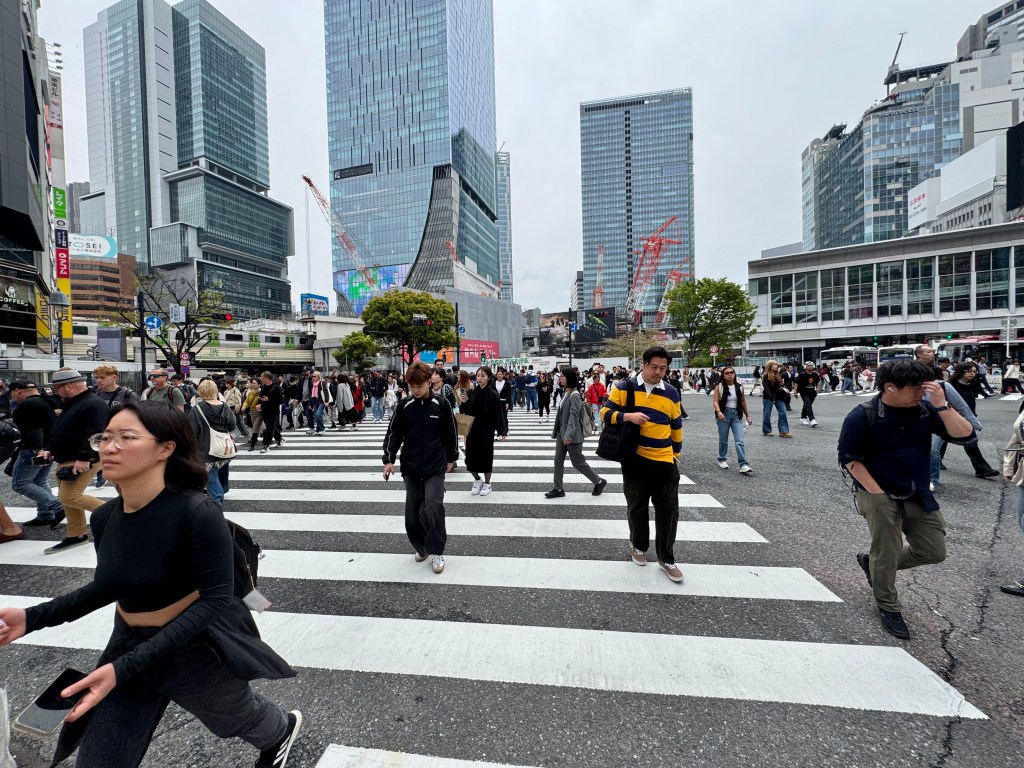
The next stop, very close by, was the Shibuya crossing known as by locals as the Shibuya scramble.

Shibuya crossing is the world’s busiest crossing. Fun fact – On average over 2.4 million people cross Shibuya everyday, that’s 1000-2500 pedestrians every crossing. The crossing is known as a “scramble” because pedestrians cross from all directions at the same time when the traffic lights turn red, allowing a huge wave of people to flood into the intersection in controlled chaos, a truly unique and iconic Tokyo experience. The synchronization of traffic lights at Shibuya Crossing is amazing to me given that we can’t even synchronize the lights on Dalhousie Street to keep traffic moving in Ottawa, lol!

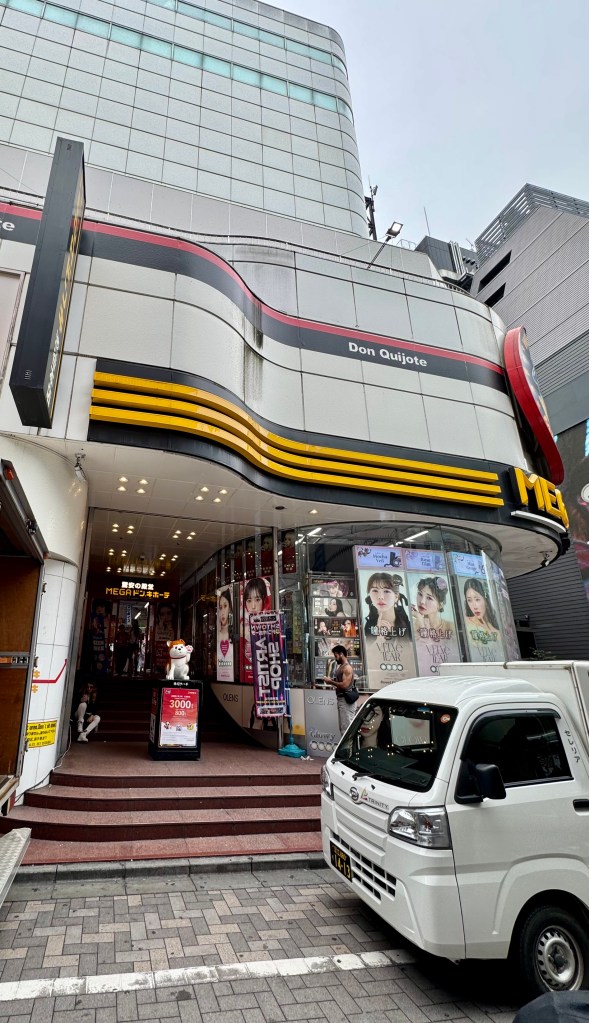
After the crossing, we stopped for a moment outside Don Quijote Mega, the largest Don Quijote store in Tokyo. The store, known for its giant discounts, has 7 floors with an infinite variety of goods you don’t need available for purchase. Sounds like Boutique GT on steroids. Lucky for me, I’m getting rid of stuff at home not accumulating and we didn’t have time to shop on the tour so off to the next stop Yoyogi Park. 

Don Quijote Mega

On the way to the park, we passed the Yoyogi National Stadium, which hosted swimming, diving, and basketball events at the 1964 Olympics and the newly built National Stadium, where the opening and closing ceremonies were held for the 2020 Games.

Olympic Buildings

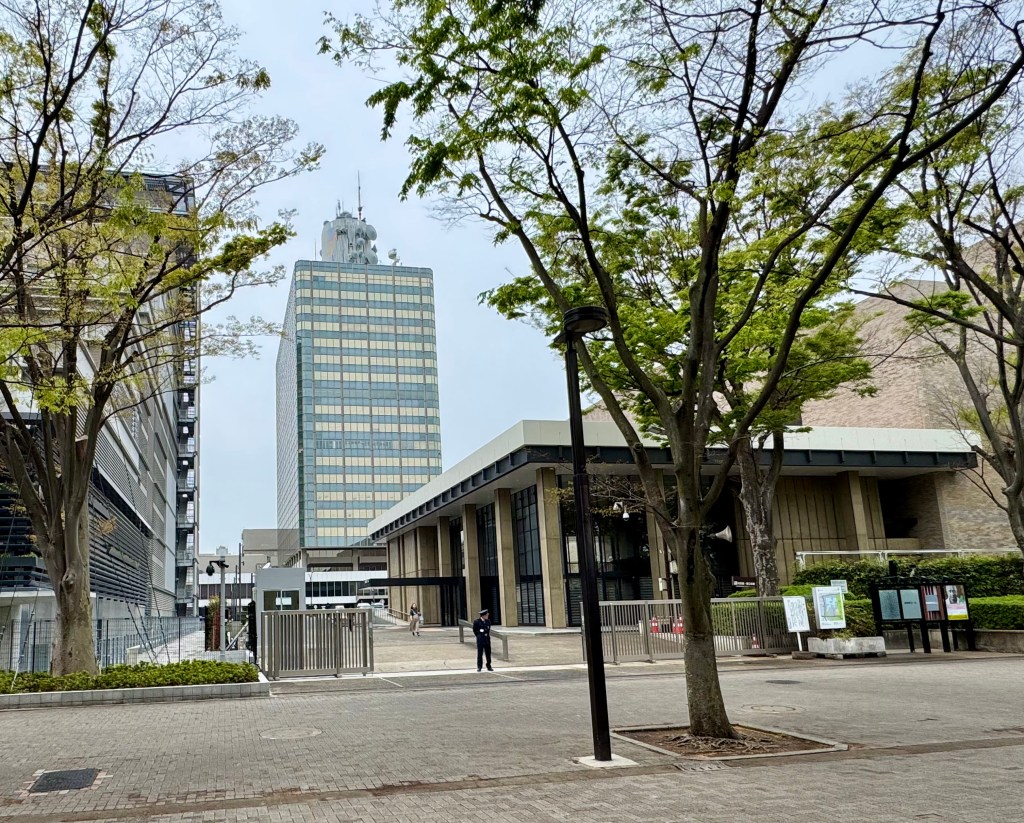
Across from these former Olympic buildings is the NHK Broadcasting Center. The headquarters of NHK, includes studios and offices, as well as shops and Studio Park. This is the site of the annual invitational music contest which has been held on New Year’s Eve for the past 65 years. With the winner announced just before midnight, it’s a key part of the NYE festivities in Japan. 

NHK HQ

Yoyogi Park is one of Tokyo’ largest parks featuring wide lawns, ponds and forested areas. Before becoming a city park in 1967, the area served as the site of the Olympic Village for the 1964 Olympics, and before that, as a residential area for US military personnel. The park is a popular Tokyo destination, and a lovely island of calm in the sea of people in Tokyo.

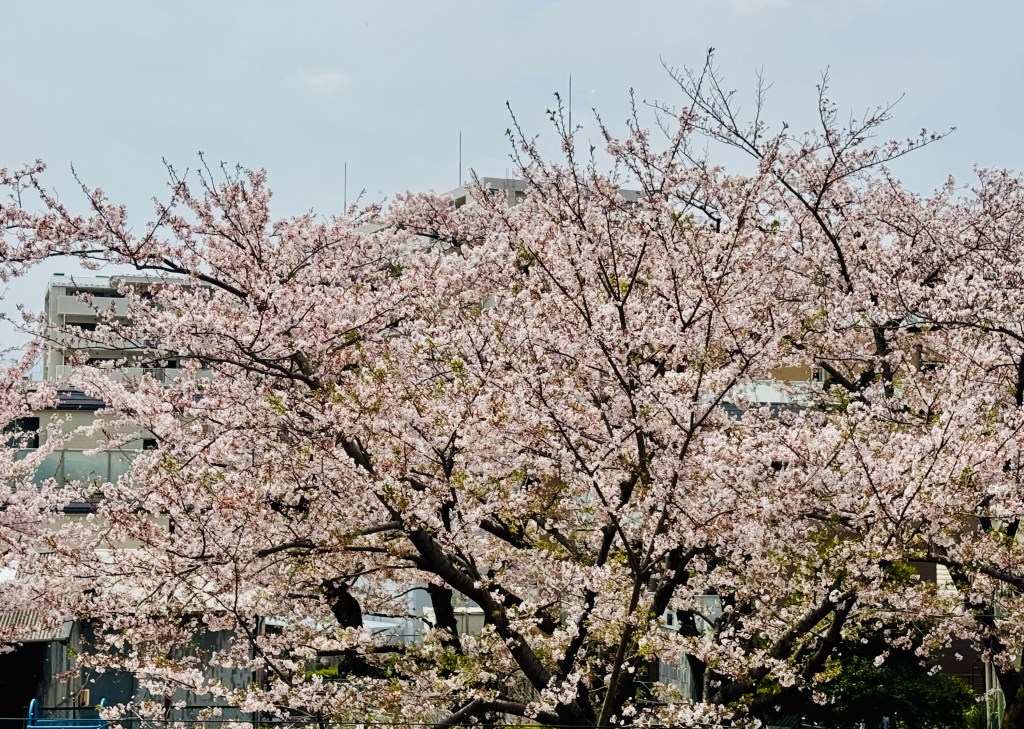
Cherry tree in bloom

Sadly the tour is coming to an end and Hiraku leaves us at the gates of the Meiji Shrine so we can explore at our leisure. 

Meiji Shrine is dedicated to the deified spirits of Emperor Meiji and his consort, Empress Shoken.The shrine was completed in 1920, eight years after the passing of the emperor and six years after the passing of the empress. The shrine was destroyed during the war but was rebuilt shortly thereafter.

Emperor Meiji was the first emperor of modern Japan. He was born in 1852 and ascended to the throne in 1867 at the peak of the Meiji Restoration when Japan’s feudal era came to an end and the emperor was restored to power. By the time Emperor Meiji passed away in 1912, Japan modernized herself to join the world’s major powers. 

Main Torii Gate

Entry into the shrine grounds is marked by a massive torii gate, where you leave the sights and sounds of the busy city behind and stroll through a tranquil forest. The approximately 100,000 trees that make up Meiji Jingu’s forest were planted during the shrine’s construction and were donated from regions across the entire country.

In the middle of the forest, Meiji Jingu’s buildings also have an air of tranquility distinct from the surrounding city. 

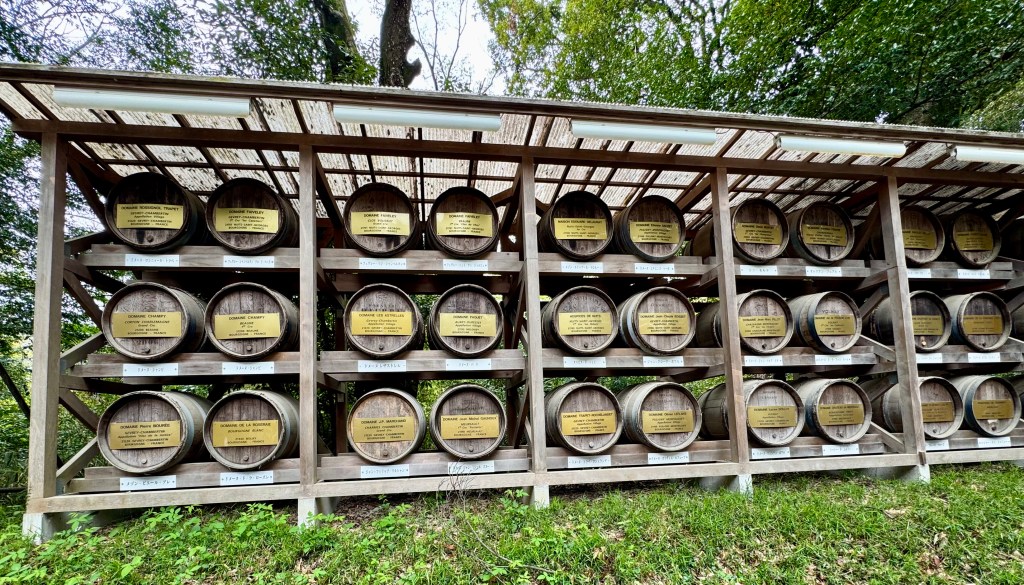
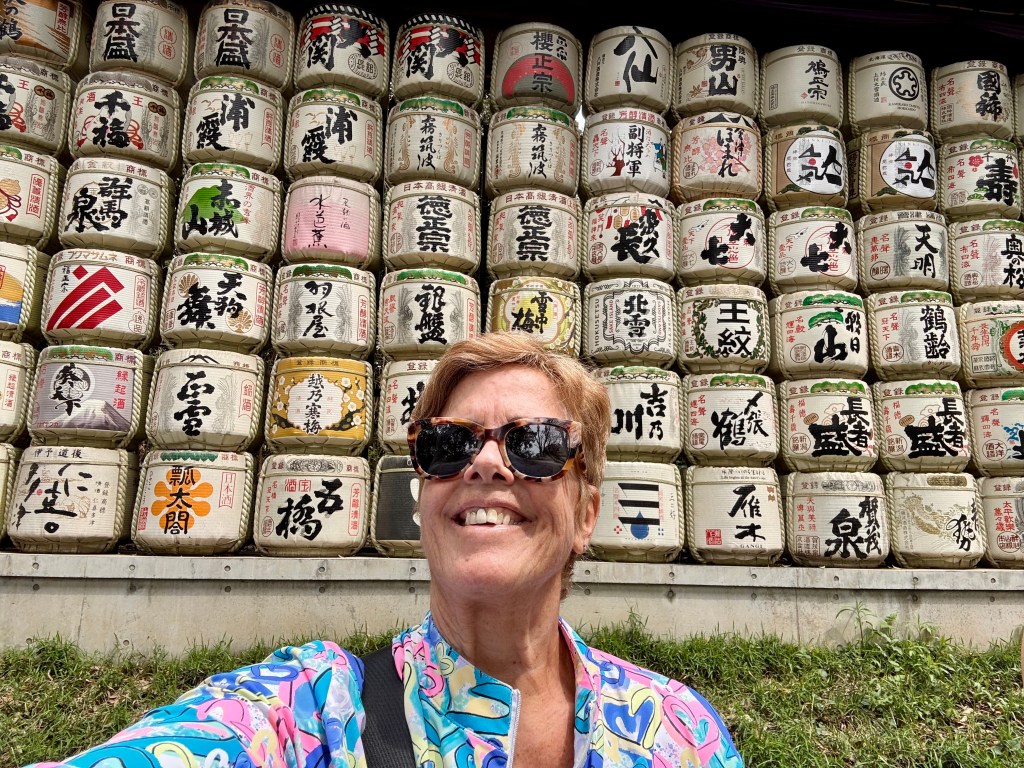
Walking through the forest, we passed through a display of barrel of sake wrapped in straw and casks of wine from Bourgogne. The sake barrels are offered every year to the enshrined deities by sake brewers around Japan wishing to show their deep respect for the souls of Emperor Meiji and Empress Shoken. The casks of wine to be consecrated at Meiji Jingu are offered by the celebrated wineries of Bourgogne in France.

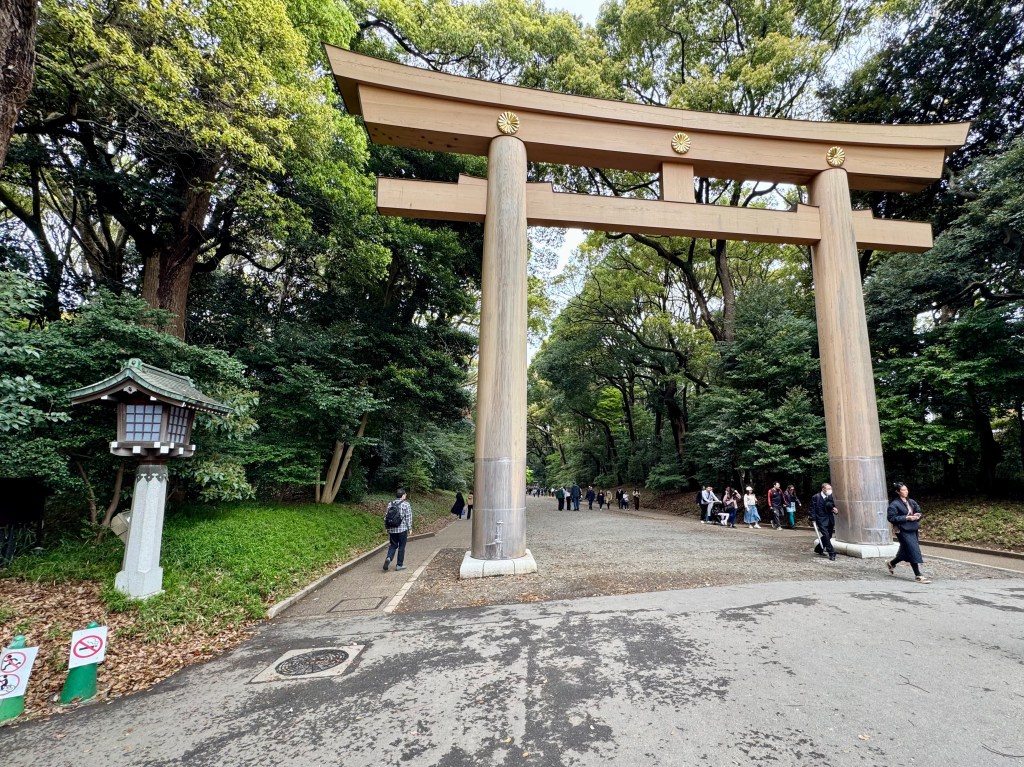
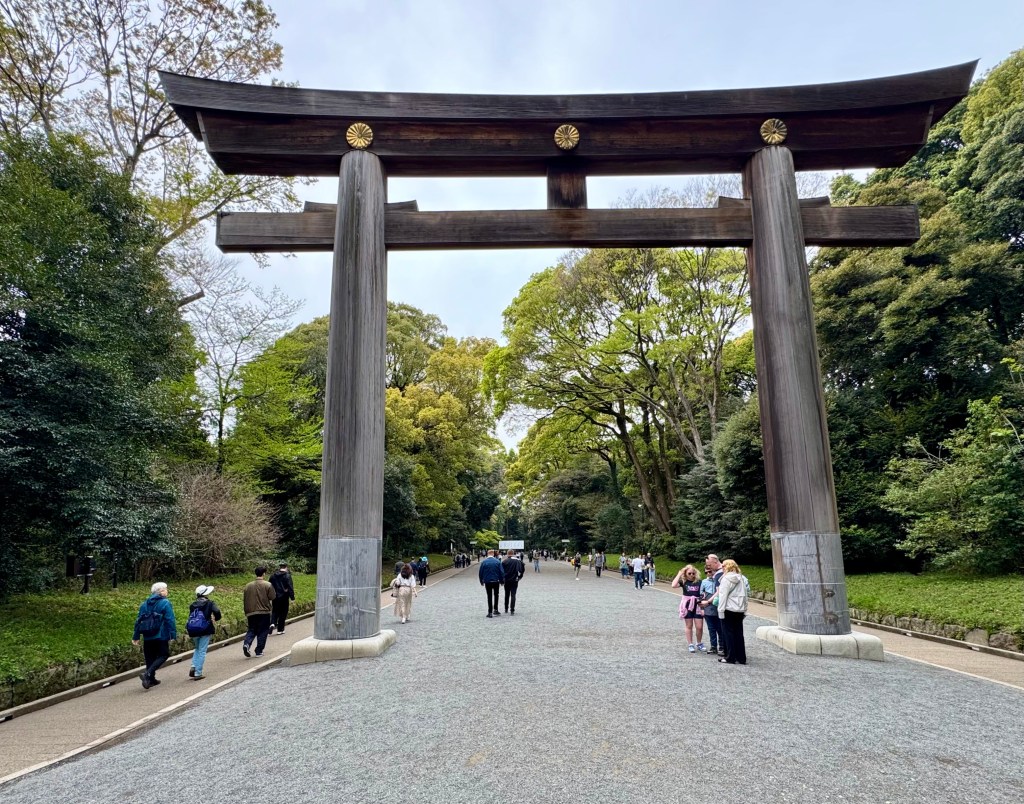
Approaching the main shrine, you pass through another torii gate. The Otorii The Grand Shrine Gate is the biggest wooden torii in Japan. Made from a 1500 year old Japanese cypress it is 12 metres high with a 17 metre crosspiece.  Very impressive indeed. 

Otorii -The Grand Shrine Gate

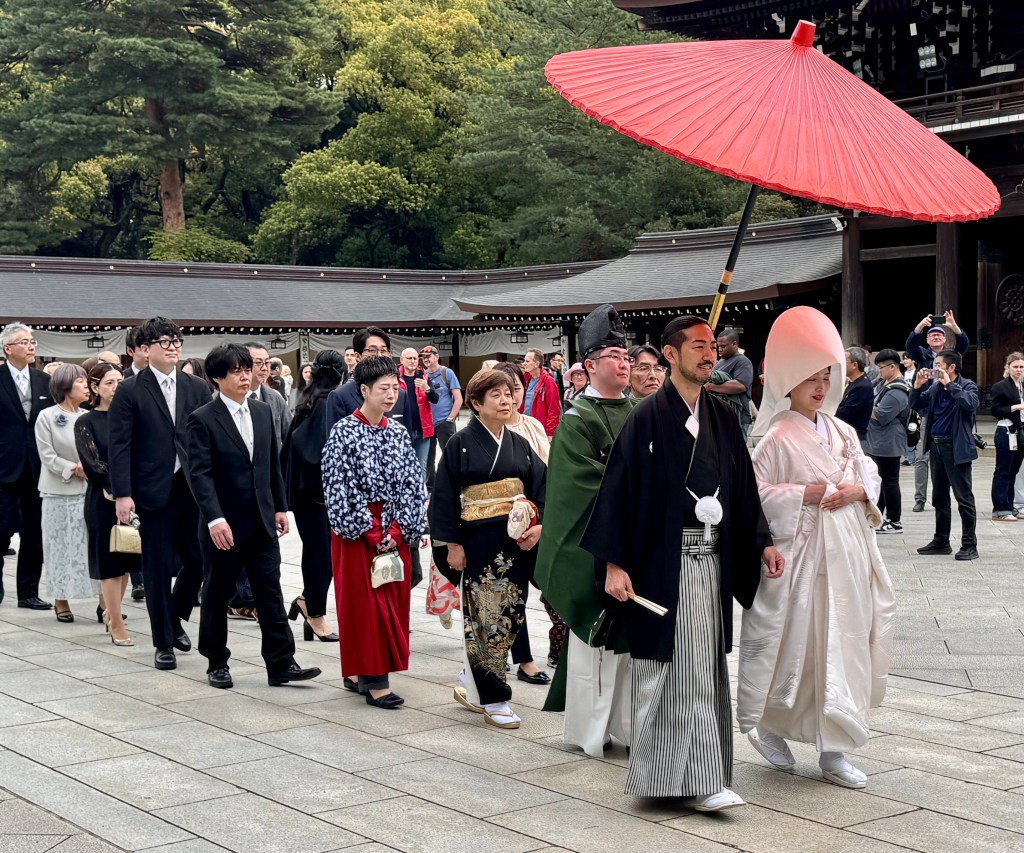
Meiji Jingu is one of Japan’s most popular shrines. In the first days of the New Year, the shrine welcomes more than three million visitors for the year’s first prayers (hatsumode). During the rest of the year, traditional Shinto weddings can often be seen taking place here and I was lucky enough to see the procession for one of those today.

Wedding Officiants
The Happy couple and their guests

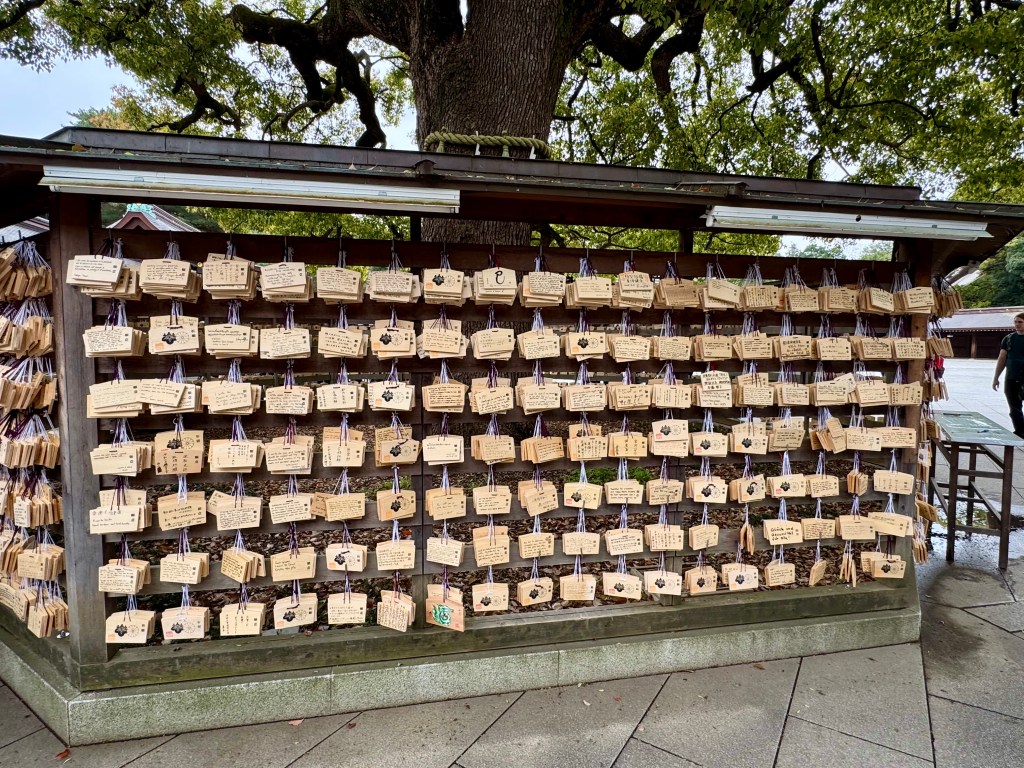
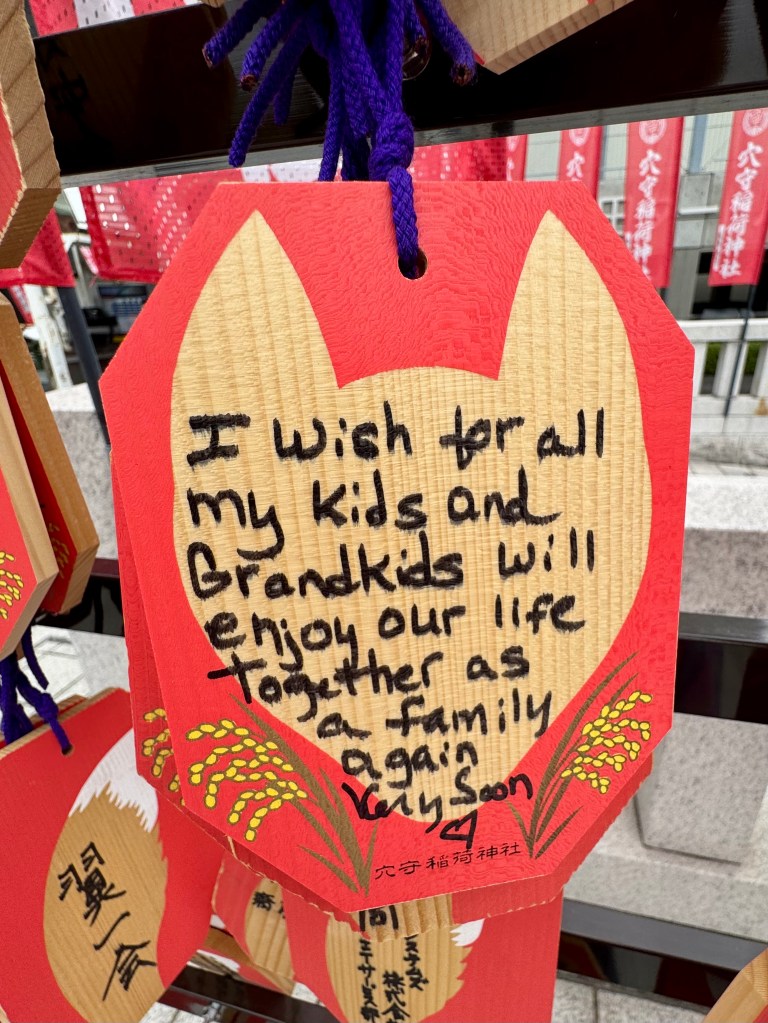
Visitors can take part in typical Shinto activities, such as making offerings at the main hall, buying charms and amulets or writing out one’s wish on an ema.  I even managed to get a stamp in my notebook here.

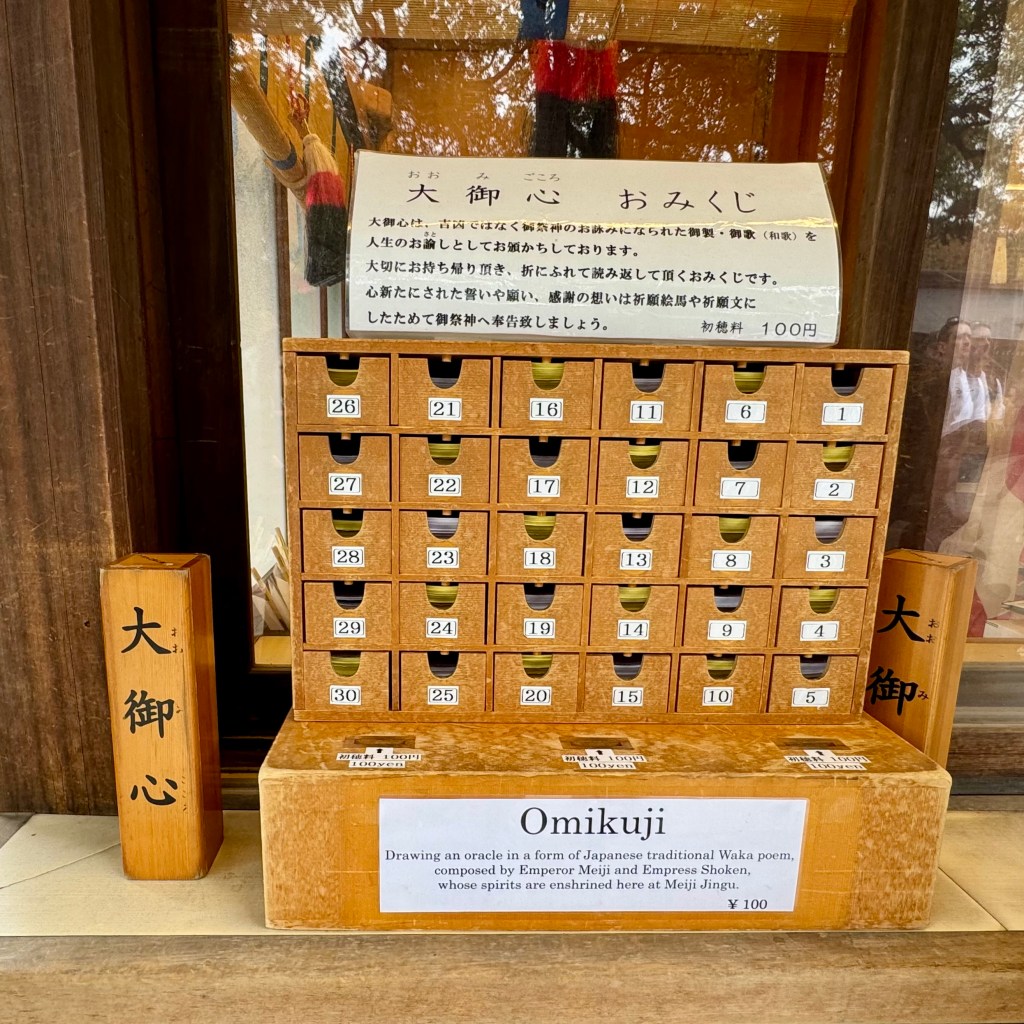
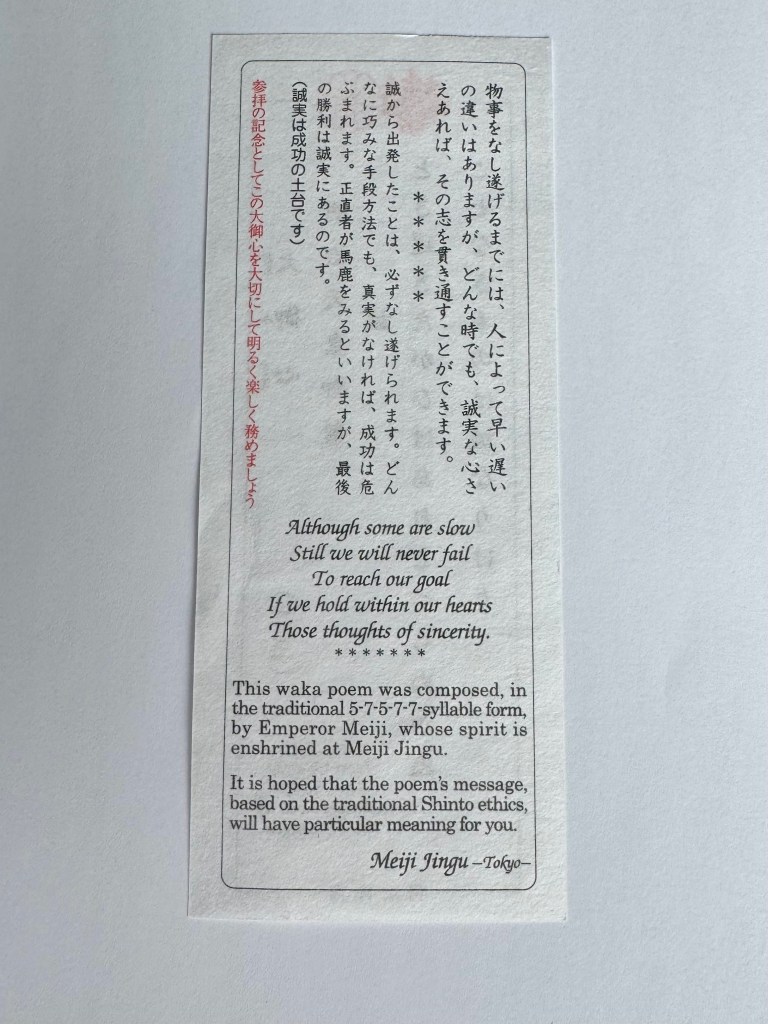
While there, I took the opportunity to select an Omikuji; a paper fortune randomly drawn at Shinto shrines and Buddhist temples in Japan. Here your fortune is a Japanese traditional Waka poem, composed by Emperor Meiji and Empress Shoken, whose spirits are enshrined at Meiji Jingu.

Omikuji can predict a person’s overall fortune and offer advice on specific areas like health, love, work, business, and travel. Mine was pretty good I thought so I kept it but bad fortunes should be left behind in a dedicated spot so you don’t take the bad luck home with you.

The battery on my phone is dying as is my battery so I decided to skip the afternoon tour I had originally planned to attend and get home while my google maps and electronic suica card (to pay for the train) would still work. 

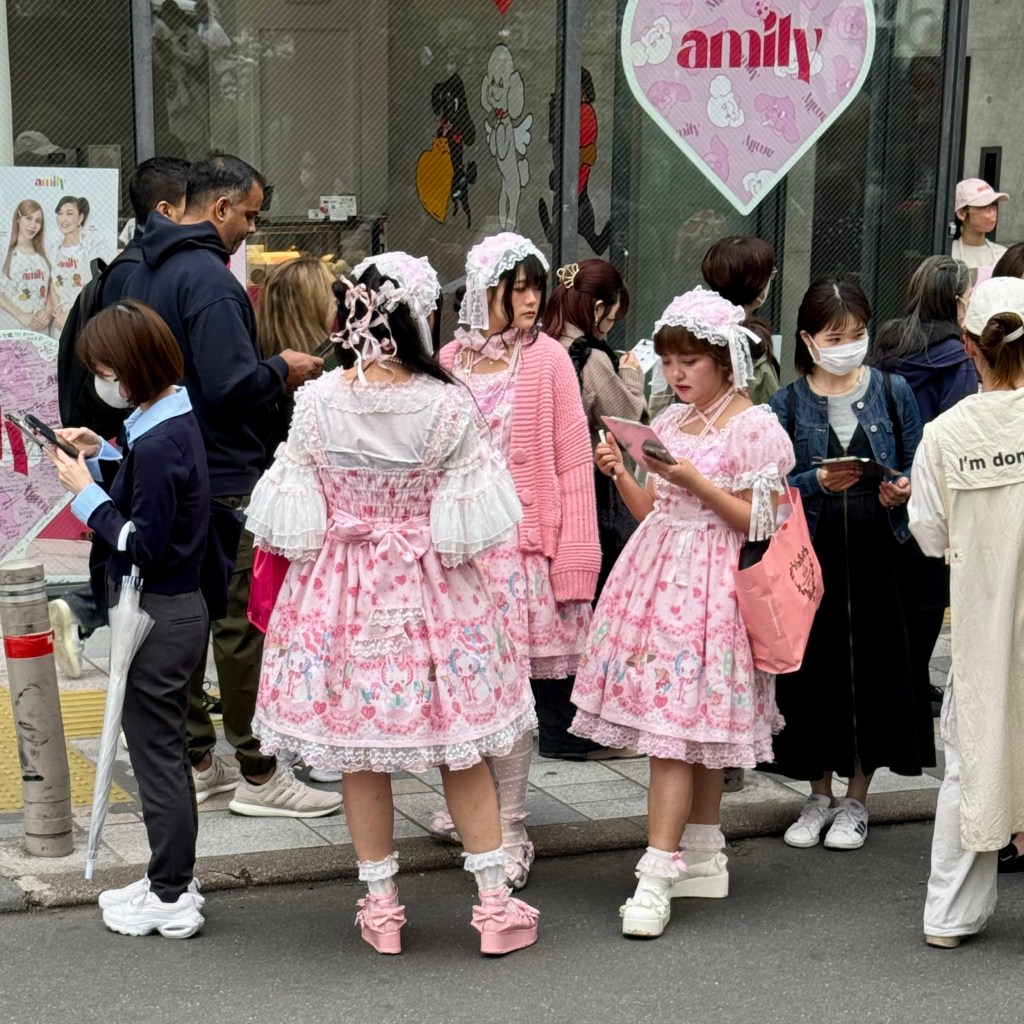
Before heading home, I quickly checked out Takeshita Street in Harajuku. The 350-meter pedestrian-only shopping street, is known for its unique fashion, kawaii (cute) culture, and food. The street is lined with small, quirky shops selling everything from fashion and sundries to cosmetics and 100-yen shops. You can see by the three ladies pictured below that they take this cute thing seriously. 

The return journey was relatively uneventful though I did somehow manage to go in the wrong direction for one stop when I first boarded a train at the Harajuku Station.  The trains weren’t as crowded mid afternoon and the return trip was faster. Before heading to the hotel to charge my phone and have a relaxing nap, I picked up a chicken cutlet sandwich and a banana to augment my steady diet of protein bars. Still no exciting food but tomorrow is another day.  Adventures await …

Cruising Around the Land of the Rising Sun

A popular quote attributed to Saint Augustine is, “The world is a book, and those who do not travel read only one page.”  As a veracious reader, I’m off on another adventure to the Land of the Rising Sun (not to be confused with the House of the Rising Sun!). 

My adventure starts in Tokyo with a few days to acclimatize to the time change and see some of the sights in the most populous city in the world with a population of more than 37 million (there are 41 million of us in Canada so that’s a lot of people!).  After that, I’m hopping on a cruise ship for 12 action packed days at 10 ports in Japan and a whistle stop in Busan, South Korea. Come along for the journey if you like – adventures await …

April 9-10, 2025

April 9 was a travel day. Typically, there was snow in the forecast even though it was April adding to departure day angst. Despite Environmental Canada’s alert and Air Canada’s offer the night before to allow me to rebook free of charge, my flight to Toronto was only slightly delayed due to a minor mechanical issue and the need for deicing. We were a little late arriving in TO but there was still time to grab a quick bite at Pearson before the 13 hour plus flight. In the past, I used points and flew bizzness class to Asia but this time I’m in the back of the bus with the great unwashed. Overall, the experience wasn’t too bad. I didn’t get much sleep which will make my jet lag interesting but it wasn’t uncomfortable. 

The immigration process in Tokyo could use an overhaul. Despite, completing the Visit Japan on-line pre-clearance process, it was all of two hours to clear customs with long lines and a convoluted multi-step process. But all good and bad things come to an end and I finally escaped the terminal and made my way to the hotel shuttle. The hotel checkin process was painless and my room with a beautiful, comfy bed was a good size with lots of amenities including PJs and slippers. The bathroom has a toilet you likely need a PhD to operate but it does have a heated seat so yay! 

I wasn’t really hungry so I hung out in my room trying to stay awake long enough so that my body would acclimate quickly to the fact Tokyo is 13 hours ahead of Ottawa. I wasn’t overly successful though I did manage to sleep for a couple of hours here and there before I decided to go for a walk and do some exploring. 

April 10 – The Anamori Inari Shrine is within easy walking distance of my hotel so after fortifying myself with my typical breakfast of a protein bar and some water, I headed out. Luckily, I had purchased an eSIM before leaving home so google maps will be my friendly assistant to reduce the possibility of being totally lost most of the time due to my poor sense of direction. No doubt, there will still be times but today wasn’t one of them. 

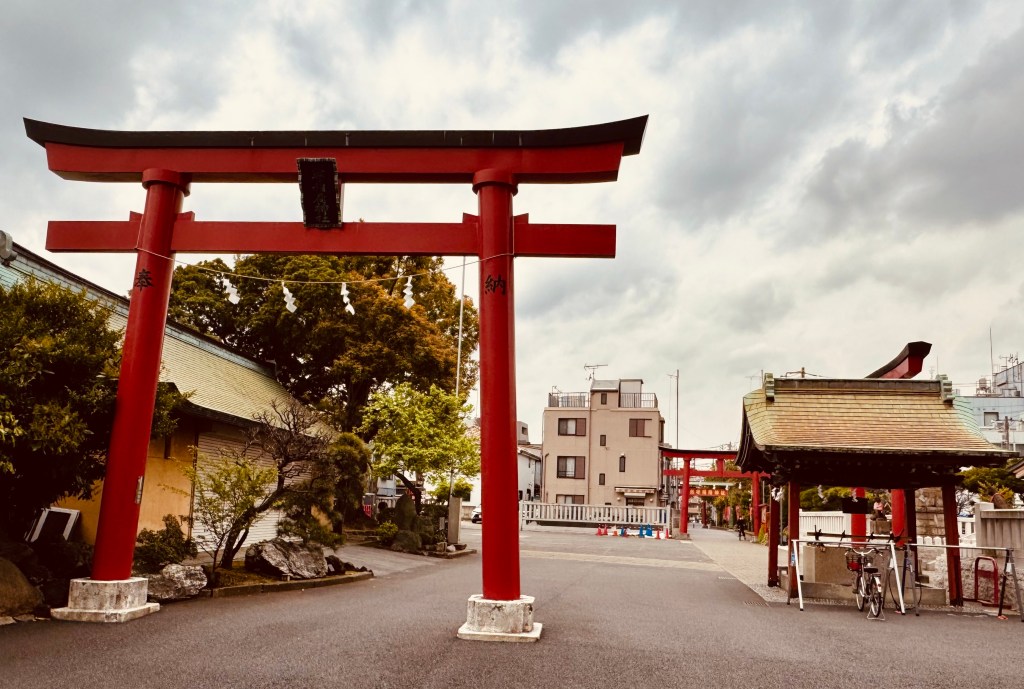
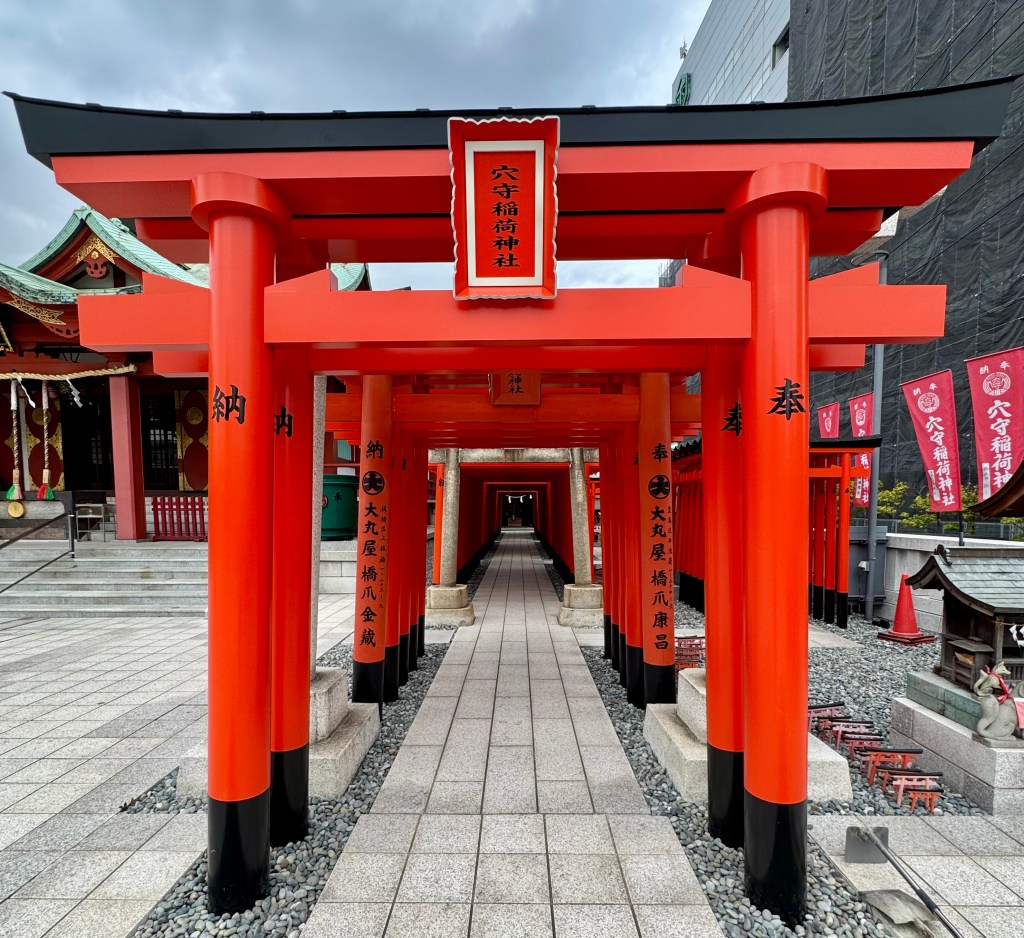
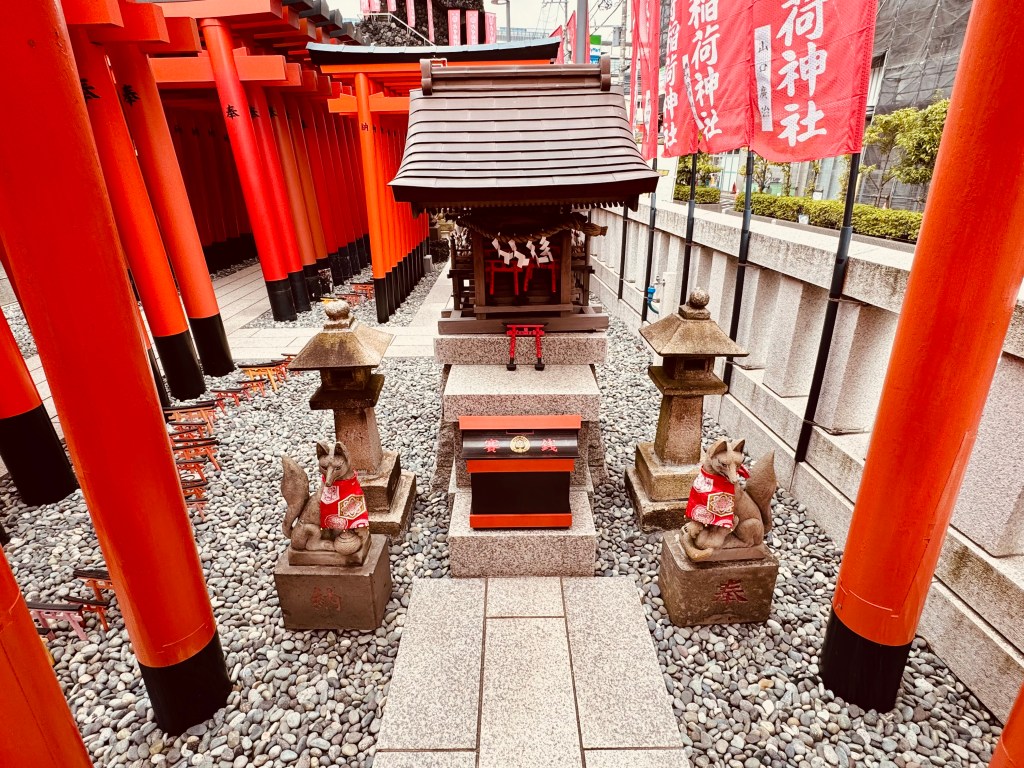
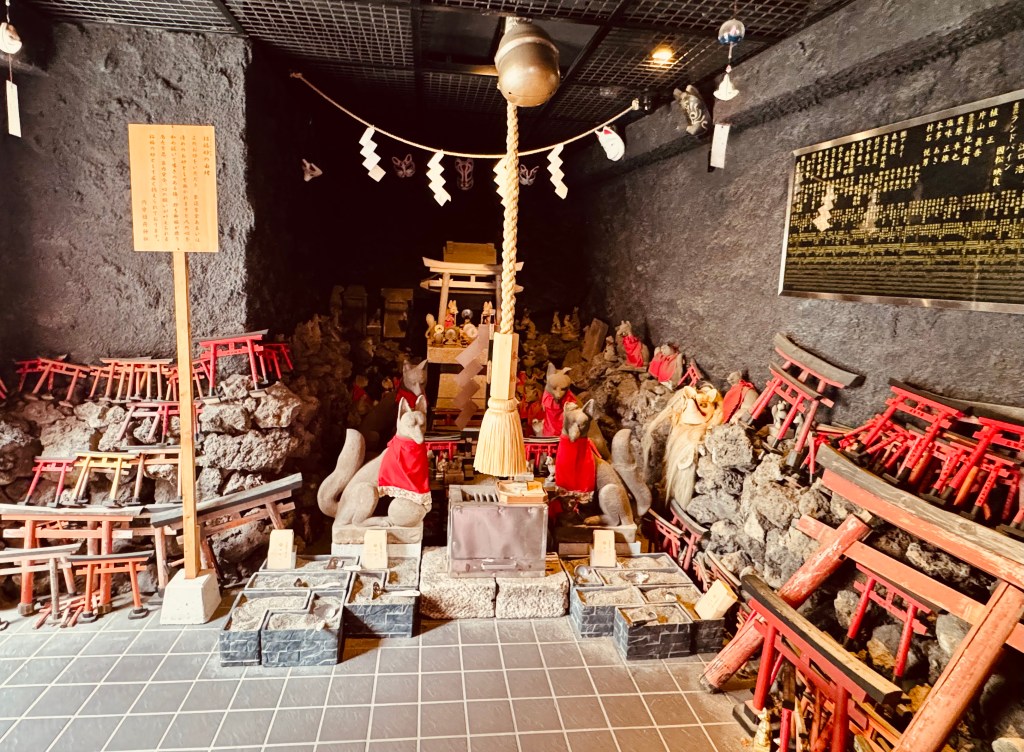
The Anamori Inari Shrine is modelled after Kyoto’s Fushimi Inari Taisha, the oldest Inari shrine, and is also dedicated to the deity of rice cultivation. Originally built in 1818 on the site of what is now Haneda Airport, it was moved just after WWII. 

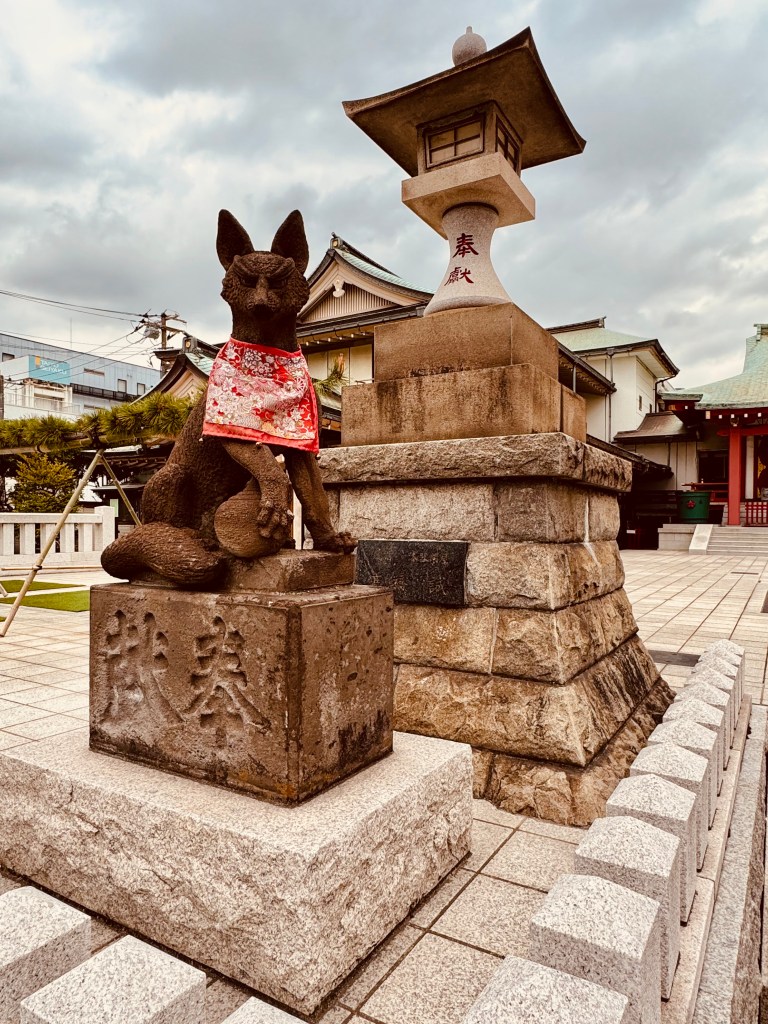
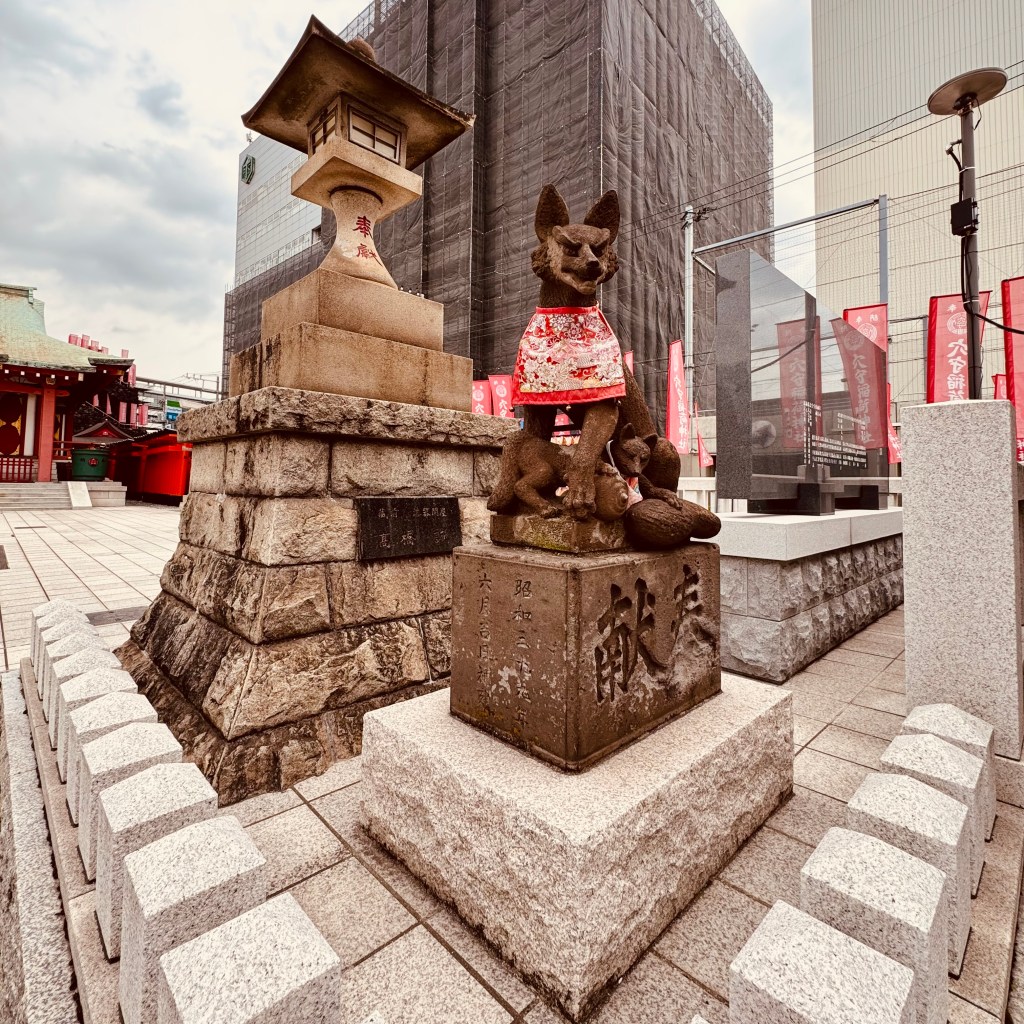
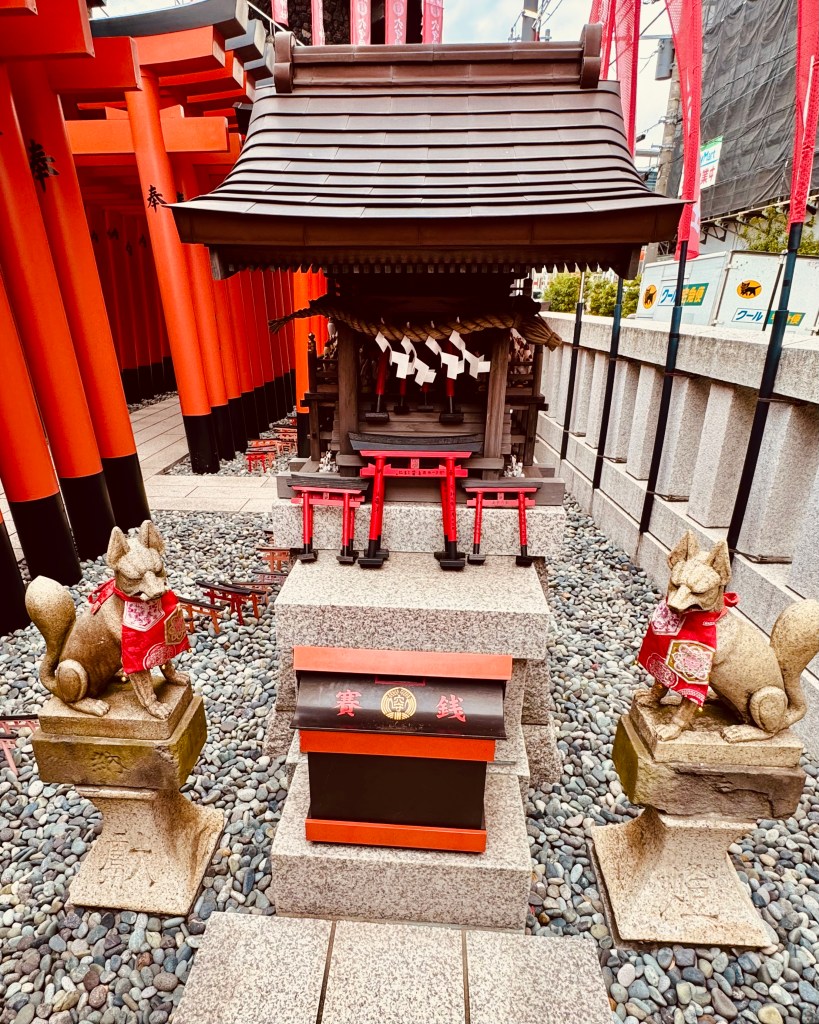
Although the shrine is small in size, it does contain many of the characteristic vermilion torii (gates) and a multitude of fox statues (foxes are considered messengers of the Inari deity).

Torii

Before entering the shrine, visitors are asked to purify themselves at the temizuya by washing their hands and rinsing out their mouths.

Temizuya

When visiting a Japanese shrine, the standard practice for prayer involves bowing twice, clapping twice, and then bowing once. This ritual act of respect and reverence to the deities is believed to awaken their attention and express joy and gratitude. 

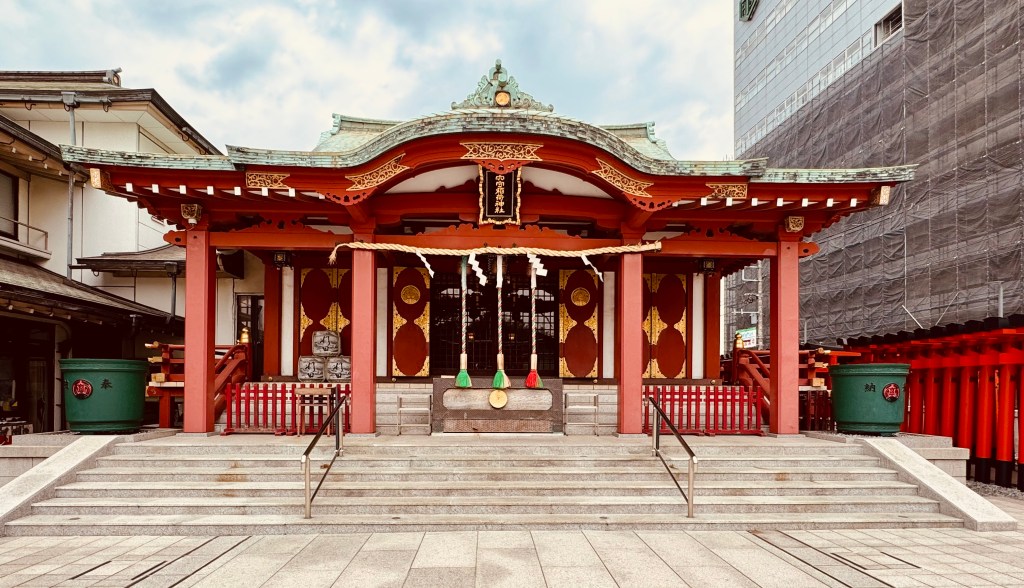
A male and female fox, complete with cub, guard the entrance to the  main hall of the shrine. 

In addition to the main hall, this shrine is also home to many little “Oyashiro” or miniature places of worship on the grounds, each offering different blessings such as success, prosperity, and good fortune. Sacred fox statues (kitsune) abound at the various oyashiro.

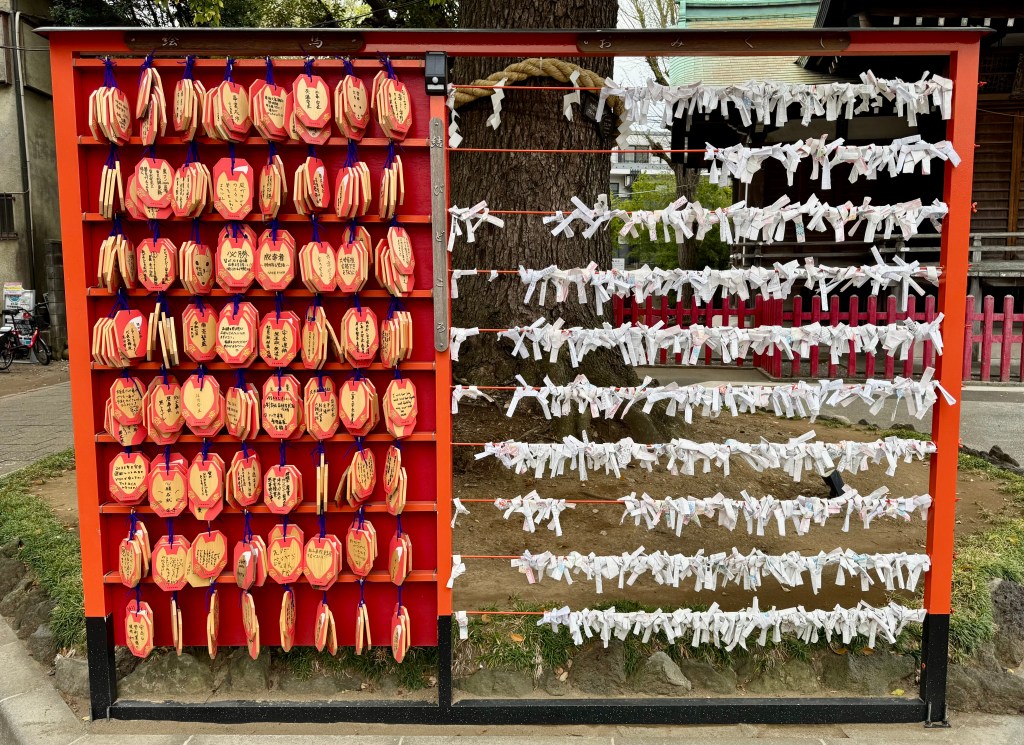
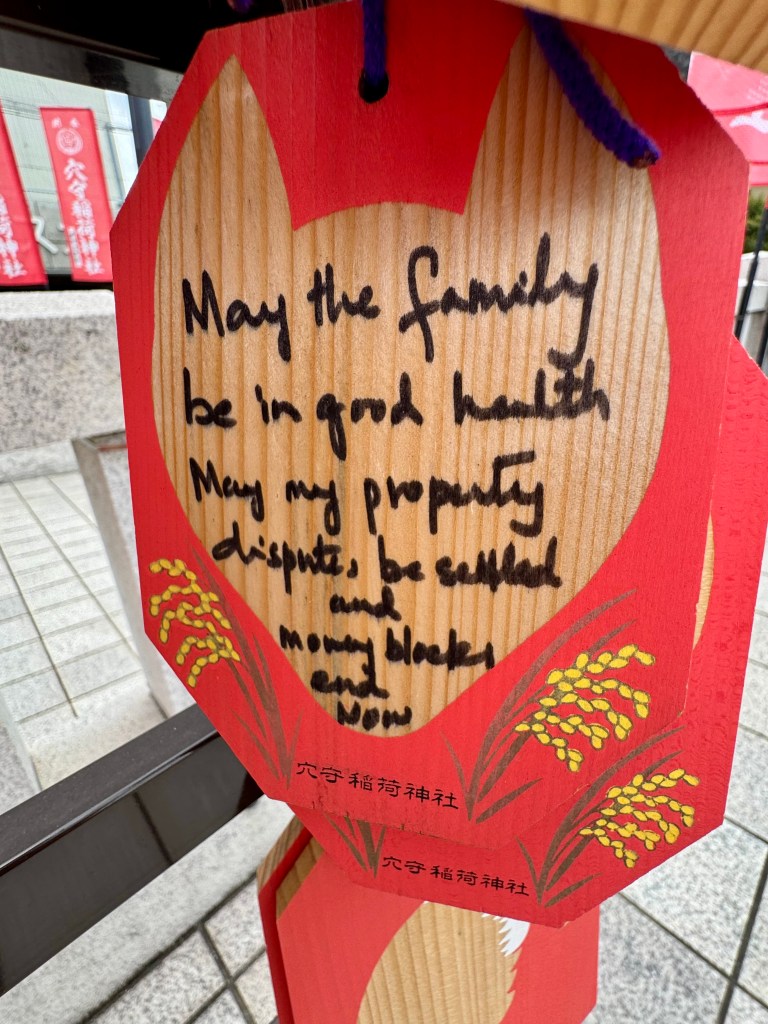
Omikuji are fortune telling paper slips found at many shrines and temples. Randomly drawn, they contain predictions ranging from daikichi (“great good luck”) to daikyo (“great bad luck”). By tying the piece of paper around a tree’s branch, bad fortune can be left behind. I guess you take the good ones with you.

Ema and Omikuji

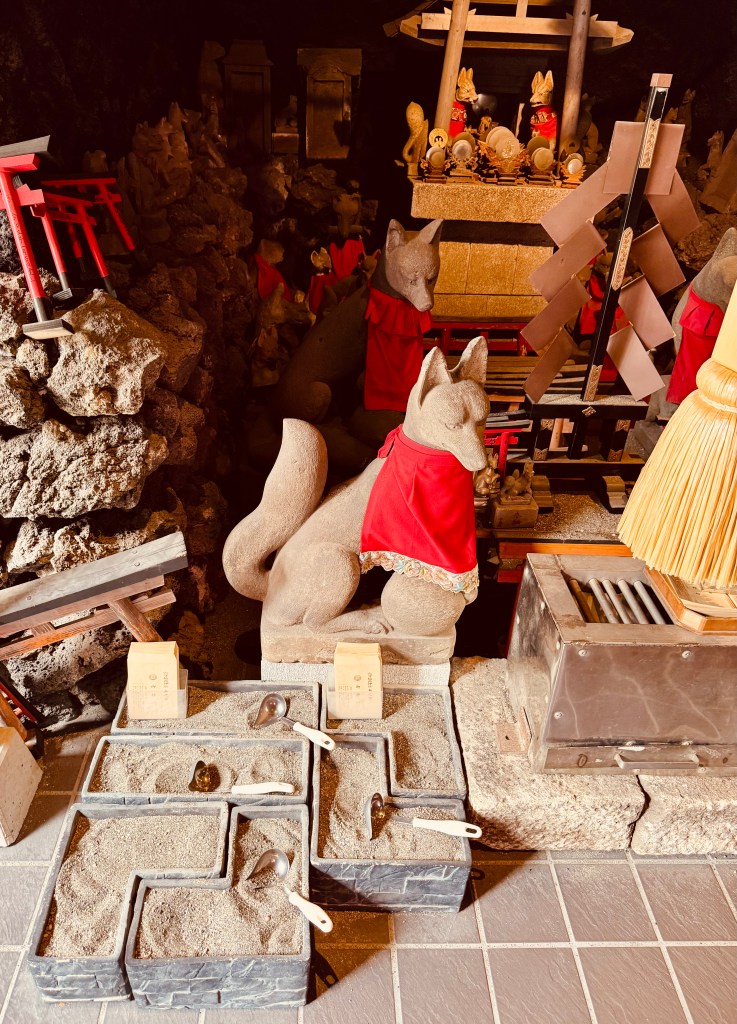
Towards the center of this complex is the inner shrine or “Oku no Miya”, which contains special sand believed to bless visitors with good fortune. This most famous blessing at Anamori Inari is the sacred sand, known as “Anamori no Suna.” It is believed that taking this sand home and sprinkling it around your house or carrying it with you brings protection and fulfillment of wishes. You know that I snagged some to bring home with me!

Stamp collecting, is a popular and fun hobby in Japan, allowing travelers to document their journeys as they explore the country. Stamps can be found at many train stations (eki), shrines and temples (goshuin), museums, and other attractions around Japan. I started my collection today with the goshuin from Anamori Inari Shrine featuring one of the cute foxes.  

I had intended to go to a local onsen (mineral bath) today as well but ran out of steam and headed back to the hotel with a few detours along the way. 

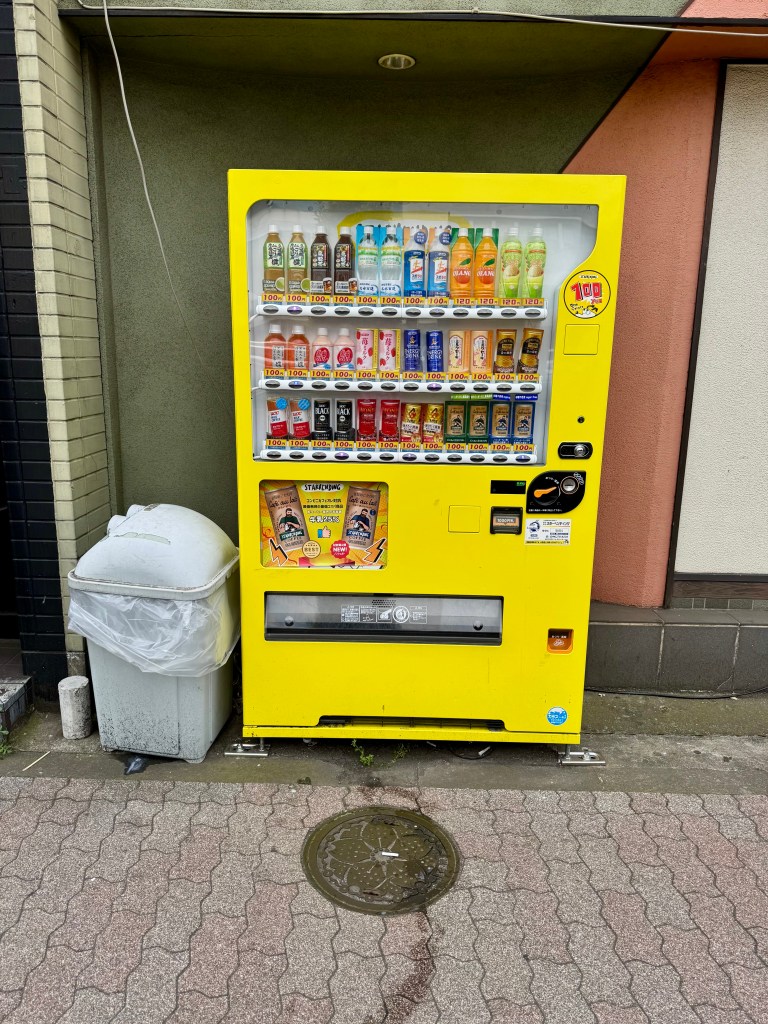
Fun fact – Japan has the highest density of vending machines per capita – with a whopping 5 million dotting the landscape. That’s roughly one vending machine for every 23 people! Apparently you can find vending machines that sell everything from umbrellas to live lobsters but the ones I saw today were mainly slinging drinks. 

I spied a few cherry trees in full bloom though I couldn’t access them directly. I’m sure there will be many more pics of those to come. 

Before heading back to the hotel, I decided to check out the 7-11 across from the way to see if they had any of the famous fluffy egg salad or strawberry and cream sandwiches. Sadly, there were none to be found but I’ll surely be trying those one of these days as well and will report back!

I thought I’d chill and then go grab a bite afterwards but I didn’t resurface until midnight so grabbed another protein bar. Tomorrow is another day. Better food and adventures await…

Puttering Around Porto

April 25, 2024 

This morning I woke up without a plan or any schedule to keep – my favourite kind of day vacation or not. After a leisurely breakfast at the hotel, I retreated to my room to do a little research on what I could do on my last day as a tourist in Porto. 

Apparently the Bolhão Market is one of the most popular food markets in Porto, and no trip to the city is complete without a stop here so it goes on the list. I also wanted to do the cruise on the Douro and see a Fado show so they’re on the list too. Other than that and, of course, a glass of sangria at some point in a cafe, preferably with a view, I figured I’d just wander around and see whatever I saw. 

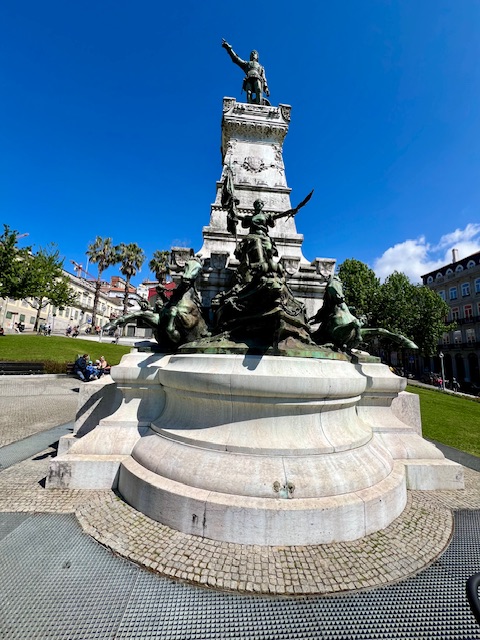
On my way to the market, I passed a park with an interesting statue of Prince Henry the navigator, in battle dress, beside a globe and, symbolically, pointing overseas.  The statue was inaugurated in 1900 to commemorate the 5th centenary of Prince Henry’s birth, the main figure of the Portuguese Discoveries.

Monument to Henry the Navigator
Monument to Henry the Navigator with Bolsa Palace in the background

The park sits across from the Bolsa Palace (stock exchange) and I contemplated a tour but decided to head to the market located behind the Sao Bento Train Station instead. 

Approaching the old city from the east is a lot more sensible as the hills aren’t as steep so the going isn’t too bad. Sadly while checking my directions, I was advised that the market was closed for the National holiday. Doh! One thing off my list lol!

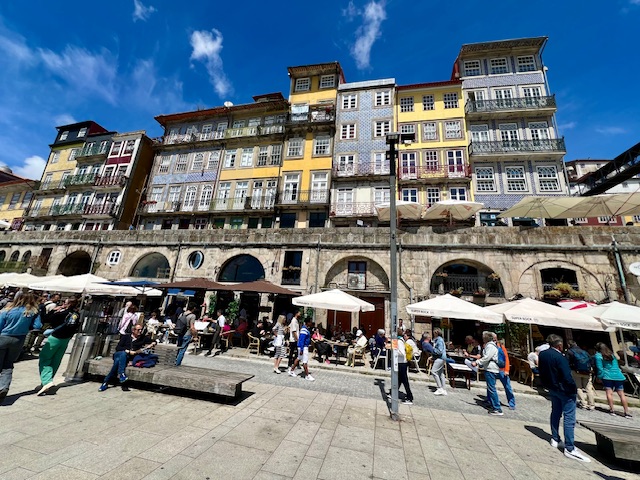
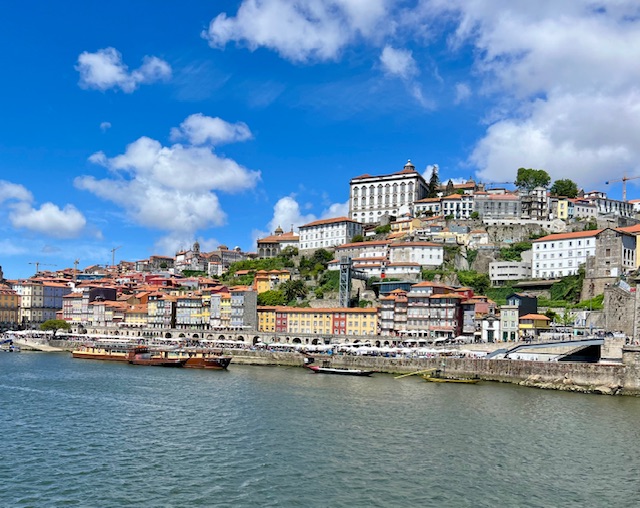
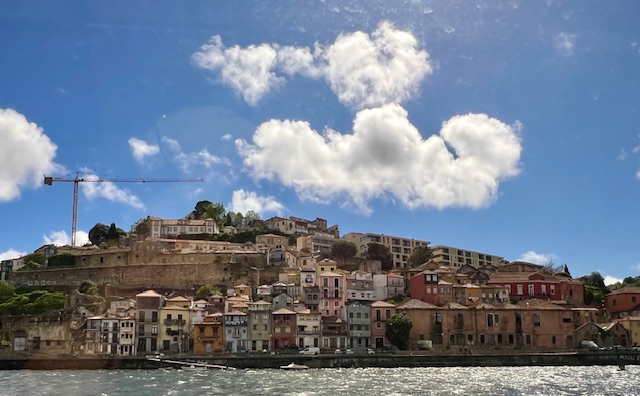
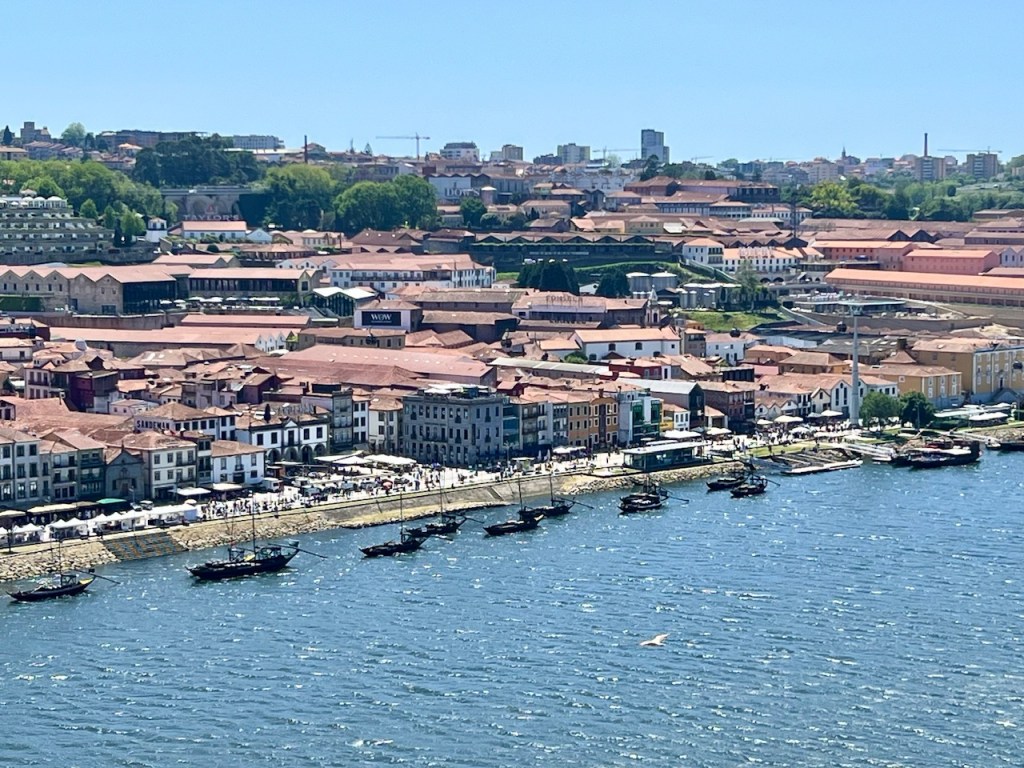
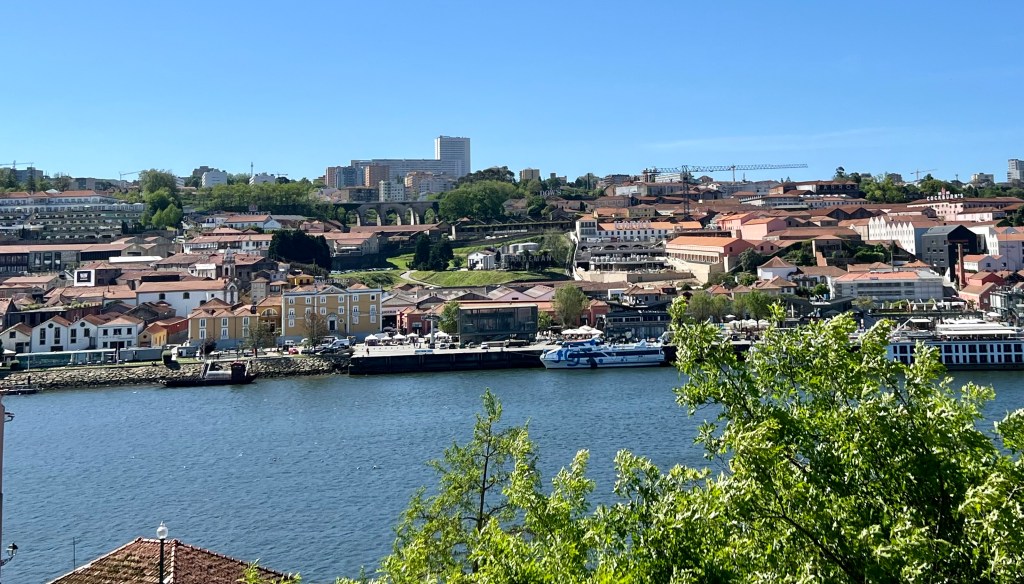
Undaunted, I spent some time wandering around the Sao Bento area and then the river walks on both the Porto and Gaia sides. There were lots of market stalls selling Portuguese souvenirs many made of cork so I did lots of “window shopping” but no buying. I just don’t need anymore stuff!

There were lots of singers on both sides of the river and the weather was pretty good so it was enjoyable just to wander. Bonus was I logged lots of steps! 

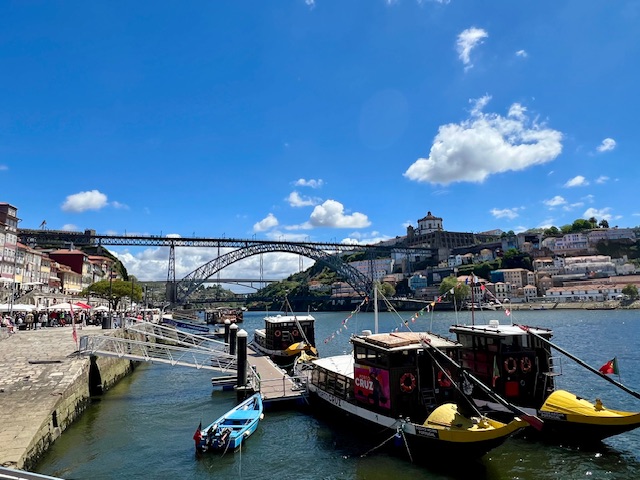
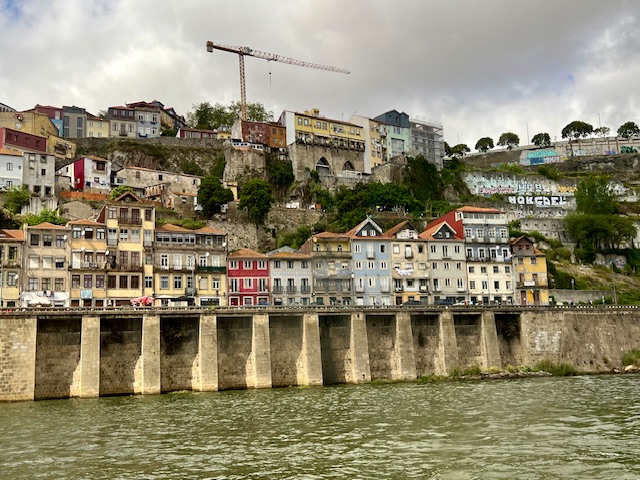
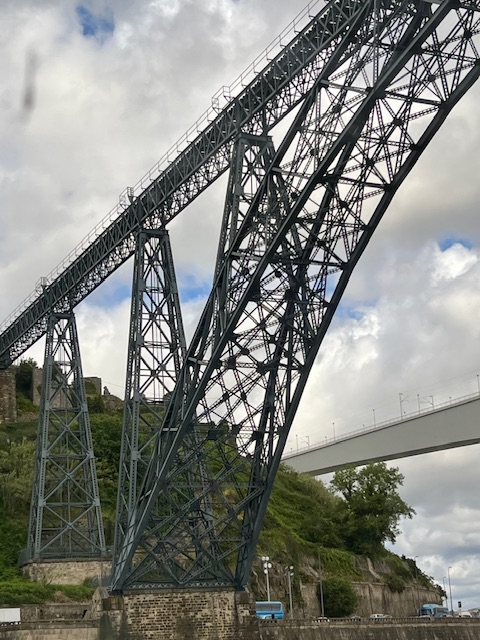
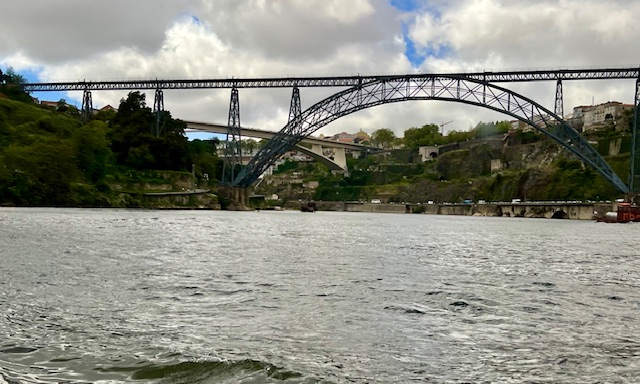
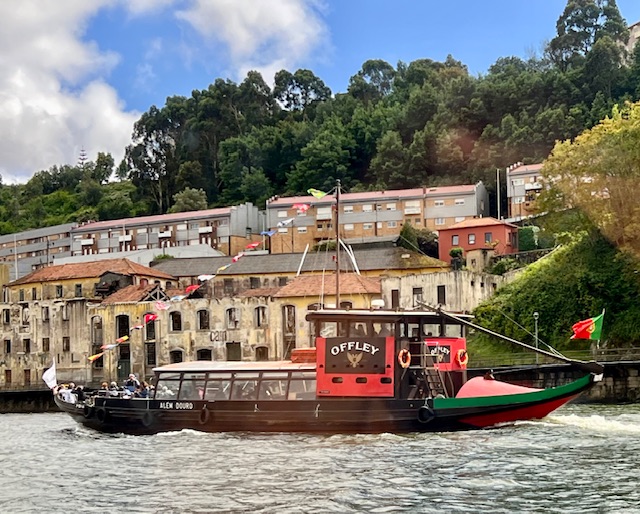
Once I hit about 10,000, I rewarded myself with that daily dose of Vitamin C before finding the ticket seller for my six bridges river cruise. I met Kat in the line to board the boat – a lovely Scottish expat who sold her home in Sterling and is currently living in the Algarve. It was getting pretty chilly by late afternoon so we hung out inside the cabin and watched the bridges go by. Not sure this is a must do activity but we spent a lovely hour chatting and checking out the views. 

Even though we’d sat inside, I wasn’t dressed for the chillier weather and as it was almost tea time, I headed back to the hotel for a hot shower and changed into nicer garb for the Fado show that Luis the hotel desk clerk had booked for me. 

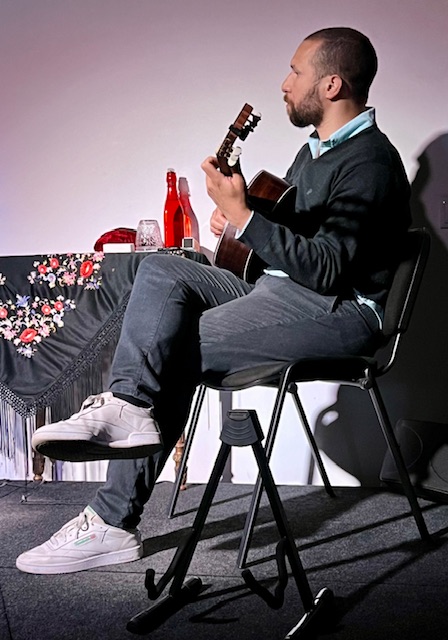
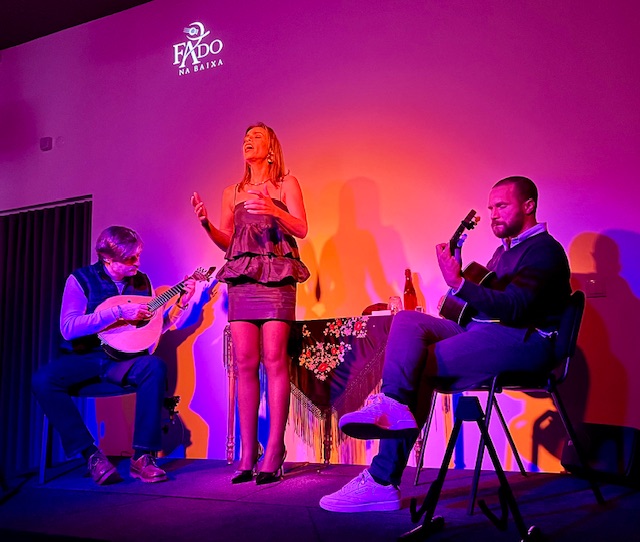
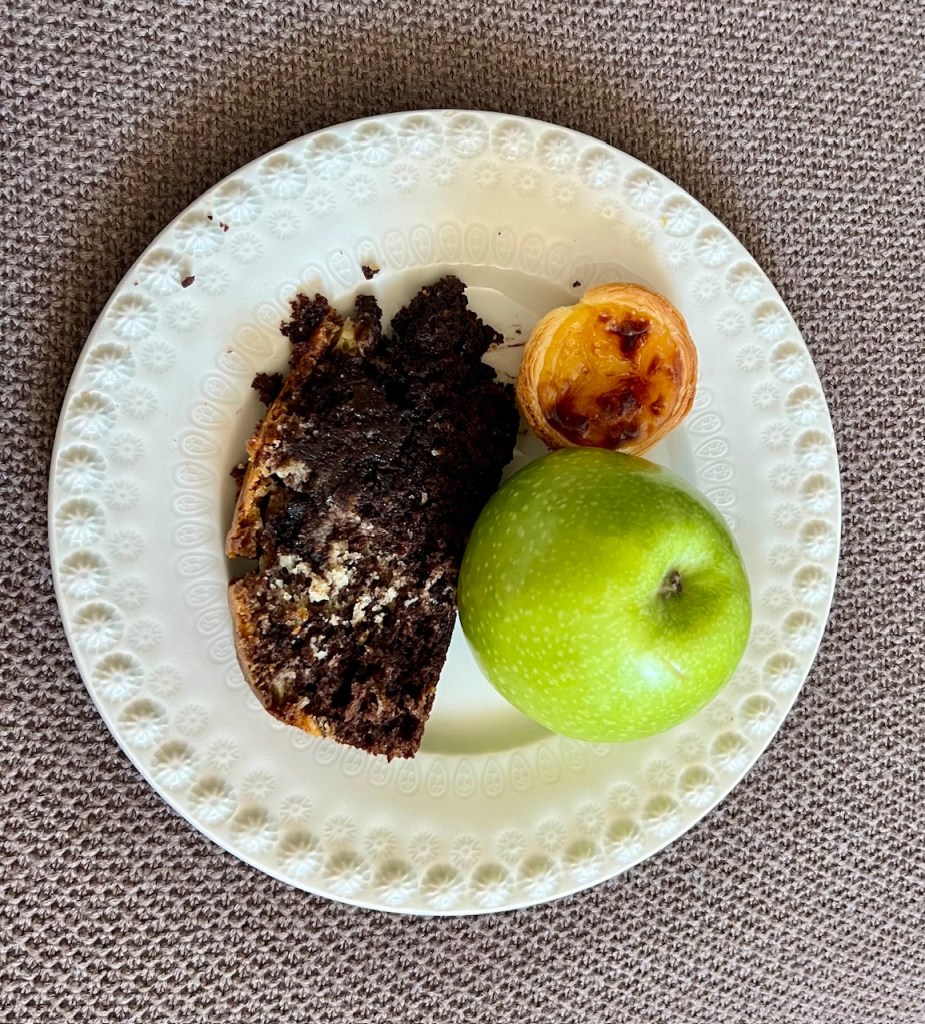
Fortified with a piece of lovely apple spice cake, I climbed the hill one last time up to Fado Na Baixa. Their multimedia show included a video discussing the roots of Fado and its evolution. It was a fabulous show and the singers and guitarists were superb. As a nice touch we all were given a nice glass of Port wine to savour during the show.

Here’s some of the skinny on Fado; your learning moment today, lol!

Although the origins are difficult to trace, today fado is commonly regarded as simply a form of song which can be about anything, but must follow a certain traditional structure. In popular belief, fado is a form of music characterized by mournful tunes and lyrics, often about the sea or the life of the poor, and infused with a sense of resignation, fate and melancholy.

Fado is usually accompanied by Portuguese guitar; a descendent of the cittern with six sets of two strings. Coimbra university students modified the guitar making it more pear shaped and the Lisboa and Coimbra guitars provide quite different sounds. The Lisboa guitar is rounder in shape with a shorter range and higher tone.  The Coimbra guitar is more pear shaped with a broader range and lower tone. The show included amazing guitar solos as well as the two fado singers. 

Song of Coimbra aka fado of Coimbra is characterized by male singers who are serenading their lovers.  The black cape of the university students them from the chilly evening air. Capes have a rip or tear for all significant friendships or loves at university. Some must be quite tattered looking. Each year the students also write at least one fado song to bid adieu to Coimbra and university life. 

The hour long show whizzed by and while it’s not late I’m still adjusting to the time here and I don’t feel like a big dinner so I headed back to the hotel to report back to Luis on my Fado experience.

Tomorrow I’m hopping the train to Lisbon. More adventures await …

Day Drinking in the Douro 

April 24, 2024

Today I’m joining a small group tour to the nearby Douro Valley. The tour promised spectacular scenery along the magnificent Douro River, visits to three vineyards with wine tastings of several Ports and other Douro wines, a delicious lunch and the chance to learn more about the UNESCO World Heritage Douro Valley.  It was all that and more!

Our guide and driver, Andre, picked me up at my hotel and then we went to meet the others; a couple from England, a couple from Toronto and a couple from Long Island. I had the shotgun seat for what was (for some) a wild ride through the countryside with beautiful scenery the norm and Andre providing the necessary blah blah to keep us all entertained for an hour.

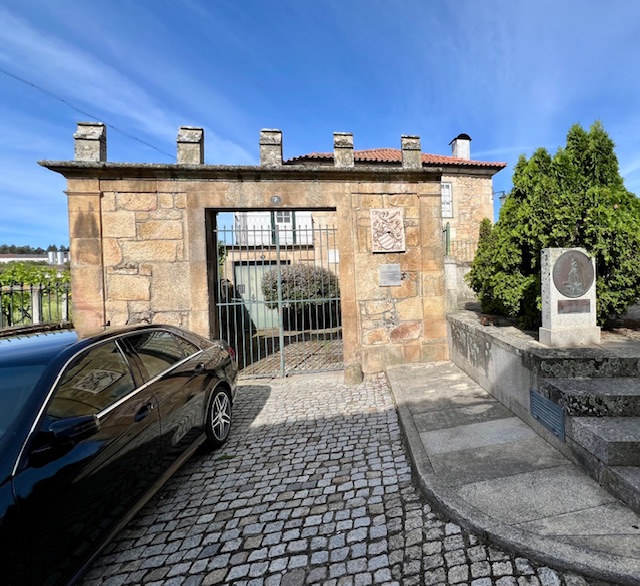
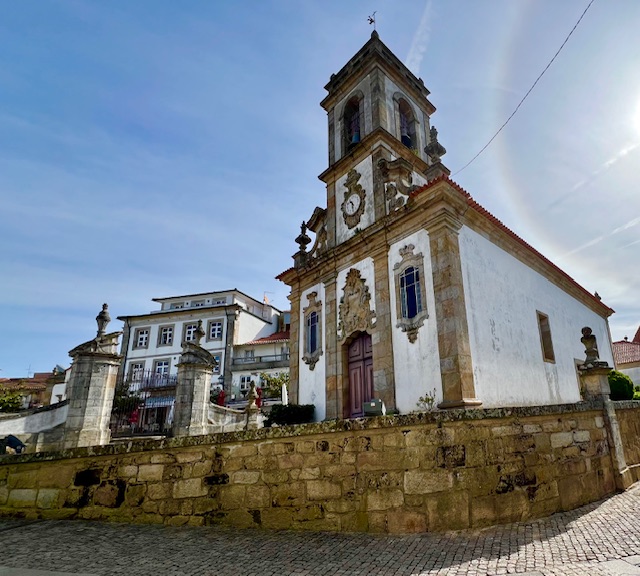
The first stop on our tour was Sabrosa, a quaint little town that is home not only to our first wine stop but also where the house owned by Ferdinand Magellan; the first man to circumnavigate of the globe is located. 

Magellan’s House
Small church

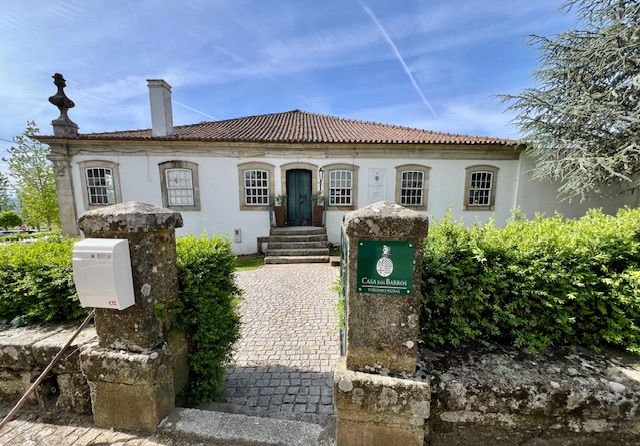
After a quick photo stop, we walked over to the winery (Casa dos Barros) which was located quite nearby to get started on the drinking. As our guide at that winery said, you can’t drink all day if you don’t start in the morning, lol!!

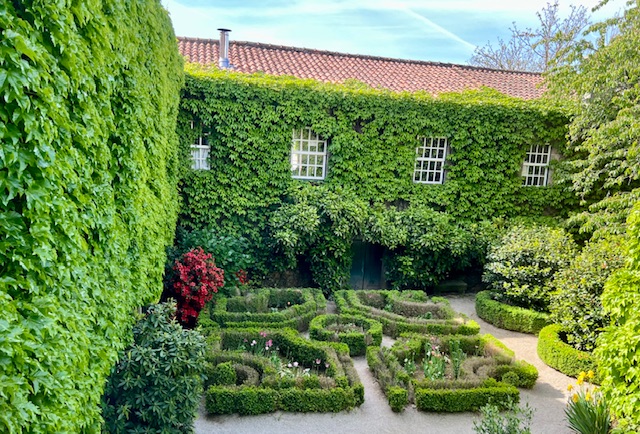
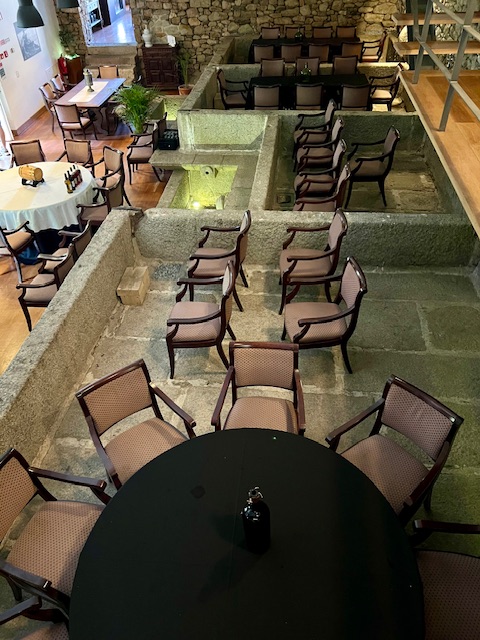
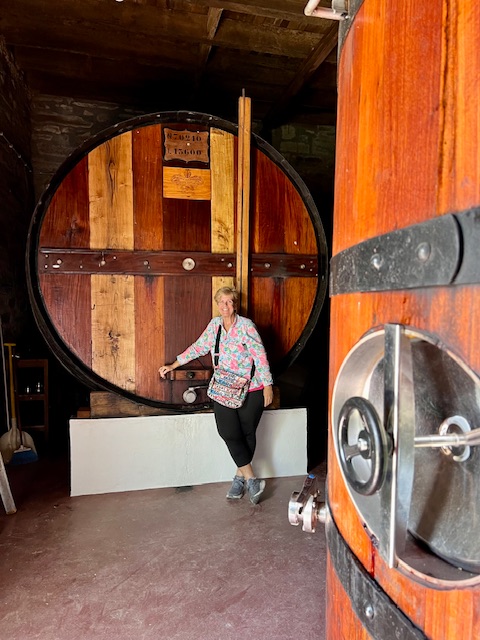
The house was quite fabulous with lots of interesting bits inside though we didn’t stop to have a good look around inside. We did check out the basement where wine was made back in the day   Before taking a few minutes to explore the garden and meet the local peahen and peacock who were more than willing to pose for photos before we got distracted by the wine. 

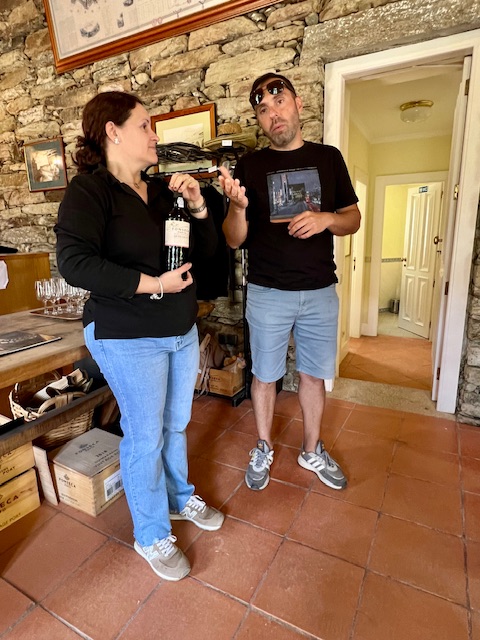
Rita was very enthusiastic in both her discussions of the business of making Port wine and the tasting notes for the 10, 20 and 30 year old tawny wines we had a chance to savour. 

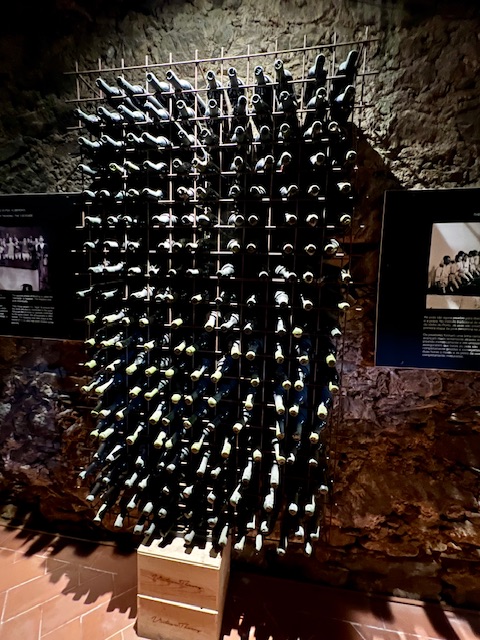
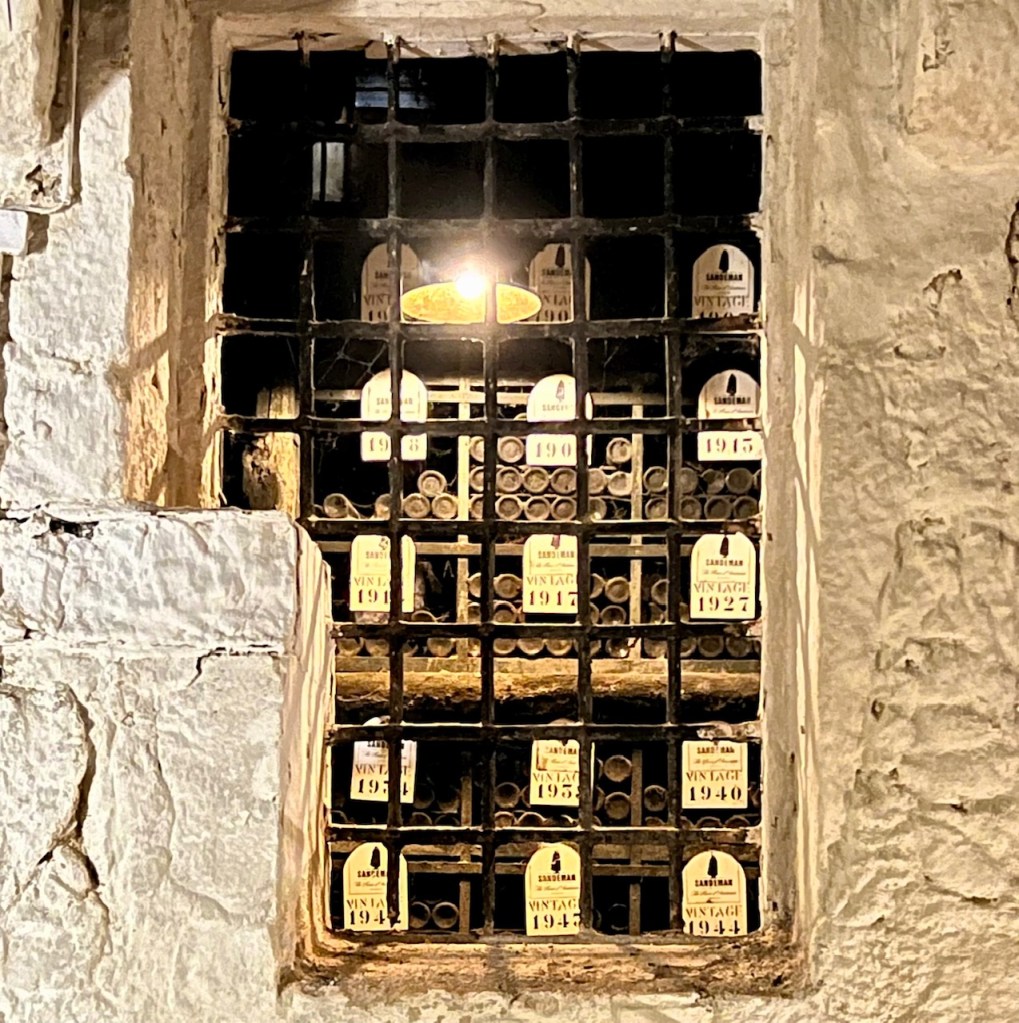
Vintage years for Port

In case you’re interested, Port wines are produced by the following method:

Freshly picked grapes arrive at the winery. After being inspected for damage on sorting table and any less than perfect grapes discarded, the bunches are conveyed to a crusher which breaks open the skins of the grapes. The grapes are then fed into a wide, not too deep granite tank known as a “lagar”.

Next the grapes are thoroughly crushed to release the juice and the pulp from the skins. In the tradicional method of making Port, this was done by foot treading. The first stage is known as the “corte” or cut. The treaders form a tight line and advance very slowly across the “lagar”, treading in unison. After two to four hours, this very intensive but gentle treading reduces the grape to a thick soupy liquid, in which the skins and juice of the grapes are completely mixed.  

The second phase of treading is called the “liberdade” or freedom. The treaders now work individually. They move around the “lagar to ensure that the skins are evenly distributed in the juice. Although the process is carefully controlled by the wine maker, the atmosphere is often festive. The treading may take place to the sound of music and may even involve some dancing. This is what Andre called the fun part. 

After a few hours, the fermentation starts. This is the process in which yeasts transform the natural sugar of the grapes into alcohol. The warmth and alcohol produced by fermentation cause the grape skins to release their aromas, as well the natural pigments and tannins which give the wine is colour and its structure. At this stage the skins gradually rise to the surface forming a thick cap which is kept submerged using wooden plungers called “macacos”.

Alter three days, half of the natural grape sugar has been turned into alcohol by the fermentation. It is now time to fortify. The wine maker gives instructions for all work in the lagar to cease. The skins are allowed to rise to the surface, where they form a dense layer on the top of the fermenting wine.

The fermenting wine, still containing much of the natural sweetness of the grape, is run out of the lagar into a large tub. Here it is mixed with a very high quality grape spirit. The proportions are roughly one part spirit to four parts fermenting wine. The addition of this clean, colorless spirit stops the fermentation before the natural grape sugar remaining in the wine has been turned into alcohol. The addition of the grape spirit is known as fortification.

Today workers involved in the grape harvest earn approximately 40 euros a day. As temperatures at harvest are often reached 45C, the harvest starts at 5 am and typically finishes by noon to avoid some of the heat. The grapes are harvested by hand in 45 kg baskets and they are “stomped” right away.

After learning the difficulties in producing Port, it was time to taste some tawny port.  We had a vertical tasting of Tawny Ports which had been aged for 10, 20 and 30 years while Rita also gave us some talking points on Port that I’m happy to share, lol!

Ruby ports are bottled after 3-4 years complete with sediment which means that the wine will continue to age in the hands of the purchaser. Need to keep under good, consistent conditions to have it age well. Should wait twenty years or so to drink. No use me buying that as I’ll be older than dirt in 20 years!

Tawnies are aged by the vintner in smaller barrels and the sediment is removed before bottling so it doesn’t change and is ready to drink right away. 

They did have a lovely bottle of 1858 vintage port which had been kept in the barrel for 165 years and bottled in 2013. Yours for the asking price only 8500€. 

1858!!

Now that we’re primed it’s time for an early lunch. Salad, carrot soup, grilled port tenderloin with mushroom risotto and chocolate cake washed down with copious quantities of red and white table wine hit the spot and will be useful to soak up the tastings at our next stops. 

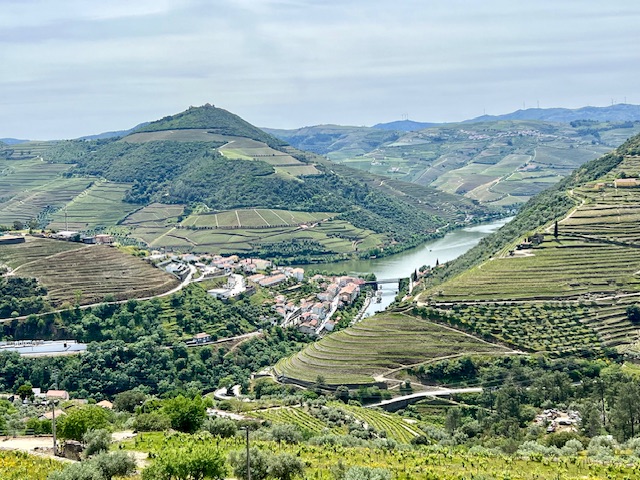
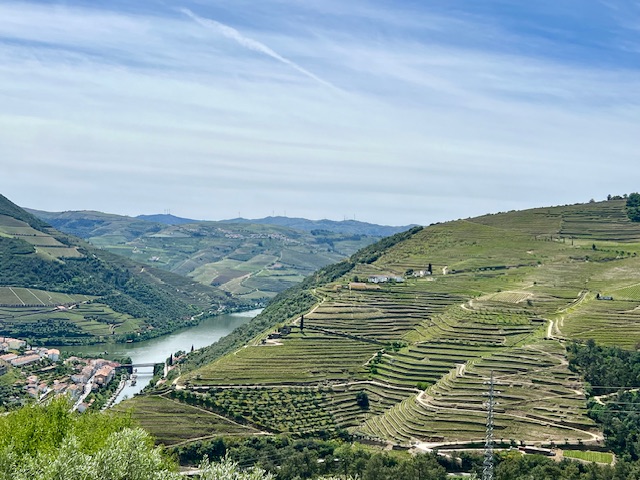
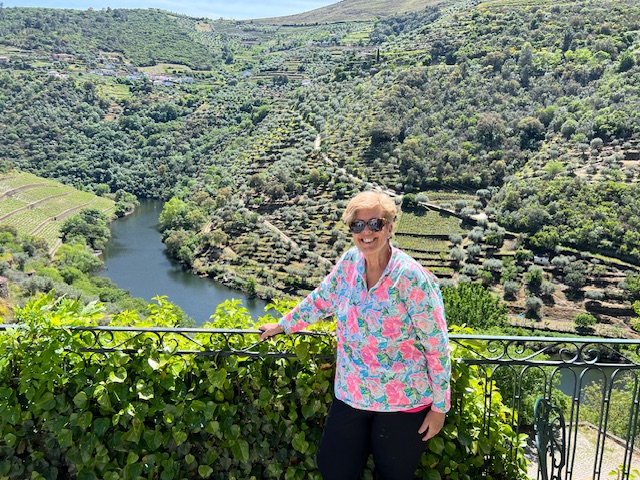
On the way to our next winery, we paused to snap some pics at the lookout at S. Cristóvão do Douro. 

A view over the mouth of the River Pinhão, an important quay on the River Douro which established the limit of the demarcation for the production of Port wine in the time of the Marquis of Pombal (18th century).

Here, the terraces (socalcos), built after the destruction by phylloxera in the Quintas of Eira Velha, Casa Nova and Gaviões, are interesting for the quality of the construction of the retaining walls. The terraces they sustain suggest interesting mosaic underlined by the layout of the paths and the tree borders.

There was a cool bar across the road which sadly wasn’t open. 

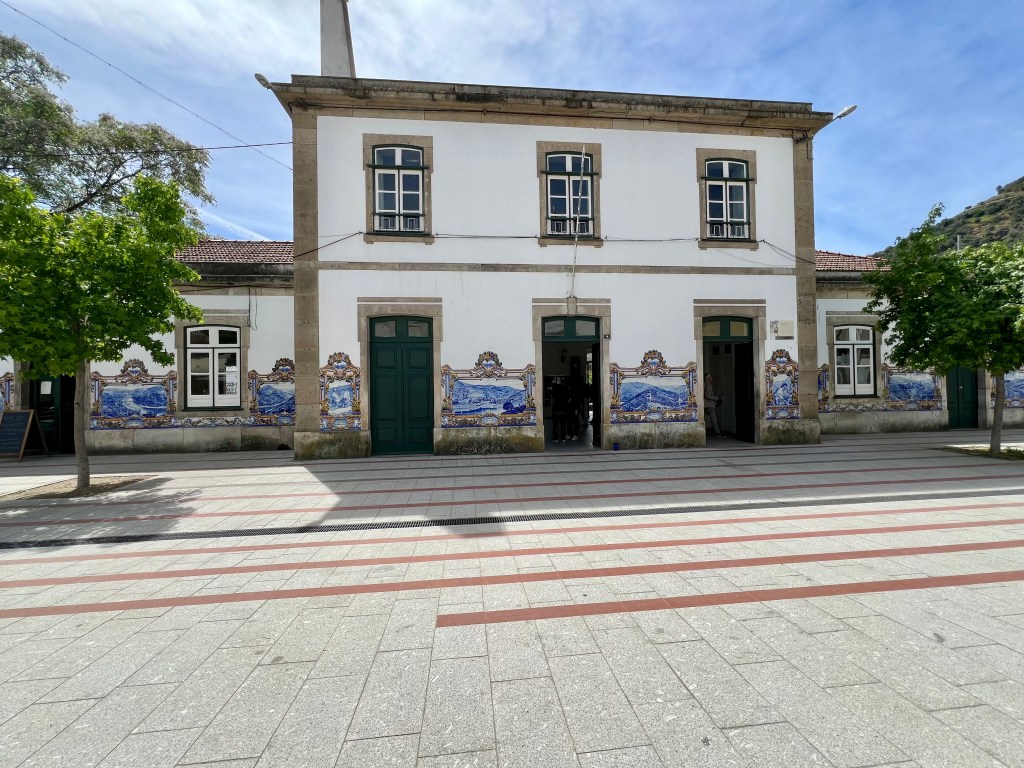
Continuing along, we pass the beautiful Pinhão train station which is decorated with 25 azulejo panels that portray work in the vineyards and local landscapes.

Pinhão Train Station

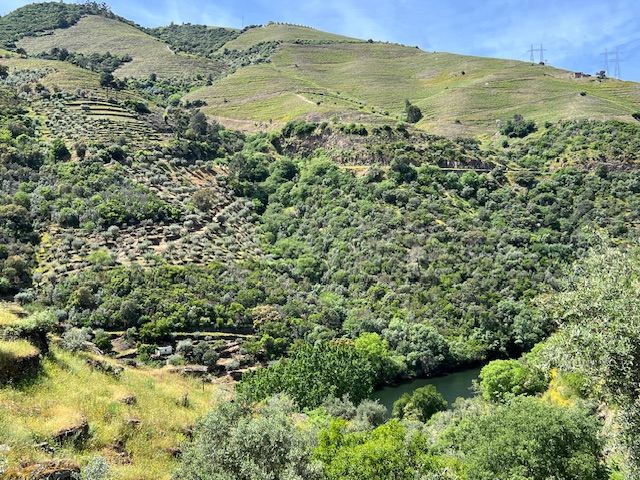
Leaving Pinhão , we join the National 22 highway one of most beautiful drives in the world. 21.4 km long, running east-west from Pinhão to Peso de Regua, the N222 cuts right through the heart of the Douro Valley, offering amazing views of the terraced hillsides and featuring 93 heart-stopping bends. The road was named the world’s best in 2015 and the scenery is indeed spectacular.

Our next winery is Fonseca and here we are treated to a tasting of white port, ruby port and 10 year old tawny port. Our host wasn’t nearly as effusive as Rita but it was a beautiful spot to enjoy the views on a sunny day. We did, of course, learn a few things about Port.  

View from Fonseca

White should be stored and served cold and should be consumed within two months of opening. Makes a good aperitif.  

Ruby should be stored and served at room temperature and should be consumed within three months of opening. Best with cheese. 

Tawny should be stored and served at room temperature and should be consumed within six months of opening. Best served with dessert. 

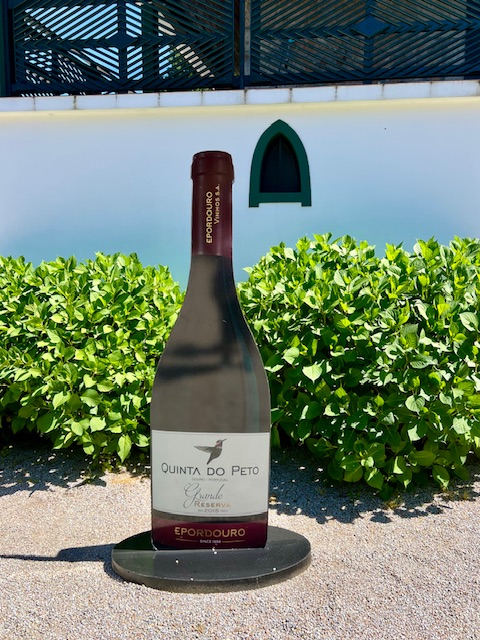
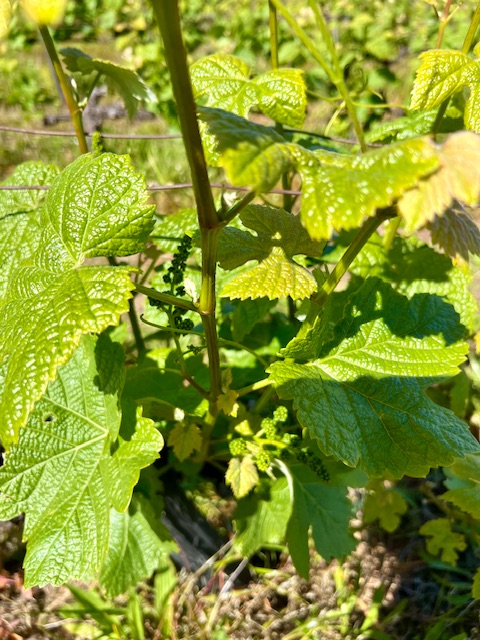
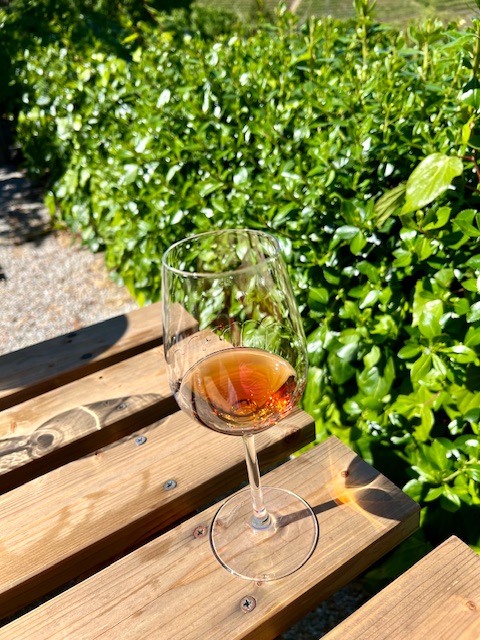
Our last winery is another small family run vineyard. Our hosts Jessica and Leandro are lovely and give us lots of information about the wines, olive oil and rosemary honey we are tasting. We even had a chance to see the grapes up close. Interestingly the posts holding the vines are not wood but sheep stone which holds to the heat from the day and help keep the soil a consistent temperature at night. I actually like the white port here. It had been aged for ten years so was actually brown and sweet. The Ruby Port was also very nice but my favourite was the 2017 late bottled vintage (LBV) so I bought a bottle to add to my collection at home. 

Baby grapes
Sheep stone posts
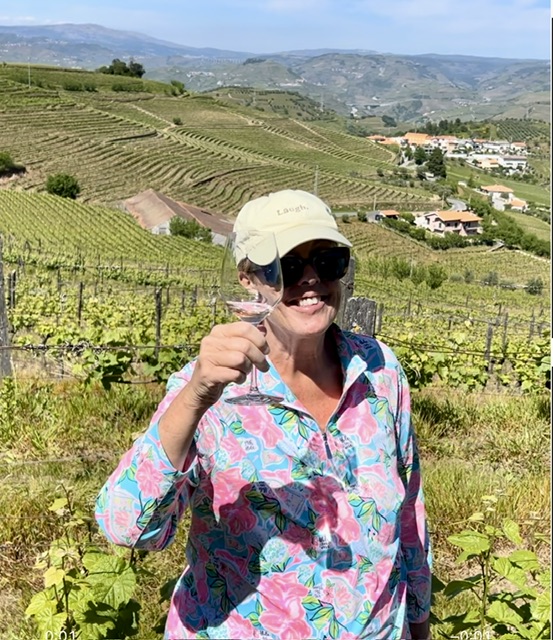
Cheers
This is the 10 year old white port
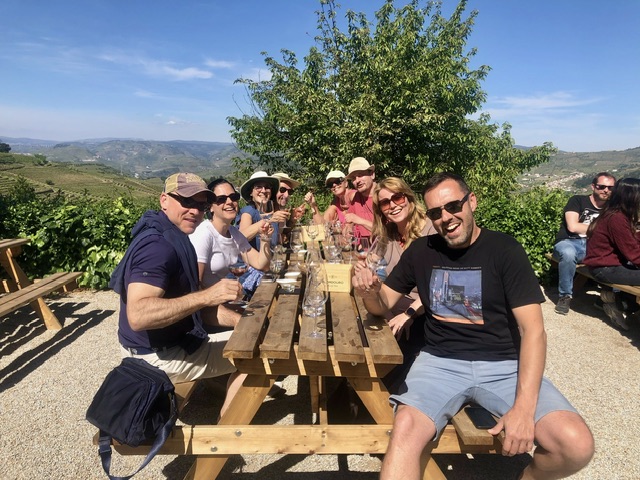
Tout Le Gang!

After a lovely day is was time for us to head back to Porto so we bid adieu to the beautiful Douro Valley and headed out on our ninety minute drive home which lulled most of us to sleep though thankfully not Andre as he was the DD.

Back to the hotel in time to snag the last piece of cake from the afternoon tea and head to my room to relax. Can’t see dinner happening tonight …

Tomorrow is another day.  Adventures await …
Perusing Porto

April 23, 2024

This morning, I have a walking tour booked for 10:30 so there’s time to hurkle durkle a bit before trying out the hotel breakfast. There was plenty of fruit, pastries, meat,  eggs, etc so I fixed a plate to fuel up for the day. Soon enough it was time to trudge up the hill to the Largo Amor de Perdição to meet the tour guide. Pedro checks everyone in and does a roll call to see where we’re all from; US, UK, Ireland, Australia, South Africa, Australia, Canada and Brazil are all represented. 

After getting the adminstrivia completed, he starts the story telling which is my favourite part of the walking tours. The locals always have interesting stories to go along with the sites which they share with enthusiasm. 

The first is about Camilo Castelo Branco or the man with the naughty hand as Pedro calls him, lol! He and his lover were both jailed for 18 months for their adulterous affair. That’s where the similarities stop – Camilo being a man was housed on an upper floor in a private cell where the door was always unlocked. He brought his own furniture from home and could order food from local restaurants (Uber Eats anyone) while poor Anna was kept in a locked cell in the dingy basement surrounded by murderers. They stayed together when they were released and had two children but there was no happy ending for them as Camilo was a womanizer and eventually ended up with syphilis, went blind and committed suicide. 

The next story was about the April 25, 1974 revolution to overthrow the Portuguese dictator. It had a much happier ending because of a waitress at a local cafe in Lisbon and the bunch of red carnations she bought with only four people dying when the government was overthrown. Thursday is the 50th anniversary of the “Carnation Revolution” so there will be lots of special celebrations in Porto.

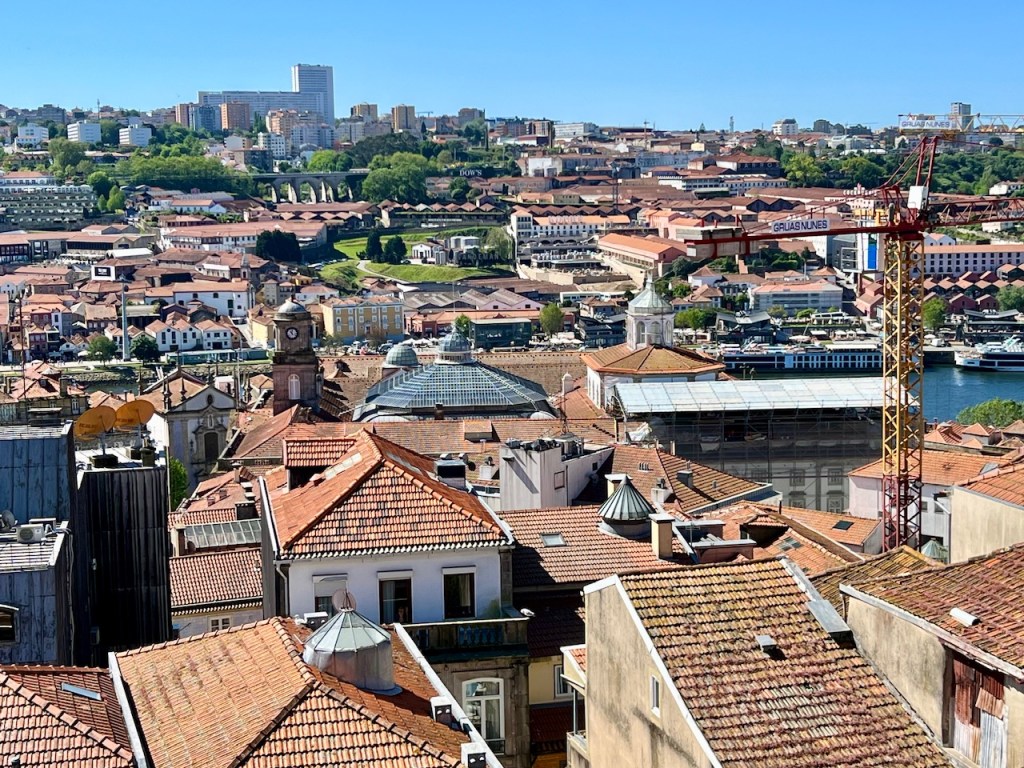
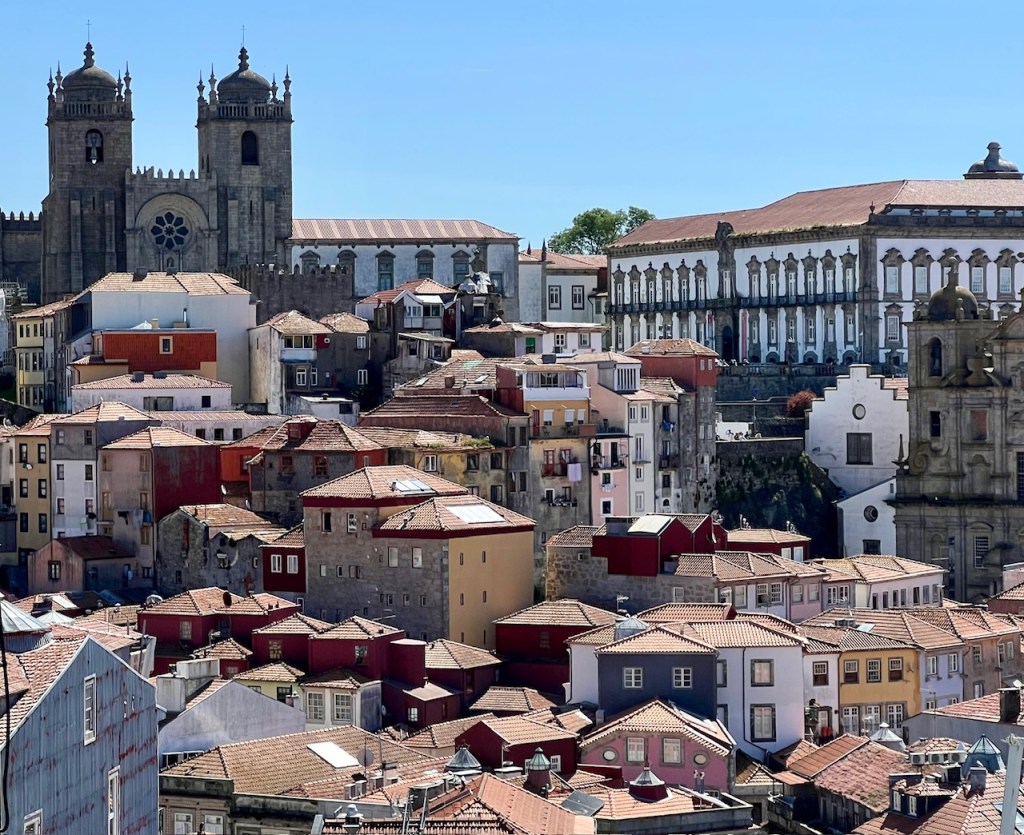
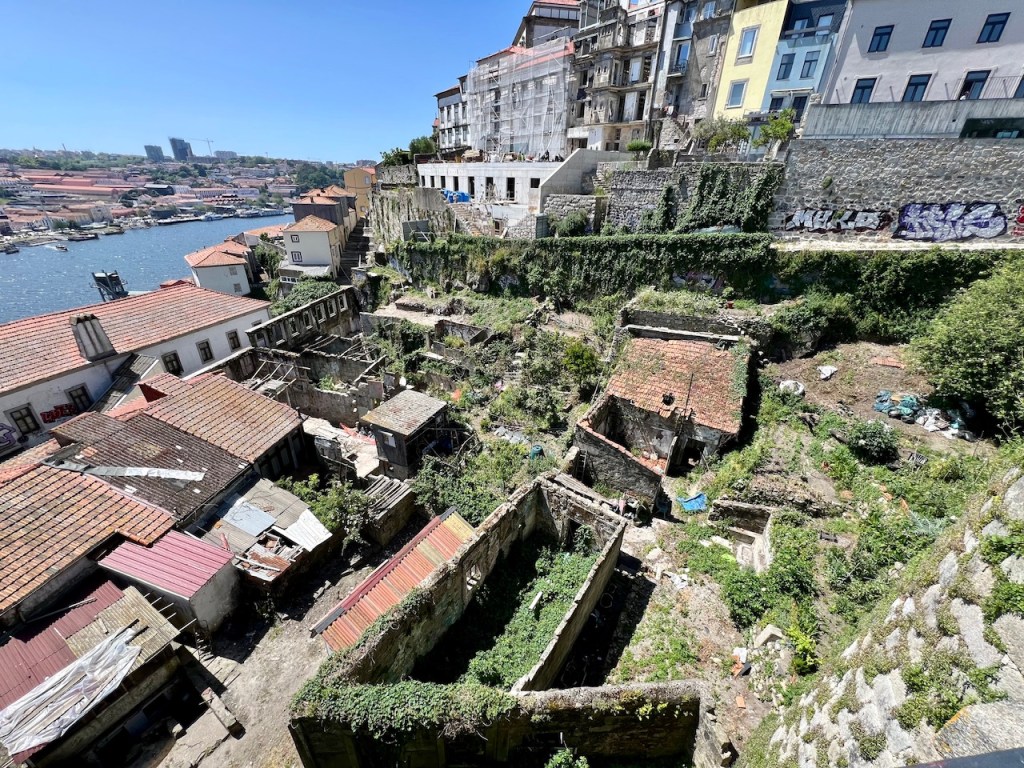
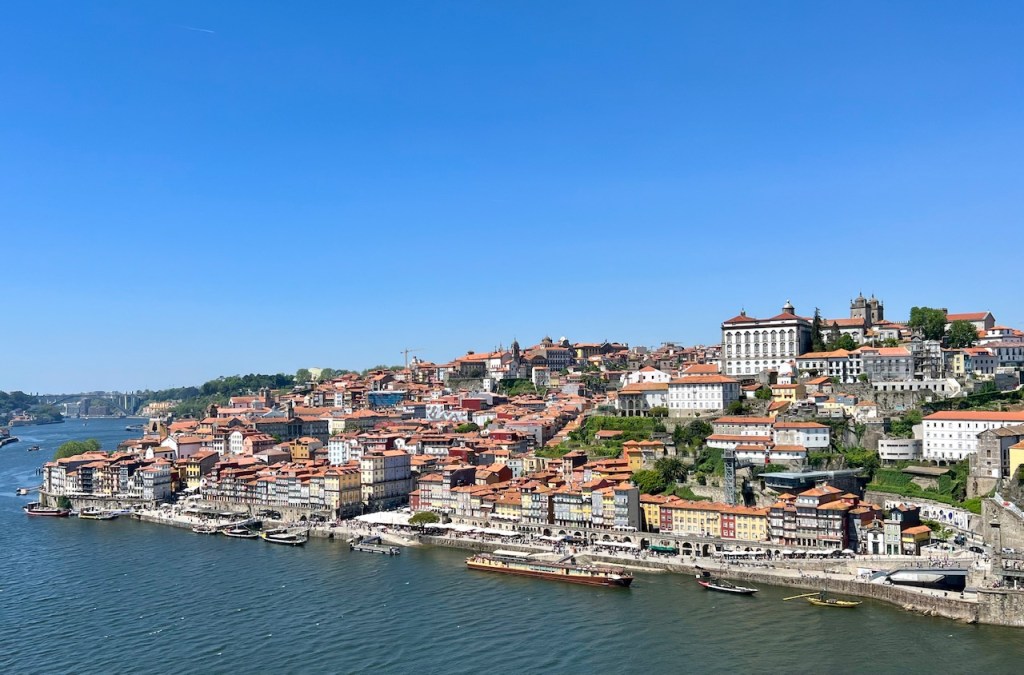
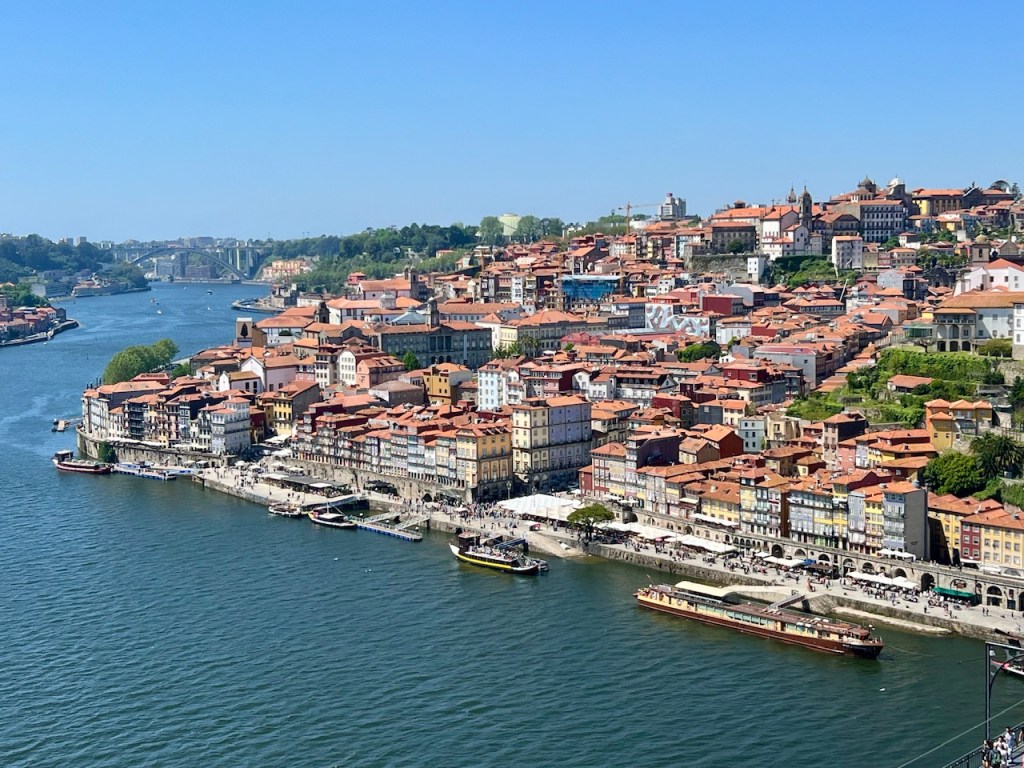
Our first stop is the Vitória view point (Miradouro da Vitória) to check out the stunning views. From here, you can take in some of the main sights of the city; the Dom Luis bridge, the Se and Bishop’s Palace looking over the patchwork of terracotta roofs in Riberia.  You can also see the River Douro over the rooftops. This area was once part of the city’s old Jewish quarter.

Many of these Jewish people immigrated to Portugal in 1492 when the Catholic king allowed Jews that had been expelled from Spain to come to Portugal. Four years later, after the marriage contract between the Portuguese King and the oldest daughter of Spain king was finalized, the Jews were given a choice to leave or convert to Catholicism. Those that stayed ended up with mainly tree names, Olivera etc. 

Aristides de Sousa Mendes do Amaral e Abranches was a Portuguese consul during World War II in the French city of Bordeaux. He defied the orders of the Portuguese government, issuing visas and passports to an undetermined number of refugees fleeing Nazi Germans, including Jews. When this was discovered (Pedro said he got away with it only for a week), he was fired from the foreign service though he continued to receive his full salary until he died in 1954. 

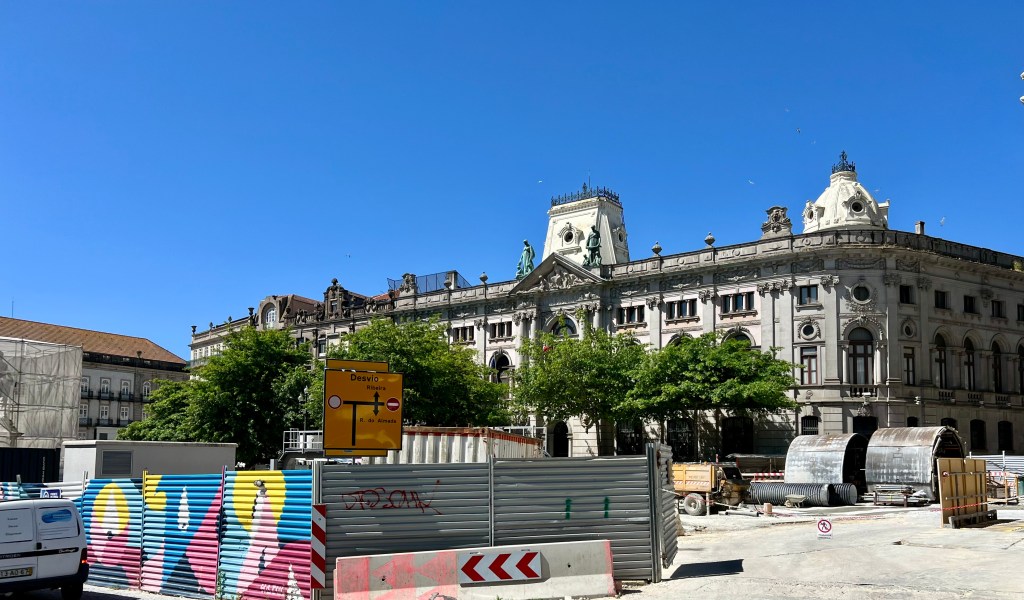
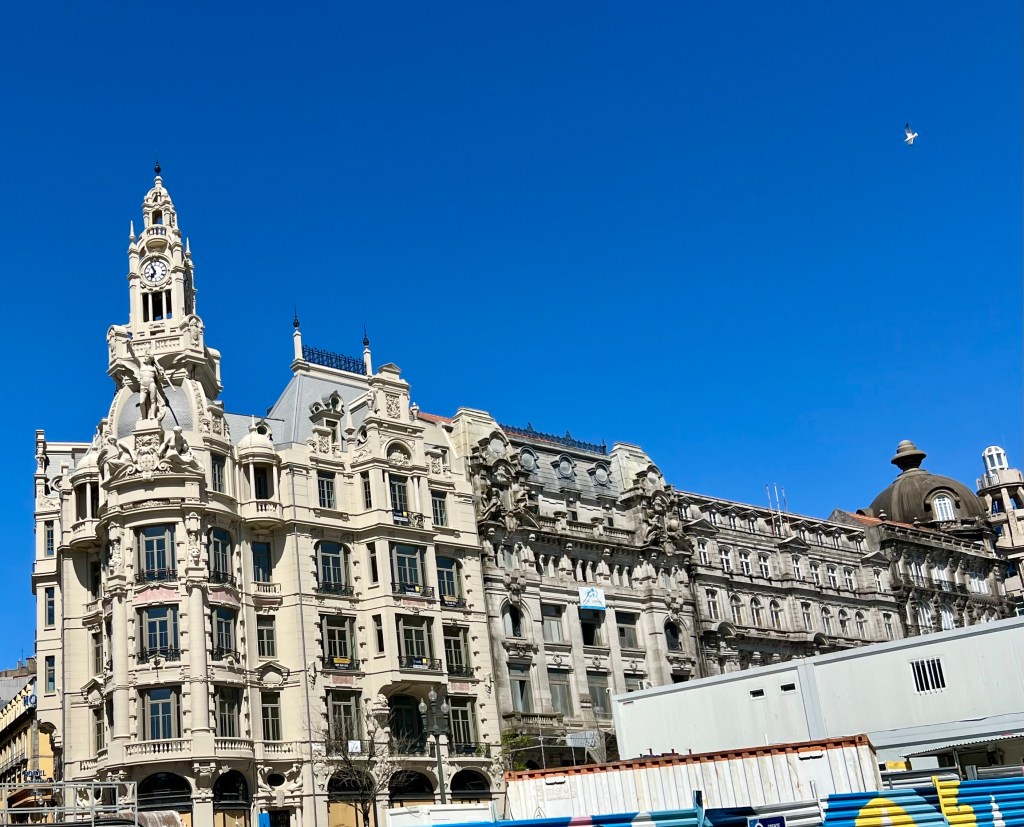
Next we went to look at some of the sites I visited yesterday; the Clérigos Tower, the Twin Churches – the Carmo and Carmelite churches and the Lello bookstore before heading to Avenida dos Aliados (Avenue of Allies). Apparently, it is usually quite beautiful but it is under construction at the moment to dig tunnels for their light rail system. Hopefully, it will not take as long as what is currently going on in Ottawa!

Snapped a few pics but they aren’t so beauteous with the scaffolding, etc. The Town Hall of Porto is situated at the top end of the Avenue where there is no construction.

Porto City Hll

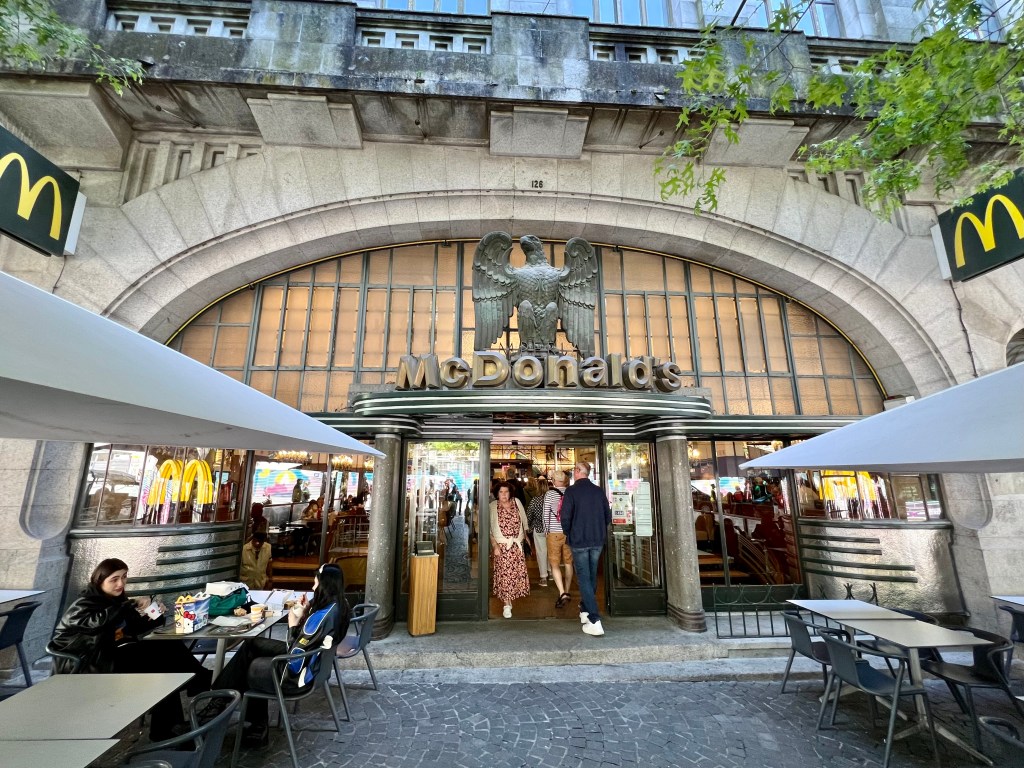
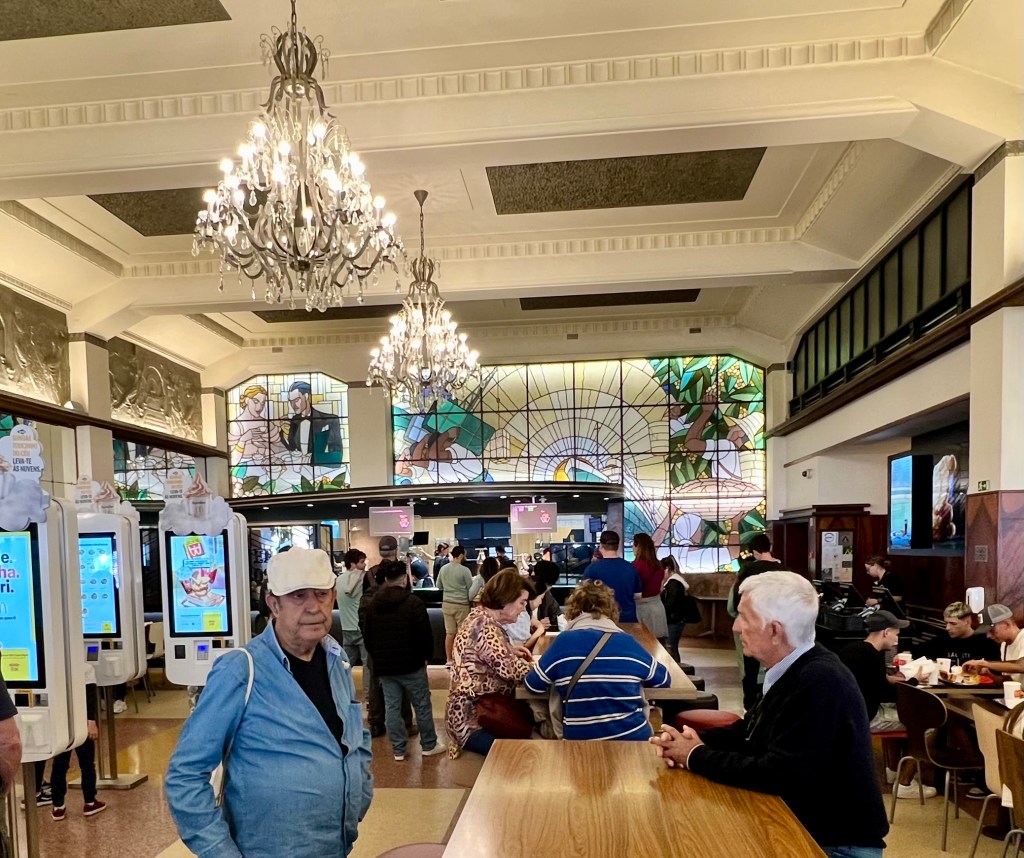
Also on the Avenue is the most beautiful McDonald’s restaurant in the world! Originally the Imperial Café, an emblematic historic building from the 30s, McDonald’s opened here in 1995 maintaining the iconic features even though the fare is more or less the same as McD’s everywhere. The name “Imperial” comes from the Eagle on the facade. Inside there is beautiful art deco stained glass and sparkling chandeliers. Nice digs indeed for a burger and fry joint. 

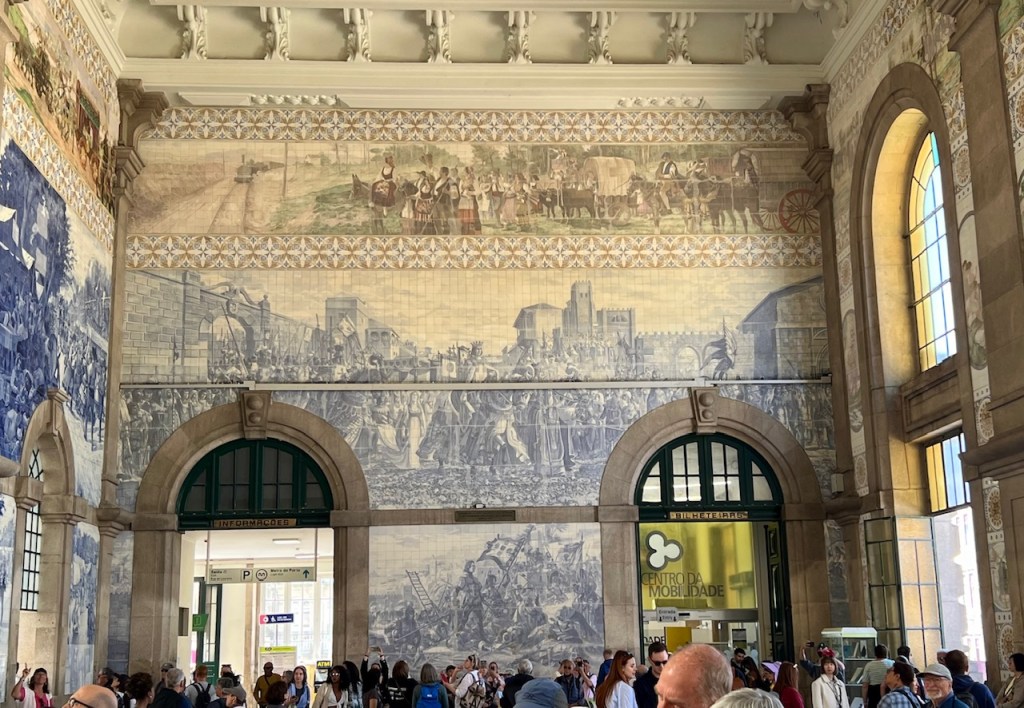
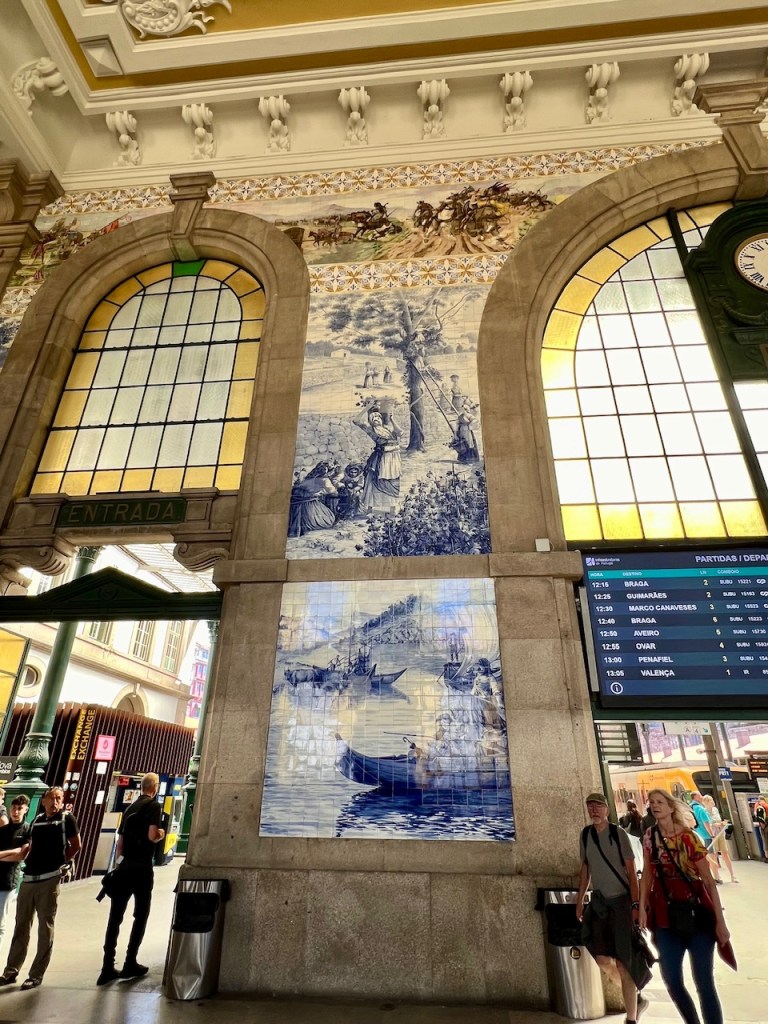
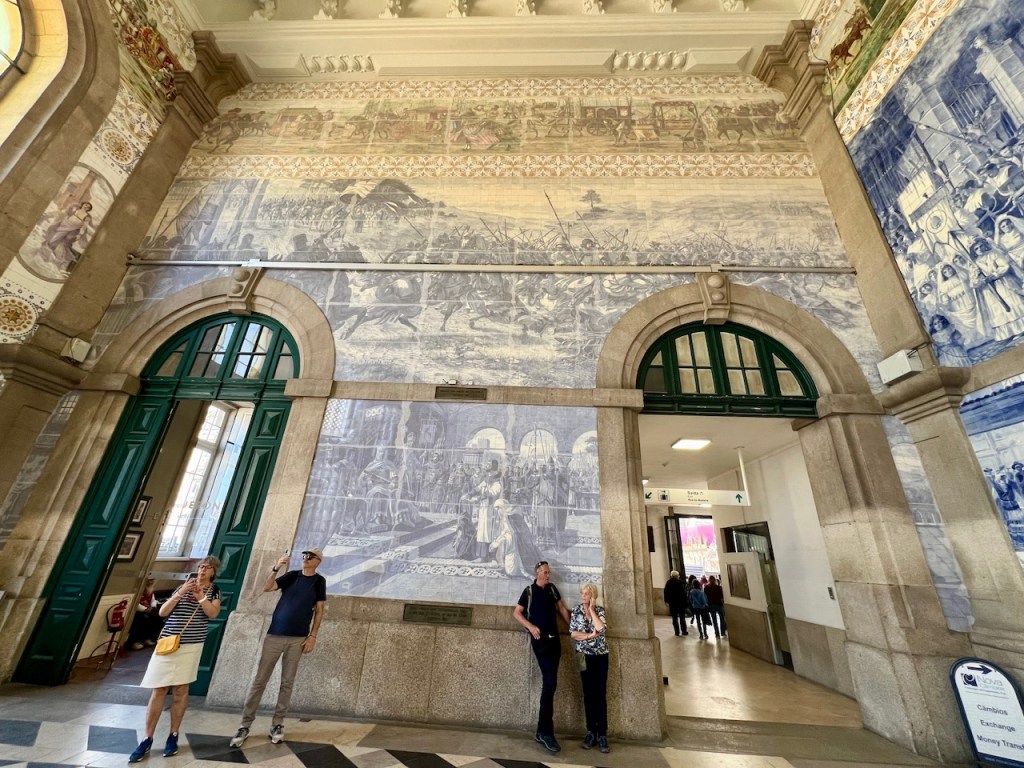
Our next stop is the São Bento Train Station with its 20,000 painted azulejos tiles depicting scenes of Portuguese history. The tiles are hand painted individually and then put together like a puzzle.

Time for another Pedro story … The train station stands on the site of the Benedictine Convent of São Bento da Avé Maria. The city wanted to demolish the convent and move the nuns to one of the many others in the city but the nuns weren’t having any of that. The complicated negotiations agreed that no more nuns could move in and they would wait until all the nuns living there died. Little did they know that one of the nuns would live for 36 more years dying in 1896 at the age of 98. By then the railway was finished but the convent still there. Eventually they demolished the convent though it took twenty years for the station to open

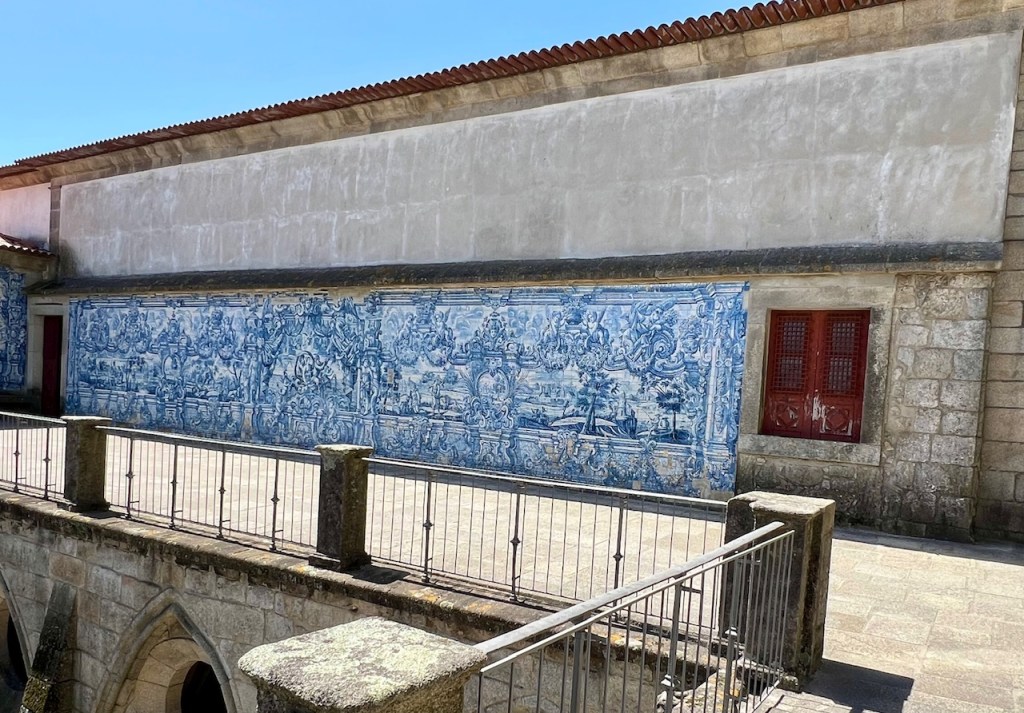
Every tile tells a story, and it’s not the usual religious illustrations. Since this isn’t a church, instead of religious scenes, the panels represent Portugal’s history and stories.

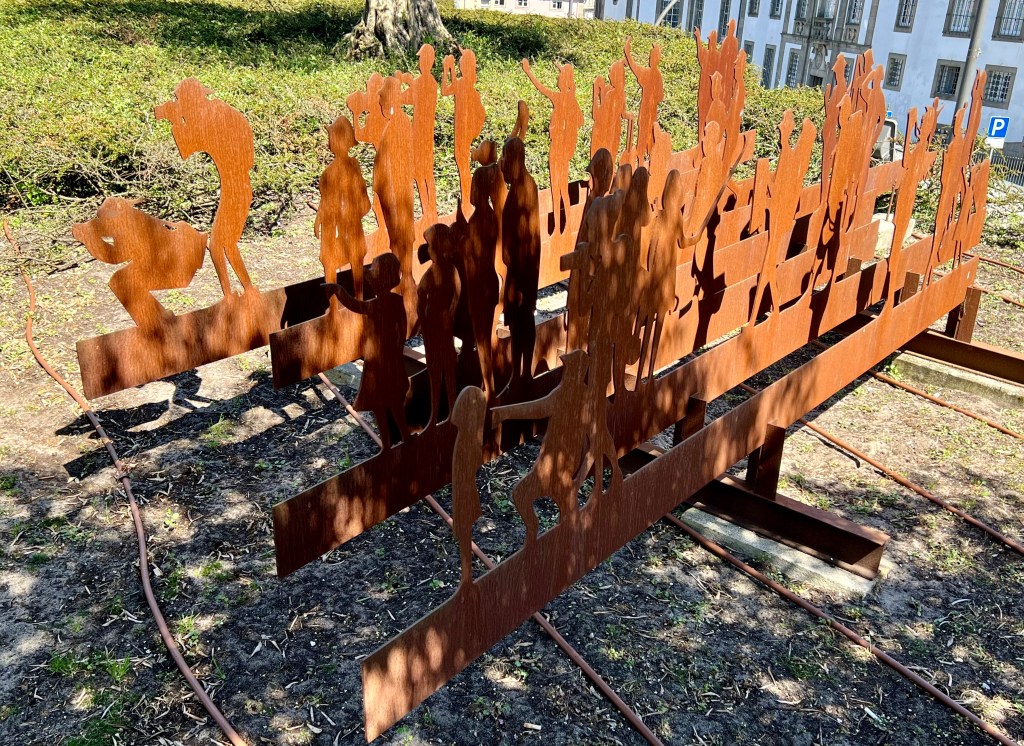
Using the tunnel for the Sao Bento metro station, we made our way to Porto’s 12th century Cathedral/Sé Catedral do Porto. In the station, was an installation celebrating the Flourishing of Freedom made up of approximately 700 solitaires made of ceramic and wood, by 10th grade students from the Soares dos Reis artistic school. They were designed to contain a red carnation, a symbol of revolution and freedom.

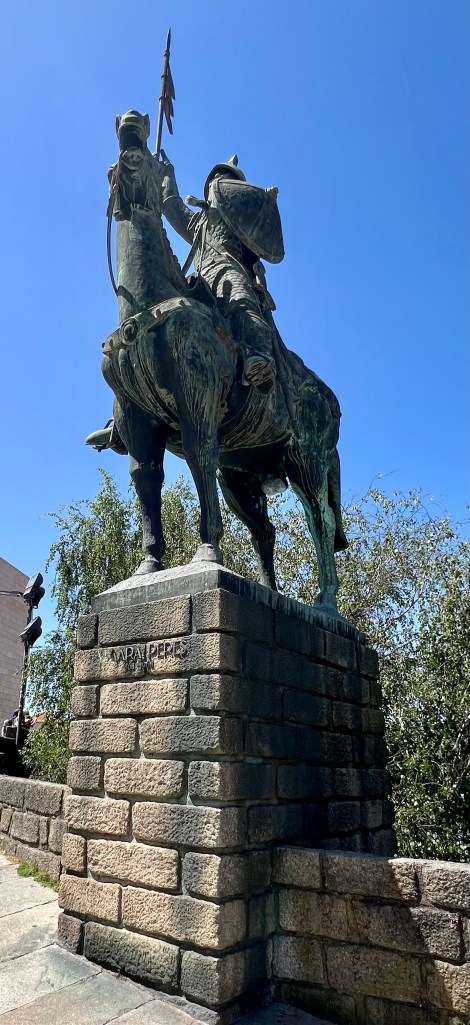
You can find a statue of Vimara Peres, the ninth-century nobleman from the Kingdom of Asturias who “founded Porto”, next to the Se Cathedral. In 868, Vimara Peres was named the Count of Portugal by King Alfonso III of Spain. 

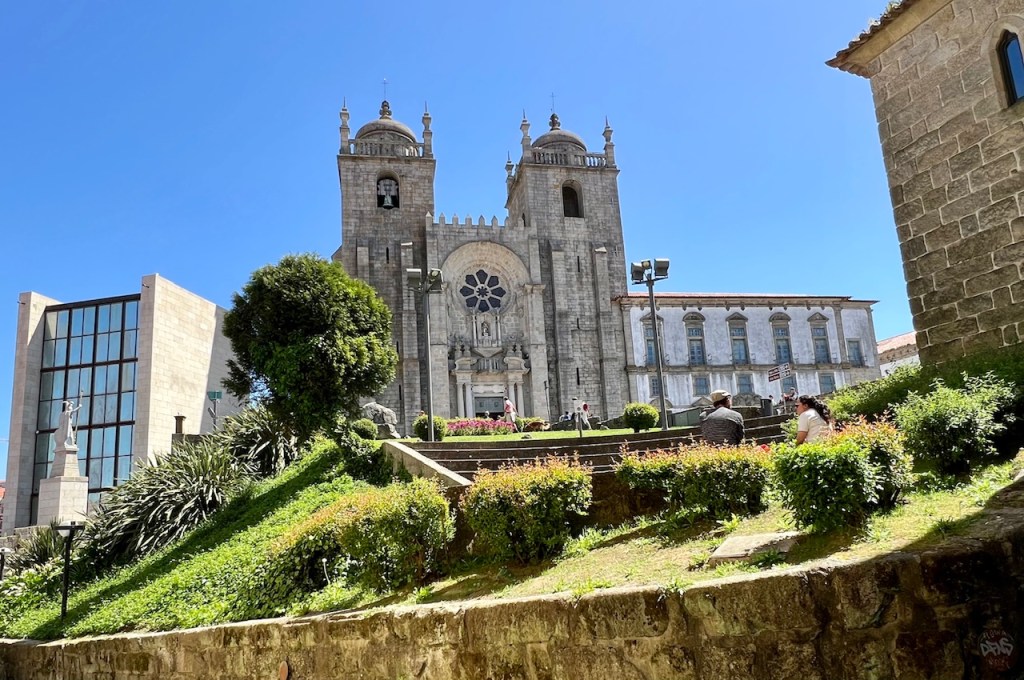
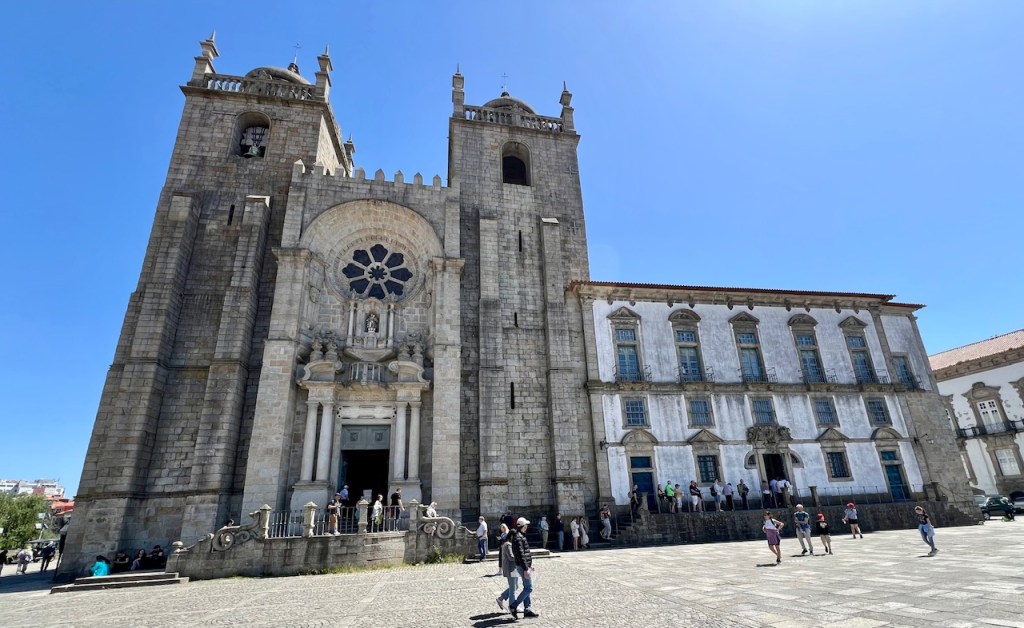
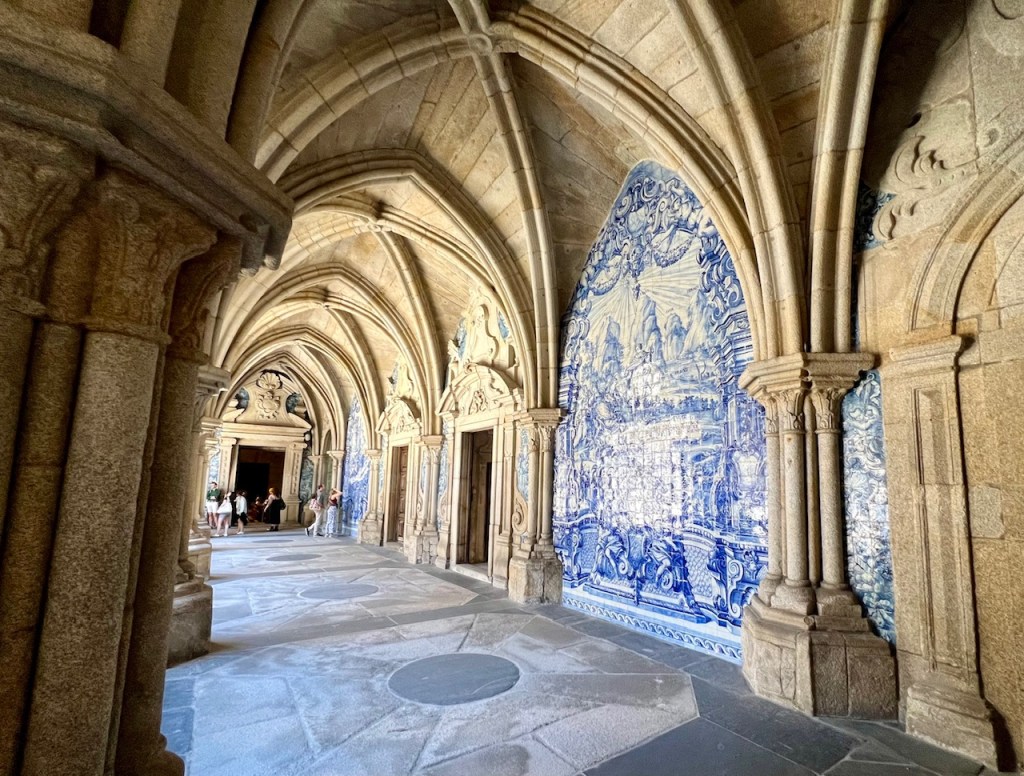
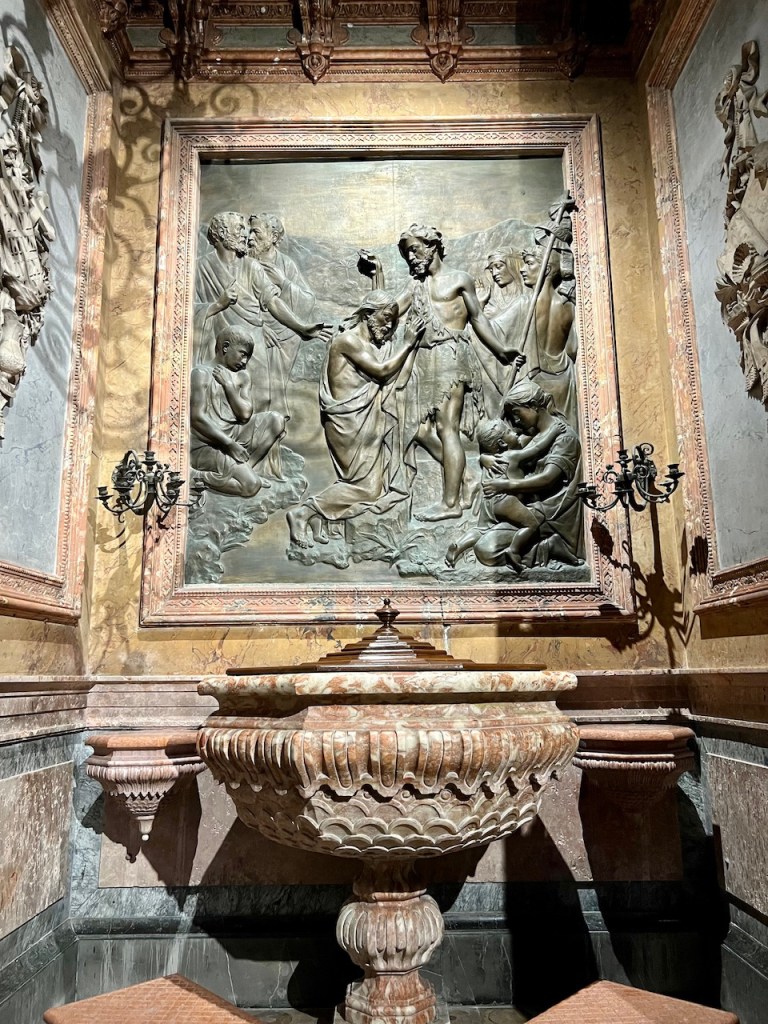
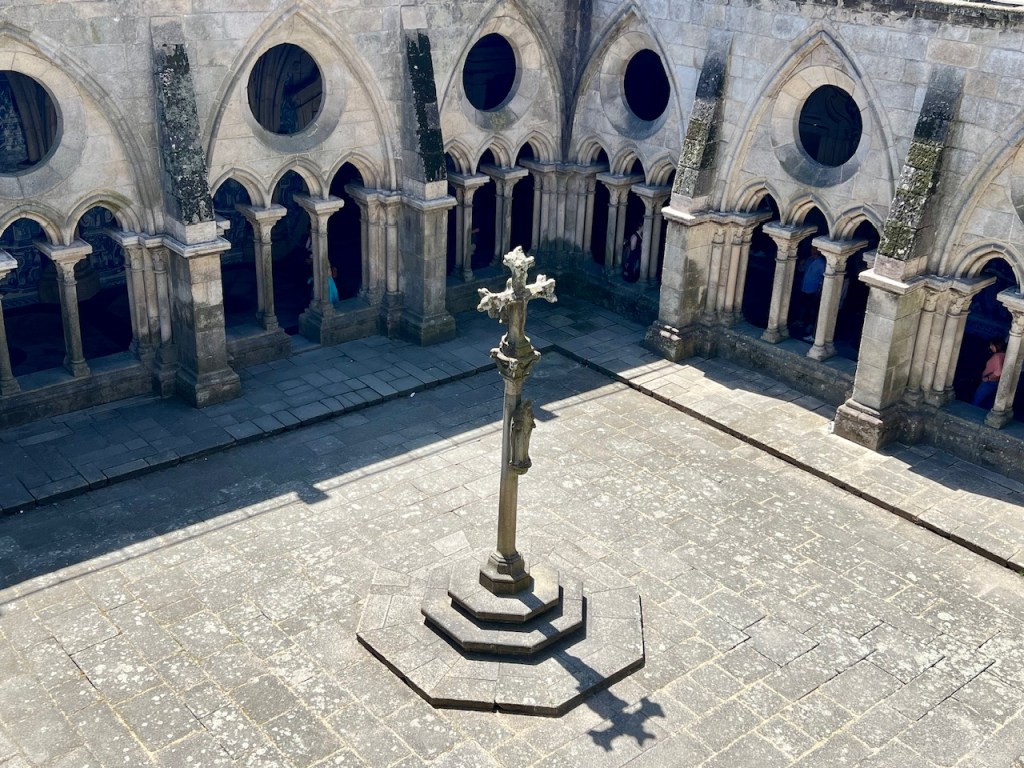
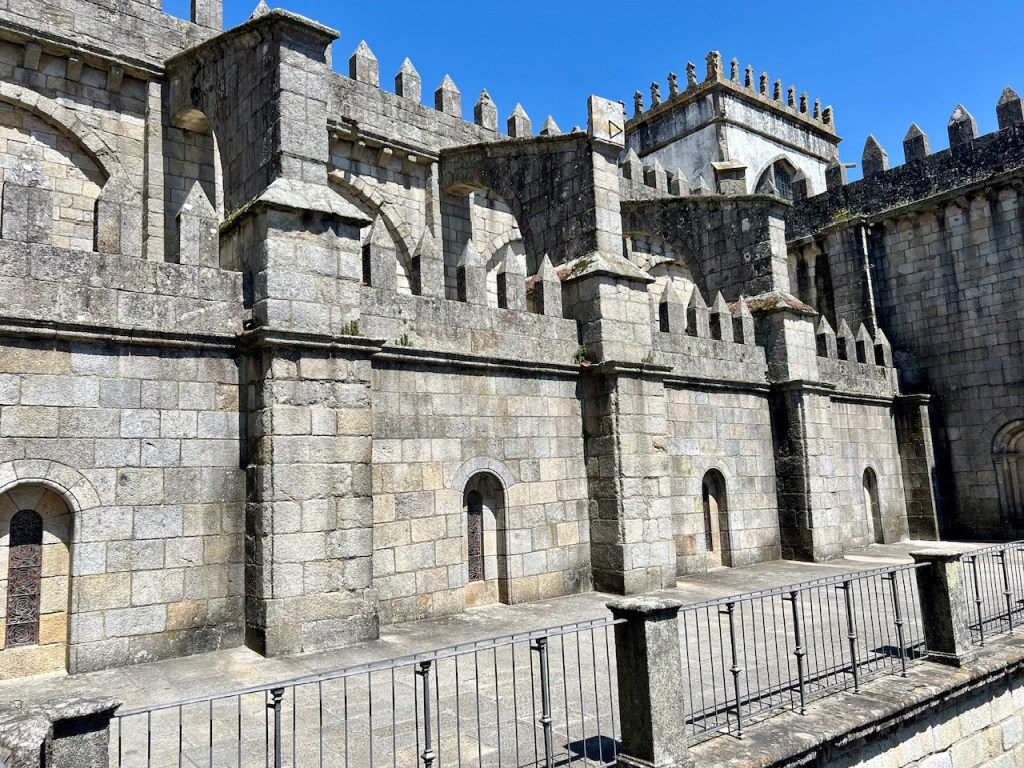
The Sé Catedral do Porto sits on the site of the original Roman settlement that was here centuries ago. The fortress-like Sé do Porto, constructed in the 12th century, is one of the oldest buildings in Porto and the most important religious building in the city. The nearby Episcopal Palace also dates back to the 12th century

Porto and Portugal owe their names to the Romans. They called Porto, Portus Cale, from the Latin for “warm port.” Portuscale name from Roman days. Porto was for centuries the most important city in Portugal but never its capital. 

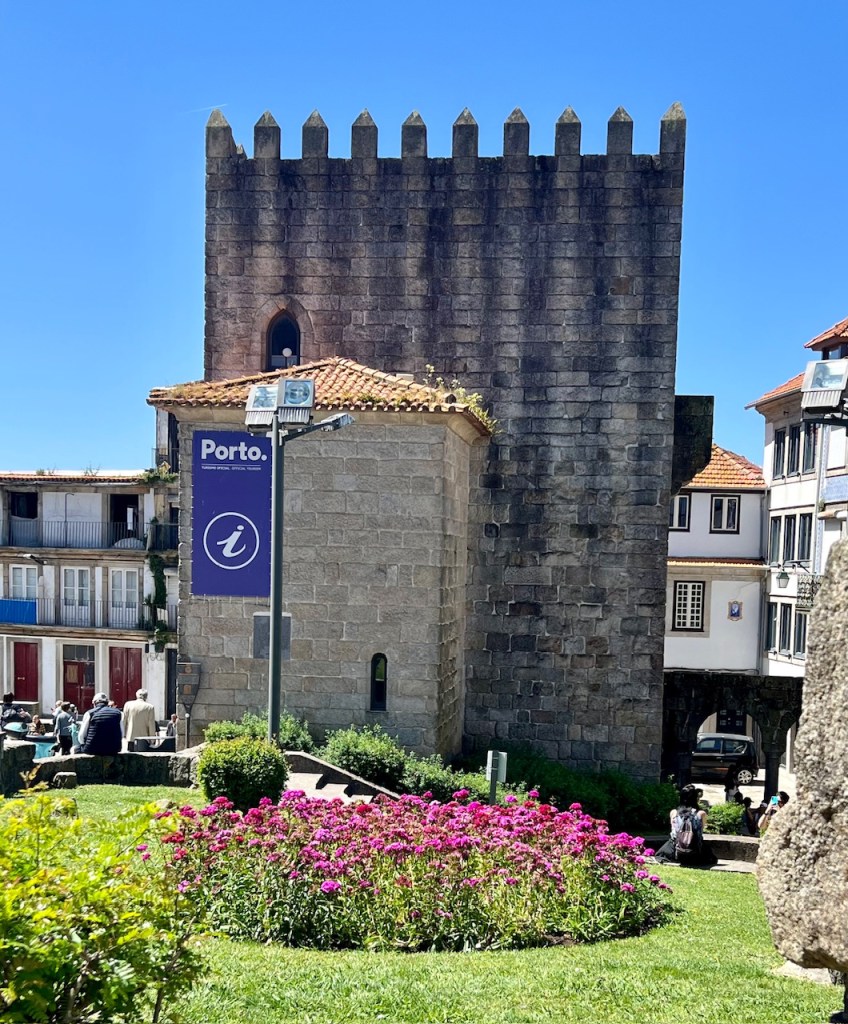
Near the Sé is the remnants of the ancient wall including one of the towers. Originally built by Romans, the wall surrounded the old city (top of hill where Sé is located) before the city expanded and a wall surrounding the now larger city was built. 

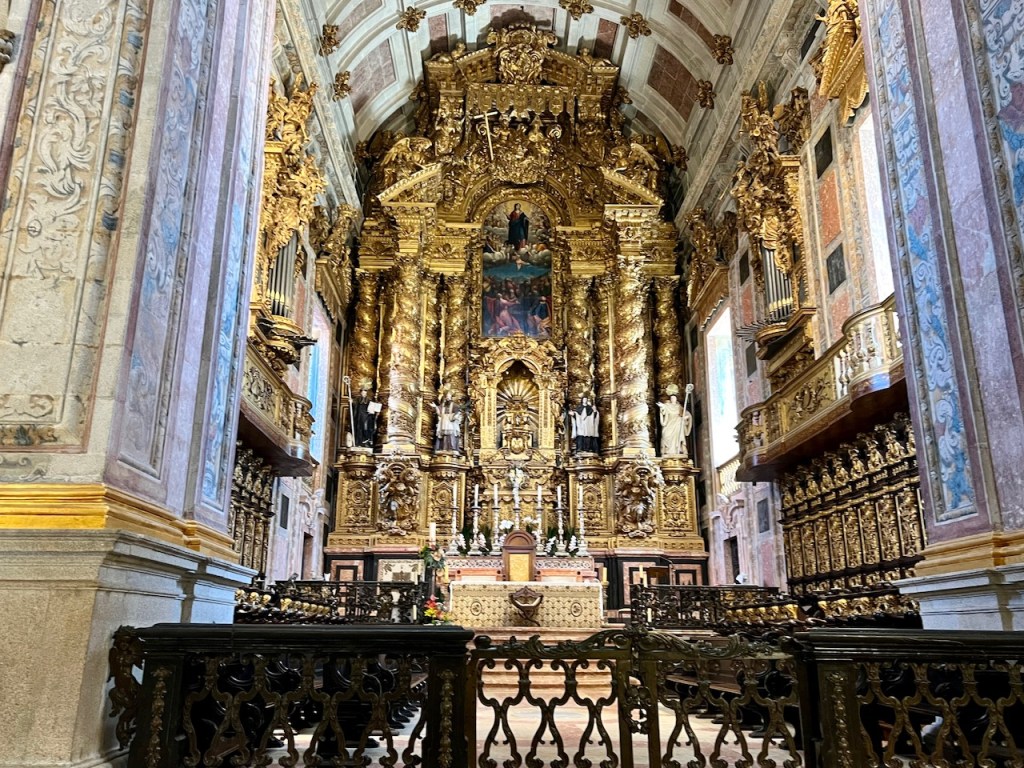
After bidding adieu to Pedro and the tour group, I headed inside the Sé for a look around this beautiful ancient building. Magnificent! 

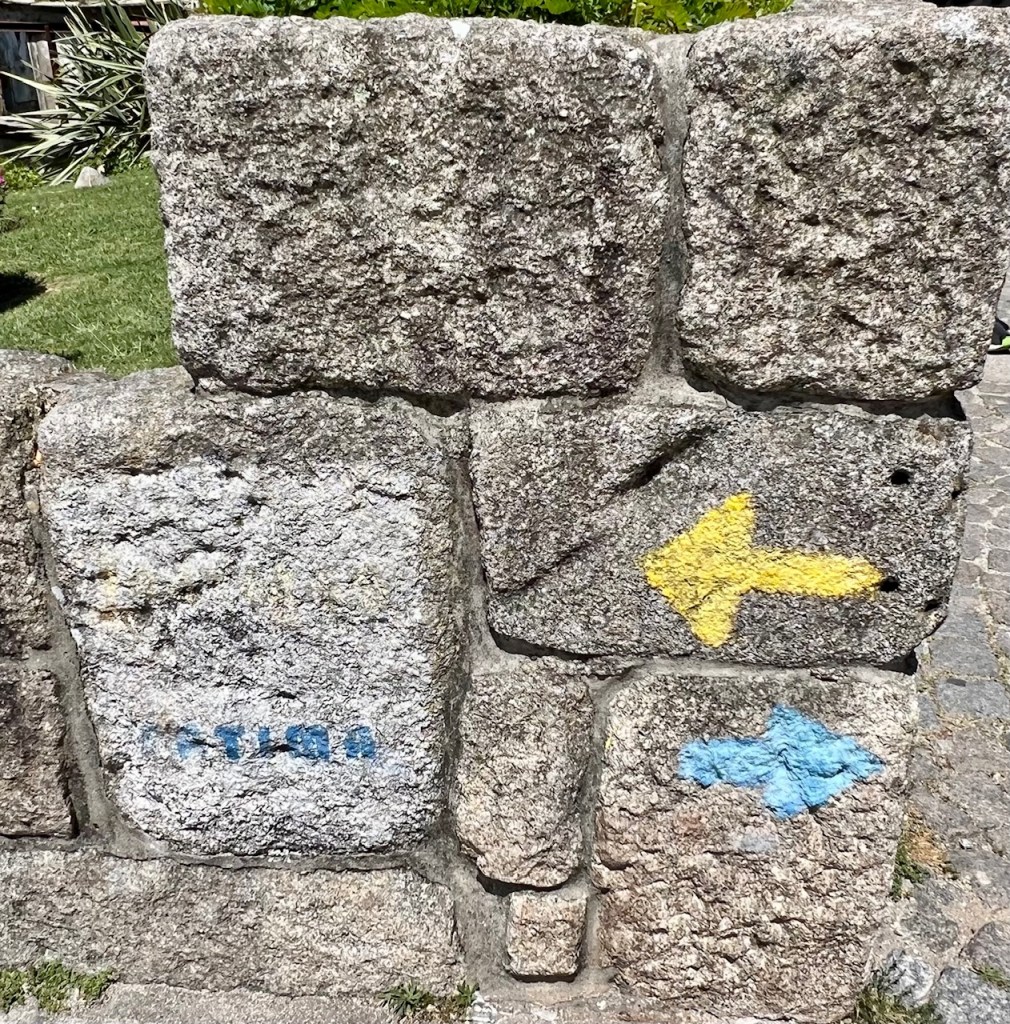
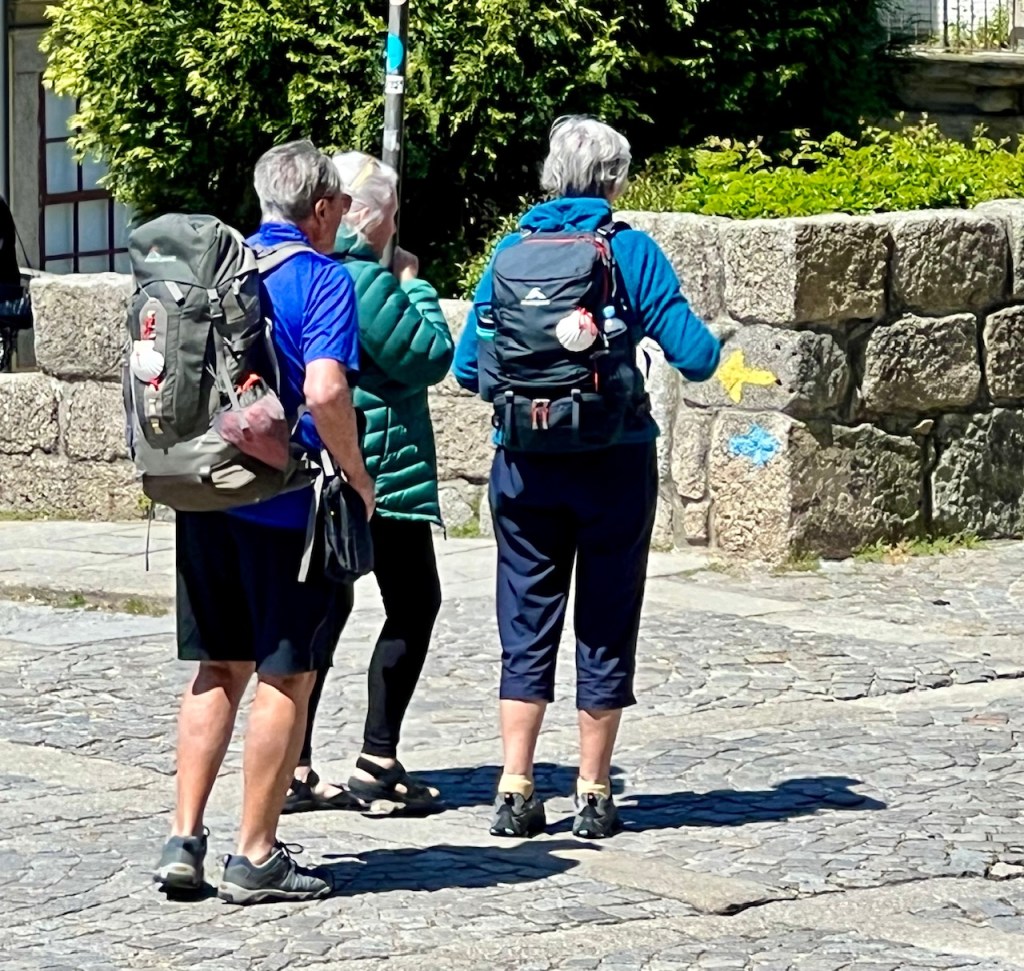
The cathedral is one of the stops on The Portuguese Coastal Way consisting of several routes and roads that all lead to Santiago de Compostela and there are the happy arrows and markers to show pilgrims the way. I did meet a couple of pilgrims who had left Lisbon some days ago and were heading to Santiago while exploring the cathedral. Maybe someday I’ll try another Camino …


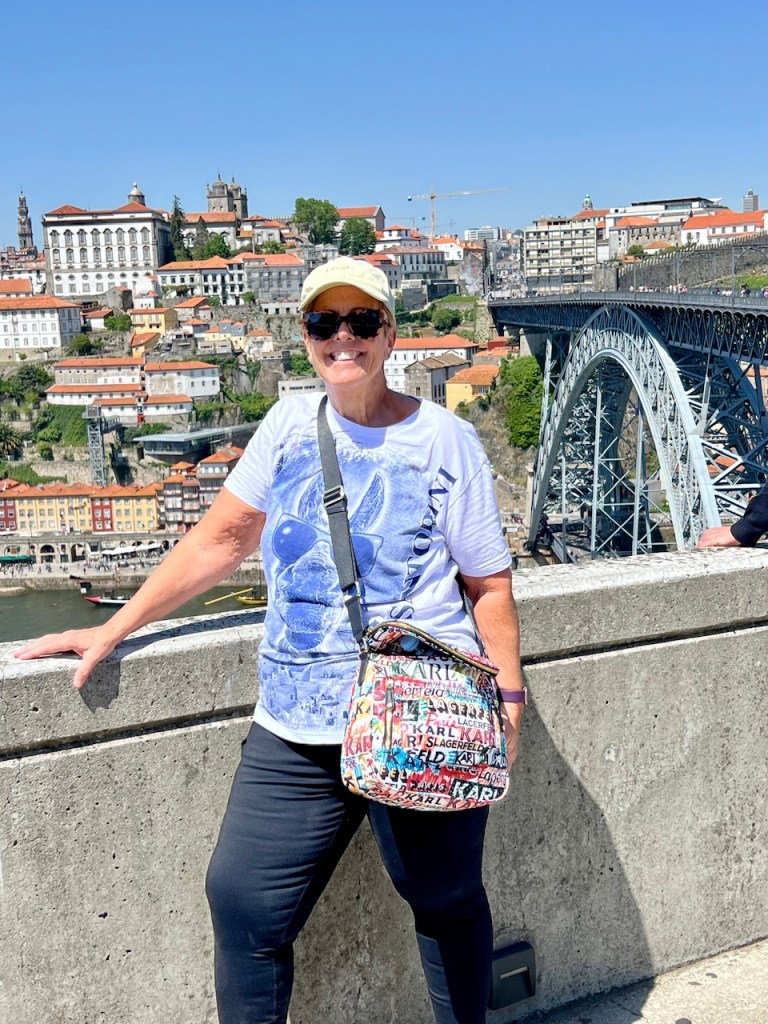
After grabbing a bottle of water, I decided it was time to head across the Ponte de Luíz I and head over to Vila Nova de Gaia (Gaia for short). I do have a fear of heights but I thought it would be okay until the metro whizzed by me and I almost peed my pants! No way will I be coming back this way – I thought it was a pedestrian bridge!!!

The bridge did offer some stunning views of both banks of the Douro as did the park on the Gaia side. Apparently, this is the place to catch a sunset. Maybe Thursday??

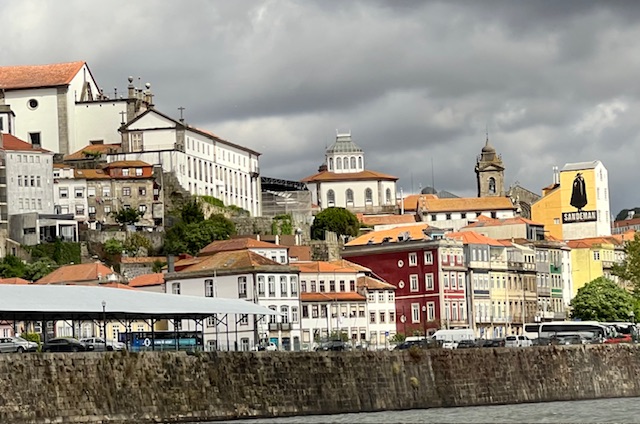
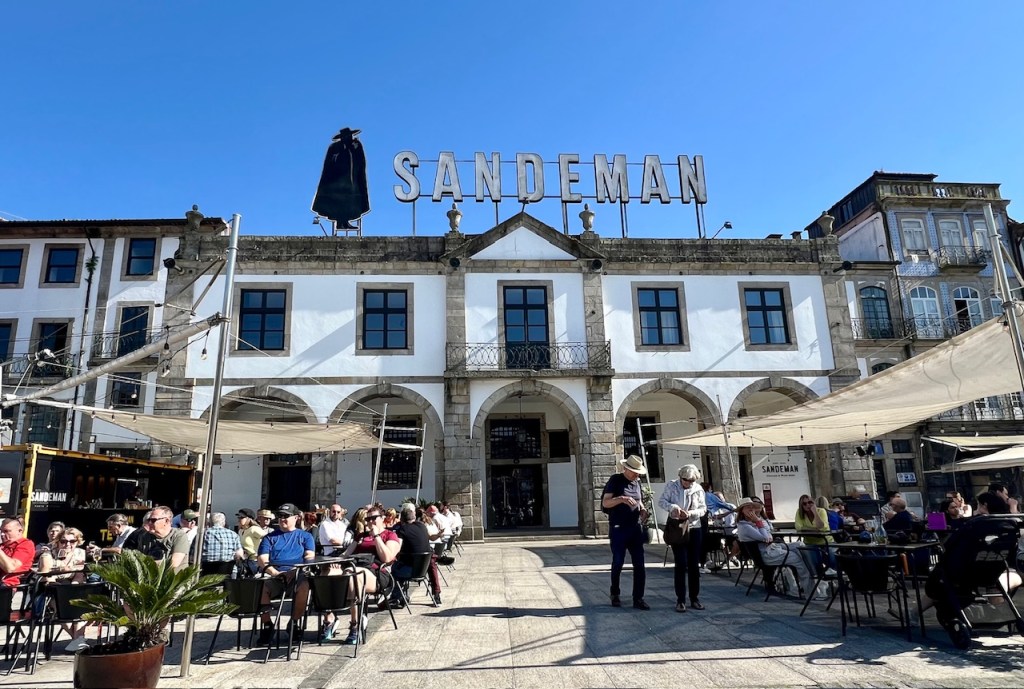
After a toddle around, I headed down the hill in search of a port wine tasting. I hadn’t figured out what lodge to visit but the Sandeman one was on the main drag and it looked like a good spot. I booked a tour and tasting and then headed to the café for some more water and a glass of refreshing sangria. Yum…

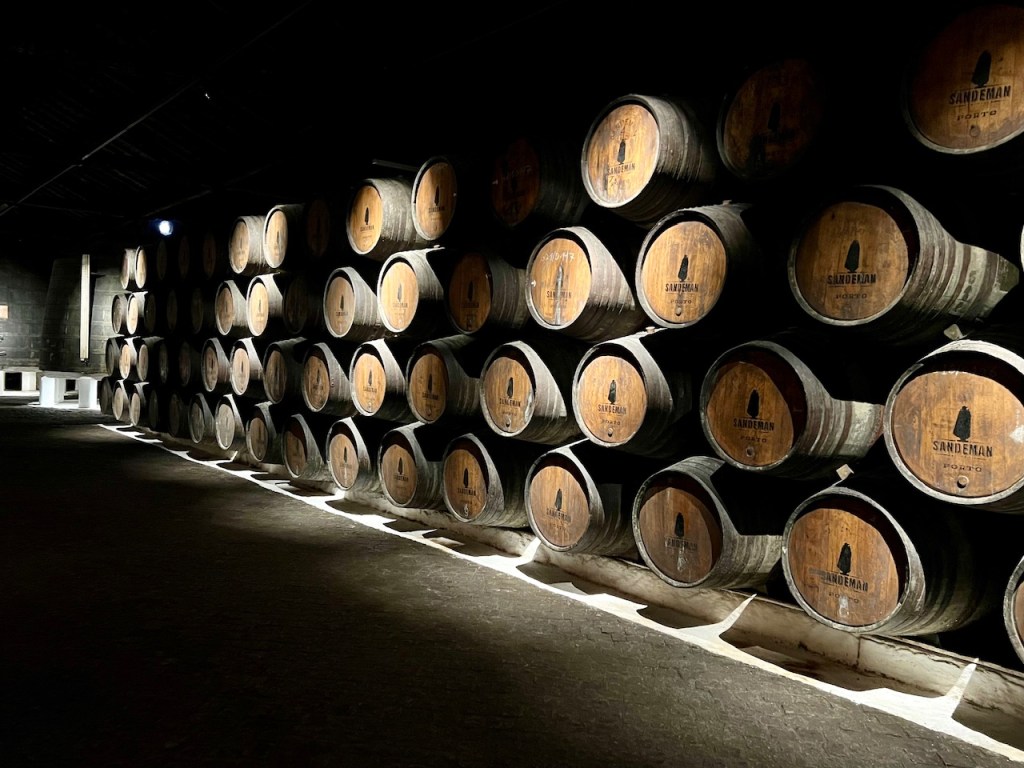
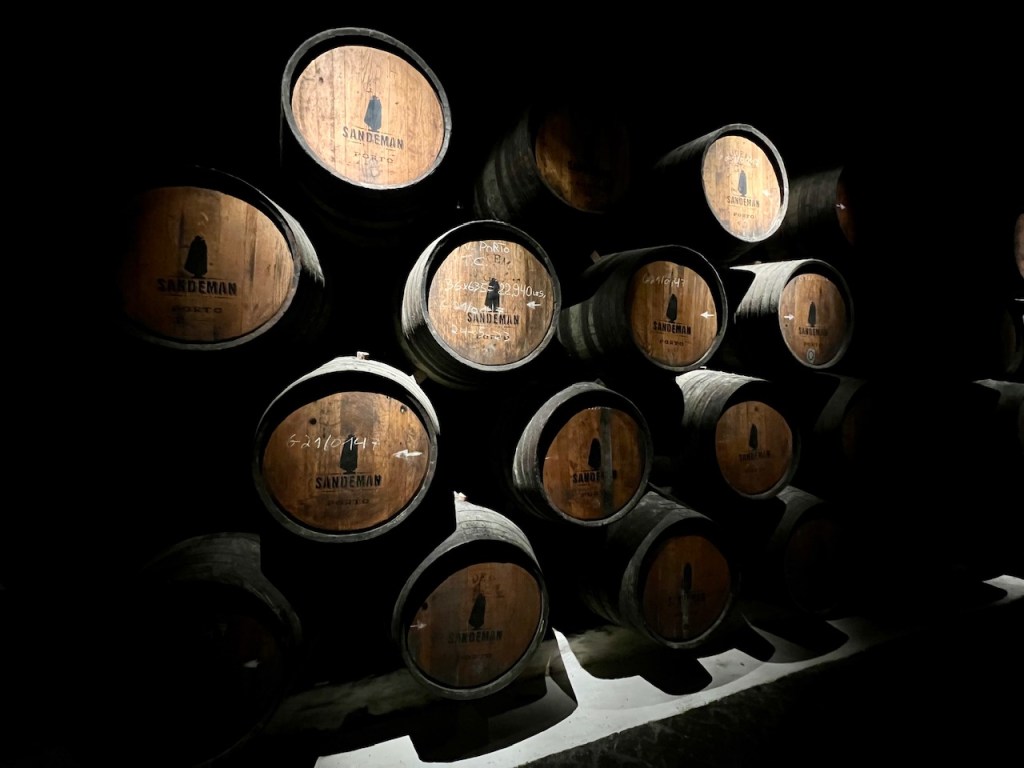
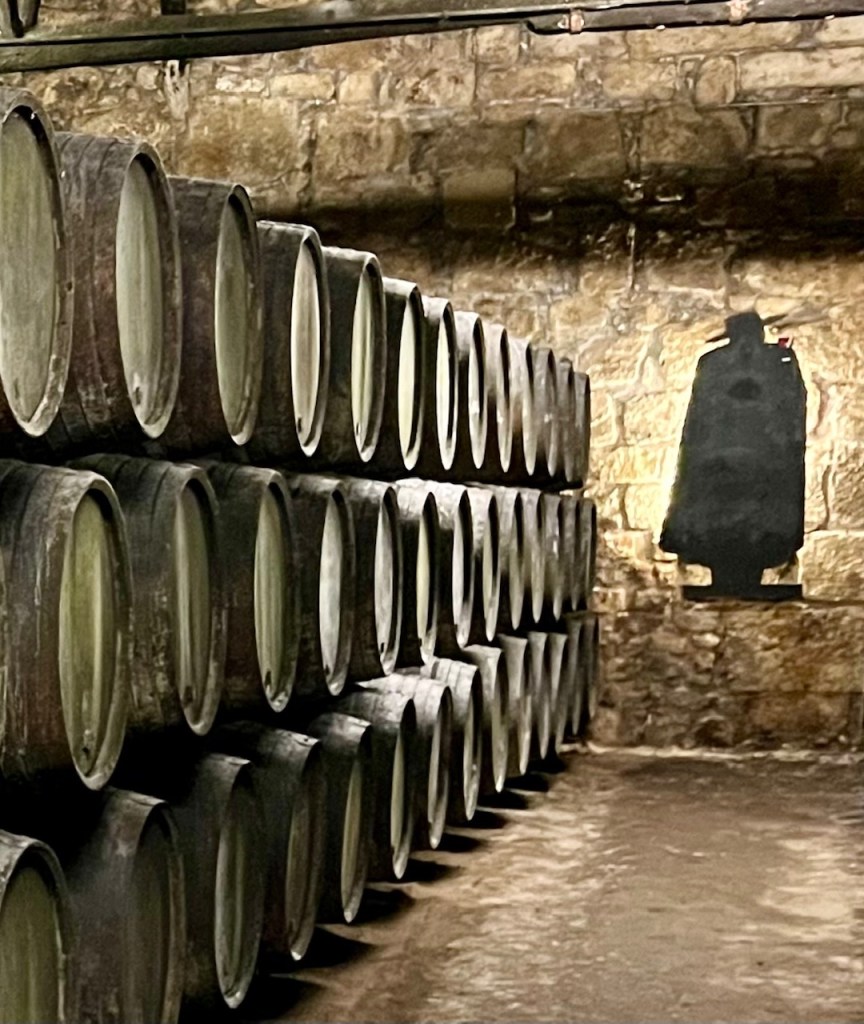
The House of Sandeman, founded in London in 1790 by George Sandeman, a young Scotsman, and has grown to be one of the most prestigious Porto Wine brands in the world. Acquired in 1811, the Sandeman Cellars have been used for more than 200 years to age Sandeman’s best Porto Wines. Barbara lead us through long corridors of oak casks and vats where Rubies and Tawnies slowly develop their style under the watchful eye of an experienced team of winemakers providing info and answers to all questions. She was dressed in the same costume as The Don. 

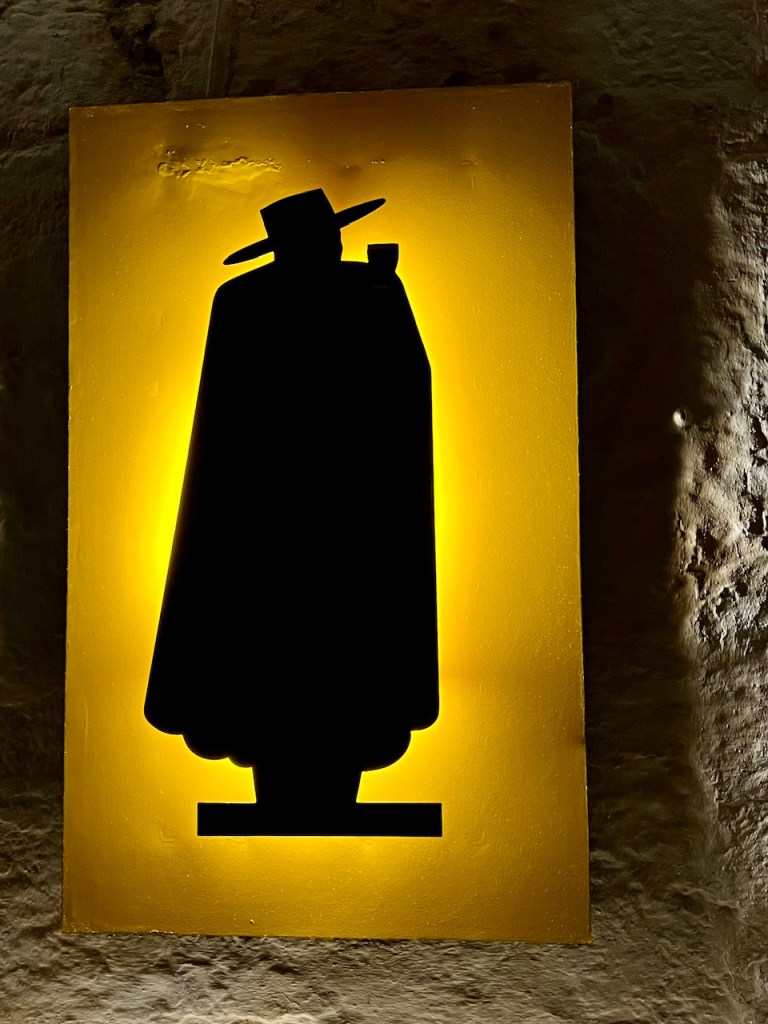
Created in 1928, “The Sandeman Don” is one of world’s most famous logos and a symbol of tradition and quality. The original painting was created by George Massiot Brown, an unknown Scottish artist who sold it to the company for 50 guineas. The mysterious black silhouette, dressed with the Portuguese student’s cape and the Spanish sombrero, represents the two Iberian wines traded by the brand.

Port wine is a fortified wine made by adding brandy to partially fermented wine after three days. The process results in a wine containing high alcohol content that is fairly shelf stable. Port wine can only be made from grapes grown in the Douro Valley. The Marquis de Pombal is the father of the regulation of the production of wines from the Douro and the oldest controlled designation of origin in the world; dating from 1756. I’ll save all the deets until tomorrow as I’m heading to the Douro Valley on a day-long wine tour. 

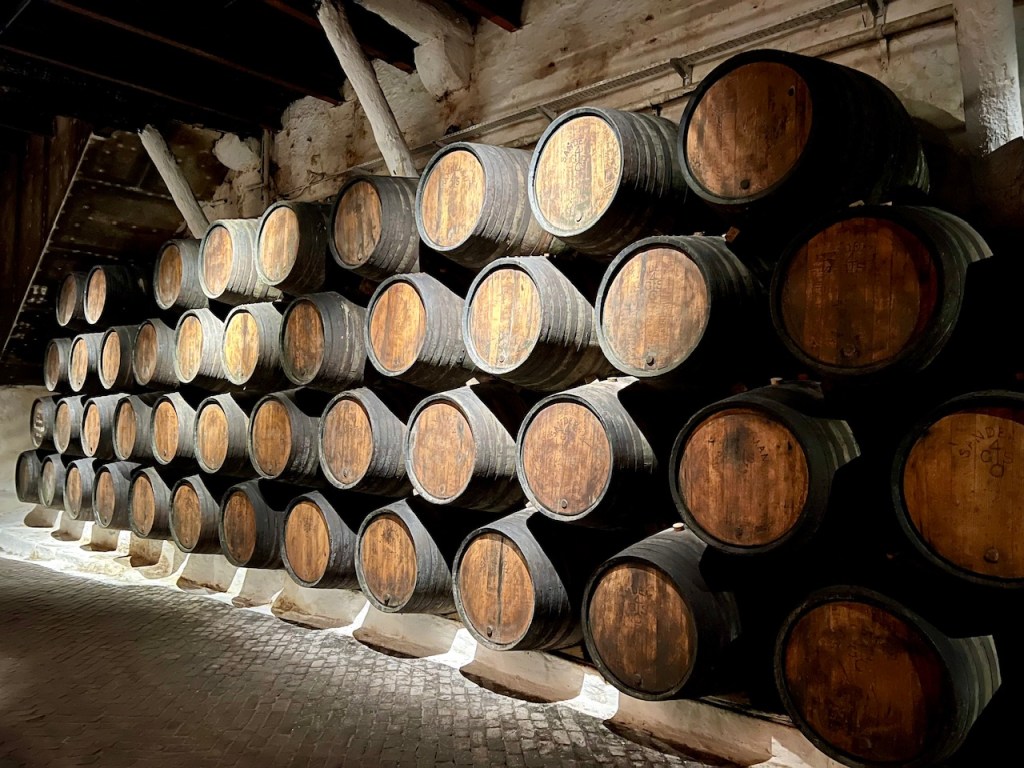
Back to Sandeman… They produce the three types of port: white, ruby and tawny and they are aged for a minimum of three years in French oak barrels but many of the rubies and tawnies for much longer. The size of the barrels influences the outcome with rubies being aged in large vats and tawnies in small barrels to increase the influence of the wood. 

We had the chance to taste one of each and I wasn’t fond of the white – a bit too rough for me, the red was okay and I quite liked the ten year old tawny. I opted not to drag a bottle around for two weeks. I can get some at home if I want. 

I’m getting tired of being a tourist so headed back across the Douro this time on the much lower and more sturdy version of Pont Luíz I. I’m not 100% sure where my hotel is but know it’s near the river so ask for directions and make it back in time for tea. A piece of cake sounds fine as does a small pastel de nata as I neglected to have lunch in my flurry of touristic activities. Maybe a short nap and then I can decide on dinner but I’m not hungry now, lol!

Tomorrow is another day.  Adventures await …

Perusing Porto

April 22, 2024

This morning I arrived in Porto after the best travel day I have had in years! Flights were on time, seat mates were nice, my luggage arrived with me and the hotel allowed me to check in at 11 pm shortly after arriving. 

Vila Nova de Gaia across the Douro from my hotel window

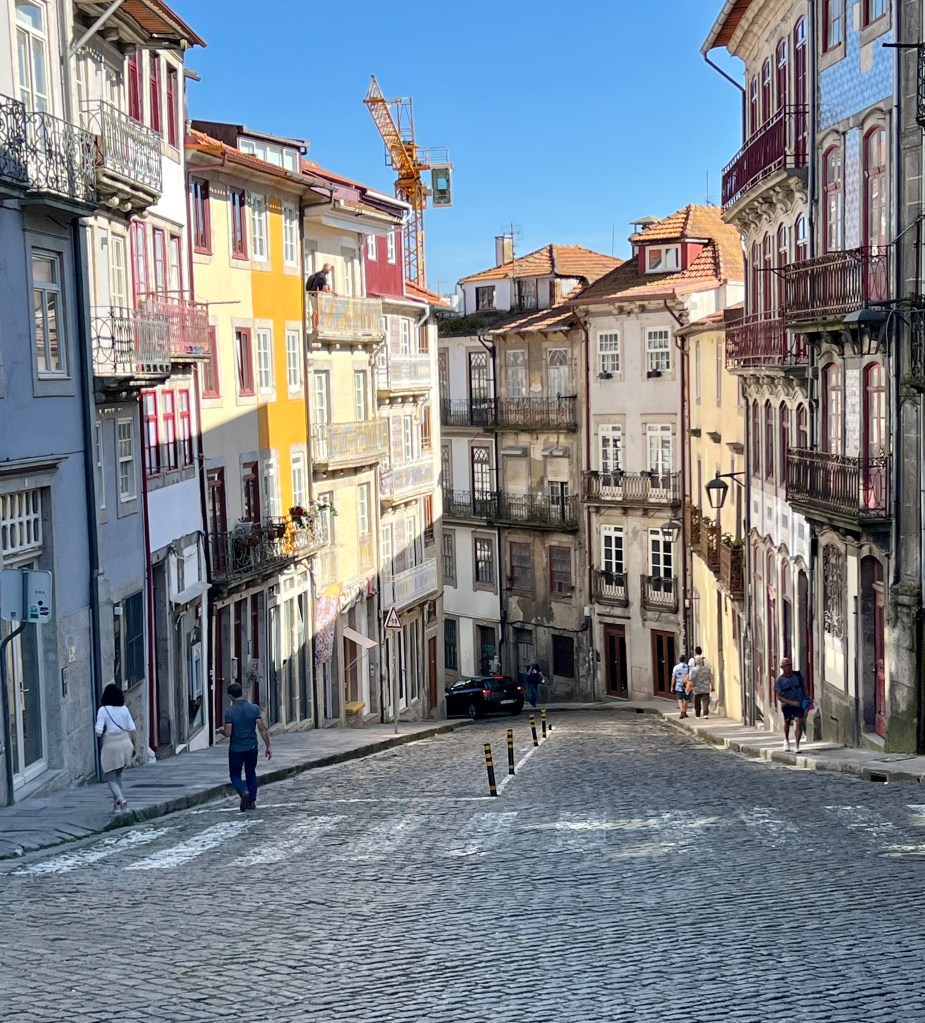
After a nice long nap and a hot shower, I hit the bricks to try and find the meeting point for tomorrow’s walking tour; Largo Amor de Perdição. My laco of spatial awareness is real and it’s not too far from my hotel but it looks to be “straight” uphill – my favourite (not)! I check with the desk clerk and he warns me that it is a very big hill. Man he was not kidding! These people must be part mountain goat!! Anyhow, my downloaded directions from google maps are accurate and I arrive at my destination without getting lost which is the main thing.  

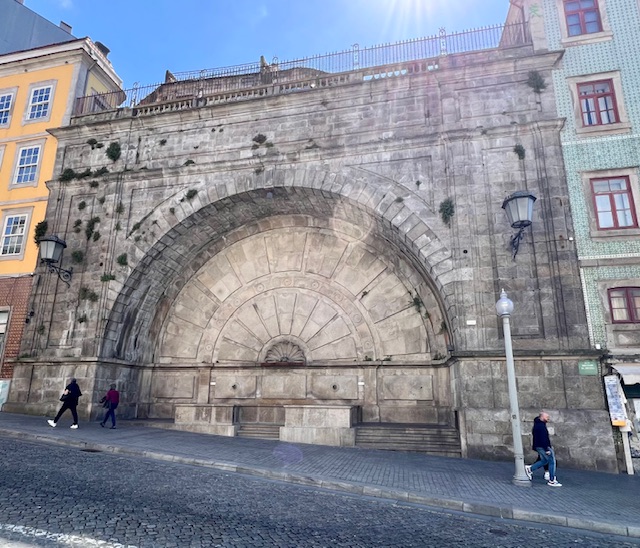
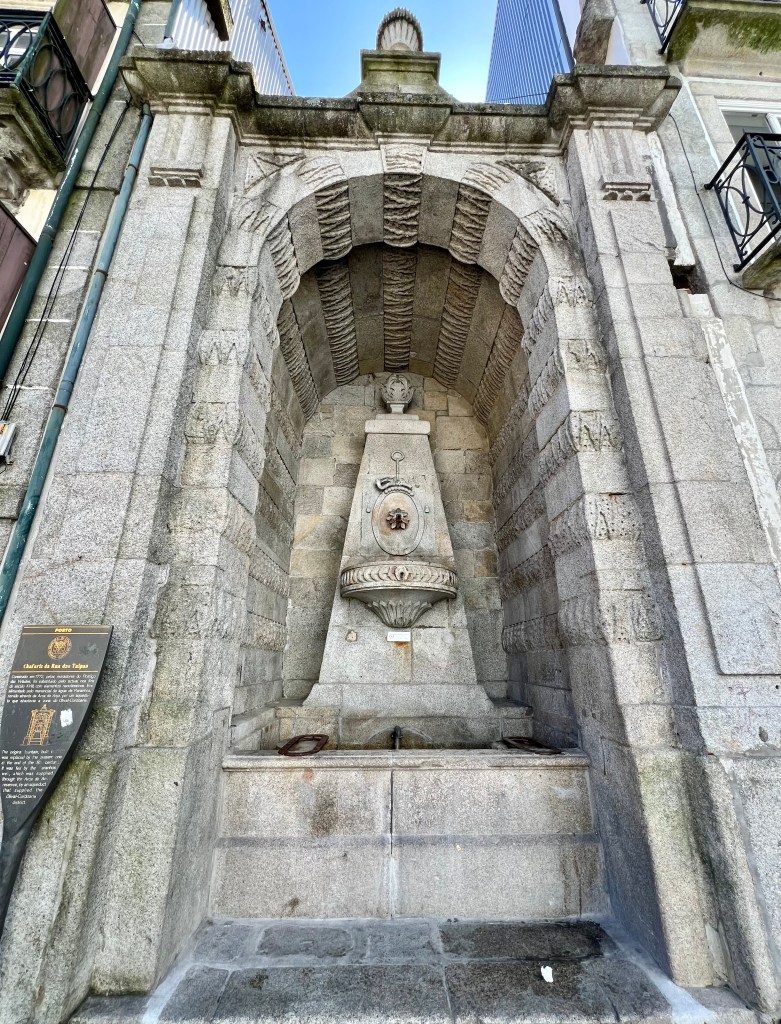
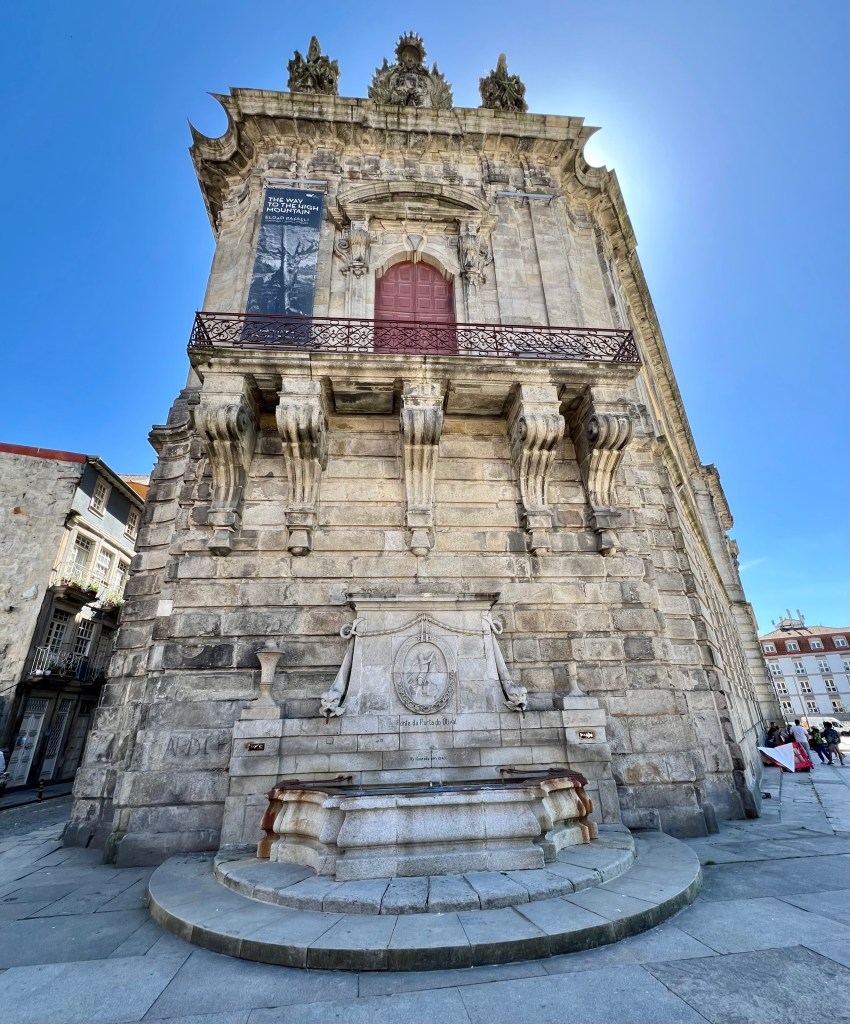
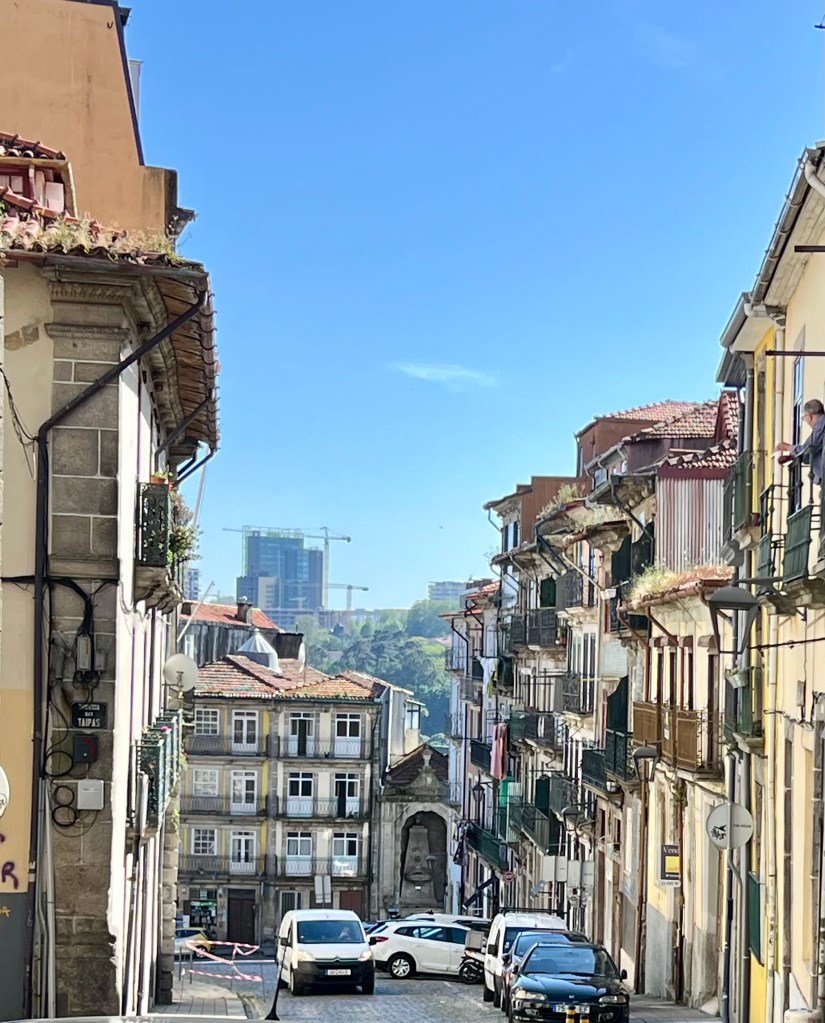
Along the way, while catching my breath, I came across the Chafariz da Rua das Taipas. The original fountain, built in 1772 was replaced by the present one at the end of the 18th century. It was fed by the Paranhos well which was supplied through the Arca do Anjo reservoir, by an aqueduct that supplied the Olival-Cordoaria district.

Chafariz da Rua das Taipas

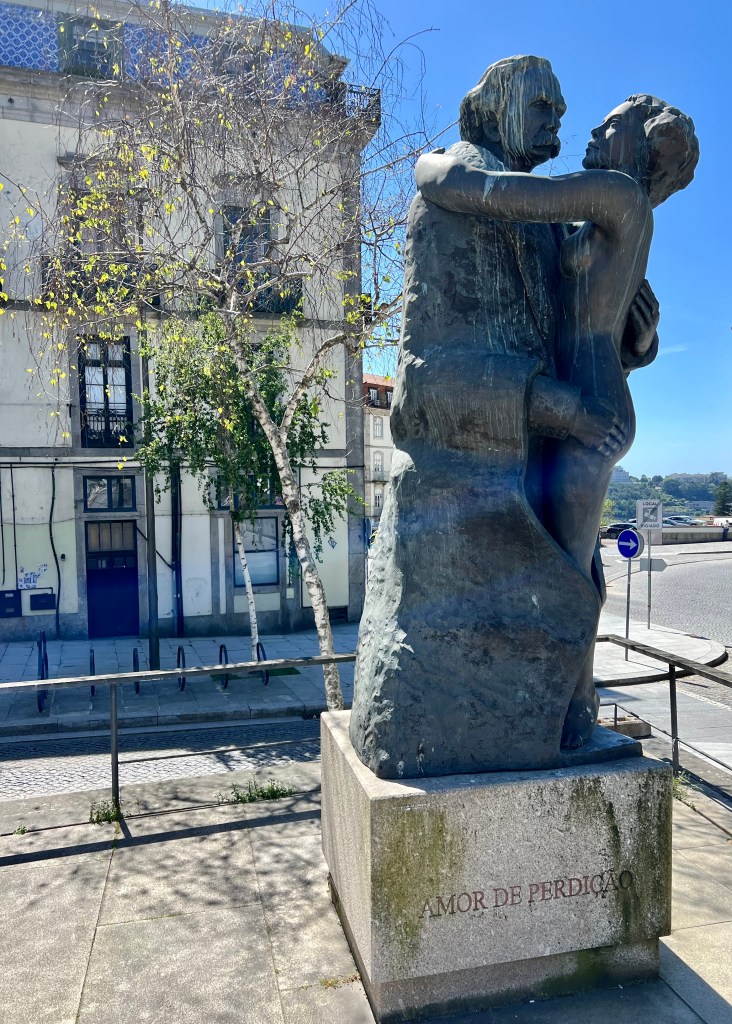
The Amor de Perdição is a book written by Camilo Castelo Branco (1825-1890); one of the greatest Portuguese writers of the 19th century. Often using the torments of his life as inspiration, the author wrote “Amor de Perdição”, his most important novel when he was imprisoned for the crime of adultery.

Amor de Perdição

The statue of the author grasping a naked woman’s butt is located in the square of the prison (Cadeia da Relação do Porto) where this famous work was written. Today it houses the Centro Português de Fotografia stands (Portuguese Photography Centre). 

Portuguese Photography Centre
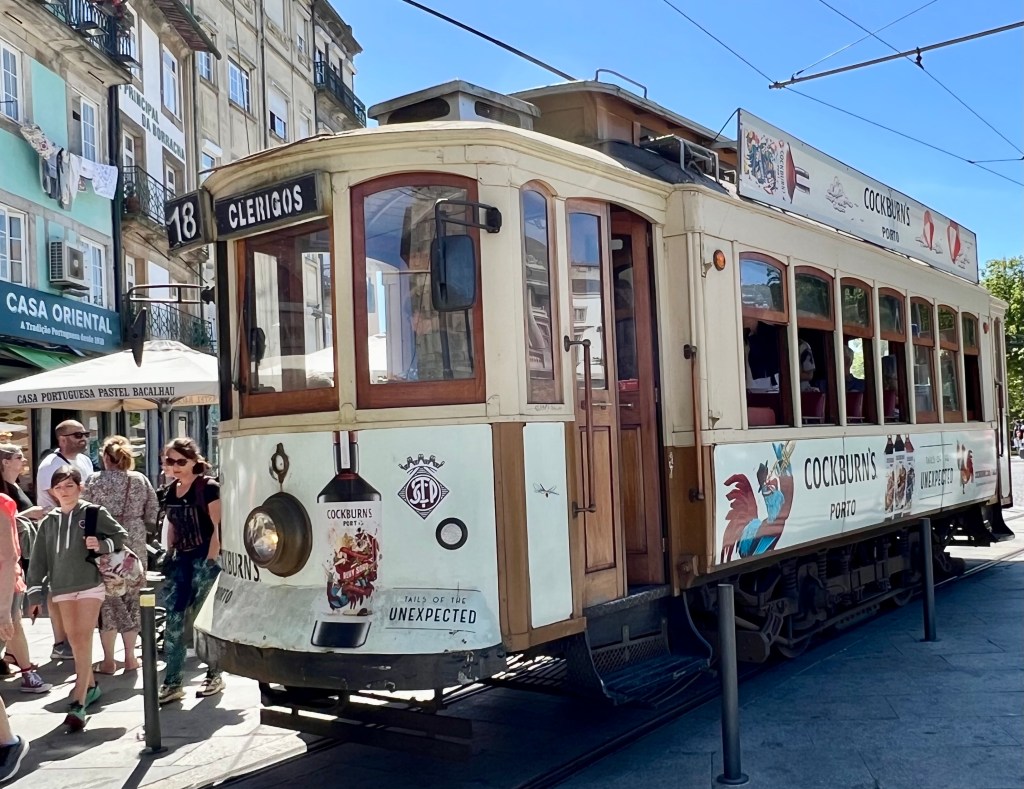
I think this trolley stops in front of my hotel. Might avoid the hills tomorrow!!
Fish cakes!

Since I’m up here, I decided to do some exploring which ended up mainly being churches. We won’t likely go inside any of them on tomorrow’s walking tour so I took the opportunity today. 

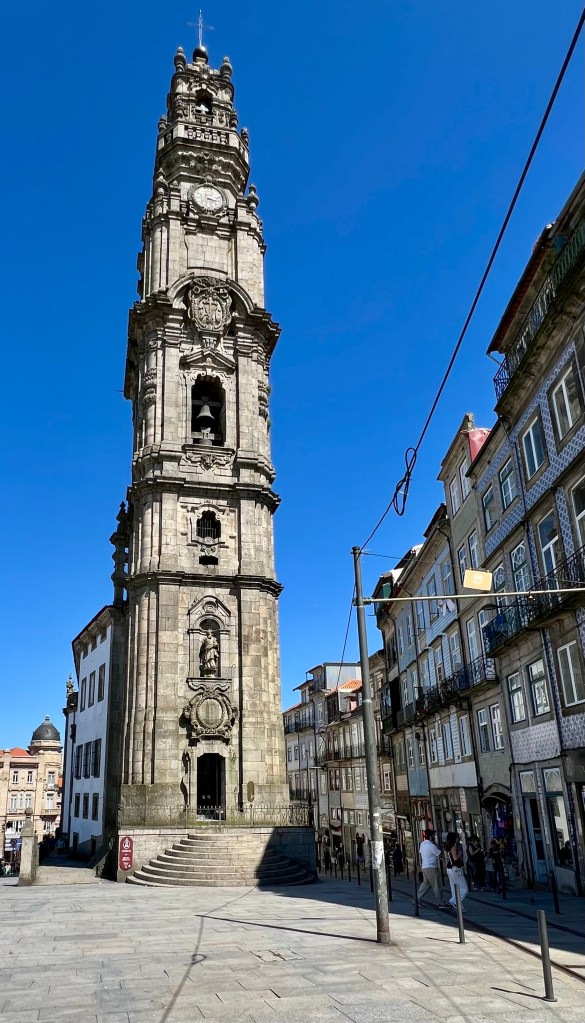
First up and not far from the prison is the Clérigos Church (“Church of the Clergymen”) and its 75-meter-tall bell tower. This eighteenth century complex was commissioned by the Brotherhood of the Clérigos on the “hill of the hanged men” where executed prisoners were buried. The Torre dos Clérigos commands the skyline and is one of Porto’s most emblematic symbols. 

Clérigos Tower
Altar in Clérigos Church
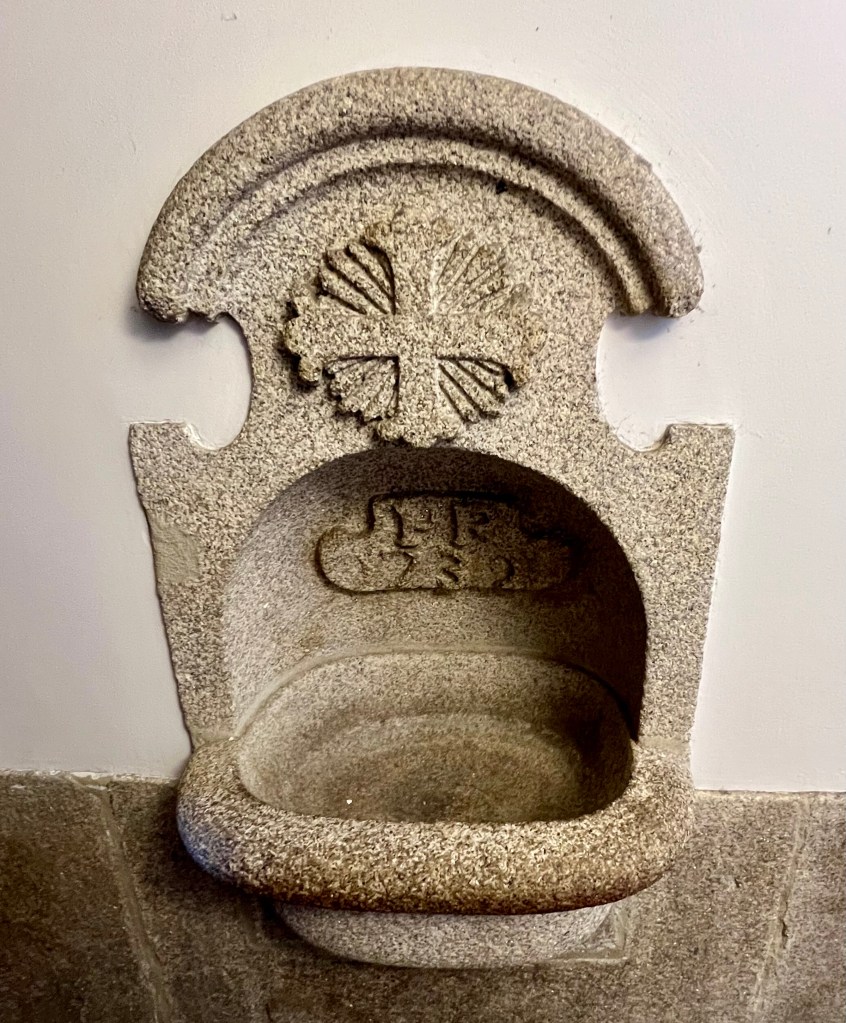
Holy Water

Next is The Church of Our Lady of Carmo (Igreja do Carmo. The Church of Our Lady of Carmo was built in the second half of the XVIIIth century in Rococo style. In 1912 the lateral facade was faced by a magnificient tiled panel designed by Silvestro Silvestri. Inside, the magnificent gilt carved main altar piece features a depiction of a crucified Jesus, Our Lord of Success, flanked by Saint Anne (Mary’s mother) and Our Lady of Carmo. 

The Church of Our Lady of Carmo
Altar of The Church of Our Lady of Carmo

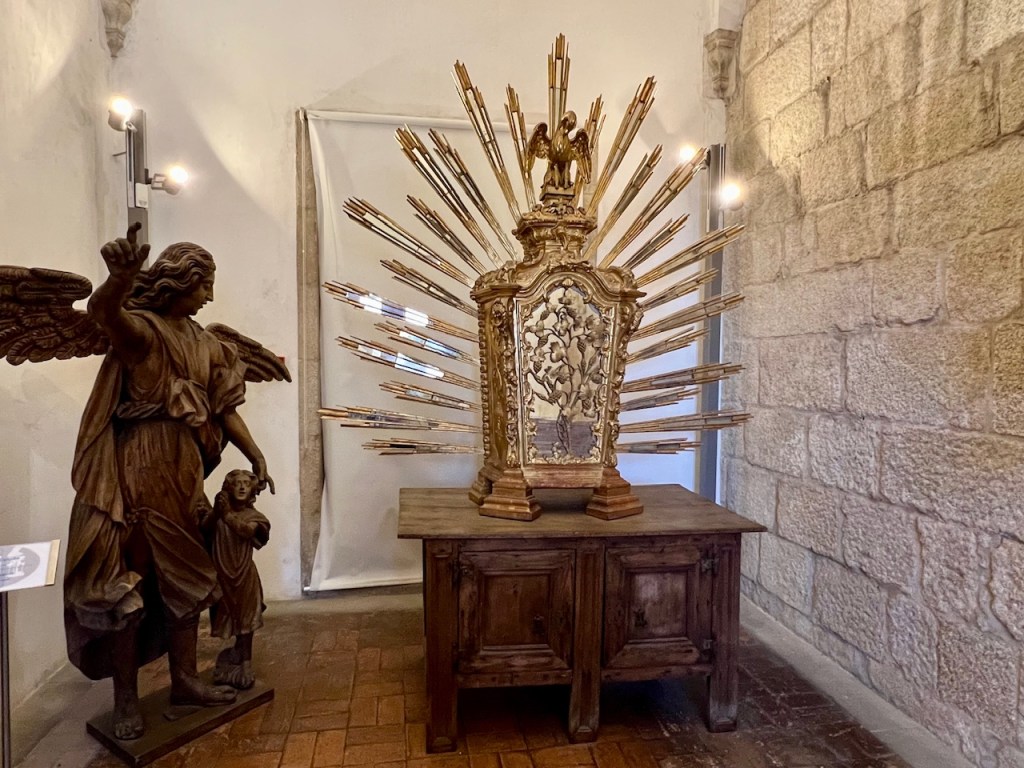
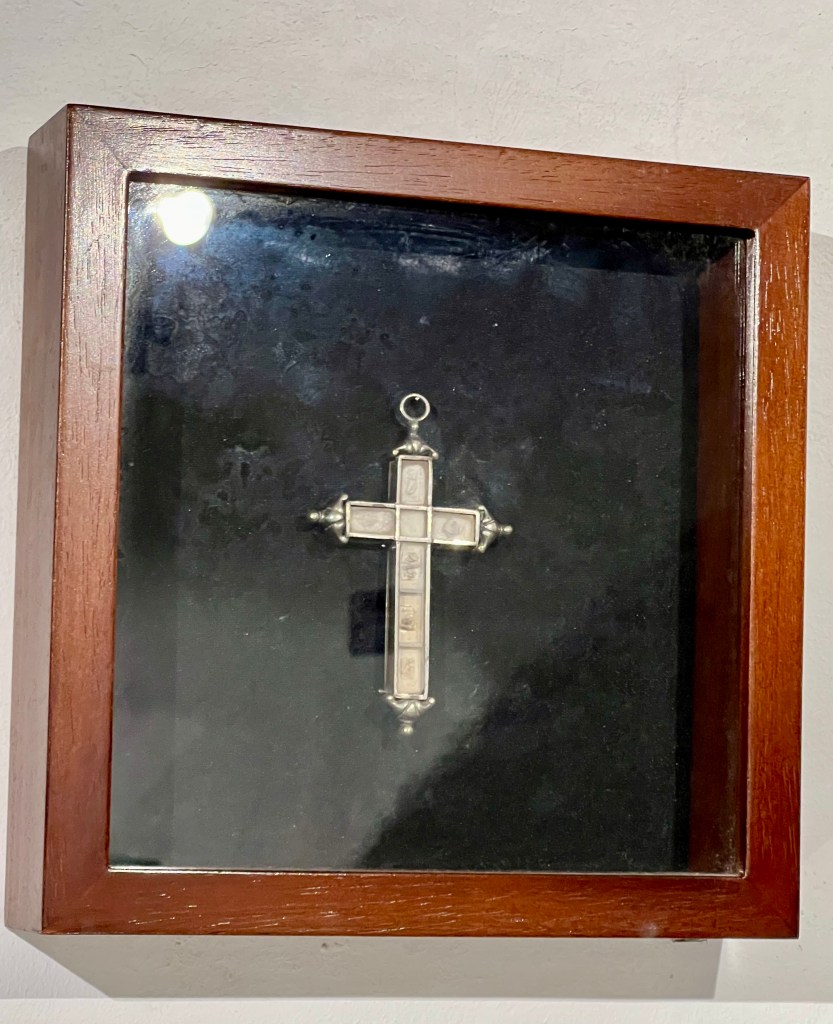
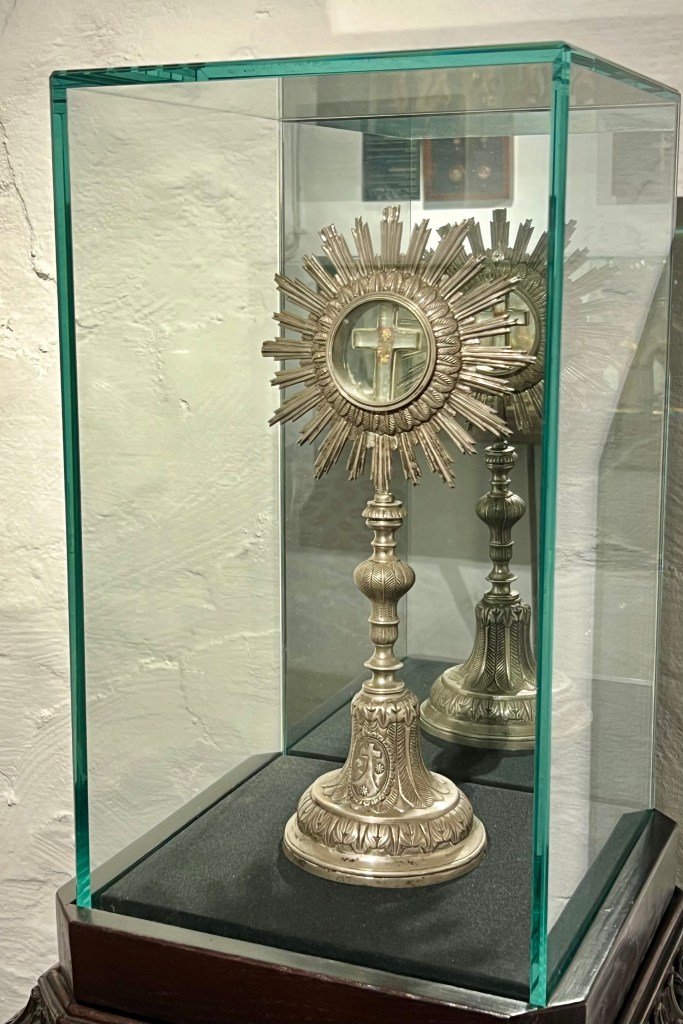
Under the church is the Catacombs of the Order of Carmo which houses the remains of over 400 members of the order. There is also a museum in this part of the church which houses numerous relics including the Reliquary Cross with bone fragments of a number of Saints including Saint Francis Xavier (16th century) and The True Cross containing a piece of the Holy Cross of Christ set in a crystal cross. 

Reliquary Cross
The True Cross

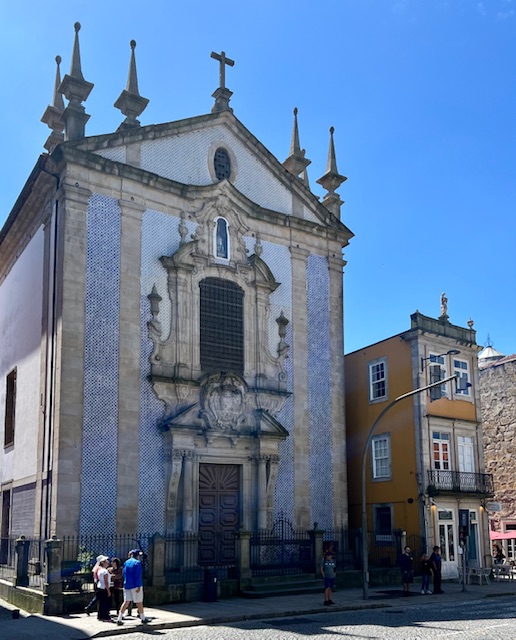
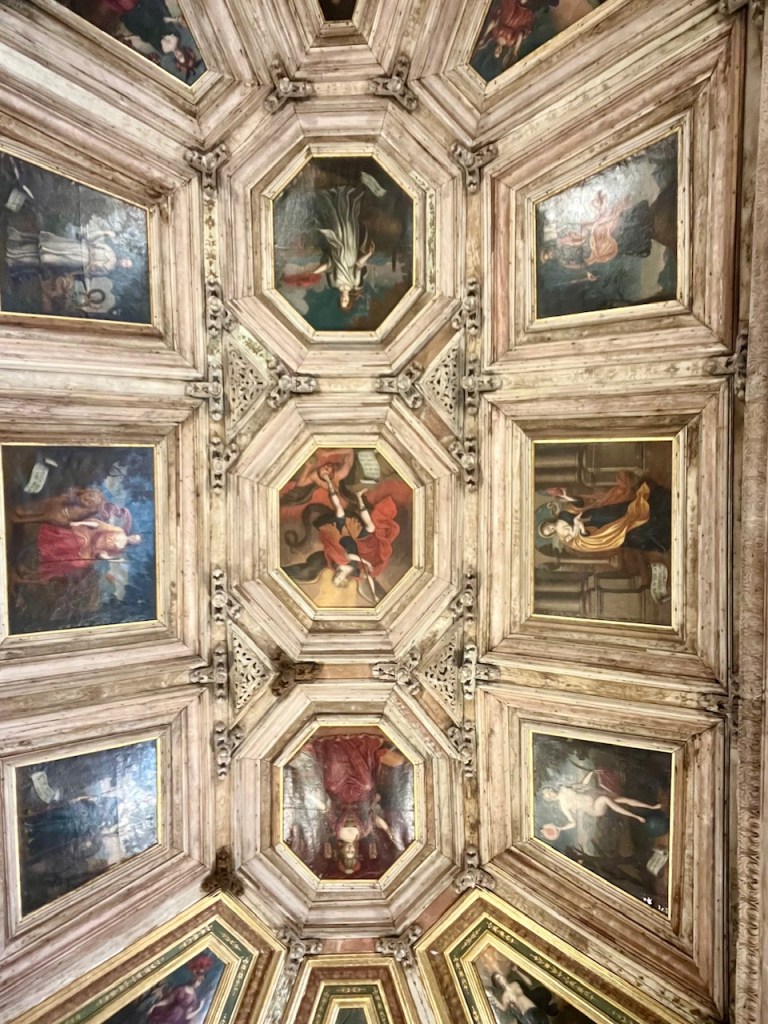
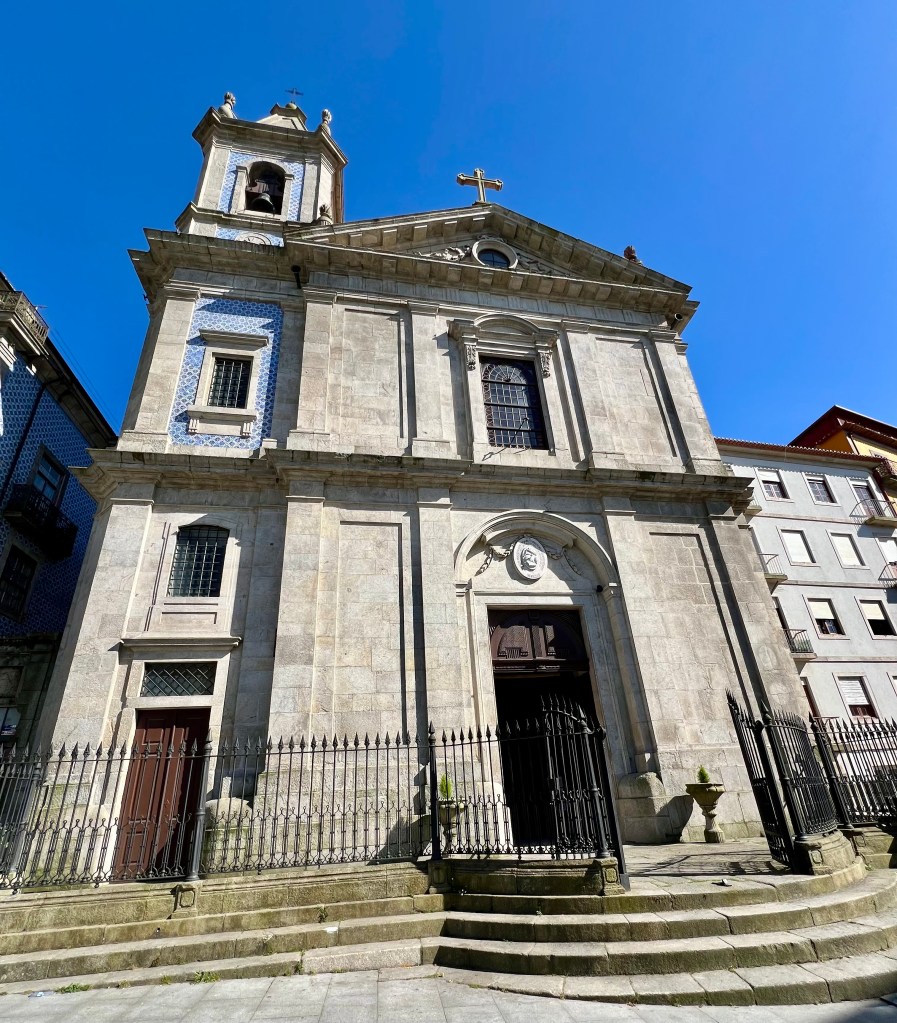
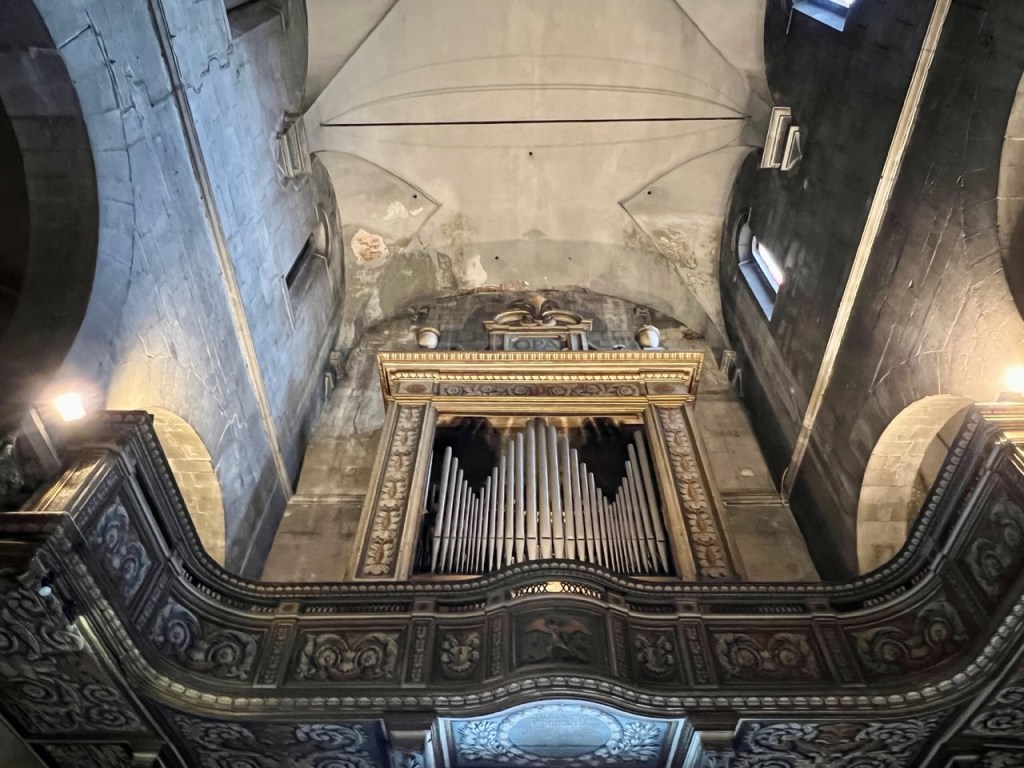
Last but not least (for today) is the Igreja de S. José das Taipas. This church wasn’t as grand on the outside but it houses the second largest tabernacle in the city of Porto, flanked by two sculptures; on the left the patron of the church – St. Joseph; and on the right – the co-patron – St. Nicholas of Tolentin.

Igreja de S. José das Taipas
Altar with Tabernacle in Igreja de S. José das Taipas

Enough churches, time to see what else is on top of this hill! But first a stop for some sangria. Being a tourist is thirsty work!

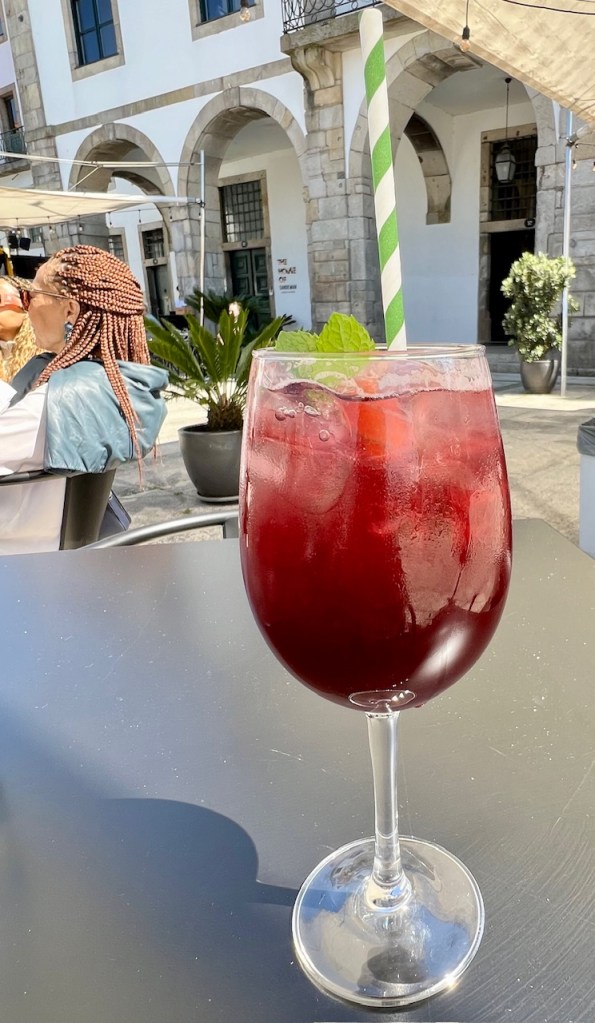
Sangria – tasted like more …

After being inside, it’s time to explore the Jardim da Cordoaria. In the Middle Ages this was the site of a rope factory to which the park owes its name.  In 1865 it was transformed into a garden and it became a very popular meeting place for the bourgeoisie. Today, this small, historic urban park is a lovely oasis featuring a variety of trees, plants & sculptures. 

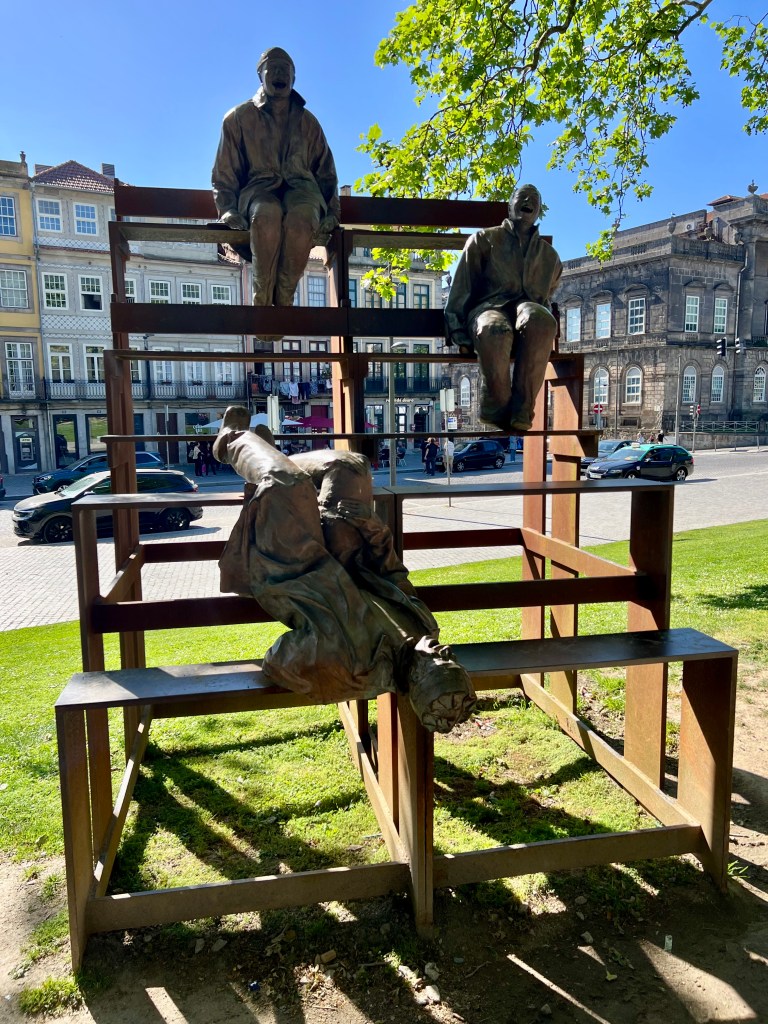
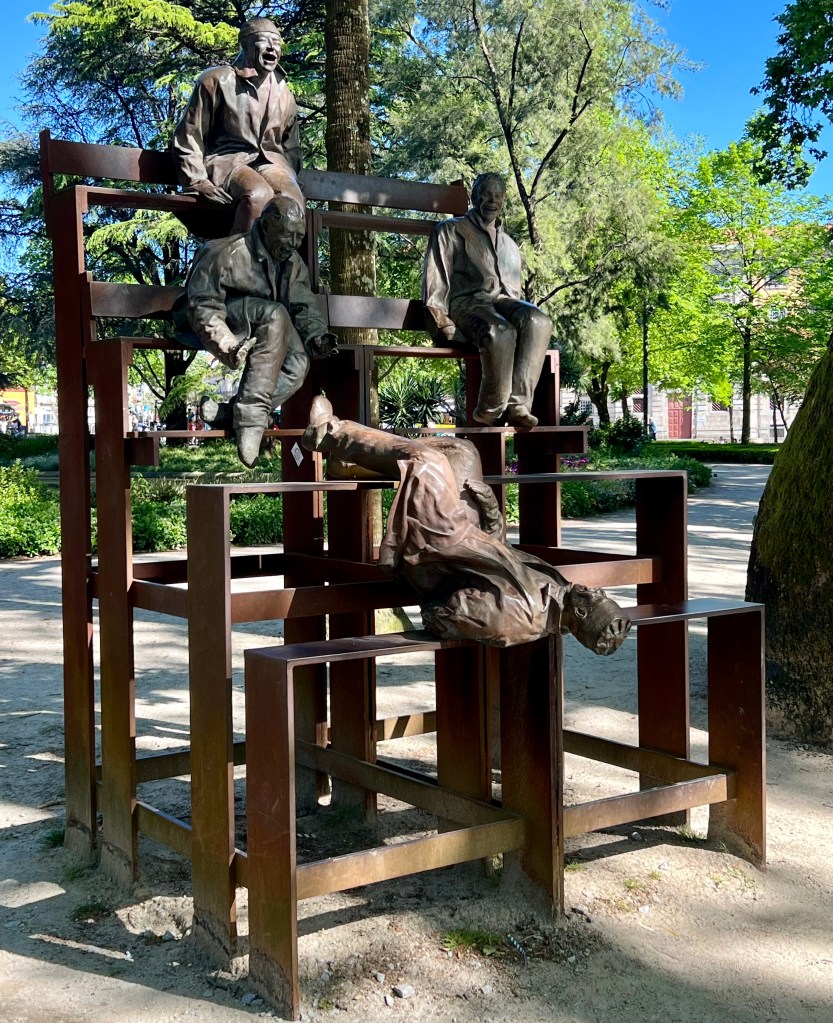
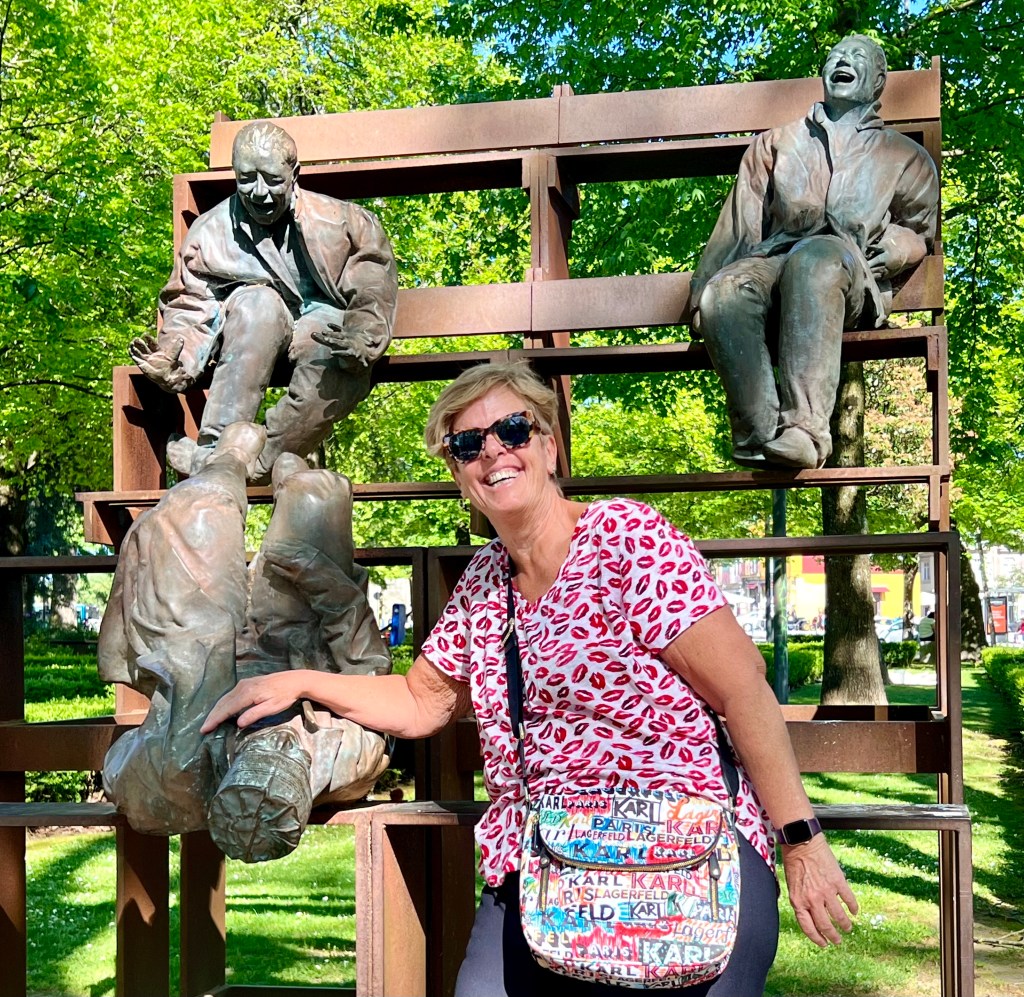
My favourite was a series of sculptures featuring laughing men falling off benches. The sculpture Thirteen Laughing at Each Other by Juan Muñoz is a collection of four bronze (I only captured three) and steel benches around the park, with 13 figures in all, known in Portuguese as Treze a rir uns dos outros. On each bench, three or four almost life-size figures are sitting on the top rows laughing with or more likely at a figure laying upside down on a bottom row. Have they pushed him or has he fallen? Who knows but it is impossible not to smile at their antics. .

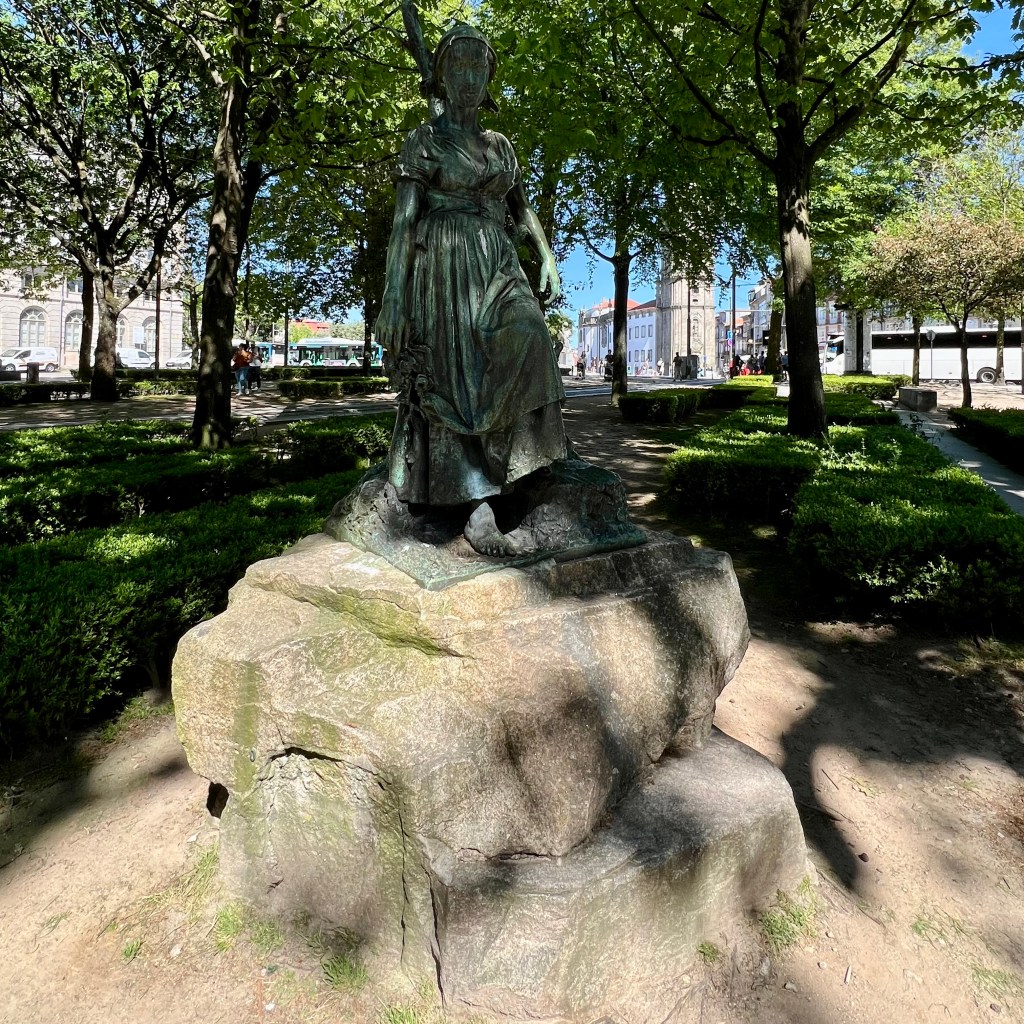
On a more serious note, there is also a statue of António Ferreira Gomes; a Portuguese Roman Catholic bishop who is considered one of the most notable figures of Portuguese Catholic hierarchy in the 20th century. Looks like he wore funky glasses!

After exploring the park, I spied the Livraria Lello & Irmão, commonly known as the Lello Bookshop and dubbed the most beautiful bookshop in the world.  For now, we’ll have to take their word for it as it’s too nice a day to wait in line to peruse a crowded bookstore.

Lello Bookshop
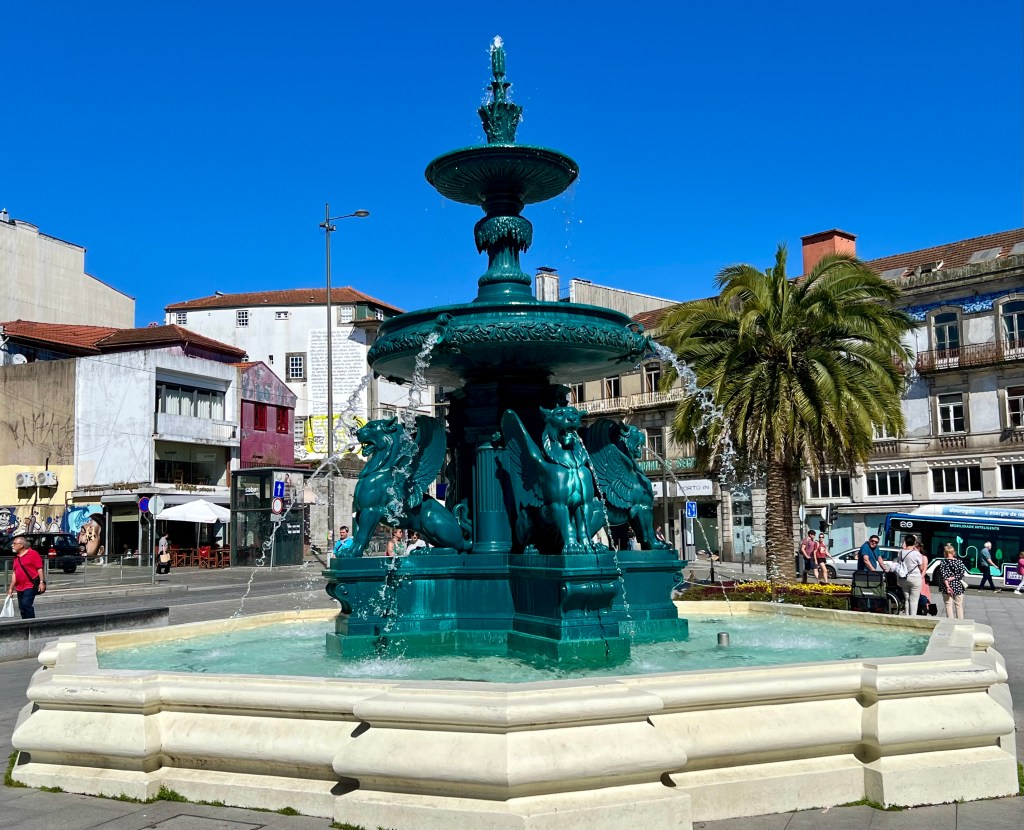
Fountain

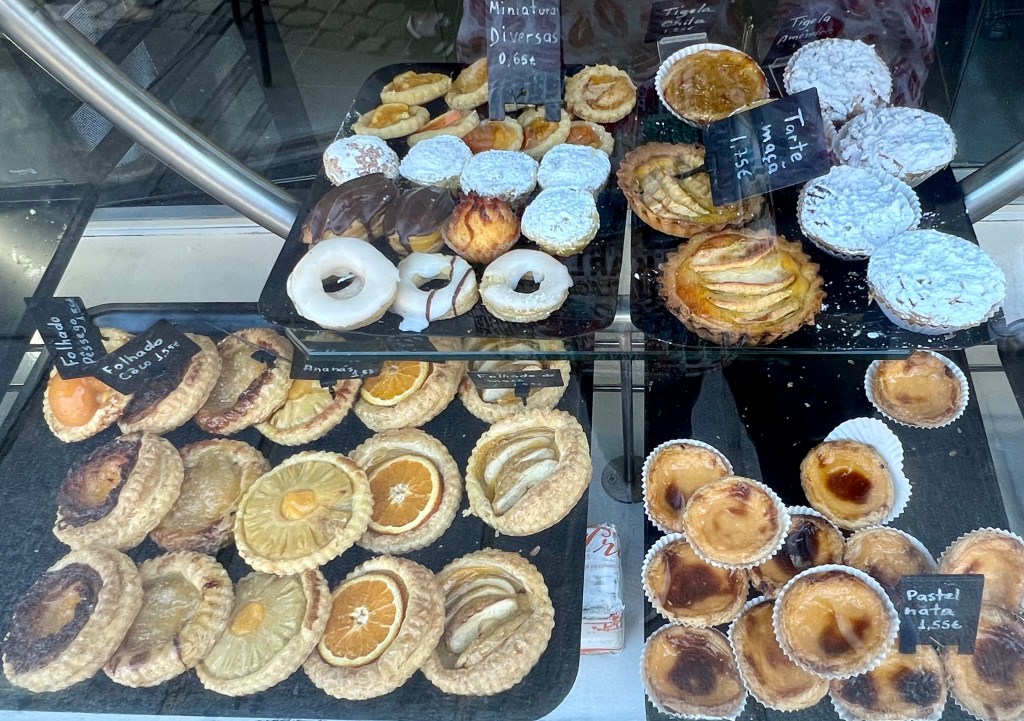
I did do a bit of window shopping including this pastry shop which I avoided as the hotel serves tea and cake between 5 and 6 so I can have a snack then. 

Pastries

I’m starting to run out of steam so I head back down the hill (down is easier than up!) and only get slightly lost on the way back to the hotel where there is complementary port (yum), cake and fruit for the guests.

Time for another nap or at least some chilling before calling it a night early. Tomorrow is another day.  Adventures await…

Aggies’ Mediterranean Adventure

October 31, 2023

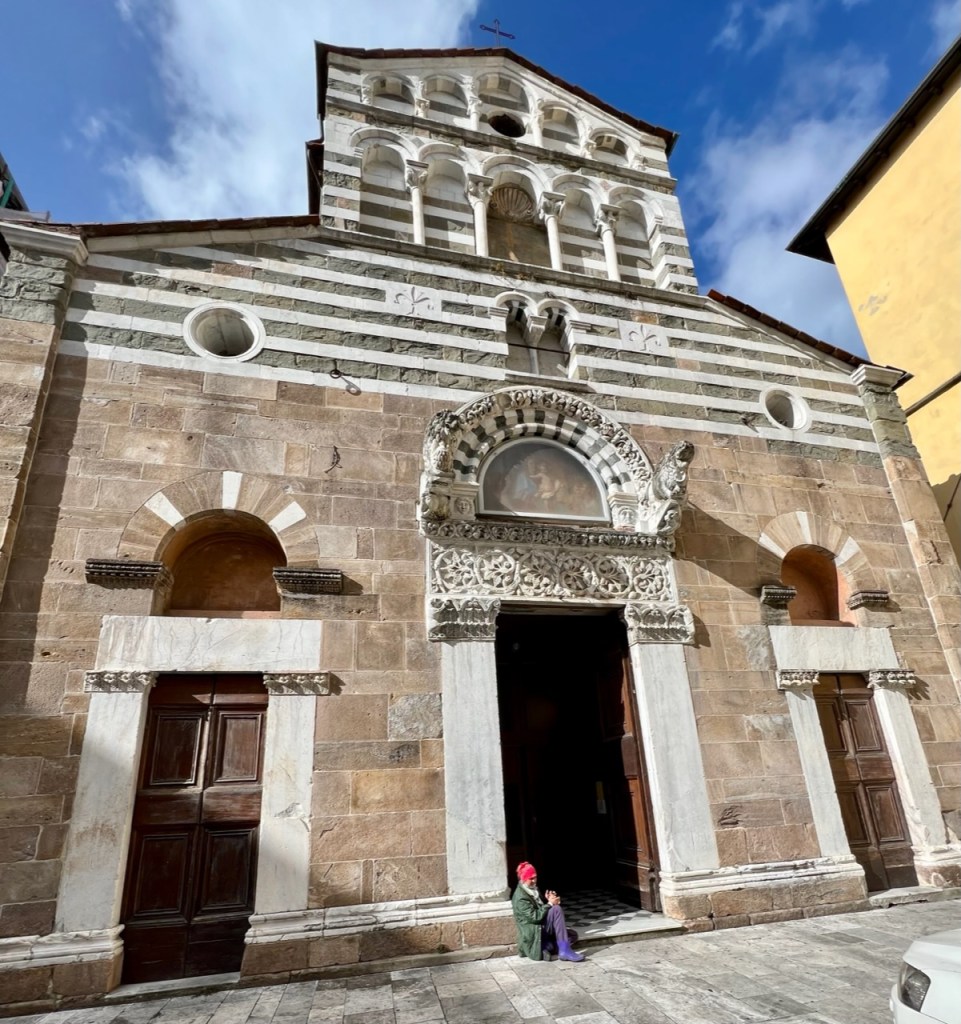
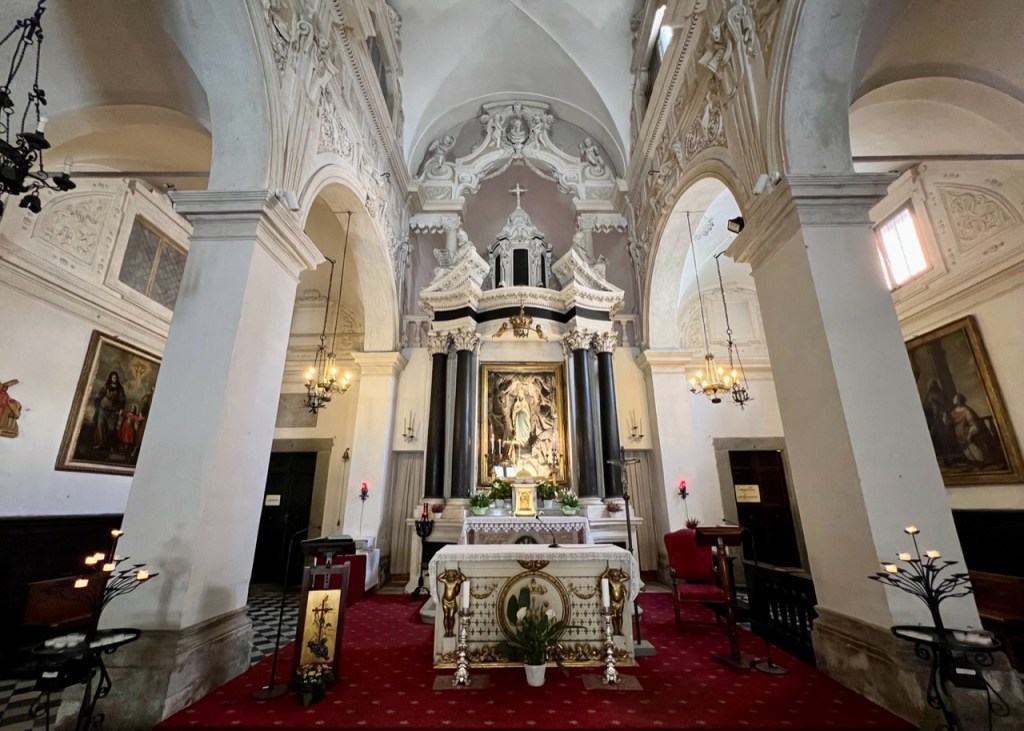
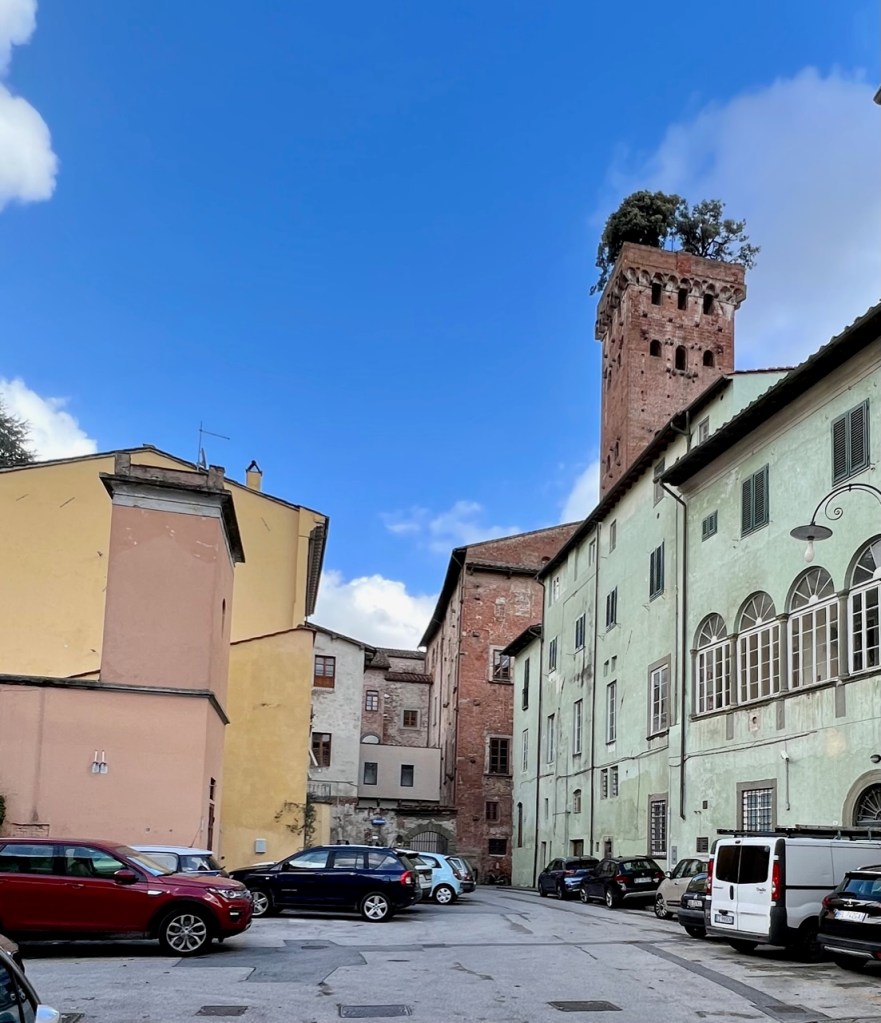
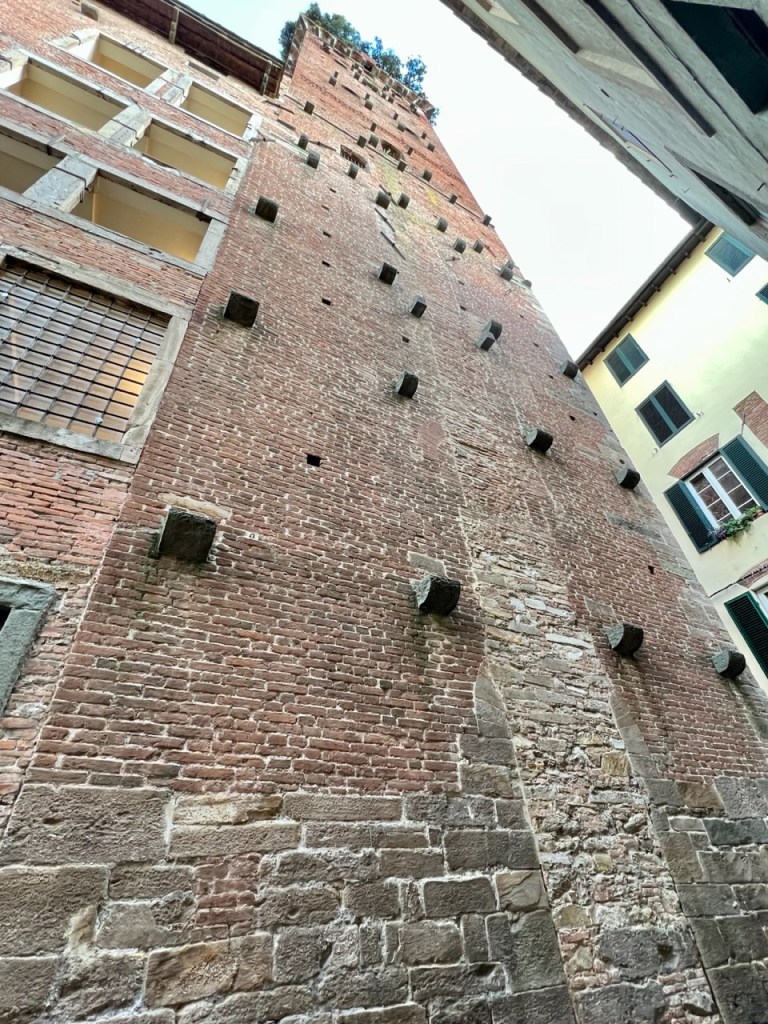
Today is our last day of touring in Tuscany before we fly home tomorrow and we’re off to Lucca; a city situated in Tuscany region of Italy on the banks of Serchio river. Its historic center is surrounded by well-preserved Renaissance walls, and its roads are made up of cobblestones. The massive ramparts built during the 16th and 17th centuries are now popular for strolling and cycling, with tree-lined pathways providing a scenic view.

Originally, we had booked a walking tour here as it’s a larger centre so, again, we are wandering on our own, hoping to see the sights and not get totally lost. We do find/stumble across some interesting sights in between window shopping. 

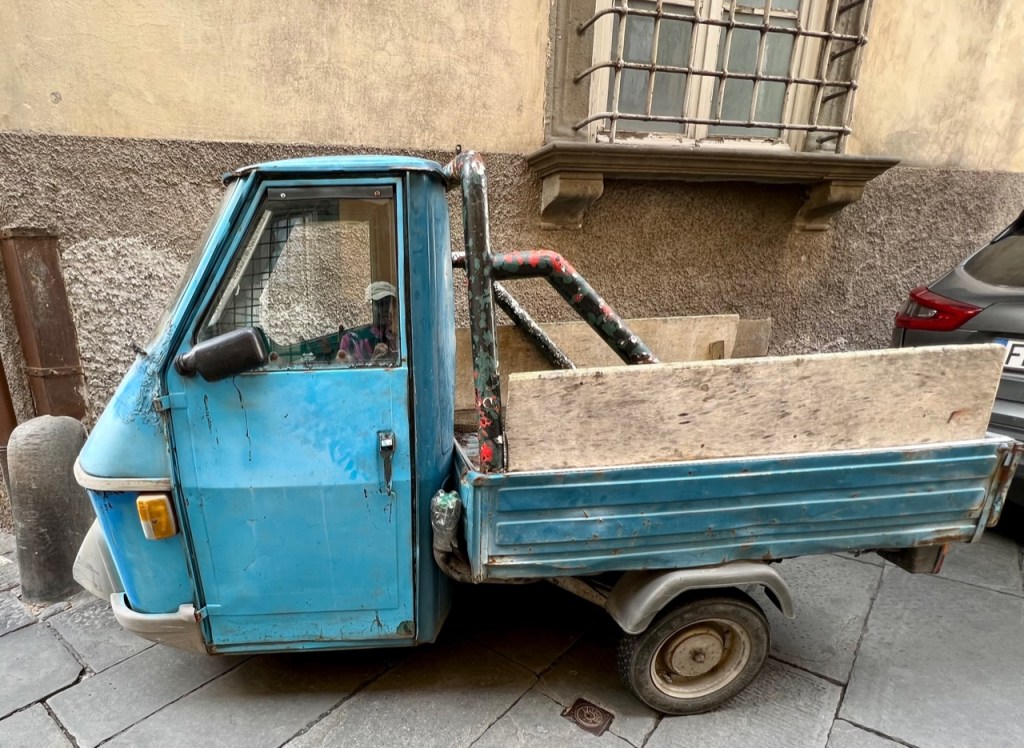
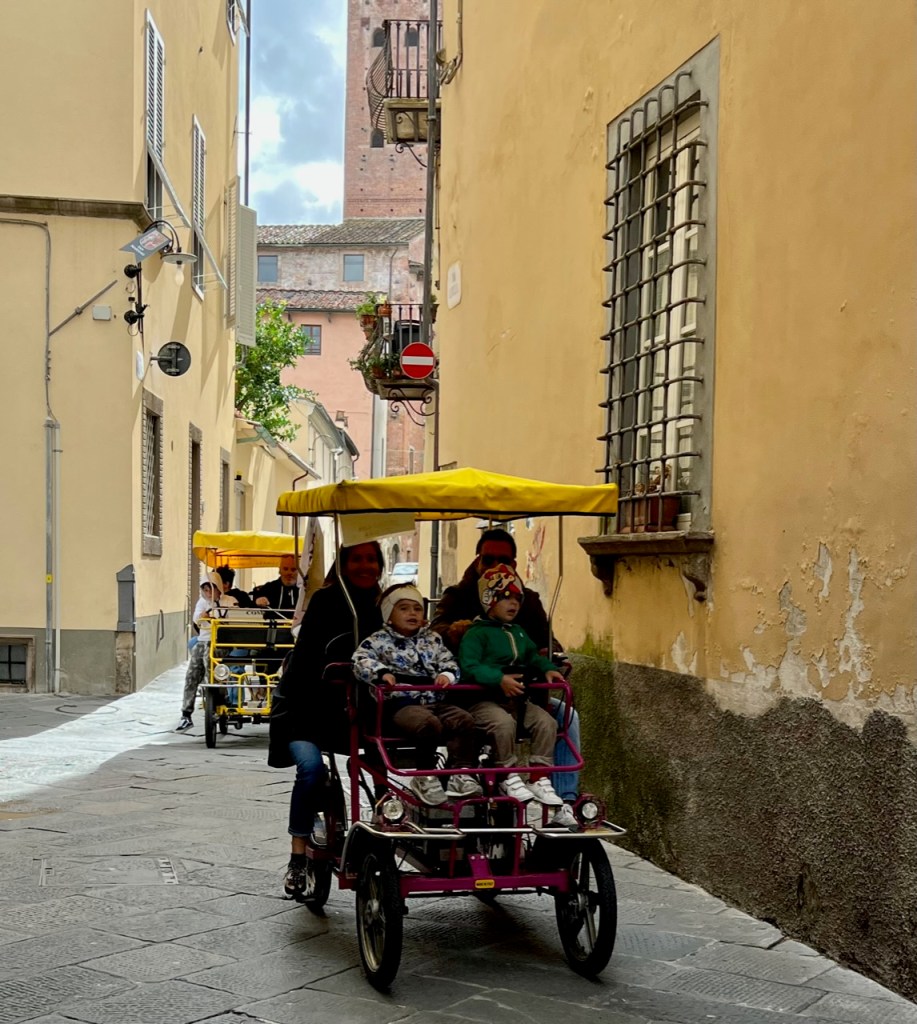
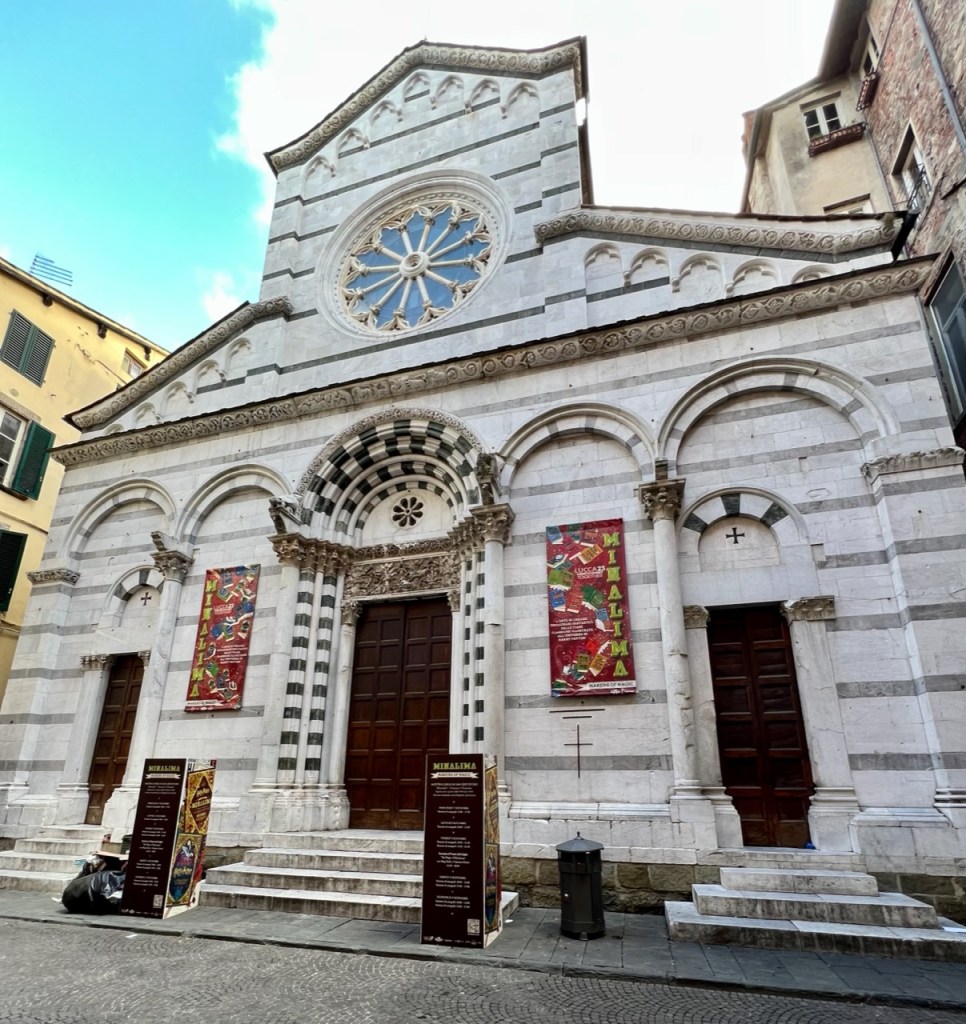
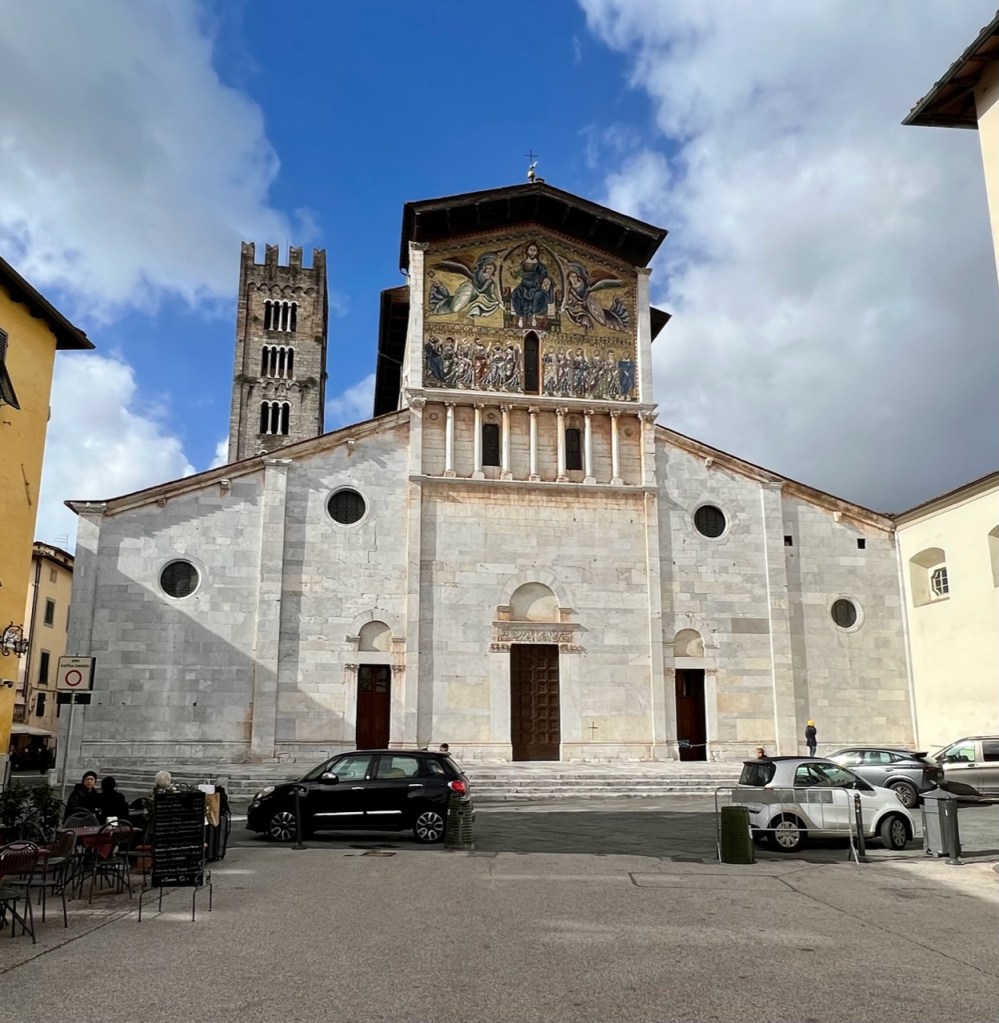
Looks like some festival is coming to town as in addition to the historic buildings, etc. there are a number of interesting/weird installations in the old city.  

Here are some of the more interesting sights we saw before having a lovely lunch in the Piazza dell’Anfiteatro. The ring of buildings surrounding the square follows the elliptical shape of the former second century Roman amphitheater of Lucca. 

After lunch we’re on the search for a perfect gelato and a bathroom with toilet paper before heading to the car for the return journey to our timeshare

Time to pack up all our bits and bobs for our early morning flight tomorrow.  Dinner is a mish mash of leftovers; meat, cheese, olives, pizza and snacks washed down with Prosecco and red wine. We crashed early in anticipation of the 5:30 am wake up for our flight from Florence. 

Tomorrow is another day.  Trains, planes and automobiles await …

Postscript – we all made it home and with all our luggage. After giving our credit cards and ourselves a rest, we’ll need to start thinking about where we want to go next… thanks for tagging along on our journey. 

Aggies’ Mediterranean Adventure

October 30, 2023

We’re staying close to our home base at the timeshare today because we’ve been running the roads and some folks aren’t feeling 100%. Today’s adventure turned into a tale of three villages.

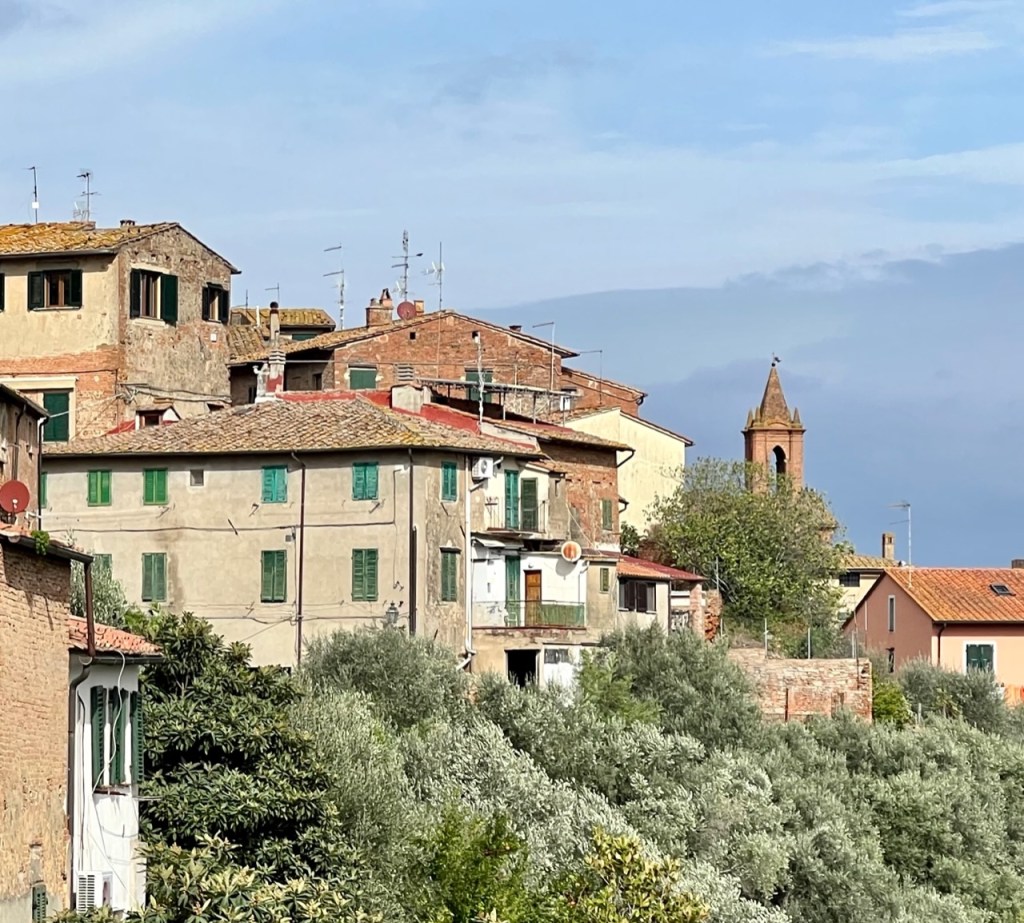
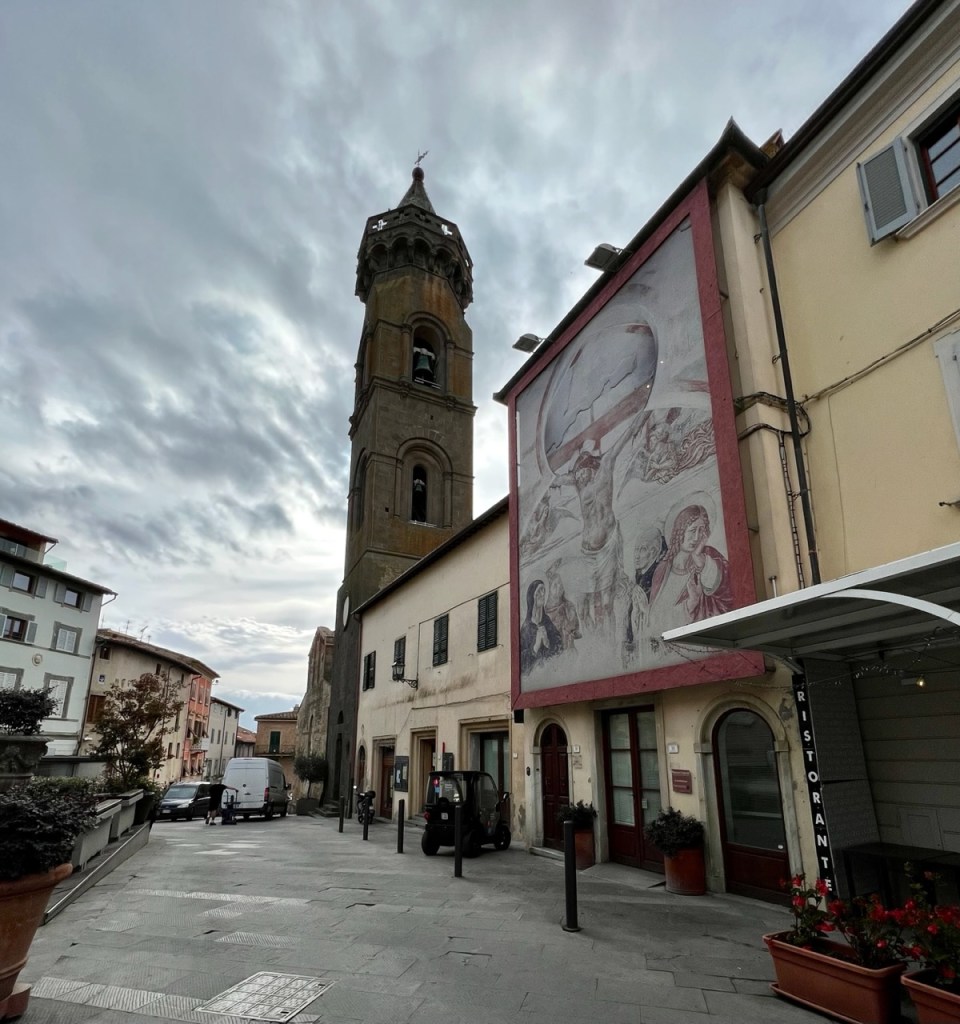
Our first whistle stop was the village of Peccioli; built around the ruins of the medieval castle, and surrounded by olive groves, vineyards and green hills. 

Heading into Peccioli

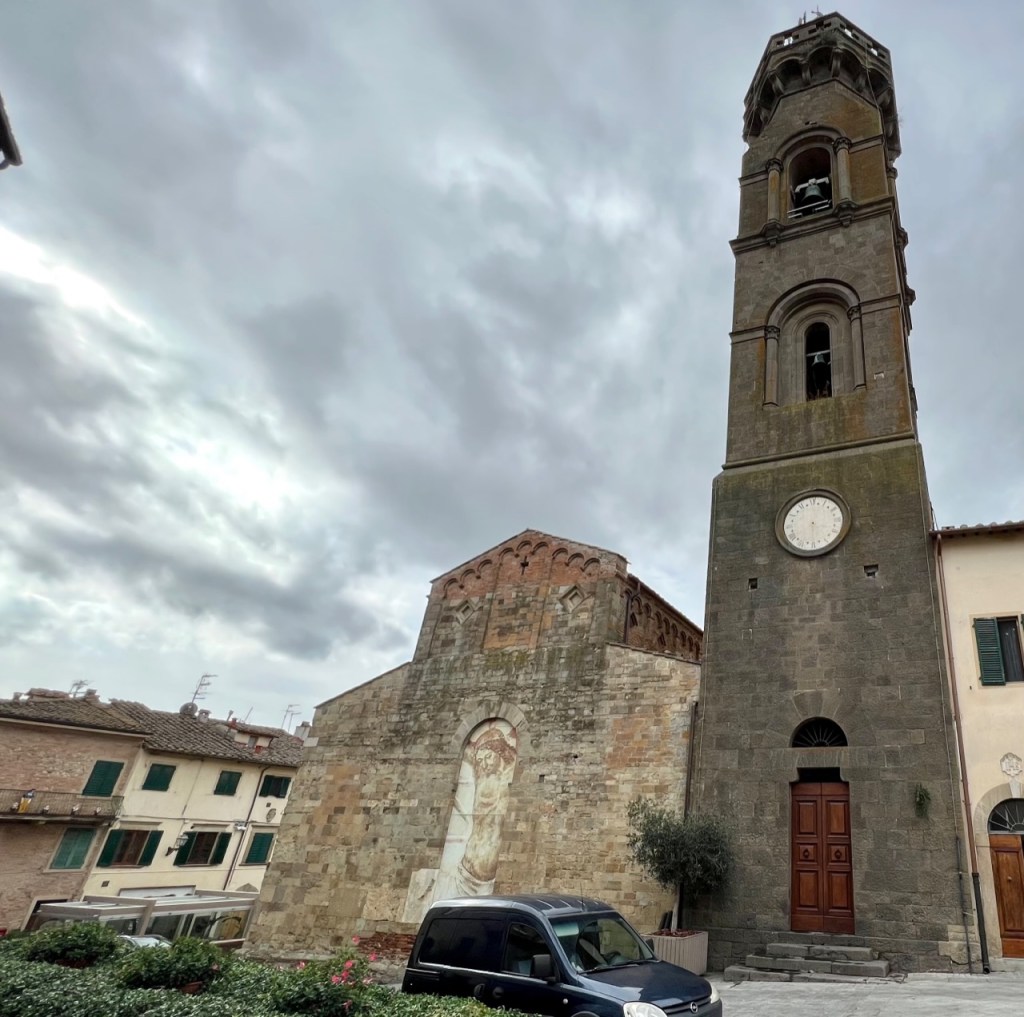
The story of Peccioli starts in the first half of the 12th century when the town was a defensive bulwark of Volterra. Over the centuries the castle of Peccioli was gradually expanded and strengthened. During these centuries there was a rivalry for the control of the village between Pisa and Florence and Peccioli was alternatively controlled by both.

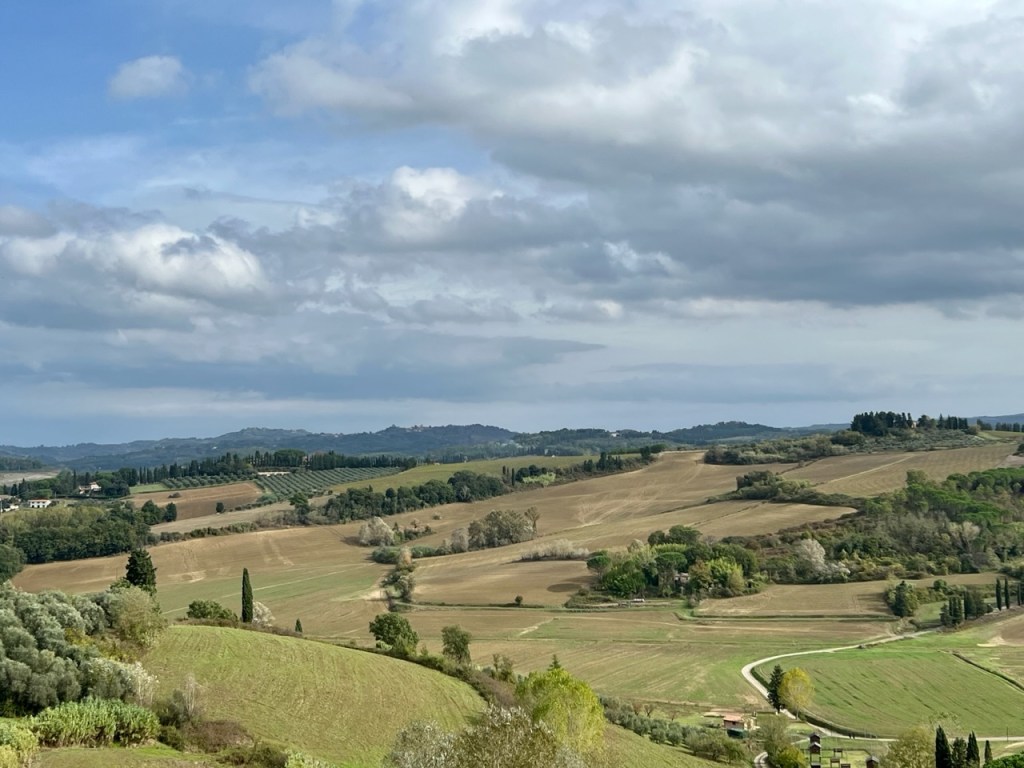
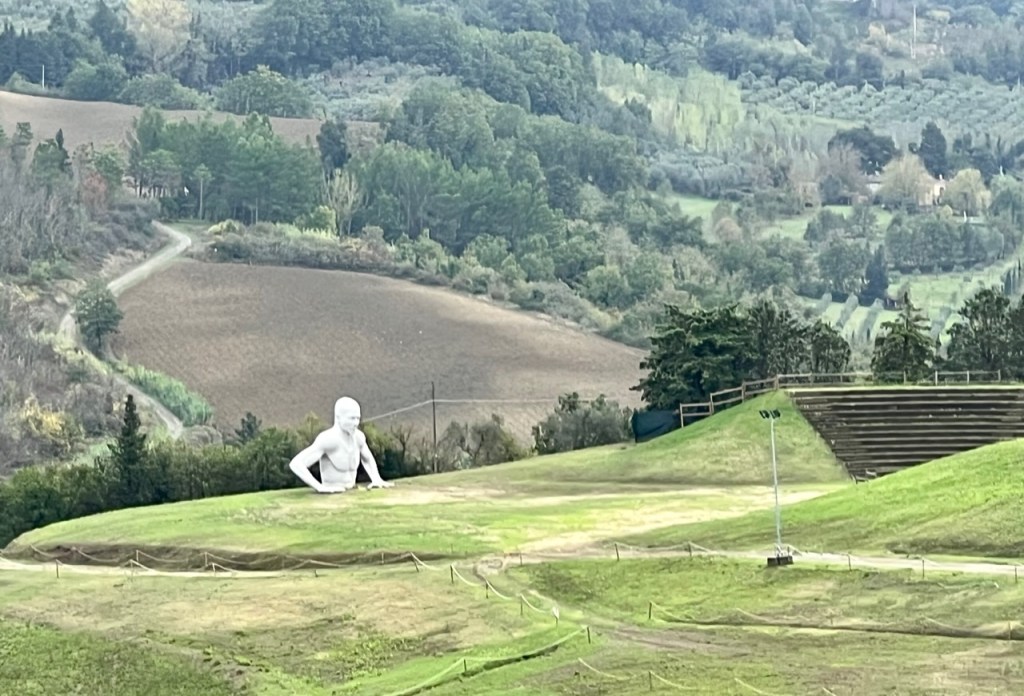
Today, Peccioli is a municipality of 5000 inhabitants which has been awarded the Orange Flag, a trademark of the association Italian Touring Club given to small villages and communities in the Italian inland that stand out for high quality of hospitality and excellence in accommodation services. It is a charming town to wander through for an hour or so with the amazing views of the Tuscan countryside we’ve come to expect and some things we don’t.

Never gets old …
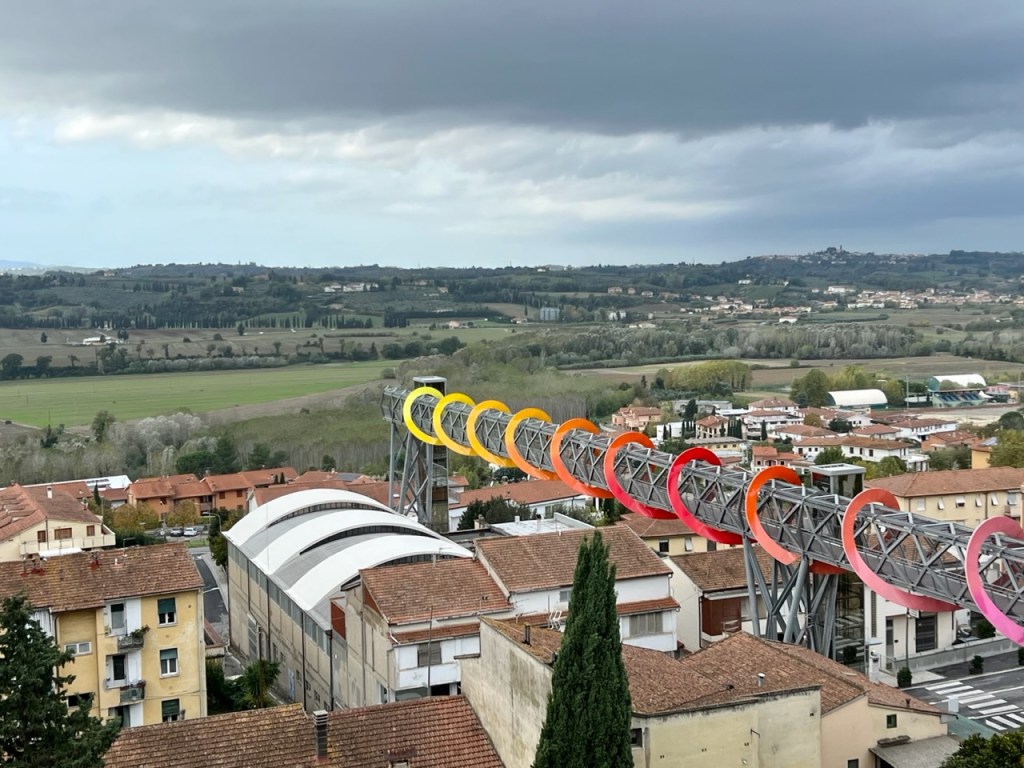
Bridge to nowhere
Not sure where he’s off to …

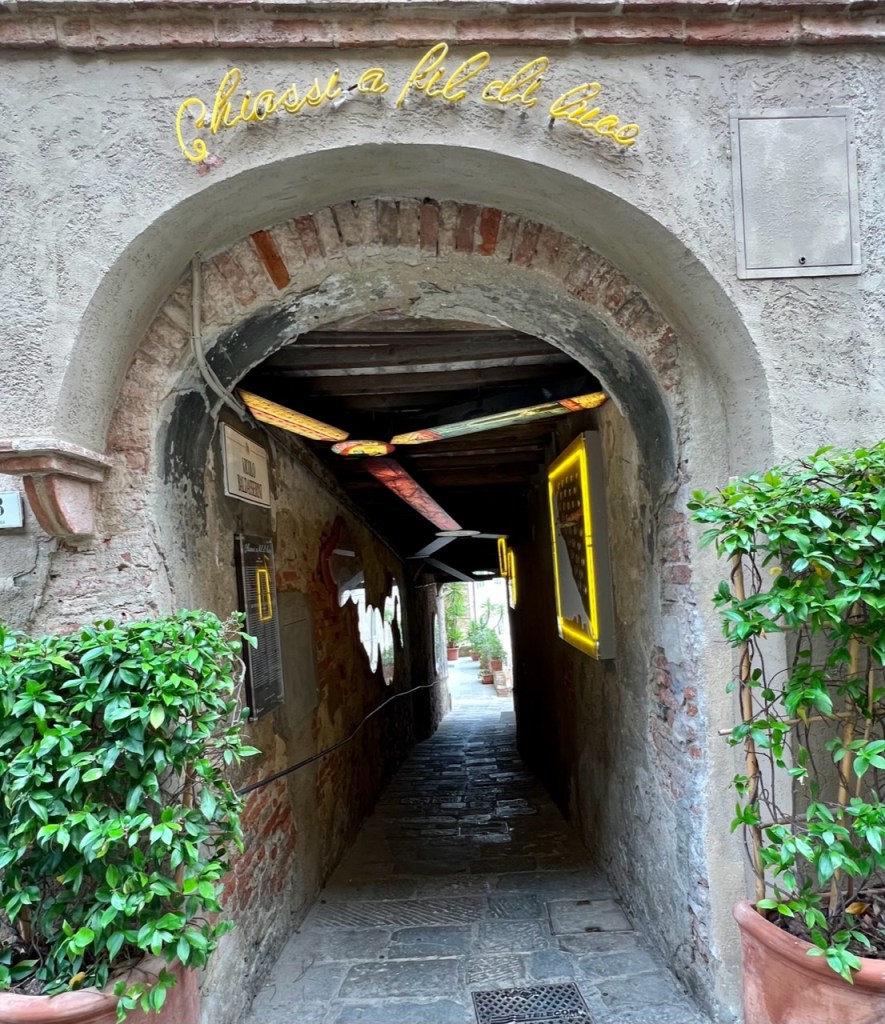
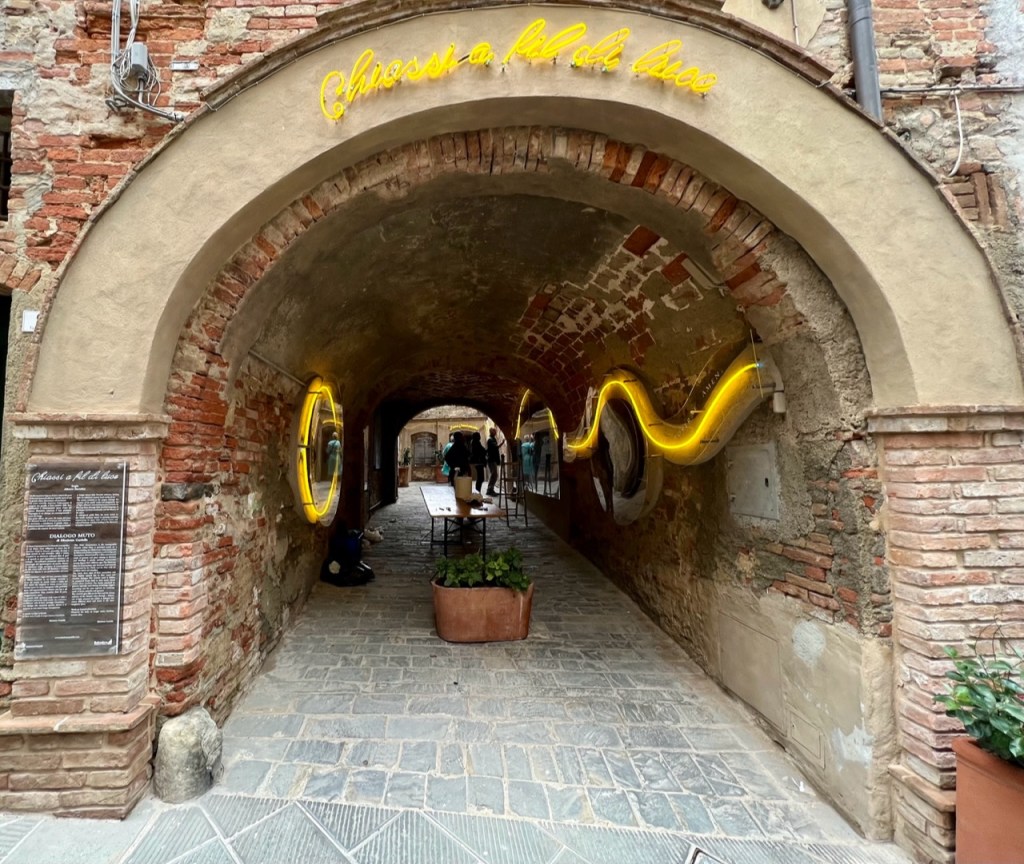
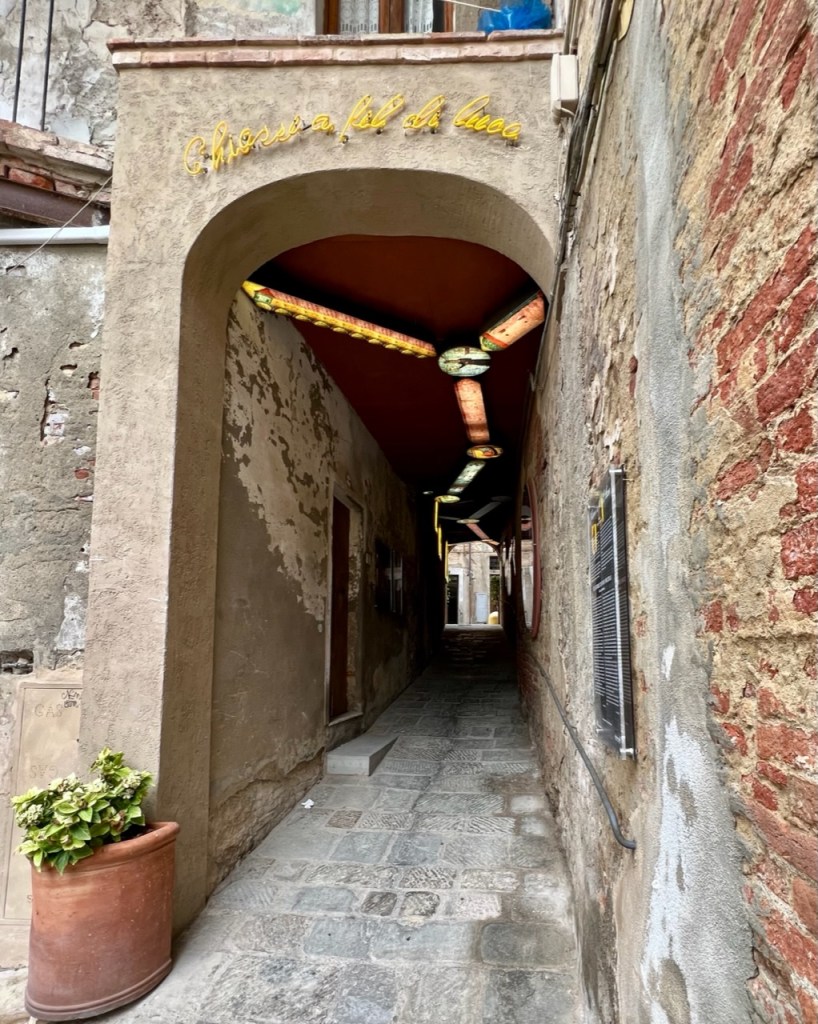
The town has a number of art installations Chiasi a fil di luce – a bright thread that links Peccioli archways.

Leaving Peccioli, we head to Terricciola which bills itself as the city of wine.

An ancient village of Etruscan origins, Terricciola was built on a tufa (yellow sandstone) plateau. The Village is located at the centre of the province of Pisa, between Pontedera and Volterra.

View from the top

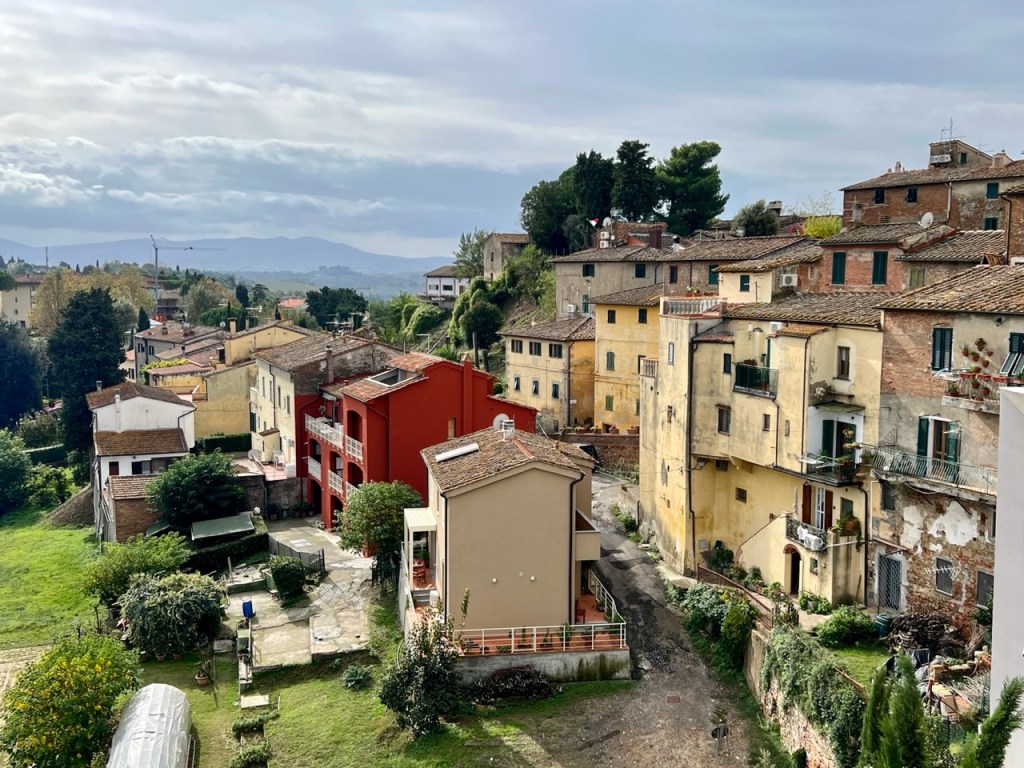
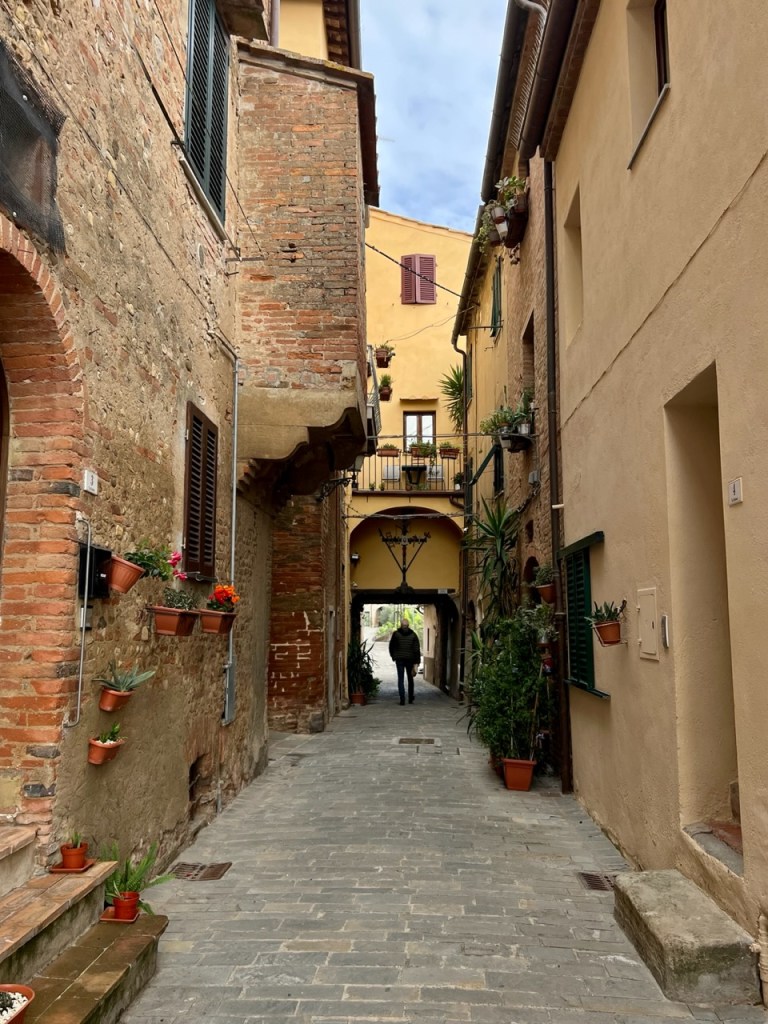
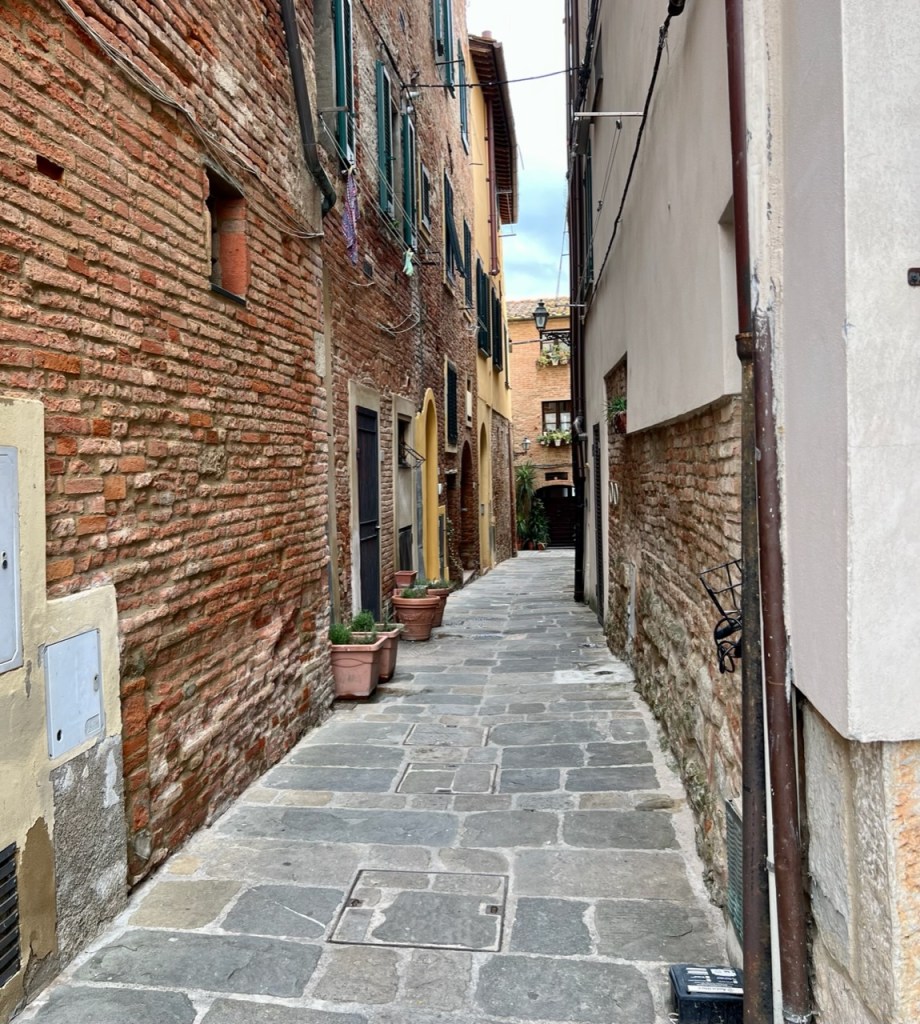
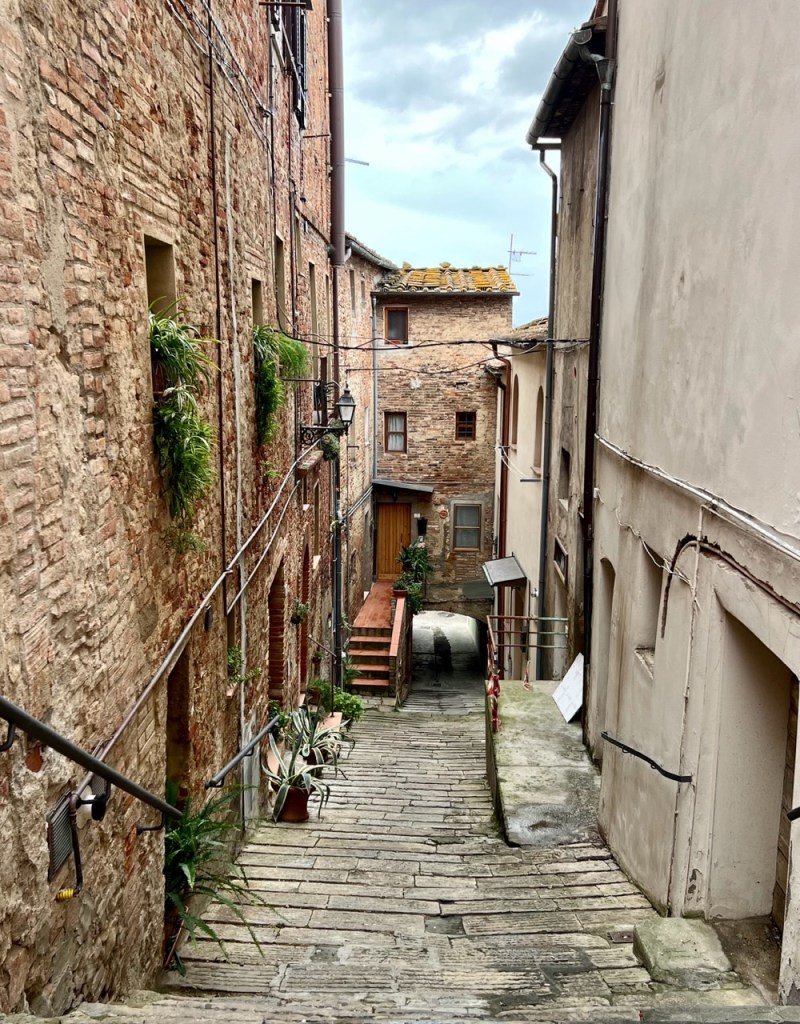
The town is full of narrow streets and medieval buildings. In the historic centre of Terricciola are a number of hypogei; tombs dug in the tufa by the Etruscans in the 4th century BC. The Hypogei running under the historical centre of the village were later used by the local population to store of grain and wine in medieval times or as a refuge during the two World Wars.

Like many other settlements in the Pisane inland, Terricciola endured until 1406 the alternating domain between the cities of Pisa and Florence.

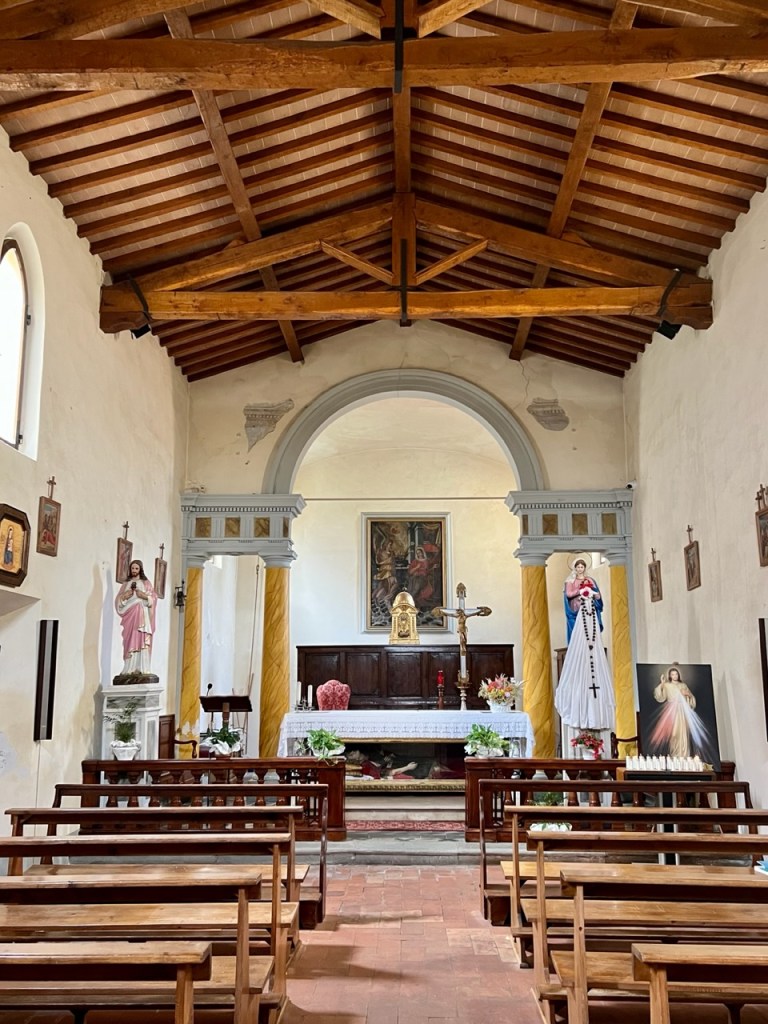
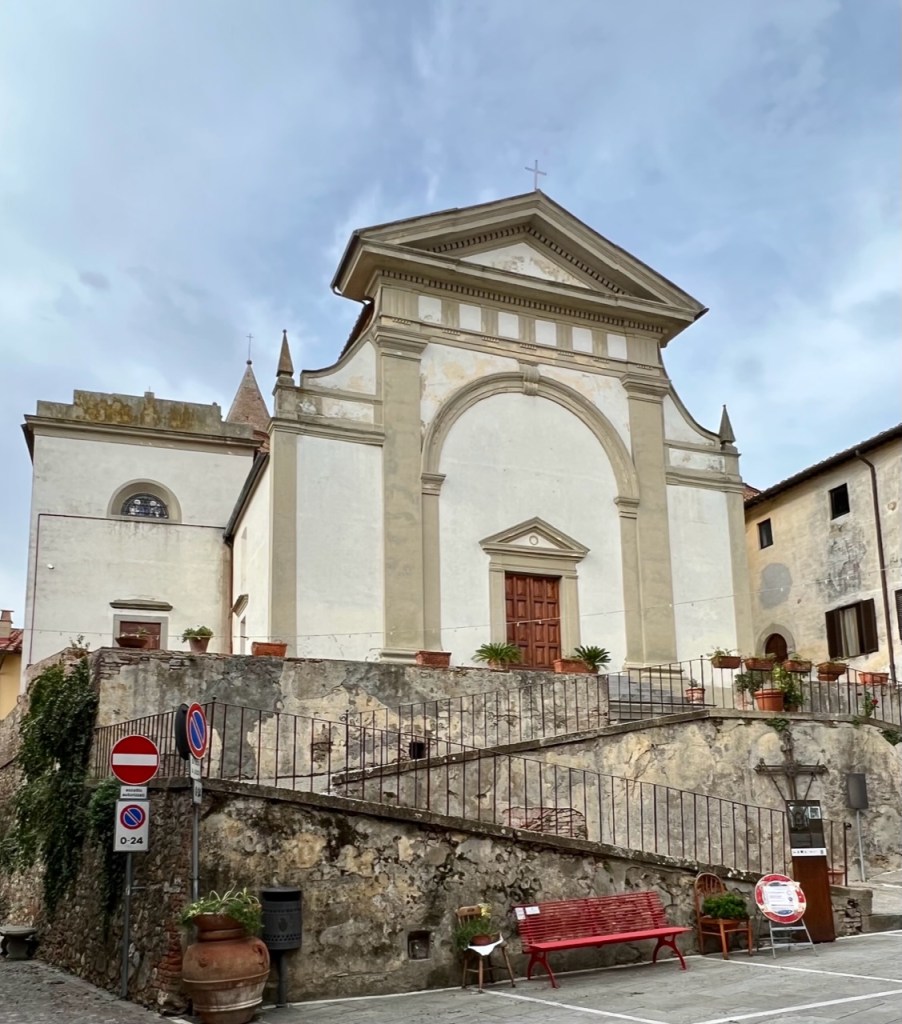
Rising from the highest point in the village, the church of San Donato is located in the historical centre of Terricciola.

Church of San Donato
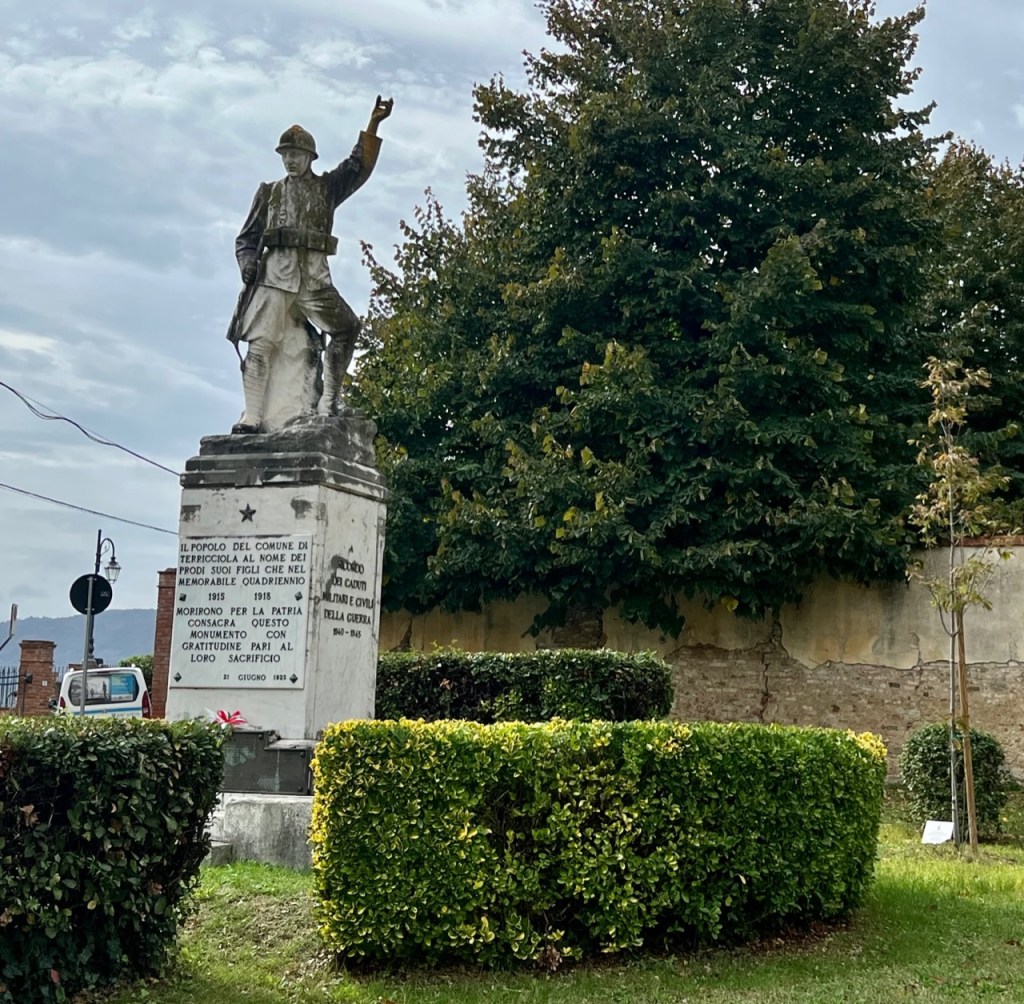
WWI Memorial

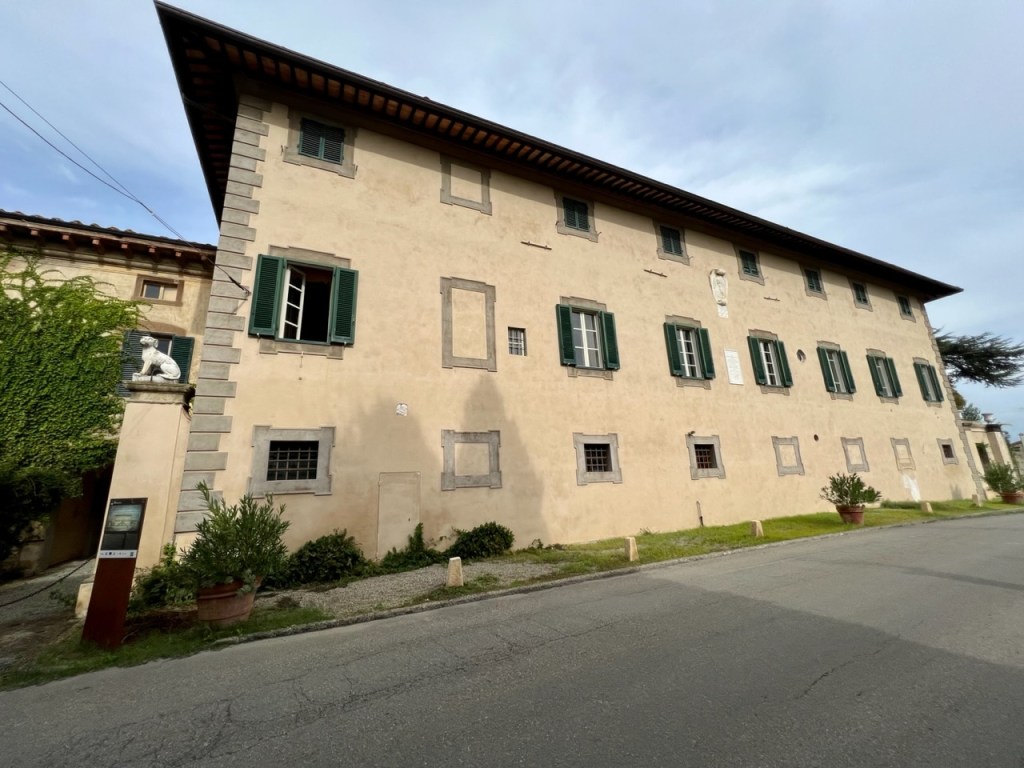
On the outskirts of town is the Villa Gherardi del Testa; former country residence of the noble Pisan family built around the middle of 1600. 

Villa Gherardi del Testa

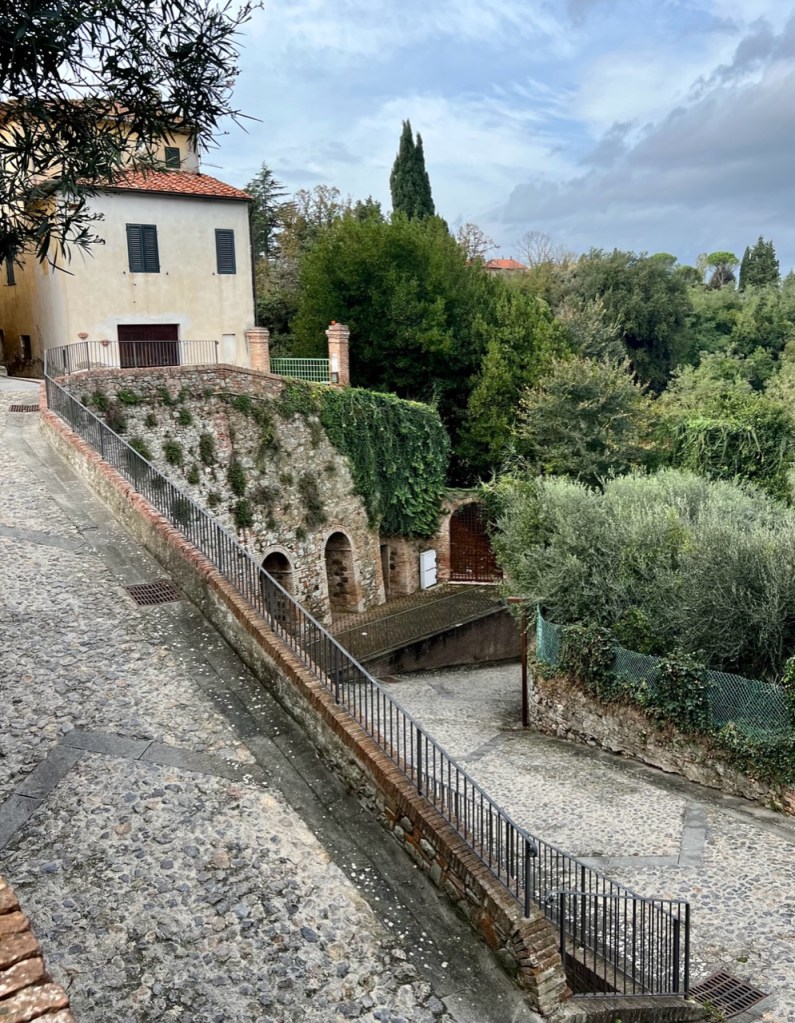
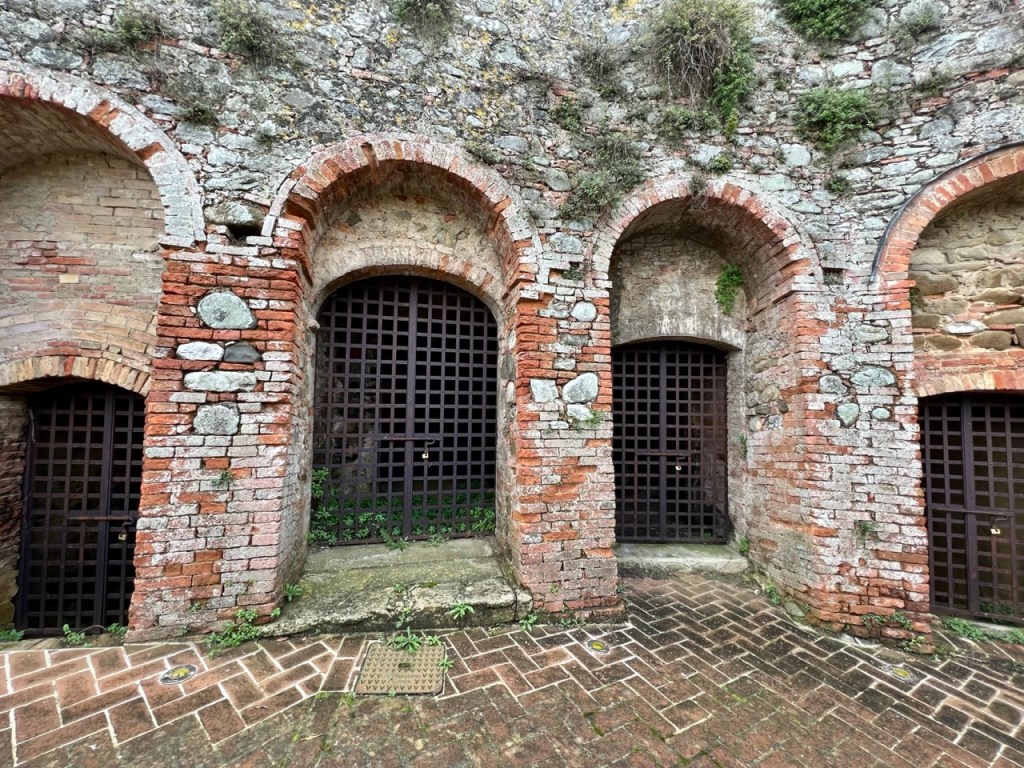
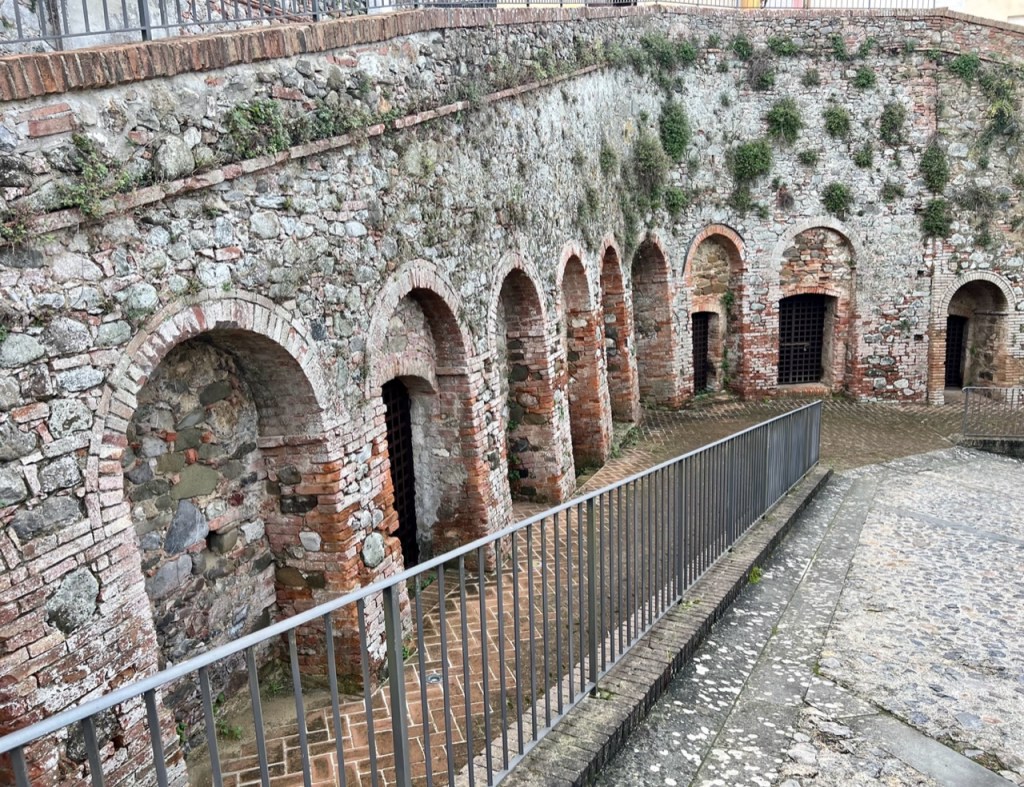
Our third and last stop was the pretty small town of Lari situated where three ridges of the highest Pisan hills meet. Like Terricciola, it has been inhabited since Etruscan times. 

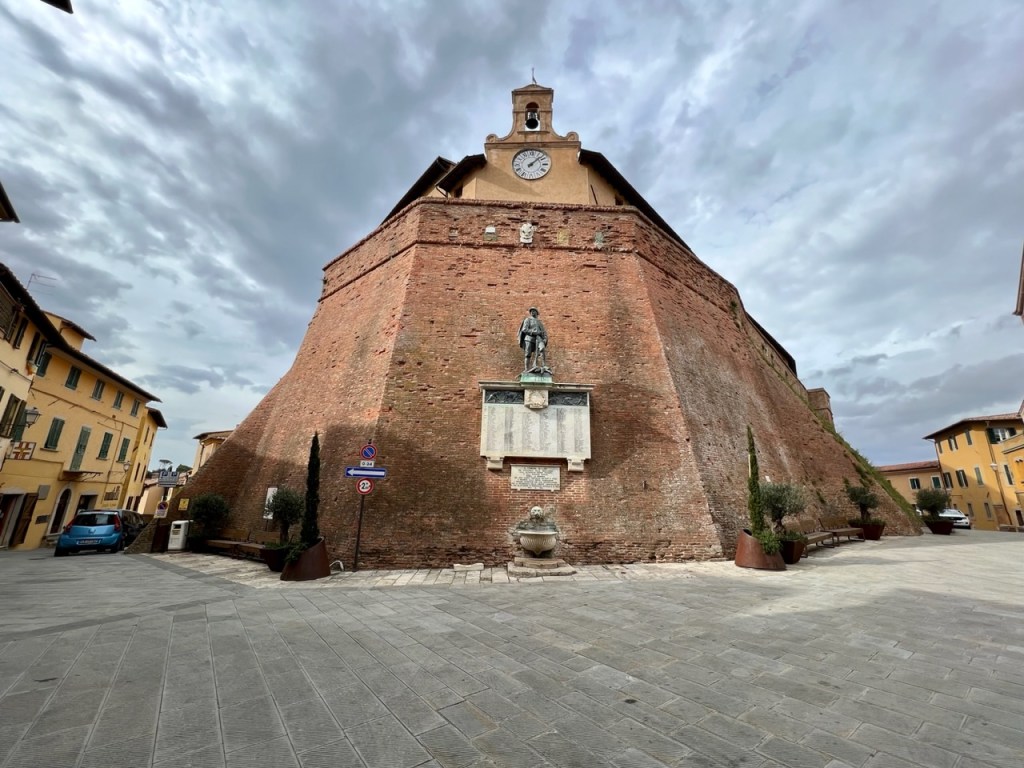
Lari Castle

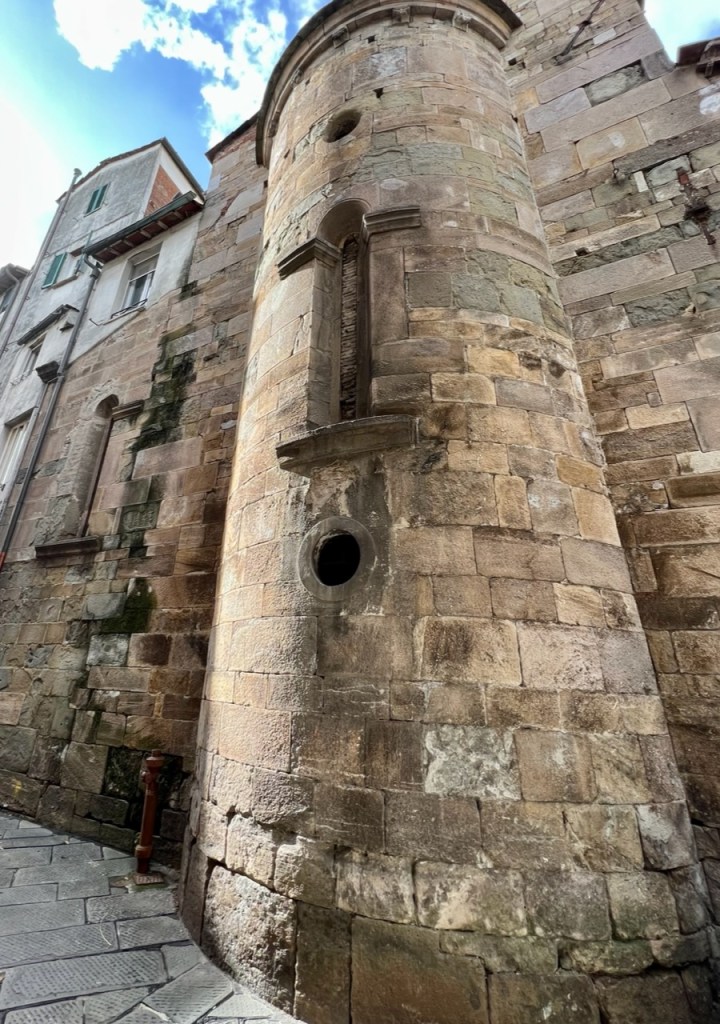
The massive Castle in the centre of the town dates back to the first half of the 17th century. Because of its dominant position of the entire valley of the River Arno, it was an important military stronghold of the Pisan Republic until it was conquered by Florence in October 1406.

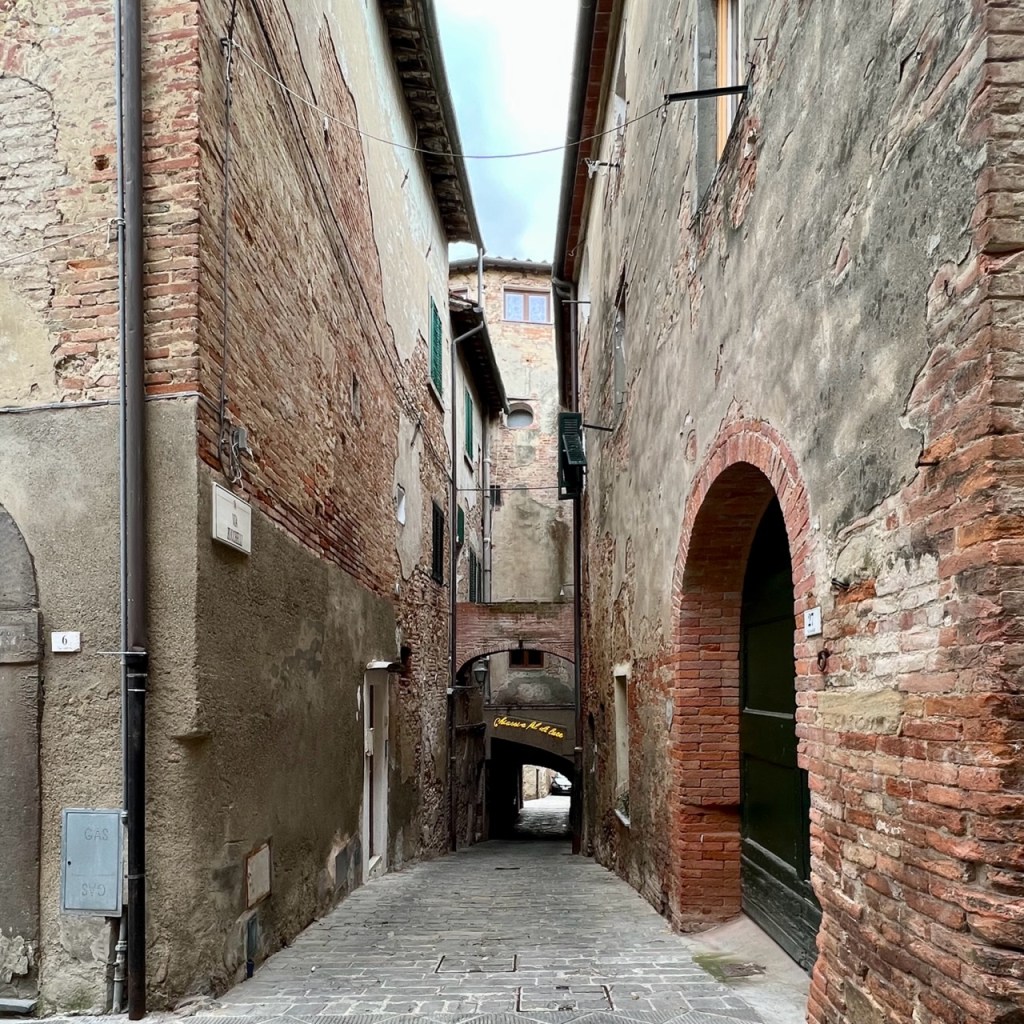
Lari also boasts an active pasta factory on the Via deli Pastifici. Know by the locals as the wrinkle, this narrow street, had two pasta factories in the late 19th century. Today only the Pastificio Martelli remains; maintaining the traditional method of making pasta.

Via deli Pastifici

After wandering through town, we grabbed a gelato for lunch before heading back toward the timeshare to relax for a bit before dinner.

Yummy

On our first night here, we tried to do to the nearby Carlo’s Restaurant for dinner but it was closed for a special event. We went back there tonight and had a lovely dinner with great wine before calling it a night. 

Tomorrow is our last day of touring. Adventures await …
Aggies’ Mediterranean Adventure

October 29, 2023

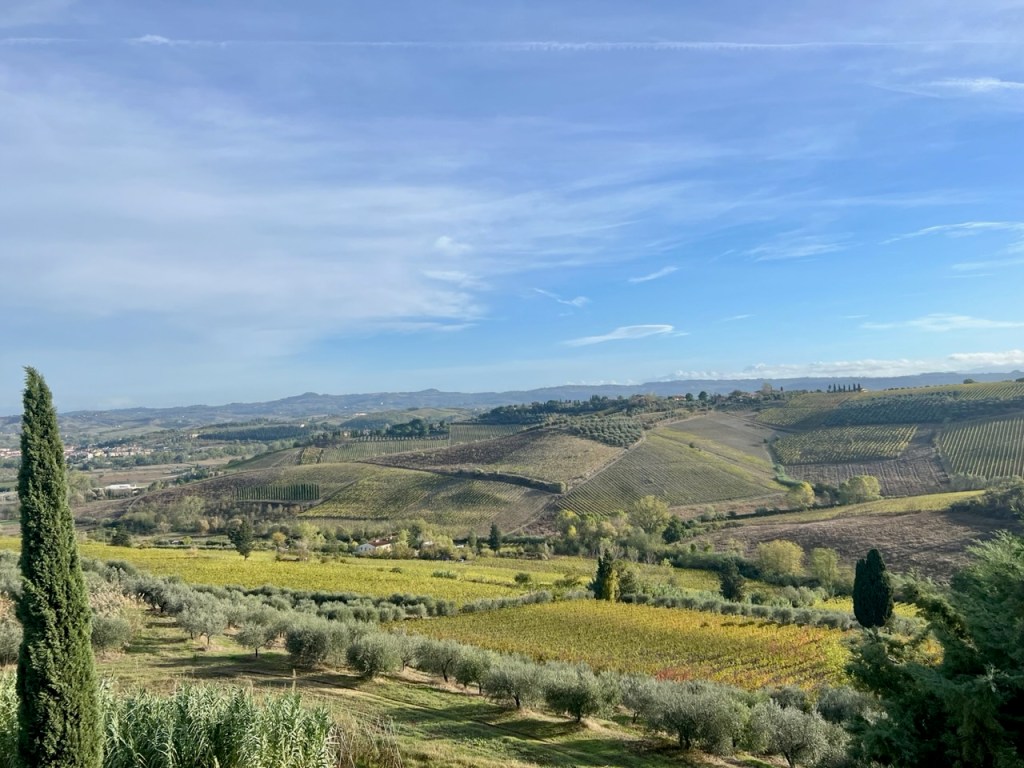
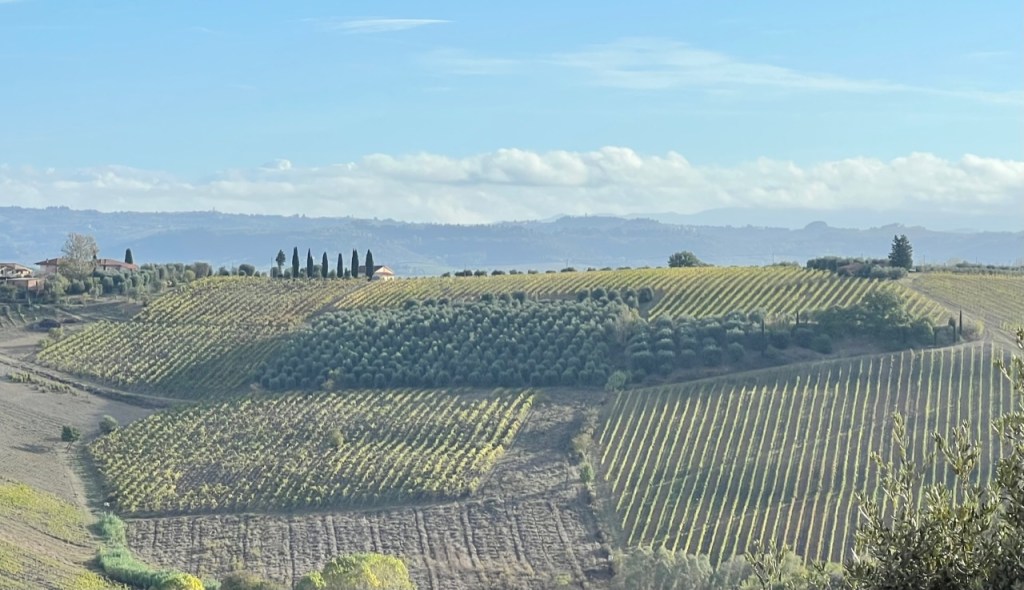
Sadly today we are leaving the farm and heading on to Glenda’s time share in Selvatelle. A few last pics of the amazing views from this property seemed in order. 

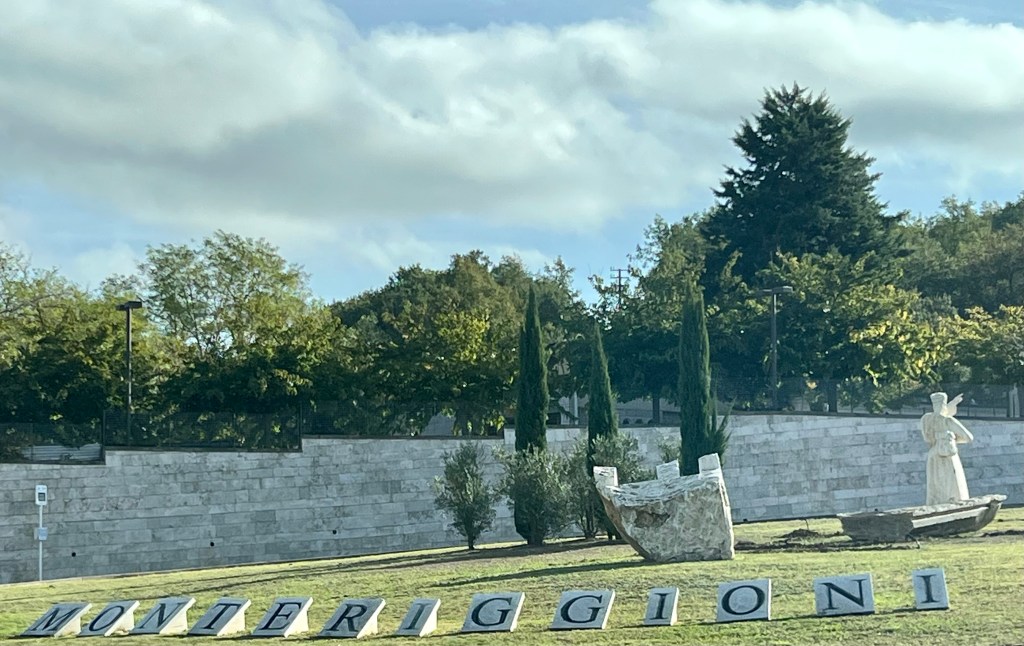
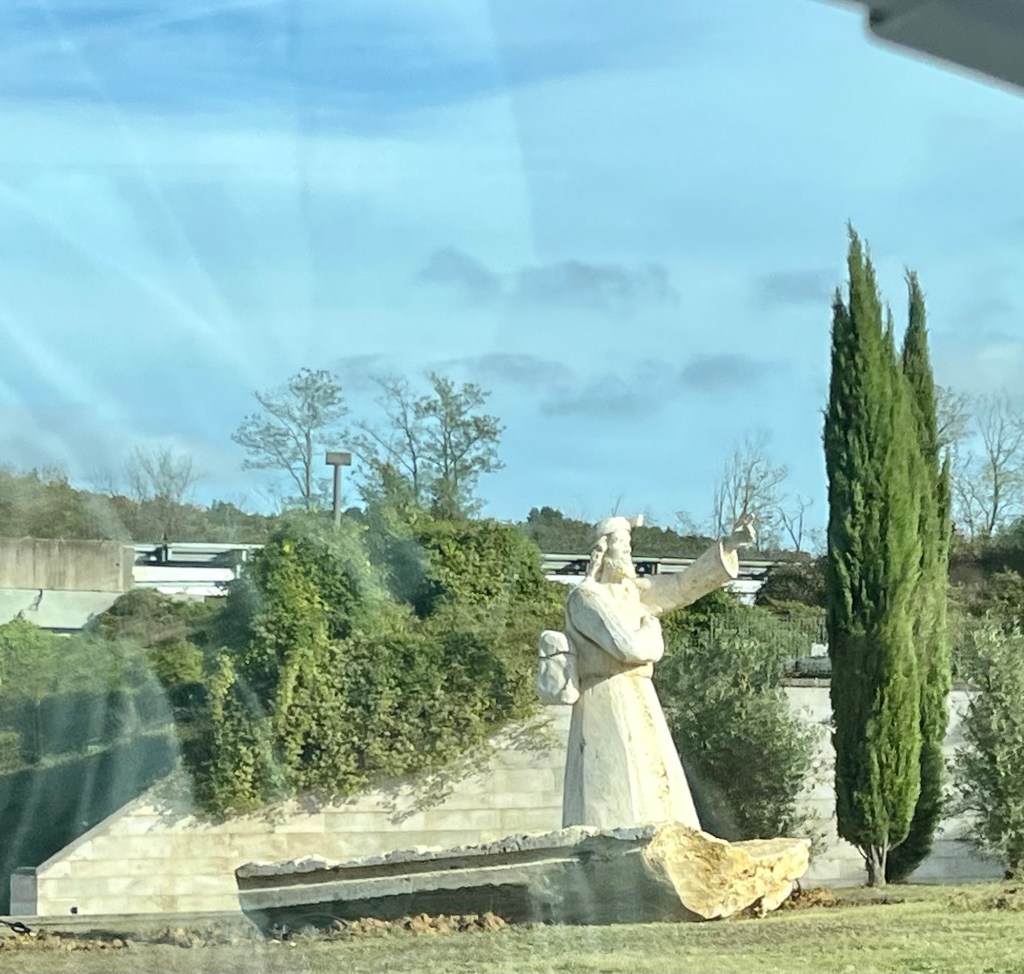
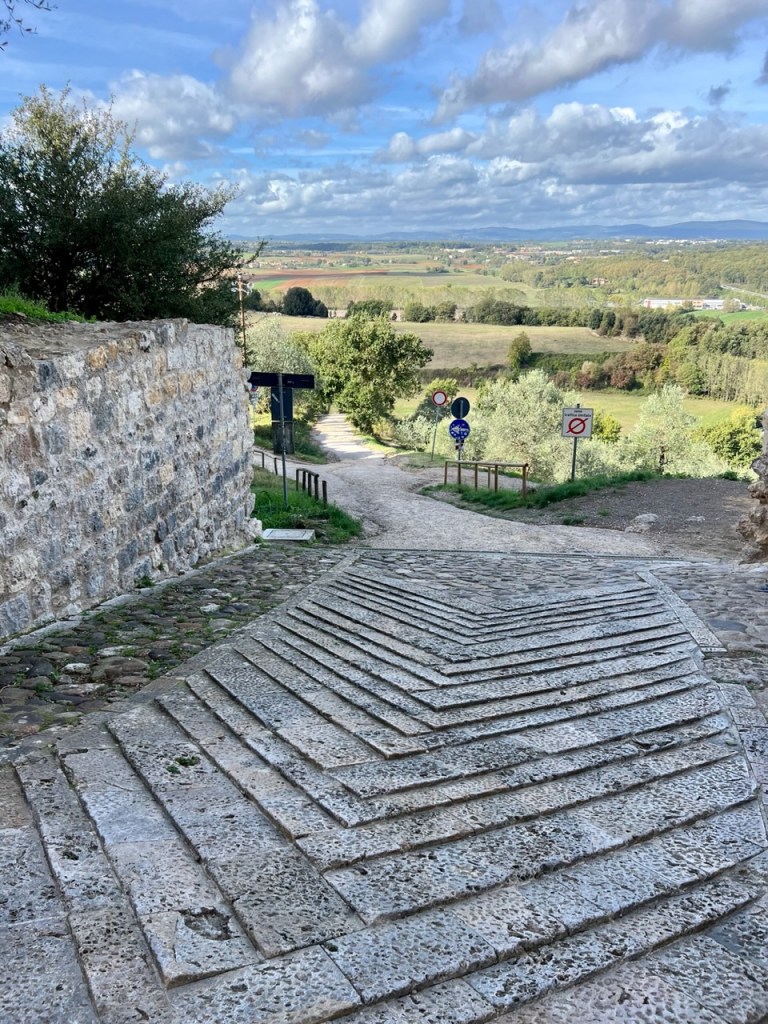
On the way to our new digs, we’re going to make a whistle stop at the town of Monteriggioni. We’ve passed this guy a number of times in our daily jaunts so we’ve decided to follow his instructions and head up the hill to wander a bit. 

Go that way!

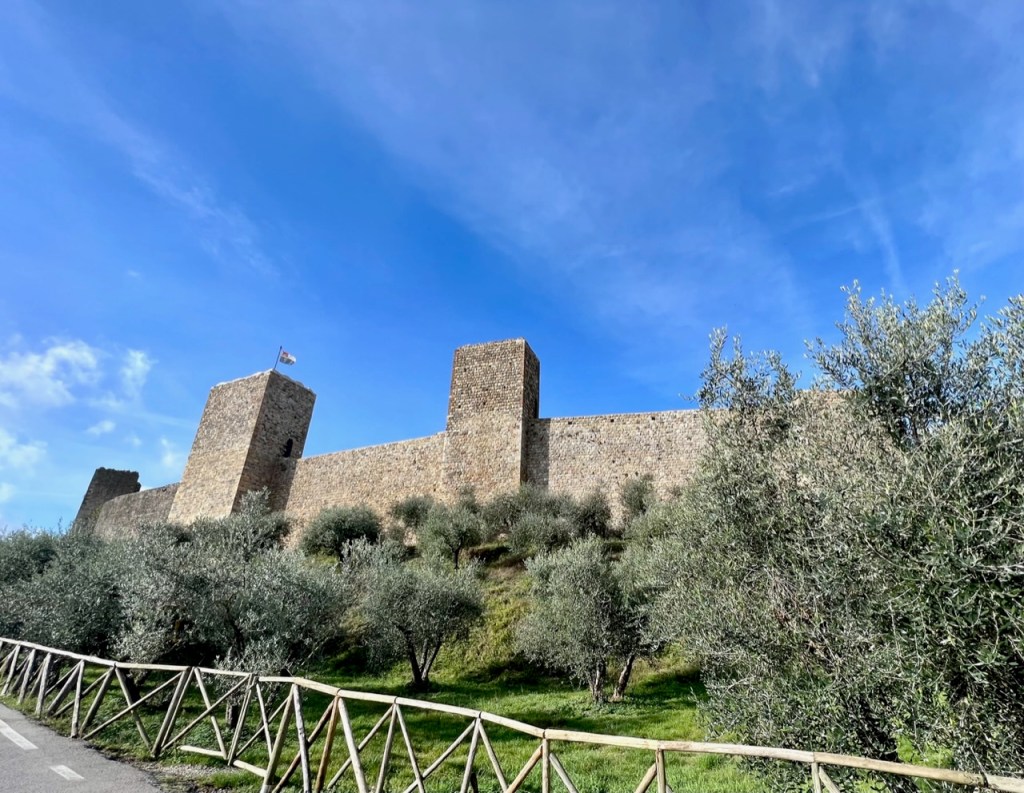
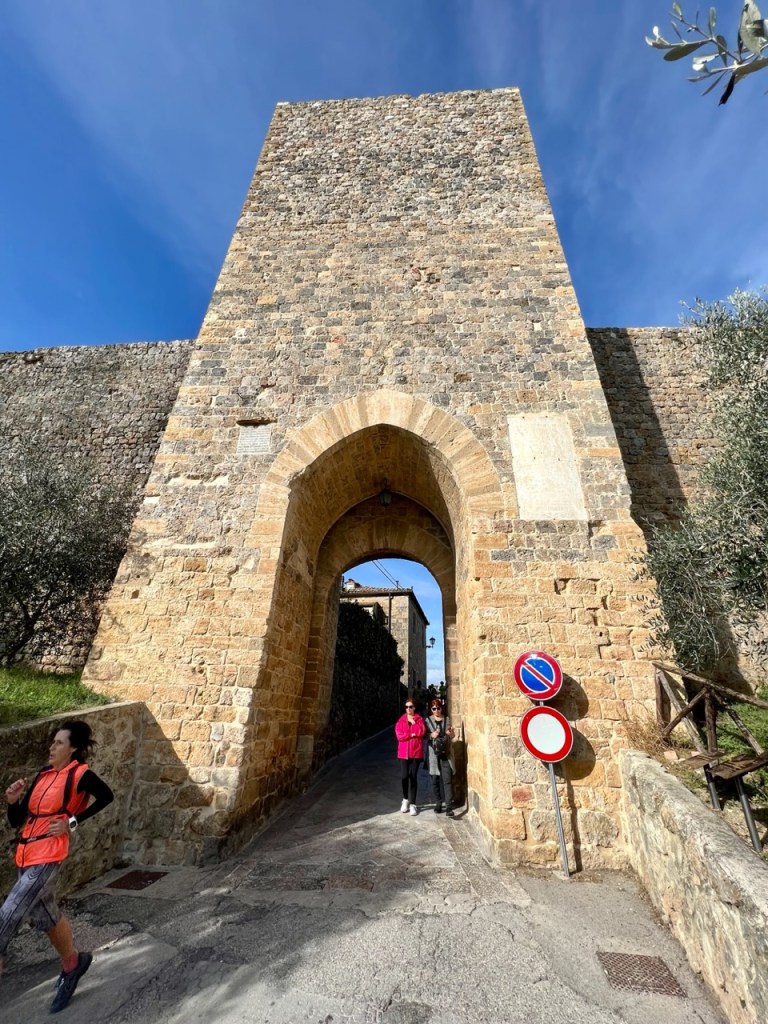
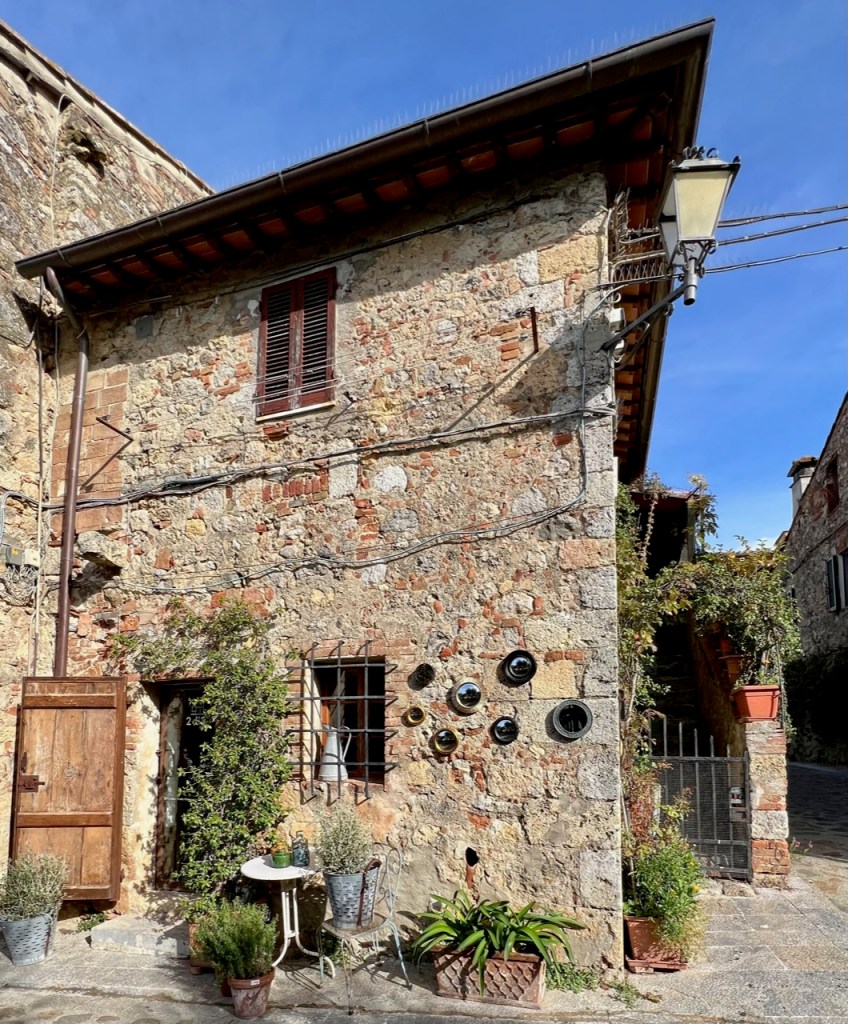
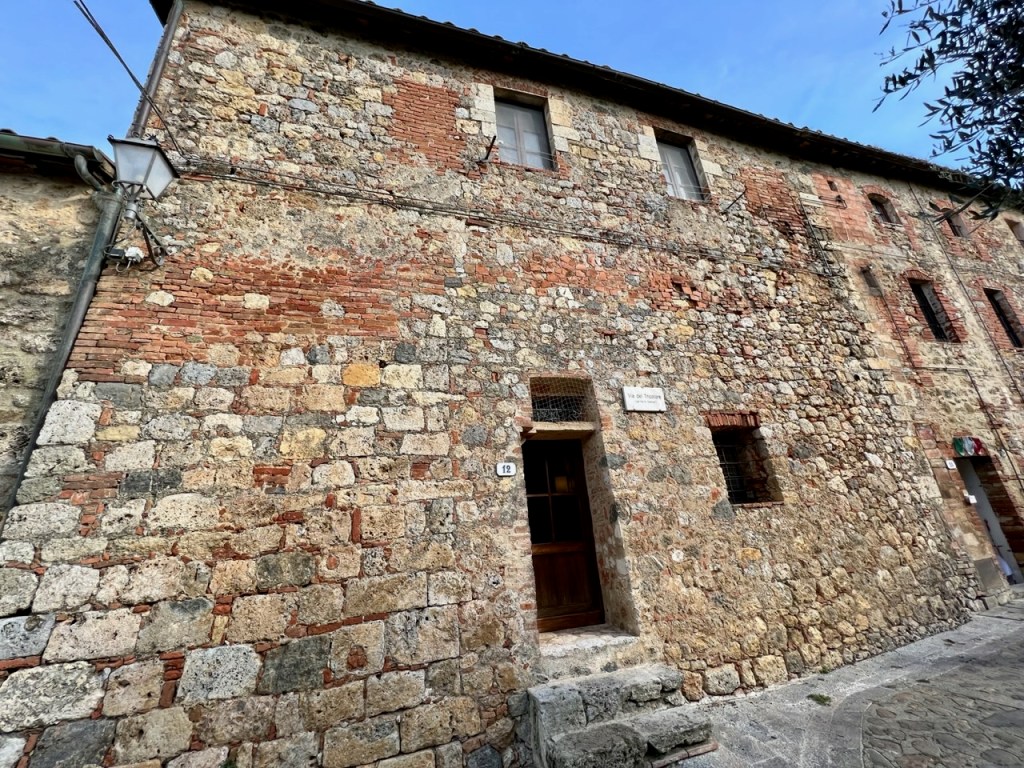
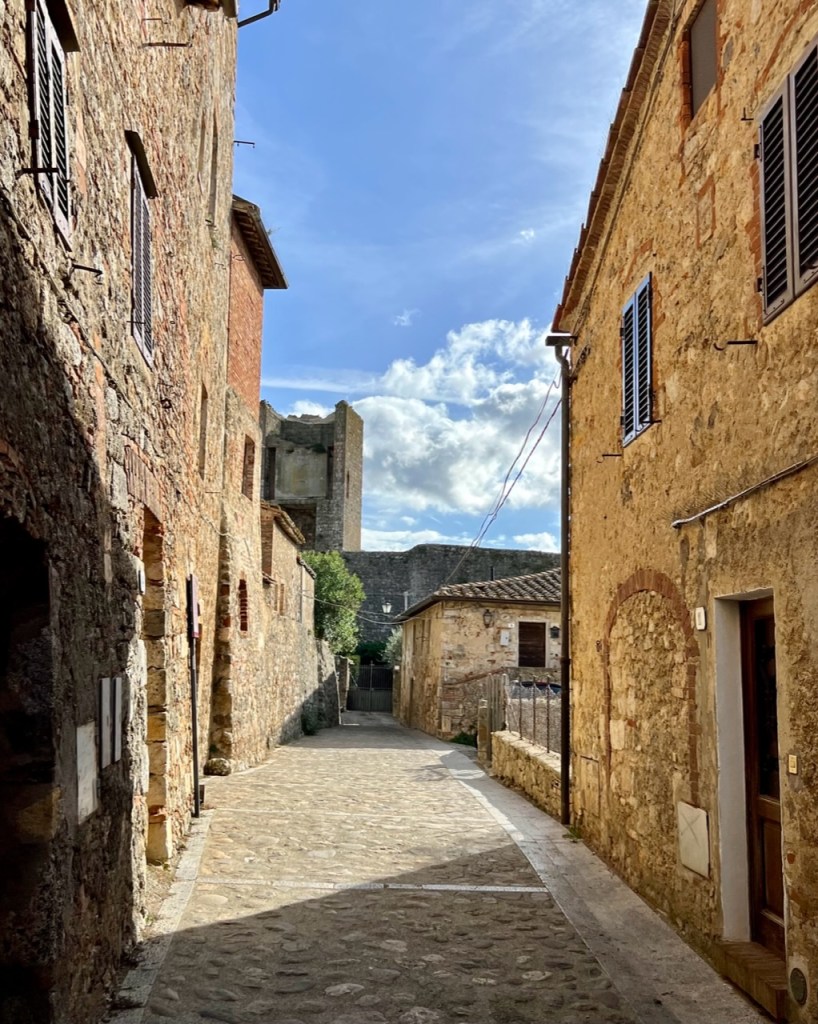
Monteriggioni is a medieval walled town, located on a natural hill, built by the Sienese in 1214–19 as a front line defence in their wars against Florence. The Castle of Monteriggioni provided a strong defensive bulwark against the expansion of Florence into the strategically sensitive area crossed by the Via Francigena. Because of its defensive function, the history of Monteriggioni includes countless armed clashes with its rival Florence which tried many times to destroy the walled hamlet. Monteriggioni, fell only once; during the siege of 1553.

There was a race the Sunday we were in town and given my strong dislike of hills for walking, I really felt for the people running up the steep hill. I started an impromptu cheering section that brought a smile or maybe it was a grimace to some of the participants. 

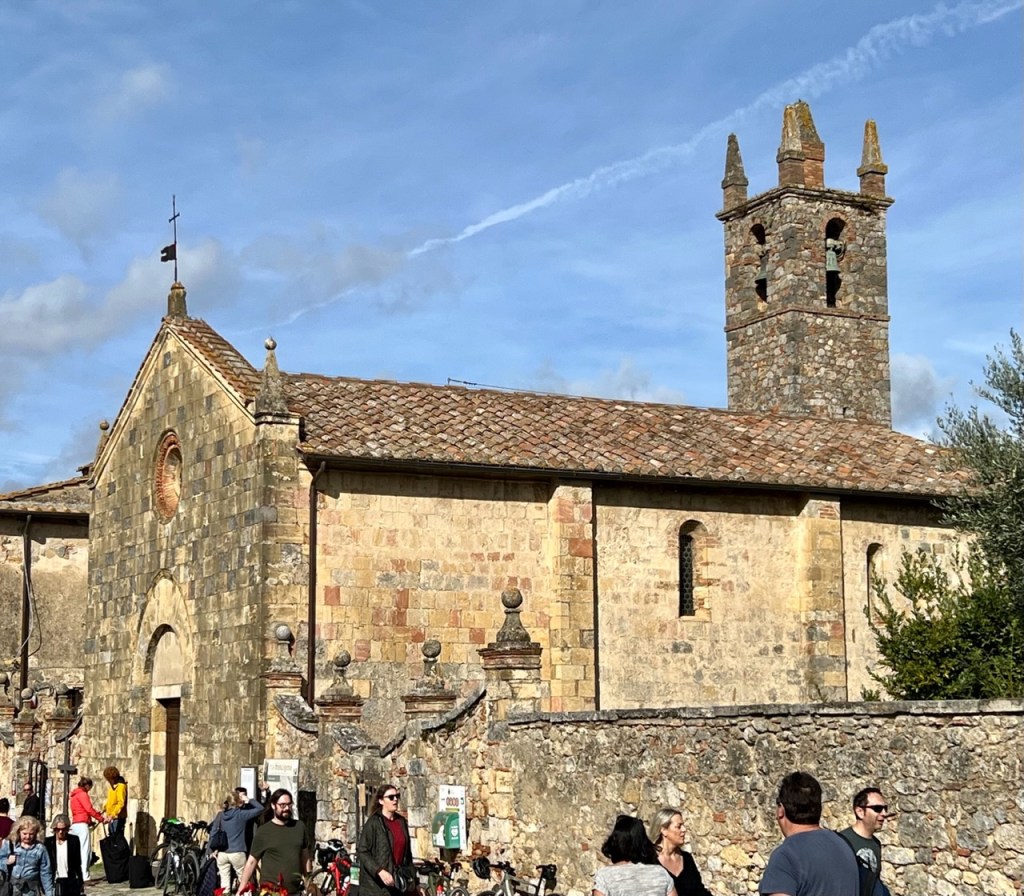
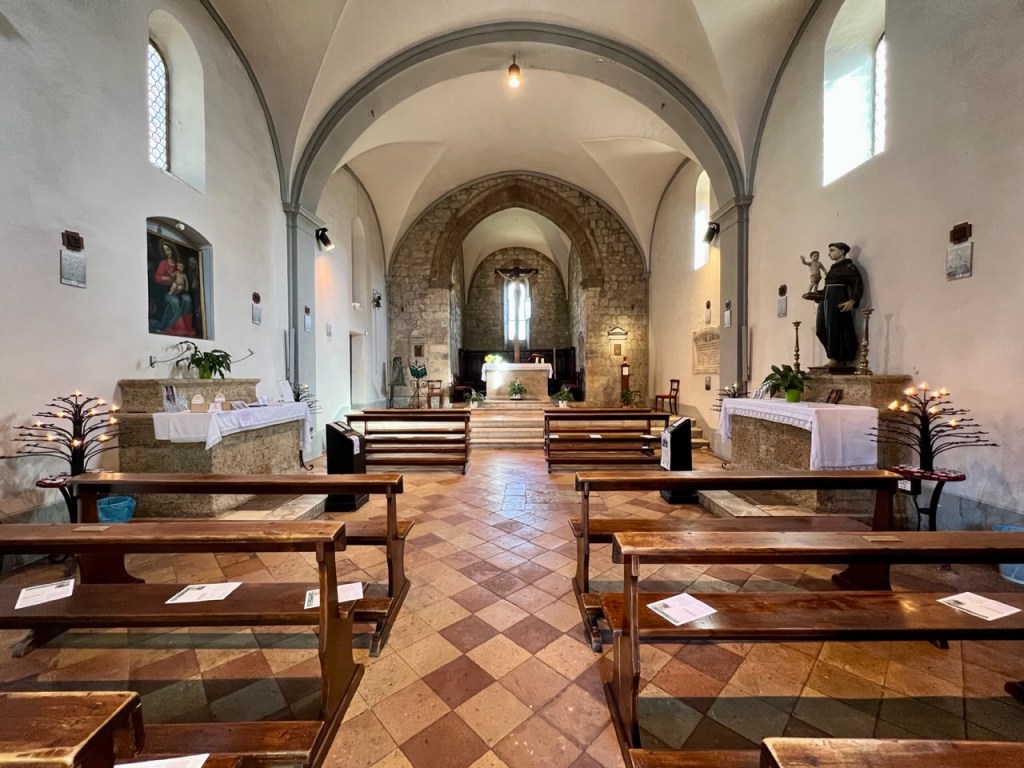
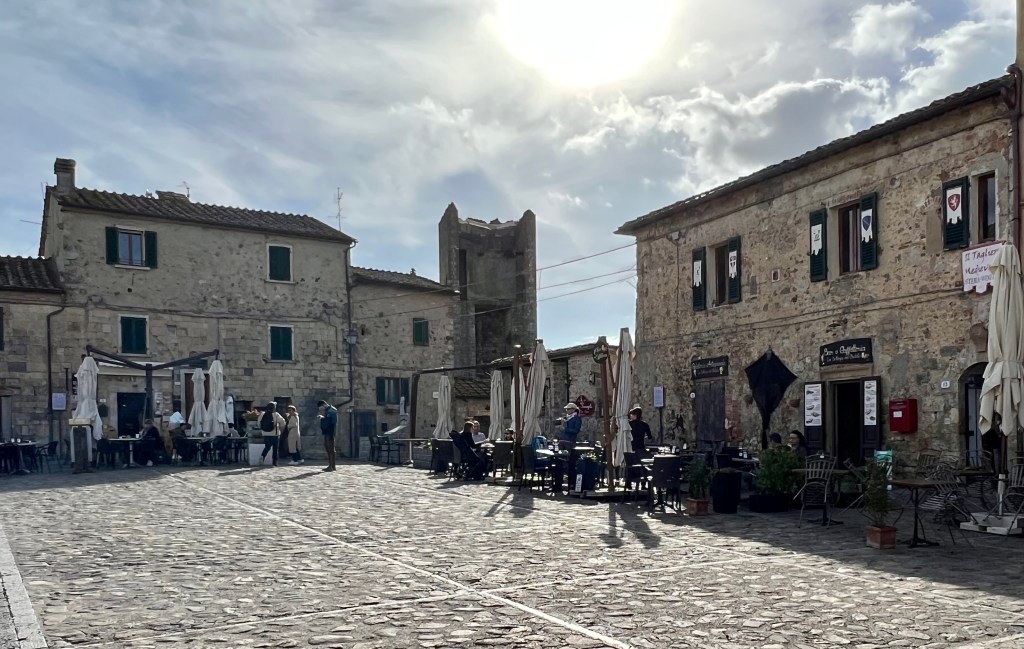
The main town square, the Piazza Roma, is dominated by a Romanesque church with a simple, plain façade. Chiesa Santa Maria, which dates back to the thirteenth century, was once the headquarters for a canonical community. 

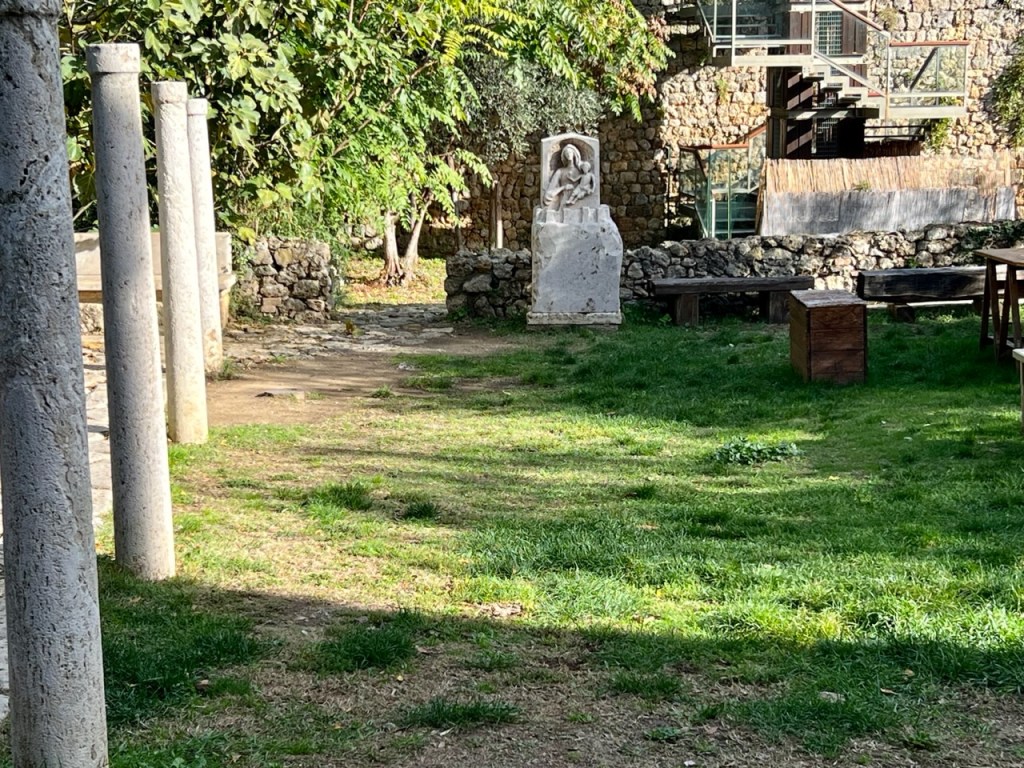
Behind the church is giardino del pellegrino for the pilgrims that are walking the Via Francigena to Rome. The route of the Via Francigena in Tuscany is rich in history, nature and traditions. It goes over the Cisa Pass to follow mule tracks through forests, fortified villages and along country roads. There was a sign in the pilgrim’s garden that had a great message for us all which I’ve inserted below. 

“The Route, like life, is not a competition. Never get seized by the wish to do too much: your body will soon demand an explanation. Look around, observe, stop and taste. That’s what the Route will teach you.”

Other houses, some in the Renaissance style (once owned by local nobles, gentry, and wealthy merchants) face into the piazza. Off the main piazza smaller streets give way to public gardens fronted by the other houses and small businesses of the town. In more hostile times, these gardens provided vital sustenance when enemies gathered around the walls during sieges.

We meandered through town stopping here and there to marvel at the views and, of course, a bit of retail therapy to see if there were any treasures hidden in the shops in town before heading back to our trusty Peugeot for trip to our new home.

Our unit is ready so we dump the bags at reception and head back to town for lunch at a local pizzeria. The za is good and we’ve got leftovers galore for another meal. There always space for gelato though so we tried out the gelateria next door and it was fantastic. After a stop to pick up some groceries, we headed back to the timeshare to get settled in with plenty of time for a nap! Sometimes, lazy days are the best! 

Later that evening, we had one of our typical charcuterie dinners washed down with copious quantities of red wine. An early night so we’re ready for more exploration the next day. 

Tomorrow is another day. Adventures await …