
After a couple of months in Canada, I’m headed off on another adventure across the pond. This time, Linda Morrison, my favourite Macdonald College bartender, fellow student and former boss is my travelling companion. Our first stop is Budapest for a few days before joining a G Adventures tour of the Balkans and Croatia.
August 30/31, 2022 – Travel Day
The trip started out great. I managed to use my Aeroplan eupgrade credits to upgrade the first two legs of the trip including the flight across the pond – so yay Air Canada! I do love a champagne starter for trips to Europe; makes travelling feel like the celebration that it should be. So, of course, I had a couple glasses to start my adventure! Just as important, our flights were basically on time and our bags arrived at our destination on the same plane as us! All good!!
After picking up said bags, we grabbed a Mini Bud shuttle to the hotel which turned out to be not only a cost effective but a very convenient door to door service. After getting our reservation cleared up with the desk clerk, we headed to the room for a well deserved nap.
When we surfaced, we went out for a quick walk around the ‘hood, passing through Jokai Park and checking out the Hungarian Opera House, before heading to dinner at a local Hungarian restaurant recommended by the hotel.
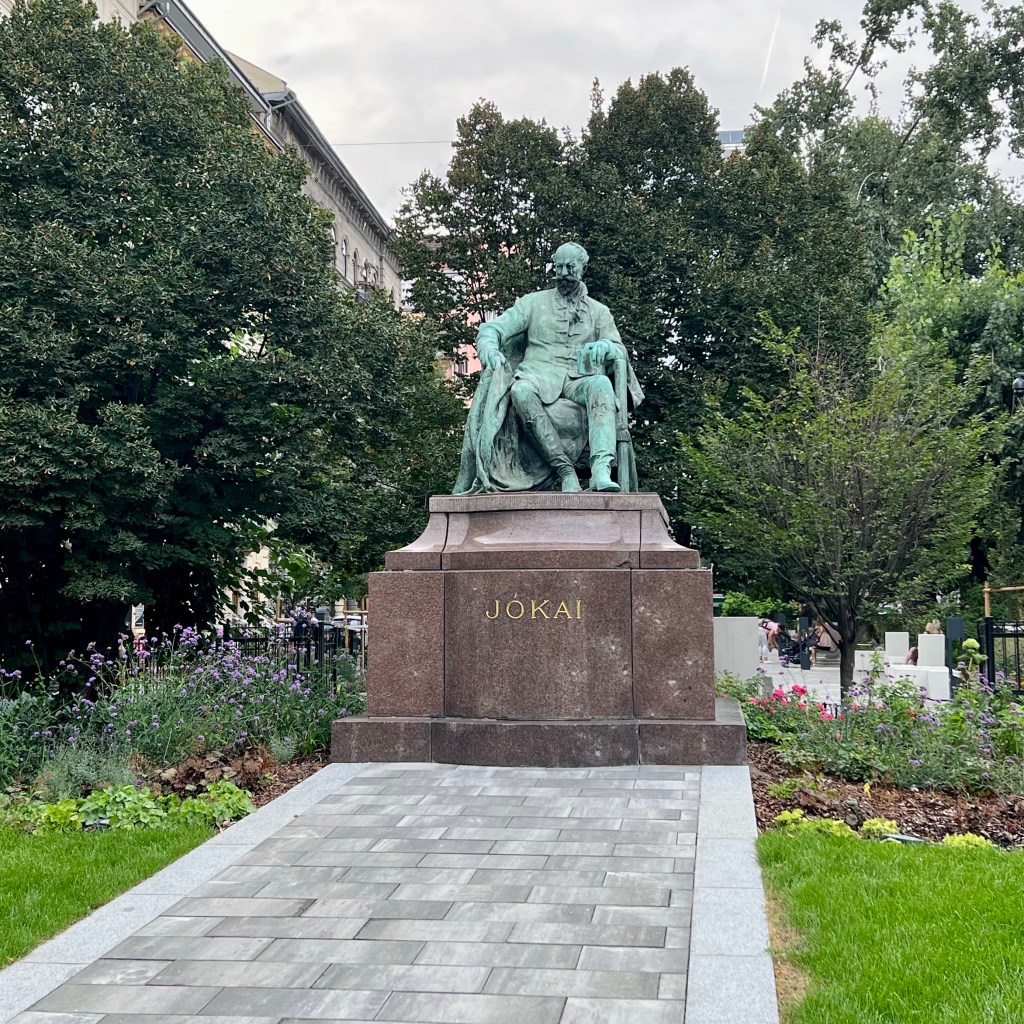

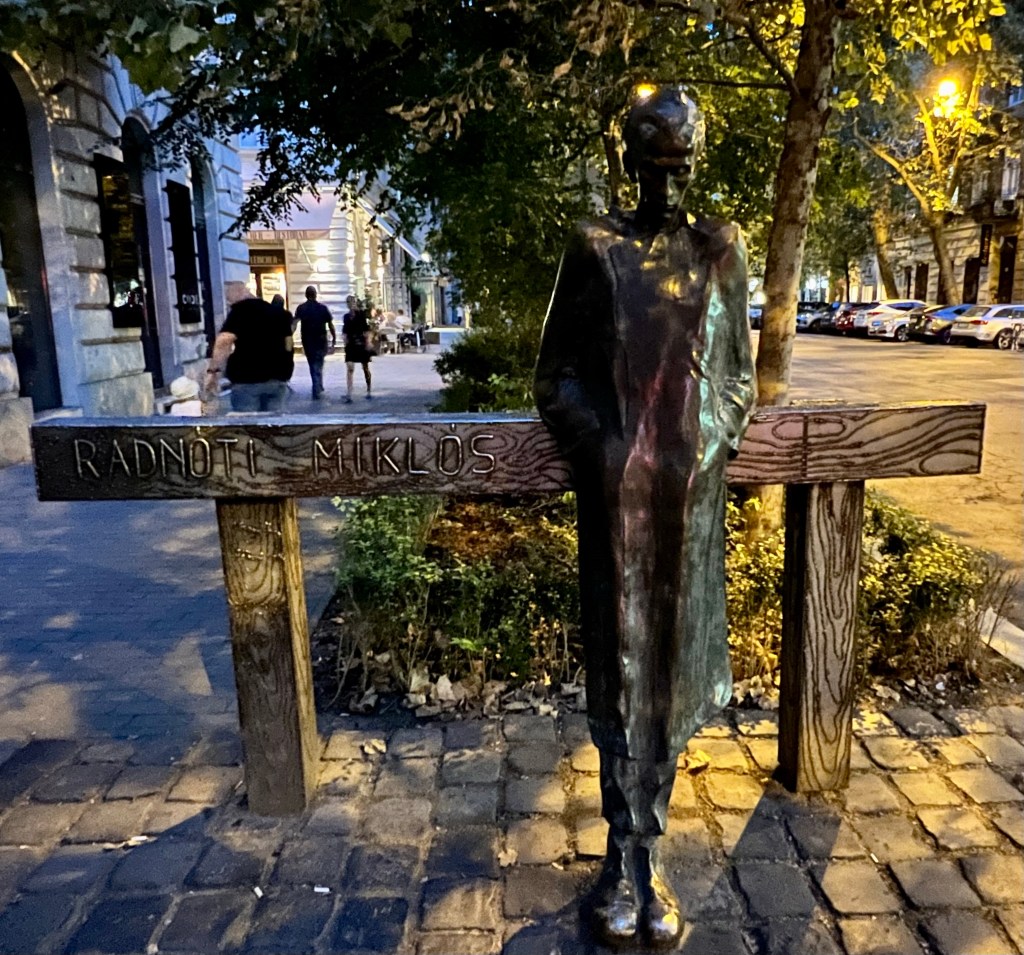
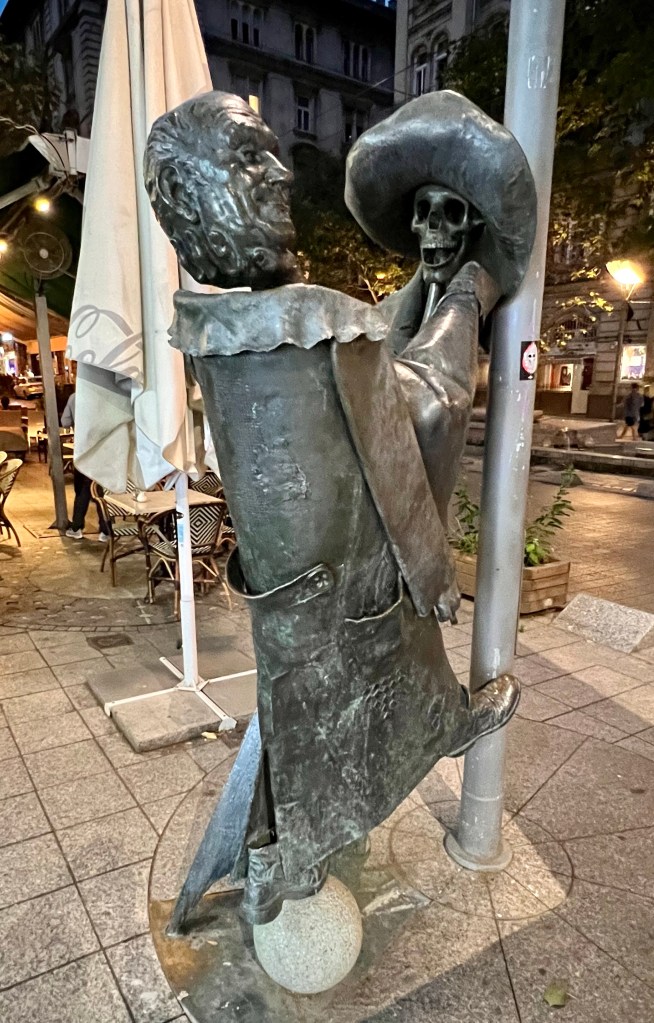
The food was tasty and filling; Linda had a beef stew with spatszle and I had a chicken dish with rice, both washed down with a liberal amount of sparkling water though I did have a glass of local red for good measure as well. Back to the hotel to catch up on our sleep. Tomorrow is another day. Adventures await …
September 1, 2022
Our first full day in Budapest was a bit cloudy with a risk of showers so after a nice breakfast at the sister hotel, we packed our rain gear and headed off on a mission to buy tickets for the Hop On Hop Off Bus. We negotiated a three day pass for the price of two and thought we’d gotten a great deal until we met a lady from the US a few days later who had managed to get a three day pass for the price of a one day pass. Lol, the $7 difference probably won’t change our lives!
We hopped on the bus at the stop across from the Opera House and over the next hour and a bit got a good overview of the sights on both the Buda and Pest sides for future consideration.
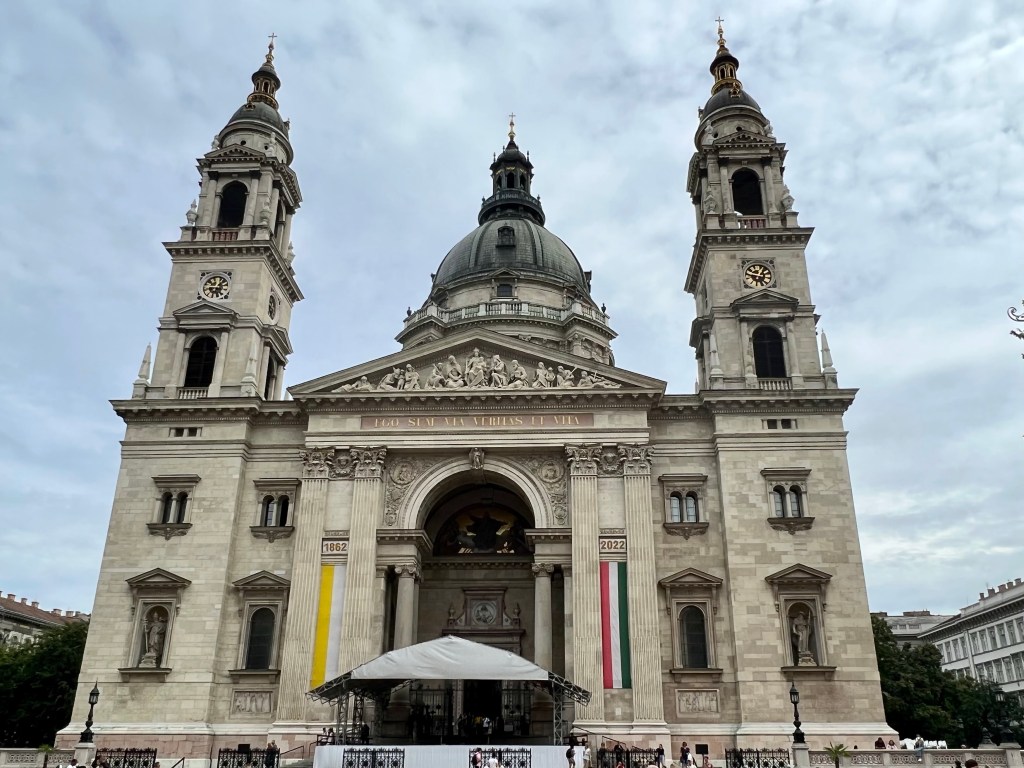
We opted to get off the bus at St. Stephen’s Basilica for our first in-depth exploration.
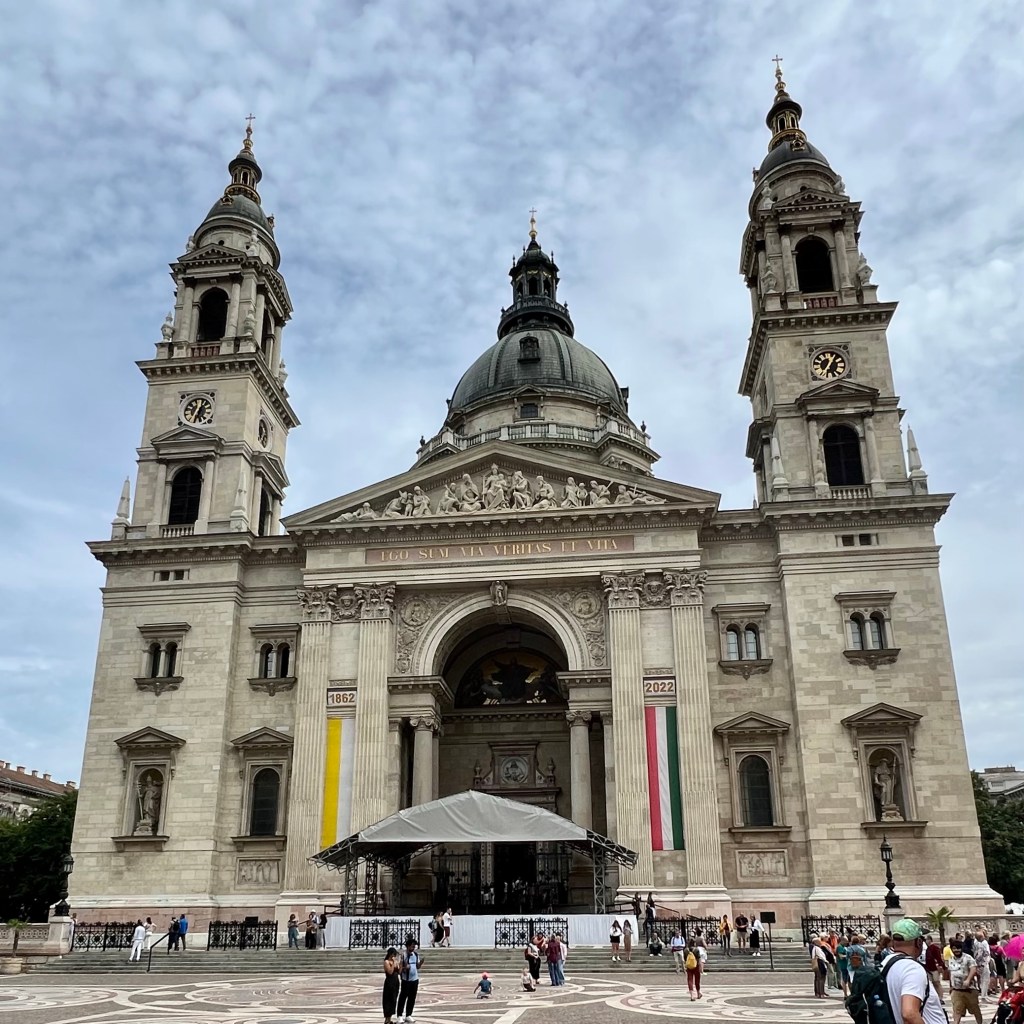
Eventually, we found the ticket office and had a chance to walk through this amazing structure. There were hundreds of seats set up in the squares surrounding the church that I originally thought were for the organ recital the next day but as we later discovered were actually for a special mass for children starting school.
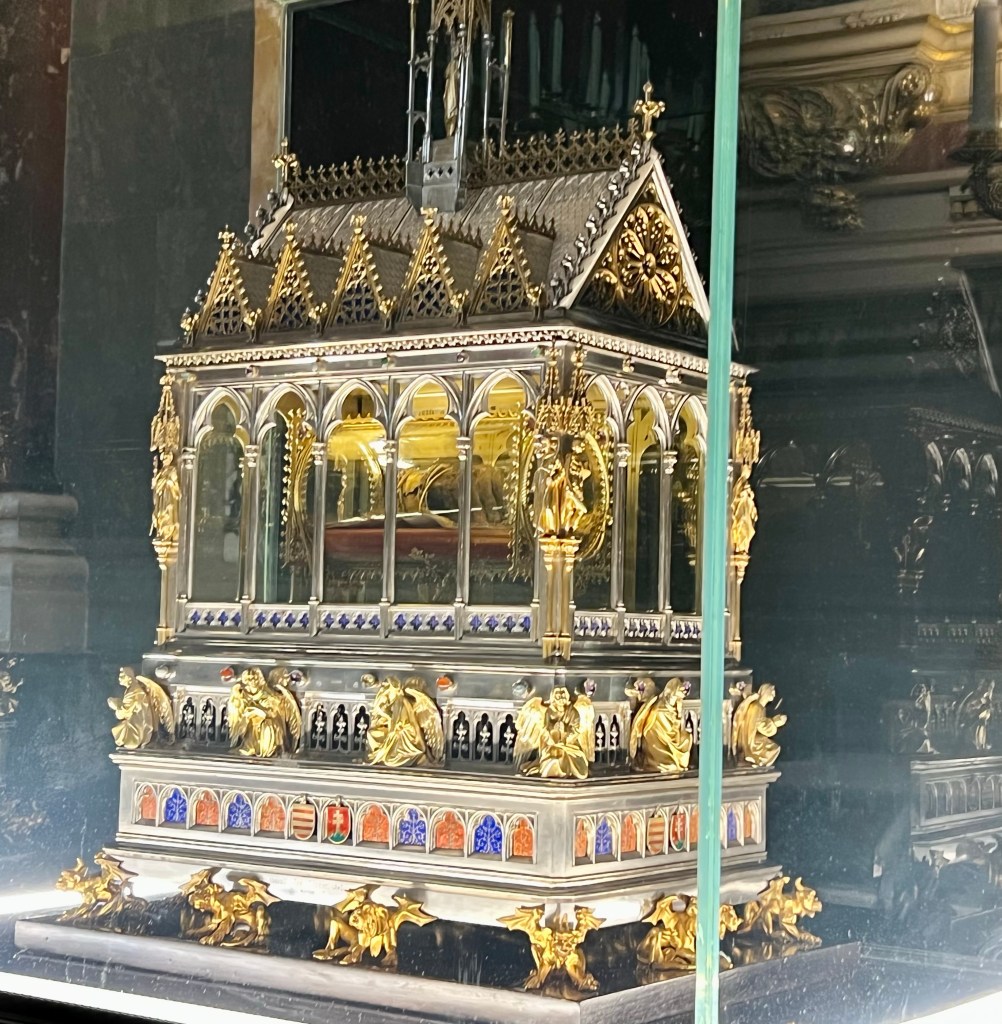
St. Stephen’s Basilica/Szent István-bazilika is named in honour of Stephen the first King of Hungary, (975-1038) whose incorruptible right hand is housed in the reliquary; that’s another story. The Basilica is the third largest church in Hungary and can accommodate 8000 people.
Standing 96 meters high, it is one of the two tallest buildings in Budapest; equaled only by the Hungarian Parliament Building. These two buildings are the same height intentionally; symbolizing that worldly and spiritual thinking have the same importance. Regulations prohibit the construction of any building taller than 96 metres in the downtown core.
The Basilica took 54 years to build mainly because the first two of three main architects responsible for the design died before their visions were realized and the new architects kept changing the plans to suit their taste. This not only resulted in delays but in structural issues with the building that lead to the total collapse of the dome.
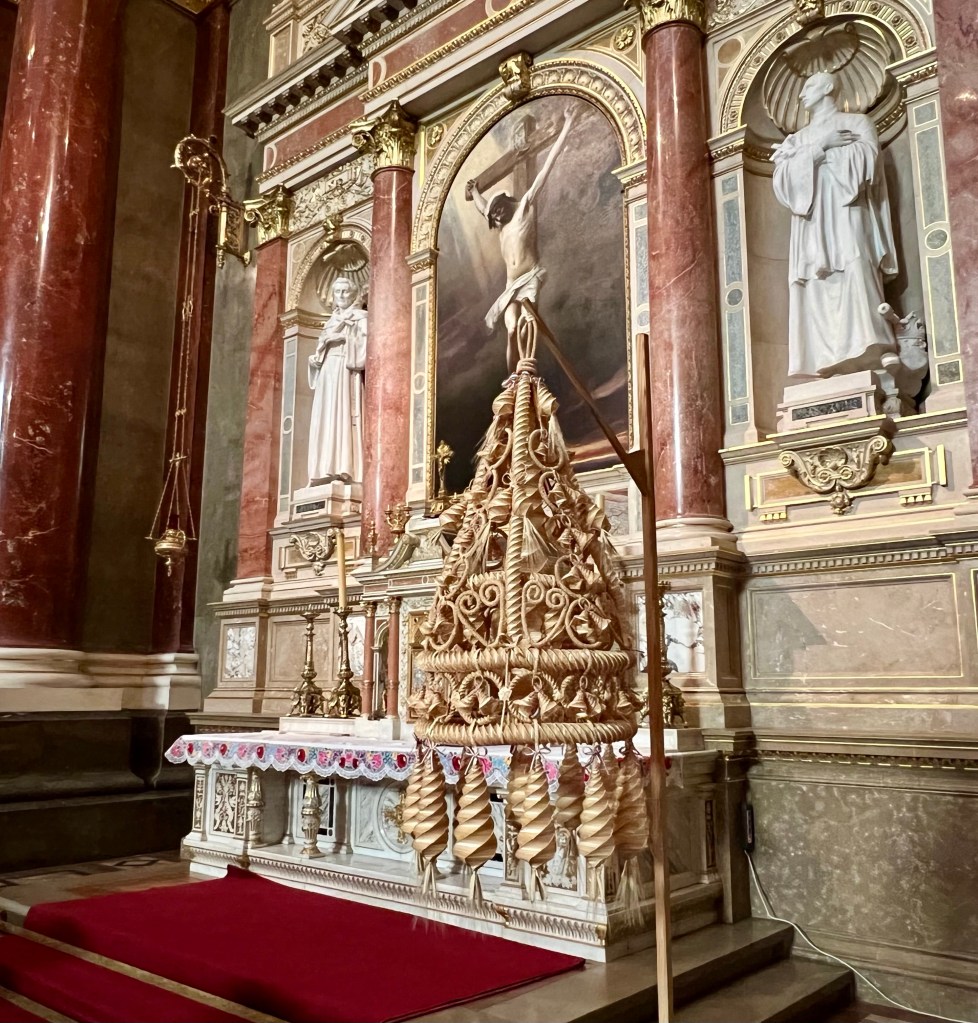
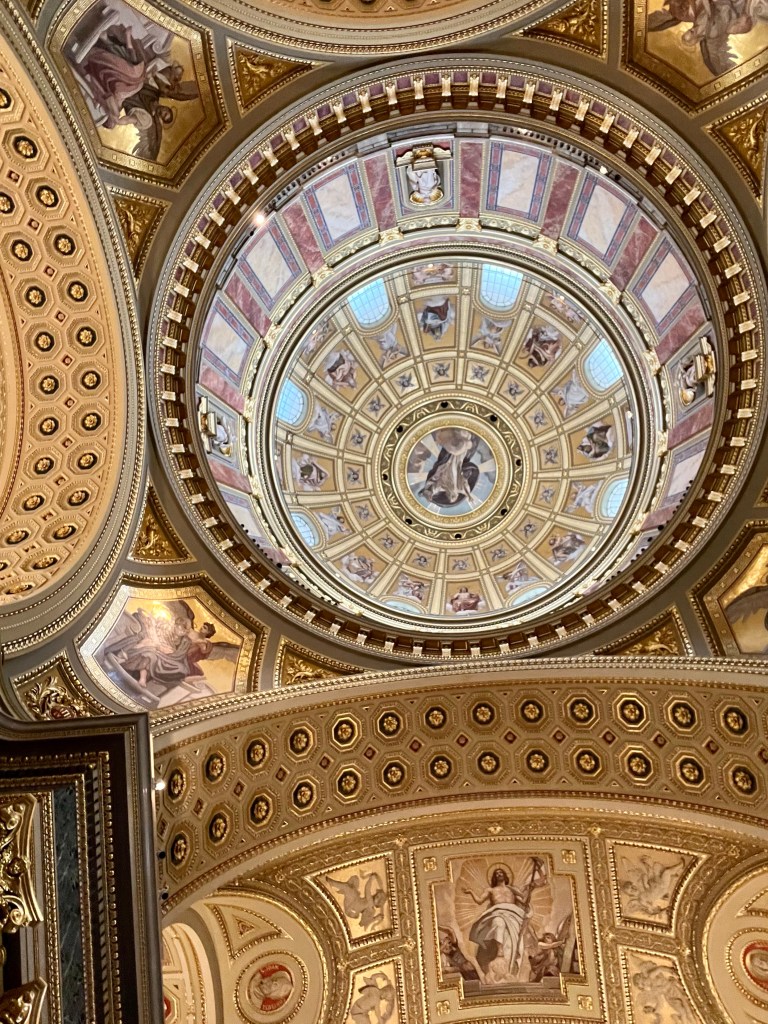
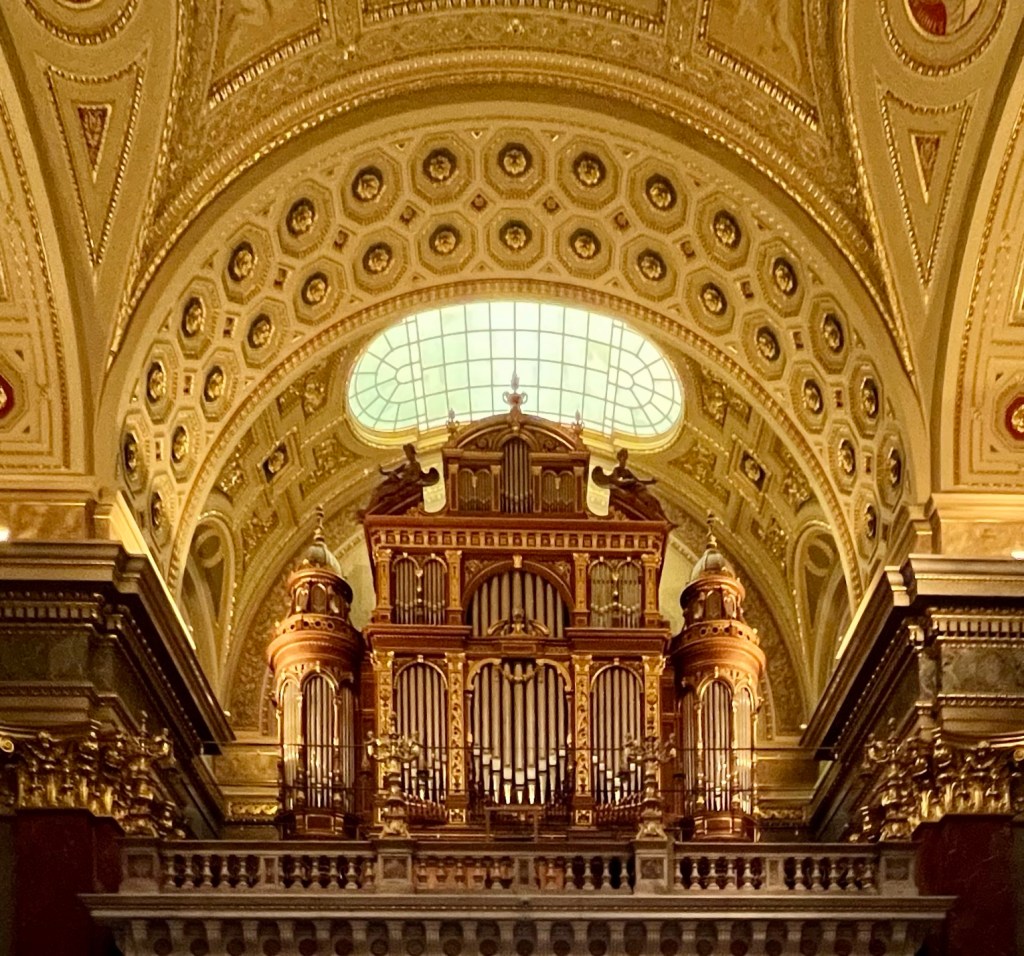
The Basilica is richly decorated with sculptures, paintings and stained glass and boasts a beautiful altar and pipe organ. After snapping a plethora of pics and lighting a candle for my dear old Dad, we headed off to figure where the free walking tour I’d booked was going to start at 2:30.

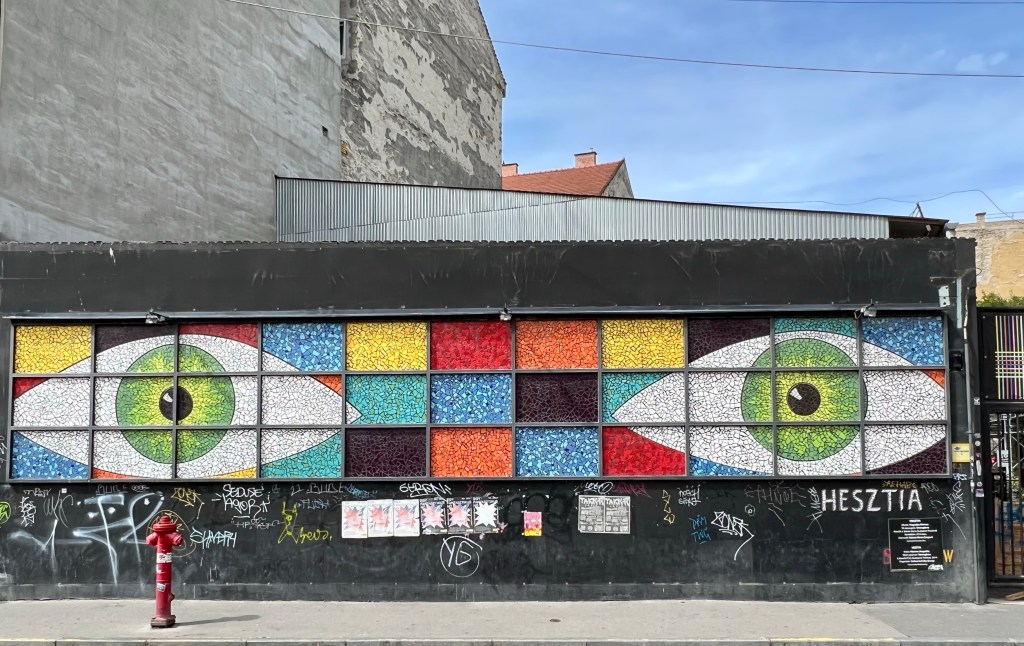
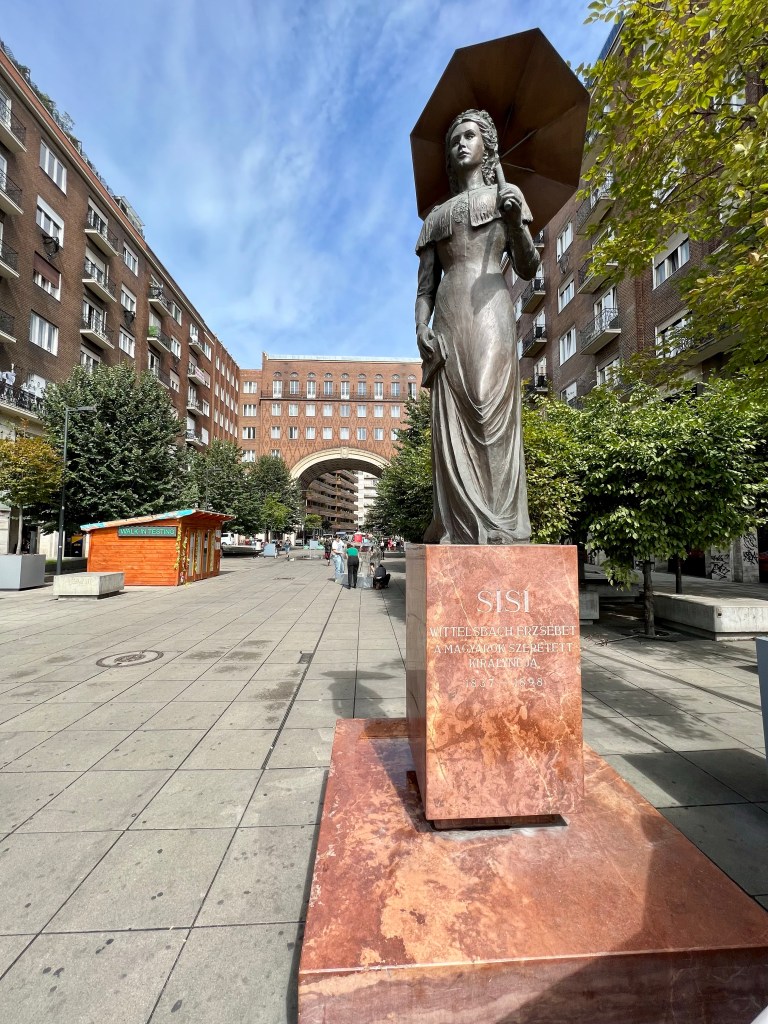
We found the Sisi Statue across from Deák Ferenc Square with relative ease so used our spare time to explore the area. Along the way we spotted lots of interesting street art with the requisite pics.
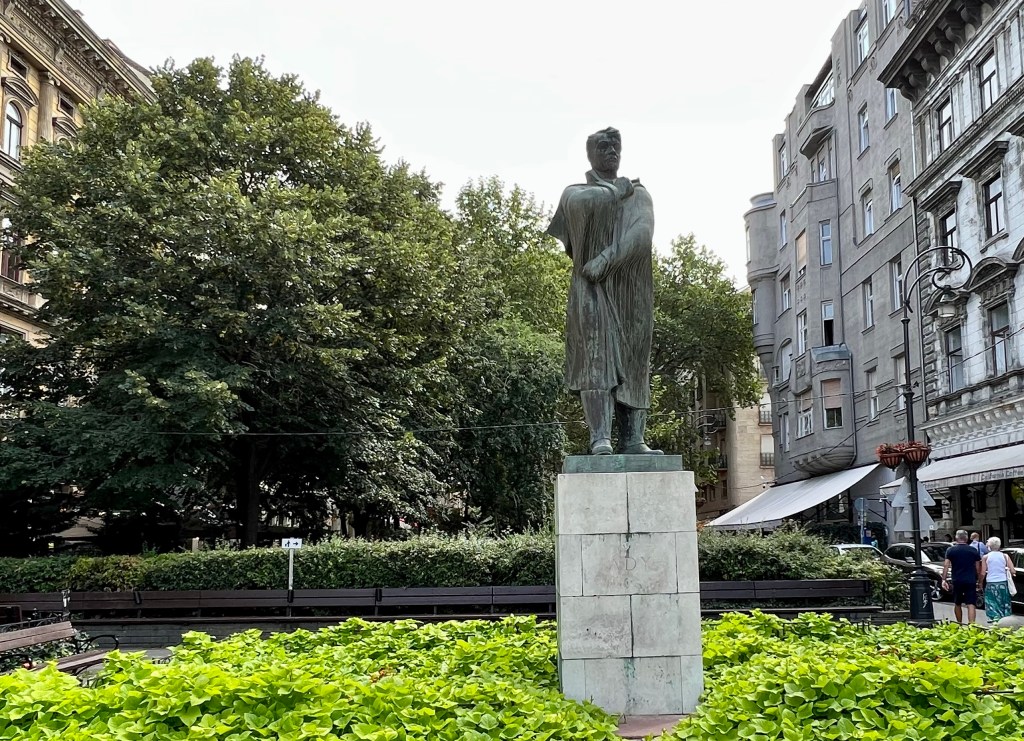


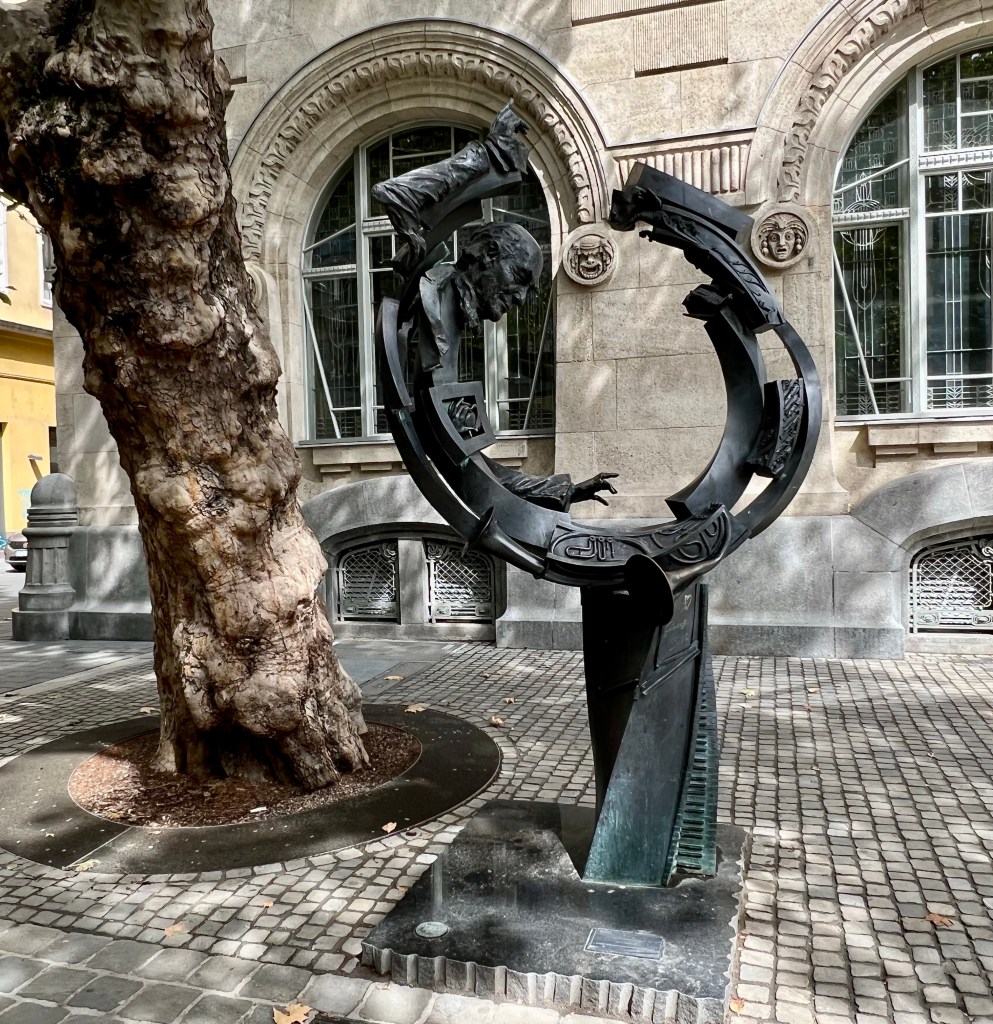
On our travels, we passed some interesting street art before arriving at the the Carl Lutz Memorial. Carl Lutz, a Swiss diplomat, saved an estimated 60,000 Hungarian Jews during the Holocaust. As Vice-Consul at the Swiss Embassy of Budapest, he issued protective documents and placed more than 70 buildings under foreign jurisdiction to keep the Nazis away. The bronze memorial honoring Lutz shows an angel descending to help a fallen victim. “Whoever saves a life is considered to have saved an entire world,” reads the caption.

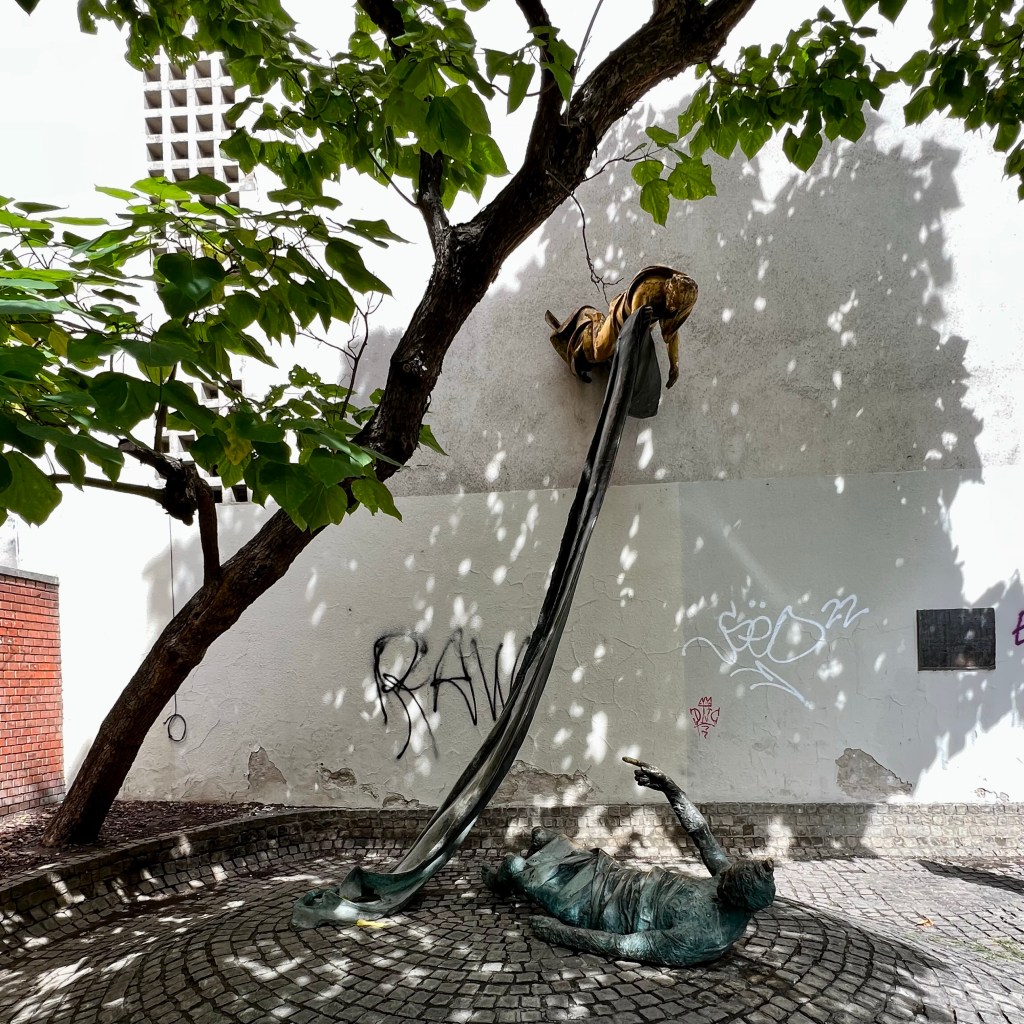
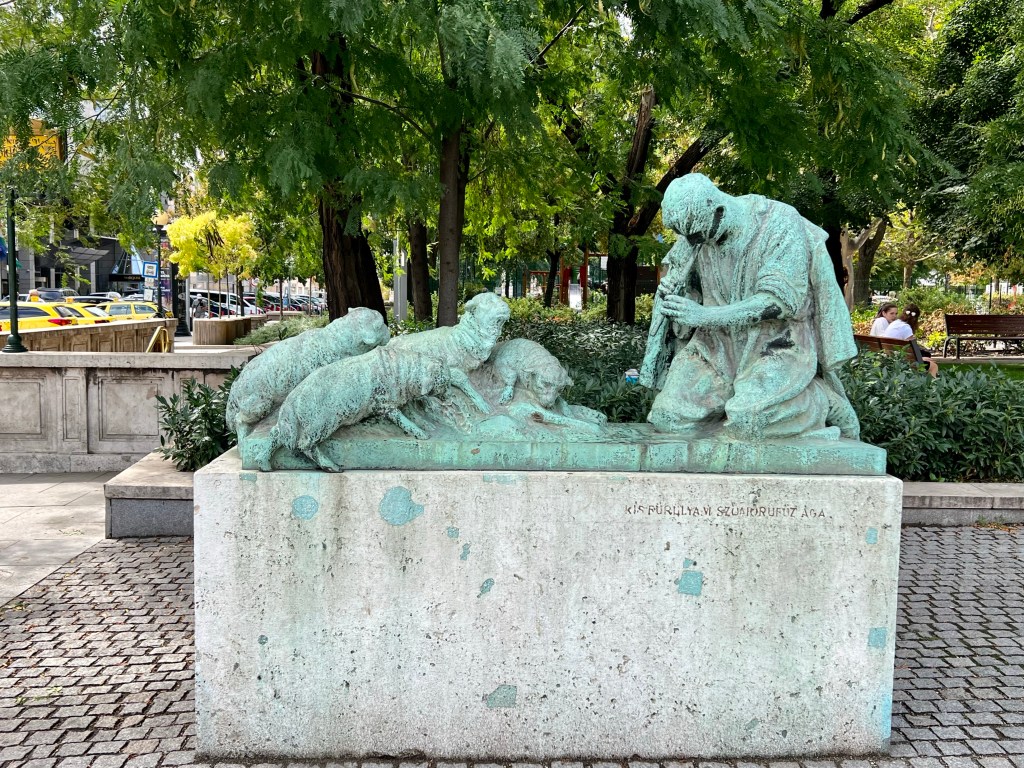
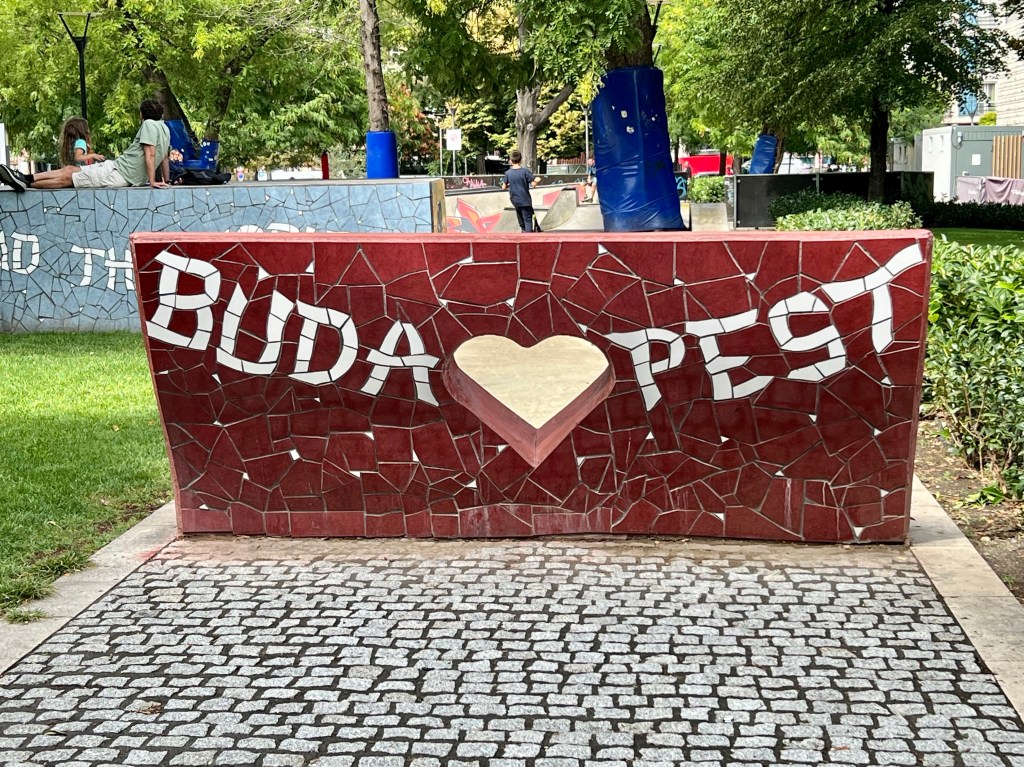
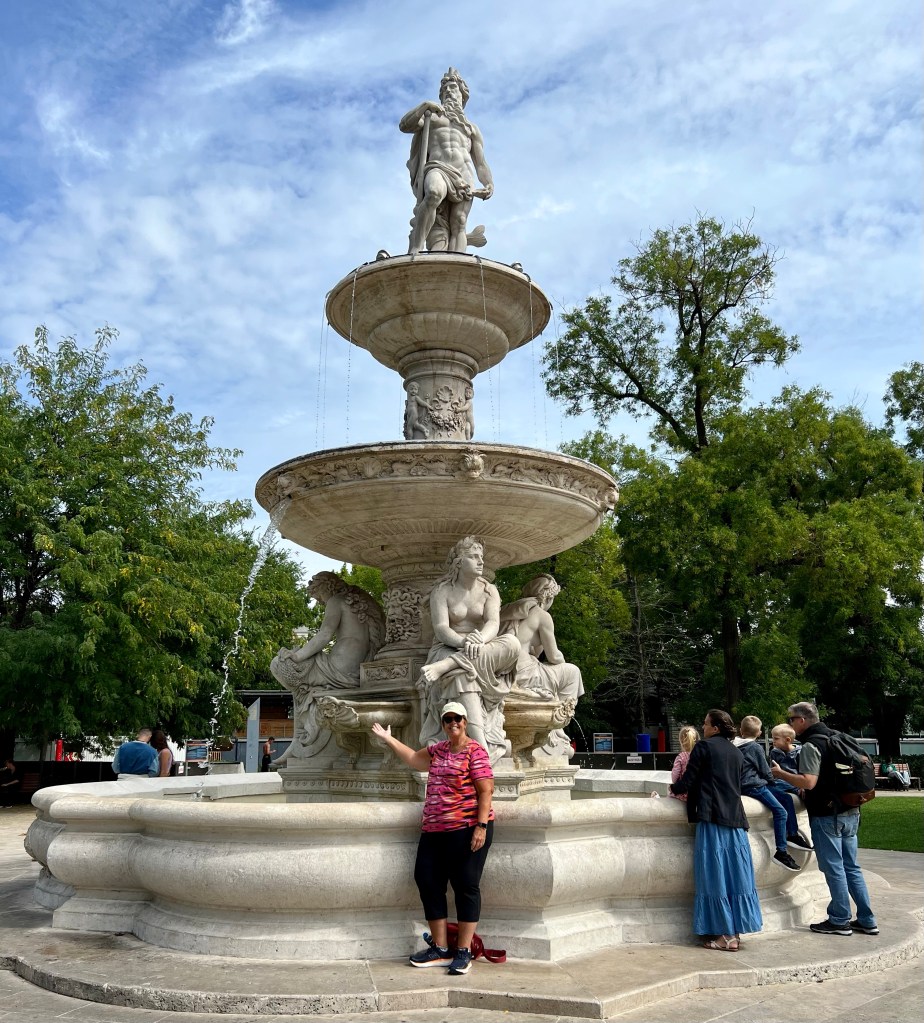

When no guide had arrived by 2:20, I looked at the email again and figured out the tour had actually started at 12:00 and would be 2:30 hours long! Lol, tomorrow is another day! Rather than hang out in the area, we opted to hop on the bus and head to Heroes’ Square at the end of Andrássy Avenue, Budapest’s Champs-Élysées.
Heroes’ Square is one of the major squares in Budapest and home of the iconic Millennium Monument. Construction of the monument began in 1896 to commemorate the thousandth anniversary of the Hungarian conquest of the Carpathian Basin and the foundation of the Hungarian state in 896.

The centrepiece of this fabulous Monument is a column depicting the Seven Chieftains of the Magyars lead by Árpád (considered to be the founder of the Hungarian nation). The column is topped by Archangel Gabriel who is holding the Holy Crown of St. Stephen (first King of Hungary) and the apostolic double cross (a symbol awarded to St. Stephen by the Pope in recognition of his efforts to convert Hungary to Christianity) in his hands.
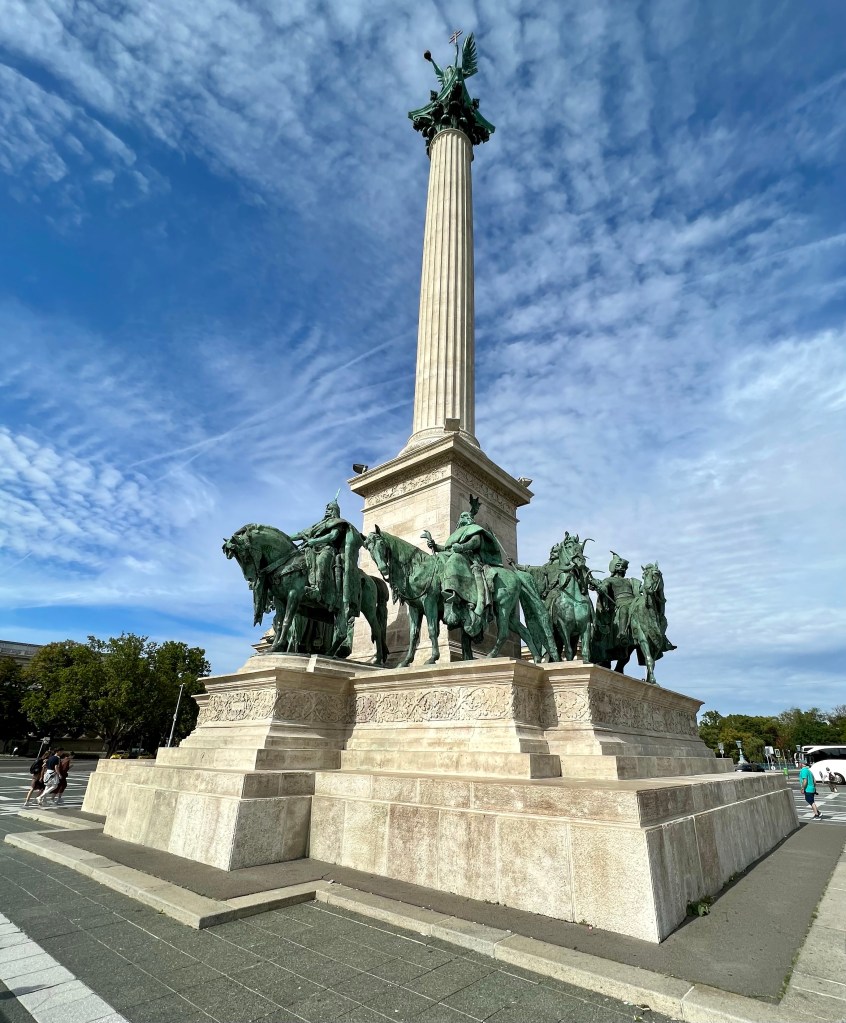
At the front of the monument is the Memorial Stone of Heroes, a large stone cenotaph surrounded by an ornamental iron chain, dedicated “To the memory of the heroes who gave their lives for the freedom of our people and our national independence.” The Memorial Stone of Heroes was originally erected in 1929 but was removed in 1951 as its message was politically unacceptable to the Communist regime. The current cenotaph was built on the same spot in 1956.
The back of the monument consists of two matched colonnades, each with seven statues representing great figures of Hungarian history. Topping the outer (left) edge of the left colonnade is a statue of a man with a scythe and a woman sowing seed, representing Labour and Wealth.
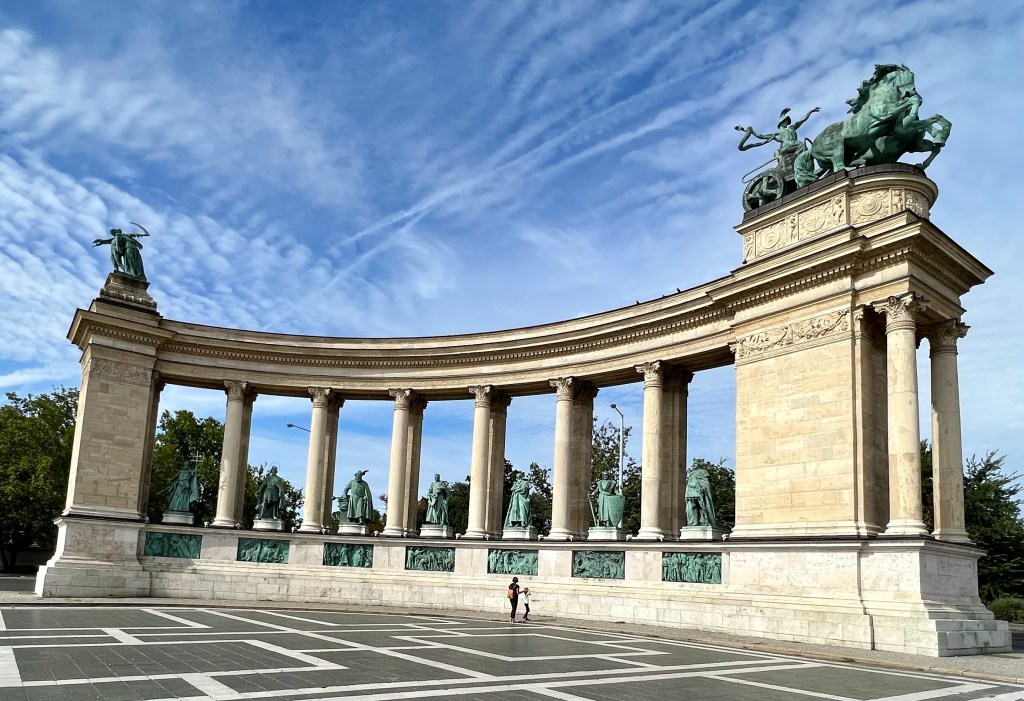
At the inner (right) end of the left colonnade, is a male figure driving a chariot using a snake as a whip and representing War. At the inner (right) end of the right colonnade is a female figure in a chariot holding a palm frond representing Peace. At the outer (left) end of the right colonnade is a double statue of a man holding a small golden statue and a woman with a palm frond, representing Knowledge and Glory.

The Square also hosts the Museum of Fine Arts and the Palace of Art.
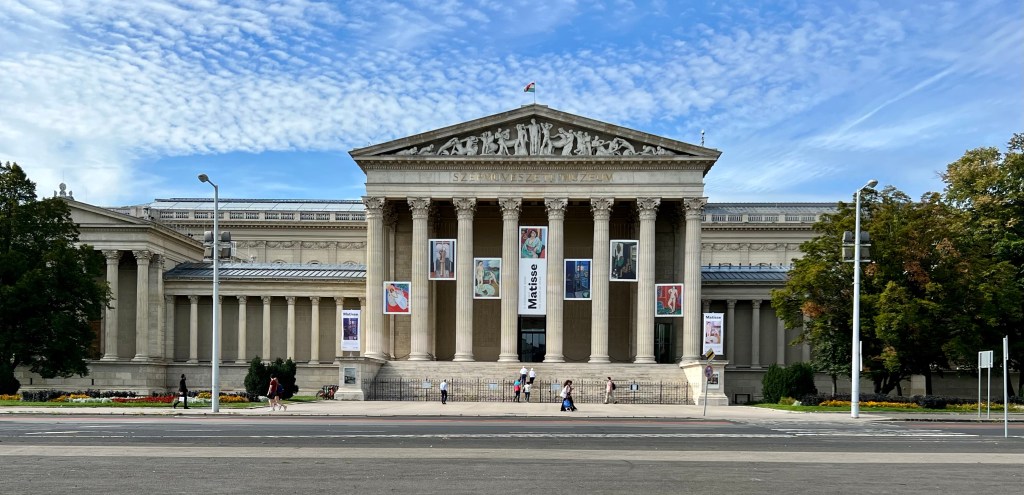
After checking out the heroes of the Hungarian people, we continued our explorations and ended up in City Park. City Park is a favorite park in Budapest, and there is something for everyone.
We walk toward Vajdahunyad Castle at the Heroes’ Square end of the park.
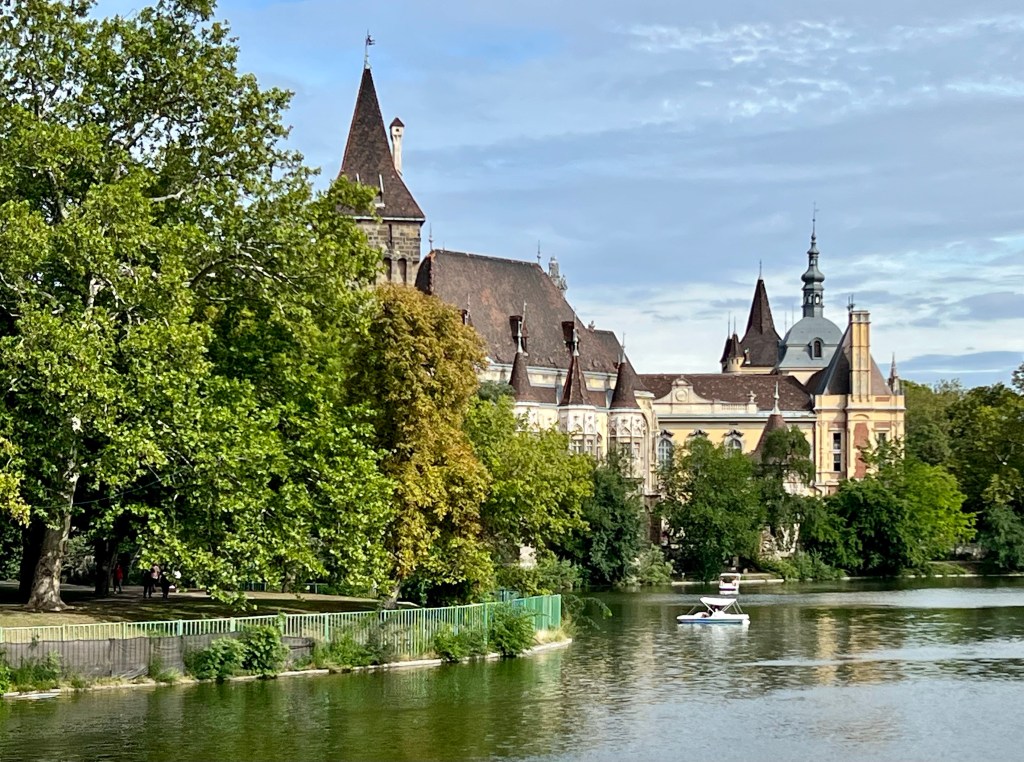
This dream-like structure was constructed for the 1896 Millennial Exhibition and is a mixture of several architectural styles (you can’t find two similar style turrets). The Castle Houses the Museum of Agriculture; appropriate for two Aggies.


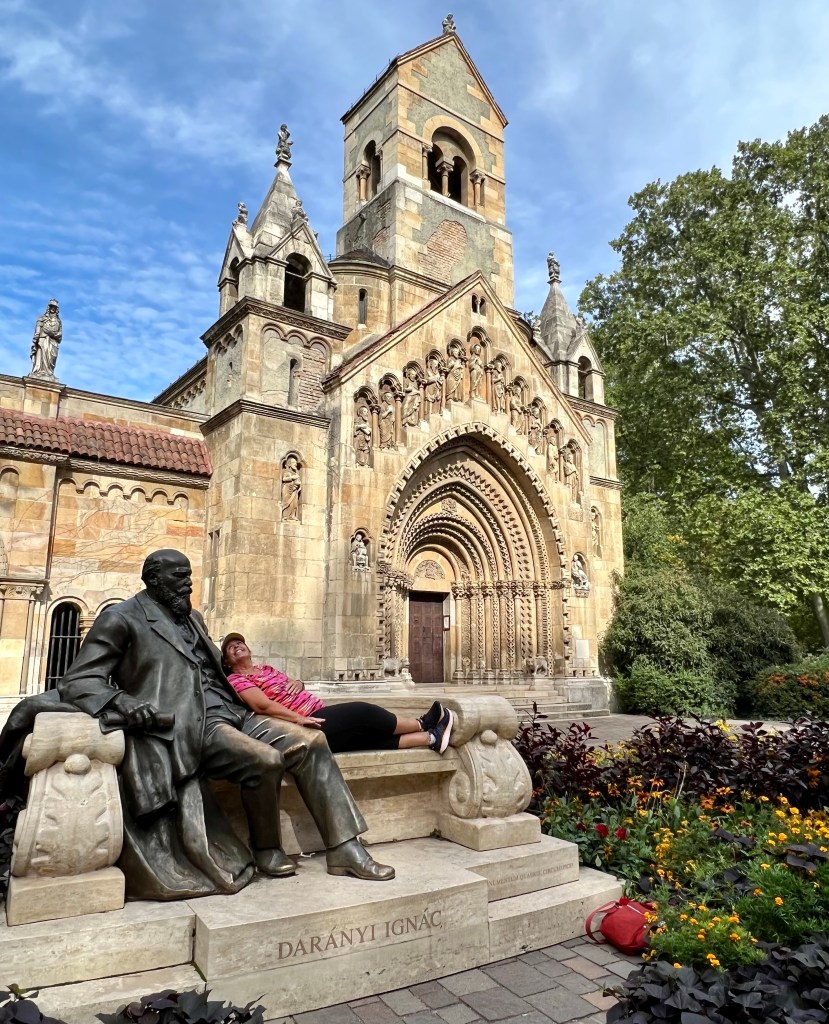
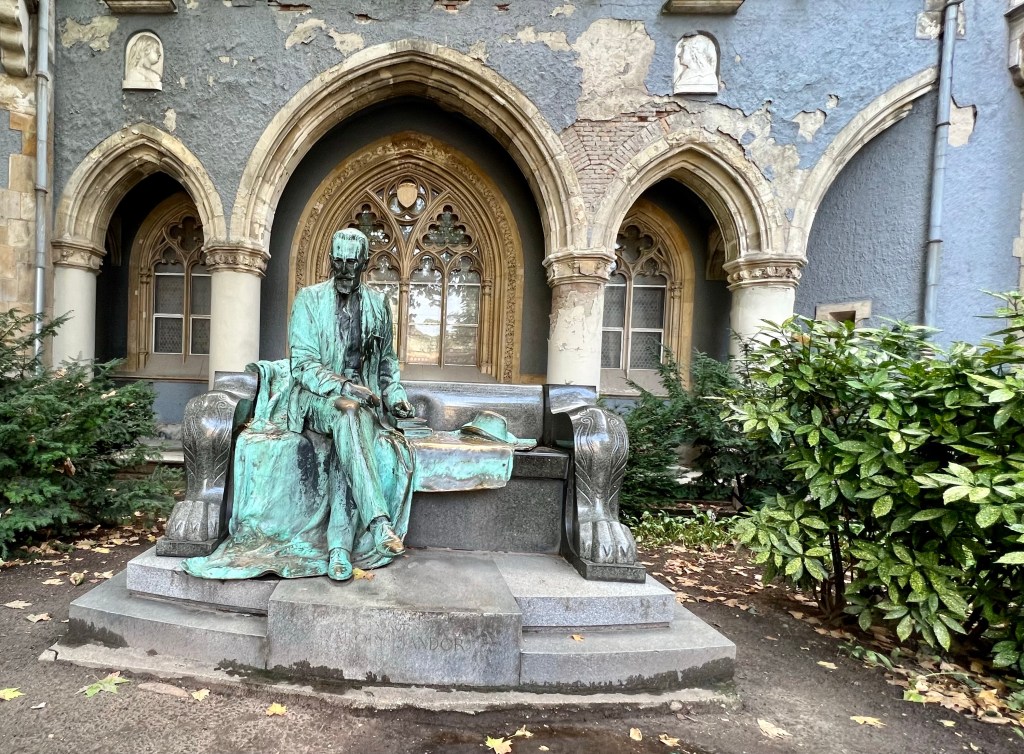

Wandering through City Park we encountered numerous interesting installations, some which are captured below.


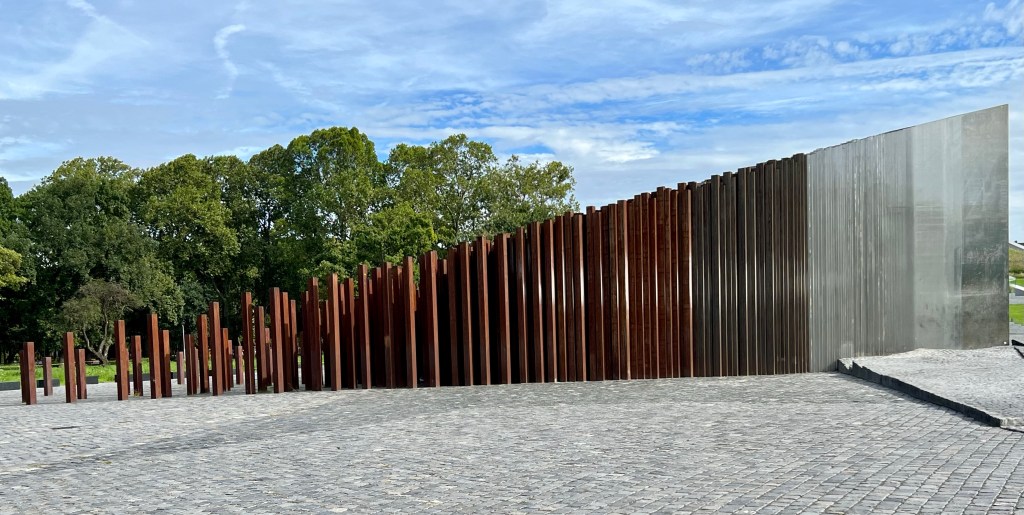
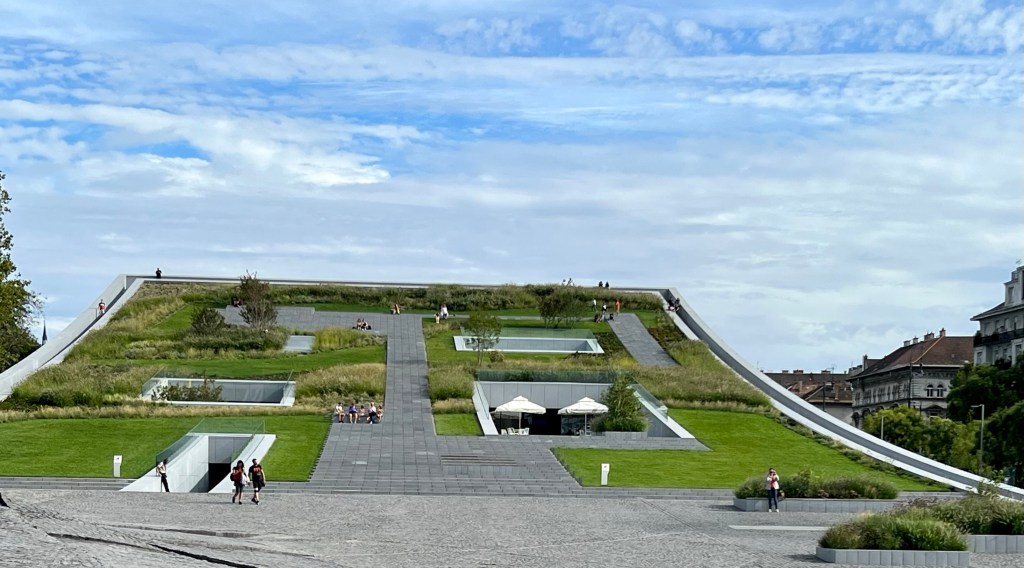
Tourism is thirsty work so we headed back down Andrássy Avenue, this time on foot, to find a nice spot to have a glass of wine or two and a snack since our breakfast was only a faint memory. En route we passed several embassies that had formerly been palaces and a statue or two. Lol, the Hungarians really love their statues and some are really quite beautiful while others are just weird.
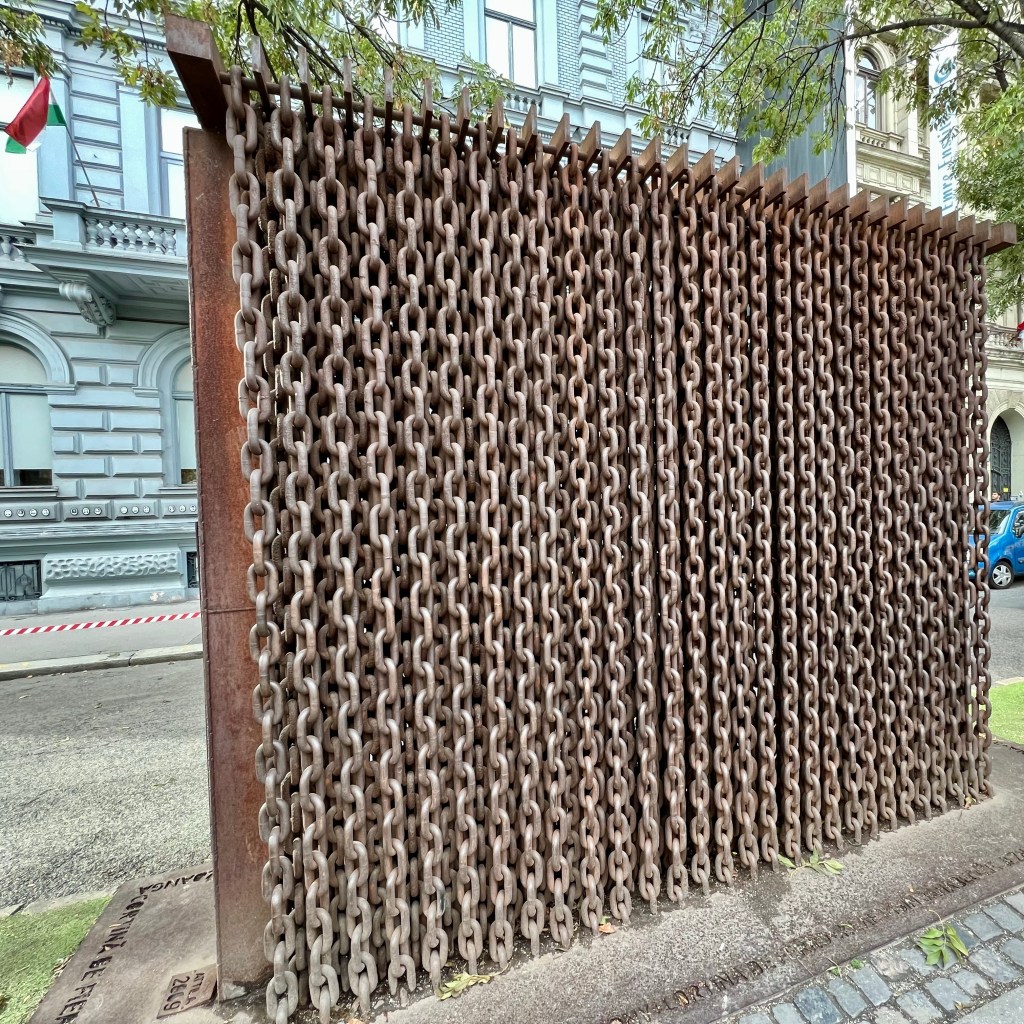
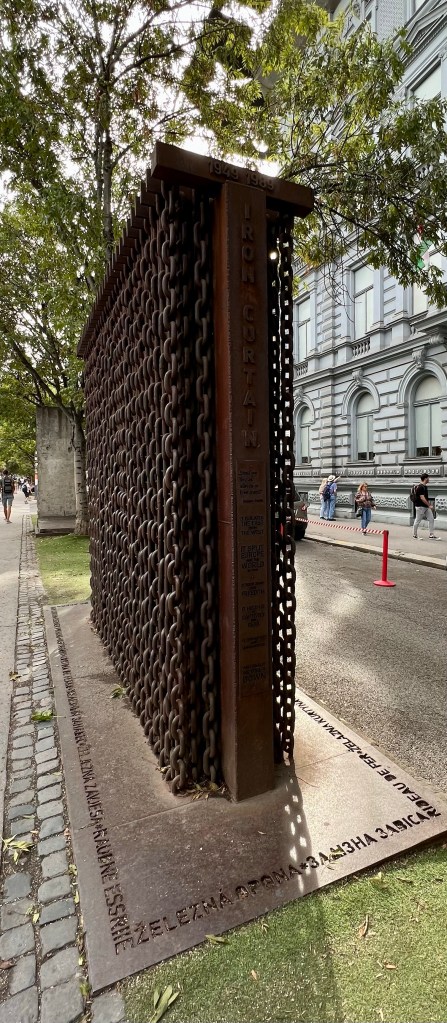
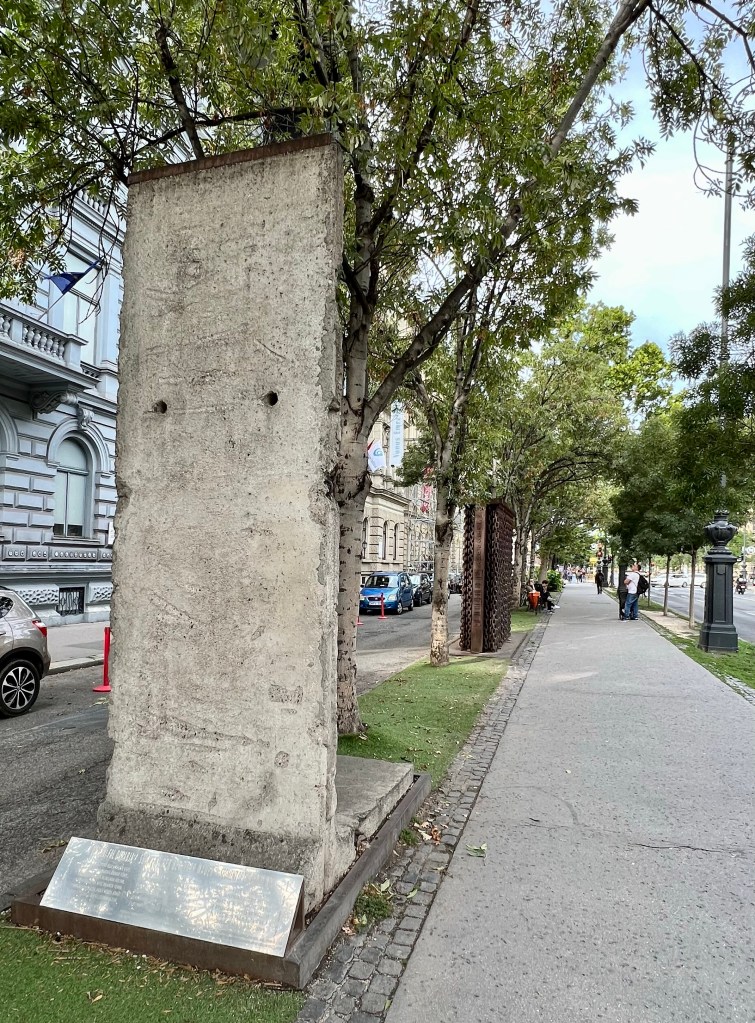
One notable stop on this grandiose avenue is the House of Terror. In front of the building, where tales of patriots that were tortured and murdered are brought into the light, there is an installation representing the iron curtain and a piece of the former Berlin Wall erected in Budapest in 2010 on the 21st anniversary of the fall of the Berlin Wall.

Soon enough, we arrived at Jokai Square and went in search of a cafe or restaurant with comfortable chairs serving wine and lighter fare. In the end we decided that comfortable chairs was the most important criteria and we shared a Margarita Pizza and a cold, refreshing bottle of Rosé in cushy comfort. Fortified, we made it back to the hotel for a few hours before heading out for dinner.
In keeping with how the day was going, we had decided on a ”nearby” Turkish restaurant that ended up being cafeteria-style so we headed back to an Indian restaurant across the road from where we’d eaten the night before. The Indian fare was fabulous and well-deserved after walking more than 17 km during the day. Back to the hotel to chill for a bit, rebook the walking tour for tomorrow and an earlyish night while our bodies adapt to the European time zone. Tomorrow is another day. Adventures await …
September 2, 2022
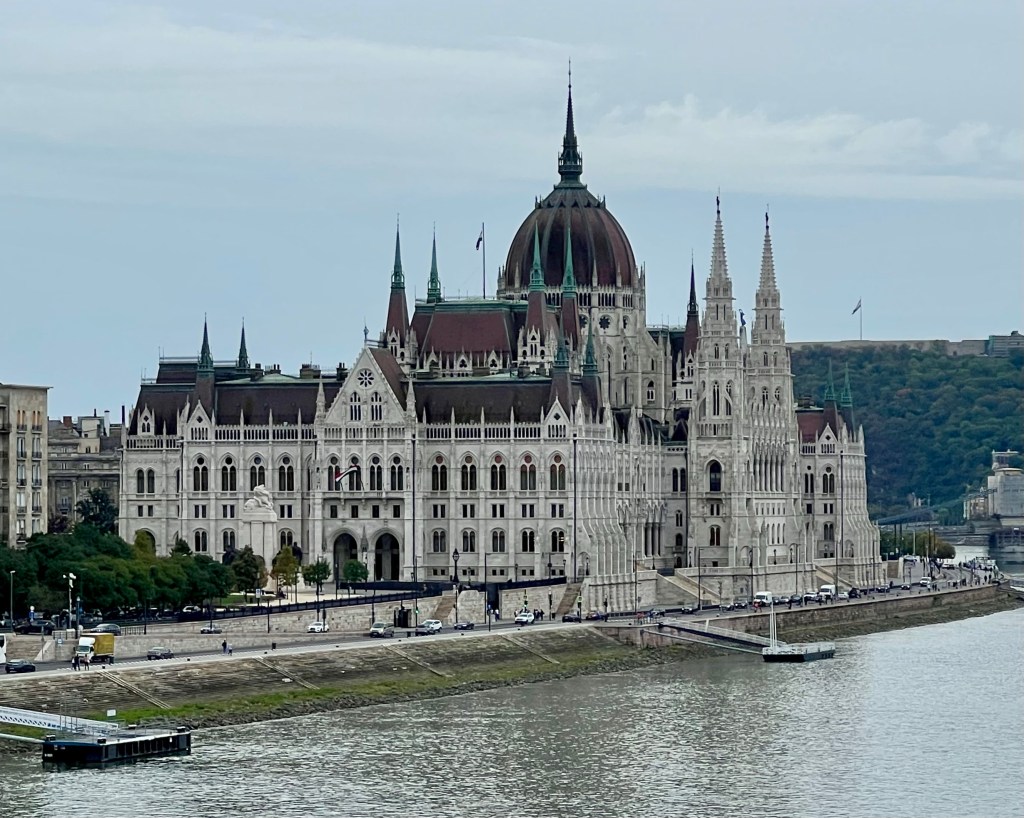
After a good breakfast, we hit the bricks with a great plan. As the saying goes, (wo)Man plans and God laughs so let’s say from the outset that the day didn’t go as expected. Lol, when does it ever! We did get off to a good start though and arrived at the Hungarian Parliament Building without any trouble.
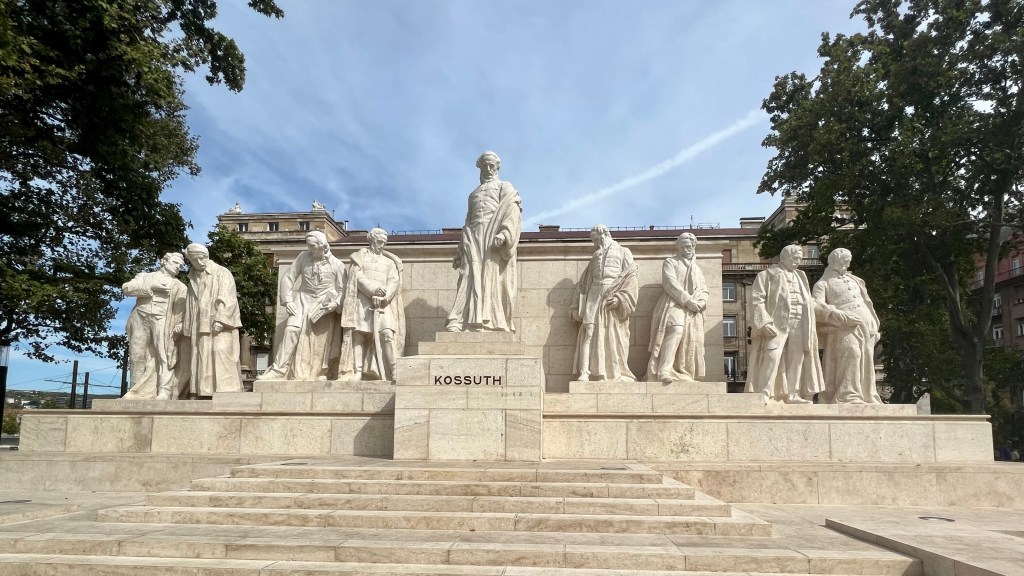
The Hungarian Parliament Building, situated in Kossuth Square on the eastern bank of the Danube on the Pest side, is the seat of the National Assembly of Hungary. We had thought to go on a tour but apparently so did all the other tourists in Budapest so we only managed to wander the grounds and have a bio break while we were there. We really didn’t want to miss the walking tour two days in a row so we were quite conscious of time.

Budapest was formed through the union of three cities in 1873, namely Buda, Óbuda and Pest. The decision was made to establish a new, representative parliament building, expressing the sovereignty of the nation. An international competition was held, with Imre Steindl as the victor. Construction from the winning plan was started in 1885, and the building was inaugurated on the 1000th anniversary of the country in 1896. Plans submitted by two other competitors were later used to construct the Ethnographic Museum and the Hungarian Ministry of Agriculture; both of which face the Parliament Building.
The Parliament Building is built in the Gothic Revival style and has a symmetrical façade with a central dome. It has been the largest building in Hungary since its completion (96 metres high and two metres longer than British parliament). In fact, it is also the third largest assembly building in the world, after the Parliament of Romania and the National Congress of Argentina.
After wandering around the grounds, and snapping lots of pics of the various monuments, we headed to the Sisi statue once again though for the 12:00 start time.
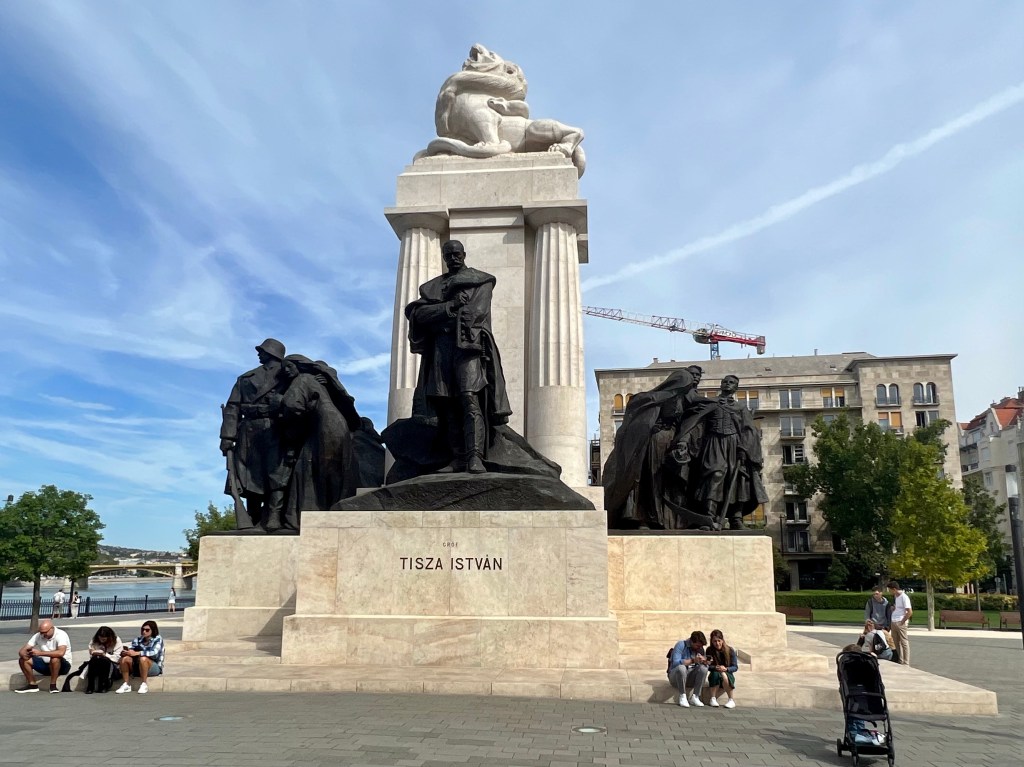
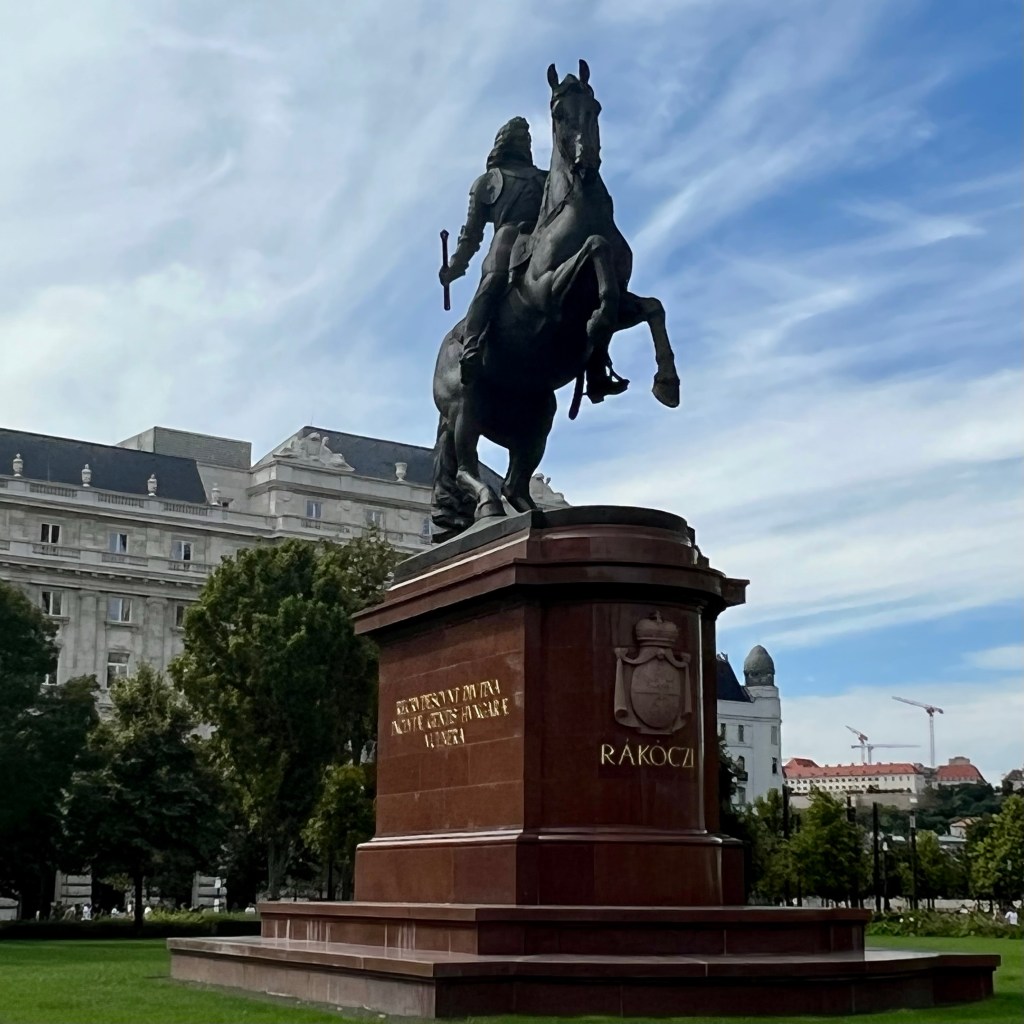
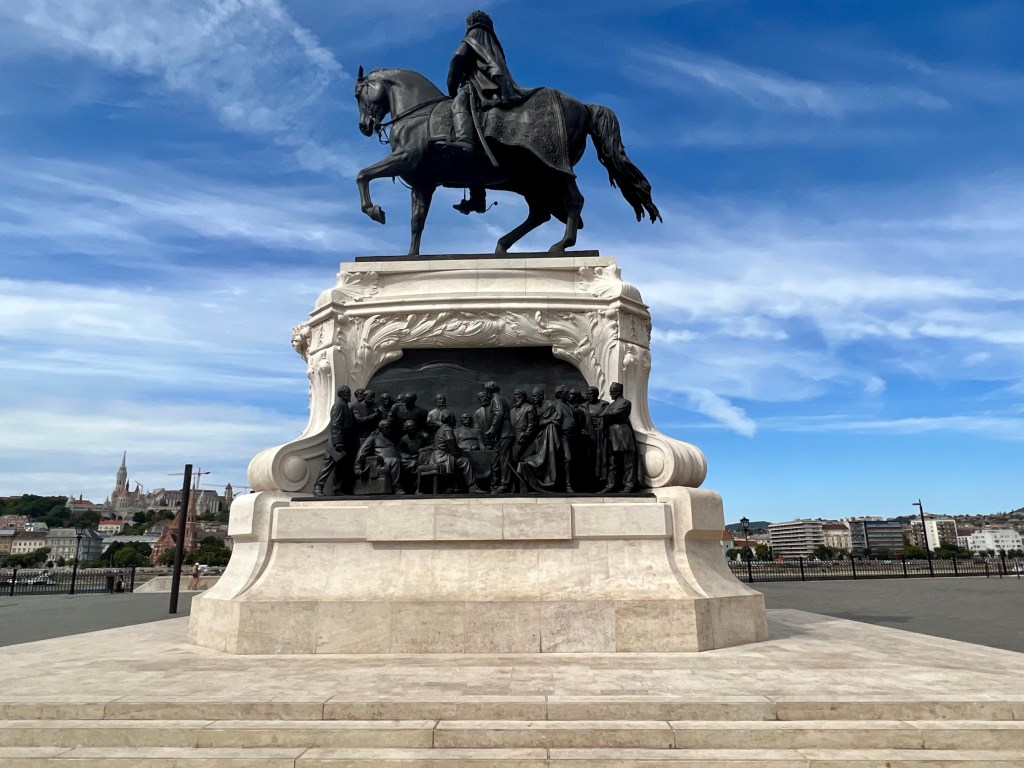
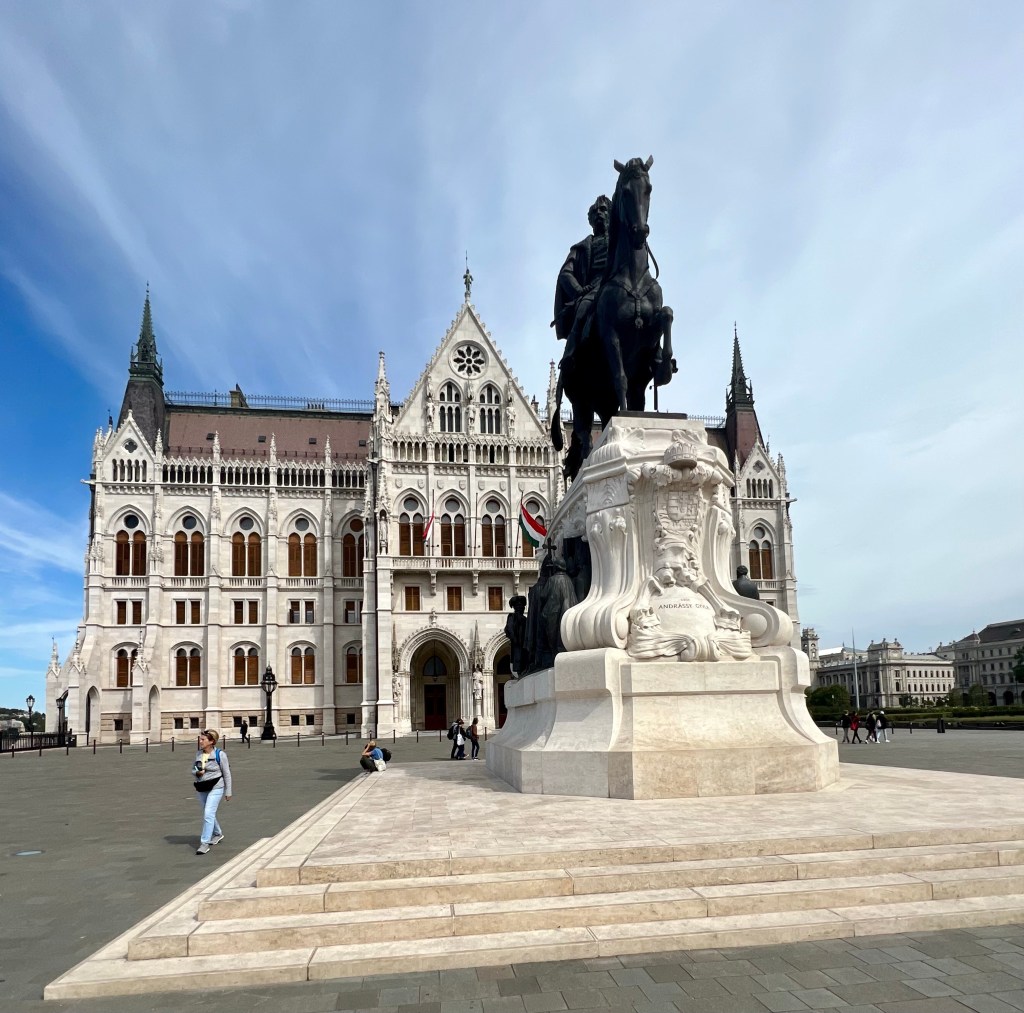
We met our guide Zoli there and spent an entertaining 2.5 hours touring the downtown being regaled with tidbits of Hungarian history mainly focussed on Budapest.
The original Hungarians were nomads in Ural Mountains who wandered into the Carpathian basin in 400 AD. The Empire of Huns were here before they arrived and even when they left the name stuck and everyone calls them Hungarians though they refer to themselves as Magyars.
In 896 AD, the chiefs of seven tribes symbolically entered into a blood brotherhood and through sworn allegiance Hungary became one nation. The numbers 896 have great significance which is why both the Basilica and Parliament Buildings are 96 metres tall.
When Hungary was “founded”, the inhabitants weren’t Christians. Steven asked the pope for a crown and worked hard to earn it by converting the pagans to Christianity. He had no heir and offered the kingdom to the church; specifically the Virgin Mary though in the end Hungary was ruled by his nephew. Not long after he died, his remains were dug up and body parts were sent to various churches across Hungary. His right hand is in the basilica.
Our first stop was St. Stephen’s Basilica which we had toured yesterday.

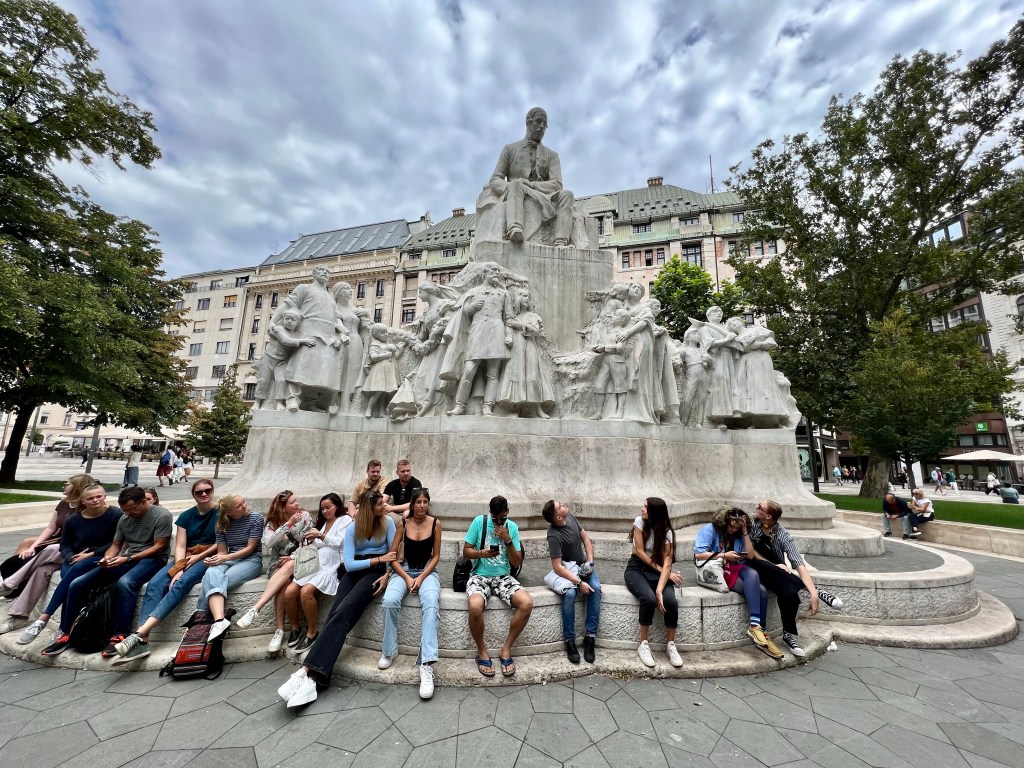
Next we headed to Renduletenul square to see the beautiful monument there funded by donations including one coin embedded in the statue that was donated by a poor peasant who gave her last coin to the enterprise.
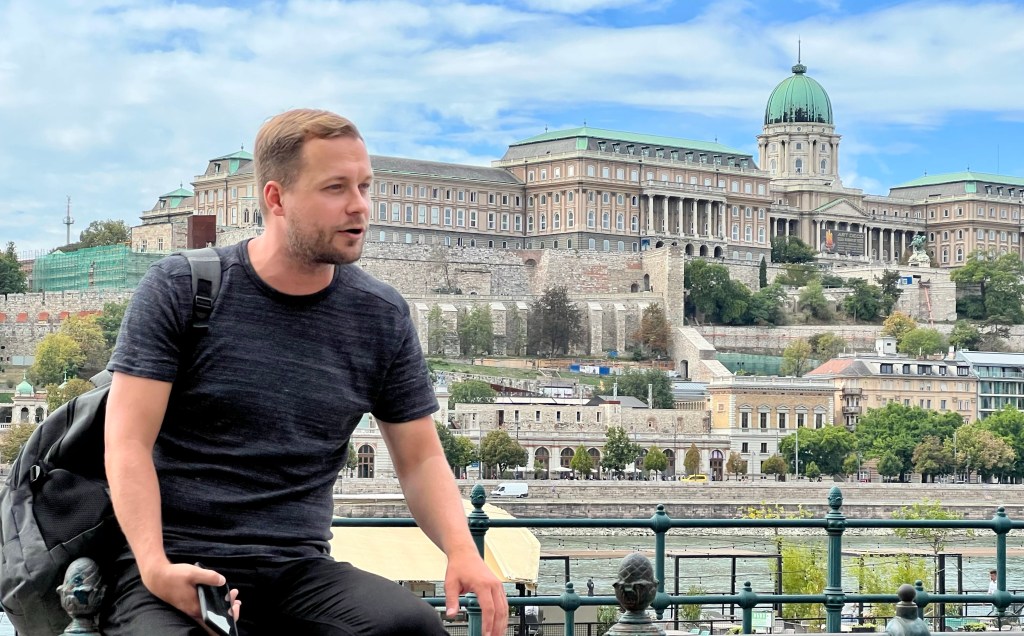
Off to the banks of the Danube to gaze across at Buda Castle and the beautiful Church and fisherman’s bastion with seven towers representing the original seven tribes.
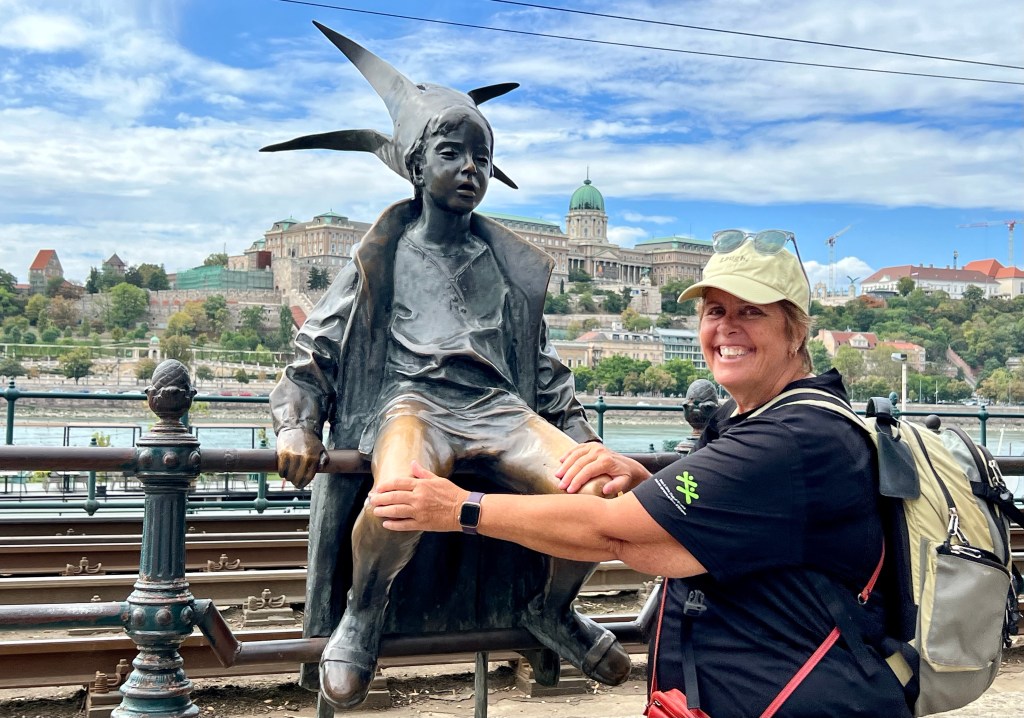
Continuing our walk along the banks of the Danube, we come across the Little Princess Statue sitting on the railings of the Danube promenade. The statue was inspired by the sculptor’s eldest daughter who often played dress up wearing a princess costume, a crown made out of newspaper by her father with her bathrobe as a mantle. Touch both her knees for good luck and a return trip to Budapest.
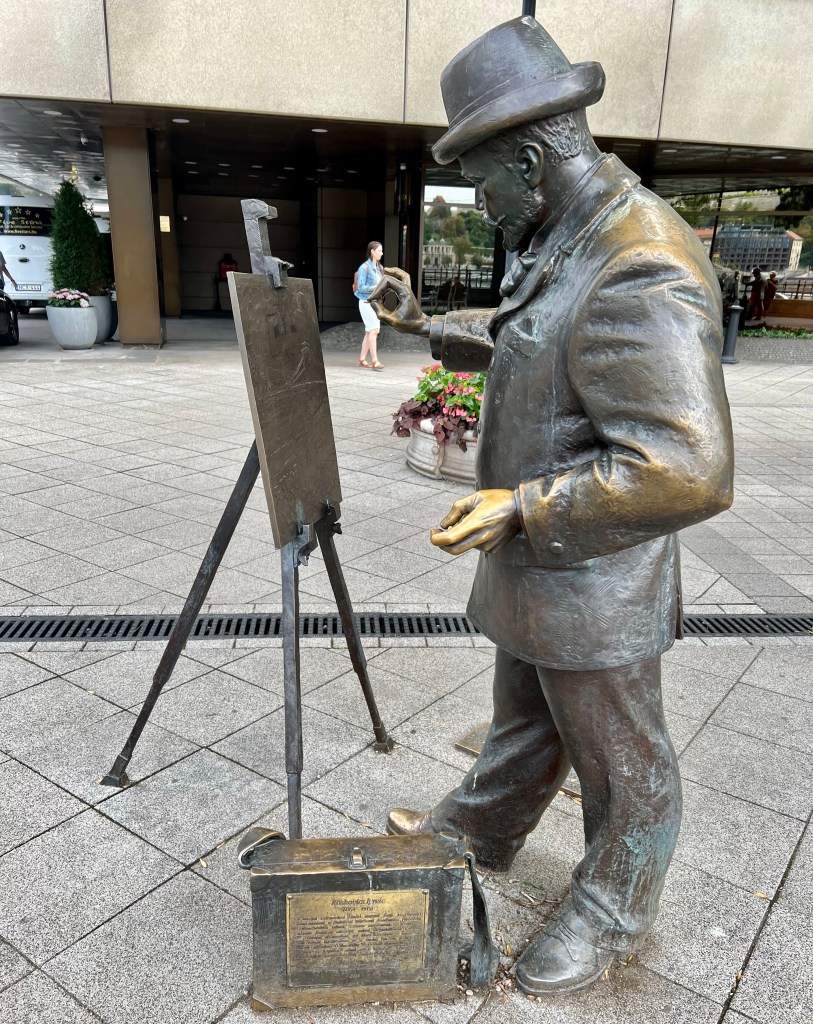
Did I say there was a plethora of Street art in Budapest? well here’s a few more …

We next arrived at Széchenyi Square; named after Count Istvan Szechenyi, a Hungarian politician, political theorist, and writer. He is widely considered one of the greatest statesmen in his nation’s history, and, within Hungary he is known to many as “the Greatest Hungarian”. The Square is located on the Pest side, near the embankment and the historic Széchenyi Chain Bridge over the Danube River; the first permanent river crossing over the Danube. The bridge was opened in 1849 and survived assaults from both sides during the second revolution against Hapsburgs but was destroyed by the Nazis fleeing from the Soviets at the end of WWII and later rebuilt. Currently under construction and will open as a pedestrian/ bicycle bridge.

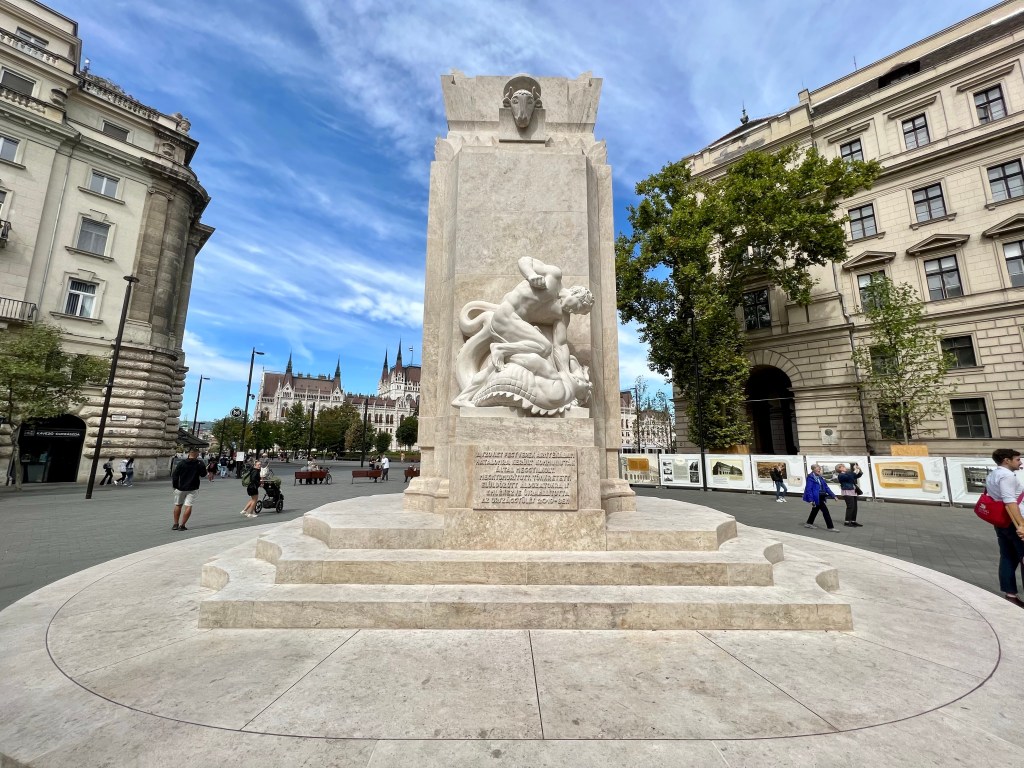
Our next stop was Liberty Square which is home to two competing memorials. The official monument is the Memorial for Victims of the German Occupation erected by the government. This monument featuring an eagle representing Germany and archangel Gabriel representing Hungary was highly controversial as it misrepresented history. Hungarians were already disadvantaging the Jews before WWII and later joined with the Germans to assist in the deportation of 437,000 Jews to extermination camps in 55 days.

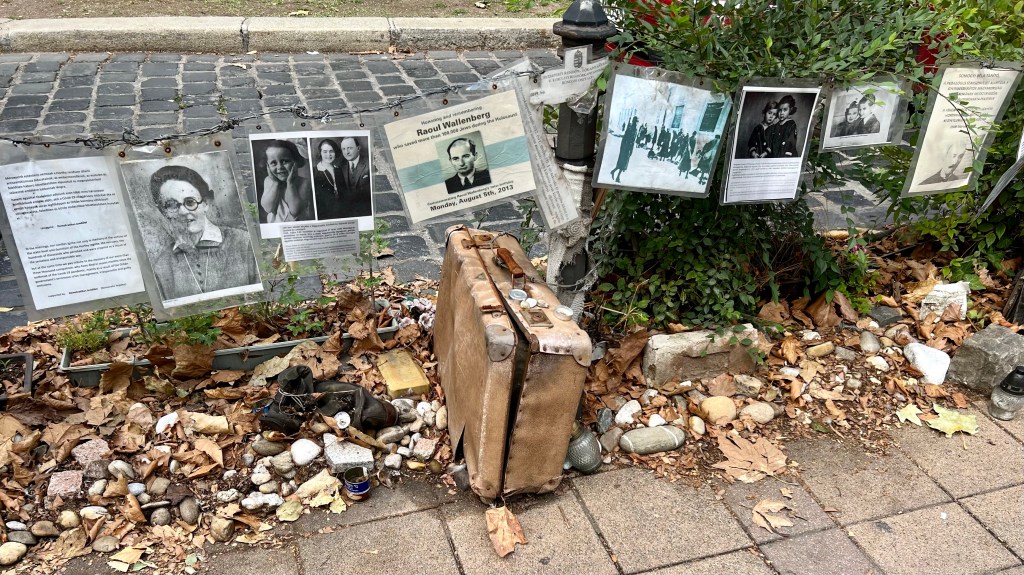
The Living Memorial was created and currently serves a counter-monument to the Memorial to the Victims of German Occupation. People brought stones, candles, photos and personal belongings that express their feelings, and placed them in front of the cordon. The Living Memorial features photos of Jews sent to extermination camps, rocks, shoes and suitcases.
The Soviets “liberated” Hungary after WWII and stayed for 45 years. There is also Soviet monument in Liberty Square where many Russian soldiers were formerly buried. The statue was allowed to remain after separation as there are over 100,000 Hungarians buried near the River Dom in Russia and the Hungarians wanted Russians to continue to tend those graves. The statue is very close to the American Embassy so would also serve as a big f&$k you to them from the former USSR.

We finished our tour at the Hungarian Parliament Building where we had started the day. After the tour, we stopped for a mid-afternoon snack and to plot out the rest of our time in Budapest. Little did we know that the synagogue would close minutes before we arrived and that the last tour of the Opera House would also have left before we arrived. We decided to buy our tickets to tour the Opera House for tomorrow to avoid disappointment again. The synagogue will have to wait for another time as the Sabbath had arrived. Hot, sweaty and aggravated we opted for more wine and, then, after a brief respite at the hotel, a burger in a local pub for dinner. Tomorrow is another day. Adventures await …
September 3, 2022
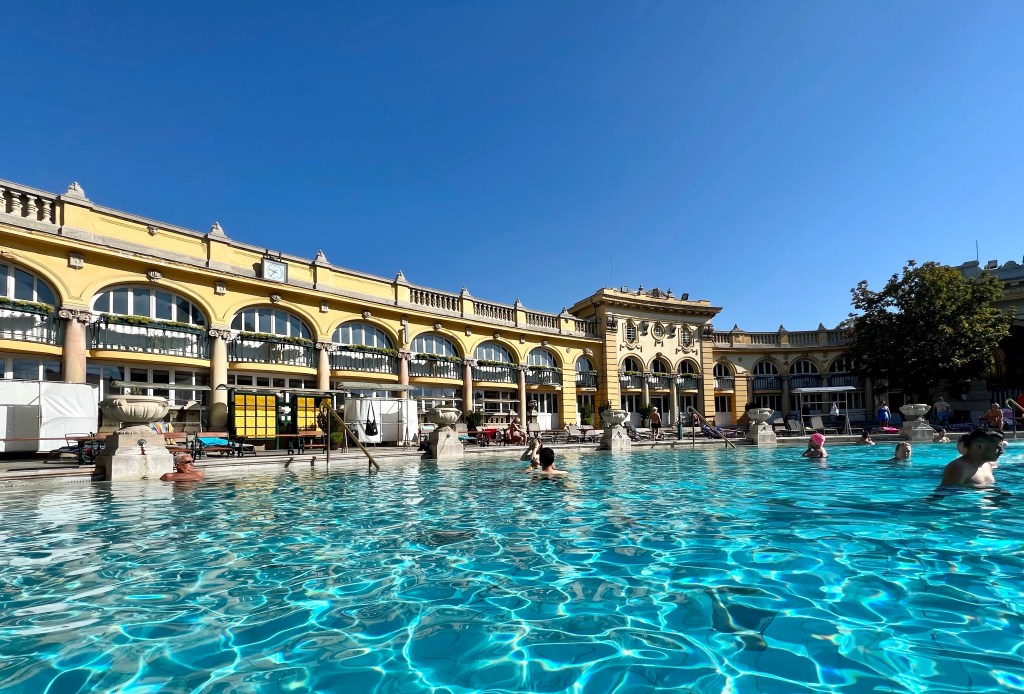
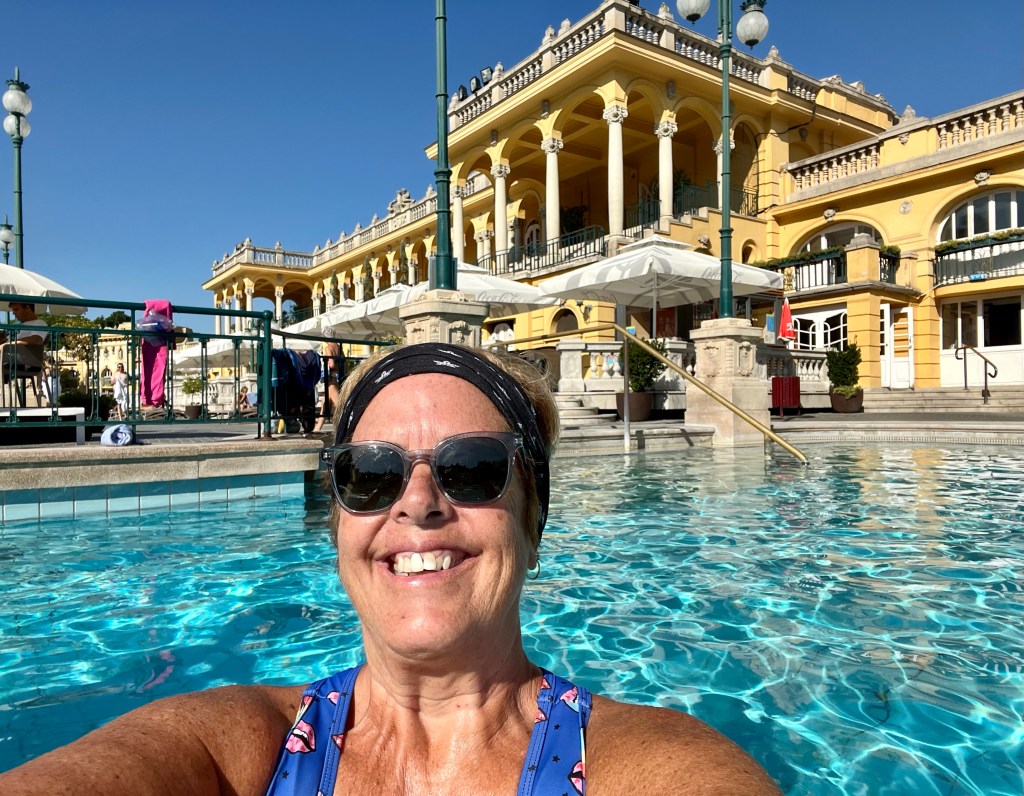
Up and at it early this morning as it’s our last day. To gain a bit of time, we grabbed a cab to the Széchenyi Bath; the largest medicinal bath in Europe. Water for the spa is supplied by two thermal springs. The palatial building features 3 outdoor and 15 indoor pools. We stuck to the outside pools as it was a beautiful sunny day. Luckily we were in an out before it became too crowded or dirty.


After dropping our wet suits and towels off at the hotel, we hoofed it to the Opera House for our tour. The magnificent building, built between 1875 and 1884, was funded largely by Emperor Franz Joseph I of Austria-Hungary with one condition, that it should not be larger than the Vienna State Opera House. When he attended the inaugural performance, he was shocked that the building was so beautiful and opined that he should have specified that the building be not only smaller but also not more beautiful.
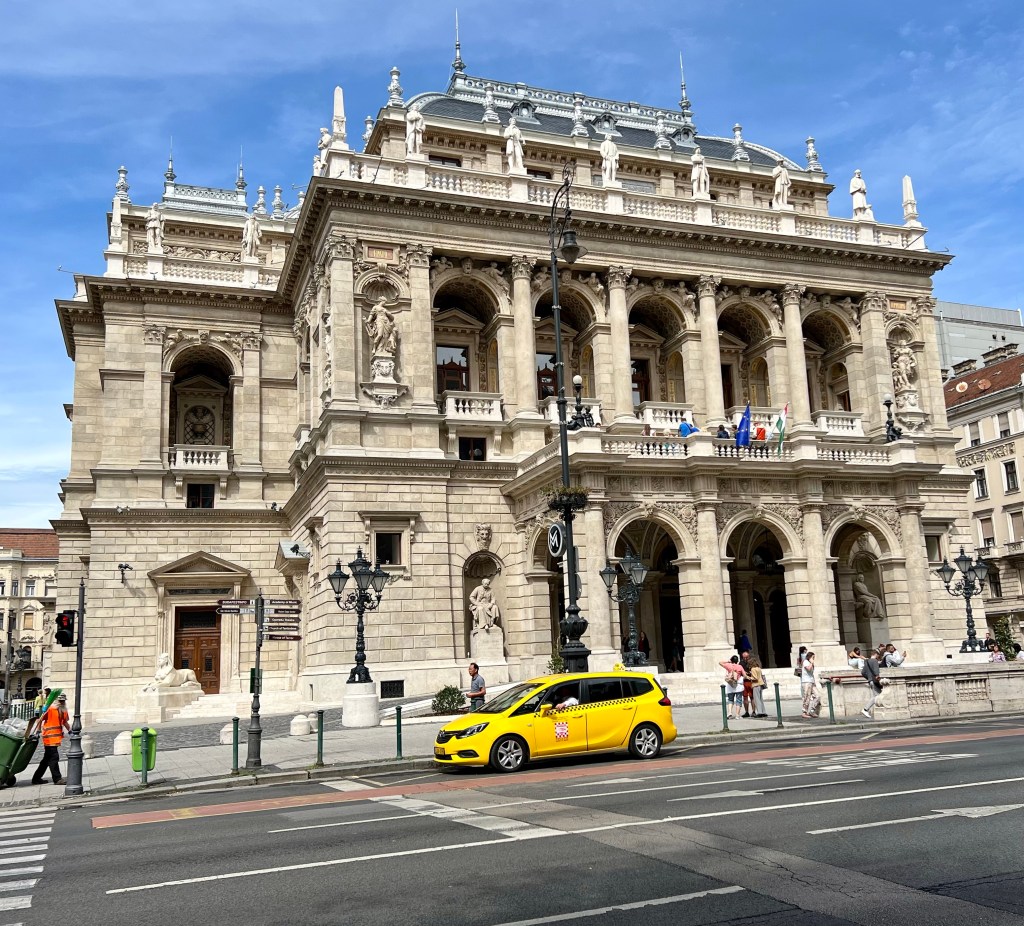
Wrought-iron lamps illuminate the wide stone staircase and the main entrance. Going to the opera was a great social occasion in the 19th century and still is today. The vast, sweeping staircase is an important element of the opera house as it allows ladies to show off their new gowns and jewelry. The foyer has marble columns and its vaulted ceiling is covered in murals.
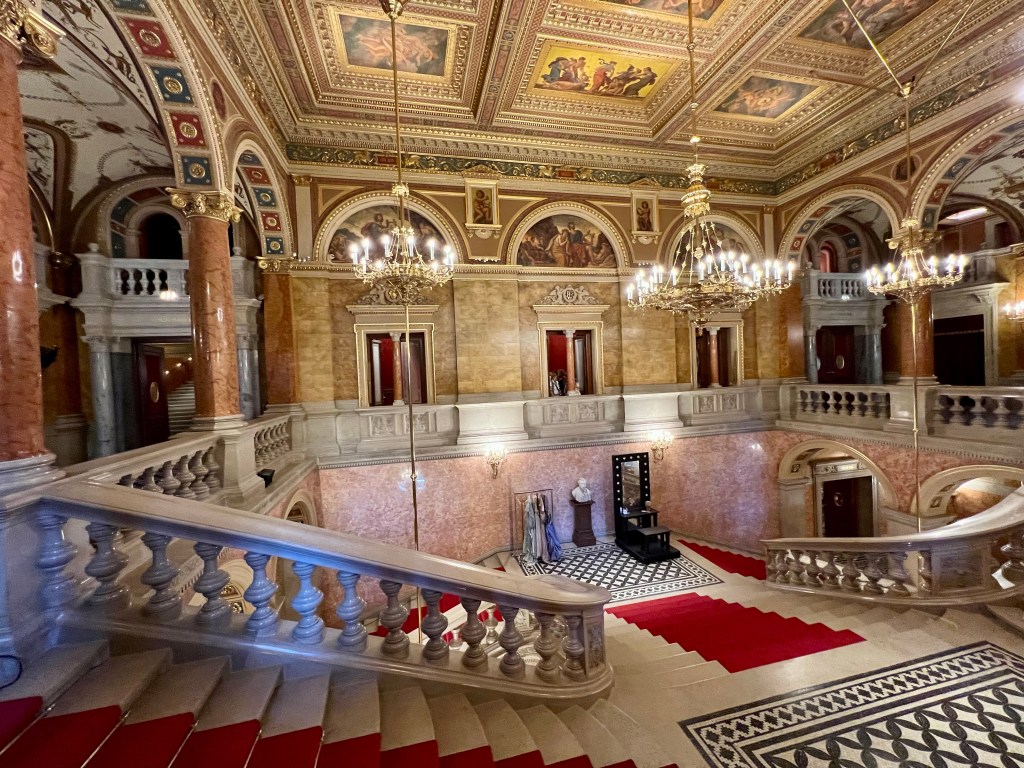
The richly decorated building is considered one of the architect’s masterpieces.
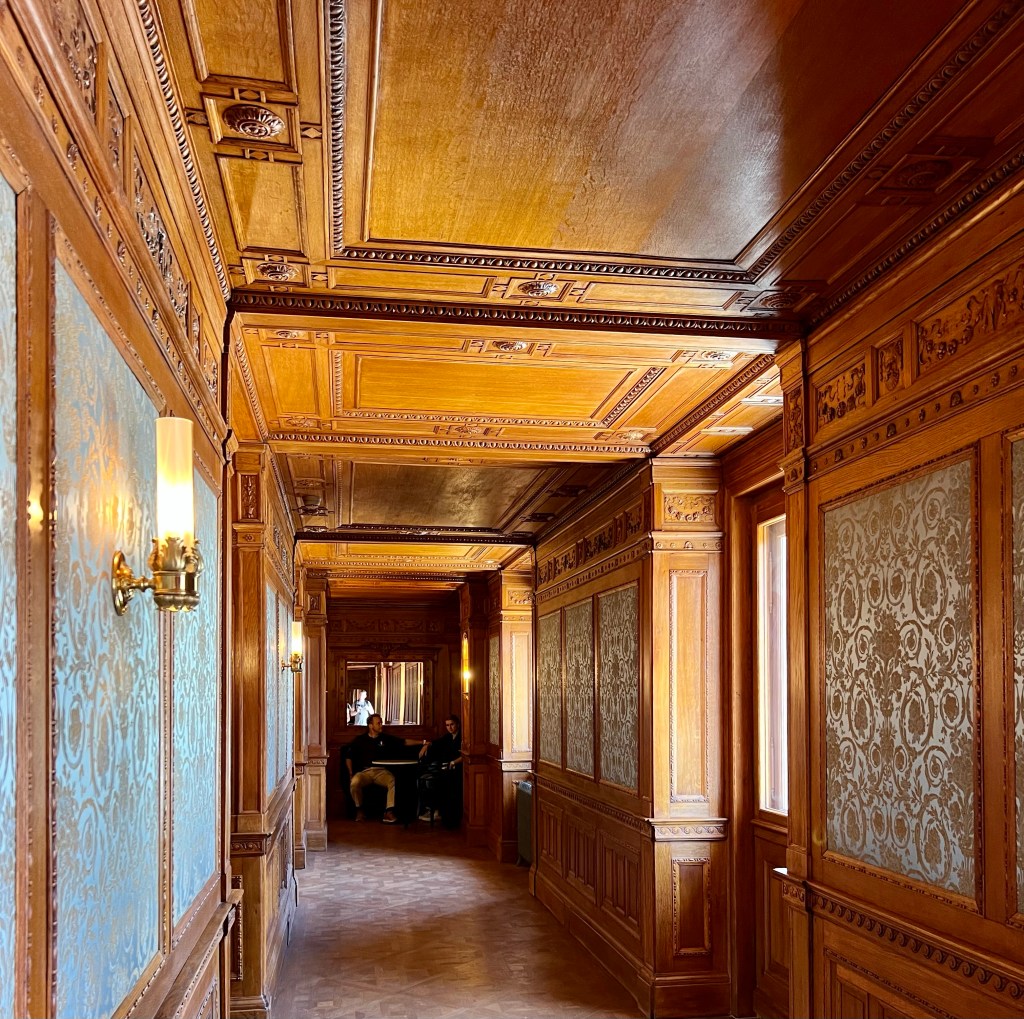

Ornamentation includes paintings and sculptures by leading figures of Hungarian art. Although in size and capacity it is not among the greatest, in beauty and the quality of acoustics the Budapest Opera House is considered to be amongst the finest opera houses in the world. The main hall is horseshoe-shaped with a bronze chandelier weighing 3050 kg illuminating a fresco depicting the Greek gods on Olympus. The sumptuous interior is adorned with 2 kg of gold. The royal box is located centrally in the three-storey circle. It is decorated with sculptures symbolizing the four operatic voices – soprano, alto, tenor and bass.
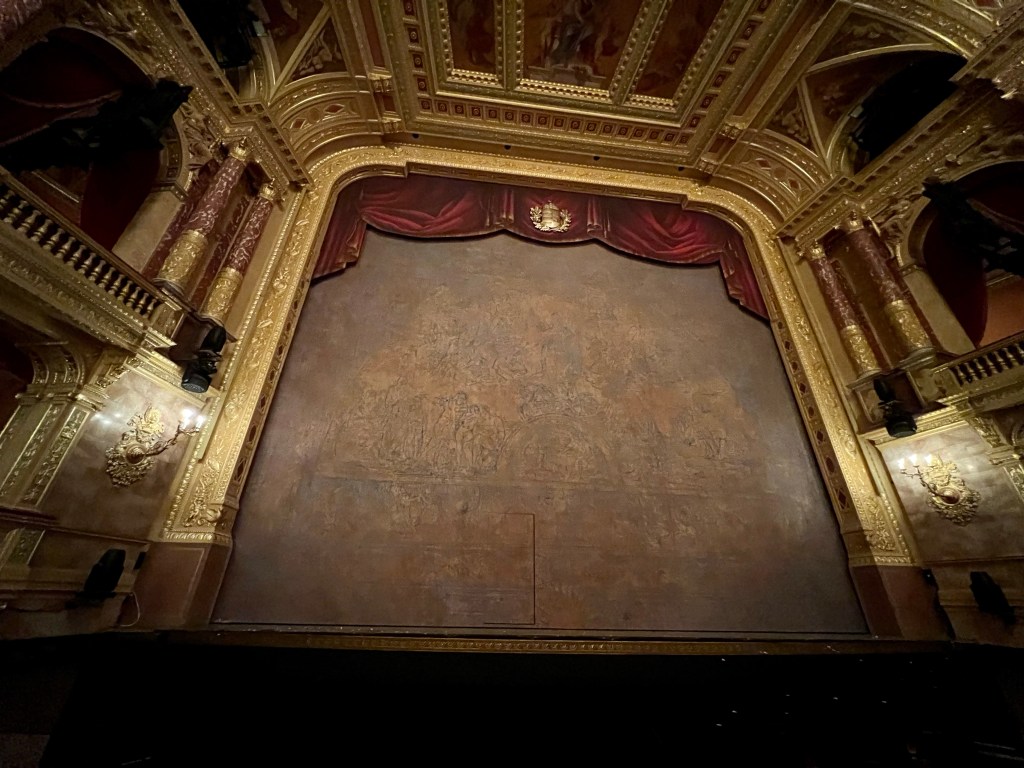
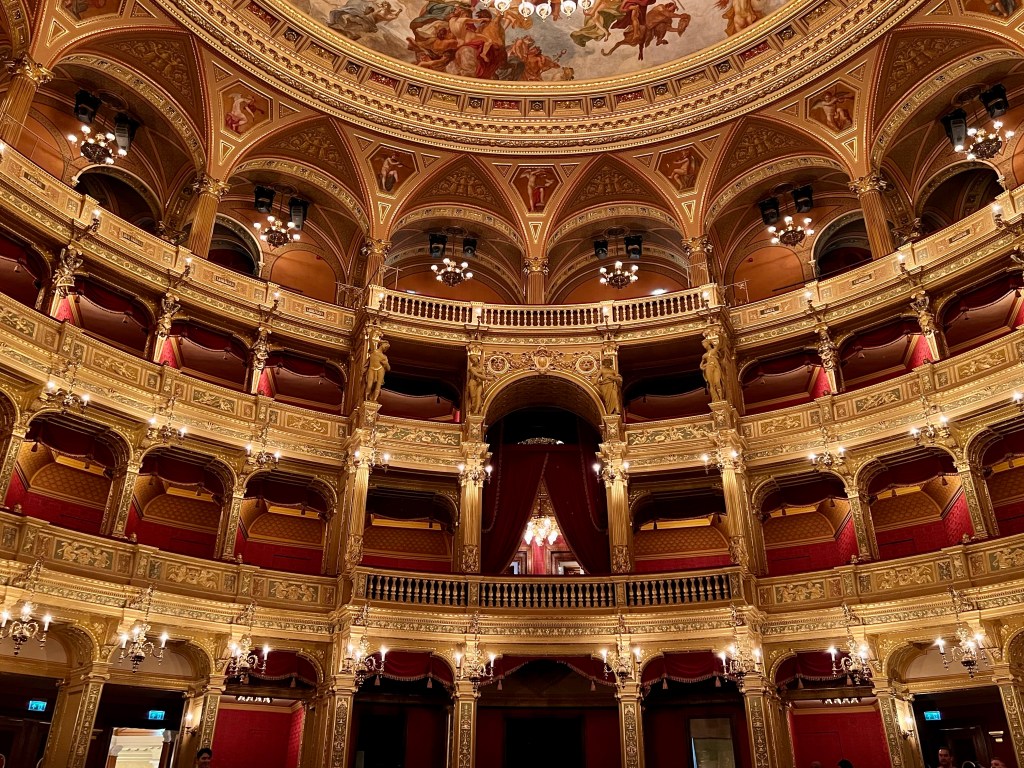
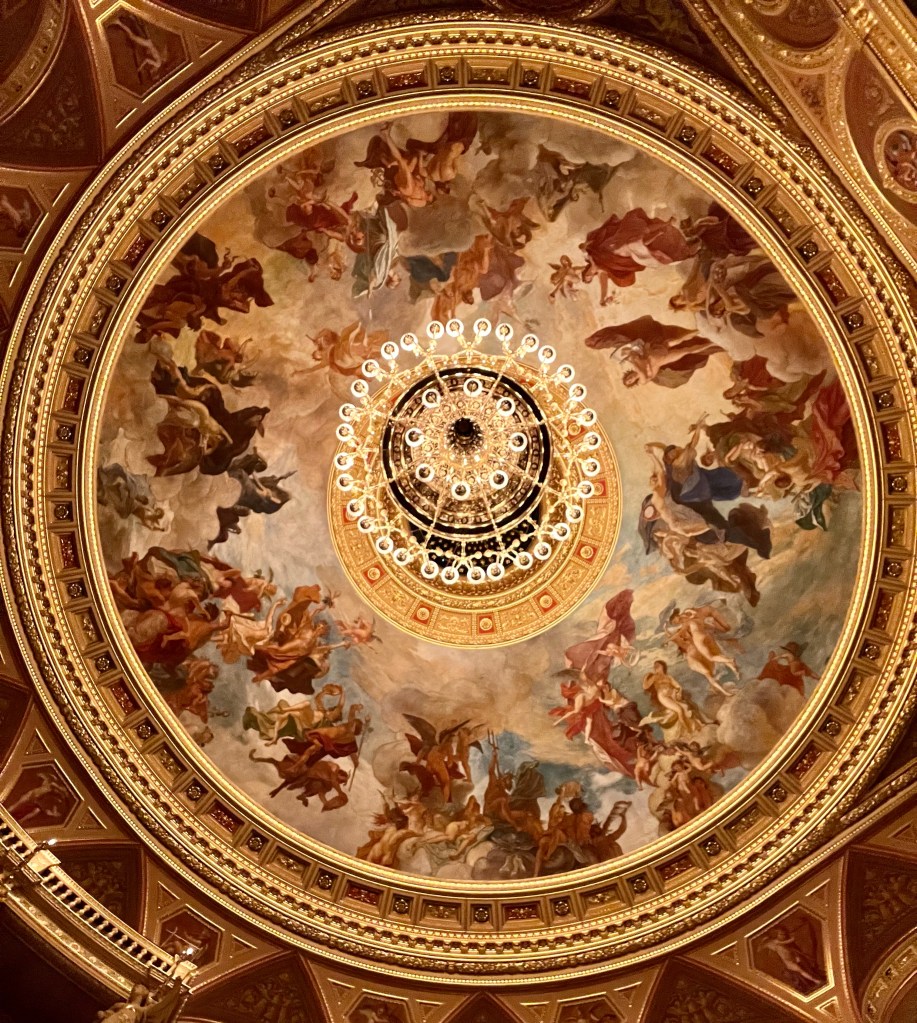

According to measurements done in the 1970s by a group of international engineers – has the third best acoustics in Europe after La Scalia in Milan and the Palais Garnier in Paris.
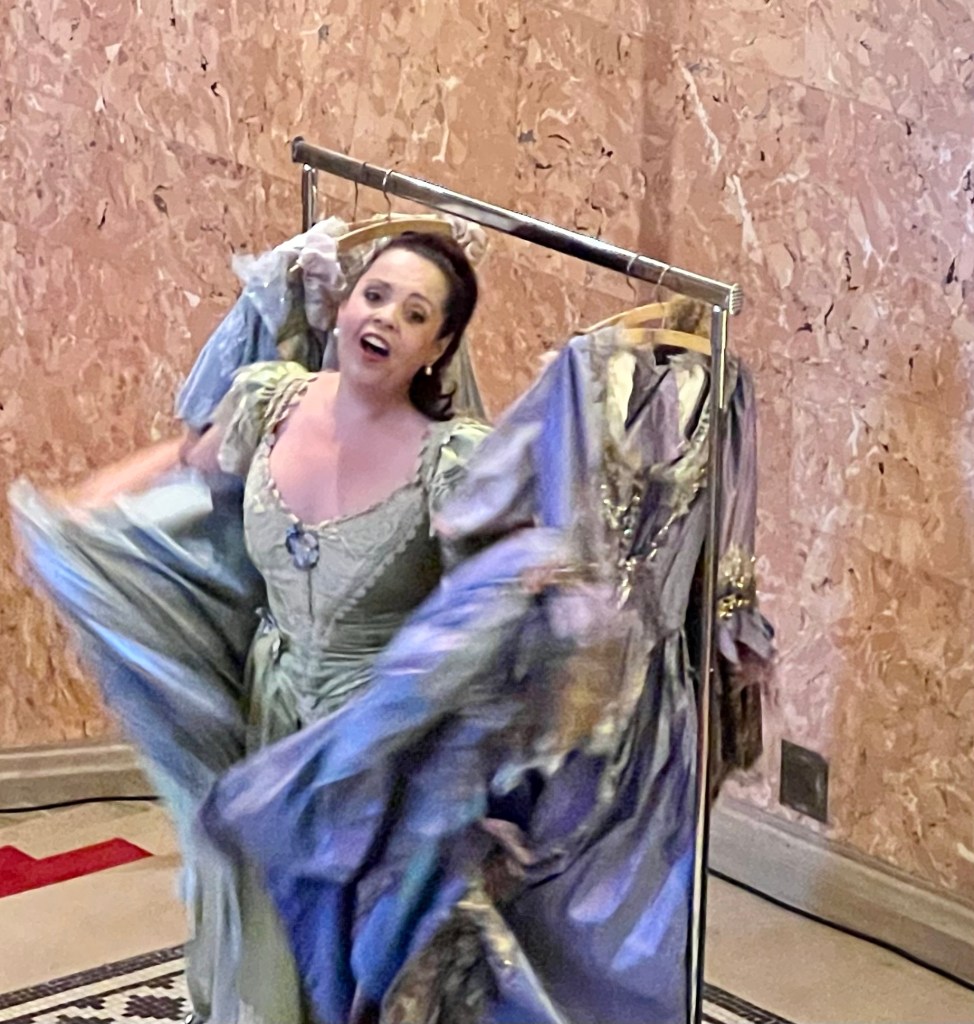
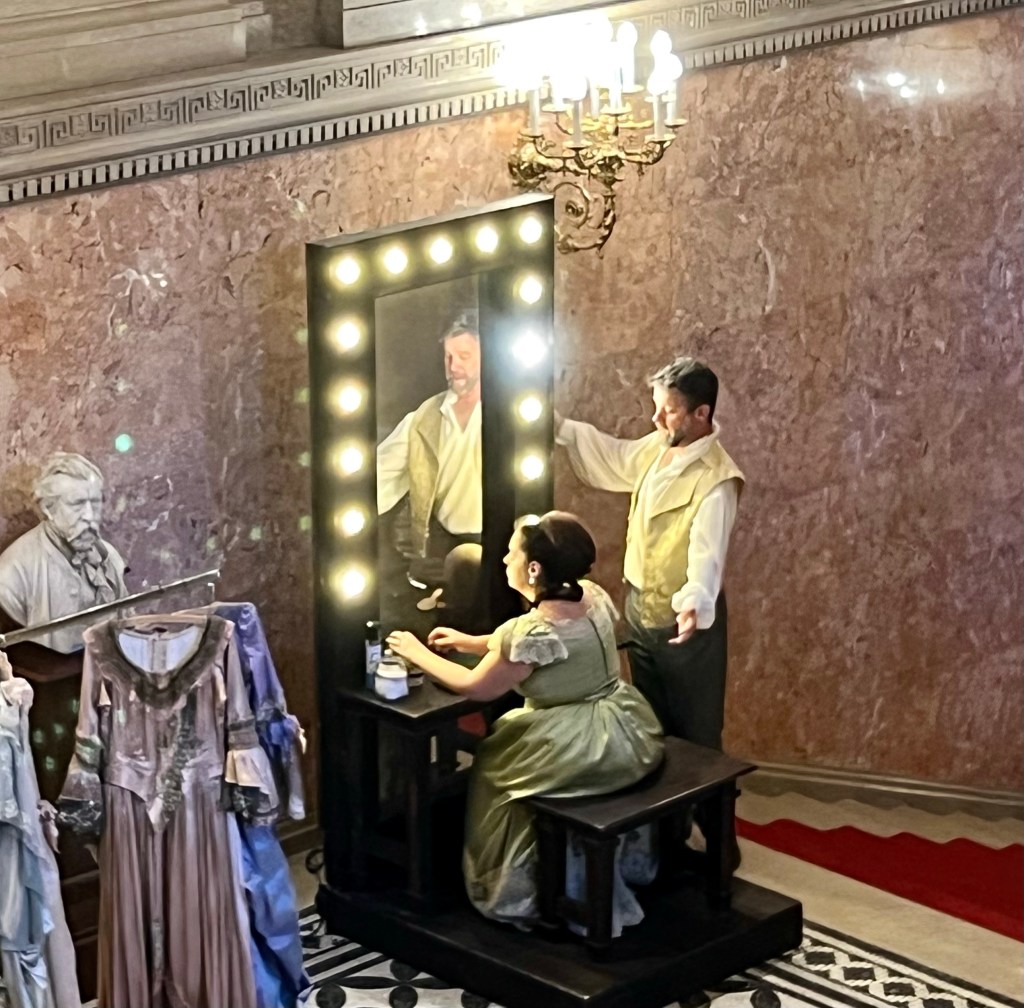
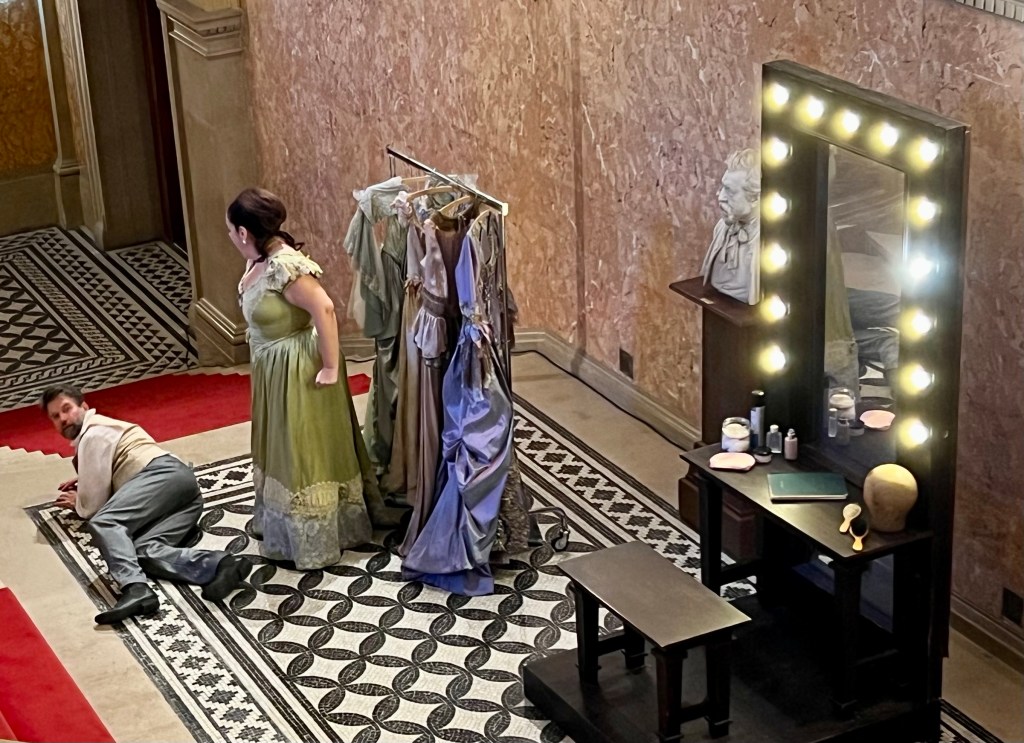
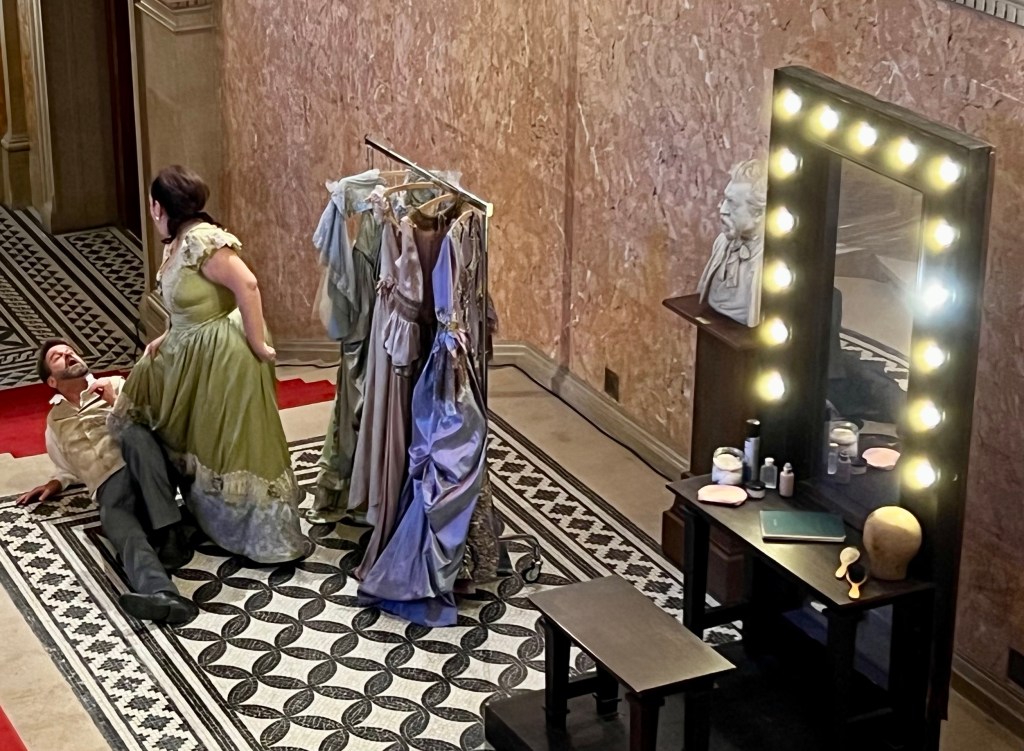
The icing on the cake for the tour was a fifteen minute performance of two of the Opera’s principals.

Next up is the bus to Buda to grab the funicular up to Buda Castle. Buda Castle, once home of Hapsburg kings, is now the Hungarian National Gallery, the Szechenyi National Library and the Budapest History Museum.
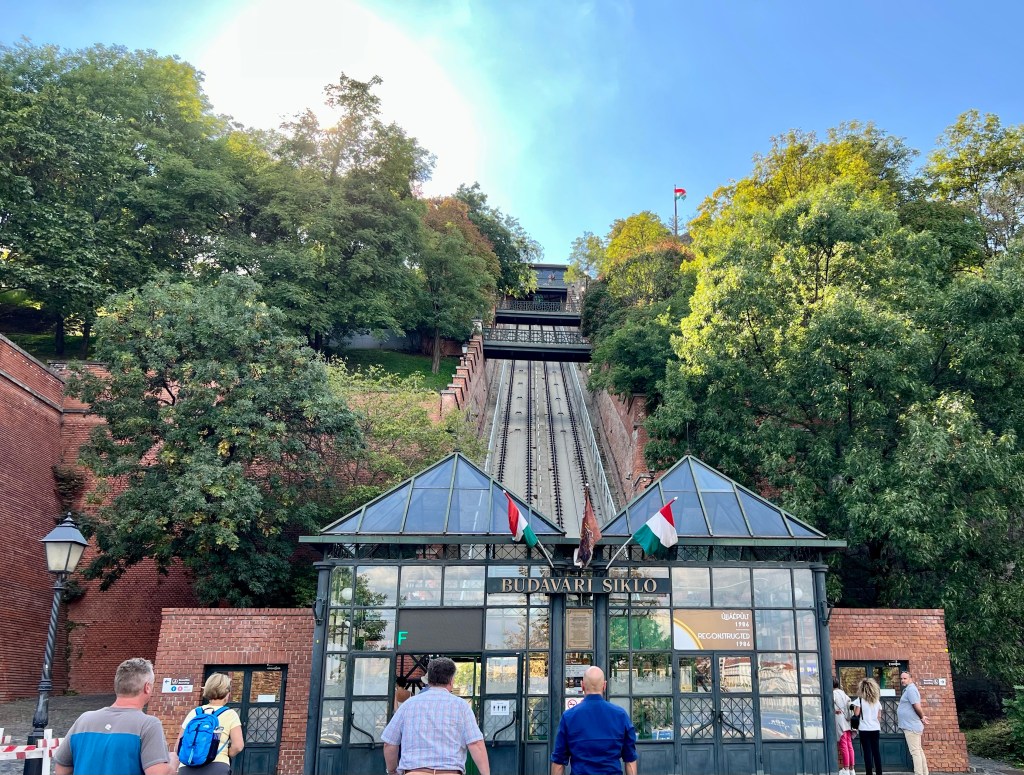
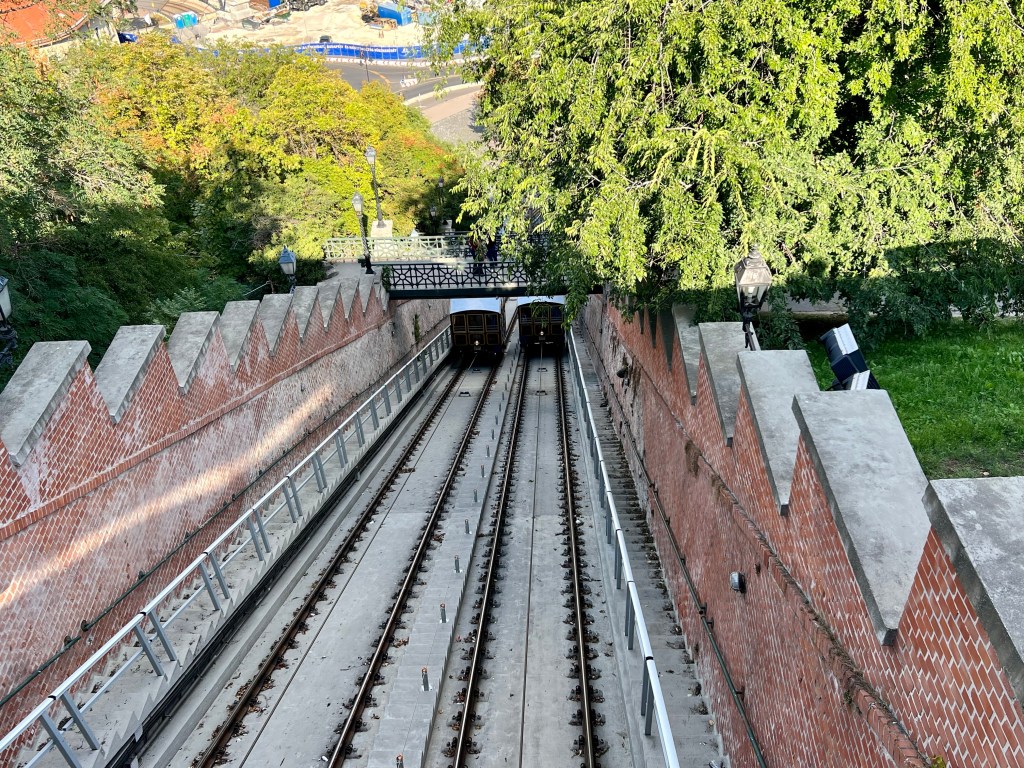
The castle grounds had to wait as the view of the Pest side was stunning though we did find some interesting sites on the Buda side as w


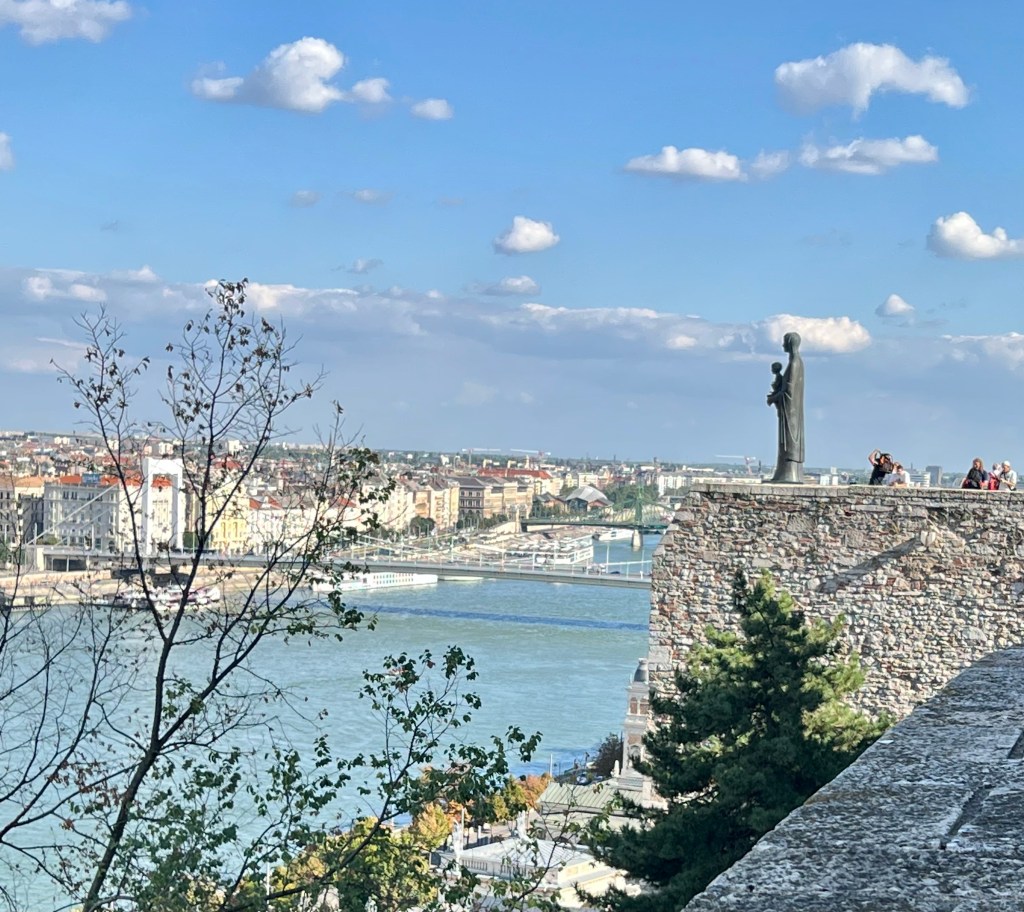
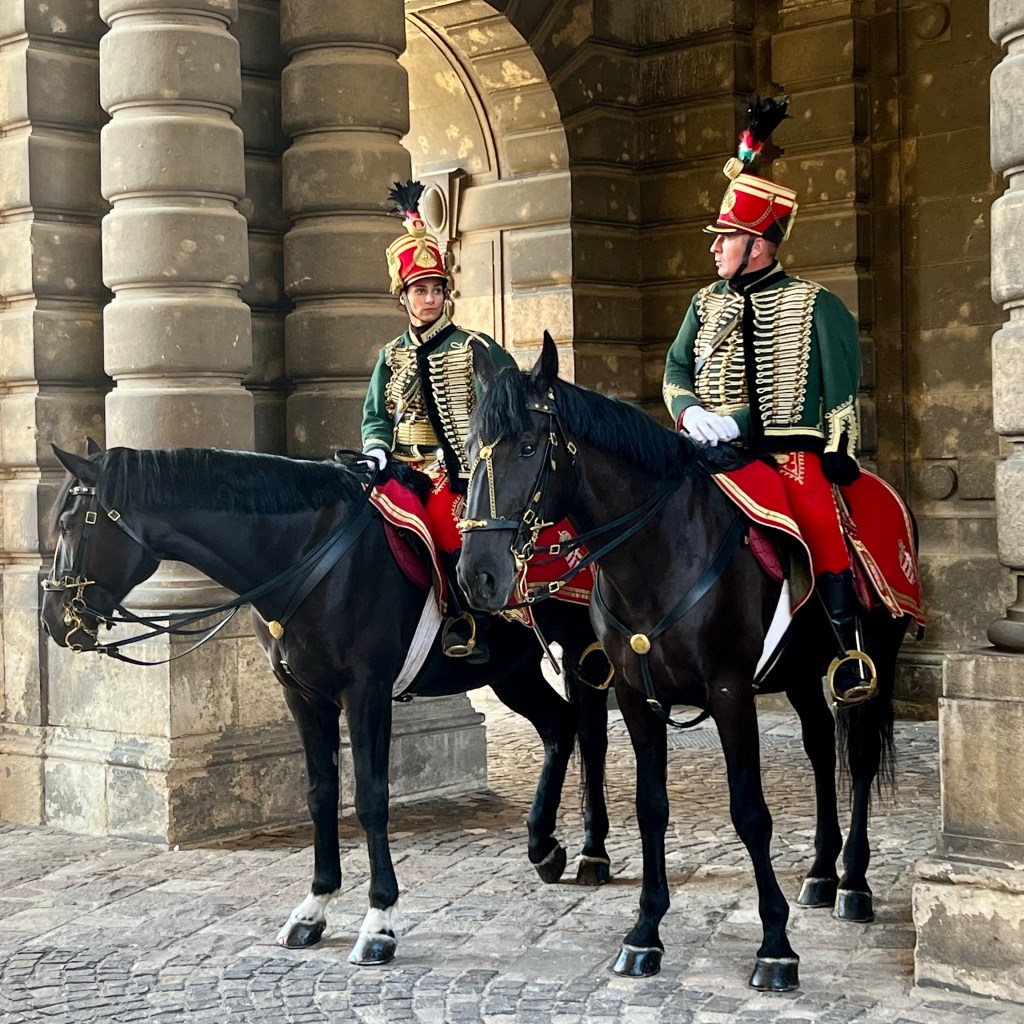
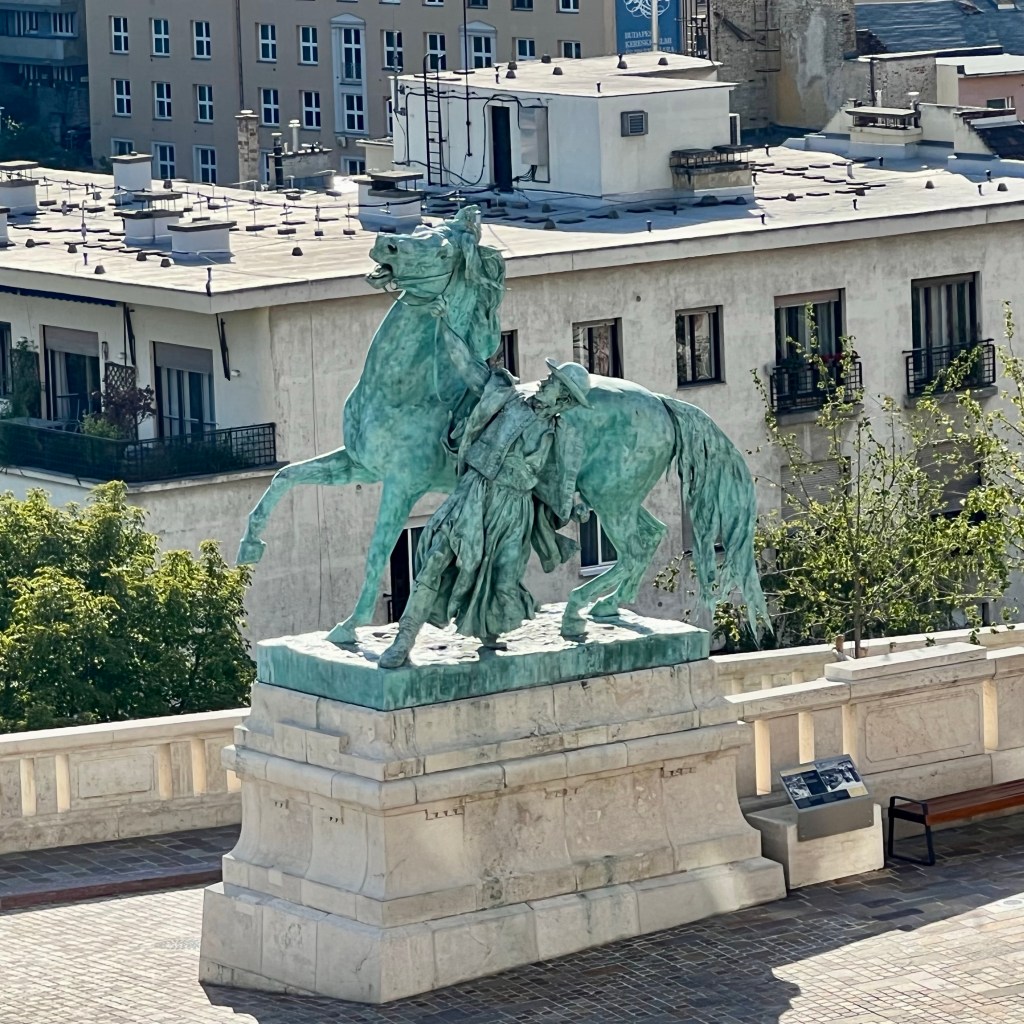
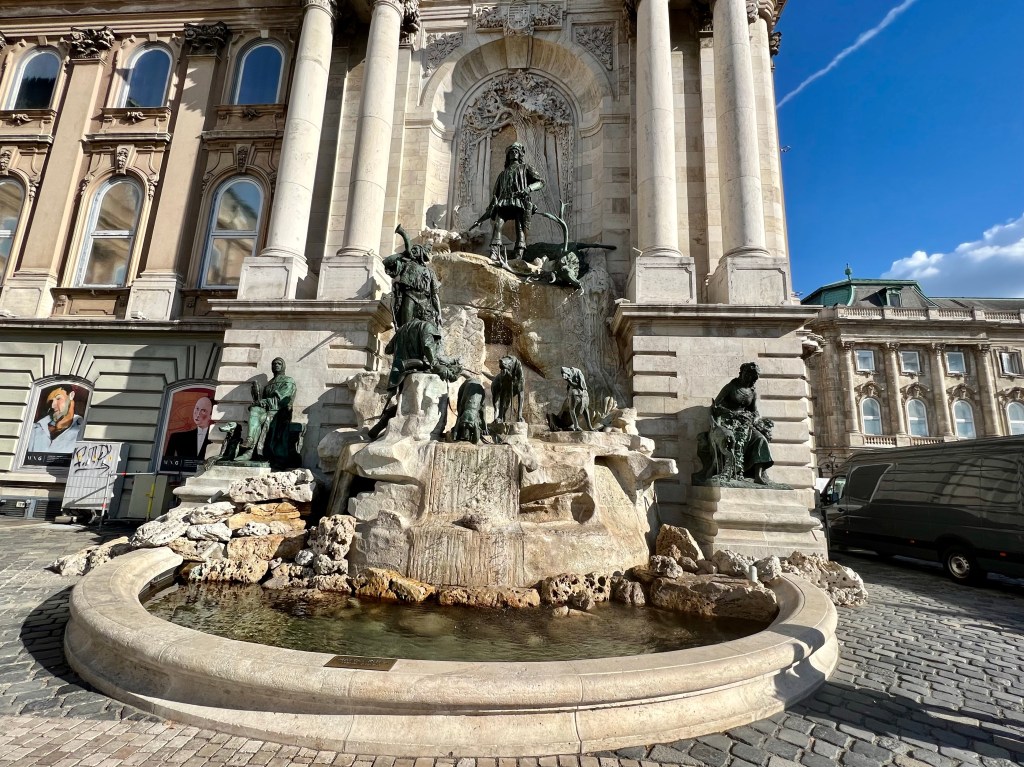
After a brief tour of the castle grounds, we hopped a bus back to the hotel to meet with our tour group for a welcome meeting and then headed to Jokai Street for one last dinner in Budapest before hitting the road to Serbia. Tomorrow is another day. Adventures await …
 Judy’s Rambles
Love learning thru your eyes. Great photos! Stay safe! Can’t wait to hear about tomorrow!
LikeLike