
September 4, 2022
Today is the first day of our travels with G Adventure. We are a larger group of sixteen with people currently living in Australia, Germany, England, Ireland, Canada and the USA. Our Chief Experience Officer, Filip, is from Northern Croatia.
Luckily the minibus is hauling a trailer big enough for all our bits and bobs. Anyone that knows me, knows I’m a horrible overpacker. I’ve tried to be more minimalistic with wardrobe choices because it really is easier to travel light but I can still carry and lift a 50 lb suitcase so I do! Some day, I may be more sensible but I’m not counting on it. Anyway, I digress …
Our destination today is Novy Sad; the second largest city in Serbia with a population of around 300,000 and the capital of the autonomous province of Vojvodina. It is located in the southern portion of the Pannonian Plain on the northern bank of the Danube.
The scenery en route is unremarkable for the most part but there are some nicer stretches with fields of corn and other agricultural endeavours.
With the requisite bio breaks, we arrive at the border in a bit more than three hours. The process of presenting our passports at the Hungarian border and again at the Serbian border for inspection is pretty painless so we’re back on the road lickity split. The view out the bus window isn’t changed much (or at all) by the fact we’re in Serbia.
Soon enough we arrive at our destination and grab our bags to head to our accommodations for the night; Hotel Vojvodina. The hotel is a bit tired but good enough for one night. The biggest deficiency is the lack of elevator which gives me a chance to test my resolve to have wardrobe choices as I need to haul my “steamer trunk” and other various “carryon” bags up the sweeping staircase to reception. All I can say is thank God were not staying on the fifth floor, lol!
The crew met Filip outside the hotel for a late lunch/early lunch followed by an orientation walk to get some sense of the city.
Novy Sad was founded in 1694 when Serb merchants formed a colony across the Danube from the Petrovaradin Fortress, a strategic Habsburg Military post. In subsequent centuries, it became an important trading, manufacturing and cultural centre.
The city was heavily damaged in the 1848 Revolution and was subsequently rebuilt and restored. Today, along with the Serbian capital city of Belgrade, Novy Sad is an industrial and financial center important to the Serbian economy. Novy Sad is the most liberal and multicultural city in Serbia with 14 major nationalities; Hungarians and Croatians being most prominent.
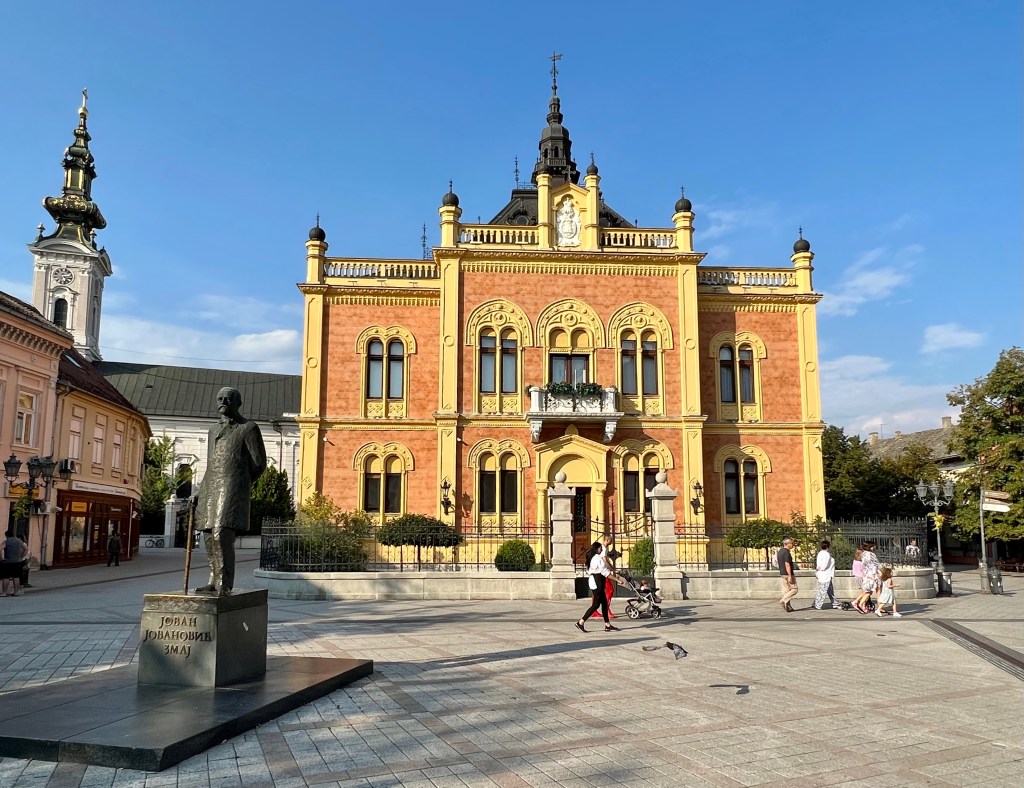
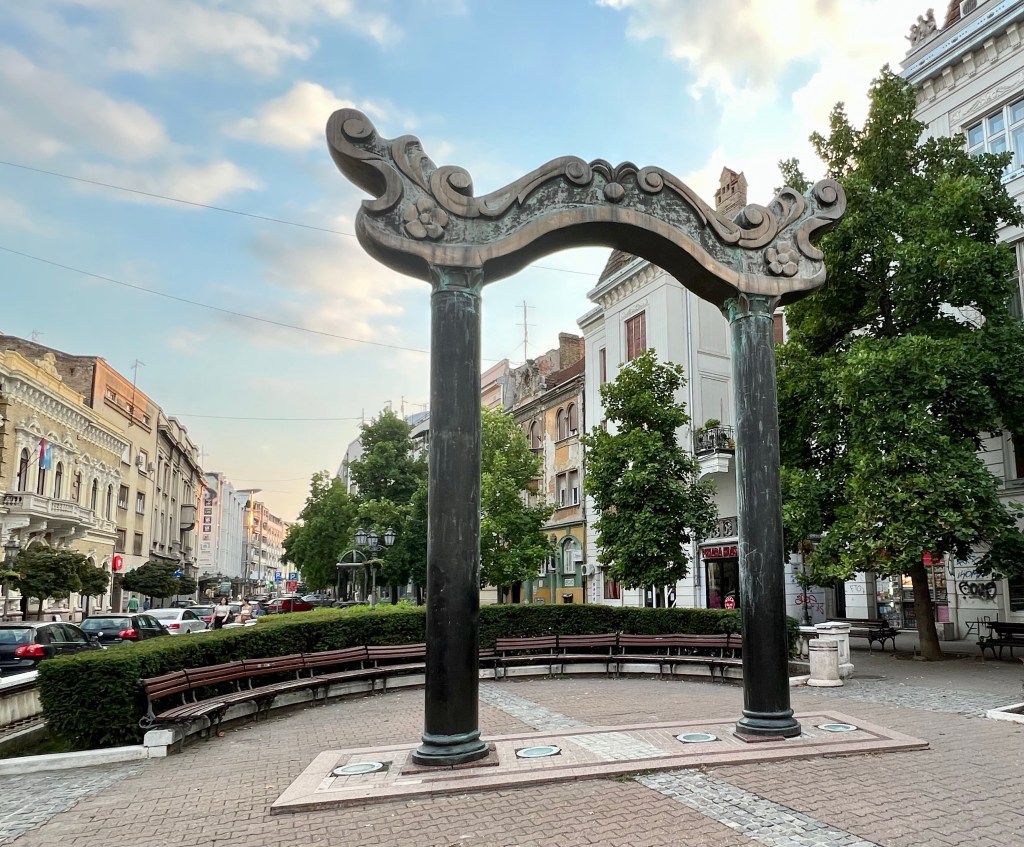
The hotel is perfectly located across from Liberty Square; the main square of the city flanked on one side by the City Hall and the other by the Name of Mary Church with the Svetozar Miletić Monument in the middle.

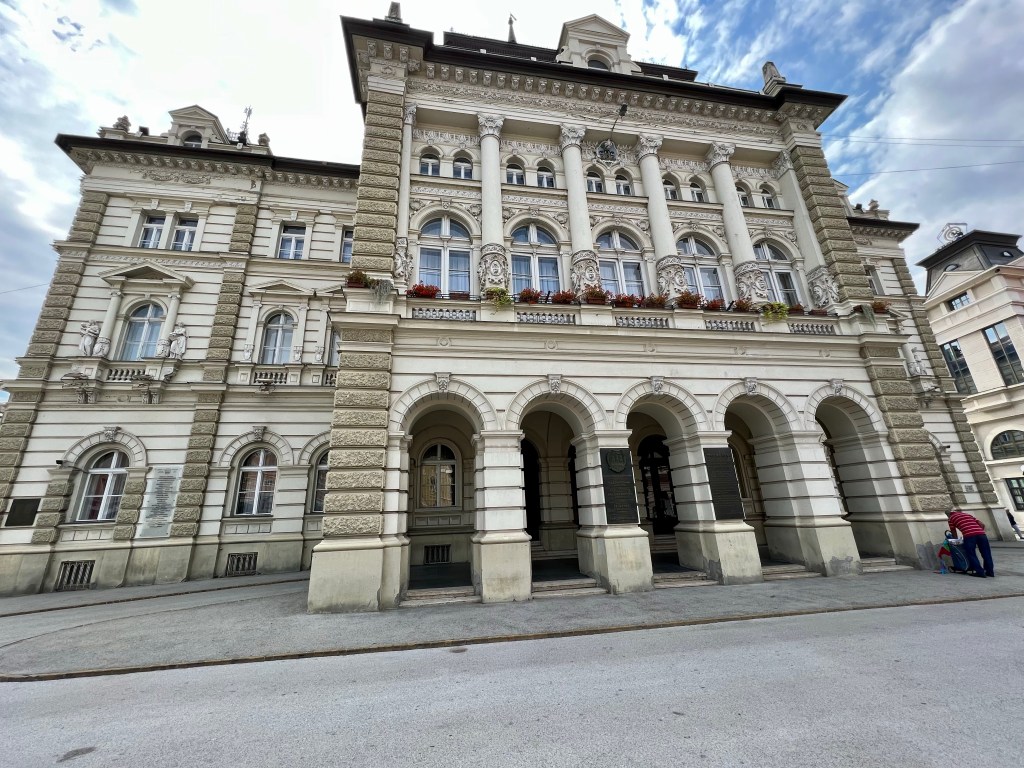
The town hall was built in 1895. The beautiful building has a special tower at the top that allowed firefighters to monitor the city. A large bell featuring the image of St. Florian, brave protector from fires for all cities, was added in 1907 to be used to alert the citizenry in case of fire. The bell also rang every day at five in the morning to mark the beginning of the market.
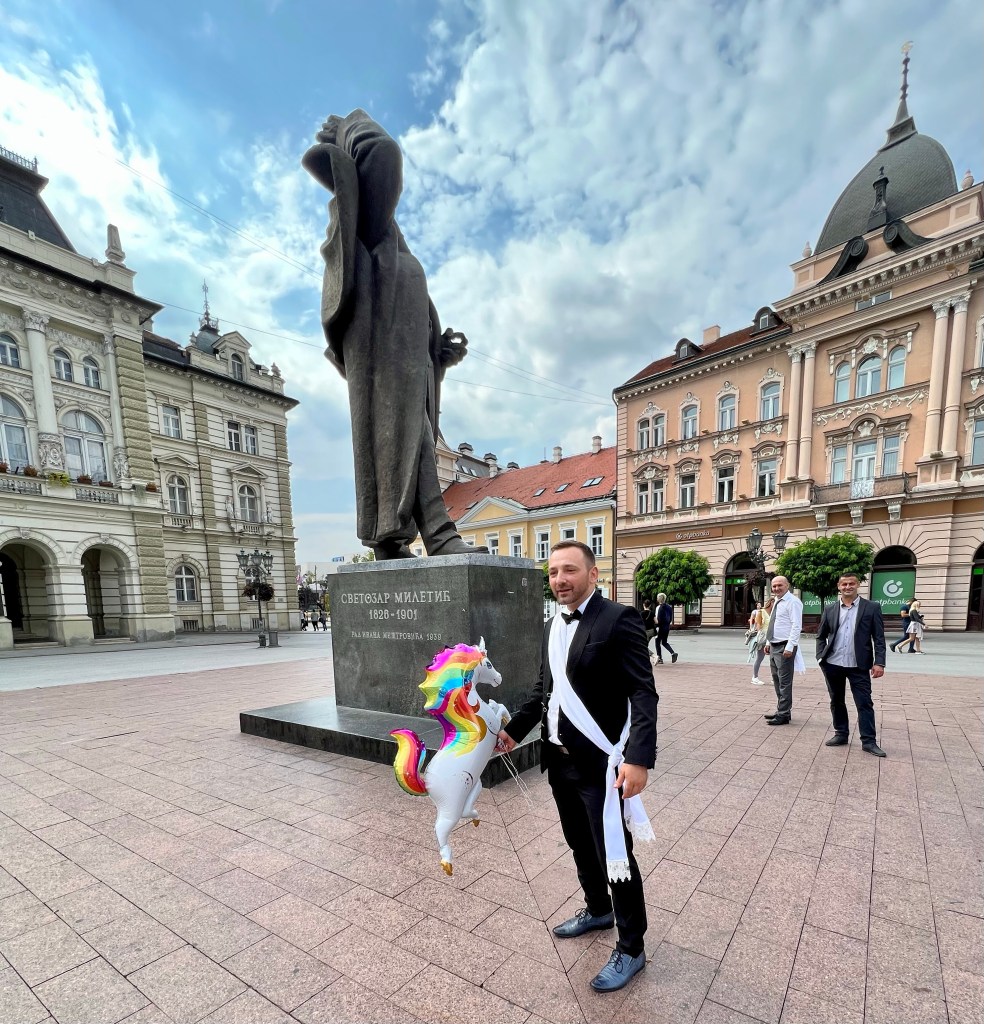
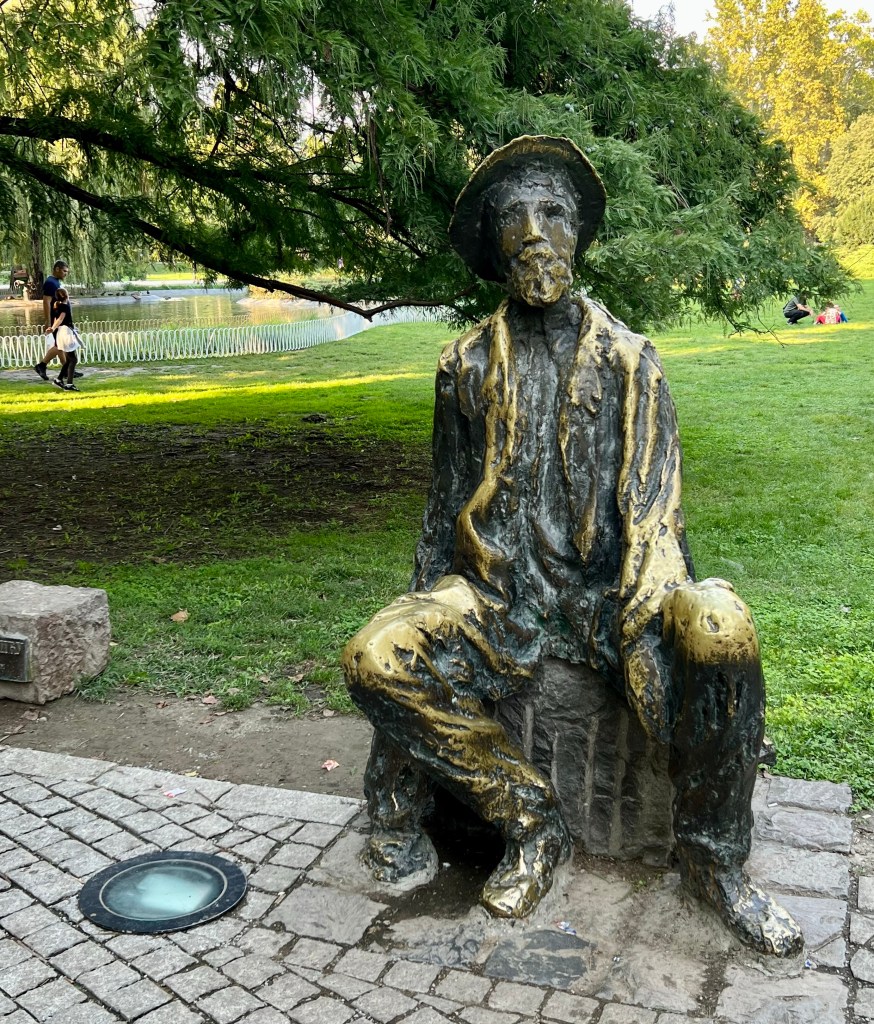
The Svetozar Miletić Monument is dedicated to one of the most significant Serbian politicians of the 19th century. His ideas and political ideology greatly influenced the national movement of the Serbs from Vojvodina during the second half of the 19th century. He was arrested, sentenced and imprisoned many times because of his political activity but was always freed to live another day.
In the Square, we spotted a gentlemen wearing a white sash and carrying a unicorn balloon. Intrigued, we enquired as to the reason and he advised that he was off to his brother’s nuptials.
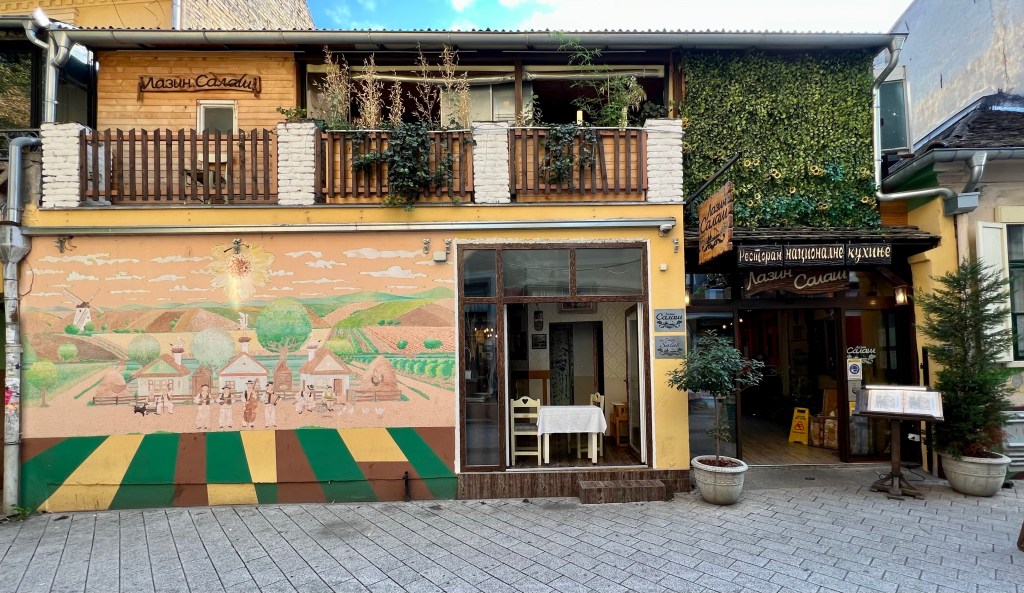
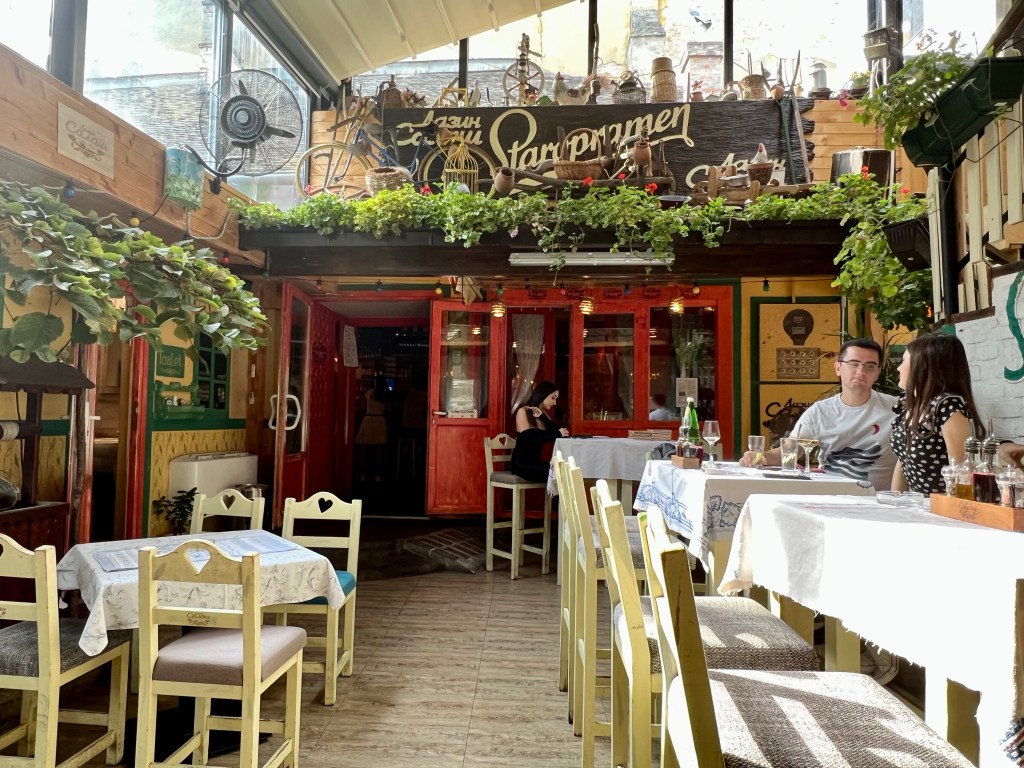
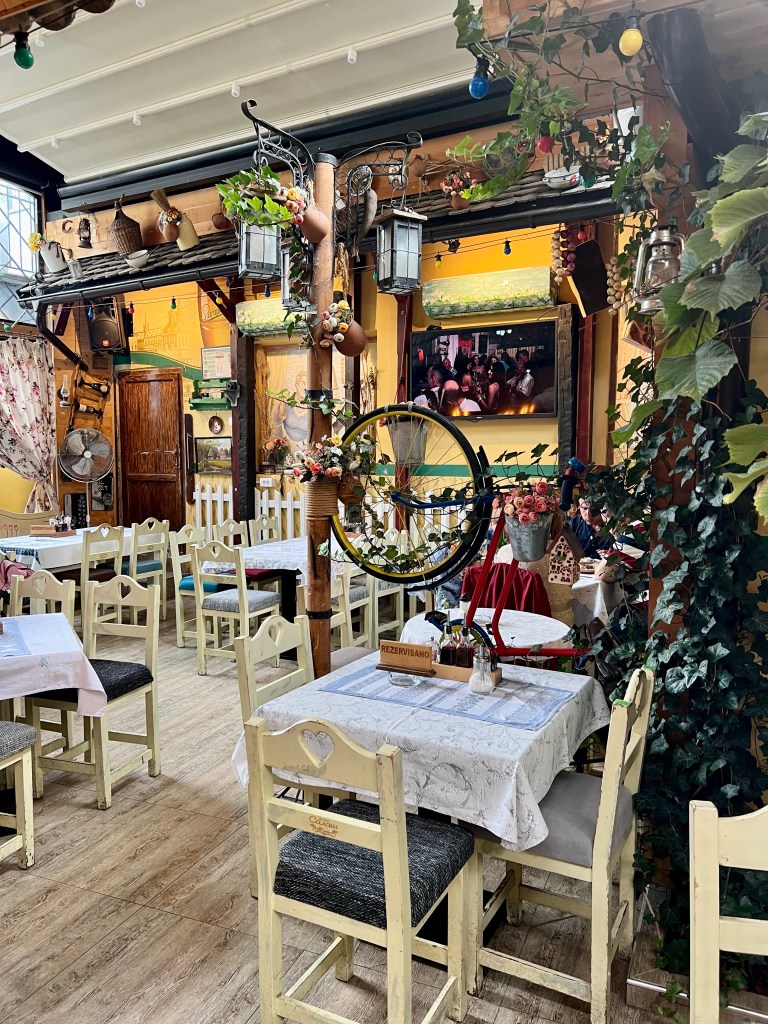
Time to head over to the restaurant which was quite cute and cosy. I wasn’t too hungry so I ordered a cheese plate boasting a variety of cheeses which ended up being enough for four. Many others had either the local sopska salad of fragrant tomatoes, cucumber and onion topped with a generous amount of a local salty cheese reminiscent of feta but made from cow’s milk, beef goulash – a fragrant thick stew served on a bed of mashed potatoes or deep fried pork roulades served with fries.
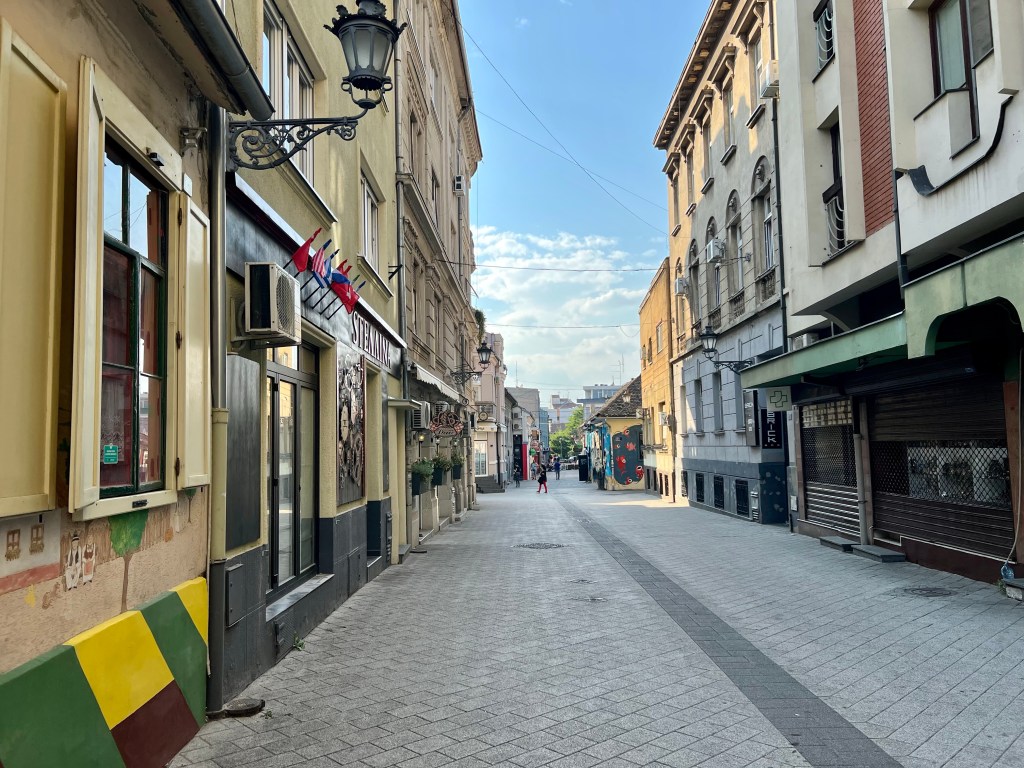
Next we head out to walk off some of our lunch with a brief orientation walk. First stop was the imposing Bishop’s Palace not far from the Serbian Orthodox Church for which the Bishop is responsible. Of interest to me is that one of the steps to become an Orthodox priest is to find a wife (for life as divorce is not recognized) and get married.
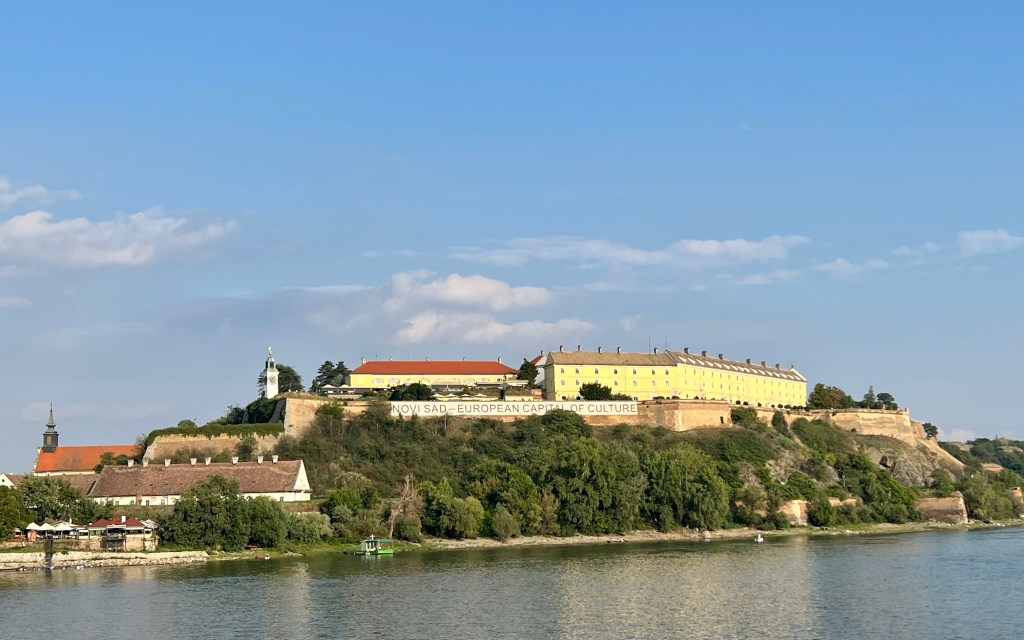
We continued our walk down to the banks of the Danube to catch a view of the the Petrovaradin Fortress perched atop the opposite bank. While there, Filip told us a bit about the 1999 NATO bombing of Yugoslavia which had a significant impact on Novy Sad.
According to NATO press releases, the bombing targeted oil refineries, roads, bridges, and telecommunications relay stations, facilities which had military uses aimed at impairing the Yugoslav Army’s command and control structure. In reality, the NATO bombings left the city without any of its three Danube bridges, communications, water, and electricity, and severely impacted the day to day lives of residents of Novy Sad.
Ironically, at the time, the city was controlled by the local Democratic Opposition which was against the regime in Belgrade which makes it more difficult to understand why the city was targeted heavily for the events in Kosovo. A press release one year after the bombing claimed that NATO encountered complications from Yugoslav military use of civilian buildings and human shields. NATO officials have “expressed deep regret at any civilian casualties it caused”.
It took two years to restore services, with some help from British funding, one of the countries which bombed targets in the city in 1999. All three bridges have been rebuilt as of completion of the Žeželi Bridge in 2018.
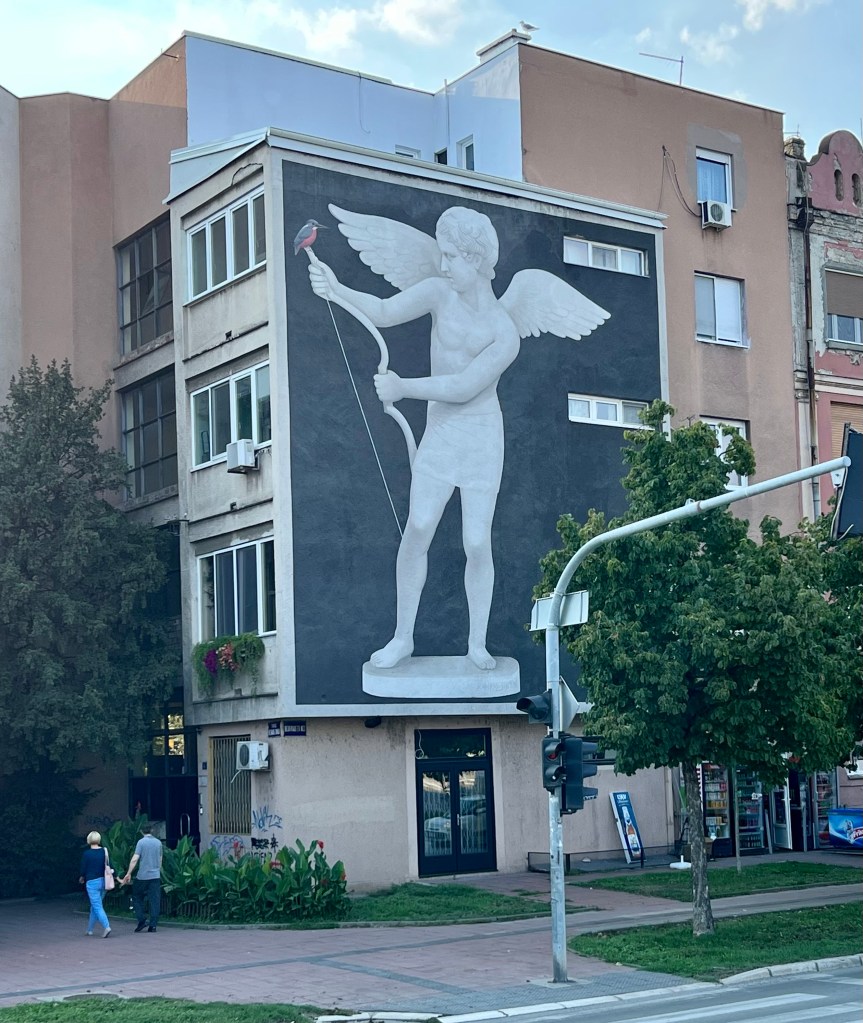
The Mural Alcyone and Eros was created by Greek artist Ficos and stands as a poignant reminder of the bombings.
Further along the banks of the Danube, we encountered The Family aka The Monument to the Victims of the Raid. The gaunt figures of a mother, a father, and two children symbolize the hardships of the citizenry.

This memorial commemorates the lives of 1300 Serbs, Romani and Jewish civilians who lost their lives in the massacre undertaken by the Hungarian troops that occupied Novy Sad in 1942 after the Axis invasion of Yugoslavia. Victims were brought to the frozen river Danube, and then the Hungarian soldiers fired until the ice broke and their prisoners drowned.The monument also features bronze plates listing the names of all the victims.

Our orientation walk ended here and most of the group headed back to the hotel. Linda, Jen (Philadelphia), Birte (Berlin) and I decided to continue along the banks of the Danube to check out the Strand which is purported to be the largest and most beautiful beach on the Danube. Unfortunately, I cannot confirm this as the entire area was surrounded by large fences and we didn’t feel like paying the modest entry fee to take a look. Lol, at least it was a beautiful day and the extra steps helped to burn off some of our generously portioned lunch!
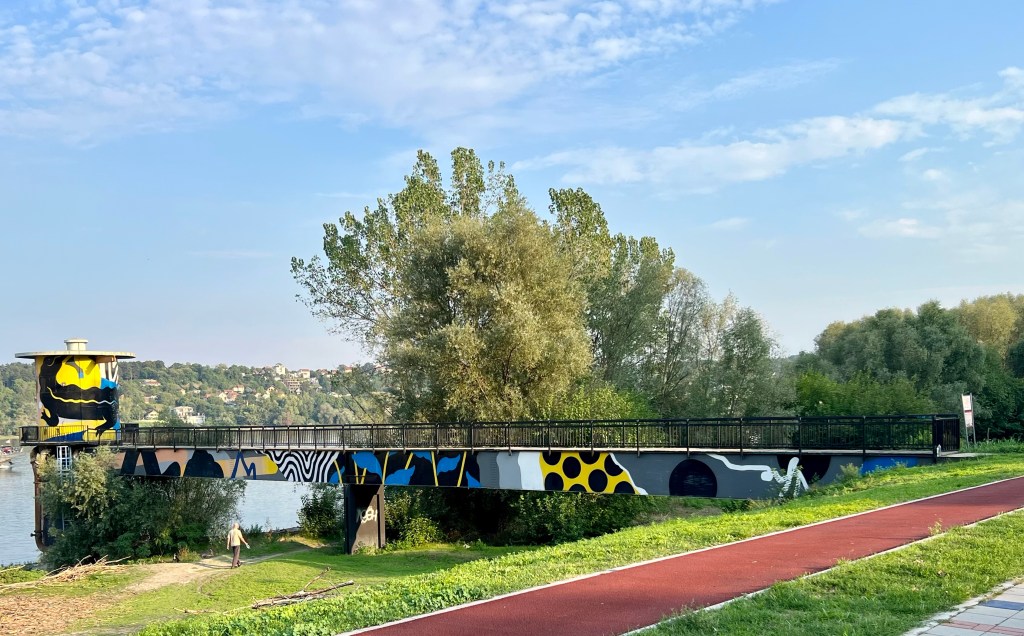
Soon enough we reached the new bridge and looped back into town with a quick stop at the Novy Sad Synagogue and Jewish School along the way. The complex is built in recession style with facades of yellow clinker brick, with the façade of the synagogue being more decorative. In 1944, the synagogue was an assembly place for Jews who would later be deported to the death camps.

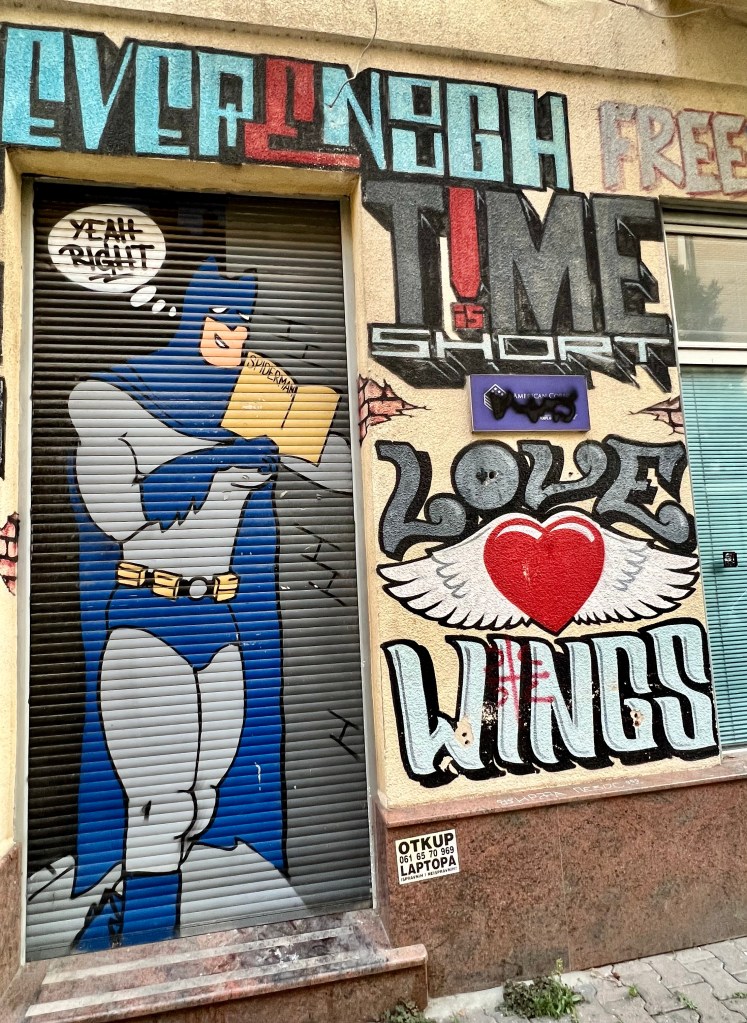


Soon enough we were back at the hotel and thirsty from our endeavours. Linda, Jen and I grabbed a table at a beautiful café across from Liberty Square where we had a few glasses of chilled, refreshing rosé. A number of the crew popped in for a visit while we were “stationed” there. Time to hit the sheets.
Tomorrow is another day. Adventures await …
September 5, 2022
This morning Filip is leading an exploration of the Petrovaradin Fortress located on the right bank of the Danube river; nicknamed the “Gibratar on the Danube”. After breakfast, the bulk of the group heads off on foot while a few others take a cab to the Fortress awaiting their arrival. While waiting for the walkers to arrive, I took a few pics of the site.
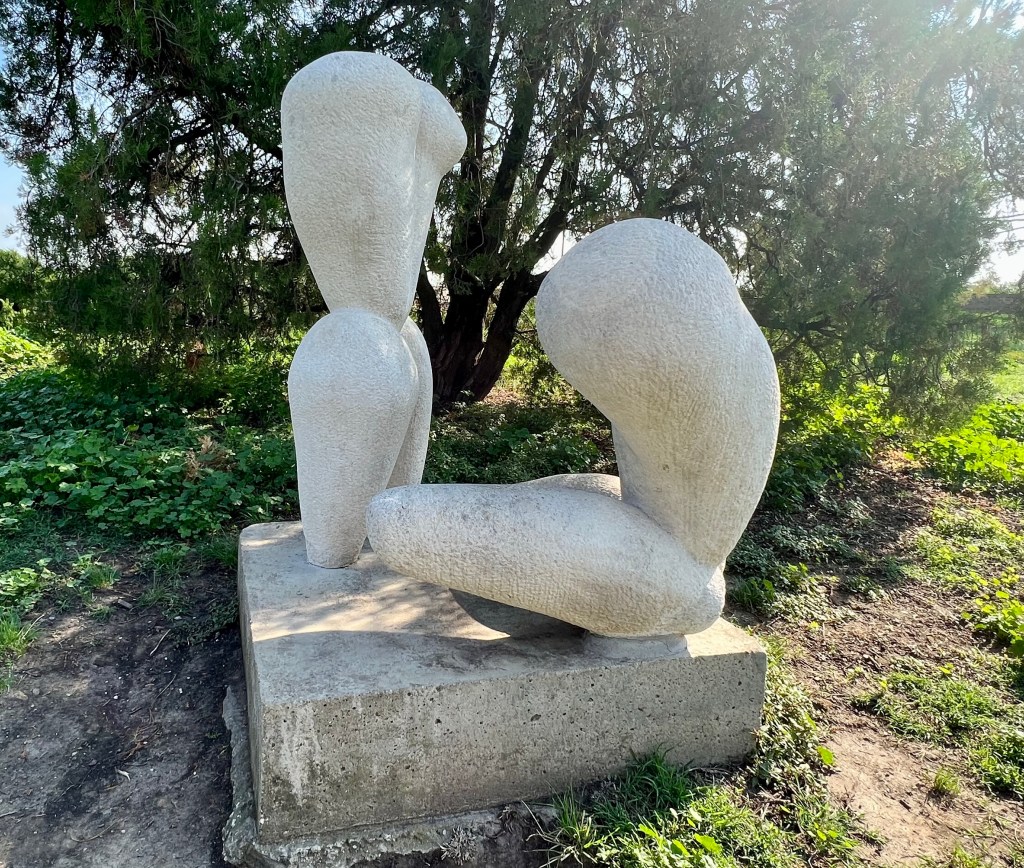
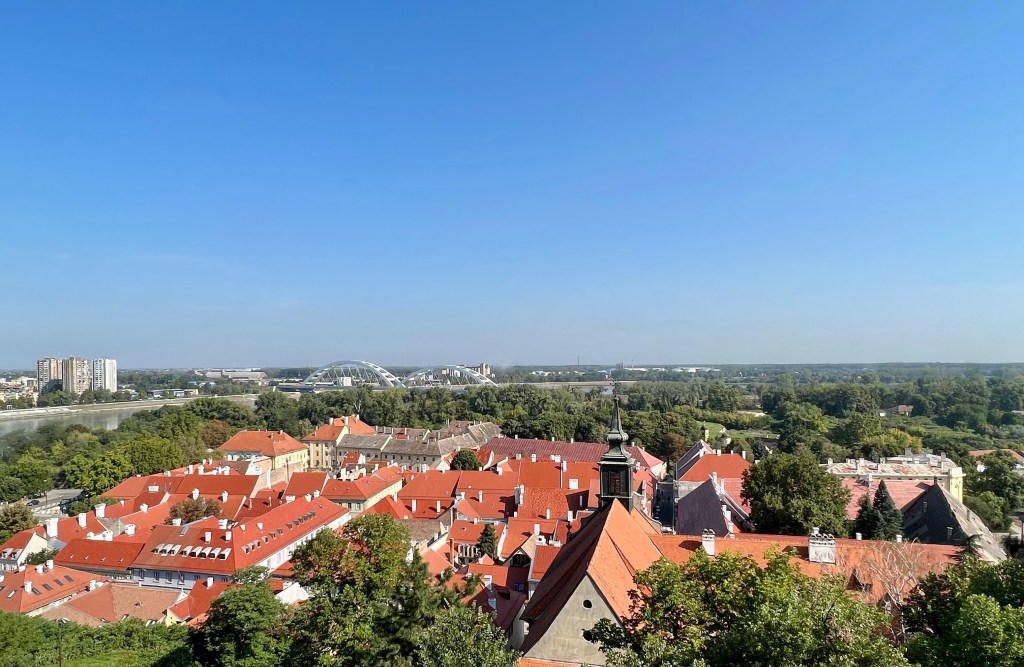

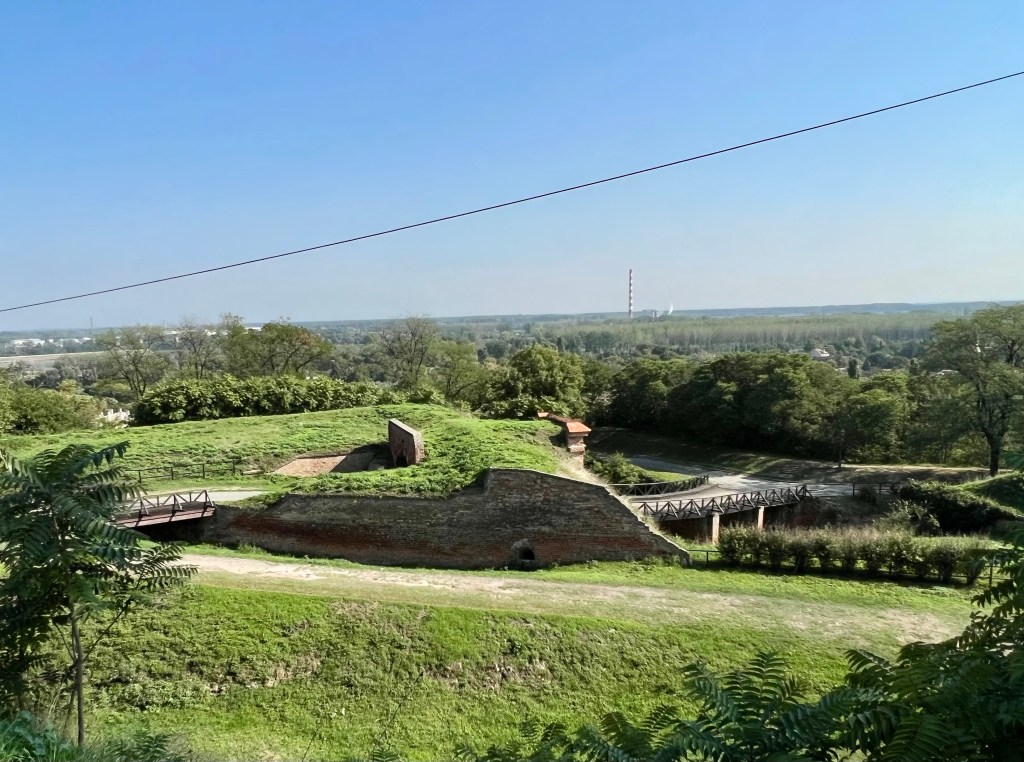


The Fortress lies on a largish hill with views of the surrounding countryside and has been inhabited for a very long time. In the First century BC, Celtic tribes had an installation on the hill followed by the Romans. Starting in the 1300s, the Ottomans would come to try to conquer Europe every fifty years or so. Inevitably they would fail to defeat the Austro-Hungarian empire. The fortress would be burned and rebuilt whence next the Ottomans arrived.
The cornerstone of the present-day southern part of the fortress was laid on 18 October 1692 Charles Eugène de Cröy and the fortress was operational by 1697. The current fortress is star-shaped with many levels in between the high walls providing two lines of defence that were virtually impenetrable. The Fortress has a maze of tunnels underneath. Monday the museum is closed so we didn’t get to explore the portion of the tunnel that remains intact.
The white clock tower is one of the most significant visual symbols of Novy Sad and the Petrovaradin Fortress. This baroque tower has black dials with a Roman numerals on all four sides. Fun fact – the big hand on the clock shows the hours and the small one shows minutes, so the sailors on the river Danube can see what time is it from a greater distance. This was also important for the guards of the fortress when hours were more important than minutes in respect to their shifts.

The Fortress is also home to the Exit Festival; a summer music festival held each year in early July.It started not as a music festival but as protest by students who had lived under sanctions for too long. In 1998, students decided to have some fun and put on a “festival” featuring theatrical shows, music and art that continued that whole summer. It was dubbed the “State of Exit”. The official Exit Festival was founded in 2000 and is recognized as one of the Best Major Festivals in Europe boasting 45-50 Stages and around 50,000 spectators.
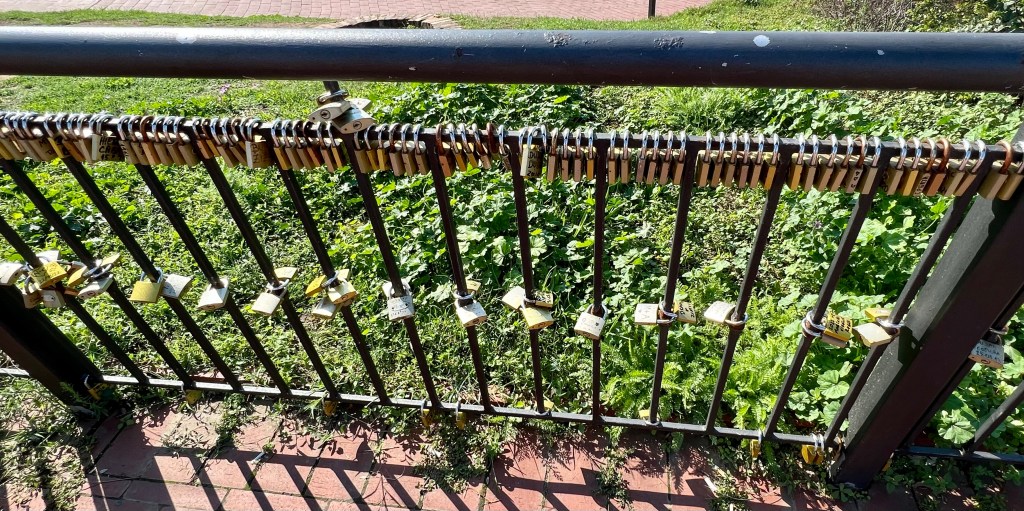
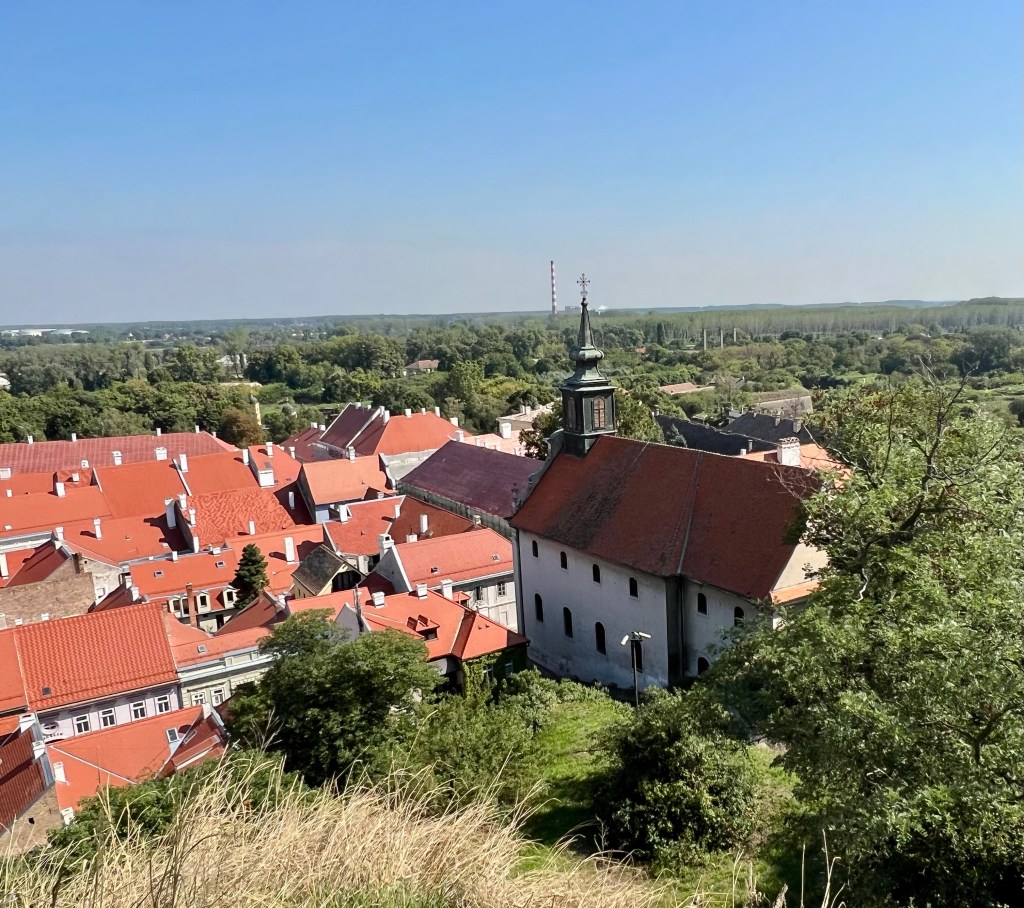
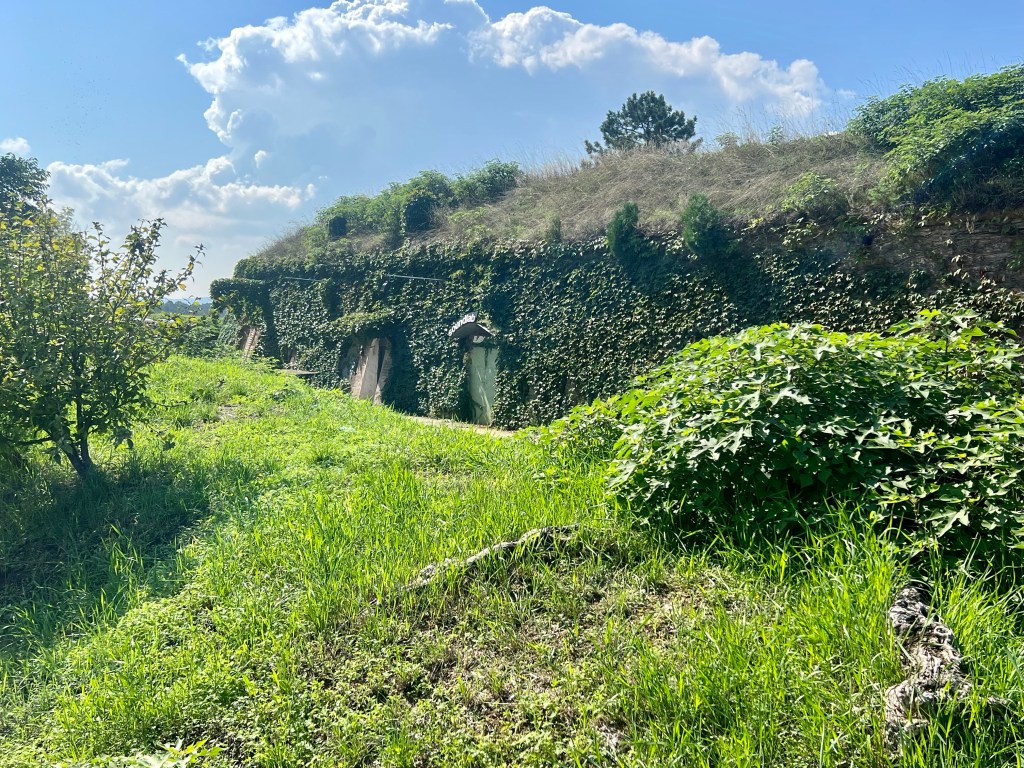
The Fortress tour was complete so everyone headed back to the other side of the Danube to grab a quick lunch, do a bit of shopping or have some liquid refreshments before grabbing our luggage and boarding our van (this one was a bit smaller but luckily the luggage and people all fit) for the 90 km drive to the Serbian capital of Belgrade.
In Belgrade, it’s off the bus, check in, freshen up and then head back to the lobby to meet our guide for this afternoon’s walking tour of the city to learn more about the history of Serbia’s capital with Milan; a PhD student and local resident expert.
Our first stop is the Barjakli (Flag) Mosque; the largest religious artifact in Belgrade. This Mosque is the largest and oldest in Belgrade; dating back to the 16th Century when it was built by the Ottoman Sultan Suleiman at the center of the city. Belgrade was home to as many as 62 mosques at the peak of the occupation. There was no effort to convert the citizenry to Islam as taxes were paid by non-Muslims.
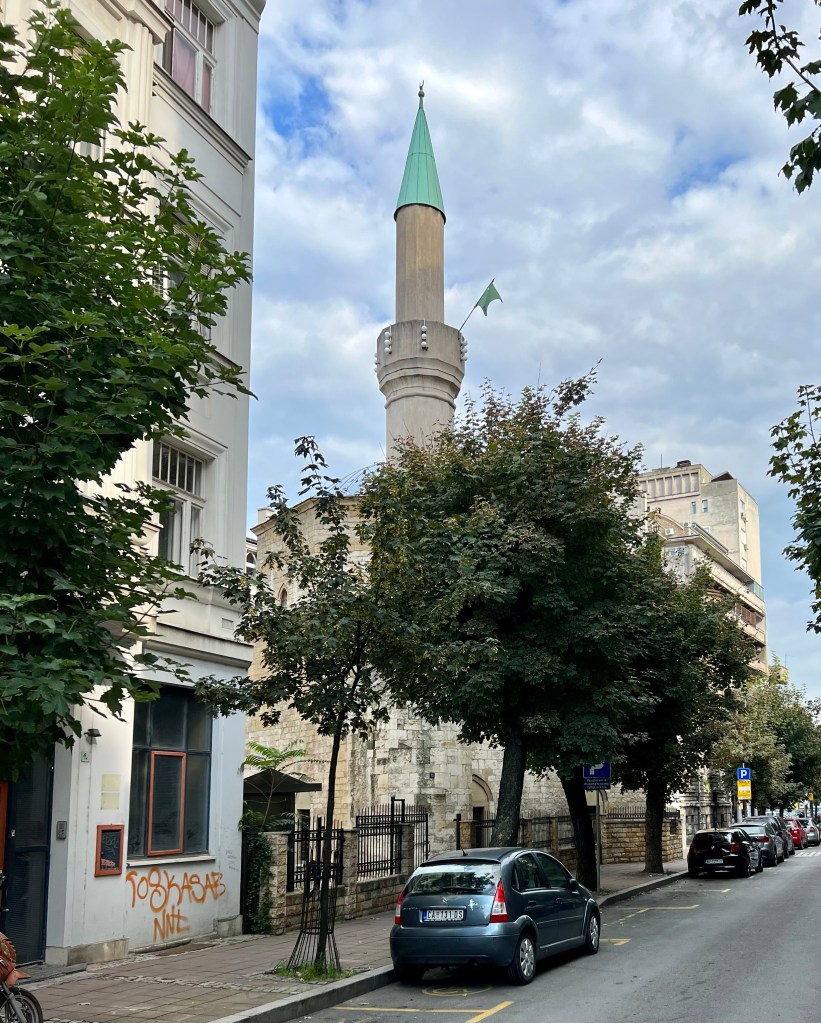
The Mosque has served many purposes over the years. When the city was invaded by the Austro-Hungarian Empire, it served as a Roman Catholic Church. Later it was a barracks for soldiers and, finally, a warehouse. In 1868, the Serbian Prince officially recognized Islam as a religion in Serbia and prohibited the use of this Mosque for anything other than its originally intended purpose. Additionally, the government provided funding for the Mosque annually which meant that while many of the other (smaller) mosques fell into disrepair and were torn down and replaced with other buildings, the Barjakli Mosque flourished.
The Mosque was heavily damaged in 1944 during the Nazi’s retreat from Belgrade but it was restored even though Yugoslavia was Communist at the time. The Mosque later survived destruction at the hands of the Albanians with the help of their neighbours from the Jewish and Serbian Orthodox communities.
The Barjakli Mosque is called the Flag Mosque as it sets the time and date for other mosques, more or less the Belgrade Muslim equivalent of Greenwich Mean Time.
We walked a bit to a local park and were treated to some of the history and reasons for the break up of the former Yugoslavia. Milan’s informed opinion is that religious differences were not the catalyst for the war. Rather, he listed a number of forces, happening at the same time, that destroyed the peace.
First and foremost was the death of Tito and the leadership vacuum left when he was not replaced for 11 years! Wow, can you imagine a state being headless for that long and surviving?! Another important factor was the need for reforms to the Communist regime that were resisted by the diehard communists. All of this was exacerbated by the economic crisis of 1982 with no solutions on the horizon.
These three factors caused friction between the Serbians and the Croatians but even then the situation could have been calmed if there was one solid leader in place. Instead, there were three lunatics (Milan’s word) hungry for power. To make things worse, no one, including the international community, wanted Yugoslavia to exist anymore so various members of the international community not only armed the different factions but refused aid money to Yugoslavian states that were not independent. Pretty much a recipe for what happened.
Milan gave use a very detailed history lesson that I’ll try a distill to the most interesting/important bits. If you’re not a history buff, skip ahead!
The area was first populated 7500-8000 years ago. The first inhabitants were excellent tradesmen and lived in urbanized settlements in thermoinsulated huts with central heating (clay furnace in the middle which heated clay floors). Everything ended abruptly likely with some catastrophic event but details are unknown. The Celts were the next to arrive in the 4th century BC, driven here by Alexander the Great. The Romans were next and posted a Legion here leaving behind Roman baths, temples (Jupiter and Jicata?) and, of course, a fortress. Seventeen Roman emperors came form this area; second only to Italy. Constantine was the most famous. In the 4th Century, the Visigoths arrived followed by Attila the Hun who destroyed the city and then the Slavs arrived.
Belgrade became part of Serbia when it was gifted to a Serbian King who married a Hungarian Princess in honour of their marriage. Later it was gifted to a Serbian despot. In both these cases, Belgrade reverted to Hungary on their deaths.
The Ottomans and Austro-Hungarian Empire played ping pong with Belgrade for centuries after which the Serbians arrived. Yugoslavia was created after WWI and after being occupied by the Germans for much of WWII, the Russian liberators arrived on their way to Berlin.
The Belgrade fortress, built on a white ridge above the confluence Sava and Danube rivers, destroyed and rebuilt over and over for 16 centuries, still stands as the symbol of Serbia’s capital. The Romans built the first fortification in the 2nd century and later it was home to the Roman legion IV Flaviae which protected the area.
Today the Belgrade fortress comprises of Upper and Lower Town and the vast field in front the very fortress that Turks named “Kalemegdan”, joining the words “kale”, which means city, fortress and “megdan”, the Turkish word for field. The most beautiful and most spacious park in nation’s capital once used to be a field where battles were fought.
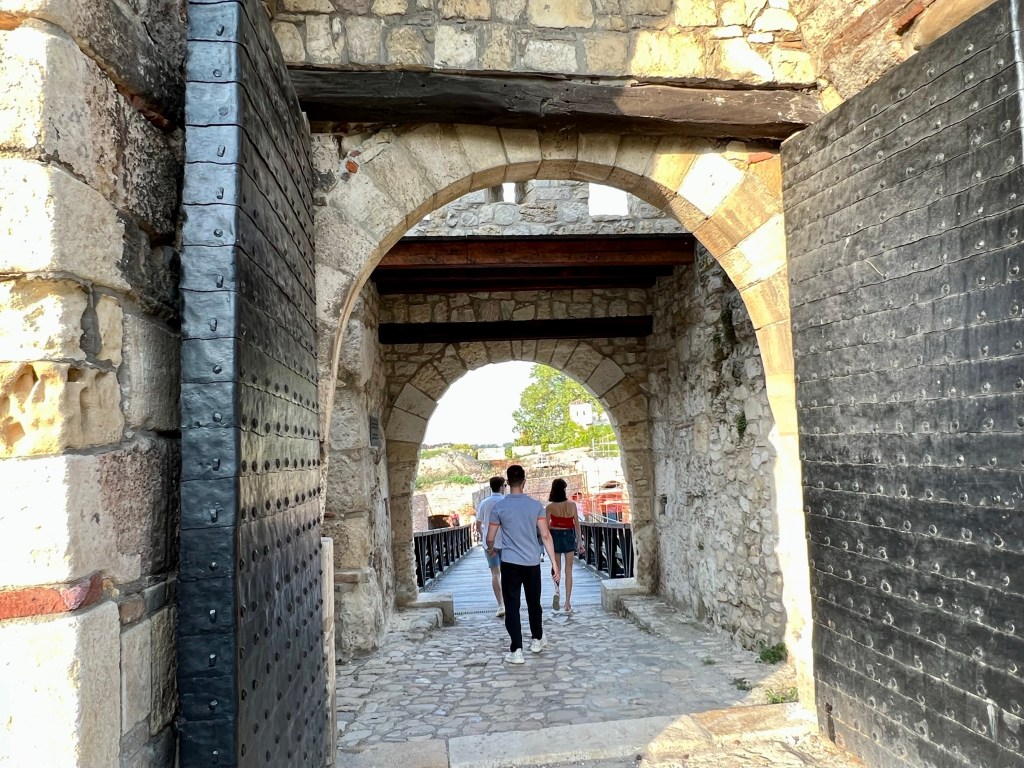
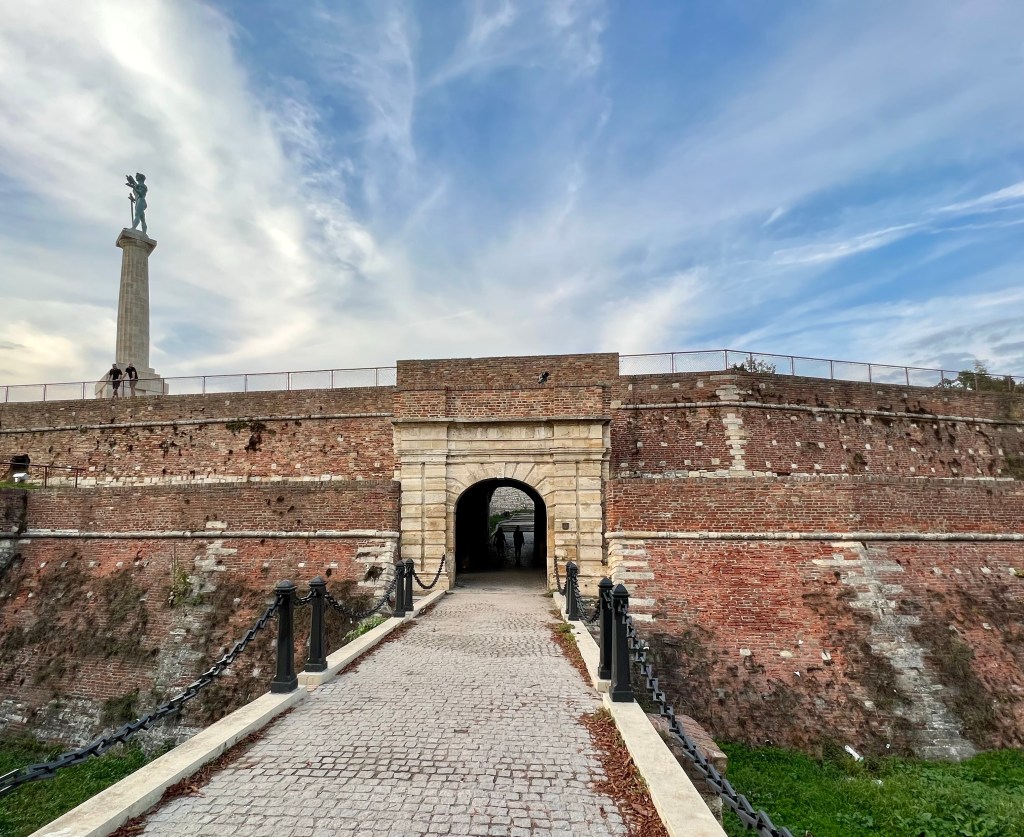
Leopold’s Gate is situated in Starrenberg’s Bastion. Both the gate and the Bastion were built during the First Austrian occupation, between 1688 and 1690 and the gate’s baroque facade was finished during their second rule over the town, from 1728 to 1721.

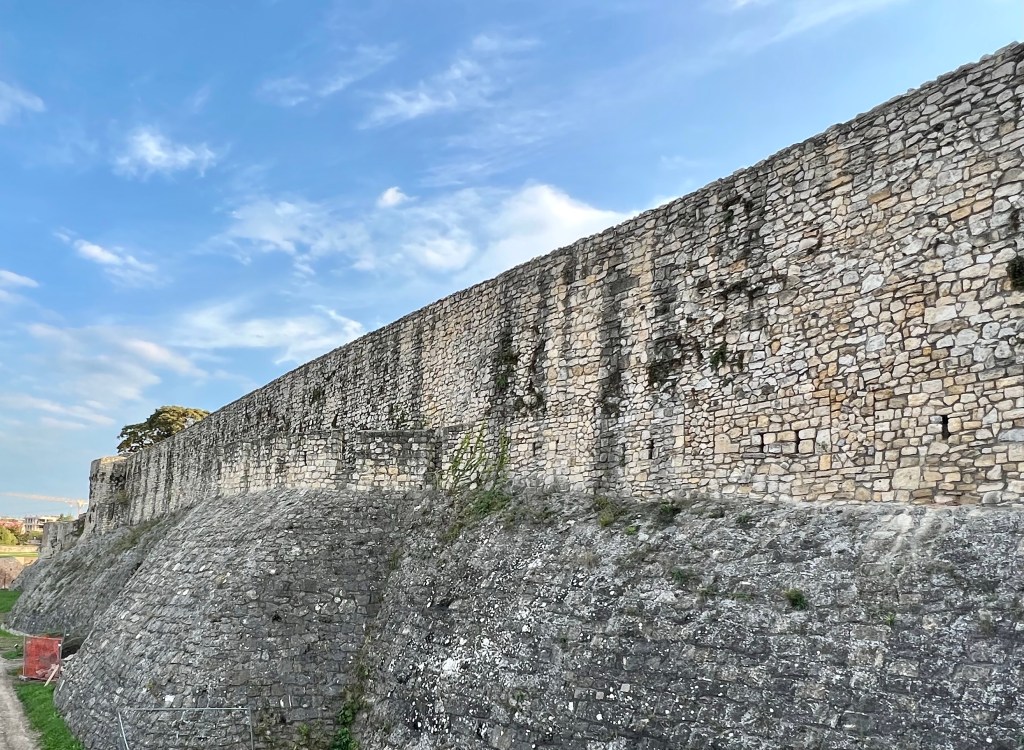
The Fortress reflects the various conquerors; the darker part on the bottom remains from the Roman occupation, Ottomans added a level during their time and then a third brick layer was added by the Austrians.
The Serbian Orthodox Church in the Fortress was built in 1924 and is called the Army Church. The interior boasts trench art in the form of chandeliers made from cannons, bayonets and bullet cases. I had intended to check this out the next day but didn’t make it so found a few pics on the internet to share.

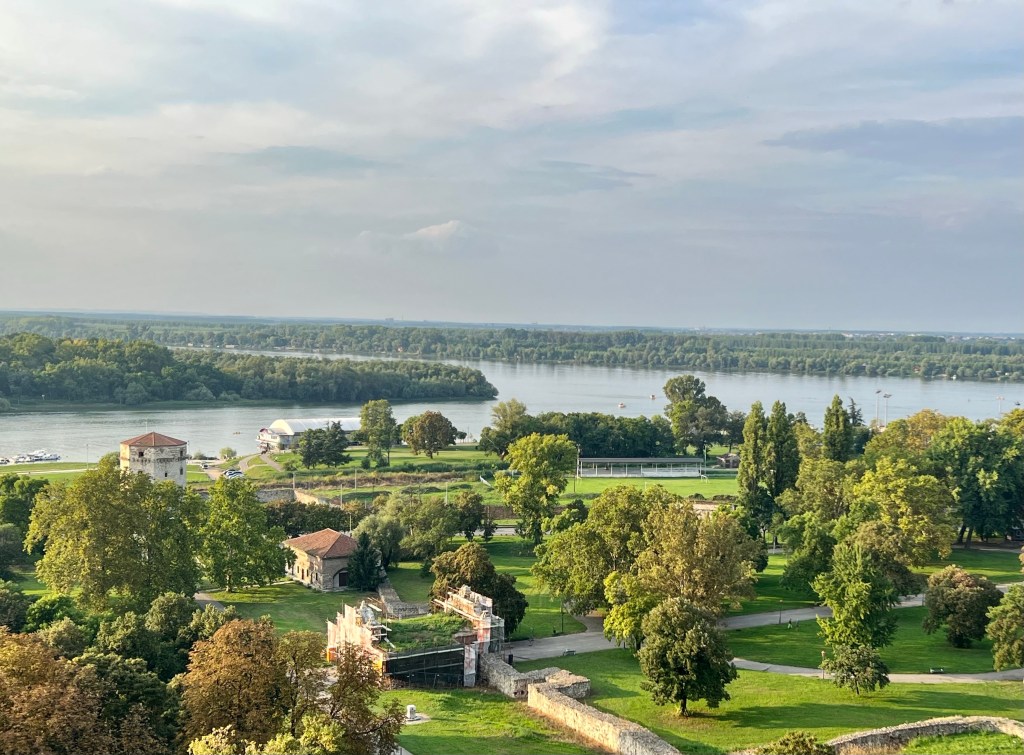
The view of the city from the walls of the Fortress is breathtaking.
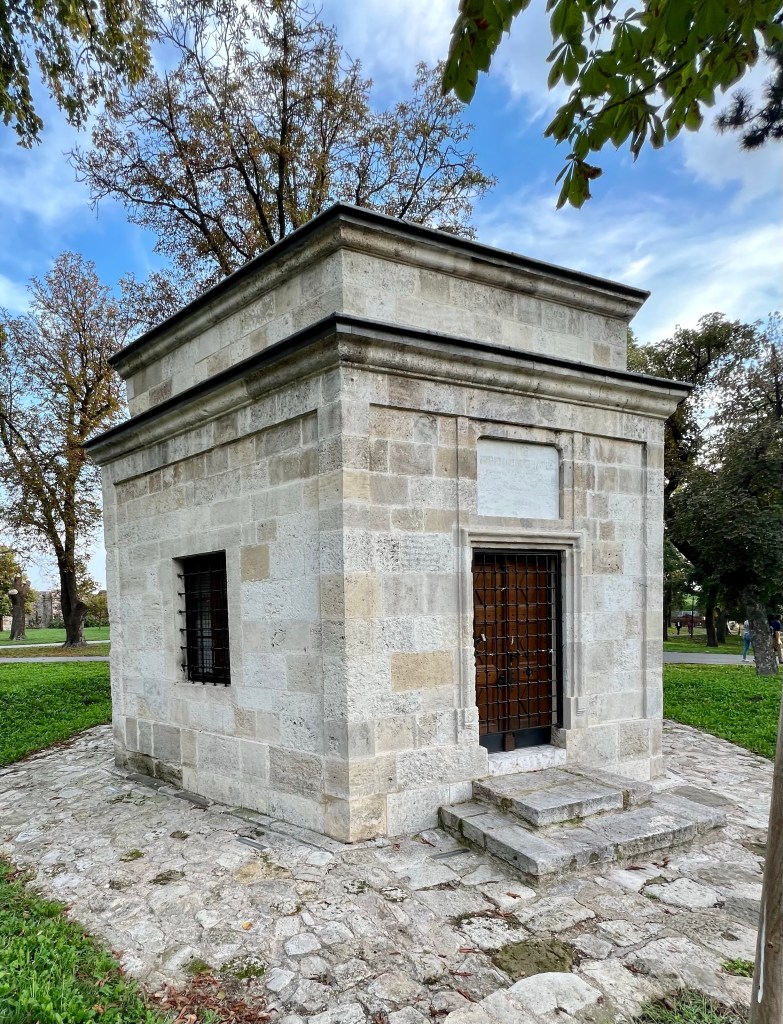
Also at the Fortress/Central Area of Upper Town is a Turbeh (VIP mausoleum) which contains the remains of Damat Ali Pasha who died in Novy Sad while serving as the Governor. Bad luck to destroy so this is one of the few Turkish buildings preserved in Belgrade.
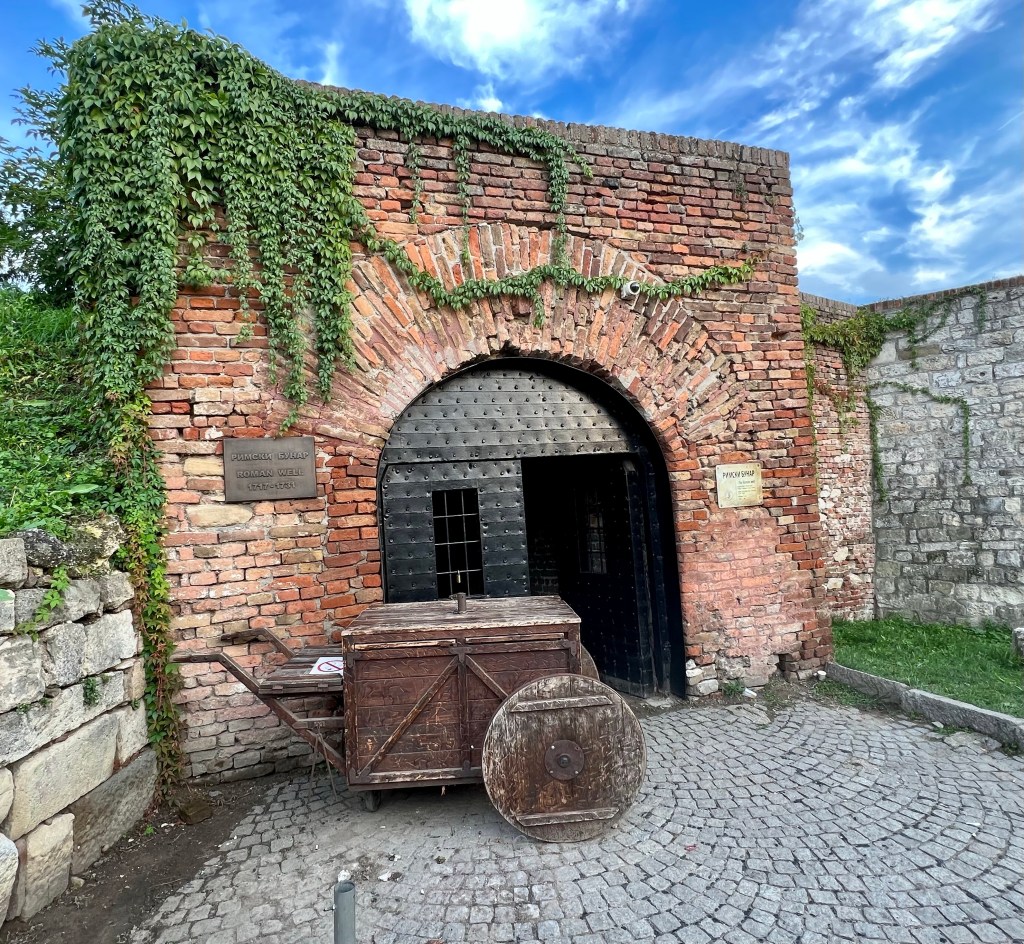
The so-called “Roman Well” was actually built in the early 18th century.
The King Gate with Ravelin was built towards the end of the 17th century, at a time when Belgrade repeatedly changed hands between the Austrians and the Ottomans.
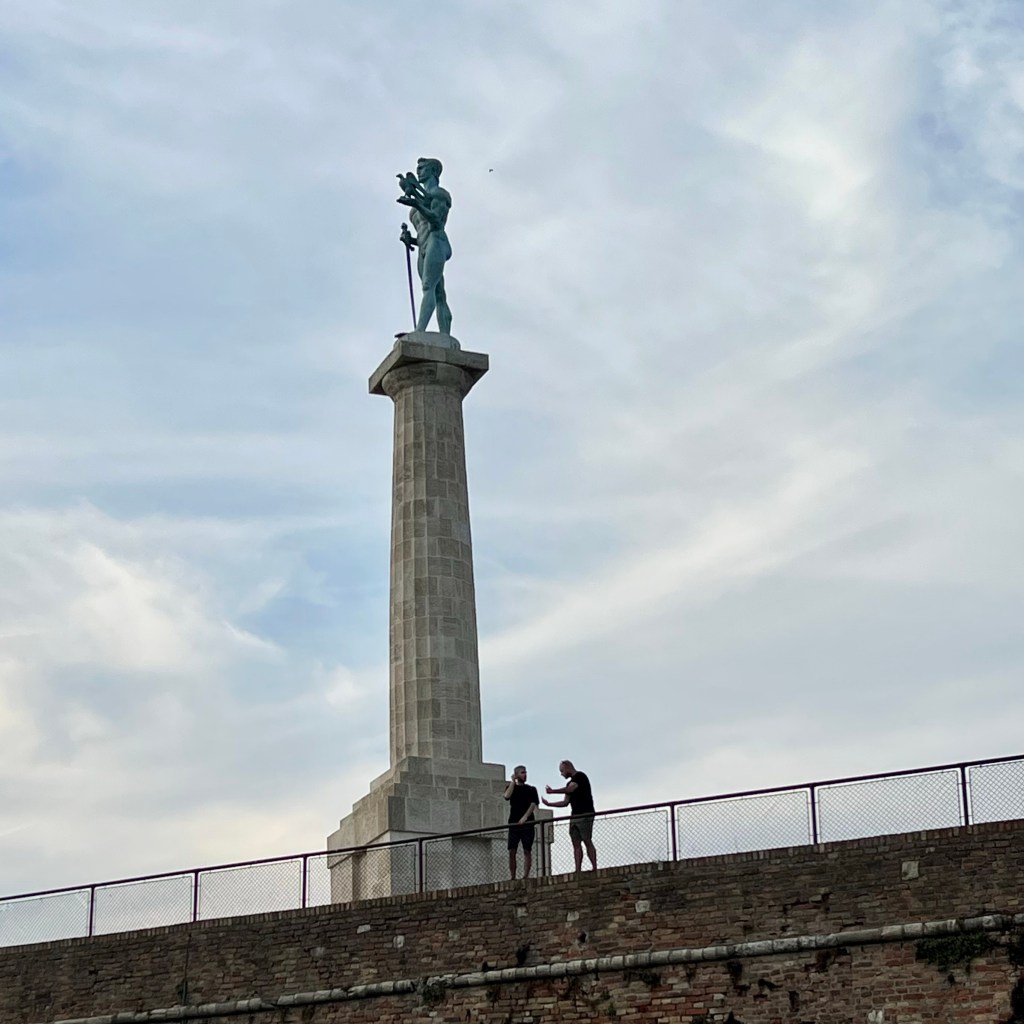
Leaving the Fortress, we strolled through the Kalemegdan park. You will see the monumental “Victor” rising above the walls of the city, the symbol of Belgrade and victory over time. The bronze sculpture of a nude man holding a pigeon and a sword, the work of sculptor Ivan Meštrović, was set on occasion of the tenth anniversary of the Salonika Front Breakthrough and “guards” the river banks.
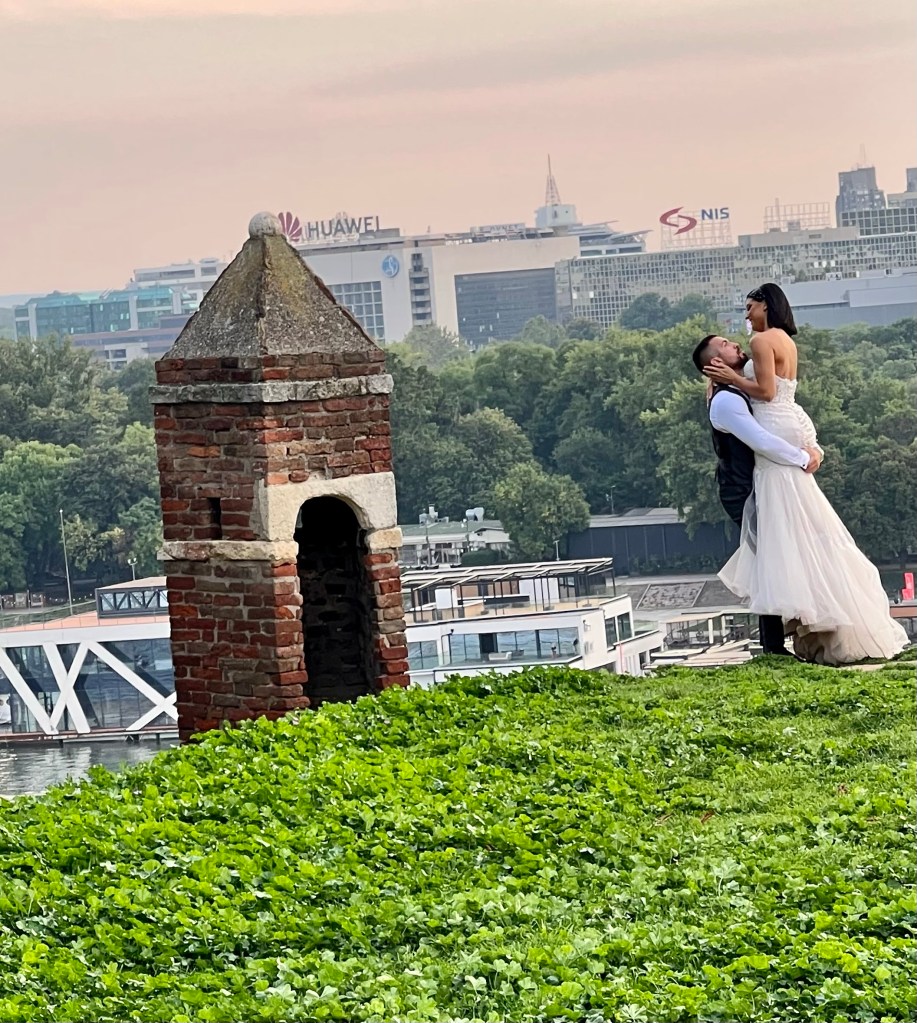
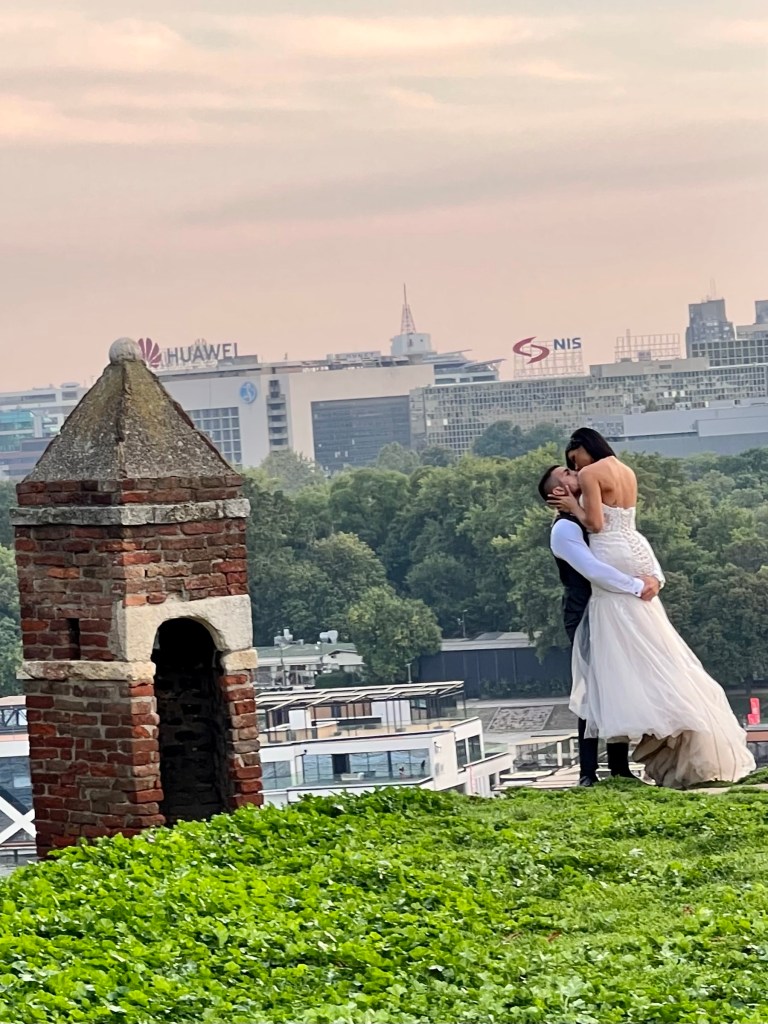
While in the park, a young bride and groom were having their wedding pictures taken.

We walked on to the St. Michael the Archangel Serbian Orthodox Church. Was built in gothic style to give the finger to Ottomans in the nearby Fortress. Famous folks are buried inside and outside the church so it’s the main Orthodox Church in Belgrade with the Patriarchy across the street.
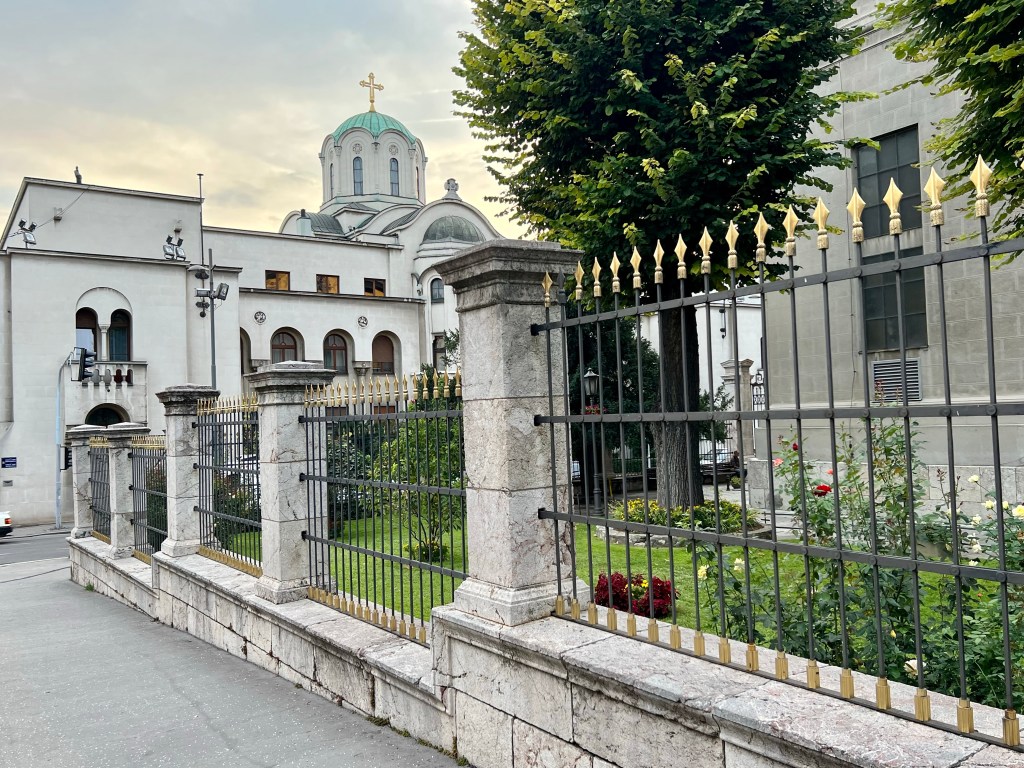
Nearby is Princess Ljubica’s Residence Palace; the former home of a Princess who shot two of her philandering husband’s mistresses, killing one and wounding the other before he thought it would be a good idea to take up residence elsewhere.
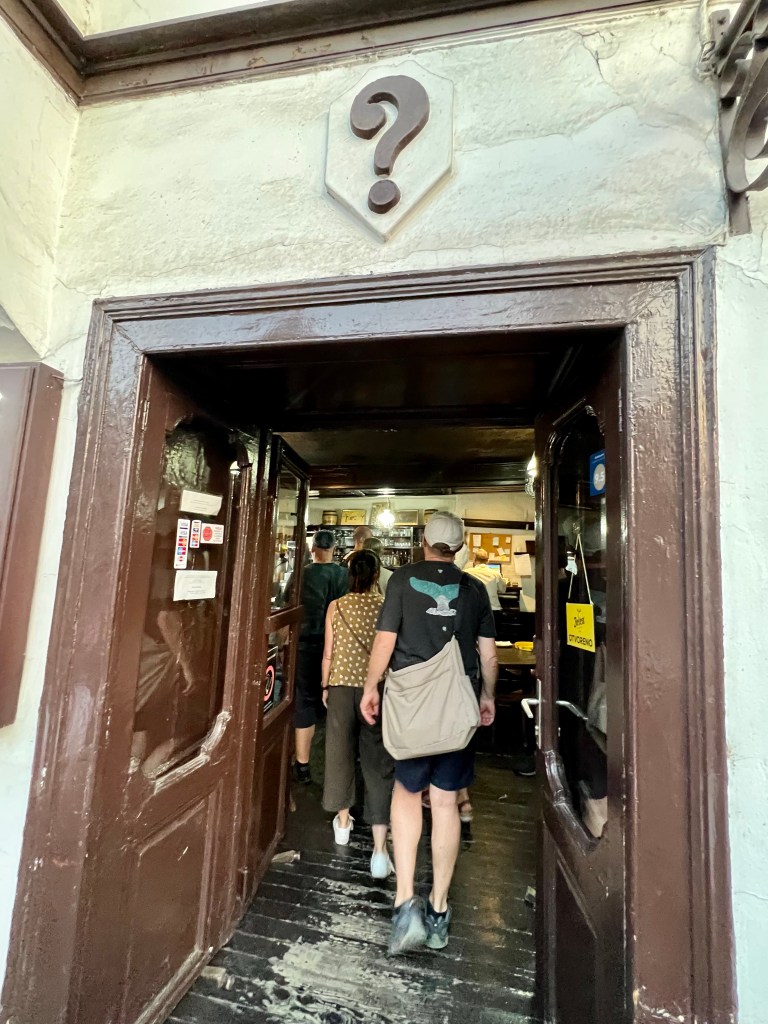
We had dinner at the ? Restaurant; the oldest functioning tavern in Belgrade. Originally named after the church which was not allowed so he removed the name. Unable to come up with a unique name – there we 600 + taverns in the city at the time, he used a ? and waited for a unique name to come to him. Here, I finally tried Sopska Salad and Beef Goulash washed down with some lovely Serbian wine. Yumm.
Stopped on way back to hotel with Linda and a few other folks for another glass of wine before calling it a night. More tomorrow. Adventures await …
September 6, 2022
Today we have a full day to explore Belgrade on our own and at our own pace. After a nice breakfast, we met with Filip to get some recommendations on attractions around the city. Armed with a map with a suggested route outlined in highlighter, I headed back to my room to do a bit of work on my Budapest post (while we were in a hotel with better internet) and relax for a bit. Linda and many of the others headed out to start their explorations right away so I’d be on my own. A dangerous situation for someone as directionally challenged and easily distracted as I often am but I’ve got the hotel card in my wallet for emergency cab rides so it should be safe enough.
I headed out around noon, armed with the map and had fairly good luck for the first half of the loop.
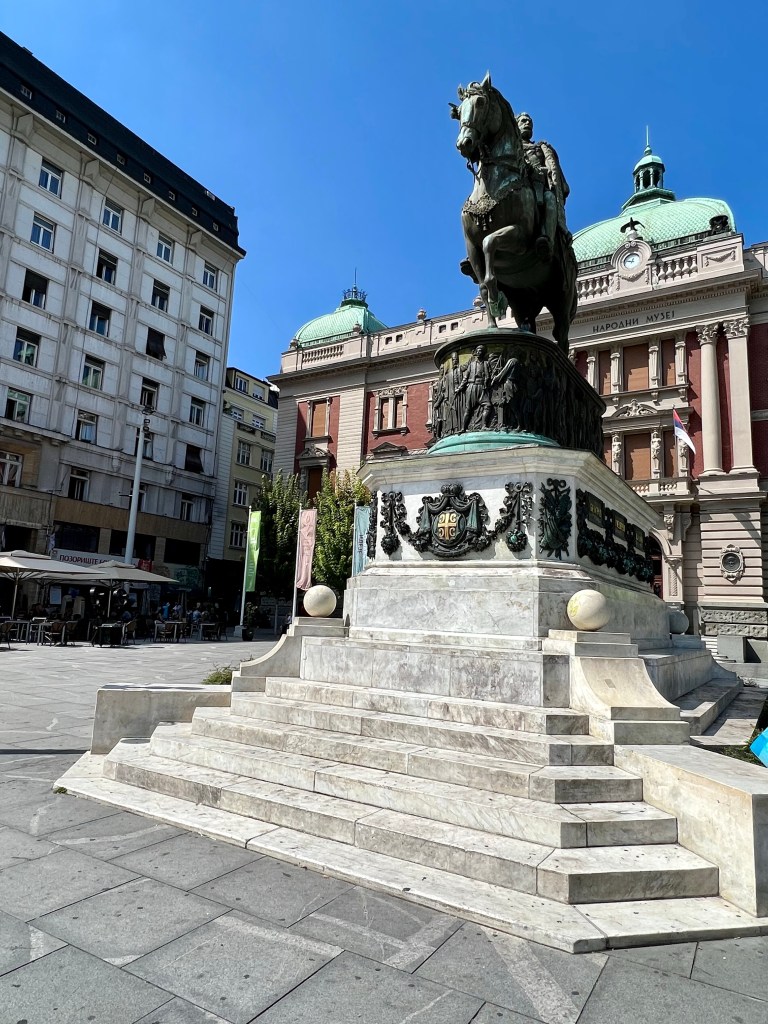
Republic Square is the site of some of Belgrade’s most recognizable public buildings, including the National Museum, the National Theatre and the statue of Prince Michael.
The National Museum of Serbia is the largest and oldest museum in Belgrade; founded in 1844. The National Museum is focused on Serbian history and art; featuring artifacts and artwork highlighting the country’s history and artistic development. The National Theatre was founded in the later half of the 19th century and is the epicentre of culture and history of Serbia
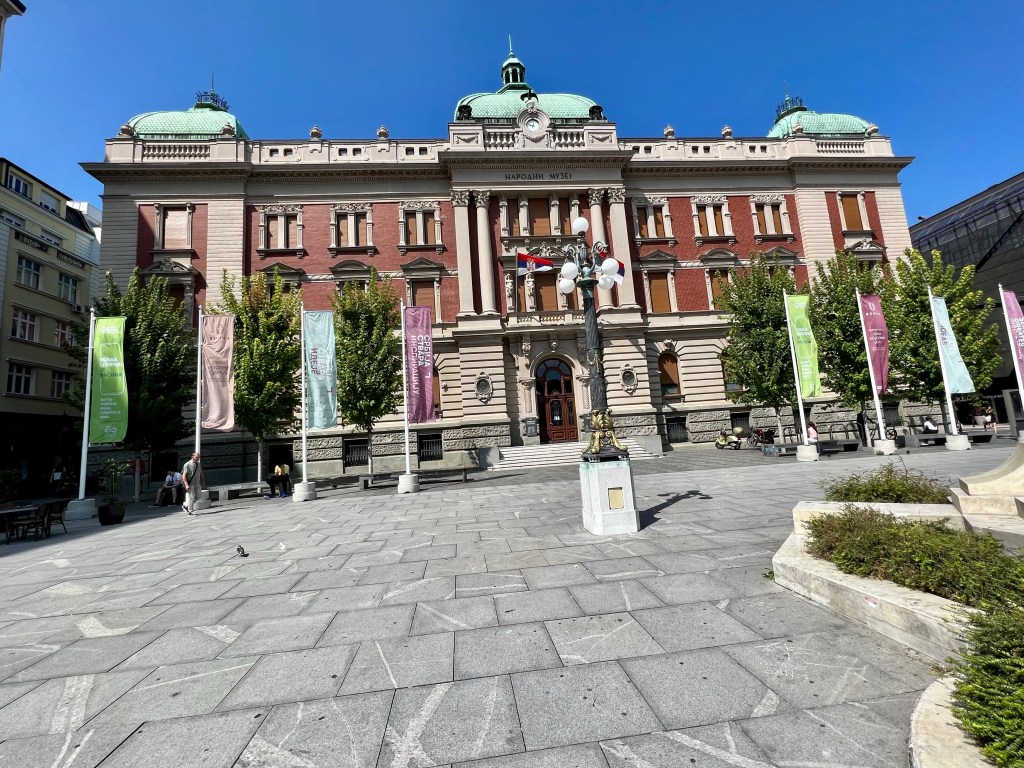
The Prince Mihailo Monument was erected in 1882 in honor of the liberation of Belgrade from Turks. Prince Mihailo Obrenović III of Serbia was the ruling Prince of Serbia from 1839 to 1842 and again from 1860 to 1868. His first reign ended when he was deposed in 1842, and his second when he was assassinated in 1868. He is considered to be a great reformer and the most enlightened ruler of modern Serbia.
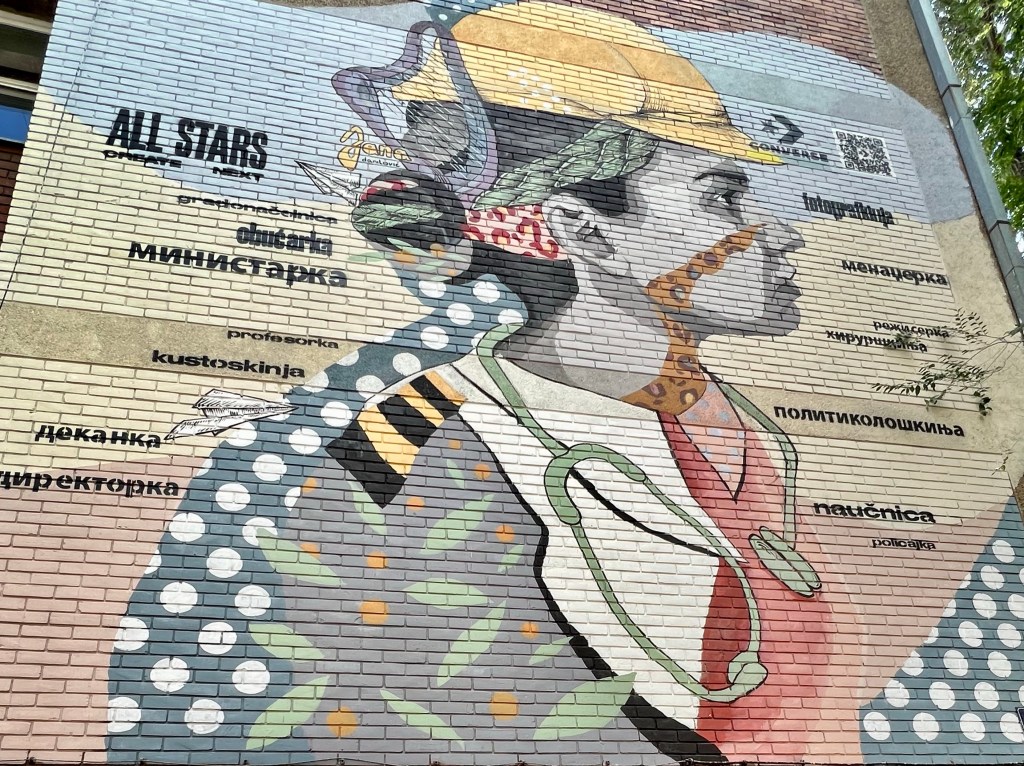
The National Parliament of Serbia, located on Nikola Pašic Square, is the seat of the National Assembly of Serbia. Between its completion in 1936 and 2006, it was the seat of both the Parliament of Yugoslavia and the Parliament of Serbia and Montenegro.

Passing parliament there was a brisk business selling schools books out of the trunks of cars and, in the case of these guys, a van organized like a library.

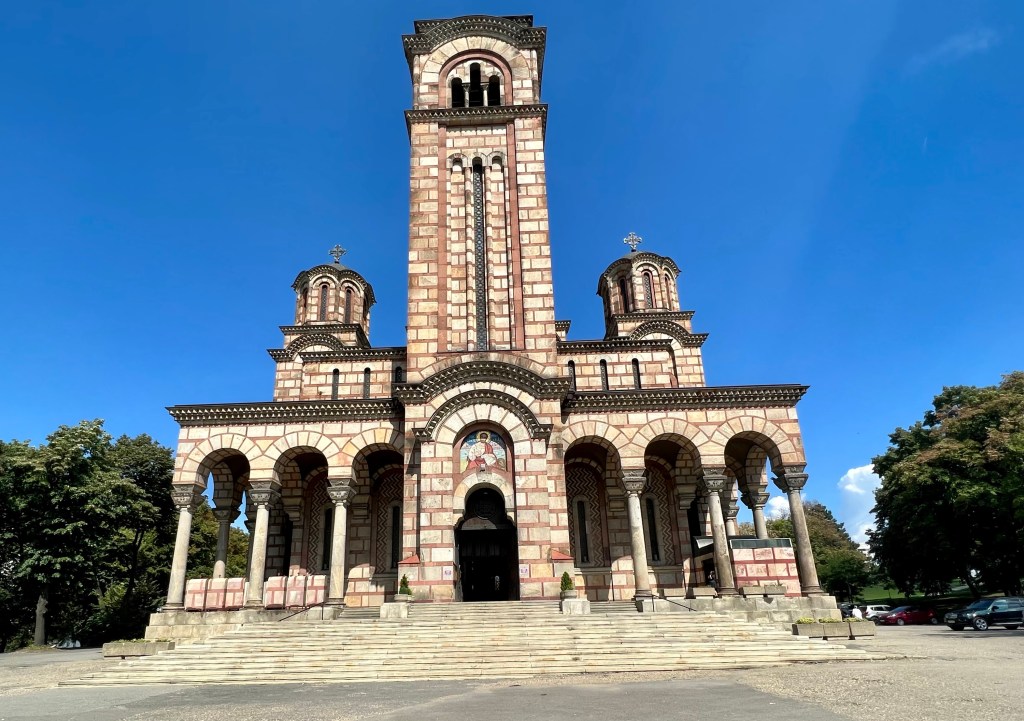
St. Mark’s Church is a Serbian Orthodox church located in Tašmajdan park near the Parliament. It was built in the Serbo-Byzantine style by the Krstić brothers, completed in 1940, on the site of a previous church dating back to 1835.
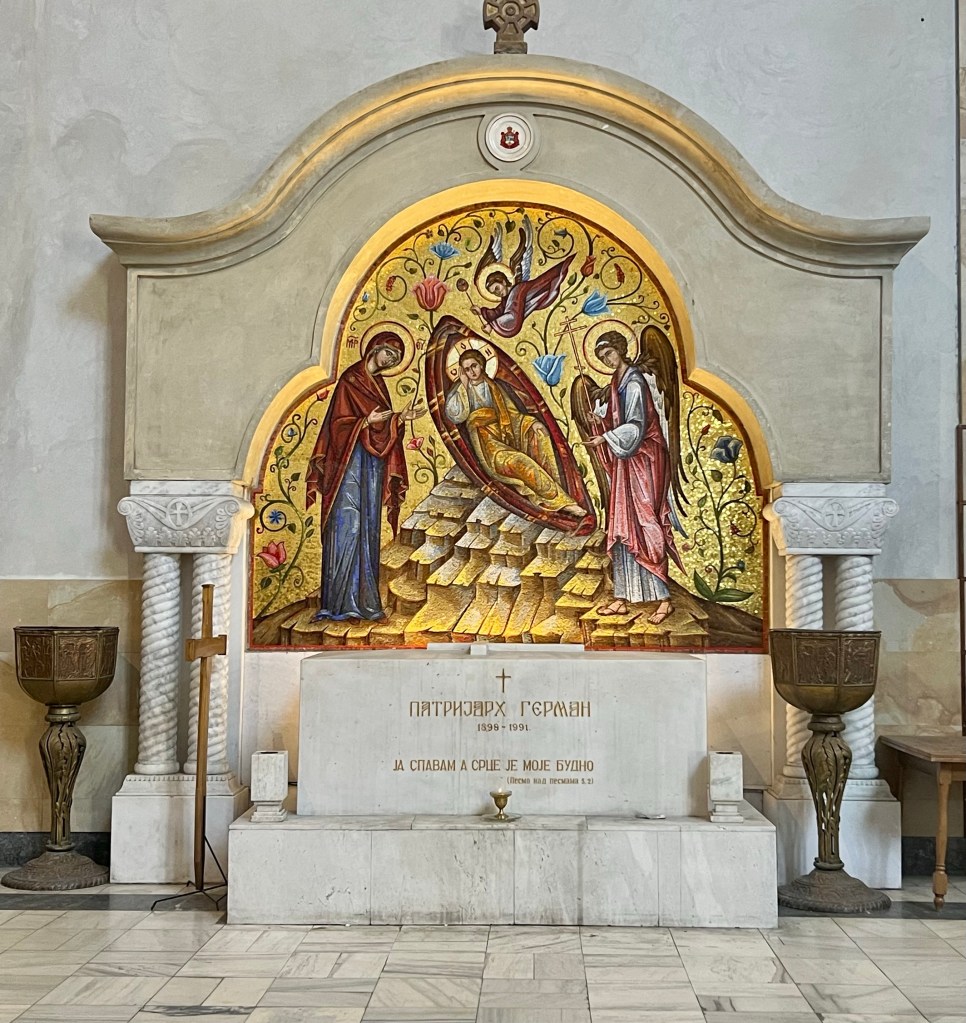

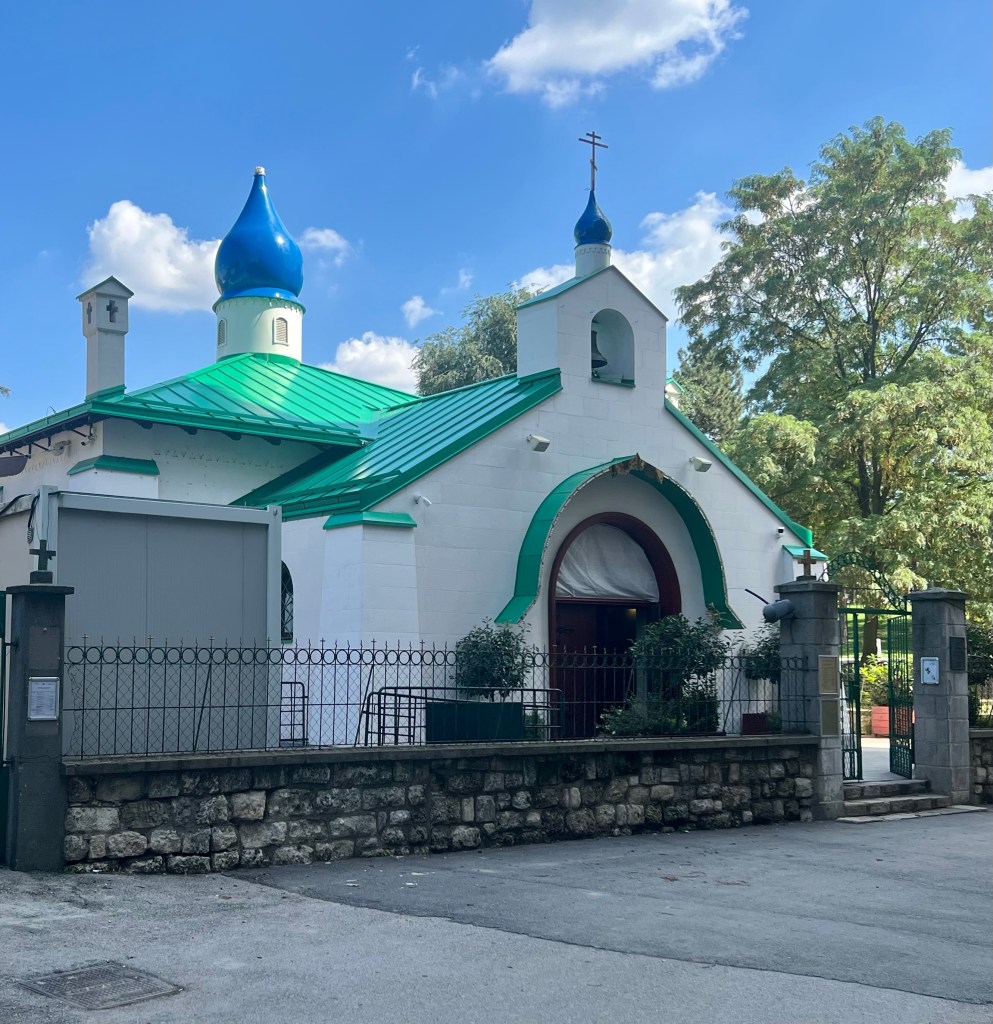
The small Russian Orthodox Church of the Holy Trinity is tucked away behind St. Mark’s.
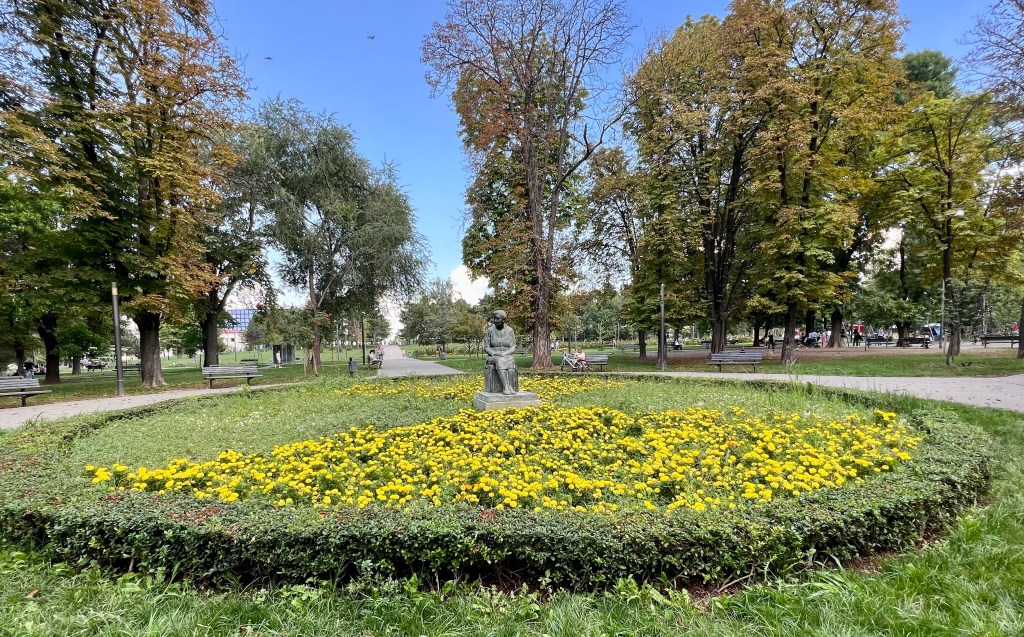
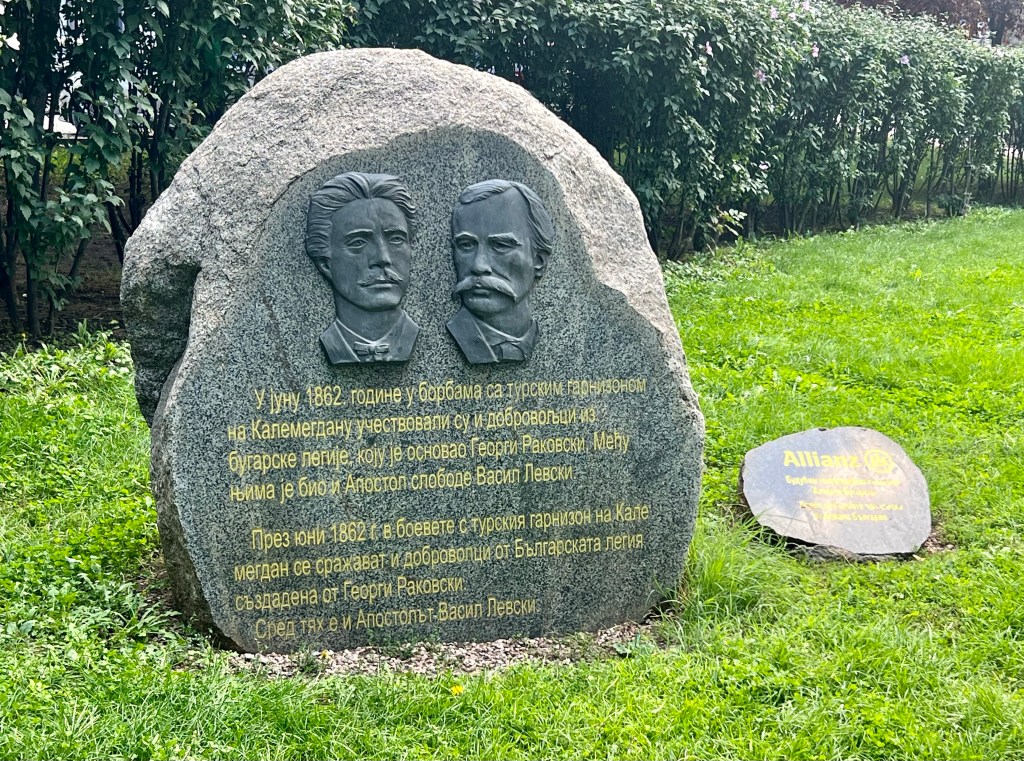
Close to the church is the beautiful Tašmajdan Park dedicated to the children that that


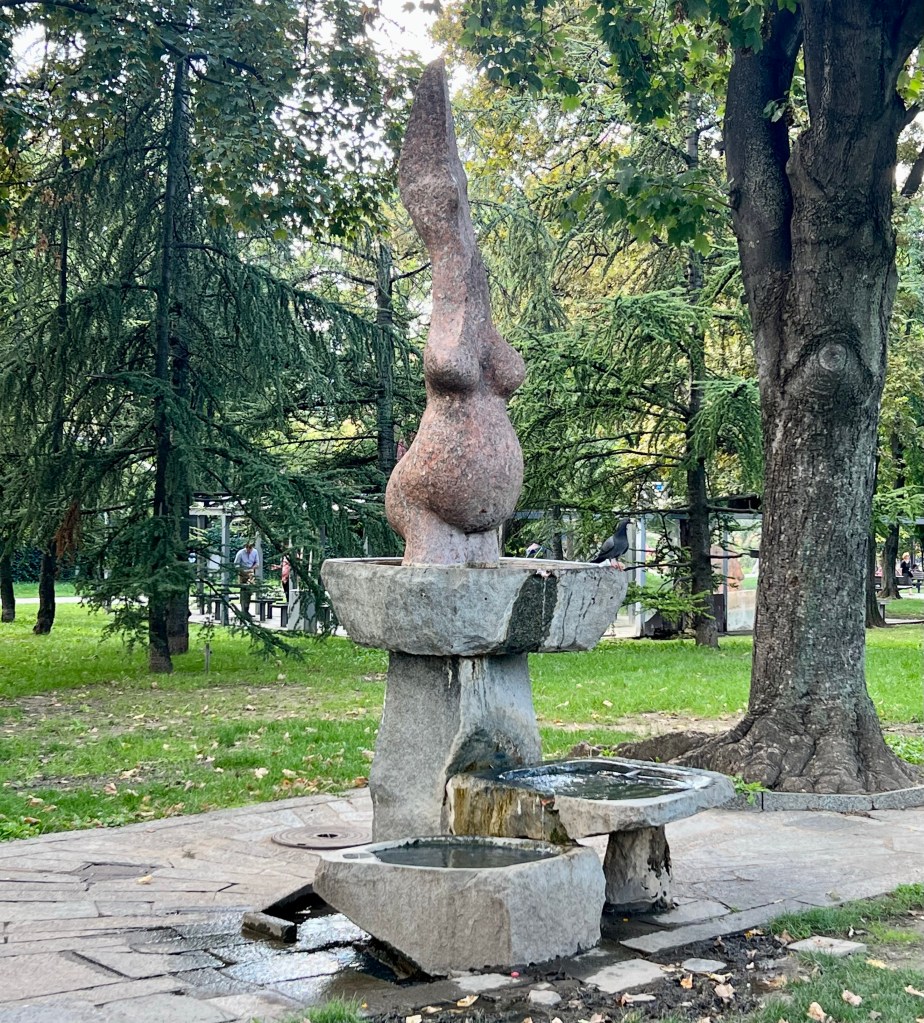
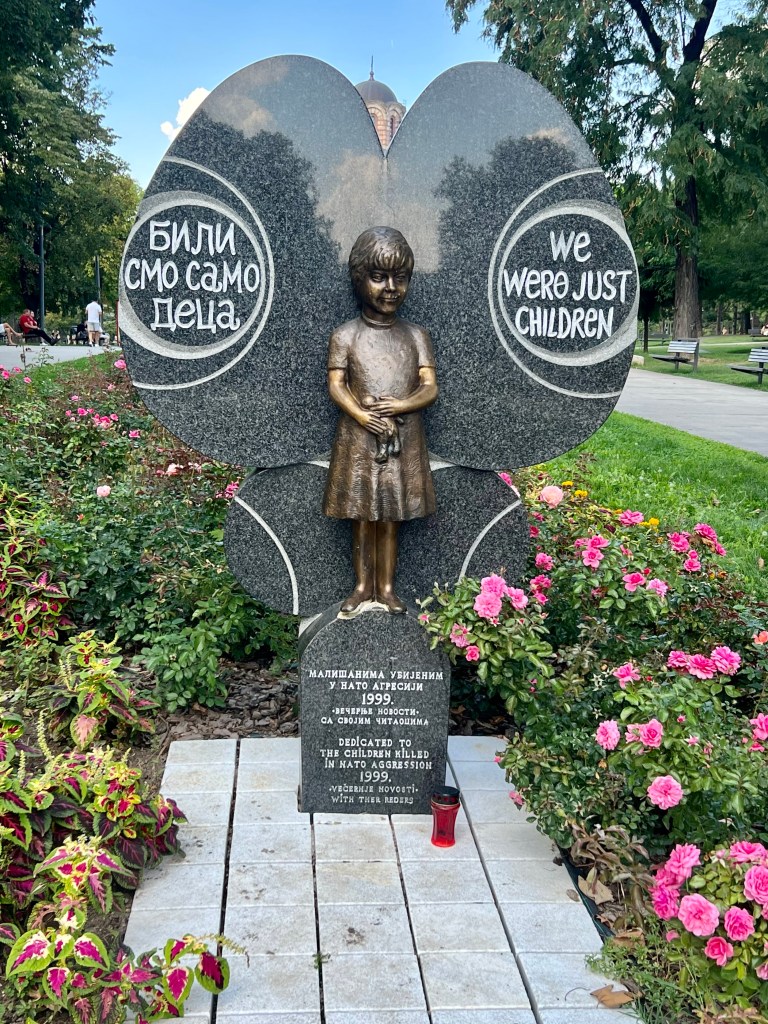
Nikola Tesla was a Serbian-American inventor, electrical engineer, mechanical engineer, and futurist best known for his contributions to the design of the modern alternating current electricity supply system. The Nikola Tesla Museum, dedicated to honoring and displaying the life and work of Nikola Tesla as well as his final resting place, was on Filip’s list but I decided to keep walking.
The next stop was the Temple of Saint Sava; the largest Serbian Orthodox church and by its volume, the largest Orthodox church in the world. It was erected on the location considered to be the place where Koca Sinan Pasha burned the relics of Saint Sava, founder of the Serbian Orthodox church in 1594.
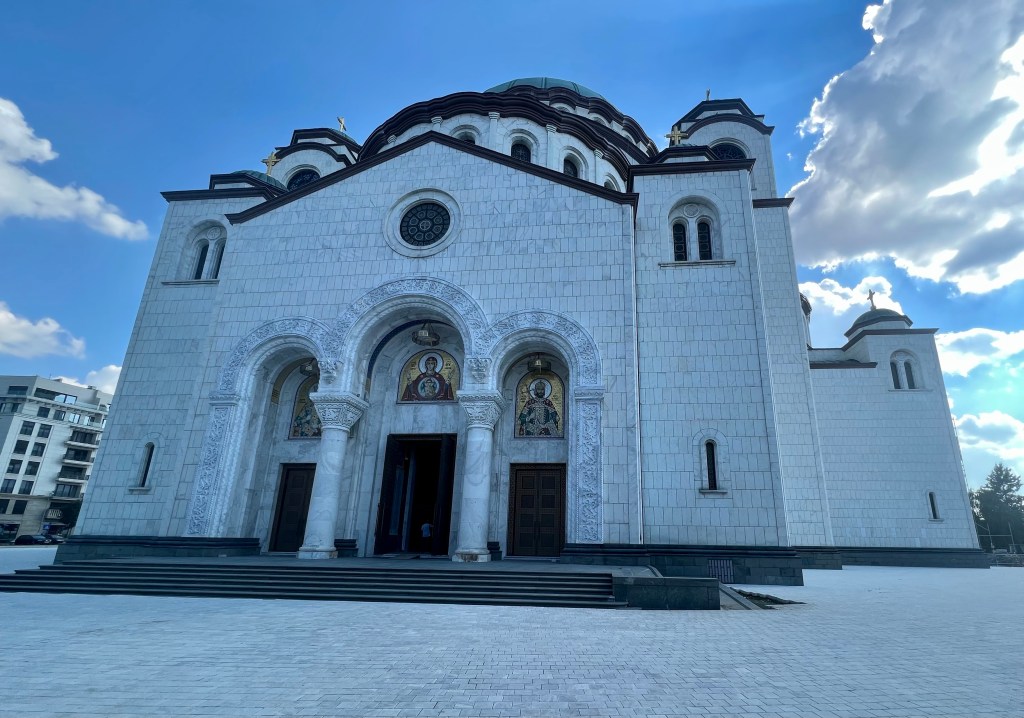
The Temple was built in Serbian-Byzantine style, with four 44 meter high bell towers. This church is a prominent landmark on, the Belgrade horizon and visible from all access roads into the city. Hell, even I could find it!

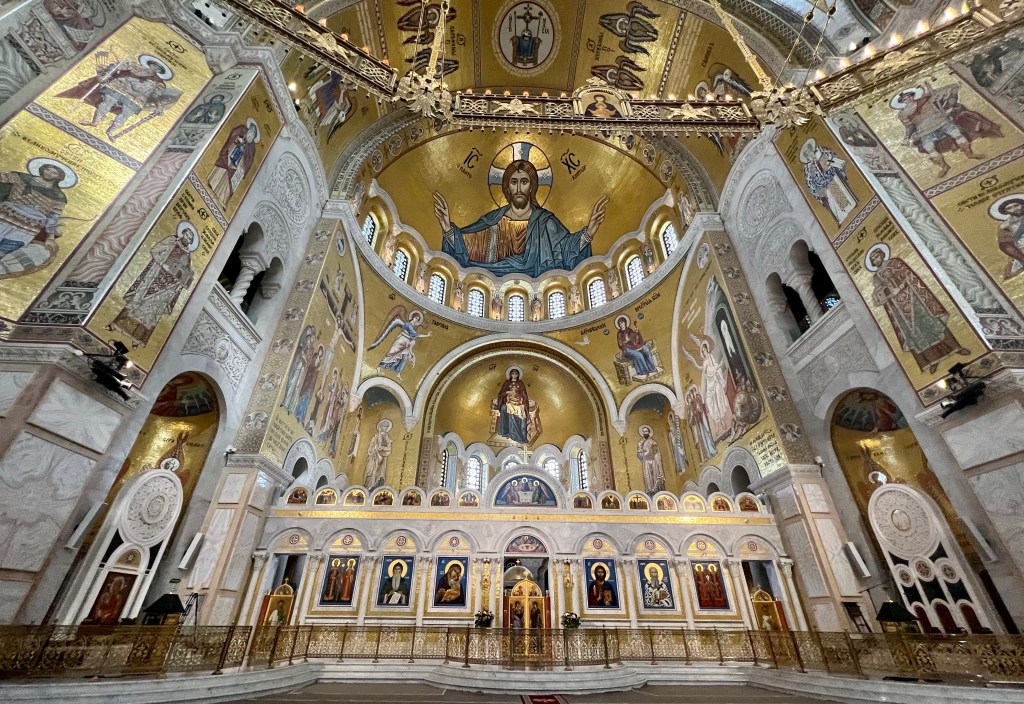
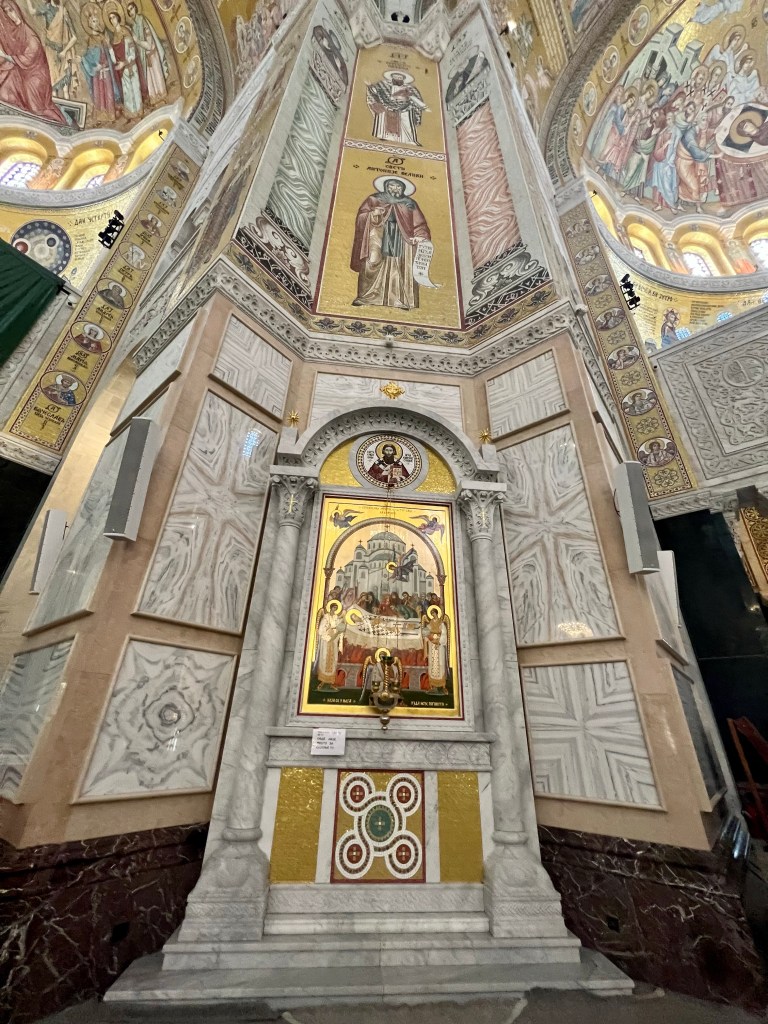
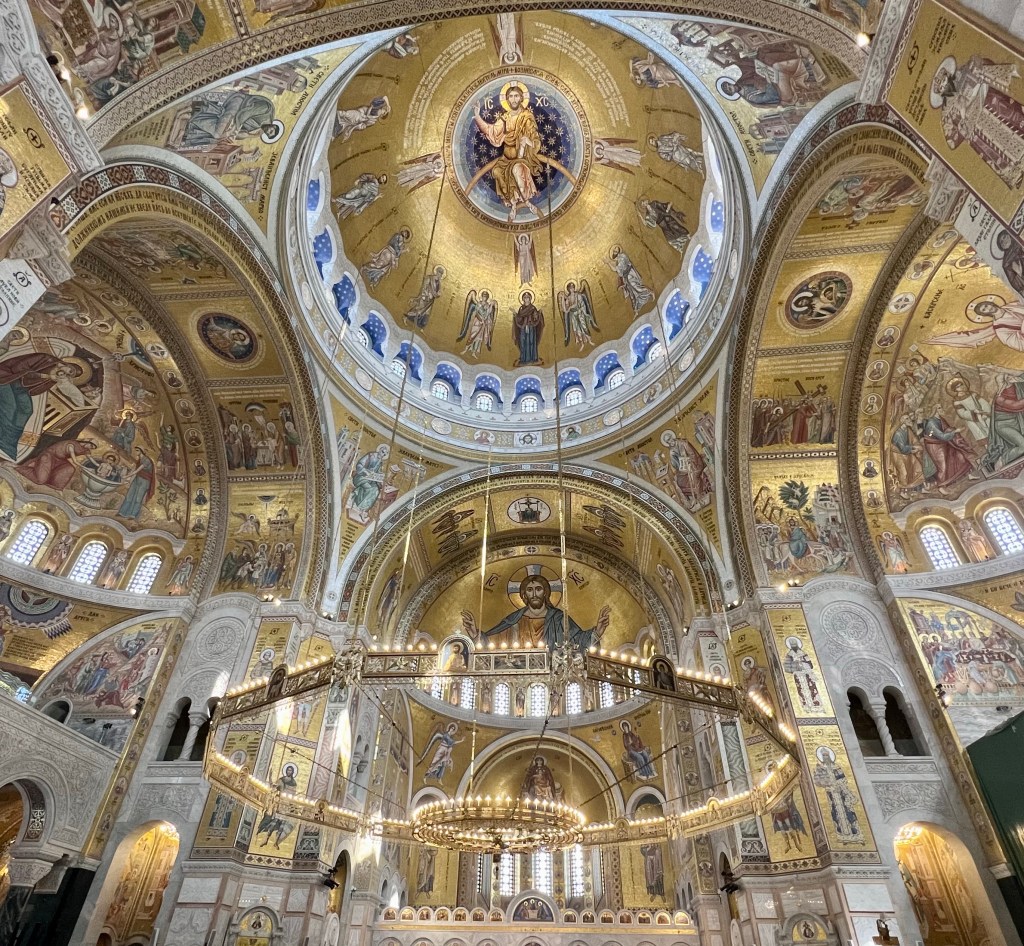
The ornately decorated church can accommodate 10,000, and has three choir galleries which can accommodate 700 choir members each. Beneath the temple floor, is a multi-purpose underground level where the treasury and patriarch’s crypt, as well as the mausoleum of St. Prince Lazar are located.
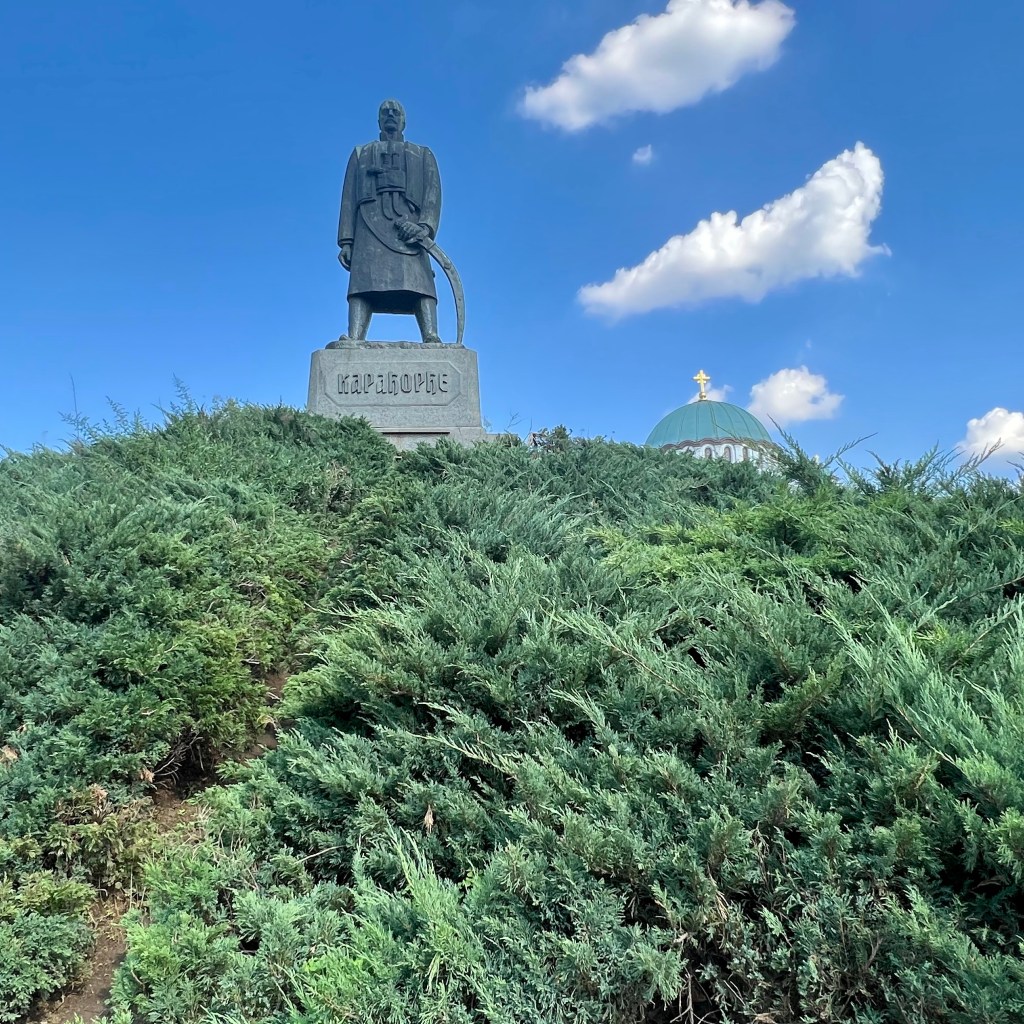
The Monument to Karadjordje; a bronze sculpture was erected in 1979 in front of the National Library of Serbia and Saint Sava Church in memory of the great leader of the First Serbian Uprising.
The Milankovitch Climate Change Centre occupies the former Serbian Observatory built in 1891 for meteorological and astronomical observations.

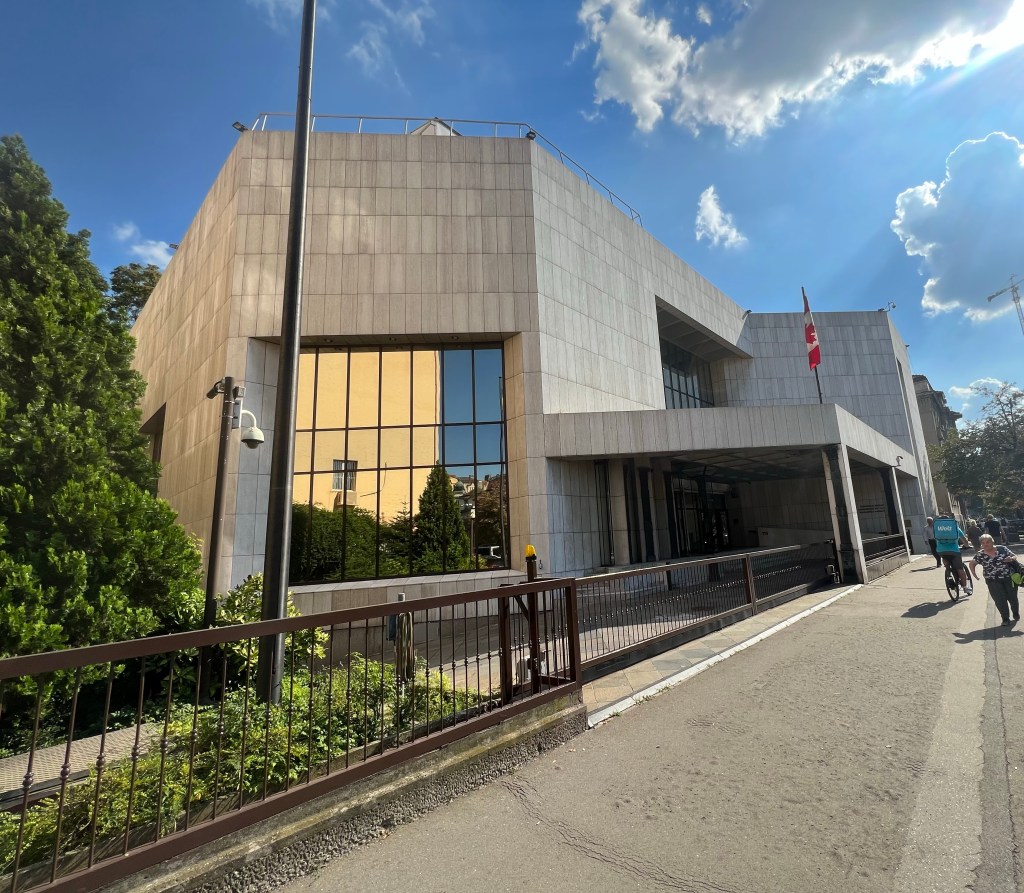
I thought I was still following the map, though I did pass through the hospital zone, until I arrived at Canadian Embassy. Always lovely to see the cheery maple leaf but I knew I was waaay off base.
Sure enough I stopped in a pharmacy and the woman was aghast when I asked for directions to Hotel Moscow! She recommended a bus but I decided it was safer to take a cab. That hotel card did come in handy, lol!
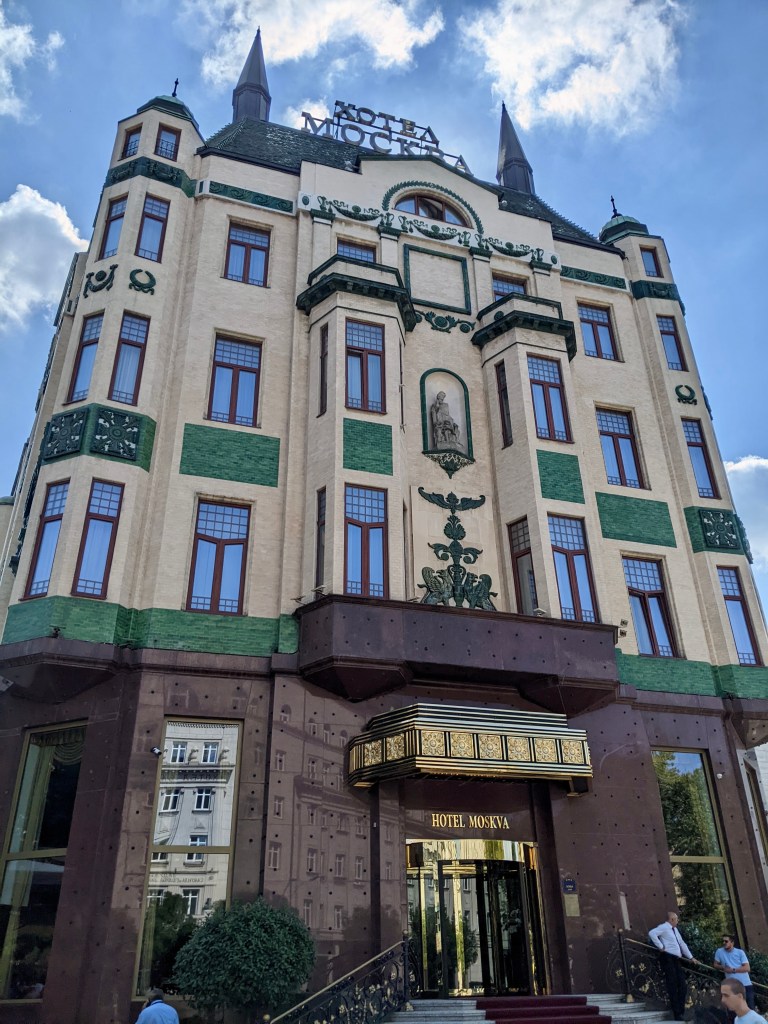
On the way, we passed the Hotel Moscow (Hotel Mockba); opened in 1908 and inaugurated by King Petar I Karadjordjevic it outlived two World Wars, eight state systems and became a prominent symbol of Belgrade. Here’s a pic courtesy of Linda!
After a bit of a relax, we headed out to Skadarlija aka the Bohemian Quarter for dinner at one of the restaurants recommended by Filip; Dva Jelena (Two Deer).
I opted for a sopska salad followed by venison goulash and fettuccine in a walnut sauce with the house bread fragrant with garlic as a welcome addition. Dinner was washed down with a liberal quantity of local wine recommended by the waiter. Prokupac is a red wine grape variety indigenous to the former Yugoslavian states, including Serbia. Sadly, this tasty varietal remains largely unknown outside of the area.

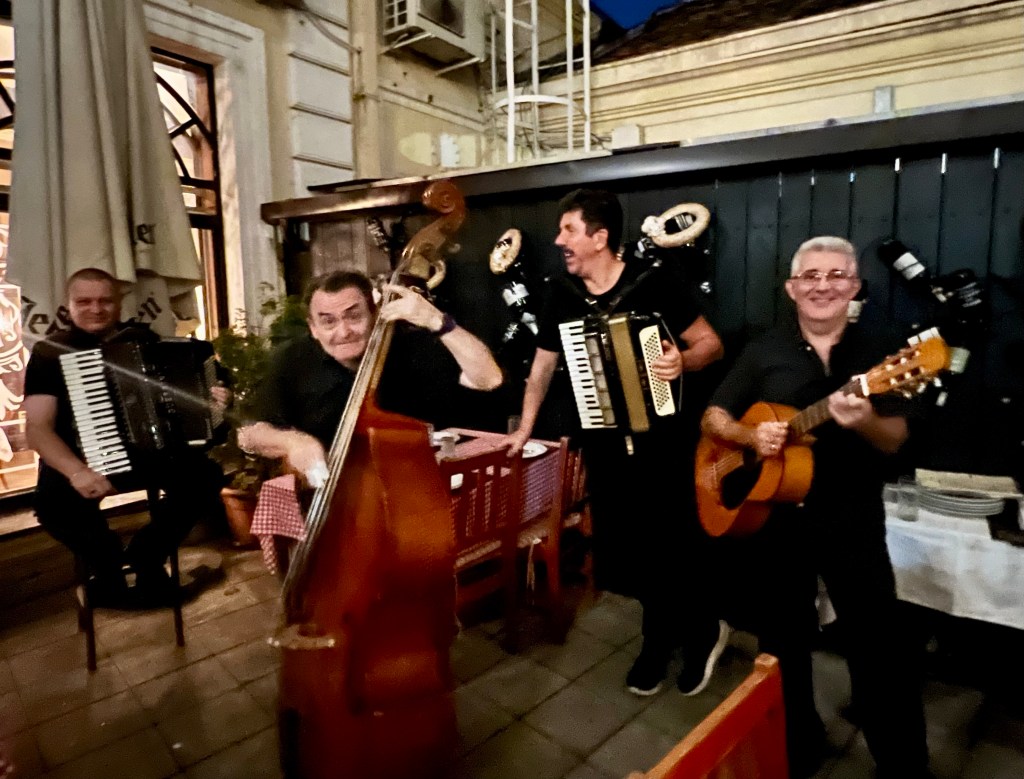
During and after our meal we were serenaded by local musicians which are ubiquitous in the evenings in this neighbourhood. Sated, we headed back to the hotel.
Tomorrow is an early day. Adventures await …

