
September 24, 2022
We docked today in Mannheim; a city located at the confluence of the Rhine and Neckar rivers in the Upper Rhine Plain, Germany’s warmest region. We’re not stopping here but our guide, Isabella from Brazil, gives us a bit of a history primer.
Mannheim is famous for its School of Music. In 1977, Mozart 1777 applied and was rejected. I’m guessing they regretted that decision many times. Mannheim is also one of the 15th most inventive cities in the world; credited with inventions such as bicycles, motor bikes and cars. In 1885, Carl Benz used the money from his wife’s dowry to build motor wagon number 3; the first car. His wife, Bertha, took their two sons on the first road trip from Mannheim to Pforzheim in 1888, showing the world what he husband’s invention could do!
Our bus continues on past Mannheim; we’re on our way to Heidelberg, a town on the Neckar River in southwestern Germany. Heidelberg is home to Heidelberg University; founded in 1386 and Germany’s oldest university and the red-sandstone ruins of Heidelberg Castle, built in the 1400s, which stands on Königstuhl hill, the Philosophers’ Walk, and the Baroque old town.
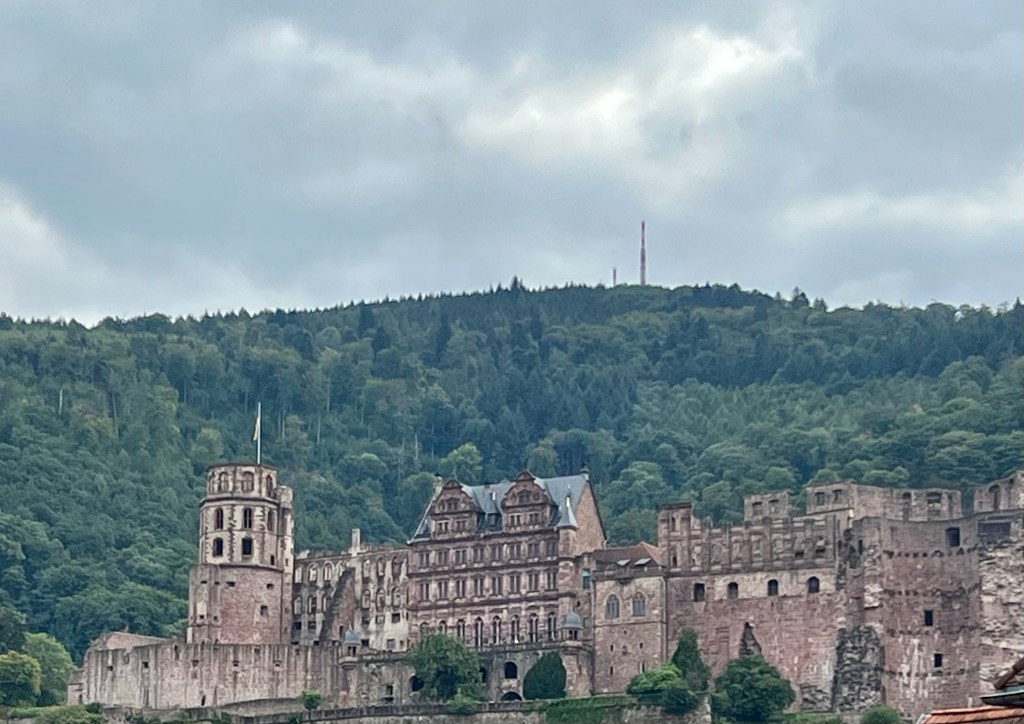
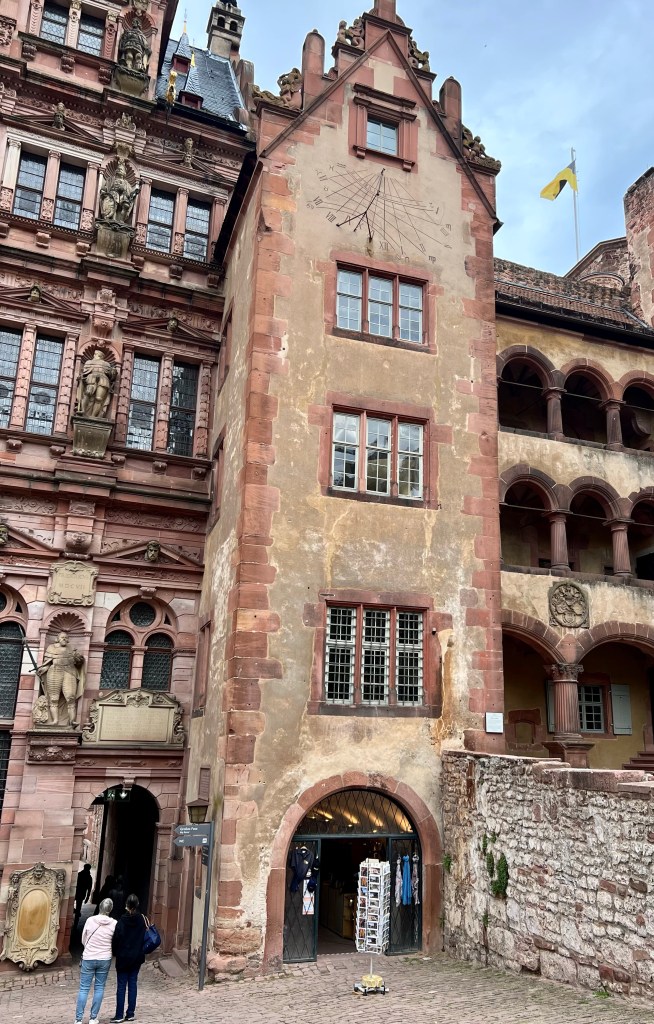
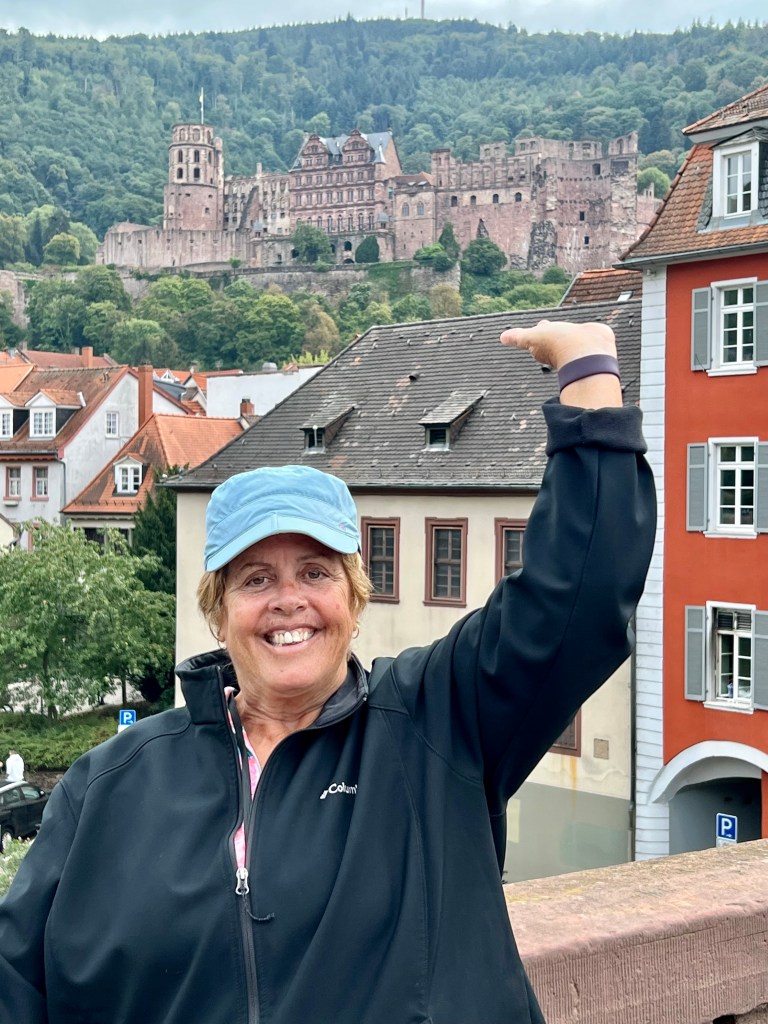
Our first stop is the Castle which has been expanded, restored, hit by lightning, set afire and damaged by wars but still stands. The ruins of the Heidelberg castle ruins are one of the most important Renaissance structures north of the Alps.
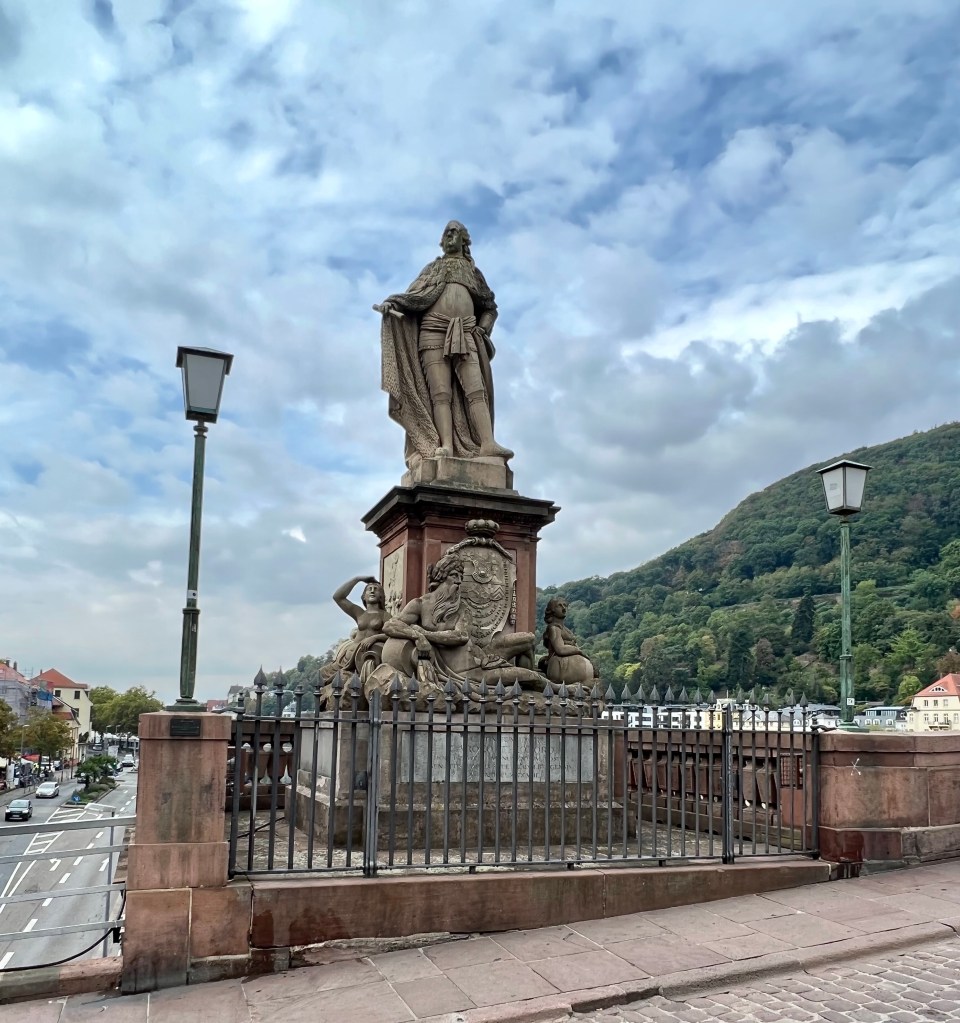
Our tour starts at Elisabeth’s Gate. Elisabeth’s Gate is part of the love story of Prince, Palatine Elector and King Frederick V von der Pfalz and Elizabeth Stuart daughter of King James I of Scotland & VI of England. Legend has it that the gate was carved and created in pieces and then assembled in the garden overnight to surprise Elizabeth on her 19th birthday; a very romantic gesture indeed.
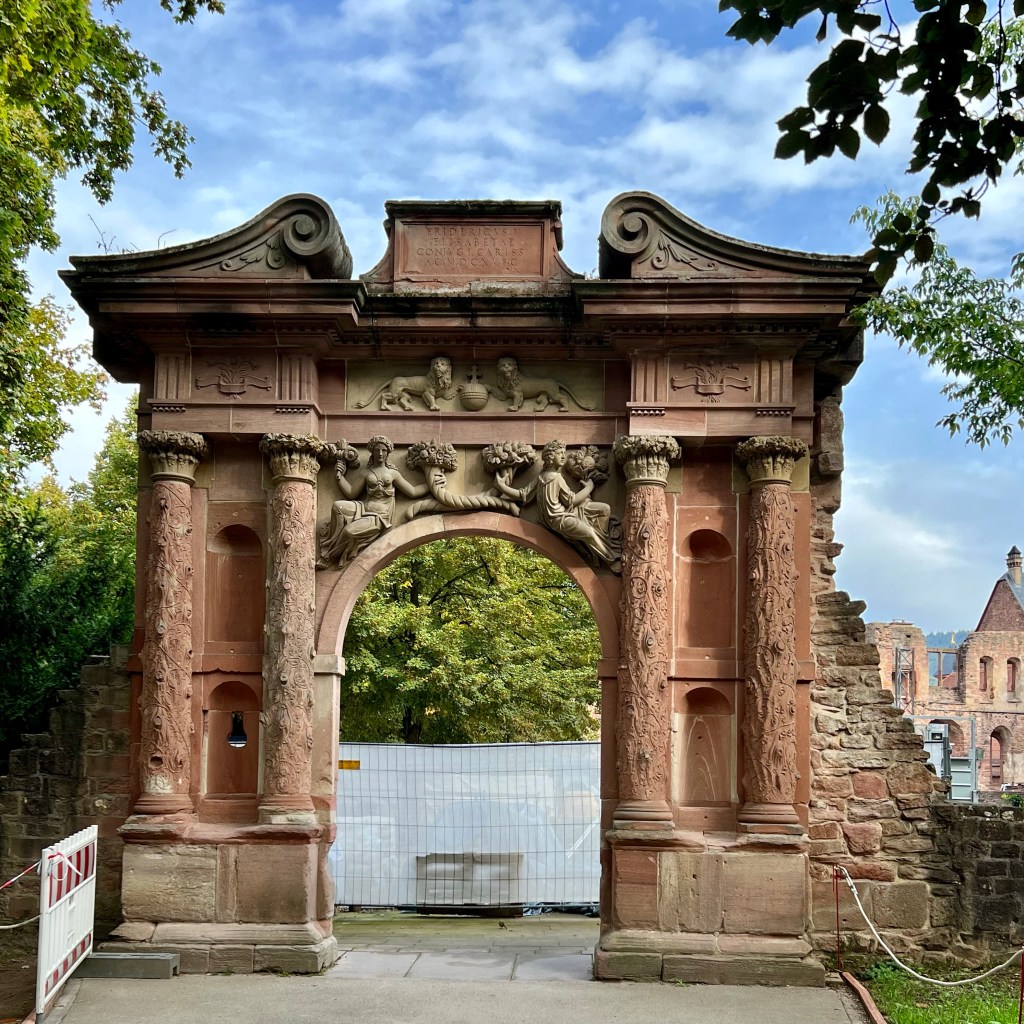
Frederick and Elisabeth were rulers of Bohemia for one year but the Catholic country didn’t accept them because they are Protestants. They are exiled after they lose the Battle of White Mountain in 1619 a year after accepting the crown. The couple had a total of 13 children though not all lived to adulthood. Her large family of children included Princes and Princesses as well as the mother of King George I.
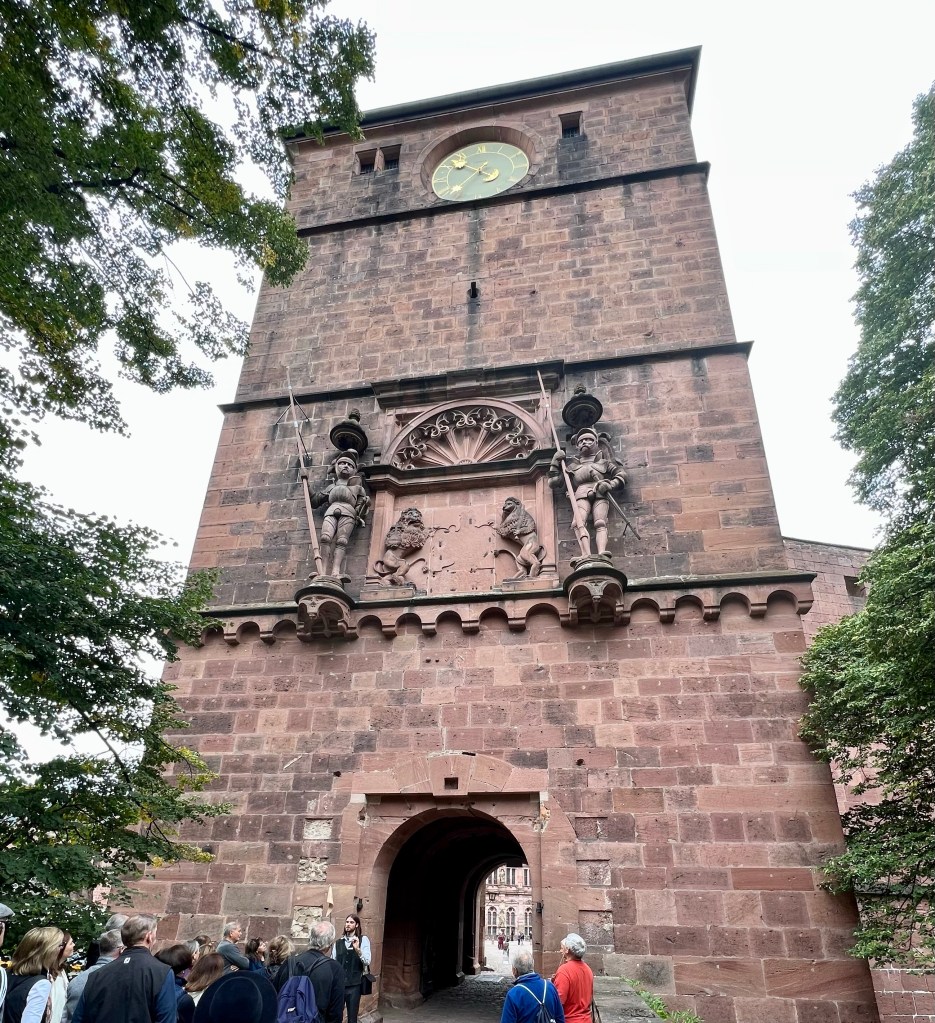
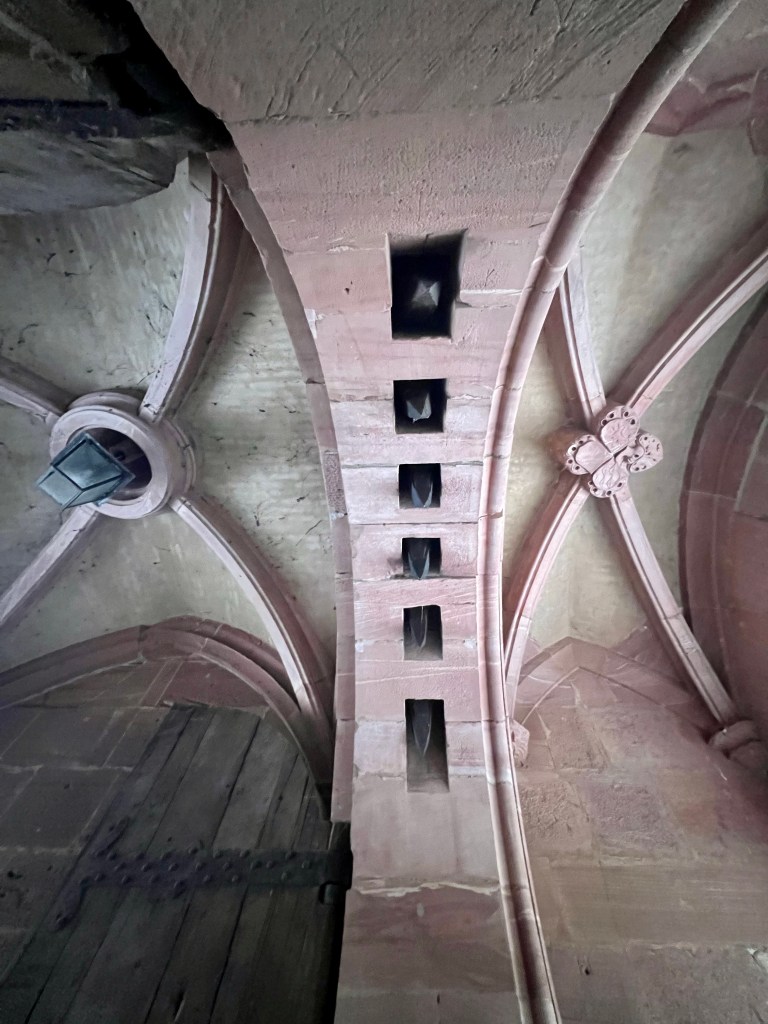
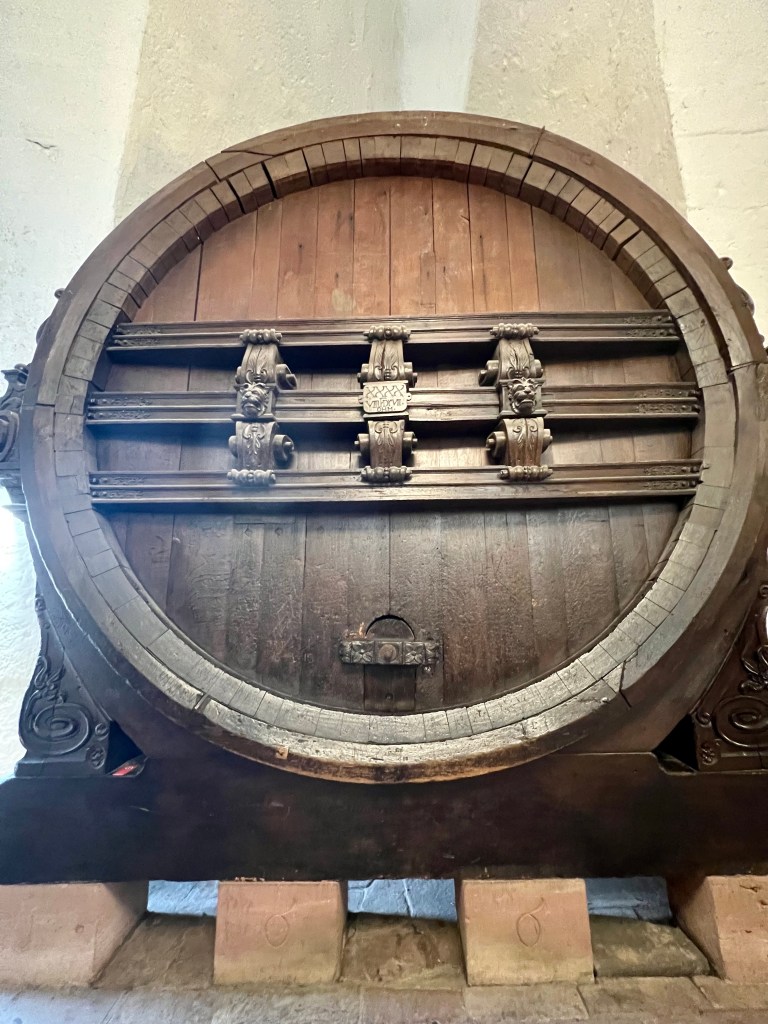
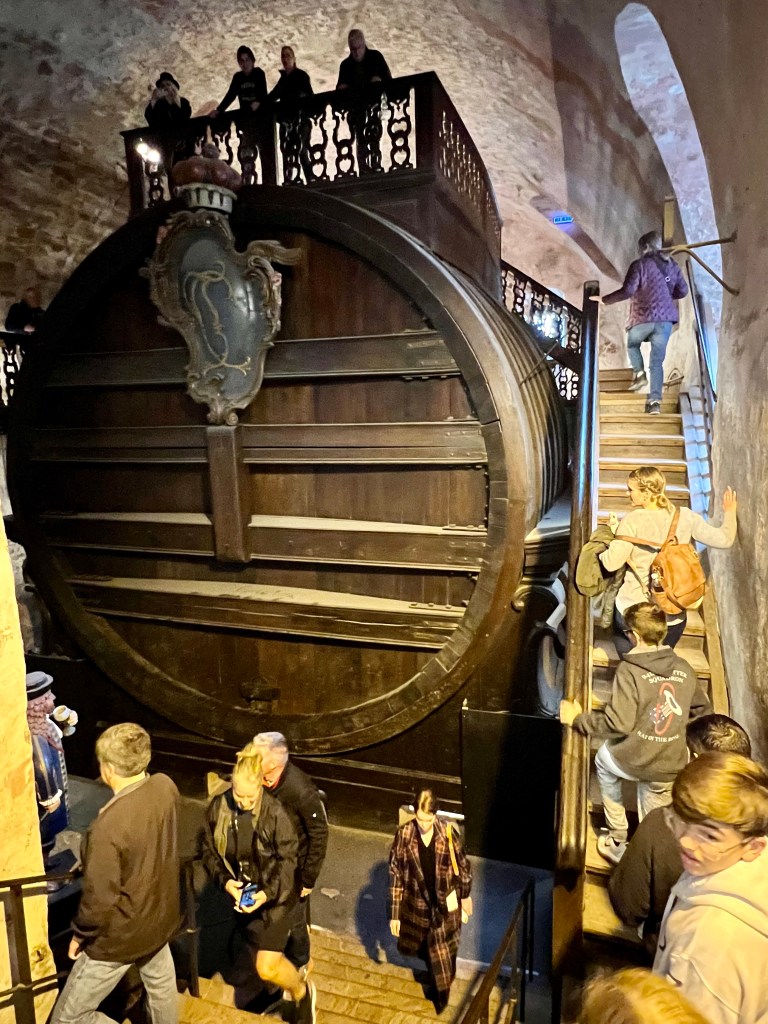
Isabella told us lots more stories about the various castle buildings but sadly my brain is full so I have some lovely pictures to share but not much else! I do remember one story about the ring as you enter the castle gates; if you could break it, you would be the new king or queen. So far the ring is still intact.

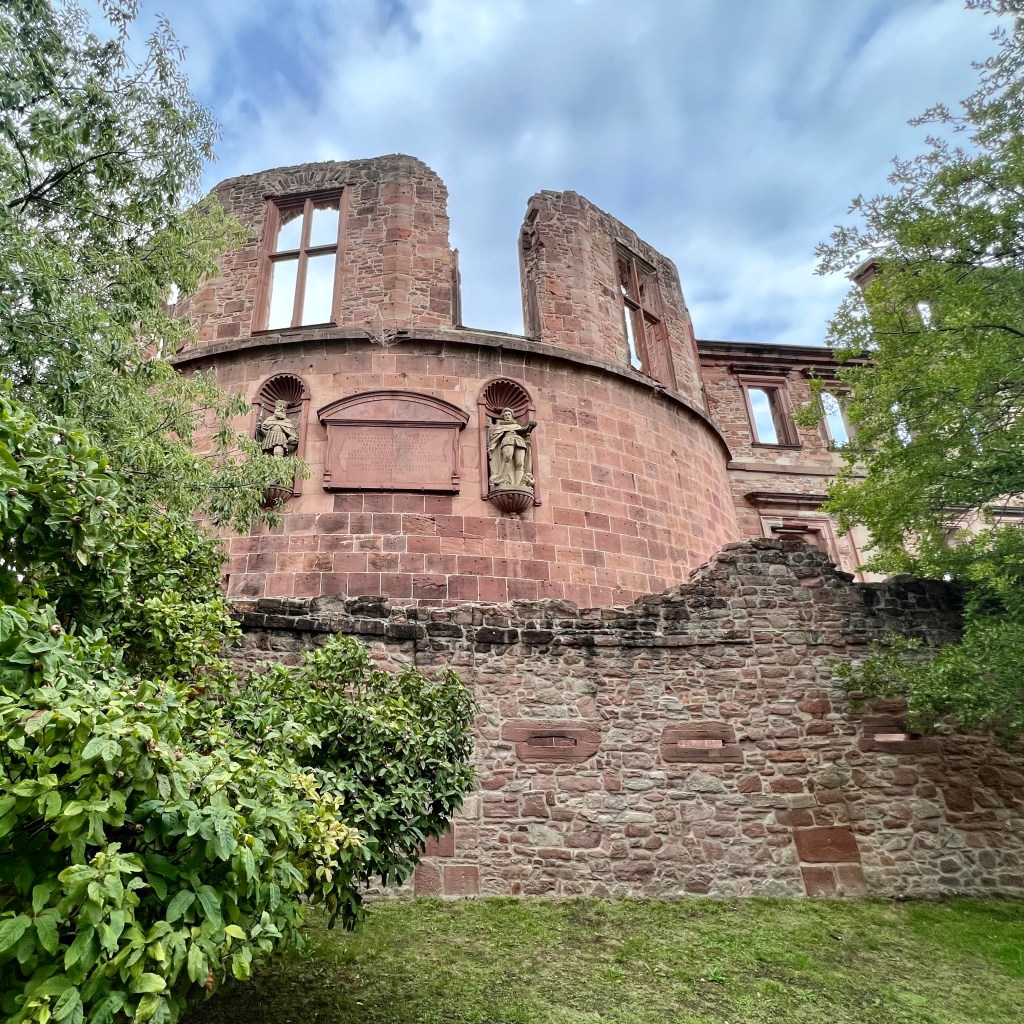

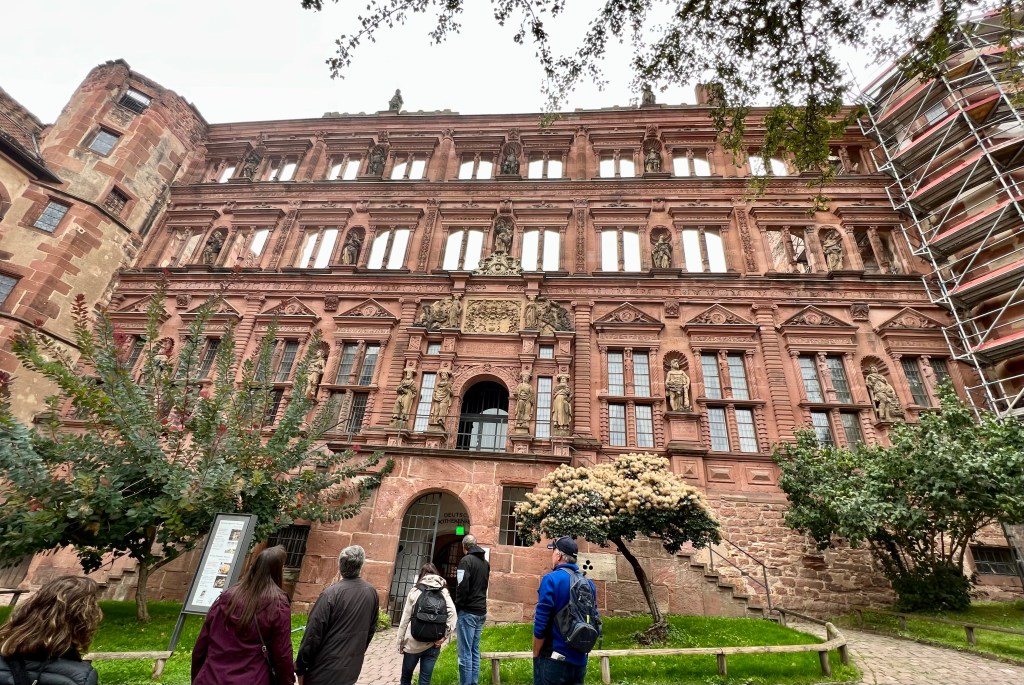

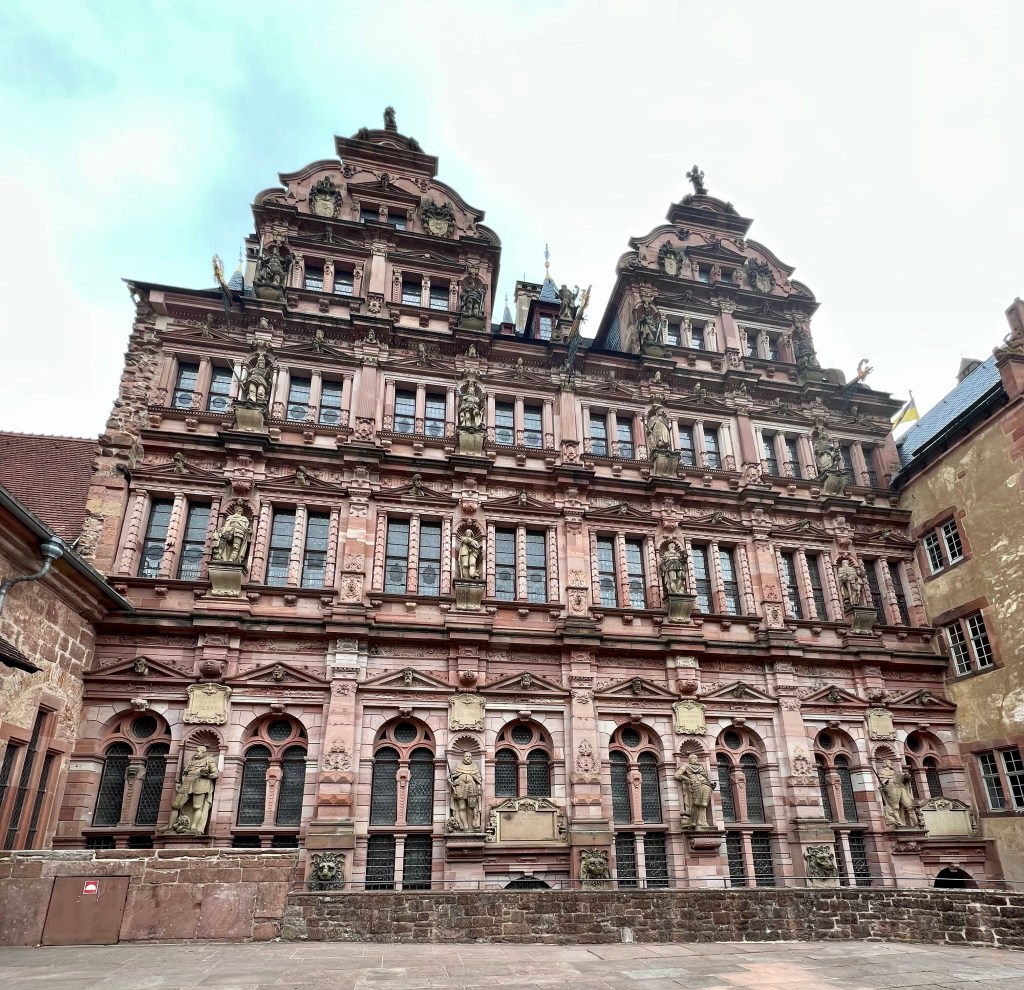
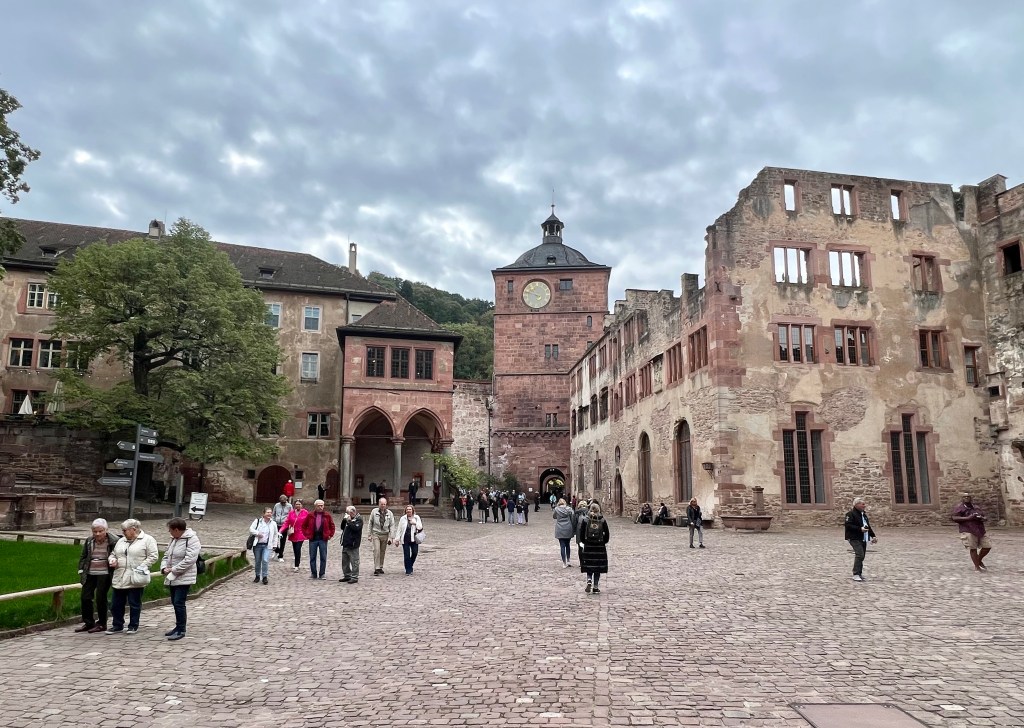
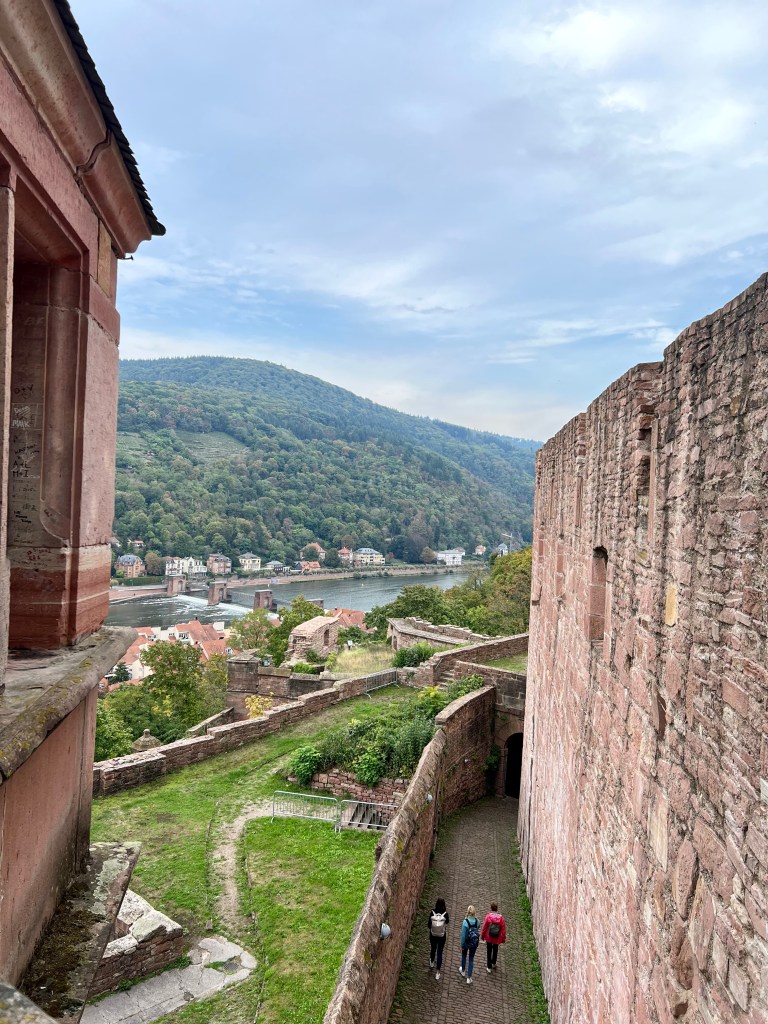
Across from the castle on the Holy Hill (named by the early Celts) is Philosopher’s Walk. During the Romantic Period, many professors and philosophers of Heidelberg enjoyed the path for its solitude, natural beauty, and great views of the town. Today, this path is still there, and remains a favourite place for reflection.


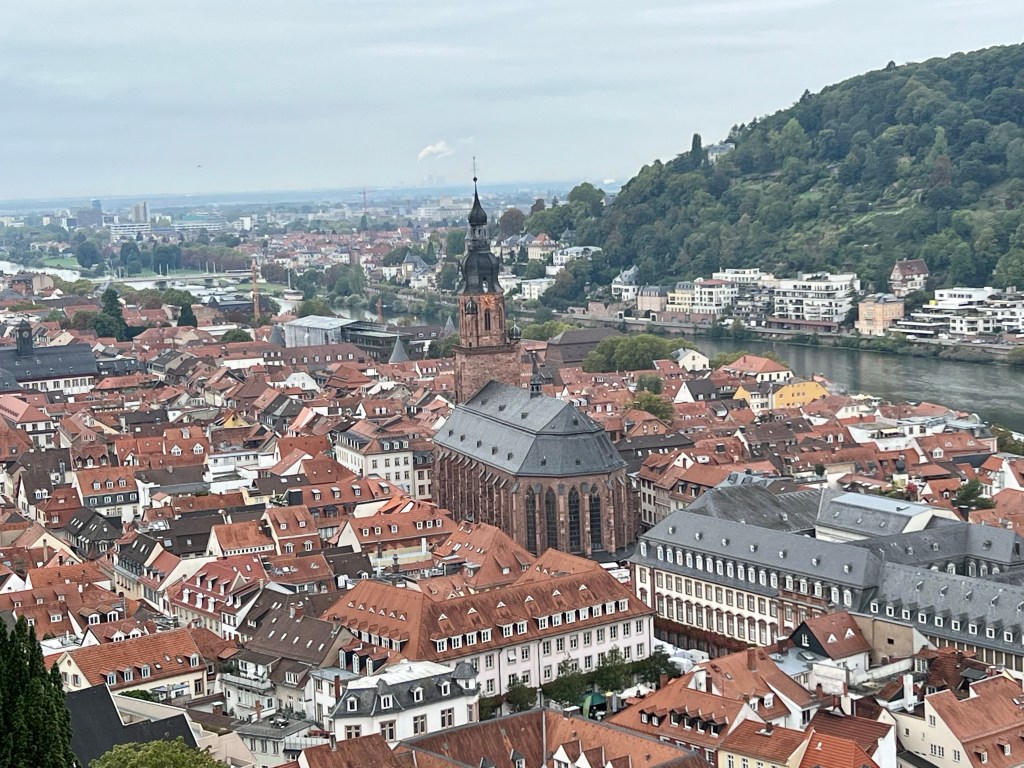
Near the castle there is a fraternity building, one of many in the city. In the past, the fraternity hazing included sword fights where getting a scar on face was a right of passage. These antic by the rich boys elicited lots of complaints from city inhabitants so the university built a prison! The boys used their money to bribe the guards and had big parties in their cells. Soon enough it became a badge of honour to be sent to the university prison so they actually paid to go to prison! The prison was closed in 1912.
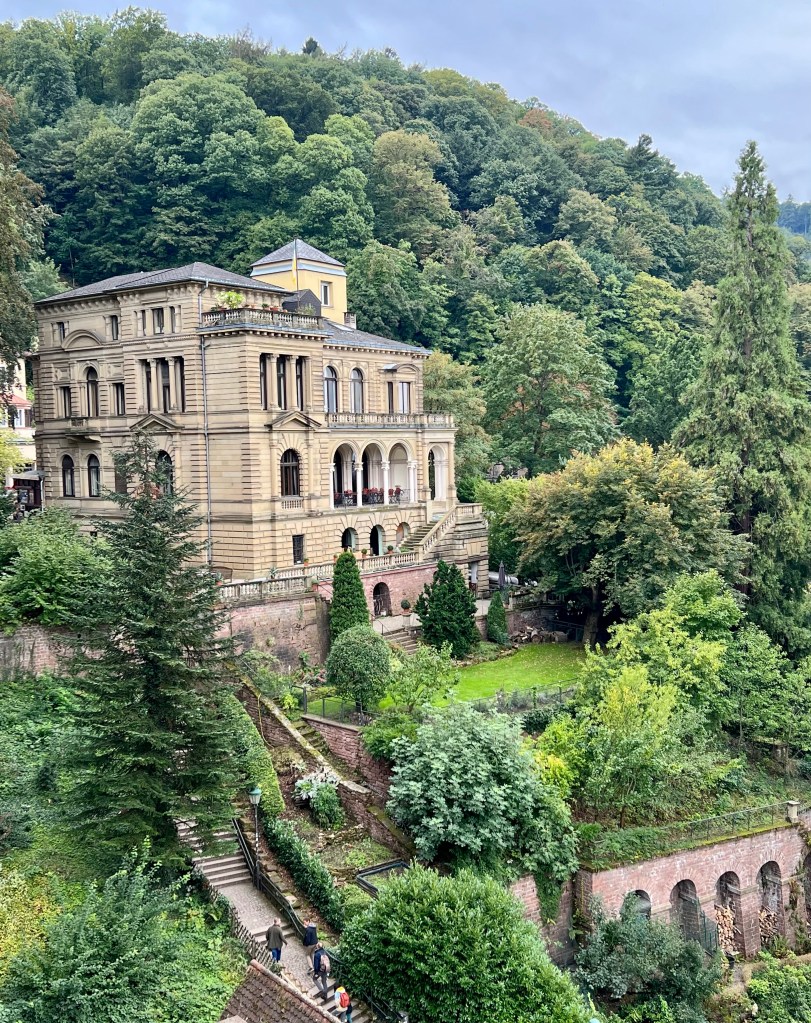
After our thorough tour of the castle, we reboard the busses to head to the old city. We’re lucky enough to be in town for the Autumn Festival; the last big festival before Christmas markets. There are bandstands set around the city and lots of folks milling about.
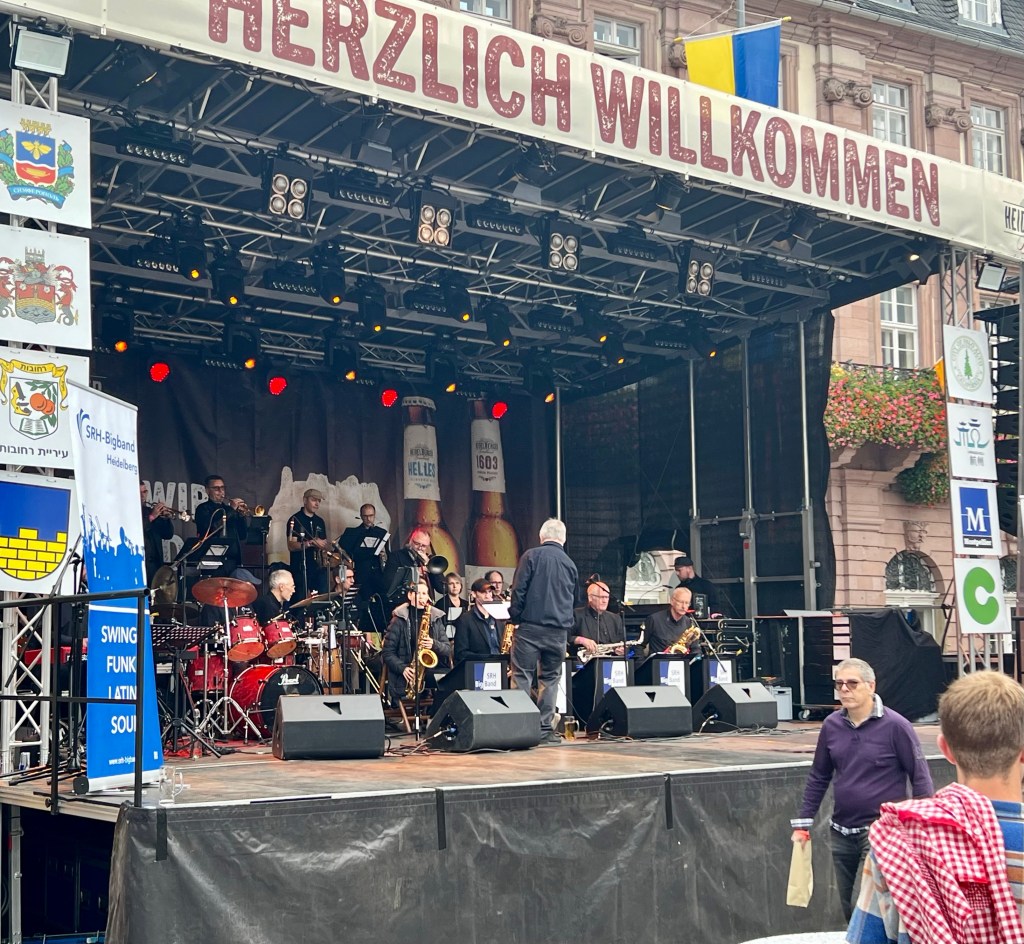
Before setting us loose, Isabella points out some of the highlights.
There is, of course, a church in the Center of old town. The rooster on top of church means it’s a Protestant Church. The rooster is an admonition of Peter who denied Jesus three times before the cock crowed. The Church has two entrances one for Catholics and one for Protestants.

Another highlight is the bakery where the student kiss chocolate was “invented”. Back in the day, girls always had chaperones so a boy would give them the special chocolate to judge her interest. If the girl ate the chocolate kiss, it meant yes to a first date.

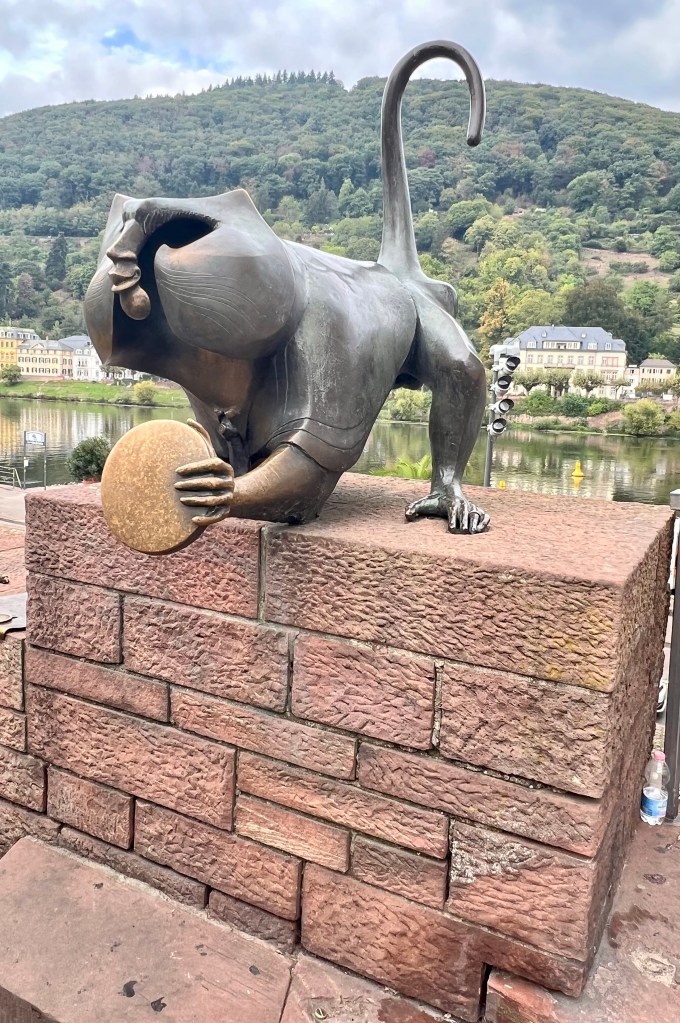
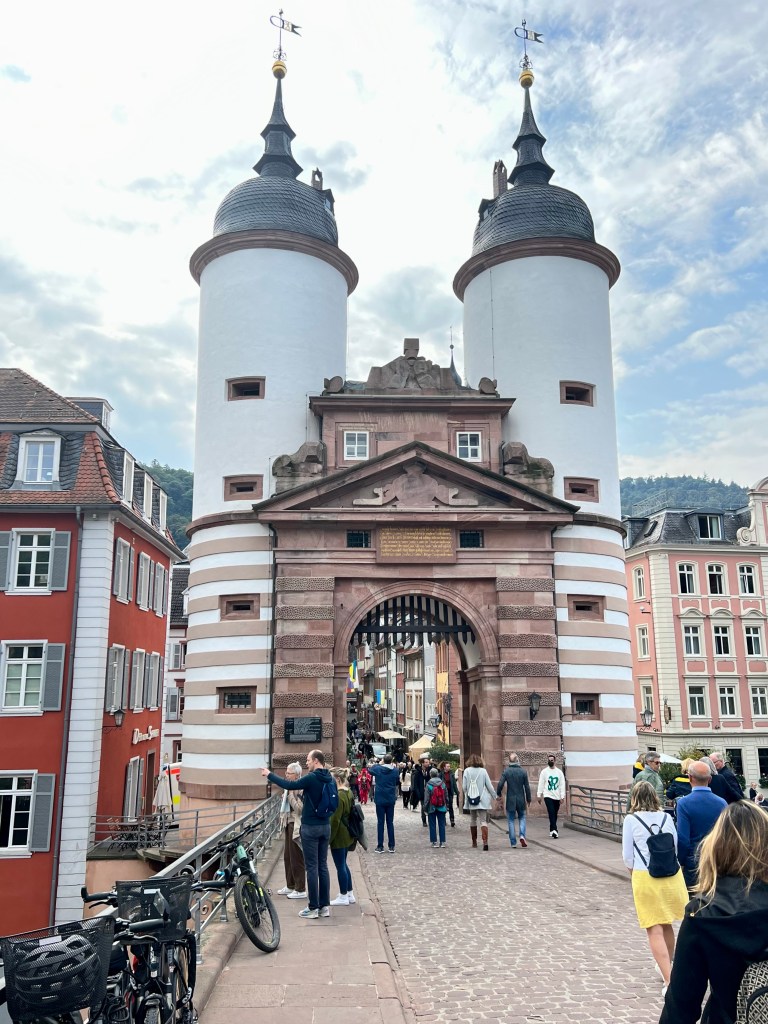
Another interesting site is a statue of a monkey holding a mirror next to the restored old bridge; the original old bridge was destroyed by Nazis in a failed attempt to keep the Allies out. But I digress …
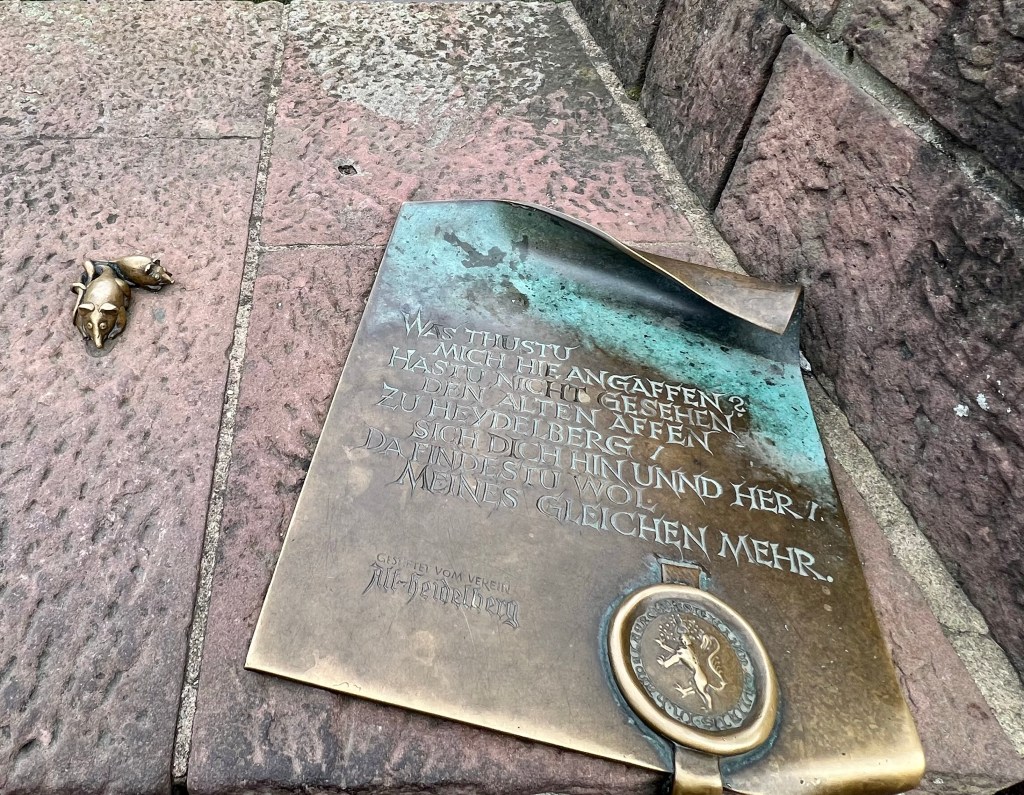
The current statue has been around since only 1979, though the bridge has featured a monkey on this spot since the 15th century. The monkey is said to be good luck. Rubbing the mirror will bring you money; rubbing his fingers will ensure your return to Heidelberg; and rubbing the little bronze mice nearby will bring you fertility. Needless to say, I didn’t touch those mice though I doubt their power over old ladies! The backside of the monkey points toward town of Mainz which was situated opposite the river bank and intended for the Bishops of Mainz to demonstrate that they had no power over them; the Heidelberg way of flipping the bird I guess.



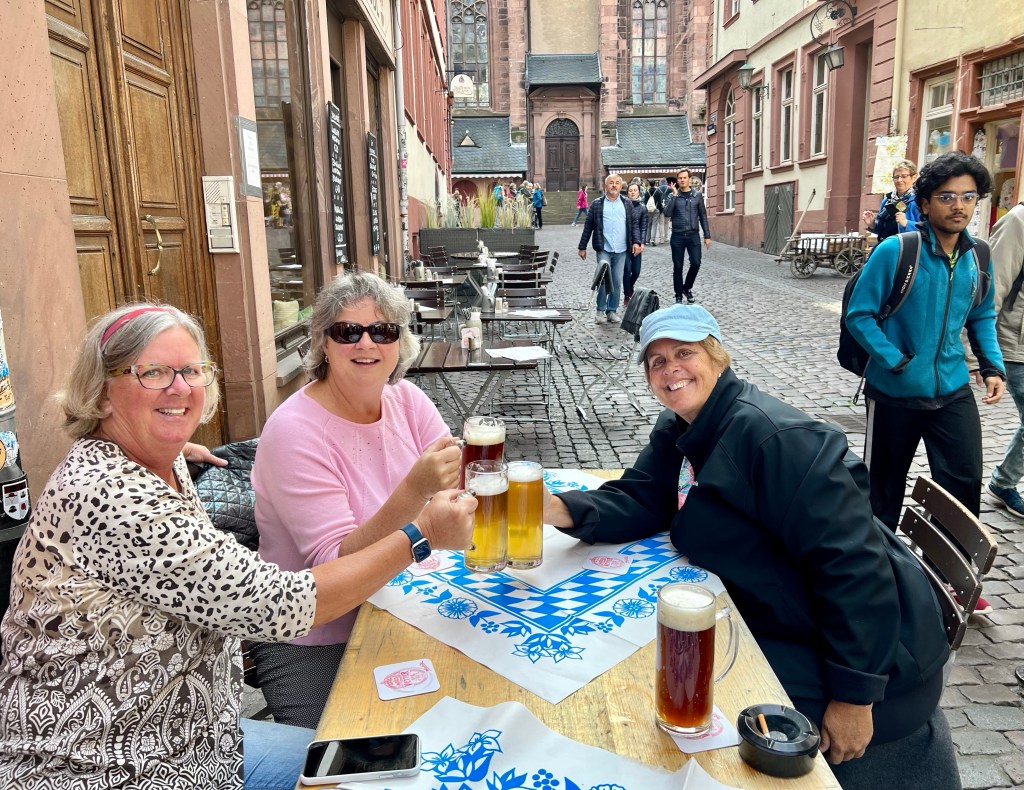
Having had a quick tour of the city, we headed out to one of the local brew pubs to sample their offerings and enjoy a bit of people-watching before heading back to the bus and then the boat for lunch.

Tonight we are having a Gala Dinner, so after a quick nap, it’s time to get gussied up for pre dinner cocktails.
Dinner was fabulous indeed, see pics below and served with plenty of scrumptious wine.


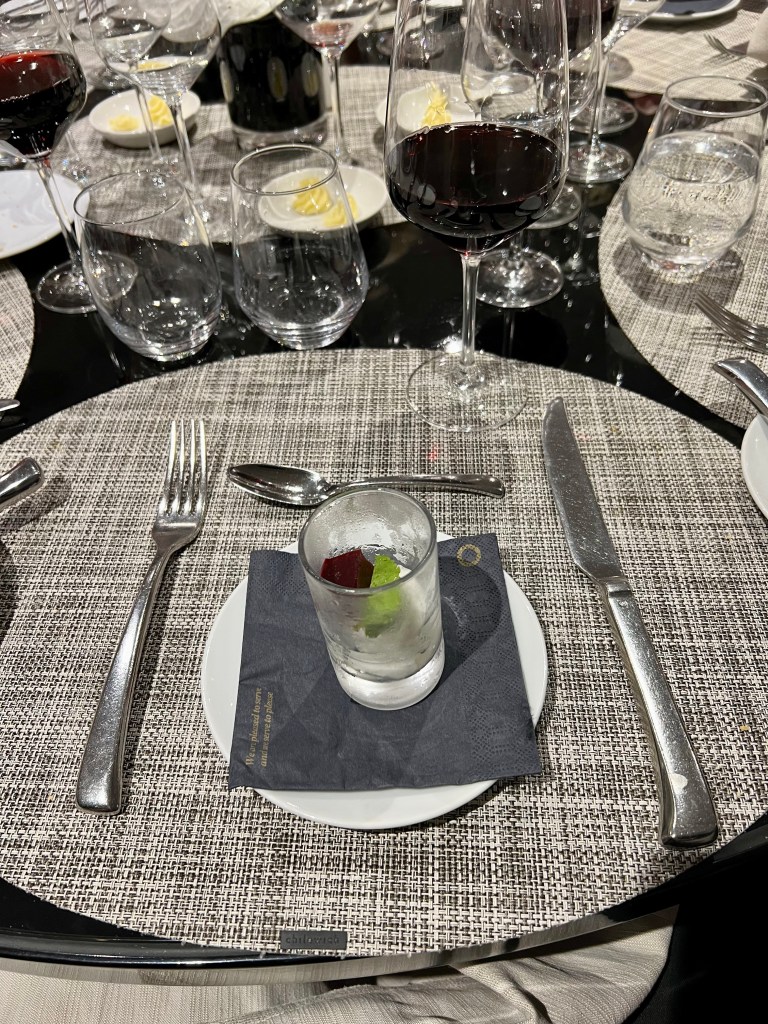
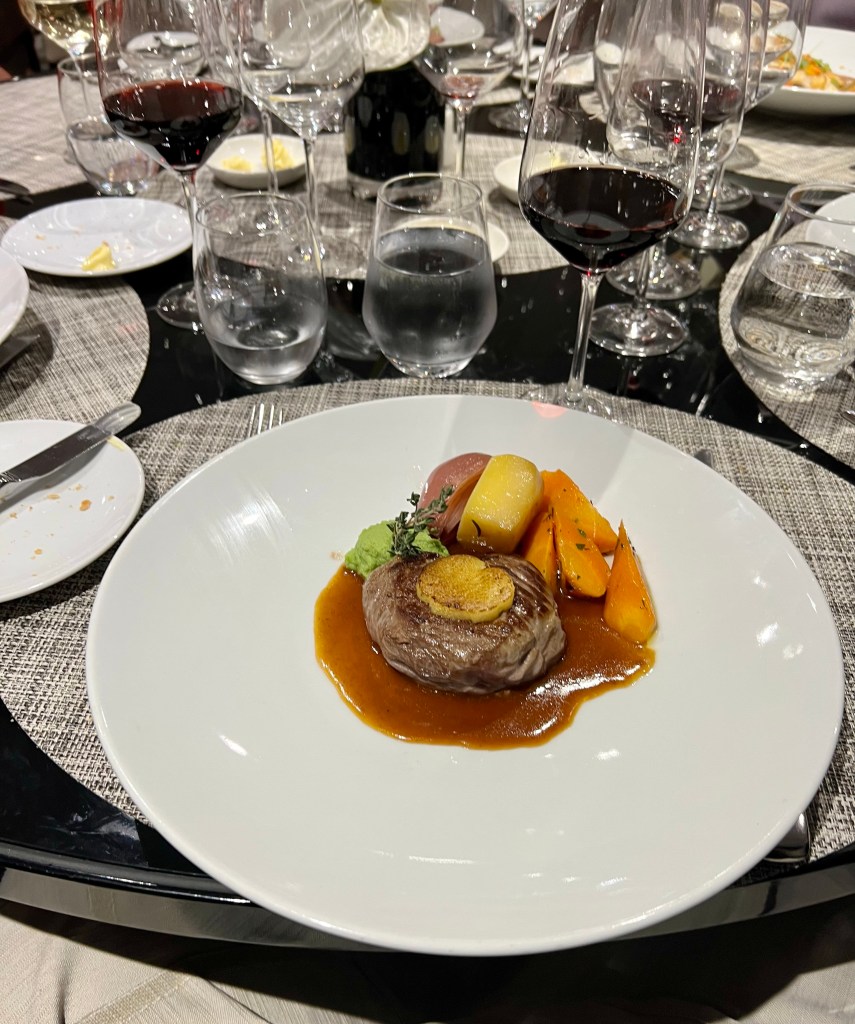
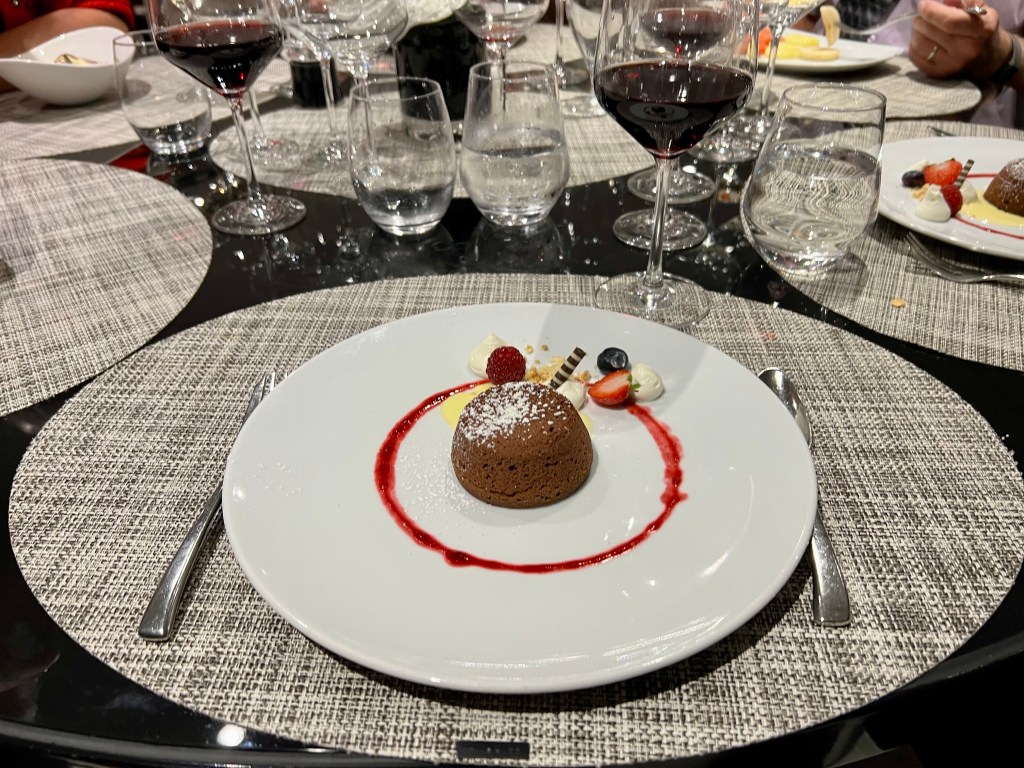
After dinner, there was more wine and some dancing before hitting the hay for sweet dreams. Tomorrow is another day. Luxurious adventures await …
 Judy’s Rambles
Awesome!!!!
LikeLike