
Wednesday March 15, 2023
For my first full day in Portugal, I’ve opted for a tour to Fátima, Batalha, Nazaré and Óbidos with Around Lisbon. Our guide, Nuno, picks me up in front of my hotel and we set off to gather the other six folks that have signed up for this adventure (3 from USA and 3 from Croatia) before heading North.
Our first stop is Fatima, home to the Sanctuary of Fátima, a Catholic pilgrimage site visited by 6-8 million pilgrims per year.
In 1917, three local shepherd children, children, Lúcia dos Santos and her cousins, Francisco and Jacinta Marto saw a woman known as Our Lady of Fatima (believed to be the Virgin Mary) while guarding their families’ sheep. They first saw the lady dressed in white and shining with a bright light on May 13, 1917 and the sixth and last sighting was on October 13th of that year with over 70,000 witnesses.
The site was marked by a cross erected by locals and in 1918 they built a small chapel of rock and limestone covered in tile. The exact spot of the apparitions is marked by a marble pillar on which the statue of the Virgin Mary is placed.
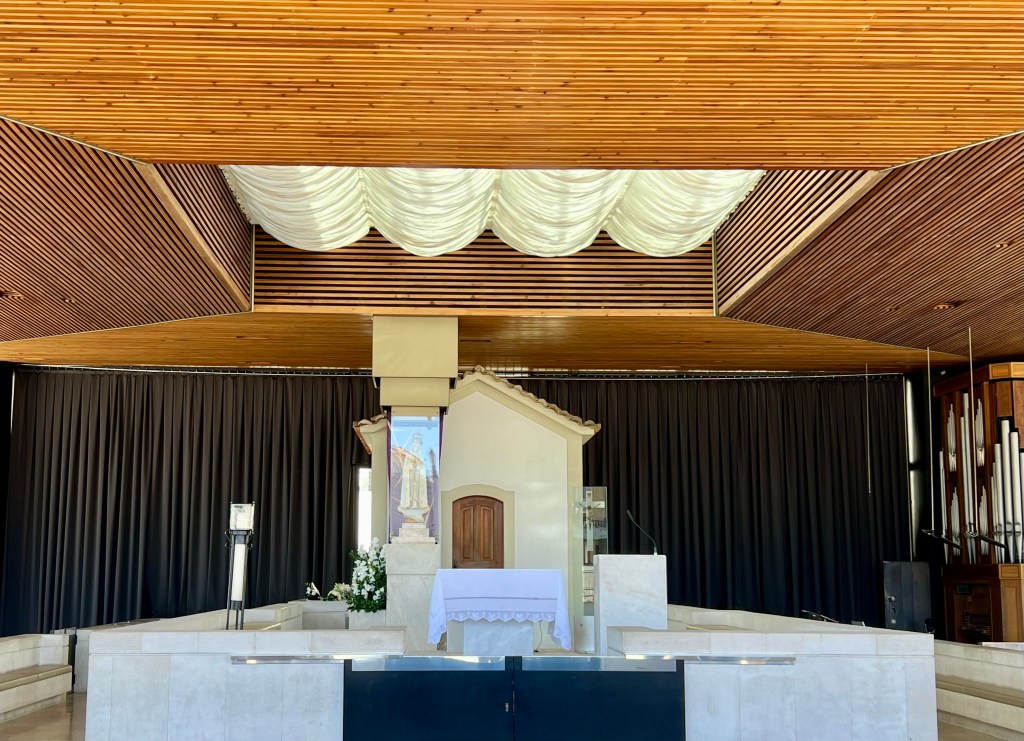

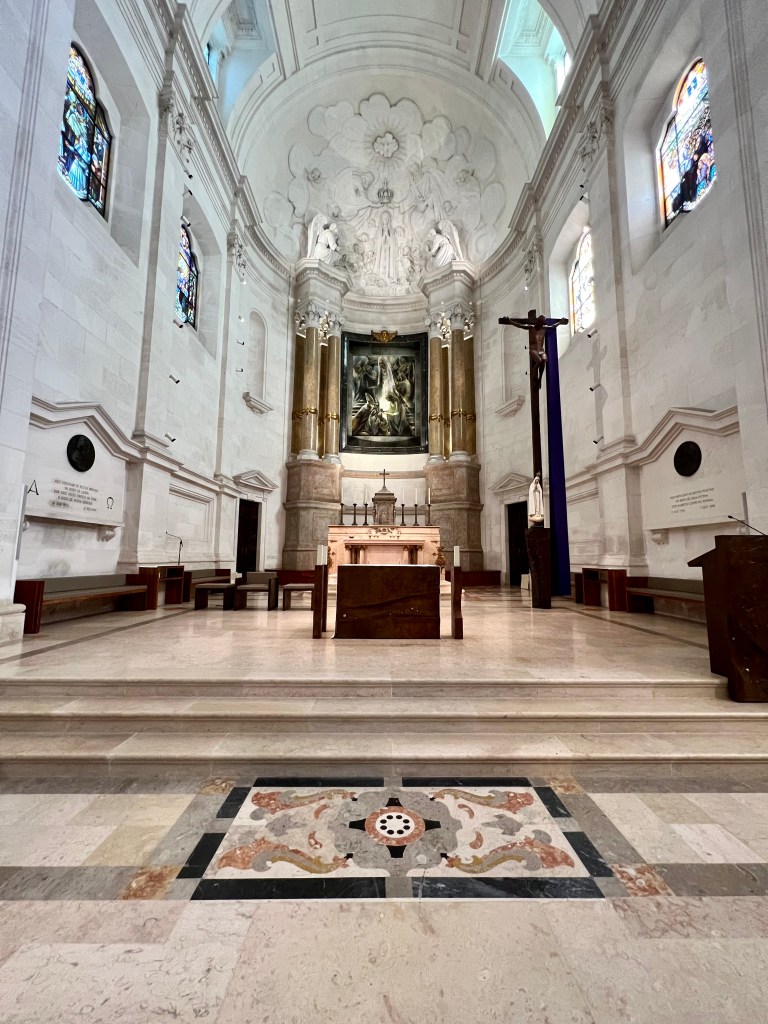
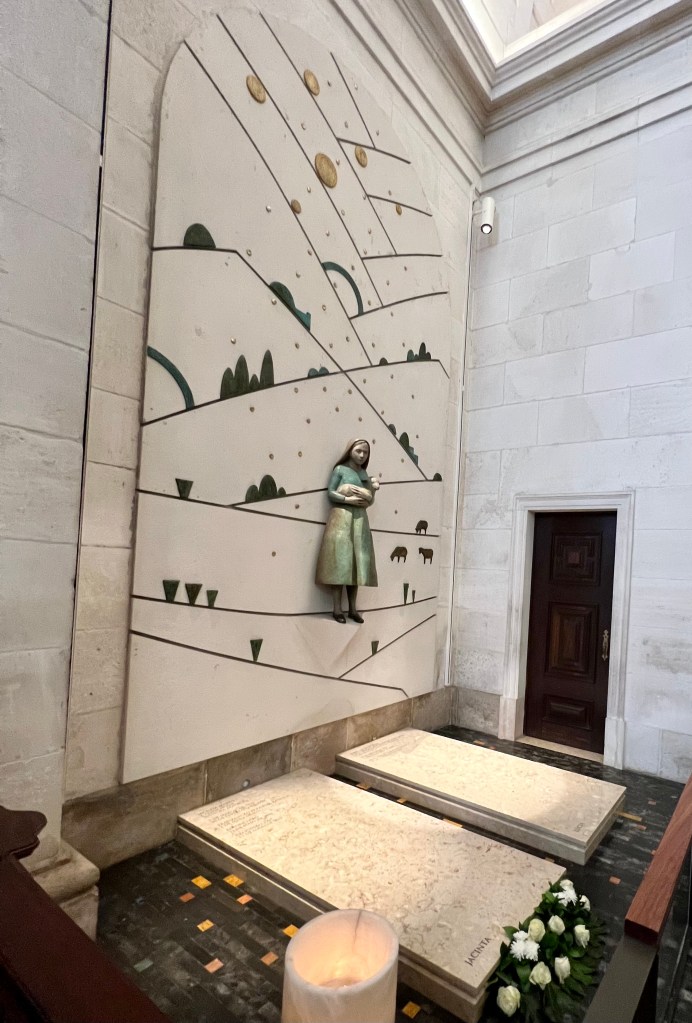
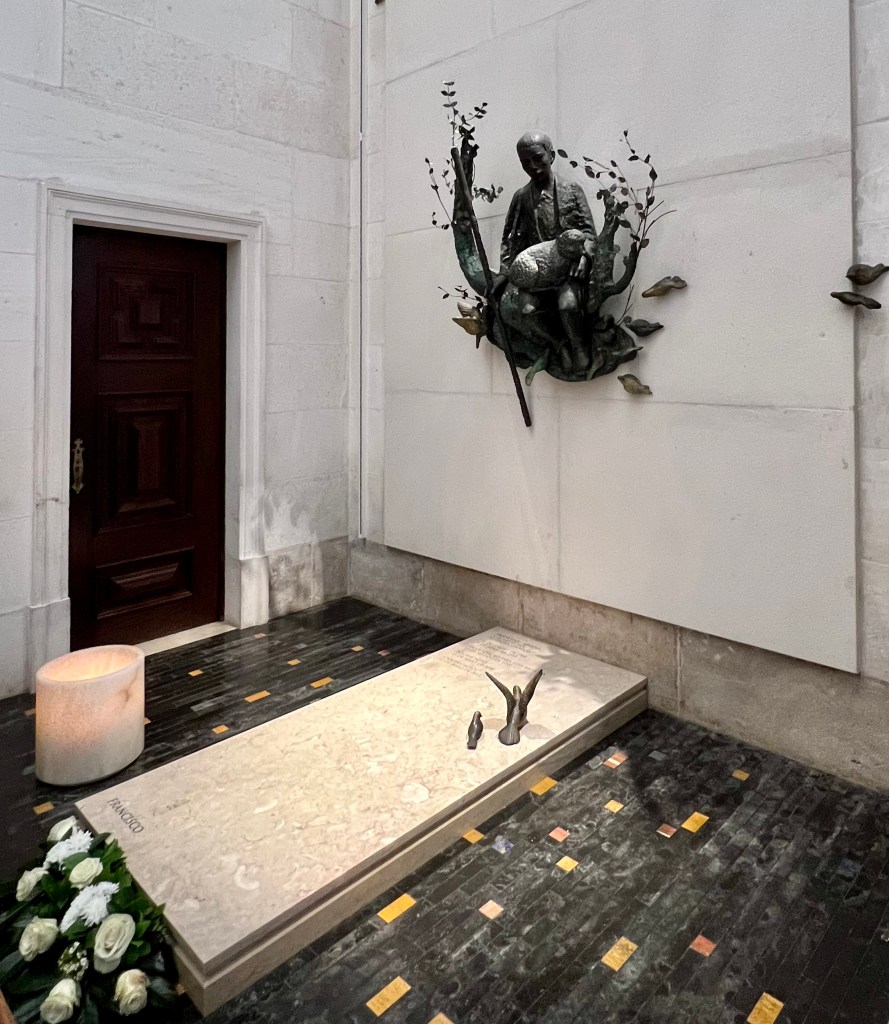
The chapel has since been enclosed within the embrace of the Basilica of Our Lady of the Rosary (consecrated in 1953). In addition to fifteen altars dedicated to the 15 mysteries of the rosary, the tombs of the three children who first saw the Lady of Fatima (Francisco died in 1919 and Jacinta in 1920, during the Spanish Flu pandemic. Lucia dos Santos became a nun and lived until 2005) are in the Basilica.
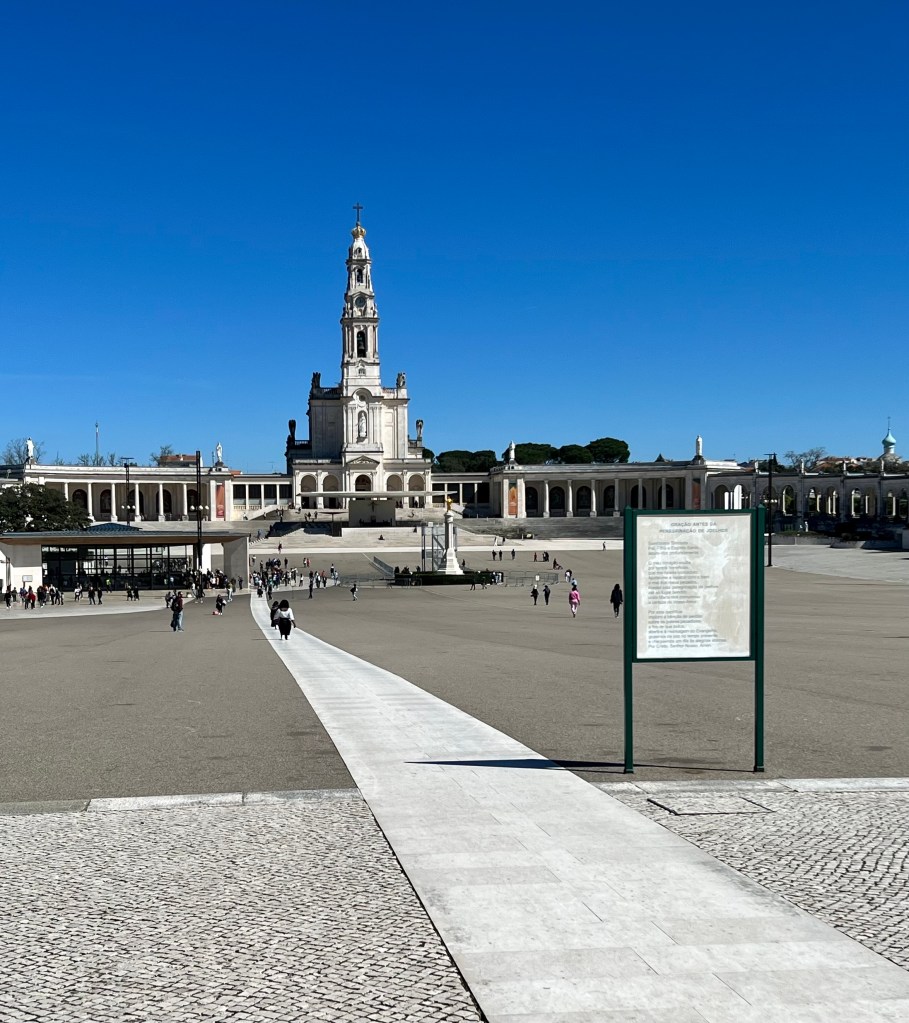
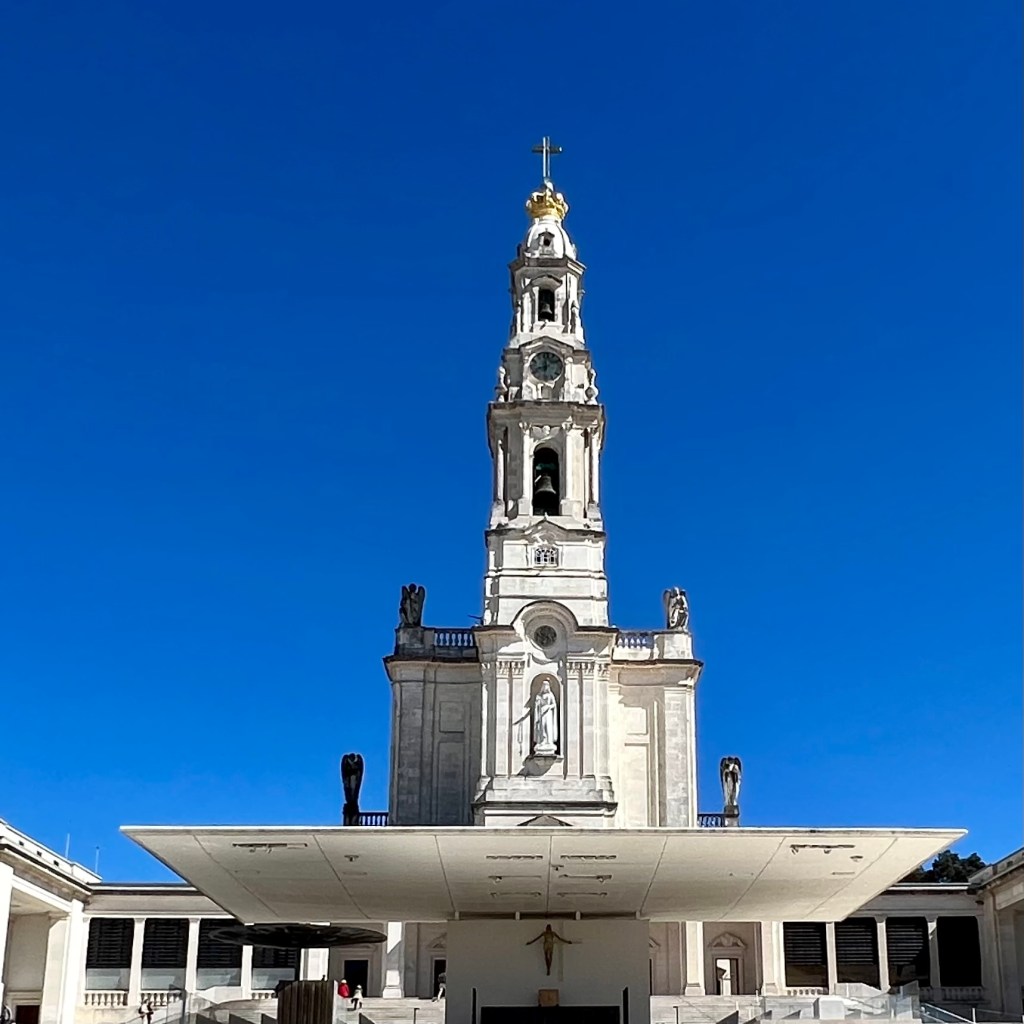
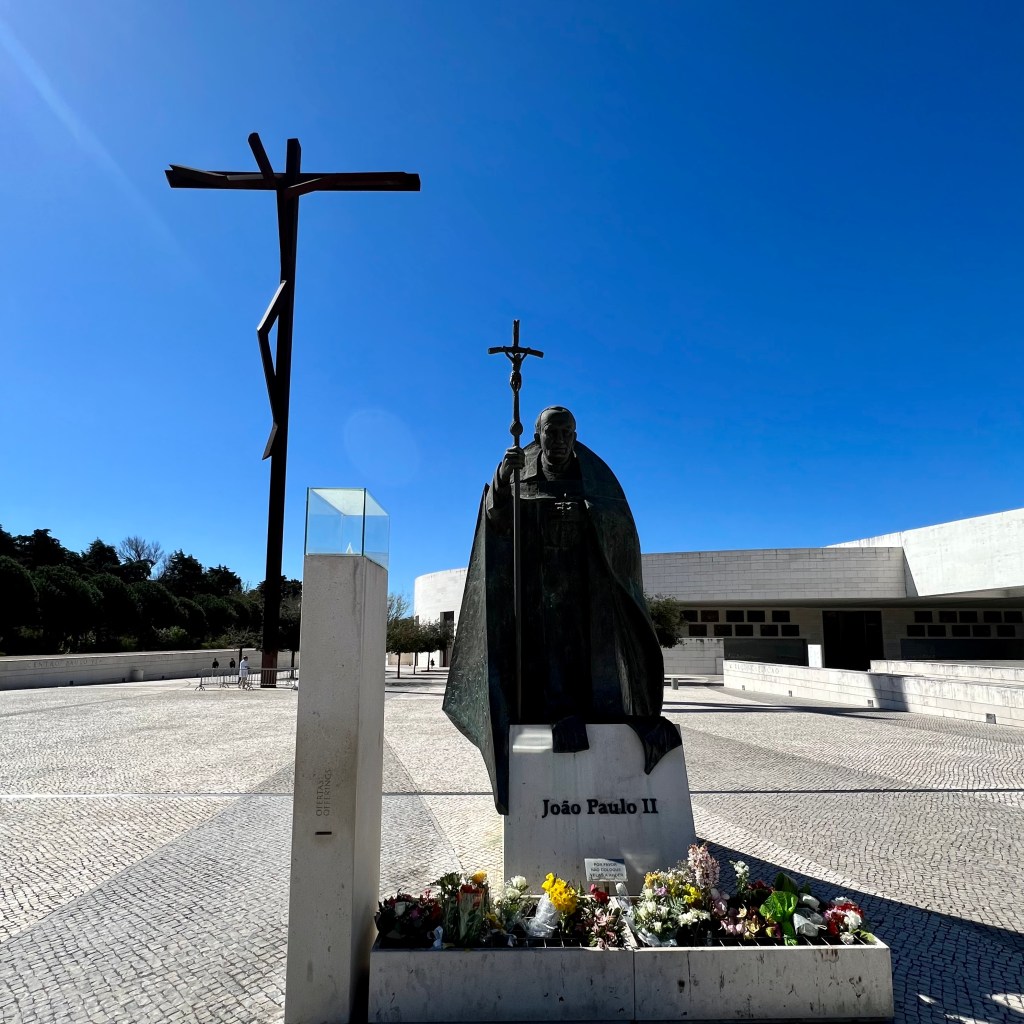
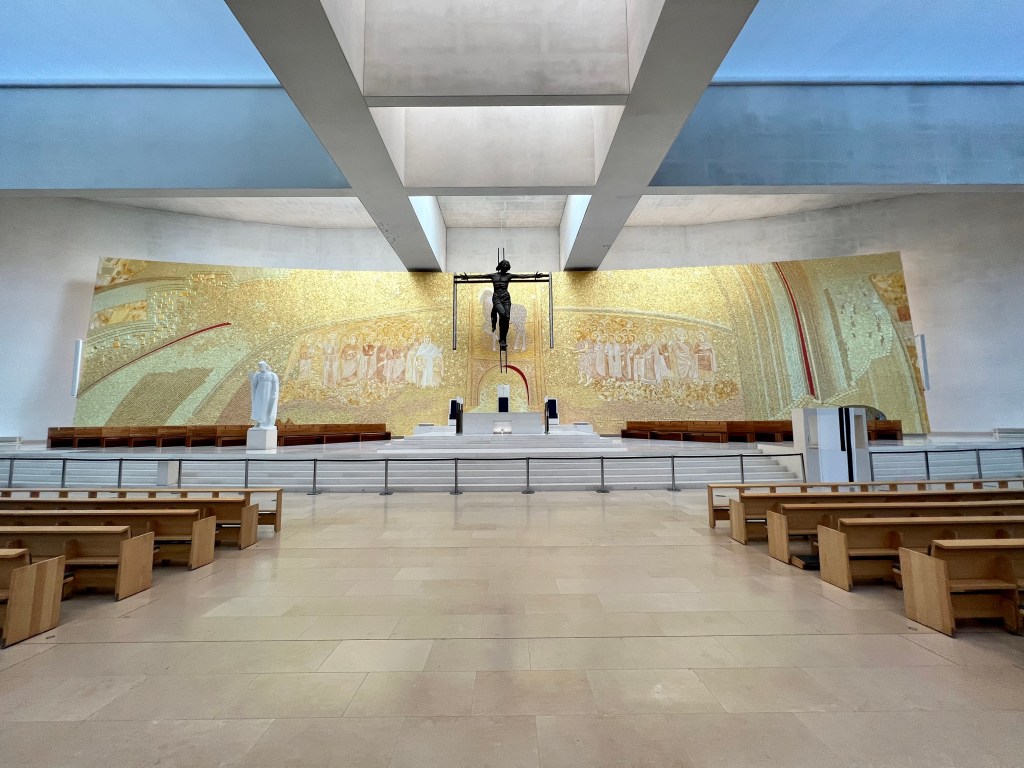
On the opposite side of the Prayer Hall stands the Basilica of the Most Holy Trinity which has seating for more than 8000. The High Cross in the Square of John Paul II is in front of the Basilica of the Most Holy Trinity as is a statue of the Pope.
These buildings along with numerous others, including a piece of the Berlin Wall make up the Santuário de Fátima.
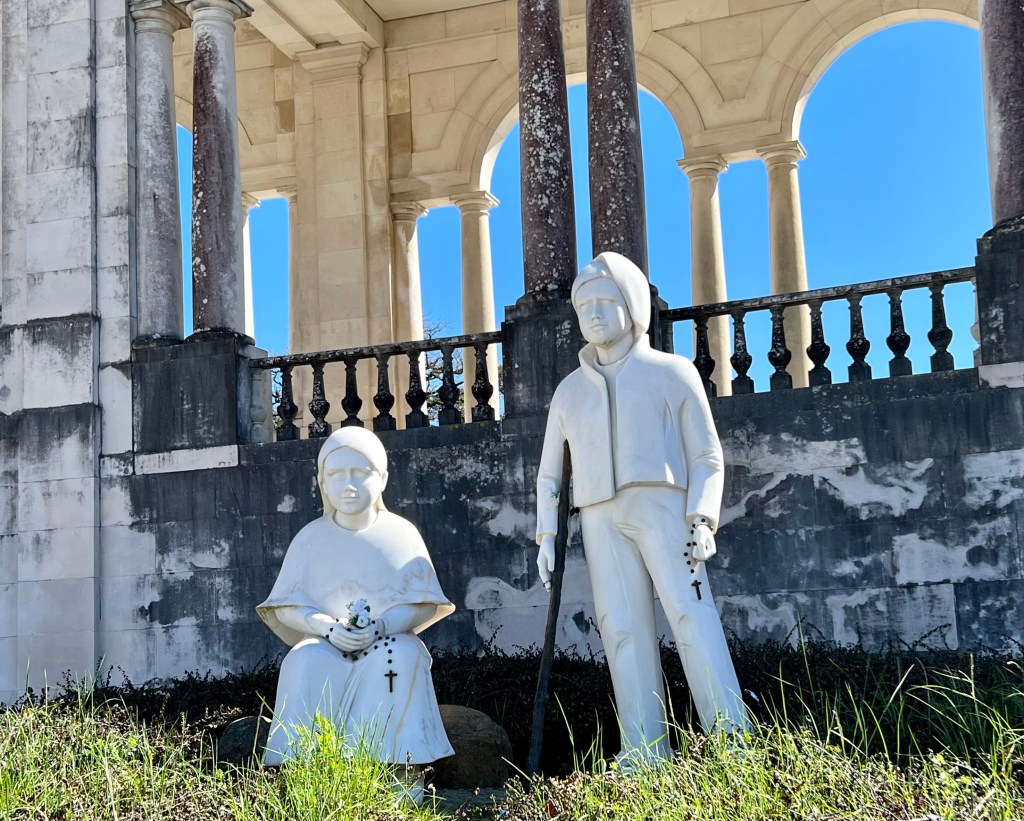
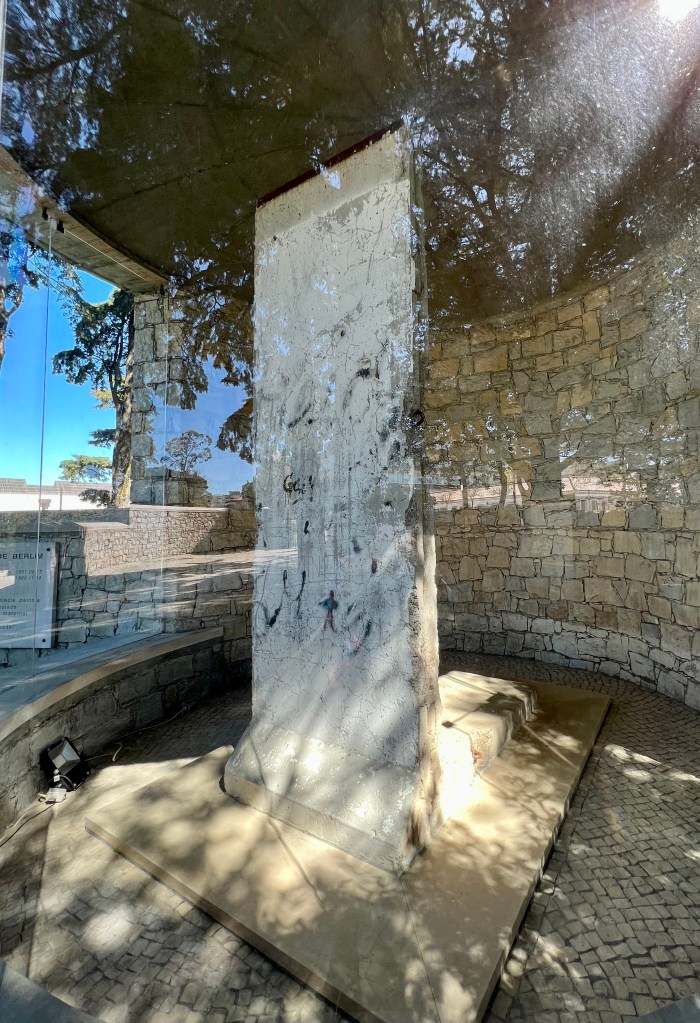
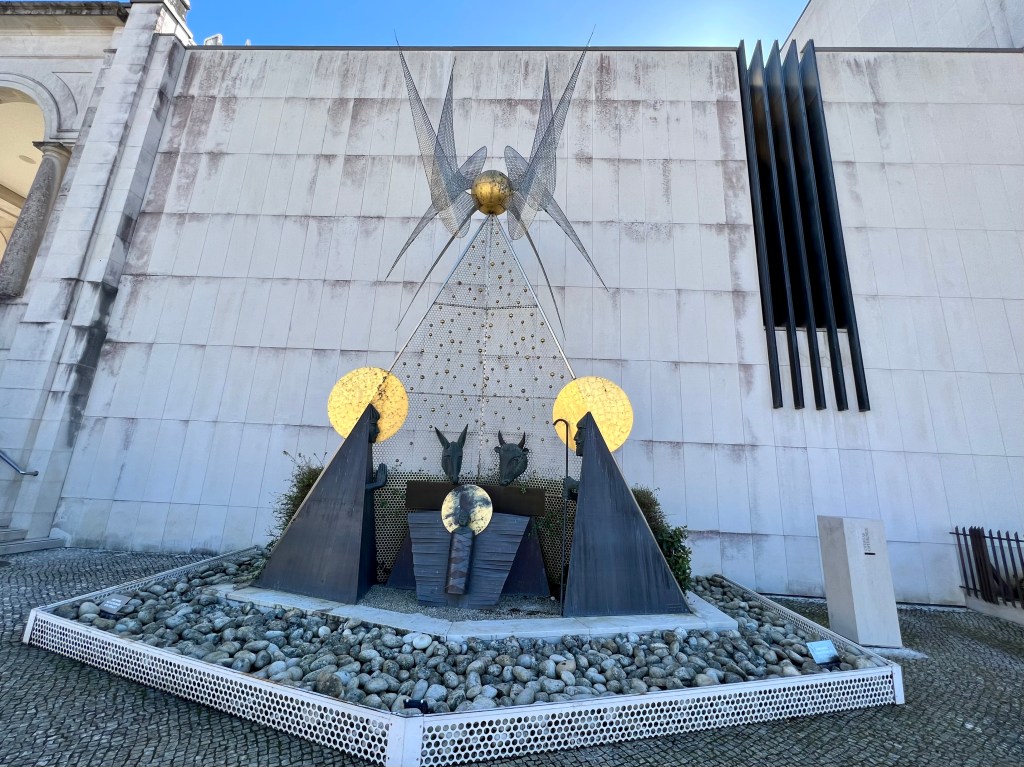
Pilgrims who walk to Fátima to thank God for favours often “walk” the last 400 metres to the Chapel on their knees.
Having spent a bit of time exploring Fátima, it’s back in the van and off to our next stop; Batalha.
Sticking with our religious theme, we are going to visit the Monastery of the Dominicans of Batalha. The Monastery of Saint Mary of the Victory was built to thank the Virgin Mary for the Portuguese victory over the Castilians at the battle of Aljubarrota in 1385, fulfilling a promise of King João (John) I of Portugal. The Monastery is a masterpiece of Portuguese architecture, and is one of the most visited monuments in Portugal. The Monastery took over a century to build, starting in 1386 and ending around 1517, spanning the reign of seven kings. It was not quite completed as other projects in Lisbon eventually took priority.
The equestrian statue of General Nuno Ávares Pereira who lead the troops to win the victory over the Spanish is in the square facing the western façade of the Monastery of Saint Mary of the Victory.

A soldier and strategist in the Battle of Aljubarrota, General Pereira practised as a simple brother in the Carmelite community at the Carmo Convent in Lisbon. He was canonised by Pope Benedict XVI in April 2009 and since then has been known as Saint Nuno of Saint Mary.
On the right side of the western façade are the Unfinished Chapels (Capelas Imperfeitas), a separate octagonal structure added to the complex which doesn’t have a roof.
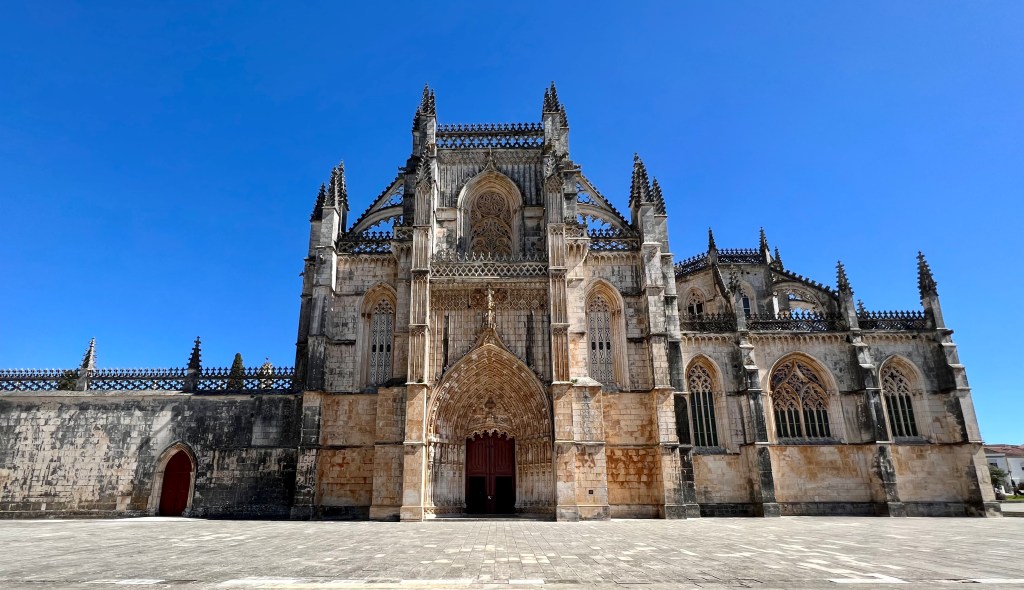


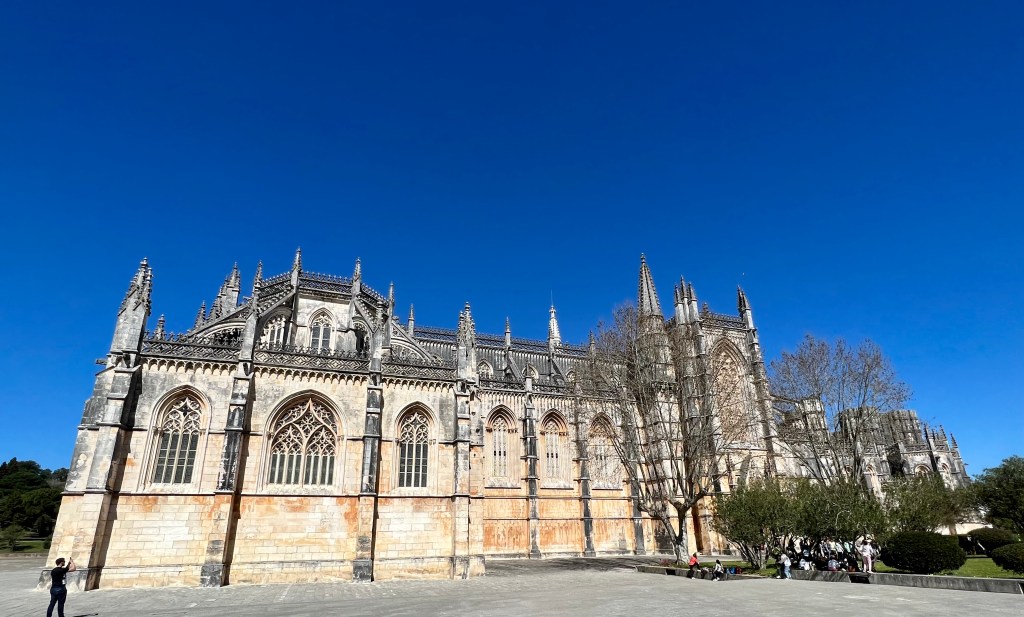
Behind the Monastery is Infante D. Henrique Square. Few historical figures have marked Portugal, so deeply and in such a radical and transformative way as Infante D. Henrique (1394-1460). He was the fifth son of King John I, the founder of the Aviz dynasty, with Queen Filipa of Lencastre.
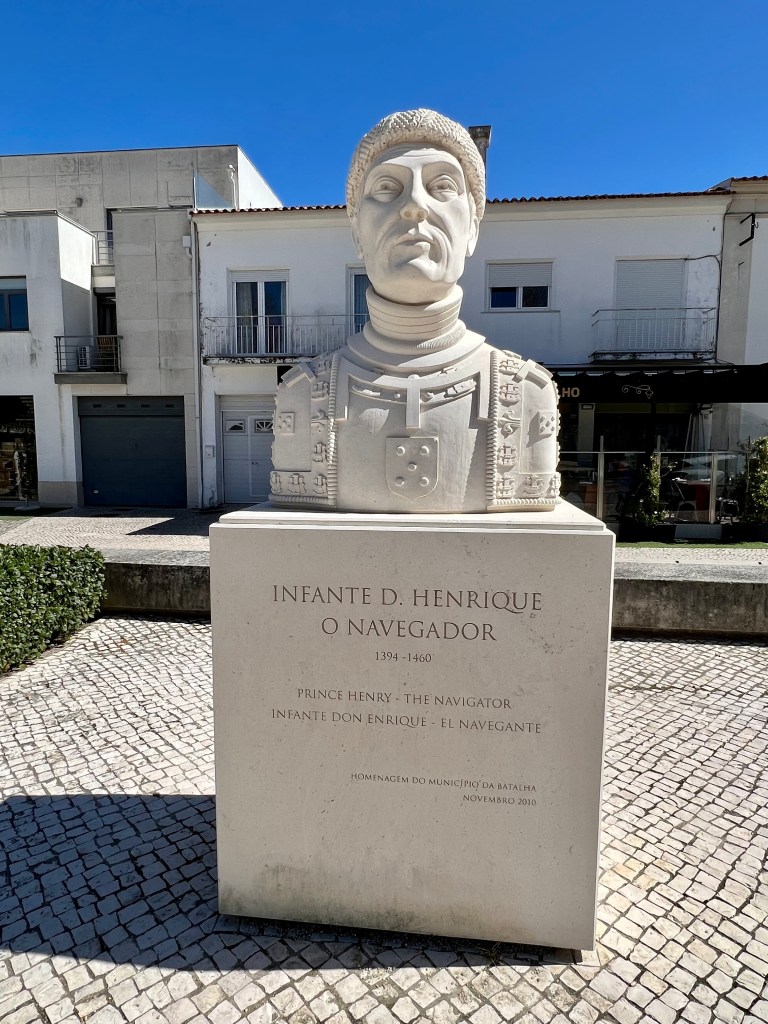
Prince Henry, also known as “The Navigator”, was one of the major figures in the Portuguese maritime discoveries and left Portugal and the world with a huge legacy. He died in Sagres and his remains lie in the Founder’s Chapel at the monastery.
After a quick look around the church and grounds, we headed back to the van for the next leg of the journey to Nazaré.
According to legend, a carving of the Virgin Mary breastfeeding Jesus sculpted by Saint Joseph was spirited away from souther Spain by Roderic, the last King of the Visigoths in 714 to keep it out of the hands of the Moors. King Roderic was accompanied by a monk on this journey. The monk died in Nazaré and was buried in a cave on the hillside there with the statue. Thus hidden, the statue was preserved during centuries of Muslim rule.
The statue was found in a cave in 1179. Memory Hermitage also known as the Chapel of Our Lady of Nazaré was built, directly above the cave where the statue was found, by the order of the knight Dom Fuas Roughing in 1182 after Our Lady of Nazaré saved him from falling off the cliff when he was chasing a deer.
The small four-sided chapel is decorated with blue and white tiles and has a pyramidal roof.
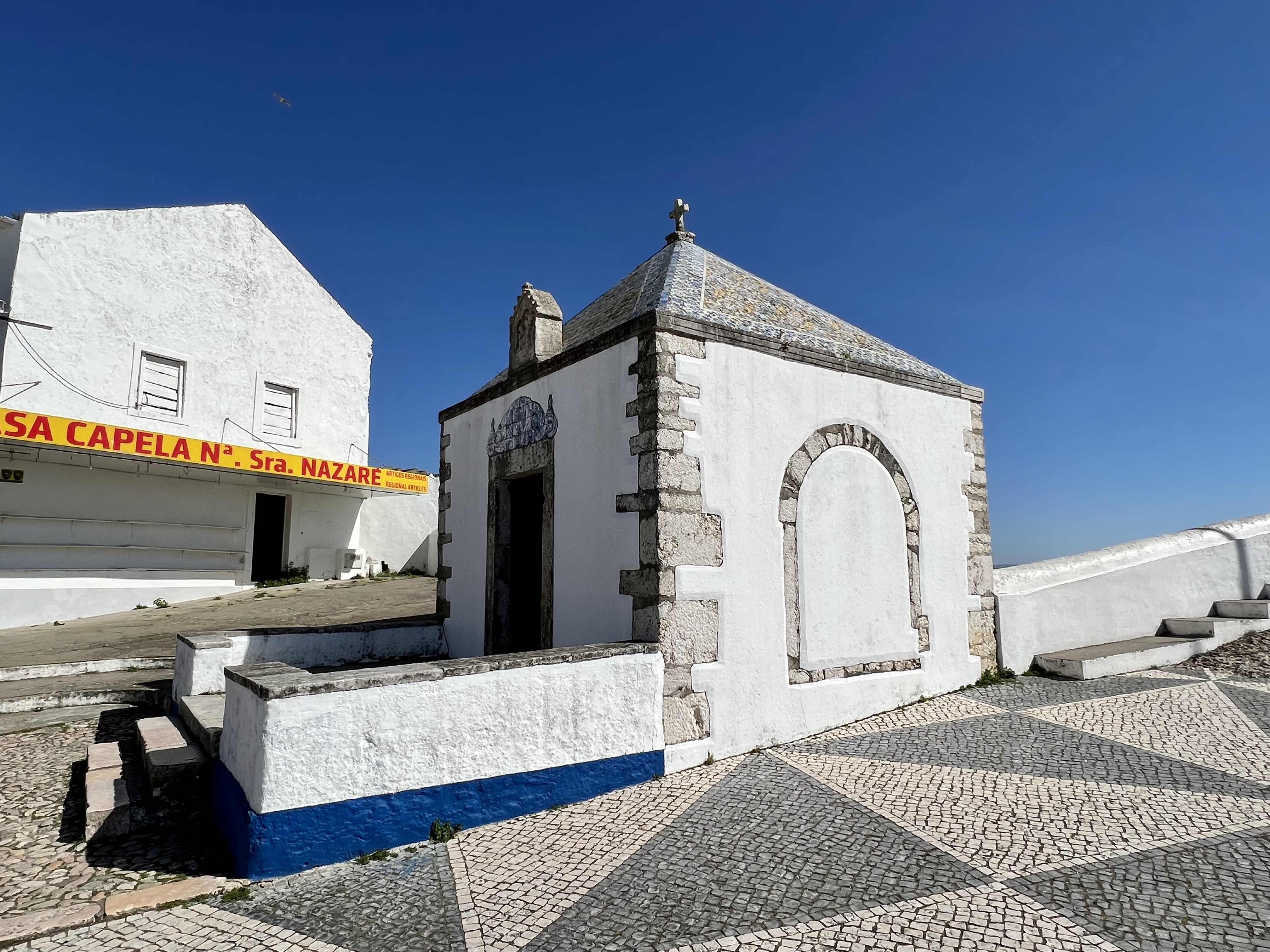

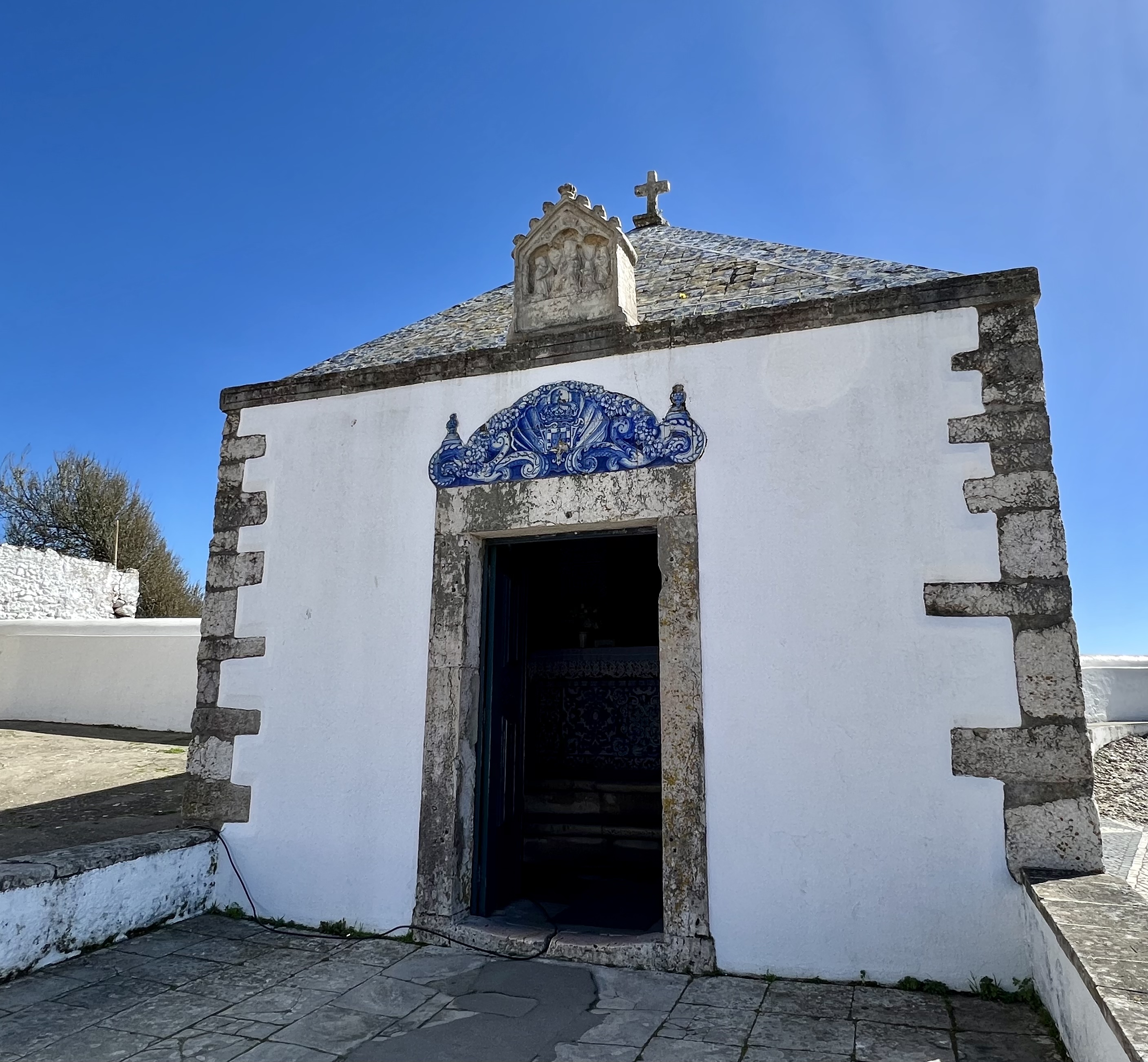
When King Ferdinand went on a pilgrimage to Our Lady of Nazaré in the 14th century, he ordered that a church be built in Nazaré to receive a higher number of devotees of the Lady.
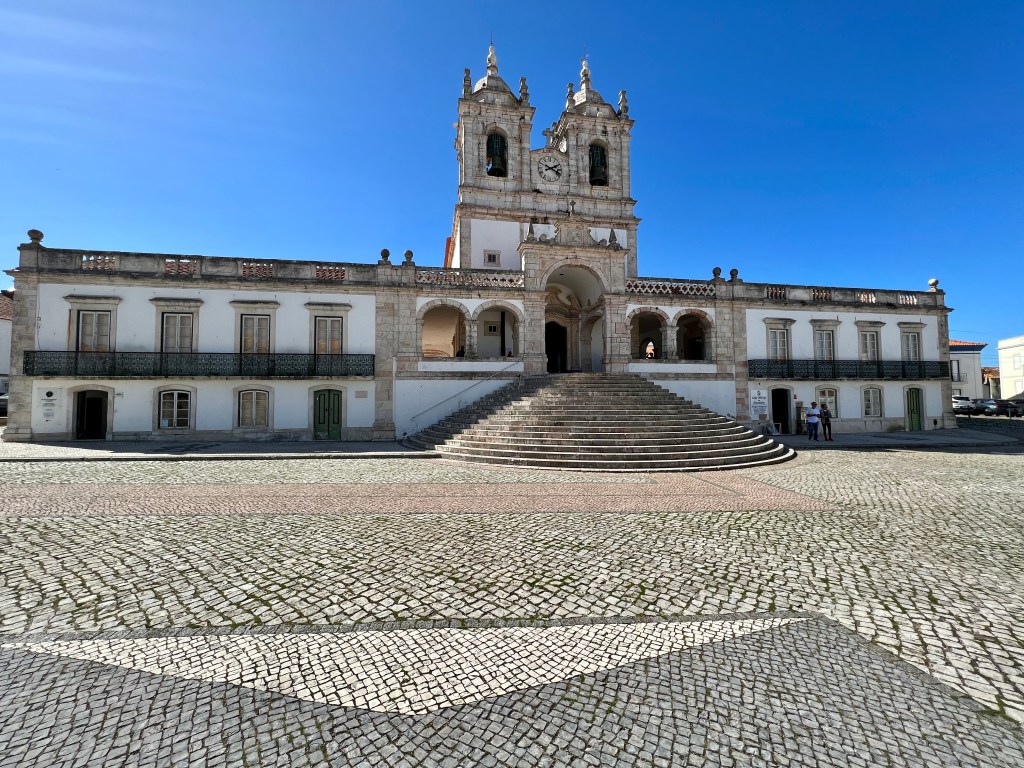
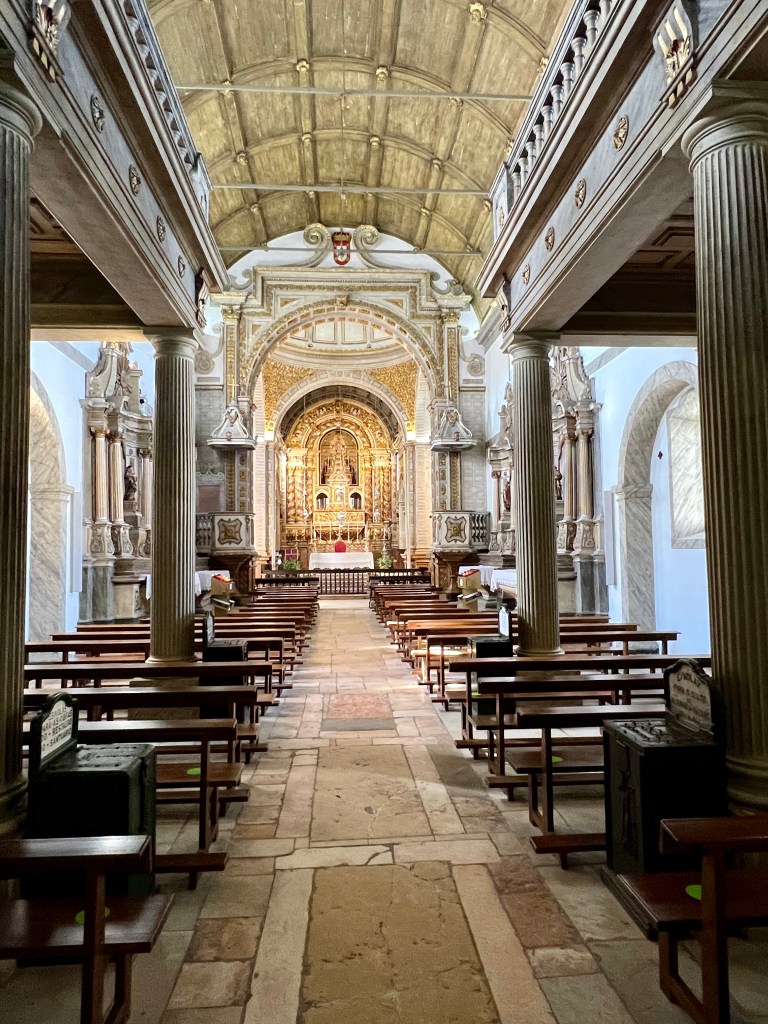

The Sanctuary of Our Lady of Nazaré memorializes that ancient miracle and now houses the Lady as well. As luck would have it, the statue was at the “spa” for repairs today so was not on display in the church.
In addition to being the site of a miracle, Nazaré is also home to gigantic 100 meter waves that professional tow surfers love to frequent; another form of religion! While the view of the ocean from the cliff top was spectacular no behemoth waves graced the horizon today.
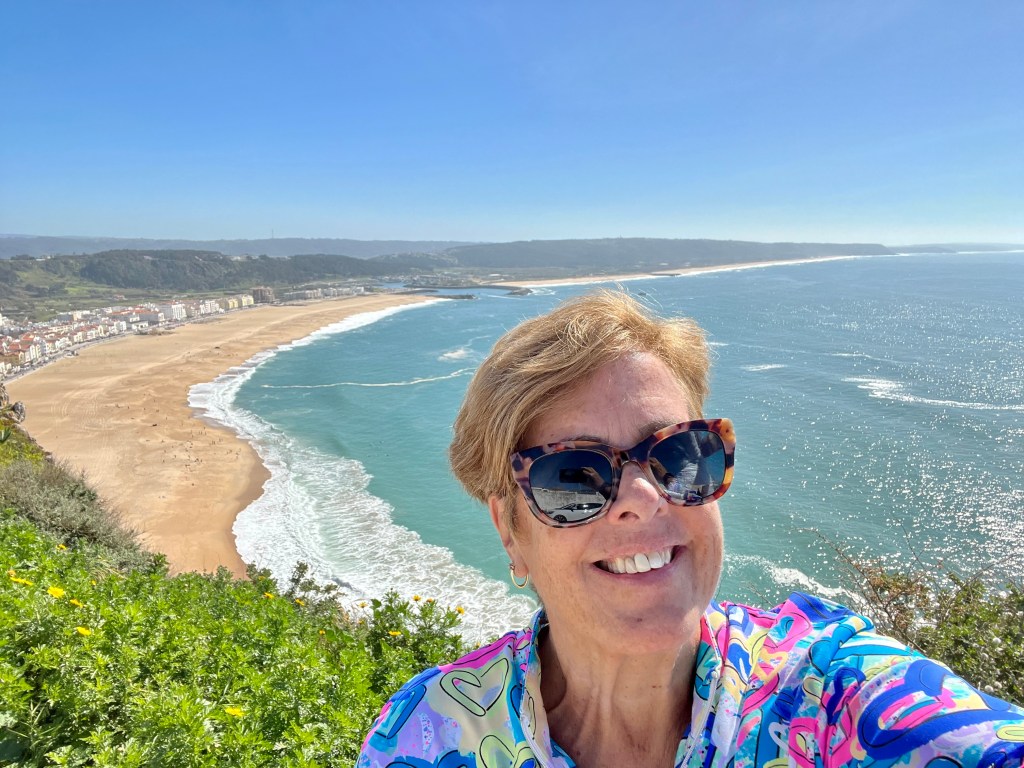
Nazaré was our lunch stop so I grabbed a quick bite and hung out in the town square until it was time to head to our next and last stop; Óbidos.
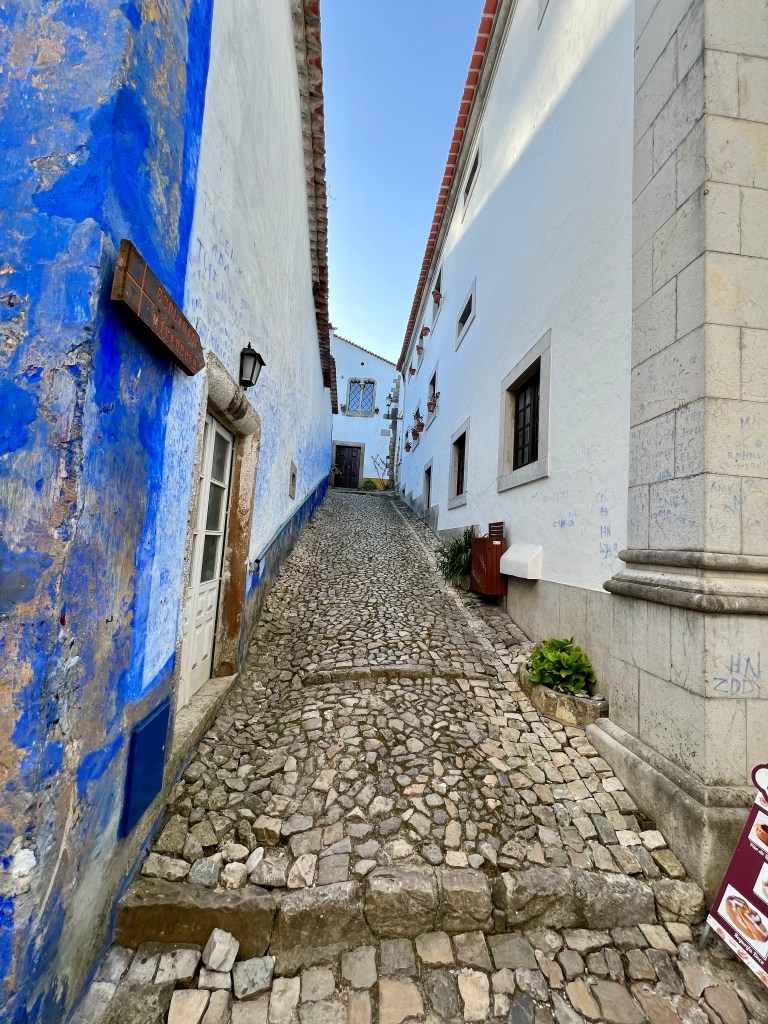
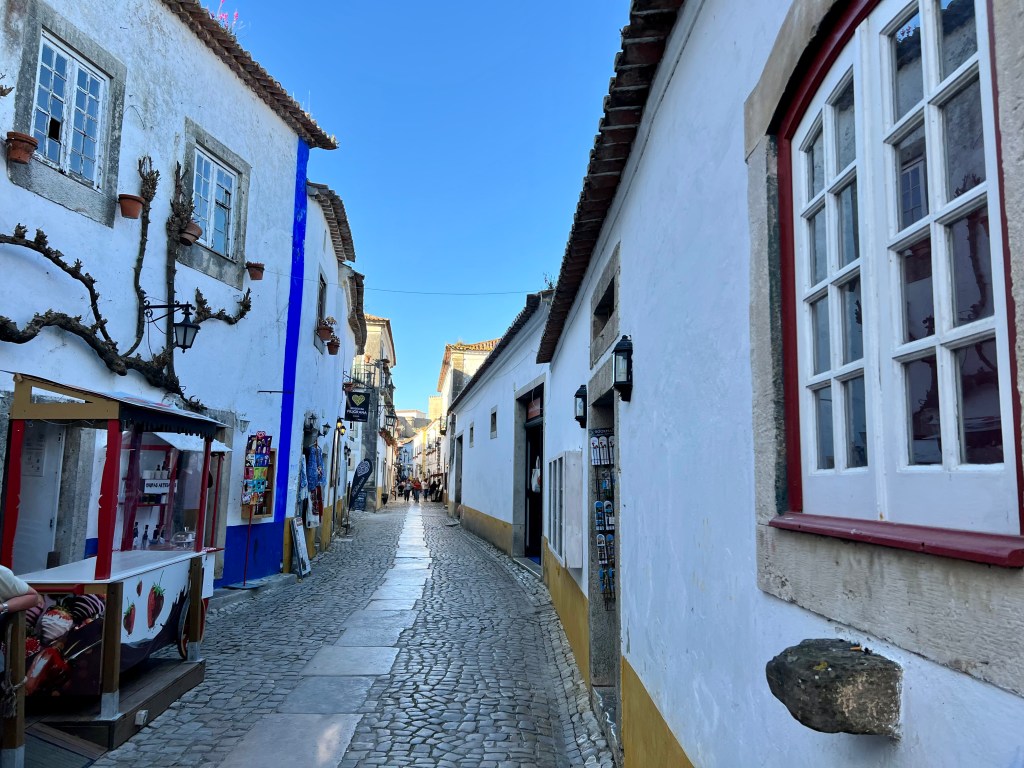
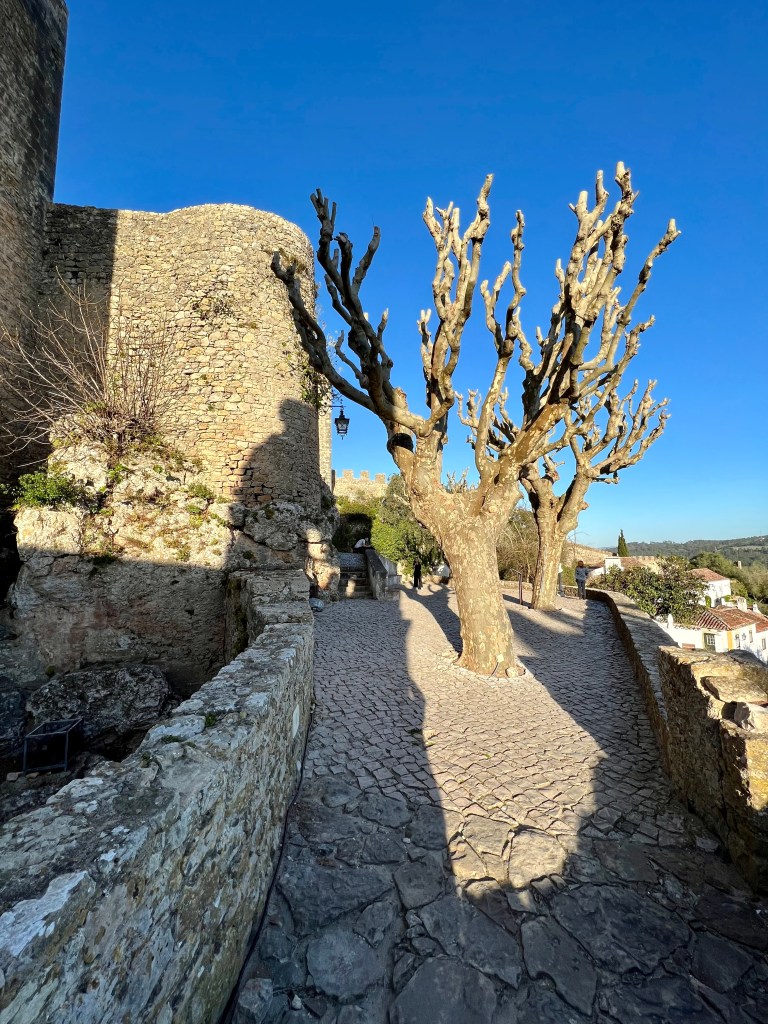
The town of Óbidos is located on a hilltop, encircled by a fortified wall. Óbidos is a well-preserved example of medieval architecture; its cobbled stone streets are lined with traditional houses converted to cute shops and at the end of the road is an impressive medieval castle which is now a historic hotel – pousada.
Historically, Óbidos was owned by the Queen of Portugal, a tradition that began in 1282 when the town was gifted to Queen Isabel on her wedding day and she made all decisions regarding the town; a rarity in that age.
One of our first orders of business in Óbidos was to sample the local drink – Ginjinha or simply Ginja; a Portuguese liquor made from infusing Ginja berries (sour cherries) in alcohol with sugar. Our Ginjinha was served in a chocolate cup with a sour cherry garnish ; strong and yummy.
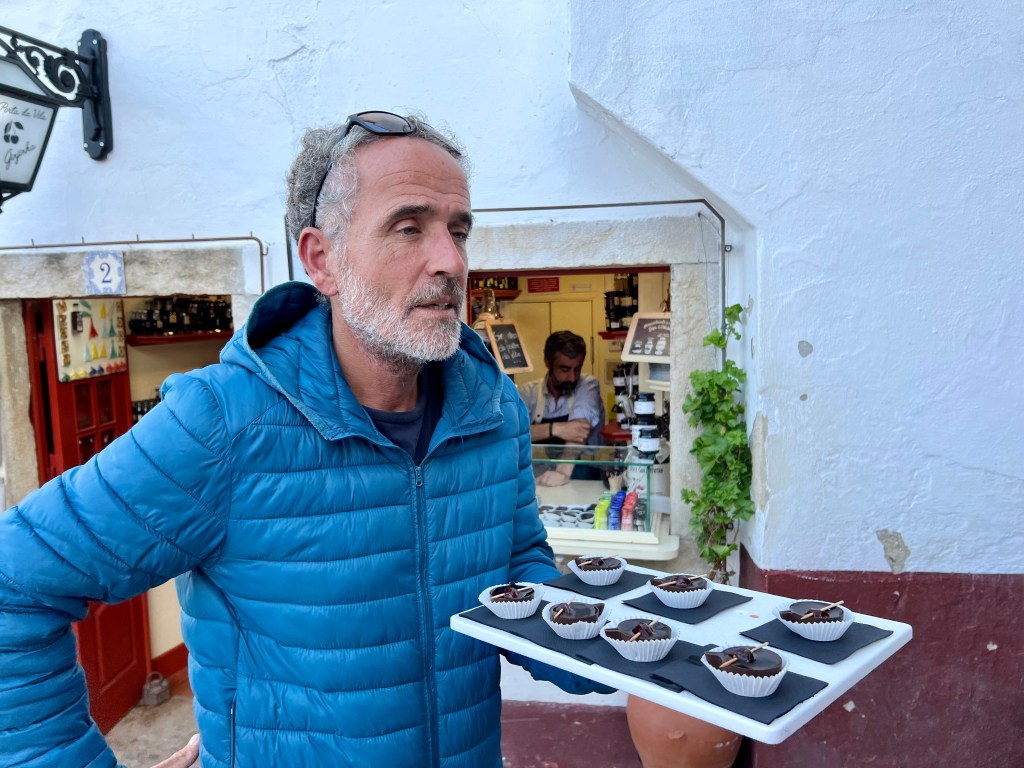
Fortified, I explored the town for a bit before heading back to the van for the drive home.




After a full day of touring, I was happy to relax for a bit before crashing for the night. Tomorrow is another day. Adventures await …


Beautiful! thanks for sharing and enjoy! Lava xxoo
LikeLike