
Thursday April 8, 2023
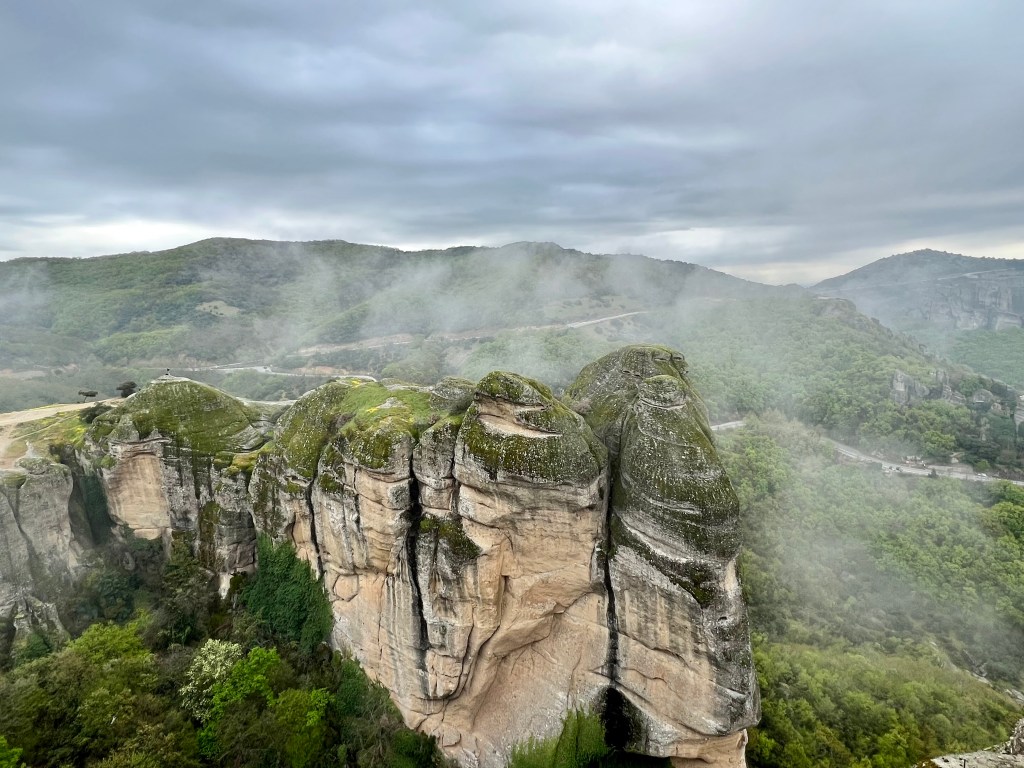
Today, we’re headed to Meteora, a rock formation in central Greece boasting one of the largest and most precipitously built complexes of Eastern Orthodox monasteries. Beside the Pindos Mountains, in the western region of Thessaly, these unique and enormous columns of rock (composed of a mixture of sandstone and conglomerate) rise majestically from the ground.

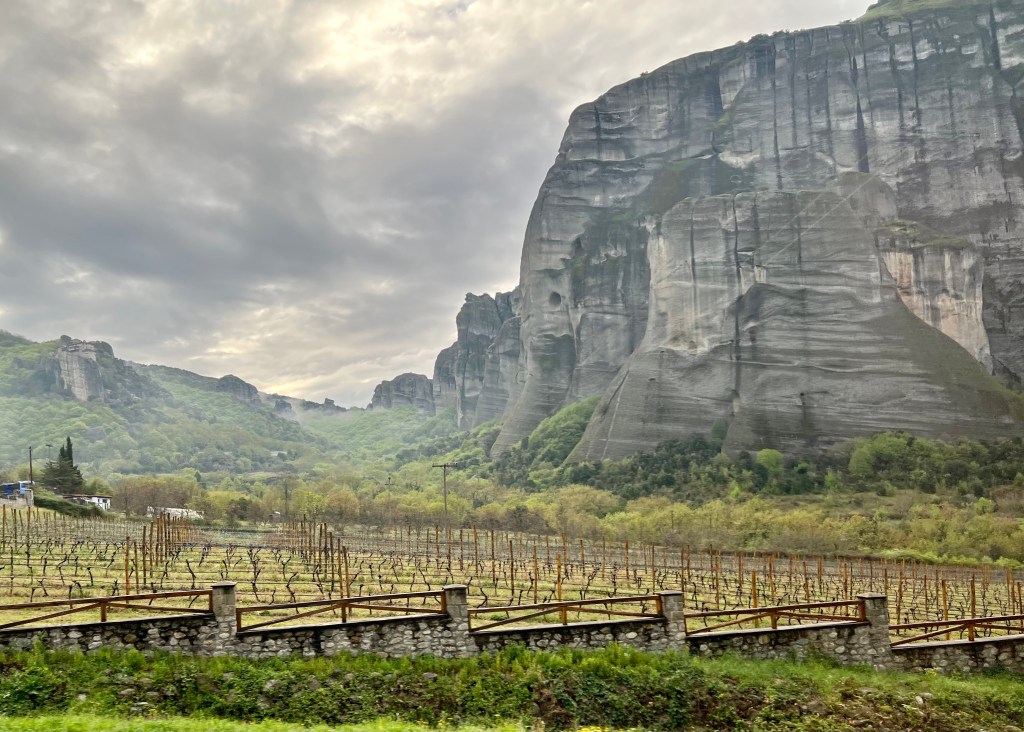

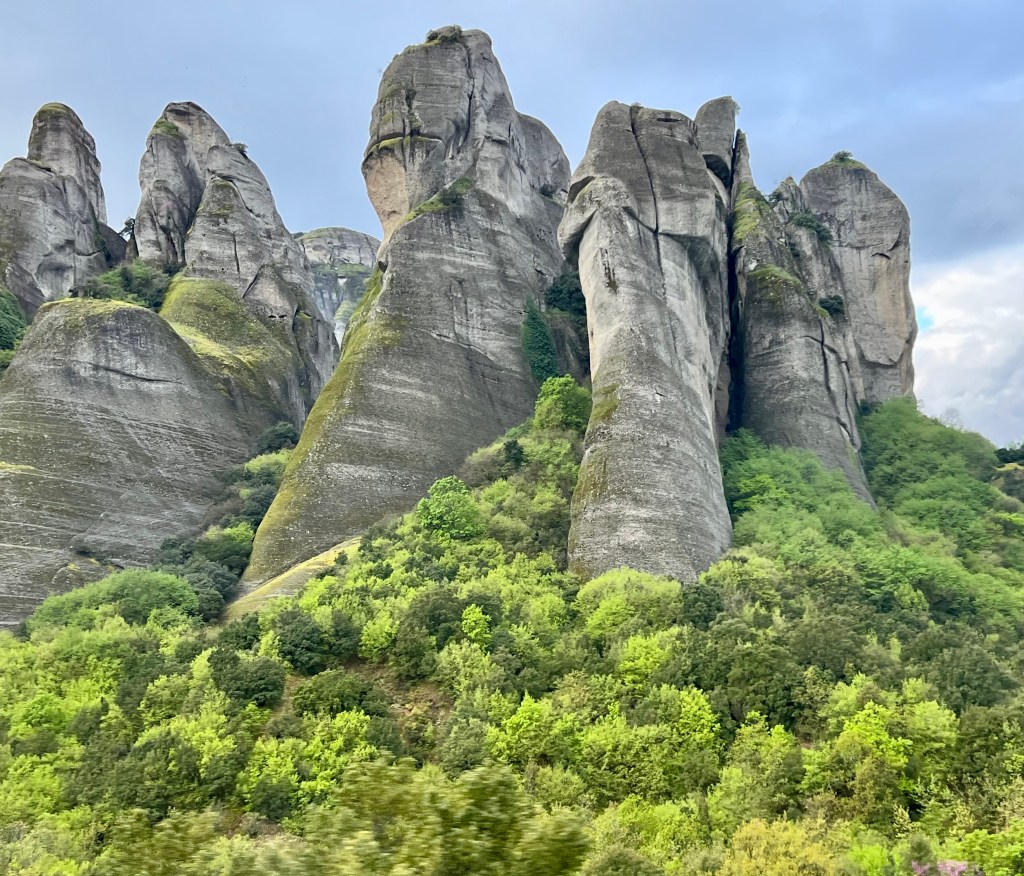
The first people documented to inhabit Meteora were an ascetic group of hermit monks who, in the ninth century AD, moved up to the ancient pinnacles. They lived in hollows and fissures in the rock towers, some as high as 1800 ft, above the plain. This great height, combined with the sheerness of the cliff walls, kept away all but the most determined visitors.
The lofty heights were perfect for the monks; the only means of reaching the peaks was by climbing a long ladder, which was drawn up whenever the monks felt threatened. The location provided a retreat from the expanding Turkish occupation; the inaccessible rock pillars of Meteora were an ideal refuge and the monasteries were built in a manner that allowed them to blend with their surroundings.
Between the 13th and 14th centuries, twenty-four monasteries were established atop the natural pillars and hill-like rounded boulders that dominate the local area. Of the original twenty-four monasteries, six remain active (2 as nunneries and 4 as monasteries). Meteora was added to UNESCO World Heritage List in 1988 because of the outstanding architecture and beauty of the complex, in addition to its religious and artistic significance.
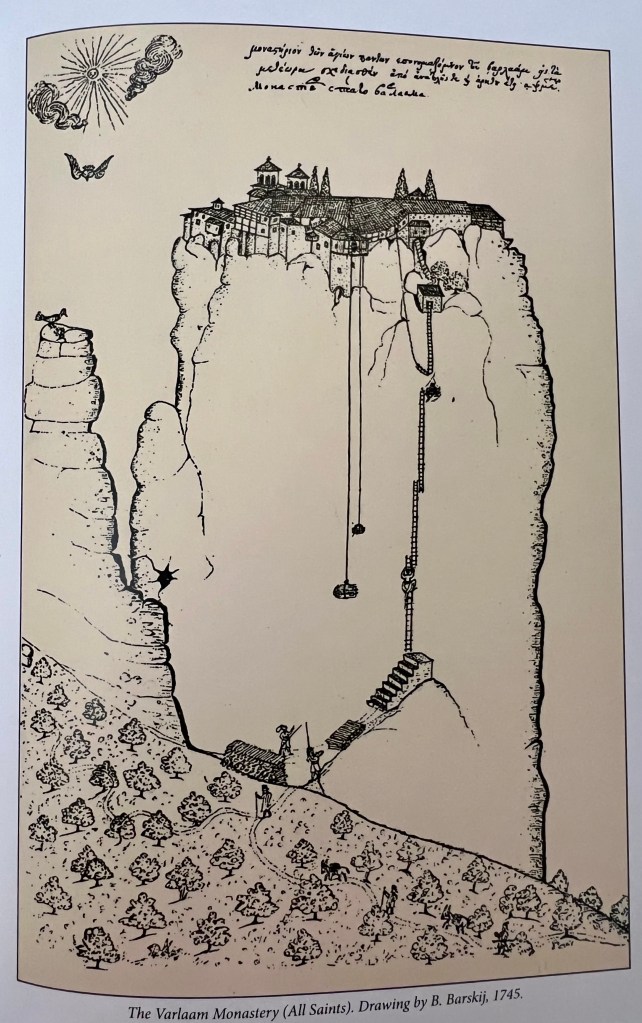
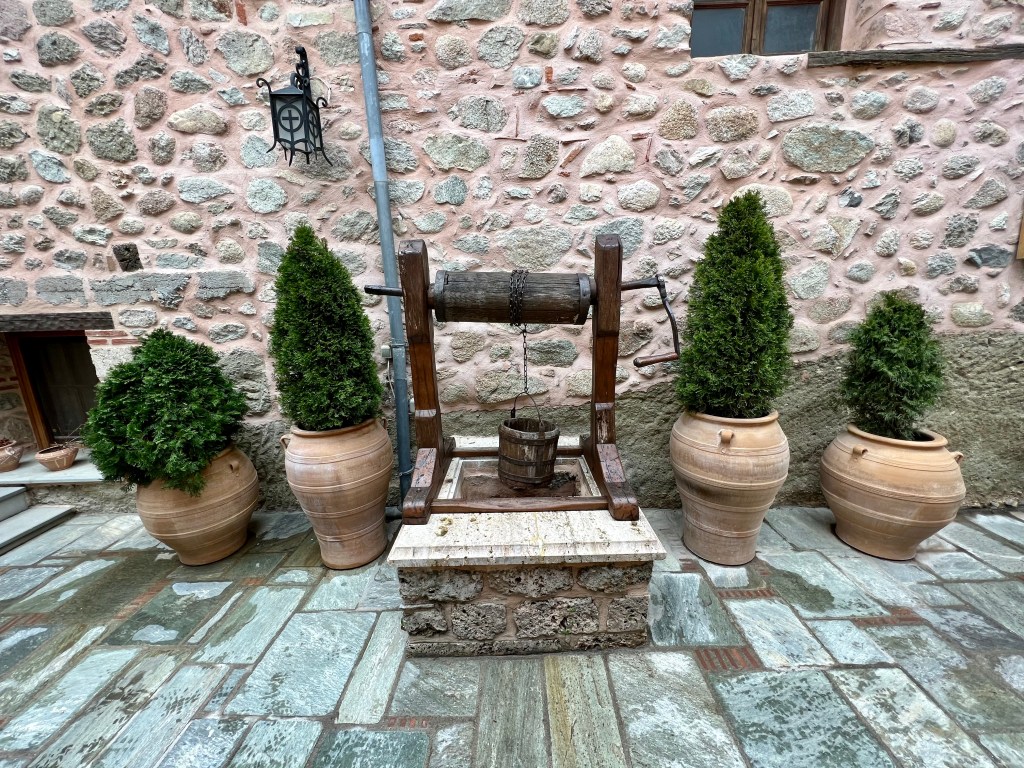
Our first stop this morning is the Varlaam Monastery built in 1517 and the central church (Katholikon) dedicated to All Saints. The finger of St. John and the shoulder blade of St. Andrew were reputedly housed here though we saw no sign of either relic there today.
Access to this monastery, like the others, was originally (and deliberately) difficult, requiring either long ladders latched together or large nets used to haul up both goods and people. Either method of transport required quite a leap of faith – the ropes were replaced, so the story goes, only “when the Lord let them break”. In the words of UNESCO, “The net in which intrepid pilgrims were hoisted up vertically alongside the 1,224 ft cliff where the Varlaam monastery dominates the valley symbolizes the fragility of a traditional way of life that is threatened with extinction.” For someone with a fear of heights, the current labyrinth of stairs (mostly without railings) was challenging enough; I don’t believe I would have used the more traditional means of entry for love nor money.

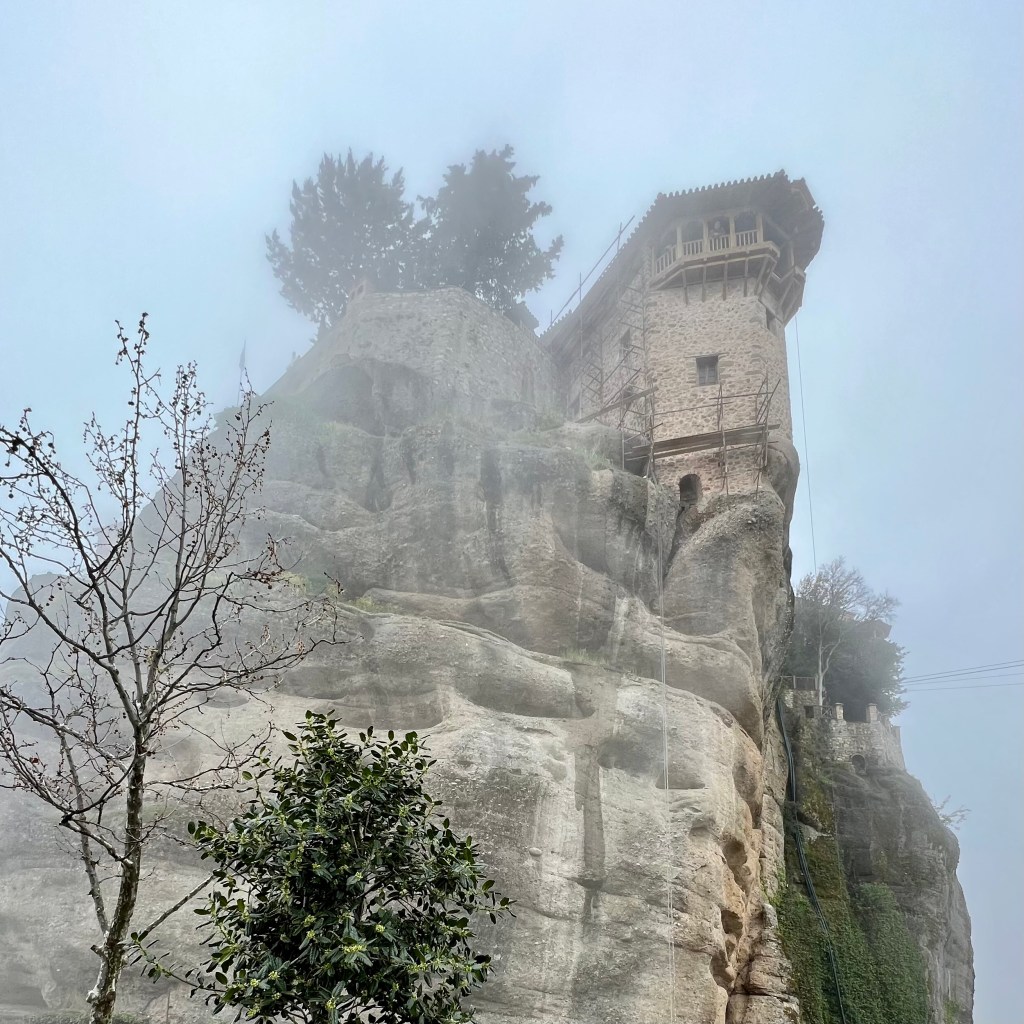
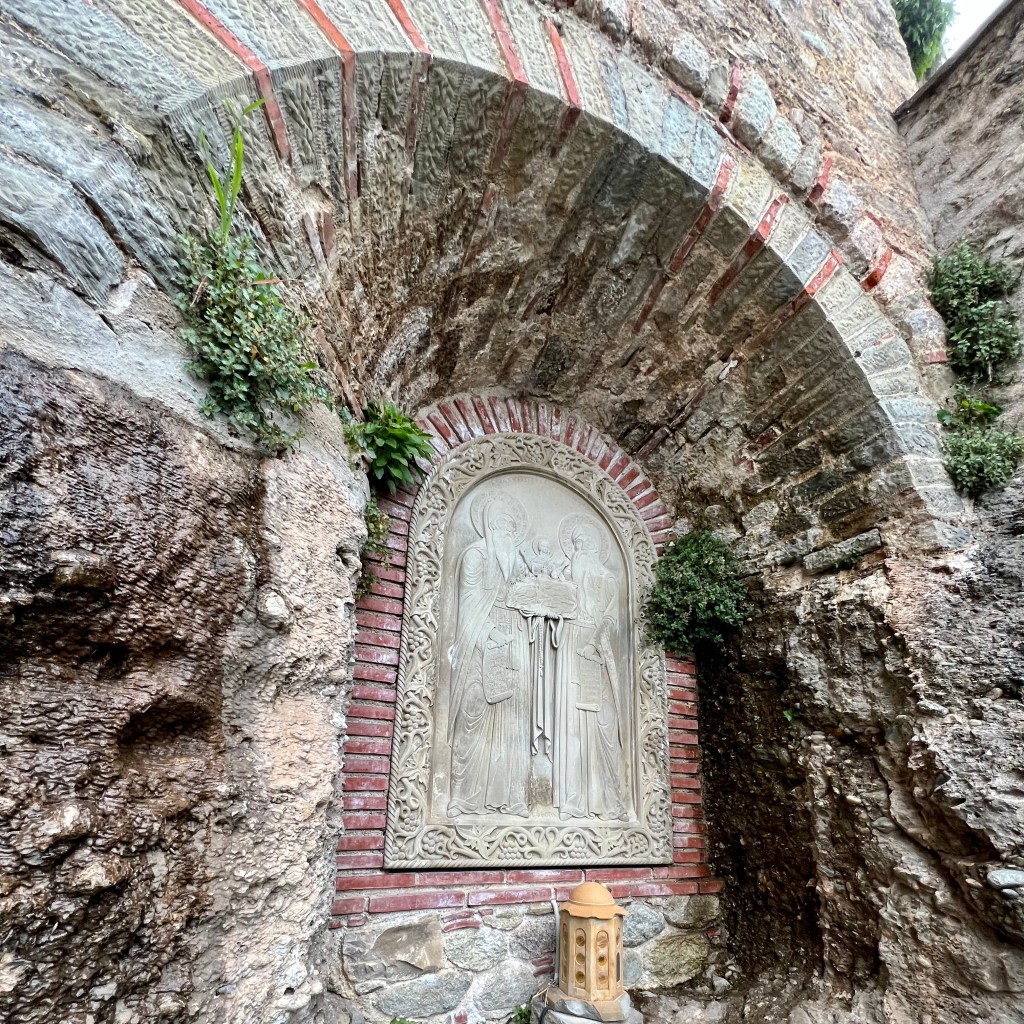


We were allowed to take pictures of the outside of the monastery but nothing inside the church as it is still used for services. The monasteries typically house 12-15 priests or nuns and any masses are lead by priests from the village.
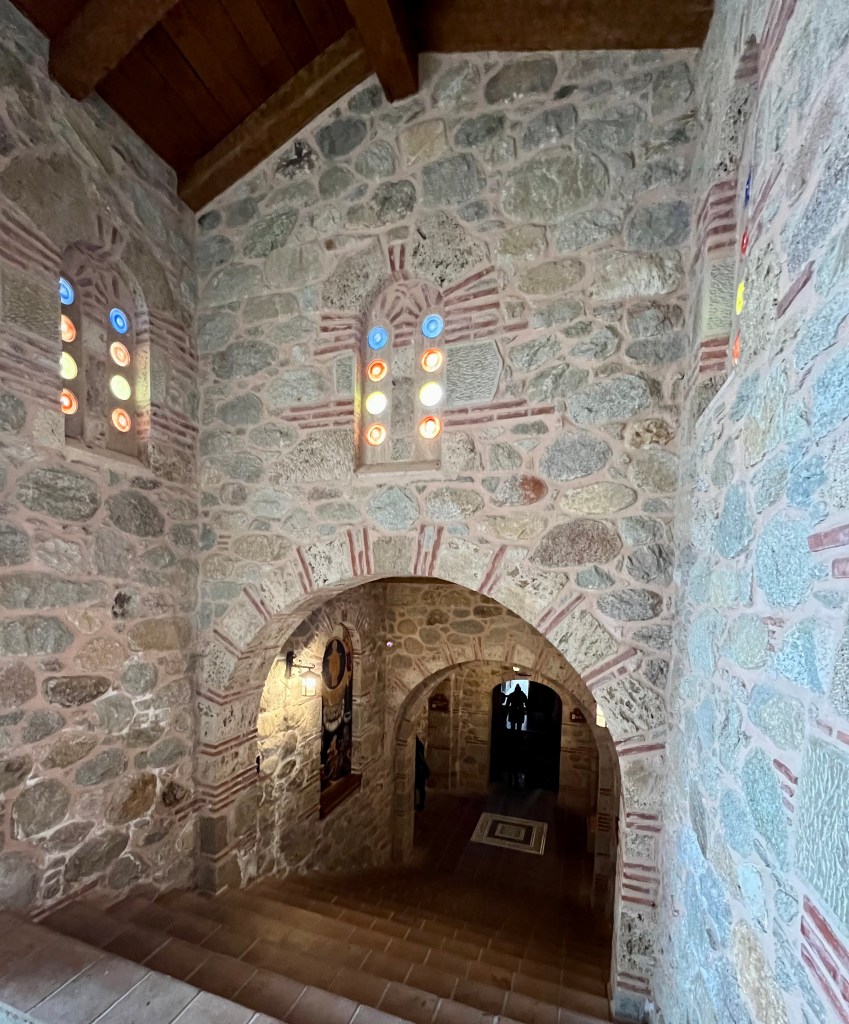
We entered the church from the west into the first of three parts; the narthex or vestibule. The walls were covered with a multitude of images. When the church was originally built most of the flock would have been illiterate so the chaos of images were intended to tell them a story. As this is an older church, the artwork is dark and depicts the brutality of the day with many people being murdered (beheaded, boiled, etc.) by the Ottomans. The heads of the murdered corpses had halos to show that despite their horrific death, there was a good outcome.
The second part of the main church, the nave, is square with the dome overhead in the middle symbolizing heaven. There is plenty of artwork in this part of the church as well though it doesn’t seem as chaotic and depicts mainly religious themes. The dome features a rendering of Jesus at the top supported by angels and the Apostles. The four evangelists are at the bottom of the dome providing a link between heaven and earth. The walls of the square church feature saints especially many of the warrior saints that were important during the Ottoman Empire’s Occupation. Strikingly all the saints depicted are men as it seems there may not have been any important female saints at the time this church was built.
The third part is the sanctuary or altar, accessible only by the priests. Even the nuns or monks living at the monastery are not permitted entry to this restricted area.
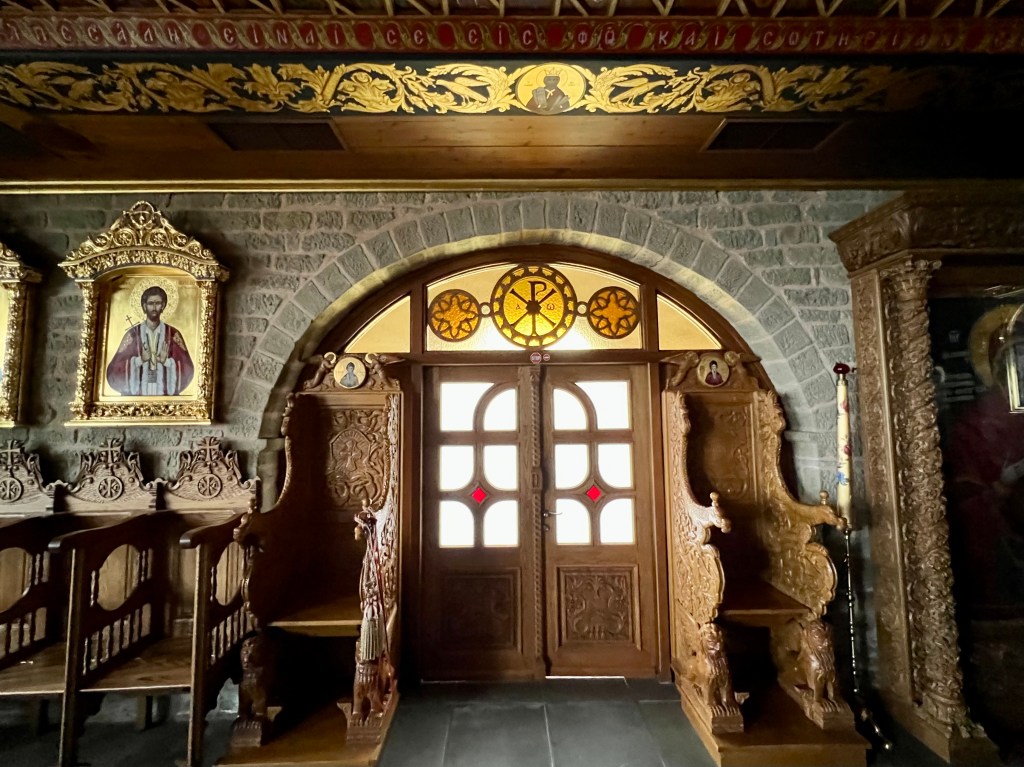
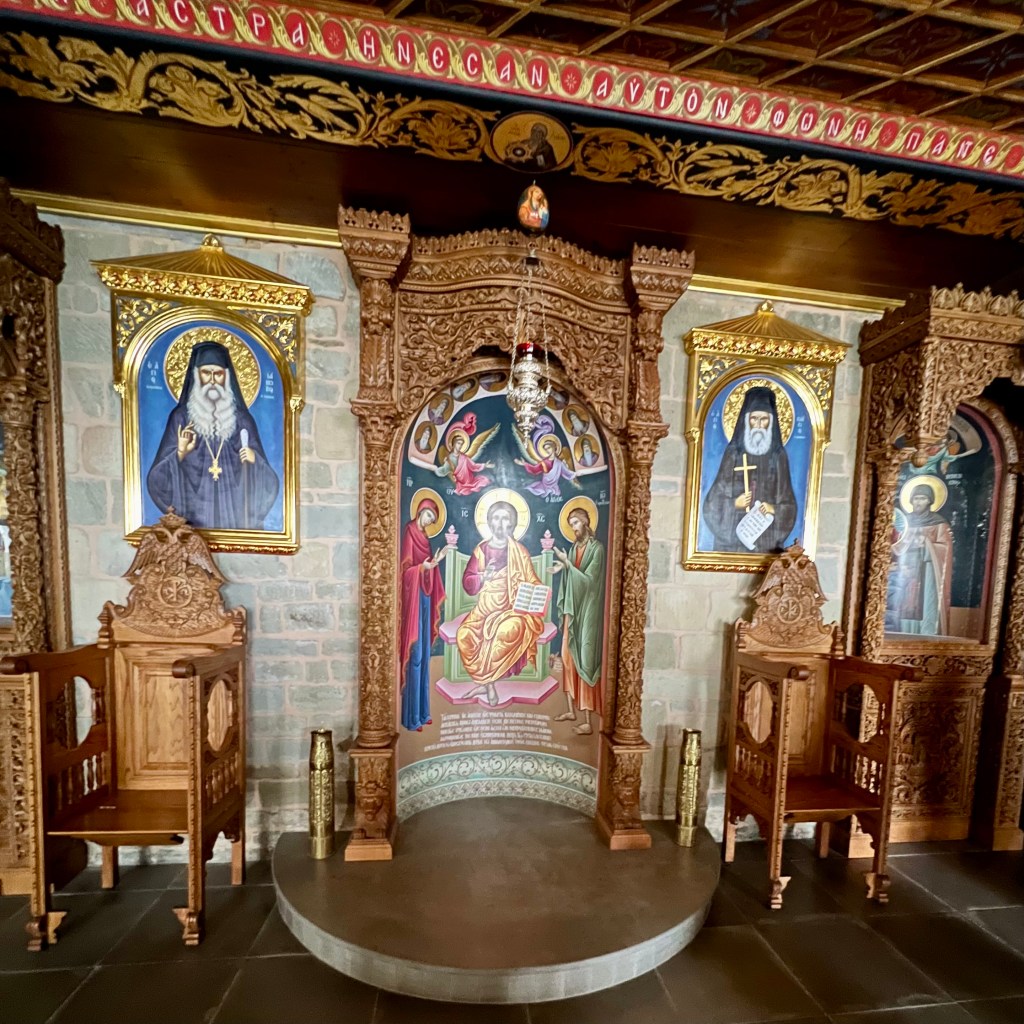
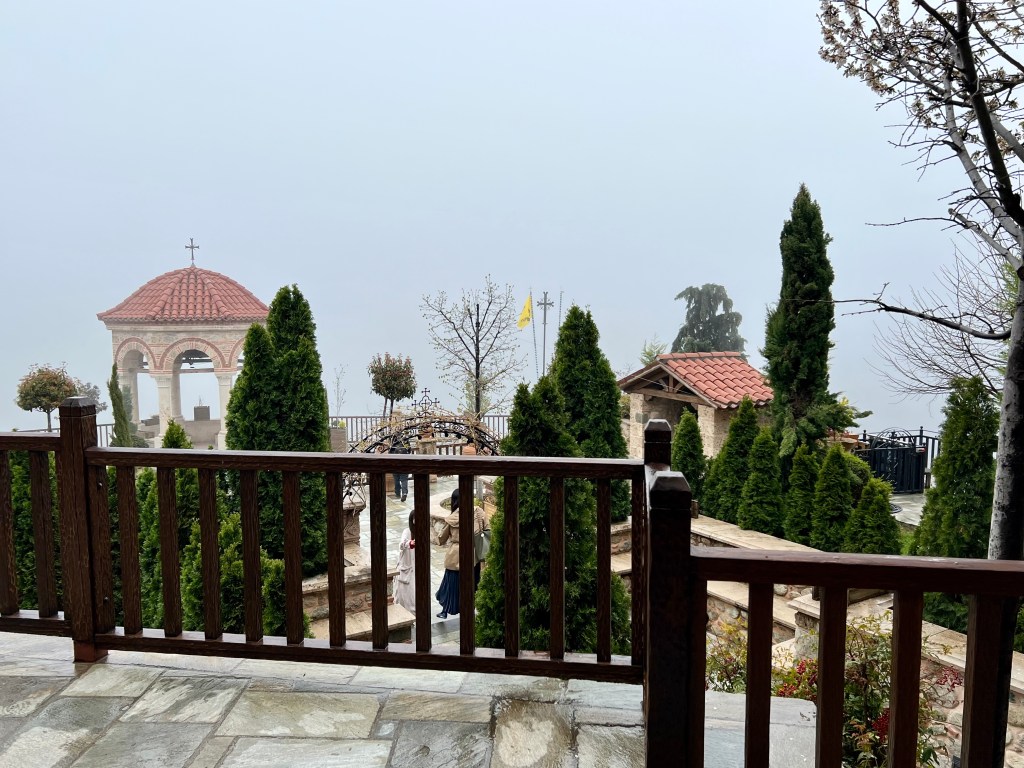
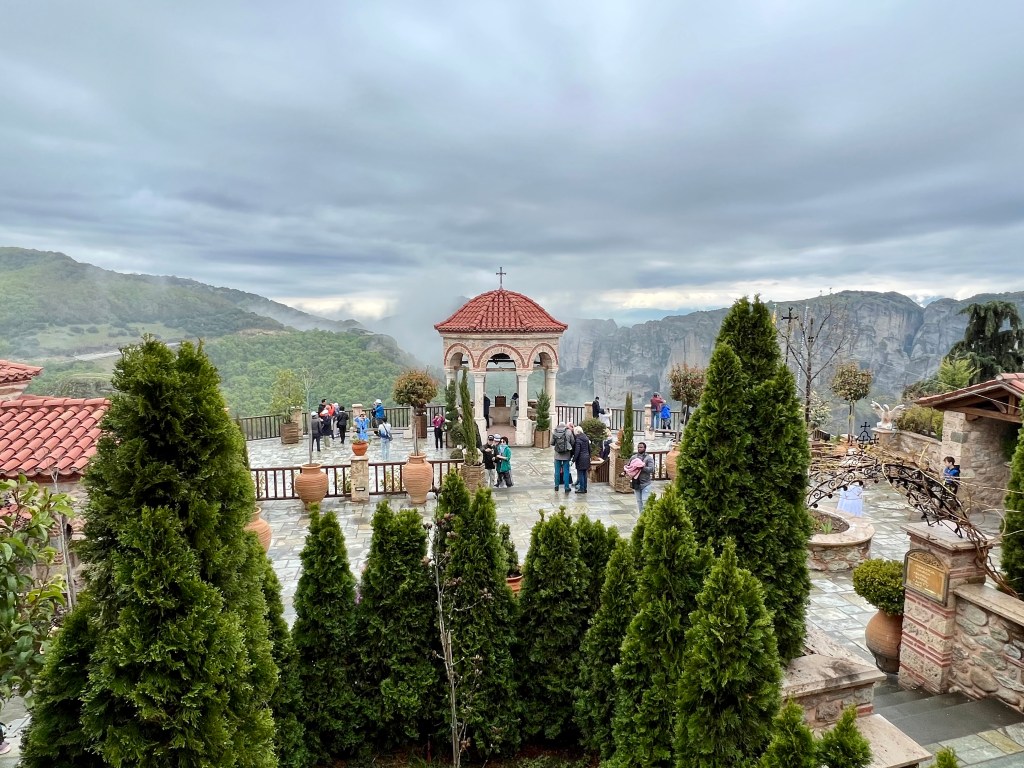
After leaving the church, we took a stroll around the balconies and viewing platforms where we were treated to stunning vistas. The climb was definitely worth it.

We also had a chance to check out their huge Barrel used to store their wine. Hard to believe that a dozen monks needed 12,000 litres of wine but … Lol!


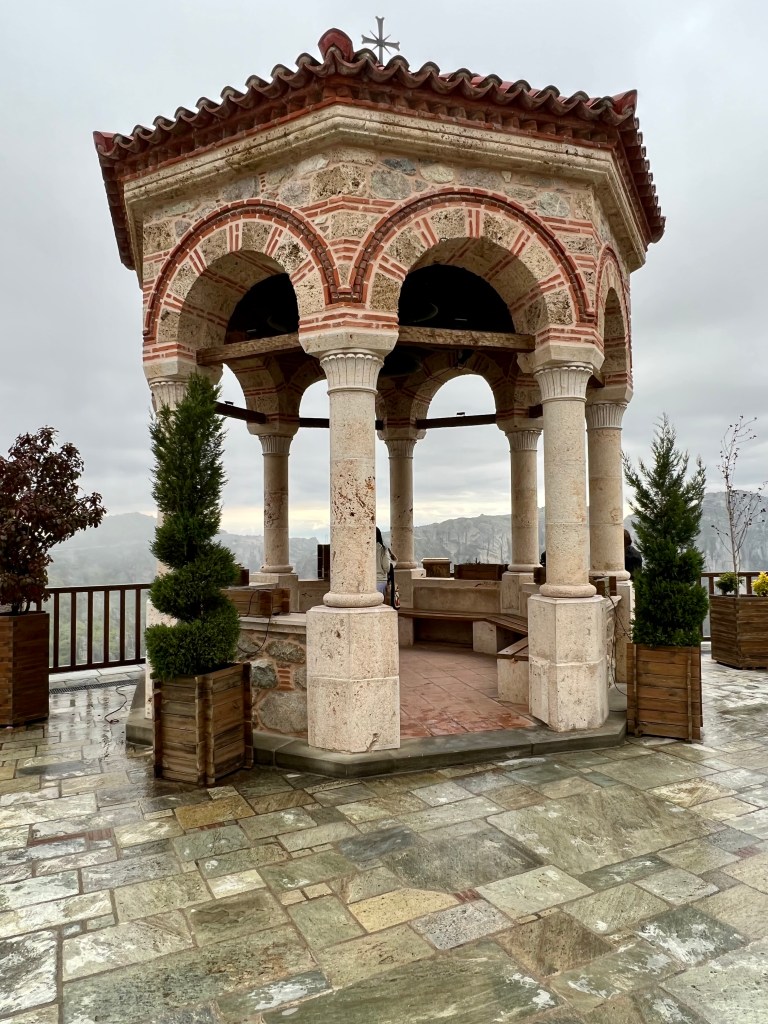
I was intrigued by this board hanging outside the church. This was the description. Like Noah, who, fulfilling God’s commandment, sounded on a plank of wood the signal, in order for animals to get into the Ark, so as to be saved from the cataclysm, in the same way the sounding on this plank of wood signals the time for the Holy Services, in order for the faithful to get into the “New Holy Ark”, Christ’s Church, and be saved from the cataclysm of sin.


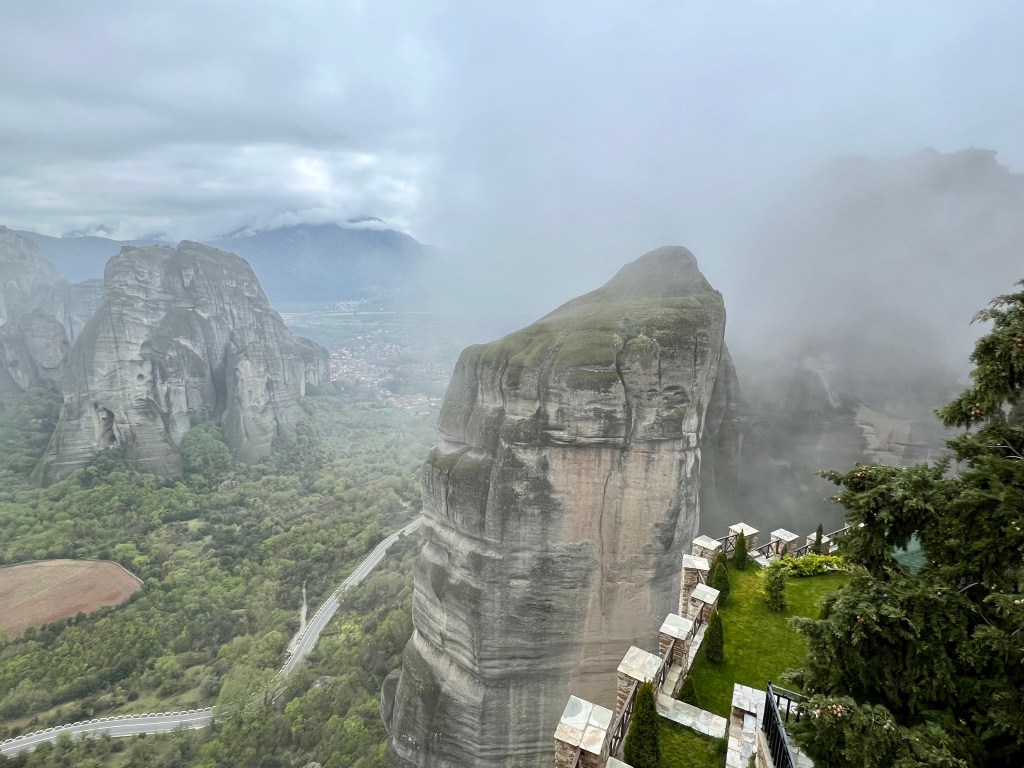
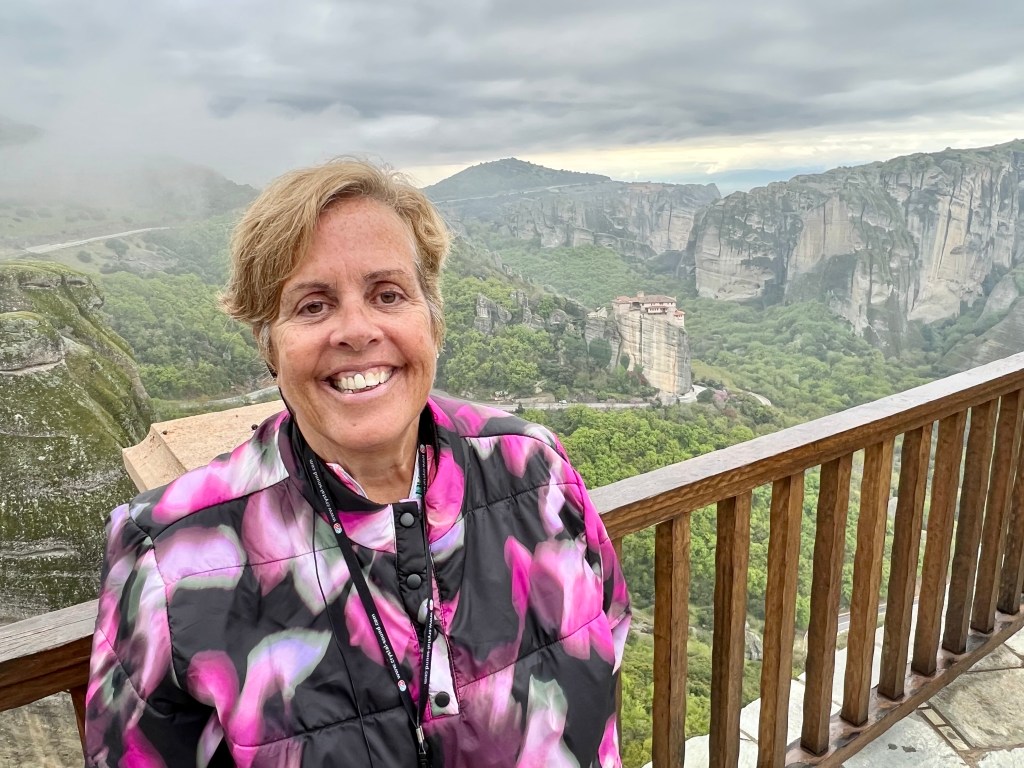
I made my way gingerly down the stairs and back on the bus without incident – yeah!

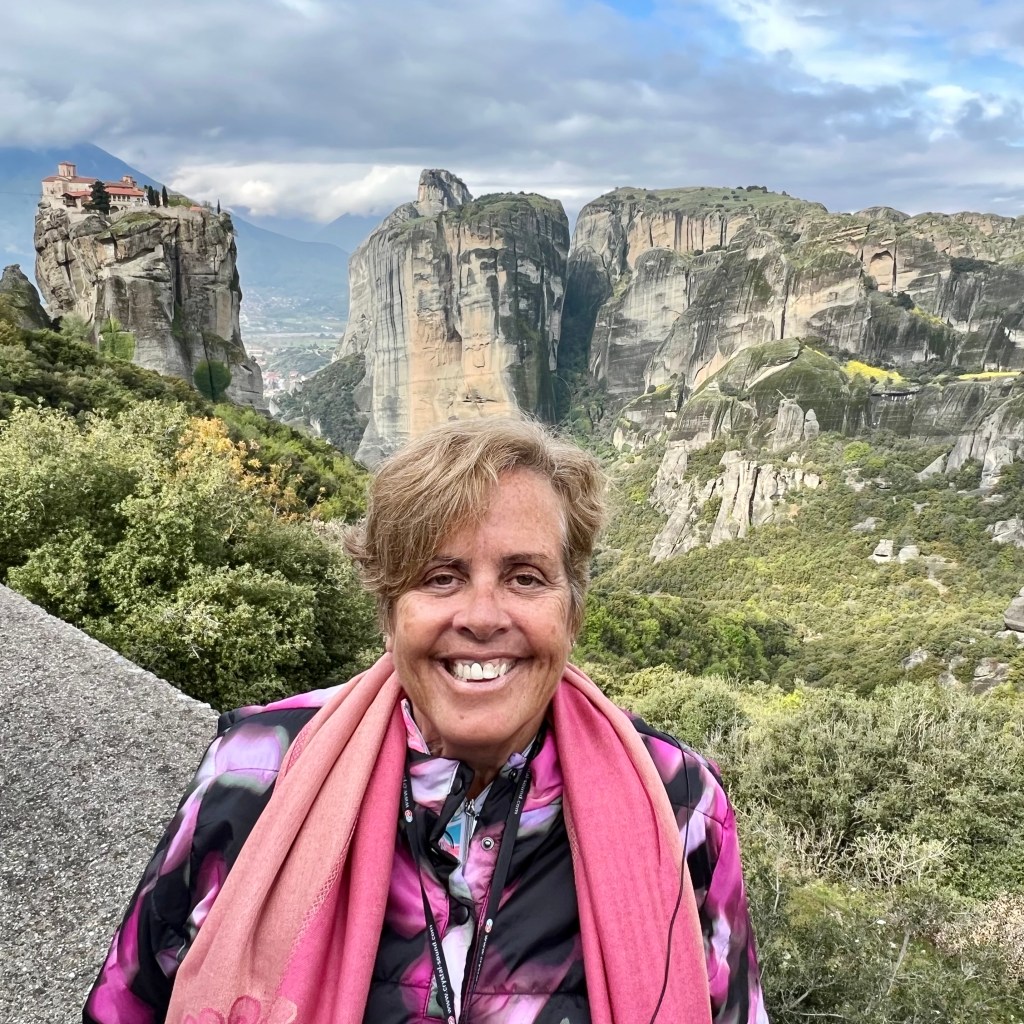
Our second stop will be at St. Stephen’s Monastery where a group of nuns are in residence. Along the way, we were treated to some more stunning views of the monasteries and even stopped to admire the monastery of the Holy Trinity which was used as a filming location for the 1981 James Bond flick For Your Eyes Only. This monastery is predominantly visited for religious reasons as it is very hard to access using a spiral of steps snaking around the pillar. I’d not have done it as I’d have been terrified.
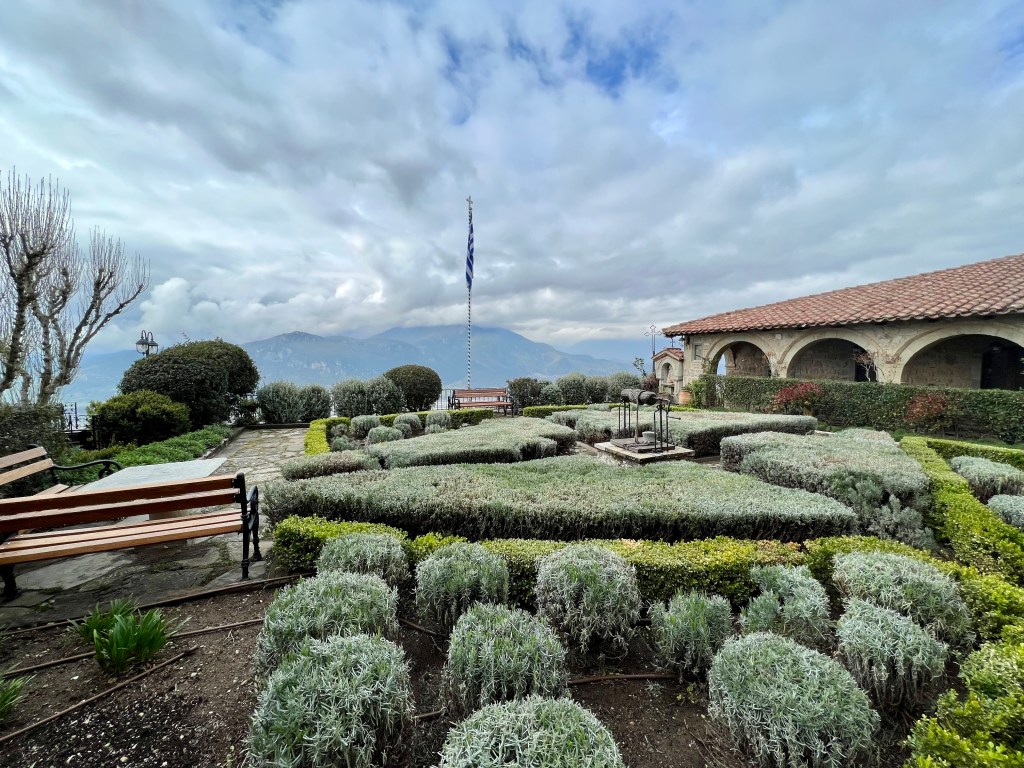
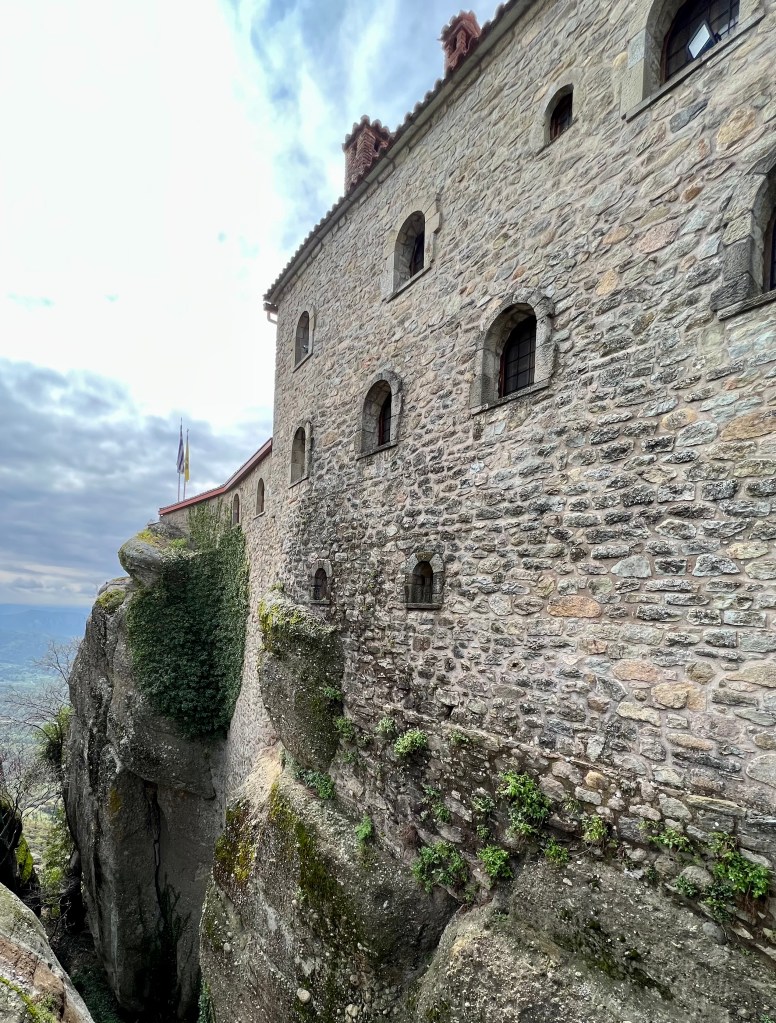
Our second stop, St. Stephen’s Monastery built in 1193, has basically no steps so it has been turned over for the nuns to use.
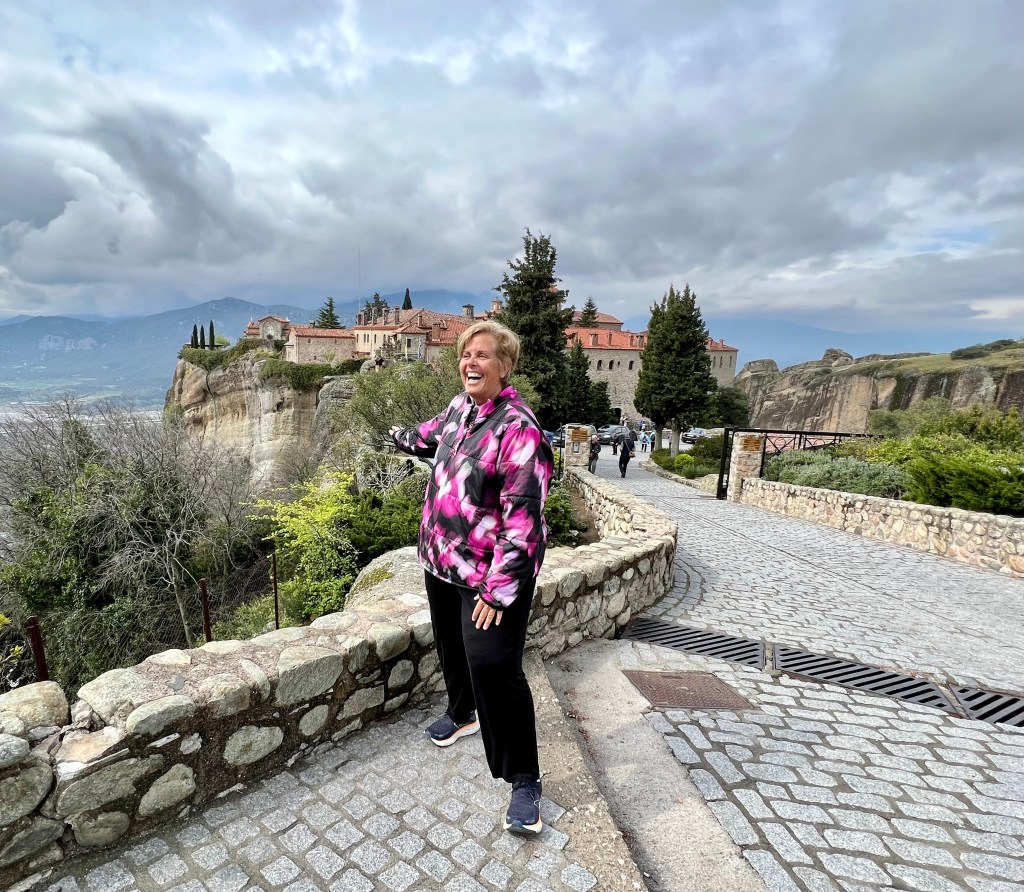
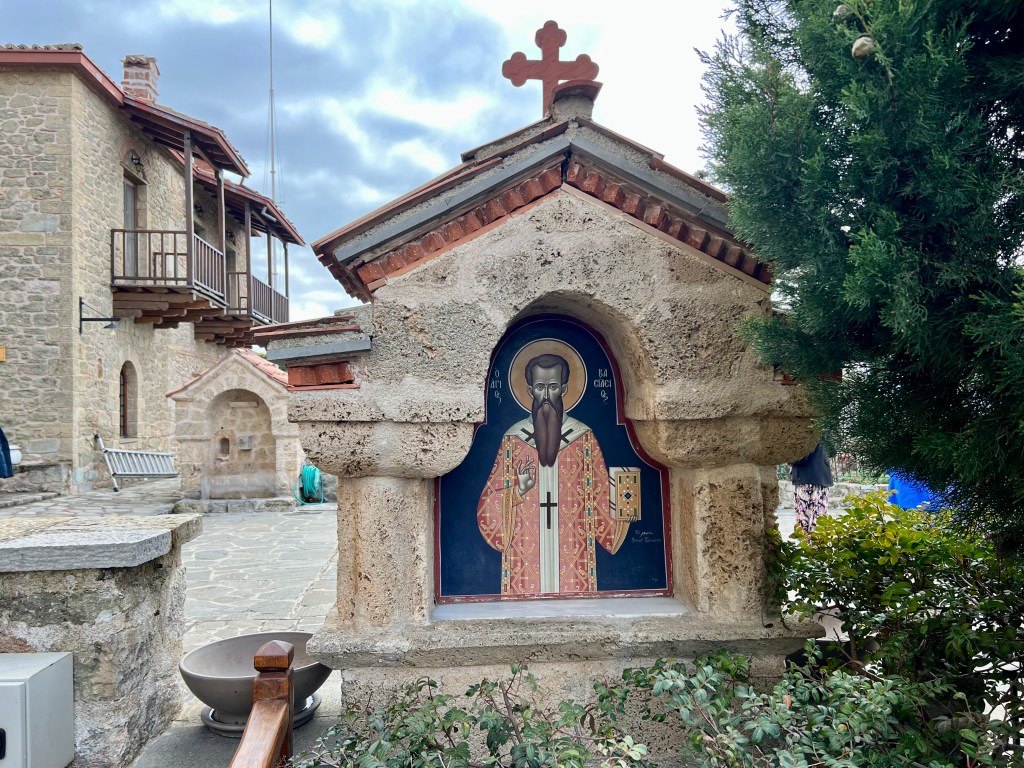
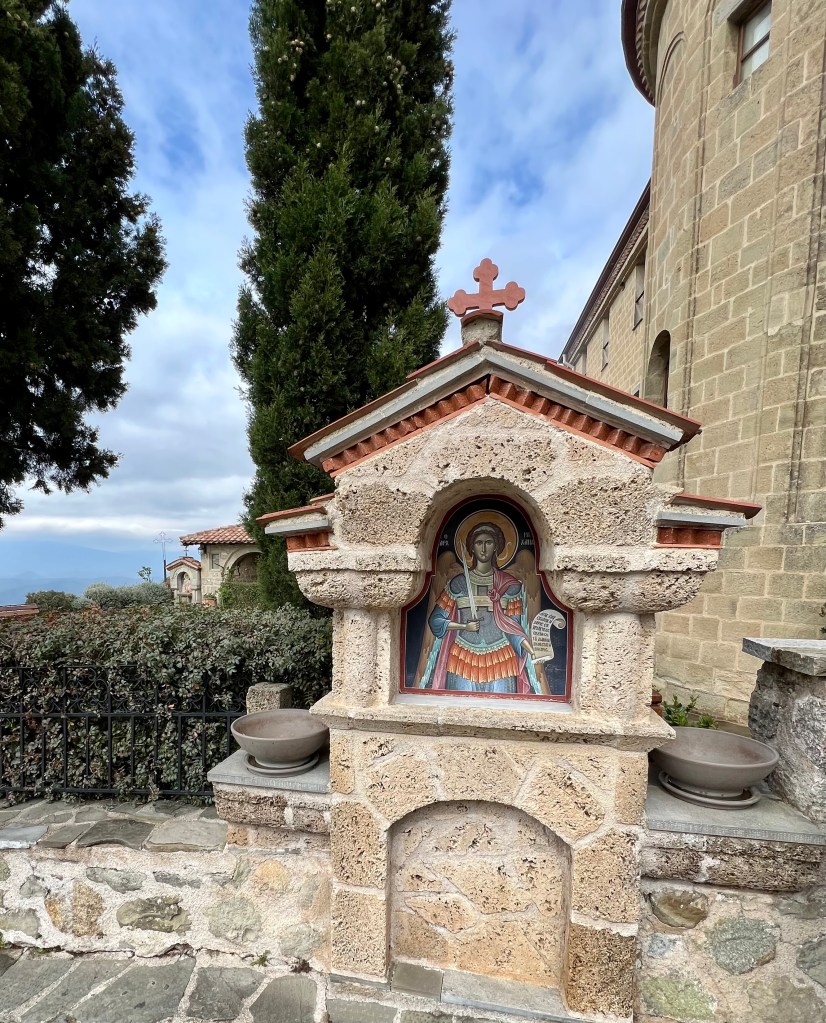
The same rules applied and the church had the same structure. This church, dedicated to St. Charalambos, is not as old as the monastery. It was built in 1798, so the overall impression in the church itself is one of light and colour in contrast to the darker forbidding artwork in the older church. The subject of the art was also different; less grisly in the nave to reflect the atmosphere of the day and there were some female saints pictured in on the walls of the church.


More balconies and scenic viewpoints with requisite pictures and selfies and then we need to head back to the bus for the long drive home. Our lunch stop is two hours off so a quick trip to the water closet is in order (squats here not thrones so you have to be careful!).


The drive was mostly non-eventful with a lunch stop (Greek salad and a pork chop for me) and a pee stop before hitting the traffic in Athens. Luckily I was dropped off where I started so I made it back to my hotel without incident.
Opted to skip dinner after my substantial lunch and an afternoon of sitting on the bus. Need to spend some time figuring out the plan for tomorrow before calling it a night.
Tomorrow is another day. Adventures await …
 Judy’s Rambles
I went to Greece in June 2022, also passing through the monasteries of Meteora.
I was lucky enough to be there on a Saturday, the only day of the week when they are all open.
LikeLike