
Friday April 7, 2023
Today is my last full day in Greece before I board a cruise to Israel, Cyprus, Turkey and Mykonos so it’s time to get organized and see at least some of Athens while I’m here. After a somewhat later start than the past couple of days or organized tour, I hop on the Hop On Hop Off Bus mid-morning.
Today is Good Friday so there are lots of tourists visiting and all the sites are pretty slammed especially the Acropolis/Parthenon. I’m not in the mood for big crowds so opted to see these landmarks from afar and focus on some of the other highlights of this interesting city. Looks like I’ll have to come back another time!
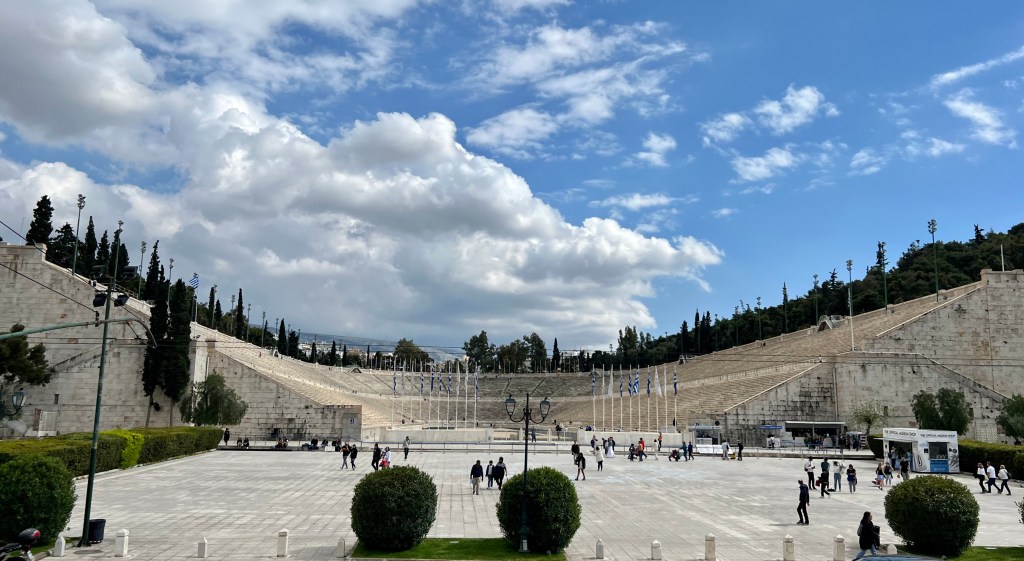
After doing a loop of the route, I’d figured out what I wanted to see. Did a drive-by of the Pantathenaic Stadium; the only stadium in the world built entirely of marble. Originally built in 330 AD, it was excavated in 1869 and after being refurbished, hosted the opening and closing ceremonies of the first modern Olympics in 1896. The stadium has 48 rows and holds more than 60,000.

I jumped off at the stop for the Plaka and started my explorations on foot. First up is Hadrian’s Arch.

Hadrian’s Arch, made of Pentelic marble, lies on an ancient street that lead from the old city of Athens to the new section built by Emperor Hadrian. It was constructed by the Athenians between A.D. 131-132.
Two inscriptions are carved on the arch, one on each side: the first, on the side facing the Acropolis reads “This is Athens, the ancient city of Theseus”; the second, facing the new city, reads “This is the city of Hadrian and not of Theseus”. In 1778 it was converted into a gate of the defence wall around Athens, and renamed the Princess Gate.
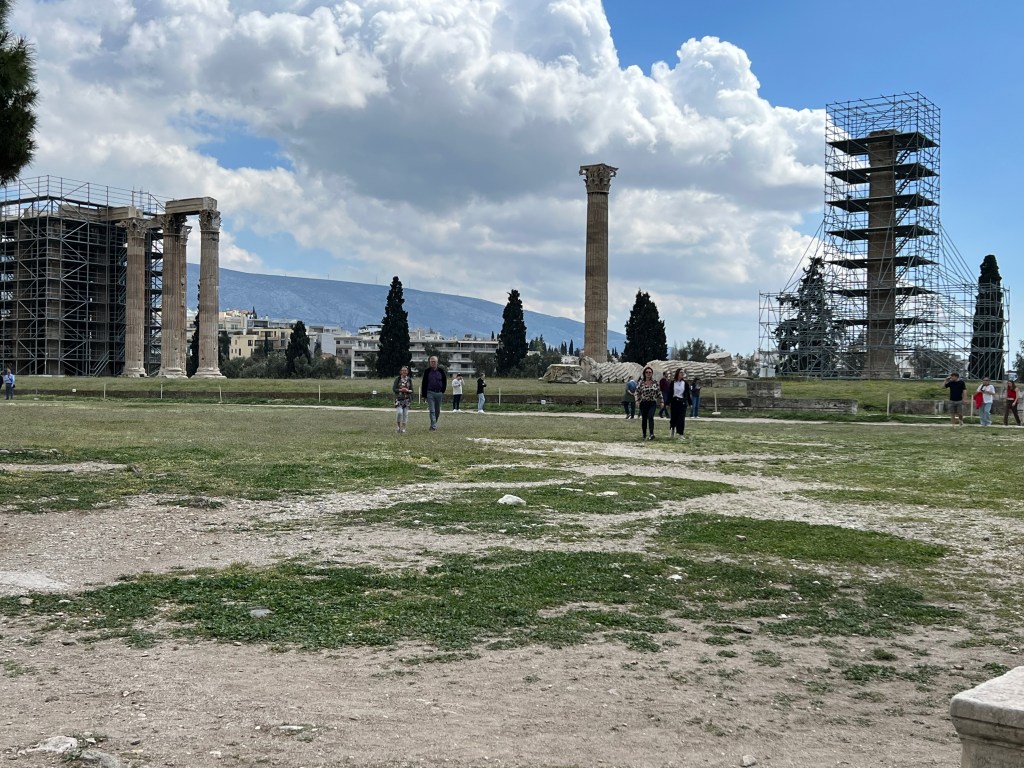
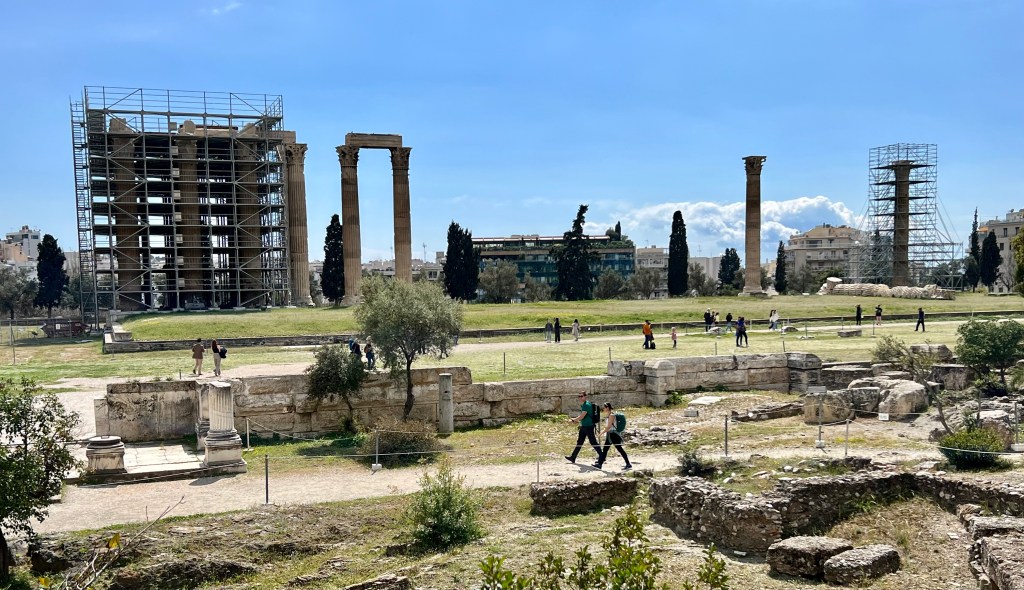
The Temple of Olympian Zeus, also known as the Olympieion, is a former colossal temple close to the Arch. Dedicated to Zeus, construction began in the 6th century but it was not completed until the reign of the Roman Emperor Hadrian in the 2nd century AD, some 638 years after the project had begun.

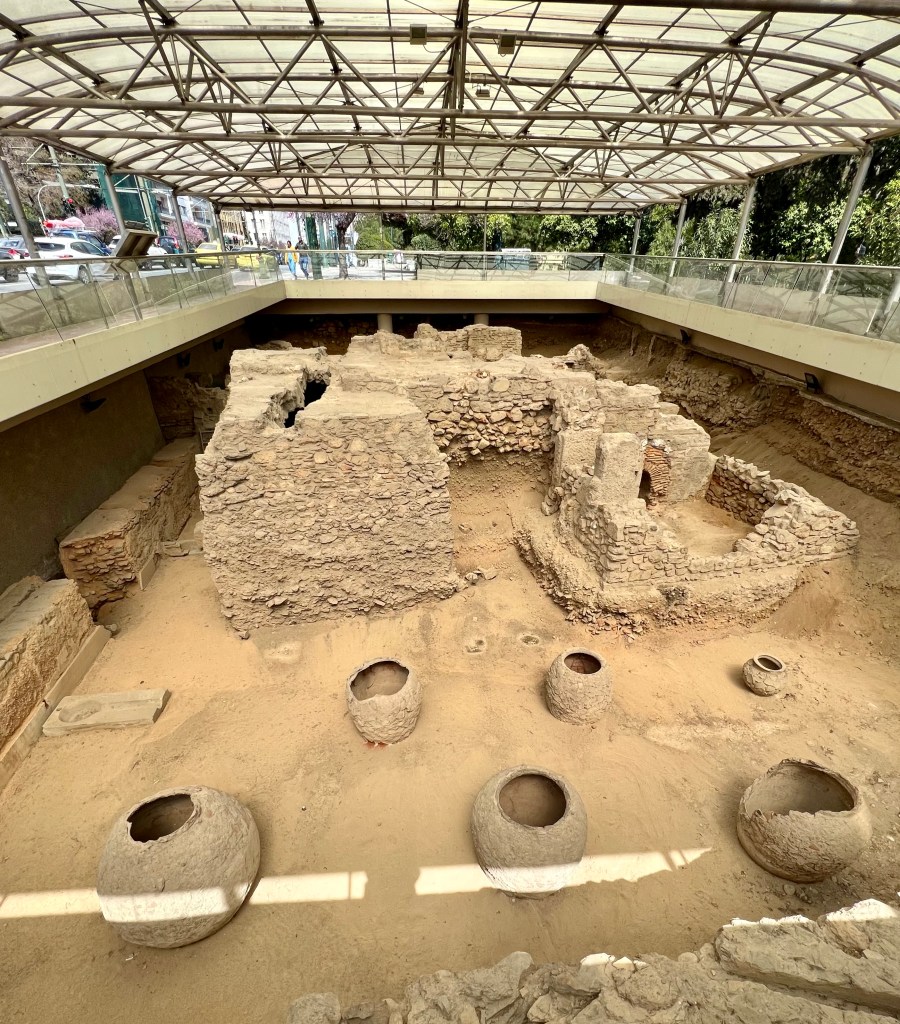
Just a short walk from Hadrian’s Arch is an archeological site where a Roman Bath was unearthed when a ventilation shaft for the Athens METRO was being dug. The largest sector of the excavation included a very well preserved bath complex-balneum. The baths continue both eastwards, inside the National Gardens, and westwards along Amalias Avenue.

Continuing along Amalias Avenue, I find The National Garden of Athens: right in the heart of Athens, between Syntagma Square and the Kallimarmaro (Panathenaic) Stadium, stands the famous National Garden of Athens. It’s truly a beautiful area to escape the noisy city center and relax in a lush green environment and lots of folks were lounging on the benches taking a break while I strolled through the grounds.
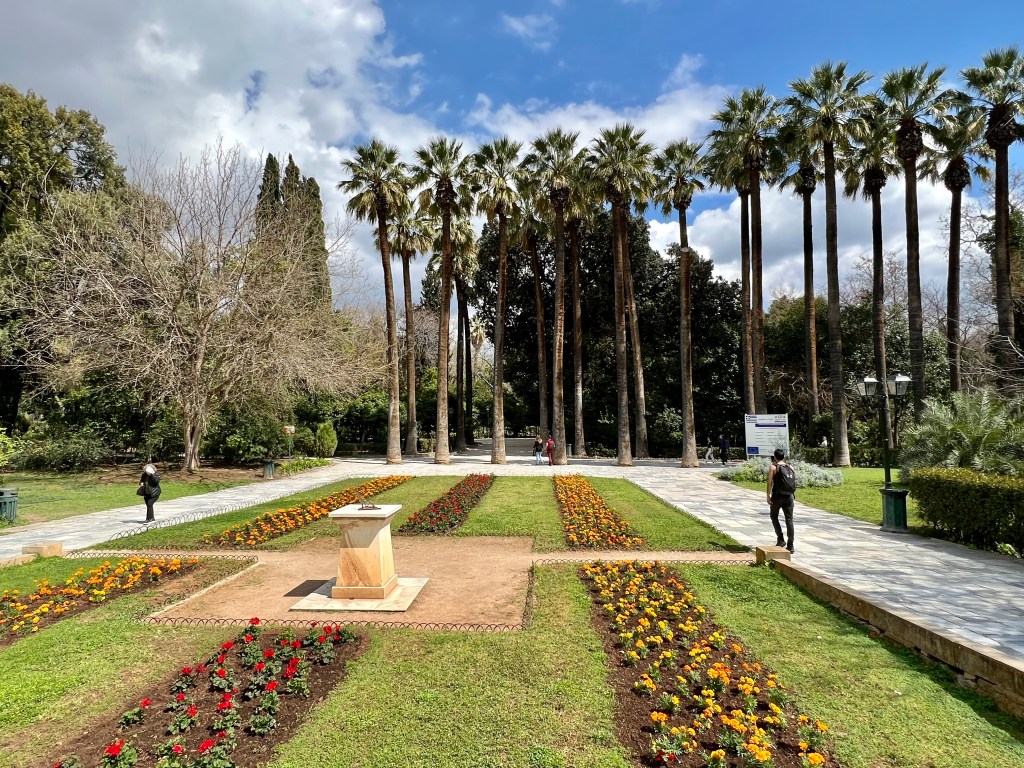

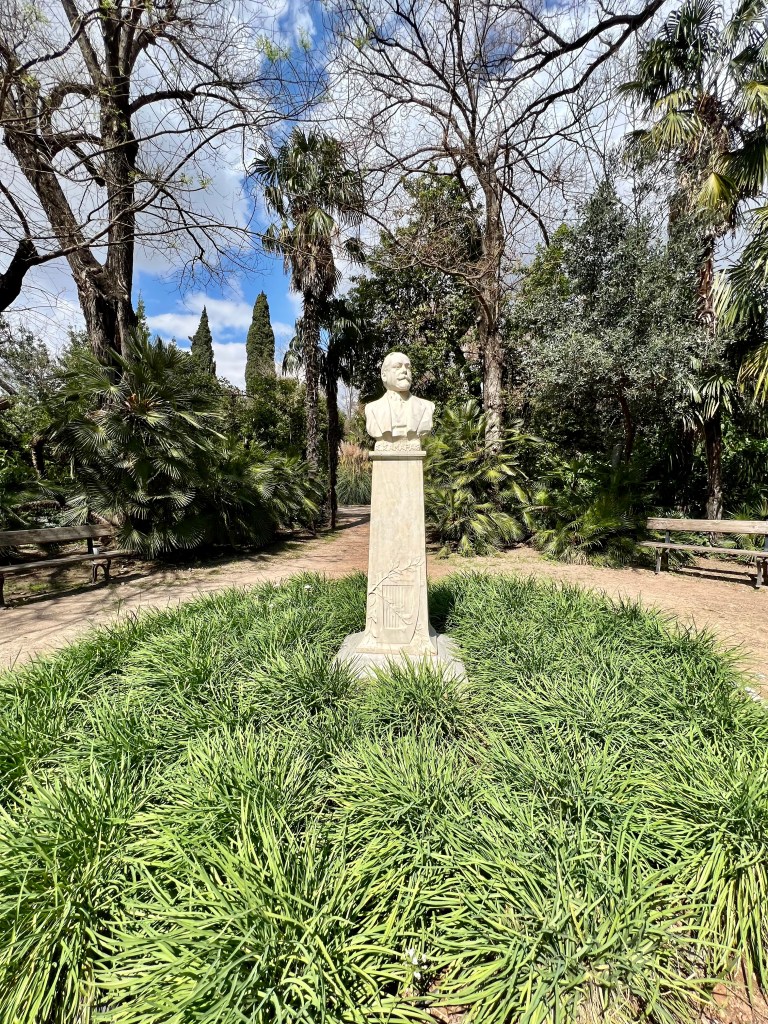
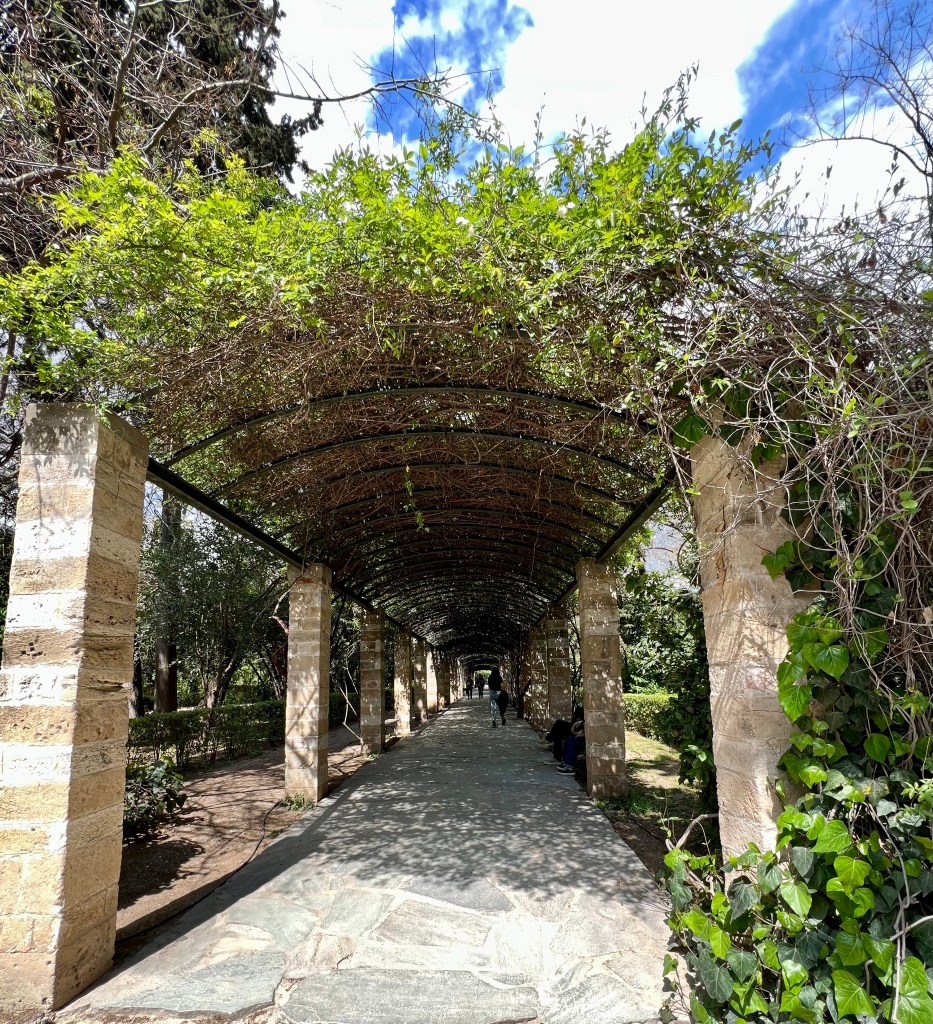
Initially, it was named Royal Garden because it was fenced and only the royal family had the right to walk there. After the restoration of democracy in Greece in 1975, the park was renamed the National Garden and it opened to the public. Today, it remains open every day from sunrise to sunset.
On to the Parliament Building where the Evzones guard the Monument of the Unknown Soldier located in front of the Hellenic Parliament. The Evzones is a special unit of the Hellenic Army, also known as Tsoliades. These soldiers of the Presidential Guard are selected according to their height, physical condition, character and must pass a strenuous training program before they become part of this honorary unit. The training lasts for one month and includes exercises to keep the body and mind still. Apart from staying still, the soldiers must also not make any facial or eye movements nor show any expression. Every soldier guards the Monument for about an hour, 3 times every 48 hours. During these 60 minute periods, they must stand perfectly still until it is time to switch with another guard.
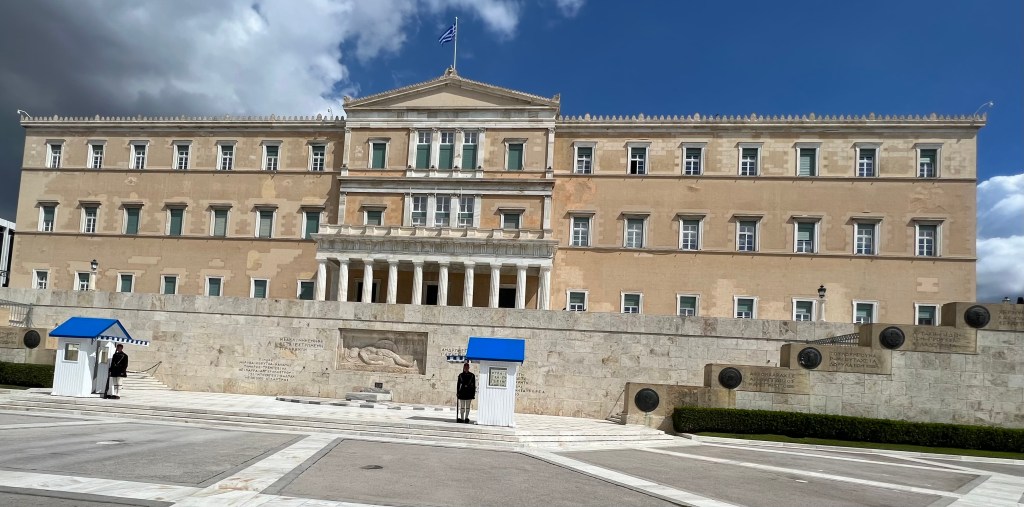
The Changing of the Guards takes place every hour and resembles an elaborate dance with the choreographed steps and high kicks being carried out in really slow motion to get their blood flowing again after 60 minutes of immobility. Given the short skirts of their uniform, it’s a good thing they aren’t real Scots!

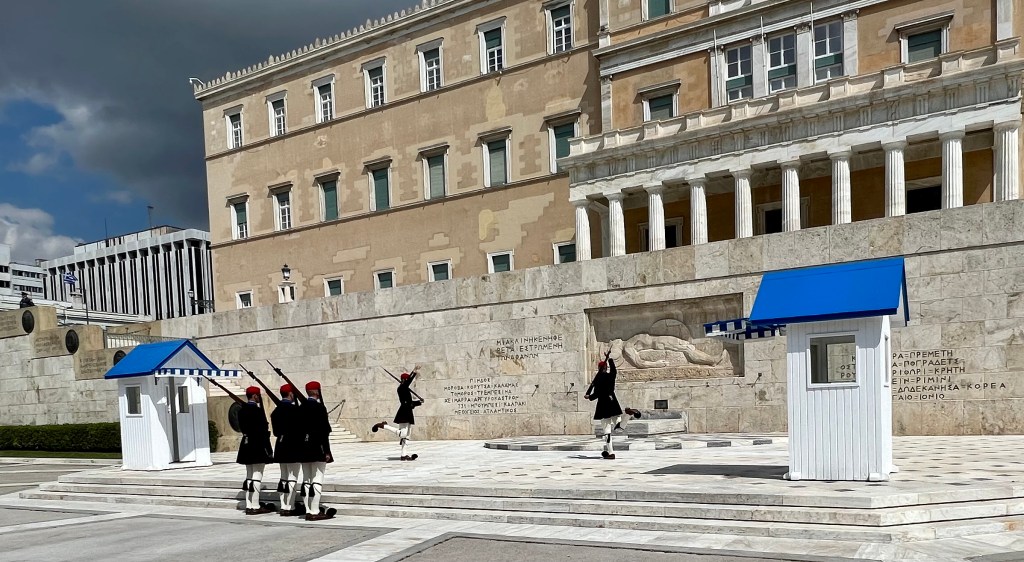
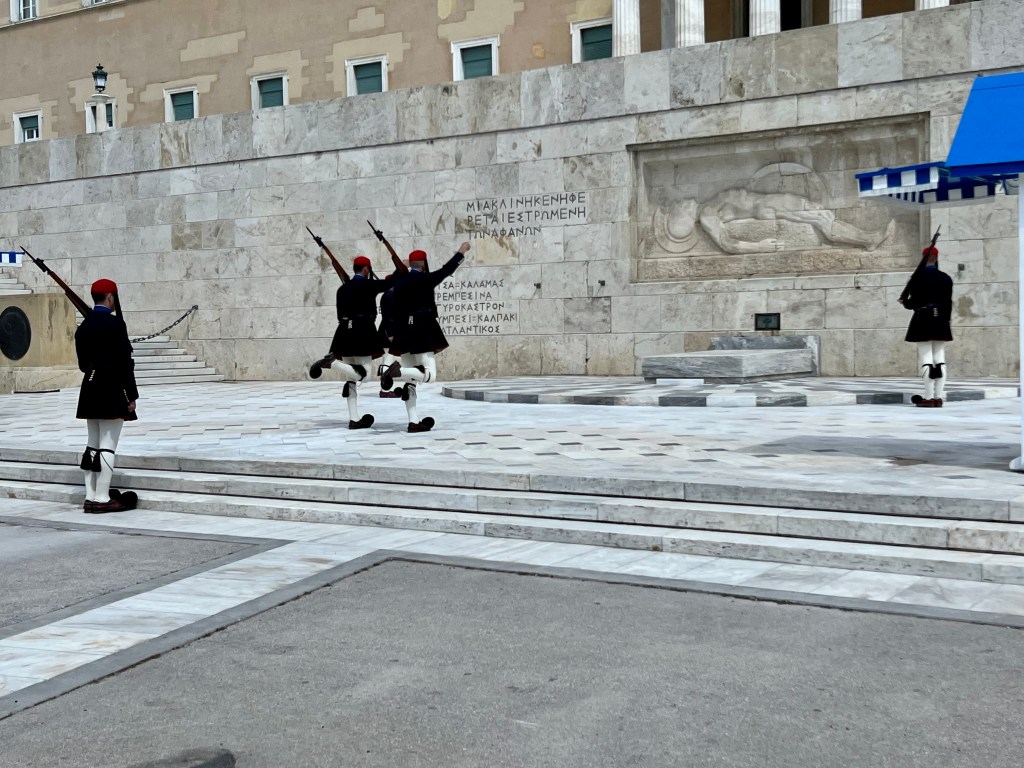
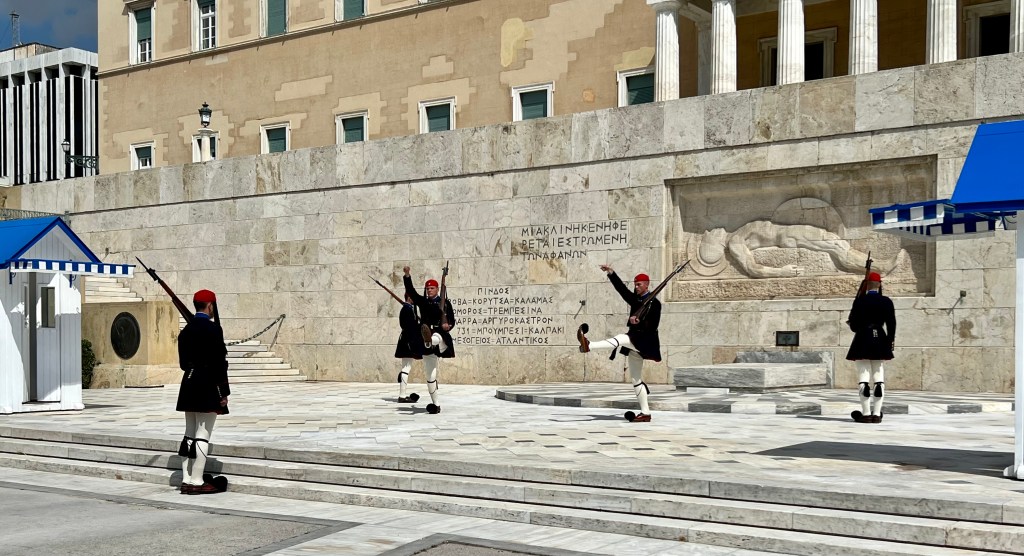
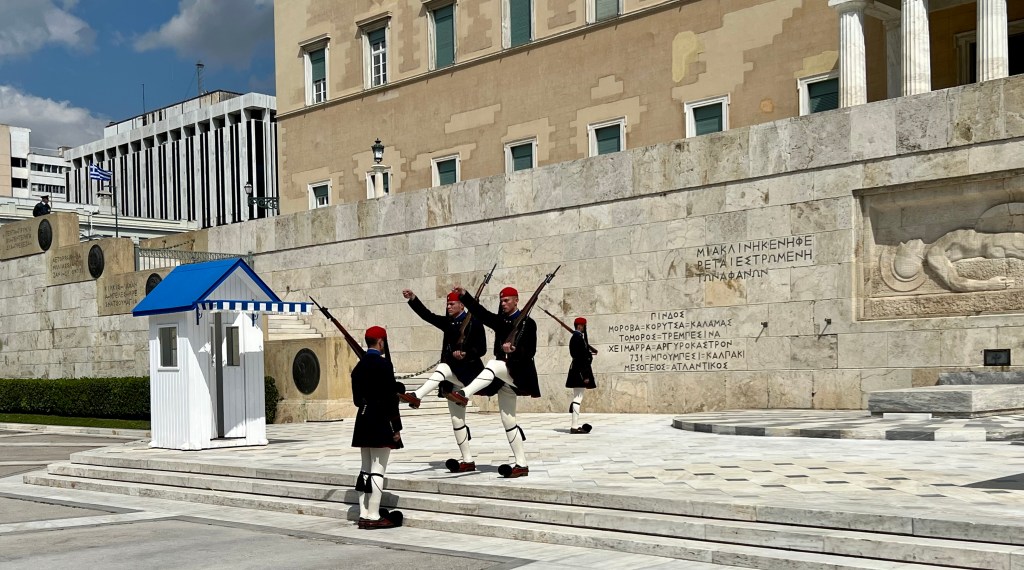

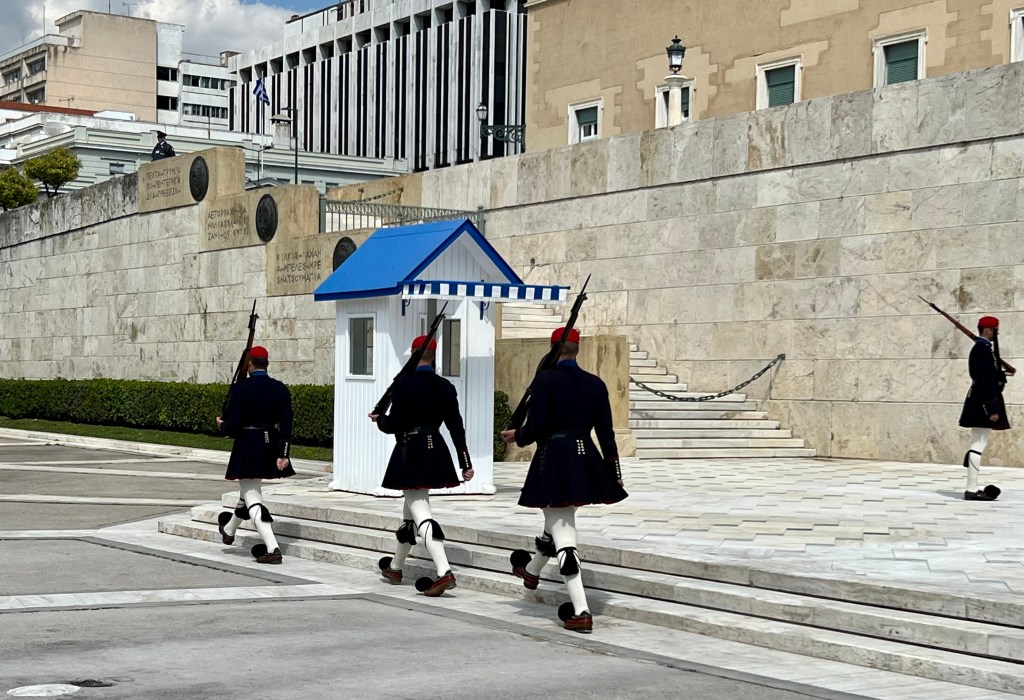
The uniforms are interesting as well. The Greek kilt they wear has 400 folds to represent the 400 years of Ottoman occupation. Another feature of their uniform are the traditional shoes of Evzones (tsarouchia), that are made of red leather with a small tuft in front. Each shoe weighs three kilos! No wonder they are moving so slow!
Monastiraki Square is a distinctive old Athens area, with narrow, irregularly criss-crossing streets, and small buildings, typical of Ottoman urban planning. Here you will find the flea market and one of the principal shopping districts in Athens. This area also has two important historical sites: Hadrian’s Library and the Roman Agora.
The Roman Agora was the ancient public square raised during the Roman period (between 19 BC and 11 BC) in Athens. It was one of the main meeting points in the city and it once housed the central market. It was commissioned by the first Roman Emperor Augustus and then enlarged by the Emperor Hadrian. During its golden age, the Agora was a type of courtyard that measured 100 square meters. Today, only a small portion of the columns are still standing, and the remains of the public outhouse.
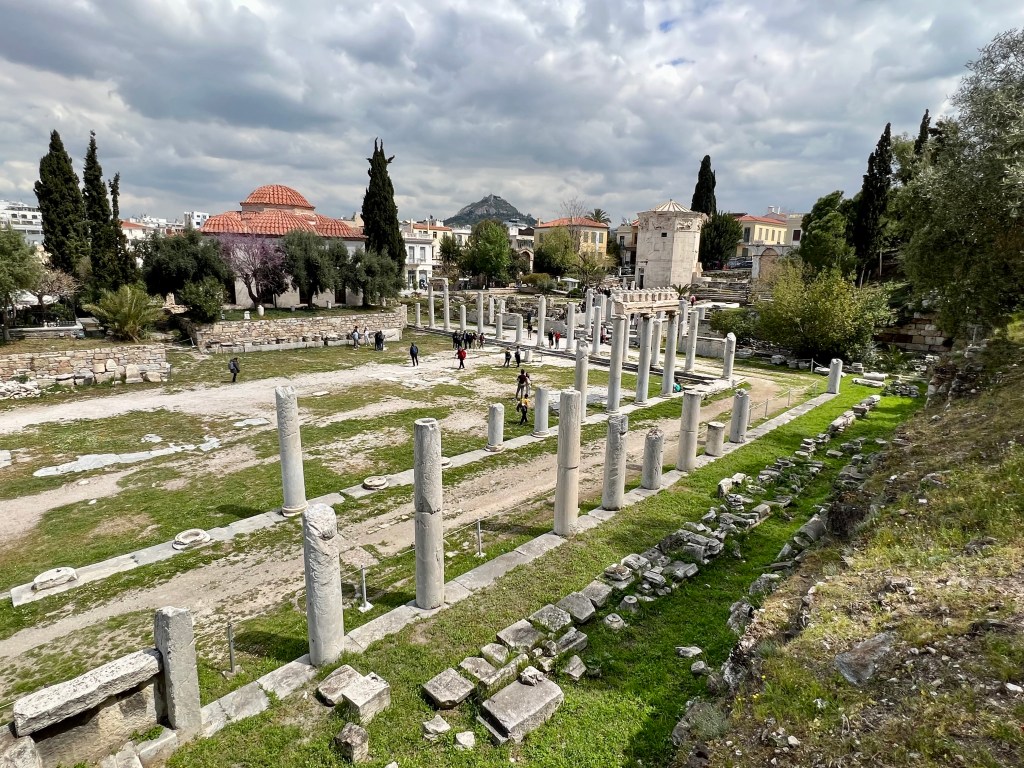
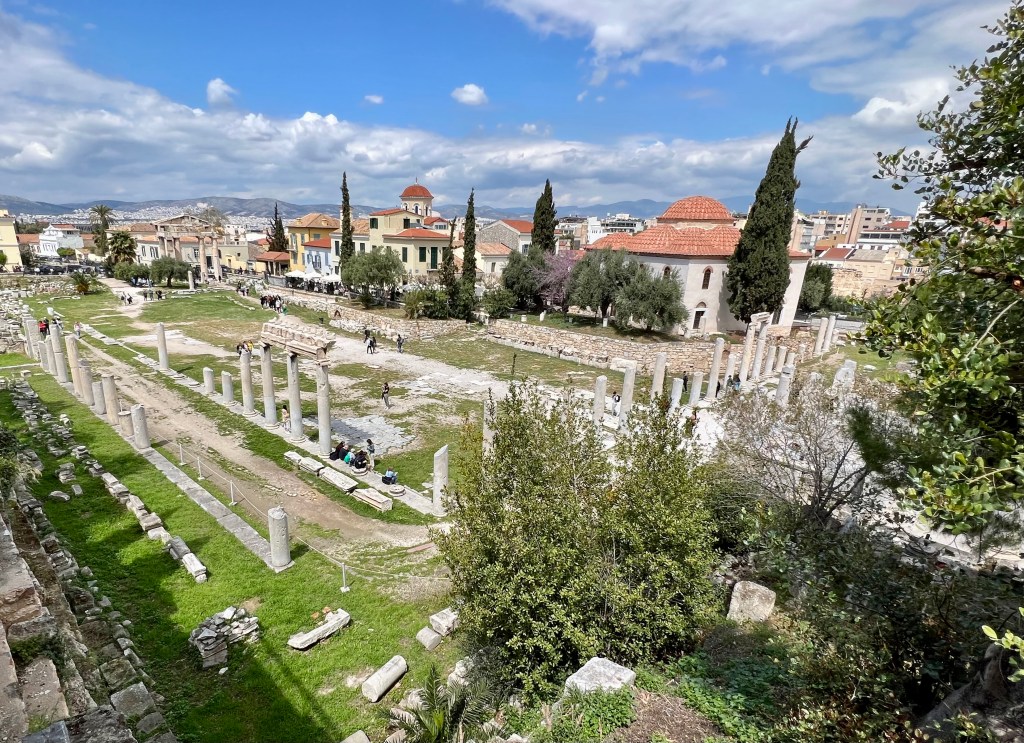
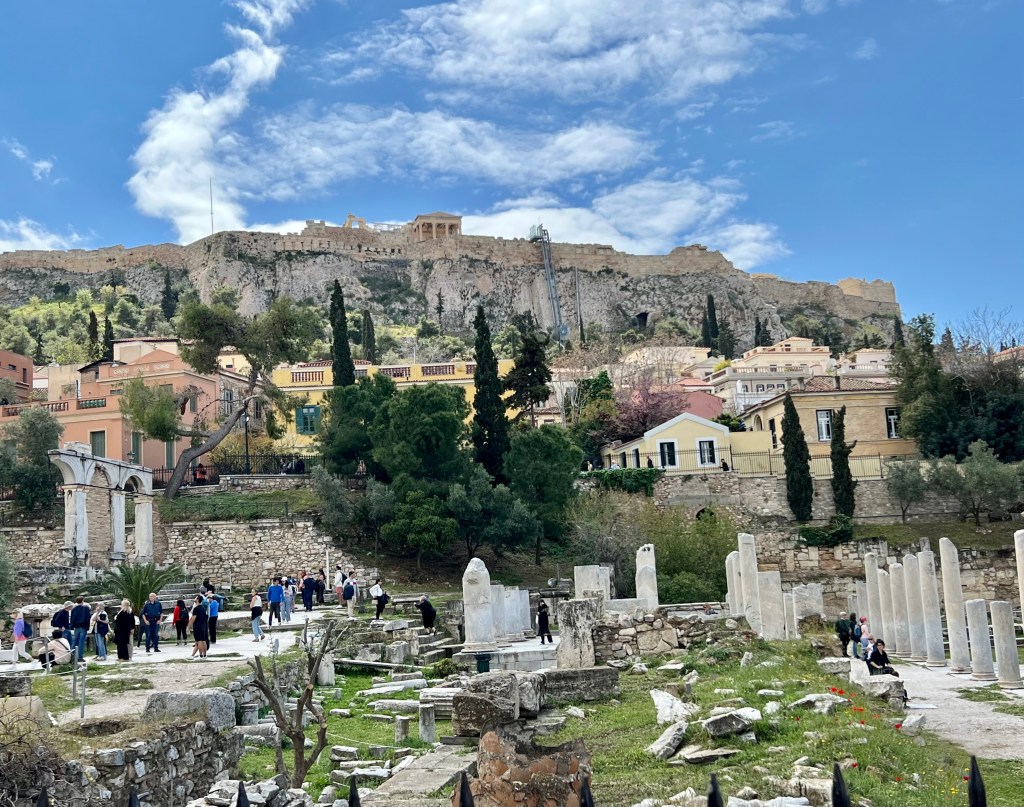

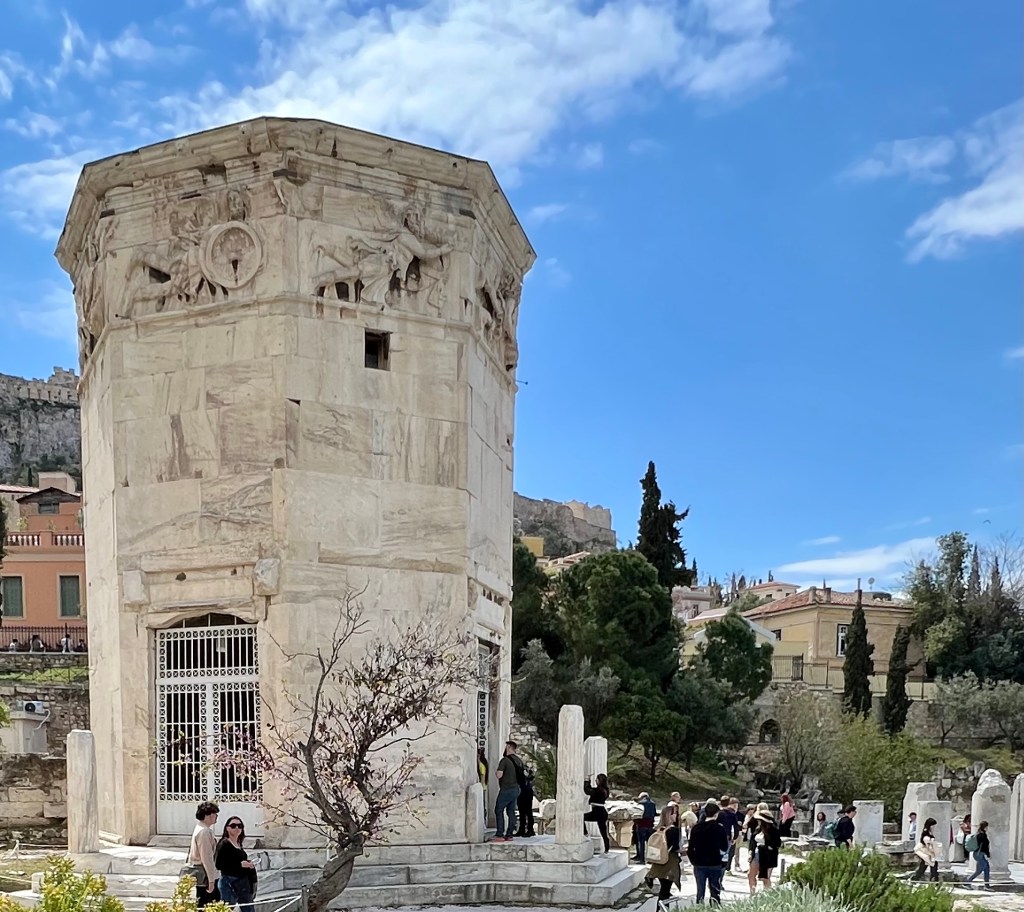
The “Tower of the Winds”, on the western side of the Agora, is practically intact. This polygonal monument, sheathed in marble slabs was built during the second century BC, was used as a water clock and sundial.
In the heart of Athens, between the Agora and the Acropolis, Roman Emperor Hadrian built his renowned Library. Hadrian’s Library is the oldest library in Greece built in AD 132 and in addition to the three stories housing books, featured reading rooms, teaching rooms, porticoes for philosophical walks, gardens and a pond for recreation. The ruins are sprawling.
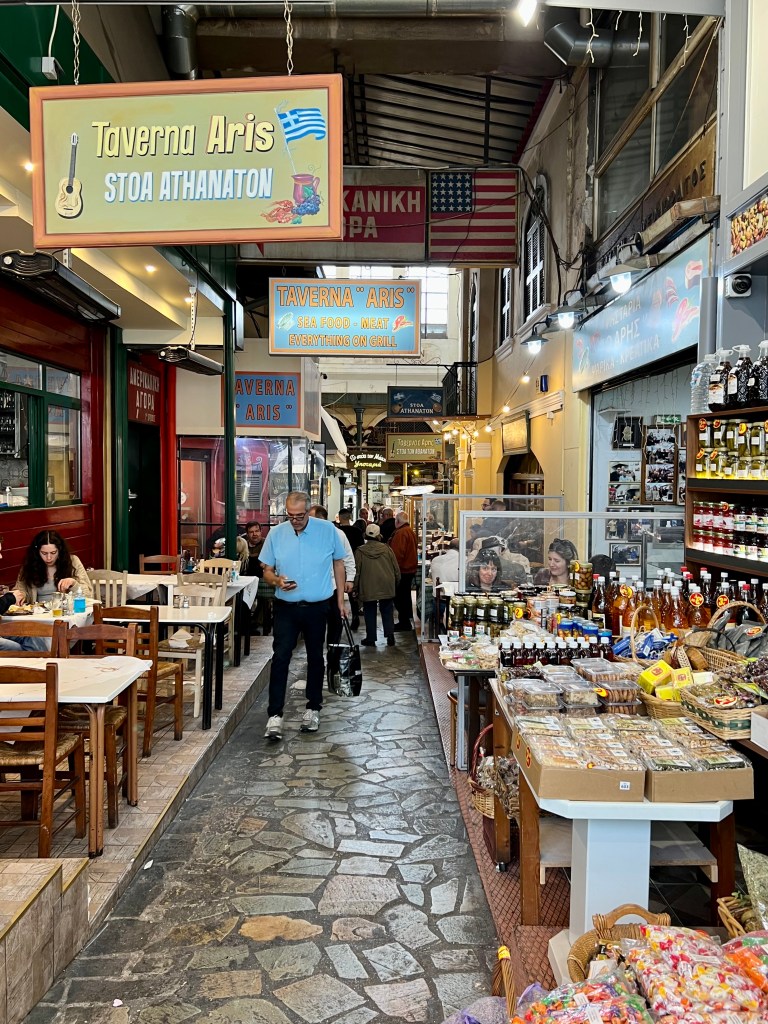
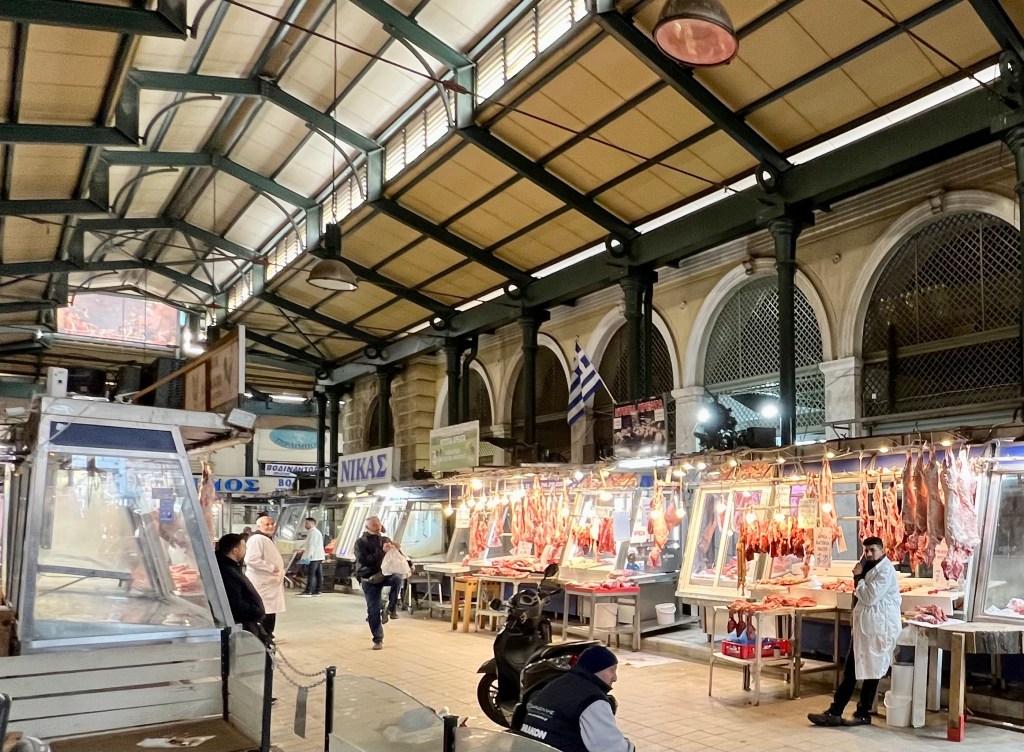
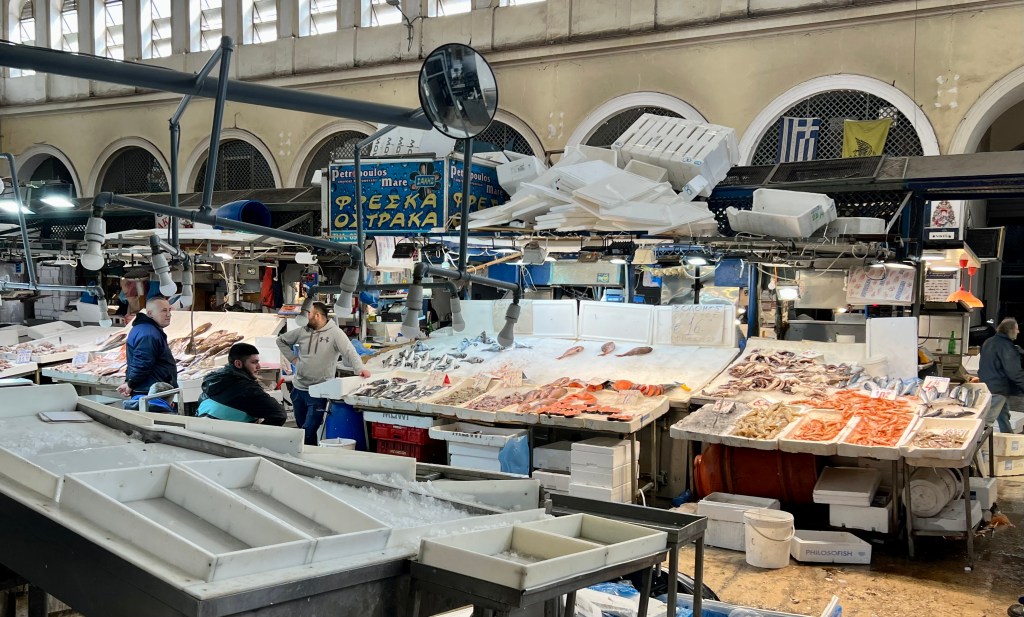
Back on the bus to get closer to my hotel. Here I checked out the meat and fish markets off Athinas Avenue before heading to grab a late lunch/early dinner at a local eatery.
I didn’t have the time or energy to explore Athens fully so I’ll be baack but that’s it for now. It’s an interesting city of contrasts and to enjoy it fully, I’d like to have a partner-in-crime. Who wants to join me? For now, time to repack and regroup for my cruise.
Tomorrow is another day. Adventures await …
 Judy’s Rambles
Fantastic adventure….not sure my hips could accommodate the 400 folds….never mind ironing it!!!!!!
LikeLike