
March 28-29, 2023
Agadir
We’ve left the Canaries and are headed to Morocco for a couple of days. Our first Moroccan port of call is Agadir, a city along Morocco’s southern Atlantic coast, in the foothills of the Anti-Atlas Mountains. I’m doing the Highlights of Agadir excursion while my friends are headed out on their own to explore. We’ll compare notes later.
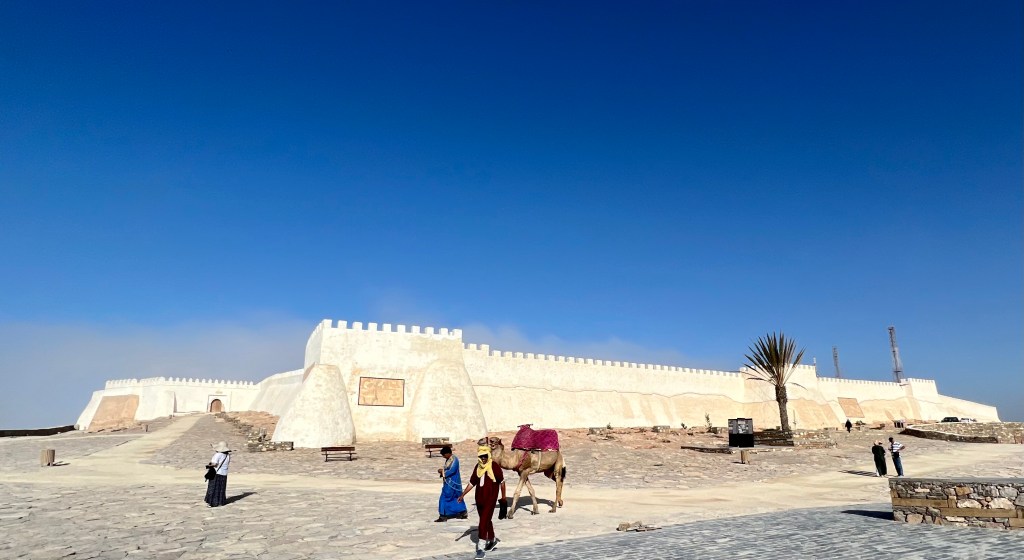
Our first stop was a few kilometres from the centre of Agadir, on the top of a hill, at the city’s ancient Kasbah. The Kasbah of Agadir Oufella is a historical landmark in Agadir that was destroyed by a devastating earthquake in 1960.
Kasbah, means fortification and these sturdy ramparts were built to serve as protection for the army and the people in the city. Since the 16th century, the history of Agadir Oufella has been linked to the confrontation of great empires trying to control a link between the continental riches of the western Sahara and the great wealth of the Atlantic trade.
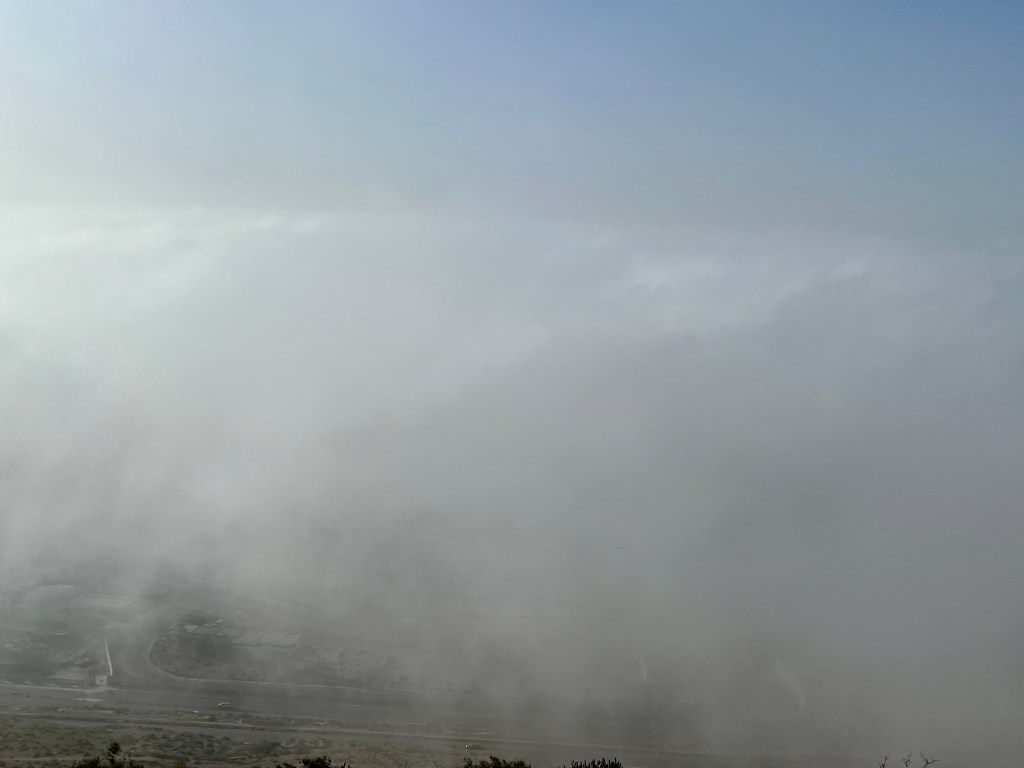
Originally a defensive fort against Portuguese attacks in the 1500s, the site is being rebuilt. Still a “work in progress” as reconstruction of the interior is not complete we couldn’t go inside, but, the fortress normally provides spectacular views of the city and the surrounding arid country side. Today, however, there is a haze of sand because of the “la calima,” as strong seasonal winds carry sand and dust away from the Sahara so not much to see!
Of course, the presence of tourists is a magnet for commerce and there were the requisite vendors and camel rides for those that were interested.

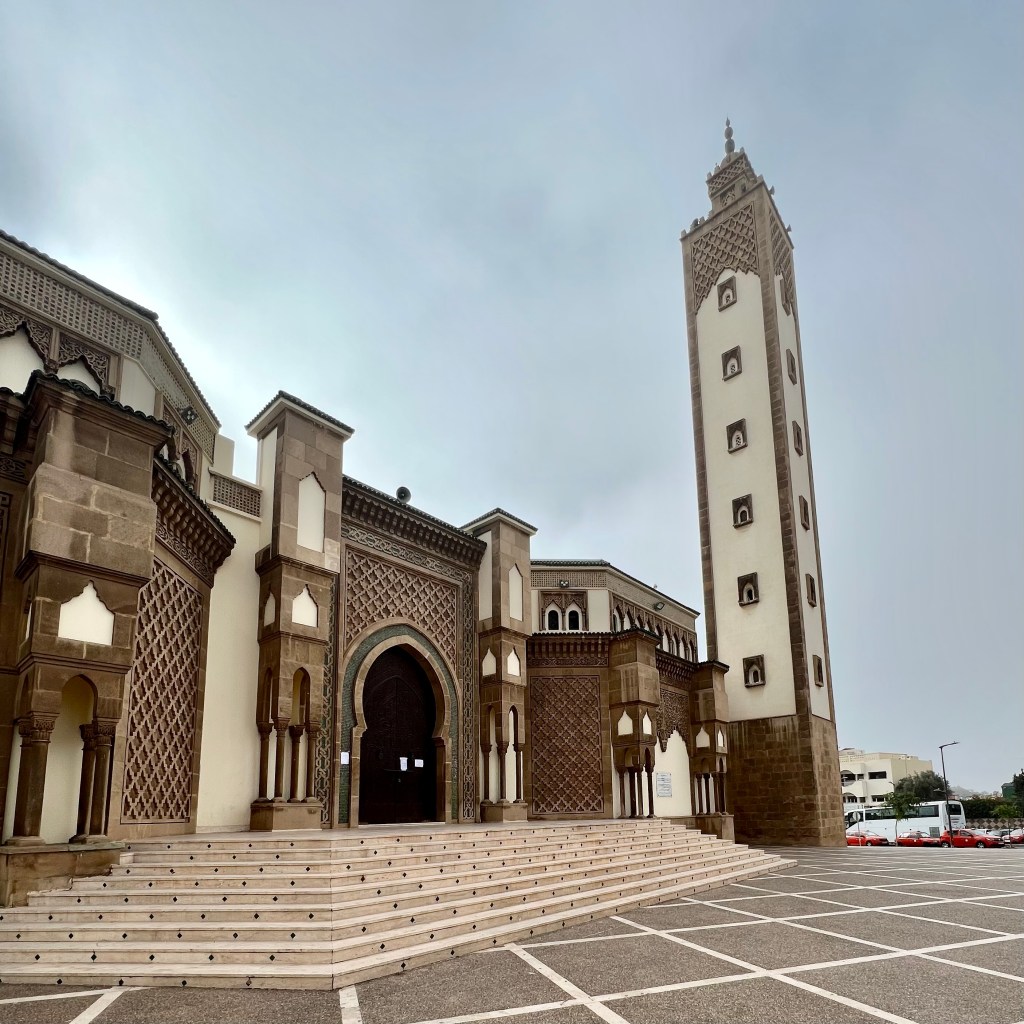
After our photo stop, we headed downtown to the lively Nouveau Talborjt neighbourhood on Avenue Président Kennedy to the Mohammed V Mosque. The largest mosque in the city; its remarkably tall, window-covered minaret towers above the city, spread out around it. As is the case for much of Agadir, it was built after the earthquake.
Like most Moroccan mosques, visitors aren’t allowed inside, but we did have a chance to look at its ornate exteriors with its wealth of decorated facades and beautiful horse-shoe-shaped doors, and its turquoise grilles.


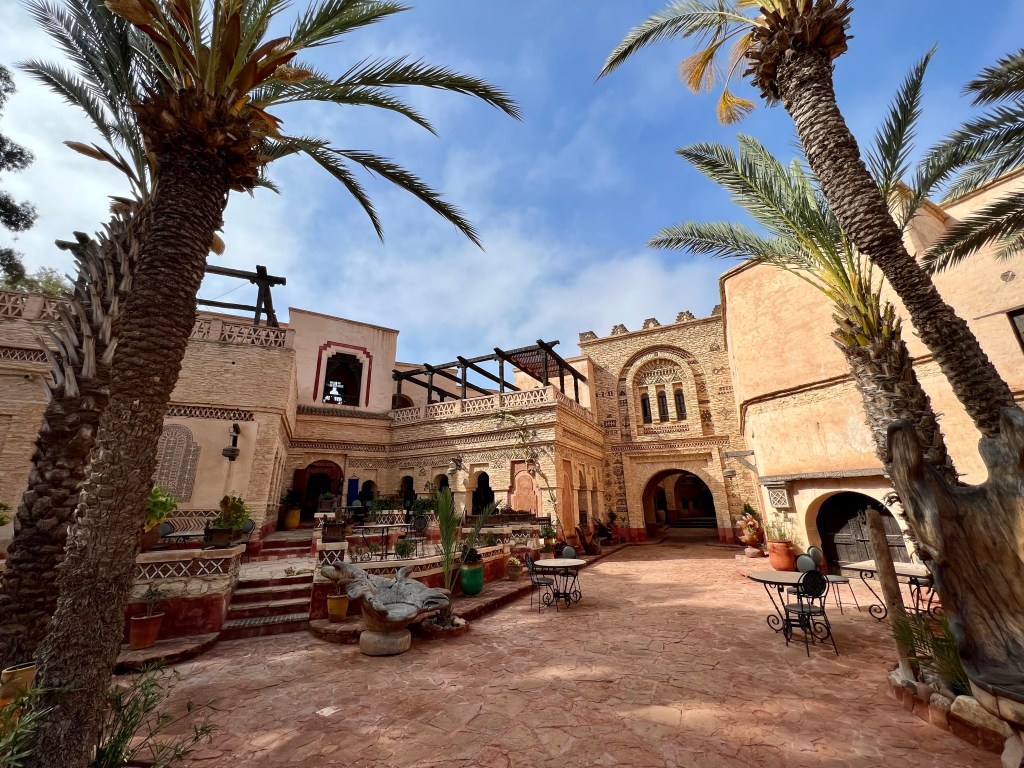
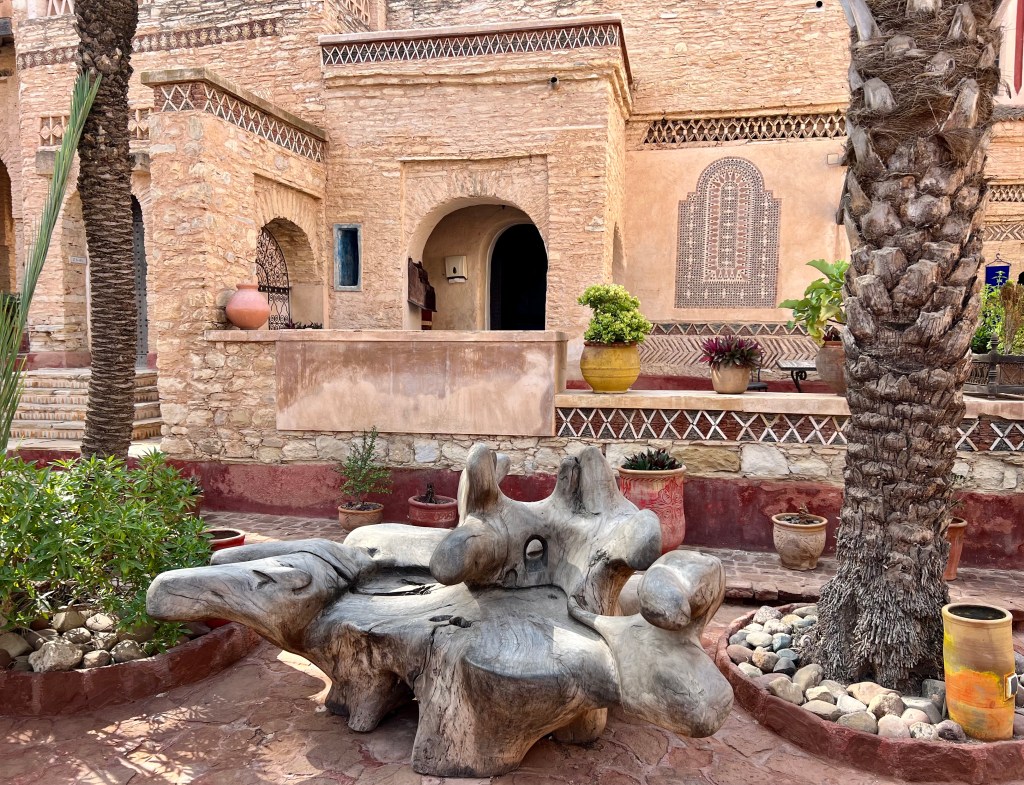
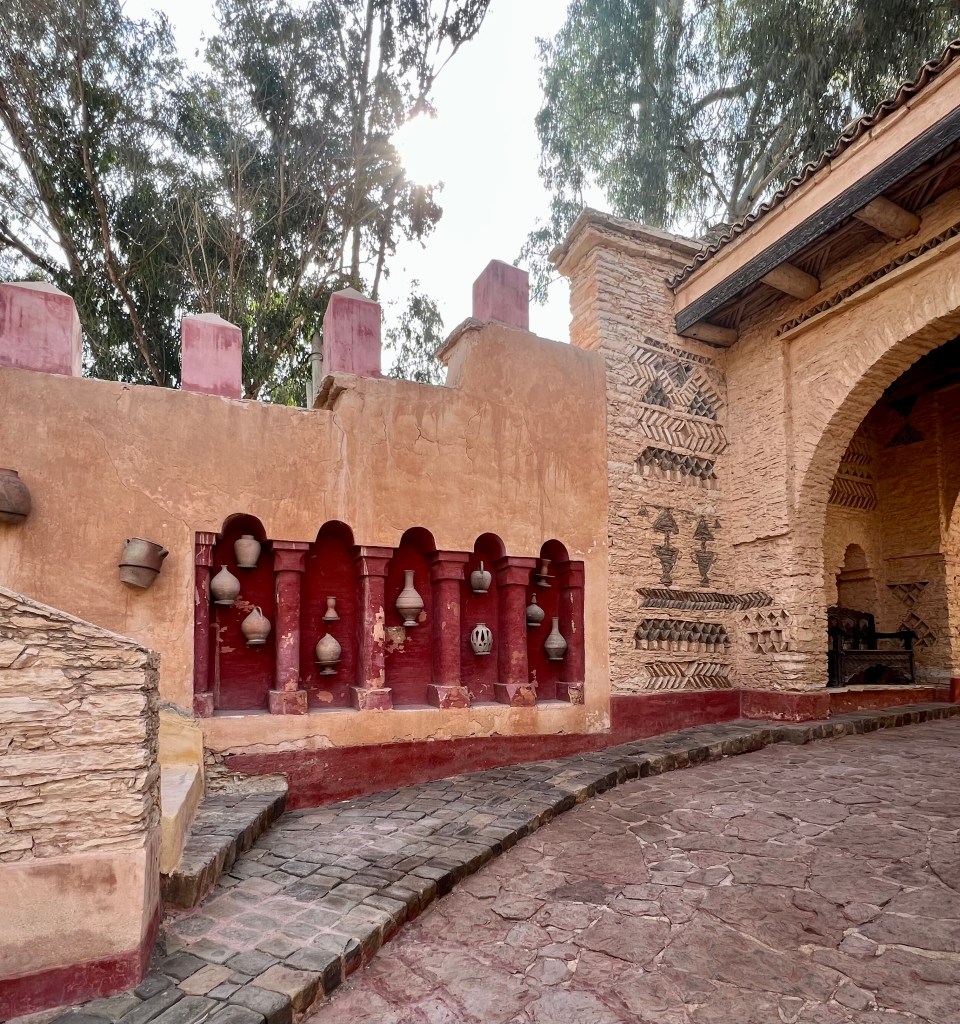
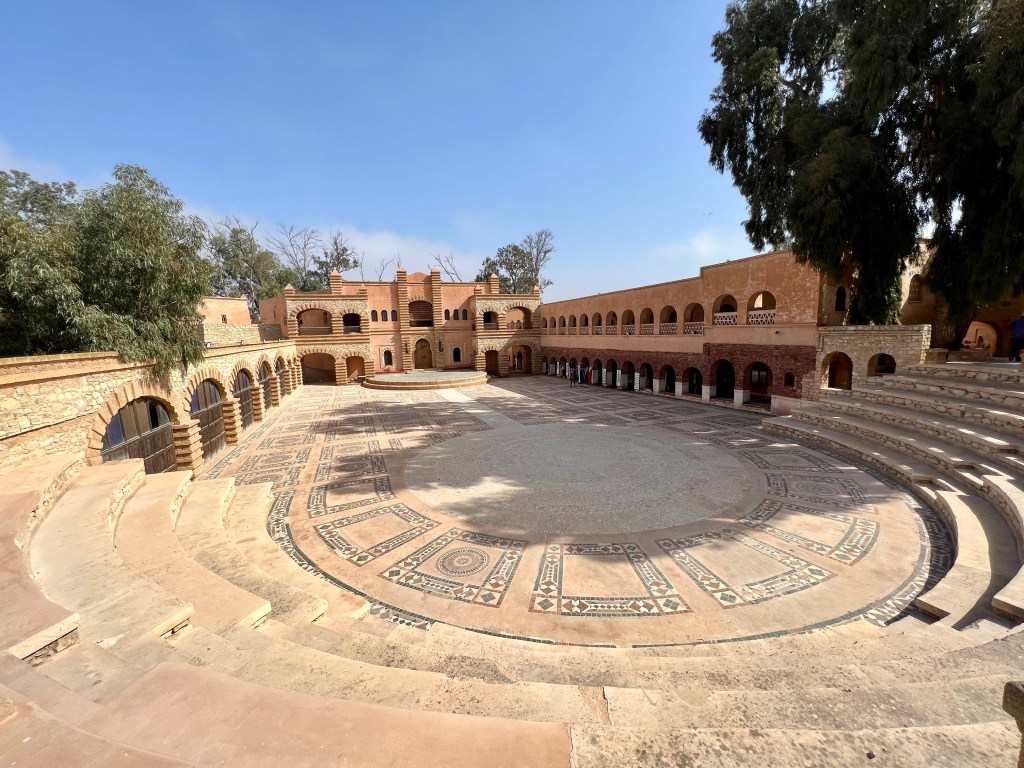
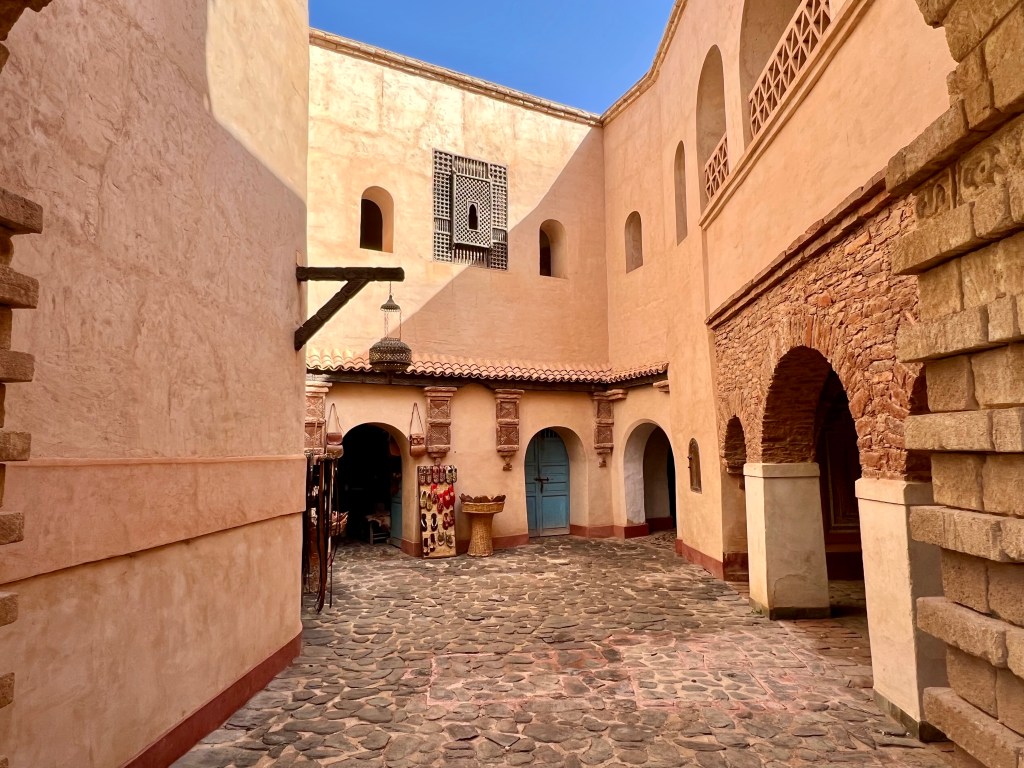
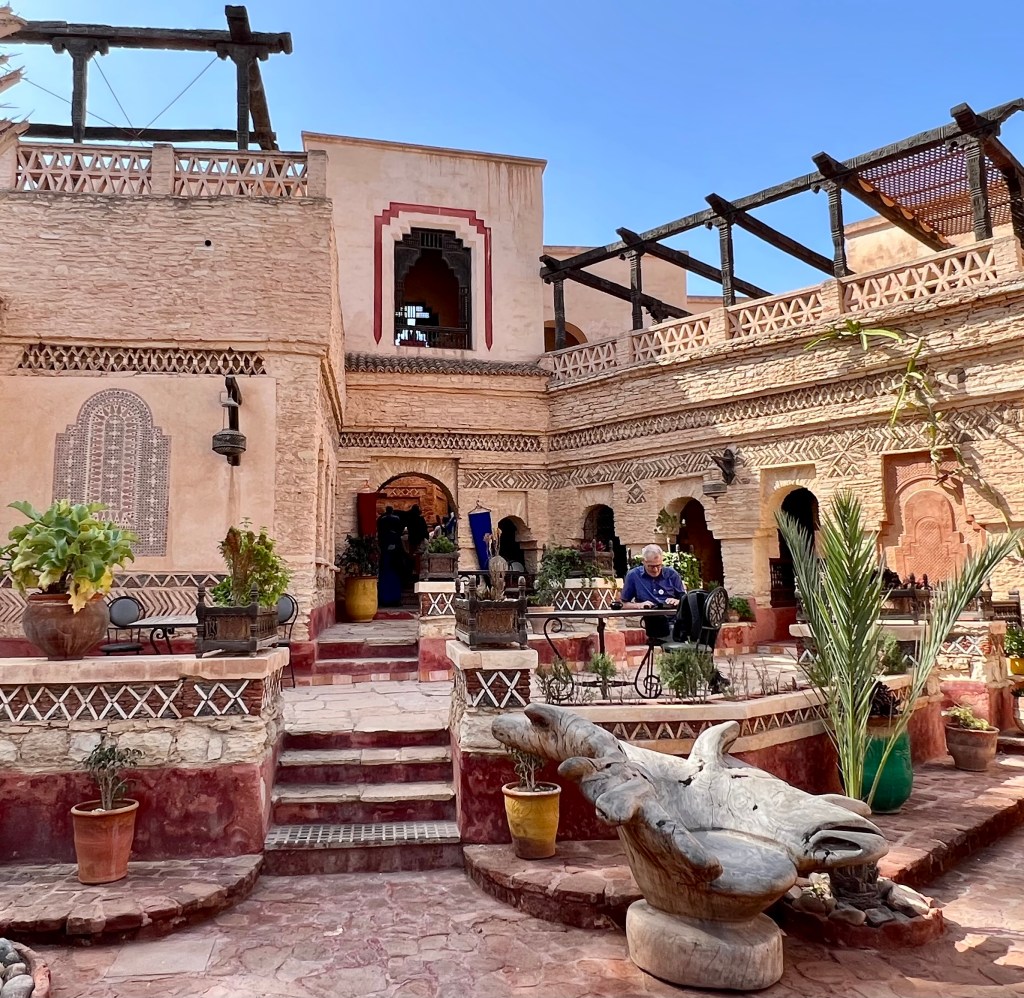
Our next stop was La Nouvelle Medina Polizzi. The old town (Medina) in Agadir was also destroyed during the 1960 earthquake. In 1992, a new Medina was built by an Italian architect as an outdoor museum.
We were treated to some mint tea and sweet treats as we entered and then given some time to explore on our own. The buildings are interesting. They have been built with recycled materials and there are some beautiful mosaics, old doors and the theatre square is vast and peaceful. Overall, a very pleasant way to spend a bit of time wandering around and looking in the craft shops. A bit of calm before heading to our next stop; Souk El Had d’Agadir.

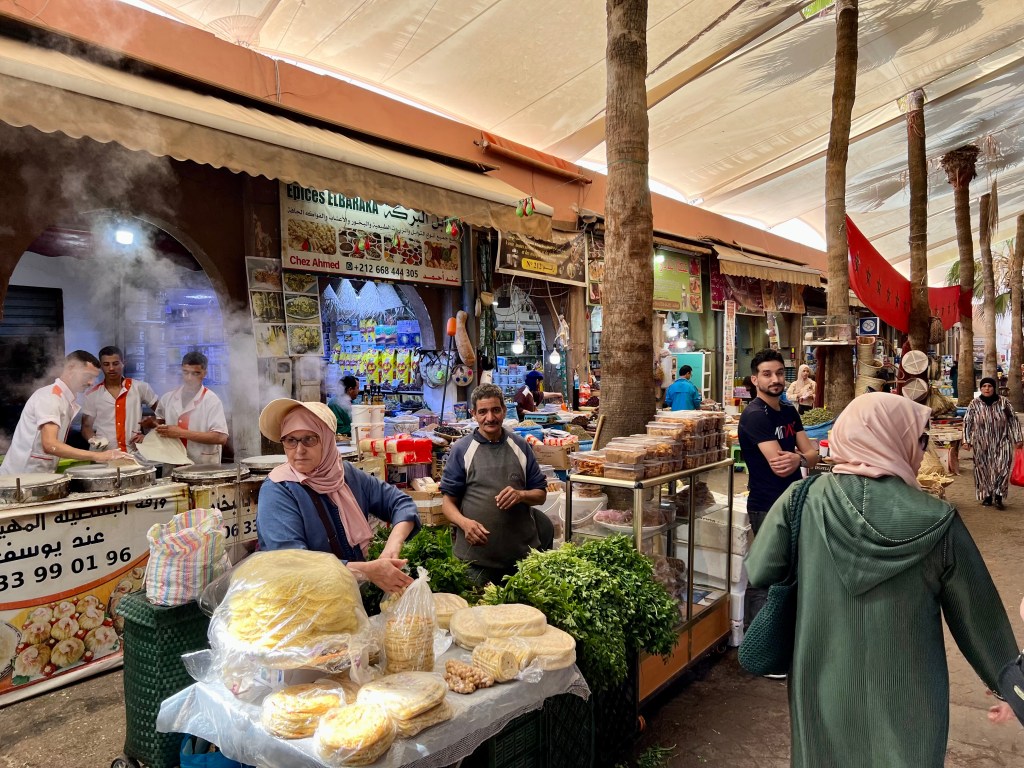
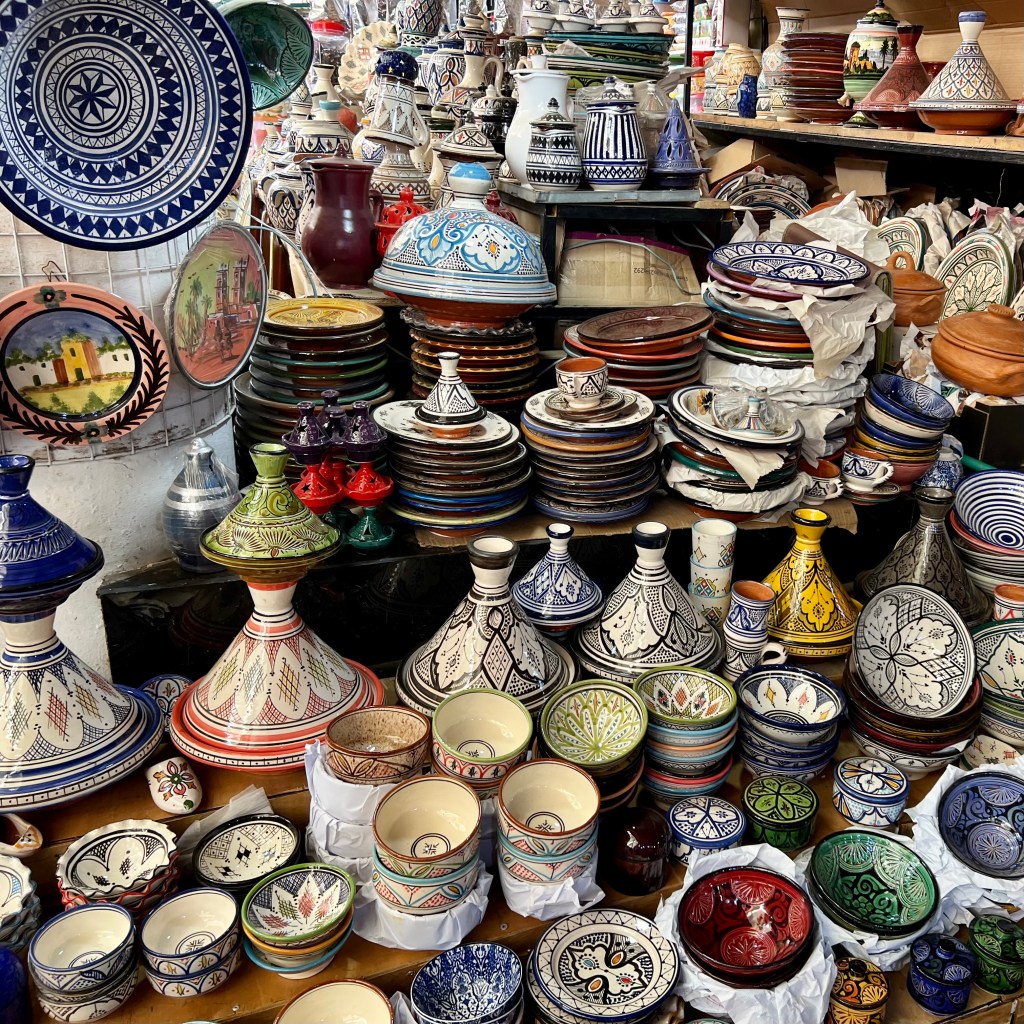
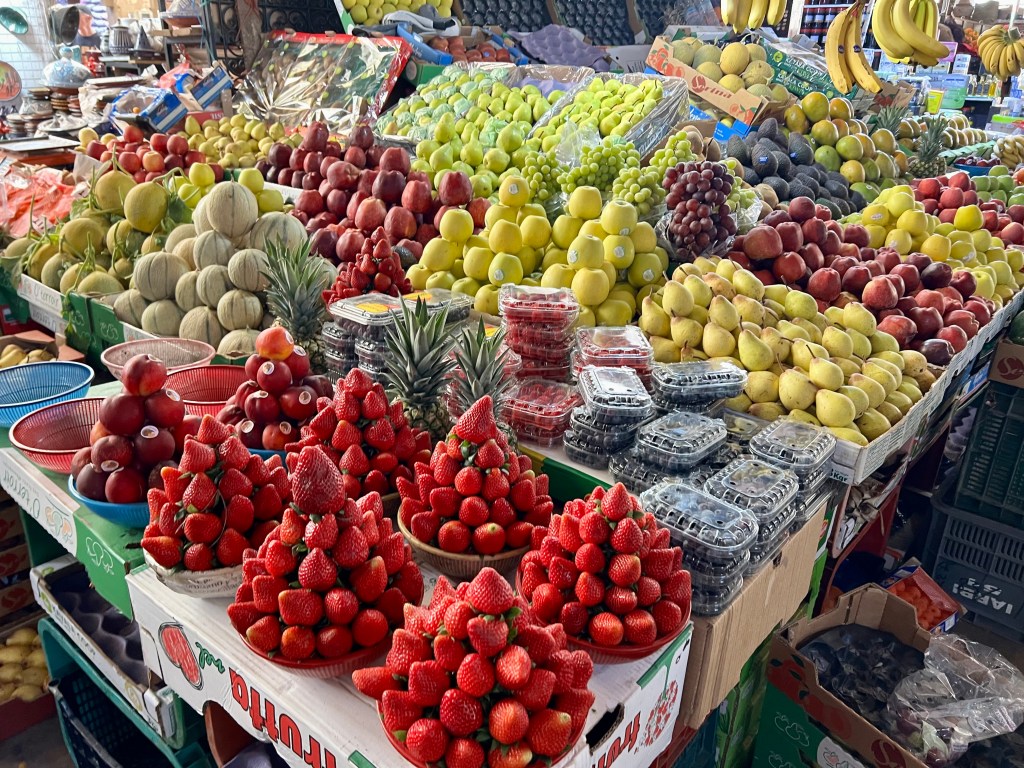
Souk El Had is one of the biggest souks in Morocco, featuring over 6,000 shops spread over 13 hectares in the city center. The Souk draws crowds of locals and travelers to its troves of spices, fruit, furniture, textiles, leather goods, pottery and just about anything else you can imagine.
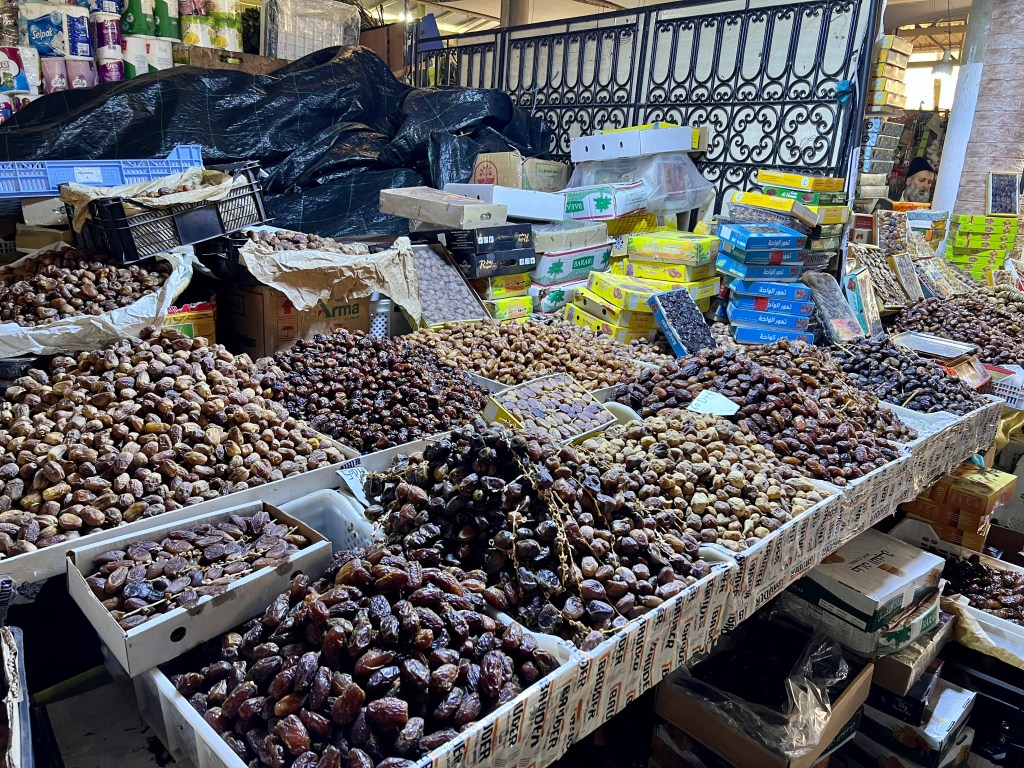
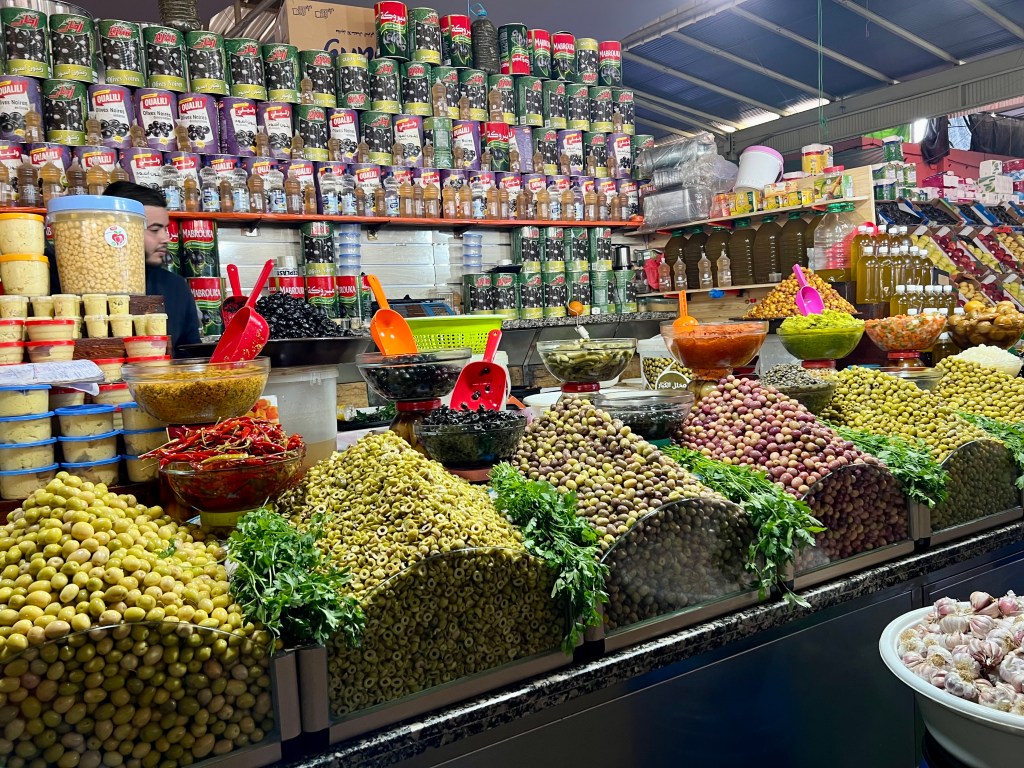
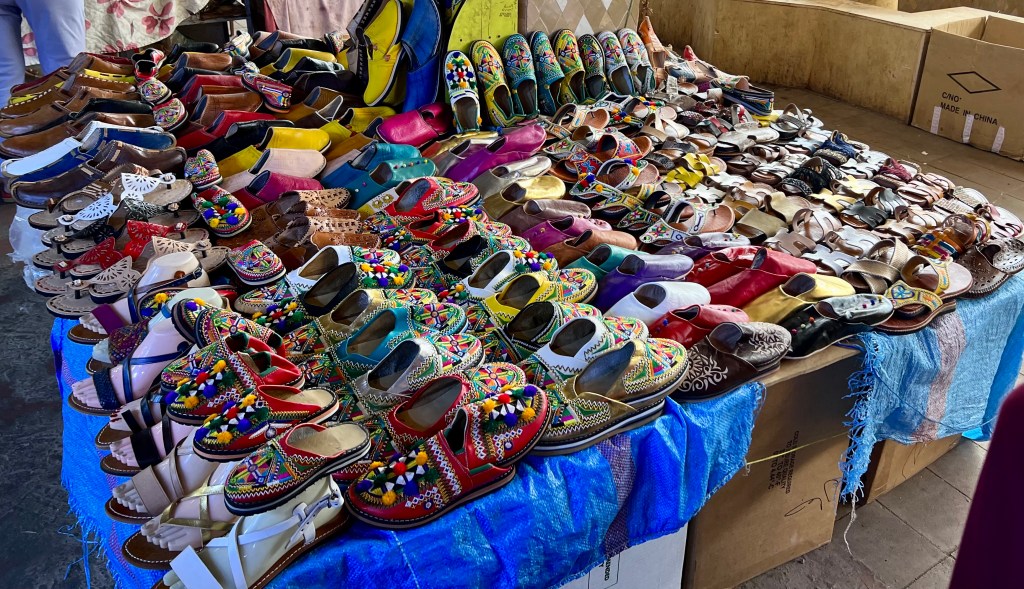
As I’m not buying anything, I opted to follow our guide to one of the many argan oil cooperatives in the city. Argan oil, often referred to as Moroccan oil, is rich in fatty acids and vitamin E, and is prompted for its moisturizing and rejuvenating benefits for the skin and is particularly beneficial for the hair. Today, cooperatives have developed many products around this natural treasure.
At the cooperative, we were provided with details of the oil extraction process and the different ways in which cosmetic and edible oils are handled.
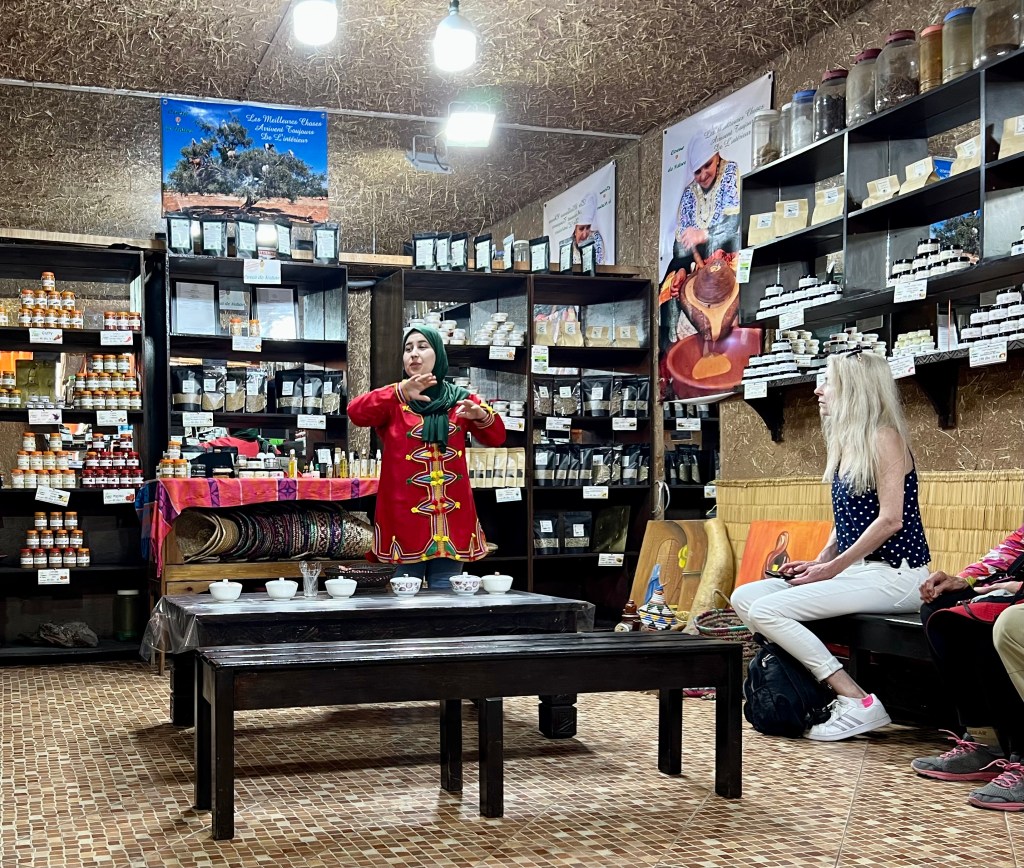
The oil is expensive but it is important to note that it takes kernels from 6 to 7 argan trees to obtain 1 liter of argan oil. A single tree provides between 6 and 8 kilos of nuts. Argan oil is therefore a rare and precious natural commodity. While the prices at the cooperative were reasonable, I managed to avoid buying any as I really don’t have room in my suitcases lol!
After the souk, we headed back to the ship for dinner and some fun with friends.
Rabat
Our second port in Morocco was Casablanca. I’d been here previously on a cruise so have opted for an excursion to Rabat, the diplomatic capital of Morocco.
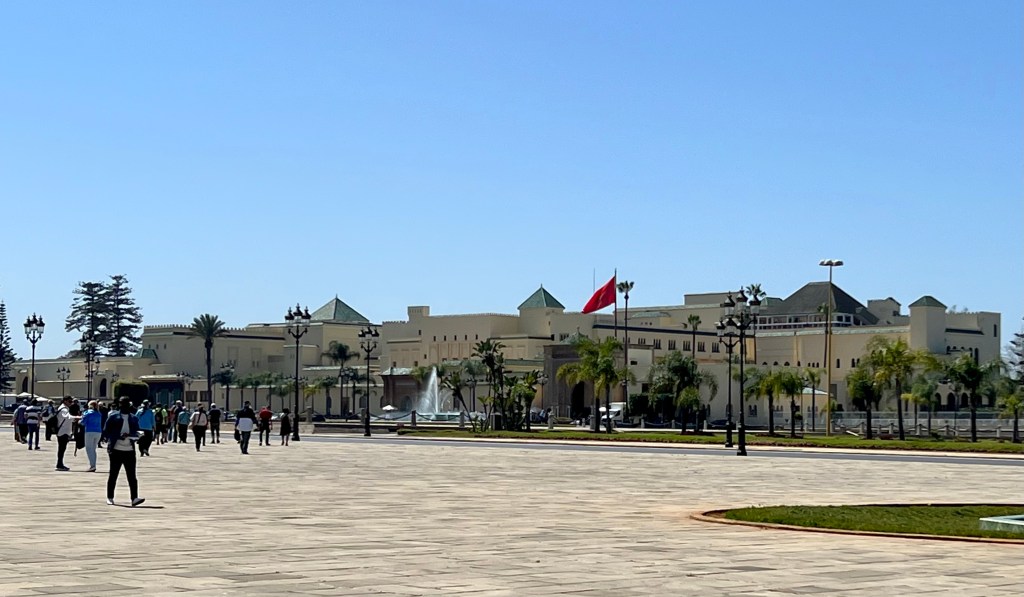
The tour started with a 1 1/2 hour drive to Rabat, much of which I snoozed through! Our first stop was the Royal Palace or Dar al-Makhzen. Built in 1864, the palace is the primary and official residence of the King of Morocco in Rabat. The Mosque el Faeh aka Royal Mosque is located next to the palace and is where kings go to pray.

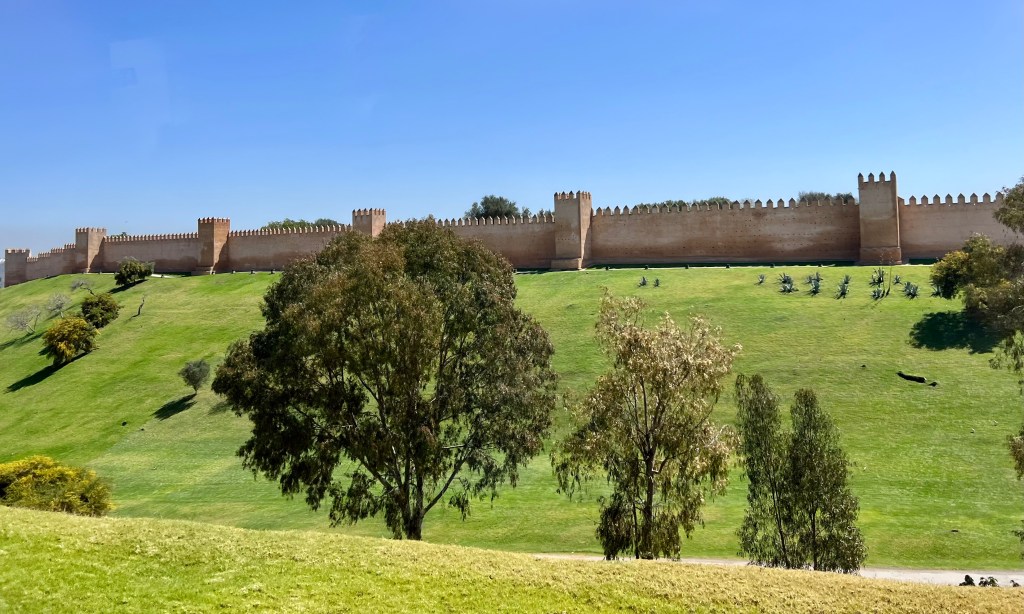
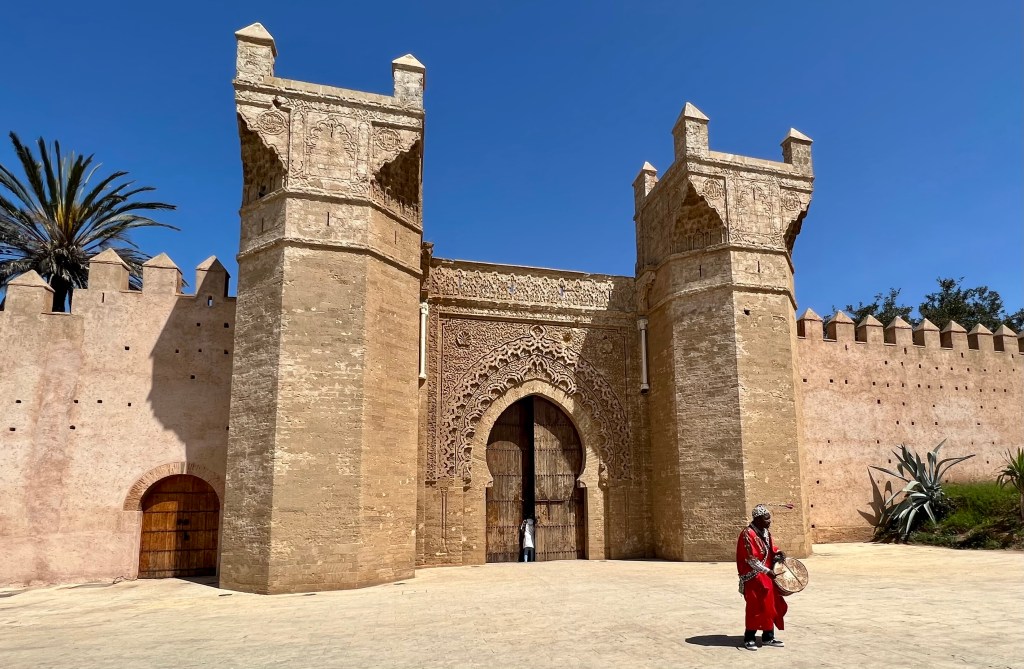
Our next stop is the Chellah or Shalla, a medieval fortified Muslim necropolis located on the south side of the Bou Regreg estuary. It was here that the Phoenicians established a trading emporium. It was listed as a UNESCO World Heritage Site in 2012 for its architecture and rich history. While there were treated to some drumming by a colourful musician.


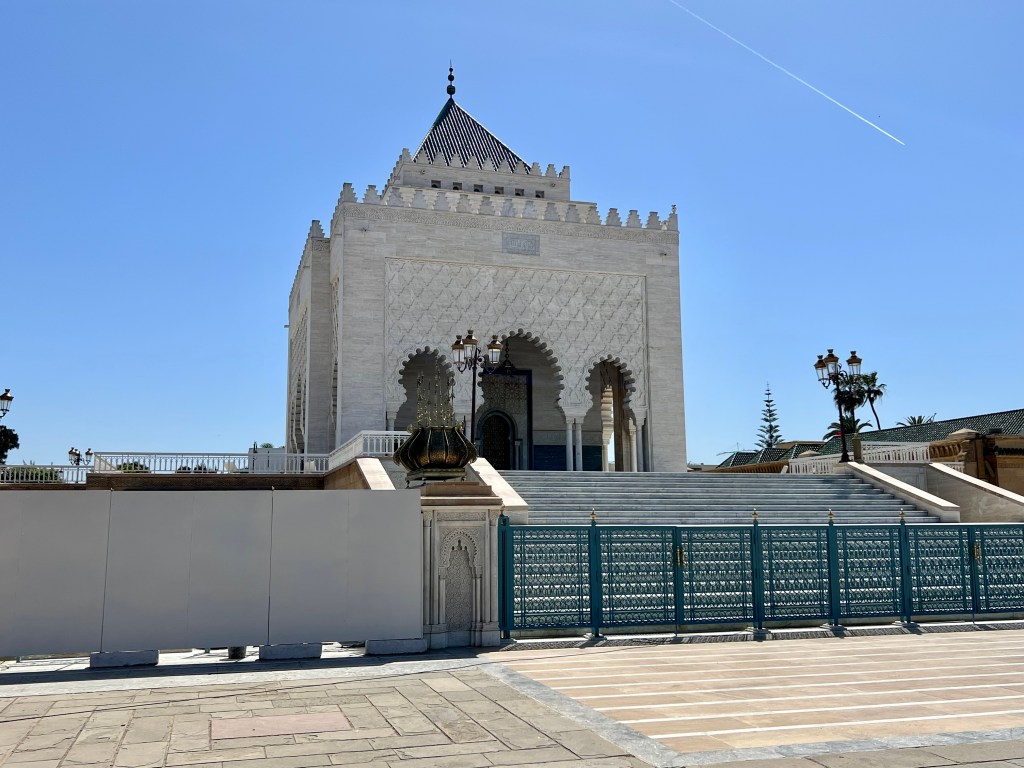
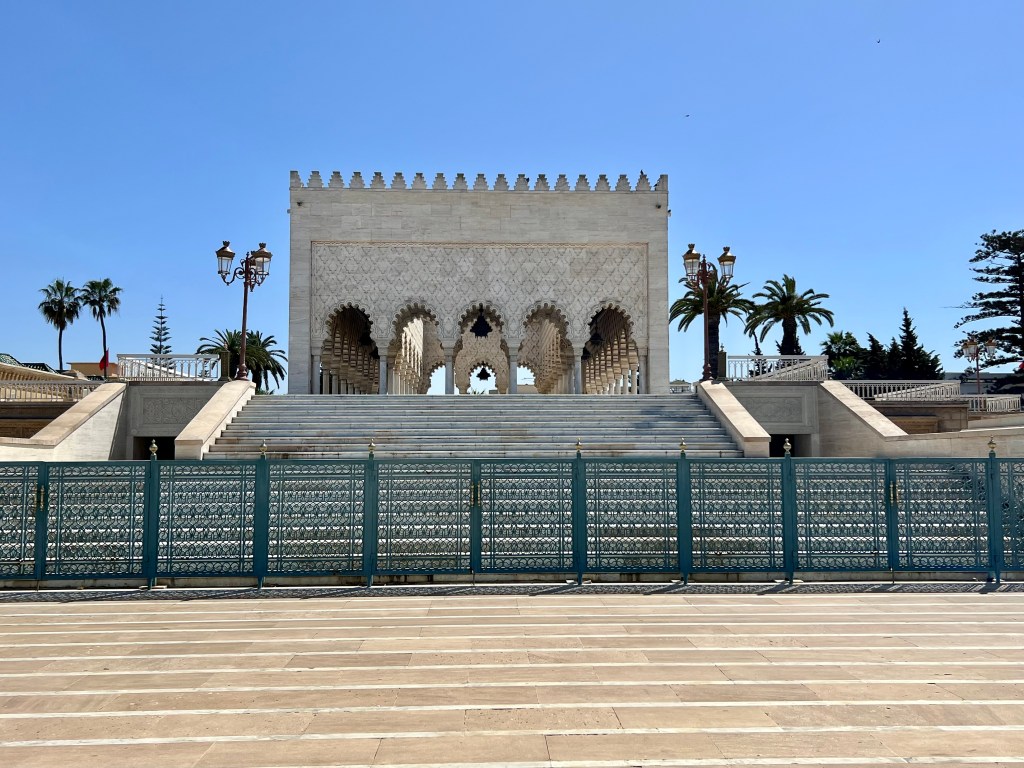
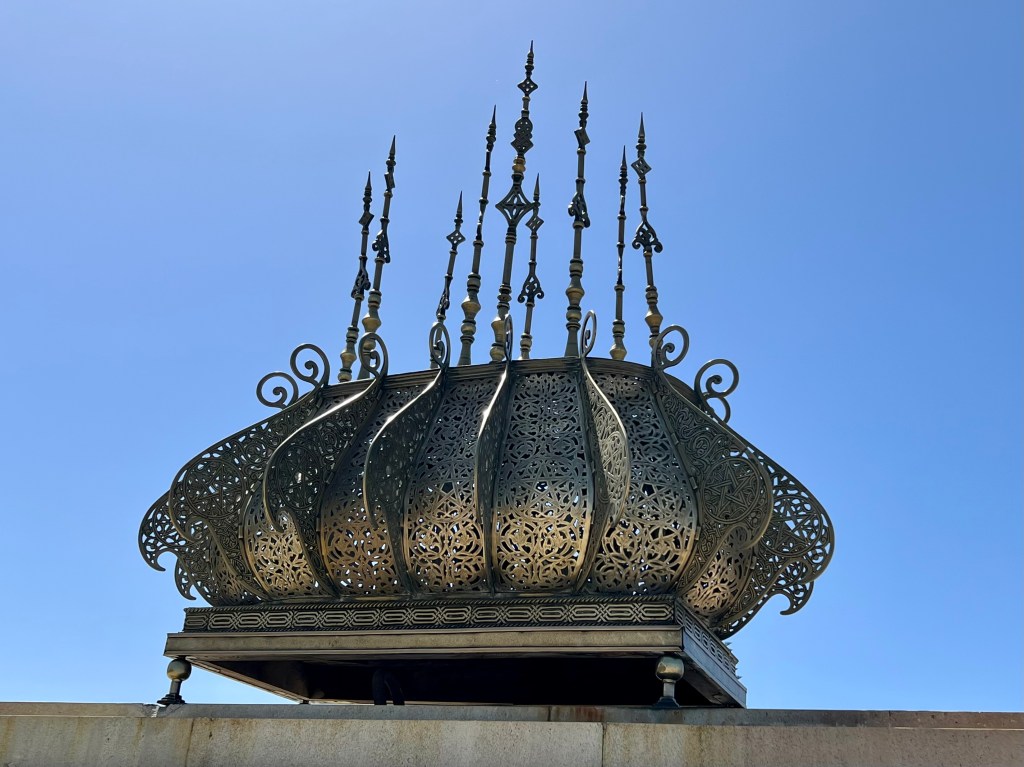
After a brief stop, we headed to the Mausoleum of Mohammad V on the Yacoub al-Mansour esplanade in Rabat, Morocco. This elegant royal resting place for the father of Moroccan independence features the tombs of the Moroccan king and his two sons, late King Hassan II and Prince Abdallah. The resting place of Moroccan kings features beautiful architecture, handcrafted from top to bottom, with roofs of green tile and marble floors.
The gates are guarded 24/7 by photogenic mounted royal guards with unique uniforms!

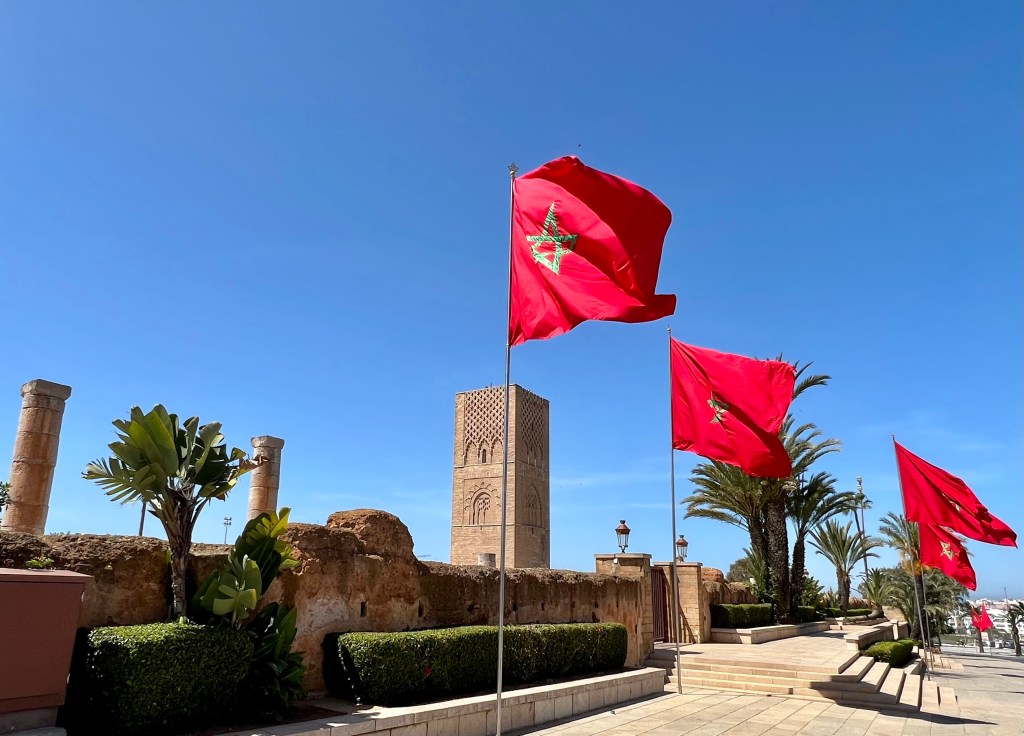
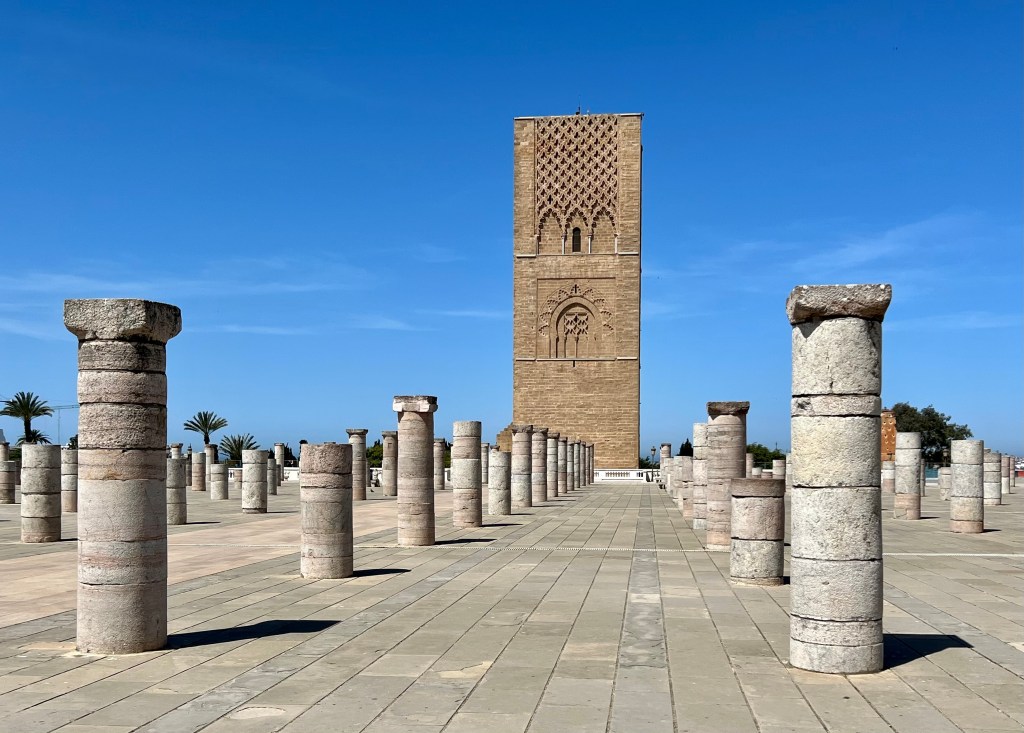
Another Rabat must see, the Hassan Tower is located on the opposite side of the square from Mausoleum. The Hassan Tower is the minaret of an incomplete mosque in Rabat, Morocco. Commissioned by Abu Yusuf Yaqub al-Mansur, the third Caliph of the Almohad Caliphate in 1195. The tower was intended to be the largest minaret in the world along with the mosque but was never finished. The unfinished minaret is surrounded by two hundred columns.
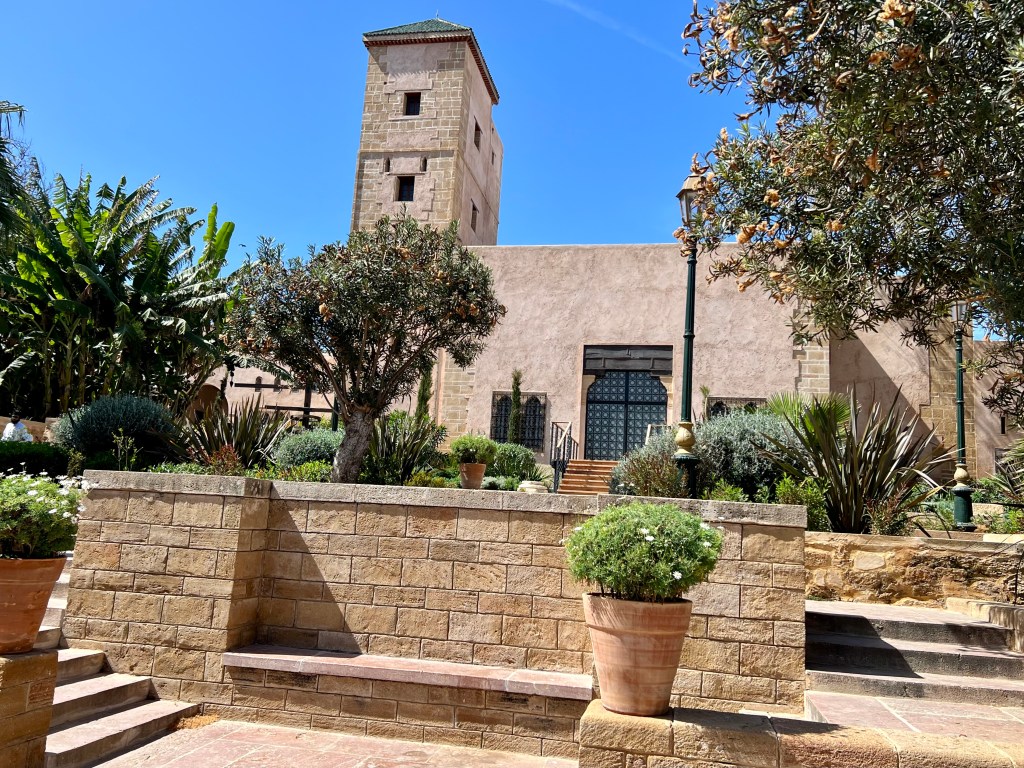
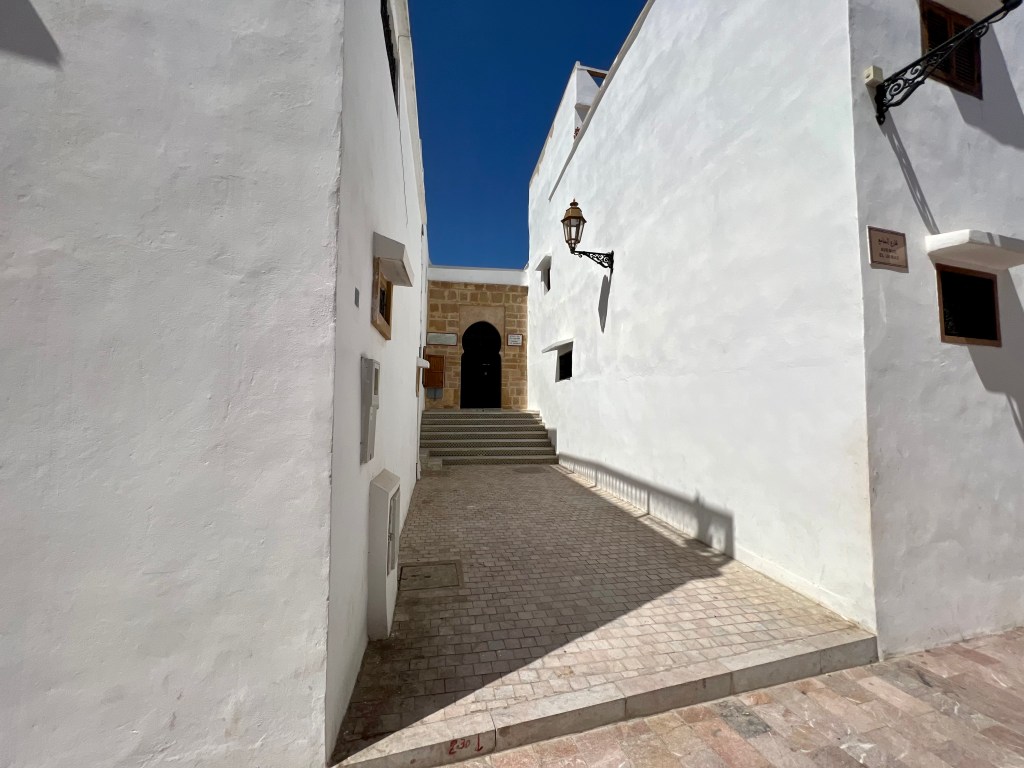
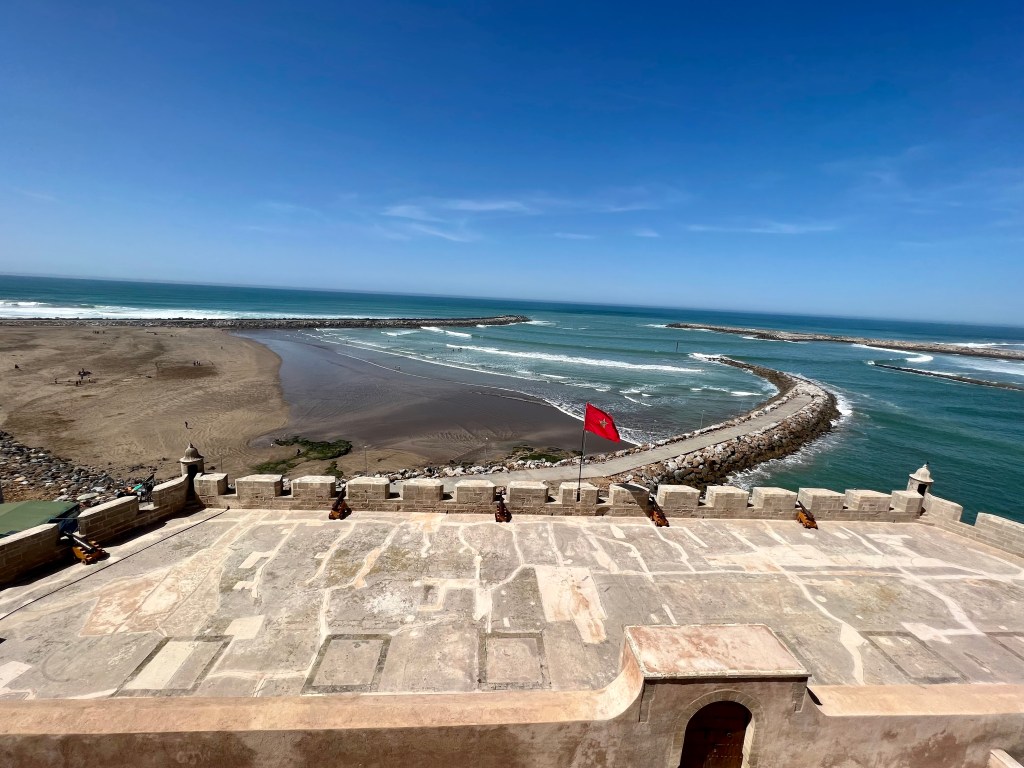
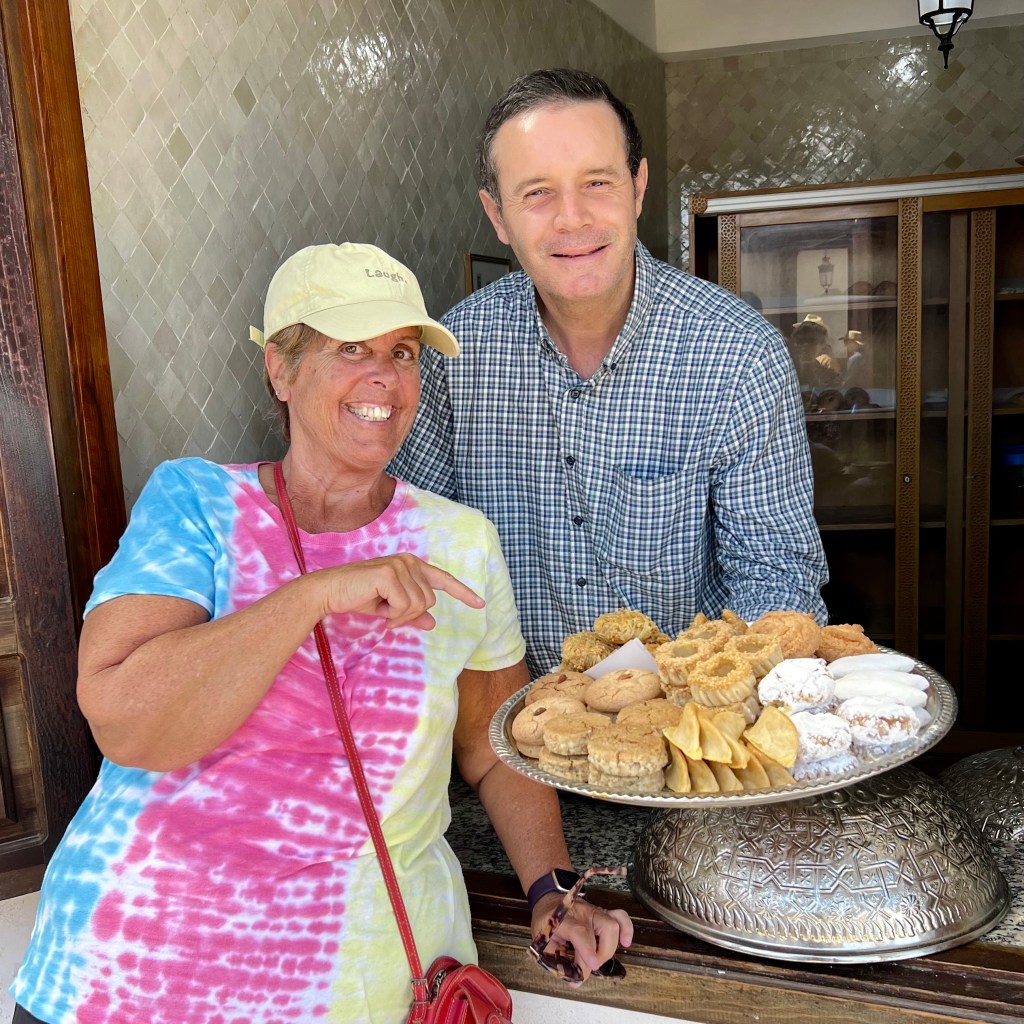
Our next stop was the Kasbah des Oudaias located at the mouth of the Bou Regreg river opposite adjacent to the Rabat Medina. The wonderful old walled portion of the city with narrow streets to wander has scenic views of both the Atlantic Ocean and the Bou Regreg. After a bit of a wander, we stopped for mint tea and Moroccan cookies at the Cafe Maure. Yummm!


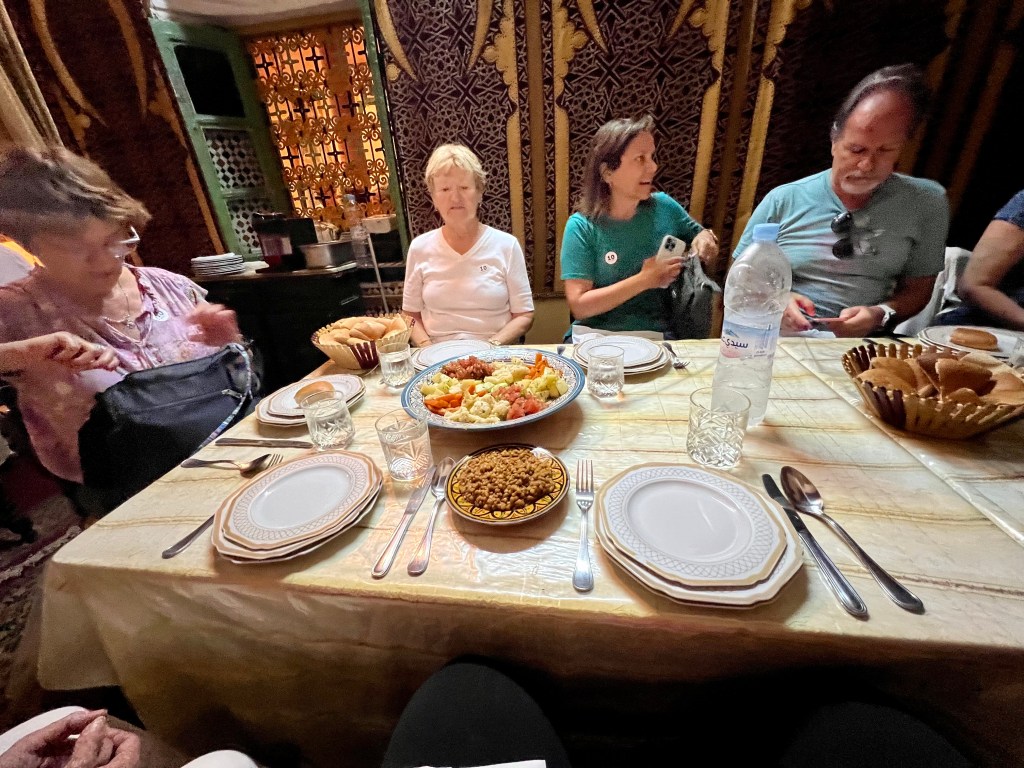
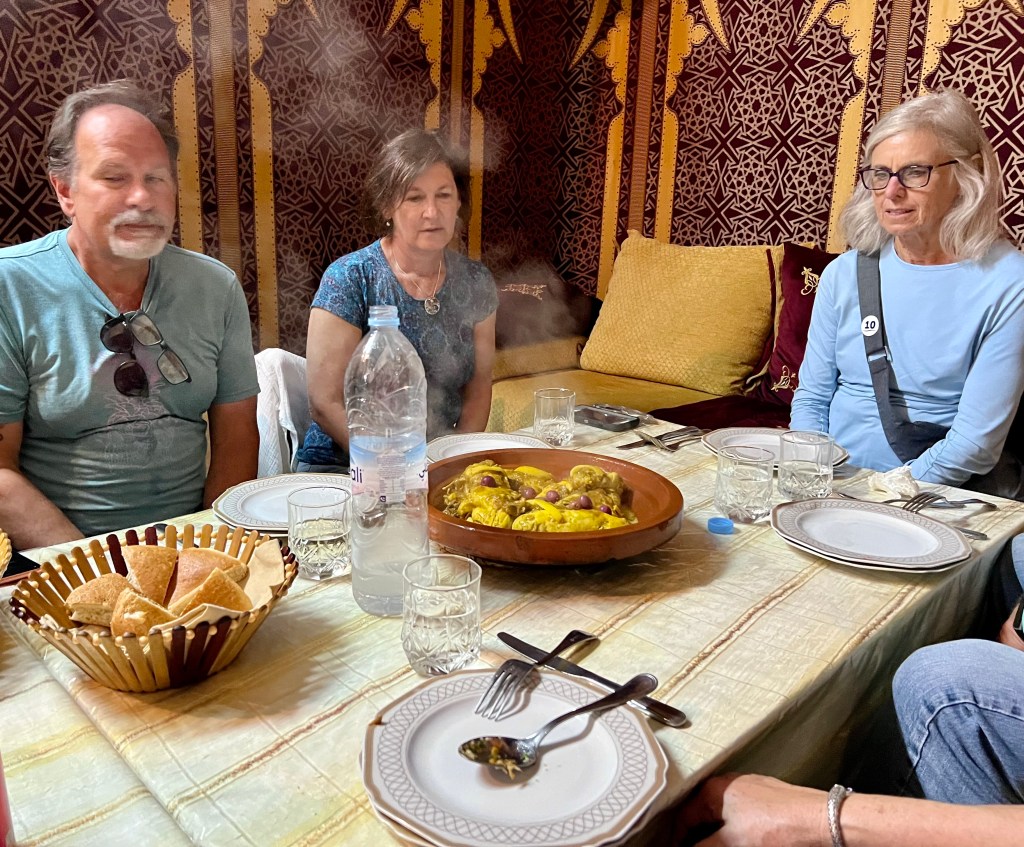
After our snack, we headed off to have lunch at a local restaurant; lentils, salad and chicken and olive tajine were on the menu along with fresh fruit for dessert. Given that it was Ramadan, I’m sure the wait staff’s mouths were watering.
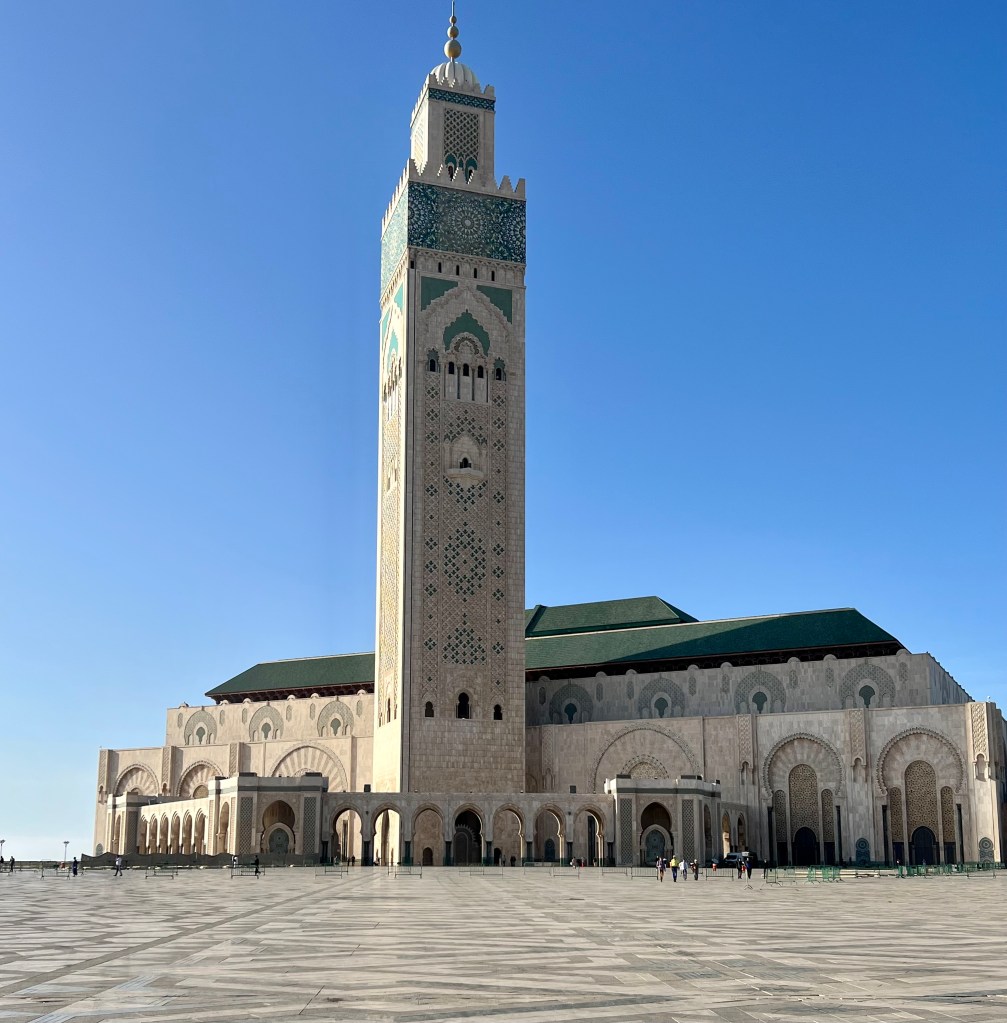
Back on the bus, we headed back to Casablanca for a quick photo stop at the Hassan II Mosque; the largest functioning mosque in Africa and the 7the largest in the world. Its 210 metre minaret is the world’s second tallest. It was built by Moroccan artisans from all over the kingdom and completed in 1993, under the guidance of King Hassan II. The walls are of hand-crafted marble and the roof is retractable. A maximum of 105,000 worshippers can gather together for prayer: 25,000 inside the mosque hall and another 80,000 on the mosque’s outside grounds.

Afterwards, we were given a bit of time for shopping at United Nations square before heading back to the ship.
Tomorrow is another day. Adventures in Southern Spain await …
 Judy’s Rambles