Cruising the High Seas – Two days in Morocco

March 28-29, 2023

Agadir

We’ve left the Canaries and are headed to Morocco for a couple of days. Our first Moroccan port of call is Agadir, a city along Morocco’s southern Atlantic coast, in the foothills of the Anti-Atlas Mountains. I’m doing the Highlights of Agadir excursion while my friends are headed out on their own to explore. We’ll compare notes later. 

Our first stop was a few kilometres from the centre of Agadir, on the top of a hill, at the city’s ancient Kasbah. The Kasbah of Agadir Oufella is a historical landmark in Agadir that was destroyed by a devastating earthquake in 1960. 

Kasbah, means fortification and these sturdy ramparts were built to serve as protection for the army and the people in the city. Since the 16th century, the history of Agadir Oufella has been linked to the confrontation of great empires trying to control a link between the continental riches of the western Sahara and the great wealth of the Atlantic trade. 

Originally a defensive fort against Portuguese attacks in the 1500s, the site is being rebuilt. Still a “work in progress” as reconstruction of the interior is not complete we couldn’t go inside, but, the fortress normally provides spectacular views of the city and the surrounding arid country side. Today, however, there is a haze of sand because of the “la calima,” as strong seasonal winds carry sand and dust away from the Sahara so not much to see!

Of course, the presence of tourists is a magnet for commerce and there were the requisite vendors and camel rides for those that were interested. 
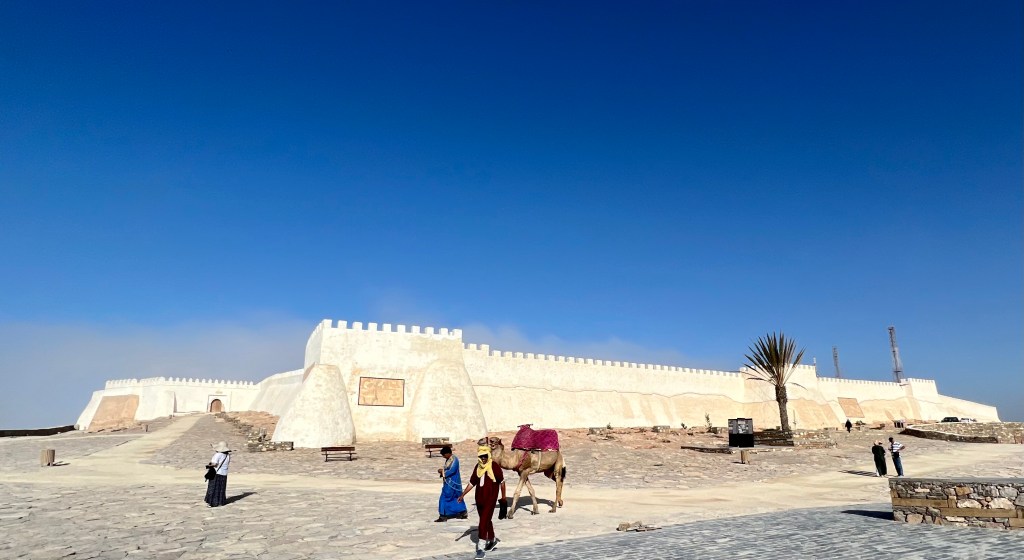
Kasbah of Agadir Oufella
Moroccan Uber
View courtesy of “la calima”

After our photo stop, we headed downtown to the lively Nouveau Talborjt neighbourhood on Avenue Président Kennedy to the Mohammed V Mosque. The largest mosque in the city; its remarkably tall, window-covered minaret towers above the city, spread out around it. As is the case for much of Agadir, it was built after the earthquake.

Like most Moroccan mosques, visitors aren’t allowed inside, but we did have a chance to look at its ornate exteriors with its wealth of decorated facades and beautiful horse-shoe-shaped doors, and its turquoise grilles.
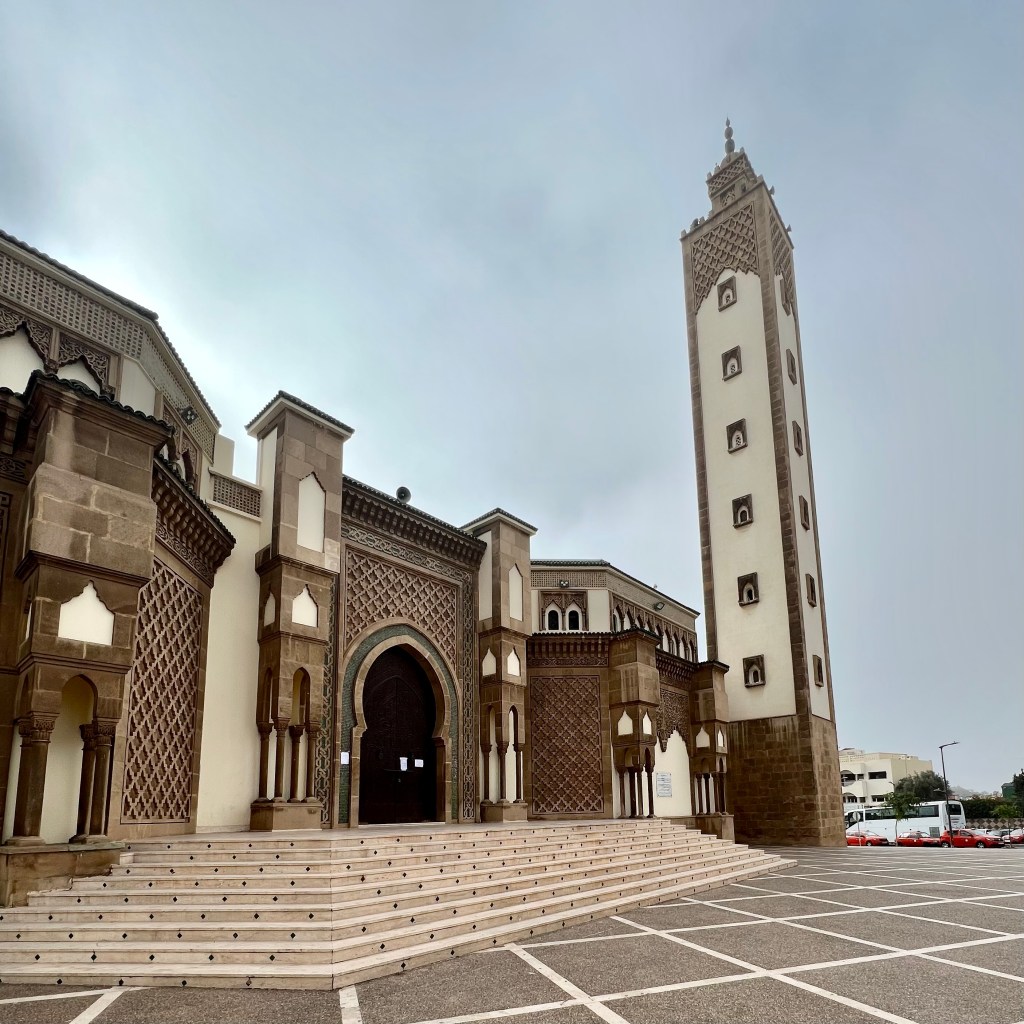
Minaret of Mohammed V Mosque
Mohammed V Mosque
Entry to Mohammed V Mosque

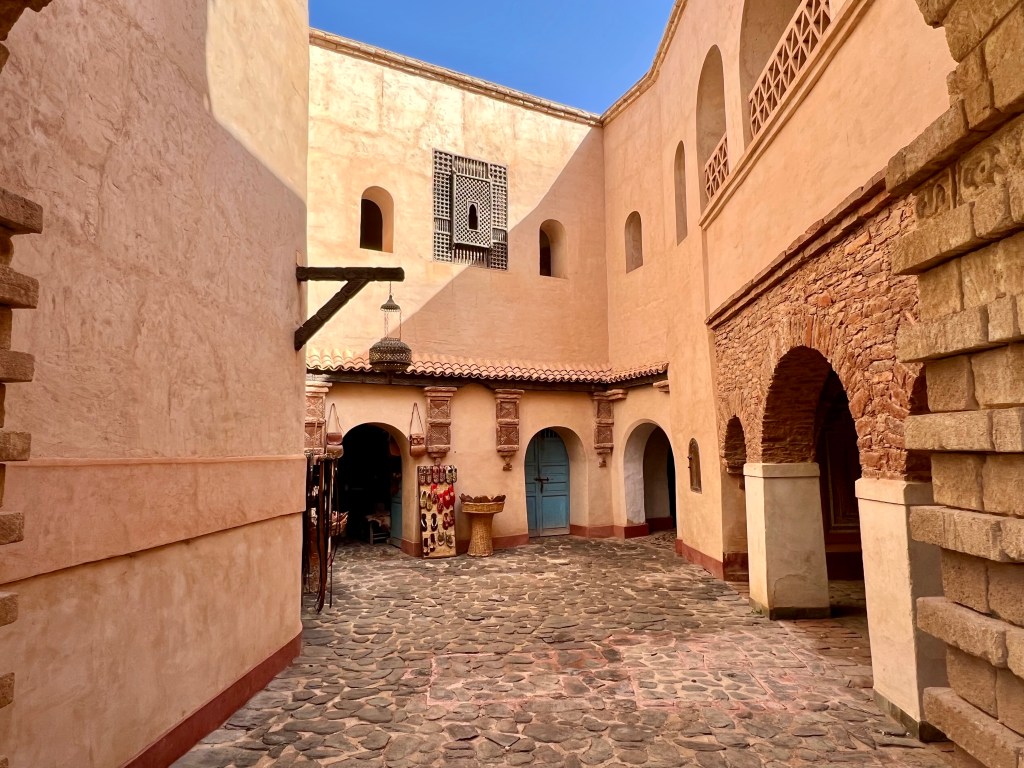
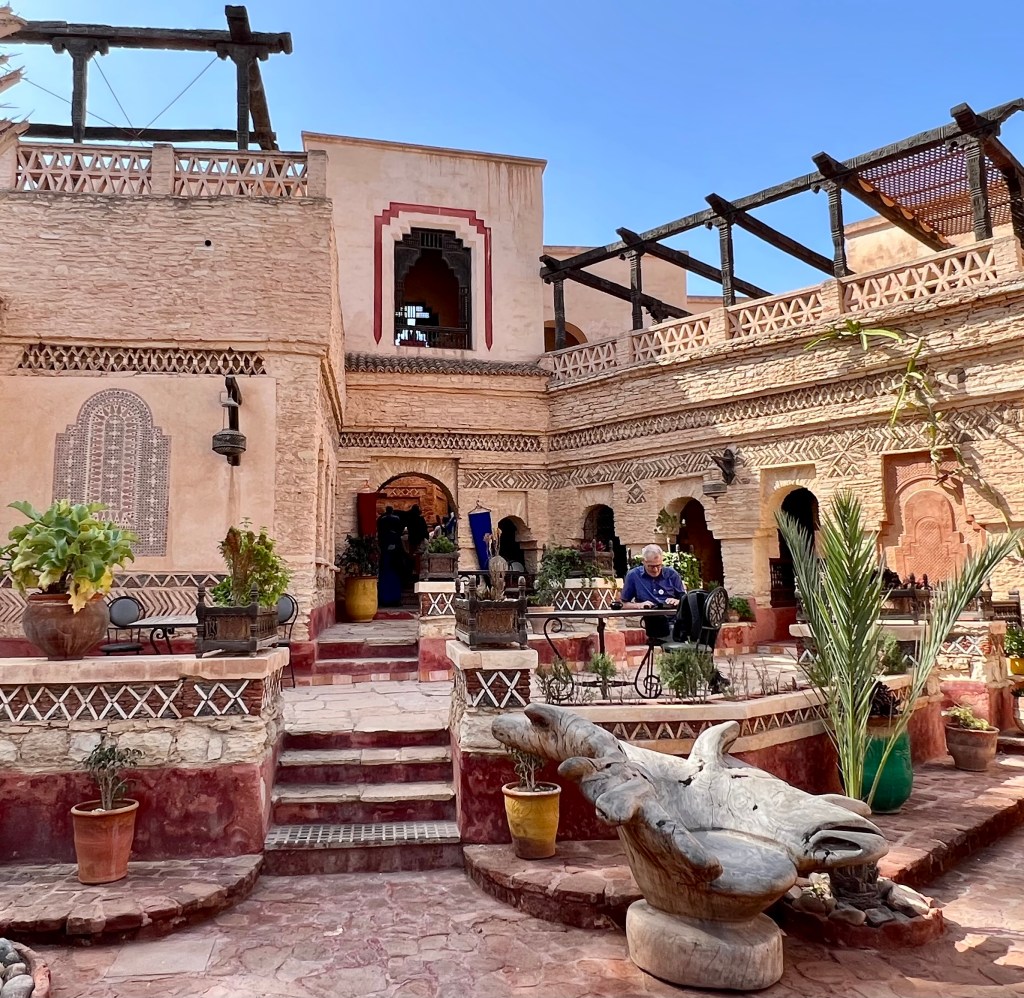
Our next stop was La Nouvelle Medina Polizzi. The old town (Medina) in Agadir was also destroyed during the 1960 earthquake. In 1992, a new Medina was built by an Italian architect as an outdoor museum. 

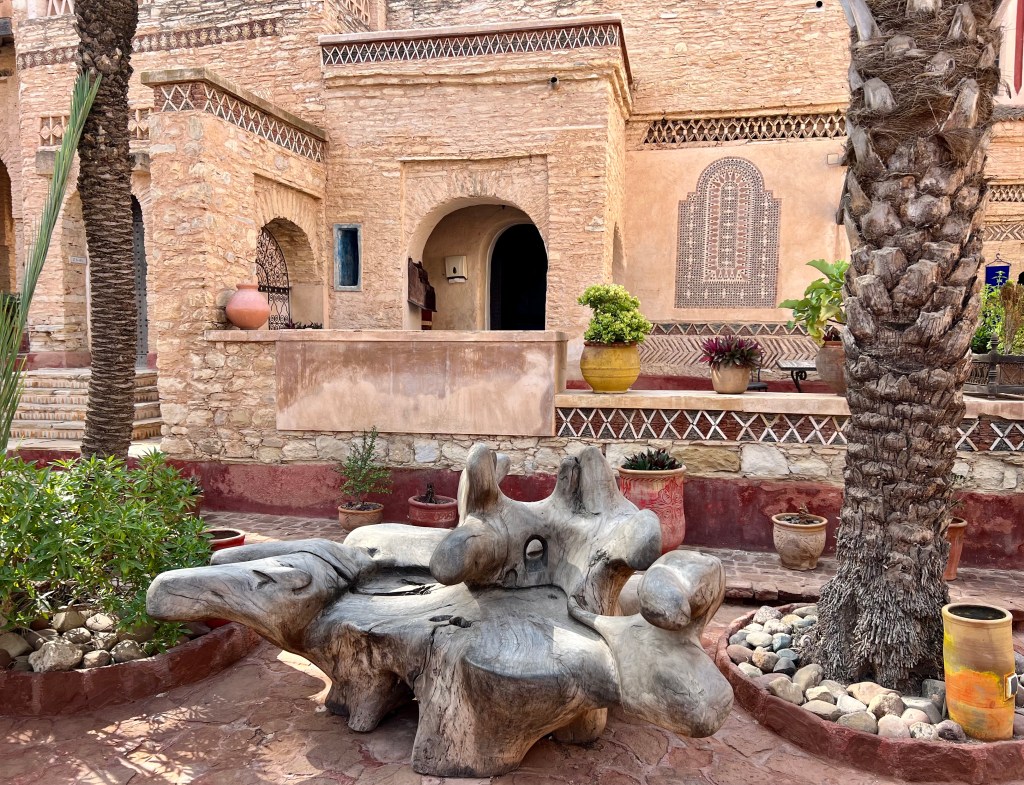
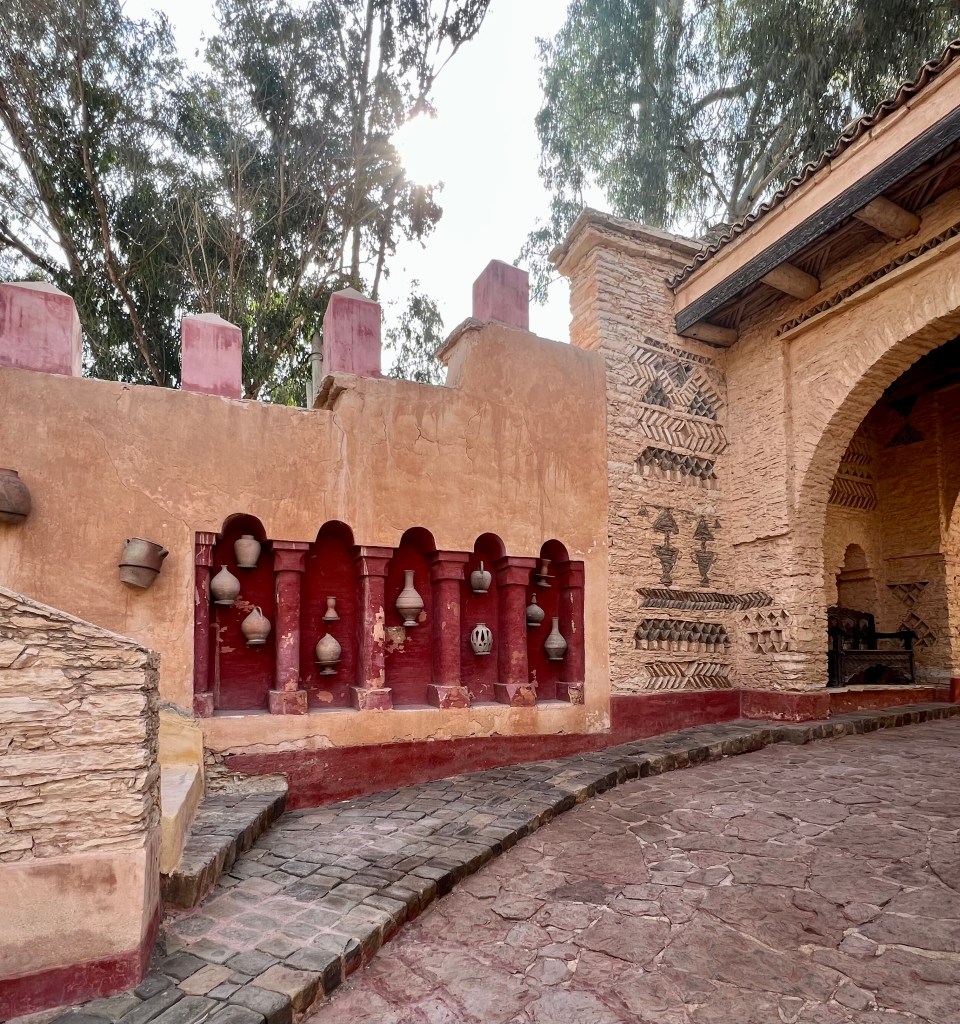
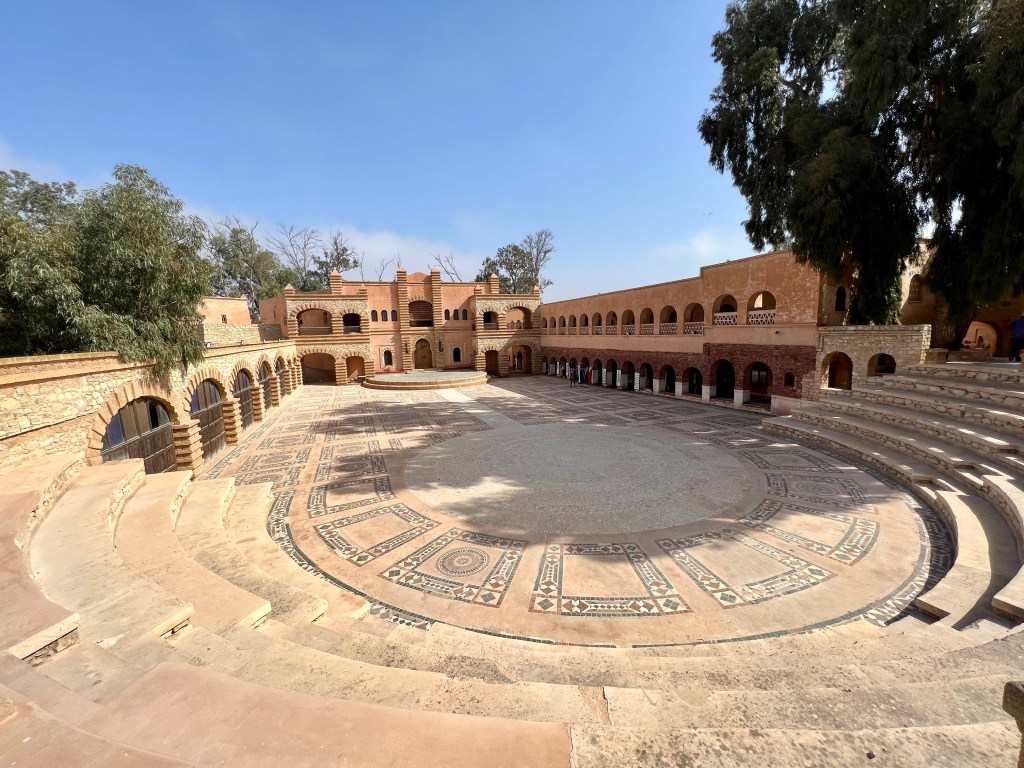
We were treated to some mint tea and sweet treats as we entered and then given some time to explore on our own. The buildings are interesting. They have been built with recycled materials and there are some beautiful mosaics, old doors and the theatre square is vast and peaceful. Overall, a very pleasant way to spend a bit of time wandering around and looking in the craft shops. A bit of calm before heading to our next stop; Souk El Had d’Agadir. 
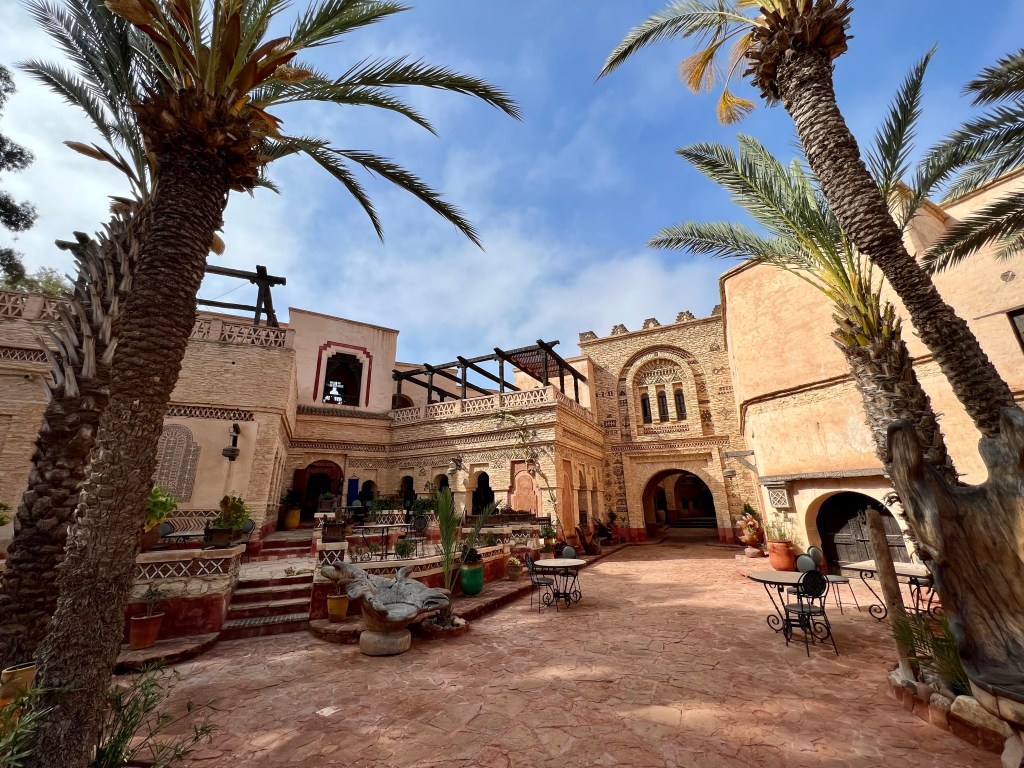
Courtyard at La Nouvelle Medina Polizzi
Mosaic
Cool seating
Pottery
Theatre at La Nouvelle Medina Polizzi
Shops in the Medina

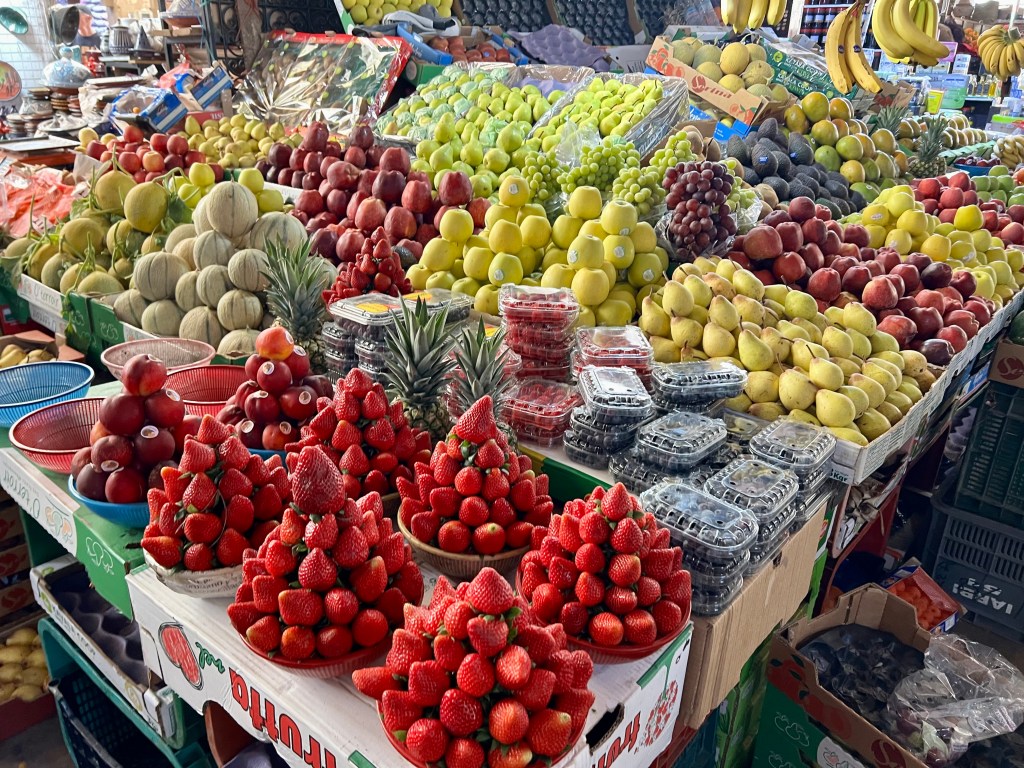
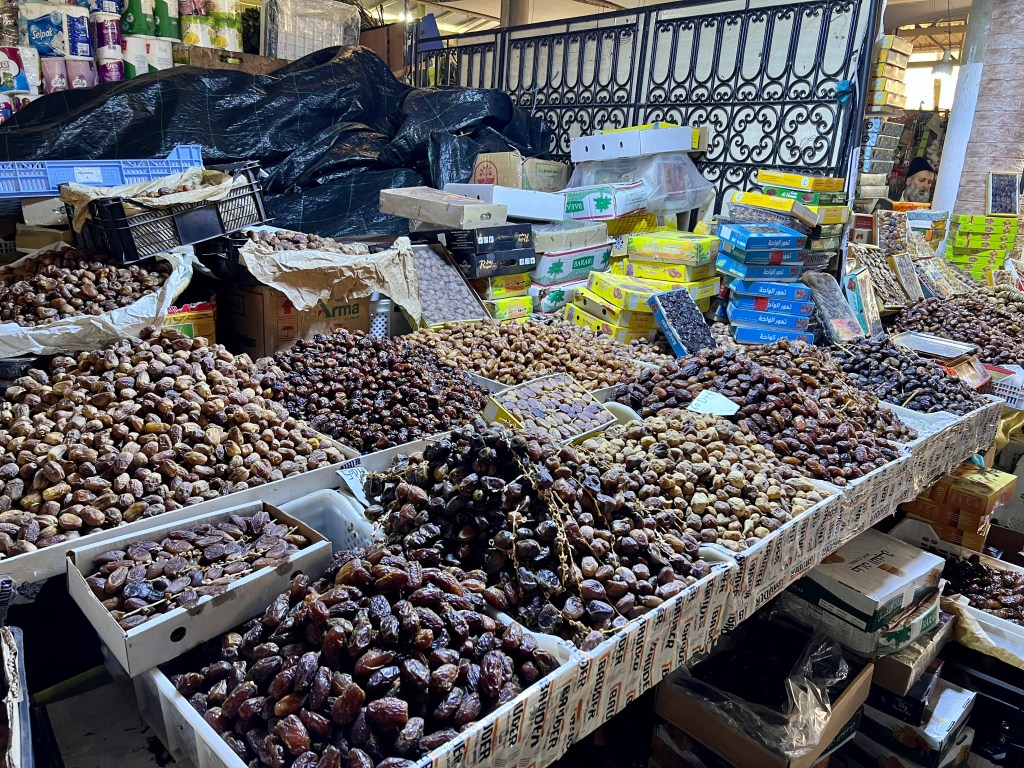
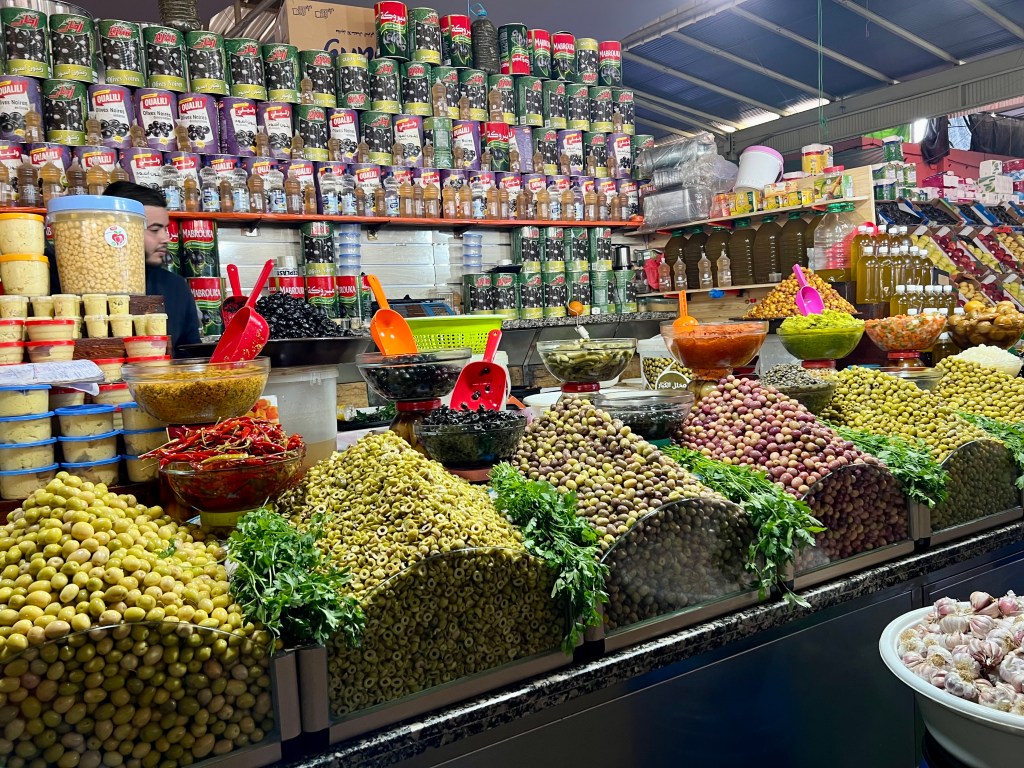
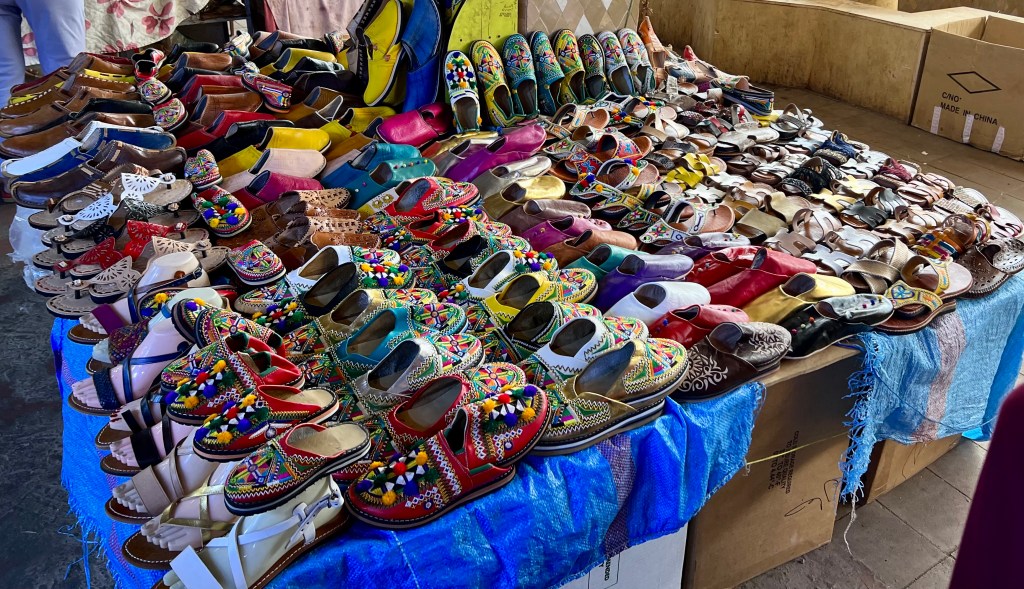
Souk El Had is one of the biggest souks in Morocco, featuring over 6,000 shops spread over 13 hectares in the city center. The Souk draws crowds of locals and travelers to its troves of spices, fruit, furniture, textiles, leather goods, pottery and just about anything else you can imagine.
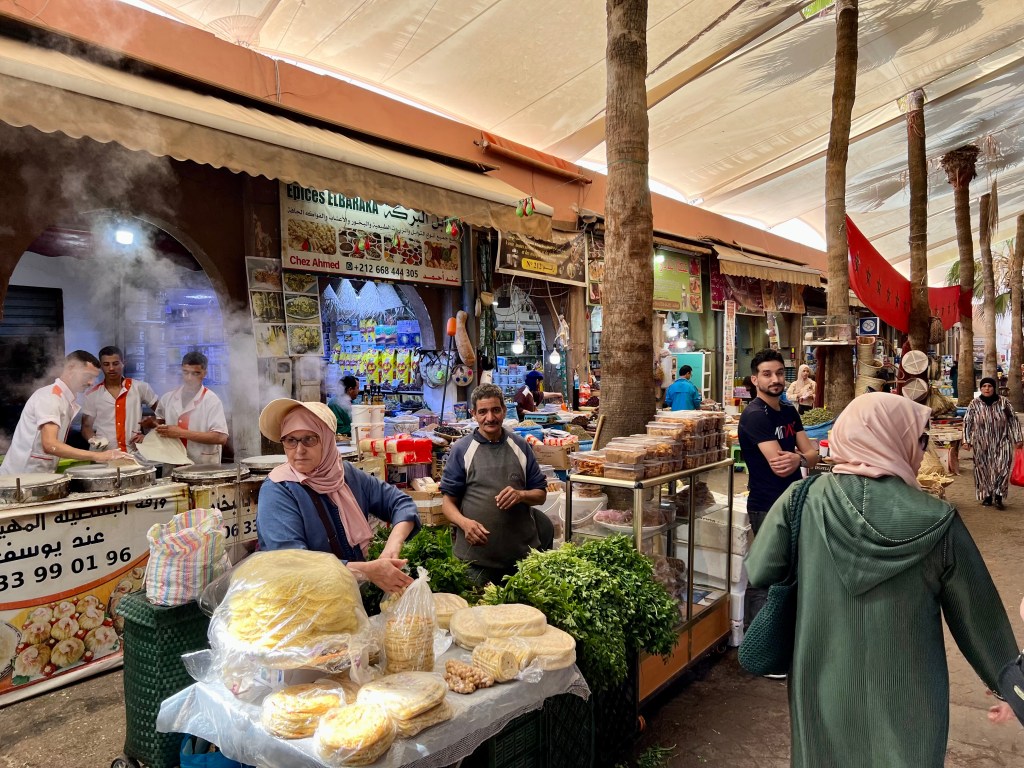
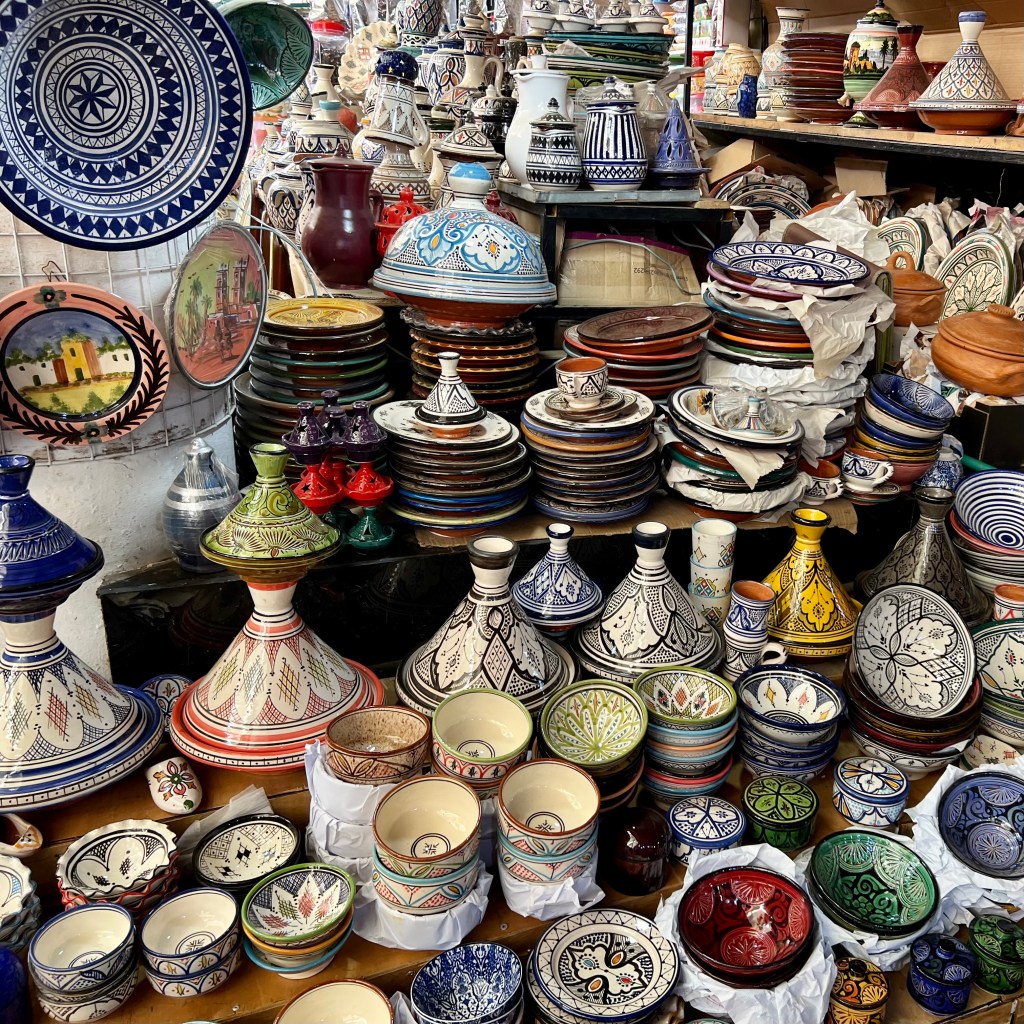
You can get anything you want at Souk El Had
Pottery and Tajines
Who doesn’t want a pyramid of strawberries
Dates aplenty
Olives; salty goodness
I should have bought some slippers!

As I’m not buying anything, I opted to follow our guide to one of the many argan oil cooperatives in the city. Argan oil, often referred to as Moroccan oil, is rich in fatty acids and vitamin E, and is prompted for its moisturizing and rejuvenating benefits for the skin and is particularly beneficial for the hair. Today, cooperatives have developed many products around this natural treasure.

At the cooperative, we were provided with details of the oil extraction process and the different ways in which  cosmetic and edible oils are handled. 
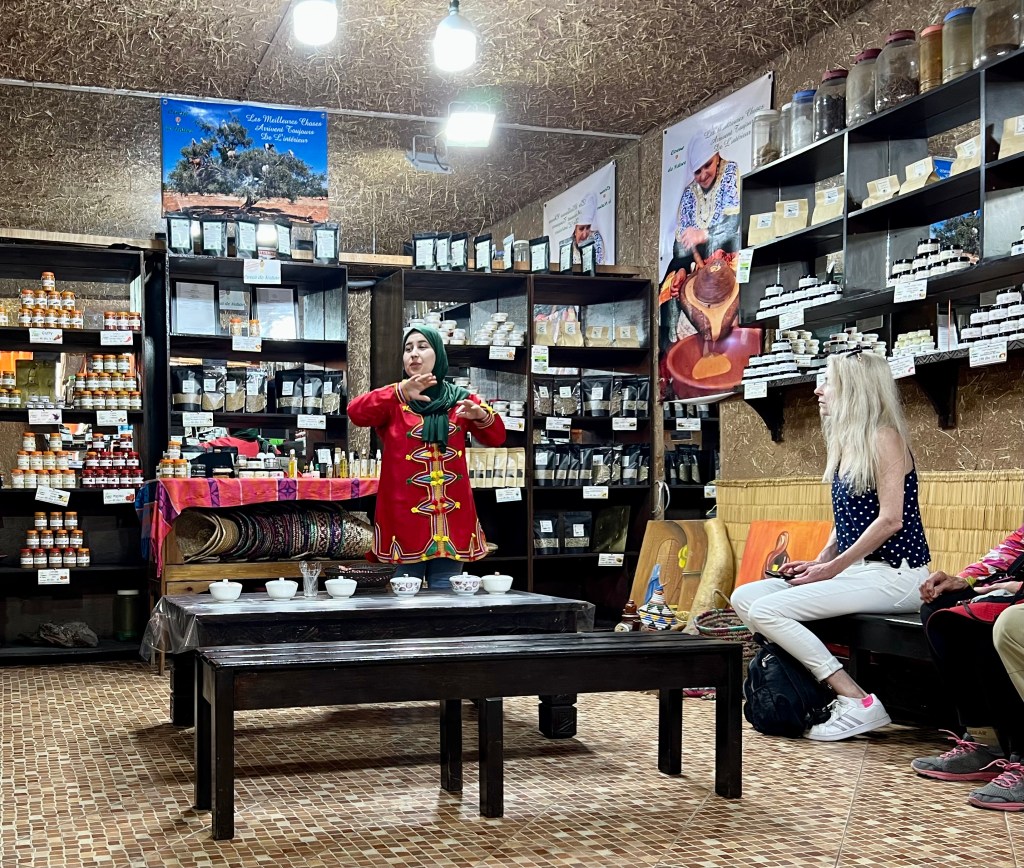
Getting the skinny on argan oil at the Cooperative

The oil is expensive but it is important to note that it takes kernels from 6 to 7 argan trees to obtain 1 liter of argan oil. A single tree provides between 6 and 8 kilos of nuts. Argan oil is therefore a rare and precious natural commodity. While the prices at the cooperative were reasonable, I managed to avoid buying any as I really don’t have room in my suitcases lol! 

After the souk, we headed back to the ship for dinner and some fun with friends. 

Rabat

Our second port in Morocco was Casablanca. I’d been here previously on a cruise so have opted for an excursion to Rabat, the diplomatic capital of Morocco.

The tour started with a 1 1/2 hour drive to Rabat, much of which I snoozed through! Our first stop was the Royal Palace or Dar al-Makhzen. Built in 1864, the palace is the primary and official residence of the King of Morocco in Rabat. The Mosque el Faeh aka Royal Mosque is located next to the palace and is where kings go to pray.
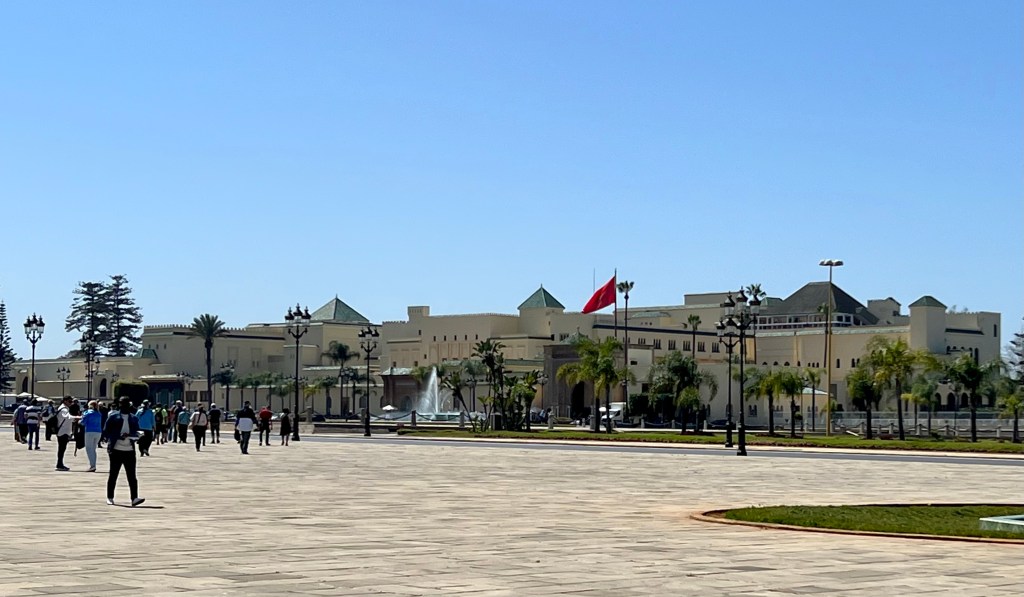
Dar al-Makhzen
Mosque el Faeh aka Royal Mosque

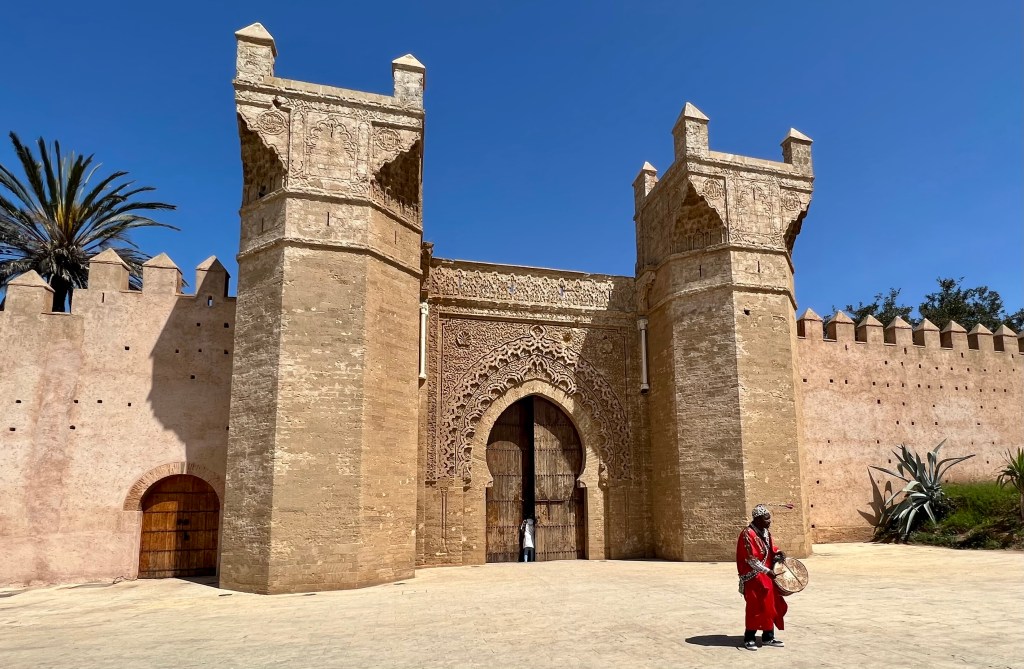
Our next stop is the Chellah or Shalla, a medieval fortified Muslim necropolis located on the south side of the Bou Regreg estuary. It was here that the Phoenicians established a trading emporium. It was listed as a UNESCO World Heritage Site in 2012 for its architecture and rich history. While there were treated to some drumming by a colourful musician. 
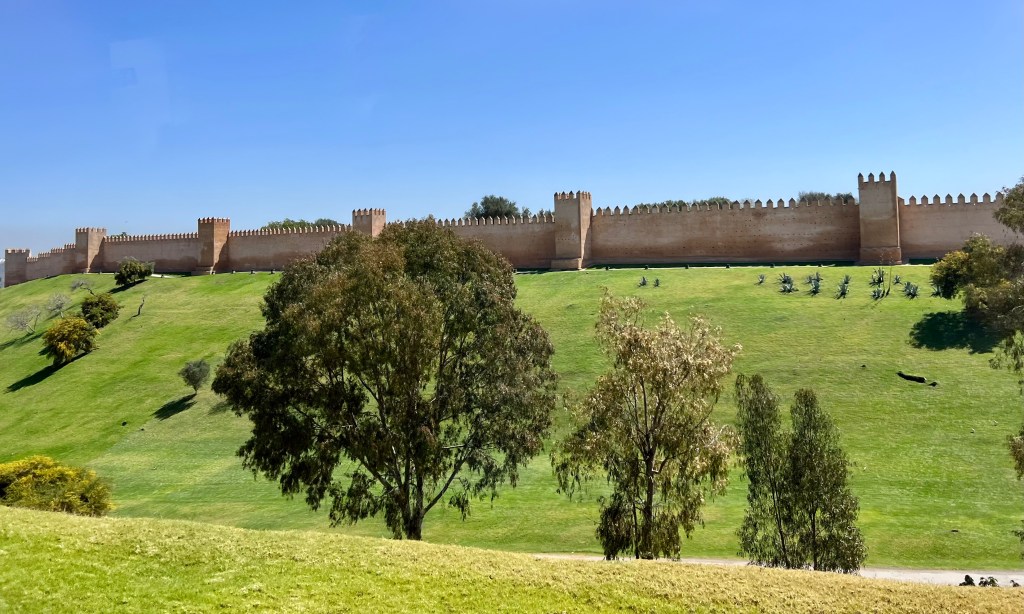
Chellah
Chellah Entry
Our drummer

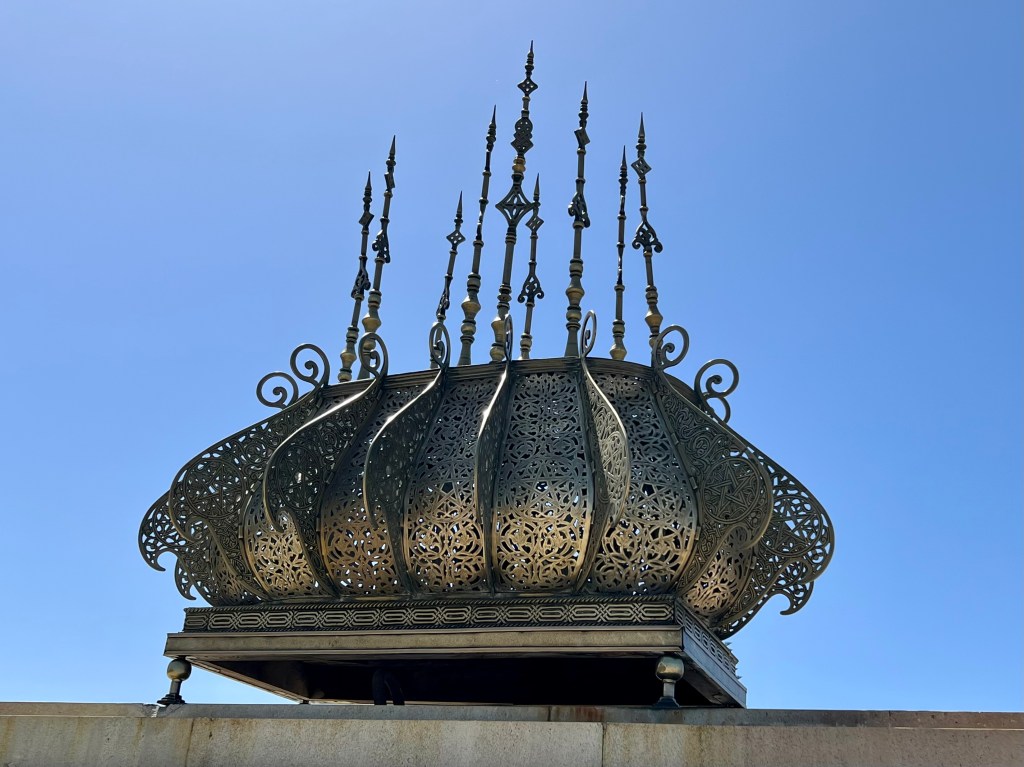
After a brief stop, we headed to the Mausoleum of Mohammad V on the Yacoub al-Mansour esplanade in Rabat, Morocco. This elegant royal resting place for the father of Moroccan independence features the tombs of the Moroccan king and his two sons, late King Hassan II and Prince Abdallah. The resting place of Moroccan kings features beautiful architecture, handcrafted from top to bottom, with roofs of green tile and marble floors.
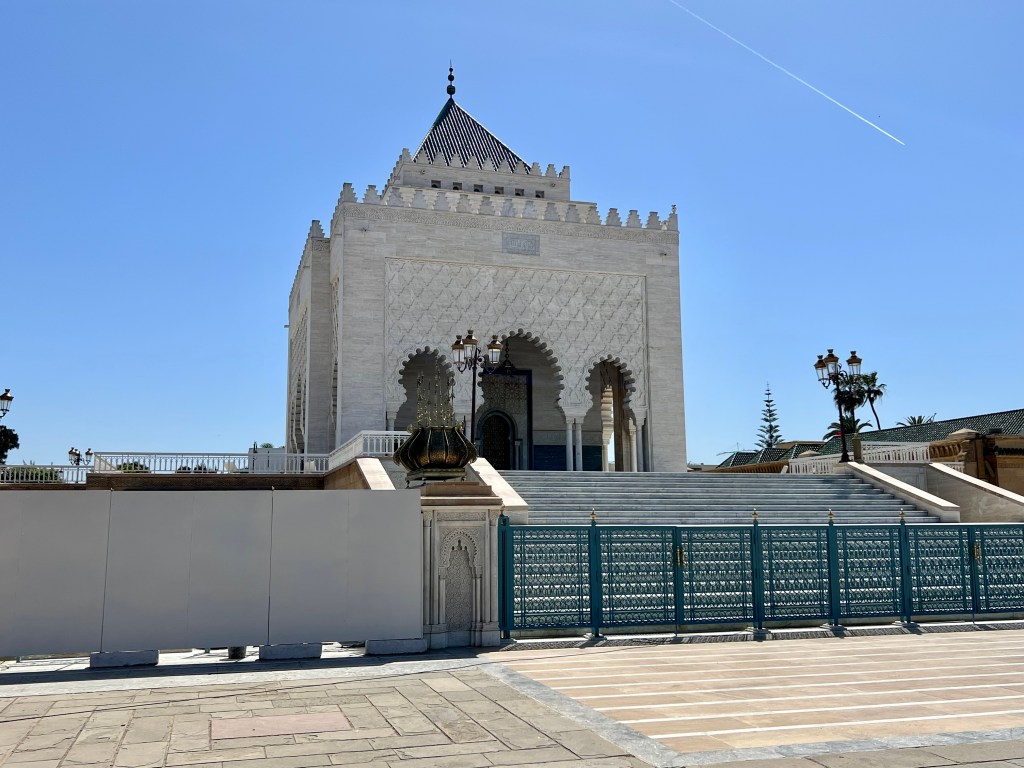
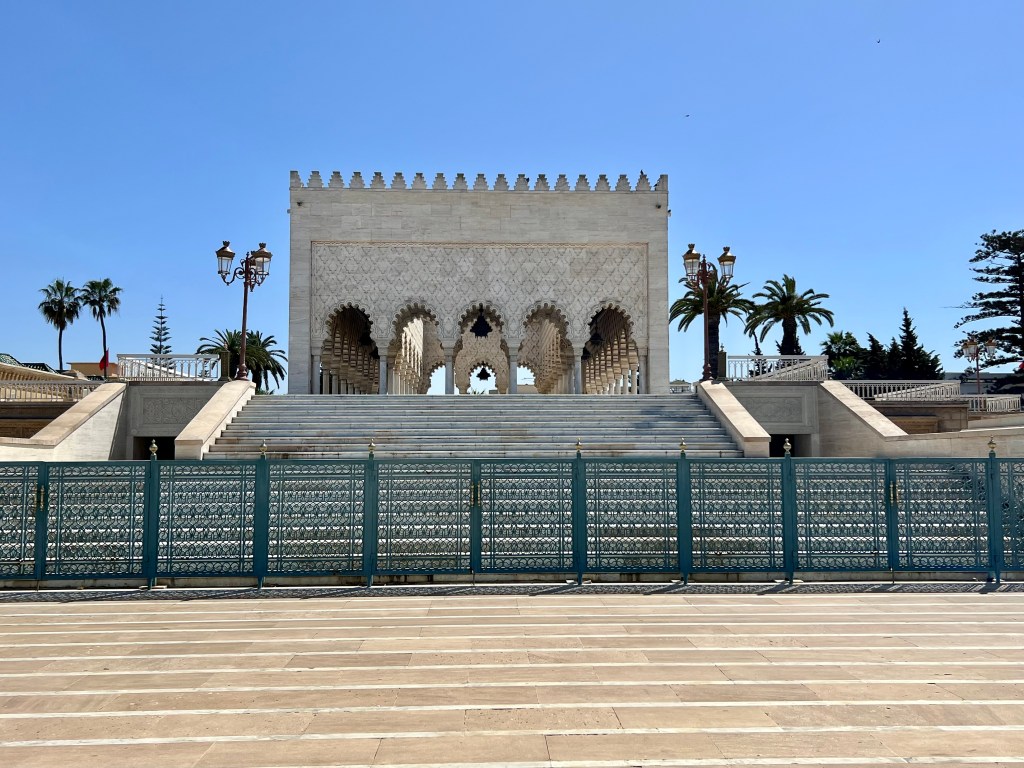
Mausoleum of Mohammed V
Western Pavillion

The gates are guarded 24/7 by photogenic mounted royal guards with unique uniforms!

Royal Guard

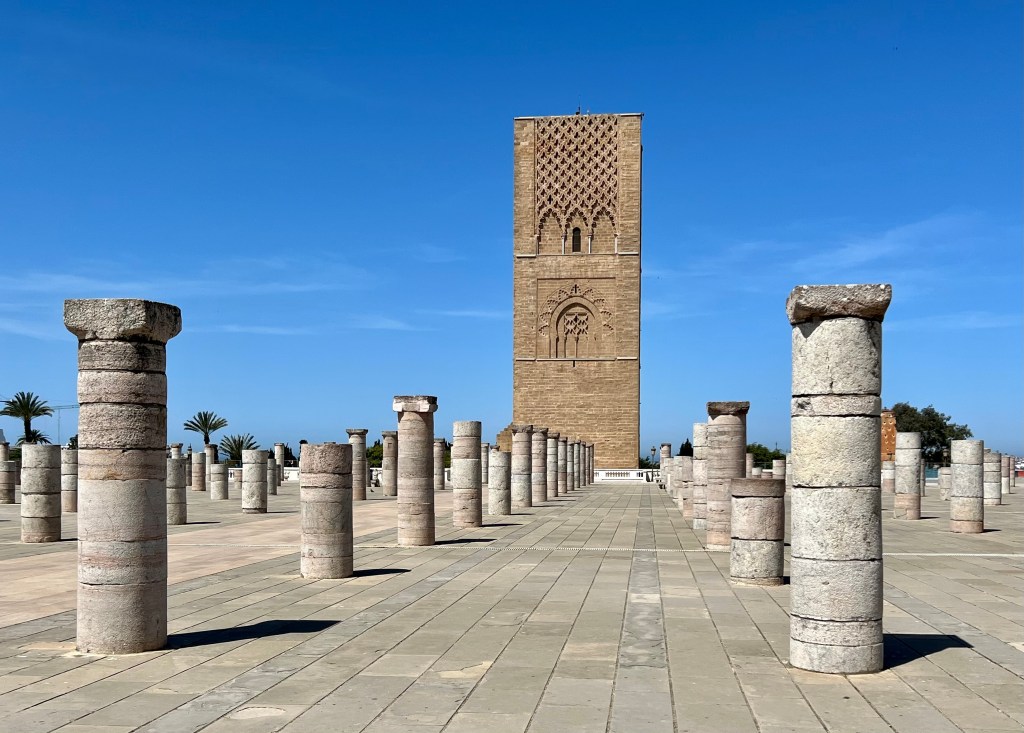
Another Rabat must see, the Hassan Tower is located on the opposite side of the square from Mausoleum. The Hassan Tower is the minaret of an incomplete mosque in Rabat, Morocco. Commissioned by Abu Yusuf Yaqub al-Mansur, the third Caliph of the Almohad Caliphate in 1195. The tower was intended to be the largest minaret in the world along with the mosque but was never finished. The unfinished minaret is surrounded by two hundred columns. 
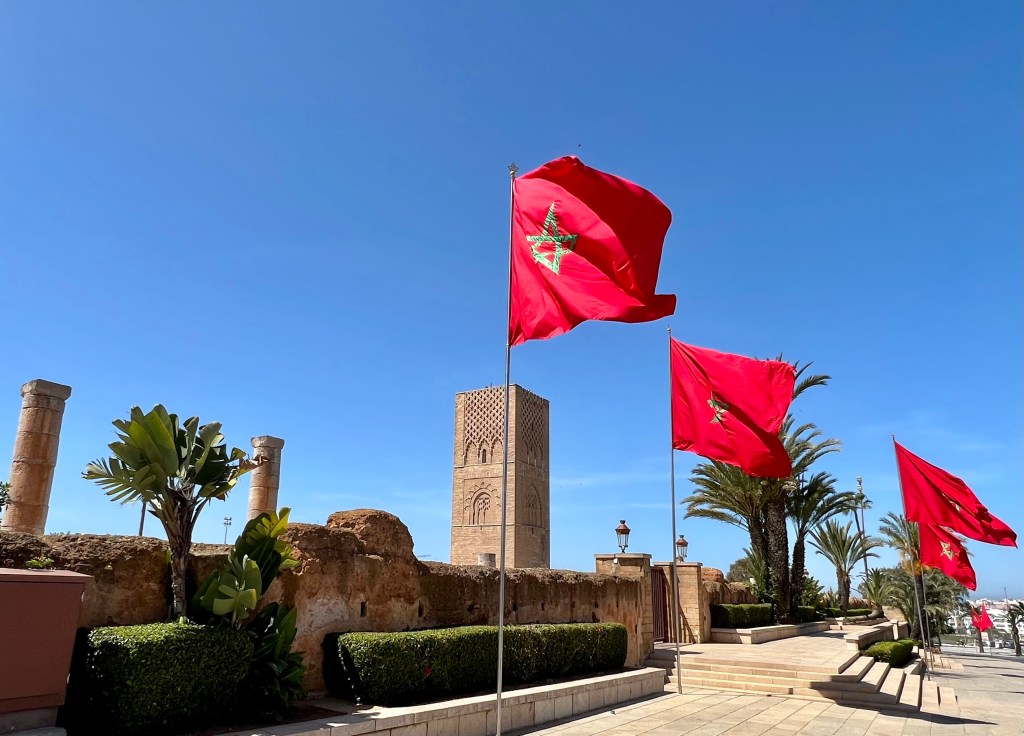
Hassan Tower
Hassan Tower

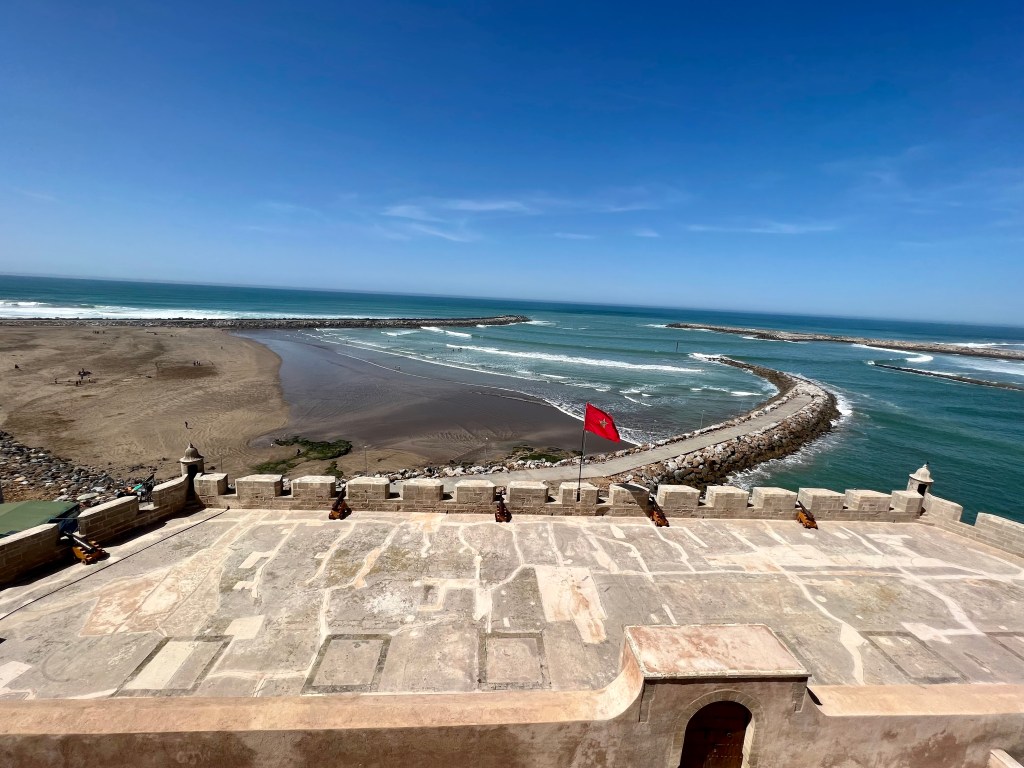
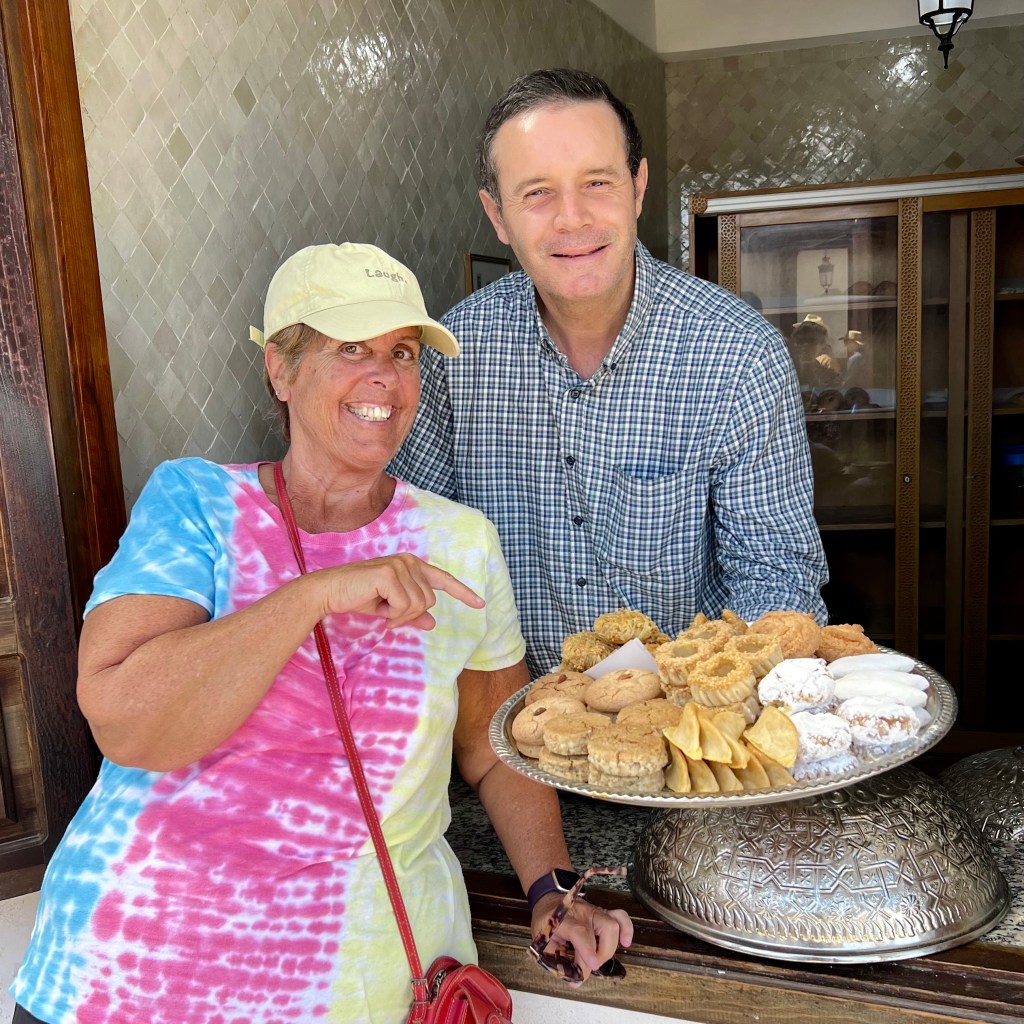
Our next stop was the Kasbah des Oudaias located at the mouth of the Bou Regreg river opposite adjacent to the Rabat Medina. The wonderful old walled portion of the city with narrow streets to wander has scenic views of both the Atlantic Ocean and the Bou Regreg. After a bit of a wander, we stopped for mint tea and Moroccan cookies at the Cafe Maure. Yummm!
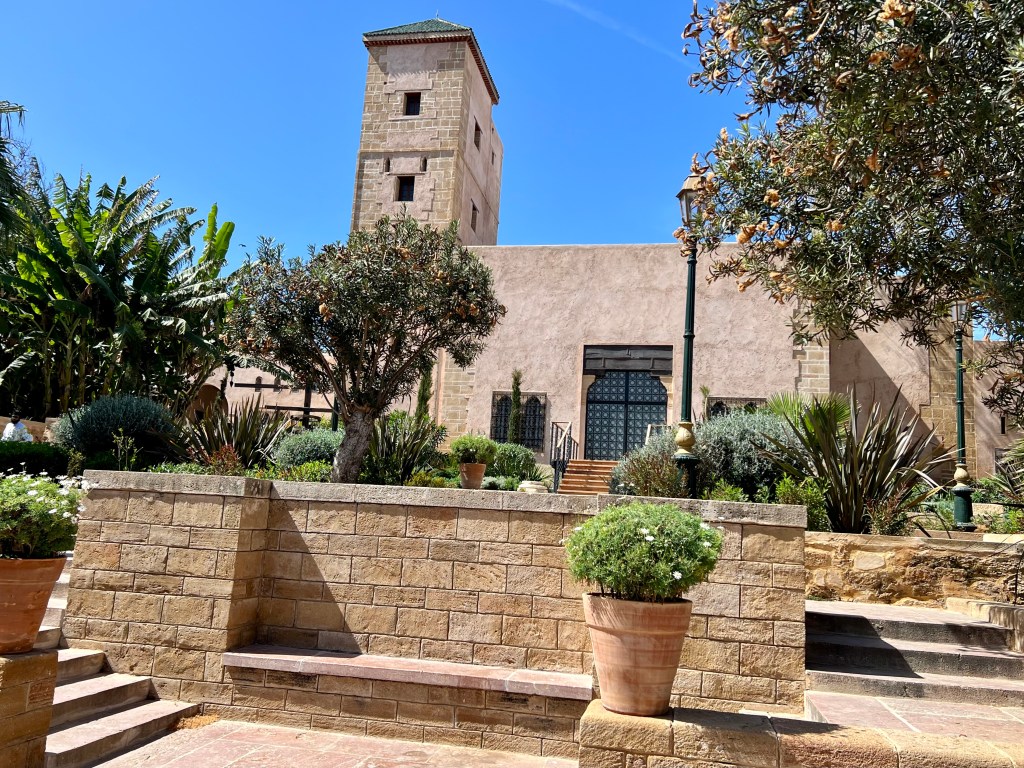
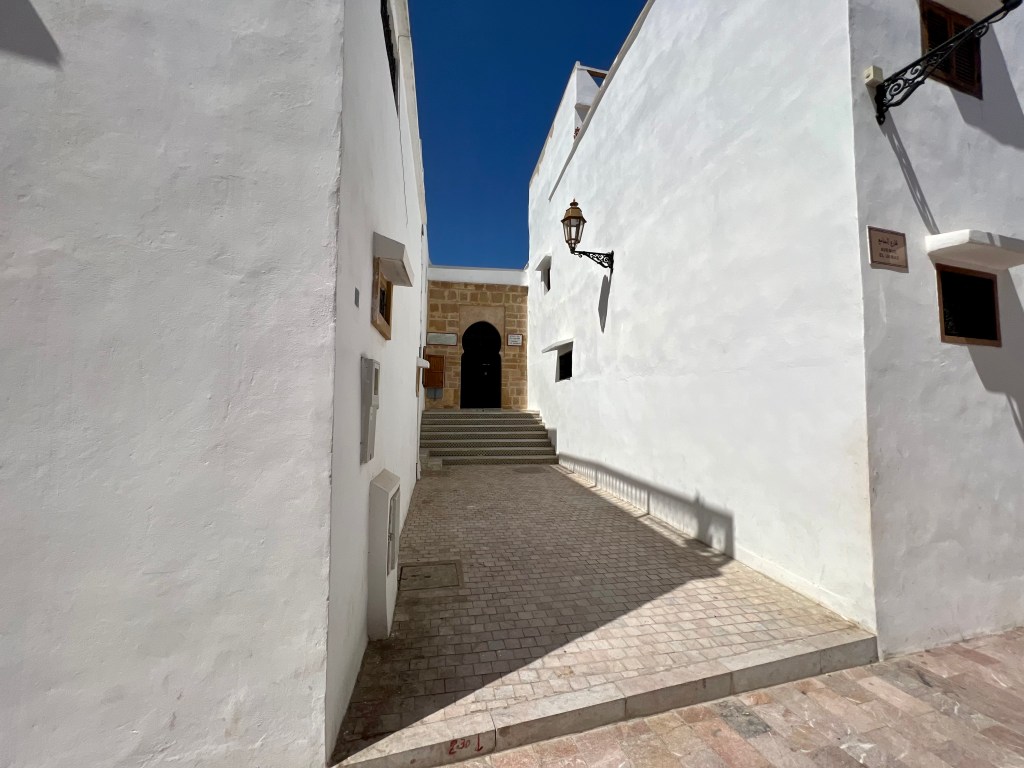
Kasbah des Oudaias
Mint tea anyone?
Sweeeeet

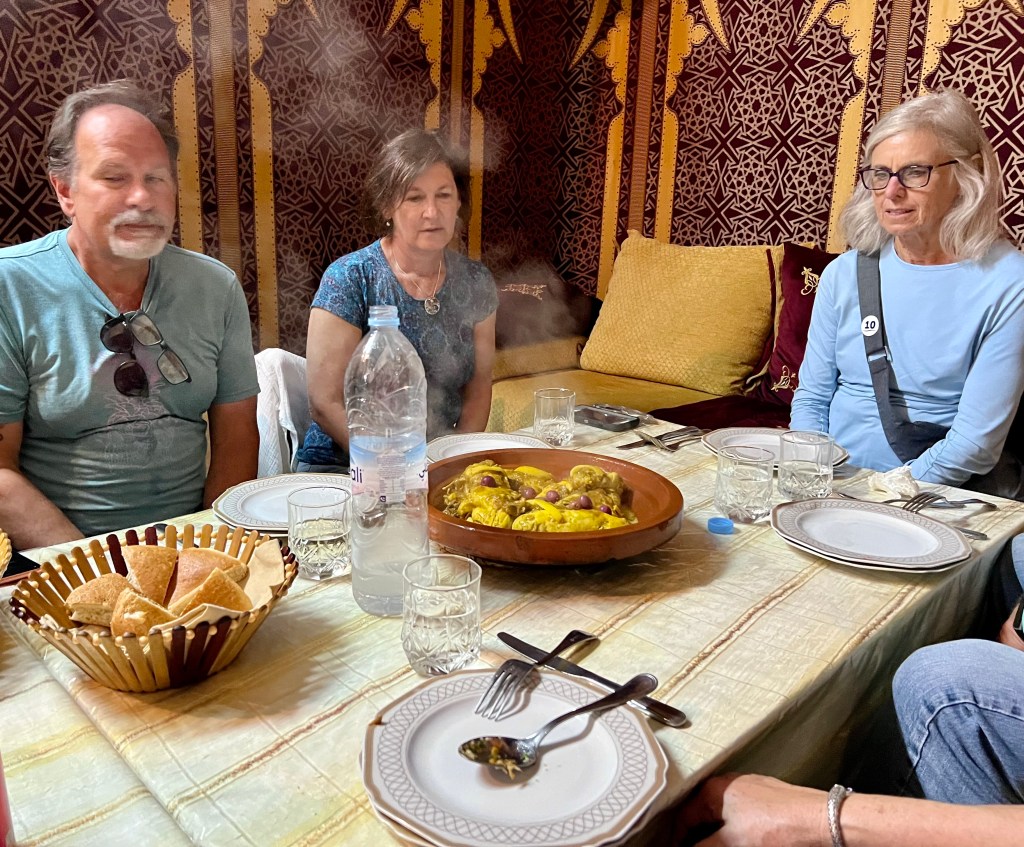
After our snack, we headed off to have lunch at a local restaurant; lentils, salad and chicken and olive tajine were on the menu along with fresh fruit for dessert. Given that it was Ramadan, I’m sure the wait staff’s mouths were watering. 
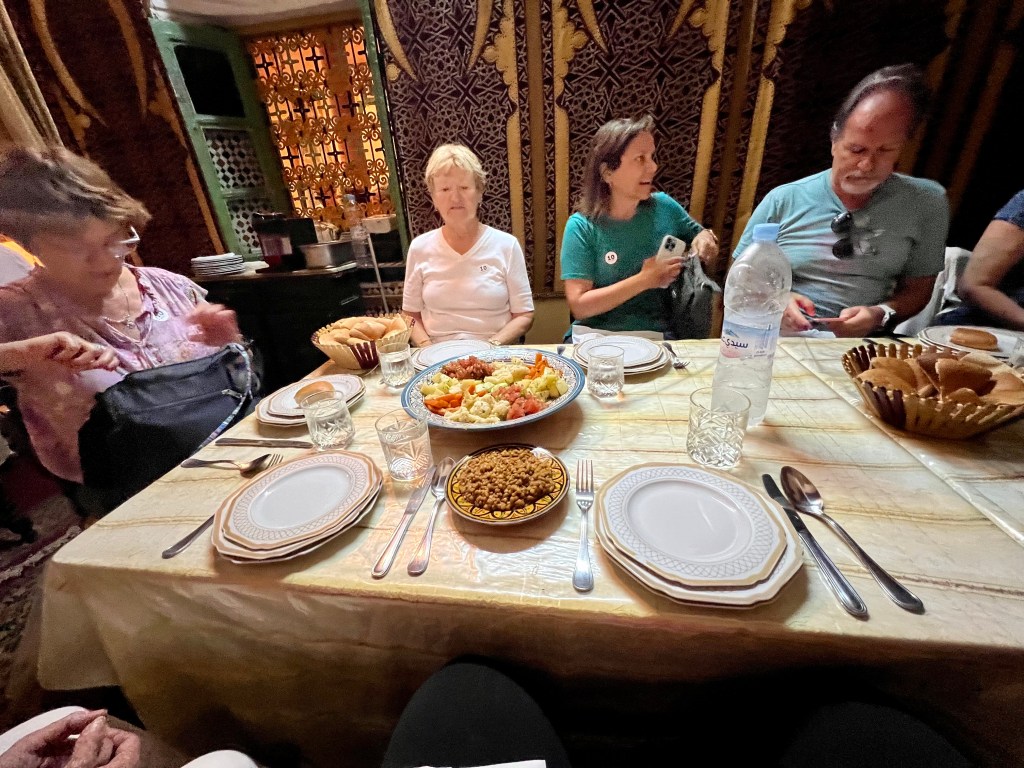
Back on the bus, we headed back to Casablanca for a quick photo stop at the Hassan II Mosque; the largest functioning mosque in Africa and the 7the largest in the world. Its 210 metre minaret is the world’s second tallest. It was built by Moroccan artisans from all over the kingdom and completed in 1993, under the guidance of King Hassan II. The walls are of hand-crafted marble and the roof is retractable. A maximum of 105,000 worshippers can gather together for prayer: 25,000 inside the mosque hall and another 80,000 on the mosque’s outside grounds.  
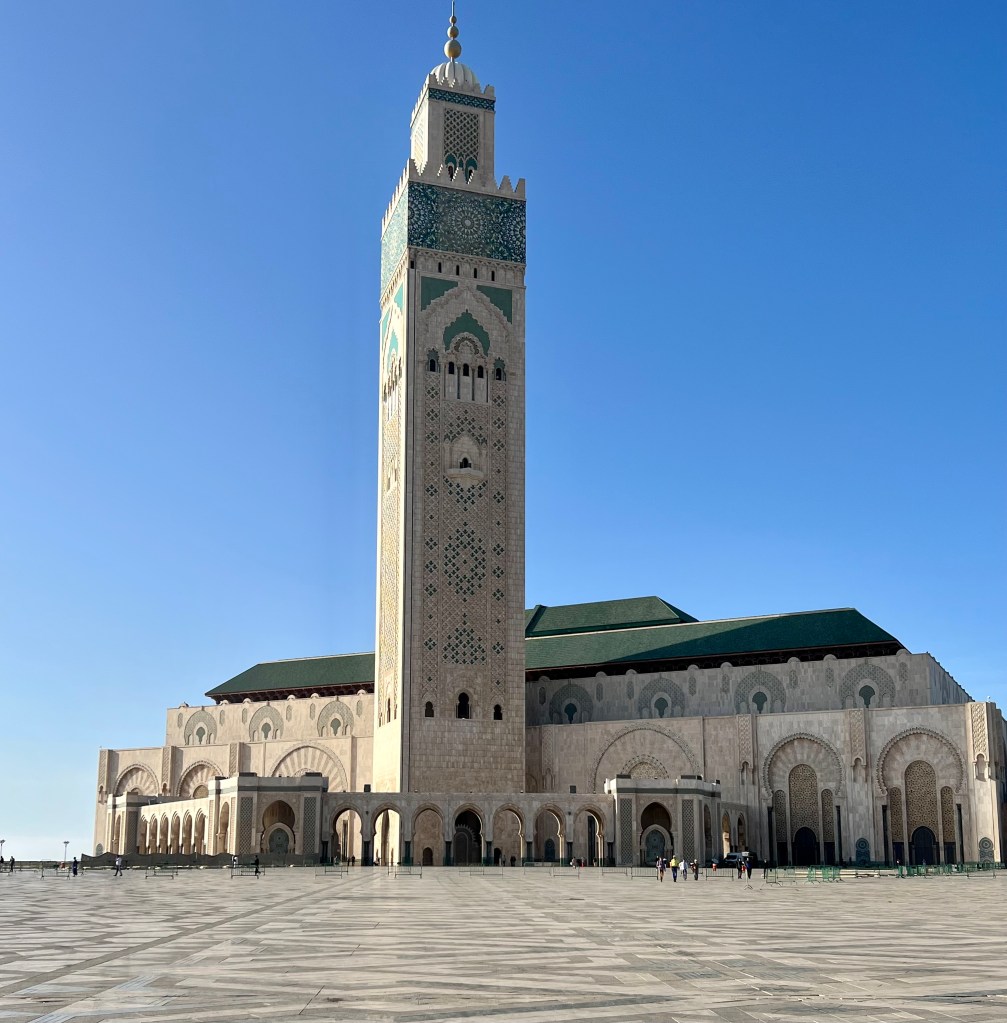
Hassan II Mosque

Afterwards, we were given a bit of time for shopping at United Nations square before heading back to the ship. 

Tomorrow is another day.  Adventures in Southern Spain await …

Cruising the High Seas – The Canary Islands

March 23-27, 2023

The next five days, we will be cruising around The Canary Islands, a Spanish archipelago off the coast of northwestern Africa. Because of their location, the Canary Islands have historically been considered a link between the four continents of Africa, North America, South America and Europe and strategically very important as a result. These rugged volcanic isles are known for their black and white sand beaches. The climate and natural beauty of the Canaries attract tourists year round. 

I had assumed that the name of the islands was derived from the canary bird when in fact the bird is named after the islands. The name Islas Canarias comes from the Latin name Canariae Insulae, meaning “Islands of the Dogs”. According to historians,  Grand Canaria contained “vast multitudes of dogs of a very large size”.

The Presa Canario is a Spanish breed of large dog of mastiff type. It originates in the Canary Islands, and is found mostly in the islands of Gran Canaria and Tenerife. It was formerly known as the Dogo Canario. During my visit to Tenerife, I did “meet” one of these dogs and while fairly large, he was very gentle!

Presa Canario

Our first port in the Canaries is Santa Cruz de la Palma, the capital city of the island of La Palma. It’s known for its centuries-old architecture, cobbled streets and busy port but I was feeling lazy and opted for a nice relaxing day of lounging and reading on the pool deck. 

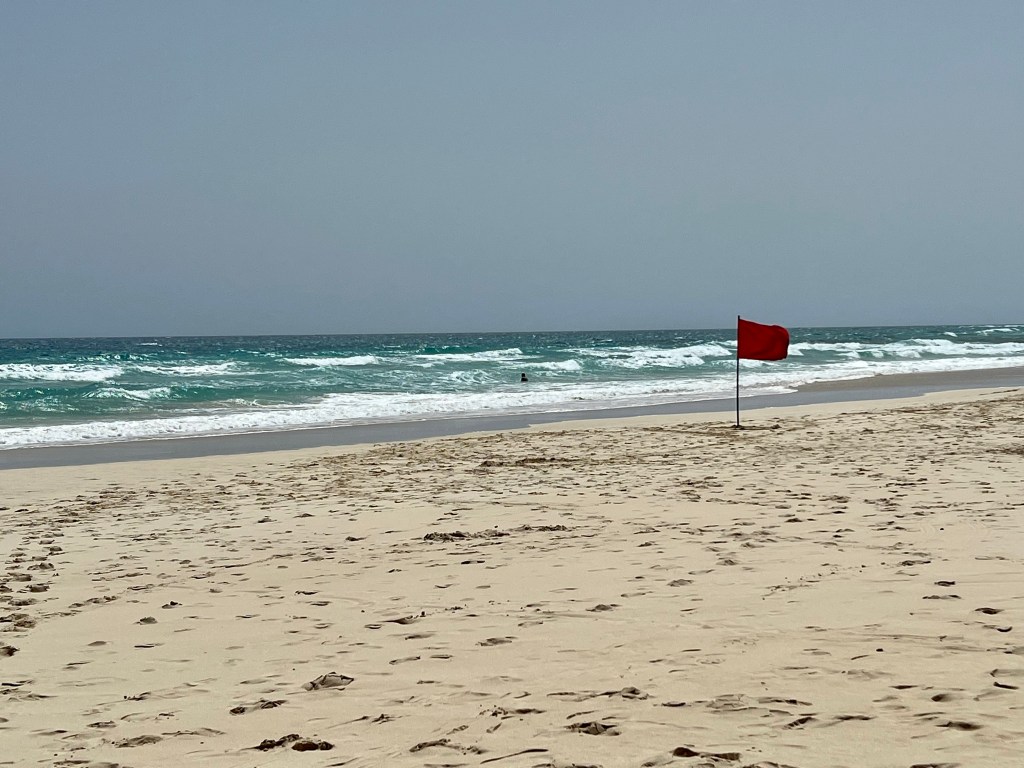
The second port we docked at in the Canaries was Puerto del Rosaria. Originally known as Puerto de Cabras (Port of the Goats), Puerto del Rosario was initially of little political importance but today is the capital of the island of Fuerteventura. Today rather than lounging on the pool deck, I headed off to Corralejo Dunes – an enormous beach of white sands bathed by the turquoise waters of the Atlantic Ocean. It was a lovely sunny day but the red flags (signifying danger) kept all but the most adventurous out of the water.

Next up was Santa Cruz de Tenerife. Until 1927, Santa Cruz was the sole capital of the Canary Island and today is home to the Parliament of the Canary Islands. Tenerife, the largest island, is dominated by the sometimes-snowy active volcano Mt. Teide, which has its own astronomical observatory and is part of Teide National Park. Santa Cruz de Tenerife hosts a huge pre-Lent Carnival. My walking tour was in the afternoon and as the African market was closed we checked out the museum celebrating the Carnival instead. 

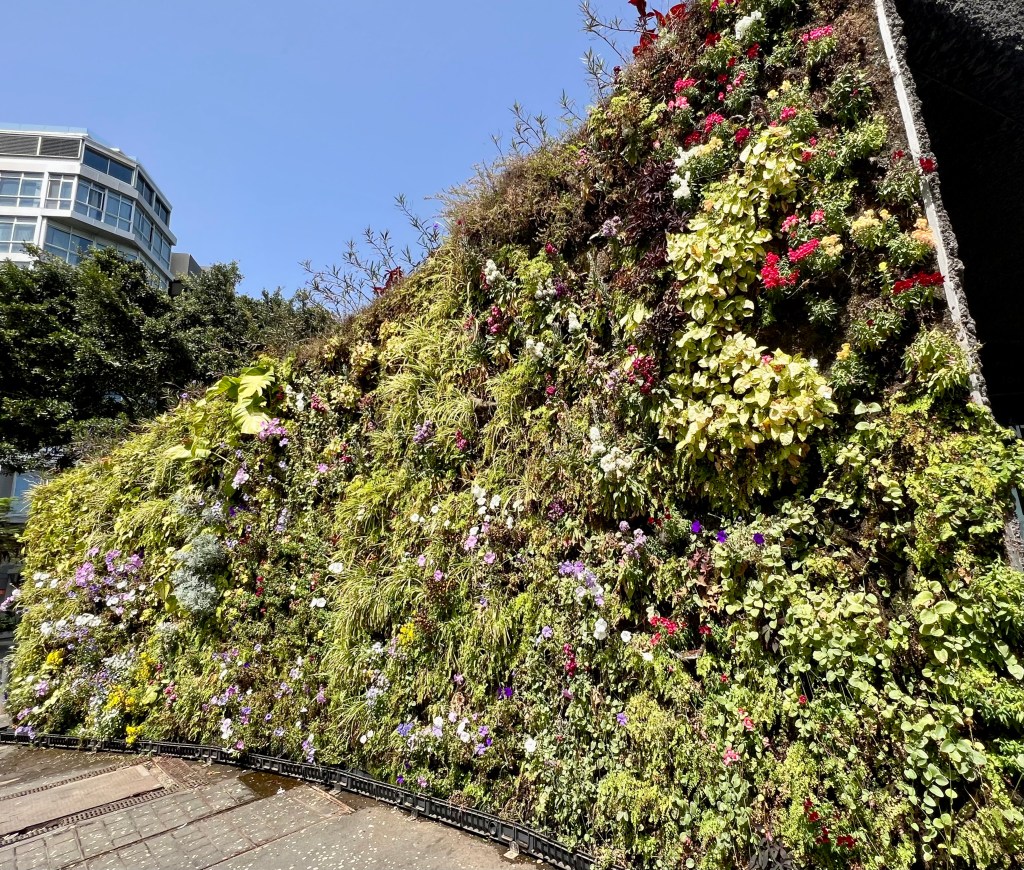
Wall of flowers
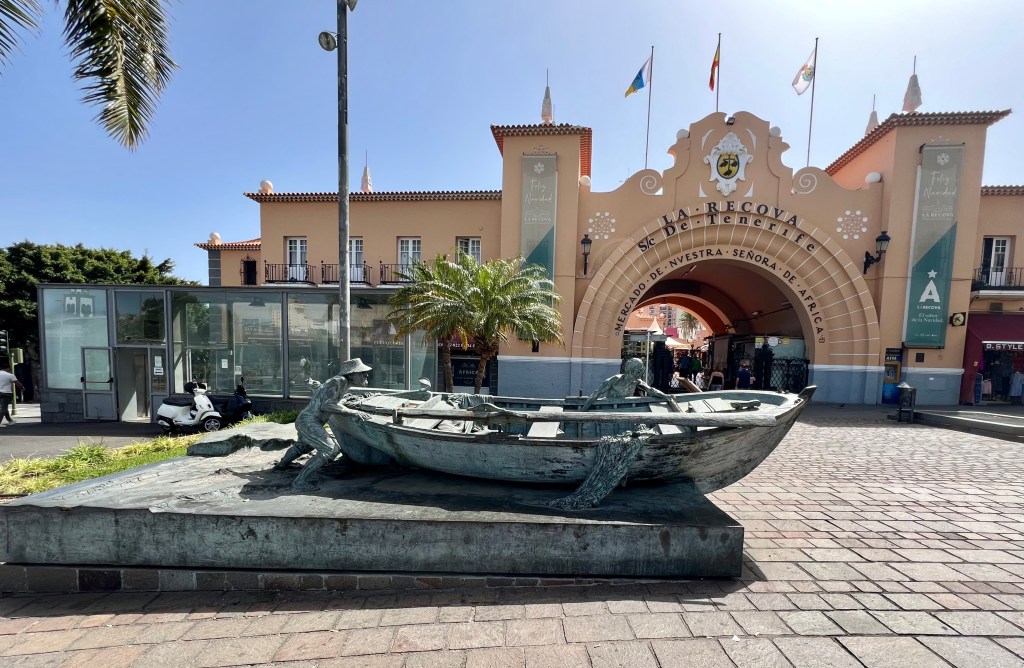
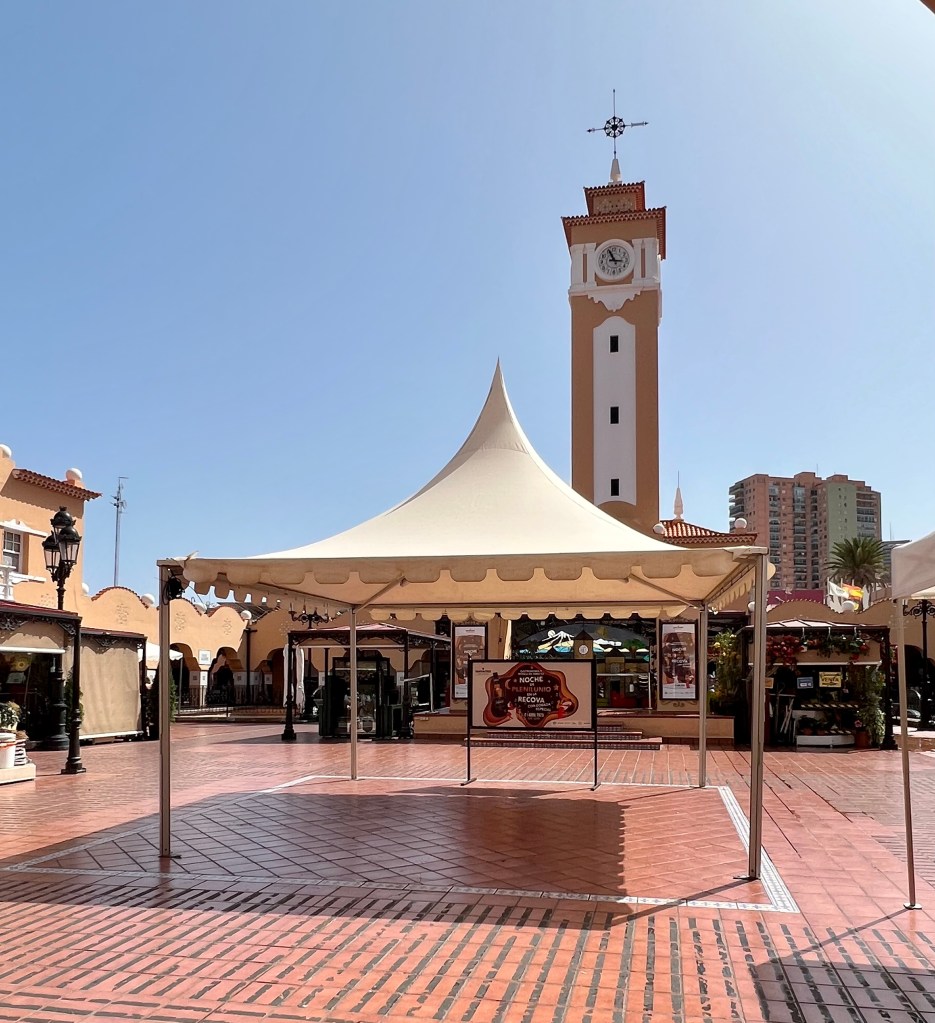
Entrance to African Market (La Recova)
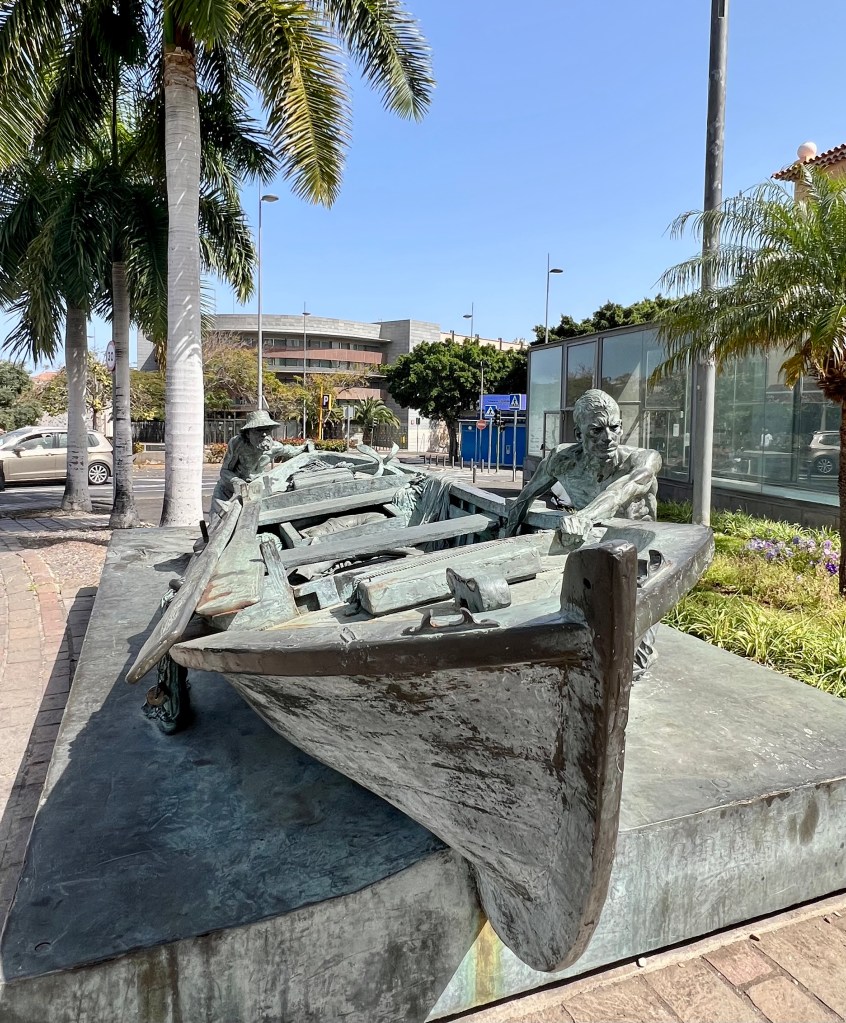
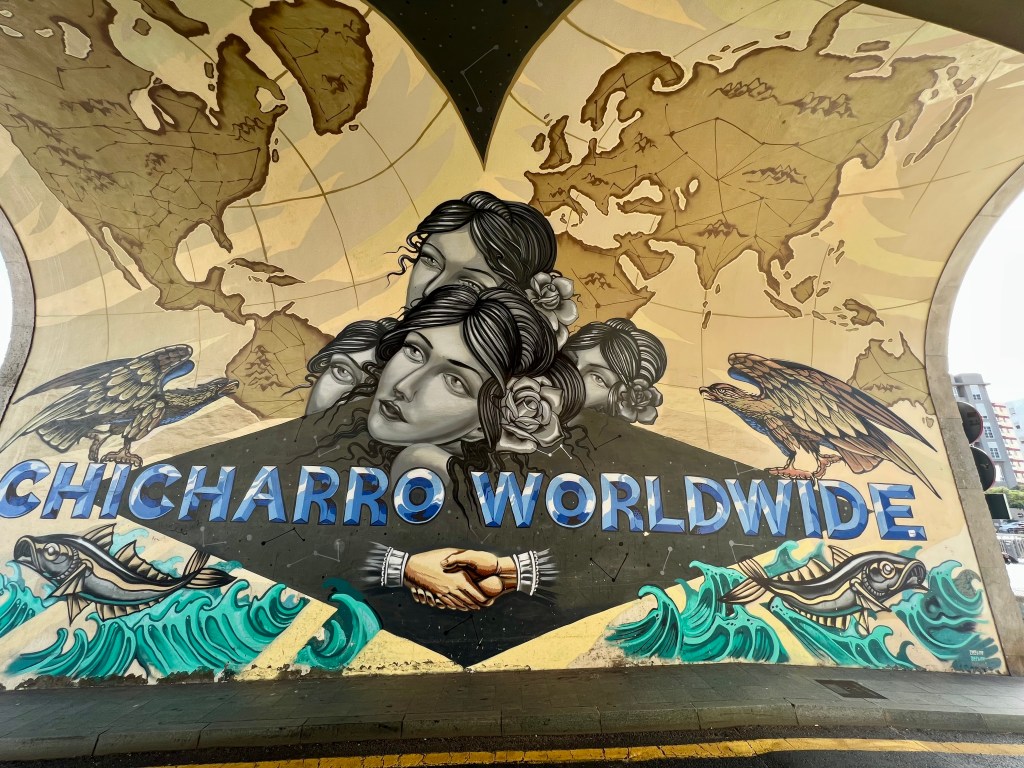
According to popular tradition, inhabitants of Santa Cruz de Tenerife were called Los Chicharreros after a popular fish
in the waters of the Island. This statue is dedicated to these fisherman and their catch.
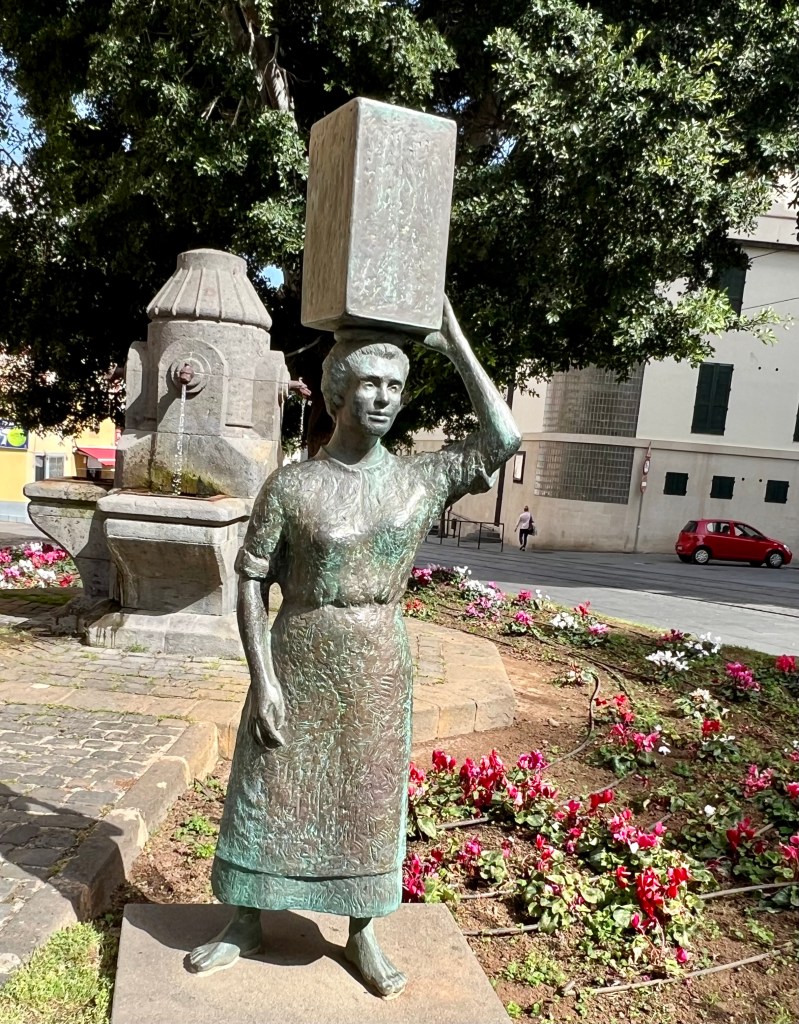
 Lechera (The Milkmaid) outside La Recova pays hommage to the barefoot milkmaids, who for generations went from door to door
selling milk and dairy products
Central patio of La Recova from which you can see the Moorish Clock Tower that presides over the area.
Carnival Costume
La Aguadora de Santa Cruz, the Watercarriers of Santa Cruz.
They carried water through the streets delivering it to households along the way. 
Fountain in the Park of Garcia Sanabria
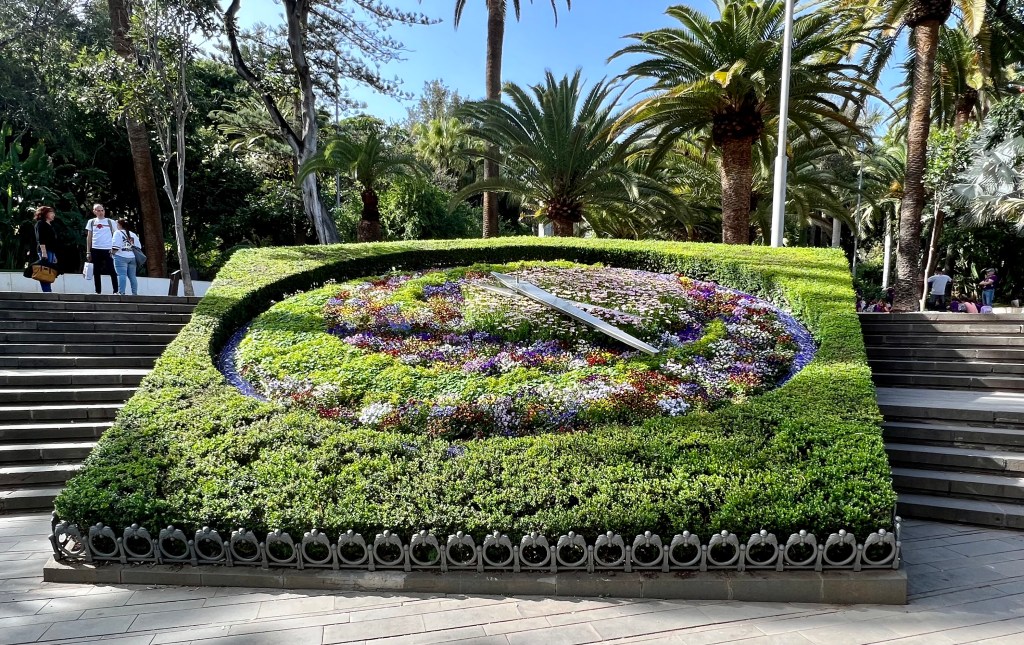
Flower Clock
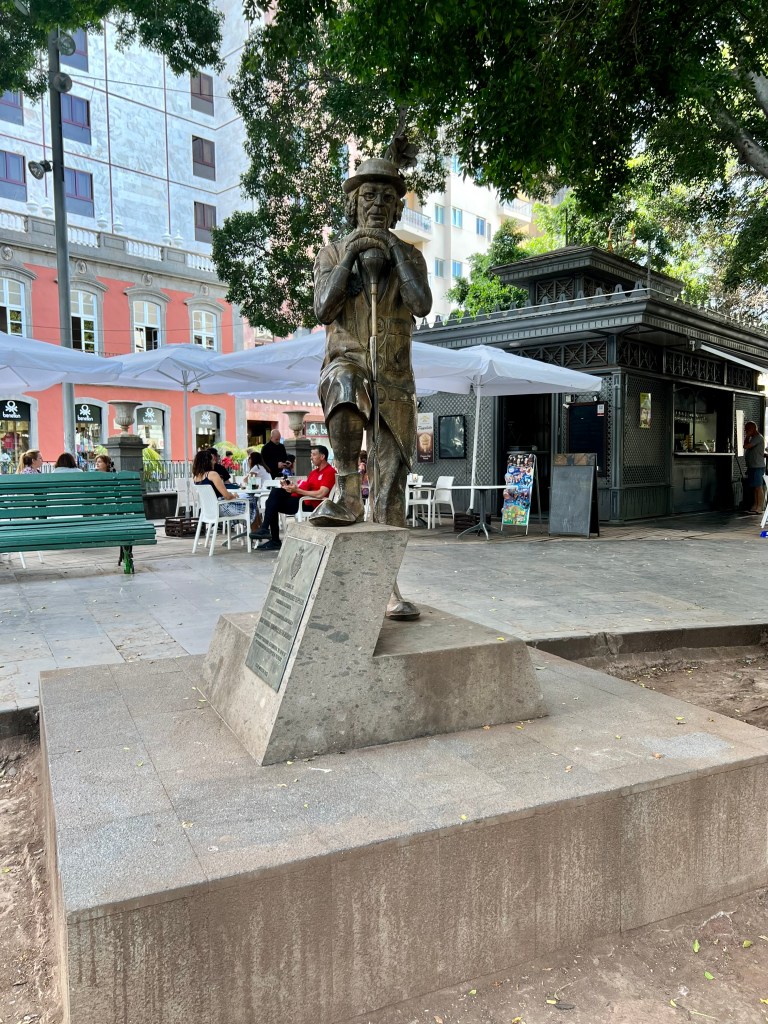
A statue in homage of Enrique González Bethencourt, considered the father of the Canarian murgas the most popular element of the
Santa Cruz de Tenerife carnival; he was one of the most important and beloved personalities. 
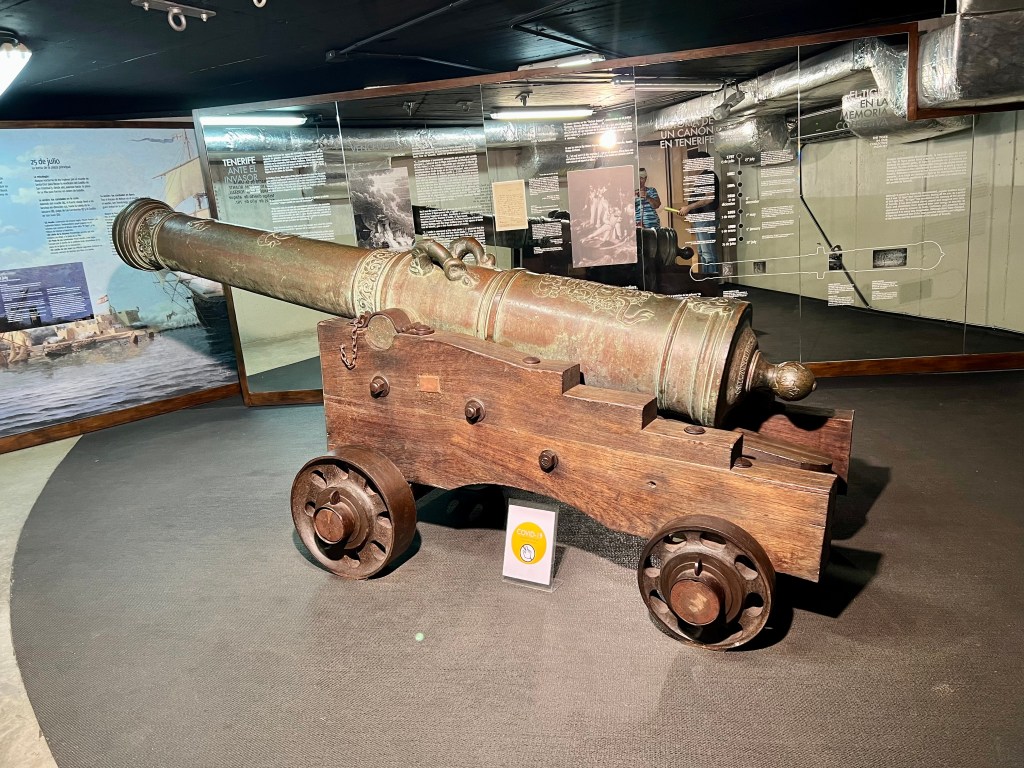
The canon that shot the ball that cost Admiral Horacio Nelson his right arm when the British stormed the harbour

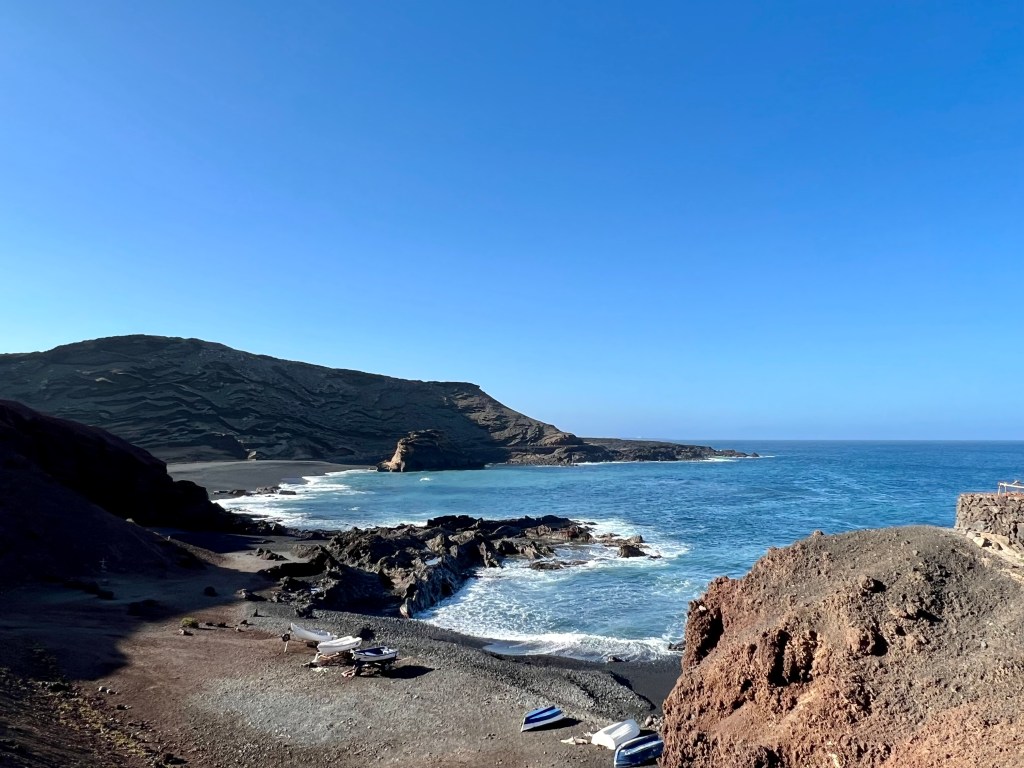
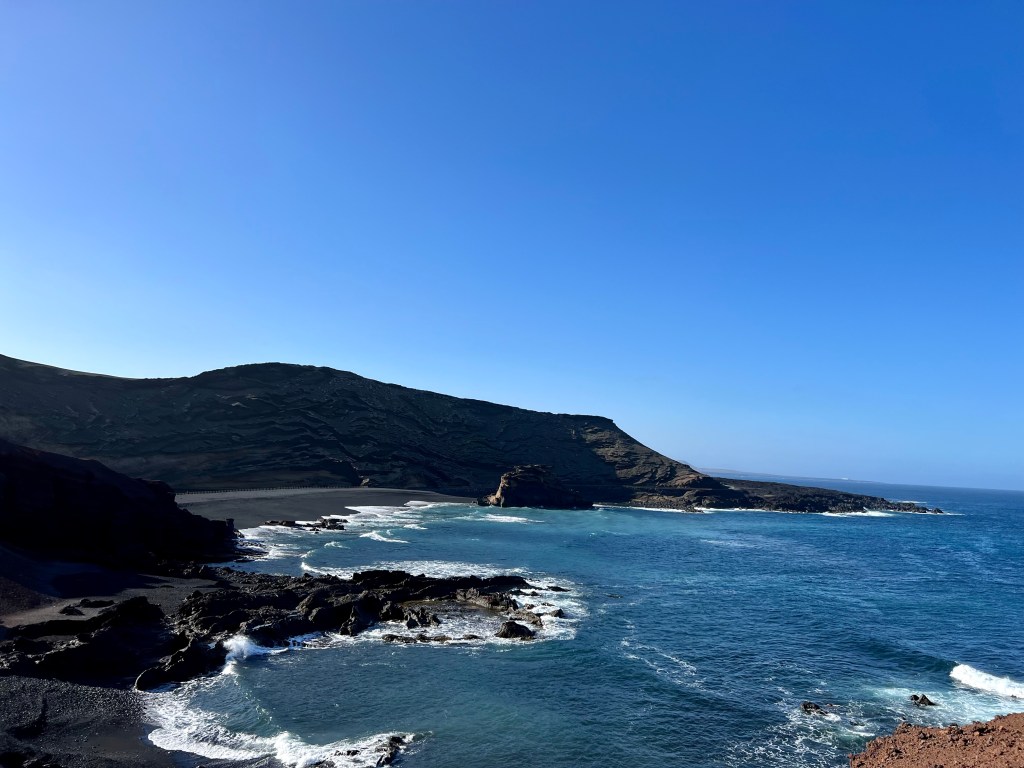
Our last port in the Canary Islands was Arrecife, the capital of Lanzarote. Today I’m heading off with my eight travelling companions on a whistle stop tour of this island known for its year-round warm weather, beaches and volcanic landscape. Timanfaya National Park’s rocky landscape was created by volcanic eruptions in the 1730s. In theory, we were heading out to see the best photo stops and take selfies but not sure that’s what actually happened! Either way, we did get to see some of the natural beauty of this island and take a few pics. Our first stop was the rugged coastline of Punta Fariones.

Punta Fariones
Punta Fariones

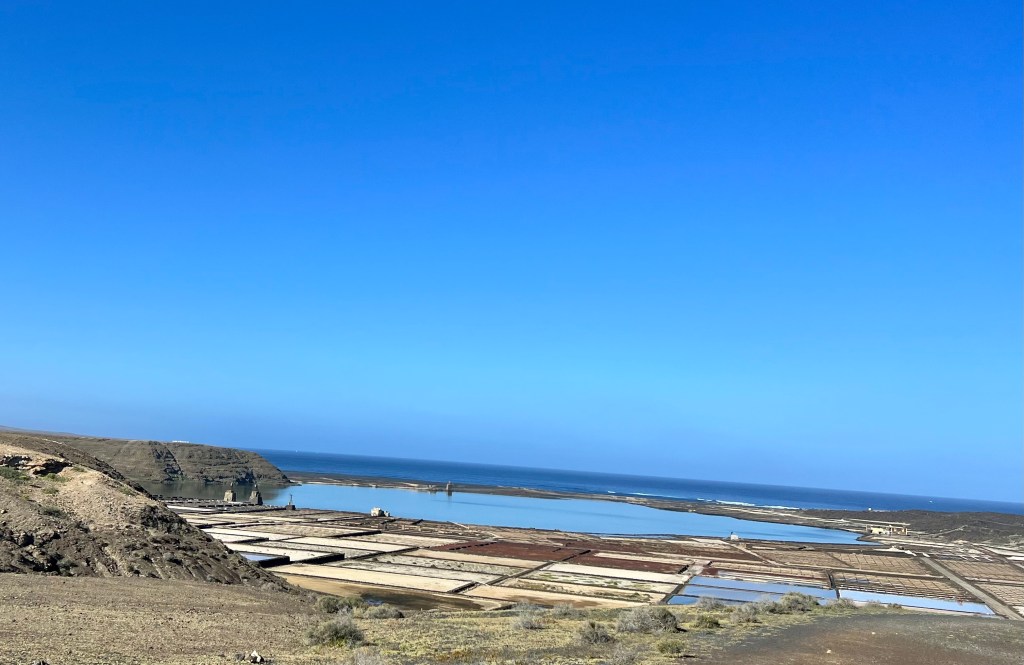
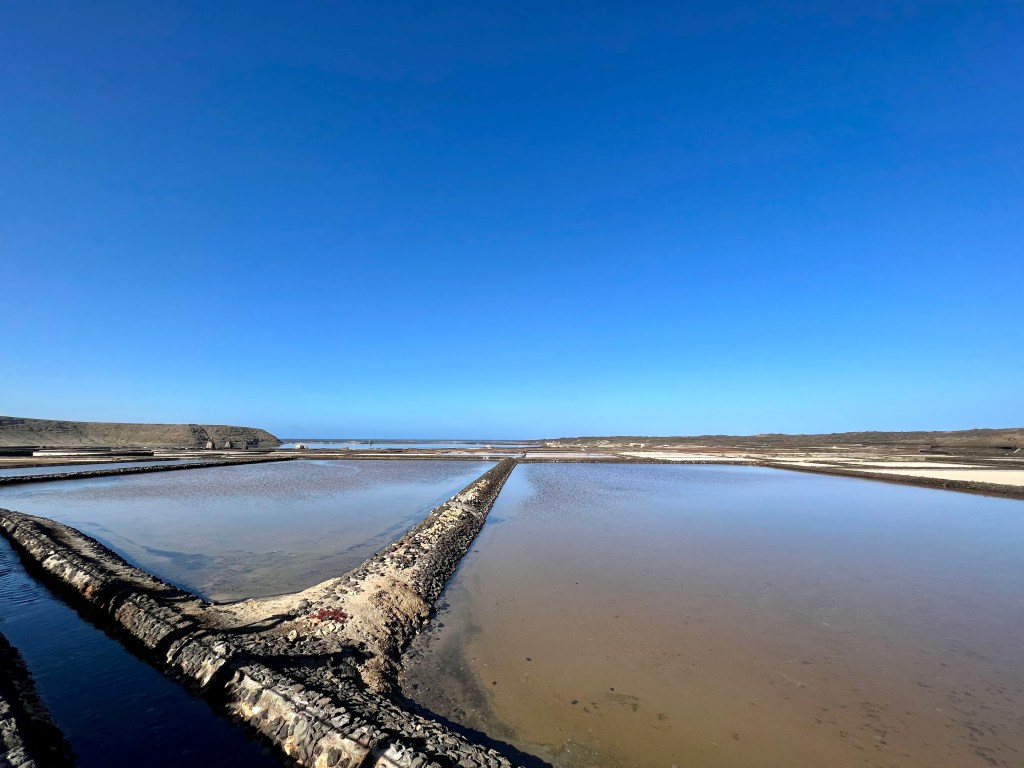
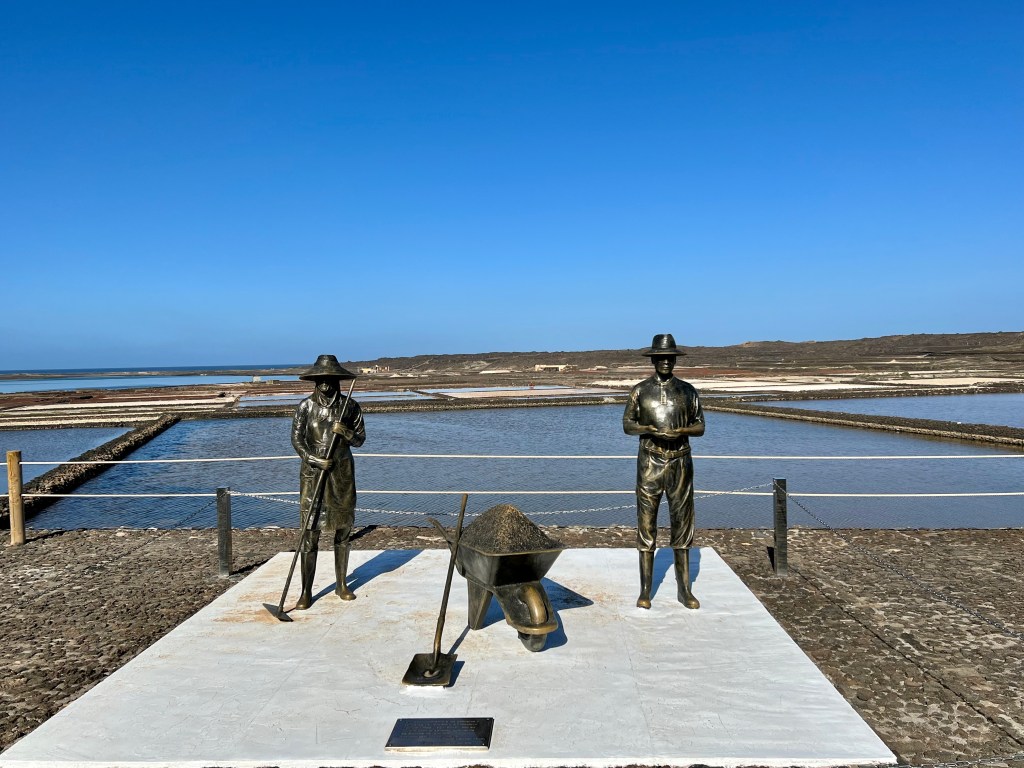
After taking the requisites pics including selfies, we headed off to the salt flats at Salinas de Janubio. In 1730, lava from volcano eruptions formed the walls of a natural lagoon and the salt flats were first created in 1895. The waters from the natural lagoon are evaporated to yield tasty finishing salt.

Salinas de Janubio
Salinas de Janubio
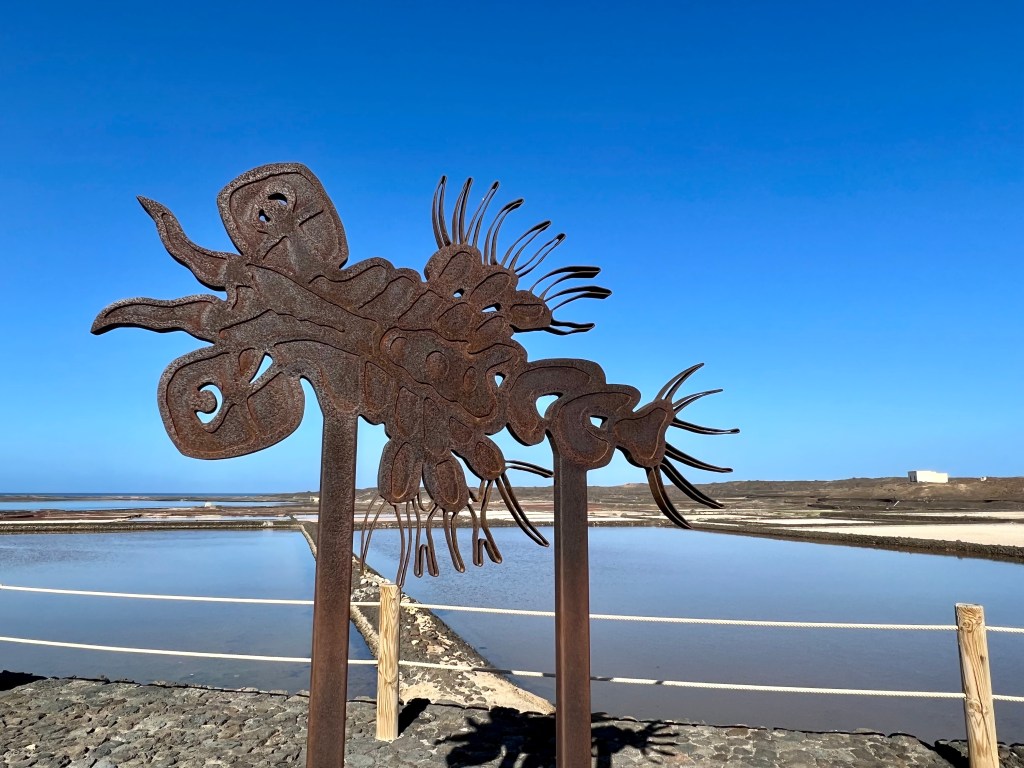
Salt harvesters at Salinas de Janubio

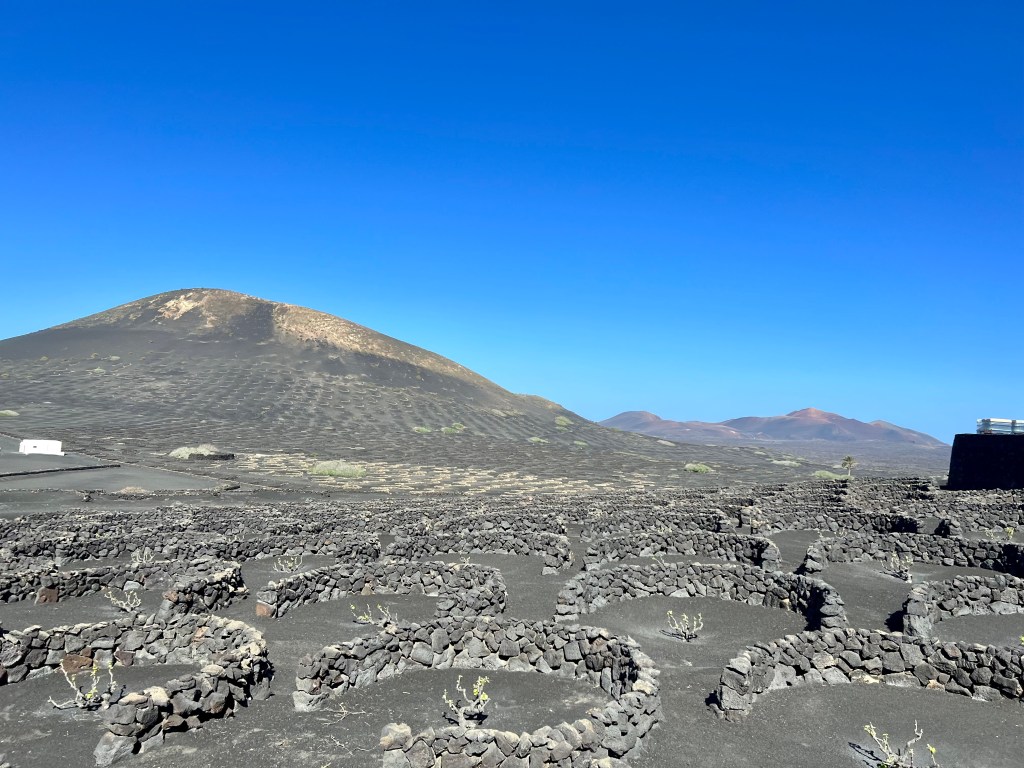
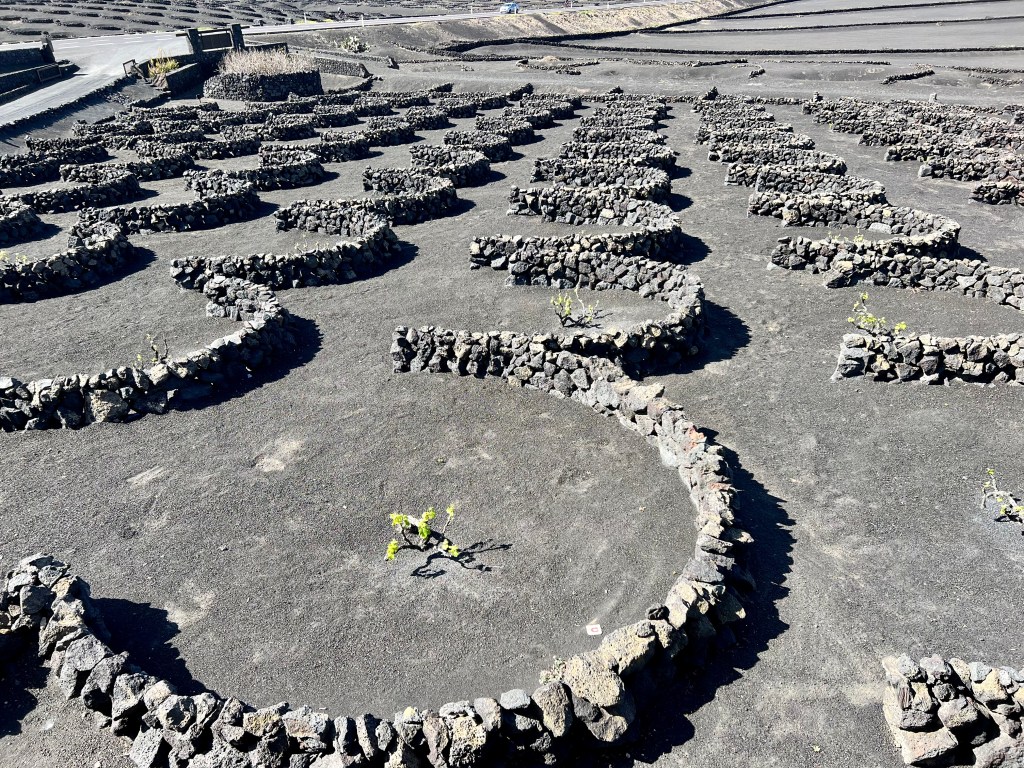
After a tasting, we headed toward Timanfaya National Park and La Geria.The landscape here is blanketed with a spectacular ‘black cloak” of volcanic ash formed following the Timanfaya volcanic eruptions between 1730 and 1736. With the passing of time, the inhabitants learnt to adapt and cultivate this inhospitable land by digging down on the fertile ground buried by the volcanic ash.

The grounds of La Geria are characterised by the cultivation of vines dug into a pit in the volcanic ash at a depth of 3 metres and a diameter of 8 metres. Each pit is surrounded by a semicircular stone wall, protecting the vines against the Trade winds which are predominant to the island. This overall effect resembles a dimpled black golf ball. The wine cellars of La Geria date from the end of the 19th Century and current production is around 400,000 kg of grapes from over 160 vineyards on the island. All grapes collected are then handpicked to produce 300,000 bottles per year of young white, red, rose and sweet wines.

La Geria

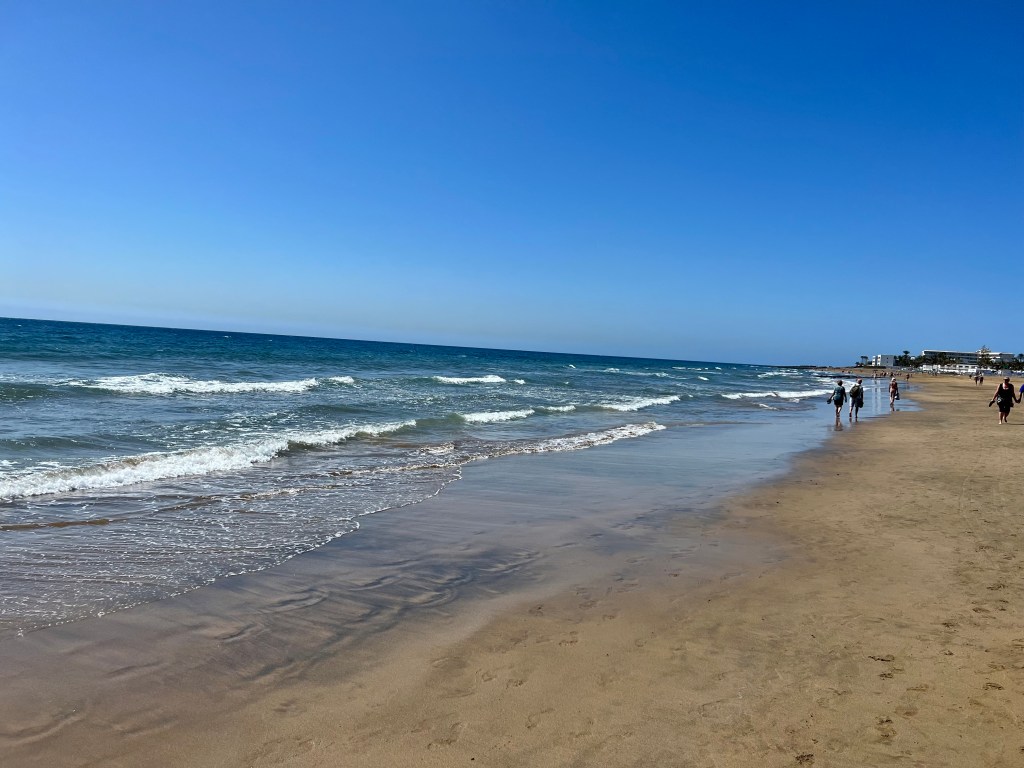
More pics and shopping and then we headed back to Arrecife for a last stop at the beautiful beach on the edge of town.

Arrecife Beach

After a refreshing fruit smoothly, we boarded the bus for the return journey to the ship. Tomorrow is another day. Adventures await …
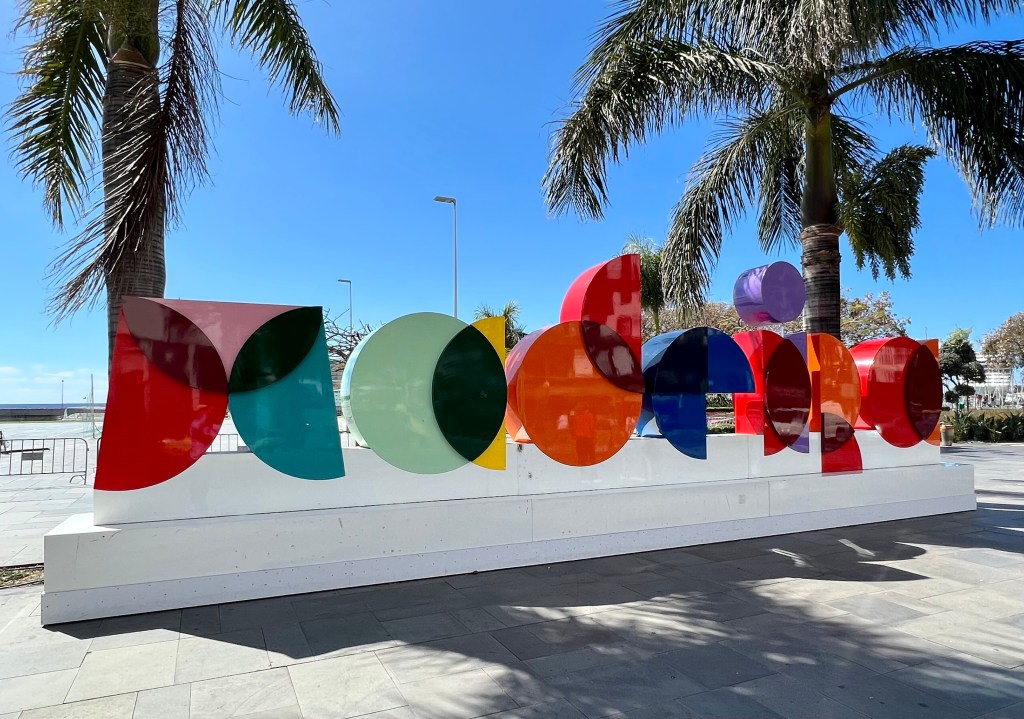
Cruising the High Seas – Lisbon to Madeira

March 19 – 22, 2023

My friends know that I’m an avid cruiser. I love cruising for a variety of reasons. During harsh Canadian winters, it’s great to escape to Florida and the Caribbean for some sun and fun. Cruising is also a great way to get a taste of an exotic location; if you like it you can head back for more thorough exploration. I often cruise alone because it’s easy to meet people (or not) as you prefer and the ship’s excursions allow solo travellers to explore safely. This time, though, I’m travelling with a pack of former colleagues from my time working in the Canadian Embassy in Moscow. They’re a fun group with the uber-organized Craig as our fearless leader. Sunday morning, after a great breakfast at the hotel, the nine of us grabbed a caravan of cabs to transport us and our steamer trunks to the cruise port in Lisbon to board our home for the next two weeks; the Norwegian Sun.

Our ride for the next two weeks
Boarding the Ship
Lisbon from the pool deck

The beautiful sunny day lends itself to lounging on the pool deck and reading (one of my favourite activities for downtime on cruises). The pool has icy cold water but being from Halifax, it doesn’t compare to the waters of the North Atlantic even in the summer. The next day is a sea day so more lounging and reading before joining the gang for dinner and a game of cards.

We docked in Funchal, Madeira on March 21st for two days. The crew is heading out on an excursions, organized by Craig, but as I’ve been here a couple of times, I opted to do my own thing.

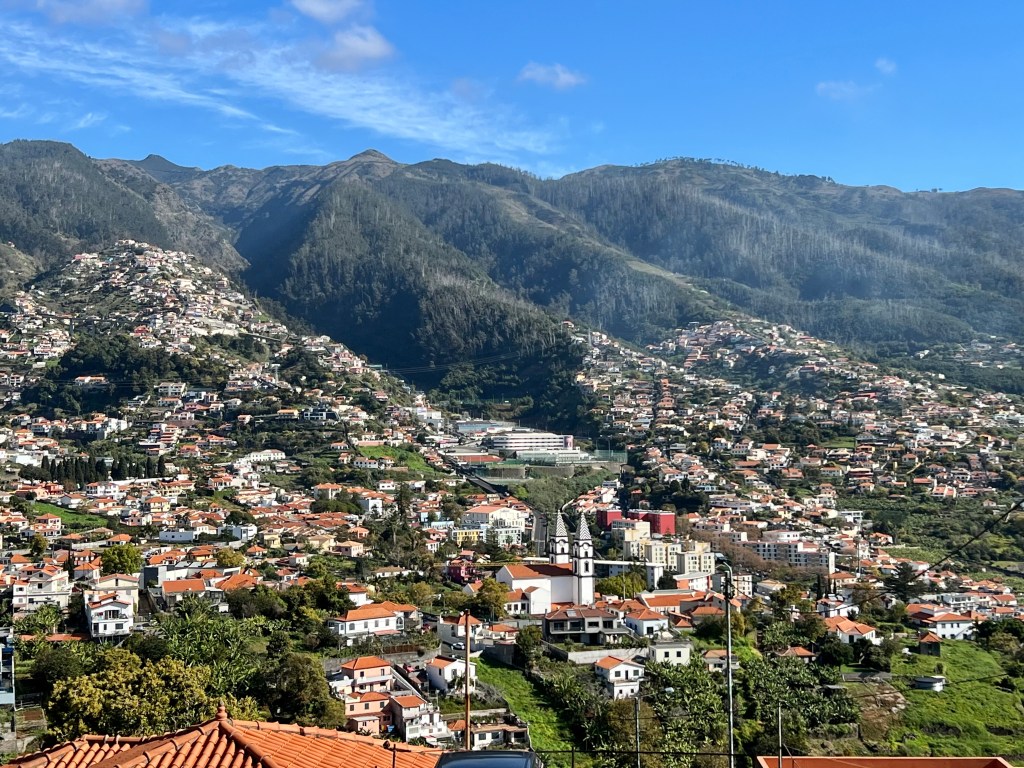
Funchal is the capital city of Portugal’s Madeira archipelago. It’s backed by hills, and known for its harbor, gardens and wine cellars. The first day in port, I explored Funchal on the Hop On Hop Off bus. Another beautiful day so I enjoyed the ride and the many interesting vistas along the way.

Madeira
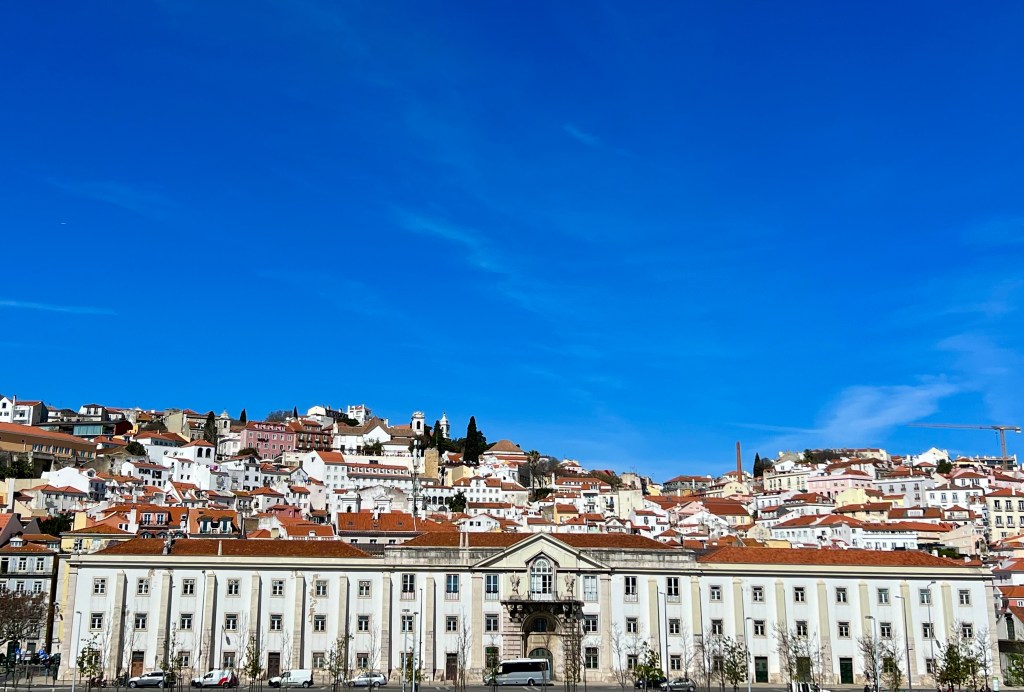
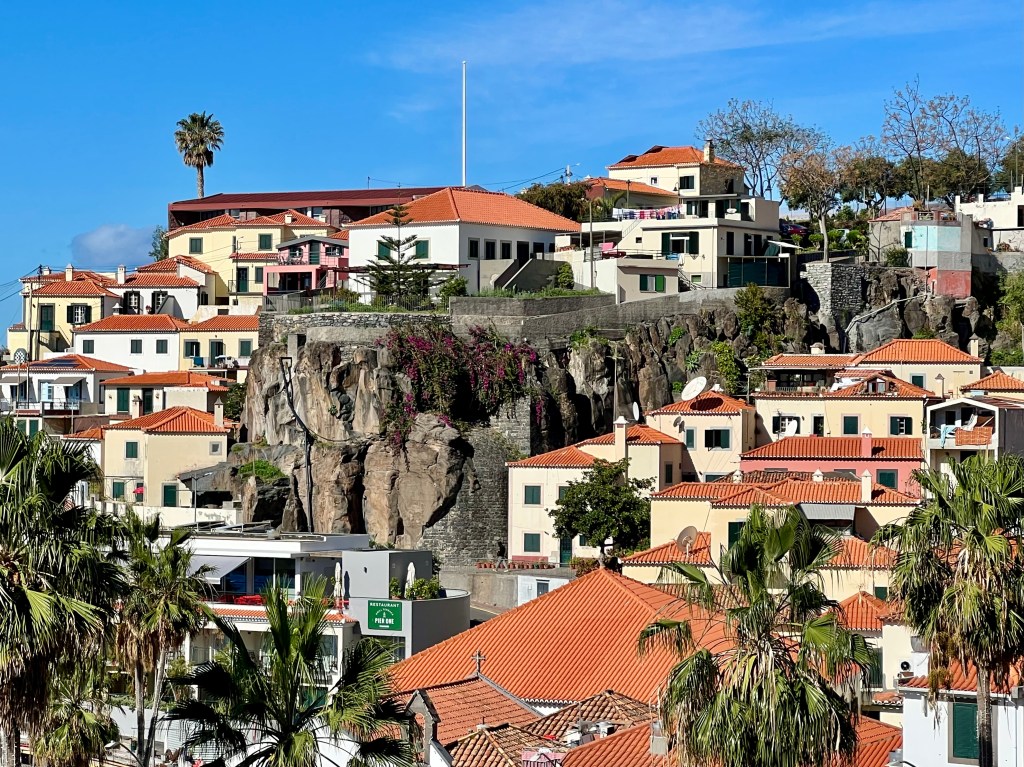
The hills of Funchal
Funchal is famous for its embroidery. This statue stands outside the original factory.
Beautiful flowers in Funchal
Nelson Mandela Memorial
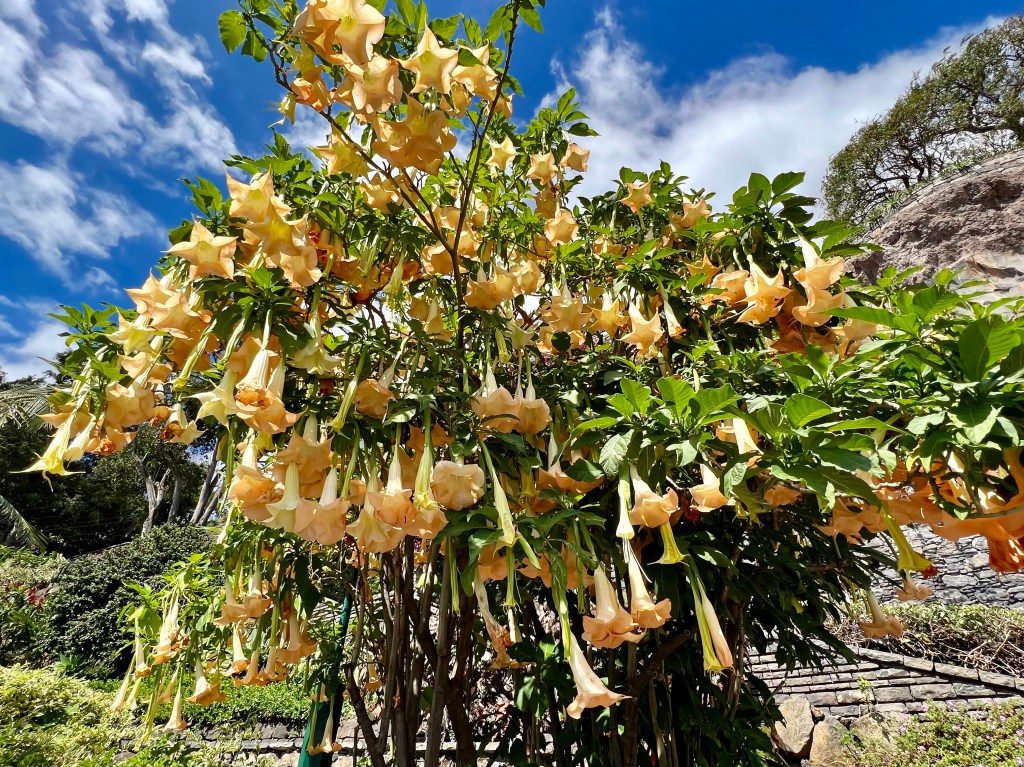
African Tulip Tree
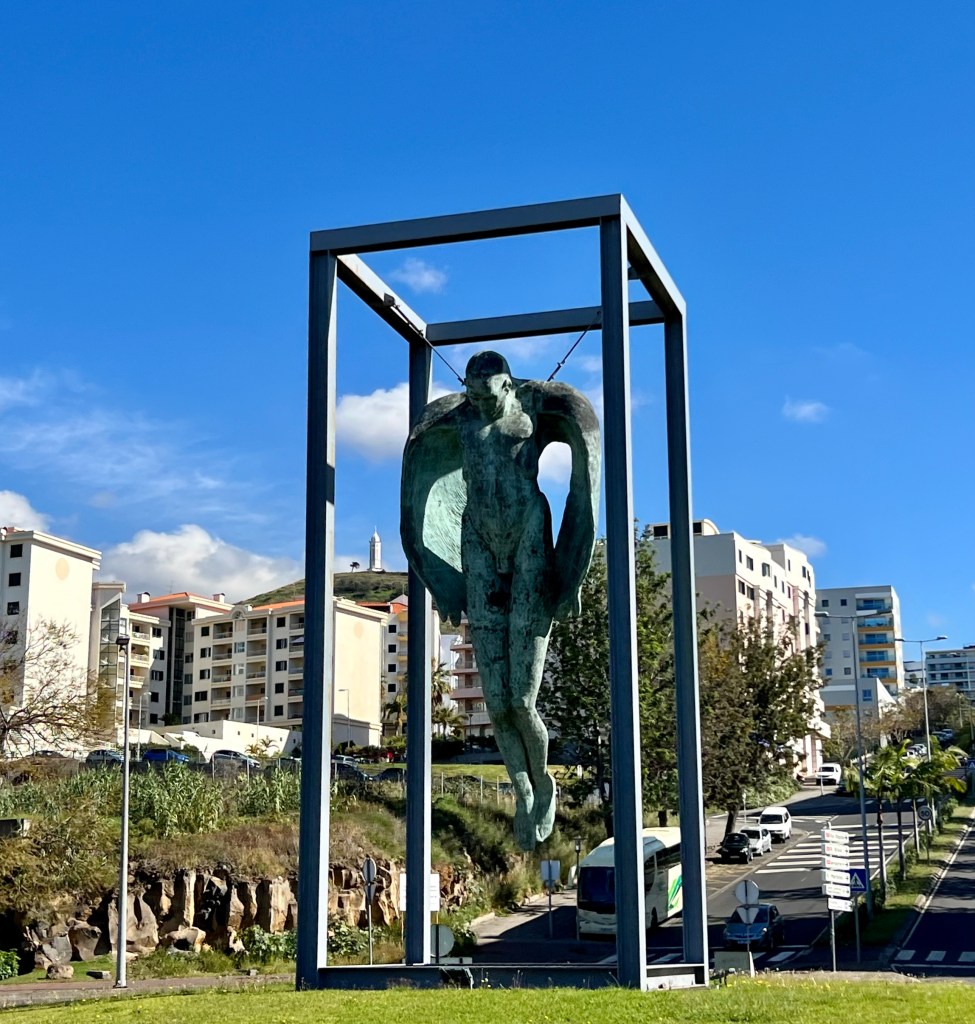
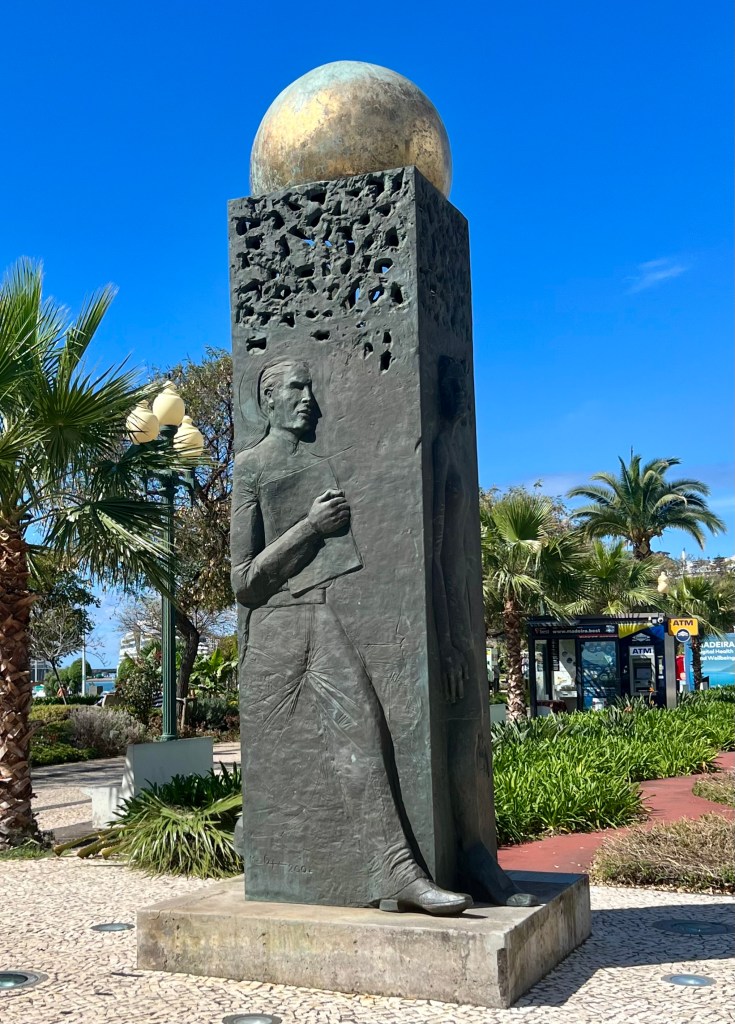
This sculpture is of Icarus, the angel with the wax wings who flew too near to the sun. He marks the death of many workers who lost their lives building the early tunnels and levadas on Madeira
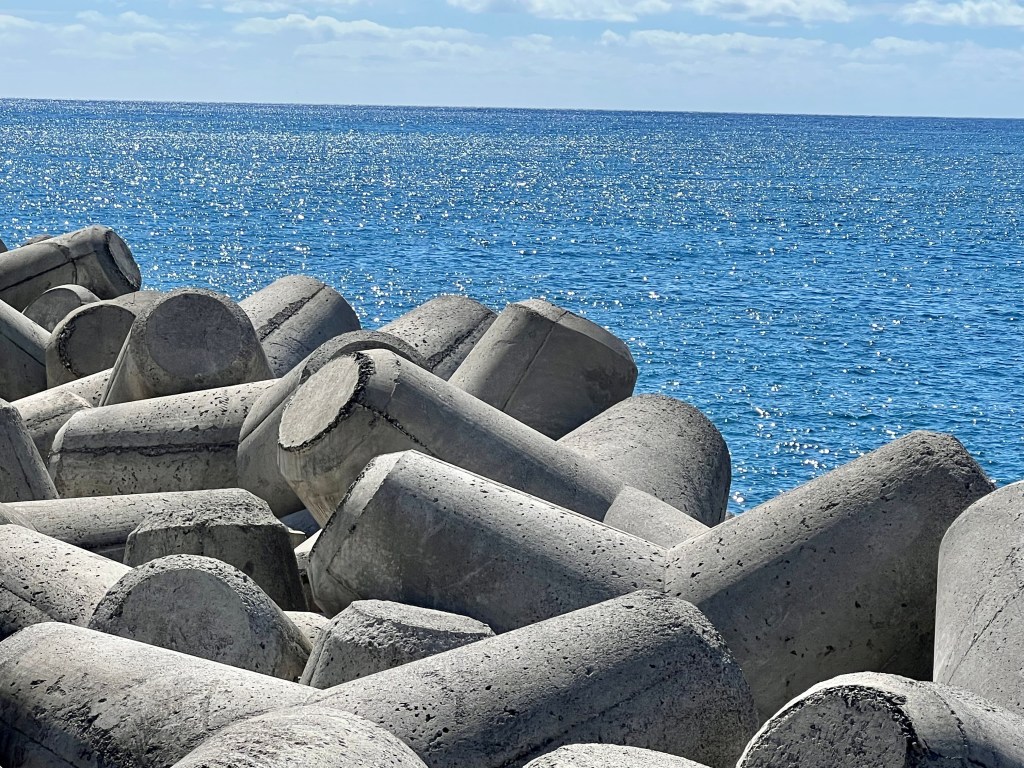
“Jacks” lining the Funchal waterfront.

After the crew got back, we headed off to dinner and then to check out some of the activities onboard. Ron and Andy were selected to participate in the hilarious “The Not So Newlywed Game” and we all learned a bit more about them!

Day two in Funchal and the crew are off to check out the tobogganing while I opt for more lounging an reading. I’m seeing a pattern here, lol! Another group dinner, some cards and a trip to the casino to try my luck and then it’s time to call it quits for the day. 

Tomorrow is another day.  Adventures await …
I’m not lost but I am late – Adventures in Greece

Friday April 7, 2023

Today is my last full day in Greece before I board a cruise to Israel, Cyprus, Turkey and Mykonos so it’s time to get organized and see at least some of Athens while I’m here. After a somewhat later start than the past couple of days or organized tour, I hop on the Hop On Hop Off Bus mid-morning. 

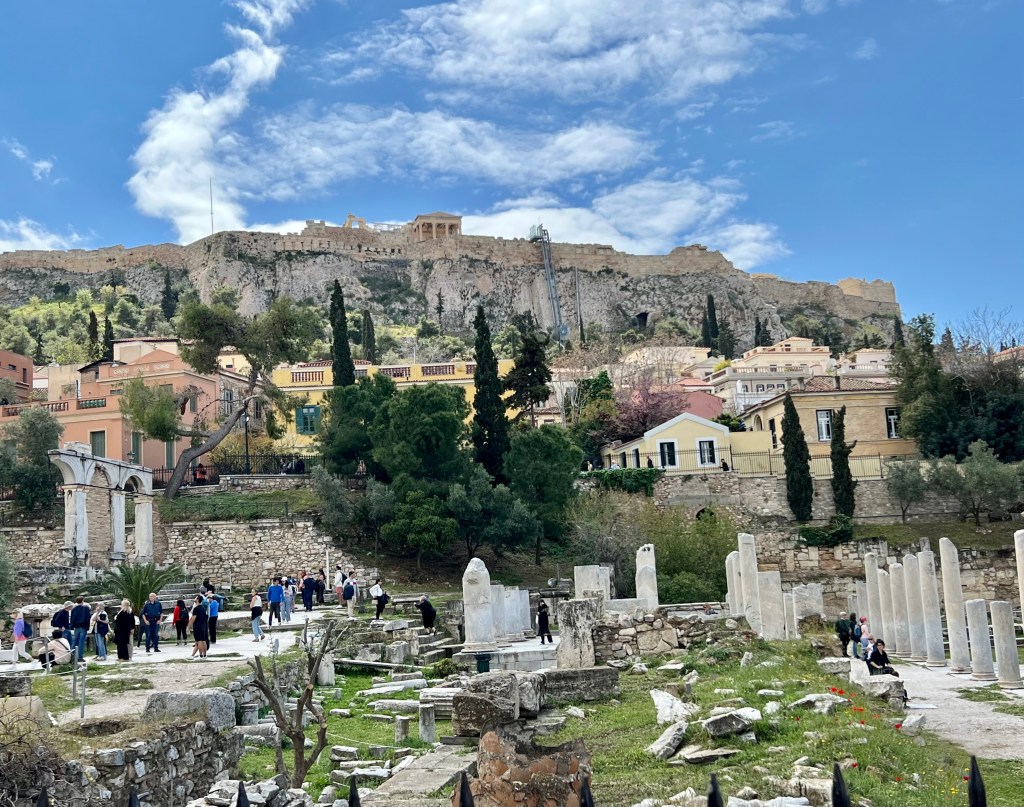
Today is Good Friday so there are lots of tourists visiting and all the sites are pretty slammed especially the Acropolis/Parthenon. I’m not in the mood for big crowds so opted to see these landmarks from afar and focus on some of the other highlights of this interesting city. Looks like I’ll have to come back another time!

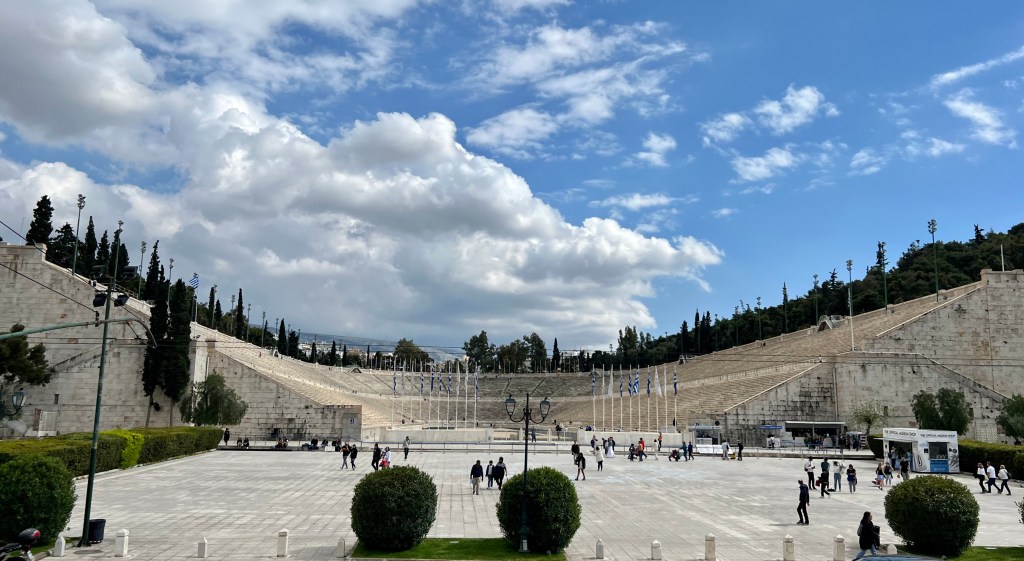
After doing a loop of the route, I’d figured out what I wanted to see. Did a drive-by of the Pantathenaic Stadium; the only stadium in the world built entirely of marble. Originally built in 330 AD, it was excavated in 1869 and after being refurbished, hosted the opening and closing ceremonies of the first modern Olympics in 1896. The stadium has 48 rows and holds more than 60,000.

Pantathenaic Stadium
The First Olympic Village?

I jumped off at the stop for the Plaka and started my explorations on foot.  First up is Hadrian’s Arch.

Hadrian’s Arch

Hadrian’s Arch, made of Pentelic marble, lies on an ancient street that lead from the old city of Athens to the new section built by Emperor Hadrian. It was constructed by the Athenians between A.D. 131-132. 

Two inscriptions are carved on the arch, one on each side: the first, on the side facing the Acropolis reads “This is Athens, the ancient city of Theseus”; the second, facing the new city, reads “This is the city of Hadrian and not of Theseus”. In 1778 it was converted into a gate of the defence wall around Athens, and renamed the Princess Gate. 

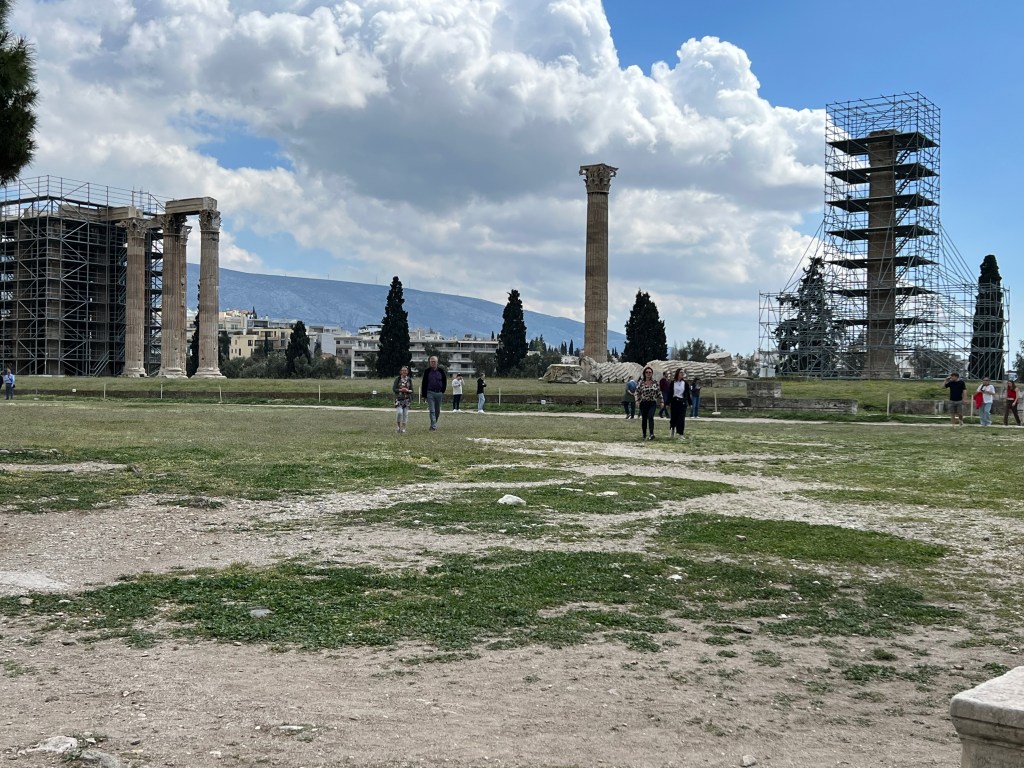
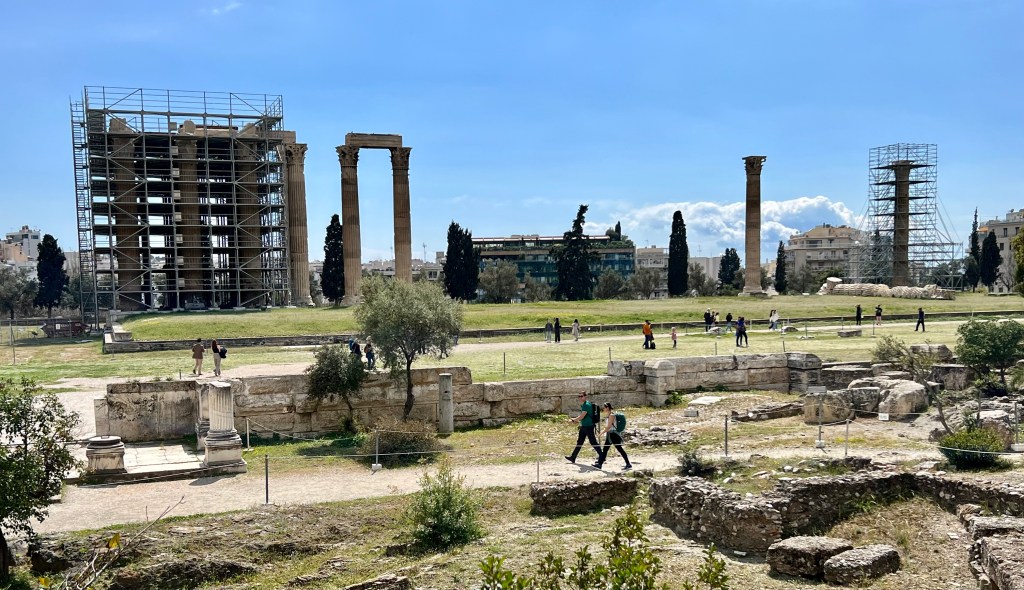
The Temple of Olympian Zeus, also known as the Olympieion, is a former colossal temple close to the Arch. Dedicated to Zeus, construction began in the 6th century but it was not completed until the reign of the Roman Emperor Hadrian in the 2nd century AD, some 638 years after the project had begun.

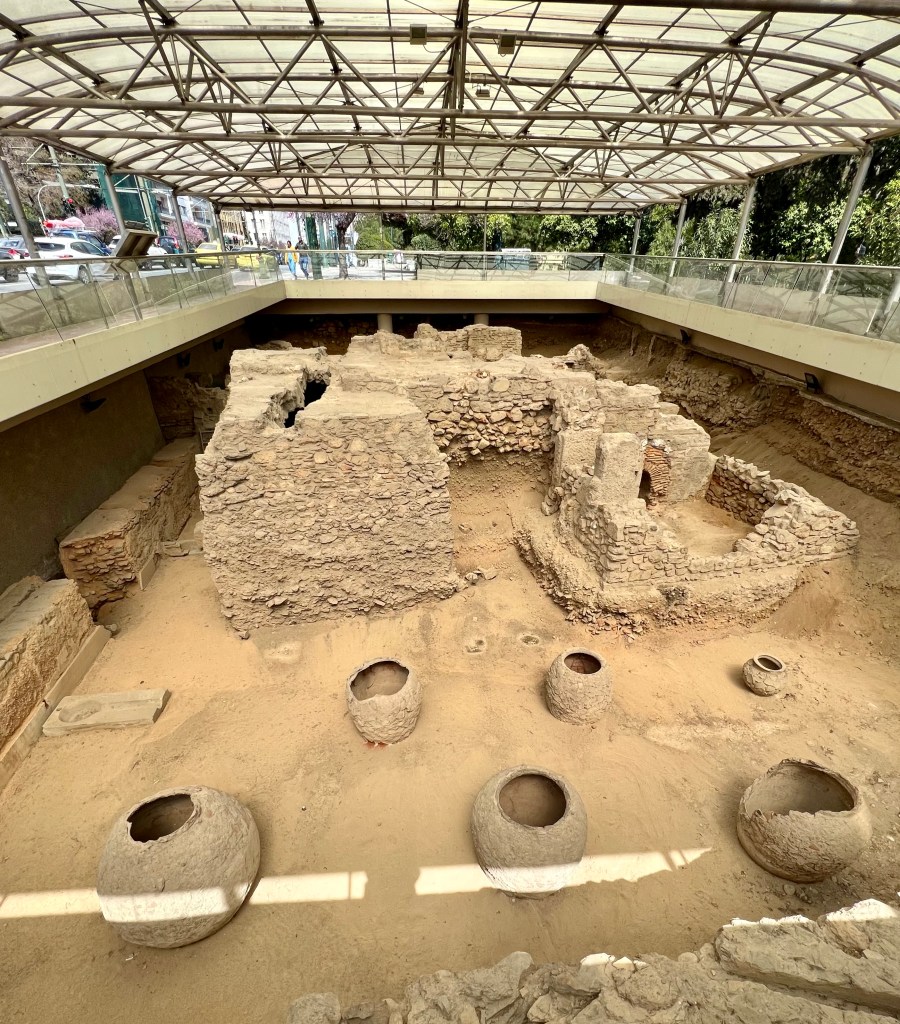
Just a short walk from Hadrian’s Arch is an archeological site where a Roman Bath was unearthed when a ventilation shaft for the Athens METRO was being dug. The largest sector of the excavation included a very well preserved bath complex-balneum. The baths continue both eastwards, inside the National Gardens, and westwards along Amalias Avenue. 

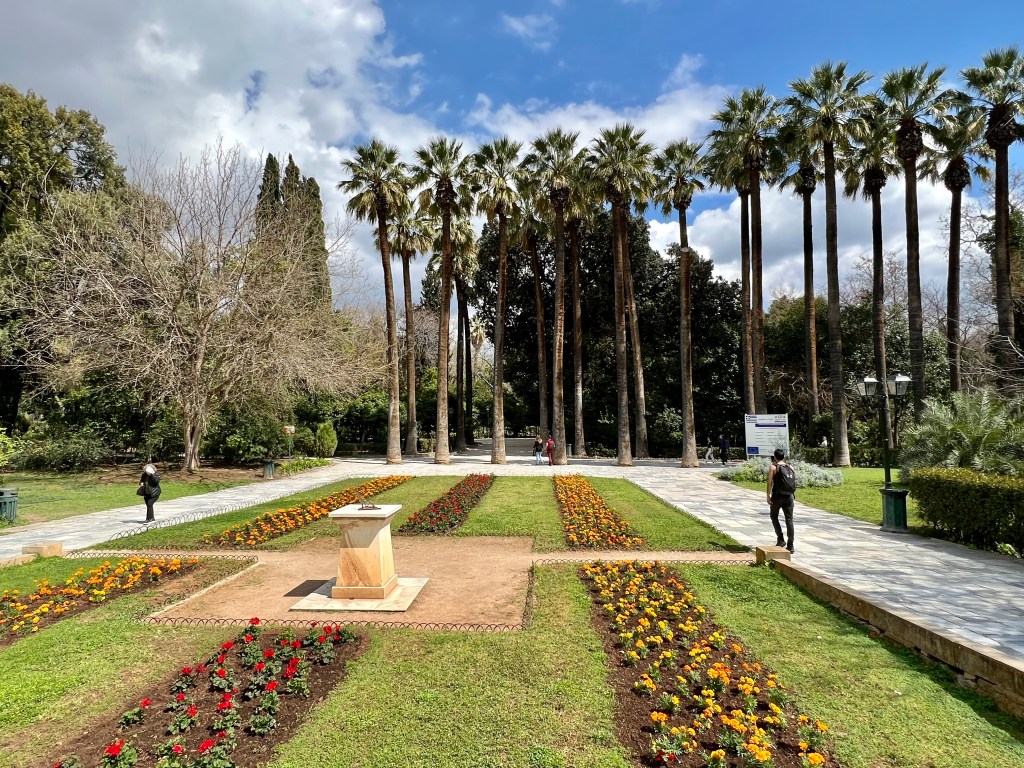
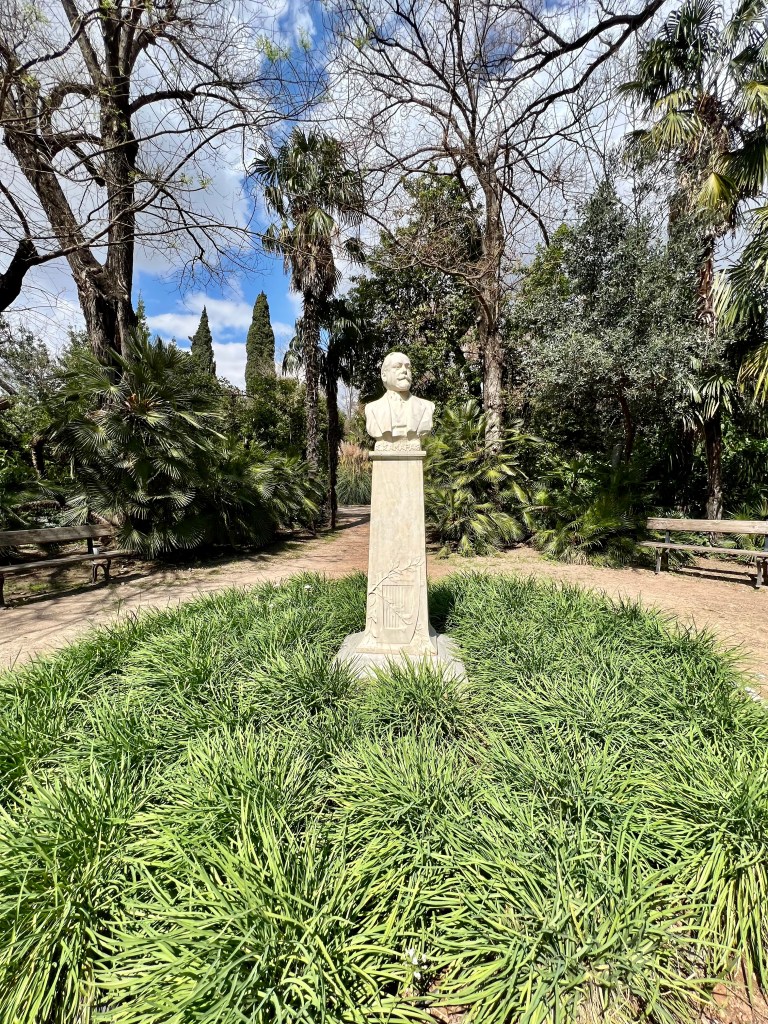
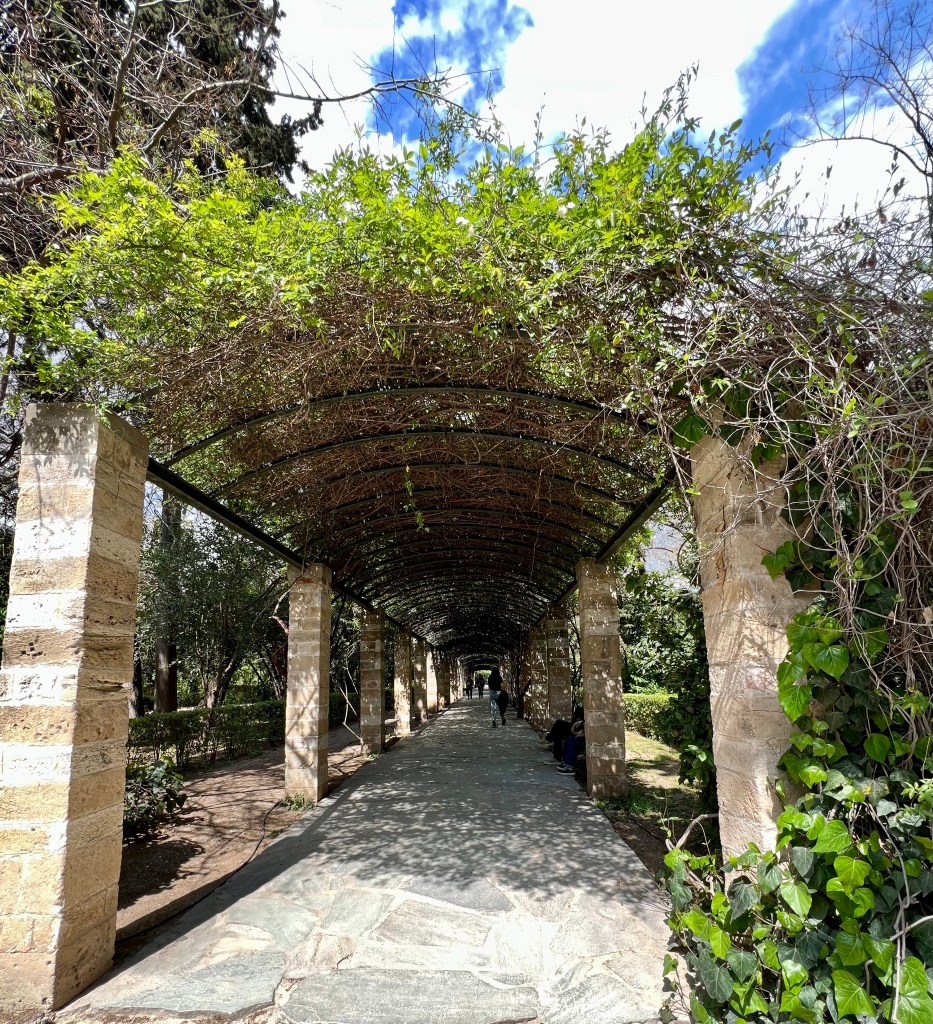
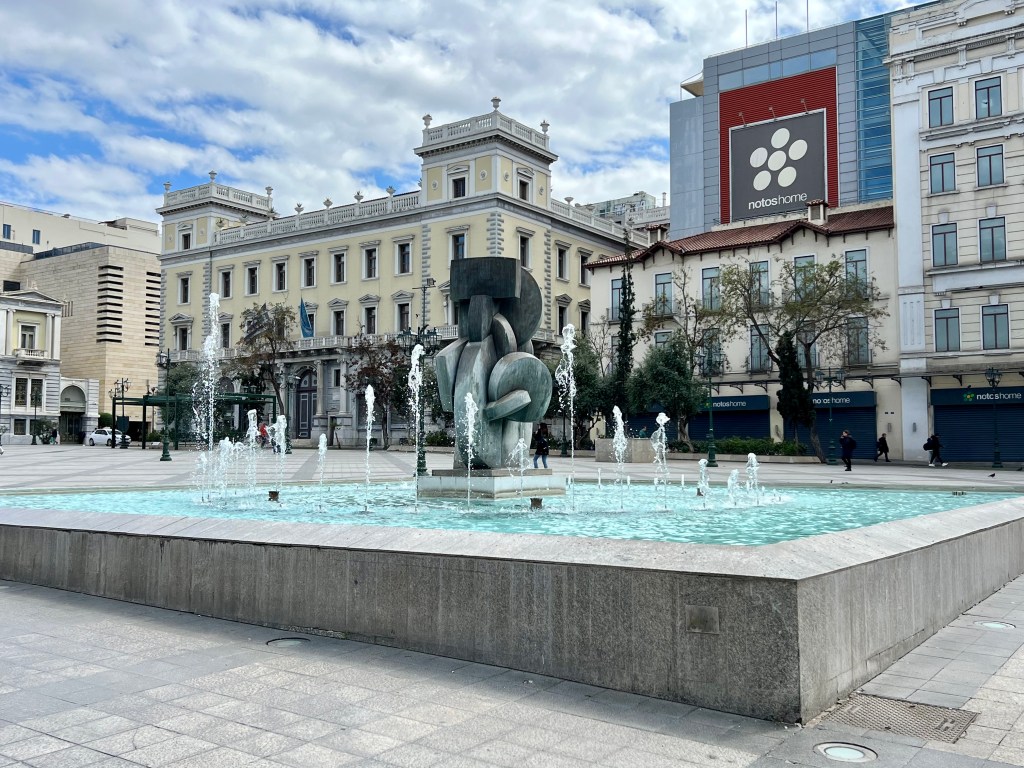
Continuing along Amalias Avenue, I find The National Garden of Athens: right in the heart of Athens, between Syntagma Square and the Kallimarmaro (Panathenaic) Stadium, stands the famous National Garden of Athens. It’s truly a beautiful area to escape the noisy city center and relax in a lush green environment and lots of folks were lounging on the benches taking a break while I strolled through the grounds.

Initially, it was named Royal Garden because it was fenced and only the royal family had the right to walk there. After the restoration of democracy in Greece in 1975, the park was renamed the National Garden and it opened to the public. Today, it remains open every day from sunrise to sunset.

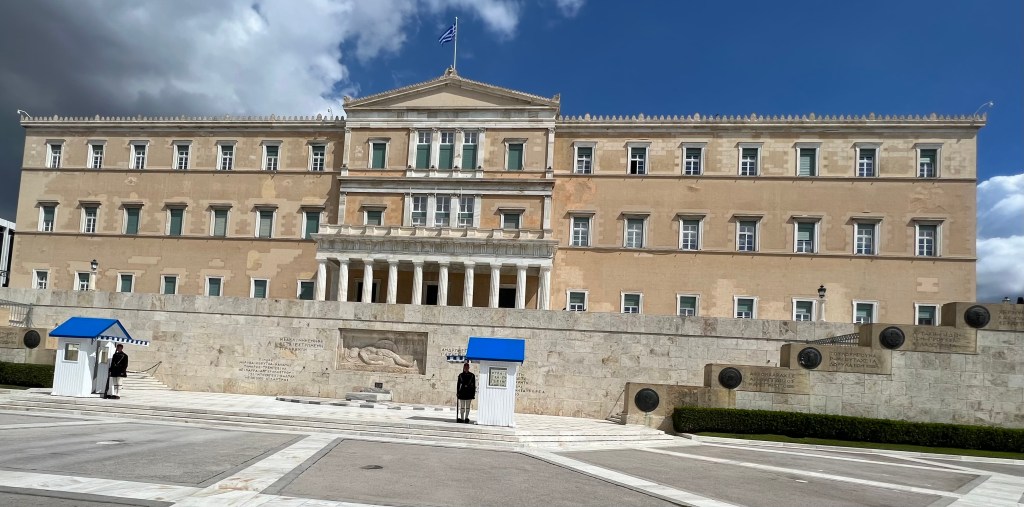
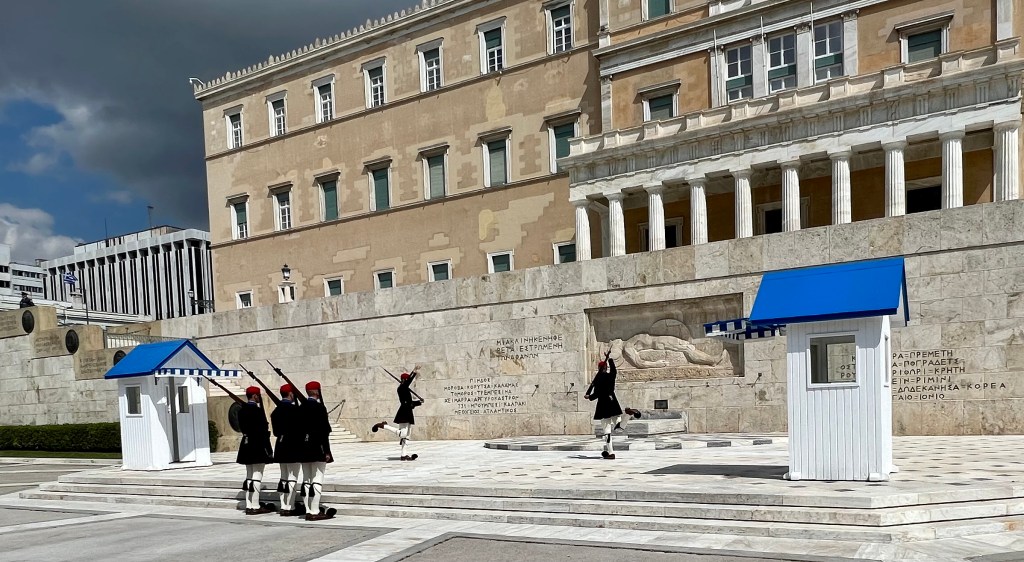
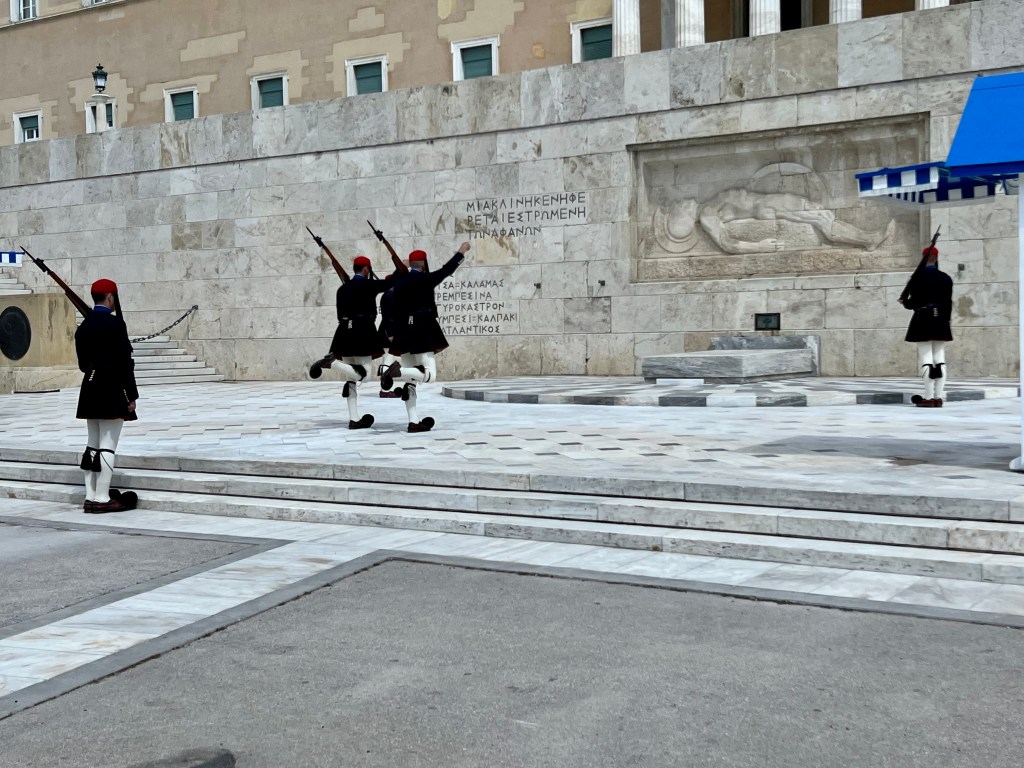
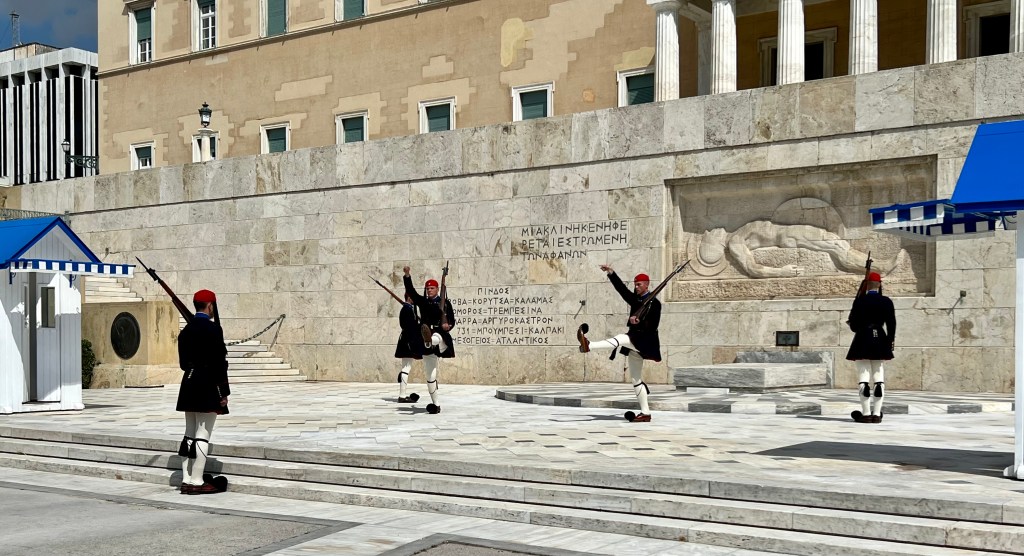
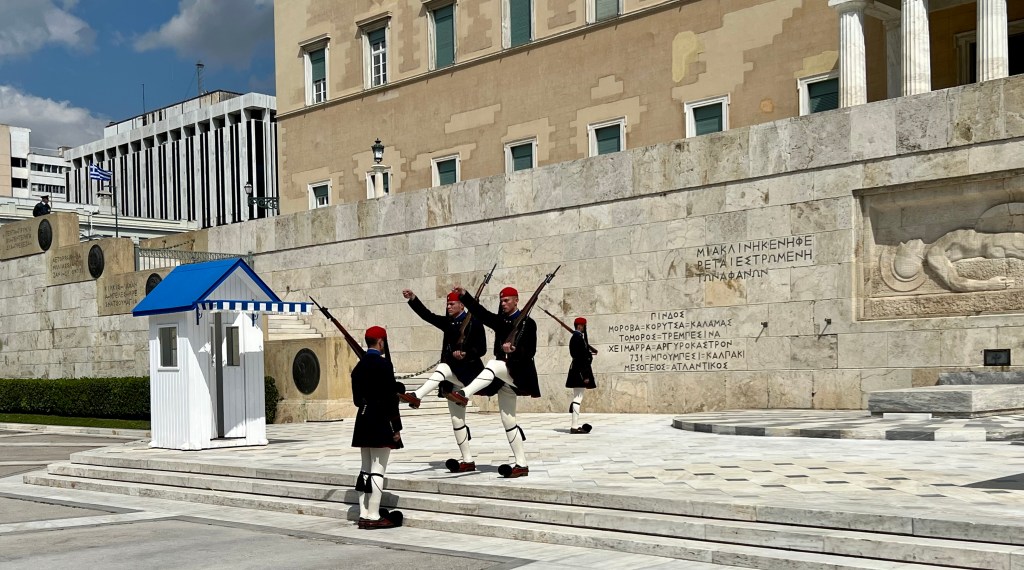
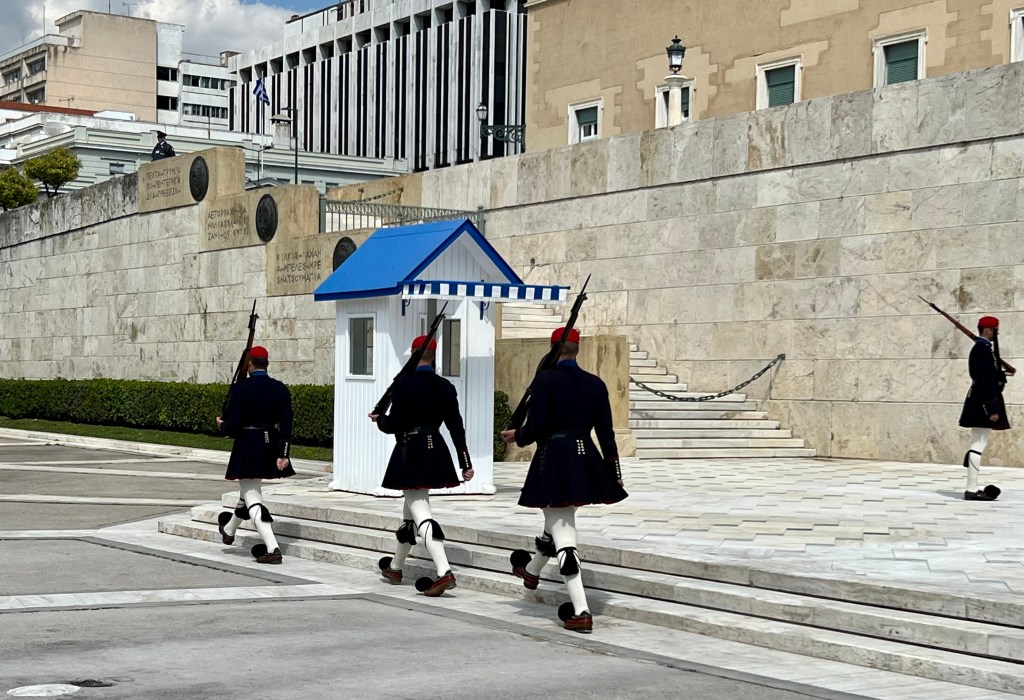
On to the Parliament Building where the Evzones guard the Monument of the Unknown Soldier located in front of the Hellenic Parliament.  The Evzones is a special unit of the Hellenic Army, also known as Tsoliades. These soldiers of the Presidential Guard are selected according to their height, physical condition, character and must pass a strenuous training program before they become part of this honorary unit. The training lasts for one month and includes exercises to keep the body and mind still. Apart from staying still, the soldiers must also not make any facial or eye movements nor show any expression. Every soldier guards the Monument for about an hour, 3 times every 48 hours. During these 60 minute periods, they must stand perfectly still until it is time to switch with another guard. 

Greek Parliament in Syntagma Square

The Changing of the Guards takes place every hour and resembles an elaborate dance with the choreographed steps and high kicks being carried out in really slow motion to get their blood flowing again after 60 minutes of immobility. Given the short skirts of their uniform, it’s a good thing they aren’t real Scots!

The uniforms are interesting as well. The Greek kilt they wear has 400 folds to represent the 400 years of Ottoman occupation. Another feature of their uniform are the traditional shoes of Evzones (tsarouchia), that are made of red leather with a small tuft in front. Each shoe weighs three kilos! No wonder they are moving so slow!

Monastiraki Square is a distinctive old Athens area, with narrow, irregularly criss-crossing streets, and small buildings, typical of Ottoman urban planning. Here you will find the flea market and one of the principal shopping districts in Athens. This area also has two important historical sites: Hadrian’s Library and the Roman Agora. 

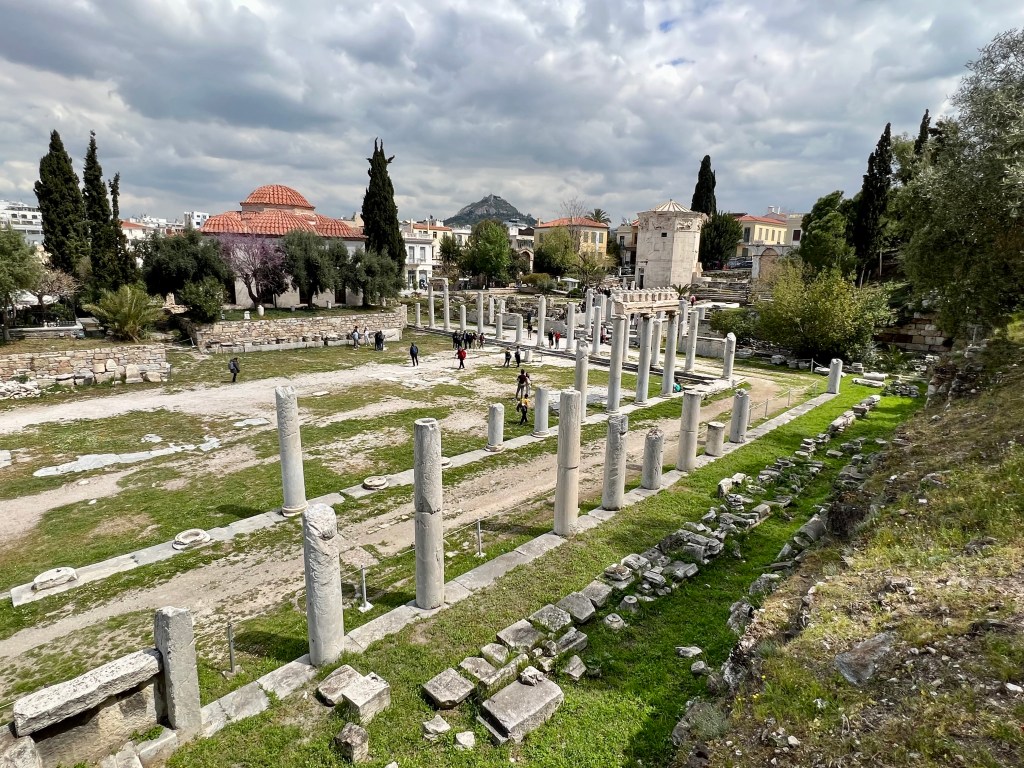
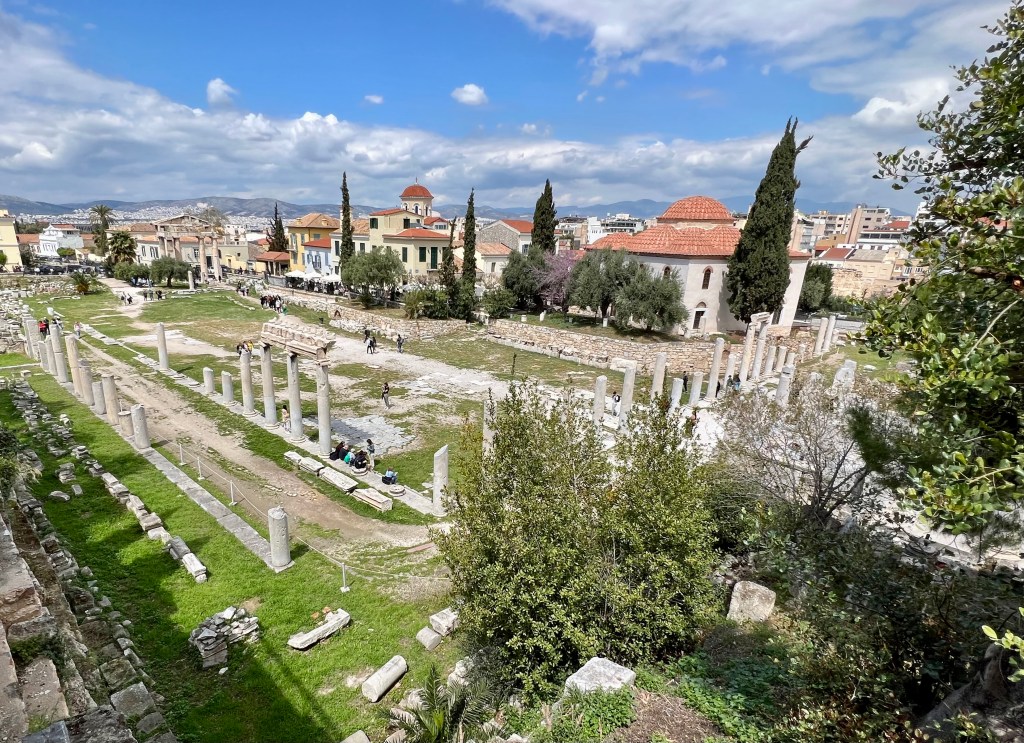
The Roman Agora was the ancient public square raised during the Roman period (between 19 BC and 11 BC) in Athens. It was one of the main meeting points in the city and it once housed the central market. It was commissioned by the first Roman Emperor Augustus and then enlarged by the Emperor Hadrian. During its golden age, the Agora was a type of courtyard that measured 100 square meters. Today, only a small portion of the columns are still standing, and the remains of the public outhouse. 

The Roman Agora

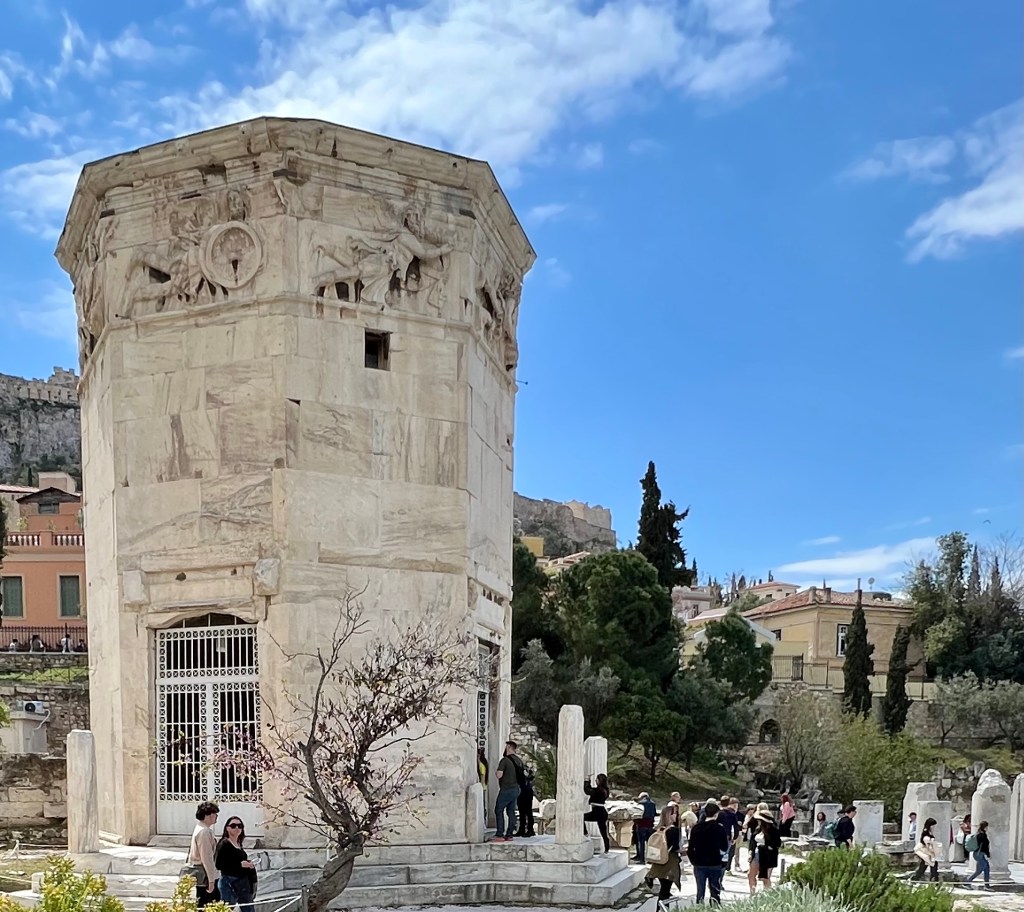
The “Tower of the Winds”, on the western side of the Agora, is practically intact. This polygonal monument, sheathed in marble slabs was built during the second century BC, was used as a water clock and sundial.

Tower of the Winds

In the heart of Athens, between the Agora and the Acropolis, Roman Emperor Hadrian built his renowned Library. Hadrian’s Library is the oldest library in Greece built in AD 132 and in addition to the three stories housing books, featured reading rooms, teaching rooms, porticoes for philosophical walks, gardens and a pond for recreation. The ruins are sprawling. 

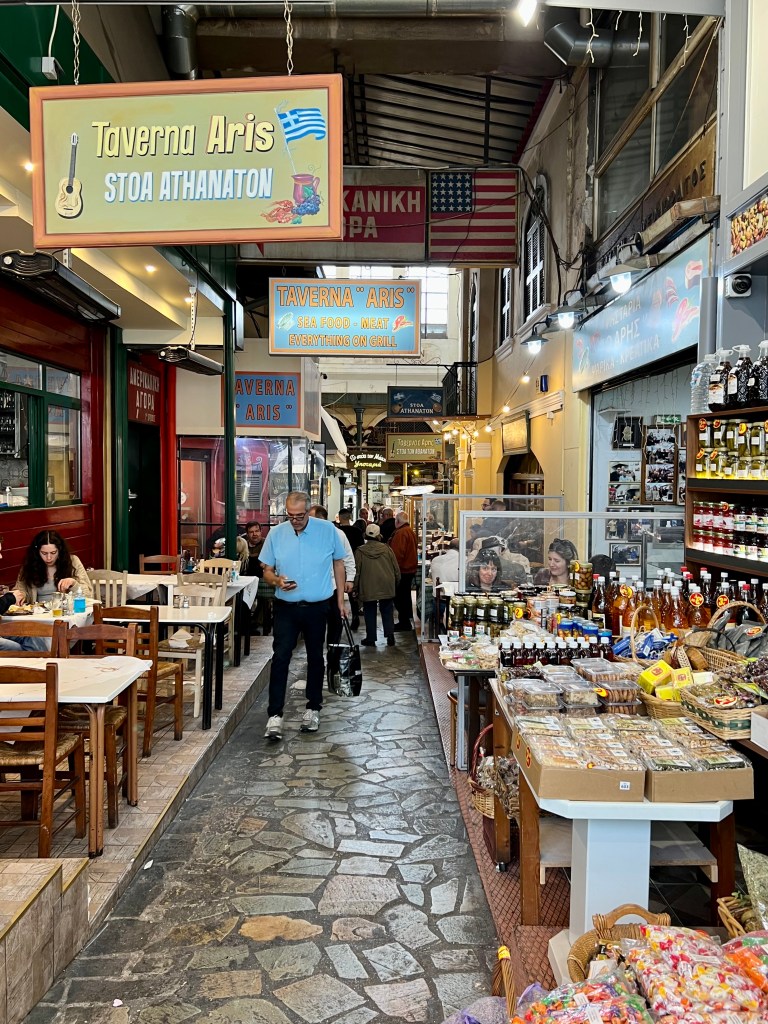
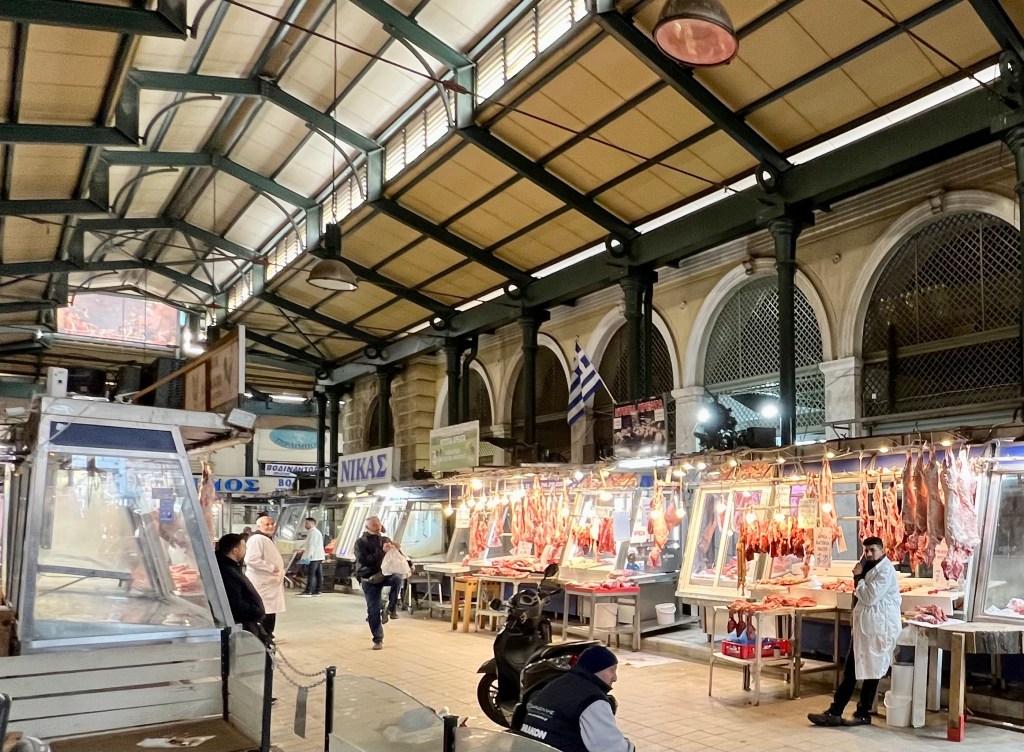
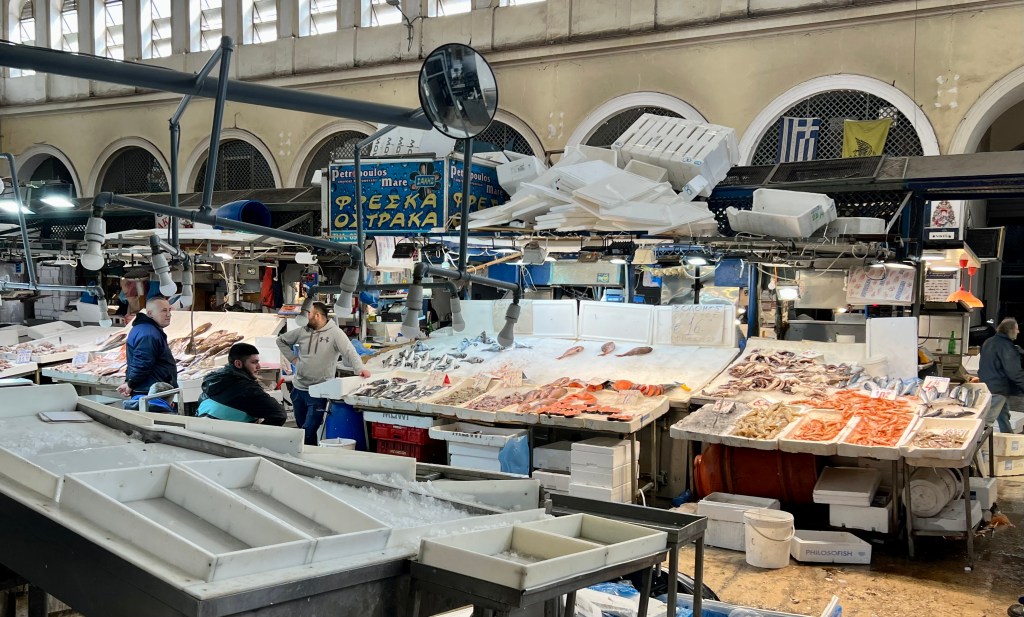
Back on the bus to get closer to my hotel. Here I checked out the meat and fish markets off Athinas Avenue before heading to grab a late lunch/early dinner at a local eatery. 

I didn’t have the time or energy to explore Athens fully so I’ll be baack but that’s it for now. It’s an interesting city of contrasts and to enjoy it fully, I’d like to have a partner-in-crime. Who wants to join me? For now, time to repack and regroup for my cruise. 

Tomorrow is another day. Adventures await …
I am not lost but I am late – Adventures in Greece

Thursday April 8, 2023

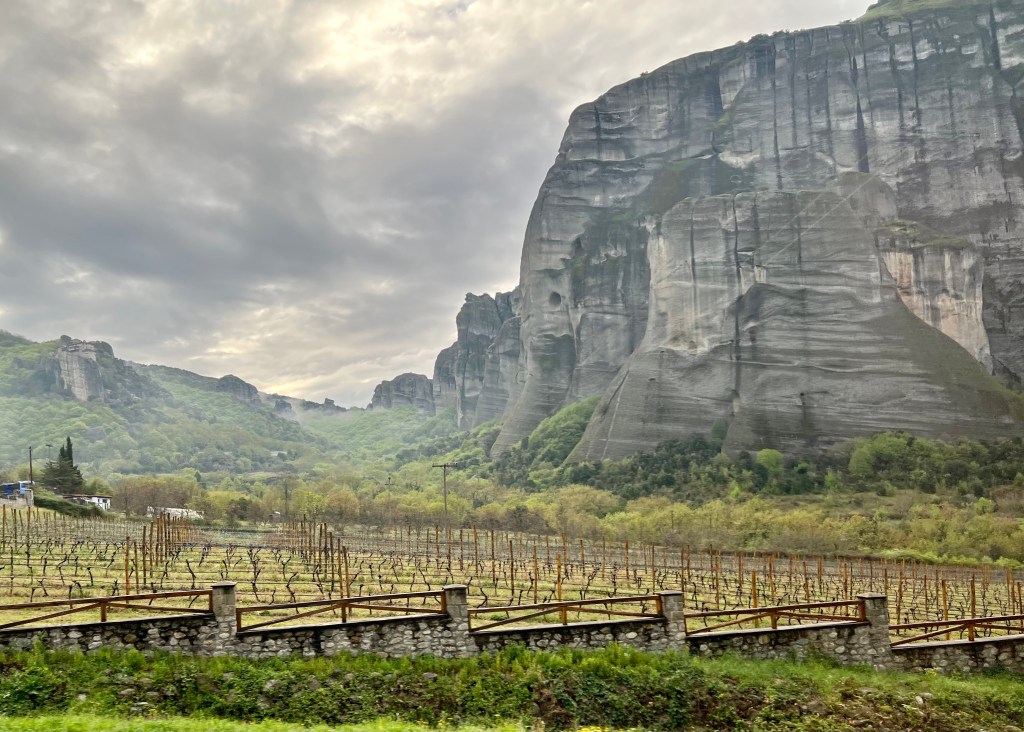
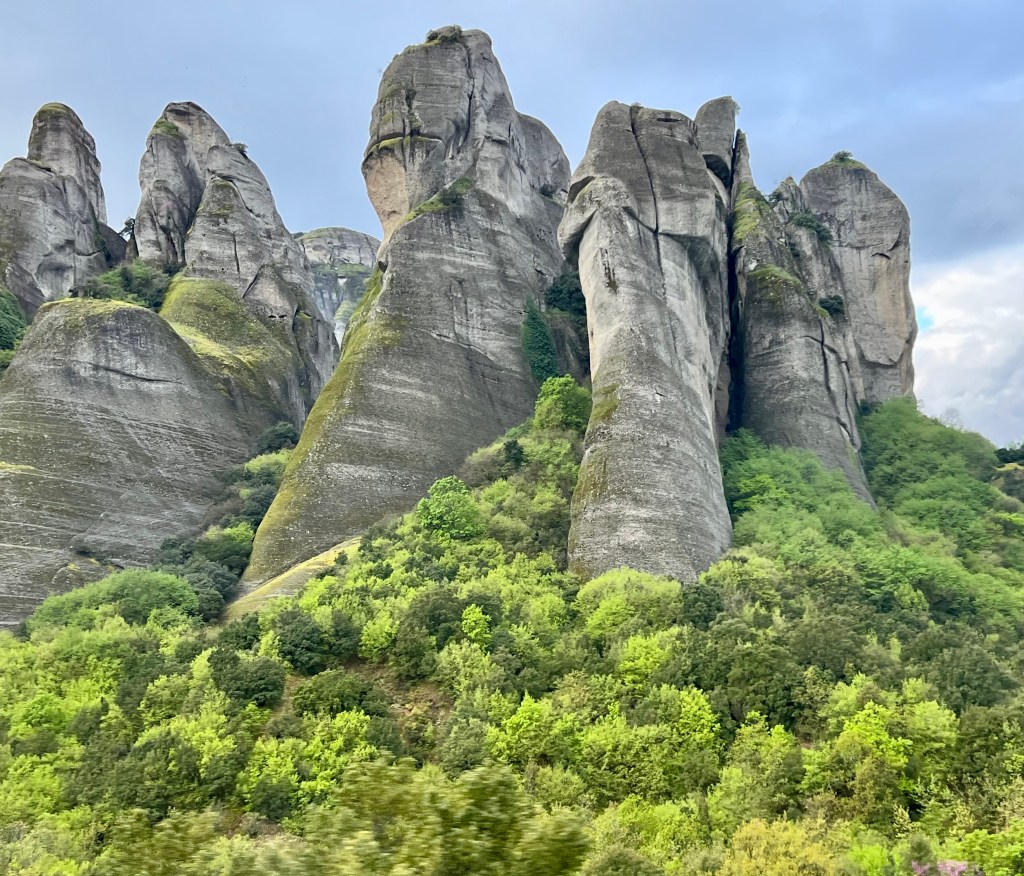
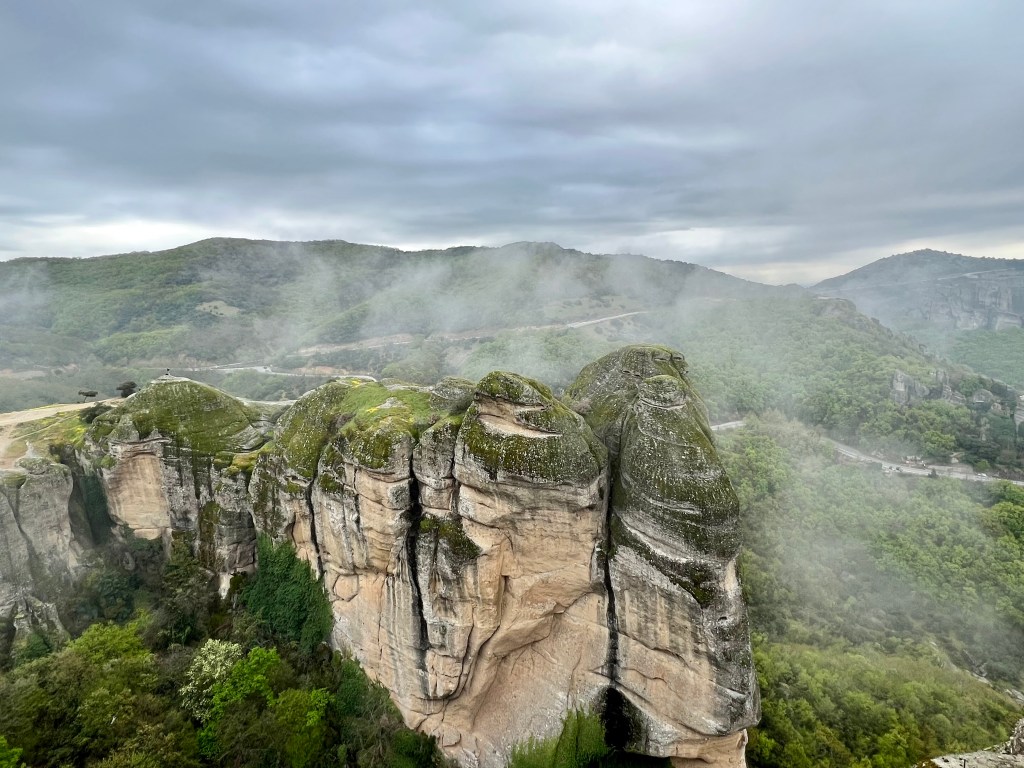
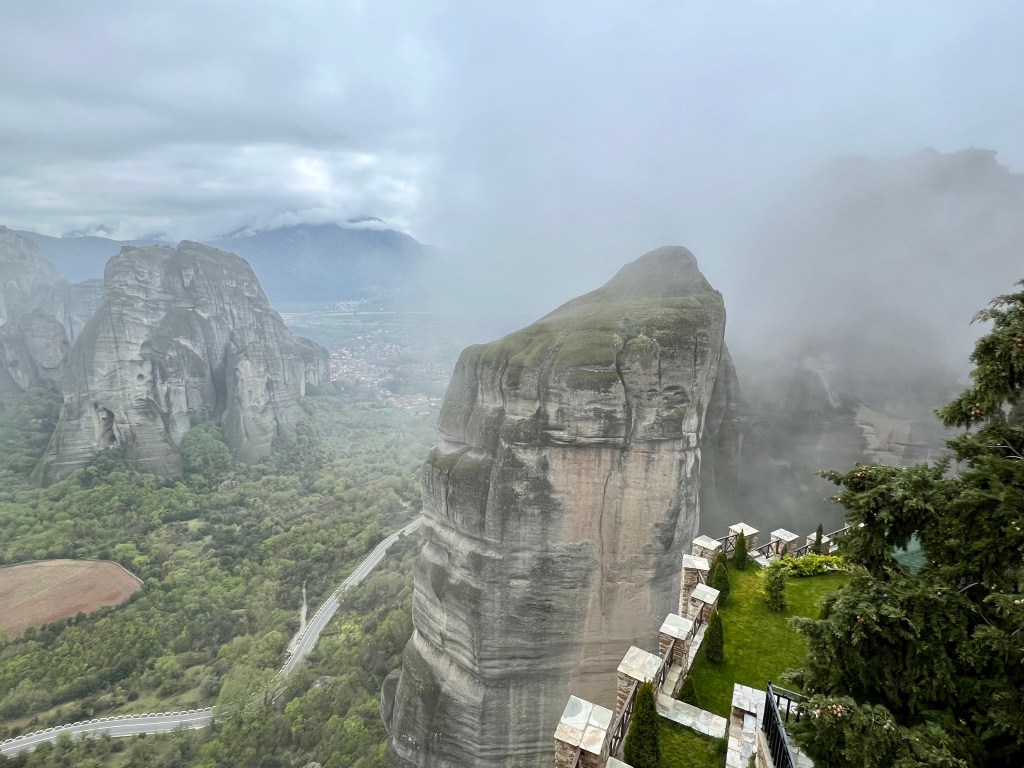
Today, we’re headed to Meteora, a rock formation in central Greece boasting one of the largest and most precipitously built complexes of Eastern Orthodox monasteries.  Beside the Pindos Mountains, in the western region of Thessaly, these unique and enormous columns of rock (composed of a mixture of sandstone and conglomerate) rise majestically from the ground.

The first people documented to inhabit Meteora were an ascetic group of hermit monks who, in the ninth century AD, moved up to the ancient pinnacles. They lived in hollows and fissures in the rock towers, some as high as 1800 ft, above the plain. This great height, combined with the sheerness of the cliff walls, kept away all but the most determined visitors. 

The lofty heights were perfect for the monks; the only means of reaching the peaks was by climbing a long ladder, which was drawn up whenever the monks felt threatened. The location provided a retreat from the expanding Turkish occupation; the inaccessible rock pillars of Meteora were an ideal refuge and the monasteries were built in a manner that allowed them to blend with their surroundings.

Between the 13th and 14th centuries, twenty-four monasteries were established atop the natural pillars and hill-like rounded boulders that dominate the local area. Of the original twenty-four monasteries, six remain active (2 as nunneries and 4 as monasteries).  Meteora was added to UNESCO World Heritage List in 1988 because of the outstanding architecture and beauty of the complex, in addition to its religious and artistic significance.

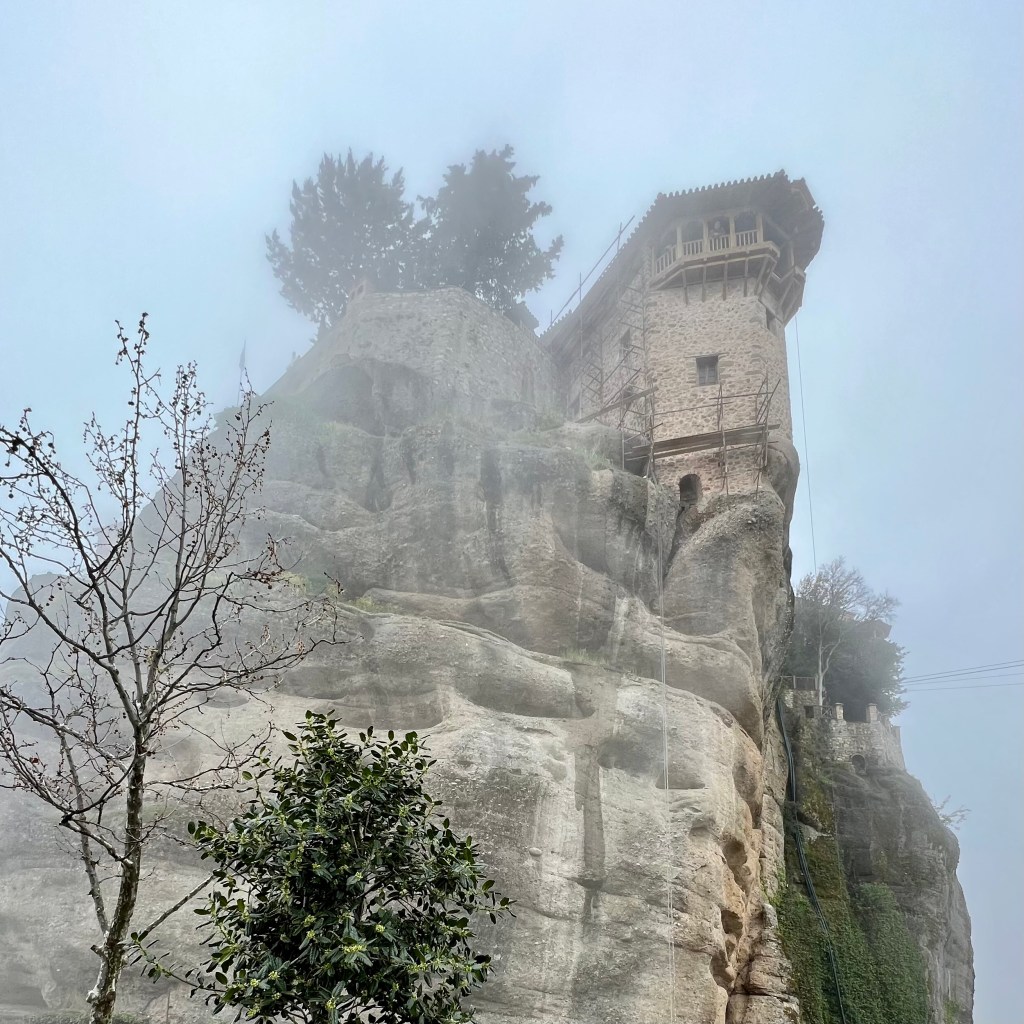
Our first stop this morning is the Varlaam Monastery built in 1517 and the central church (Katholikon) dedicated to All Saints. The finger of St. John and the shoulder blade of St. Andrew were reputedly housed here though we saw no sign of either relic there today. 

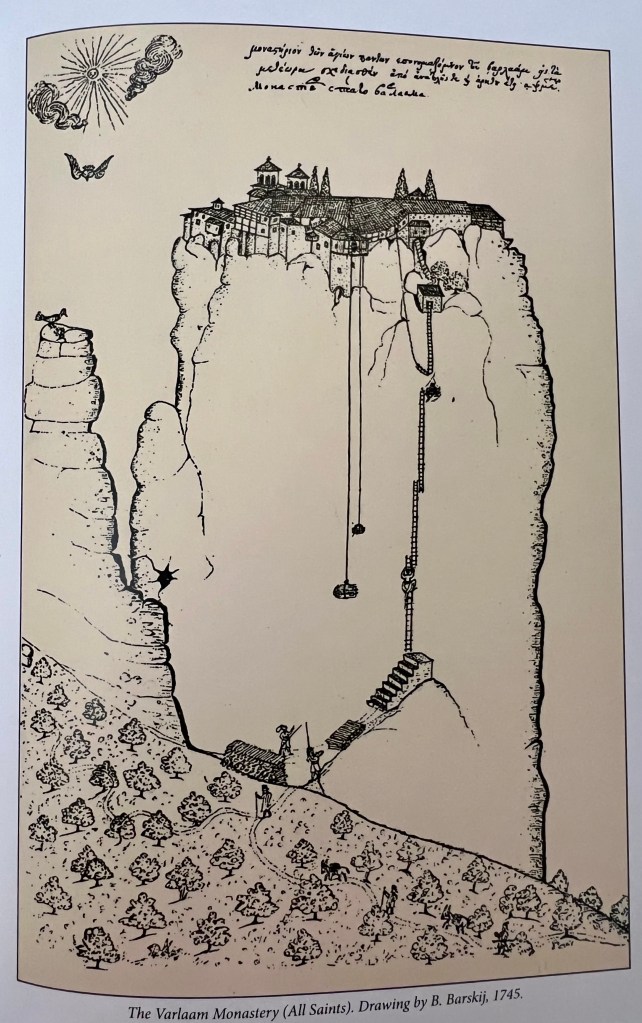
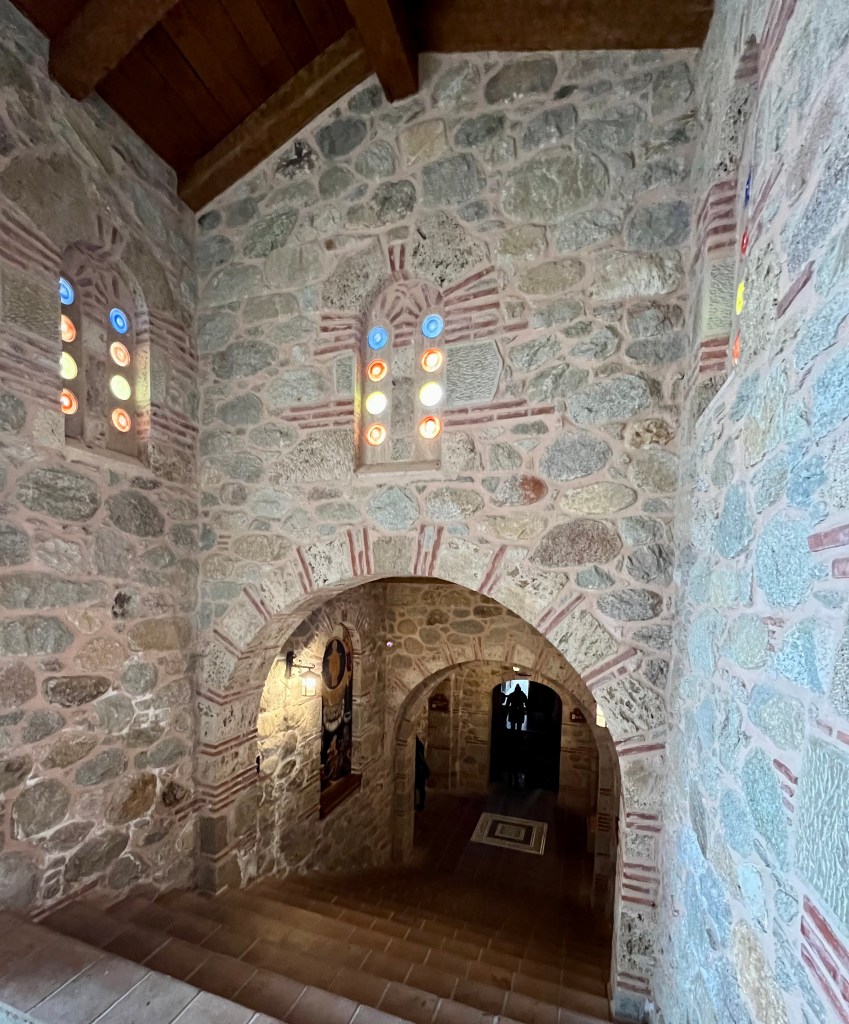
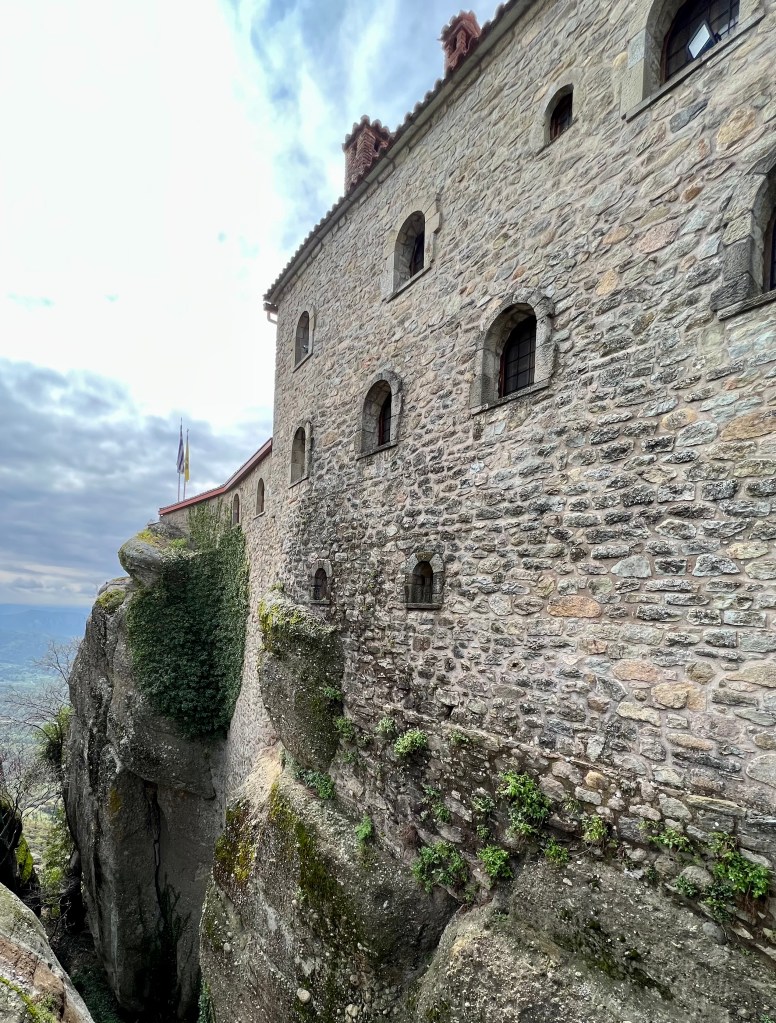
Access to this monastery, like the others, was originally (and deliberately) difficult, requiring either long ladders latched together or large nets used to haul up both goods and people. Either method of transport required quite a leap of faith – the ropes were replaced, so the story goes, only “when the Lord let them break”. In the words of UNESCO, “The net in which intrepid pilgrims were hoisted up vertically alongside the 1,224 ft cliff where the Varlaam monastery dominates the valley symbolizes the fragility of a traditional way of life that is threatened with extinction.” For someone with a fear of heights, the current labyrinth of stairs (mostly without railings) was challenging enough; I don’t believe I would have used the more traditional means of entry for love nor money. 

A picture of the original route to access Vaarlem Monastery
Vaarlem Monastery Complex Entry Gate
View from Entry
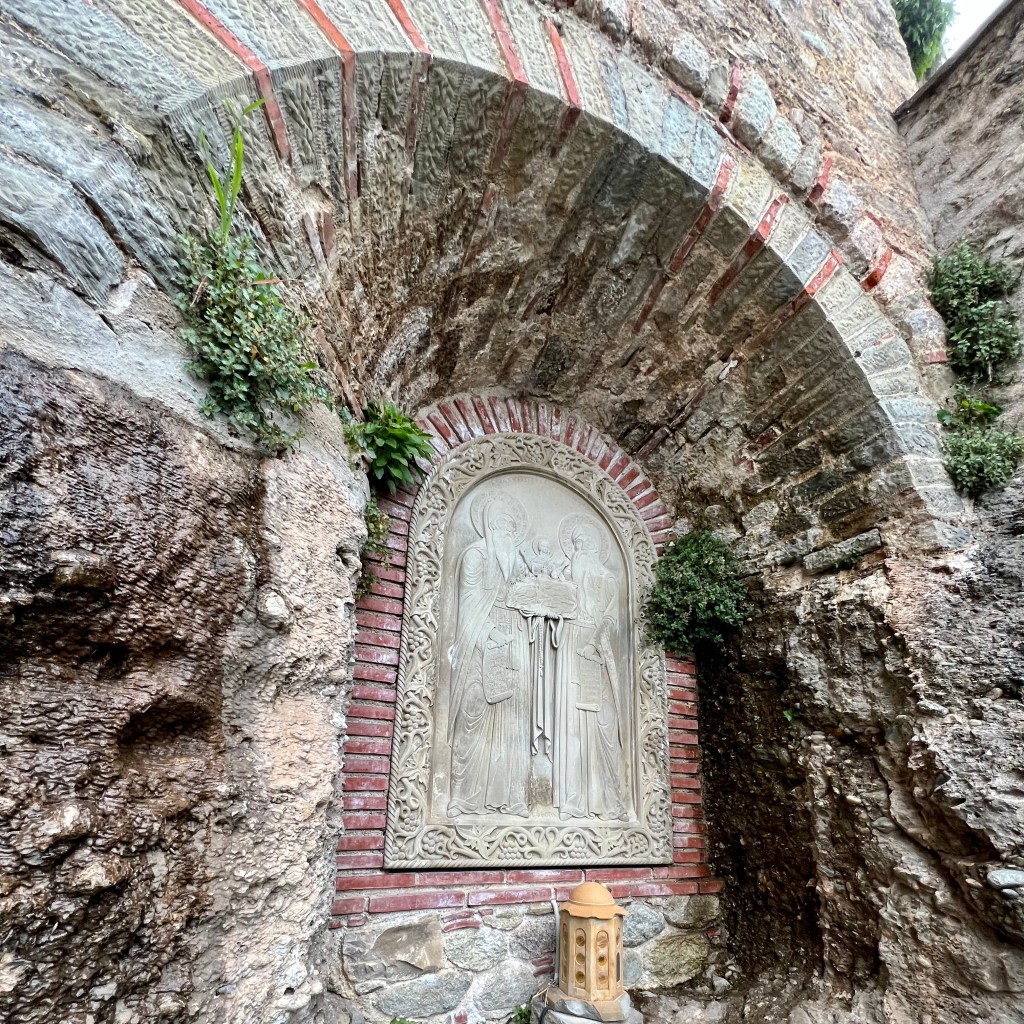
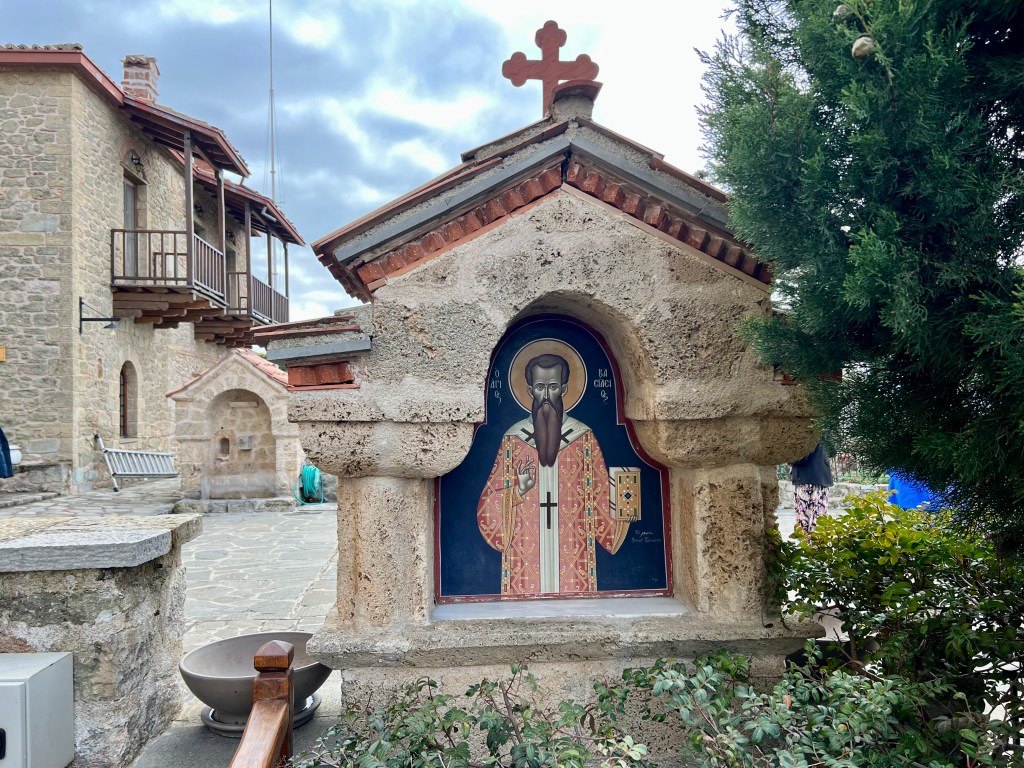
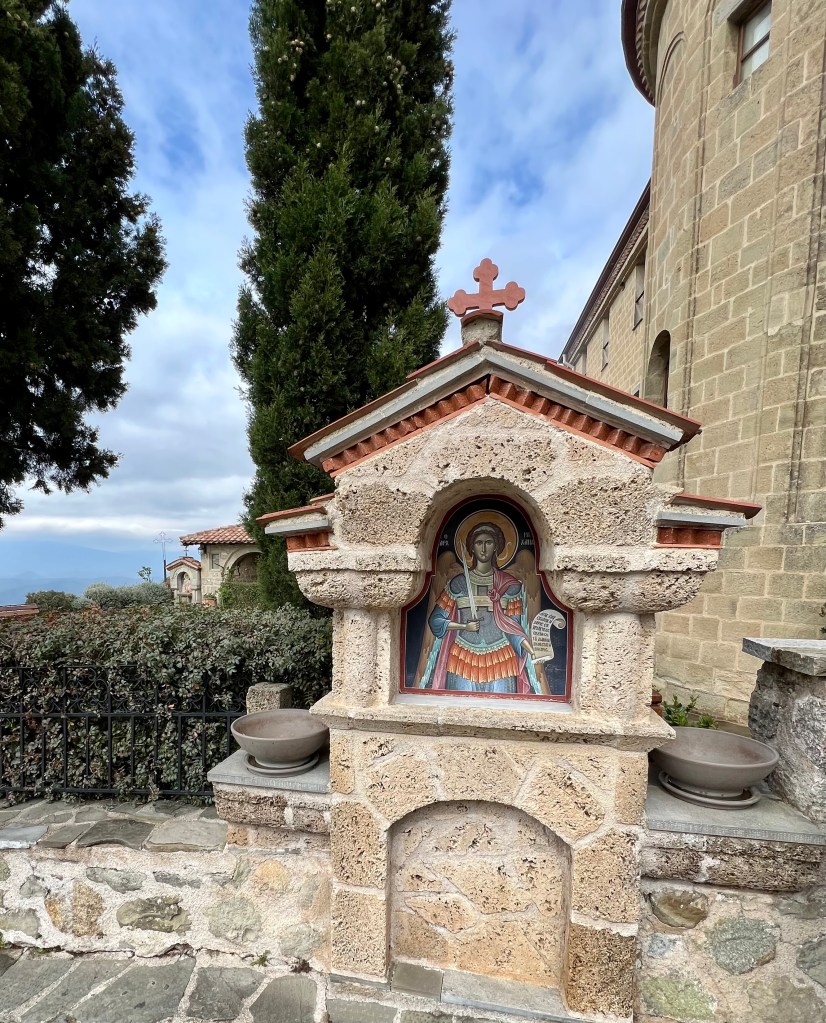
Shrine on the Stairway
It appears to grow out of the rocks
First glimpse of Church of All Saints inside the Monastery

We were allowed to take pictures of the outside of the monastery but nothing inside the church as it is still used for services. The monasteries typically house 12-15 priests or nuns and any masses are lead by priests from the village. 

We entered the church from the west into the first of three parts; the narthex or vestibule. The walls were covered with a multitude of  images. When the church was originally built most of the flock would have been illiterate so the chaos of images were intended to tell them a story. As this is an older church, the artwork is dark and depicts the brutality of the day with many people being murdered (beheaded, boiled, etc.) by the Ottomans. The heads of the murdered corpses had halos to show that despite their horrific death, there was a good outcome.  

The second part of the main church, the nave, is square with the dome overhead in the middle symbolizing heaven. There is plenty of artwork in this part of the church as well though it doesn’t seem as chaotic and depicts mainly religious themes. The dome features a rendering of Jesus at the top supported by angels and the Apostles. The four evangelists are at the bottom of the dome providing a link between heaven and earth. The walls of the square church feature saints especially many of the warrior saints that were important during the Ottoman Empire’s Occupation. Strikingly all the saints depicted are men as it seems there may not have been any important female saints at the time this church was built. 

The third part is the sanctuary or altar, accessible only by the priests. Even the nuns or monks living at the monastery are not permitted entry to this restricted area. 

Some of the artwork outside the Church of All Saints

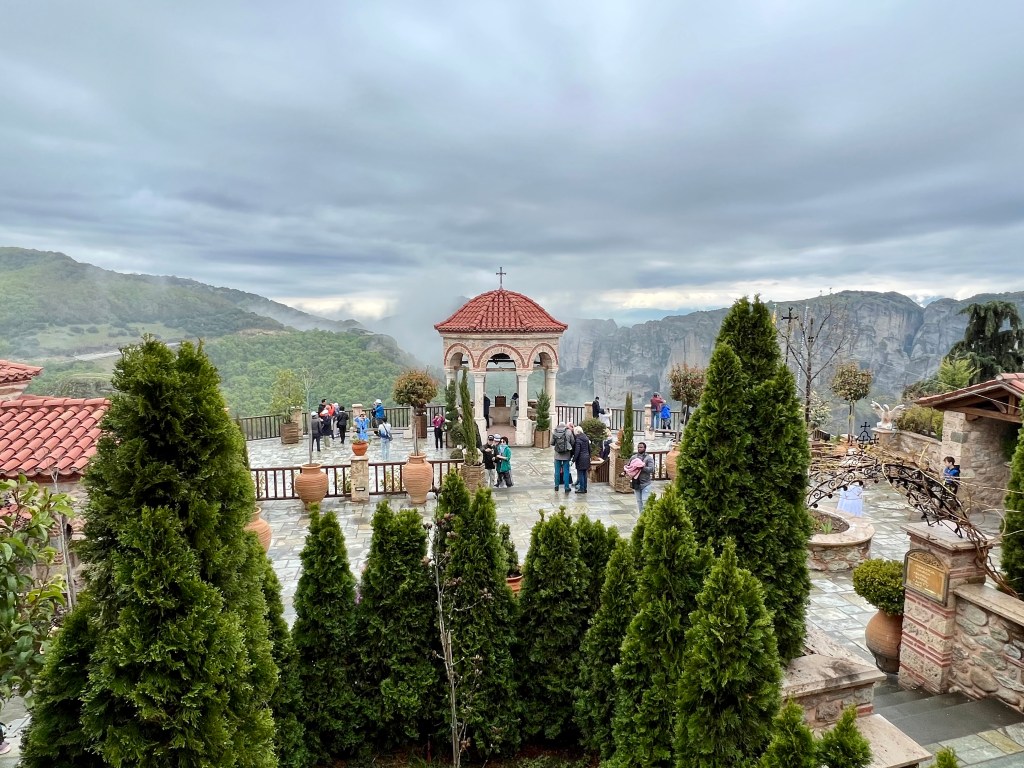
After leaving the church, we took a stroll around the balconies and viewing platforms where we were treated to stunning vistas. The climb was definitely worth it. 

View from the Balcony

We also had a chance to check out their huge Barrel used to store their wine. Hard to believe that a dozen monks needed 12,000 litres of wine but … Lol!

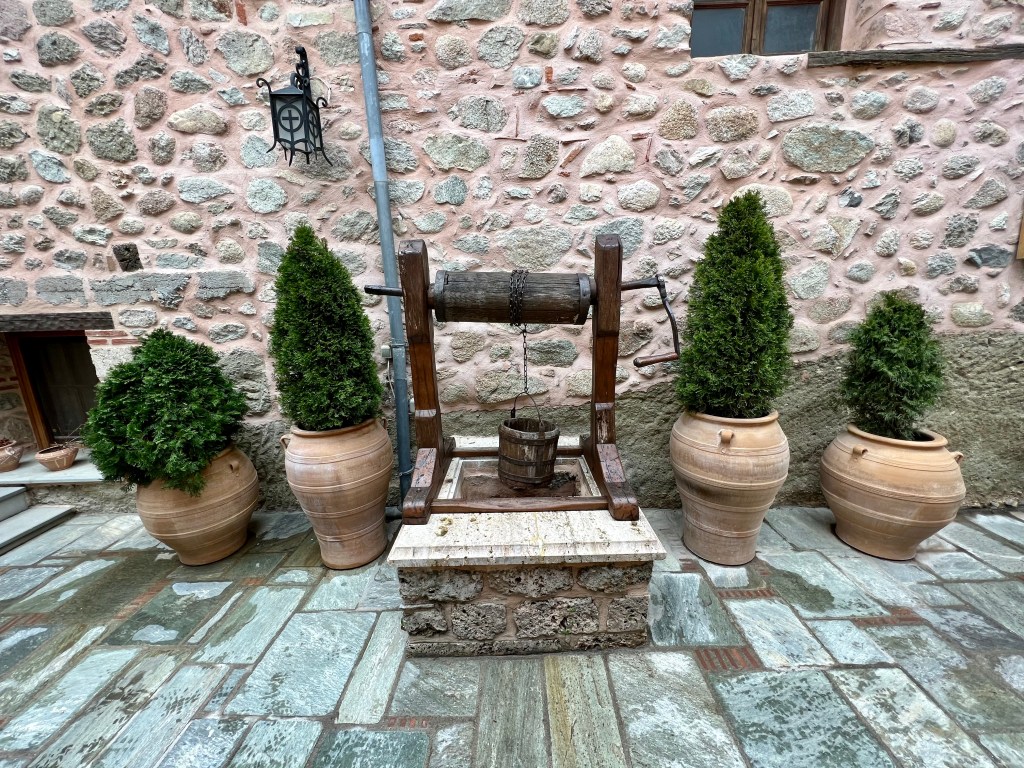
That’s a lot of wine!
They also drank water
Views from the top

I was intrigued by this board hanging outside the church. This was the description. Like Noah, who, fulfilling God’s commandment, sounded on a plank of wood the signal, in order for animals to get into the Ark, so as to be saved from the cataclysm, in the same way the sounding on this plank of wood signals the time for the Holy Services, in order for the faithful to get into the “New Holy Ark”, Christ’s Church, and be saved from the cataclysm of sin.

I made my way gingerly down the stairs and back on the bus without incident – yeah!

Our second stop will be at St. Stephen’s Monastery where a group of nuns are in residence. Along the way, we were treated to some more stunning views of the monasteries and even stopped to admire the monastery of the Holy Trinity which was used as a filming location for the 1981 James Bond flick For Your Eyes Only. This monastery is predominantly visited for religious reasons as it is very hard to access using a spiral of steps snaking around the pillar. I’d not have done it as I’d have been terrified. 

Where’s James Bond when you need him – Holy Trinity Monastery

Our second stop, St. Stephen’s Monastery built in 1193, has basically no steps so it has been turned over for the nuns to use.

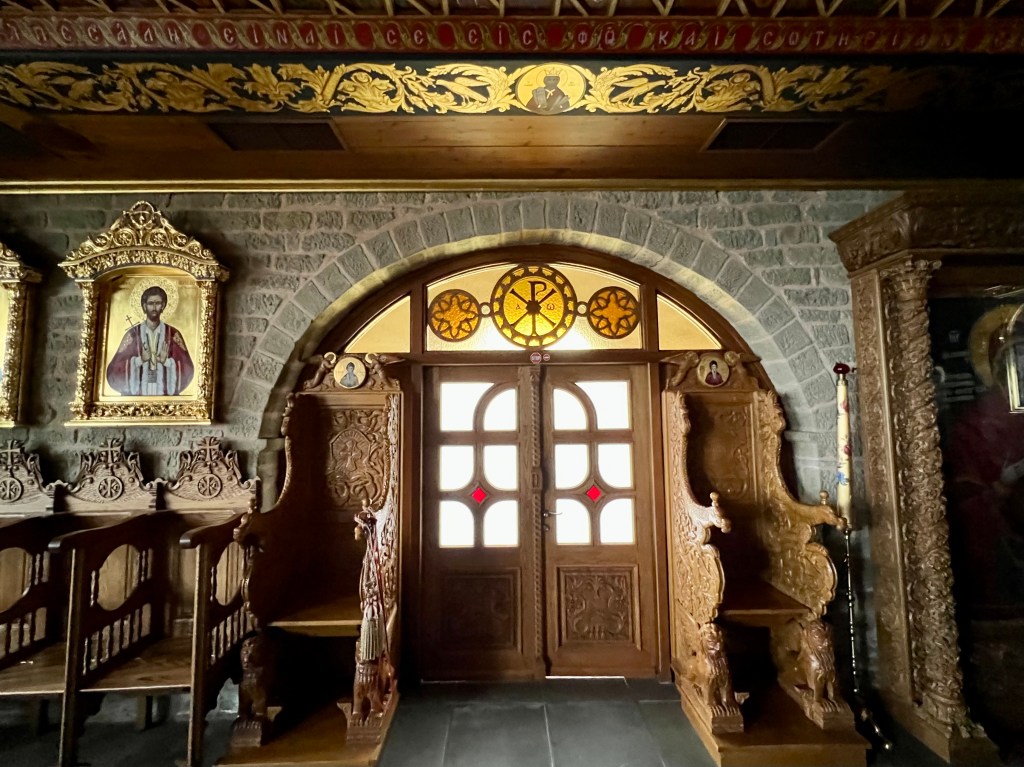
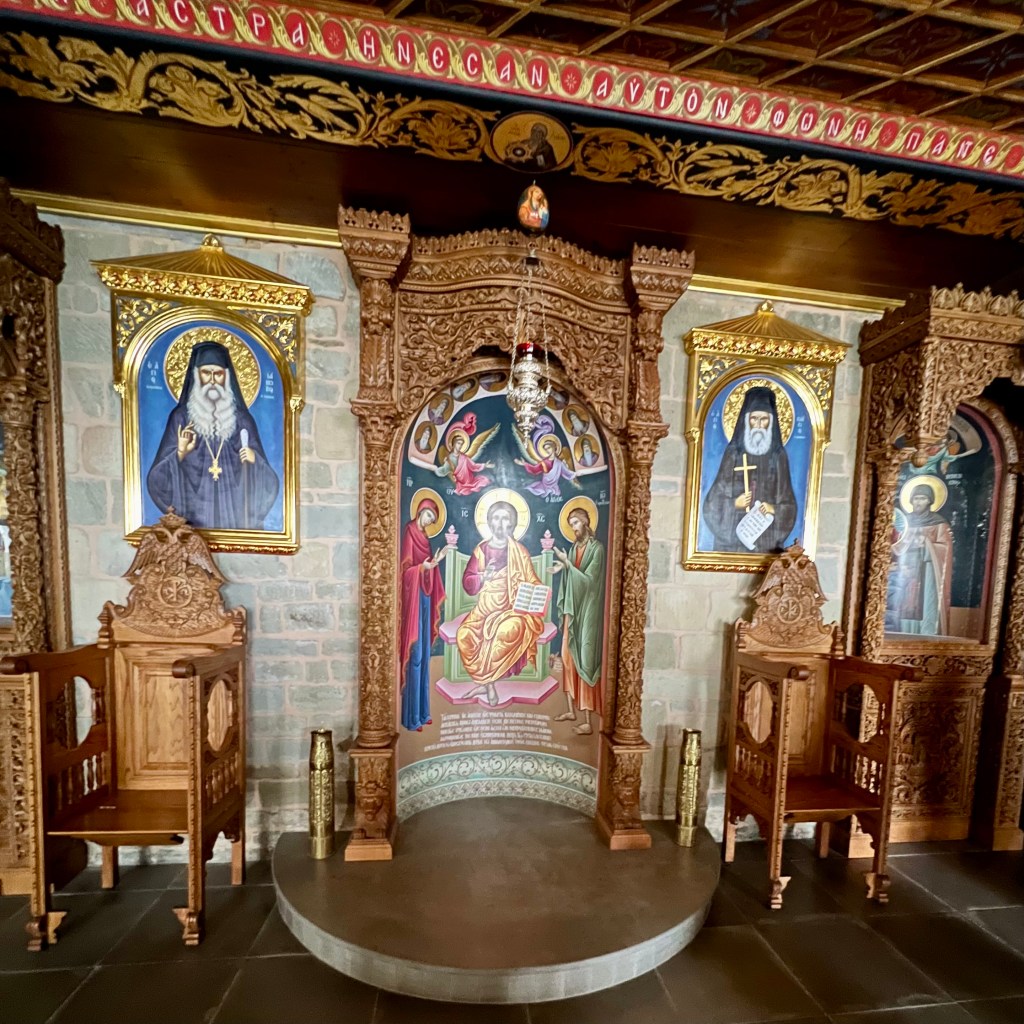
The same rules applied and the church had the same structure. This church, dedicated to St. Charalambos, is not as old as the monastery. It was built in 1798, so the overall impression in the church itself is one of light and colour in contrast to the darker forbidding artwork in the older church. The subject of the art was also different; less grisly in the nave to reflect the atmosphere of the day and there were some female saints pictured in on the walls of the church. 

Art outside the church
Lit a candle for Dear Old Dad

More balconies and scenic viewpoints with requisite pictures and selfies and then we need to head back to the bus for the long drive home. Our lunch stop is two hours off so a quick trip to the water closet is in order (squats here not thrones so you have to be careful!).  

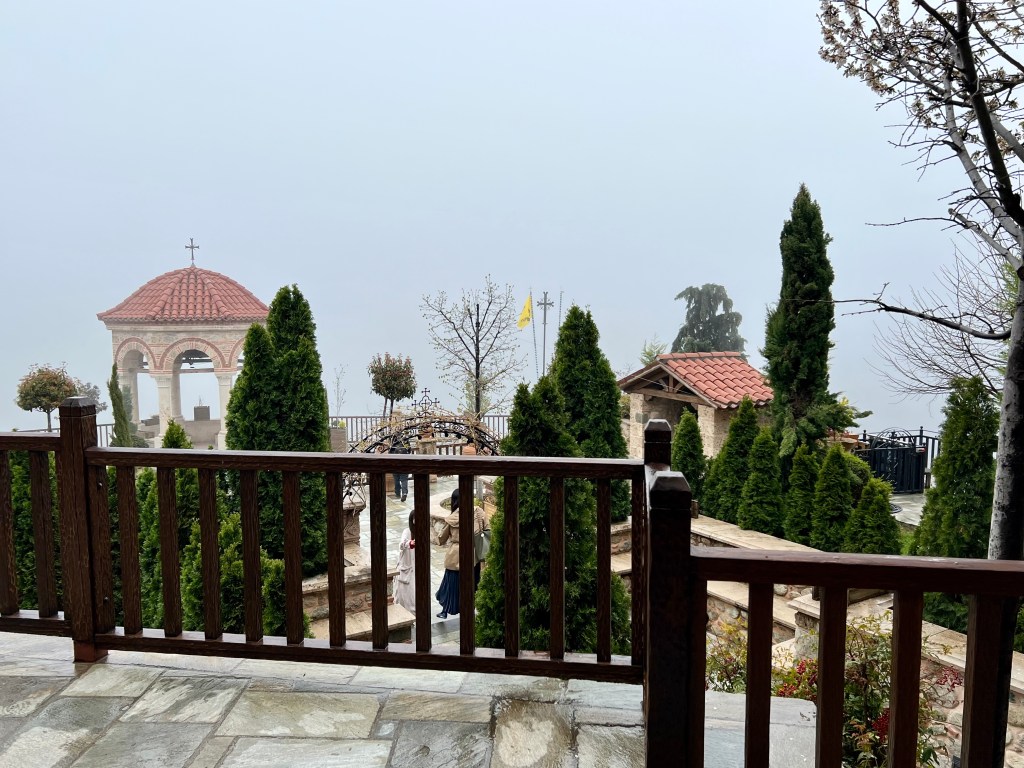
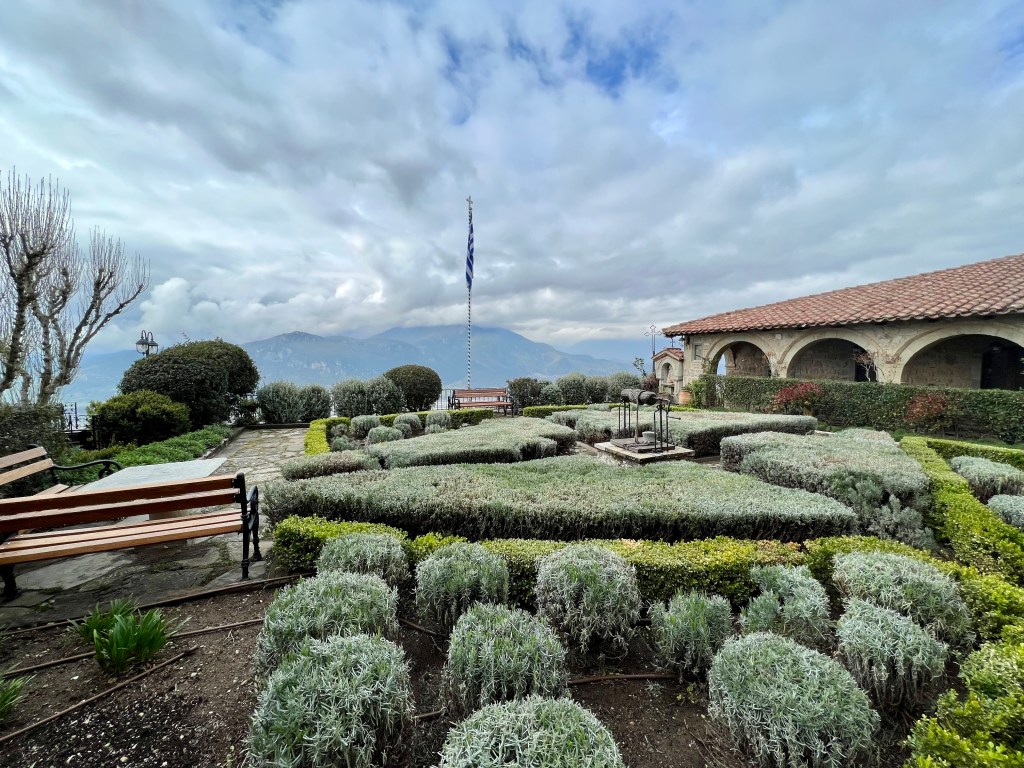
Beautiful garden

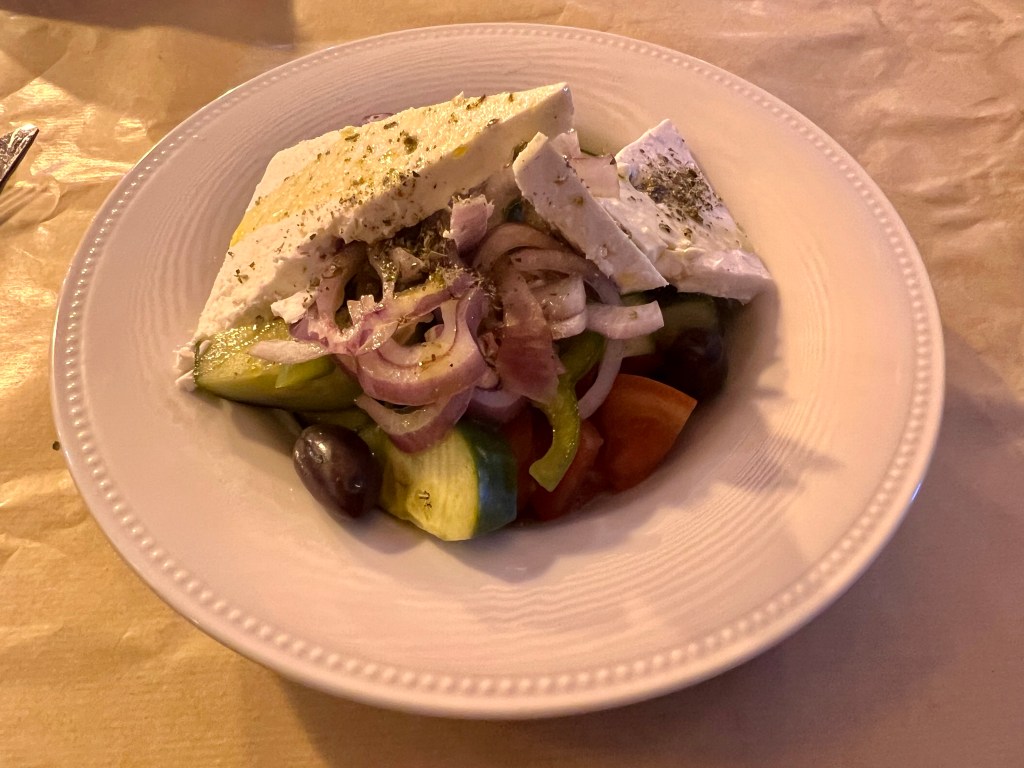
The drive was mostly non-eventful with a lunch stop (Greek salad and a pork chop for me) and a pee stop before hitting the traffic in Athens. Luckily I was dropped off where I started so I made it back to my hotel without incident. 

Opted to skip dinner after my substantial lunch and an  afternoon of sitting on the bus. Need to spend some time figuring out the plan for tomorrow before calling it a night. 

Tomorrow is another day. Adventures await …
I’m not lost but I am late -Adventures in Greece

Sunday April 2, 2023

I love travelling to experience new places and experiencing the cultures, cuisine and the people. Sometimes getting from point A to B turns into an adventure of another sort.  Sunday’s trip from Lisbon to Athens turned into one of those days. 

The disembarkation process was smooth and I’d booked a transfer from the ship to the airport so it was early but I’m good with being at the airport and ready to board. I didn’t make plans with the gang and after a quick loop, I boarded the bus on my own. After checkin, I hung out at the bus unloading zone to catch them for a quick goodbye before heading to the lounge to relax. I used points for my flight and I’m flying biz class.  

My plan for hugs at the bus stop works for the folks heading to Canada and I ran into Craig and Kerry in the Terminal so things are working out so far. 

The lounge is a bit of a zoo but I grab some water and find a spot to wait. At some point I notice that my flight to Rome has been delayed by an hour and that’s when the fun begins. No way will I make the connection at this rate so I head to the transfer desk to see if there are any options. After a heated debate I’m told to wait until I get to Rome as I will have an hour (I don’t think they factored in the time difference!). 

Anyway long story short, I’m met at the plane and advised that I’m rebooked for the next morning. Wouldn’t usually be a big deal but I’m supposed to meet a four day tour of the highlights of Greece at 7:30 am Monday and that isn’t going to happen. 

The rep takes me and the folks that have missed their connection to Cairo to pick up our baggage and get us on a bus to the hotel they’ve booked for us. Surprise surprise my bags aren’t there. Lol. To make matters more aggravating, my flight to Athens was actually delayed and I could have made the connection easily if I’d been left to my own devices.

Oh well, not to be so I fire off emails to the tour operator and hotel in Athens to let them know the situation. I’m hoping to join my group along the way to salvage some of the tour. That ends up being another story but I’m optimistic as we head to the hotel, grab a bite and try to get some sleep before my 6 am pick up tomorrow. Yikes! I hate early mornings and we’ve lost an hour with the time change so it’s the middle of the night.  Lol. 

Tomorrow is another day. Adventures await …

Monday April 3, 2023

The flight on Monday is uneventful but I’ve not heard anything from the tour company. I hope they didn’t wait for me too long at the pick up point! My luggage was sadly not on the belt but when I make it through the long line to check on delayed baggage, I’m told it arrived last night on the original flight. Maybe the travel Gods don’t totally hate me! I grab a cab to the city. I’ve booked my original hotel for the night to regroup and try the tour company again; maybe a phone call will work better. The lovely lady that I chatted with found my email and assured me that she’d sent it to a supervisor so I’m optimistic it will all work out. 

That evening when I hadn’t heard back, I sent another email before heading out to forage for food. I had a beautiful Greek Salad and a pork skewer with pita bread at a local joint. Back to the hotel for an early night! Tomorrow I can figure out what to do. 

Dinner

Tomorrow is another day. Adventures await …

Tuesday April 4, 2023

Tuesday morning and still nothing from the tour company so I reached out to Expedia as I’d booked with them to see what could be done. Apparently the tour company has a policy not to allow people to join later so they are requesting a refund which I doubt will happen. Hopefully my travel insurance will kick in and I’ll get a refund when I get home. Looks like I’ll have more time to explore Athens (I haven’t started yet lol!). 

The hotel breakfast buffet is interesting with spanakopita, dolmas, eggs, pasta, pies, yoghurt and everything in between. Something for everyone. At some point I hear back from the tour company and they offer me a complimentary two day tour to compensate for my inconvenience. Still hoping to recoup the difference through insurance but it sounds better than nothing so I’m in. 

The pick up point is nearby so my first job is to confirm that I can find it tomorrow morning. My lack of direction sense is a real thing but it is so easy that even I can find it. 

Now it’s time to see if I can find any of the sights in the city. After wandering in the wrong direction, it is clear that I’ll need another plan for Friday but it’s getting late so I head back to the hotel and find it after only one stop for directions. I’m thinking taxis or Hop on Hop off bus next time!

Hello
Crash landing
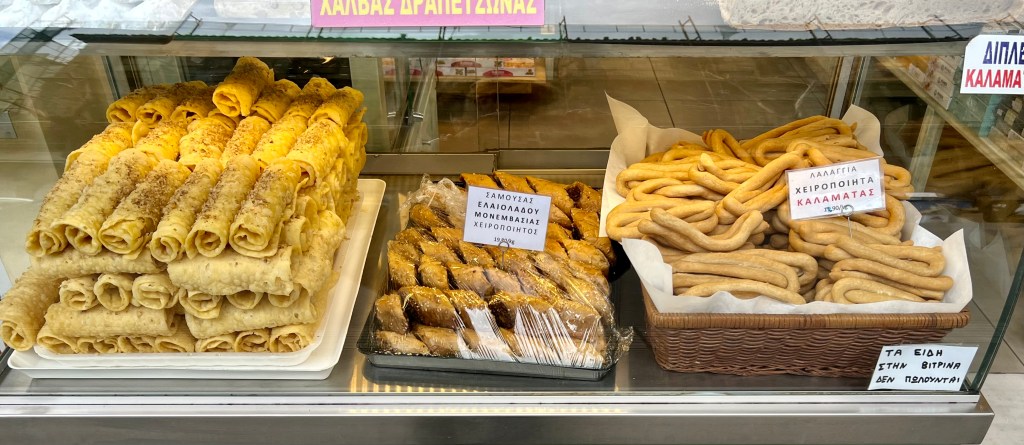
Sweets
Snacks
Show me the way to go home …
Not really hungry so a banana and yoghurt is my dinner before I try to figure out what to pack for my tour. Most of my stuff will stay in the room (I already booked it before I heard back from the tour company) but can’t see leaving my valuables even in the safe so they’re coming with me along with a change of clothes. 

Time for some light reading before another early night. Wouldn’t want to miss the pick up tomorrow. Tomorrow is another day. Adventures await …

Wednesday April 5, 2023

Up and at ‘em at 0-dark-30 this morning. Quick breakfast of Greek yoghurt, cereal and fruit before heading off the meet my tour. The big bus makes several stops to pick up folks joining the tour and then we’re off for the 120 km/2.5 hour drive to Delphi; north to Marathon and then west to Delphi.

Our bus driver for the two days is Thomas and he amazing as we find out later. Our guide for Delphi is Martina. We’re going to have a new guide for Day two. 

There is, of course, the requisite bathroom stop where you can get drinks and snacks. Apparently all busses stop here on the way to Delphi as the place is crawling with tourists. Delphi aka the “Navel of the World” is the second most visited site with 1/2 million visitors per year. The Acropolis is # 1 with 5 Million visitors annually!! The scenery out the bus window is interesting (when I can stay awake!). 

A room with a view

Soon enough we arrive in Arachova, aka the village of walnut trees, located on the slopes of Mount Parnassus just outside of Delphi. Arachova is a panoramic town, with small houses scattered over the hillside and cobbled streets showcasing its picturesque architecture. This beautiful town has one obvious deficiency; it’s very narrow streets which seem to have attracted all manner of ginormous busses and trucks that are battling their way through town. Thomas really earned his money driving through this labyrinth. Yikes.

Stairway to heaven
Lunch!
Kissing Busses

Delphi, in legend previously called Phytho, was the seat of Pythia, the major oracle who was consulted about important decisions throughout the ancient classical world. Delphi took its name from the Delphyne, the she-serpent (drakaina) who lived there and was killed by the god Apollo, or maybe the serpent was the male serpent (drakon) Python. Hard to know after all this time but everyone seems to agree that Apollo rules the roost. 

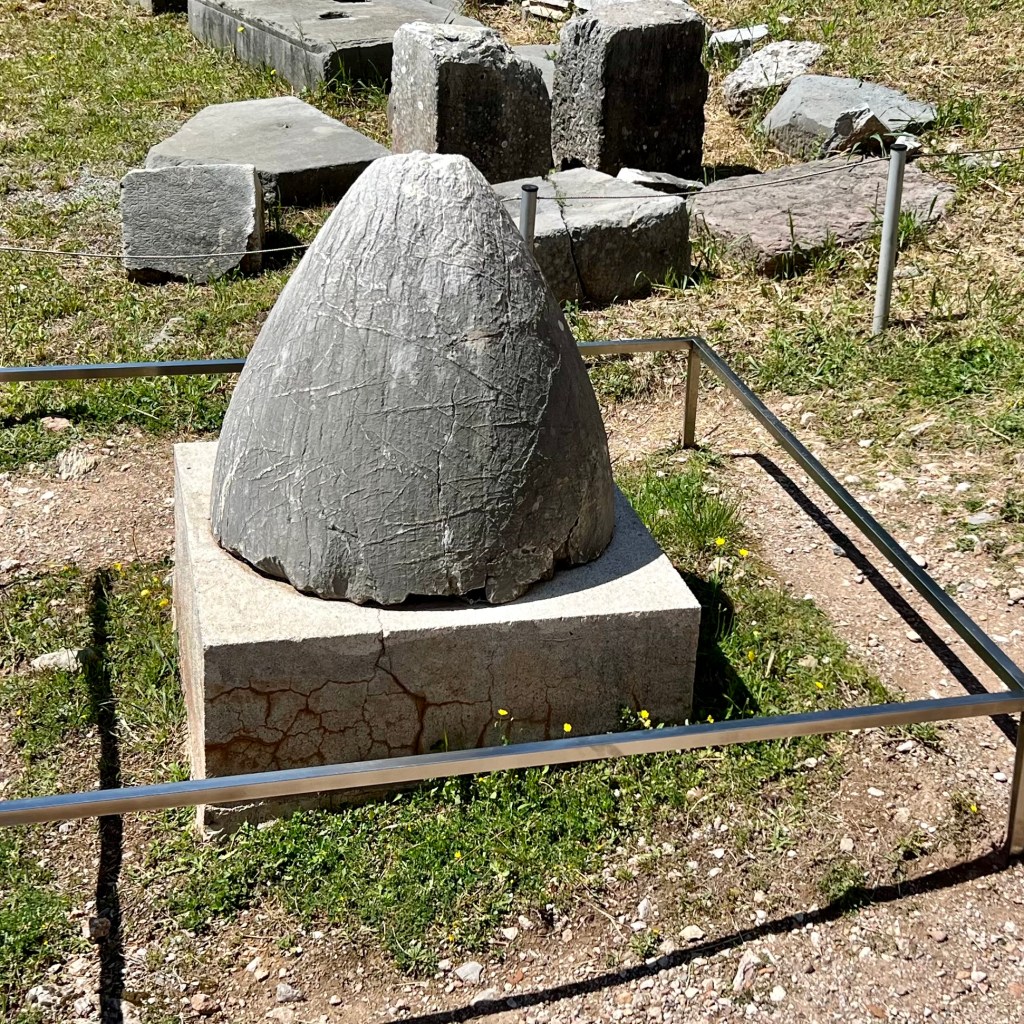
Delphi’s oracle, the Pythia was a woman over fifty year of age of good reputation chosen from the women in the area. Alone in an enclosed inner sanctum she sat on a tripod seat over an opening in the earth (the “chasm”). During Delphi’s hey day Nero, Hadrian and Alexander the Great came to get prophesies. The ancient Greeks considered the centre of the world to be in Delphi, marked by the stone monument known as the omphalos (navel).

According to legend, when Apollo slew Python its body fell into this fissure and fumes arose from its decomposing body. Intoxicated by the vapors, the sibyl would fall into a trance, allowing Apollo to possess her spirit. In this state she prophesied.

Ancient writers, including Plutarch who had worked as a priest at Delphi, attributed the oracular effects to the sweet-smelling vapour (perhaps ethylene) escaping from the chasm in the rock. It seems the oracle may have had a bit of a buzz on!

The sacred precinct of Delphi lies on the southwestern slope of Mount Parnassus. It is now an extensive archaeological site, and since 1938 a part of Parnassos National Park. The precinct is a UNESCO World Heritage Site in having had a great influence in the ancient world, as evidenced by the various monuments built there by most of the important ancient Greek city-states. 

Armed with some of the history, we’re off the bus and heading up the hill on the Sacred (Zig Zag) Path to hear more of the history and check out the restored ruins. It’s a beautiful sunny day so despite the hoards of unrestrained tourists and the unrelenting stairs (!), the site is stunning. I won’t regale you with all the details but if you’re ever in Greece, go to Delphi!

The Roman Agora
Omphalos/Navel
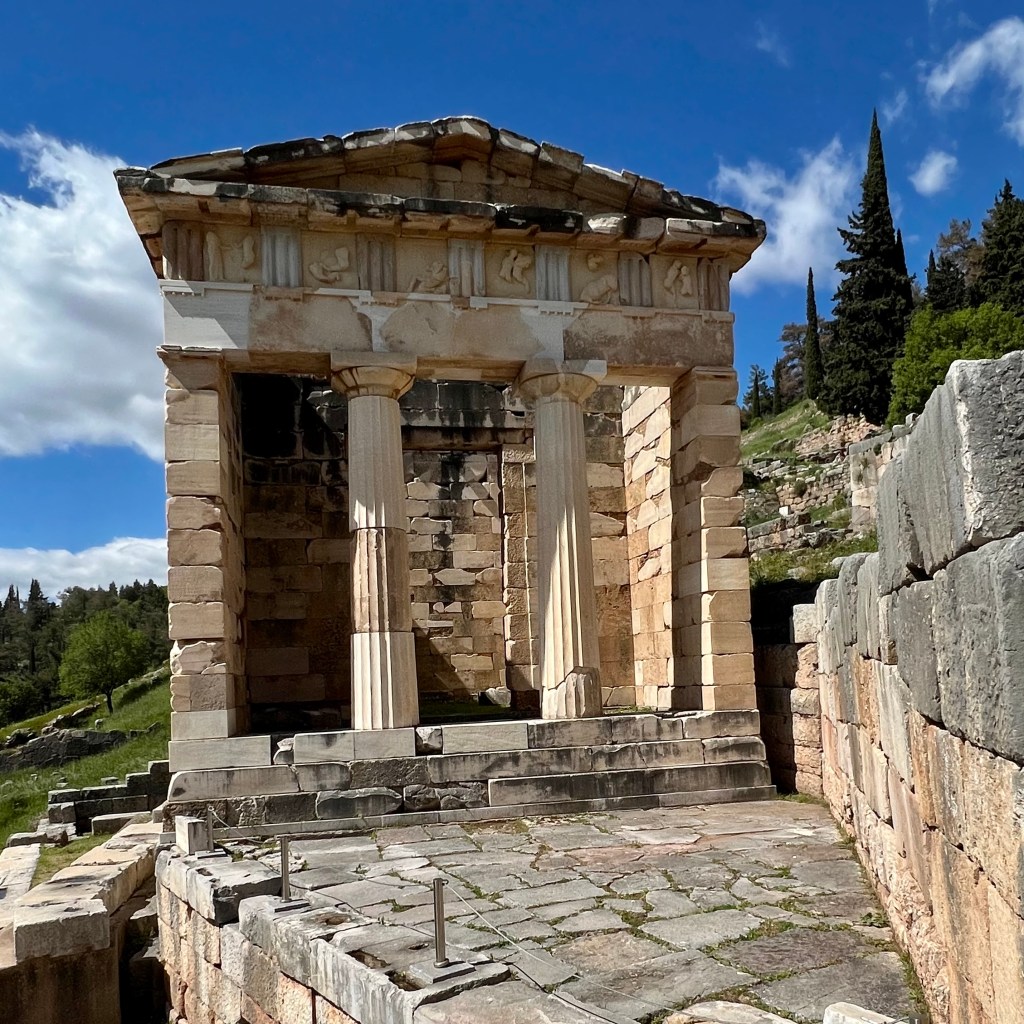
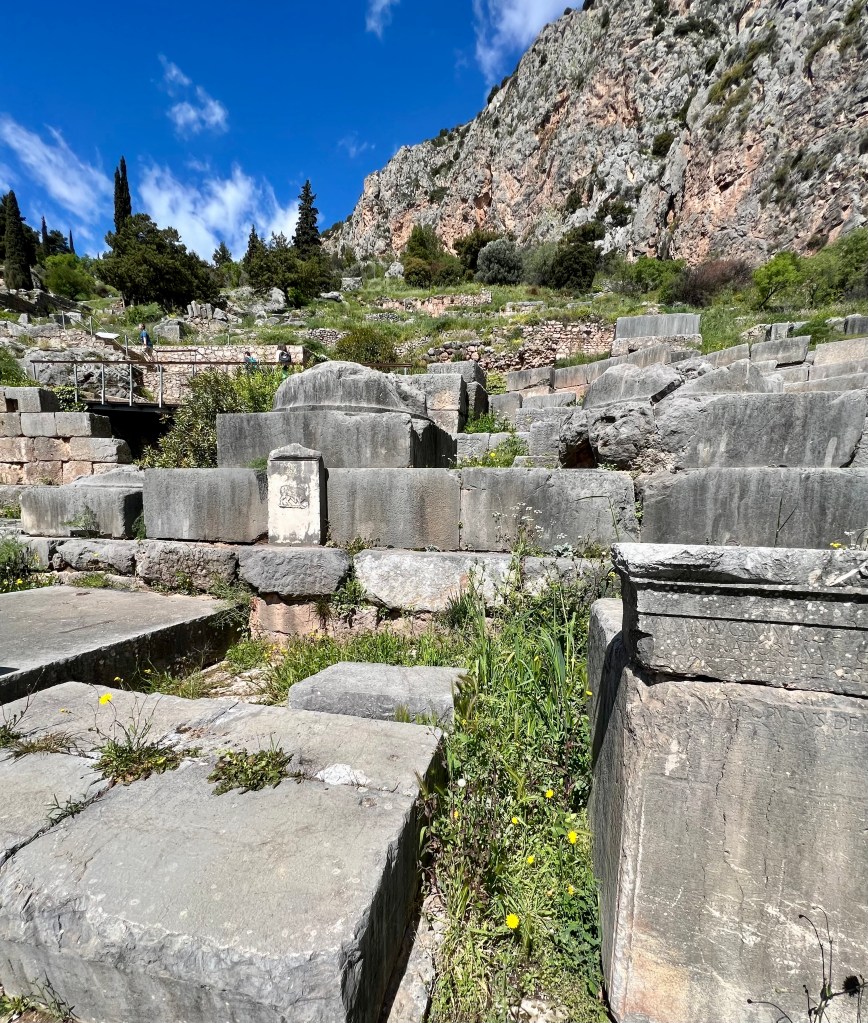
Treasury of the Athenians
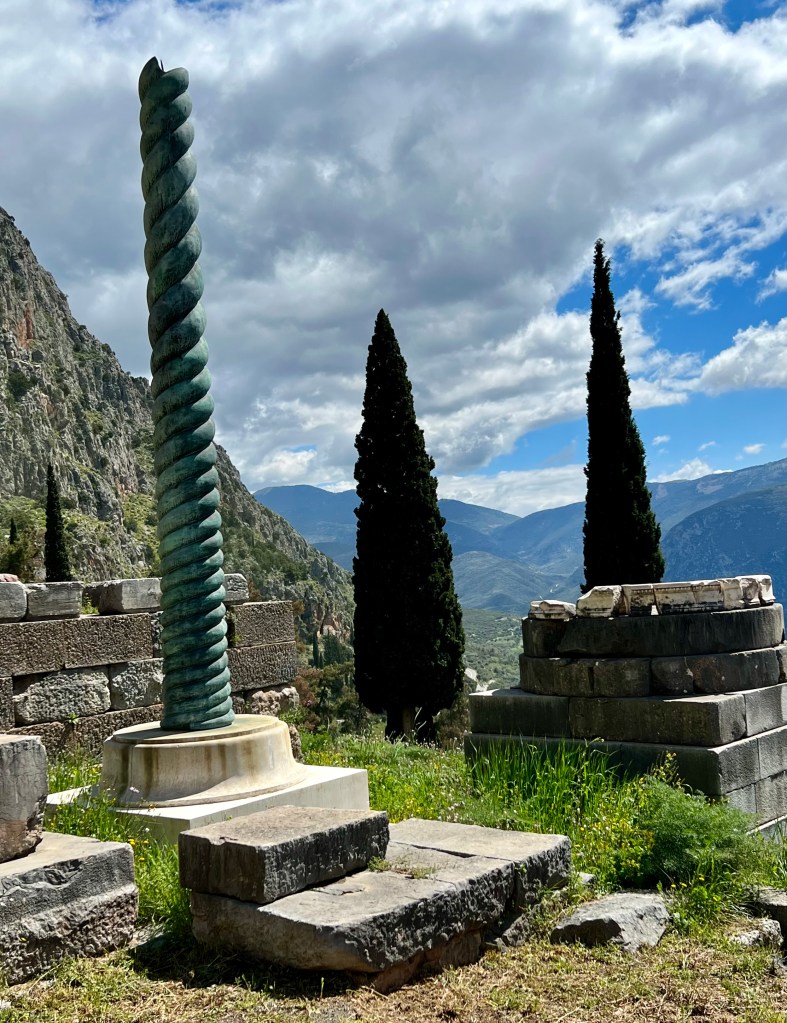
The Tripod of Plataens – original in Hippodrome of Constantinople

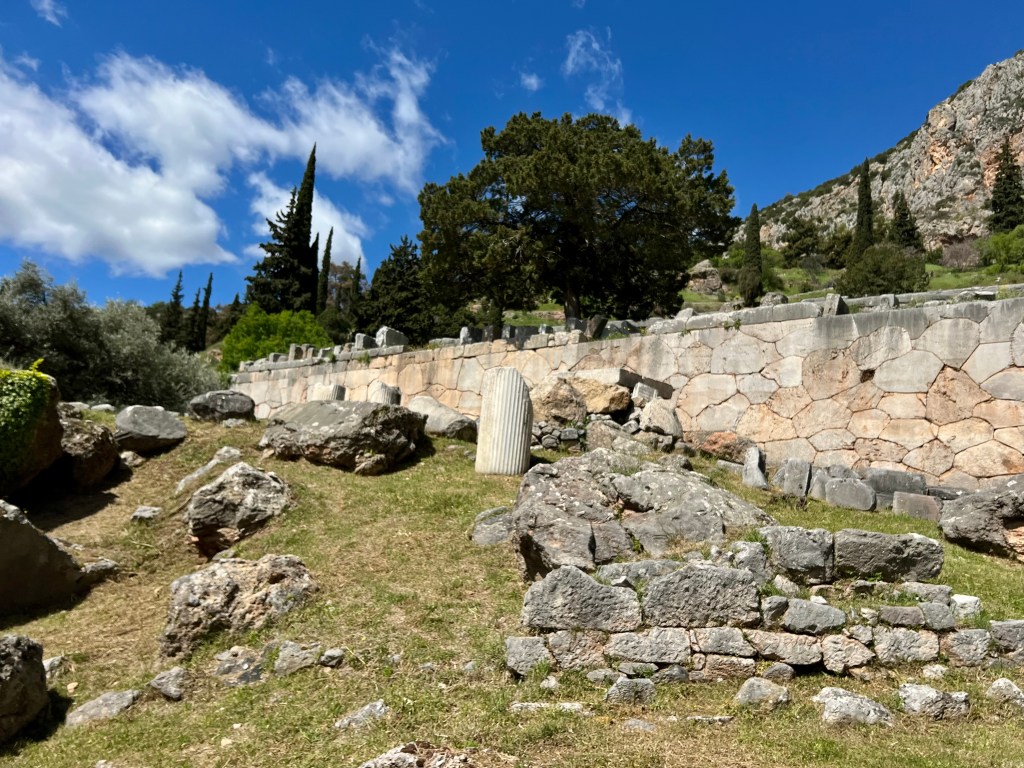
Monuments along the Sacred Way
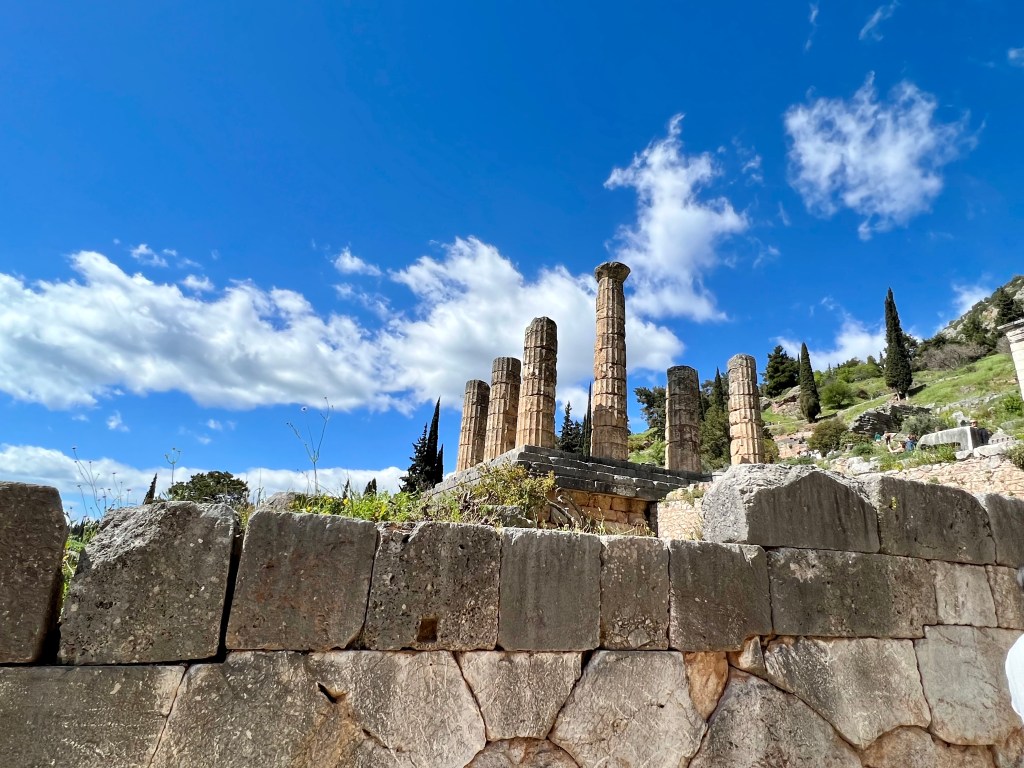
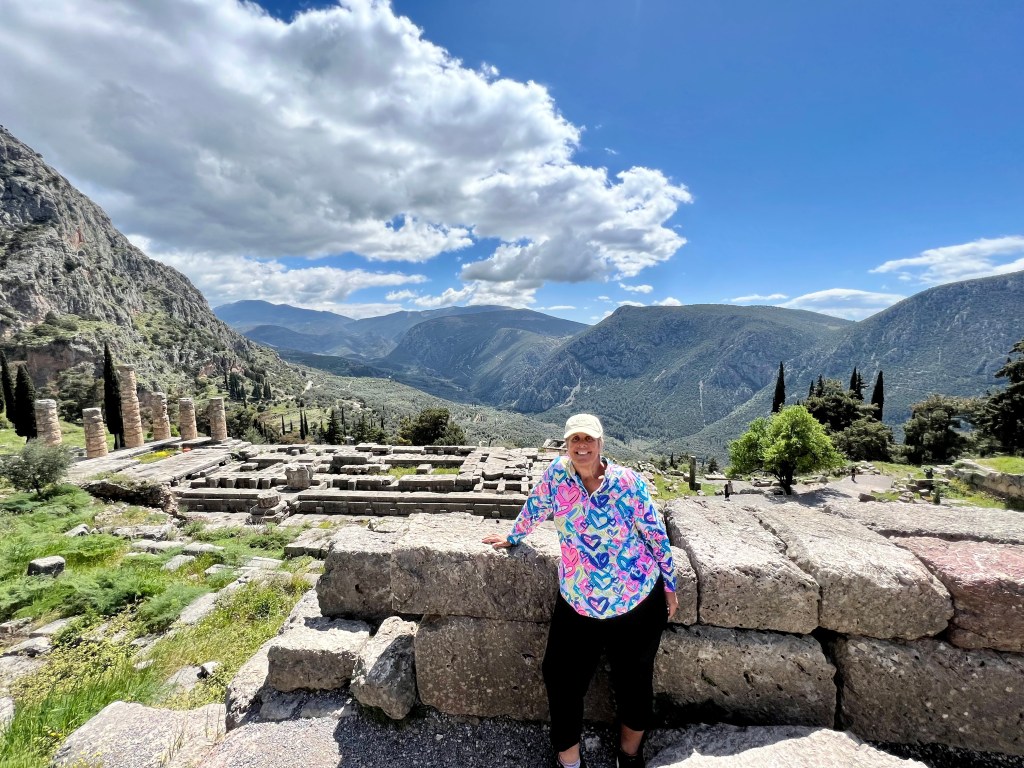
Temple of Apollo
Temple of Apollo
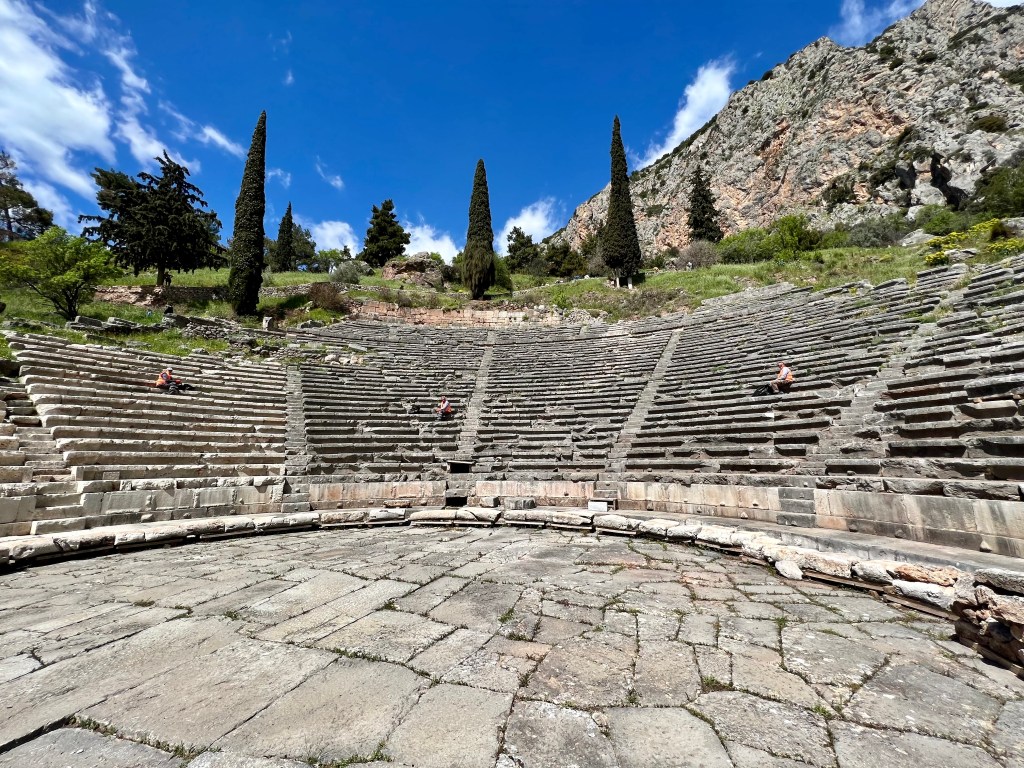
Theatre
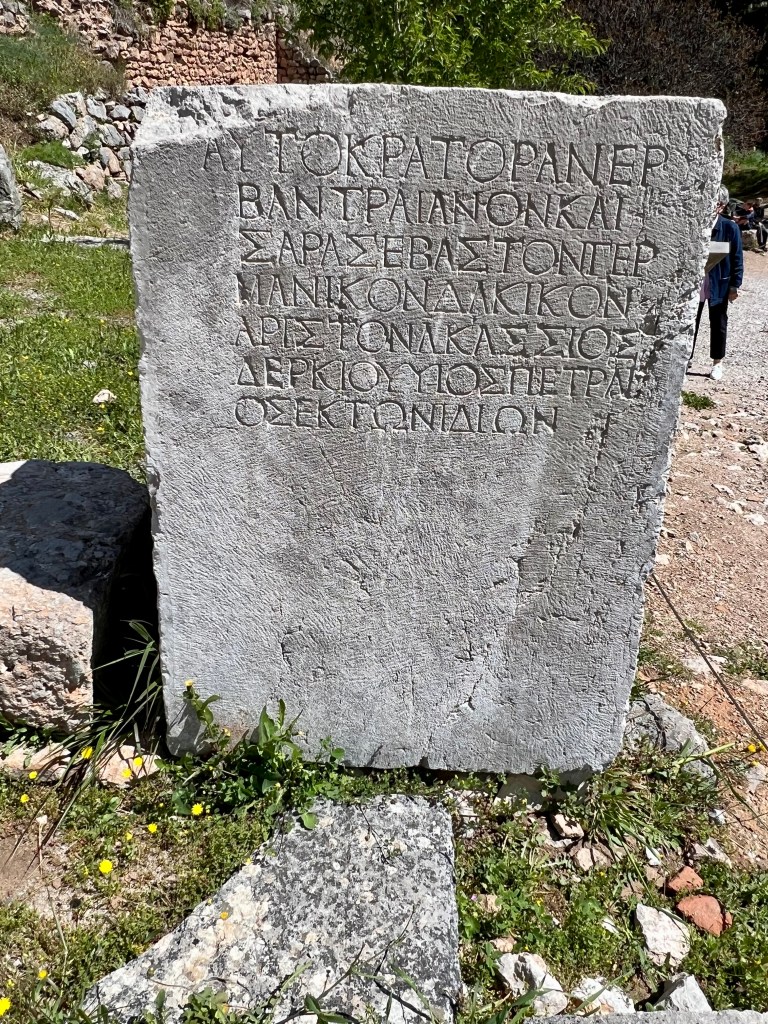
It’s all Greek to me

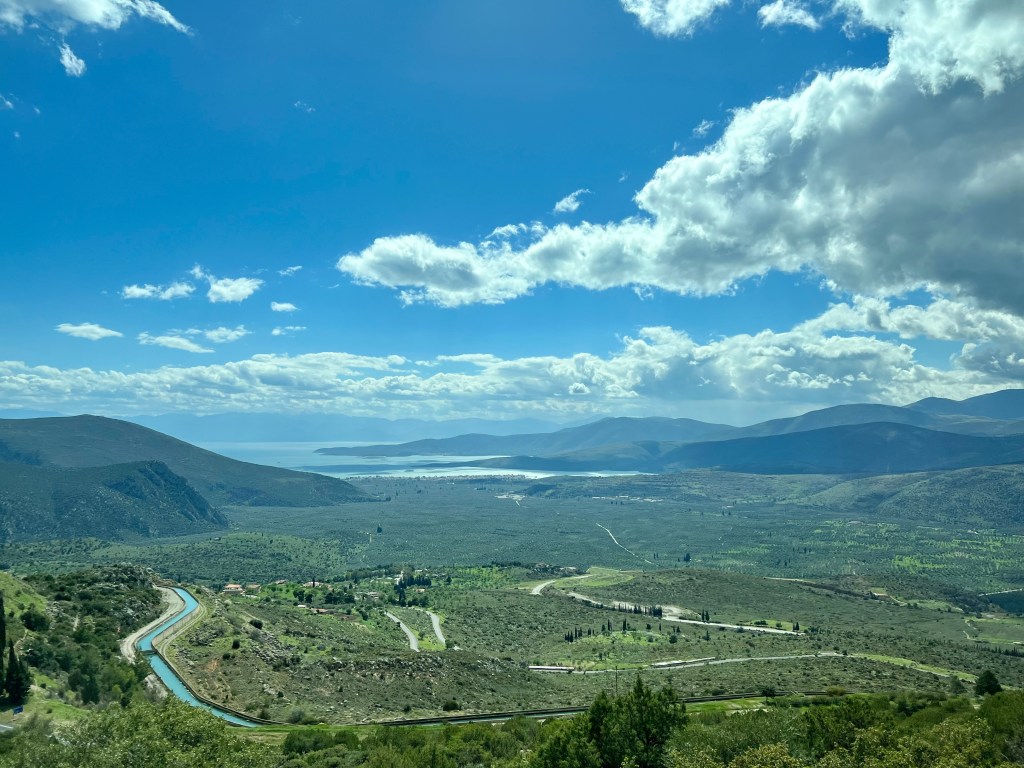
With loads of pictures for memories, the crew heads off to meet our guide for tomorrow, Christina, and then off to a local hotel for lunch before a 4.5 hr drive to Meteora. The first 90 minutes or so is through a series of switchbacks with beautiful mountain views. 

Water in open channel headed to Athens
Snowy mountain tops
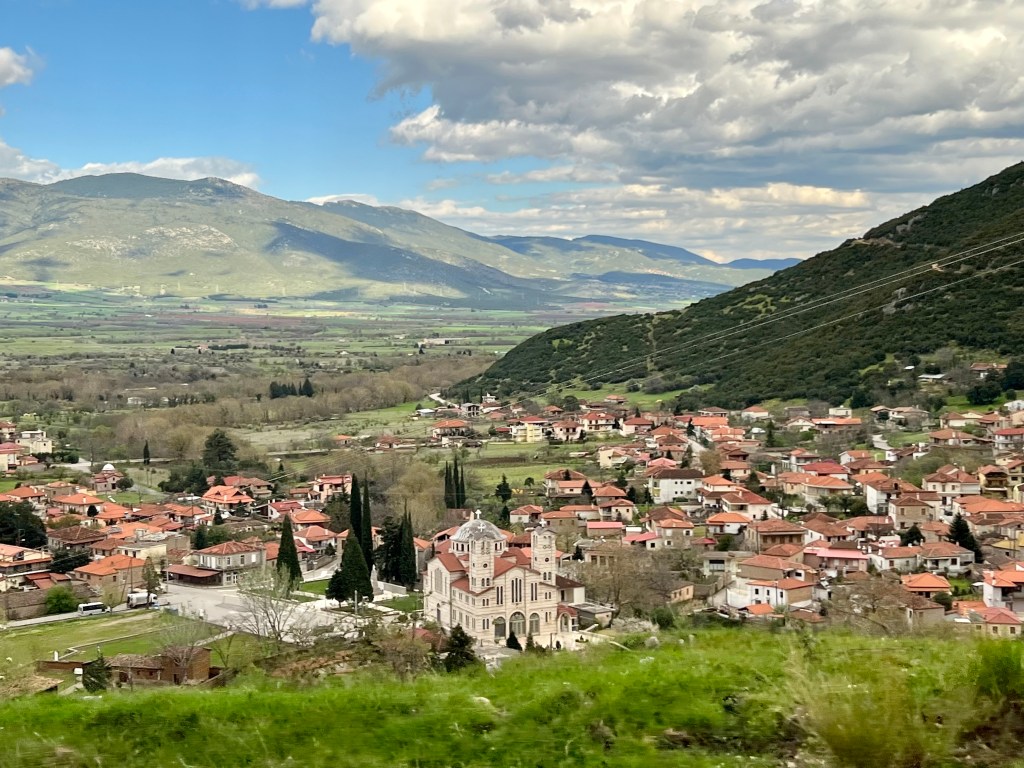
Village in the hills

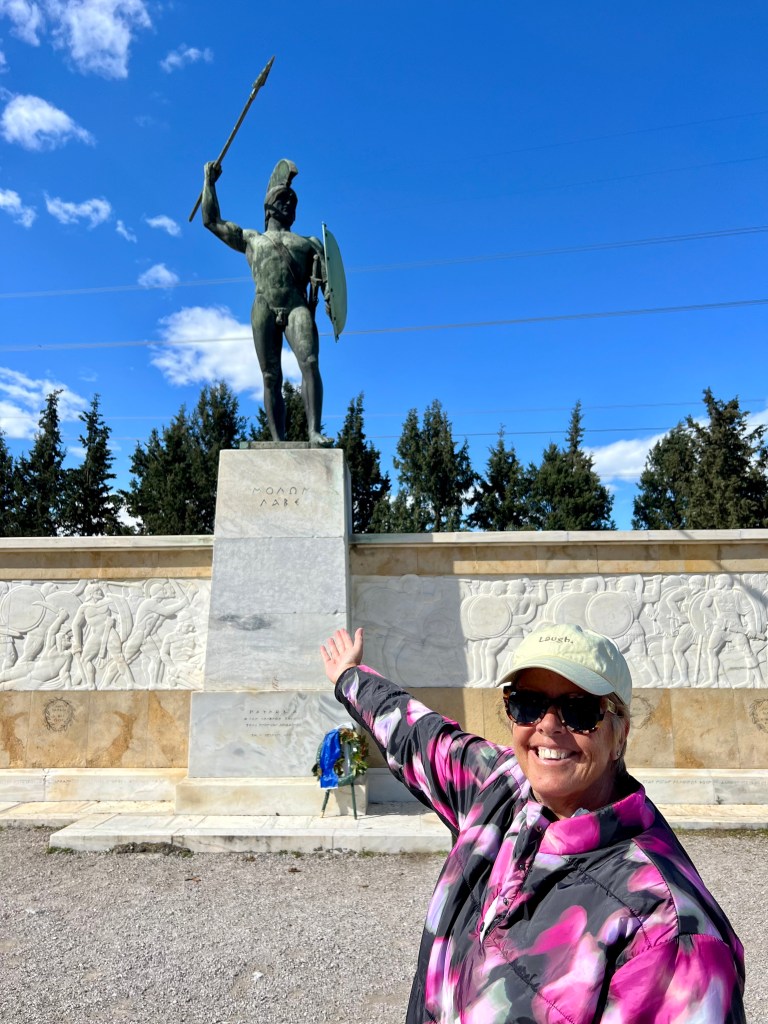
Before our pee/rest stop, we have a quick stop at the statue of Leonidas in Thermopylae. 

In August 480 BC, Leonidas marched out of Sparta to meet Xerxes’ army at Thermopylae with a small force of 1,200 men (including 300 Spartan) where he was joined by forces from other Greek city-states, who put themselves under his command to form an army of 7,000 strong. They faced a much larger Persian army (estimates of between 120,000 and 300,000) who had invaded from the north of Greece under Xerxes I. 

The outnumbered Greeks held them off for seven days (including three of direct battle) before their rear-guard was annihilated in one of history’s most famous last stands. During two full days of battle, the Greeks blocked the only road by which the massive Persian army could traverse the narrow pass. After the second day, a local resident named Ephialtes revealed to the Persians the existence of a path leading behind the Greek lines. 

Once Leonidas became aware that his force was being outflanked by the Persians, he dismissed the bulk of the Greek army and remained to guard their retreat along with 300 Spartans and 700 Thespians. The Greeks fought the Persians to the death buying time for the Greek naval force to withdraw to the Island of Salamis. A year later the Greek fleet—seeking a decisive victory over the Persian armada—attacked and defeated the invading force at the Battle of Saladis sending the Persians and Xerxes home.

The statue has the response from Leonidas to Xerxes when he told the Greeks to surrender – Come and get it!

Leonidas
My new friend

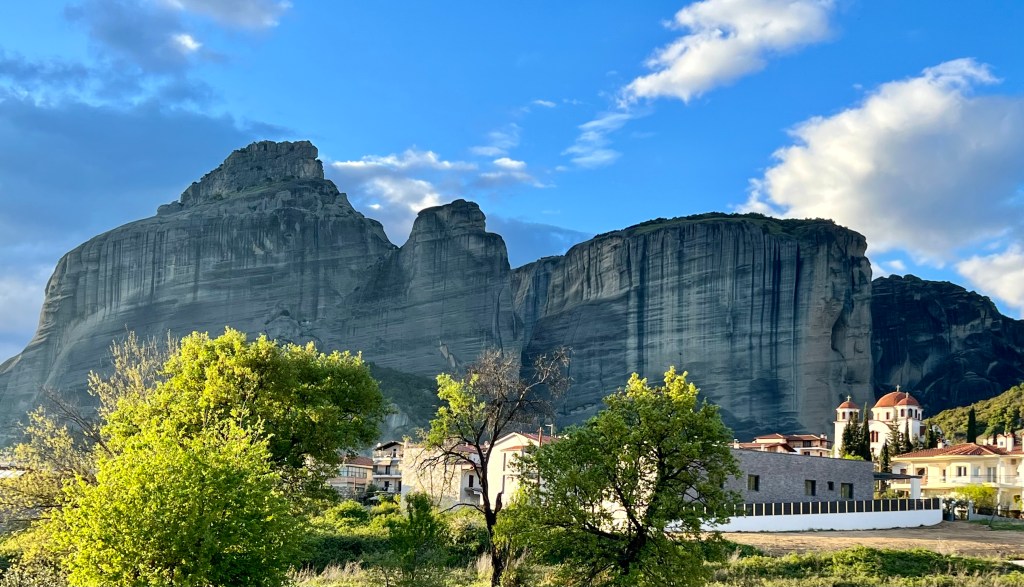
After the photo and rest stops, our drive is on highways with smooth sailing to Kalambaka, a town built at the base of Meteora in the Thessalian Valley where we are treated to our fist views of the legendary monasteries perched atop the Meteora rocks. I took a couple pics from my hotel balcony – beauteous. 

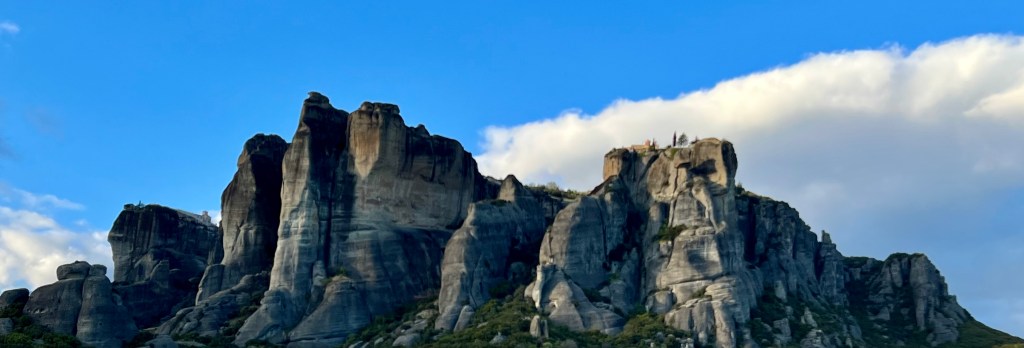
The rocks of Meteora
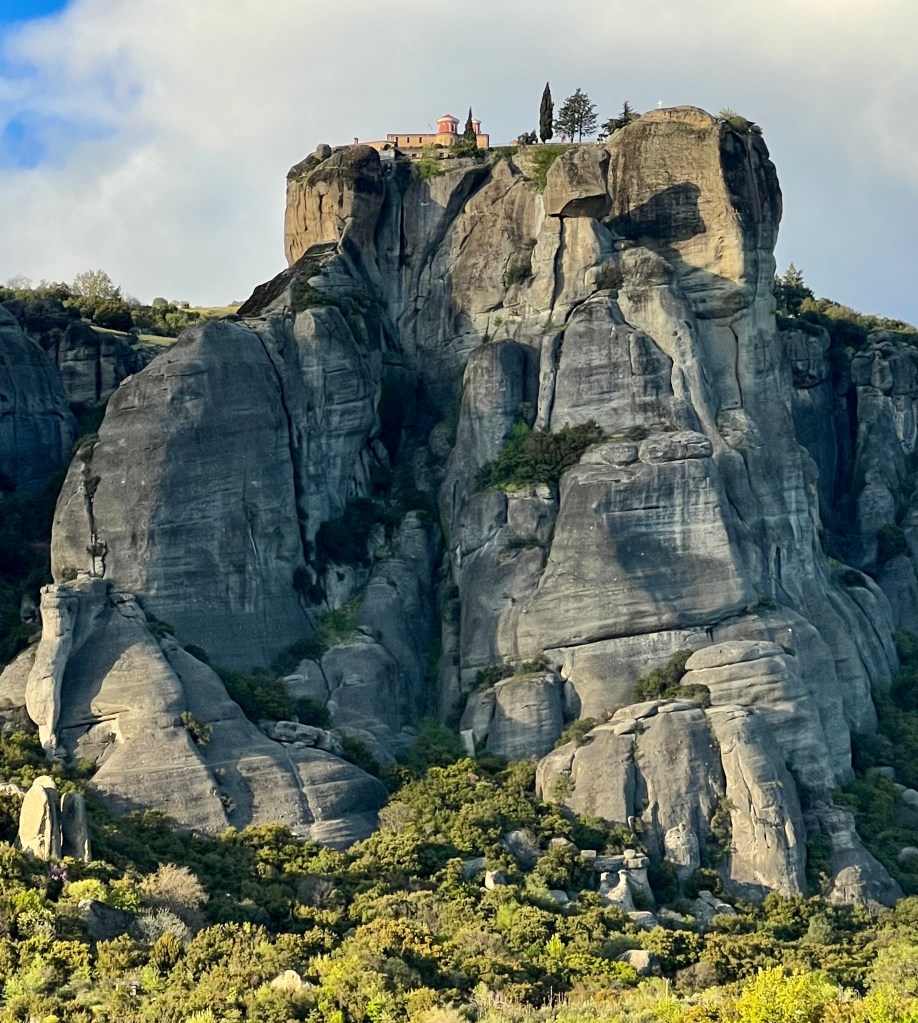
Monastery atop Meteora Rocks

Time to quickly freshen up before our buffet dinner featuring grilled meats, Greek and international delicacies, salads and desserts before heading to relax before calling it a night. 

Tomorrow is another day. Adventures await …

I’m not lost- I’m exploring Portugal

Saturday March 18, 2023

Today Francine, Alain and I are joining a tour to Sintra, Cascais & Estoril. We’re meeting our group at the Hard Rock Café @ 07:45 ( yes that’s am!) so after a very early breakfast we set off with me leading the way. God help us! Somehow my navigational skills are better than usual and we find our meeting spot without any difficulty. 

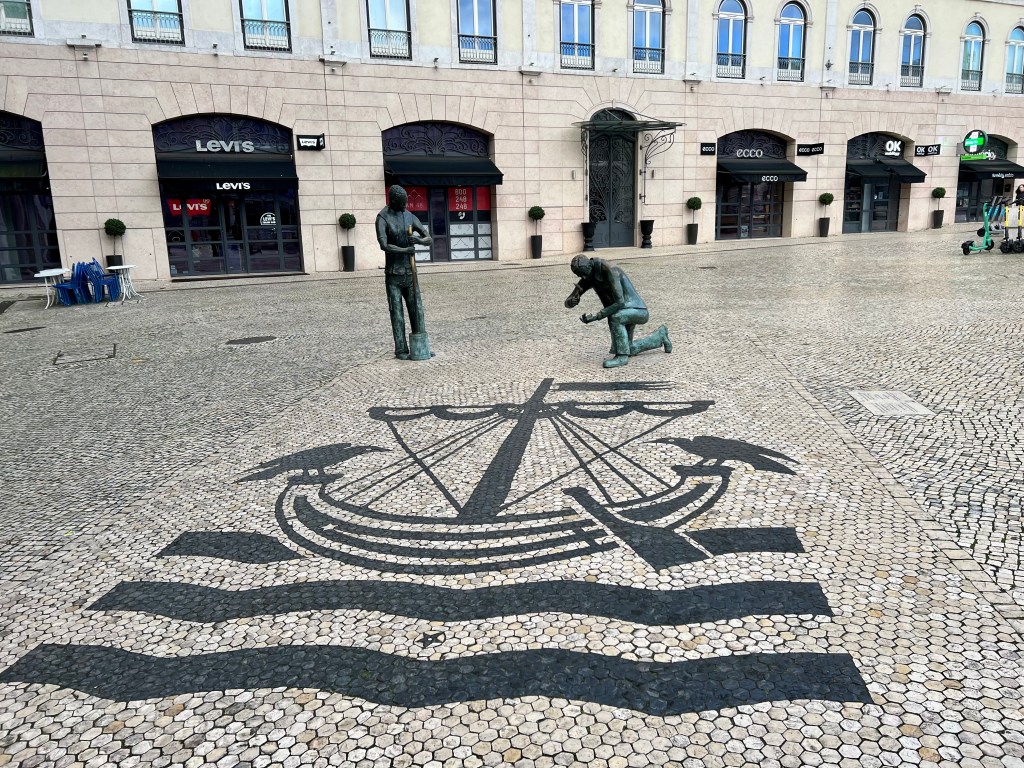
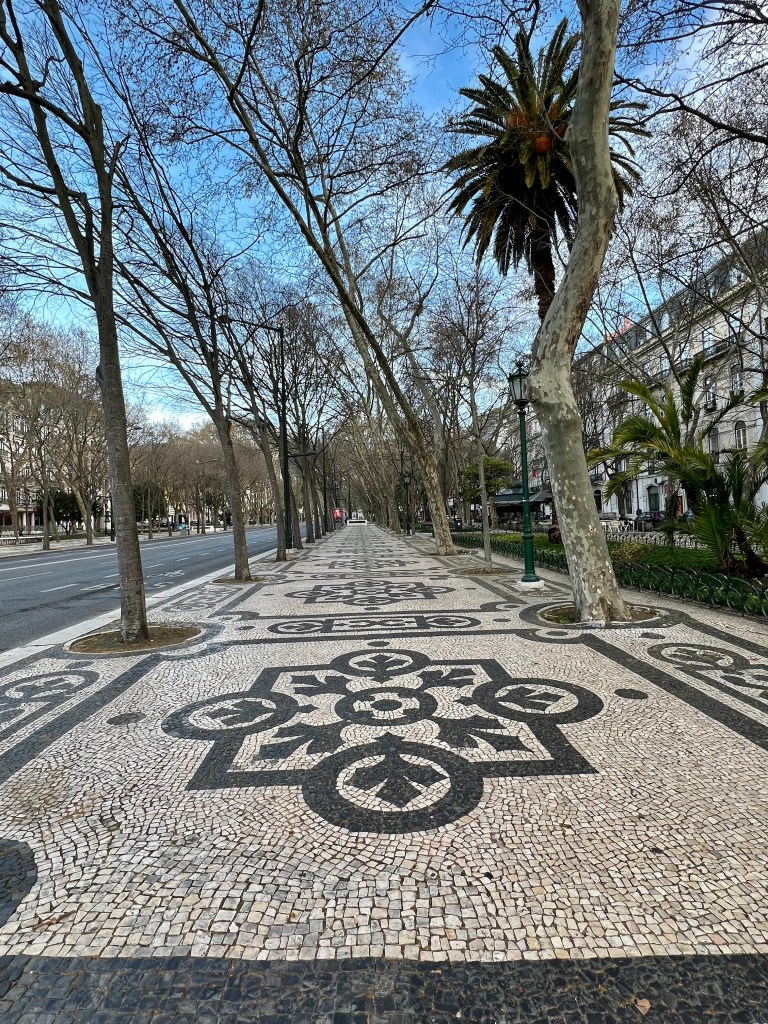
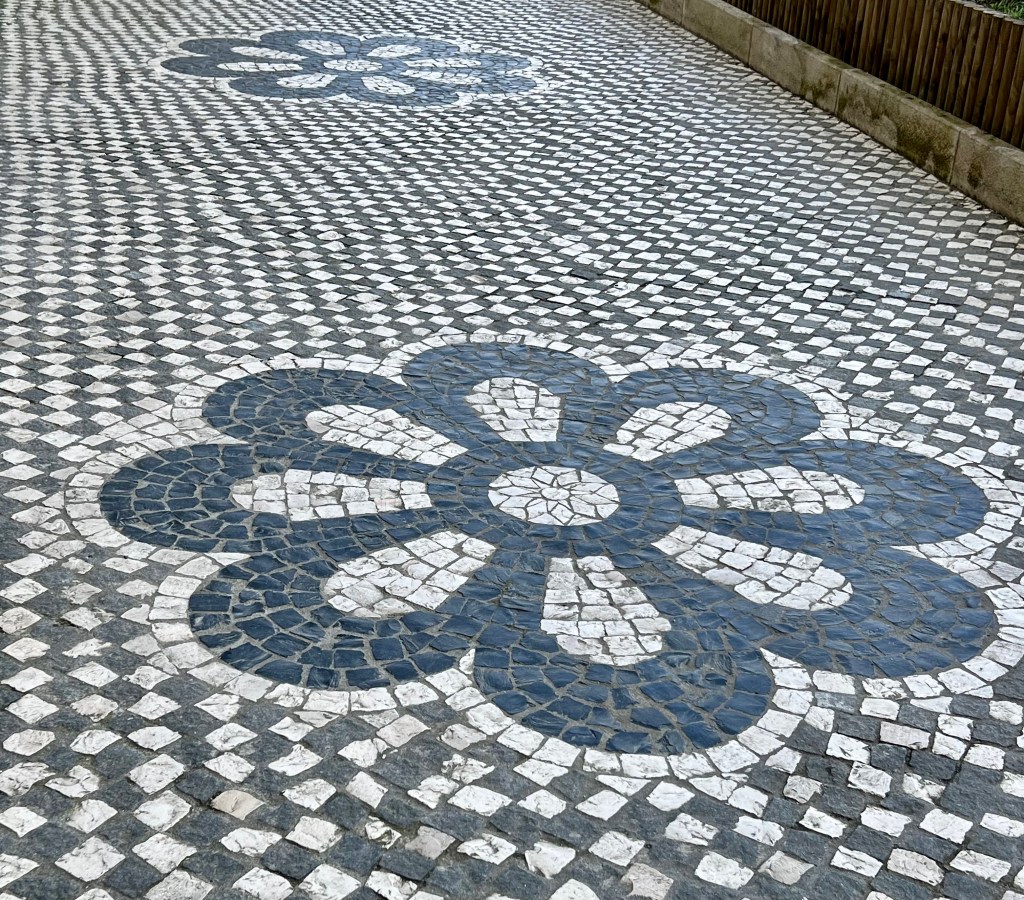
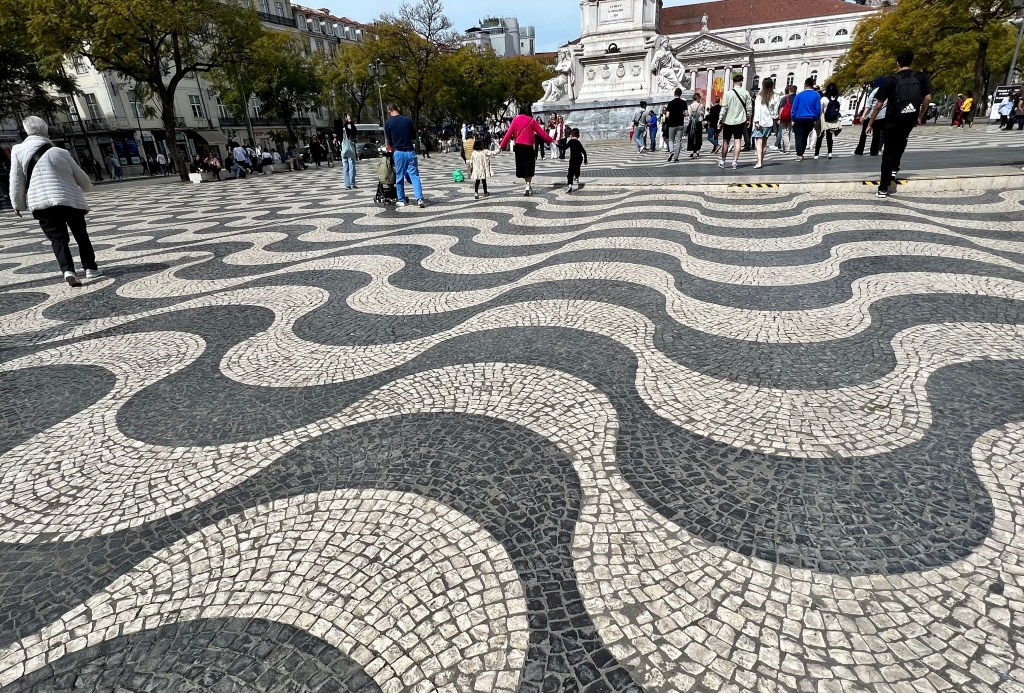
Homage to Pavers
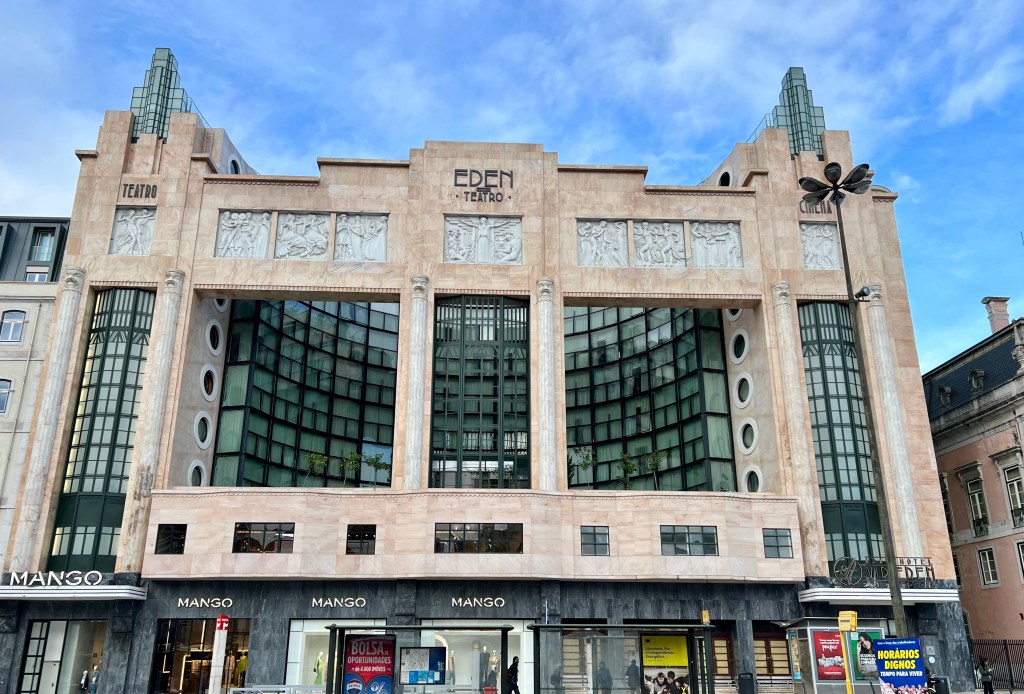
Eden Theatre
View up the Avenue

Our guide, Miguel, gathers the group that includes us three Canadians and a group of five friends from “Madrid. The tour is going to be in Spanish and English so Miguel will have to work extra hard!

Our first stop will be Sintra a thirty minute drive from Lisbon giving time for Miguel to regale us with some of the history enroute. 

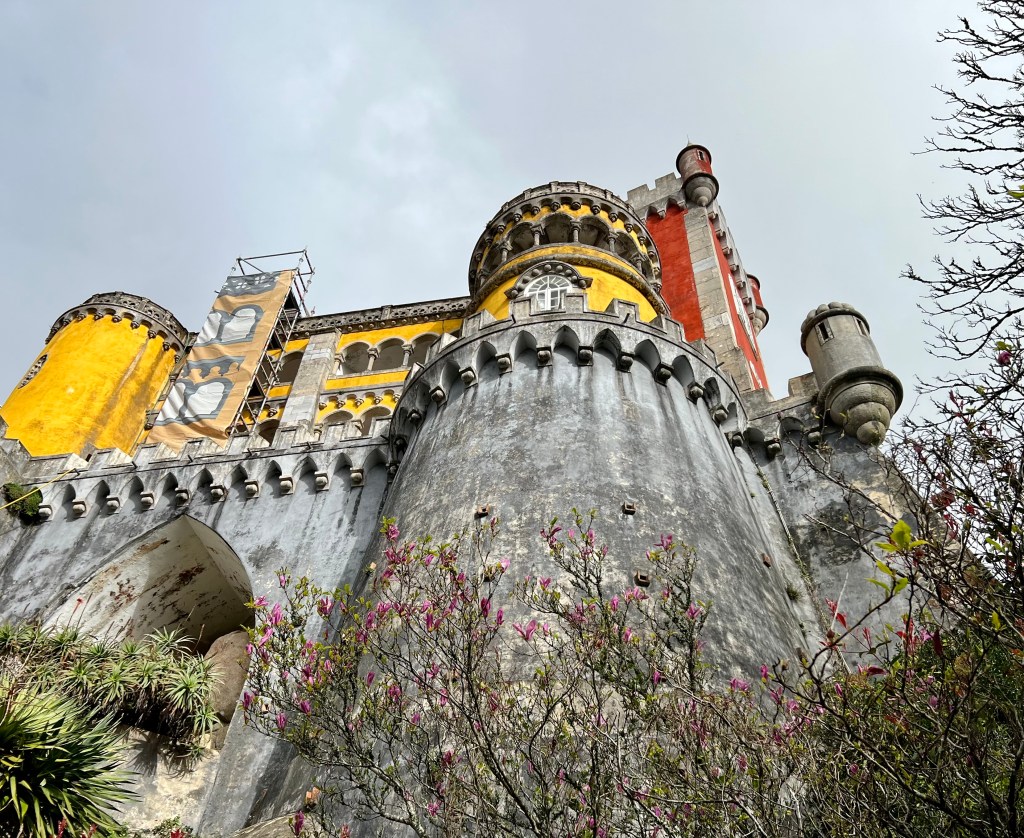
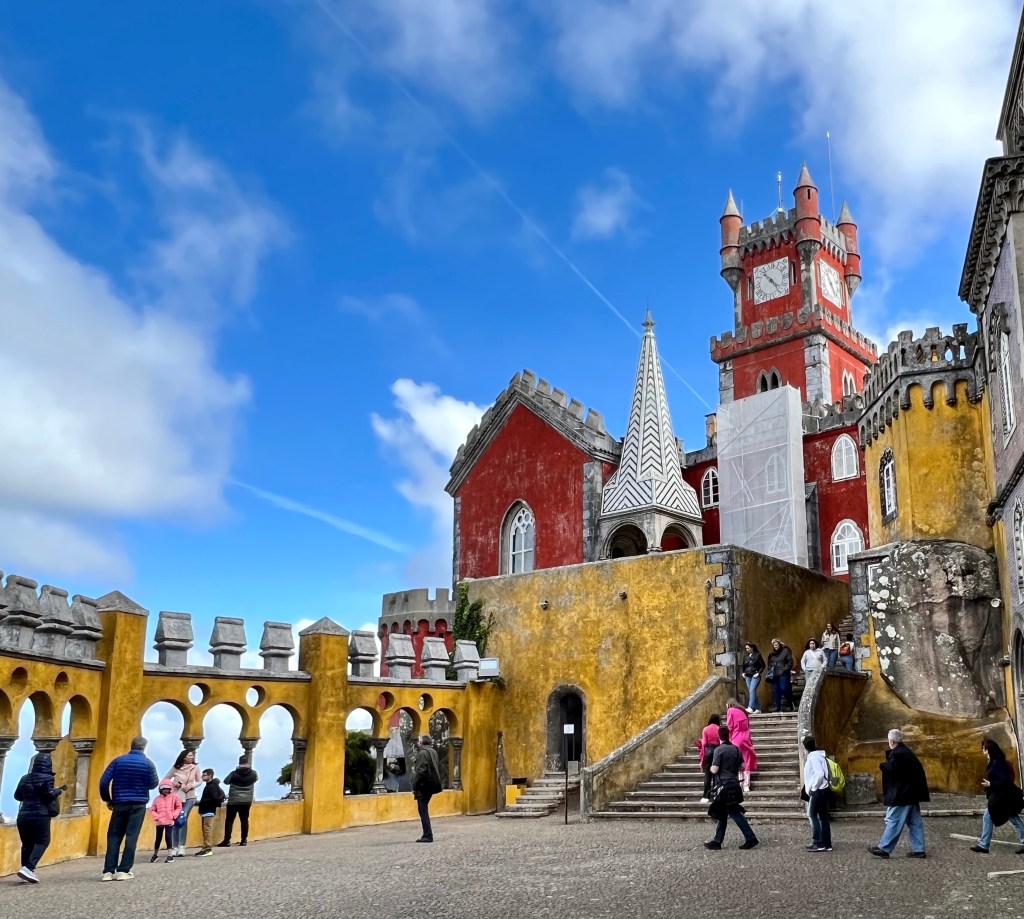
Sintra, the Moon Hill, is a place where man and nature have joined forces to create magic and UNESCO has named it a World Heritage Site. The jewel in Sintra’s crown is the Pena Palace, completed in 1854, and billed as one of Europe’s finest palaces, with a vividly painted exterior, and an interior restored to reflect its condition in 1910 when the Portuguese nobility fled the country. It is situated on a top of a hill above the town of Sintra and is known for its architectural features and vast forested park that welcomes thousands of visitors every year.

Pena Palace
Pena Palace

There are two parts to the castle. The red part is the oldest part and includes the 16th century monastery. The yellow parts are the newer additions built in the 19th century by Ferdinand II as a summer home for he and his family to escape the heat of Lisbon.

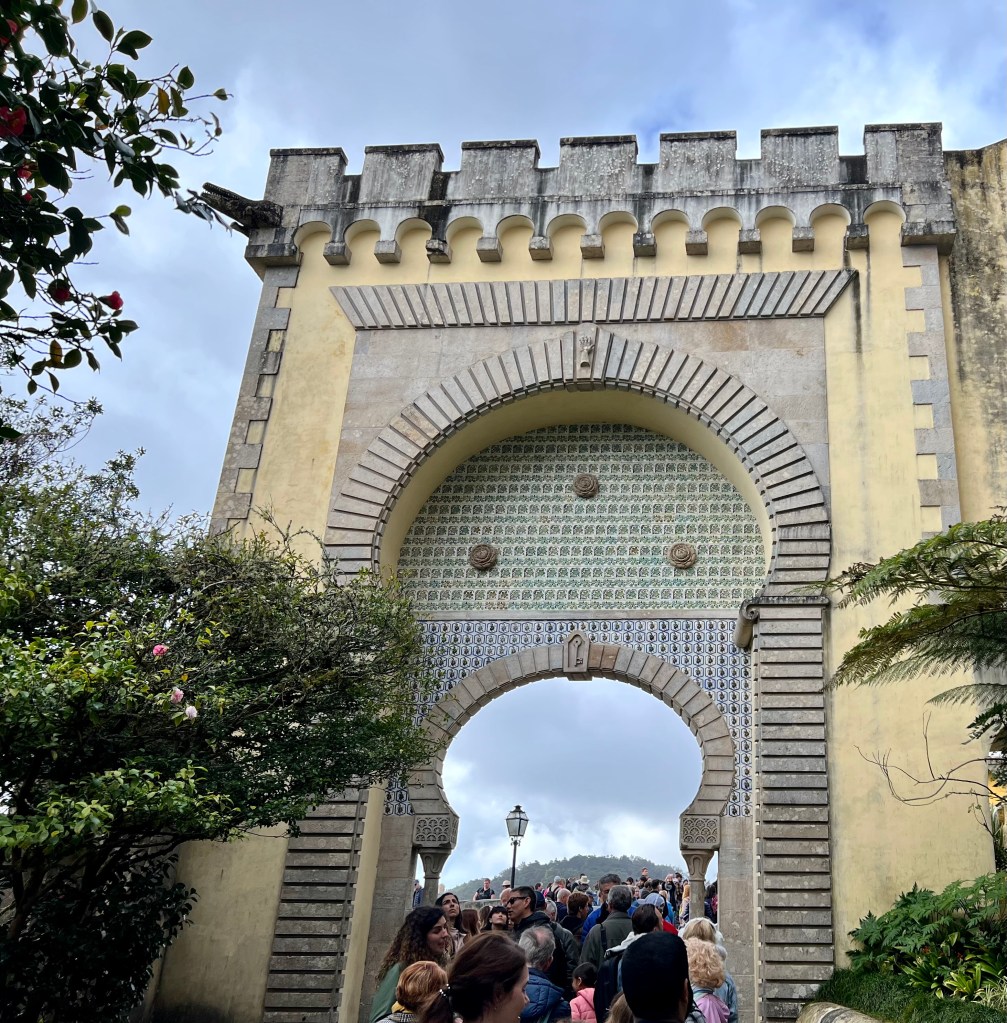
Throughout the palace you will find symbols and references to Portuguese culture and history. The entry to the castle is through a gate that is similar to that found at the Alhambra Palace in Spain. The hand at the top represents the five tenets of Islam, the three roses in triangle below are a message to Masons (Ferdinand was a secret Mason), the blue and white tiles represent the Portuguese while the green tiles above are for the vineyards where they grow their wine. The crocodile at the top drains water from the castle. Gargoyle images were left to the builders to decide so they are mainly mythological figures because the Portuguese were (are?) very superstitious. 

Castle Gate
Francine, Alain and I waiting to get in

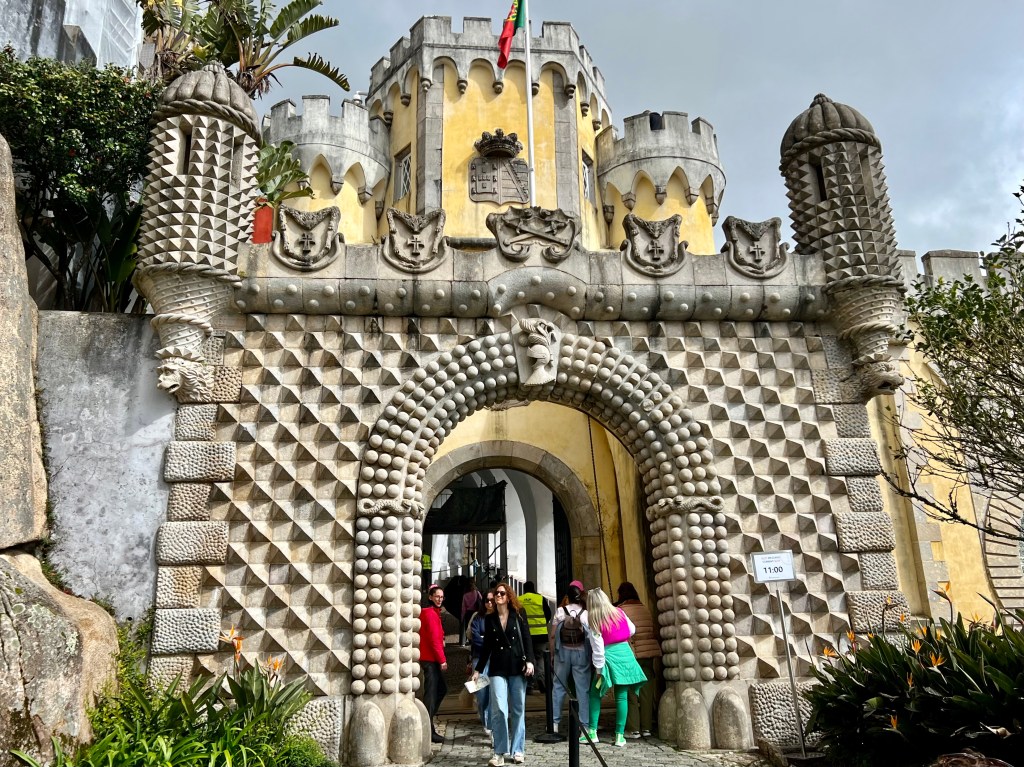
The second gate or Monumental Gate is a triumphal arch with features of Portuguese 16th century architecture (the same century as the monastery was built). This gate features cannon balls and more Mason and Templar symbols. 

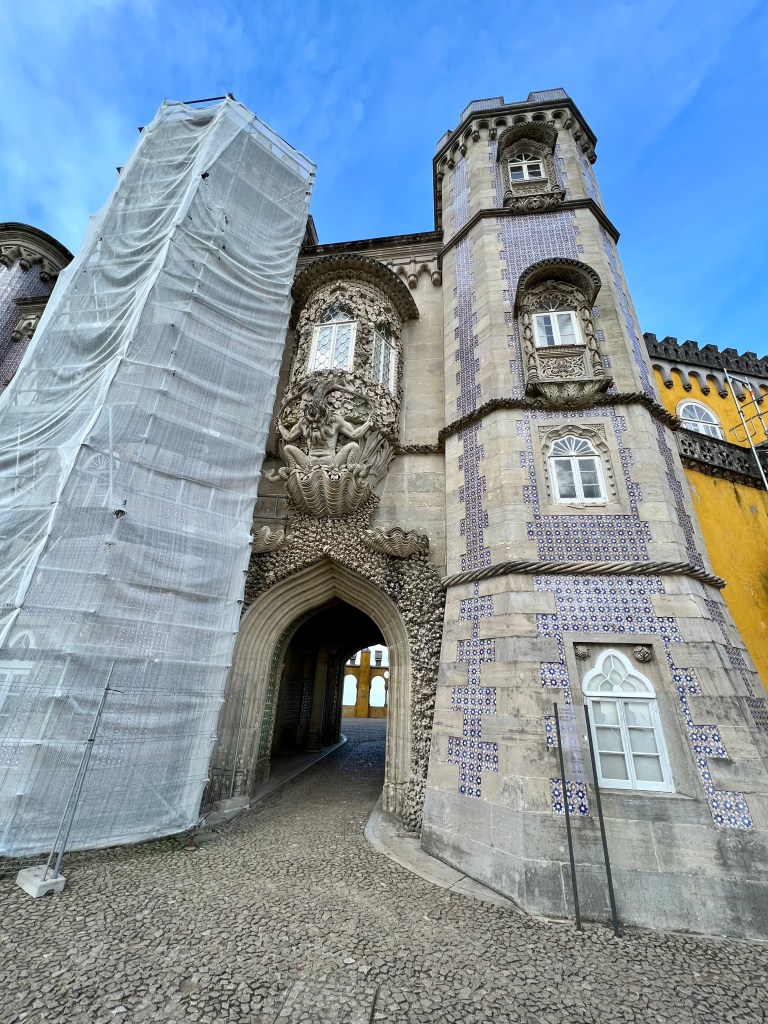
The third gate, the Triton Gate, resembles a description of the god from the epic Portuguese tale The Lusiads by Luís Camões. Ferdinand II designed the Triton Gate as a depiction of the world that unites both land and sea, which is most likely a dedication to the Portuguese feats during the Age of Discovery. The Triton is perched on top of a giant shell surrounded by waves, corals and other intricate adornments and nautical symbols. Above, he is holding up a tree trunk that merges with vines and other symbolic flora and fauna that abound in the Sintra Mountains.

Triton Gate

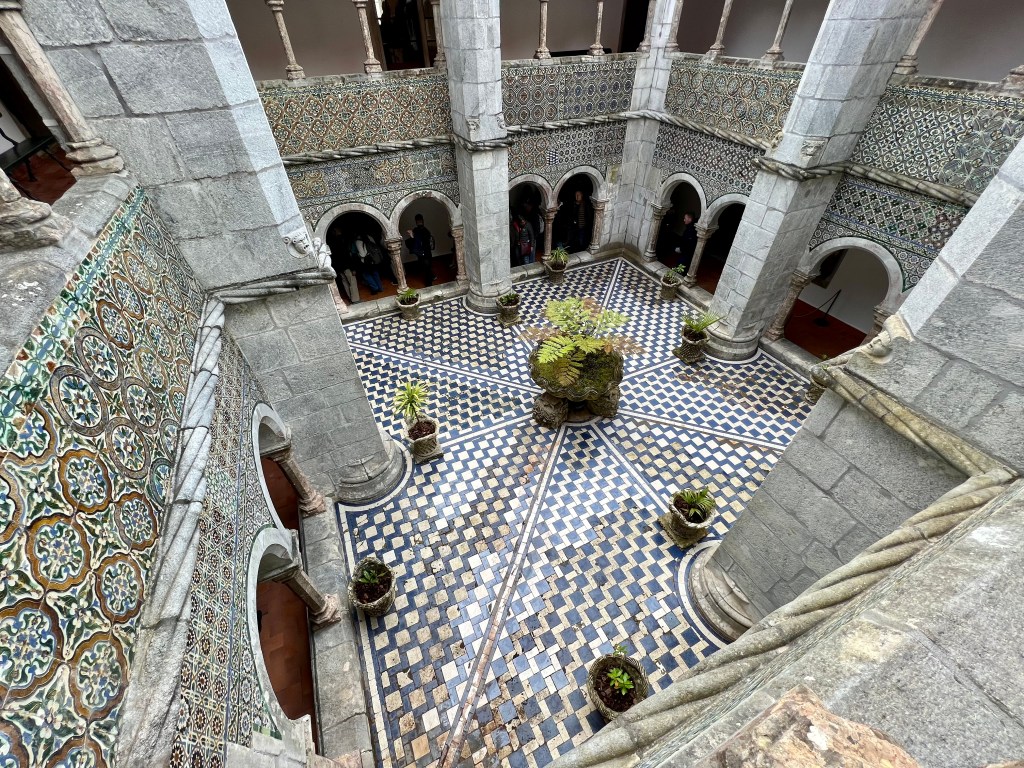
Miguel lead us through the palace and the various rooms used by the royals before giving us a few minutes to explore the Courtyard of Arches and the Chapel. 

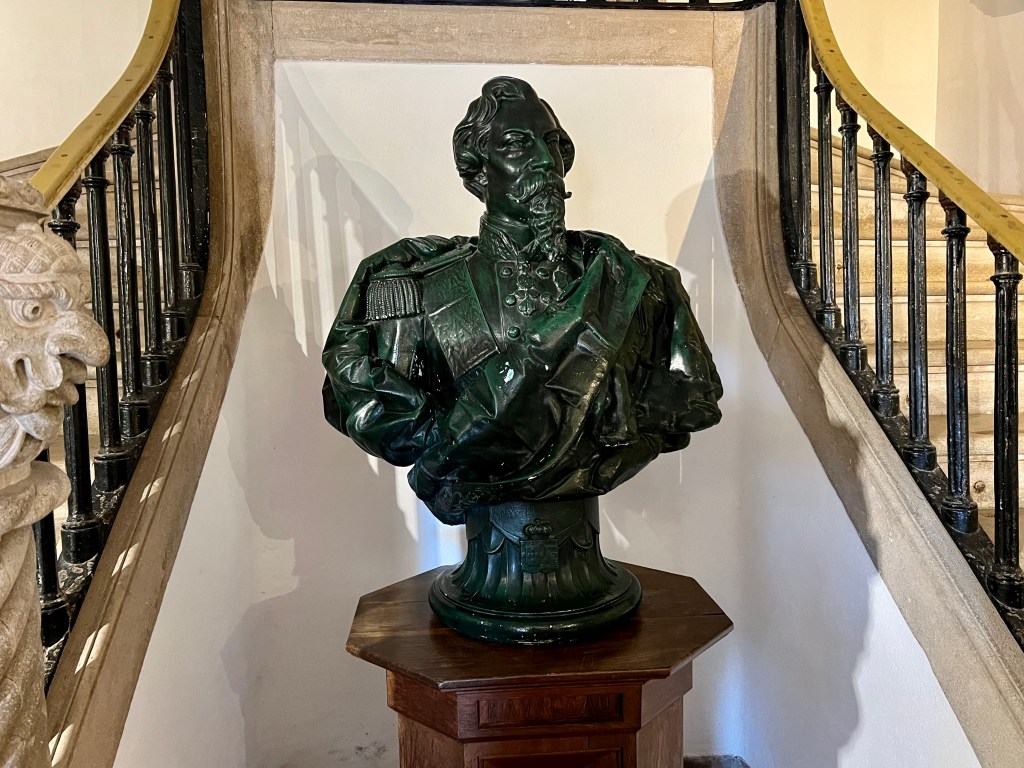
Ferdinand
Funky Post
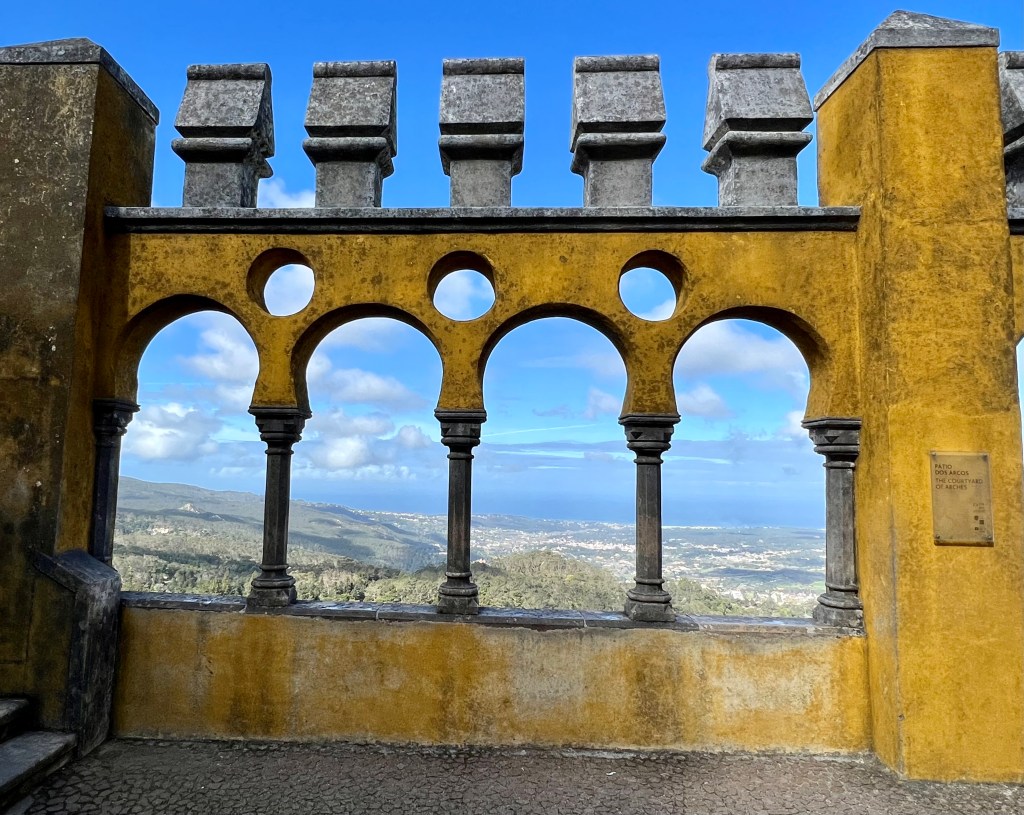
Courtyard
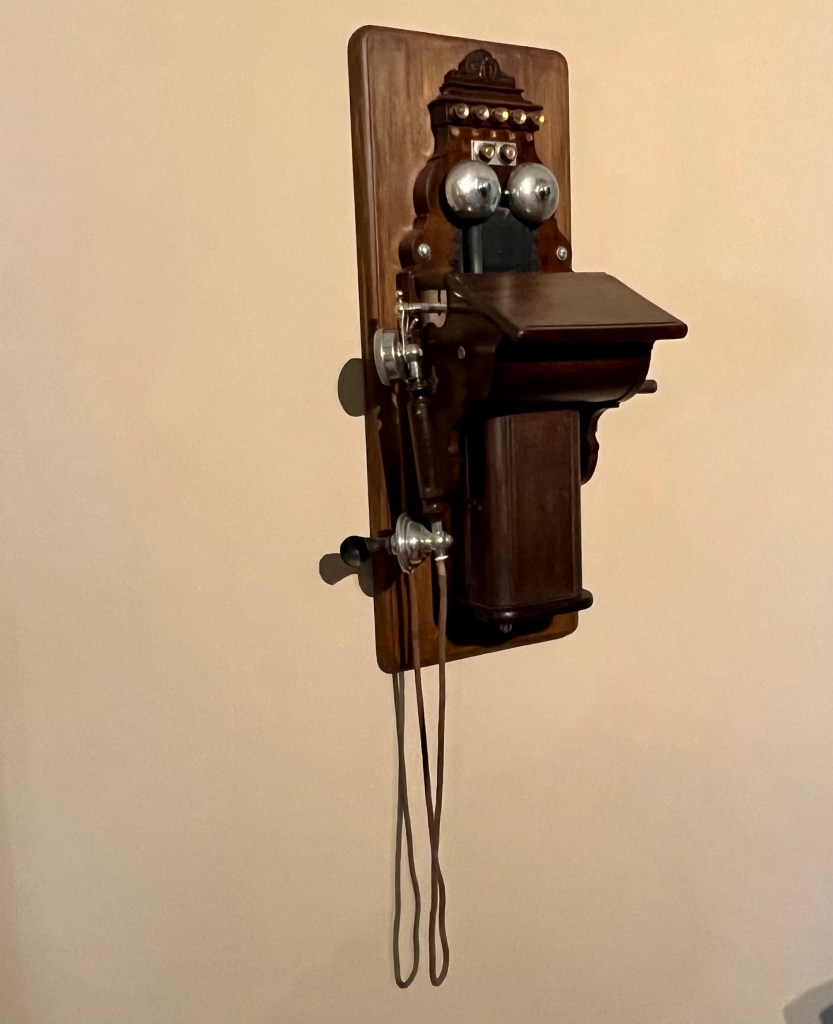
One ringy dingy, two ringy dingy …
Chapel
I want this lamp, lol!
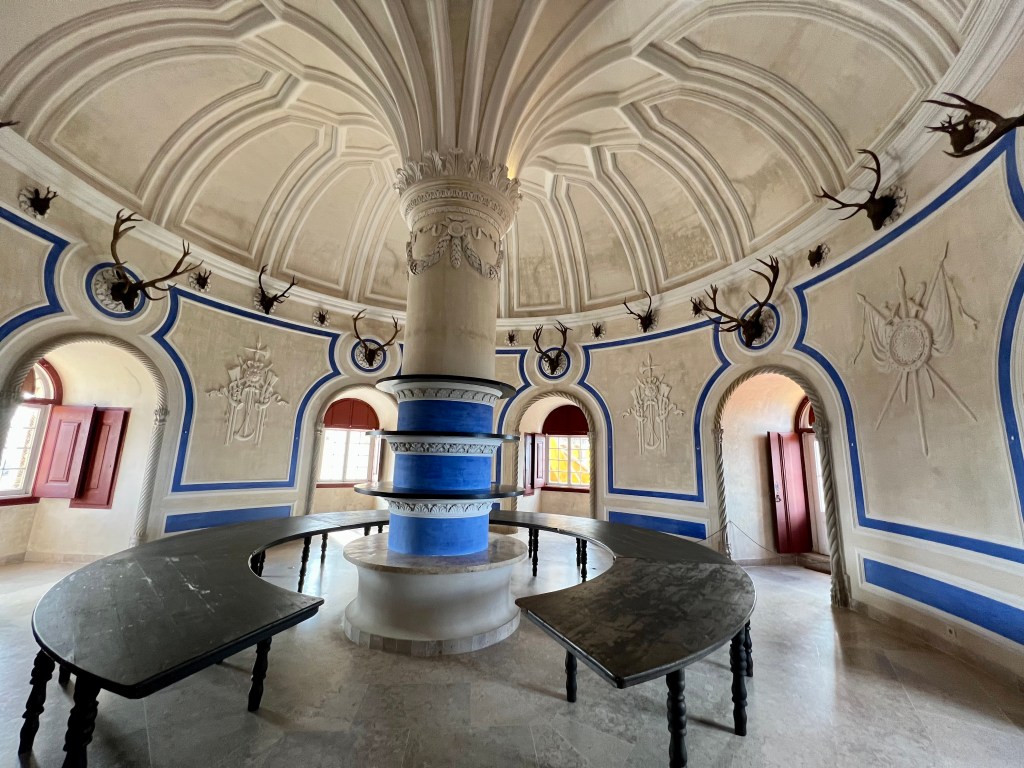
Stag Room
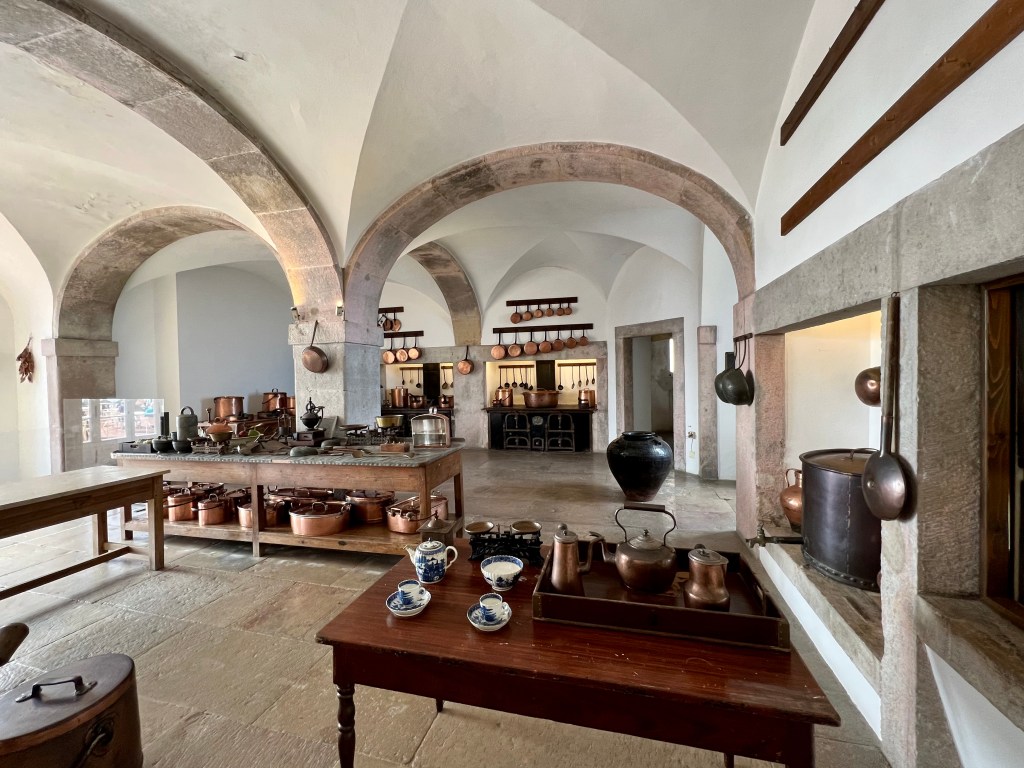
Kitchen

The Courtyard faces north and funnels the winds into the castle acting as air conditioning during the hot humid summer. 

Love how the castle seems to grow out of the earth

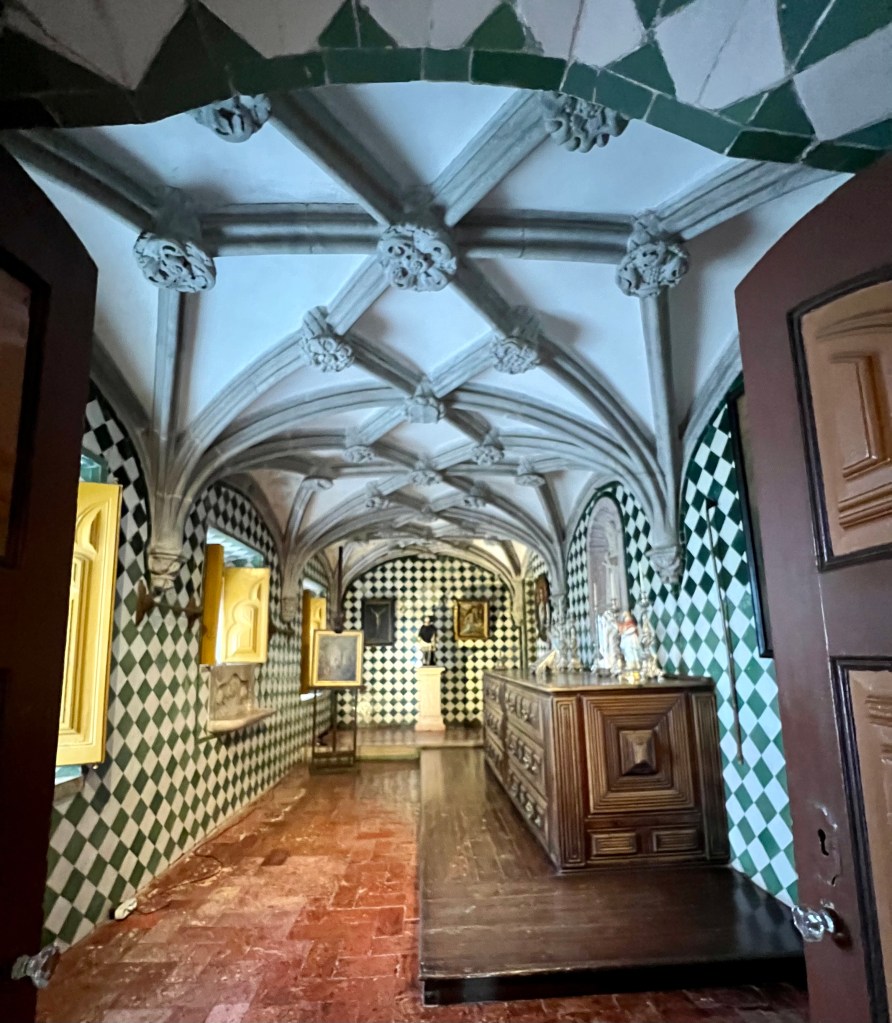
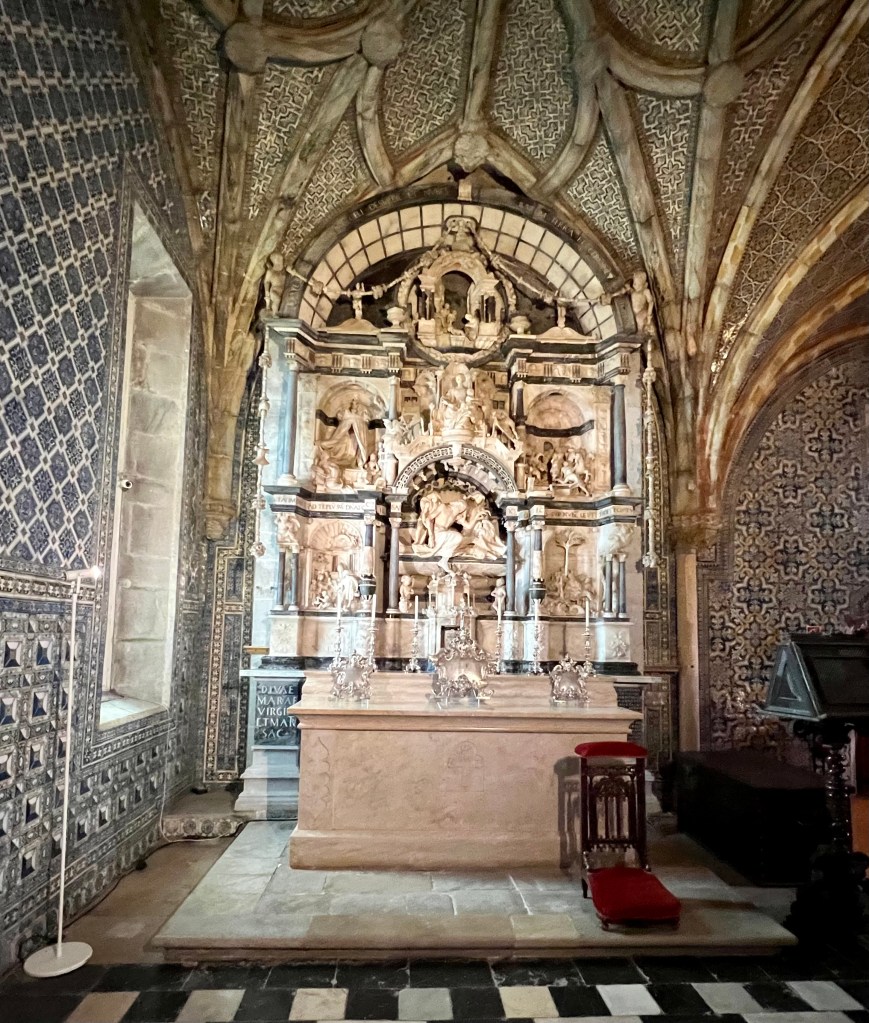
The Chapel is the church of the original early-16th century monastery. The nave features pointed arches and monochromatic tiles from the same period. The apse and choir, covered by the classically Manueline vaulted ribbed arches, were completely lined with polychrome tiles in the 17th century.

16th Century Chapel

The Altarpiece in alabaster and black limestone, completed between 1528 and 1532. Its narrative concentrates on the life of Christ. The scenes depicted are: the Nativity, the Annunciation, the Presentation at the Temple, the Adoration of the Magi and the Flight to Egypt with the Resurrection of Christ in the centre, over the tabernacle.

Altarpiece
Stained Glass
Francine hamming it up

The extravagant taste of the era was not only applied to the palace but to the surrounding gardens as well. King Ferdinand was well-travelled and imported a large variety of trees from distant lands to plant in the park, including fauna native to North America, China, Japan, Australia and New Zealand.

After our tour of the Palace we spent a hour exploring the town of Sintra doing a little window shopping and taste testing the local pastries from Piriquita. It seems every town has its own quintessential sweet treat so it’s lucky we’re boarding our cruise ship tomorrow so we don’t gain twenty pounds!! In Sintra, there are two options: Travesseiro da Piriquita; a flaky pastry filled with custard and chopped almonds and Queijadas de Sintra; a cheese tart flavoured with cinnamon. They’re both okay but not something I’d want to eat often. 

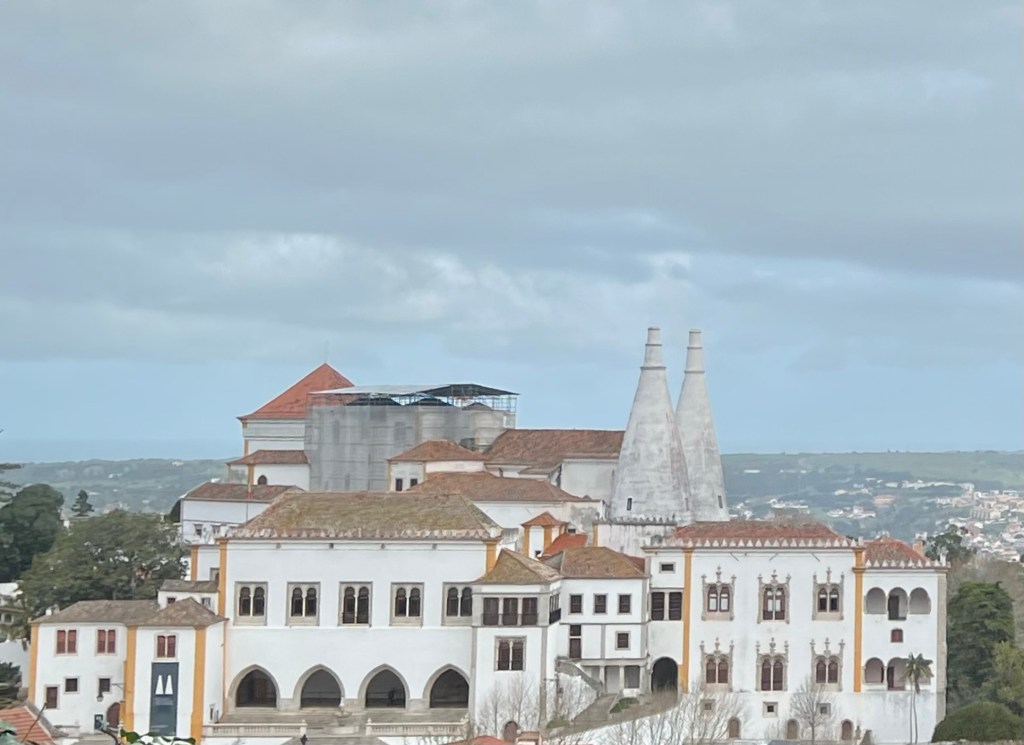
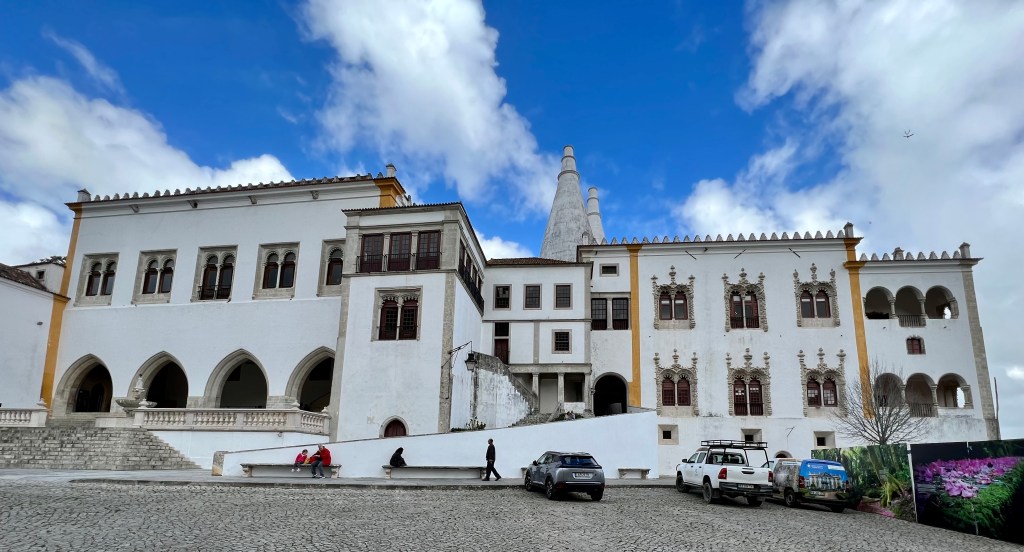
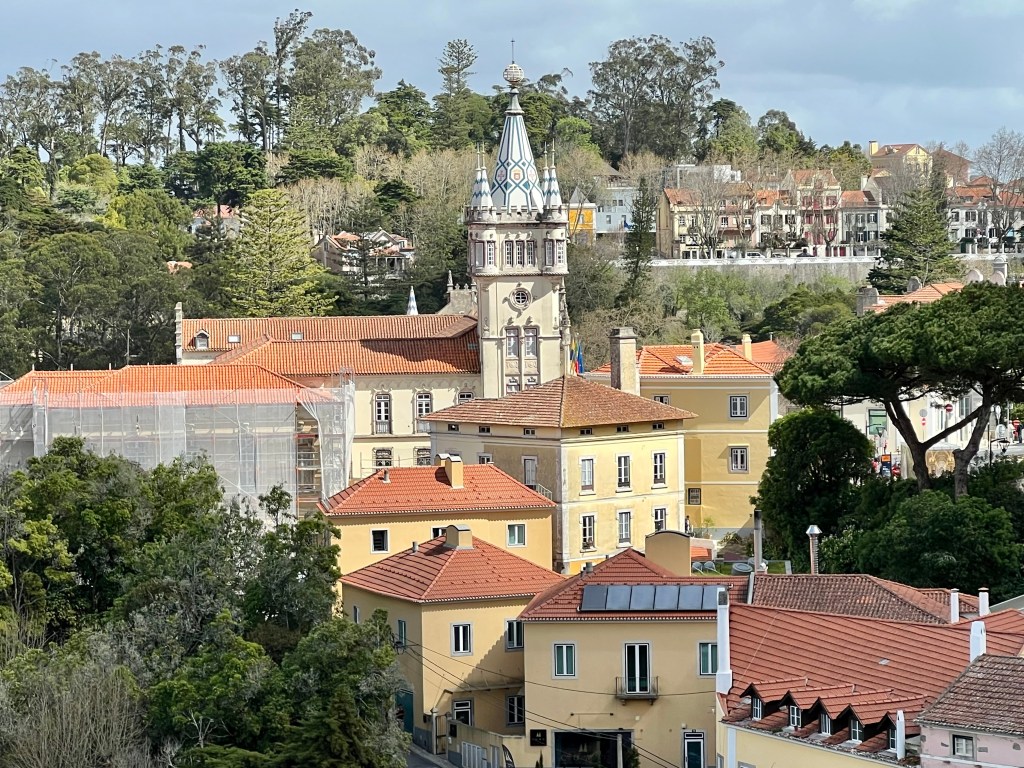
Sintra Palace
Sintra Palace
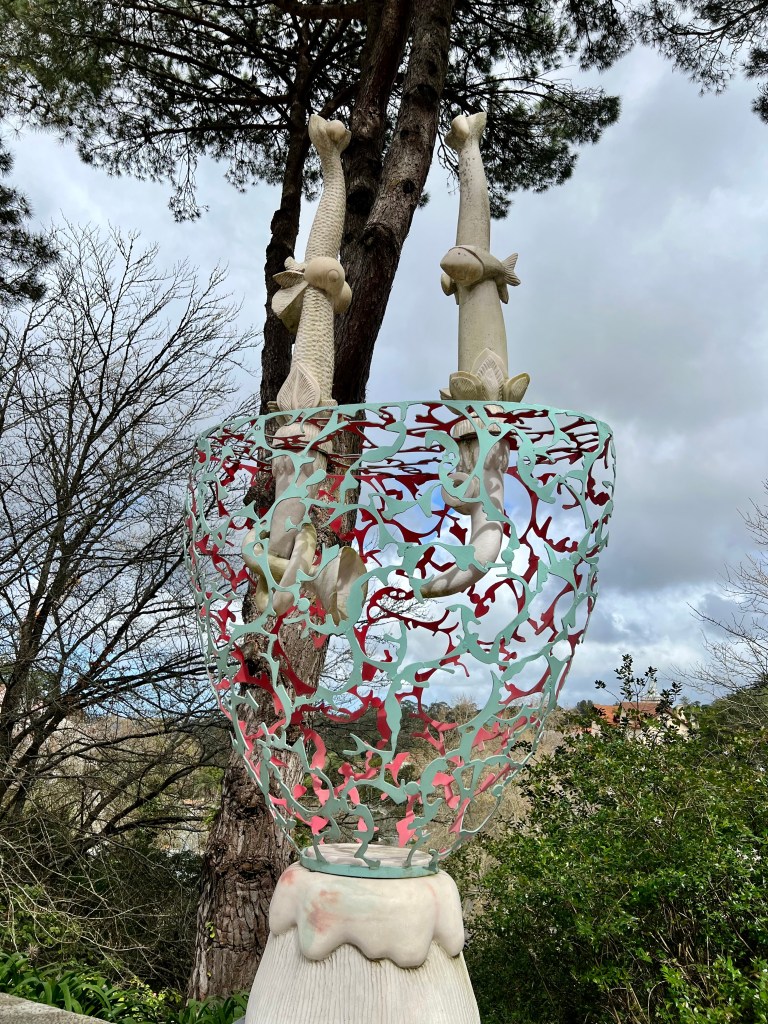
Funky Art
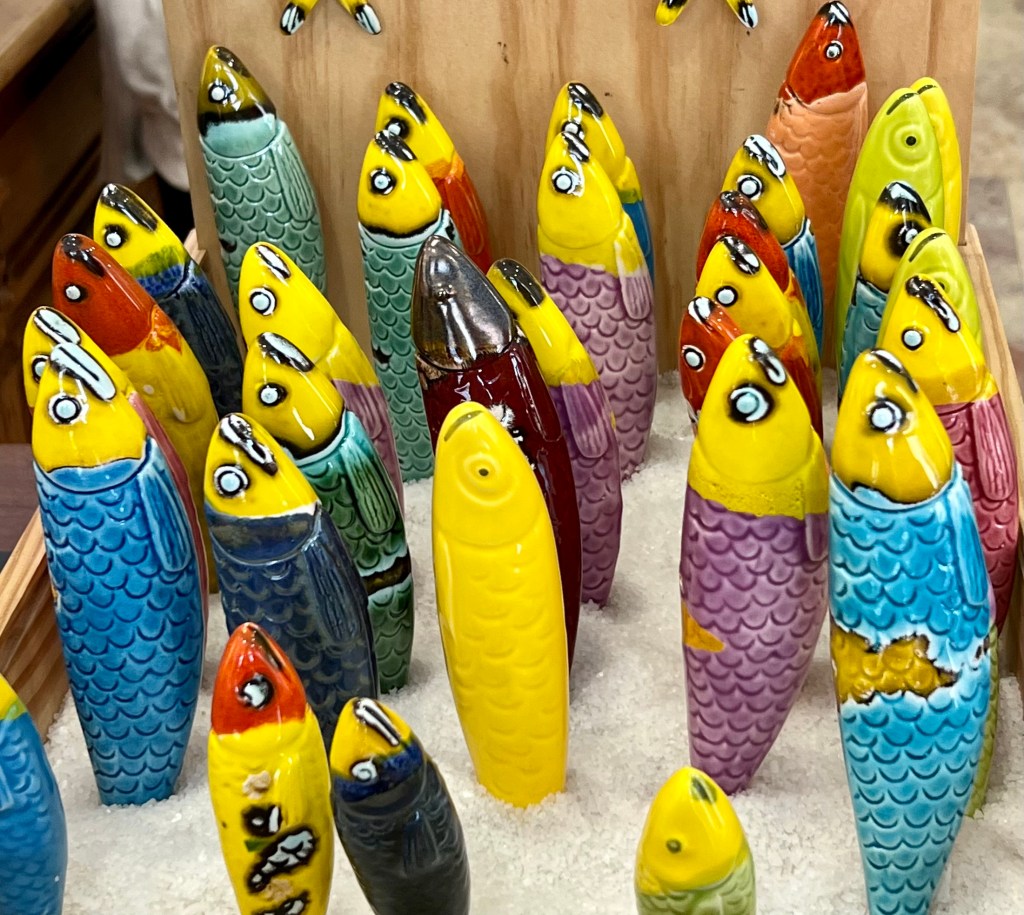
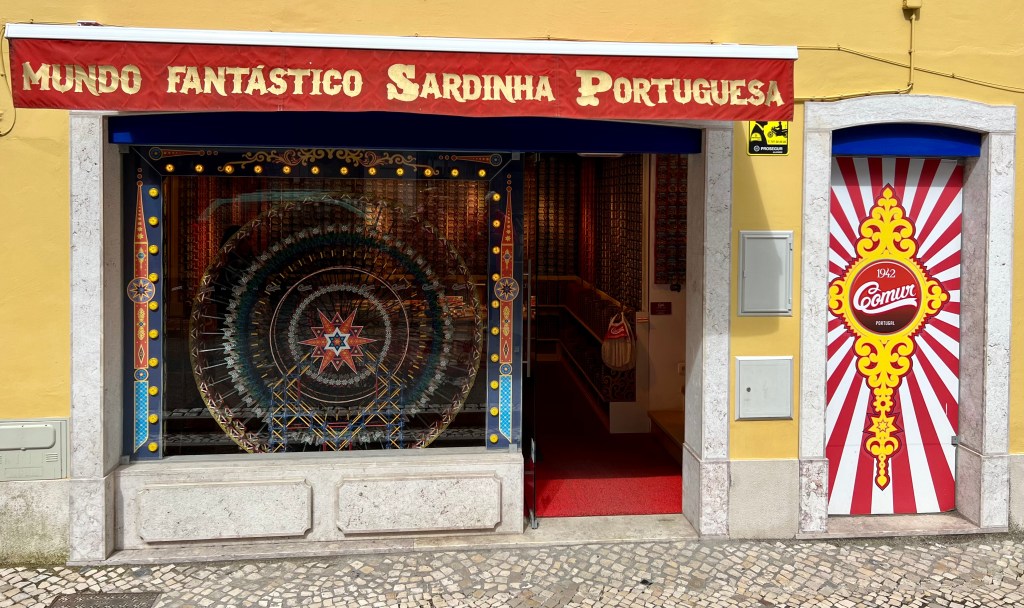
Sardines!
Love their paving designs
Church in Sintra
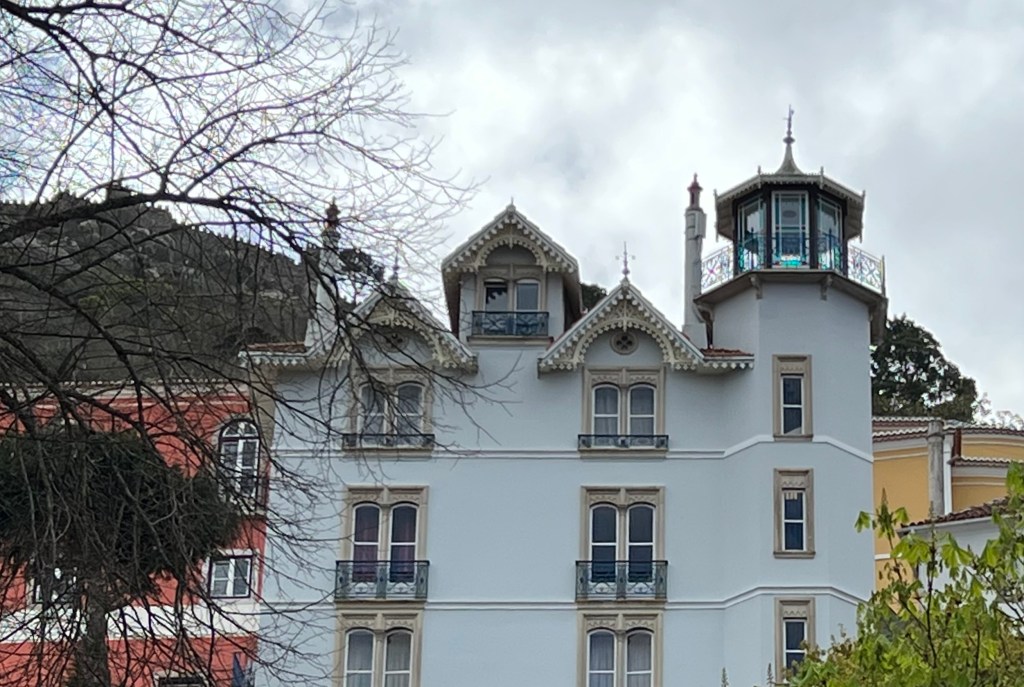
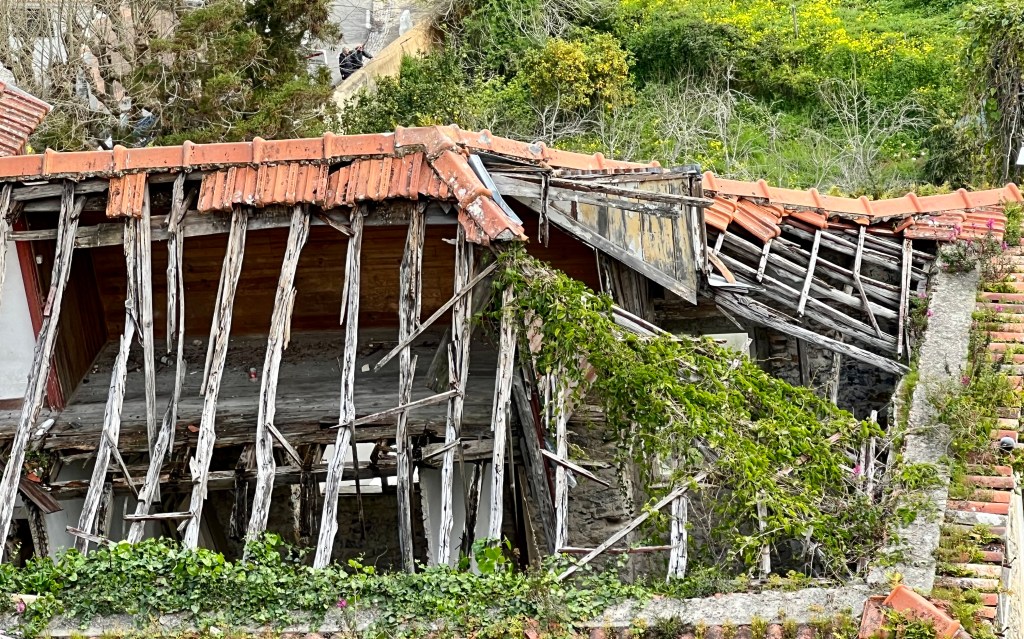
A room with a view?
These guys take their sardines seriously!
The place for pastries
Alain gives both specialties a try

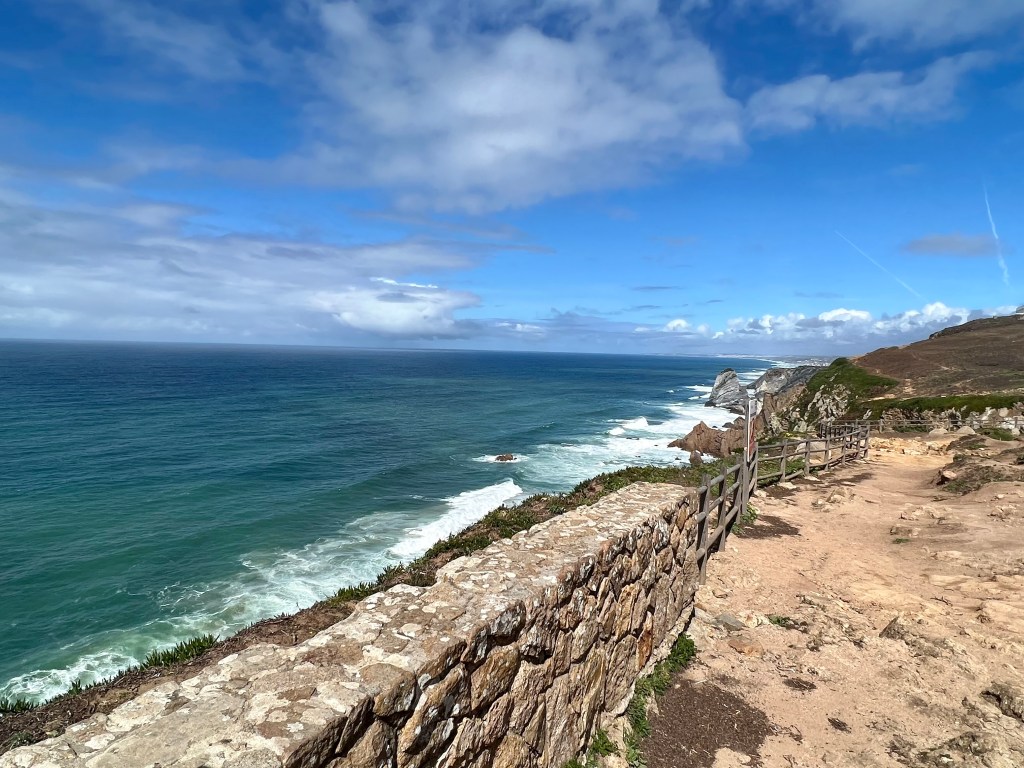
Back on the bus and we’re headed to Cabo da Roca, a cape which forms the westernmost point of a continental Europe. The point includes a lighthouse that started operation in 1772. After a whistle stop to wander around the cliff and take a few pictures, we boarded our minivan for the drive to Cascais for our lunch stop. 

Cabo da Rosa Lighthouse
Western edge of Europe

The beaches of Cascais are glorious; to the north is the wild and untamed Serra de Sintra coastline, with its surfing beaches and dramatic natural scenery and surrounding the town are the beautiful beaches of the Portuguese Riviera.

Historically, Cascais was the summer retreat of the Portuguese nobility and today the cobbled streets in the historic centre, lavish villas, imposing fort, museums, and lively bars and restaurants lend Cascais a holiday atmosphere.

Cascais is also the site of the casino that supposedly was the inspiration for James Bond’s adventures in Casino Royale. 

On our way to Cascais
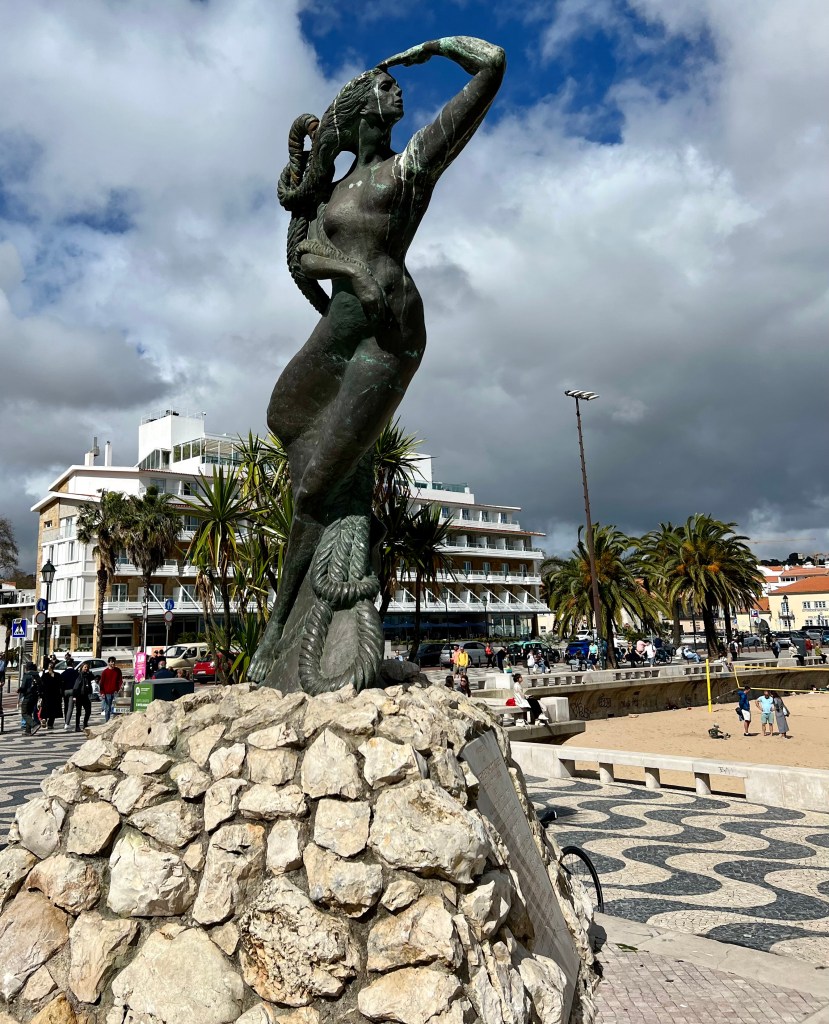
Ahoy Sailor!
Random statue in Cascais
Portugal’s Famous Poet
Cascais Harbour
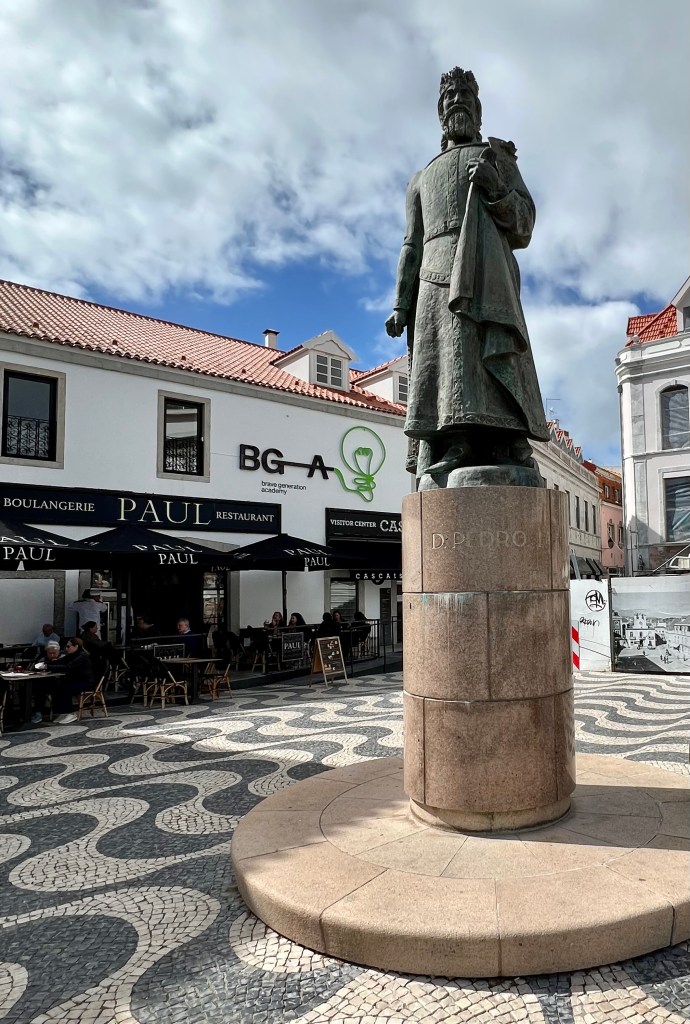
Rei Dom Carlos I

After a quick explore, we find a café and grab lunch before meeting at the van for our drive back to Lisbon. Miguel advises us that there is a big demonstration (part of ongoing labour issues and strikes that have been going in for months) which will make it impossible for him to drop us off at the Hard Rock. Instead, he stops the van miles from there and suggests we make our own way back to the hotel. 

Not so fast! The folks from Madrid are happy with the location but Francine, Alain and I have no idea where we are but we know that it’s far from our hotel. Miguel is worried about his boss for some reason if he takes us closer to the hotel but I tell him to get his boss to call me if he has any issues and he drives for fifteen minutes and drops us off closer to the hotel. We still don’t know exactly where we are but there are some landmarks in the distance that we recognize so with me in the lead, we weave through streets and alleys in the general direction of our hotel. Imagine out surprise and elation when as we head down a long stairway, we spy the restaurant we’d eaten in the night before. The angels are with us or I’m becoming a better navigator (not likely) and we make it back to the hotel. 

The last four members of our motley crew, Craig and Kerry and Ron and Andy have arrived and tout le gang is on the rooftop terrace having a drink so we join them. They are heading out for an early dinner which I decide to skip having just had lunch. 

We’re meeting tomorrow morning for breakfast before grabbing cabs to the cruise port to board our home for the next two weeks the Norwegian Sun. 

Tomorrow is another day. Adventures await …
I’m not lost, I’m exploring- Portugal

Friday March 17, 2023

Once again I’m spending my favourite non-holiday of the year away from home. Luckily I have some friends flying in from Ottawa today so while we may or may not end up at an Irish pub, there will be a glass or two raised to celebrate. Next year shamrocks and Guinness in Ottawa!

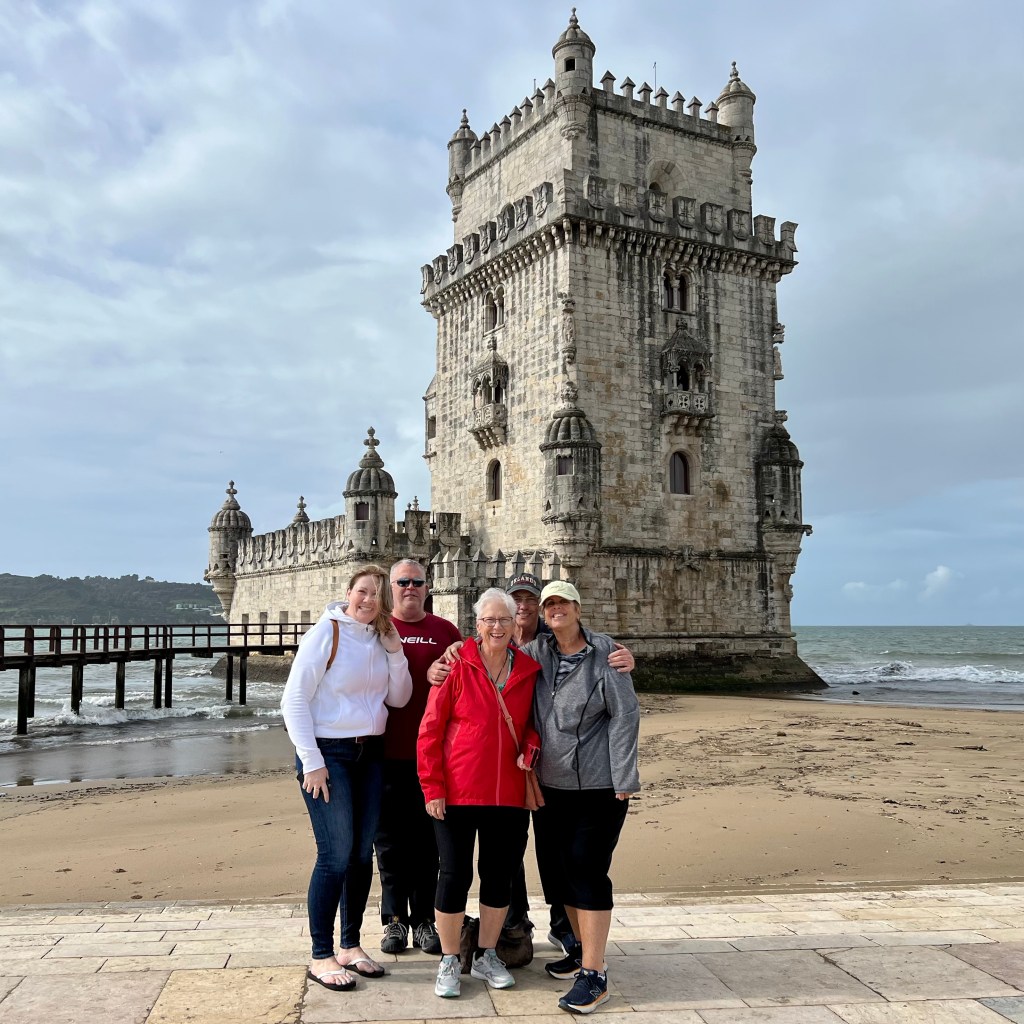
Tanya, Shawn, Francine and Alain arrived at the hotel around 8:00 am so after dropping what bags have accompanied them in my room, we head downstairs to have breakfast. After some food and a quick freshen up, we grab a couple of taxis and head to Belém Tower to work our way through Antonio’s must see list from yesterday. 

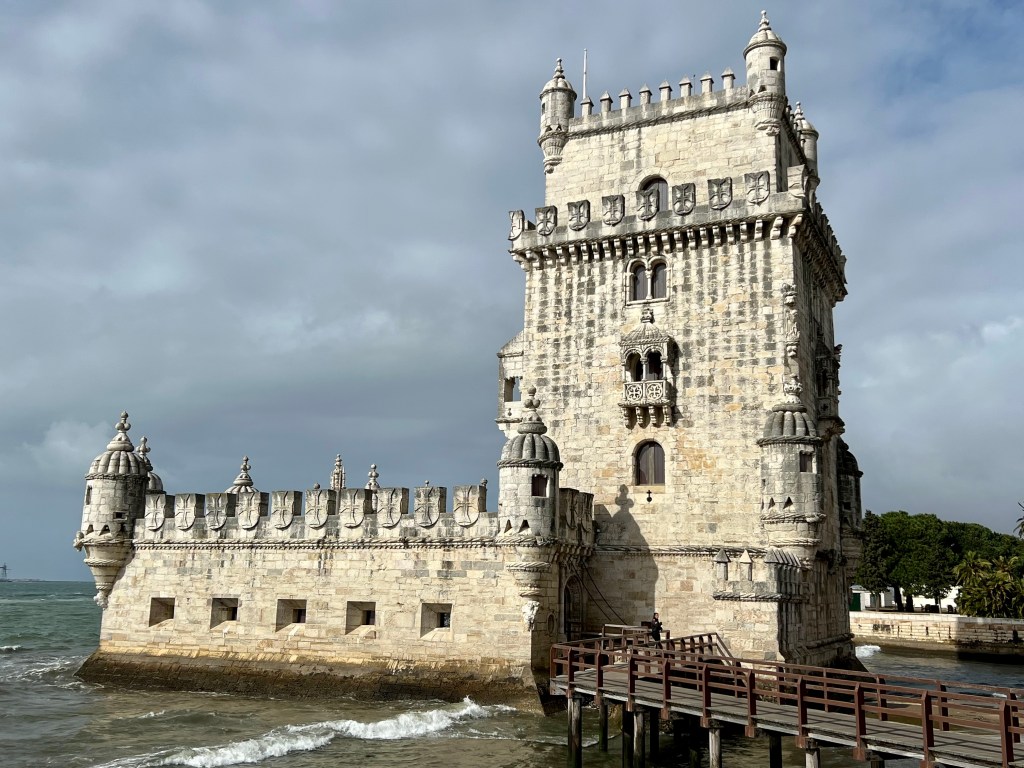
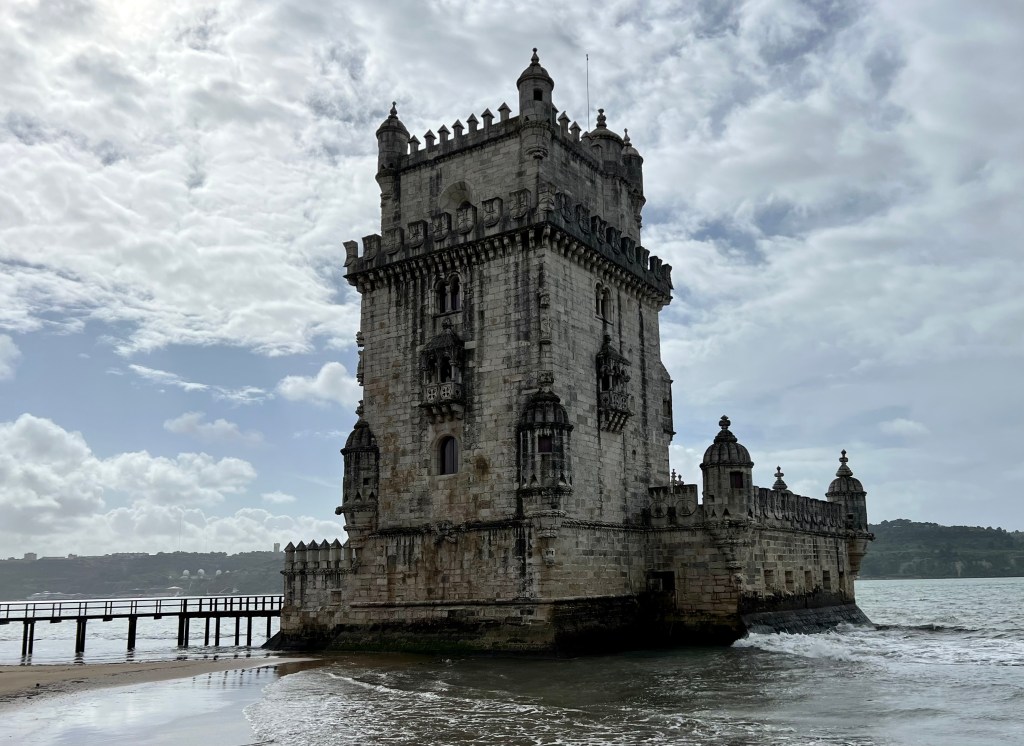
Belém Tower, officially the Tower of Saint Vincent, is a 16th-century fortification that served as a point of embarkation/disembarkation for Portuguese explorers and as a ceremonial gateway to Lisbon. Built during the height of the Portuguese Renaissance it is a prominent example of the Portuguese Manueline style. Since 1983, the tower has been a UNESCO a World Heritage Site, along with the nearby Jerónimos Monastery. All that to say, it’s a beautiful building!!

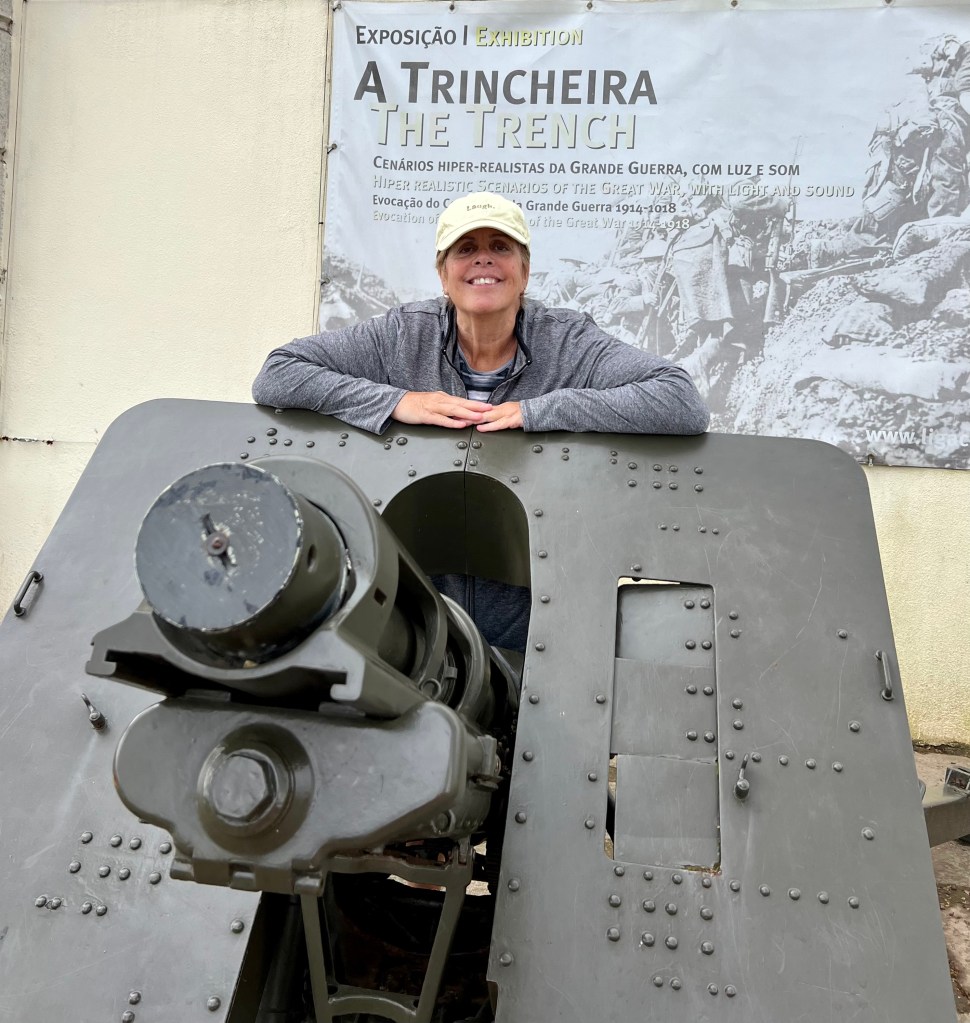
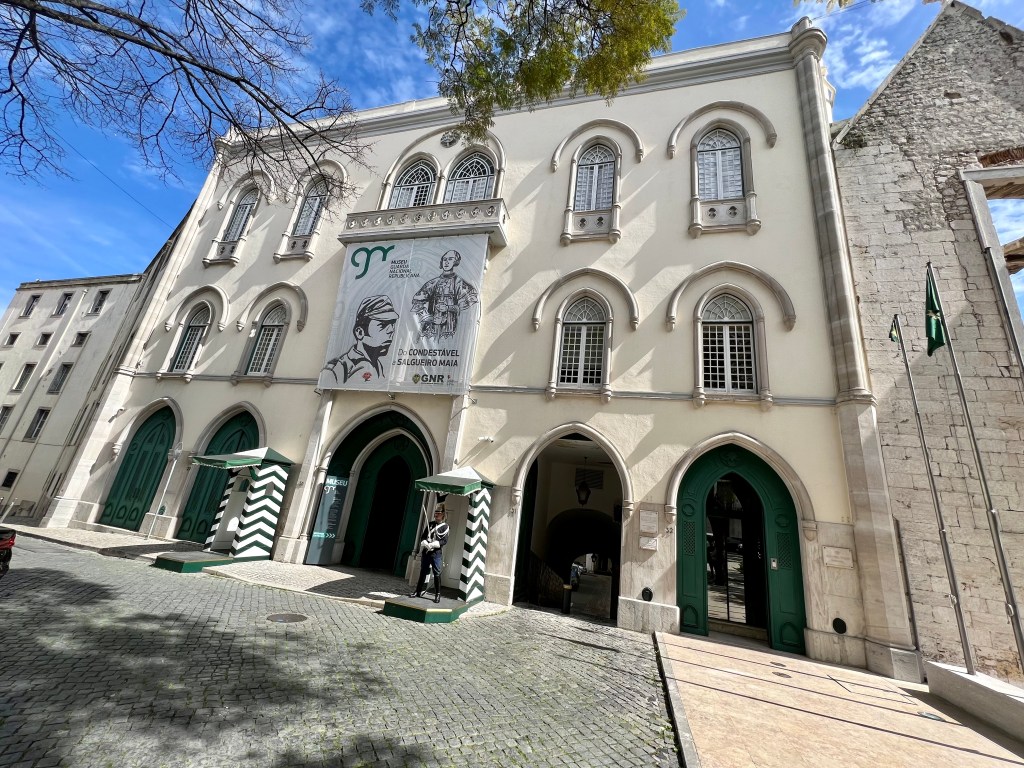
Next to the tower is an 18th century fort (Fort of Bom Sucesso) guarding the approach to Lisbon on the River Tagus. Converted to the Museu Do Combatente, it is dedicated to the men and women of the Portuguese armed forces killed in action. 

If I had a rocket launcher …

The Monument to the Honour of Overseas Combatants has shared this space since 1993 and is dedicated to soldiers of the Portuguese army who died during the Overseas War of 1961 to 1974. 

The memorial includes three sections, the flame, the monument and the memorial wall. The central flame burns continuously to signify the lasting memory of the dead soldiers while the names of each solider who died in the protracted African conflict are etched into the the three walls that surround the memorial. The artistic section of the Monumento Combatentes Ultramar include a shallow purpose built lake and two large angled pillars that jut out above the flame. The Memorial Chapel provides a quiet place for reflection. 

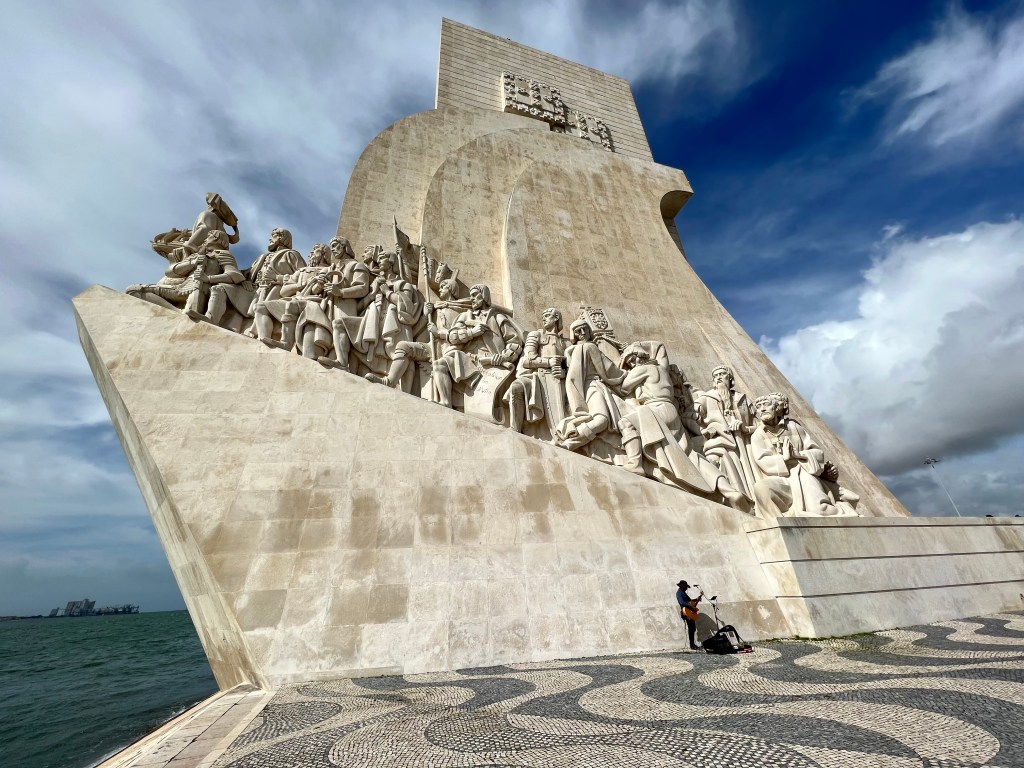
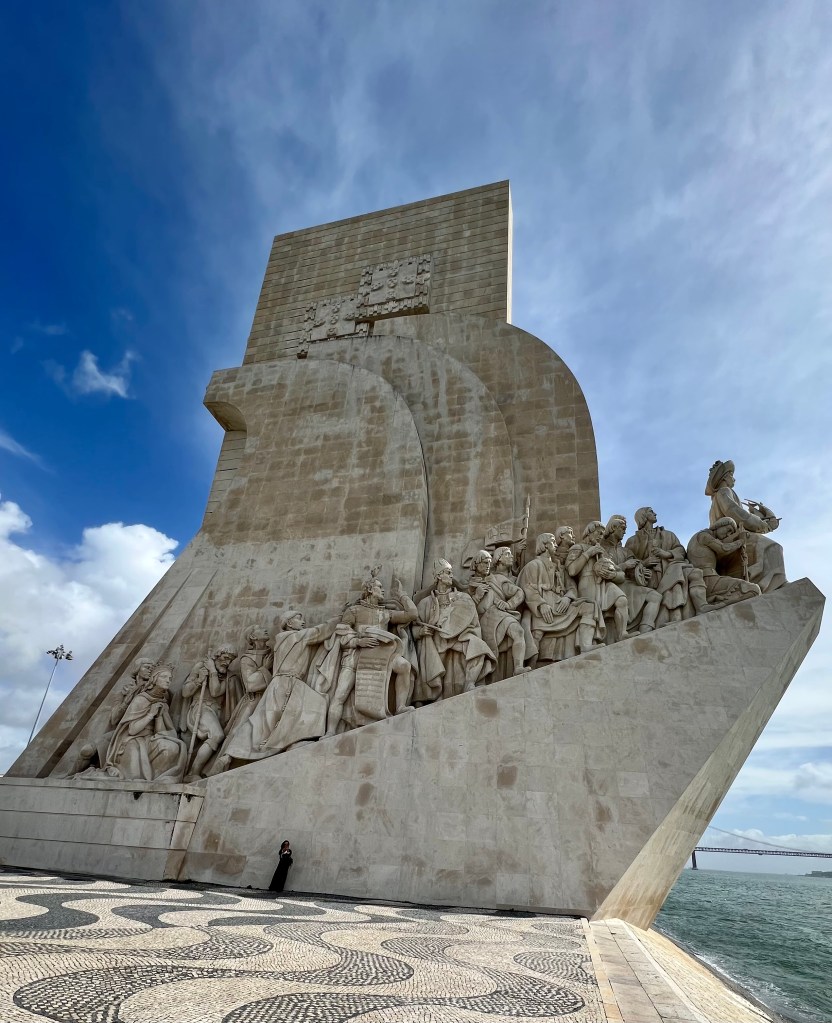
After spending a moment honouring the fallen, we walk along the riverside to the imposing and magnificent Padrão dos Descobrimentos/Monument to the Discoveries. The Padrão dos Descobrimentos was originally erected as a temporary monument for the World Exhibition hosted in Lisbon in 1940. It was made a permanent structure in the 1960s and commemorated 500 years since the death of Henry the Navigator (Infante Dom Henrique).

On the western side of the monument you’ll find depictions of the explorers (including Vasco da Gama and Ferdinand Magellan) while on the eastern side are the key financiers, with both sides supporting the statue of Infante Dom Henrique/Prince Henry the Navigator, the driving force behind Portugal’s 15th century Age of Discovery.  The monument is designed to give the appearance of the bow of a boat overlooking the estuary, with the rear representing the Latin Cross.

The Explorers
The Financiers
Latin Cross

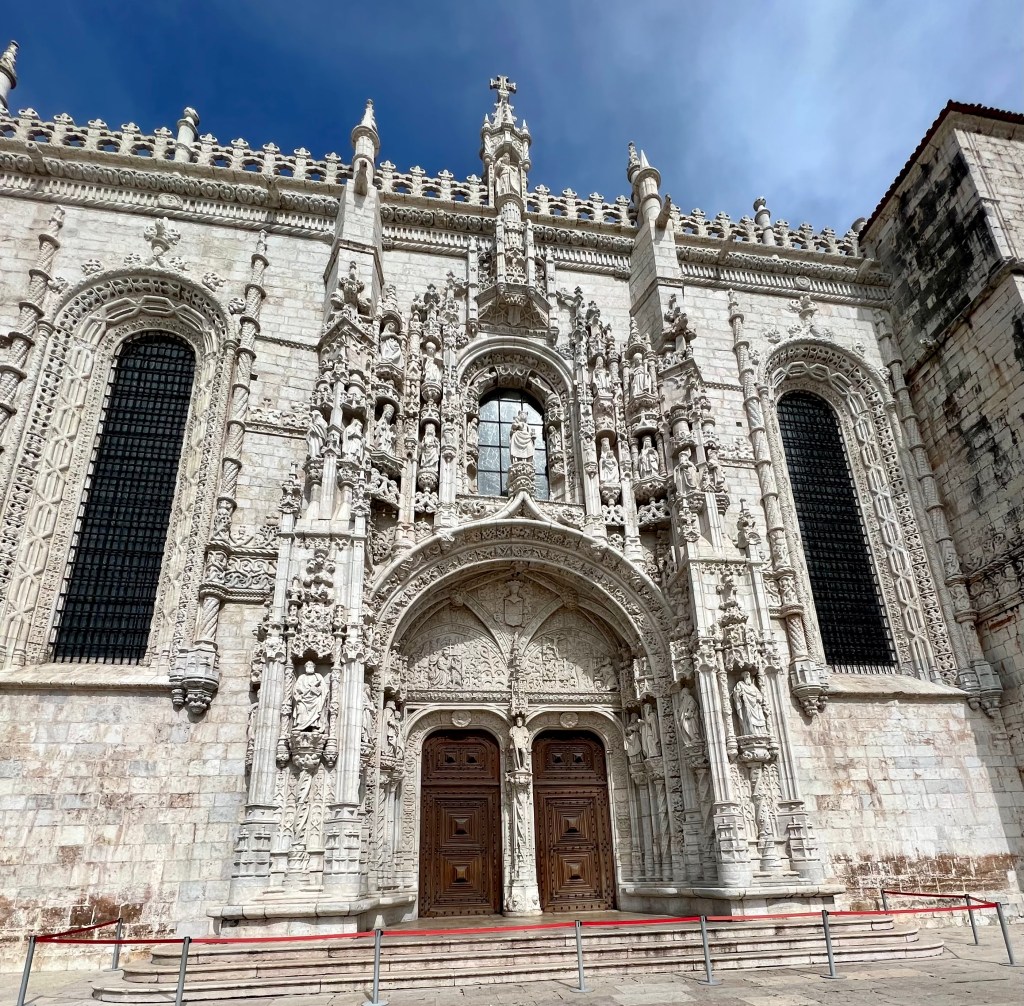
Our next stop is the Mosteiro do Jerónimos that is accessed through a tunnel under the many lanes highway and railway tracks we thought we might have to brave to reach our destination. This stunning building casts an imposing figure over the district, with its impressive, Late Gothic architecture. The monastery was once the home of the monks of the Order of Saint Jerome – creators of the original pastéis de nata but I’m getting ahead of myself. 

The Monastery is one of the most prominent examples of the late Portugeuse Gothic Manueline style of architecture in Lisbon. It was erected in the early 1500s near the launch point of Vasco da Gama’s first journey. da Gama’s remains and those of the poet Luis de Camões are housed in carved tombs in the nave of the monastery’s church, only a few meters away from the tombs of Kings Manuel I and John III, whom da Gama had served. As luck would have it, we couldn’t access the church or monastery today because of a strike! Lol, man plans and God laughs …

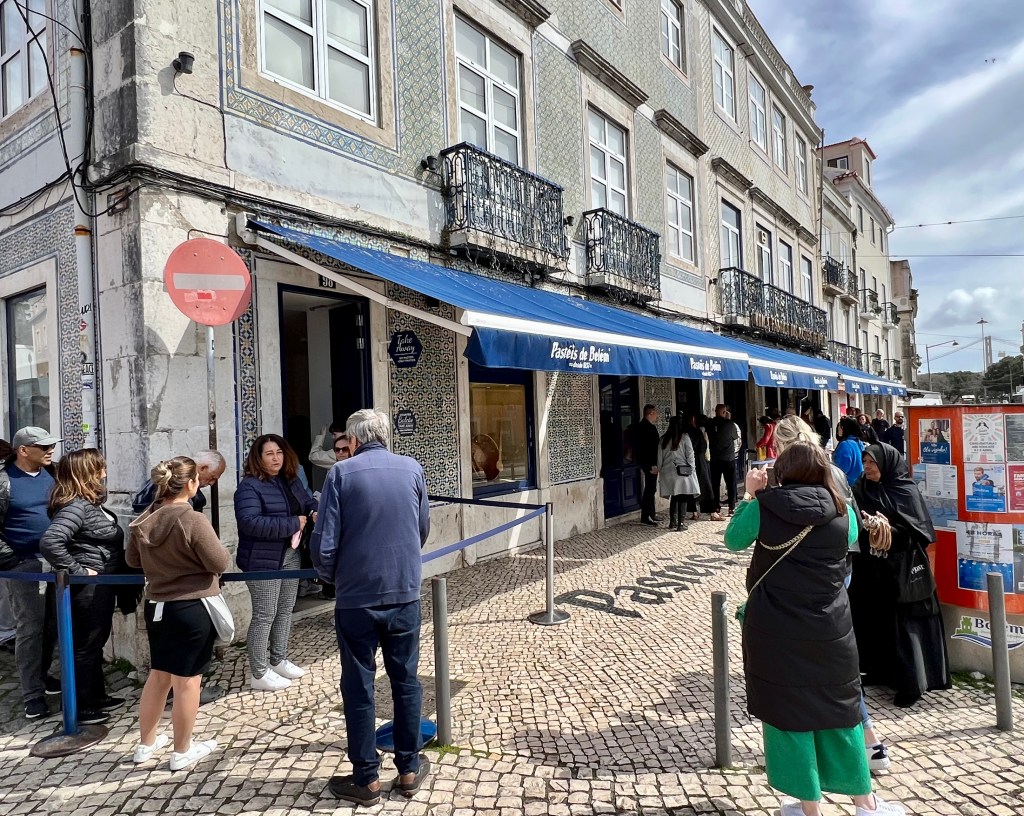
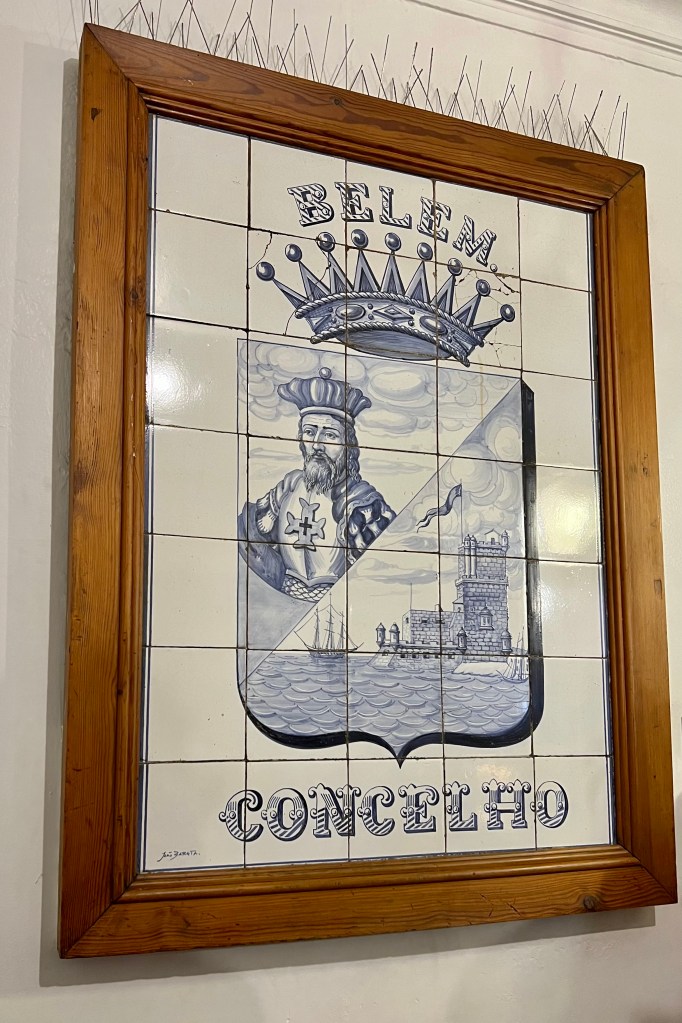
Since we’re here, we head off to the Fábrica dos Pastéis de Belém to sample the most authentic version of the famous flaky pastry pastéis de nata. This sweet treat is synonymous with the city of Lisbon and the custard tarts are made here using the secret recipe made famous by the monks of the Jerónimos Monastery. Apparently only four people know the secret recipe and they have to sign contracts not to fly together etc so they don’t all perish and lose the original recipe forever. We tried the tarts with their light, flaky crusts and they were fine and even better with a sprinkle of cinnamon. 

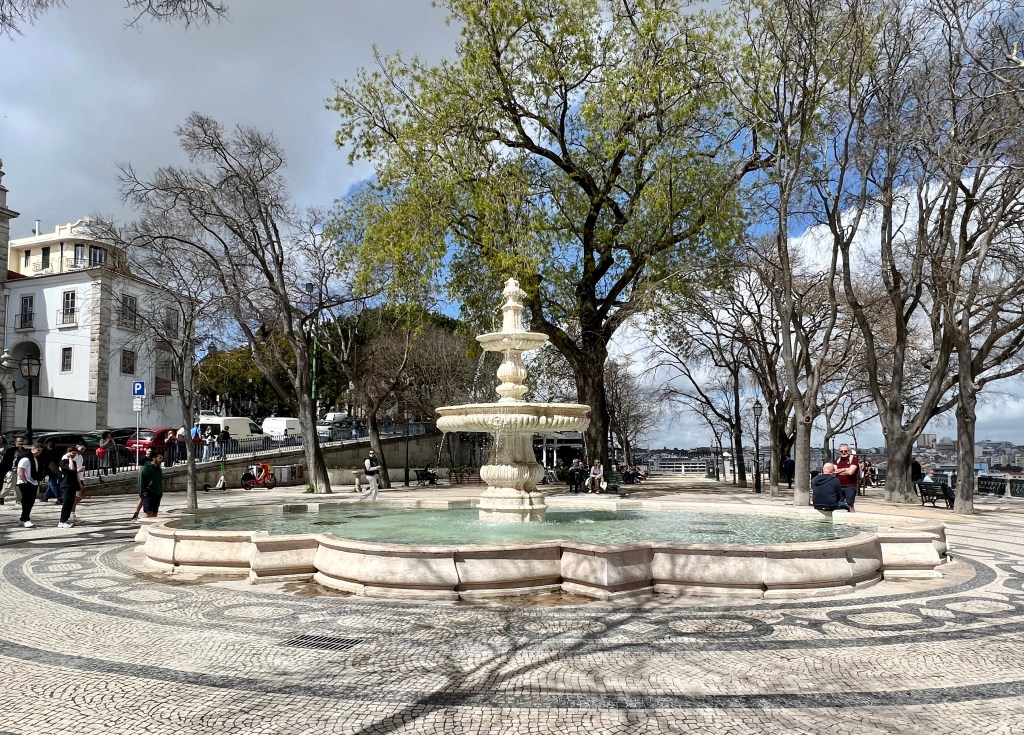
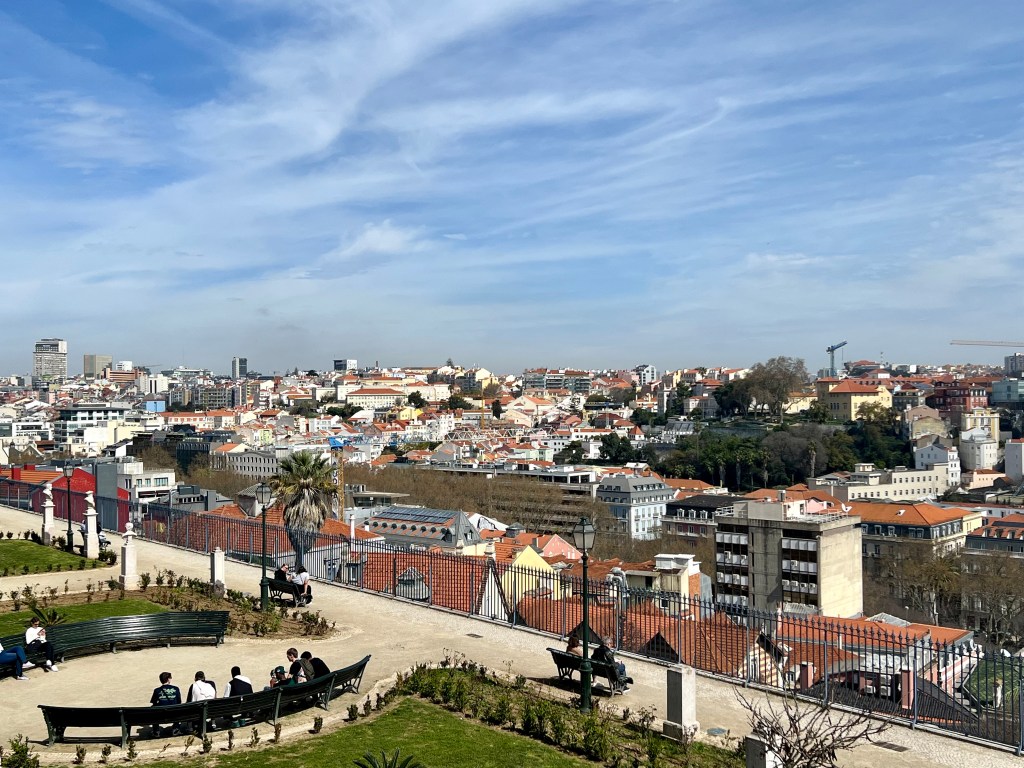
The new arrivals are starting to fade so we decide to head back to town in a tuk tuk. Rather than heading to the hotel where their rooms won’t yet be ready, we opt to go to the Miradouro de São Pedro de Alcântara; the garden with a panoramic view across the city to St George’s Castle and central Lisbon I visited yesterday and spend a bit of time exploring before heading down the hill to find our hotel. 

Our Chariot!
Fountain at Miradouro de São Pedro de Alcântara
Tile map of vista from Miradouro de São Pedro de Alcântara
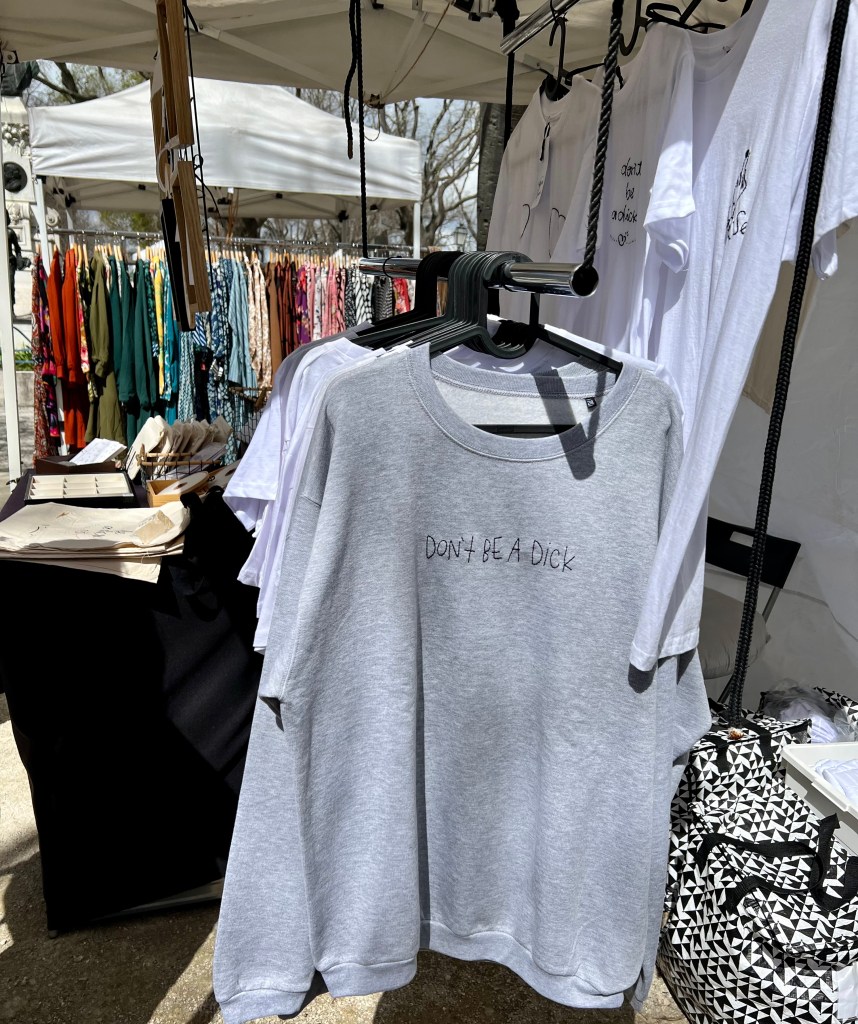
Sage advice

I may actually know where I’m going for a change as we make it back to the hotel without any problem. The newcomers gather their belongings from my room and head up to their respective rooms for a nap and a shower. Napping sounds like a plan so I have one as well before we meet for drinks and dinner. Originally we had thought to head to an Irish pub to celebrate the day but it’s a bit far afield so we grab something close by before calling it a night. 

Tomorrow is another day. Adventures await …
I’m not lost, I’m exploring- Portugal

Thursday March 16, 2023

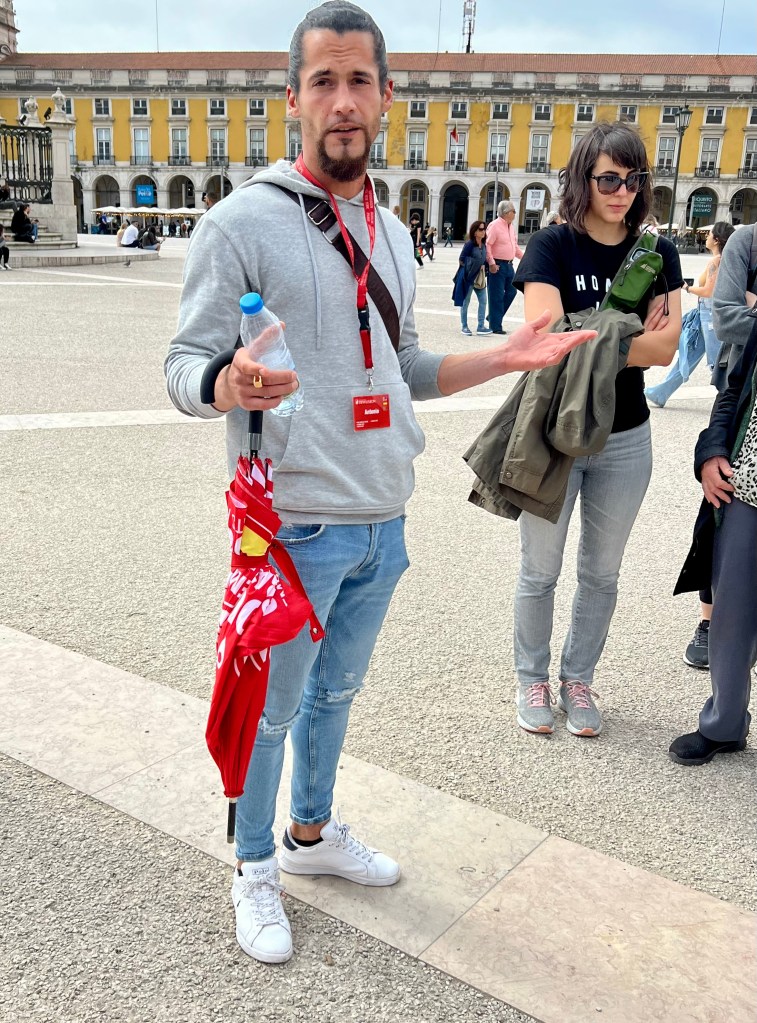
Today I’m going to do one of my favourite things in any new place that I visit; a free walking tour. For those of you that haven’t tried one, they are usually lead by an articulate and engaging local and they aren’t free really; they just don’t have a set upfront cost so you pay want you can based on your experience. I’m pretty sure that today’s guide Antonio is going to be great as he reached out via WhatsApp to make sure I knew how to find the starting point. Maybe he’s clairvoyant and knows how bad my sense of direction is generally. Anyway, I assure him I’ll be there and that I’m giving myself lots of time to get lost enroute. 

With only one stop to clarify directions, I make it to Camões Square in plenty of time to grab some water and sit on a bench in the sun. Antonio isn’t even there when I arrive it’s so early, lol! Soon enough António arrives and I check in along with 24 others that are heading out for a 2.5 hour walk to learn about the 3000 year history of Lisbon. 

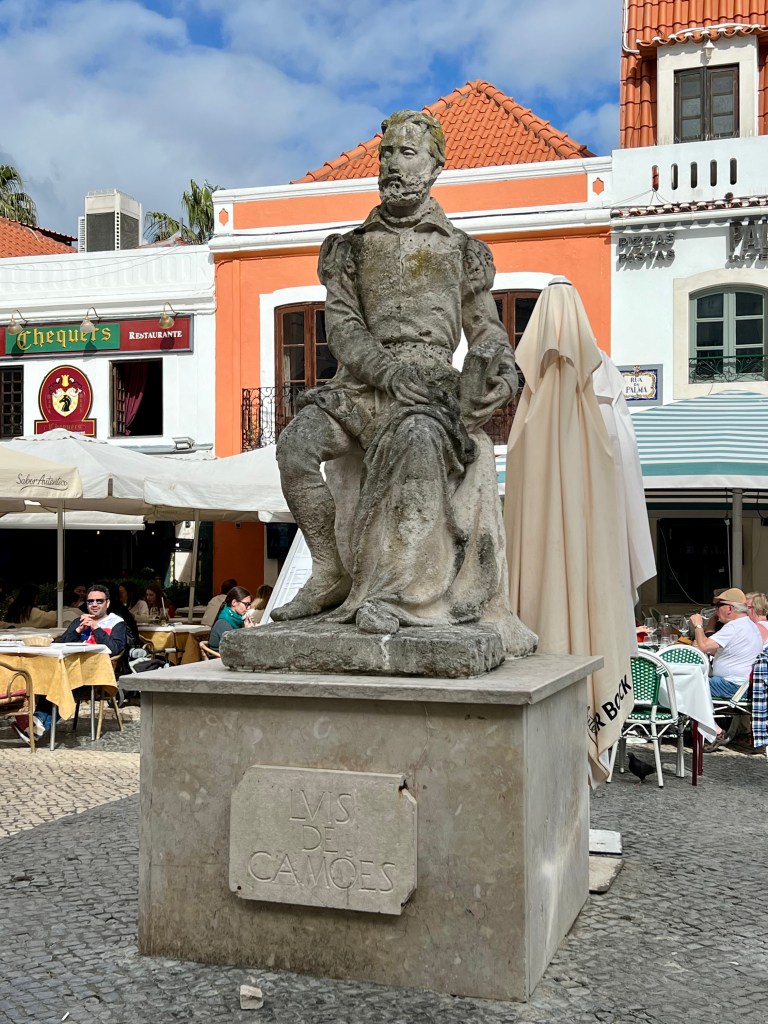
Our enlightenment starts in the center of the square with a statue of it’s namesake, the 16th-century epic poet Luis de Camões standing on a pedestal surrounded by smaller statues of classical Portuguese authors. According to Antonio, Camões was a bohemian who failed to pay his taxes. Back in the day, that meant going to prison for life but since he was a friend of the King he was given an option to sail to China and write a book about the journey. Needless to say, Luis opted to board a ship for the long journey to India. Eventually he made his way to Macau, a Portuguese colony, where he met the love of his life, Dinamene. When they were returning to Portugal, their ship was attacked by pirate and Camões was forced to choose between saving his love and the book he’d spent 15 years writing. As Antonio said, the book made it back to Portugal. So much for true love!

Luis de Camões

I’m not 100% sure of how much of this story is true but as the preeminent Portuguese writer, he is buried in a tomb in the Jerónimos Monastery in Belem. Maybe there’s more information there!!

Lisbon is known as the city of seven hills and as we leave the square, we’re headed up up up (my favourite – not!). 

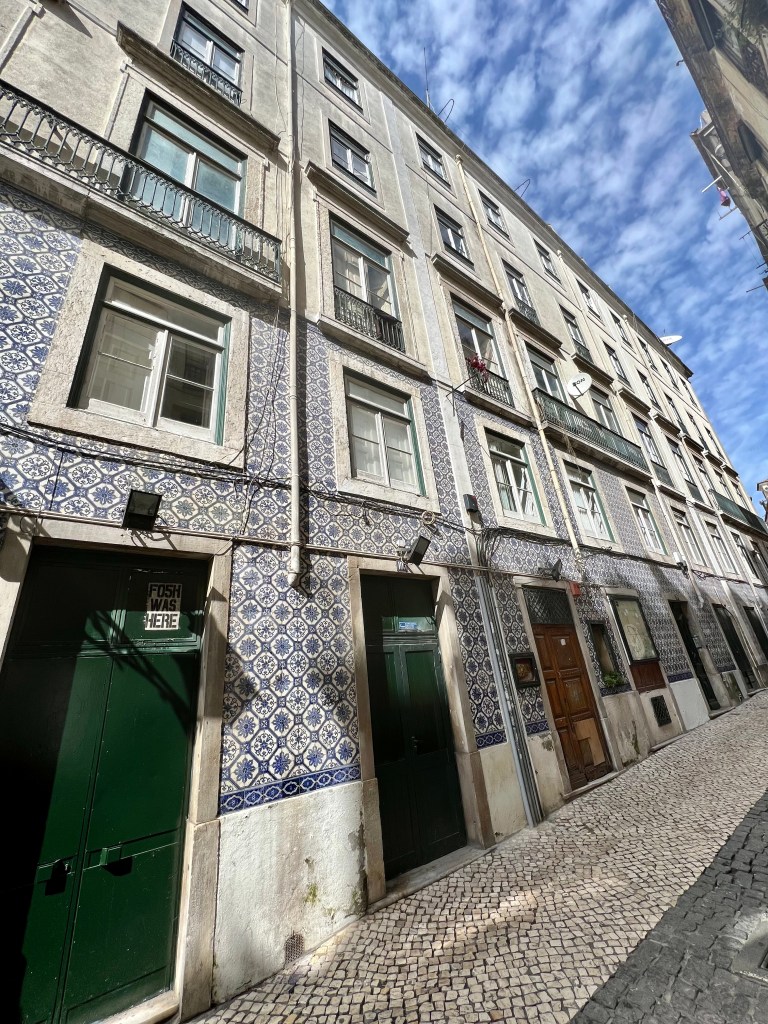
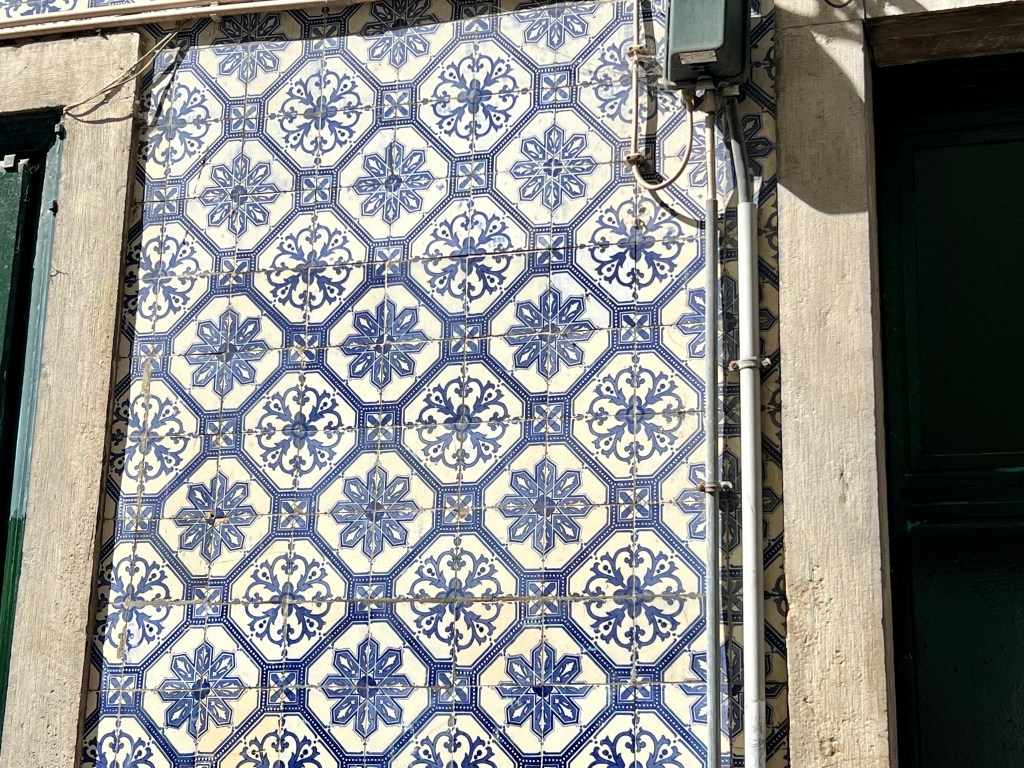
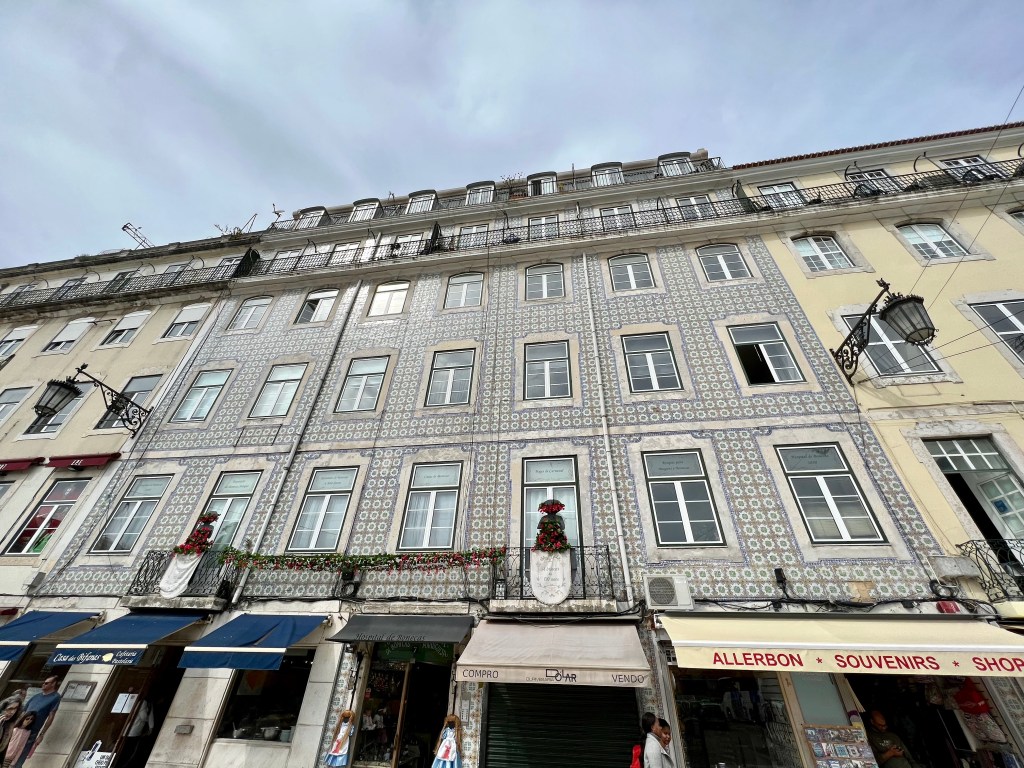
Our next stop is a building covered with tiles. Tiles are a huge part of Portuguese history and can be traced back to the time of the Moors. Moorish tiles were not allowed to feature creations of God so no plants or animals. Rather they are mainly geometric. Tiles are important as they are good insulators and can withstand the heat and sunshine lasting 200 years if not broken! 

Azulejos is the Portuguese word for tiles. Its origin is, of course, Arabic, and it means small polished stone. Initially, these tiles would be cut into geometric shapes and painted with very neutral tones. During the Age of Discoveries (from the 15th to the 18th centuries) blue and white were the predominant colours as they were  considered very fashionable probably as a result of Chinese and Dutch influences. In fact, until 1910 when Portugal became a republic, their flag was blue and white. 

Back to mountain climbing (lol), we continue up the hill to Miradouro de São Pedro de Alcântara; a garden with a panoramic view across the city to St George’s Castle and central Lisbon. 

The original castle was built by the Moors in the 8th century. However, it fell into ruin and was completely rebuilt by President Salazar in the 1940s on a low budget so Antonio calls it the fake castle and recommends giving it a miss! Instead, he suggests going to see the Pena Castle in Sintra, a UNESCO World Heritage Site. As luck would have it, I’m planning a tour with Francine and Alain on Saturday so stay tuned. 

Lisbon is second oldest capital in Europe after Athens and is 3000 years old the Phoenicians we’re here first in 6th century BC.  They were followed by the Iberian Celts (Lusitanians), then the Romans who built roads, bridges and provided the original laws, language and religion – Catholicism. After the Romans, Germanic tribes brought 200 years of efficiency, responsibility and being on time to Portugal. The Moors then ruled for 500 years and left behind music including fado and modified their language (All words with Al at beginning are Moorish). When the Moors were driven out of the Iberian peninsula there were many years of war trying to figure out the borders of Portugal with the five kingdoms of Spain who eventually joined together. The treaty of Zamora signed on October 5, 1143 recognized Portugal as a kingdom with its own monarch, Alfonso I.

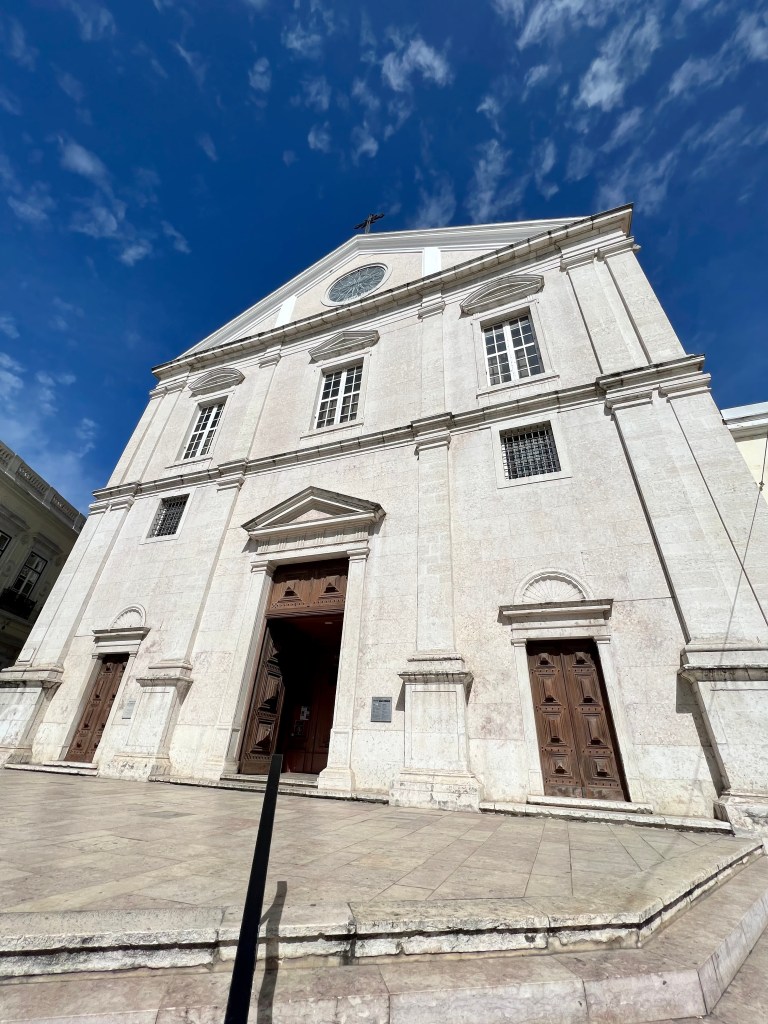
After our history lesson, we head downhill to our next stop, St Roch’s Church, built by the Jesuits in 1533 and the oldest Jesuit church in Lisbon. The austere facade doesn’t look like much but Antonio assures us that its sumptuous interior is richly decorated with marble, golden wood carvings, precious paintings, and traditional Portuguese  azulejos tiles. I’ll have to go back to check it out tomorrow! Apparently it is decorated with gold stolen from Brazil and if you have a Brazilian passport you can take a piece. That doesn’t sound likely but I’m not Brazilian so it doesn’t really matter, lol!

St Roch’s Church

Nearby is a statue of Padre António Vieira, a Jesuit missionary, orator, diplomat, and writer who played an active role in both Portuguese and Brazilian history. He was instrumental in protecting the Brazilian Indians from enslavement.

Padre António Vieira

Our next stop is Carmo Square to hear a bit about the Great Lisbon Earthquake on November 1, 1755 (All Saints Day). The quake was actually two separate quakes with the second estimated at a 9.0 on the Richter scale. The earthquakes, the subsequent fires and a huge tsunami pretty much destroyed Lisbon and decimated the population (75% were lost in under an hour). 

The royal family escaped unharmed from the catastrophe: King Joseph I and the court had left the city, after attending Mass at sunrise. After the catastrophe, Joseph I developed a fear of living within walls, and the court was accommodated in a huge complex of tents and pavilions in the hills of Ajuda and later on the outskirts of Lisbon. 

The prime minister Sebastião de Melo (1st Marquis of Pombal) also survived the earthquake and organized relief and rehabilitation efforts. He is also credited with building a new city with better protection against earthquakes; wider roads and earthquake “proof” designs. The city left the museum sans roof as a reminder of the earthquake.

Roofless Museum

While in the square, we we treated to the changing of the guard. It was very quick!

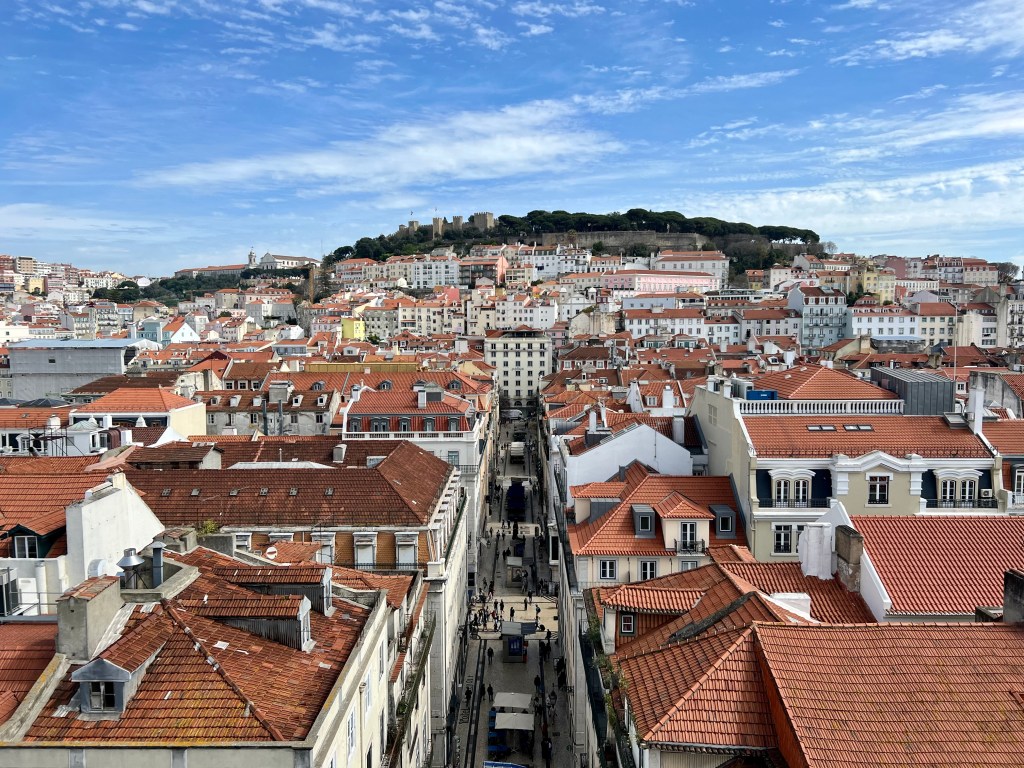
One of Antonio’s pet peeves is the city ripping off the tourists. He considers the Santa Justa Elevator to be the biggest rip off in Lisbon. People wait in a huge line and then pay 5€ to ride the elevator to the observation deck. Antonio took us there by a back way and we access the observation deck quickly and for free – score!

View from Observation Deck
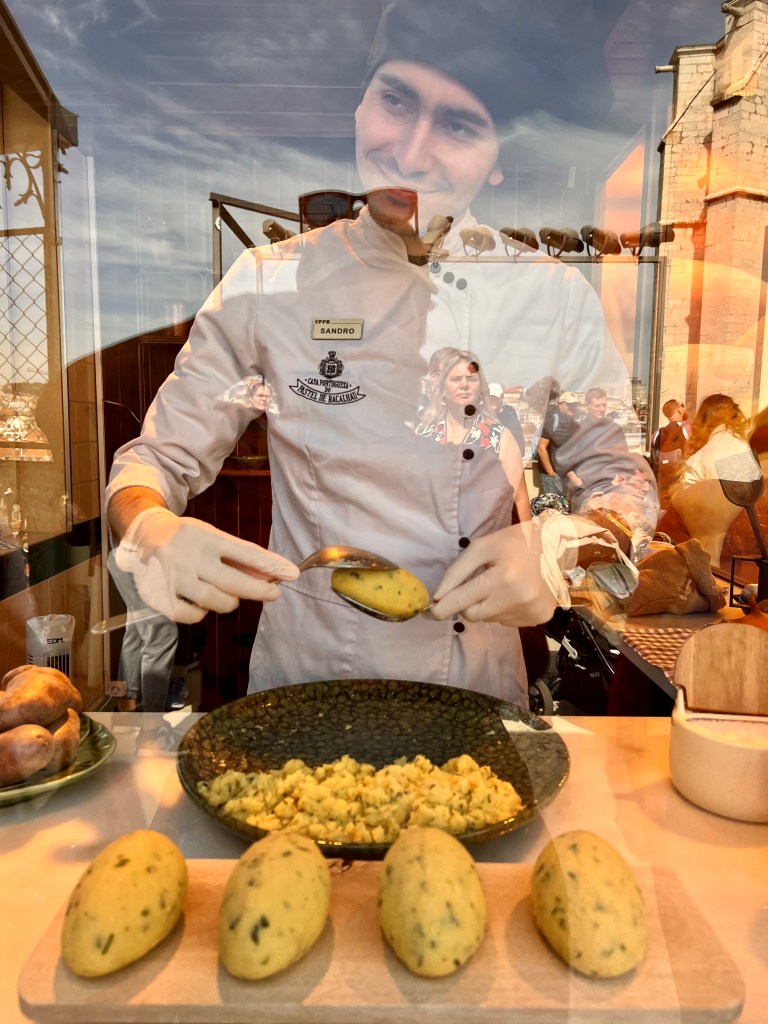
Making Pastéis de Bacalhau com Queijo (cheesed-stuffed fish cakes)

In contrast to the tourist traps, Antonio gave us his must do list:

Lisbon Cathedral – Sé de Lisboa

Alfama district for the best (illegal) ginja and (legal) fado

Belém for the 16th-century Tower of Belém, sail-shaped Discoveries Monument, the vast Gothic Jerónimos Monastery and the popular Pastéis de Belém patisserie famed for its custard tarts.

Sintra for Pena Castle especially the magnificent gardens. 

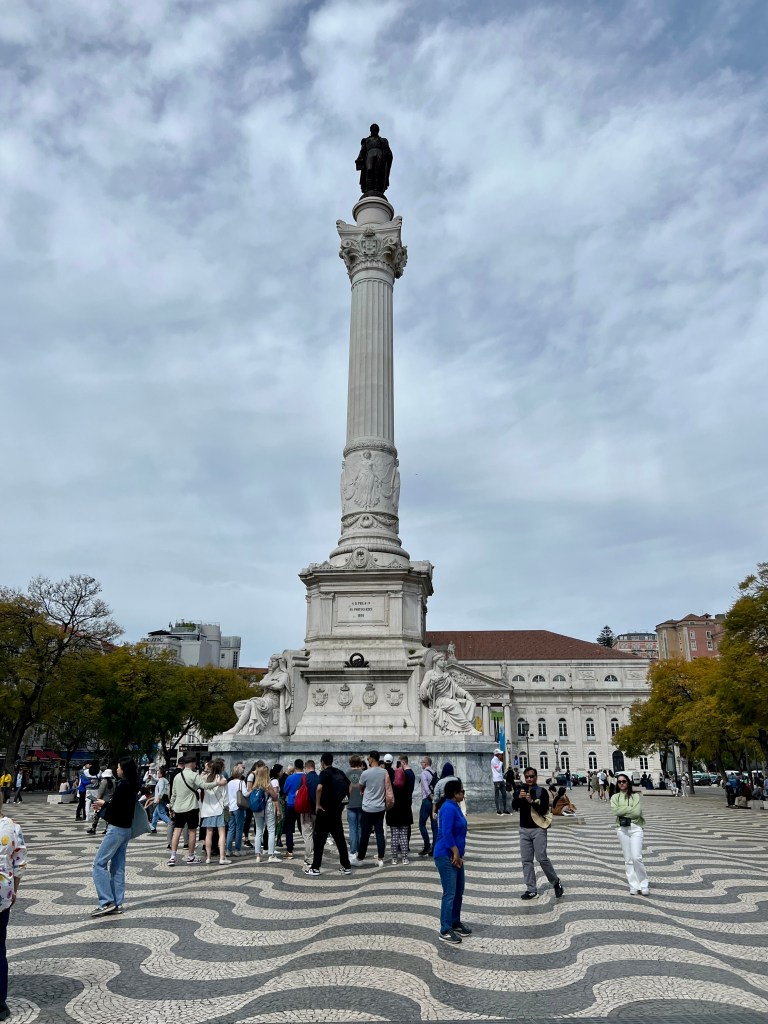
Next stop on our tour is Rossio Square aka Peter IVth Square. Here Antonio told us a very amusing tale about the figure of Peter IVth atop the column. According to Antonio, the figure originally represented Maximilian Emperor of Mexico appointed by Napoleon. Maximillian was assassinated before the figure was sent and the Mexicans told them to keep it. Though Maximillian and Peter looked nothing alike, the figures is atop a very tall column so no one thought it would matter. God knows if that’s true but it is funny!

Our next stop is Praça da Figueira, regarded as the third square of the Baixa district. Here we find a bronze statue of King John I on the right hand corner giving him a view of the Augusta Arch and the harbour. 

John 1

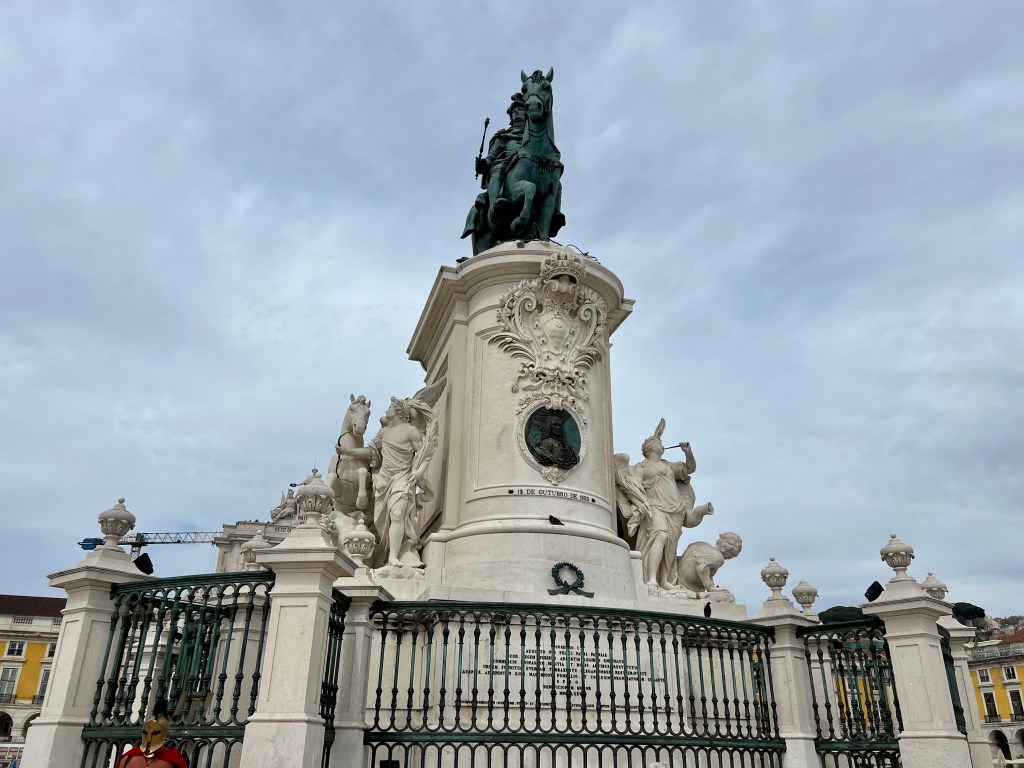
The Augusta Arch is a stone, memorial arch-like, historical building and visitor attraction on the Praça do Comércio. It was built to commemorate the city’s reconstruction after the 1755 earthquake. It has six columns and is adorned with statues of various historical figures. 

Augusta Arch

The arch faces the Praça do Comércio and features a statue of King Joseph I facing the harbour with his back to the city. The king is on horseback with snakes surrounding his feet symbolically crushing them. 

This square was the site of the assassination of the second last king of Portugal by two members of the Republican Party which overthrew the monarchy two years later. 

It’s here that we bid adieu to our guide Antonio and head off to explore (or recover) on our own!

Antonio

Tomorrow is another day. Adventures await …
I’m not lost; I’m exploring- Portugal

Wednesday March 15, 2023

For my first full day in Portugal, I’ve opted for a tour to Fátima, Batalha, Nazaré and Óbidos with Around Lisbon. Our guide, Nuno, picks me up in front of my hotel and we set off to gather the other six folks that have signed up for this adventure (3 from USA and 3 from Croatia) before heading North. 

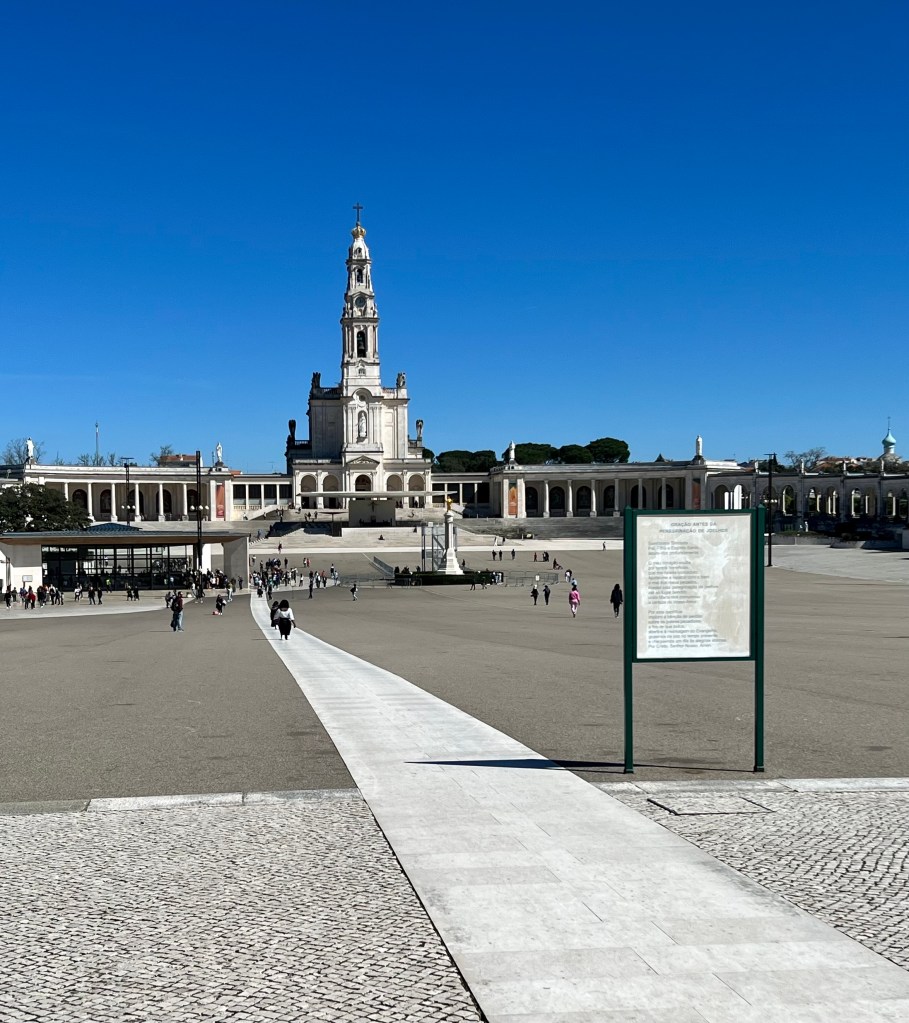
Our first stop is Fatima, home to the Sanctuary of Fátima, a Catholic pilgrimage site visited by 6-8 million pilgrims per year. 

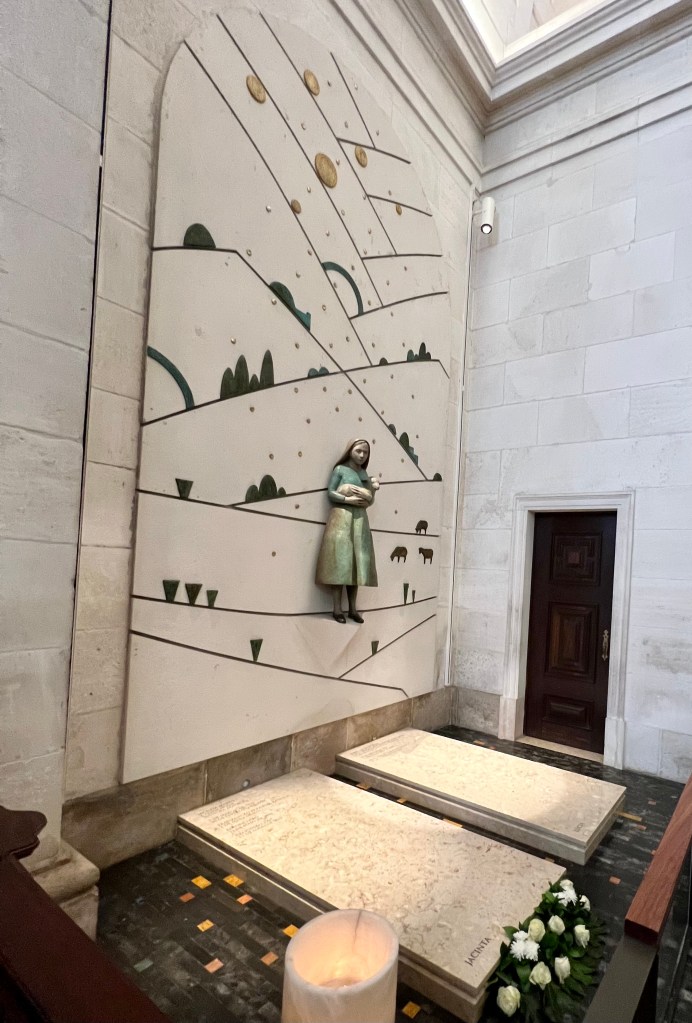
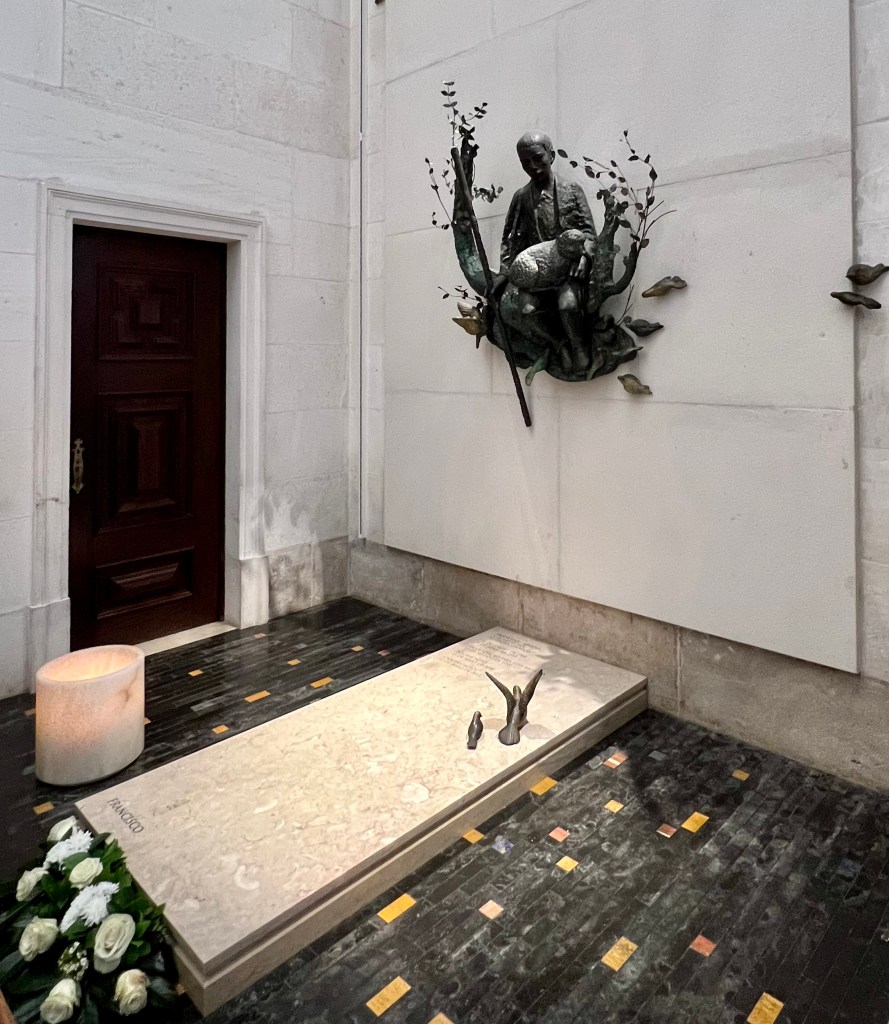
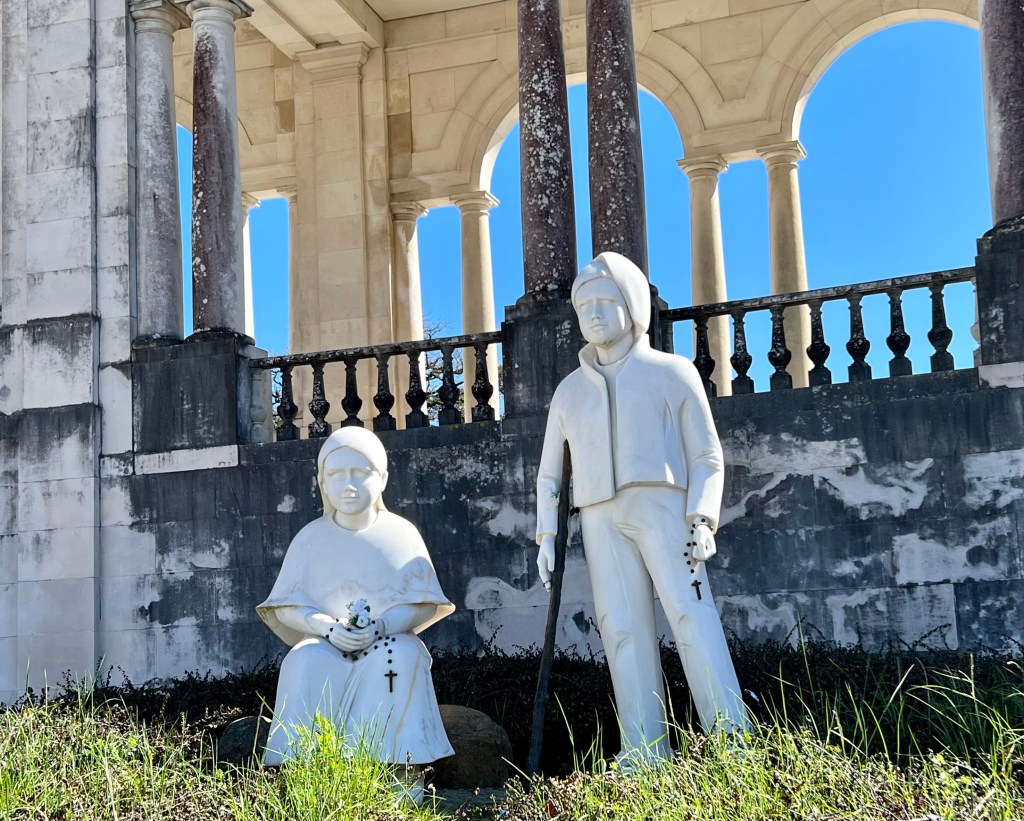
In 1917, three local shepherd children, children, Lúcia dos Santos and her cousins, Francisco and Jacinta Marto saw a woman known as Our Lady of Fatima (believed to be the Virgin Mary) while guarding their families’ sheep. They first saw the lady dressed in white and shining with a bright light on May 13, 1917 and the sixth and last sighting was on October 13th of that year with over 70,000 witnesses. 

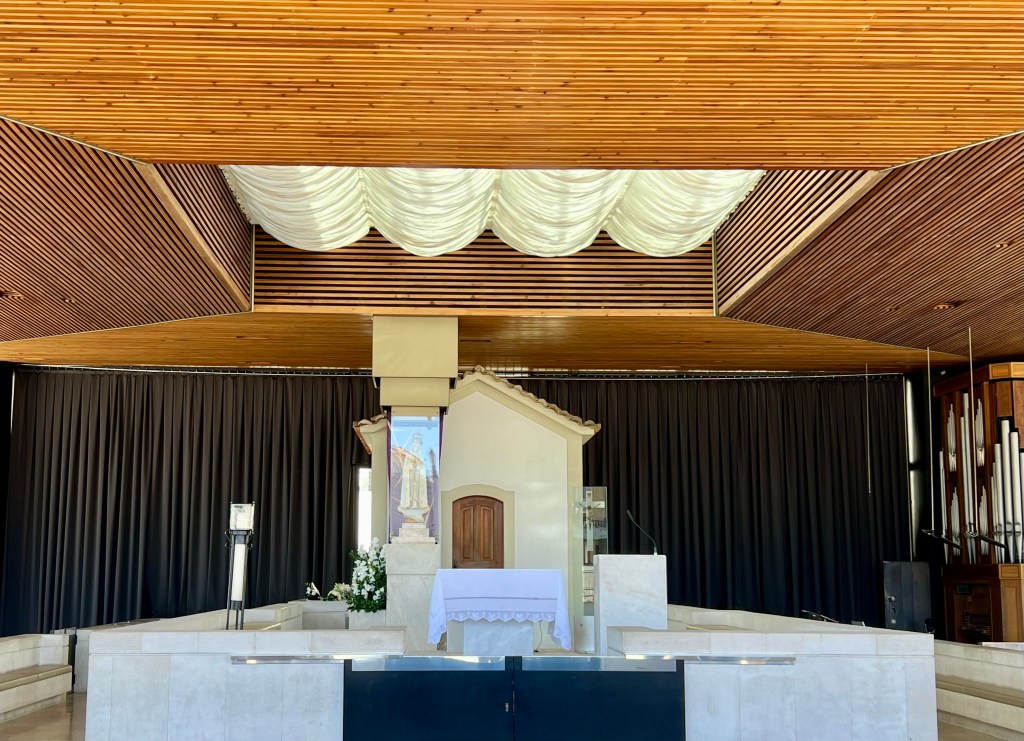
The site was marked by a cross erected by locals and in 1918 they built a small chapel of rock and limestone covered in tile. The exact spot of the apparitions is marked by a marble pillar on which the statue of the Virgin Mary is placed. 

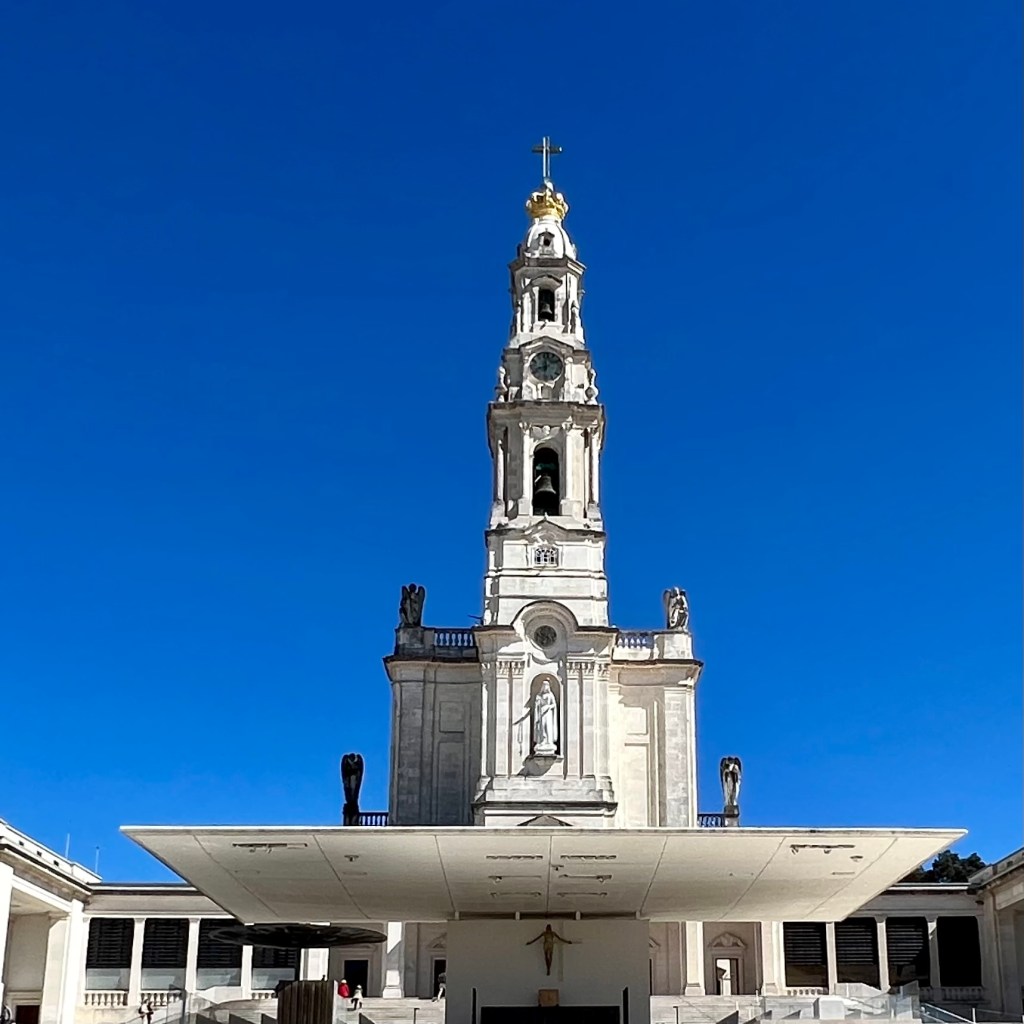
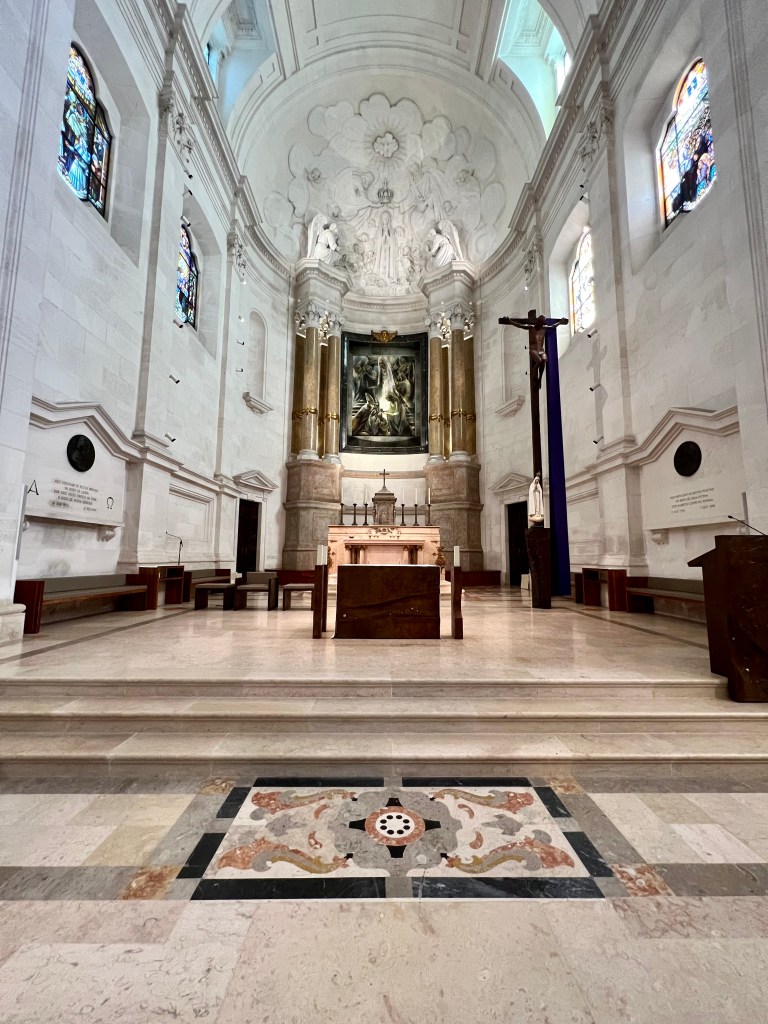
The chapel has since been enclosed within the embrace of the Basilica of Our Lady of the Rosary (consecrated in 1953). In addition to fifteen altars dedicated to the 15 mysteries of the rosary, the tombs of the three children who first saw the Lady of Fatima (Francisco died in 1919 and Jacinta in 1920, during the Spanish Flu pandemic. Lucia dos Santos became a nun and lived until 2005) are in the Basilica. 

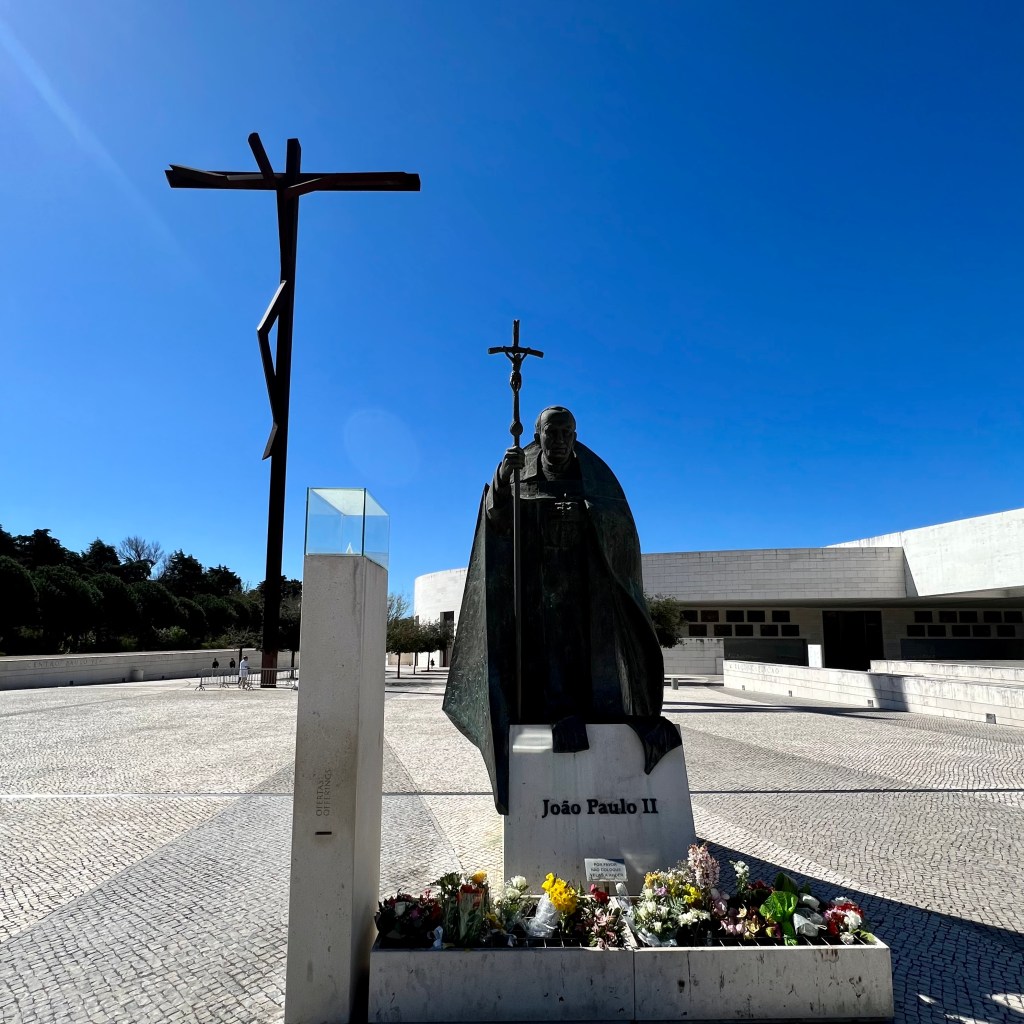
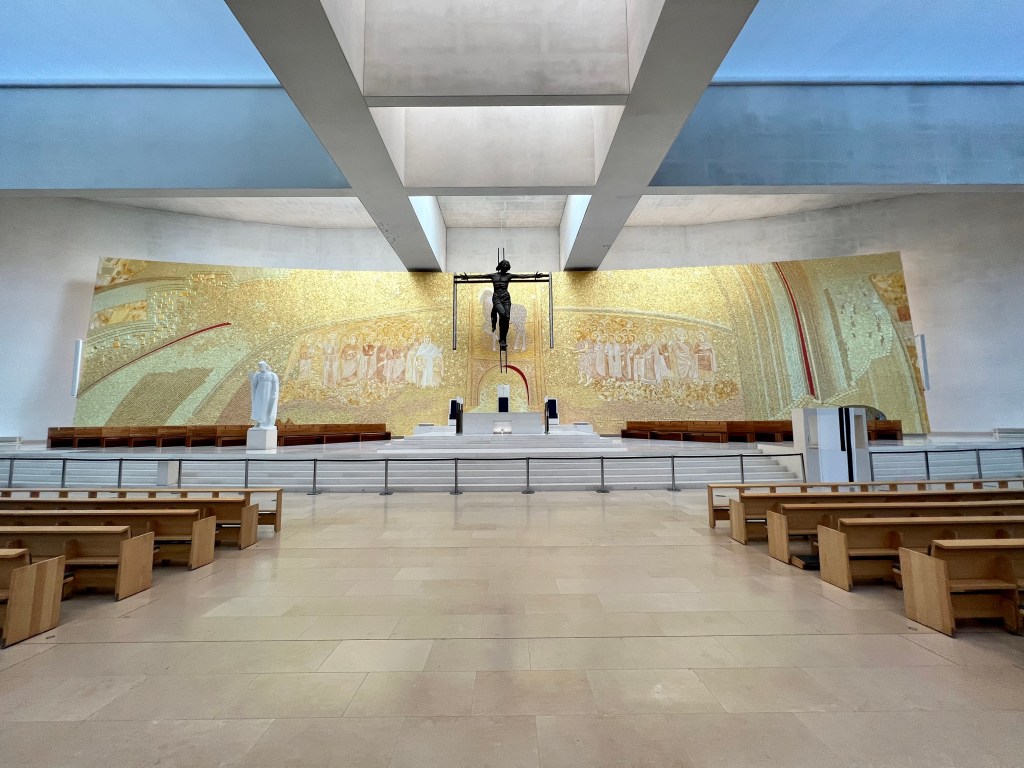
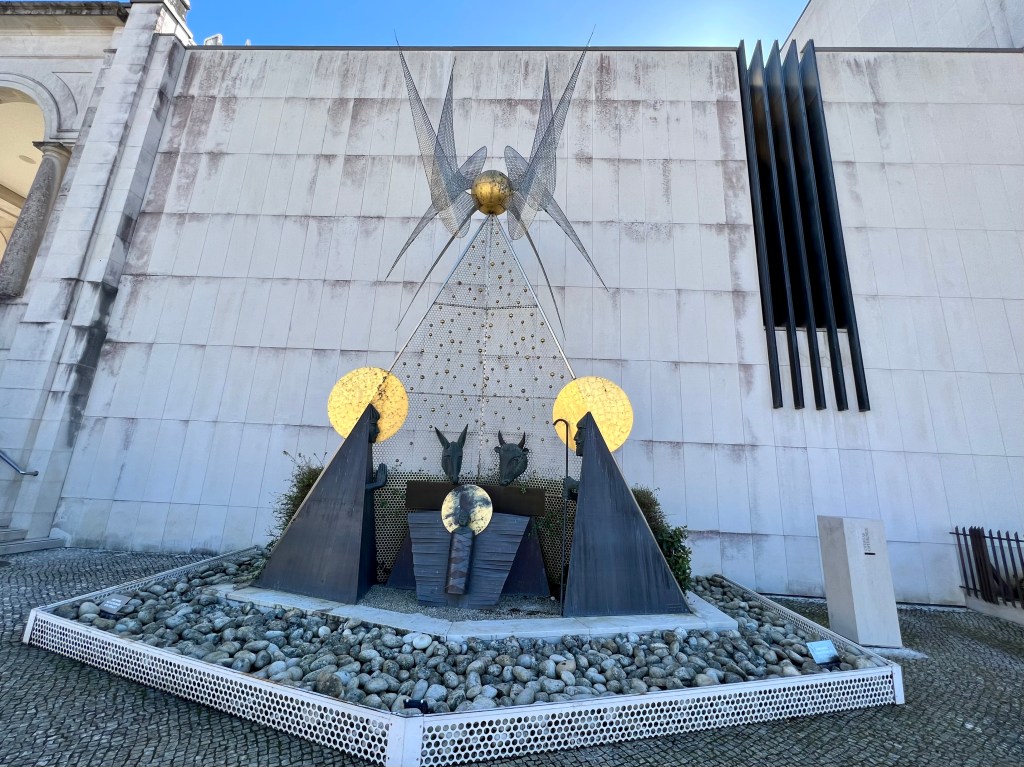
On the opposite side of the Prayer Hall stands the Basilica of the Most Holy Trinity which has seating for more than 8000. The High Cross in the Square of John Paul II is in front of the Basilica of the Most Holy Trinity as is a statue of the Pope. 

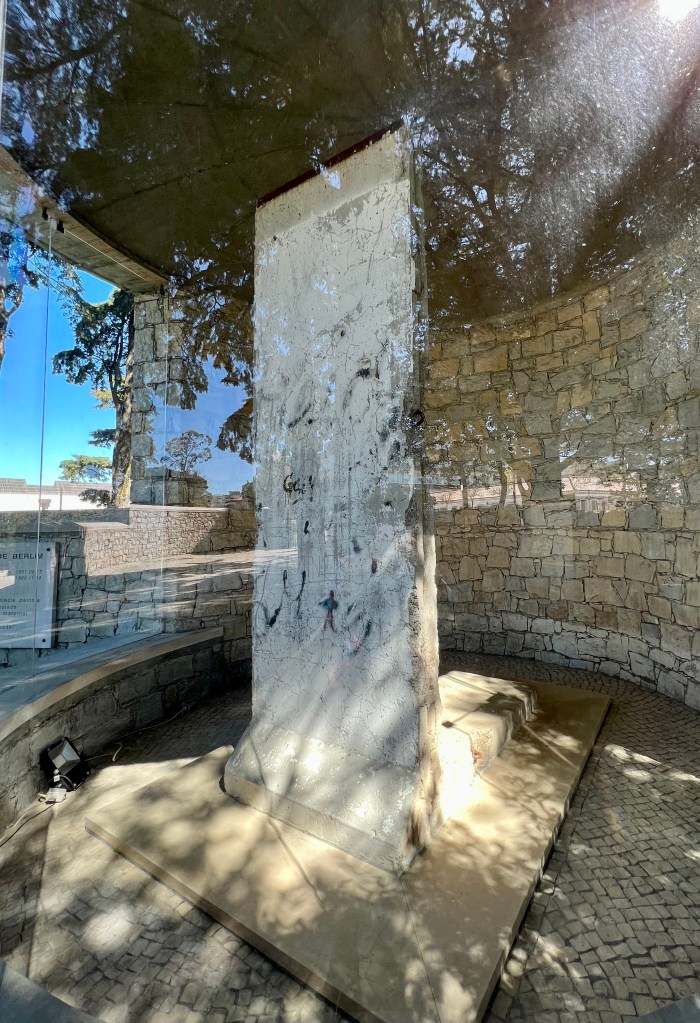
These buildings along with numerous others, including a piece of the Berlin Wall make up the Santuário de Fátima. 

Pilgrims who walk to Fátima to thank God for favours often “walk” the last 400 metres to the Chapel on their knees. 

Having spent a bit of time exploring Fátima, it’s back in the van and off to our next stop; Batalha. 

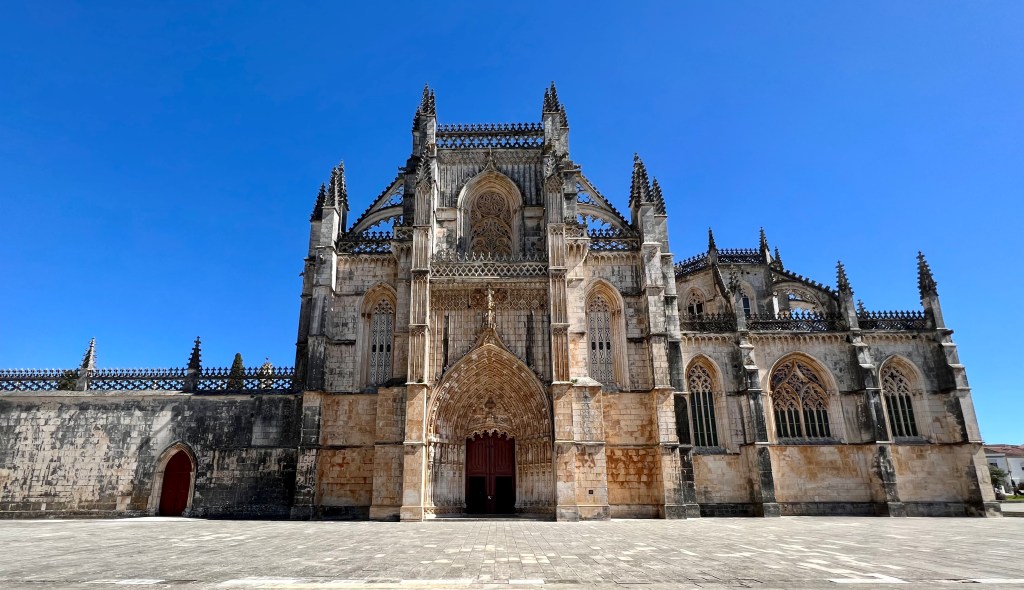
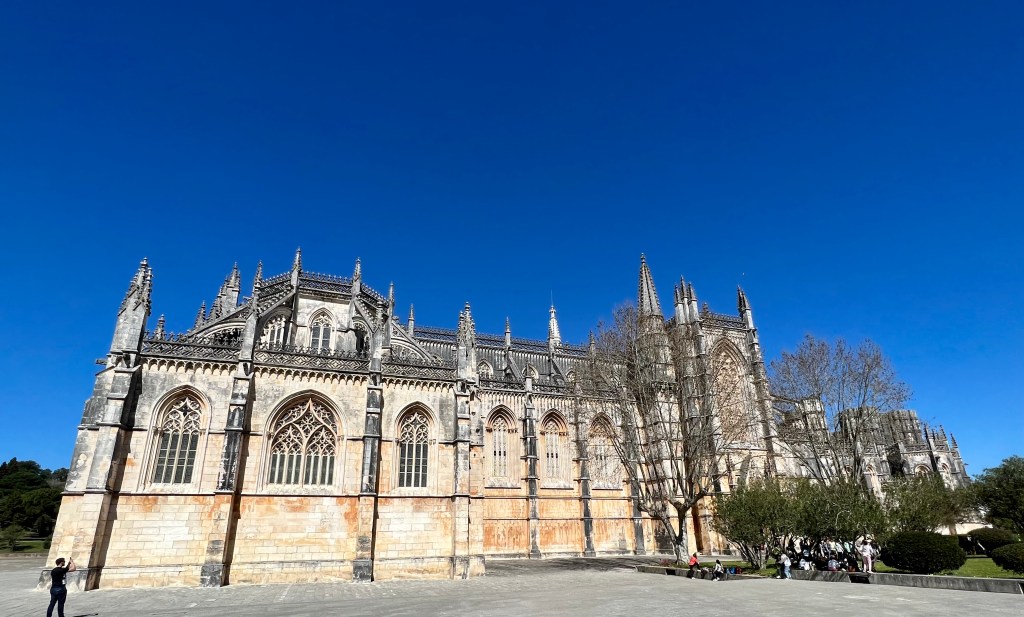
Sticking with our religious theme, we are going to visit the Monastery of the Dominicans of Batalha. The Monastery of Saint Mary of the Victory was built to thank the Virgin Mary for the Portuguese victory over the Castilians at the battle of Aljubarrota in 1385, fulfilling a promise of King João (John) I of Portugal. The Monastery is a masterpiece of Portuguese architecture, and is one of the most visited monuments in Portugal. The Monastery took over a century to build, starting in 1386 and ending around 1517, spanning the reign of seven kings. It was not quite completed as other projects in Lisbon eventually took priority. 

The equestrian statue of General Nuno Ávares Pereira who lead the troops to win the victory over the Spanish is in the square facing the western façade of the Monastery of Saint Mary of the Victory.

A soldier and strategist in the Battle of Aljubarrota, General Pereira practised as a simple brother in the Carmelite community at the Carmo Convent in Lisbon. He was canonised by Pope Benedict XVI in April 2009 and since then has been known as Saint Nuno of Saint Mary.

On the right side of the western façade are the Unfinished Chapels (Capelas Imperfeitas), a separate octagonal structure added to the complex which doesn’t have a roof. 

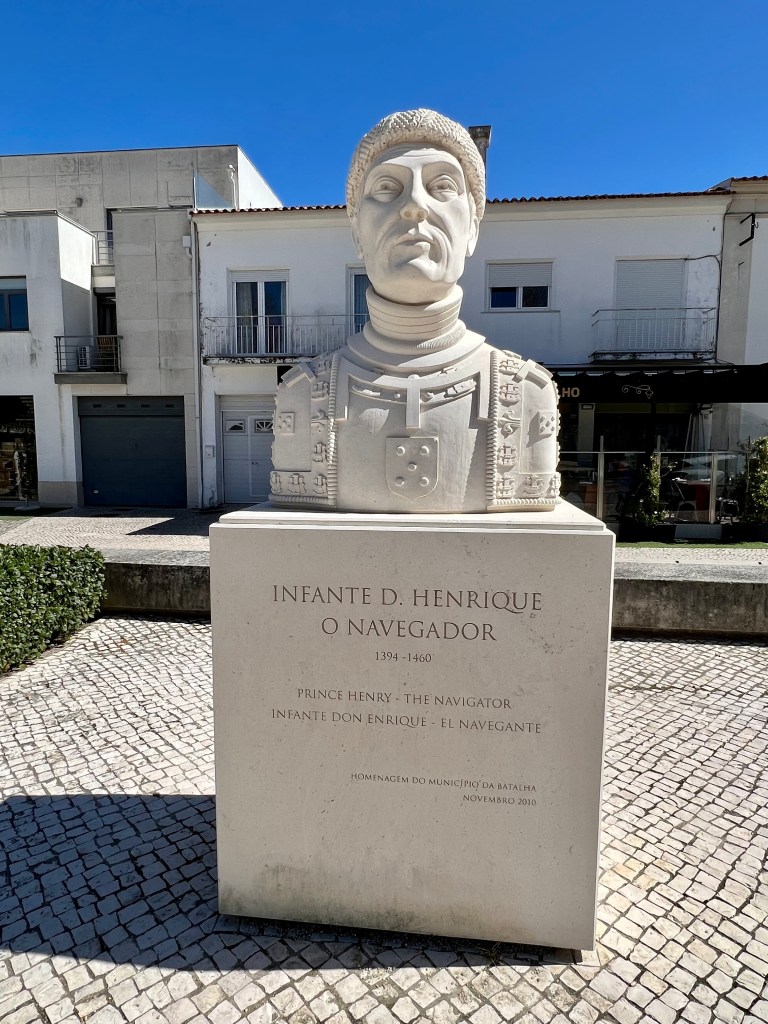
Behind the Monastery is Infante D. Henrique Square. Few historical figures have marked Portugal, so deeply and in such a radical and transformative way as Infante D. Henrique (1394-1460). He was the fifth son of King John I, the founder of the Aviz dynasty, with Queen Filipa of Lencastre. 

Prince Henry, also known as “The Navigator”, was one of the major figures in the Portuguese maritime discoveries and left Portugal and the world with a huge legacy. He died in Sagres and his remains lie in the Founder’s Chapel at the monastery. 

After a quick look around the church and grounds, we headed back to the van for the next leg of the journey to Nazaré. 

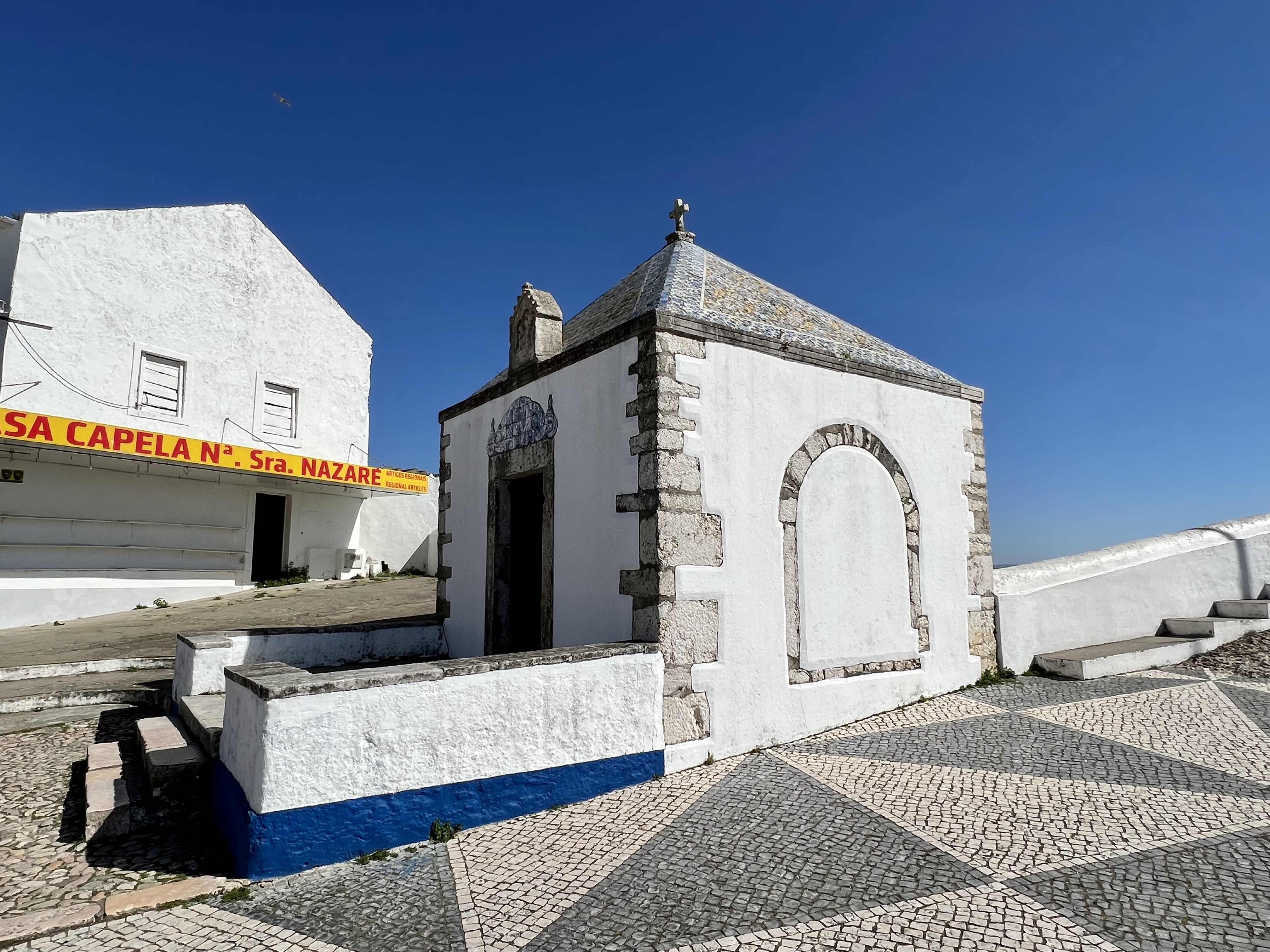
According to legend, a carving of the Virgin Mary breastfeeding Jesus sculpted by Saint Joseph was spirited away from souther Spain by Roderic, the last King of the Visigoths in 714 to keep it out of the hands of the Moors. King Roderic was accompanied by a monk on this journey. The monk died in Nazaré and was buried in a cave on the hillside there with the statue. Thus hidden, the statue was preserved during centuries of Muslim rule. 

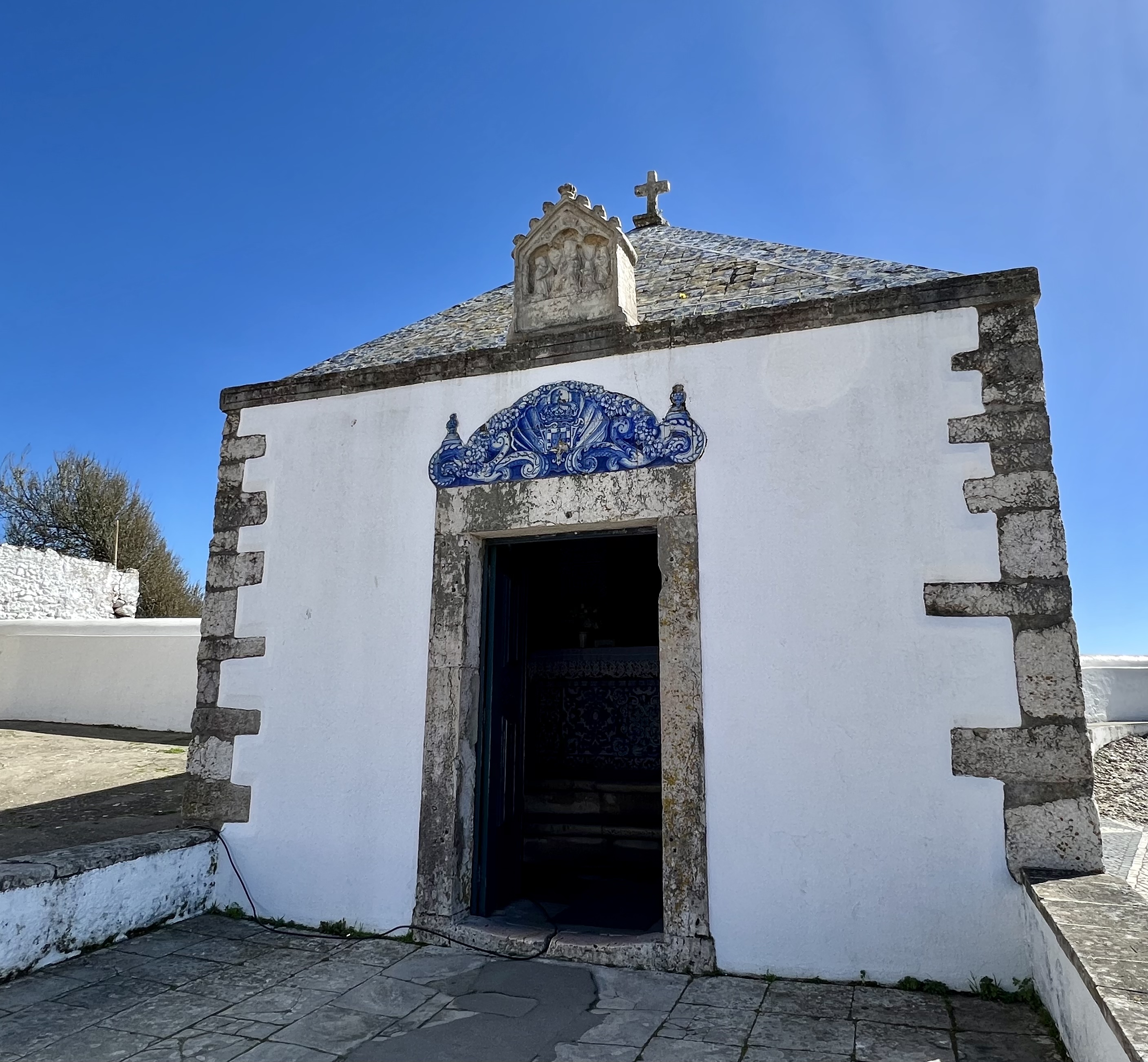
The statue was found in a cave in 1179. Memory Hermitage also known as the Chapel of Our Lady of Nazaré was built, directly above the cave where the statue was found, by the order of the knight Dom Fuas Roughing in 1182 after Our Lady of Nazaré saved him from falling off the cliff when he was chasing a deer.

The small four-sided chapel is decorated with blue and white tiles and has a pyramidal roof.

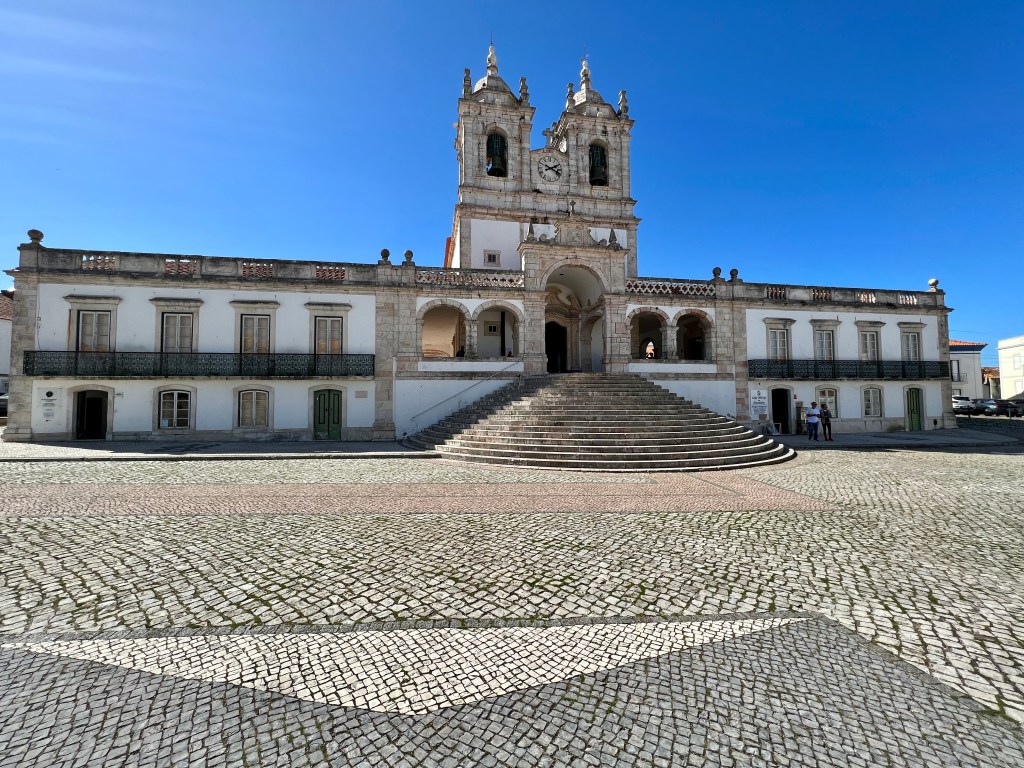
When King Ferdinand went on a pilgrimage to Our Lady of Nazaré in the 14th century, he ordered that a church be built in Nazaré to receive a higher number of devotees of the Lady.

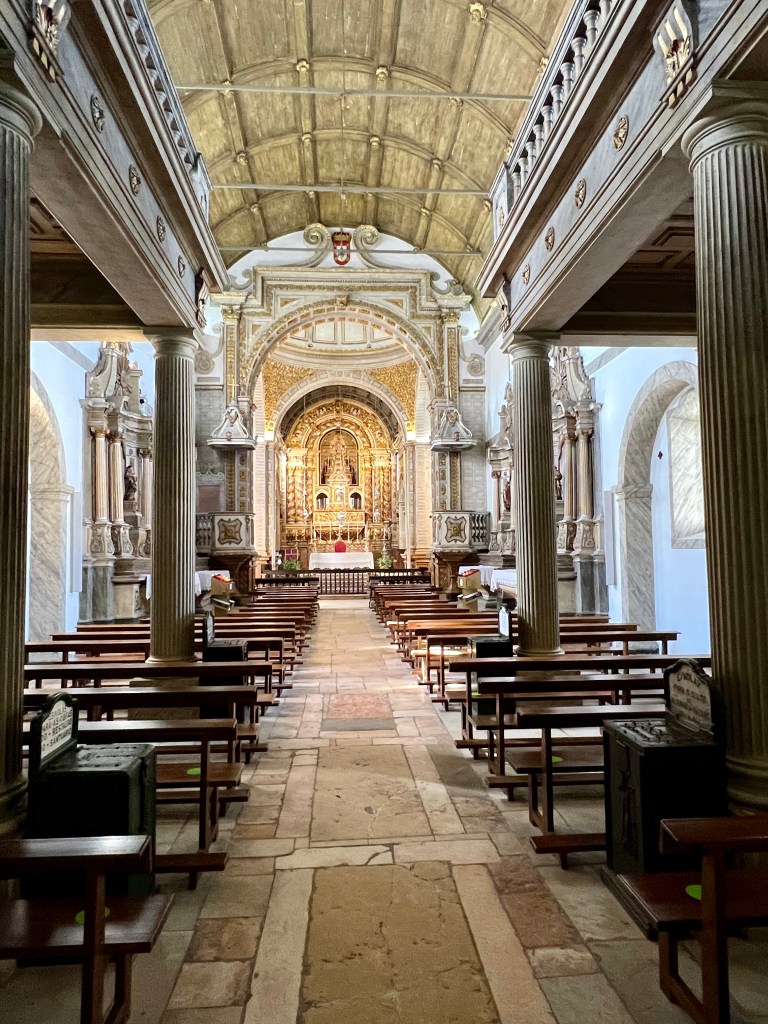
The Sanctuary of Our Lady of Nazaré memorializes that ancient miracle and now houses the Lady as well. As luck would have it, the statue was at the “spa” for repairs today so was not on display in the church.

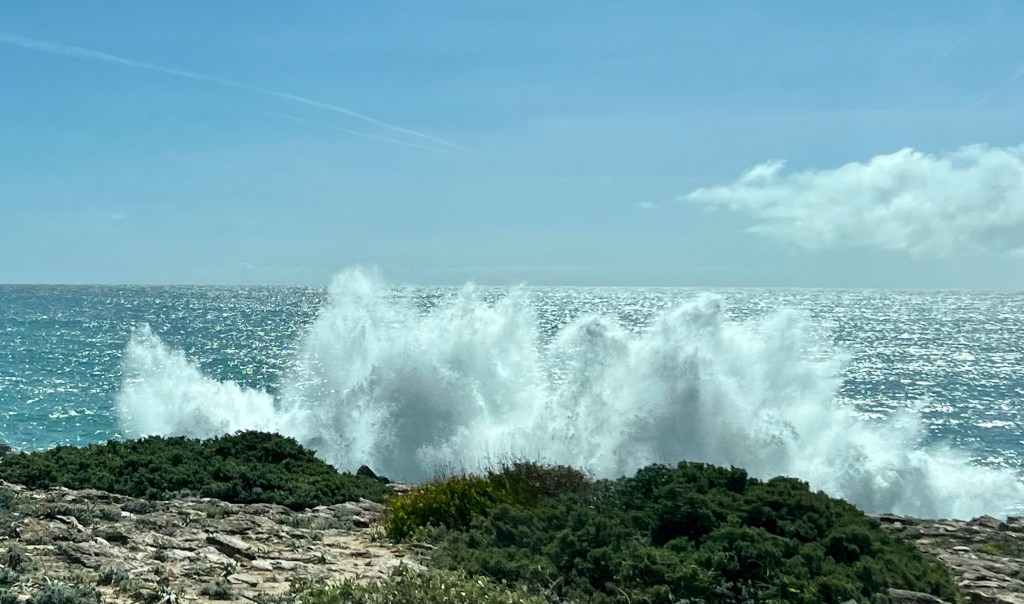
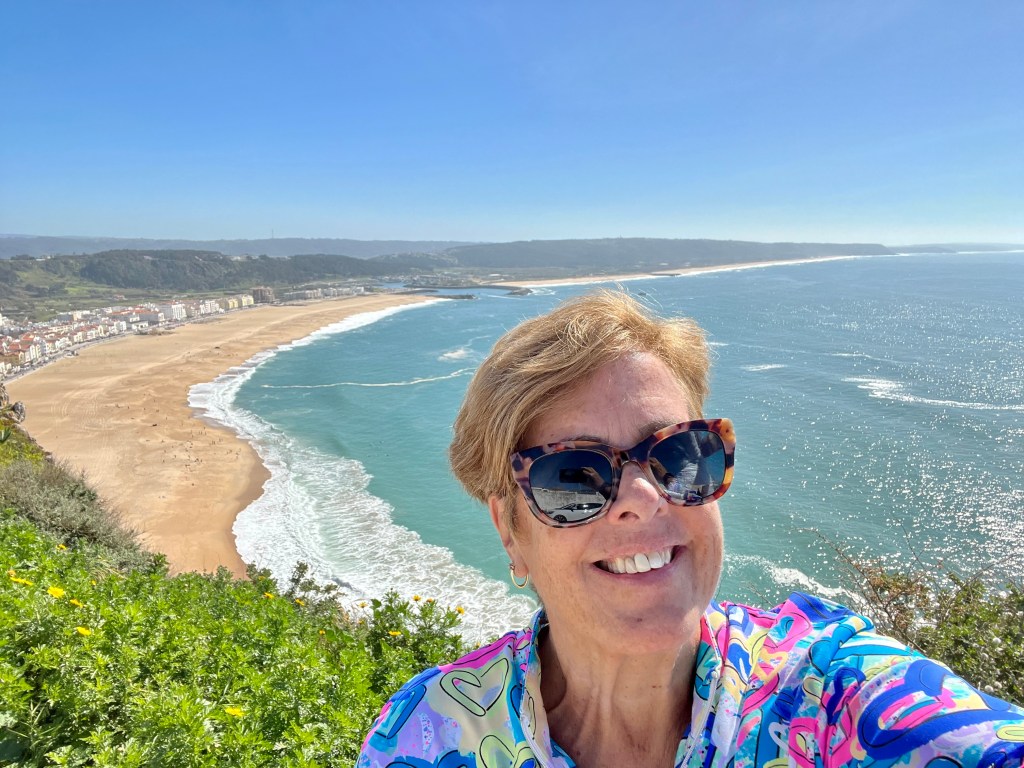
In addition to being the site of a miracle, Nazaré is also home to gigantic 100 meter waves that professional tow surfers love to frequent; another form of religion! While the view of the ocean from the cliff top was spectacular no behemoth waves graced the horizon today. 

The view from the cliff

Nazaré was our lunch stop so I grabbed a quick bite and hung out in the town square until it was time to head to our next and last stop; Óbidos. 

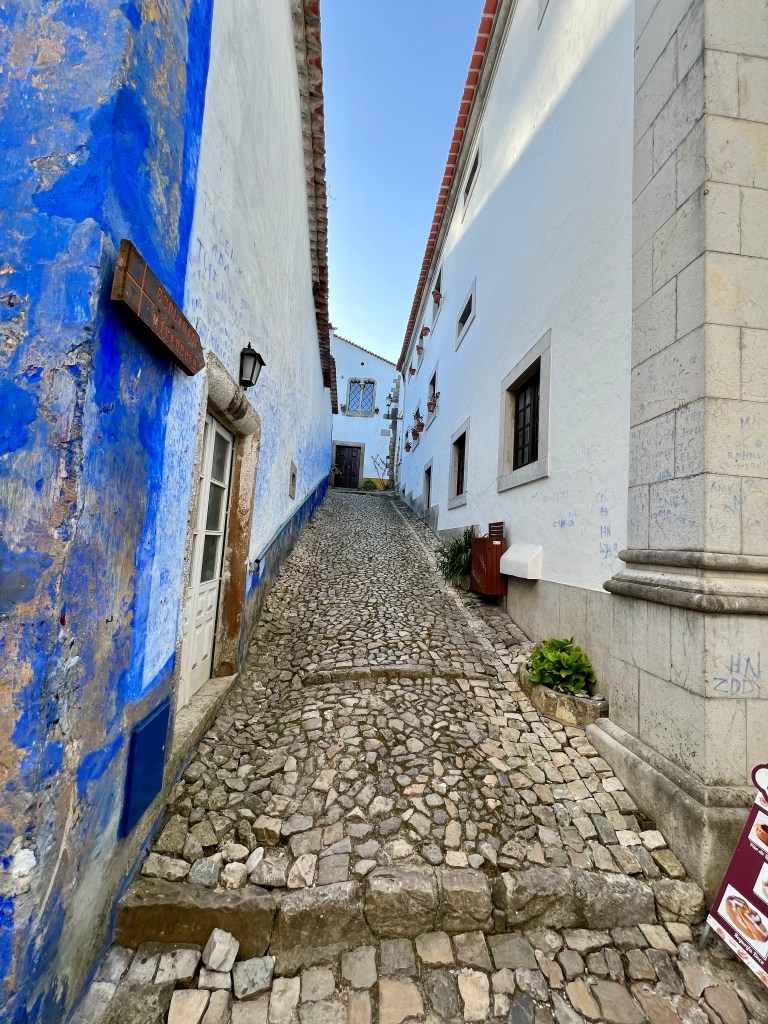
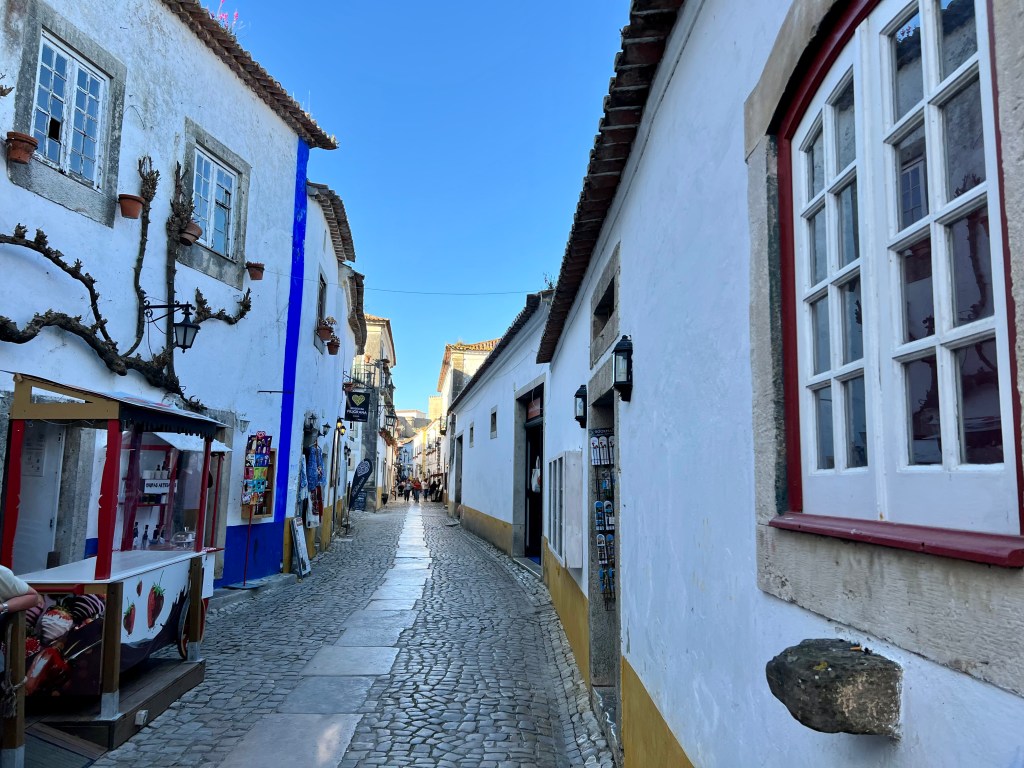
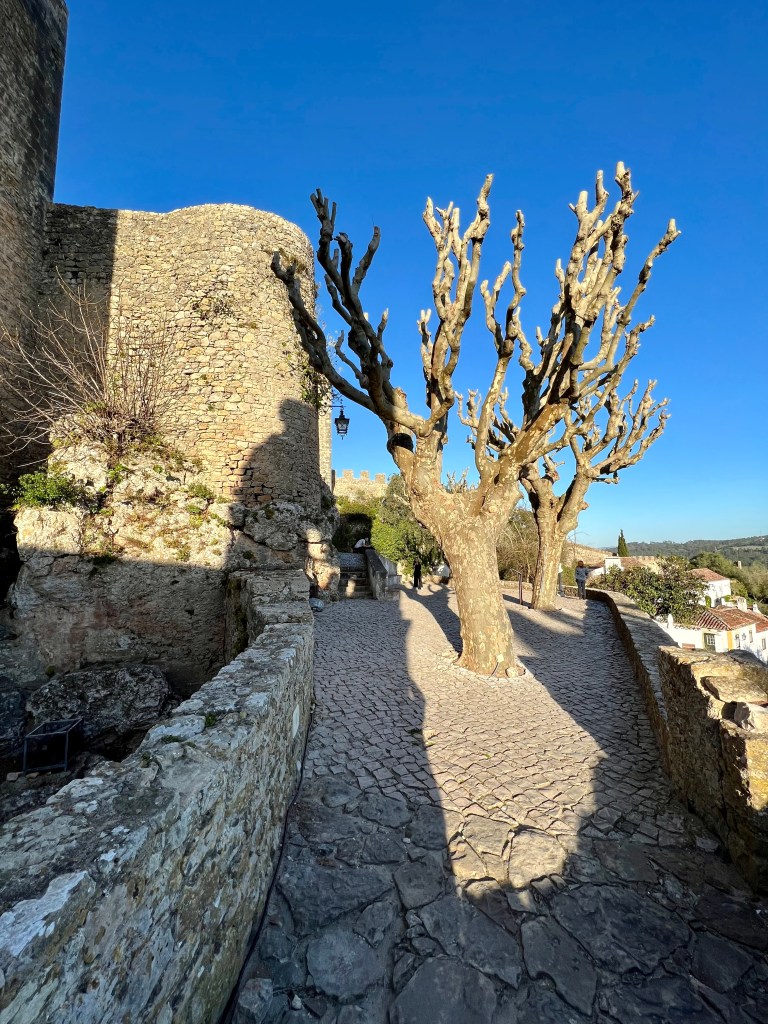
The town of Óbidos is located on a hilltop, encircled by a fortified wall. Óbidos is a well-preserved example of medieval architecture; its cobbled stone streets are lined with traditional houses converted to cute shops and at the end of the road is an impressive medieval castle which is now a historic hotel – pousada. 

Historically, Óbidos was owned by the Queen of Portugal, a tradition that began in 1282 when the town was gifted to Queen Isabel on her wedding day and she made all decisions regarding the town; a rarity in that age. 

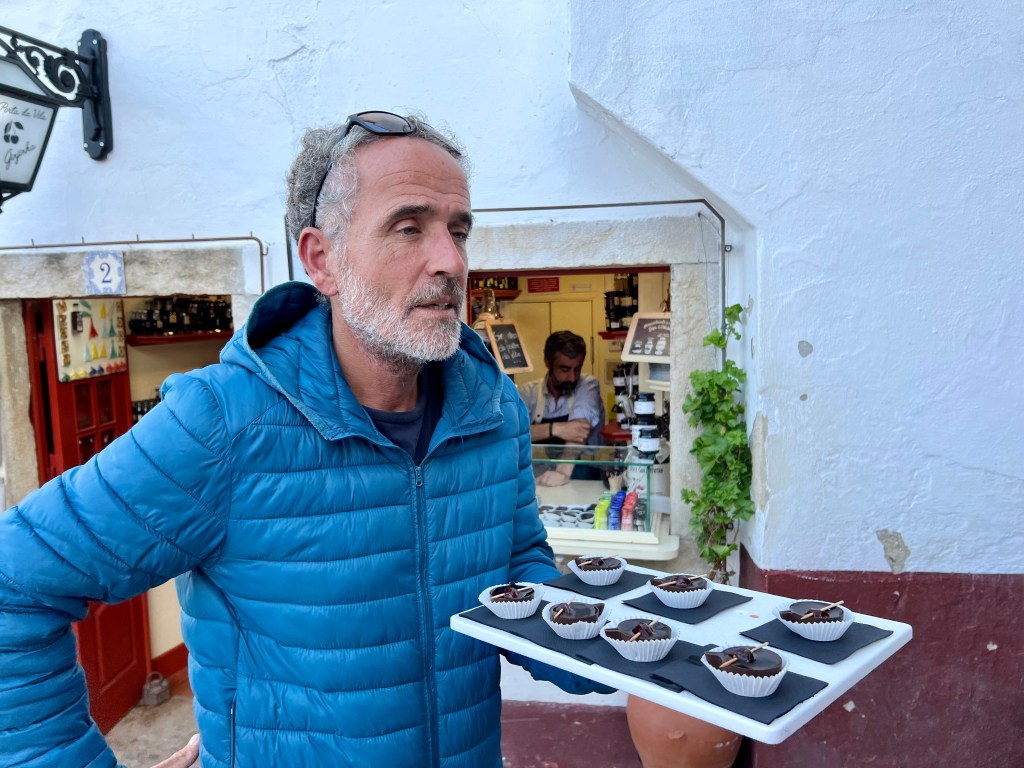
One of our first orders of business in Óbidos was to sample the local drink – Ginjinha or simply Ginja; a Portuguese liquor made from infusing Ginja berries (sour cherries) in alcohol with sugar. Our Ginjinha was served in a chocolate cup with a sour cherry garnish ; strong and yummy.

Nuno with our Ginja

Fortified, I explored the town for a bit before heading back to the van for the drive home.

After a full day of touring, I was happy to relax for a bit before crashing for the night. Tomorrow is another day. Adventures await …