
September 7, 2022
Today we have a very full day of travel as it’s quite a distance to Sarajevo and we’ll need to clear customs and immigration to exit Serbia and again when we enter Bosnia & Herzegovina en route. After a quick breakfast, we boarded a very luxurious bus with a full seat per person and lots of room for luggage. It was nice to be able to stretch out and do whatever we wanted over the course of a long travel day.
We reached the frontier after the requisite rest stop and a last chance to spend Serbian money. Both border crossings were fairly painless; really just another stamp in the passport!
Soon after crossing into Bosnia we stopped at a fairly swish hotel on the banks of the Drina River with beautiful sweeping vistas of the river valley from the patio out back. I had a lovely steak salad for lunch with a nice glass of rosé and some bubbly water before hopping back on the bus for the remainder of our journey to Sarajevo.
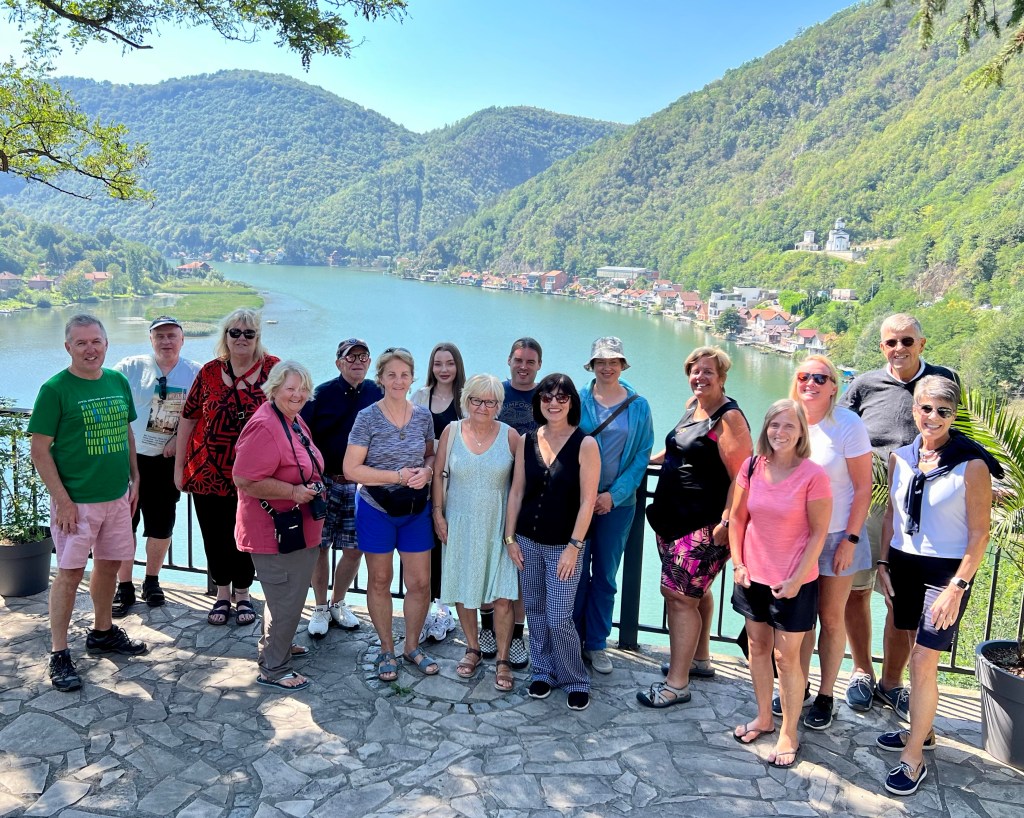
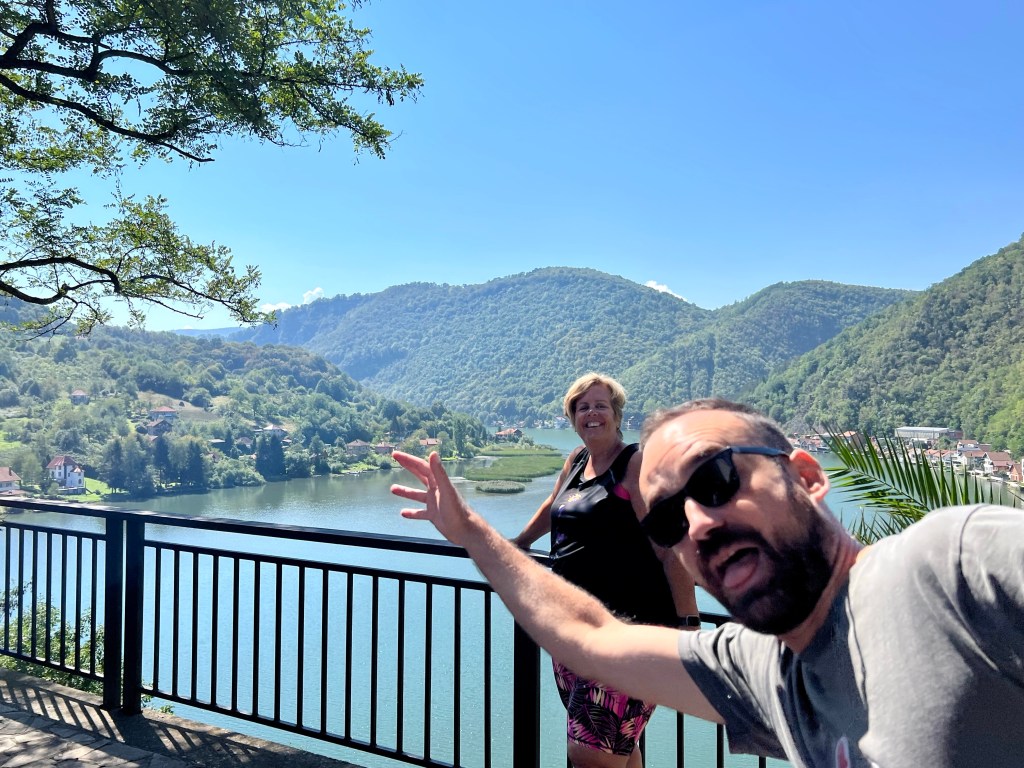
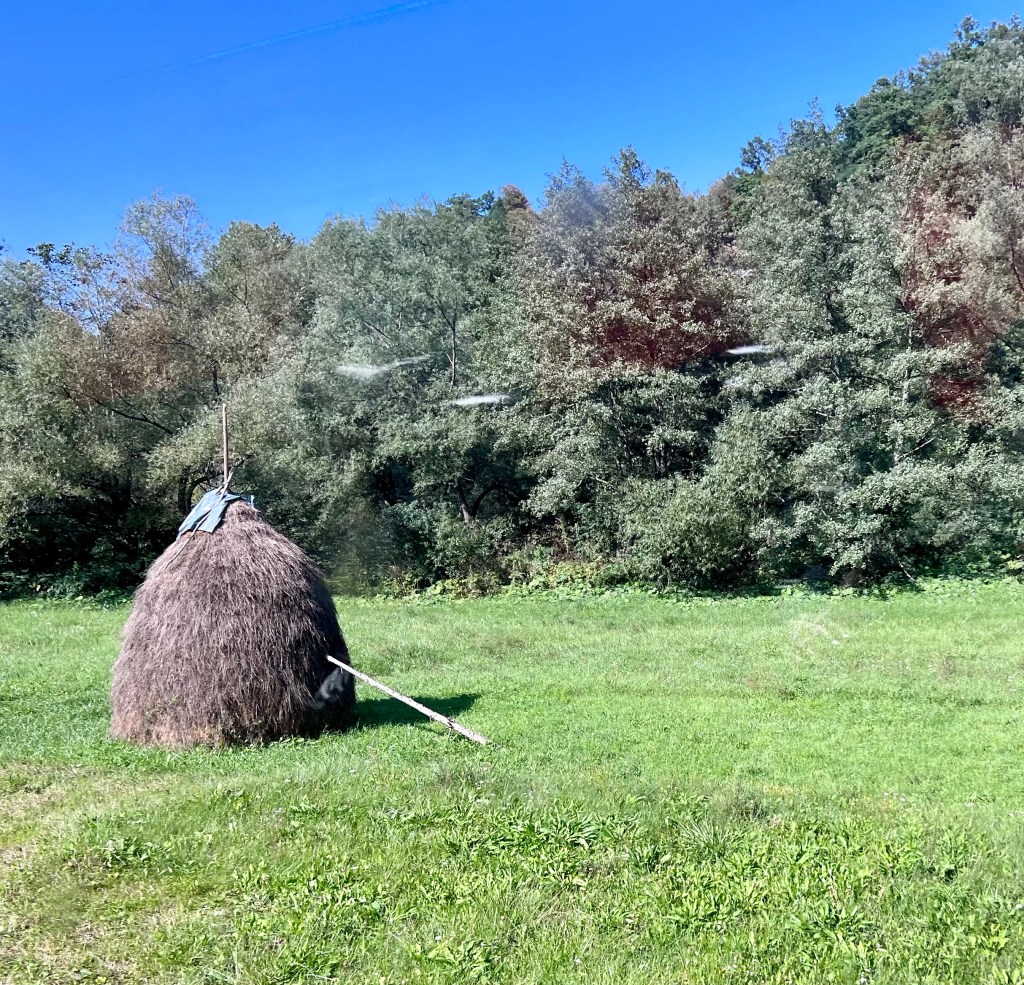
Now that we’d crossed the border into Bosnia, we were in the mountains and the view from the window was a quite a bit more interesting with bubbling mountain streams and scattered farms and villages. One thing that stuck out for me were the conical grey stacks of grass that dotted the countryside. I was told these were made of forage for feeding the livestock over the winter. Filip assured me that the grey material on the outside would be removed to reveal bright green and nutritious fodder but as a livestock nutritionist I’m a bit sceptical.
We reached Sarajevo; a city in a valley surrounded by hills, and we’re dropped off at the hotel. This hotel is “special”. It’s a residential building with the hotel reception on the 9th floor serviced by one smallish elevator. The “hotel” rooms are located on the three floors above. While the views from the rooms and the restaurant where we have breakfast are spectacular, hauling steamer trunks up circular staircases is no fun. After a few minutes to catch our breath and freshen up, we’re off to meet our local guide, Mohammed , for a walking tour of the city.
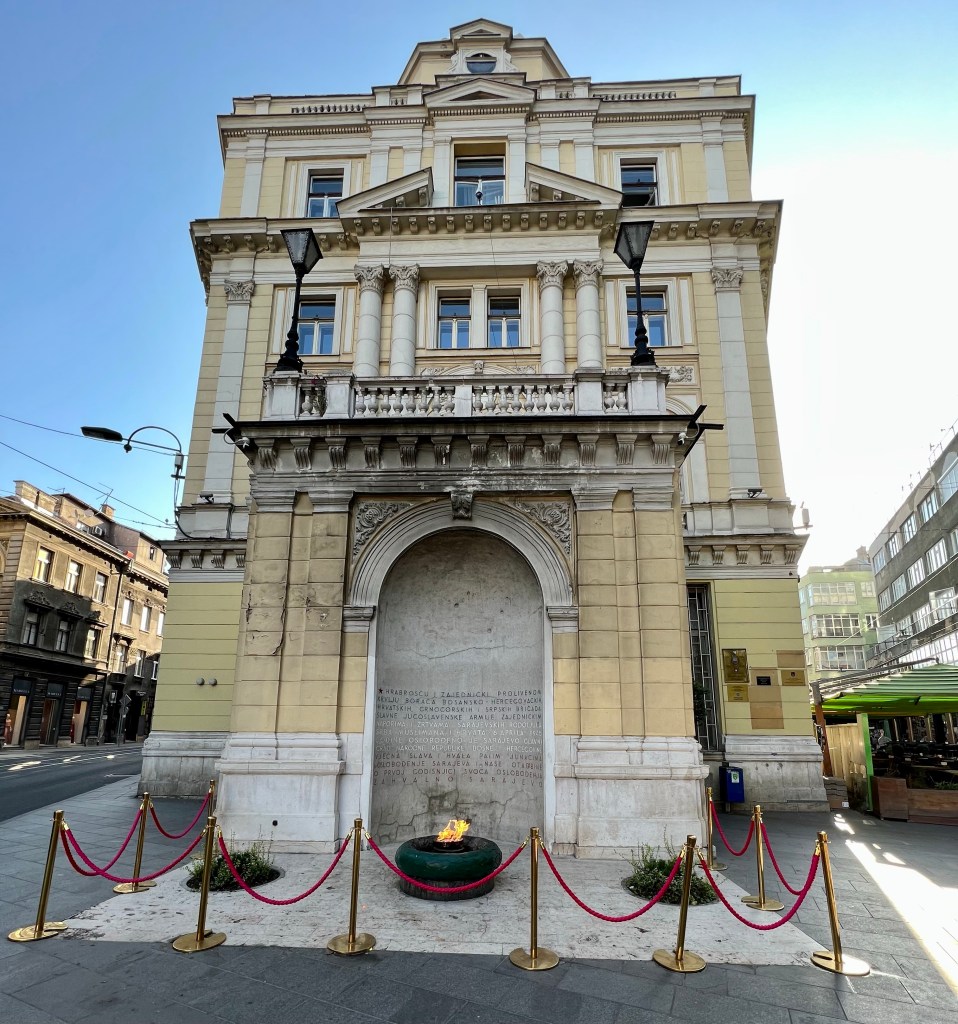
Walking tours are usually a combination of some history of the city/country and some discussion of city landmarks and this one was no exception. As our hotel, is across from the site of the Eternal Flame, we started the tour there.
At the end of Ferhadija where it intersects with the busy Marsala Tita street, you’ll find an Eternal Flame. Located at the base of a beautiful building, the flame is a memorial to the military and civilian victims of World War II who helped liberate Sarajevo. First lit in 1946, it burned continuously until the gas was cut off during the three year siege of Sarajevo. Even then, citizens brought bits of fuel occasionally to keep the idea of the flame alive.
Sarajevo is famous/infamous for three events; the June 28,1914 assassination of Grand Duke Franz Ferdinand, the February 1984 Winter Olympics and the three-year long siege of Sarajevo, that cut them off from the rest of the world, that started April 5, 1992.
According to Mohammed, the Sarajevo Winter Olympics are considered one of the best organized games; likely helped by the fact that all the venues were within 35 km of the city. At the time of the Olympics, Sarajevo was a city in Yugoslavia. Yugoslavia had never won a medal in the Winter Olympics and as the host country were hoping to break that drought. Their hopes were pinned on a slalom skier and ski jumper though neither did particularly well and certainly didn’t mount the podium. Luckily, a young Slovakian skier Jure Franko came out of nowhere and won the silver medal in giant slalom. When Jure received the medal 70,000 Yugoslavians were cheering we love Jurek more than Burek (burek is a stuffed pie and a favourite Sarajevo food). https://www.worldfoodstory.co.uk/recipe/burek
We started walking east down the main drag aptly named Marshall Tito Street who ruled Yugoslavia from 1945 through 1980 when he died. It’s important to always walk on the right hand side of the street so you’re not pegged as a tourist; lol, I think the natives still know!
The population of Sarajevo is 360,000 which represents around 10% of Bosnia’s total population. There are of opinions about what happened in 1992 but Serbian aggression started in earnest the very day Bosnia declared independence based on a referendum. The siege of the city was the longest for any capital in the history of modern warfare; lasting 44 months or 1452 days. During this time, Sarajevo was cut off from rest of world with no utilities and supplies. 11,541 citizens including 1601 children were killed and more than 50,000 residents were wounded.
On this street is the site of one of the bombings during the siege that resulted in the death of 26 citizens and wounding of 80 more; a former bakery where people we waiting to buy some bread. The site is marked by a plaque on the wall and a Sarajevo Rose on the street in front of the building where the bomb landed.
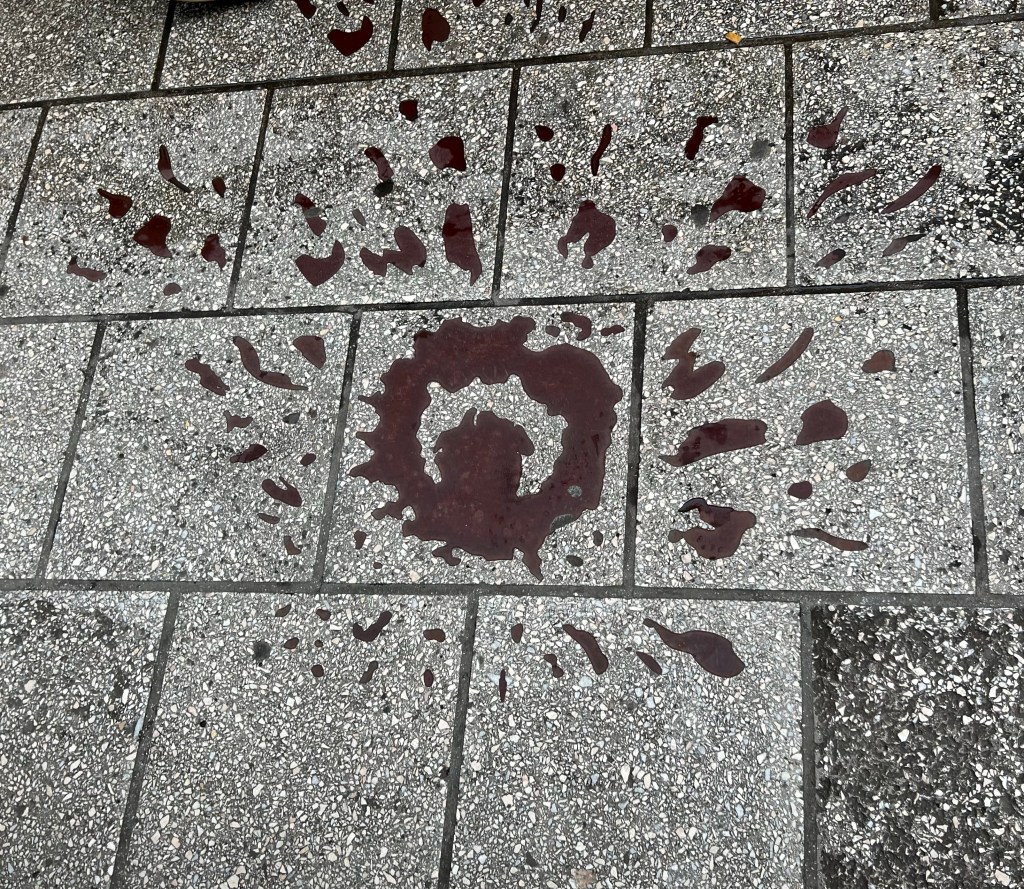
The mortar rounds landing on concrete created a unique fragmentation pattern that looks almost floral in arrangement. A Sarajevo Rose is a type of memorial in Sarajevo where the scar in the concrete caused by a mortar shell’s explosion is filled with red resin. There are around 200 “roses” in the city marking locations where at least three people were killed during the siege of Sarajevo.
After the bombing, Vedran Smailović a famous Yugoslavian cellist (better known as the “Cellist of Sarajevo”) donned his tuxedo and played concerts on the spot for the next 26 days to honour the victims.
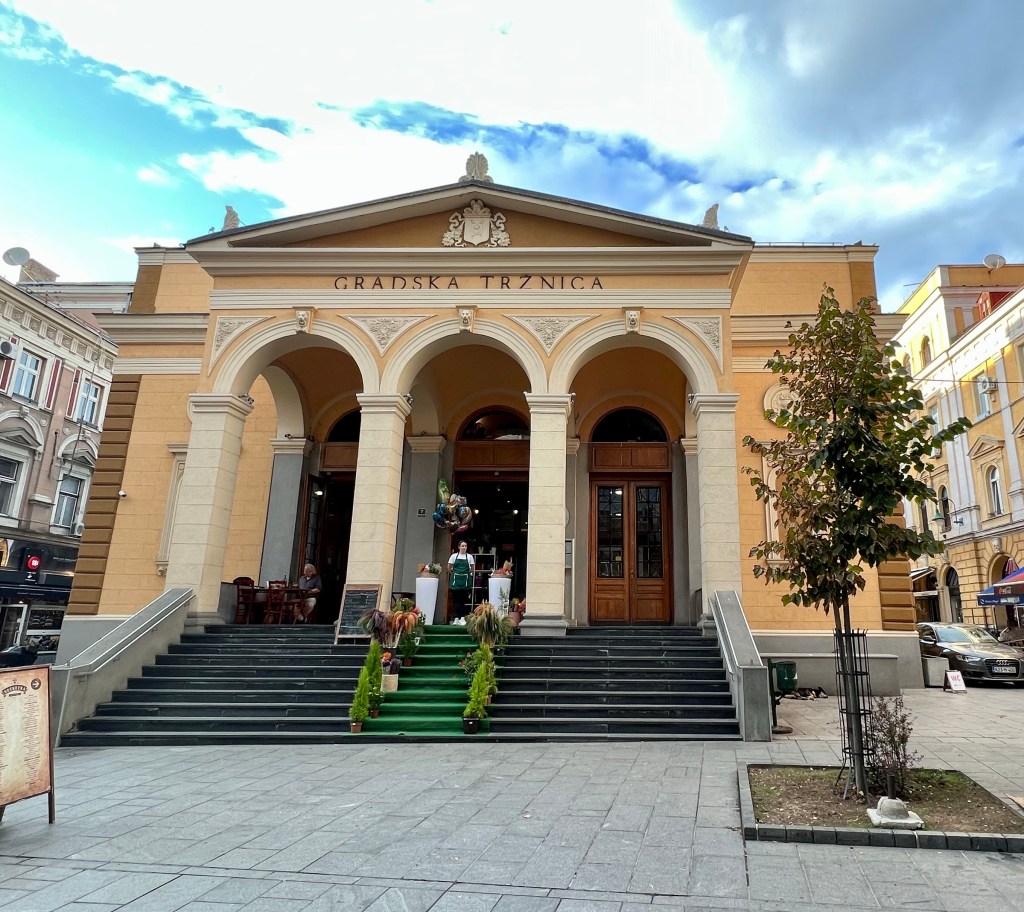
Next up is the neoclassical building housing the City Market Hall (Gradska Tržnica). Inside you will find permanent market stalls selling local produce, meats and dairy products.
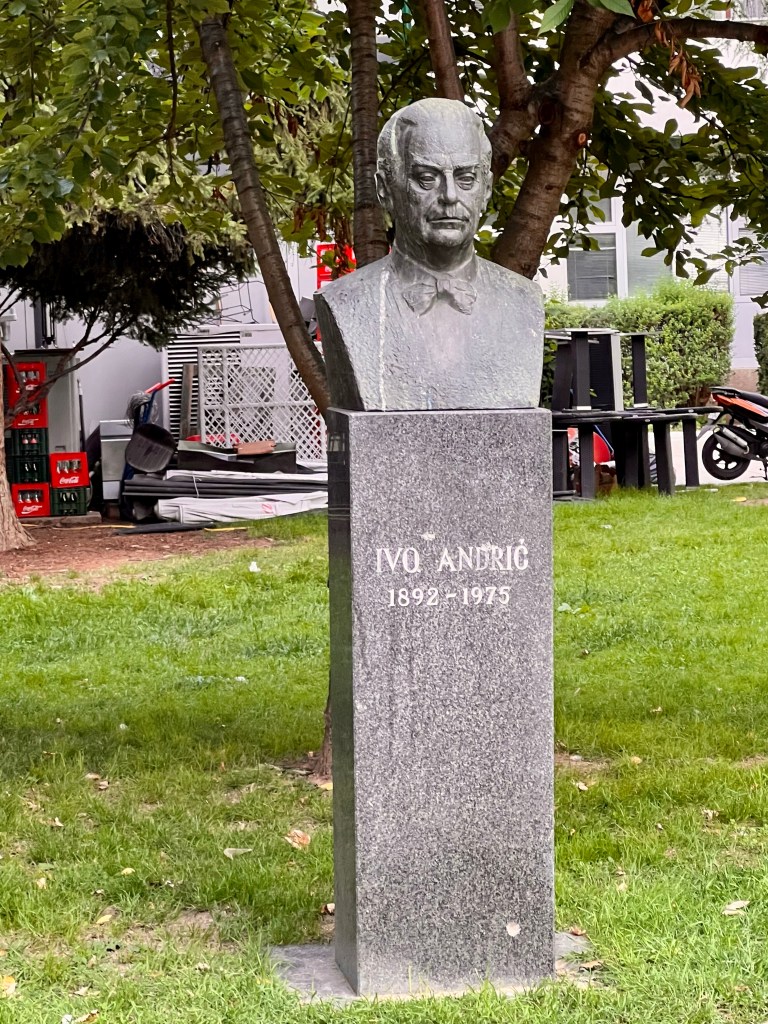
Next we’re off to the Liberation Square dedicated to WWII. In the center of the square is a 1997 statue of Multi-Cultural Man; holding the globe together to represent that without multiculturalism there is no world. There is also a statue to Ivo Andrič, author of Bridge over the Drina River recommended reading from Filip.

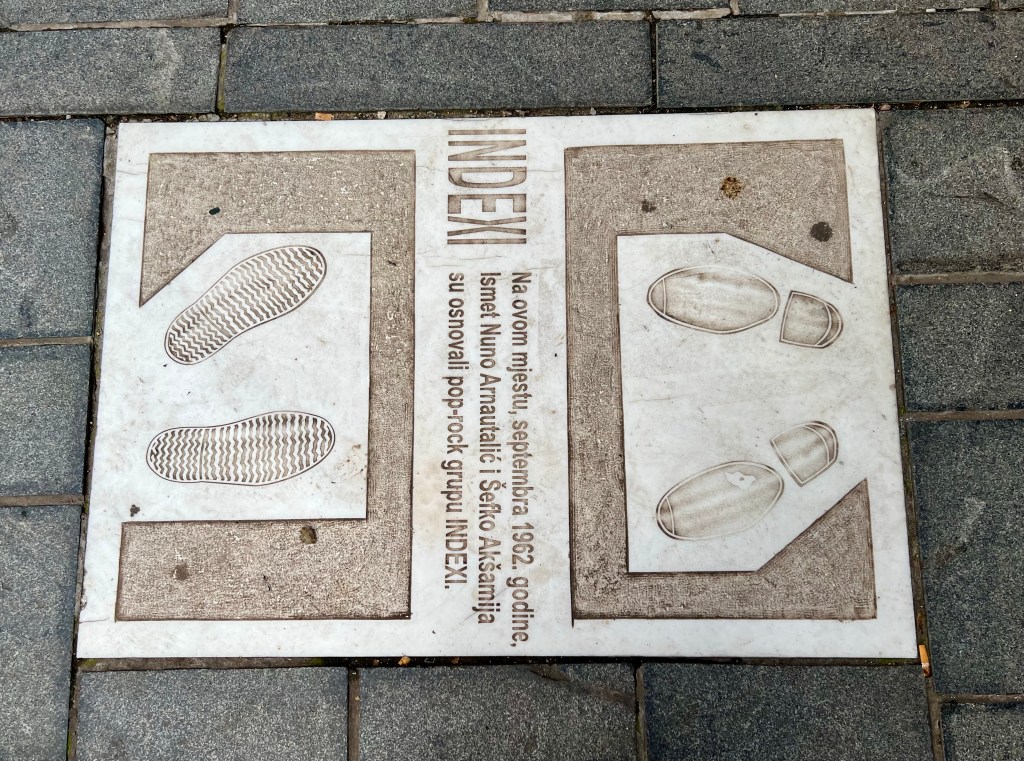
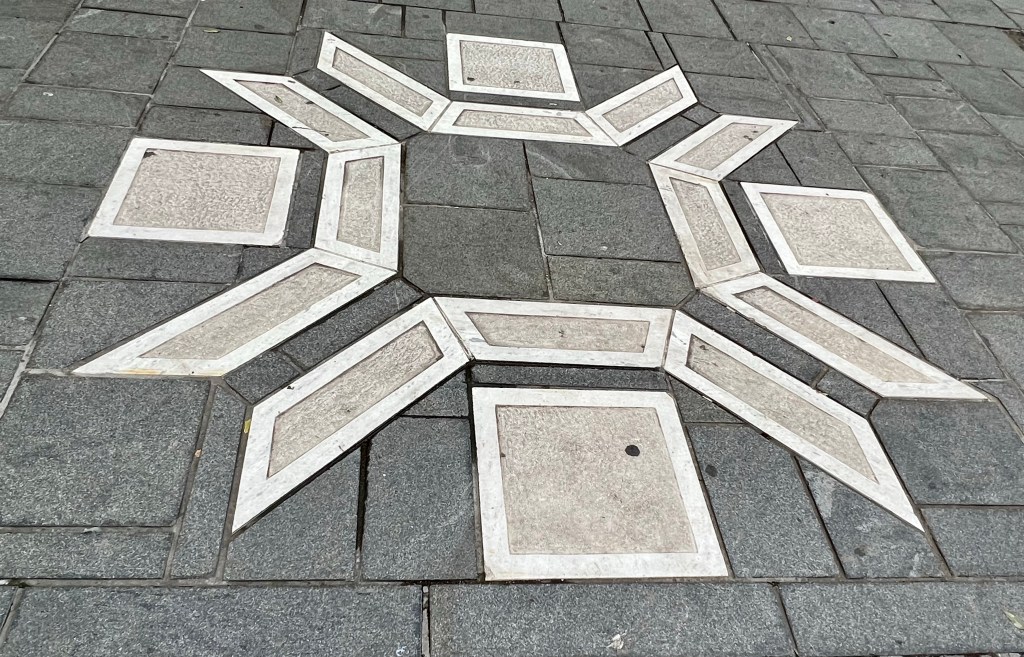
The biggest draw in the square for the locals is the chessboard. Winner stays with the board and takes on challengers. Last winner locks up the board pieces and sets them up the next morning; providing a great opportunity for bragging rights!
The nearby Cathedral Church of the Nativity of the Theotokos (1868) is the largest Serbian Orthodox Church in Sarajevo and one of the largest in the Balkans. According to Mohammed, the Turkish emperor bought the land and gave permission for construction, the Serbians paid for labour, Russia provided building materials and the Macedonians built the church so a very collaborative project. Stained glass makes this one different from most Orthodox Churches as it’s filled with light during the day.
A bit further down the street is the Sacred Heart Cathedral (1899). This Roman Catholic Church has the largest pipe organ in Bosnia and beautiful stained glass windows from Innsbruck, Austria. The stained glass was destroyed during siege along with the rest of the church. Had to go to Innsbruck to find the original archives from the family of the artist to recreate them. There is a shiny statue of Pope John Paul II out front to recognize his efforts to try and let the world know what was going on during the siege and his visit to Sarajevo in In 1997 to call for peace, forgiveness and reconciliation in the aftermath of the war.


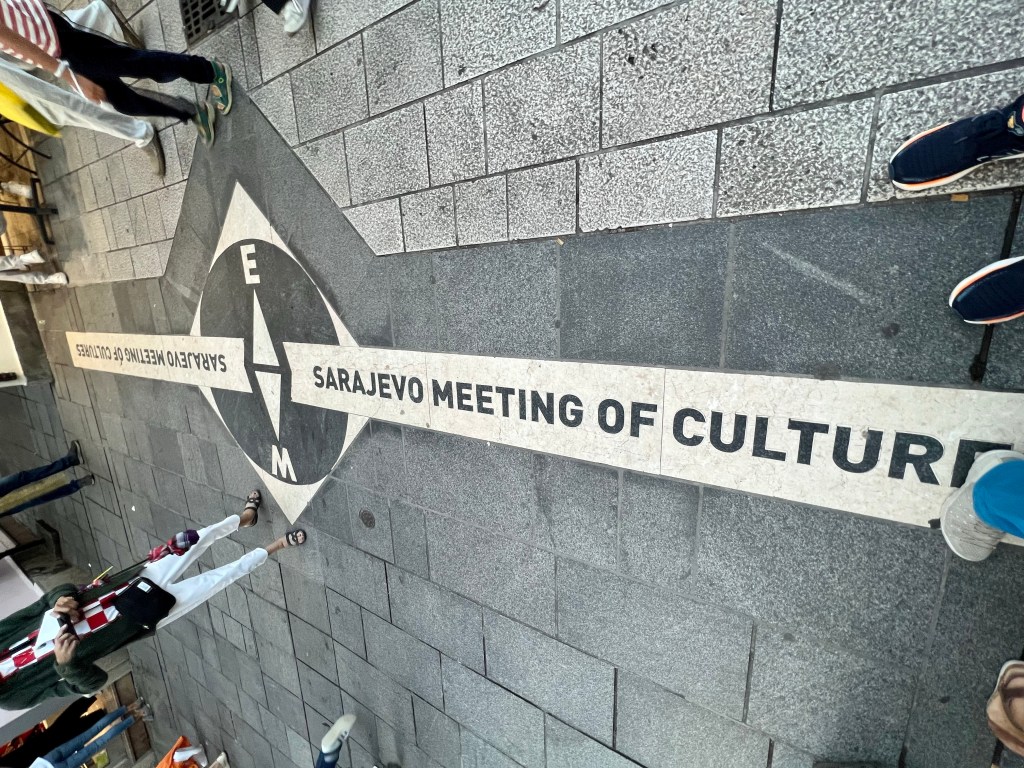
On the city’s main pedestrian street (Ferhadija), you’ll find the “Sarajevo: Meeting of the Cultures” sign underfoot which signals the immediate transition from West to East. Entering “Little Istanbul”, it’s time for a cultural shift as we explore the more ancient part of Sarajevo.
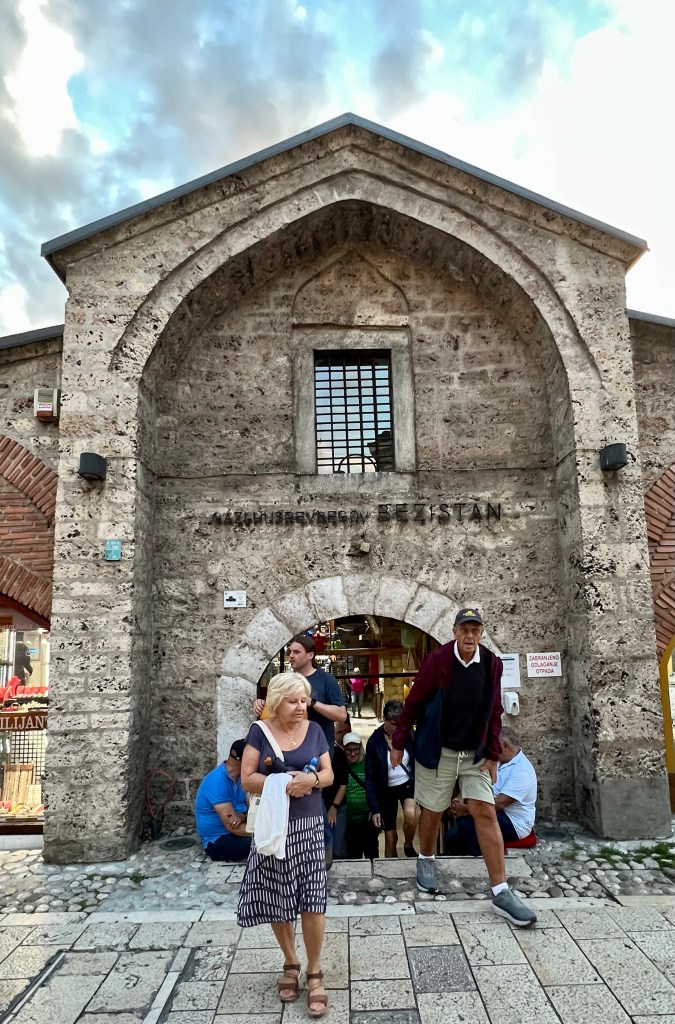
Next we come to the entrance of Bezistan; an indoor market that was originally exclusively for textiles but today focusses on the sale of knockoffs it seems.
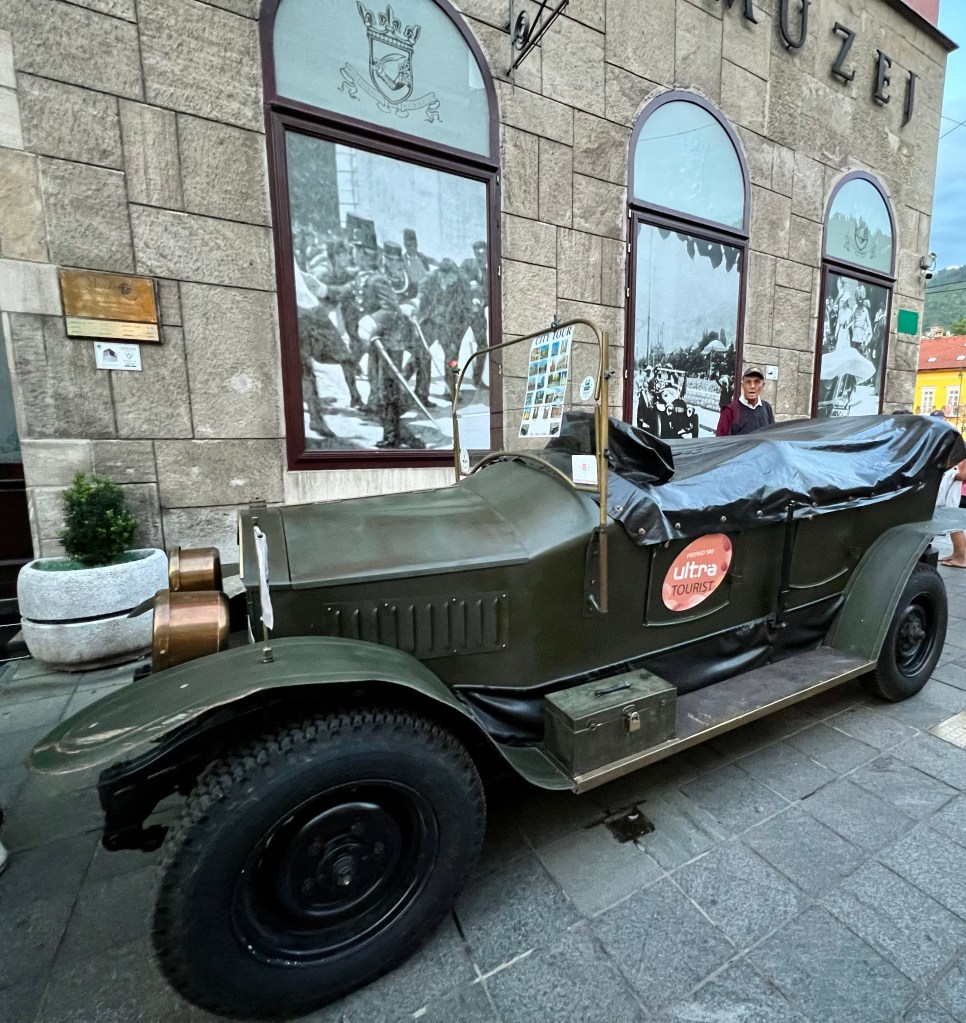
Next we arrive at the street corner by the Latin Bridge where on June 28, 1914, Archduke Franz Ferdinand was assassinated along with his wife Sophie as they were riding in an open top car. His assassin was Gavrilo Princip, a 19-year-old Bosnian Serb separatist (who later died in prison). This event helped spark World War I; setting off a chain reaction of allegiances and grudges that swiftly pulled all of Europe, and much of the world, into a Great War that would end the age of empires and usher in a new era of modern nations.

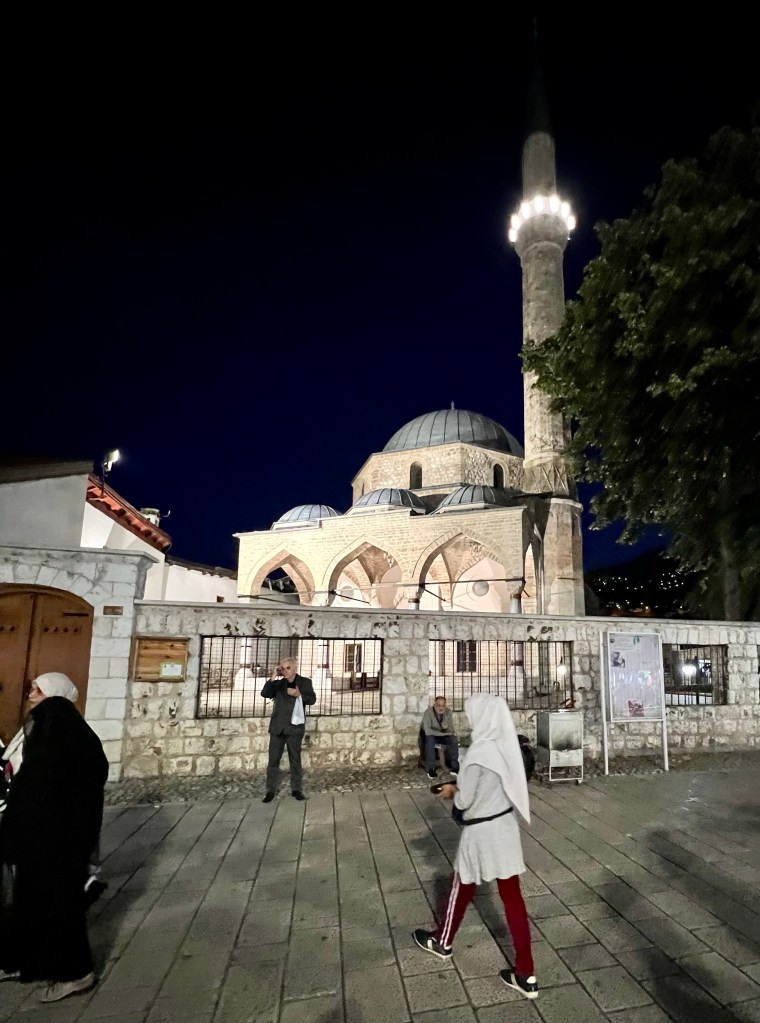
Continuing along, we are arrive at Sarajevo’s most important and historic mosque just in time for evening prayers. Built in 1531, it is named for Gazi Husrev-Bey (1480-1541), a Muslim aristocrat who funded the mosque and many of the other Old Town’s landmarks. The mosque has a large outer courtyard, with a beautiful fountain in the middle for worshippers to wash up before their prayers. The mosque’s tall minaret has 500+ steps which the muezzin has to climb five times daily to call Muslims to prayer; guessing he doesn’t need a stair master.
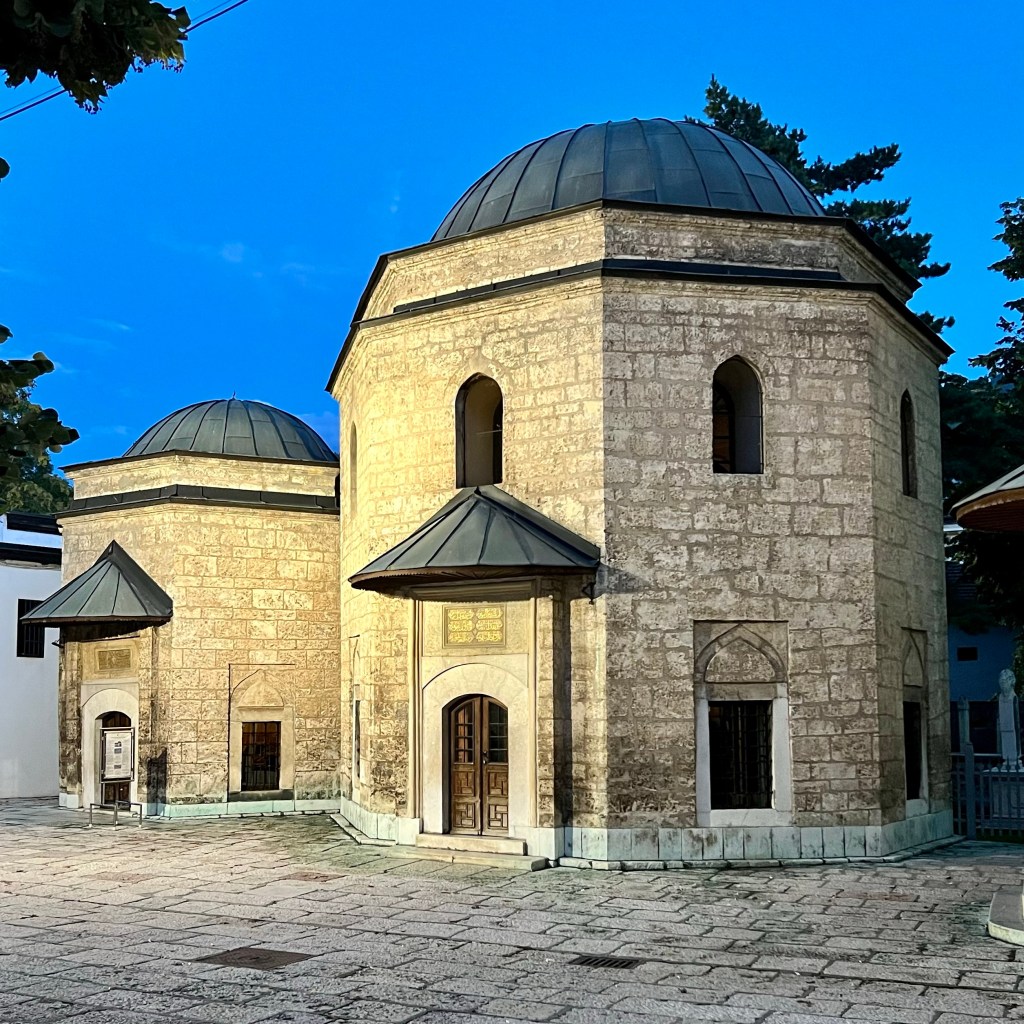
Nearby are Gazi Husrev Bey’s tomb(bigger one) and the tomb for the first Amman.
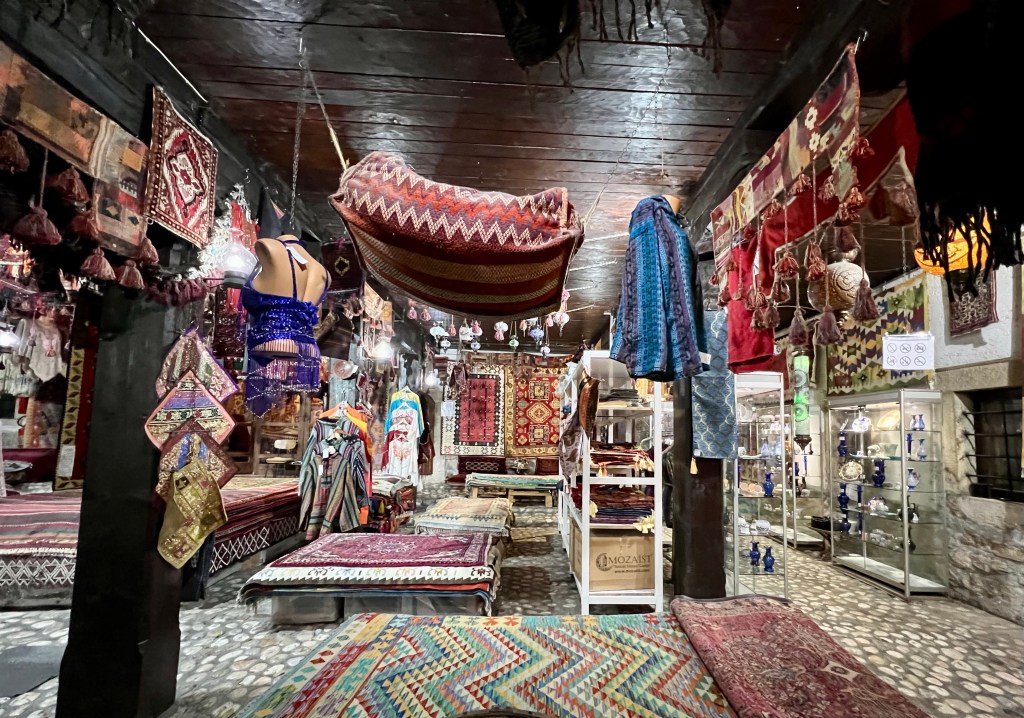
Our next stop is a Trader’s hotel built in 16th century that allowed traders to stay, trade and eat for three days for free. The hotel had forty rooms with four beds. Also had additional 160 mattresses in the halls if necessary. When the railway started running, it was no longer needed for the original purpose so has been converted to restaurants and shops.


Mohammed explained to us that Bosnia has a coffee culture with three cups of Joe as the norm; the first cup is the welcome coffee, the second cup the talking coffee and when the third is served, it’s the Goodbye coffee – here’s your hat what’s your hurry – Time to go!
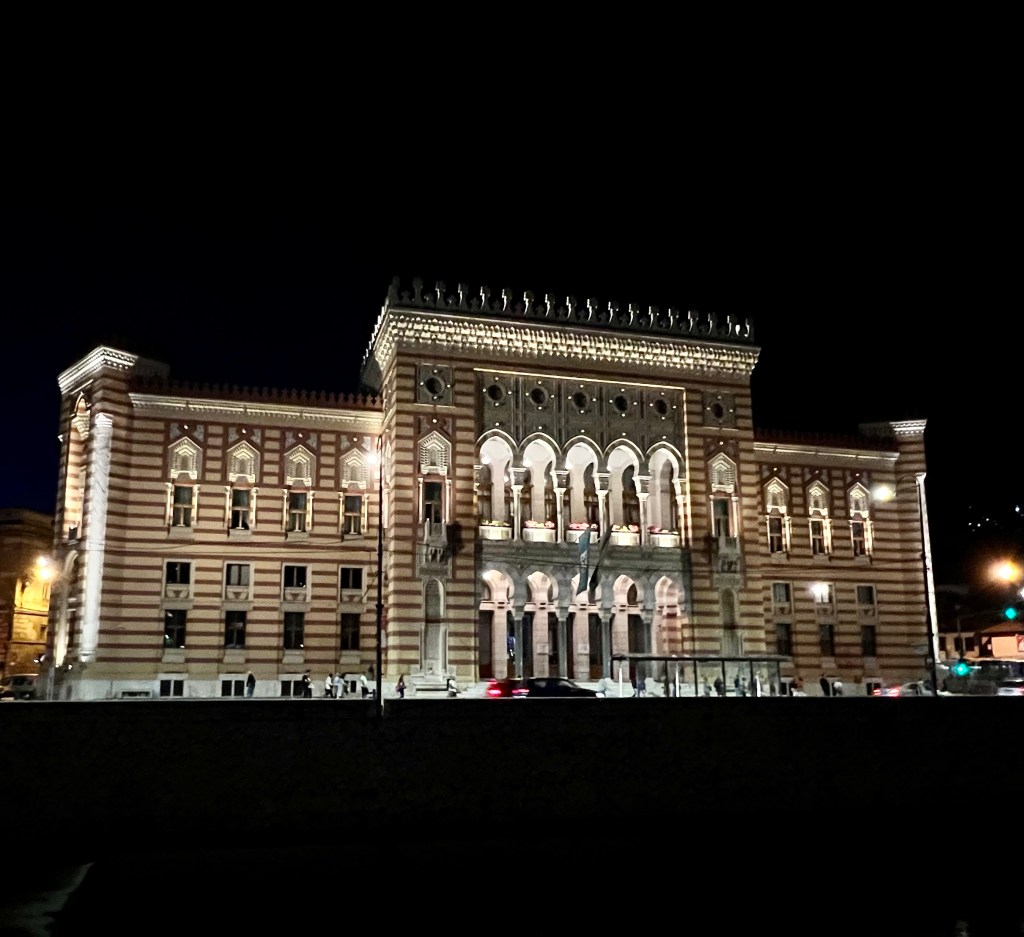
Our next and last stop is Sarajevo’s beautiful former City Hall, built during the Habsburg rule. This is where Archduke Franz Ferdinand began his fateful drive through the city the evening he was assassinated. It now houses the National Library, which was renovated in 2014 after being destroyed during the Bosnian War.
From here you can see a tiny white house aka the “spite house” which used to be located where city hall is now. The house is nothing special architecturally. It’s claim to fame is that the original owner rejected offers to tear down the house to make way for the new City Hall through three successfully larger offers. The owner finally agreed he would take less than the original offer if they moved his house to the other side of river – had to tear it down and build back the same house brick by brick. Mohammed said this demonstrates that Bosnians are stubborn.
Our tour was over so we headed to one of the recommended restaurants for dinner. I decide to try ćevapi; a grilled dish of minced meat shaped into tubes considered a national dish of Bosnia. Ćevapi has its origins in the Balkans before the Ottoman period. The dish consisted of ten pieces of meat in a pita with onions. Overall, it was okay but it is sometimes served with a cheese cream and as ordered was a bit dry. Sated, we headed back to to the hotel for some sleep after a long day.
Tomorrow is another day. Adventures await…
September 8, 2022
Today we are headed to Sarajevo’s “Tunnel of Hope”; a tunnel constructed between March and June 1993 during the Siege of Sarajevo in the midst of the war in Bosnia. It was built by the Bosnian Army in order to link the city of Sarajevo, which was entirely cut off by Serbian forces, with Bosnian-held territory on the other side of the Sarajevo Airport, an area controlled by the United Nations. Originally intended exclusively for military use, the tunnel soon became a lifeline for Sarajevo residents to access food and supplies to help them survive the Siege.
The tunnel is located near the airport, about a 30-minute drive from our hotel and our guide for the tour, Mustafa, used the time to give us some information regarding the Siege as he and his family were living here at the time.
Yugoslavia was the richest country in the region despite communism. The country broke up up after the Berlin Wall came down and most communist countries wanted their freedom. An independence referendum was held in Bosnia and Herzegovina between February 29 and March 1, 1992. Most of the money went to Belgrade and stayed there so 63% of Bosnians voted to leave Yugoslavia but the minority Serbs didn’t want to leave.
Sarajevo was put under siege and attacked by their own army (former Yugoslavian army) who will still here and who the Bosnians had been paying an 8-10-% salary tax to support. 95% of the Generals in the Army were Serbs so when independence movement started said whoever wants to leave Yugoslavia can leave unless Serbians live there.
When the war broke out, Bosnia was the most mixed ethnicity of the states that had made up Yugoslavia: Bosniaks were Muslims, Serbians were largely Orthodox and the Croatians were mostly Roman Catholics. Serbs said by succeeding from Yugoslavia, the Bosnians were going to form a Muslim state although Slovenia and Croatia had no Muslim population and they were also attacked by the Serbs.
Mustafa suggested that what happened then is similar to what’s happening now in Ukraine and it’s hard to argue. The current Ukraine war is considered Foreign Aggression (by Russia) to help a Russian minority located in another sovereign country (Ukraine). Bosnia was pretty much the same situation but it was considered a civil war so they received no outside help. They were required by the EU Declaration to have a referendum to determine if they wanted to succeed from Yugoslavia and then abandoned when the war started.
Bosnians hoped for help from the west throughout the war/siege. The UN role was to keep statistics. 329 bombs a day on average sometimes as many as 1500-2000. Biggest death tolls at areas where residents went to get food (green markets and bakeries). Weekends were the worse as Serbian volunteers would come after working and every weapon would be firing. Disgustingly, Russian celebrities and other tourists could pay to come and be a sniper; called the Sarajevo Safari.
People could leave the city during the siege, including, males under 18 or over 65 with UN convoys. Men between 18 and 65 were conscripted so we’re obliged to stay. Almost 25% of the population left during the war.
Originally, thought it was short term madness and then once they recognized it was a war thought it would stop or be stopped. Hadn’t done anything wrong and it was their home. Not many guns at beginning of war and it was illegal to buy guns; made guns out of water pipes. West had an embargo on weapons because they didn’t want it to get worse. Bosnians continued asking NATO to take action against Serbs or allow Bosnians to defend themselves by removing the weapons embargo.
Bosnia is largely made up of small towns and villages. When Serb troops went through the countryside they killed all the muslims/nonSerbs (ethnic cleansing) to prepare for addition of territory to Serbia. As a result, many people escaped to Sarajevo and the population tripled. UN wanted to bring Humanitarian Aid (food, etc.) into airport to avoid a human catastrophe and asked Serbs and then threatened them. The Serbs finally agreed but with the proviso that the airport was only used for food distribution.
There was more food and supplies outside Sarajevo in the mountains but couldn’t get there. Sarajevo citizens that decided to run across the airport to get supplies had two enemies; the UN and Serbian snipers.
In Sarajevo four soldiers shared one gun. Needed to defend front lines so the Serbs couldn’t close the loop and totally cut off access to the mountains. In 1993, the Bosnian Army decided to dig a tunnel 800 meters long,under the airport, starting from both sides; luckily they met in the middle as planned. The military kept the tunnel secret for awhile and it only used by the Bosnian army but eventually everyone knew about it even the UN. Serbs also knew but couldn’t bomb it as it was under a UN base. Serbs bombed the areas in the fringes a lot but didn’t know which house was the entry point.
At the beginning, the army let civilians through the tunnel but when everyone in Sarajevo knew you needed to get special permission. At the end of the tunnel on the other side there was a trench to town to avoid snipers on your way to the town. Mustafa and his mom went to pick up a package of food sent by relatives during the war. After a difficult, crazy trip they made it to the village and the shops were all stocked and all open which was a bit of a shock for them. The trip was even more fraught with danger on their return but they did make it back home with their precious supplies with some help from friends.
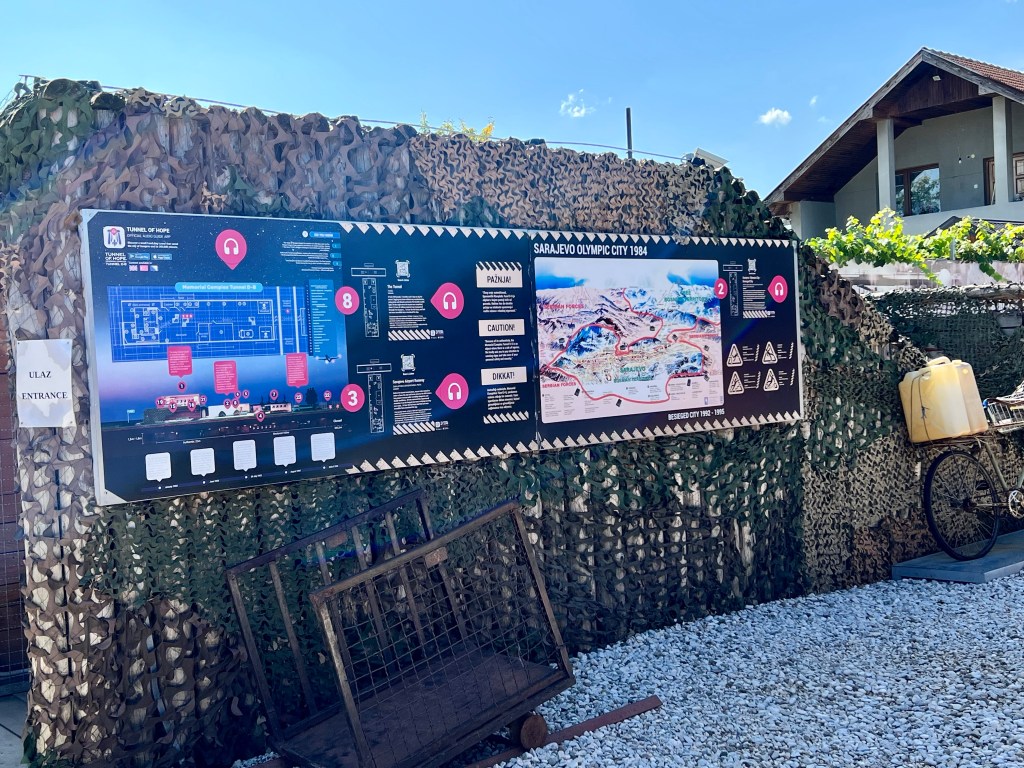
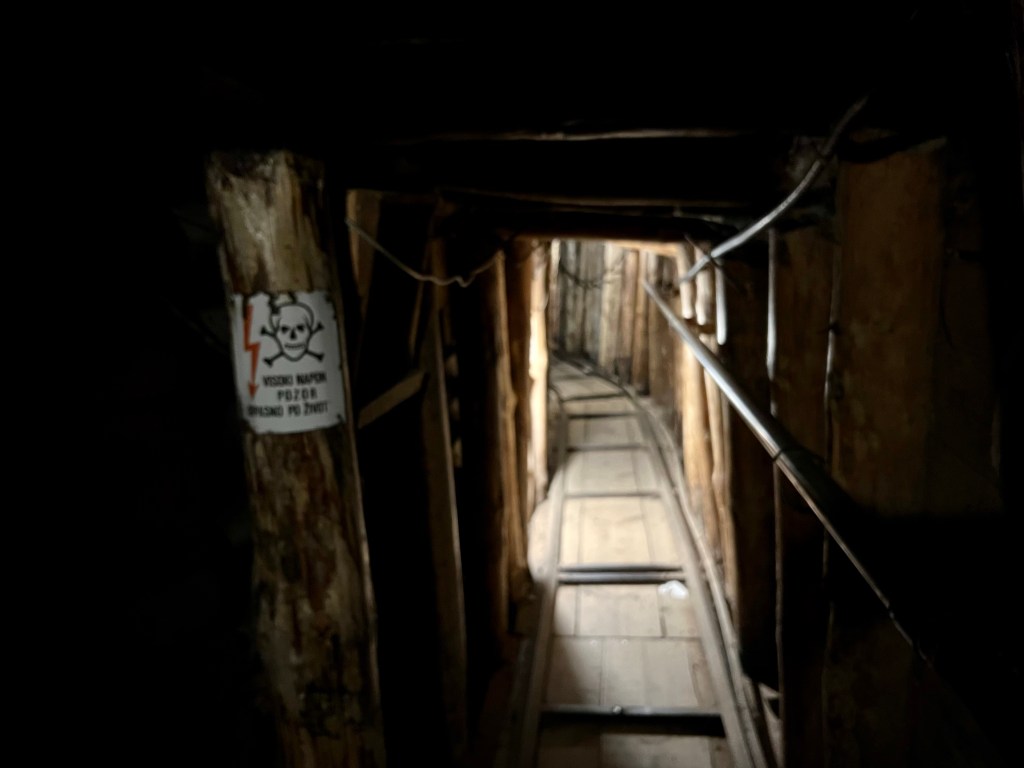
Today, visitors can walk through a small stretch of the tunnel, which of course we did and in that very short section I bumped my head four times. I can only imagine doing the whole trip especially laden down with whatever food you could carry on the return journey.
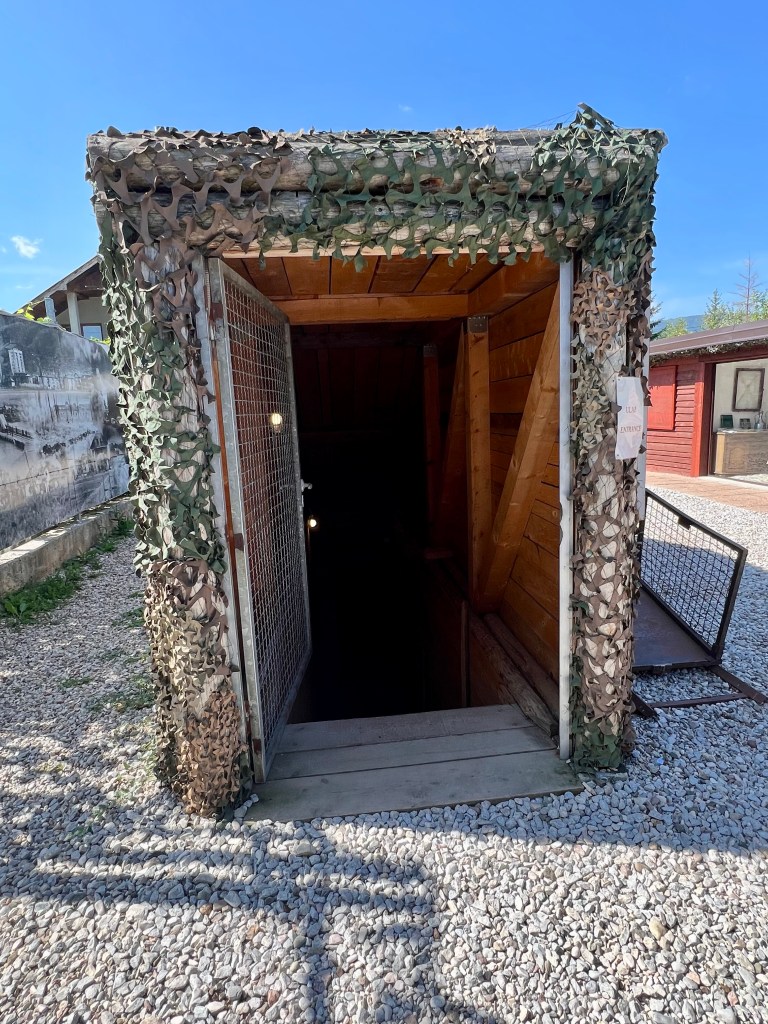
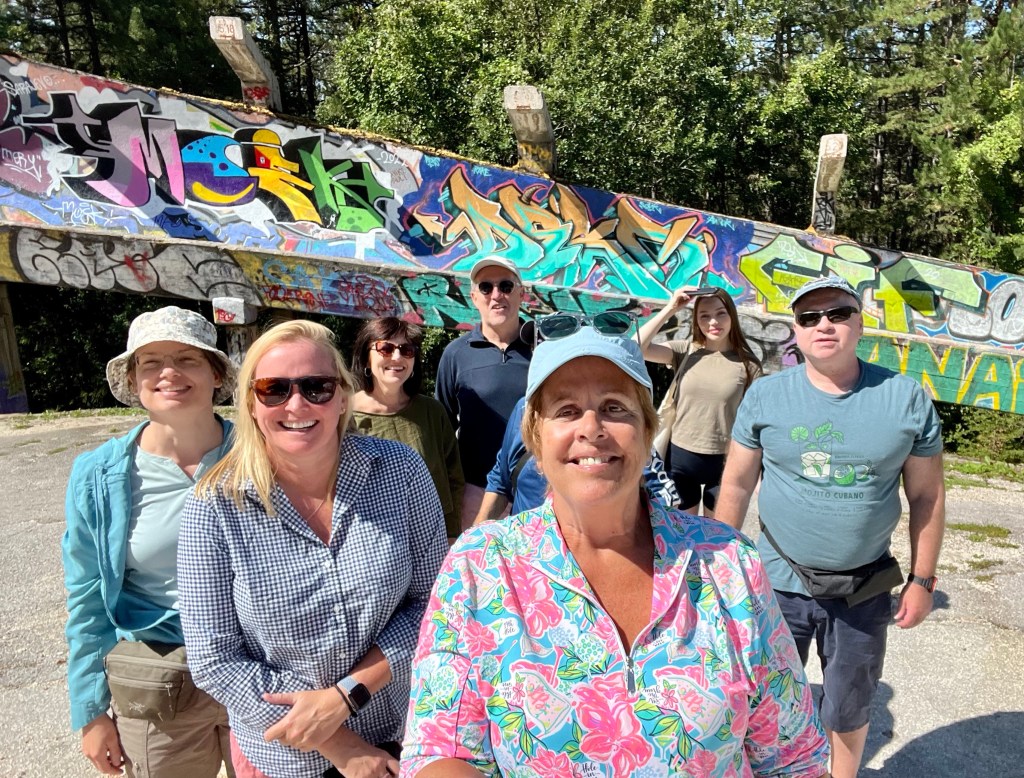
Leaving the tunnel, we headed up into the hills to the Sarajevo Olympic Bobsleigh and Luge Track situated on Trebević mountain overlooking the City of Sarajevo, built for the 1984 Winter Olympics.
Our penultimate stop was the OId Jewish Cemetery; the largest Jewish cemetery in Southeast Europe and very old. It was sandwiched between the Serbian and Bosnian forces which explains the extensive damage to the headstones.

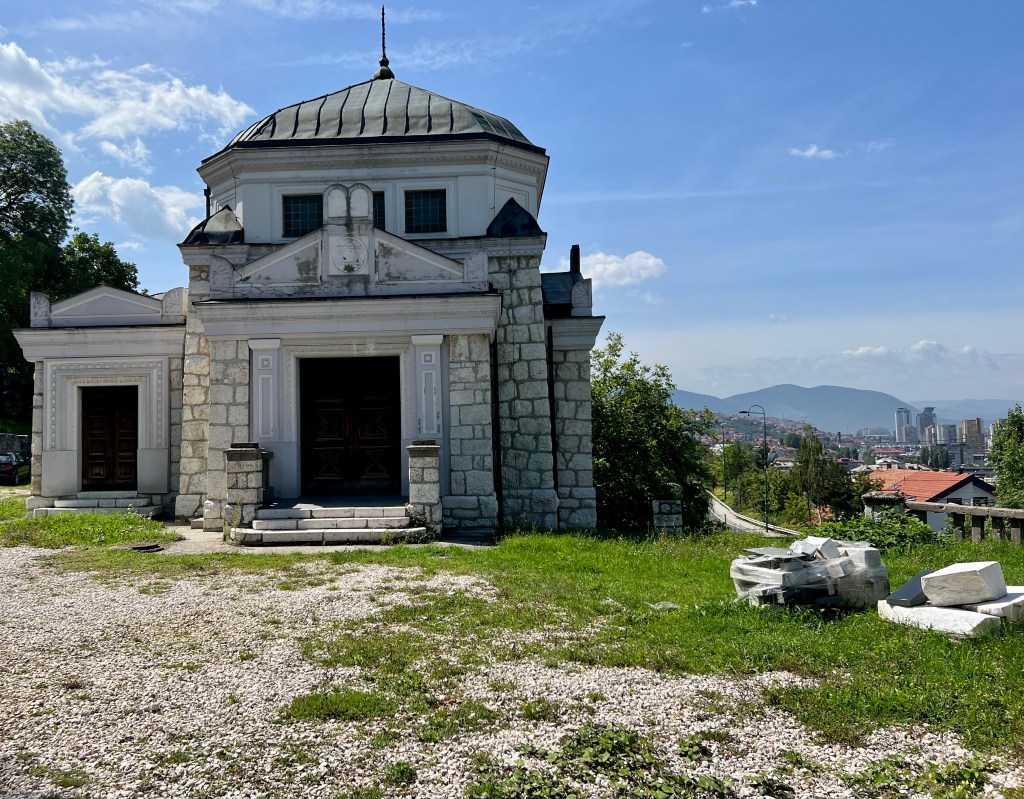

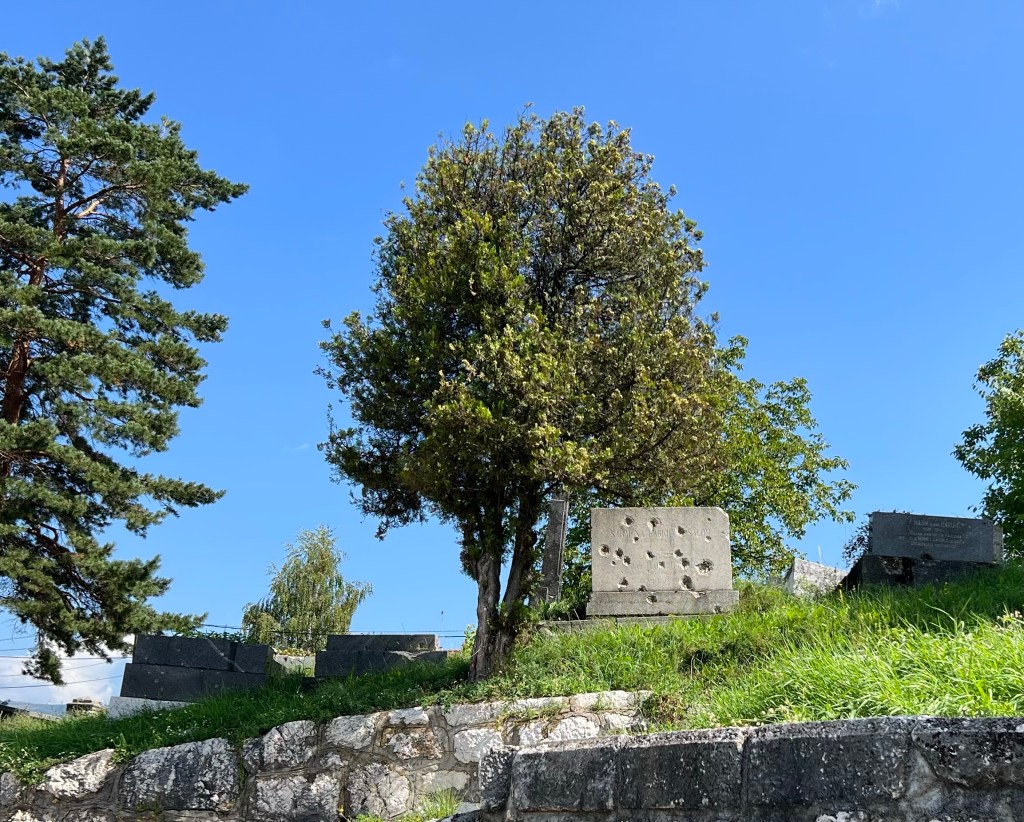
Our last stop was a former cable car stop now known as one of the viewpoints of Trebević with the widest panoramic view over the city of Sarajevo. The views of old town and the outskirts of the city were quite stunning.

Back in town we grabbed lunch at a restaurant specializing in ćevapi. The cheese cream transformed an okay dish into something much more delicious. We wandered around for a bit including a quick stop at “Pigeon Square”; officially Bascarsija square. Its centerpiece is a beautiful Ottoman-style wooden fountain with a copper roof (Sebilj), a beloved icon of Sarajevo. It’s a great place for watching people and the large numbers of pigeons who come to be fed by their human friends. It’s said that if you drink from the fountain, you’ll come back to Sarajevo. Time will tell.

Tonight, some of the group is heading back up the hills around Sarajevo to Mustafa’s home with some of the gang for a cooking class to learn how to make some Bosnian specialties. https://bosniancookinglessons.com/
We are greeted by his lovely wife, Mersiha, and invited into their home. Before getting down to business, we try some cornelian cherry juice and rakia (plum brandy); both were quite delicious.
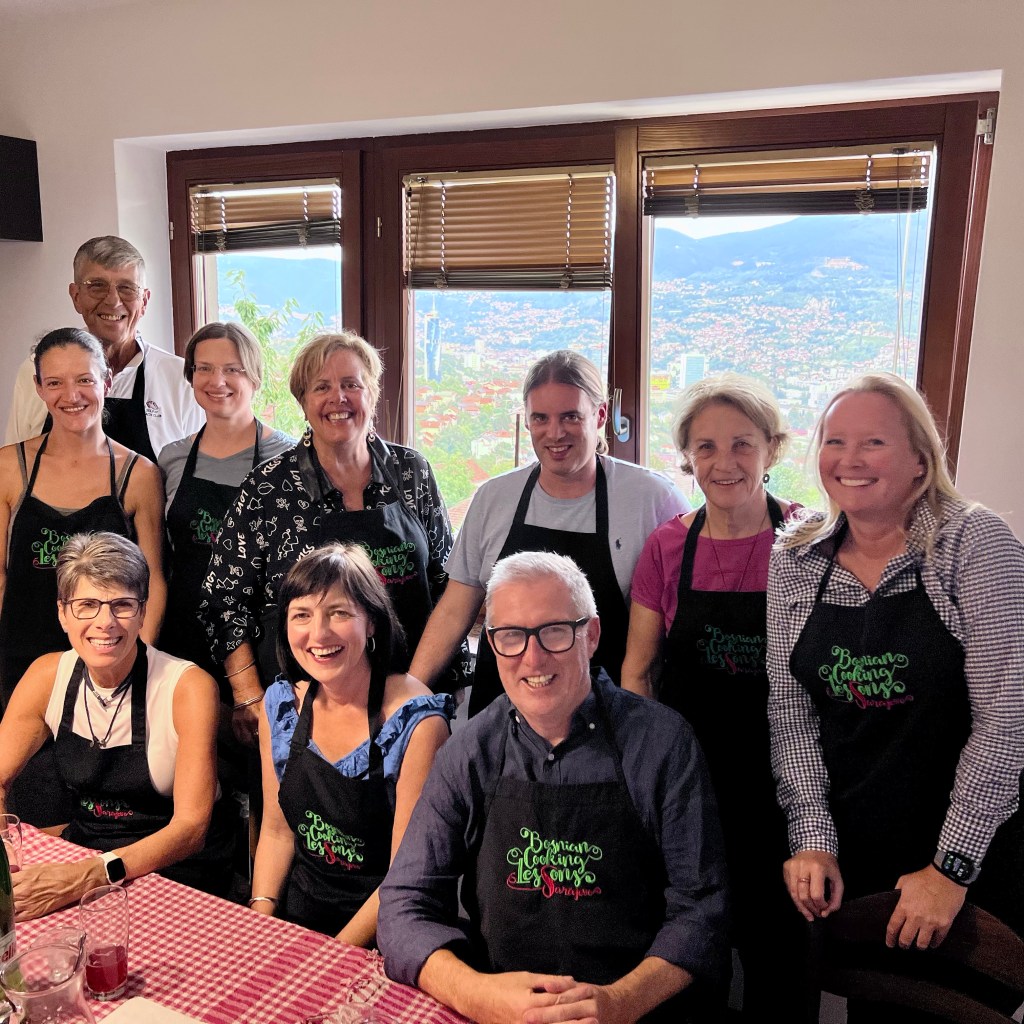
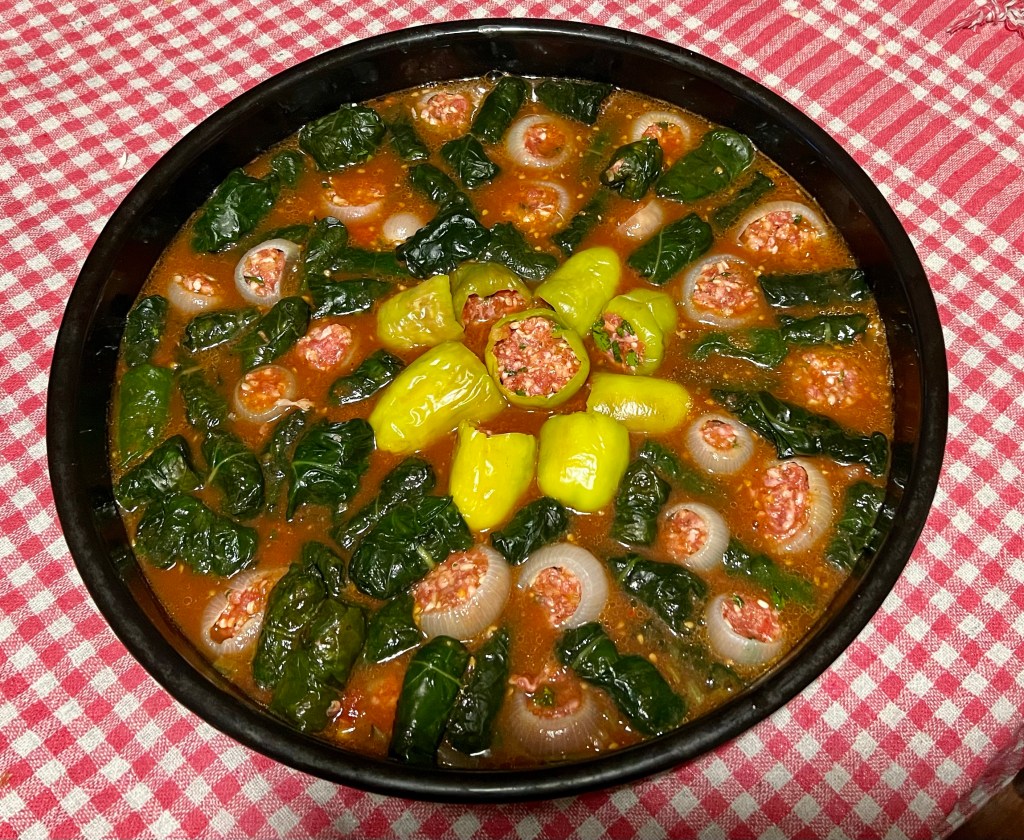
Our first dish is a variety of stuffed vegetables (yoprets); onions, peppers and mangel leaves (similar to Swiss chard) each stuffed with a mixture of ground beef, short grain rice and spices. A sauce with a base of peeled tomatoes, garlic, chilies, onions and the ribs trimmed the mangel leaves made a lovely bath for the stuffed veggies.

To fortify us for the preparation of the next dish, Mersiha, served charcuterie trays with smoked beef sausage, cheese, ajvar (a lovely veggie paste which I will try to make when I get home), cornelian cherry jam and bread.

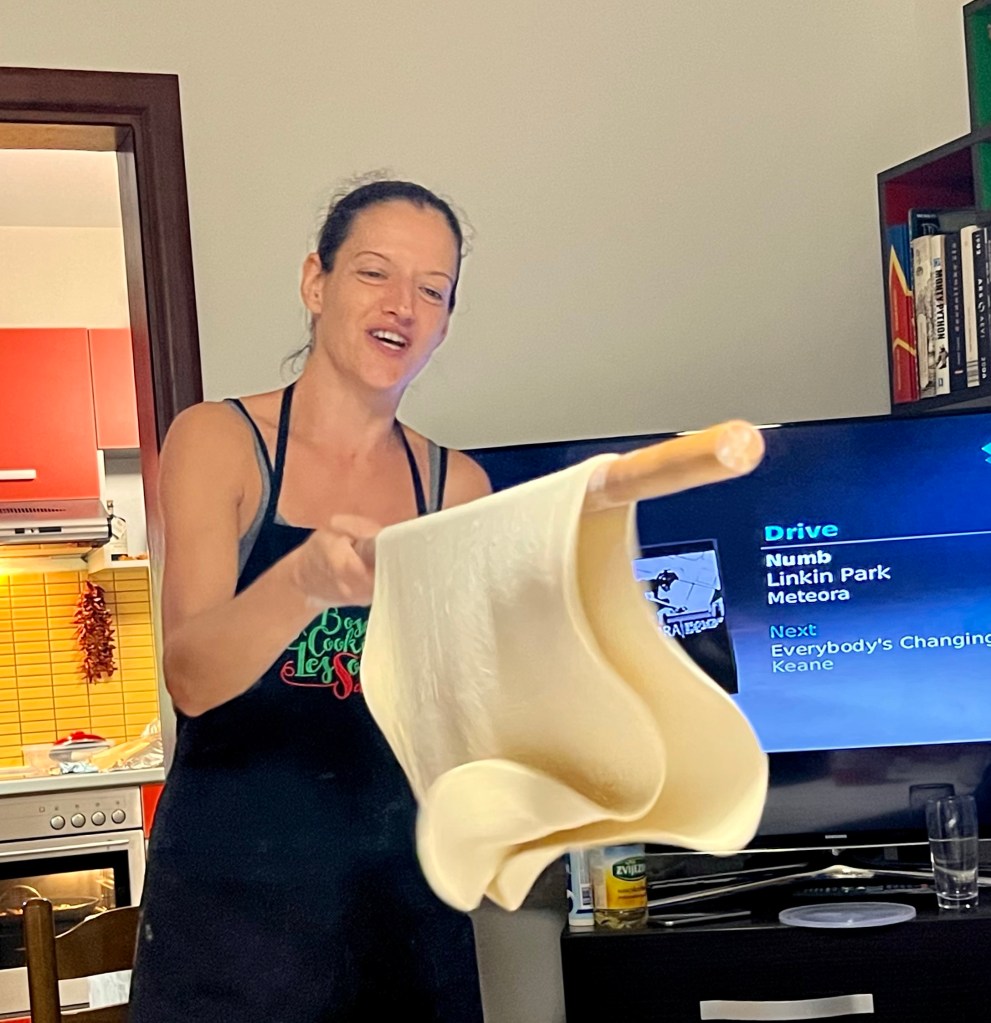
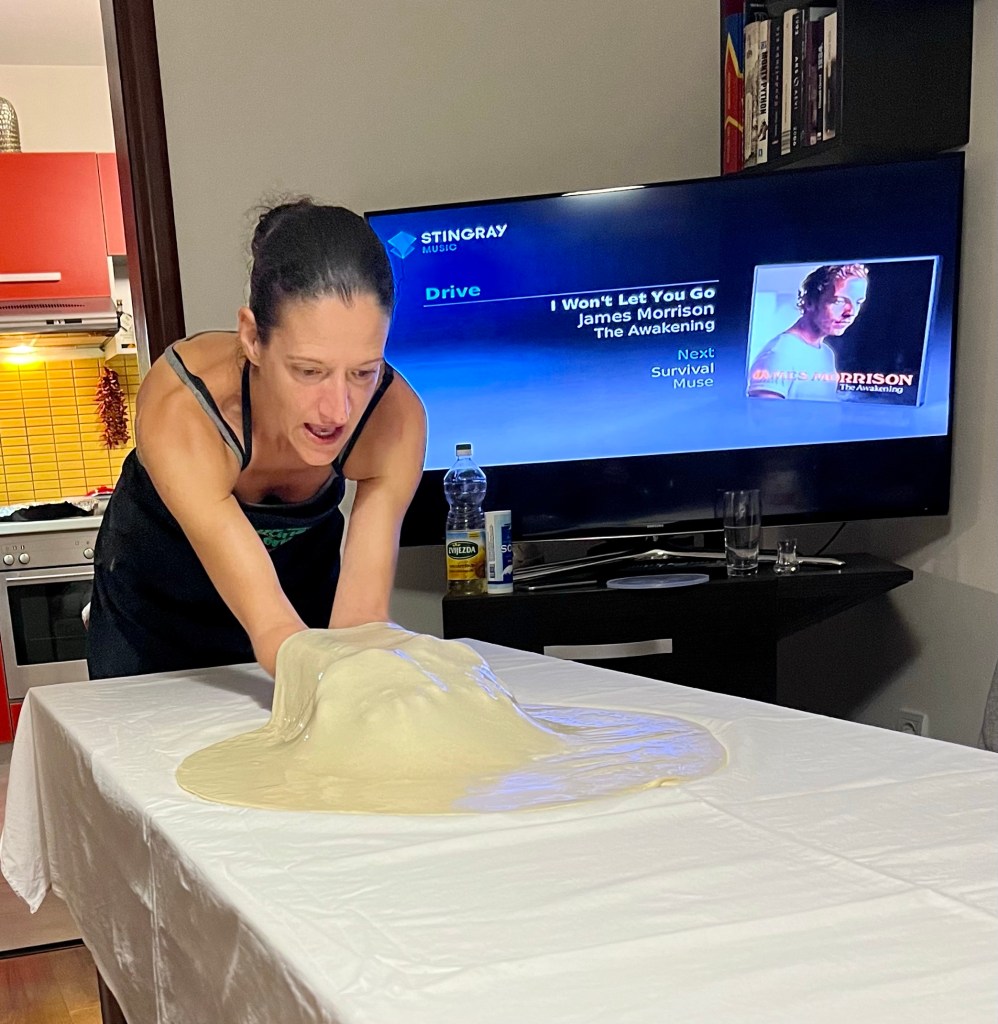
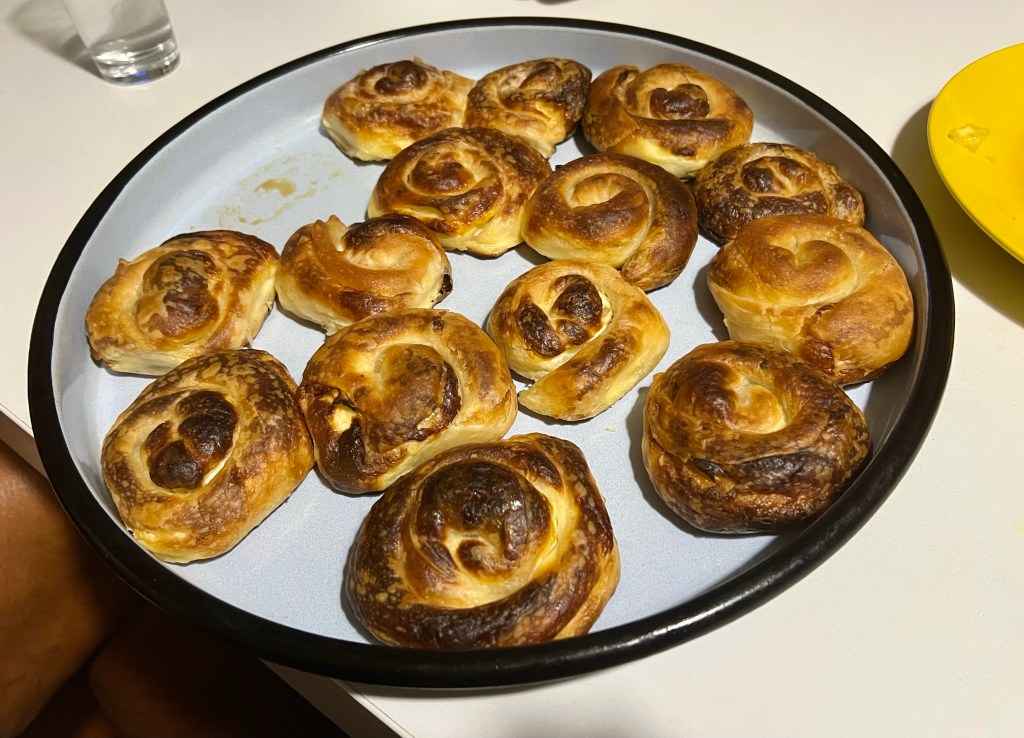
Next up was a lesson in making filo pastry. The whole process was quite complicated and long! Stretching the dough to the requisite thinness is definitely an art and would take years to perfect so might not tackle this one but who knows? The filo, once ready, was used to make three kinds of Burek: cheese, meat and potatoes. My favourite was definitely the cheese! Yummmm!



Dinner was very late and washed down with copious amounts of red wine from a Bosnian monastery. It was a lovely evening so we bid adieu to Mustafa and Merisha and headed back to the hotel to crash.
Tomorrow is another day. Adventures await…
September 9, 2022
Another day, another bus and we’re headed to Mostar in Herzegovina, a city of bridges. On the way, we have a tour of Tito’s Bunker (D-O Ark); a Cold War-era nuclear bunker and military command centre located near the town of Konjic in Bosnia and Herzegovina planned.
We entered the bunker with a too large group so it was hard to hear what our guide was saying most of the time but I did pick up a few tidbits. The bunker was built during the Cold War and cost 15 million USD (equivalent to today) to build. It was intended to house up to 350 military and political elite (males only!) for up to six months. Though it was never used for it’s intended purpose, it’s existence was kept secret for many years until the breakup of the former Yugoslavia in the 1990s. The bunker is made up of residential areas, conference rooms, offices, strategic planning rooms, and other functional areas.
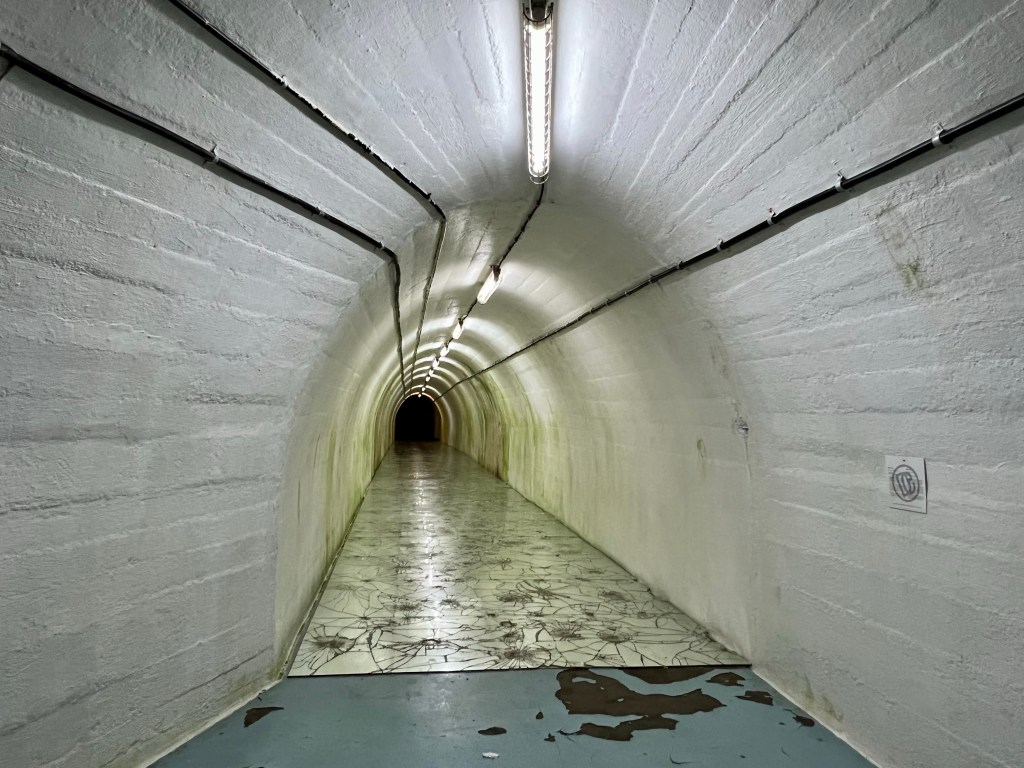
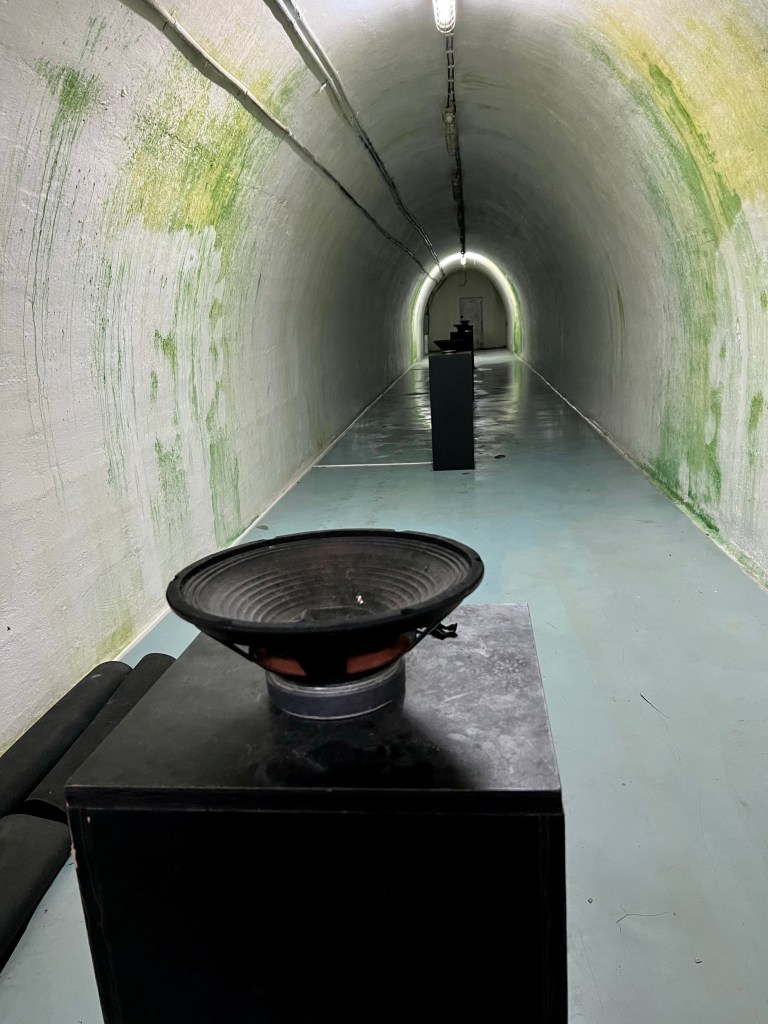
The facility is under the authority of the Bosnian Ministry of Defense and is managed by the country’s military. The bunker is preserved more or less intact with all its symbols of the social, economical, political and ideological system of Socialist Yugoslavia. My favourite are the red phones!


The bunker since 2011 has been home to 110 art installations from artists from across the region, Europe, and the world. They are in various states of repair and reflect a wide range of views of the former administration; some of them quite comical in my opinion. The goal of the Project Biennial of Contemporary Art is to transform a site still officially under military control into a prestigious regional cultural institution at the forefront of emerging artistic trends. Here are some of my faves!


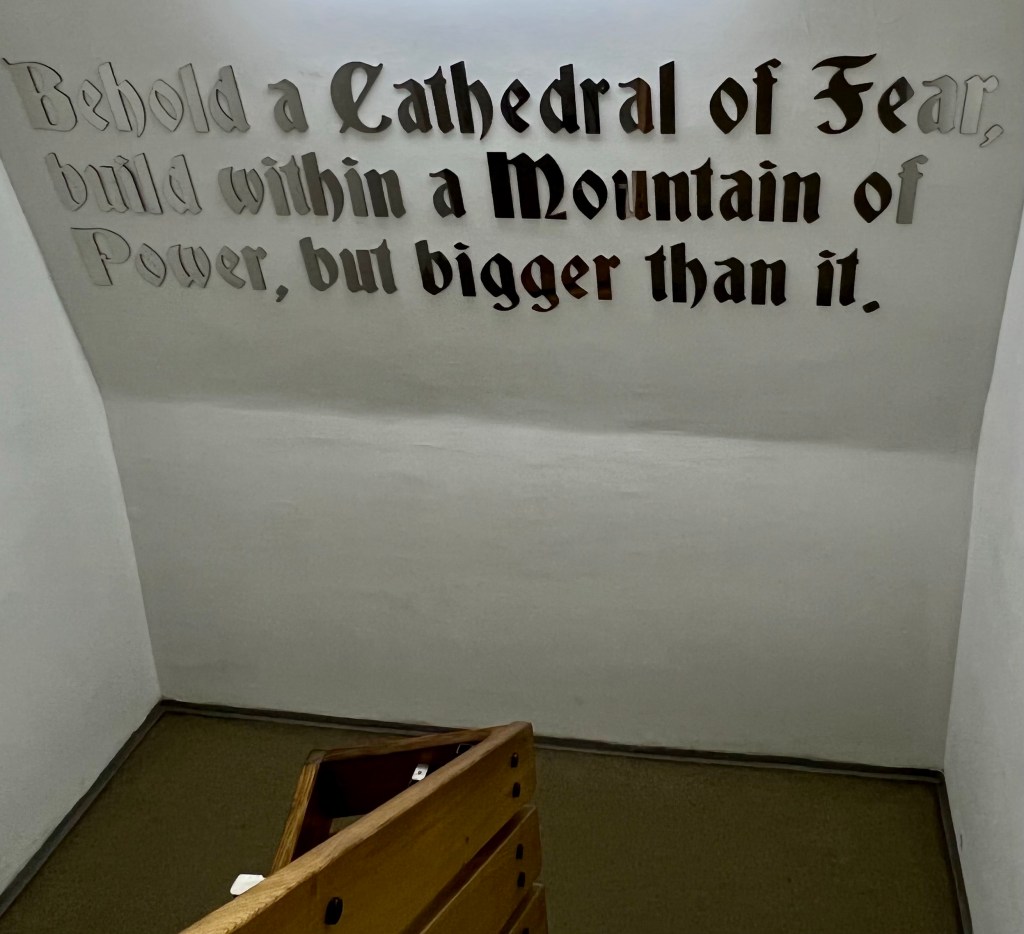

We left the musty facility for the fresh mountain air and then hopped back on the bus for the trip to Mostar; a city in southern Bosnia and Herzegovina, straddling the Neretva River. It’s known for the iconic Stari Most (Old Bridge), a reconstructed medieval arched bridge.
After checking into the hotel and freshening up, we walked toward Mostar’s Old Town where we met our guide for the walking tour, Genin who started with a discussion of the Bosnian war. One thing all the guides in all the cities we’ve visited agree on is that the war wasn’t about religion; it was about power.
When the Ottomans arrived in Mostar it was a village and became a city with their help. The formerly pagan inhabitants became muslims freely as they had invited Ottomans to protect them from the crusaders.
Our meeting spot was in front of Saint Peter and Paul Monastery, a new church located outside the old town. It has the biggest bell tower in the city and it was built in the 90s, after the Balkan War. Close-by, within a 500 m circle, you can also find an Orthodox Church, Synagogue and a Mosque.

Mostar was the second most destroyed city in Europe in 20th century. The ruined buildings we passed are apparently in better condition than most. Hard to find money to fix and with the left over animosity it is hard for many families with mixed marriages to make decisions about who owns the house (before the war 70% of marriages in Mostar were mixed religions and after the war that dropped to only 1%).
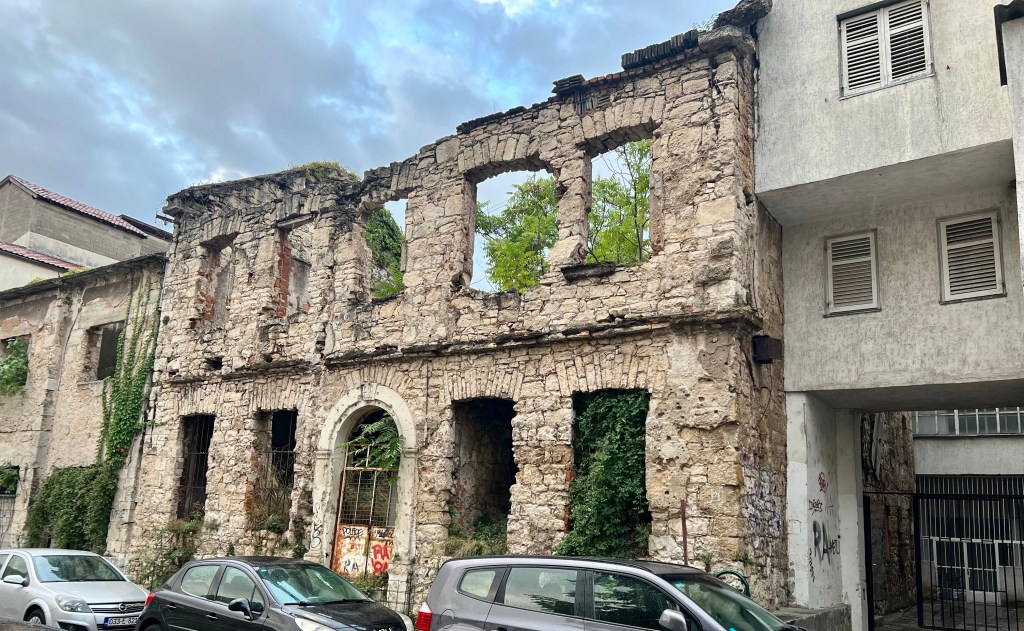
Old town streets are all made of cobblestones so the going is a bit treacherous because they are wet from the recent rain but they do provide a free foot massage !!
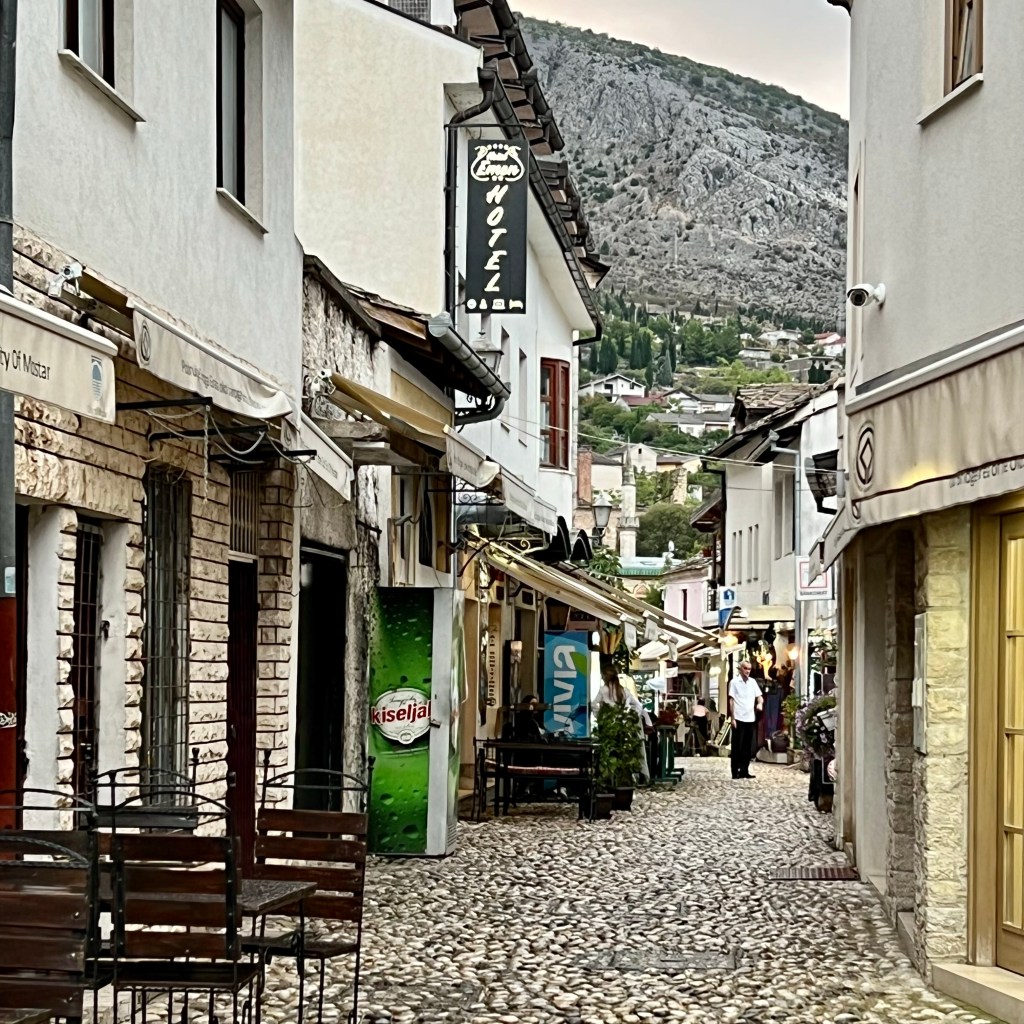
Our next stop is the Kriva Cuprija (Crooked Bridge); an ancient bridge in Mostar that crosses the Rabobolja creek, a right-bank affluent of the Neretva River. Built in 1558, eight years prior to the more famous Old Bridge, it is believed to have been built as a trial attempt for the following, more daring, construction.
Kriva cuprija is a stone one-arch bridge of small dimension and closely resembles the Stari Most. The arch is a perfect semicircle 8.56m in width and 4.15m in height. The frontage and vault are made of regular stone cubes incorporated into the horizontal layers all along the vault. The space between vault, frontal walls and footpath is filled with cracked stone. The bridge footpath and the approaching roads are paved with cobblestones, as is the case with the main roads in the town. This bridge was the only one of the twelve bridges in town to survive the war. Sadly, it succumbed to the floods of December 2000 and the original has been replaced with a replica.

Continuing through town, we head down to the banks of the Neretva River for a look at the crooked bridge’s much larger cousin, the Old Bridge (Stari Bridge); the symbol of Mostar.
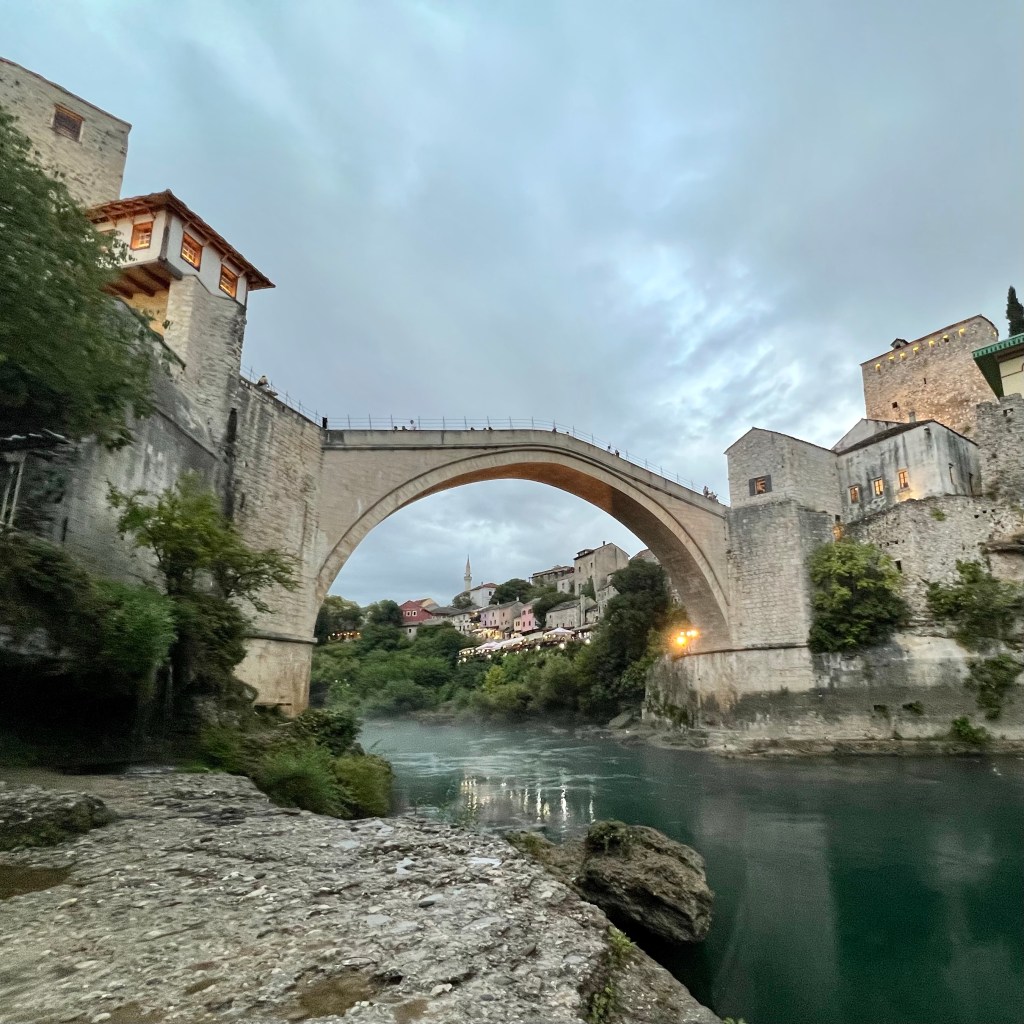
The current Old Bridge is a rebuilt 16th century bridge that crosses the river Neretva and connects the two parts of the city. The Stari Most is hump-backed, 4 metres wide and 30 metres long, and dominates the river from a height of 24 m. Two fortified towers protect it: the Halebija tower on the northeast and the Tara tower on the southwest.
Construction of the original bridge began in 1557 and took nine years. The builder, Mimar Hayruddin, charged under pain of death by Suleiman the Magnificent to construct a bridge of such unprecedented dimensions, reportedly prepared for his own funeral on the day the scaffolding was finally removed from the completed structure. Upon its completion it was the widest man-made arch in the world.
The Old Bridge stood for 427 years, until it was destroyed on November 9, 1993 during the Croat-Bosniak War. The rebuilt bridge opened on July 23, 2004 and remains the symbol of Mostar.
The Neretva is the coldest river in the world with temperatures as low as 3C in most places but a balmy 10c in Mostar because of local hydroelectricity installations.
Locals need to jump off the bridge and get a tattoo; not allowed to to have a tattoo unless you jumped. The bridge is 24 meters high and the cold water is 5 metres deep. For tourists, we just need to see someone jump. Sadly we weren’t there at the right time of day and Genin had jumped only once when he was young and is now older and wiser!
Next we went up onto the bridge to take a few pics before heading to a local restaurant for dinner washed down with local wine before heading back to the hotel.

Tomorrow is another day. Adventures await…
 Judy’s Rambles
Enjoying your travel adventures!
LikeLike